


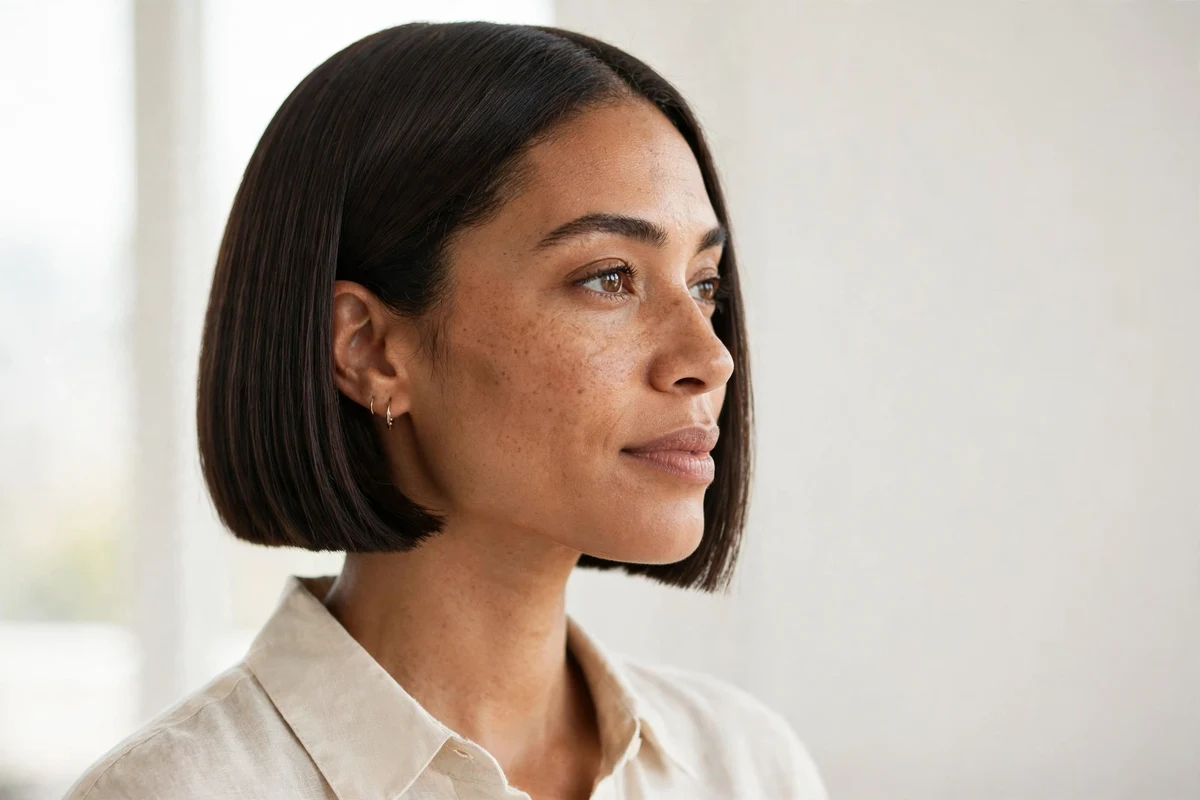
The box bob has clean square lines, a sharp outline, and almost no layering. It’s the bob for people who want structure instead of softness. I’ve spent years trying short cuts on my own fine hair, and a blunt one-length finish always reads thicker than layers do.
Below you’ll find 24 box bob styles pulled from what’s ranking now, from the classic chin-length cut to wet-look, S-wave, and fringe versions. Each one explains who it suits, how to style it, and what to ask your stylist for.
Quick answer: A box bob is a one-length bob with a square silhouette and sharp blunt ends. It works on most hair types, but fine and thin hair benefits most because the blunt edges create an illusion of thickness. Expect trims every 5 to 6 weeks to keep the boxy outline crisp.
Quick Takeaways
- The box bob’s defining features are a square silhouette, sharp outline, and minimal layering.
- Fine and thin hair looks fuller in a box bob because blunt ends create an illusion of thickness.
- Style it glass-smooth with a flat iron, textured with wave spray, or slicked with gel for a wet look.
- Fringe options range from curtain fringe and blunt full fringe to micro bangs.
- Trims every 5 to 6 weeks keep the geometric shape from growing out soft.
What Exactly Is a Box Bob?
TONI&GUY’s Cos Sakkas describes the box bob as having clean square lines, including the fringe, with a square silhouette, a sharp outline, and minimal layering. The “boxy” feel comes from the one-length cut: the hair ends at the same level all the way around, which builds that strong geometric shape.
Unlike layered bobs, which remove weight and soften the perimeter, the box bob keeps its density at the ends. That’s why stylists recommend it for thin hair. The blunt edge stacks the hair visually, so fine strands read thicker. Thick hair can wear it too, though your stylist may remove a little interior weight so the shape doesn’t puff out.
Styling is flexible. Wear it smooth and sleek for the office-siren look, bend the ends with a flat iron for an S-wave, or slick it down with gel for an evening wet look. The cut does the talking, so daily styling stays simple.
1. Classic Chin-Length Box Bob
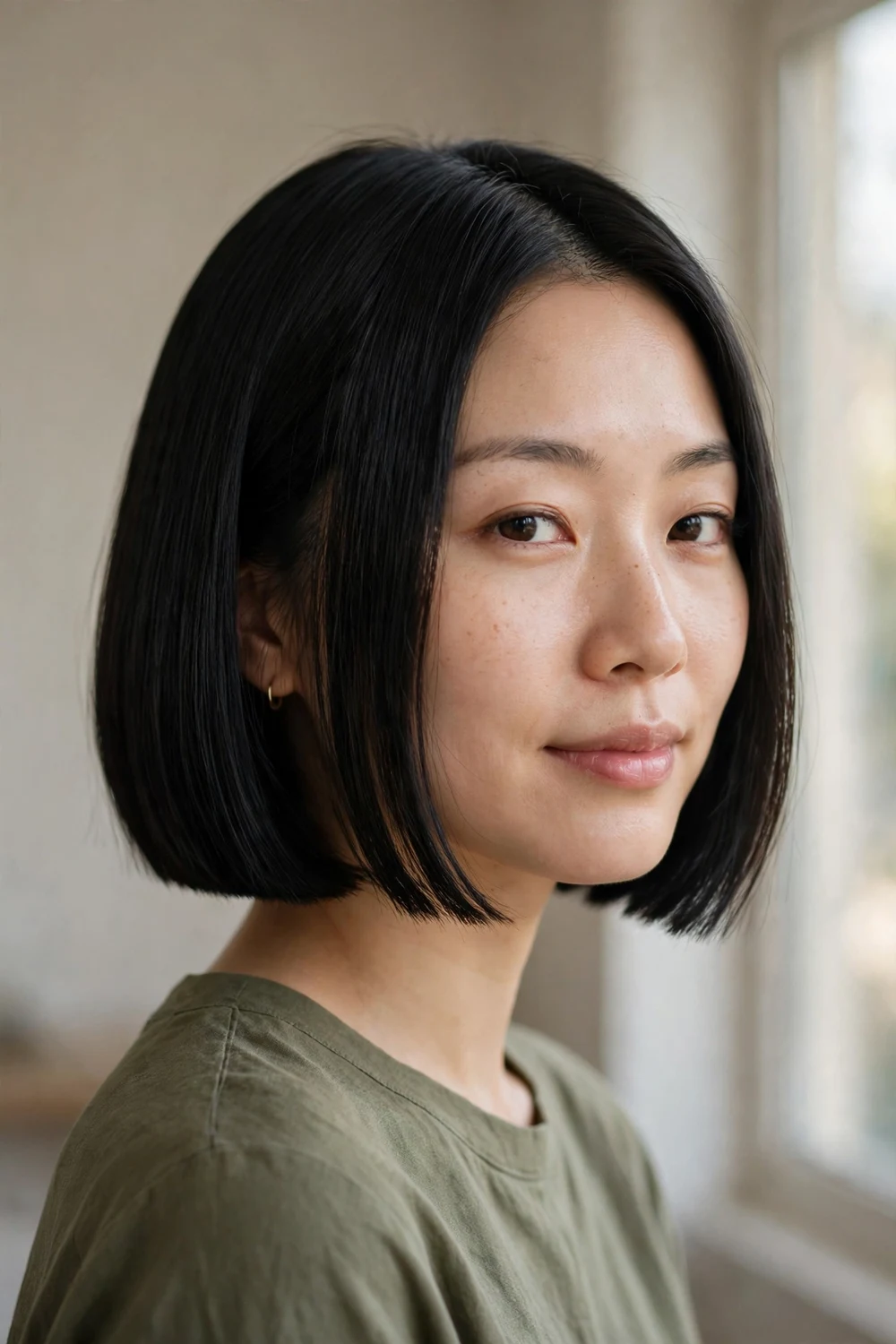
Start with the original. The hair is cut to one length right at the chin, with a square outline and zero visible layering. It’s the Mia Wallace reference point and the version most stylists picture when you say “box bob.” Ask for a blunt perimeter and a straight-across bottom line. This length suits oval and heart-shaped faces best, since the chin-level ends frame the jaw without adding width at the cheeks.
Difficulty: Easy · Upkeep: trim every 5 to 6 weeks
Try this: Blow-dry with a paddle brush, then run a flat iron over the last two inches to lock in the sharp edge.
2. Super Short Box Bob
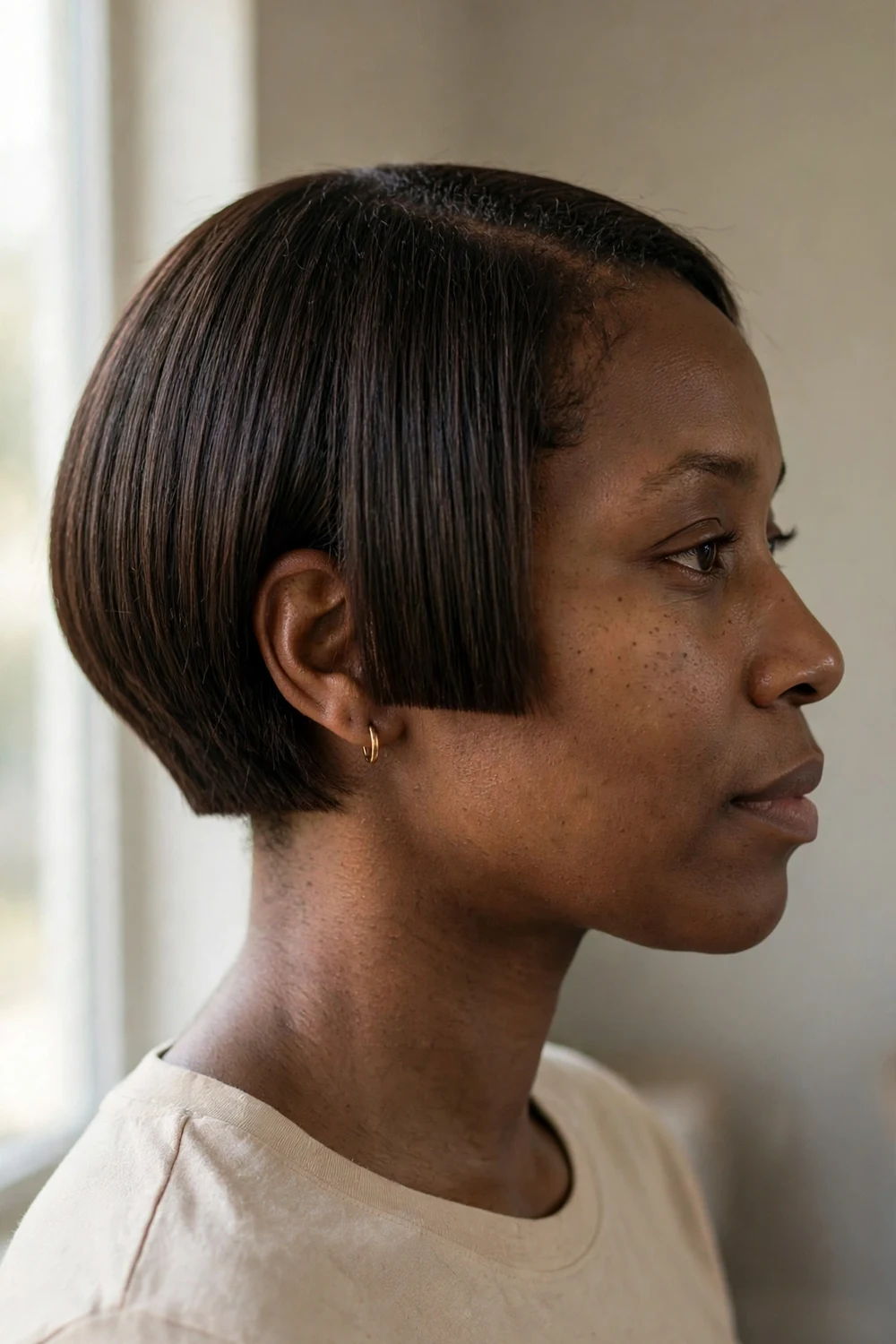
Take the same square shape and cut it above the jaw, almost to the cheekbone. The shorter length makes the geometry even bolder, and it shows off the neck and earrings. This version needs confidence and a stylist who cuts dry or with tension, because a millimeter of unevenness shows at this length. It suits small features and strong jawlines. Plan on trims every 4 weeks, since short blunt cuts lose their shape fast.
Difficulty: Medium · Upkeep: trim every 4 weeks
Try this: Use a pea-sized amount of smoothing cream on damp hair and blow-dry forward for a clean, tight finish.
3. Blunt-End Box Bob
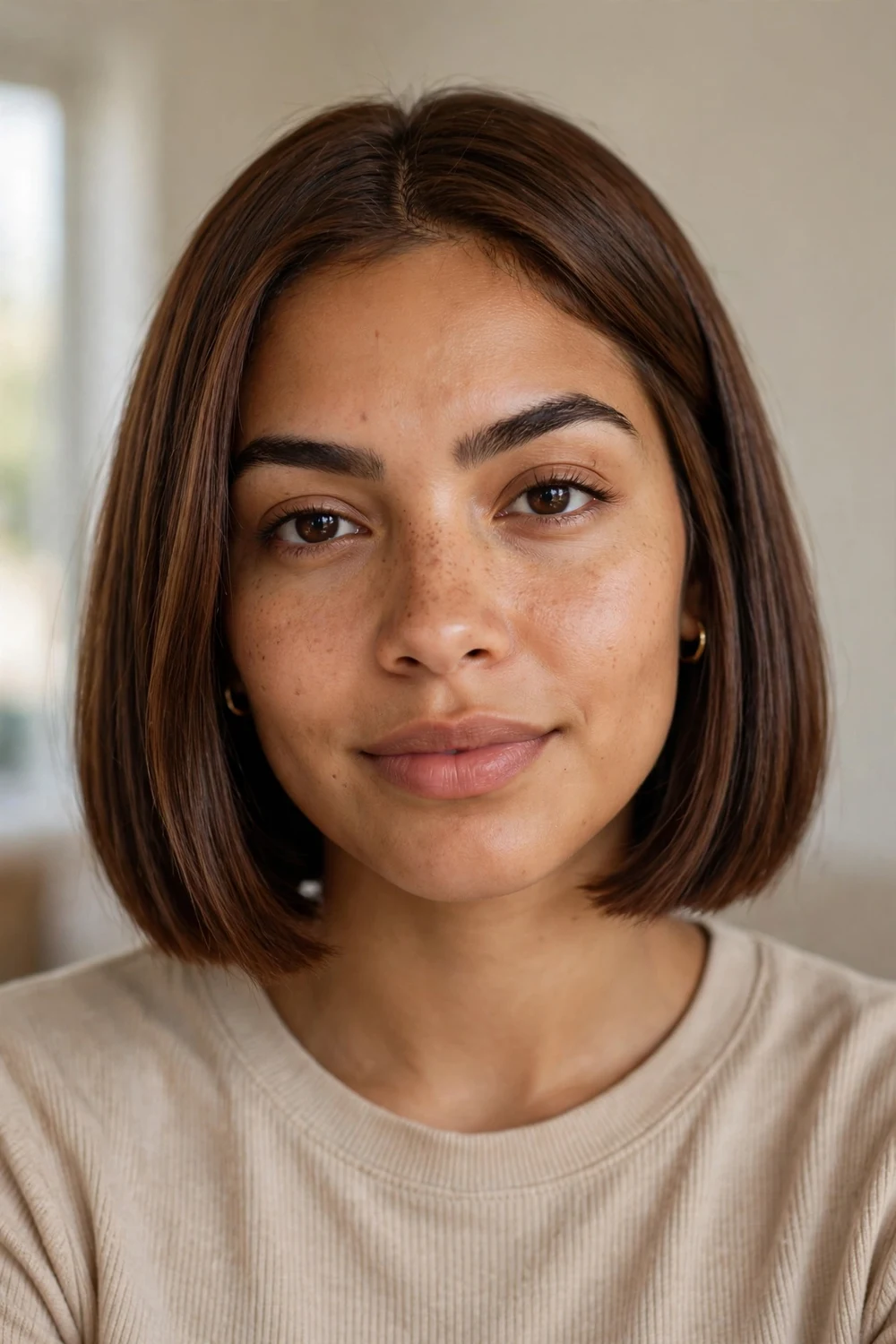
This is the box bob dialed to its simplest form: one length, blunt ends, no texture at all. The payoff is maximum density at the perimeter, which is why it’s the go-to for fine hair that turns wispy in layered cuts. The downside is that it shows every styling shortcut, so commit to either a full blowout or a proper flat-iron pass. It works on straight and slightly wavy hair; tight curls will need straightening to show the blunt line.
Difficulty: Easy · Upkeep: trim every 5 weeks
Try this: Apply heat protectant, then flat-iron in thin sections with the iron angled slightly inward at the ends.
4. Side-Part Box Bob
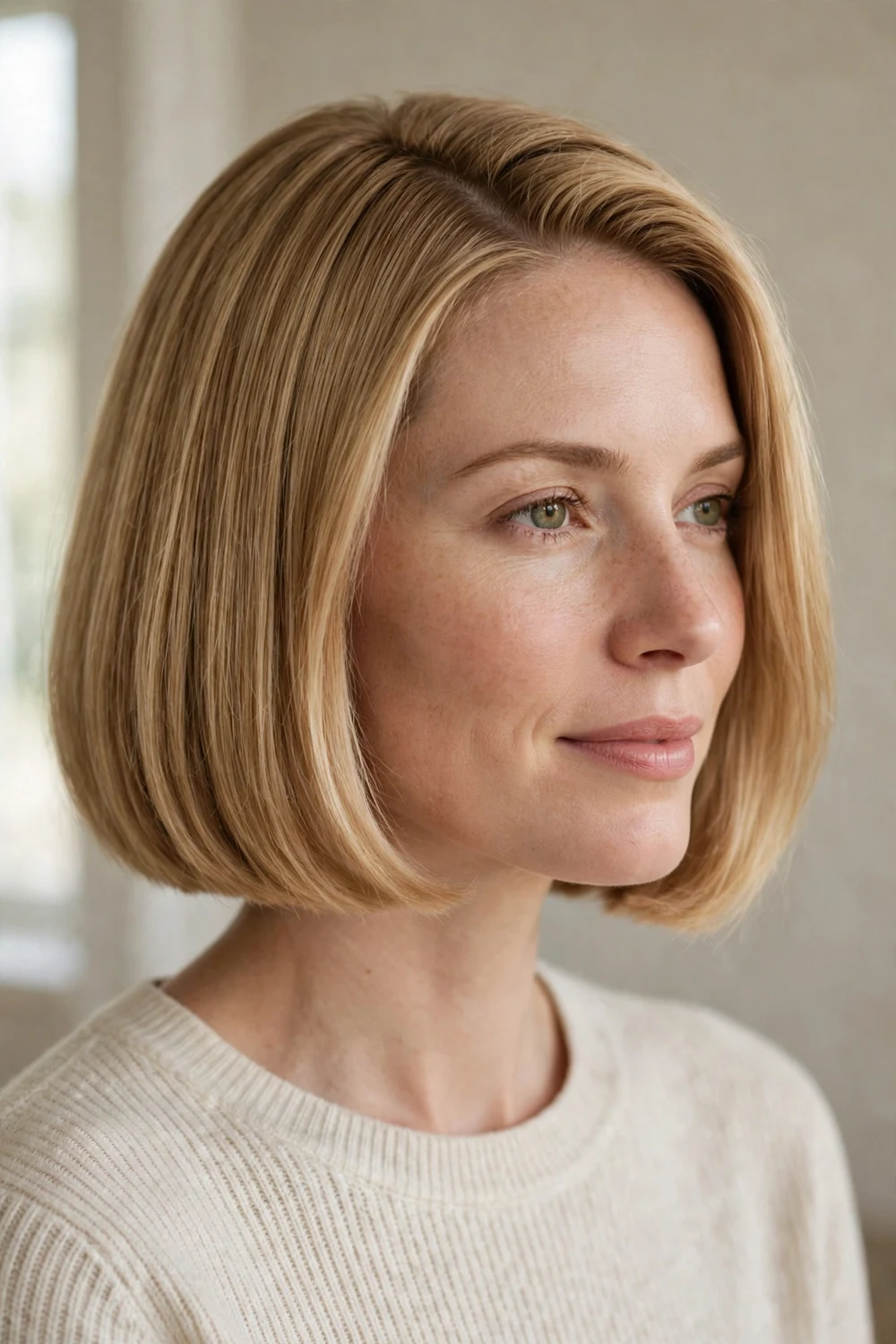
Shift the part to one side and the whole cut changes character. The deep part adds volume at the crown and softens the geometry just enough for rounder faces. The perimeter stays square and blunt, so you keep the box bob identity. This is the easiest way to personalize the cut without changing the length. It’s also practical: a side part hides a cowlick at the hairline that a center part would expose.
Difficulty: Easy · Upkeep: standard 5 to 6 week trims
Try this: While hair is damp, comb the part into place and clip the roots flat for 10 minutes so the part sets before drying.
5. Center-Part Box Bob

The center part is the most symmetrical, most “graphic” version of the box bob. It splits the square silhouette into two clean panels and reads very polished, almost editorial. It demands a fairly symmetrical face and a straight hairline, since there’s nothing to hide behind. If your hair naturally falls to the middle, this version practically styles itself. Add shine serum on the lengths and you’re done.
Difficulty: Easy · Upkeep: trim every 5 to 6 weeks
Try this: Finish with a silicone-free shine serum on the mid-lengths only, keeping it off the roots to avoid a flat crown.
6. Sleek Glass-Finish Box Bob
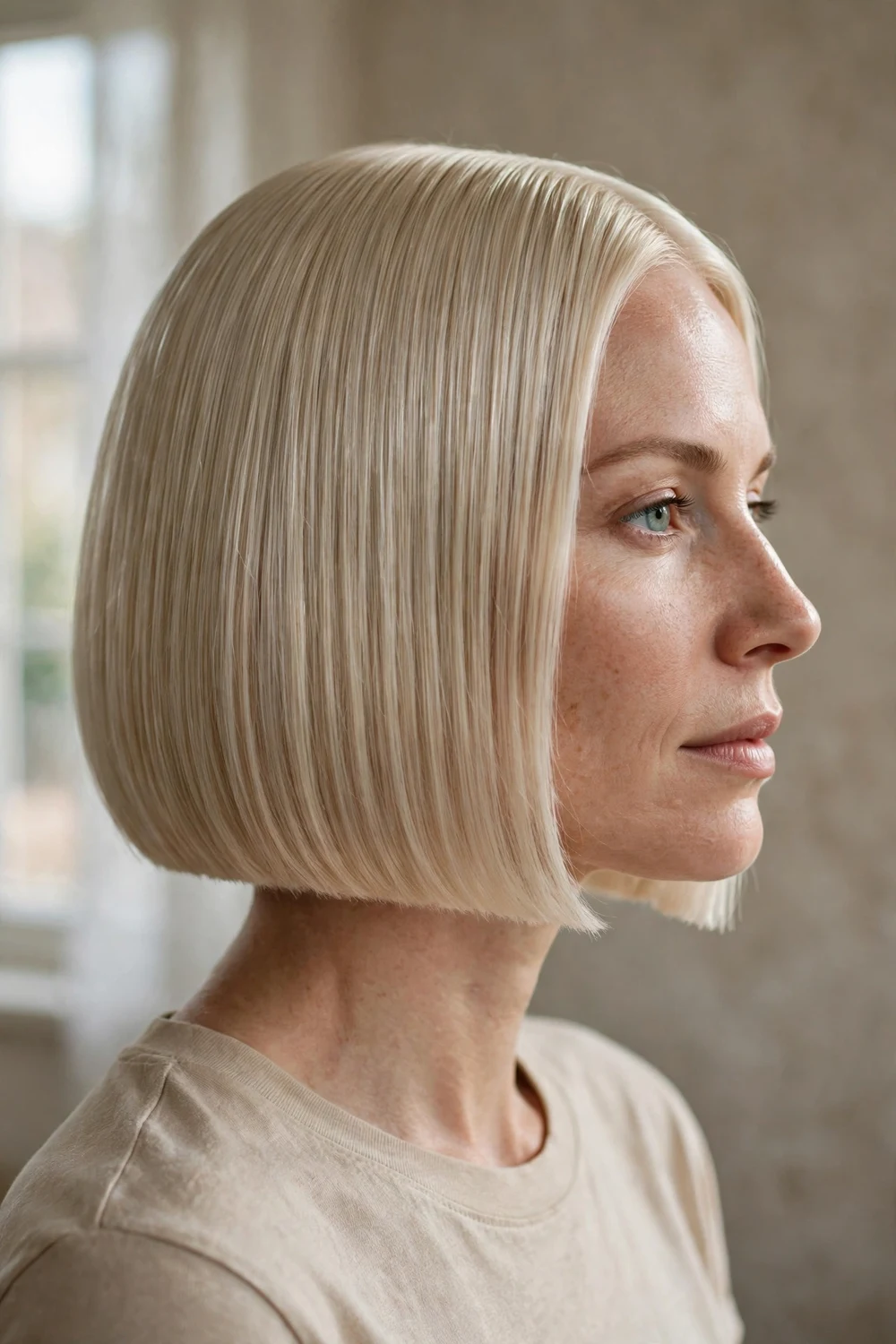
Glass hair meets the box bob: the cut is styled pin-straight with a mirror-like shine. This is the office-siren version, and it’s all about the finish rather than a different cut. It needs healthy, frizz-free hair, so a smoothing treatment or keratin blowout helps if your texture fights you. Dark colors show the shine best. Budget 15 minutes with a flat iron on wash day, and keep a mini straightener in your bag for touch-ups.
Difficulty: Medium · Upkeep: daily heat styling
Try this: Flat-iron small sections twice, then press a shine spray through the ends for that liquid-glass reflection.
7. Wet-Look Box Bob
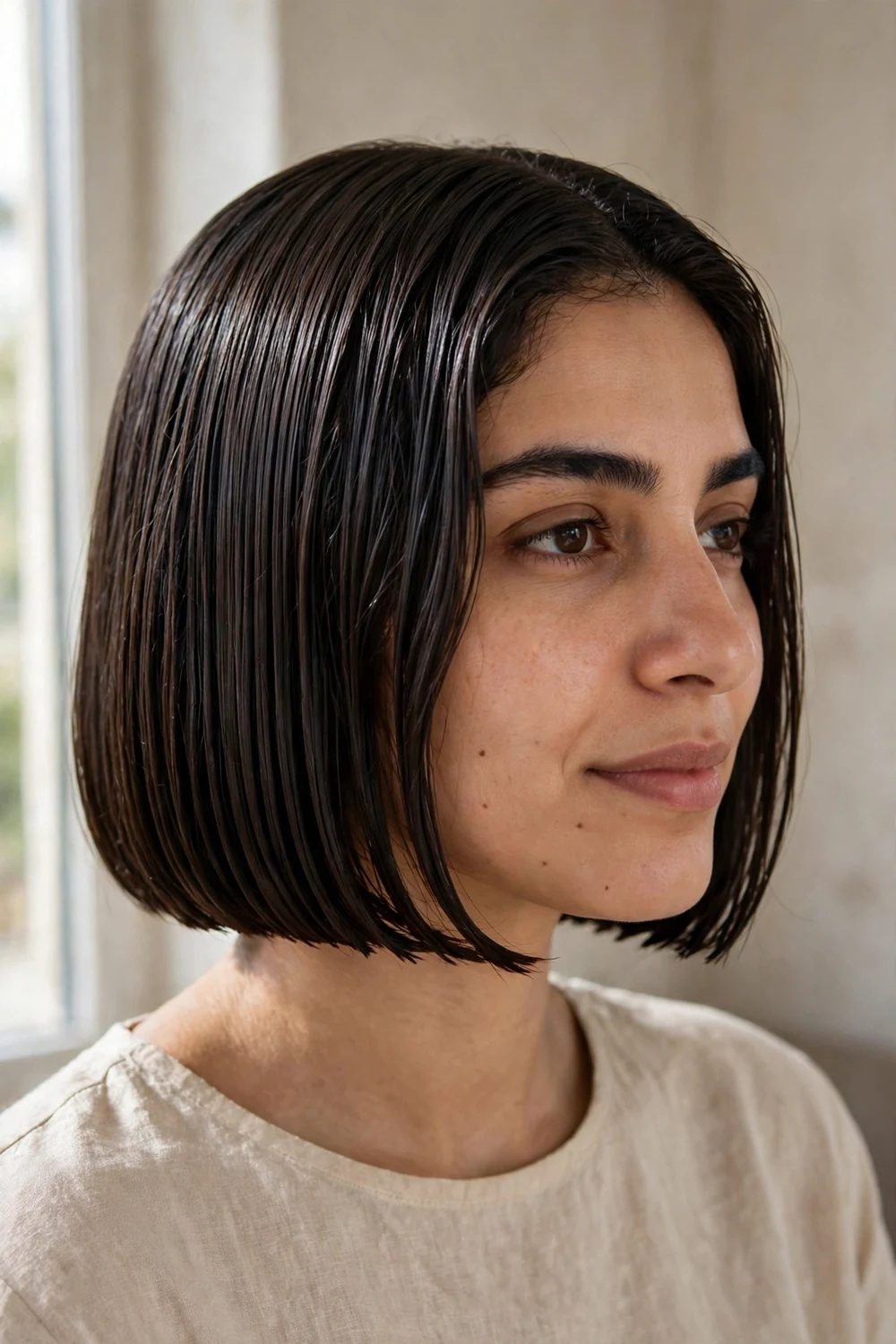
For evenings, slick the box bob down with gel or pomade and comb it into place. The wet finish makes the square shape look even more sculptural, and it’s a genuine departure from your daytime look without a new cut. Work a strong-hold gel from roots to tips on damp hair, then run a wide-tooth comb through to define the shape. Let it air-dry or diffuse on low. This suits events and photos; it’s too heavy for daily office wear.
Difficulty: Easy · Upkeep: clarifying wash after wearing
Try this: Mix gel with a drop of shine oil so the finish looks glossy, not crunchy.
8. S-Wave Box Bob
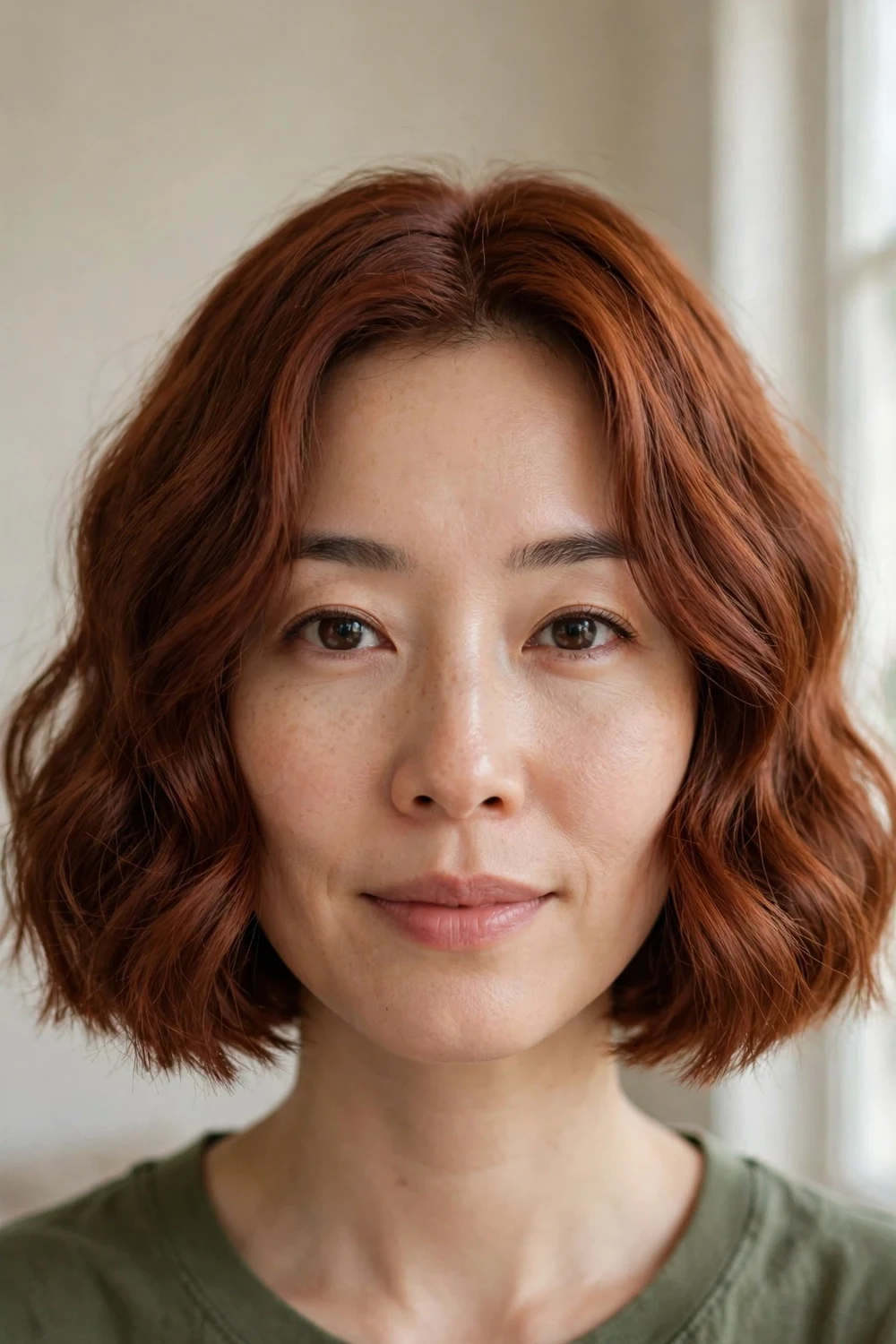
Run a curling iron through straight hair, bending each section in alternating directions, and the blunt bob gains relaxed movement without losing its square outline. This is the fix for box bobs that look too severe on softer features. The wave should start at mid-length, not the roots, so the top stays smooth and the shape stays boxy. Finish with a light styling spray to hold the wave and tame flyaways. It takes about 10 minutes once you’ve done it twice.
Difficulty: Medium · Upkeep: restyle after washing
Try this: Wrap sections around a 1-inch iron, leave the last inch straight, and rake through with your fingers instead of a brush.
9. Box Bob with Curtain Fringe
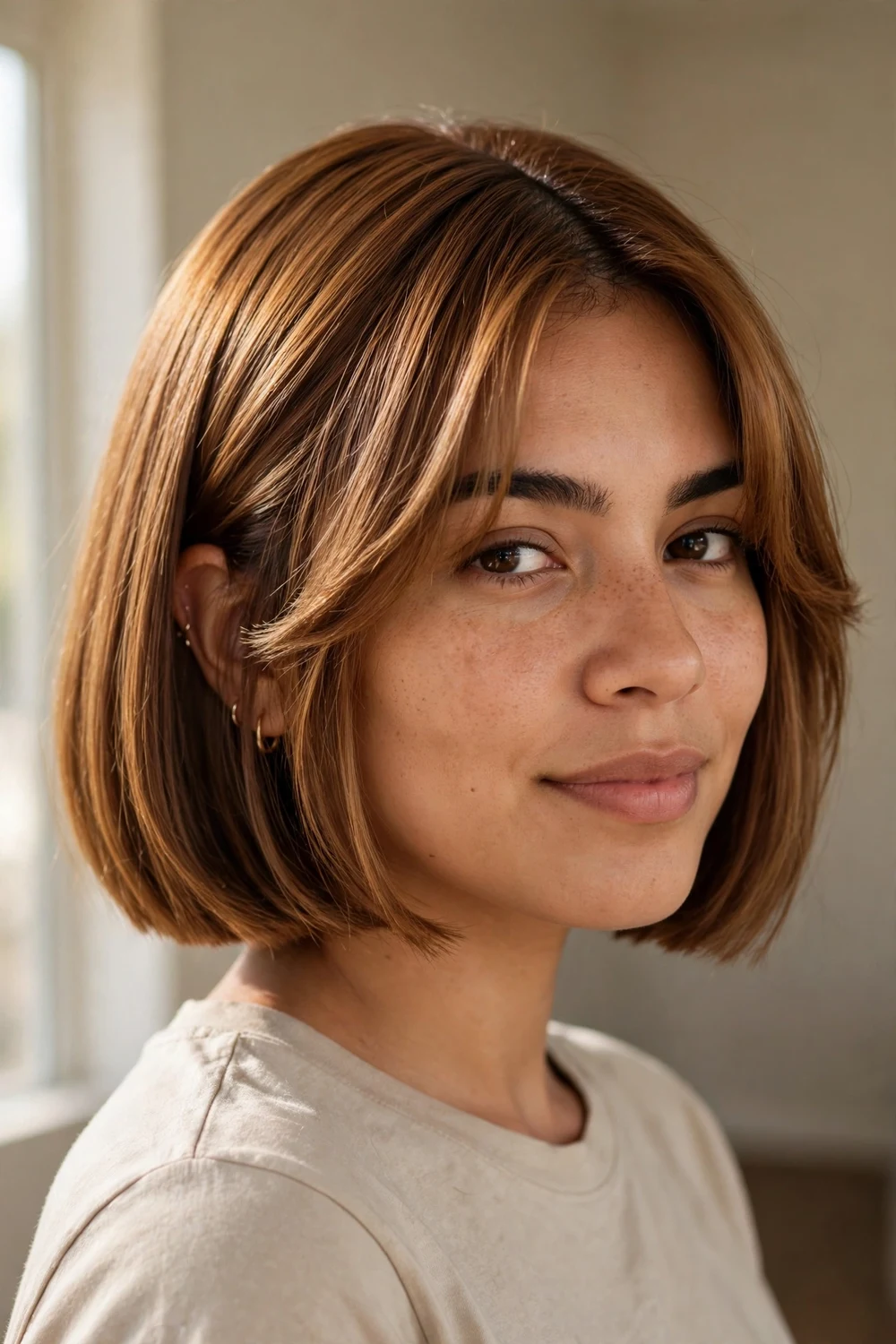
Curtain fringe, parted in the middle and swept to each side, softens the box bob’s forehead line while the perimeter stays sharp. It’s the best fringe option if you’re growing out bangs or want face-framing without commitment. The fringe pieces should hit at cheekbone level so they blend into the bob’s front corners. Style the fringe with a round brush, rolling it away from the face on each side. This pairs well with the S-wave version.
Difficulty: Easy · Upkeep: fringe trims every 3 to 4 weeks
Try this: Blow-dry the fringe forward first, then split and sweep each side back for that curtain fall.
10. Box Bob with Blunt Full Fringe
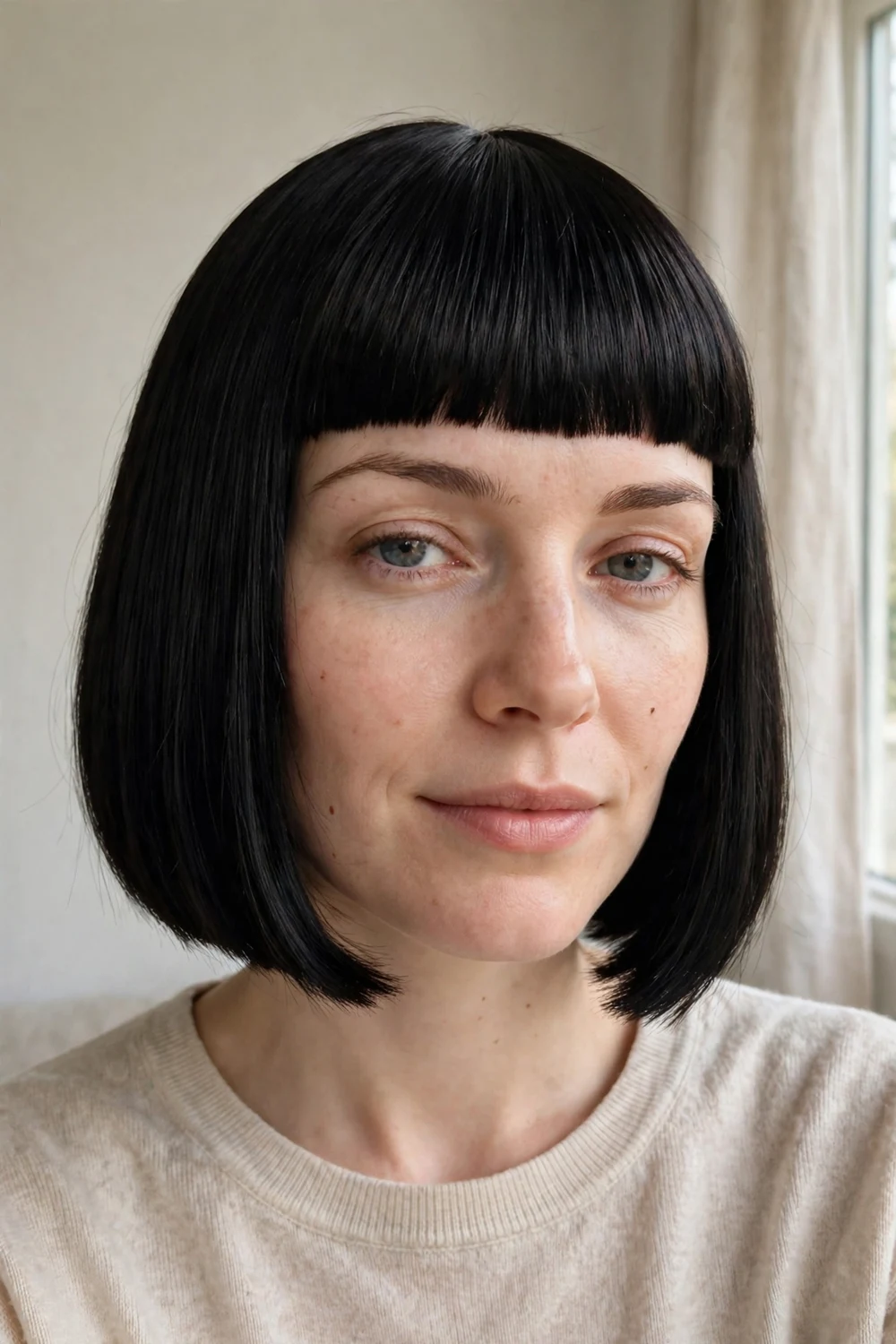
The full Pulp Fiction. A straight-across fringe cut to brow level, paired with the square bob, doubles down on the geometry. It’s the boldest fringe choice and the most striking, framing the eyes like a picture frame. It suits longer foreheads and oval faces; on round faces it can shorten the face visually. The fringe needs trims every 3 weeks to stay at the right length, and you’ll style it daily with a quick flat-iron pass.
Difficulty: Medium · Upkeep: fringe trims every 3 weeks
Try this: Cut the fringe slightly longer than you think, since it springs up as it dries.
11. Box Bob with Micro Bangs
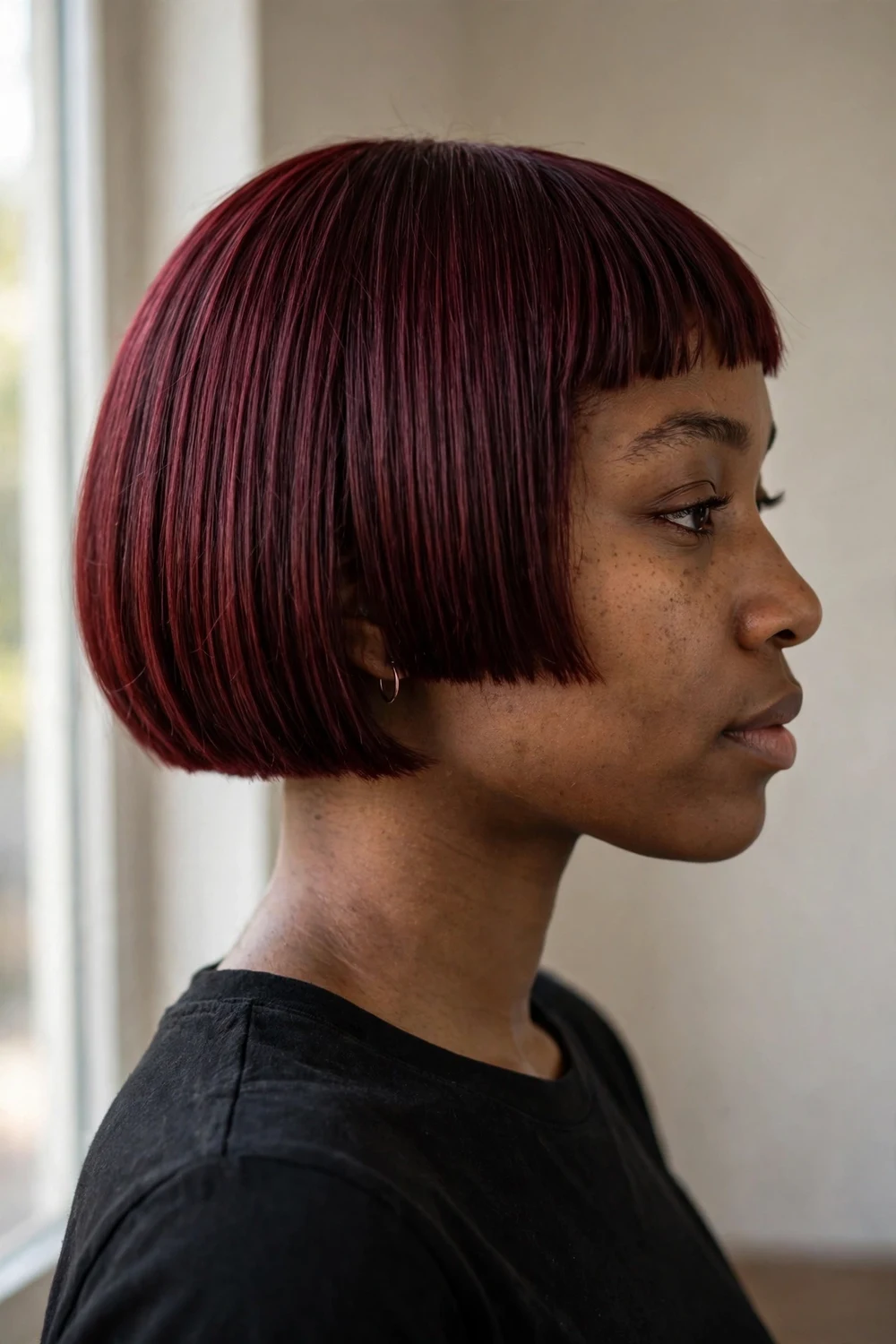
Micro bangs sit well above the brow and give the box bob an edgy, fashion-forward edge. They expose the whole forehead, so this is for strong brows and a hairline you’re happy to show. The contrast between the tiny fringe and the sharp square perimeter is what makes it work. Keep them textured rather than blunt-cut, which softens the look just enough. Like all short fringes, they need frequent trims to hold their line.
Difficulty: Medium · Upkeep: fringe trims every 2 to 3 weeks
Try this: Point-cut the very ends of the micro bangs so they sit softly instead of forming a hard shelf.
If you like fringe with short cuts, choppy bob hairstyles with bangs rounds up textured takes on the combo.
12. Choppy-Ended Box Bob
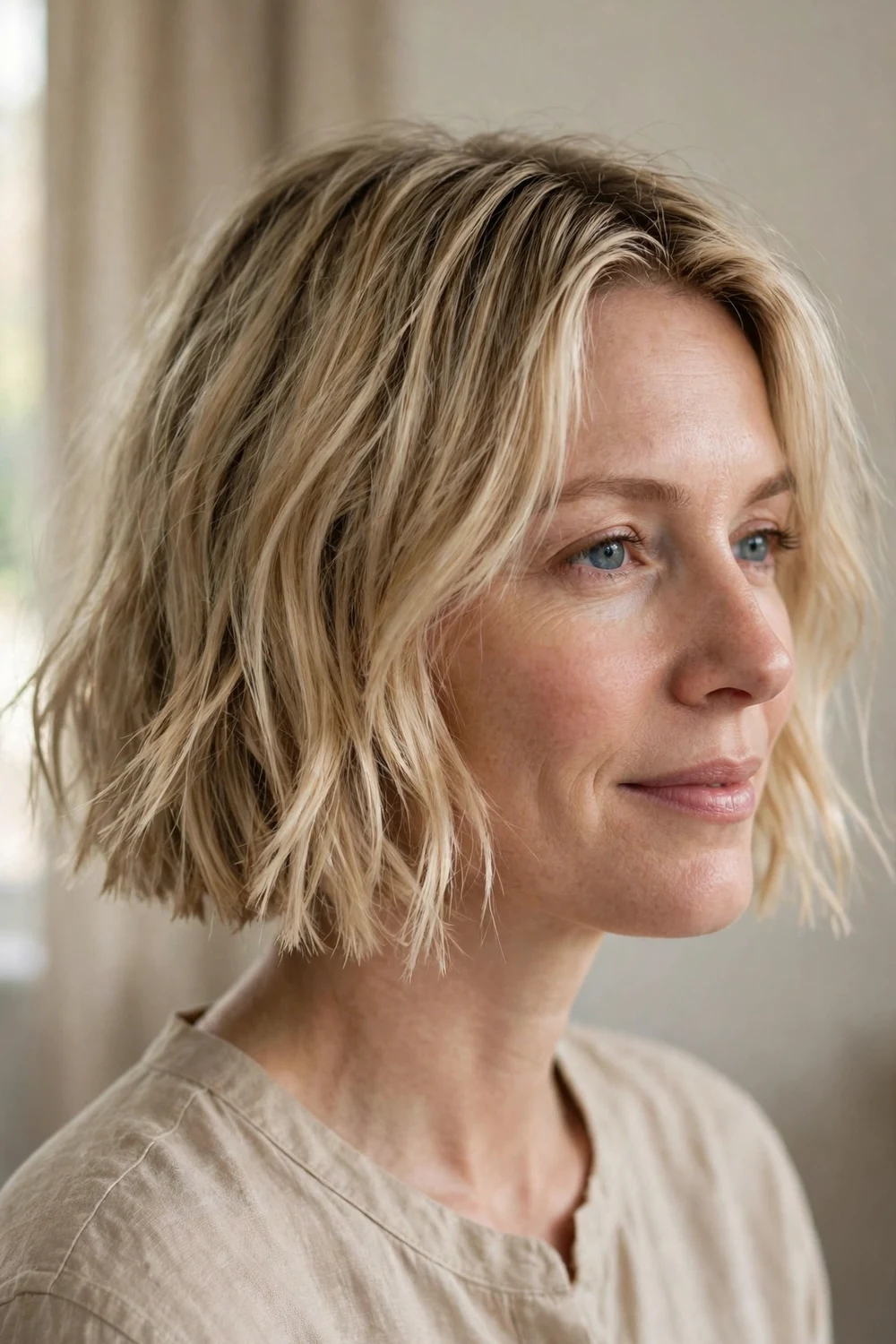
Ask your stylist to point-cut the last inch and you get a box bob with piecey, choppy ends instead of a razor-straight line. The silhouette stays square, but the texture adds movement and makes the cut more forgiving as it grows out. This is the low-maintenance box bob: it hides unevenness and looks good air-dried. A wave-enhancing spray or cream scrunched into damp ends brings out the choppiness. Good for wavy hair that won’t sit perfectly straight.
Difficulty: Easy · Upkeep: trim every 6 to 7 weeks
Try this: Scrunch a pea-sized amount of texturizing cream into dry ends and twist a few pieces for definition.
13. Box Bob with Blonde Balayage
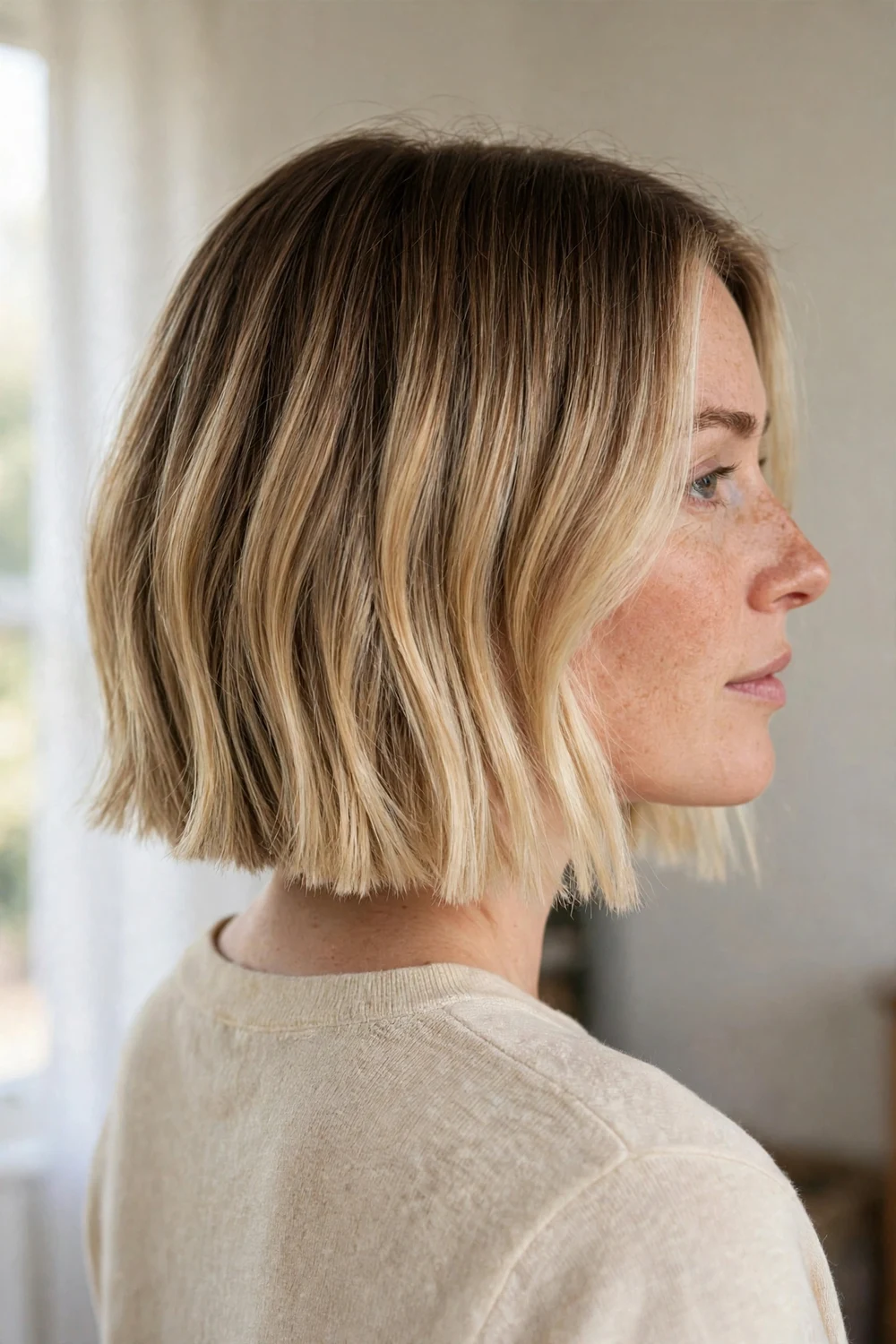
Hand-painted blonde balayage over a box bob keeps the sharp shape but adds dimension, with darker roots melting into lighter ends. The color contrast actually emphasizes the blunt perimeter, since the eye follows the lighter ends. Ask for a lived-in root so grow-out is graceful. This needs a gloss every 6 to 8 weeks to keep the blonde from turning brassy, plus purple shampoo at home. Best on naturally light-brown to dark-blonde bases.
Difficulty: Hard · Upkeep: gloss every 6 to 8 weeks
Try this: Bring a photo showing exactly how much root you want visible; “lived-in” means different things to different colorists.
14. Dark Glossy Box Bob

A single-process dark color, espresso or near-black, with a clear gloss on top is the box bob’s most dramatic color pairing. The uniform dark shade makes the square outline read even sharper, and the shine shows off the blunt cut. This is low maintenance color-wise: one process, root touch-ups every 4 to 6 weeks, and a gloss when the shine fades. Use color-safe shampoo and cool water to stretch the vibrancy between appointments.
Difficulty: Easy · Upkeep: root touch-up every 4 to 6 weeks
Try this: Ask for a demi-permanent gloss in the same appointment as the cut; it adds shine without extra damage.
15. Box Bob with Face-Framing Highlights
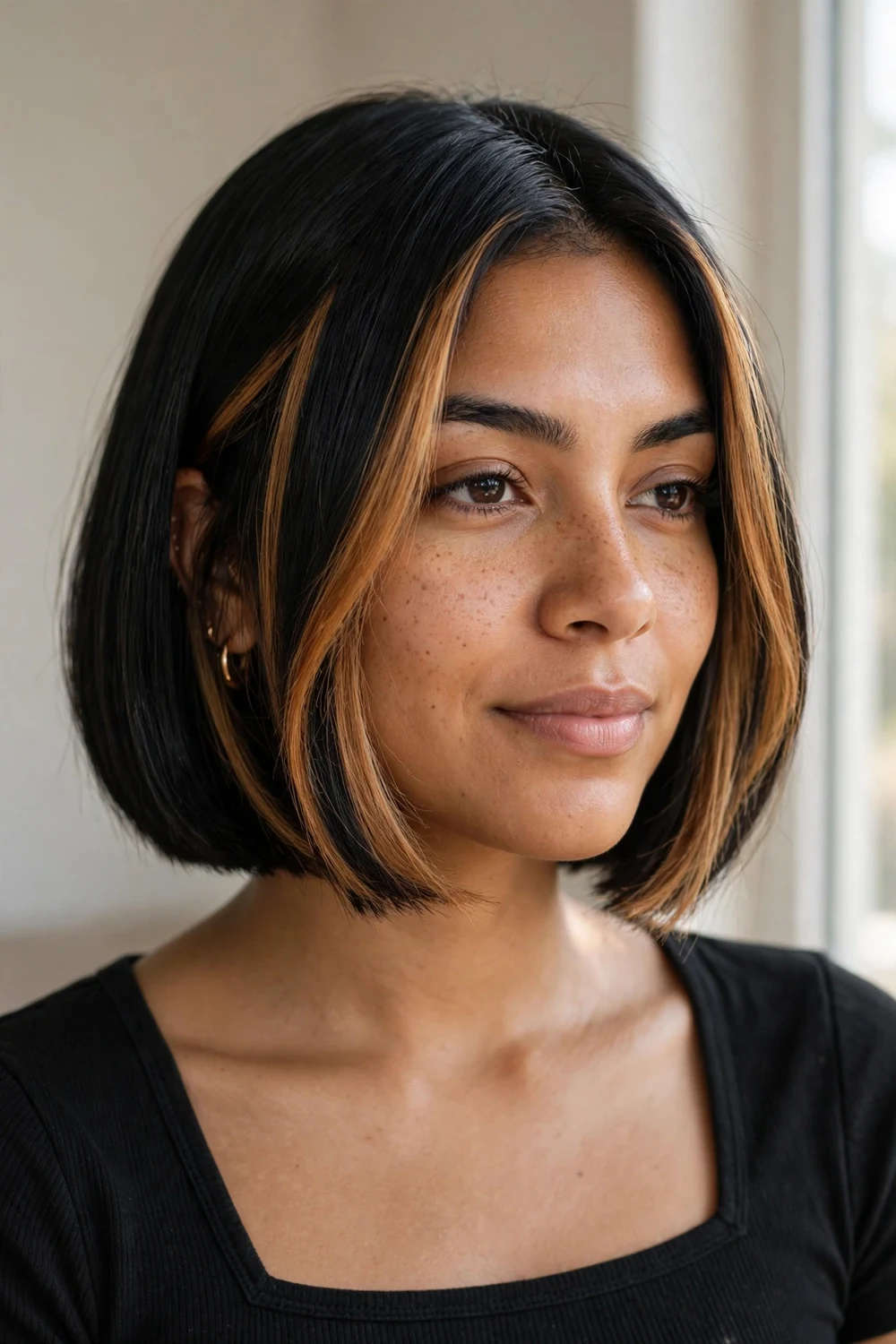
Two lighter pieces around the face, sometimes called a money piece, brighten the box bob without coloring the whole head. The highlights draw attention to the front corners of the square shape, which is flattering on most faces. Keep them one to two levels lighter than your base so they look intentional, not streaky. Touch-ups are quick since it’s only a few foils. This is a good first step into color if you’ve never lightened your hair.
Difficulty: Medium · Upkeep: touch-up every 8 to 10 weeks
Try this: Style the front pieces with a slight bend using a flat iron so the highlights catch the light.
16. Textured Tousled Box Bob
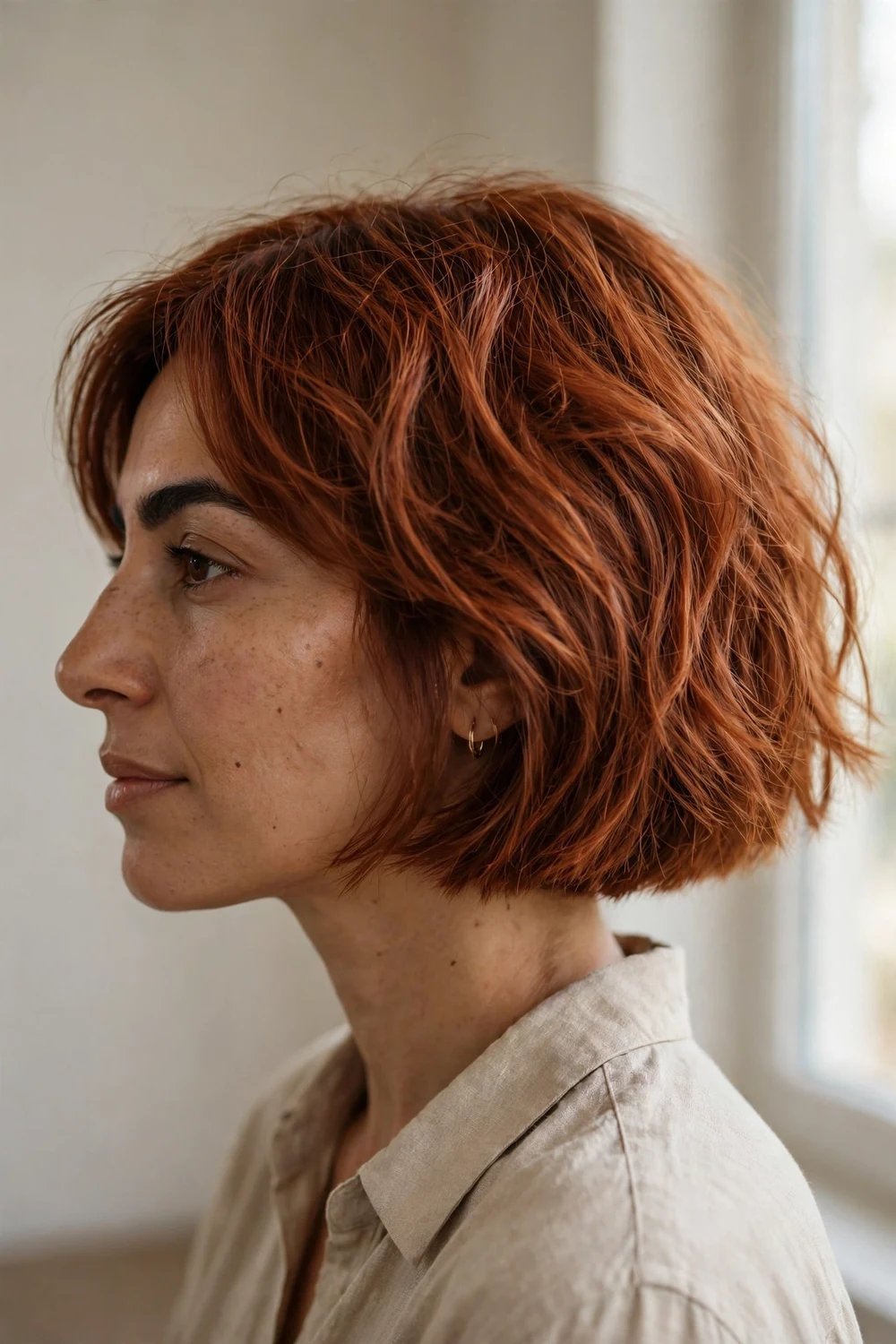
For the mornings you don’t want to flat-iron, the tousled box bob keeps the square shape but wears it with natural movement. The key is keeping the perimeter blunt while the interior has enough texture to air-dry well. A salt spray or light mousse on damp hair, scrunched and left to dry, gives that undone finish. It reads more casual than the sleek versions, which makes it the best everyday option for busy schedules.
Difficulty: Easy · Upkeep: minimal daily styling
Try this: Sleep on it loosely and refresh the shape in the morning with a few spritzes of water and a quick scrunch.
17. Deep Side-Part Sweep Box Bob
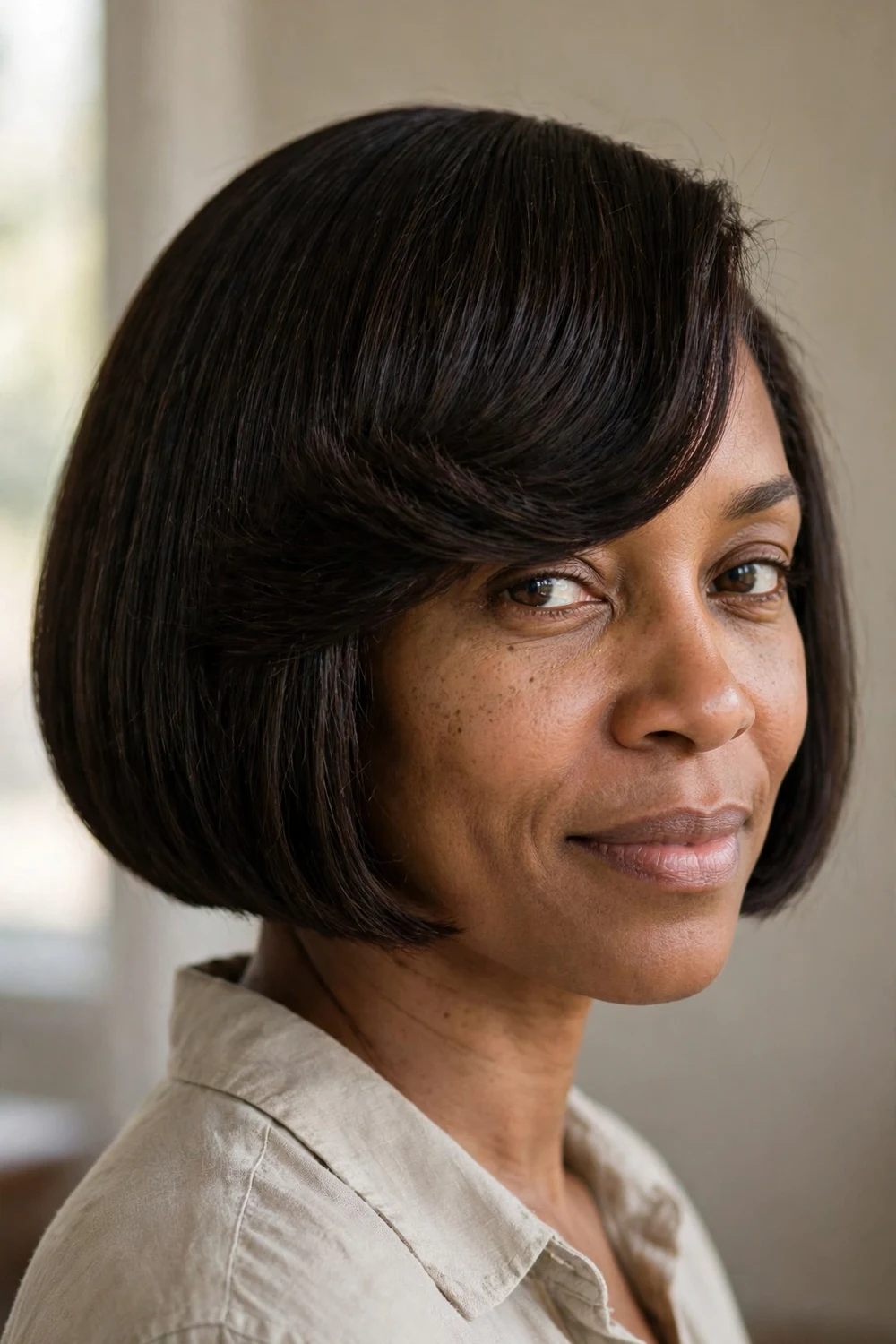
Part the hair dramatically to one side and sweep the front across the forehead for a look that’s part box bob, part old-Hollywood. The deep sweep adds height at the crown and asymmetry to the front, which flatters wider foreheads and strong jawlines. The back keeps the square blunt outline, so the cut’s identity stays intact. It needs a firm-hold product at the part to survive the day. This is a strong choice for events when you want the bob to look styled, not just cut.
Difficulty: Medium · Upkeep: daily styling with hold product
Try this: Set the sweep with a light-hold hairspray while the hair is still warm from the dryer.
18. Tucked-Behind-Ears Box Bob

The simplest styling trick in this list: tuck both front sections behind your ears. It sharpens the square outline around the face, shows off earrings, and keeps hair out of your face at work. The tuck works best on freshly washed hair with a little texture spray for grip. It also buys you an extra day between washes, since the tuck hides oily roots at the hairline. No product or heat needed.
Difficulty: Easy · Upkeep: none beyond the cut
Try this: Add a small flat clip behind each ear if your hair is too slippery to stay tucked.
19. Flipped-Out Ends Box Bob
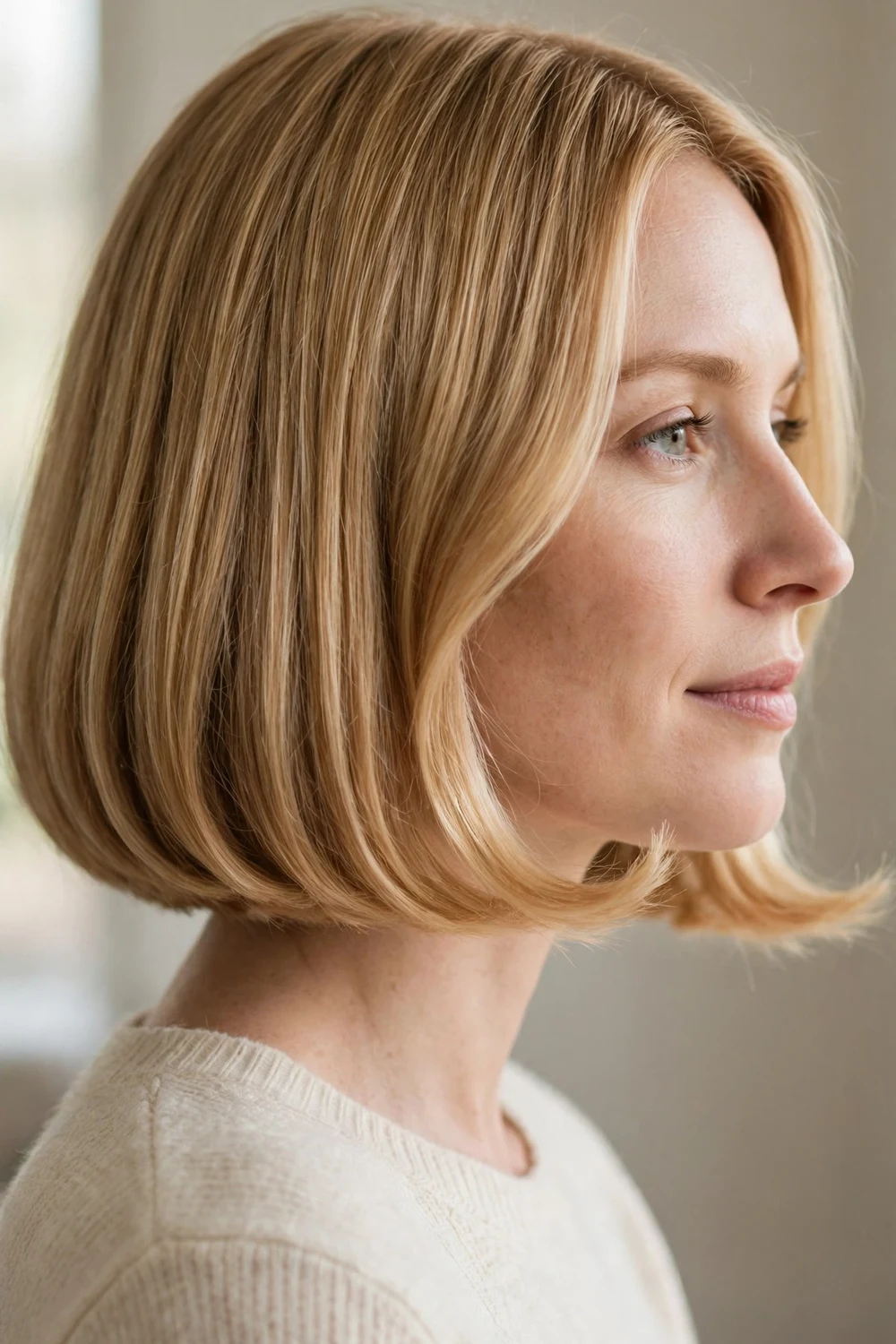
Flip the ends outward with a round brush or flat iron and the box bob picks up a playful retro feel. The outward flip widens the bottom of the silhouette slightly, which balances a narrow chin. It’s a nice change from the usual inward curl and takes two minutes with a round brush on dry hair. The flip drops by evening on fine hair, so a light mist of flexible-hold hairspray helps it last. This works best at chin length, where the flip has room to show.
Difficulty: Easy · Upkeep: restyle after washing
Try this: Roll the ends outward around a medium round brush, blast with cool air for 5 seconds, then release.
20. Curled-Under Box Bob

The curled-under version is the polished classic: ends tucked toward the chin for a smooth, rounded finish. It’s the most office-appropriate styling of the box bob and the easiest to maintain through the day. A large round brush and a dryer do the job, or a flat iron angled inward on dry hair. This styling narrows the bottom of the shape slightly, so it suits rounder faces that want the box bob without extra width at the jaw.
Difficulty: Easy · Upkeep: daily quick styling
Try this: Over-direct the front sections slightly forward while drying so the curl hugs the jawline.
21. Box Bob for Thin Hair

This is the box bob’s home turf. On thin hair, the blunt one-length cut is doing real work: the sharp edge stacks fine strands so they read thicker, and the short length removes the weight that drags thin hair flat. Ask your stylist to keep the perimeter solid with no thinning shears at the ends. Style with a root-lifting mousse and a round-brush blowout for volume that lasts. Avoid heavy oils, which flatten fine hair fast.
Difficulty: Easy · Upkeep: volume styling on wash days
Try this: Blow-dry upside down for the first minute to build root lift, then finish the ends smooth with a paddle brush.
For a layered route to the same goal, layered bob hairstyles for fine hair lists cuts built for thin strands.
22. Box Bob for Thick Hair
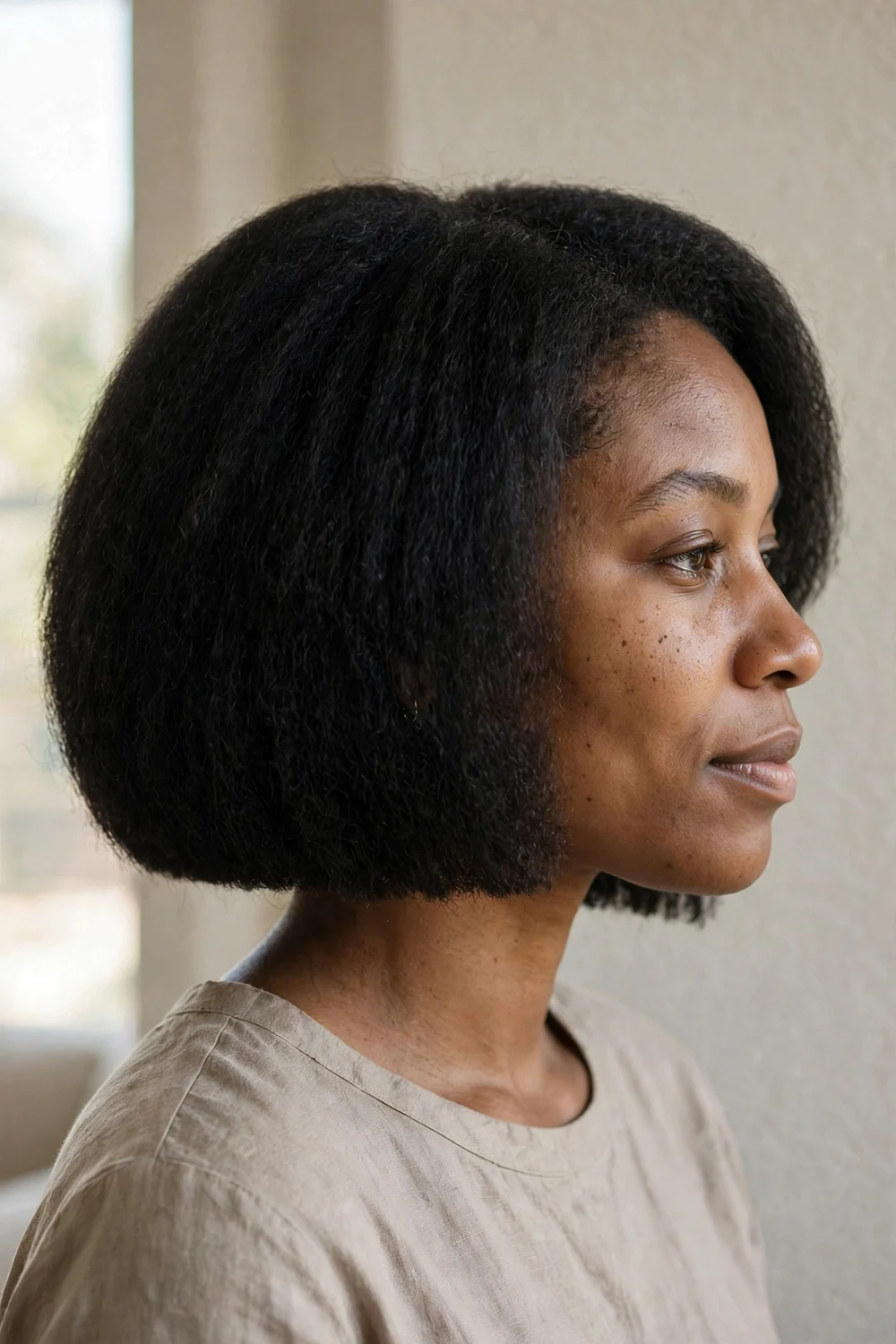
Thick hair can absolutely wear a box bob, but the cut needs one adjustment: your stylist should remove some interior weight so the square shape doesn’t expand into a triangle. The blunt perimeter stays, since that’s what defines the style. The result is a bob with serious presence and density. It holds styles well, from glass-smooth to S-wave, because thick hair keeps its shape. Expect a longer appointment, since cutting and thinning thick hair into a precise shape takes time.
Difficulty: Medium · Upkeep: standard trims, longer appointments
Try this: Ask specifically for interior weight removal, not layering at the ends, so the blunt edge survives.
23. Layered-Edge Box Bob

If a pure one-length cut feels too severe, ask for minimal layering just at the edges. The overall silhouette stays square and the ends stay mostly blunt, but the slight layering softens the very bottom line and adds a touch of movement. This is the compromise box bob: structure with a little give. It grows out more gracefully than the blunt version and suits wavy hair that needs some encouragement to move. Keep the layering to the last inch only.
Difficulty: Easy · Upkeep: trim every 6 weeks
Try this: Tell your stylist “box bob, but soften just the last inch” so the layering stays minimal.
24. Jaw-Length Box Bob

Cut right at the jawline, this is the shortest wearable box bob before it becomes a micro crop. The jaw-length line sharpens the whole face and pairs well with statement earrings and a defined brow. It suits oval and heart-shaped faces; on square jaws it can emphasize the jaw, so ask your stylist’s honest opinion. Like all short blunt cuts, it needs trims every 4 to 5 weeks. It’s also the fastest to style: a quick flat-iron pass and you’re out the door.
Difficulty: Easy · Upkeep: trim every 4 to 5 weeks
Try this: Keep a travel flat iron handy; short blunt ends kink overnight and need a 2-minute morning pass.
Box Bob Styles Comparison at a Glance
| Style | Best Occasion | Difficulty | Hold Time |
|---|---|---|---|
| Classic Chin-Length | Everyday, office | Easy | All day |
| Super Short | Evenings, events | Medium | All day |
| Blunt-End | Work, formal | Easy | All day |
| Side-Part | Everyday | Easy | All day |
| Center-Part | Office, photos | Easy | All day |
| Glass-Finish | Evenings, events | Medium | Until humidity hits |
| Wet-Look | Parties, photoshoots | Easy | One evening |
| S-Wave | Weekends, dates | Medium | 6 to 8 hours |
| Curtain Fringe | Everyday | Easy | All day |
| Blunt Full Fringe | Statement days | Medium | All day |
| Micro Bangs | Creative settings | Medium | All day |
| Choppy Ends | Casual everyday | Easy | All day |
| Blonde Balayage | Any, with upkeep | Hard | 6 to 8 weeks color |
| Dark Glossy | Evenings, formal | Easy | 4 to 6 weeks color |
| Face-Framing Highlights | Everyday | Medium | 8 to 10 weeks color |
| Tousled | Weekends, casual | Easy | All day |
| Deep Side Sweep | Events, weddings | Medium | 6 to 8 hours |
| Tucked Behind Ears | Work, errands | Easy | Until it slips |
| Flipped-Out Ends | Retro-themed days | Easy | 4 to 6 hours |
| Curled Under | Office, interviews | Easy | All day |
| For Thin Hair | Everyday | Easy | All day |
| For Thick Hair | Everyday | Medium | All day |
| Layered Edge | Everyday | Easy | All day |
| Jaw-Length | Statement everyday | Easy | All day |
If you’re thinking of growing the bob out later, long bob hairstyles shows what the next stage looks like.
How to Choose the Right Box Bob for You
Start with your hair’s natural texture. Straight and slightly wavy hair shows the box bob’s sharp lines best, so the classic, glass-finish, and blunt versions are natural picks. Wavy or curly hair works too, but lean toward the choppy, tousled, or layered-edge versions, which forgive texture instead of fighting it.
Then consider your face. A side part or curtain fringe softens round faces. Chin-length ends flatter oval and heart shapes. If your jaw is strong and square, talk honestly with your stylist before going jaw-length, since a blunt line at the jaw emphasizes it.
Finally, be honest about upkeep. The blunt versions need trims every 4 to 6 weeks and daily smoothing to look intentional. If that schedule doesn’t fit your life, the choppy or tousled versions grow out gracefully and air-dry well. Pick the version you’ll actually maintain, not the one that looks best in the salon chair.
Mistakes to Avoid
The most common mistake is asking for layers. A box bob with real layering isn’t a box bob anymore; the layers eat the blunt perimeter that defines the cut. If you want softness, choose the layered-edge version, which keeps the shape while softening only the last inch.
Skipping trims is the second mistake. Blunt geometric cuts show growth fast. At 7 or 8 weeks the square outline rounds off and the style reads as a generic grown-out bob. Book the next trim before you leave the salon.
The third is wrong products. Heavy oils and waxes drag the blunt shape down and separate the ends, which ruins the clean line. Stick to lightweight heat protectant, a little mousse for volume, and shine spray only on the lengths.
More fringe options live in short bob hairstyles with bangs, which focuses on bang styles for short cuts.
Frequently Asked Questions
What is a box bob haircut?
A box bob is a one-length bob haircut with a square silhouette, a sharp outline, and minimal layering. The hair ends at the same level all the way around, which creates the strong geometric “boxy” shape it’s named for. It’s known for looking polished and structured, and it works best when the ends are kept blunt.
Is a box bob good for thin hair?
Yes, it’s one of the best cuts for thin hair. The blunt one-length edge stacks fine strands visually, creating an illusion of thickness that layered cuts can’t match. Ask your stylist to keep the perimeter solid with no thinning shears at the ends, and style with a root-lifting mousse and round-brush blowout for lasting volume.
What face shape suits a box bob?
The box bob is versatile, but small adjustments help. Oval and heart-shaped faces suit the classic chin-length version. Round faces benefit from a side part or curtain fringe to soften the geometry. Strong square jaws should approach jaw-length versions carefully, since a blunt line at the jaw emphasizes it. Your stylist can tailor the part and length to your face.
How do you style a box bob at home?
For a sleek finish, blow-dry smooth with a paddle brush and follow with a flat iron in thin sections. For texture, work a wave-enhancing spray into damp hair and scrunch, or bend sections with a curling iron for an S-wave. For evenings, apply gel from roots to tips and comb through for a wet look. The cut itself is simple, so styling takes 10 to 15 minutes.
How often do you need a trim for a box bob?
Every 5 to 6 weeks for chin-length versions, and every 4 weeks for super short or jaw-length cuts. Blunt geometric shapes show growth quickly, and the square outline rounds off if you wait too long. Fringe versions need bang trims every 2 to 4 weeks between full appointments.
Final Thoughts
The box bob earns its place because it’s decisive: one length, sharp lines, no apologies. Whether you wear it glass-smooth, tousled, or slicked wet for a night out, the cut does most of the work. Pick the version that matches your texture and your real styling routine, keep up with trims, and the square shape will hold its own. I’ve found that the bluntest cuts are often the easiest to live with, as long as you respect the trim schedule.

