



Frizz is not a styling failure. It is a texture, and the wrong haircut fights it every morning while the right one works with it. Low maintenance haircuts for frizzy hair share one trait: the cut manages weight and shape so you can air-dry, add one product, and walk out. No 40-minute blowout required.
The core answer is simple. Give frizz either enough weight to pull it down or enough layering to let it cluster into a pattern. What does not work is a cut that leaves frizz with nothing to do: too-short layers on coarse hair, blunt bangs that shrink by noon, or thinning shears run through the surface. Every idea below is chosen for wash-and-go reality, with trim schedules and costs spelled out.
Quick Takeaways
- Frizz needs weight or structure. Collarbone length with long internal layers is the most forgiving starting point for most textures.
- Thick frizzy hair needs internal weight removal. Fine frizzy hair needs a clean, blunt perimeter. Asking for the wrong one is the most common salon mistake.
- Air-dry friendly is the real test of low maintenance. If a cut only looks right after a blowout, it is not low maintenance for frizz.
- Skip razors and surface thinning shears. They create short broken pieces that stick up as flyaways within weeks.
- Trim on schedule: bobs and shoulder cuts every 7 weeks, long layers every 9 to 10 weeks, pixies every 4 to 5 weeks. Small frequent trims beat one big annual chop.
20 Low Maintenance Haircuts for Frizzy Hair
1. The Collarbone Cut with Long Internal Layers

This is the cut stylists reach for first when frizz is the complaint. Hair sits at the collarbone, long enough that gravity helps, with layers hidden inside rather than stacked on the surface. The interior layering removes bulk without creating the short top pieces that puff up. Air-dry with a lightweight leave-in cream and the shape holds itself.
Ask for the layers to start at chin level or below, never at the crown. Crown layers are what turn frizz into a triangle. The perimeter stays nearly one length, which keeps ends looking full instead of wispy.
Try this: part your hair before it dries and do not flip the part later. Moving a dry part breaks up the pattern and invites frizz.
Difficulty: Easy · Cost: standard cut ($50–$90), trims every 9–10 weeks
2. The Shoulder-Length Soft Shag

A shag sounds risky for frizz, but a soft version is one of the easiest wash-and-go cuts. The layers are long and blended, not choppy, so waves and curls fall into separated pieces instead of one puffy mass. Frizz becomes texture with a job to do. Scrunch in curl cream on damp hair and leave it alone.
The key word at the salon is soft. Ask for blended layers and a perimeter that stays full. A hard, choppy shag on very frizzy hair can double the volume you already have, so keep the layering gentle through the crown.
Try this: apply product to soaking-wet hair, then do not touch it until it is fully dry. Touching half-dry hair is the fastest route to frizz.
Difficulty: Easy · Cost: standard cut ($55–$95), trims every 8 weeks
For more layered shapes built to air-dry, our short layered haircuts guide covers the same weight-balancing logic at shorter lengths.
3. Long and One-Length (Weight Does the Work)

Sometimes the lowest maintenance choice is no layers at all. Past the shoulders, hair gets heavy enough to pull frizz downward into smoother waves. A clean one-length perimeter looks thicker at the ends, which matters because frizz-prone ends thin out visually when they are layered. Wash, condition, air-dry, done.
This suits medium to thick density best. Fine frizzy hair at long lengths can go flat at the roots while the ends still frizz, which is the worst of both. If your hair is fine, stop at the collarbone instead. Dusted trims every 10 weeks keep the ends from splitting upward.
Try this: sleep in a loose low braid. It stretches the wave pattern overnight and you wake up with smoother hair.
Difficulty: Easy · Cost: standard cut ($45–$80), trims every 10 weeks
4. The Chin-Length Soft Bob

A bob can work for frizz if the shape is soft and rounded rather than sharp and geometric. The rounded outline tucks the volume inward instead of letting it expand outward. Keep the ends slightly under-cut so they curve in on their own as they dry. Wavy and loose-curly frizz sits well in this shape.
Coarse, high-volume frizz is the exception. At chin length with no weight below it, very coarse hair can balloon into a helmet. If your hair triples in volume when it air-dries, take this cut to shoulder length instead. Ask for point-cut ends, never a razor.
Try this: tuck the front pieces behind your ears while damp. They dry in place and frame your face without extra styling.
Difficulty: Easy · Cost: standard cut ($50–$90), trims every 7 weeks
5. The Air-Dry Lob

The lob earns its reputation here. Long enough to air-dry into waves, short enough to wash and dry quickly, and the blunt-ish ends keep frizz from creeping up the lengths. Work a pea-sized amount of smoothing cream through damp hair, part it, and walk away. Second-day hair usually looks better than wash day.
Ask your stylist to keep the bottom edge clean with minimal layering. One or two long interior layers are plenty. Too many layers at lob length create flippy ends that frizz outward instead of falling smooth.
Try this: swap your cotton towel for a microfiber towel or an old cotton t-shirt. Rough towel-drying roughs up the cuticle and manufactures frizz.
Difficulty: Easy · Cost: standard cut ($50–$90), trims every 8 weeks
6. The Shaggy Lob

When frizz is never going fully smooth, a shaggy lob stops fighting and starts styling. The texture is the point: piecey layers give frizz a deliberate shape instead of an accidental one. This is the cut for people who have accepted their volume and want it to look intentional. Sea salt spray on damp hair, scrunch, done.
It suits thick, wavy-to-curly frizz best. On fine frizz, heavy shag layering can remove too much density and leave the ends see-through. Ask for the layering to stay in the top half so the perimeter keeps its weight.
Try this: twist two front sections away from your face while damp. They dry into defined pieces that keep frizz off your forehead.
Difficulty: Easy · Cost: standard cut ($55–$95), trims every 8 weeks
Shag texture at shorter lengths follows the same rules. These short shaggy haircuts show how the layering works above the shoulders.
7. The Curly Wash-and-Go Bob

For curly frizz, the cut matters less than the method, but a chin-to-shoulder bob cut dry, curl by curl, is the lowest maintenance shape. Dry cutting lets the stylist see exactly where each curl lands, so nothing springs up shorter than planned. The rounded shape stacks curls instead of letting them widen into a triangle.
Style on soaking-wet hair: rake curl cream through in sections, scrunch upward, then diffuse on low heat or air-dry. Never brush it dry. Pineapple at night or wear a satin bonnet and the shape lasts three to four days.
Try this: ask for the cut dry from a curl specialist. A wet cut on curly frizz is a gamble on the final length.
Difficulty: Easy · Cost: curly cut ($65–$110), trims every 10–12 weeks
8. The Fine-Hair Frizz Crop

Fine frizzy hair is its own category. It does not have the density to support long layers, and weight just drags it flat at the roots while the ends still frizz. A short crop removes the problem entirely: less hair, less surface area, less frizz to manage. The cut does the smoothing because there is so little hair left to misbehave.
Keep the top long enough to finger-style, around two inches, with tapered sides. A dab of lightweight cream is the whole routine. This is wash-and-go in the truest sense and it grows out gracefully for about five weeks.
Try this: use a silk pillowcase. Fine frizz re-forms overnight from cotton friction faster than any other texture.
Difficulty: Easy · Cost: pixie cut ($45–$80), trims every 5–6 weeks
9. The Asymmetrical Pixie
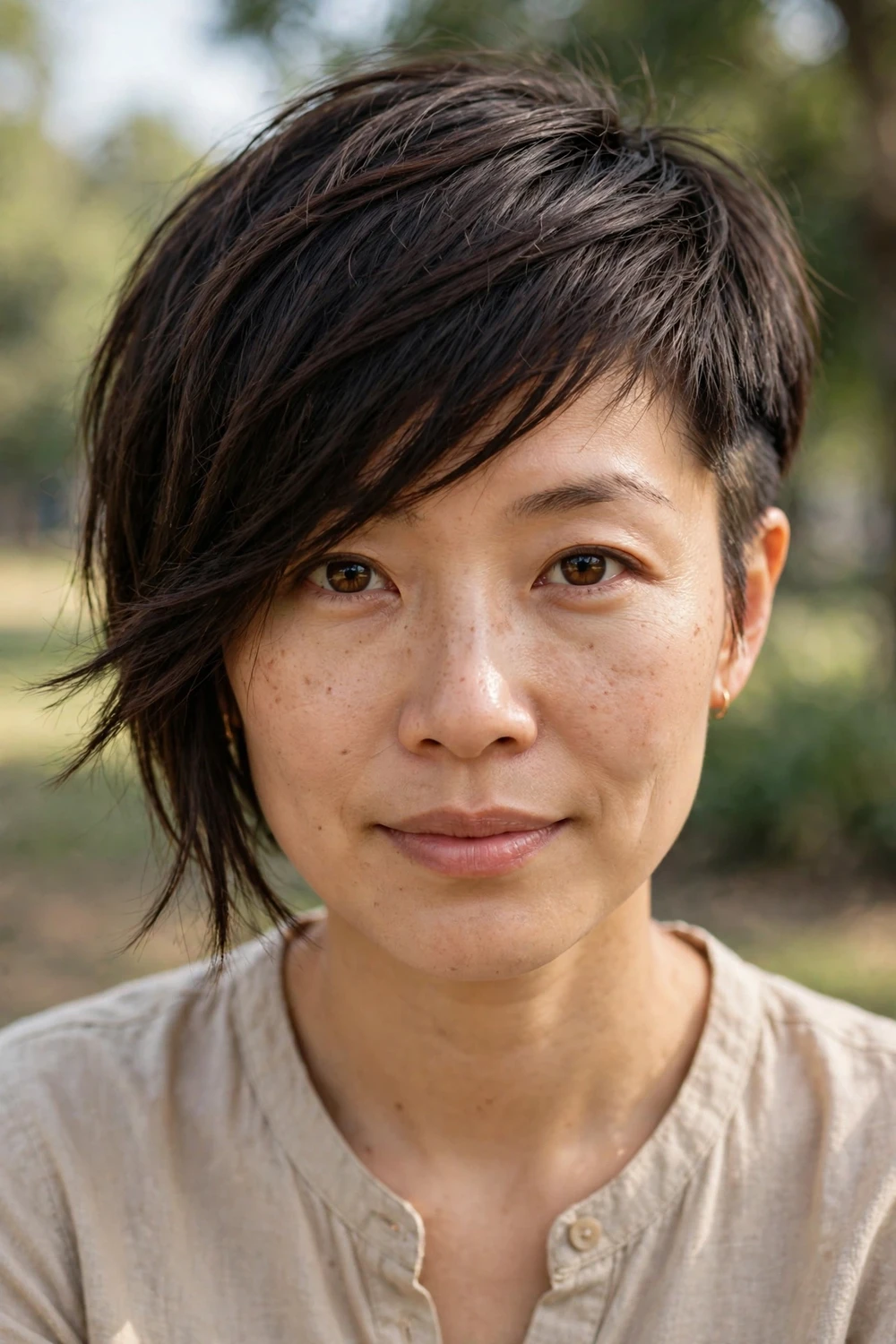
One side cropped close, the other left long enough to sweep: the asymmetry gives frizz direction instead of letting it expand evenly. The long side can be smoothed with cream while the short side needs nothing at all. It is a strong choice when frizz concentrates at the crown and sides.
Blow-dry the long side smooth with a paddle brush for five minutes if you want polish, or finger-style it for texture. Either way the cut reads deliberate. The short side needs edging every 4 weeks or the asymmetry softens into a regular pixie.
Try this: apply heat protectant before any blow-drying. Short frizzy pieces heat-damage faster because the same section takes heat almost daily.
Difficulty: Easy · Cost: pixie cut ($50–$90), trims every 4–5 weeks
10. The Tapered Curly Pixie

Curly frizz at pixie length with tapered sides and full curls on top. The taper removes the bulk at the sides that would otherwise widen the silhouette, while the top keeps enough length for curls to form properly. Frizz becomes curl definition with the right cream. Apply it to damp hair and let it air-dry.
Ask for a dry cut from someone who works with curls regularly. The tapered sides need edging every 3 to 4 weeks to hold the shape. For more short curly shapes, our curly pixie haircuts collection shows how much variety this length allows.
Try this: pick the roots at the crown with your fingers once dry. It lifts the shape without disturbing the curl pattern.
Difficulty: Easy · Cost: curly cut ($60–$100), trims every 6–8 weeks
11. The Soft Wolf Cut

A softened wolf cut gives frizz a silhouette on purpose: full at the crown, tapering through wispy ends. The heavy top layers absorb the volume that would otherwise spread sideways, and the thinner ends move instead of puffing. Mousse at the roots on damp hair is the whole styling step.
Keep it soft, not severe. A hard wolf cut with dramatic disconnection can multiply frizz instead of managing it. Ask for blended crown layers and ends that taper gradually. This suits thick wavy and curly frizz that has natural body to fill the shape.
Try this: rough-dry the crown with your fingers for lift, then let the ends air-dry untouched.
Difficulty: Easy · Cost: standard cut ($55–$95), trims every 8 weeks
12. The No-Bangs Midi

Bangs and frizz are a high-maintenance combination. They shrink, they separate, they need daily heat. The no-bangs midi skips the problem: hair falls past the shoulders in long layers with nothing to manage at the forehead. One less daily battle is the definition of low maintenance.
Long layers starting below the chin keep the front smooth without a fringe. If you miss face-framing, ask for two long front pieces that blend into the lengths. They give softness around the face without behaving like bangs.
Try this: train a center or side part while hair is damp. A part set wet stays put; a part forced dry fights you all day.
Difficulty: Easy · Cost: standard cut ($50–$90), trims every 9–10 weeks
13. The V-Cut with Internal Weight Removal
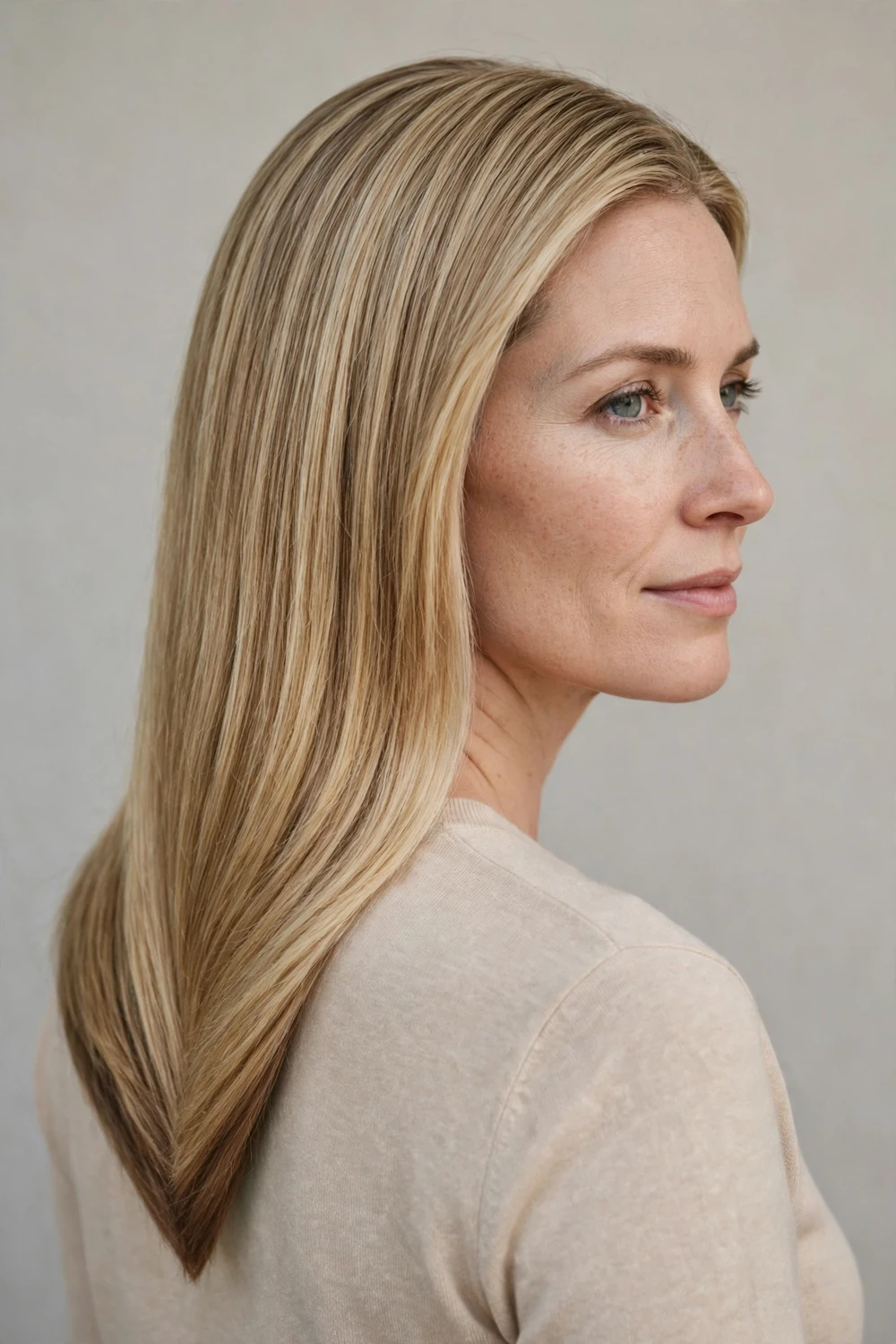
Thick frizzy hair often suffers from a weight problem, not a texture problem. The V-cut keeps length at the back while internal layering removes bulk from the middle. The hair lies flatter because there is simply less of it fighting for space. The surface stays smooth because the thinning happens underneath, never on top.
This is the cut to ask for by describing the problem: tell your stylist the hair feels heavy and wide, and ask for interior weight removal with a smooth surface. Confirm they will not use thinning shears on the top layer. That distinction is everything.
Try this: after washing, squeeze out water with your hands instead of wringing. Wringing stretches the cuticle and starts frizz before you even reach for product.
Difficulty: Easy · Cost: standard cut ($55–$95), trims every 9–10 weeks
Very thick hair has its own cutting logic beyond frizz. Our short hairstyles for thick hair guide covers density-first shapes in more depth.
14. The Diagonal Halo Layers

Halo layering cuts the hair so it falls in a rounded, even curtain around the head with no harsh steps. The diagonal cutting line keeps the layers connected, which means frizz distributes evenly instead of clumping at layer breaks. Shoulder length with a halo cut air-dries into a smooth, full shape.
It suits wavy frizz that wants to look polished without heat. Ask for connected layers and a soft perimeter. The even distribution also means grow-out stays wearable for weeks longer than a choppy cut.
Try this: smooth one drop of serum over the surface only after hair is fully dry. Serum on wet frizz just slides off.
Difficulty: Easy · Cost: standard cut ($55–$95), trims every 8–9 weeks
15. The Mid-Back Cut with Dusted Ends

Frizz starts at damaged ends and travels upward. A mid-back cut with regular dusting, tiny trims that remove split ends without losing length, keeps the perimeter sealed so frizz cannot climb. The length provides the weight, the dusting provides the seal. It is maintenance, but it is ten minutes in the salon chair every couple of months.
Ask for dusting every 8 to 10 weeks rather than a full trim. Many stylists will do it as a quick service between cuts. Keep heat off the lengths entirely and this cut practically maintains itself.
Try this: apply conditioner from the ears down only. Conditioner at the roots weighs hair down and encourages scalp buildup.
Difficulty: Easy · Cost: dusting ($20–$40), full cut ($50–$90)
16. The Twist-Out Tapered Cut
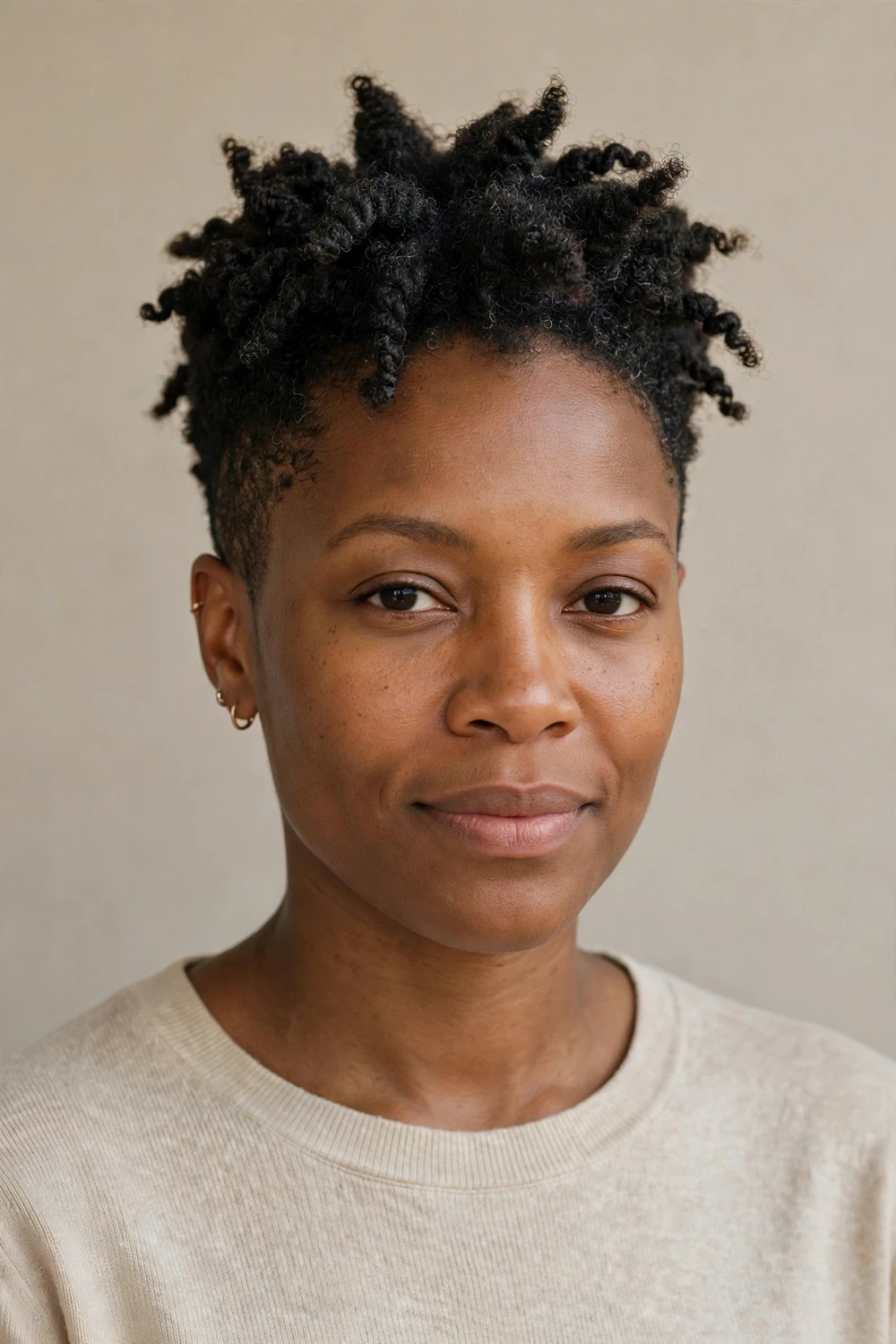
For coily and tightly curly frizz, the twist-out tapered cut is built around the styling method. Hair is cut so two-strand twists fall into a shaped silhouette: tapered at the sides and nape, fuller on top. The shape holds for days with only nightly re-twisting of the front section.
Get it cut dry so the true length shows. Moisturize in sections before twisting, and do not unravel twists until they are fully dry or frizz takes over the definition. A satin bonnet at night extends the style to a full week.
Try this: twist on stretched hair rather than shrunken hair. The finished style keeps more length and tangles less.
Difficulty: Easy · Cost: natural-hair cut ($60–$110), trims every 8–10 weeks
17. The Braid-Ready Long Layers

Some weeks the lowest maintenance routine is not wearing your hair out at all. Long layers cut with braiding in mind, even ends, no short pieces that escape, make protective styles faster and neater. One braid session covers a full week with zero daily styling.
Ask for long, even layers with no face-framing shorter than chin length. Short front pieces are the ones that frizz out of braids by day two. Keep the ends blunt enough to tuck cleanly.
Try this: moisturize and seal the ends before braiding. Dry ends inside a protective style still break.
Difficulty: Easy · Cost: standard cut ($50–$90), trims every 10 weeks
18. The Curly Shag for Defined Curls

Curly frizz and shag layers were made for each other. The layers remove the weight that pulls curls into a triangle, and each curl gets room to spring into its own shape. Frizz between the curls reads as volume rather than disorder. Cut dry, style wet, and the routine is under ten minutes.
For a full collection of shapes built for dense curls, see our curly hairstyles for thick hair guide, which covers everything from diffuser routines to buns, braids, and bulk-reducing cuts.
Ask for rounded layering rather than disconnected chunks. Disconnected layers on curly frizz can create gaps where scalp shows. A curl specialist who cuts dry is worth finding for this one.
Try this: diffuse on low heat and low speed until 90 percent dry, then air-dry the rest. High heat blasts curls into frizz.
Difficulty: Easy · Cost: curly cut ($65–$110), trims every 10–12 weeks
19. The Textured Crop with a Longer Top
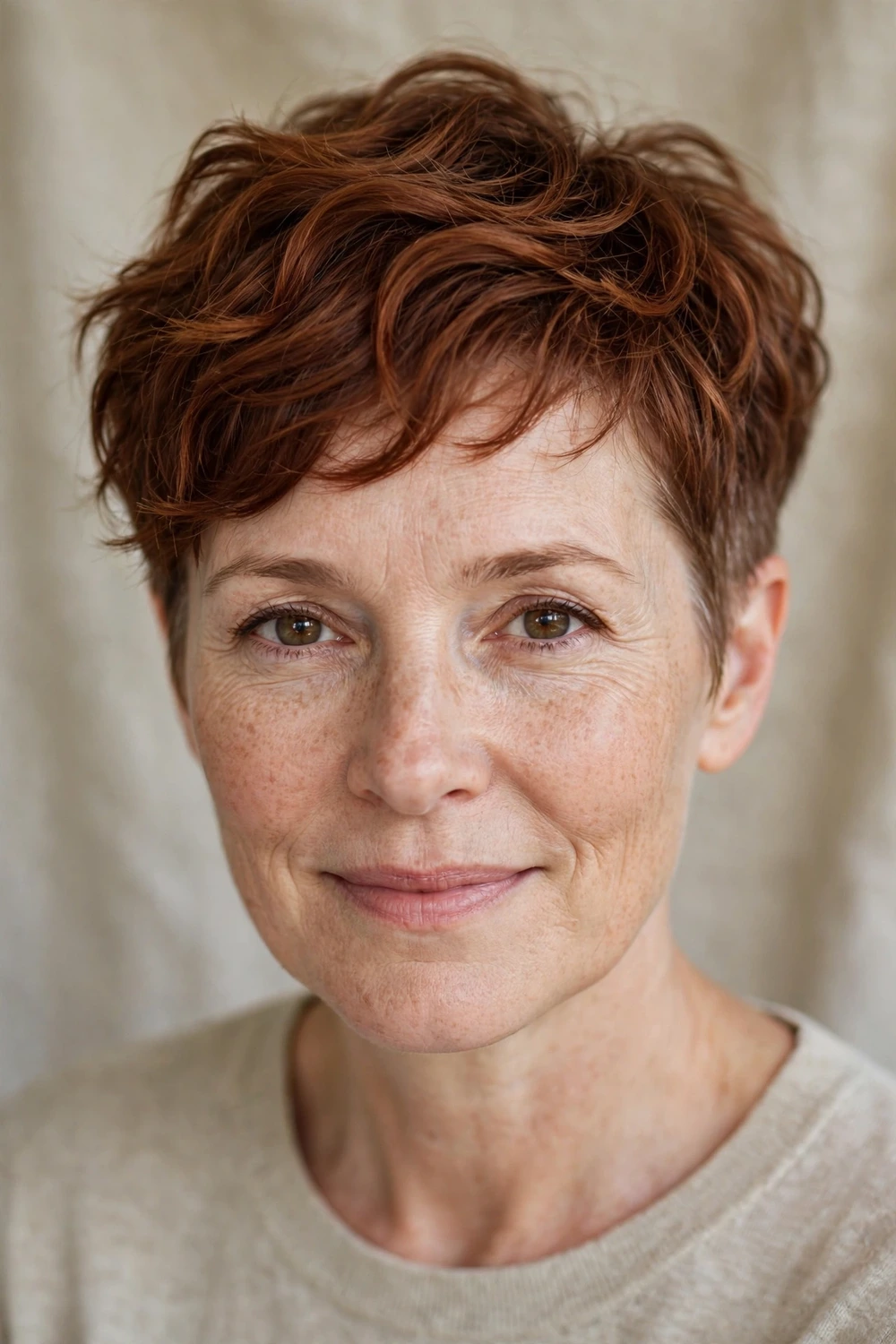
Short on the sides, two to three inches on top, textured with point cutting: this crop lets wavy frizz do what it wants within a controlled outline. The short sides remove the bulk that causes side-pouf, and the longer top can be finger-styled in under two minutes. It is the wash-and-go answer for wavy frizz that hates long hair.
Style with a dab of matte paste on dry hair, pushing pieces in the direction they already want to go. Fighting the natural direction is what makes short frizz look messy instead of textured. Trims every 5 weeks keep the outline sharp.
Try this: apply paste to fingertips first, then pinch small sections. Raking it through flattens the texture you are trying to build.
Difficulty: Easy · Cost: pixie cut ($45–$85), trims every 5 weeks
20. The Deep Side Part Layers

A deep side part is a styling trick disguised as a haircut. Flipping the part gives instant root lift on the heavy side and lets the lighter side lie flat, which breaks up the uniform pouf that makes frizz look unmanageable. Pair it with long layers and the asymmetry does daily work for free.
Set the part while hair is damp so it dries in place. Switching the part to the opposite side every few months retrains the roots and brings back volume that goes flat over time. No product needed beyond your usual leave-in.
Try this: use the arch of your eyebrow as the part guide. Most faces part cleanest above the outer brow.
Difficulty: Easy · Cost: standard cut ($50–$90), trims every 9 weeks
What to Avoid with Frizzy Hair
Avoid razors and thinning shears on the surface of the hair. Both create short broken pieces that stick up as flyaways within weeks. If your stylist reaches for thinning shears, ask whether the work is happening underneath. Interior weight removal is fine; surface thinning is not.
Skip blunt bangs unless you are committed to daily heat. Bangs shrink as they dry and separate by midday on frizzy textures. Skip the rough towel wrap too. Wringing wet hair in a towel stretches the cuticle and starts frizz before styling begins.
Do not fight your texture with a cut built for straight hair. A precision bob designed for sleek blowouts will never air-dry well on frizz. Pick the cut for the hair you have, not the routine you wish you had.
Quick Comparison
| Cut | Best for | Daily styling | Trim cycle |
|---|---|---|---|
| Collarbone cut, internal layers | Most frizz types | Leave-in, air-dry | 9–10 weeks |
| Soft shag / shaggy lob | Thick wavy frizz | Cream, scrunch | 8 weeks |
| Long one-length | Medium-thick density | Wash and go | 10 weeks |
| Curly wash-and-go bob | Curly frizz | Cream, diffuse or air-dry | 10–12 weeks |
| Fine-hair crop / pixies | Fine frizz | Cream or paste, fingers | 4–6 weeks |
| Tapered cuts / twist-outs | Coily frizz | Moisturize, re-twist front | 8–10 weeks |
Frequently Asked Questions
What is the lowest maintenance haircut for frizzy hair?
A collarbone-length cut with long internal layers. It is long enough for gravity to help, the hidden layers remove bulk without creating flyaways, and it air-dries with just a leave-in cream. Trims every 9 to 10 weeks keep it in shape.
Should frizzy hair be layered or cut one length?
It depends on density. Thick frizzy hair needs internal weight removal or it goes wide. Fine frizzy hair needs a clean, blunt perimeter because layers remove density it cannot spare. Medium density does well with long, connected layers. The mistake is asking for surface layers when you need interior work, or vice versa.
Is short hair good for frizzy hair?
Only when the texture supports it. Fine wavy frizz suits short crops because there is less hair to misbehave. Coarse, high-volume frizz at chin length can balloon without weight below it. Curly frizz does well in tapered pixies and bobs cut dry. When in doubt, shoulder length is the safe short.
Should frizzy hair be cut wet or dry?
Curly frizz should be cut dry, curl by curl, so the stylist sees the true length. Wavy and frizzy-but-not-curly hair can be cut wet with shaping, as long as the stylist leaves margin for shrinkage. Ask which method your stylist uses before the appointment.
How often should I trim frizzy hair?
Bobs and shoulder-length cuts every 7 weeks, long layers every 9 to 10 weeks, pixies and crops every 4 to 5 weeks. Frequent small trims preserve the shape better than one big annual chop, and they keep split ends from traveling upward into new frizz.
Final Thoughts
The right cut turns frizz from a daily fight into a texture with a plan. Pick the idea that matches your density and the mornings you actually want: collarbone layers for the easy middle ground, crops for fine hair, dry-cut curls for coils. Bring reference photos of your exact texture to the salon and book the next trim before you leave.
For more low-effort shapes across every hair type, browse the full collection at PrimeHairPicks.
If your frizz comes with a defined jawline, the best hairstyles for square faces pair low frizz with softening shape. For more on this topic, see hairstyles for thin hair over 50.

