


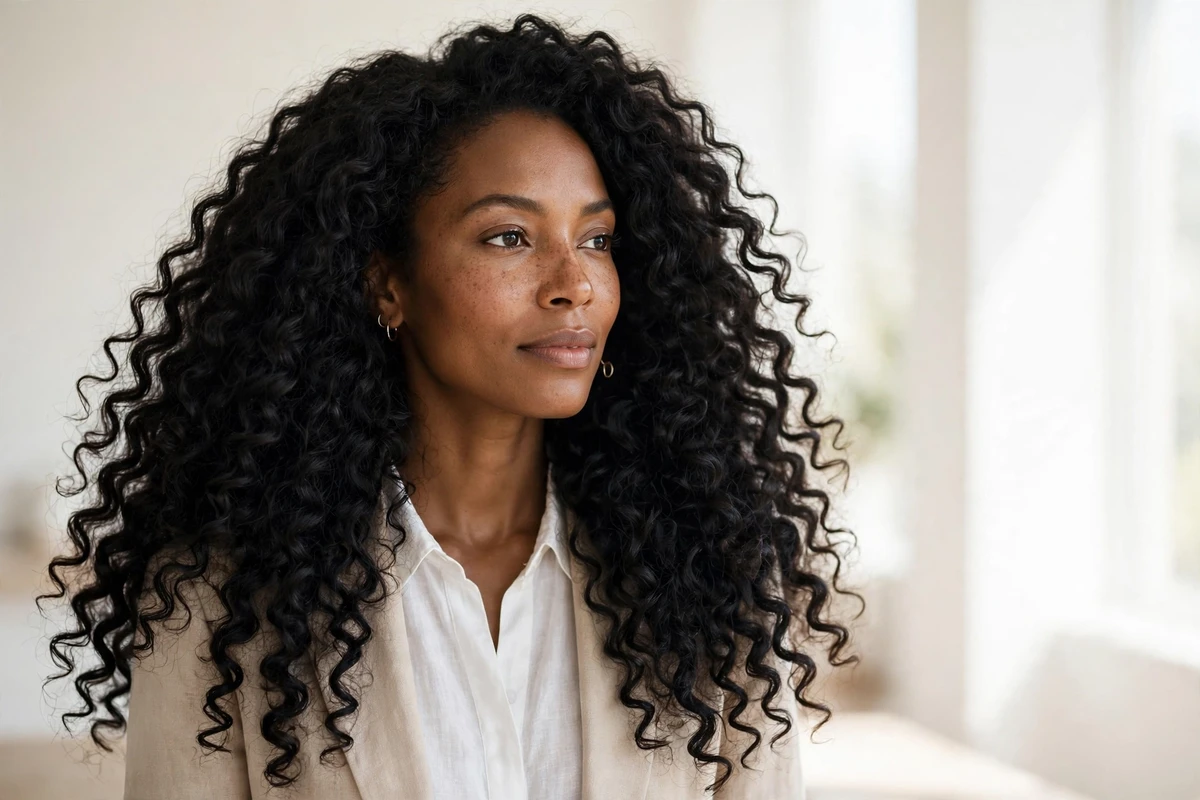
Thick curly hair gives you volume most people pay for, but it also asks for more planning. Cuts that ignore bulk turn into triangles. Styles that ignore shrinkage fall apart by noon.
The 28 curly hairstyles for thick hair below were picked for how they handle density, not just how they photograph. You will find cuts that remove weight, updos that stay put in heavy hair, and routines that keep frizz down. I’ve spent years adjusting cuts and products for dense curls, so these picks come from real trial and error.
Quick answer: Long layers and shaggy cuts distribute weight in thick curls, while buns, twist-outs, and pineapples manage density on busy days. Wash 2 to 3 times a week, detangle wet with a wide-tooth comb, and always ask your stylist for internal layers that remove bulk without adding width.
Quick Takeaways
- Long layers and internal thinning remove bulk from thick curls without sacrificing length.
- Diffuser drying upside down lifts roots and stops heavy curls from going flat on top.
- Pineapples, buns, and top knots are the lowest-effort way to manage dense hair daily.
- Deep conditioning weekly and trims every 6 to 8 weeks keep thick curls healthy and springy.
- Undercuts and tapered necklines cut drying time noticeably for very dense hair.
Why Thick Curly Hair Needs Its Own Approach
Density changes everything. A bob that works on fine curls can balloon on thick hair. A wash-and-go that takes 20 minutes on medium hair can take an hour on dense coils. The cut has to remove weight in the right places, and the routine has to account for longer drying times and faster product use.
Thick curly hair also shrinks more than most people expect. Type 3C and 4A curls can lose 40 percent or more of their length when dry. Styles that depend on exact length should be planned with shrinkage in mind, and protective styles like twist-outs and buns should never be braided or twisted too tightly at the scalp.
1. Defined Curls with a Deep Side Part
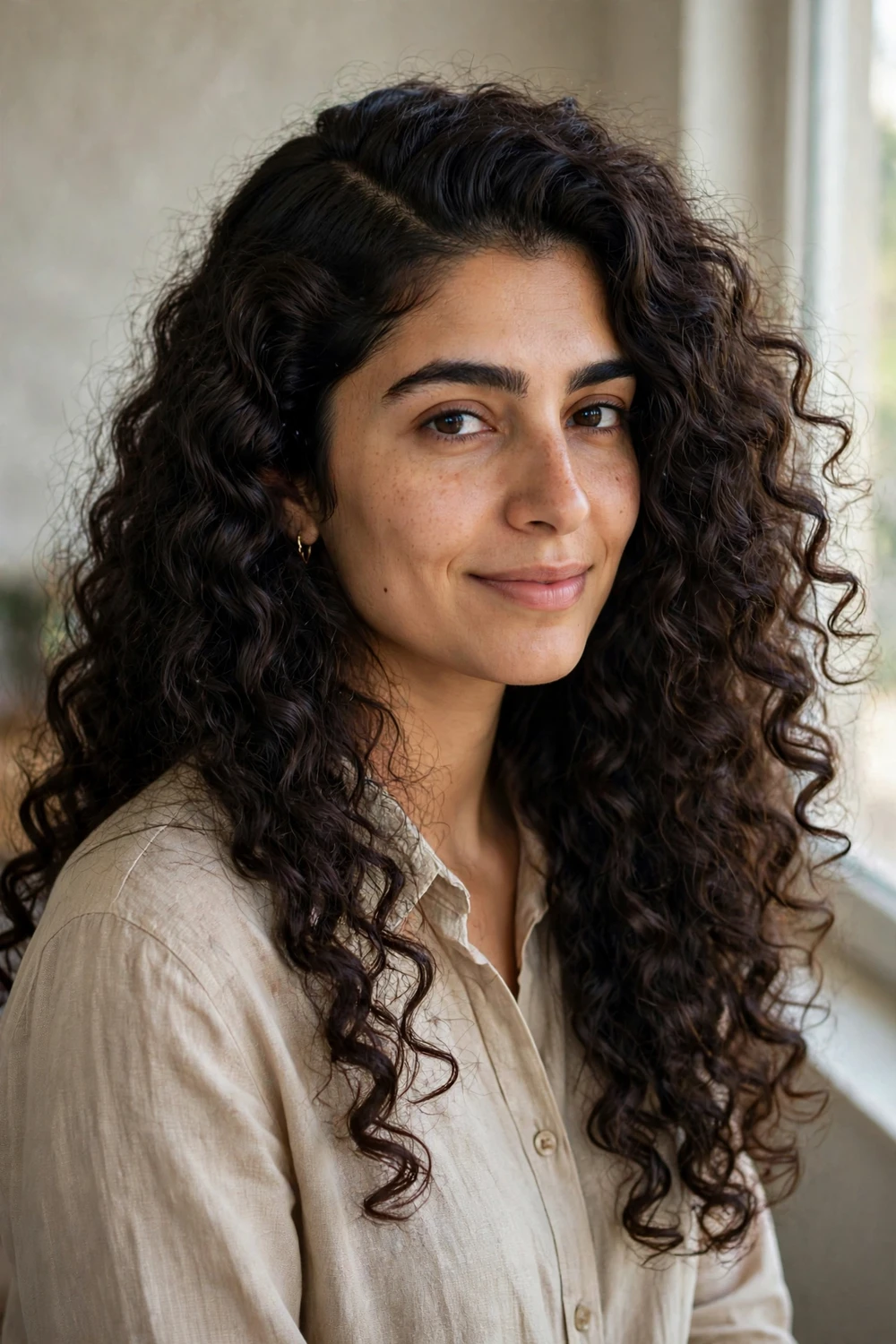
Shifting the part to one side moves volume away from the center and gives heavy curls a direction to fall. Scrunch curl cream into soaking wet hair, then create the part with your fingers before you touch the dryer. A deep part also balances a round or square face by breaking up symmetry. Let the larger side cascade over the shoulder for a soft, intentional finish. Refresh the part on day two with a little water and a pea-sized amount of leave-in conditioner.
Try this: Diffuse on medium heat with your head flipped upside down, then flip back and settle the part into place for extra root lift.
2. Voluminous Diffuser Drying
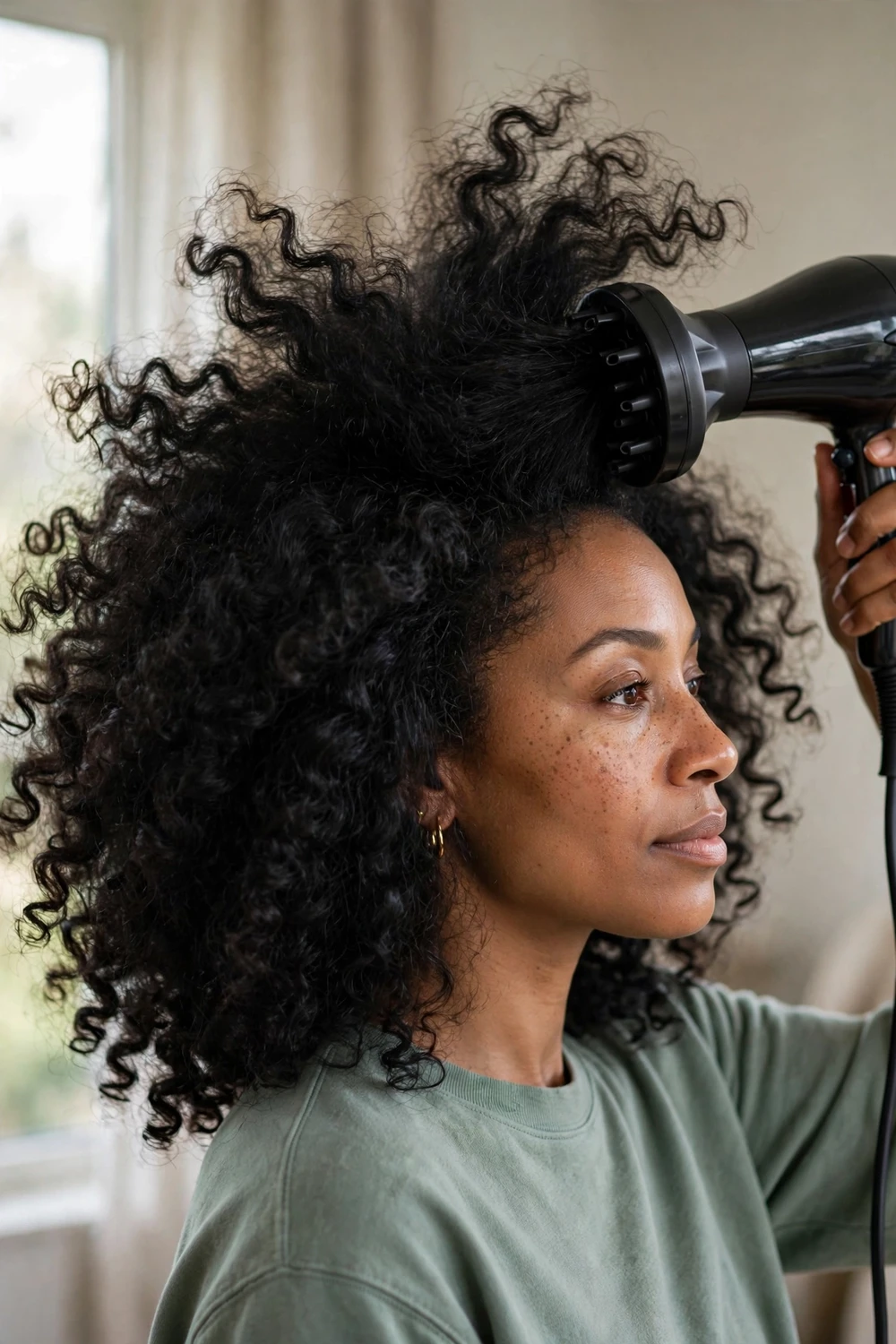
Thick curls air-dry into a flat top and heavy bottoms more often than not. A diffuser fixes that by lifting roots while the lengths dry. Apply mousse to damp hair, then cup sections in the diffuser bowl and hold for 20 seconds each. Work in four or five sections so heat reaches the inner layers. Keep touching to a minimum once the dryer is on, because handling wet curls creates frizz. The result is even, bouncy volume from roots to ends.
Try this: Finish with 30 seconds of cool air and a drop of silicone-free serum pressed into the ends to seal in shine.
3. Long Layers That Distribute Weight
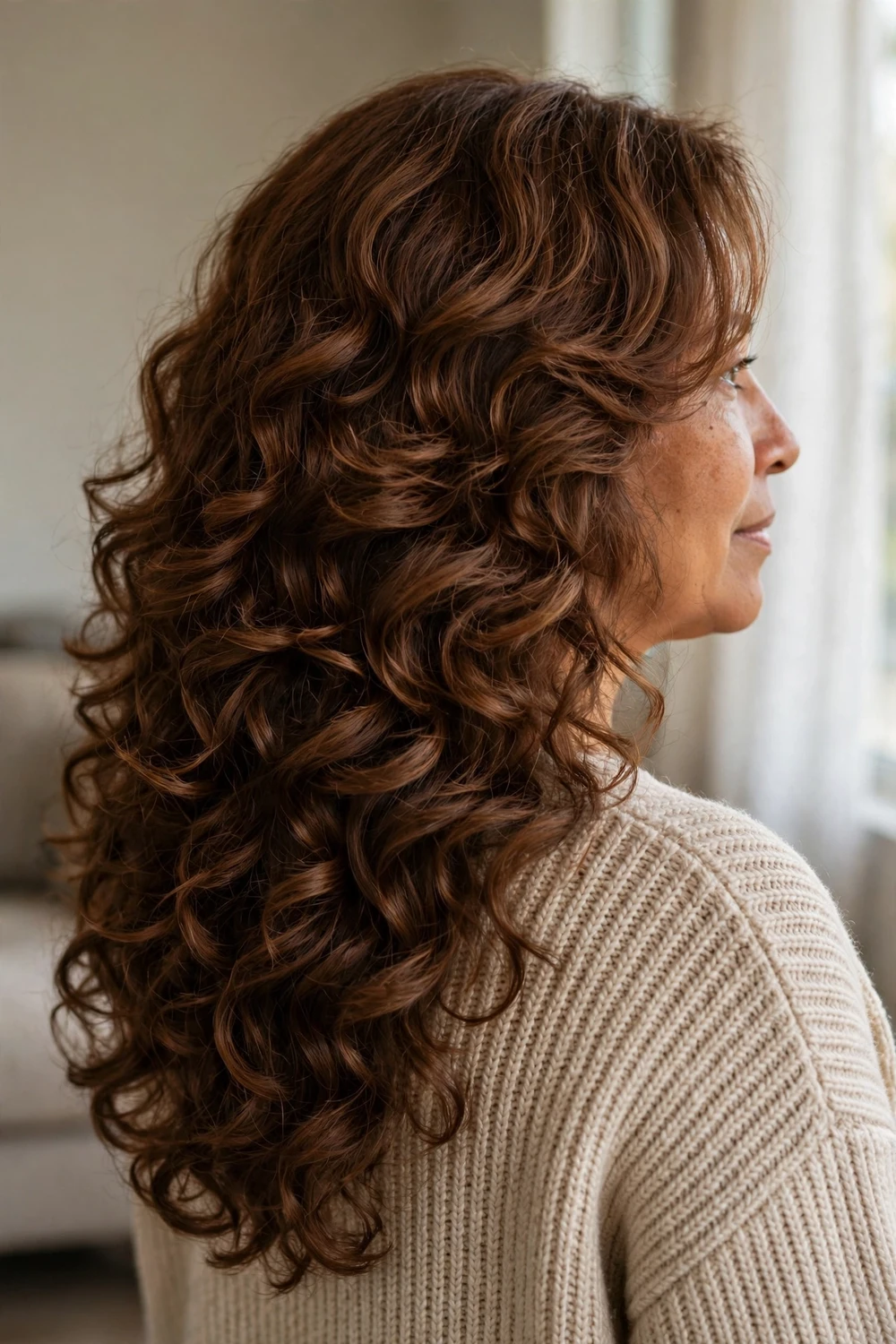
Long layers are the single most useful cut for dense curls. They spread bulk down the length instead of letting it collect at the bottom, which removes the dreaded triangle shape. Ask for layers that start at the chin and continue down, cut dry if your stylist offers it. Dry cutting shows how each curl springs up, so the layers land where they should. This cut grows out gracefully and works for type 2C through 4A textures.
Try this: Ask for internal layers or “hidden” layers underneath to remove weight where no one sees it, keeping the surface smooth.
4. Cascading Long Curls
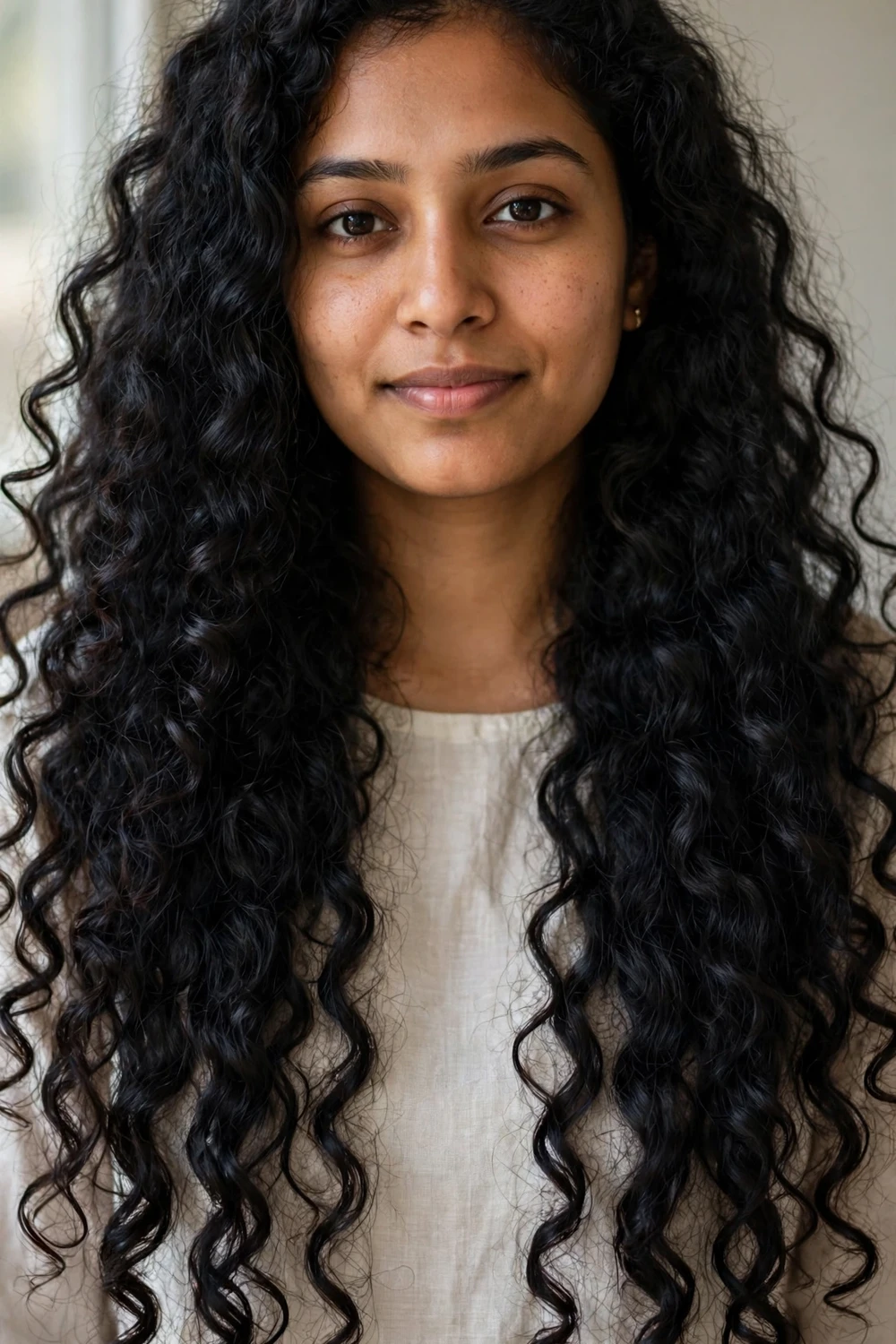
Letting thick curls grow long is one of the easiest ways to manage them, since length pulls weight down and stretches the curl pattern slightly. Keep ends healthy with a deep conditioner every week and trims every 8 weeks. Style with a leave-in conditioner and a curl-defining gel, then scrunch and air-dry or diffuse. Long cascading curls photograph well and need less daily styling than shorter cuts that require reshaping.
Try this: Sleep with hair in a loose pineapple on top of your head to protect the curl pattern and cut morning refresh time in half.
5. Curly Bob with Bangs
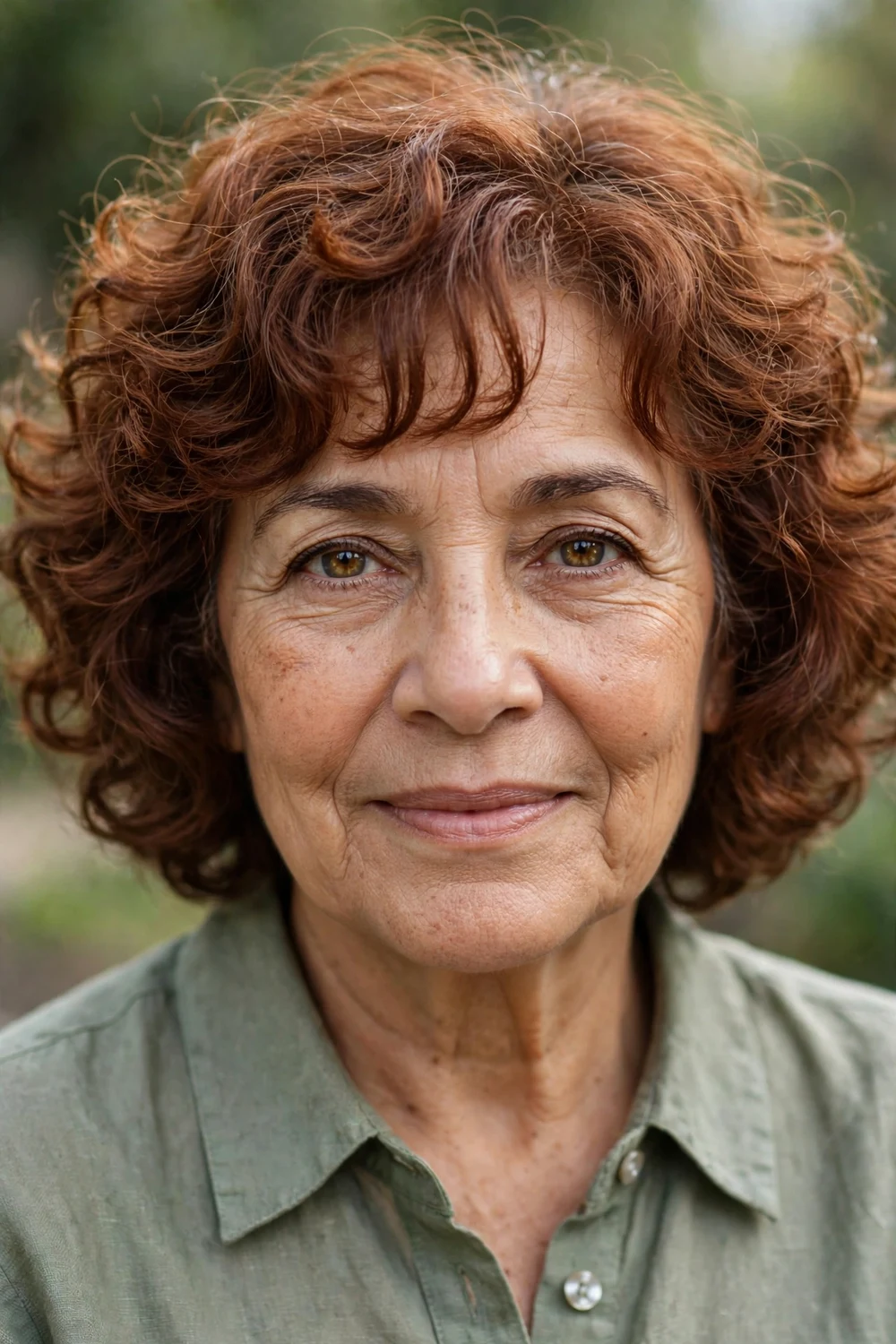
A chin-length bob with curly bangs frames the face and keeps thick hair contained. The key is layering through the ends so the bob tapers instead of puffing out. Bangs should be cut longer than you think, since curls spring up as they dry. Style by raking curl cream through damp hair and diffusing, then finger-separating the bangs. This cut suits oval, heart, and long faces especially well.
Try this: Trim the bangs yourself between salon visits, but only when hair is fully dry so you see the true length.
6. Rounded Shapely Bob
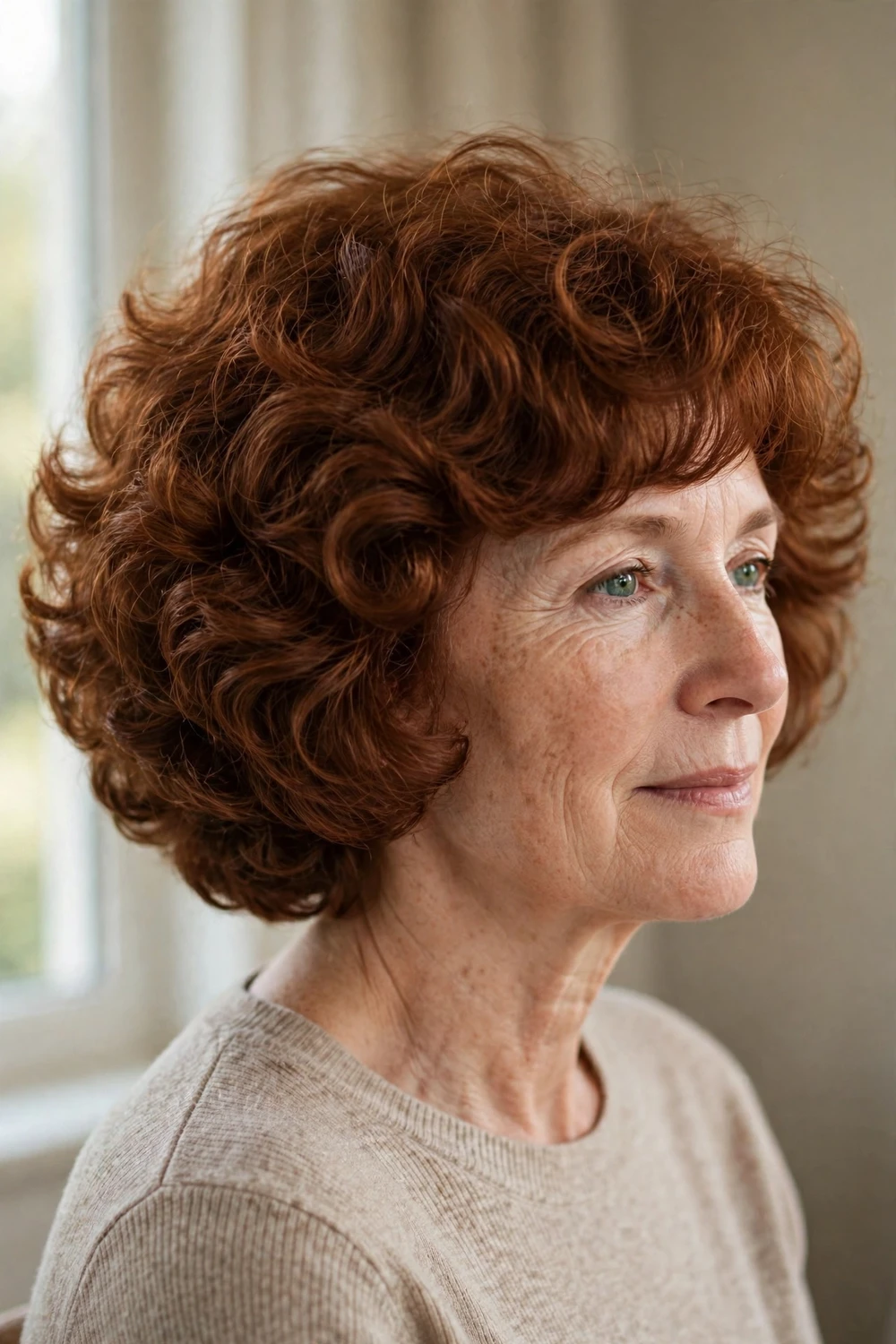
The rounded bob leans into volume instead of fighting it. Cut to sit at or just below the chin, it forms a soft halo shape that flatters thick curl patterns. Graduated layers underneath remove the bulk that would otherwise push the shape outward. This style works for both defined ringlets and looser curls. Refresh it with a spray bottle of water mixed with a little conditioner, scrunching sections back into shape.
Try this: Wear it with a center part for symmetry or a side part for more movement, and switch every few days to prevent a flat part line.
7. Curly Pixie Cut
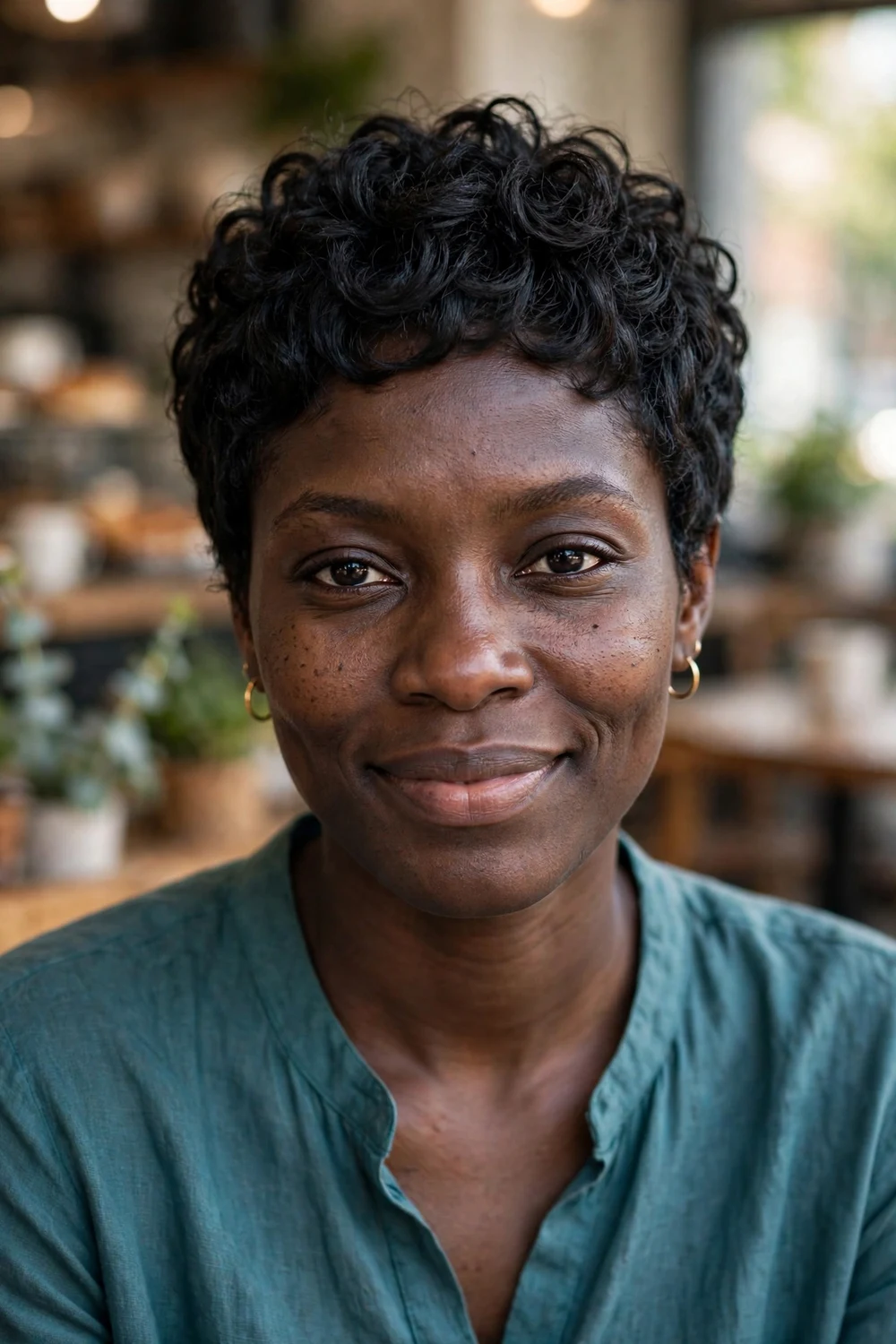
A pixie removes most of the weight problem at once. Thick curls give the cut natural lift and texture that fine hair cannot replicate. Keep the top longer than the sides so curls have room to coil, and ask for point cutting to soften the edges. Styling takes minutes: rub a small amount of curl cream between your palms and press it into damp curls. Trims every 4 to 6 weeks keep the shape crisp.
Try this: Grow it out into a curly crop by trimming only the sides for a few months, which buys time between full reshapes.
8. Textured Curly Shag
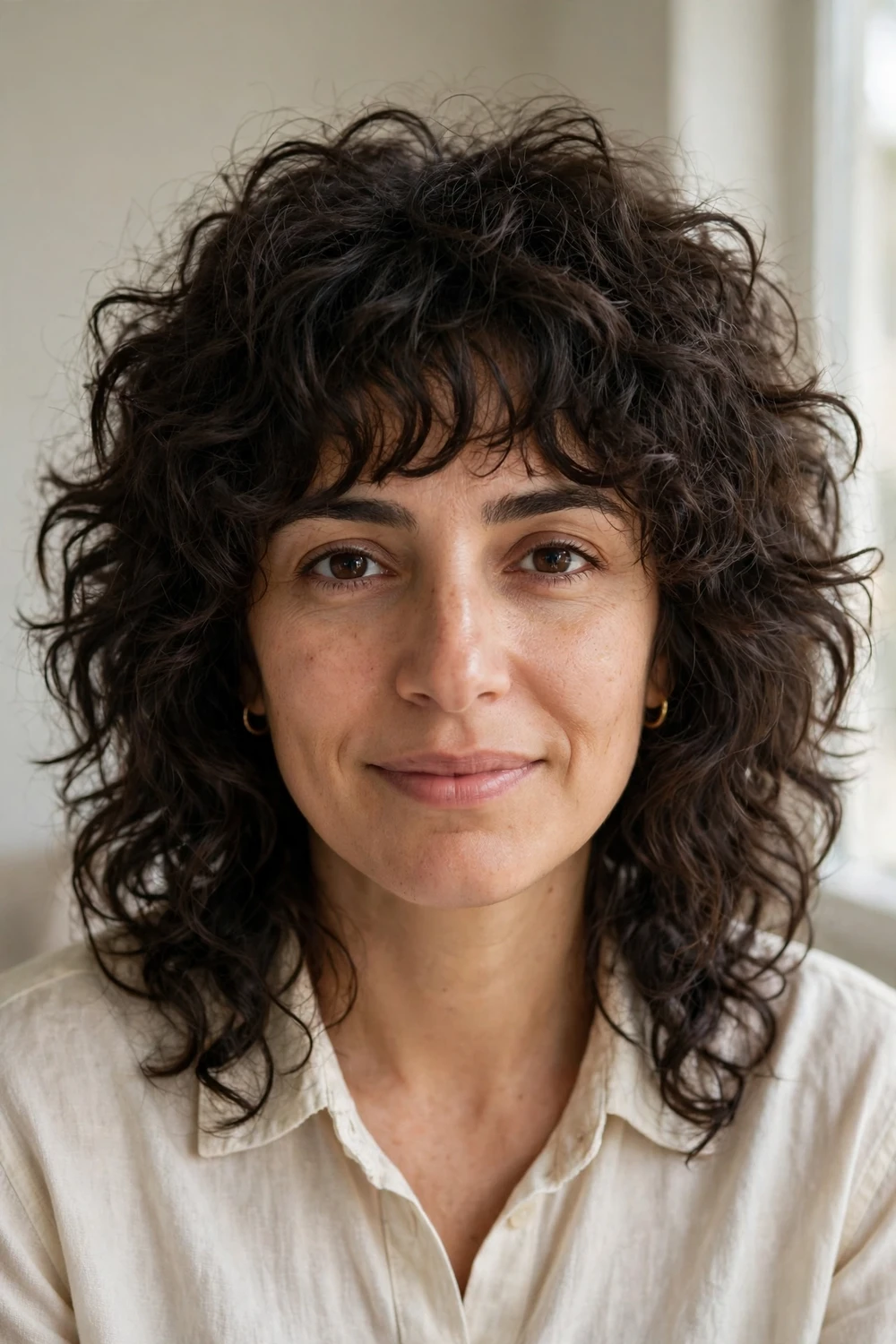
The shag was practically designed for thick curly hair. Choppy layers of different lengths break up density and create movement that one-length cuts never achieve. Curtain-style fringe blends into the layers and frames the cheekbones. This cut looks best slightly undone, so resist the urge to over-style. Scrunch in mousse, diffuse, and let the layers do the work. It suits women who want an edgy but wearable everyday cut.
Try this: Ask for “invisible layers” at the crown if you want the shag shape without visible steps in the curl pattern.
9. Natural Spiral Ringlets
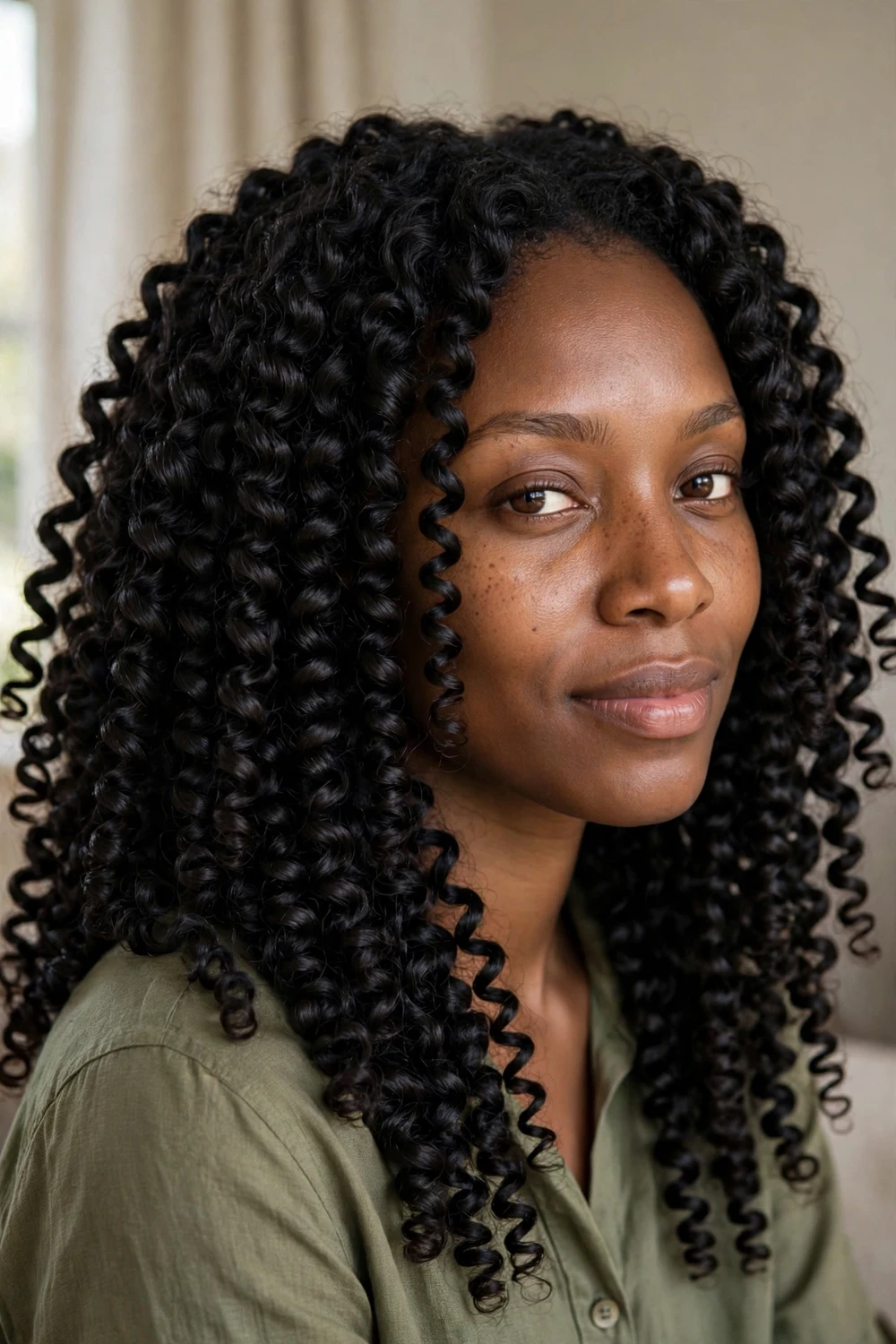
If your curl pattern forms natural spirals, a curl-by-curl approach shows them off best. Apply styling products to soaking wet hair in sections, then twist or coil individual clumps around your finger to encourage the spiral. A hooded dryer or diffuser sets the shape without disturbing it. Avoid brushing once dry, since it separates the ringlets into frizz. This technique suits type 3A to 3C hair and holds for several days with a silk scarf at night.
Try this: Use the “praying hands” method to smooth gel over each section before finger-coiling, which cuts down on frizz dramatically.
10. Soft Mid-Length Curls
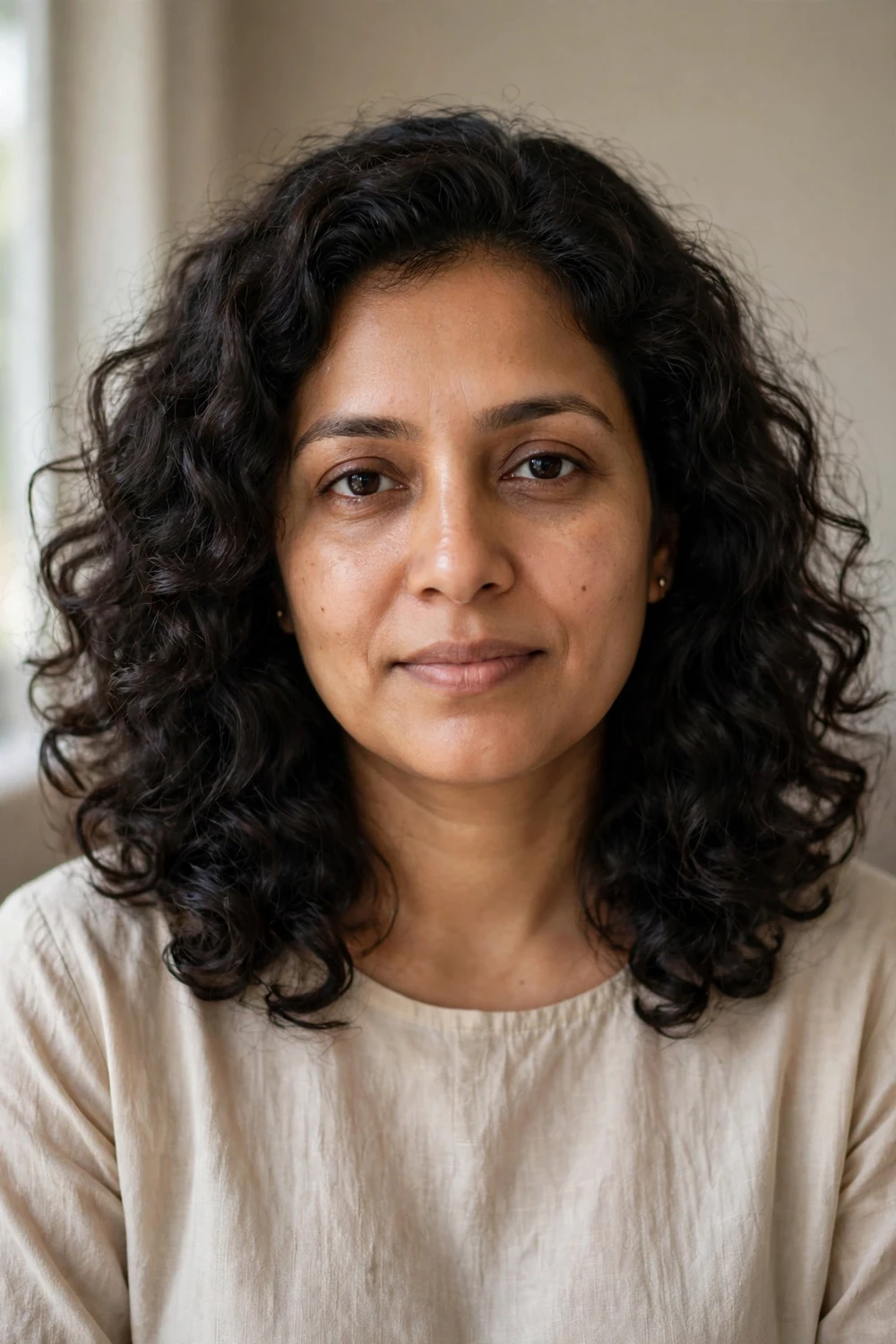
Shoulder-length curls hit the sweet spot between manageability and styling options. Long enough to pull back, short enough to dry in reasonable time. Layers through the mid-lengths stop the cut from going wide at the bottom. Style with a curl cream and a light gel, then scrunch and diffuse. This length works for nearly every face shape and transitions well between casual and formal settings without a restyle.
Try this: Pin one side back with a flat clip for meetings, then release it for evening plans. The curl pattern hides the clip marks.
11. Side-Swept Layered Curls
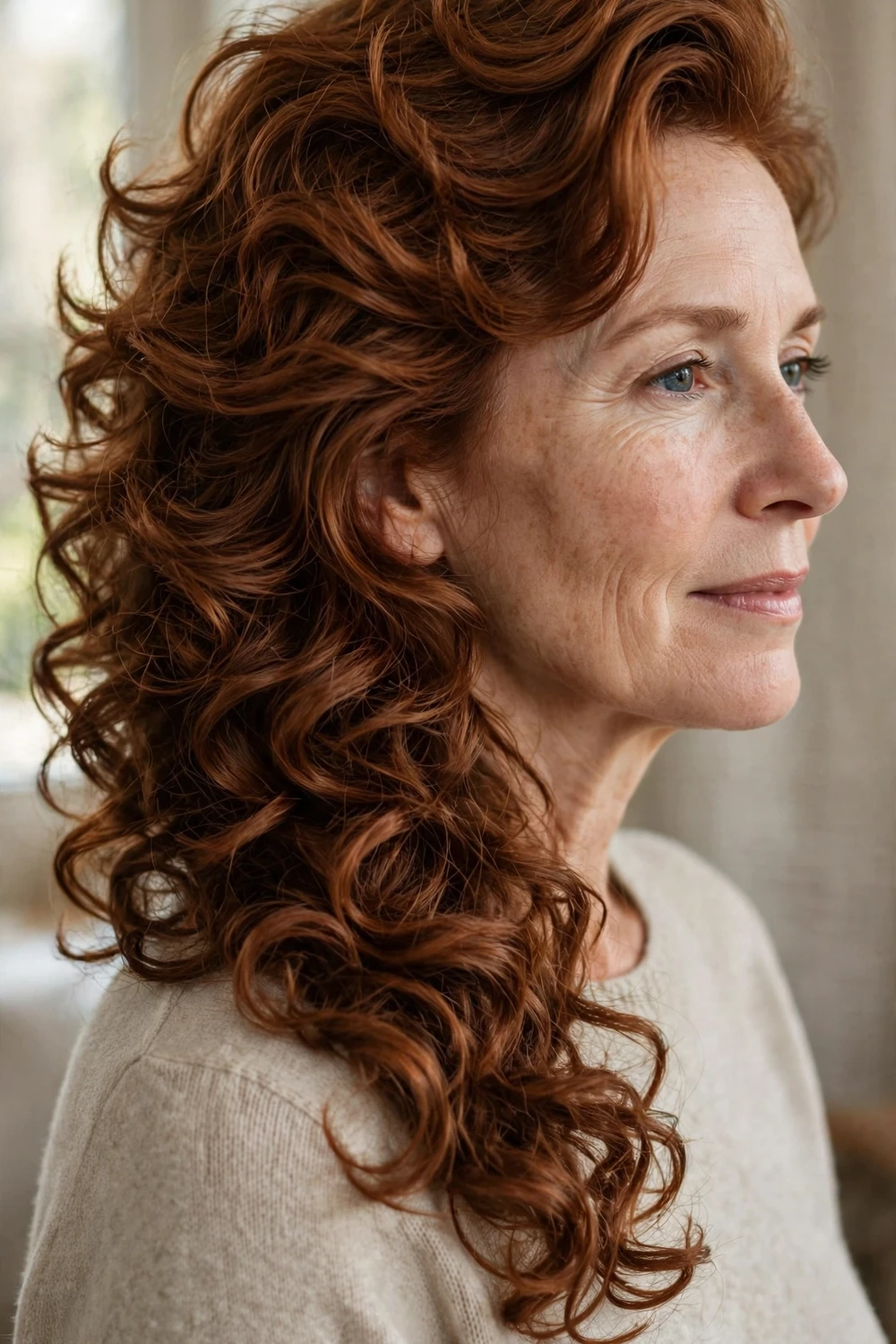
Sweeping thick curls over one shoulder solves the “too much hair everywhere” feeling instantly. Start with layered curls, then tease the roots lightly on the opposite side to encourage the sweep. Secure with two bobby pins crossed in an X at the nape, hidden under the curls. The asymmetry creates a slimming diagonal line and keeps hair off your back on warm days. This style photographs well and holds through long events.
Try this: Mist the swept side with a flexible-hold hairspray and let it dry before adding the pins, which keeps the hold invisible.
12. Natural Curls with a Fringe
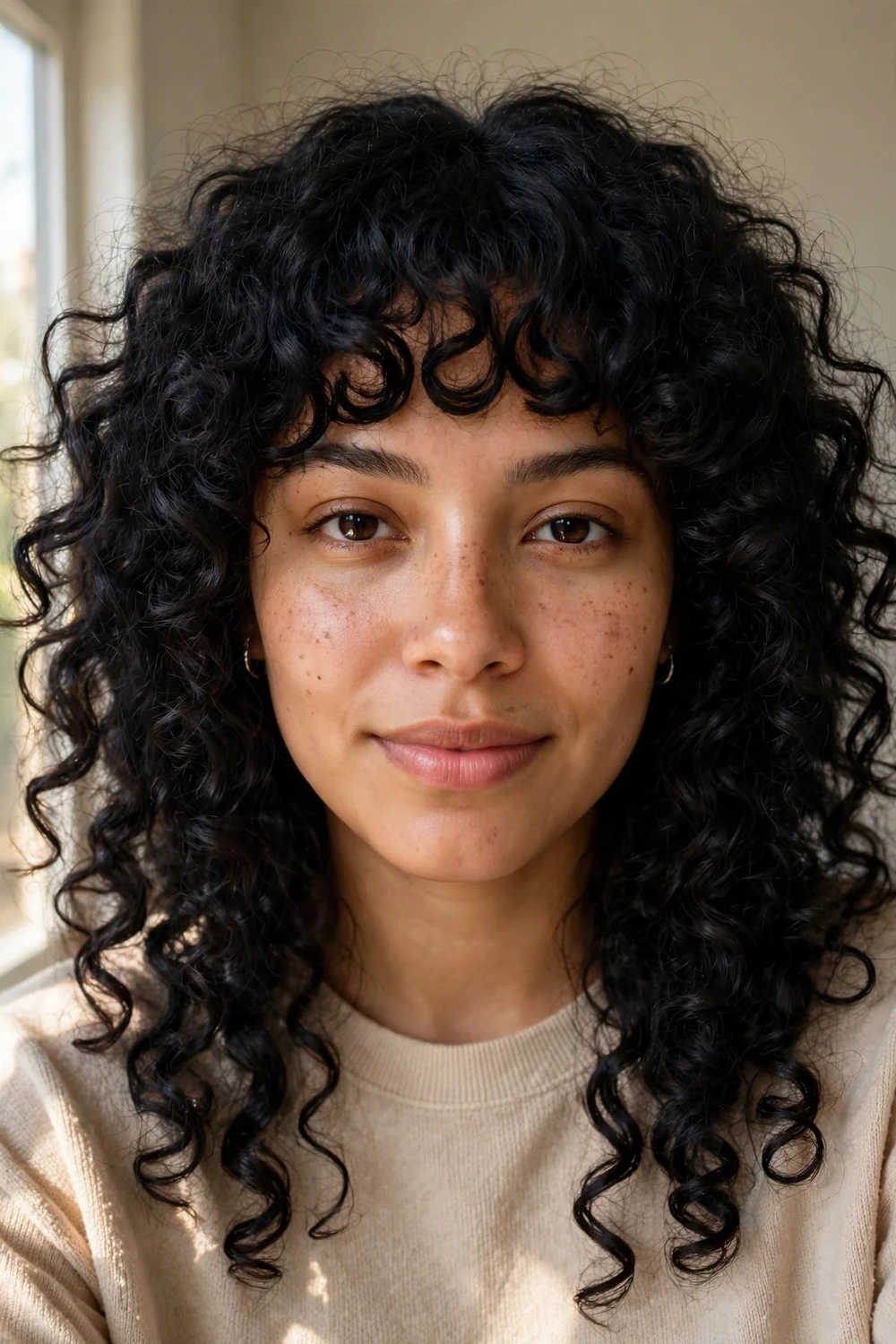
A curly fringe changes the whole frame of the face. Cut it dry, ringlet by ringlet, so each curl lands at its natural length. Keep the fringe slightly longer at the temples to blend into the sides. Diffuse the fringe first while it is wettest, since it dries fastest and sets the tone for the rest. This look suits long and oval faces, and it draws attention to the eyes without any extra makeup effort.
Try this: Revive a flat fringe on day two by wetting just the front section, adding a dab of gel, and diffusing for two minutes.
13. Floral-Pinned Natural Curls
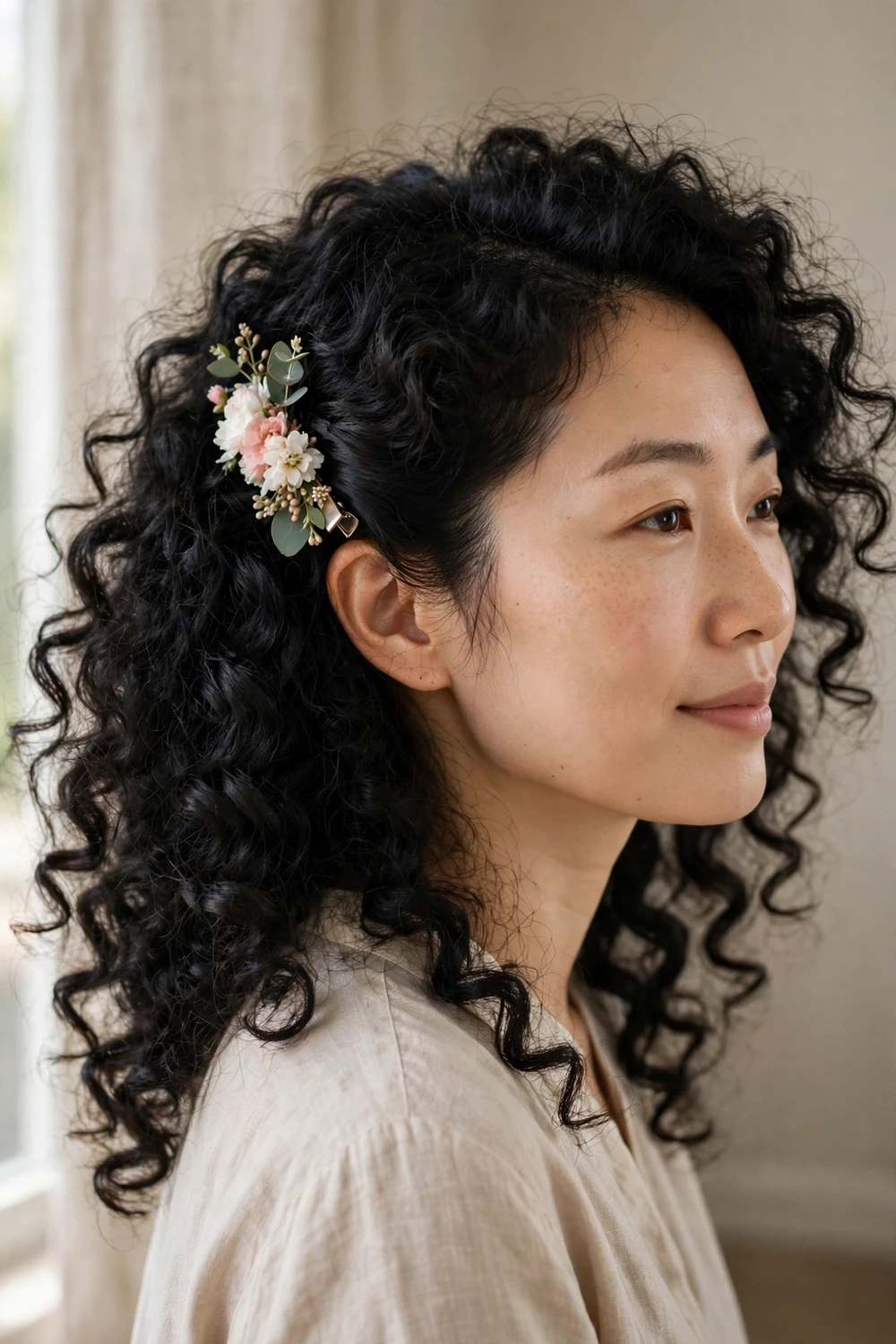
One statement clip turns everyday curls into an event style. Pin back the front section on one side with a floral or jeweled clip, letting the rest fall naturally. The clip also tames the section of hair that always falls in your face. Choose clips with a strong grip, since thick hair pulls out flimsy ones. This works for weddings, parties, or any day you want to look finished with almost no effort.
Try this: Place the clip just above the ear and angle it slightly upward so it holds more hair without sliding.
14. Messy Curly Bun
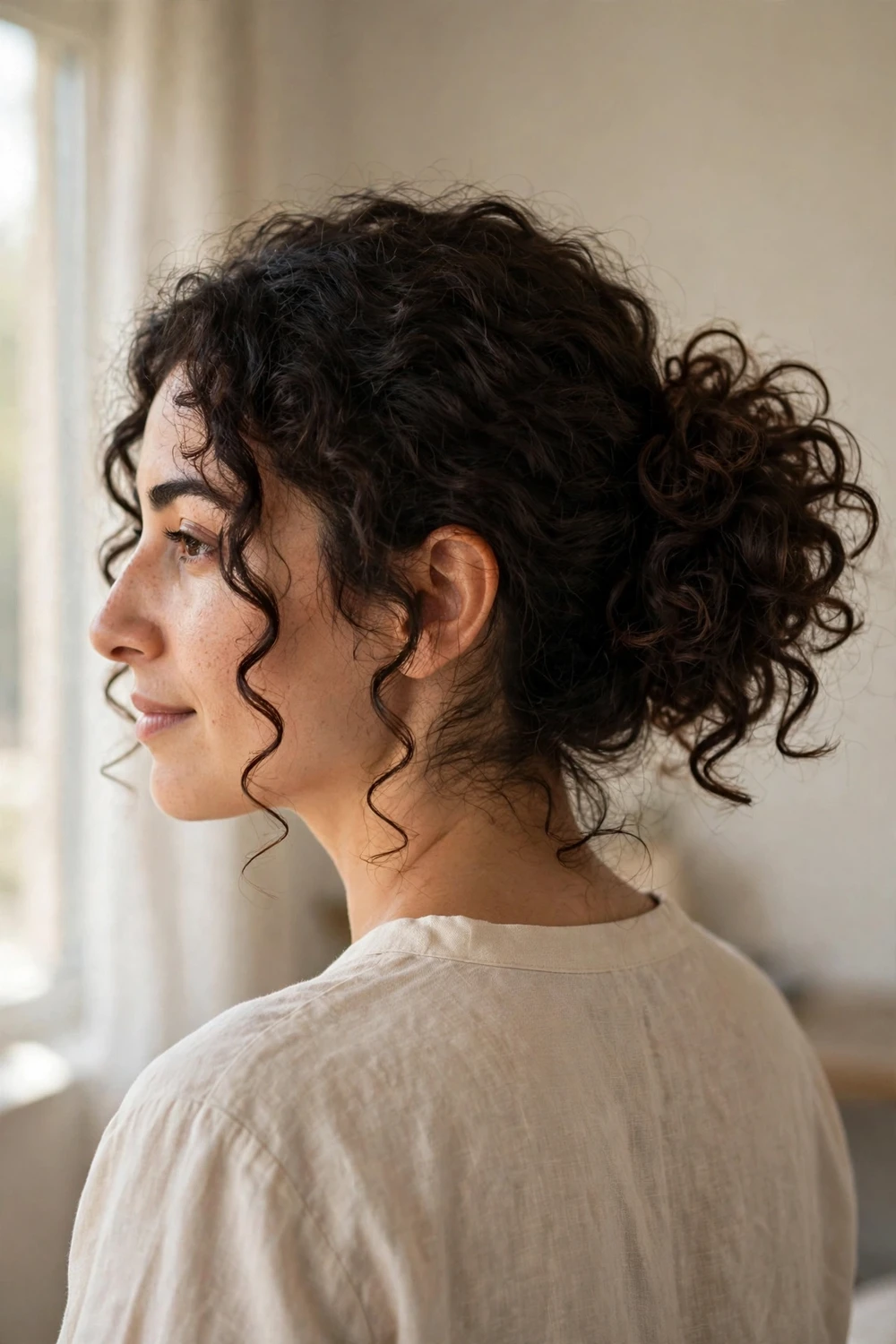
The messy bun is the unofficial uniform of thick curly hair, and for good reason. Gather curls loosely at the crown or nape, twist once, and pin. Leave the ends free and pull out a few face-framing pieces. Because the hair is dense, the bun holds its shape without much pinning. This takes five minutes and survives wind, workouts, and long days. It also protects ends from friction when you are out and about.
Try this: Use a hair tie once and pins for the rest, since multiple elastics create dents and breakage in curly hair.
15. High Curly Bun
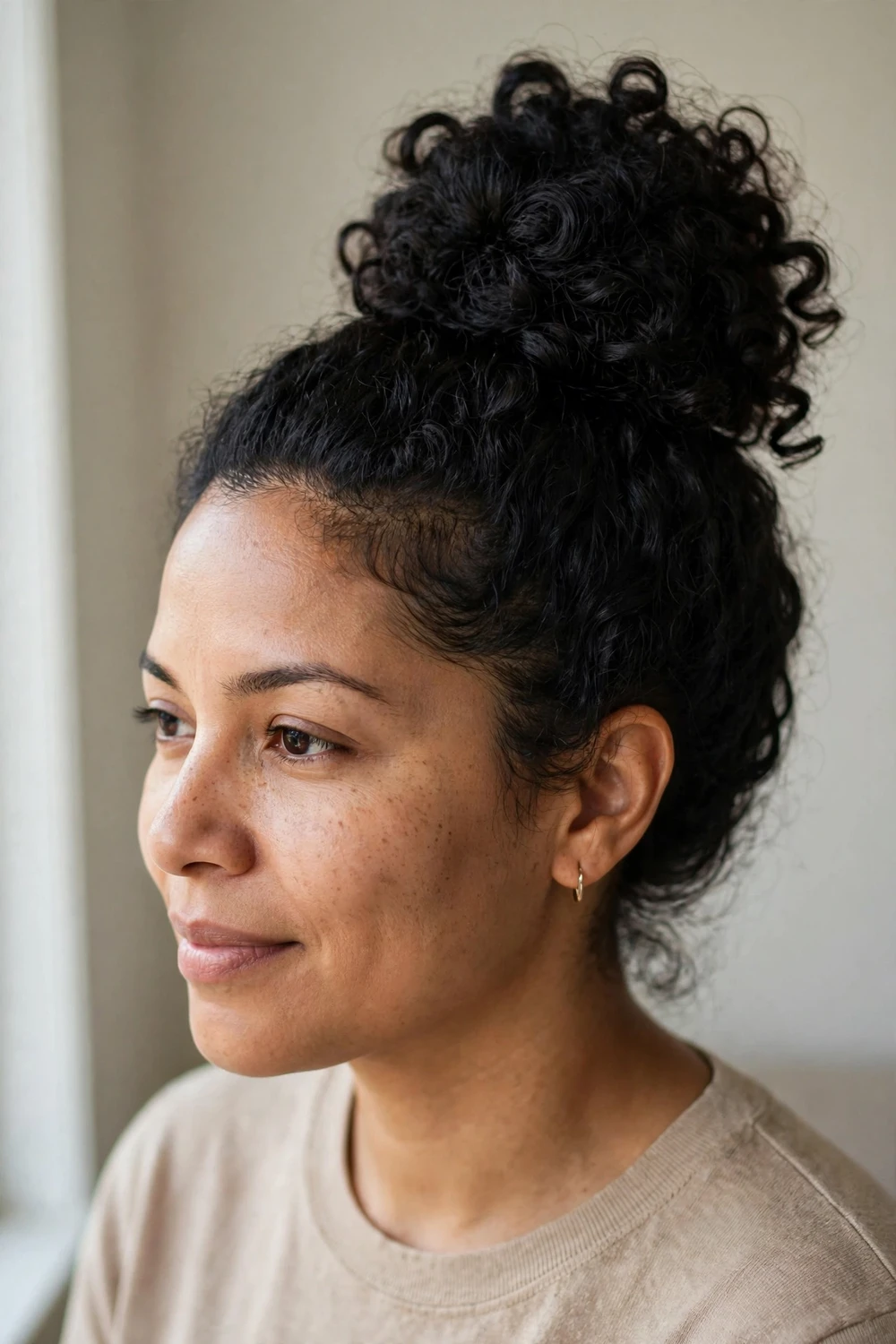
A high bun lifts thick hair off the neck and shows off your bone structure. Flip your head over, gather everything to the top, and coil it into a bun, pinning as you go. Smooth the front with a little edge control or gel on a soft brush for a polished hairline. The height elongates the face, which flatters round and square shapes. It stays secure for hours because the density gives the pins plenty to grip.
Try this: Wrap a silk scarf around the base for the first 20 minutes to set the shape, then remove it for a smooth finish.
16. Messy Top Knot
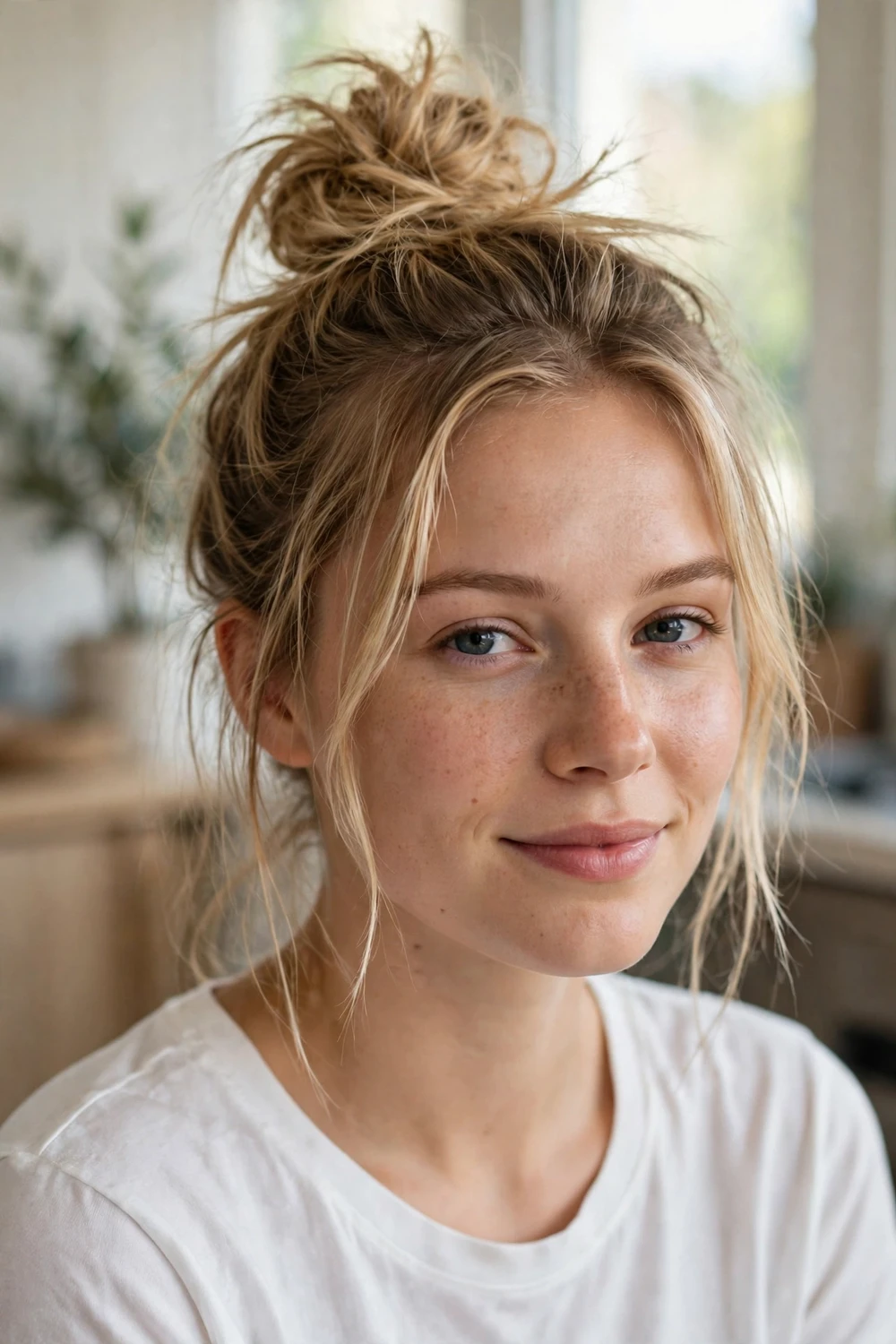
The top knot sits higher and looser than a structured bun, with texture as the point. Pile curls on top of the head and pin loosely, letting coils spill in every direction. Pull out tendrils around the face for softness. This is a second or third-day style that actually improves as the hair gets a little lived-in. It keeps heavy hair completely off your shoulders and works for both casual days and dressed-up evenings.
Try this: Tease the base slightly before pinning to give the knot more volume and a better anchor.
17. Low Curly Ponytail
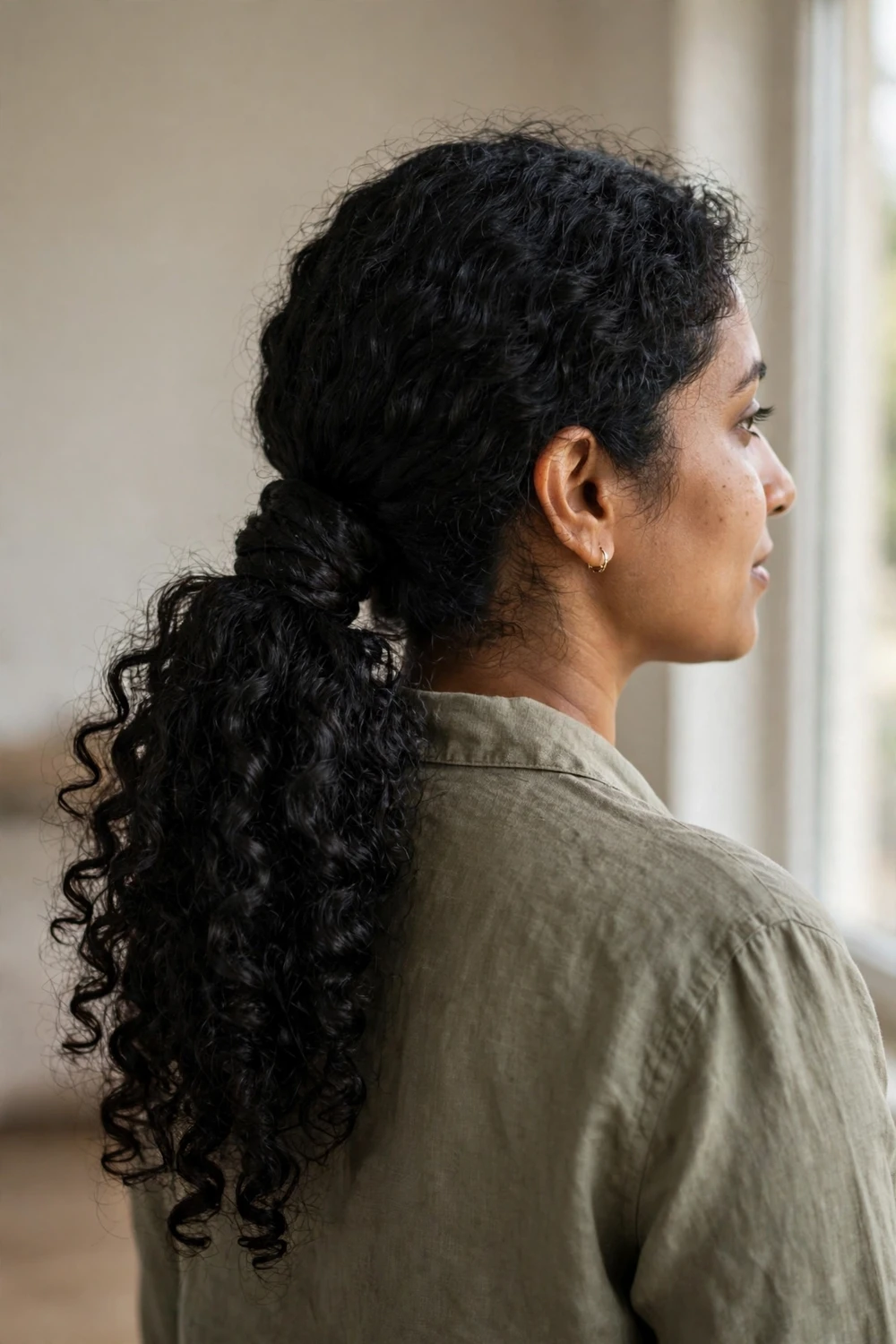
A low ponytail at the nape keeps thick curls controlled without flattening them. Gather hair loosely and secure with a covered elastic or a spiral tie to prevent dents. Wrap a small section of hair around the elastic and pin it underneath to hide the tie. Leave the ponytail full and let the curls do the talking. This style works for the office, the gym, and everything between, and it takes under three minutes.
Try this: Apply a little curl cream to the ponytail ends before heading out to keep them defined all day.
18. Braided Curly Ponytail
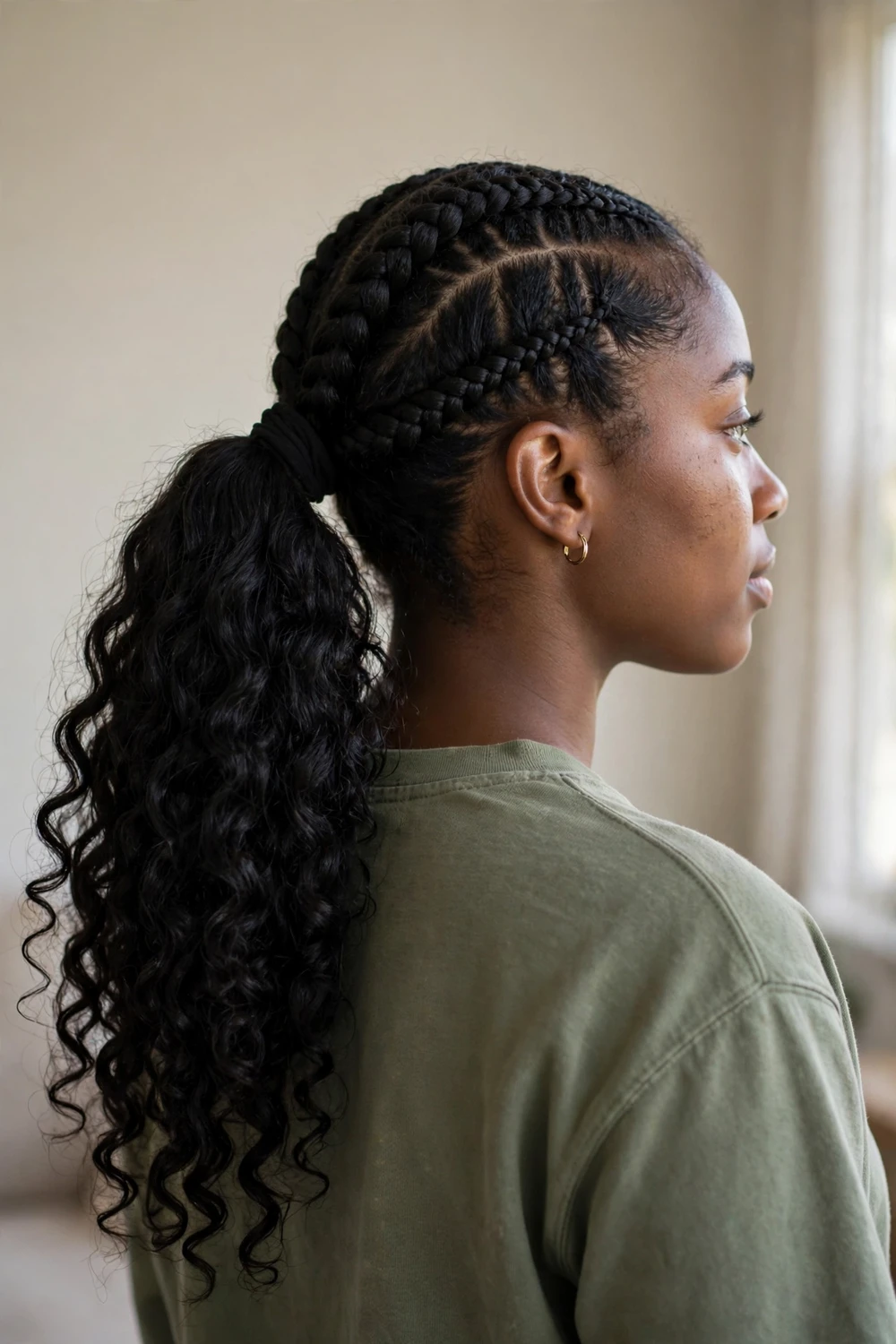
Braid the top section back into a ponytail, then let the curls flow free from the tie down. A Dutch or French braid along the crown adds interest and keeps the front secure, while the loose curls keep it soft. This hybrid style handles the front half of thick hair that always escapes, and the ponytail half stays light and bouncy. It suits active days when you need hair fully out of your face.
Try this: Braid on damp, detangled hair with a little leave-in conditioner for grip, then let the ponytail air-dry into defined curls.
19. French Braid Updo
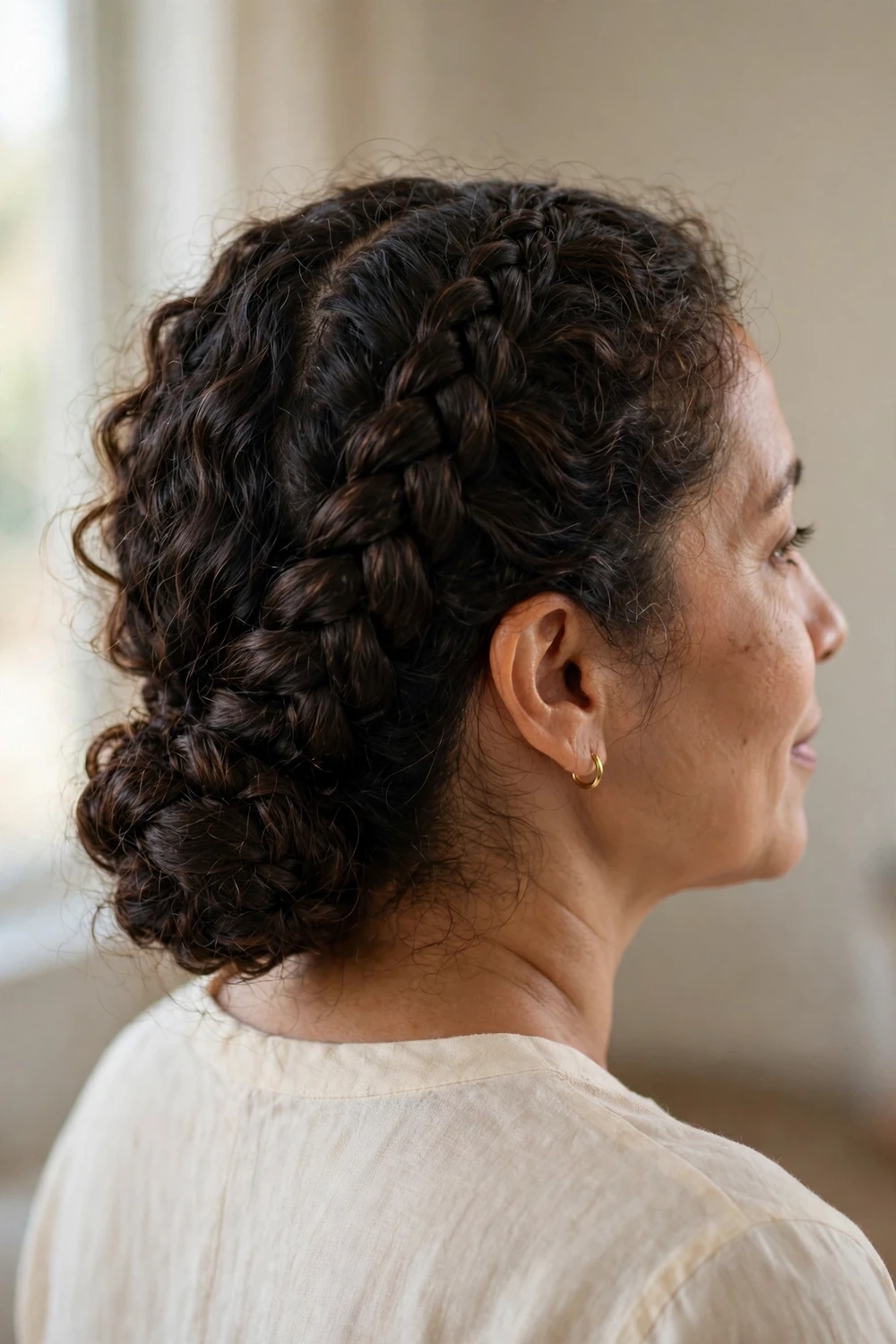
French braiding thick curly hair creates a substantial, long-lasting updo. Braid from the front hairline toward the nape, adding sections as you go, then coil the tail into a bun and pin. The braid distributes weight evenly across the head, so it does not pull at the hairline. Stretch the braid gently with your fingers after finishing to add fullness. This stays neat for a full day and even into the next.
Try this: Braid with a little gel on your fingertips to keep shorter layers from poking out of the braid.
20. Fishtail Braid on Curls
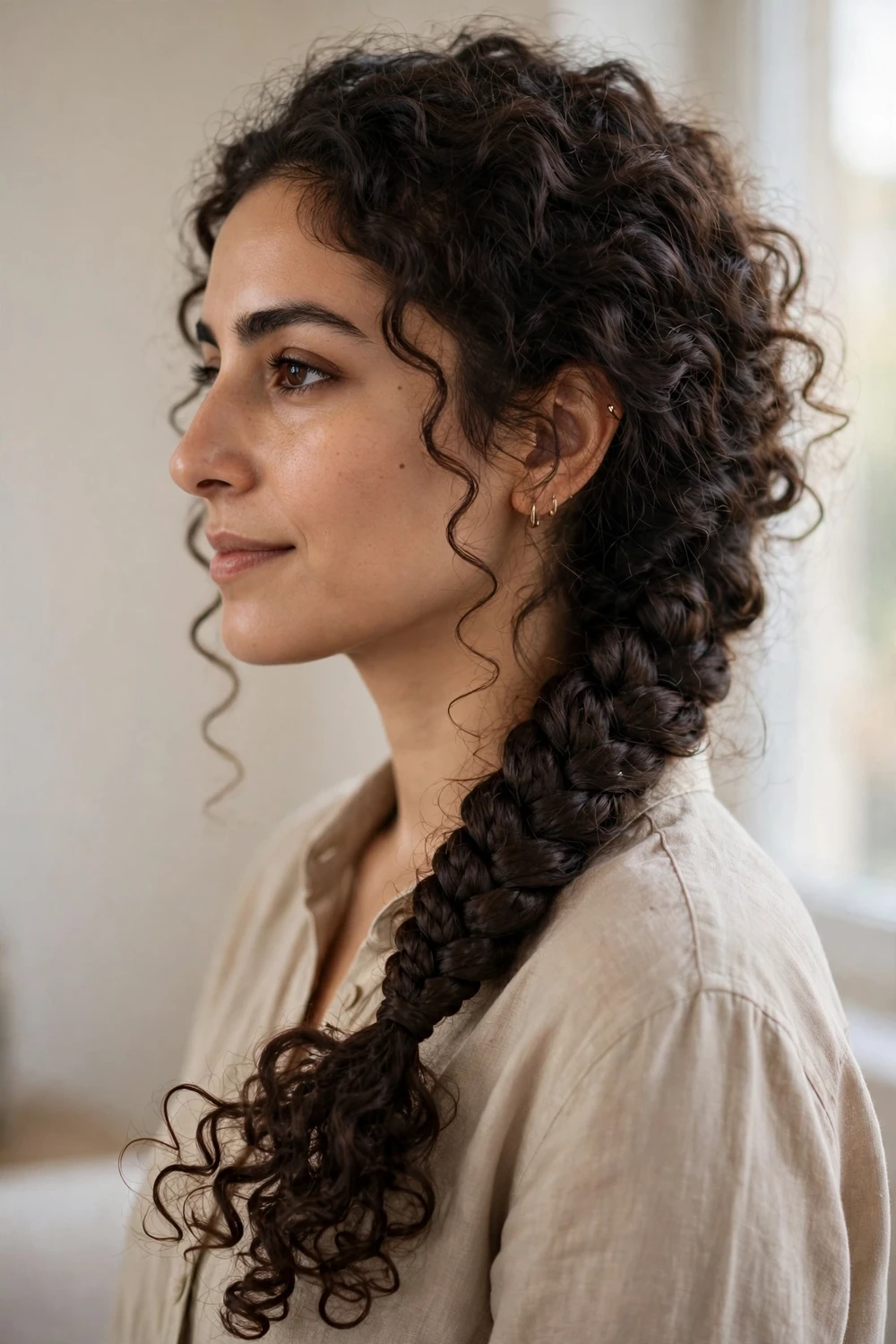
A fishtail braid shows off the texture of thick curly hair better than a standard three-strand braid. Divide hair into two sections and cross small pieces from each side to the other, working down the length. The result is a detailed, woven pattern that looks intricate but takes only practice. Pancake the braid by tugging the edges gently for a fuller finish. Leave the ends curly instead of braiding to the tips for a relaxed feel.
Try this: Start the fishtail at the side of the head rather than the back so the braid drapes over your shoulder.
21. Twisted Crown
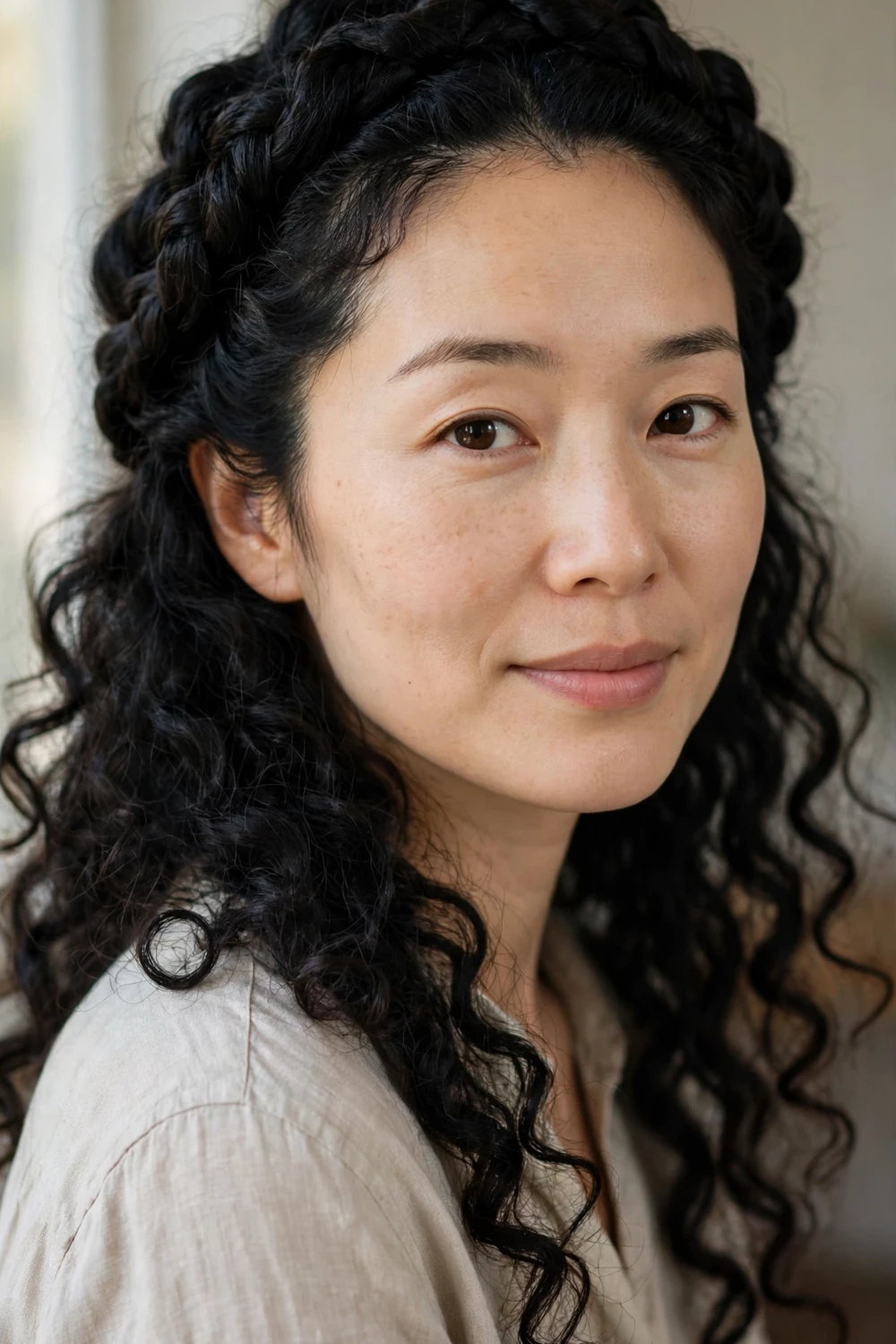
Two flat twists wrapped around the head form a crown that keeps thick hair up and elegant. Part hair down the middle, twist each side back from the temples, and pin the ends where they meet. The twists lie close to the scalp, so the style stays comfortable all day. Let the remaining curls fall free or pin them into a low bun depending on the occasion. This works for weddings, work events, and hot days alike.
Try this: Twist on stretched or blown-out roots for a smoother finish, but keep the ends in their natural curl.
22. Chunky Twist-Out
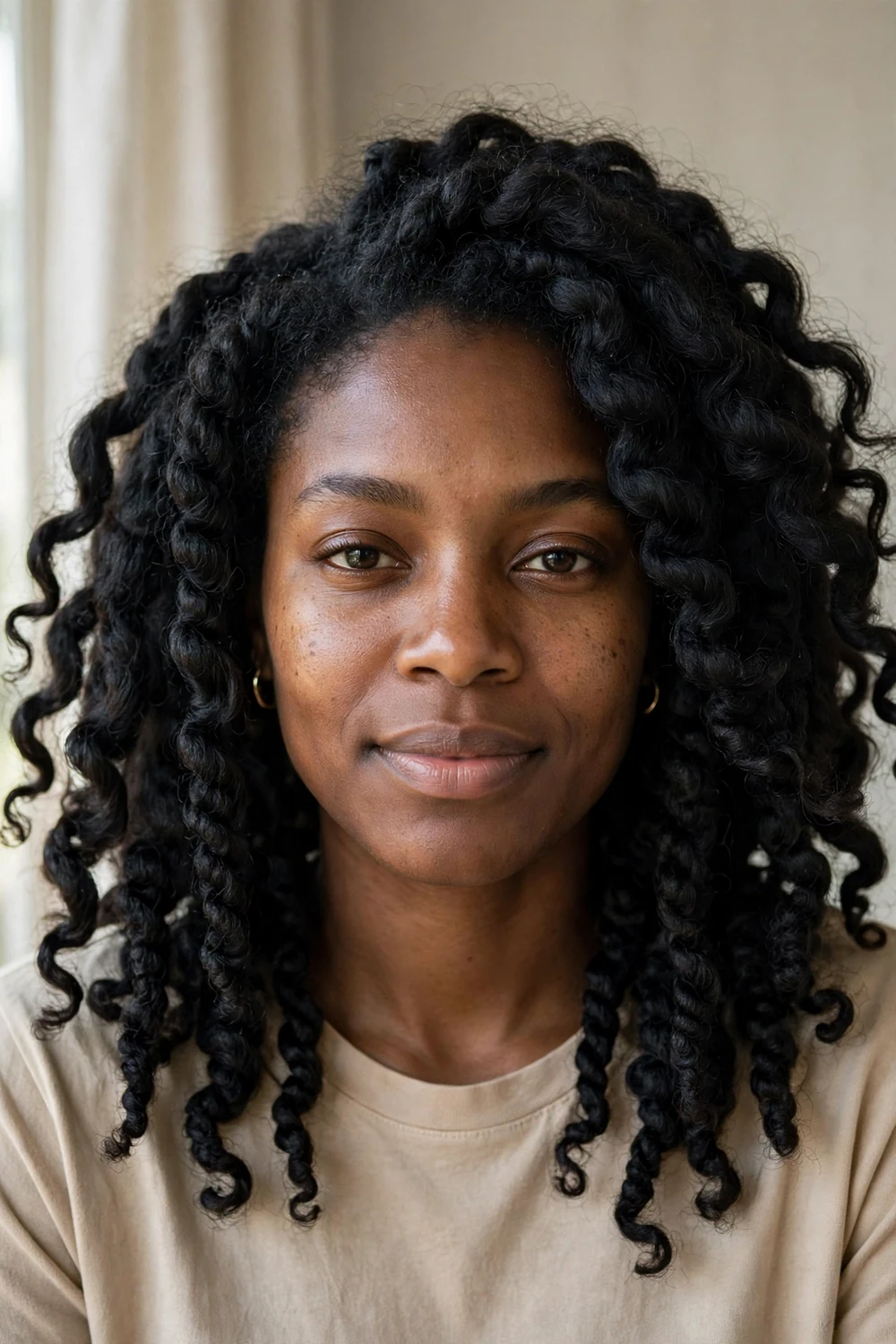
Twist-outs stretch thick curls and create uniform, defined waves. Divide damp, conditioned hair into 8 to 12 chunky twists and let them dry completely, overnight if possible. Untwist gently, separating each twist once or twice with oiled fingers. Chunky twists mean less work and more volume than small ones. The style lasts 3 to 5 days with nightly pineappling, making it one of the most efficient routines for dense hair.
Try this: Twist with a butter or cream that has real hold, since lightweight products let thick hair revert before morning.
23. Messy Updo for Thick Hair
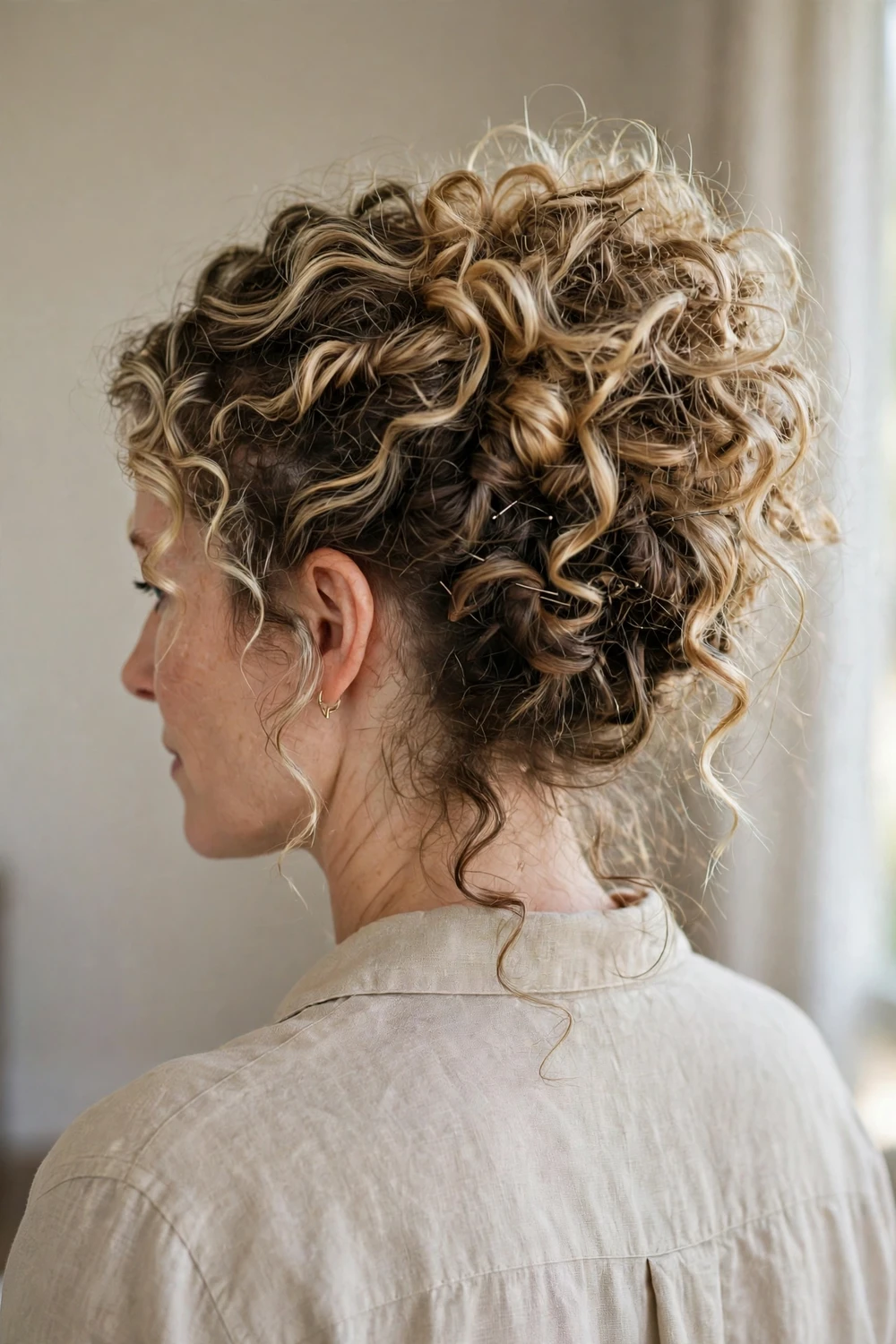
When thick hair refuses to cooperate, a strategic messy updo saves the day. Pull hair back loosely, twist sections in different directions, and pin where they land. The randomness is the point: it creates volume and texture that looks intentional. This is the best fix for second-day hair that has lost definition. Add a decorative pin or two and it passes for an event style. No two messy updos look alike, which keeps it fresh.
Try this: Work with dry, second-day hair rather than freshly washed, since it has more grip and holds pins better.
24. Pineapple Updo
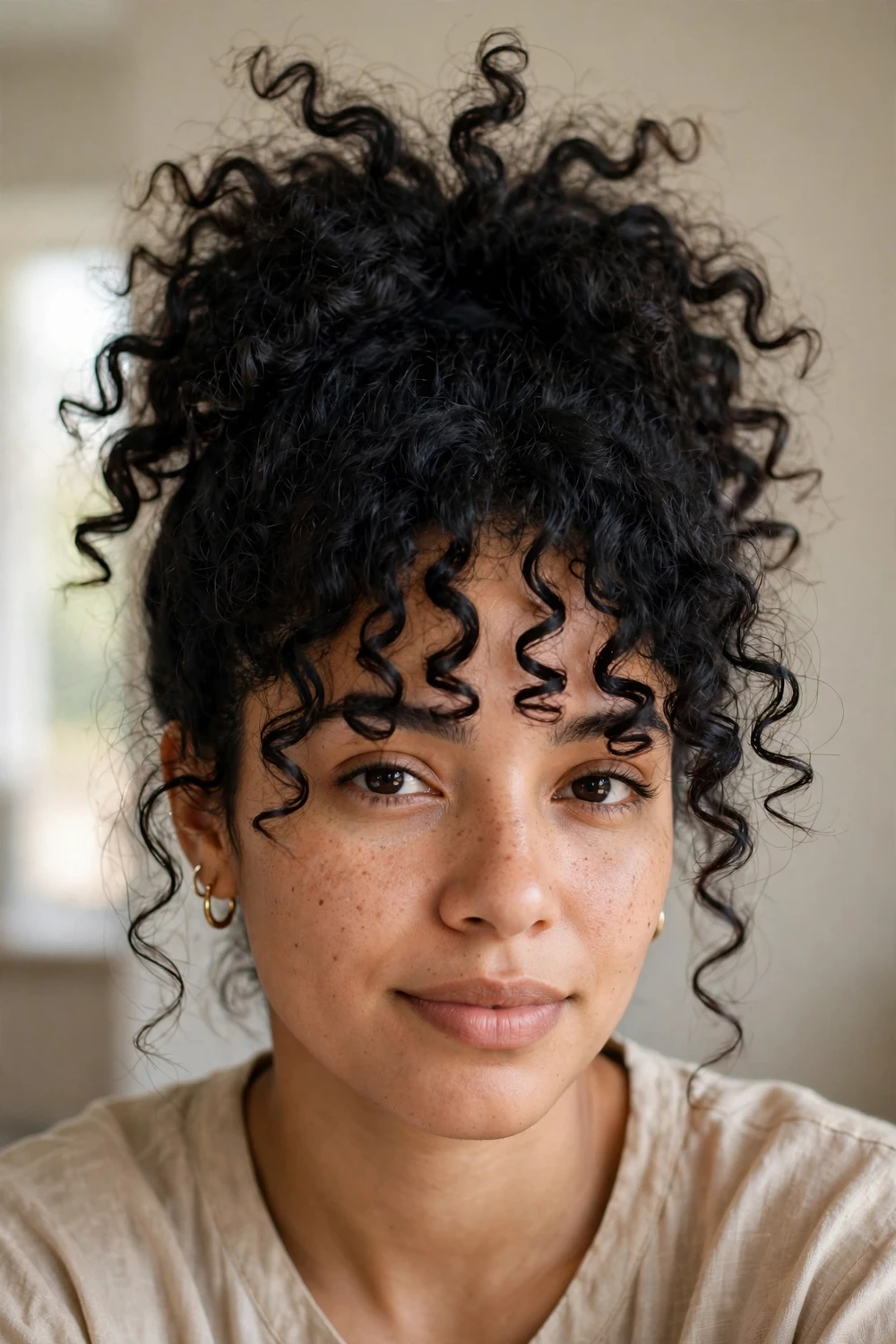
The pineapple is both a nighttime protector and a daytime style. Gather all your curls into a high, loose ponytail right at the front of the crown, letting the curls spill forward. During the day it reads as a playful high pony; at night, covered with a satin bonnet, it preserves your curl pattern. Use a loose scrunchie or a satin spiral tie so the elastic never dents the curls. It is the simplest style on this list and one of the most useful.
Try this: Pineapple every night, even on wash day, and your morning refresh drops to under five minutes.
25. Wet-Look Slicked Curls
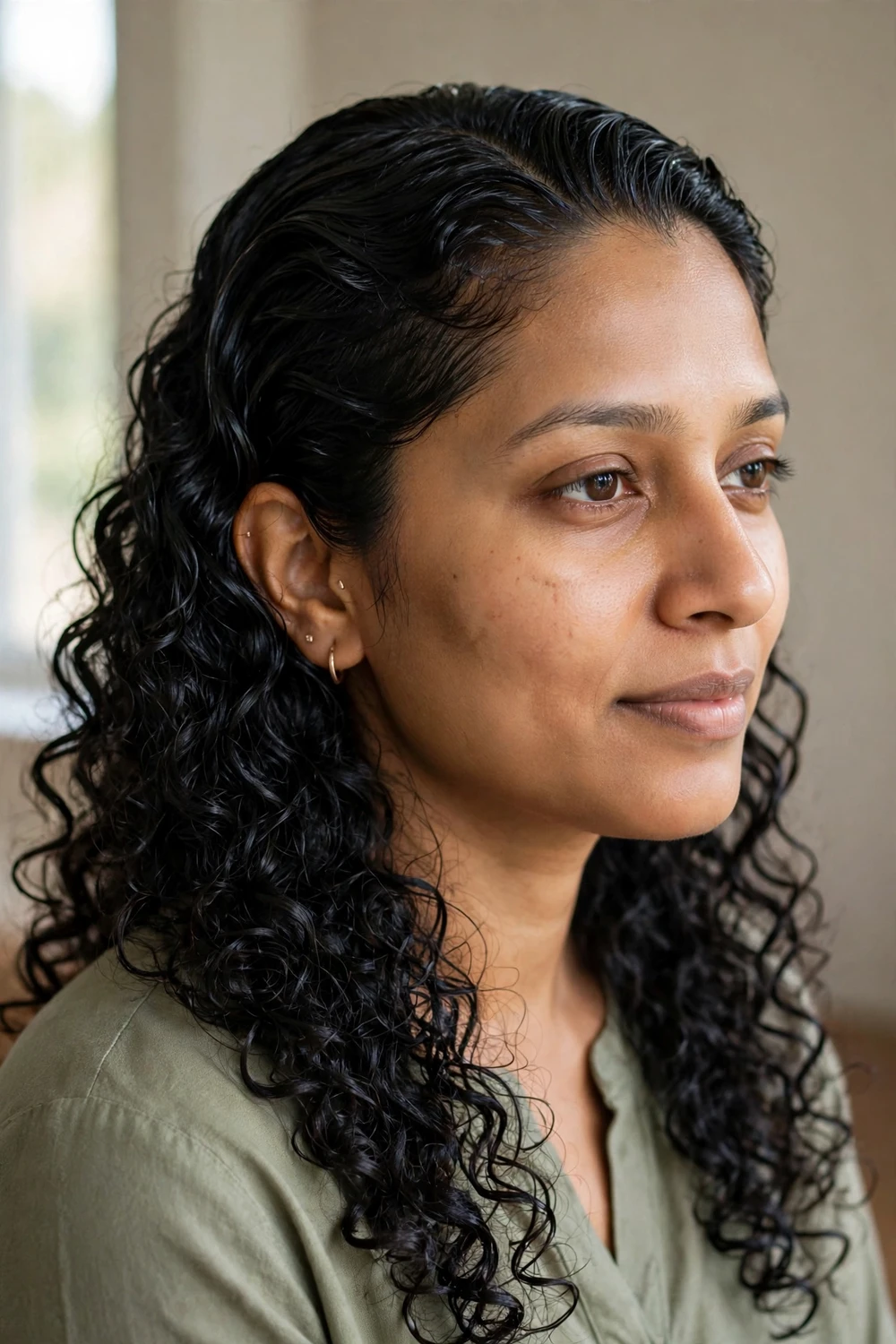
Slick the roots back with gel and let the lengths stay curly for a high-fashion evening look. Apply a strong-hold gel to damp roots and brush everything back and away from the face, then scrunch the ends with curl cream to keep them defined. The contrast between sleek roots and full curls flatters thick hair, since the density makes the lengths look deliberate rather than thin. This holds through humidity and long nights out.
Try this: Use a denman-style brush on the roots for extra smoothness, then set the whole style with a light mist of hairspray.
26. Curly Lob
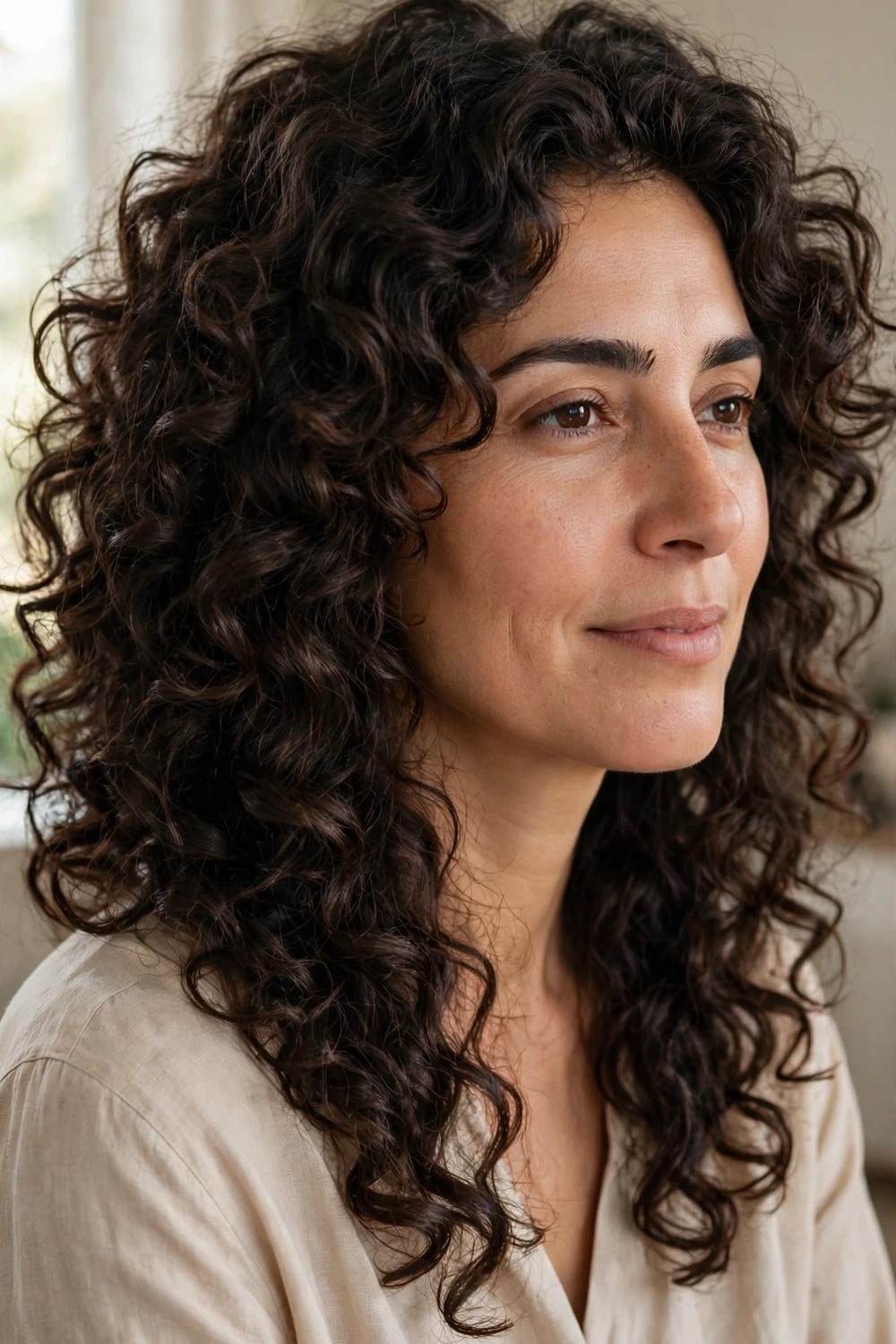
The lob, or long bob, lands between the collarbone and shoulders and gives thick curls room to move. Internal layers remove weight so the cut does not widen at the bottom. A slight A-line shape, longer in front, adds polish. Style with curl cream and a diffuser, scrunching upward to encourage bounce. The lob grows out well and suits women who want shorter hair without committing to a true bob.
Try this: Ask your stylist to cut the back slightly shorter than the front for shape that holds as the curls spring up.
27. Half-Up Curly Bun
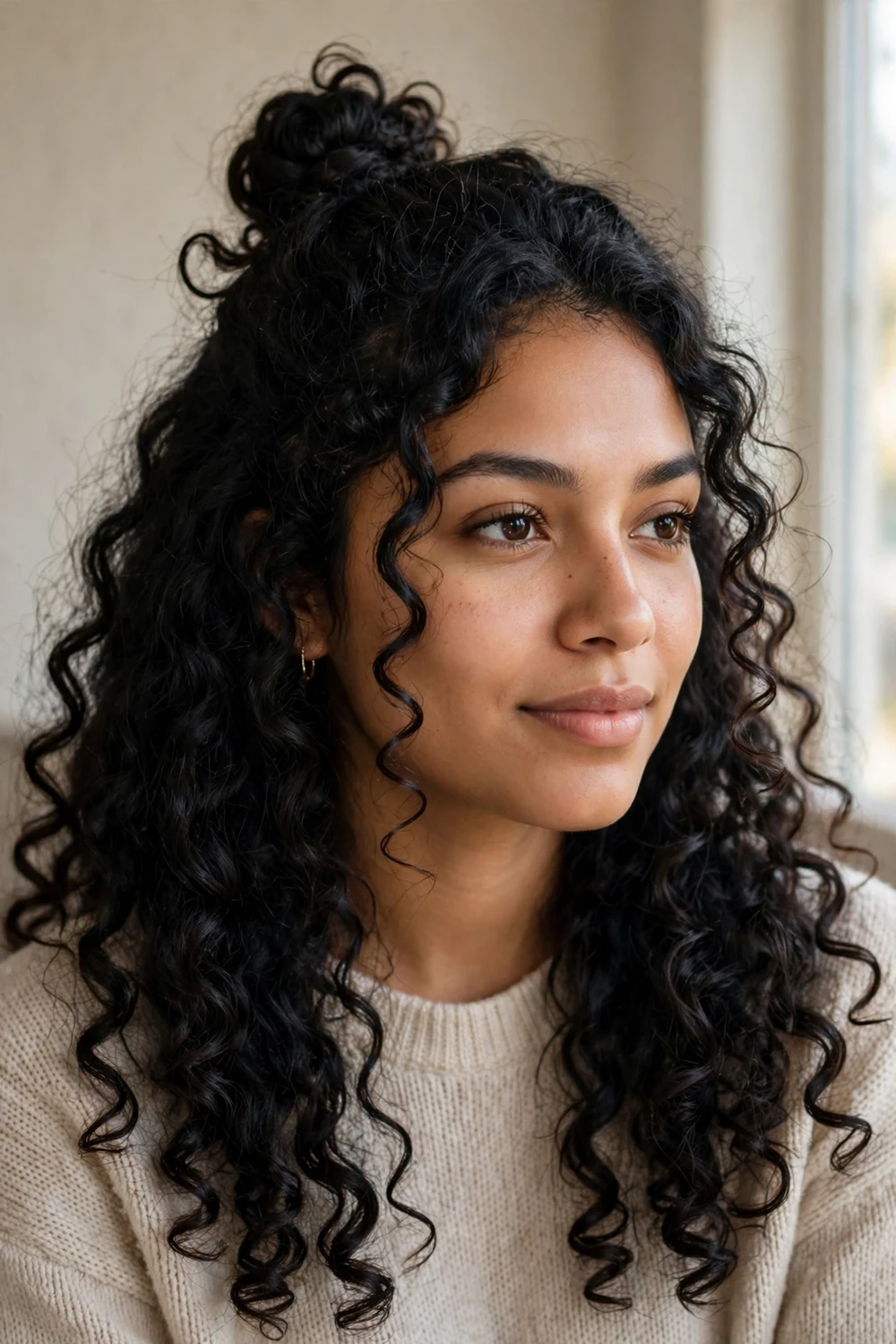
Take the top half of your curls into a small bun and leave the rest down. This removes weight from around the face while showing off your length. Secure the bun with pins rather than a tight elastic to avoid a dent line. Pull out a few curls around the hairline for softness. It works on second-day hair, gym hair, and everything in between, and it flatters every face shape because the top knot adds height.
Try this: Tease the crown lightly before gathering the top section so the bun sits high instead of sinking into the density.
28. Curly Bob with a Hidden Undercut
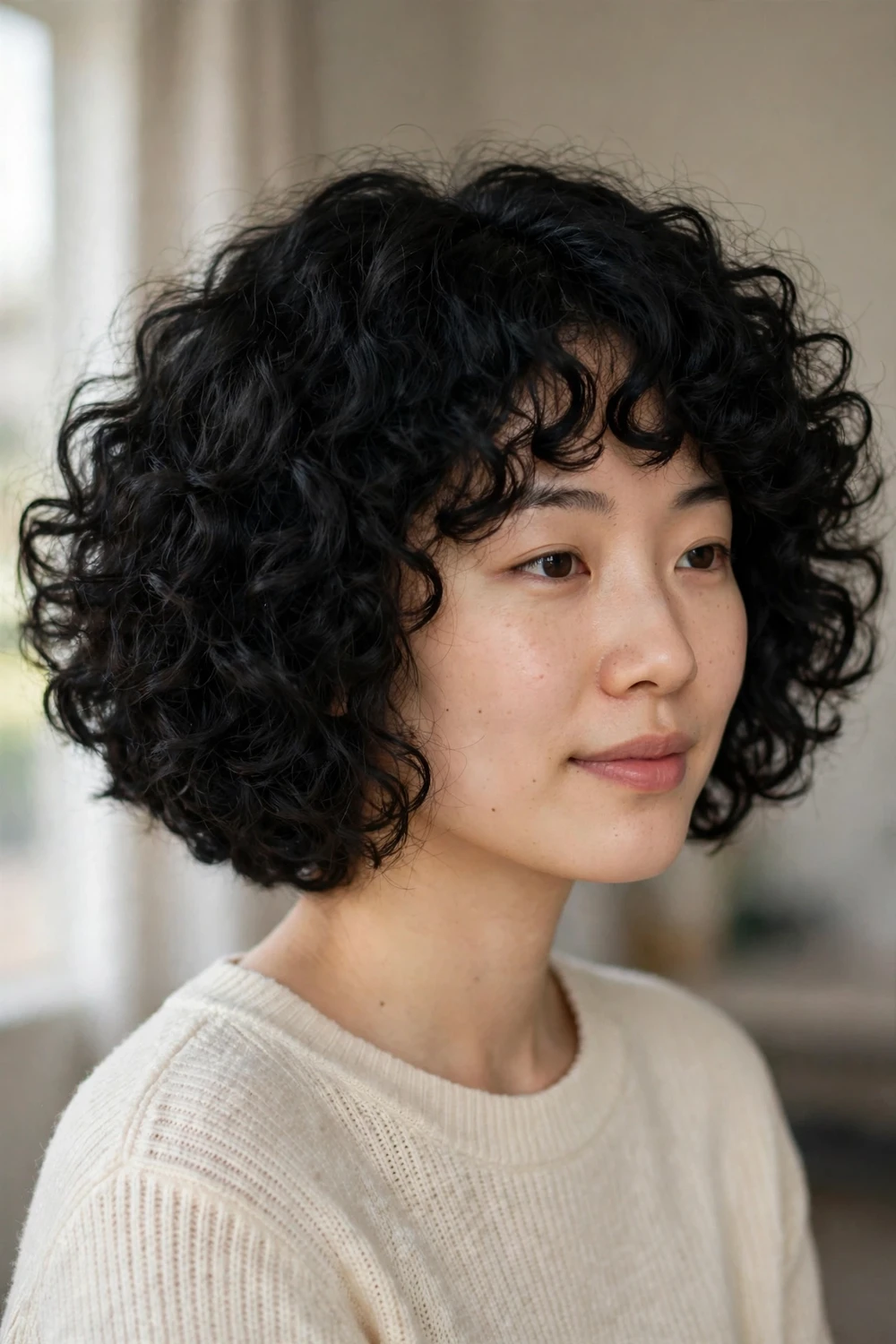
An undercut at the nape removes a surprising amount of bulk from thick hair while staying completely invisible. The top layers fall over it, so the bob looks full and normal from every angle. Drying time drops noticeably, and the neckline stays cooler in summer. Ask for a tapered undercut rather than a harsh line so it grows out softly. This is the secret weapon for women who love the look of a full curly bob but hate the weight.
Try this: Have the undercut cleaned up every 6 weeks along with your trim so the grow-out never looks ragged.
Curly Hairstyles for Thick Hair Comparison at a Glance
| Style | Best Occasion | Difficulty | Hold Time |
|---|---|---|---|
| Defined Curls with a Deep Side Part | Everyday, office | Easy | 1 to 2 days |
| Voluminous Diffuser Drying | Everyday, events | Easy | 1 day |
| Long Layers That Distribute Weight | Everyday | Easy | 6 to 8 weeks |
| Cascading Long Curls | Events, photos | Easy | 1 to 2 days |
| Curly Bob with Bangs | Everyday, office | Medium | 4 to 6 weeks |
| Rounded Shapely Bob | Everyday | Easy | 4 to 6 weeks |
| Curly Pixie Cut | Everyday | Easy | 4 to 6 weeks |
| Textured Curly Shag | Everyday, casual | Easy | 6 to 8 weeks |
| Natural Spiral Ringlets | Events, photos | Medium | 2 to 3 days |
| Soft Mid-Length Curls | Everyday, office | Easy | 1 to 2 days |
| Side-Swept Layered Curls | Events, evenings | Medium | 8 to 12 hours |
| Natural Curls with a Fringe | Everyday | Medium | 4 to 6 weeks |
| Floral-Pinned Natural Curls | Weddings, parties | Easy | 8 to 12 hours |
| Messy Curly Bun | Everyday, workouts | Easy | 8 to 12 hours |
| High Curly Bun | Office, events | Easy | 8 to 12 hours |
| Messy Top Knot | Casual, evenings | Easy | 8 to 12 hours |
| Low Curly Ponytail | Office, gym | Easy | 8 to 12 hours |
| Braided Curly Ponytail | Active days, casual | Medium | 8 to 12 hours |
| French Braid Updo | Events, long days | Hard | 1 to 2 days |
| Fishtail Braid on Curls | Casual, festivals | Medium | 8 to 12 hours |
| Twisted Crown | Weddings, events | Medium | 8 to 12 hours |
| Chunky Twist-Out | Everyday | Medium | 3 to 5 days |
| Messy Updo for Thick Hair | Second-day rescue | Easy | 8 to 12 hours |
| Pineapple Updo | Nightly, casual | Easy | 8 to 12 hours |
| Wet-Look Slicked Curls | Evenings, events | Medium | 8 to 12 hours |
| Curly Lob | Everyday, office | Easy | 6 to 8 weeks |
| Half-Up Curly Bun | Everyday, casual | Easy | 8 to 12 hours |
| Curly Bob with a Hidden Undercut | Everyday | Easy | 6 weeks |
How to Choose the Right Style for Your Thick Curls
Start with your curl pattern and your patience level. Tighter coils shrink more and take longer to dry, so longer layers or protective styles like twist-outs make daily life easier. Looser 2C and 3A curls hold cuts like bobs and lobs well, since the weight stretches the pattern into shape.
Think about your routine honestly. If you style daily, a wash-and-go cut with long layers is your friend. If you prefer styling twice a week, buns, pineapples, and braids carry you between wash days. And if drying time is your biggest complaint, ask your stylist about an undercut or internal layers before you change anything else.
Face shape matters too. Deep side parts and height on top elongate round faces. Bangs and fringe soften long faces. But these are guidelines, not rules. The best style is the one you will actually maintain, so pick the routine first and the cut second.
Mistakes to Avoid
Cutting curly hair wet and straight is the fastest way to a shape that surprises you when it dries. Always ask for dry cutting or a curl-by-curl cut, and never let anyone thin your hair with thinning shears near the surface, which creates frizz and wispy ends.
Over-washing strips the natural oils that thick curls need. Two to three washes a week is plenty for most people, with co-washing or a refresh in between. Skipping conditioner is another common error. Thick curly hair drinks product, so be generous with leave-in conditioner and deep treatments.
Braiding or twisting too tightly causes breakage and scalp pain, especially on dense hair. Protective styles should feel comfortable from the start. If a style hurts, take it down and redo it looser. Your edges will thank you.
If your thick hair also fights frizz on humid days, our guide to low maintenance haircuts for frizzy hair covers cuts that keep flyaways under control with minimal styling.
For days when you want the cut to do all the work, see low maintenance haircuts for thick hair, which focuses on shapes that remove bulk without daily effort.
Curious how these styles translate to finer textures? Our roundup of curly hairstyles for thin fine hair shows the volume-building side of curly styling.
Women over 60 with dense curls have their own considerations, from gray blending to softer shapes, covered in hairstyles for thick hair over 60.
Frequently Asked Questions
What is the best haircut for thick curly hair?
Long layers are the most reliable haircut for thick curly hair because they distribute weight down the length and prevent the triangle shape. A curly shag works well for a more textured look, and a lob suits women who want shorter hair. Ask for dry cutting and internal layers that remove bulk invisibly.
How do I reduce bulk in thick curly hair without losing length?
Ask your stylist for internal or hidden layers underneath the top layer, which remove weight where it does not show. A hidden undercut at the nape also cuts drying time and bulk while staying invisible. Avoid thinning shears on the surface, since they create frizz instead of clean weight removal.
How often should I wash thick curly hair?
Two to three times a week is enough for most thick curly hair. Washing more often strips natural oils and increases frizz and dryness. Use a sulfate-free shampoo, condition every time you wash, and deep condition once a week to keep dense curls hydrated.
Why does my thick curly hair get so frizzy?
Frizz in thick curly hair usually comes from dryness, rough handling, or touching hair while it dries. Detangle only when hair is wet and conditioned, using a wide-tooth comb. Apply leave-in conditioner and gel to soaking wet hair, then diffuse or air-dry without touching. Sleeping on a satin pillowcase also cuts down on morning frizz.
Can thick curly hair be worn short?
Yes, thick curly hair works well short. A curly pixie uses the natural density for lift and texture, while a curly bob with layers stays controlled instead of puffing out. Short cuts on thick curls need trims every 4 to 6 weeks to hold their shape, and a little curl cream is usually all the daily styling they need.
Final Thoughts
Thick curly hair is not a problem to solve. It is a texture that rewards the right cut and a simple, consistent routine. Pick one or two styles from this list that fit your week, book a stylist who cuts curls dry, and give each new routine two weeks before you judge it. Your curls have been waiting for a plan that works with their density instead of against it.

