



Glasses change everything about a haircut. A style that looks great without frames can suddenly feel off once you add temple arms, thick rims, or bold tortoiseshell. The good news is that the right cut works with your glasses instead of against them.
This list covers 24 hairstyles for women over 60 with glasses, and each one is chosen for how it interacts with frames. You’ll find notes on temple arm comfort, frame balance, and whether bangs will sit on your lenses. I’ve spent years studying how hair and eyewear work together, and the cuts below use those lessons.
Quick answer: This guide covers the best styles, who they suit, and how to get them right.
For styles chosen for pure polish rather than frame compatibility, see chic hairstyles for women over 60 next.
Quick Takeaways
- Keep hair clear of your lenses and temple arms so frames sit comfortably all day.
- Add volume at the crown to balance strong or oversized frames.
- Choose wispy, above-frame bangs over heavy blunt fringes.
- Short, tapered sides let temple arms rest without snagging or pressure.
- Tucking one side behind your ear instantly shows off your frames.
Why These Styles Work with Glasses
Most haircut advice ignores eyewear completely. But glasses add lines, weight, and structure to your face, and your haircut needs to account for them. A cut that clears the frame line keeps your lenses smudge-free and your sight lines open.
The 24 styles below were picked for three things: they keep hair off your frames, they balance the visual weight of your glasses, and they flatter the face at 60 and beyond. Every idea explains exactly how it works with your frames so you can choose with confidence.
For more ideas that add fullness to finer strands, these hairstyles for women over 60 with thin hair pair volume-boosting cuts with practical styling tips.
Glasses & Hair: The Frame Balance Rule
Here is the rule that makes every cut on this list work: your hair and your glasses should share the visual space, not compete for it. Bold frames need calmer, sleeker hair around the face. Fine wire or rimless frames can handle more volume and texture because the frames themselves are quiet.
Temple arms are the other half of the equation. Thick plastic arms need smooth, flat hair at the sides so they sit without pressure. Thin metal arms are more forgiving and work with layered or textured sides. Keep this rule in mind as you read through the ideas, and match each style to your frame type.
1. Soft Layered Bob

If you want a cut that never fights your frames, this is it. The soft layered bob falls to chin length with gentle layers that keep the sides from puffing out over your temple arms. Volume stays at the crown, which balances strong frames without crowding them. Because the layers stop above the jawline, nothing drifts across your lenses, and progressive lens wearers get clear sight lines. It suits most frame styles, from bold rectangles to lightweight wire, and it grows out gracefully between trims.
Try this: Work a golf-ball-sized amount of volumizing mousse into damp roots, then blow-dry with a round brush, angling the side sections slightly back so they clear your frames.
2. A-Line Bob

Picture a bob that is shorter in the back and angles longer toward the front. The A-line bob gives you sleek length at the front that you can tuck behind your ears, which leaves your frames fully on display. The longer front pieces draw the eye downward, and that balances bold or oversized tortoiseshell frames nicely. The stacked back keeps the nape tidy so nothing interferes with your glasses arms. It works especially well with straight or slightly wavy hair that holds a clean angle.
Try this: Flat-iron the front sections smooth, then tuck one side behind your ear for a look that shows off your frames and keeps hair off your lenses.
3. Asymmetrical Bob

Want a little edge without going too short? The asymmetrical bob has one side cut longer than the other, and that contrast does real work around glasses. The shorter side can be tucked behind the ear to reveal your frames completely, while the longer side balances out chunky or oversized frames. The uneven line also draws attention away from the frames alone and makes the whole look feel intentional. Ask your stylist for a difference of about one to two inches between sides so the effect reads clearly.
Try this: Style it with a deep side part, keep the shorter side sleek behind your ear, and let the longer side fall forward to frame your cheek.
4. Classic Lob

Keep the length, lose the fuss. The classic lob skims the shoulders and sits well below your chin, which means your frames get full visual space with no competition. Hair at this length rests smoothly where your temple arms sit, so there is no bunching or pressure behind your ears. The lob works with nearly every frame type, and it is forgiving if you like to switch between glasses and contacts. A clean, blunt or lightly layered edge keeps the shape polished without much daily effort.
Try this: Part it in the center or on the side, add a light texturizing spray through the ends, and keep the front sections smooth so they never brush your lenses.
5. Lob with Wispy Bangs

Wispy bangs can work with glasses when they are cut the right way. The trick is keeping them thin and ending them above the top rim of your frames, so no hair rests on the lenses. The feathered texture avoids a heavy horizontal line that would compete with your frames, and the lob length below keeps the overall balance soft. This combination suits lightweight, rimless, or thin wire frames best, since bold frames plus bangs can crowd the face. Regular trims keep the bangs at the right length.
Try this: Trim your bangs every three weeks to keep them above the frame line, and style them with a quick brush-through rather than a flat iron so they stay soft.
6. Warm Tone Bob

Here is a secret: color changes how glasses sit on your face. Warm tones like caramel, honey, and warm brown soften the contrast between your hair and dark frames, so black or tortoiseshell glasses feel less stark. The bob shape itself frames the face evenly, giving your glasses a clean backdrop with no stray pieces crossing the lenses. Face-framing lighter pieces around the temples draw the eye to your face, not just your frames. It is a low-commitment way to refresh the whole look.
Try this: Ask for a few lighter face-framing pieces rather than all-over color, and keep the sides tucked or smoothed so hair never falls across your lenses.
7. Short Stacked Bob

For fine hair that needs lift, the short stacked bob delivers. The stacked layers at the back build volume at the crown, which balances strong frames and keeps the eye moving upward. The short nape stays completely clear of your glasses arms, so there is no catching or pressure at the back of your ears. This cut shows off the face shape fully, which makes it a strong match for rimless frames where your features do the talking. It needs a trim every five to six weeks to hold the stacked shape.
Try this: Blow-dry the nape upward with a small round brush and press a little volumizing powder into the crown for lift that lasts all day.
8. Vintage Bob

Channel the 1920s with a modern twist. The vintage bob is sleek and polished, with hair tucked neatly so your frames become the accessory. A deep side part with a soft wave at the front adds character without adding bulk around your temple arms. This style pairs naturally with cat-eye or round vintage-style frames, and the whole look feels pulled together. Because everything is smoothed into place, there is no stray hair to smudge your lenses during the day.
Try this: Set a deep side part, pin a soft wave at the front with clips while it cools, then remove the clips and smooth the sides behind your ears.
9. Pixie with Crown Volume

Volume on top is a glasses wearer’s best friend. Lifting the crown lengthens the face, and that balances strong or bold frames instead of letting them dominate. The short sides keep your temple arms completely unobstructed, and with no length near your eyes, your lenses stay clean. This pixie works with almost any frame style, and it is especially good with oversized frames that need height above them. Styling takes minutes with the right product at the roots.
Try this: Apply root-lifting spray to damp hair, blow-dry the crown forward and then back for lift, and keep the sides smooth so your temple arms sit flat.
10. Layered Pixie Cut

Layers keep a pixie from looking flat against glasses. The face-framing layers around the temples soften exactly where your glasses arms sit, which helps with comfort during long days. Because the cut is short all over, your sight lines stay clear and nothing brushes your lenses. It pairs well with wire or rimless frames, where the softness of the layers balances the minimal frame. Ask for layers that are piecey rather than blunt so the texture reads soft, not choppy.
Try this: Define the layers with a pea-sized amount of pomade on dry hair, and keep any fringe pieces swept to the side so they stay off your lenses.
11. Textured Crop Pixie

Texture is what keeps a short crop from looking severe next to glasses. The choppy, piecey texture adds softness around strong frames, while the very short nape and sides let your temple arms sit directly and comfortably. With the hair cropped close at the sides, bold rectangular frames get to shine without any visual clutter. This cut is low maintenance day to day, though it needs regular trims to keep the texture sharp. It suits women who want a confident, modern look.
Try this: Work a small amount of texturizing cream through dry hair and tousle it forward, keeping the sides neat so your frames sit without interference.
12. Faux Hawk Pixie
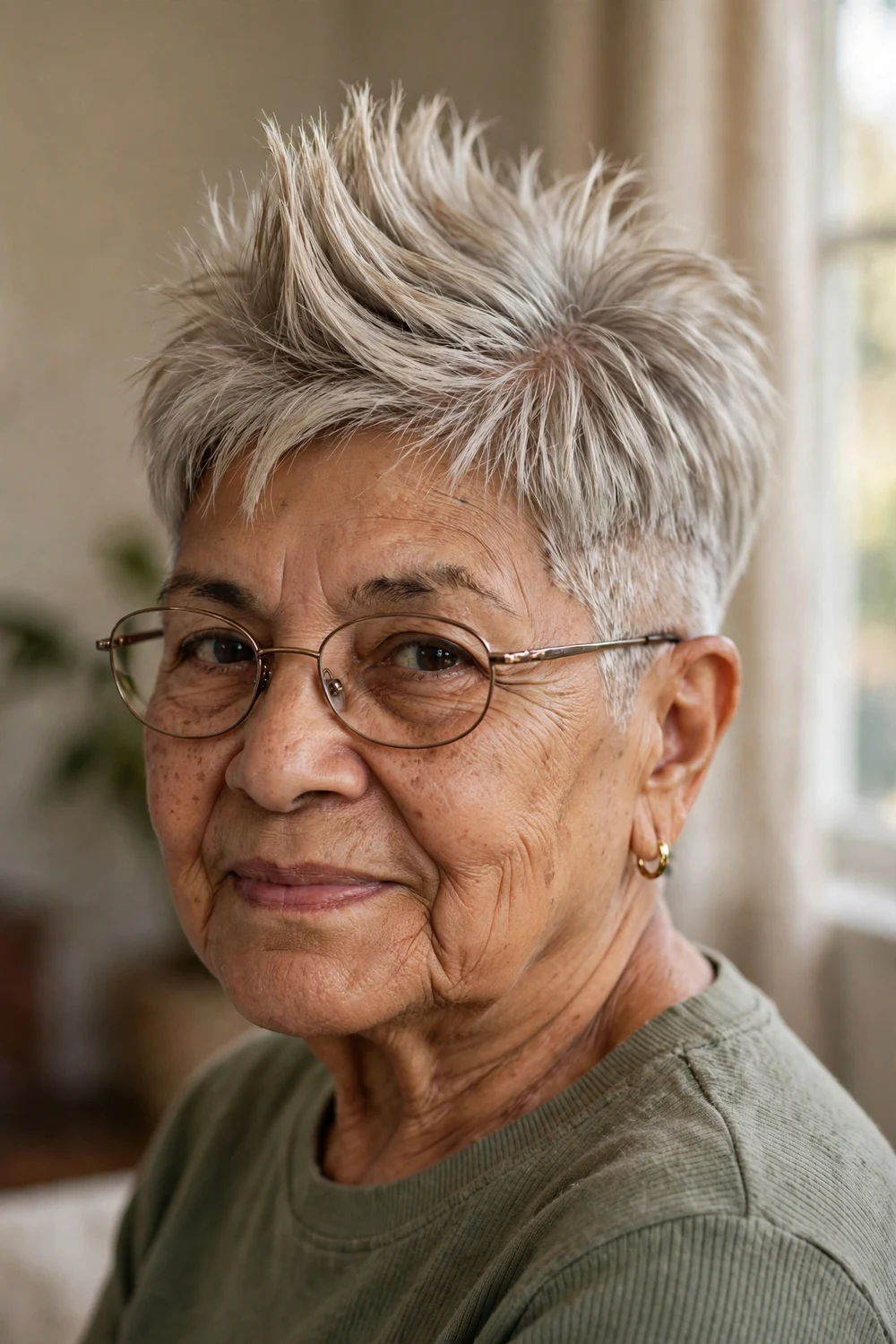
Bold hair pairs with bold frames surprisingly well. The faux hawk pixie builds height in the center, and that upward line balances oversized or statement frames by giving the eye somewhere else to go. The tapered sides leave your temple arms fully clear, so there is no pressure or snagging. This is a strong choice if you wear dramatic frames and want your hair to match that energy. It reads modern and deliberate, and it styles quickly once you learn the technique.
Try this: Use a strong-hold gel on damp hair, push the center strip upward with your fingers, and keep the sides close so your glasses arms rest easily.
13. Side-Parted Pixie

A side part does quiet work around glasses. Sweeping the fringe across the forehead keeps it above the frame line, and the deep part clears one temple entirely so that glasses arm sits without any hair underneath it. The sweep frames the face without covering your frames, which makes this a natural match for cat-eye shapes that deserve to be seen. It is one of the easiest pixies to grow out, and it looks neat with very little styling.
Try this: Comb damp hair into a deep side part, let it air dry for a natural sweep, and smooth the shorter side behind your ear to show off your frames.
14. Shoulder-Length Layers

Length is not off-limits when you wear glasses. Shoulder-length layers keep the hair from swinging forward across your lenses, especially when the layers start below the chin. The sides rest smoothly where your temple arms sit, so your glasses stay put without sliding. This length works with most frame types and gives you styling options, from tucked behind the ears to loose and flowing. It is a safe, flattering choice if you are not ready to go short.
Try this: Blow-dry with the layers flipped back away from your face, and keep the front pieces resting behind your shoulders so they never drift onto your lenses.
15. Soft Waves

Waves add movement that flatters frames from every angle. Loose waves through the mid-lengths keep the hair away from your lenses, and the volume at the sides balances slim wire frames nicely. The key is starting the waves below eye level so nothing curls up against your frames or temple arms. This style works at shoulder length or longer, and it softens the face without hiding your glasses. It is a good everyday look that photographs well too.
Try this: Curl only the mid-lengths with a medium iron, leave the roots and ends smoother, and brush through gently for loose, touchable waves.
16. Long Waves

If you love long hair past 60, waves are the way to wear it with glasses. Long cascading waves look current, and a side part lets you keep the front sections tucked behind your ears so your frames stay fully visible. When hair falls over the temple arms, keep it smooth and tangle-free so your glasses slide on and off without snagging. The length draws the eye downward, which balances bold frames at the top of the face. Regular conditioning keeps long waves looking healthy.
Try this: Use a side part, tuck the front sections behind your ears whenever you put your glasses on, and smooth the lengths with a light serum.
17. Slicked Back Style
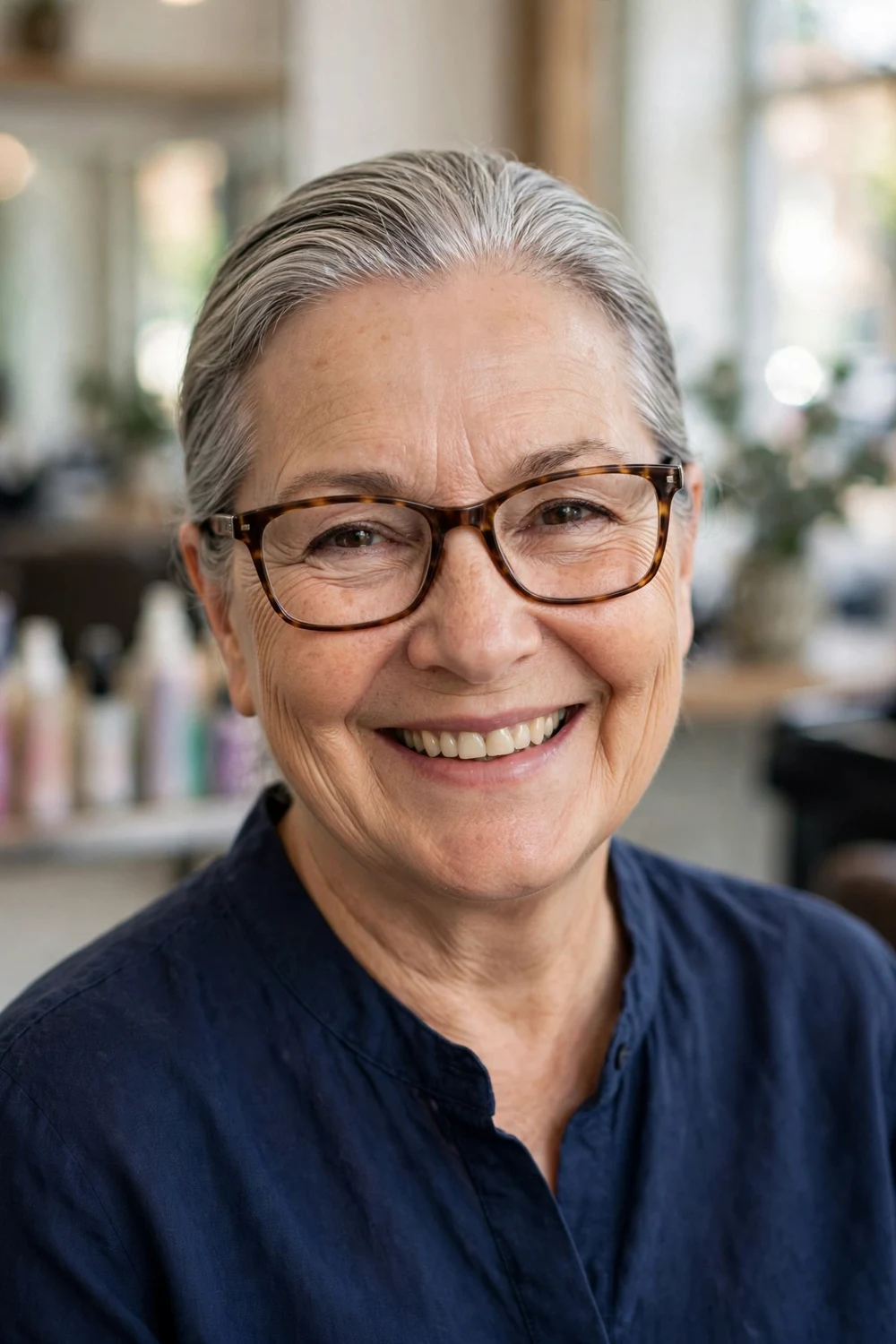
Nothing shows off great frames like hair pulled back. The slicked back style removes every bit of competition, so your glasses become the focal point of your face. It works with any frame style, from minimalist rimless to bold statement frames, and it keeps your lenses completely smudge-free since no hair touches them. This is also a practical choice for active days or humid weather. The smooth finish reads polished and confident at any age.
Try this: Smooth damp hair straight back with a medium-hold gel, let it set without touching it, and keep the sides flat so your temple arms sit comfortably.
18. Wispy Bangs

Wispy bangs are the safest bang choice for glasses wearers. The thin, feathered fringe ends above the top rim of your frames, so it never rests on the lenses or casts shadows across them. The lightness of the texture keeps the forehead open, which prevents your face from looking crowded behind your glasses. This works best with lightweight or rimless frames, where the delicate bangs echo the delicate frames. Point-cutting the ends is what creates that soft, see-through effect.
Try this: Ask your stylist for point-cut ends, keep the length just above your frames, and style with a quick brush-through instead of heavy product.
19. Side-Swept Fringe

One sweep of fringe can change how frames look on you. The side-swept fringe moves across the forehead and ends at the temple, clearing the top line of your frames completely. That diagonal line softens bold frames and keeps your sight lines open, since nothing hangs in front of your eyes. It works with most cuts on this list and suits both rectangular and round frames. The fringe grows out easily, so it is a low-risk change to try.
Try this: Blow-dry the fringe to the side with a paddle brush, keep it long enough to reach the temple, and pin it back on days you want your frames fully clear.
20. Curtain Bangs

Curtain bangs frame your face the way your glasses frame your eyes. Parted in the center, the bangs fall at the temples just outside your frame edges, so they never sit on your lenses. The longer pieces clear the frames completely while still softening the forehead, and the center part balances round frames especially well. This style gives you the softness of bangs without the maintenance of a straight fringe, since the pieces blend into the rest of your hair as they grow.
Try this: Round-brush the bangs outward away from your face, keep the center part clean, and trim the longest pieces so they stay clear of your frame edges.
21. Playful Shag
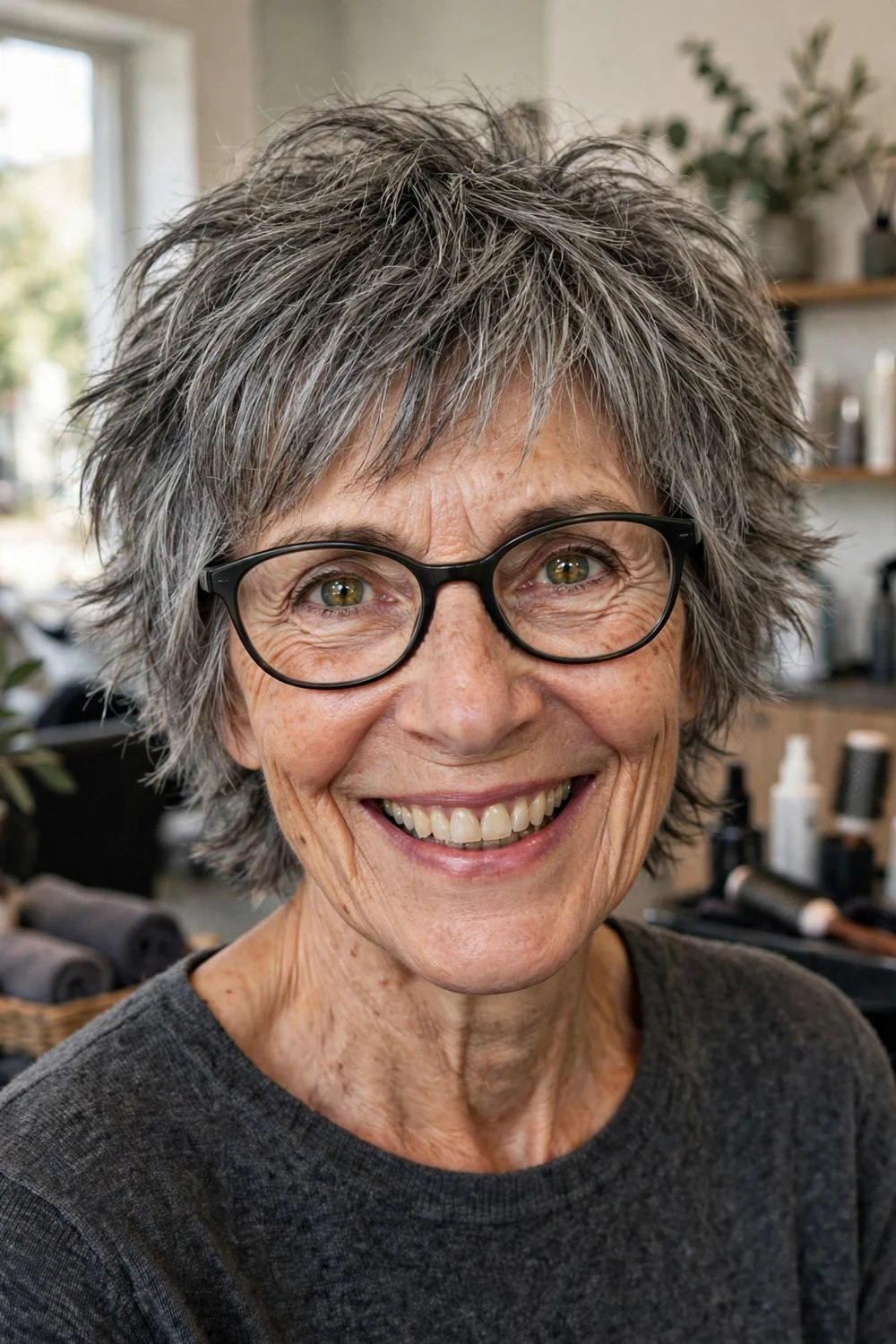
A shag’s layers create the balance that bold frames need. The choppy layers add volume at the crown and through the sides, which keeps strong frames from dominating the face. The trick is keeping the layers around the eyes either above the frame line or pushed to the sides, so nothing lands on your lenses. This cut suits women who like texture and movement, and it works with thick or thin hair. It styles best with a hands-off, tousled finish.
Try this: Scrunch a texturizing spray through damp hair, let it air dry for natural texture, and keep any fringe pieces swept aside so they stay off your glasses.
22. Shoulder-Length Shag
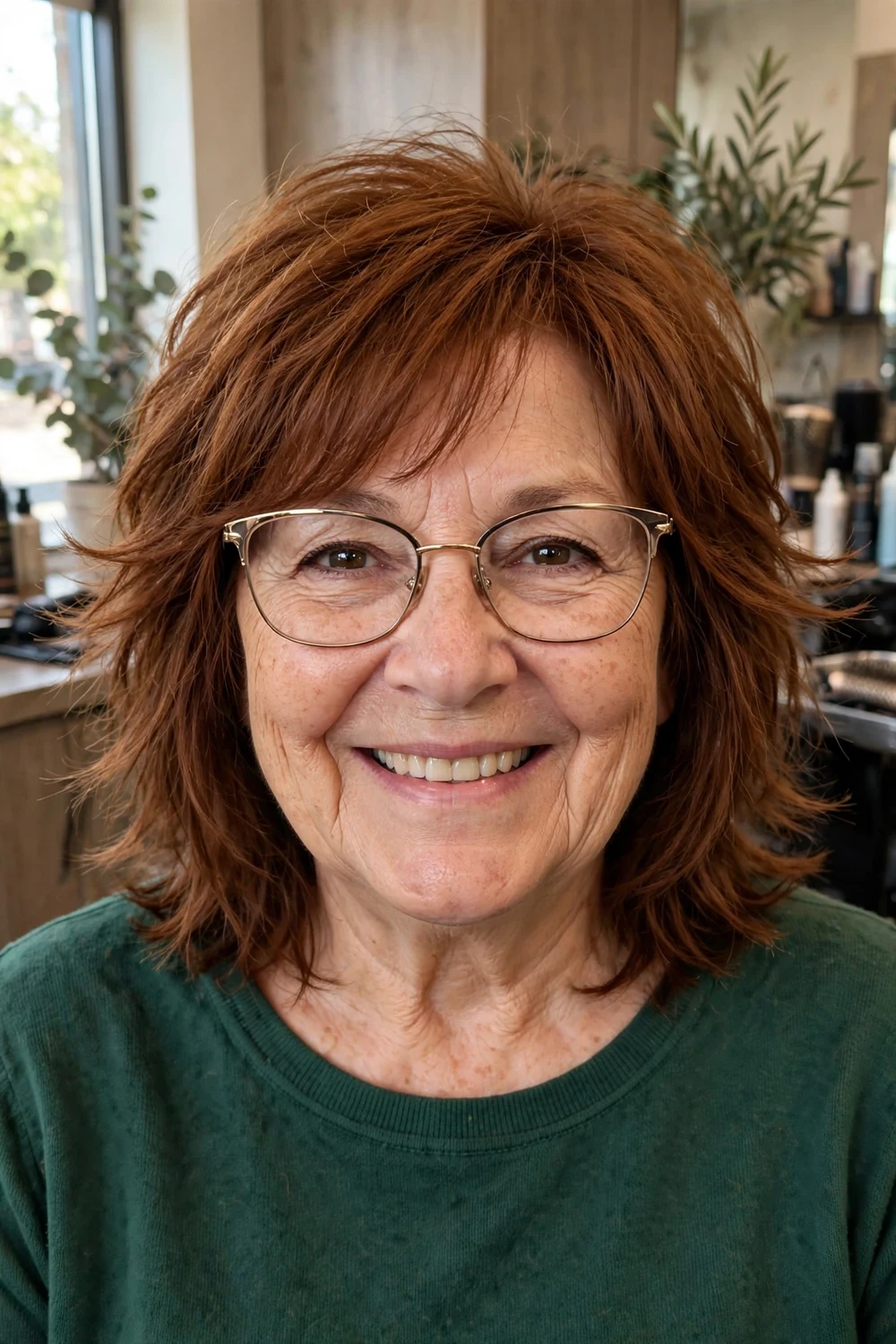
Same shag energy, more length to play with. The shoulder-length shag keeps its face-framing layers starting at the cheekbones, which clears the tops of your frames while adding softness around the face. The extra length balances oversized frames, and the textured layers give your temple arms a comfortable place to rest without slipping. This is a good middle ground if you want the shag look but are not ready for a short cut. It works with straight, wavy, and curly hair alike.
Try this: Diffuse the layers to enhance their shape, finger-comb instead of brushing to keep the texture, and tuck the front pieces back when you need your frames fully visible.
23. Classic Low Updo

An updo puts your frames center stage. The classic low updo sweeps the hair off your face into a bun or twist at the nape, so your glasses are fully visible and your temple arms sit on clean, smooth hair. A few face-framing pieces left loose soften the look without interfering with your frames. This style works for everyday wear, not just events, and it suits every frame type. It is also the most practical option on hot days or when you want your lenses completely clear.
Try this: Smooth your hair into a low twist, pin it securely at the nape, and leave two thin face-framing pieces loose at the temples, tucked behind your glasses arms.
24. Tapered Nape Cut

A tapered nape keeps everything neat exactly where your glasses sit. The graduated shortness at the nape and sides means your temple arms rest comfortably with no bulk behind your ears, while the longer top adds volume that balances your frames. Nothing catches in the hinges, and the clean lines at the back look sharp from every angle. This cut works with most frame styles and is easy to maintain between salon visits. It is a smart pick if comfort around your glasses matters most.
Try this: Keep the nape trimmed every four to six weeks, style the top with a little volume using a round brush, and keep the sides smooth for comfortable glasses wear.
Hairstyles for Women Over 60 with Glasses Comparison at a Glance
| Style | Best Frame Type | Difficulty |
|---|---|---|
| Soft Layered Bob | Bold rectangular or wire frames | Easy |
| A-Line Bob | Oversized or tortoiseshell frames | Medium |
| Asymmetrical Bob | Chunky or statement frames | Medium |
| Classic Lob | Any frame type | Easy |
| Lob with Wispy Bangs | Rimless or thin wire frames | Medium |
| Warm Tone Bob | Black or dark frames | Easy |
| Short Stacked Bob | Rimless frames | Medium |
| Vintage Bob | Cat-eye or round frames | Medium |
| Pixie with Crown Volume | Oversized frames | Easy |
| Layered Pixie Cut | Wire or rimless frames | Easy |
| Textured Crop Pixie | Bold rectangular frames | Easy |
| Faux Hawk Pixie | Statement or dramatic frames | Medium |
| Side-Parted Pixie | Cat-eye frames | Easy |
| Shoulder-Length Layers | Any frame type | Easy |
| Soft Waves | Slim wire frames | Medium |
| Long Waves | Bold frames | Medium |
| Slicked Back Style | Any frame type | Easy |
| Wispy Bangs | Lightweight or rimless frames | Easy |
| Side-Swept Fringe | Rectangular or round frames | Easy |
| Curtain Bangs | Round frames | Easy |
| Playful Shag | Bold frames | Medium |
| Shoulder-Length Shag | Oversized frames | Medium |
| Classic Low Updo | Any frame type | Easy |
| Tapered Nape Cut | Most frame types | Easy |
How to Choose the Right Hairstyle for Your Glasses
Start with your frames, not your hair. Look at their size, weight, and color, then pick a cut that shares the space. Big bold frames pair best with calmer hair around the face, while delicate frames can handle more volume and texture. Thick plastic temple arms need smooth sides to sit comfortably.
Next, think about your daily routine. If you take your glasses on and off often, avoid styles with hair that catches in the hinges. If you wear progressives, keep bangs above the frame line so your sight lines stay open. Bring your glasses to the salon so your stylist can cut with them in mind.
Shorter styles are worth a look if you want low maintenance with glasses, and these short hairstyles for women over 60 include cuts that keep frames comfortable all day.
Mistakes to Avoid
The most common mistake is a heavy blunt fringe that sits right on the frames. It smudges lenses, blocks sight lines, and makes the face look crowded. If you want bangs, go wispy or side-swept and keep them above the top rim.
Another mistake is ignoring the temple arms. Thick layers or bulk right where the arms sit cause pressure, slipping, and tangled hair in the hinges. Ask your stylist to keep the sides smooth and tapered where your glasses rest. Also avoid building volume at eye level, since it competes directly with your frames instead of balancing them.
Women in their seventies face the same frame balance questions, and these classic hairstyles for women over 70 show how timeless cuts adapt to glasses at any age.
If thinning hair is part of the picture, these hairstyles for thin hair over 50 offer volume tricks that work just as well with frames.
Frequently Asked Questions
What is the best hairstyle for women over 60 with glasses?
There is no single best cut, but styles that keep hair off the frames and add balance work well for most women. The soft layered bob, the pixie with crown volume, and the classic lob are strong starting points because they clear the temple arms and keep sight lines open. The right choice depends on your frame size and shape, so match the haircut to your glasses using the frame balance rule above.
Should bangs cover my glasses frames?
No, bangs should end above the top rim of your frames. Bangs that rest on the lenses cause smudging, block your view, and make the face look crowded. Wispy bangs, a side-swept fringe, or curtain bangs are the safest options because they stay light and clear the frames. If your bangs keep touching your glasses, they are too long and need a trim.
Do short hairstyles work better with glasses?
Short hairstyles often work very well with glasses because they keep the sides clear of the temple arms and let the frames show. Pixies, tapered nape cuts, and short stacked bobs all give your glasses room to shine. That said, longer styles like the lob or shoulder-length layers work too, as long as the front sections are kept off the lenses. Comfort and frame balance matter more than length.
How do I keep my hair from catching in my glasses temple arms?
Keep the hair at your sides smooth and free of tangles where the arms rest. Styles with tapered or tucked sides, like the A-line bob or the slicked back style, prevent catching. When you put your glasses on, smooth the side hair flat first, and slide the arms over the hair rather than pushing them through it. Regular trims also help, since split ends snag more easily.
Which haircuts look good with rimless glasses?
Rimless glasses are lightweight and minimal, so they pair well with cuts that show off the face shape. The short stacked bob, layered pixie, and lob with wispy bangs all work because they add softness and structure around delicate frames. Since rimless frames are quiet, you can handle more volume and texture in the hair without the look feeling crowded.
Final Thoughts
If your hair is thick as well as 60+, see the best hairstyles for thick hair over 60 for taming volume the elegant way. The right haircut makes your glasses feel like part of the look instead of an obstacle to work around. Pick a style that clears your frames, balances their weight, and fits your routine, and you will notice the difference every morning. Bring this list to your stylist, keep your glasses on during the cut, and trust the frame balance rule.

