



A short pixie haircut after 50 is one of the smartest style moves you can make. It takes years off your look, cuts your morning routine to minutes, and works with the texture changes that come with age instead of against them.
Below are 25 short pixie haircuts for older women, each chosen for easy maintenance, flattering shape, and real-world wearability. Every idea includes styling tips, a difficulty rating, and honest upkeep notes so you know exactly what you are getting into before you sit in the salon chair.
Before You Choose
Not every pixie suits every woman, so run through these three checks before you book the appointment. First, face shape: oval faces handle almost any pixie, round faces benefit from crown height and side-swept bangs that lengthen, square faces soften with feathered edges around the temples, and heart faces balance with volume at the sides rather than the top. Second, hair type: fine hair needs point cutting and light layering for lift without losing density, thick hair needs weight removal through the interior so the shape does not puff out, curly hair needs extra length on top to account for shrinkage, and straight hair shows every precision line so the cut must be exact. Third, maintenance honesty: a precision tapered pixie needs a salon trim every 4 weeks to look sharp, while a textured tousled pixie can stretch to 6 or even 8 weeks. If you color, salt-and-pepper blending and dimensional grey grow out far more gracefully than solid dark shades. Pick the pixie that fits the effort you will actually give it.
1. Classic Tapered Pixie
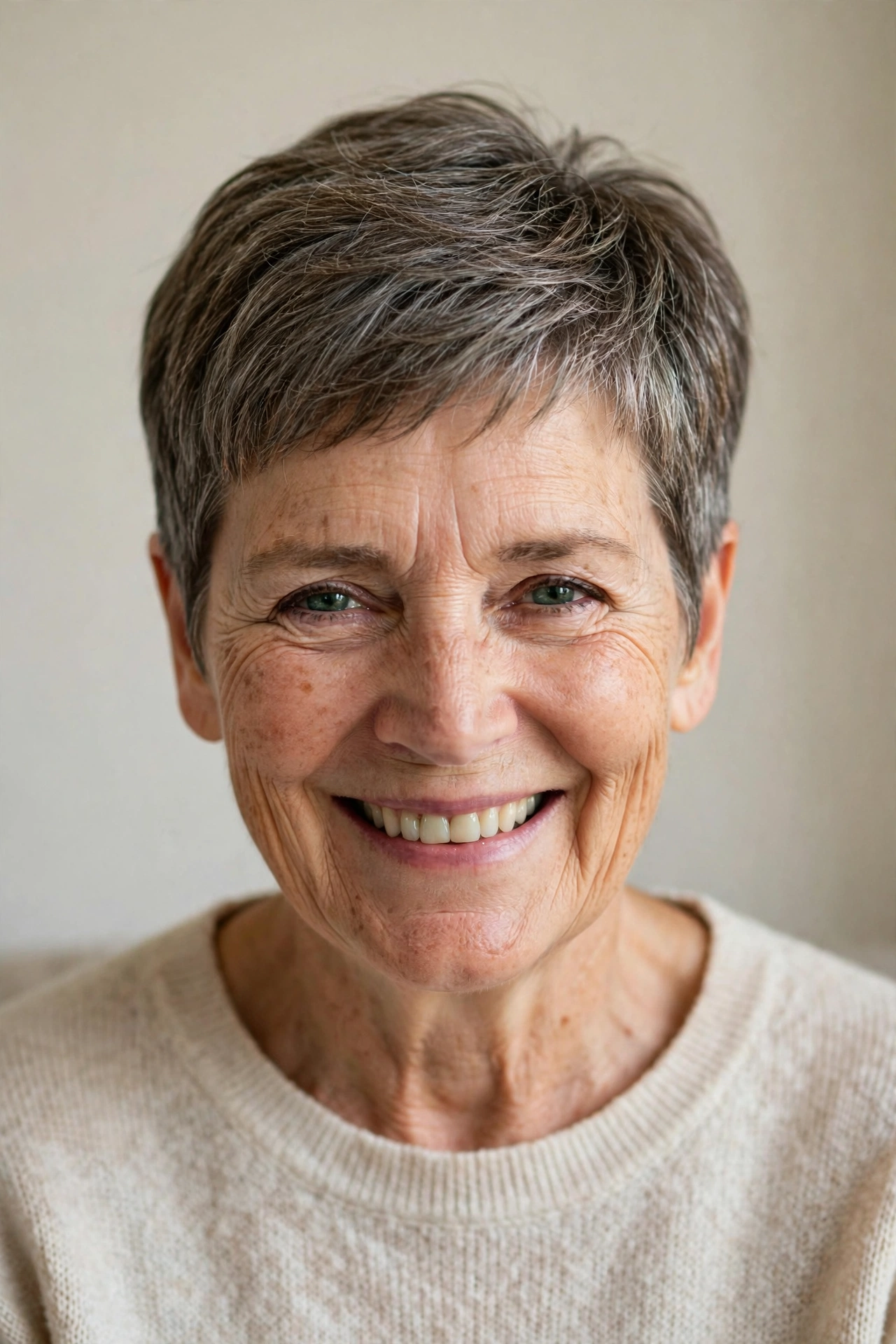
The classic tapered pixie never goes out of style for good reason. Short, neat sides graduate into soft length on top, giving a clean silhouette that frames the eyes and cheekbones. Your stylist will use clippers or shears to taper the nape and sideburns close, then point-cut the crown for piecey texture. It works on straight, wavy, and relaxed hair, and the shape holds well between appointments. This is the lowest-risk pixie you can choose.
Try this: rub a pea-sized amount of light pomade between palms and pinch the crown pieces for definition.
Best for: oval and heart faces; straight to wavy hair. Difficulty: Easy · Cost: $ · Daily styling: 5 minutes · Upkeep: trim every 4–6 weeks.
2. Feathered Pixie with Side-Swept Bangs

Feathering softens every edge of this pixie, making it one of the most forgiving cuts for mature faces. Fine, wispy layers are cut with a razor or thinning shears so the ends taper to soft points instead of blunt lines. The long side-swept bangs skim across the forehead, which flatters fine lines and adds asymmetry that keeps the style modern. It moves naturally and rarely looks stiff, even on humid days. Ask your stylist to keep the bangs long enough to tuck behind one ear.
Try this: blow-dry bangs to the side with a small round brush for a smooth, curved finish.
Best for: round and square faces; fine to medium hair. Difficulty: Easy · Cost: $ · Daily styling: 5–8 minutes · Upkeep: trim every 5–6 weeks.
3. Textured Crop with Crown Volume
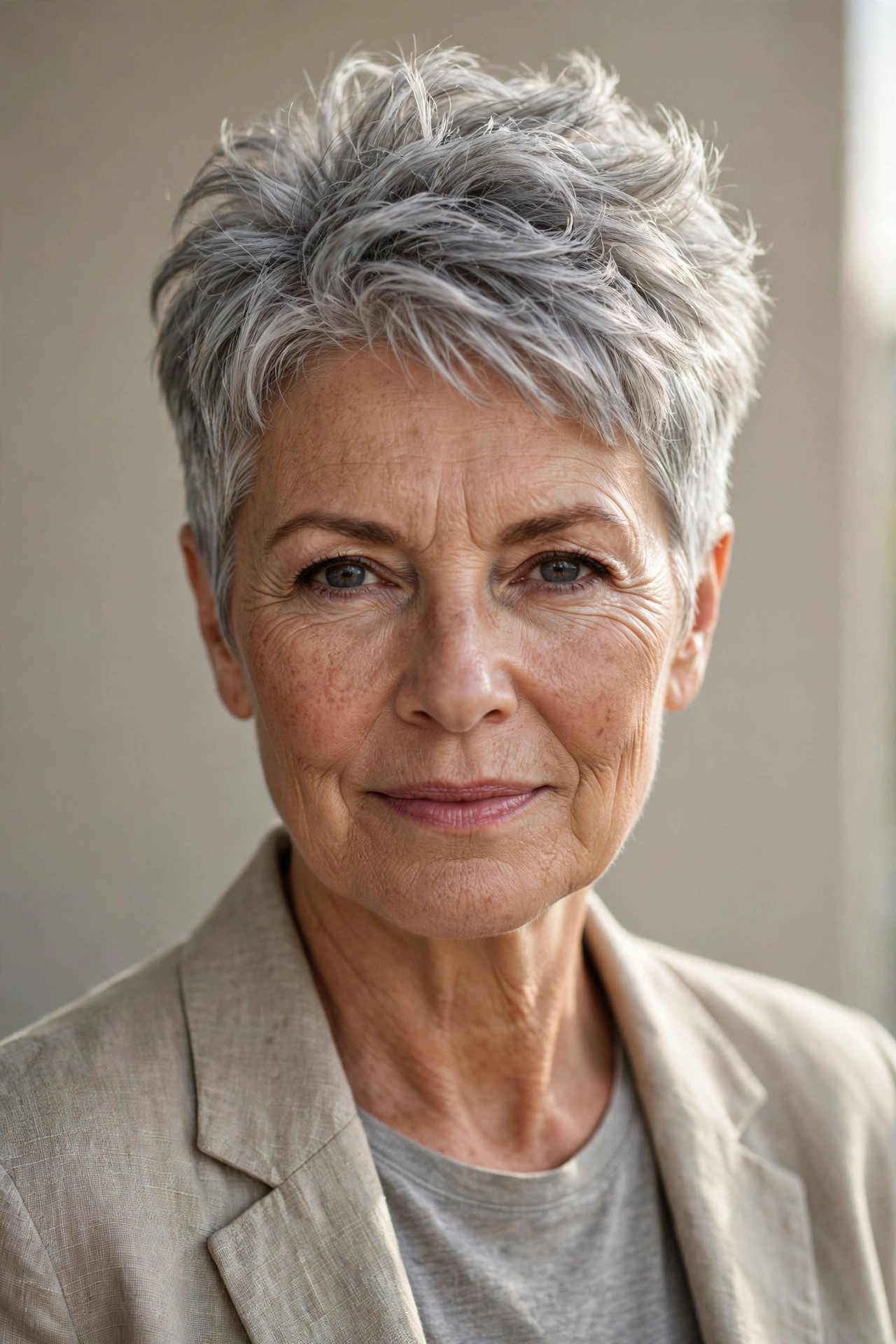
If your hair has gone flatter with age, crown volume is your best friend. This textured crop keeps the sides close and builds height on top through stacked layering and point cutting. The texture does the styling work for you: short pieces push against each other and stand up instead of lying flat. It is especially good for fine hair that lacks body. A root-lifting spray on damp hair, scrunched in and left to air-dry, gives all-day lift with almost no effort.
Try this: flip your head upside down and blast roots with the dryer for 30 seconds for instant lift.
Best for: fine or thinning hair; oval and oblong faces. Difficulty: Easy · Cost: $ · Daily styling: 5 minutes · Upkeep: trim every 4–5 weeks.
4. Sleek Silver Pixie
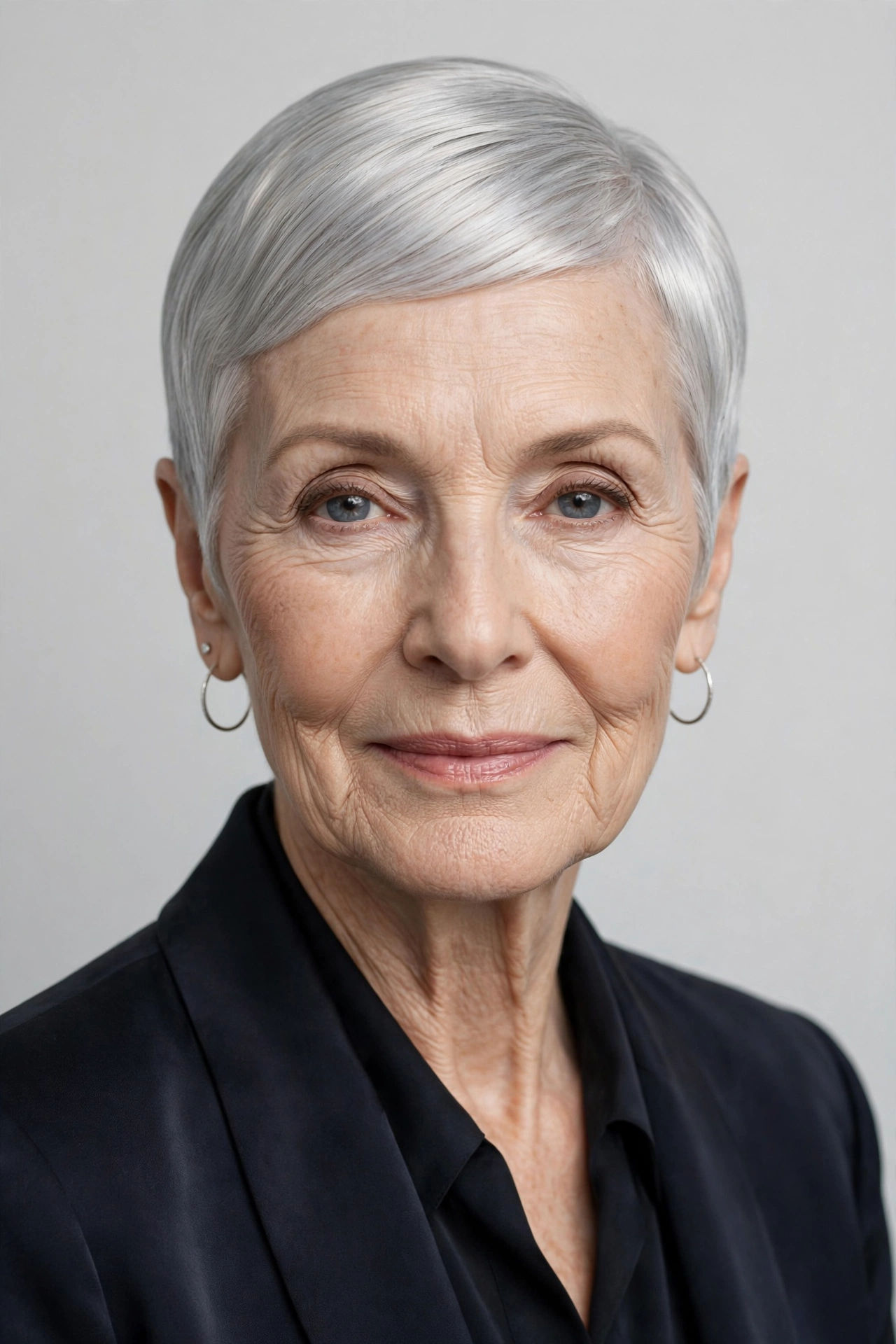
Going silver is a statement, and a sleek pixie shows it off to full effect. This cut is all about precision: smooth sides, a clean neckline, and a top that lies flat with a mirror-like finish. It suits women who have embraced their natural grey and want a polished, put-together look every day. Use a purple shampoo once a week to keep silver bright instead of yellow, and a light serum for shine. The American Academy of Dermatology notes that gentle, sulfate-free products help aging hair stay healthy; see the AAD’s public hair care guidance for more tips.
Try this: flat-iron the top section in one pass for a glass-smooth finish that lasts all day.
Best for: straight grey or silver hair; oval faces. Difficulty: Medium · Cost: $$ · Daily styling: 10 minutes · Upkeep: trim every 4 weeks; purple shampoo weekly.
5. Salt and Pepper Tousled Pixie
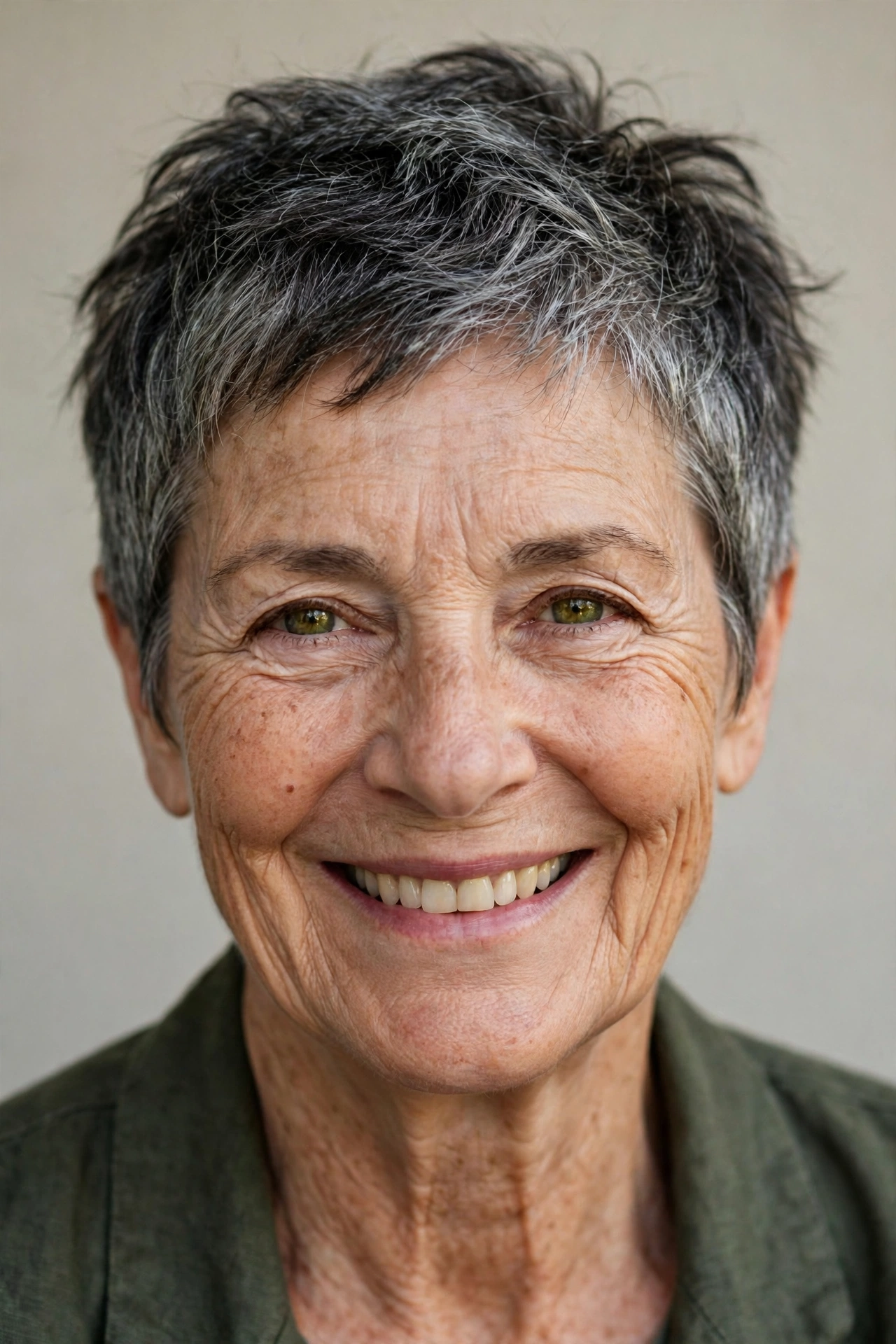
Salt-and-pepper hair has natural dimension that colorists try hard to fake, and a tousled pixie lets it shine. Choppy layers are cut throughout so the grey and dark strands mix instead of sitting in blocks. The tousled finish means you do not need perfect styling: a little texture cream scrunched through damp hair is enough. Regrowth blends invisibly, so you can stretch salon visits further than with any solid color. It is the most forgiving color-and-cut combination on this list.
Try this: let it air-dry with a dab of sea-salt spray for natural, beachy texture.
Best for: wavy or straight hair going grey naturally; all face shapes. Difficulty: Easy · Cost: $ · Daily styling: 3–5 minutes · Upkeep: trim every 6 weeks.
6. Choppy Pixie with Micro Fringe
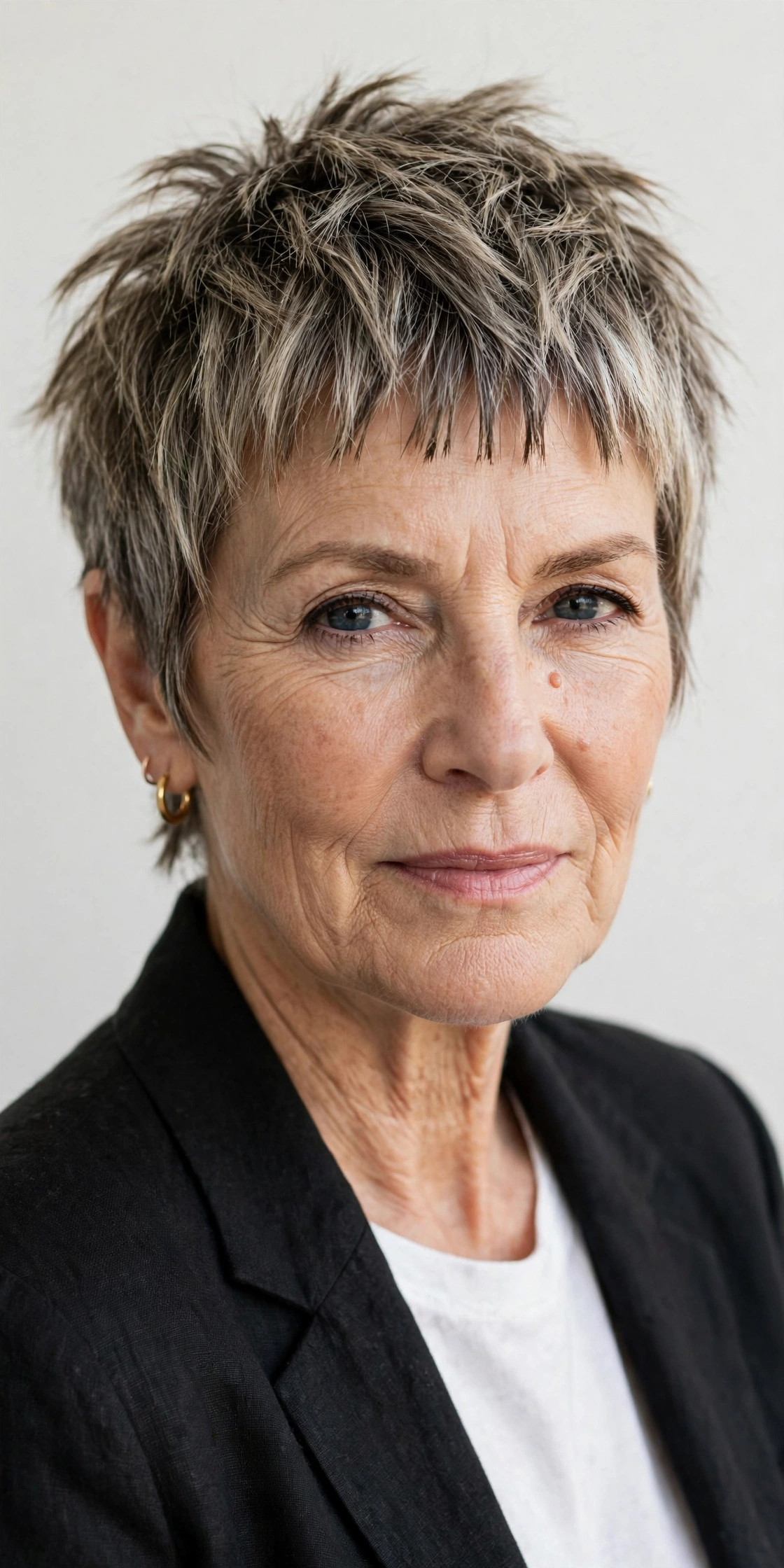
A micro fringe is a bold choice that pays off with instant personality. The fringe sits well above the eyebrows, cut in short, jagged pieces that match the choppy texture through the rest of the cut. It draws attention upward to the eyes and works well on women with strong brows. The choppy layers keep the overall feel soft rather than severe. This cut needs confidence more than styling skill, and it photographs wonderfully. For more short pixie inspiration, browse these short pixie cuts for every face shape.
Try this: piece out the fringe with a tiny bit of wax so it does not sit flat against the forehead.
Best for: oval and heart faces; straight hair. Difficulty: Medium · Cost: $ · Daily styling: 8 minutes · Upkeep: trim every 4 weeks; fringe needs tidying between cuts.
7. Layered Pixie with Long Sideburns

Longer sideburns are the detail that makes this pixie feel feminine and current. While the back stays short and tapered, the hair in front of the ears is left an inch or two longer, softly framing the jawline. The layers through the top add movement so the cut never looks boxy. Sideburns also give you styling options: tuck them behind the ears for a cleaner look or leave them out for softness. It is a small detail with a big payoff, especially for women growing out a shorter cut.
Try this: smooth sideburns with a flat iron and a drop of serum for a sleek frame around the face.
Best for: square and round faces; medium to thick hair. Difficulty: Easy · Cost: $ · Daily styling: 5–8 minutes · Upkeep: trim every 5 weeks.
8. Ash Blonde Feathered Pixie
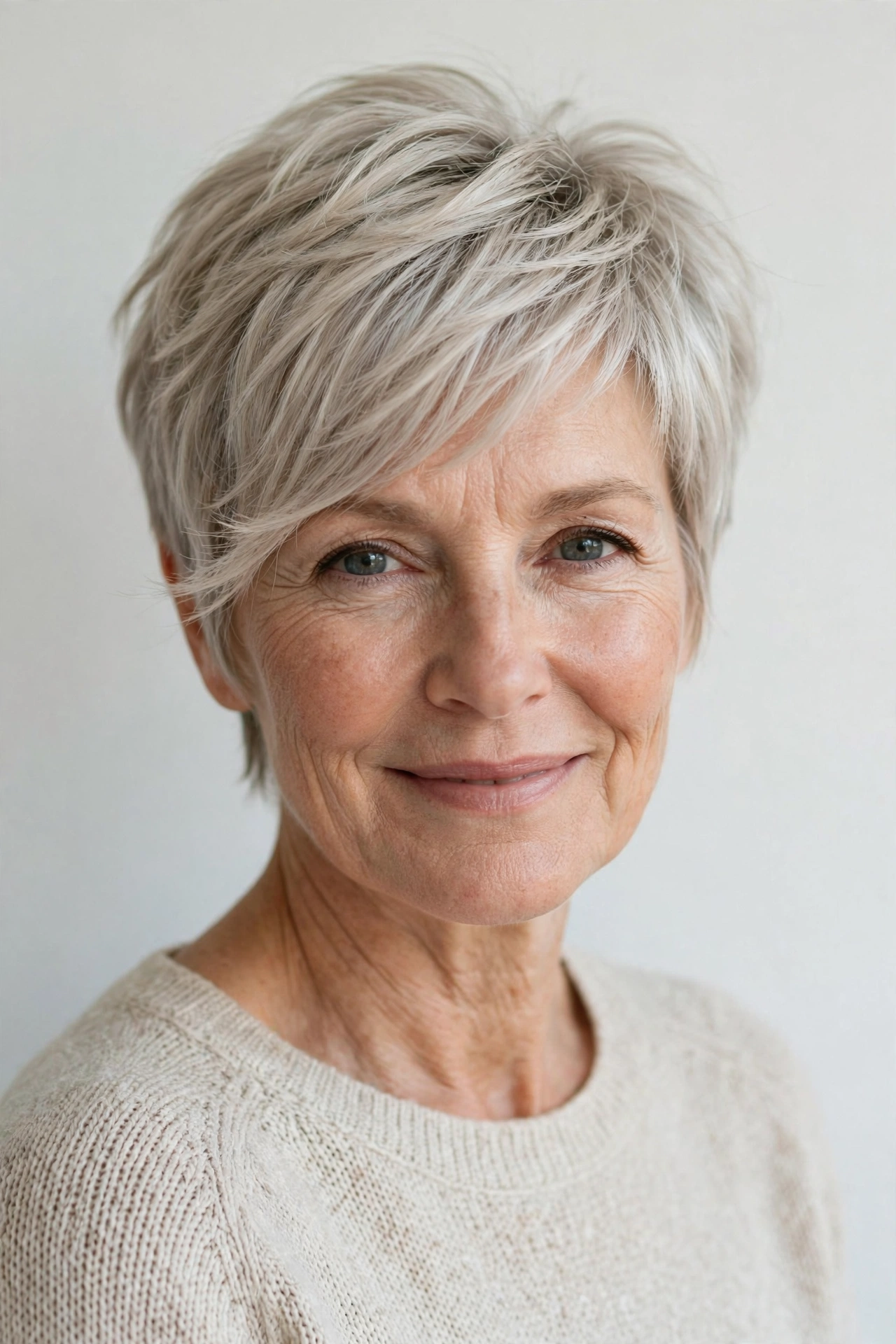
Ash blonde is one of the kindest colors for mature skin: the cool tones neutralize redness and the lightness softens features. On a feathered pixie, it looks modern rather than matronly. The feathered cutting keeps the color from looking flat by creating shadow and light through the layers. Because ash blonde is close to natural grey, regrowth is gentle and touch-ups can wait. Check the FDA’s official hair dye safety guidance before any at-home coloring, and always do a patch test first.
Try this: use a blue-toned shampoo every third wash to keep the ash from warming up.
Best for: cool skin tones; fine to medium hair. Difficulty: Medium · Cost: $$ · Daily styling: 8 minutes · Upkeep: trim every 5 weeks; color every 8–10 weeks.
9. Tapered Nape Pixie
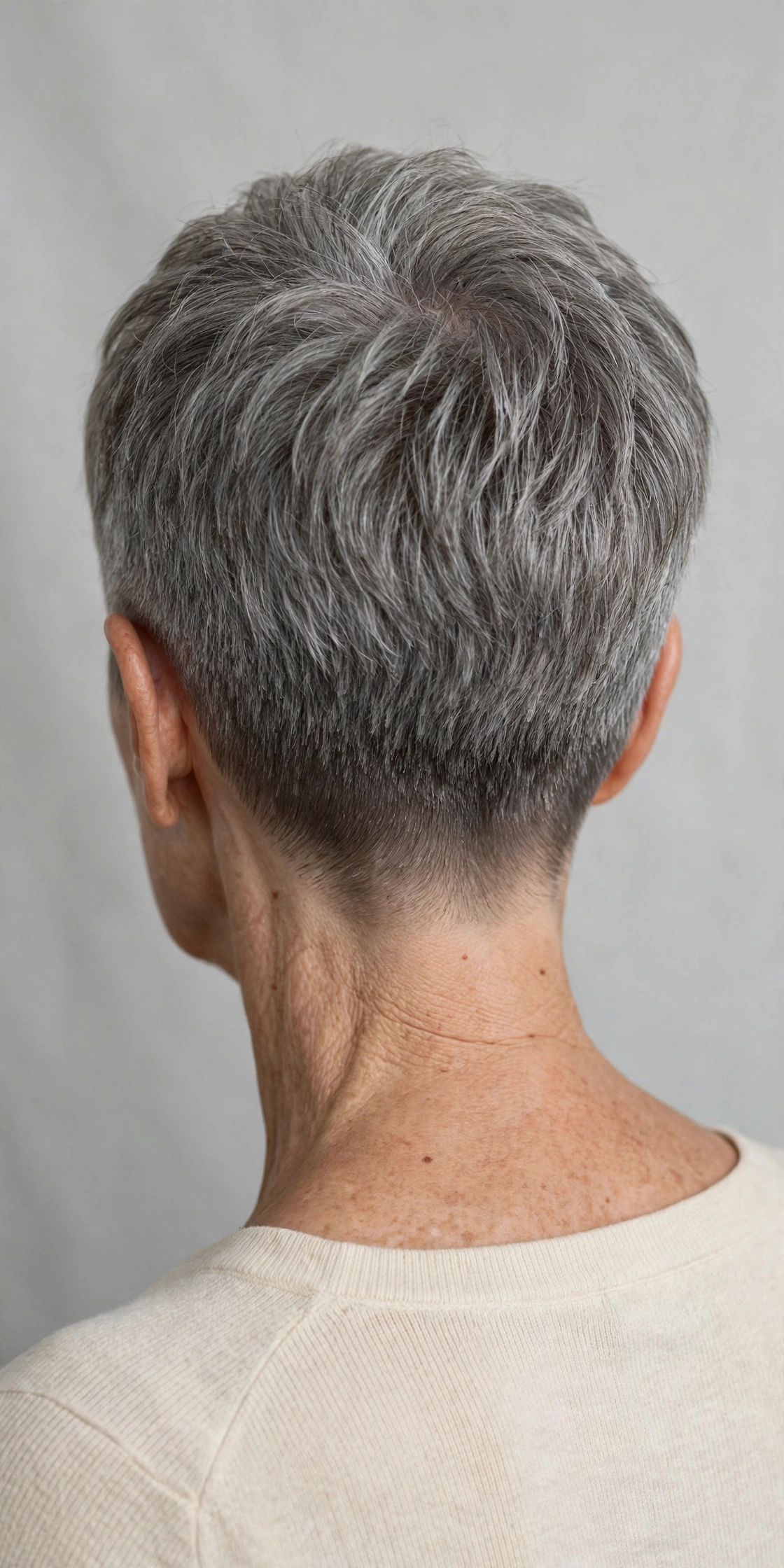
The tapered nape is what separates a good pixie from a great one. Hair at the neckline is cut very close and blended upward into fuller length on top, creating a clean, elongated line from crown to collar. It looks sharp from every angle and feels cool in warm weather. The contrast between the close nape and the textured top also makes fine hair look thicker. Ask your stylist to show you the back with a hand mirror before you leave the chair, since this detail is easy to get wrong.
Try this: keep the nape crisp between appointments with a quick touch-up from your stylist.
Best for: all face shapes; straight and wavy hair. Difficulty: Easy · Cost: $ · Daily styling: 5 minutes · Upkeep: trim every 4 weeks to keep the nape clean.
10. Curly Pixie for Natural Texture
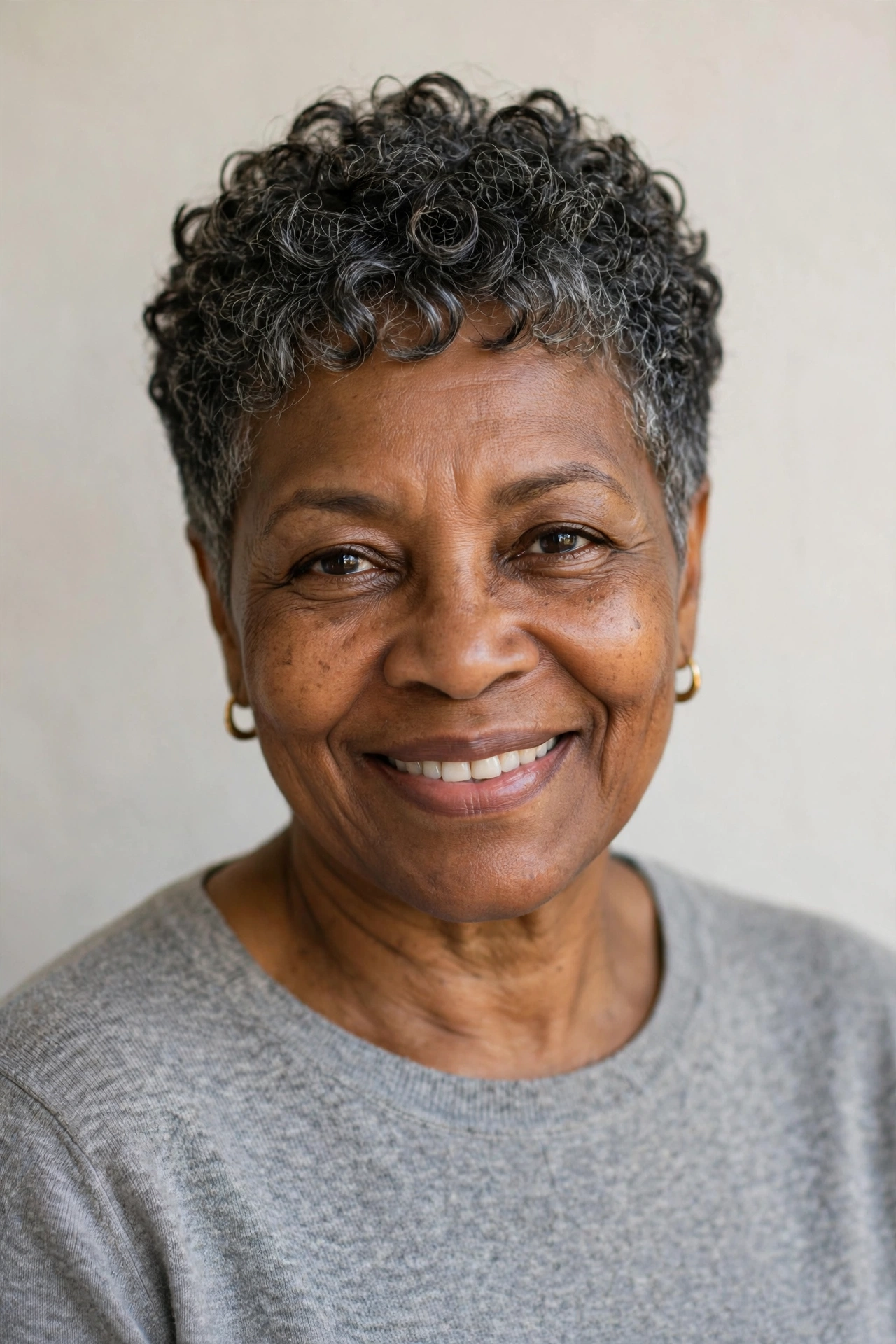
Natural curls make a striking pixie with almost no heat styling required. The key is leaving enough length on top for the curl pattern to form: cutting curls too short makes them shrink into a shape you did not plan. A good curl-aware stylist will cut dry, curl by curl, so the shape accounts for shrinkage. Define curls with a leave-in conditioner and let them air-dry or diffuse gently. The result is soft, full, and full of personality. Curly pixies also grow out more gracefully than straight ones.
Try this: refresh second-day curls by misting with water and scrunching in a little curl cream.
Best for: naturally curly or coily hair; round and oval faces. Difficulty: Easy · Cost: $ · Daily styling: 5–10 minutes · Upkeep: trim every 6–8 weeks.
Want a whole guide built around this texture? These curly pixie haircuts for older women cover 21 variations for every curl pattern.
11. Pixie with Subtle Undercut
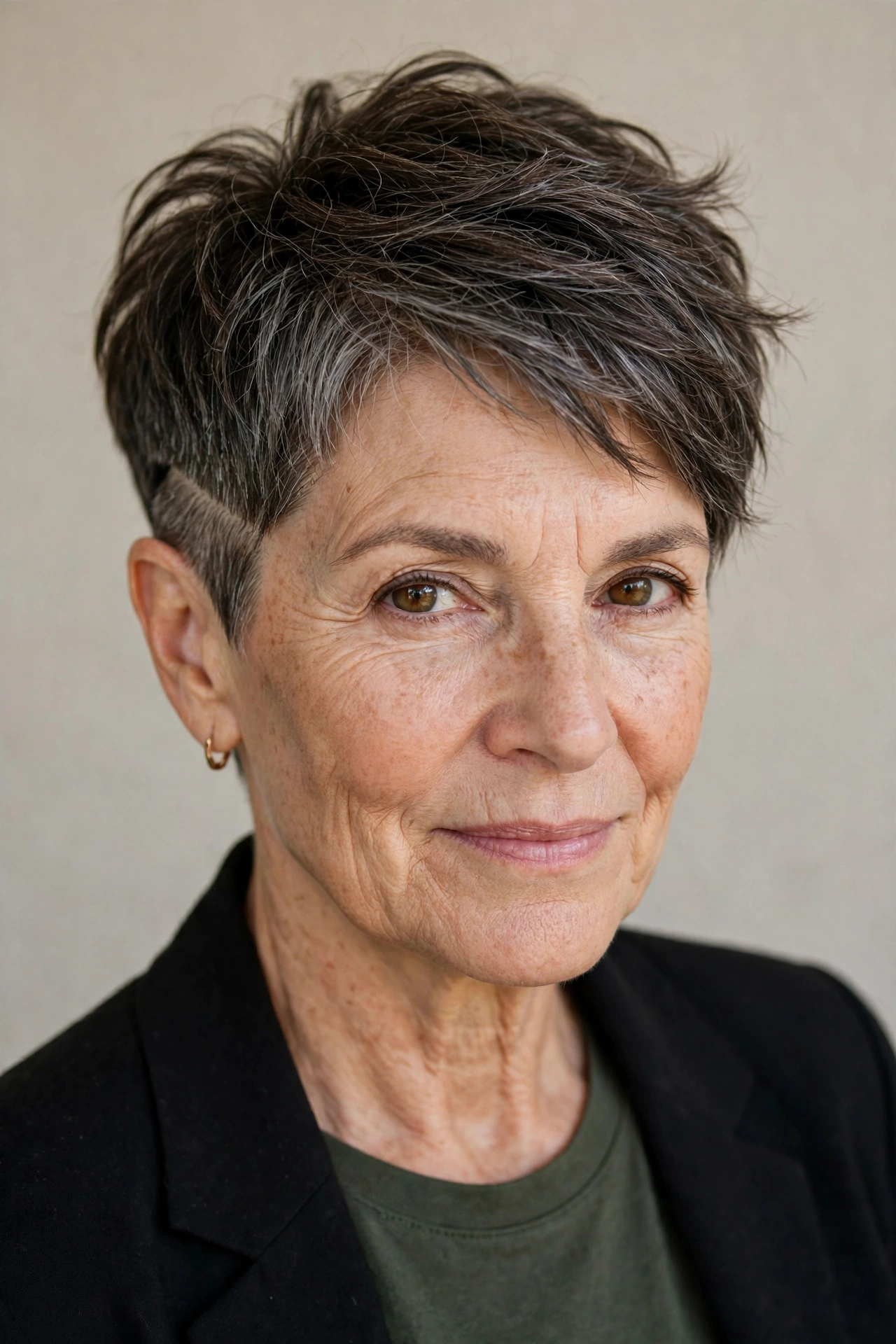
An undercut does not have to be dramatic. This version keeps the top classic pixie length while one side, or the nape, is clipped shorter underneath. The longer top covers it completely when you want a conservative look, and a deep part reveals the detail when you want edge. It also removes bulk, which is a gift for thick hair that puffs up in a pixie. See more bold options in these pixie cut shaved sides. Keep the undercut area moisturized, since short clippered hair can feel prickly as it grows.
Try this: change your part to the opposite side to flash the undercut for evening.
Best for: thick hair; oval and square faces. Difficulty: Medium · Cost: $ · Daily styling: 8 minutes · Upkeep: trim every 3–4 weeks to keep the undercut sharp.
12. Honey Blonde Textured Pixie
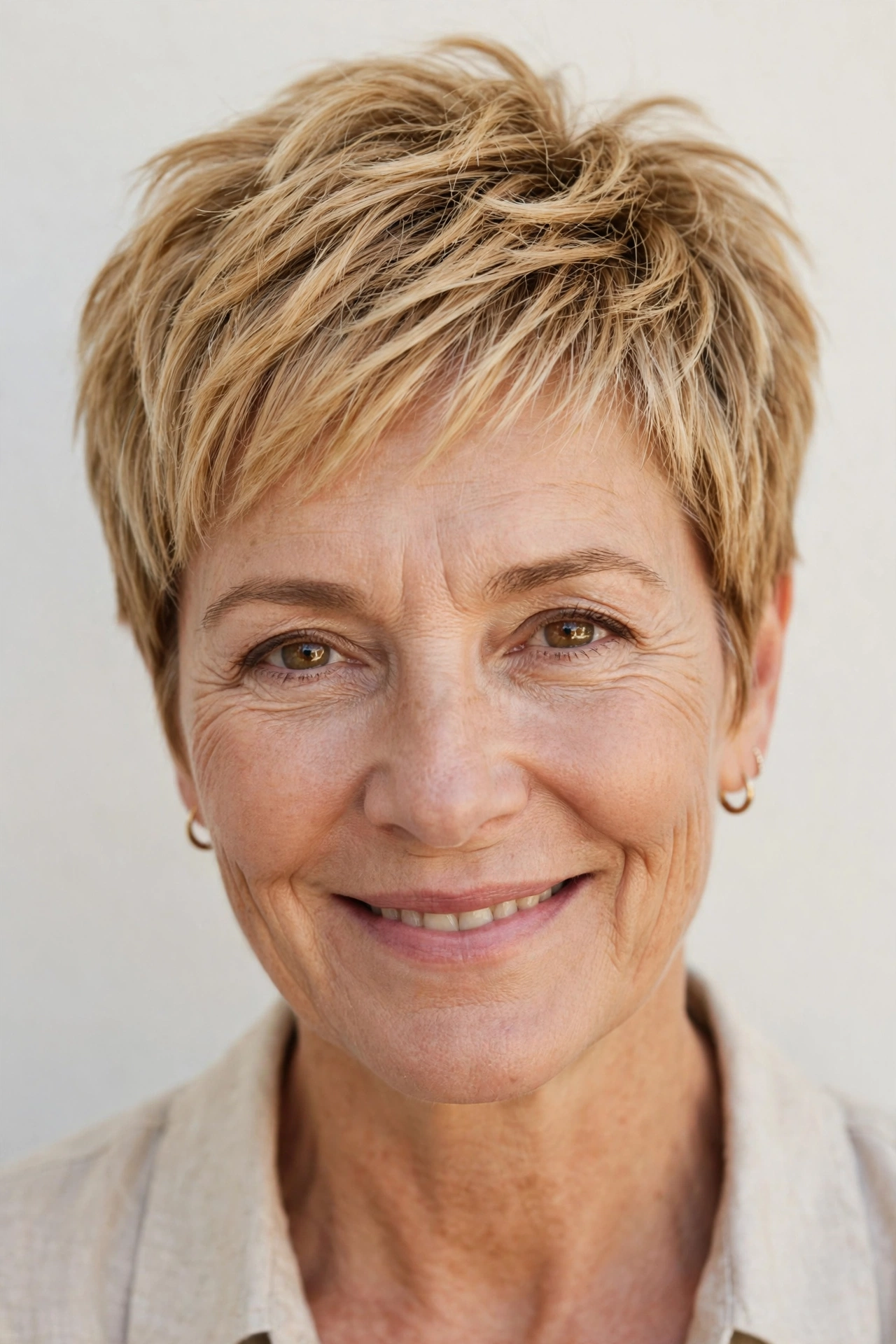
Honey blonde brings warmth that flatters golden and olive skin tones. On a textured pixie, the warm shade catches light through the layers and gives the cut a sun-kissed depth that flat color cannot match. The texture keeps it youthful without trying too hard. Honey blonde does need maintenance to stop it going brassy, so budget for toning appointments. If your natural color is dark, your colorist will need to lift carefully to protect aging hair, which is more fragile than it used to be.
Try this: add a clear gloss treatment every 6 weeks to keep the honey tones luminous.
Best for: warm skin tones; medium to thick hair. Difficulty: Medium · Cost: $$$ · Daily styling: 8 minutes · Upkeep: trim every 5 weeks; color every 6–8 weeks.
13. Soft Rounded Pixie
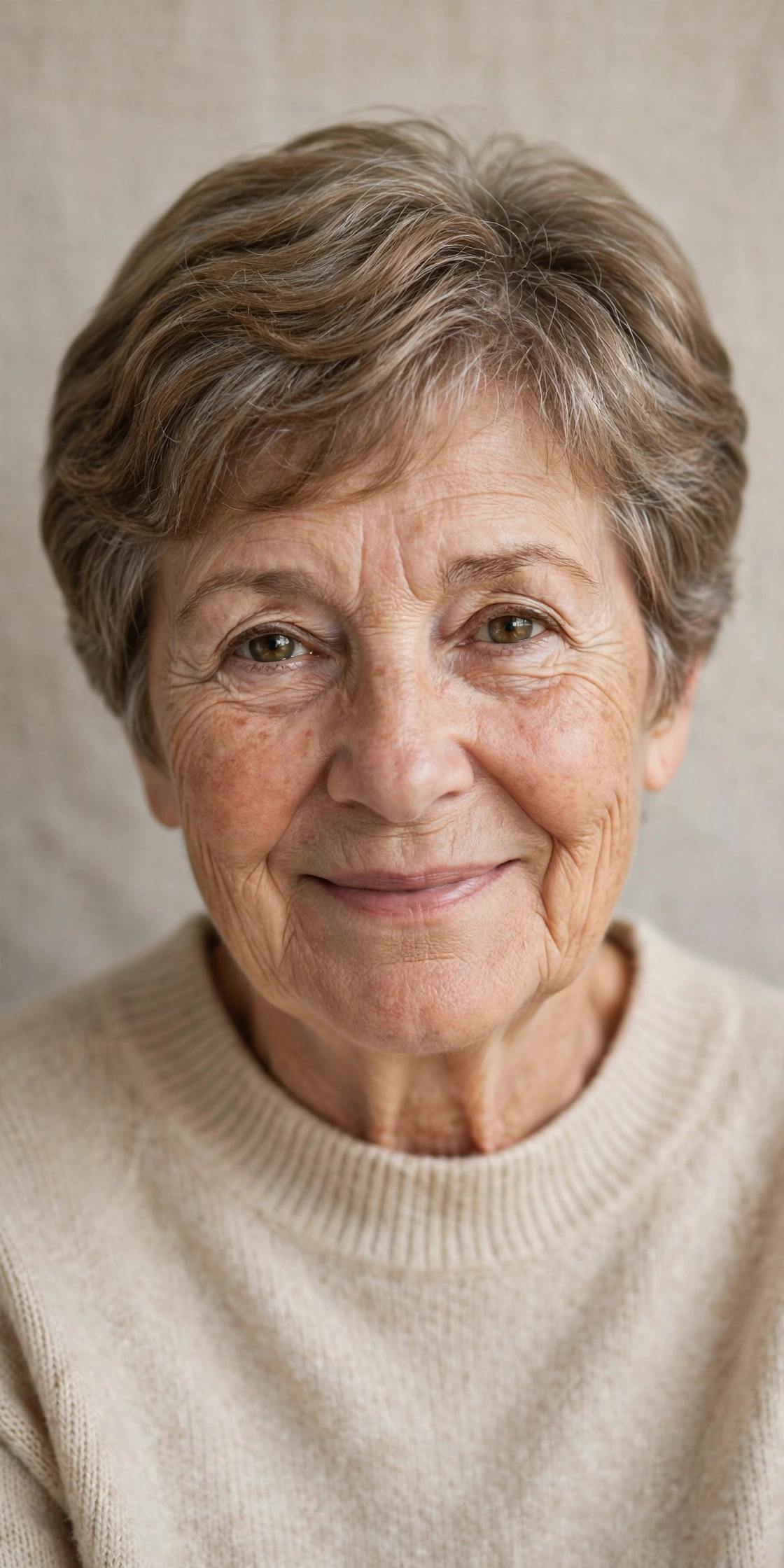
The soft rounded pixie follows the curve of the head with no harsh lines anywhere. Length is kept fairly even all around, then textured lightly so the silhouette stays pillowy rather than helmet-like. It is one of the kindest cuts for women who feel self-conscious about a pixie looking severe. The roundness also adds the illusion of fullness, which helps thinning hair. Style it with fingers and a light cream rather than a brush, which can flatten the soft shape you are paying for.
Try this: rough-dry with your fingers instead of a brush to keep the soft, airy texture.
Best for: thinning hair; round and heart faces. Difficulty: Easy · Cost: $ · Daily styling: 5 minutes · Upkeep: trim every 5–6 weeks.
14. Pixie with Wispy Bangs

Wispy bangs are the low-commitment way to soften a pixie. Cut thin and piecey, they skim the forehead without the heaviness of a full fringe, so they work even on fine hair that cannot support dense bangs. They draw the eye to your eyes and take attention from forehead lines, which many women over 60 appreciate. Because they are light, they grow out without an awkward stage. If you have ever wanted bangs but feared the upkeep, this is your safest entry point.
Try this: trim wispy bangs yourself between appointments with sharp brow scissors, a tiny snip at a time.
Best for: fine hair; long and oval faces. Difficulty: Easy · Cost: $ · Daily styling: 3–5 minutes · Upkeep: trim every 5 weeks; bang trims as needed.
15. Dimensional Grey Pixie
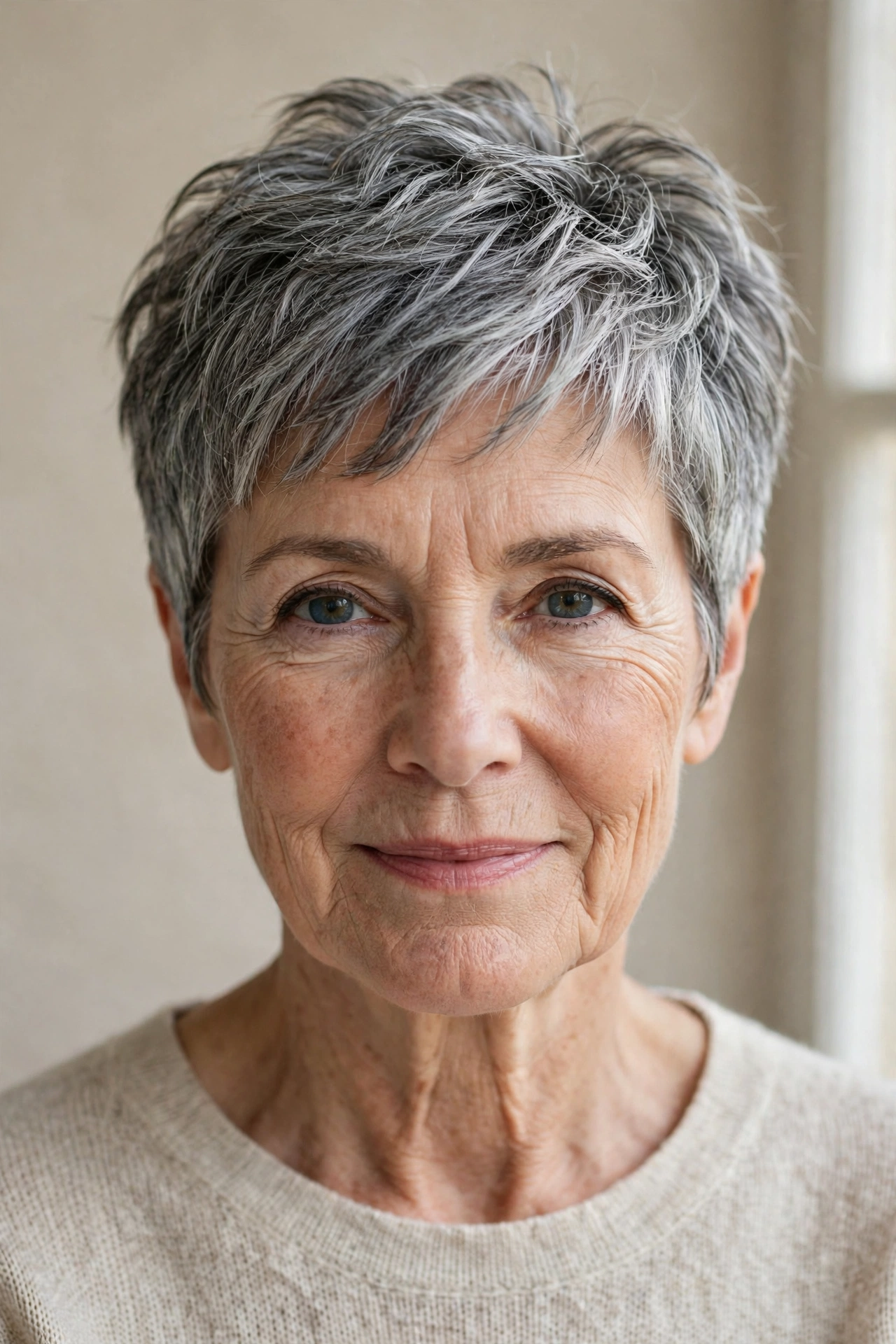
Natural grey is rarely one flat shade, and dimensional coloring celebrates that. Your colorist weaves together silver, charcoal, and white strands to mimic the multi-tonal look of natural grey, only more polished. On a pixie, the dimension keeps the cut from looking one-note and adds visible texture even when the hair is freshly washed. It is also the smartest grow-out strategy: when your roots come in, they blend into the pattern instead of drawing a line. Ask for a toner that matches your natural grey pattern.
Try this: a silver-enhancing mask once a month keeps all the grey tones bright and even.
Best for: women transitioning to grey; all hair types. Difficulty: Medium · Cost: $$ · Daily styling: 5–8 minutes · Upkeep: trim every 5 weeks; tone every 10–12 weeks.
16. Chestnut Brown Layered Pixie

Chestnut brown is rich without being harsh, which makes it ideal for mature skin. The warm reddish-brown tones add life to the complexion in a way flat black or ashy shades sometimes do not. Layered through a pixie, the color shows off the cut’s movement, with lighter pieces catching light on top. It covers grey reliably while looking natural, not shoe-polish dark. If your skin has warm undertones, this shade will feel like it was made for you. Women over 50 looking for more inspiration can explore these short hairstyles for women over 50.
Try this: a demi-permanent formula fades softer than permanent color and is gentler on aging hair.
Best for: warm and neutral skin tones; medium to thick hair. Difficulty: Medium · Cost: $$ · Daily styling: 8 minutes · Upkeep: trim every 5 weeks; color every 6–8 weeks.
17. Piecey Spiky Pixie
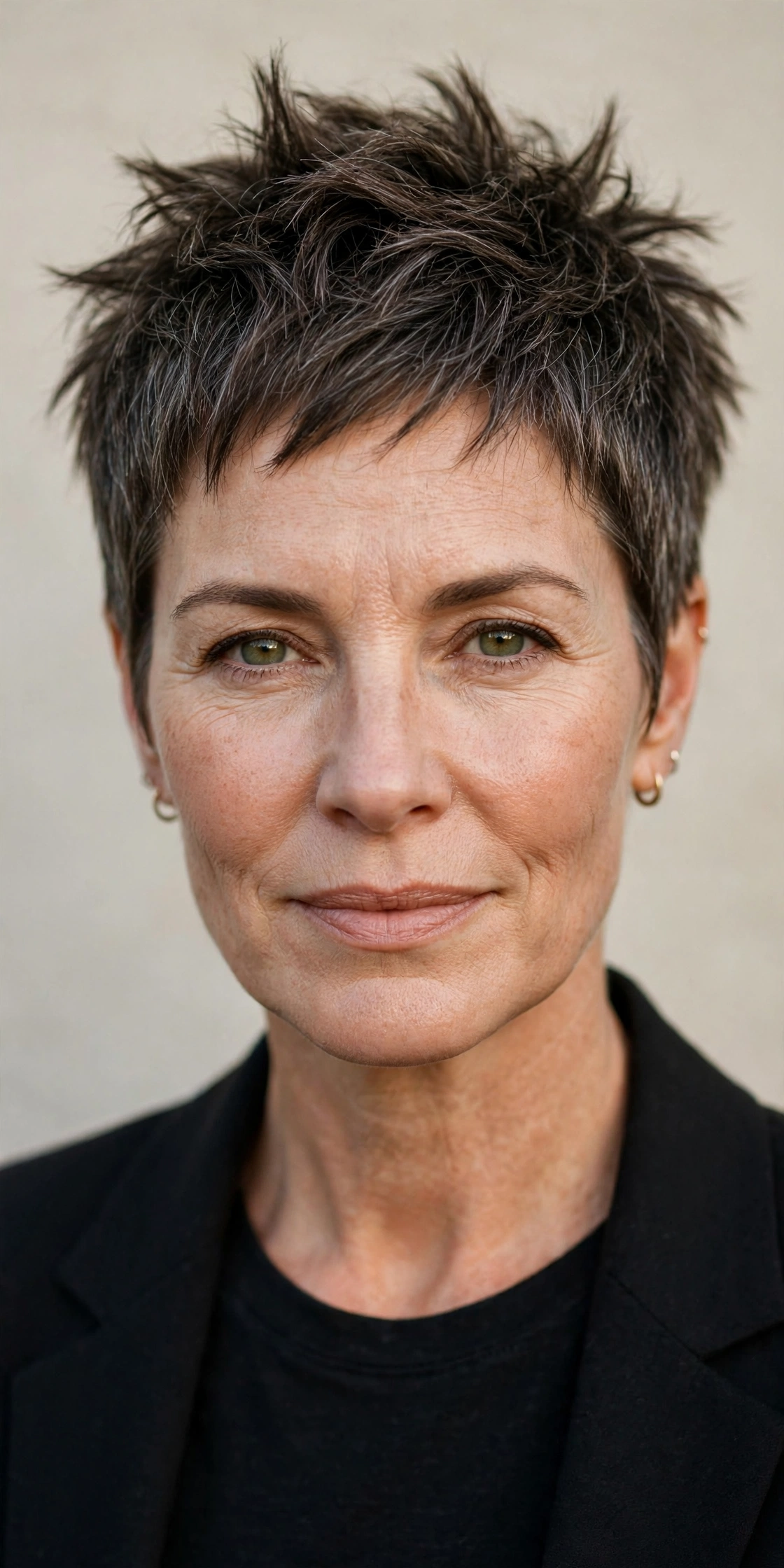
Who says spikes are only for the young? A piecey spiky pixie on an older woman reads confident, not costume. The trick is keeping the spikes soft: textured, separated pieces rather than stiff gelled points. Your stylist point-cuts the top into varied lengths so the pieces fall naturally into spikes with a little product. It is fantastic for adding height to round faces and attitude to any outfit. Use a matte paste, not shiny gel, to keep it modern.
Try this: twist small sections between your fingers with paste instead of spiking everything upward.
Best for: round faces; straight to wavy hair with some density. Difficulty: Medium · Cost: $ · Daily styling: 8–10 minutes · Upkeep: trim every 4 weeks.
18. Pixie Bob Hybrid
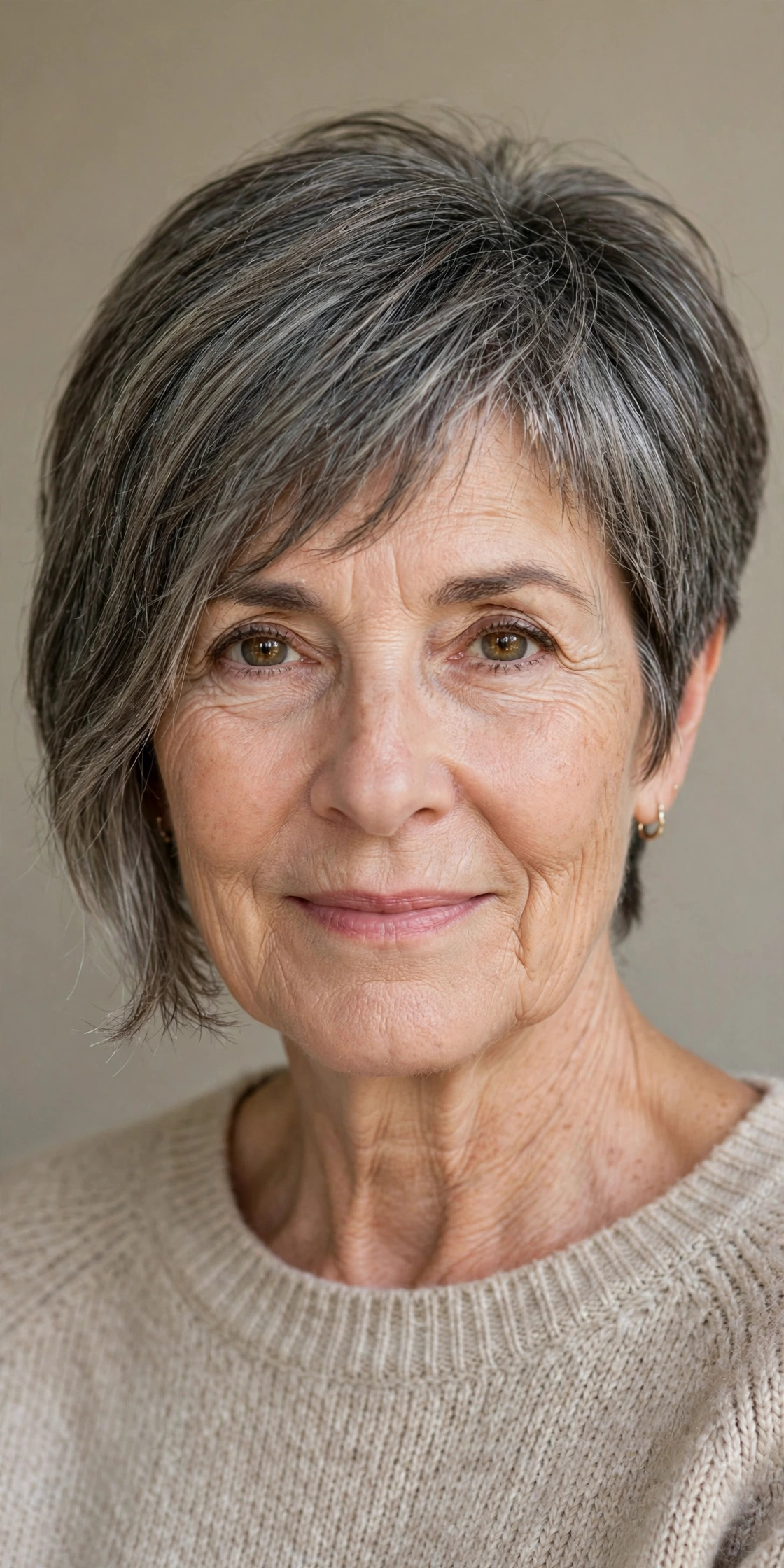
Not ready to go full pixie? The pixie bob hybrid, sometimes called a bixie, splits the difference. It keeps pixie shortness at the nape and sides but leaves bob-like length through the top and front. You get the wash-and-go ease of a pixie with the styling versatility of a bob: tuck it behind ears, sweep it to the side, or add waves. It is the perfect transition cut for women growing out a pixie or inching toward one for the first time.
Try this: curl just the front pieces away from the face for a soft, face-framing wave.
Best for: all face shapes; wavy and straight hair. Difficulty: Easy · Cost: $ · Daily styling: 8 minutes · Upkeep: trim every 5–6 weeks.
19. Deep Side-Part Pixie
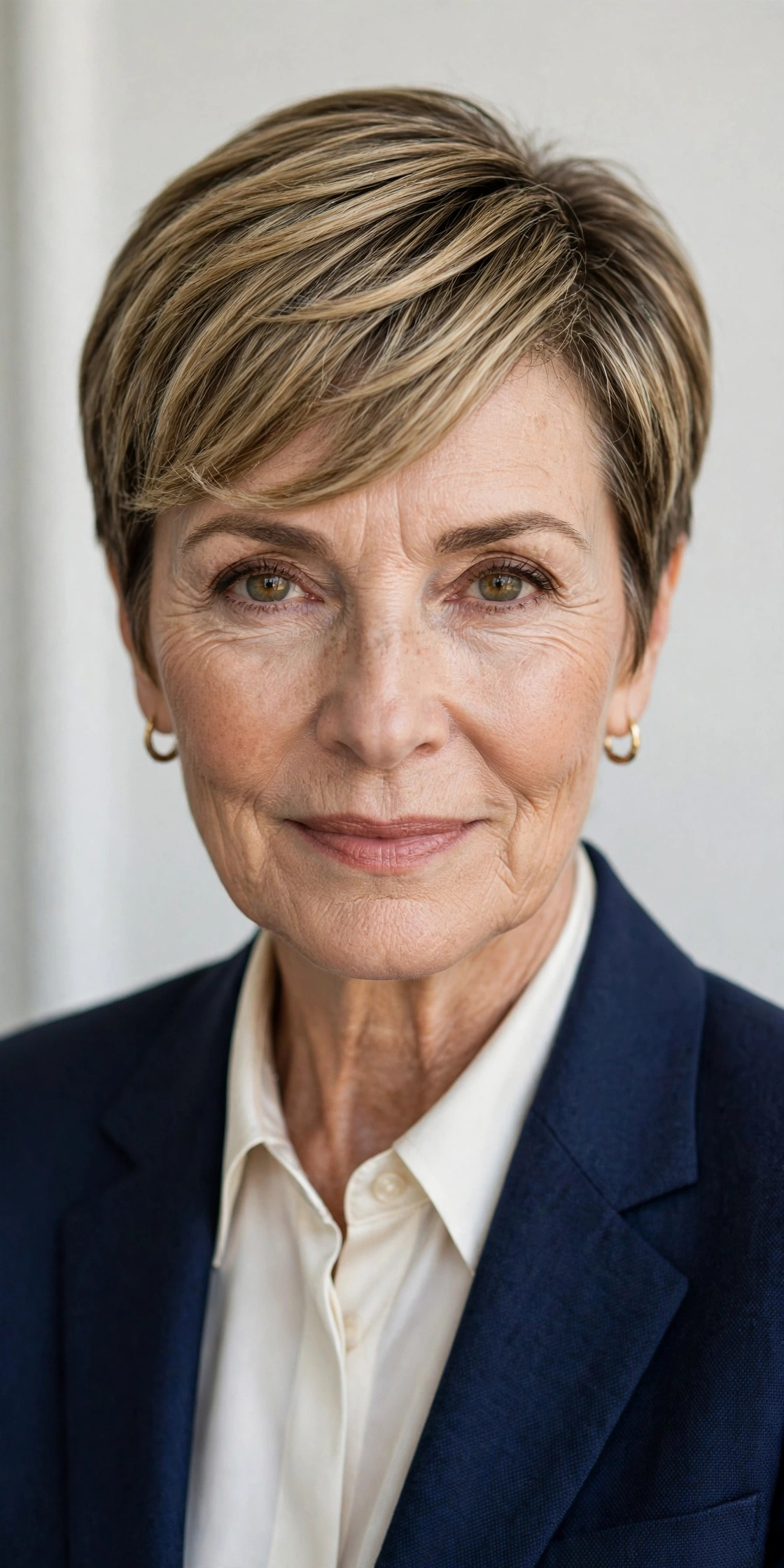
Sometimes the biggest change comes from the smallest move. A deep side part transforms a basic pixie by creating dramatic asymmetry and instant volume at the crown. The heavy side sweeps across the forehead while the short side stays tucked neat, which slims round faces. It also gives you a styling trick for second-day hair: flip the part to the other side and flat roots disappear. No new cut required, just a new part, though it works best on pixies with at least two inches on top.
Try this: set the part with a light-hold spray while hair is damp so it stays put all day.
Best for: round faces; fine to medium hair. Difficulty: Easy · Cost: $ · Daily styling: 3–5 minutes · Upkeep: trim every 5 weeks.
20. Crown-Lift Pixie for Fine Hair
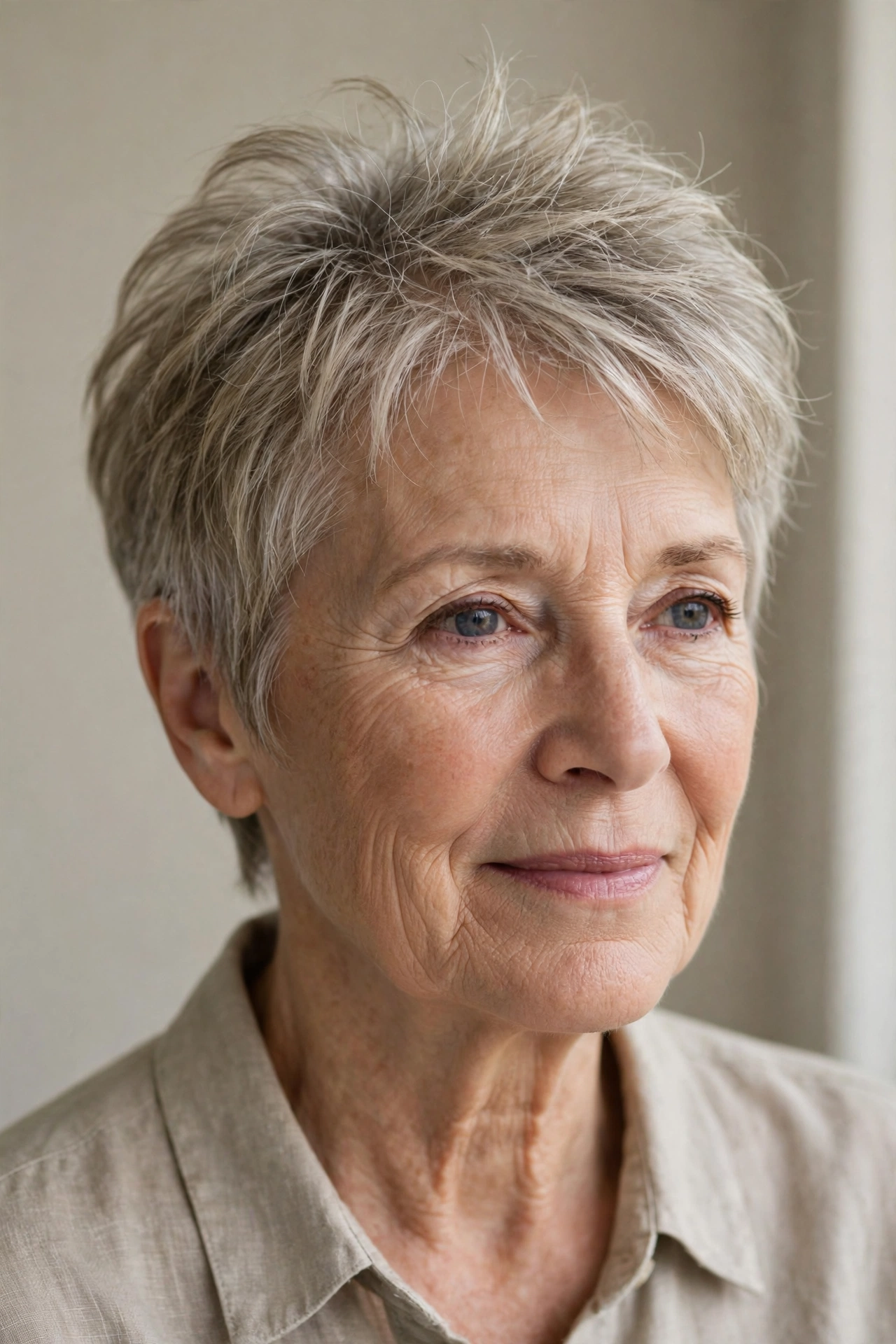
Fine hair over 60 often lies flat no matter what you do, but this cut is engineered against that. Short layers are stacked tightly at the crown so each layer props up the one above it, creating structural lift that does not depend on product alone. The sides stay neat so all the volume reads intentional, not puffy. Your stylist should use point cutting, never thinning shears, which would remove the density you need. Pair it with a volumizing mousse and you will be surprised how much body fine hair can hold.
Try this: apply mousse to roots only, then dry the crown section first while it is dampest.
Best for: fine, low-density hair; oval and long faces. Difficulty: Easy · Cost: $ · Daily styling: 8 minutes · Upkeep: trim every 4–5 weeks.
21. Shaggy Textured Pixie
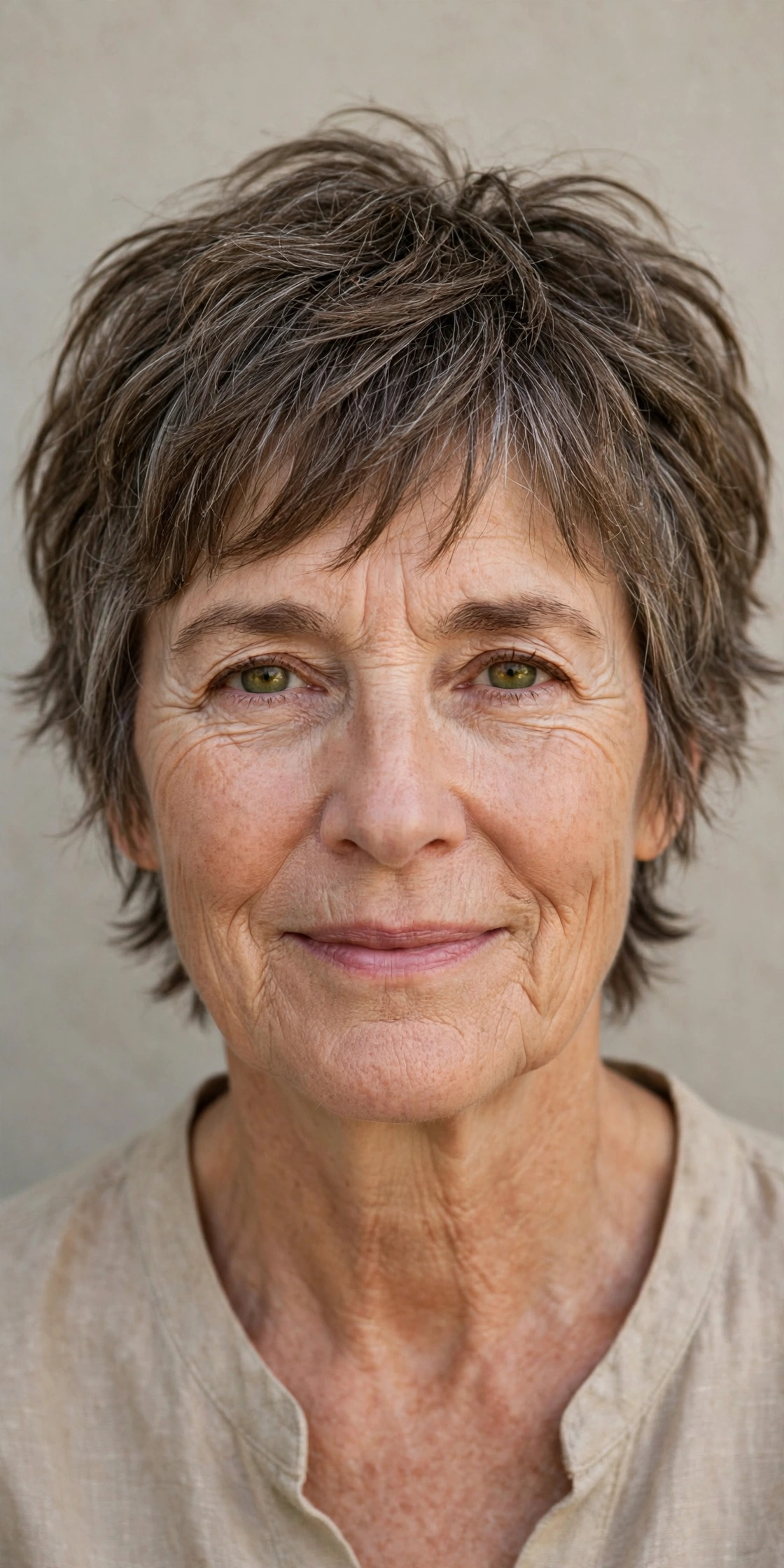
The shaggy pixie brings a relaxed, undone feel that works well for women who dislike fussy styles. Layers of different lengths are cut throughout, creating a lived-in texture that looks good even when you do almost nothing to it. It is forgiving on wavy and unruly hair types that fight precision cuts. The shag grows out well too, since the uneven lengths just blend into a longer shag over time. For older women wanting more low-key options, these short hairstyles for older women include plenty of easy choices.
Try this: scrunch in a little curl cream and let it air-dry for natural, piecey texture.
Best for: wavy and thick hair; oval and square faces. Difficulty: Easy · Cost: $ · Daily styling: 5 minutes · Upkeep: trim every 6–8 weeks.
22. Polished Pixie with Tapered Sides
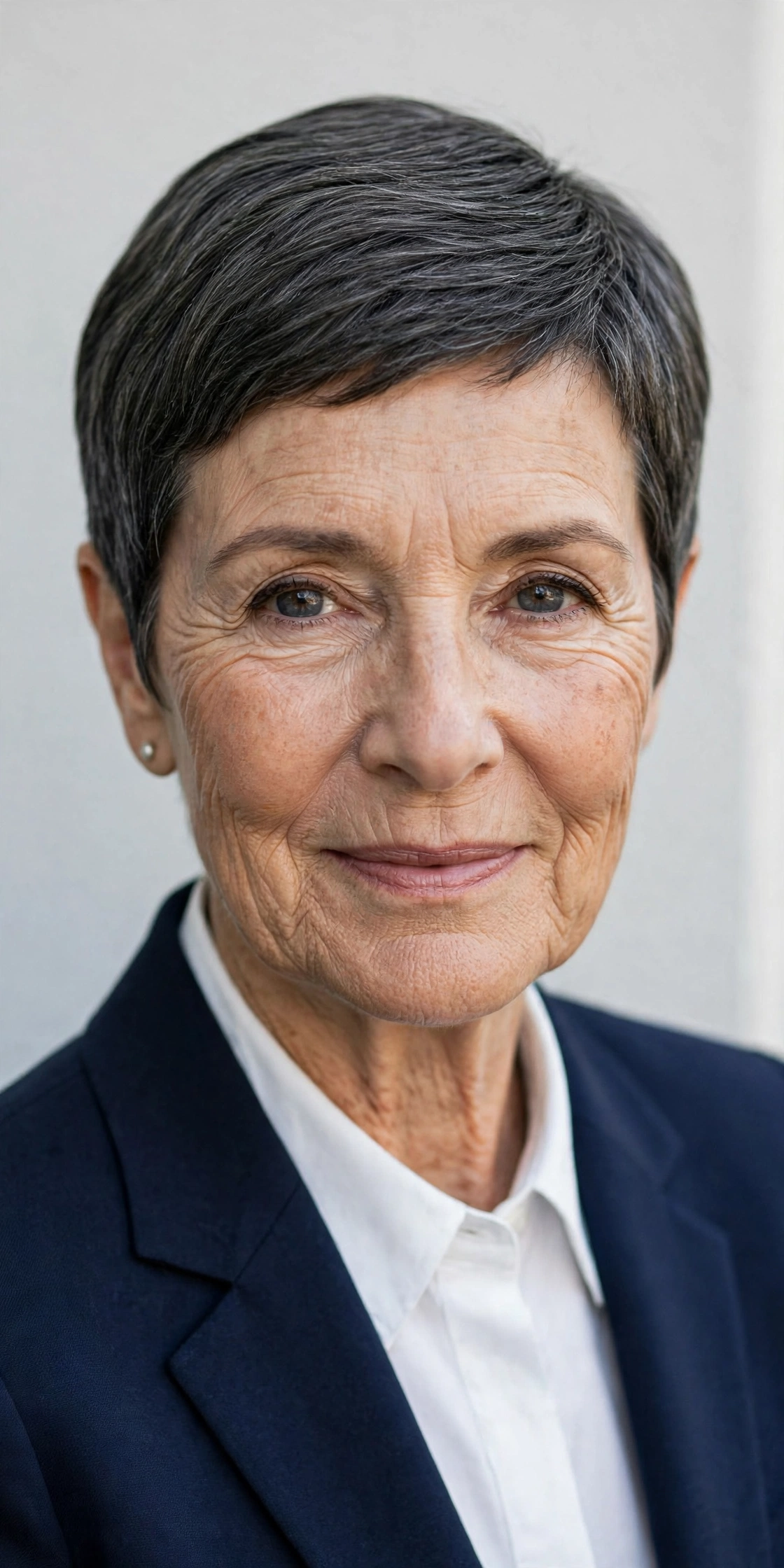
For women who like everything in its place, the polished pixie delivers. Tapered sides are cut smooth and close while the top is kept neat with just enough length to comb into place. It is the boardroom pixie: professional, tidy, and timeless. A smoothing cream and a quick pass with a brush is all the daily styling it needs. The precision does demand regular trims, since grown-out tapered sides lose their crispness fast. But if you value a consistently neat look, the upkeep is worth it.
Try this: a boar-bristle brush smooths the top without creating static on fine hair.
Best for: straight hair; oval and heart faces. Difficulty: Medium · Cost: $ · Daily styling: 8 minutes · Upkeep: trim every 3–4 weeks.
23. Tousled Pixie with Choppy Layers
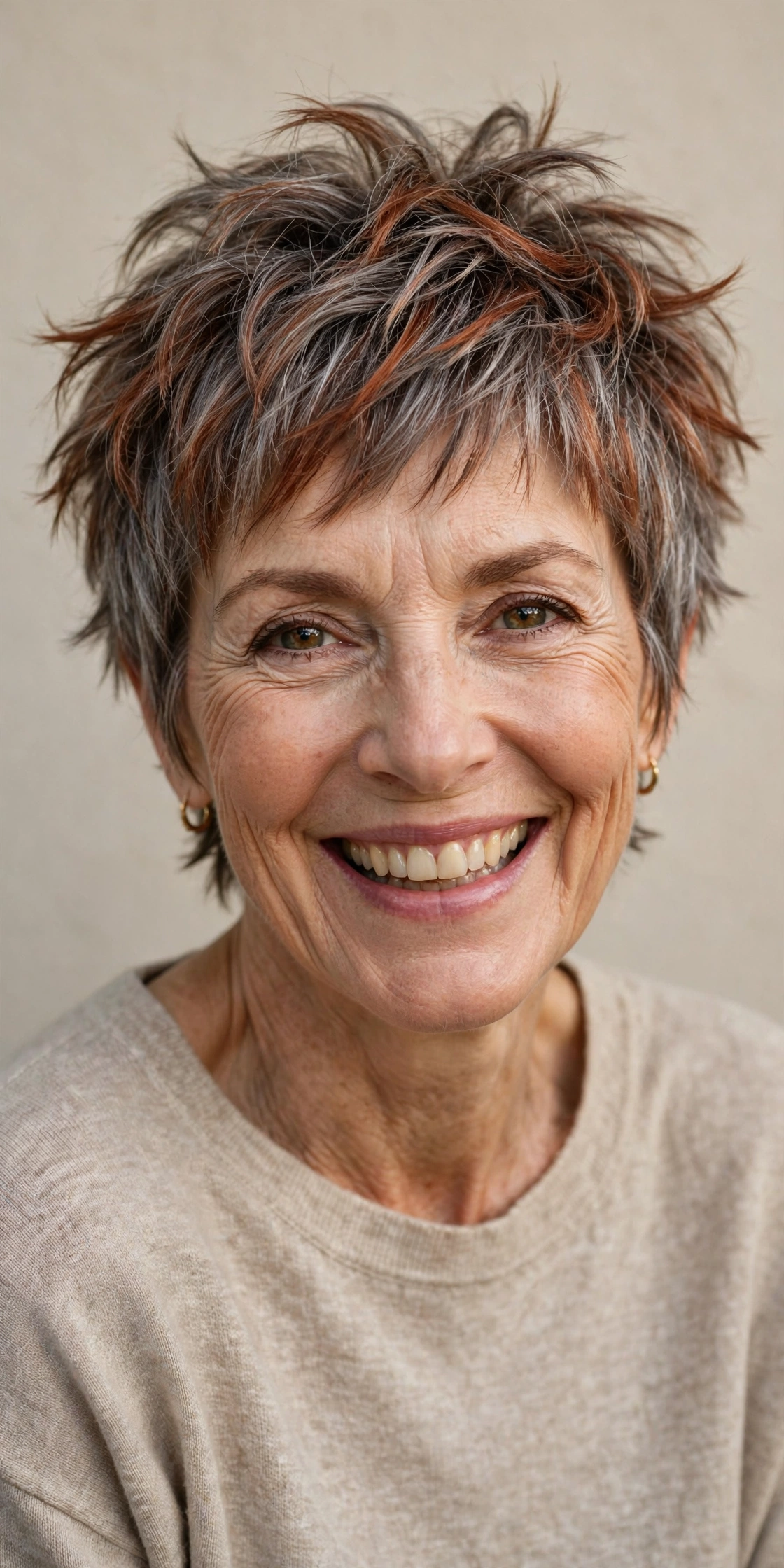
Choppy layers cut at varied lengths create a tousled finish that looks styled even when it is not. Your stylist will use a razor or point cutting to create jagged ends that catch light differently, giving the illusion of thickness. It is ideal for women whose hair has thinned with age, since the texture disguises sparseness. The cut also hides regrowth well, so you can push trims a little further apart. A texturizing spray is the only product you really need.
Try this: spray texturizer on dry hair and shake your head upside down for instant tousle.
Best for: thinning hair; all face shapes. Difficulty: Easy · Cost: $ · Daily styling: 3–5 minutes · Upkeep: trim every 5–6 weeks.
24. Short Cropped Pixie

The short crop is the boldest pixie on this list and, for the right woman, the most liberating. Hair is cut close all over, usually with clippers on the sides and short sheared length on top. It shows off bone structure, earrings, and glasses. Maintenance is almost zero: wash, towel-dry, done. It does require confidence and regular trims to keep the shape, since even a week of growth changes the silhouette. Women who have always hidden behind long hair often find the crop surprisingly freeing.
Try this: a statement earring or bold lipstick balances the minimalism of the cut.
Best for: strong bone structure; all hair types. Difficulty: Easy · Cost: $ · Daily styling: 2 minutes · Upkeep: trim every 3–4 weeks.
25. Wash-and-Go Easy Pixie
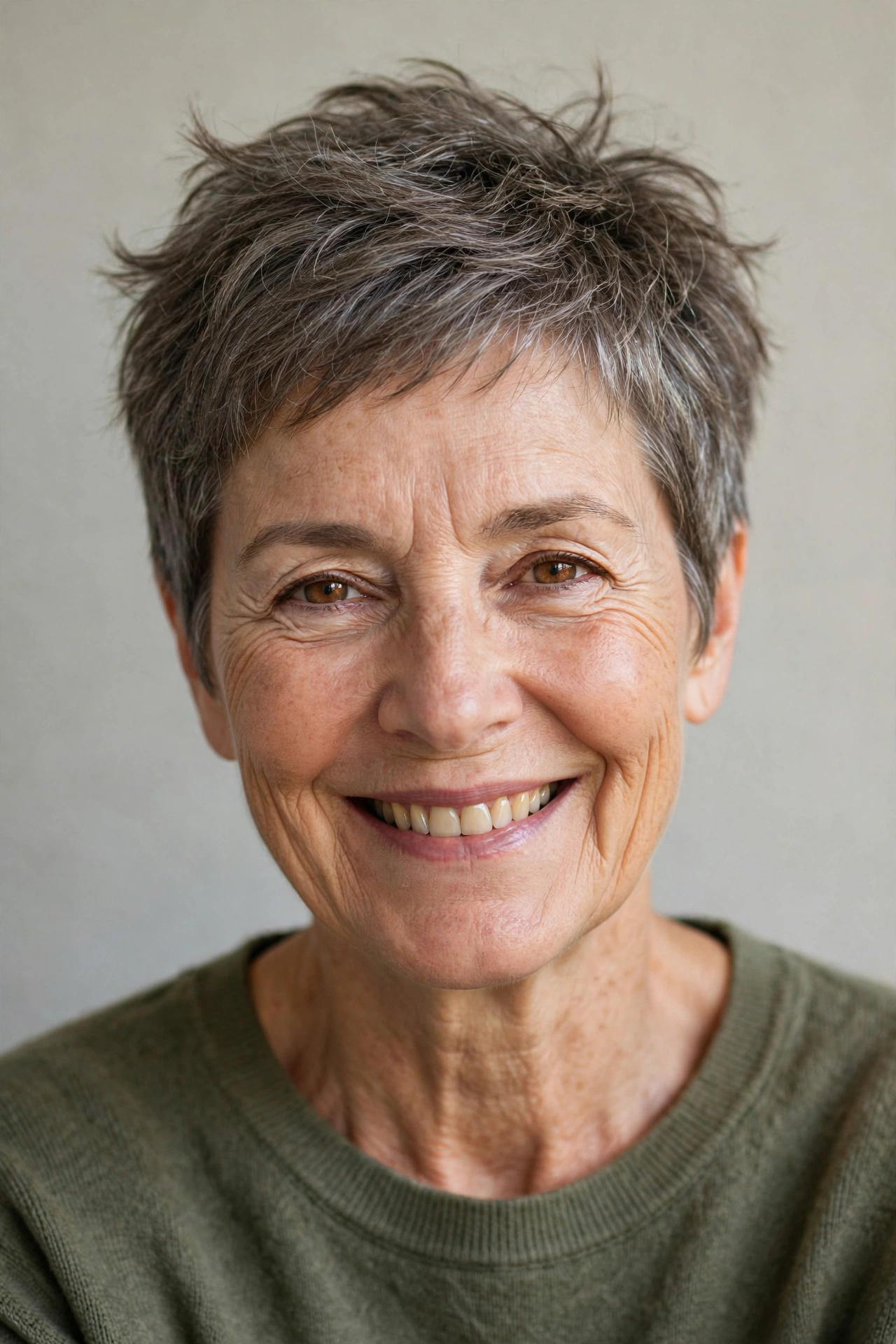
Some mornings you want hair you do not have to think about. The wash-and-go pixie is cut to fall into place with zero heat styling: even layers, a natural hairline, and enough texture to air-dry into shape. Your stylist cuts it dry so the shape accounts for your natural growth patterns. Wash, add a little leave-in, and walk out the door. It will not win precision awards, but for busy women who value simplicity over polish, nothing beats it. This is the pixie for real life, not photo shoots.
Try this: sleep on a satin pillowcase to keep the shape smooth overnight.
Best for: low-maintenance routines; all hair types. Difficulty: Easy · Cost: $ · Daily styling: 2–3 minutes · Upkeep: trim every 5–6 weeks.
Pixie Comparison Table
| Pixie Style | Daily Effort | Trim Frequency | Best For |
|---|---|---|---|
| Classic Tapered Pixie | 5 min | 4–6 weeks | First-time pixie wearers |
| Textured / Tousled Pixies | 3–5 min | 5–8 weeks | Low-maintenance routines |
| Sleek / Polished Pixies | 8–10 min | 3–4 weeks | Professional settings |
| Colored Pixies (blonde, chestnut) | 8 min + color upkeep | 4–5 weeks | Covering grey with rich tone |
| Natural Grey Pixies | 5 min | 5–6 weeks | Graceful grow-out |
| Curly Pixies | 5–10 min | 6–8 weeks | PrimeHairPicks | Curly pixies |
Prefer cuts for the over-70 group? Browse our short pixie haircut for women over 70 guide.
Prefer cuts for women over 40? Browse our short pixie haircuts for women over 40 guide.
Final Thoughts
The right pixie at the right age feels less like a haircut and more like a relief. No more long blow-drying sessions, no more fighting texture that changed a decade ago. Pick the cut that matches your hair type, your face shape, and the mornings you actually want to have. Show your stylist the photos, be honest about upkeep, and enjoy the freedom.
Frequently Asked Questions
Do pixie cuts suit women over 60?
Yes, pixies are among the most flattering cuts for women over 60. They lift the face visually, work with thinning texture, and cut styling time dramatically. The key is choosing the right variation: softer, textured pixies tend to flatter mature faces more than severe, blunt ones.
How often does a pixie need trimming?
Most pixies need a trim every 4 to 6 weeks to hold their shape. Precision cuts with tapered sides need attention every 3 to 4 weeks, while textured and tousled pixies can stretch to 6 or even 8 weeks. Short hair shows growth faster than long hair, so staying on schedule matters.
Will a pixie work with thin or fine hair?
Often better than longer cuts. Short layers at the crown create lift that longer thin hair cannot achieve, and textured ends suggest density. Ask your stylist for point cutting rather than thinning shears, which remove the fullness you need. A root-lifting product adds even more body.
Should I color my grey or embrace it with a pixie?
Both work well. Embracing grey with a dimensional or silver pixie means graceful grow-out and less maintenance. Coloring (ash blonde, honey, chestnut) gives vibrancy but needs touch-ups every 6 to 10 weeks. Salt-and-pepper blending is a middle path that softens the transition.
Can I style a pixie without heat tools?
Absolutely. Many pixies on this list, especially textured, tousled, curly, and wash-and-go styles, are designed to air-dry. Use a leave-in conditioner or light styling cream on damp hair and let it dry naturally. If you do use heat, always apply a heat protectant first to prevent damage to aging hair.

