


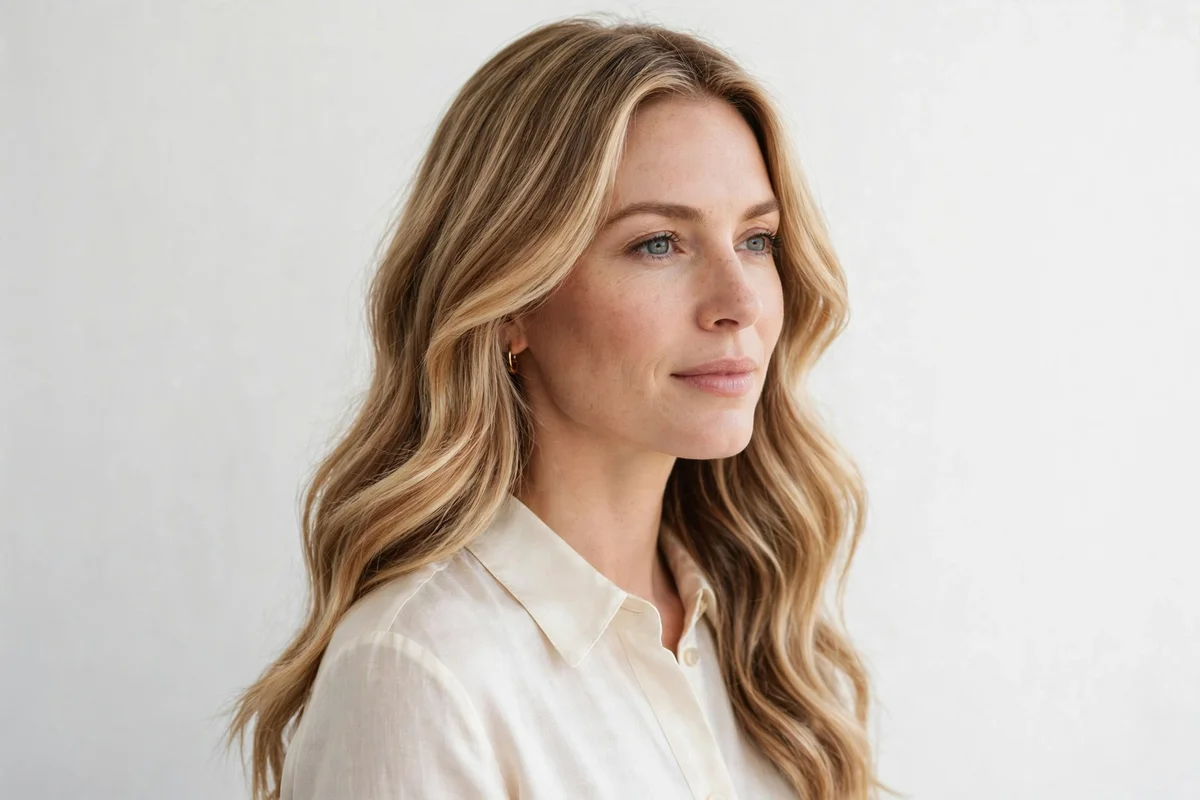
If your blonde has started looking flat or washed out, lowlights might be exactly what it needs. Lowlights are darker strands woven into your blonde, and they add the depth and shadow that make the lighter pieces pop. This approach works across the blonde spectrum, from icy platinum to warm honey.
This guide walks you through 25 blonde hair with lowlights ideas, from subtle natural blends to bold fashion shades. You’ll also find out what to ask your stylist, how to pick a lowlight shade that suits your skin, and how to keep the color fresh between appointments.
Quick answer: Lowlights add darker strands to blonde hair for depth and dimension. The best shade sits 1-2 levels darker than your base. Warm lowlights like caramel suit golden blondes, while ash and taupe suit cool blondes. They’re lower maintenance than highlights because they blend with natural regrowth.
Quick Takeaways
- Lowlights are darker strands placed under or between blonde sections, adding depth that stops hair from looking flat.
- The most flattering lowlight is 1-2 levels darker than your blonde, in a matching warm or cool tone.
- Subtle lowlights stretch the time between salon visits by blending with root regrowth.
- Demi-permanent formulas are gentler for lowlighting bleached or platinum hair.
- Purple shampoo and sulfate-free products keep both the blonde and lowlight shades clear.
What Are Lowlights and Why They Work on Blonde Hair
Lowlights do the opposite of highlights. Instead of lifting strands lighter, your colorist paints or foils selected sections darker than your base. The result is a layered color with light and shadow, which reads as thickness and movement even on fine hair.
Blonde hair shows this contrast better than any other color. Without darker strands woven in, an all-over blonde can look one-dimensional, especially under indoor light. Lowlights break up the solid color, blur root lines, and give the illusion of more hair.
When you ask your stylist for lowlights, bring reference photos and be specific about your base. Mention whether you want a subtle natural blend or visible contrast, and say how often you’re willing to come back. A low-maintenance plan usually means softer contrast and placement that grows out without a harsh line.
1. Lived-in Caramel Lowlights
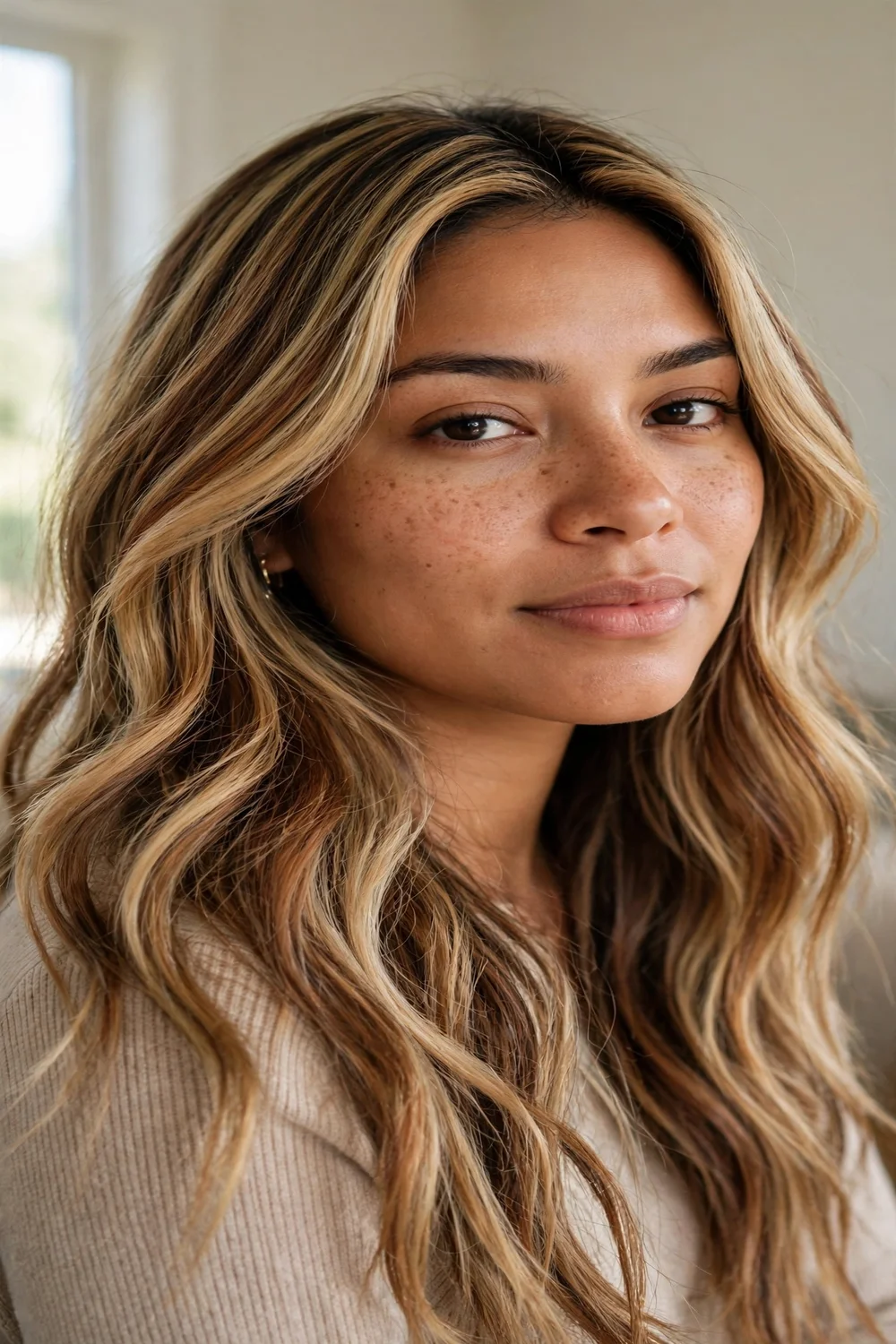
Ask for caramel lowlights painted through the mid-lengths of golden blonde hair, and you’ll get that lived-in color that’s been popular for years. The warm caramel sits just below your blonde so the two shades melt together without a visible stripe. This is a smart pick if your natural roots are darker, since the caramel softens the grow-out line and stretches appointments. It works on straight, wavy, or curled hair because the color does the talking.
Try this: Pair it with a root smudge in your natural level so the grow-out stays seamless for 10 to 12 weeks.
2. Honey Gold Highlights with Ash Brown Lowlights
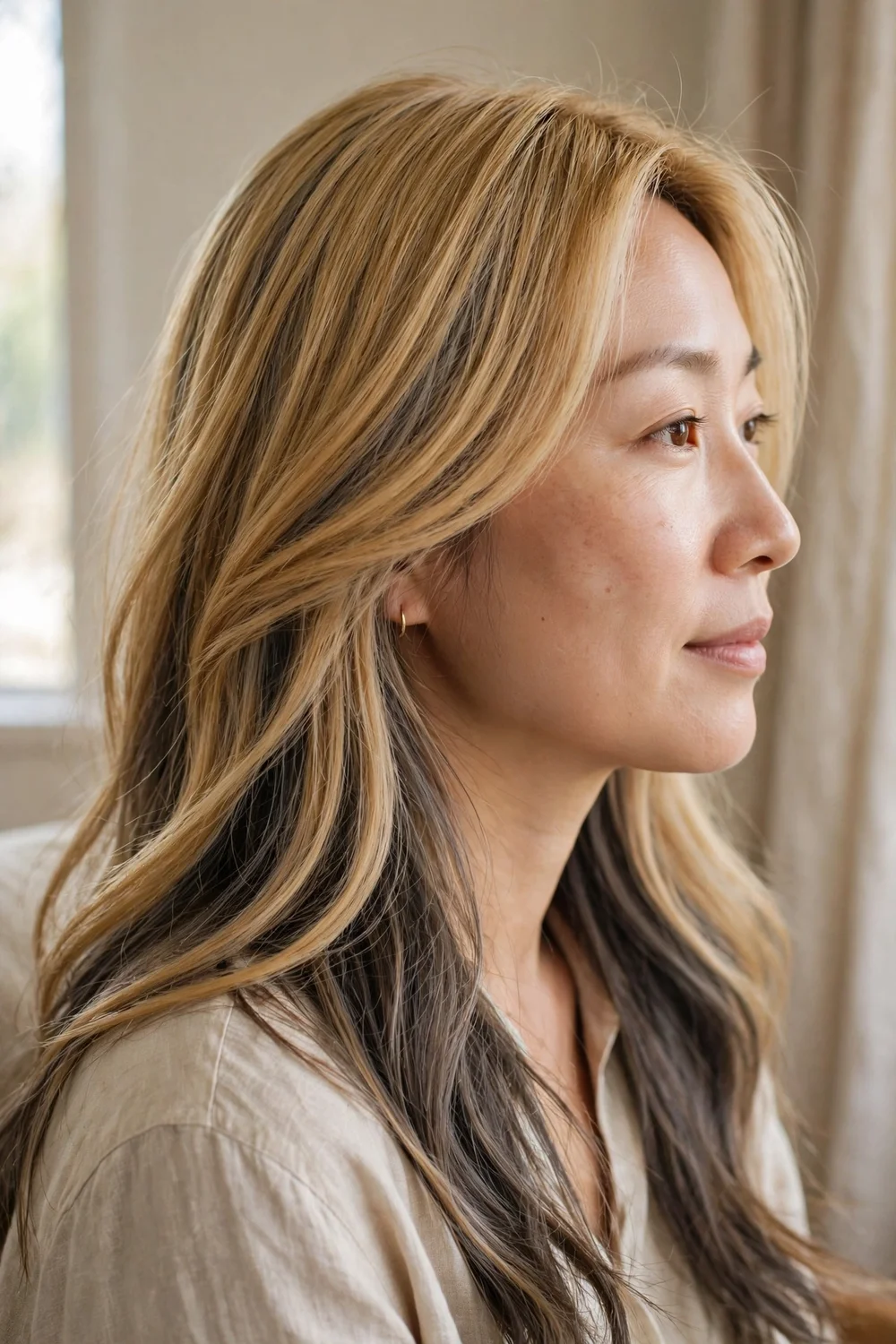
Here’s a pairing that mixes warmth on top with coolness underneath. Honey gold highlights keep the overall look bright and sunny, while ash brown lowlights placed deeper in the hair add cool shadow. The contrast makes each shade read more clearly, so the blonde looks blonder. It’s a good match for neutral skin tones that can carry both warm and cool shades. Keep the lowlights one or two levels darker than the highlights so the effect stays blended instead of stripey.
Try this: Ask your stylist to alternate foils of each shade rather than chunking them together.
3. Creamy Blonde with Cocoa Lowlights
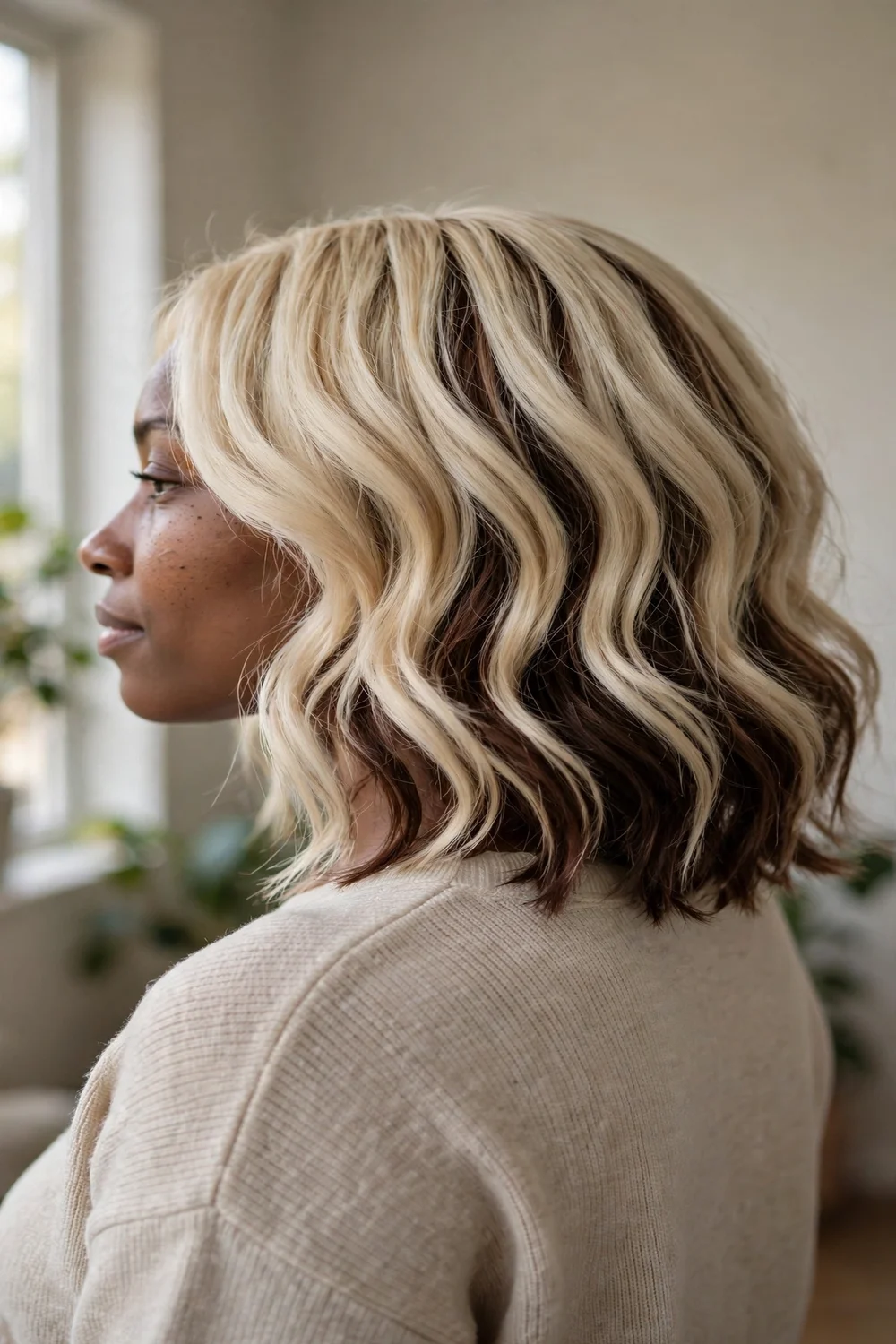
Cocoa lowlights bring a rich chocolate-brown depth to creamy, buttery blonde hair. The combination reads almost like a dessert shade, with the light creamy pieces sitting over a darker cocoa base. Your stylist can paint the lowlights freehand in a balayage pattern for a softer grow-out, or use foils for more visible contrast. Either way, the brown undertones stop the cream from looking chalky, which is a common complaint with very light warm blondes.
Try this: A gloss at the six-week mark refreshes the cocoa without a full color appointment.
4. Sandy Blonde with Deep Walnut Lowlights
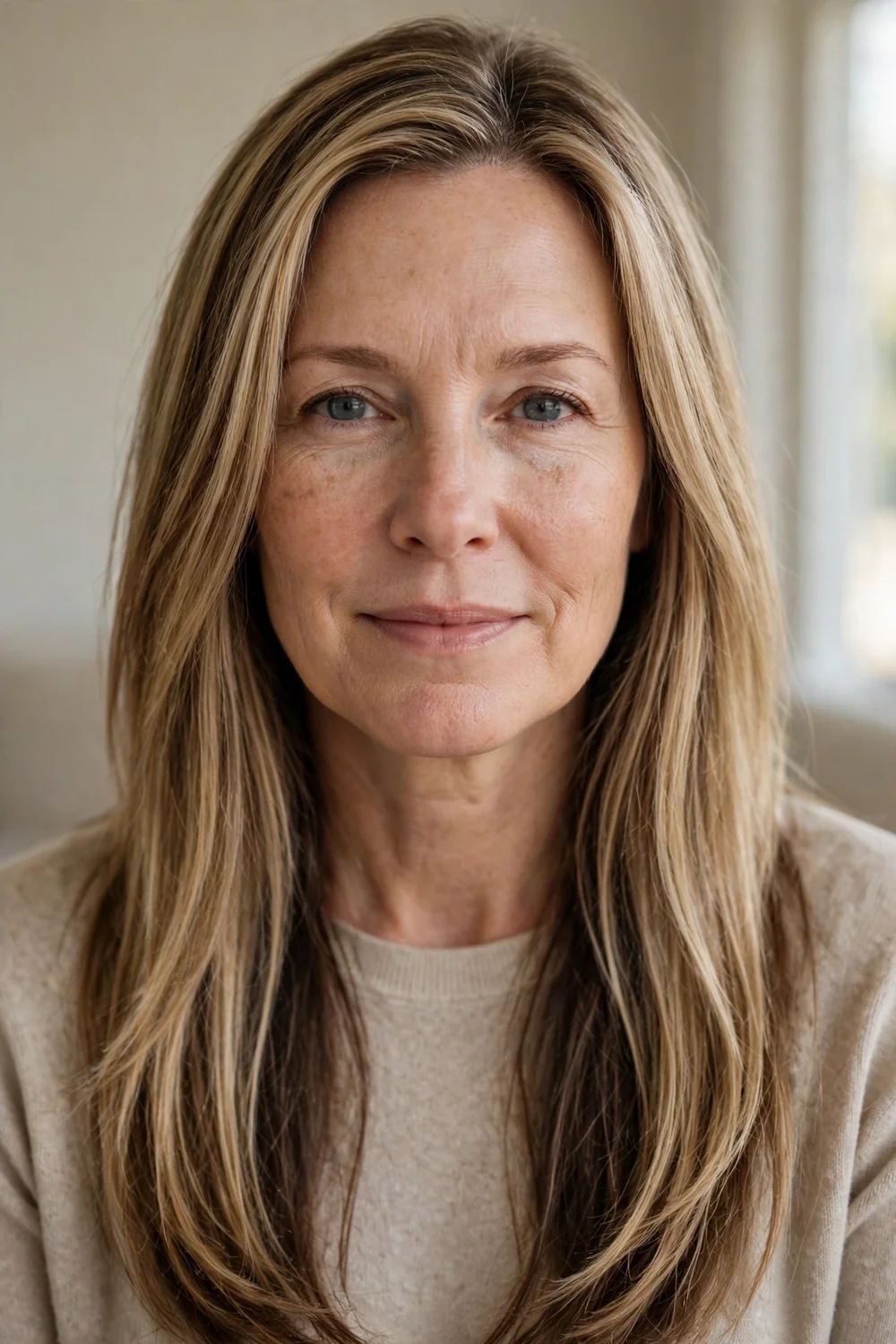
Sandy blonde can fade into the background on its own, but deep walnut lowlights give it an anchor. The walnut is a rich, dark brown with just a hint of warmth, and it sits deep in the hair so it peeks through as you move. This pairing suits medium to dark blonde bases best, since the jump in depth looks natural rather than harsh. It’s also one of the most low-maintenance options here, because the lowlights sit close to a natural brunette level.
Try this: Wear it straight and smooth to show off the contrast between the two levels.
5. Platinum Blonde with Smoky Lowlights
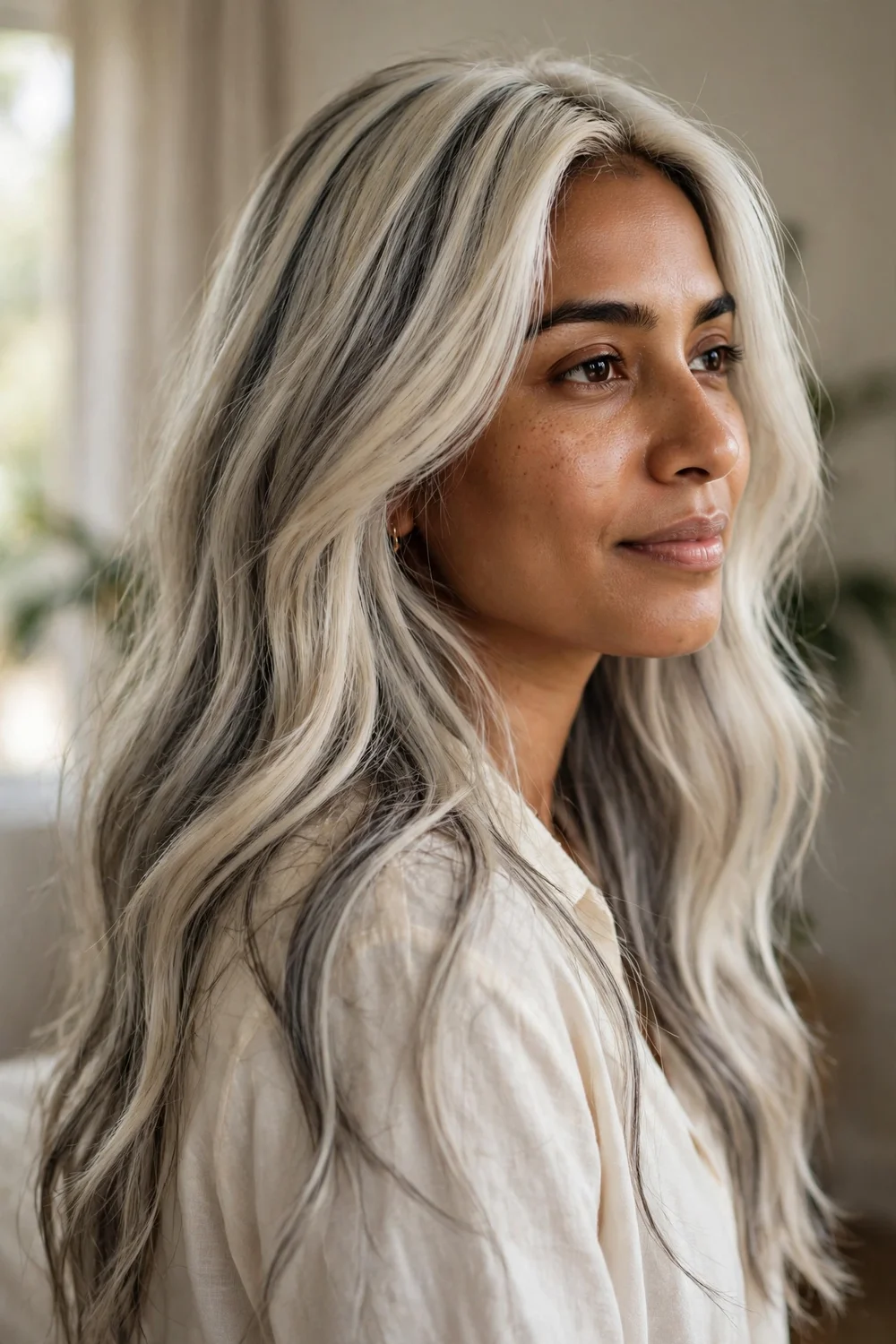
Platinum hair needs lowlights more than any other blonde, because one flat level of white-blonde can look wig-like without shadow. Smoky lowlights, in a muted ash or grey-brown tone, add the depth platinum lacks while keeping the icy feel. Ask for thin weaves rather than thick chunks, so the darker strands read as shadow instead of stripes. This is best done with demi-permanent color, since bleach-damaged hair grabs lowlights quickly and can go darker than planned.
Try this: Use a purple shampoo once a week to stop the smoky lowlights from turning warm.
6. Champagne Blonde with Taupe Lowlights
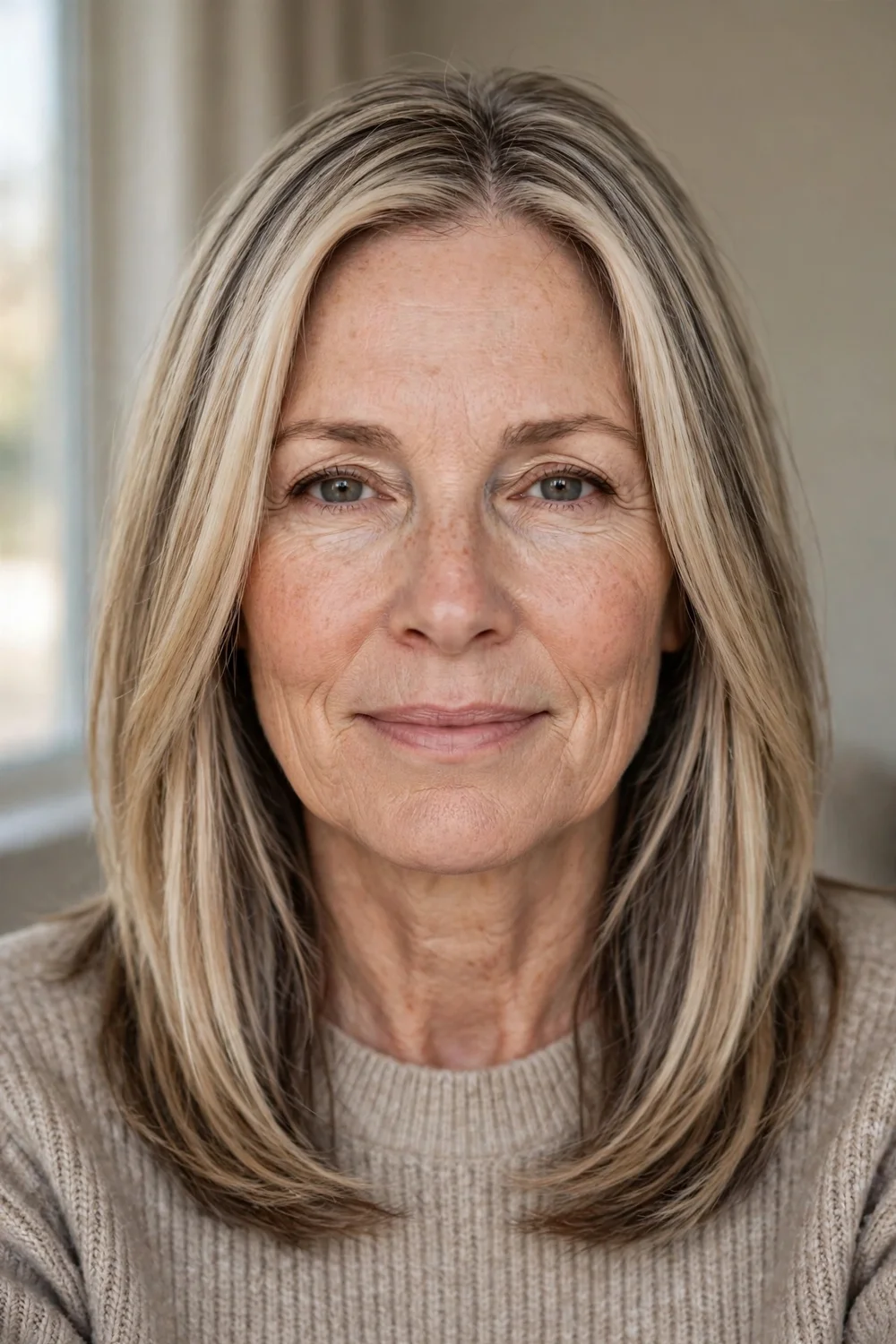
Champagne blonde is soft and luminous, and taupe lowlights add a cool, smoky shadow that deepens it without adding warmth. Taupe sits between grey and brown, so it complements the cool side of champagne without going as dark as a true brown. The effect is understated, which makes this one of the best office-friendly options on this list. It flatters cool and neutral skin tones and looks especially good on straight hair where the color gradation shows clearly.
Try this: Request a clear gloss over the top to boost shine without changing the tone.
7. Golden Wheat with Espresso Lowlights
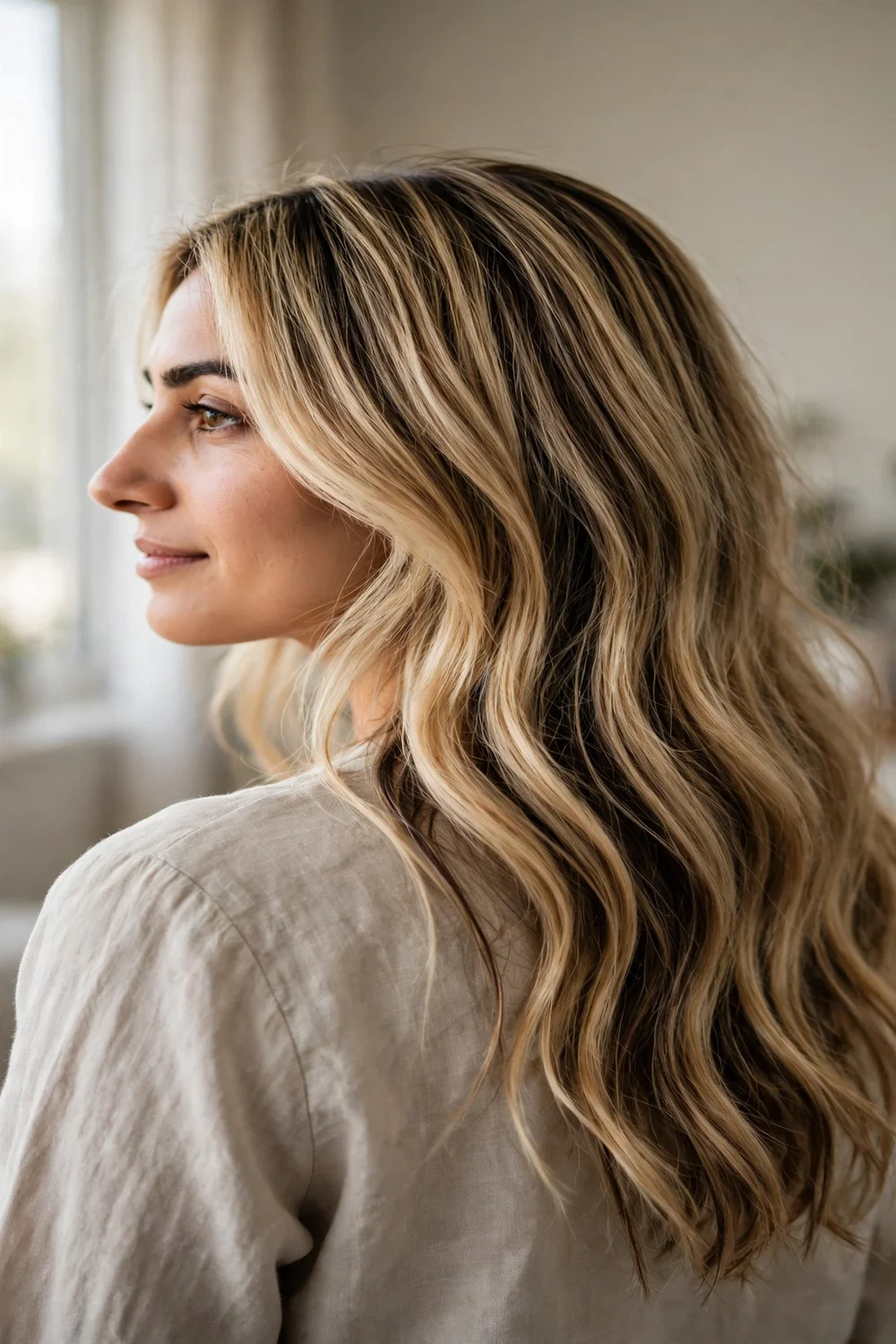
If you want real contrast, pair bright golden wheat blonde with deep espresso lowlights. The espresso is nearly black-brown, so the blonde strands stand out dramatically against it. This is a statement look, not a subtle one, and it photographs incredibly well because the contrast reads from a distance. It suits confident dressers and anyone with hair long enough to show off the two-tone effect. Keep the blonde bright with regular toning so it doesn’t dull against the dark lowlights.
Try this: Curl the hair in loose waves so the dark and light ribbons weave around each other.
8. Sun-kissed Blonde with Mushroom Brown Lowlights
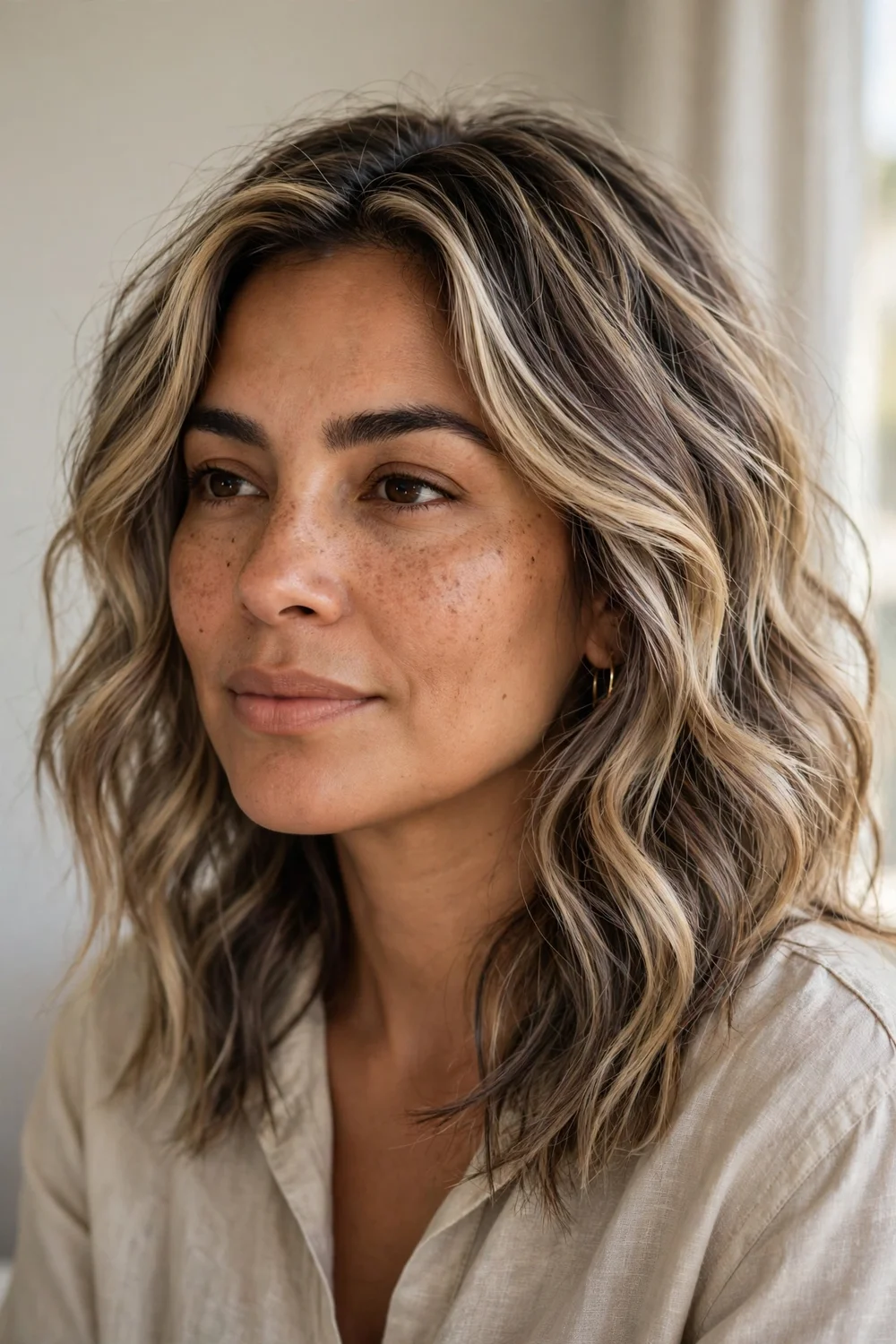
Mushroom brown is a cool, ashy brown with a hint of grey, and it makes sun-kissed blonde look like it was earned at the beach. The lowlights mimic the natural shadowing you’d get from sun and salt air, sitting a couple of levels below the blonde. Because both shades lean cool-to-neutral, the blend looks effortless and unstudied. This is a top choice for medium-length hair, where the mix of light and shadow gives fine hair the look of more volume.
Try this: Add a few face-framing blonde pieces to keep the front bright while the lowlights do their work underneath.
9. Butter Blonde with Amber Lowlights
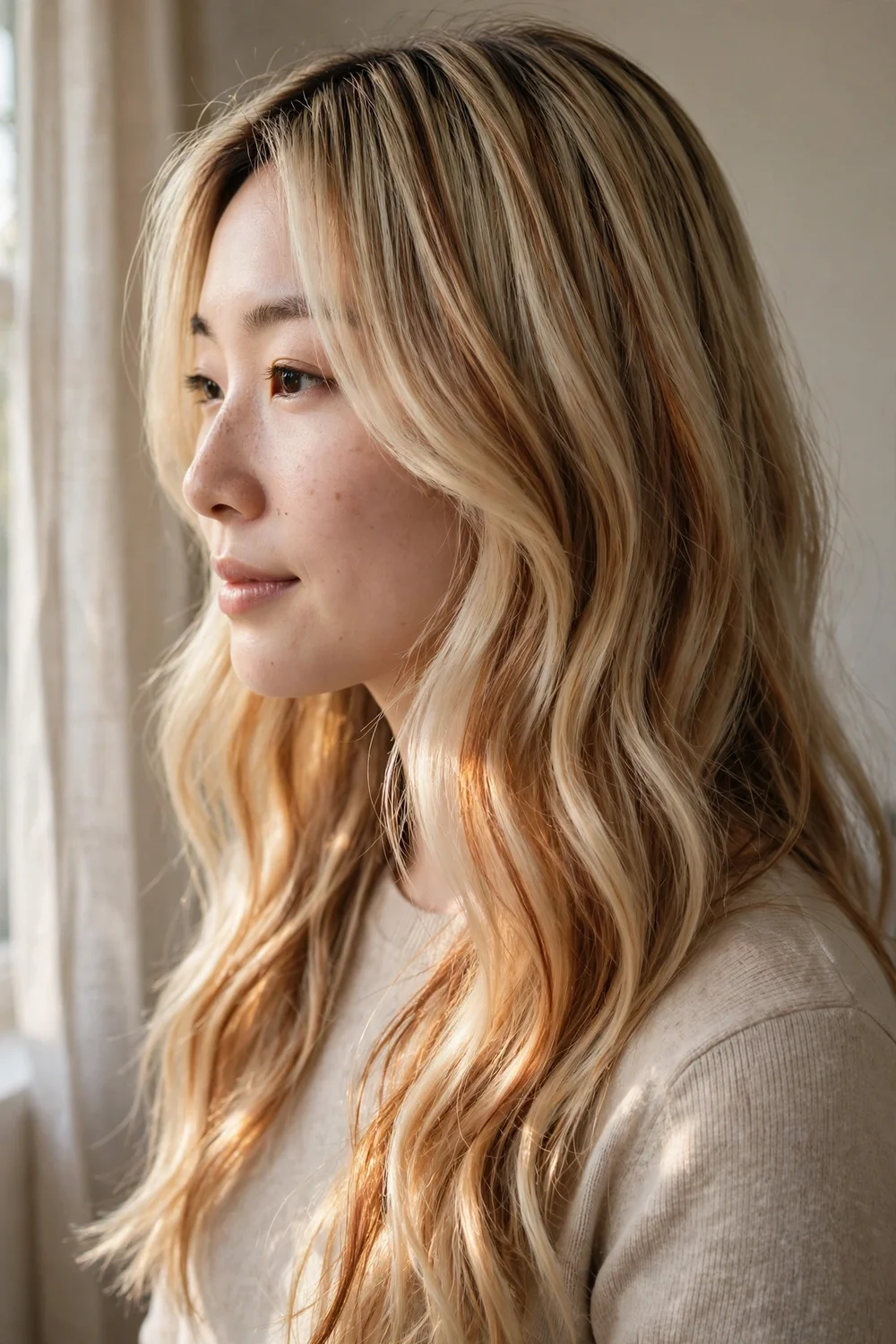
Butter blonde is rich and golden, and amber lowlights lean into that warmth with a glowing, honeyed depth. Amber sits between gold and copper, so it adds richness without pulling the color toward red. The two warm shades layer together into a cohesive golden result, which flatters warm skin tones. If your hair tends to go flat or brassy with regular highlights, this warm-on-warm approach keeps everything glowing and unified.
Try this: A warm-toned gloss every eight weeks keeps the amber from fading to dull brown.
10. Icy Blonde with Cool-toned Lowlights
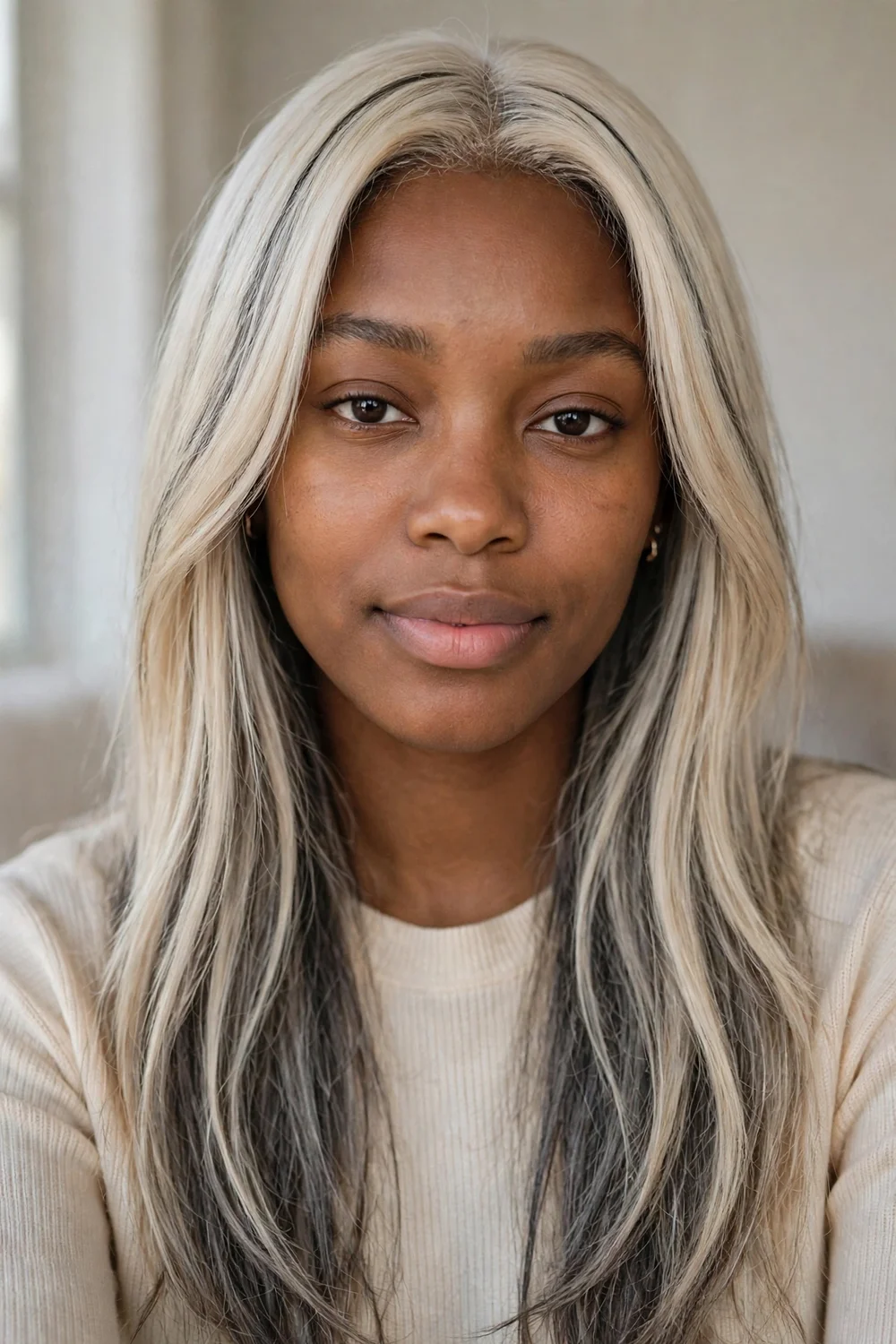
Icy blonde pairs with cool lowlights in two distinct ways. For a wearable version, ask for ash or slate lowlights a level or two darker than your base, which add depth while staying in the same cool family. For something bolder, midnight blue lowlights woven through icy blonde create a striking fashion contrast that turns heads. The bold version fades faster and needs color-depositing conditioner to stay vivid. Whichever you pick, keep the placement fine and well-blended so it reads as dimension, not stripes.
Try this: Start with the ash version if you’ve never done lowlights before; you can go bolder next time.
11. Vanilla Bean with Sable Lowlights
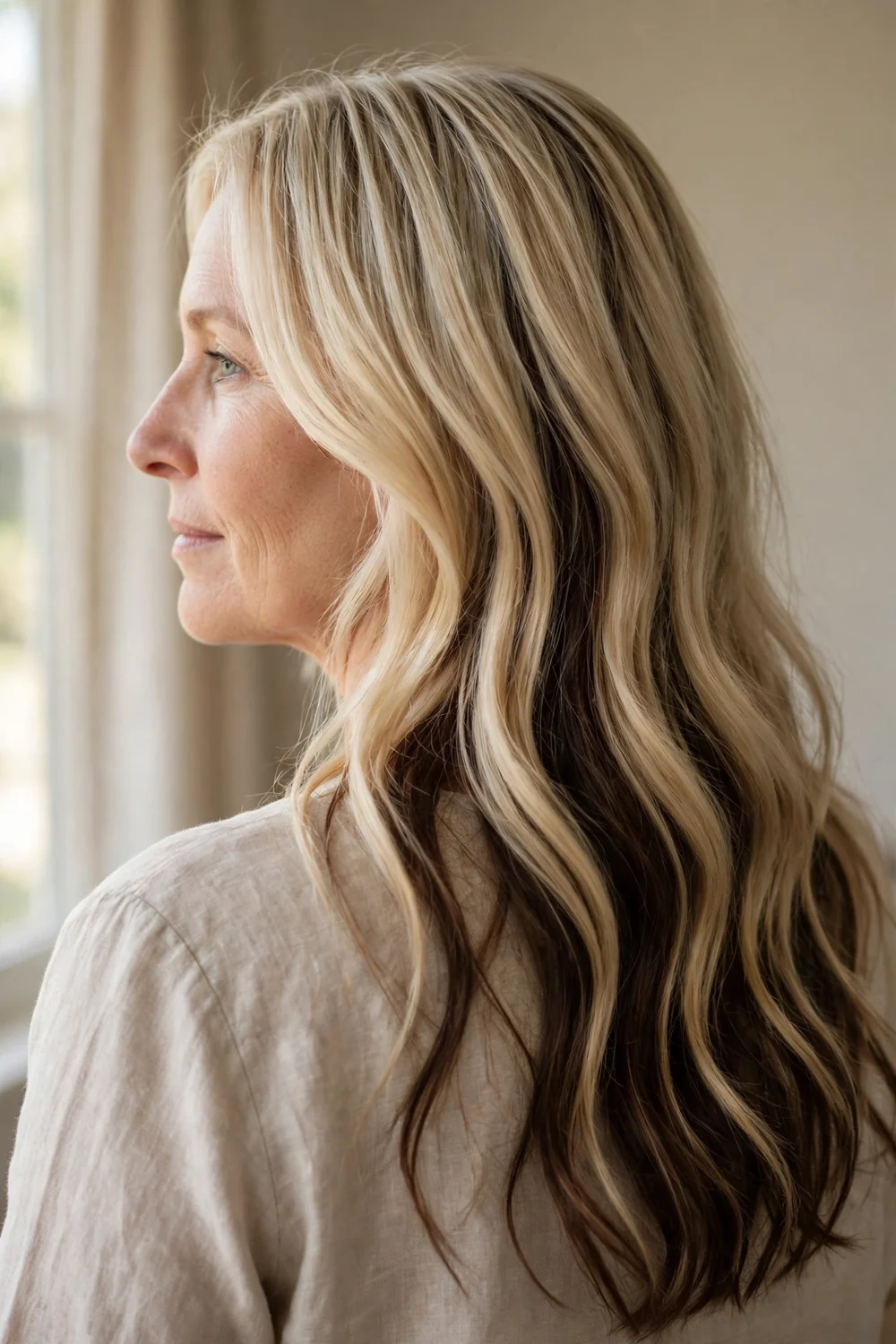
Vanilla bean is a soft, creamy blonde, and sable lowlights add a deep, dark-brown richness that feels luxurious. Sable is darker than mocha but softer than espresso, so it gives real contrast without looking harsh. The pairing suits longer hair, where the dark lowlights can run from mid-lengths to ends and create a ribbon effect. It also works well for anyone growing out darker roots, since the sable bridges the gap between natural color and blonde.
Try this: Blow-dry with a round brush for volume so the dark and light layers separate naturally.
12. Pearl Blonde with Slate Gray Lowlights
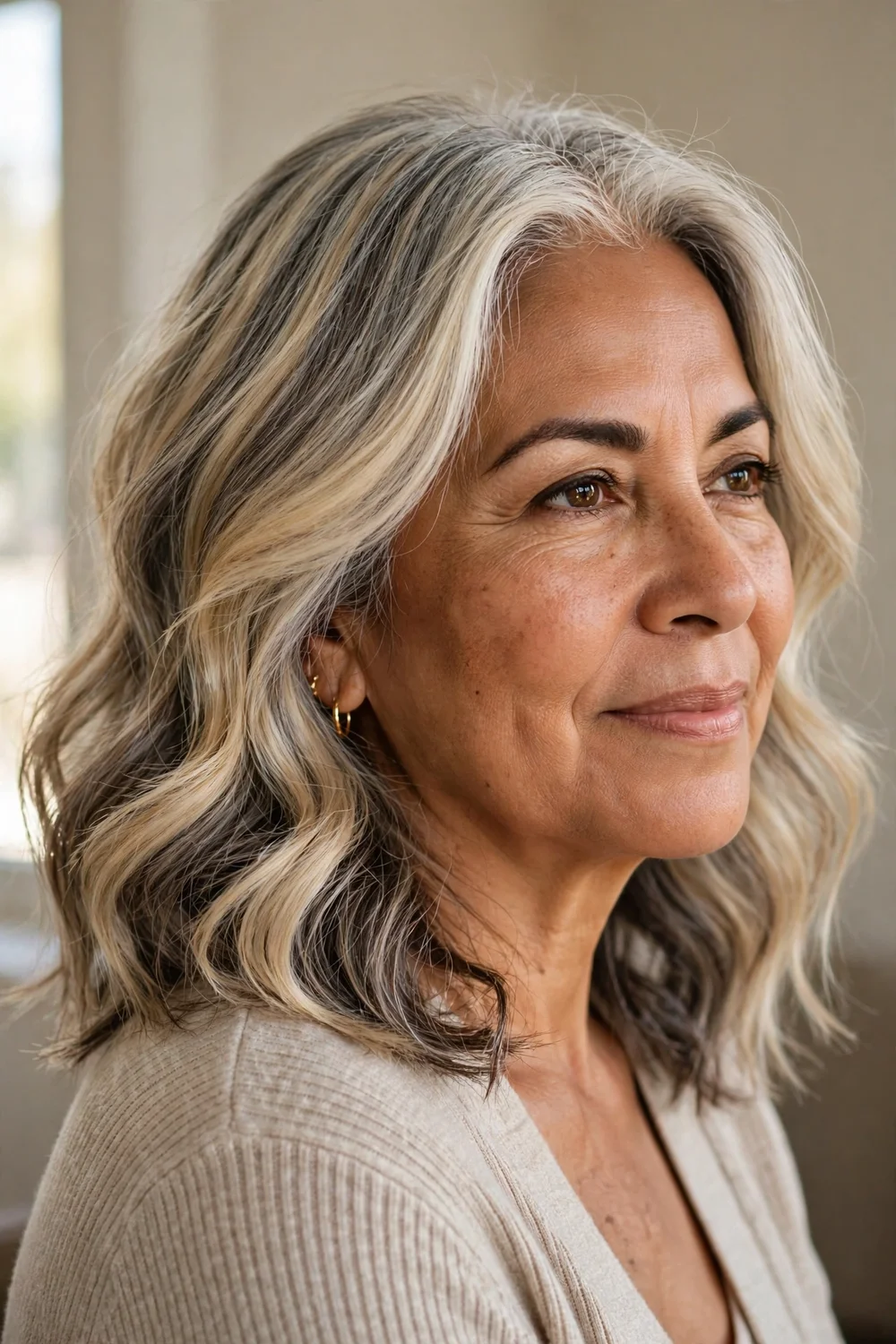
Pearl blonde has a soft iridescent quality, and slate gray lowlights deepen it with a modern, smoky edge. Slate is cooler and greyer than taupe, so this pairing stays firmly in the cool family. It’s an excellent option for anyone covering grey hair, because the grey-toned lowlights blend with incoming silvers instead of fighting them. The color needs purple shampoo maintenance to stop warmth from creeping in, but the payoff is a sophisticated silvered blonde.
Try this: Ask for the lowlights placed mostly underneath so they flash through when you move.
13. Ash Blonde with Mahogany Lowlights
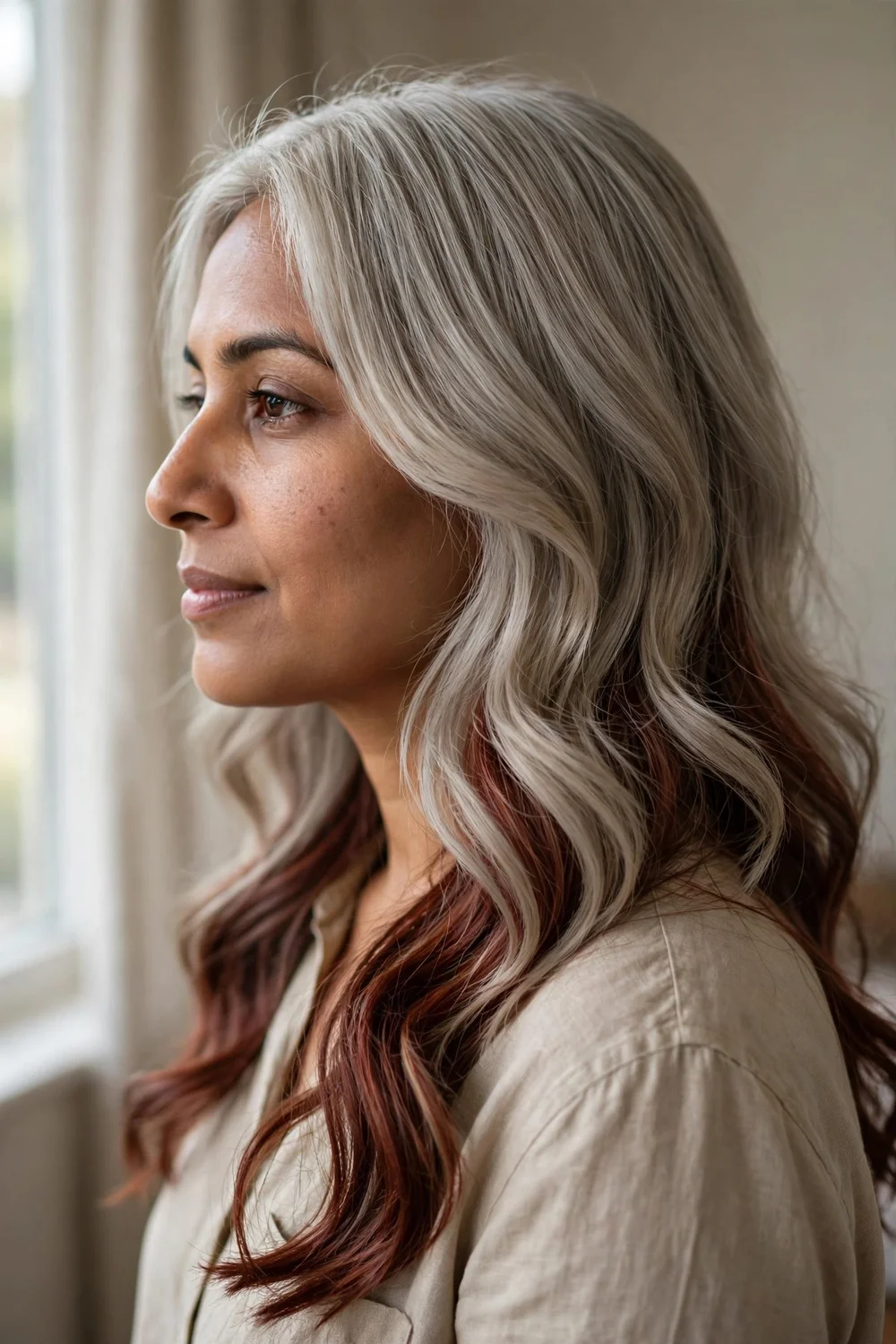
Here’s a combination you don’t see every day. Ash blonde is cool and muted, and mahogany lowlights add a warm, reddish-brown depth underneath. The warm-cool tension makes both shades look more interesting than they would alone. This is a good option for autumn and winter, when richer tones feel seasonally right. Because mahogany contains red pigment, it can fade to a warm brown over time, so plan on a gloss refresh around week six.
Try this: Keep the mahogany in the lower layers so the ash blonde stays dominant on top.
14. Rose Gold with Chocolate Lowlights
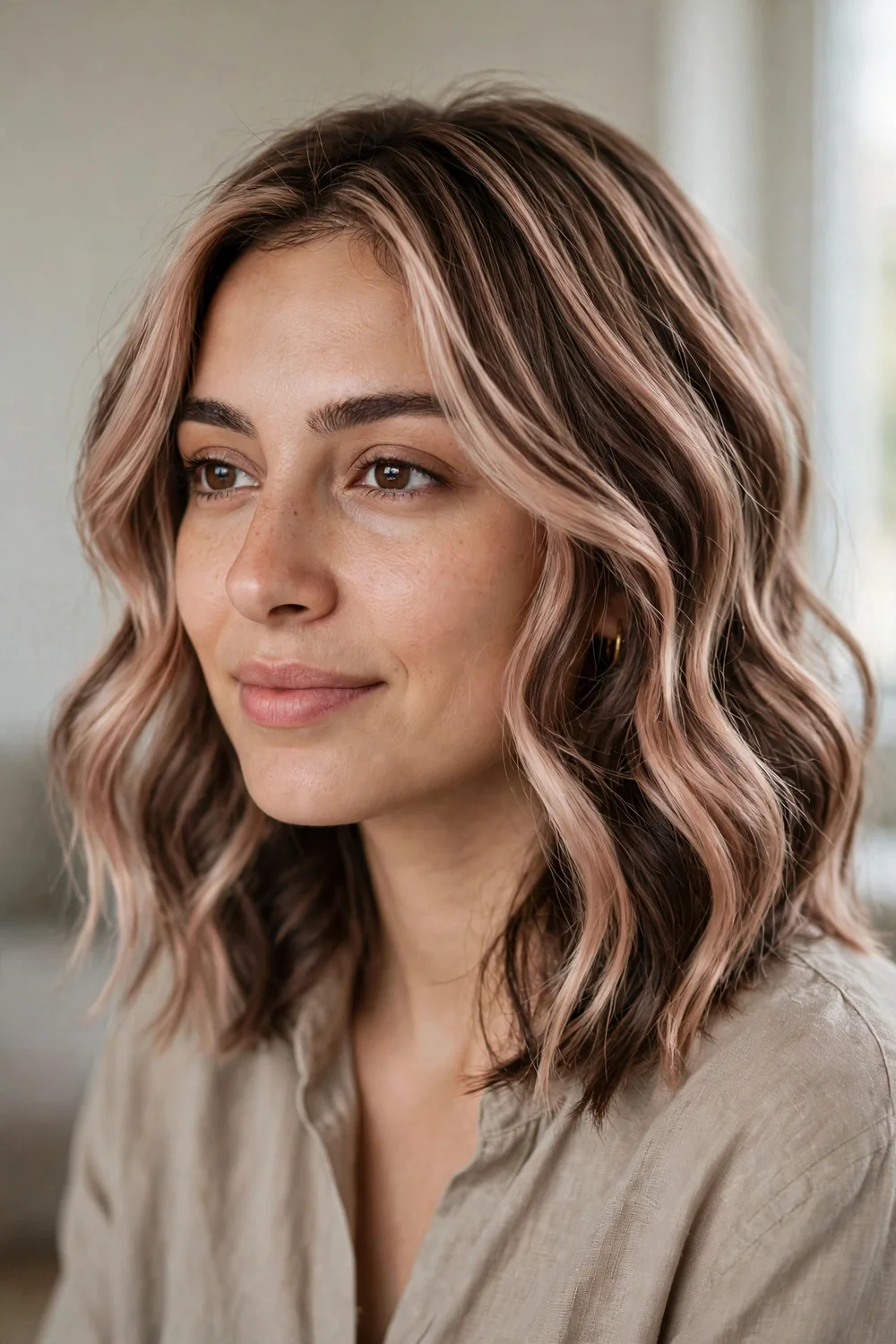
Rose gold blonde is playful and pink-toned, and chocolate lowlights ground it with real depth. Without the darker strands, rose gold can look washed out after a few weeks of fading. The chocolate keeps the pink from going flat and gives the color somewhere to fade into gracefully. This pairing suits medium skin tones and looks especially good on wavy hair, where the texture breaks up the pink and brown into soft ribbons.
Try this: Use a color-depositing pink conditioner between appointments to keep the rose gold fresh.
15. Silver Blonde with Jet Black Lowlights
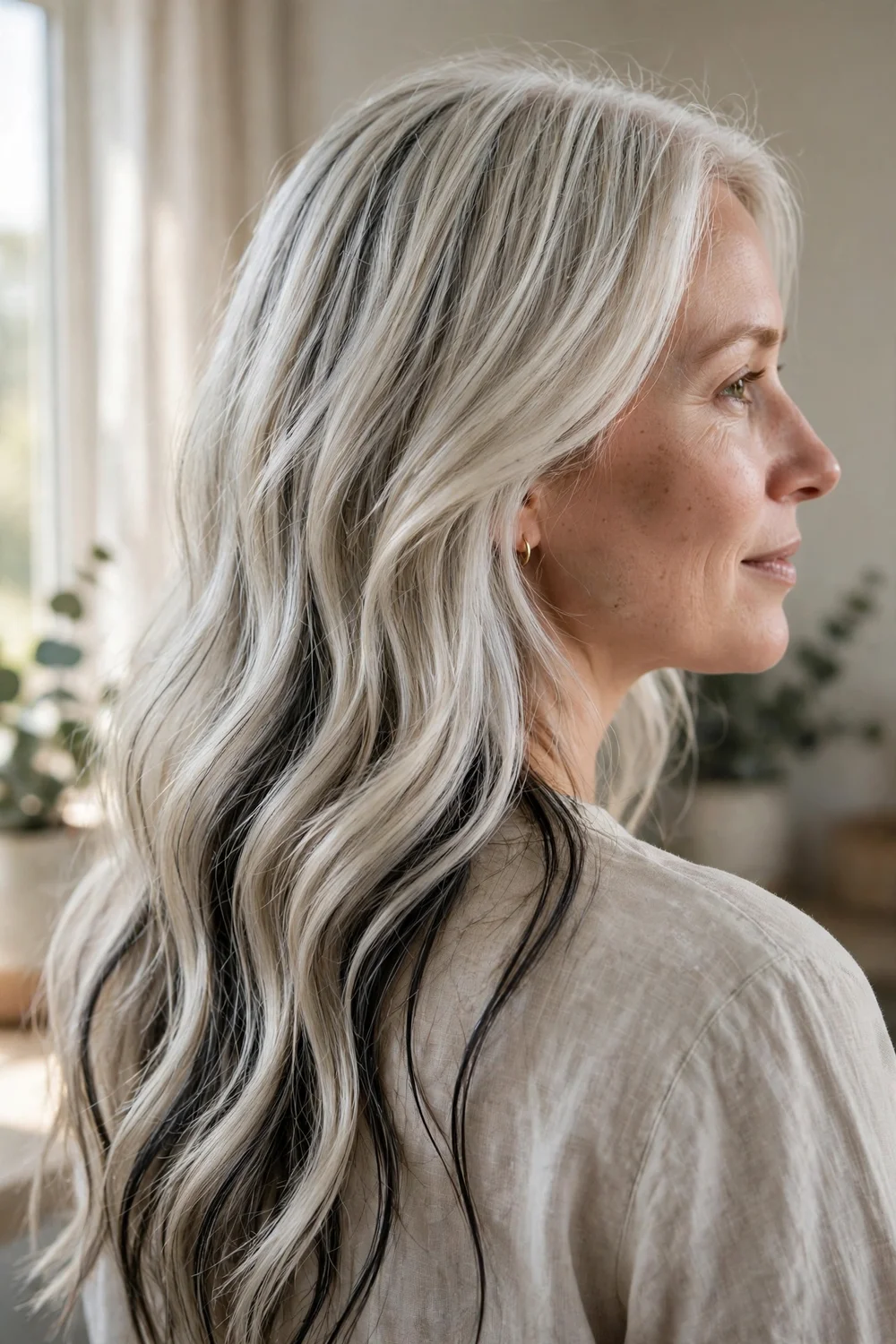
For maximum drama, jet black lowlights under silver blonde create the sharpest contrast on this list. The black strands make the silver look brighter by comparison, and the two-tone effect is unmistakable. This is an edgy, fashion-forward choice that suits bold personal style and works best on longer hair where the contrast has room to show. Be aware that black lowlights are a commitment; removing them later requires color correction, so be sure before you book it.
Try this: Ask for fine weaves only, since thick black chunks are the hardest to reverse.
16. Soft Waves with Subtle Lowlights
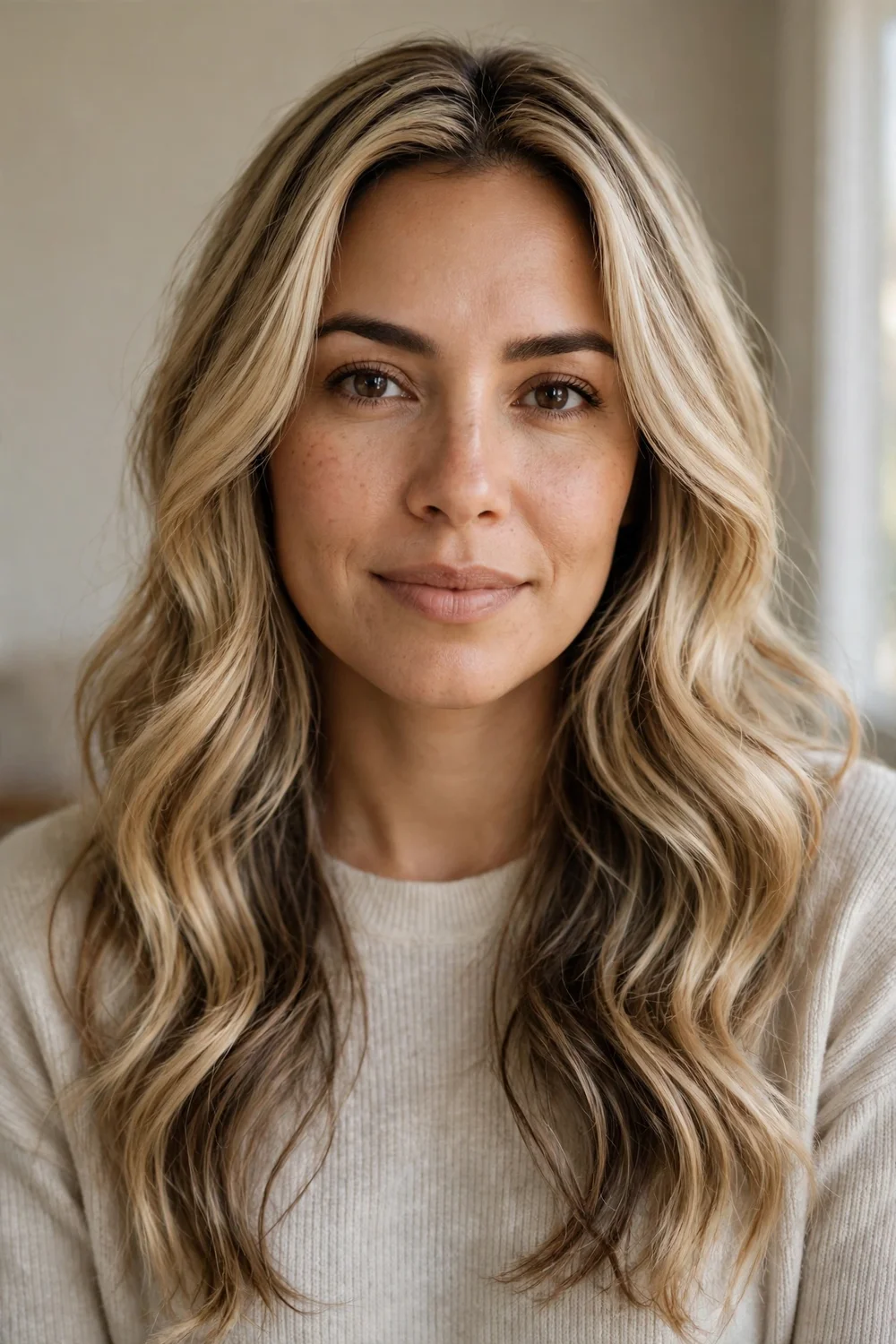
Sometimes the styling matters as much as the color. Soft waves open up the hair so lowlights show through in shifting patterns, and even a subtle one-level difference creates visible dimension. This approach suits anyone who wants lowlights that read as natural, not colored. Style with a large-barrel curling iron, brushing the curls out for softness. The lowlights sit in the bends of the waves, which is exactly where shadow would fall naturally.
Try this: A light-hold spray keeps the waves flexible without stiffening them.
17. Natural Blend with Gentle Lowlights
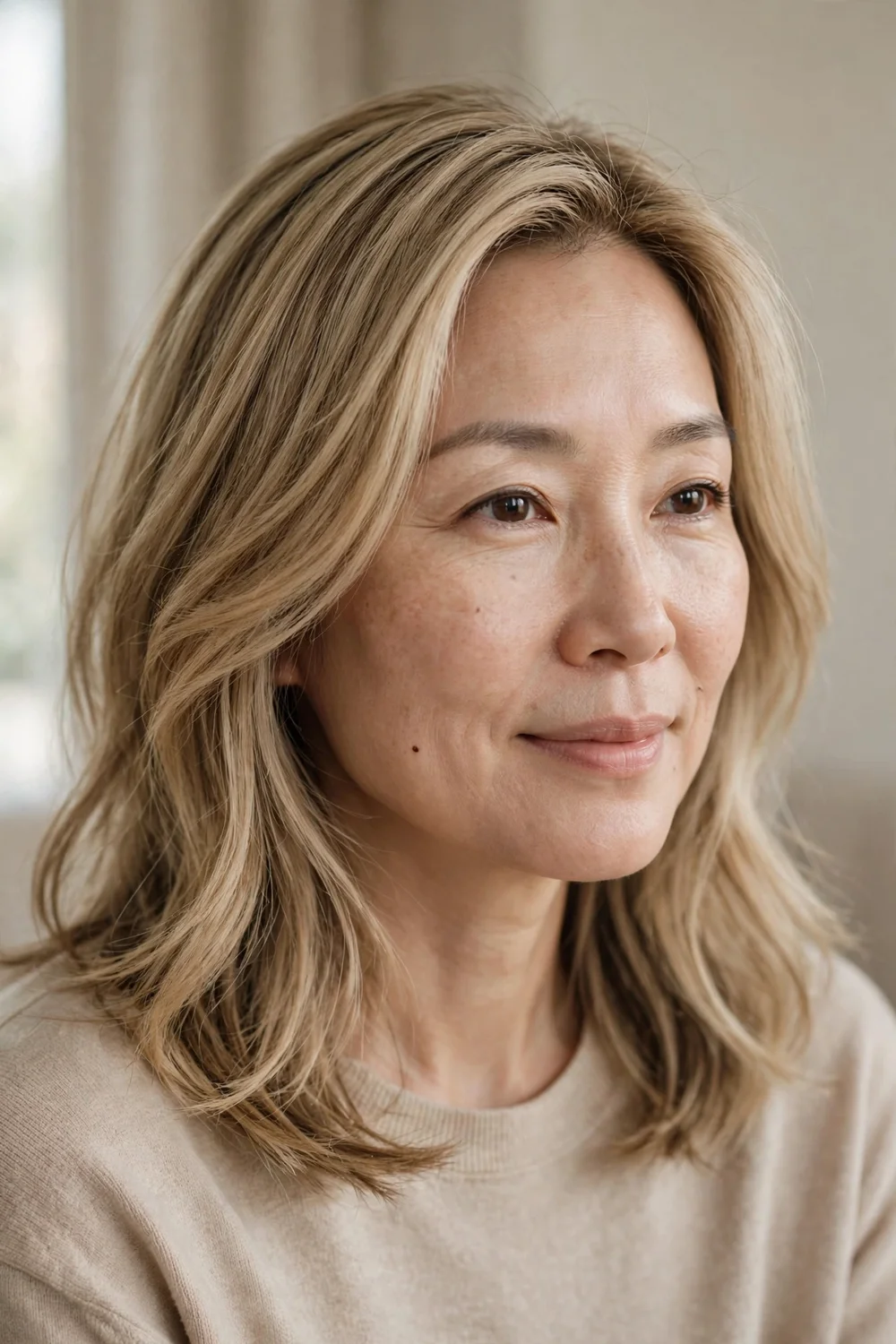
If you want color that nobody can quite place, gentle lowlights are the answer. The lowlights sit just half a level to one level below your blonde, in a tone that matches your natural warmth or coolness. The effect is hair that looks thicker and more interesting without an obvious color job. This is the most office-safe, family-event-safe option on the list, and it’s also the easiest to maintain because the regrowth line is nearly invisible.
Try this: Demi-permanent color is ideal here since it fades softly without a line.
18. Curls with Dimensional Lowlights
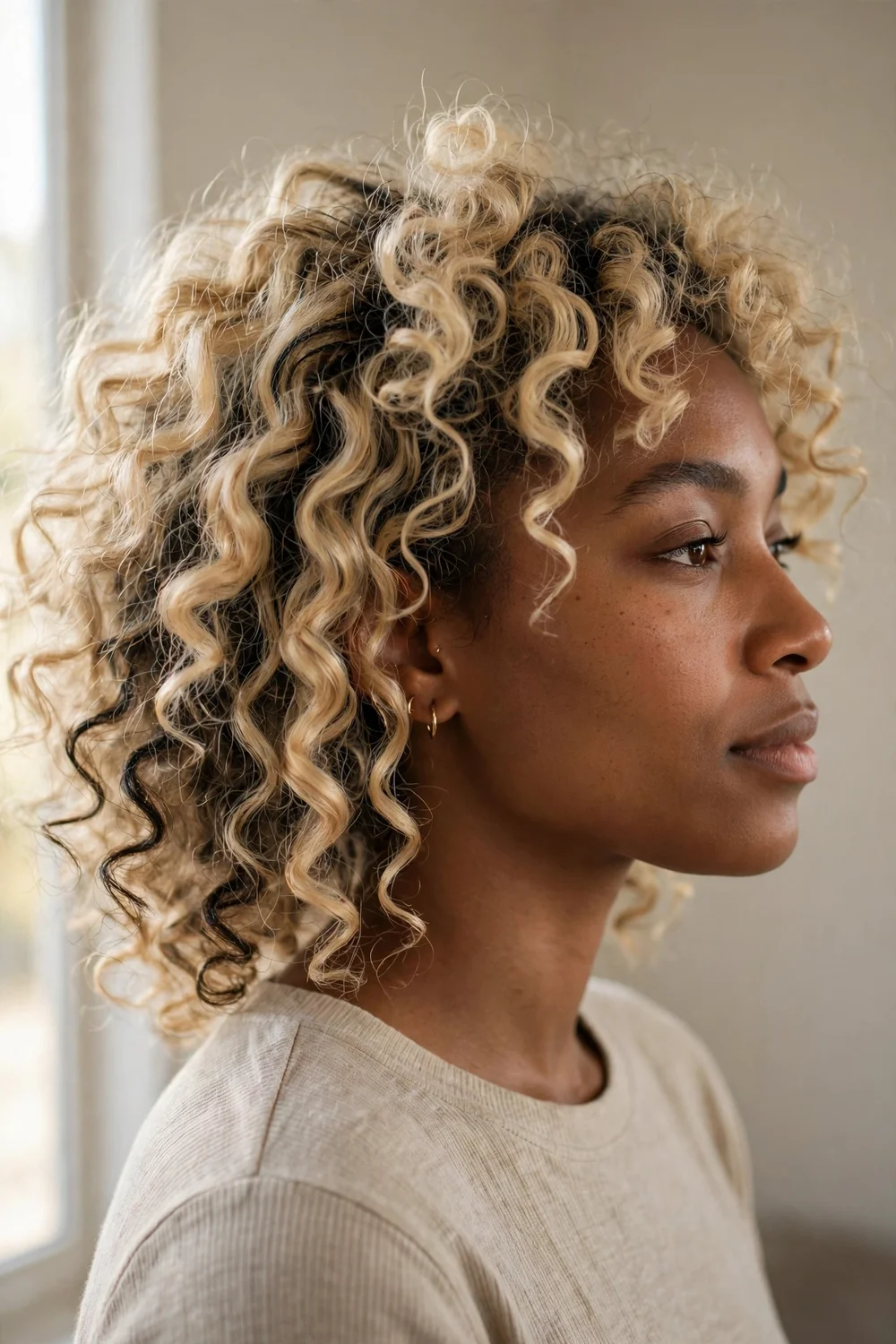
Curls and lowlights are a natural match because every curl creates its own light and shadow. Adding lowlights amplifies that, with darker strands tucked between blonde curls for a multi-dimensional finish. This works on natural curls and heat-styled curls alike. Ask your colorist to place lowlights following your curl pattern rather than in uniform foils, so the color moves the way your hair does. The result looks fuller and more textured from every angle.
Try this: Diffuse-dry instead of air-drying to maximize curl definition and show off the color.
19. Chic Layers with Soft Lowlights
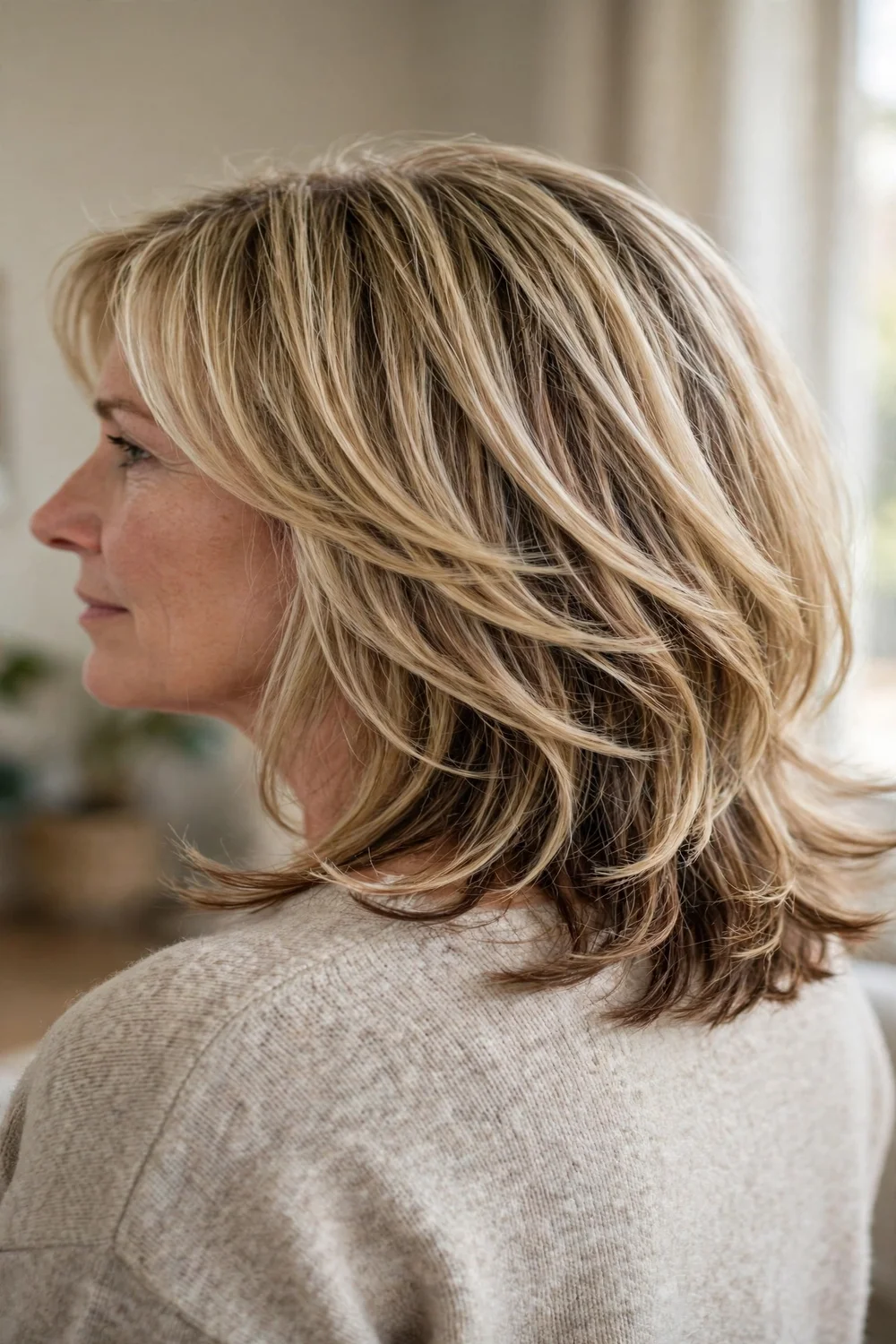
Layered haircuts reveal lowlights as the layers flip and move, which makes this pairing especially dynamic. Soft lowlights woven through the interior layers peek out as the hair moves, while the top layers stay bright blonde. The cut itself adds the volume; the color adds the interest. This is a great choice for medium-length hair that can feel boring between cuts, since the lowlights refresh the whole look without changing the length.
Try this: Ask for lowlights concentrated in the mid-shaft, where layers separate most.
20. Winter Bronde with a Root Melt
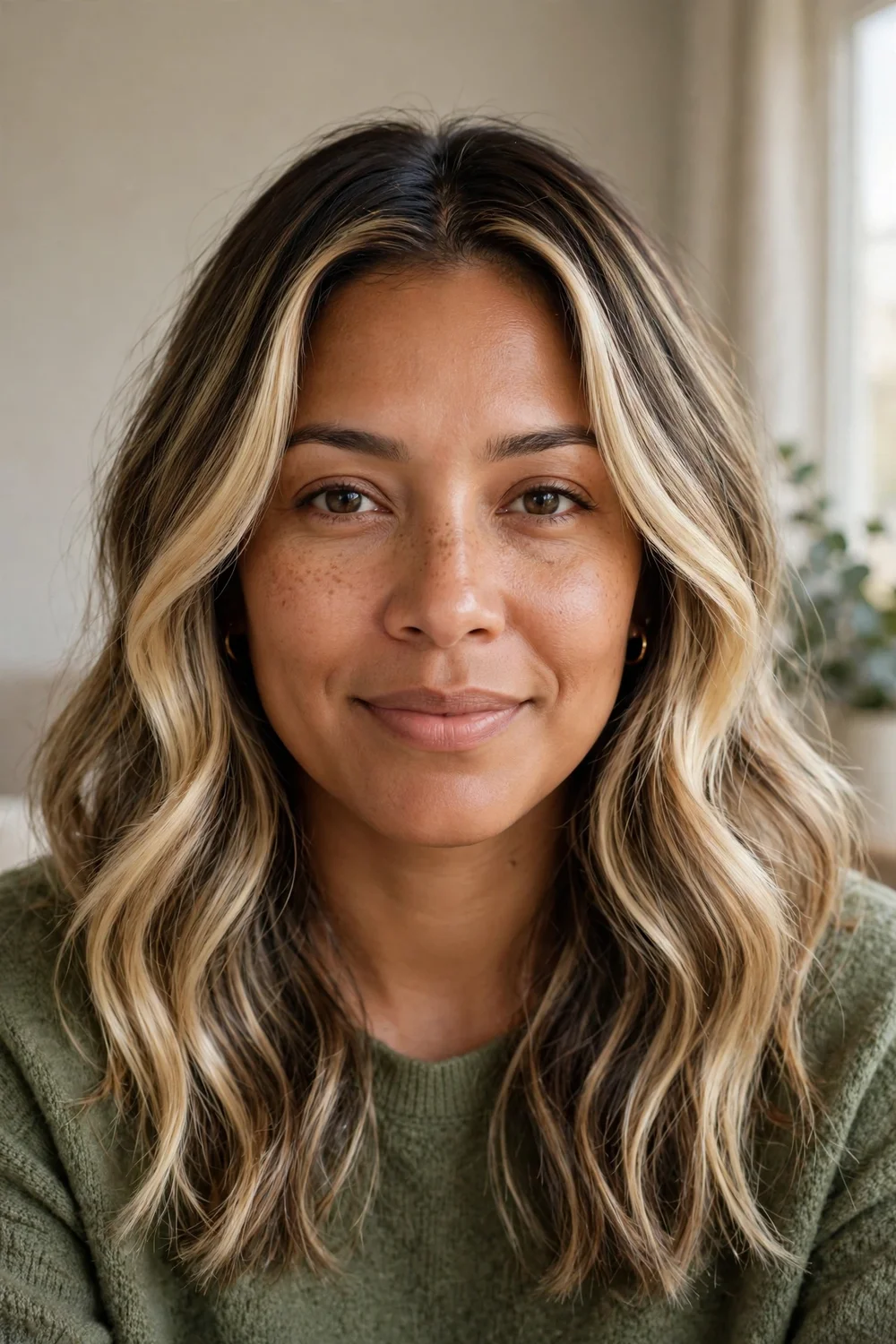
Bronde, the blend of brown and blonde, is the natural endpoint of heavy lowlighting, and the winter version leans richer and deeper. A root melt blends your natural darker roots into the blonde so there’s no harsh line, and lowlights diffused through the lengths add the brown half of the bronde. Skinny face-framing blonde pieces keep the front bright. This is the ultimate low-maintenance blonde for cold months, growing out softly for three to four months.
Try this: Book a toner refresh at week eight instead of a full color to keep the blend seamless.
21. Curtain Bangs with Lowlights
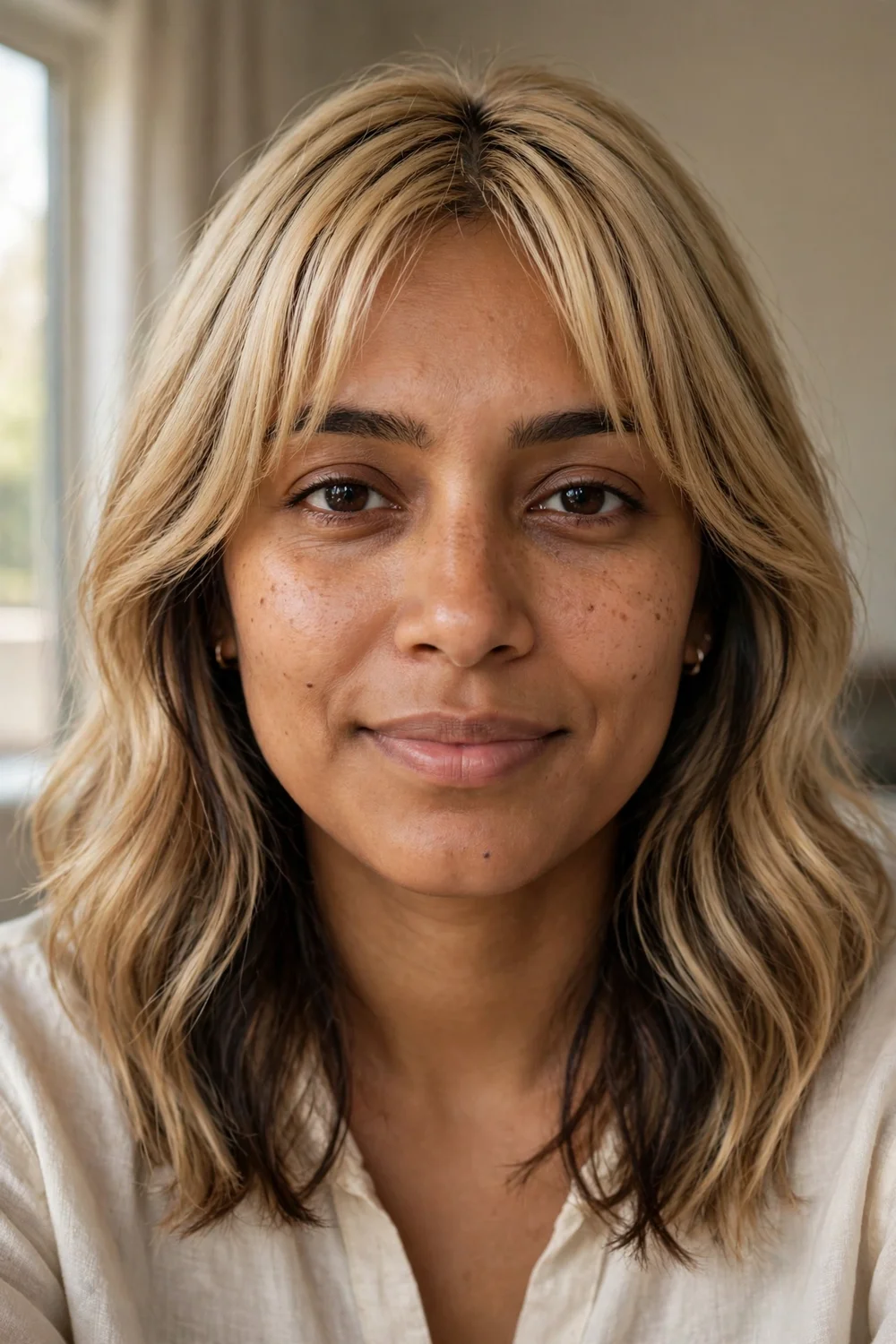
Curtain bangs frame the face and create movement around the front, and lowlights placed near the face make that framing even more flattering. The darker strands add shadow around the cheekbones and jawline, which gives the face more definition. This is a good trick for fine hair, since the added dimension makes hair look thicker at the front. Ask for the lowlights concentrated from the temples down, keeping the very front pieces bright so your face stays lit.
Try this: Blow-dry bangs with a round brush, flipping them away from the face for that curtain sweep.
22. Burgundy Lowlights for Bold Contrast
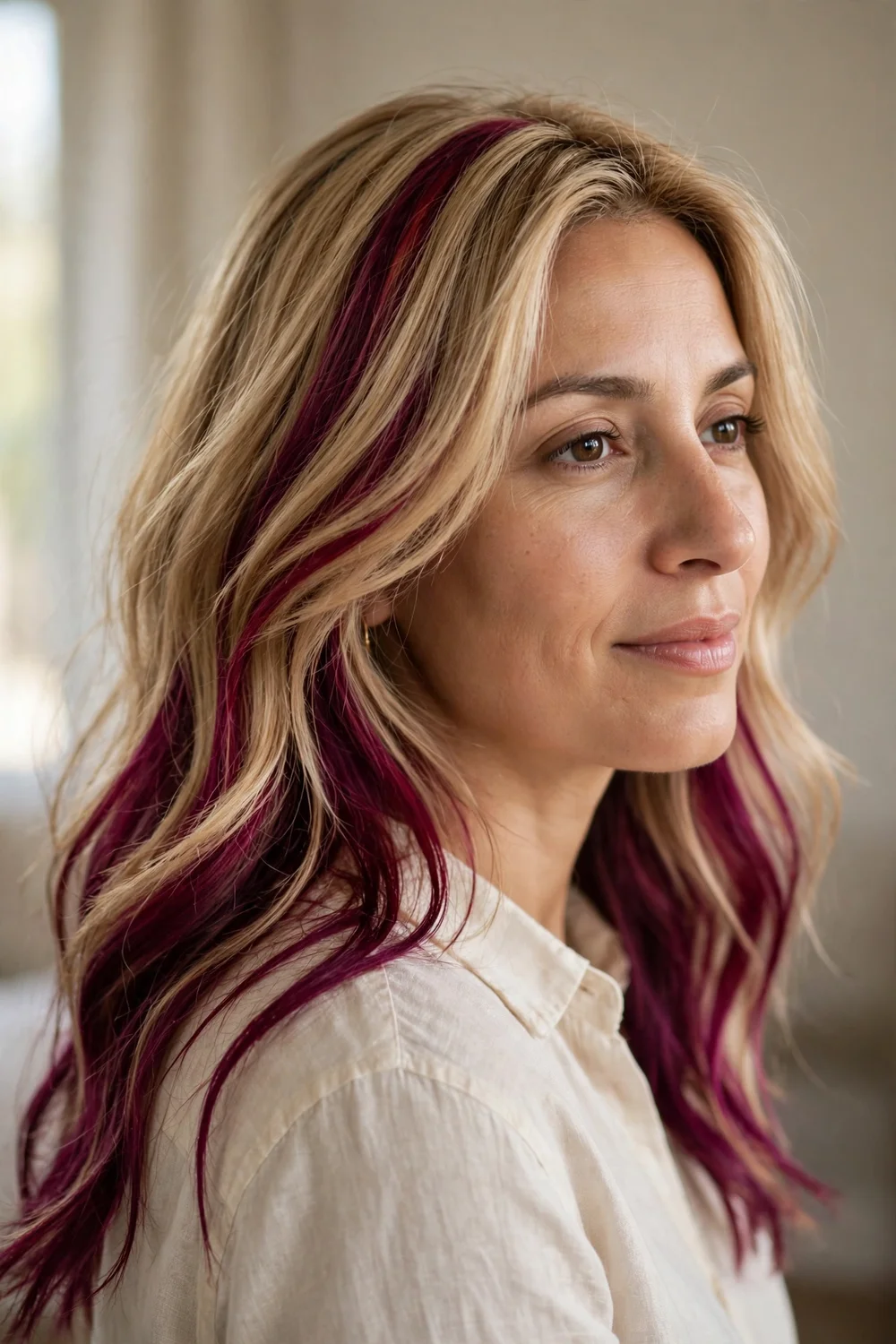
Burgundy lowlights are for blondes who want to be noticed. The deep red-purple shade creates a vivid contrast against blonde that reads as creative and confident. It works best on medium to dark blonde bases, where the jump to burgundy doesn’t look disconnected. Because red tones fade fastest, this is the highest-maintenance look on the list; cool water washes and color-safe shampoo are non-negotiable. The payoff is a color combination nobody else in the room will have.
Try this: A red color-depositing mask once a week keeps the burgundy rich between salon visits.
23. Reverse Balayage Lowlights
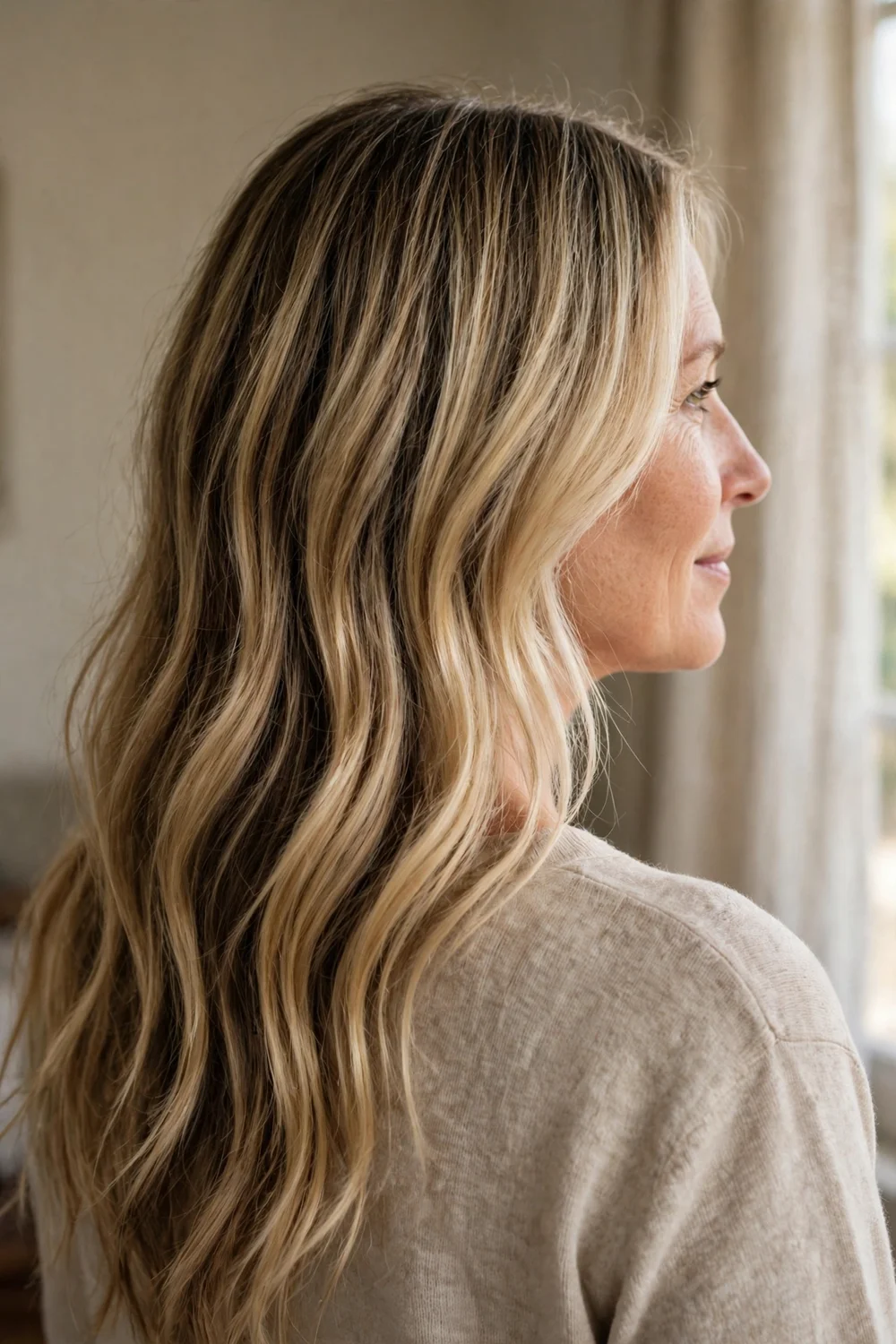
Reverse balayage is a technique, not a shade. Instead of foiling, your colorist hand-paints lowlights onto blonde hair, starting darker at the roots and feathering down. The painted application creates a softer, more diffused grow-out than foils, and it avoids the harsh lines that can appear with traditional lowlighting. This is the best option for blondes going darker gradually, or for anyone whose hair is too fragile for foil processing. Ask to see photos of your colorist’s painted work before booking.
Try this: This technique pairs well with a root shadow if you want maximum grow-out time.
24. Root Smudge with Lowlights for a Seamless Grow-out
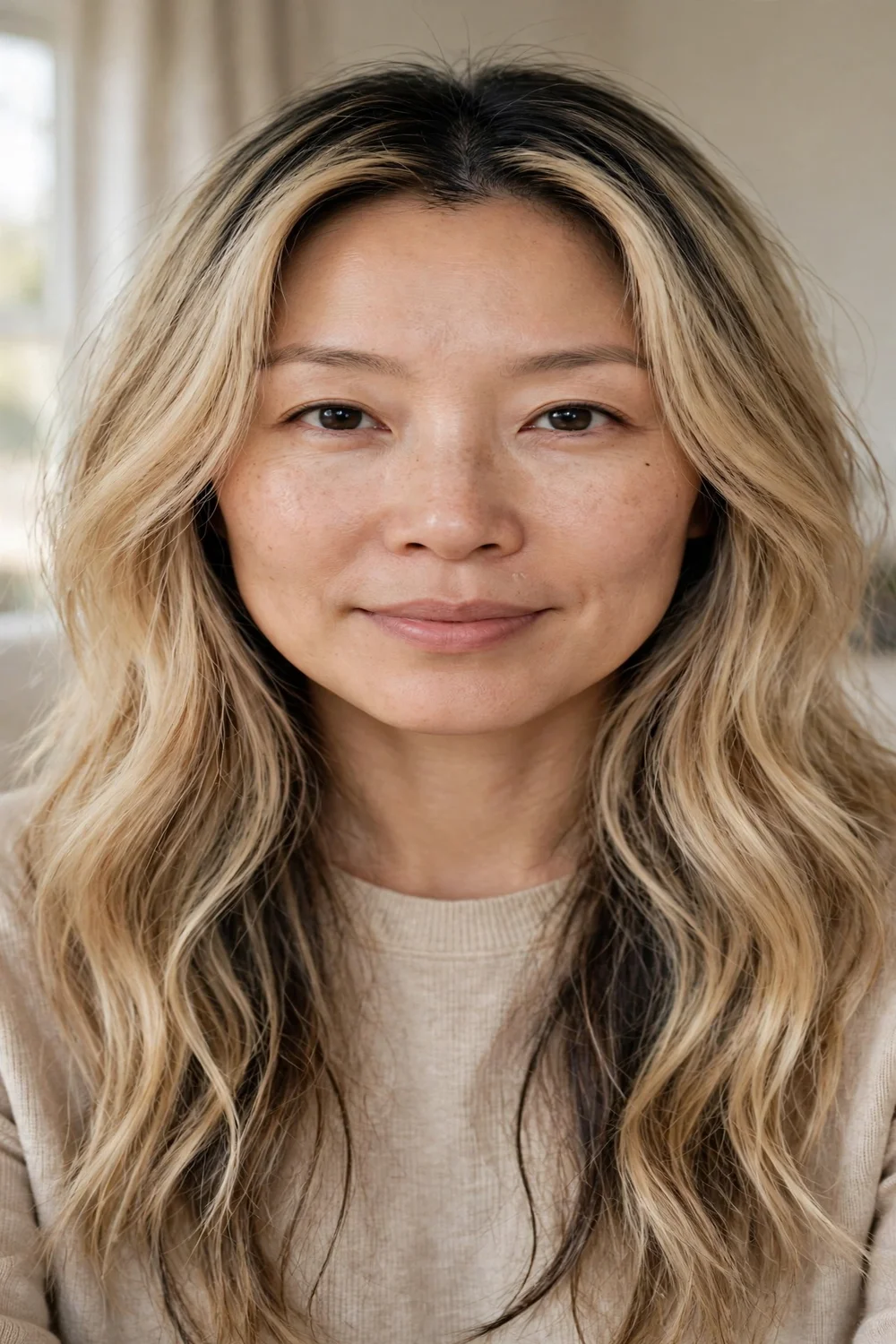
A root smudge blurs the line where your natural roots meet the blonde, and combining it with lowlights gives you the longest-lasting color on this list. Your colorist taps a demi-permanent shade at the roots and pulls it down slightly, then weaves lowlights through the lengths. The smudge covers the regrowth line while the lowlights add depth below it. Clients who hate the salon-every-six-weeks cycle love this, since it can go three to four months looking intentional.
Try this: Bring a photo of your natural root color so the smudge shade matches it closely.
25. Face-framing Money Piece with Lowlights
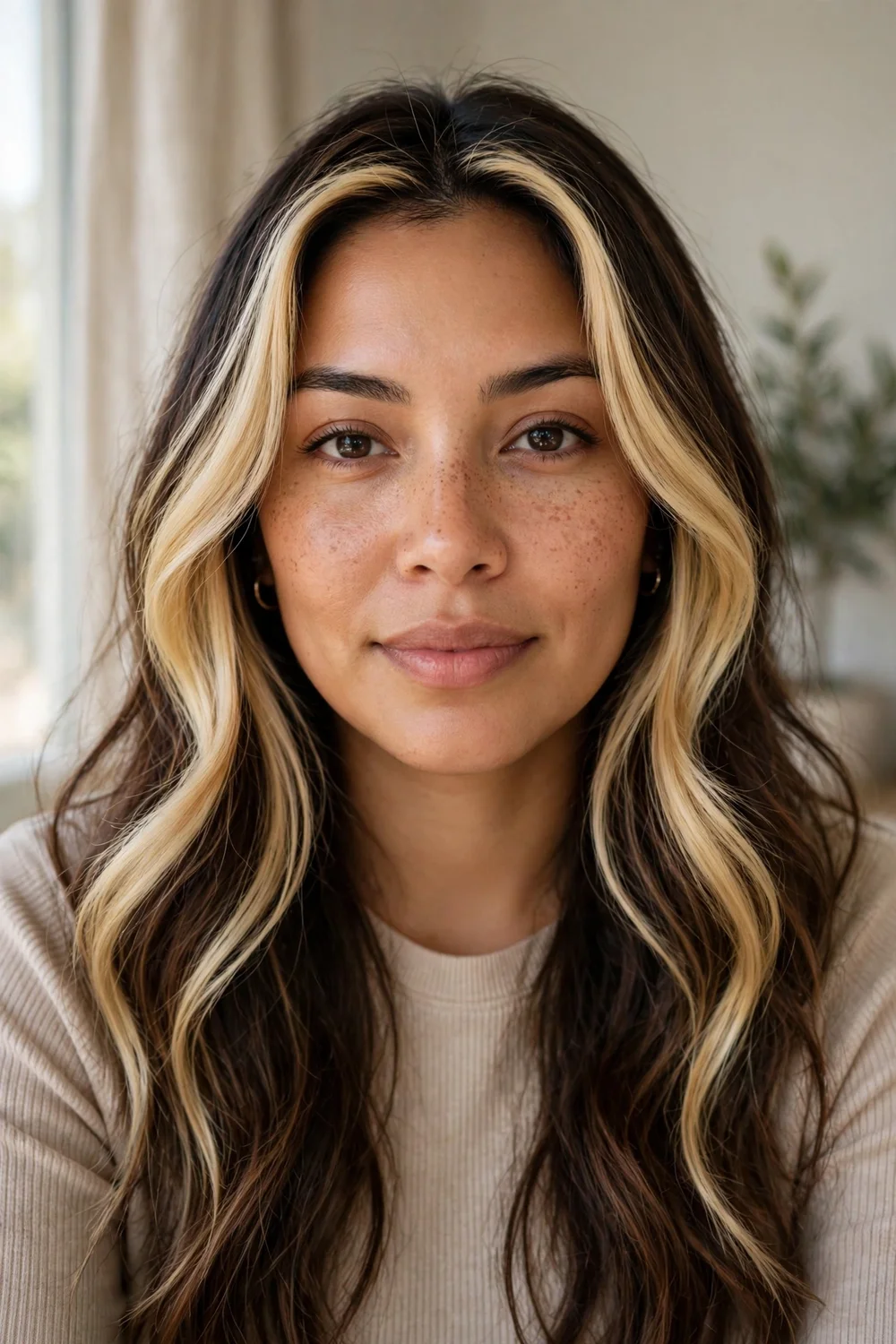
The money piece is the bright blonde section framing the face, and it looks its best with lowlights behind it. The contrast between the bright front pieces and the darker strands just behind them makes the money piece pop and gives the face a lit-from-within effect. Keep the money piece at least two levels lighter than the lowlights for the full impact. This combination flatters every face shape because the brightness draws attention to your features while the lowlights add depth around them.
Try this: Ask for the money piece to be slightly wider than usual so it reads clearly against the lowlights.
Blonde Hair with Lowlights Comparison at a Glance
| Look | Best Blonde Base | Maintenance | Contrast Level |
|---|---|---|---|
| Lived-in caramel lowlights | Golden or honey blonde | Low | Subtle |
| Honey gold with ash brown | Neutral blonde | Medium | Medium |
| Creamy blonde with cocoa | Creamy or buttery blonde | Medium | Medium |
| Sandy blonde with walnut | Medium to dark blonde | Low | Medium |
| Platinum with smoky lowlights | Platinum or white blonde | High | Subtle |
| Champagne with taupe | Cool champagne blonde | Medium | Subtle |
| Golden wheat with espresso | Bright golden blonde | Medium | Bold |
| Sun-kissed with mushroom brown | Medium blonde | Low | Subtle |
| Butter blonde with amber | Warm butter blonde | Medium | Subtle |
| Icy blonde with cool lowlights | Icy or silver blonde | High | Bold |
| Vanilla bean with sable | Light creamy blonde | Medium | Medium |
| Pearl blonde with slate gray | Cool pearl blonde | Medium | Subtle |
| Ash blonde with mahogany | Ash or muted blonde | High | Medium |
| Rose gold with chocolate | Rose gold blonde | High | Medium |
| Silver blonde with jet black | Silver or grey blonde | High | Bold |
| Soft waves, subtle lowlights | Any blonde | Low | Subtle |
| Natural blend, gentle lowlights | Any blonde | Low | Subtle |
| Curls with dimensional lowlights | Any blonde | Low | Medium |
| Chic layers, soft lowlights | Any blonde | Low | Subtle |
| Winter bronde, root melt | Dark blonde | Low | Medium |
| Curtain bangs with lowlights | Any blonde | Medium | Subtle |
| Burgundy lowlights | Medium to dark blonde | High | Bold |
| Reverse balayage lowlights | Any blonde | Low | Medium |
| Root smudge with lowlights | Any blonde | Low | Subtle |
| Money piece with lowlights | Any blonde | Medium | Medium |
How to Choose the Right Lowlight Shade for You
Start with your skin’s undertone. Warm undertones (veins look green, gold jewelry flatters you) pair best with caramel, honey, amber, and chocolate lowlights. Cool undertones (veins look blue, silver jewelry flatters you) suit ash, taupe, mushroom brown, and slate. If you’re neutral, you can wear either family.
Next, consider your starting blonde. The closer the lowlight sits to your base, the more natural the result. One level darker reads as soft shadow. Two levels darker gives visible dimension. Three or more levels creates bold contrast, which looks intentional but needs more upkeep to stay blended.
Think about your maintenance tolerance honestly. Subtle lowlights in a tone near your base can go 10 to 12 weeks. Bold or fashion shades like burgundy and midnight blue need refreshing every four to six weeks. If you’re not sure, start subtle. You can always deepen the lowlights at your next visit.
Mistakes to Avoid
The biggest mistake is going too dark. A lowlight more than three levels below your blonde stops looking like shadow and starts looking like a different color altogether. Ask your stylist to stay within two levels unless you’re deliberately going bold.
Don’t skip the strand test on bleached hair. Porous, over-processed hair grabs lowlight color fast and can turn out darker or ashier than the swatch suggests. A quick test on one section prevents a full-head surprise.
Avoid washing with hot water and harsh shampoos in the first two weeks. Both strip lowlight color, especially reds and fashion shades. Lukewarm water and a sulfate-free, color-safe shampoo keep the tones intact much longer.
If you’re weighing different blonde techniques before you book, see how blonde balayage with lowlights compares, since the hand-painted method grows out even more softly than foiled lowlights.
Warm-toned blondes pair especially well with lowlights, so browse these caramel blonde hair color ideas if you want to lean into golden, honeyed depth.
For a softer golden take on the same concept, these honey blonde hair color ideas show how warm blonde bases work with deeper woven strands.
And if your base is on the darker side of blonde, these highlights on dirty blonde hair ideas complement lowlights well for added dimension.
Frequently Asked Questions
What’s the difference between lowlights and highlights?
Highlights lighten selected strands, while lowlights darken them. On blonde hair, highlights add brightness and lowlights add depth and shadow. Most dimensional blonde color uses both: highlights on top for lightness, lowlights underneath for contrast. If your blonde looks flat, lowlights are usually what’s missing.
How long do lowlights last on blonde hair?
With permanent color, lowlights last until they grow out or are colored over, typically 8 to 12 weeks before a touch-up is needed. Demi-permanent lowlights fade gradually over 6 to 8 weeks without a harsh line. Red and fashion shades like burgundy fade fastest and may need refreshing every 4 to 6 weeks.
What lowlight shade should I ask for?
Ask for a shade 1 to 2 levels darker than your blonde in a matching tone family. Warm blondes suit caramel, honey, amber, and chocolate. Cool blondes suit ash, taupe, mushroom brown, and slate gray. Bring photos of the exact depth you want, since shade names mean different things to different colorists.
Are lowlights lower maintenance than highlights?
Yes, in most cases. Lowlights blend with natural regrowth instead of creating a bright root line, so you can stretch appointments to 10 or 12 weeks. Techniques like root smudges and reverse balayage extend that even further. You’ll still need color-safe shampoo and occasional gloss refreshes to keep the tones clear.
Can I get lowlights on bleached or platinum hair?
Yes, but choose your formula carefully. Bleached hair is porous and grabs color quickly, so demi-permanent lowlights are safer than permanent ones. Your colorist may need to fill the hair with a warm base first to stop ash lowlights from turning muddy. Always do a strand test before a full application on heavily bleached hair.
Final Thoughts
Lowlights are the simplest way to take blonde hair from flat to dimensional without a full color overhaul. Whether you go subtle with a tone-on-tone blend or bold with burgundy or midnight blue, the right lowlight shade makes your blonde look thicker, richer, and more intentional. Bring photos to your appointment, start a shade or two darker than your base, and enjoy the depth.
