


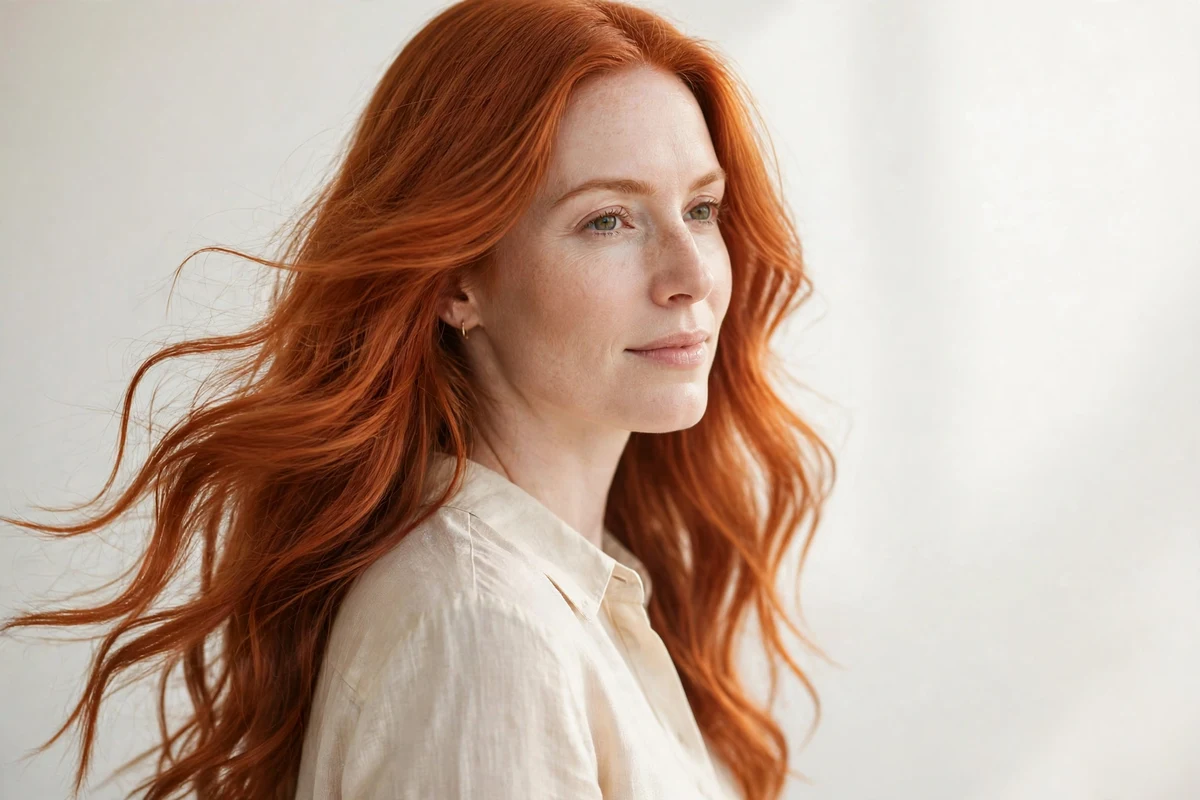
Finding the best hair colors for pale skin starts with one thing most people skip: your undertone. The same shade can look radiant on one pale face and washed out on another, and the difference is almost always warm versus cool undertones. I’ve spent years testing different shades against my own pale complexion, and undertone matching won out over every trend.
This guide covers 23 hair colors that flatter pale skin, grouped by blondes, browns, reds, and creative shades. Each one includes who it suits best, how to ask for it at the salon, and what upkeep to expect. You will also find a quick way to find your undertone and a comparison table at the end.
Quick answer: The best hair colors for pale skin match your undertone. Cool undertones suit platinum blonde, ash blonde, ash brown, and pastel shades. Warm undertones suit honey blonde, copper red, and warm chestnut brown. Neutral undertones can wear both. Add dimension with highlights or balayage so flat color does not wash you out.
Quick Takeaways
- Match the hair color’s temperature to your skin’s undertone: cool with cool, warm with warm.
- Platinum blonde, ash blonde, ash brown, copper red, and chocolate brown rank among the safest picks for pale skin.
- Dimension matters more than the exact shade: highlights, lowlights, or balayage keep pale skin from looking washed out.
- Light and fashion shades (platinum, pastels, silver) need the most upkeep: plan for toning every 4 to 6 weeks.
- Avoid muddy browns and flat, one-dimensional black if you want your features to stand out.
Understanding Your Undertones
Your undertone is the subtle color beneath your skin’s surface, and it stays constant even when your skin tans or pales. Pale skin usually has cool undertones (pink, red, or blue hints), warm undertones (yellow, peach, or golden hints), or neutral undertones (a mix of both).
Use three quick tests in natural daylight. First, the vein test: look at your wrist. Blue or purple veins point to cool undertones, green veins point to warm, and a mix suggests neutral. Second, the jewelry test: silver flatters cool undertones and gold flatters warm ones. Third, the white fabric test: hold bright white fabric near your face, then off-white. Whichever makes your skin look brighter and healthier matches your undertone.
Once you know your undertone, choosing gets simple. Cool undertones look best with ashy, platinum, and cool-toned shades. Warm undertones look best with golden, honey, and warm-toned colors. Neutral undertones have the most flexibility and can wear both families well.
1. Platinum and Icy Blonde
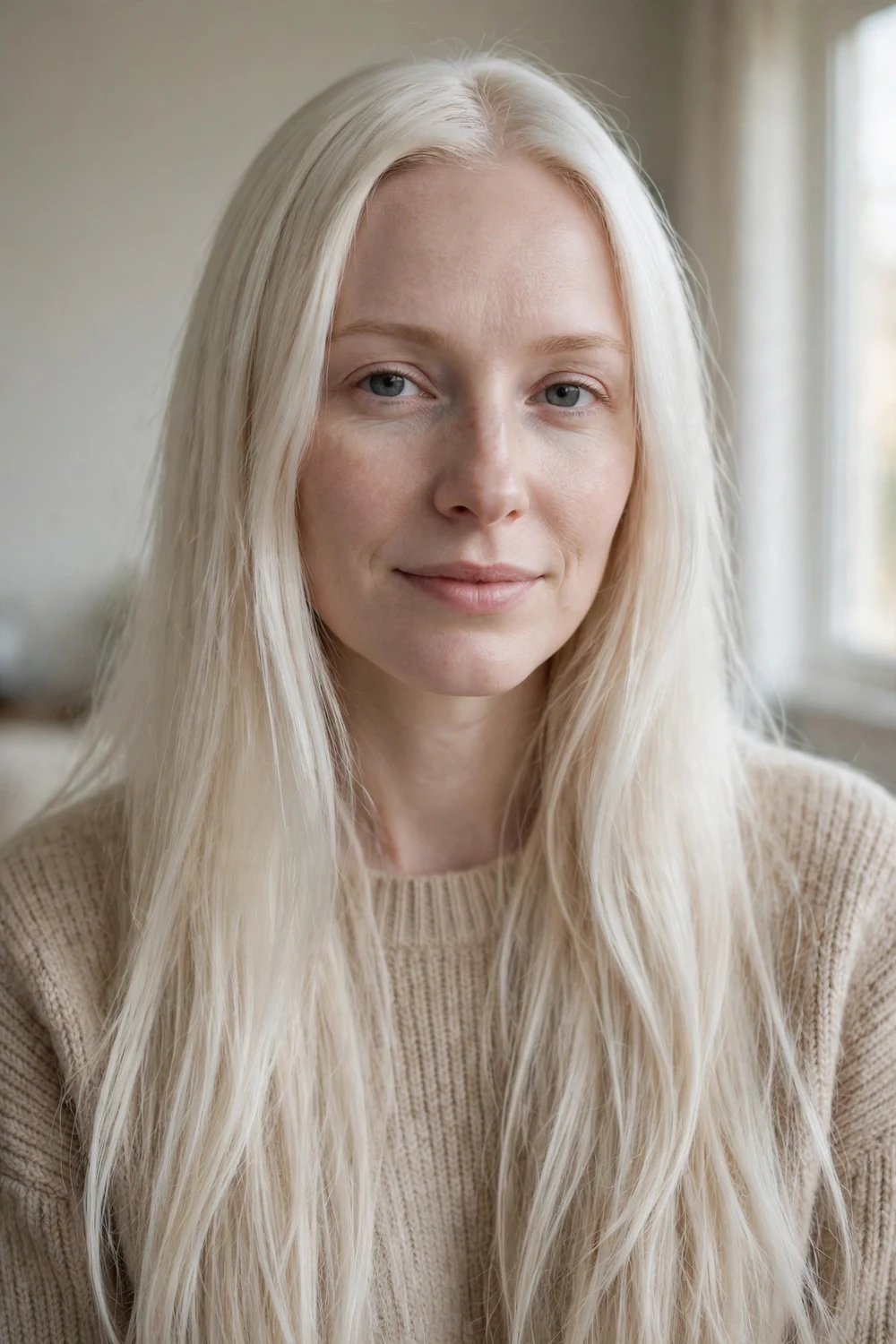
Go for platinum and icy blonde when you want the brightest look in the room. This near-white shade is the gold standard for cool-toned pale skin because it neutralizes pink or red tones in the complexion instead of fighting them. It creates high contrast that draws attention to your features, which is why it photographs so well. The catch is upkeep: roots show fast, and brassiness creeps in without regular toning. Ask your colorist for a full bleach with an icy toner, and plan salon visits every 4 to 6 weeks to keep it crisp.
Try this: Wash with purple shampoo once a week to cancel yellow tones, and use a sulfate-free conditioner to keep bleached hair from snapping.
Upkeep: High. Cost: $$$.
2. Ash Blonde
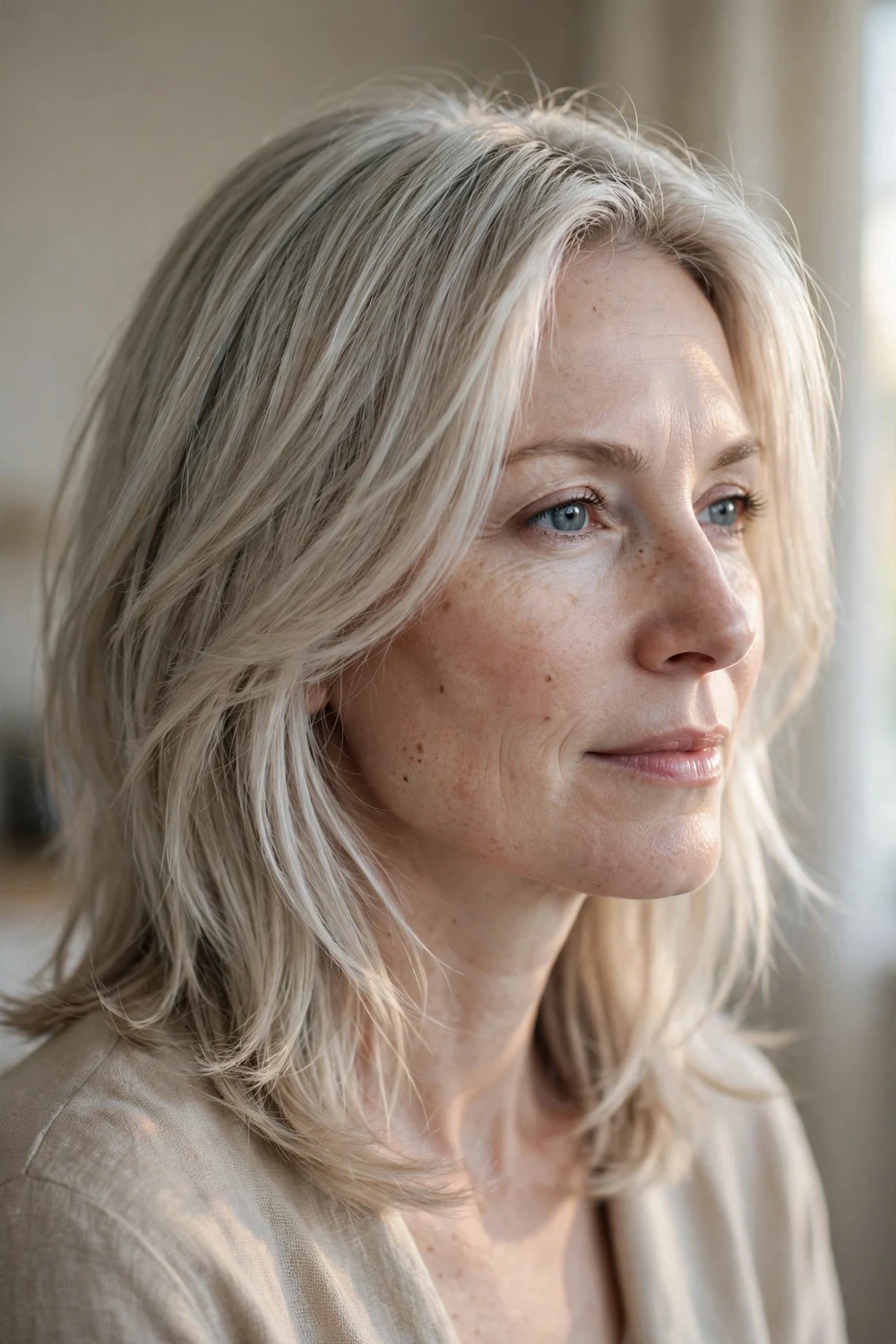
For pale skin with pink or red tones, ash blonde is the shade that calms everything down. Its smoky, grayish base counteracts redness in the skin, creating a clean, even look that feels polished without much effort. It suits blue and green eyes especially well because the cool tones make eye color look sharper. Ash blonde also grows out more gracefully than platinum, so you can stretch appointments to 6 to 8 weeks. Ask for a level 8 or 9 ash blonde with a cool toner over the mid-lengths and ends.
Try this: If your hair pulls brassy at home, ask for a demi-permanent ash gloss between full appointments instead of recoloring everything.
Upkeep: Medium. Cost: $$.
If this shade speaks to you, browse ash blonde hair color ideas for more variations on the cool blonde family.
3. Honey and Golden Blonde

What if your pale skin has warm, golden undertones? Then honey and golden blonde is your lane. These sun-kissed shades add warmth without turning orange, which is the exact balance pale skin needs to avoid looking dull. They suit both casual and formal settings, and they flatter hazel, brown, and golden-green eyes. Honey blonde also hides regrowth better than cooler blondes, so it is one of the easier light shades to maintain. Ask your colorist for a warm golden blonde around level 7 or 8 with honey-toned highlights through the face frame.
Try this: Add a few face-framing highlights in a lighter honey shade to brighten your complexion without coloring all your hair.
Upkeep: Medium. Cost: $$.
Warm blondes also shine in seasonal edits, and fall blonde hair colors shows how these tones work in cozy autumn palettes.
4. Caramel Blonde
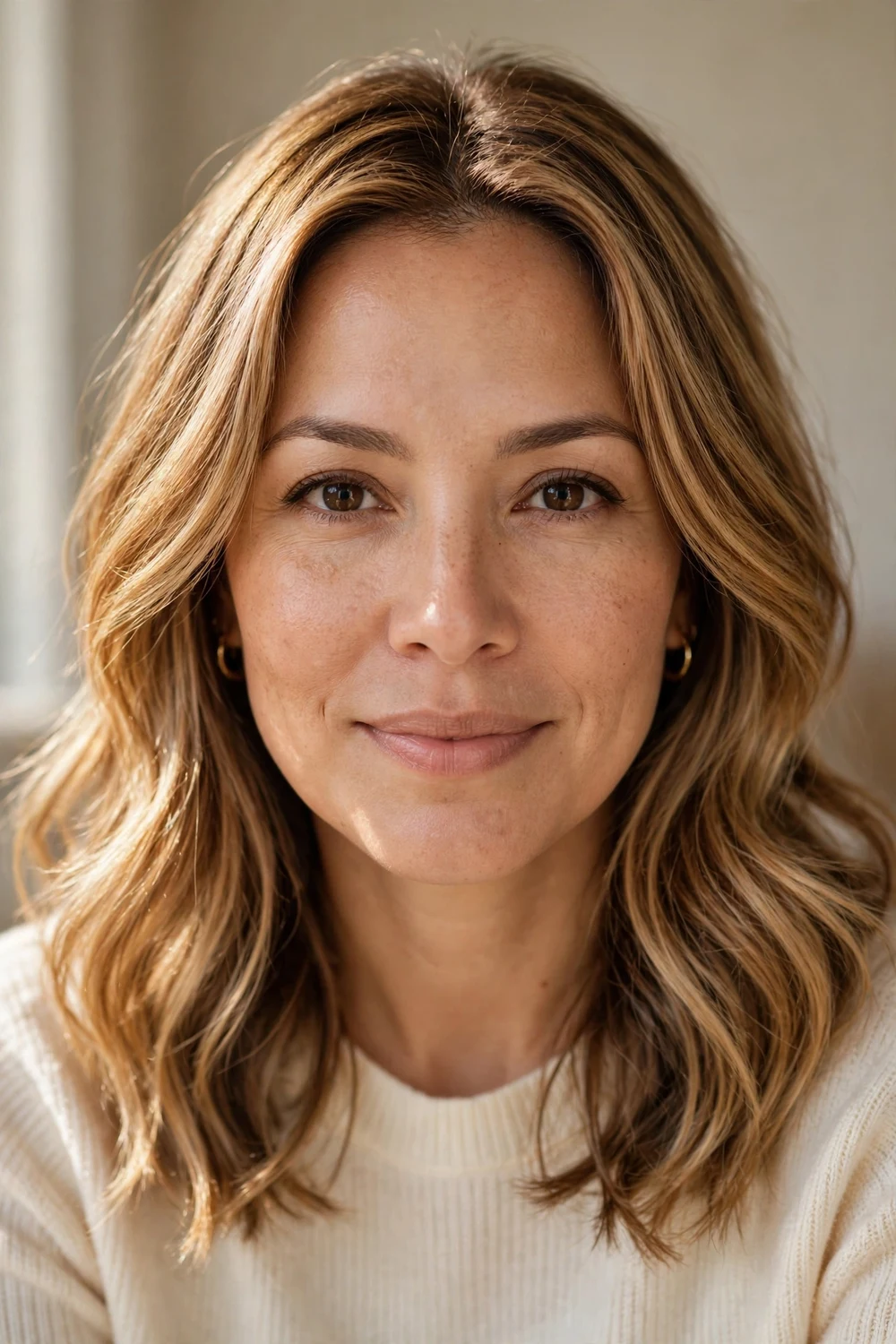
Caramel blonde sits halfway between blonde and light brown, which makes it one of the most forgiving shades for pale skin. The warm, buttery tone adds glow to the face while the slightly deeper base keeps the color from washing you out. It works across warm and neutral undertones and flatters most eye colors. Because it is not a high-lift color, it causes less damage than platinum and needs fewer touch-ups. Ask for a warm caramel blonde with soft dimension at the roots so grow-out stays seamless.
Try this: Keep the roots a shade deeper than the ends for a natural gradient that buys you an extra two weeks between appointments.
Upkeep: Low to medium. Cost: $$.
5. Strawberry Blonde
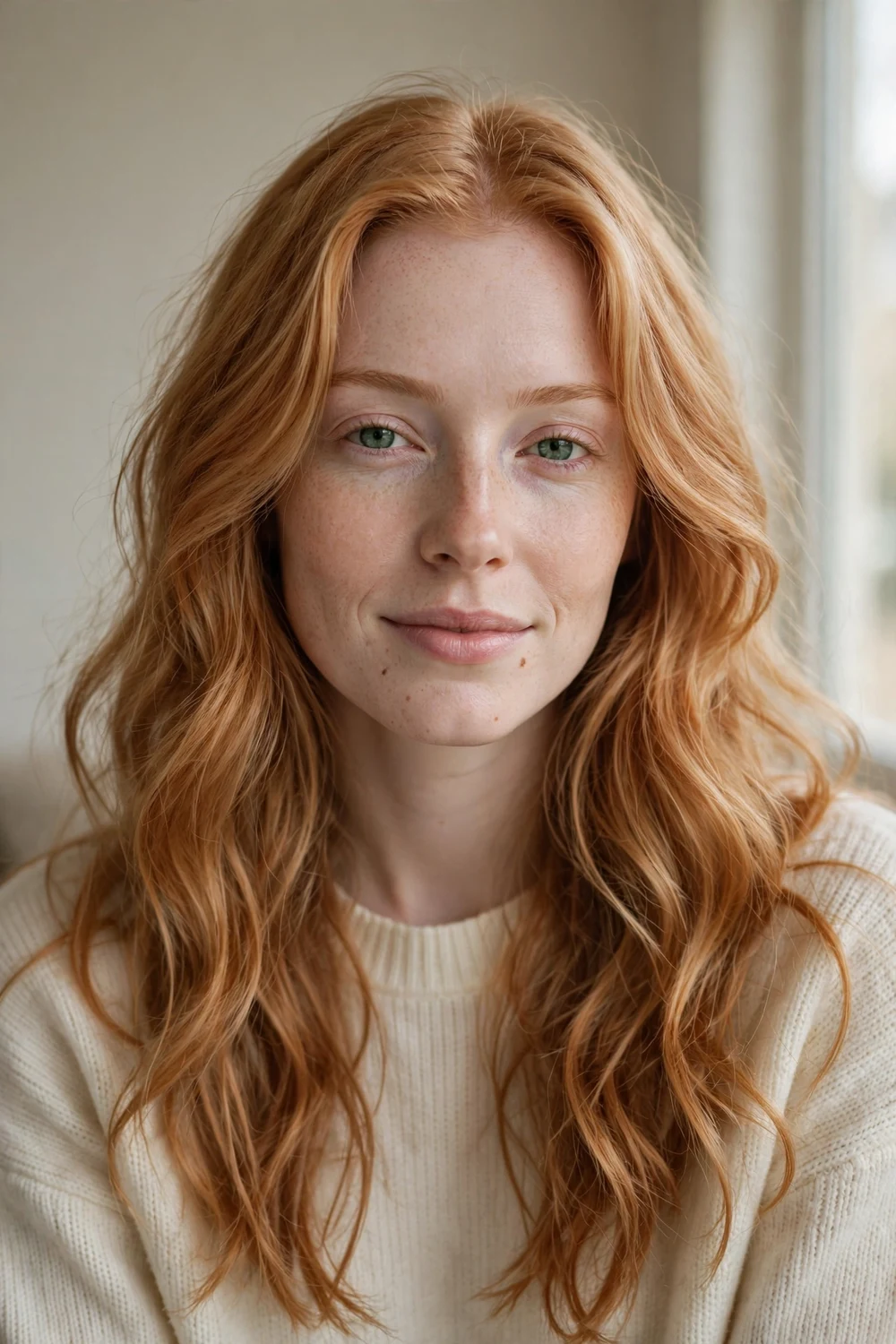
Few shades suit pale skin as naturally as strawberry blonde. This blend of red and blonde reads like the hair color some people are born with, which is why it suits freckled and fair complexions so well. It adds natural warmth and a healthy glow without the commitment of a full red. Strawberry blonde flatters warm and neutral undertones and pairs beautifully with green or blue eyes. The color fades faster than brown, so plan a gloss refresh every 6 weeks. Ask your colorist for a copper-gold blend around level 8.
Try this: Use a color-depositing conditioner in copper once a week to keep the strawberry tone from fading to plain blonde.
Upkeep: Medium. Cost: $$.
6. Sandy Blonde
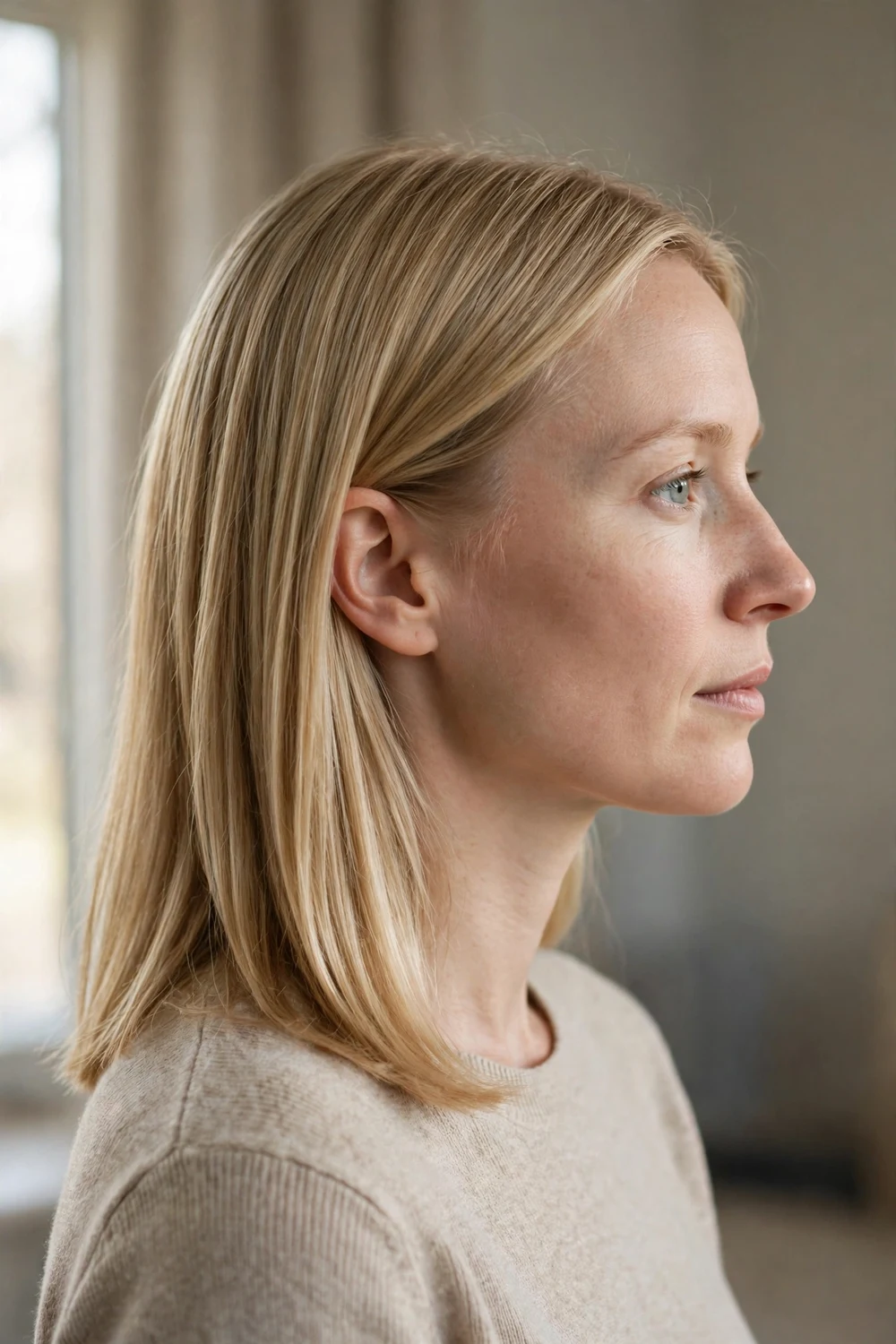
Sandy blonde is the neutral option most people skip over, and that is a mistake. It sits between ash and gold, which makes it the rare blonde that flatters neutral undertones without pushing them warm or cool. The muted, beachy tone looks effortless on pale skin and works for anyone who wants lightness without high contrast. It also photographs as a natural color, so it suits professional settings. Ask for a neutral level 8 blonde with minimal toner so the shade stays balanced rather than leaning ashy or brassy.
Try this: Request babylights instead of chunky highlights for a soft, sun-grown effect that needs minimal maintenance.
Upkeep: Low. Cost: $$.
7. Dirty Blonde
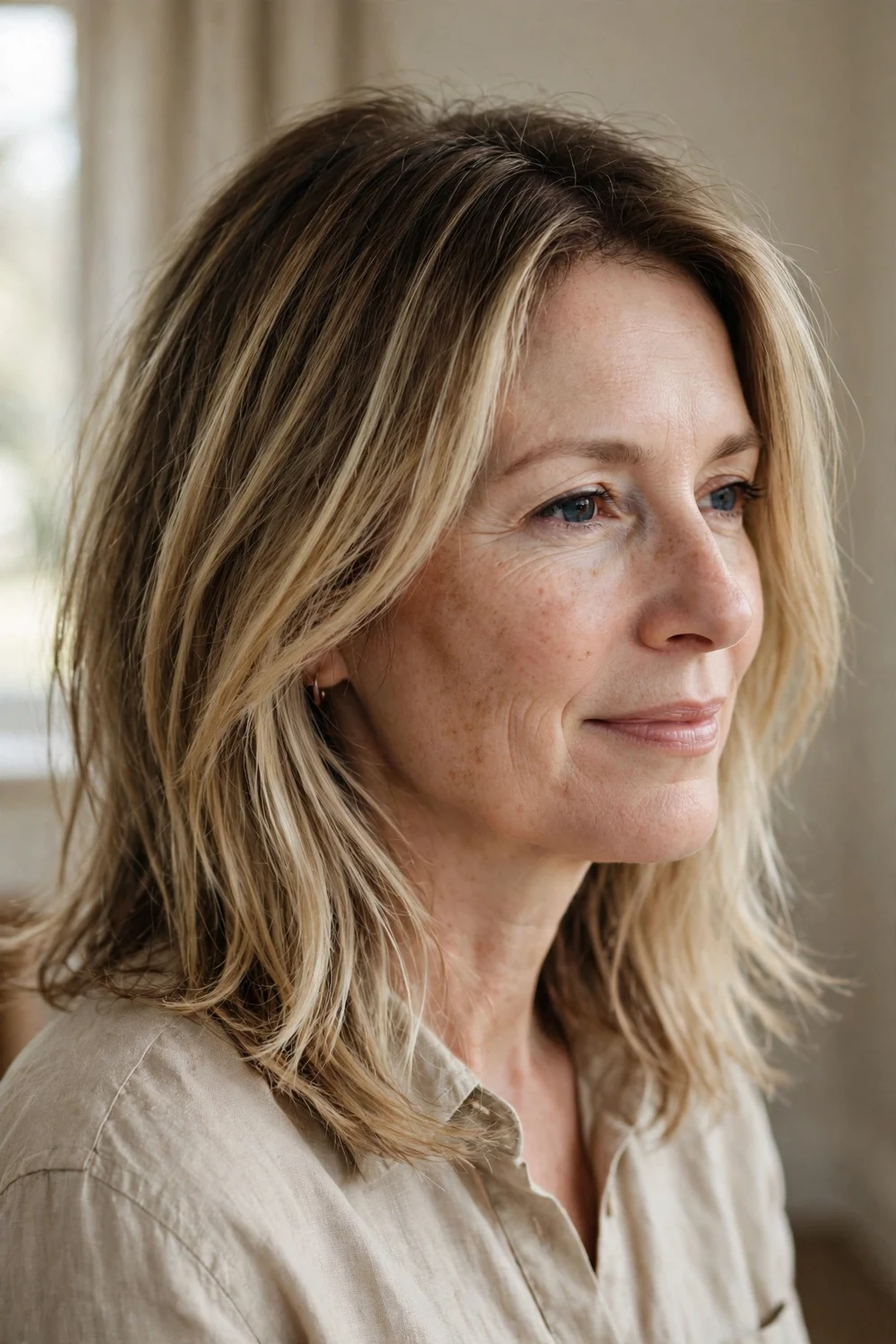
Dirty blonde has the easiest grow-out of any light shade, which is exactly why busy people love it. The darker, shadowed root blends into lighter mid-lengths, so regrowth looks intentional instead of neglected. On pale skin, this shade adds depth around the face without the washout risk of all-over light blonde. It suits neutral and cool undertones and works on most hair textures. You can stretch salon visits to 8 to 10 weeks. Ask your colorist for a lived-in dirty blonde with a root smudge one to two shades deeper than the ends.
Try this: Refresh the look between appointments with a root touch-up spray in a matching tone rather than recoloring.
Upkeep: Low. Cost: $.
8. Pearl Blonde
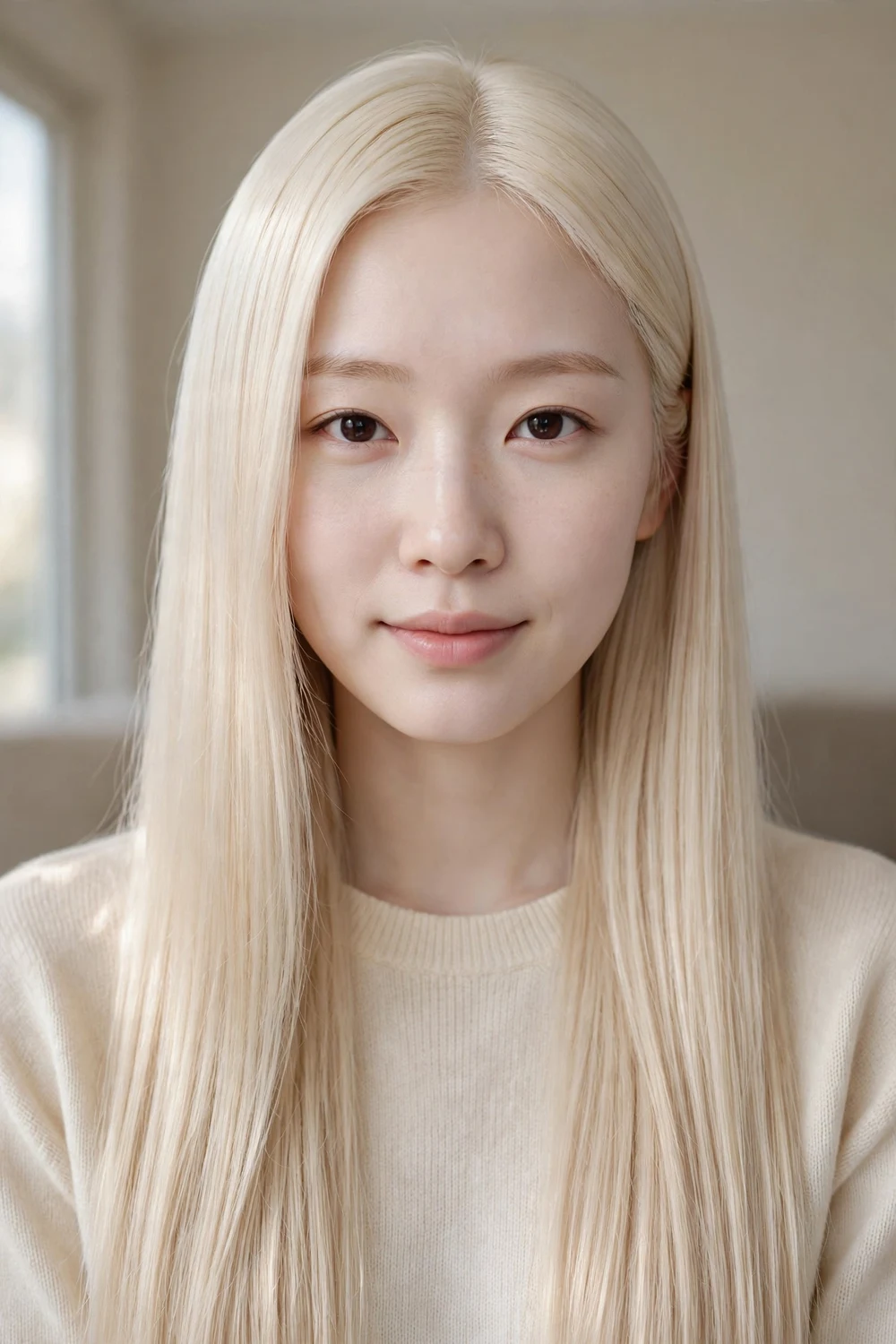
Pearl blonde takes platinum and adds a soft, iridescent finish with hints of silver and champagne. On very pale skin with cool undertones, this shade looks luminous rather than flat because the metallic sheen reflects light back onto the face. It is a high-impact color that still reads polished and modern. The downside is real: it needs pre-lightening and regular toning to stop it from going yellow. Ask for a pearl or opal toner over level 10 hair, and keep purple shampoo in your routine.
Try this: Book a toner refresh at 4 weeks rather than waiting for brassiness to appear, since prevention is cheaper than correction.
Upkeep: High. Cost: $$$.
9. Ash Brown
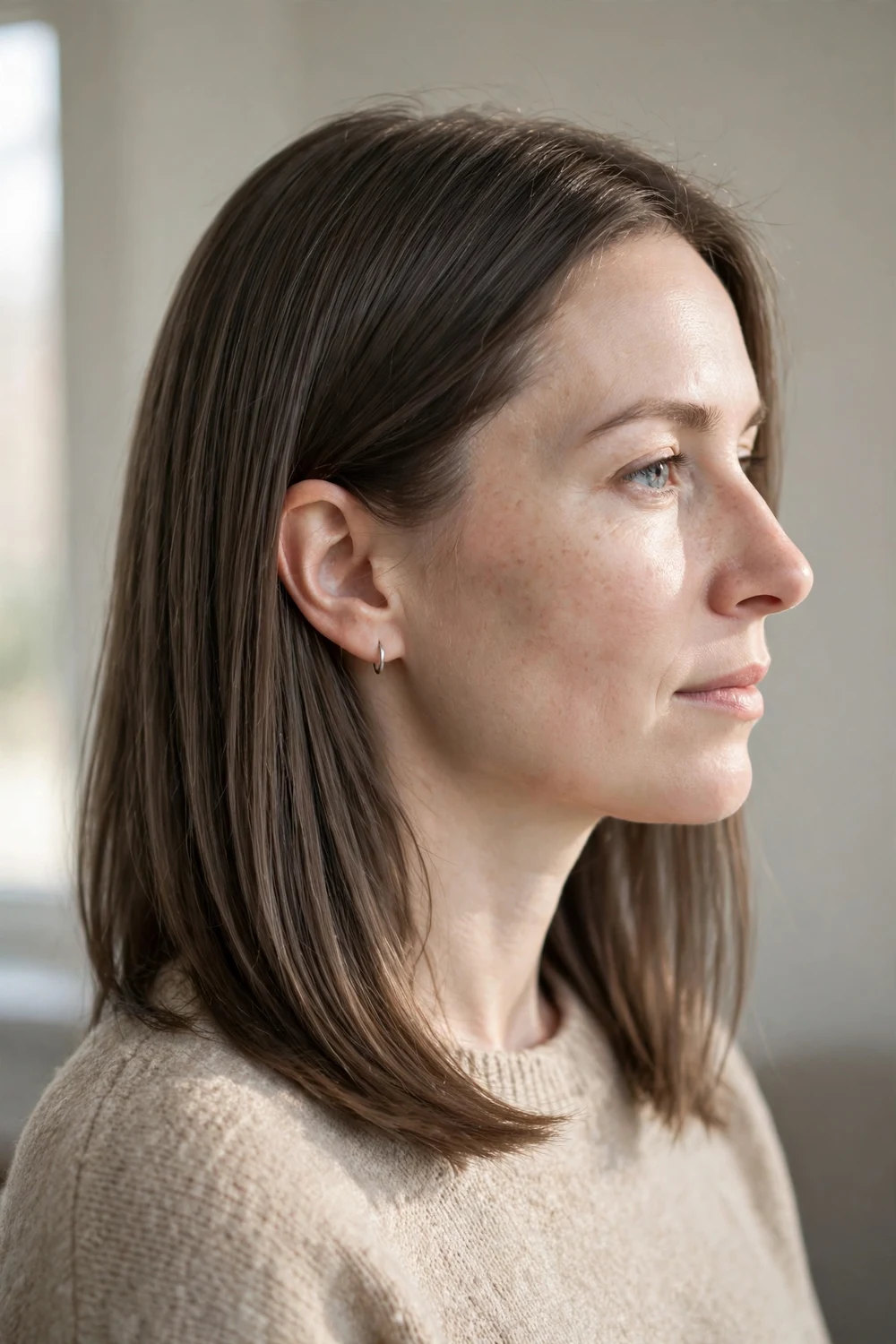
Ash brown is the shade to choose when blonde feels too light and dark feels too harsh. This cool, smoky brown flatters most pale skin tones because it adds definition without overwhelming the face. It is forgiving, versatile, and one of the lowest-maintenance colors on this list: roots blend easily and it fades gracefully. It suits cool and neutral undertones and looks sharp with blue eyes. Ask for a level 5 or 6 ash brown, and have your colorist finish with a cool gloss to seal in the tone.
Try this: If the shade pulls too gray on you, ask for a mushroom-ash hybrid instead of pure ash to keep some warmth in the hair.
Upkeep: Low. Cost: $.
10. Chocolate Brown
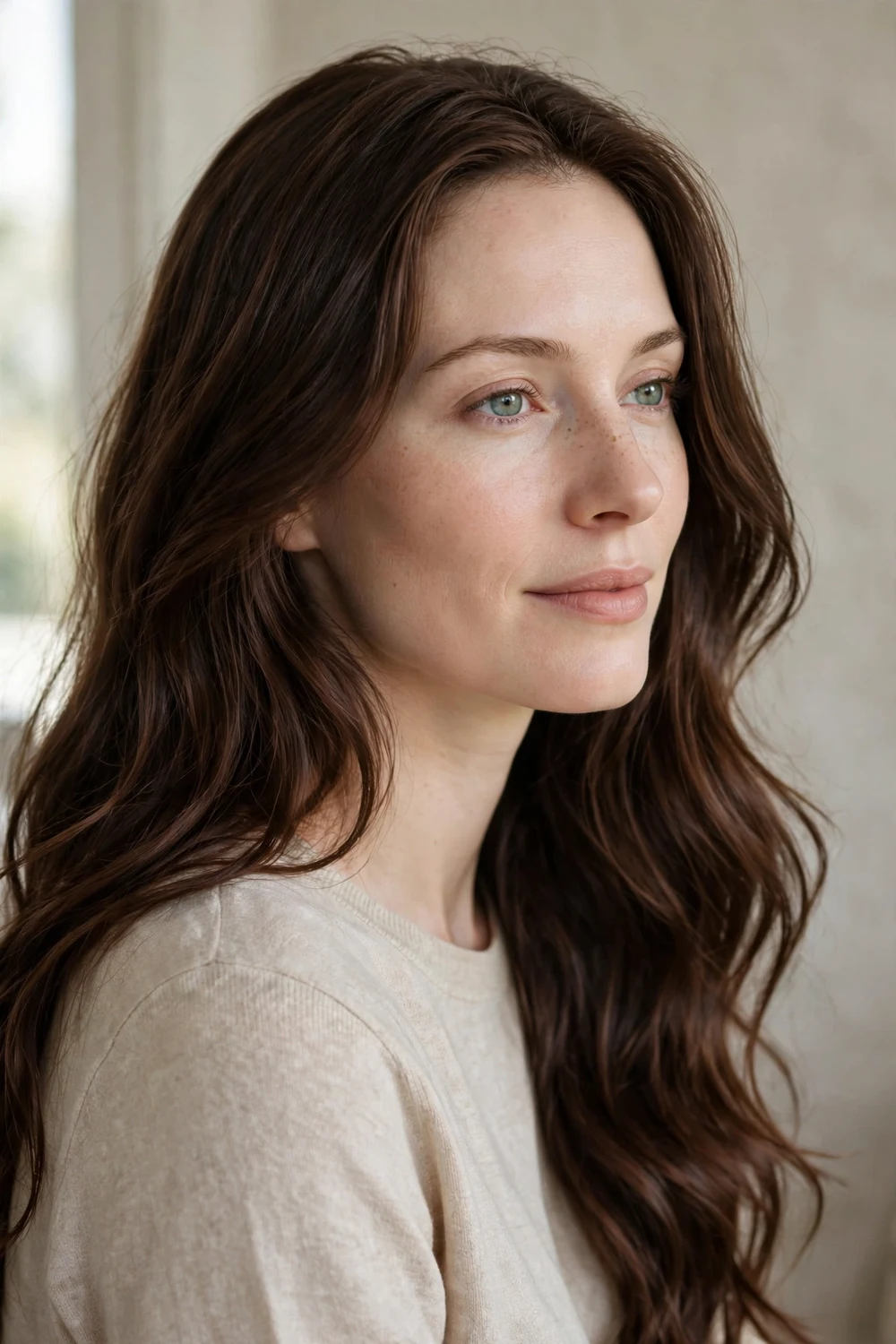
Rich and glossy, chocolate brown gives pale skin a sharp frame. The deep, warm tone creates enough contrast to make features stand out while the shine keeps the look healthy and expensive. It flatters warm and neutral undertones and suits brown and hazel eyes especially well. Chocolate brown is also practical: it fades slowly, hides regrowth, and suits most hair lengths. Ask for a level 4 or 5 chocolate brown with a clear gloss on top for extra shine. A monthly gloss treatment keeps it from going dull.
Try this: Add two or three fine caramel highlights around the face to stop the dark shade from looking heavy on very fair skin.
Upkeep: Low. Cost: $.
11. Warm Chestnut Brown

Warm chestnut brown suits pale skin that flushes easily. The reddish-brown warmth in the color harmonizes with pink undertones instead of clashing with them, which softens the whole face. It reads as a natural, rich brown with a copper glow in sunlight. This shade flatters warm and neutral undertones and pairs well with green and brown eyes. It needs a color-safe routine to stop the red tones from fading, but appointments can stay 6 to 8 weeks apart. Ask for a level 5 warm chestnut with a copper-brown gloss.
Try this: Rinse with cool water after conditioning to slow fading and keep the chestnut warmth locked in longer.
Upkeep: Low to medium. Cost: $.
12. Honey Brown
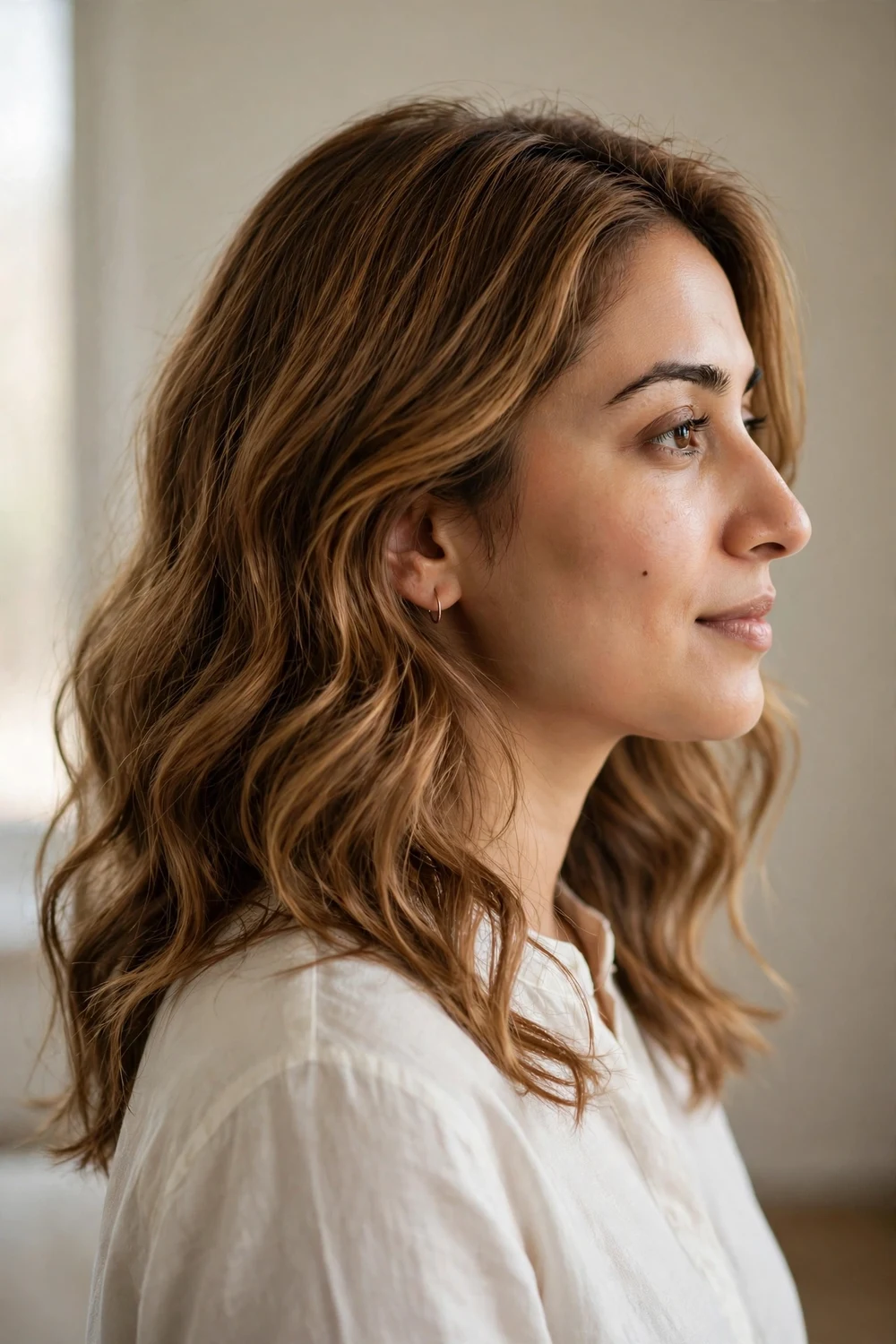
Honey brown mixes golden warmth into a mid-brown base, giving pale skin a healthy glow without going full blonde. It is lighter than chocolate brown, so it keeps the face bright, but deep enough to add contrast that pale complexions need. This shade flatters warm undertones and looks natural on most hair textures. It also grows out softly, especially when applied with balayage. Ask your colorist for a level 6 honey brown with golden pieces woven through the mid-lengths.
Try this: Pair honey brown with curtain bangs to draw light toward the eyes and cheekbones.
Upkeep: Low. Cost: $$.
13. Caramel Brown Balayage
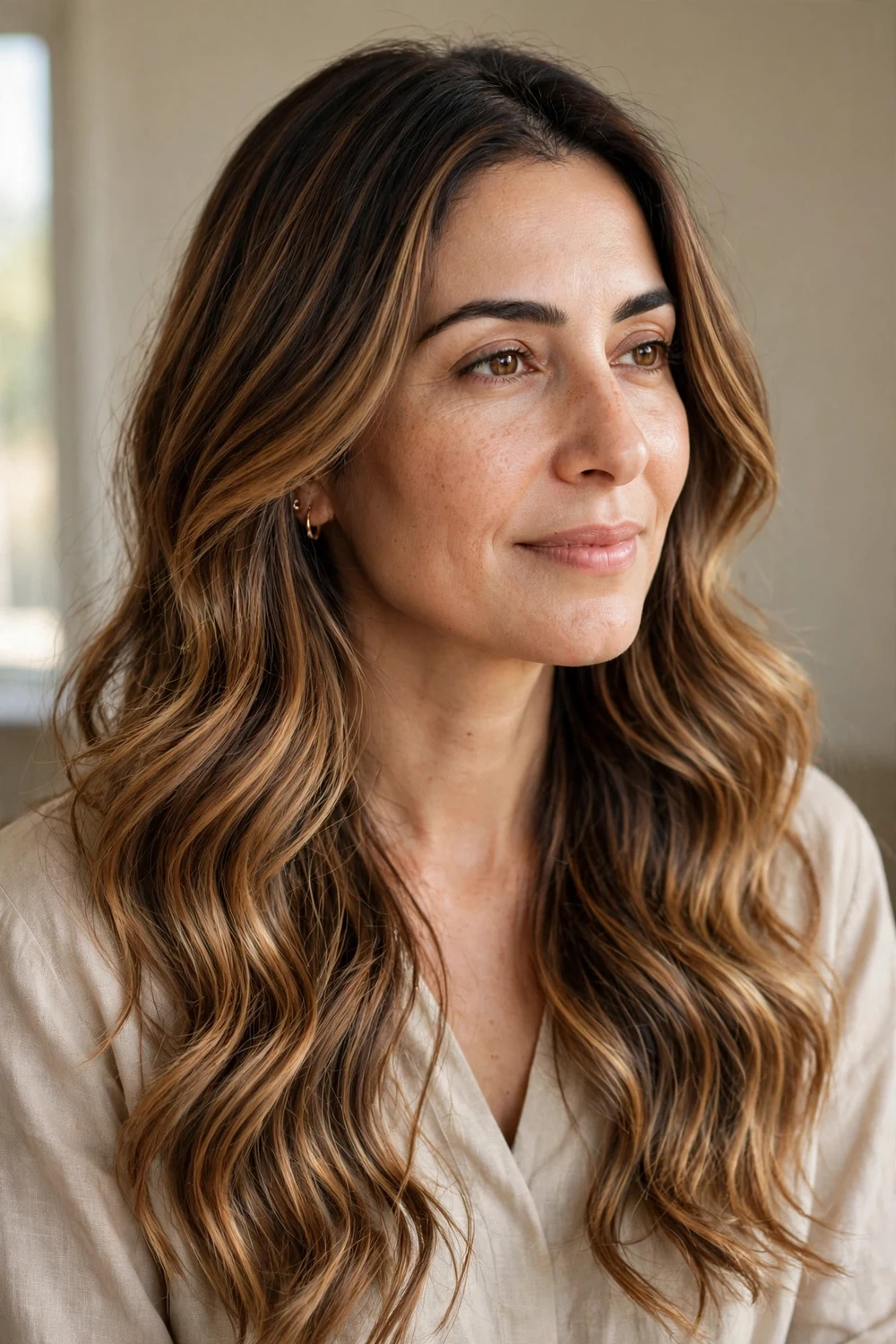
If an all-over color feels like too much commitment, caramel brown balayage is the workaround. The hand-painted technique blends a dark base into warm caramel ends with no harsh line, so regrowth is nearly invisible. On pale skin, the lighter ends frame the face with warmth while the darker roots keep the contrast that prevents washout. It suits warm and neutral undertones and works on medium to long hair. Balayage appointments run higher but stretch to 10 to 12 weeks. Ask for a dark brown base with caramel pieces painted from the mid-lengths down.
Try this: Keep the lightest pieces around the face rather than the ends for the most flattering, skin-brightening effect.
Upkeep: Low. Cost: $$$.
For more hand-painted options, check out ash blonde balayage to see how the same technique looks in cooler tones.
14. Jet Black
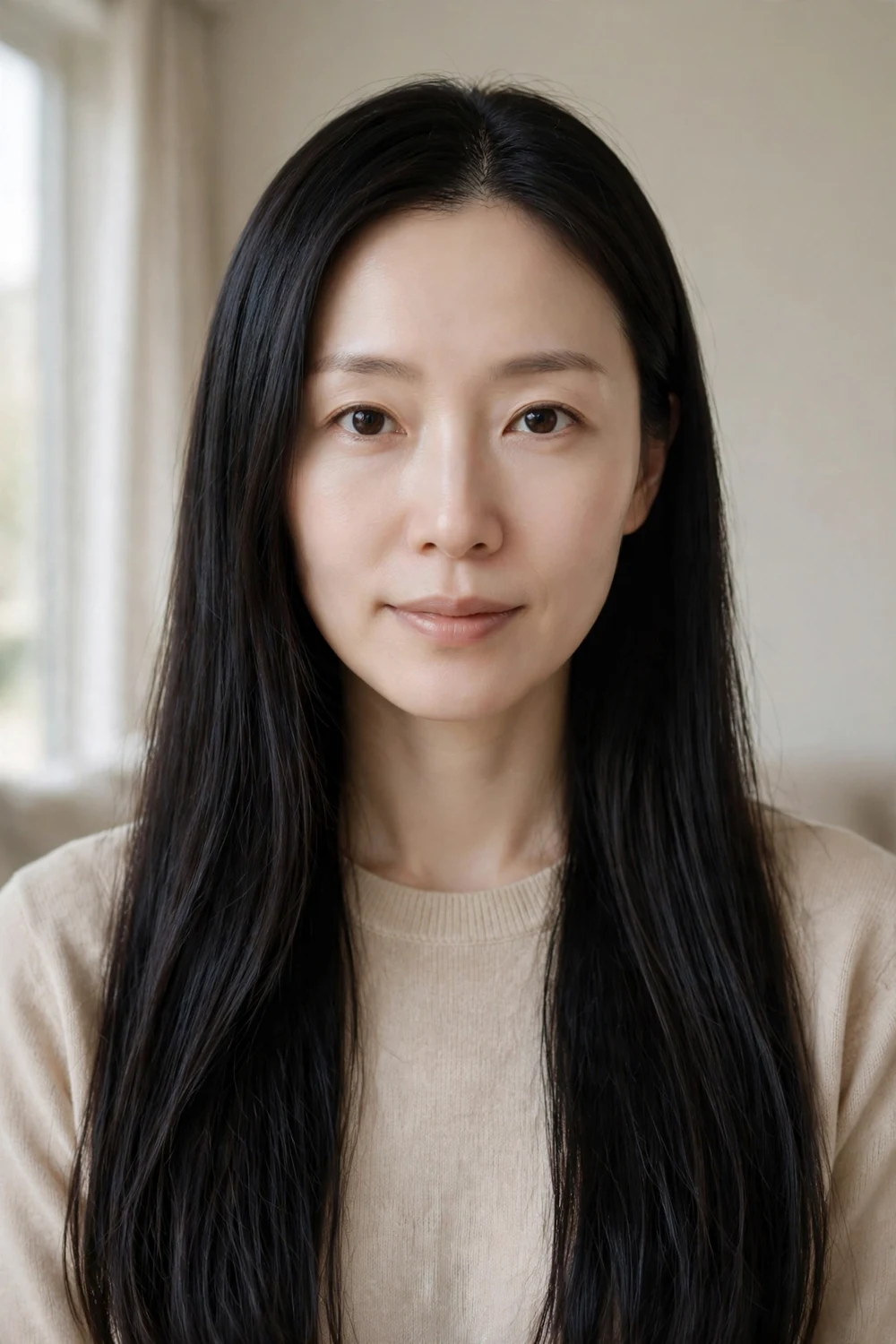
Jet black delivers the strongest contrast on this list, and pale skin is the one complexion that can carry it. The dramatic dark frame makes skin look luminous and porcelain-like, especially with dark brows and lashes. It suits cool and neutral undertones best. One caution: very dark shades can accentuate fine lines and make thin hair look sparse at the part. If you go for it, add lighter pieces through balayage or a few face-framing highlights to keep it from looking harsh. Regular gloss treatments maintain the mirror shine that makes black hair look expensive.
Try this: Try a blue-black shade rather than neutral black for extra depth on cool-toned pale skin.
Upkeep: Low. Cost: $.
15. Mushroom Brown
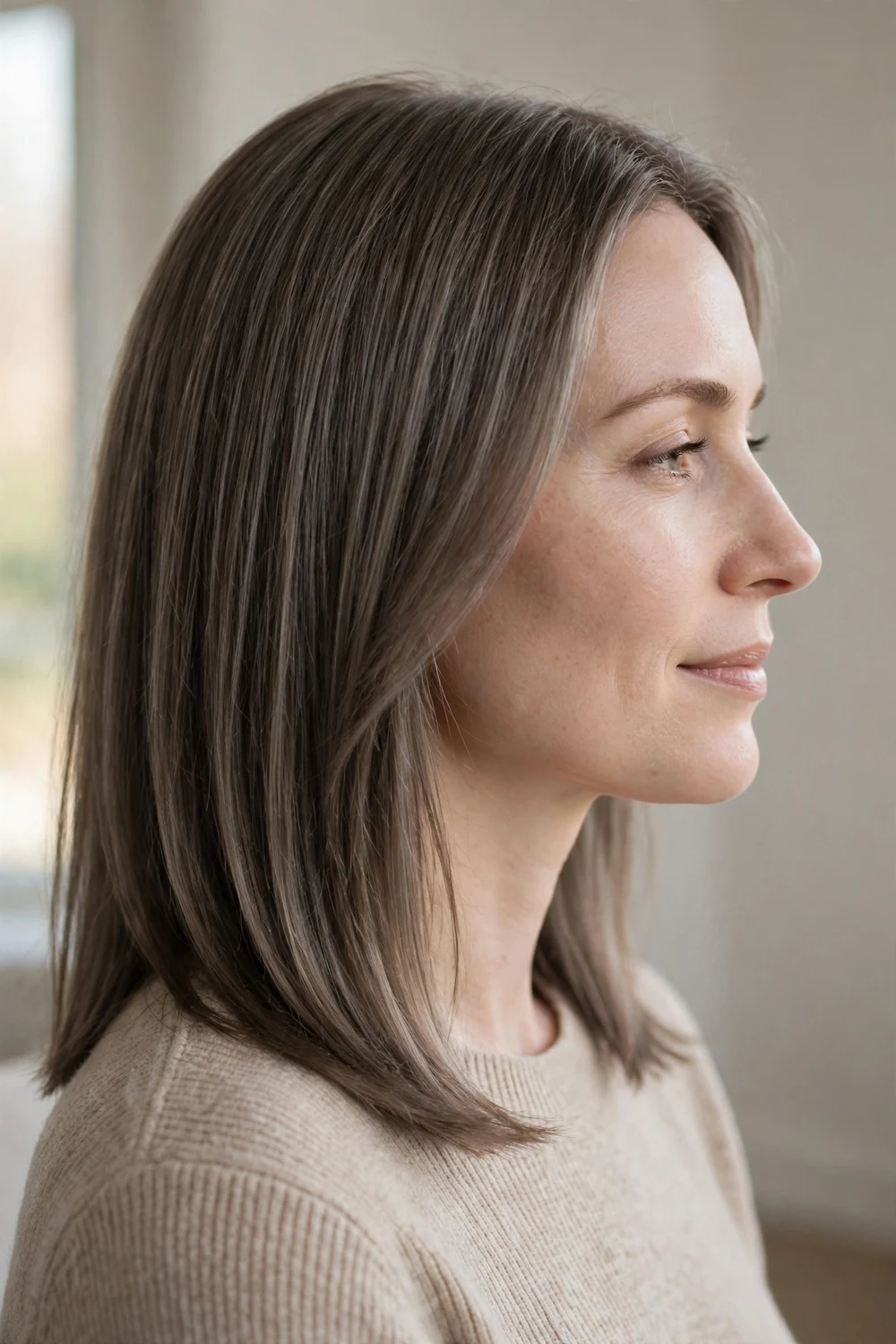
Mushroom brown is a grayish taupe brown that sits between ash brown and silver, and it flatters cool-toned pale skin in a way few browns can. The smoky, multi-dimensional color adds depth without warmth, which keeps pink undertones calm. It works best on medium to dark bases that get lightened with cool-toned highlights. This is a salon-only color: the balance of gray and brown tones is hard to get right at home. Ask for a mushroom gloss over pre-lightened sections, and expect toning every 6 weeks to stop it from going brassy.
Try this: This shade fades fastest at the ends, so ask your colorist to process the ends with an extra cool toner.
Upkeep: Medium. Cost: $$$.
16. Copper Red
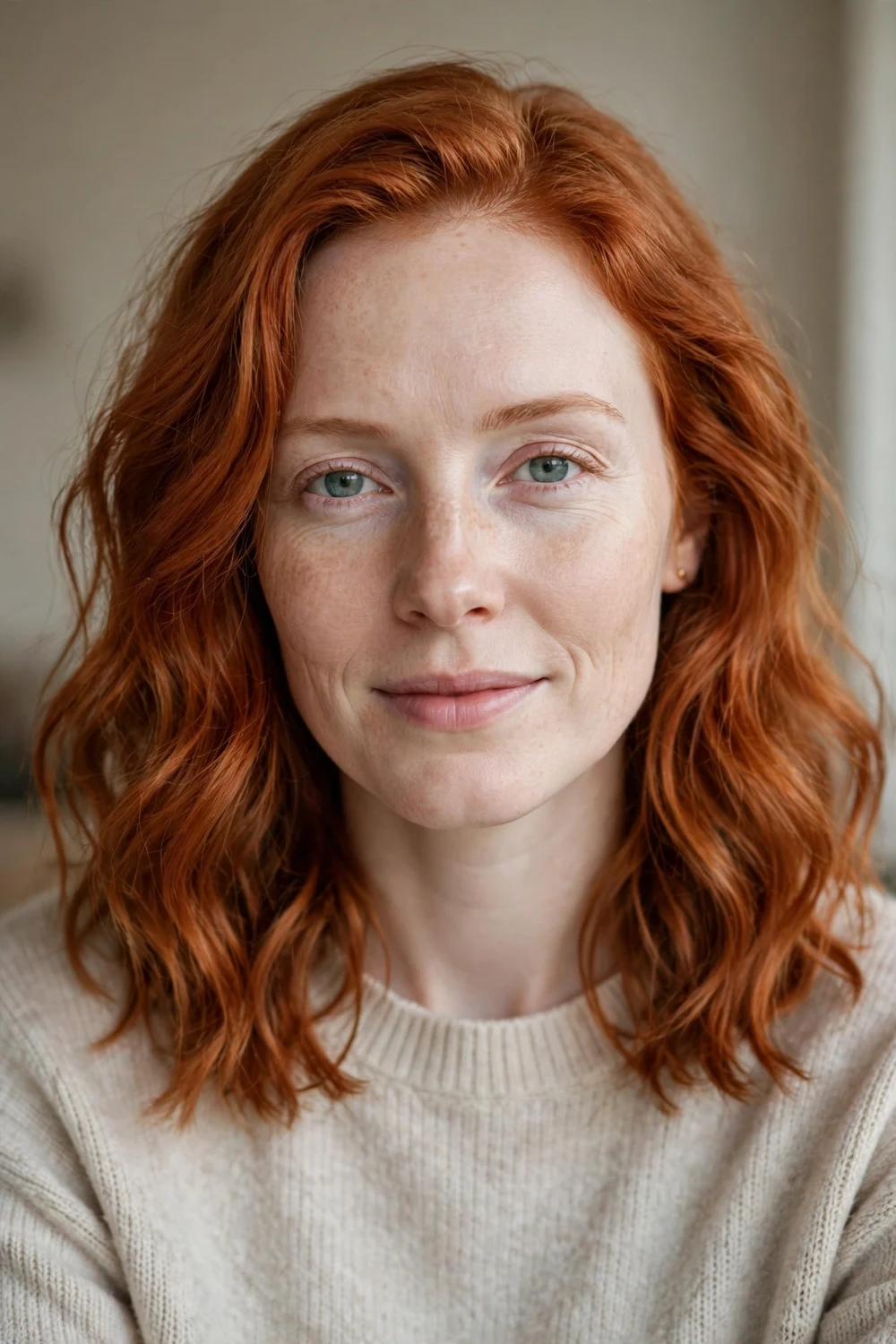
Copper red and pale skin are a classic pairing. The fiery, orange-red tone plays beautifully against fair complexions and makes green or blue eyes look striking. It flatters warm and neutral undertones, and it suits freckled skin especially well. Copper is a high-maintenance red: it fades faster than any other color family, so expect gloss refreshes every 4 to 6 weeks. Ask your colorist for a true copper around level 7 with golden-red pigment. Color-depositing conditioners between appointments are almost mandatory for this shade.
Try this: Wash copper hair in the coolest water you can stand, since heat opens the cuticle and lets red pigment escape faster.
Upkeep: High. Cost: $$.
If reds are your thing, auburn copper hair for women covers even more copper and auburn variations to explore.
17. Auburn

Auburn tones the brightness of copper down with brown depth, giving you red warmth that works in everyday settings. This reddish-brown hue flatters pale skin with warm and neutral undertones and adds richness to the complexion without the high maintenance of vivid red. It suits most eye colors and hair lengths. Auburn fades more slowly than copper, so appointments can stretch to 6 to 8 weeks. Ask for a level 5 or 6 auburn with a red-brown gloss, and use color-safe shampoo to protect the red tones.
Try this: A clear gloss over auburn every 6 weeks keeps the red tones vivid without adding more dye.
Upkeep: Medium. Cost: $.
18. Burgundy
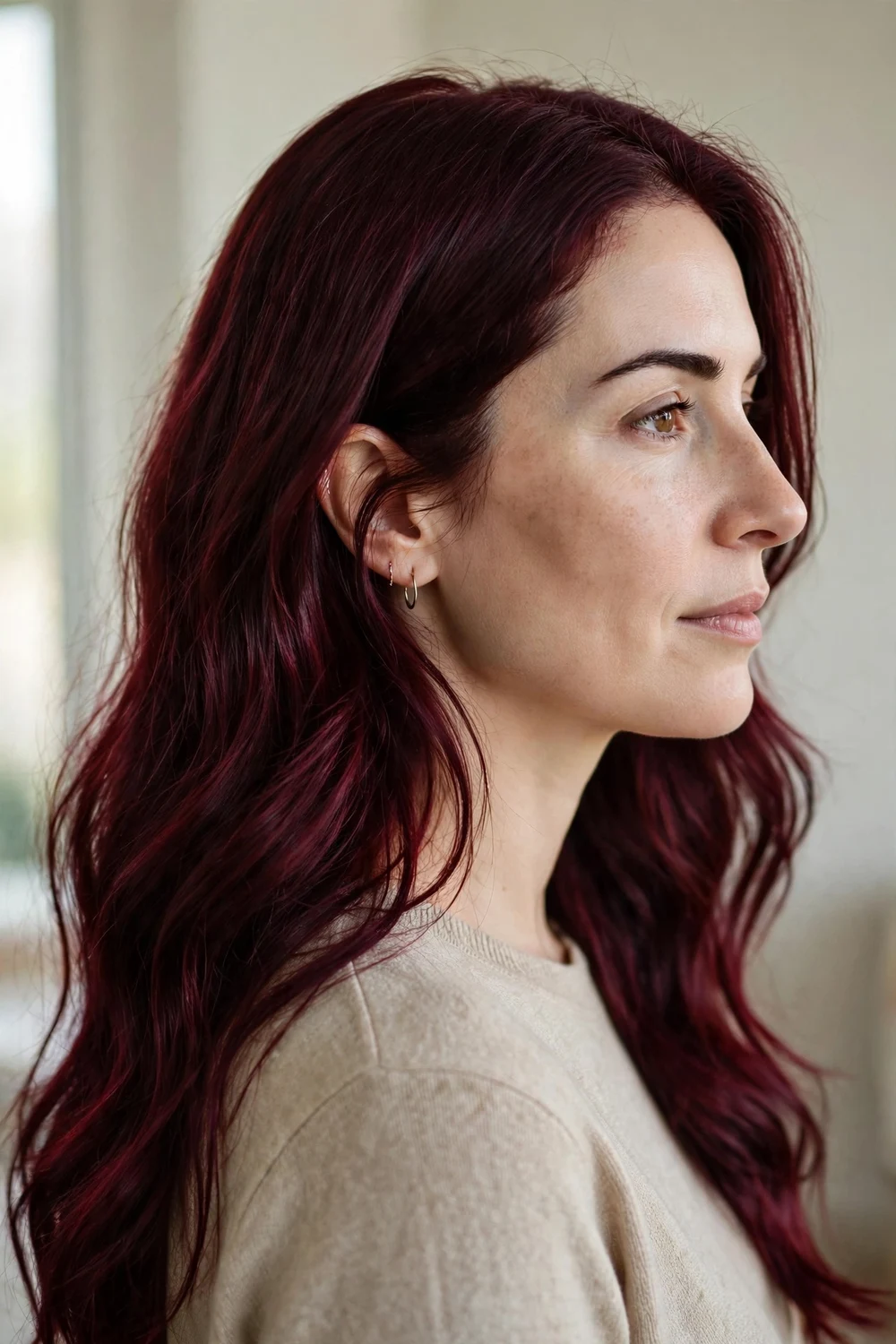
For pale skin that wants drama without neon, burgundy is the pick. This deep wine-red shade creates a rich contrast that makes fair complexions look porcelain-like. It flatters cool and neutral undertones, and it pairs especially well with green eyes. Like all reds, burgundy needs maintenance to avoid fading to brassy brown: plan gloss refreshes every 5 to 6 weeks and use color-safe products. Ask your colorist for a deep burgundy around level 4 or 5, and consider a plum-toned gloss for extra depth.
Try this: Burgundy looks best with some shine, so finish styling with a lightweight hair oil on the ends.
Upkeep: Medium to high. Cost: $$.
19. Silver Gray
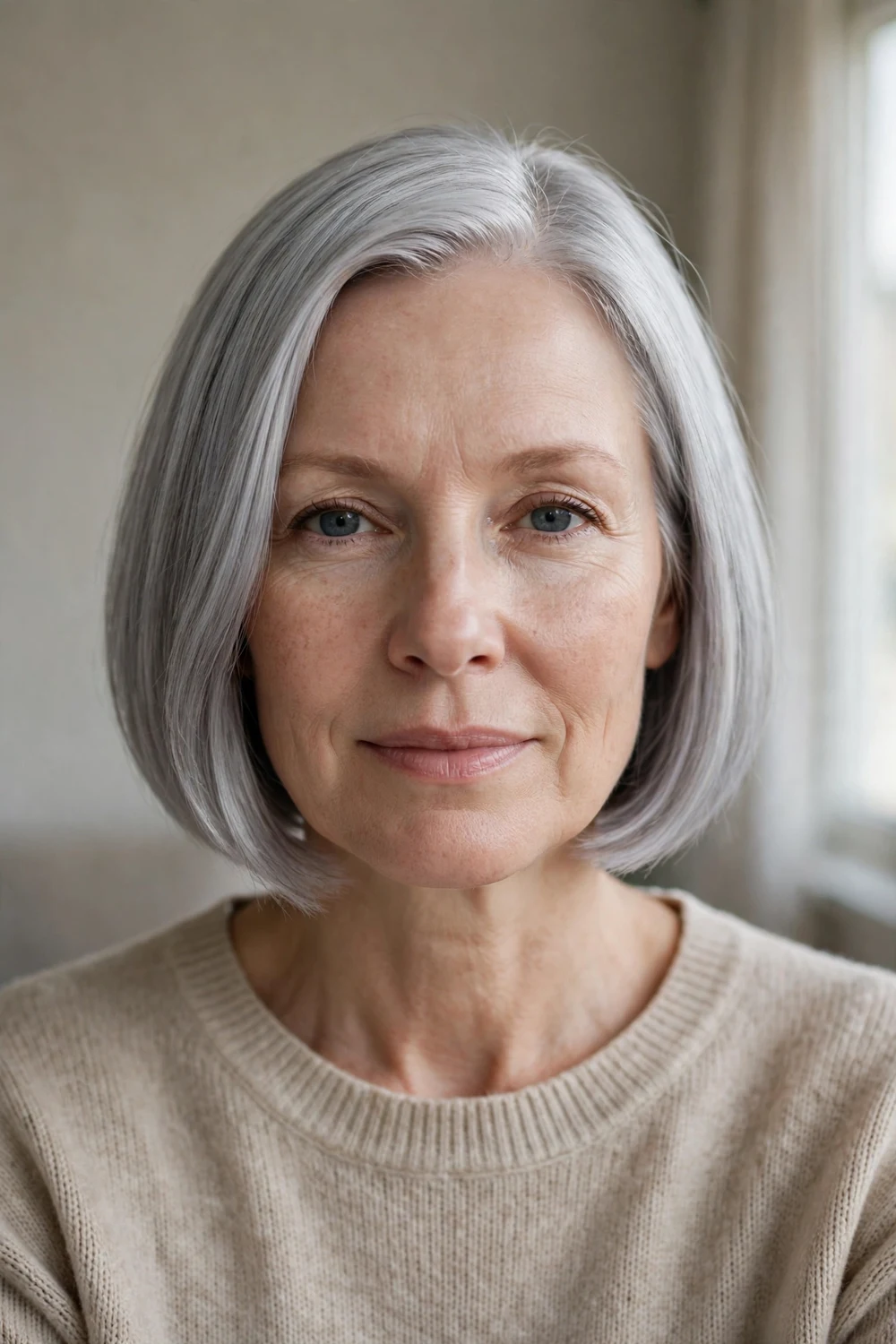
Silver gray works best on pale skin that has fully cool undertones, where the metallic sheen reads intentional and modern rather than washed out. This shade gives a striking, editorial look that turns heads in any room. It needs pre-lightening to a very pale base, which means it suits healthy hair that can handle bleach. Purple shampoo is non-negotiable to keep it silver instead of yellow. Ask for a silver or graphite toner over level 10 hair, and plan toning every 4 to 6 weeks.
Try this: Keep brows a shade darker than the silver so your features do not disappear against the light hair.
Upkeep: High. Cost: $$$.
20. Rose Gold
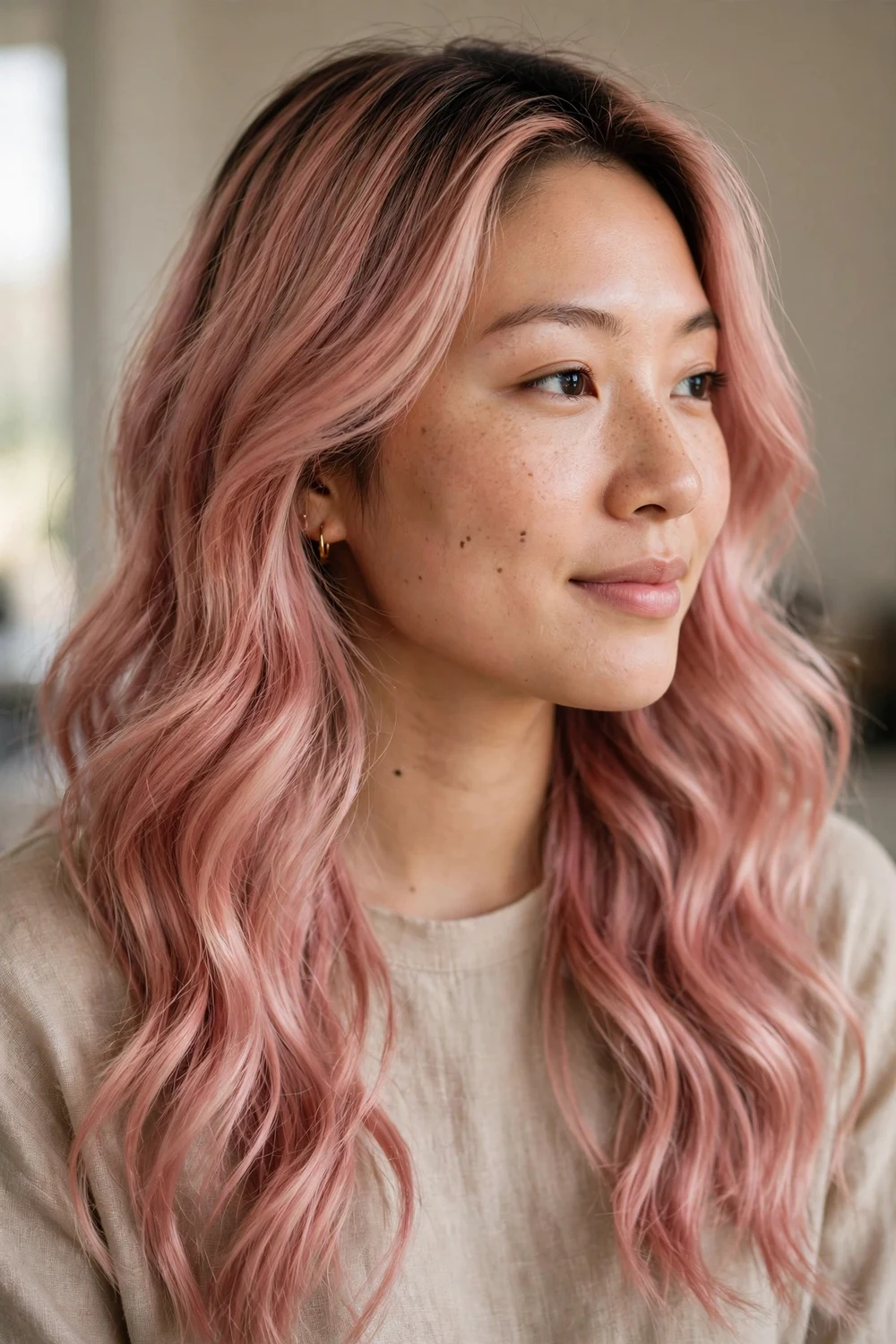
Rose gold blends pink, peach, and gold in one shade, and it flatters pale skin across undertone types. The soft metallic finish brings out pink in the cheeks and gives the complexion a healthy glow. It works as an all-over color or as highlights over blonde. Rose gold fades faster than natural shades, so expect to refresh it every 4 to 6 weeks with a color-depositing treatment. Ask your colorist for a rose gold gloss over pre-lightened hair, and discuss whether a deeper or softer version suits your skin better.
Try this: Start with rose gold highlights instead of all-over color to test how the pink tone sits against your skin.
Upkeep: High. Cost: $$.
21. Pastel Pink
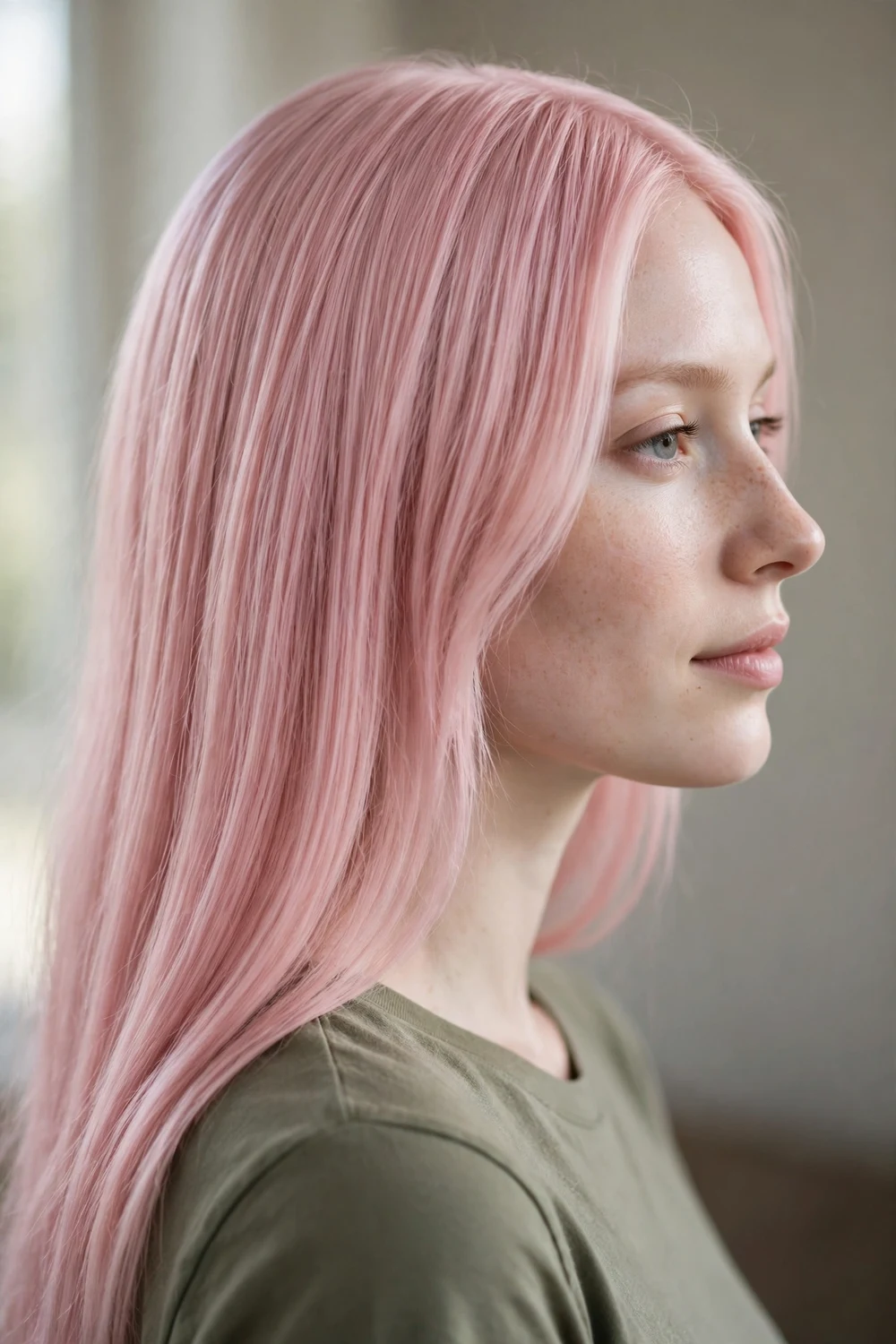
Pastel pink needs pale skin to look its best, and pale skin is the canvas this shade was made for. The delicate pink creates a soft contrast that looks playful and feminine without overwhelming fair features. It suits cool and neutral undertones. The trade-off is upkeep: pastels fade in 3 to 4 weeks and need constant refreshing with color-depositing conditioners. It also requires pre-lightening to near-white. Ask for a pastel pink toner, and keep a pink color-depositing mask at home for weekly top-ups.
Try this: Sleep on a silk pillowcase to slow fading, since cotton absorbs the pigment from pastel shades faster.
Upkeep: Very high. Cost: $$$.
22. Pastel Lavender
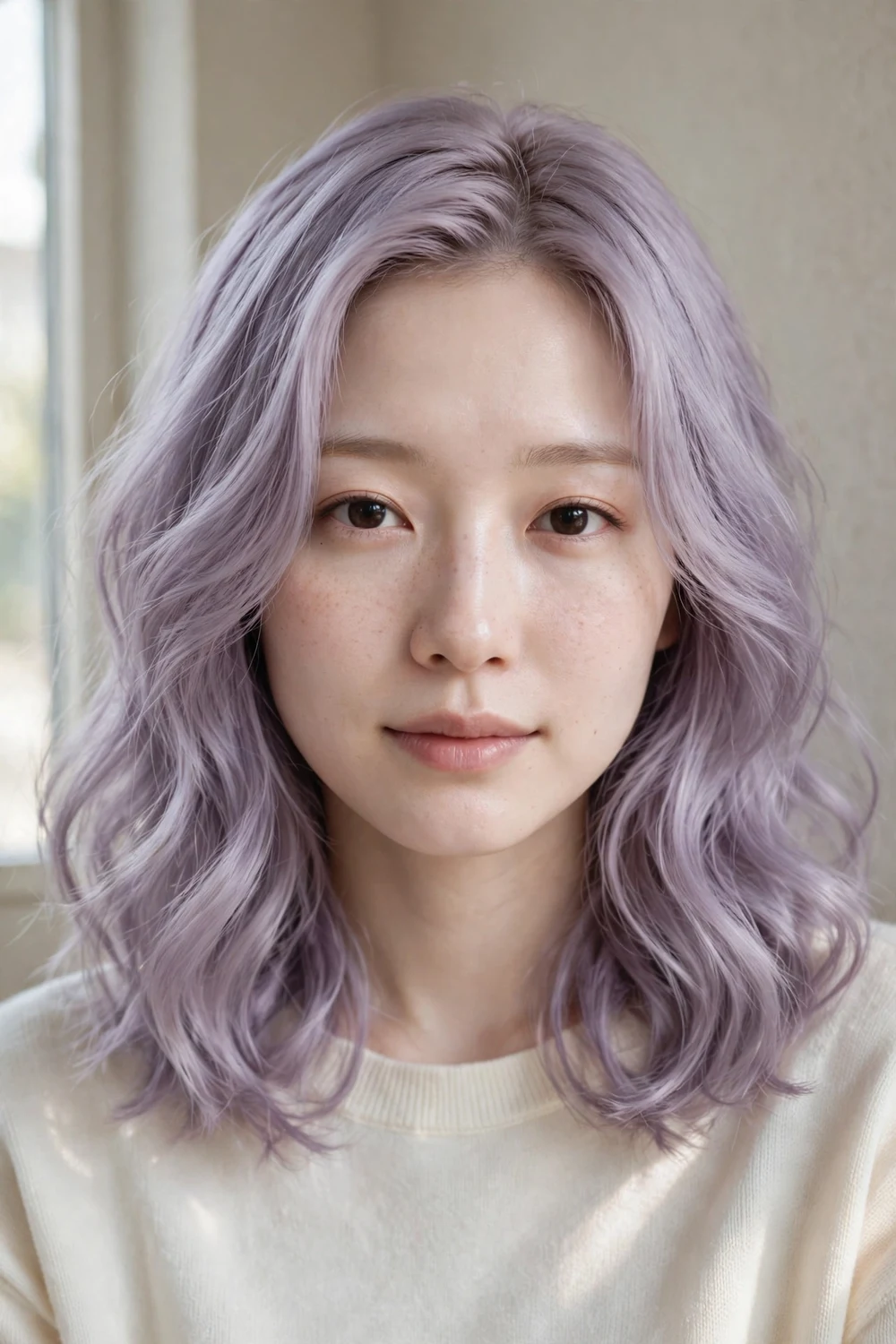
Lavender hair can skew gray on some complexions, but pale skin keeps it clearly purple and luminous. This soft, cool-toned shade flatters cool undertones and adds a whimsical touch that still reads polished when done well. Like all pastels, it fades quickly and needs pre-lightening, so budget for regular toning and at-home color maintenance. It suits medium to long hair where the color has room to show. Ask your colorist for a true lavender toner rather than a silver one so the purple reads clearly.
Try this: Alternate your color-depositing conditioner with a regular deep conditioner to keep bleached hair from drying out.
Upkeep: Very high. Cost: $$$.
23. Icy Blue
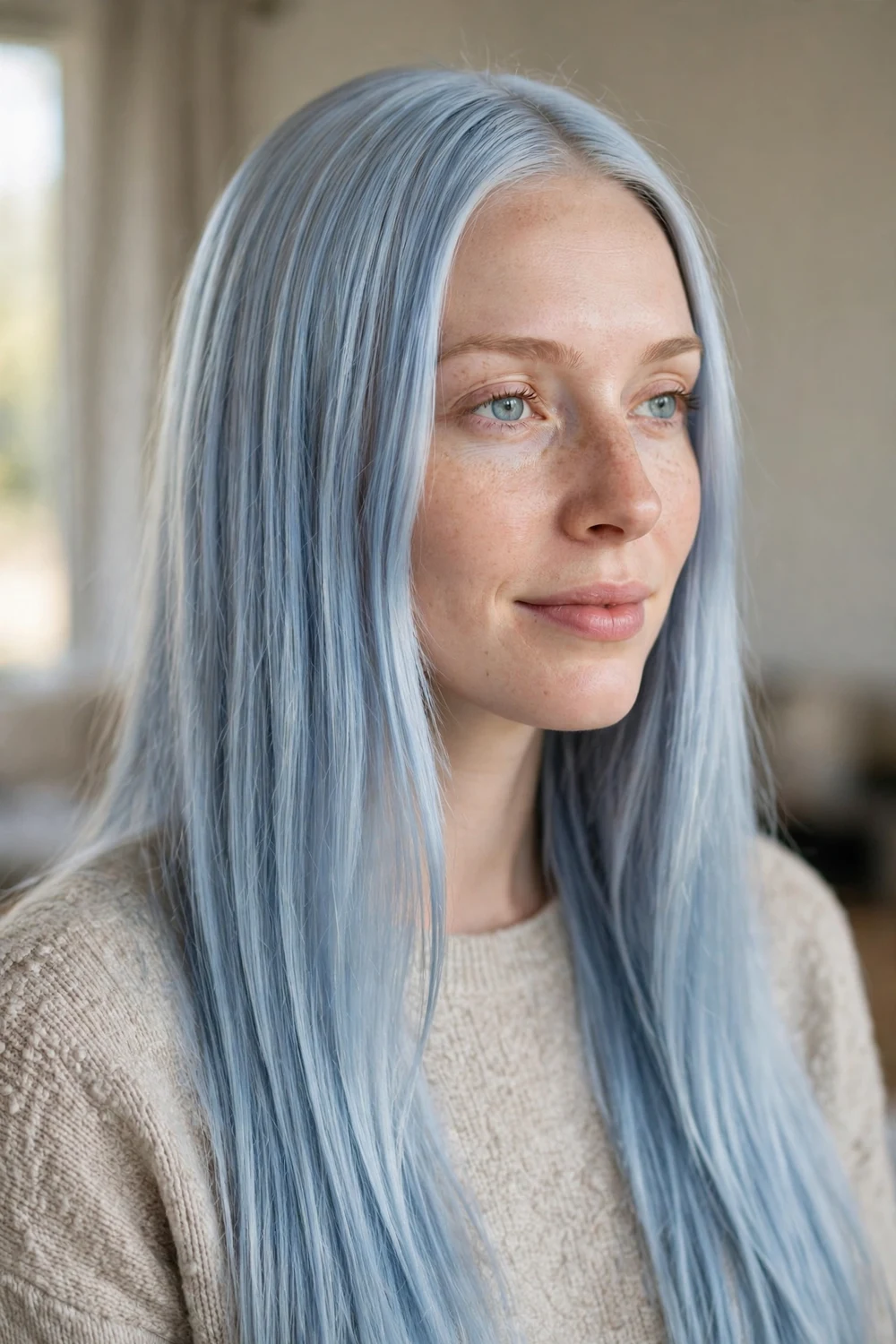
Icy blue is the boldest shade on this list, and pale skin carries it better than any other complexion. The cool, frosty tone enhances cool undertones and makes skin look even brighter by contrast. It is a statement color that needs full commitment: pre-lightening, regular toning, and color-depositing products to stay blue instead of fading to green or gray. It suits long hair where the color gets maximum visibility. Ask for an icy blue direct dye over level 10 hair, and refresh with a blue conditioner weekly.
Try this: Test the shade first with a few hidden blue streaks underneath before committing to all-over icy blue.
Upkeep: Very high. Cost: $$$.
Hair Color Comparison at a Glance
| Style | Best Undertone | Maintenance | Cost Level |
|---|---|---|---|
| Platinum and Icy Blonde | Cool | High | $$$ |
| Ash Blonde | Cool | Medium | $$ |
| Honey and Golden Blonde | Warm | Medium | $$ |
| Caramel Blonde | Warm, Neutral | Low to Medium | $$ |
| Strawberry Blonde | Warm, Neutral | Medium | $$ |
| Sandy Blonde | Neutral | Low | $$ |
| Dirty Blonde | Neutral, Cool | Low | $ |
| Pearl Blonde | Cool | High | $$$ |
| Ash Brown | Cool, Neutral | Low | $ |
| Chocolate Brown | Warm, Neutral | Low | $ |
| Warm Chestnut Brown | Warm, Neutral | Low to Medium | $ |
| Honey Brown | Warm | Low | $$ |
| Caramel Brown Balayage | Warm, Neutral | Low | $$$ |
| Jet Black | Cool, Neutral | Low | $ |
| Mushroom Brown | Cool | Medium | $$$ |
| Copper Red | Warm, Neutral | High | $$ |
| Auburn | Warm, Neutral | Medium | $ |
| Burgundy | Cool, Neutral | Medium to High | $$ |
| Silver Gray | Cool | High | $$$ |
| Rose Gold | All | High | $$ |
| Pastel Pink | Cool, Neutral | Very High | $$$ |
| Pastel Lavender | Cool | Very High | $$$ |
| Icy Blue | Cool | Very High | $$$ |
How to Choose the Right Hair Color for You
Start with your undertone, then weigh maintenance honestly. If you visit the salon every month without complaint, high-impact shades like platinum, copper, or pastels are fair game. If you stretch appointments, pick ash brown, chocolate brown, dirty blonde, or a balayage technique that grows out softly. Your natural hair color matters too: going more than three levels lighter means bleach and damage, while staying close to your base keeps hair healthier.
Think about contrast as well. Pale skin looks best with either clear contrast (jet black, copper red) or harmonious blending (strawberry blonde, sandy blonde). What washes you out is the middle ground with no dimension: flat, muddy, one-process color with no highlights or lowlights. When in doubt, ask your colorist to add dimension first and change the overall shade second.
If upkeep is your main concern, a hand-painted technique keeps grow-out soft for months. See balayage hairstyles for medium length hair for examples of how the technique looks at that length on different base colors.
Mistakes to Avoid
The most common mistake is choosing a shade that clashes with your undertone. Overly warm, brassy reds on cool-toned pale skin can make redness in the face look stronger, while ashy shades on warm-toned skin can look dull. Always test with the vein and jewelry checks before committing. Another frequent error is picking a flat, one-dimensional color. Pale skin needs dimension, so skip all-over color with no variation and ask for highlights, lowlights, or balayage instead.
Skipping the strand test is another costly mistake. A quick test on a hidden section shows how your hair lifts and how the color reads against your skin before you commit to a full head. Finally, do not underestimate maintenance. Platinum and pastels look incredible on day one, but without purple shampoo, color-safe products, and regular toning, they fade into something you did not ask for.
Frequently Asked Questions
How do I figure out my undertone?
Check your wrist veins in natural daylight: blue or purple veins suggest cool undertones, green veins suggest warm undertones, and a mix suggests neutral. You can also try the jewelry test, since silver usually flatters cool undertones and gold flatters warm ones. A third option is holding bright white and off-white fabric near your face to see which makes your skin look brighter.
Can I pull off platinum blonde with pale skin?
Yes, and pale skin with cool undertones is the best candidate for it. Platinum blonde neutralizes pink tones in the skin and creates a luminous, high-contrast look. Be ready for the maintenance, though: roots need attention every 4 to 6 weeks, and purple shampoo is required to prevent brassiness.
What hair colors should pale skin avoid?
Avoid muddy, grayish browns that can wash out fair complexions, and skip flat, one-dimensional shades with no highlights or dimension. If you have cool undertones, overly warm or brassy reds can clash with your skin. Very dark shades work best when you add some lighter pieces through balayage or highlights to prevent a harsh look.
Does jet black hair suit pale skin?
Yes, jet black creates a striking, porcelain-like contrast that pale skin carries well. It suits cool and neutral undertones best. Keep in mind that it can accentuate fine lines and make thin hair look sparse at the part. Adding a few face-framing highlights or lighter balayage pieces keeps it from looking harsh.
What is the lowest-maintenance hair color for pale skin?
Ash brown and chocolate brown are the easiest: they hide regrowth, fade gracefully, and need touch-ups only every 6 to 8 weeks. Dirty blonde and balayage techniques like caramel brown balayage also grow out softly with minimal visible roots. Bold reds, platinum, and pastels sit at the opposite end and need the most upkeep.
Final Thoughts
The best hair colors for pale skin are the ones that work with your undertone and fit your real maintenance habits. Pick one shade from this list that matches both, bring reference photos to your colorist, and start with a strand test if you are unsure. Pale skin is a versatile canvas, so once the undertone is right, almost any color on this list will look like it was made for you.

