



Auburn and copper sit right next to each other on the red spectrum, and when they are blended, the result is one of the most wearable warm colors you can ask for. Auburn brings the brown-based depth, copper brings the fiery reflect, and together they flatter a wide range of skin tones. I have spent years studying how red tones behave on different base colors, and this blend consistently photographs well in both daylight and indoor light.
This guide walks through 30 distinct auburn copper hair ideas for women, grouped from deep and subtle to bright and bold. Each one includes who it suits, how long it lasts, and a practical tip you can use at the salon or at home.
Quick answer: Auburn copper hair blends brown-based red (auburn) with fiery orange-red (copper). Deeper versions suit fair and olive skin, brighter versions pop on medium and deep skin tones. Expect root touch-ups every 4 to 6 weeks, and use color-safe shampoo to slow fading.
Quick Takeaways
- Auburn copper is a brown-red base with copper reflect woven through it, not a flat orange color.
- The ratio of auburn to copper decides the look: more auburn reads deep and muted, more copper reads bright and fiery.
- Women with natural level 2 to 6 hair (black to medium brown) usually need some lifting to reach the brighter copper shades.
- Red pigments fade faster than any other color family, so glosses and color-depositing masks are part of the routine.
- Bring reference photos to your colorist. “Copper” can mean ten different shades in one salon.
Why Auburn Copper Works So Well
Most red colors ask you to pick a side: brown or orange. This blend skips that choice. The auburn base keeps the color grounded and office-appropriate, while the copper tones add the warmth and reflect that make the hair move in the light. That balance is why it keeps trending every fall without ever reading as dated.
Skin tone matching matters more than with most browns. Cooler skin tones look best when the blend leans auburn with muted copper, while warmer skin tones can carry the brighter, more orange-leaning versions. Eye color helps too: green and hazel eyes gain extra contrast against copper, and blue eyes pick up warmth from the auburn base. If you already love pure copper shades, our roundup of copper hair color ideas shows the brighter end of the family for comparison.
Maintenance is the honest part of this conversation. Copper molecules are larger than brown ones, so they wash out faster, and sun, heat tools, and hard water speed up the fade. Plan on a gloss or toner every 6 to 8 weeks between full color appointments, and wash with lukewarm water instead of hot. The payoff is a shade that looks custom and expensive when it is fresh.
1. Classic Auburn Copper Blend
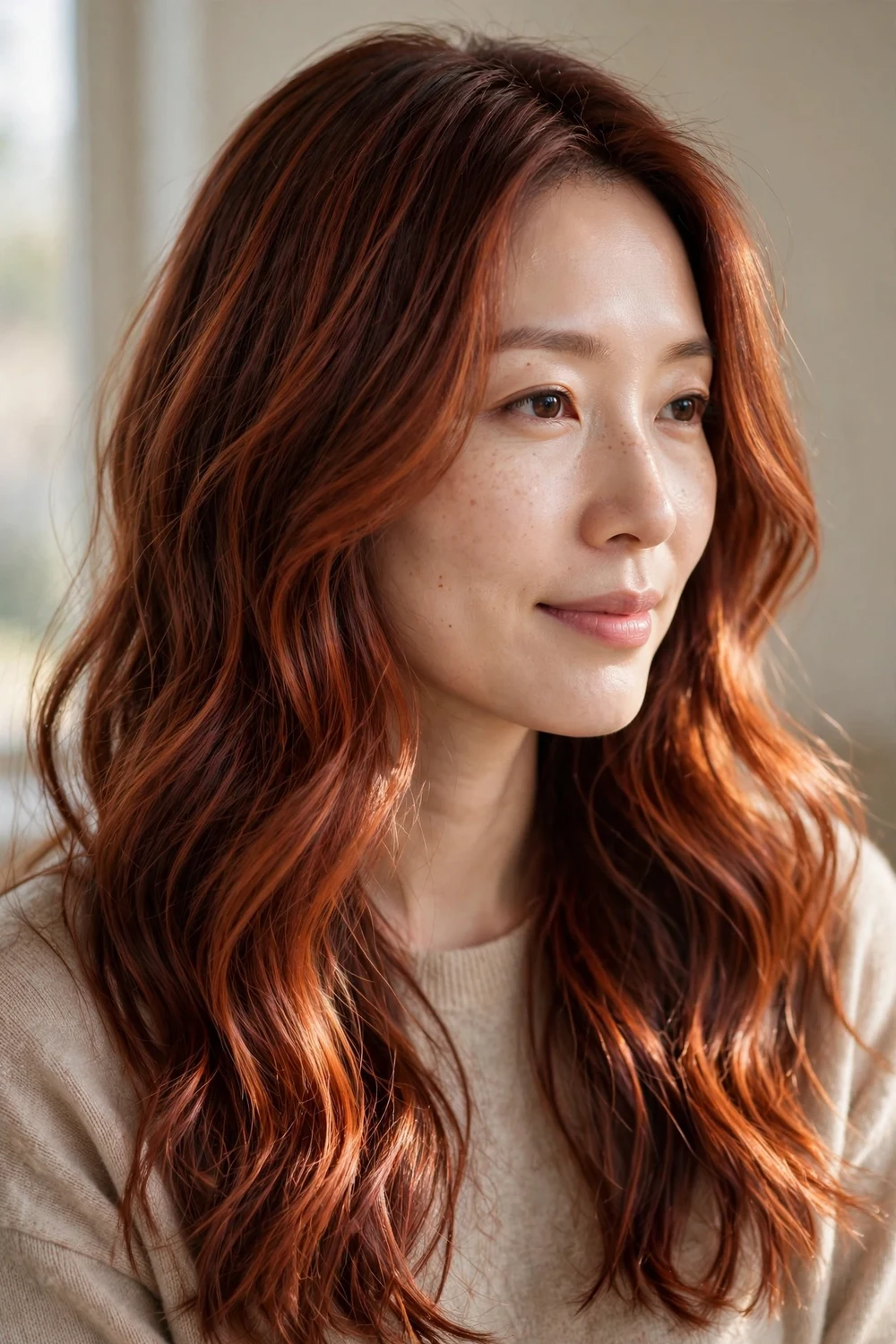
Start with the middle of the road. A classic auburn copper blend lays a medium auburn base (around a level 5) and weaves soft copper reflect through the lengths, so the hair reads brown-red indoors and flashes copper in sunlight. It suits fair to medium skin with neutral undertones, and it grows out more gracefully than brighter reds because there is no harsh contrast at the root. Keep the base slightly deeper than you think you want; it lifts a little in the first two washes.
Try this: Ask for “level 5 auburn with copper reflect” rather than a brand shade name. Upkeep: gloss every 6 weeks. Cost: $120 to $220 for a full color service.
2. Dark Auburn Copper

If you want red without going bright, this is the deep end of the blend. Dark auburn copper keeps the base near a level 4 and pushes the red toward the rich, wine-adjacent side, with only a whisper of copper at the ends and around the face. It suits women with naturally dark hair who want visible red without heavy bleaching, and it flatters deep and olive skin tones. The color looks nearly brunette in dim light and opens up in daylight.
Try this: Have your colorist place the copper pieces where light hits first: the hairline, the crown, and the ends. Upkeep: root touch-up every 6 weeks. Cost: $100 to $180.
3. Light Auburn Copper

Thinking of going lighter? Light auburn copper blends a level 7 auburn base with pale copper tones, landing somewhere between strawberry copper and golden red. The lightness softens strong features and adds a gentle glow to fair and light-medium skin. Fair warning: reaching this level from dark brown usually requires lightening, which means more upkeep and more conditioning than the deeper shades on this list.
Try this: Book a consultation before the appointment so your colorist can test how your hair lifts. Upkeep: toner every 4 to 6 weeks. Cost: $150 to $280 for lightening plus color.
4. Subtle Auburn Copper

Not everyone wants their color to announce itself. Subtle auburn copper keeps the auburn and copper in close balance, so the finished shade reads as a warm, interesting brown unless someone looks closely. It is the safest entry point if you are curious about red but worried about commitment, and it works in conservative workplaces. Choose this if your natural hair is medium brown; the colorist can often achieve it with a demi-permanent formula and no lightening.
Try this: A demi-permanent gloss in copper-auburn over your natural base is the lowest-commitment route. Upkeep: refresh gloss every 8 weeks. Cost: $60 to $120.
5. Natural Auburn Copper Brown

Could this pass as your natural color? That is the goal here. Natural auburn copper brown is blended so seamlessly that it is hard to tell where one shade ends and the other begins, which makes it convincing on women whose hair already has warm undertones. Fine hair benefits the most, because the tonal variation creates the impression of thickness without any added texture. Keep the contrast low and the placement soft for the most believable result.
Try this: Ask for a “melted” application with no visible line between shades. Upkeep: root touch-up every 6 to 8 weeks. Cost: $110 to $200.
6. Chocolate Auburn Copper

Warm chocolate brown, auburn, and copper meet in one cozy blend. Chocolate auburn copper starts with a deep brunette base and threads auburn and copper through the mid-lengths and ends, so the darkest part stays near the root and the warmth builds downward. It is a strong pick for fall and winter, and it pairs well with deep wardrobes: black, camel, olive, and burgundy. The dark base also makes regrowth far less obvious.
Try this: Have the colorist keep the root two levels deeper than the ends for a soft, expensive gradient. Upkeep: gloss every 8 weeks. Cost: $130 to $230.
7. Chestnut Auburn Copper

Chestnut brings its own warm brown energy to the mix. This version layers copper and auburn over a chestnut base, which reads richer and redder than plain chestnut but stays firmly in natural territory. Women with warm or golden skin tones tend to look best in it, since the whole palette shares the same warmth. It also covers early gray well, because the multitone blend disguises the line between colored and new growth.
Try this: If you cover gray, schedule root touch-ups on a strict 4-week cycle so the line stays invisible. Upkeep: roots every 4 weeks, gloss every 6. Cost: $90 to $180.
8. Fiery Auburn Copper
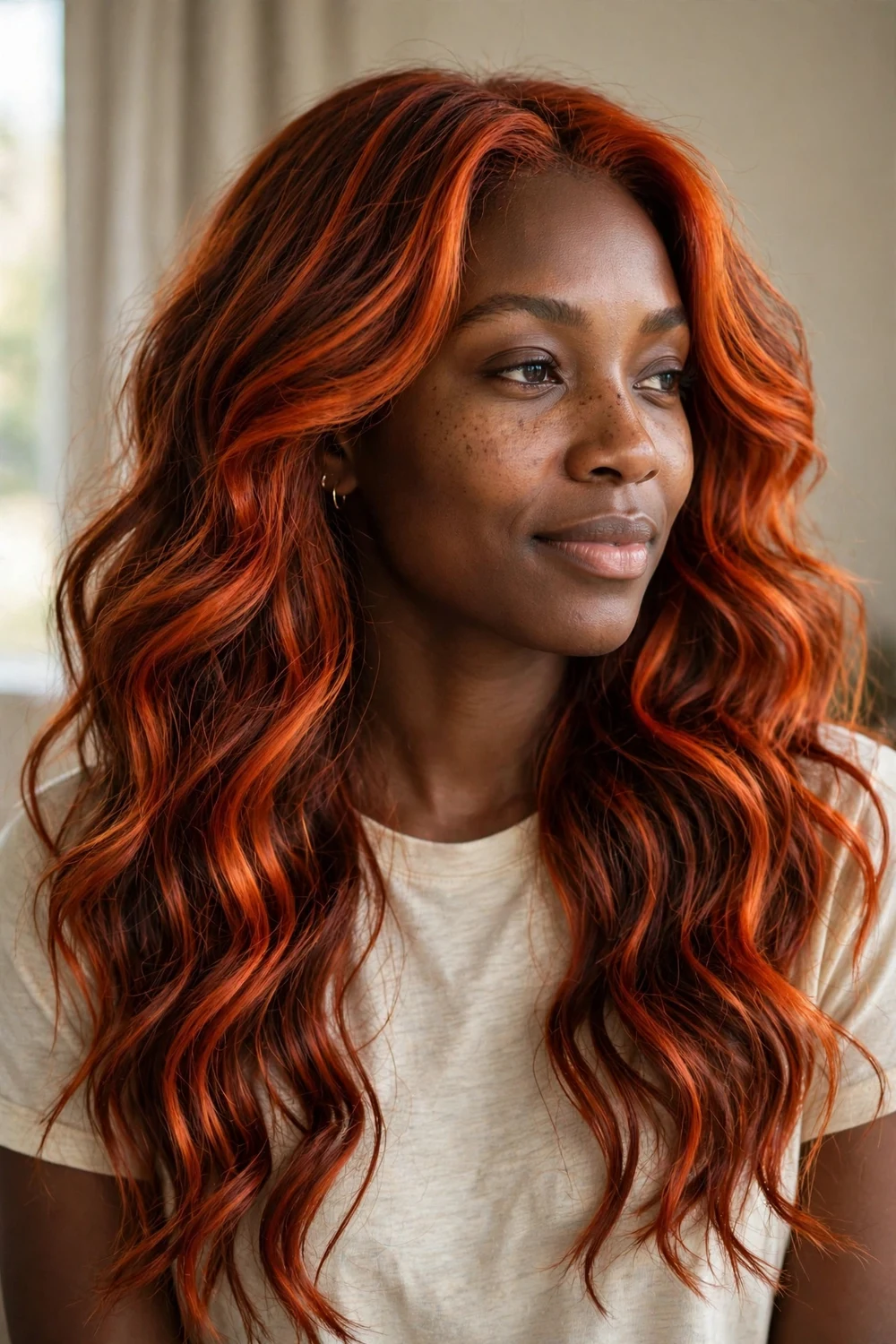
Turn the copper up to full. Fiery auburn copper leans hard toward the orange side of the blend, with an auburn base keeping it from tipping into neon territory. It makes green and blue eyes look noticeably brighter, and it photographs with serious impact. Be realistic about the commitment: this is the fastest-fading option on the list, and it usually needs lightening first if your hair is darker than a level 6.
Try this: Use a copper color-depositing conditioner once a week from day one. Upkeep: toner every 3 to 4 weeks. Cost: $150 to $300 for lightening plus color.
9. Auburn Red with Copper Highlights

Two techniques, one head of hair. An auburn red base gets hand-painted copper highlights concentrated through the front and the top layers, so the brightest pieces frame the face while the back stays deep. It is less work than an all-over bright color because only the highlights need refreshing, and the base can grow out quietly. Curly hair shows this placement off especially well, since each curl catches a different ribbon of light.
Try this: Ask for “face-framing copper ribbons on an auburn base” and skip foils for a softer result. Upkeep: highlight refresh every 8 to 10 weeks. Cost: $130 to $240.
10. Warm Auburn Copper

Warmth is the whole point of this one. Warm auburn copper sits in the golden-red zone, with amber and honeyed copper tones layered over a medium auburn base. It gives the complexion a healthy, sunlit look that reads as youthful without trying too hard. Medium skin with warm or golden undertones carries it best; very cool, pink-toned skin can clash with this much gold. Style it with waves to break up the warmth and show the dimension.
Try this: A warm-toned clear gloss every few weeks keeps the amber tones from going flat. Upkeep: gloss every 6 weeks. Cost: $120 to $220.
11. Auburn Copper Balayage
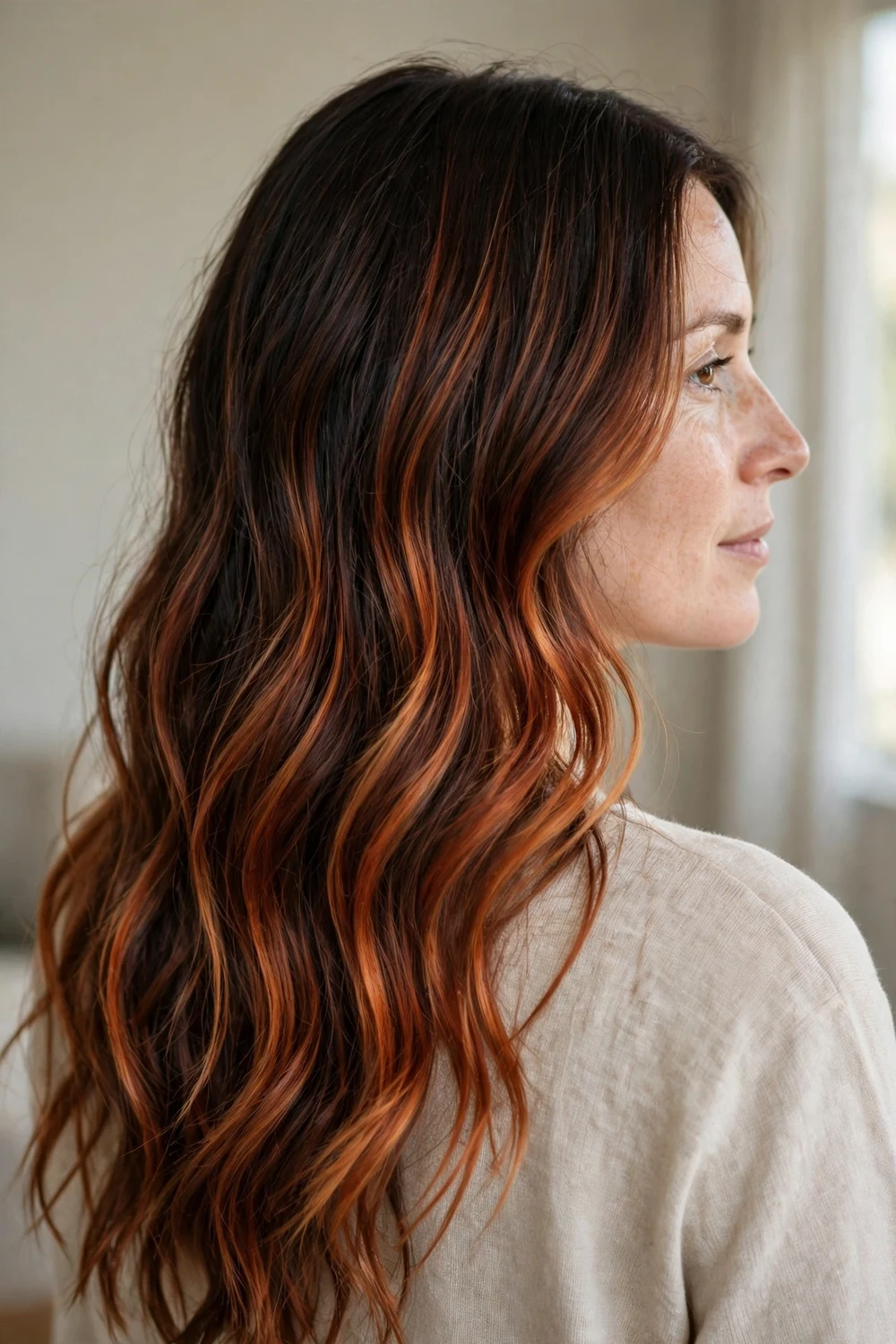
Balayage was made for blends like this. The colorist hand-paints copper and auburn through the mid-lengths and ends while leaving your natural or deeper root alone, which means the grow-out is the softest of any technique here. It suits women who want the color without a standing salon appointment every month. Long hair shows the gradient best, but it works on lobs too. For a closer look at how this technique compares to foils, see our guide to copper brown hair color ideas and how brown-based copper behaves as it grows out.
Try this: Ask for painted (not foiled) pieces so the grow-out stays invisible. Upkeep: full balayage every 4 to 6 months, gloss in between. Cost: $180 to $320.
12. Auburn Copper Ombre
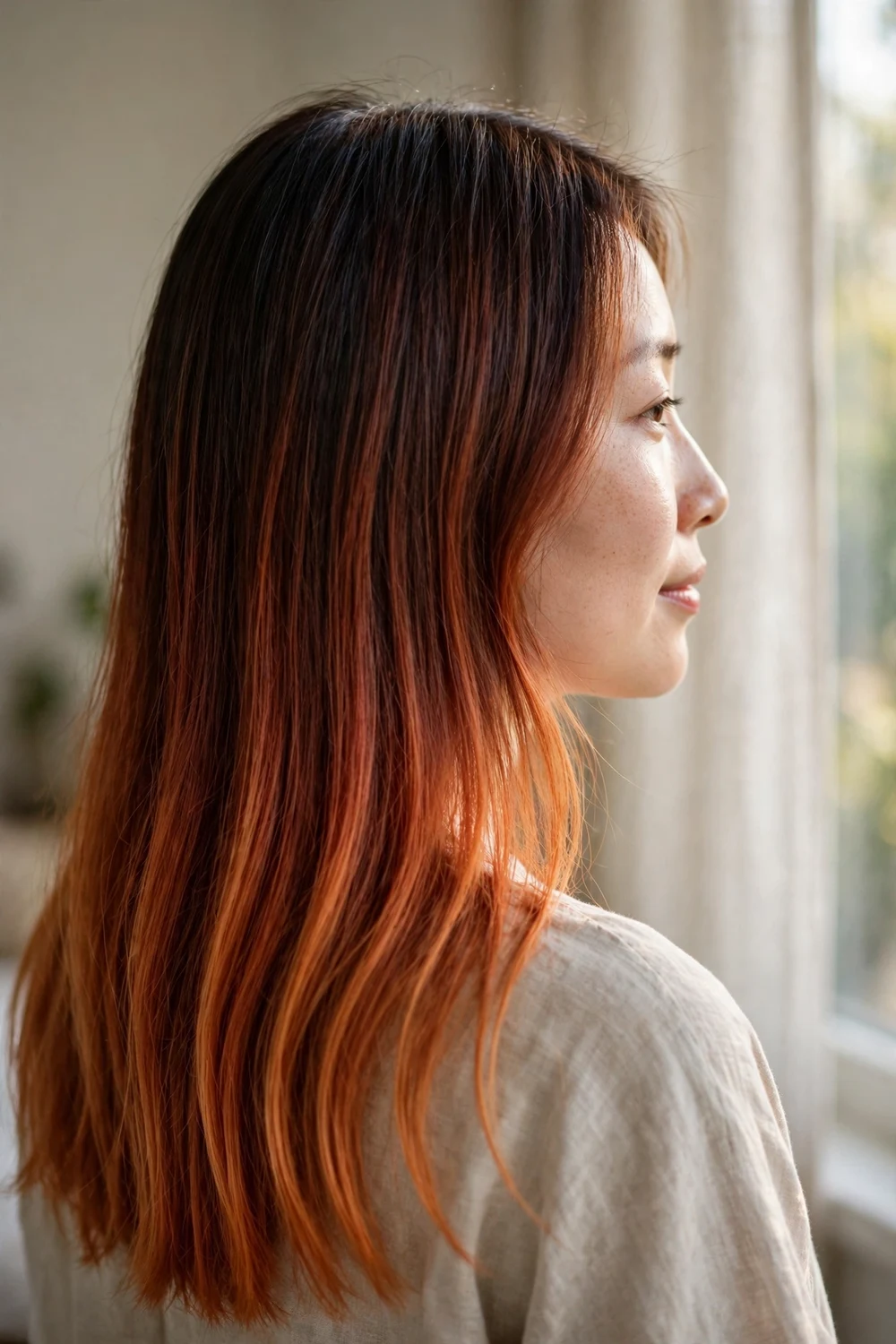
Ombre comes back softer every few years, and this is its current form. Deep brunette roots melt gradually into auburn through the middle and finish in warm copper at the ends, with no visible line between the zones. It is striking on long hair because there is enough length for the gradient to develop. Keep the transition diffused and intentional; a hard line where the colors meet is what dates this technique.
Try this: Ask for a “root melt” so the top stays close to your natural color. Upkeep: refresh ends every 10 to 12 weeks. Cost: $150 to $280.
13. Golden Auburn Copper

Gold changes the whole mood. Golden auburn copper adds yellow-gold reflect to the red base, giving a sunlit, radiant finish that looks almost backlit in direct sun. It flatters women transitioning from dark blonde or strawberry blonde, since those bases accept the gold without heavy lifting. The risk is brassiness, so this shade needs a colorist who can place the gold precisely instead of letting it spread everywhere.
Try this: Keep a purple or blue toning mask on hand for any gold that drifts too yellow. Upkeep: gloss every 6 weeks. Cost: $130 to $240.
14. Multi-Tonal Lived-In Auburn Copper
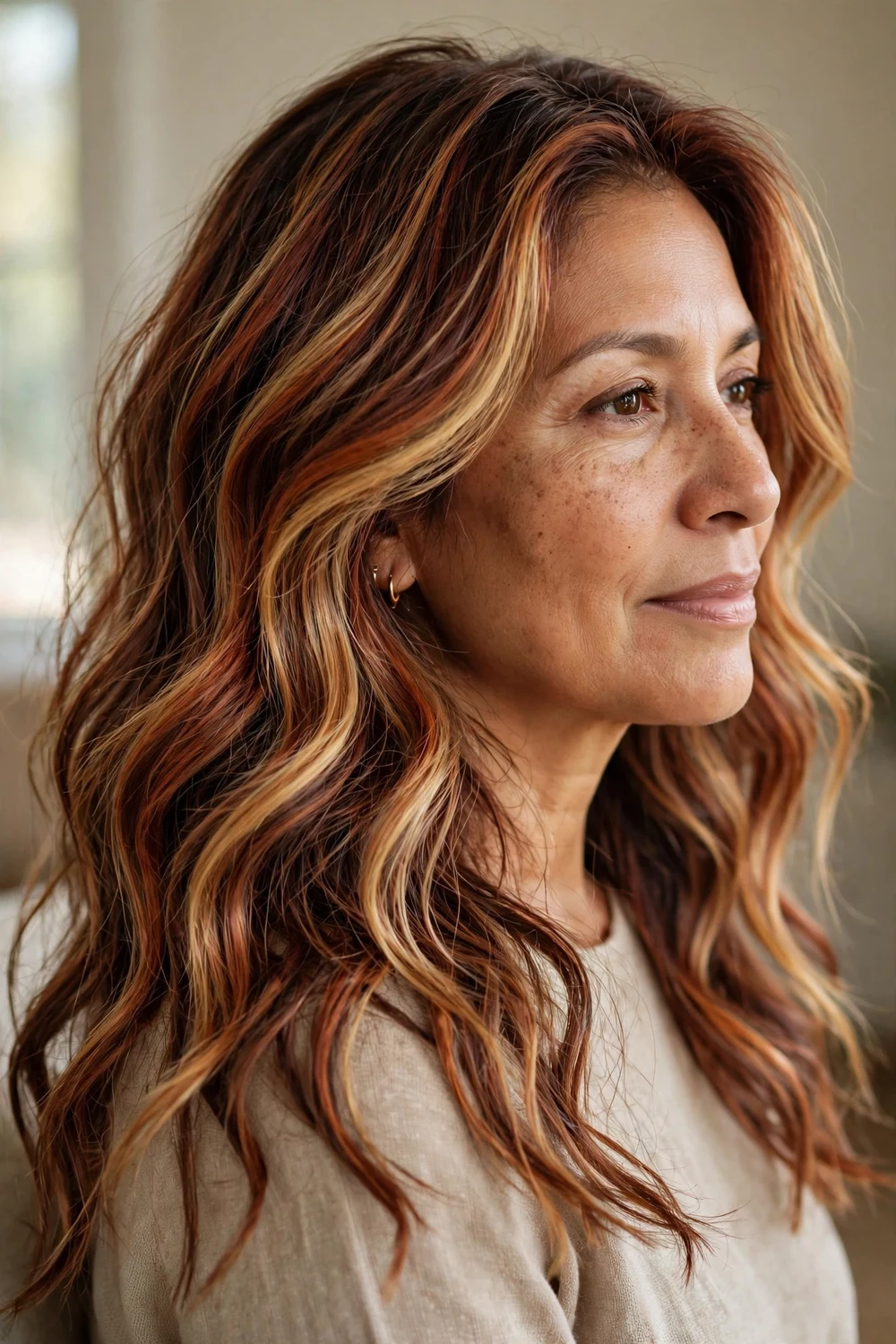
One flat shade is not the goal anymore. This approach weaves several related tones: auburn, copper, cinnamon, and a touch of gold, through the hair with a subtle root melt connecting them. The result looks dimensional and expensive, and it is practical, because the variation hides fading and regrowth better than any single-process color. It is currently the most-requested style of red in salons leaning into low-maintenance color.
Try this: Bring three reference photos showing different tones you like, and let the colorist pick the mix. Upkeep: root melt refresh every 8 to 10 weeks. Cost: $160 to $300.
15. Curly Auburn Copper

Curls and this blend are a natural match. Each curl catches light independently, so a curly auburn copper head shows more dimension than the same color on straight hair. The smart move is to keep a rich auburn base and place slightly brighter copper on the curls around the face and crown, where the light hits. Color should be planned on dry, styled curls so the placement matches how the hair actually falls. Moisture matters here: curly color-treated hair needs regular deep conditioning.
Try this: Ask your colorist to paint on dry curls, not wet stretched hair. Upkeep: gloss every 6 weeks, deep condition weekly. Cost: $140 to $260.
16. Cinnamon Auburn Copper

Cinnamon is the spice note of the red family. This shade infuses a medium auburn base with cinnamon and soft copper warmth, reading brunette at first glance and revealing its red only when the hair moves or catches light. It is one of the most modern-feeling options here because it avoids the flat, uniform red of older color trends. Women starting from medium or dark brown often need little or no lightening, which keeps the hair healthier and the grow-out softer.
Try this: Long layers or a shoulder-length cut help reveal the subtle tonal shifts. Upkeep: gloss every 8 weeks. Cost: $120 to $220.
17. Mahogany Auburn Copper

For a moodier take, mahogany adds a wine-red undertone to the auburn-copper base. The brown foundation stays visible, with the mahogany working as an undertone rather than the whole story, so the color shifts through the day: deep chestnut indoors, burgundy-red flashes in daylight. It suits women who want interesting color without a bright result. Glossy styling shows it best, so plan on a shine serum through the ends.
Try this: A clear gloss between appointments keeps the wine tones from dulling. Upkeep: root touch-up every 6 weeks. Cost: $110 to $210.
18. Cherry Auburn Copper
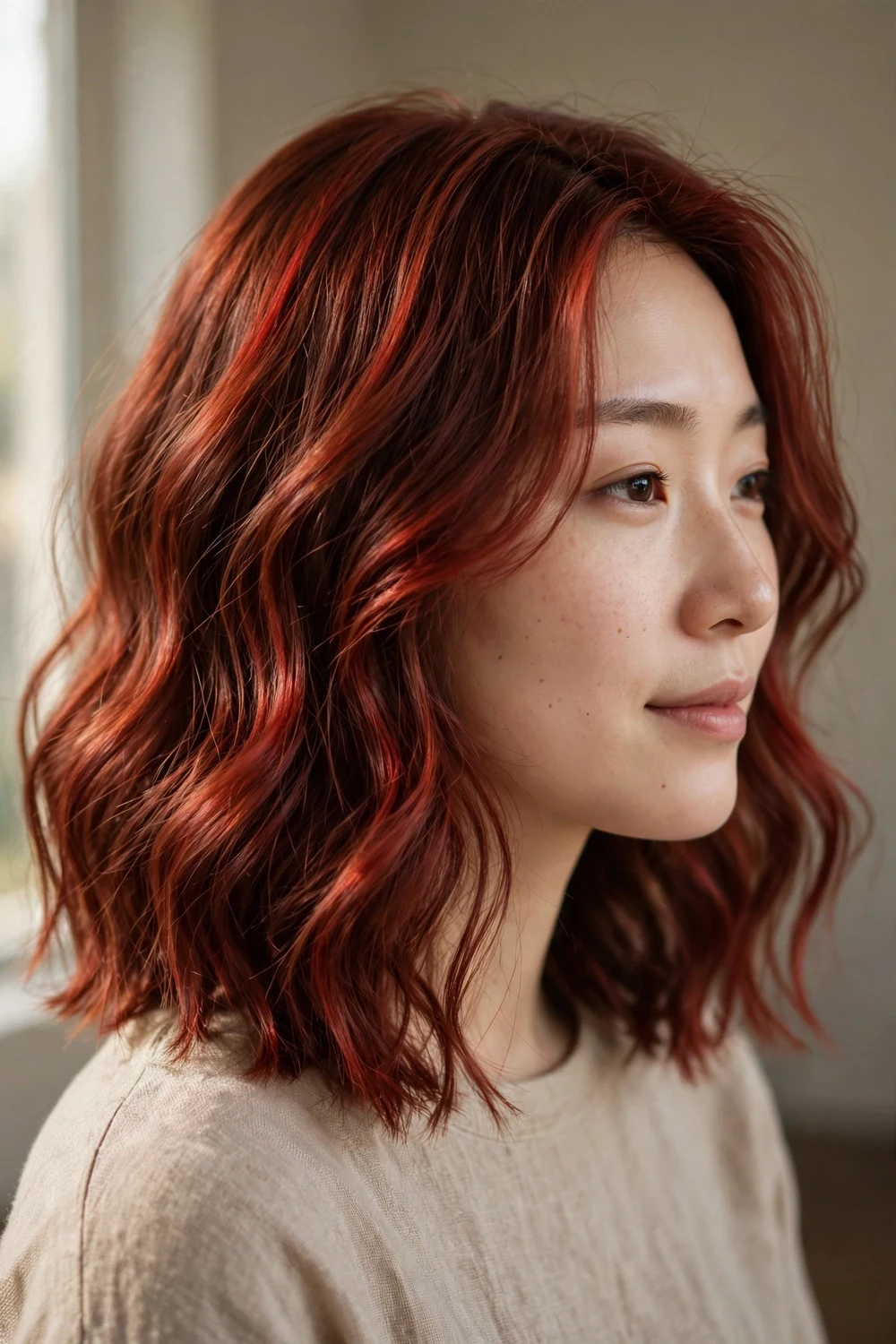
Cherry brings the fruit-forward red. This version lets cherry-red tones lead over an auburn-copper base, creating a saturated, expressive color that stands out against any outfit. It is bolder than classic auburn but still anchored by brown, so it never tips into fantasy-color territory. Fair to medium skin tones carry it well. If your workplace leans conservative, try this as highlights first before committing to an all-over application.
Try this: Red color-depositing masks keep cherry tones from fading to orange. Upkeep: refresh every 4 to 5 weeks. Cost: $130 to $250.
19. Burgundy Auburn Copper

Burgundy deepens everything it touches. Mixing dark wine-red with the auburn-copper base builds a dramatic frame for the face, with cool-toned red adding a romantic edge. It flatters paler skin tones especially well, and the depth makes fine hair look thicker. The color needs regular refreshing, because burgundy tones fade toward a flatter brown if left alone. A red-toned gloss every few weeks holds the line.
Try this: Wash in cool water and cut heat styling to preserve the wine tones. Upkeep: gloss every 5 to 6 weeks. Cost: $120 to $230.
20. Auburn Copper Money Piece

Maximum impact, minimum commitment. The money piece concentrates bright copper-auburn sections right at the front hairline, acting like a built-in light for your face. It illuminates the complexion and draws attention to the eyes, all without coloring the whole head. It is also the cheapest way to test whether you like copper on yourself. Keep the pieces blended rather than chunky for a current look; thick stripes read dated.
Try this: Ask for several fine, blended ribbons instead of two thick streaks. Upkeep: refresh every 8 to 10 weeks. Cost: $60 to $130.
21. Copper Auburn Face Frame

Similar idea, softer execution. A copper-auburn face frame warms the front sections of an existing red-brown base, making the hair around your cheeks and jawline brighter while the back stays deeper. It works well with curtain bangs or face-framing layers, since those pieces naturally move away from the face and catch light. It is also the easiest way to refresh auburn that has gone too dark or flat, without lightening every strand.
Try this: Have the brightness start at cheekbone level, not at the root, for a softer grow-out. Upkeep: refresh every 10 weeks. Cost: $70 to $140.
22. Copper Auburn Babylights

Babylights are the whisper version of highlights. Ultra-fine copper-auburn strands are woven throughout the hair so delicately that they blend into the base and mimic the way natural redheads catch light. The result is a soft, radiant shimmer with no obvious color lines. It suits women who want dimension without visible stripes, and it grows out almost invisibly. The trade-off is chair time: fine weaving takes longer than standard foiling.
Try this: Budget extra time in the chair; a full babylight head can take 3 hours. Upkeep: refresh every 10 to 12 weeks. Cost: $160 to $300.
23. Caramel Highlights on Auburn Copper
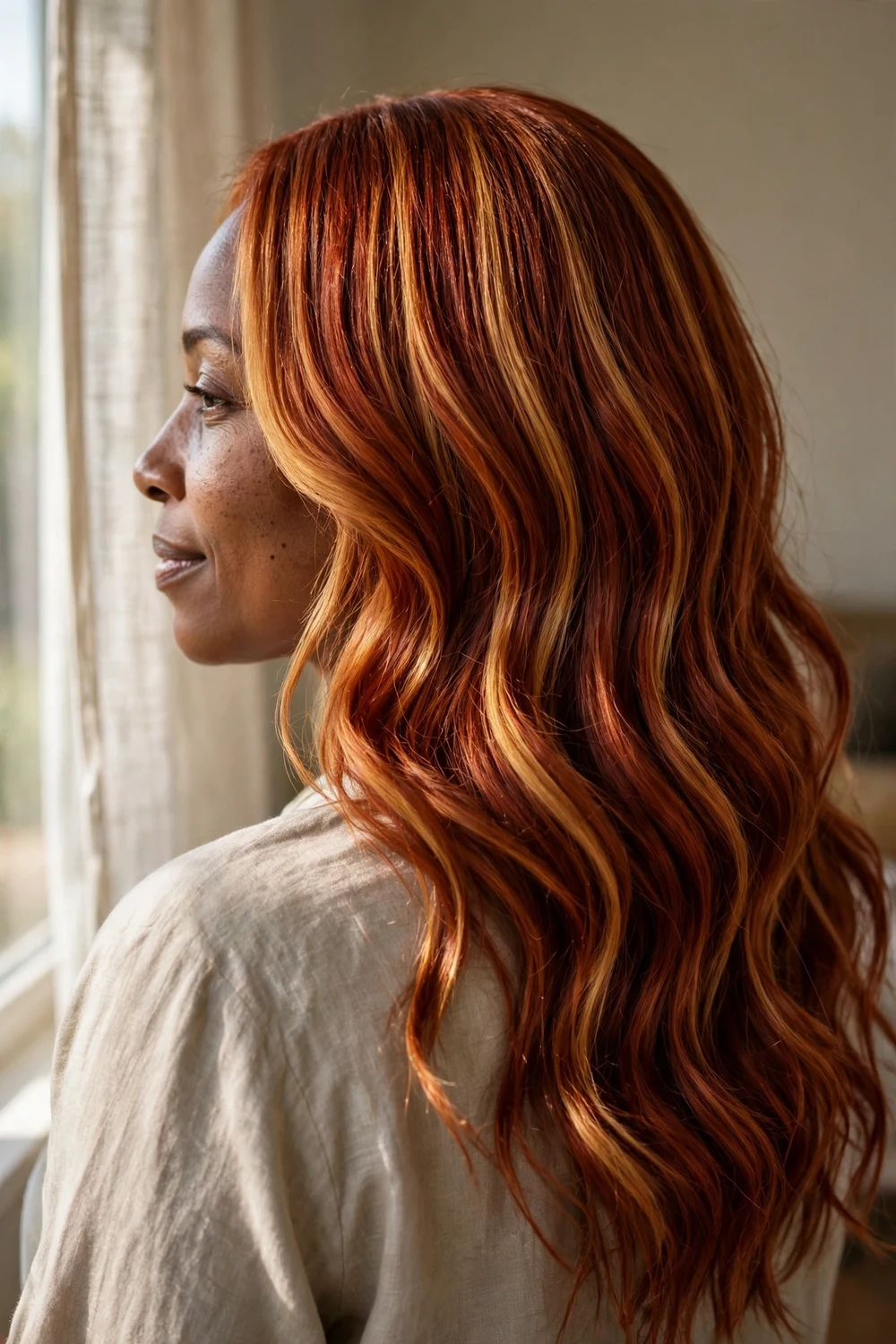
Caramel and copper are warm cousins. Layering caramel-gold ribbons over an auburn copper base creates multi-dimensional glow, with the lighter pieces staying warm enough to complement the red instead of turning into traditional blonde highlights. It is a smart transition color if you are moving from highlighted brunette into red, because existing highlights can be warmed and folded into the new palette rather than covered. Concentrate the caramel around the face and upper layers.
Try this: Keep the caramel within the warm family; ashy blonde pieces will clash with the copper. Upkeep: refresh every 8 to 10 weeks. Cost: $140 to $260. If you are weighing caramel against other warm highlight options, our piece on red brown hair color ideas breaks down how red-based shades pair with golden tones.
24. Whiskey Copper Auburn

Whiskey copper is one of the freshest interpretations of warm red right now. Instead of pure orange, it combines amber, cinnamon, auburn, and golden warmth, like auburn with the lights turned slightly up. There is enough brown underneath to keep it grounded, but the copper-gold reflection gives a glow that is most noticeable around the face. On waves or curls, the different warm tones separate naturally and the hair looks deeply dimensional.
Try this: Ask for a multidimensional application: deeper auburn at the root, more amber-copper through the lengths. Upkeep: gloss every 6 weeks. Cost: $140 to $260.
25. Burnt Sienna Auburn Copper

Earthy and artistic without going unnatural. Burnt sienna blends brunette depth with controlled, sun-warmed copper, creating a muted rust-red rather than an obvious ginger shade. The brown keeps it sophisticated while the rust warmth gives it personality. It is especially pretty with textured layers, because each section catches light differently. Women who want a noticeable change that still works with a neutral wardrobe should put this high on the list.
Try this: Keep any copper pieces muted, not bright orange, or the earthy effect is lost. Upkeep: gloss every 8 weeks. Cost: $120 to $220.
26. Maple Auburn Copper

Think October in a hair color. Maple auburn copper infuses medium brown with dark copper, warm red, and a trace of gold, landing richer and less orange than classic copper, warmer and less wine-toned than mahogany. It sits right in the middle of the auburn spectrum. Long, softly layered hair shows it best, with slightly brighter warmth around the face and deeper brown-auburn underneath for natural depth. A glossy finish matters a great deal here.
Try this: Finish with a shine spray or serum; maple tones need reflect to read properly. Upkeep: gloss every 6 weeks. Cost: $120 to $230.
27. Smoked Auburn Copper

Not every auburn has to glow. Smoked auburn copper takes the red-brown family in a quieter direction, adding a muted, almost dusty quality: the red is present but restrained, like auburn seen through a soft brown filter. It is the answer for women who wear neutral brunette and worry traditional copper will be too dramatic. Styled sleek and straight it looks minimal and polished; on waves, the hidden reddish undertones come forward.
Try this: A copper gloss over your existing brunette can achieve this without full color. Upkeep: gloss every 8 weeks. Cost: $80 to $160.
28. Rose Auburn Copper
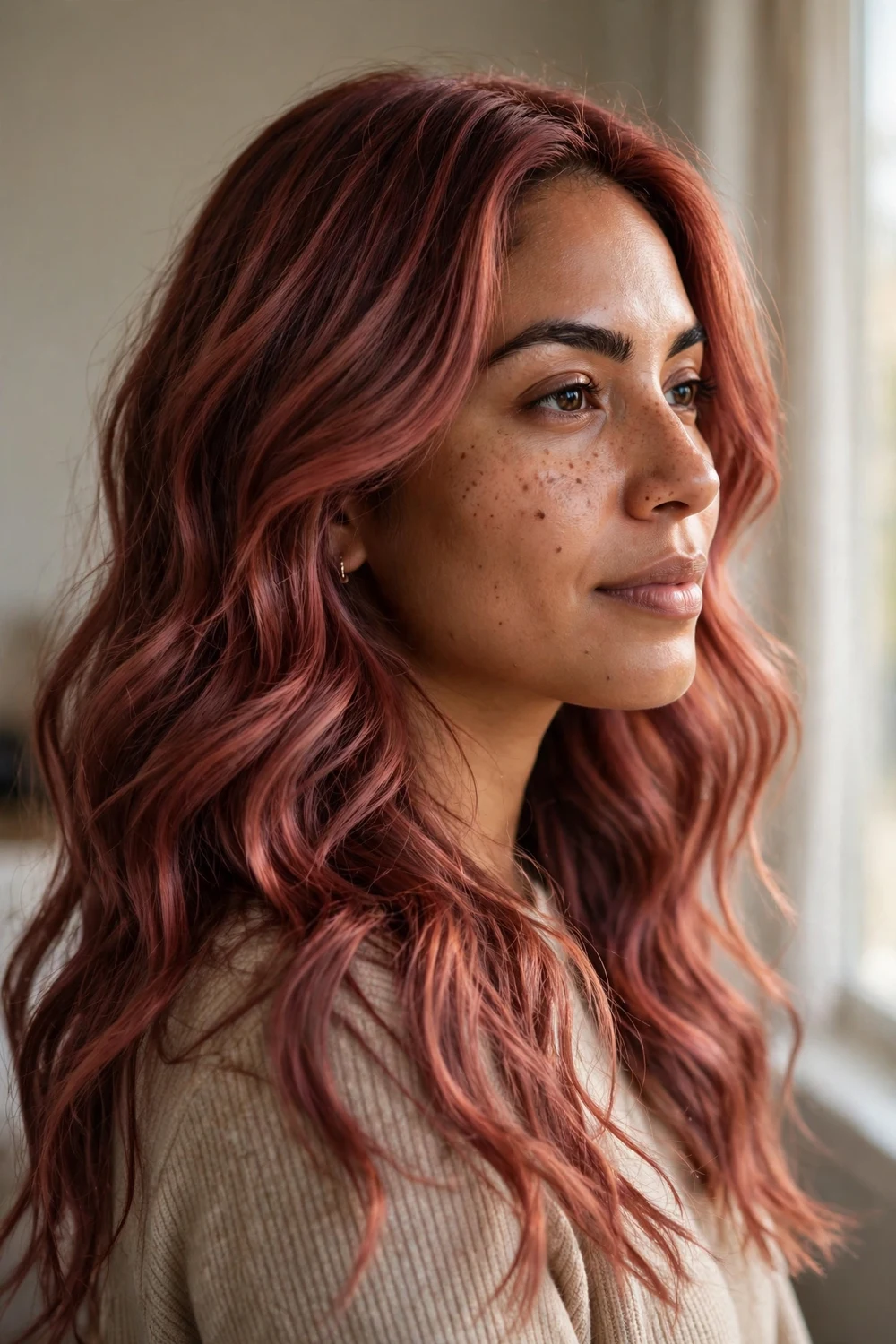
A softer, less expected direction. Rose auburn copper keeps a substantial brown-red base but leans the red gently toward rose instead of orange: dusty red, soft chestnut, and muted berry blended together. It suits women who do not love very golden hair but still want warmth. Use the rosy tone mainly through the mid-lengths and surface layers, with deeper neutral auburn underneath, so the difference shows in daylight while indoors the hair still reads as rich red-brown. For more on the pink-gold side of red, see rose gold hair color ideas and how rose tones behave on brown bases.
Try this: Rose tones fade fast, so a rose color-depositing mask is close to mandatory. Upkeep: refresh every 4 weeks. Cost: $130 to $250.
29. Garnet Auburn Copper

The richest option on this list. Garnet auburn copper builds on a dark brown-red base with garnet undertones that turn almost jewel-like in direct light. It is redder than chocolate auburn and less purple than burgundy, staying firmly in the auburn family despite its depth. Keep the styling simple and let the shade do the work; long straight hair shows off the glossy garnet surface, while large waves expose the darker brown underneath. Against dark fall wardrobes it looks especially luxurious.
Try this: A weekly deep-conditioning mask keeps dark reds from looking dry and dull. Upkeep: gloss every 5 to 6 weeks. Cost: $130 to $250.
30. Cowboy Auburn Copper

The trend name is playful, the color is serious. Cowboy copper is a rich, browned-down copper with strong auburn influence: think western warmth rather than bright orange. It reads as a deep, dimensional auburn-copper that works across seasons and suits a wide range of skin tones. It is one of the most wearable ways to do copper right now because the brown base keeps it from overwhelming the face. Ask for it by the trend name; most colorists know it.
Try this: Emphasize “browned-down, not bright” when you describe it, so you do not end up with neon copper. Upkeep: gloss every 6 to 8 weeks. Cost: $120 to $230.
Auburn Copper Shades Comparison at a Glance
| Shade | Best For | Difficulty | Upkeep |
|---|---|---|---|
| Classic Auburn Copper Blend | First-timers, neutral undertones | Medium | Gloss every 6 weeks |
| Dark Auburn Copper | Dark natural hair, olive skin | Easy | Roots every 6 weeks |
| Light Auburn Copper | Fair skin, soft features | Hard | Toner every 4 to 6 weeks |
| Subtle Auburn Copper | Conservative workplaces | Easy | Gloss every 8 weeks |
| Natural Auburn Copper Brown | Fine hair, believable color | Medium | Roots every 6 to 8 weeks |
| Chocolate Auburn Copper | Fall and winter wear | Medium | Gloss every 8 weeks |
| Chestnut Auburn Copper | Warm skin, gray coverage | Medium | Roots every 4 weeks |
| Fiery Auburn Copper | Green or blue eyes, bold looks | Hard | Toner every 3 to 4 weeks |
| Auburn Red with Copper Highlights | Curly hair, face framing | Medium | Refresh every 8 to 10 weeks |
| Warm Auburn Copper | Medium warm skin tones | Medium | Gloss every 6 weeks |
| Auburn Copper Balayage | Low-maintenance color | Medium | Full refresh every 4 to 6 months |
| Auburn Copper Ombre | Long hair, gradient lovers | Hard | Refresh ends every 10 to 12 weeks |
| Golden Auburn Copper | Dark blonde bases | Medium | Gloss every 6 weeks |
| Multi-Tonal Lived-In Auburn Copper | Hiding regrowth and fade | Hard | Refresh every 8 to 10 weeks |
| Curly Auburn Copper | Natural curls and coils | Medium | Gloss every 6 weeks |
| Cinnamon Auburn Copper | Brunettes avoiding lightening | Easy | Gloss every 8 weeks |
| Mahogany Auburn Copper | Moody, low-brightness red | Medium | Roots every 6 weeks |
| Cherry Auburn Copper | Bold but wearable red | Medium | Refresh every 4 to 5 weeks |
| Burgundy Auburn Copper | Pale skin, dramatic depth | Medium | Gloss every 5 to 6 weeks |
| Auburn Copper Money Piece | Testing copper cheaply | Easy | Refresh every 8 to 10 weeks |
| Copper Auburn Face Frame | Refreshing dark auburn | Easy | Refresh every 10 weeks |
| Copper Auburn Babylights | Invisible grow-out | Hard | Refresh every 10 to 12 weeks |
| Caramel Highlights on Auburn Copper | Transitioning from brunette | Medium | Refresh every 8 to 10 weeks |
| Whiskey Copper Auburn | Amber-gold glow seekers | Medium | Gloss every 6 weeks |
| Burnt Sienna Auburn Copper | Earthy, artistic warmth | Medium | Gloss every 8 weeks |
| Maple Auburn Copper | Rich autumn color | Medium | Gloss every 6 weeks |
| Smoked Auburn Copper | Muted, minimal red | Easy | Gloss every 8 weeks |
| Rose Auburn Copper | Non-golden warmth lovers | Medium | Refresh every 4 weeks |
| Garnet Auburn Copper | Jewel-toned depth | Medium | Gloss every 5 to 6 weeks |
| Cowboy Auburn Copper | Trendy but wearable copper | Medium | Gloss every 6 to 8 weeks |
How to Choose the Right Auburn Copper Shade for You
Start with your natural level. If your hair is level 2 to 4 (black to dark brown), the deeper shades on this list (dark, chocolate, garnet, smoked) are achievable in one session with little or no lightening. The brighter shades (fiery, light, golden) usually need lifting, which adds cost, time, and damage, so be honest with your colorist about what one visit can do.
Next, match the undertone to your skin. Hold a copper fabric swatch near your face in daylight: if your skin looks clearer, you can carry bright copper; if it looks washed out, stay in the auburn-dominant shades. Cool skin tones generally do better with mahogany, burgundy, smoked, and rose versions, while warm skin tones handle fiery, golden, whiskey, and maple. Neutral skin has the most options.
Finally, factor in your maintenance tolerance. All-over bright copper needs attention every 3 to 4 weeks. If that schedule sounds unrealistic, pick a technique with a softer grow-out instead: balayage, ombre, a money piece, or babylights. The shade matters less than the technique when it comes to how often you will be back in the chair.
Mistakes to Avoid
The most common mistake is describing the color with one word. “Copper” covers everything from strawberry blonde to deep cowboy copper, and a colorist working from that word alone can easily land two levels brighter than you wanted. Always bring two or three reference photos, and point to what you like about each one: the depth at the root, the brightness at the ends, the overall tone.
The second mistake is skipping the strand test. Red and copper dyes behave differently on previously colored hair, especially hair with old box dye or keratin treatments. A quick test behind the ear shows how your hair lifts and how the tone develops, and it costs nothing compared to a full correction.
The third mistake is treating it like a brown. Hot water, drugstore clarifying shampoo, and daily flat-ironing strip copper fast. Switch to a sulfate-free color-safe shampoo, wash less often, and keep a heat protectant between your hair and your tools. If the color fades anyway, and it will, a tinted gloss or color-depositing mask buys you weeks before you need the salon again.
Frequently Asked Questions
What exactly is auburn copper hair?
Auburn copper hair blends two warm reds: auburn, which is a brown-based red, and copper, which is a brighter orange-red. The auburn provides depth and keeps the color wearable, while the copper adds reflect and warmth. The ratio between them decides whether the result reads deep and muted or bright and fiery.
Does auburn copper hair suit my skin tone?
Most skin tones can wear some version of it. Fair and cool skin tones look best in auburn-dominant shades like mahogany, smoked, or burgundy copper, which add warmth without overwhelming the complexion. Medium, warm, and deep skin tones can carry the brighter copper-leaning shades like fiery, golden, or cowboy copper. When in doubt, the deeper, more muted versions flatter the widest range.
How much maintenance does auburn copper hair need?
More than brown, less than fantasy colors. Root touch-ups run every 4 to 6 weeks for all-over color, while balayage and ombre versions stretch to 4 to 6 months between full services. Copper tones fade fastest, so plan on a gloss or toner every 4 to 8 weeks, wash with lukewarm water, and use color-safe shampoo and a heat protectant.
Can I get auburn copper hair with box dye at home?
You can for the deeper, auburn-dominant shades if your hair is close to the target level and has no old color buildup. Brighter copper shades usually need lightening first, which is harder to control at home and risks uneven or damaged results. If your hair is darker than a level 6 or has previous dye, a salon visit is the safer choice.
How do I stop auburn copper hair from fading?
You cannot stop fading entirely, but you can slow it. Wash less often with cool or lukewarm water, use sulfate-free color-safe shampoo, protect hair from sun and heat, and refresh the tone with a copper or red color-depositing conditioner every week or two. A salon gloss every 6 to 8 weeks restores the reflect that washing strips away.
Final Thoughts
Auburn copper earns its staying power: few colors offer this much range from one blend, and there is a version here for nearly every skin tone, budget, and maintenance tolerance. Pick your shade by undertone, pick your technique by schedule, and bring photos to the salon. This color family has cycled in and out for years, and the versions with the most dimension always outlast the flat ones. To see this color family worn in full haircuts, these auburn hairstyles cover 30 styles from pixies and bobs to braids and updos.
For a browner take on this warmth with the same copper glow, the cinnamon guide below is worth a look.
brown cinnamon hairstyle ideas

