


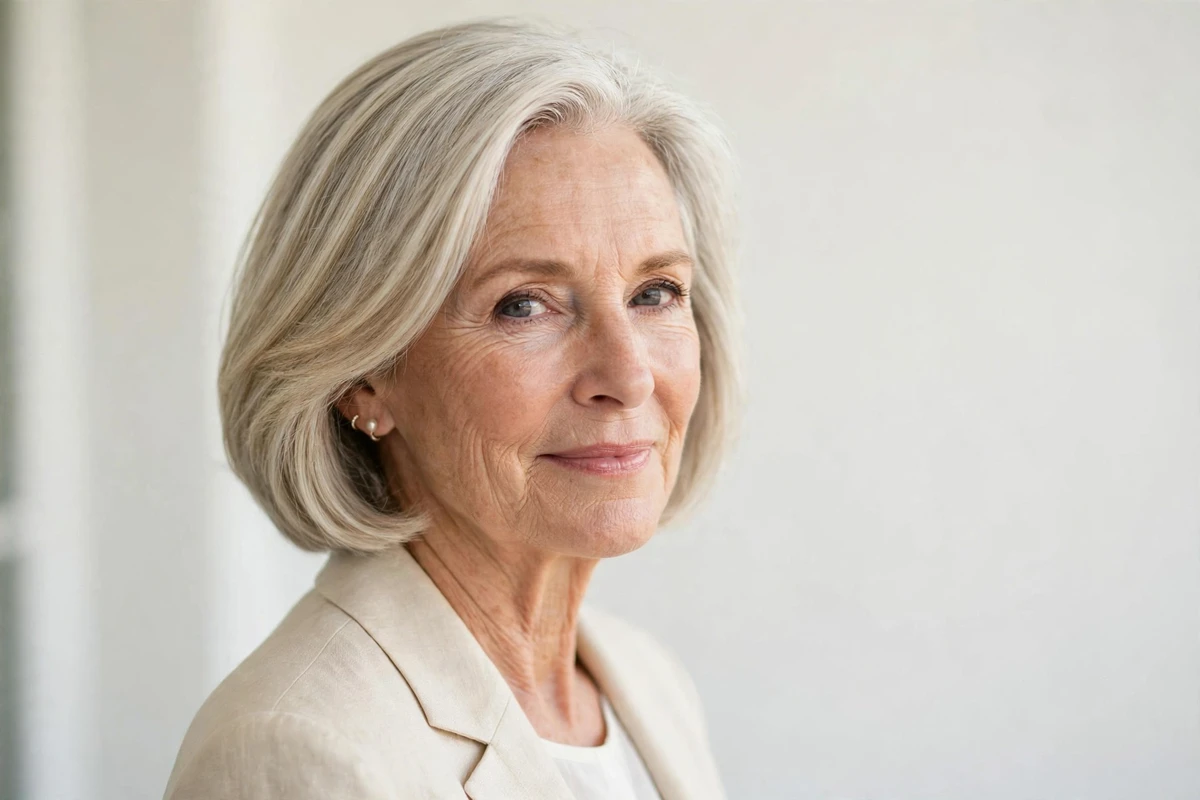
Fine hair after 50 needs a cut that does the heavy lifting. A short bob can add the structure, shape, and fullness that longer lengths take away. I have fine hair myself, so I know the right cut does more for it than any product.
This guide covers 30 short bob haircuts picked for fine hair and mature features. You will find blunt cuts, stacked shapes, textured styles, and bangs options, each with a concrete styling tip so you can keep the look going at home.
Quick answer: The best short bob haircuts for fine hair over 50 are blunt bobs, stacked bobs, and textured bobs. These cuts build in volume through shape instead of relying on thickness. Keep the length between the ear and the chin, and ask for internal layers rather than heavy graduation.
Quick Takeaways
- Blunt ends make fine hair look denser by creating a solid perimeter line.
- Stacked and graduated backs build crown volume without backcombing.
- Internal texture adds movement while keeping the ends thick.
- Side parts and curtain bangs lift flat roots instantly.
- Most of these cuts need a trim every 6 to 8 weeks to hold their shape.
Why Short Bobs Work for Fine Hair Over 50
Fine hair gets weighed down as it grows. Every extra inch pulls volume out of the roots. A short bob removes that weight, so the hair lifts instead of lying flat.
After 50, hair often becomes finer and the hairline can thin slightly. A cut that ends between the ear and the chin frames the face and draws attention to the cheekbones and eyes. Shorter lengths also make color look richer, since the hair is healthier at the ends.
The cuts below all share one trait: they create fullness through the shape of the cut itself. You do not need heavy teasing or a long styling routine to get the volume.
1. Classic Blunt Bob

A blunt bob cuts every strand to one even length, which builds a solid line at the bottom that makes fine hair read as thicker. There are no layers to thin out the ends, so the full weight of the hair sits at the perimeter. This cut works well at chin length or just below the ear. A slight bend through the mid-lengths keeps it from looking stiff. Trims every 6 to 8 weeks keep the line crisp.
Try this: Work a pea-sized amount of volumizing mousse through damp roots, then blow dry with a paddle brush for a smooth, dense finish.
2. Textured Layered Bob
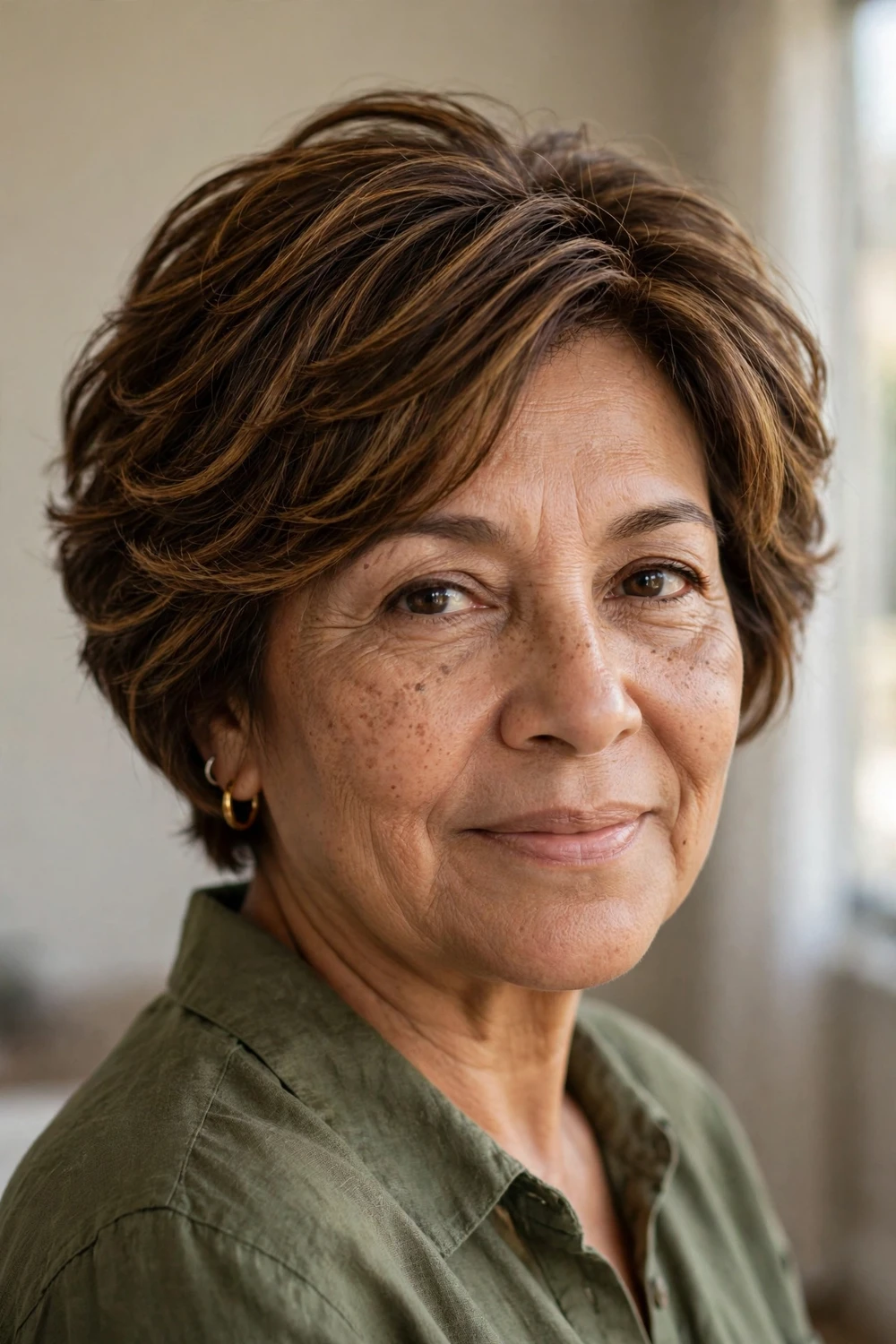
Layers cut inside the bob create movement without removing the weight you need at the ends. Your stylist can point-cut or use texturizing shears so the layers stay soft rather than choppy. This style suits women who want a bob that does not look severe. It air dries well and needs little more than a scrunch with product to fall into place. Ask for internal layers that sit in the mid-lengths instead of the ends.
Try this: Rub a small amount of lightweight texturizing cream between your palms and pinch sections at random for piece-y separation.
3. Stacked Bob for Volume
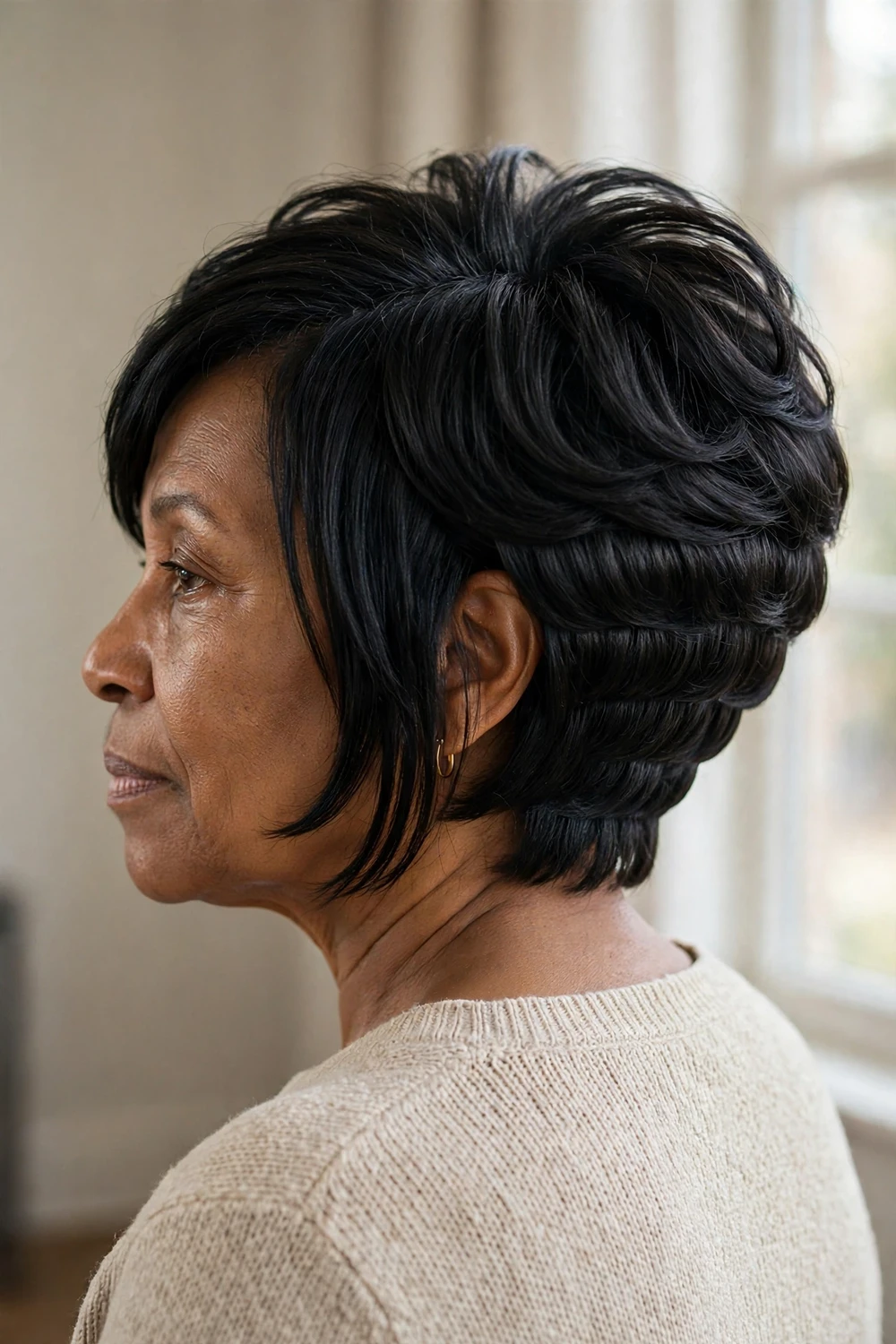
The stacked bob cuts the back progressively shorter so each layer rests on top of the one below it. That stacking builds real height at the crown, which is exactly where fine hair goes flat. The front stays longer to frame the face, so you get volume without sacrificing shape. This cut practically styles itself once the shape is in. It does need regular trims to keep the stacked back from growing out unevenly.
Try this: Blow dry the crown with a small round brush, lifting each section straight up to lock in the stacked height.
For more stacked shapes in this family, see stacked bob hairstyles for fine hair for extra volume-building options.
4. Angled Bob with Shorter Back
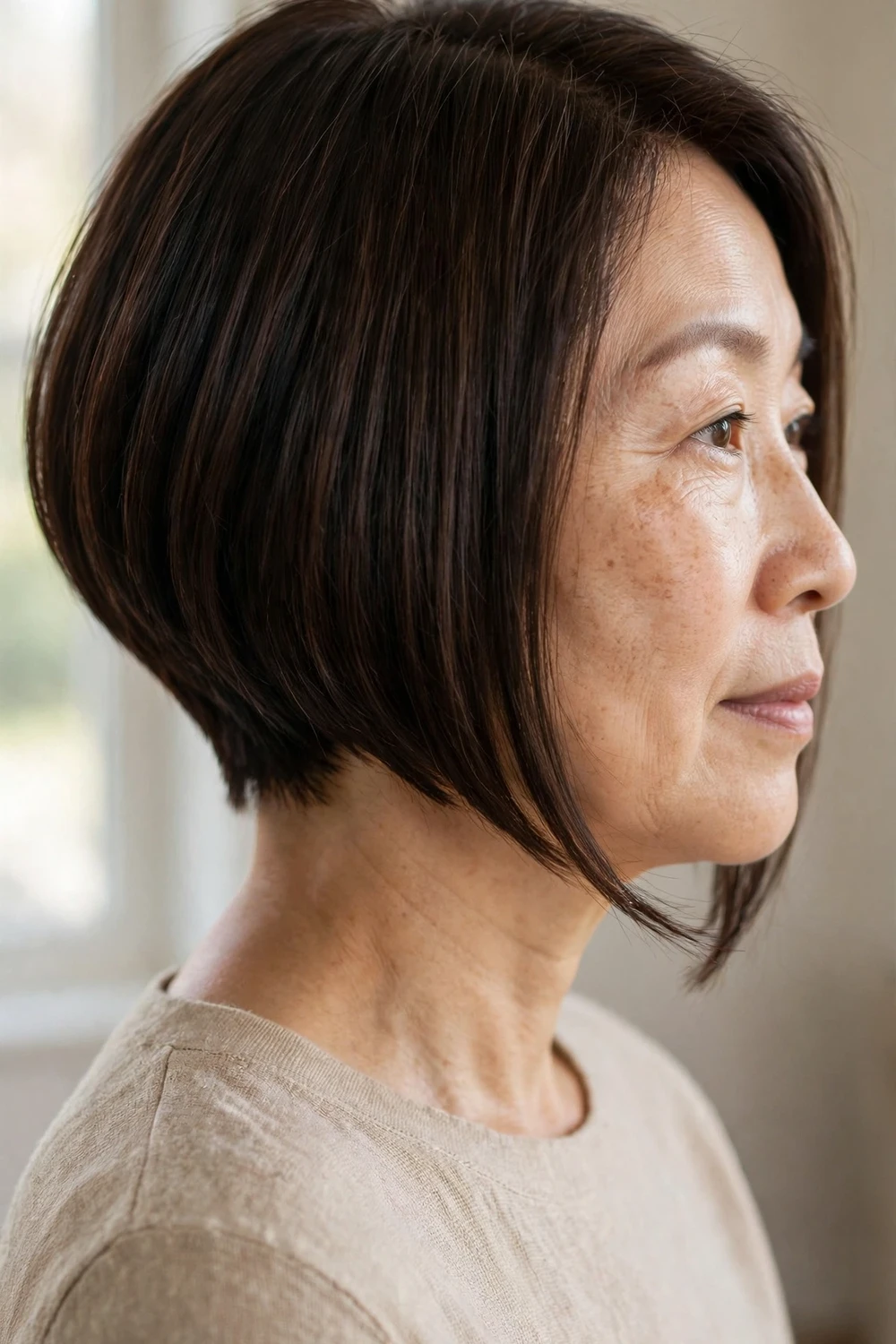
An angled bob keeps the back short and lets the front pieces fall longer toward the chin. The diagonal line creates a slimming effect along the jaw and cheekbones. For fine hair, the shorter back removes weight and lets the crown lift naturally. The longer front sections keep enough hair around the face to look soft. This is a precise cut, so choose a stylist who is confident with angles.
Try this: Flat iron the front pieces with a slight inward curve so they hug the jawline and highlight the angle.
5. Inverted Bob with Graduated Layers
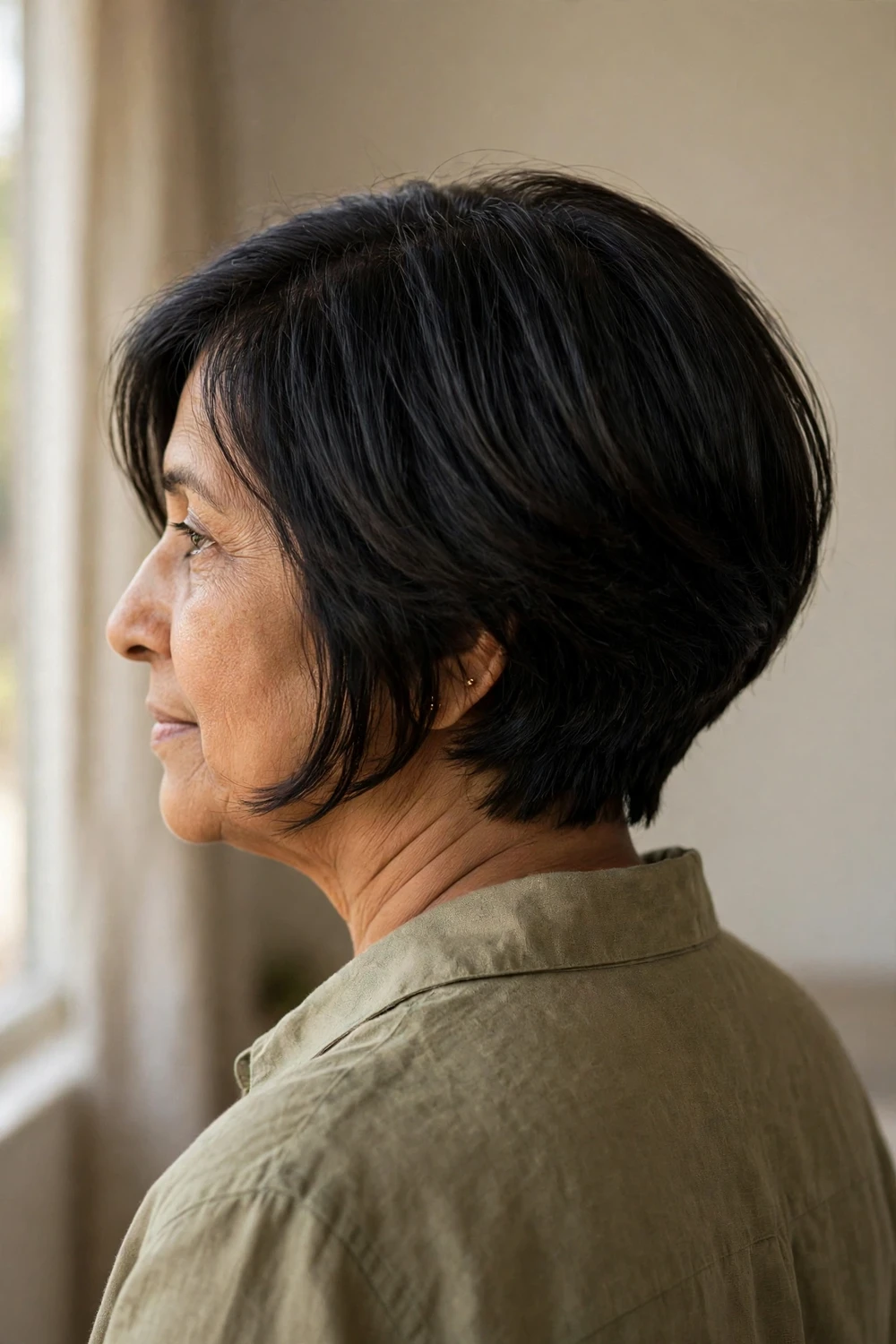
The inverted bob is shorter at the nape and lengthens toward the front, creating a curved silhouette that stacks volume exactly where fine hair needs it. The graduation removes bulk underneath while the top stays smooth. This cut looks polished from every side and works with straight or slightly wavy texture. It flatters most face shapes because the longer front pieces can be adjusted to any length. It also grows out gracefully, since the graduation keeps its shape longer than a blunt cut. Women who like a tidy, put-together look tend to stick with this one.
Try this: Direct your blow dryer down the back sections and tuck them under with a round brush to sharpen the inverted curve.
6. Choppy Bob with Razored Ends
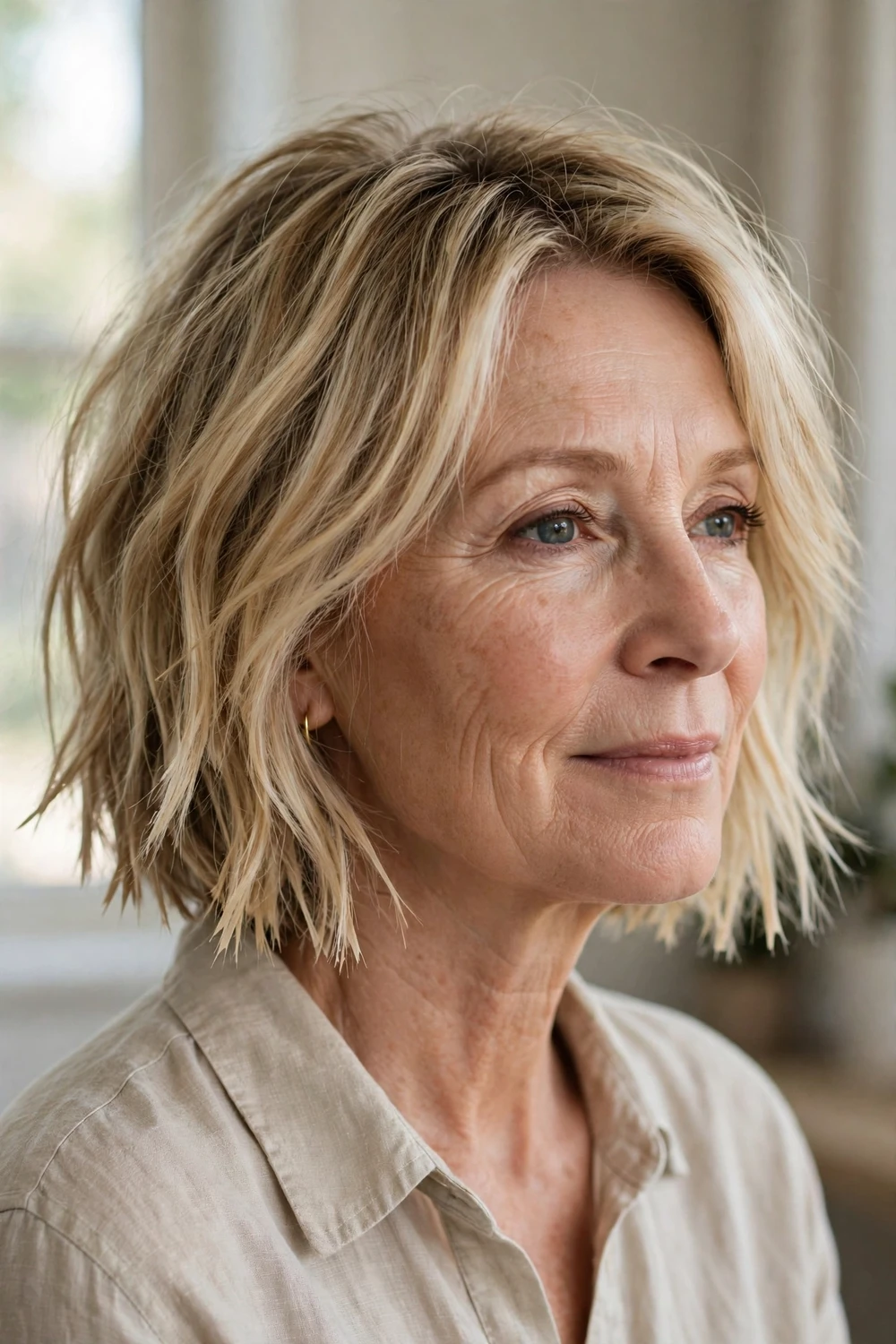
A razor creates softer, more feathered edges than scissors, which stops fine hair from clumping into a single sheet. The choppy texture breaks the surface into small pieces that catch light and read as thicker. This style has a modern edge and looks better slightly undone than perfectly smooth. It works well with sea salt spray or dry texture spray for extra grit. Ask for the razor work to stay in the ends rather than the crown, so you keep density where volume matters most. Second-day hair takes this cut especially well.
Try this: Mist dry texture spray through the ends, then twist random pieces with your fingers to define the choppy finish.
7. Asymmetrical Bob
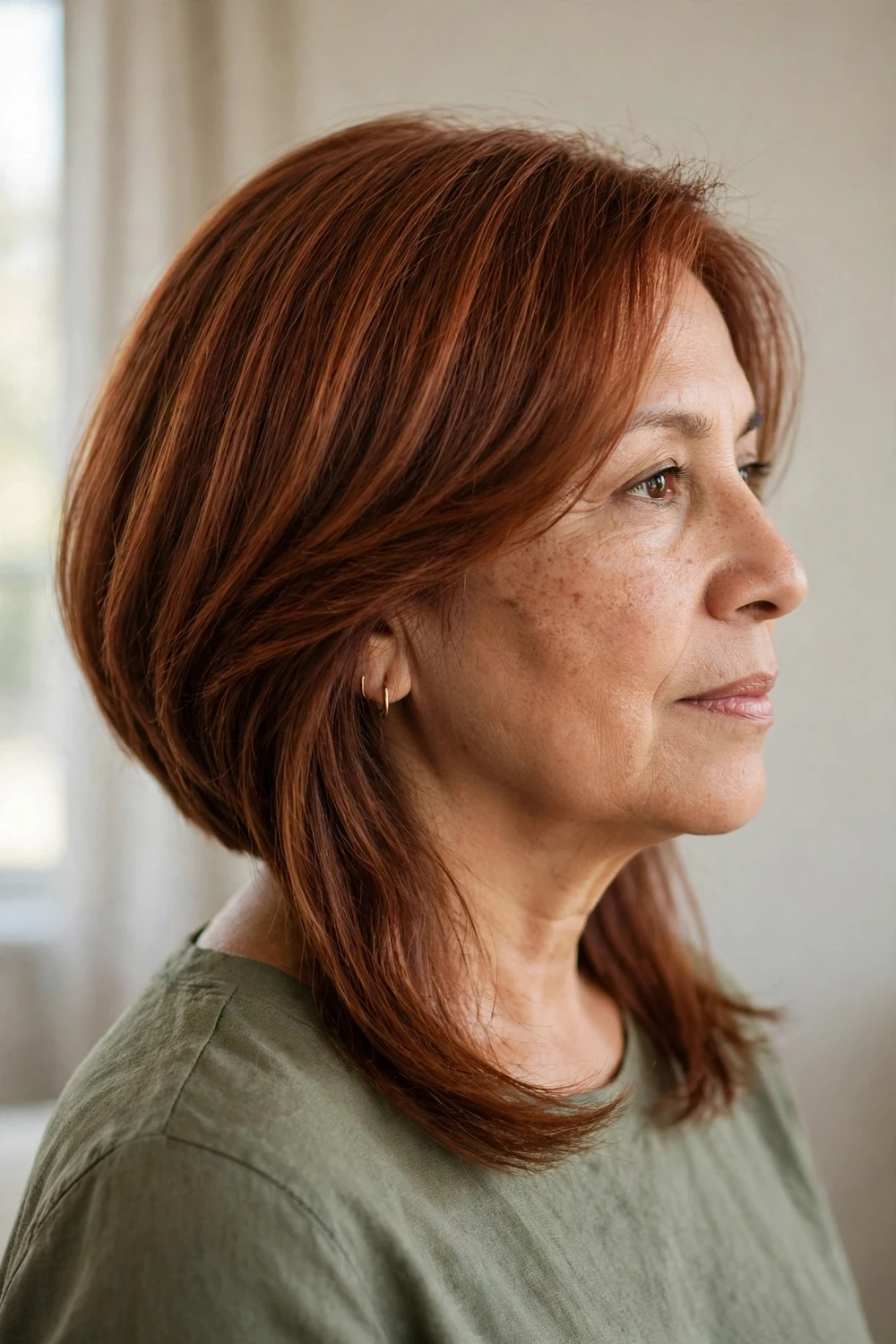
One side sits longer than the other, and that imbalance pulls the eye away from any thinning spots. The length difference can be subtle or bold depending on your comfort level. Fine hair benefits because the asymmetry creates a focal point that distracts from sparse areas. The longer side can tuck behind the ear on the short side for two looks in one cut. Keep up with trims so the angles stay sharp.
Try this: Sweep the longer side forward over one cheekbone and smooth it with a flat iron for a sleek, deliberate line.
8. Chin-Length Bob with Side-Swept Bangs
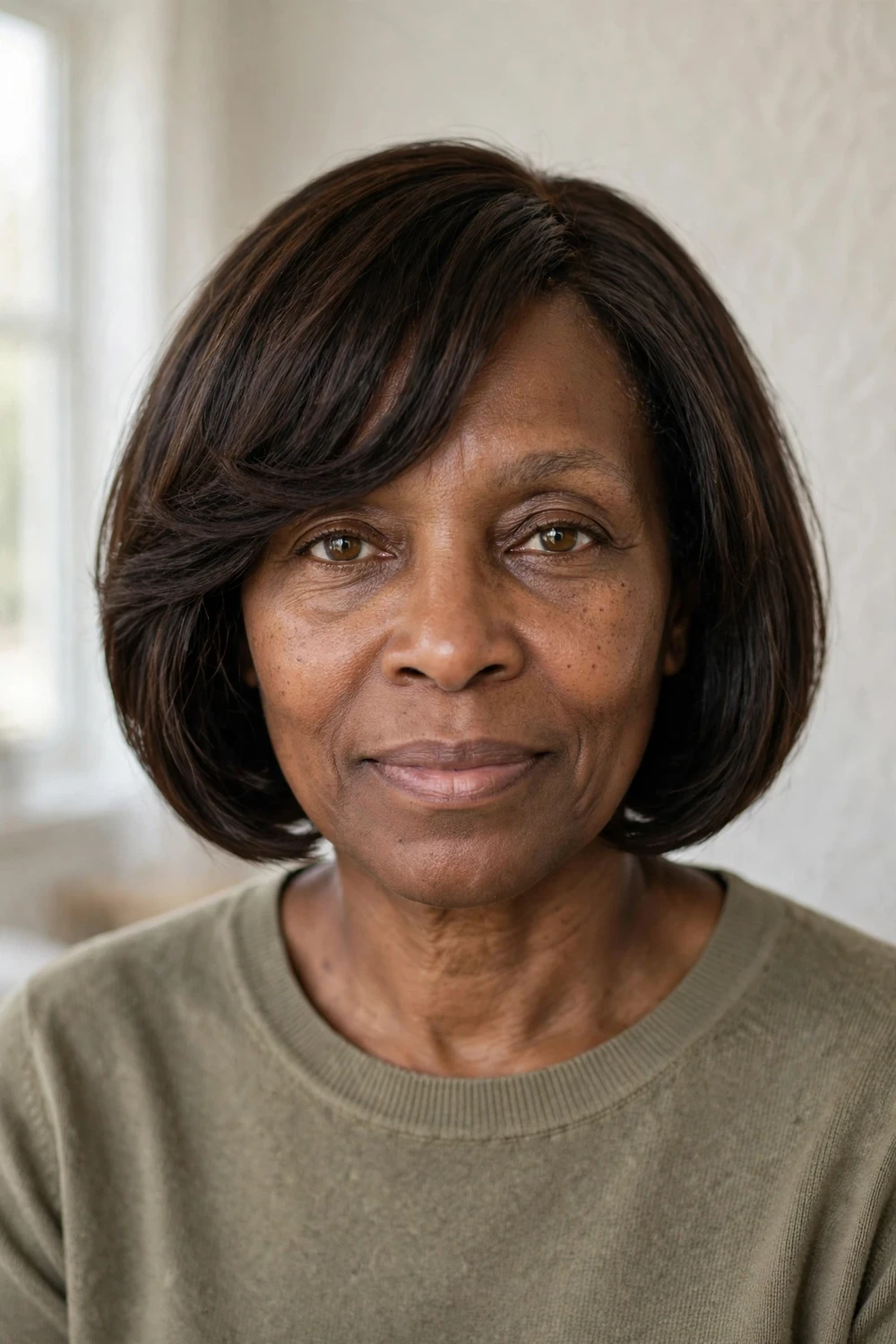
Side-swept bangs soften the forehead and draw attention to the eyes while the chin-length bob frames the jaw. The bangs add density across the front, which helps fine hair look fuller where it shows most. Keep the bangs long and wispy rather than thick so they blend into the bob. This combination works sleek or with soft waves and suits almost every face shape. If you wear glasses, keep the bangs above the frames so they do not compete. A quick bang trim every three weeks keeps the sweep in place.
Try this: Blow dry the bangs with a small round brush, rolling them to the side for a smooth sweep that holds all day.
9. Sleek Straight Bob with Middle Part
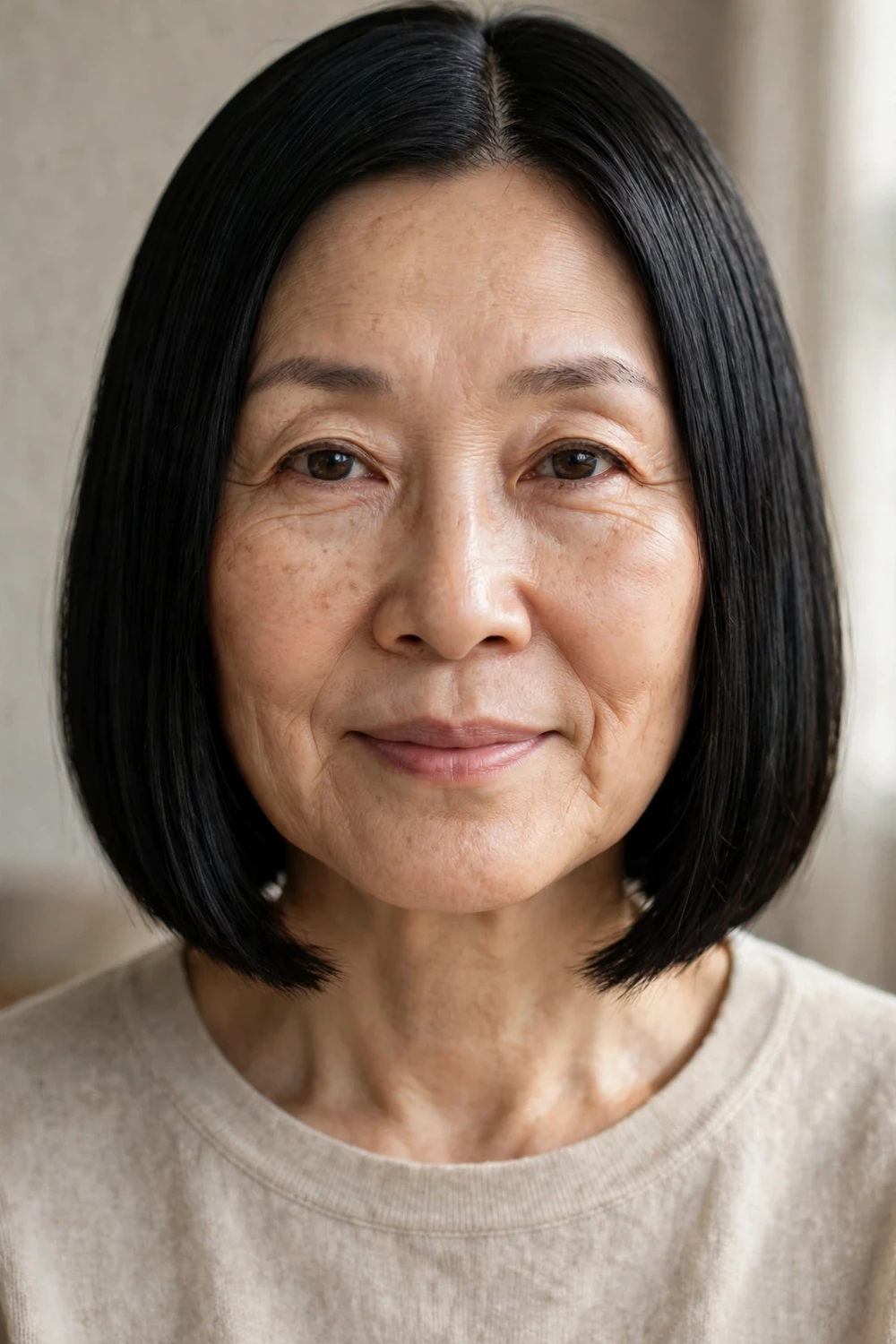
A center part and flat-ironed finish create a clean, modern look that suits naturally straight fine hair. The symmetry highlights good bone structure and keeps the style simple. Because there is no layering to hide behind, the cut must be precise. Heat protectant is a must when you straighten fine hair daily, since heat damage makes thin hair look even thinner over time. Keep the ends blunt rather than thinned so the bottom line stays strong. This is one of the quickest morning routines once the cut is right.
Try this: Apply heat protectant, flat iron in thin sections, and finish with a drop of shine serum smoothed over the surface.
10. Wavy Bob with Natural Texture
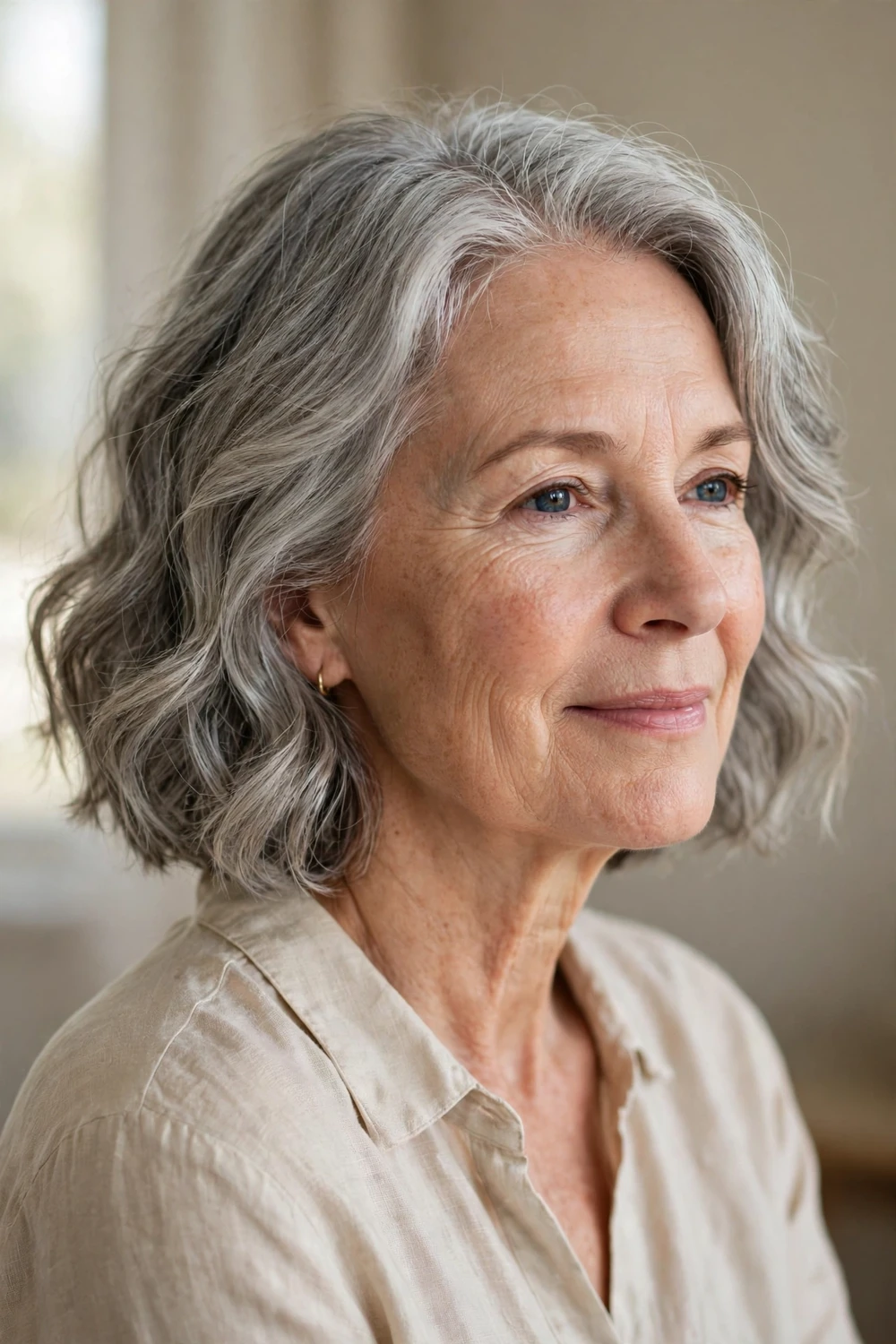
Soft waves add instant width and movement that straight fine hair cannot manage on its own. This cut follows your natural wave pattern instead of fighting it, which means less heat styling and healthier hair. The waves should be loose and flowing rather than tight curls. A diffuser attachment on your dryer enhances the pattern without creating frizz. Regular conditioning keeps the waves defined without weighing them down. Sleep on a silk pillowcase to keep the wave pattern intact overnight. A light curl cream works better than heavy gel for fine textures.
Try this: Scrunch a golf-ball amount of curl mousse into damp hair and diffuse on low heat for soft, lasting waves.
11. Rounded Bob with Soft Layers
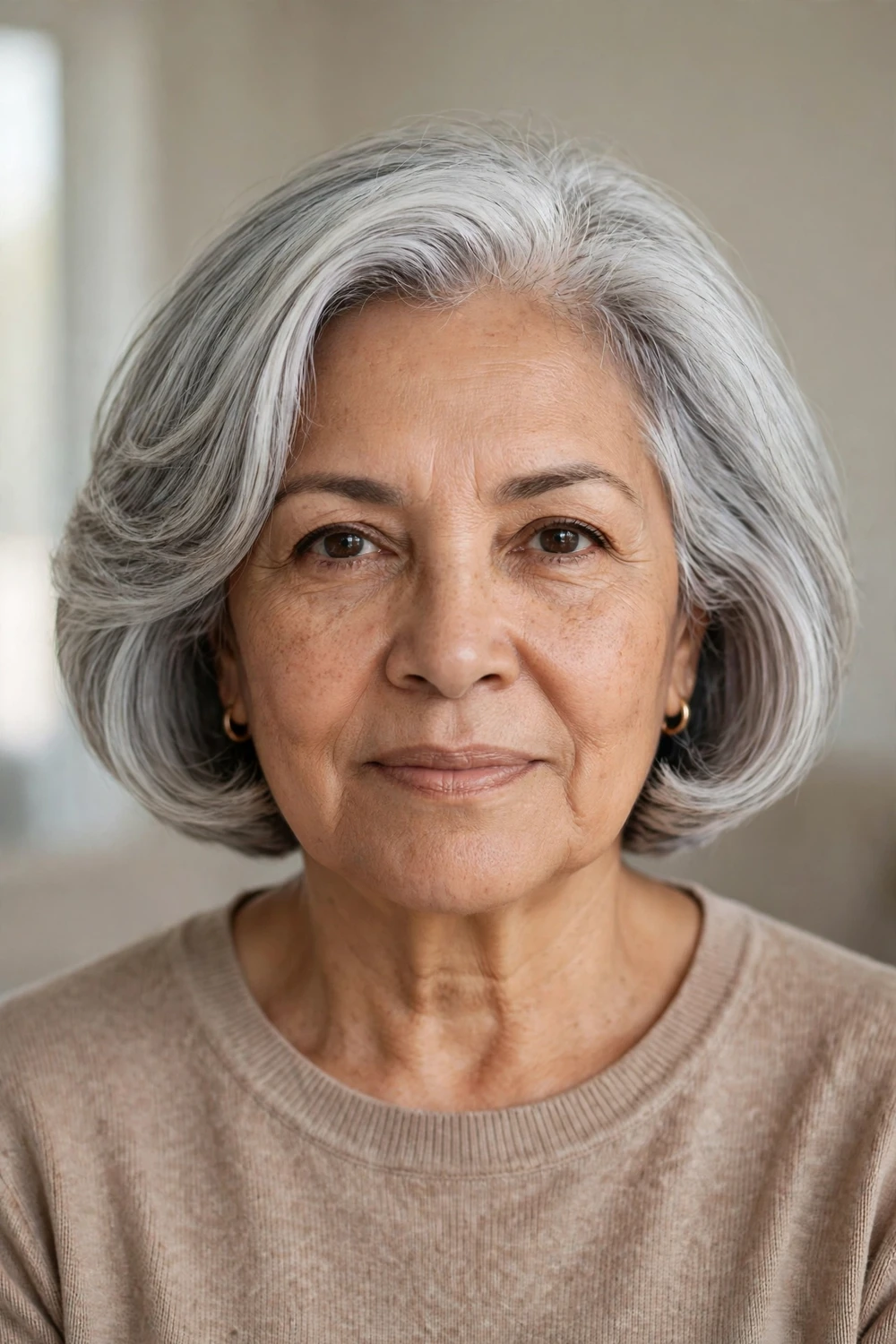
A rounded bob curves gently around the head instead of cutting harsh lines, which adds width where fine hair goes flat. Soft layers distribute movement through the shape without taking away density. Blow drying with a round brush turns the curve under and builds body. This forgiving cut moves easily from daytime to evening and suits women who want polish without an edgy feel. Ask your stylist to keep the curve soft rather than stacked if you prefer a gentler silhouette. It also frames reading glasses nicely.
Try this: Wrap sections around a medium round brush and roll under at the ends while blow drying to build the rounded shape.
12. Bob with Feathered Ends
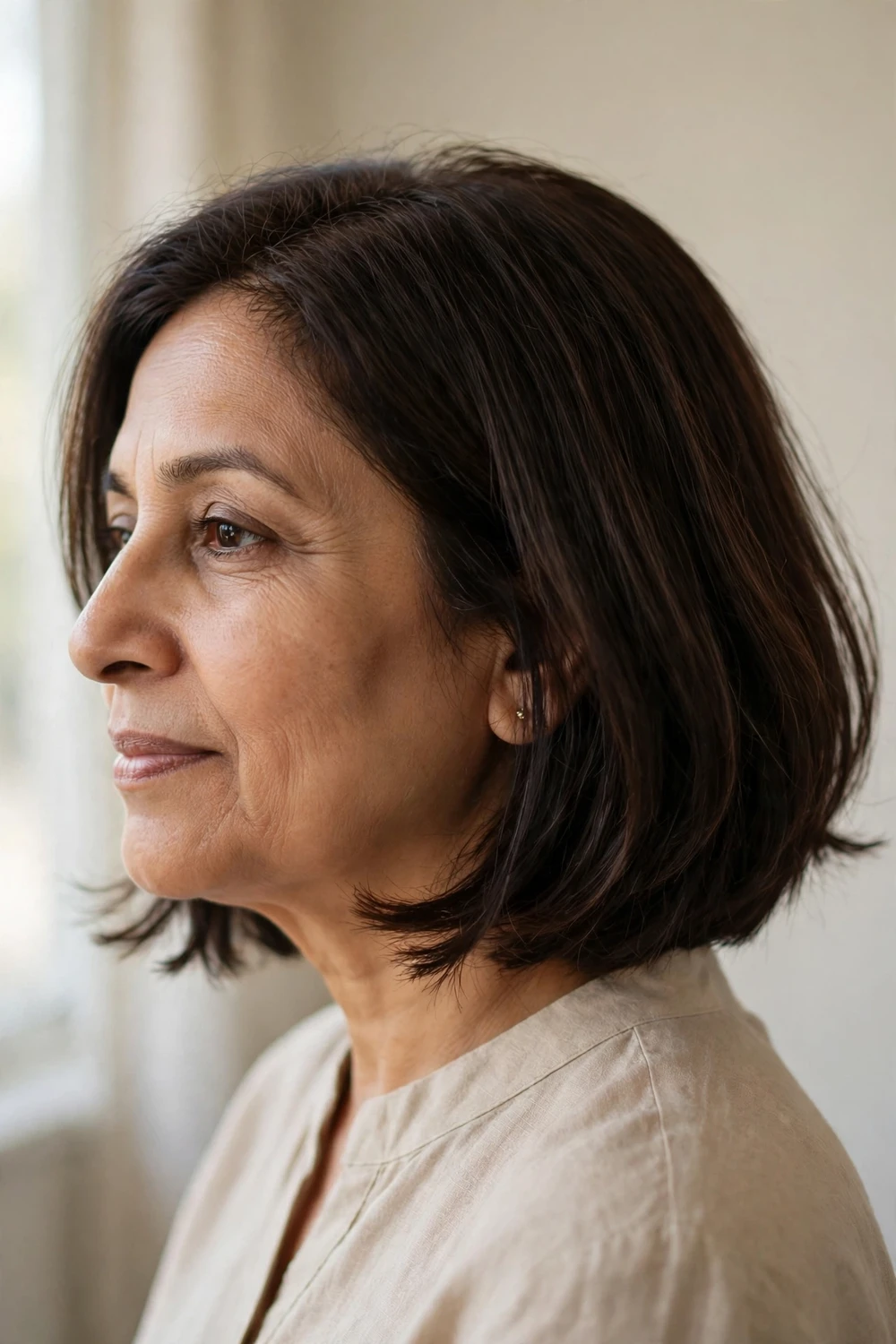
Feathering point-cuts the ends into soft, wispy tips so the bottom of the bob never looks like a hard shelf. The technique removes weight from the ends without creating see-through sections, which keeps fine hair light but still full. Feathered ends move freely and catch light well. This pairs nicely with light layering through the mid-lengths for extra dimension. Fine hair with some natural bend takes feathering especially well. Schedule trims every eight weeks so the tips stay soft instead of ragged.
Try this: Smooth a dab of lightweight cream over just the ends to define the feathered tips without flattening the roots.
13. Side-Parted Bob with Volume
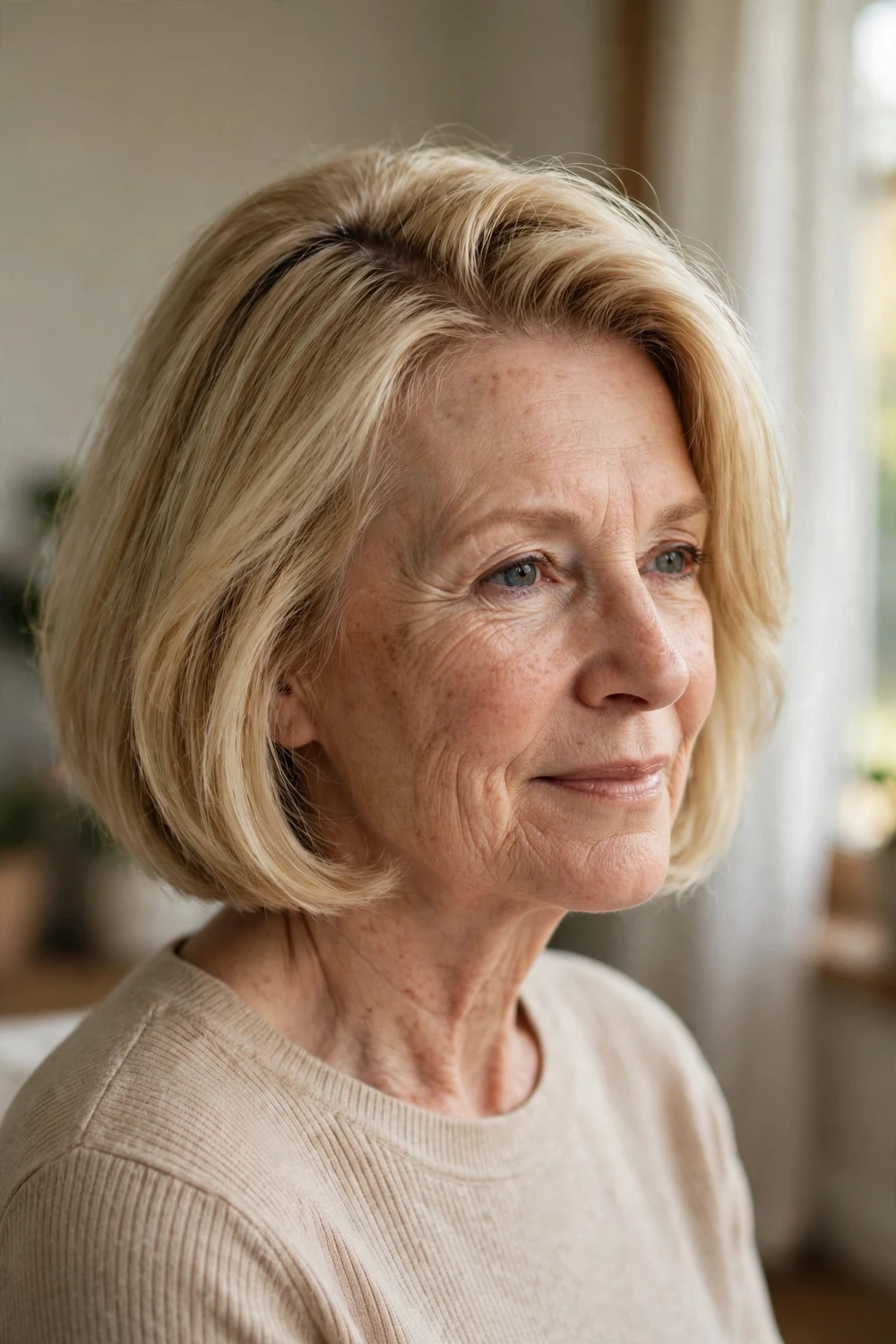
A deep side part shifts more hair to one side, and that extra weight creates instant lift at the roots. This simple change transforms any bob shape without scissors. Align the part with the arch of one eyebrow for the most dramatic effect. The heavier side reads as thicker, which is the whole point for fine hair. Switch the part side now and then so the hair never settles flat.
Try this: Lift the roots on the heavy side with a volumizing powder, then set with a cool shot from the dryer.
14. Textured Pixie Bob
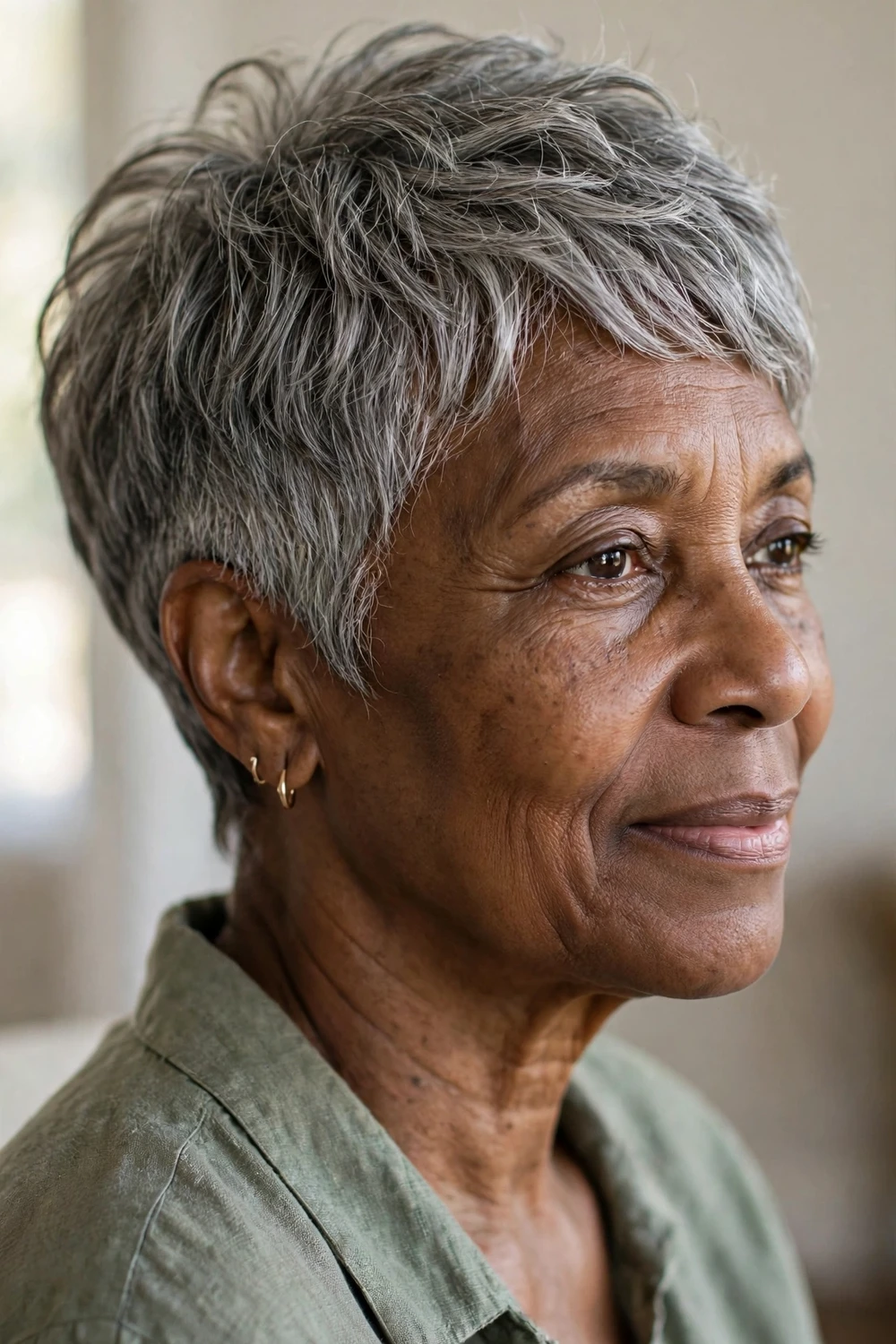
The pixie bob keeps the sides and back short like a pixie while the top and front stay long like a bob. That contrast builds dimension that fine hair needs. The longer top can be styled smooth or piece-y, and the short back keeps the neck cool. Trims every 4 to 6 weeks keep the shape from growing out unevenly. It suits women ready for a shorter cut that still has styling options.
Try this: Warm a pea-sized amount of pomade in your hands and pinch the top sections for piece-y texture.
15. Graduated Bob with Nape Undercut
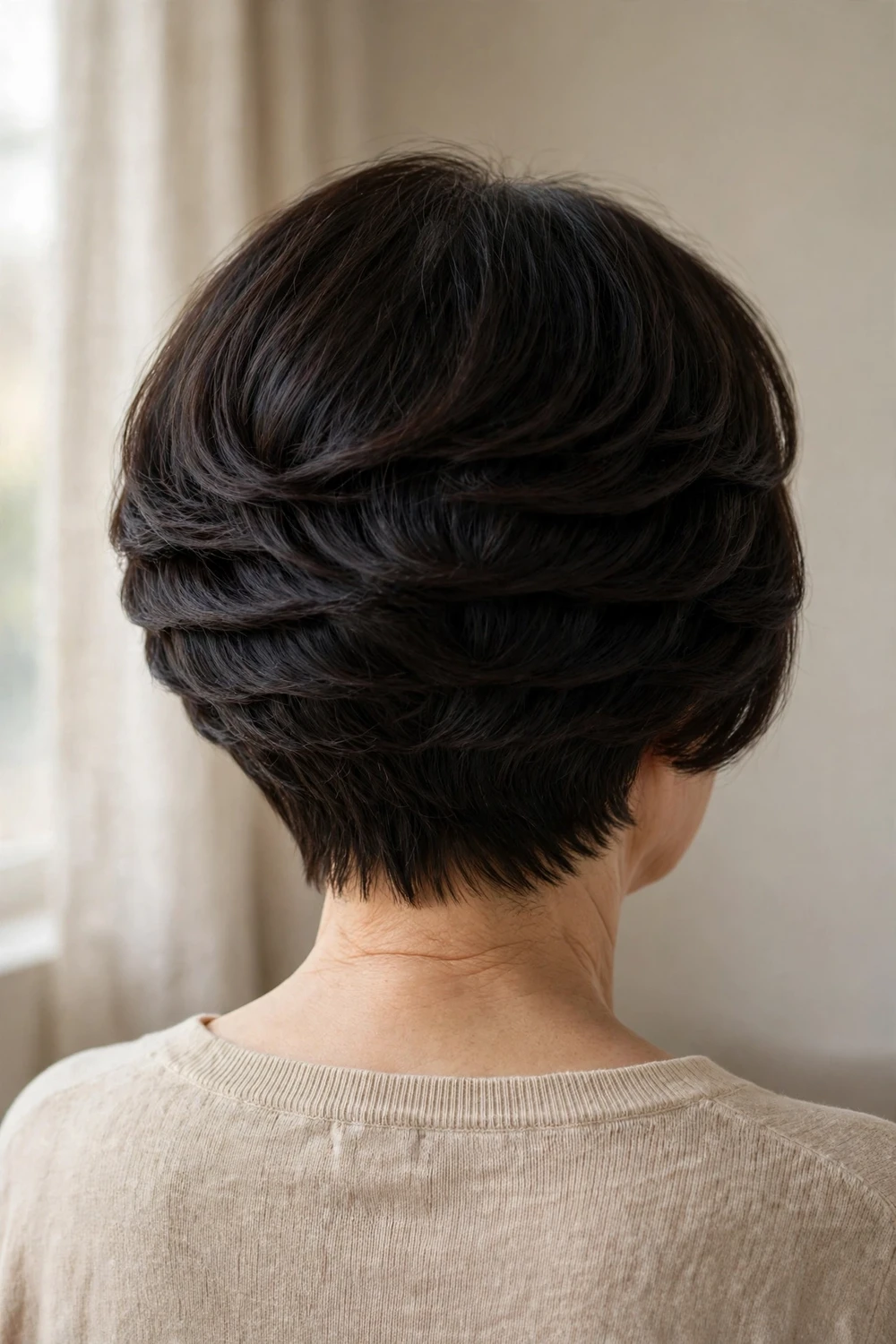
An undercut at the nape removes hair underneath the top layers, so the crown stacks higher with less effort. The short section hides under the longer top when the hair is down, so the look stays classic from the front. Blow drying gets faster because there is less hair to dry. The undercut needs trimming between full cuts to keep its lift. This suits very fine hair that refuses to hold volume on its own.
Try this: Ask your stylist to keep the undercut subtle at first, since you can always take more off at the next visit.
16. Shaggy Bob with Lots of Texture
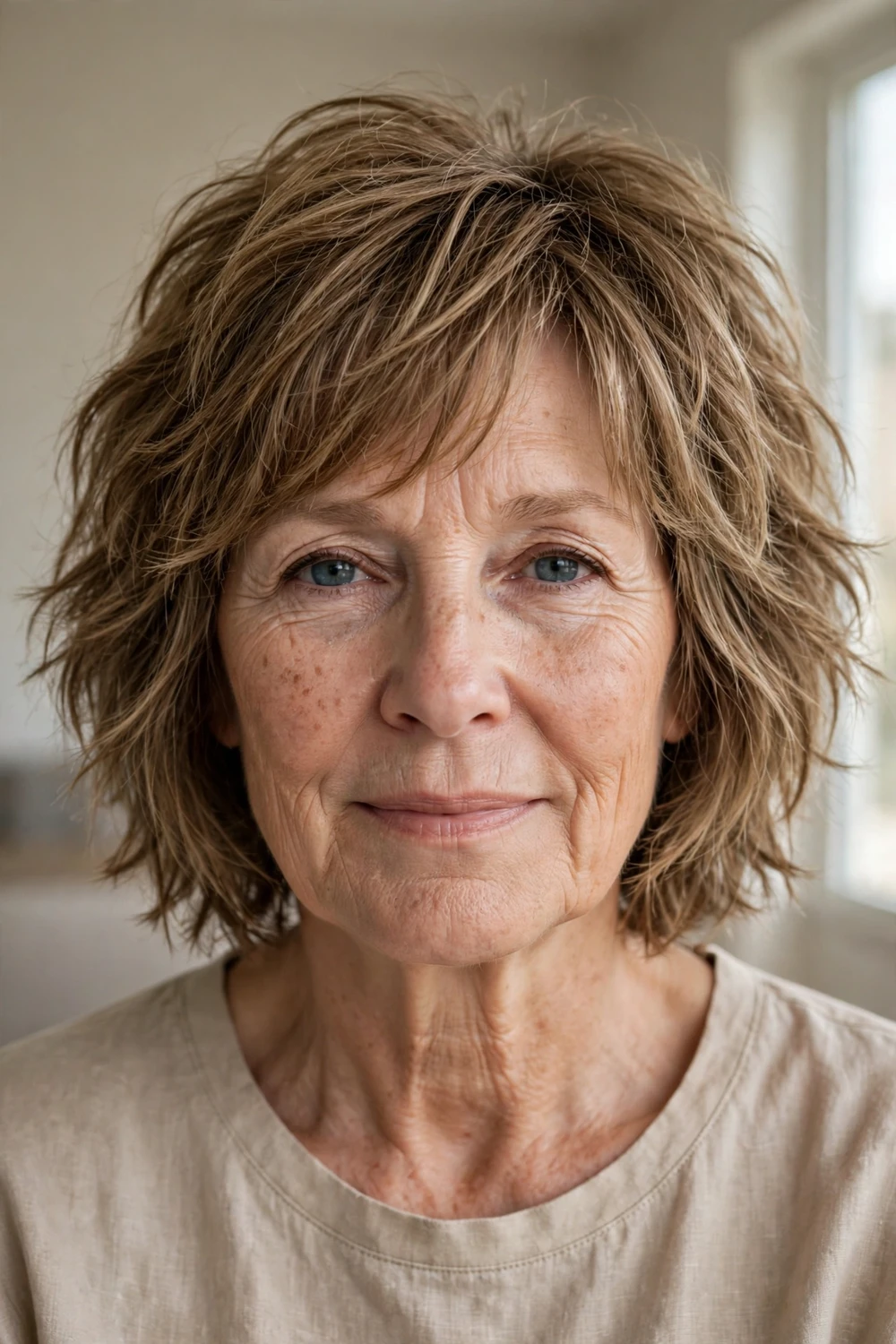
Multiple choppy layers cut at different lengths stop fine hair from lying in one flat sheet. The intentionally undone finish means this cut looks better the less you fuss with it. Texturizing products separate the layers into pieces that read as thicker. This youthful style also disguises thinning areas better than sleek cuts do. It suits naturally wavy or slightly textured hair especially well. Skip heavy serums here, since they pull the layers together and undo the texture. A salt spray on damp hair is usually all it needs.
Try this: Let the hair air dry, then shake dry shampoo into the roots and tousle for lived-in volume.
If shaggy shapes appeal to you, browse shaggy bob for fine hair for women over 50 for more layered, textured options.
17. Concave Bob with Curved Lines
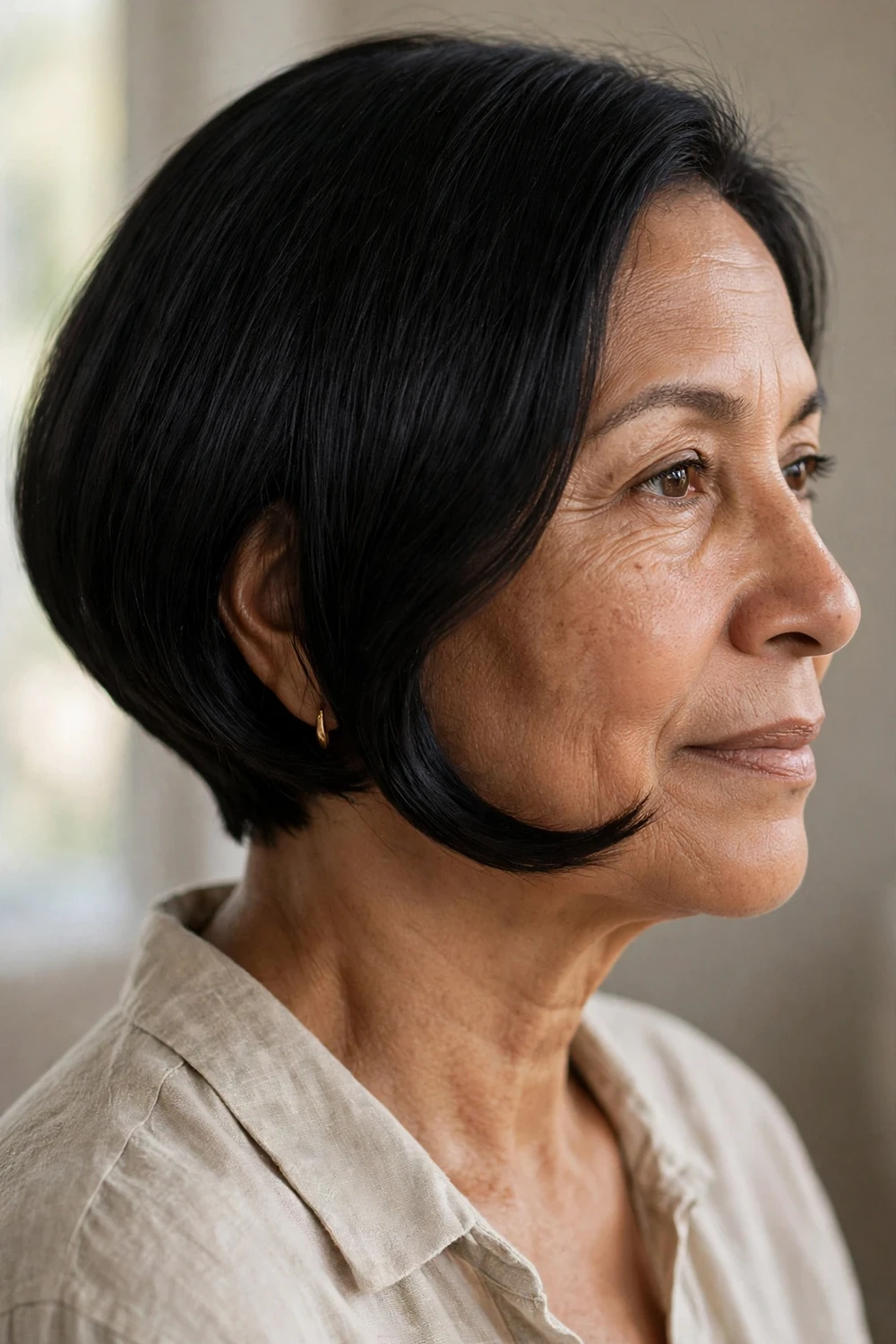
The concave bob arcs from short at the back to longer at the front in one smooth curve. That curve creates a striking silhouette that does not depend on thickness to make an impact. Fine hair suits this cut because the geometry itself provides the visual interest. It looks best blown straight so the curved line stays clean. This is a precision cut, so it needs a skilled stylist and regular trims.
Try this: Blow dry straight with a paddle brush, then run a flat iron over the front pieces to sharpen the arc.
18. Bob with Curtain Bangs

Curtain bangs part in the middle and sweep to each side at cheekbone length, framing the face like a curtain. They need less density than full bangs, which makes them a smart pick for fine hair. The bangs blend into the bob length instead of sitting apart from it. This style works straight or wavy and softens angular features. Trim the bangs between cuts so they never fall past the cheekbones.
Try this: Blow dry the bangs forward with a round brush, then split them in the center with your fingers for a soft part.
19. Voluminous Blow-Dried Bob
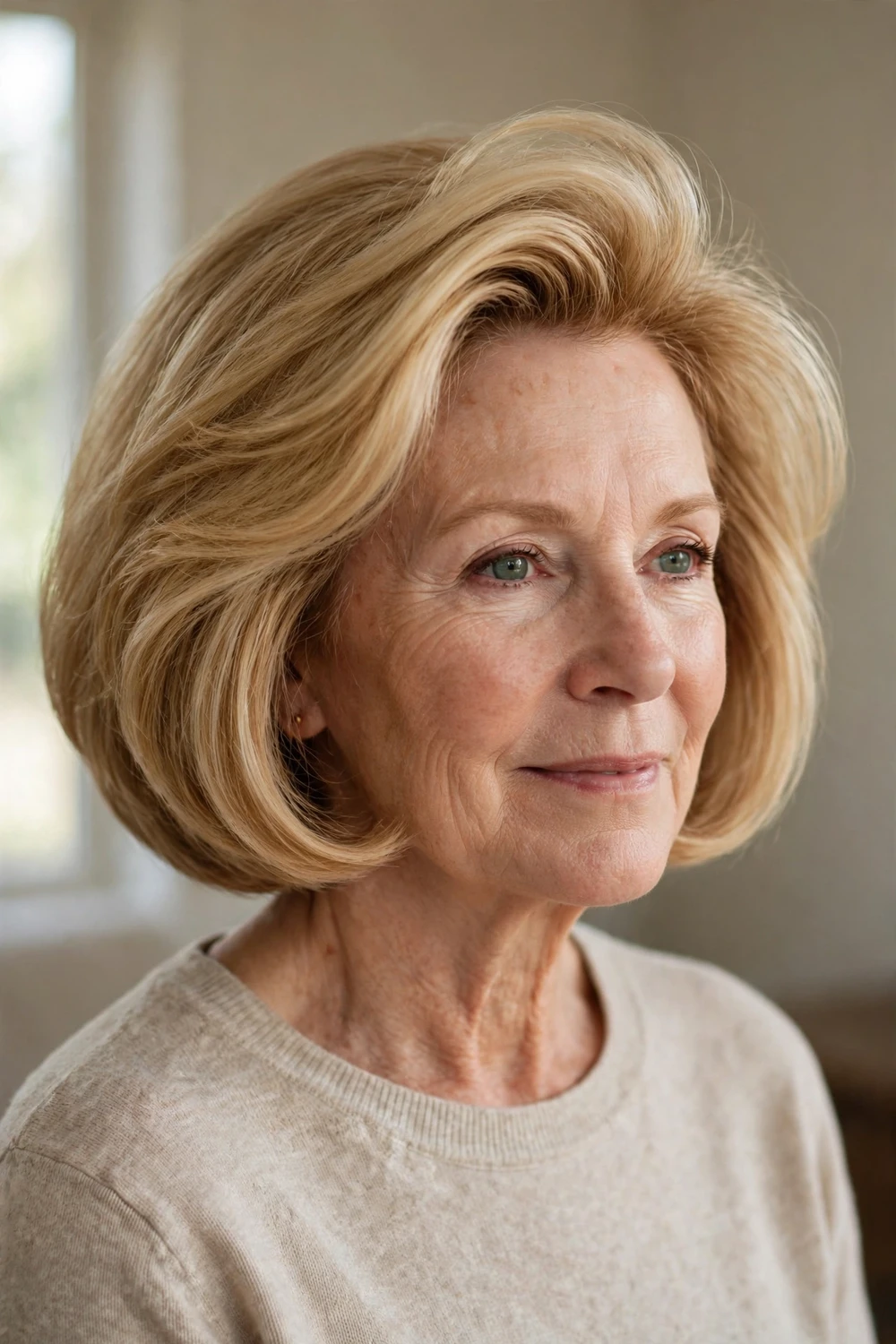
This bob is cut with internal layers that lift away from the scalp, then styled with a round brush for maximum root height. Volumizing products on damp roots build the foundation before heat ever touches the hair. Directing the airflow upward at the roots creates the lift, and a cool shot at the end locks it in. The result reads polished enough for events but works for everyday wear too.
Try this: Flip your head upside down while rough drying the roots, then flip back up to smooth the lengths with a round brush.
20. Piecey Textured Bob
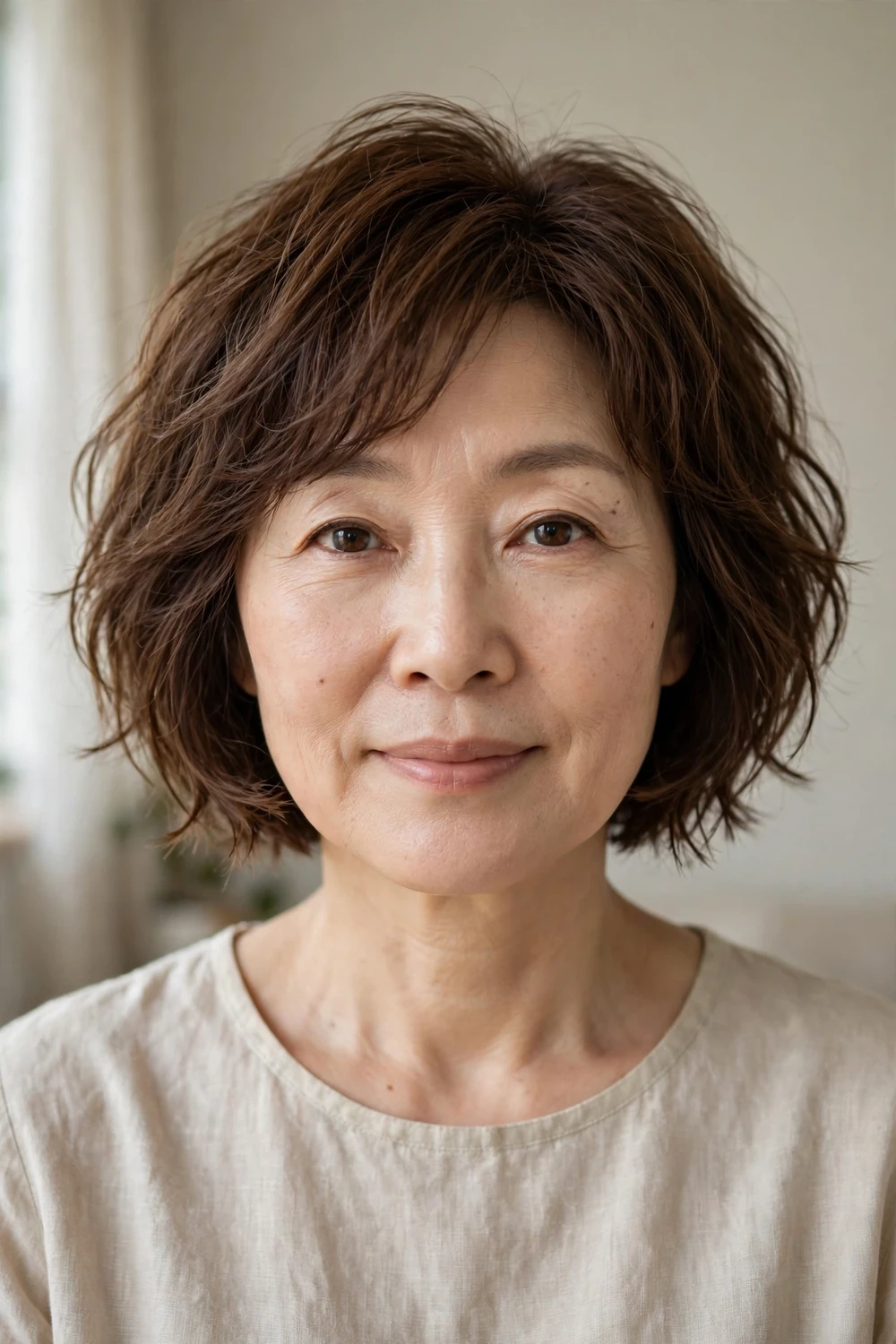
Piece-y separation breaks the hair into defined strands that create the look of more hair. Paste, clay, or wax worked through dry ends gives the separation, but a little goes a long way with fine hair. Too much product turns piece-y into greasy. This matte, modern finish works on straight, wavy, or slightly curly texture. The cut underneath should have texturized ends so the product has something to work with.
Try this: Use half the product you think you need, and add more only where the pieces look too soft.
21. Layered Bob with Face-Framing Pieces
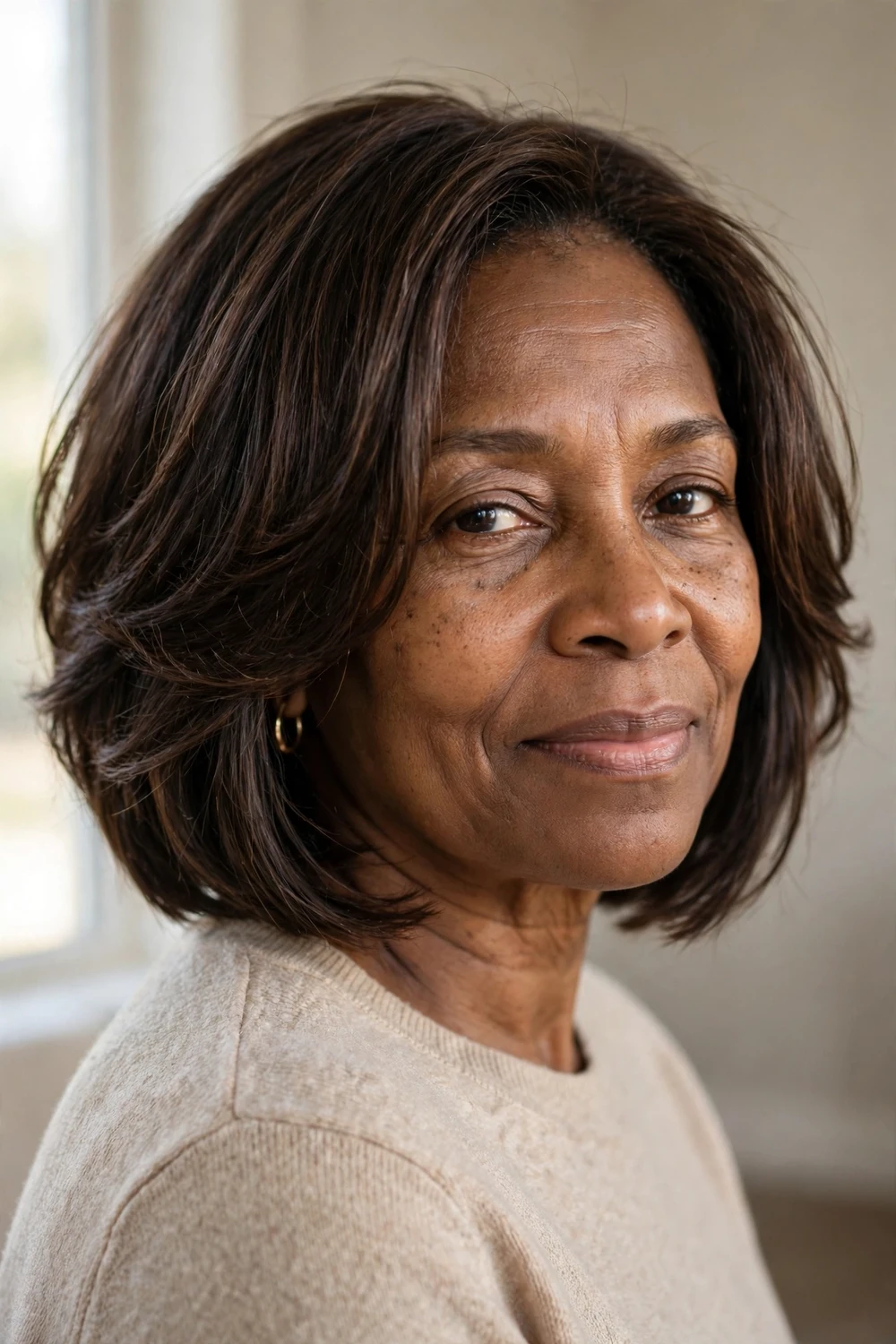
Shorter pieces around the face start at the cheekbones and blend into the bob length, pulling focus to the center of the face. The rest of the cut keeps enough density for fine hair while the front adds movement. These pieces can tuck behind the ears or sweep forward for different looks. Ask your stylist to customize the starting point of the layers to your face shape. Longer face-framing pieces suit round faces, while shorter ones open up longer faces. This is also a good grow-out strategy if you are moving away from bangs.
Try this: Curl just the face-framing pieces away from the face with a 1-inch iron for extra dimension.
22. Blunt Bob with Subtle Highlights
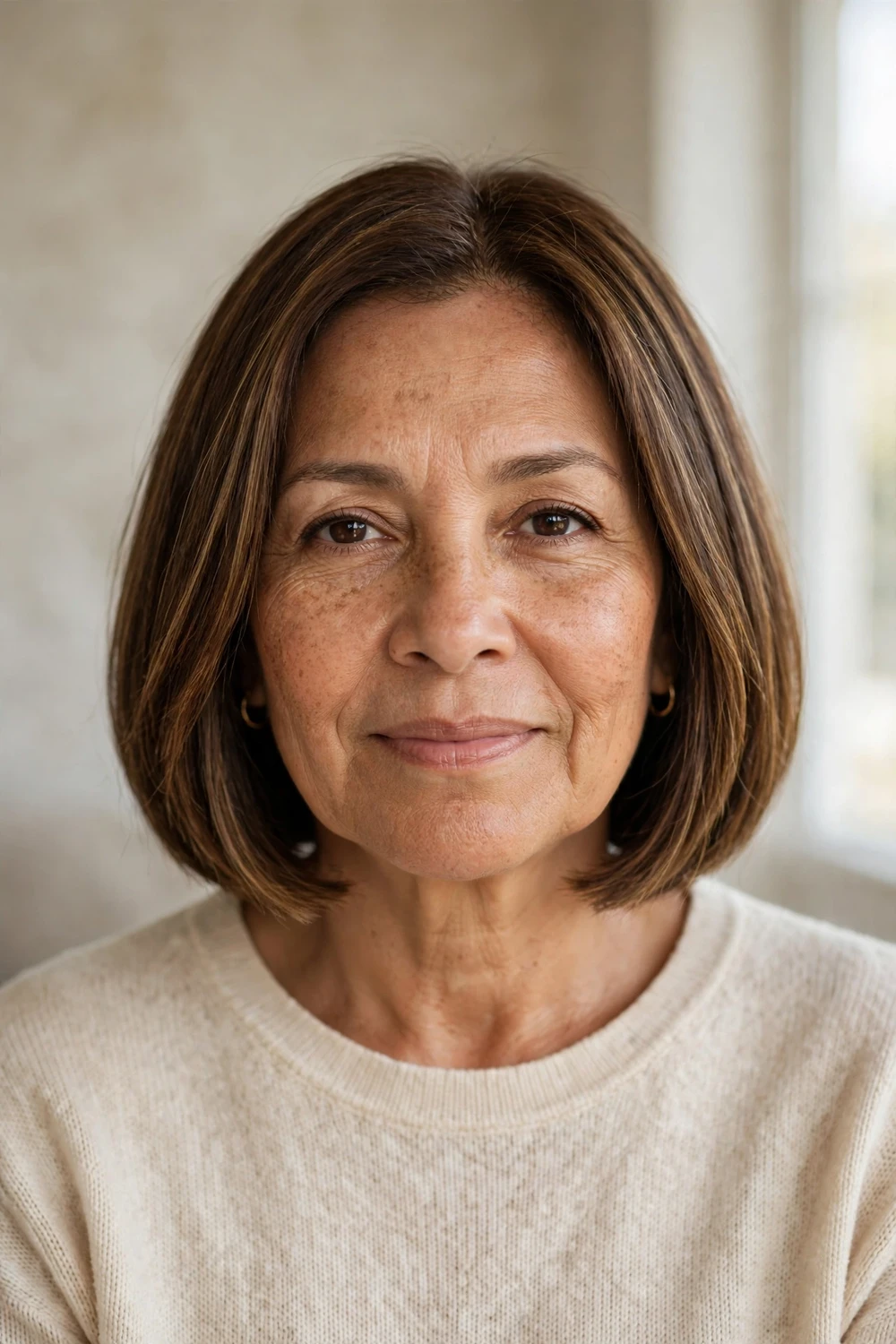
Highlights woven through a blunt bob create depth that makes fine hair look fuller. The contrast between lighter and darker pieces tricks the eye into seeing more hair. Subtle, natural-looking color works better than bold streaks after 50. Balayage or hand-painted placement grows out softly so you are not tied to constant touch-ups. Match the tones to your skin for the most flattering result. Keep the lightest pieces around the face and crown, where the eye goes first. Gloss treatments between appointments keep the color fresh.
Try this: Ask your colorist for fine, scattered highlights rather than chunky foils to keep the effect natural.
23. Wispy Layered Bob

Wispy layers use slide-cutting to create feather-light ends that move with every turn of the head. The delicate texture keeps fine hair from looking heavy while staying full enough to avoid stringiness. Light products and minimal heat preserve the airy quality. This cut pairs well with soft bends through the lengths. It suits women with delicate features who want a gentle, feminine shape. A boar-bristle brush smooths the surface without flattening the layers. Avoid thick pomades, which collapse the airy finish.
Try this: Mist a light-hold hairspray from arm’s length instead of close up, so the layers stay airy.
24. Micro Bob with Blunt Ends
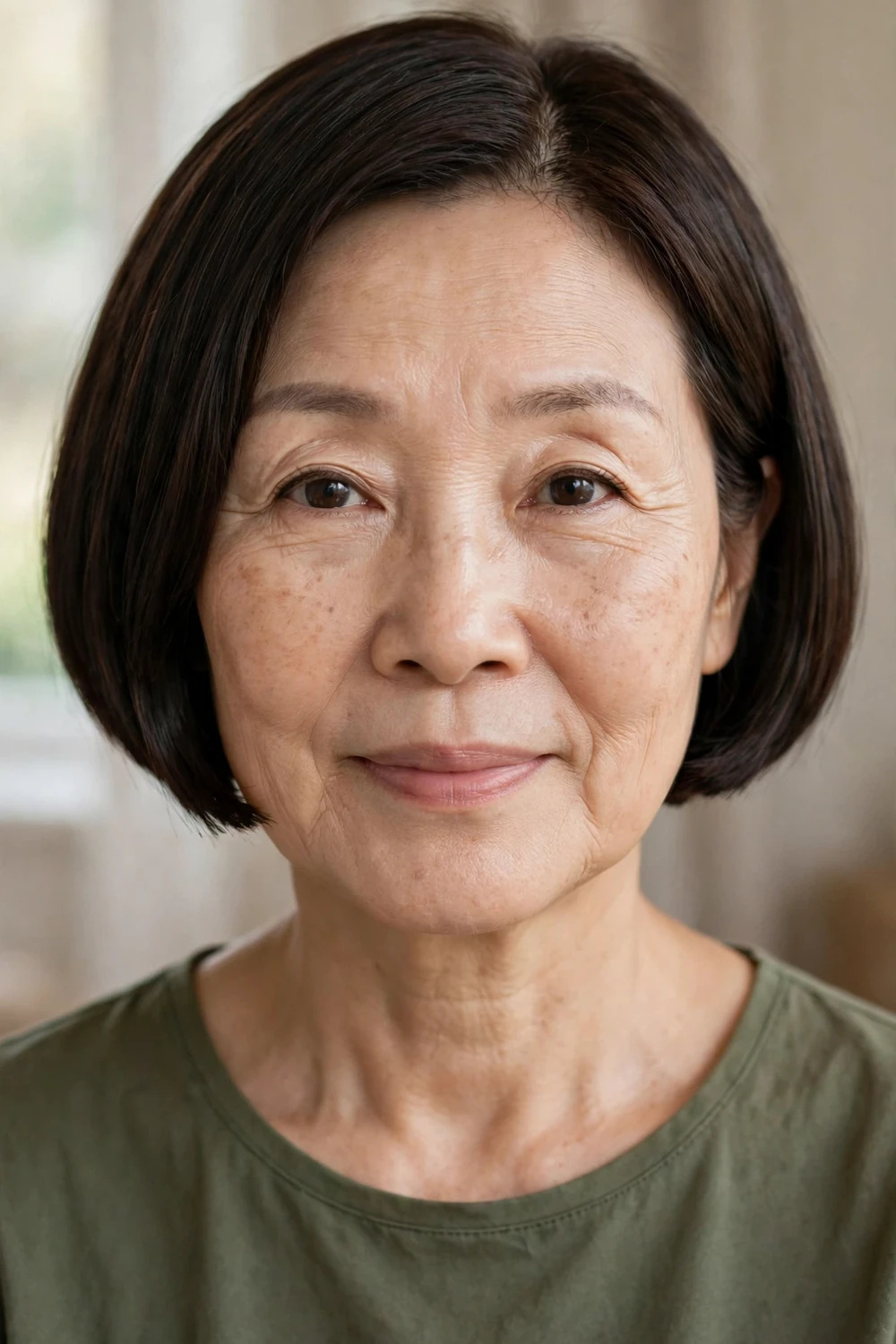
The micro bob sits at or above the chin, and that short length removes enough weight for fine hair to hold its own volume. Blunt ends at this length create a strong shape that needs no thickness to work. Styling takes minutes, and the cut keeps hair off the neck. This bold length suits strong cheekbones and jawlines. It also makes a confident statement without needing any styling tricks. It grows out into a classic chin bob, so the awkward phase is short. Pair it with statement earrings since the ears stay visible.
Try this: Tuck one side behind the ear to show off earrings and create instant asymmetry.
25. Precision Cut Geometric Bob
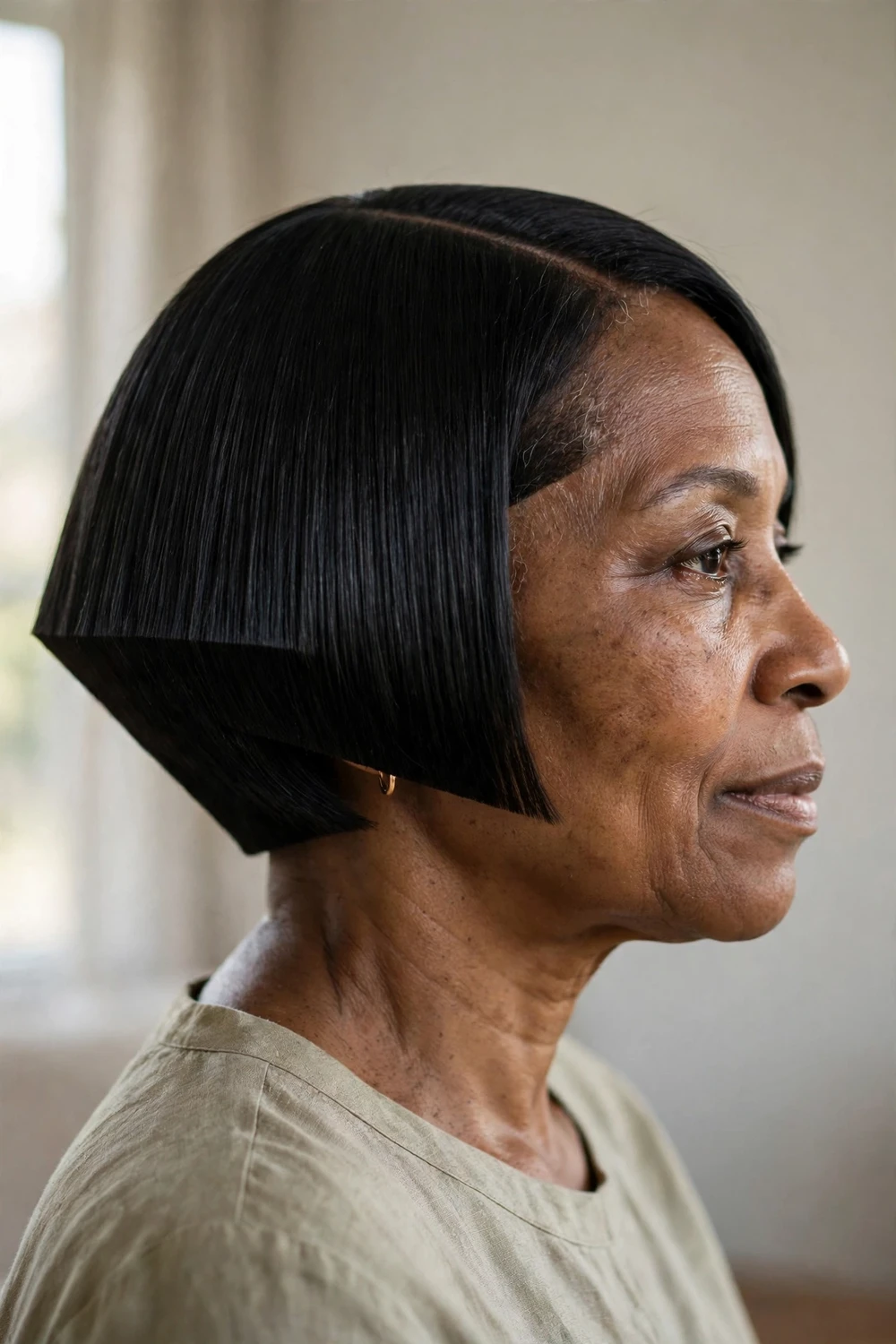
Sharp lines and exact angles give this bob its impact, and shape does the work that thickness cannot. Fine hair suits geometric cuts because the design reads clearly without bulk. Common variations include diagonal front lines and contrasting lengths. The style must be blown straight to show the lines, and trims keep them crisp. It suits women who want a bold, artistic cut with real polish. Book trims every six weeks without fail, since grown-out angles lose the effect fast. A shine spray finishes the look without weighing it down.
Try this: Smooth the whole head with a flat iron in the morning, since even slight waviness blurs the geometric lines.
26. Soft Rounded Bob with Bangs

A rounded silhouette plus matching bangs creates one cohesive, feminine shape. The curve adds width where fine hair falls flat, and the bangs fill in the front for extra density. This classic pairing suits nearly every face shape when the stylist customizes the roundness. A round brush and dryer build the curve and lift the crown in one pass. It reads polished for work and soft enough for weekends. Keep the bangs slightly longer at the temples so they blend into the sides. This cut also hides a high forehead gracefully.
Try this: Dry the bangs first while they are still damp, before they set into a part you did not plan.
For more bang pairing ideas, see layered bob with bangs for women over 50 for layered cuts that work with fringe.
27. Stacked Bob with Nape Detail
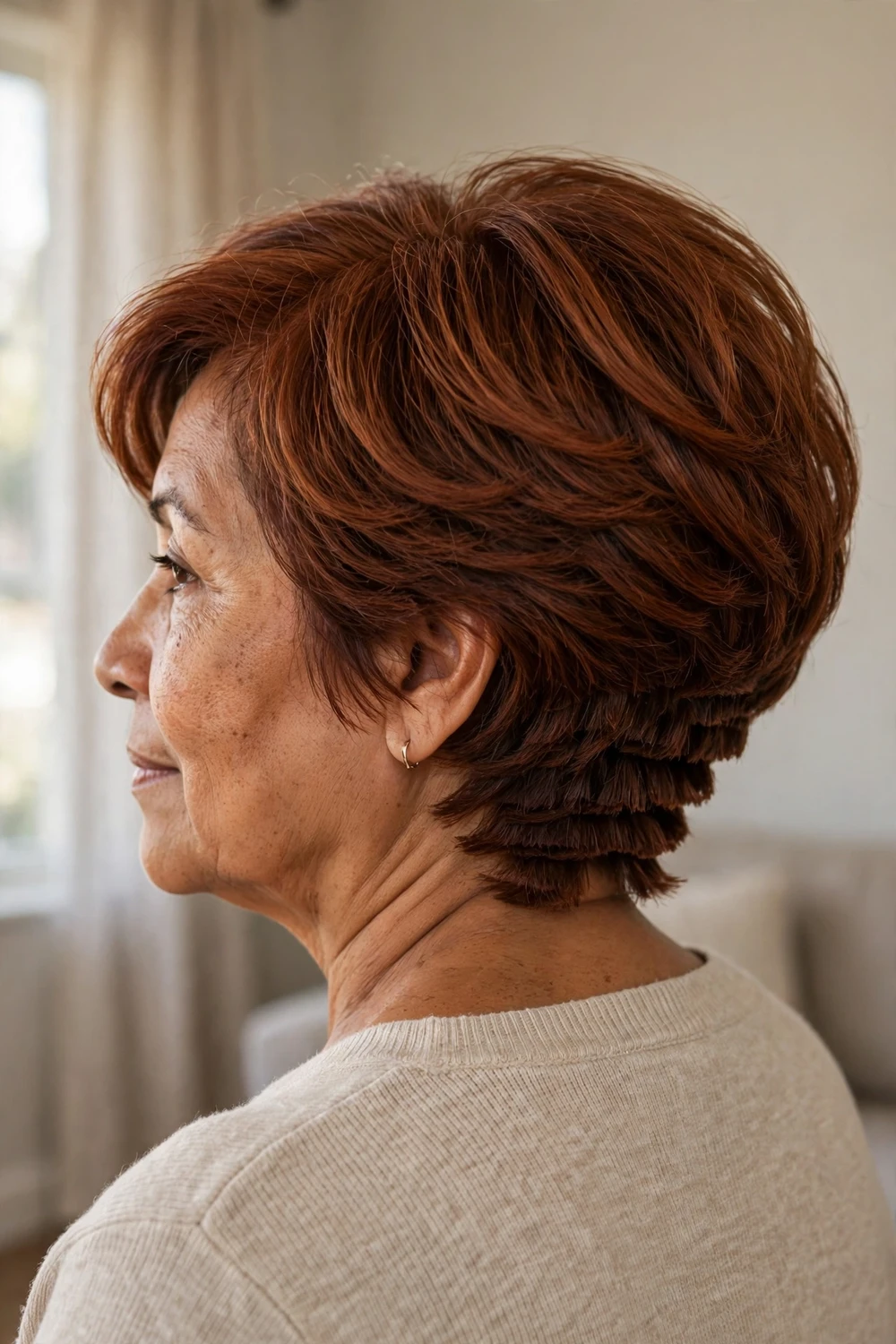
This stacked bob puts the interest at the nape with detailed layering or an undercut design that shows when the top layers move. The back stacking builds the same crown volume as a classic stacked bob, while the nape work keeps the cut interesting from behind. It suits women ready to show off the neckline after years of longer hair. The detail needs precision cutting and regular upkeep to stay sharp.
Try this: Wear a low neckline or updo-style tuck on one side when you want the nape detail to show.
28. Chin-Grazing Bob with Soft Waves
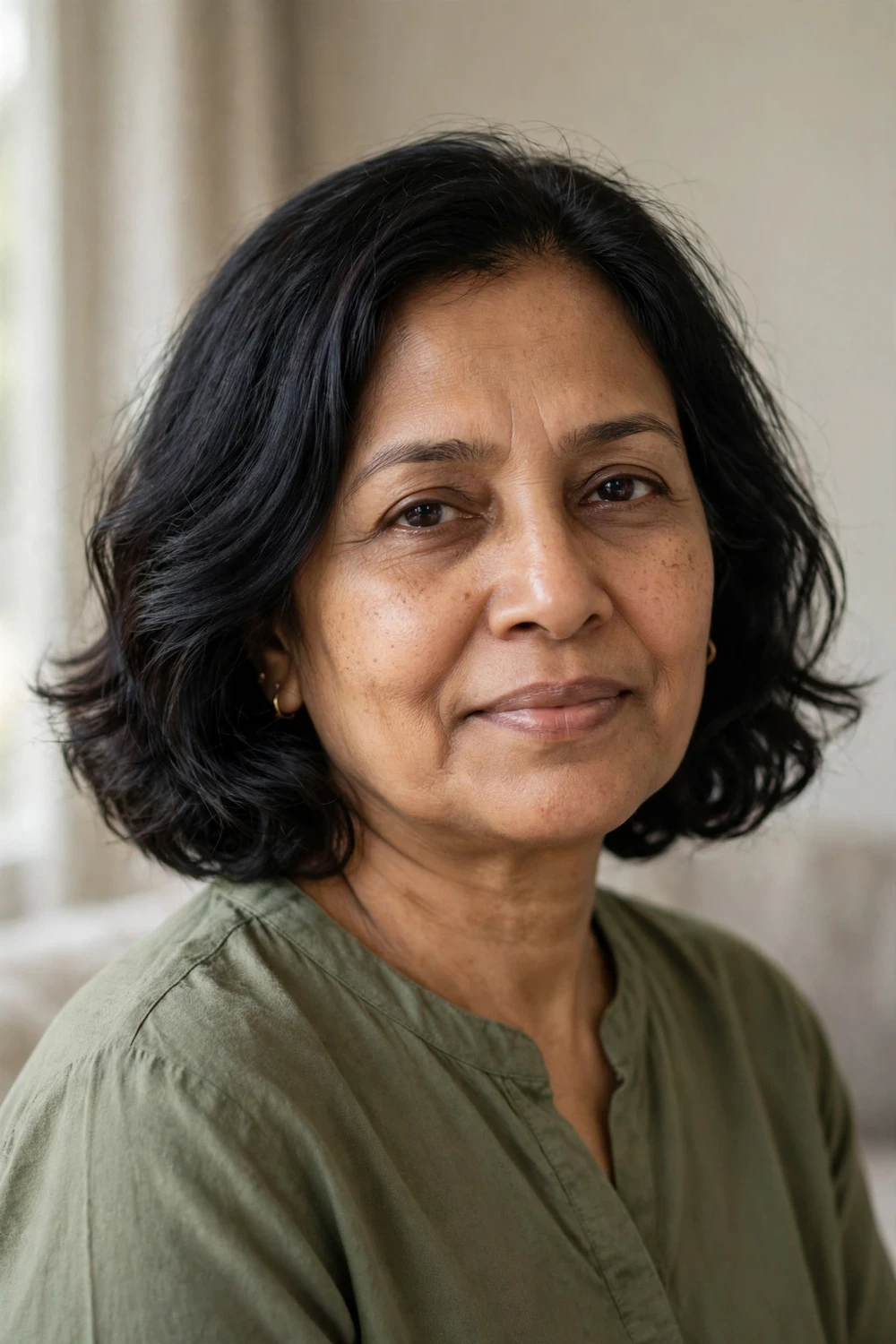
Chin length flatters most face shapes by highlighting the jawline, and loose waves add the width fine hair lacks. Create the waves with a curling iron, flat iron, or hot rollers depending on your skill. Keep the wave pattern loose and flowing rather than tight. A light-hold hairspray keeps the waves going through the day without stiffness. This balanced style sits between structured and relaxed. Let the waves cool fully before touching them so they set properly. Brushing them out once cool gives a soft, vintage bend.
Try this: Wrap sections around a 1.25-inch iron, leaving the ends out for a modern, undone wave.
29. Classic French Bob

The French bob ends at or just below the earlobe with straight-across bangs for a timeless Parisian shape. The short length makes fine hair read thicker, and the clean shape needs little styling. It works best on straight or slightly wavy hair that can hold the smooth finish. The bangs should graze the eyebrows. This cut has stayed in style for decades, so it never looks dated. It suits petite features especially well since nothing overwhelms the face. A smoothing balm keeps the short lengths sleek between washes.
Try this: Trim the bangs yourself between salon visits with sharp shears, cutting less than you think you need.
30. Textured Bob with Babylights
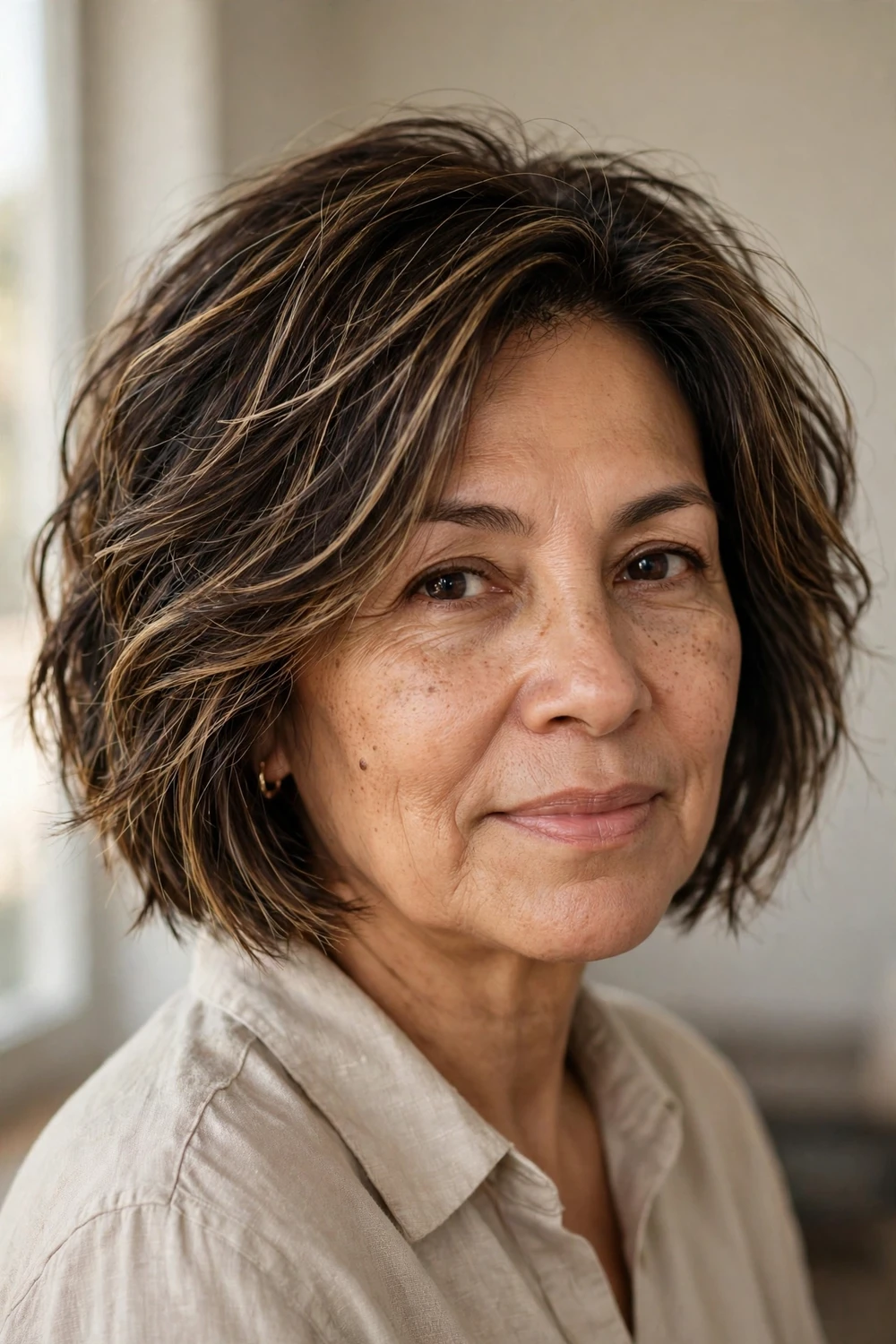
Babylights are ultra-fine highlights scattered through the hair to mimic natural sun lightening. On a textured bob, the color variation deepens the piece-y separation and makes fine hair look substantially fuller. The fine placement grows out softly, so appointments stretch further apart. This works with any base color and can add warmth, coolness, or neutral shine. It suits women who want dimension without obvious color. Ask for the babylights to be finest around the part line, where regrowth shows first. This keeps the grow-out nearly invisible.
Try this: Use a purple or blue toning shampoo once a week if your babylights pull warm between appointments.
Short Bob Haircuts Comparison at a Glance
| Style | Length | Upkeep | Best For |
|---|---|---|---|
| Classic Blunt Bob | Chin | Trim every 6-8 weeks | Maximum density at the ends |
| Textured Layered Bob | Chin | Trim every 8 weeks | Low-effort movement |
| Stacked Bob for Volume | Nape to chin | Trim every 6 weeks | Flat crowns |
| Angled Bob with Shorter Back | Nape to chin | Trim every 6-8 weeks | Slimming the jawline |
| Inverted Bob with Graduated Layers | Nape to chin | Trim every 6 weeks | Polished volume |
| Choppy Bob with Razored Ends | Chin | Trim every 8 weeks | Modern edge |
| Asymmetrical Bob | Chin, uneven | Trim every 6 weeks | Drawing eyes from thin spots |
| Chin-Length Bob with Side-Swept Bangs | Chin | Bang trims between cuts | Softening the forehead |
| Sleek Straight Bob with Middle Part | Chin | Trim every 6-8 weeks | Naturally straight hair |
| Wavy Bob with Natural Texture | Chin | Trim every 8 weeks | Natural wave patterns |
| Rounded Bob with Soft Layers | Chin | Trim every 6-8 weeks | Adding width |
| Bob with Feathered Ends | Chin | Trim every 8 weeks | Soft, light ends |
| Side-Parted Bob with Volume | Any bob length | No extra upkeep | Instant root lift |
| Textured Pixie Bob | Above chin | Trim every 4-6 weeks | Shorter cuts with options |
| Graduated Bob with Nape Undercut | Nape to chin | Undercut trims between cuts | Stubborn flat hair |
| Shaggy Bob with Lots of Texture | Chin | Trim every 8 weeks | Disguising thinning areas |
| Concave Bob with Curved Lines | Nape to chin | Trim every 6-8 weeks | Architectural style |
| Bob with Curtain Bangs | Chin | Bang trims between cuts | Face framing |
| Voluminous Blow-Dried Bob | Chin | Daily styling | Event-ready fullness |
| Piecey Textured Bob | Chin | Trim every 8 weeks | Matte, modern finish |
| Layered Bob with Face-Framing Pieces | Chin | Trim every 6-8 weeks | Highlighting features |
| Blunt Bob with Subtle Highlights | Chin | Color every 8-12 weeks | Color-based fullness |
| Wispy Layered Bob | Chin | Trim every 8 weeks | Airy movement |
| Micro Bob with Blunt Ends | Above chin | Trim every 6 weeks | Bold, minimal styling |
| Precision Cut Geometric Bob | Chin | Trim every 6 weeks | Sharp, artistic lines |
| Soft Rounded Bob with Bangs | Chin | Bang trims between cuts | Classic femininity |
| Stacked Bob with Nape Detail | Nape to chin | Trim every 6 weeks | Back-view interest |
| Chin-Grazing Bob with Soft Waves | Chin | Trim every 8 weeks | Romantic volume |
| Classic French Bob | Earlobe | Bang trims between cuts | Timeless chic |
| Textured Bob with Babylights | Chin | Toning between colors | Natural dimension |
How to Choose the Right Short Bob for You
Start with your face shape. Round faces gain from angles and asymmetry, which lengthen the look of the face. Square faces soften with curved shapes like the rounded bob. Oval faces can wear nearly any bob on this list.
Next, be honest about your styling time. If you want wash-and-go, pick the textured layered bob or the shaggy bob. If you enjoy daily styling, the voluminous blow-dried bob or the precision geometric bob will reward the effort.
Talk to your stylist about density, not just length. Ask where they plan to keep weight and where they plan to remove it. A good stylist will explain why each choice suits your hair.
For a broader look at bob options for thin textures, read bob hairstyles for fine hair to compare more cuts before your appointment.
Mistakes to Avoid
The most common mistake is asking for too many layers. Heavy layering thins out the ends and leaves fine hair looking stringy. Internal texture is fine, but the perimeter should stay solid.
Skipping trims is another one. A bob loses its shape as it grows, and an overgrown bob drags fine hair flat. Book the next trim before you leave the salon.
Heavy products work against you. Thick creams and oils flatten fine roots. Use lightweight formulas and apply them to the mid-lengths and ends, not the scalp.
Finally, do not fight your natural texture. A wavy bob styled straight every day takes more damage than one that works with the wave. Pick a cut that suits the hair you actually have.
Frequently Asked Questions
What is the best short bob haircut for fine hair over 50?
The stacked bob and the classic blunt bob are the two most reliable picks. The stacked bob builds height at the crown through graduated layering, while the blunt bob creates a solid edge that makes fine hair look denser. Both need trims every 6 to 8 weeks to hold their shape.
Should women over 50 with fine hair get layers in a bob?
Light internal layers work well, but heavy layering thins out fine hair and makes the ends look stringy. Ask your stylist for texture through the mid-lengths while keeping the perimeter line solid. Slide-cutting and point-cutting create soft layers without removing needed weight.
How short should a bob be for fine hair over 50?
Most flattering lengths fall between the earlobe and the chin. Shorter lengths remove weight so the roots can lift, and chin length frames the jawline well. Going above the chin with a micro bob can work for fine hair, but it suits stronger facial features best.
Do bangs work with a short bob for fine hair over 50?
Yes, as long as they stay light. Side-swept bangs, curtain bangs, and wispy bangs all add front density without overwhelming fine hair. Avoid thick, heavy bangs, which can make thin hair look sparse by comparison. Keep bang trims regular so they hold their shape.
How do I add volume to a short bob with fine hair?
Start with volumizing mousse or root-lifting spray on damp hair, then blow dry the roots upward with a round brush. A deep side part creates instant lift by shifting weight to one side. Dry shampoo at the roots on day two refreshes volume without washing.
Final Thoughts
Fine hair over 50 does not limit your options. It just rewards a smarter cut. Pick one of these 30 bobs, bring photos to your stylist, and keep the trims regular. The right shape will do more for your hair than any product on the shelf.

