


Auburn fall hair colors hit a sweet spot that few other shades can touch. They carry the fire of red hair and the depth of brunette in one strand, which makes them the natural pick when the weather cools and the leaves turn. A single formula can shift between deep brown-red indoors and copper glow in sunlight.
I have spent years watching how red tones shift between summer and autumn, and auburn is the one shade that never looks out of place from September through November. Below you will find 30 distinct takes on the color, from barely-there glosses to dramatic jewel-toned reds, plus guidance on picking the right depth, avoiding common mistakes, and keeping the color rich between salon visits.
Quick answer: Auburn fall hair colors blend red and brown into warm, seasonal shades that flatter most skin tones and hair types. This guide covers 30 ideas, from classic rich auburn to black cherry and pumpkin spice, so you can find one that fits your natural base, maintenance level, and style.
Quick Takeaways
- Auburn sits between red and brown, so it works with both warm and neutral skin tones.
- Deeper, brunette-based auburns need the least upkeep; brighter coppers fade faster.
- Shadow roots and lived-in placement cut down on touch-ups through the season.
- A color-safe shampoo and a weekly gloss keep red pigments from turning dull.
- Most auburn shades need no bleach on medium or dark brown hair.
Why Auburn Owns Fall
Auburn reads like the season itself. Red-brown tones echo rust, copper, chestnut, and wine, so the color sits comfortably against autumn clothing palettes: camel, olive, chocolate, navy, and black. Few shades pair that effortlessly with a fall wardrobe.
It is also practical. Red pigment fades faster than brown, but auburn carries enough brown underneath to mask fading between appointments. A gloss every few weeks refreshes the shine, and the color stays wearable even as it softens. That combination of drama and forgiveness is why auburn keeps coming back every autumn.
1. Classic Rich Auburn

Classic rich auburn is the reference point for the whole family: medium brunette grounded, with an unmistakable red cast that deepens in sunlight. It looks almost brown indoors, then reveals copper and mahogany tones outdoors, which gives the color a two-faced character that never feels flat.
This is the safest entry point if you are moving from brunette toward red for the first time. Ask your colorist for a level 4 or 5 base with warm red reflect, and request a clear gloss on top for shine. It suits long waves especially well, since each bend exposes another layer of brown and red.
Try this: schedule a clear gloss 3 weeks after the appointment to keep the red tones bright. Difficulty: easy | Cost: low
2. Cinnamon Auburn
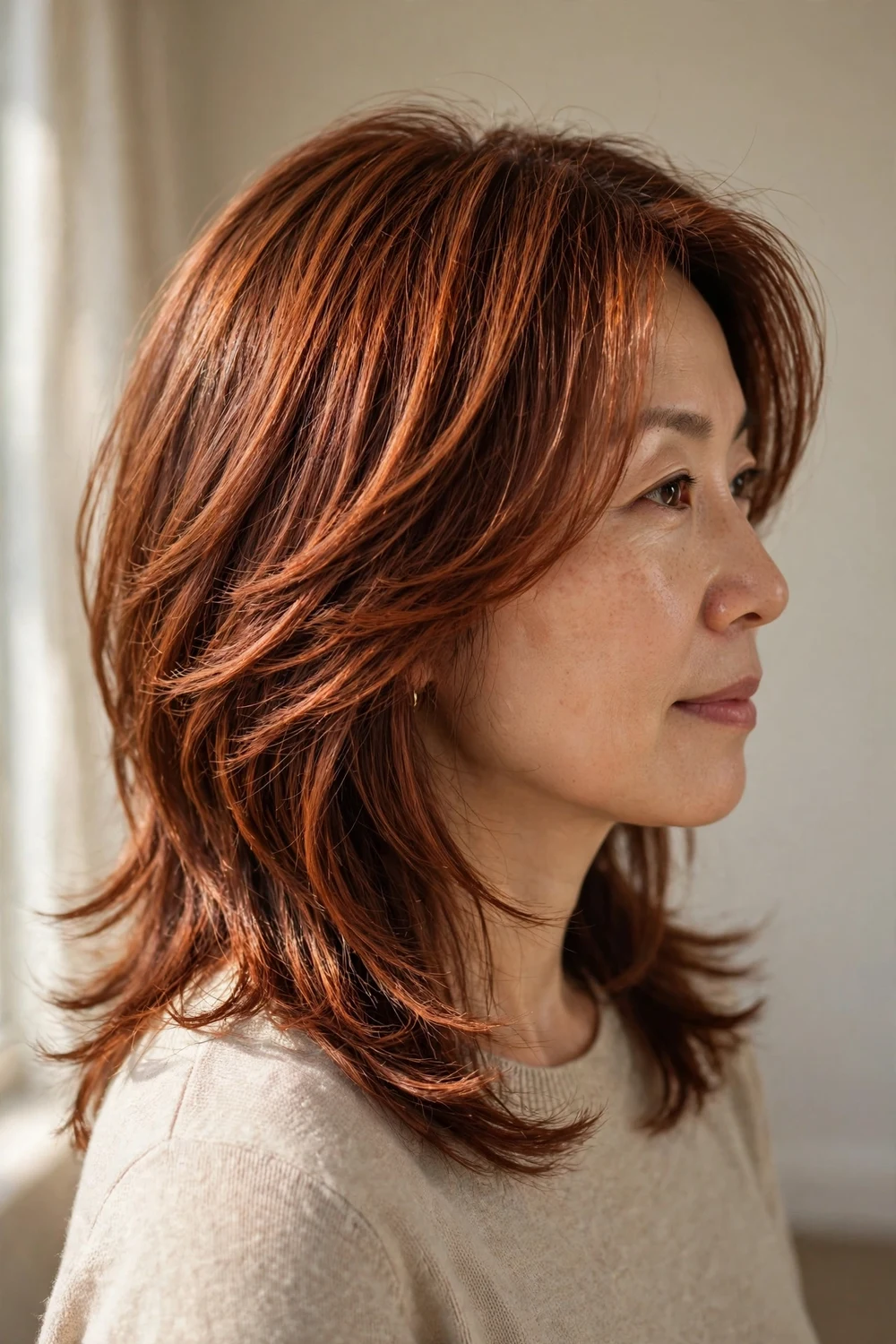
Think of cinnamon auburn as auburn with spice. The base stays brown, but cinnamon and soft copper warmth run through it, so the hair reads brunette at first glance and turns reddish as it moves. Nothing about it screams copper, which makes it one of the most modern takes on the shade right now.
Long layers or a shoulder-length cut show this color best, since movement exposes the warm tones hiding in the base. If your natural hair is medium or dark brown, you may not need much lightening at all, which keeps the grow-out soft and the maintenance low.
Try this: ask for golden-copper undertones instead of orange ones to keep it deep and wearable. Difficulty: easy | Cost: low
3. Dark Chocolate Auburn
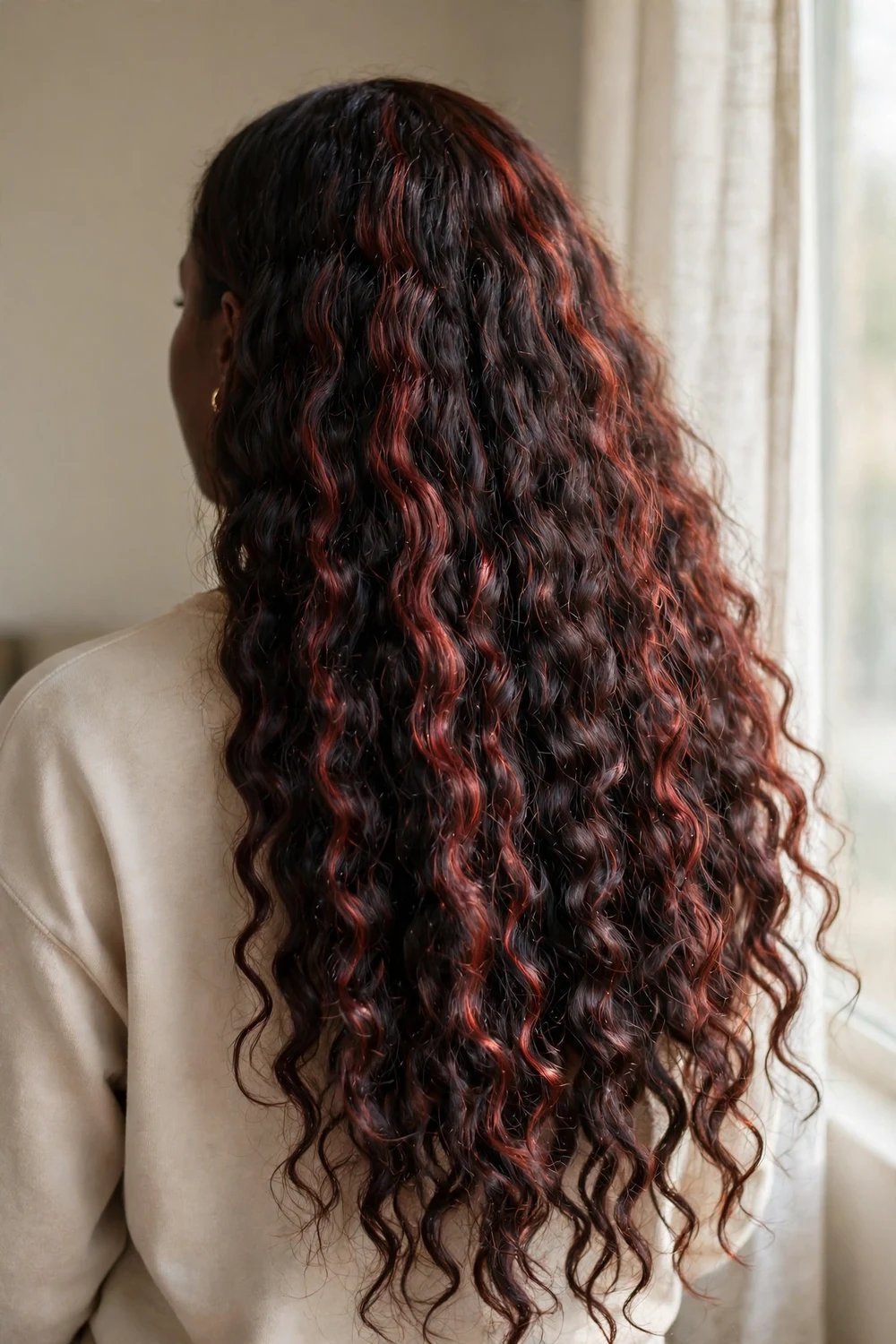
Want the red mood without giving up your deep brunette? Dark chocolate auburn keeps the base nearly espresso, with muted auburn pigment sitting over it like a warm filter. In soft indoor light it passes as brunette; step outside and the red undertones come forward.
Thick hair benefits most from this one, since the auburn reflections add movement and dimension without any obvious highlights. Keep the roots very deep, warm up the mid-lengths slightly, and finish with a glossing treatment so the surface looks almost liquid.
Try this: pair it with a sleek blowout or big curls so the shine does the talking. Difficulty: easy | Cost: low
4. Whiskey Copper Auburn
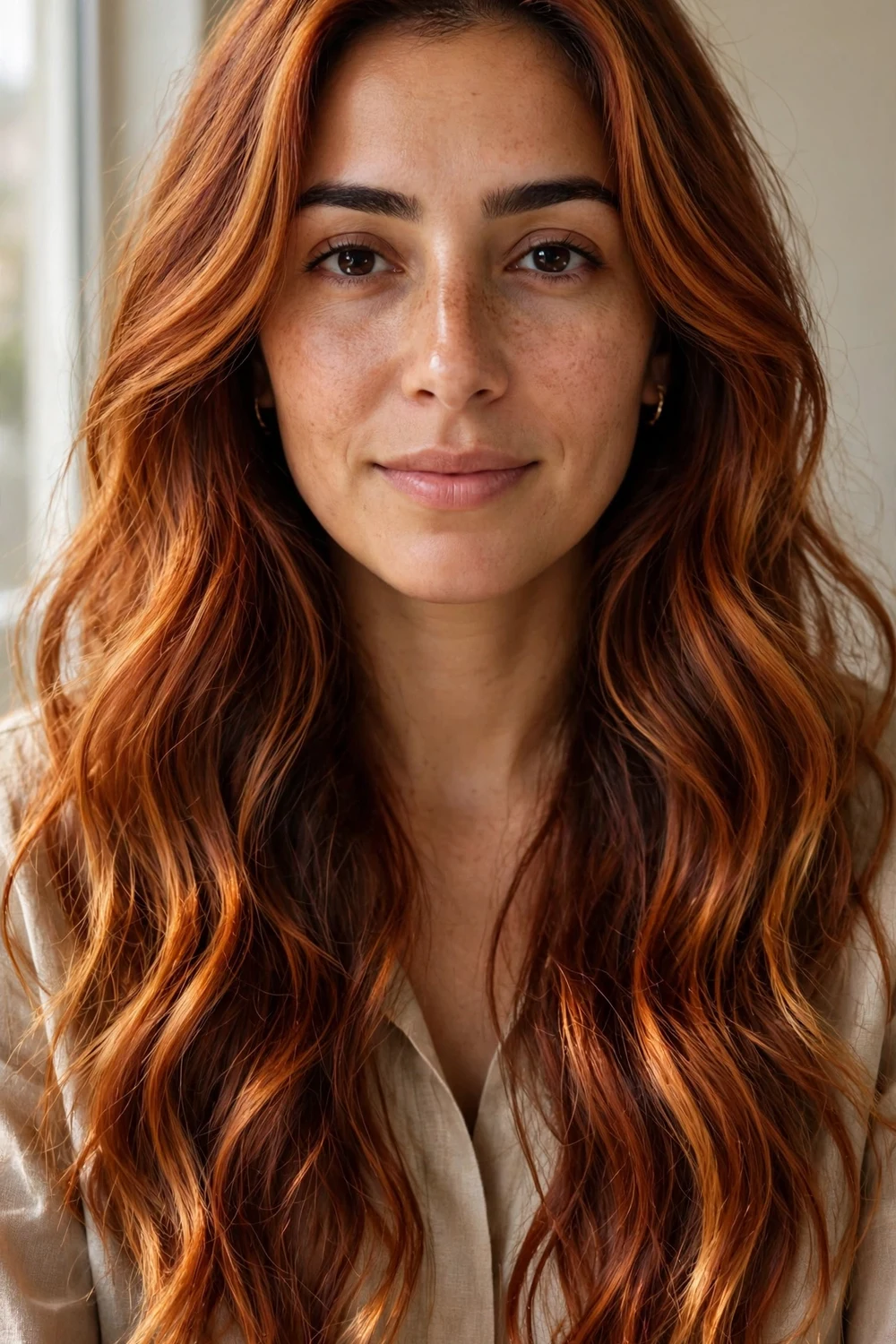
Whiskey copper takes copper in a more wearable direction. Instead of pure orange, it blends amber, cinnamon, and auburn warmth over a brown base, so you get a golden glow that feels rich rather than loud. Around the face, the reflection lights up the skin in a flattering way.
Ask for a multidimensional application: deeper auburn at the root, more amber-copper through the lengths. On waves or curls, the separate warm tones pull apart naturally and create dimension that a single flat shade cannot deliver.
Try this: avoid a single allover copper shade; dimension is what makes this color work. Difficulty: medium | Cost: medium
5. Deep Mahogany Auburn

When auburn goes moody, it becomes mahogany. This version keeps the brown foundation clearly visible and uses mahogany as an undertone rather than a full-on color, so the result reads darker and more dramatic than cinnamon or copper auburn.
It changes throughout the day: deep chestnut under warm indoor light, burgundy-red reflections in bright daylight. That shifting quality suits anyone who wants interesting color without an obviously bright result. A sharp lob or long glossy hair shows it off best, with a little shine serum through the ends to bring out the red dimension.
Try this: use a color-depositing conditioner every other wash to keep the wine tones from washing out. Difficulty: medium | Cost: medium
6. Burnt Sienna Auburn
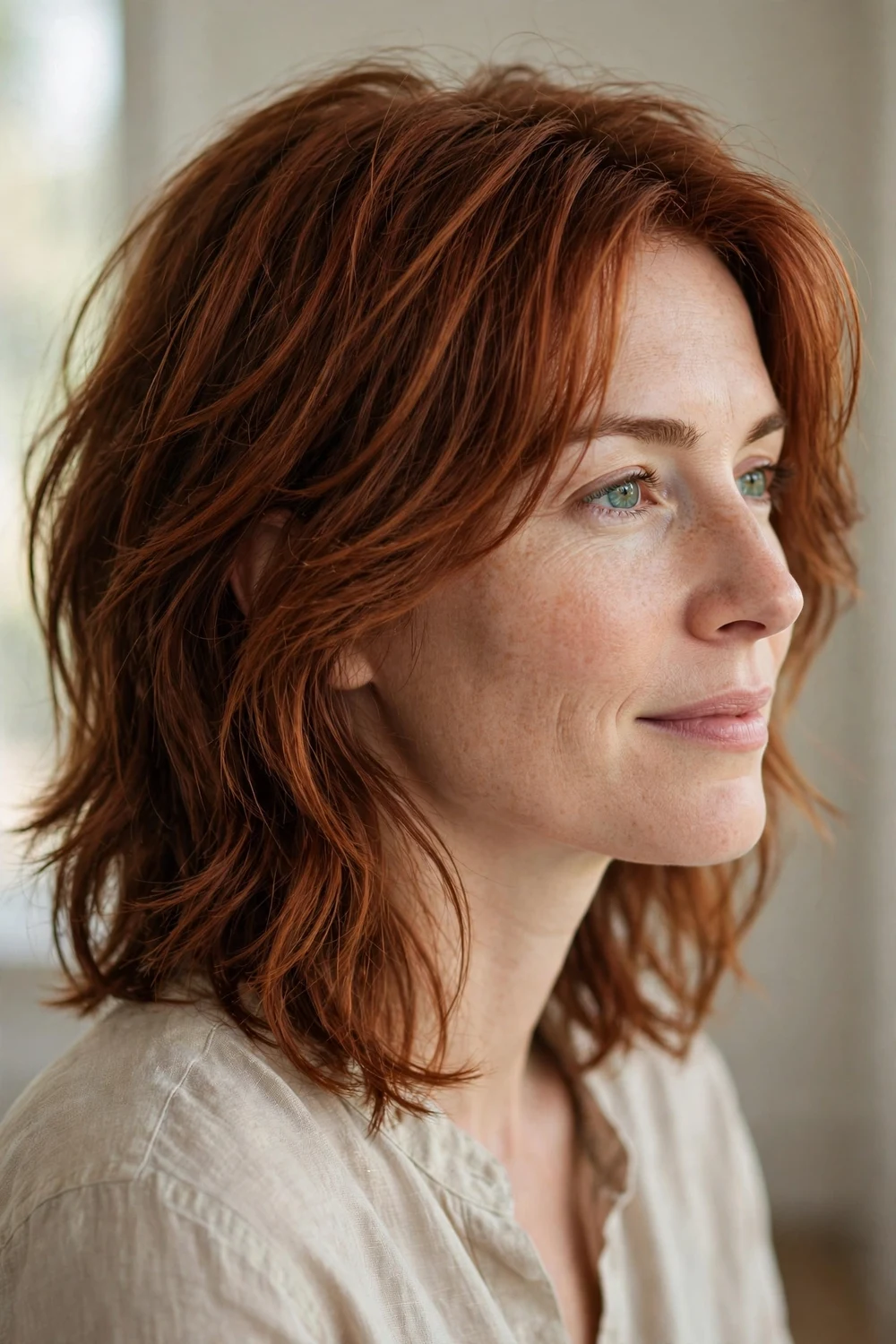
Burnt sienna is the artistic cousin of the family: a muted, earthy red built on brunette depth with controlled, sun-warmed copper woven through. It never reads as bright ginger, yet it carries exactly enough rust warmth to feel seasonal.
Textured layers are the ideal cut for it, since each section catches light differently and exposes different parts of the blend. If you want a fall color that looks noticeably different from plain brown without clashing with a neutral wardrobe, this deserves a spot on your list.
Try this: ask for the sienna tones to stay soft and woven in, never applied as thick streaks. Difficulty: medium | Cost: medium
7. Golden Auburn
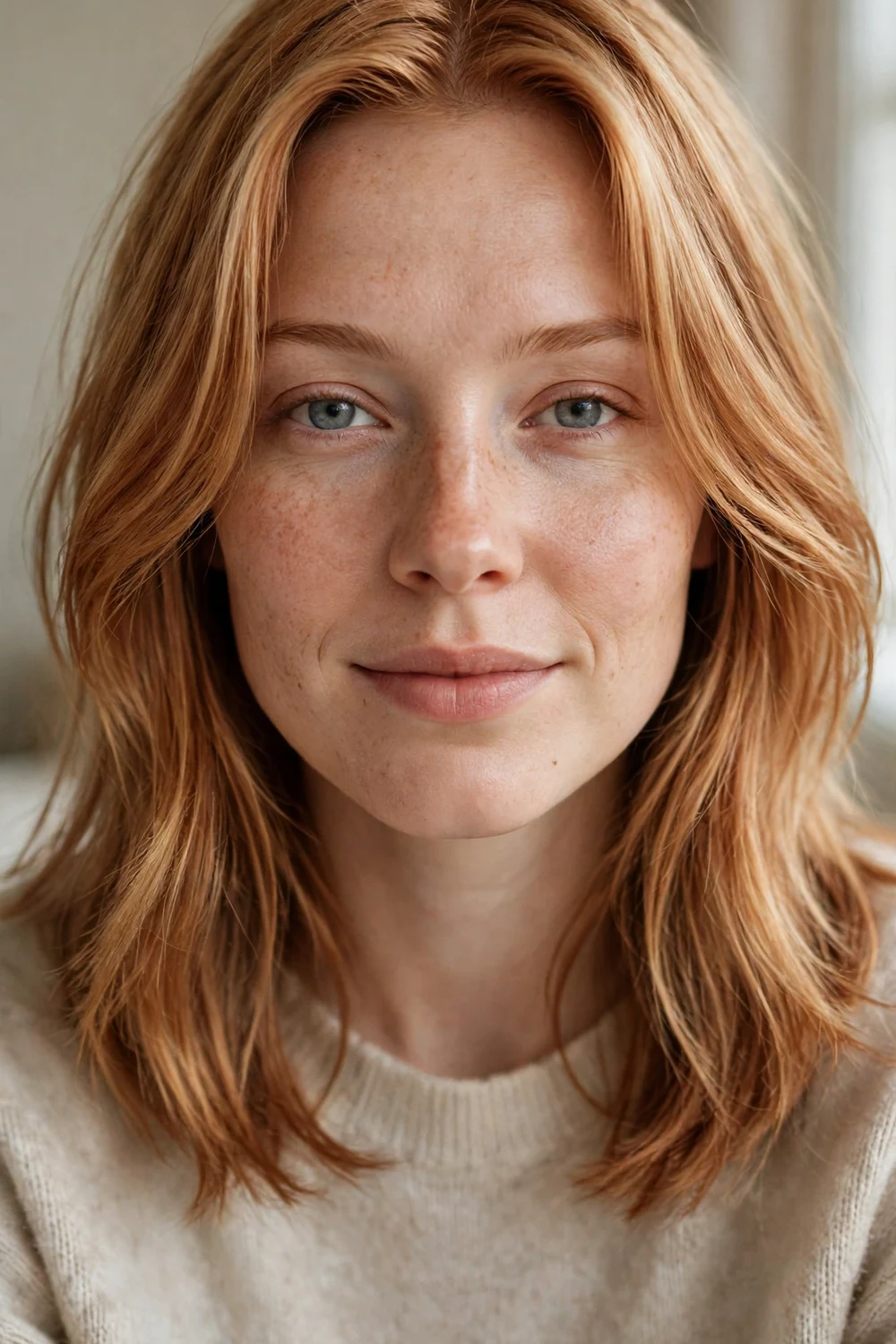
For anyone holding onto summer warmth, golden auburn is the bridge. It blends medium auburn with soft gold and restrained copper, so the result feels luminous rather than intensely red, as if naturally warm hair turned richer in late afternoon light.
It transitions smoothly from dark blonde, strawberry blonde, or light brown bases, which can move into golden auburn without the color looking heavy. A few lighter gold-copper pieces around the face add flattery, kept within the same warm family so the look stays cohesive.
Try this: keep face-framing pieces in the gold-copper family, not pale blonde, for a cohesive result. Difficulty: medium | Cost: medium
8. Maple Auburn
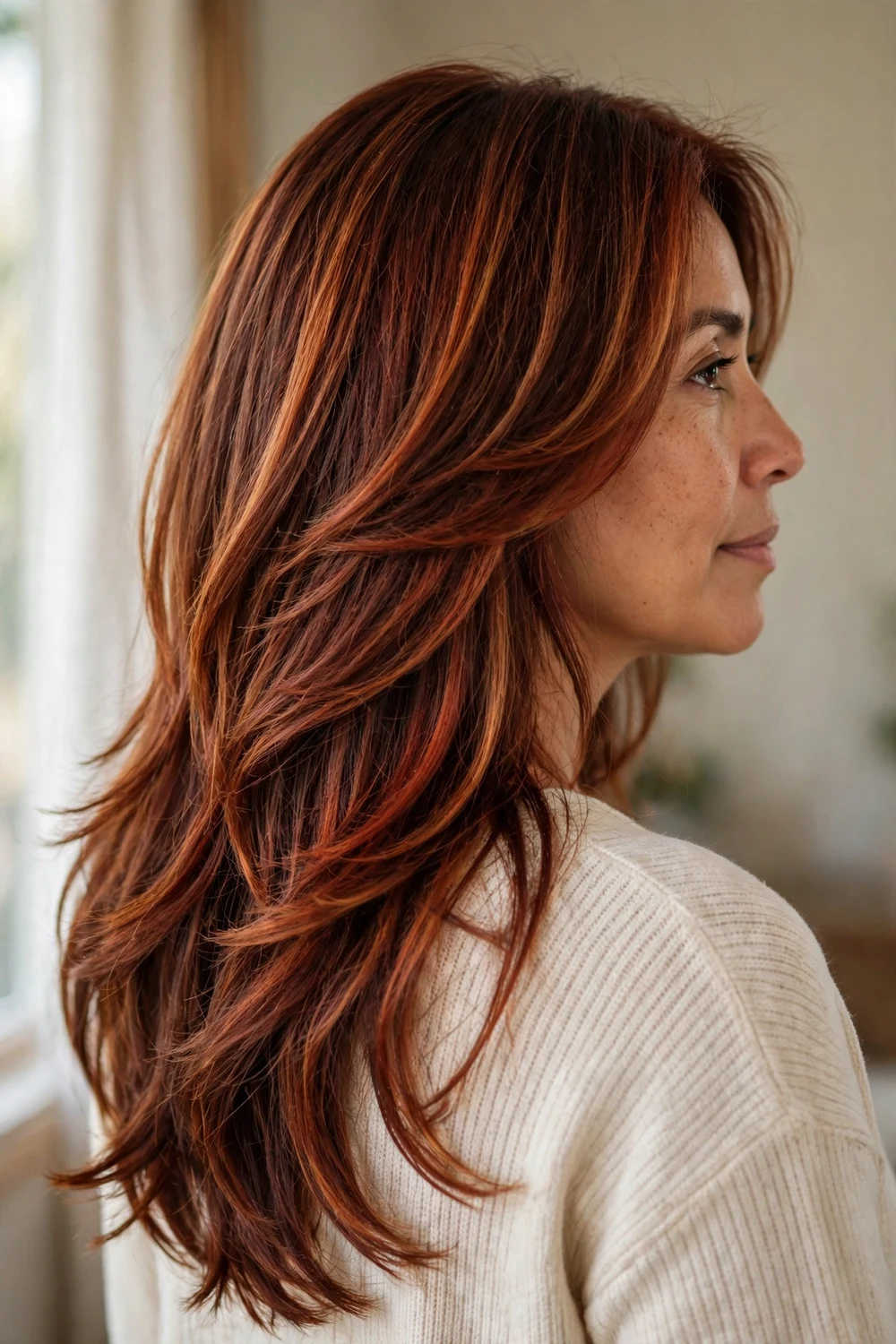
Maple auburn carries the syrupy warmth of October itself. Medium brown infused with dark copper, warm red, and a trace of gold lands right in the middle of the auburn spectrum: richer and less orange than copper, warmer and less wine-toned than mahogany.
Long, softly layered hair lets each tone show through the bends. Brighten the maple warmth slightly around the face while keeping the underneath sections deeper brown-auburn, and the color gains natural depth without looking overdone. A glossy finish makes the difference here, since maple auburn is at its prettiest when red and gold reflections catch the light.
Try this: request extra shine with a clear gloss at the end of the appointment. Difficulty: medium | Cost: medium
9. Chestnut Auburn

If going red makes you nervous, chestnut auburn is the reassuring option. Warm brown dominates, and a controlled amount of auburn gives the hair a reddish glow without dramatic contrast or obvious copper ribbons. Ordinary brunette becomes warmer, richer, and more reflective.
It pairs naturally with a darker root, so ask your colorist to keep the root near your natural brunette and warm the color gradually toward chestnut-auburn through the lengths. That softer transition prevents the color from looking processed, and a layered lob or medium blowout gives it enough movement to feel new.
Try this: it works best on medium brown bases with minimal lifting needed. Difficulty: easy | Cost: low
10. Auburn Balayage on Brunette Hair
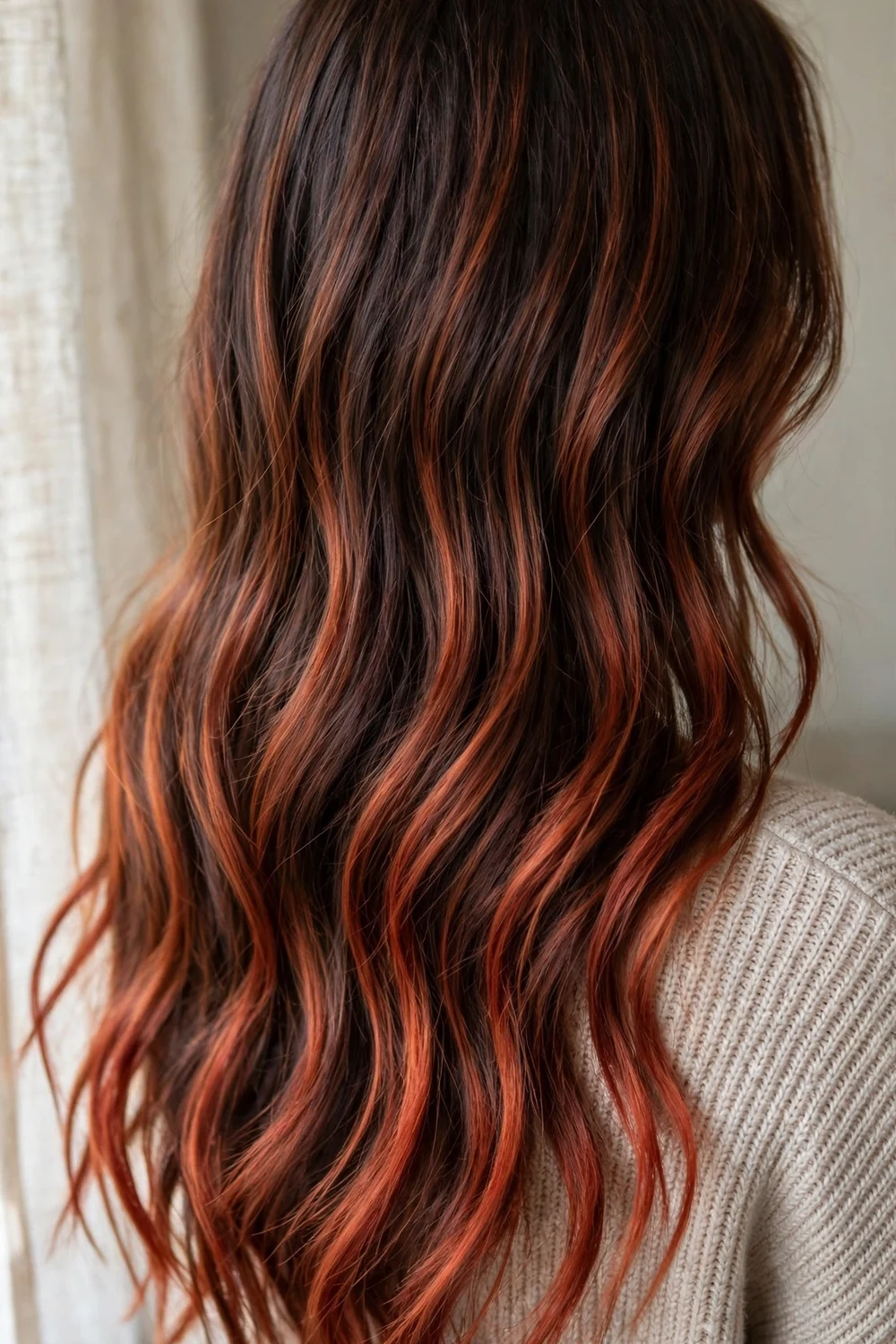
Balayage is the way to try auburn without committing to an allover red base. Your brunette roots stay intact while auburn is hand-painted through selected mid-lengths and ends, with a little extra warmth placed around the face. Kept at low contrast, the color melts into the brown instead of sitting on top.
Use several related tones, perhaps chestnut, cinnamon, and soft copper-auburn, so the hair never becomes one repetitive reddish shade. Curled, each painted section shows; worn straight, the colors blend together. It is red exploration with a safety net.
Try this: keep the contrast low and the placement melted for the most natural result. Difficulty: medium | Cost: medium to high
11. Soft Auburn with a Shadow Root
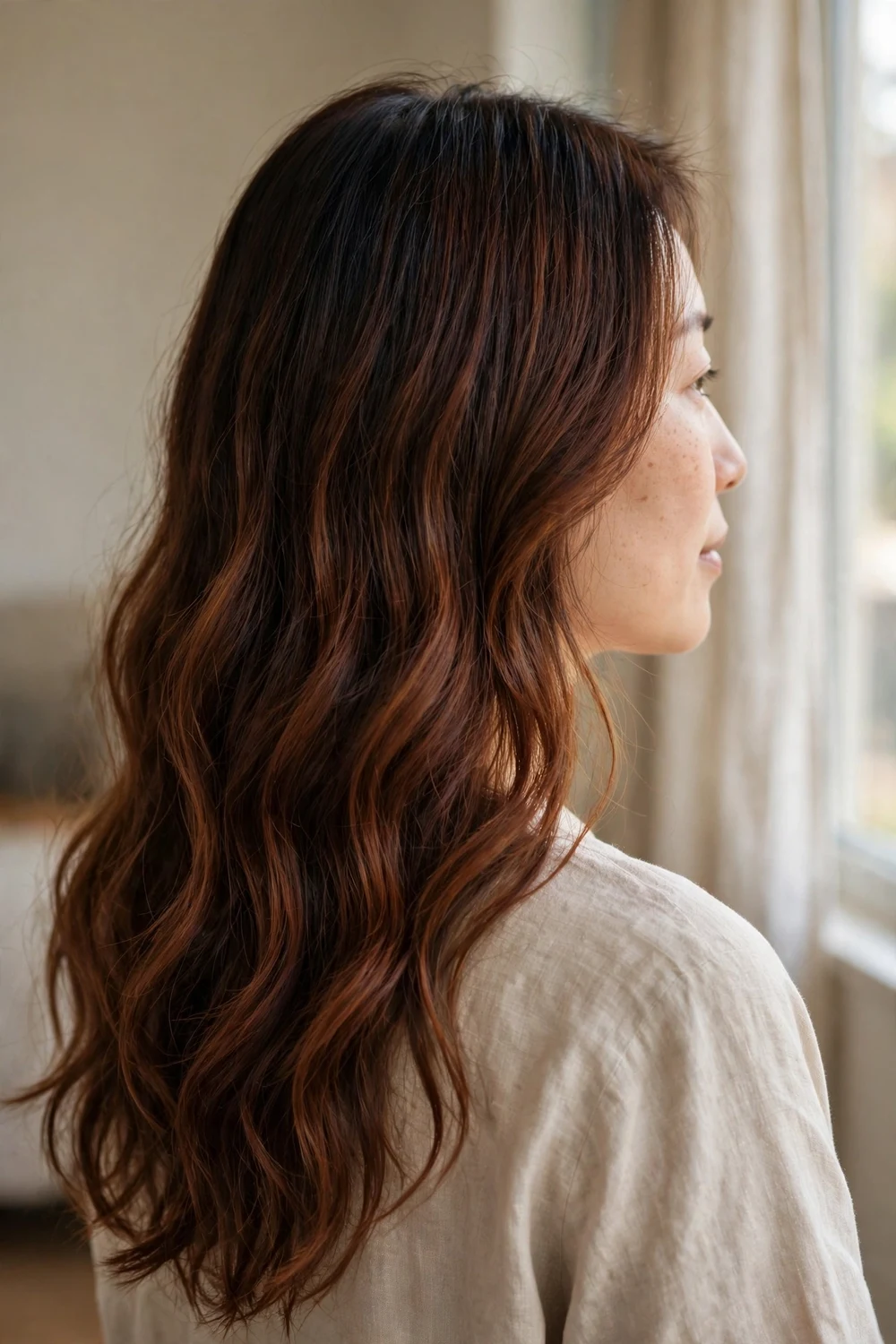
A shadow root changes auburn’s entire personality. The first section of hair stays deeper and more neutral, then melts gradually into soft medium auburn, which makes the color look lived-in instead of freshly dyed.
The practical payoff is the grow-out: roots blend as they come in, stretching the time between appointments. Keep the auburn itself balanced, not overly copper and not overly burgundy, and let the deeper root create the contrast. It suits loose waves, a shaggy lob, or long layers.
Try this: ask for the root color to be only 2 to 3 levels deeper than the ends. Difficulty: medium | Cost: medium
12. Copper-Auburn Face Frame
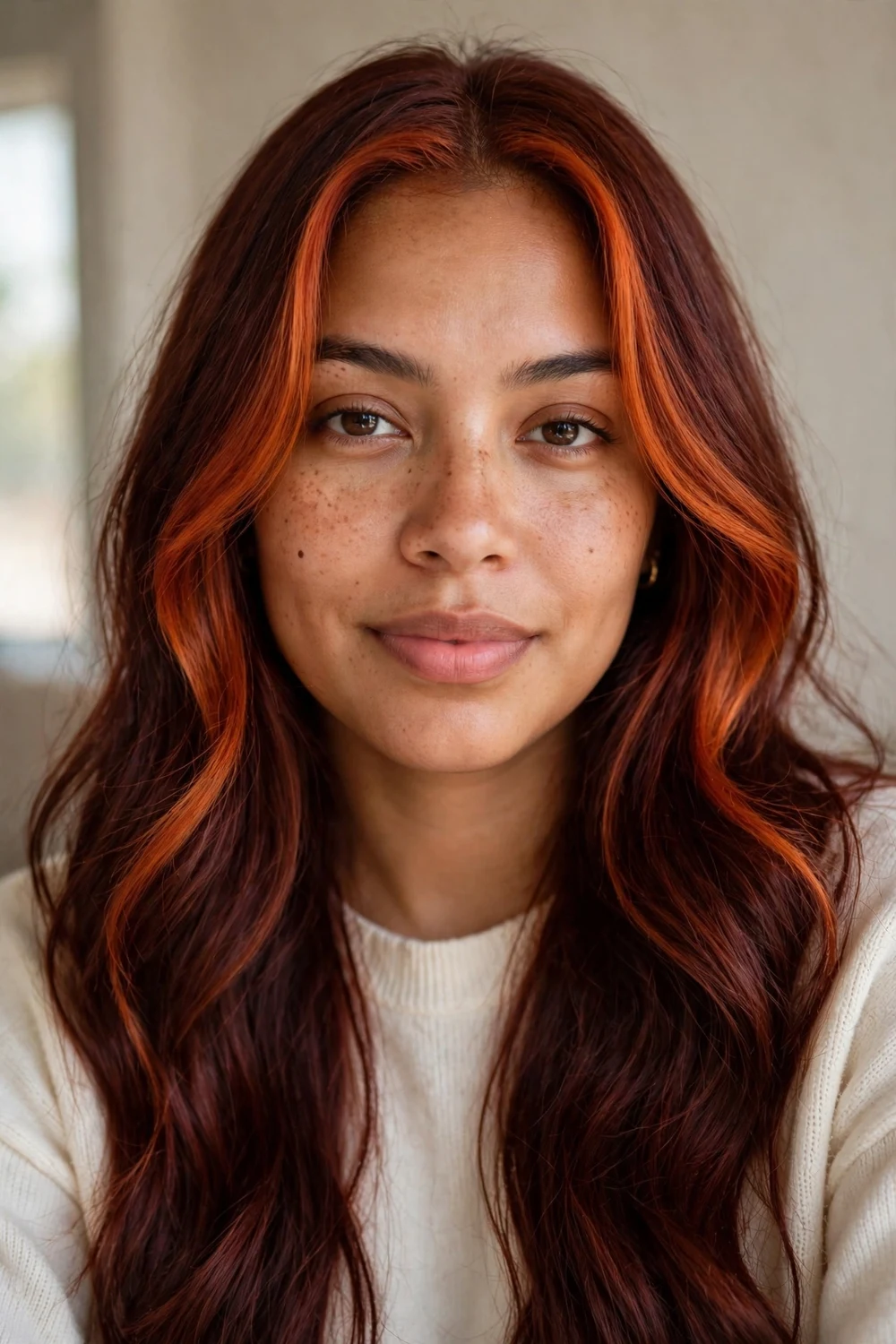
Skip the full-head commitment and put the warmth where it shows most. A copper-auburn face frame brightens a deeper auburn base with several blended ribbons that start around the hairline and turn more noticeable from the cheekbones down.
Avoid two chunky, identical streaks, which date the look instantly. With curtain bangs or face-framing layers, the highlighted sections move naturally away from the face and flatter the whole profile. It is also the easiest way to refresh auburn that has gone too dark or uniform without lightening every strand.
Try this: ask for blended ribbons instead of solid pieces for a modern finish. Difficulty: easy | Cost: low to medium
13. Auburn Spice
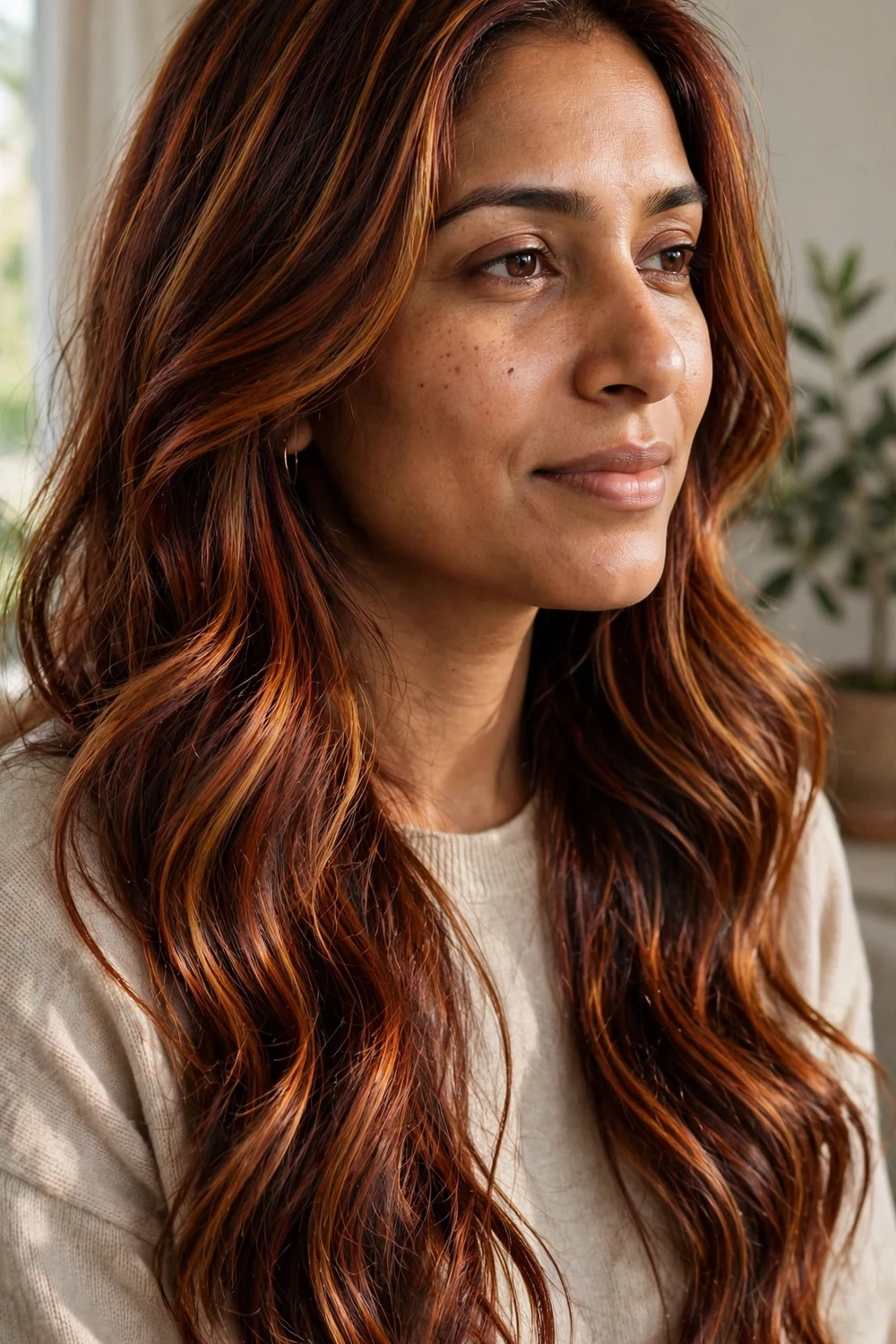
Auburn spice sounds like the moment the first sweaters come out. A balanced auburn base gets infused with cinnamon, toasted copper, and a little golden brown: warmer than chestnut, noticeably deeper than ginger, with enough brown to stop the color from tipping into orange.
The best version holds several subtle levels of warmth. Medium auburn-brown at the root, cinnamon ribbons through the middle, brighter copper toward selected ends. With a round-brush blowout, those ribbons slide across one another and the hair looks fuller for it.
Try this: bring a photo of layered spice tones, not one flat swatch, to the consultation. Difficulty: medium | Cost: medium
14. Dark Cherry Auburn
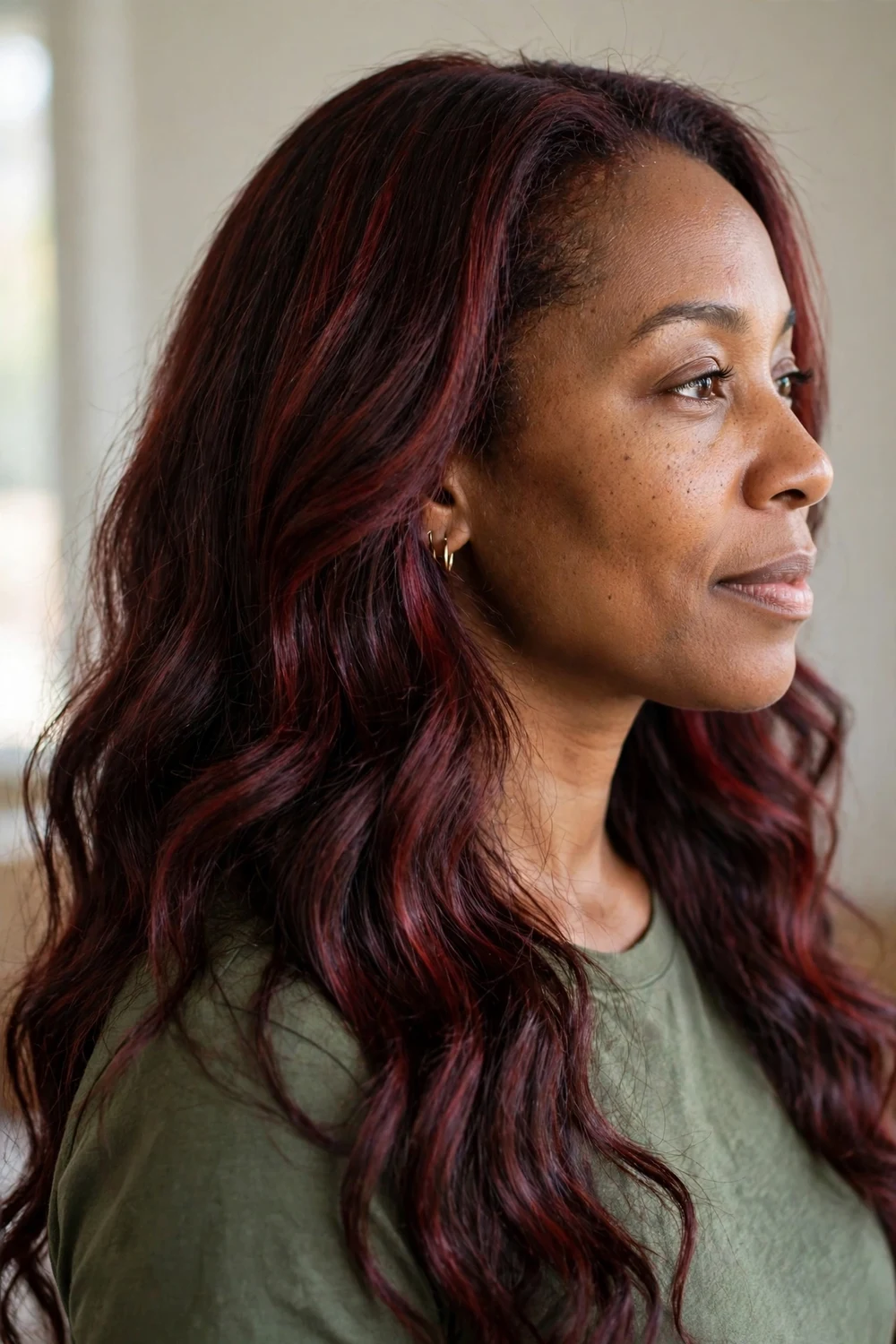
Dark cherry auburn sits right at the boundary between warm auburn and cooler red. The base stays brown enough to belong to the auburn family, while dark cherry runs through the lengths for a richer, jewel-toned effect, deeper and more dramatic than cinnamon but not as violet as full burgundy.
It suits brunette bases particularly well because the darker starting color builds in dimension on its own. Have your colorist judge how much red reflection the hair can hold without losing depth, then add a high-shine gloss. The result looks dark in shadow and flashes cherry-red as it moves, which gives it a moody fall quality.
Try this: maintain the jewel tones with a red-depositing mask twice a month. Difficulty: medium | Cost: medium
15. Auburn with Caramel Ribbons

Caramel and auburn might not be an obvious pairing, yet together they create gorgeous autumn dimension. Start with a medium auburn-brown base and weave a restrained number of caramel-gold ribbons through the lengths, keeping the lighter pieces warm enough to complement the red instead of reading as blonde highlights.
This is a smart move if you are transitioning from highlighted brunette into auburn and do not want to cover every lighter section. Existing highlights can be warmed and folded into the new palette. Concentrate the caramel around the face and upper layers, leave the underneath deeper auburn, and the hair looks fuller through light and shadow.
Try this: keep the caramel pieces warm and golden, never ashy, so they blend with the red. Difficulty: medium | Cost: medium
16. Copper Truffle Auburn
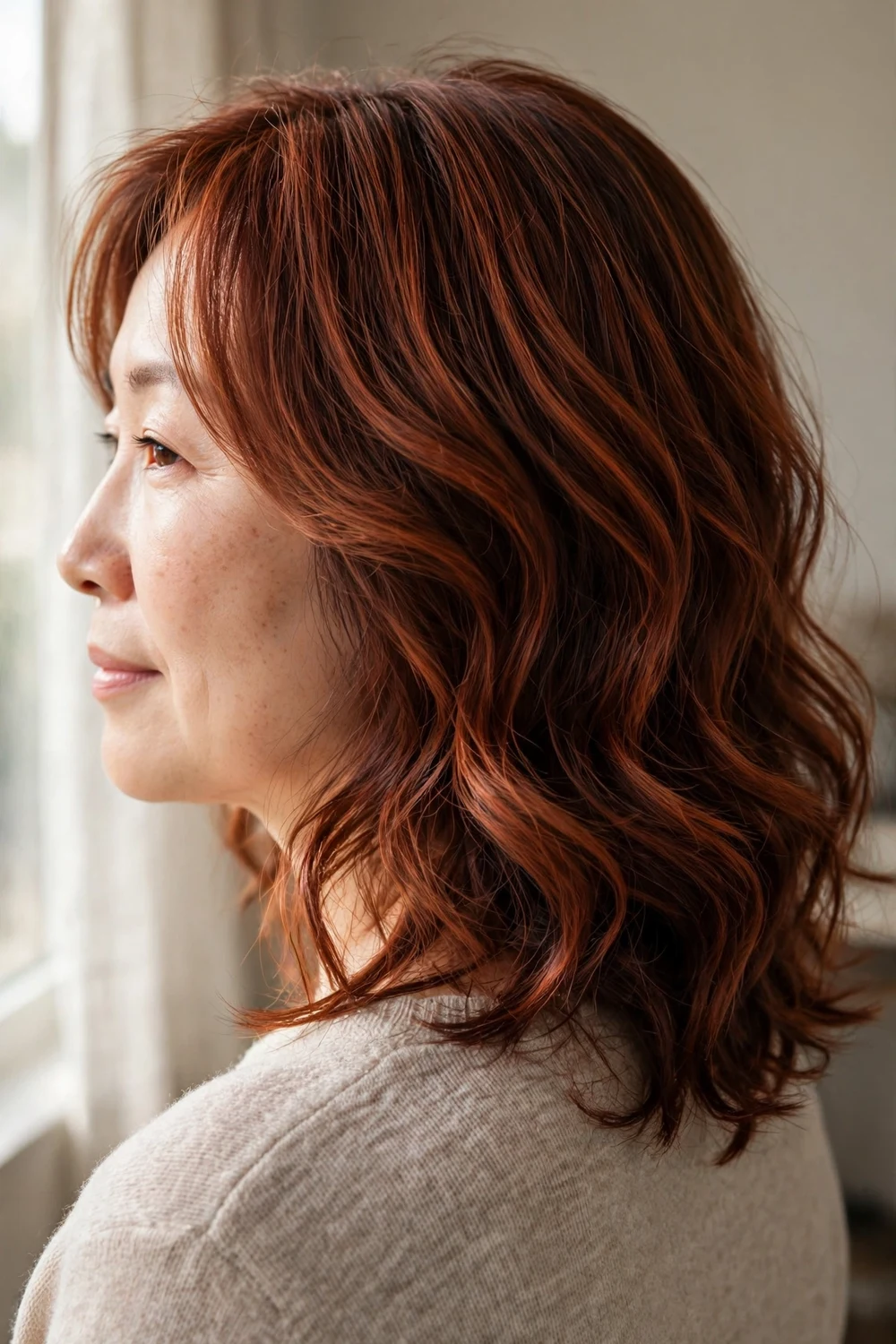
Copper truffle is expensive-looking brunette with a fall twist. Picture a truffle-brown foundation with fine rust and auburn reflections scattered through it, so subtle that the color seems to glow from underneath rather than sitting on the surface.
The diffused approach is what makes it interesting. Instead of thick copper pieces over dark brown, the warmth stays extremely blended through the mid-lengths and ends, which suits softly waved hair especially well where each bend exposes a different tone. For lifelong brunettes curious about red, this is a sophisticated entry point.
Try this: ask for the copper warmth to be applied through a gloss for the softest blend. Difficulty: medium | Cost: medium
17. Auburn Ombre with Deep Brunette Roots
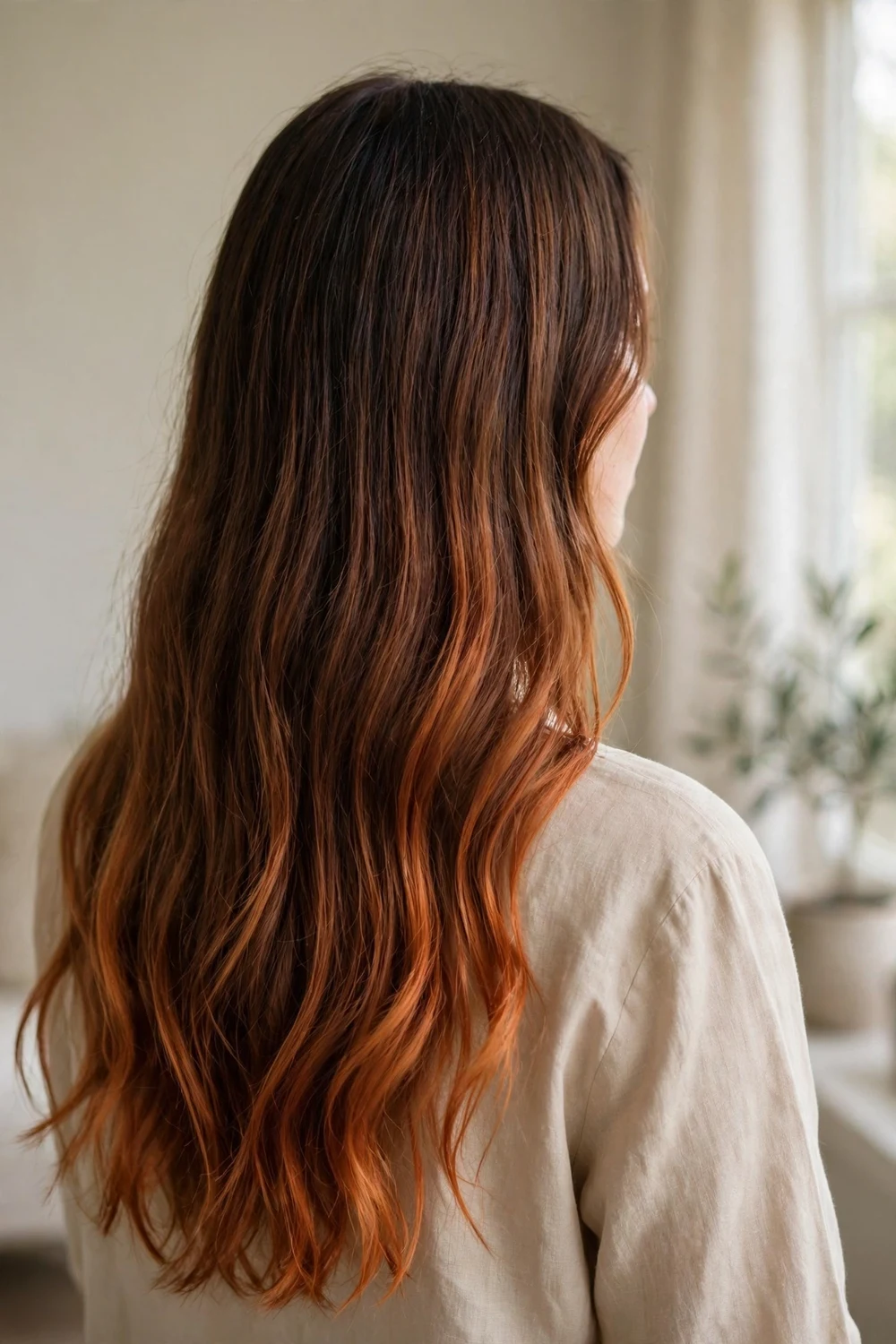
Ombre deserves a return for fall in a softer form than the high-contrast versions of years past. Deep brunette roots introduce auburn gradually through the middle, letting the ends become the warmest point, with no obvious horizontal line separating the colors.
Long hair shows this best, since enough length exists to build a gradual shift: espresso at the root, chestnut in the middle, medium copper-auburn at the ends. Worn in big waves, all three shades appear together and the depth is remarkable. It also keeps your natural dark root while the bottom half goes full autumn.
Try this: insist on a diffused transition zone at least 3 inches wide to avoid a line. Difficulty: medium | Cost: medium to high
18. Auburn on Curly Hair with Cinnamon Dimension
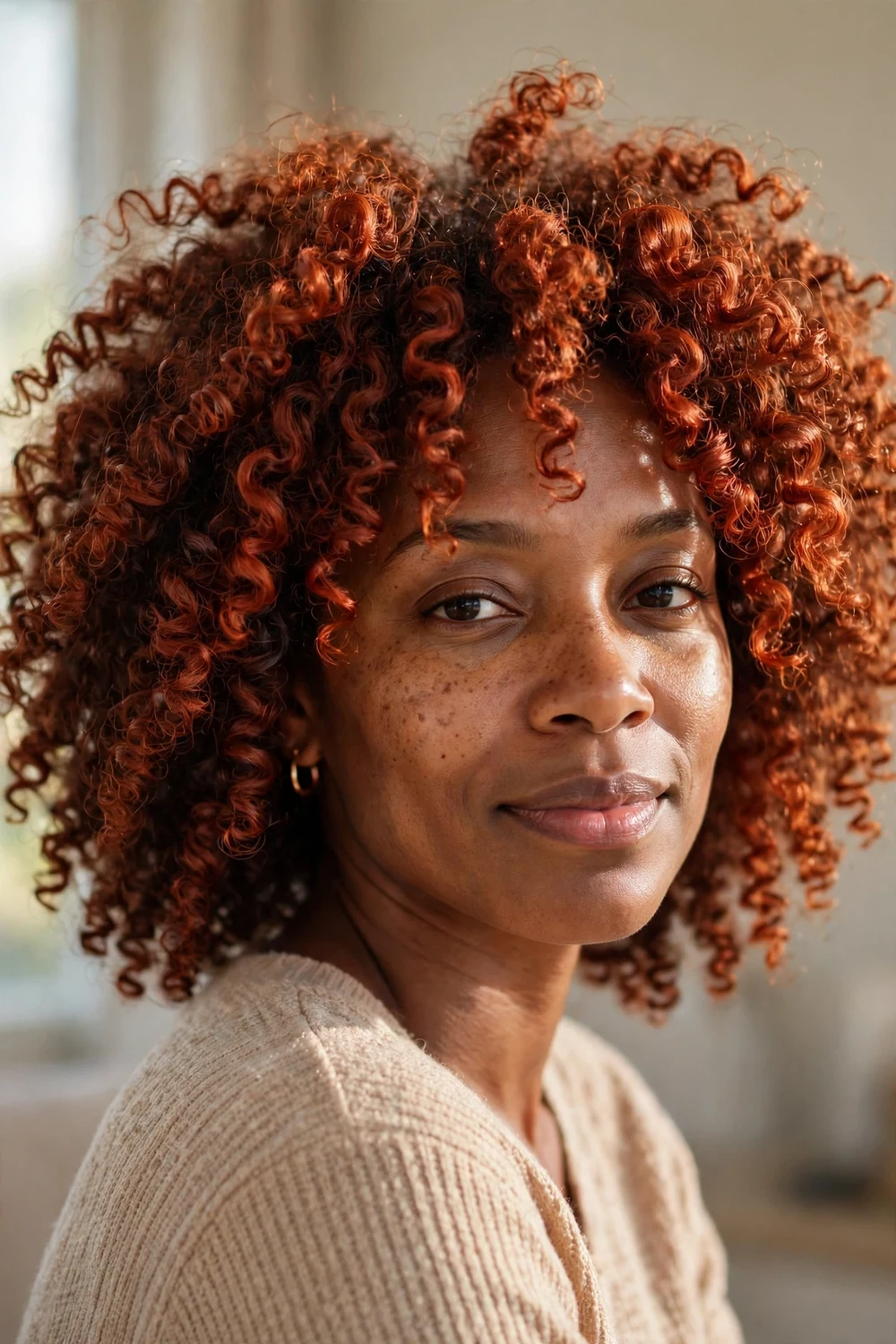
Curls give auburn a different kind of dimension because each curl catches light on its own. Keep a rich auburn base and add cinnamon-red warmth selectively to curls around the face and crown, aiming to emphasize the curl pattern rather than create striped highlights.
The placement has to follow how your curls fall when dry, since a painted section can vanish if it was mapped to wet hair. Keep some curls deep auburn and others slightly lighter for visual separation, which makes the shape look fuller. With moisture and shine on top, this is one of the most striking auburn looks on the list.
Try this: have the color painted on dry, styled curls so placement matches reality. Difficulty: hard | Cost: medium to high
19. Toasted Auburn Bob
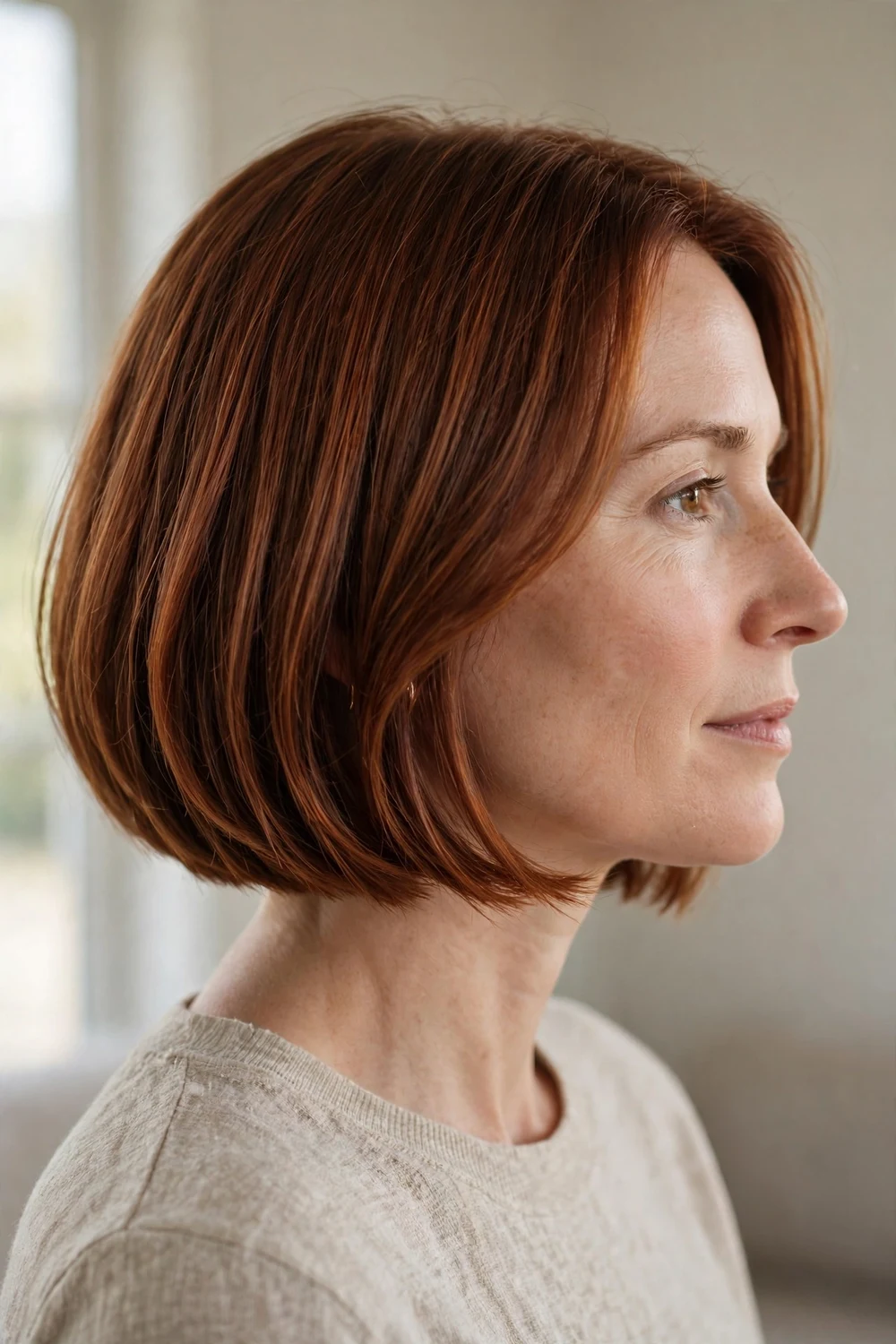
A bob is the perfect excuse to use stronger, more uniform auburn, because the short silhouette keeps the color sharp. Choose a toasted medium auburn with a brown foundation and subtle copper warmth, applied almost consistently from roots to ends, letting shine and the cut’s movement provide the variation.
It flatters a jaw-length bob, French bob, or collarbone-skimming blunt cut, where the warmth softens the geometry of the haircut. A smooth blowout reads polished, while tousled bends bring out the copper undertones. Pairing a haircut and color change gives a dramatic fall refresh without complicated highlighting.
Try this: keep the color uniform and let the haircut do the talking. Difficulty: easy | Cost: low
20. Deep Garnet Auburn

Deep garnet is the richest idea here. A dark brown-red base carries garnet undertones that turn almost jewel-like in direct light: more red than chocolate auburn, less purple than plum, still firmly connected to the auburn family.
Because the shade has so much presence, styling can stay simple. Long straight hair shows off the glossy garnet surface, while large waves expose the darker brown underneath. Later in fall, when wardrobes go darker and richer, garnet auburn looks especially luxurious against black, charcoal, camel, cream, and deep green.
Try this: wear it sleek to let the jewel tones dominate. Difficulty: medium | Cost: medium
21. Lived-In Auburn with Fine Copper Ribbons
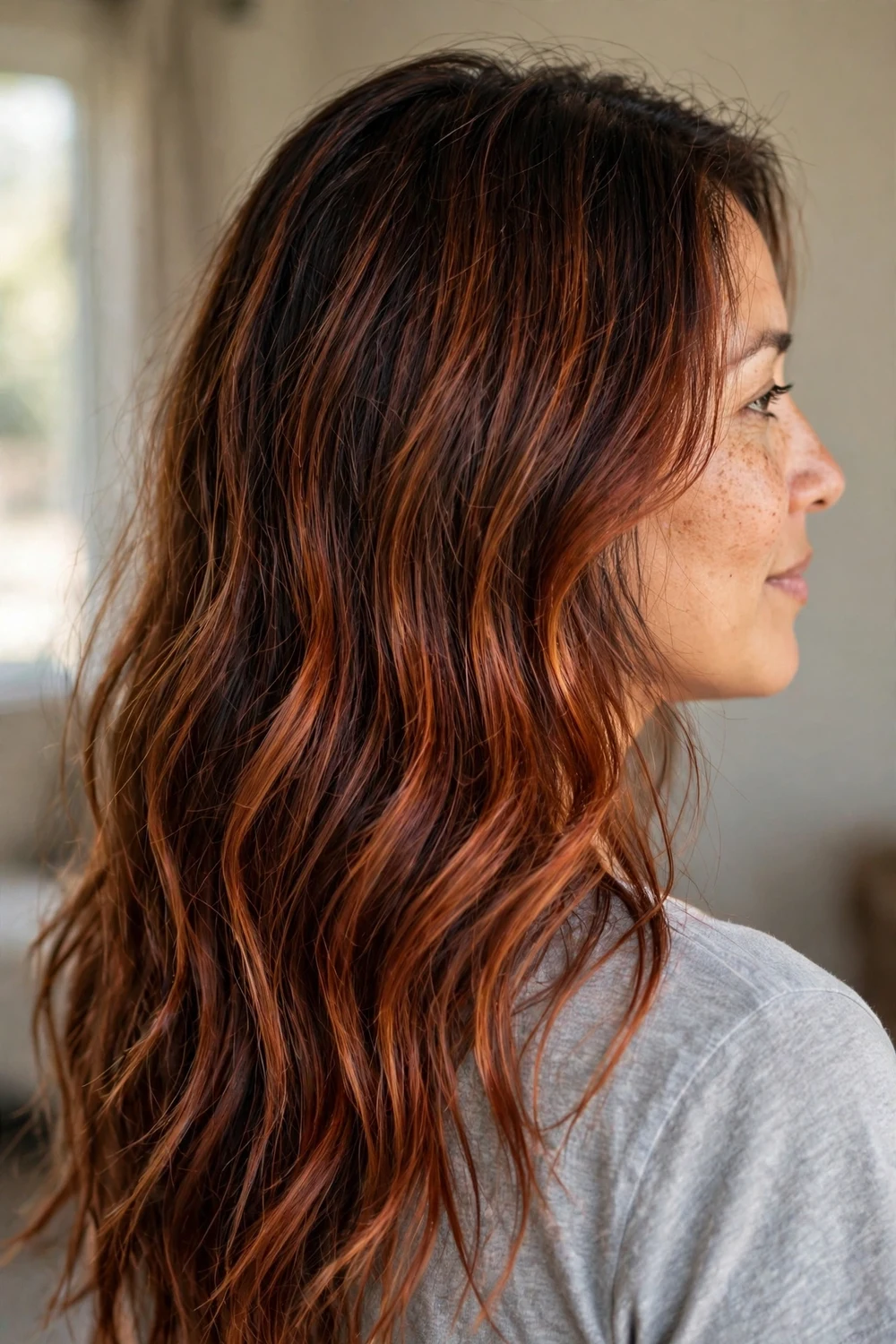
The lived-in approach is the most practical auburn on this list. Instead of changing the root color entirely, preserve some natural brunette and blend fine auburn and copper ribbons through the hair, connecting everything with a subtle root melt so the warmth builds through the middle and ends.
Red pigments demand upkeep, so keeping natural depth at the roots buys flexibility between appointments while still delivering autumn warmth. The low-contrast, blended placement also means the color grows out gracefully instead of drawing a visible line.
Try this: request a root melt that connects the natural base to the ribbons seamlessly. Difficulty: medium | Cost: medium
22. Glossy Espresso Auburn
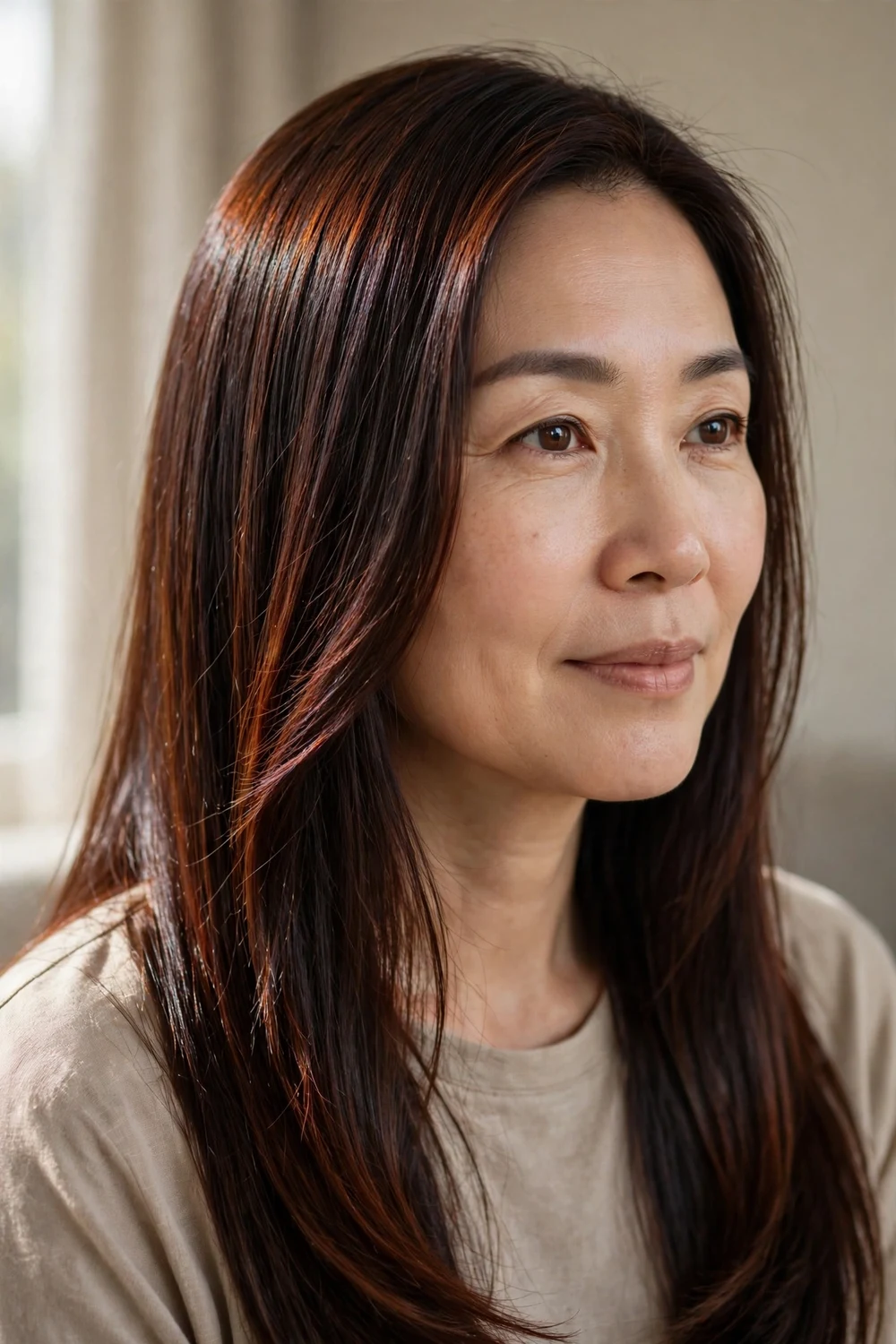
For the most understated interpretation of auburn, finish with espresso. The foundation is a very deep, glossy brunette infused with subtle auburn and cinnamon reflections, so from across the room it simply looks like polished dark brown hair. Up close or in sunlight, the hidden red warmth becomes unmistakable.
This color outlasts a single season because it never depends on a dramatic trend. Keep the roots dark, allow slightly warmer ribbons around the face, and finish with maximum shine. On long layers, a sleek lob, curls, or a classic blowout, it delivers autumn richness without obvious redheadedness.
Try this: a demi-permanent gloss refreshes it well between color visits. Difficulty: easy | Cost: low
23. Black Cherry Auburn
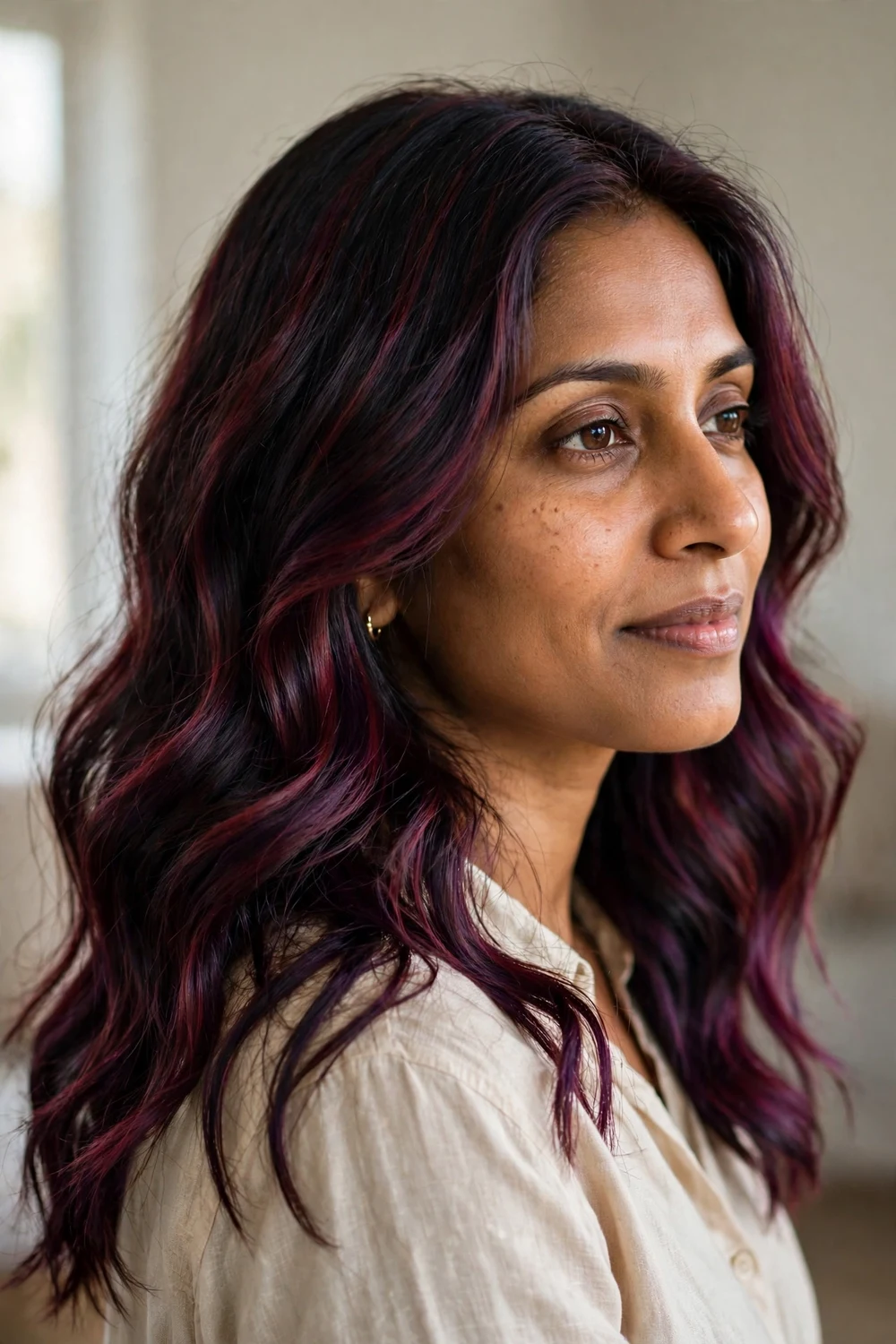
Black cherry takes auburn to its moodiest edge. A deeply dark base carries purple-red tones that reveal aubergine highlights when the light catches the hair just right, which makes it the most dramatic option short of a full fantasy color.
Long, shiny hair shows it best, since the length gives the purple and red tones room to shift. Style it with waves or curls to play with how the light moves through the color. Fair warning: the darker you go, the more light you need to see the cherry, so keep the finish glossy.
Try this: cold-water rinses slow fading on this dark, saturated shade. Difficulty: medium | Cost: medium
24. Burgundy Auburn
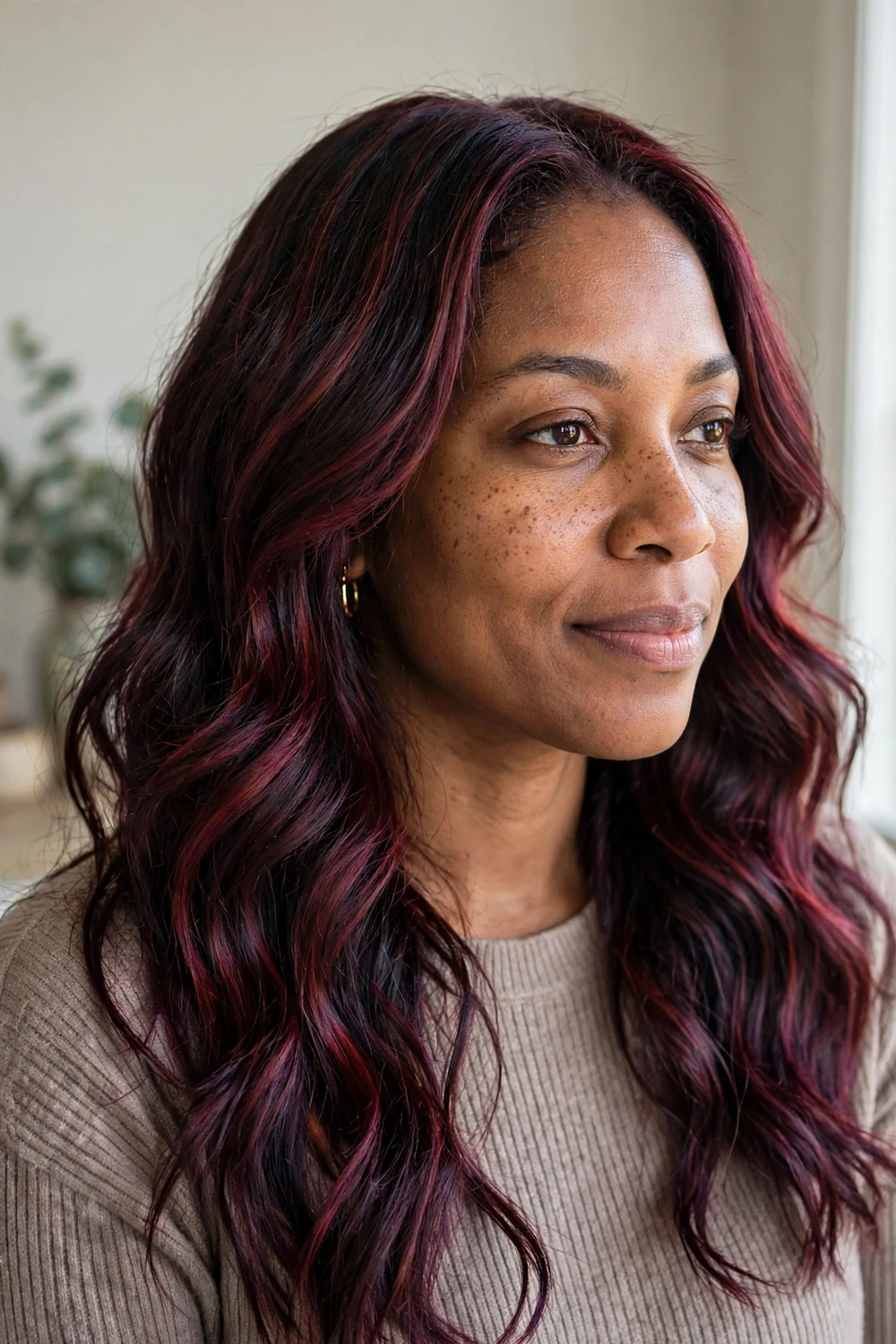
Burgundy auburn is full-bodied, like the wine it is named after. Red-purple tones add juicy, fruity depth to dark brown hair, and the shade is especially striking on darker skin tones, where the richness of the color pairs well with the complexion.
Longer lengths suit it well, and curls or waves make it look more romantic as the different tones separate. Ask your stylist to keep enough brown in the base so the burgundy reads as an undertone rather than taking over, which keeps the color firmly in auburn territory.
Try this: pair it with warm-toned makeup so the purple notes do not wash you out. Difficulty: medium | Cost: medium
25. Ginger Auburn
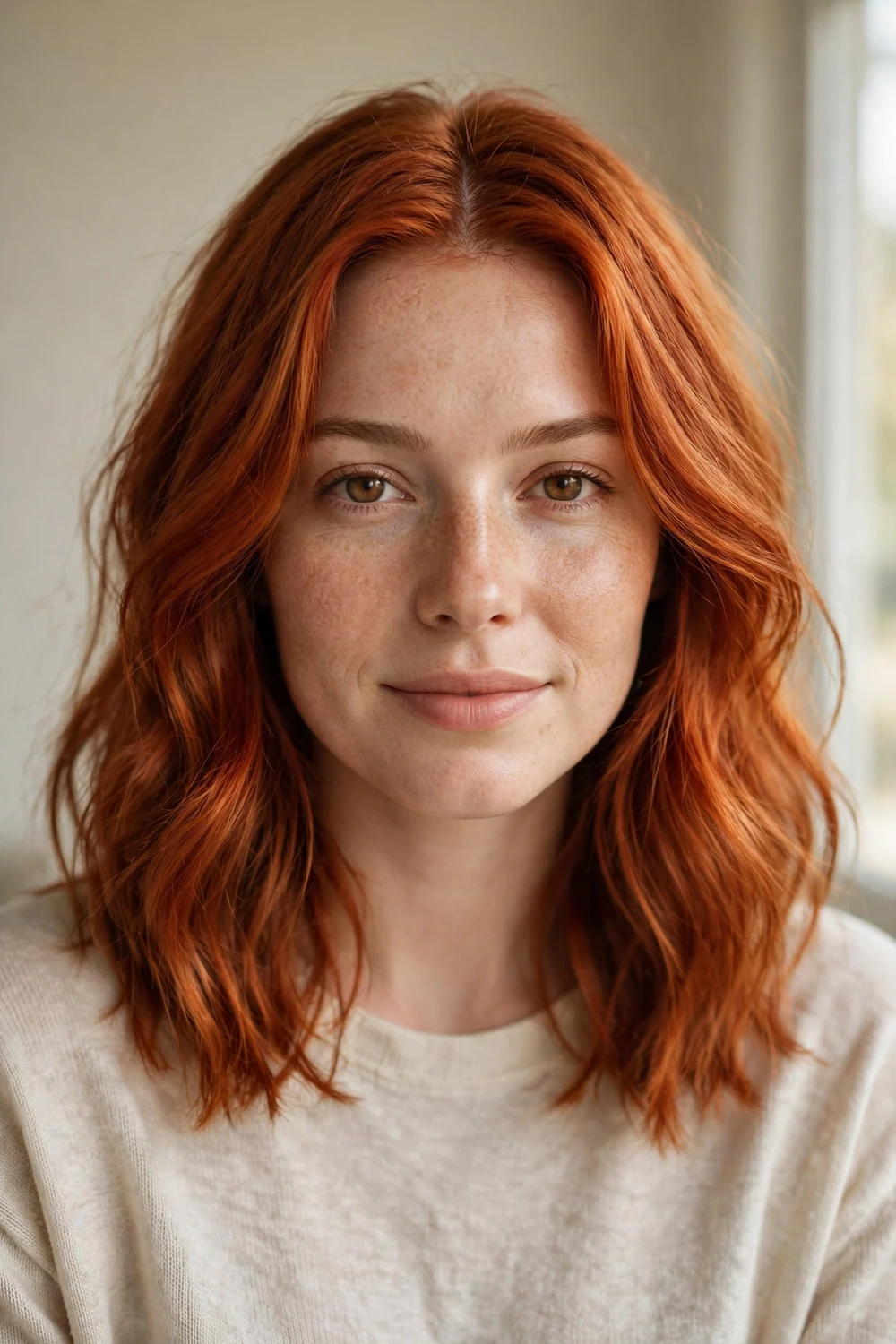
Ginger auburn turns the brightness up. Where copper auburn whispers warmth, ginger adds real punch, with a lively copper-red tone that gives medium brown and red hair an unmistakable lift. It is the boldest daylight-friendly option on this list.
To keep it from going flat, some stylists weave in true or strawberry-blonde highlights alongside the ginger, which illuminates the whole head. On long hair the result is striking; on a lob it looks punchy and modern. Expect this one to need more frequent toning than the deeper auburns.
Try this: book toning appointments every 4 to 6 weeks to control fading. Difficulty: medium | Cost: medium
26. Strawberry Auburn
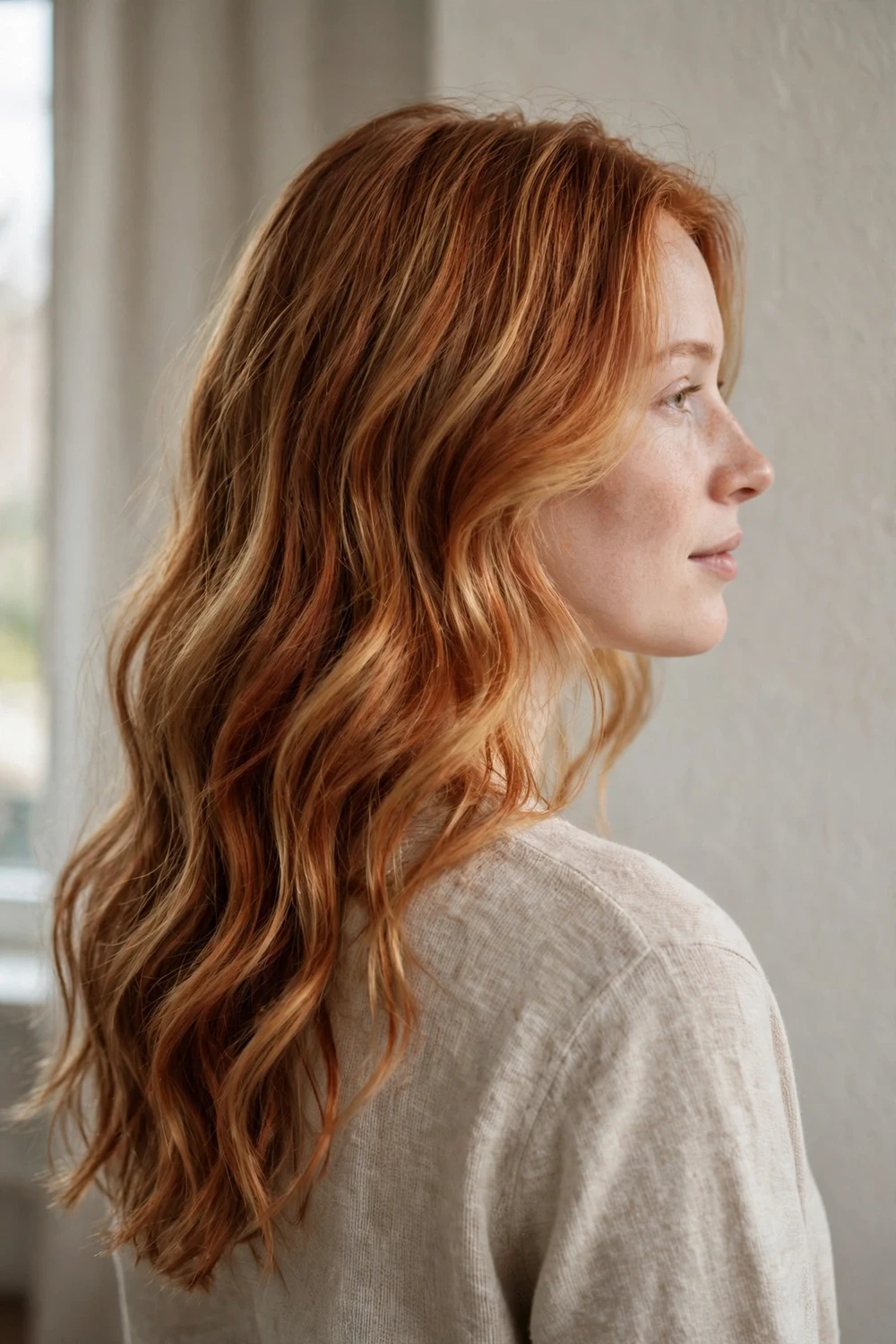
Strawberry auburn walks the line between red, blonde, and brown, which makes it a workhorse of a shade. It suits a wide range of skin tones, and it can highlight warm brown bases as well as dark and light red manes.
There is barely a style it cannot improve. Wear it on waves for a sunlit effect, or on straight hair where the golden-red tones read more clearly. Because it sits lighter on the spectrum, it also fades more gracefully than saturated reds, softening into a warm honey over time.
Try this: it is ideal for blondes or light brunettes testing red for the first time. Difficulty: easy | Cost: low to medium
27. Pumpkin Spice Auburn
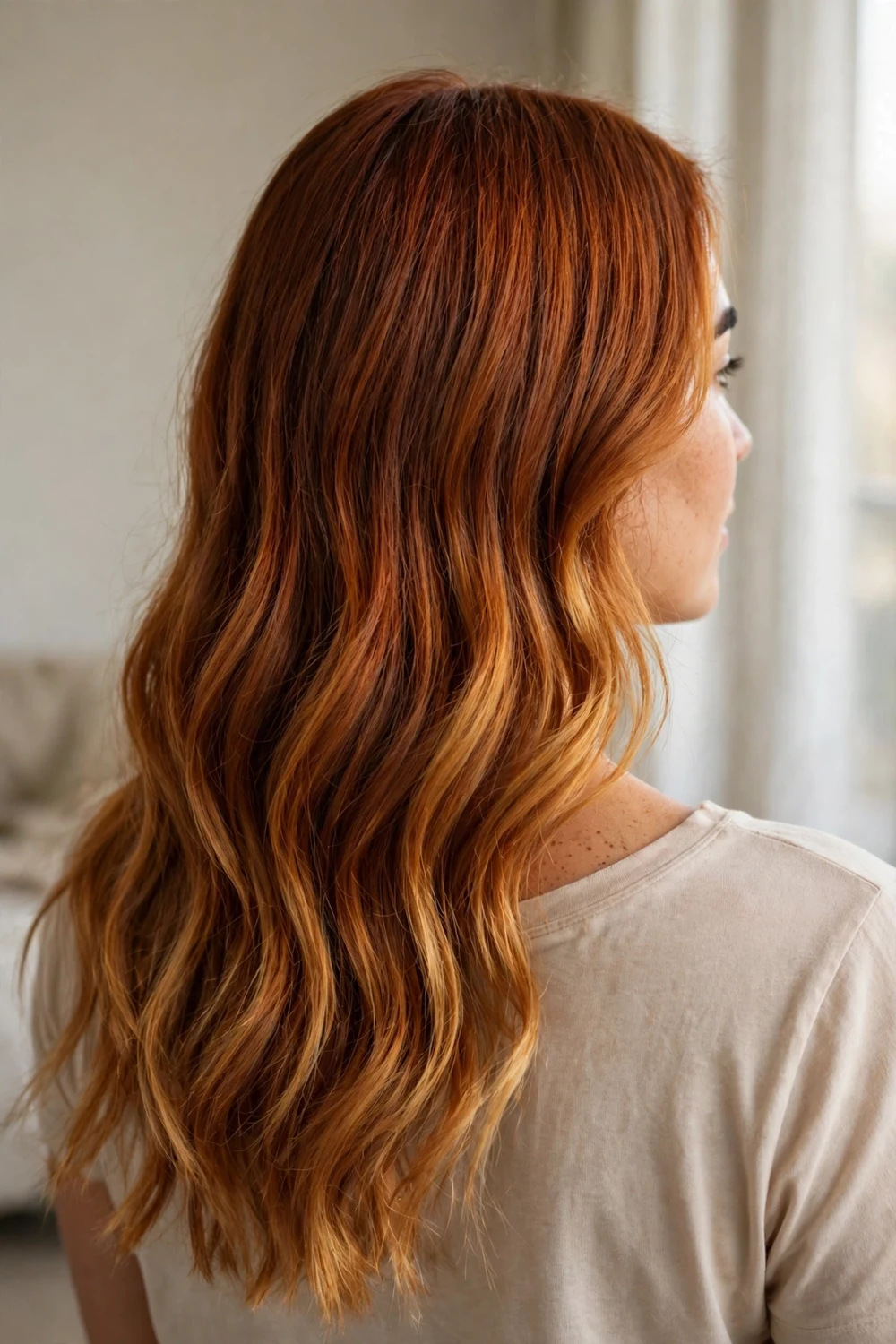
Pumpkin spice auburn is fall bottled up: rusty auburn warmed with spiced golden hues that melt from the mid-lengths into the base. It carries the charm of the season’s signature palette without tipping into costume territory.
The key is the melt. Spicy golden tones should blend gradually into the auburn base rather than sitting as distinct highlights, which keeps the color smooth and grown-up. Ask for the brightest spice concentrated toward the ends, with the root kept deeper for contrast and easier grow-out.
Try this: a balayage application gives this shade the softest possible blend. Difficulty: medium | Cost: medium
28. Russet Auburn
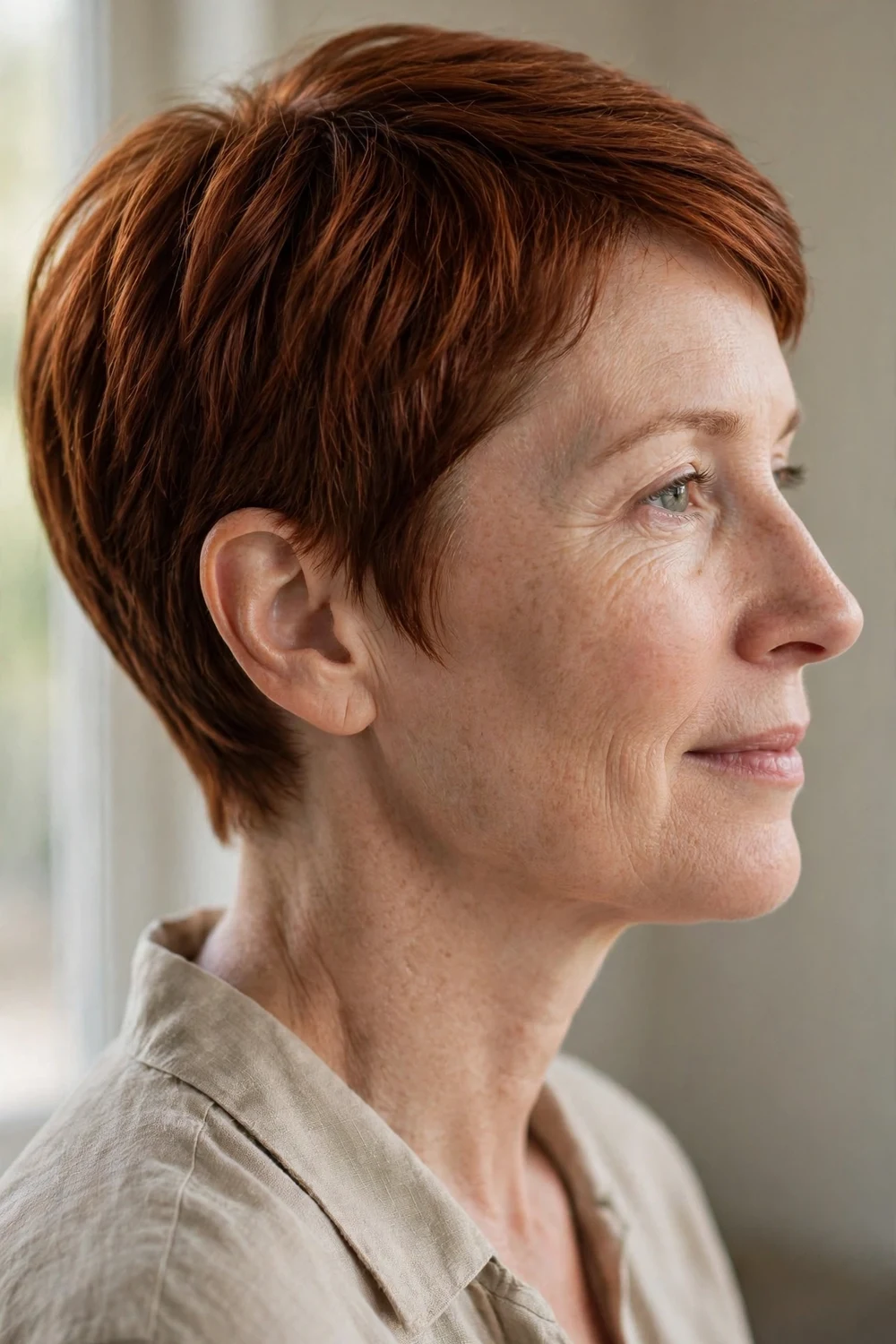
Russet is for the auburn purist. More copper than eggplant, more brown than ginger, this brown-influenced russet sits squarely in classic red-brown territory without leaning toward any extreme. It is honest, warm, and quietly confident.
It looks especially good on shorter cuts, where a punchy, warm color has room to show without overwhelming the face. Keep the finish glossy and the lines of the cut clean, and russet reads as polished rather than rustic. A copper-leaning gloss at home between visits keeps it vivid.
Try this: on short hair, pair it with clean lines so the color stays the focus. Difficulty: easy | Cost: low
29. Muted Rose Auburn
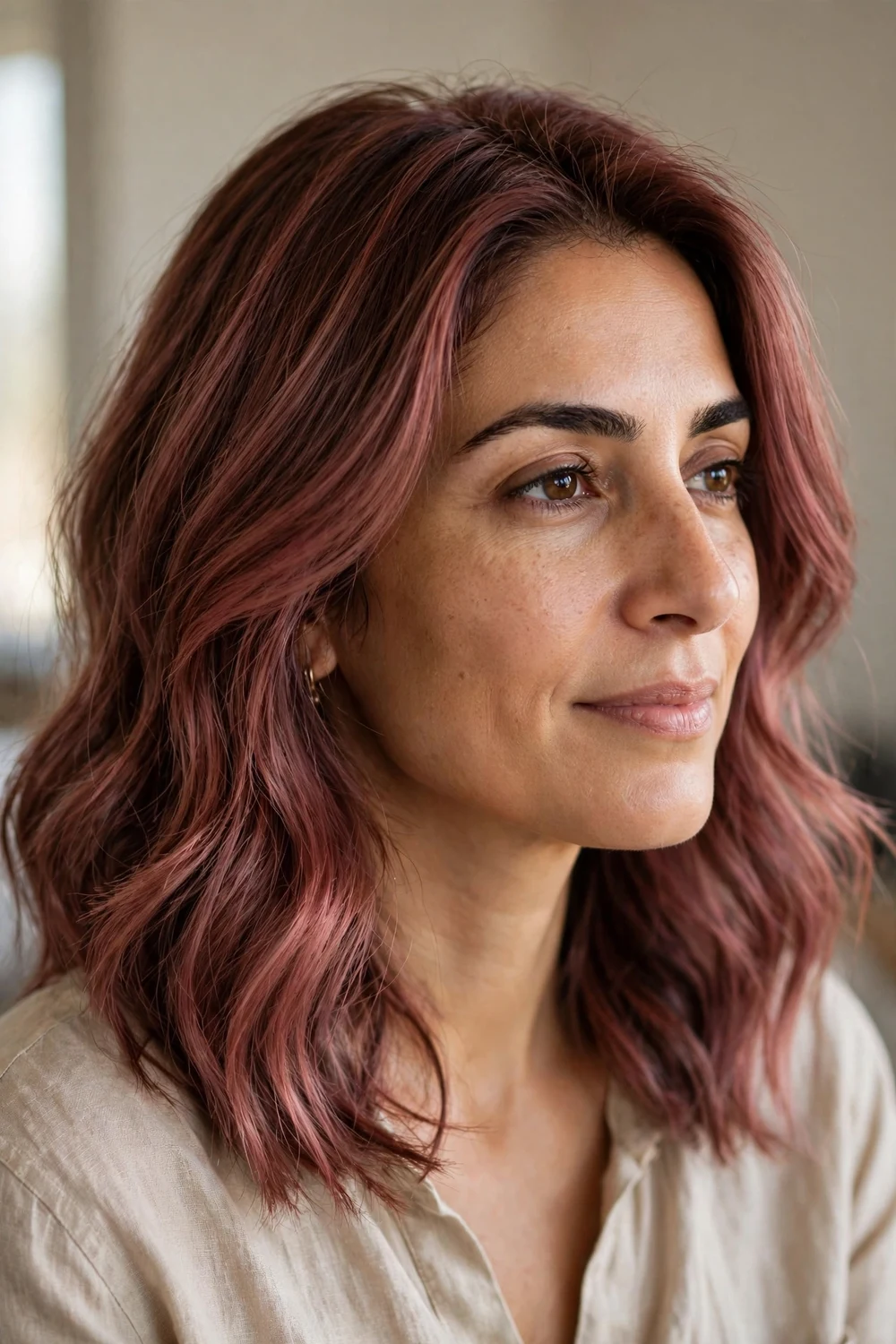
Muted rose auburn is the softest surprise on the list. The base stays a substantial brown-red, but the red leans gently toward rose instead of orange, blending dusty red, soft chestnut, and muted berry into something sophisticated and unexpected.
It suits anyone who does not love very golden hair, since the rose influence steers auburn in a cooler, quieter direction. Place the rosy tone mainly through the mid-lengths and surface layers, keep deeper neutral auburn underneath, and the difference shows in daylight while indoors it still reads as rich red-brown.
Try this: it fades faster than pure brown-reds, so refresh with a rose-toned gloss monthly. Difficulty: medium | Cost: medium
30. Smoked Auburn
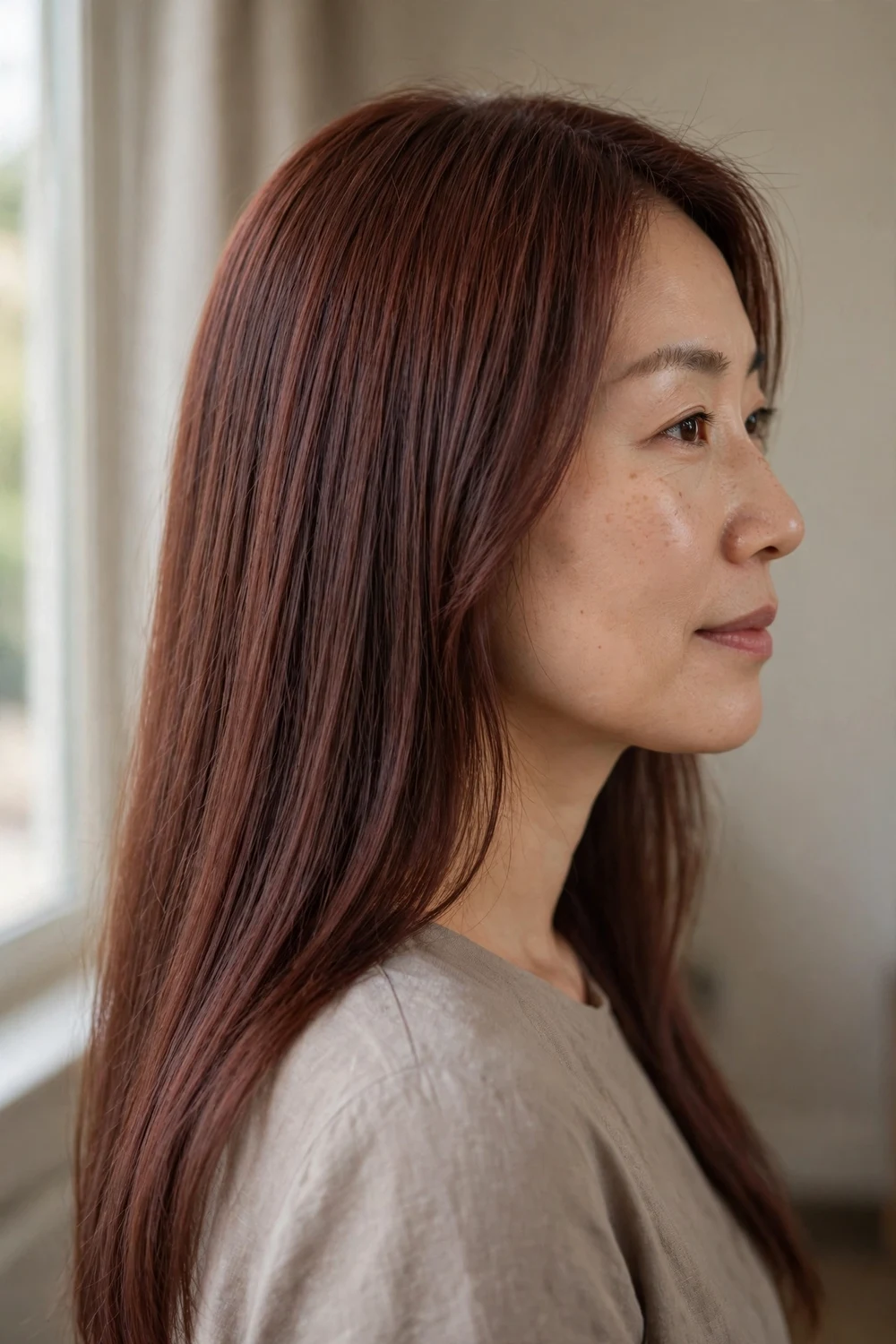
Smoked auburn takes the red-brown family in its quietest direction. A muted, neutral quality sits over the red, like auburn seen through a soft brown filter: the red is present, but restrained enough to feel dusty rather than fiery.
Neutral-brunette wearers who fear traditional copper will find this reassuring. A colorist can keep the base brown and introduce muted auburn through a gloss, tuning the warmth to the starting shade. Worn sleek and straight it looks minimal and polished; on waves, the hidden reddish undertones step forward.
Try this: style it sleek to emphasize the smoky, modern finish. Difficulty: easy | Cost: low
Auburn Fall Hair Colors at a Glance
| Shade | Best Starting Base | Difficulty | Upkeep |
|---|---|---|---|
| Classic Rich Auburn | Medium brown | Easy | Low |
| Cinnamon Auburn | Medium to dark brown | Easy | Low |
| Dark Chocolate Auburn | Dark brown | Easy | Low |
| Whiskey Copper Auburn | Medium brown | Medium | Medium |
| Deep Mahogany Auburn | Dark brown | Medium | Medium |
| Burnt Sienna Auburn | Medium brown | Medium | Medium |
| Golden Auburn | Dark blonde to light brown | Medium | Medium |
| Maple Auburn | Medium brown | Medium | Medium |
| Chestnut Auburn | Medium brown | Easy | Low |
| Auburn Balayage on Brunette Hair | Dark brown | Medium | Low |
| Soft Auburn with a Shadow Root | Medium brown | Medium | Low |
| Copper-Auburn Face Frame | Any auburn base | Easy | Low |
| Auburn Spice | Medium brown | Medium | Medium |
| Dark Cherry Auburn | Dark brown | Medium | Medium |
| Auburn with Caramel Ribbons | Highlighted brunette | Medium | Low |
| Copper Truffle Auburn | Dark brown | Medium | Low |
| Auburn Ombre with Deep Brunette Roots | Dark brown | Medium | Low |
| Auburn on Curly Hair with Cinnamon Dimension | Any curl type | Hard | Medium |
| Toasted Auburn Bob | Medium brown | Easy | Low |
| Deep Garnet Auburn | Dark brown | Medium | Medium |
| Lived-In Auburn with Fine Copper Ribbons | Medium brown | Medium | Low |
| Glossy Espresso Auburn | Very dark brown | Easy | Low |
| Black Cherry Auburn | Dark brown | Medium | Medium |
| Burgundy Auburn | Dark brown | Medium | Medium |
| Ginger Auburn | Medium brown or red | Medium | Medium |
| Strawberry Auburn | Light brown or blonde | Easy | Low |
| Pumpkin Spice Auburn | Medium brown | Medium | Medium |
| Russet Auburn | Medium brown | Easy | Low |
| Muted Rose Auburn | Medium brown | Medium | Medium |
| Smoked Auburn | Neutral brown | Easy | Low |
How to Choose the Right Auburn for You
Start with your skin undertone. Warm undertones glow with copper, ginger, whiskey, and pumpkin spice shades. Neutral undertones can wear almost anything on this list. Cooler undertones do best with mahogany, burgundy, black cherry, and smoked auburn, where the red leans toward wine instead of orange.
Next, be honest about maintenance. Red pigment fades faster than brown, and brighter shades like ginger and whiskey copper need toning every 4 to 6 weeks. If you want low upkeep, pick a deeper brunette-based shade with a shadow root or lived-in placement, which grows out softly instead of drawing a line.
Consider your starting base too. Most medium and dark brown hair can reach auburn without bleach, which keeps the hair healthier and the cost lower. Very dark or previously colored hair may need a test strand first so the colorist can predict how the red will develop.
If you are choosing between a full-head color and highlights, start smaller: red brown hair color ideas gives you a gentler way to test warm red tones before committing to a full auburn transformation.
For readers who love the copper side of the spectrum, copper hair color ideas explores brighter, more orange-leaning options that pair wonderfully with autumn light.
If you want to see how auburn fits into the season’s wider palette, fall hair colors covers the full range of shades that work from September through November.
Mistakes to Avoid
Going too bright on the first visit is the most common regret. Bright copper and ginger look exciting in the salon chair, but they fade fast and can clash with cool skin tones. Start deeper than you think you want; you can always brighten at the next visit.
Skipping the gloss is another one. A clear or tinted gloss seals the cuticle and locks red pigment in place, which noticeably extends the life of the color. It costs little and takes 10 minutes at the salon.
Finally, do not wash with hot water and regular shampoo. Heat opens the cuticle and lets red molecules escape, and sulfates strip the tone faster. Lukewarm water and a color-safe, sulfate-free formula keep auburn rich for weeks longer.
Readers coming from a brunette base sometimes pick a shade that is too close to their natural color: copper brown hair color ideas shows how to get visible warmth without losing your brunette identity.
And if your hair already has caramel or blonde pieces, caramel balayage hair color 2026 explains how to warm existing highlights into an autumn-ready palette instead of covering them up.
Frequently Asked Questions
What exactly is an auburn hair color?
Auburn is a red-brown shade that sits between true red and brunette. It combines warm red pigment with a brown base, so it reads as brown indoors and turns copper-red in sunlight. The ratio of red to brown is what creates the wide range of shades, from barely-there smoked auburn to dramatic deep garnet.
Does auburn suit every skin tone?
Nearly every skin tone can wear some version of auburn, because the shade comes in both warm and cool-leaning forms. Warm and neutral undertones glow with copper, cinnamon, and golden auburn. Cooler undertones look better with mahogany, burgundy, and smoked auburn, where the red leans toward wine rather than orange. Your colorist can fine-tune the formula to your undertone.
How long does auburn hair color last?
Red pigment molecules are smaller than brown ones, so they escape the hair shaft faster. Expect auburn to stay vivid for about 4 to 6 weeks, then soften gradually. Deeper, brunette-based shades hold longer than bright coppers. A color-safe shampoo, lukewarm water, and a gloss every few weeks extend the life noticeably.
Is auburn a low-maintenance color?
It can be. Deep auburn shades with shadow roots or lived-in placement grow out softly and need touch-ups only every 8 to 10 weeks. Brighter options like ginger or whiskey copper are higher maintenance, needing toning every 4 to 6 weeks to stay vivid. Choosing a shade close to your natural depth always reduces upkeep.
Can I get auburn without bleaching my hair?
In most cases, yes. Medium and dark brown hair can reach rich auburn with a single process and no bleach, since the color adds red pigment rather than lifting the base. Only very dark or previously colored hair might need lightening first, and your colorist can check with a test strand before committing.
Final Thoughts
Thirty shades, one season. Whether you choose barely-there smoked auburn or full deep garnet, you are picking a color that was made for autumn light. Start close to your natural depth, keep a gloss appointment on the calendar, and your auburn will carry you from the first cool morning straight through the holidays.

