

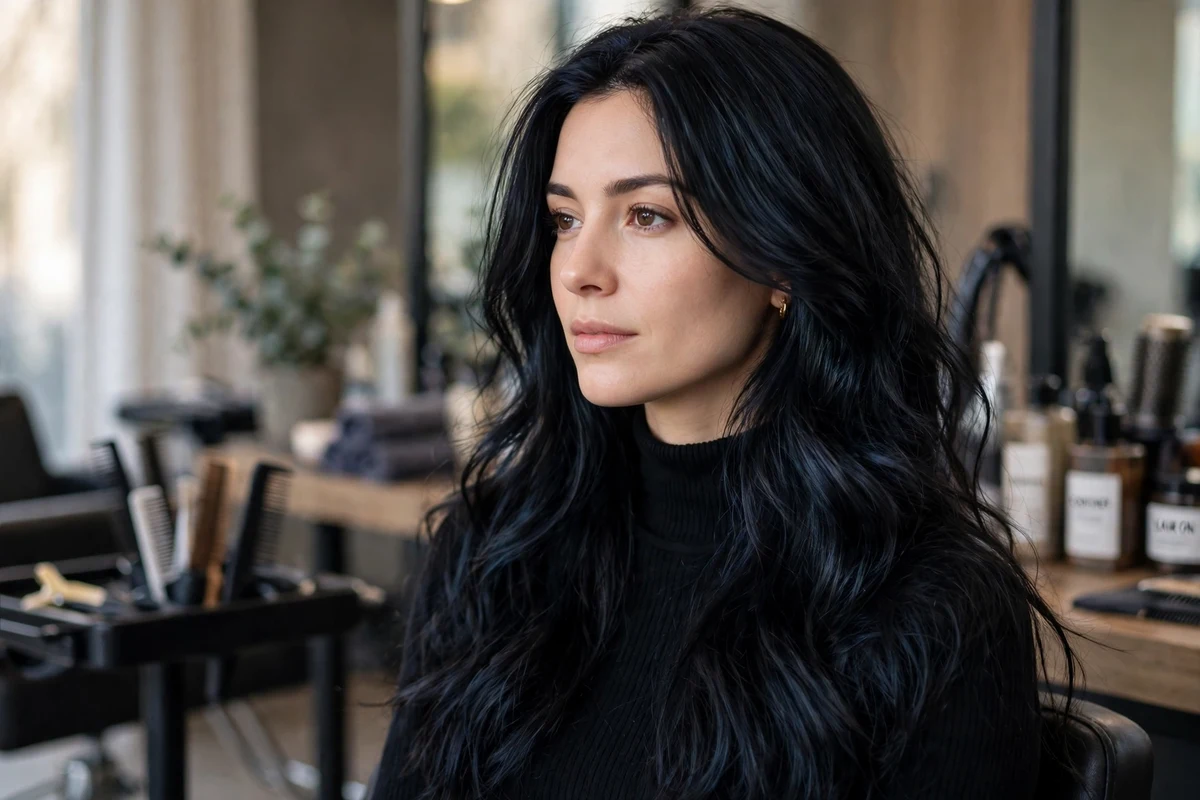
Subtle blue is the quiet end of the blue family: blue-black sheens, navy glints, and dusty ends that read as a cool cast rather than a bright color. Every shade on this list stays muted. Dark bases get most of the low effort options, since navy and blue-black can sit over black and brown hair with little or no lightening, while the paler denim and slate tones ask for a lifted base first.
This list collects 26 subtle blue hair color ideas and runs them in order: dark all-over shades first, then the steel, dusty, and denim tones, and finally the placed options like balayage, ombre, peekaboo panels, and braids. Every idea notes the tone, who it suits, what it usually costs at a salon, and how it fades. If your season is turning cold, the winter hair color ideas roundup shows how deep shades like these sit next to the winter browns and reds.
Quick Takeaways
- Subtle blue means muted blue: blue-black, navy, slate, and dusty denim tones, with no bright or neon shades on this list.
- Dark hair has the easiest route. Blue-black, navy gloss, and tints go over black and brown bases with little or no lightening.
- Dusty, denim, and slate shades need a lightened base first, and they carry the highest upkeep on this list.
- Blue can fade toward green as it washes out, especially on warm lifted bases. Violet-leaning formulas and cool water slow the shift.
- Placed blue grows out softest: balayage, ombre, and peekaboo panels can stretch salon visits to eight weeks or more.
How to Pick Your Subtle Blue Shade
Start with your starting base and your skin tone together. Black and dark brown hair reaches the first half of this list directly: blue-black, midnight navy, tints, and glosses, and cool skin carries those shades with the least effort. Warm skin usually does better when brown stays in the picture, through a navy gloss over brunette or a balayage that keeps brown near the face. The wider fall hair colors guide shows how these cool tones sit next to the warm seasonal families if you are still deciding between the two.
Then be honest about upkeep. The paler the blue, the more lightening it needs and the faster it fades, so dusty and denim shades suit readers who already book toner visits every month. If your calendar is tight, pick a dark shade or a placed option and let grow-out work in your favor. Ask for a strand test before any lightening, since the test shows both the lift you can reach and whether your base will push the fade toward green.
| Shade family | Tone | Best starting base | Upkeep |
|---|---|---|---|
| Blue-black and navy (sheen, midnight, gloss) | Deep muted blue | Black to dark brown | Low to medium |
| Indigo and slate navy (shadow root, blueberry, bob) | Navy with violet or gray | Dark brown to medium brown | Medium |
| Steel, slate, and ash blends | Silver blue, gray blue | Light brown to lightened base | Medium to high |
| Dusty and denim (all-over, stonewashed, melt) | Powdery muted blue | Pre-lightened base | High |
| Placed blue (balayage, ombre, peekaboo, ends) | Varies by shade | Any base | Low to medium |
1. Blue-Black Sheen

Blue-black keeps a black base and adds a blue sheen that shows in daylight and under bright indoor light. Indoors the hair reads as glossy black, so this shade suits workplaces with strict dress codes. Cool and neutral skin tones carry the blue reflect best.
Most dark bases reach this shade in one appointment with permanent or demi-permanent color and no lightening. The blue reflect fades first, usually toward a softer black after four to six weeks. A blue-black gloss refresh brings the sheen back without a full recolor.
Try this: book the gloss refresh at the same visit, set for five weeks out, while the blue reflect is still visible.
Difficulty: Low to Medium · Cost: $$ (salon)
2. Midnight Navy Blue

Midnight navy sits one step lighter than blue-black: a deep navy that stays muted in every light. The tone is even from root to tip and suits cool skin, while deep skin carries the richness well. Long, smooth styles show the even tone most clearly.
Dark brown and black bases usually reach midnight navy with little or no lightening, since the target shade stays close to the base. Navy holds longer than pale blues, and it fades toward a softer denim navy. On lighter brown bases the same shade may fade with a green cast, so ask for a violet-leaning navy formula.
Try this: ask your colorist to keep a few natural dark pieces through the lengths if you want the navy to read softer.
Difficulty: Low to Medium · Cost: $$ (salon)
3. Barely-There Blue Tint on Black Hair
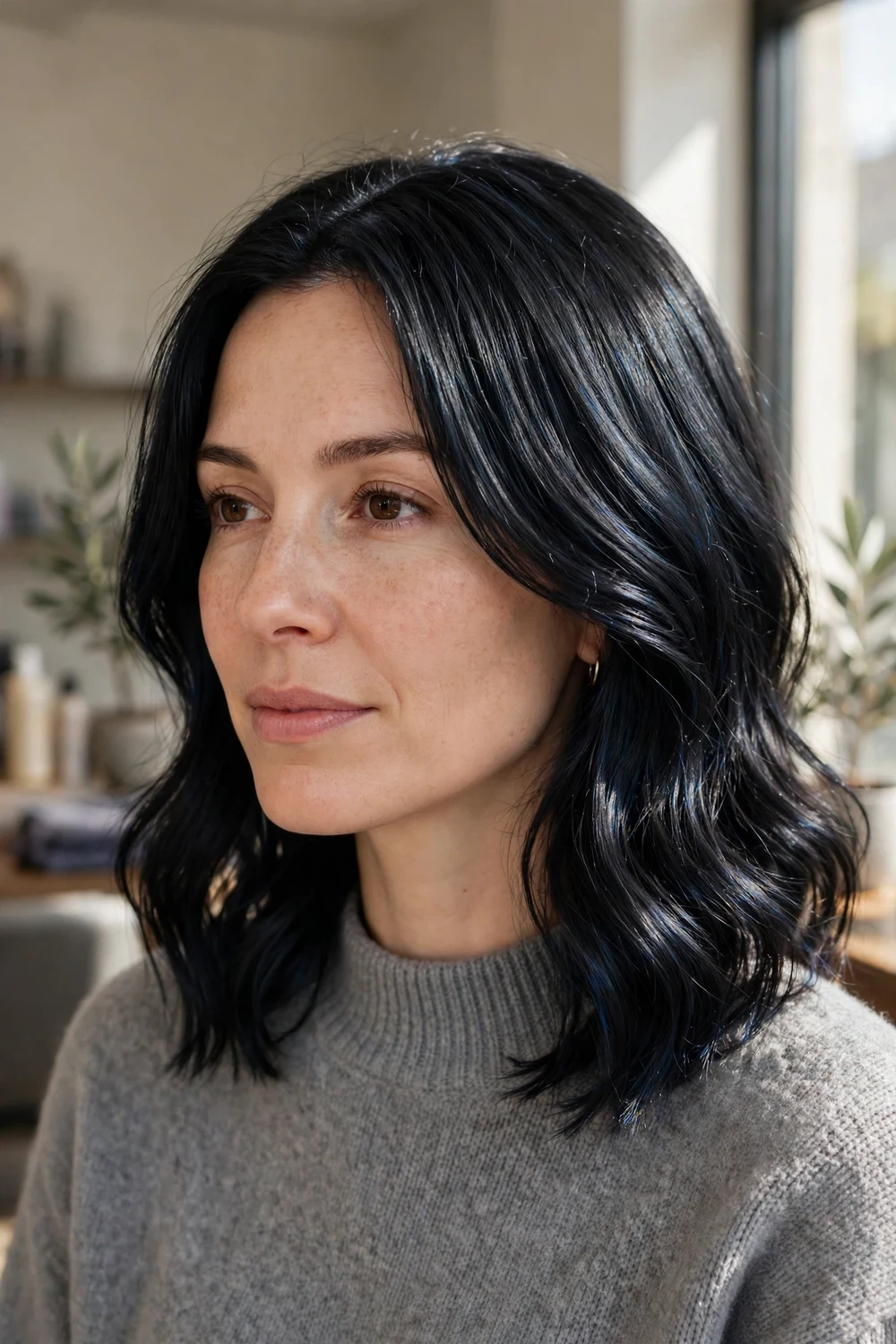
This tint lays a thin wash of blue over natural black hair. The change is small: a cooler cast in sunlight and a blue hint along the edges of the hair. It suits anyone who wants a first step into blue with an easy exit.
A tint or gloss adds the blue without lifting the base, so the appointment is short and the hair takes no lightening damage. The tint fades out evenly over three to five weeks and leaves no regrowth line. Warm indoor light hides most of the blue, which many wearers count as a plus.
Try this: time the tint two weeks before photos or an event, when the blue cast is at its clearest.
Difficulty: Low · Cost: $ (salon)
4. Navy Blue Gloss over Dark Brown Hair
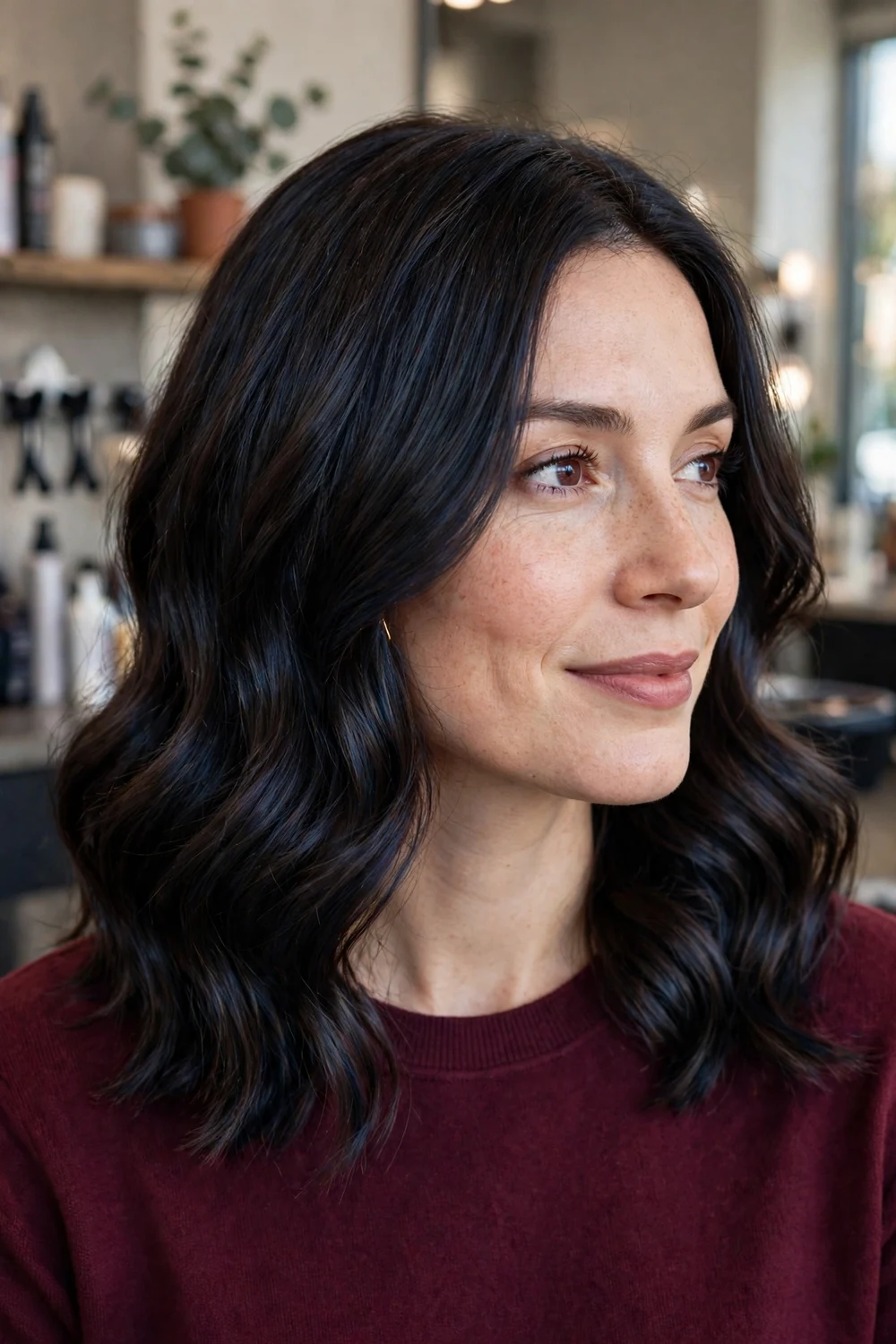
A navy gloss over dark brown hair adds a cool blue cast and a lot of shine while the brown base stays in charge. The result reads as a cooler, darker brunette in most light. It suits warm skin that finds blue-black too stark, since the brown softens the blue.
Gloss color sits on the surface of the hair and needs no lightening on a dark brown base. It fades evenly over four to six weeks. Because blue pigment over warm brown can shift green as it fades, a gloss with a small violet share keeps the cast clean.
Try this: ask for a clear gloss on top at the same visit if shine is your main goal alongside the tint.
Difficulty: Low · Cost: $ (salon)
5. Deep Indigo with Shadow Roots
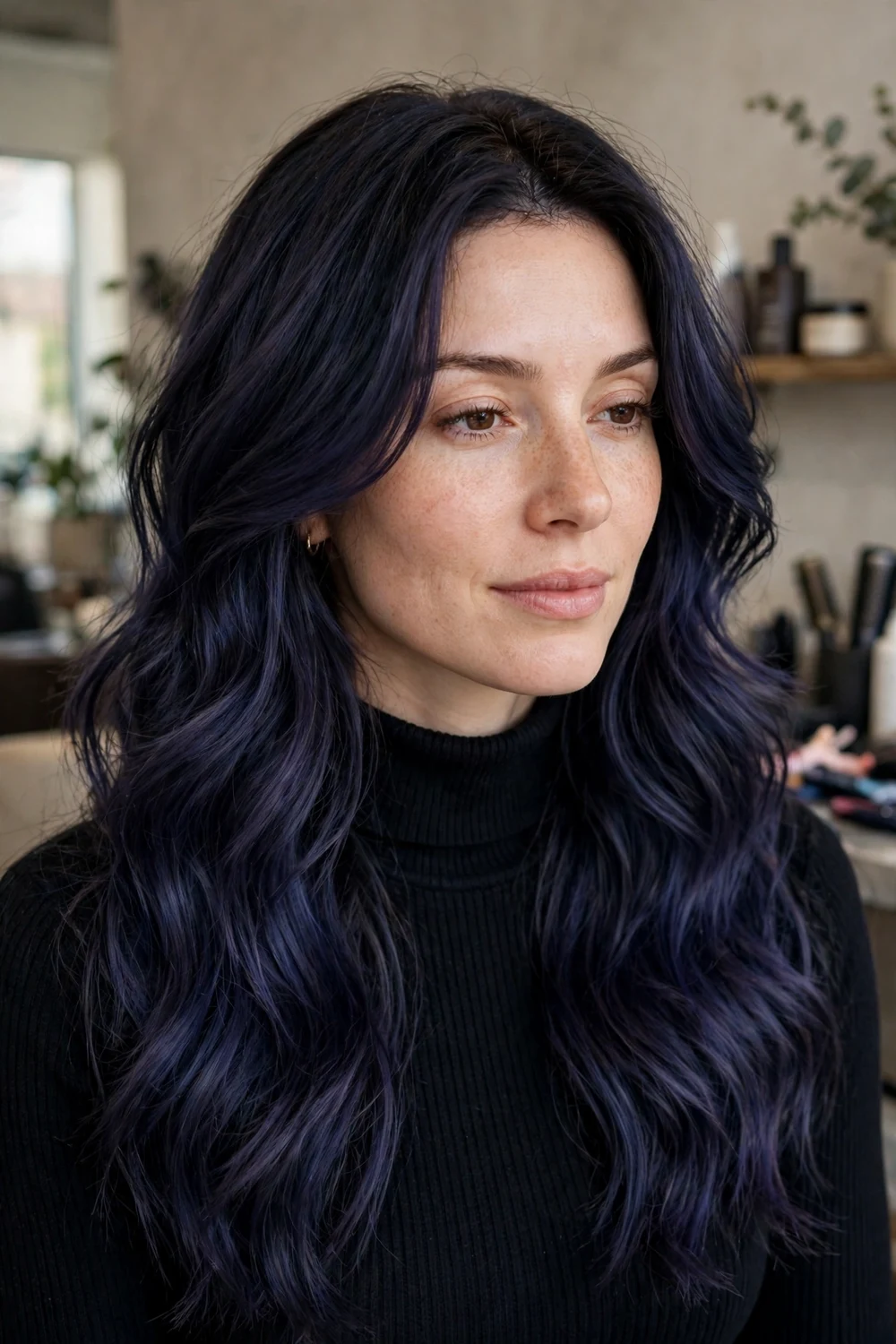
Deep indigo blends navy with a violet share, and a shadow root keeps the top few inches close to your natural color. The violet share matters for fade: indigo tends to fade toward slate blue rather than green. It suits cool and neutral skin and longer hair, where the root-to-length blend has room to show.
The shadow root softens grow-out, so refresh visits can stretch to eight weeks for the root area while the lengths get a toner sooner. Medium brown bases may need a mild lift through the lengths for the indigo to read clearly.
Try this: ask for the shadow root in your natural shade, so new growth blends into the colored section without a line.
Difficulty: Medium · Cost: $$ (salon)
6. Dark Blueberry Indigo

Blueberry indigo is a deep navy with a berry violet hint, worn here as a muted all-over tone on a lob. The violet hint warms the blue just enough for neutral skin, and the shorter cut keeps the color looking tidy as it grows. Keep the violet share small, or the shade moves toward purple.
This shade sits over medium and dark brown bases with modest lightening through the lengths. It fades toward a gray navy, and a violet-blue gloss at five weeks holds the berry hint. Avoid clarifying shampoo, which strips the violet share first.
Try this: bring a photo that shows the navy to violet balance you want, since small formula changes shift this shade a lot.
Difficulty: Medium · Cost: $$ (salon)
7. Slate Navy on a Bob
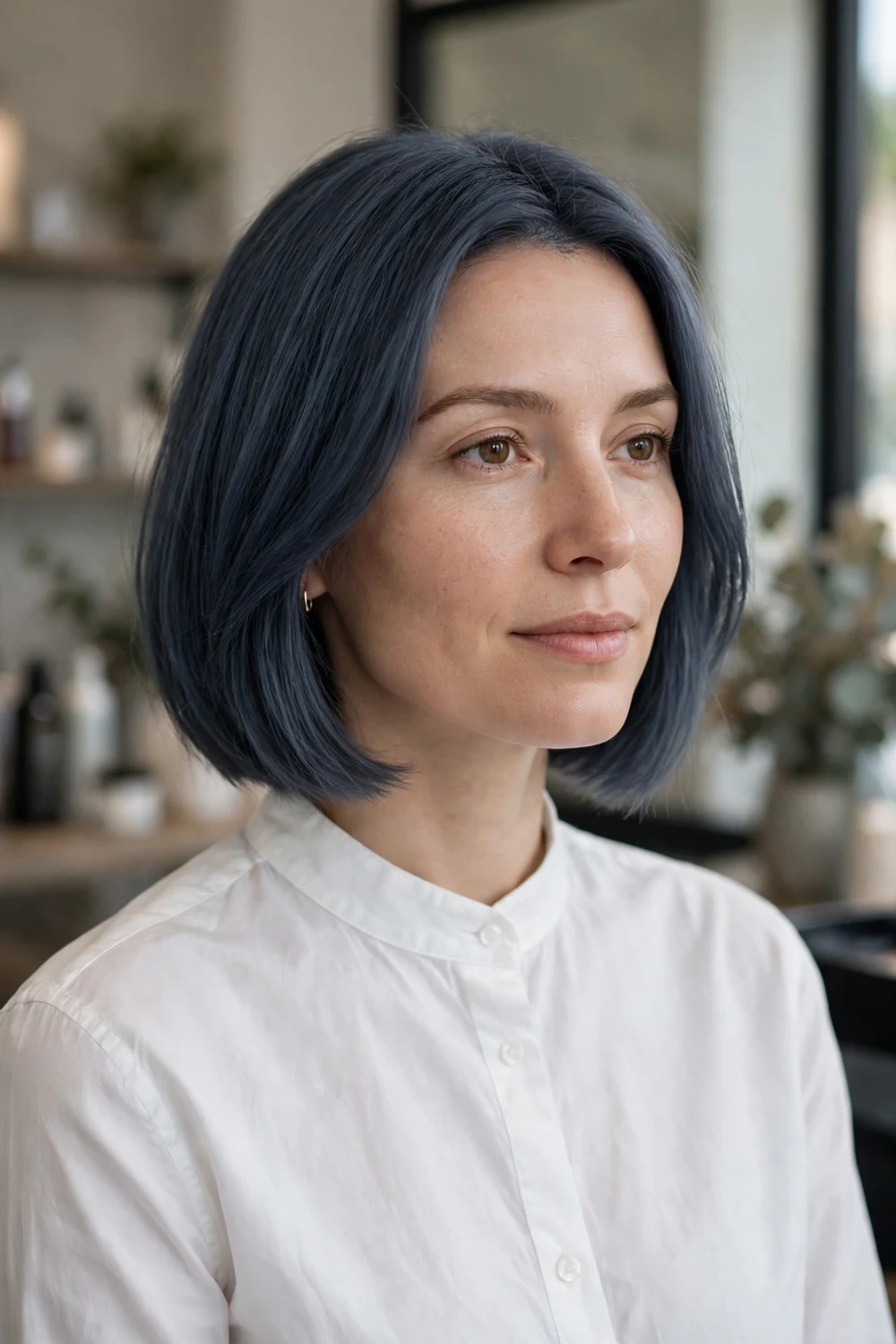
Slate navy mixes navy with gray on a chin to shoulder length bob. The gray content mutes the blue, and the clean bob shape keeps the color looking deliberate. It suits cool skin and anyone who styles their hair smooth most days.
Short hair shows regrowth sooner, so root touch-ups land at four to five weeks even though the tone itself holds well. The gray share can fade faster than the navy, leaving the bob bluer over time. A slate gloss at the touch-up visit rebalances both parts.
Try this: keep the bob one length if you want the slate tone to look even from root to tip.
Difficulty: Medium · Cost: $$ (salon)
8. Glossy Navy Curls
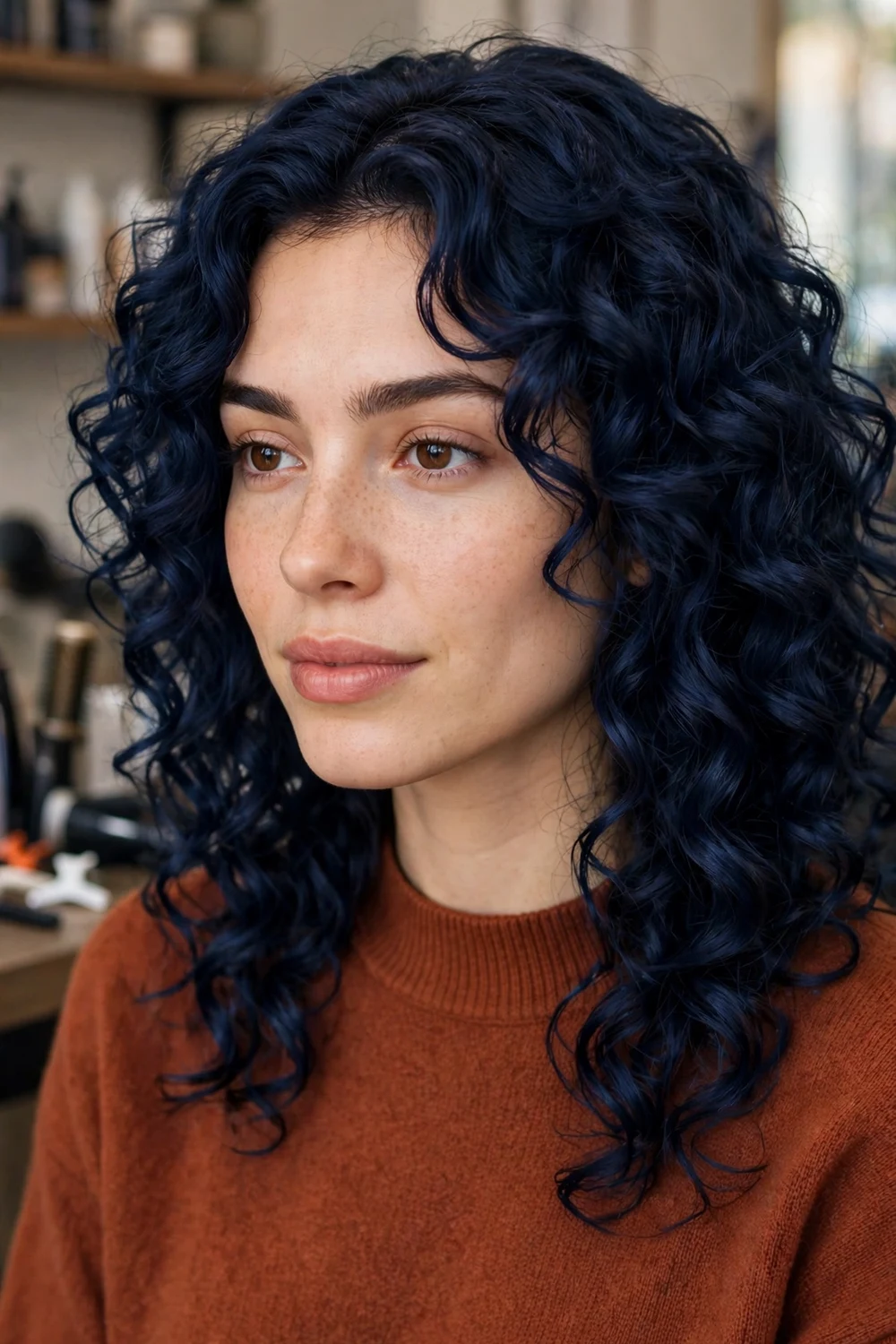
Glossy navy places deep navy through curly hair and finishes with a clear gloss, so each curl catches light on its outer curve. The navy stays muted and even, and the placement is painted curl by curl. Medium and deep skin carry this depth well.
Curly hair runs dry, and color adds to that dryness, so weekly deep conditioning is part of the upkeep. The curl pattern hides regrowth lines, which stretches visits to seven or eight weeks. Navy on curls can fade unevenly on the driest ends, so trim and gloss those ends first.
Try this: book with a colorist who colors curly hair dry, so the navy lands on the curls as you wear them.
Difficulty: Medium · Cost: $$ (salon)
9. Steel Blue Gloss

Steel blue is a silver blue with a gray cast, calm and cool rather than bright. A gloss formula gives the steel tone with a softer fade and no hard regrowth line. It suits cool skin and dark blonde to light brown bases, where the silver share can show.
Light brown bases reach steel blue with a gloss and toner in one visit. Darker bases need lightening first, which raises the difficulty. Steel tones fade toward silver gray, a fade most wearers like. Use a blue toning conditioner sparingly, since it can push the shade darker.
Try this: ask for a strand test first, since porous ends grab the gray share faster than the roots do.
Difficulty: Medium · Cost: $$ (salon)
10. Blue-Gray Slate Blend
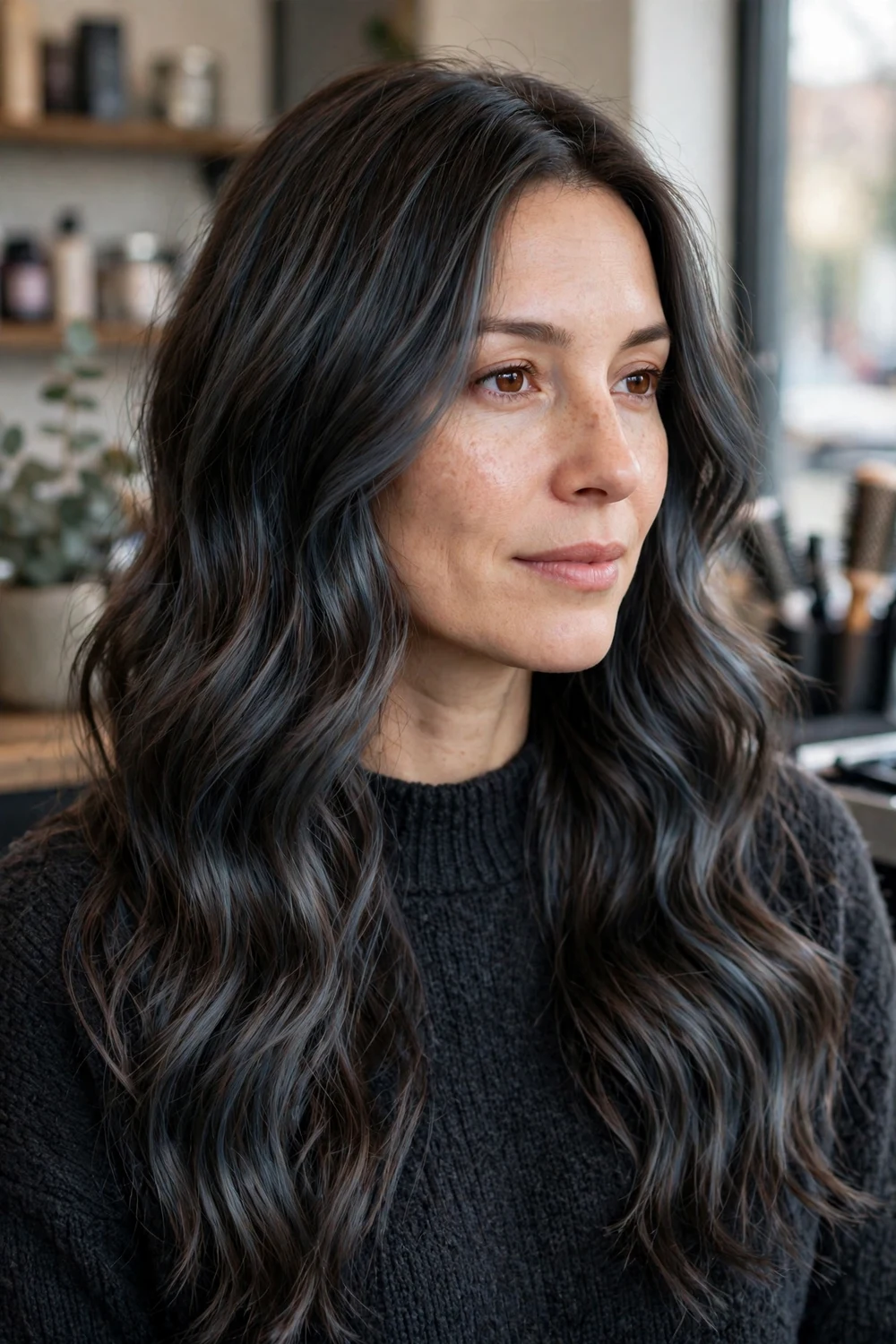
This blend weaves slate blue and soft gray through the hair in fine sections, so the overall read is a cool gray with a blue cast. It suits cool skin and anyone already part gray who wants the gray to look planned. Waves show the two tones separating as the hair moves.
Reaching a clean slate takes lightening on most bases, followed by two toners, which is why the first appointment runs long. The blue share fades toward green on warm or yellow bases, so the toner needs a violet share to stay slate. Refresh the toner at five to six weeks.
Try this: ask your colorist to lift a test section first to check whether your base lifts clean enough for slate.
Difficulty: Medium to High · Cost: $$$ (salon)
11. Dusty Blue All-Over
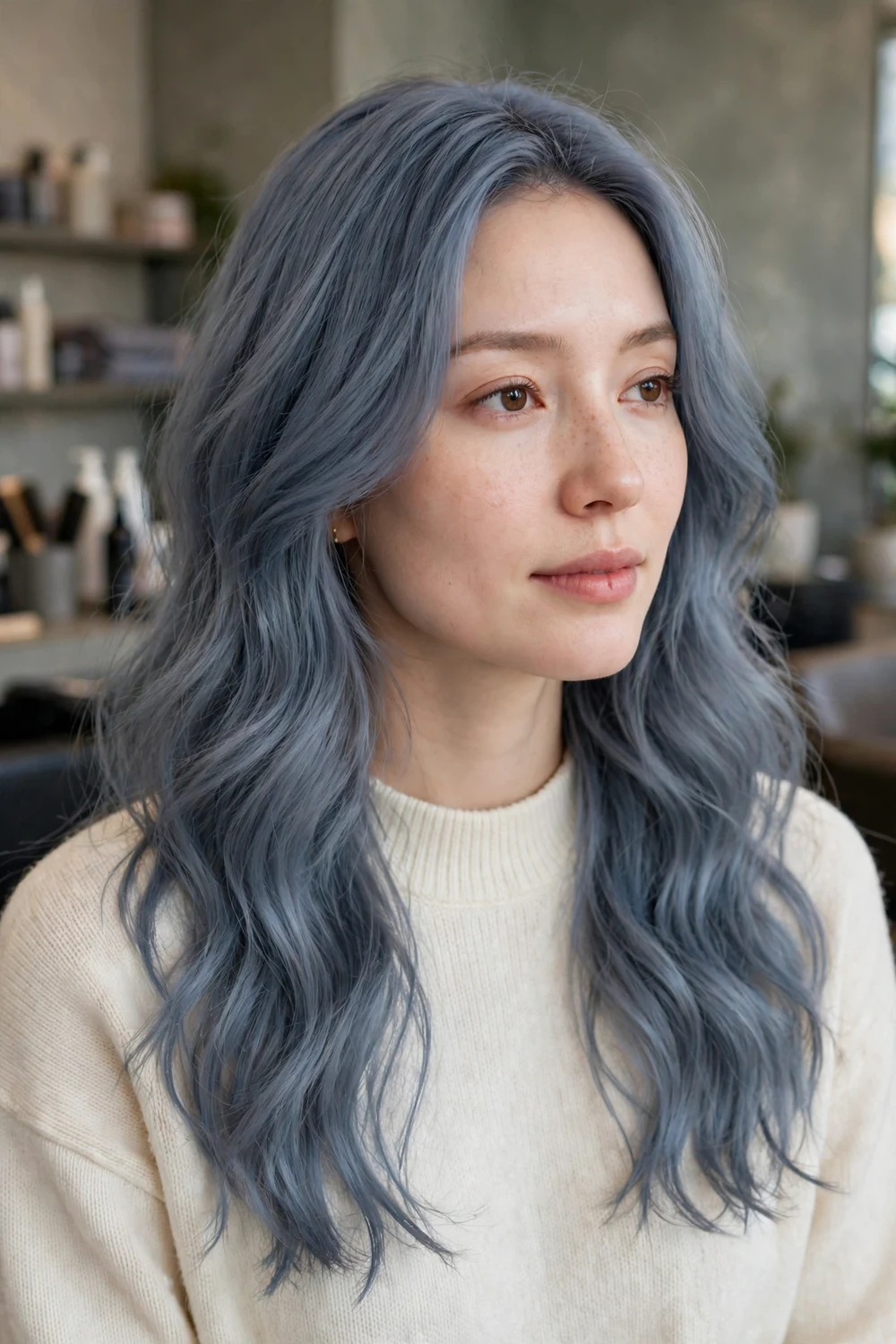
Dusty blue is a powdery, muted blue worn all over on a lightened base. The dustiness comes from a gray share in the formula, which keeps the blue soft in daylight. Fair and cool skin suits it best, and the shade needs a pale base to stay true.
This is a high commitment shade: dark hair needs a full lift to a pale blonde before the dusty toner goes on. The toner fades within four to five weeks, often toward a pale green on bases that lifted warm, so a violet-leaning toner and cool water washes help. Budget for the toner refresh when you book the first appointment.
Try this: start with a dusty blue gloss over existing light highlights if you want to test the tone before a full lift.
Difficulty: High · Cost: $$$ (salon)
12. Smoky Pastel Blue

Smoky pastel blue softens pale blue with smoke gray, so the result is quiet rather than candy bright. It suits fair, cool skin and shorter cuts, where faded ends can be trimmed often. Keep the gray share steady, or the shade drifts toward a plain pale blue.
A pale, even base is required, and uneven lift shows through pastel tones as patches. The color fades fast, usually within three to four weeks, and can fade green where the base was warmest. A diluted blue conditioner once a week holds the tone between toner visits.
Try this: ask for the smokiest version at the first visit, since the gray share fades first and the blue lightens as you wear it.
Difficulty: High · Cost: $$$ (salon)
13. Denim Blue Tint

Denim blue copies the tone of worn jeans: a medium muted blue with gray in it. It reads casual and lived in, and it suits a wide range of cool and neutral skin tones. Natural roots blend into denim shades well, which softens grow-out.
Denim blue needs a lightened base on most heads, and the level of lift sets the difficulty. Dark denim versions sit on a medium lift, while pale denim needs a near blonde base. The shade fades toward silvery blue, then pale green if the base was warm, so cool toned toners matter at each refresh.
Try this: pick your denim wash first, dark, medium, or stonewashed, and show your colorist jeans in that wash as the reference.
Difficulty: High · Cost: $$$ (salon)
14. Stonewashed Light Denim
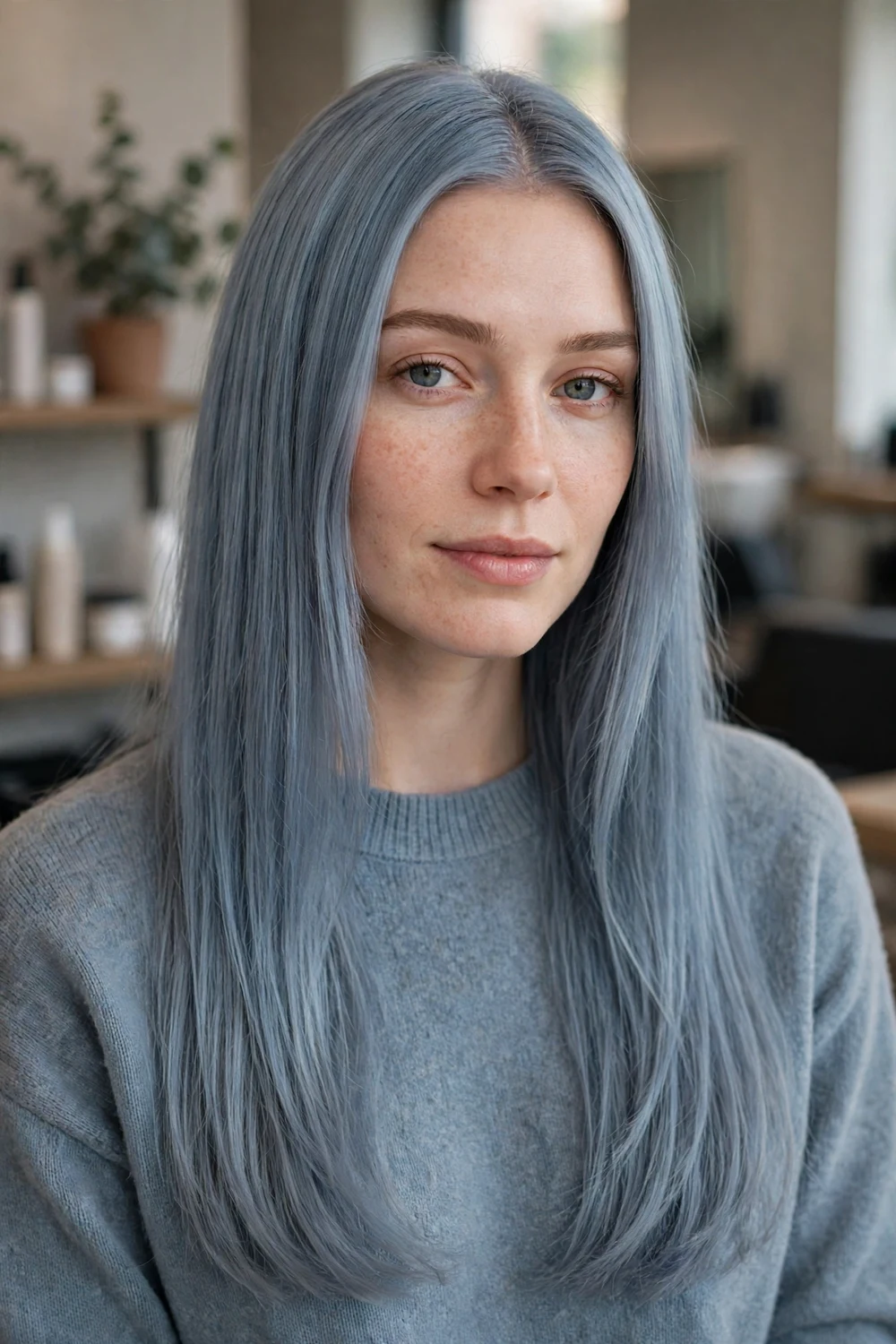
Stonewashed denim is the palest version in the denim family: a light blue gray that looks faded from day one. It suits fair, cool skin and hair that is already light blonde or willing to lift there. Straight styling shows the even, faded tone best.
This shade asks for the lightest base on this list, so the first appointment is the longest and the upkeep is steady. Toner refreshes land at three to four weeks. Sun and hot water fade stonewashed tones quickly, and warm bases can push the fade toward green.
Try this: cover your hair in strong sun during the first two weeks, when this pale tone fades fastest.
Difficulty: High · Cost: $$$ (salon)
15. Ash Blue-Gray Melt

An ash melt runs dark ash roots into blue gray lengths, with no warm tones anywhere in the blend. The dark root keeps regrowth soft, while the lengths carry the blue. It suits cool skin and long hair, where the melt has space to gradient.
The lengths need lightening before the ash toner, and the toner fades toward gray first, then toward green on warm sections. A gloss at five weeks restores the blue gray balance. Because the root stays dark, full appointments can stretch to eight weeks.
Try this: ask for the melt to start at ear level if your roots grow fast, so the dark section covers new growth longer.
Difficulty: High · Cost: $$$ (salon)
16. Navy Balayage on Black Hair
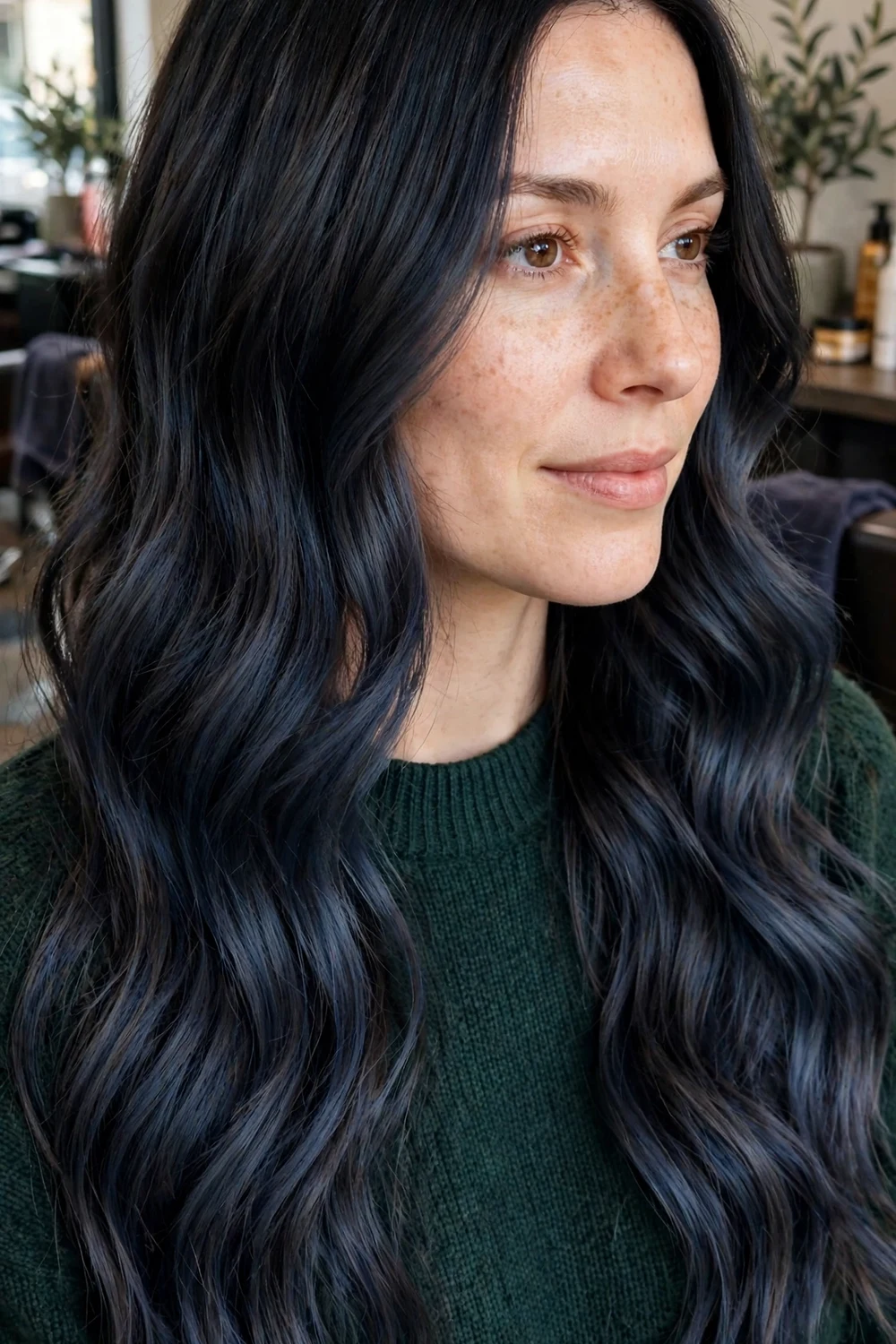
Navy balayage hand-paints muted navy pieces through a black base, keeping the roots black and the blue in the mid-lengths and ends. The placement adds movement to black hair while the overall read stays dark. It suits medium and deep skin and every dark base.
Painted pieces grow out with no hard line, so most wearers refresh the toner at eight to ten weeks. The painted sections are lightened before the navy goes on, and they can fade toward green as the navy washes out. A navy gloss at the refresh visit corrects that shift.
Try this: ask for the navy concentrated on the top layers and around the face, with the underneath left black for contrast.
Difficulty: Medium · Cost: $$$ (salon)
17. Muted Blue Balayage on Brunette

This version paints dusty navy pieces through a brunette base, with the brown left visible between the blue sections. The mix reads as a cool brunette with blue dimension. It suits neutral and warm skin better than an all-over blue, since the brown keeps warmth near the face. Readers comparing seasonal dark shades can browse the dark fall hair colors roundup alongside this list.
The blue pieces need a lift before toning, while the brown base stays untouched, which keeps the appointment shorter than a full color change. Grow-out is soft, and the toner refresh lands at seven to nine weeks. Dusty navy over a warm lift can fade green, so ask for an ash leaning formula.
Try this: ask for fewer, wider painted pieces if you want the blue to show clearly against the brown.
Difficulty: Medium · Cost: $$$ (salon)
18. Black to Navy Ombre

This ombre keeps black roots and fades them into muted navy ends. The gradient suits deep skin and dark bases, and the untouched roots make regrowth a non-issue. Where balayage scatters the color, ombre gathers it in the bottom half of the hair.
The ends carry the lightest color, so they need weekly deep conditioning and gentle handling when wet. The gradient can go months between appointments, with a navy gloss on the ends at eight weeks. As the navy fades it can show green at the very tips, which a trim or gloss fixes.
Try this: sleep with the ends in a loose braid, since ombre ends are the oldest hair on your head and tangle first.
Difficulty: Medium · Cost: $$ (salon)
19. Brown to Dusty Blue Ombre
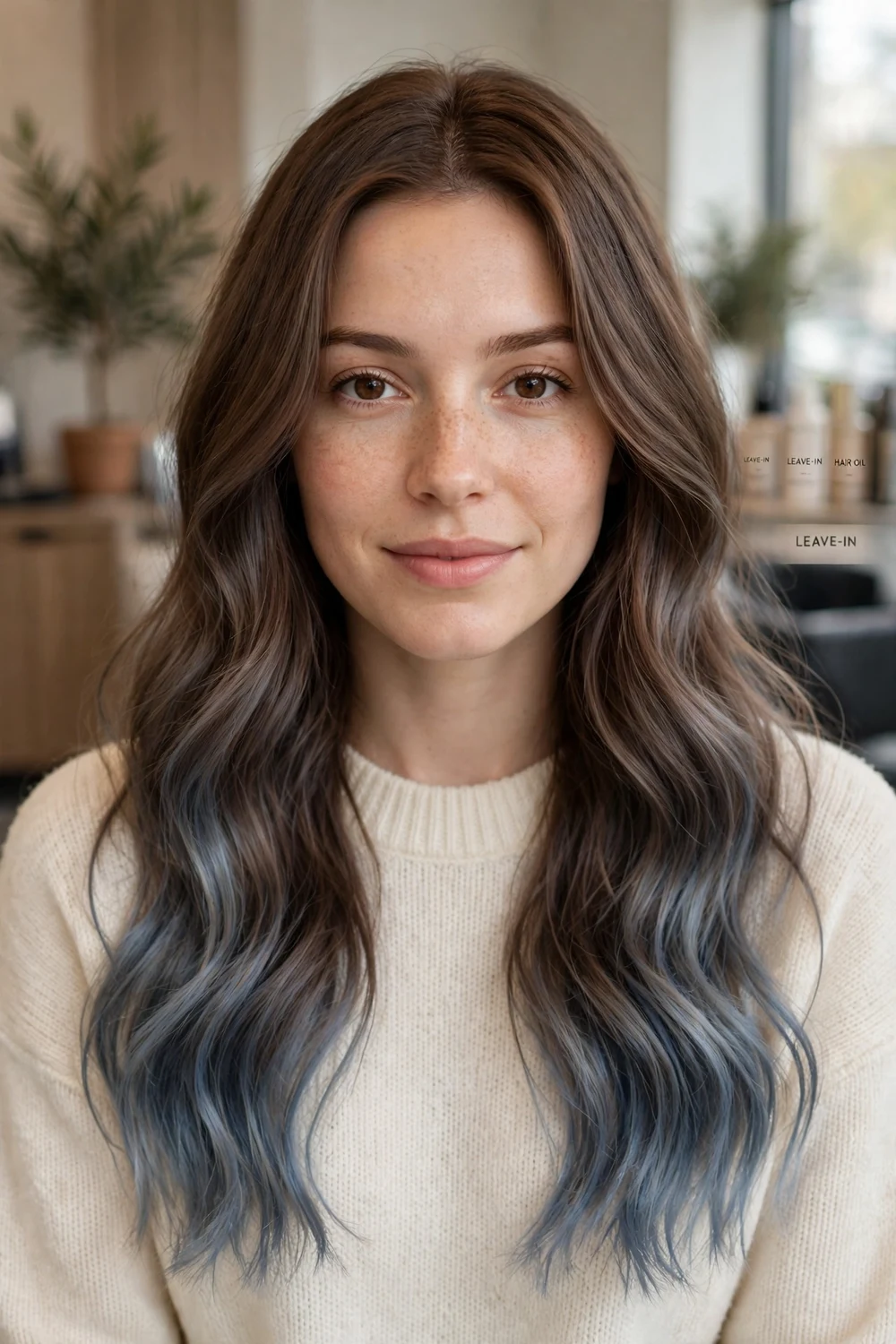
Brown roots fade into dusty blue ends in this ombre, so the blue stays away from the face and the skin. The warm to cool gradient suits medium skin and long hair. It is a practical route for brunettes who want a visible blue without lightening near the roots.
The ends need a solid lift before the dusty toner, and dusty tones on a warm lift fade toward green faster than navy does. A violet-leaning dusty formula slows that shift. The ends also dry out first, so a weekly mask belongs in the routine from week one.
Try this: book the ends trim and the toner refresh together at six weeks, so both parts of the upkeep happen in one visit.
Difficulty: Medium to High · Cost: $$$ (salon)
20. Dusty Blue Ends

Dusty blue ends color only the last few inches of a dark base. The commitment is small: no root work, no all-over change, and the color leaves gradually as the hair is trimmed. It suits anyone testing blue for the first time on dark hair.
The ends are lightened, then toned dusty blue, in one shorter appointment. If you dislike the result, a trim removes it. If you like it, the same placement can move higher next time. The toned ends fade toward pale green over five to six weeks, and a home gloss can refresh them once.
Try this: pair the ends with a clear gloss over the whole head, so the dark base shines as much as the blue tips do.
Difficulty: Medium · Cost: $$ (salon)
21. Blue Peekaboo Underlayers

Peekaboo placement hides muted navy panels under the top layer of hair. The blue shows when the hair moves, goes up, or is braided, and stays covered when the hair hangs down. It suits anyone who needs a plain look at work and wants color outside it.
Only the underlayer is lightened and colored, so the top layer keeps its health and its natural shade. Grow-out hides under the top layer, which stretches refresh visits to eight weeks or more. The hidden panels fade toward green like any navy, and a gloss refresh restores them without touching the top.
Try this: ask for the panels to start an inch below the part line, so the top layer covers them fully when your hair is down.
Difficulty: Medium · Cost: $$ (salon)
22. Muted Navy Money Piece

A muted navy money piece places two navy panels at the front hairline over a dark brown or black base. The panels are kept deep and soft, so the frame reads as a cool shadow rather than a bright stripe. It suits fair and medium skin and works on long hair, bobs, and layered cuts.
The panels are lightened, then toned navy, so they fade first and need a mini gloss at four to five weeks. The rest of the base keeps its own schedule, or no schedule at all if it is natural. This is also a low cost way to test navy against your skin before a larger placement.
Try this: ask for the panels one shade lighter than a navy base, no more, so the frame blends instead of striping.
Difficulty: Medium · Cost: $$ (salon)
23. Fine Navy Highlights on Dark Hair
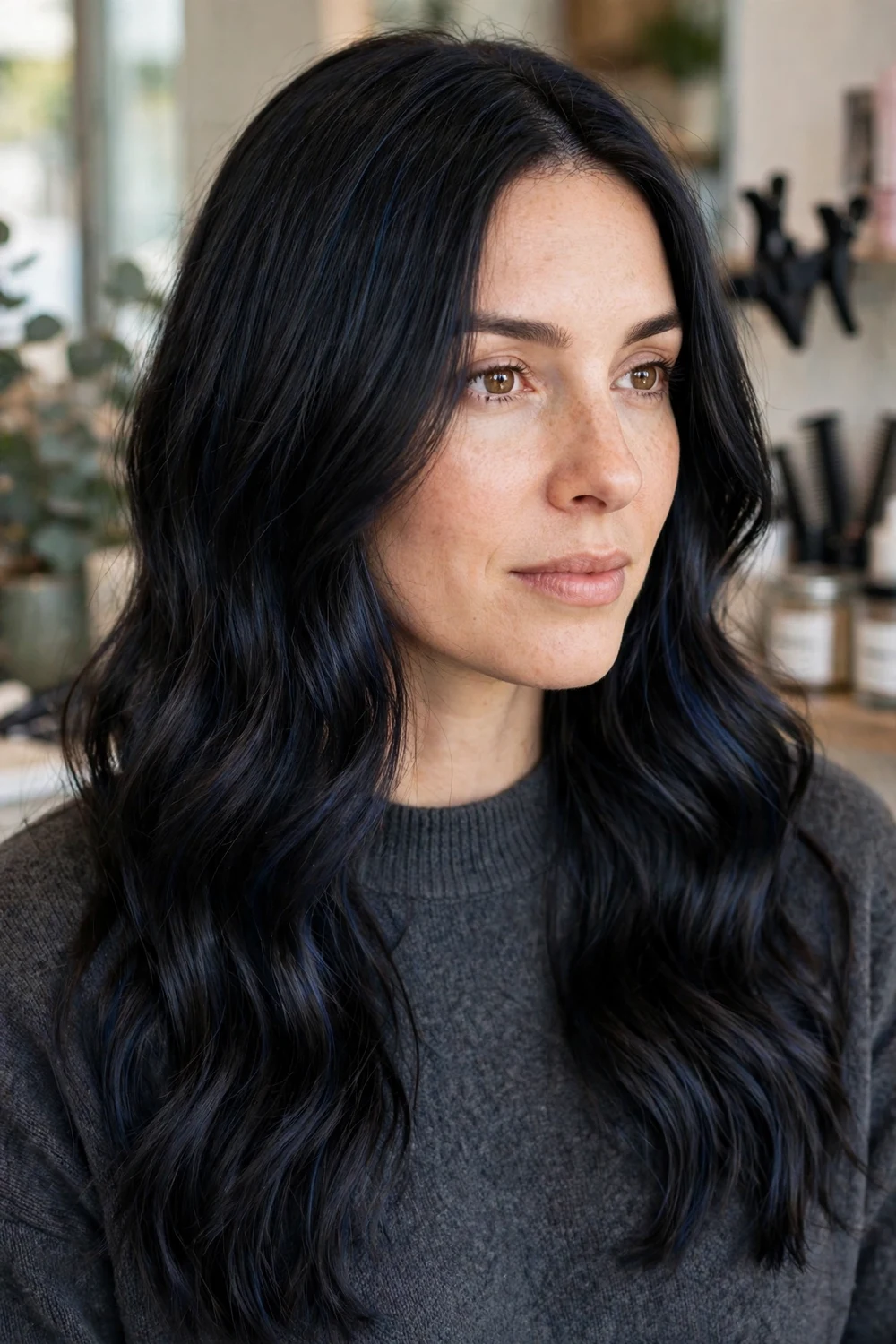
Fine navy highlights weave thin navy strands through black or dark brown hair. Kept fine and numerous, they read as a blue shimmer when the hair moves rather than as stripes. The look suits conservative settings and adds dimension to hair that reads flat in photos.
Each highlight is lifted, then toned navy, so the appointment takes time even though the color change is small. Highlights grow out softly and refresh on a toner cycle of seven to eight weeks. Thin pieces fade faster than wide panels, and they can fade toward green, so a navy gloss helps at the refresh.
Try this: ask for the highlights placed mostly through the top and sides, where light hits first and the shimmer shows.
Difficulty: Medium · Cost: $$ (salon)
24. Silver-Slate Blue for Gray Blending
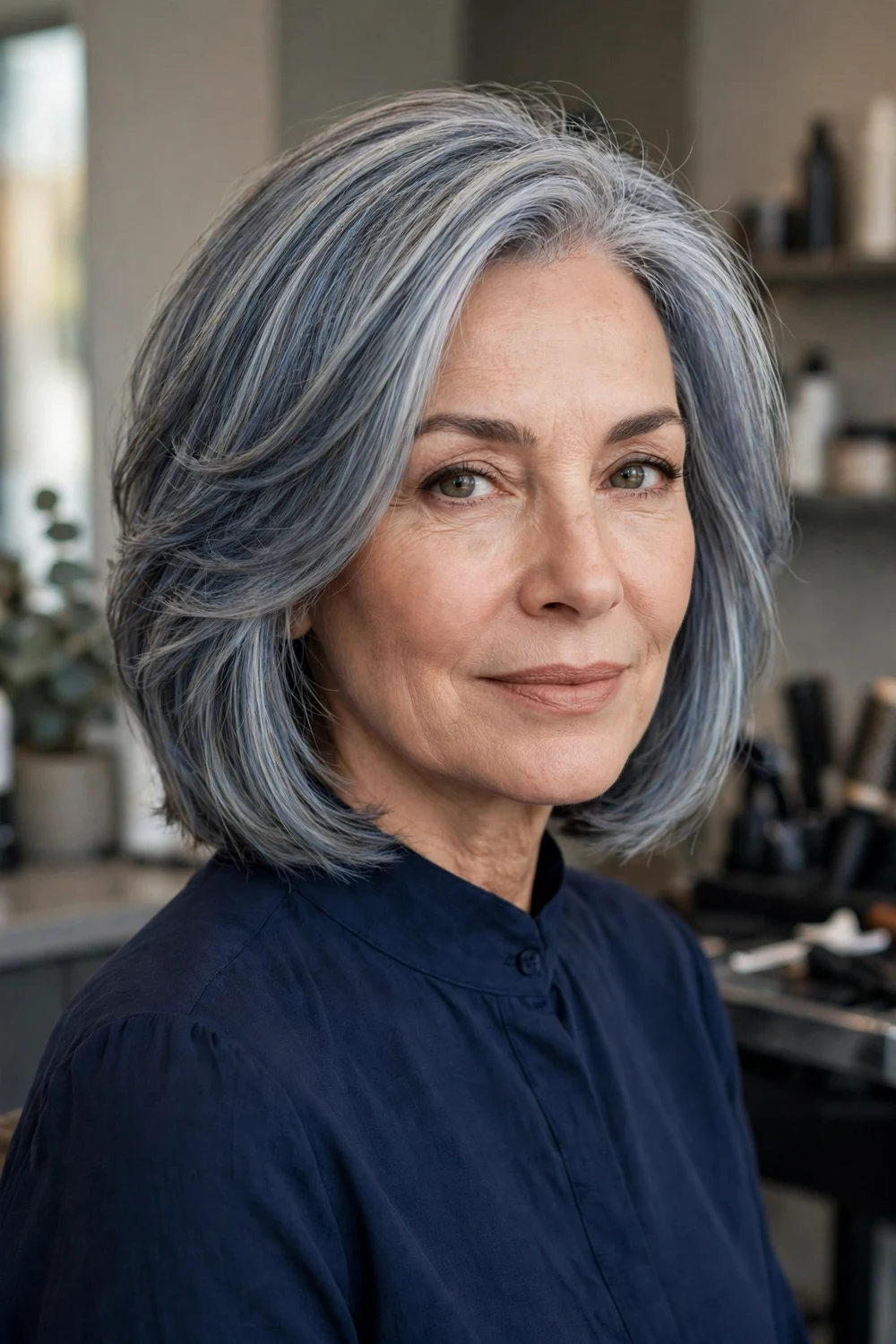
A slate blue toner over silver and gray hair blends the gray into a planned color instead of covering it. The blue share cools the silver and evens out patches where gray grows in unevenly. Demi-permanent toners do most of this work, since they stain the gray rather than coating it flat.
Grow-out stays soft, because new gray grows into a shade close to the toned result. Refresh the toner at six to eight weeks as it washes toward plain silver. On gray hair with warm or yellow patches, the blue toner can read green, so a violet share in the formula keeps it slate.
Try this: ask for blending, not full coverage, at the consultation, since the formula and the goal differ from a standard root color.
Difficulty: Low to Medium · Cost: $$ (salon)
25. Navy Braiding Hair with Black Braids

This route adds muted navy through braiding hair woven into black braids, so your own hair takes no dye at all. The navy can run through every braid or sit in a few accent braids near the front. It suits anyone who wears protective styles and wants color that comes out with the braids.
There is no fade from washing in the usual sense, since the color is in the braiding hair, though the navy can dull with product build-up. Keep the scalp moisturized and rinse the braids gently. When the style comes out, the color goes with it and your natural hair is unchanged.
Try this: start with navy in the front few braids only if you want to test how the shade sits against your skin.
Difficulty: Low · Cost: $$ (salon)
26. Soft Denim Ombre on a Lob
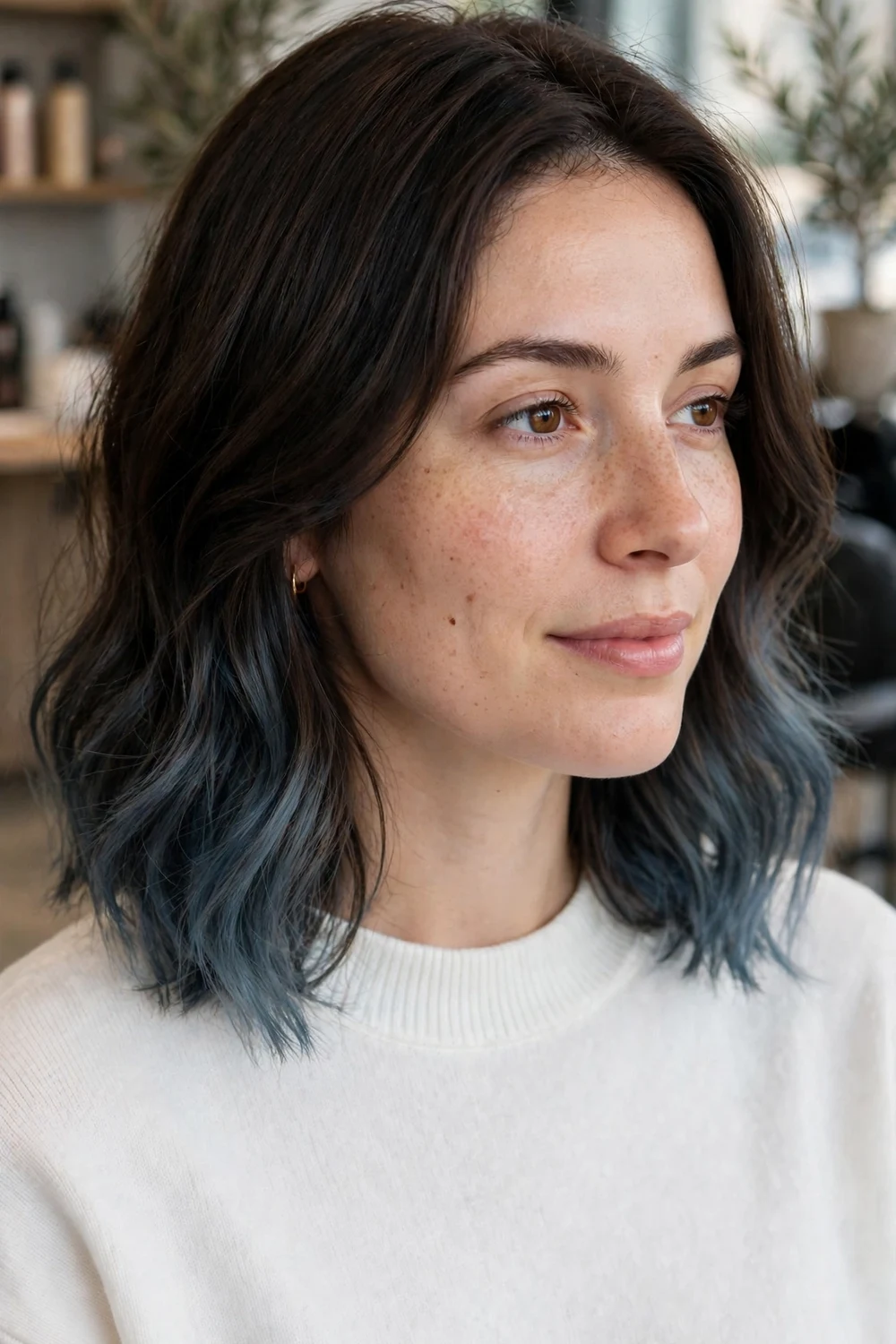
A lob length ombre runs dark roots into denim blue ends, with the gradient compressed into a shorter cut. The blue sits at jaw level and below, where it frames the neckline rather than the eyes. It suits cool skin and anyone who prefers shorter hair with one color feature.
Shorter hair means the gradient section is trimmed away faster, so plan a toner refresh at five weeks and a rebuild of the ends at each second cut. The denim ends need lightening first, and they fade toward silvery blue, then pale green on warm bases. Cool water washes slow both shifts.
Try this: ask your colorist to keep the darkest denim at the blend point, so the gradient looks smooth on a short length.
Difficulty: Medium to High · Cost: $$$ (salon)
Frequently Asked Questions
Do I need to bleach my hair to get a subtle blue color?
It depends on the shade and your starting color. Blue-black, midnight navy, tints, and glosses can sit over black and dark brown hair with little or no lightening. Dusty blue, denim, steel, and slate shades need a lightened base to show their true tone, and pale versions need a near blonde base. Your colorist can confirm the lift you need with a strand test.
Why does blue hair sometimes fade toward green?
Blue pigment sits over the warm yellow tones that lightening leaves in hair. As the blue washes out, the yellow underneath shows through, and blue plus yellow reads as green. Formulas with a violet share counter that shift, and cool water, fewer washes, and a blue or violet toning conditioner slow it down.
How long does subtle blue hair color last?
Dark blues hold the longest: blue-black and navy stay true for four to six weeks before the blue reflect softens. Glosses and tints fade evenly over three to six weeks and leave no line. Dusty and denim shades on lightened hair need a toner refresh at three to five weeks, while placed color like balayage and peekaboo panels can go eight weeks or more between visits.
Which subtle blue shade suits warm skin tones?
Warm skin does best with blues that keep some depth or warmth nearby: navy gloss over a brown base, blueberry indigo with its violet share, and muted blue balayage on brunette, where brown stays near the face. The shades to approach with care are the palest ash and steel tones, which can clash with warm undertones.
How do I keep navy and blue-black hair from fading so fast?
Wash less often, use lukewarm or cool water, and switch to a sulfate-free, color-safe shampoo. Add a blue color-depositing conditioner once a week to replace pigment lost in washing. Book a gloss refresh at four to six weeks, limit heat styling, and cover your hair in strong sun and in pool water, since UV light and chlorine both pull blue pigment out.
Final Thoughts
Subtle blue works because the family lets you choose how much blue shows: a tint or gloss if you want a trial run, a navy or blue-black if you want depth that lasts, or a dusty denim placement if you want the blue kept to the ends. Pick by your starting base first, then by the upkeep you will honestly keep, and ask for a violet share in the formula if green fade worries you. When you want the opposite direction, warm shades wait in the fall copper hair colors roundup, and the autumn hair colors guide covers the full seasonal spread in between.

