


Asymmetric bangs sound like a small change, and in the chair they are: one side cut shorter, the other left longer, or the whole fringe run on a diagonal. I keep coming back to this fringe because it changes how a familiar cut reads without touching the length you have grown out. A plain bob looks sharper, a plain pixie looks softer, and long layers gain a focal point at the front.
This list collects 24 hairstyles built around asymmetric bangs, ordered from bobs through pixies and crops to medium and long hair. Every idea notes the cut it pairs with, who it suits, and the trim schedule the fringe honestly needs. If you already know you like a softer sweep, the diagonal and long side-swept versions in the first half are the natural starting point.
Quick Takeaways
- Asymmetric bangs run on a diagonal or sit shorter on one side and longer on the other. The uneven line is the design, and it pairs with bobs, pixies, and long layers alike.
- Diagonal and long side-swept fringes suit round and square faces best, since the slant adds visual length across the forehead.
- Short, blunt fringe needs a trim every two to three weeks. Long, wispy fringe can stretch to five or six weeks.
- Curly fringe should always be cut dry, curl by curl, so the two lengths sit where they were planned.
- Fine hair does best with a thin, wispy fringe section, which leaves more density through the lengths.
How to Pick Your Asymmetric Bangs
Start with the cut you already have or want. Bobs take diagonal, choppy, and micro fringe well. Pixies and crops carry longer swept fringe as their focal point. Medium and long hair suits diagonal fringe that blends into layers, so the front reads as one connected shape.
Then match the fringe to your calendar. Every short, blunt line on this list asks for frequent trims, while swept and wispy versions forgive a missed week. The table below groups the main fringe types by the cuts they pair with and the upkeep they need.
| Fringe type | Pairs best with | Best for | Trim cycle |
|---|---|---|---|
| Diagonal fringe | Bobs, long layers | Round and oval faces | 3 to 4 weeks |
| Long side-swept bangs | Lobs, pixie bobs, stacked bobs | Most face shapes | 5 to 6 weeks |
| Choppy uneven bangs | Textured bobs, shags | Fine to medium hair | 4 to 5 weeks |
| Wispy asymmetric bangs | Layered bobs, fine hair cuts | Fine hair, first time fringe | 4 weeks |
| Micro and blunt bangs | Blunt bobs, short crops | Oval faces, straight hair | 2 to 3 weeks |
| Curly asymmetric fringe | Curly bobs, long curls | Natural curls worn daily | 6 to 8 weeks |
1. Sleek Chin-Length Bob with Diagonal Fringe
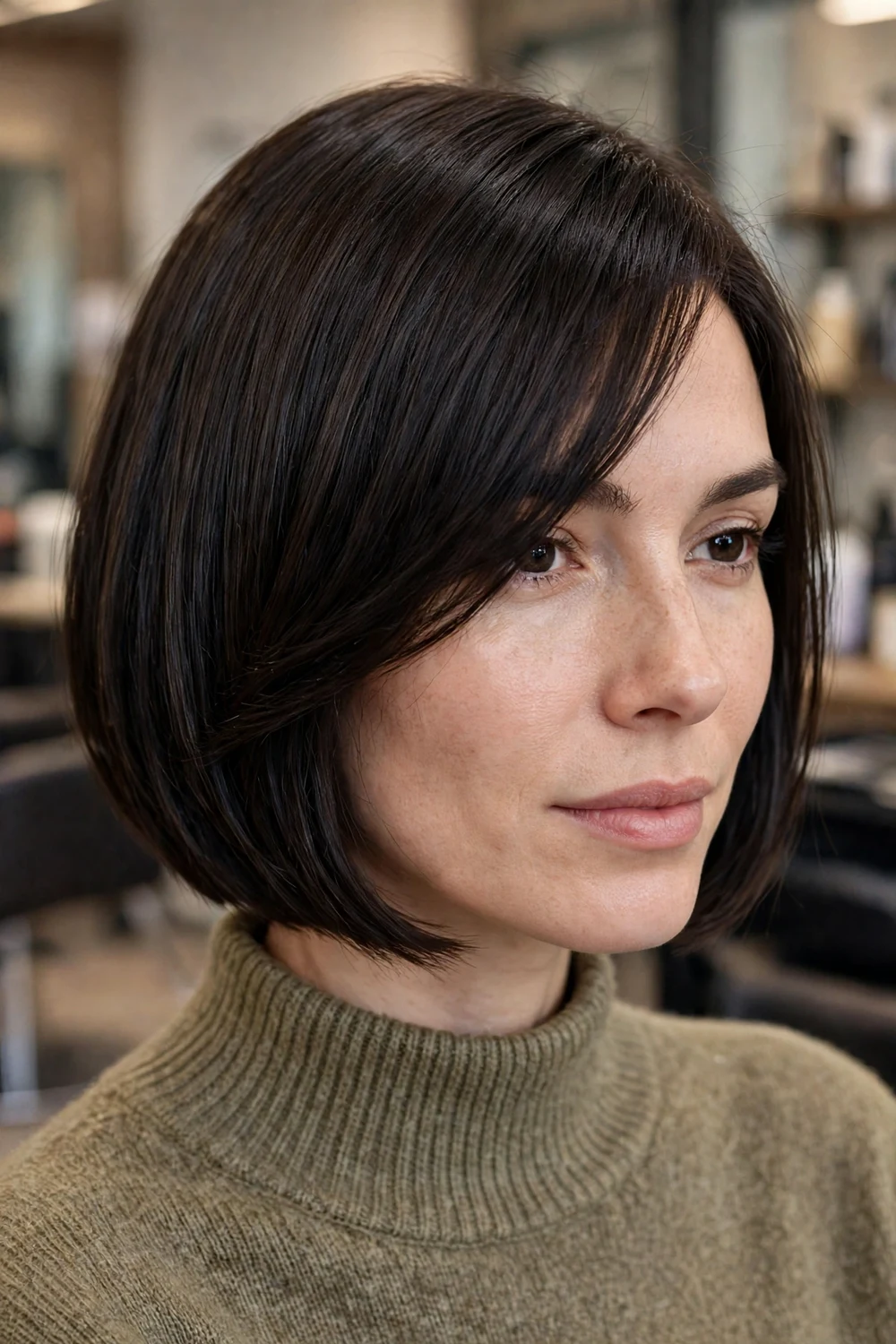
The fringe is cut on a clear diagonal, short above one eyebrow and longer toward the opposite cheek, and the bob itself stays one length at chin level. The clean line of the cut and the slant of the fringe work as one shape, so the style reads polished from every angle. It suits oval and heart shaped faces, and straight or lightly wavy hair holds the line with the least work.
Styling is a flat iron pass and a light smoothing serum. The fringe grows out fast at the short end, so plan a fringe trim every three to four weeks to keep the diagonal sharp. The bob itself can go six to eight weeks between cuts.
Try this: ask for the diagonal to start just above the brow, so you keep a few weeks of grow out before the long end reaches your eye.
Difficulty: Low to Medium · Cost: $$ (salon)
2. Lob with Long Side-Swept Bangs

A lob that skims the shoulders pairs with bangs swept fully to one side, where the longest pieces blend into the front layers. This is the softest entry point in the list, and readers who already wear side-swept bangs will find the shape familiar. It suits round and square faces, since the sweep adds length across the forehead.
Blow dry the fringe with a round brush angled away from the face, then let it fall across. Upkeep is low: the long fringe has no blunt line to maintain, and a trim every six weeks keeps the ends tidy.
Try this: pin the fringe to the opposite side overnight once a week. Training the roots keeps the sweep in place without daily heat.
Difficulty: Low · Cost: $ (salon)
3. Textured Bob with Choppy Uneven Bangs

Point cutting breaks the fringe into uneven pieces of different lengths, and the bob carries the same choppy texture through the ends. The look suits fine to medium hair that needs movement, and it forgives an imperfect blow dry. Anyone browsing choppy bob hairstyles with bangs will see this fringe as the stronger, more uneven version.
Work a small amount of texturizing spray through dry hair and pinch the fringe pieces apart with your fingers. Trims land every four to five weeks, since choppy edges lose their separation as they grow.
Try this: ask your stylist to cut the fringe dry. Choppy lengths read differently once the hair settles, and a dry cut shows the true uneven pattern.
Difficulty: Medium · Cost: $$ (salon)
4. Layered Bob with Wispy Asymmetric Bangs

Thin, feathered pieces form the fringe, cut longer on one side so a little forehead shows through. The bob has soft layers that keep the whole shape light. This version suits fine hair and anyone who wants bangs without a heavy block of hair across the forehead, much like the softer styles in the wispy bangs hairstyles roundup.
The fringe air dries well and needs only a quick brush through in the morning. Because the pieces are thin, they can look stringy by day two, so a light dry shampoo at the roots helps. Trim every four weeks to hold the wispy edge.
Try this: start with fewer pieces than you think you want. Your stylist can add density at the next visit, while taking it away means months of grow out.
Difficulty: Low · Cost: $ (salon)
5. A-Line Bob with Side-Swept Fringe

The back sits shorter and the front points lengthen toward the chin, while the fringe sweeps across and tucks into the longer front section. The two angles, the perimeter and the fringe, reinforce each other. It suits straight hair and strong jawlines, and it gives fine hair a fuller looking front.
A round brush blowout keeps the A-line swing smooth. The shape depends on precision, so book cuts every five to six weeks. The fringe can be pinned back on days when you want a clean forehead.
Try this: bring a side profile photo to your appointment. The A-line angle is judged from the side, and a photo settles the length difference quickly.
Difficulty: Medium · Cost: $$ (salon)
6. Stacked Bob with Deep Side Part and Sweeping Fringe

Graduated layers stack at the back to build volume at the crown, and a deep side part sends a long section of fringe sweeping across the forehead. The part does most of the asymmetry here, so the fringe itself can stay soft. It suits medium to thick hair and round faces, where the height at the crown adds length.
Blow dry the back layers with the brush lifting at the roots, then smooth the fringe across with the same brush. The stacked back needs a reshape every five weeks to keep its rounded shape.
Try this: set the part while the hair is wet. A deep part trained on damp hair holds all day, while a part forced on dry hair drifts back by noon.
Difficulty: Medium · Cost: $$ (salon)
7. Blunt Bob with Asymmetric Micro Bangs
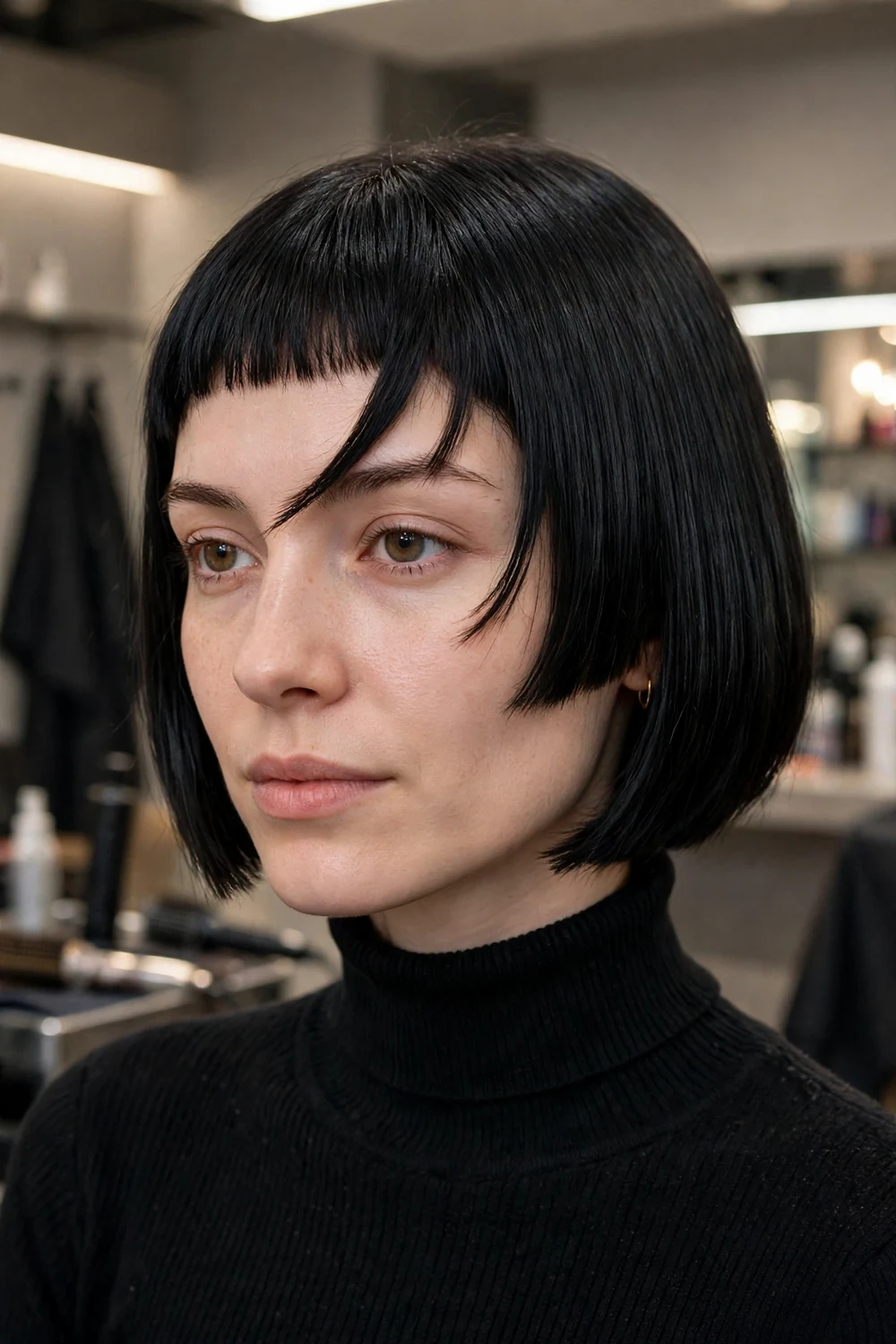
The bob is blunt and one length, and the fringe is a micro fringe cut on a diagonal well above the eyebrows. The contrast between the short fringe and the solid perimeter is the whole point. It suits oval faces and straight hair, and it draws full attention to the eyes and brows.
Micro fringe shows every week of growth, so expect a fringe trim every two to three weeks. The good news is that a fringe only trim is a short appointment. Style with a mini flat iron to keep the short pieces lying flat.
Try this: try the micro length on one side first and keep the other side at brow length for a month. The softer side buys you options while you adjust.
Difficulty: Medium to High · Cost: $$ (salon)
8. Curly Bob with Asymmetric Bangs

The bob sits at jaw to shoulder length with curls left at their natural volume, and the fringe is cut curl by curl so one side sits shorter than the other. Cutting dry matters here, since wet curls stretch and spring back shorter. It suits naturally curly hair from loose waves to tight coils.
Refresh the fringe with water and a small amount of curl cream in the morning, scrunching gently. Book trims every six weeks with a stylist who cuts curls dry, and ask for the fringe shaped in its dry state every time.
Try this: never let anyone straighten your hair before cutting the fringe. The asymmetry has to be judged on the curls as you wear them.
Difficulty: Medium · Cost: $$ (salon)
9. Wavy Bob with Uneven Fringe

Loose waves run through a bob that ends between the jaw and the shoulders, and the fringe is left uneven with longer pieces at the outer edges. The waves blur the uneven line, so the fringe looks relaxed rather than severe. It suits wavy hair and anyone who styles with a diffuser or air dries.
Scrunch the waves with mousse on damp hair and let the fringe dry in place, pushed slightly to one side. Upkeep is forgiving: the uneven edge hides growth, and trims can stretch to six or seven weeks.
Try this: sleep with the fringe clipped loosely to one side. Wavy fringe that dries overnight in its sweep needs almost no morning work.
Difficulty: Low to Medium · Cost: $ (salon)
10. Pixie Cut with Edgy Asymmetric Fringe
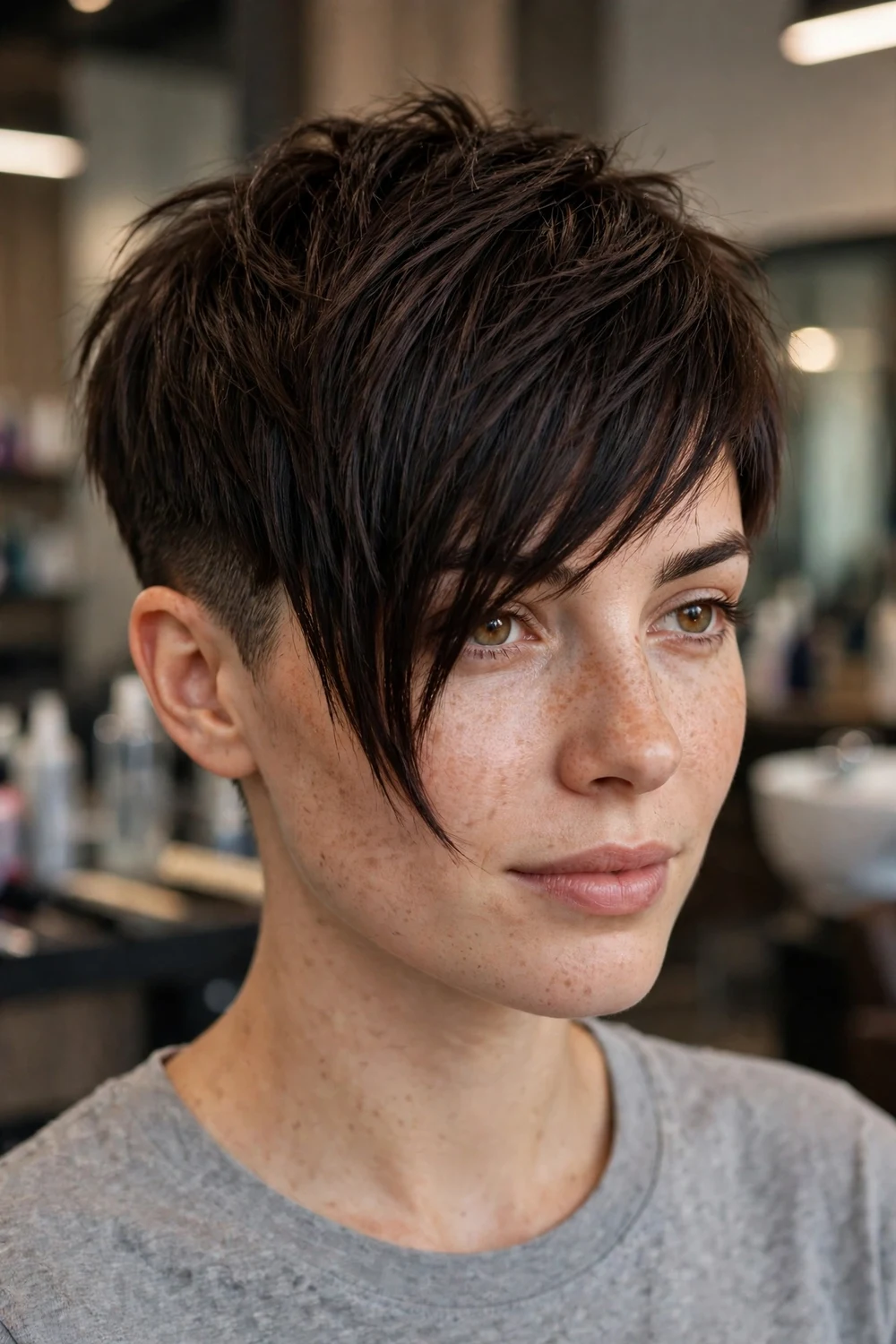
The sides and back are cropped close, the top stays longer, and the fringe comes forward in a sharp diagonal that ends in a point at one side. The short perimeter makes the long fringe the focal point of the whole cut. It suits oval and heart shaped faces and straight to wavy hair.
Daily styling is a small amount of matte paste worked through the top and fringe. Pixies lose their shape fast, so plan a full cut every four to five weeks. The fringe point needs the most attention at each visit.
Try this: ask for the fringe point to land at cheekbone height. Shorter points read severe, while cheekbone length keeps the edge and the softness.
Difficulty: Medium · Cost: $$ (salon)
11. Textured Pixie Crop with Swept Asymmetric Fringe
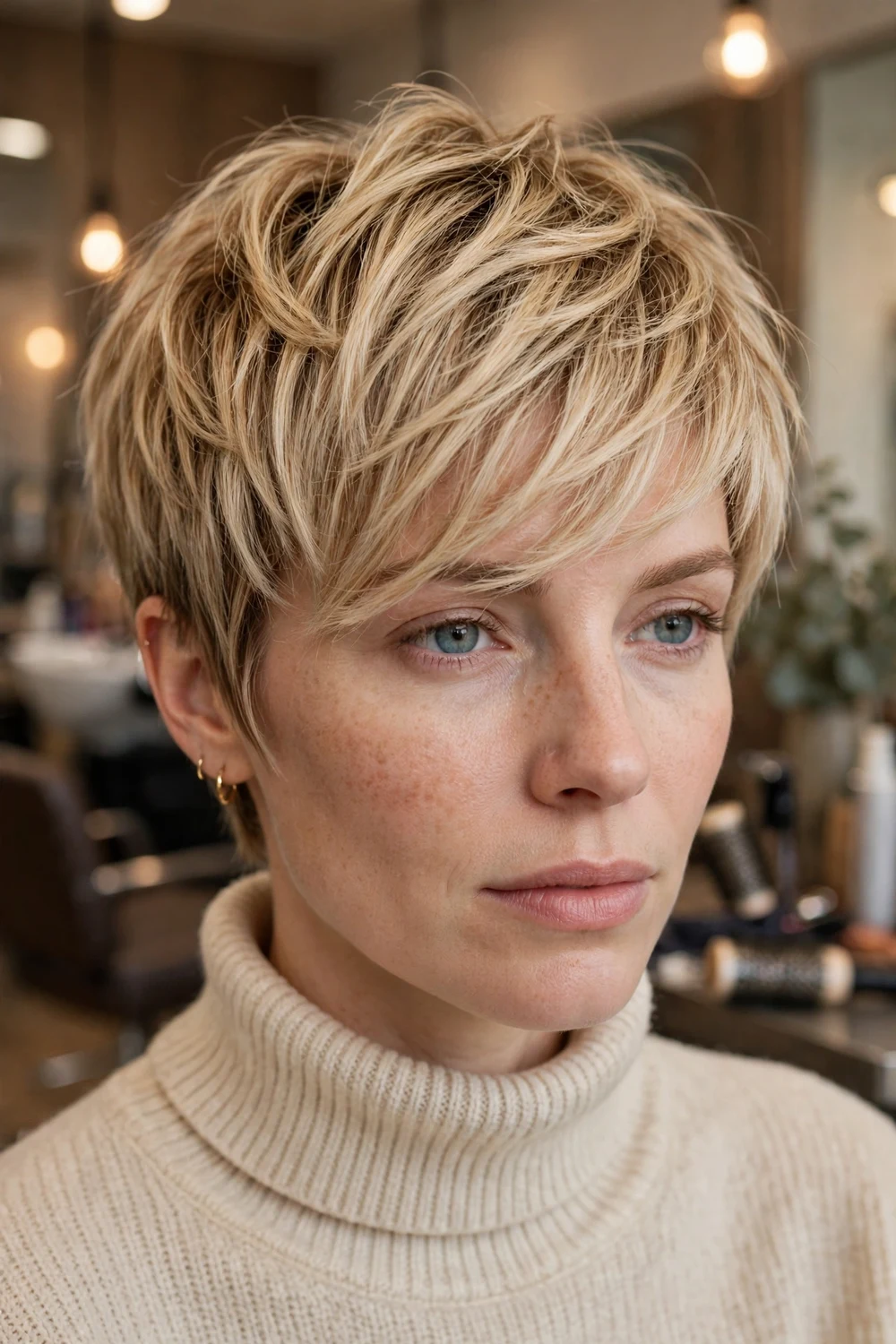
Short textured layers cover the head, and the fringe sweeps across the forehead with a choppy, piecey edge. It shares its easy texture with the styles in the choppy pixie cut with bangs collection, but the sweep here is longer and softer. It suits fine hair, since the texture and sweep together build the look of density.
Rough dry the hair with your fingers, then add a pea sized amount of styling cream to separate the fringe pieces. Cuts land every four weeks to keep the crop from growing into a bob shape.
Try this: style the fringe in two directions during the first week. You will quickly learn which sweep your growth pattern prefers, and mornings get faster after that.
Difficulty: Medium · Cost: $$ (salon)
12. Pixie Bob with Long Asymmetric Bangs

This cut sits between a pixie and a bob: short and tapered at the back, longer through the top and front, with bangs that reach the cheekbone on the long side. The long fringe can be swept across, tucked behind one ear, or parted deeply. It suits anyone growing out a pixie or testing short hair for the first time.
Blow dry the long fringe first, since it frames everything else, then tidy the back with your fingers and a light cream. Book cuts every five weeks so the back stays tapered while the front keeps its length.
Try this: keep the back short even as the front grows. That contrast is what separates a pixie bob from a bob that simply grew out.
Difficulty: Medium · Cost: $$ (salon)
13. Undercut with Long Asymmetric Bangs
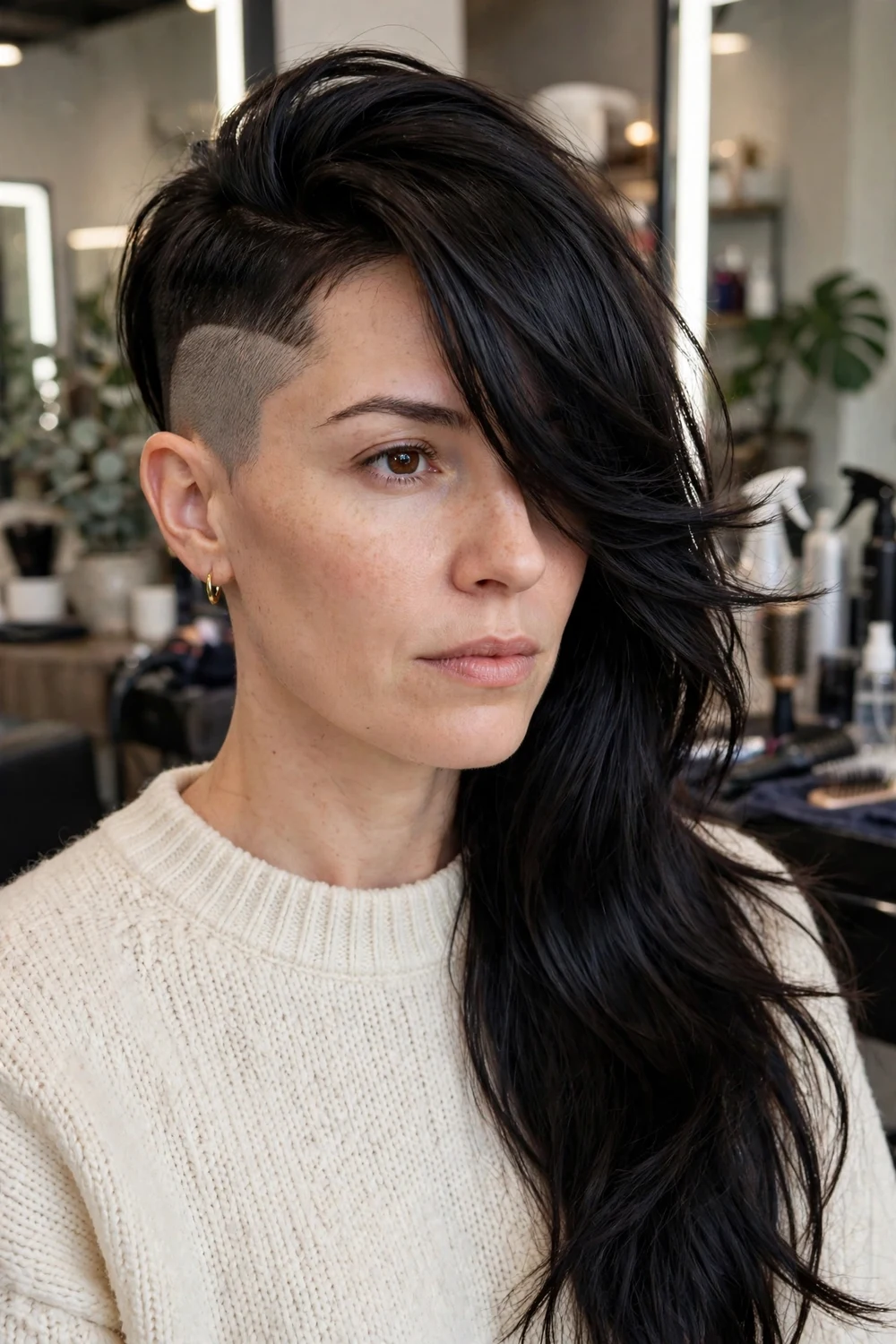
One or both sides are clipped short under a long top section, and the bangs fall long across the forehead from the longer side. The clipped sides make the fringe length stand out even more. It suits thick hair well, since the undercut removes bulk, and it works on straight and wavy textures.
The sides need clipping every three to four weeks to stay clean, while the top and fringe are trimmed less often. Style the fringe with a blow dryer and a vent brush, sweeping it across and slightly forward.
Try this: agree the clipper guard length with your stylist and note it down. Keeping the same guard at every visit holds the contrast steady.
Difficulty: Medium to High · Cost: $$ (salon)
14. Short Crop with Bold Asymmetric Bangs

The crop is short all over with a blunt fringe cut straight across but at two distinct levels, shorter on one side and brow length on the other. The stepped line is deliberate and graphic. It suits straight hair and oval or long faces, where the strong horizontal line adds width.
A fringe this blunt shows growth quickly, so trims land every three weeks. Styling is minimal: a flat iron pass through the fringe and a light shine product through the crop.
Try this: take a photo of the fringe right after your first cut. Showing your stylist that exact step level at each trim keeps the two lengths consistent.
Difficulty: Medium · Cost: $$ (salon)
15. Long Layers with Diagonal Bangs

Hair falls past the shoulders in long layers, and the fringe runs on a diagonal from above one eyebrow down to cheek level, where it melts into the face framing layers. The long fringe and long layers blend with no visible join. It suits most face shapes, and round faces gain length from the diagonal line.
Blow dry the fringe across and down so it follows the diagonal, then style the layers as usual. Because the fringe is long, trims can stretch to eight weeks alongside your regular layer trim.
Try this: ask for the fringe blended into the layers, with no blunt shelf where the bangs end. A blended join grows out the softest of any idea on this list.
Difficulty: Low to Medium · Cost: $$ (salon)
16. Long Wavy Hair with Uneven Bangs
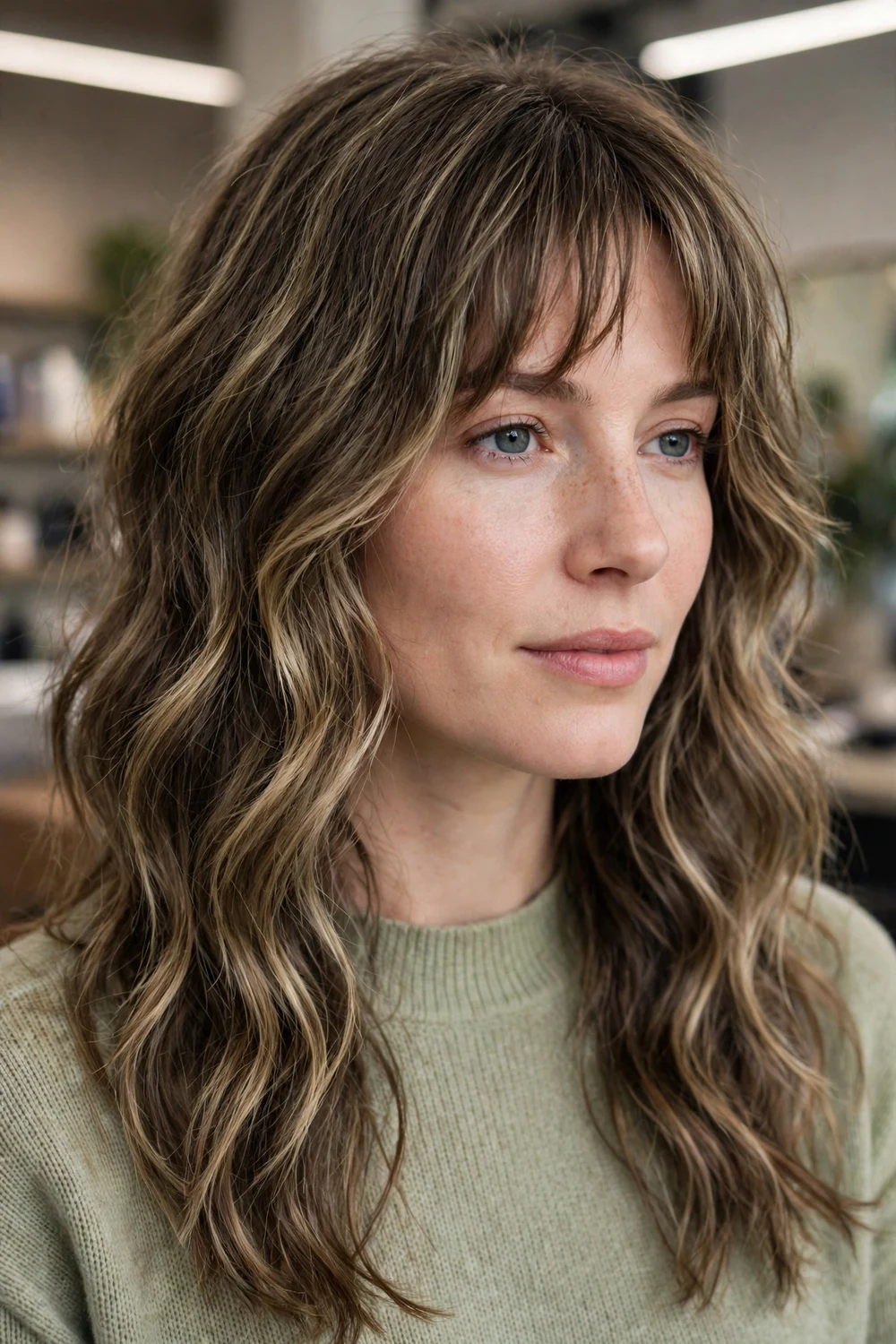
Long waves keep their full length, and the fringe is cut unevenly with pieces ranging from brow length to cheek length. The waves in the fringe soften the uneven edges, so the effect reads casual. It suits wavy and thick hair, and anyone who wants a fringe change without giving up length.
Let the fringe air dry pushed to one side, and refresh waves with a water mist on day two. The uneven cut hides growth well, so salon visits can match your usual trim cycle at eight weeks.
Try this: have the fringe cut slightly longer than your target. Wavy fringe springs up as it dries, and extra length protects you from a too short result.
Difficulty: Low · Cost: $ (salon)
17. Medium Layered Cut with Asymmetric Bangs
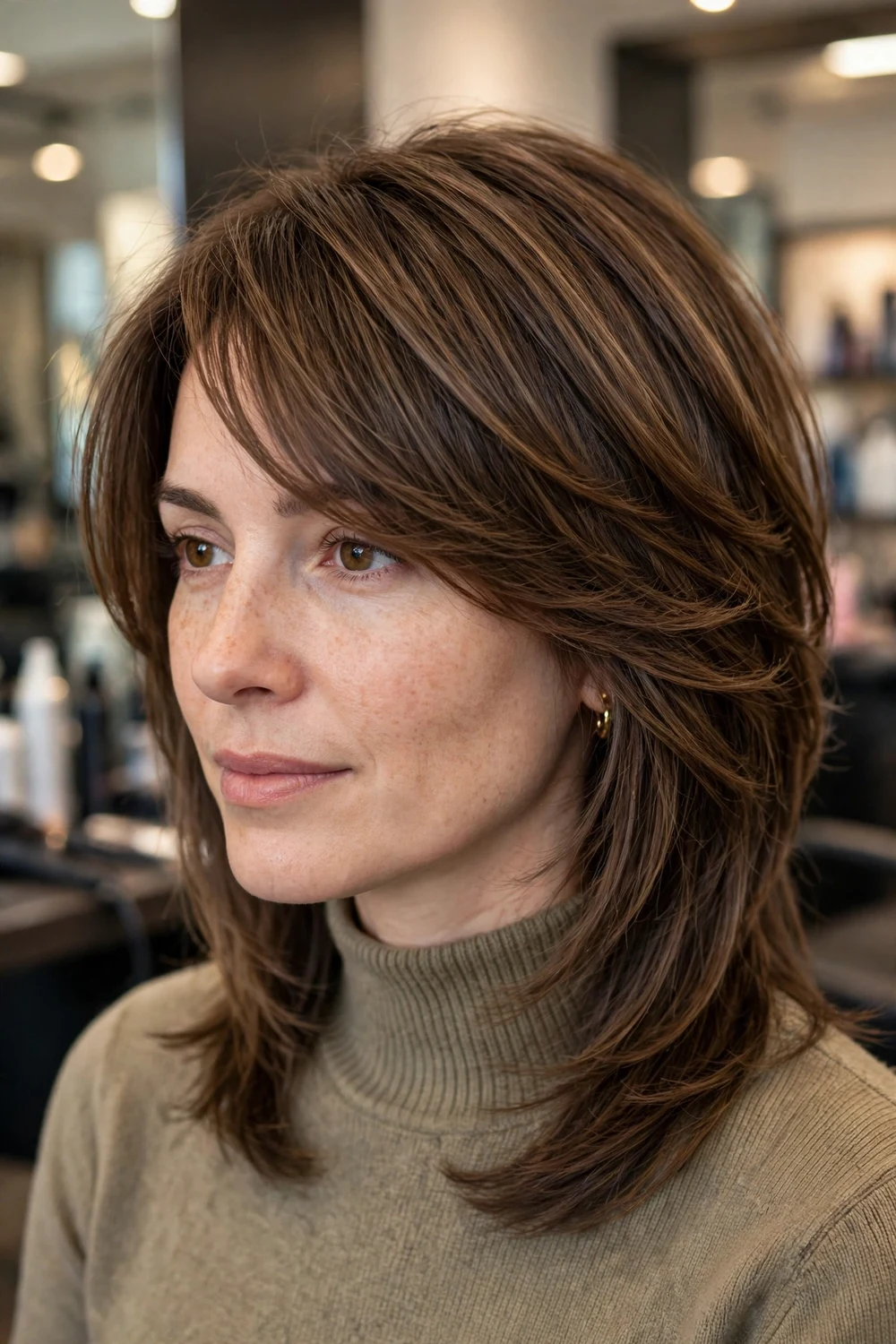
Shoulder grazing layers carry movement through the mid lengths, and the diagonal fringe ties the front together. This is the most adaptable idea here, and it sits naturally among medium length hairstyles with bangs as the asymmetric option. It suits straight, wavy, and lightly curly hair.
A round brush blowout through the layers and fringe takes about ten minutes, and the cut holds its shape for six to eight weeks. A light oil on the ends keeps the layers separated rather than fluffy.
Try this: ask for layers that start at chin level. Layers that start higher fight the fringe, while chin level layers support its line.
Difficulty: Low to Medium · Cost: $ (salon)
18. Shag Cut with Choppy Asymmetric Bangs
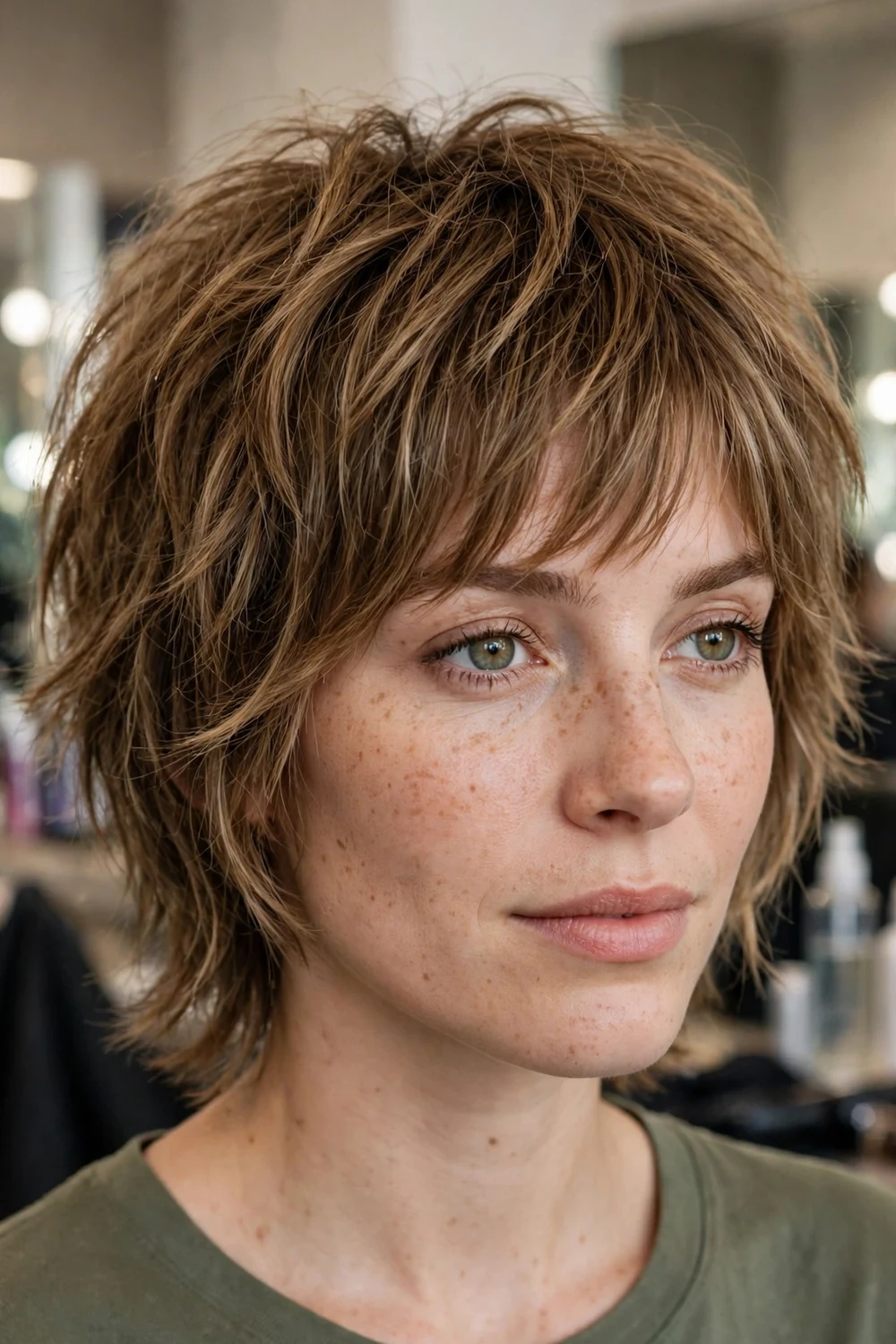
Heavy layering through the crown and ends gives the shag its shape, and the fringe matches it with choppy, uneven pieces swept to one side. The whole cut is built on texture, so it suits wavy hair and anyone who prefers an undone finish over a smooth one.
Work mousse through damp hair, scrunch, and air dry or diffuse. The shag needs a reshape every six weeks, since the crown layers are the first to fall flat as they grow.
Try this: bring photos of shags with the crown height you want. Crown height is a taste call, and photos settle it faster than words.
Difficulty: Medium · Cost: $$ (salon)
19. Medium Straight Hair with Sleek Asymmetric Fringe

Straight hair worn smooth at medium length pairs with a fringe cut on one clean diagonal, with no chopping or feathering. The single unbroken line is the detail that carries the style. It suits office settings, straight hair, and oval or long faces.
A flat iron through the fringe each morning keeps the diagonal crisp, and a heat protectant matters with daily iron use. Trims land every four to five weeks to restore the clean edge.
Try this: cut the diagonal slightly softer than you think you want. A very steep diagonal on straight hair can read harsh under office lighting.
Difficulty: Low to Medium · Cost: $$ (salon)
20. Curly Hair with Soft Asymmetric Fringe
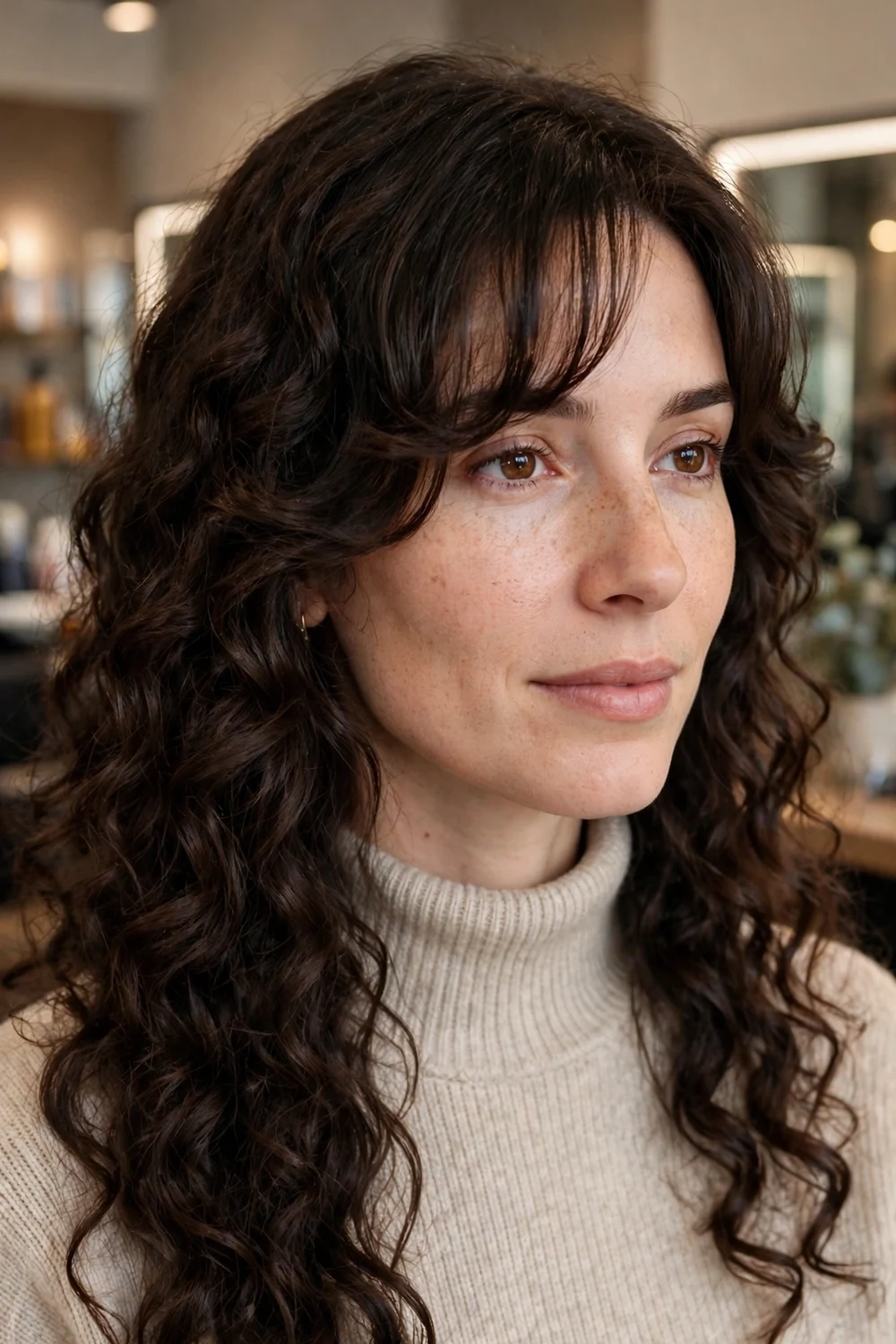
Long curls keep their length and volume, and the front curls are shaped into a soft fringe that sits shorter on one side. The fringe follows the curl pattern instead of fighting it, so it is worn curly every day. It suits curly hair that is usually worn natural.
Define the fringe curls with a small amount of gel on wet hair, then leave them alone while they dry. Touching curly fringe as it dries creates frizz at the hairline. Trims every six to eight weeks, always cut dry.
Try this: ask your stylist to shape the fringe one curl at a time and to check it with your head upright. Curly fringe changes completely between the chair and standing height.
Difficulty: Medium · Cost: $$ (salon)
21. Shoulder-Length Cut with Feathered Asymmetric Bangs

Feathered layers flick outward at the ends of a shoulder length cut, and the fringe is feathered the same way, sweeping longer toward one side. The soft edges make this a gentle version of asymmetry. It suits fine to medium hair and anyone who blow dries with a round brush most days.
Blow dry the fringe and the front layers together, rolling the brush outward at the ends. The feathering holds for six weeks, and the fringe can be swept either way on days when you want a change.
Try this: use a smaller round brush for the fringe than for the lengths. The fringe needs a tighter curve to hold its sweep through the day.
Difficulty: Low · Cost: $ (salon)
22. Classic Bob with Tousled Asymmetric Fringe
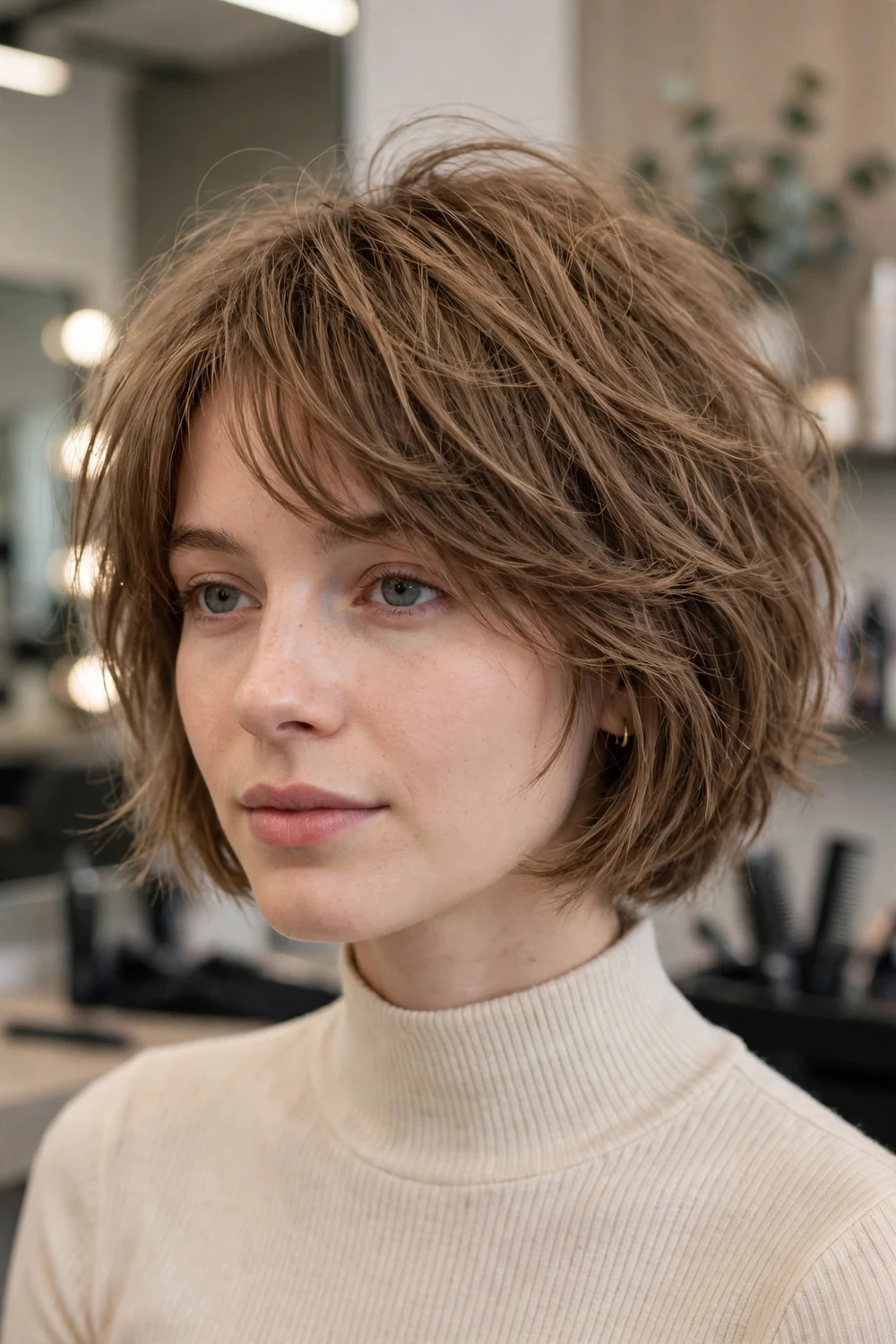
A classic bob shape at chin to jaw length gets a relaxed finish, with the fringe tousled and pushed longer to one side. The base cut is simple, and the fringe styling does the work. It suits most hair types and is a low risk way to test asymmetry before committing to an angled fringe cut.
The fringe here is styled, not cut, into its asymmetry, so you can sweep it the other way or part it in the middle whenever you like. Regular bob trims every six weeks keep the base in shape.
Try this: start here if you are unsure. Wear the tousled sweep for a few weeks, and if you love it, have the diagonal cut in at your next appointment.
Difficulty: Low to Medium · Cost: $ (salon)
23. Fine Hair with Light Wispy Asymmetric Bangs

A light, airy cut at medium length keeps fine hair from being weighed down, and the fringe uses only a thin section of hair cut unevenly, longer at one corner. Using less hair for the fringe leaves more density through the lengths. It suits fine and thinning hair at the front hairline.
Volumizing mousse at the roots and a gentle blow dry forward, then across, gives the thin fringe its fullest look. Avoid heavy oils near the fringe, since fine fringe separates and looks sparse under product weight. Trim every four weeks.
Try this: ask your stylist to take the fringe section from further back on the head. A deeper section makes thin fringe look fuller without using more hair at the hairline.
Difficulty: Low · Cost: $ (salon)
24. Mature Layered Cut with Soft Asymmetric Fringe

A layered medium cut in natural gray or blended color pairs with a soft fringe swept gently to one side, longer at the outer corner. The sweep lifts the front of the style and keeps the forehead partly open. It suits fine to medium hair and glasses wearers, since the longer corner tucks cleanly behind one ear.
Blow dry the fringe across with a small brush, then soften it with your fingers so it does not sit as a solid shelf. Trims every five to six weeks keep the layers and fringe in proportion.
Try this: have the longer corner cut to sit just above your glasses frame. That small clearance stops the fringe resting on the frame through the day.
Difficulty: Low to Medium · Cost: $$ (salon)
Frequently Asked Questions
What makes bangs asymmetric?
Asymmetric bangs are cut at uneven lengths across the forehead. One side sits shorter and the other side sits longer, or the whole fringe runs on a diagonal from one side to the other. The uneven line is deliberate, and it can be soft and wispy or blunt and graphic depending on how the ends are cut.
Do asymmetric bangs suit round faces?
Yes, and the diagonal versions suit round faces especially well. A fringe that runs from higher on one side to longer on the other adds a slanted line across the forehead, which adds visual length to the face. Long side-swept versions also work, since the sweep keeps part of the forehead open. Very short, blunt micro fringe is the one version to approach with care on a round face.
How often do asymmetric bangs need trimming?
Most asymmetric bangs need a trim every three to five weeks. Short and blunt versions, including micro fringe, sit closer to every two to three weeks because every bit of growth shows. Long side-swept and wispy versions are more forgiving and can go five to six weeks, since their soft edges hide growth.
Can I get asymmetric bangs with curly hair?
Yes. The fringe should be cut dry, curl by curl, so the uneven lengths are judged on the curls as you wear them. Wet curly hair stretches longer than it sits when dry, so a wet cut often ends up shorter than planned. A stylist who cuts curly hair dry can shape one side shorter while keeping the curl pattern intact.
Will asymmetric bangs grow out easily?
Long and wispy asymmetric bangs grow out the easiest, since they blend into face framing layers within a few weeks. Blunt and micro versions take longer, because the short side has to grow down to meet the rest of the fringe. Your stylist can soften a blunt fringe with point cutting during grow out, which breaks up the hard line while the lengths even out.
Final Thoughts
Writing this list reminded me how adjustable asymmetric bangs are on a cut you already like. A slight diagonal on a bob is a quiet change. A stepped blunt fringe on a crop is a loud one. Pick the volume of the statement first, then check the trim cycle against your real schedule, and the fringe will stay a choice you enjoy instead of a chore you keep rescheduling.

