

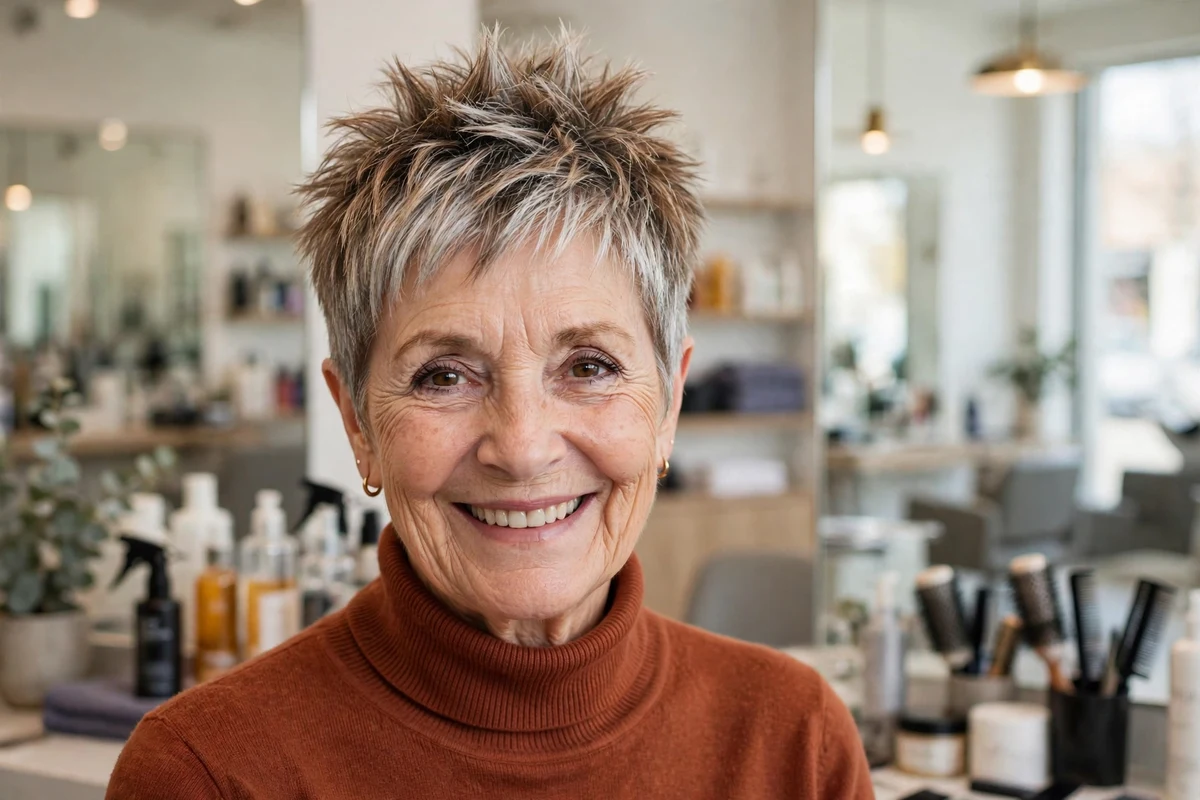
If your short hair has started to sit flat, a spiky pixie is worth a close look. The cut keeps the easy pixie shape, short sides, a neat back, and a low daily routine, and it changes only the top: the crown is cut in separated, piecey layers that lift into soft points. That lift is what makes the difference at this stage of life, since it adds height at the crown and makes fine hair look fuller without teasing or a long styling session.
I have pulled this list together for women in their fifties, sixties, and seventies, and I have kept it pixie-only on purpose. Every idea below is a true pixie with a spiky finish, organized from the classic shapes to the fringe options, the fine-hair versions, the bold shapes, and the gray and silver cuts at the end. Each idea notes who it suits, how it is cut, how to style it at home, and what it asks of you in upkeep. If you are comparing pixie lengths first, the broader roundup of short pixie haircuts for older women shows the non-spiky shapes side by side.
Key Takeaways
- Spiky here means soft, separated, piecey points at the crown. It does not mean stiff, gelled spikes.
- Crown height is the main benefit: lifted layers make fine hair look fuller and add length to round faces.
- Matte paste on fully dry hair is the core styling step for most versions. A pea-size amount is enough.
- Most versions need a trim every five to six weeks. Crops and undercuts need a tidy-up at three to four weeks.
- Gray, silver, and salt and pepper hair hold spiky texture well, and three cuts on this list are built for them.
How to Pick Your Spiky Pixie
Start with your hair type. Fine and very fine hair does best with the feathered, wispy, and soft versions, where light overlapping layers build fullness without weight. Medium and thick hair can carry the choppy, razored, quiff, and undercut shapes, since those cuts remove bulk as they add texture. Curly hair has its own version, cut dry so the curl points form on their own. The guide to pixie haircuts for fine hair goes deeper on density if you are unsure which group you fall into.
Then pick by face shape and daily effort. Height at the crown suits round faces, side parts and curtain bangs suit long faces, and soft fringe suits square faces. For the lowest daily effort, choose the classic, tapered, or crop versions, which need two minutes and one product. If you wear glasses every day, start with the glasses-specific cut at the end of this list and the ear-area notes in the pixie haircuts for women over 60 roundup.
| Your hair or need | Best ideas on this list | Daily styling | Trim cycle |
|---|---|---|---|
| Fine hair | Feathered (15), Wispy (16), Soft (17), Classic (1) | Root spray, finger-dry, light paste | 5 to 6 weeks |
| Thick hair | Choppy (13), Razored (14), Undercut (24), Quiff (6) | Paste or clay, pinch upward | 4 to 6 weeks |
| Gray or silver hair | Salt and Pepper (26), Silver (27), Bright White (28) | Matte paste, purple shampoo in rotation | 5 weeks |
| Lowest daily effort | Tapered (3), Spiky Crop (20), Soft (17) | Two minutes, one product | 4 to 6 weeks |
| Glasses wearers | Glasses cut (30), Tapered (3), Side-Swept Bangs (8) | Paste on crown only, sides kept clear | 5 weeks |
1. Classic Spiky Pixie
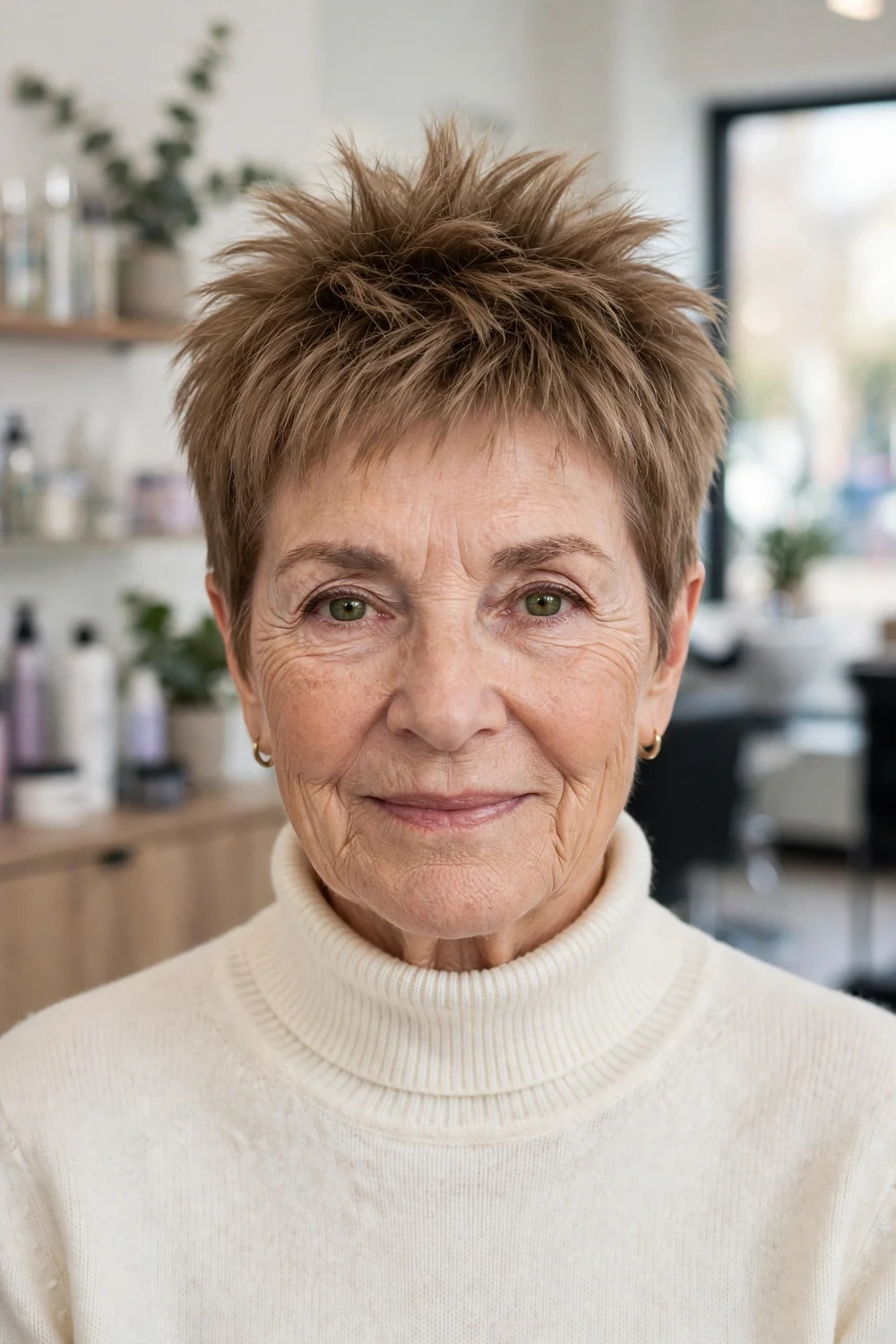
The classic spiky pixie keeps the sides and back short and tapered, with two to three inches of point-cut length left on top. The crown pieces are cut to separate, so a pinch of matte paste lifts them into soft points instead of a flat cap. It suits oval, round, and heart face shapes, and it works on straight to slightly wavy hair.
Ask for a trim every five to six weeks to hold the taper. Styling takes two minutes: dry the crown forward, then up with your fingers, and pinch the ends once the hair is fully dry. Product on wet hair weighs this cut down, so wait until the end.
Try this: Work a pea-size amount of matte paste through dry hair only, pinching the crown pieces upward one small section at a time.
Difficulty: Low · Cost: $
2. Layered Spiky Pixie with Crown Lift

This version stacks short layers through the back and crown so the height sits at the highest point of the head. The stacked build pushes the top up without teasing, which helps fine hair look thicker at the root. The nape stays close and neat, so all of the volume reads at the crown.
It suits round and square faces, since the lift adds length to the face. Dry the crown with a small round brush or your fingers lifted straight up, then separate the top layers with a light texturizing spray. Book a shape trim every five weeks, since stacked layers lose their lift as they grow.
Try this: Blow-dry the crown in the opposite direction to how it falls, then let it drop back. The switch builds lift that lasts the day.
Difficulty: Low · Cost: $
3. Tapered Spiky Pixie
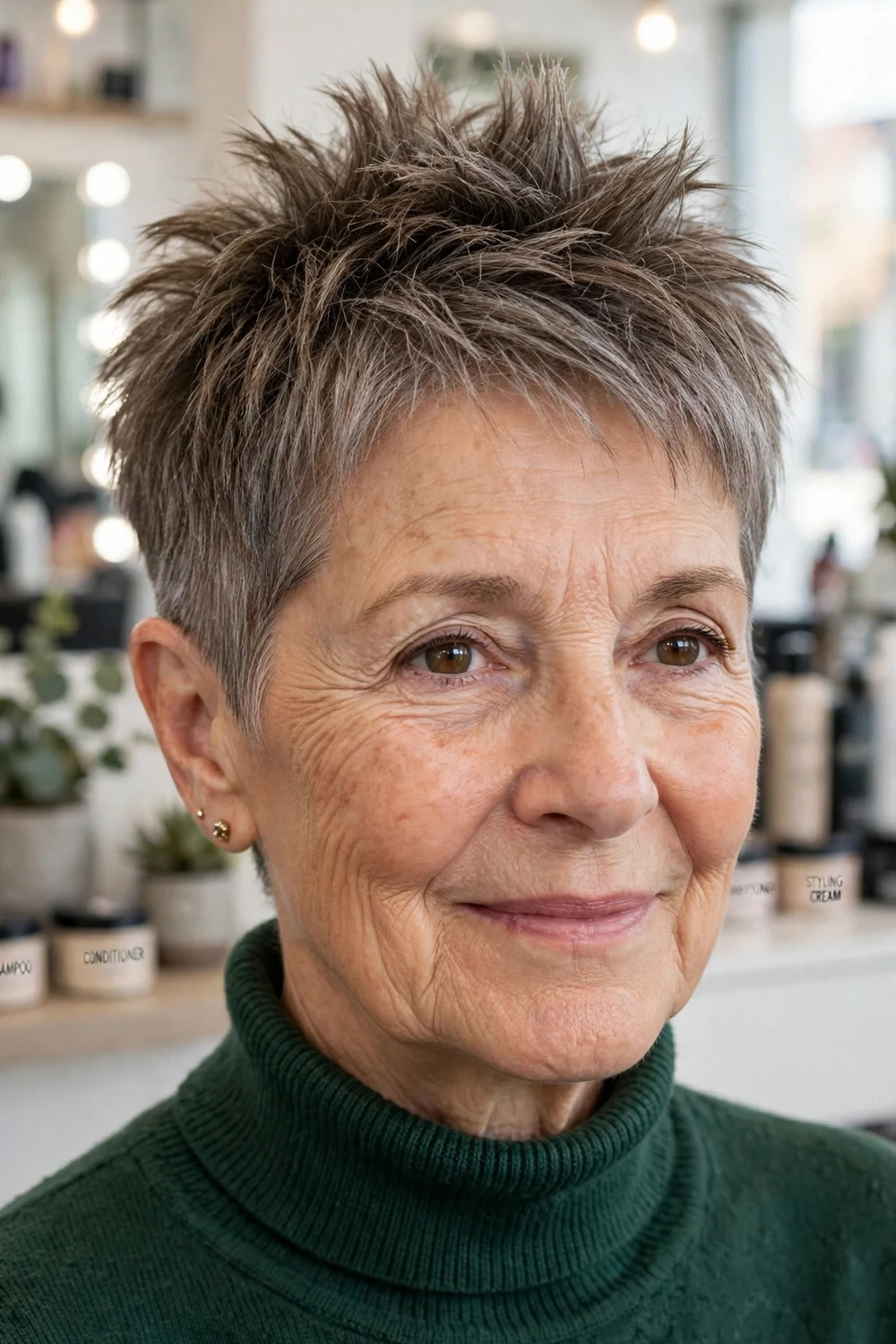
A tapered pixie takes the sides and back down in a smooth gradient, shortest at the hairline and longer toward the crown. The top stays short and spiky, with choppy ends that stand with very little product. The clean sides make it a tidy choice if you wear hearing aids or glasses, since there is no bulk over the ears.
The taper grows out softly, so six weeks between trims is realistic. It suits straight and fine to medium hair best. Style by rubbing a small amount of molding paste between your palms and pushing the top forward, then up at the front.
Try this: Ask your stylist to taper with scissors over a comb instead of clippers if you want the softest grow-out around the ears.
Difficulty: Low · Cost: $
4. Spiky Pixie with Side Part
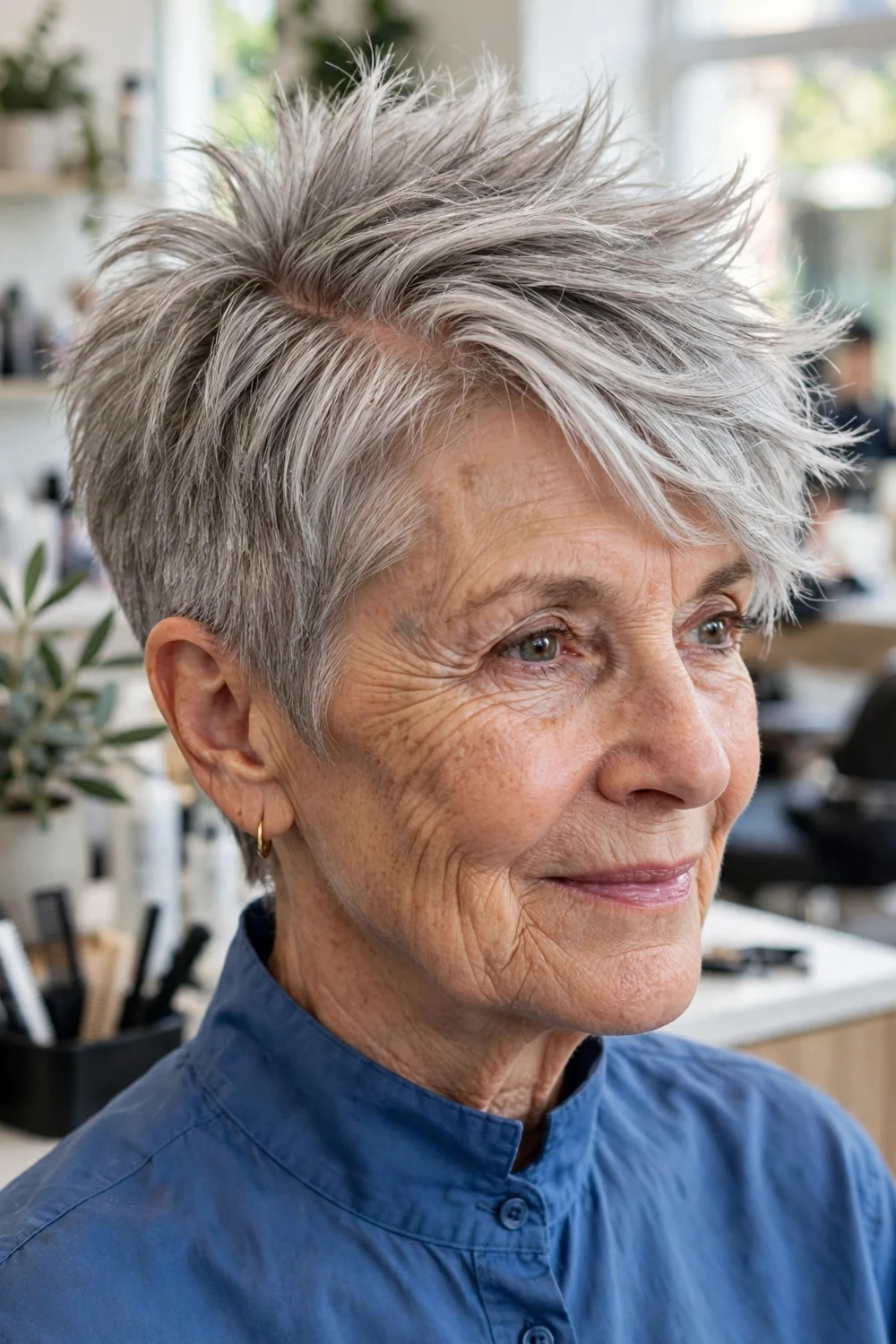
A defined side part changes the whole read of a spiky pixie. The longer side carries piecey, separated texture across the crown, while the short side sits close. The diagonal line adds interest and can soften a strong forehead or balance an uneven hairline.
Part the hair while it is damp, since the part trains more easily wet. Dry the longer side in the direction it will lie, then pinch the ends up into points with paste. This cut suits oval and long faces, and it needs a trim every five weeks to keep the two sides distinct.
Try this: Set the part a little deeper than your natural part for one week. The extra depth makes the top look fuller on the heavy side.
Difficulty: Low · Cost: $
5. Brushed-Up Spiky Pixie

Here the top pieces are brushed straight up into a textured fan, with the tallest points at the front hairline. It gives the most crown height of any cut on this list, which suits women who feel their hair sits too flat. The sides stay tapered so the height does not widen the face.
It works best on straight hair with some natural body; very fine hair needs a volumizing mousse at the root to hold the lift. Apply product to damp hair, dry upward with your fingers, then set the points with a light spray. Plan trims every four to five weeks, since the fan shape softens fast.
Try this: Dry the front section up and slightly back with a vent brush. That angle keeps the fan from falling forward by midday.
Difficulty: Medium · Cost: $
6. Textured Pixie Quiff
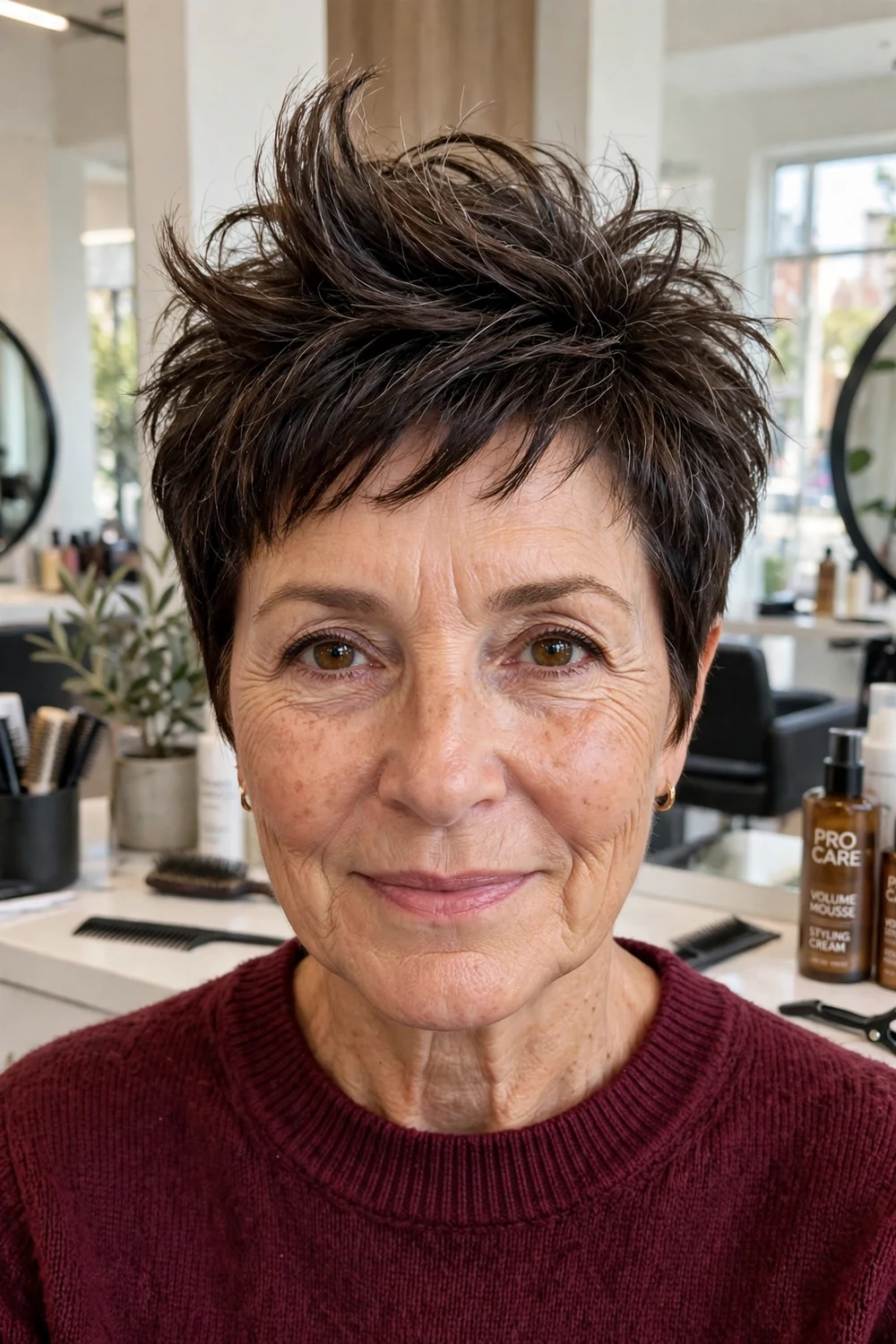
A pixie quiff sweeps the front section up and back into a small, textured wave of height, while the crown behind it stays piecey and the sides stay short. It borrows the shape of a quiff at a length that still reads as a pixie. Thick and coarse hair holds this shape with the least effort.
The front section needs three to four inches of length, so ask for the top left longer than a standard pixie. Dry the front up and back with a round brush, then break the surface with your fingers so it reads textured rather than smooth. It suits oval and heart faces well.
Try this: Use a pea-size amount of pomade on the front section only. Product through the whole head makes a quiff look heavy.
Difficulty: Medium · Cost: $$
7. Brushed-Back Spiky Pixie

Brushing the top back off the forehead opens the whole face and shows brow and eye makeup at its best. The pieces still separate into soft spikes as they travel back, so the finish has texture rather than a slicked look. The back and sides are kept short and close.
This is a strong pick if you dislike fringe on your forehead or wear your hair off your face in warm weather. Dry the top straight back with a paddle brush, then pinch a few pieces with paste to break up the surface. It suits oval and square faces, and straight to wavy hair.
Try this: Add the paste after drying, not before. On a brushed-back shape, early product can make the hair separate into strings.
Difficulty: Low · Cost: $
8. Spiky Pixie with Side-Swept Bangs
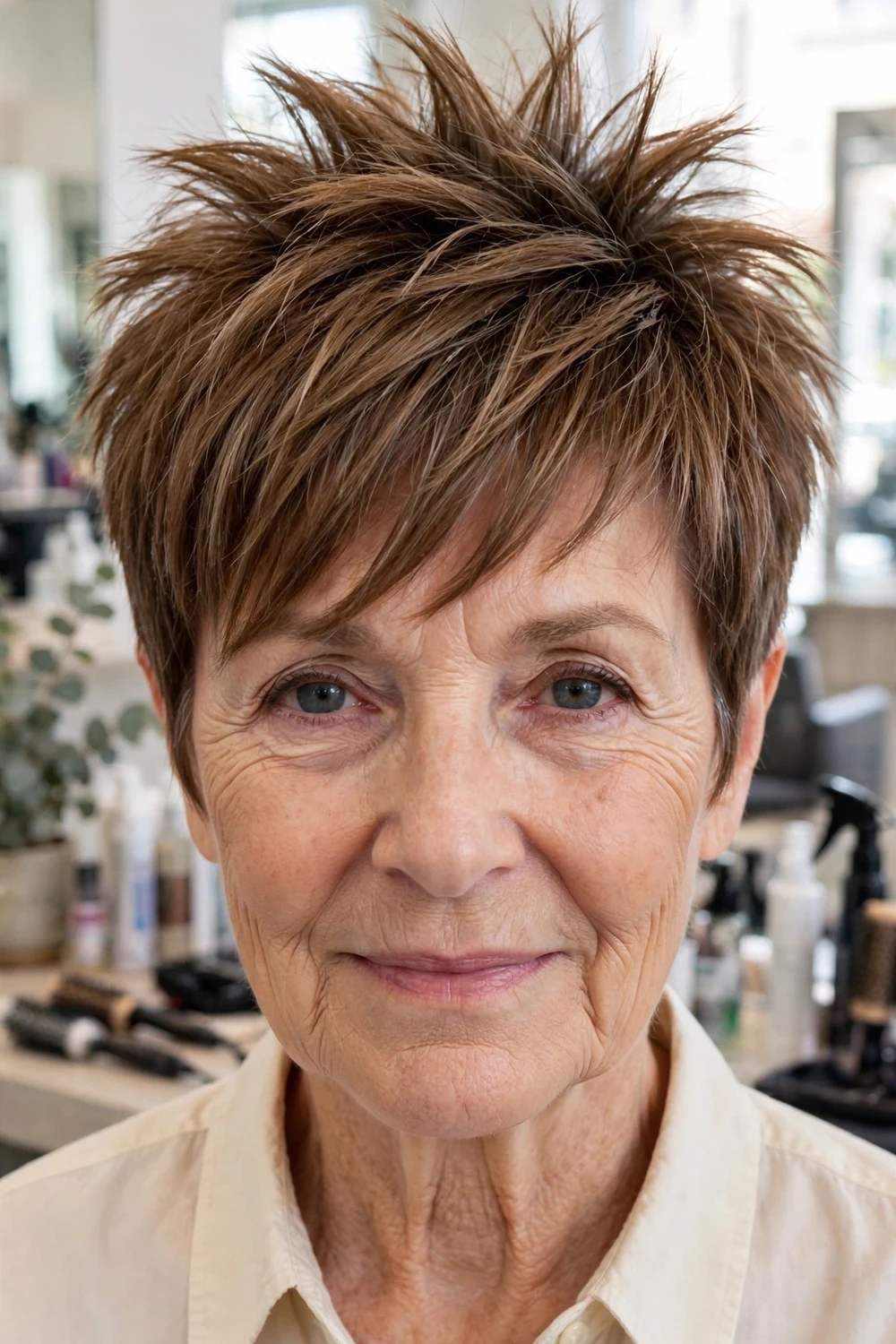
Longer side-swept bangs soften this cut at the front while the crown behind them spikes up. The diagonal fringe covers part of the forehead, which many women prefer, and it pairs well with glasses since it sits above the frames on one side. The sides are tapered and the back stays short.
Dry the fringe across your forehead first, in the direction of the sweep, then lift the crown with paste. If the fringe is dried last, it tends to split at the part. Bangs need a quick fringe trim between full appointments, usually at three weeks, and many salons offer that as a short visit.
Try this: Ask for the bangs to start from a deep side point and end just below the brow on the long side. That length sweeps without falling in the eyes.
Difficulty: Low · Cost: $
9. Spiky Pixie with Wispy Bangs
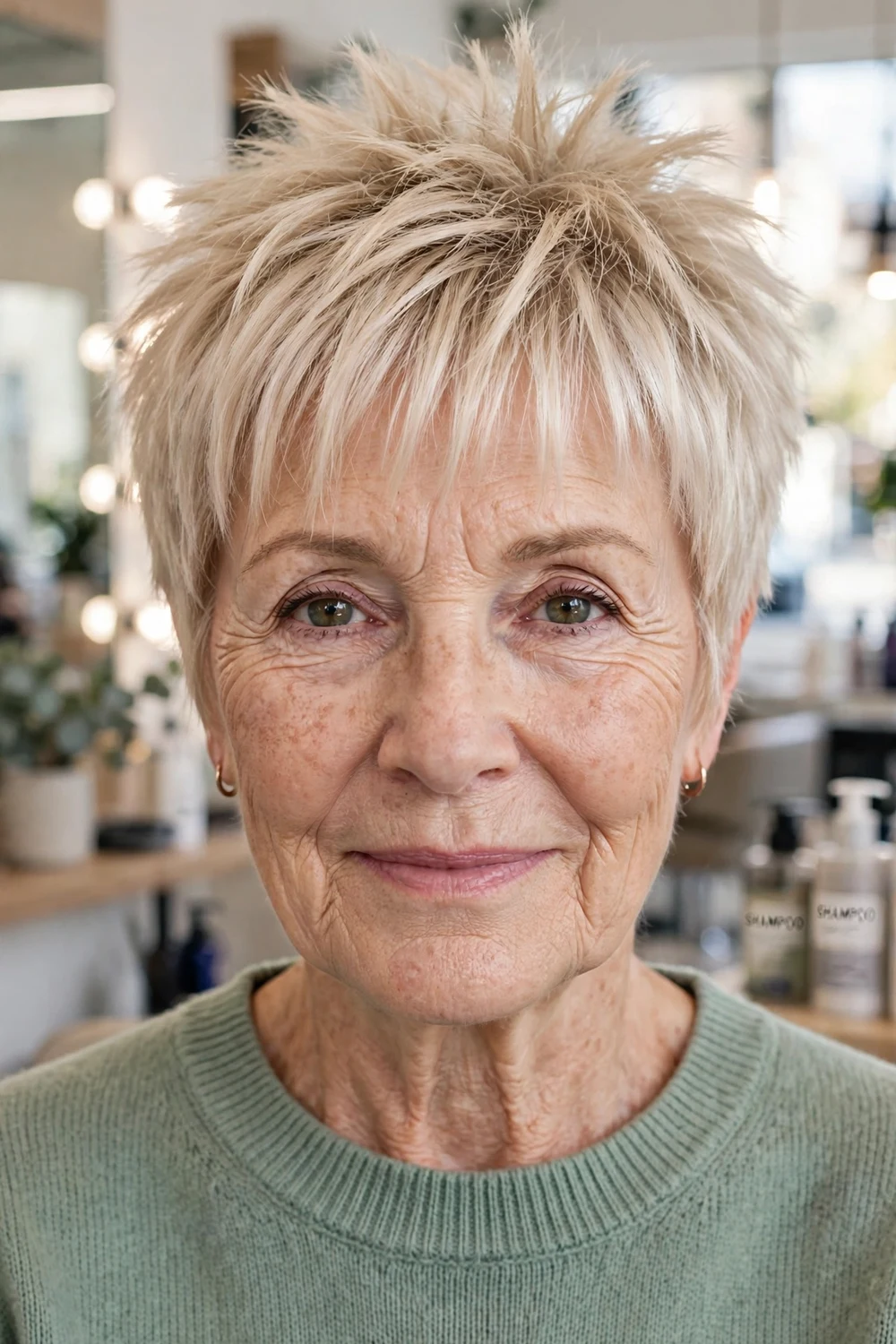
Wispy bangs are cut fine and see-through, so the forehead shows through in places. Paired with a short spiky crown, they keep the front light while the top carries the texture. This balance suits women who want fringe without a heavy front section, and it works well on fine hair that cannot support a thick bang.
The fringe is point-cut and thinned at the ends, so ask your stylist to keep the density low from the start. Style the bangs by drying them forward with your fingers, side to side, then down. The crown takes a small pinch of paste. Full trims land every five weeks.
Try this: If your bangs tend to separate at a cowlick, dry them flat against the forehead with the nozzle pointing down for the first minute.
Difficulty: Low · Cost: $
10. Spiky Pixie with Curtain Bangs
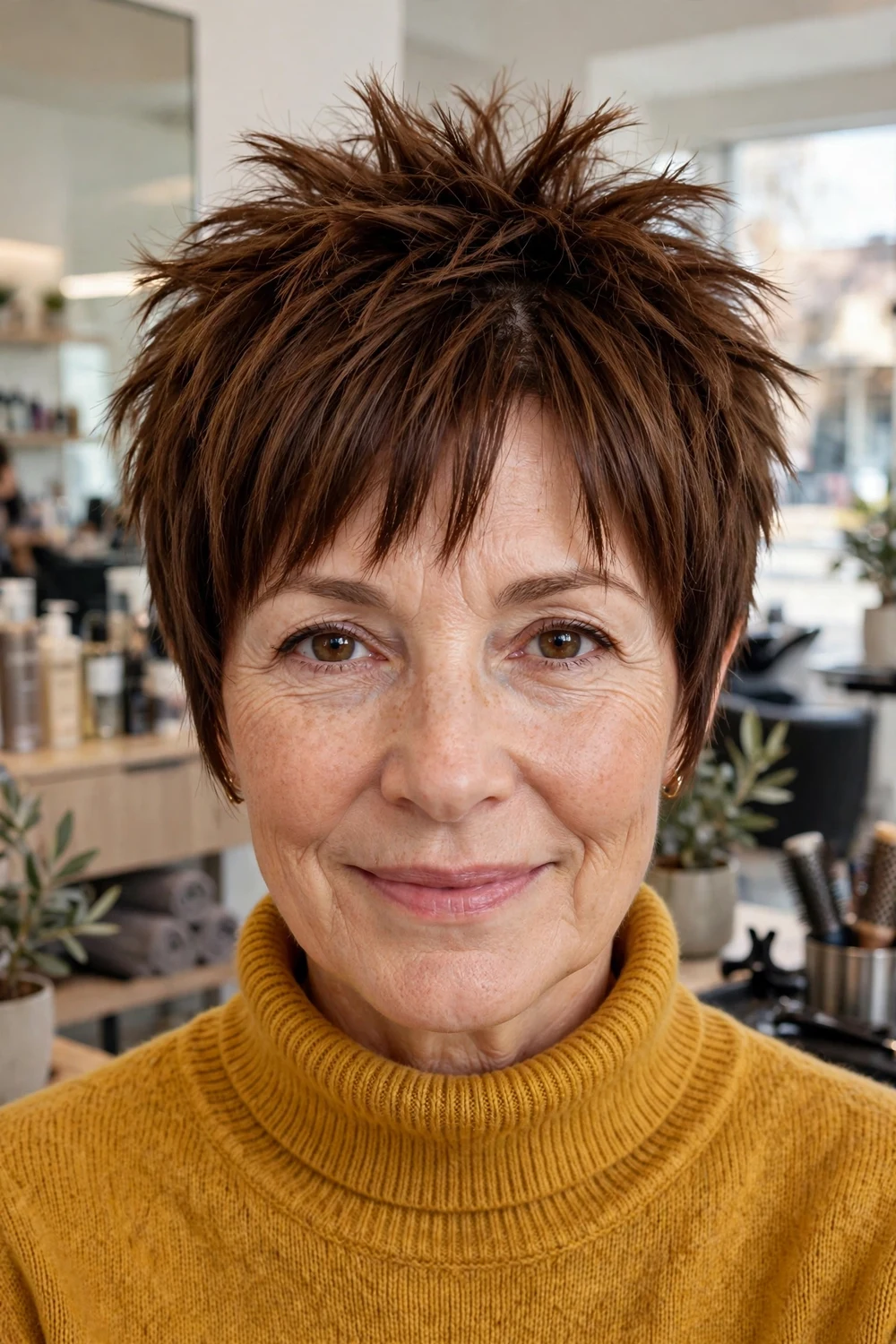
Curtain bangs part in the middle and frame both sides of the face, while the crown behind them is cut short and spiky. The longer front sections soften the jaw and cheekbones, which makes this a good route if a very short front feels too exposed. The sides blend into the fringe instead of a hard taper.
The fringe needs four to five inches at the front, so this pixie runs longer at the face than most on this list. Dry the curtain sections forward, then sweep each side back with a round brush. It suits oval, round, and heart faces, and wavy hair falls into the curtain shape with little help.
Try this: Pin each curtain section back for ten minutes while you finish getting ready. The set holds the sweep without extra product.
Difficulty: Medium · Cost: $
11. Spiky Pixie with Micro Bangs
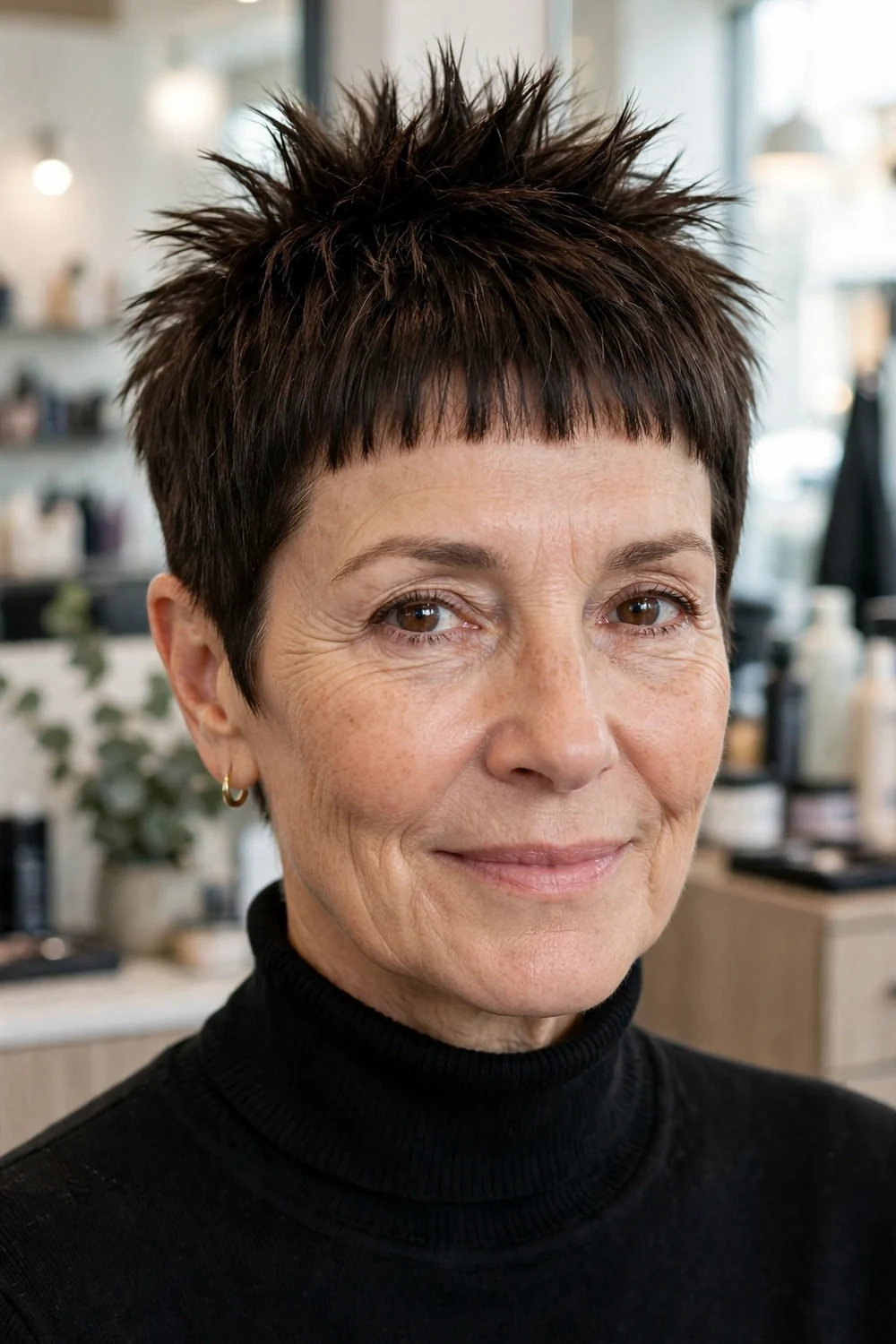
Micro bangs sit high above the brows and open the face fully. Against an upright spiky crown, the short fringe gives the cut a clear, graphic shape. It is a confident choice that puts the focus on eyes and brows, so it suits women who wear defined brows or glasses with a strong frame line.
Thick hair carries micro bangs best, since the fringe holds its line; on fine hair the fringe can look sparse, so ask for a blunt, slightly wider section. The fringe needs trimming every three to four weeks to hold its height above the brow. Crown styling stays simple with matte wax pulled upward.
Try this: Bring a photo that shows the fringe height you want in relation to your brows. Micro can mean very different lengths between stylists.
Difficulty: Medium · Cost: $$
12. Asymmetrical Spiky Pixie

One side of this pixie is left longer and sweeps spiky across the forehead, while the other side sits short and close to the head. The diagonal weight draws the eye across the face, which softens a strong jaw and balances features that feel uneven. The crown spikes follow the long side.
Tell your stylist which side you part on before the cut starts, since the whole shape is built around it. Dry the long side in the direction it will lie, then pinch the ends into points. It suits most face shapes, and it needs a trim every four to five weeks because asymmetry blurs as it grows.
Try this: Take a side-profile photo at the salon before you leave. Asymmetry is easier to judge in a photo than in the mirror.
Difficulty: Medium · Cost: $$
13. Choppy Spiky Pixie

Choppy cutting snips the crown layers at uneven lengths, so the spikes form in varied heights instead of one uniform row. The result reads lively from every angle and hides thin spots well, since the uneven pieces overlap instead of lying flat in one direction. The back is kept short to support the top.
Choppy layers suit fine to medium hair and most face shapes. Styling is forgiving: rub paste between your fingers and ruffle the crown in several directions. There is no single correct direction, which makes this one of the fastest cuts on this list to style on busy mornings.
Try this: Ask for the choppiness concentrated on top, with cleaner edges around the ears and neckline, so the cut stays tidy as it grows.
Difficulty: Low · Cost: $
14. Razored Spiky Pixie

A razor softens each layer as it cuts, so the spikes end in fine, feathered tips instead of blunt points. The top stays a little longer, and the feathered ends lift with a scrunch of light product. Razoring suits straight and wavy hair that tends to look heavy or blocky when it is cut with scissors alone.
Ask how your stylist handles razor work on fine hair before booking, since a razor used too heavily can thin the ends. On medium and thick hair it removes bulk cleanly. Style with a light cream rather than a wax, scrunching upward. Trims land every five to six weeks.
Try this: Ask for the razor used mainly through the top and crown. Keeping the perimeter scissor-cut holds the outline longer.
Difficulty: Low · Cost: $$
15. Feathered Spiky Pixie for Fine Hair
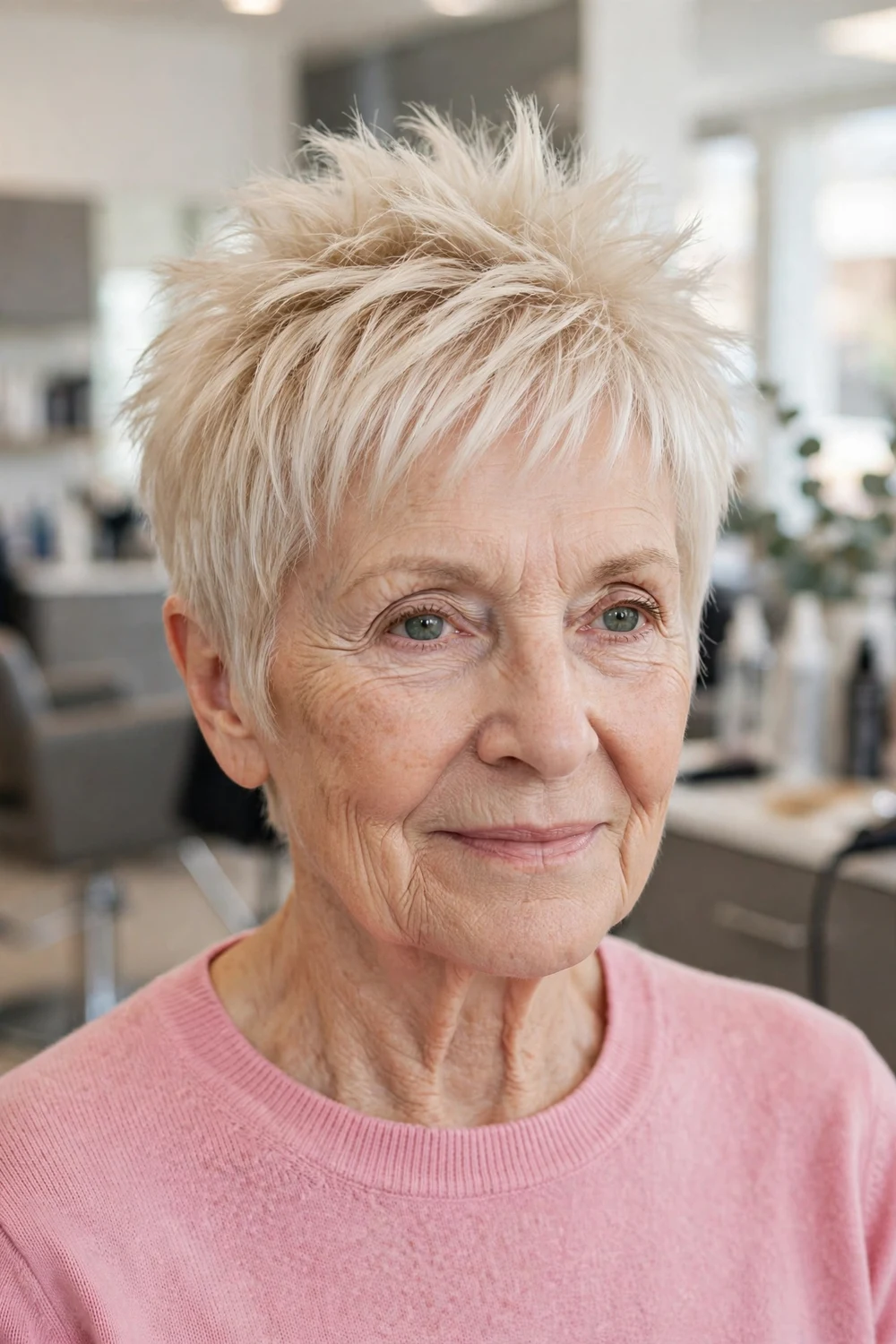
Feathering cuts fine layers that sweep away from the crown in overlapping strokes, like the barbs of a feather. On fine hair, that overlap is the point: each light layer supports the next, so the spiky crown looks fuller than the hair density alone would suggest. The sides stay short and smooth.
Keep product light and matte. Heavy wax collapses feathered layers within an hour. A root-lifting spray on damp hair, then finger-drying upward, gives the best hold. This cut suits oval and heart faces and needs a trim every five weeks to keep the feathering distinct.
Try this: Ask your stylist to keep the layers long enough to overlap. Feathering cut too short on fine hair can look thin at the ends.
Difficulty: Low · Cost: $
16. Wispy Spiky Pixie for Very Fine Hair
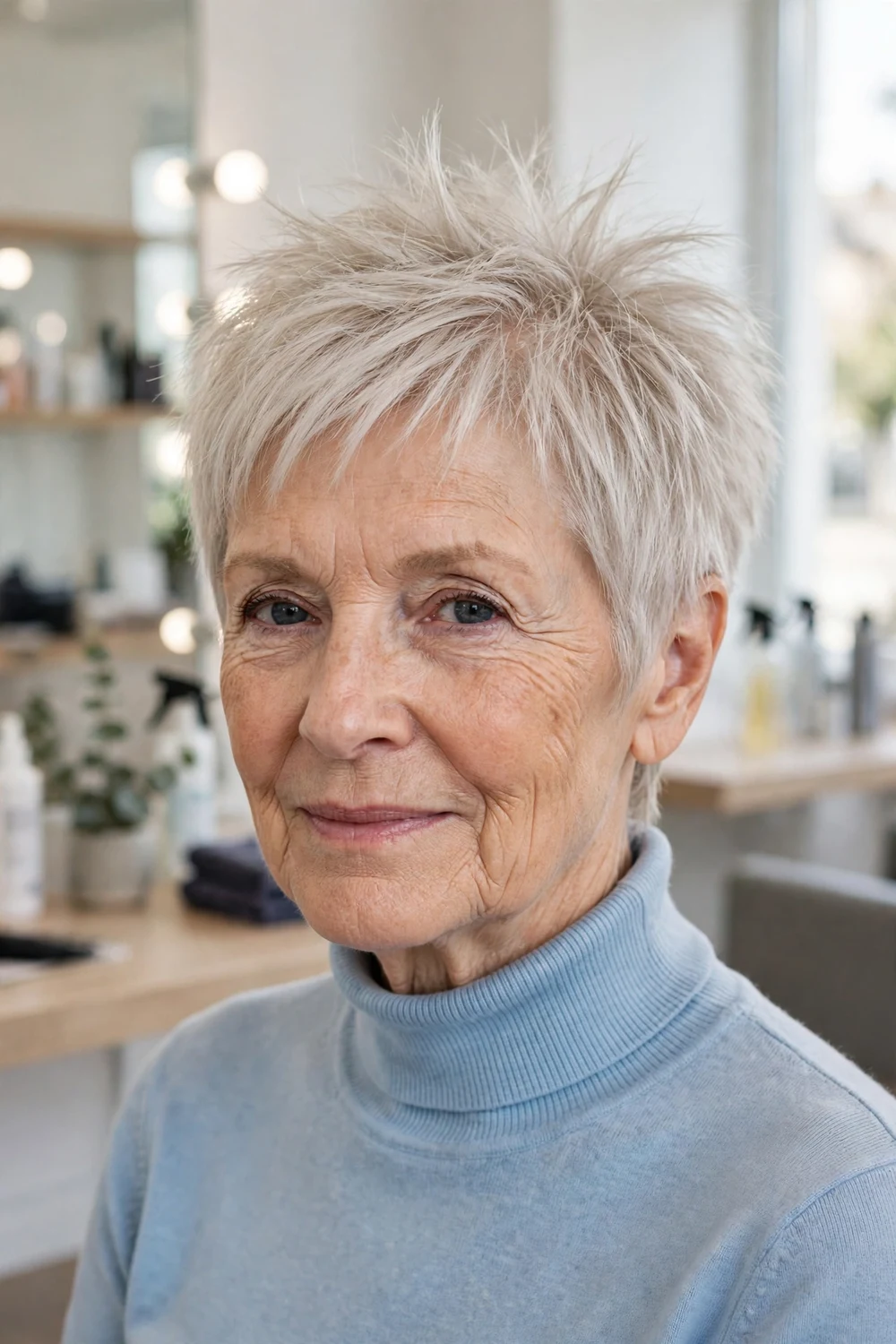
This is the lightest version on the list, built for very fine hair that flattens under most cuts. The layers are cut wispy and airy, with just enough separation at the tips to read as spikes. The shape avoids sharp points, so thin areas never get exposed by strong direction or heavy product.
Use a volumizing mousse at the root and nothing heavier than a light spray to finish. Oils and creams are best skipped on this cut. It grows out gracefully because there are no hard lines, which stretches trims to six weeks. It suits oval and small-featured faces well.
Try this: Dry your hair upside down for the first minute, then finish upright. That first minute of root lift carries the whole style.
Difficulty: Low · Cost: $
17. Soft Spiky Pixie
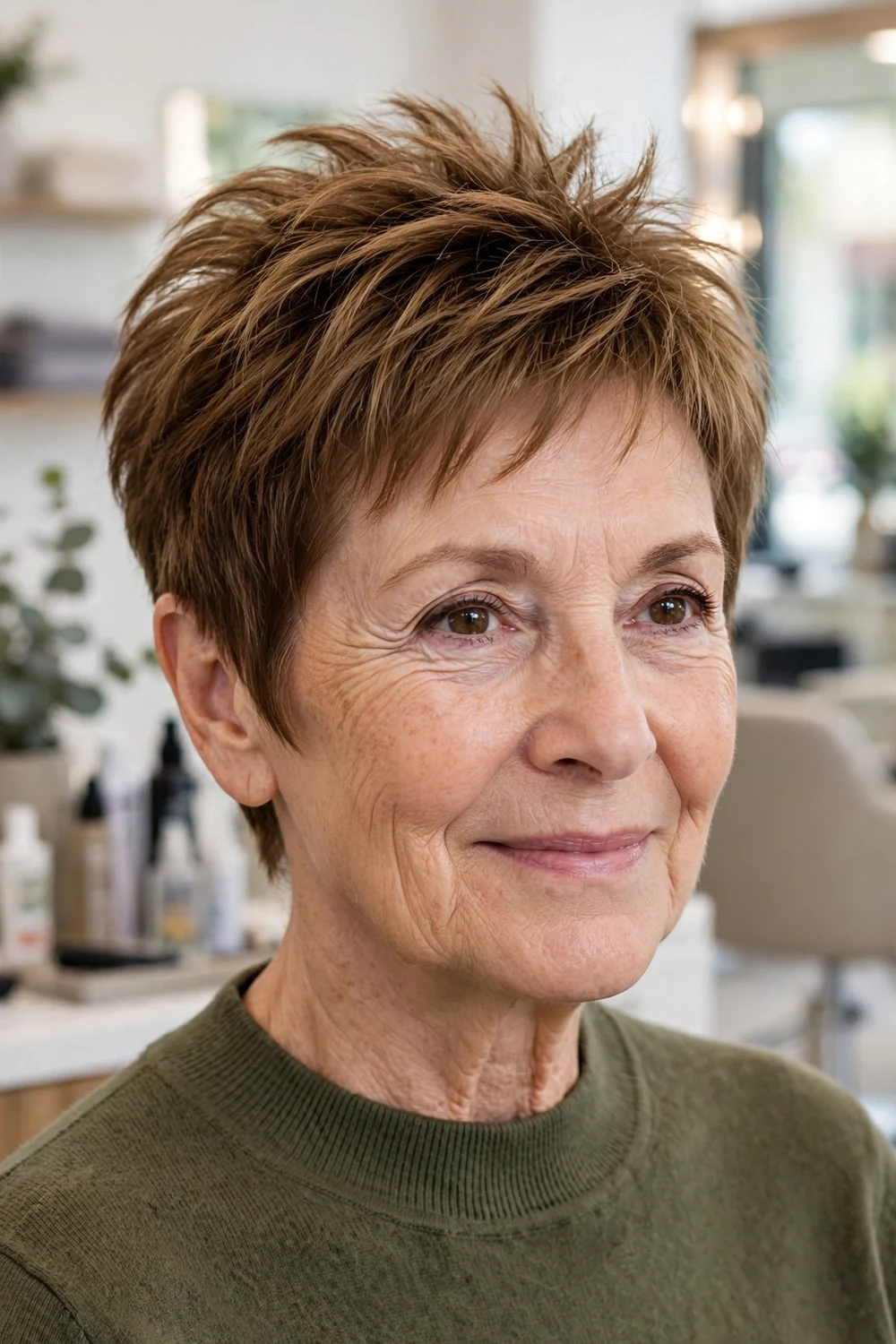
The soft spiky pixie keeps the separation and piecey texture of a spiky cut but lowers the lift, so the crown sits in gentle points close to the head. It is the entry point for women who like the idea of spikes but do not want a bold, upright finish. The sides and back follow a standard neat taper.
Almost every hair type carries this version, including fine hair, since it does not depend on height. A light styling cream is enough: smooth it through, then pinch a few crown pieces apart. It suits conservative workplaces and formal settings, and it holds up through a five to six week trim cycle.
Try this: Ask for soft point-cutting through the crown rather than choppy layers. The softer cut is what keeps this version gentle.
Difficulty: Low · Cost: $
18. Tousled Spiky Pixie
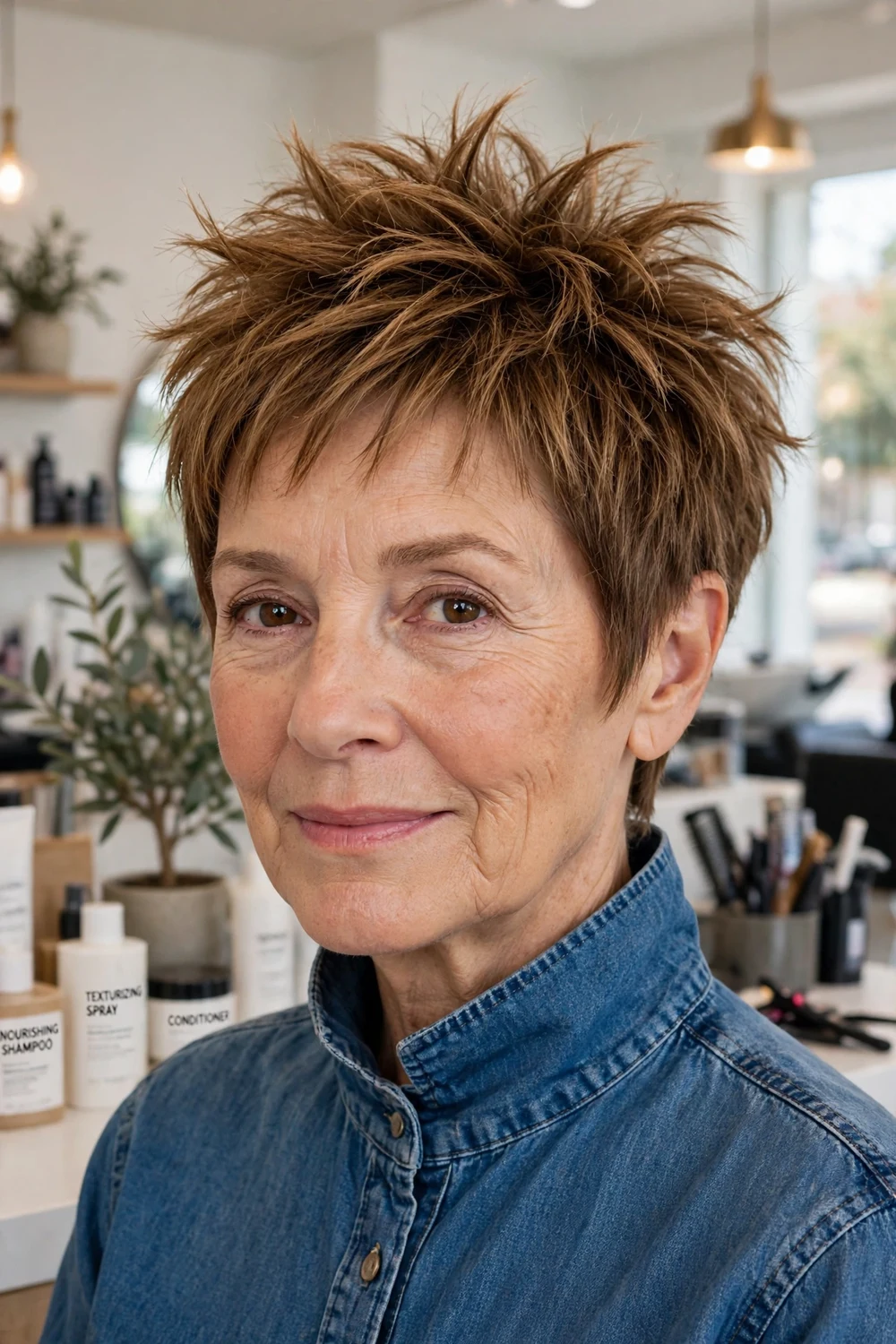
A tousled pixie points the crown pieces in several directions at once, so the finish looks lived-in rather than placed. The choppy layers do most of the work; the spikes form as the hair dries, with a light tousle to wake them up. The back and neckline stay neat, which keeps the mess on top reading as a style.
This cut suits wavy hair especially well, since the natural bend feeds the tousled direction. Straight hair needs a salt spray or texturizing spray for grip. Matte pomade, used sparingly, adds separation on second-day hair. Trims every five weeks keep the top from getting heavy.
Try this: Style it the night before by pinching the crown while it is damp, then refresh with a water spritz in the morning.
Difficulty: Low · Cost: $
19. Piecey Crown Spikes with Soft Fringe

Here the contrast does the work: a soft, light fringe lies forward at the front while defined, separated spikes lift the crown behind it. The fringe smooths the forehead line, and the piecey crown keeps the shape from reading flat or severe. The sides taper cleanly into the fringe.
Ask for the fringe cut soft and textured, not blunt, so it blends with the spiky crown. Dry the fringe forward first, then work paste through the crown in small pinches to build the separation. It suits oval, round, and long faces, and it works on straight to wavy hair.
Try this: Keep the paste off the fringe entirely. Product in the fringe makes it separate and fall in strings against the forehead.
Difficulty: Low · Cost: $
20. Spiky Crop Pixie
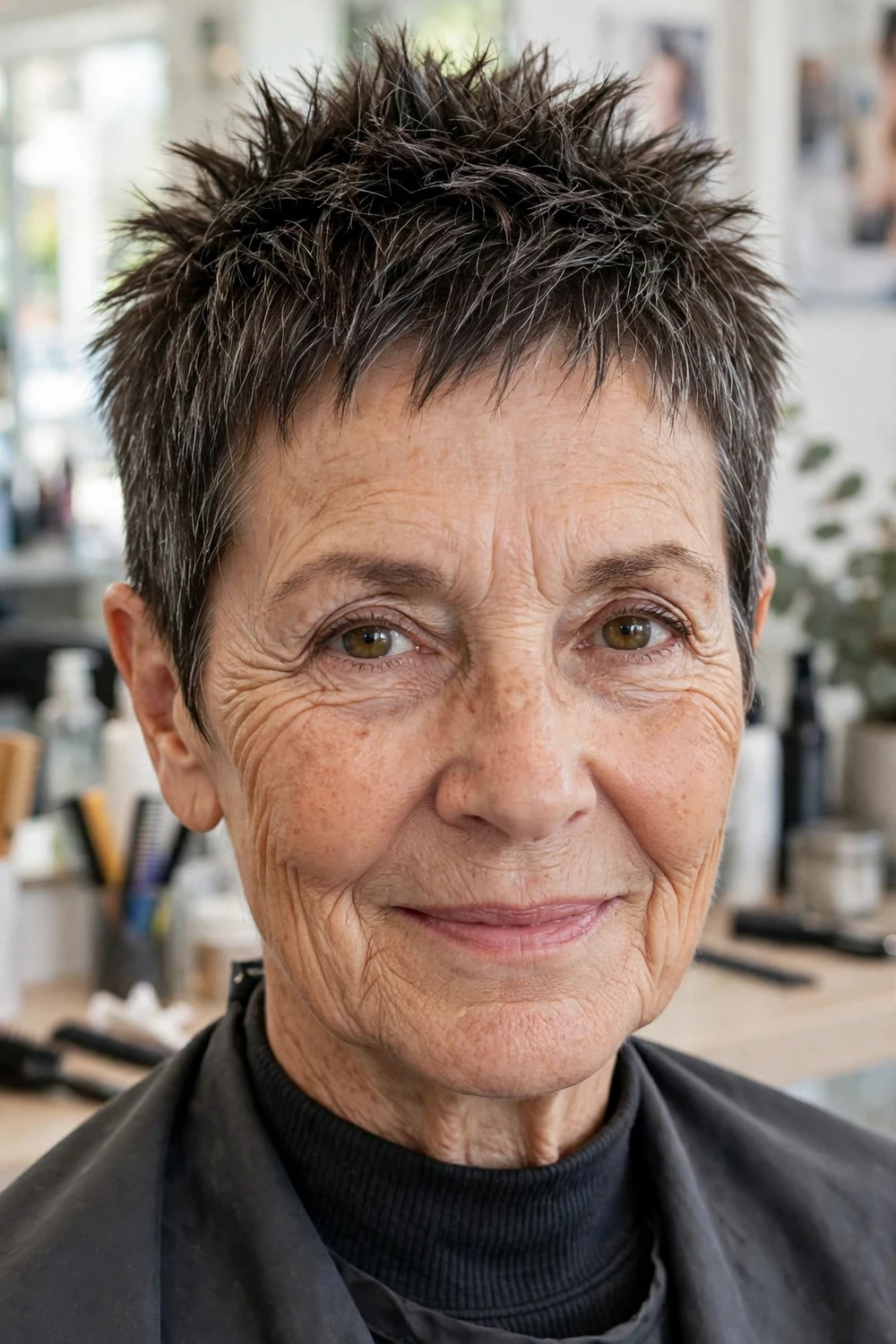
The spiky crop runs shorter than a standard pixie all over: cropped sides, a cropped back, and a short top that spikes in tight, close points. It is the lowest-upkeep cut on this list for daily styling, since there is very little length to arrange. The short top still gives texture and a clear shape.
Thick hair benefits most, since the crop removes bulk; fine hair can also wear it if the top is left long enough to overlap. Wash-and-go styling is realistic here, with a fingertip of paste for definition. The trade-off is trims every four weeks, because short crops lose their outline quickly.
Try this: Ask for a slightly longer top than you think you want at the first appointment. You can always go shorter at the next visit.
Difficulty: Low · Cost: $
21. Voluminous Spiky Pixie with Short Back

This cut pairs a tall, full crown with a closely cropped back, so the profile shows a clear rise from nape to crown. The volume comes from layered length on top, dried upward, rather than from backcombing. It suits women who want height and presence while keeping the back easy and cool.
Medium to thick hair holds the volume best. Use a volumizing mousse and dry the crown up and forward with a brush, then separate the points with paste. The cropped back keeps the neckline clean for about five weeks. It suits oval and square faces, where the height balances the jaw.
Try this: Ask your stylist to show you the profile in a hand mirror before you leave, since the nape-to-crown rise is the point of this cut.
Difficulty: Medium · Cost: $$
22. Spiky Pixie with Longer Textured Top
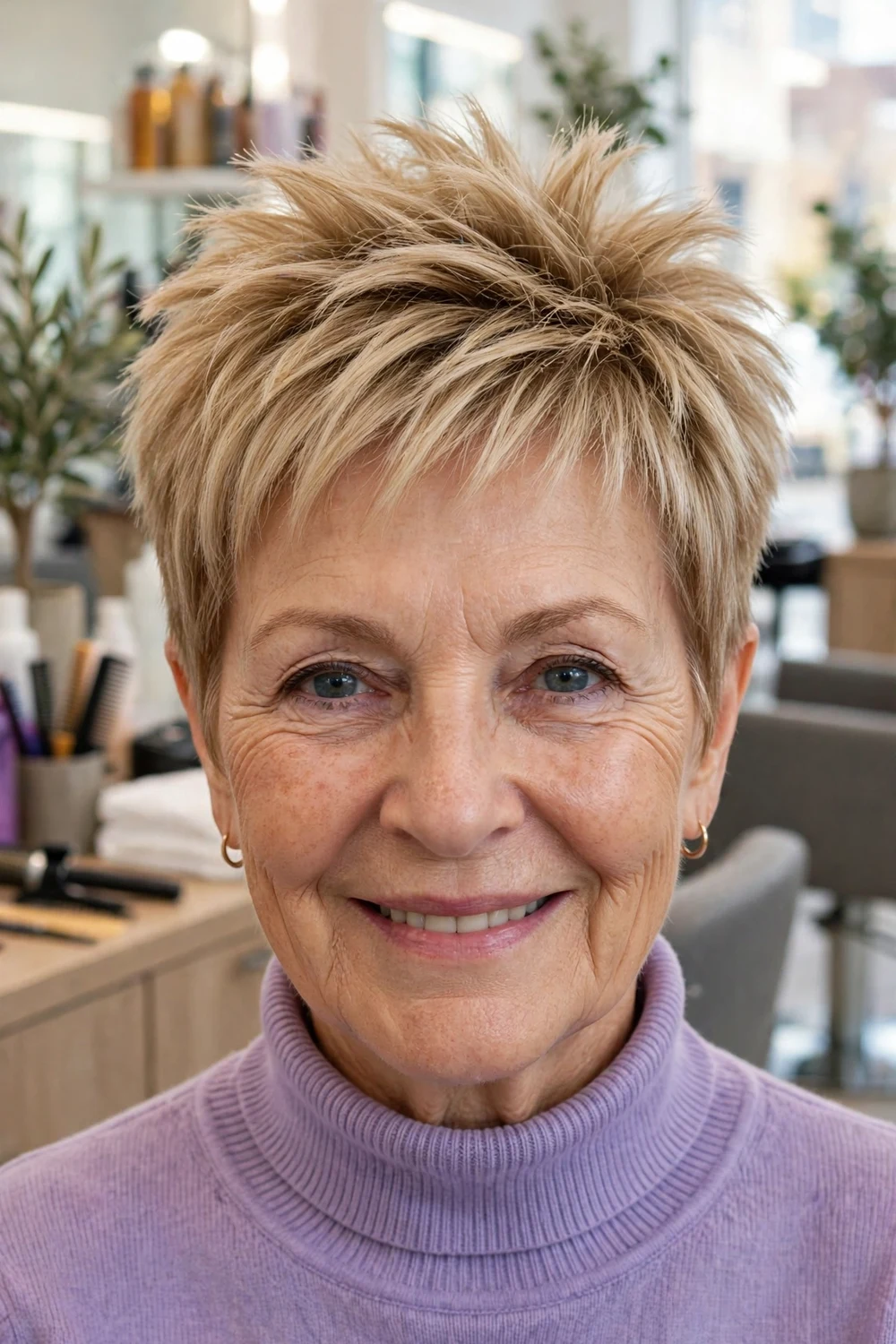
Keeping three to four inches on top gives a spiky pixie more range: the longer layers can spike up, sweep to one side, or lie piecey and forward on days you want a softer finish. The sides and back stay in a short pixie taper, so the length reads as a styling choice rather than a grow-out.
The longer top suits straight and wavy hair and gives thick hair room to show its texture. It also helps if you are growing out a shorter crop and want a spiky stage along the way. Plan trims every five weeks, mainly to clean the sides while the top keeps its length.
Try this: Decide your default direction, up or to the side, and tell your stylist. The top layers are cut differently for each.
Difficulty: Medium · Cost: $
23. Side-Styled Spiky Pixie
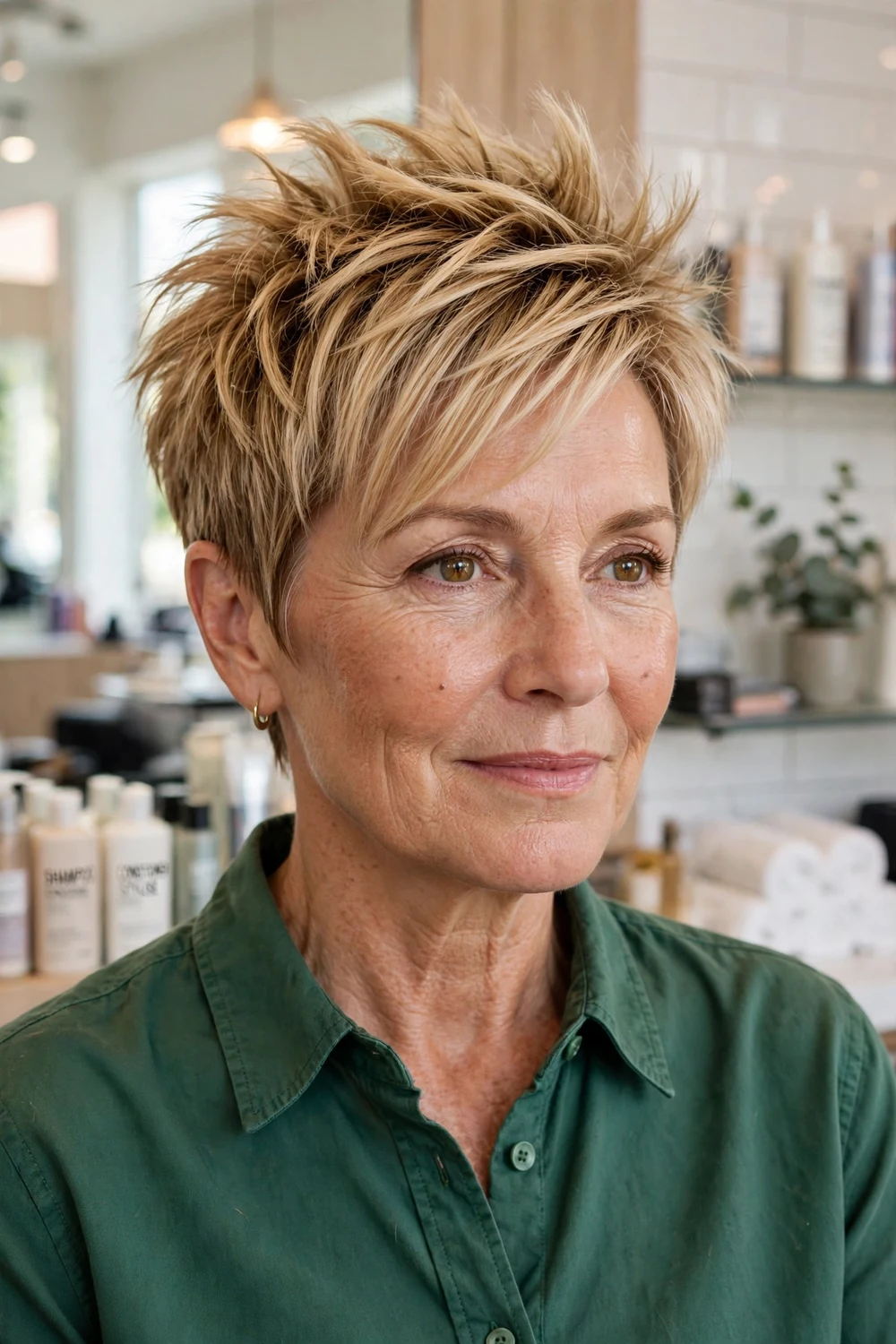
A side-styled pixie directs all of the crown pieces toward one side, so the spikes lean in a single sweep instead of standing upright. Shifting the volume off center opens the face and reduces width at the jaw. The short side stays close, which sharpens the contrast between the two sides.
Work molding clay through dry hair and push the top toward your chosen side, pinching the ends to keep the points. The direction can flip sides on a different day without a new cut, as long as the layers are even. It suits round and oval faces and needs a trim every five weeks.
Try this: Train the direction for a week by drying the top toward the new side while it is damp. Hair learns a repeated direction quickly.
Difficulty: Low · Cost: $
24. Spiky Pixie Undercut
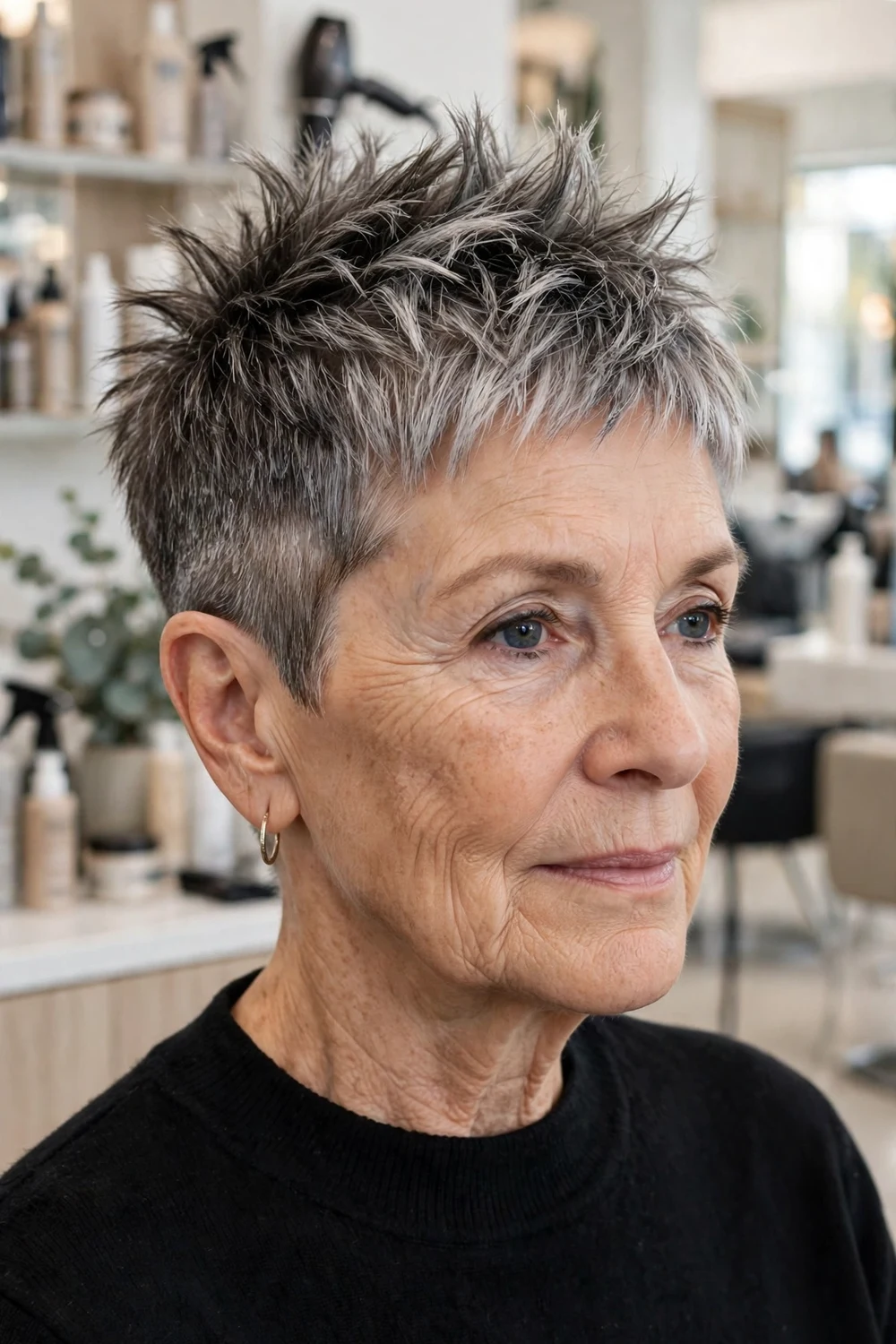
An undercut clips the sides and back very short, up to a clear line, while the top stays longer and spikes above it. The disconnect between the two lengths is the style. It removes a lot of bulk and heat from the sides, which thick-haired women tend to appreciate most in summer.
The top needs three inches or more to sit over the undercut line. Style the top with paste, pinching upward; the clipped sides need no product. The undercut line grows out visibly, so expect a tidy-up every three to four weeks, with a full trim at five to six weeks.
Try this: Ask where the undercut line will sit before the clippers start, and check it in the mirror. A lower line reads softer than a high one.
Difficulty: Medium · Cost: $$
25. Curly Spiky Pixie
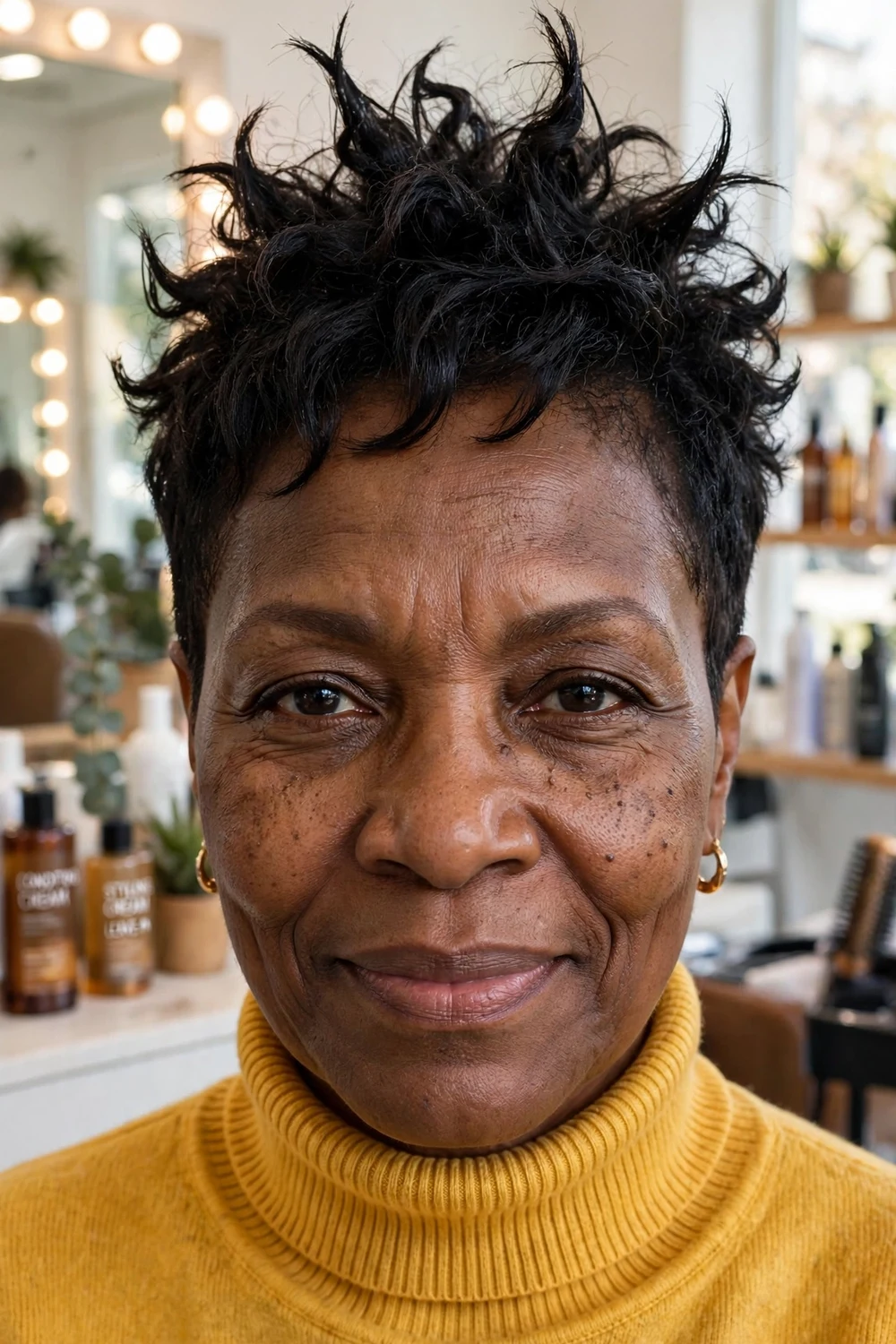
Natural curls form their own spikes when a pixie is cut short on the sides and left textured on top. Each curl stands as a separate point, so the shape has height and separation built in. The cut is shaped dry, curl by curl, so the length you see in the chair is the length you wear.
Use a light curl cream or gel on wet hair and let the top dry without touching it, which keeps the curl points defined. A small amount of oil on the ends once dry adds shine. Curly pixies hold their shape longer between cuts, so trims at six to eight weeks are common.
Try this: Book with a stylist who cuts curly hair dry. A wet cut on curls often ends up shorter than planned once the hair dries.
Difficulty: Medium · Cost: $$
26. Salt and Pepper Spiky Pixie
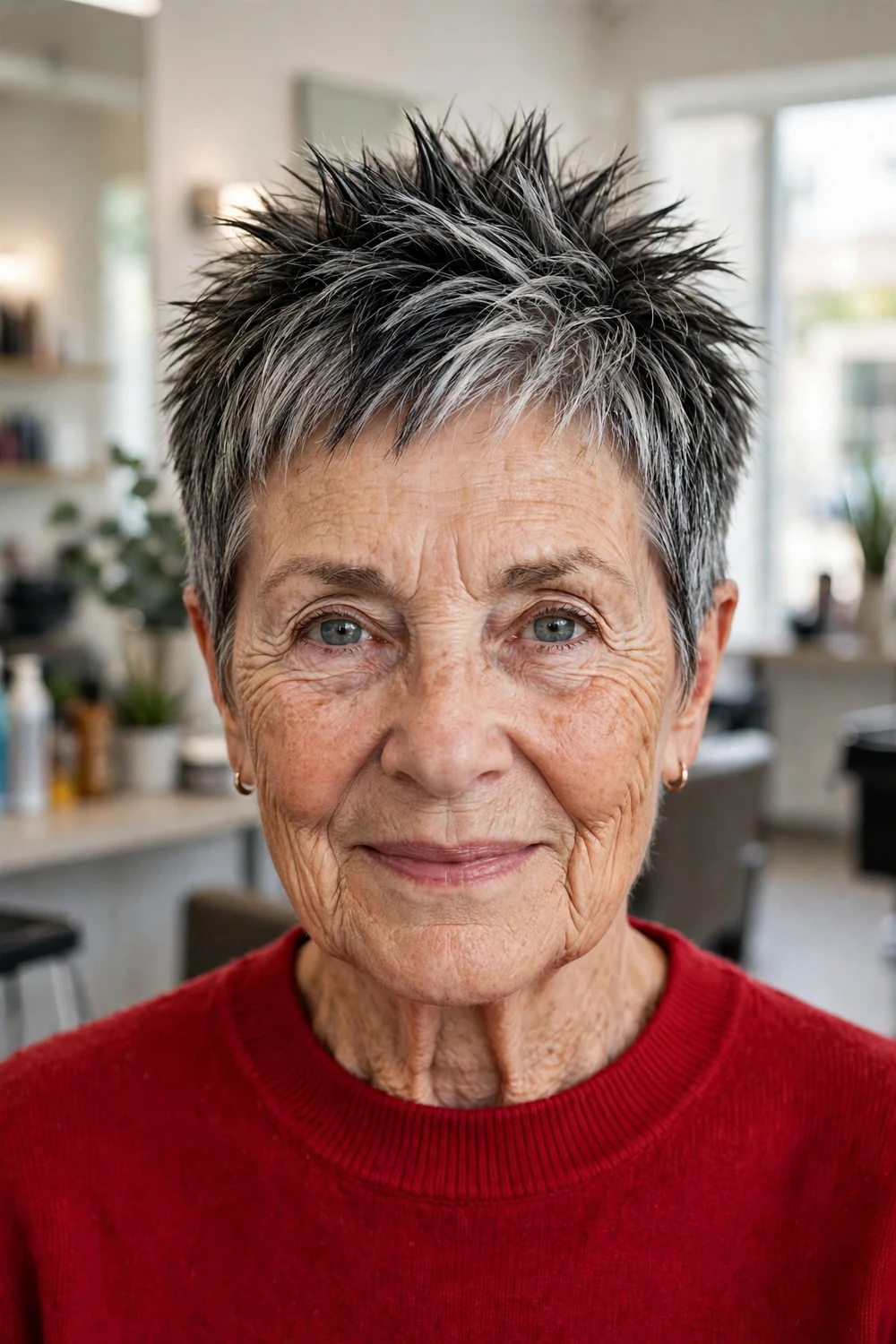
Salt and pepper hair, where dark and silver strands mix, shows spiky texture clearly because the two tones separate the pieces for you. Light catches the silver strands and the dark strands give depth, so the crown reads dimensional without any color service. The cut itself follows a classic tapered pixie with a piecey top.
No color upkeep comes with this version, which keeps salon visits to the cut alone every five to six weeks. A purple shampoo used once a week or less keeps the silver strands bright rather than yellow. Style with matte paste as usual, pinching the crown upward.
Try this: Ask for the texture cut to follow your natural mix. Where the silver clusters, slightly longer pieces show the contrast best.
Difficulty: Low · Cost: $
27. Silver Spiky Pixie
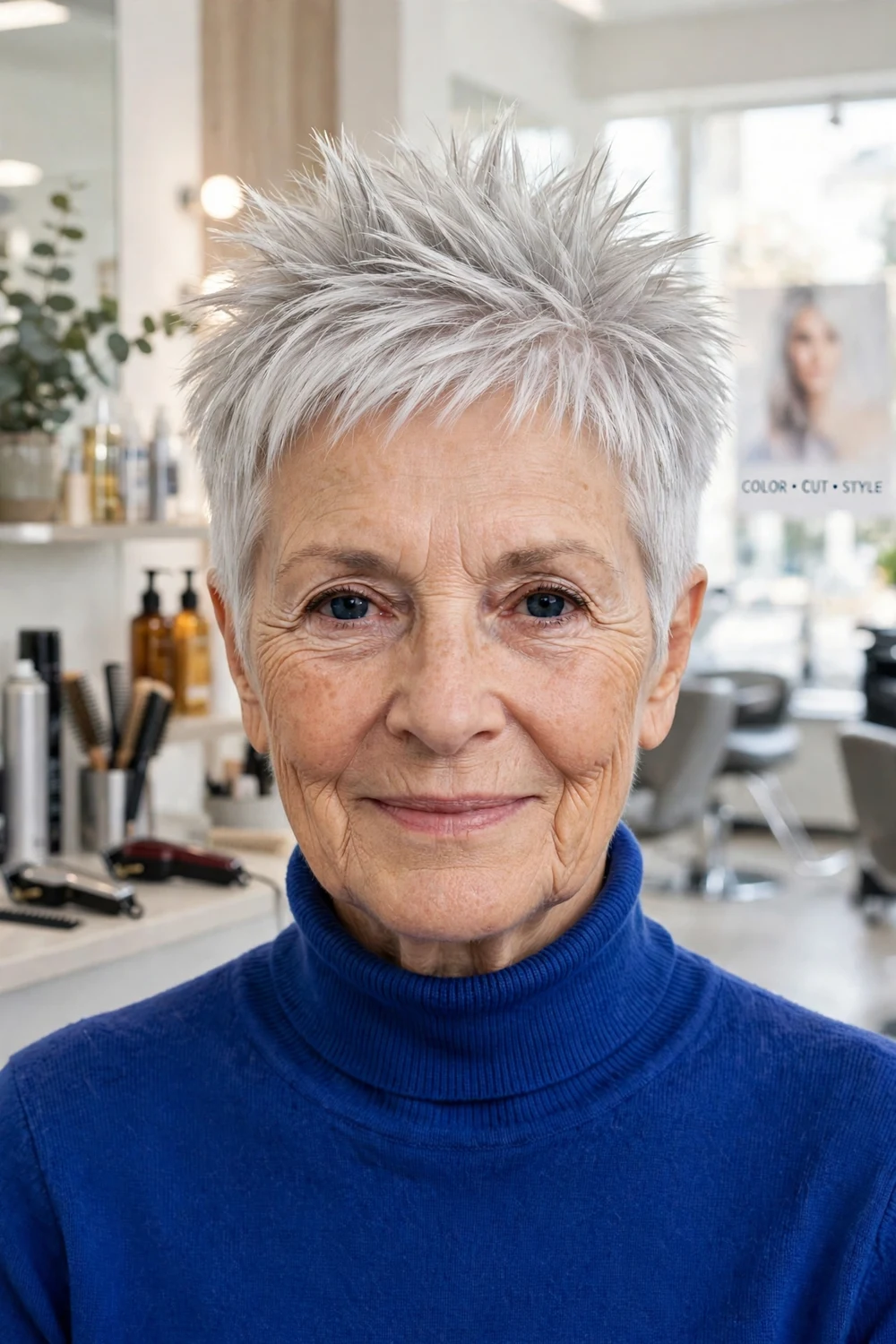
All-silver hair has a slightly coarser texture than pigmented hair, and that texture holds spiky separation well. This pixie keeps the sides tapered and the crown in short, upright pieces, so the silver reads bright and defined instead of soft and flat. It suits women who have completed the move to natural silver.
Silver hair can yellow from sun, minerals, and heat, so use a purple shampoo every one to two weeks and keep hot tools low or off, which a pixie makes easy. The coarse texture means a small amount of paste goes a long way. Trims every five weeks keep the crown pieces standing cleanly.
Try this: If your silver is still mixing with darker hair at the back, ask for a gloss to even the tone while the last of the color grows out.
Difficulty: Low · Cost: $
28. Bright White Spiky Pixie
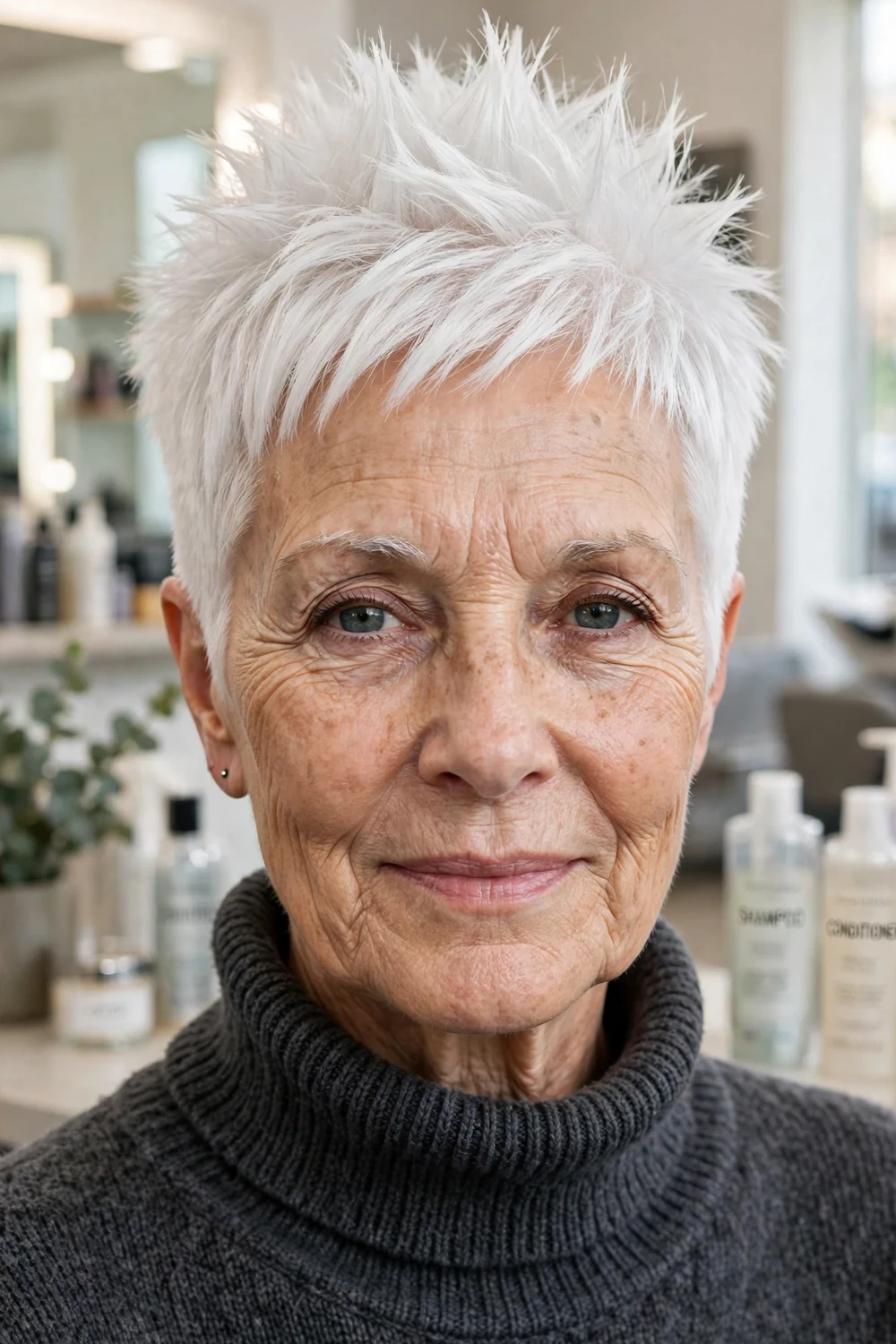
Pure white hair gives a spiky pixie a clean, bright finish, since every separated piece reflects light the same way. The cut is short and precise: tapered sides, a close back, and a crown of short white points. It pairs well with stronger makeup and glasses, since the hair itself carries no color contrast.
White hair shows product buildup and yellowing faster than other shades, so use a clarifying wash every few weeks and a purple shampoo in rotation. Keep styling products clear or white in the bottle, since tinted products can stain white hair. Trims land every five weeks.
Try this: Ask your stylist to check the back and sides under bright light. White hair can look uneven where the density changes, and the taper may need adjusting.
Difficulty: Low · Cost: $
29. Spiky Pixie with Highlights
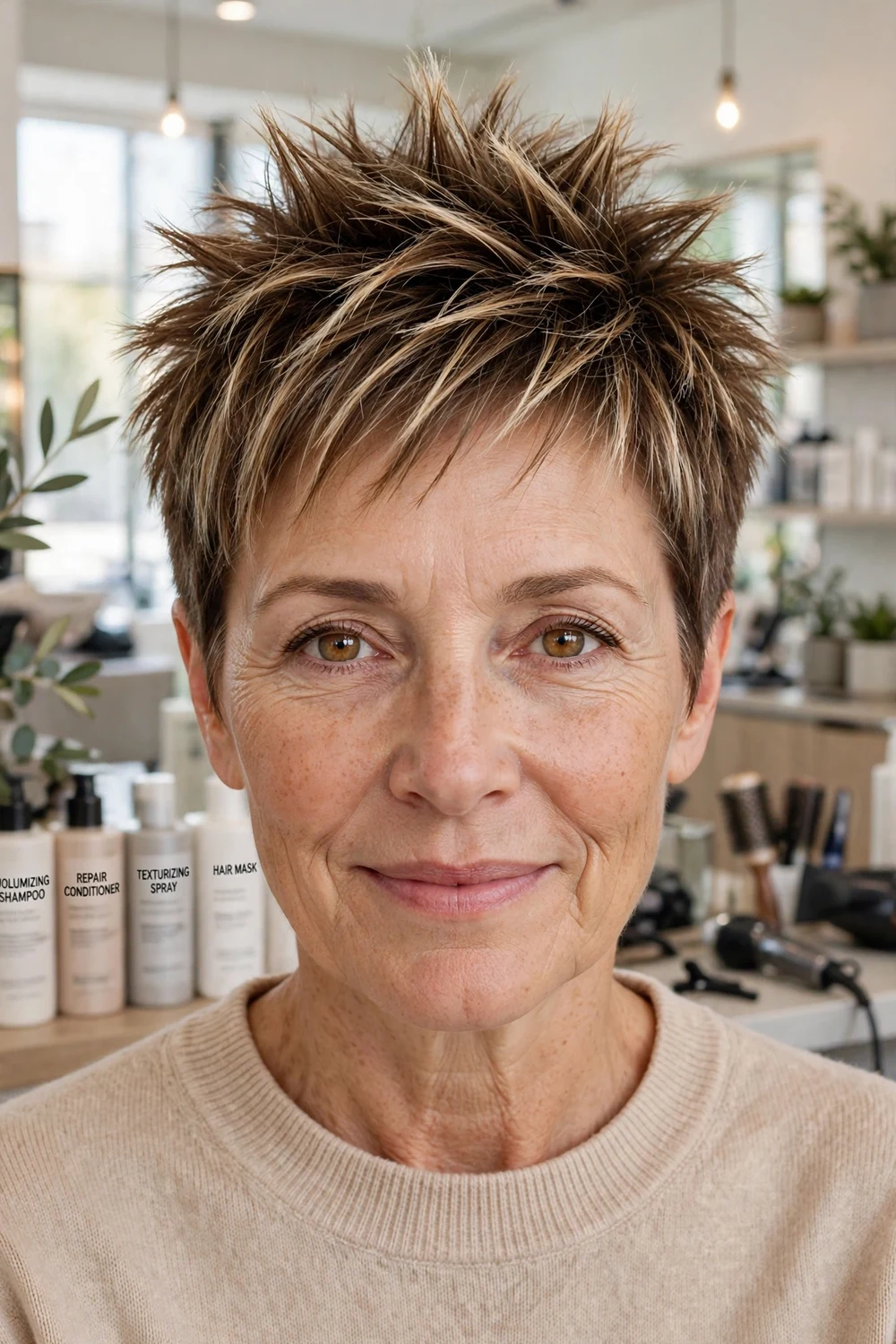
Fine highlights woven through a spiky pixie add a second way to see the texture: the lighter pieces show each spike, and the darker base gives the points depth. On brown or dark blonde hair, highlights around the crown and front do the most work. The cut stays a standard tapered pixie underneath the color.
Highlights on short hair grow out quickly at the root, so plan a partial refresh at six to eight weeks, or ask for a root-smudged placement that softens the line. The color adds a salon service on top of the cut, which is why this version sits at the top cost band on this list. Daily styling stays the same two-minute paste routine.
Try this: Ask for highlights placed mainly on the crown pieces that spike, not through the short sides, where they grow out fastest and show least.
Difficulty: Medium · Cost: $$$
30. Spiky Pixie That Works with Glasses
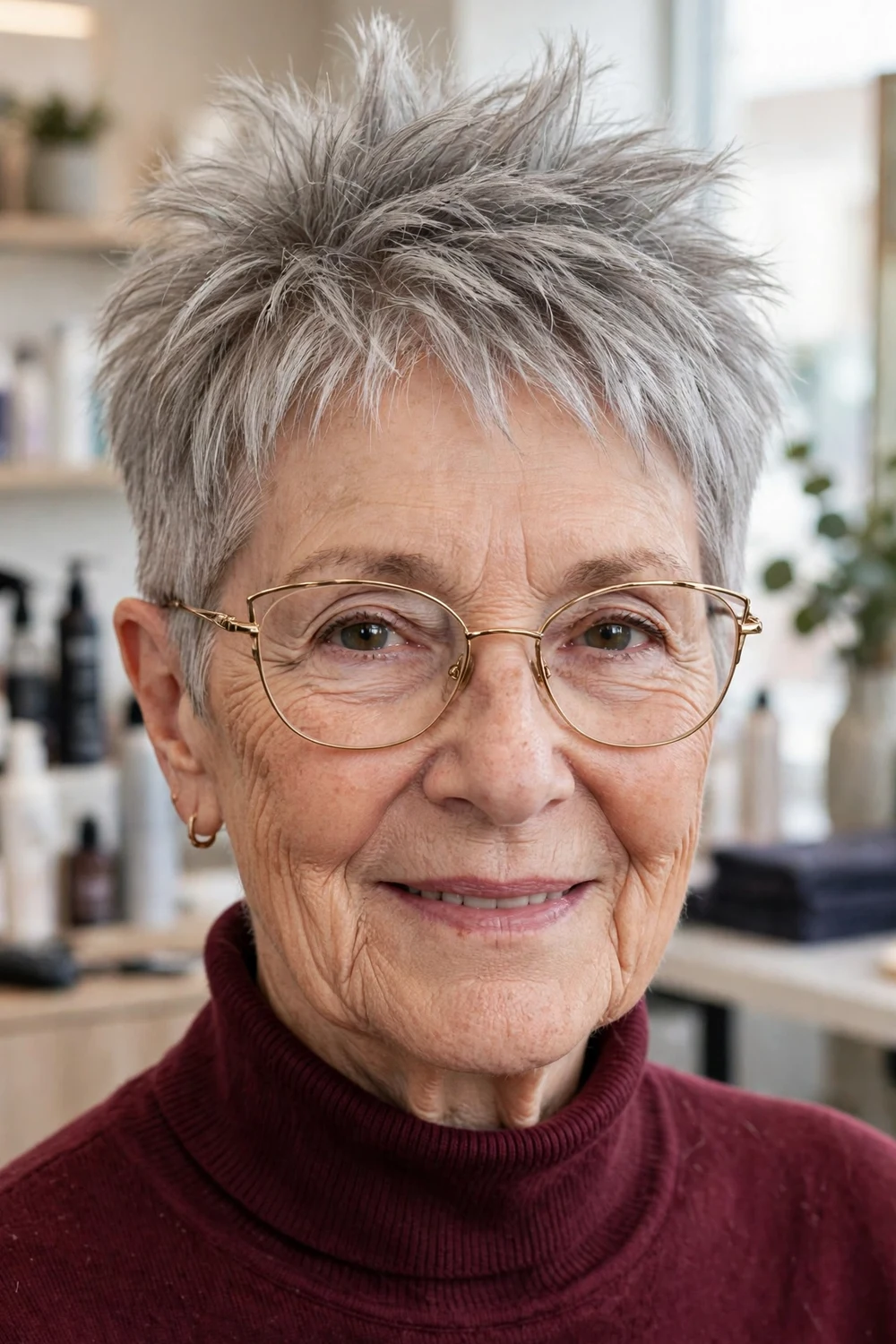
This pixie is planned around frames: the sides are tapered flat over the ears so glasses sit without pushing hair out, the fringe is kept short or swept aside so it does not rest on the frames, and the crown spikes up where it cannot interfere. It suits daily glasses wearers who are tired of hair bunching behind the arms of their frames.
Bring your glasses to the appointment and put them on before the final check, so your stylist can clean up the hairline around the arms and ears. If you switch between glasses and sunglasses, mention both. Trims every five weeks keep the ear area clear. Styling follows the standard paste-and-pinch routine.
Try this: Ask for the sideburn area cut to sit either clearly above or clearly below the frame arm. Hair that ends right at the arm flips out all day.
Difficulty: Low · Cost: $
More Ideas to Explore
Frequently Asked Questions
Will a spiky pixie work on fine or thinning hair?
Yes, and fine hair is one of the main reasons women pick this cut. Short, layered pieces overlap at the crown, so the hair looks fuller than it does in a flat, one-length shape. Feathered and wispy versions on this list are built for fine and very fine hair. Keep products light and matte, since heavy wax or oil separates fine hair and shows the scalp.
How often does a spiky pixie need a trim?
Most versions need a trim every five to six weeks to hold the taper and the crown shape. Very short crops and undercuts need a tidy-up sooner, at three to four weeks, because the outline grows out faster. Wispy and soft versions grow out more gently and can stretch to six weeks. Your stylist can set the interval at your first appointment based on how fast your hair grows.
What product do I need to style a spiky pixie at home?
A matte paste or molding clay is the main product for most versions. Use a pea-size amount on fully dry hair, rubbed between your fingers, then pinch the crown pieces upward. Fine hair does better with a root-lifting spray or mousse on damp hair and little or no paste. A light flexible spray can set a brushed-up or quiff shape on days you want extra hold.
Can I wear a spiky pixie with natural gray or silver hair?
Yes. Gray and silver hair often holds spiky separation well because the texture tends to be coarser than pigmented hair. Salt and pepper, silver, and bright white versions are included on this list for that reason. A purple shampoo used every one to two weeks keeps silver and white hair bright, and matte paste gives definition without dulling the tone.
Will a spiky pixie suit my face shape?
There is a version for each face shape. Round faces suit height at the crown, such as the layered, brushed-up, and voluminous cuts, since height adds length. Long faces suit side parts, curtain bangs, and side-styled versions that add width instead of height. Square faces suit soft fringe and side-swept bangs, which soften the jaw line. Your stylist can adjust the crown height and fringe to your shape at the consultation.
Is a spiky pixie hard to grow out if I change my mind?
No. A pixie grows into a longer pixie and then a short bob shape over several months. The longer textured top and soft spiky versions grow out the most gently, since they have no hard lines. Your stylist can reshape the cut at each trim during the grow-out, keeping the neckline tidy while the top length builds.
Final Thoughts
A spiky pixie earns its place because it solves the two things I hear most about short hair after fifty: flatness at the crown and a shape that feels dated. The separated crown layers fix the first, and the clean tapered sides fix the second, while the daily routine stays at two minutes and one product. Pick your version by hair type first, then by how much height you honestly enjoy seeing in the mirror, and bring two or three photos from this list to your appointment so your stylist can match the crown height and fringe to your face. If your hair is fine as well as short, the care notes in the guide to hairstyles for older women with fine hair pair well with the feathered and wispy cuts above, and the short pixie haircuts for women over 50 list is a good next read if you want to compare softer finishes before you decide.

