

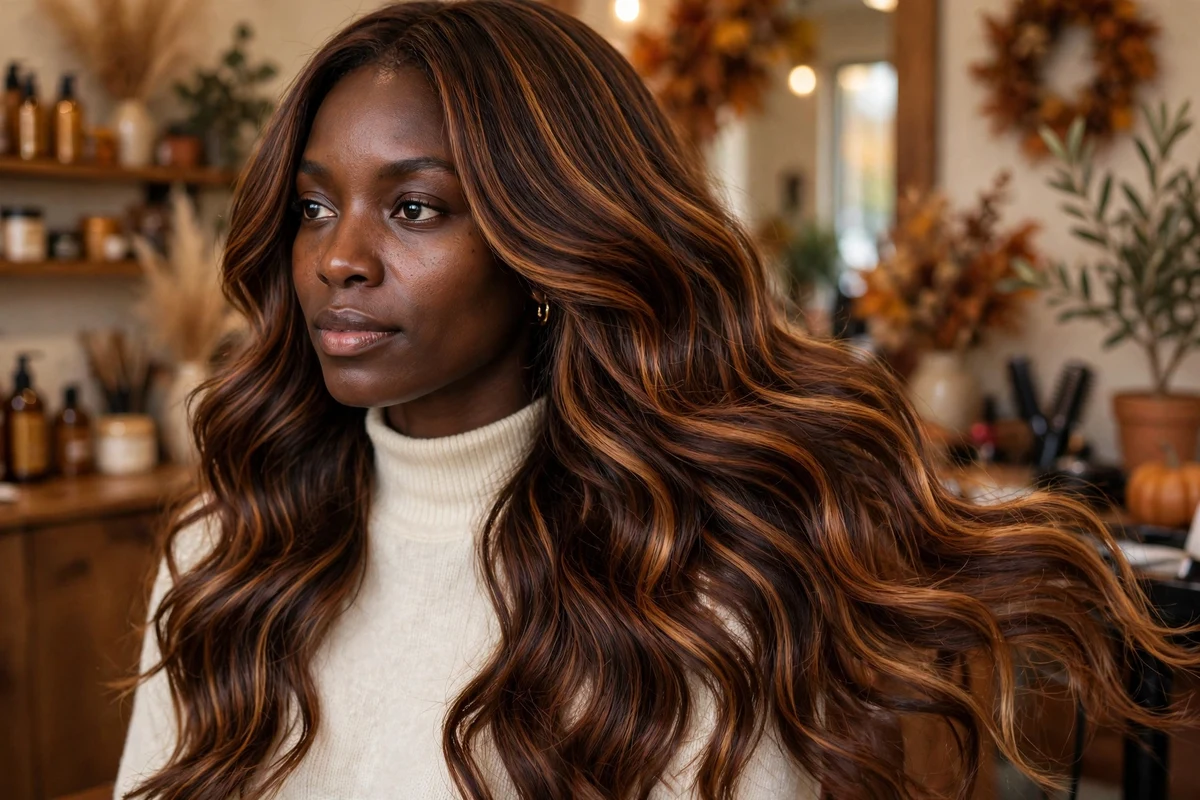
Fall color for Black women starts from a different place than a general fall list. The starting base is usually natural black or dark brown hair, the skin tones run from warm brown to deep and rich, and the hair itself may be natural, relaxed, braided, or worn in a wig or weave. A shade has to work across all of that, and the 27 fall hair colors for Black women below are picked and framed for exactly that range.
The list runs from low-lift browns and blacks through reds and coppers, honey and caramel placements, and then the jewel and fashion shades, with two protective-style routes at the end. Every idea notes the undertone it suits, how it works on Black hair, and what upkeep it asks for. For the broader season picture across all hair types, the general fall hair colors guide covers every family side by side.
Quick Takeaways
- Deep browns, espresso, and mahogany need little or no bleach on natural black hair and grow out softly.
- Reds and coppers, from cinnamon to burgundy and deep cherry, are the core fall shades for deep and brown skin.
- Honey, caramel, and balayage placements add light around the face while the root stays dark.
- Blonde, jewel, and pastel shades need pre-lightening on natural hair, or a wig, weave, or braids to skip bleach.
- Match undertone first: warm shades for golden skin, ash brown, plum, and blue-black for cool undertones.
How to Pick a Fall Shade for Deep and Brown Skin
Start with undertone, and remember that Black women cover the full undertone range. Warm and golden undertones carry chocolate, cinnamon, copper, honey, and caramel with ease. Cool and olive undertones suit ash brown, jet black with a blue tint, plum, and deep cherry. Neutral undertones can move between the two groups, so depth and upkeep become the deciding factors. The fall hair colors for dark skin guide goes deeper on shade matching for the deepest skin tones.
Then check your starting point and your hair plan for the season. Dark shades such as espresso, mahogany, and burgundy can go over natural black hair with little or no lightening, which keeps natural and relaxed hair in better condition. Lighter and brighter shades need lift, so the condition of your hair matters before the color does. If your hair is fragile, or you are growing it out, take the same shade in braids, a wig, or a weave instead. The dark fall hair colors roundup is a good next read if you plan to stay on the deep end.
| Shade family | Undertone | Best starting point | Upkeep |
|---|---|---|---|
| Rich browns and black (chocolate, espresso, mocha, jet black) | Warm, neutral, or cool by shade | Natural black or dark brown hair, no bleach for most shades | Low to medium |
| Reds and coppers (cinnamon, copper red, burgundy, cherry) | Warm gold and red, some cool reds | Dark base with lift or dark-hair formulas; also strong in wigs and weaves | Medium to high |
| Honey and blonde placements (honey, caramel, balayage, golden blonde) | Warm gold | Dark base with lightened sections; root stays dark | Medium to high |
| Jewel and fashion shades (ruby, plum, emerald, pinks) | Cool and neutral for most shades | Pre-lightened hair, or braids, wigs, and weaves with no bleach | High |
| Gray blending (steel highlights on a gray base) | All undertones | Natural gray growth pattern on any base | Low to medium |
1. Rich Chocolate Brown

Rich chocolate brown is a warm mid to deep brown with red and gold running under the surface. On deep and brown skin it adds warmth without lightening the overall look, and it reads clearly in daylight where a near black shade can go flat. It suits warm and neutral undertones best.
Natural black hair reaches this shade with all-over color and no bleach in most cases, since the lift needed is small. Relaxed hair and silk presses take the gloss well. Plan a gloss refresh every six to eight weeks, since chocolate tones fade toward a softer brown first at the ends.
Try this: Ask for a chocolate gloss over your natural color first if you are new to color. You get the warmth and shine for a few weeks before you commit to permanent dye.
Difficulty: Low to Medium · Cost: $$ (salon)
2. Espresso Brunette
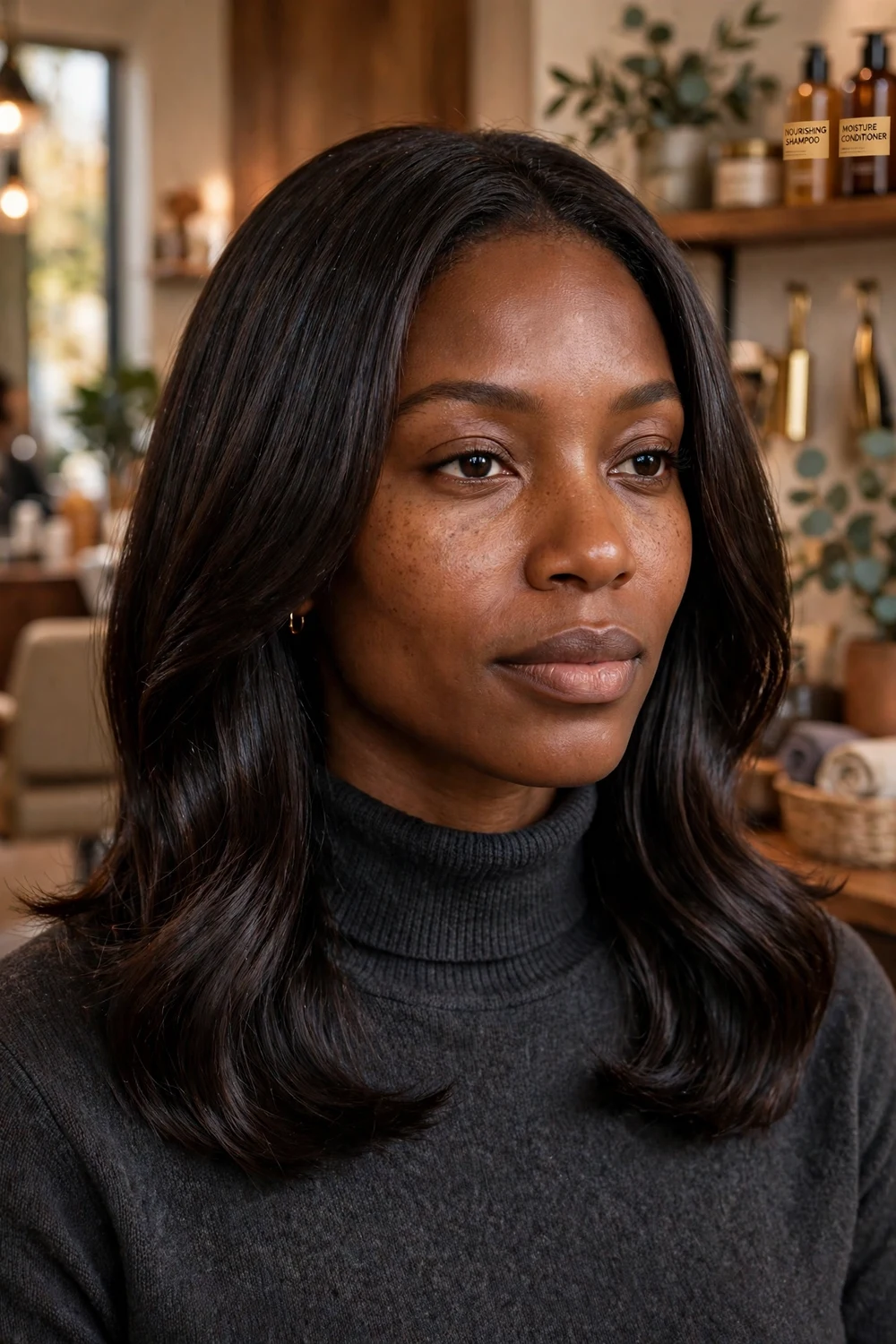
Espresso is the darkest brown on this list, a shade step above black with a cool to neutral brown base. It suits deep skin with neutral or cool undertones, and it gives straight and silk-pressed styles a clean, polished finish.
Espresso needs no lightening on natural black hair, so the appointment is a single all-over color. The grow-out line is soft because the shade sits close to a natural root. Refresh the tone when the ends start to look warmer than the roots, usually at eight weeks.
Try this: Bring a photo of espresso rather than dark brown. The two formulas differ, and the photo keeps the result from going warmer than you planned.
Difficulty: Low · Cost: $ (salon)
3. Mocha Brown

Mocha brown sits between chocolate and medium brown, with a neutral balance that works on a wide range of brown and deep skin tones. It softens natural black hair without a big contrast at the root, and curls show the shade in layers as they move.
Most heads reach mocha with a small amount of lift and a permanent color, with no bleach needed for this depth. Curly and coily hair benefits from a deep conditioning treatment at the same visit, since even mild lift can leave curls feeling dry for a week or two.
Try this: Ask your colorist to keep the roots half a shade deeper than the lengths. The slight root depth makes the grow-out far less obvious.
Difficulty: Medium · Cost: $$ (salon)
4. Ash Brown

Ash brown is a cool, smoky brown with the red and gold tones removed. It is the brown to pick for deep skin with cool, olive, or pink undertones, where warm browns can turn orange against the skin. It pairs well with straight, wavy, and relaxed styles.
Reaching ash brown from black hair takes lightening first, because warm pigment has to lift out before the cool tone can sit cleanly. The upkeep catch is brassiness: a blue or purple toning shampoo once a week keeps the smoke in the shade.
Try this: Ask for a strand test before the full appointment. Ash formulas grab quickly on porous ends, and the test shows the true tone on your hair.
Difficulty: High · Cost: $$$ (salon)
5. Jet Black with a Blue Tint

Jet black with a blue tint is deeper and cooler than natural black, and the blue sheen shows most in bright light. It suits deep skin across undertone groups and gives silk presses, sleek weaves, and long straight wigs a sharp finish.
This is an all-over color with no lightening, so it is one of the gentler services on the list. The trade-off is future change: black dye is slow to lift out, so treat this shade as a long commitment. A clear gloss every six weeks keeps the shine up.
Try this: Try this shade in a wig first if you change color often. You get the full effect for fall with no dye in your own hair at all.
Difficulty: Low · Cost: $ (salon)
6. Mahogany Brown

Mahogany mixes brown with red-violet, so the hair reads brown indoors and flashes red in the sun. Warm and neutral deep skin tones carry it well, and it is a steady first step for anyone moving from brown toward red for fall.
Mahogany sits over a dark base with little or no lightening, and many colorists use a high-lift tint or permanent color made for dark hair. The red side fades first, so a red-brown gloss at five to six weeks brings the balance back.
Try this: Ask for more brown than red if your workplace dress code is strict. The shade still warms up your look while staying firmly in brunette territory.
Difficulty: Low to Medium · Cost: $$ (salon)
7. Cinnamon Coils

Cinnamon coils take the warm brown-red of cinnamon and put it on natural curls and coils, where each coil catches the light at a different point. The shade suits warm and golden undertones on brown and deep skin, and it shows strong definition on twist-outs and wash-and-go styles.
Cinnamon usually needs gentle lift on black hair, since the red-brown has to show against a dark base. Keep heat styling low for the first two weeks after coloring coils, and deep condition weekly while the cuticle settles.
Try this: Ask for the color placed through the crown and front coils first. Those are the coils that frame your face and show the shade most.
Difficulty: Medium · Cost: $$ (salon)
8. Copper Red

Copper red is the warm center of the fall red family: orange and red in balance, bright against deep skin and warm undertones. It works on natural curls, silk presses, and wigs, and the shade range runs from a brown-leaning copper to a clear fiery tone. The wider fall copper hair colors list shows the full copper spectrum if you want to compare depths.
On dark hair, copper red needs lightening or a high-lift formula made for dark bases, and the brighter the target shade, the more lift is involved. Copper fades faster than brown, so plan a gloss at four to six weeks and wash with cool water.
Try this: Book a copper gloss between full color visits instead of a second full dye. It restores the tone with far less stress on the hair.
Difficulty: High · Cost: $$$ (salon)
9. Spicy Paprika
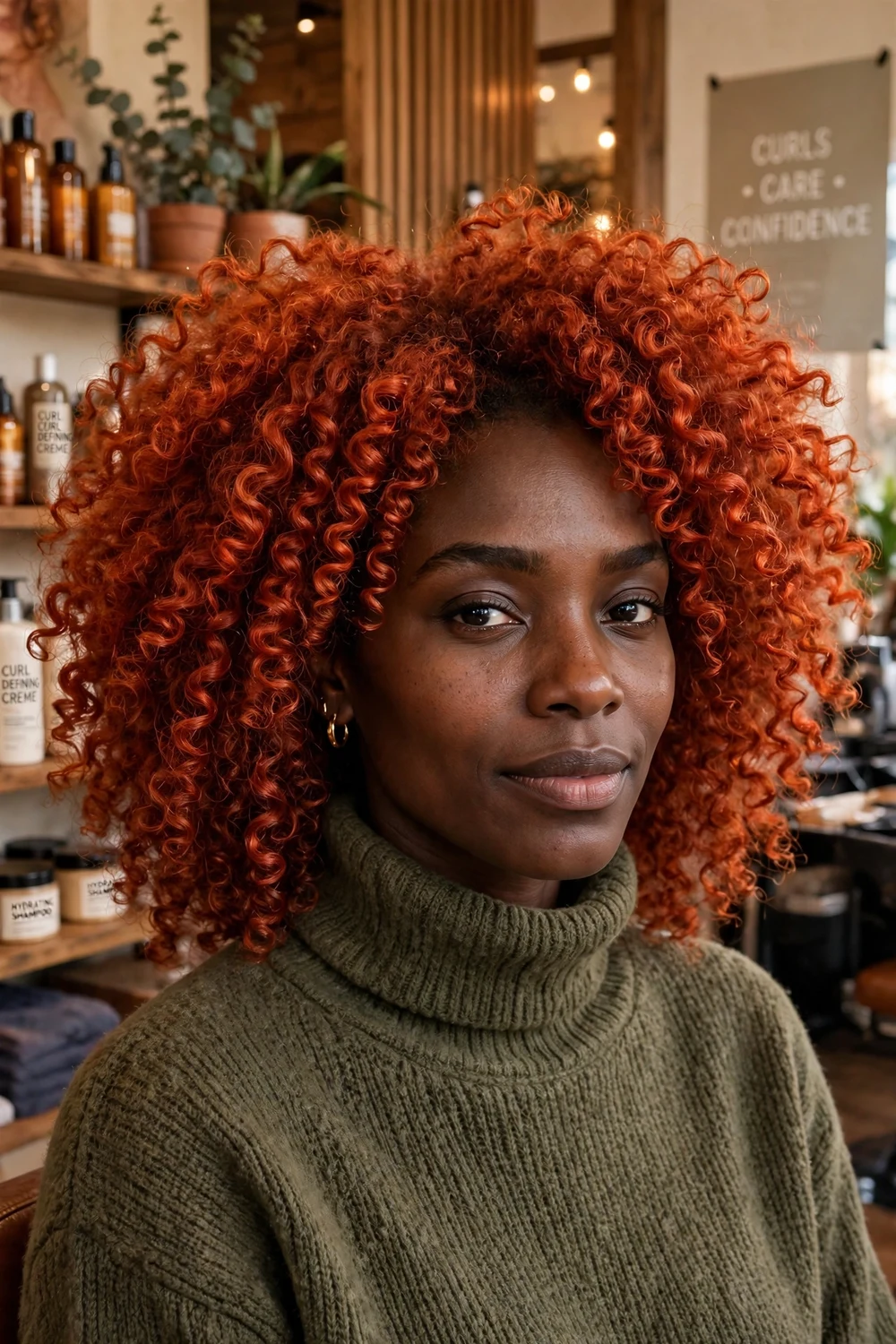
Spicy paprika is a red-orange shade with more heat than cinnamon and less brightness than a true copper. On coils and curls it outlines each twist and coil, which is why it shows up so often on natural hair for fall. Warm and neutral undertones wear it best.
Paprika on black hair needs lift or a dark-hair red formula, and porous curls can grab the orange side quickly. Ask for a conditioning color session and keep up weekly moisture, since red pigments leave the hair with every wash.
Try this: Try paprika as a rinse or semi-permanent color first. On pre-lightened or naturally lighter brown hair it gives a clear preview of the shade.
Difficulty: Medium to High · Cost: $$ (salon)
10. Auburn Highlights
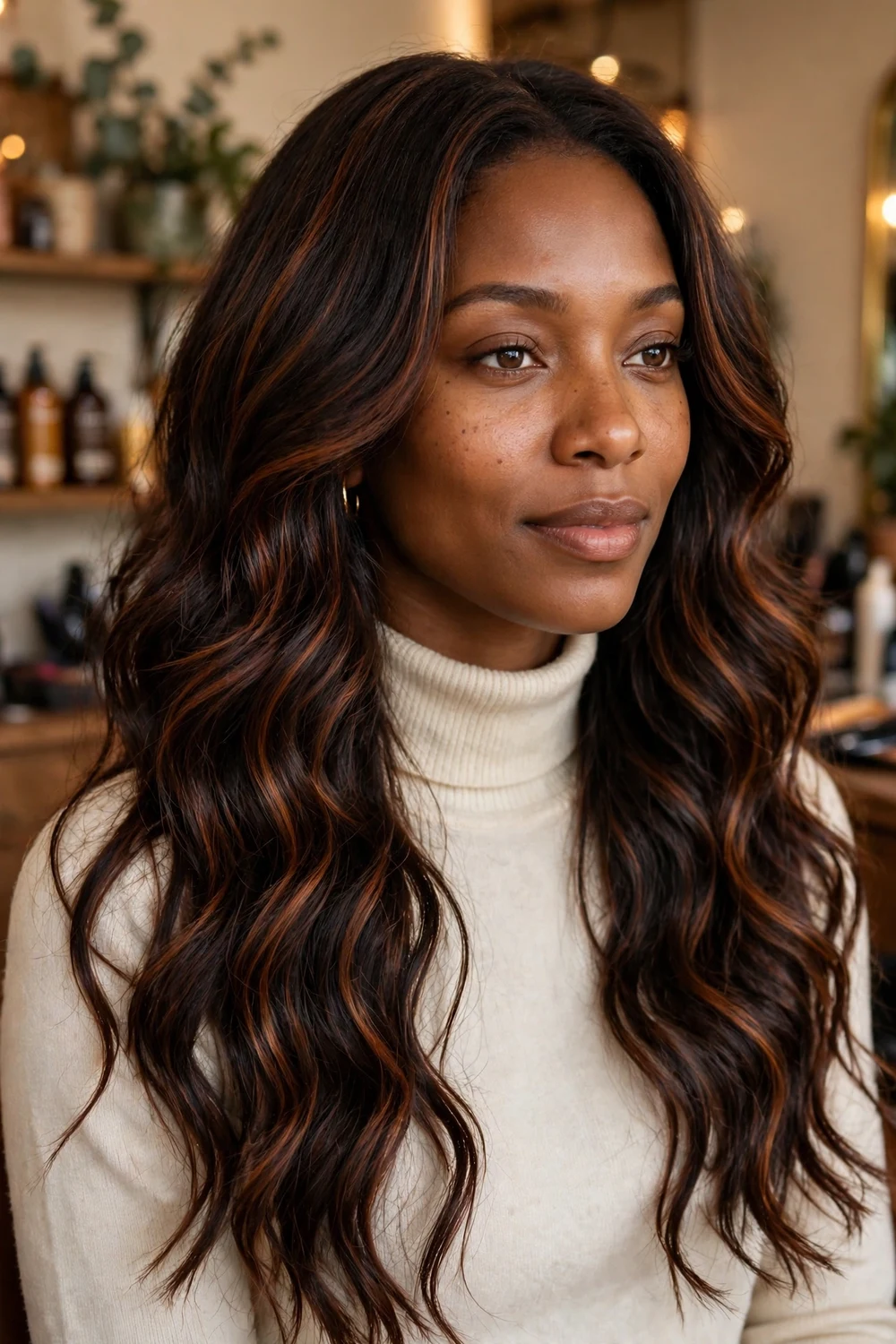
Auburn highlights weave a red-brown through a dark brown or black base, so the base stays dark and the auburn shows in ribbons. The placement suits deep and brown skin across undertone groups, because the skin still sits next to a dark frame of hair.
Highlights need lightening only where the auburn sits, which is gentler than an all-over lift. The grow-out is soft, and most wearers refresh the auburn tone with a gloss at eight weeks while the placement lasts far longer.
Try this: Ask for auburn highlights kept away from the very front hairline if your edges are fine. The front sections take lightener hardest and break first.
Difficulty: Medium to High · Cost: $$ (salon)
11. Deep Burgundy

Deep burgundy is a dark red with violet in it, deep enough to sit comfortably on a black base. It suits deep skin with warm, neutral, and many cool undertones, and it is a common fall pick for wigs and weaves because the shade looks rich under indoor light.
Many burgundy formulas for dark hair deposit color with little or no bleach, though a brighter result needs lift. Burgundy rinses out visibly in the first few washes, so wash less often and use a color-safe shampoo from the first week.
Try this: Wear burgundy in a sew-in or wig for a season if your natural hair is relaxed. You skip overlapping relaxer and color services on the same hair.
Difficulty: Medium · Cost: $$ (salon)
12. Merlot Wine

Merlot is burgundy pushed further toward purple, a wine shade that flatters deep skin with cool and neutral undertones. In a bob or a smooth silk press the color reads even and glossy, and the purple side sets it apart from the redder shades on this list.
Merlot can be built on dark hair with permanent color, and a pre-lightened base makes the wine tone clearer. The purple pigment fades toward red over time, so a violet-leaning gloss keeps the original balance.
Try this: Ask your colorist to mix the merlot slightly deeper than your target photo. Fresh merlot lightens over the first month of washing.
Difficulty: Medium · Cost: $$ (salon)
13. Deep Cherry

Deep cherry pairs a dark root with a clear red through the lengths, so the grow-out stays easy while the color stays bold. The red has enough blue in it to suit cool and neutral undertones on deep skin, as well as warm skin that wants a cooler red.
The lengths need lightening to show a true cherry tone, while the root area stays natural or is colored to match your base. Keep a red color-depositing conditioner in your routine, since cherry shades lose brightness faster than they lose depth.
Try this: Ask for the cherry kept off the first inch at the root. A shadow root stretches this color to ten weeks or more between salon visits.
Difficulty: High · Cost: $$$ (salon)
14. Pumpkin Spice Latte
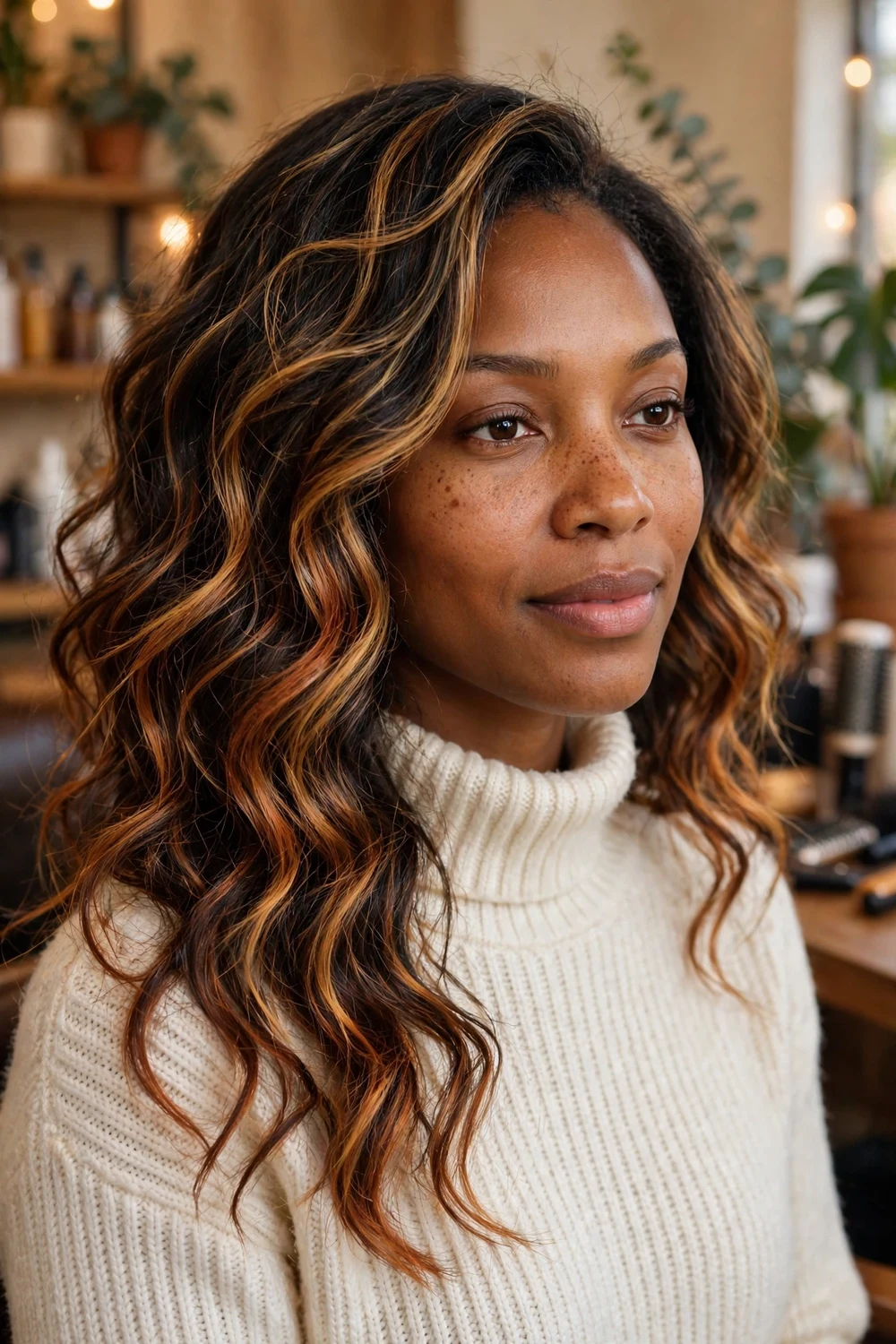
Pumpkin spice latte color layers golden highlights and copper midlights over your natural dark base. The mix gives fall warmth in three tones at once, and the dark background keeps it grounded on deep and brown skin. It suits warm undertones and curly, wavy, and straight styles alike.
The highlights and midlights need lightening in placed sections only, and your colorist can keep the lift low by working with gold and copper targets rather than pale blonde. Refresh the copper side with a gloss at six weeks, since copper fades ahead of the gold.
Try this: Show your colorist where you part your hair before foils go in. Placing the lightest pieces along your real part makes the blend look natural.
Difficulty: Medium to High · Cost: $$$ (salon)
15. Honey Highlights

Honey highlights put warm gold through a dark base in fine or chunky pieces, with the brightest pieces often placed around the face. On deep skin the honey warms the whole look, and on curls the light pieces show the curl pattern clearly.
Honey on black hair means lightening the highlighted sections, then toning them to a warm gold. Keeping some depth at the root makes the service last eight to ten weeks. Toner refreshes at six weeks stop the honey from drifting too yellow.
Try this: Ask for honey in two strengths: softer gold at the back and the brightest pieces at the front. The face frame does most of the work in this look.
Difficulty: High · Cost: $$$ (salon)
16. Caramel Highlights
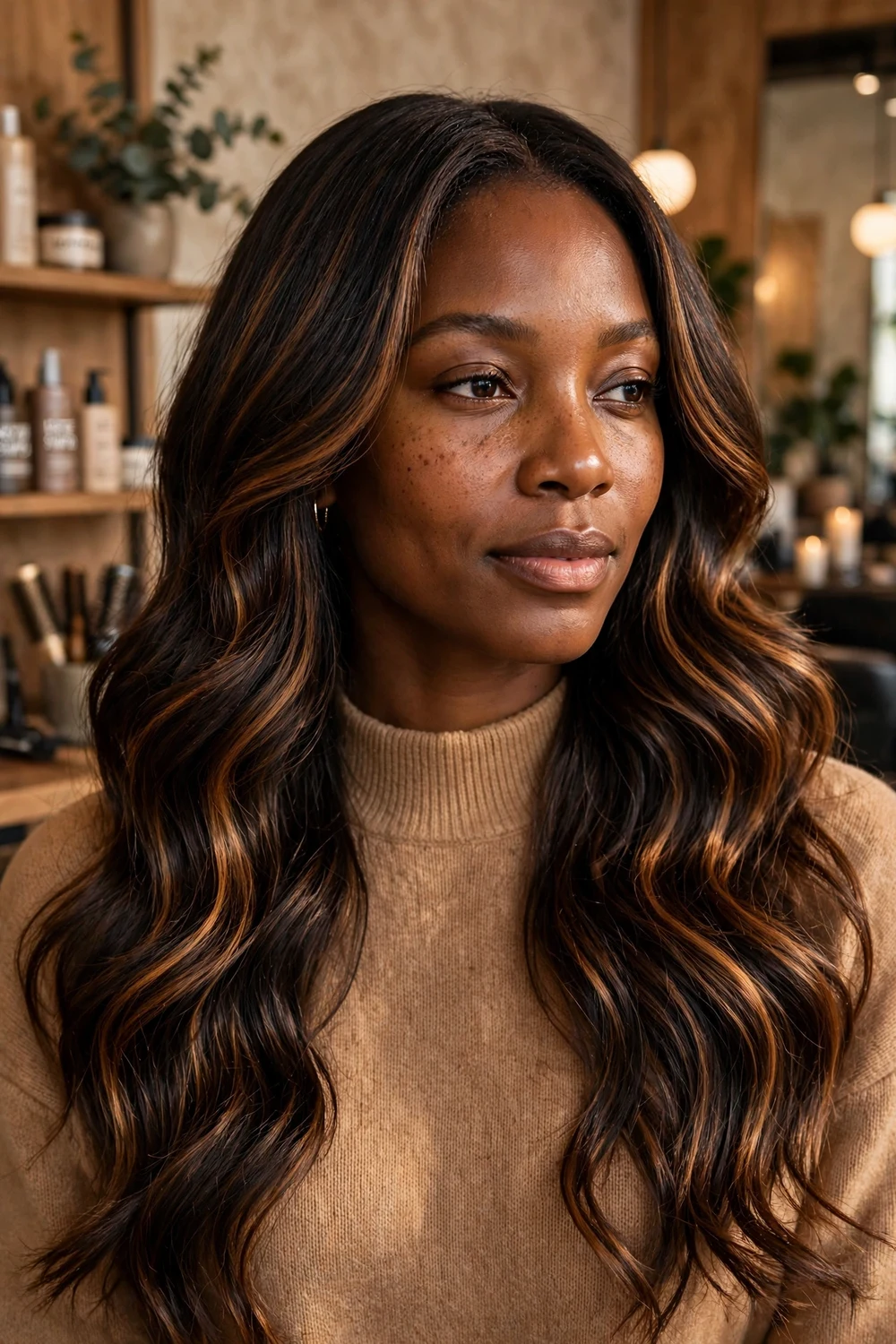
Caramel highlights are a step deeper and browner than honey, which makes them a good first highlight for Black women who want a visible change with a softer edge. They suit warm and neutral undertones and blend smoothly into chocolate and mocha bases.
Caramel needs less lift than honey, so the lightening step is usually milder and the hair keeps more of its strength. The grow-out is forgiving, and a gloss at eight weeks is often the only upkeep between highlight appointments.
Try this: Pair caramel highlights with a dark root smudge at the same visit. The smudge blurs new growth and can add a month to the style.
Difficulty: Medium to High · Cost: $$ (salon)
17. Golden Blonde
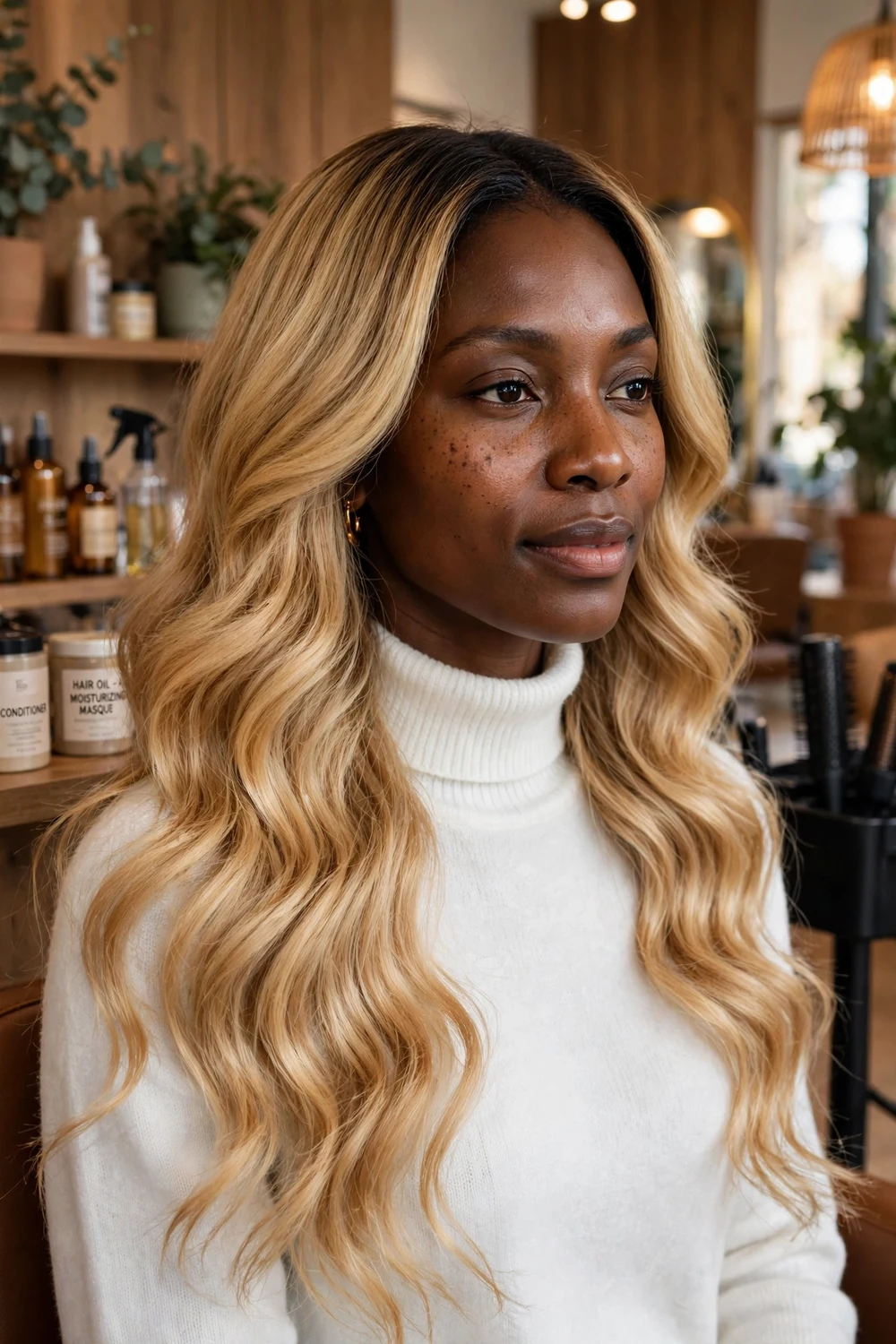
Golden blonde is a full warm blonde with gold as the lead tone, worn here with a deeper root for contrast against deep skin. Warm and golden undertones carry it best. It is a strong fall option in wigs and weaves, where the blonde arrives with no lightening of your own hair.
On natural hair this shade needs full pre-lightening, often in more than one session for black hair, plus toning to keep the gold clean. That is the highest upkeep route on this list, with root and toner visits every four to six weeks.
Try this: Stage it: go honey first, then golden blonde at the next appointment if your hair still feels strong. Two smaller lifts are kinder than one long session.
Difficulty: High · Cost: $$$ (salon)
18. Sun-Kissed Balayage
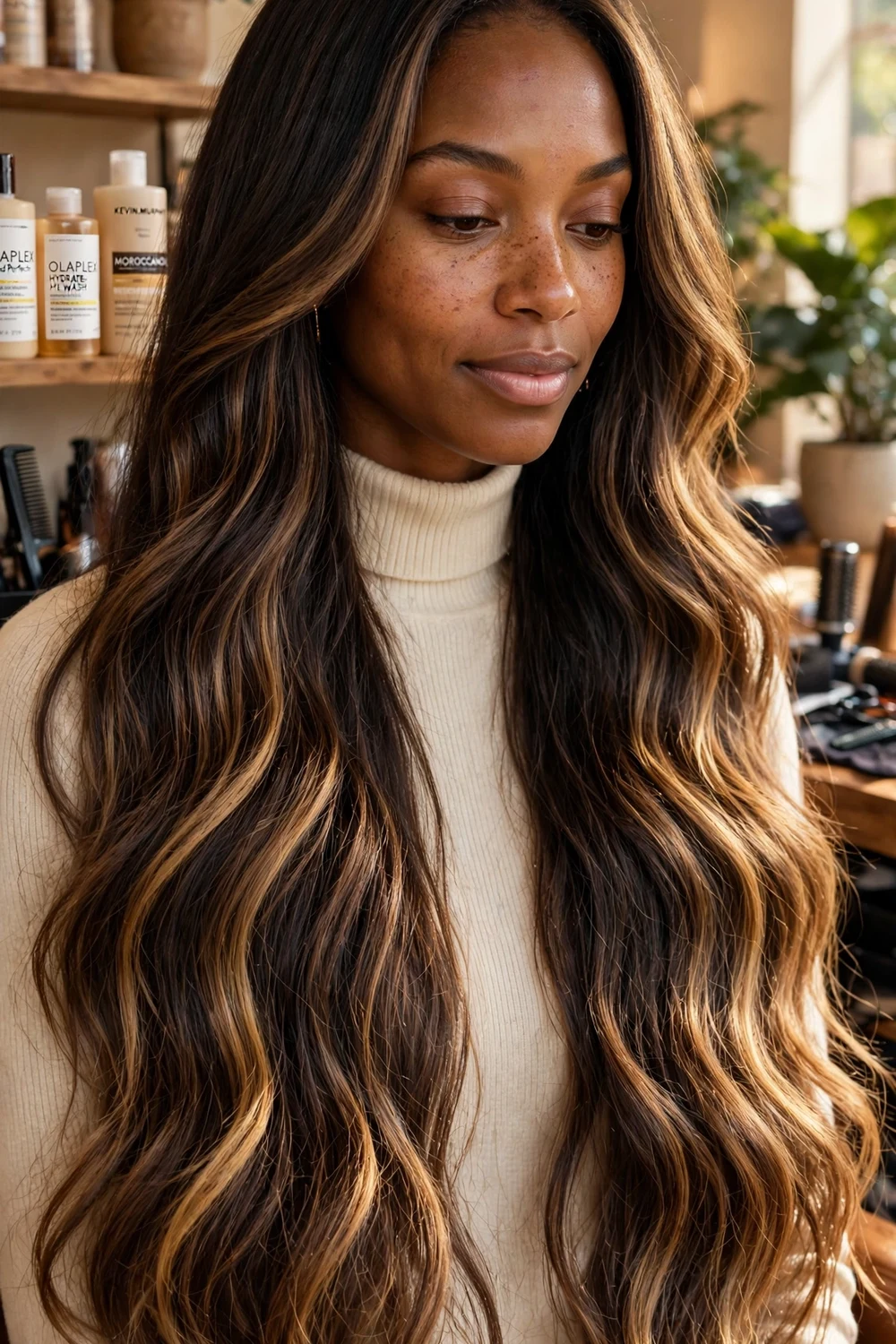
Sun-kissed balayage paints light brown and gold through the mid-lengths and ends, leaving the root dark. The lived-in blend suits brown and deep skin across undertone groups and works on natural curls, relaxed hair, and silk presses.
Balayage sections are lightened by hand, and the soft placement means no hard regrowth line. Most wearers go ten to twelve weeks between appointments, with a gloss in the middle if the ends start to look dull.
Try this: Ask for the lightest pieces to start lower on the head if your hair grows fast. A lower start point buys extra weeks before a refresh.
Difficulty: Medium to High · Cost: $$ (salon)
19. Icy Blonde
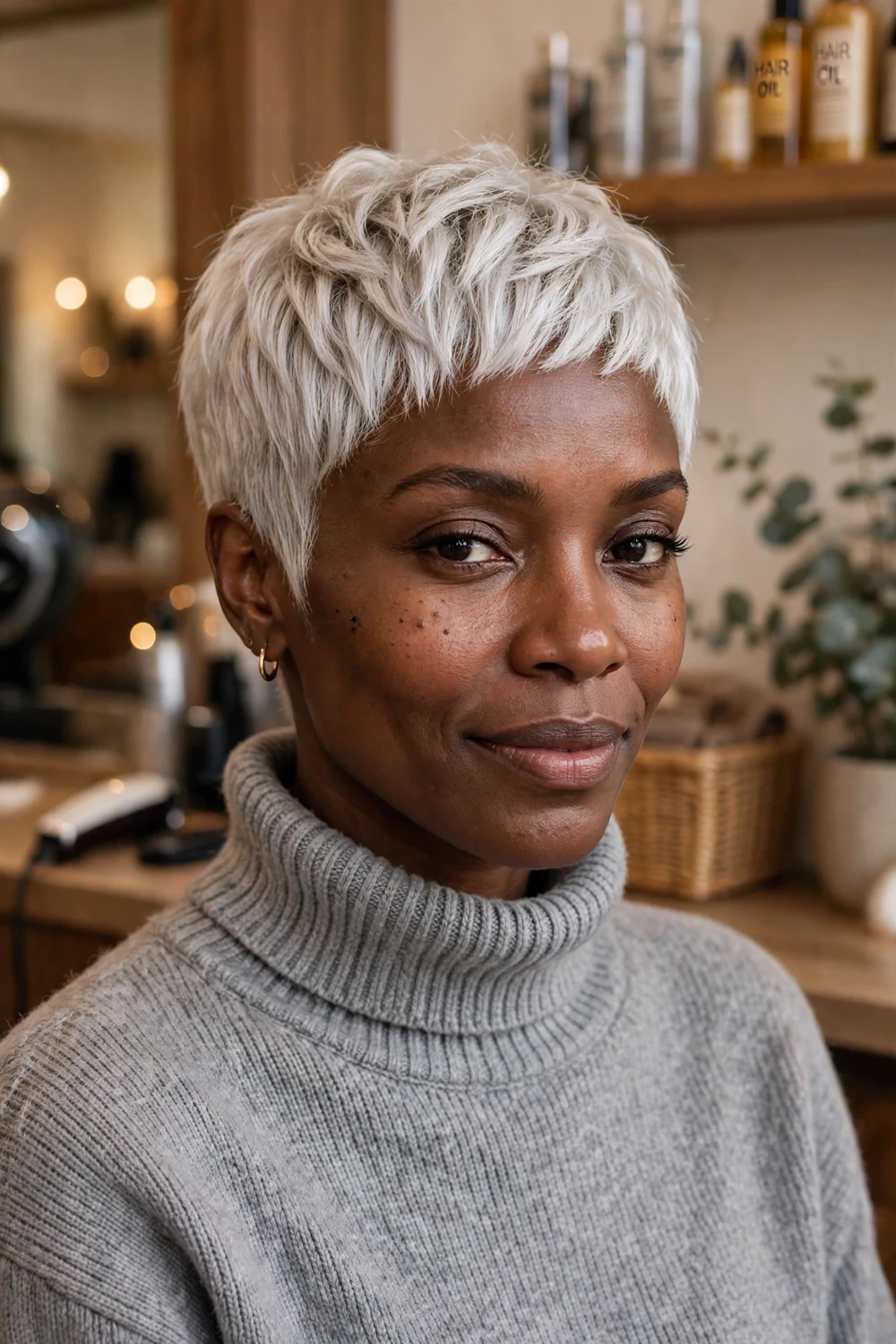
Icy blonde is a near white platinum with a cool cast, and the contrast against deep skin is the whole point of the shade. Short cuts wear it best for fall, because a pixie or tapered cut keeps the lightened hair in good condition and the roots easy to manage.
Icy blonde on black hair needs full bleaching, often in stages, and a toner to remove yellow. It is high upkeep: purple shampoo weekly, root touch-ups every four to five weeks, and regular protein and moisture treatments to protect the cut.
Try this: Keep the cut short for your first round of platinum. Short hair removes damaged ends as it grows, so the color stays healthy looking.
Difficulty: High · Cost: $$$ (salon)
20. Ruby Red
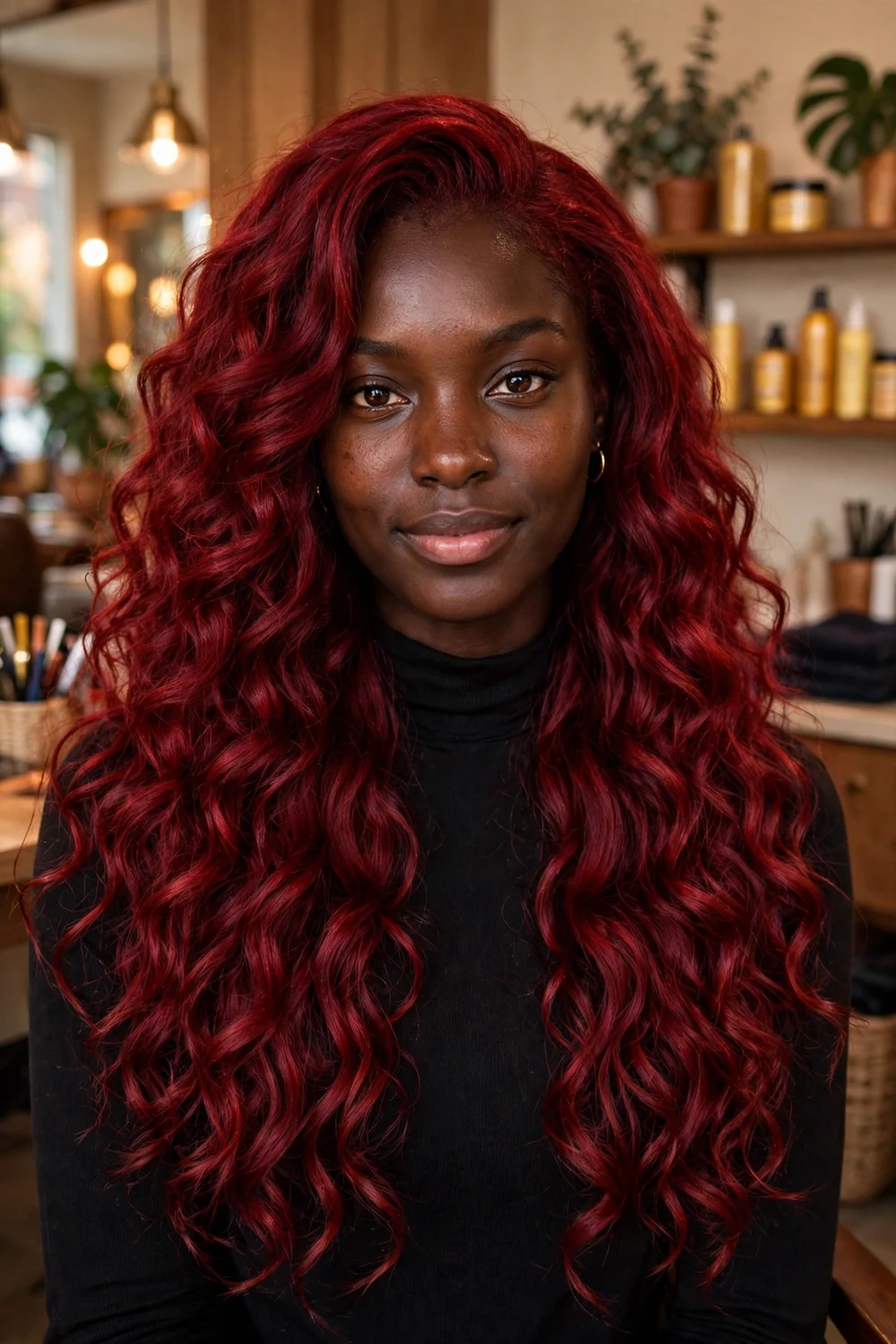
Ruby red is a saturated jewel red, brighter and clearer than burgundy, with a blue-red base that suits deep skin with cool and neutral undertones. It reads as a fashion color while staying inside the red family that fall wardrobes already use.
A true ruby needs a lightened base on black hair, so the color can sit clear rather than muddy. The shade fades toward pink-red, and a red color-depositing mask once a week slows that shift between salon visits.
Try this: Try ruby in clip-ins or a wig for a weekend before booking bleach. Jewel reds are a big change, and a trial run settles the shade choice.
Difficulty: High · Cost: $$$ (salon)
21. Plum Purple
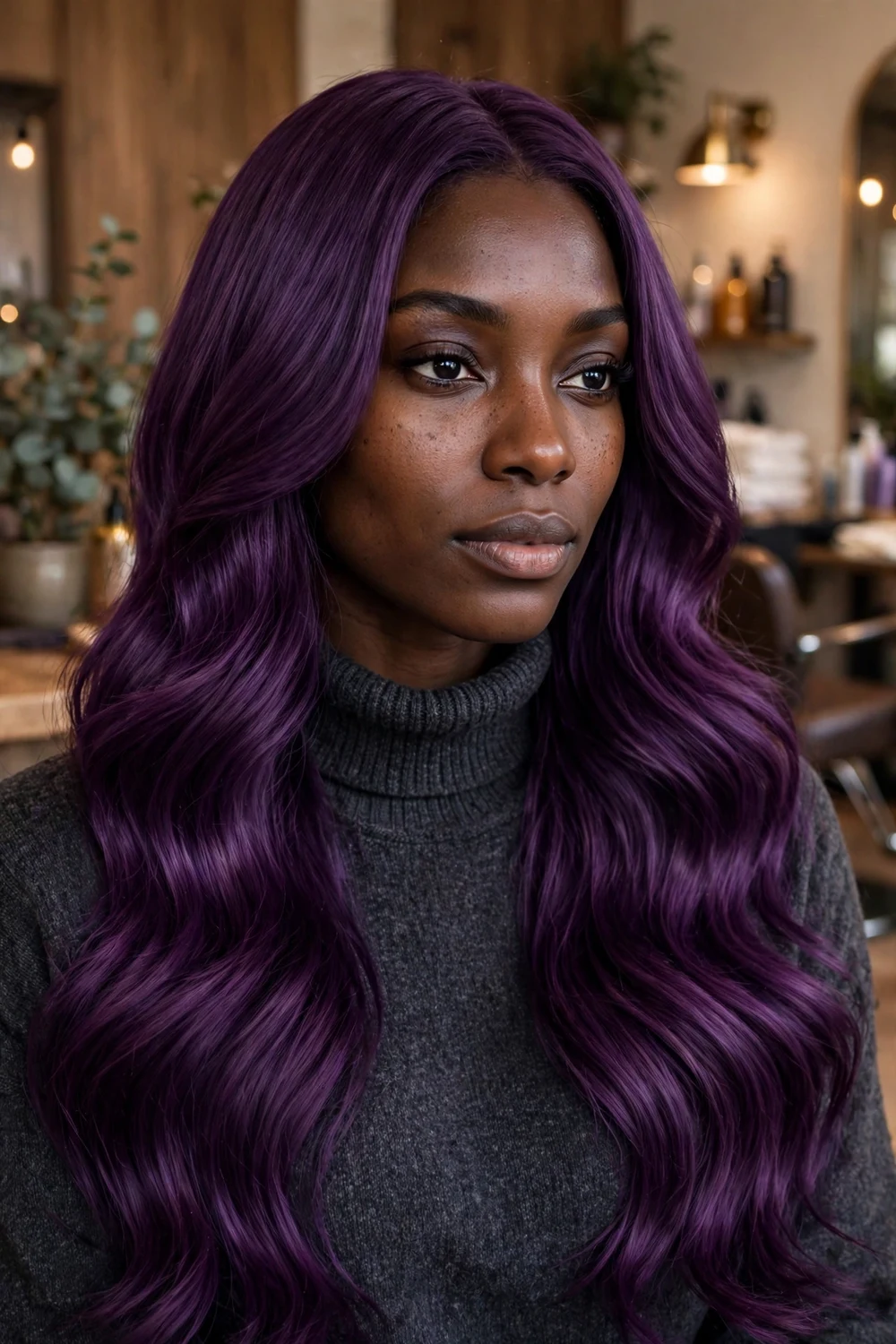
Plum is a deep purple with red in its base, which is why it settles so well on deep skin with cool and neutral undertones. It offers a jewel tone at a depth that still works for office settings, especially on straight and wavy styles.
Plum can be layered over a lightly lifted base for the clearest result, though deep versions deposit over dark hair with a violet cast in sunlight. Purple tones fade toward burgundy, so cool water and fewer washes matter here.
Try this: Ask for plum with a darker root if you wear your hair in protective styles between color visits. The root area stays your natural shade under braids.
Difficulty: Medium to High · Cost: $$ (salon)
22. Emerald Green
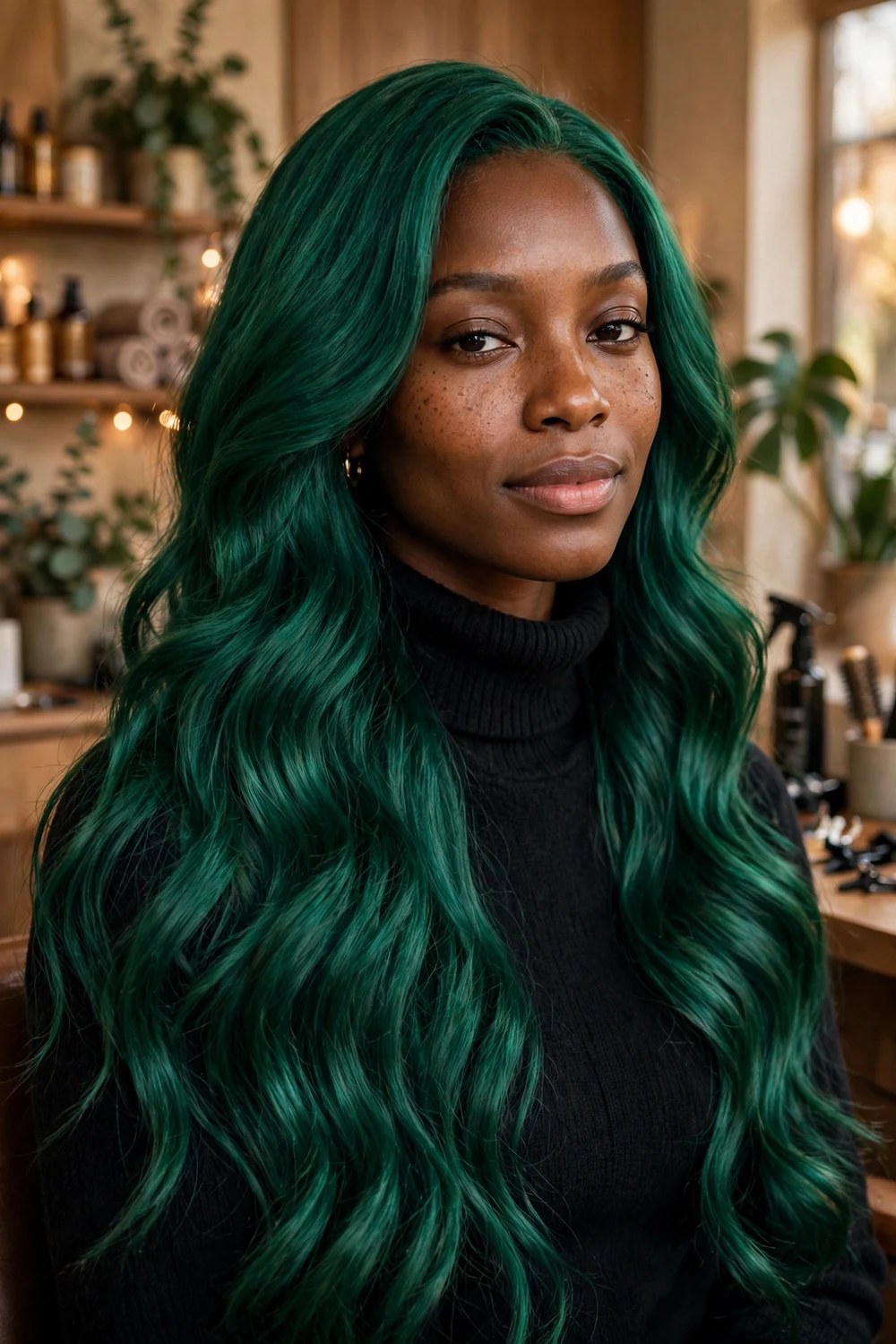
Emerald green is a deep jewel green that holds its own against deep and brown skin without going neon. It suits cool and neutral undertones, and it is a bold fall pick that pairs well with the black, cream, and burgundy clothes many people wear in the season.
Emerald needs a lightened base to show green rather than a dark swamp tone, and the base should be lifted evenly or the green will patch. Green pigments can linger, so treat this as a shade you will wear for a while.
Try this: Put emerald in a wig or on the ends only if you are unsure. Ends can be trimmed away, while a full head of green is a longer commitment.
Difficulty: High · Cost: $$$ (salon)
23. Fuchsia Pink
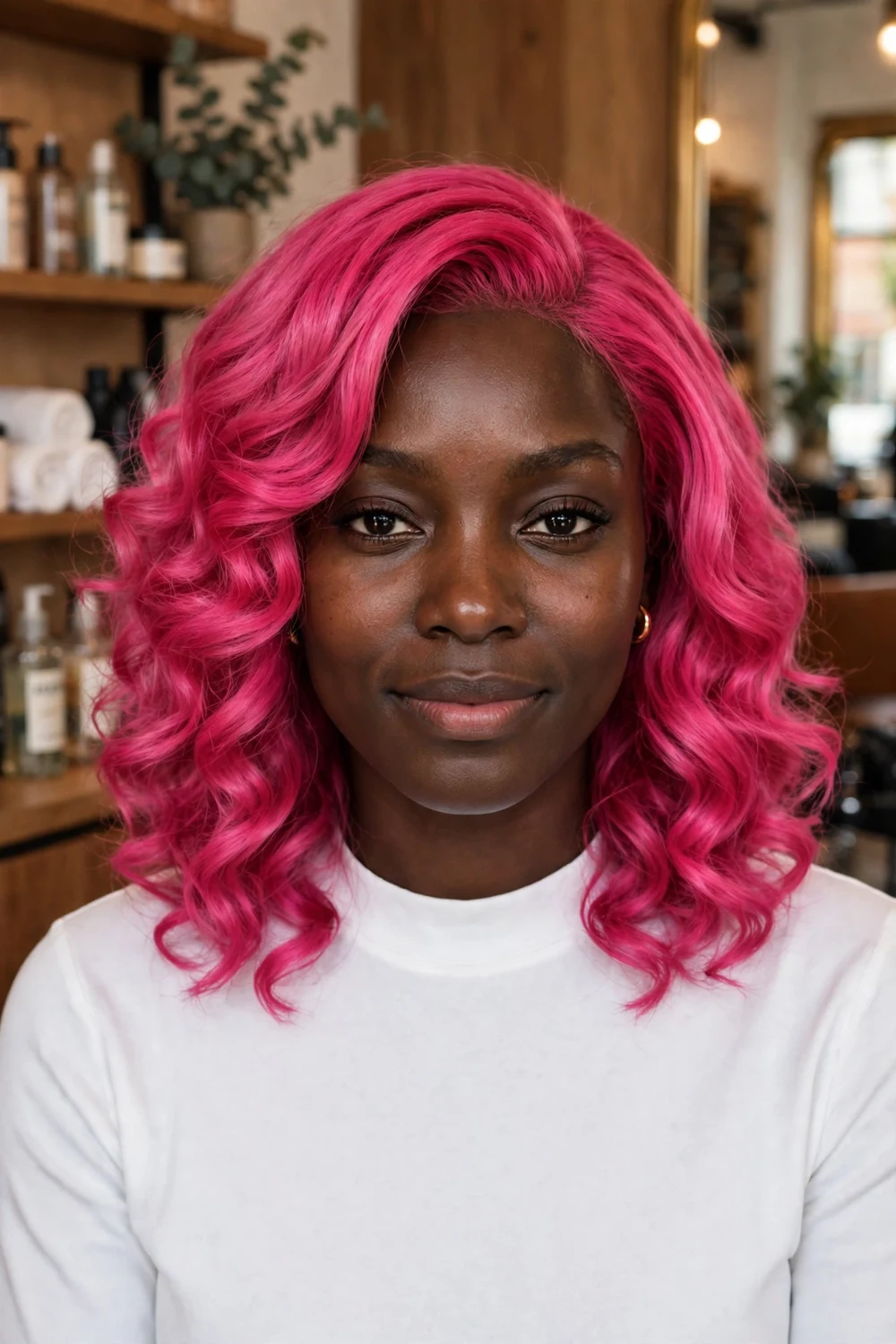
Fuchsia is a bright blue-pink that stands out sharply against deep skin. It is the boldest pink on this list, and shorter lengths, curls, and tapered cuts show the color with the least fading surface. Cool and neutral undertones tend to wear it most easily.
Fuchsia needs a light, even base, so black hair goes through bleaching and toning before the pink goes on. Pink fades with every wash, and a pink color-depositing conditioner is close to required kit for this shade.
Try this: Ask for the fuchsia mixed a touch deeper than your target. The first two washes pull it back to the exact tone most people want.
Difficulty: High · Cost: $$$ (salon)
24. Pastel Pink
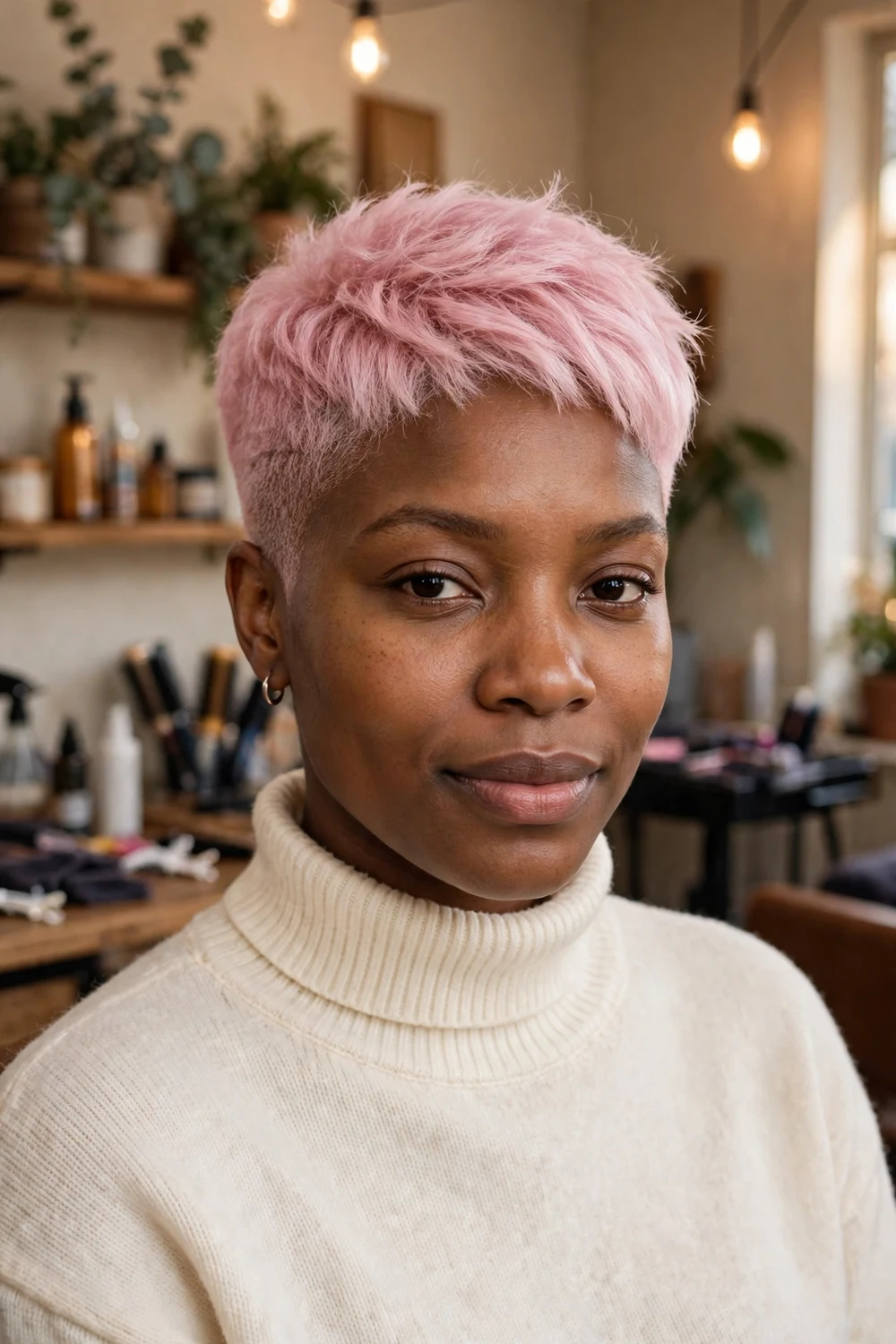
Pastel pink is fuchsia softened to a pale wash of color. On a short cut or a tapered fade it looks clean and deliberate, and the soft tone lets deep skin stay the focus. It suits cool and neutral undertones best.
Pastel shades need the lightest base of any color here, which means careful bleaching and a very even lift. The color itself fades in a few weeks, but it fades softly back toward blonde, so many wearers let it run its course and re-tone later.
Try this: Start pastel pink on a short cut, where regrowth and re-toning are quick. Long pastel hair asks for far more bleach and far more upkeep.
Difficulty: High · Cost: $$$ (salon)
25. Gray Blending with Steel Highlights
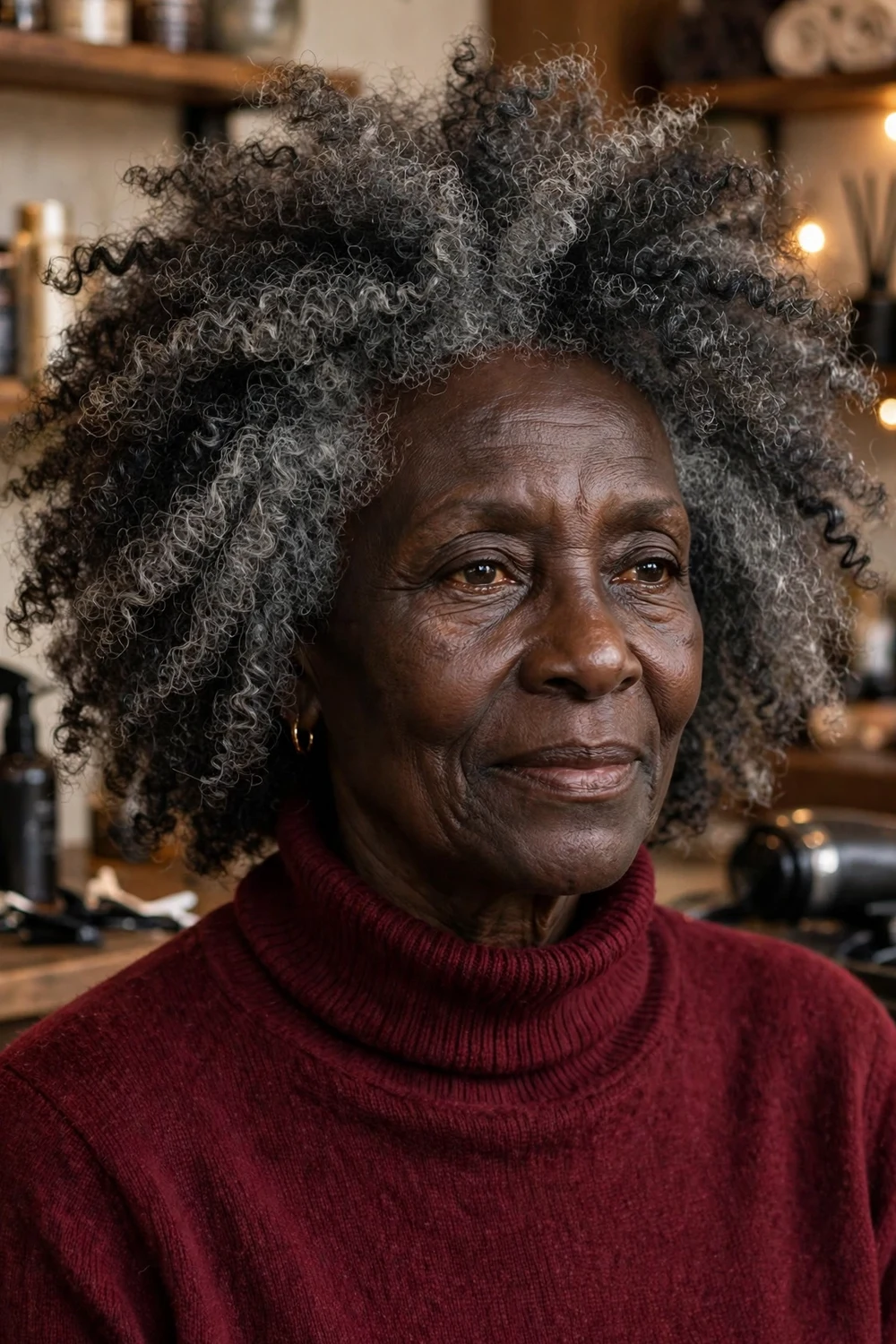
Gray blending works with natural gray rather than covering it, mixing steel and dark gray highlights into a black and gray base. On natural curls the blend reads as a full silver pattern, and it suits deep skin across undertone groups.
Blending uses lowlights and highlights placed where your gray actually grows, so appointments are spaced out and the grow-out has no hard line. Many wearers refresh the steel tone with a silver gloss every eight to ten weeks.
Try this: Bring a photo of your gray pattern, taken in daylight, to the consultation. Blending works when the placed color follows your real pattern.
Difficulty: Low to Medium · Cost: $$ (salon)
26. Copper Braids

Copper braids bring fall color in through the braiding hair, mixing copper, ginger, and a little gold across long box braids or knotless braids. Your natural hair stays undyed under the style, which makes this the lowest risk route to a bold fall shade on this list.
There is no bleach and no dye on your own hair, so upkeep is braid care: cleanse the scalp, keep the braids moisturized, and protect them at night. The color leaves when the braids come out, usually at six to eight weeks.
Try this: Mix three packs in copper, ginger, and dark brown rather than one flat color. The mix reads like real multi-tone hair in photos and in person.
Difficulty: Low · Cost: $ (salon)
27. Toasted Chestnut Ombre

Toasted chestnut ombre keeps dark brown roots and melts them into warm chestnut, then lighter caramel at the ends. The gradient suits warm and neutral undertones on brown and deep skin, and it shows best on longer silk-pressed or wavy hair where the fade has room to run.
The ends are lightened while the roots stay natural, so there is no root line to chase. The lightened ends need the most care: trim them on schedule and use a bond or protein treatment monthly, since ends carry both age and bleach.
Try this: Ask for the lightest caramel kept to the last few inches. Keeping the blend mostly chestnut makes the ombre read warm and fall-ready for longer.
Difficulty: Medium to High · Cost: $$ (salon)
Frequently Asked Questions
Do fall hair colors for Black women need bleach?
Only the lighter and brighter shades do. Espresso, chocolate, mahogany, jet black, and deep burgundy can go over natural black hair with little or no lightening. Honey, golden blonde, icy blonde, jewel tones, and pastels need pre-lightening so the color shows clearly. Braids, wigs, and weaves offer every shade on this list with no bleach on your own hair.
Which fall shades suit cool undertones on deep skin?
Ash brown, jet black with a blue tint, plum, deep cherry, and merlot are the strongest matches for cool and olive undertones on deep skin. These shades keep red and gold low, so they sit cleanly against pink, blue, and olive tones in the skin. Ruby red also works, since its base leans blue-red.
How can I try a bold fall color without dyeing my natural hair?
Use a route that carries the color for you. Copper braids bring the shade in through braiding hair, a wig or sew-in weave can carry burgundy, copper, or blonde, and clip-ins add smaller pieces of a bold shade. Your natural hair stays undyed under each option, and the color ends when the style comes out.
How often does fall color need refreshing on natural hair?
Red and copper shades start to fade at four to six weeks and usually need a gloss at that point. All-over browns and blacks hold for six to eight weeks before a gloss or root refresh. Highlights, balayage, and ombre placements grow out softly and can go eight to twelve weeks between appointments.
How do I keep colored natural hair moisturized in fall?
Wash with a sulfate-free, color-safe shampoo and cool or lukewarm water, and deep condition weekly while the weather turns drier. Keep heat styling low in the first two weeks after color, moisturize coils and curls between washes, and cover hair at night with satin or silk. Dry hair fades color faster, so moisture care is also color care.
Final Thoughts
Pick your fall shade in this order: undertone first, then how much lift your hair can handle, then the upkeep you will keep up with through the season. A chocolate, espresso, or burgundy will carry most Black women through fall with very little salon time, while honey placements, copper, and the jewel shades reward the extra appointments they ask for. And when you want the color with no commitment at all, braids and wigs deliver the same shades on your schedule. When winter arrives, the deeper end of this list carries straight over, and the winter hair color ideas roundup picks up from there.

