


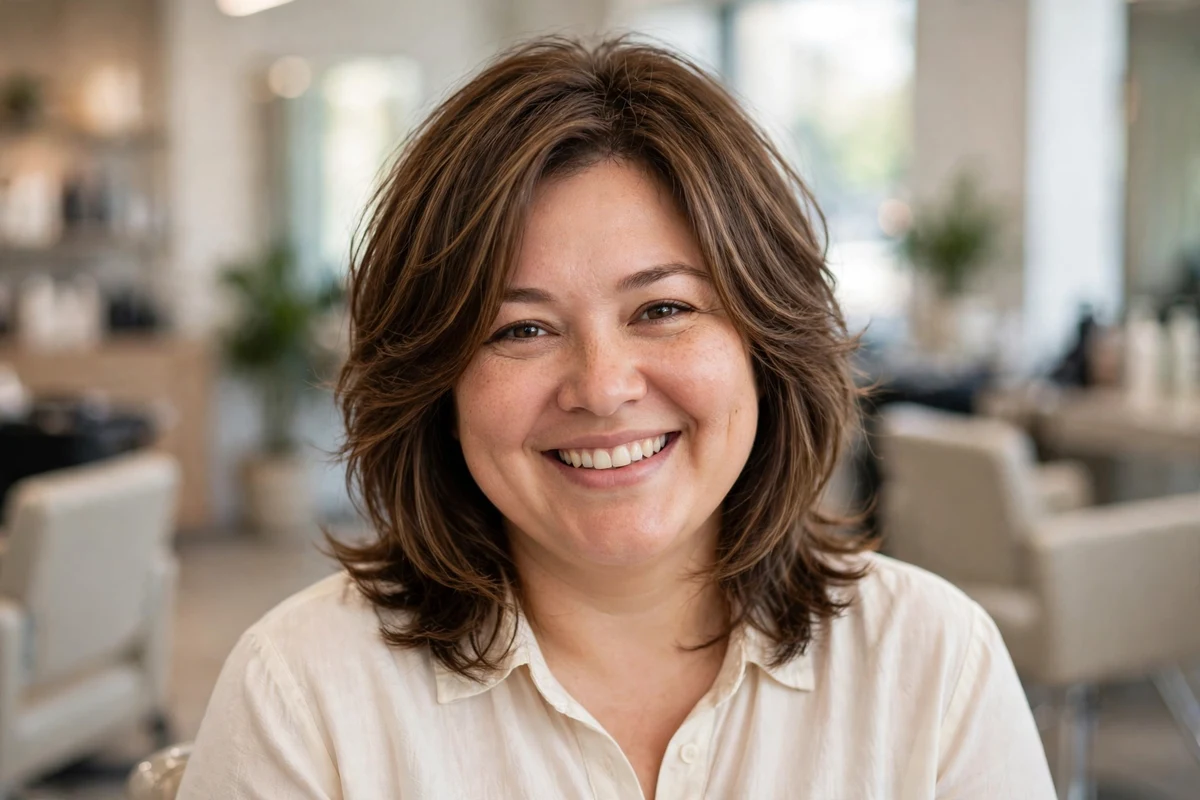
The most flattering medium hairstyles for fat faces all do the same three things: they build vertical lines, keep width away from the widest part of the cheeks, and frame the face with soft movement. A collarbone-grazing lob with a deep side part, long face-framing layers, or curtain bangs will do more for balance than any contouring trick. Below are 20 medium-length cuts built on those principles, each with honest styling notes.
Quick Takeaways
- Length matters most. Hair that ends at or below the collarbone draws the eye downward and lengthens a fuller face.
- Side parts beat center parts for asymmetry, but a sleek center part works when the lengths are long enough.
- Keep volume below the cheekbones. Fullness at the ends slims; fullness at the cheeks widens.
- Side-swept and curtain bangs flatter; heavy blunt bangs cut straight across tend to widen.
- Face-framing layers starting at the chin are the single most reliable slimming detail.
1. Classic Lob with a Deep Side Part
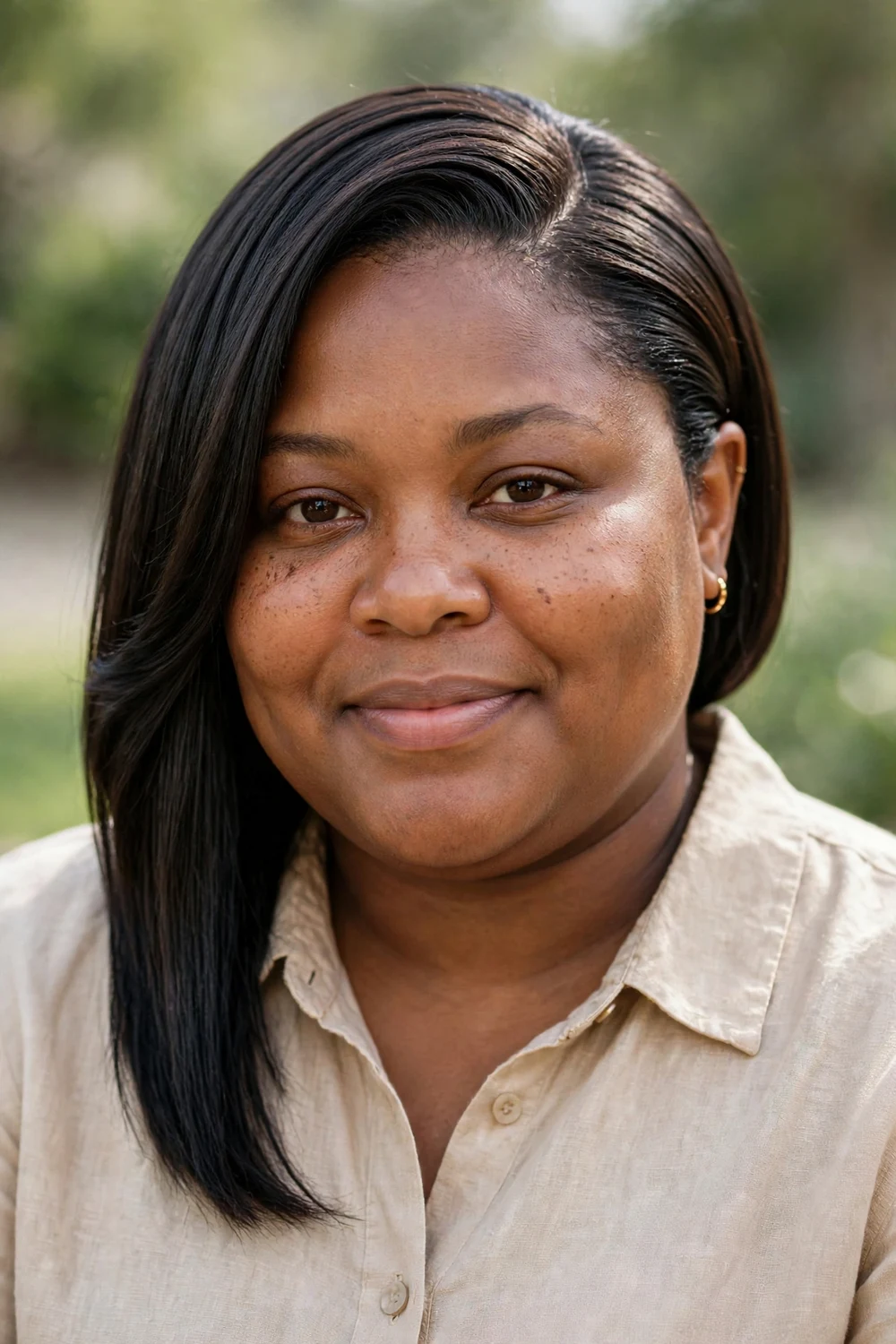
The lob is the workhorse of medium hairstyles for fat faces. Cut to graze the collarbone with a deep side part, it creates one long diagonal line across the face that breaks up width instantly. Keep the ends blunt or lightly textured; both work as long as the front pieces fall past the chin.
Ask your stylist to keep the part at least two inches off-center. A shallow side part does almost nothing, while a deep one shifts the whole balance of the cut. This style air-dries well on straight to wavy hair and needs a trim every 8 to 10 weeks to hold the line.
Try this: Tuck the shorter side behind your ear to exaggerate the asymmetry on days you want extra definition.
Difficulty: Easy · Cost: $45–$75 cut
2. Face-Framing Layered Midi Cut
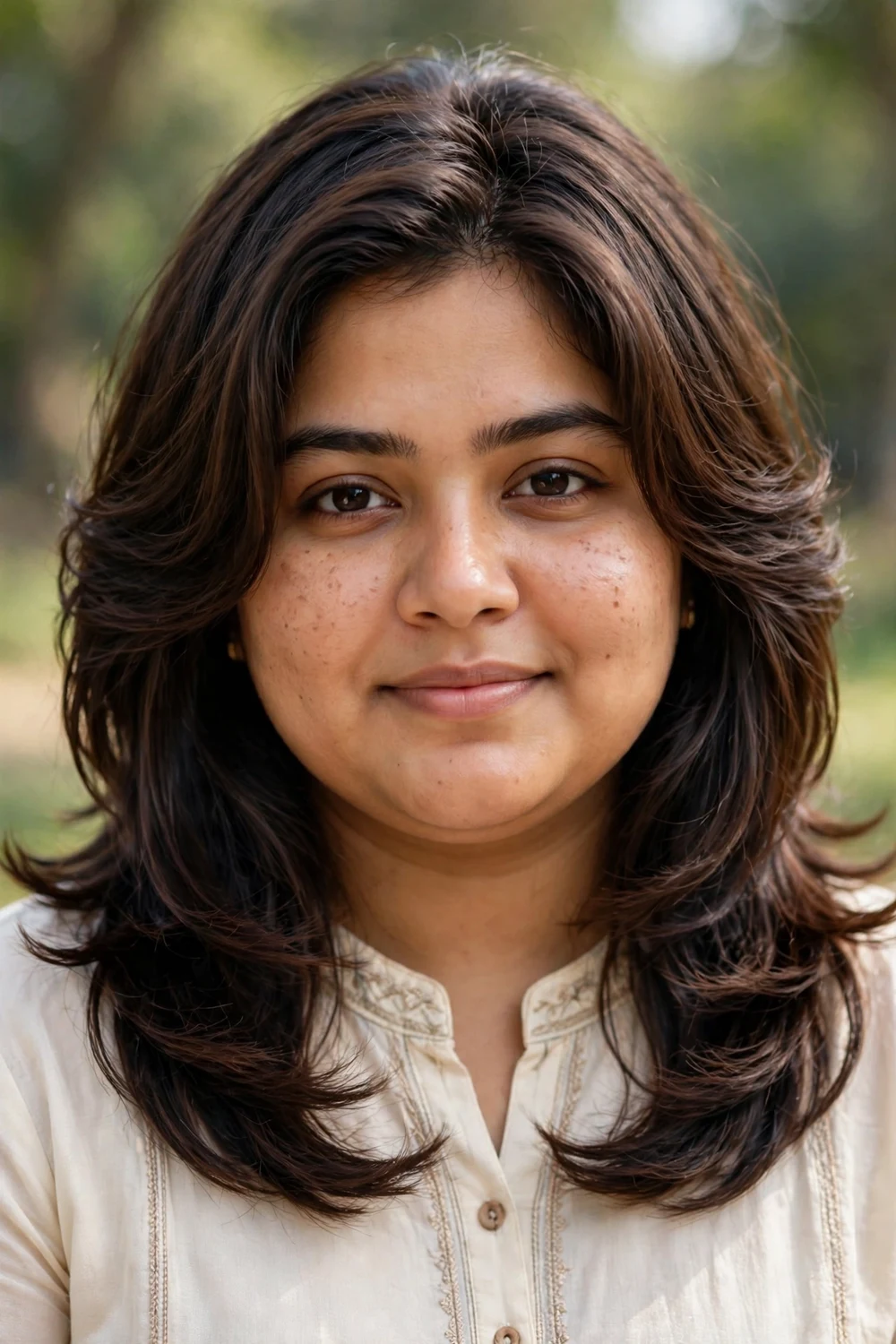
If you pick one detail from this whole list, make it face-framing layers that start at the chin and fall past the shoulders. These two front sections act like curtains that narrow the visual width of the cheeks. The rest of the cut can stay fairly simple, which keeps grow-out graceful.
The layers should be long and blended, not choppy. Short, chunky layers around the cheeks add width exactly where you don’t want it. A round brush and five minutes give these layers their bend; on wavy hair they fall into place with just a leave-in cream.
Try this: Blow-dry the front sections forward and under with a medium round brush for a soft inward curve.
Difficulty: Easy · Cost: $50–$80 cut
3. Curtain Bangs with a Collarbone Cut
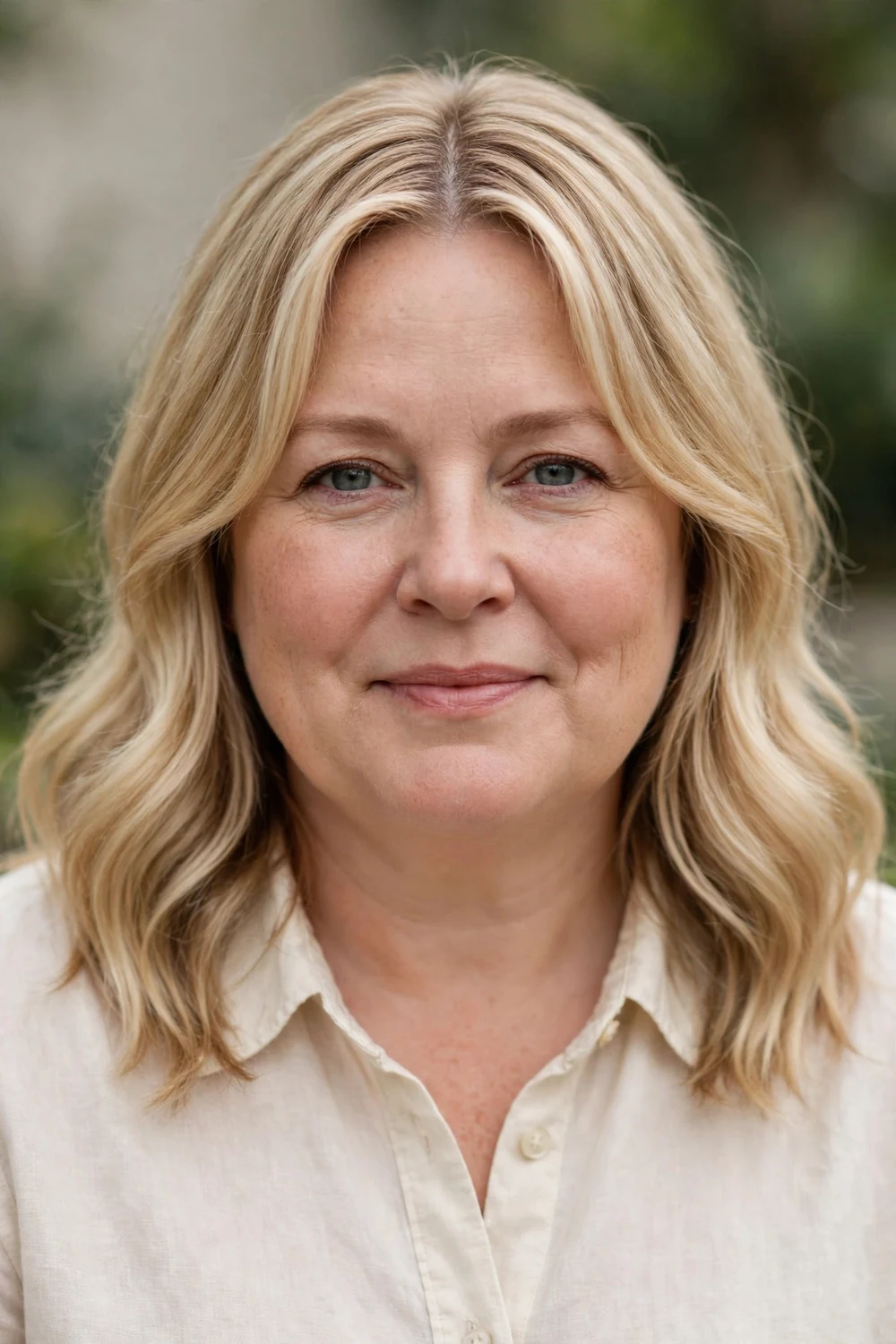
Curtain bangs are the rare fringe that flatters fuller faces. Parted down the middle and swept to each side, they draw attention up to the eyes and cheekbones while the longer pieces melt into the rest of the cut. Paired with a collarbone length, the whole shape stays long and lean.
Keep the shortest bang pieces at cheekbone level or below so they don’t visually widen the face. Style them with a quick pass of a flat iron bending outward, or let them air-dry with a dab of styling cream for a softer finish. Trims every 4 to 6 weeks keep them from going shaggy.
Try this: Use a Velcro roller on each bang section for 10 minutes while you do makeup; the bend lasts all day.
Difficulty: Easy · Cost: $50–$85 cut
4. Side-Swept Bangs with Shoulder-Length Layers
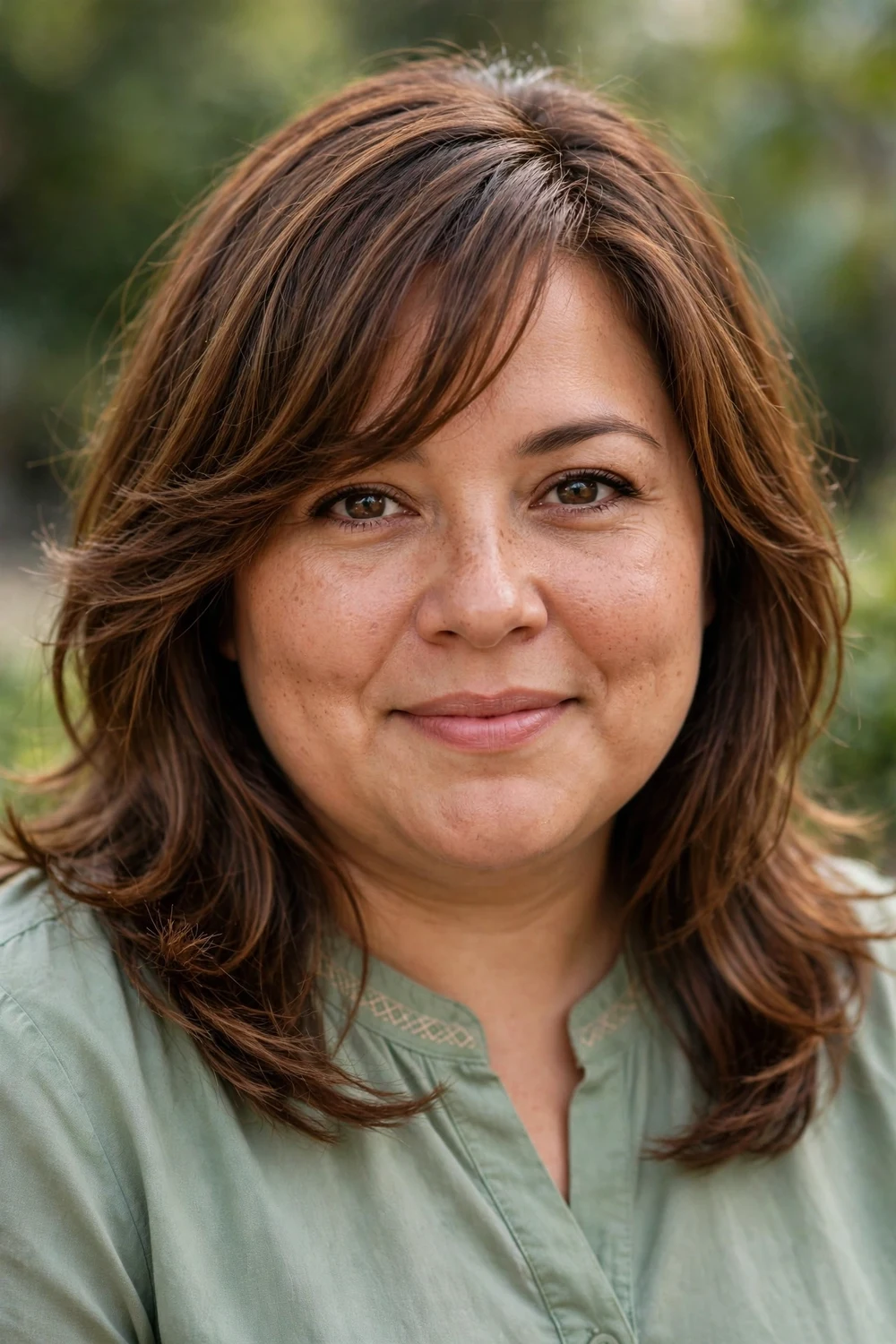
Side-swept bangs lay a diagonal line across the forehead, which is one of the fastest ways to interrupt the roundness of a fuller face. Combined with shoulder-length layers, you get movement at the ends without bulk at the sides. It’s a forgiving cut that suits straight, wavy, and loosely curly hair.
The bangs should be long enough to tuck behind the ear when you want them gone, roughly nose to lip length. Shorter baby side-sweeps can look choppy against a full face. Layers through the mid-lengths keep the ends from sitting in a heavy shelf.
Try this: Sweep the bangs to the opposite side of your natural part once a week to retrain flat roots.
Difficulty: Easy · Cost: $45–$75 cut
If you ever want to take these same slimming tricks shorter, these bob hairstyles for round faces keep the face-framing logic at chin length.
5. Asymmetrical Lob, Longer in Front
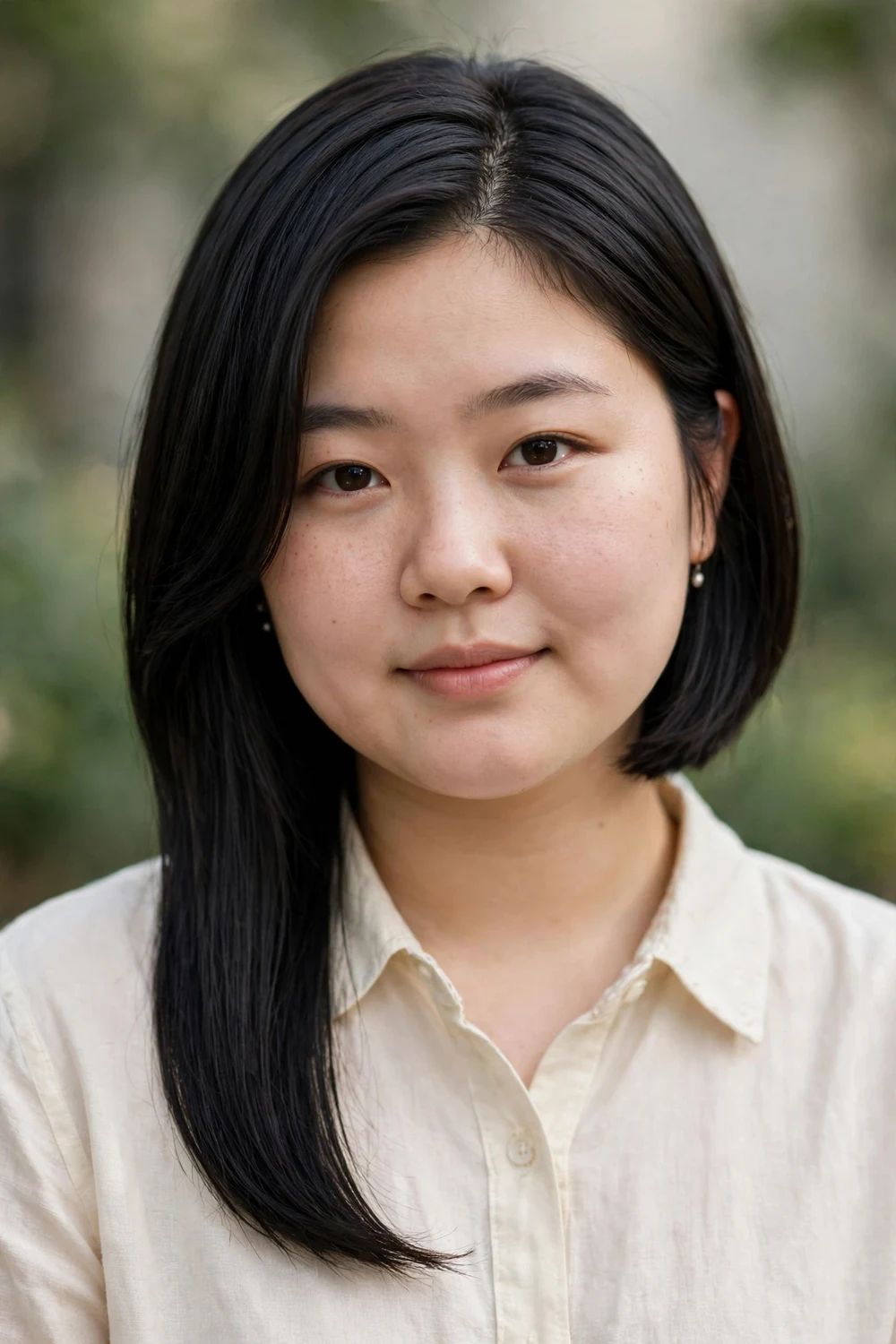
An asymmetrical lob keeps the back at jaw level and angles the front pieces down toward the collarbone. That forward slope pulls the eye down and in, which narrows the look of the cheeks more aggressively than a one-length cut. It’s a confident choice that still reads polished at the office.
The angle should be obvious but wearable, about one to two inches of difference front to back. Anything subtler just looks like an uneven cut. This style demands straight or straightened hair to show the line, so budget time for a flat iron if your texture is wavy.
Try this: Flat-iron the front pieces with a slight inward bend so they hug the jawline instead of flipping out.
Difficulty: Medium · Cost: $55–$90 cut
6. Long Layered Shag
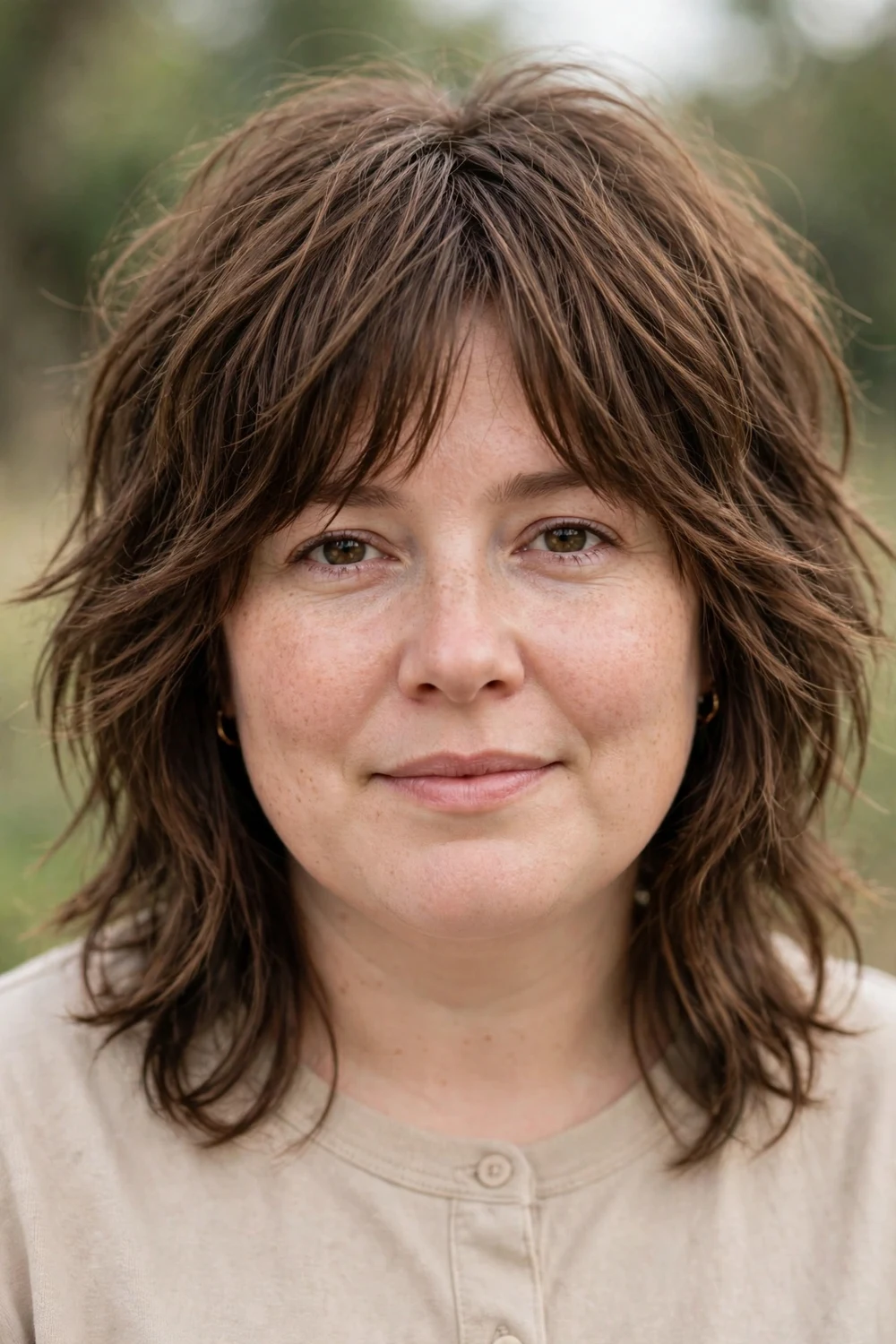
A shag works for fuller faces when the layers are kept long. Elongated, piecey layers through a medium length create vertical texture without the horizontal bulk that short shags can add at the cheeks. A curtain fringe ties the whole cut together and keeps the forehead from looking bare.
Ask for the shortest layers to start no higher than the chin. Tell your stylist you want texture, not volume at the sides. A texturizing spray scrunched into damp hair is enough styling; this cut is meant to look a little undone.
Try this: Flip your head upside down to diffuse; it builds root lift without widening the sides.
Difficulty: Easy · Cost: $55–$90 cut
7. Wispy Bangs with a Textured Midi Cut
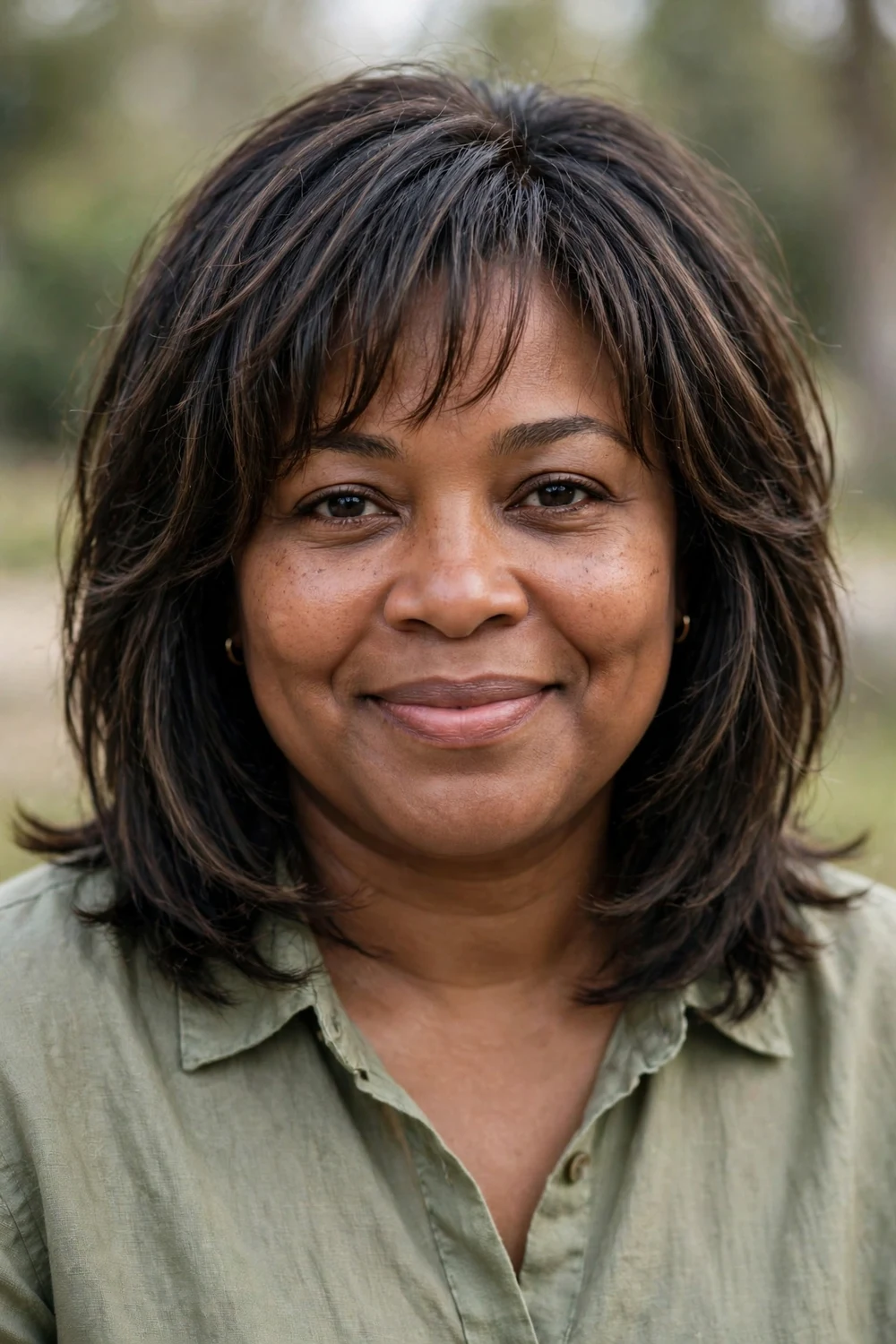
Wispy bangs give you the softness of a fringe without the solid horizontal line that makes blunt bangs risky on fuller faces. Their uneven, feathered edge lets forehead show through, so the face keeps its length. On a textured midi cut, they blend straight into the layers.
Keep them light; thick wispy bangs are just blunt bangs with better marketing. A tiny trim every three to four weeks keeps them out of your eyes. They style in seconds with fingers and a touch of paste, no heat required.
Try this: Twist small sections of the bangs while damp for a piecey, separated finish.
Difficulty: Easy · Cost: $45–$75 cut
8. Sleek Straight Collarbone Cut with Center Part
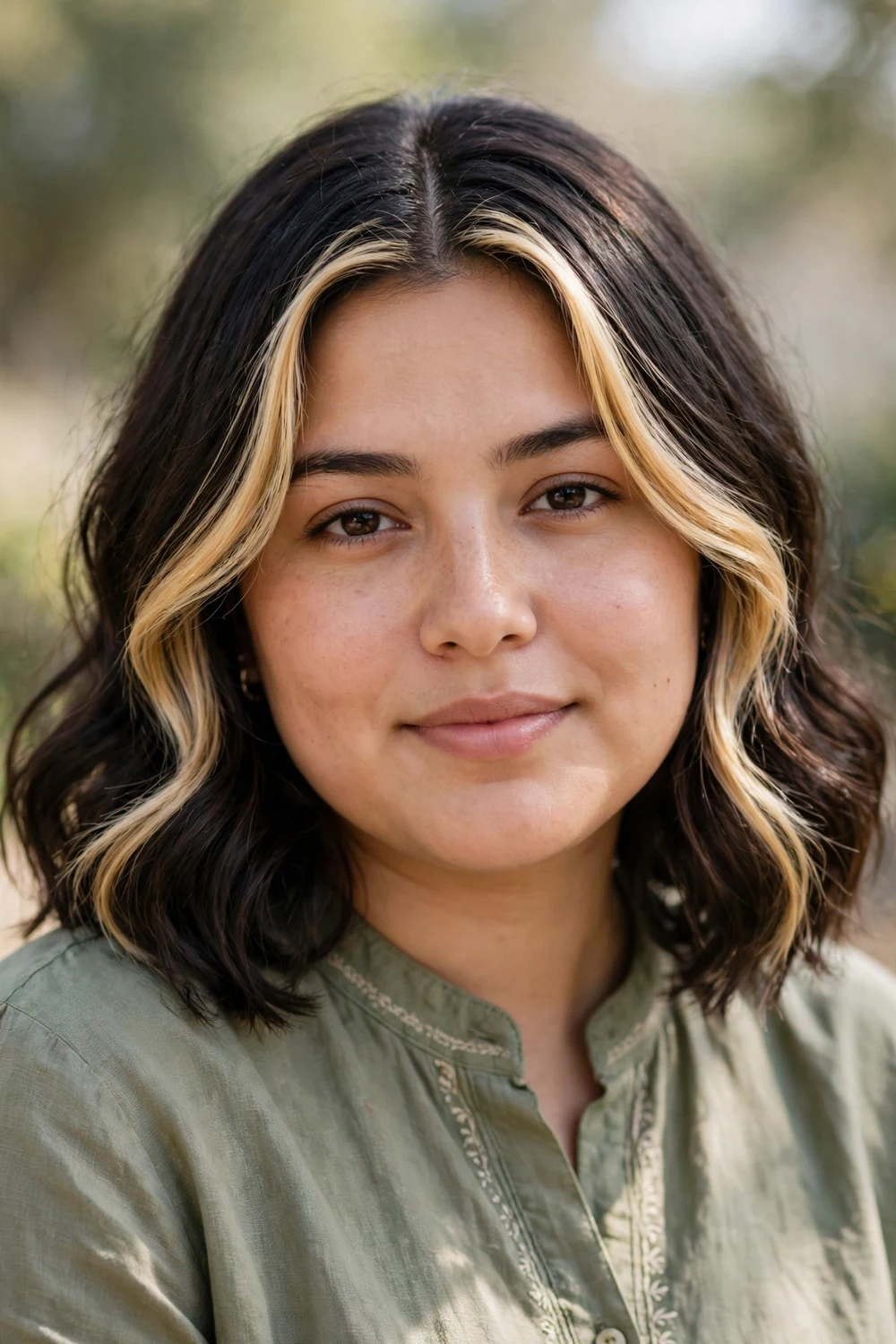
A center part gets a bad reputation for round faces, but the problem is short center-parted hair, not the part itself. When sleek hair falls past the collarbone on both sides, those two long panels narrow the face like drapes. The key is length and polish.
This cut needs healthy ends to look intentional, so regular trims matter more here than in layered styles. Use a heat protectant before flat-ironing, and finish with a light serum to keep flyaways from adding width at the sides. It suits fine to medium hair best.
Try this: Always apply heat protectant before flat-ironing; sleek styles show damage faster than textured ones.
Difficulty: Medium · Cost: $45–$70 cut
9. Soft C-Curl Lob
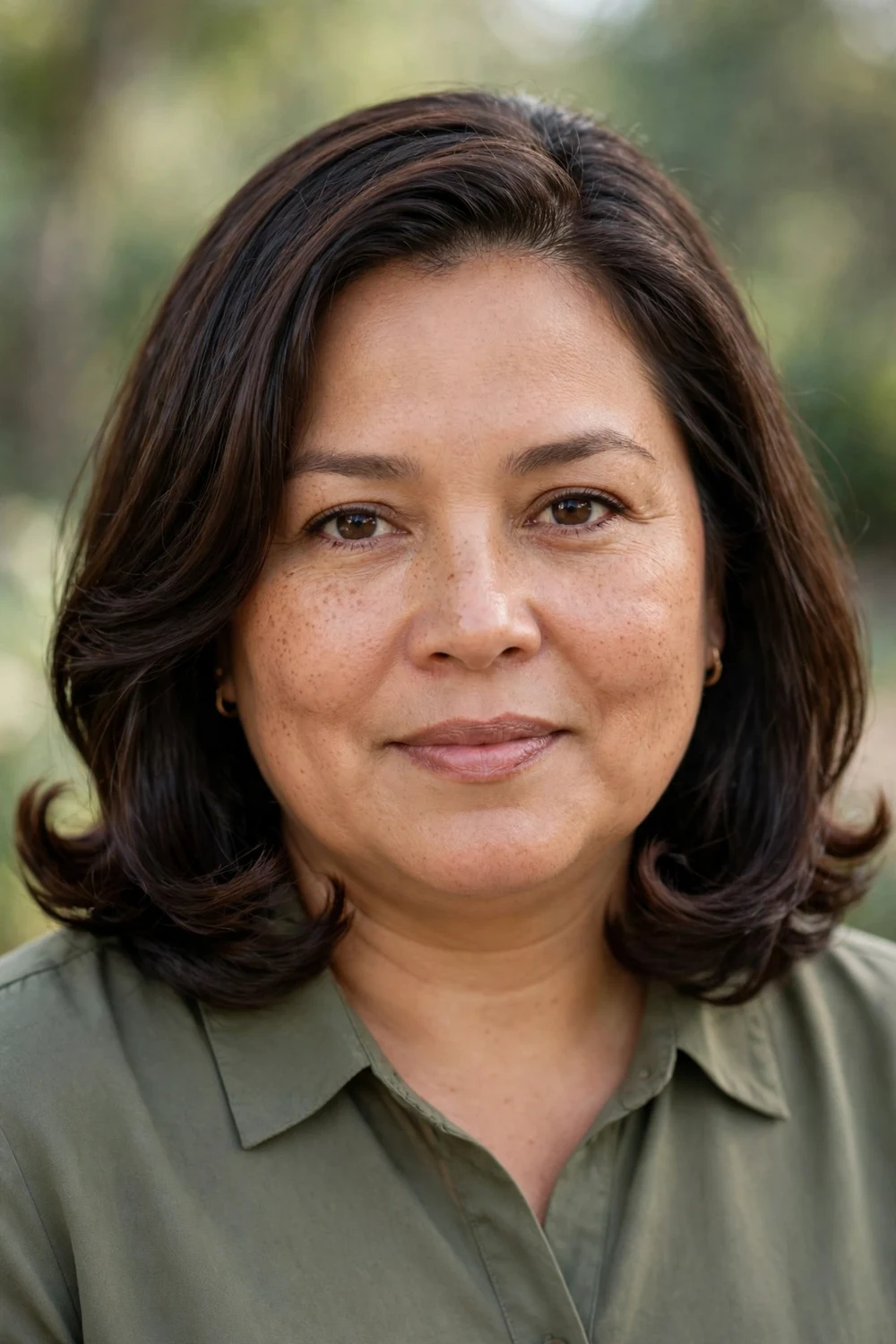
The C-curl lob bends the last two inches of hair inward in a soft C shape. That inward curve cups under the jawline and makes the lower face look more tapered. It’s subtle enough for conservative workplaces and takes ten minutes with a flat iron or a large round brush.
The curl should start below the chin. Curls that begin at cheek level add exactly the width you’re trying to avoid. One-length or lightly layered bases both work; the magic is all in the bend at the ends.
Try this: Curl the ends under with a 1.5-inch flat iron, then brush through once for a soft bend instead of a tight curl.
Difficulty: Easy · Cost: $45–$75 cut
For more mid-length ideas beyond face-flattering shapes, browse hairstyles for medium length hair for everyday styling variety.
10. Voluminous Blowout Midi with Volume Below the Cheeks

Volume isn’t the enemy of a fuller face; volume in the wrong place is. A bouncy blowout that keeps the roots smooth and builds fullness from the chin down lengthens the whole silhouette. The eye follows the body of the hair downward instead of stopping at the cheeks.
Use a large round brush and direct the airflow down the hair shaft for smoothness at the top. This style lasts two to three days with dry shampoo at the roots. It’s higher maintenance than air-dried cuts, but the payoff in photos is real.
Try this: Apply heat protectant before blow-drying; big blowouts mean sustained heat on the ends.
Difficulty: Medium · Cost: $50–$80 cut; $40–$60 salon blowout
11. Piecey Layers with Face-Framing Highlights
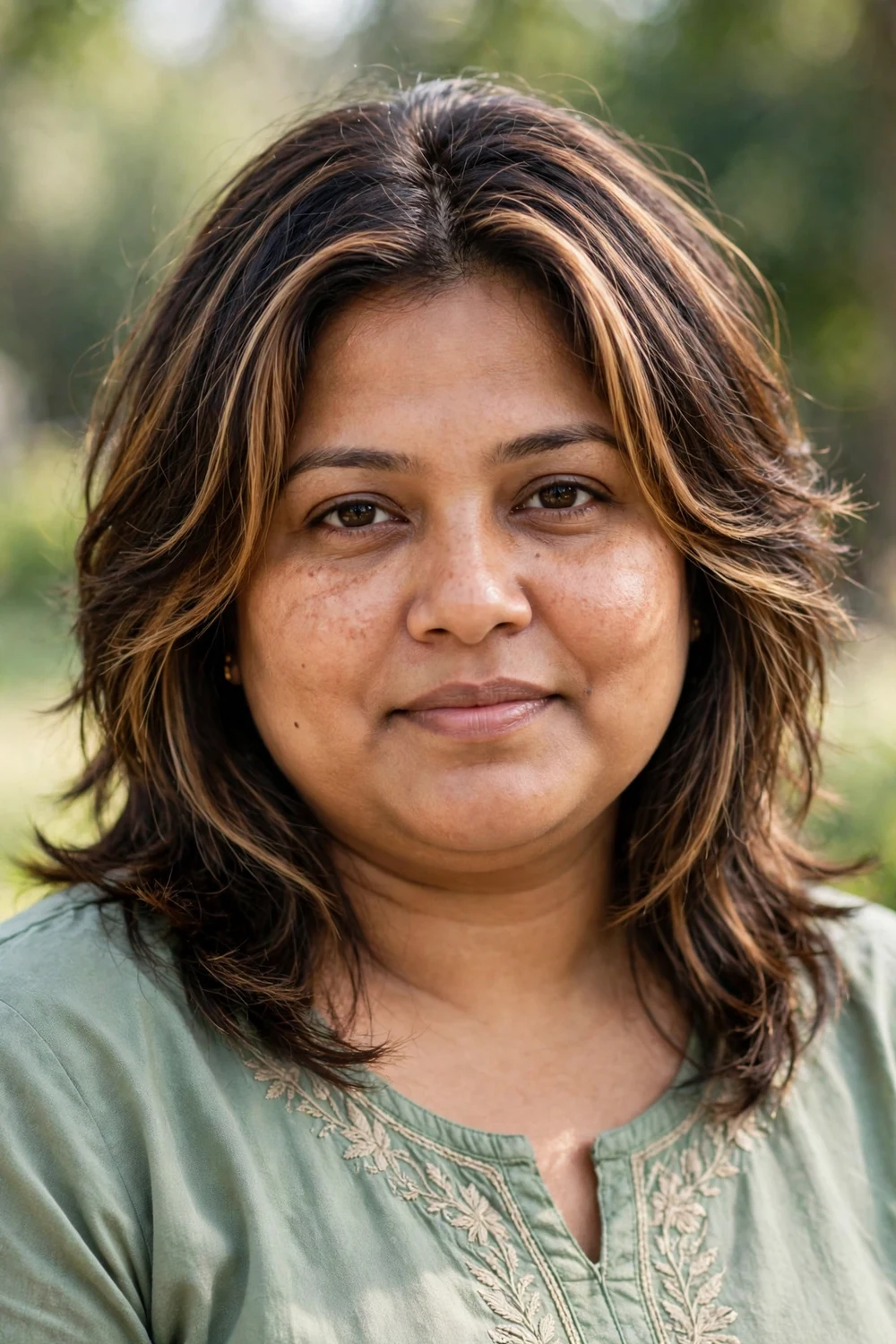
Color can do face-flattering work too. Caramel or honey highlights painted around the front hairline pull focus to the eyes and cheekbones, while slightly darker tones underneath create shadow that suggests a slimmer jawline. The piecey layers give the color somewhere to live.
Keep the brightest pieces within the front two inches of hair; highlights scattered through the back don’t affect how the face reads. This is a salon color service, so budget for a gloss refresh every 8 to 12 weeks to keep the tones from going brassy.
Try this: Ask for the money-piece highlights to start at cheekbone level so brightness lands where it flatters most.
Difficulty: Medium · Cost: $50–$80 cut; $90–$160 partial highlights
12. Curly Shoulder-Length Cut with Long Layers
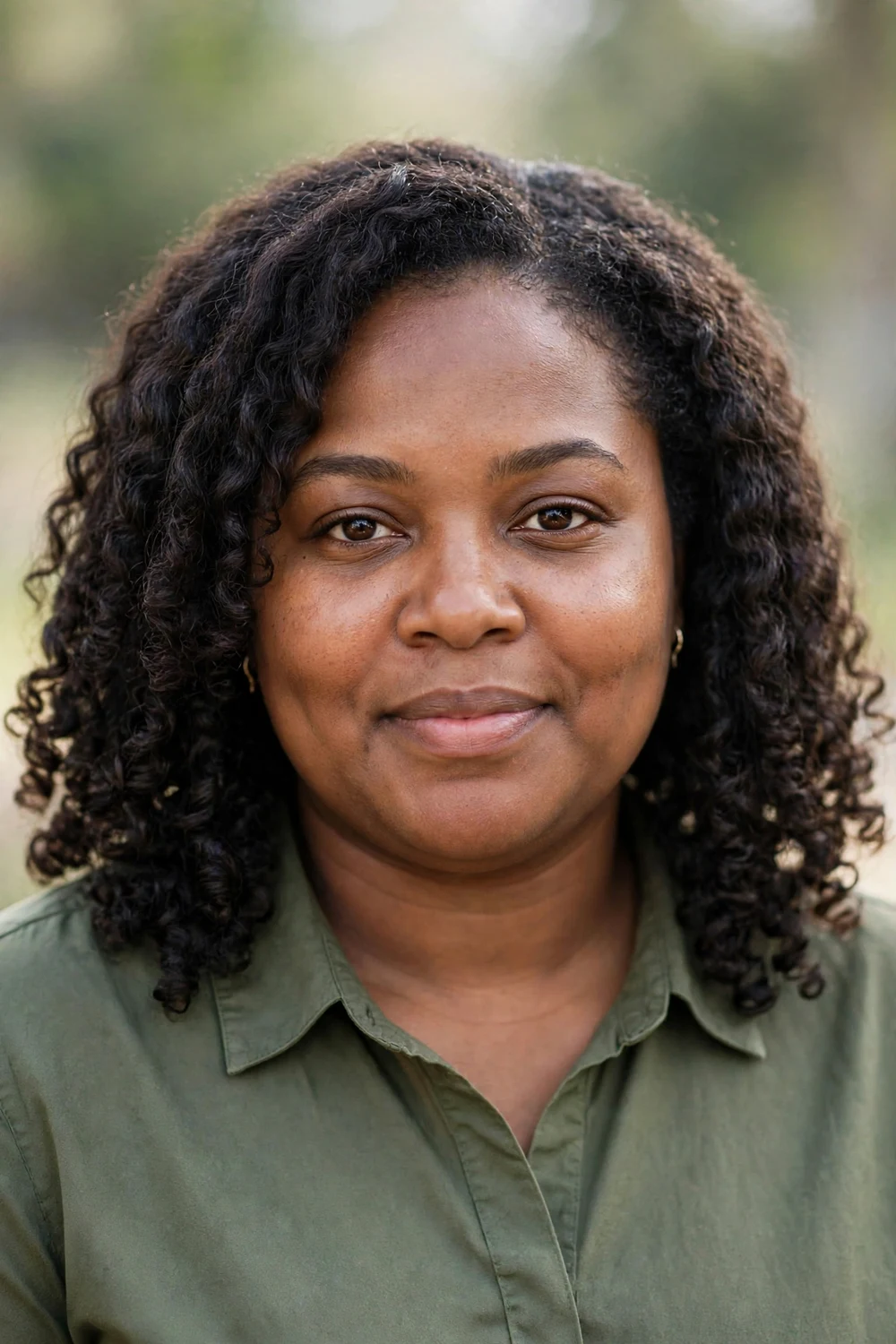
Curly hair flatters fuller faces when the layers are long enough to let the curls elongate. Short layers spring up and widen; long layers let the curl pattern stretch downward, which slims. Shoulder length is the sweet spot where curls have room to fall without losing shape.
Ask for a dry cut from a curl-experienced stylist so the layers land correctly at your natural shrinkage. Diffuse with the head tilted to build length, and keep volume away from the widest part of the face by smoothing the top with a curl cream.
Try this: Pineapple your curls at night to protect the long layers and keep morning volume at the ends.
Difficulty: Easy · Cost: $55–$90 curly cut
13. Wavy Lob with a Side Part
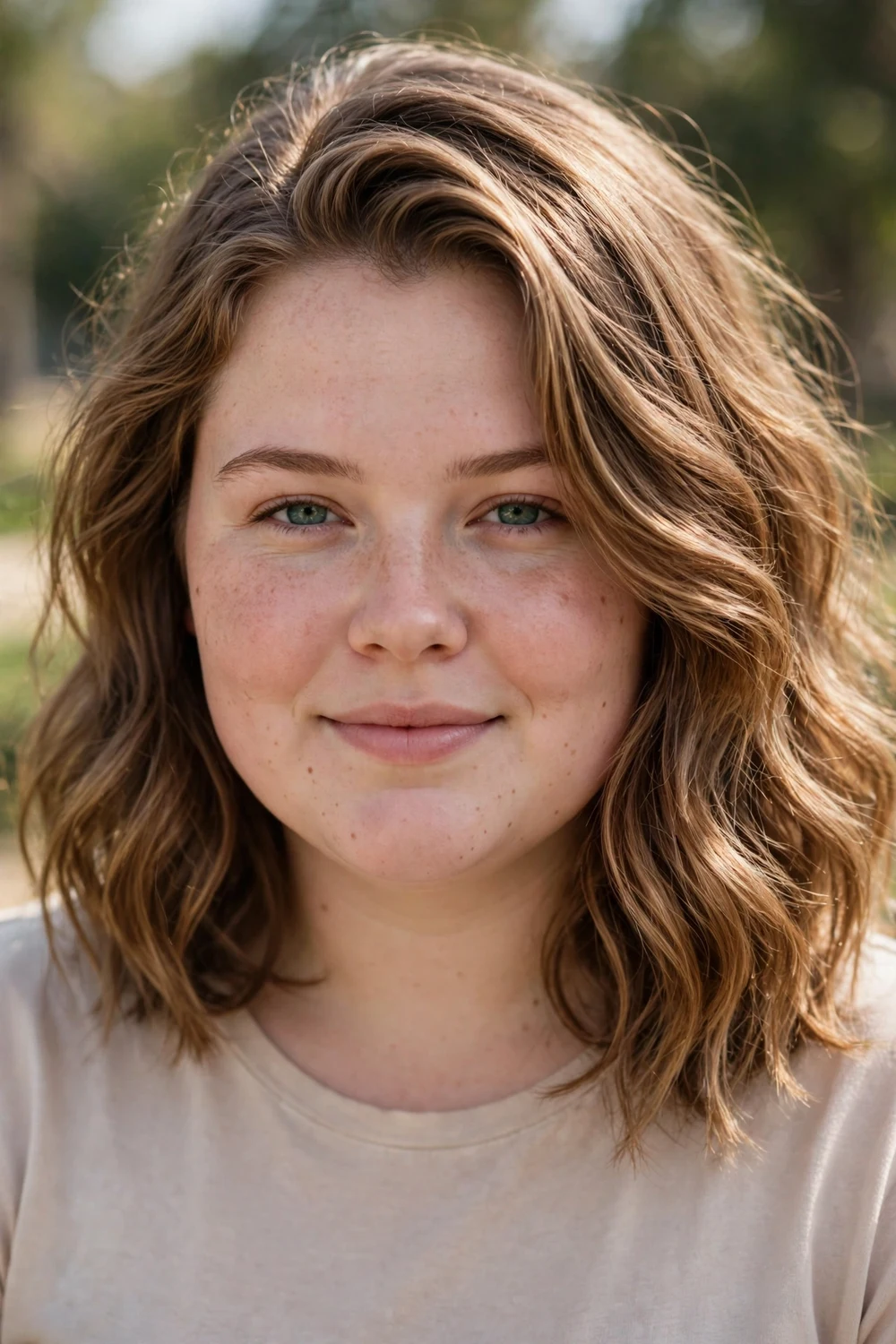
Loose waves on a lob add texture without bulk, and a side part keeps the whole thing asymmetric. The waves should start below the cheekbones so the fullest part of the wave pattern sits near the ends. This is one of the most forgiving medium hairstyles for fat faces because it works on second-day hair too.
A 1.25-inch curling iron gives the right loose bend; wrap sections away from the face for an open look. Use heat protectant every time you heat-style. Finger-comb the waves instead of brushing to keep them from expanding sideways.
Try this: Wave only the bottom two-thirds of the hair and leave the roots smooth for a slimmer top.
Difficulty: Easy · Cost: $45–$75 cut
14. Choppy Medium Shag with Curtain Fringe
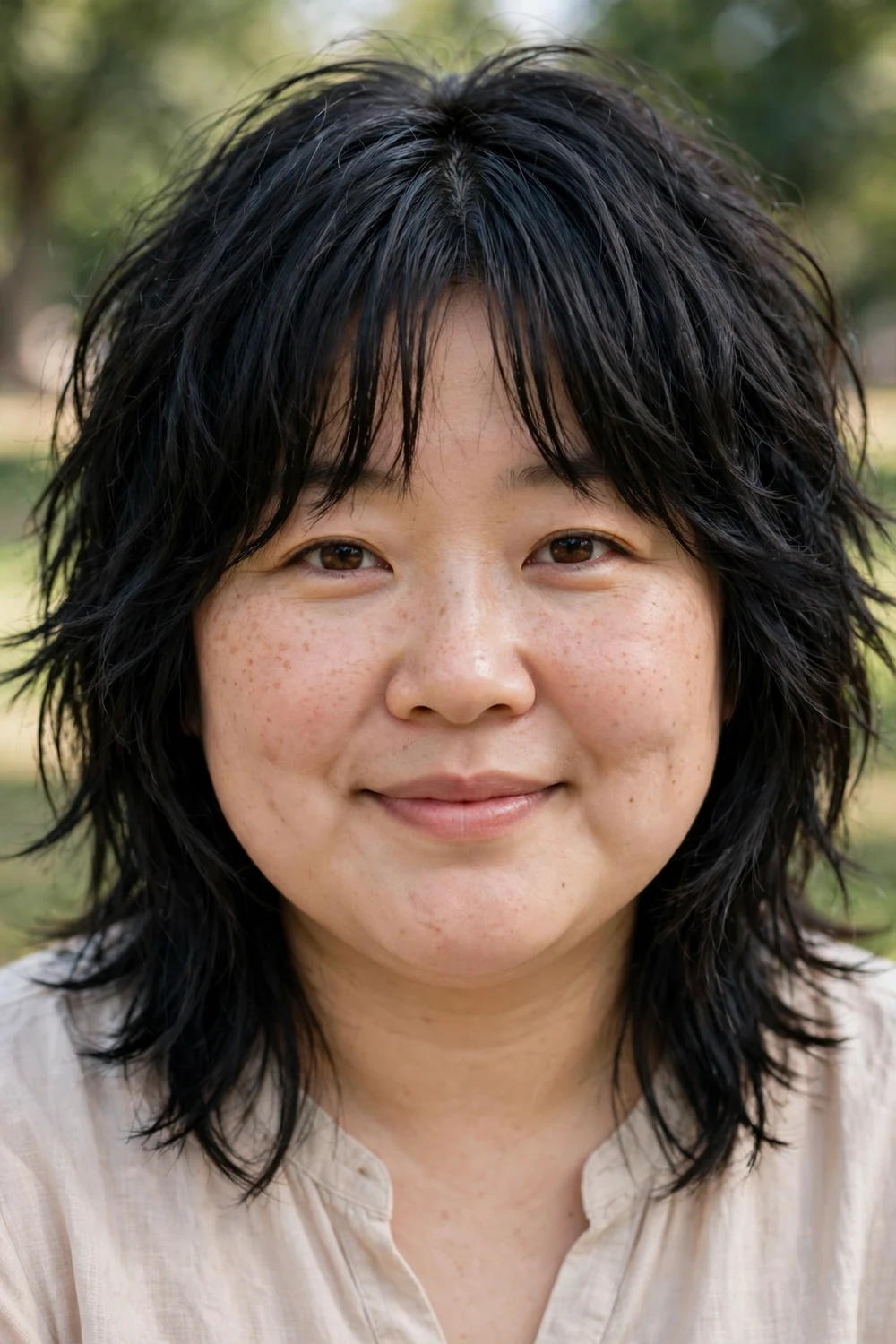
This is the edgier cousin of the long layered shag. Choppier ends and a defined curtain fringe give it more attitude, but the same rules apply: layers stay long, fringe parts in the middle, and nothing bulky sits at cheek level. It suits thick hair especially well because the choppy texture removes weight.
Thick-haired wearers should ask for internal thinning so the cut doesn’t pyramid outward. Style with a texturizing spray on damp hair and let it air-dry. Trims every 8 weeks keep the chop from growing into a blob.
Try this: Scrunch a pea-sized amount of matte paste into the ends for piecey separation without stiffness.
Difficulty: Easy · Cost: $55–$90 cut
Prefer short over medium? These short haircuts for round faces use the same vertical-line principles above the jaw.
15. Feathered Mid-Length Cut
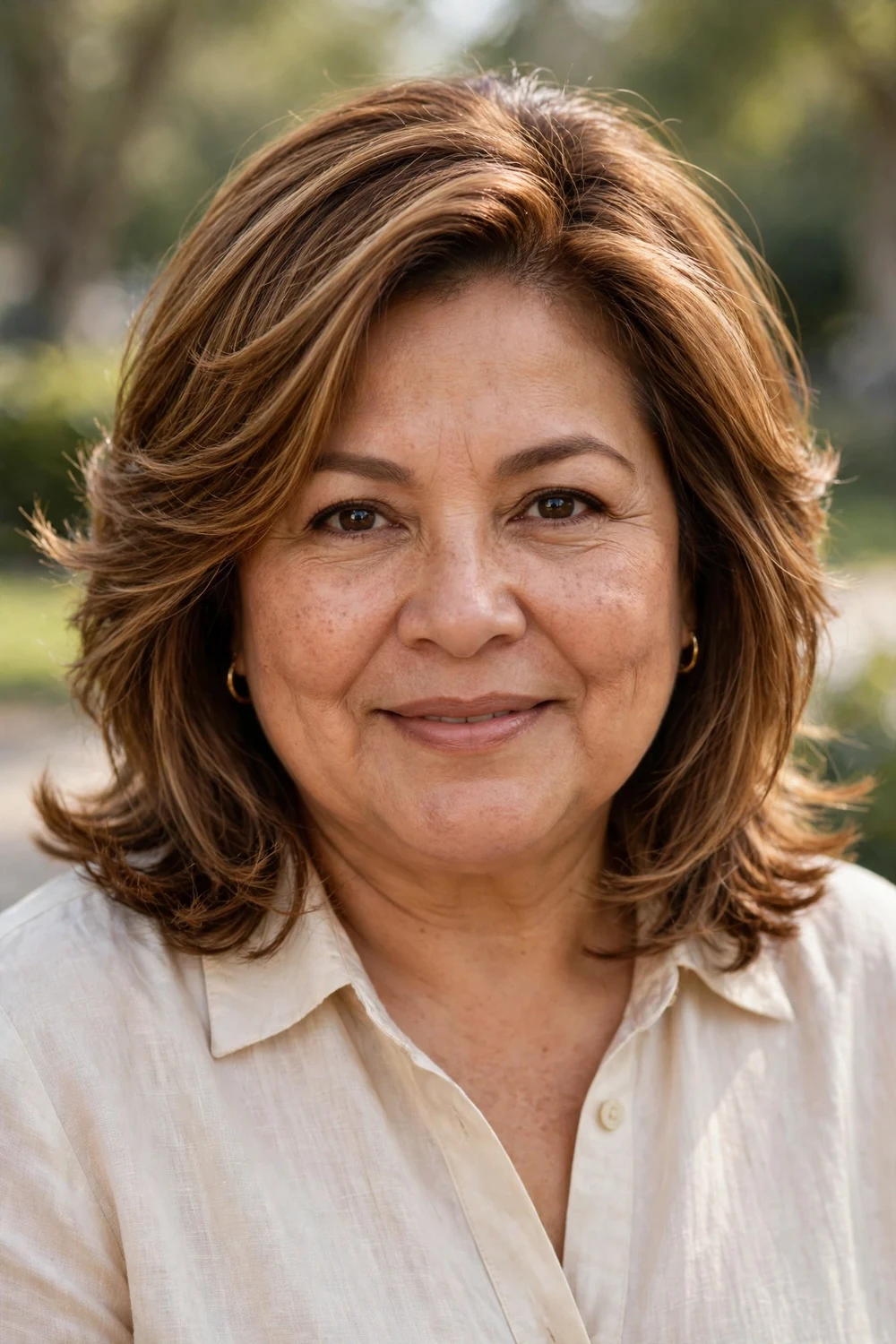
Feathered layers flick softly outward at the ends, which sounds widening but actually works: the flicks start below the jaw, so they draw the eye down and out at a point where extra width reads as style, not face. The top stays smooth and close to the head.
This cut shines on medium to thick hair that can hold the flick. A round brush turned outward at the ends sets the feather; a flat iron can fake it in a pinch. It’s a retro-leaning look, so pair it with modern color to keep it current.
Try this: Blow-dry the top sections flat against the head so all the movement lives at the ends.
Difficulty: Medium · Cost: $50–$80 cut
16. Angled A-Line Lob
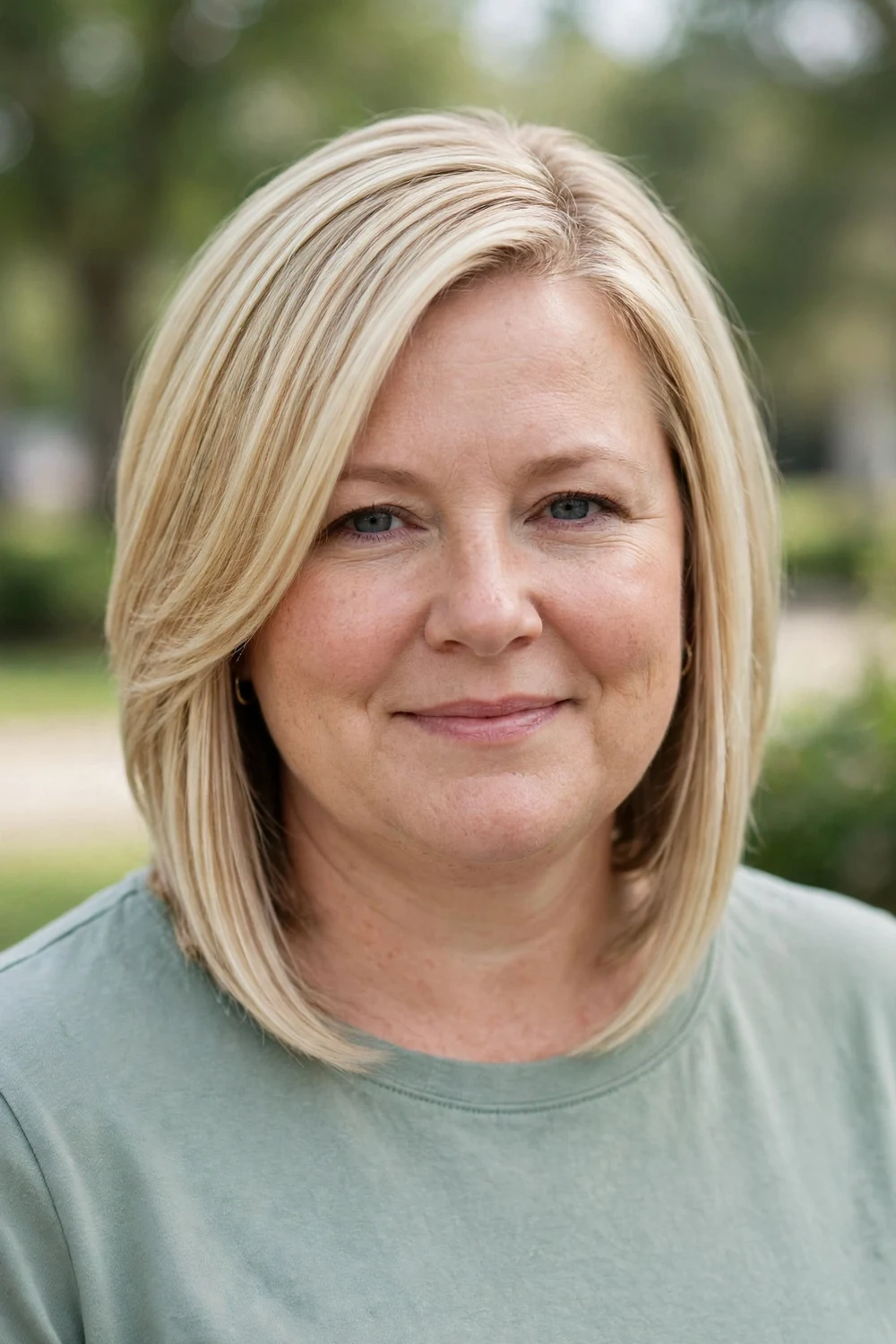
The A-line lob stacks the back shorter and lets the front fall long toward the collarbone. From the side it’s a dramatic slope; from the front it’s two long panels framing the face. That front length does the slimming work while the stacked back keeps the cut from looking heavy.
This cut looks best sleek, so straight or straightened hair shows the angle cleanly. The stacked back needs trimming every 6 to 8 weeks or it loses its shape fast. Fine hair gets welcome fullness at the back from the stacking.
Try this: Use heat protectant before straightening; the stacked back is prone to heat damage from daily touch-ups.
Difficulty: Medium · Cost: $55–$90 cut
17. Soft Waves with Money-Piece Highlights
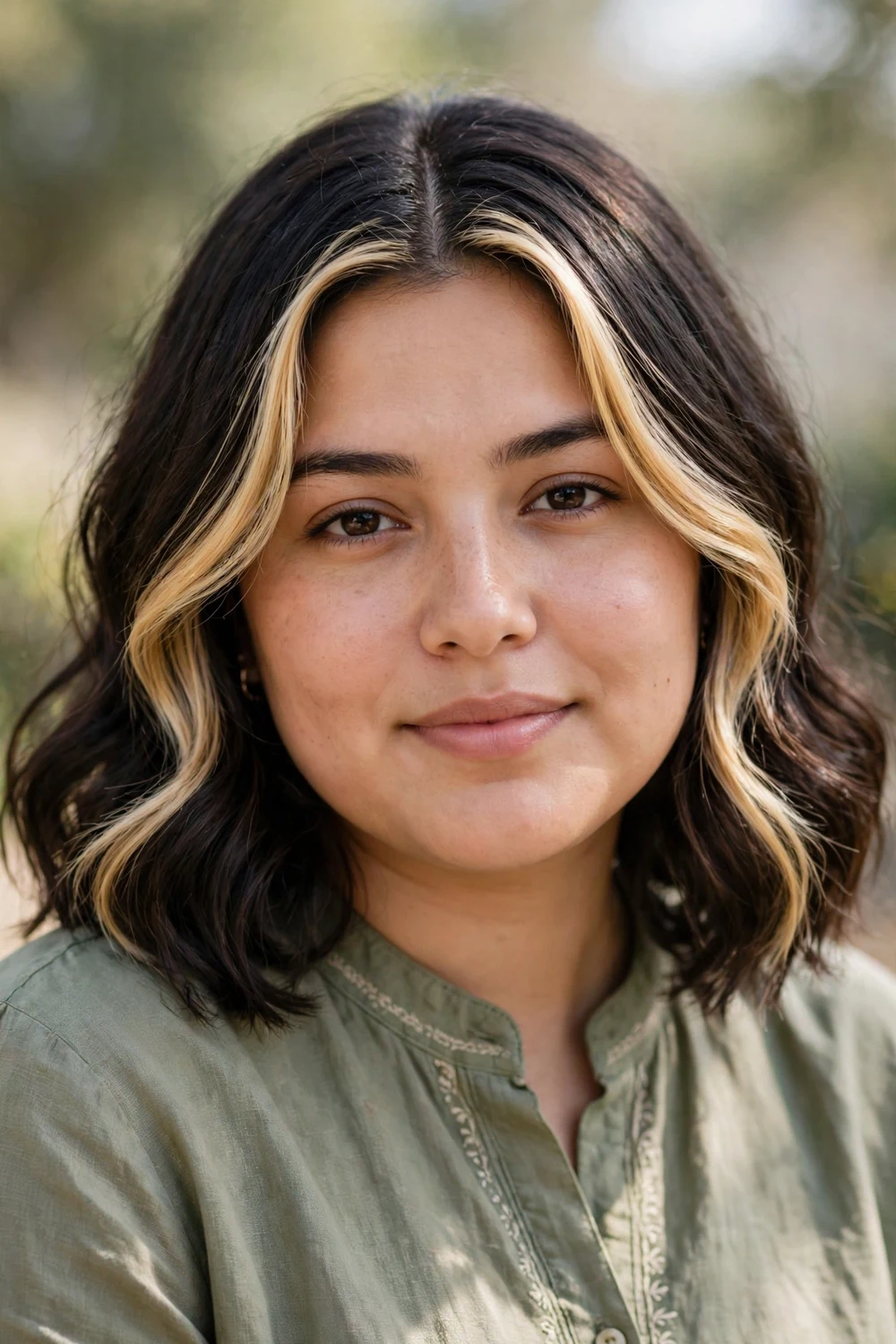
Money-piece highlights are the two brighter sections framing the face, and on a fuller face they act like a spotlight aimed at your eyes. Set against soft medium waves, they create depth that keeps the face from reading as one flat round shape. The waves add the movement; the color adds the dimension.
Keep the money pieces one to two shades lighter than your base for a natural effect. Anything more dramatic can look stripey. The waves themselves need only a large-barrel iron and a heat protectant; the color does half the work.
Try this: Refresh money pieces with a purple or blue shampoo only if they’re blonde; brunette pieces just need a gloss.
Difficulty: Medium · Cost: $50–$80 cut; $60–$120 money-piece color
18. Half-Up Style with Face-Framing Tendrils
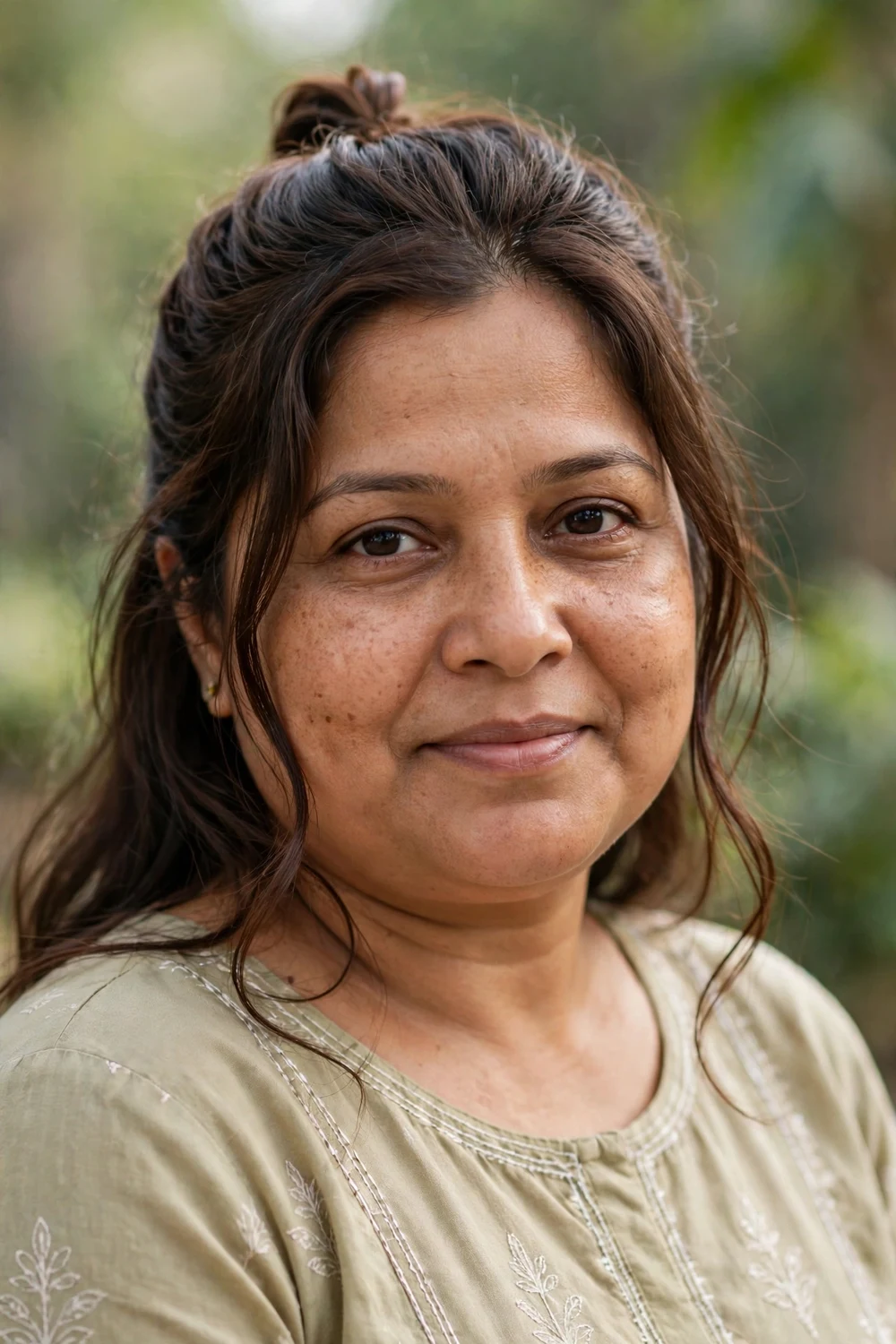
Half-up styles lift the crown, and that little bit of height on top visually lengthens a fuller face. The trick is leaving two soft tendrils out around the cheeks. Pulled-back-tight half-up styles expose the full width of the face; tendrils soften it back into balance.
Tease the crown lightly before securing the top section for extra lift. Curl the tendrils away from the face with a small iron and a touch of heat protectant. This is a go-to for events because it reads polished in under ten minutes.
Try this: Secure the half-up section with a small clear elastic, then loosen the crown with your fingertips for softness.
Difficulty: Easy · Cost: $0 (styling only)
19. Layered Cut with Balayage Dimension
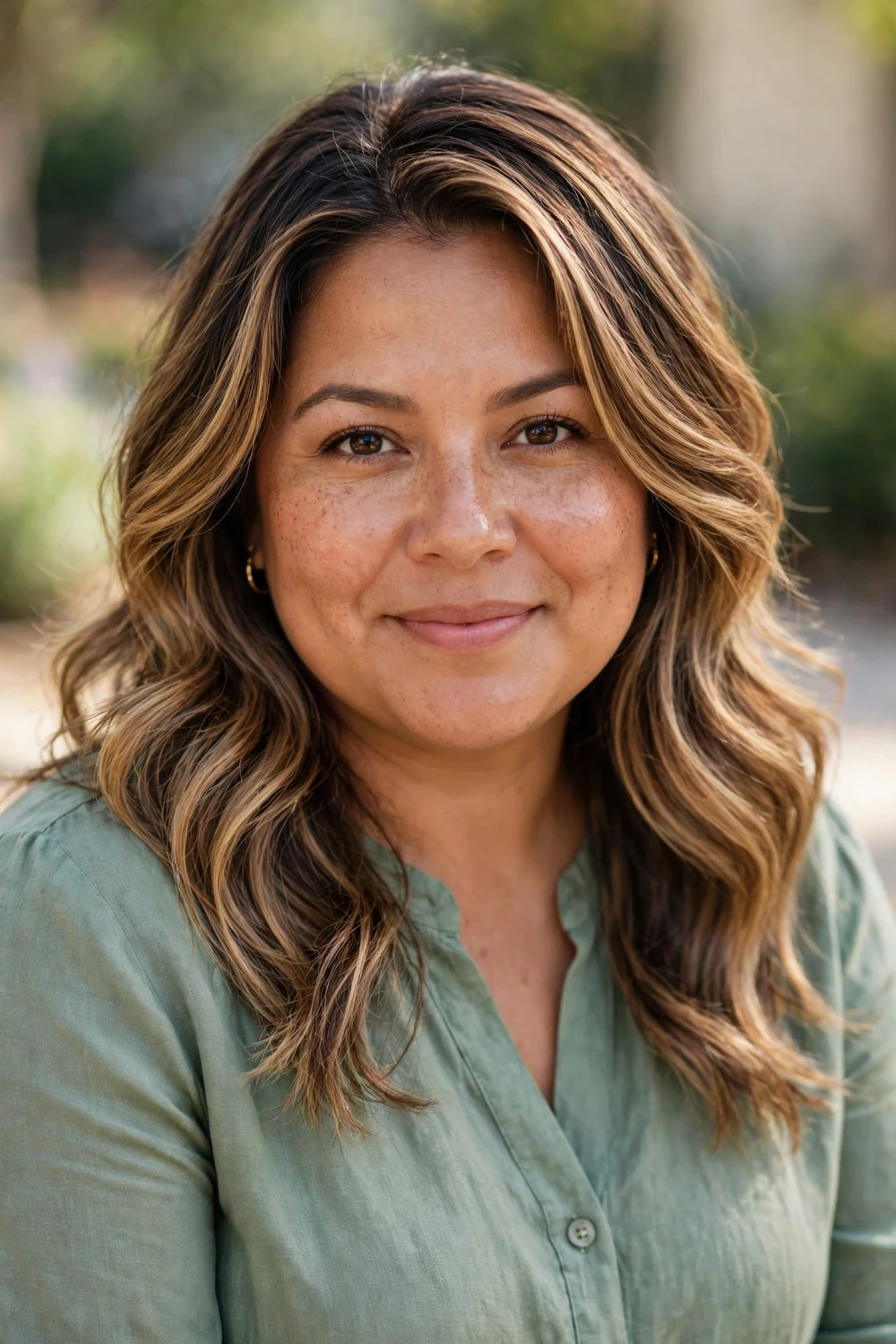
Balayage melts from darker roots to lighter ends, and that gradient naturally pulls the eye downward along the hair. On a layered medium cut, the lighter ends emphasize length while the darker top keeps the area around the face shadowed and slimmer. It’s low-maintenance color that grows out softly.
This is a salon service that takes two to three hours initially, with gloss refreshes every 10 to 12 weeks. The cut underneath should have long layers so the color has movement to show off. Wavy styling displays balayage better than pin-straight hair.
Try this: Ask for the lightest pieces to concentrate from the chin down so brightness draws the eye downward.
Difficulty: Medium · Cost: $50–$80 cut; $120–$200 balayage
These short haircuts for chubby faces prove the same flattering rules work above the jawline too, if you ever want to go shorter.
20. Tucked Midi with Volume at the Ends

Tucking medium hair behind the ears sounds like it would expose a fuller face, but paired with full, flipped ends it does the opposite. The tuck reveals the cheekbones while the volume below the jaw creates a wider base that makes the face look narrower by comparison. It’s all about proportion.
This works best on hair with some natural body or a fresh blowout. Flat, tucked hair with flat ends just looks severe. Flip the ends outward with a round brush or flat iron, and don’t tuck too tightly; a little looseness at the front keeps it soft.
Try this: Tuck only one side for an asymmetric look that adds a slimming diagonal.
Difficulty: Easy · Cost: $45–$70 cut
How to Choose the Right Medium Cut for a Fuller Face
Start with your hair texture, not the photo you saved. Straight hair shows angles and asymmetry best, so lobs and A-lines are your friends. Wavy and curly hair needs longer layers to keep the shape from widening; tell your stylist where your hair sits when dry, since shrinkage changes everything.
Next, be honest about maintenance. Curtain bangs and money pieces need salon visits every month or two, while a one-length lob with long layers can go ten weeks between trims. Pick the cut you’ll actually maintain, because an overgrown flattering cut beats a fresh high-maintenance one you can’t keep up. Bring two or three photos to your appointment and point to the specific details you want, not just the overall vibe.
At a Glance: Which Cut Fits Your Routine
| Style | Best For | Upkeep | Daily Styling |
|---|---|---|---|
| Classic lob, deep side part | Straight to wavy hair | Trim every 8–10 weeks | 5 minutes |
| Face-framing layered midi | All textures | Trim every 8–10 weeks | 5–10 minutes |
| Curtain bangs, collarbone cut | Wavy to straight hair | Bang trim every 4–6 weeks | 10 minutes |
| Asymmetrical lob | Straight hair | Trim every 6–8 weeks | 10–15 minutes |
| Long layered shag | Thick or wavy hair | Trim every 8 weeks | 5 minutes |
| Wavy lob, side part | Natural waves | Trim every 8–10 weeks | 10 minutes |
| Curly shoulder-length, long layers | Curly hair | Trim every 10–12 weeks | 10 minutes |
| Half-up with tendrils | All textures, events | No cut needed | 10 minutes |
Frequently Asked Questions
What is the best hair length for a fat face?
Medium length, roughly chin to collarbone or a little past, is the most forgiving. It is long enough to build vertical lines that lengthen the face, but short enough to hold shape and volume where you want it. Very short cuts can expose fullness, and very long one-length hair can drag the face down without layers.
Are bangs flattering on fuller faces?
Side-swept bangs and curtain bangs are both flattering because they create diagonal lines and draw attention to the eyes. Wispy bangs work too since their broken edge doesn’t form a solid horizontal line. Heavy blunt bangs cut straight across are the one style to be careful with, as they can make a full face look wider.
Should I avoid volume if my face is full?
Only volume at cheek level. Fullness concentrated at the ends, below the chin, actually slims by drawing the eye downward and balancing proportions. Keep roots relatively smooth and let the body of the hair live in the bottom third. The same rule applies to curls and waves.
Which haircuts make a round face look slimmer?
Cuts with asymmetry (deep side parts, angled lobs), long face-framing layers starting at the chin, and length that falls past the jawline all create a slimmer impression. Texture and movement help too, since flat one-length shapes emphasize roundness. Color that is darker underneath with lighter face-framing pieces adds helpful shadow and depth.
Does hair color really change how full a face looks?
It helps more than most people expect. Darker tones recede visually, so slightly deeper color around the face and underneath suggests a slimmer jawline, while brighter pieces near the eyes pull focus upward. You don’t need a dramatic change; even a soft balayage or a few face-framing highlights shift how the face reads.
Final Thoughts
A fuller face gives you cheeks and warmth that plenty of people pay contour palettes to fake, so treat these cuts as framing, not fixing. Pick the one that fits your texture and your real morning routine, and give it two weeks before you judge it. Hair settles, and so does your eye.

