


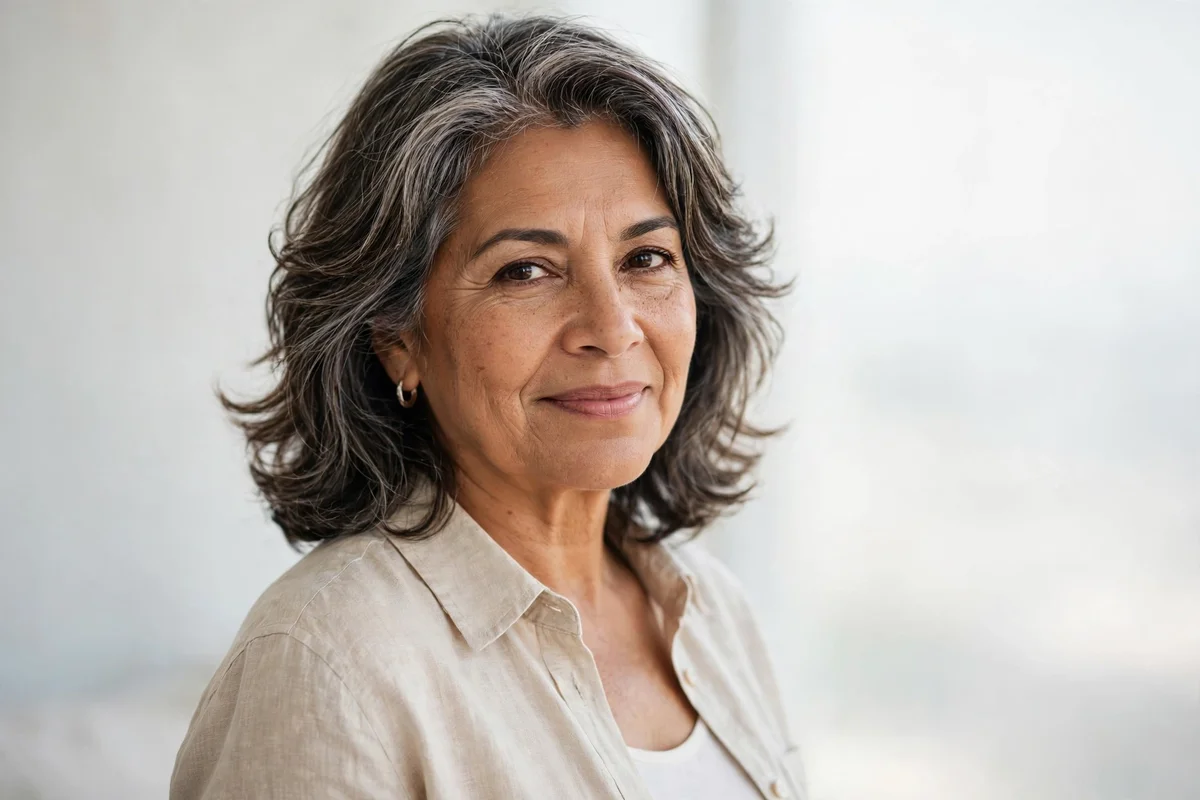
Fine hair needs a different playbook after 50. Strands can turn drier, the part may widen, and heavy one-length cuts fall flat by afternoon. The right medium cut fixes all three problems at once.
This guide rounds up 22 medium hairstyles for fine hair over 50, from layered lobs to curtain bangs and the new hush cut. After years of cutting and growing fine hair, I keep coming back to medium length because it gives styling options without the weight that flattens thin strands.
Quick answer: The best medium hairstyles for fine hair over 50 are layered lobs, shoulder-length layers, curtain bangs with long layers, and textured cuts like the shag and wolf cut. Long blended layers, a deep side part, and a root-lifting product routine create the look of density without heavy styling.
Quick Takeaways
- Medium length keeps enough hair for styling while removing the drag that flattens fine strands.
- Long, blended layers are the main volume tool. Keep the shortest layer at or below the chin.
- A deep side part or curtain bangs can make the crown and hairline look thicker in minutes.
- Wash every two to three days with a volumizing shampoo, and condition only from mid-length down.
- Trims every six to eight weeks keep fine ends thick instead of stringy.
Why Medium Length Works for Fine Hair in Your 50s
Very long hair pulls fine strands down at the roots, and very short cuts leave no room to hide a thinning crown. Medium length sits between those problems. You get styling range while the ends stay light enough to hold lift.
It also fits a busy decade. Many women in their 50s are still working full time, traveling, and juggling family. A shoulder-length cut styles in under ten minutes, pulls back for exercise, and still looks polished for the office. Grow-out is forgiving, so a six-week stretch between appointments never looks neglected.
Fine hair in the 50s often means finer texture plus slower regrowth. Cuts should create the look of density with the shape itself, not rely on daily teasing or heavy products. Every style below does that.
1. Shoulder-Length Layers
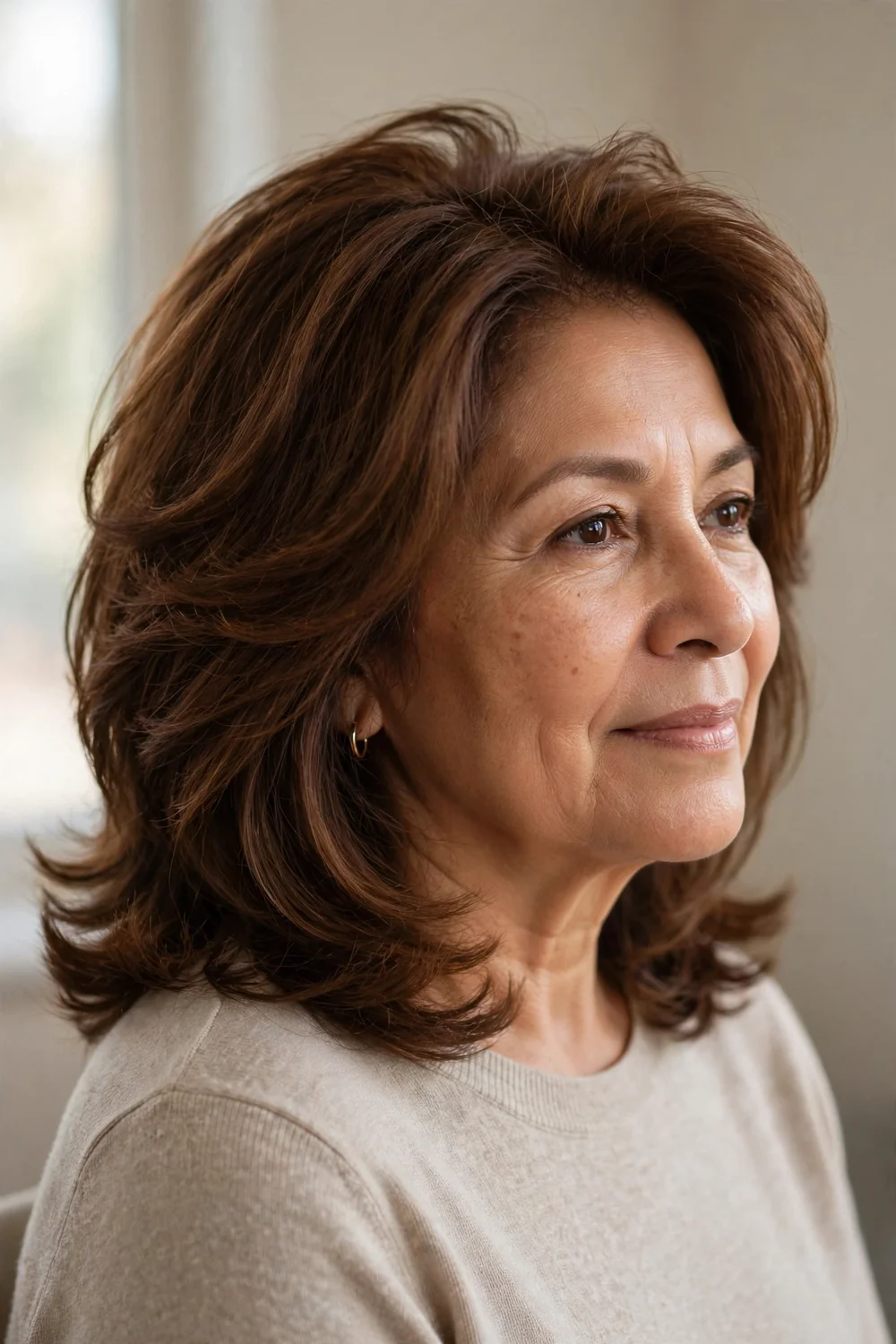
Start with the cut most stylists recommend first. Long, blended layers through the mid-lengths take weight off the top so the roots can lift, while the perimeter stays thick enough to read as full. This cut works with straight, wavy, or graying hair and flatters nearly every face shape. Ask your stylist to keep the layers below the chin so the front stays strong. A round brush and a few minutes of blow-drying is all it needs.
Try this: Blow-dry upside down for two minutes, then flip back and smooth only the top layer. A pea-sized amount of volumizing mousse at the crown adds lift that lasts all day.
2. Layered Bob with Movement
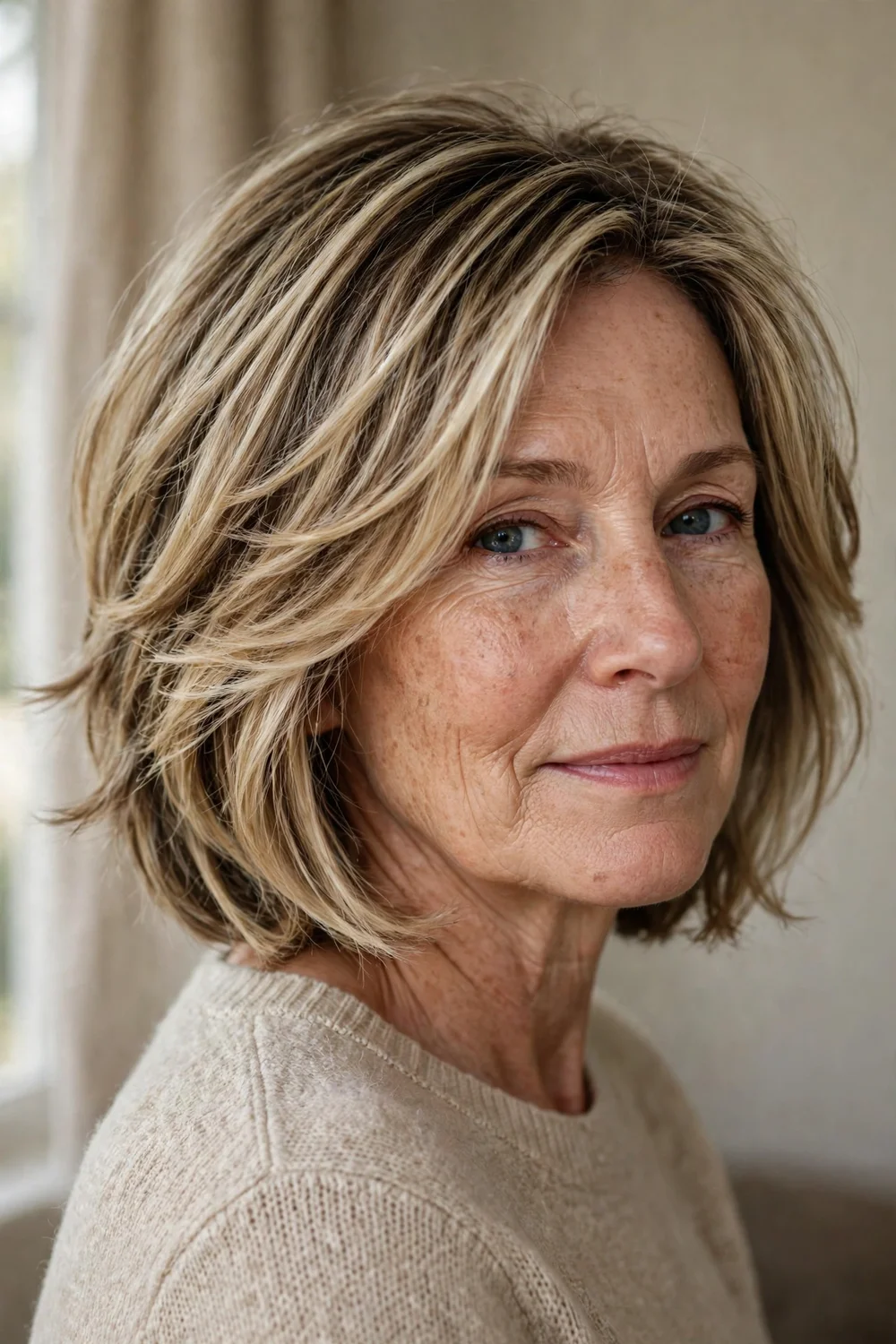
If you want the bob’s polish with more movement, add interior layers. This chin-to-neck cut uses light layering through the crown for lift, then lets the ends move instead of sitting in one heavy line. It suits straight and slightly wavy fine hair, and it frames the jawline without bulk at the sides. The shape holds between trims, so maintenance stays simple. Wear it smooth for work or tousled for the weekend.
Try this: Point a flat iron outward on the bottom inch only. Those flipped ends read as thickness at the perimeter.
3. Collarbone Lob with Long Layers
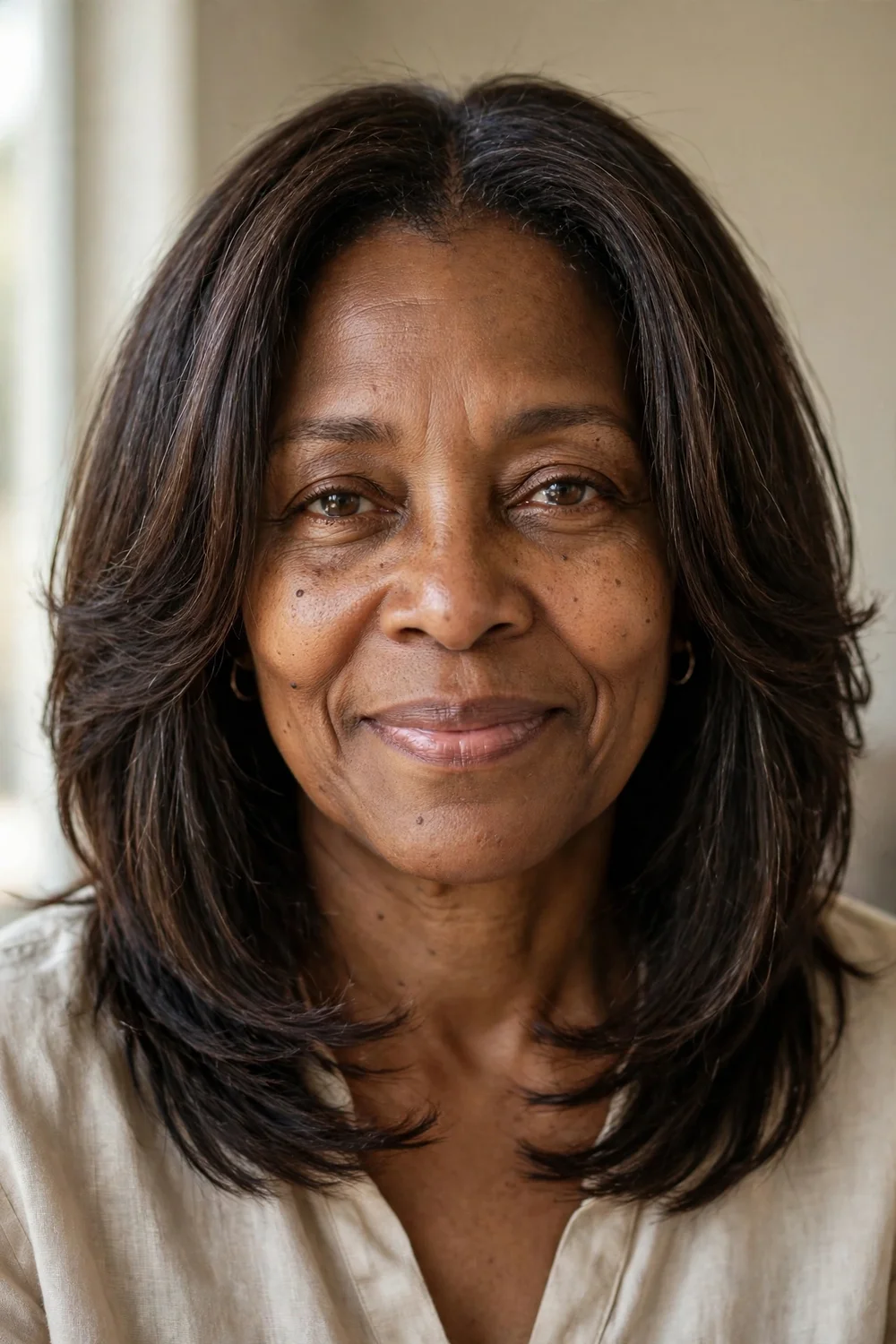
The lob earns its place on every list for a reason. Collarbone length keeps the ends swinging instead of dragging, and long layers stop the bottom from looking shelf-like. A fairly blunt perimeter preserves the look of thickness, which matters most for thin hair. It is one of the most requested cuts for women in their 50s because it suits straight, wavy, gray, and colored hair alike. Styling takes minutes.
Try this: Flat-iron the mid-lengths and bend the ends under in one smooth pass. That tucked-under edge makes the bottom look denser.
4. Soft Tousled Waves
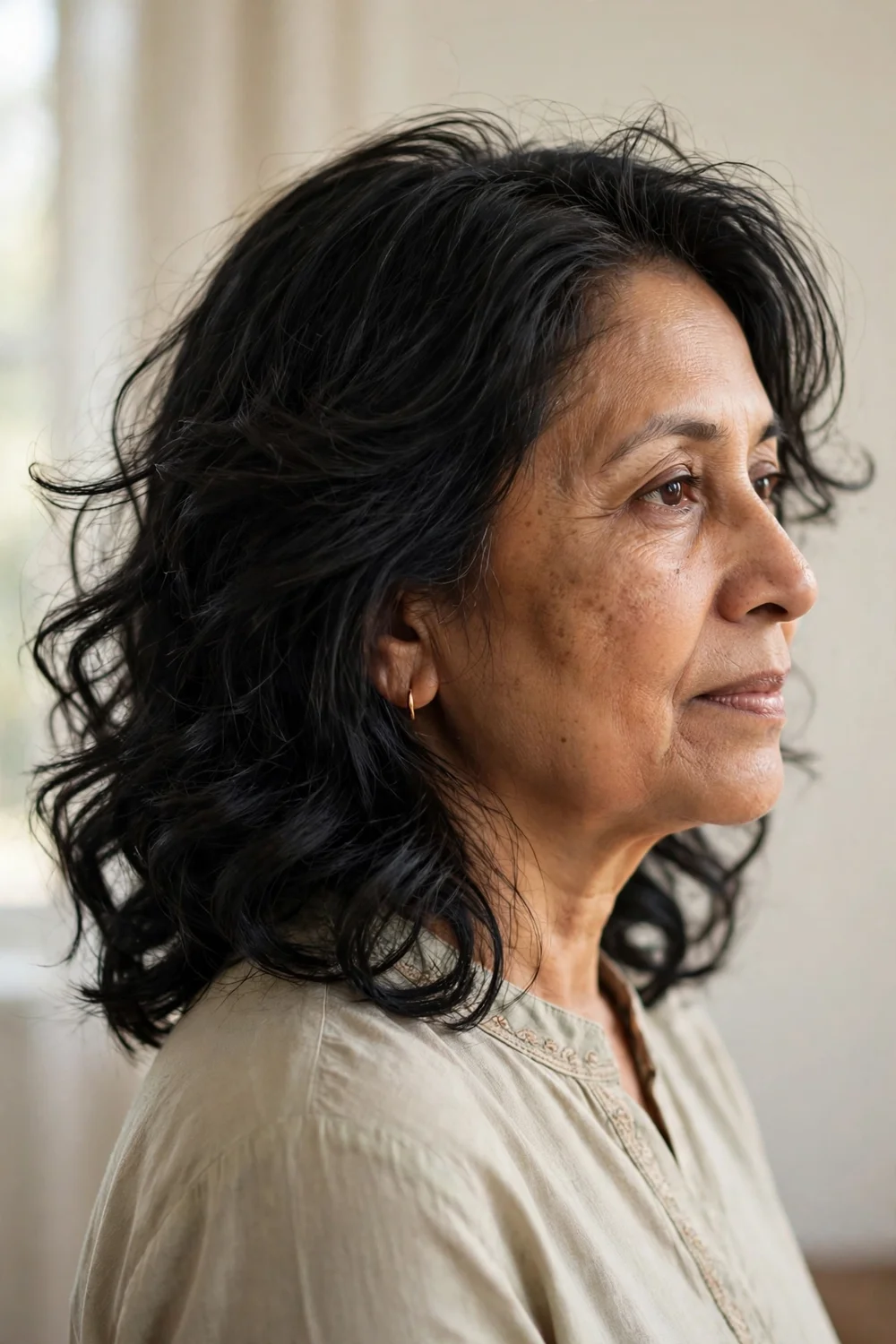
Waves do half the volume work for you. Loose, uneven waves push the hair outward, which creates width exactly where thin hair looks narrowest. The tousled finish hides thin spots better than a sleek style, and it looks current without trying hard. Keep the waves loose because tight curls on fine hair drop out fast. This style starts from a layered shoulder cut, so the shape supports the texture. A salt spray or light mousse gives the waves their hold.
Try this: Braid damp hair loosely overnight for heat-free waves. Undo it in the morning and shake out the roots with your fingers.
5. Balayage with Undercut Layers
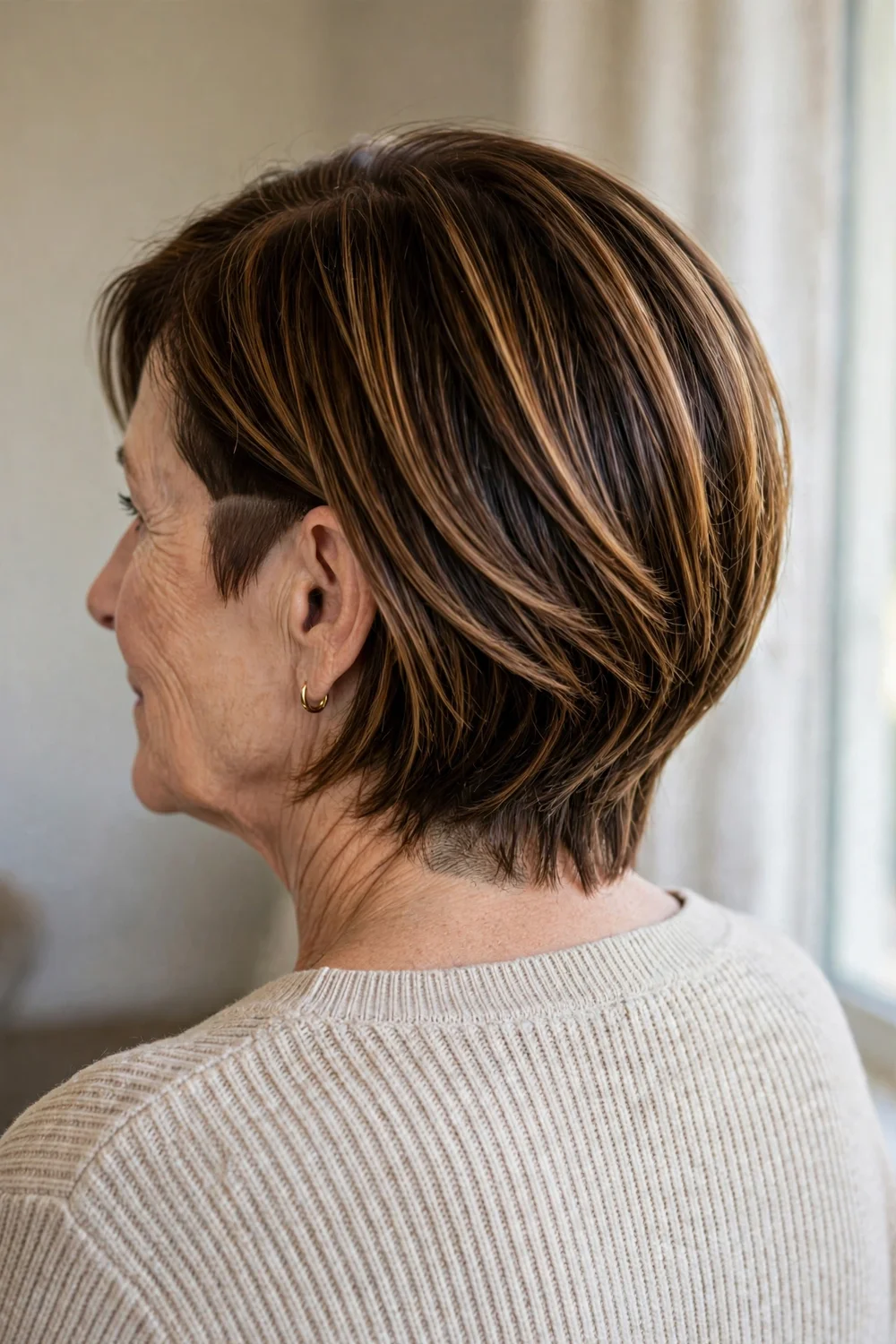
Color and cut work together here. Undercut layers remove hidden bulk underneath the top section, so the surface layer falls smooth and full. Balayage painted through the mid-lengths adds dimension that makes fine hair look denser, since the eye reads light variation as depth. The effect is sleek and shiny, not heavy. This is a strong choice if your hair is fine but you have a lot of it. Book a gloss between full color appointments to keep the balayage fresh.
Try this: Ask for the balayage to start an inch below the roots. Darker roots make the hair look fuller from the scalp outward.
6. Silver Shoulder Cut
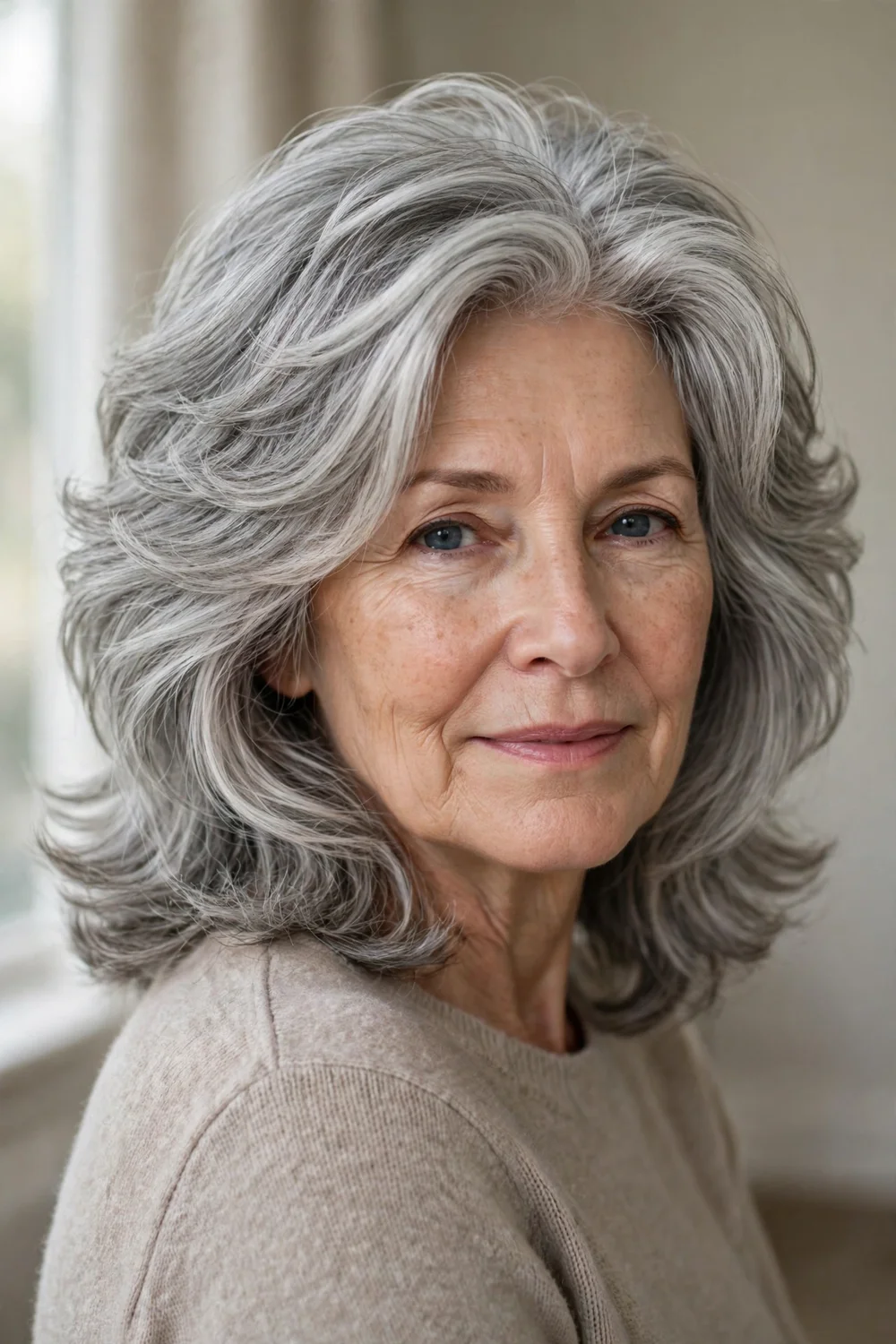
Going silver is a color decision and a cut decision. This shoulder-length cut with soft layers lets natural gray shine while the shape keeps it from looking wiry or puffy. Silver strands catch the light, and that brightness adds the look of dimension around the face. A weekly purple shampoo keeps the gray bright instead of dull, and dull gray always looks thinner. It is a polished, low-color-maintenance choice for women embracing their natural shade.
Try this: Use a purple shampoo once a week. Bright silver looks dense; yellowed gray looks thin.
If shoulder length is your sweet spot, these shoulder length hairstyles for thin fine hair offer more cuts built for thin texture.
7. Copper-Red Layered Cut
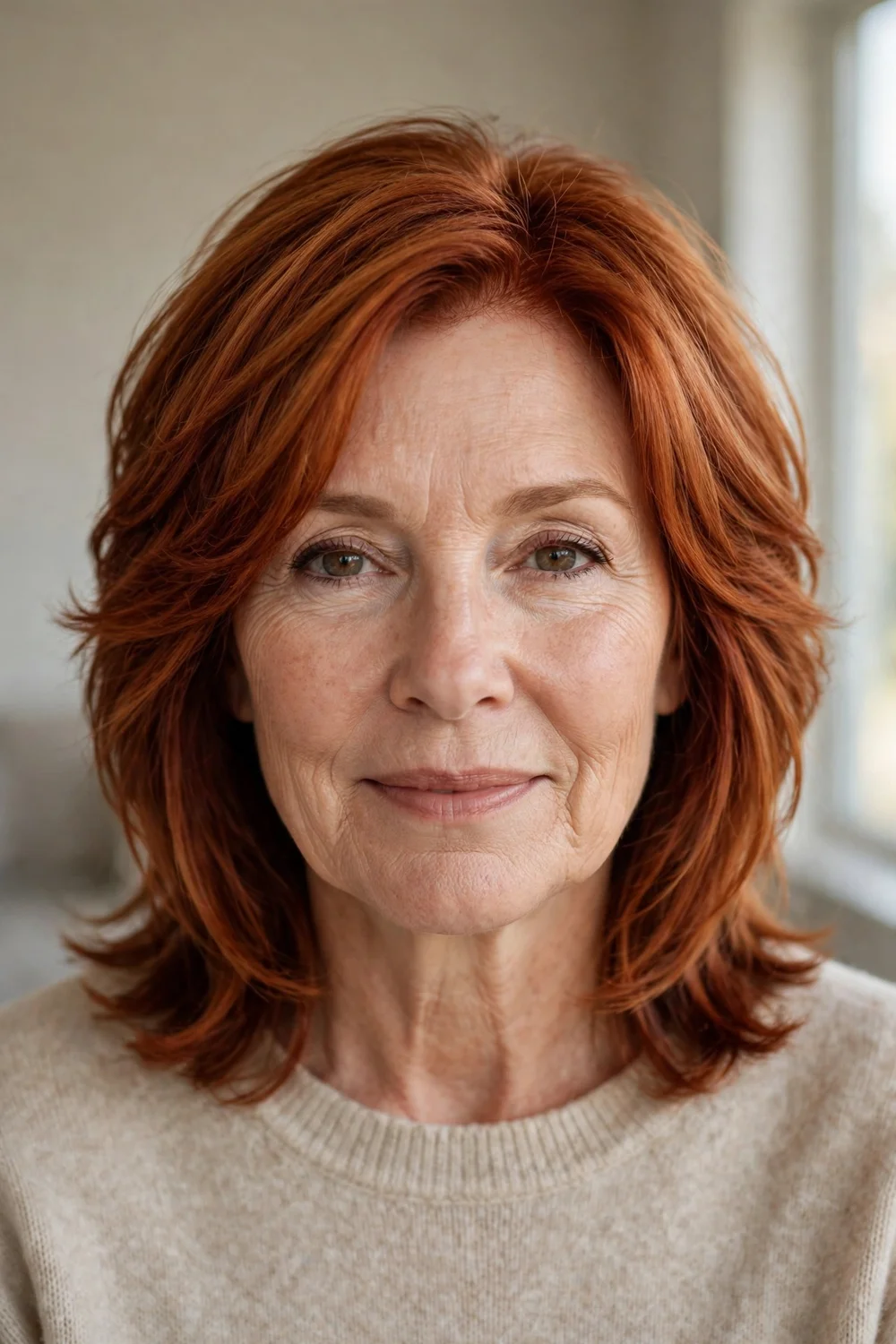
Warm copper turns fine hair into a color story. Rich red tones add visual weight, so thin strands look thicker even before styling. The layered cut beneath the color keeps the shape moving, with layers starting at the cheekbone to frame the face. Copper suits fair to medium skin tones and fades gracefully between appointments. Tell your stylist your goal is fullness, because that changes where the layers go. Ask for a gloss at week four to keep the color from dulling.
Try this: Wash color-treated hair in lukewarm water with a color-safe shampoo. Hot water strips copper tones fast.
8. Blonde Sweeping Layers with Side Bang
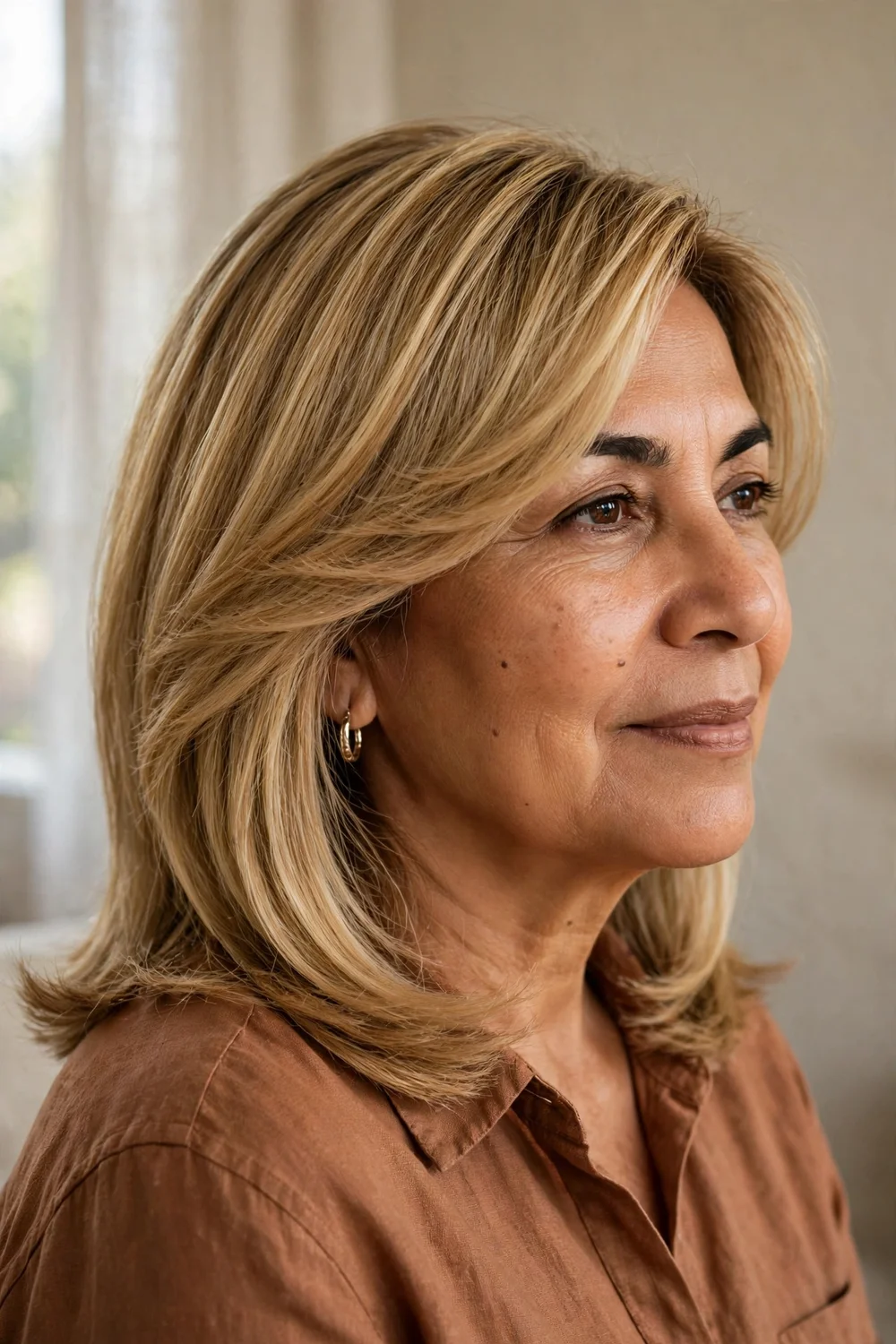
A sweeping side bang does quiet heavy lifting. It covers a thinning hairline, draws attention to the cheekbones, and blends into the sweeping layers around the face. The rest of the cut stays sleek and classy, with just enough layering to add volume without looking obvious. Blonde shades with warm lows create dimension that makes the hair read as thicker. This is a safe, polished choice that works at any age.
Try this: Blow-dry the side bang with a small round brush, directing it across the forehead. Set the direction while it is damp and it holds all day.
9. Relaxed Medium Shag
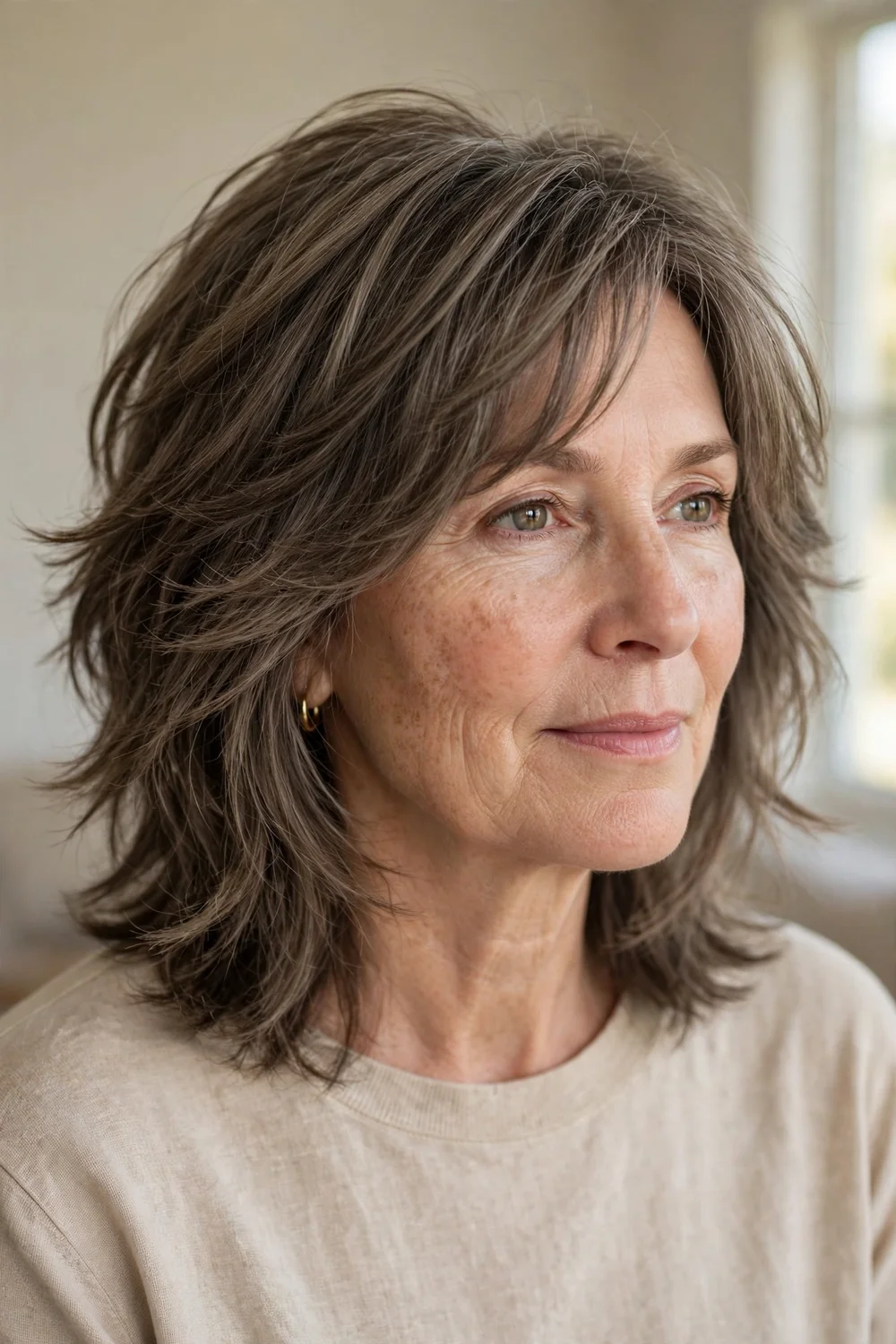
For days you want texture without a hot tool, the relaxed shag delivers. Feathered layers are cut through the mid-lengths and ends to create airy movement, while the top keeps enough length to cover thin spots at the crown. The finish is piecey rather than sleek, which is forgiving on thin hair because gaps look intentional. It grows out without harsh lines and suits women who air-dry more than they blow-dry.
Try this: Scrunch a lightweight mousse into damp hair and let it air-dry. The layers do the work, so skip the round brush on busy days.
10. Wispy Feathered Ends
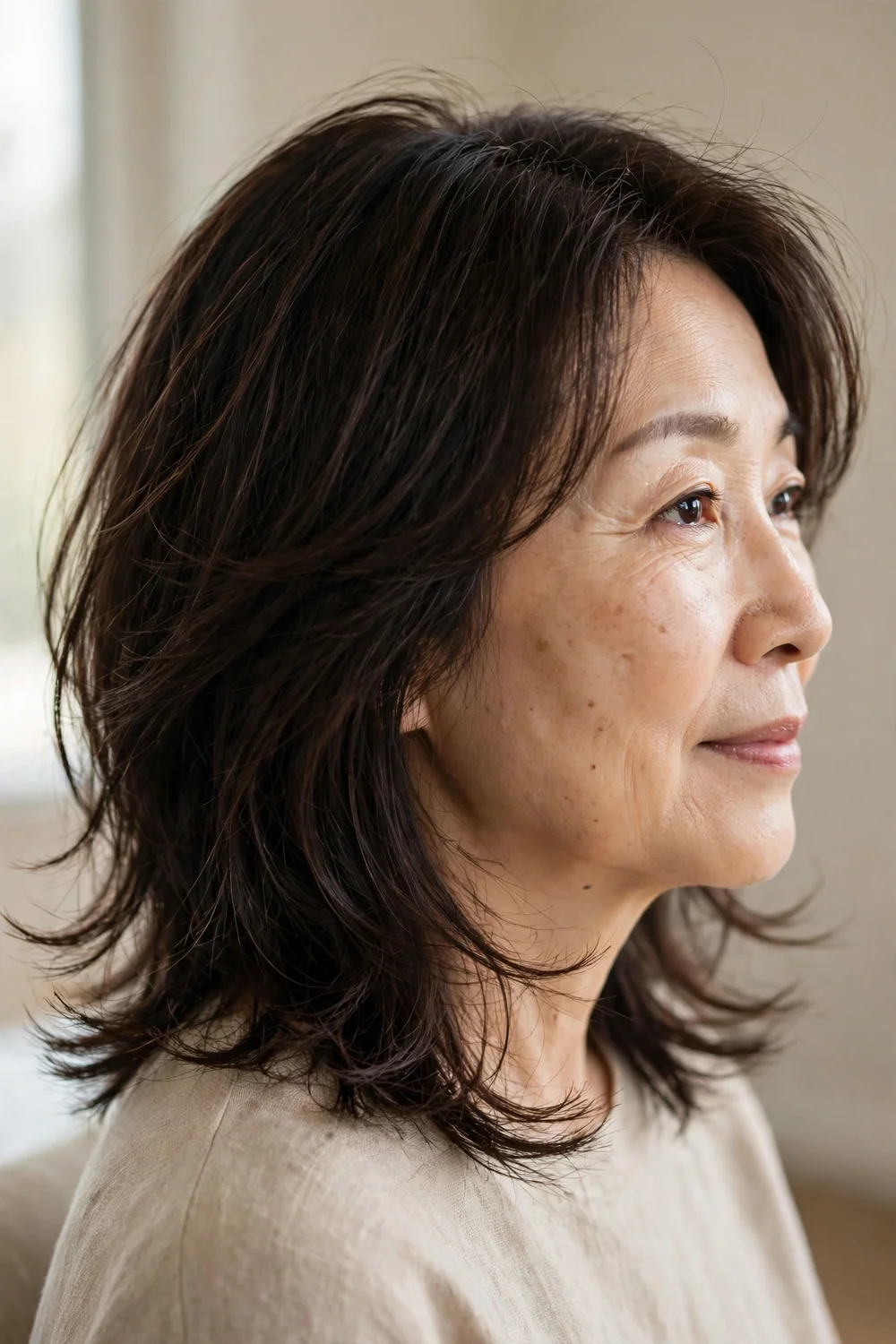
When the ends look stringy by week five, wispy feathering is the fix. Fine, feathered layering is cut through the ends to create airy movement without removing real density. The length stays, so you keep your styling options, but the hair moves instead of hanging. This suits straight fine hair best, since the wisps show clearly. Soft pieces around the jawline keep the look gentle. Regular trims keep the feathered ends fresh instead of ragged.
Try this: Use a texturizing spray at the roots instead of heavy wax. It keeps the wisps separated without weighing them down.
11. Curtain Bangs with Long Layers
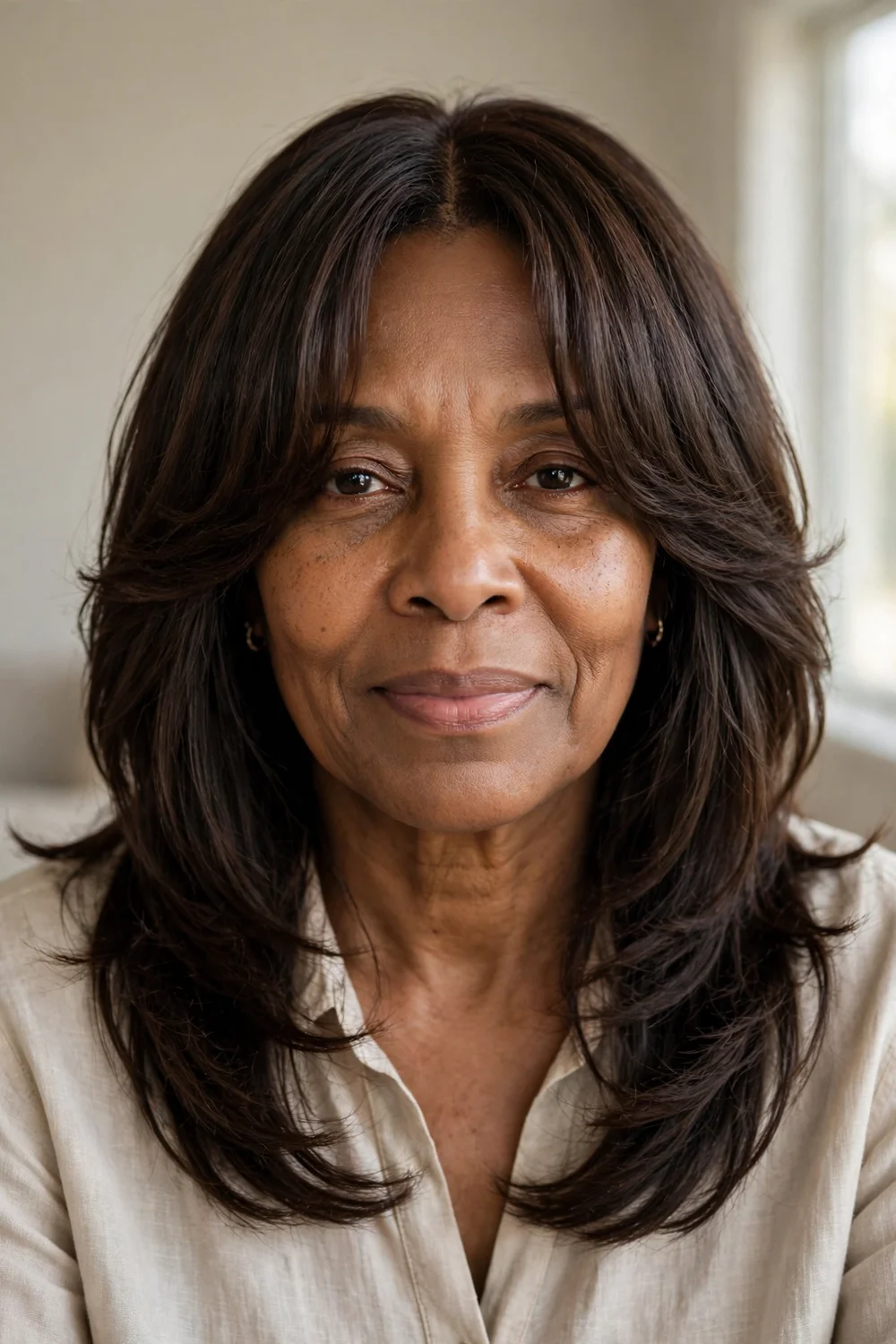
Curtain bangs suit women who want fringe without the commitment. The center-parted fringe opens at the middle and melts into face-framing layers, drawing attention to the cheekbones instead of the forehead. Because the bangs are long, they grow out without an awkward phase. Keep the rest of the layers long so the overall cut stays full. This pairing works well with glasses and suits oval and round faces. Trim the bangs every four to five weeks to keep the parting clean.
Try this: Blow-dry the bangs with a small round brush, rolling them away from your face. That outward bend is what makes them sit right.
12. Wavy Textured Bob
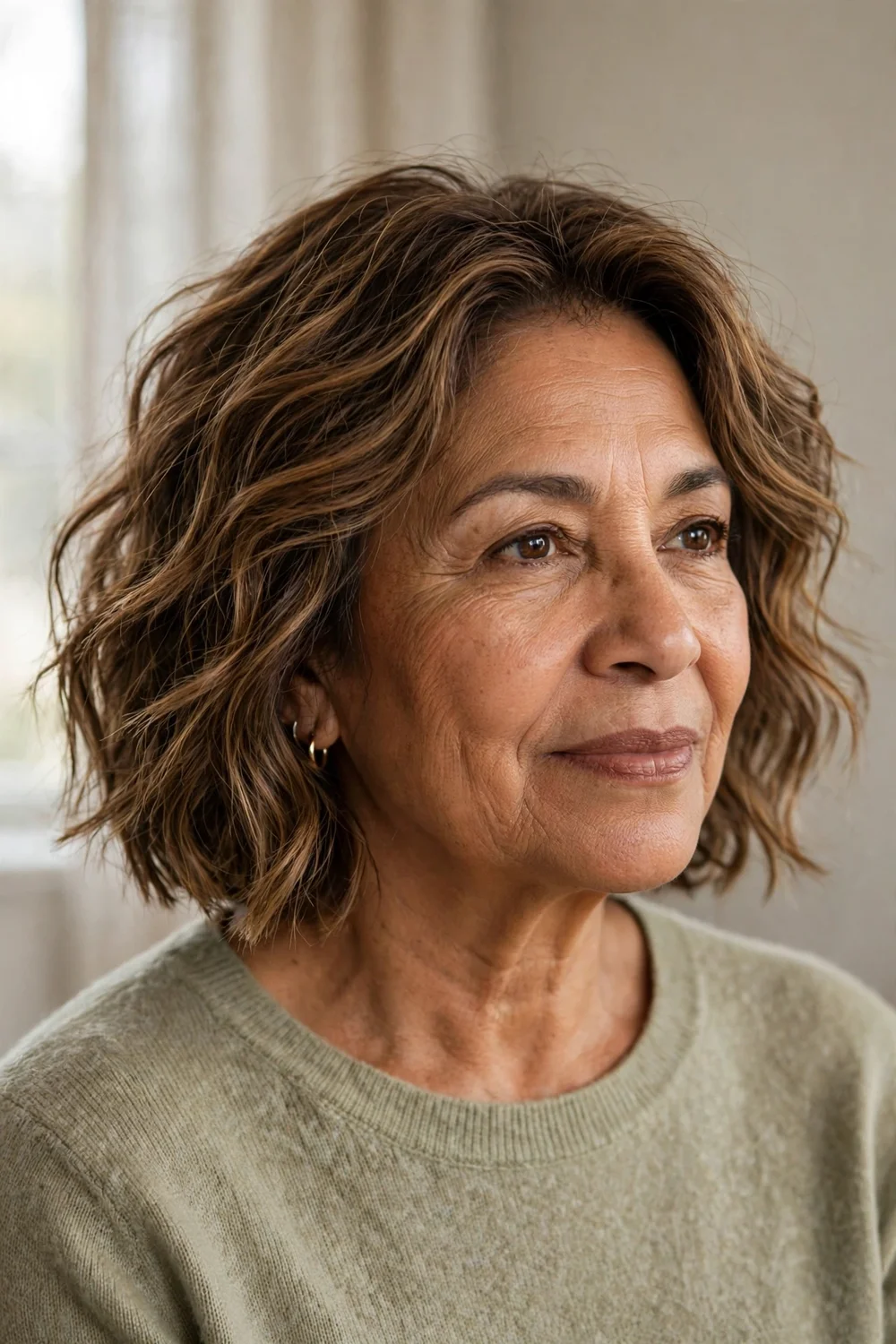
A chin-length bob with loose waves is the low-key volume move. The wave pattern pushes the hair outward for width, and a few highlights through the top add the dimension that makes fine hair look denser. Point cutting through the ends removes bulk without a hard line. This cut styles in under ten minutes and holds its shape between trims. Keep the waves loose, because tight curls drop out of fine hair fast and leave frizz behind.
Try this: Wrap sections around a 1.25-inch curling iron away from the face, then brush through gently. The brushed-out wave lasts longer than a defined curl.
For more styles aimed at this decade, browse these medium length hairstyles for women over 50 next.
13. Curled-Under Lob
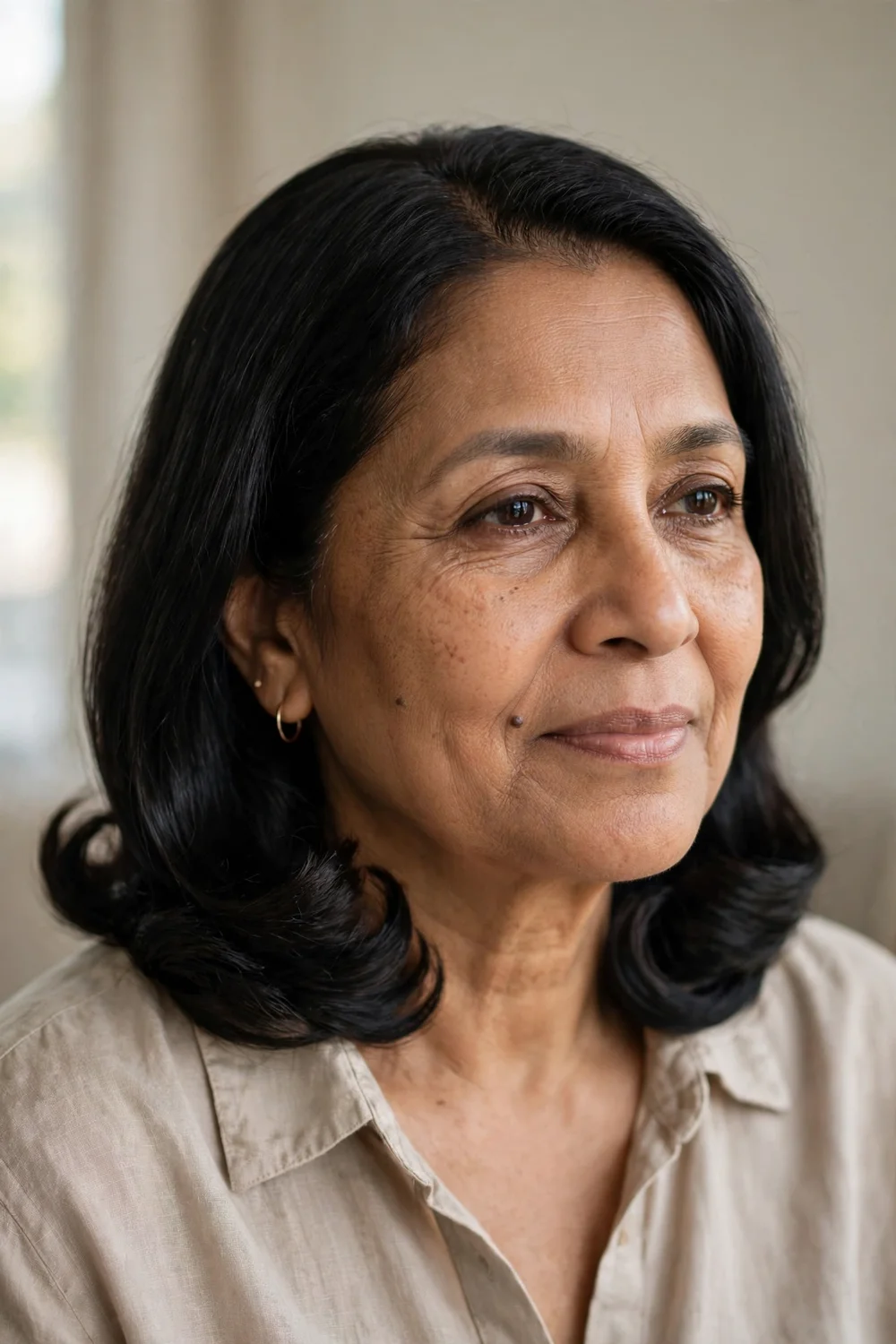
Tuck the ends under and a lob turns office-ready in minutes. This collarbone cut keeps a strong one-length perimeter, which is the simplest way to make fine hair look thick. Curling the ends under with a round brush creates a smooth, rolled edge that reads as density. Layering is kept light and on top only, so the bottom stays full. Heat protectant is a must here because the smooth finish shows damage.
Try this: Use a large round brush and dryer, curling each section under one at a time. A light mist of flexible-hold hairspray keeps the roll in place.
14. Modern Wolf Cut
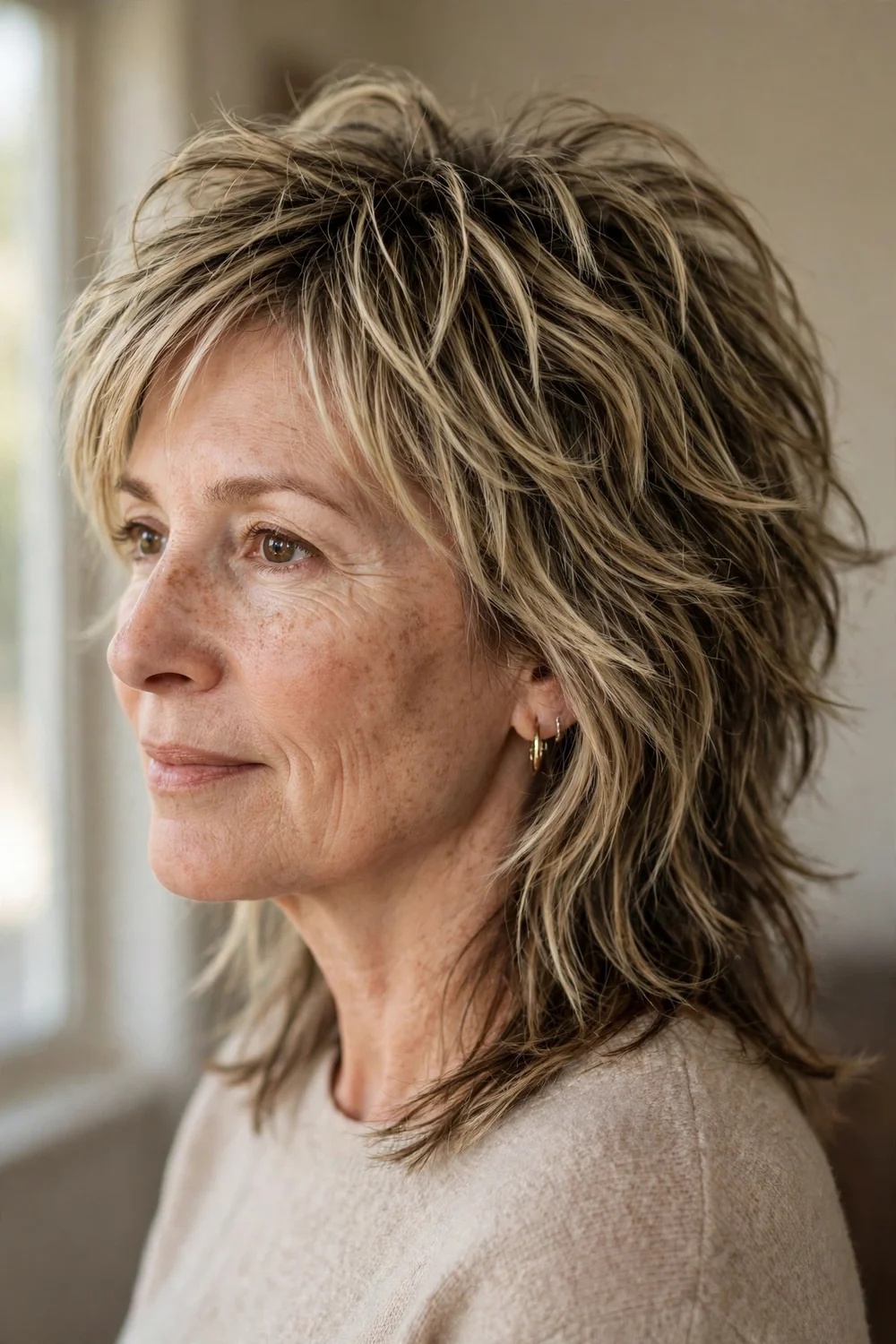
The wolf cut sounds edgy, but the current version is softer than the original. Choppy layers through the crown build texture and lift, while the longer ends keep it wearable past the shoulders. The uneven layering creates separation that makes fine hair look fuller, since strands stop clumping in one flat sheet. It suits women who want something current without a dramatic chop. Style with a texturizing spray and your fingers.
Try this: Work a dab of dry texture spray into the crown after styling. It keeps the layers separated and lifted through the day.
15. Blunt-Edge Lob with Deep Side Part
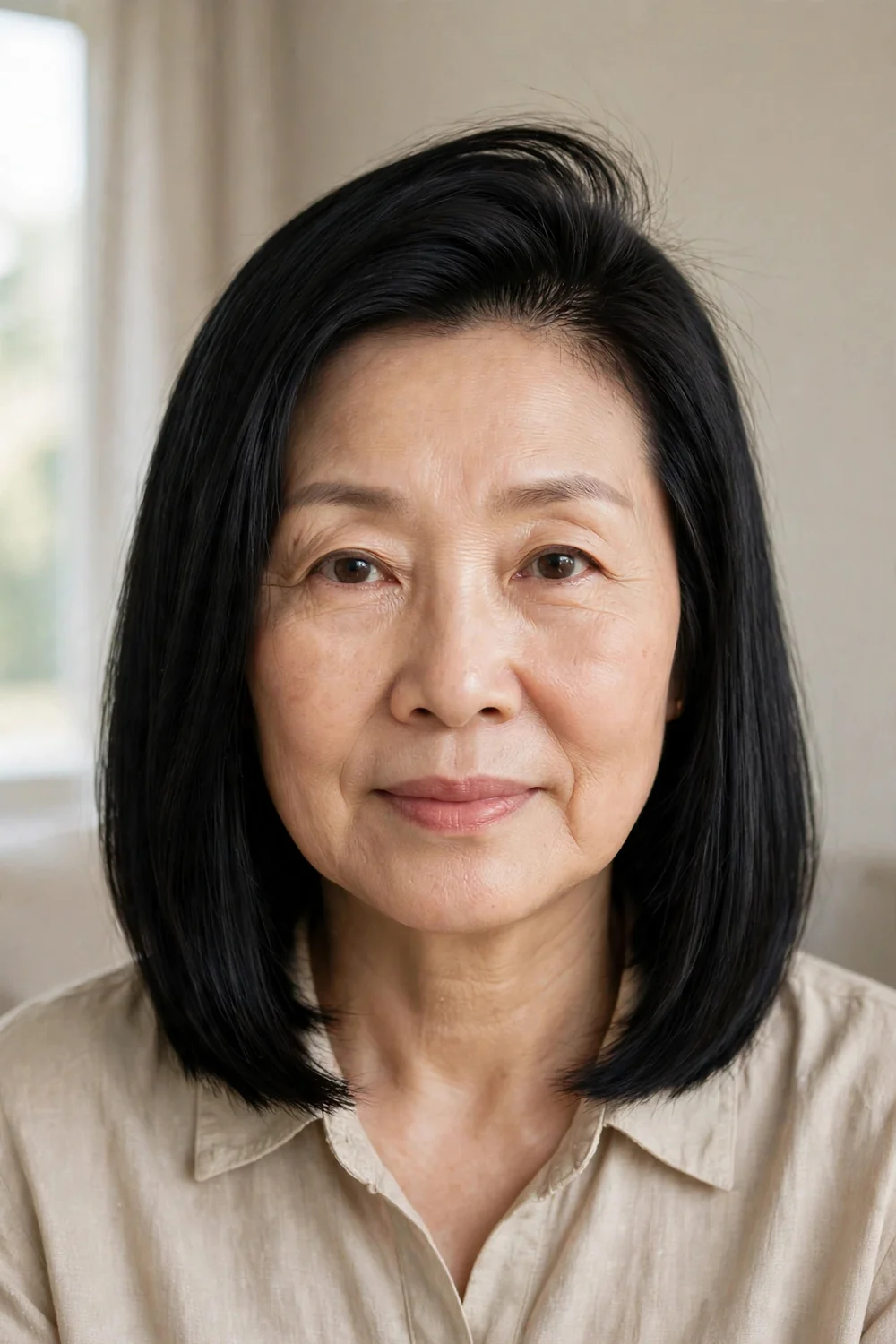
Keep the perimeter one length and shift the part deep to one side. The blunt edge makes fine hair look as thick as it can, and the deep part lifts the roots on the heavy side for instant height at the crown. It is the fastest volume trick there is, and it takes five seconds. The cut wears straight for polish and tucks neatly behind the ears on no-style days. A little root powder on day two revives the lift.
Try this: Train the part while hair is damp by combing it over and clipping the roots flat. It sets in about ten minutes.
16. Permed Mid-Length Curls
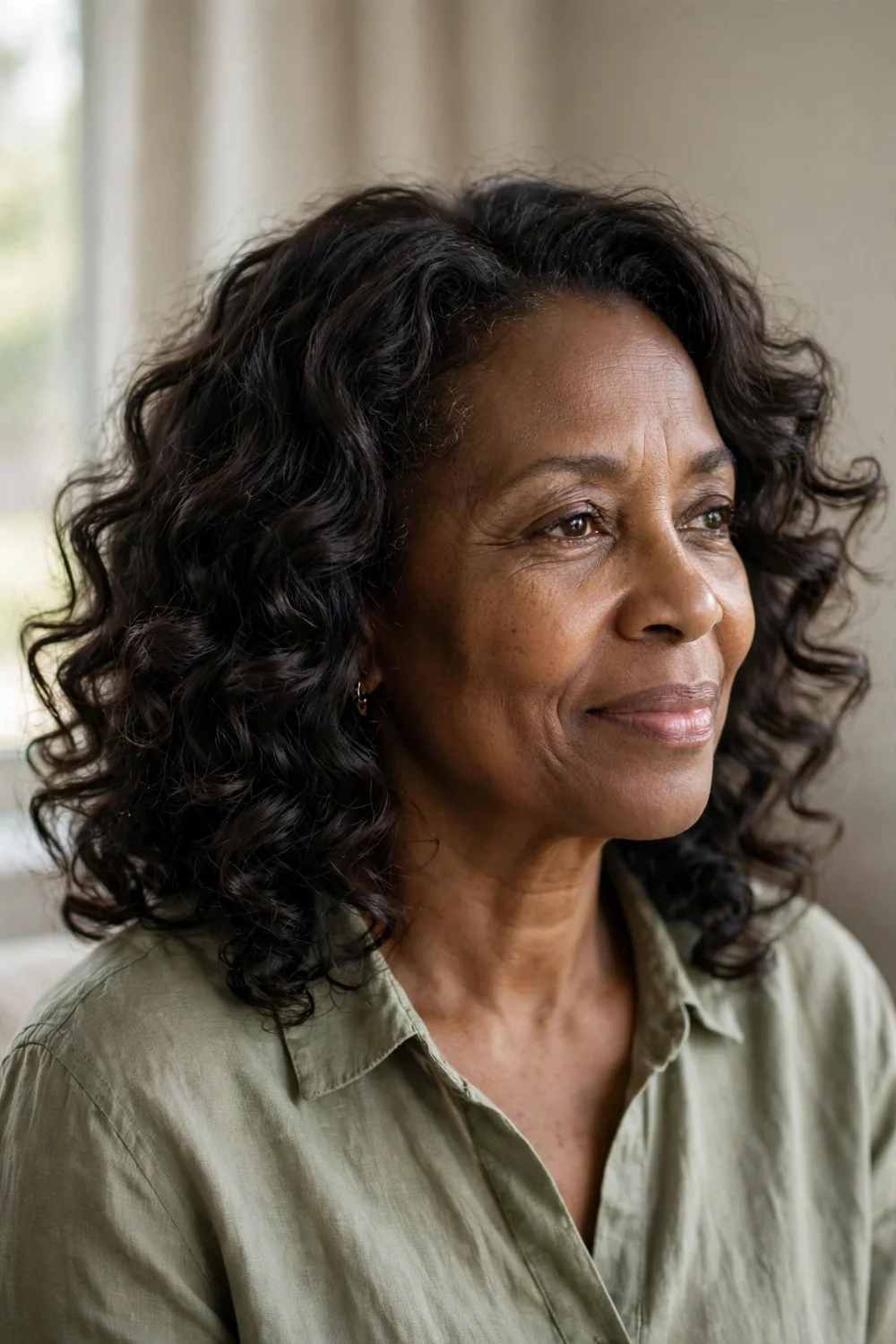
A modern perm gives fine hair what no blowout can: lasting bounce. Loose, airy curls build visual thickness without tight ringlets, and the texture stays in for months. This works best on a layered shoulder cut that keeps the curls from stacking into a triangle. Use a curl cream on soaking-wet hair for definition with minimal frizz. Modern perm formulas are gentler than the old ones, but deep condition weekly to protect fine strands.
Try this: Scrunch with a microfiber towel, never a regular one. Less frizz means the curls clump thicker.
17. Inverted Bob
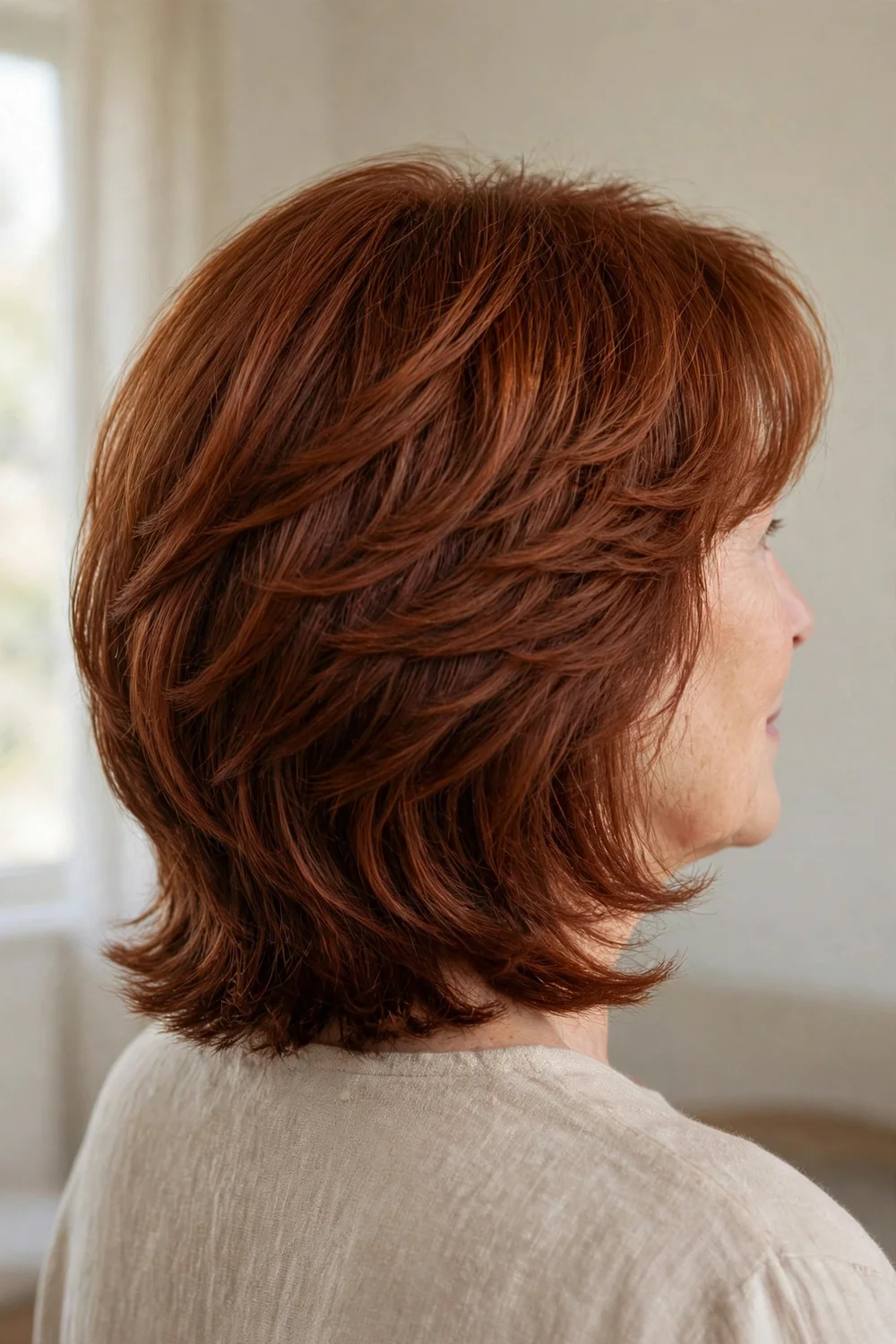
The inverted shape builds fullness where fine hair needs it most. Stacked layers at the back create natural lift and volume, while the longer front pieces keep the cut feminine and face-framing. The silhouette reads thick from every angle because the weight sits high. Subtle layering through the bottom keeps the ends from looking shelf-like. It grows out gracefully and styles with a round brush in minutes. The front pieces can tuck behind the ears or sweep forward for two different looks.
Try this: Blow-dry the back first with a round brush, lifting at the roots. The crown sets the direction for the whole style.
If you are a few years past 50, these medium hairstyles for fine hair over 60 cover the same fine-hair concerns with an older-audience angle.
18. Feathered Mid-Length with Airy Finish
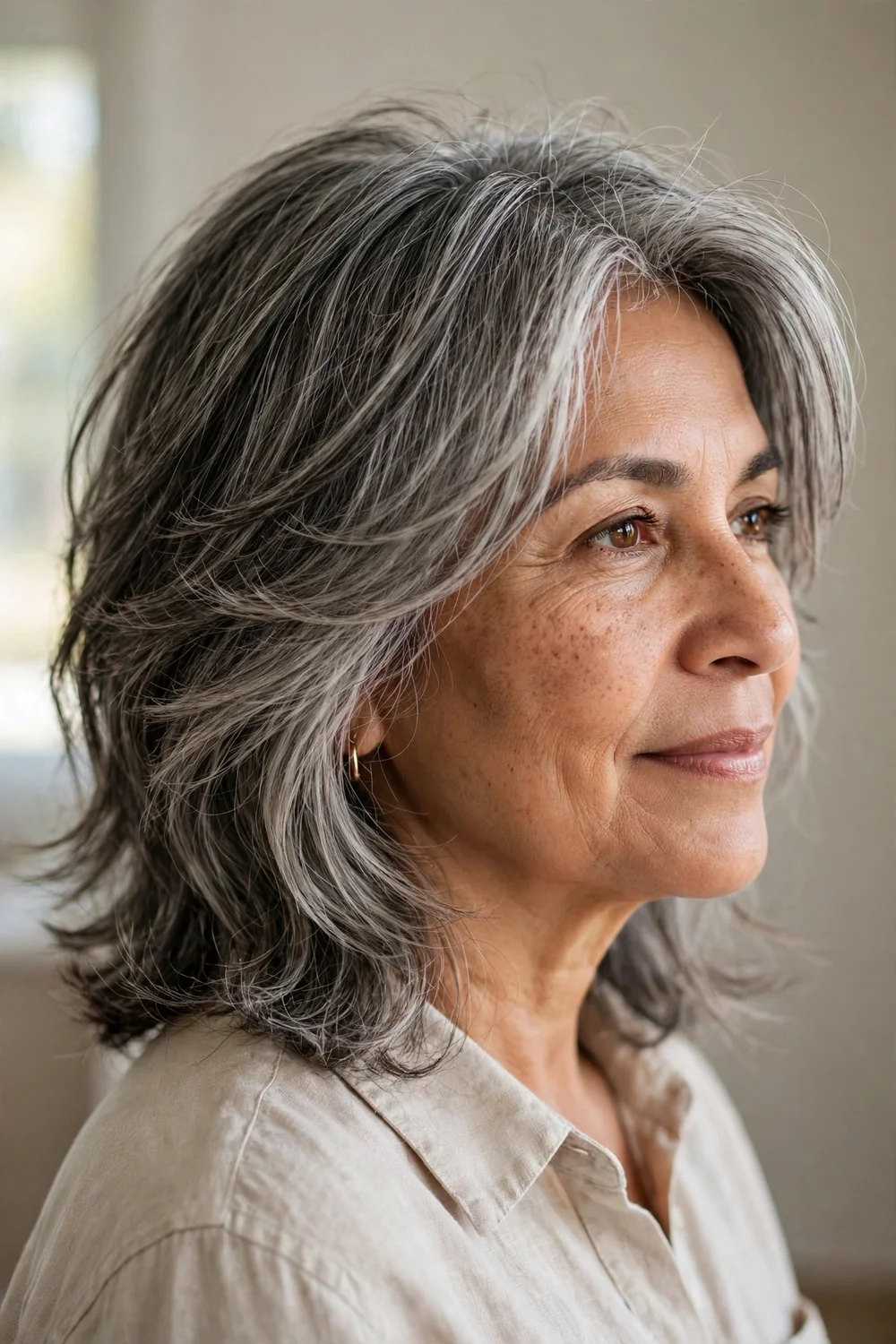
Feathering through the mid-lengths keeps this cut light without going thin. The technique thins the hair’s edge in tiny pieces, so the ends look soft instead of blunt or stringy. Airy layers around the face open up the features and show off salt-and-pepper color to its best. This cut is kind to air-drying and needs almost no product. Ask for the feathering to start below the ear so the top keeps its fullness.
Try this: Add a balayage or a few face-framing highlights. Light pieces around the face make feathered hair look even fuller.
19. Hush Cut for Quiet Volume
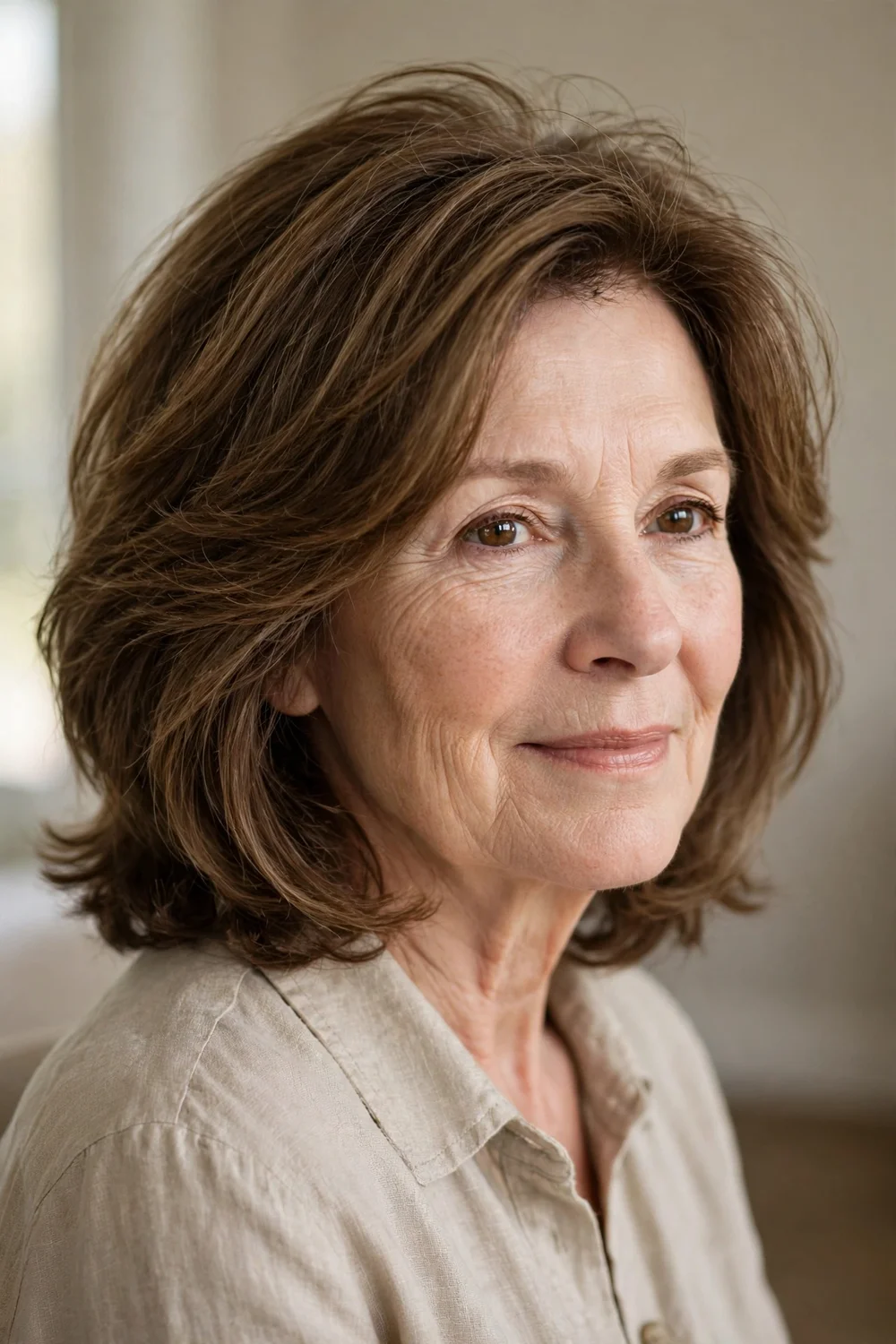
The hush cut is the 2026 answer to women who hate high-maintenance styling. The layers are long, blended, and barely there, creating the illusion of thicker, bouncier hair rather than obvious steps. It adds gentle lift at the crown and frames the face with feathery pieces, then falls into place on its own. It works on fine hair, flatters gray and color-treated hair, and grows out with no harsh lines between trims, which means fewer emergency salon visits. Trim every eight to ten weeks to keep the layers seamless.
Try this: Blow-dry with a large round brush, directing the ends under for polish or outward for a breezier feel. A lightweight mousse at the roots is all the product you need.
20. Crown-Lifting Side-Part Cut
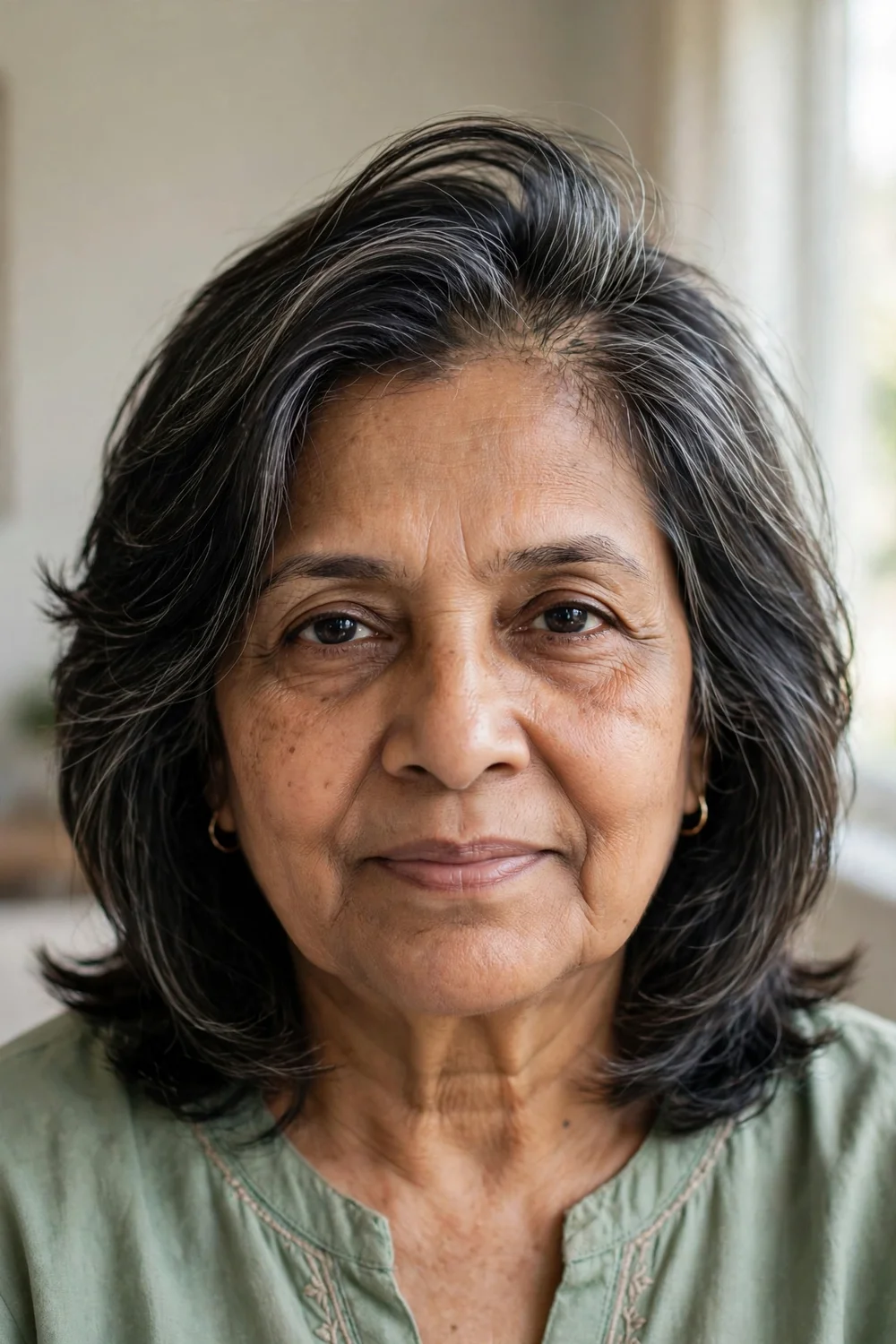
A widening part is one of the first things women notice in their 50s, and this cut is built to hide it. The part is shifted deep to one side on purpose, which covers the thinning line and lifts the roots on the heavy side for instant height. Light layering through the crown adds the kind of lift a center part can never give. The rest of the cut stays simple and shoulder length. Ask your stylist to cut the shape with the part in place, since switching it later changes how the layers fall.
Try this: Dust a little root powder or eyeshadow that matches your hair along the part. It makes the scalp line look denser in seconds.
21. Flipped-End Medium Cut
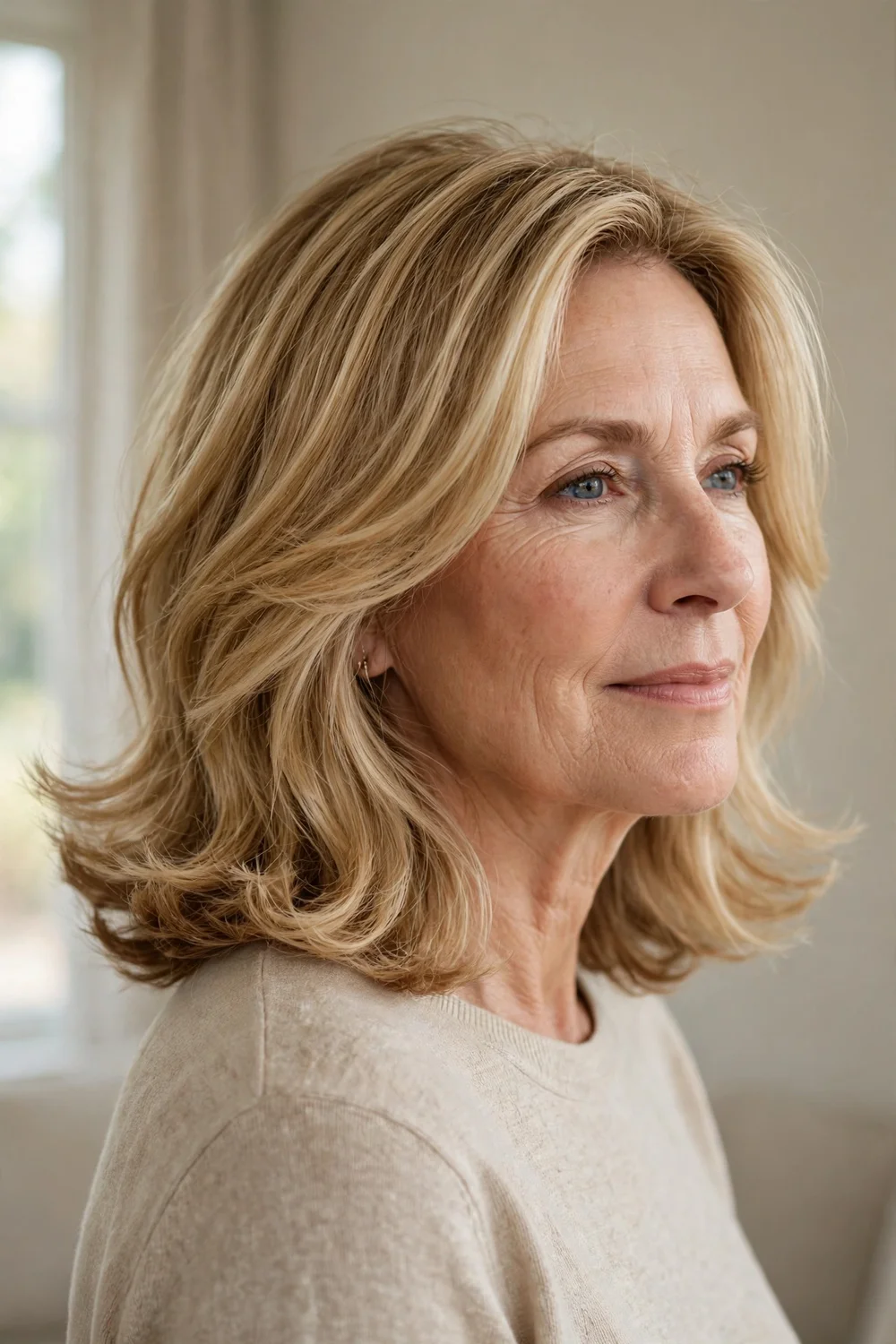
Flip the ends outward and the bottom of your hair looks twice as wide. Textured ends are cut into a shoulder-length base, then styled outward with a flat iron or round brush for a lively, swung-out finish. The outward flip creates width exactly where fine hair looks narrowest. It is a cheerful style that suits straight and slightly wavy hair, and it photographs well. Keep the texture light so the ends stay full instead of wispy.
Try this: Point the flat iron outward on just the bottom inch, one section at a time. A flexible-hold spray keeps the flip from falling flat.
When mornings are short, these medium hairstyles for busy women keep the routine under ten minutes.
22. Gray Grow-Out Friendly Cut
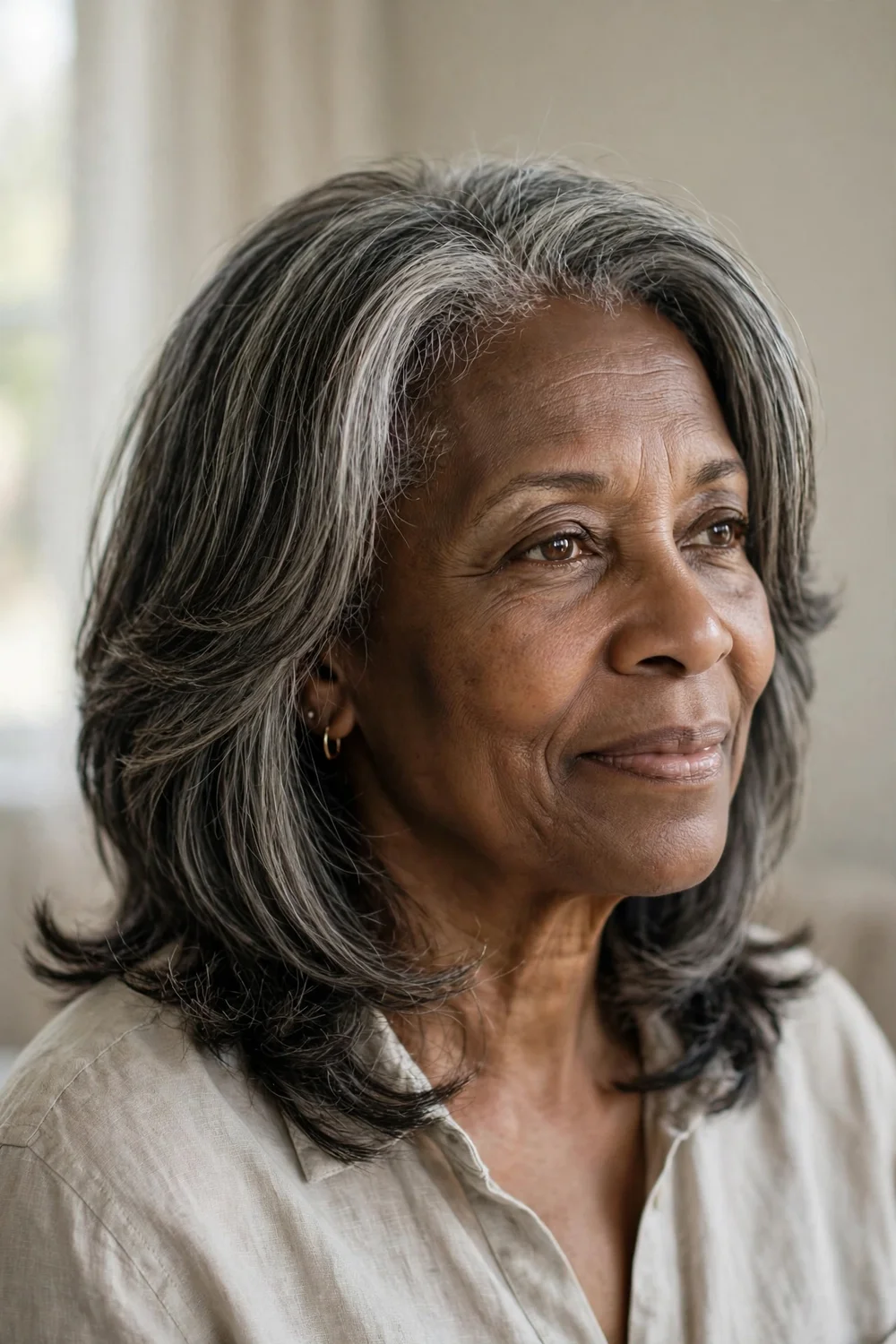
Transitioning to gray takes planning, and the cut matters as much as the color. This shoulder-length cut uses blended layers and soft lowlights to blur the line where old color meets new gray, so there is never a harsh stripe. The shape stays intentional while the color changes, which is what keeps the grow-out looking like a choice. Face-framing pieces keep the look current. Plan on a trim every eight weeks to slowly remove the old color.
Try this: Ask for lowlights that match your natural gray pattern instead of highlights. They blend the transition with fewer appointments.
Medium Hairstyles for Fine Hair Over 50 Comparison at a Glance
| Style | Best For | Styling Time | Volume Trick |
|---|---|---|---|
| Shoulder-Length Layers | Most hair types | 5-10 min | Long blended layers lift roots |
| Layered Bob with Movement | Straight to wavy hair | 5-10 min | Interior layers at crown |
| Collarbone Lob with Long Layers | All face shapes | 5-10 min | Blunt perimeter keeps ends thick |
| Soft Tousled Waves | Natural wave | 10 min | Waves push hair outward |
| Balayage with Undercut Layers | Fine but dense hair | 10-15 min | Hidden undercut removes bulk |
| Silver Shoulder Cut | Embracing gray | 5-10 min | Light-catching silver adds dimension |
| Copper-Red Layered Cut | Fair to medium skin | 10 min | Rich color adds visual weight |
| Blonde Sweeping Layers with Side Bang | Thinning hairline | 10 min | Side bang covers hairline |
| Relaxed Medium Shag | Air-dryers | 5 min | Feathered texture hides thin spots |
| Wispy Feathered Ends | Straight fine hair | 5 min | Feathering moves ends without thinning |
| Curtain Bangs with Long Layers | Oval and round faces | 10 min | Fringe frames face, draws eye up |
| Wavy Textured Bob | Slightly wavy hair | 10 min | Point-cut ends remove bulk |
| Curled-Under Lob | Work/polished looks | 10 min | Rolled edge reads as density |
| Modern Wolf Cut | Current trends | 5-10 min | Separated layers stop flat clumping |
| Blunt-Edge Lob with Deep Side Part | Thinning crown | 5 min | Deep part lifts crown instantly |
| Permed Mid-Length Curls | Lasting texture | 5 min | Months-long bounce |
| Inverted Bob | Flat crowns | 10 min | Stacked back builds height |
| Feathered Mid-Length with Airy Finish | Salt-and-pepper hair | 5 min | Feathered edges look soft, not thin |
| Hush Cut for Quiet Volume | Low maintenance | 5-10 min | Seamless layers create illusion of fullness |
| Crown-Lifting Side-Part Cut | Widening part | 5 min | Shifted part hides thin line |
| Flipped-End Medium Cut | Straight hair | 10 min | Outward flip adds bottom width |
| Gray Grow-Out Friendly Cut | Transitioning to gray | 5-10 min | Blended layers blur color line |
How to Choose the Right Cut for You
Start with your hairline. If the part is widening or the temples are thinning, pick a cut with a deep side part, side-swept bang, or curtain bangs. These shapes cover the problem area while building lift where you need it.
Next, think about your routine. If you blow-dry daily, any layered cut will reward the effort. If you air-dry, lean toward the shag, hush cut, or feathered finishes that look finished with almost no work. Be honest about the mornings you actually have, not the ones you wish you had.
Finally, factor in color. Fine hair over 50 looks fuller with dimension: balayage, lowlights, or a single rich tone like copper or warm blonde. One flat color on fine hair shows every thin spot. Bring photos of cuts AND colors to your appointment.
Mistakes to Avoid
Do not ask for short, choppy layers cut high on the head. On fine hair they remove the little density you have and make the ends look wispier. Keep the shortest layer at or below the chin.
Do not skip conditioner entirely. Many women with fine hair fear it, but dry hair breaks and broken ends look thinner. Just keep conditioner from mid-length down, away from the scalp.
Do not wash daily with a heavy shampoo. Every two to three days is the sweet spot for most fine hair. On off days, a root-lifting spray or dry shampoo at the crown buys you another day of volume.
Do not use heavy waxes, oils, or butters near the roots. They flatten fine strands within hours. Save richer products for the ends only, where the hair needs moisture most.
Frequently Asked Questions
Will layers make my fine hair look thinner?
Long, blended layers usually add volume, not take it away. Short, choppy layers cut high on the head can make thin ends look wispier, so ask your stylist to keep the shortest layer at or below the chin. A blunt perimeter also helps the ends look thick. If your hair is very sparse at the crown, ask for interior layering instead of surface layers.
What medium haircut adds the most volume for fine hair over 50?
The layered lob with a deep side part builds the most reliable volume for most women. The collarbone length keeps weight off the roots while the side part lifts the crown, and long layers add movement without thinning the ends. A round-brush blowout on top of that cut adds even more lift.
How often should I trim medium-length fine hair?
Every six to eight weeks works for most fine hair at medium length. Fine ends split and thin out faster than coarse hair, so a regular trim keeps the perimeter thick and the layers clean. If you color your hair, book the trim with your color appointment to save time.
Can I grow out gray hair with a medium cut?
Yes, and medium length makes the transition easier than long or short. Ask for blended layers and lowlights that soften the line where color meets gray. A shoulder-length cut with face-framing pieces grows out gracefully because the shape stays intentional while the color changes.
What styling products work best for fine hair over 50?
Lightweight products win: a volumizing mousse at the roots on damp hair, a heat protectant before hot tools, and a dry texture spray for midday lift. Skip heavy waxes and oils near the scalp because they flatten fine strands. A small amount of lightweight cream on the ends adds polish without weight.
Final Thoughts
Fine hair over 50 is not a limitation. It is a hair type with clear rules: keep the length at medium, layer long and blended, lift the roots, and add dimension with color. Pick one cut from this list that fits your routine, book the appointment, and give it two weeks. Most women are surprised how much fuller the right shape makes their hair look.

