



A blunt fringe is one of the fastest ways to change your whole look without touching your length. Cut straight across the forehead in one clean line, blunt bangs pull attention to your eyes and give even the simplest haircut a sharp, deliberate edge.
After years of covering hair trends, blunt bangs remain one of the most requested fringes in salons. This guide breaks down 24 blunt bangs hairstyles, from the classic straight-across cut to textured, curly, and asymmetrical takes, so you can find the version that fits your face shape, hair type, and routine.
Quick answer: Blunt bangs are cut straight across the forehead in a clean line, usually at or just above brow level. They work best on straight to wavy hair with medium to thick density, flatter oval and long face shapes most, and need a trim every 3 to 4 weeks to keep the line sharp.
Quick Takeaways
- Blunt bangs sit in a straight line across the forehead, typically at or just above the eyebrows.
- They suit straight, wavy, and curly hair, but each texture needs a different cutting approach.
- Oval, long, and square face shapes get the most natural balance from a blunt fringe.
- Plan on a trim every 3 to 4 weeks and 5 minutes of daily styling to keep the line crisp.
- Curly and fine hair can wear blunt bangs too, with the right cut and styling routine.
Why Blunt Bangs Keep Coming Back
Blunt bangs never fully disappear because the shape does so much work. A straight line across the forehead shortens the look of a long face, frames the eyes, and makes thin hair look denser at the front. It also reads as intentional: even air-dried hair looks styled when the fringe is sharp.
The cut is also more flexible than it looks. Density, length, and edge texture can all be adjusted, which is why the same basic idea produces everything from a heavy curtain-grazing fringe to a feathered, see-through take.
What to Know Before You Cut
Blunt bangs are a commitment. They touch your face all day, so they pick up oil faster than the rest of your hair, and they need trims every 3 to 4 weeks to hold the line. If your hair is wavy or curly, expect daily smoothing with a flat iron or a dryer, unless you choose a textured version on purpose.
Talk through density with your stylist. A heavy, deep-set fringe suits thick hair; fine hair usually needs a lighter section so the bangs don’t pull all the volume forward. Bring photos of the exact version you want, because “blunt bangs” can mean very different things.
1. Classic Straight-Across Blunt Bangs
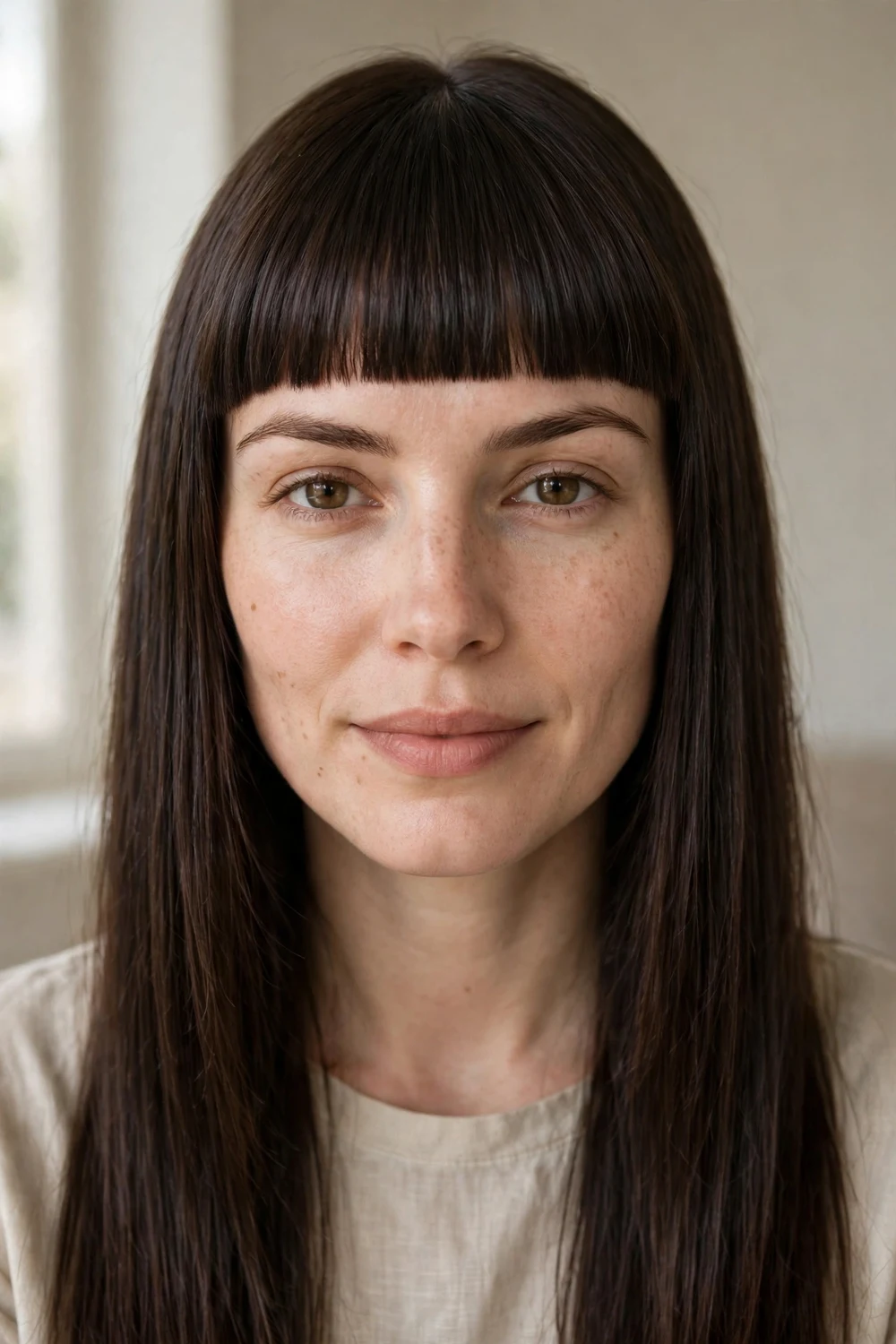
The classic version is the reference point for every other style here: a full fringe cut in one clean horizontal line at brow level. It covers the forehead completely and draws a hard frame around the eyes and cheekbones. This cut works best on straight, medium-to-thick hair, where the density keeps the line full and even.
Try this: Blow-dry bangs straight down with a paddle brush, then run a flat iron over them once. Finish with a drop of lightweight serum for shine.
Difficulty: Medium
2. Layered Blunt Bangs
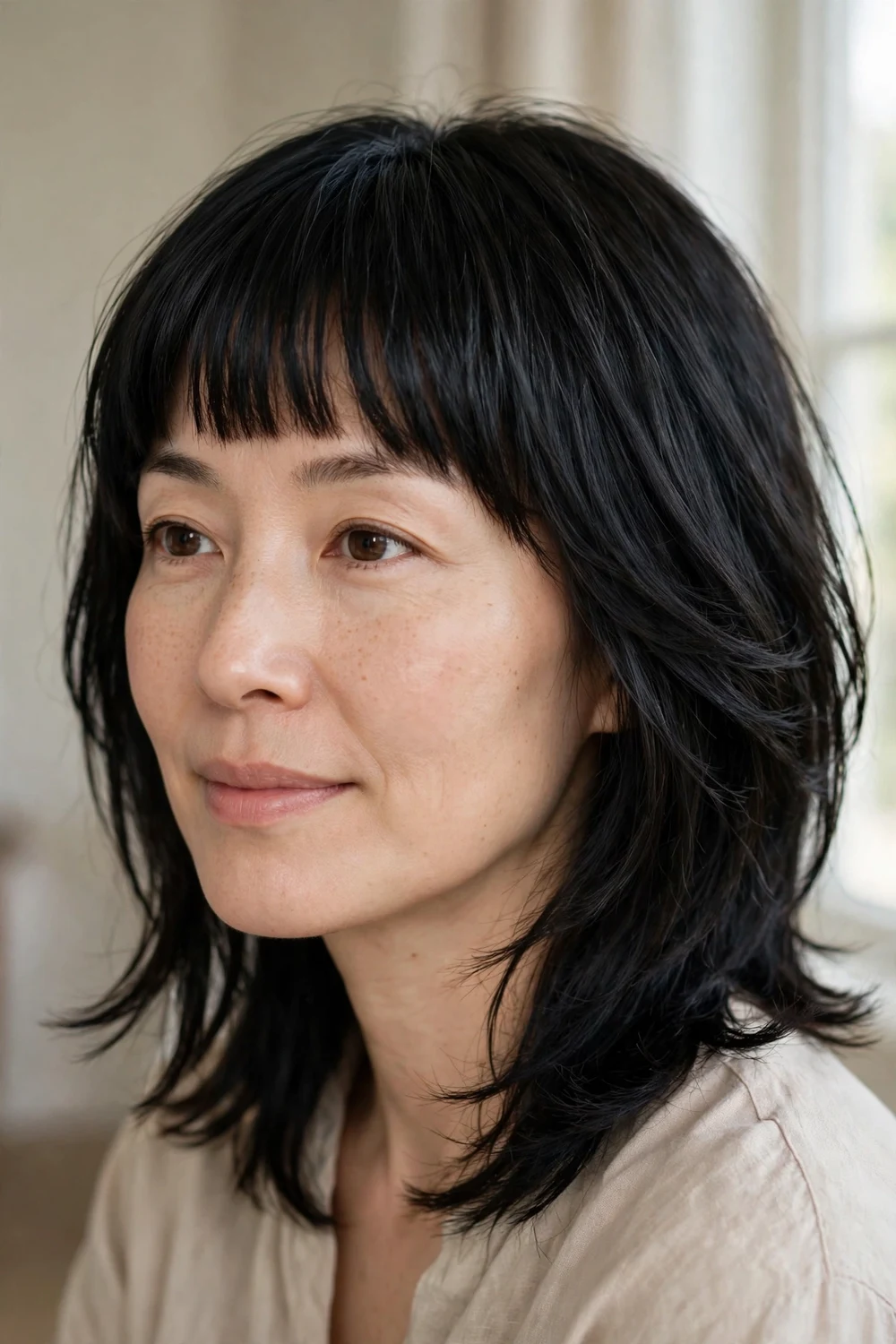
Layered blunt bangs keep the straight-across line but soften the bottom edge with subtle internal layering. The result is less severe than the classic cut: the fringe still reads as blunt, but the ends move and blend instead of sitting in one solid slab. This version flatters thick hair especially well, since the layers remove bulk without breaking the line.
Try this: Ask your stylist to point-cut just the last half inch. At home, tousle with your fingers and a dab of texturizing cream.
Difficulty: Easy
If layers are doing the heavy lifting in your haircut, our guide to short layered haircuts shows how layered shapes pair with different fringe lengths.
3. Wispy Blunt Bangs
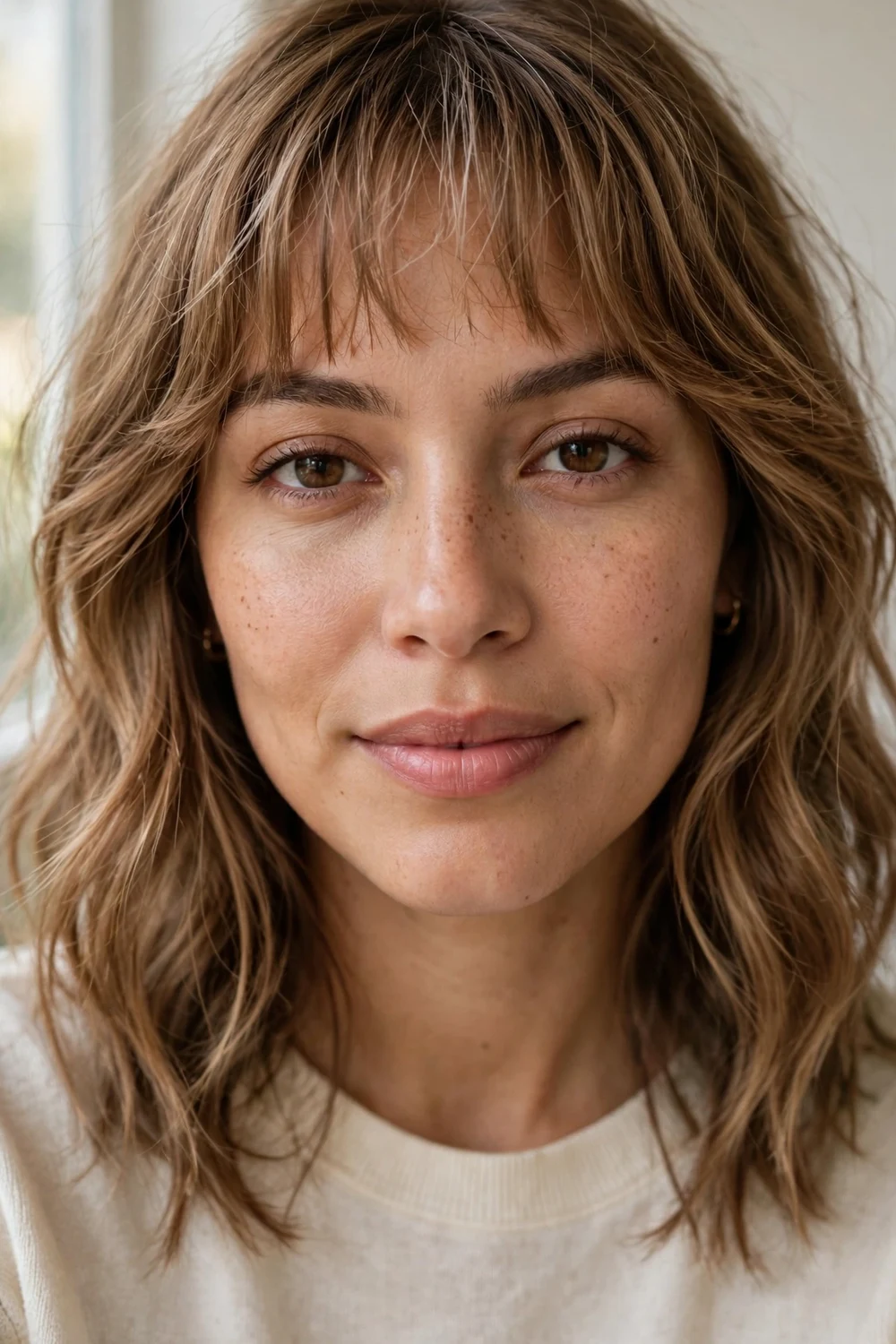
Looking for the blunt shape without the full commitment? Wispy blunt bangs are cut straight across but thinned through the ends, so the forehead shows through in places. The line stays horizontal, but the texture feels light and airy instead of heavy. This is the easiest entry point if you want to try bangs and grow them out later, since the softer edge blends back into the haircut.
Try this: Work volumizing mousse into damp bangs and blow-dry with your fingers, lifting at the roots. Skip heavy creams, which flatten the airy texture.
Difficulty: Easy
For the full spectrum of feathered fringe looks, see wispy bangs hairstyles for every hair length.
4. Curly Blunt Bangs
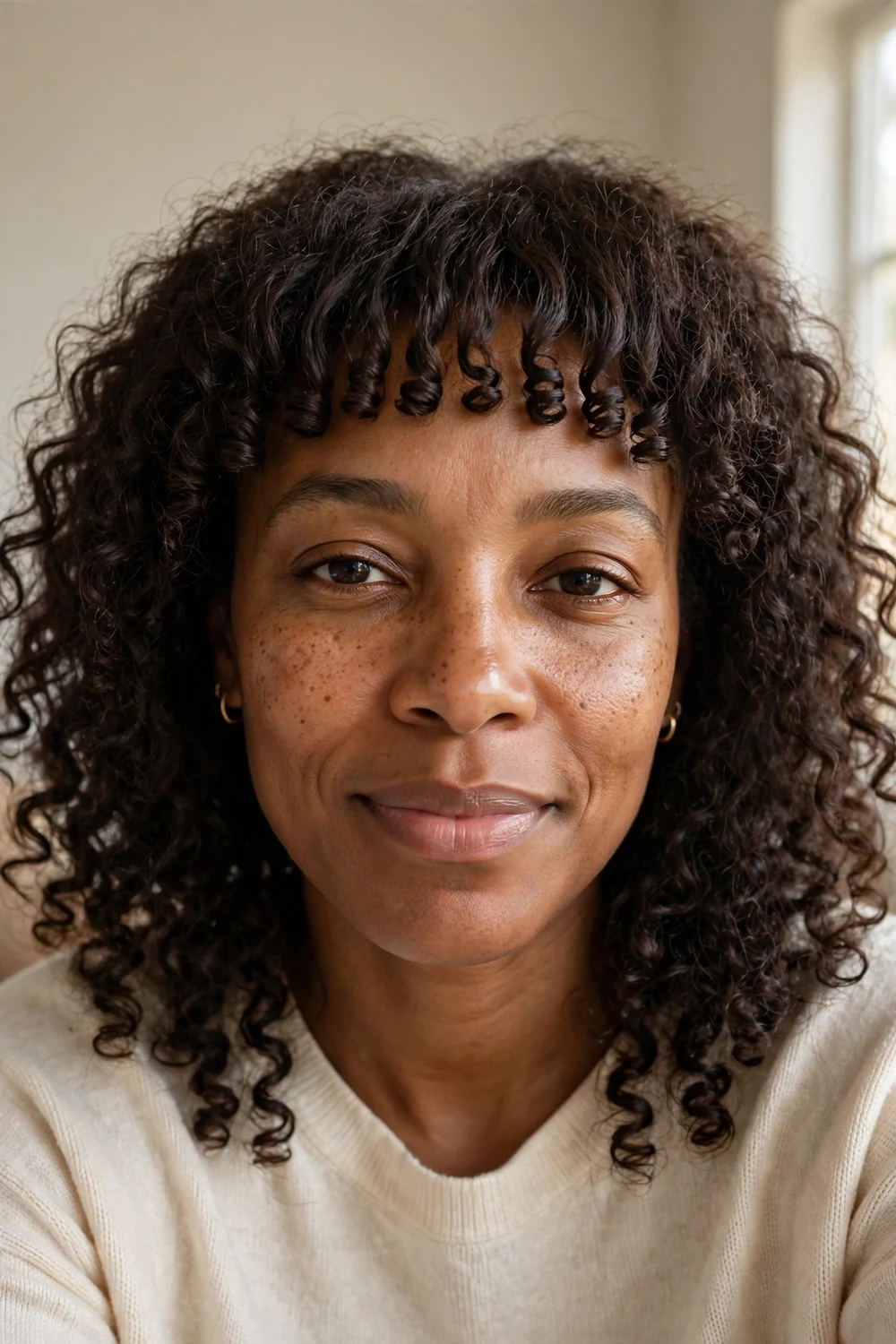
Curly hair can absolutely carry a blunt fringe; the rules just change. Curls shrink as they dry, so the bangs must be cut dry, curl by curl, and left longer than the target length. The finished look is a straight-across line that sits above the brow with soft, springy texture. Defined with curl cream and zero heat, it keeps a sharp edge while showing off natural curl pattern.
Try this: Book a curl-specialist stylist, ask for a dry cut, and scrunch curl cream into the fringe. Never cut curly bangs wet and stretched.
Difficulty: Hard
5. Textured Blunt Bangs
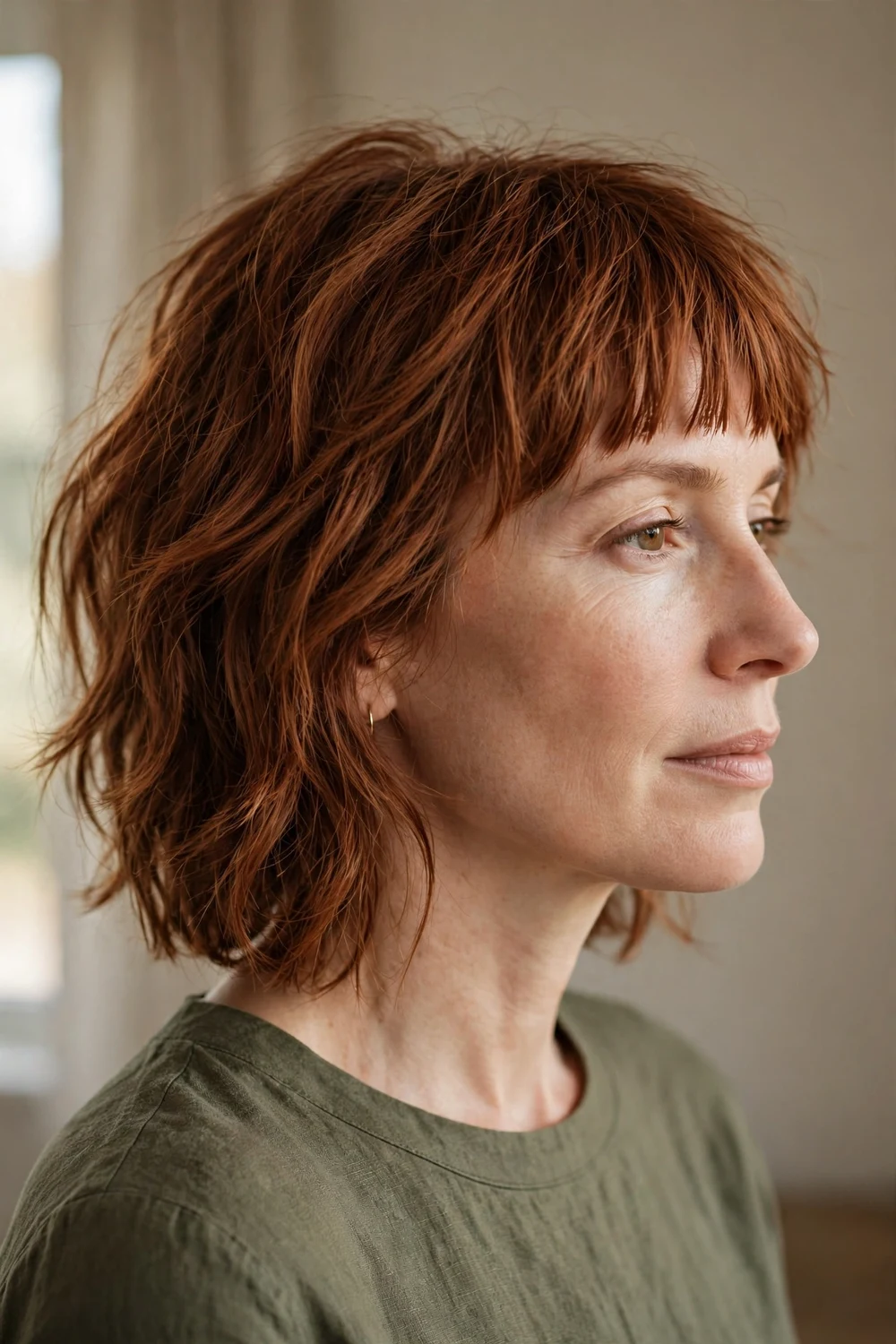
Point-cutting the ends of a blunt fringe creates texture without changing the silhouette. The line still runs straight across, but small variations in length catch the light and add dimension. This version suits wavy and thick hair, where a perfectly solid line can look too rigid. It also grows out more gracefully than a razor-sharp edge.
Try this: Pinch small sections with a pea-sized amount of wax or pomade to piece out the ends. Let the rest fall naturally.
Difficulty: Easy
6. Asymmetrical Blunt Bangs
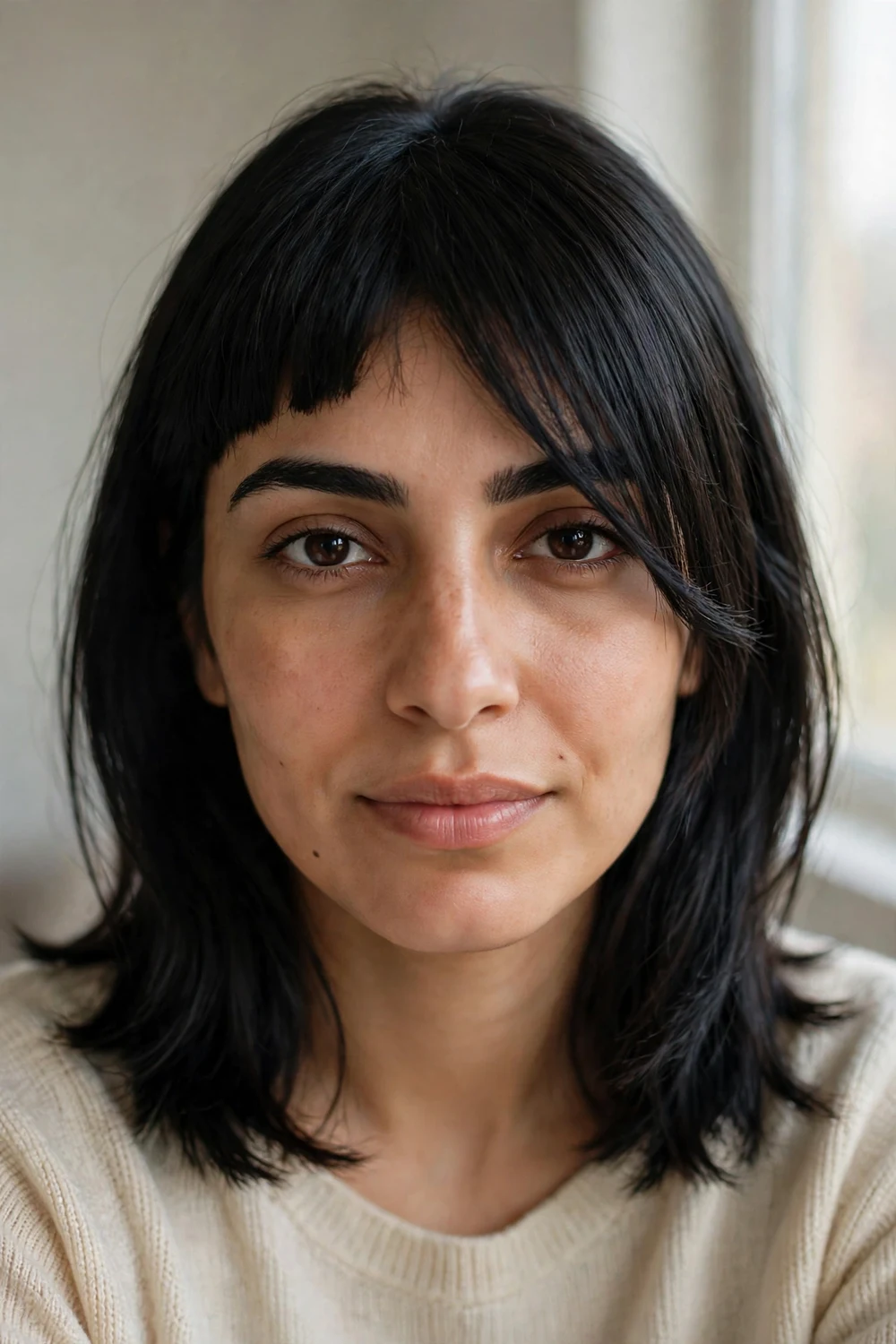
Cut straight across but shorter on one side, asymmetrical blunt bangs tilt the classic line into something edgier. The uneven edge pulls the eye diagonally, which makes the style especially flattering on round and square faces. Pair it with a sleek bob or long straight hair so the fringe stays the clear focal point.
Try this: Smooth with a flat iron, directing the shorter side slightly across the forehead. A center part behind the fringe keeps the asymmetry visible.
Difficulty: Medium
7. Side-Swept Blunt Bangs
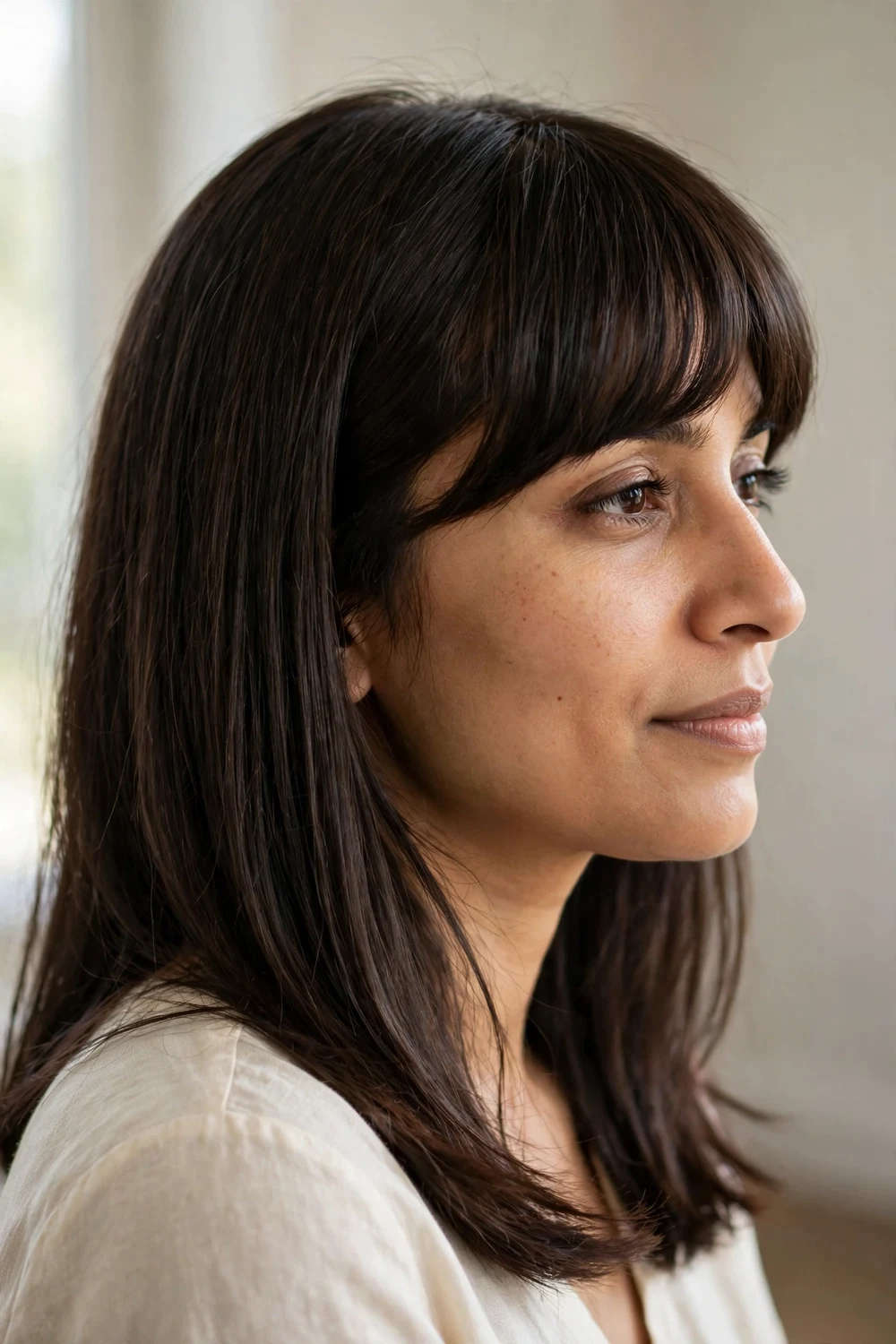
Side-swept blunt bangs keep the thick, even density of a blunt cut but angle the whole fringe across the forehead from a side part. You get the fullness of blunt bangs with a softer, more casual feel, and the diagonal line slims wider face shapes. It works on straight and wavy hair, and it is more forgiving than a center-worn fringe if your hairline has a strong cowlick.
Try this: Blow-dry the fringe across the forehead toward the side you part on, using a round brush for a slight curve at the ends.
Difficulty: Easy
If you like the angled fringe idea, browse side swept bangs ideas for more ways to wear a sweeping fringe.
8. Blunt Bangs with a Beard
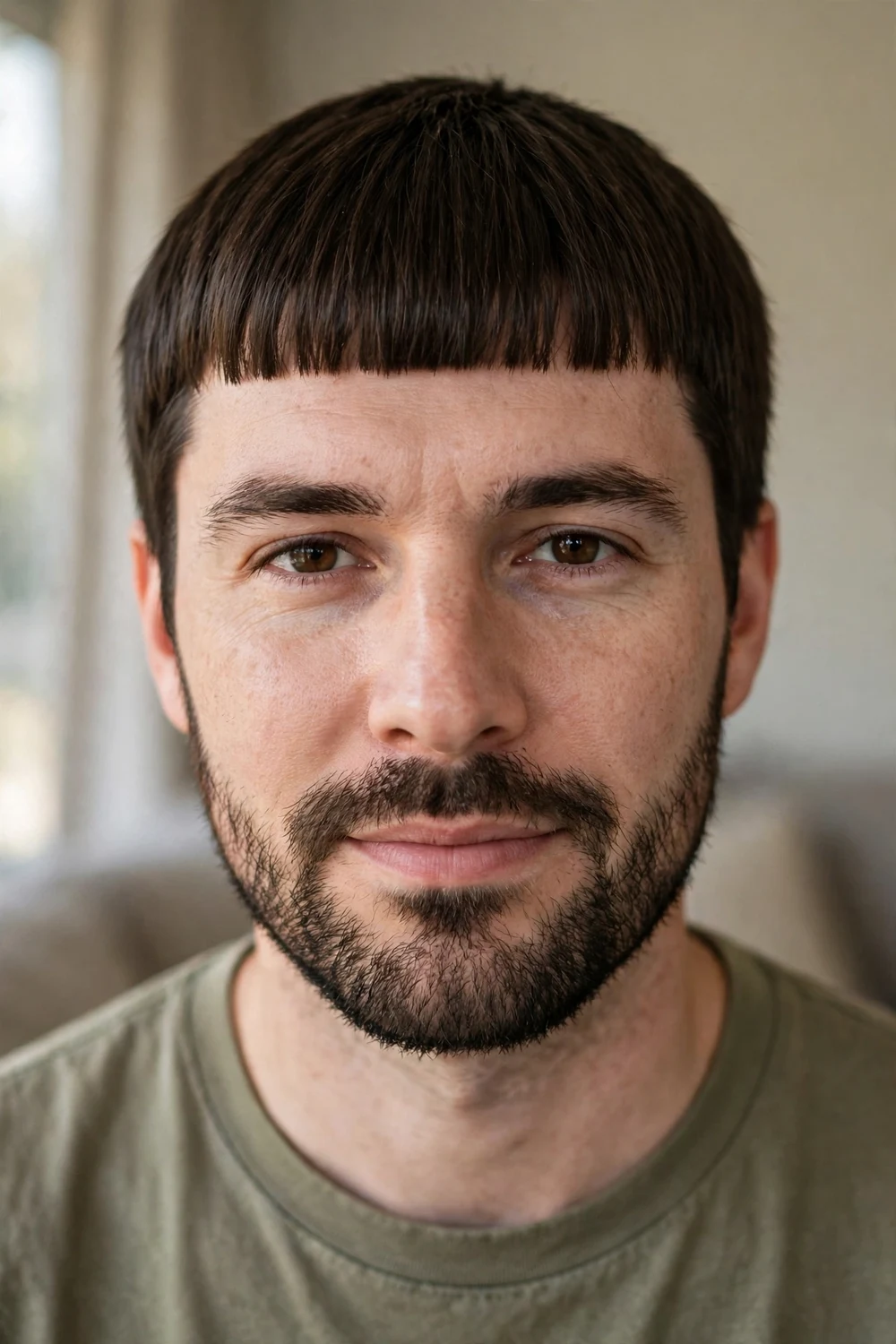
Blunt bangs are not only for women. Paired with a well-groomed beard, a straight-across fringe creates a balanced, deliberate look: the sharp line on top echoes the defined edge of the beard. Keep the fringe at brow level and the beard tidy at the cheeks so both features read clean. This combination suits straight to wavy hair with enough density to hold the line.
Try this: Trim the fringe every 3 weeks to keep it above the eyes, and line up the beard’s cheek line on the same schedule.
Difficulty: Medium
9. Blunt Bangs with Long Hair
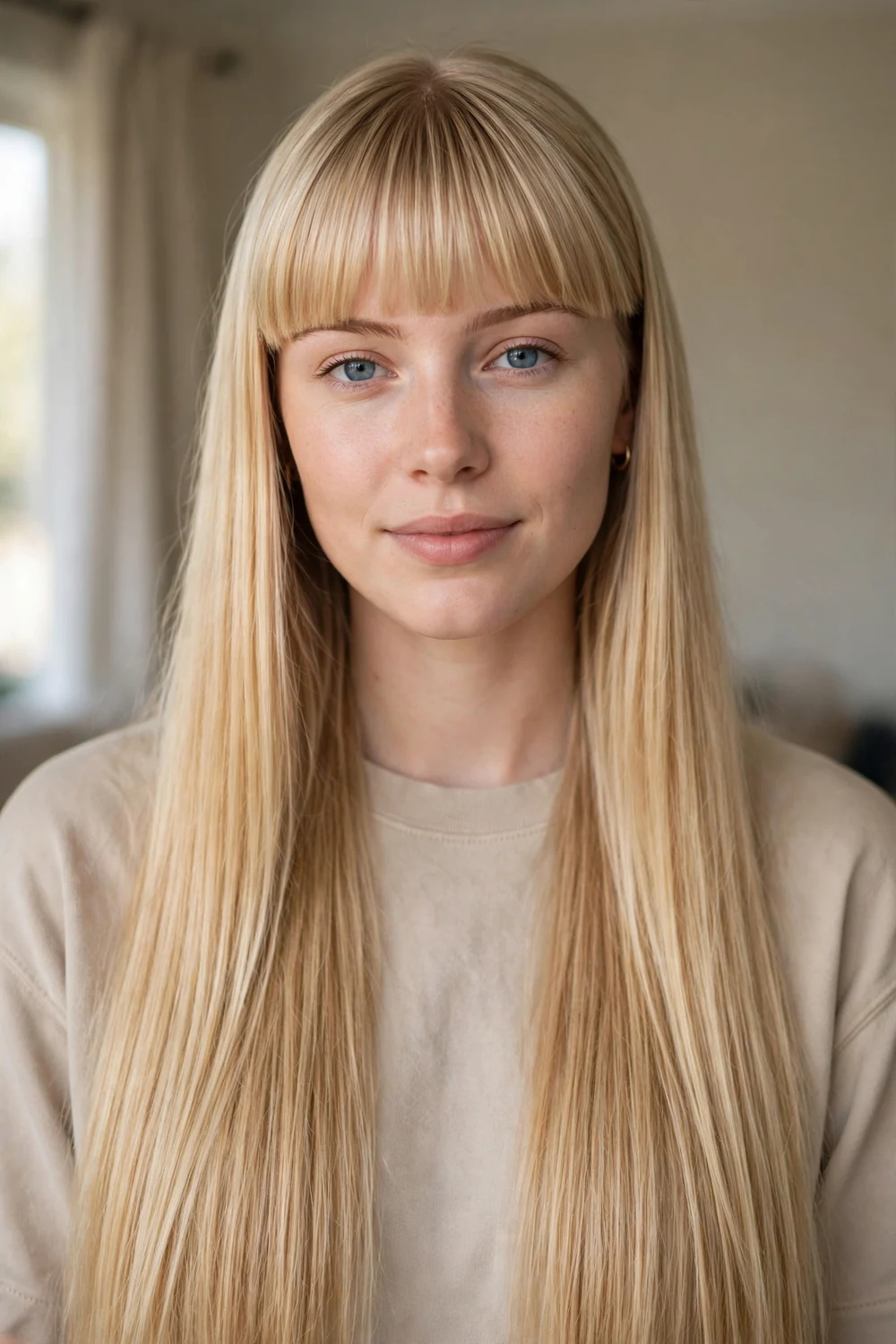
Long hair plus blunt bangs is a striking contrast: endless length behind, one crisp line in front. The fringe breaks up the face-framing monotony that long hair can develop, and it gives the whole style a focal point. Wear the lengths sleek for a polished look or add loose waves for a softer, bohemian feel. Either way, the bangs carry the style.
Try this: Keep the lengths healthy with regular dusting trims; split ends make a sharp fringe look untidy by comparison. A shine spray on the lengths balances the matte fringe.
Difficulty: Medium
10. Blunt Bangs with a Bob Cut
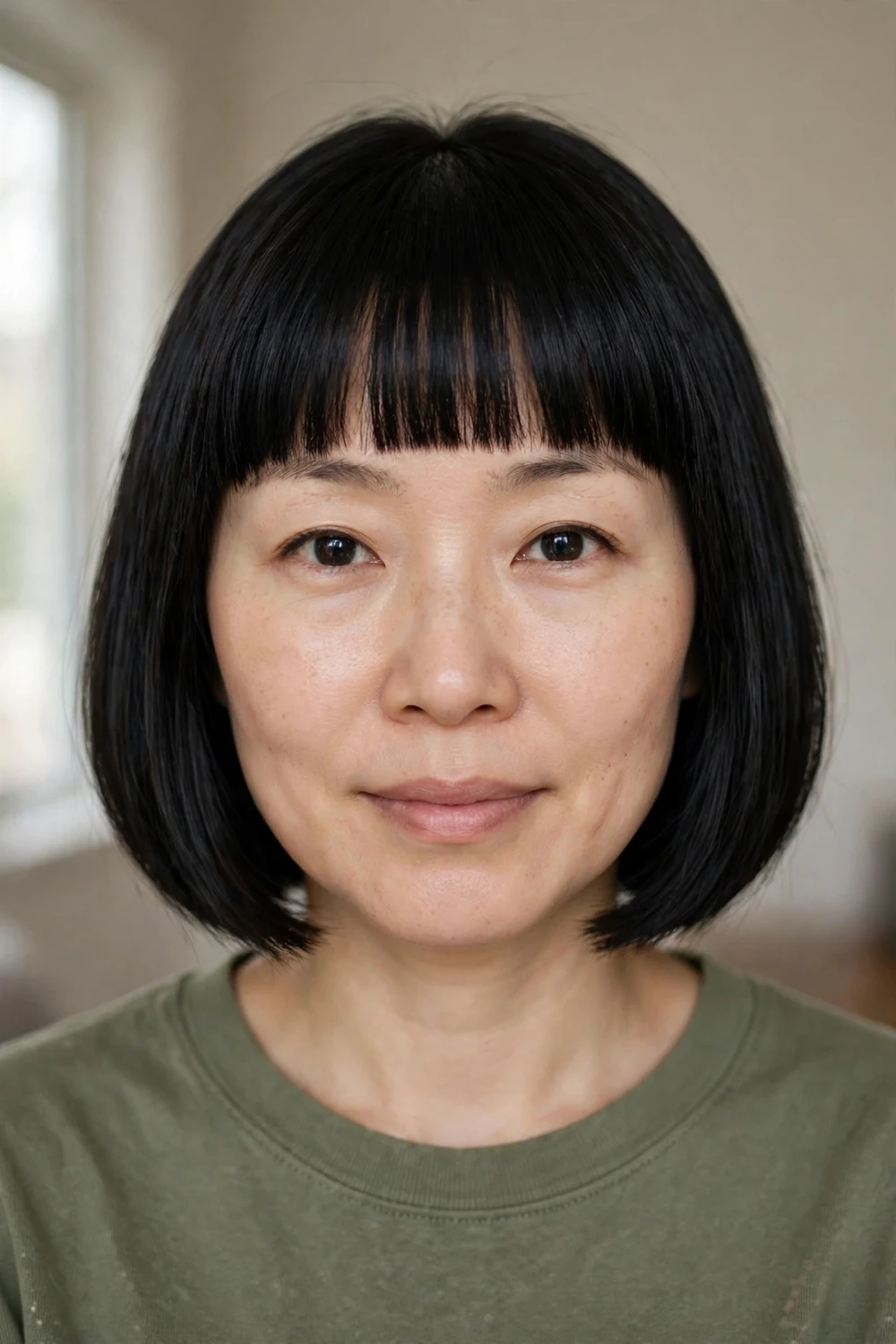
The bob-and-bangs pairing is close to timeless for a reason. A structured bob with a straight-across fringe creates one continuous frame around the face, from the fringe line down through the jaw-length ends. It flatters most face shapes, stays easy to maintain, and styles in minutes. Chin-length and jaw-length bobs both work; shorter bobs read edgier, longer ones read softer.
Try this: Blow-dry the bob with a round brush for a slight under-curve, and smooth the bangs separately with a paddle brush so the two lines stay distinct.
Difficulty: Easy
11. Blunt Bangs with Ombre Color

Ombre color turns a blunt fringe into a color feature. The gradual fade from darker roots to lighter ends adds depth right where the eye lands first, and the straight line of the fringe makes the color transition look deliberate. This works best when the ombre starts below the fringe, so the bangs stay rich and dark while the lengths lighten.
Try this: Use a color-safe shampoo and a weekly mask to keep the lightened ends from drying out, since dry ends frizz against a smooth fringe.
Difficulty: Medium
12. Blunt Bangs with Highlights

Highlights woven through blunt bangs add brightness and movement to the fringe. Lighter pieces catch the light across the straight line, which keeps a heavy fringe from looking flat. Face-framing highlights through the bangs also draw extra attention to the eyes. This pairs well with shoulder-length and longer hair, where the highlighted fringe connects to highlighted lengths.
Try this: Ask for babylights through the fringe rather than chunky pieces; fine highlights keep the blunt line looking solid instead of striped.
Difficulty: Medium
13. Blunt Bangs with a Shaggy Haircut
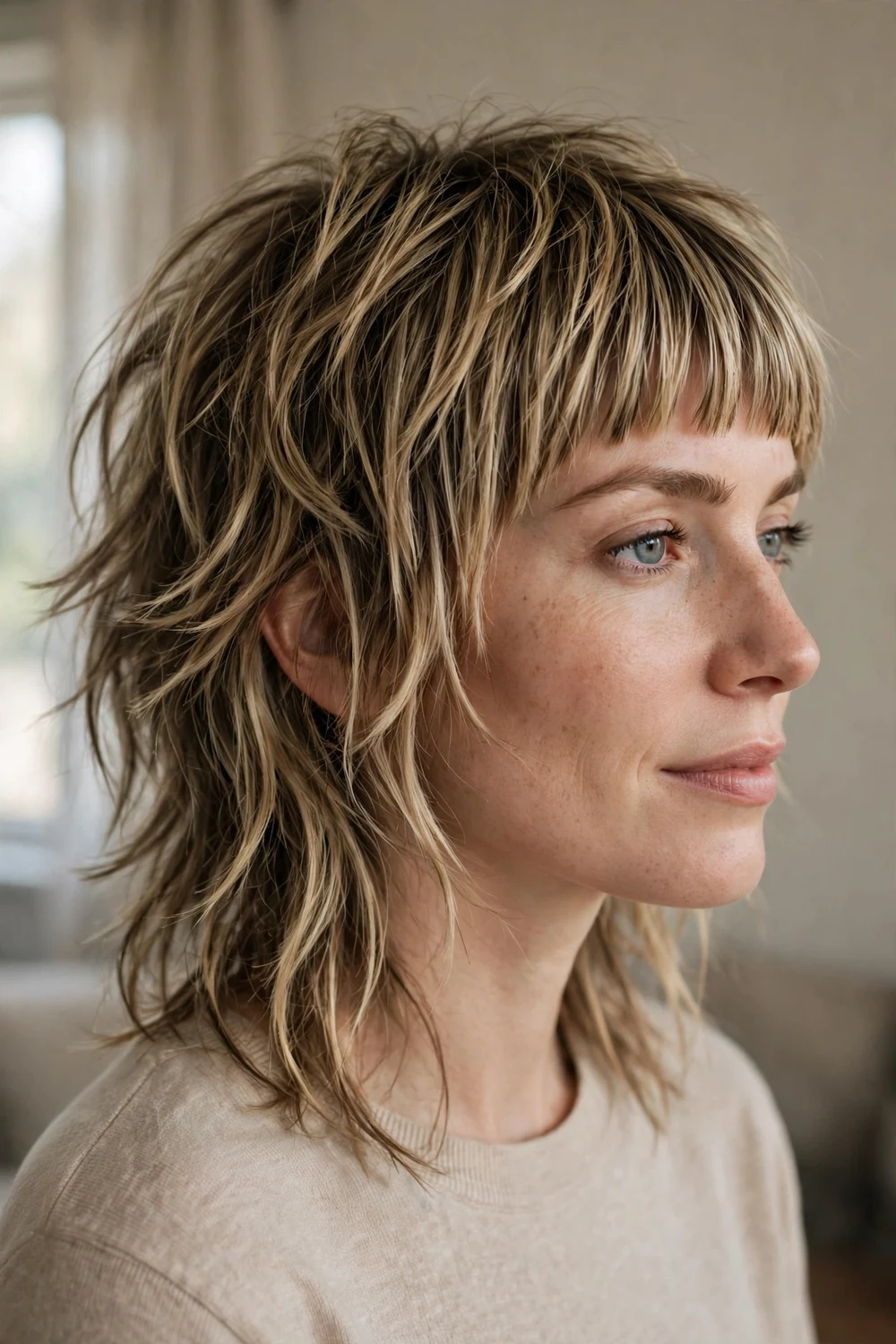
A shag’s choppy layers and a blunt fringe sound like opposites, but the contrast is exactly what makes this work. The messy, piecey layers keep the look relaxed while the sharp fringe adds structure, so the style reads as cool rather than undone. This is a good pick if you want blunt bangs without a polished, put-together vibe.
Try this: Scrunch texturizing spray into the layers and let them air-dry, but smooth the fringe separately with a dryer so the blunt line stays crisp.
Difficulty: Easy
14. Blunt Bangs with a Center Part
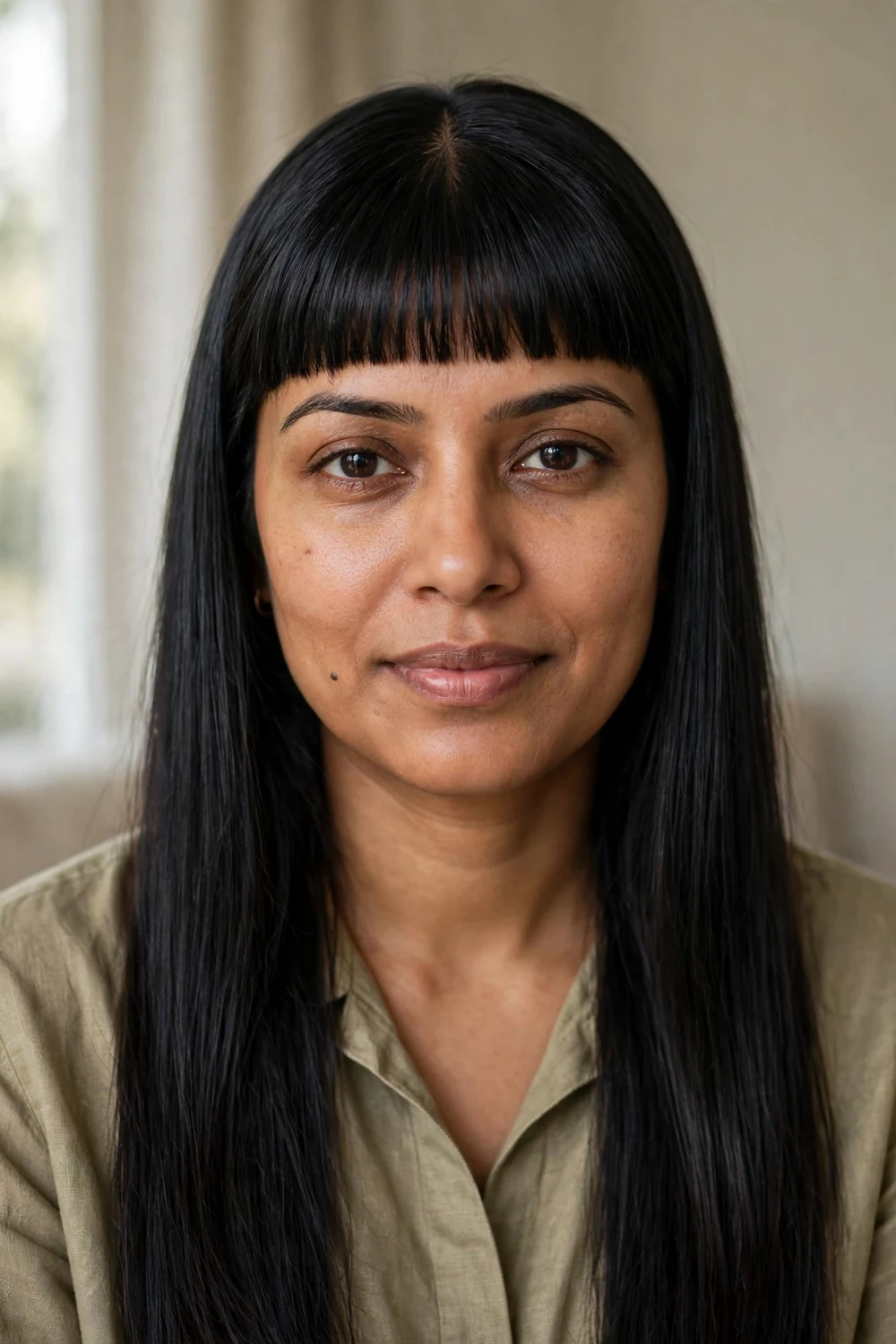
Wearing the hair behind a blunt fringe in a center part creates symmetry from crown to ends. The middle part draws the eye down the center of the face while the fringe frames the forehead, which suits oval and heart-shaped faces especially well. Keep the part clean and the lengths smooth so the geometry of the style stays visible.
Try this: Set the part while hair is damp, then flat-iron the lengths in sections. A middle part plus blunt bangs shows every uneven spot, so keep up with trims.
Difficulty: Medium
15. Blunt Bangs with a Pixie Cut
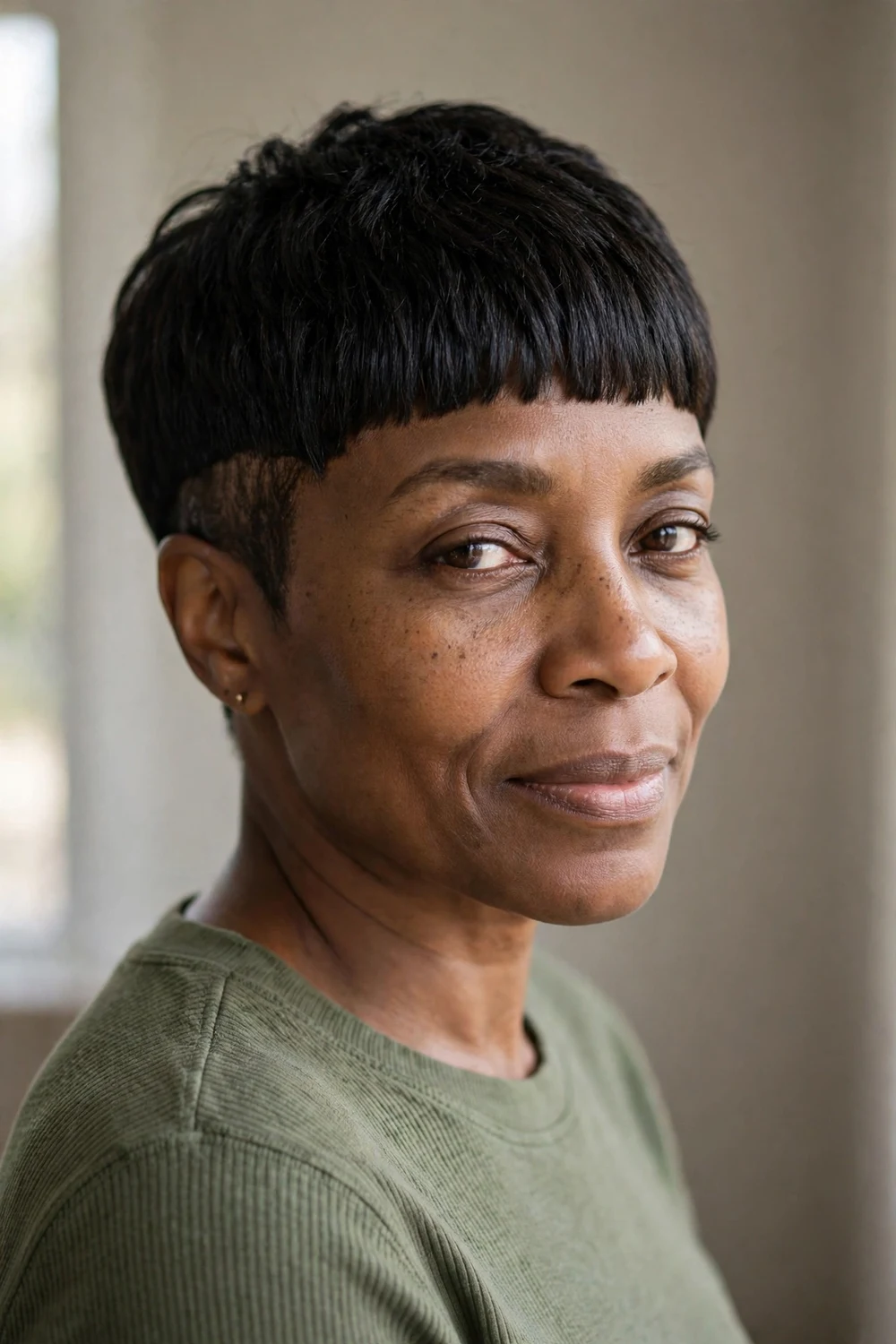
A pixie with blunt bangs is a bold pairing: very short sides and back against a full, straight fringe. The contrast makes both features stronger, and the fringe gives a pixie extra styling surface in front. This cut suits oval and heart-shaped faces, and it grows out into a chic crop with minimal awkward phases if the fringe is kept trimmed.
Try this: Flat-iron the fringe and piece the crown with a small amount of pomade for separation. Trims every 4 weeks keep the shape intact.
Difficulty: Easy
16. Blunt and Curtain Bangs Hybrid

Can’t decide between blunt and curtain bangs? This hybrid keeps a straight-across line through the center of the forehead, then lengthens and softens toward the sides, where the pieces blend into face-framing layers. You get the structure of a blunt fringe with the grow-out friendliness of curtain bangs. It suits medium to long hair and most face shapes.
Try this: Blow-dry the center straight down and the side pieces outward with a round brush, so the two textures read as one blended fringe.
Difficulty: Medium
Curious about the softer side of this pairing? Read curtain bangs for fine hair over 40 for a full breakdown of the curtain style.
17. Blunt Bangs for Thick Hair
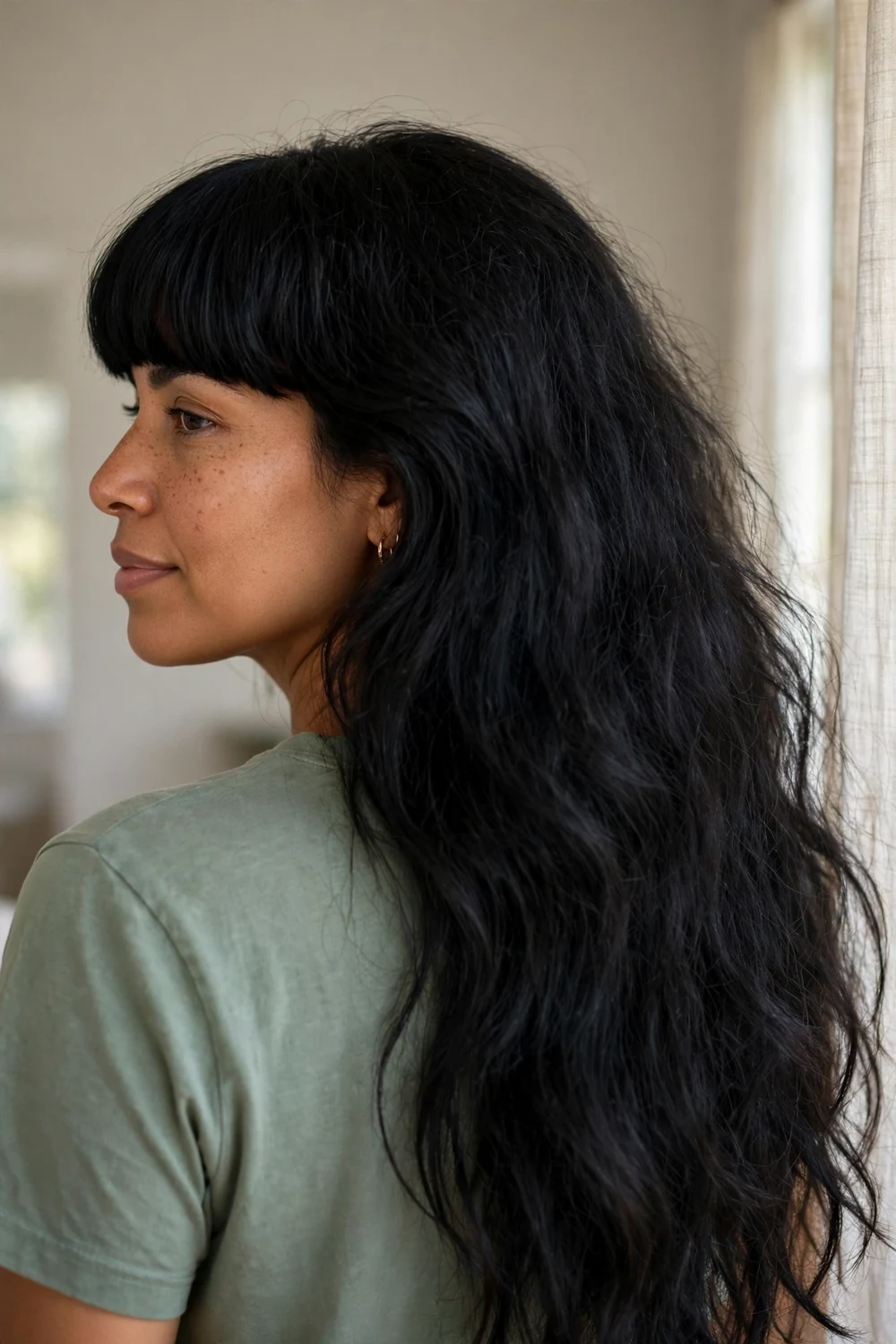
Thick hair and blunt bangs are a natural match. The density keeps the fringe full and even with minimal effort, and the straight line across the forehead actually calms the overall volume by giving the eye a clean stopping point. Ask your stylist to thin the interior of the fringe slightly if it feels too heavy; the outer line stays blunt while the weight lifts.
Try this: Dry the fringe with a paddle brush and a smoothing cream. Thick bangs air-dry with too much body, so a dryer is worth the two minutes.
Difficulty: Easy
18. Blunt Bangs for Thin Hair

Thin hair benefits from blunt bangs more than most people expect. A straight-across cut makes the front of the hair look denser because no length is feathered away. The trick is taking a shallow section: pull the fringe from too far back and the rest of the hair loses volume; keep it narrow and the bangs look full while the lengths stay intact.
Try this: Blow-dry the bangs with a small round brush for lift at the roots, and avoid heavy oils on the fringe, which separate fine hair into strings.
Difficulty: Easy
19. Blunt Bangs with Braids
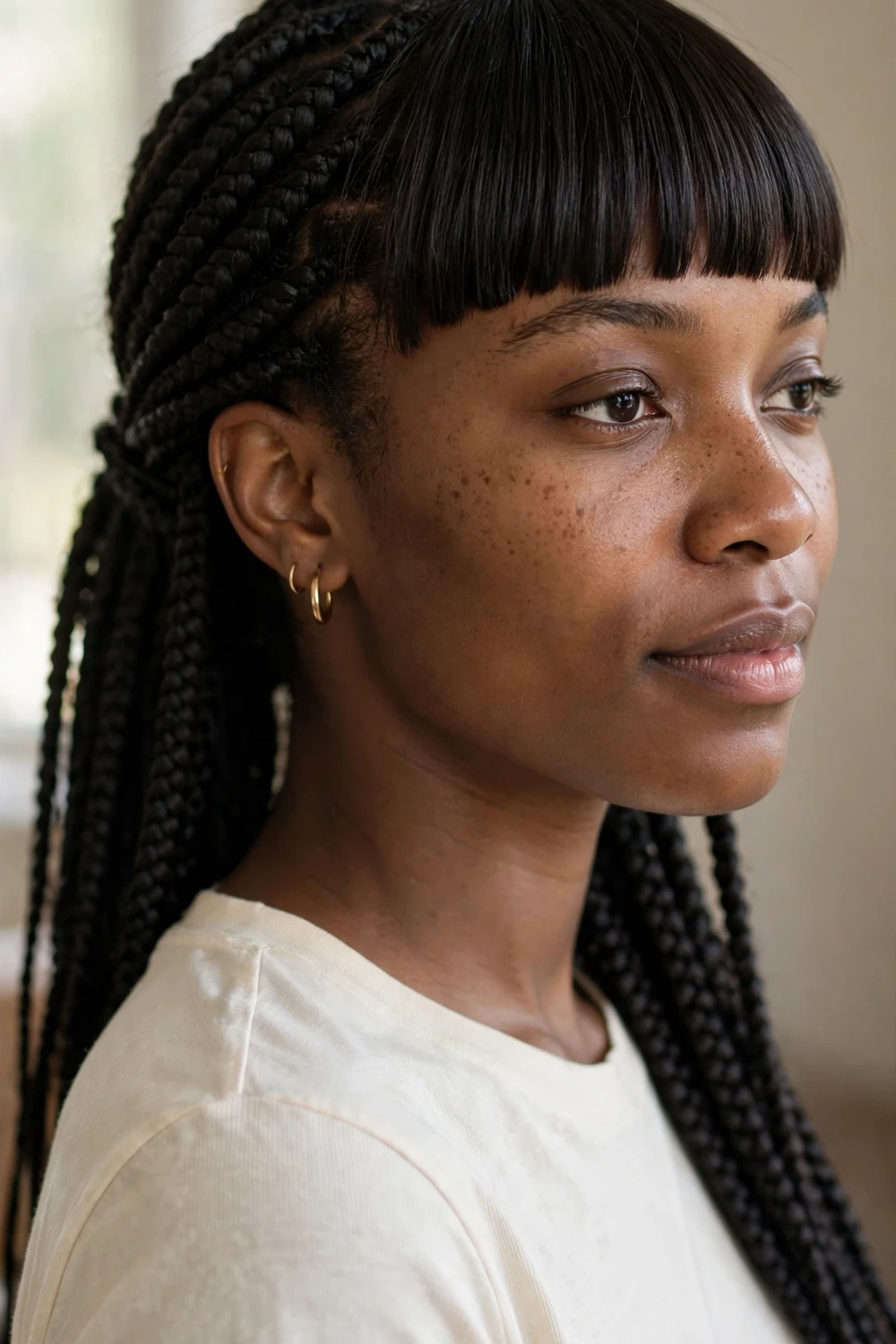
Pairing a precise fringe with braids creates a striking high-low mix: sharp in front, intricate behind. Wear the bangs smooth and straight while the rest of the hair goes into box braids, cornrows, or a single accent braid. The fringe keeps the look intentional instead of purely casual, which makes it work for events as well as everyday wear.
Try this: Smooth the fringe with a flat iron and edge control along the hairline. Keep braids away from the forehead so the blunt line stays visible.
Difficulty: Medium
20. Blunt Bangs for Square Face Shapes
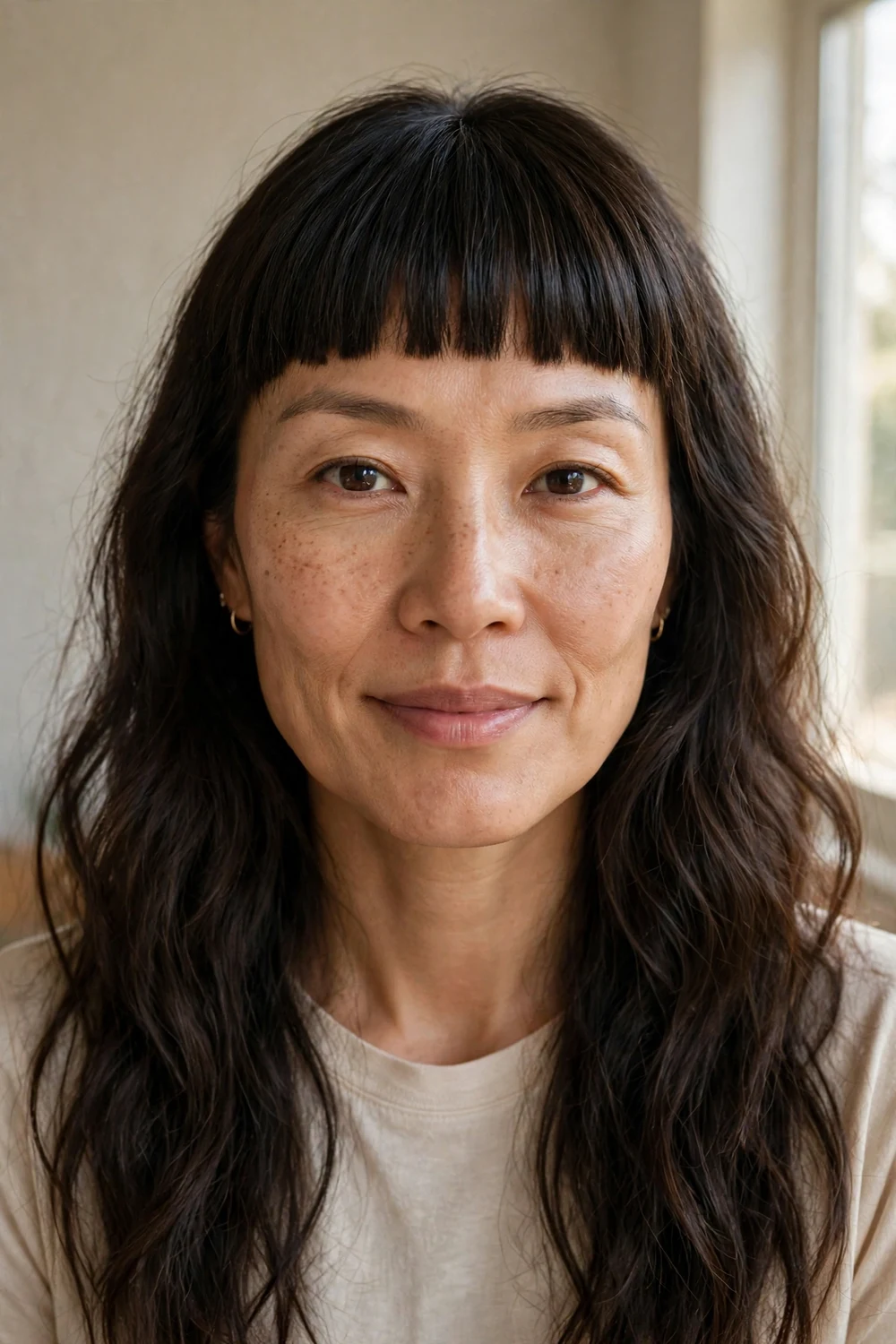
Square faces, with their strong jawlines, pair well with the horizontal line of blunt bangs. The fringe softens the forehead and shifts attention to the eyes and cheekbones instead of the jaw. Choose a length that hits at or just below the brows, and wear the lengths with some wave or layering so the overall shape doesn’t read too boxy.
Try this: Ask for the corners of the fringe to angle very slightly downward at the sides. That tiny adjustment keeps the line blunt while flattering a wider forehead.
Difficulty: Medium
21. Jaw-Length Blunt Cut with Blunt Bangs

A one-length cut that ends at the jaw, paired with a matching blunt fringe, creates a strong geometric frame around the entire face. It is shorter than a bob but longer than a pixie, which makes it a good middle ground if you want edge without going very short. The matching lines of fringe and perimeter make this one of the sharpest versions of blunt bangs.
Try this: Flat-iron everything for maximum precision, or tuck one side behind the ear to break the symmetry on casual days.
Difficulty: Medium
22. Deep-Set Heavy Blunt Bangs
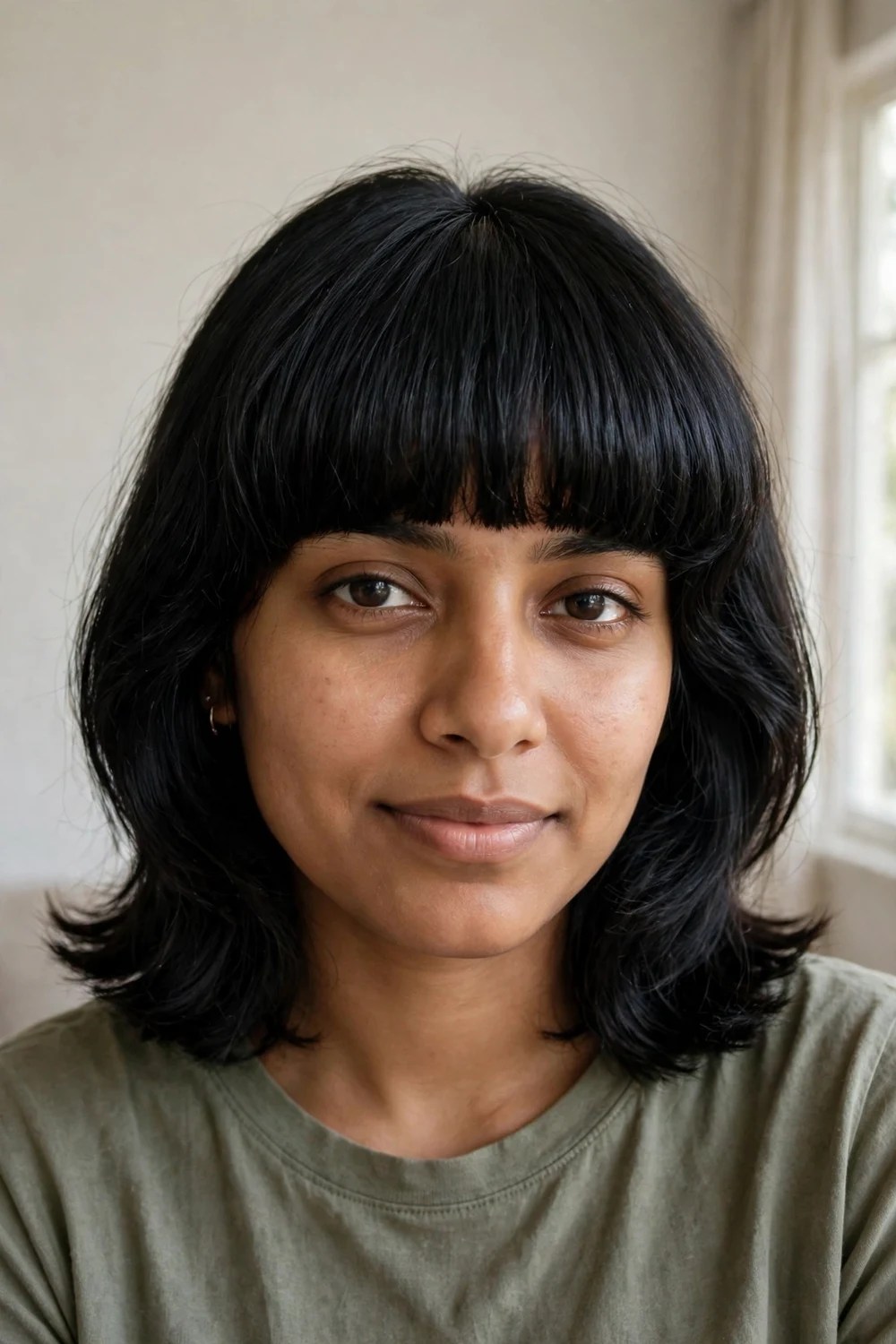
Deep-set bangs start further back on the crown, which creates an extra-thick, heavy fringe that wraps slightly around the sides of the face. The added density makes the blunt line look even more dramatic, and the wider section blends the fringe into the haircut instead of sitting on top of it. This version suits thick, straight hair and a shoulder-length lob especially well.
Try this: Because the section is large, dry it in two layers (top and underneath) so the interior dries fully. Damp spots underneath cause the fringe to separate.
Difficulty: Hard
23. Blunt Window Bangs with an Open Center
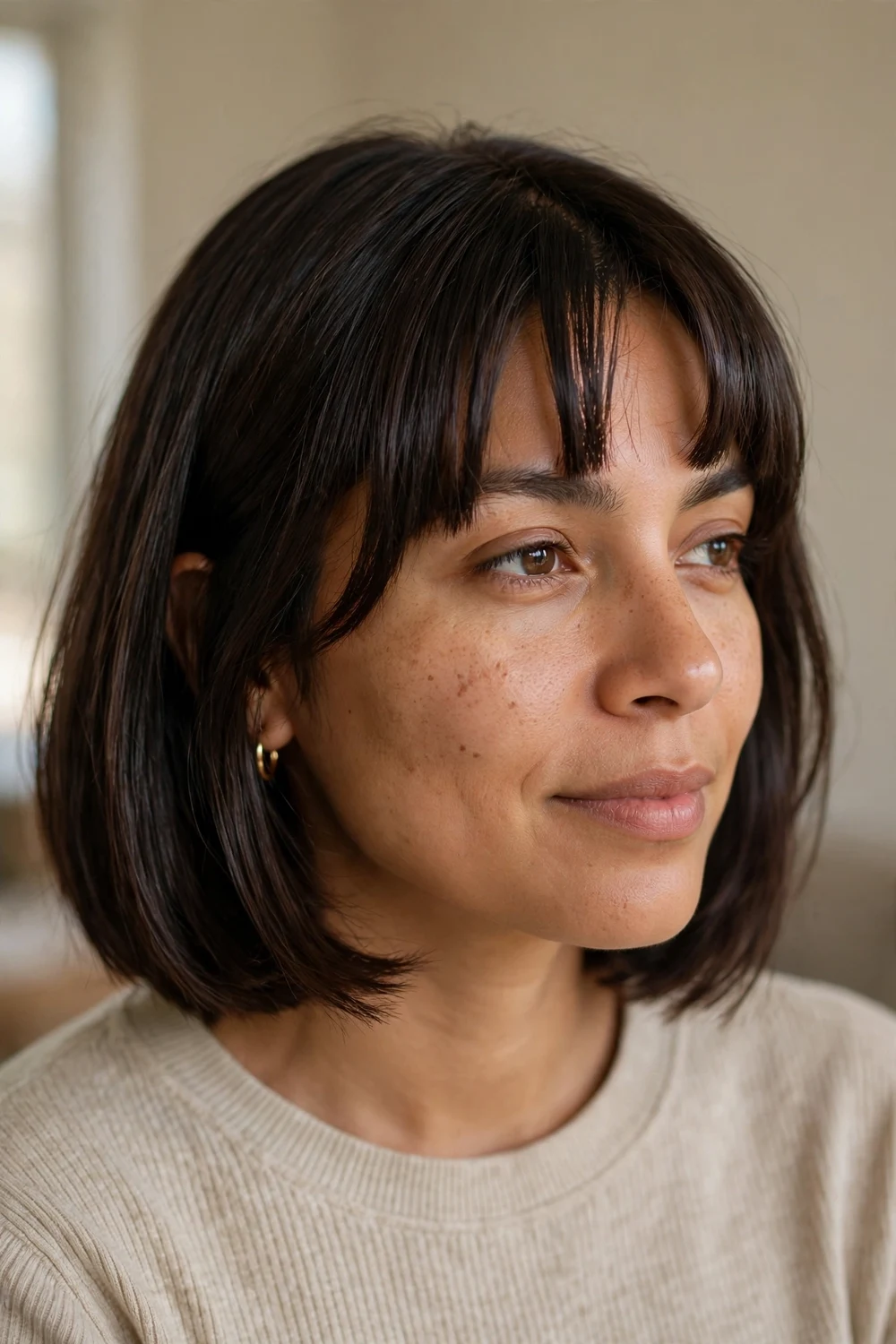
Window bangs borrow from the curtain trend: the fringe opens slightly in the center and graduates from shorter in the middle to longer at the sides, like a window frame. Keeping each side blunt preserves the graphic edge while the open center shows a hint of forehead. It is a good compromise if a full solid fringe feels too heavy on your face.
Try this: Part the center with your fingers while damp, then blow-dry each side outward with a round brush. A pea-sized amount of pomade defines the opening.
Difficulty: Medium
24. Long Bob with a Heavy Point-Cut Blunt Fringe
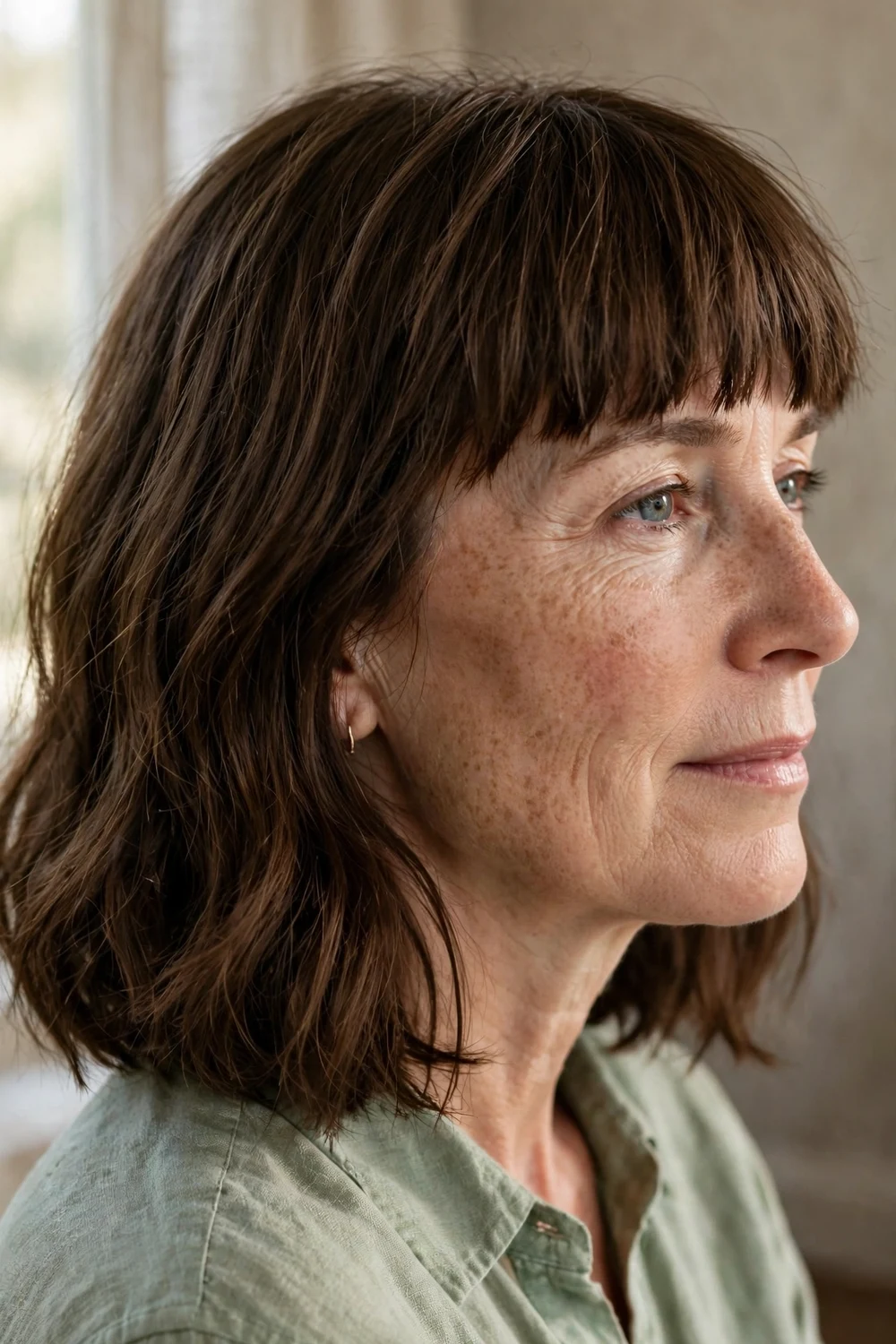
A lob paired with a full, heavy fringe that has been point-cut for texture is one of the most wearable blunt combinations. The fringe grazes the eyebrows with a strong straight line, while the point-cutting keeps it from looking like a solid curtain. The lob length balances a narrow chin and keeps the overall shape soft despite the bold fringe.
Try this: Let the bangs graze the brows rather than cutting them shorter; the extra length opens up the face. Smooth with a paddle brush and a light-hold spray.
Difficulty: Easy
Blunt Bangs Hairstyles Comparison at a Glance
| Style | Best Occasion | Difficulty | Upkeep |
|---|---|---|---|
| Classic Straight-Across Blunt Bangs | Everyday, office | Medium | Trim every 3-4 weeks |
| Layered Blunt Bangs | Everyday, casual | Easy | Trim every 4-5 weeks |
| Wispy Blunt Bangs | Dates, weekends | Easy | Trim every 4-6 weeks |
| Curly Blunt Bangs | Events, everyday | Hard | Dry trim every 6-8 weeks |
| Textured Blunt Bangs | Casual, creative workplaces | Easy | Trim every 4-5 weeks |
| Asymmetrical Blunt Bangs | Nights out, events | Medium | Trim every 3-4 weeks |
| Side-Swept Blunt Bangs | Office, everyday | Easy | Trim every 4 weeks |
| Blunt Bangs with a Beard | Everyday, casual | Medium | Trim every 3 weeks |
| Blunt Bangs with Long Hair | Events, everyday | Medium | Trim every 3-4 weeks |
| Blunt Bangs with a Bob Cut | Office, events | Easy | Trim every 3-4 weeks |
| Blunt Bangs with Ombre Color | Events, nights out | Medium | Color refresh every 8-12 weeks |
| Blunt Bangs with Highlights | Everyday, events | Medium | Highlight touch-up every 8-10 weeks |
| Blunt Bangs with a Shaggy Haircut | Casual, weekends | Easy | Trim every 5-6 weeks |
| Blunt Bangs with a Center Part | Office, formal events | Medium | Trim every 3-4 weeks |
| Blunt Bangs with a Pixie Cut | Everyday, events | Easy | Trim every 4 weeks |
| Blunt and Curtain Bangs Hybrid | Everyday, office | Medium | Trim every 4-5 weeks |
| Blunt Bangs for Thick Hair | Everyday | Easy | Trim every 3-4 weeks |
| Blunt Bangs for Thin Hair | Office, everyday | Easy | Trim every 4 weeks |
| Blunt Bangs with Braids | Festivals, casual outings | Medium | Re-braid every 2-4 weeks |
| Blunt Bangs for Square Face Shapes | Everyday, events | Medium | Trim every 3-4 weeks |
| Jaw-Length Blunt Cut with Blunt Bangs | Office, events | Medium | Trim every 3-4 weeks |
| Deep-Set Heavy Blunt Bangs | Events, nights out | Hard | Trim every 3 weeks |
| Blunt Window Bangs with an Open Center | Dates, everyday | Medium | Trim every 4 weeks |
| Long Bob with a Heavy Point-Cut Blunt Fringe | Office, everyday | Easy | Trim every 3-4 weeks |
How to Choose the Right Blunt Bangs for You
Start with your hair texture, because it decides how much daily work the fringe needs. Straight hair holds a blunt line with almost no effort. Wavy hair needs a quick blow-dry or flat iron each morning. Curly hair needs a dry cut from a curl specialist and a commitment to styling the fringe on its own terms.
Then match the fringe to your face. Oval faces can wear the classic brow-level line. Long faces benefit from a slightly longer fringe that shortens the forehead. Square faces do well with corners that angle down a touch at the sides. Round faces should ask for a longer fringe that angles toward the sides rather than a short, heavy line.
Finally, be honest about maintenance. If trims every 3 to 4 weeks sound like too much, pick a textured or wispy version that grows out softly. If you love a crisp line and don’t mind the salon visits, go for the classic or deep-set heavy fringe.
Mistakes to Avoid
Cutting curly bangs wet is the most common error. Curls shrink as they dry, so a wet cut lands inches shorter than planned. Always cut curly bangs dry, and leave them longer than you think you want.
Taking too deep a section is another frequent mistake, especially on thin hair. A fringe pulled from too far back steals volume from the rest of the haircut. Keep the section shallow and let the density come from the cut, not the width.
Skipping trims ruins the whole point of blunt bangs. Once the line grows uneven, the style reads as grown-out bangs rather than a deliberate fringe. Book the trim before you need it, every 3 to 4 weeks.
Frequently Asked Questions
Do blunt bangs suit round faces?
They can, with the right adjustment. A short, heavy blunt fringe makes a round face look shorter, so ask for a longer fringe that sits at or below the brows and angles slightly toward the sides. The added length and angled corners create a slimming diagonal instead of a hard horizontal line.
How often do blunt bangs need trimming?
Every 3 to 4 weeks for most versions. The defining feature of blunt bangs is the sharp line, and even half an inch of growth softens it into a different style. Textured and wispy versions are more forgiving and can stretch to 5 or 6 weeks between trims.
Can I get blunt bangs with curly or wavy hair?
Yes. Curly bangs must be cut dry, curl by curl, and left longer than the target length to allow for shrinkage. Wavy hair usually needs a quick blow-dry or flat iron each morning to keep the line straight. A textured blunt cut is the lowest-maintenance option for both textures.
Do blunt bangs work on thin hair?
Yes, and they can make thin hair look fuller at the front because the straight-across cut keeps all the density in one line. Keep the fringe section shallow so you don’t pull volume away from the rest of the haircut, and avoid heavy products that separate fine hair.
How do I style blunt bangs quickly in the morning?
Blow-dry the fringe straight down with a paddle brush for about two minutes, then smooth once with a flat iron if needed. Keep dry shampoo at the roots to absorb oil between washes, and finish with a drop of lightweight serum for shine. The whole routine takes about five minutes.
Final Thoughts
Blunt bangs earn their staying power: one clean line changes the whole geometry of a haircut, and the 24 versions here cover every texture, length, and commitment level. Pick the one that matches your hair type and your tolerance for trims, bring a photo to your stylist, and enjoy the sharpest fringe in the book.
