


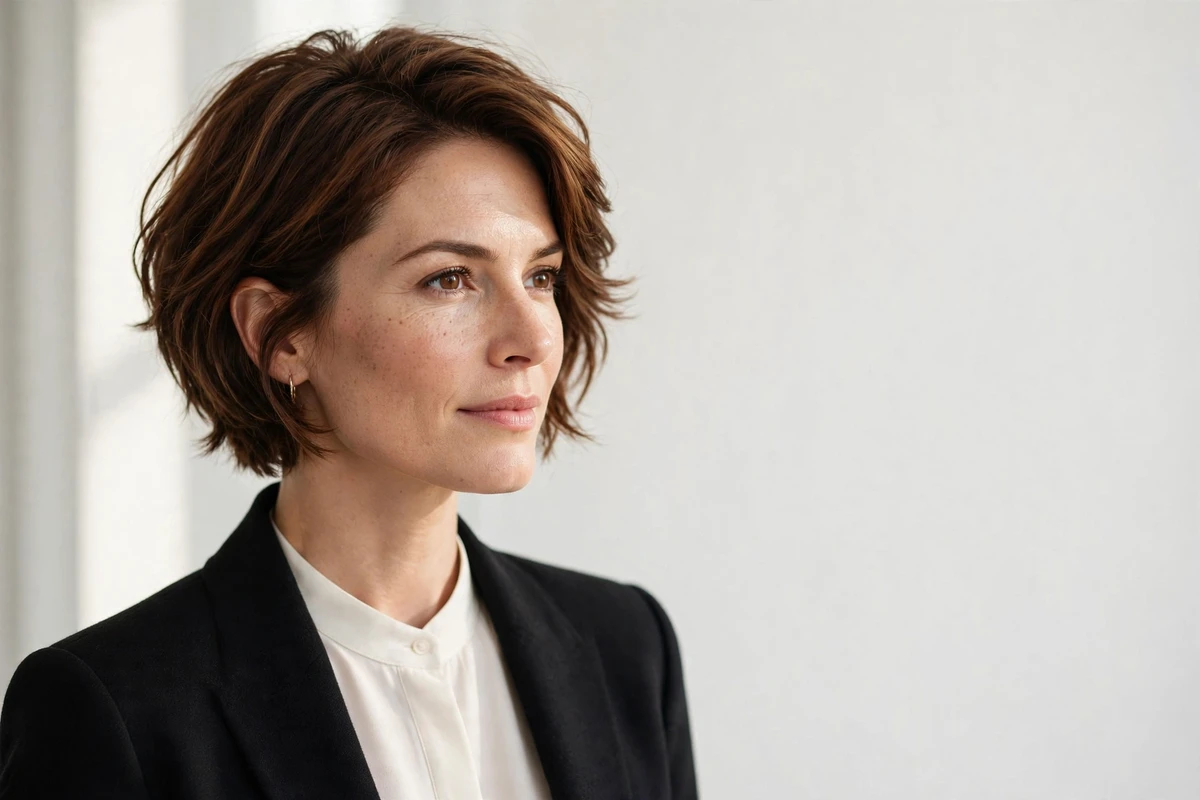
Thinking about going short? You’ve got more options than you might expect. Short hair isn’t one look, it’s dozens of them, and the right cut depends on your hair texture, face shape, and how much morning effort you’ll actually put in.
This guide walks through 49 short haircut ideas, from classic bobs to edgy undercuts. I’ve spent years watching which short cuts clients keep and which ones they grow out fast, so every idea here comes with honest styling notes.
Use the comparison table near the end to narrow things down by face shape and styling time.
Quick answer: This guide covers the best styles, who they suit, and how to get them right.
Quick Takeaways
- Bobs and pixies make up most short haircut ideas, but shags, crops, and tapered cuts offer strong alternatives.
- Fine hair benefits from blunt lines and choppy layers that build the look of volume.
- Curly and coily hair needs a stylist who cuts curls dry or in their natural state.
- Most short cuts need a trim every 4 to 6 weeks to keep their shape.
- Bring reference photos to your appointment and be honest about your styling routine.
Why Short Hair Works
Short hair removes weight, and that changes everything. Fine hair looks thicker when the ends are blunt. Thick hair becomes manageable when bulk is taken out strategically. Curls spring up with more definition when they’re not pulled down by length.
There’s also the time factor. Most of the cuts below take under 10 minutes to style once you learn the routine. A pea-sized amount of pomade or a quick pass with texturizing spray is often all it takes.
The trade-off is maintenance. Short cuts grow out visibly, so you’ll see your stylist more often. But each appointment is usually quicker and cheaper than a long-hair trim.
What to Tell Your Stylist
Walk in with specifics. Say how short you want the back versus the front. Mention whether you want bangs or face-framing pieces. Point out which photos you like and, just as important, which ones you don’t.
Talk about your real routine. If you never heat style, say so, because some cuts rely on a flat iron to look right. If you wash daily, mention it, since second-day texture changes how layers sit.
Ask about grow-out. A good stylist will tell you honestly which cuts turn awkward at week five and which ones grow gracefully. That one question saves a lot of regret.
1. French Bob

The French bob sits right at the jawline with a slightly undone finish. It usually includes soft, brow-grazing bangs and ends that flip just a touch. This cut flatters oval and heart-shaped faces because the length draws attention to the cheekbones. It works on straight to wavy hair, and fine hair gets a boost since the blunt perimeter creates density. The cut works year-round, though many people find it especially flattering in warmer months when they want hair off the neck.
Try this: Skip the round brush. Rough-dry with your fingers, then smooth just the bangs with a flat iron for that lived-in Parisian edge. A dab of wax on the ends keeps them piecey.
2. Curved Bob
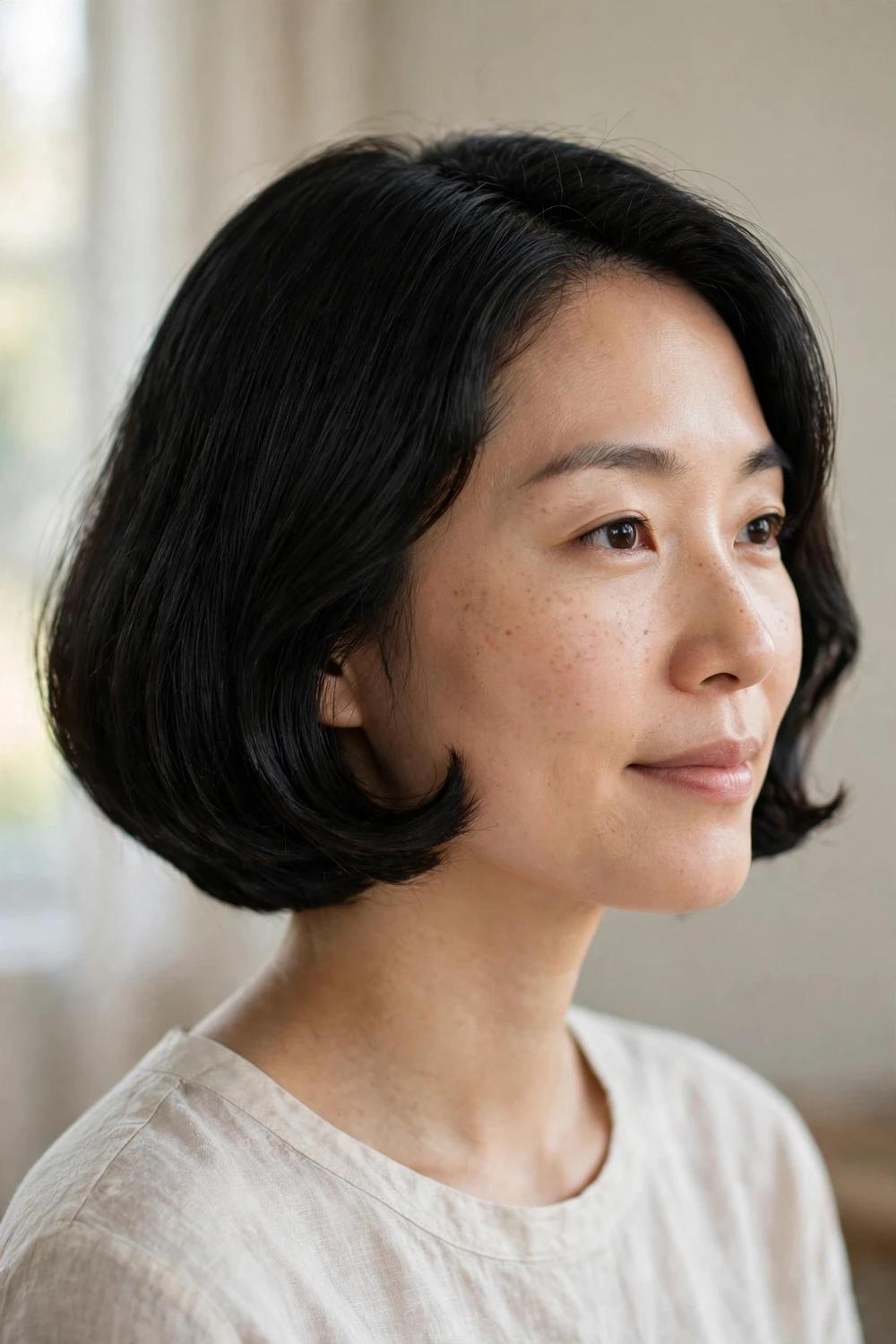
Want softness instead of sharp lines? The curved bob is cut in a rounded silhouette that hugs the jaw and tucks gently under at the ends. Stylists often call it the “bowl bob” when it’s more dramatic, but the wearable version keeps the curve subtle. Round faces benefit because the vertical lines add length. It’s a solid pick for straight or slightly wavy hair that falls neatly. Ask your stylist to check the curve from behind, since the silhouette matters as much from the back as the front.
Try this: Blow-dry with a medium round brush, rolling the ends under. If your hair flips out naturally, a flat iron pass on the last inch tames it in seconds.
3. Textured Tousled Bob
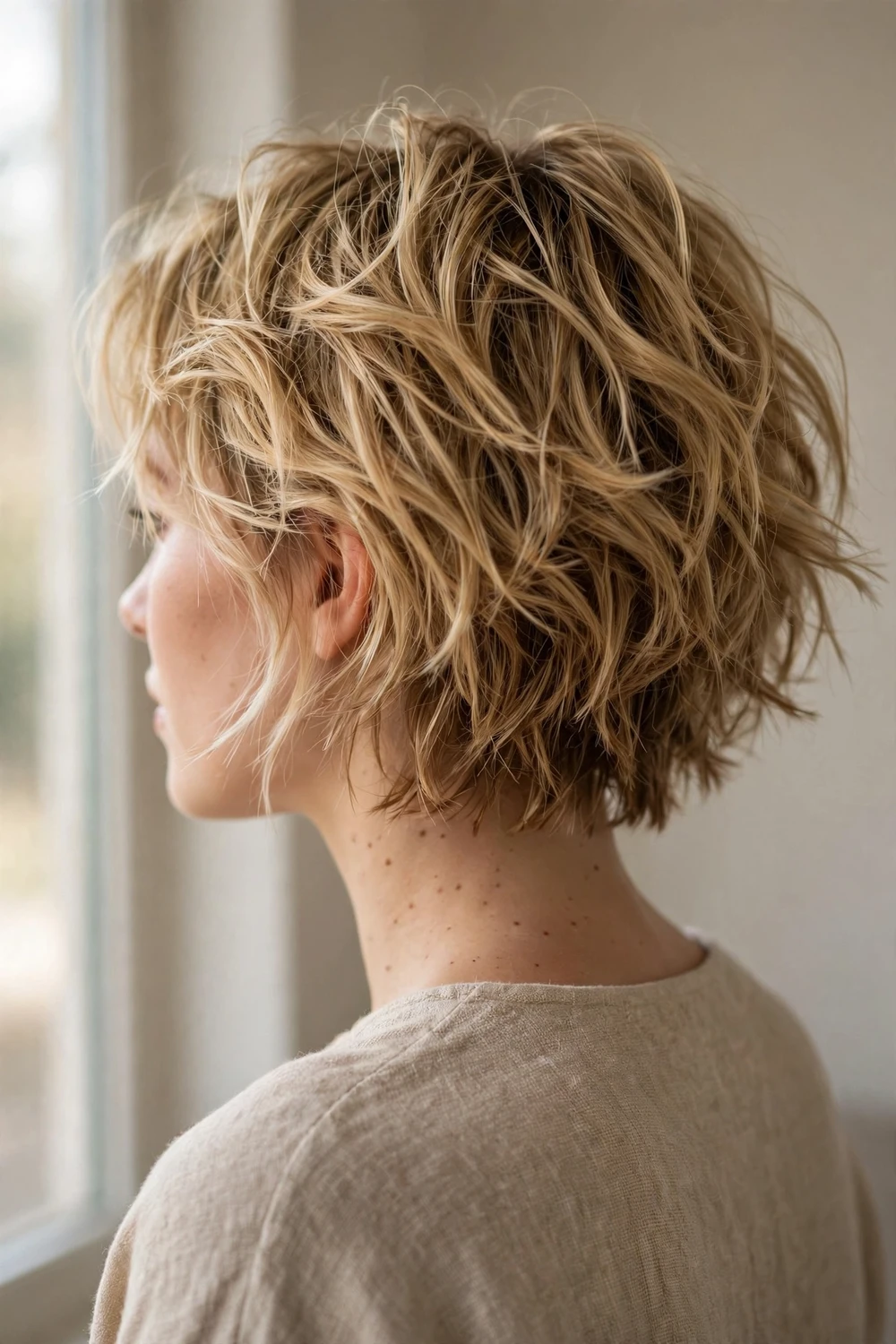
Some mornings you want a cut that looks good with zero effort. The textured tousled bob is built for that. Your stylist point-cuts the ends and adds interior layers so the hair falls in separated, beachy pieces instead of one solid sheet. Medium-density hair shows this cut best, and it hides cowlicks well since nothing is supposed to sit flat anyway. This cut grows out better than most bobs because the texture disguises uneven lengths between appointments.
Try this: Mist damp hair with texturizing spray, scrunch, and let it air-dry. On day two, a quick shake at the roots brings the texture back without rewashing.
4. Curly Bob
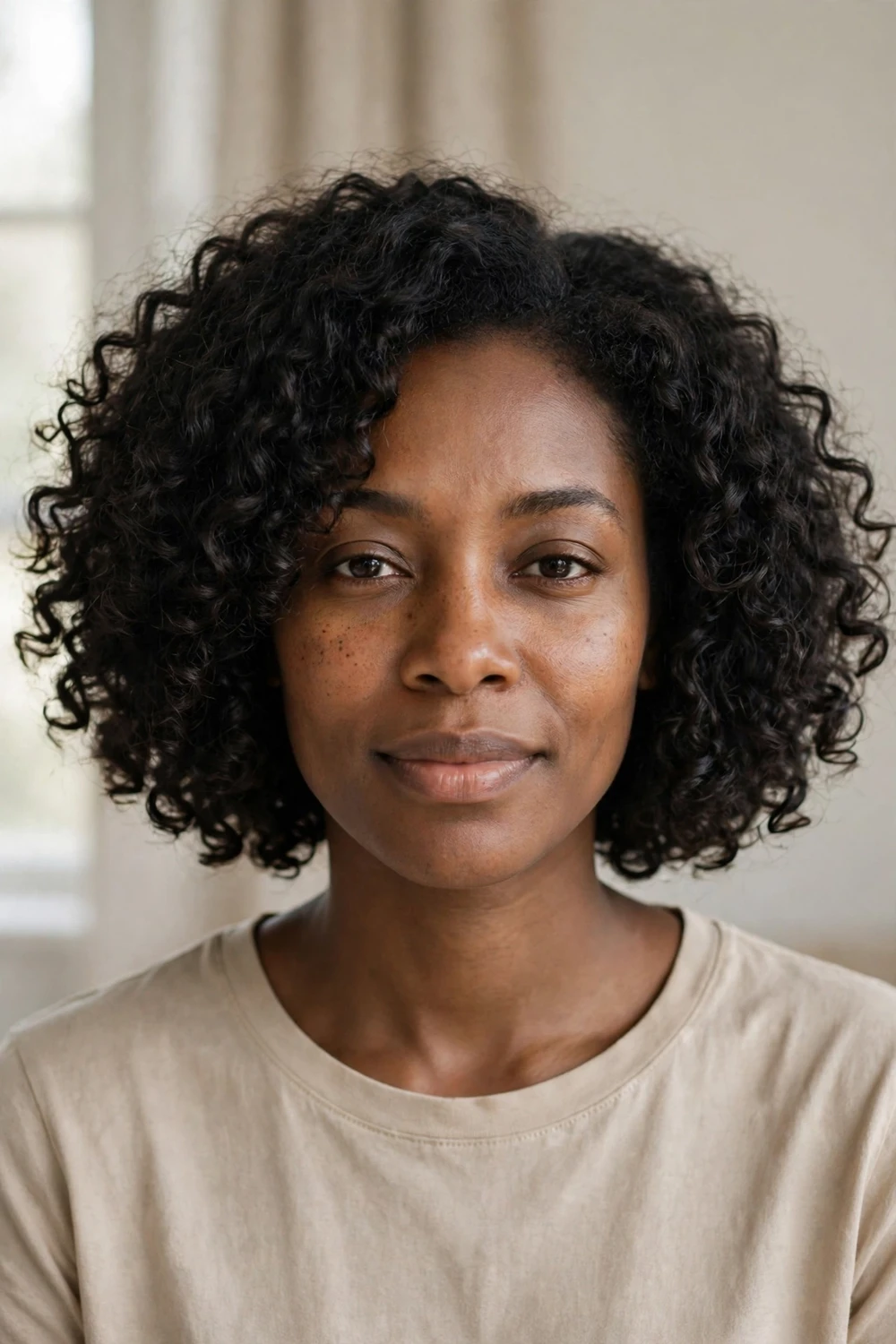
Curly hair and short lengths are a strong match when the cut respects the curl pattern. A curly bob is typically cut dry or on stretched hair so the stylist can see where each curl lands. Layers are placed to build a rounded shape rather than a triangle. Ask for someone who specializes in curls, because a wet cut on tight curls can spring up several inches shorter than planned. A curl-by-curl cut takes longer in the chair, but the result is worth the extra appointment time.
Try this: Apply curl cream to soaking-wet hair, scrunch upward, and diffuse or air-dry. Don’t touch the curls while they dry, or you’ll invite frizz.
5. Micro/Jaw-Length Bob
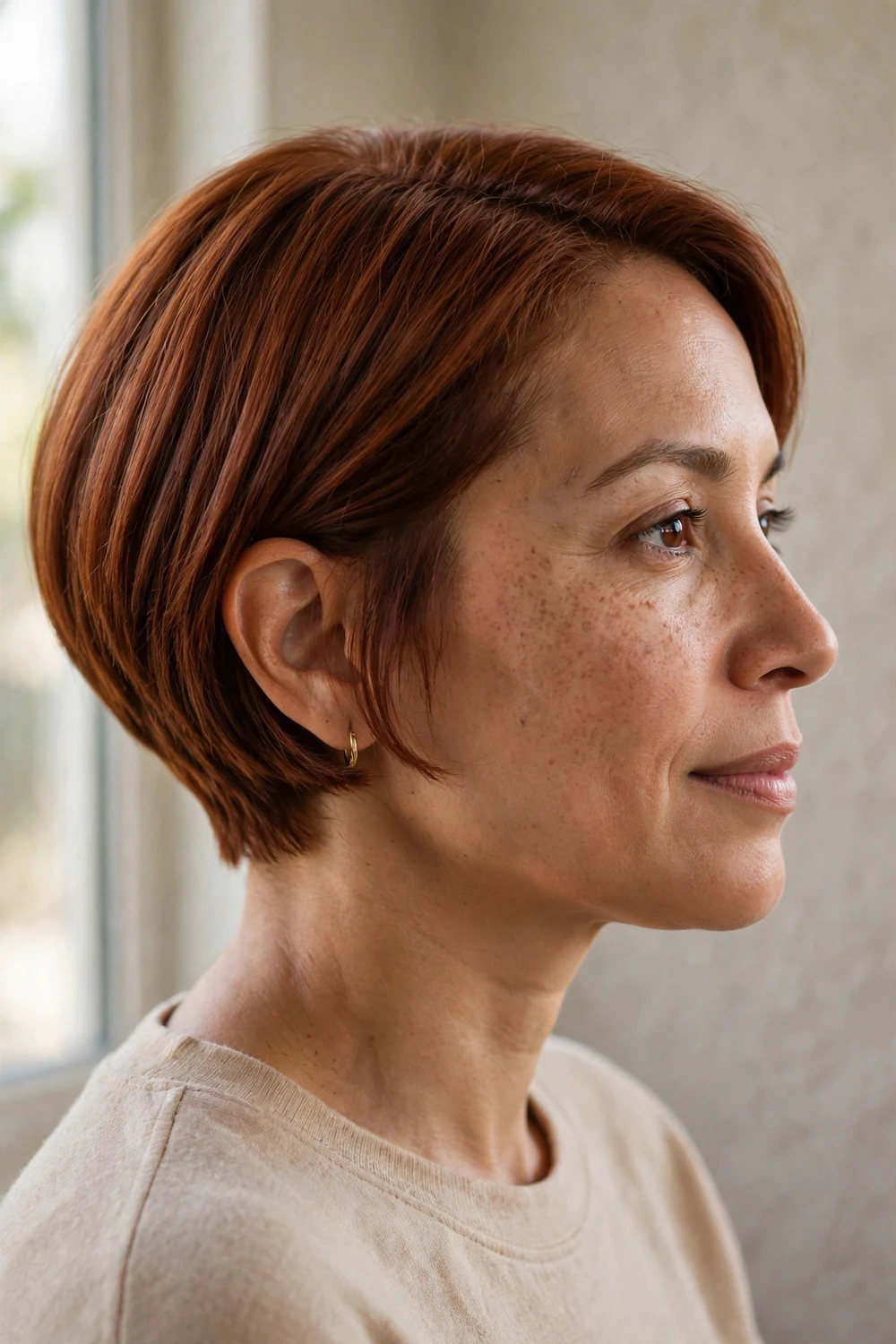
How short can a bob go before it becomes a pixie? The micro bob answers that question. It ends right at the jawline or a touch above, with clean, deliberate lines. This length sharpens the jaw and works well on petite frames where longer bobs can overwhelm. Straight, thick hair holds the shape best, though fine hair can wear it with a little root lift. Earrings become a major accessory with this length, so it is a good excuse to show off statement pieces.
Try this: This cut shows every millimeter of grow-out, so book trims every 4 weeks. A flat iron keeps the lines crisp between appointments.
6. Layered Lob
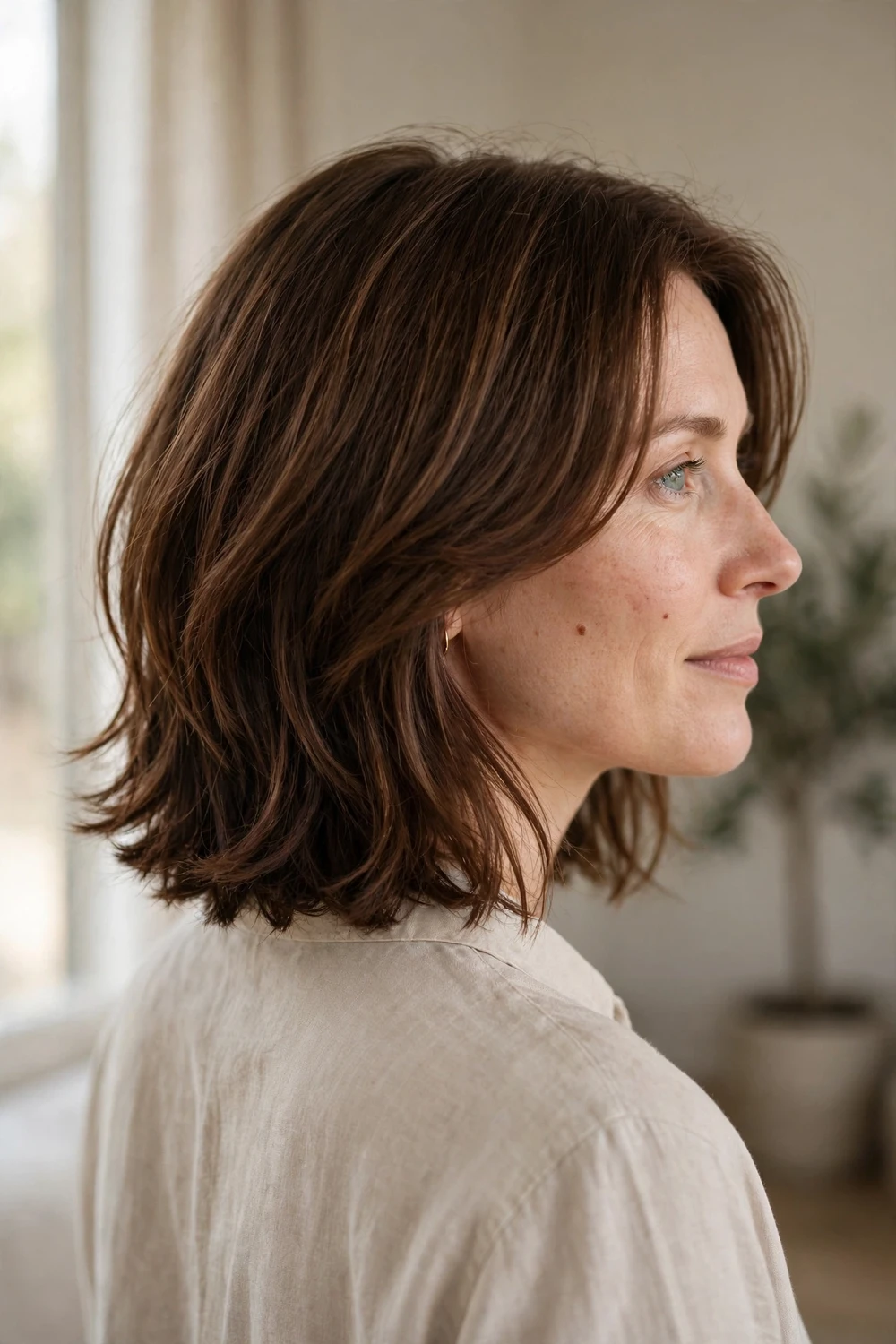
If you’re nervous about going truly short, the layered lob is your safety net. It grazes the collarbone, which still reads as short but leaves enough length to pull back on bad hair days. Layers through the mid-lengths keep it from looking heavy. Almost every face shape can wear a lob, which is why stylists recommend it so often for first-time short cuts. The extra length also means you can try half-up styles when you want variety without commitment.
Try this: Curl the mid-lengths away from your face with a 1-inch iron, then brush through for soft waves. The layers do most of the work.
7. Layered Bob
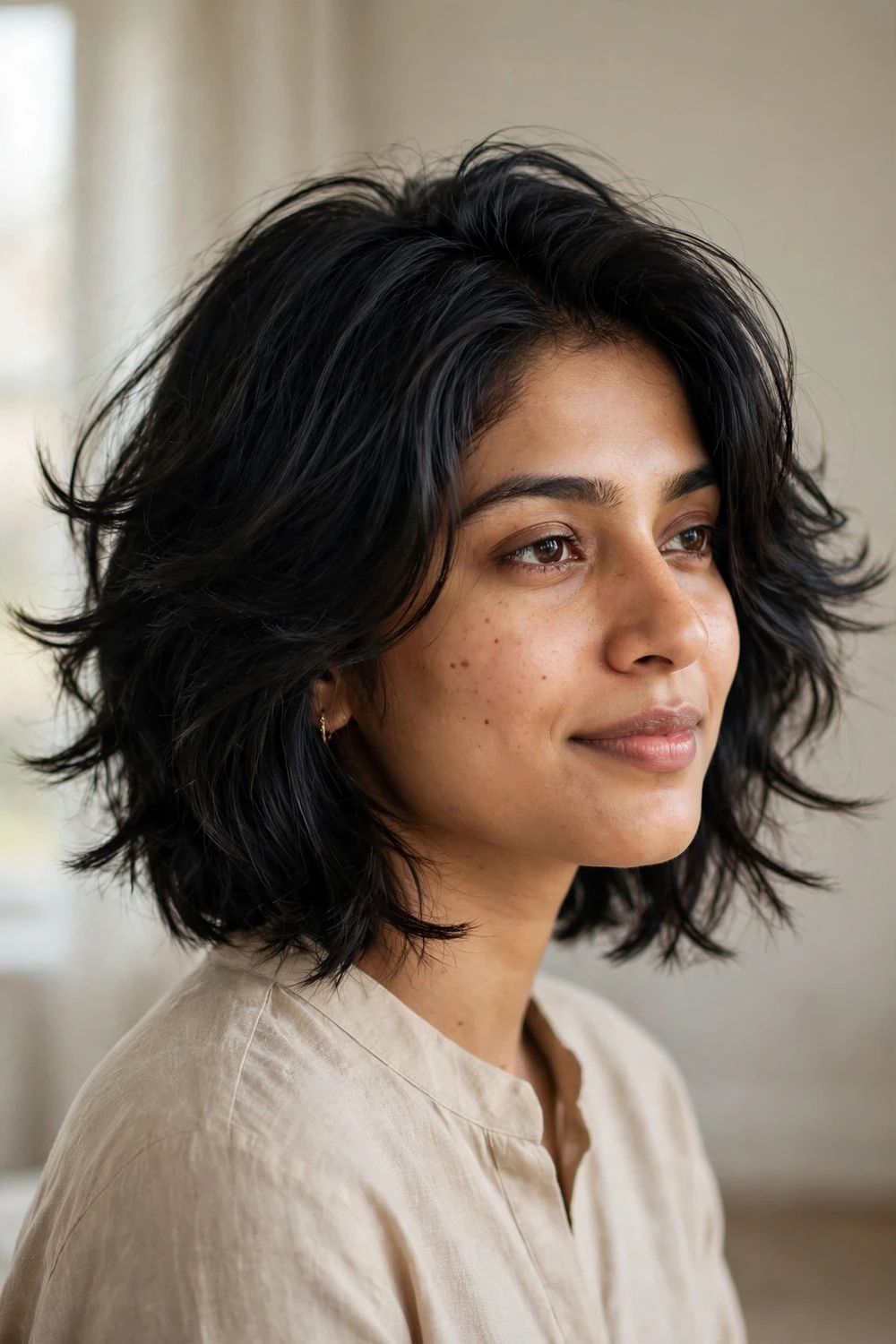
Thick hair can turn a one-length bob into a helmet. Layers fix that. A layered bob removes weight through the interior while keeping the perimeter strong, so you get movement without losing the bob shape. Stylists often stack the back slightly for lift at the crown. This is one of the most requested short cuts for dense, straight to wavy hair. If your hair is very dense, ask about thinning shears through the interior for even more movement.
Try this: Blow-dry the crown with a round brush for lift, then let the ends fall naturally. A pea-sized amount of pomade defines the layers without weighing them down.
8. Blunt Bob
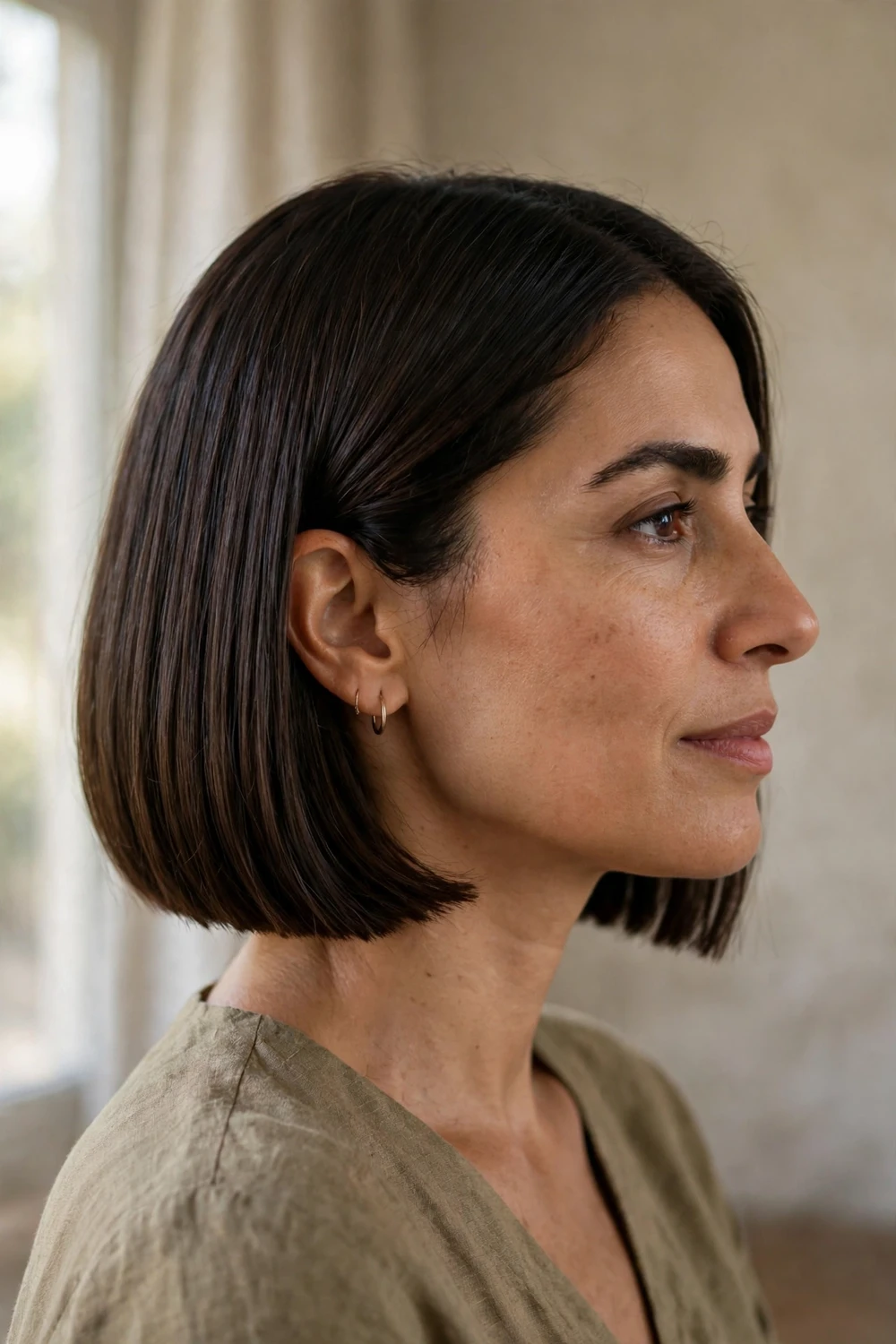
No layers, no texture, just one clean line. The blunt bob is cut straight across at one length, usually between the chin and shoulders. It’s the best friend of fine hair because the solid perimeter makes ends look twice as thick. The trade-off is that it shows every flaw in the cut, so find a stylist with sharp shears and a steady hand. Sleeping on a silk pillowcase helps maintain the smooth finish and reduces morning frizz at the ends.
Try this: Flat iron in small sections for a glass-like finish. If your ends flip, tuck one side behind your ear for an intentional asymmetrical look.
9. Wavy Bob with Bangs

Pair natural wave with fringe and you get one of the most forgiving short cuts around. The waves add width where you want it, and the bangs balance a longer forehead or add softness to angular features. Ask your stylist to cut the bangs slightly longer than you think, since wavy fringe springs up as it dries. This cut air-dries well, which is half its charm. A diffuser attachment makes a noticeable difference for this cut compared to air-drying alone.
Try this: Scrunch a curl-enhancing mousse into damp hair and diffuse on low heat. Let the bangs fall naturally instead of forcing them straight.
10. Asymmetrical Bob
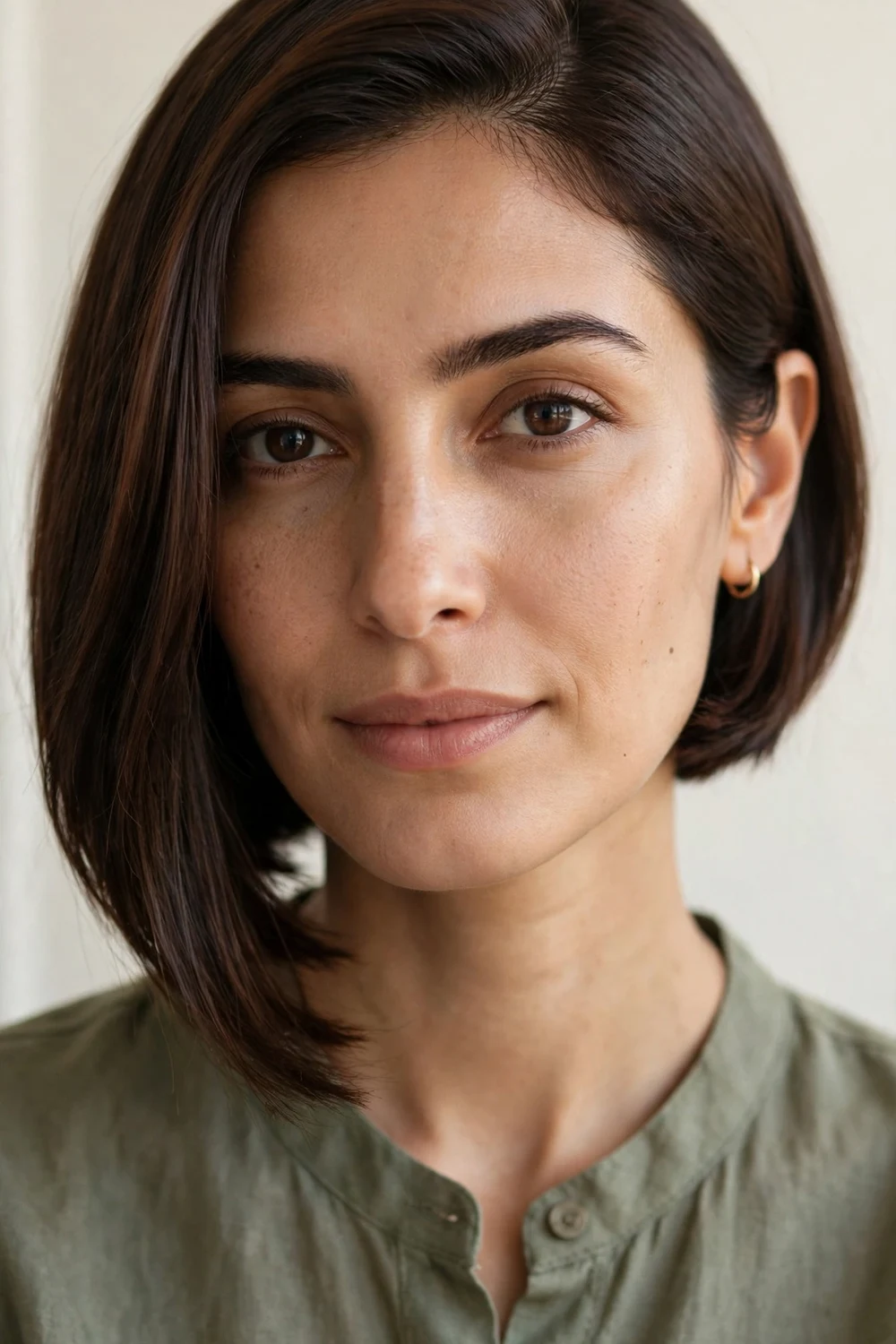
One side longer than the other, sometimes by several inches. The asymmetrical bob is for anyone who finds classic cuts a little boring. The angle can be subtle (half an inch) or dramatic (chin on one side, shoulder on the other). It suits oval and square faces well, since the diagonal line breaks up strong jawlines. Straight hair shows the geometry best. The dramatic version photographs especially well, if you want a cut with visual impact.
Try this: Part on the deeper side to emphasize the angle. A shine serum on the longer side makes the asymmetry look deliberate and polished.
11. Bob with Full Bangs
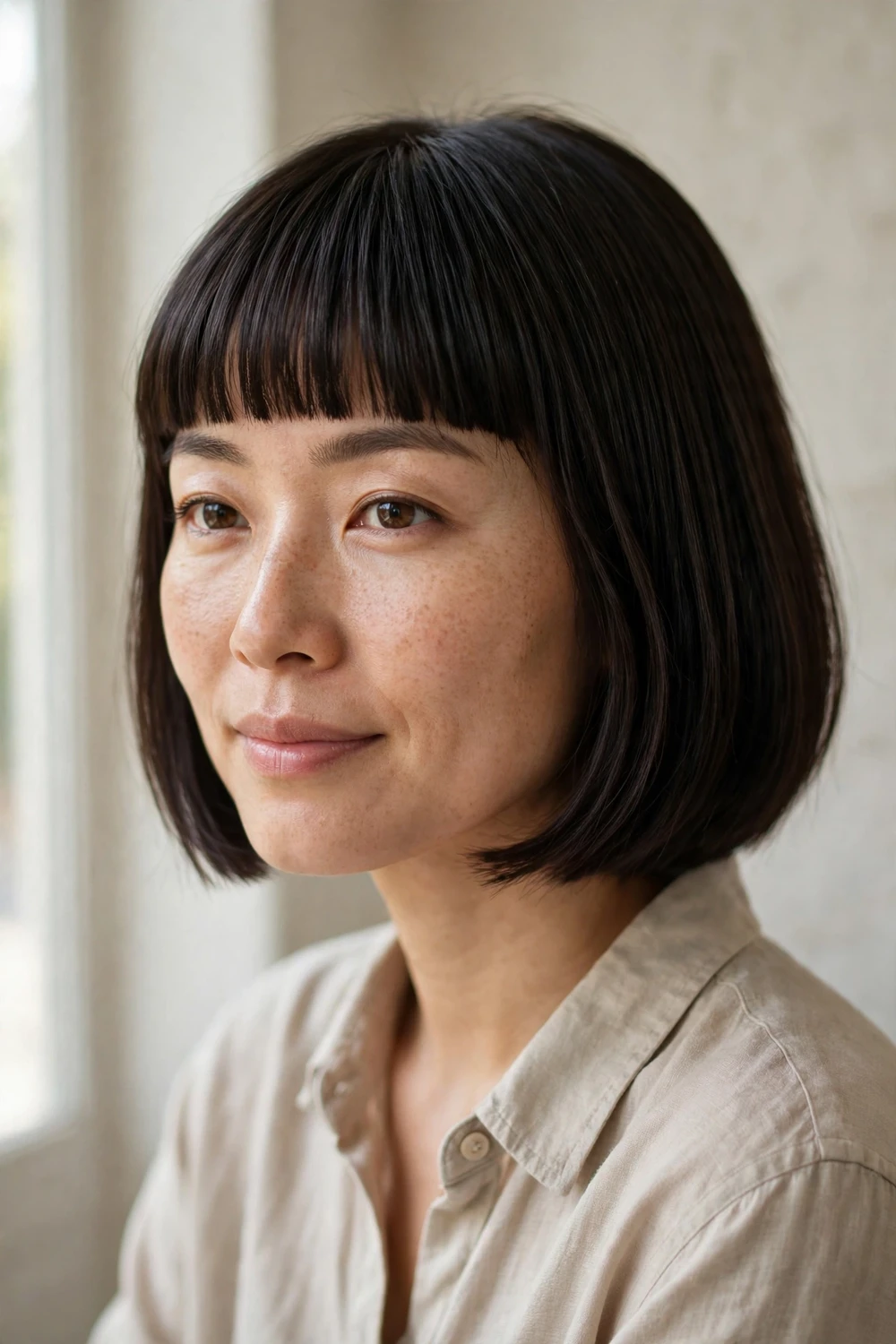
Full, straight-across bangs paired with a bob create a bold frame around the whole face. This combination shortens the appearance of a long forehead and puts the focus on the eyes. It needs commitment though, because thick bangs show grow-out fast and usually need a trim between full appointments. Fine to medium hair works best since very thick hair can make the bangs too heavy. Keep small scissors handy, since thick bangs can start poking your eyes within two weeks.
Try this: Trim bangs yourself between visits with sharp scissors, cutting dry and taking off less than you think. Blow-dry bangs first, before the rest, so they don’t set in a cowlick.
12. Shaggy Bob with Curtain Bangs
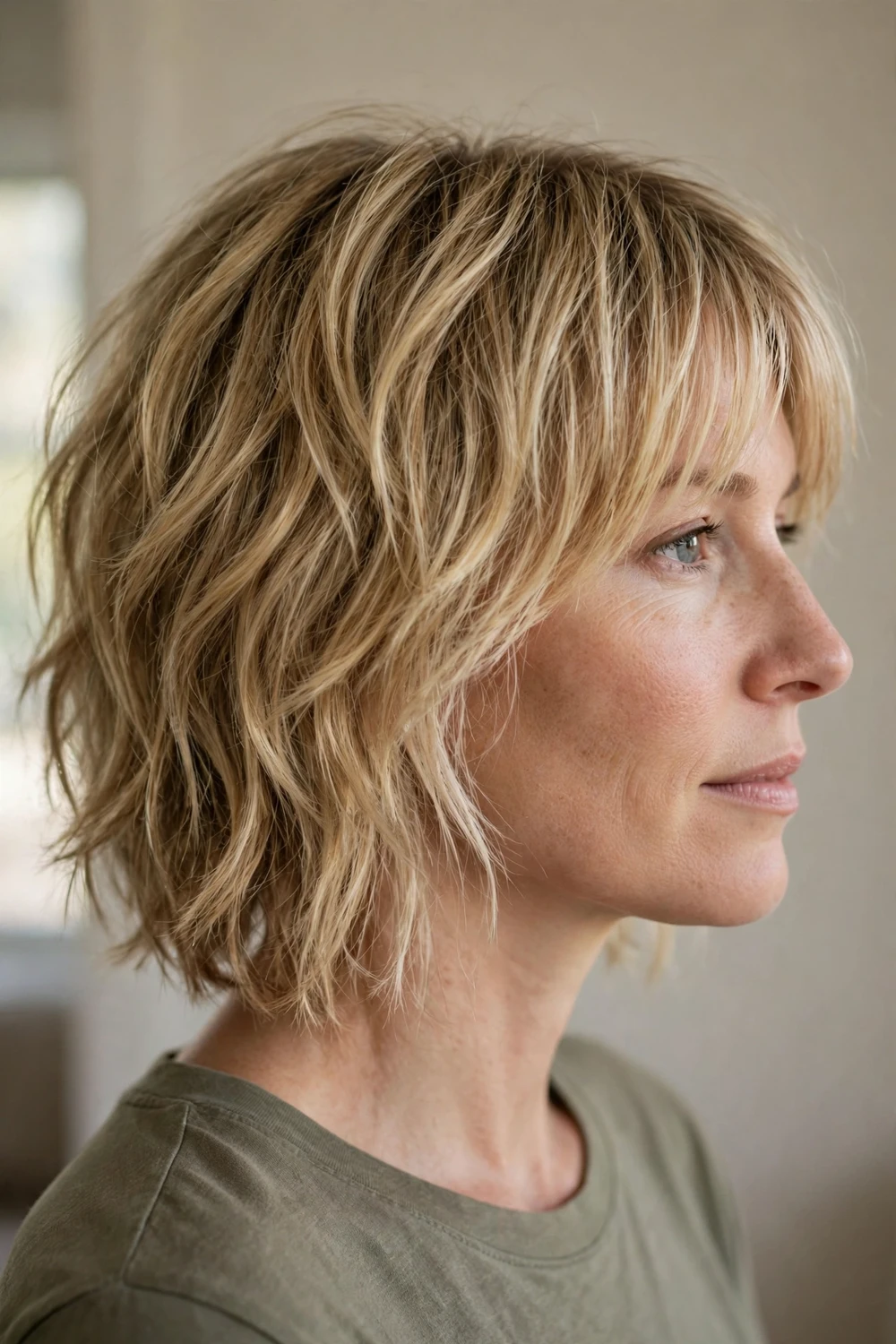
Take a bob, add choppy layers, and finish with curtain bangs that part in the middle. The result is relaxed and a little retro without trying too hard. Curtain bangs grow out gracefully, which makes this one of the lowest-maintenance bang options. It suits most face shapes because the center part and face-framing pieces can be adjusted to flatter you. This is one of the easiest bobs to grow out, since the layers blend naturally as they lengthen.
Try this: Blow-dry curtain bangs with a round brush, sweeping each side away from your face. Texturizing spray on the layers keeps the shaggy separation.
13. Choppy Bob
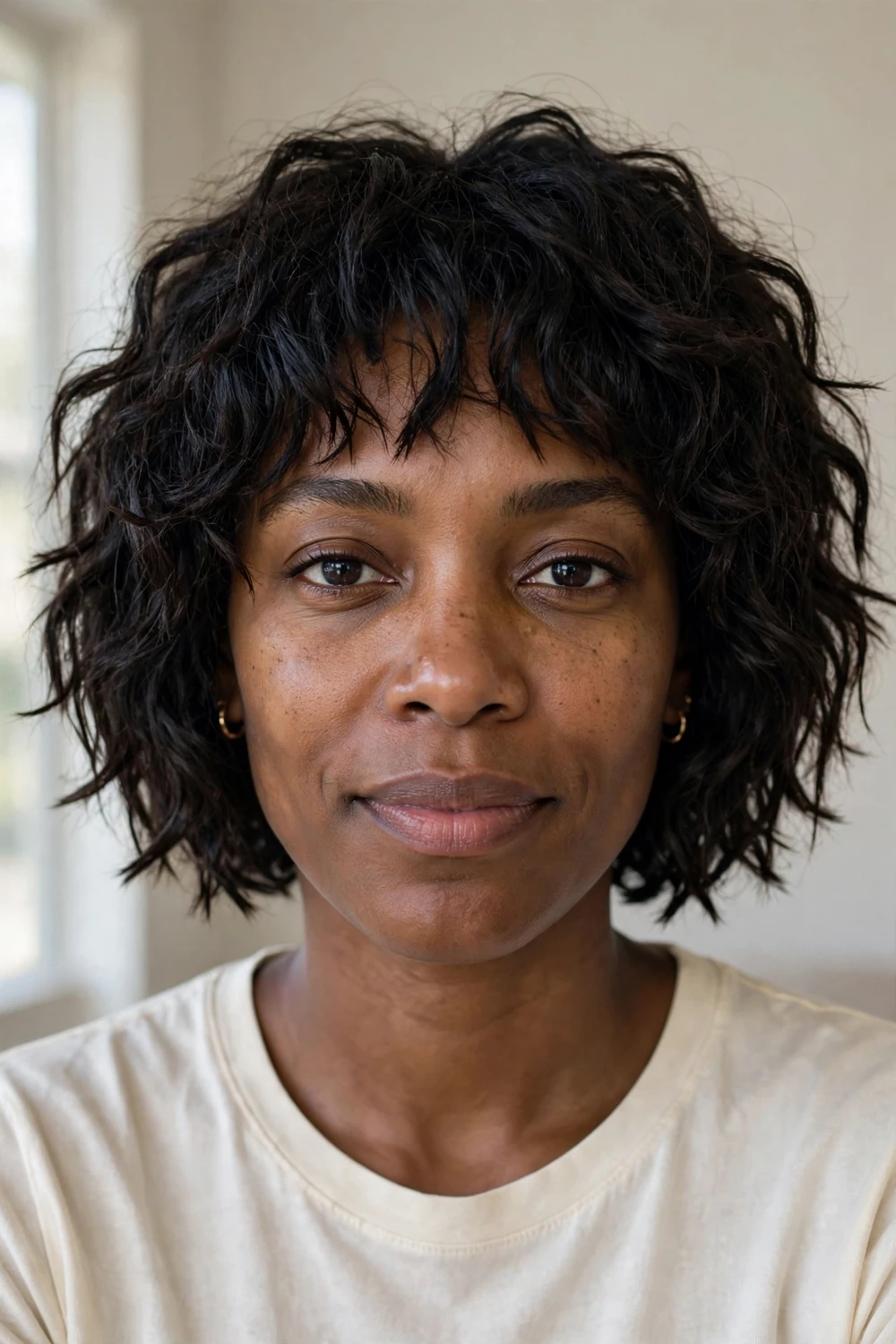
Jagged ends, visible separation, zero interest in looking polished. The choppy bob is cut with point-cutting and slide-cutting techniques that create deliberate unevenness through the ends. It’s a strong choice for thick hair that needs the weight broken up, and it gives fine hair the illusion of more pieces. The cut does the styling for you on most days. Fine hair should avoid over-texturizing, which can make the ends look sparse instead of piecey.
Try this: Work a small amount of wax through dry ends, twisting random pieces between your fingers. The messier it looks, the better it works.
14. Choppy Bob with Bangs
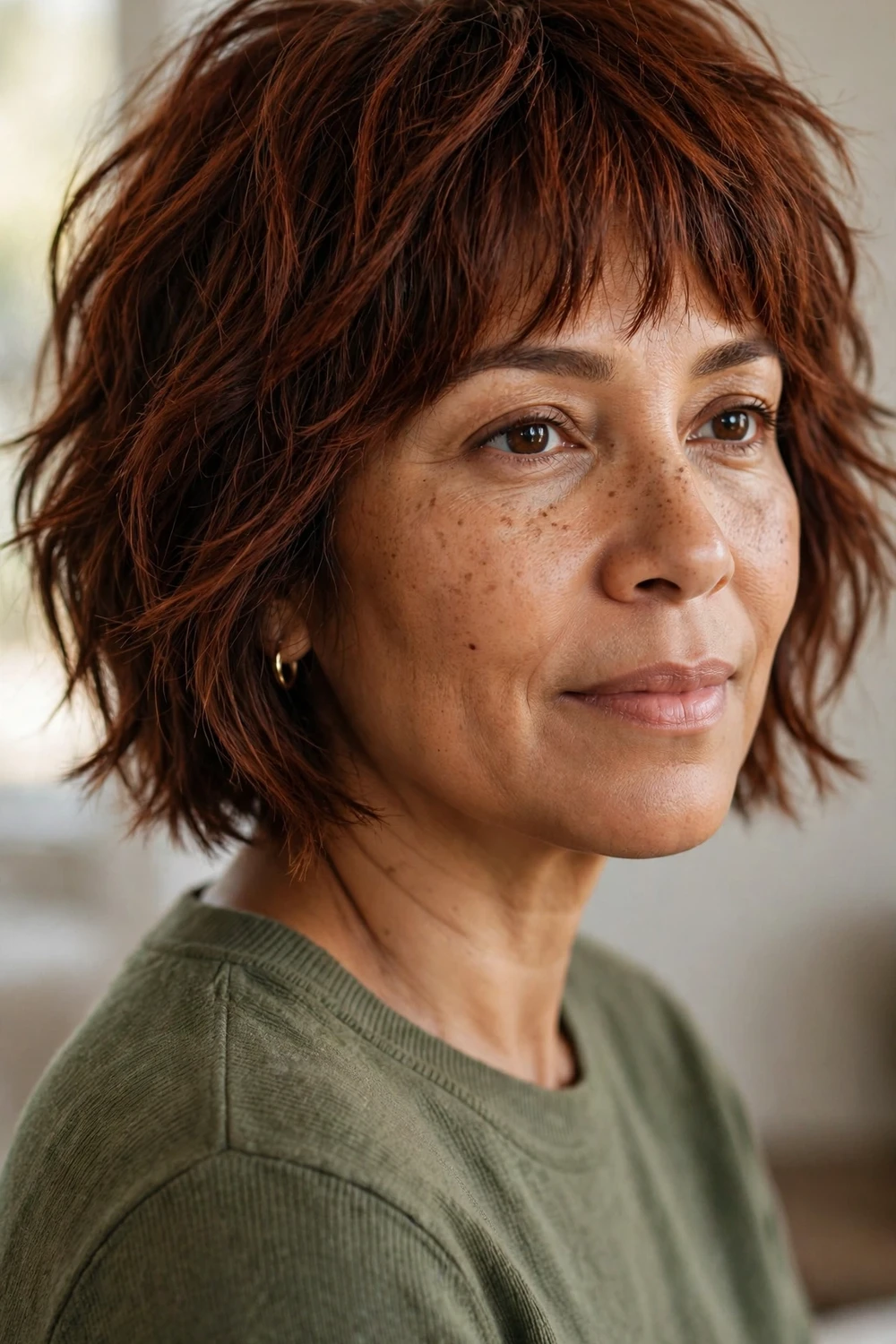
Here’s the choppy bob with a matching fringe. The bangs are point-cut to the same jagged finish as the ends, so the whole cut reads as one cohesive, textured shape. This works well for heart-shaped faces, since the textured bangs soften a wider forehead. Keep the bangs piecey rather than blunt, or the two textures will fight each other. The bangs need trimming more often than the bob itself, so plan for quick fringe touch-ups.
Try this: Style bangs with your fingers instead of a brush. A brush smooths out the chop you just paid for.
15. Stacked/Graduated Bob
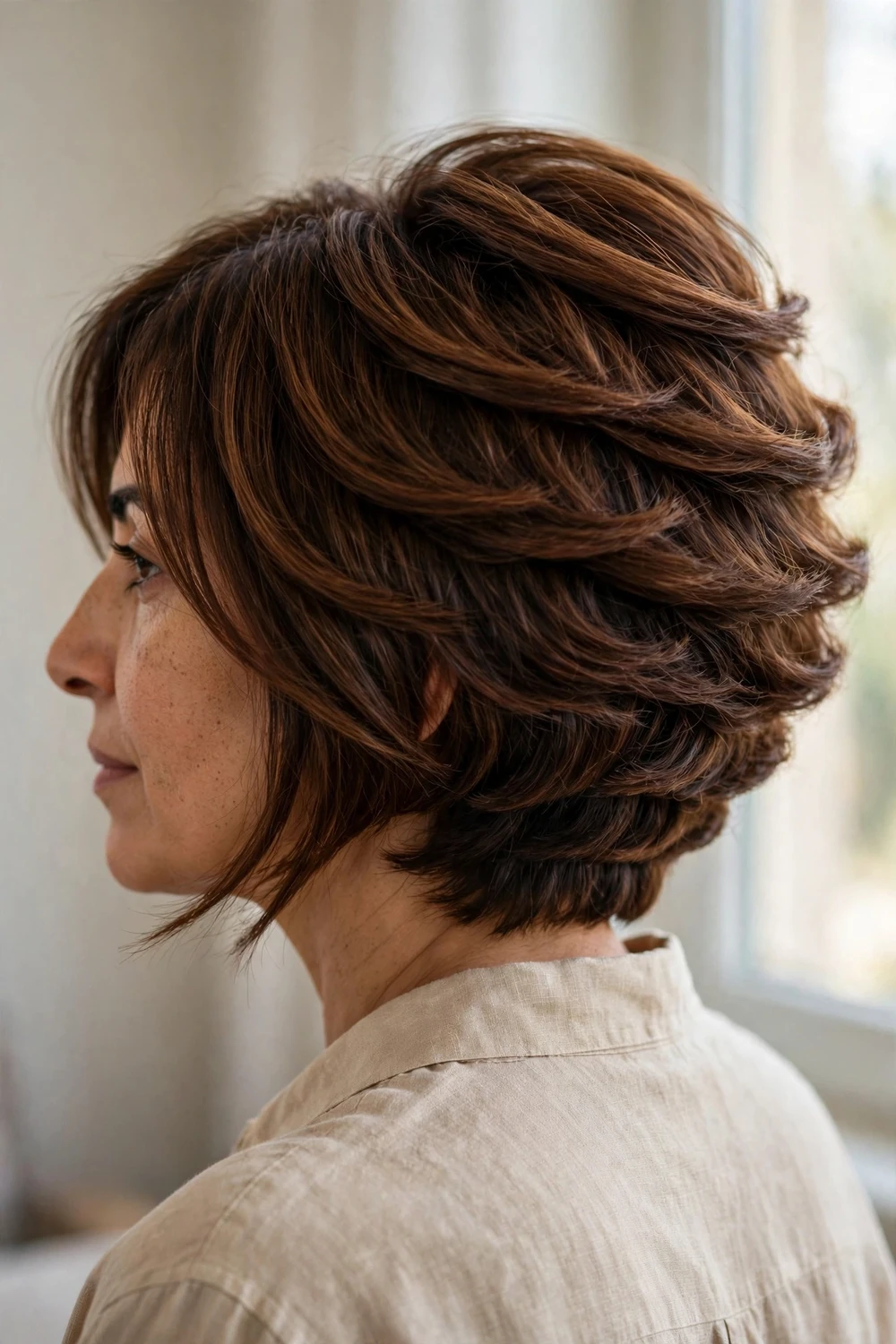
The back does all the talking here. A stacked bob is cut with graduated layers that build volume at the crown and taper toward the nape. The front stays longer, creating that classic angled silhouette. Fine hair loves this cut because the stacking creates lift that flat hair usually can’t achieve. It’s been popular for decades because the shape is genuinely flattering on most people. This cut looks different from every angle, which keeps it interesting even months after the appointment.
Try this: Blow-dry the back section upward with a round brush to maximize the stack. A root-lifting spray at the crown extends the volume through day two.
16. Vintage ’20s Bob
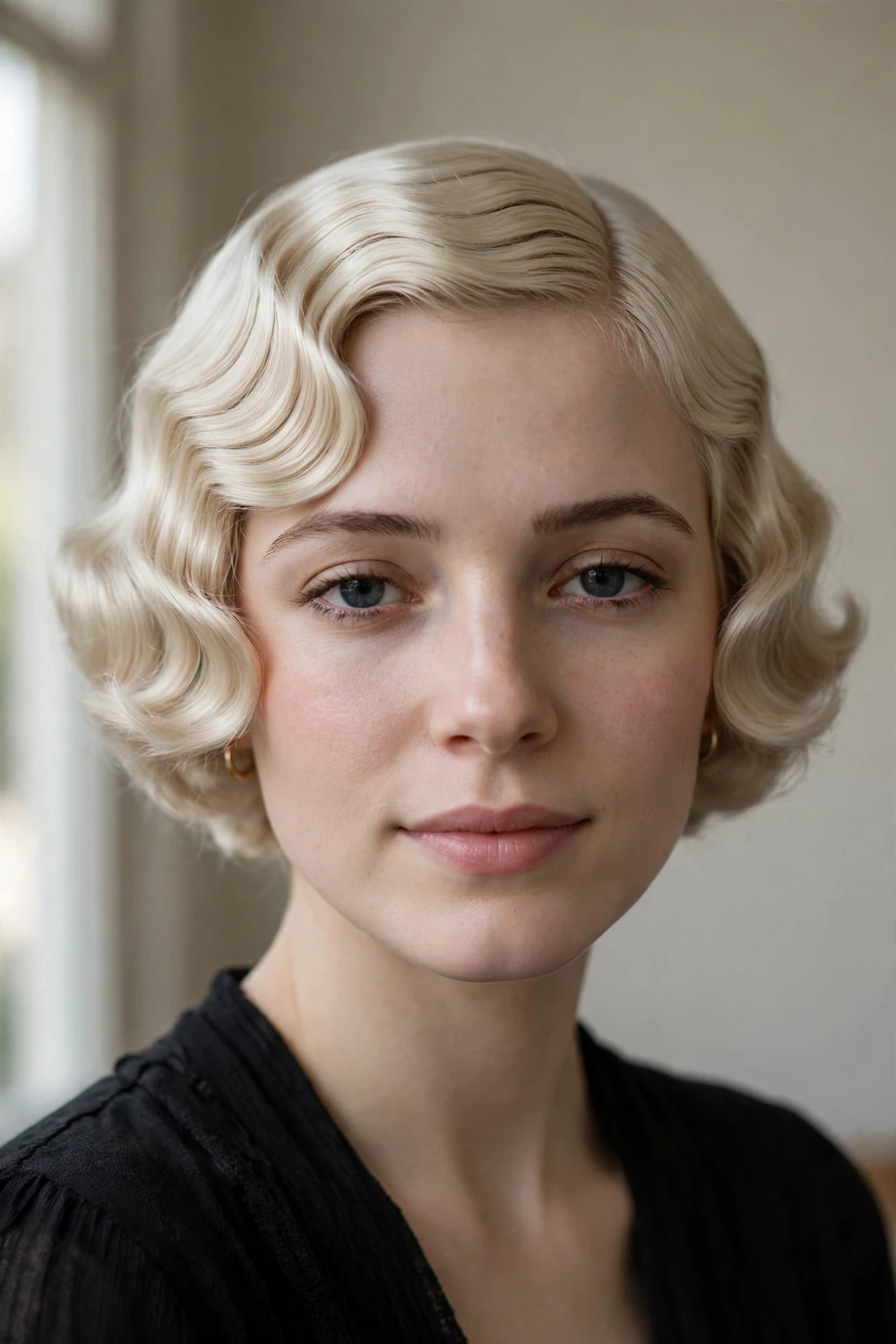
Channel the flapper era with a chin-length bob styled in smooth waves or a sleek, tucked-under finish. The cut itself is a classic bob, but the styling makes it vintage: deep side part, glossy finish, ends curving under. It suits formal occasions and anyone who likes a polished, deliberate look. You’ll need some styling skill, since this one doesn’t happen by accident. Practice the styling at home before the event, since vintage waves take a few tries to master.
Try this: Set damp hair in pin curls or use a Marcel iron for authentic waves. A strong-hold gel keeps the vintage shape locked all evening. Apply heat protectant first if you use hot tools.
17. Undercut Bob

Business on top, shaved underneath. The undercut bob keeps a normal-looking bob on the surface while the nape (and sometimes one side) is clippered short. It’s ideal for very thick hair because removing that hidden bulk makes the top layer lie flatter and lighter. Nobody has to know it’s there unless you pull your hair up. In summer, the shaved nape keeps you noticeably cooler than a full bob would.
Try this: Keep the undercut maintained every 3 to 4 weeks or it grows into an awkward ledge. Clippers with a guard make at-home touch-ups doable between visits.
18. Braided Bob

Who says bobs can’t have braids? Small accent braids along the part, a crown braid worked into the top layer, or tiny braids framing the face all add interest to bob-length hair. This works on straight, wavy, and curly bobs alike. It’s a good option for second-day hair when the cut itself needs a little help looking intentional. Overnight braids on damp hair can double as a heat-free styling method for the next day.
Try this: Braid damp hair with a little pomade on your fingertips to control flyaways. Secure with clear mini elastics that disappear into the style.
19. Long Pixie

Not ready for a true crop? The long pixie keeps several inches on top while the sides and back go short. You can sweep it, spike it, or smooth it down, which makes it the most versatile pixie variation. It suits most face shapes because the top length can be adjusted. Grow-out is also kinder than with shorter pixies, since there’s less awkward in-between. This length also works well with headbands and scarves when you want to change the look.
Try this: Blow-dry the top forward with a vent brush for a sleek finish, or use wax to push it up for texture. One cut, two very different looks.
20. Layered Pixie
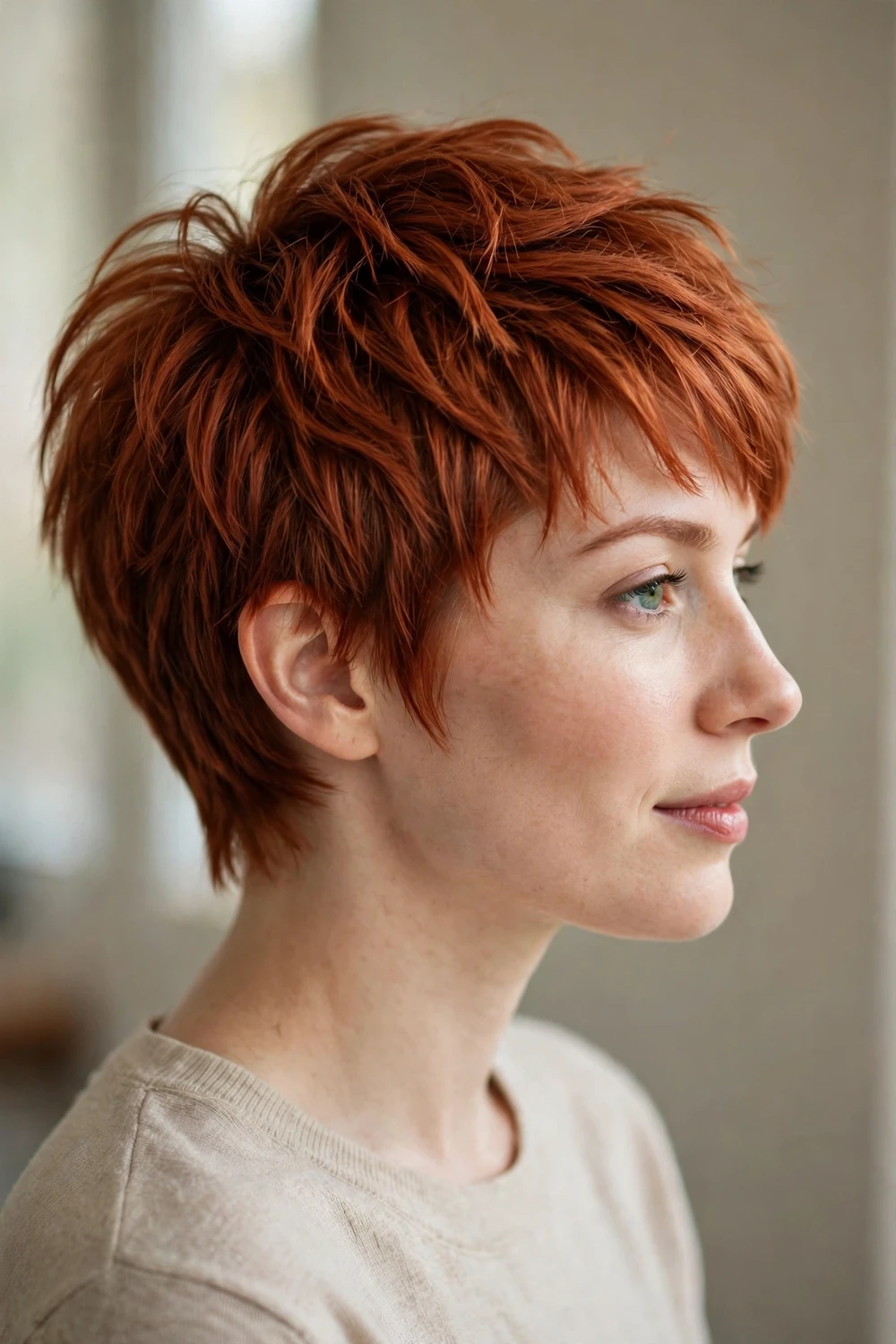
Layers are what separate a soft pixie from a severe one. A layered pixie has feathered, graduated pieces throughout the top that move and separate naturally. Fine hair benefits because the layers create the appearance of fullness. Ask your stylist to point-cut the ends so nothing looks blunt or helmet-like. The layers make this one of the fastest pixies to style, often under five minutes. Ask about a slightly longer crown if you want extra styling flexibility.
Try this: Tousle with texturizing spray on dry hair. The layers are designed to fall into place with minimal help.
21. Whisper Pixie
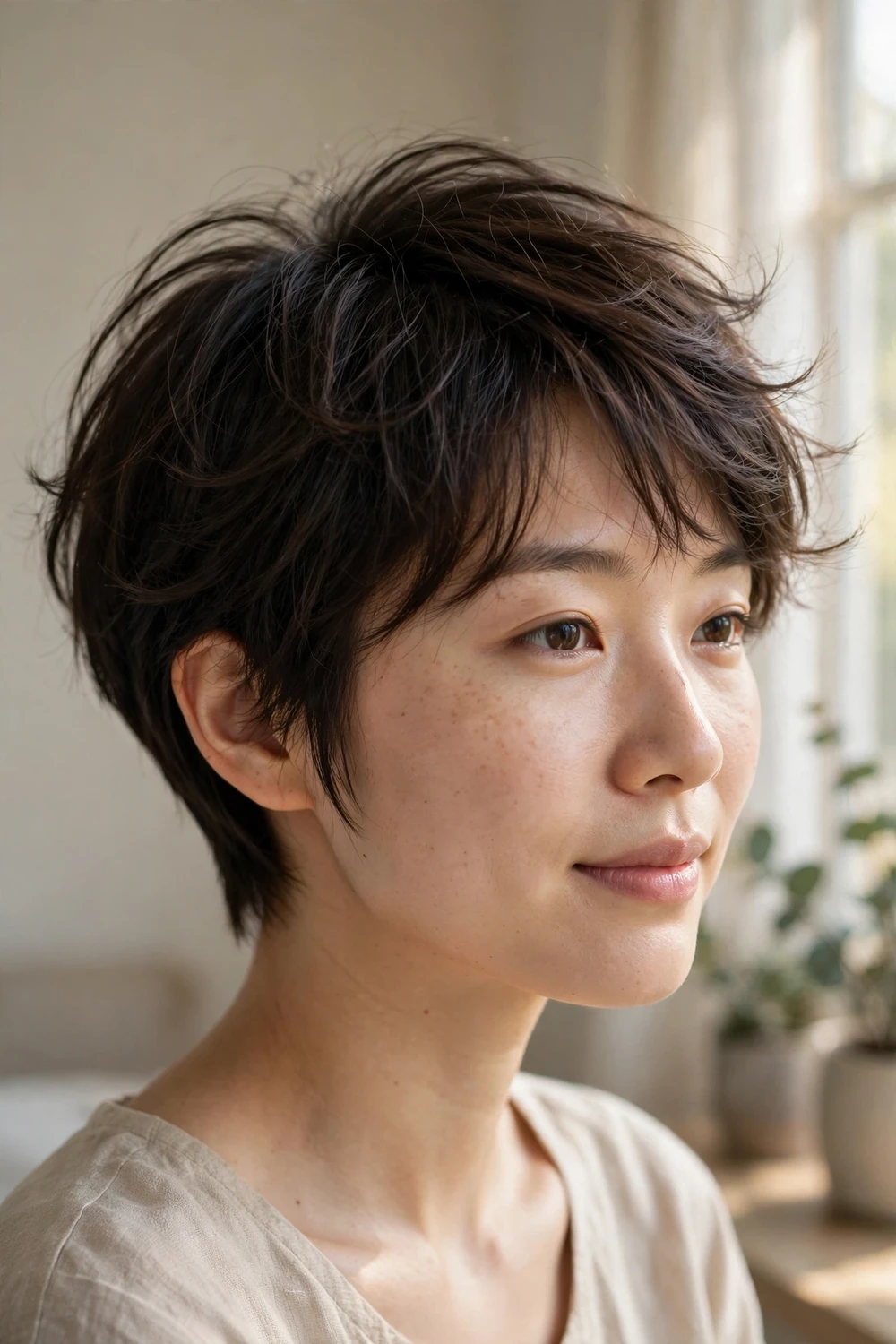
Imagine a pixie cut, then soften every edge. The whisper pixie uses razor-cutting or deep point-cutting to create ends so fine they seem to disappear. It’s the least intimidating pixie for anyone worried about looking harsh. Delicate features and smaller frames wear it well. The softness also means grow-out is less jarring than with blunt pixies. Because the ends are so fine, this cut is less forgiving of split ends, so keep up with trims.
Try this: Avoid heavy products that clump the wispy ends together. A light mist of flexible-hold hairspray is enough.
22. Bixie
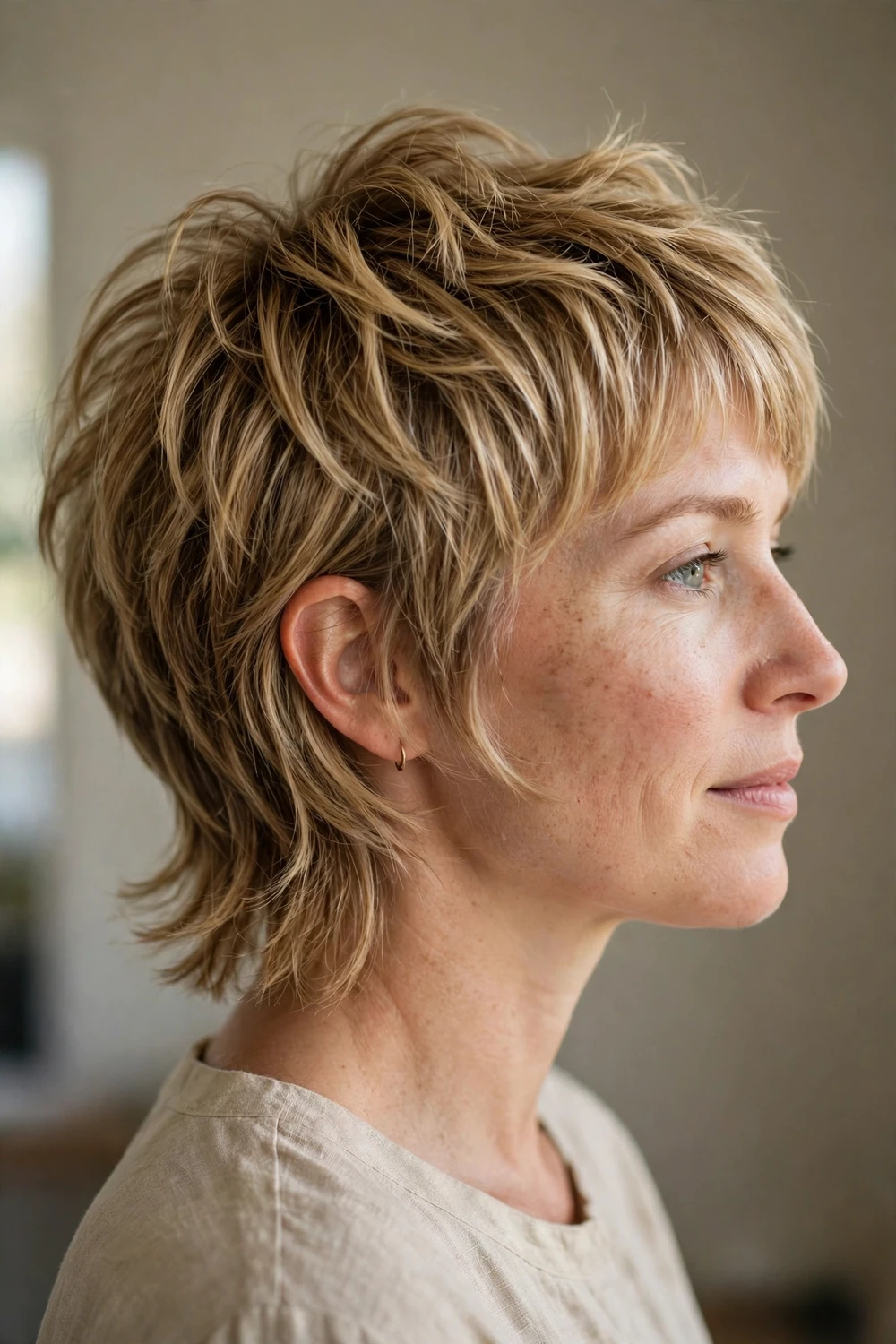
Half bob, half pixie, all attitude. The bixie keeps more length than a pixie (usually grazing the nape and ears) but has the choppy, textured finish of a pixie cut. It became popular because it offers pixie energy without the full commitment. Thick and wavy hair types get the best results, since the texture is the whole point. The extra length around the ears makes this warmer in winter than a true pixie.
Try this: Enhance the piece-y texture with wax, twisting sections in different directions. Let the ends flip where they want to.
23. Spiky Pixie
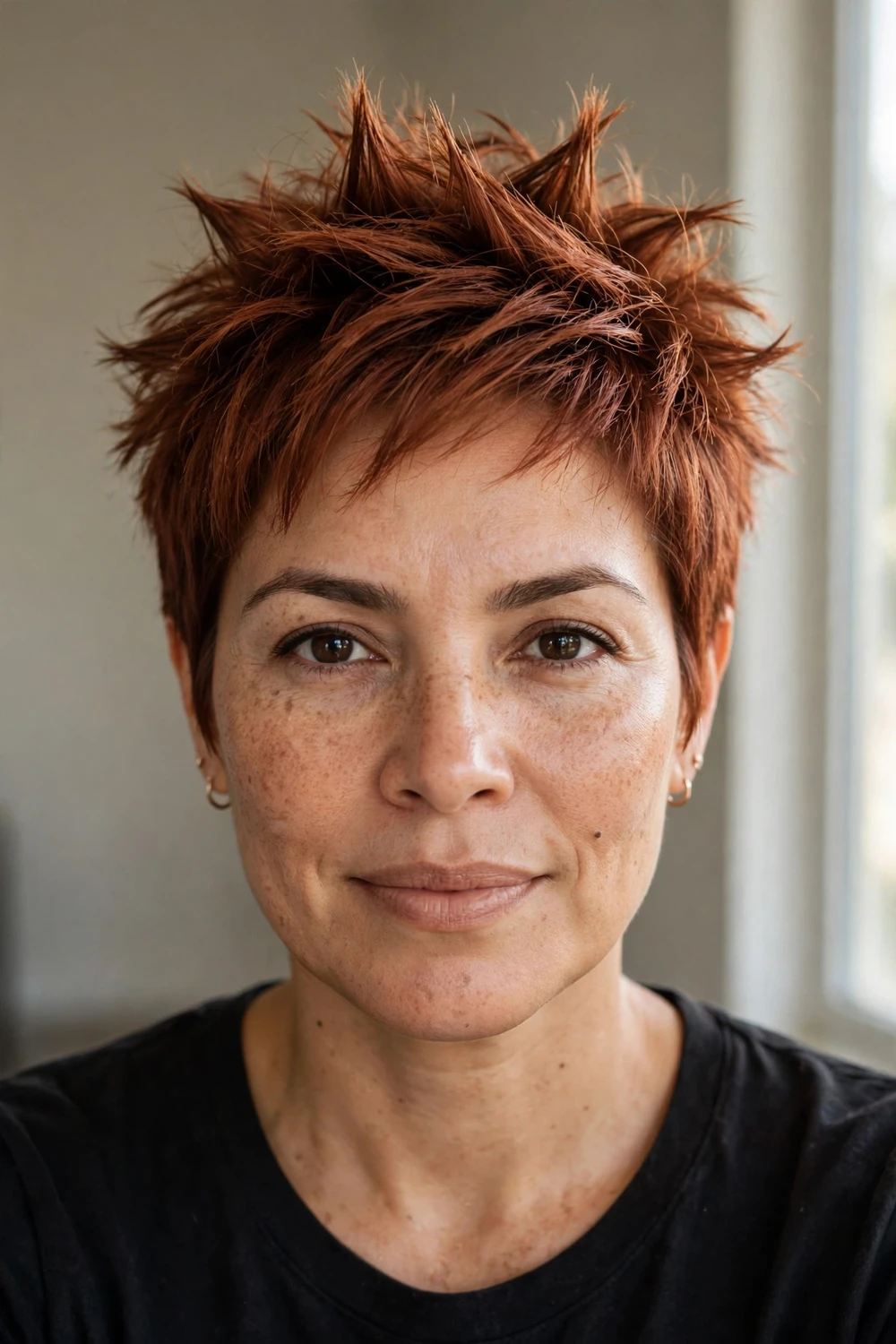
For the bold, there’s the spiky pixie. Short sides, longer textured top, styled upward and outward into defined spikes. It needs product and a few minutes every morning, so be honest about whether you’ll commit. Strong jawlines and oval faces carry it well. This is a statement cut, not a background cut, so wear it like you mean it. Keep travel-size wax in your bag, since spikes can fall flat in humidity without a touch-up.
Try this: Work a strong-hold wax through dry hair, pulling pieces upward. Finish with hairspray if your hair is fine and the spikes fall flat.
24. Curly Pixie
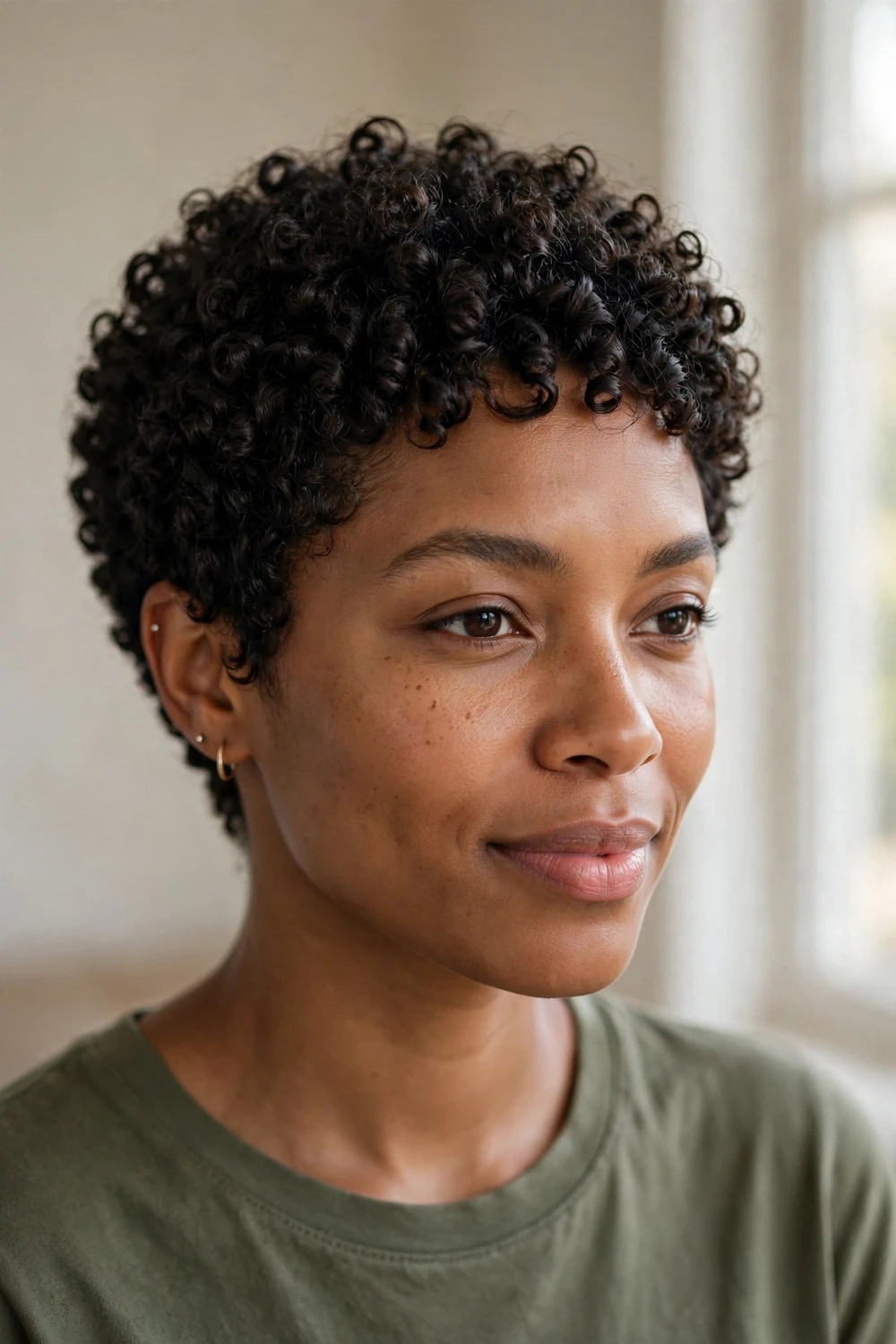
Short curls have incredible shape when cut right. A curly pixie keeps enough length on top for curls to form while the sides stay neat. The key is cutting curls in their natural state so the length is accurate. Diffusing upside down builds volume at the crown. This cut celebrates texture instead of fighting it. Pineappling at night preserves the curl shape better than sleeping on it loose. Your natural volume does most of the work here.
Try this: Apply curl-defining cream to wet hair and scrunch. Let it air-dry or diffuse on low heat. Refresh curls on day two with a water mist.
25. Tousled Pixie
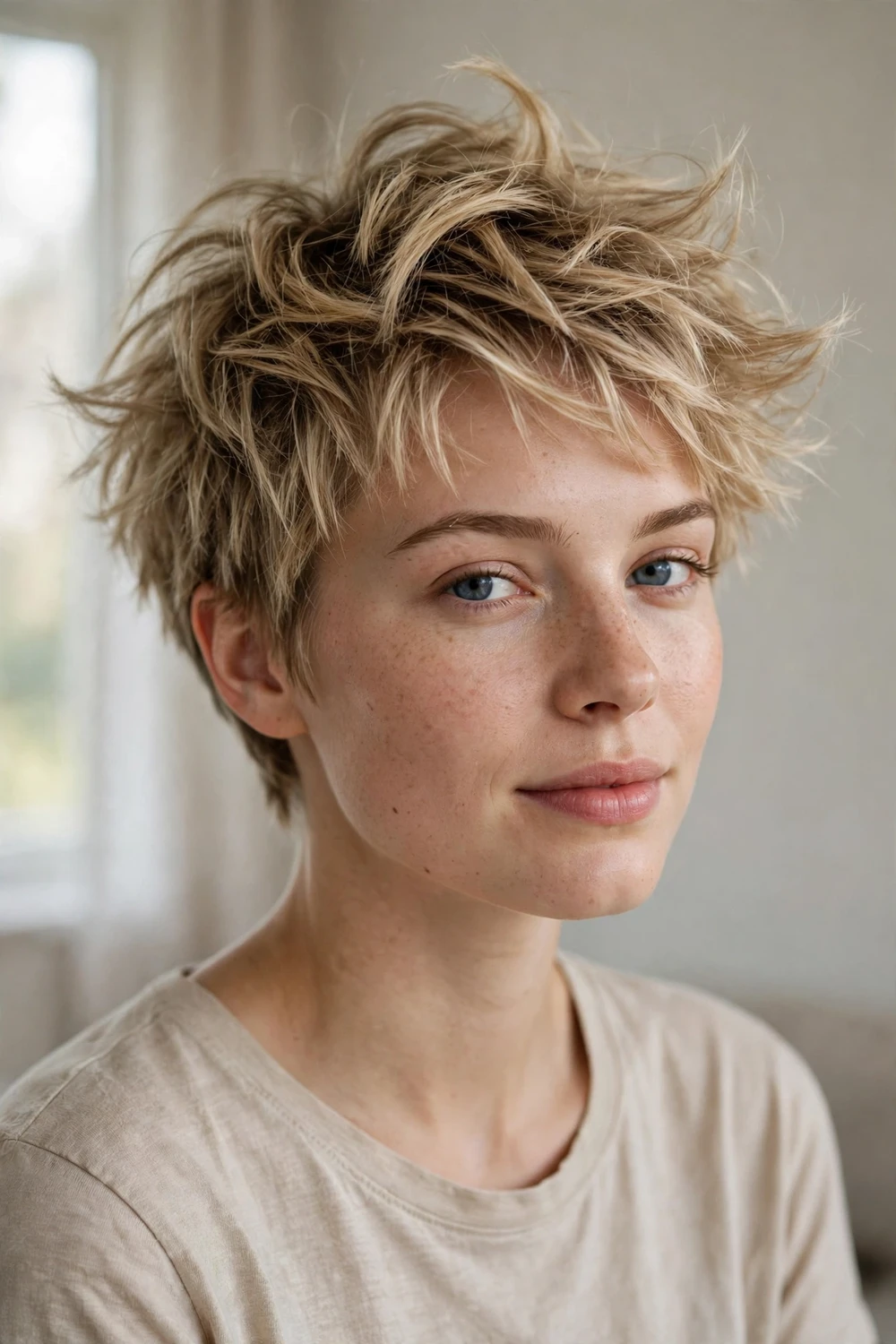
Bedhead, but make it intentional. The tousled pixie is cut with lots of texture so it falls into a perfectly imperfect shape with almost no styling. It’s the wash-and-go champion of the pixie family. Fine to medium hair with some natural wave gets the best results. If your hair is pin-straight, you’ll need product to fake the tousle. A silk pillowcase reduces morning bedhead to an actually intentional tousle. It is genuinely that simple.
Try this: Sleep on damp hair with a little mousse scrunched in. Wake up, shake, and go. That’s genuinely the whole routine.
26. Asymmetrical Pixie

Take a pixie and shift the balance. One side stays longer, sweeping across the forehead, while the other tucks tight. The asymmetry adds drama without needing extreme length differences. It works well for round faces because the diagonal line creates the illusion of length. Your stylist will need to cut it with your natural part in mind, so don’t change your part after. Photos help your stylist maintain the asymmetry accurately at each trim appointment.
Try this: Smooth the longer side with a flat iron and tuck the short side behind your ear. The contrast is the whole point, so don’t try to even it out.
27. Pixie Faux Hawk
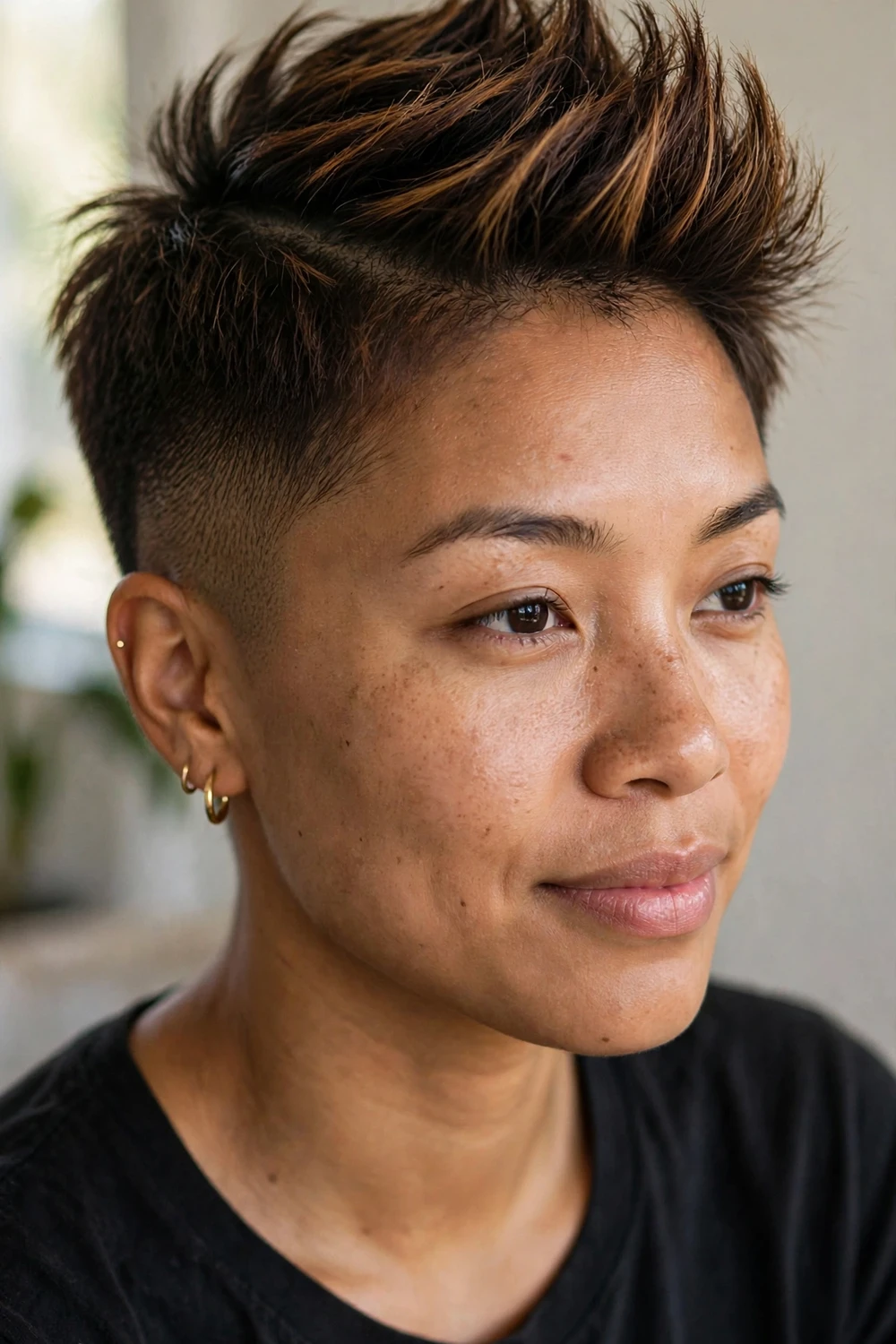
All the edge of a mohawk with none of the shaved sides. The pixie faux hawk keeps hair longer through the center strip and shorter on the sides, styled upward into a ridge. It’s surprisingly wearable for work if you smooth it down, and wild enough for weekends when you spike it up. Thick, coarse hair holds the shape best. The center strip needs the most product, so concentrate your wax there rather than the sides.
Try this: Blow-dry the center strip upward with a vent brush, then lock it with strong-hold wax. For a softer office version, sweep it to one side instead.
28. Super Short Buzz Pixie
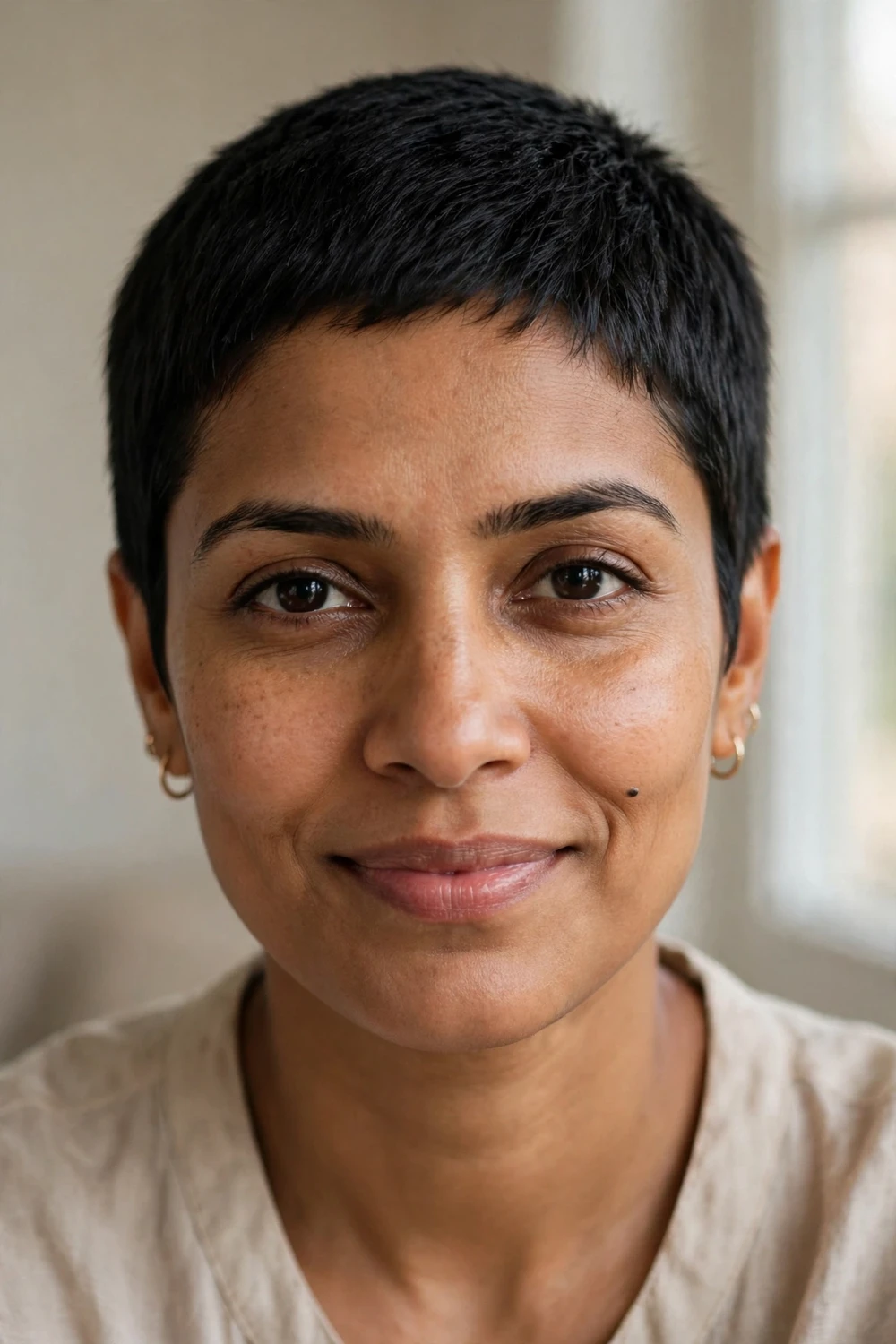
The shortest you can go while still calling it a pixie. Clipper-cut all over, usually with a slightly longer top for softness. This cut puts your face completely on display, so it’s for the confident. The upside is near-zero maintenance: no styling, no bad hair days, just a quick clipper touch-up every couple of weeks. It also grows out into a textured pixie naturally. Sunscreen on the scalp is easy to forget but important with this much exposure.
Try this: Keep the hairline clean with a trimmer between barber visits. A little scalp sunscreen matters if you’re outdoors a lot.
29. French Girl Pixie
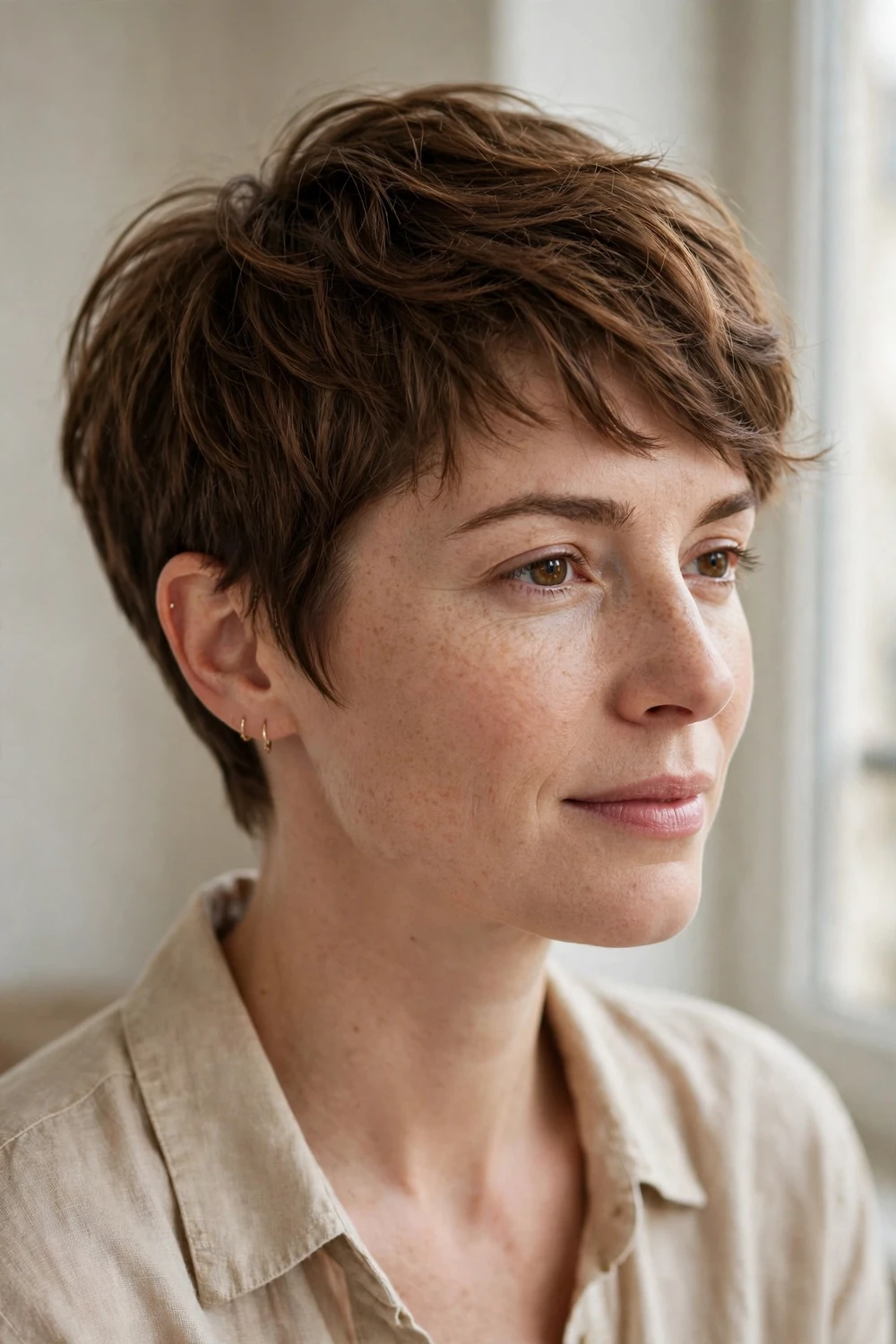
Soft, a little messy, and completely unbothered. The French girl pixie has wispy bangs, textured ends, and an overall “I woke up like this” quality. It’s less structured than an American-style pixie, with more length left around the ears and nape. Fine to medium hair with natural movement wears it best. The charm is in the imperfection, so don’t over-style it. This cut pairs well with minimal makeup, since the effortless hair sets a natural tone.
Try this: Let it air-dry and add a tiny amount of wax just to the ends. If it looks too neat, you’ve done too much.
30. Pixie with Bangs

Adding bangs to a pixie changes the whole geometry. The fringe softens the forehead and draws attention to the eyes, balancing the shortness everywhere else. You can go blunt, side-swept, or choppy depending on the look you want. This combination suits longer face shapes especially well, since the bangs visually shorten the face. Blunt bangs on a pixie need trimming every two to three weeks to stay sharp. Precision matters more than speed with this fringe.
Try this: Style bangs first while they’re damp, before they set in the wrong direction. A small flat iron gives you precise control.
Short Haircut Ideas Comparison at a Glance
| Style | Best Face Shape | Difficulty | Styling Time |
|---|---|---|---|
| French Bob | Oval, Heart | Easy | 5 min |
| Curved Bob | Round, Oval | Easy | 10 min |
| Textured Tousled Bob | All | Easy | 5 min |
| Curly Bob | All | Medium | 15 min |
| Micro/Jaw-Length Bob | Oval, Petite | Medium | 10 min |
| Layered Lob | All | Easy | 10 min |
| Layered Bob | All | Easy | 10 min |
| Blunt Bob | Oval, Long | Medium | 15 min |
| Wavy Bob with Bangs | Heart, Oval | Easy | 10 min |
| Asymmetrical Bob | Oval, Square | Medium | 10 min |
| Bob with Full Bangs | Long, Oval | Medium | 10 min |
| Shaggy Bob with Curtain Bangs | All | Easy | 5 min |
| Choppy Bob | All | Easy | 5 min |
| Choppy Bob with Bangs | Heart, Oval | Easy | 5 min |
| Stacked/Graduated Bob | All | Medium | 15 min |
| Vintage ’20s Bob | Oval, Heart | Hard | 25 min |
| Undercut Bob | All | Easy | 5 min |
| Braided Bob | All | Easy | 10 min |
| Long Pixie | All | Easy | 10 min |
| Layered Pixie | All | Easy | 5 min |
| Whisper Pixie | Delicate, Small | Easy | 5 min |
| Bixie | All | Easy | 10 min |
| Spiky Pixie | Oval, Strong jaw | Medium | 10 min |
| Curly Pixie | All | Medium | 15 min |
| Tousled Pixie | All | Easy | 5 min |
| Asymmetrical Pixie | Round, Oval | Medium | 10 min |
| Pixie Faux Hawk | Oval, Heart | Medium | 15 min |
| Super Short Buzz Pixie | All | Easy | 2 min |
| French Girl Pixie | All | Easy | 5 min |
| Pixie with Bangs | Long, Oval | Easy | 10 min |
*Designed shave styling is quick, but the design itself needs professional maintenance every 1 to 2 weeks.
How to Choose the Right Short Cut for You
Start with your hair texture, not the photo. Fine hair needs blunt lines or choppy texture to look fuller. Thick hair needs weight removed through layers or an undercut. Curly hair needs a curl specialist and a cut that works with shrinkage, not against it.
Then consider your face shape. Round faces benefit from height on top and diagonal lines. Long faces do well with bangs and horizontal volume. But these are guidelines, not rules. A good stylist adapts any cut to your features.
Finally, be honest about maintenance. A buzz cut needs nothing. A blunt bob needs regular trims and heat styling. Pick the cut you’ll actually maintain, not the one that looks best in the salon chair.
Grow-Out Guide
Every short cut grows out, so plan for it. Pixies go through an awkward phase around month three when the back gets shaggy. Regular trims focused on the nape keep it looking intentional while the top catches up.
Bobs grow into lobs gracefully with minimal intervention. You might just need the ends cleaned up every couple of months. Undercuts and shaved sections are the hardest to grow out, so think twice before committing if you’re not sure.
Accessories help during transitions. Headbands, clips, and scarves cover awkward stages and add style while you wait. Most grow-outs resolve into a wearable cut within 4 to 6 months.
Mistakes to Avoid
Don’t go drastically short on impulse. Sleep on the decision, look at photos in different lighting, and consider a less extreme version first. You can always go shorter at the next appointment.
Don’t skip the consultation. Even a 10-minute chat about your routine and expectations prevents most bad outcomes. If a stylist won’t consult, find one who will.
Don’t ignore your hair texture. A cut designed for straight hair won’t behave the same on curls. Always ask how the cut works with YOUR hair type specifically, not just how it looks in the reference photo.
Don’t forget about grow-out. Ask what the cut looks like in 6 weeks. If the answer involves a lot of awkwardness, make sure you’re prepared for it.
If you’re over 60 and going short, these short hairstyles for women over 60 are curated for mature hair texture and face shapes.
Fine hair needs special consideration. These short hairstyles for thin hair focus on cuts that build the appearance of volume.
For textured and natural hair types, explore these short hairstyles for black women designed for coils, curls, and natural texture.
Round faces have specific needs. These low maintenance short haircuts for round faces add length and angles where they count.
Frequently Asked Questions
What is the best short haircut for fine hair?
Blunt bobs and choppy pixies work best for fine hair. The blunt perimeter of a bob makes ends look thicker, while choppy layers in a pixie create the appearance of more pieces. Avoid long layers, which can make fine hair look stringy. A stacked bob is another strong option because the graduated back builds volume at the crown where fine hair usually falls flat.
How often do I need trims to maintain a short haircut?
Most short cuts need a trim every 4 to 6 weeks. Precision cuts like blunt bobs and micro bobs show grow-out fastest, so they lean toward 4 weeks. Textured cuts like shags and tousled pixies are more forgiving and can stretch to 6 or even 8 weeks. Undercuts and buzz cuts need the most frequent maintenance, every 2 to 3 weeks, to keep the faded sections sharp.
Will a short haircut suit a round face?
Yes, with the right cut. Look for styles that add height on top (like a textured pixie or stacked bob) and avoid chin-length cuts with volume at the sides, which can emphasize roundness. Asymmetrical styles and side-swept bangs create diagonal lines that add the appearance of length. A long pixie or layered lob are safe starting points if you’re unsure.
Can I still style short hair for formal events?
Absolutely. Sleek, polished versions of bobs work well for formal occasions: flat iron for smoothness, tuck one side behind your ear, add a decorative clip. For pixies, a deep side part with pomade gives a red-carpet feel. Updos aren’t the only formal option. Short hair with intentional styling and good accessories holds its own at any event.
How do I grow out a pixie without an awkward phase?
You can’t skip the awkward phase entirely, but you can manage it. Get trims every 6 to 8 weeks focused on the back and sides while letting the top grow. This shapes the grow-out into a long pixie, then a bixie, then a bob. Use headbands, clips, and hats during the roughest weeks. Most people find month three the hardest, and it gets easier after that.
Final Thoughts
Forty-nine ideas is a lot, but you don’t need to love all of them. You need one that fits your hair, your face, and your life. Start with the comparison table, pick three favorites, and bring them to your stylist for an honest opinion.
\n
If you want looks built for rushed mornings, our cute and easy short hairstyles for school guide narrows the field to thirty five-minute styles.
Short hair is a commitment, but it’s also freedom. Less washing, less drying, less fuss. And if you don’t love it, hair grows. That’s the safety net built into every cut on this list.

