


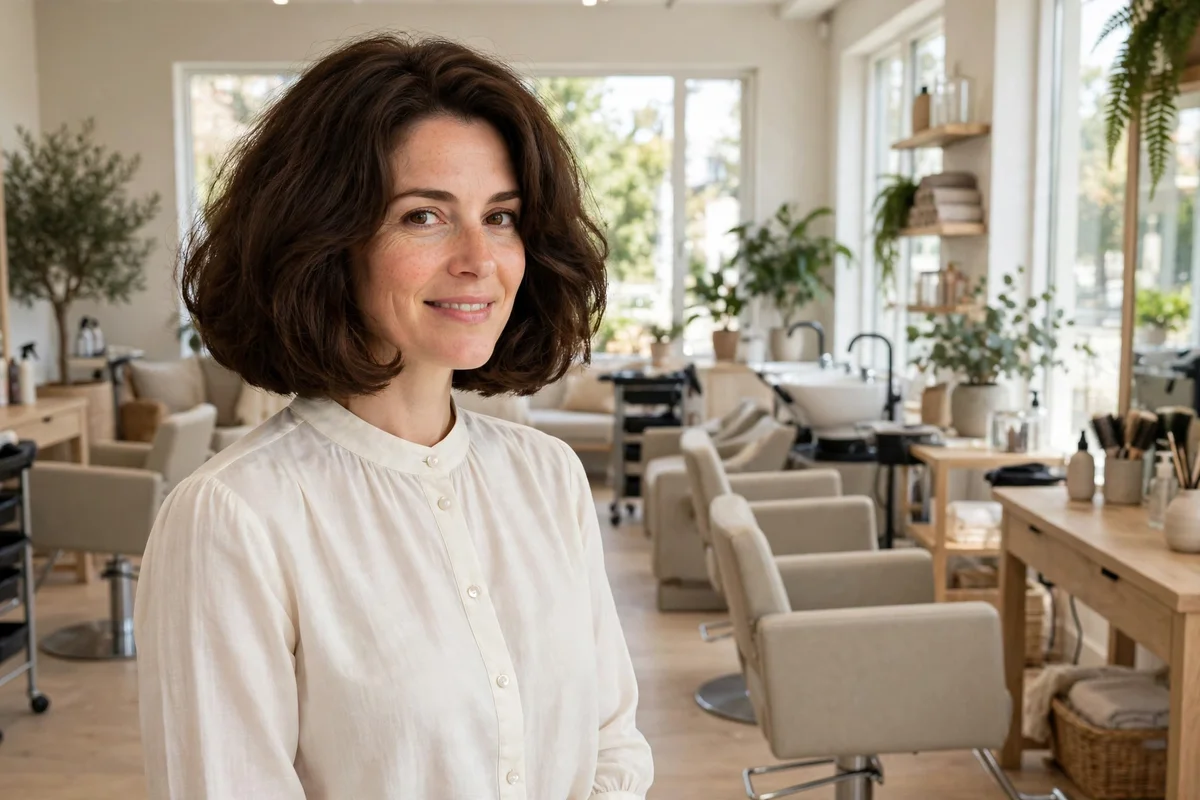
Thin hair tends to fall flat, lose its shape by midday, and look sparse at the ends. The right short haircut changes that: shorter lengths remove the weight that pulls fine strands down, blunt edges make the perimeter look denser, and smart layering builds lift exactly where thin hair needs it most.
Below you will find 25 short hairstyles for thin hair chosen for one reason: they make fine, low-density hair look fuller. Each idea includes styling tips, a difficulty rating, and honest upkeep notes so you can show your stylist exactly what you want.
Quick Takeaways
- Shorter cuts remove weight, so thin hair lifts at the roots instead of falling flat.
- Blunt ends look denser; long blended layers add movement without sacrificing fullness.
- Texture, waves, and dimensional color all create the illusion of thicker hair.
- Lightweight products (mousse, root spray, texture spray) beat heavy creams every time.
- Trim every 6–8 weeks to keep thin hair looking its fullest.
1. Blunt Chin-Length Bob
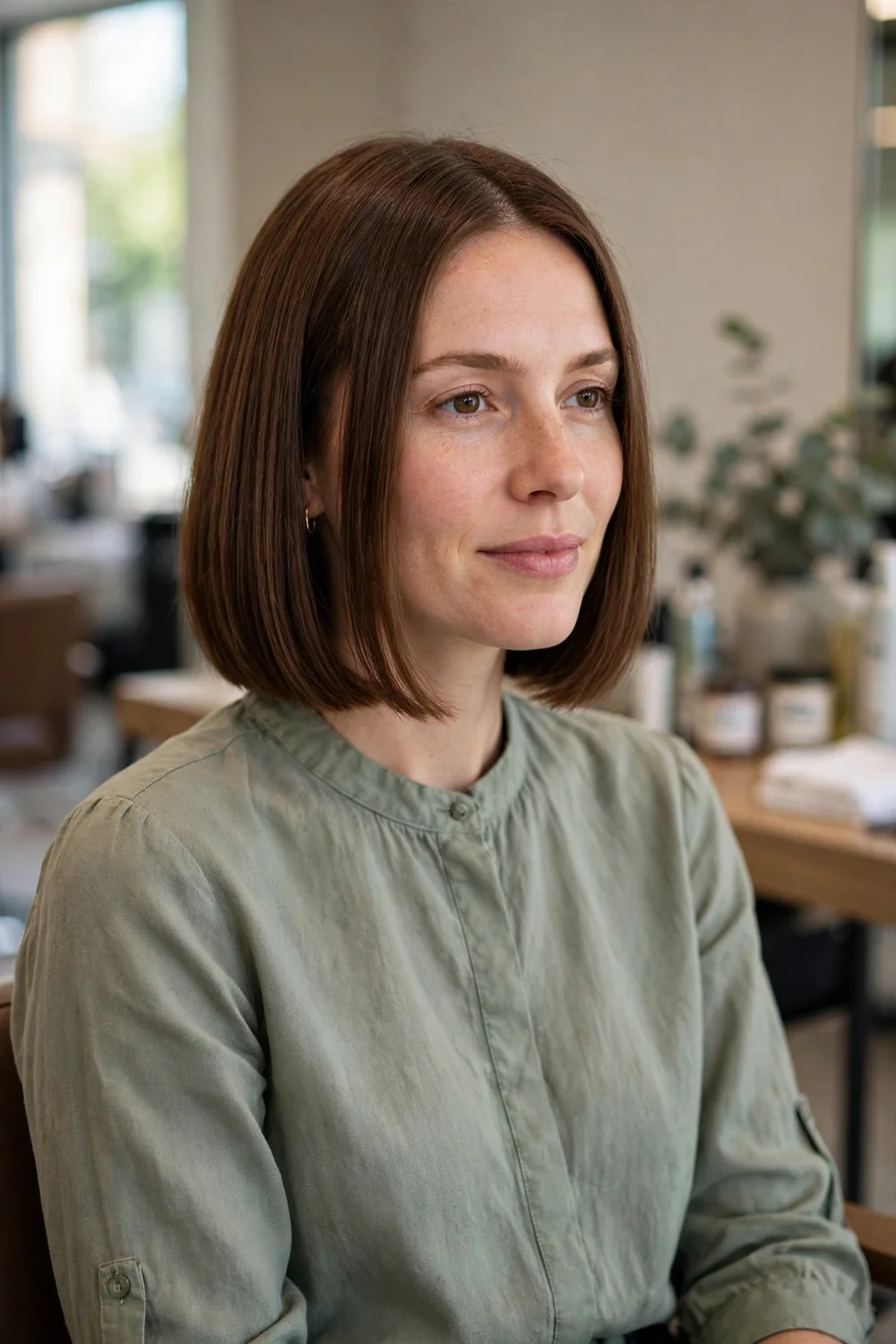
A blunt chin-length bob keeps every strand ending at the same line, so the perimeter looks dense instead of wispy. The short length removes enough weight for natural root lift, which is half the battle with thin hair. Ask your stylist for zero layers at the ends so the bottom edge stays thick and clean. Blow-dry smooth with a paddle brush for a polished finish, lifting at the roots as you go.
Try this: Flip your head upside down for the first minute of blow-drying to set root lift before smoothing the ends.
Best for: straight to slightly wavy thin hair · Difficulty: Easy · Daily styling: 5 minutes · Upkeep: trim every 6–8 weeks.
2. Textured Pixie Cut
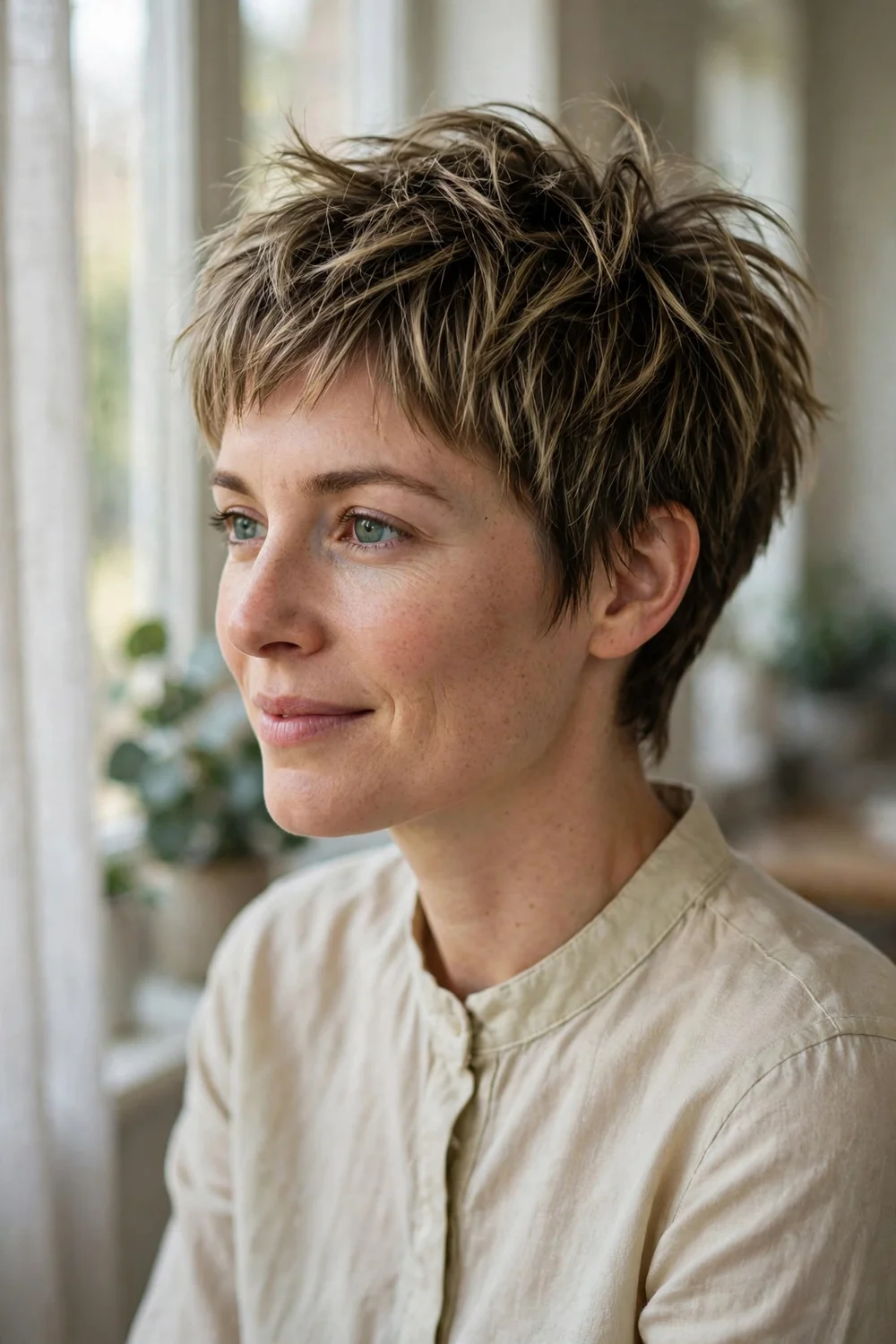
Short, piecey layers at the crown let even fine strands stand up and separate, creating visible density that longer thin hair cannot achieve. The texture does most of the work, so this cut stays lively between washes. Work a pea-sized amount of texturizing paste through dry hair to define the layers, starting at the crown and working forward. Keep the sides neat so all the fullness reads at the top.
Try this: Scrunch the crown pieces upward with your fingers instead of combing flat for instant height.
Best for: fine straight or wavy hair; oval and heart faces · Difficulty: Easy · Daily styling: 5 minutes · Upkeep: trim every 4–6 weeks.
Want the full pixie range? Our short pixie cuts guide covers options for every face shape.
3. Angled Bob
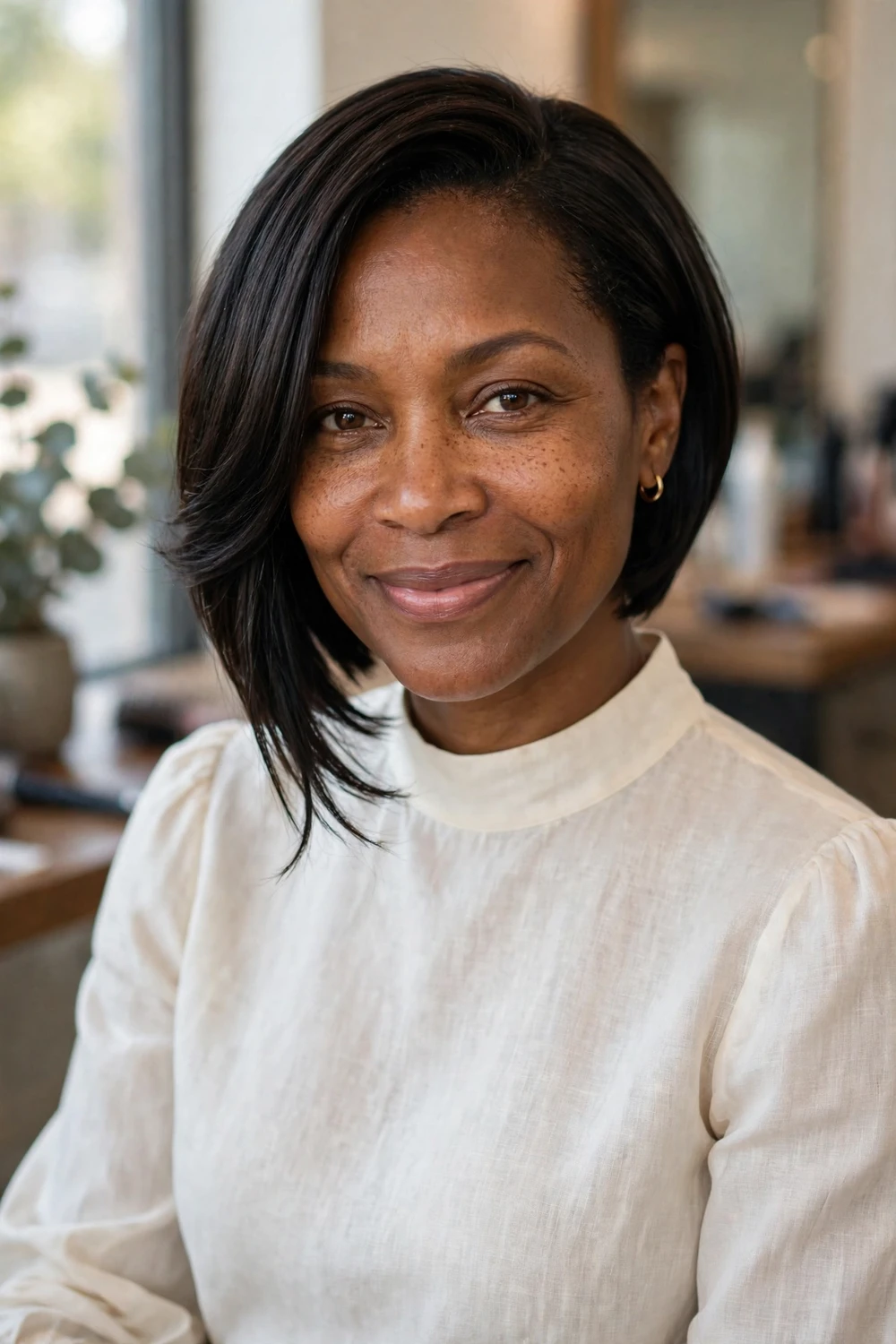
Shorter at the nape and longer in front, the angled bob stacks subtle volume at the back while the front pieces frame the face. The forward slope draws the eye along the jawline, which flatters round faces especially well. Ask for a soft angle rather than a dramatic one so the ends keep their fullness. Style with a round brush, rolling the back sections upward to build on the stacked shape.
Try this: Tuck the shorter side behind your ear to sharpen the angle on days you want extra polish.
Best for: round faces; straight thin hair · Difficulty: Medium · Daily styling: 10 minutes with a round brush · Upkeep: trim every 6–8 weeks.
4. Choppy Pixie
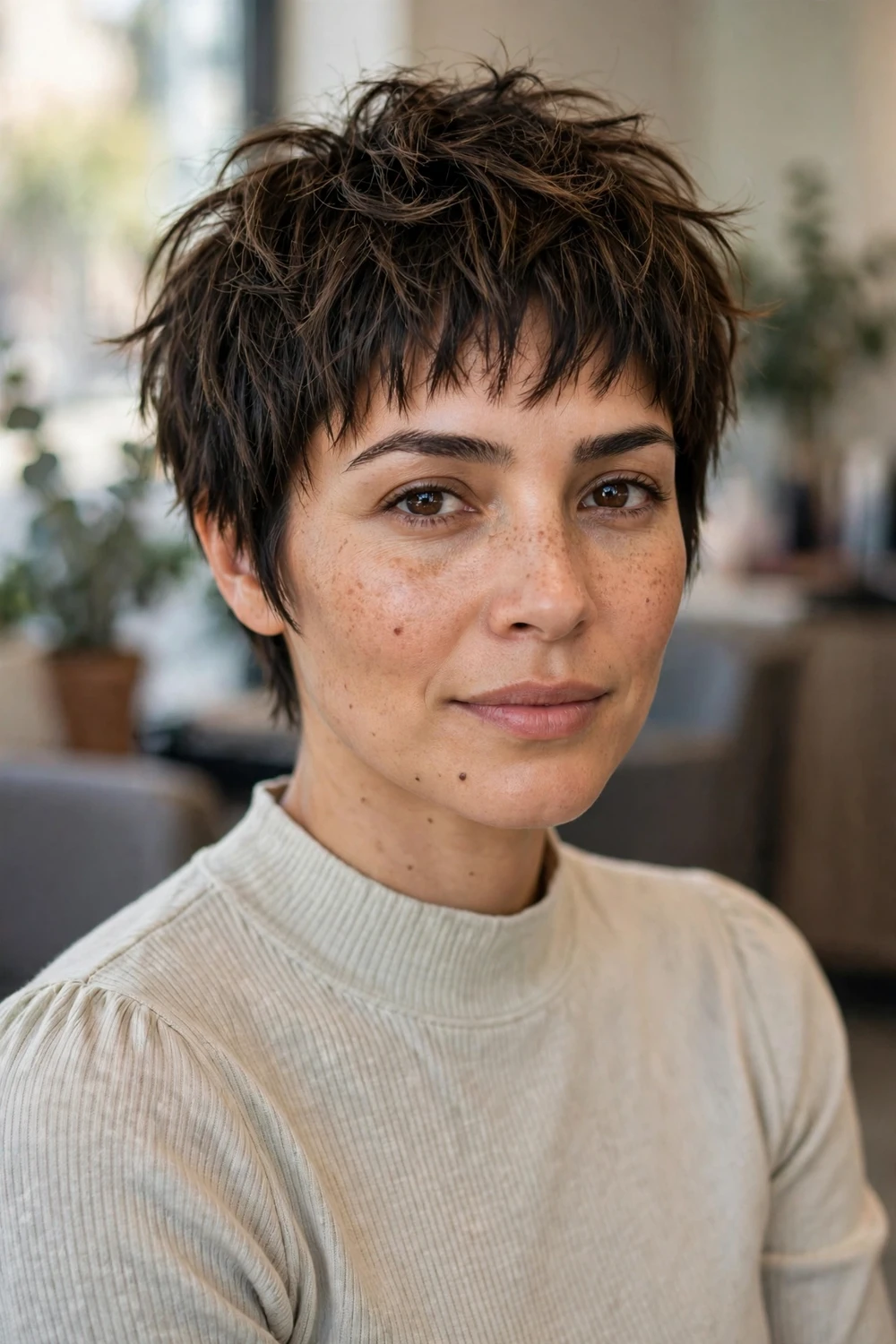
Uneven, jagged layers catch light and shadow, which the eye reads as thickness. This cut is forgiving on second-day hair, since a little natural texture improves the piecey finish. Ask for point cutting rather than blunt layering so the ends stay soft and separated. Avoid heavy waxes that glue fine strands together, and skip washing daily if your scalp allows it. A light dry shampoo at the roots on day two keeps the texture going without a full wash.
Try this: Revive flat mornings with a spritz of dry texture spray at the roots, then shake the layers loose.
Best for: thin hair that falls flat; low-effort routines · Difficulty: Easy · Daily styling: 3–5 minutes · Upkeep: trim every 4–6 weeks.
5. Layered Bob with Highlights

Soft layers add movement while fine highlights create light-and-shadow dimension, so the eye reads depth instead of sparseness. Keep layers long, since over-layering removes the density you are trying to fake. Ask for balayage or fine foils concentrated through the mid-lengths for the softest grow-out. The combination of cut and color does more for thin hair than either could alone. Fine babylights around the face brighten the complexion while keeping the overall look natural.
Try this: Request a root shadow one shade darker than the highlights to make regrowth nearly invisible.
Best for: straight or wavy thin hair · Difficulty: Medium · Daily styling: 10 minutes · Upkeep: cut every 6–8 weeks; color every 8–12 weeks.
For more volume-boosting shapes, browse our bob hairstyles for fine hair roundup.
6. Side-Parted Bob

Shifting your part to the side forces roots to stand against their growth direction, which creates instant crown lift with no product. Paired with a chin-length bob, the root height plus dense ends make thin hair look dramatically thicker. Train the part by blow-drying it into place for the first week. This is the simplest trick on the list and it costs nothing. Once the part is trained, a quick blast of heat in the morning is all it takes to reset it.
Try this: Deepen the part on flat-hair days by flipping it to the opposite side for a full reset.
Best for: any thin hair type; quick routines · Difficulty: Very easy · Daily styling: 5 minutes · Upkeep: trim every 6–8 weeks.
7. Shaggy Bob with Wispy Layers

Feathered layers through the crown build airy volume that never looks heavy. The shaggy texture keeps the cut from sitting flat, even on fine strands that usually collapse by noon. Scrunch lightweight mousse into damp hair and air-dry or diffuse for a lived-in finish. Skip thick creams, which collapse this cut, and avoid brushing it out once dry. Ask for the layers to start at the cheekbones so the volume sits high where it shows most.
Try this: Twist the crown layers around your fingers while damp to encourage natural separation as they dry.
Best for: wavy or straight thin hair · Difficulty: Easy to medium · Daily styling: 10 minutes · Upkeep: trim every 6–8 weeks.
8. French Bob
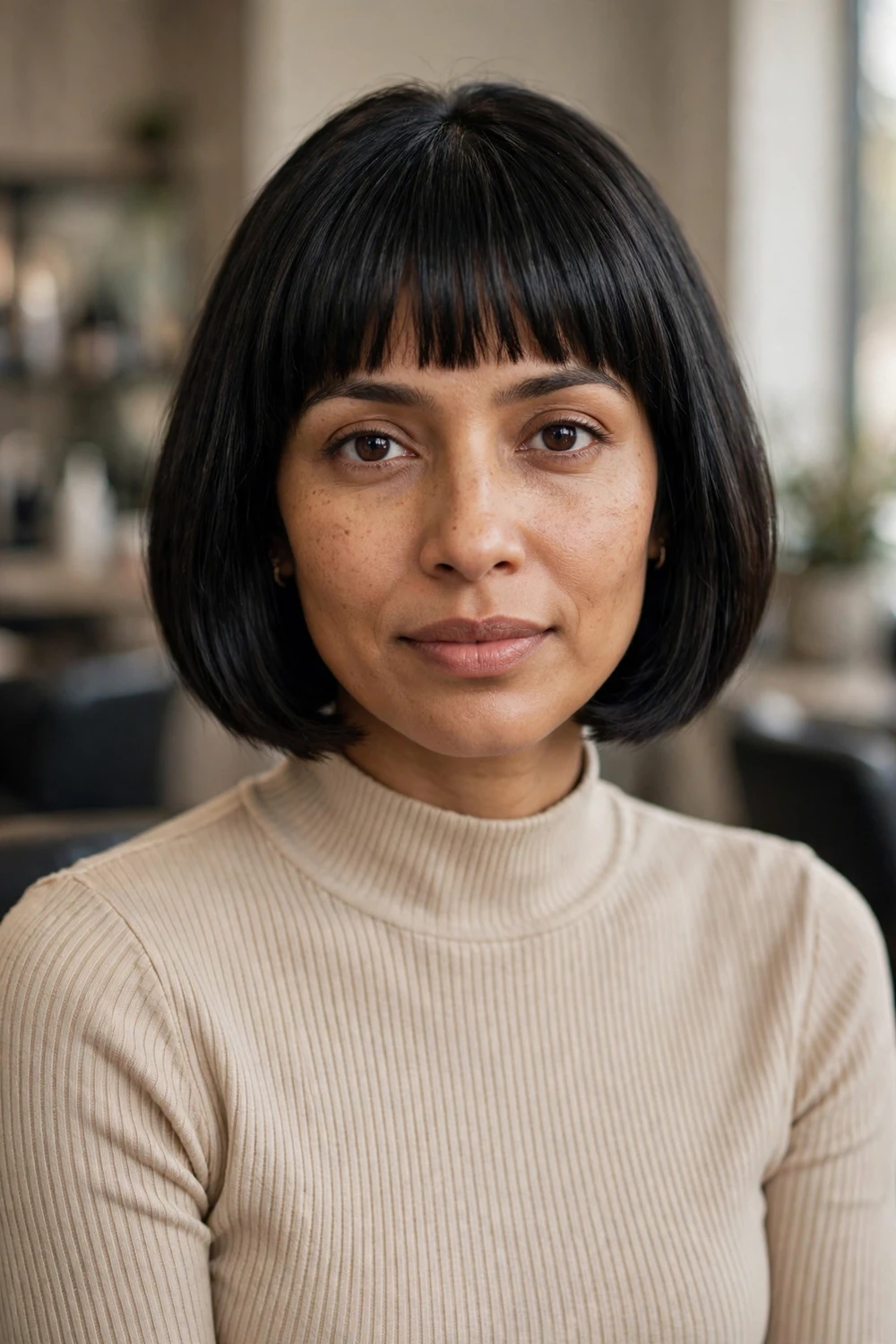
At jaw length with a slightly curved shape, the French bob gives thin hair natural bounce, and the rounded silhouette makes the sides look fuller. Wear it with a soft fringe for extra density around the face. The cut sits right at the sweet spot: short enough to lift, long enough to tuck behind the ears. Ask for a curved cutting line rather than a straight one for the signature shape.
Try this: Air-dry with a little mousse scrunched in, then finger-style the curve for a Parisian finish.
Best for: straight thin hair; petite and oval faces · Difficulty: Easy · Daily styling: 5 minutes, air-dry friendly · Upkeep: trim every 5–7 weeks.
9. Rounded Bob with Side Bangs

A rounded bob curves inward toward the chin, hugging the head so the shape itself suggests fullness. Side-swept bangs add a diagonal sweep that breaks up flatness at the hairline. Blow-dry with a medium round brush, rolling ends under to set the curve. The inward curve also keeps the ends from flipping outward, which can make thin hair look sparse. A center part with this shape also works well if you prefer symmetry over the side sweep.
Try this: Set the under-curve with large velcro rollers for 10 minutes while you do your makeup.
Best for: straight thin hair; square and heart faces · Difficulty: Medium · Daily styling: 10–12 minutes · Upkeep: trim every 6–8 weeks.
10. Short Shag
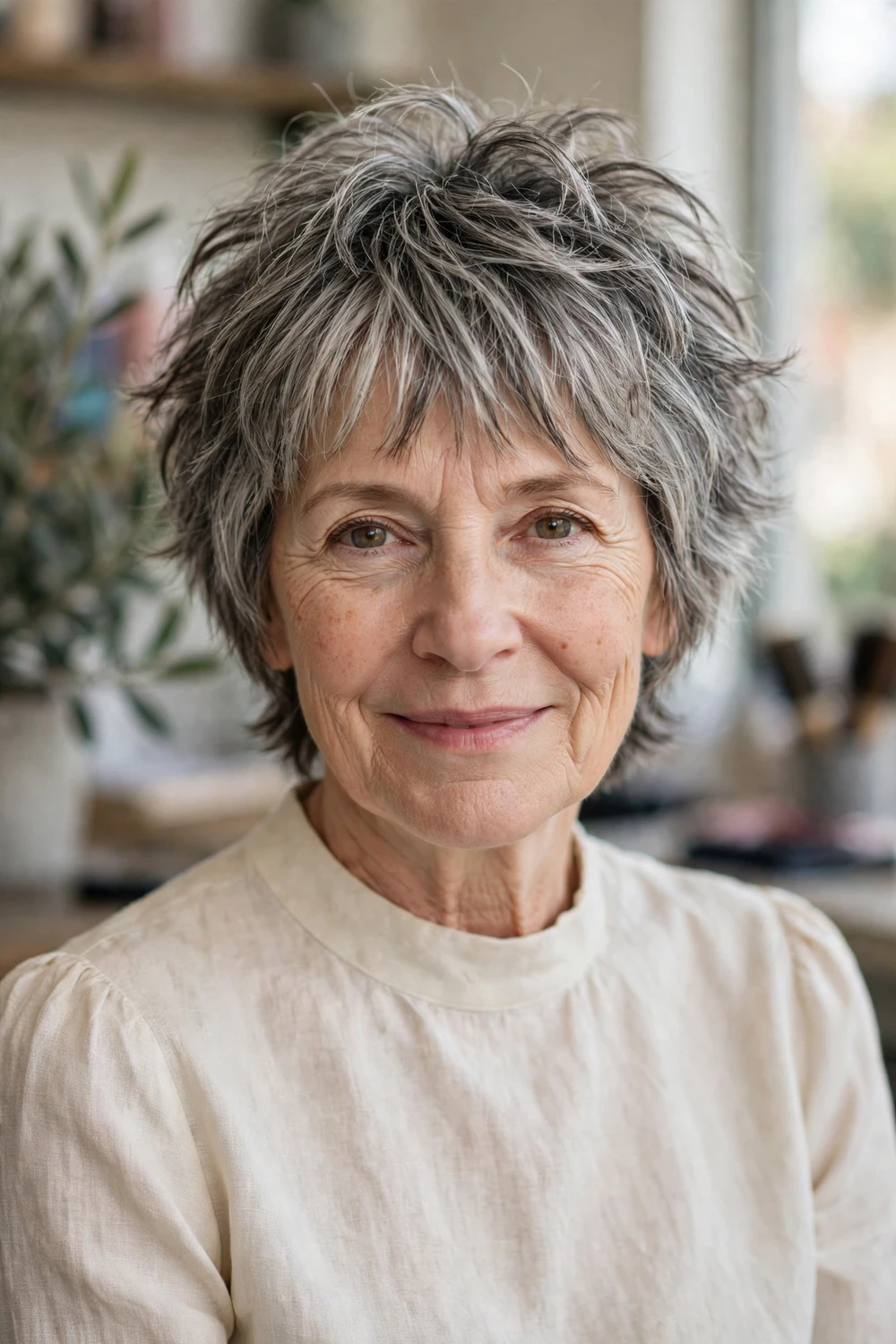
Short, choppy layers concentrated at the crown push the top of the hair upward and outward, building a halo of volume where thin hair needs it most. The lived-in texture means this cut looks better slightly undone, which suits real mornings. Work light texturizing spray through dry hair and tousle. Ask your stylist to keep the perimeter strong so the ends do not go wispy. Because it air-dries well, this is a strong pick for humid climates where sleek styles frizz.
Try this: Ruffle the crown with your fingertips after styling instead of combing it flat.
Best for: thin hair with natural wave; edgy style · Difficulty: Medium · Daily styling: 10 minutes · Upkeep: trim every 6–8 weeks.
11. Soft Textured Crop
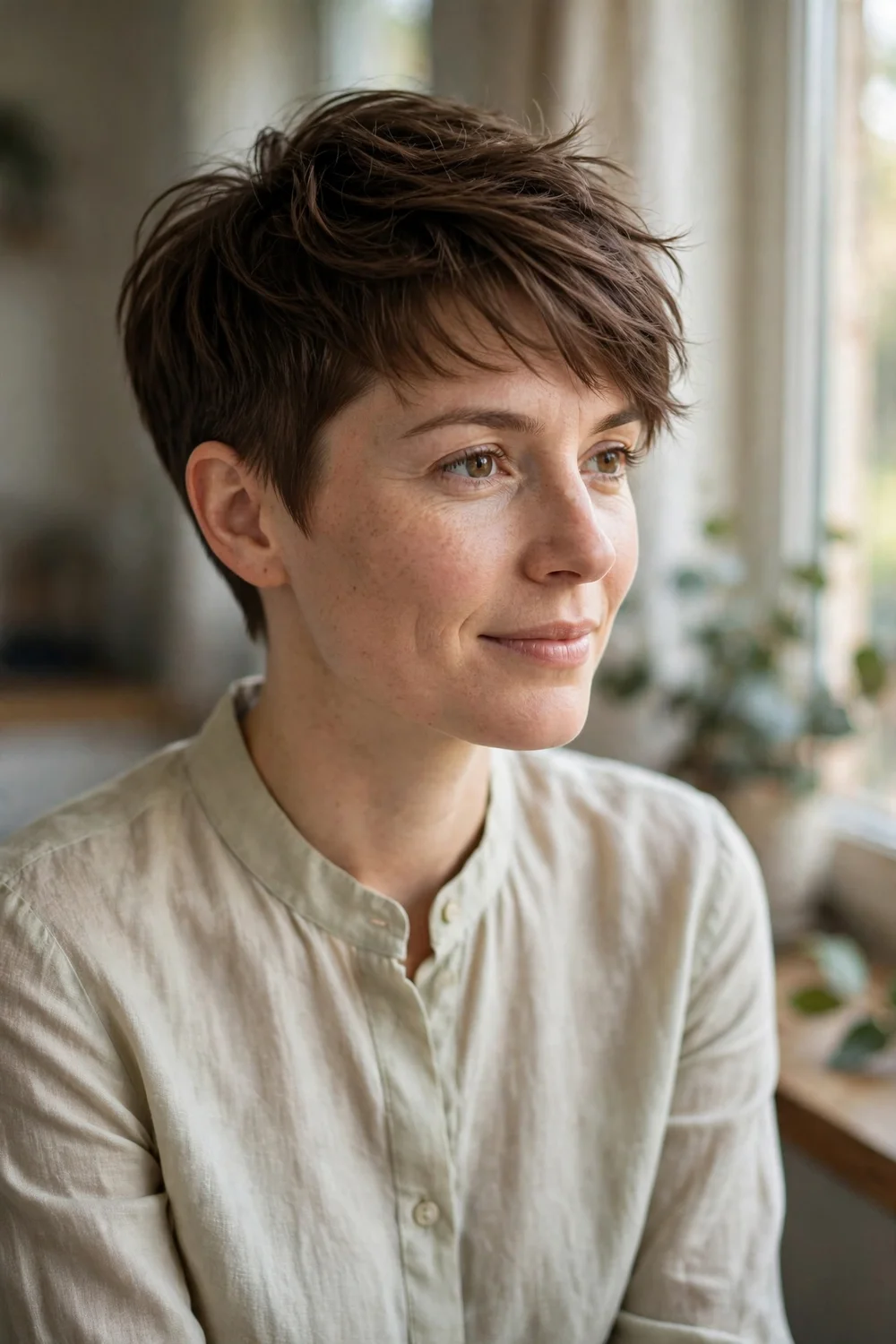
Neatly tapered sides make the longer, piecey top look comparatively full and deliberate. The cut does the work here, not your routine, which makes it ideal for active schedules. Pinch the top pieces with a little matte paste and go. Because the sides stay short, the grow-out stays tidy for weeks, and trims are quick barber visits rather than long salon appointments. The sides can go shorter in summer for a cooler cut that still keeps the styling options up top.
Try this: Push the top forward with paste on gym days for a sporty finish that stays put.
Best for: fine straight hair; active lifestyles · Difficulty: Very easy · Daily styling: 3 minutes · Upkeep: trim every 4–5 weeks.
12. Pixie with Long Layers on Top
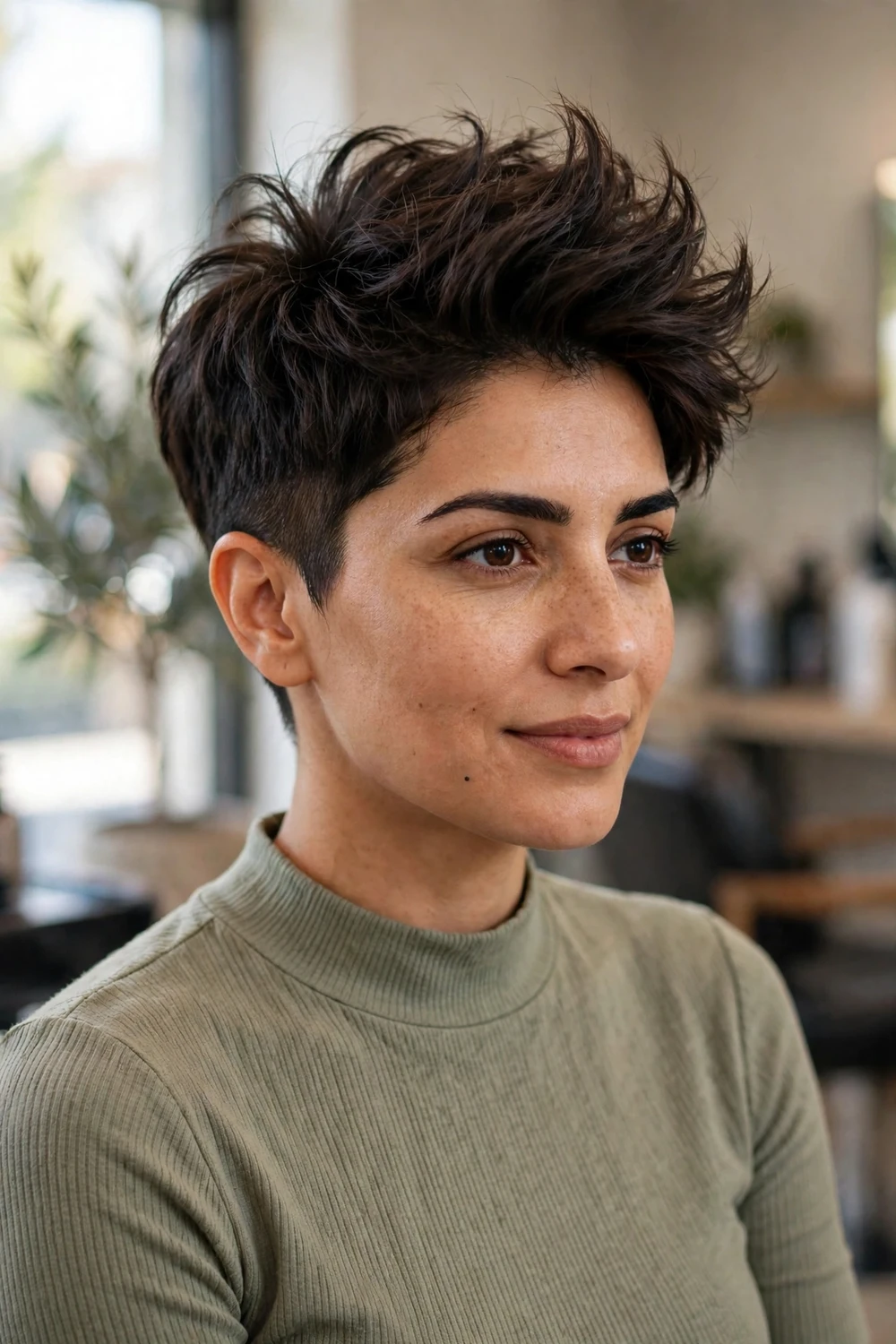
Longer crown layers give a pixie real versatility: sweep to the side, push up for volume, or smooth down sleek. The extra length also covers more scalp, which matters when hair is sparse at the part. Ask for at least two to three inches on top so you have styling options. This is the pixie for anyone nervous about going too short all at once. Sweep the longer top to the fuller side of your face to balance an asymmetrical hairline.
Try this: Blow-dry the top upward with a vent brush for maximum lift on important days.
Best for: thinning at the crown · Difficulty: Easy to medium · Daily styling: 5–8 minutes · Upkeep: trim every 4–6 weeks.
13. Stacked Bob
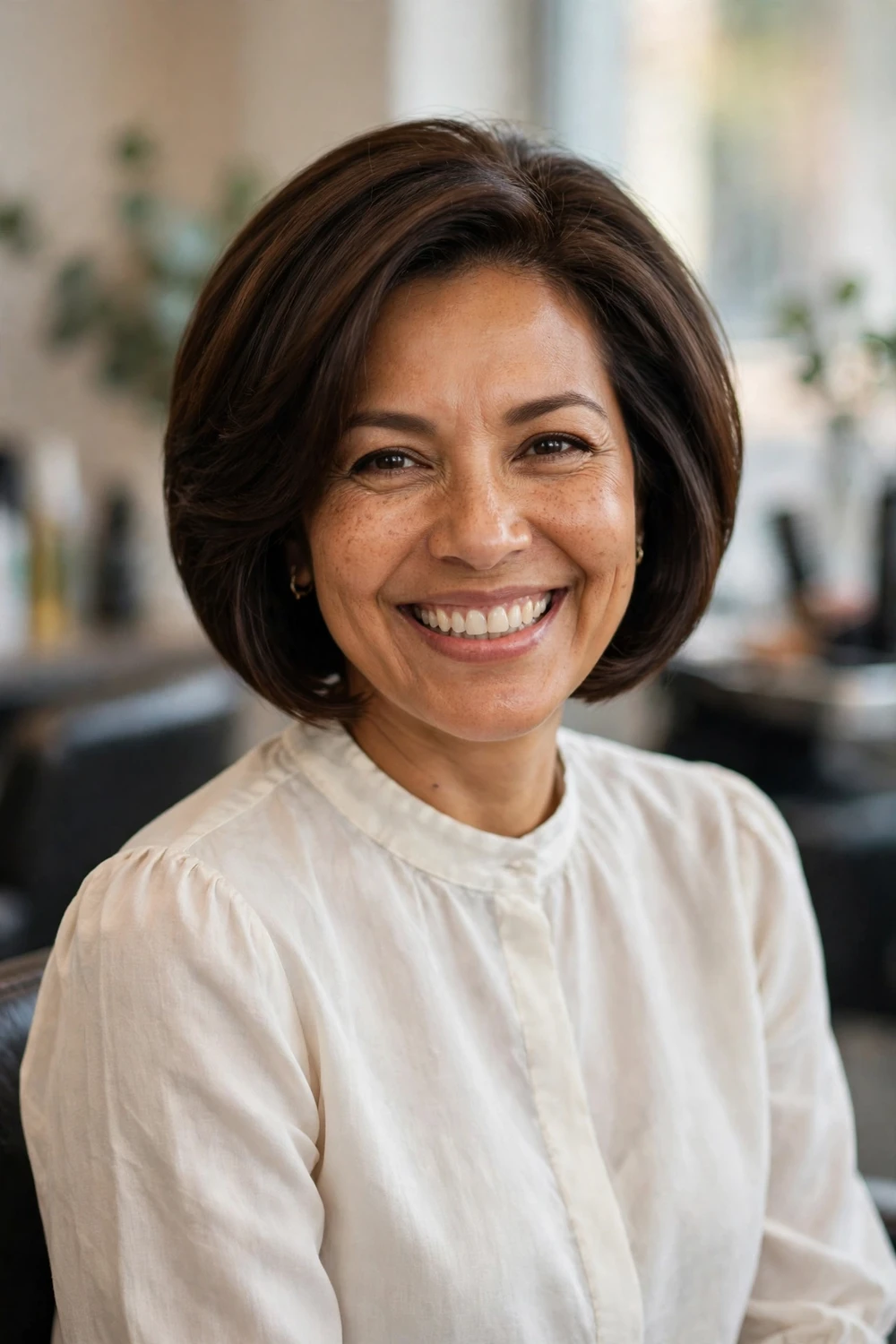
Graduated back layers pile up into a rounded cushion of volume at the nape and crown, which is transformative for thin hair that lies flat at the back. The stacking is cut into the shape itself, so the volume does not depend on daily styling heroics. Blow-dry the back sections upward with a round brush to maximize the stacked effect. The shape holds well from every angle. A nape undercut hidden beneath the stack removes bulk in summer without changing the silhouette.
Try this: Dry the nape section first while it is dampest, since it sets the foundation for the whole shape.
Best for: flat-at-the-back thin hair; straight textures · Difficulty: Medium · Daily styling: 10–12 minutes · Upkeep: trim every 5–6 weeks.
14. Wavy Bob with Soft Texture

Waves physically expand the space hair occupies, so a wavy bob looks far thicker than the same cut worn straight. Use a one-inch curling iron on alternating sections, then brush through for soft, blended waves. Always apply heat protectant first, since thin hair damages faster and damaged ends look even thinner. A light mist of flexible-hold spray keeps the waves from dropping by afternoon. Pin one side back with a clip for evening to turn the daytime waves into a dressier style.
Try this: Curl the front sections away from your face for a face-framing wave that opens up your features.
Best for: thin hair that holds a wave · Difficulty: Medium · Daily styling: 12–15 minutes · Upkeep: trim every 6–8 weeks.
15. Bob with Flipped-Out Ends

Flipping the ends outward widens the silhouette at the bottom instead of letting it taper to nothing, which is ideal for thin hair. The retro kick makes the hemline look deliberately styled rather than thin. Blow-dry with a round brush, rolling ends up and out, and set with light flexible-hold hairspray. This works best at chin length where the flip has room to show. A deep side part with the flipped ends adds extra lift at the crown for special occasions.
Try this: Flip only the front sections outward and tuck the back under for a modern mixed finish.
Best for: chin-length thin hair; vintage-leaning style · Difficulty: Easy · Daily styling: 8–10 minutes · Upkeep: trim every 6–8 weeks.
16. Classic Tapered Pixie
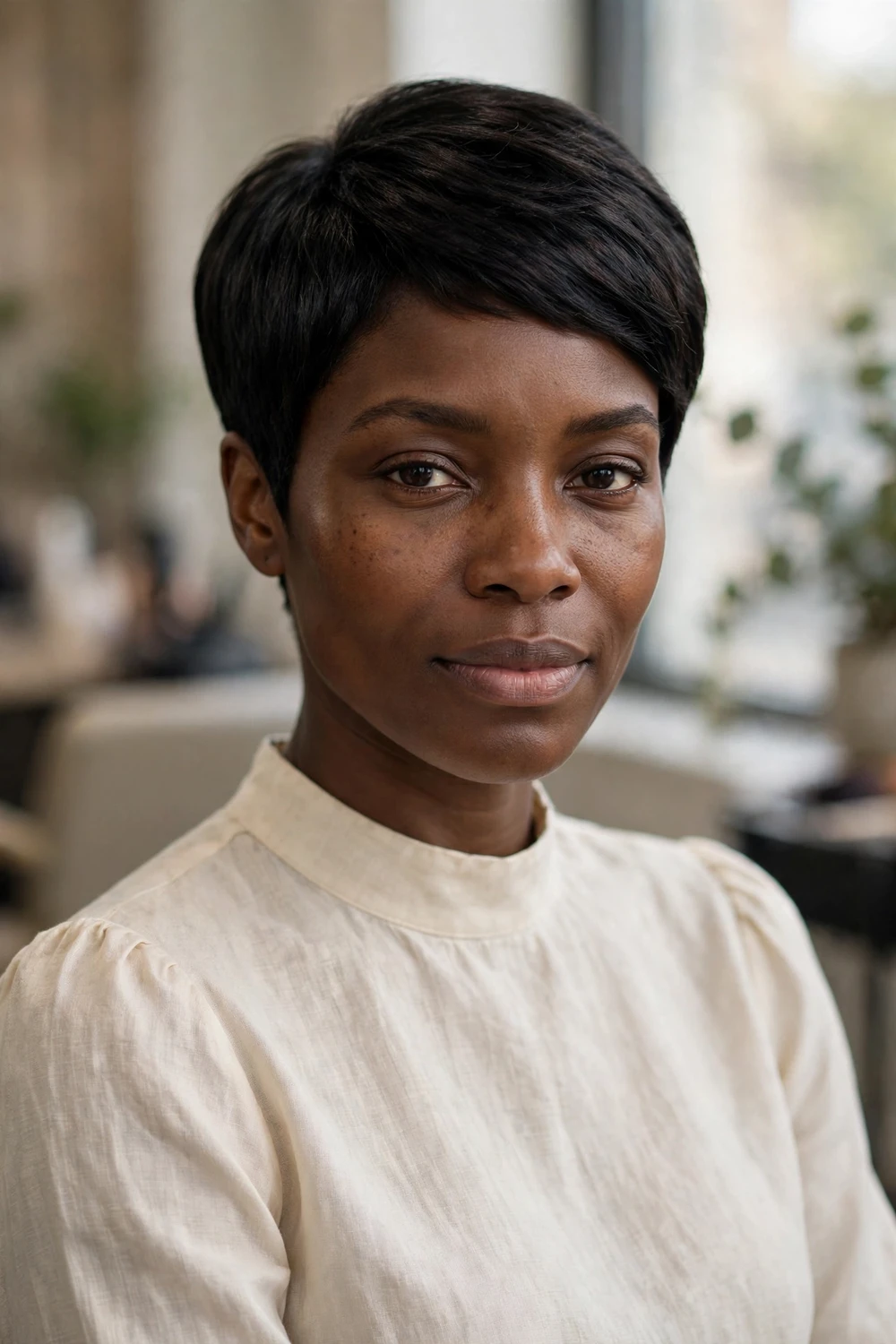
Neatly faded sides draw the eye upward to crown fullness, making thin hair look intentionally styled. The contrast between close sides and a fuller top creates the illusion of density exactly where you want it. Polished enough for the office and easy enough for weekends, this is the workhorse pixie. Smooth the top with lightweight styling cream and define a few pieces at the front. Keep a small amount of paste in your bag for quick touch-ups when humidity flattens the top.
Try this: Add a deep side part to the classic taper for instant asymmetry and extra crown height.
Best for: fine straight hair; professional settings · Difficulty: Easy · Daily styling: 5 minutes · Upkeep: trim every 4–5 weeks.
17. Soft Bixie
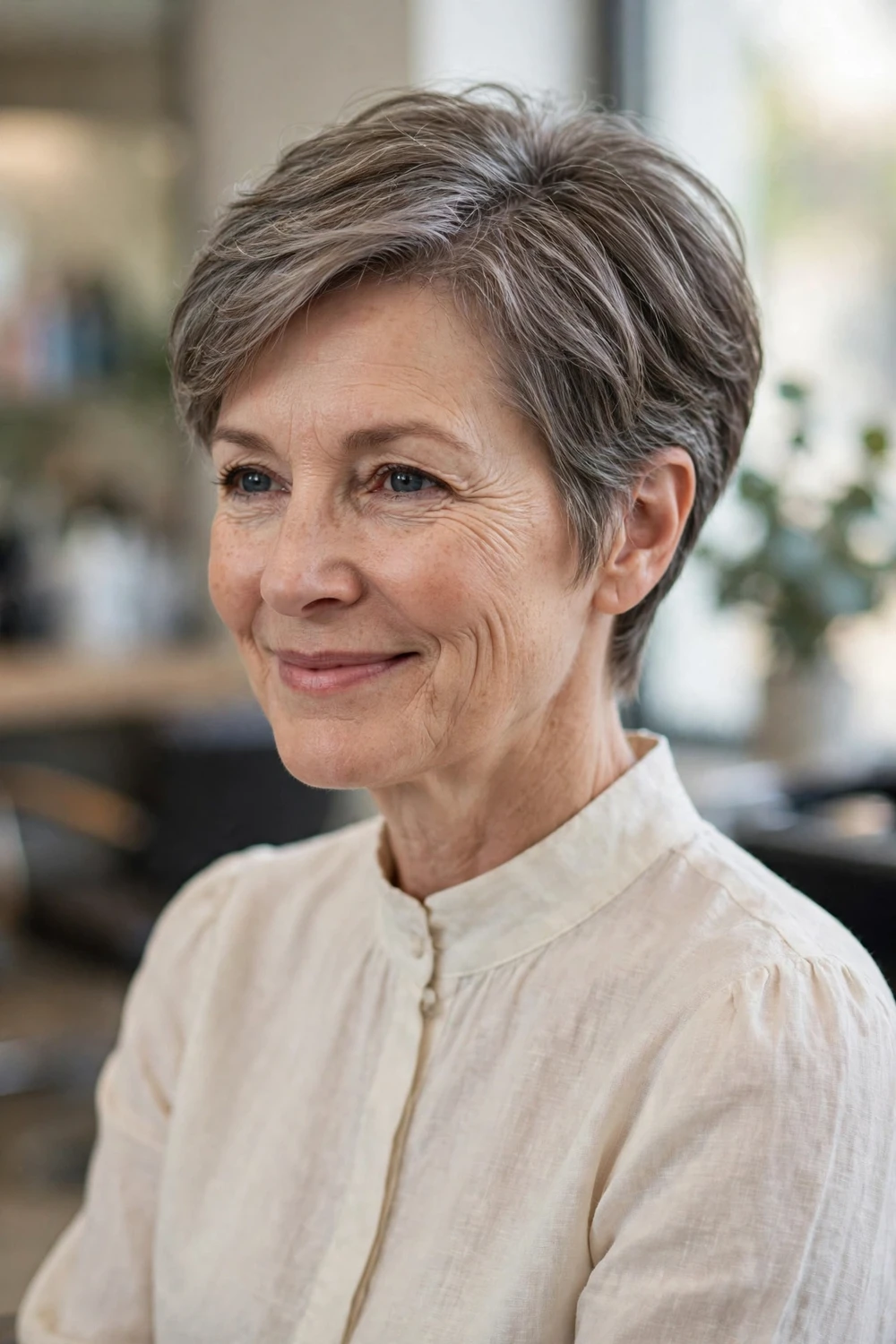
The bob-pixie hybrid removes weight at the back and sides while keeping a soft frame around the face. It is the ideal middle ground if a pixie feels too short and a bob feels too safe. Style with volumizing mousse at the roots and a quick rough-dry for effortless body. The grow-out is graceful, since the blended lengths just melt into a short bob over time. The soft perimeter grows out evenly, so you can stretch trims a week longer than with sharp bobs.
Try this: Rough-dry upside down with mousse, then smooth only the front pieces for a polished frame.
Best for: thin hair; pixie-curious readers · Difficulty: Easy · Daily styling: 5–8 minutes · Upkeep: trim every 5–6 weeks.
18. Bob with Curtain Bangs

Curtain bangs part in the middle and sweep to each side, adding fullness around the face where thin hair often looks weakest. The face-framing sweep softens the forehead and draws attention to the eyes. Style with a small round brush, curving them away from the face. Keep the bangs long enough to blend into the bob’s sides so there is no harsh separation. Trim the bangs yourself between appointments with small vertical snips to keep them light.
Try this: Blow-dry bangs forward first, then sweep them to the sides for a natural curtain fall.
Best for: fine hairlines; oval and heart faces · Difficulty: Medium · Daily styling: 8–10 minutes · Upkeep: trim every 6–8 weeks; bang trims every 3–4 weeks.
19. Deep Side-Part Bob
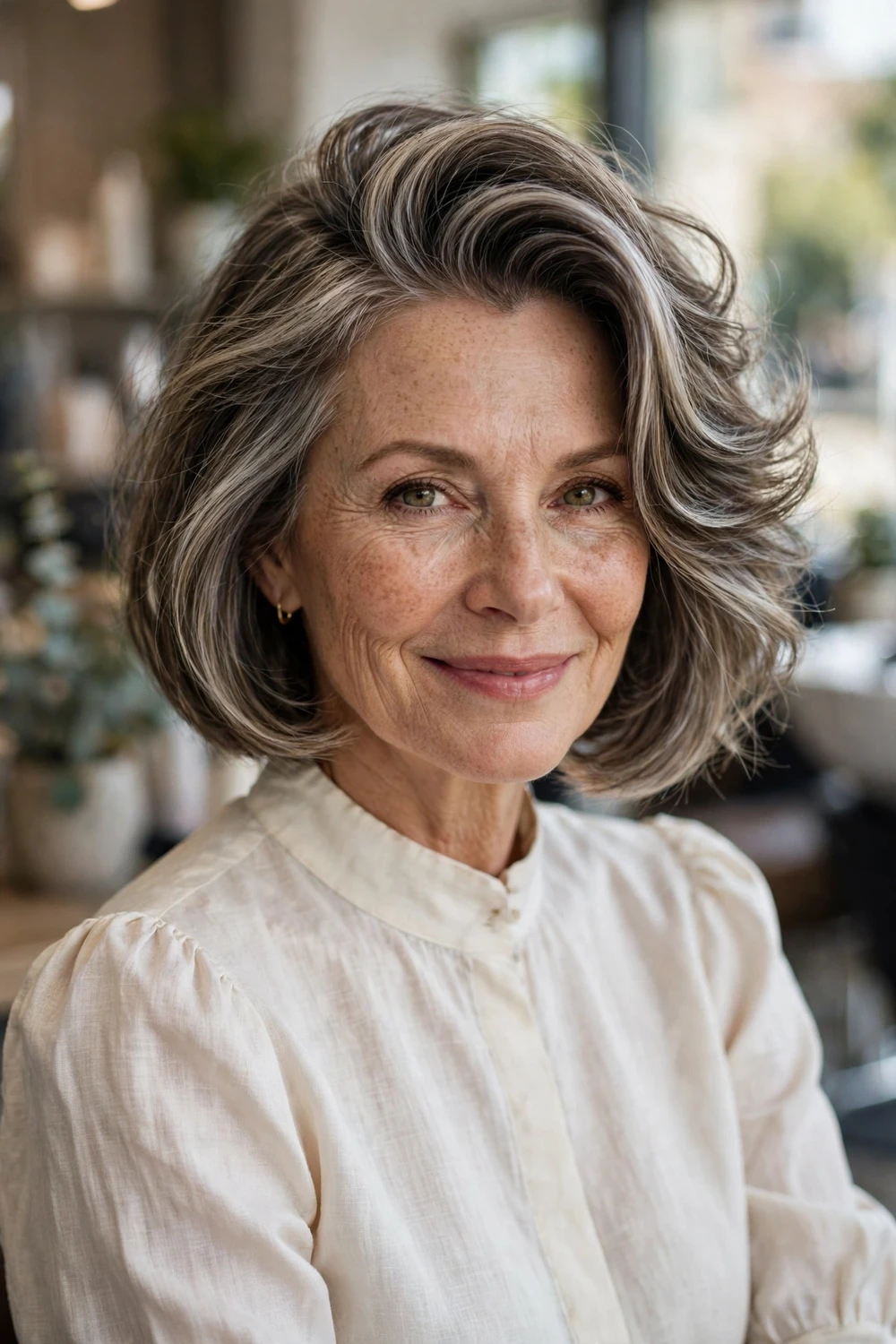
A part swept nearly to the temple creates maximum root lift, since a large section of hair falls against its growth pattern. The heavy sweep reads as one thick panel rather than separate thin strands. Add root-lifting spray to damp roots for all-day height. This is a styling choice rather than a cut, so you can test it on your current bob before committing to anything new. Sleeping on the heavy side of the part trains it faster and keeps the lift consistent.
Try this: Clip the part in place with a no-crease clip for five minutes after drying to lock the direction.
Best for: very flat thin hair · Difficulty: Very easy · Daily styling: 5–8 minutes · Upkeep: trim every 6–8 weeks.
20. Sleek Pageboy Cut

The pageboy’s smooth, rounded shape turns silkiness into an advantage: even light reflection makes hair read as one glossy, substantial mass. The curved fringe and tucked-under ends create a continuous silhouette with no gaps. Keep ends healthy with regular trims, and always use heat protectant with the flat iron. A shine serum on the surface enhances the light-reflecting effect. A curved fringe version softens a long face while keeping the glossy pageboy character.
Try this: Finish with a cool shot from the dryer to seal the cuticle and boost the glossy finish.
Best for: straight, silky thin hair · Difficulty: Medium · Daily styling: 10–12 minutes · Upkeep: trim every 5–6 weeks.
21. Spiky Pixie

Spiking a pixie upward maximizes strand separation, and separation is what the eye reads as density. Use strong-hold matte paste on dry hair, pinching small sections into points. The vertical texture adds height that thin hair rarely achieves on its own. It grows out into a textured pixie with minimal awkwardness, so the commitment is lower than it looks. Start with less product than you think you need and build up.
Try this: Spike only the crown and keep the front softer for a wearable version of the look.
Best for: confident style; fine straight hair · Difficulty: Easy · Daily styling: 5 minutes · Upkeep: trim every 4–5 weeks.
22. Ear-Length Micro Bob
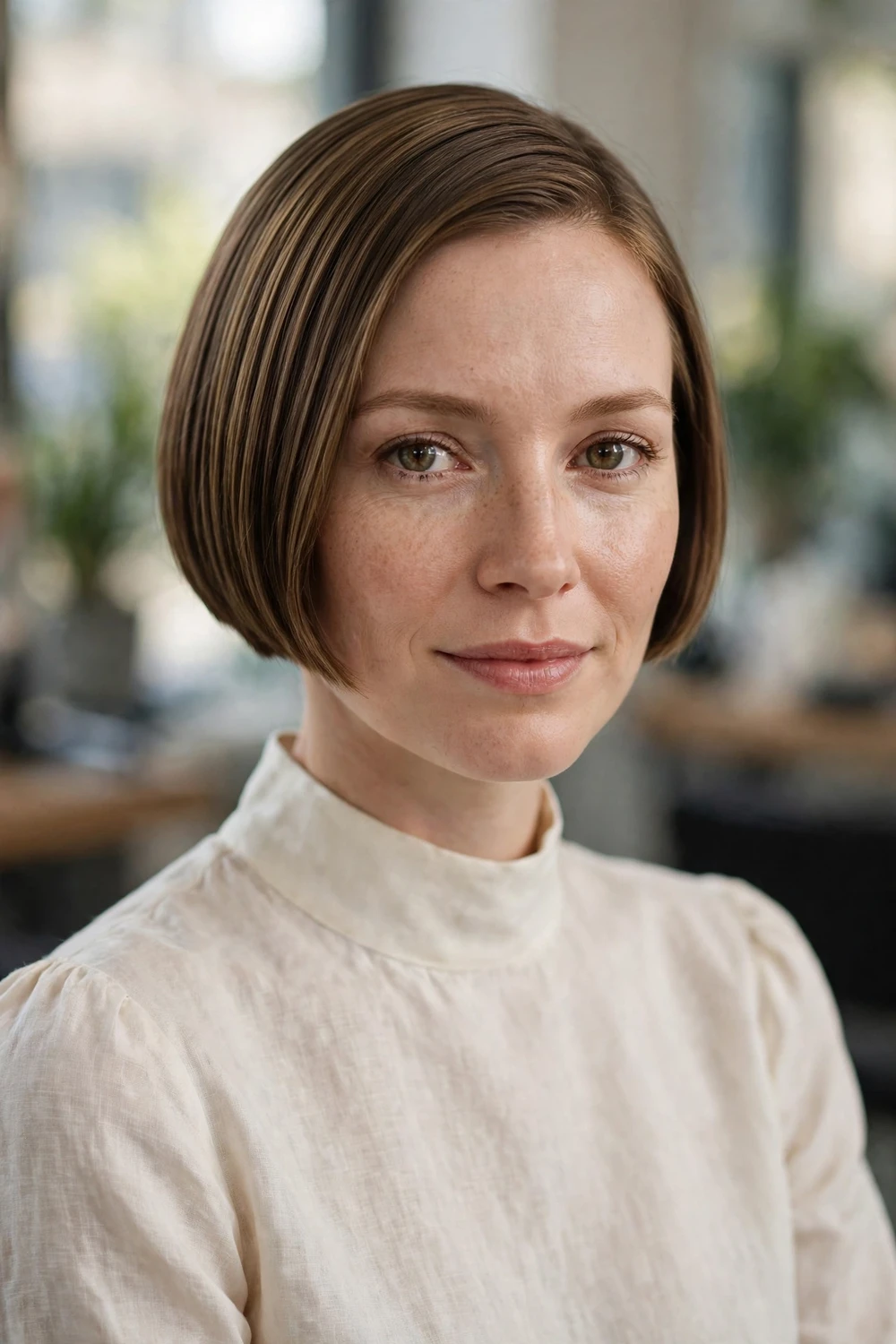
Ending right at the ears means nearly every strand contributes to the visible shape, with nothing wasted on length that would lie flat. The result is crisp and architectural. Pair with statement earrings, since the jawline stays visible and becomes part of the look. Ask for a razor-sharp perimeter and minimal layering to keep the edge clean. This is the lowest-effort bob on the list for wash-and-go routines. A slight undercut at the nape keeps the micro bob sitting close without flipping outward.
Try this: Tuck both sides behind the ears for a sleek daytime look, then release for evening volume.
Best for: petite frames; minimalist style · Difficulty: Easy · Daily styling: 5 minutes · Upkeep: trim every 4–6 weeks.
23. Short Curly Bob

Curls are nature’s volumizer: each curl pushes neighboring strands outward, multiplying visual width. Scrunch lightweight curl cream into damp hair and diffuse on low heat or air-dry. If your hair is straight, ask your stylist whether your hair type can hold a perm first. A chin-length shape keeps the curls springy instead of weighed down. Sleep on a satin pillowcase to keep second-day curls defined without rewetting. A curl-by-curl trim keeps the shape even as the curls spring up at different rates.
Try this: Diffuse upside down for the first five minutes to build root volume before defining the ends.
Best for: naturally curly or wavy thin hair · Difficulty: Medium · Daily styling: 10–15 minutes · Upkeep: trim every 8–10 weeks.
24. Asymmetrical Bob

Longer on one side, the asymmetrical bob pulls the eye across the cut instead of letting it settle on thin spots. The diagonal line creates movement that makes the whole head of hair look more substantial. Keep the difference to one or two inches for everyday wear, or go dramatic for a statement. Tuck the longer side behind the ear to show the angle. Ask your stylist to cut the angle while dry so the true length difference is easy to judge.
Try this: Style the longer side with a loose wave to emphasize the asymmetry.
Best for: straight thin hair; modern style · Difficulty: Medium · Daily styling: 8–10 minutes · Upkeep: trim every 5–6 weeks.
25. Wispy-Layered Bob with Dimensional Color

Feather-light layers plus multi-tonal color build fullness two ways: layers create movement, color creates depth. Ask for long, blended layers, not short choppy ones, so ends stay full. Dimensional color grows out softly, keeping maintenance low between appointments. A gloss treatment every couple of months keeps the tones fresh without a full color service. This is the best pick if you want low upkeep with maximum visual impact. A clear gloss between color appointments keeps the dimensional tones from going dull.
Try this: Ask your colorist to place the lightest pieces around your face for a brightening effect.
Best for: thin hair that can handle light color · Difficulty: Medium · Daily styling: 10 minutes · Upkeep: cut every 6–8 weeks; color every 10–12 weeks.
Quick Comparison
| Style | Volume Trick | Daily Styling | Best For |
|---|---|---|---|
| Blunt Chin-Length Bob | One-length edge looks dense | 5 min | Straight to wavy thin hair |
| Textured Pixie Cut | Piecey crown layers stand up | 5 min | Oval and heart faces |
| Angled Bob | Stacked back builds volume | 10 min | Round faces |
| Choppy Pixie | Jagged layers read as thickness | 3–5 min | Low-effort routines |
| Layered Bob with Highlights | Color dimension adds depth | 10 min | Straight or wavy hair |
| Side-Parted Bob | Side part forces root lift | 5 min | Any thin hair type |
| Shaggy Bob with Wispy Layers | Feathered crown layers | 10 min | Wavy or straight hair |
| French Bob | Rounded silhouette adds bounce | 5 min | Petite and oval faces |
| Rounded Bob with Side Bangs | Inward curve suggests fullness | 10–12 min | Square and heart faces |
| Short Shag | Choppy crown halo of volume | 10 min | Natural wave; edgy style |
| Soft Textured Crop | Full top over neat sides | 3 min | Active lifestyles |
| Pixie with Long Layers on Top | Longer crown covers scalp | 5–8 min | Thinning at the crown |
| Stacked Bob | Graduated nape cushion | 10–12 min | Flat-at-the-back hair |
| Wavy Bob with Soft Texture | Waves expand hair’s space | 12–15 min | Hair that holds a wave |
| Bob with Flipped-Out Ends | Outward flip widens hemline | 8–10 min | Chin-length hair |
| Classic Tapered Pixie | Faded sides, full crown | 5 min | Professional settings |
| Soft Bixie | Hybrid removes back weight | 5–8 min | Pixie-curious readers |
| Bob with Curtain Bangs | Face-framing fullness | 8–10 min | Fine hairlines |
| Deep Side-Part Bob | Temple part = max lift | 5–8 min | Very flat hair |
| Sleek Pageboy Cut | Glossy mass reflects light | 10–12 min | Straight, silky hair |
| Spiky Pixie | Upward spikes separate strands | 5 min | Confident style |
| Ear-Length Micro Bob | Every strand in the shape | 5 min | Petite frames |
| Short Curly Bob | Curls multiply visual width | 10–15 min | Curly or wavy hair |
| Asymmetrical Bob | Diagonal line adds movement | 8–10 min | Modern style |
| Wispy-Layered Bob + Color | Layers + depth, two ways | 10 min | Hair that takes color |
What to Avoid with Thin Hair
- Heavy over-layering: too many short layers remove density from the ends. Ask for long, blended layers instead.
- One-length hair past the shoulders: the weight drags thin roots flat. A lob is the longest safe option if you want to keep length. For volume-friendly longer cuts, see this guide to lob hairstyles for fine hair.
- Heavy oils, butters, and thick creams: they coat fine strands and collapse volume. Choose mousses, root-lifting sprays, and dry texture sprays instead.
- Daily high heat without protection: thin hair damages faster, and damaged ends look even thinner. Always use a heat protectant first.
- Slicked-back wet looks: pulling thin hair flat exposes sparse areas. Keep some root lift in sleek styles.
- Skipping trims: split, straggly ends make thin hair look sparser. Trim every 6–8 weeks to keep the perimeter dense.
How to Choose the Right Short Hairstyle for Thin Hair
Start with your hair’s reality. Fine strands benefit from blunt edges and light layering; hair thinning at the crown or part needs coverage: longer pixie tops, deep side parts, or curtain bangs. If you notice sudden or patchy shedding, see a dermatologist before blaming the haircut; no style fixes medical hair loss.
Be honest about maintenance: pixies need trims every 4–6 weeks, while chin-length bobs stretch to 8. Match the cut to your styling patience. If you will not round-brush daily, pick wash-and-go textures like the choppy pixie or soft bixie. Bring reference photos to your appointment. Readers noticing age-related thinning may also like these short hairstyles for women over 50, which focus on adding body to finer, mature hair.
Final Thoughts
Thin hair does not limit your options; it just changes the rules. These 25 cuts all work with those rules: they remove dragging weight, protect the density you have, and use shape, texture, and color to suggest fullness. Whether you choose a blunt bob, a choppy pixie, or an easy stacked cut, pick the one that fits your texture, face shape, and the effort you want to give each morning. Save your favorites, show them to your stylist, and enjoy hair that finally looks as full as it deserves to.
Frequently Asked Questions
Will a pixie cut make thin hair look thinner?
Usually the opposite. A pixie with textured crown layers makes thin hair look fuller because short strands stand up and separate, creating visible density. Be cautious with very close-cropped tops and no layering, which can expose a sparse scalp.
Should thin hair be layered or cut blunt?
Both work. Blunt ends make the perimeter look thicker, suiting very fine, sparse hair. Long, blended layers add movement and lift, suiting thin hair that falls flat. Avoid heavy short layering or thinning shears through the ends, which remove needed density.
How often should thin short hair be trimmed?
Every 6–8 weeks for bobs, every 4–6 weeks for pixies. Thin hair shows grown-out shape faster, and split ends make fine strands look sparser, so staying on schedule matters more with thin hair, not less.
Can thin hair hold a wavy bob, or will it fall flat?
It can with the right prep: lightweight mousse on damp roots, blow-dry upside down for lift, and a light flexible-hold spray to set. Fine hair takes a wave easily; longevity is the challenge, so skip heavy serums and touch the style as little as possible.
Does hair color really make thin hair look thicker?
Visually, yes. Highlights, lowlights, and balayage create light-and-shadow dimension, so the eye perceives depth instead of sparseness. Color does not change actual density, but the illusion is significant.
Looking for a broader range of options? These short haircut ideas cover 49 styles from bobs to pixies to edgy cuts.

