


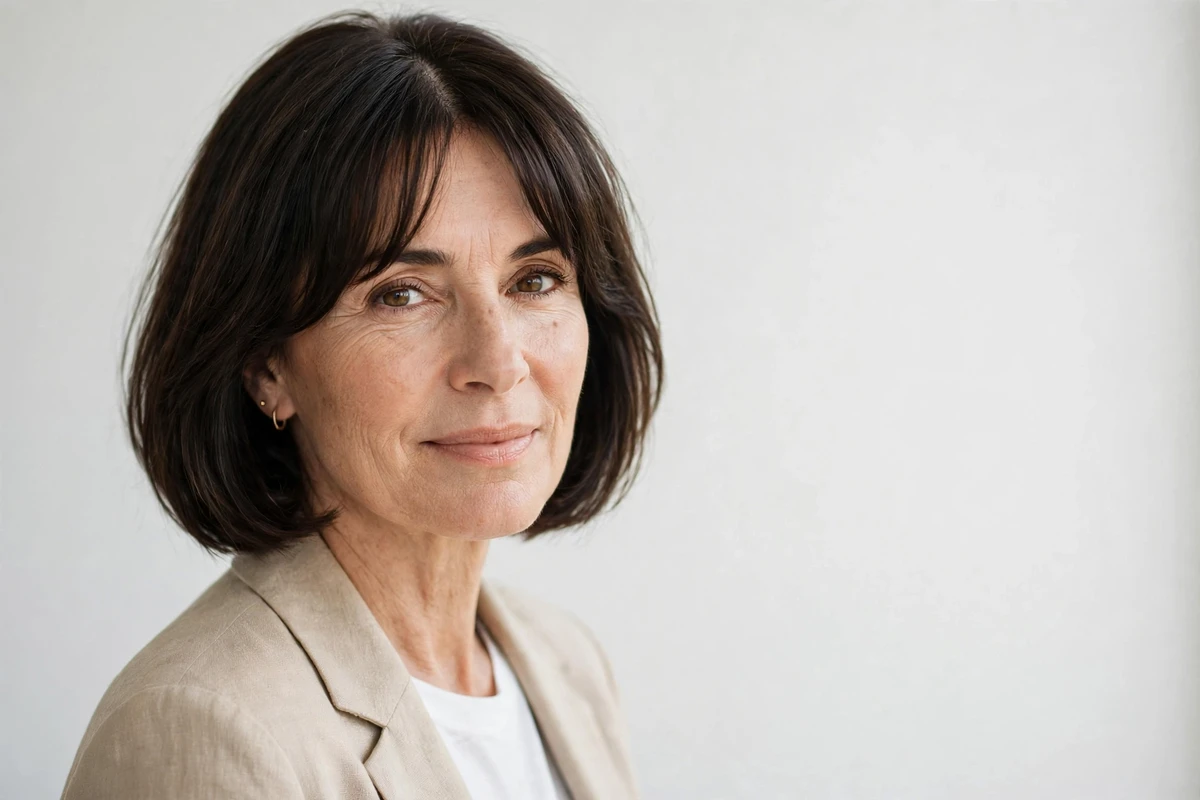
Fine hair after 40 needs a cut that does the heavy lifting. Curtain bangs parted softly in the center draw the eye to your cheekbones, break up a flat hairline, and add the look of fullness without removing the density you can’t afford to lose.
I’ve spent years cutting fine hair, and curtain bangs remain the fringe I suggest most after 40. The 25 styles below were picked specifically for finer textures: nothing that needs thick density to hold its shape, nothing that falls limp by noon.
Quick answer: The best curtain bangs for fine hair over 40 are wispy, feathered, or micro versions paired with layered bobs or lobs. They add face-framing volume, need a trim every 3 to 4 weeks, and style in minutes with a round brush.
If you are under 40 or simply want the general version of this look, the full guide to chic curtain bangs for fine hair covers 22 styles for every face shape and styling routine.
Quick Takeaways
- Wispy or feathered curtain bangs add fullness without stealing density from fine hair.
- Layered bobs and collarbone lobs give curtain bangs the structure fine hair lacks on its own.
- Ask for slide-cut or point-cut ends so the fringe stays light instead of blunt and heavy.
- Most curtain bangs need a trim every 3 to 4 weeks and about 2 minutes of morning styling.
- A root-lifting spray and a small round brush do more for fine-hair bangs than any heavy product.
Why Curtain Bangs Work So Well on Fine Hair After 40
Fine hair tends to lie flat against the scalp, which makes the hairline look sparse and the face look longer. A curtain bang breaks that flat plane right at the front, creating movement exactly where the eye lands first.
The center part matters too. It opens the face symmetrically and lets the fringe fall to each side, which softens forehead lines without the commitment of a full fringe. Grow-out is painless: the bangs simply become face-framing layers.
What to Ask Your Stylist Before the Cut
Bring two or three reference photos and point to the exact bang length you want: brow level, cheekbone, or chin. On fine hair, cheekbone length is the sweet spot. Shorter reads playful, longer blends into layers.
Ask for the fringe to be cut with shears using a slide-cut or point-cut technique rather than a razor. Razors can shred fine hair and create frizz. Tell your stylist you want the density kept through the ends, since thinning shears near the bang area will make fine hair look stringy.
Mention how you actually style your hair. If you air-dry, say so. Your stylist should cut the bangs slightly longer to account for shrinkage and skip interior layers that only hold with a round brush.
1. Layered Chin-Length Bob with Feathered Curtain Bangs
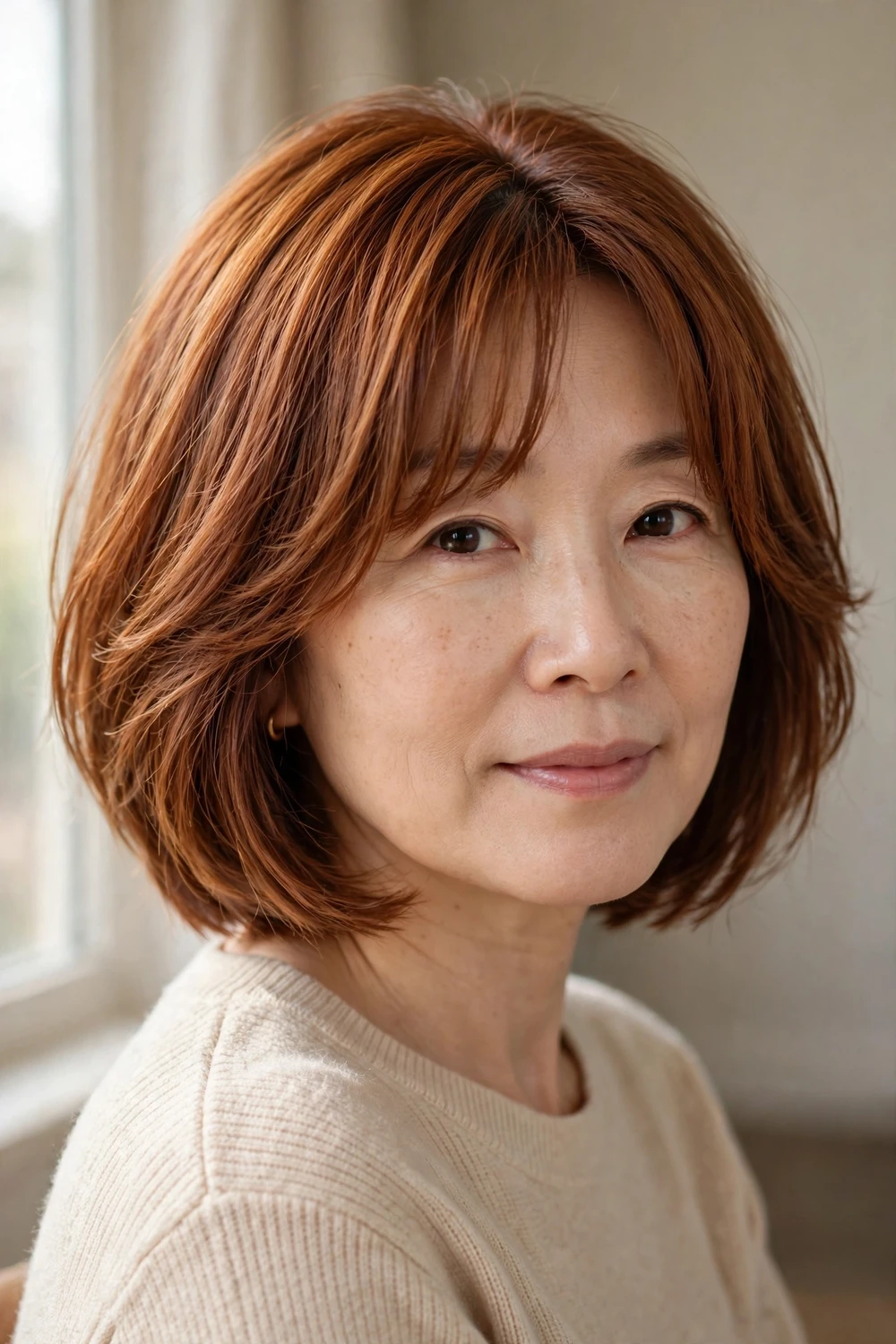
Start with the workhorse of this list. Strategic layers through a chin-grazing bob create movement and dimension, while feathered curtain bangs sweep to each side and open up the face. The layering keeps fine hair from sitting in one flat sheet, and the bangs disguise forehead lines without hiding your eyes. An auburn shade with subtle dimension makes fine strands read thicker, since single-process color can look flat. This is the cut to choose when you want maximum change with minimum daily effort.
Try this: blow-dry the bangs forward with a small round brush first, then split them in the center while still warm so the part sets naturally.
2. French-Inspired A-Line Bob with Wispy Curtain Bangs
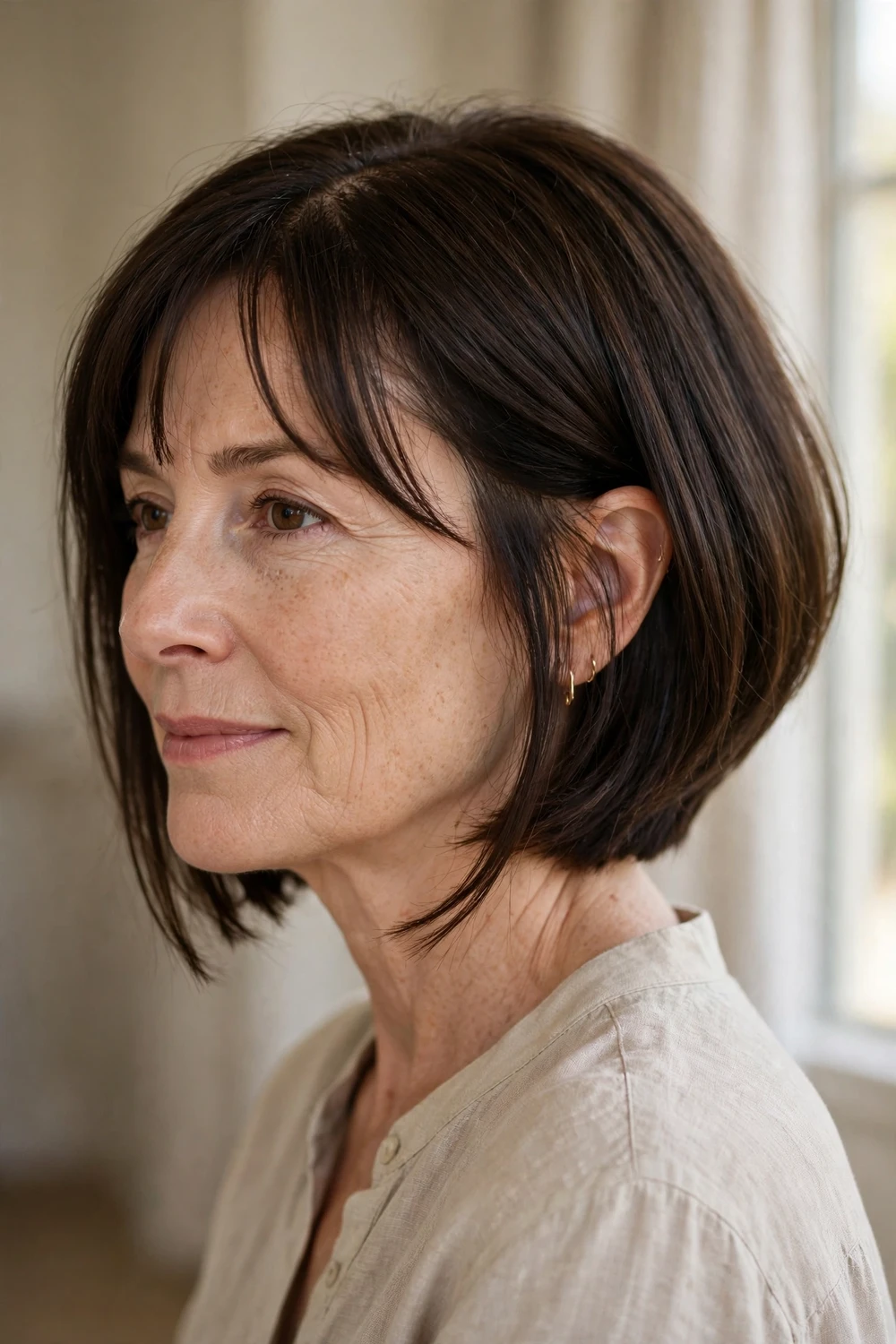
Picture the Parisian bob, then soften it for finer texture. This cut angles slightly from back to front, so the longer front pieces create the illusion of fullness around the jawline. Wispy curtain bangs add a light, airy frame that never looks heavy on a fine hairline. The angle does the visual work here, which means you are not relying on teasing or heavy product for volume. It reads polished in professional settings and relaxed on weekends, a rare double duty for fine hair.
Try this: tuck one side behind your ear to show off the angle; the asymmetry makes the longer front pieces look even fuller.
3. Textured Blunt Bob with Seamless Curtain Bangs
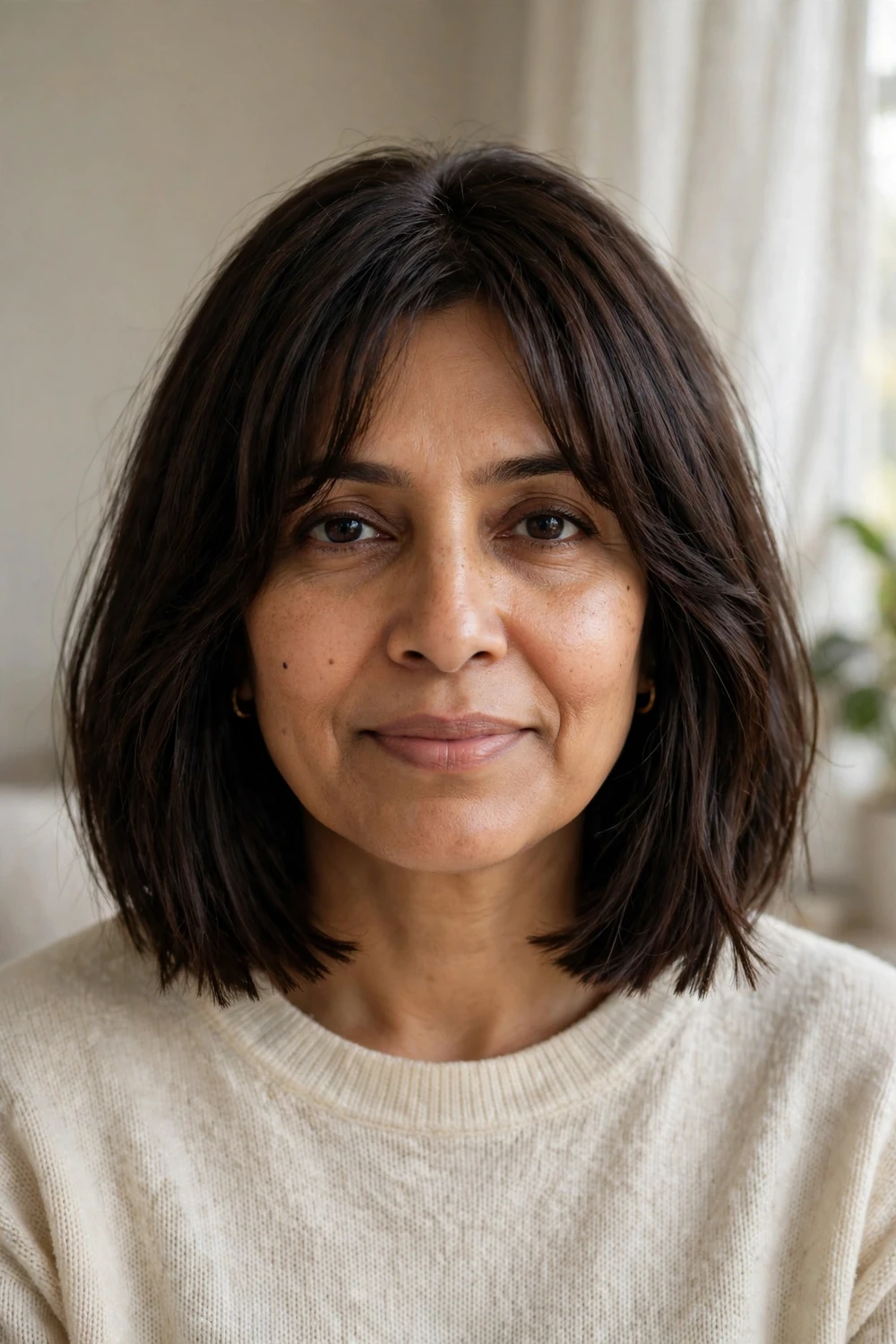
Blunt ends are a fine-hair trick hiding in plain sight. A clean, even perimeter makes the bottom of the hair look twice as thick, which is exactly what fine hair needs. Subtle texturizing through the mid-lengths keeps the blunt line from looking stiff or heavy. The curtain bangs blend straight into the length, framing the cheekbones and drawing attention to the eyes. Keep the overall length at or above the shoulders so the blunt ends hold their shape instead of stringing out.
Try this: flat-iron just the last inch of hair with a slight bend under; it sharpens the blunt edge and the whole cut looks denser.
4. Volume-Boosting Graduated Bob with Sweeping Curtain Bangs
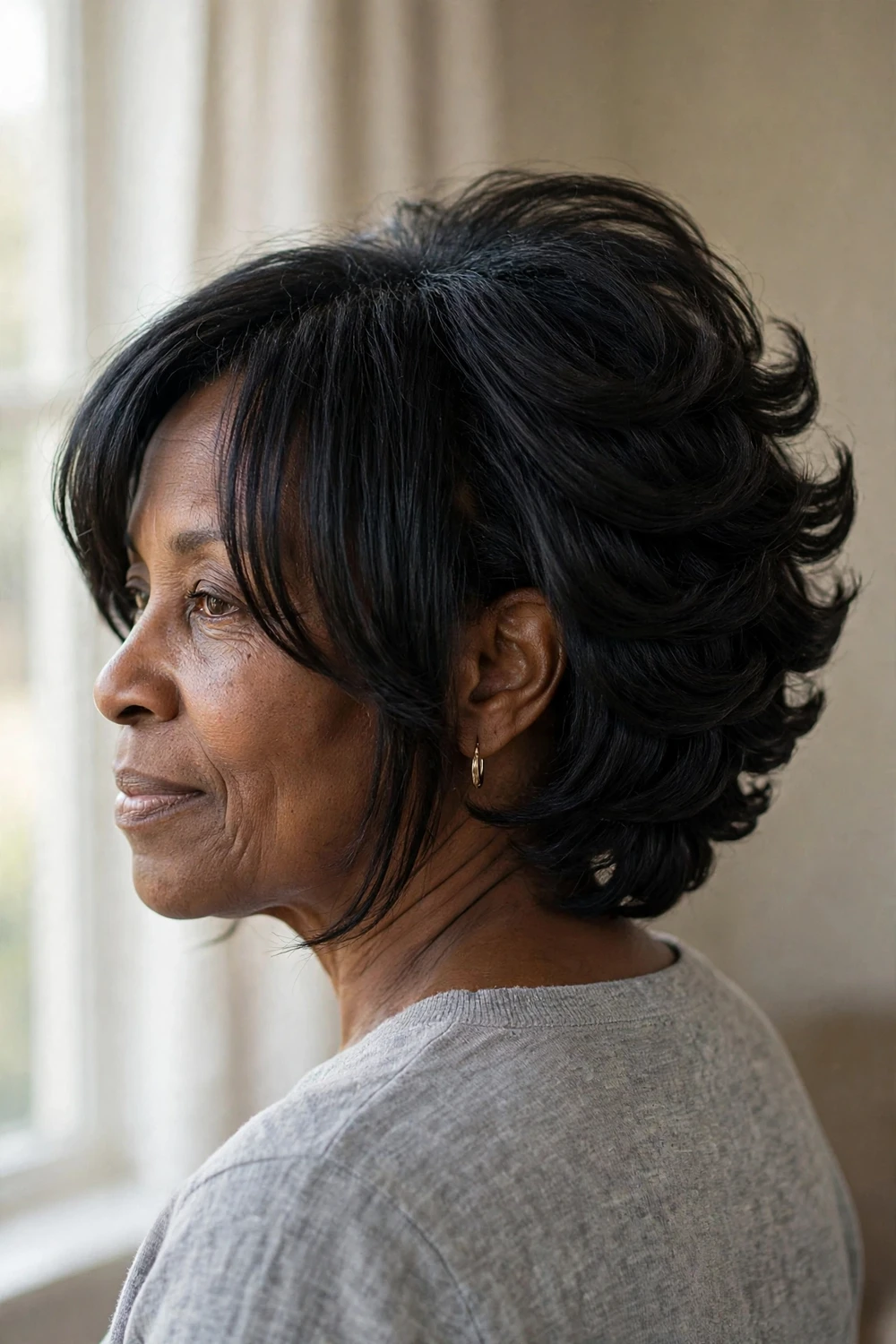
When fine hair falls flat at the crown, a graduated bob is the structural fix. Stacked layers at the back build natural lift where fine hair needs it most, then the cut transitions to longer front sections that keep the look soft. Sweeping curtain bangs finish the shape with coverage that never fully hides the face. This is one of the few cuts where the volume comes from the architecture of the cut itself, not from daily styling heroics.
Try this: flip your head upside down for the first 30 seconds of blow-drying; the stacked layers lock in extra crown lift that lasts all day.
5. Soft Shaggy Bob with Blended Curtain Bangs
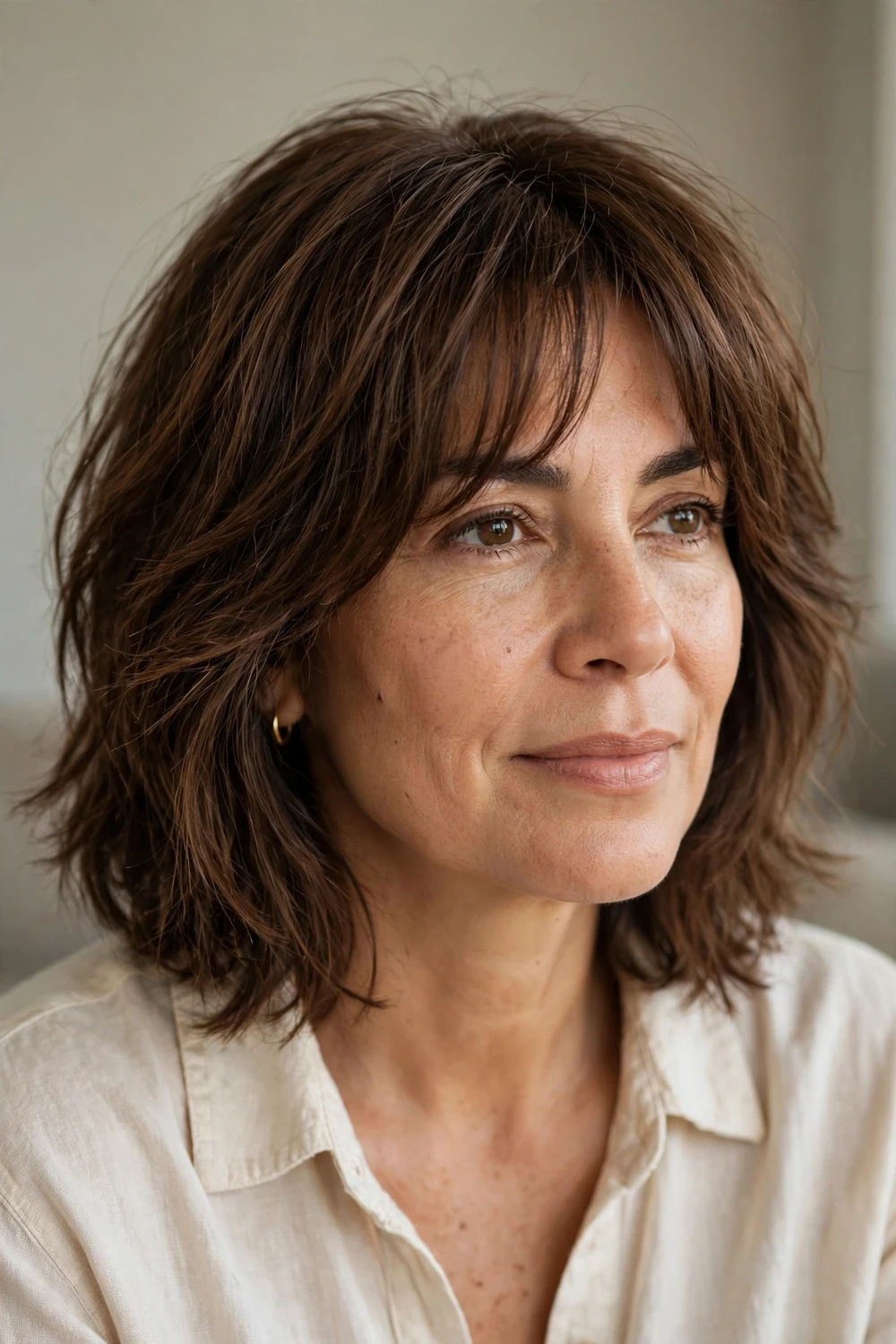
A shag sounds risky on fine hair, but the soft version is a genuine volume builder. Relaxed layers throughout distribute weight evenly instead of letting it all hang at the bottom, which creates natural lift. The curtain bangs melt into the overall shape rather than sitting apart as a separate feature. Keep the layering soft and the ends piece-y but not shredded; over-thinning is what makes a shag look sparse on fine hair.
Try this: work a pea-sized amount of light mousse through damp mid-lengths and scrunch; the shag texture activates without any heat.
6. Side-Swept Asymmetrical Bob with Dramatic Curtain Bangs
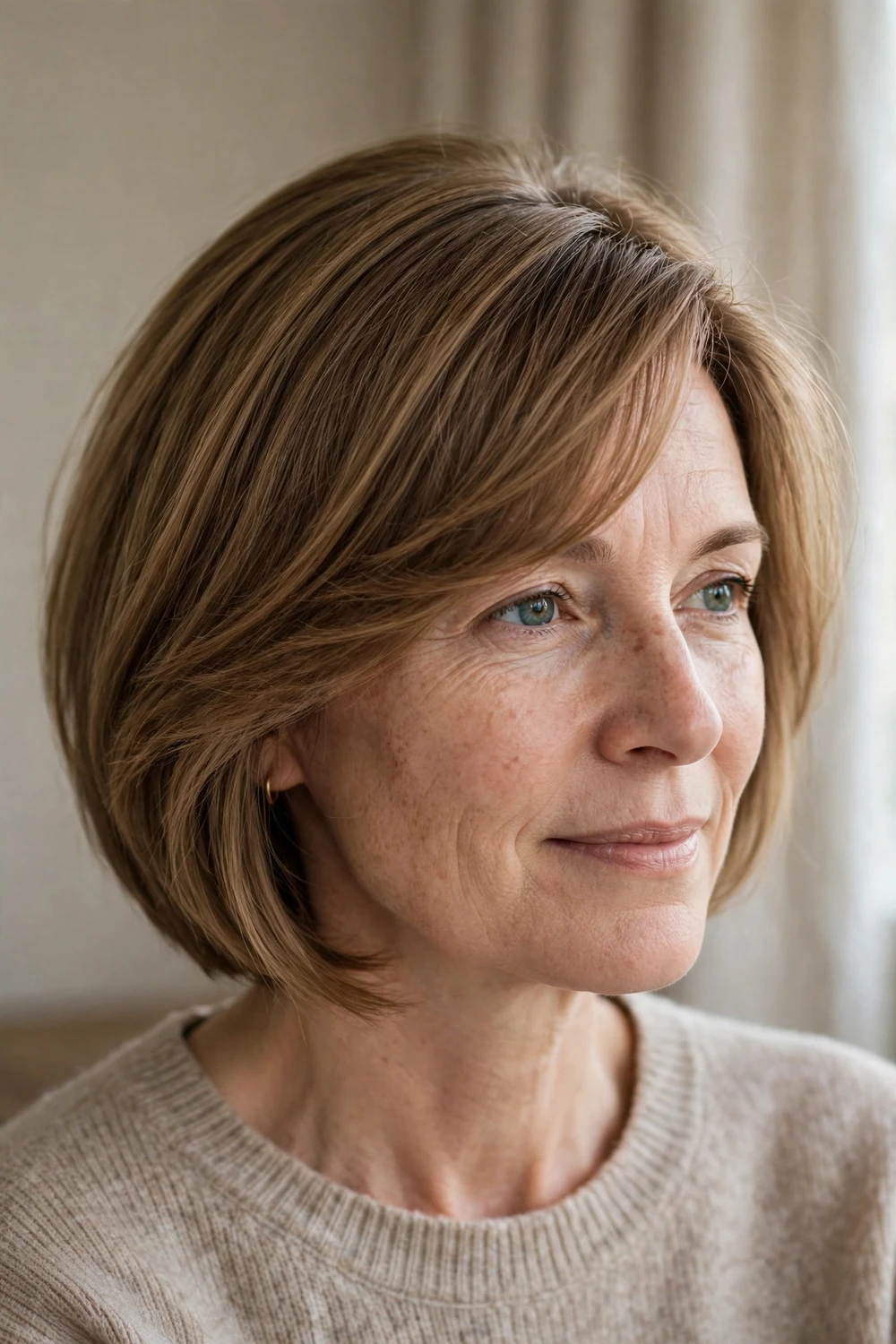
Want volume without layers everywhere? A deep side part does it in one move. Shifting the part off-center lifts the crown and gives fine hair instant body at the roots. Pair it with a slightly asymmetrical bob, longer on one side, and longer curtain bangs that sweep dramatically across the forehead. The diagonal line of the bangs draws the eye sideways, which reads as width and fullness. This cut also camouflages thinning at the part line, a common concern after 40.
Try this: set the deep part while hair is damp with a clip at the roots for 10 minutes; the lift holds without backcombing.
7. Jaw-Defining Angled Bob with Soft Curtain Bangs
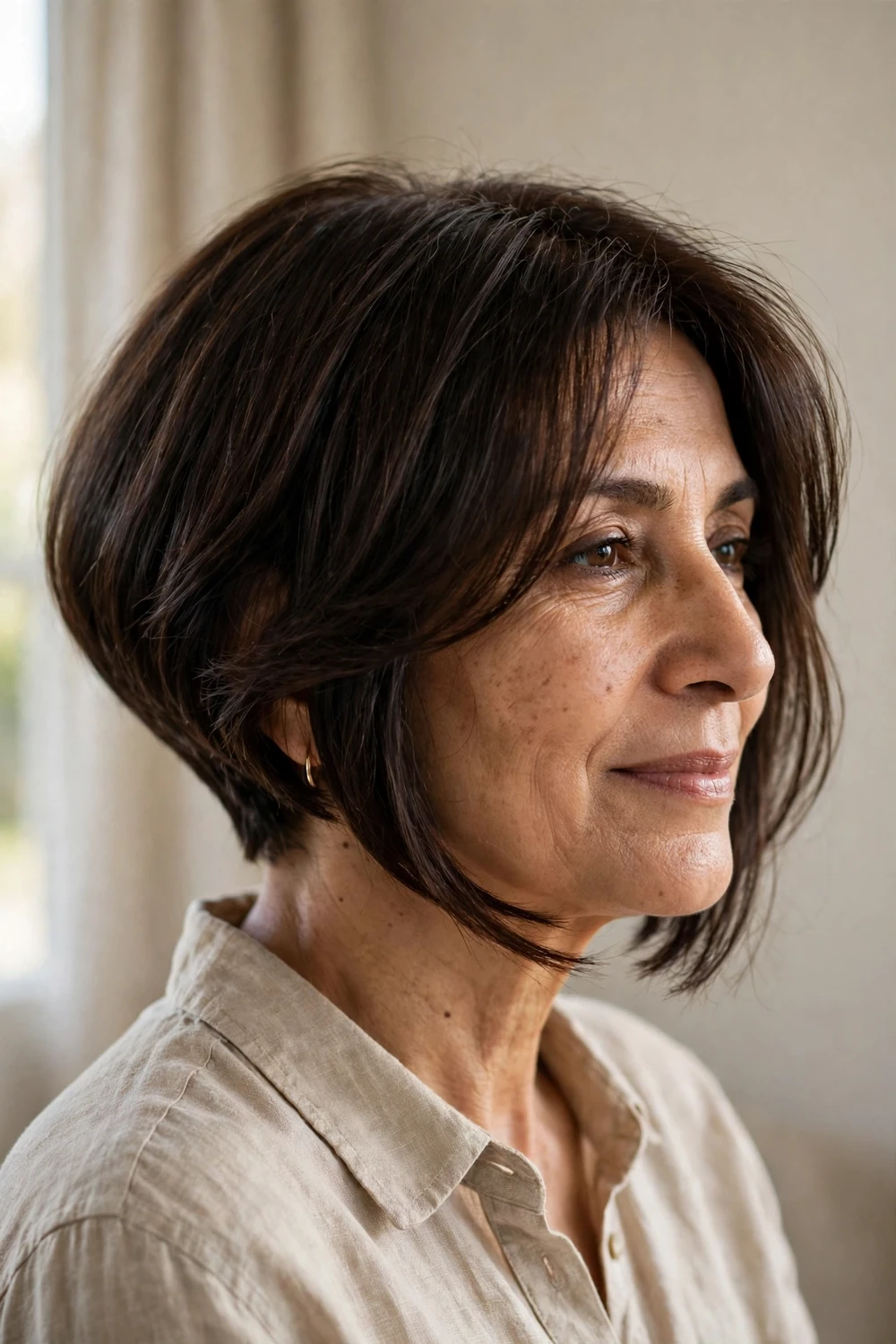
Sharp geometry can be kind to fine hair when it is done right. This bob cuts cleanly from a shorter back to a longer front, and the precise line draws attention to the jawline with a subtle lifting effect. Softly blended curtain bangs balance the architectural edge with gentle movement around the face. The contrast between the crisp perimeter and the soft fringe is what makes this cut look intentional rather than severe. It suits straight fine hair best, since the angle shows most clearly on smooth texture.
Try this: ask your stylist to keep the front points blunt rather than textured; the solid ends make fine hair look thicker at the jawline.
8. Wispy Layered Bob with Delicate Curtain Bangs
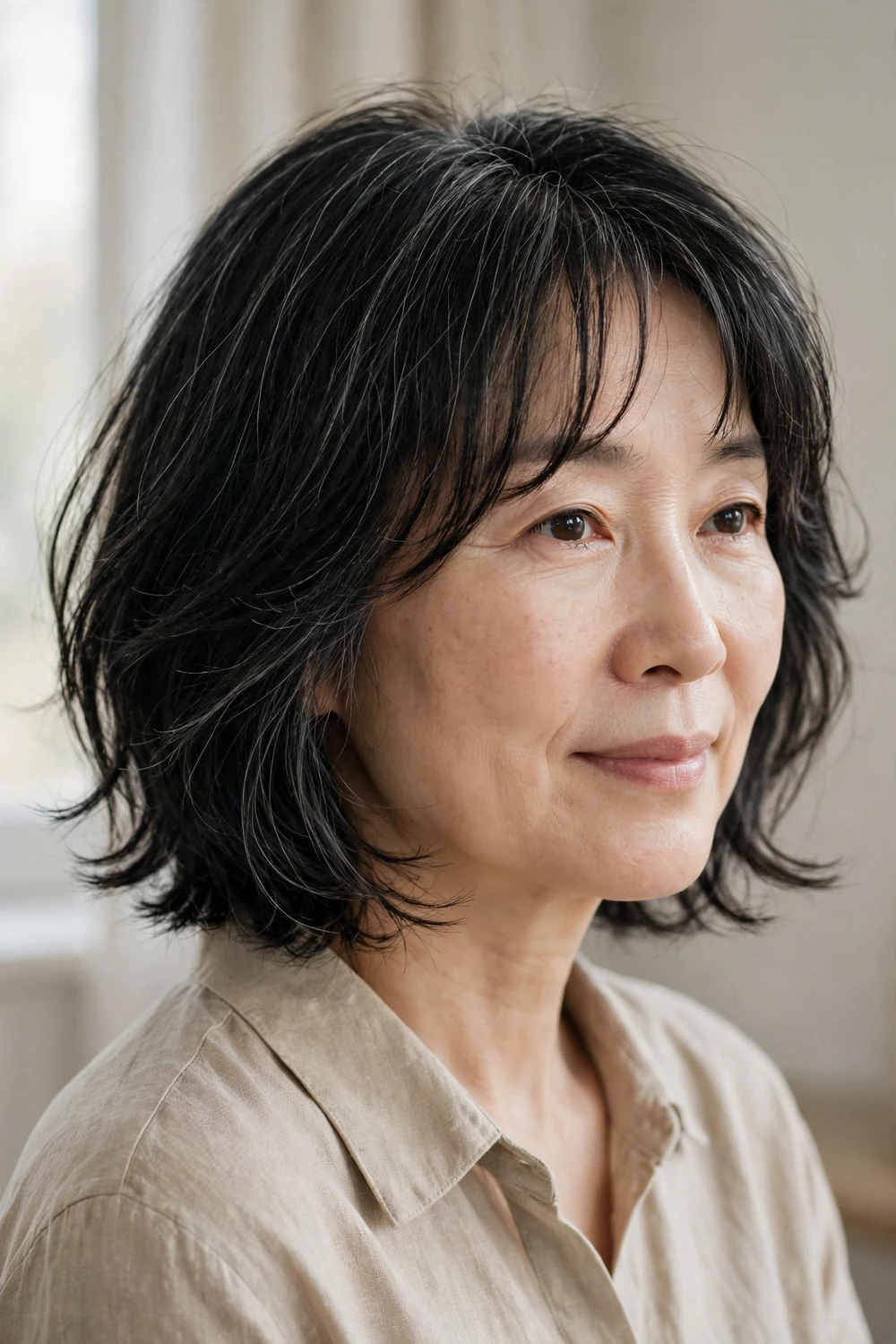
Some fine hair rebels against anything heavy, and this cut respects that. Feathery ends create movement and the suggestion of fullness without asking fine hair to hold weight it does not have. The layers work with the natural lightness of the texture instead of fighting it. Delicate curtain bangs echo the airy quality of the whole style, framing the face with soft definition. This is the lowest-density-friendly option on the list, ideal when even a standard bob feels like too much hair to manage.
Try this: skip conditioner at the roots and apply it only from mid-lengths down; wispy cuts stay airy much longer that way.
9. Modern Pageboy Bob with Updated Curtain Bangs
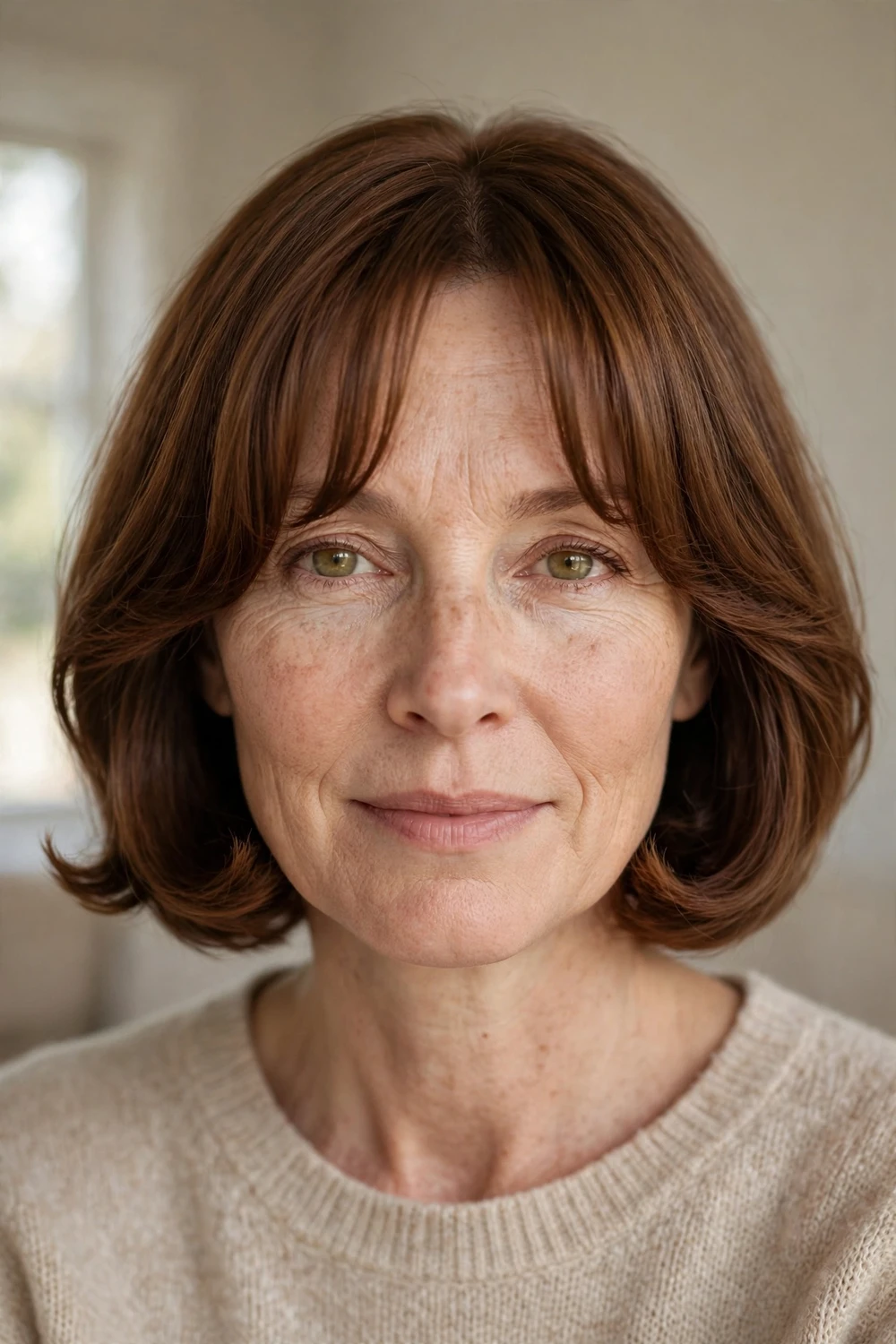
The pageboy is back, minus the severity that made the original tricky. Softer edges and curved ends that turn slightly under create the appearance of thickness at the perimeter, exactly where fine hair looks thinnest. Curtain bangs replace the heavy rounded fringe of the retro version, which keeps the whole look current. The curved-under ends are doing real work here: they stack the hair visually so the bottom edge reads as one dense line.
Try this: wrap the ends around a large round brush and roll under while blow-drying; 60 seconds per side sets the signature curve.
10. Tousled Beach Bob with Seamless Curtain Bangs
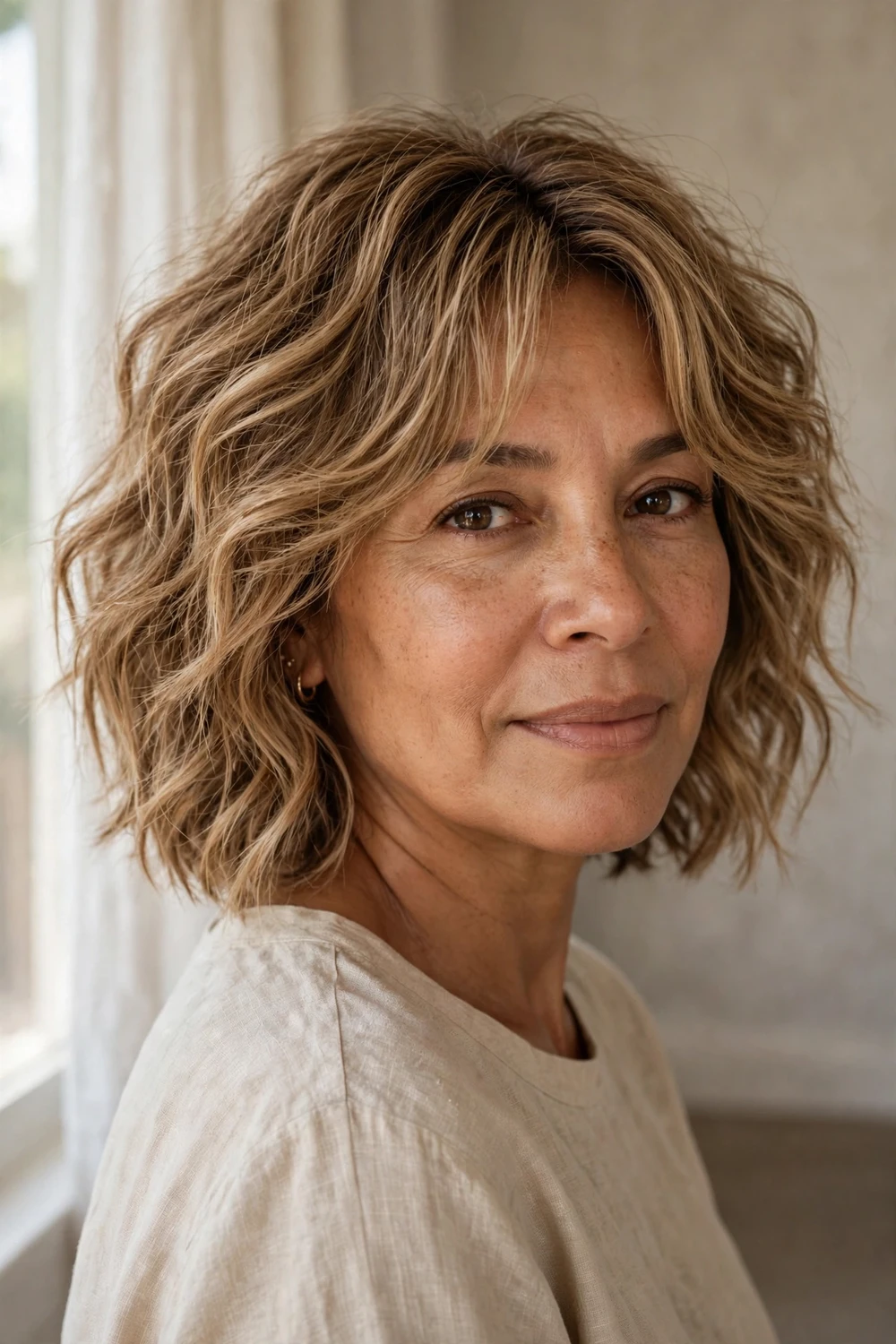
Embrace the texture you already have. This cut uses soft waves and piece-y layers to build dimension, which is far more flattering on fine hair than forcing it pin-straight. The curtain bangs blend into the tousled finish so the whole style reads as one relaxed shape. It works best on fine hair with a natural wave; the cut simply organizes what your hair wants to do anyway. A salt spray or light wave spray is the only product this style truly needs.
Try this: braid damp hair loosely overnight in two low braids; morning waves need only a finger-comb and a mist of texturizing spray.
11. Classic Bob with Micro Curtain Bangs

Not ready for full bangs? The micro version gives you the face-framing effect with a fraction of the commitment. These shorter curtain bangs, cut about 2 to 3 inches long, soften the forehead and brighten the eyes without taking meaningful density from the rest of the cut. The clean lines of the classic bob provide the structure while the delicate fringe adds softness. If you hate them, they grow into regular curtain bangs in a few weeks with zero awkward stage.
Try this: style micro bangs with a blow-dryer and your fingers only; a round brush can over-curl such short pieces.
12. Rounded Voluminous Bob with Curved Curtain Bangs
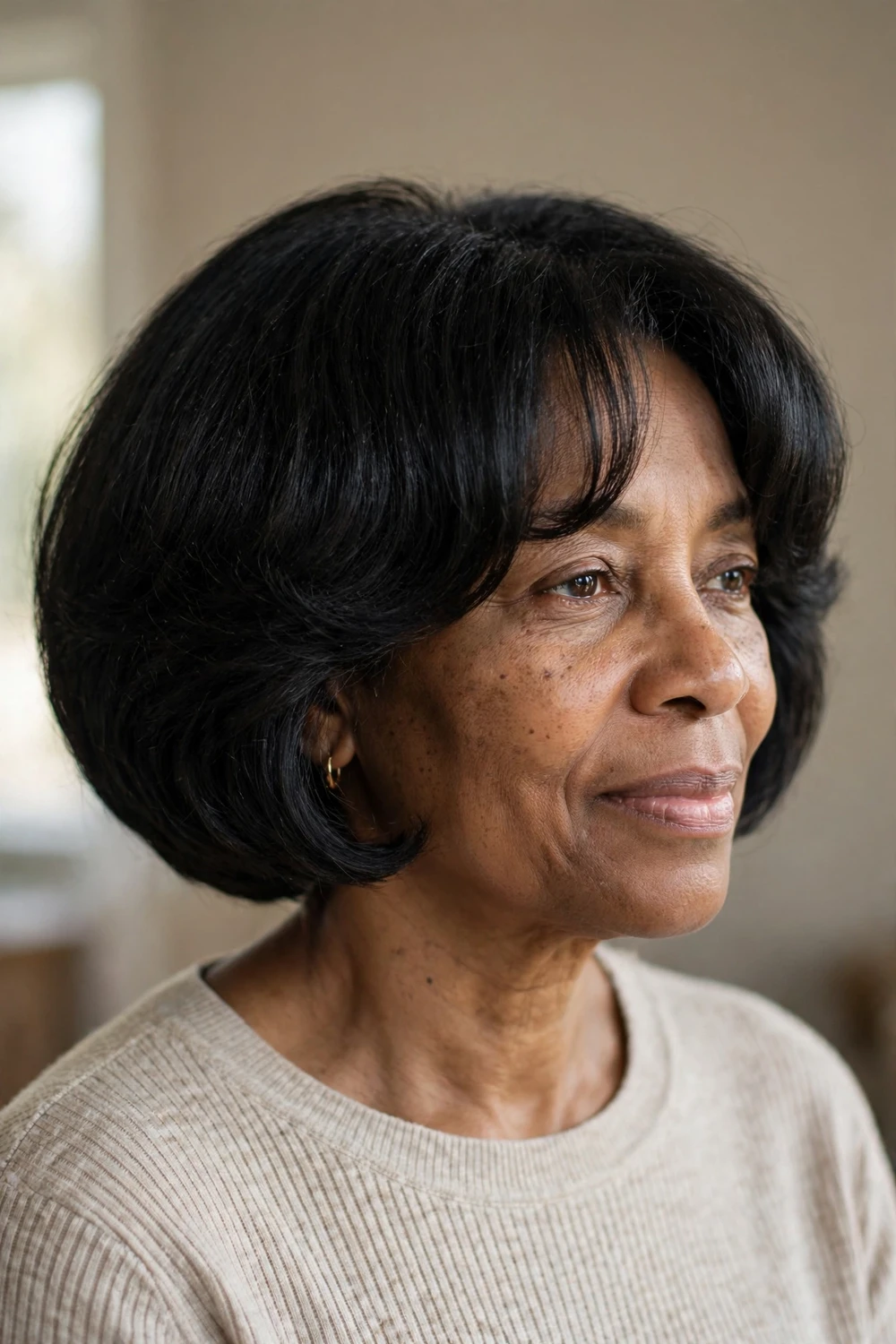
Shape can fake density, and this cut proves it. Strategic cutting builds a rounded silhouette that hugs the head at the right points, creating natural lift without a cabinet full of products. The curved line maximizes the appearance of thickness through the mid-lengths. Soft curtain bangs follow the same curved logic, keeping the whole style cohesive. This is a strong pick for fine hair that is also straight, since the rounded shape shows best on smooth texture.
Try this: blow-dry with a paddle brush using an over-directed technique, pulling each section up and away from the head to bake in the roundness.
13. Choppy Textured Bob with Ragged Curtain Bangs
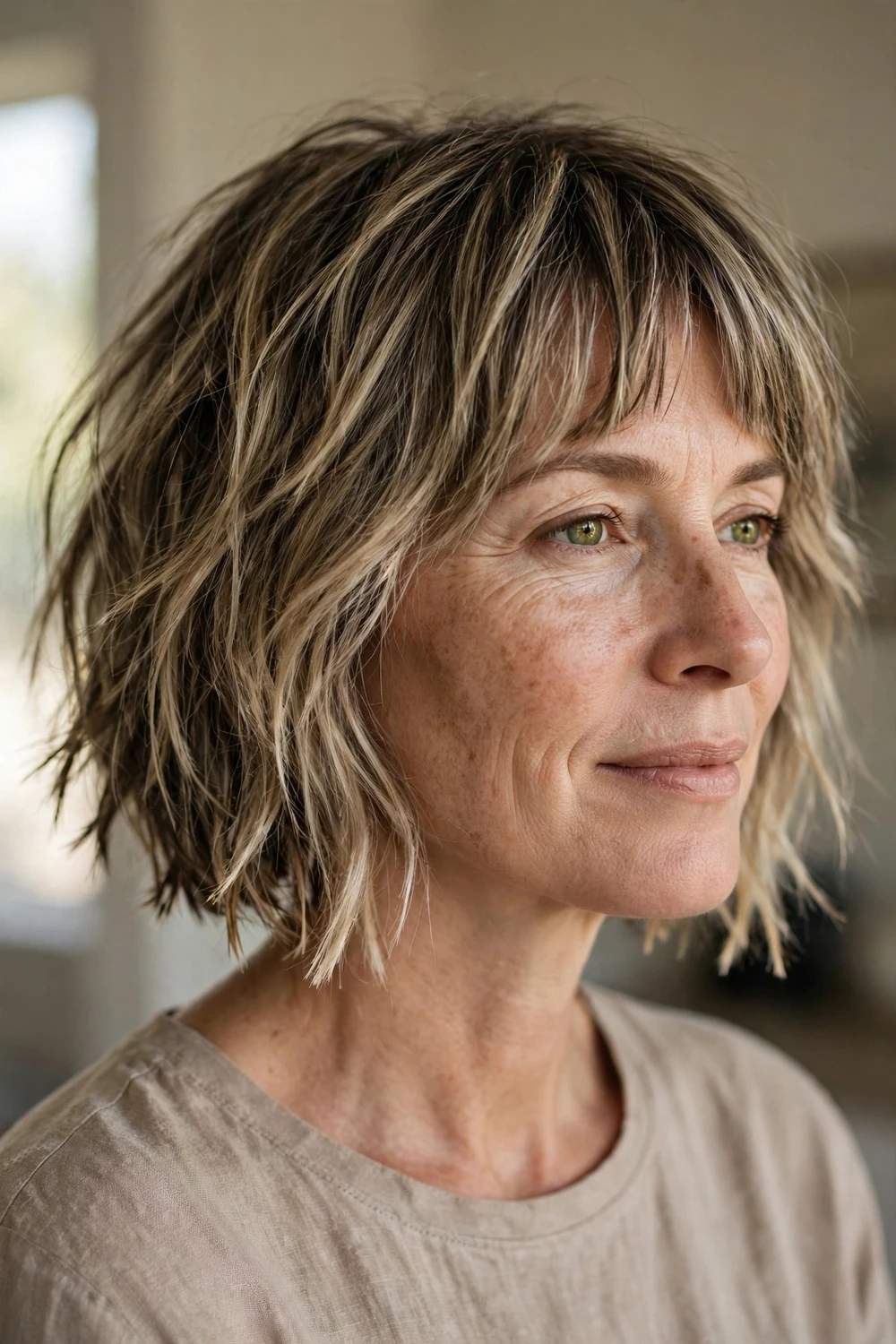
Point-cutting and careful texturizing create deliberate piece-y texture that makes even the finest hair look denser. The intentionally uneven ends catch light differently across the surface, which reads as depth. Ragged curtain bangs continue the same textured theme, so the fringe never looks like an afterthought. The key is controlled texture: your stylist should point-cut the ends, not thin the interior, since removing interior bulk is what makes fine hair look sparse.
Try this: rub a tiny amount of texturizing paste between your palms and pinch random ends; the piece-y separation appears instantly.
14. Low-Maintenance Wash-and-Wear Bob with Natural Curtain Bangs
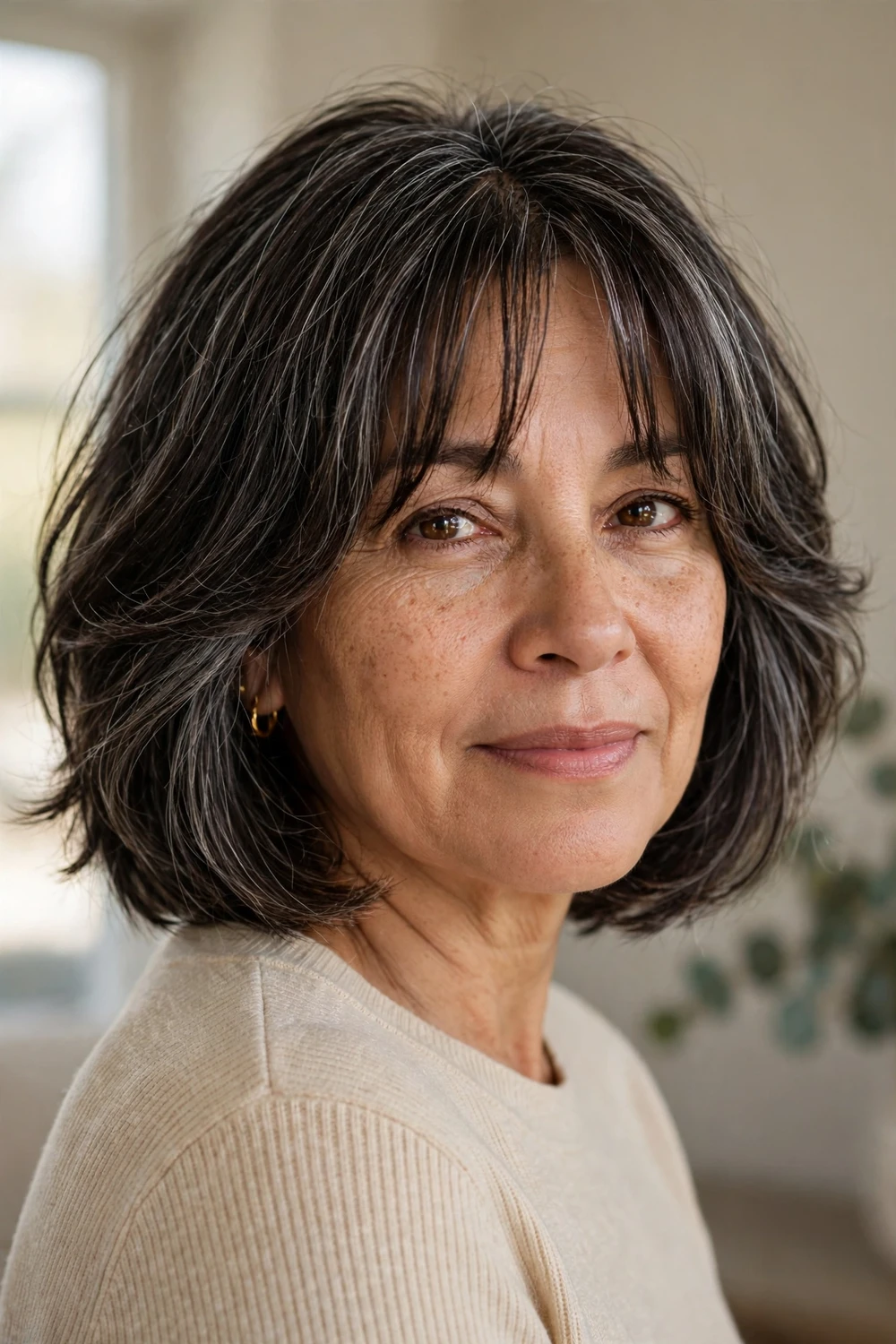
Some mornings you get ten minutes, some mornings you get two. This bob is cut to follow your natural growth patterns, so the strategic layers fall into place with simple air-drying. The curtain bangs are cut long enough to frame your face whether you style them or push them aside. Ask your stylist to cut it dry or check the shape on dry hair; that is how you guarantee the wash-and-wear promise survives outside the salon.
Try this: apply a leave-in cream to damp hair, part it in the center, and let it air-dry untouched; the cut does the rest.
15. Modern Curly Bob with Soft Curtain Bangs
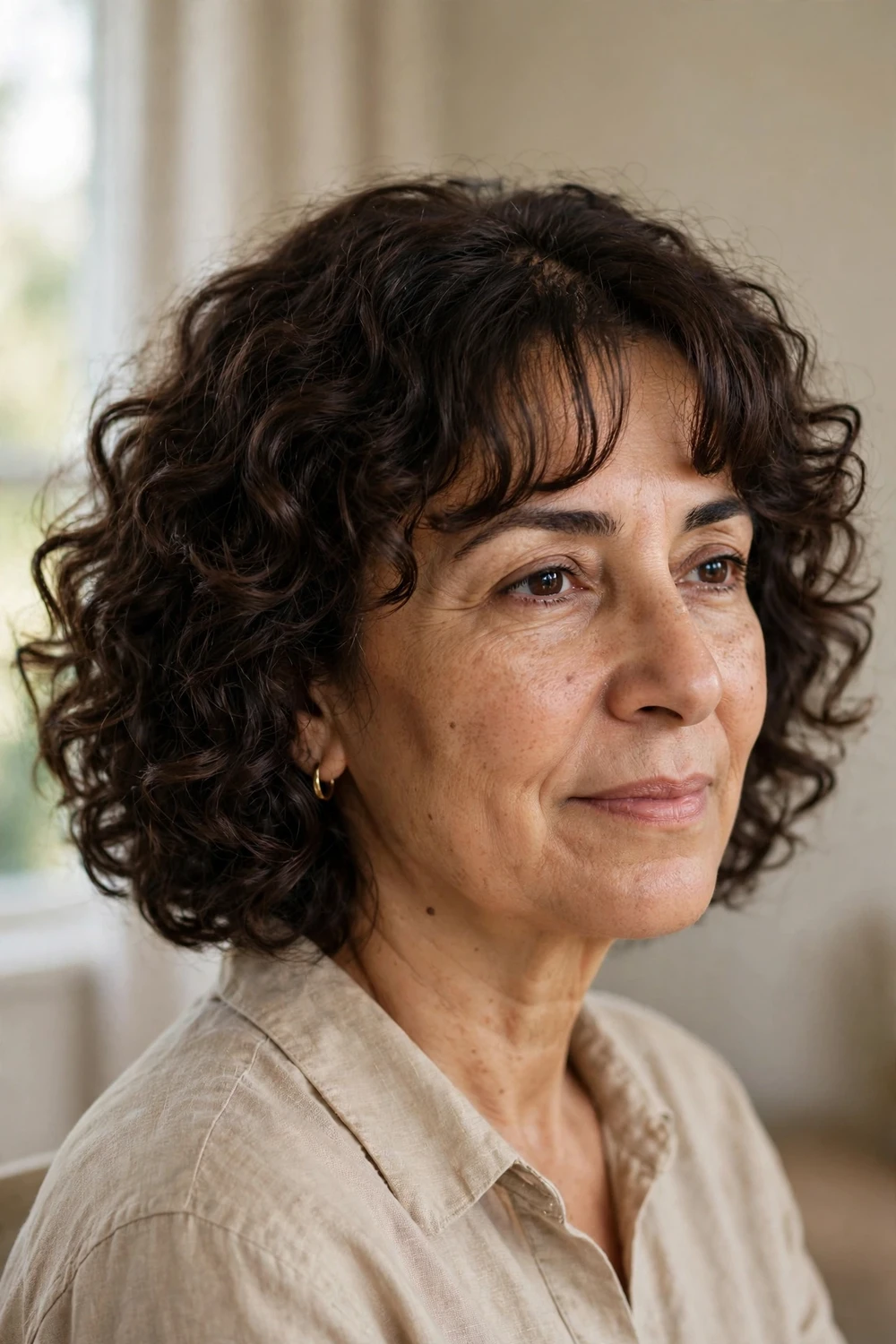
Fine curls need a cut that protects every ringlet. This shoulder-length curly bob keeps the curls intact while soft curtain bangs blend into the texture and frame the face. Layers are kept long and minimal, since short layers on fine curls can puff out instead of falling nicely. The bangs should be cut dry, curl by curl, and left longer than you think; curls spring up as they dry. A curl cream scrunched through damp hair is the whole styling routine.
Try this: refresh day-two curls by misting with water and scrunching; the bangs bounce back without a full wash.
16. Collarbone-Grazing Lob with Center-Part Curtain Bangs
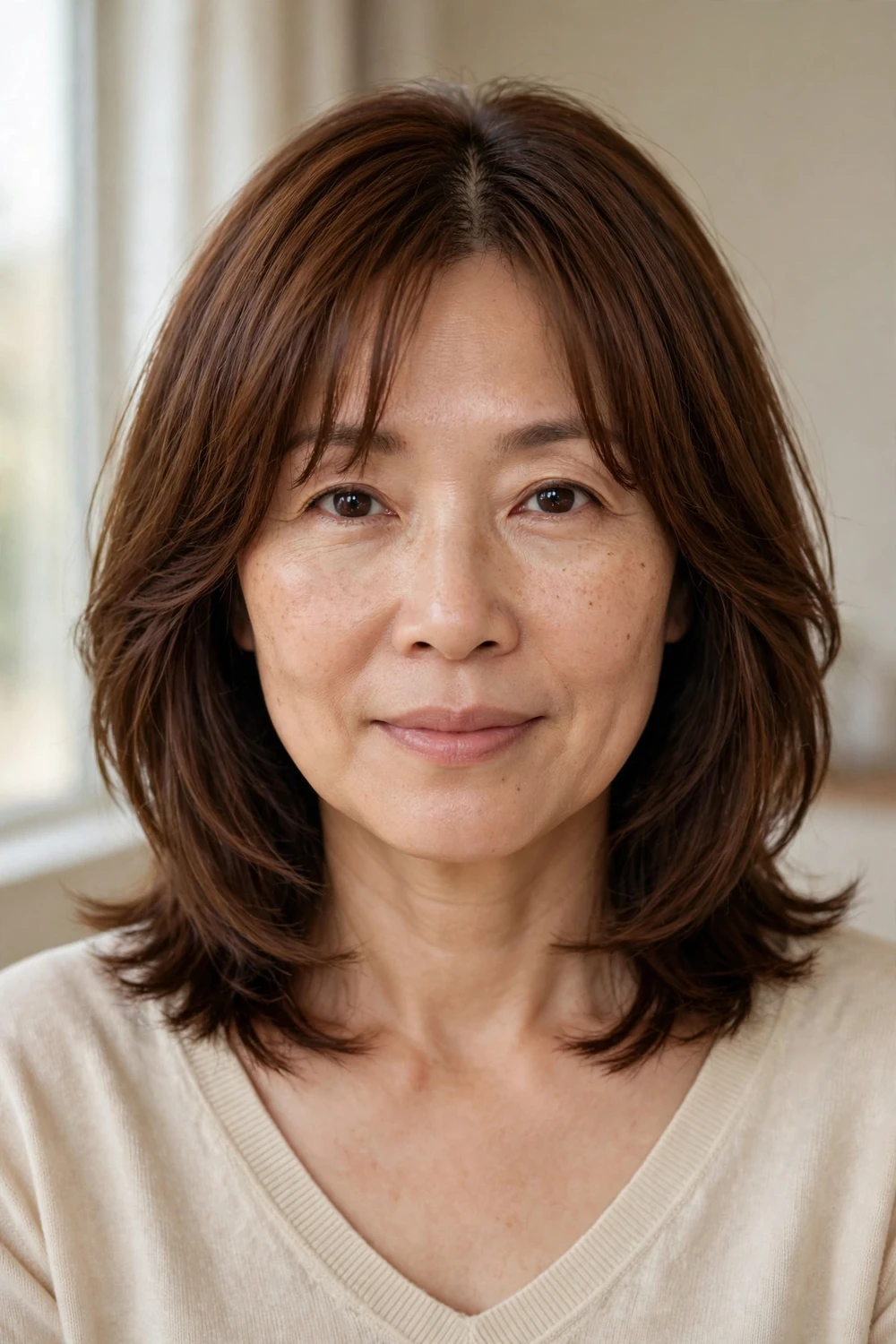
A lob is the fine-hair sweet spot: long enough to feel feminine, short enough to hold volume. Falling right at the collarbone, this length gives styling versatility without the weight that drags fine hair down. A clean center part lets the curtain bangs open symmetrically and frame the face with softness around mature features. Keep the layers long and soft through the ends so the perimeter stays solid; that solid edge is what makes fine hair look full at this length.
Try this: curl the two front curtain sections away from your face with a 1-inch iron for 5 seconds each; the frame pops without curling the whole head.
17. Textured Lob with Airy Feathered Curtain Fringe
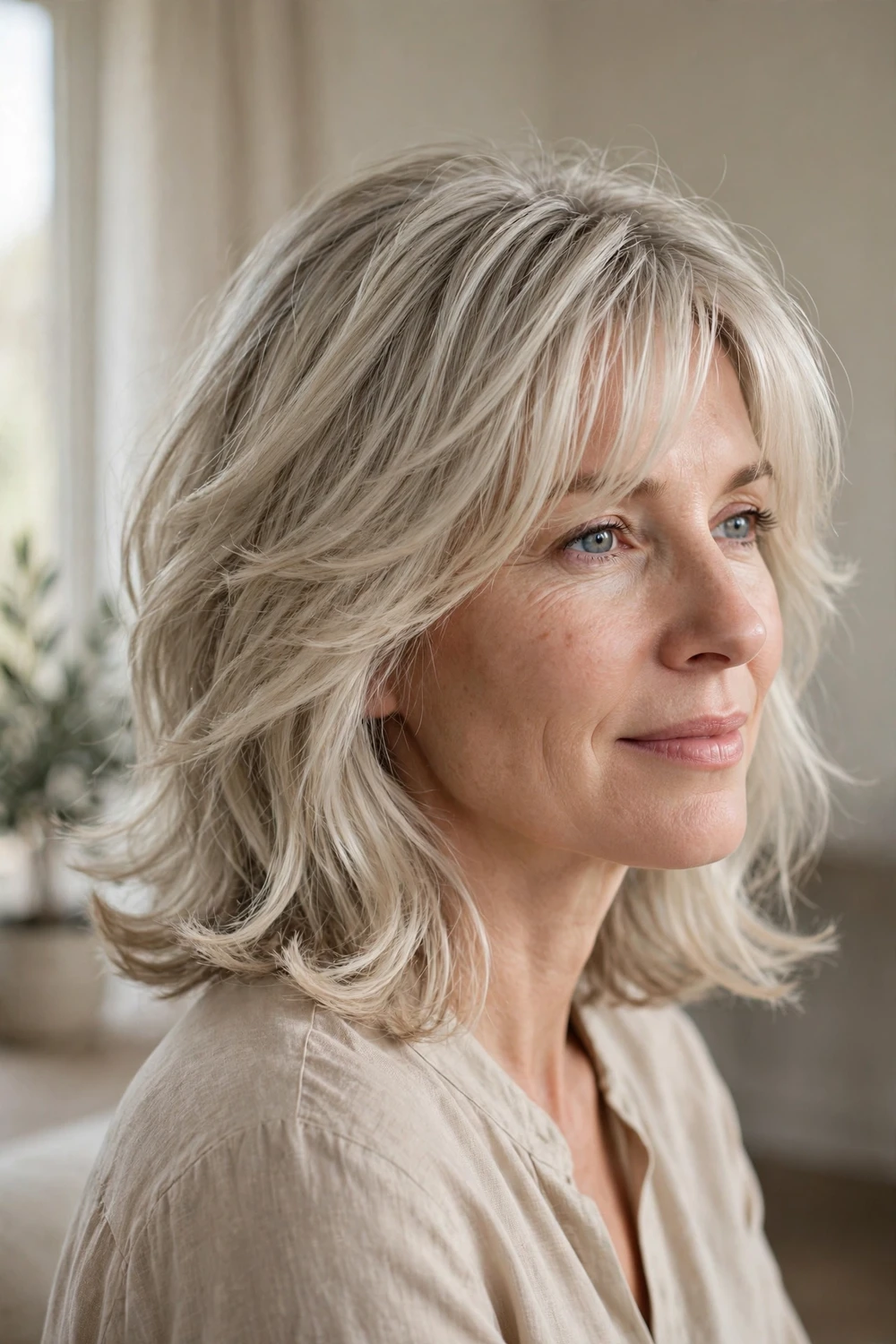
When a sleek lob falls flat by midday, texture is the answer. Feathered layers through the mid-lengths and softly flipped ends create movement that survives on fine hair because the texture is cut in, not styled in. The airy curtain fringe stays light at the forehead instead of separating into limp pieces. An ash blonde shade with a root shadow adds dimension at the crown, which helps fine hair look denser where thinning shows first.
Try this: flip the ends outward with a flat iron instead of curling under; the outward flip gives fine lobs twice the visible movement.
18. Shaggy Lob with Broken Curtain Fringe
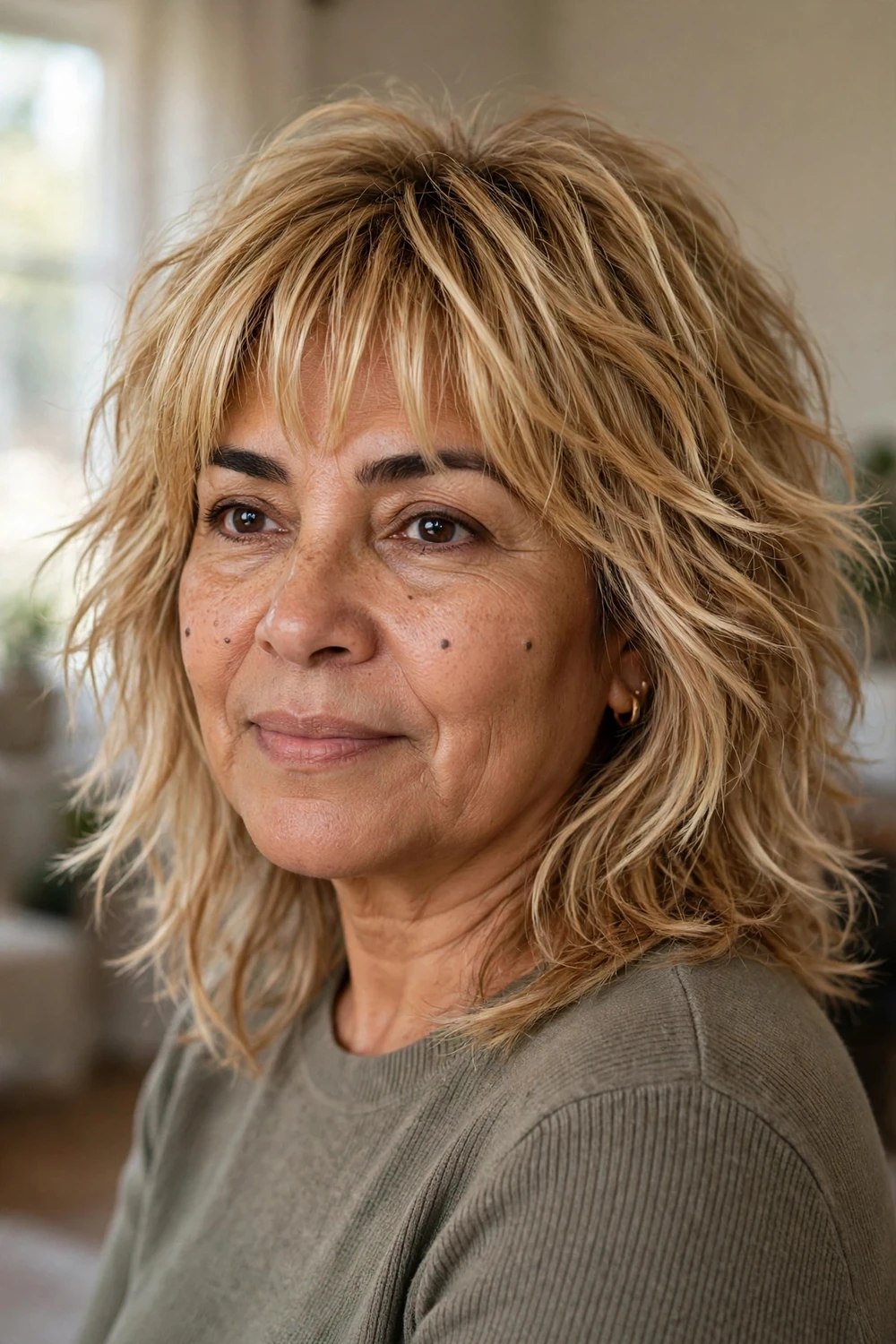
The broken fringe is the detail that makes this cut. Point-cut feathery pieces through the center create a lived-in edge, while the shaggy layers and razored ends keep the lob relaxed rather than polished. On fine hair, keep the shag soft and the layering conservative; you want texture, not transparency. This cut suits fine hair with a slight natural wave best, since the wave holds the piece-y separation without product.
Try this: let the fringe air-dry in its natural fall first, then touch up only the pieces that misbehave; over-styling ruins the broken effect.
19. Warm Chestnut Lob with Micro Curtain Fringe
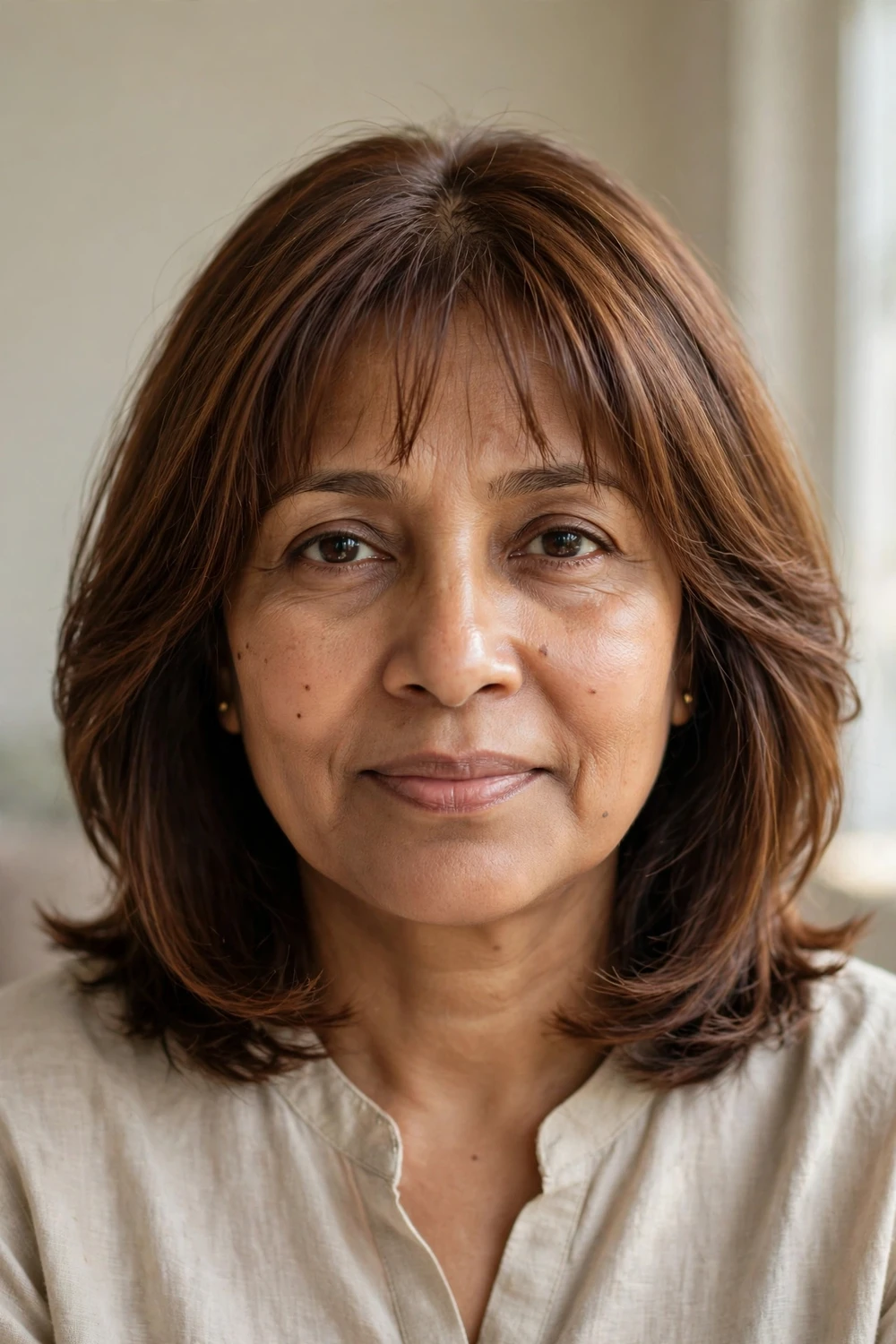
A micro fringe on a longer base is the low-risk way to test bangs. The short, airy fringe changes your face shape just enough to feel new without a dramatic commitment, and the shoulder-length lob keeps the overall look grounded. Warm chestnut with subtle babylights gives fine hair depth it would lack as a solid color; dimension is what keeps brunette shades from reading flat. The trade-off is real but small: the shorter fringe needs a quick round-brush pass most mornings.
Try this: keep a mini round brush by your mirror; 60 seconds of styling keeps a micro fringe sitting perfectly all day.
20. Wispy Curtain Bangs with Shoulder-Length Waves
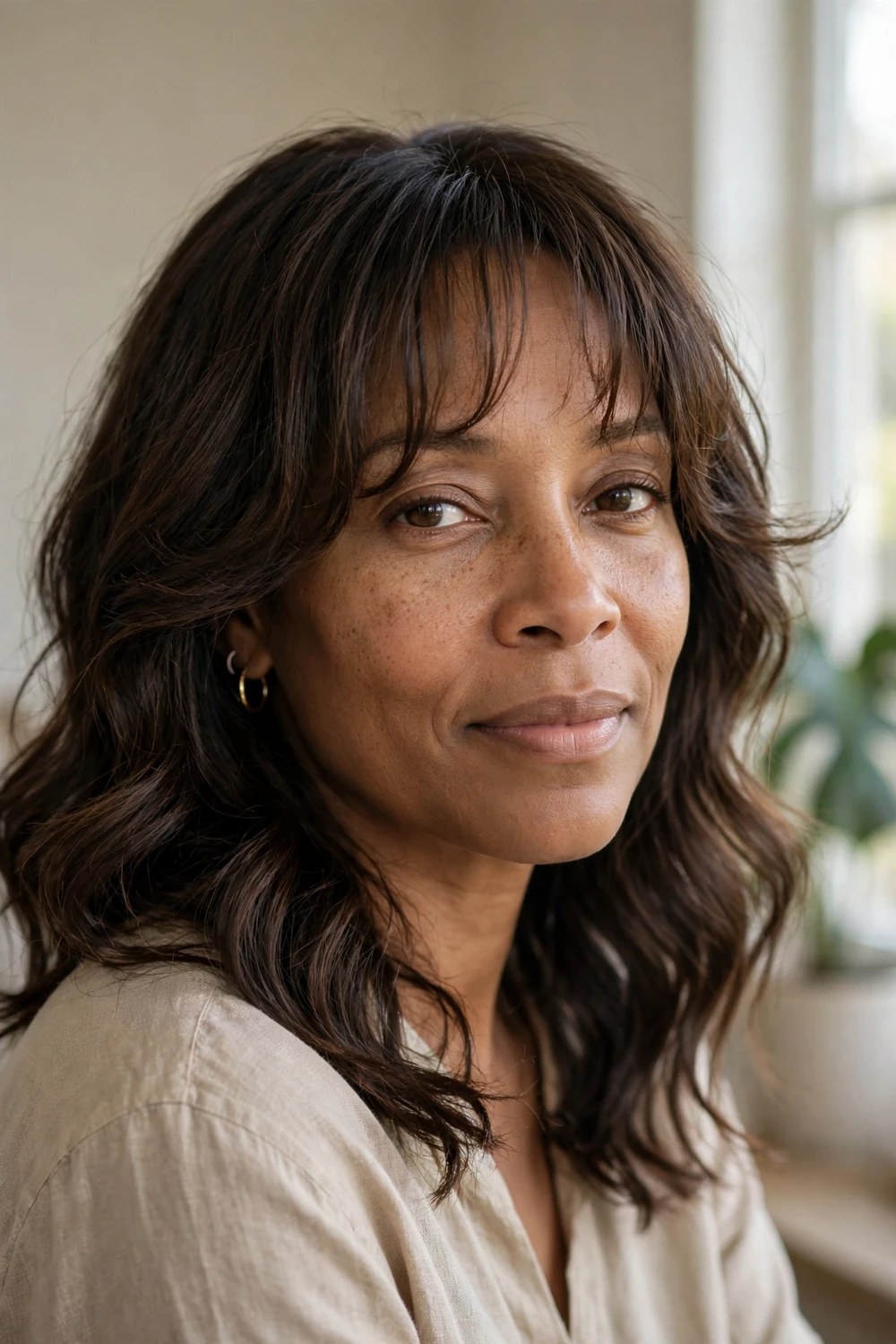
Some curtain bangs whisper instead of shout. These wispy, point-cut bangs stay airy at the forehead without disappearing, which is the exact balance fine hair needs. Paired with shoulder-length waves, the whole style looks like real hair on a real person rather than a salon construction. The waves add the body; the bangs add the frame. This is the most forgiving style on the list for beginners, since wispy bangs grow out invisibly into layers.
Try this: twist the bang section loosely while blow-drying for added separation; the wisps fall more naturally than with a brush.
21. Soft Long Layers with Grow-Out-Friendly Curtain Bangs
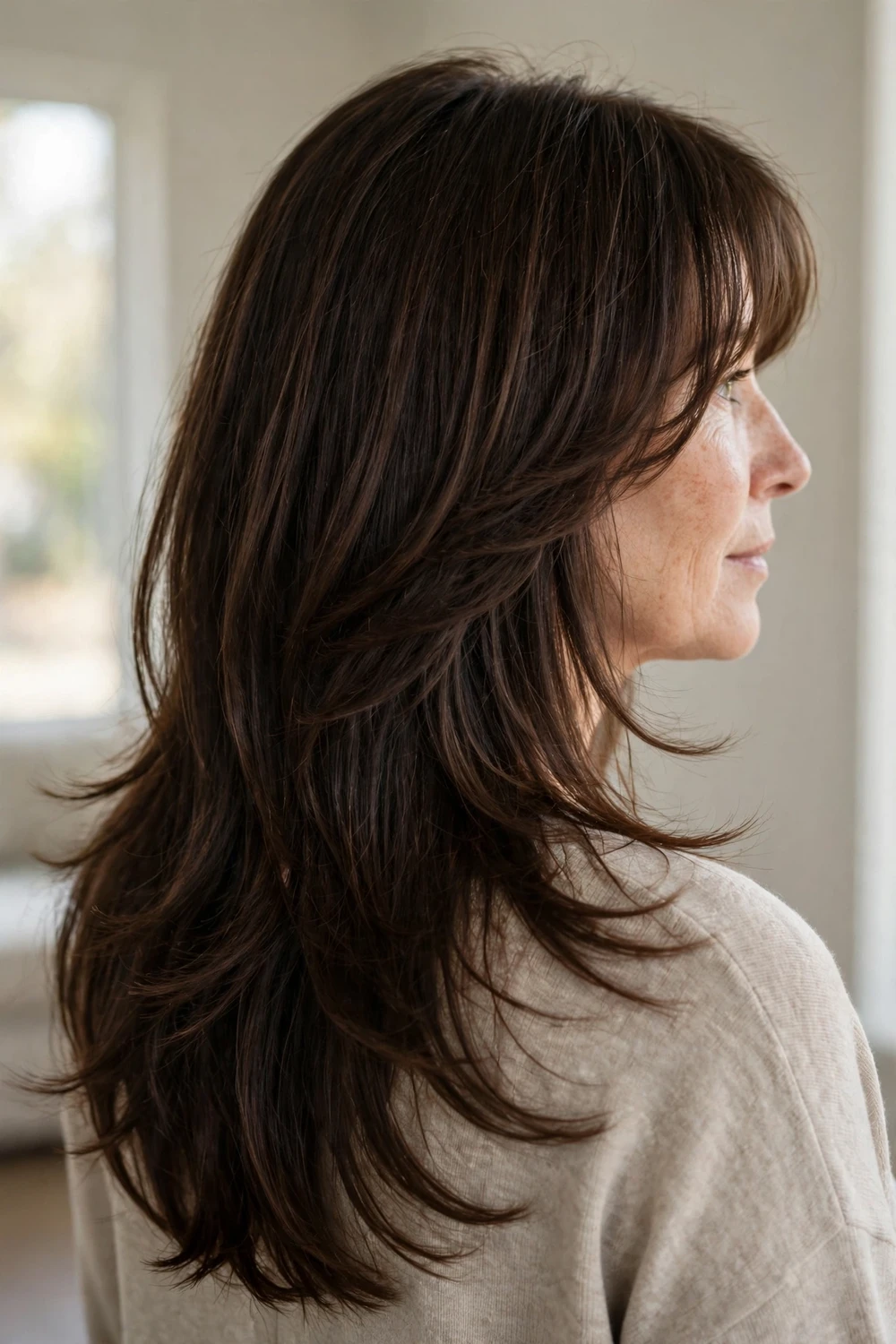
Hesitant about bangs because of the grow-out? This cut removes the fear. The curtain bangs sit directly into long, soft layers, so if you stop trimming them they simply become face-framing pieces with no awkward stage. Below-the-shoulder length keeps the look light and flowing on fine to medium hair. This is the cut to request when you want to test-drive curtain bangs with a full money-back guarantee built into the shape.
Try this: wear the bangs center-parted for a week, then try a deep side part; the same cut gives you two different looks.
22. Feathered Shoulder-Grazing Layers with Warm Caramel Curtain Fringe
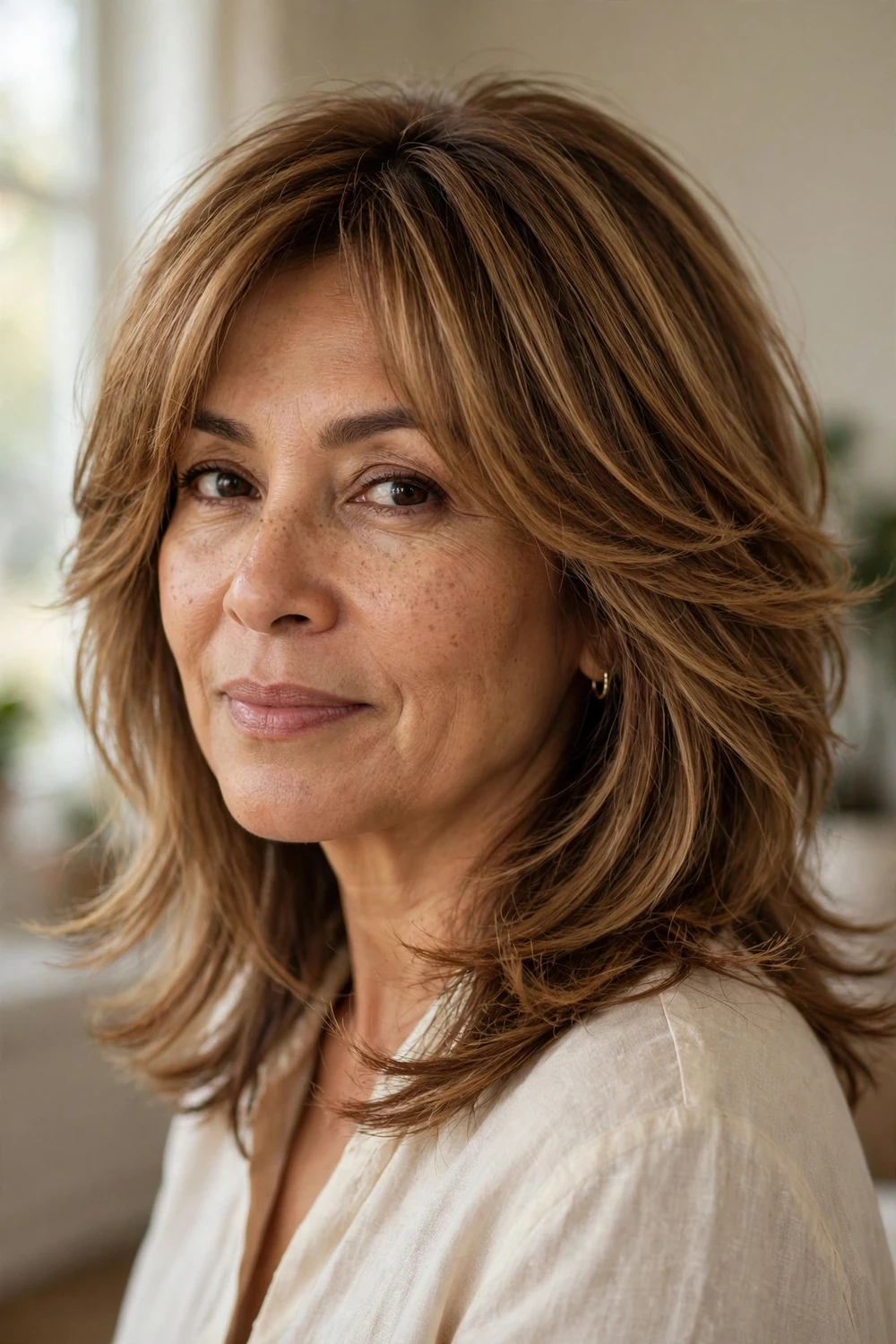
Movement is the whole point of this cut. Feathered layers that graze the shoulders swing and shift as you move, and warm caramel babylights through the fringe catch light differently with every turn of the head. The curtain fringe blends into the face-framing layers so nothing looks choppy or disconnected. On fine hair, the feathering must stay in the outer lengths; thinning the interior would sacrifice the density this cut relies on for its swing.
Try this: blow-dry the layers with a round brush rolling outward at the ends; the feathered flip lasts for days on fine hair.
23. Feathered Curtain Bangs for Temple Lift
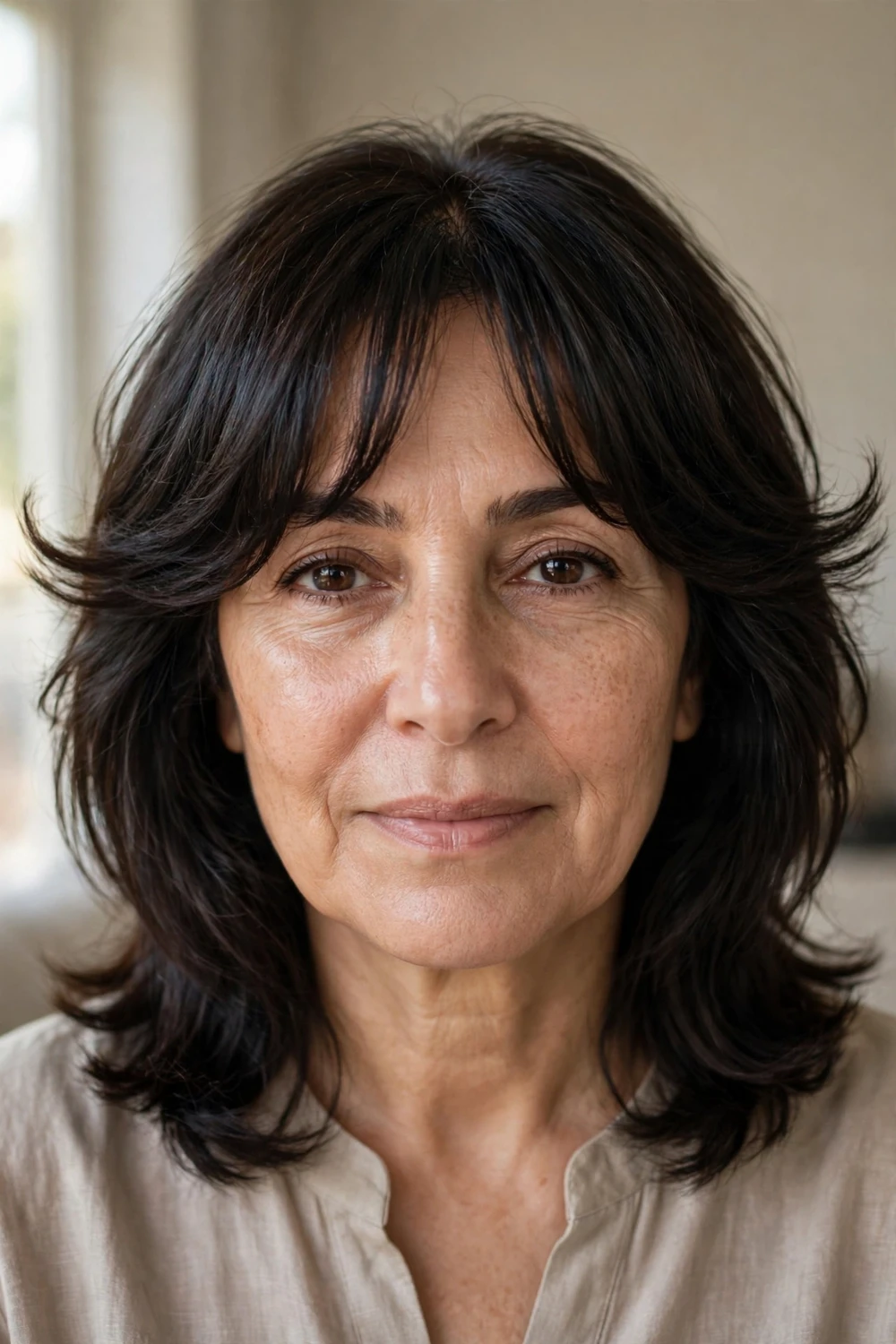
Here the bangs are the star, not the supporting act. Cut to eyebrow length and layered at angles, these feathered curtain bangs flow outward and create a subtle lift at the temples, which draws attention upward toward the eyes. Paired with soft medium layers, the effect is gentle but noticeable. This is a smart pick when the rest of your hair is fine but you have enough density at the front hairline to support a real fringe.
Try this: blow-dry the bangs upward and outward away from the face; the temple lift sets as the hair cools.
24. S-Wave Mid-Length Cut with Slide-Cut Curtain Bangs
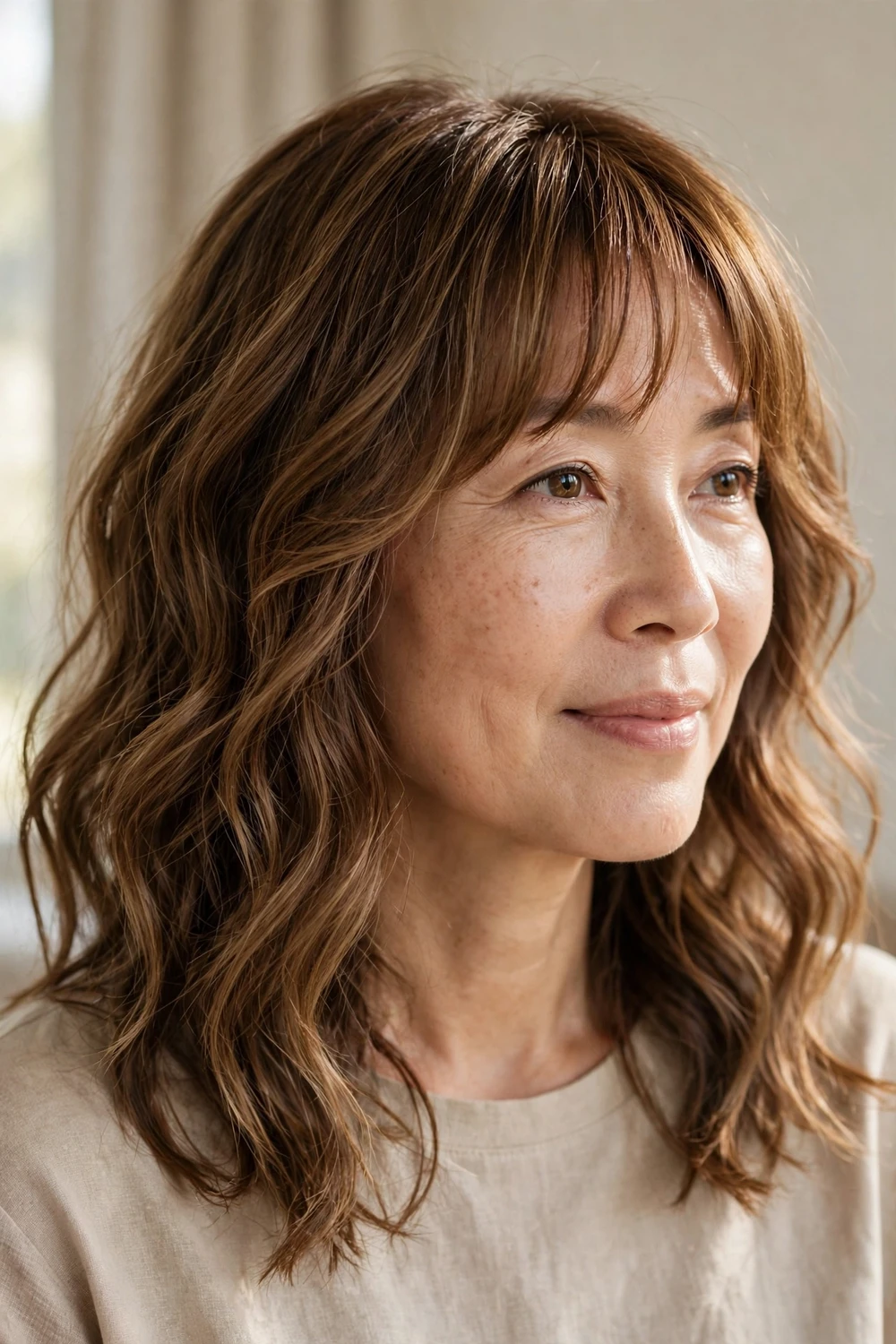
Texture lovers, this one is for you. An organic S-wave through mid-length hair gives flowing movement that no flat iron can fake, and slide-cut curtain bangs pair with it perfectly since the technique leaves soft, seamless ends. Micro face-framing layers keep the wave from collapsing into one curtain of hair. On fine hair, a vertical texturizing spray at the roots keeps the bangs upright and the wave defined through the afternoon.
Try this: braid two loose rope braids into damp hair before bed; the S-wave forms overnight with zero heat.
25. Gray-Blending Curtain Bangs with Silver Highlights

Going gray does not mean going shapeless. These curtain bangs are cut to blend natural gray growth into soft silver highlights, so regrowth looks intentional instead of neglected. The fringe draws the eye to the face, where the silver reads as luminous rather than washed out. A chin-length bob base keeps the perimeter solid, which matters because gray hair can be finer and more fragile. Ask your colorist for a silver gloss between appointments to keep the tone bright instead of yellow.
Try this: use a purple shampoo once a week; it keeps silver curtain bangs bright without drying out fine hair.
If your hairline is too sparse for a real fringe, lighter options exist. These wispy bangs hairstyles pair feather-light fringes with bobs and lobs for the same softening effect with even less density.
Curtain Bangs for Fine Hair Over 40 Comparison at a Glance
| Style | Best For | Difficulty | Maintenance |
|---|---|---|---|
| Layered Chin-Length Bob | Oval and heart faces; first-time bang wearers | Easy | Trim every 4 weeks; 5-min blowout |
| French-Inspired A-Line Bob | Fine straight hair; professional settings | Easy | Trim every 4 weeks; minimal styling |
| Textured Blunt Bob | Very fine hair needing thicker-looking ends | Easy | Trim every 3-4 weeks; quick flat-iron pass |
| Volume-Boosting Graduated Bob | Flat crowns; hair that needs built-in lift | Medium | Trim every 4 weeks; upside-down blow-dry |
| Soft Shaggy Bob | Slight natural wave; casual styling routines | Easy | Trim every 5-6 weeks; mousse and scrunch |
| Side-Swept Asymmetrical Bob | Thinning part lines; round faces | Medium | Trim every 3-4 weeks; set part while damp |
| Jaw-Defining Angled Bob | Straight fine hair; defined jawlines | Medium | Trim every 3-4 weeks to keep the angle sharp |
| Wispy Layered Bob | Low-density hair; minimal styling time | Easy | Trim every 5 weeks; air-dry friendly |
| Modern Pageboy Bob | Straight fine hair; retro-leaning style | Medium | Trim every 4 weeks; round-brush the curve |
| Tousled Beach Bob | Natural wave; low-effort routines | Easy | Trim every 5 weeks; wave spray only |
| Classic Bob with Micro Bangs | Bang beginners; testing the fringe waters | Easy | Trim every 3 weeks; 60-second finger style |
| Rounded Voluminous Bob | Straight fine hair; all-day volume seekers | Medium | Trim every 4 weeks; over-directed blow-dry |
| Choppy Textured Bob | Limp hair needing visual depth | Easy | Trim every 4-5 weeks; texturizing paste |
| Wash-and-Wear Bob | Busy mornings; air-dry devotees | Easy | Trim every 6 weeks; leave-in cream only |
| Modern Curly Bob | Fine natural curls; curl-by-curl cutting | Medium | Trim every 6-8 weeks dry; curl cream routine |
| Collarbone-Grazing Lob | Most face shapes; versatile styling | Easy | Trim every 5 weeks; 5-min styling |
| Textured Lob | Hair that falls flat by midday | Medium | Trim every 4-5 weeks; flip ends outward |
| Shaggy Lob | Slight wave; lived-in texture fans | Medium | Trim every 5-6 weeks; minimal product |
| Chestnut Lob with Micro Fringe | Bang testers wanting longer hair | Easy | Trim fringe every 3 weeks; quick round-brush pass |
| Shoulder-Length Waves | First-time fringe wearers; soft looks | Easy | Trim every 5-6 weeks; air-dry friendly |
| Long Layers, Grow-Out Friendly | Commitment-phobes; longer hair lovers | Easy | Trim every 6-8 weeks; part-switch styling |
| Feathered Shoulder Layers | Movement seekers; medium-density fine hair | Medium | Trim every 5 weeks; round-brush outward flip |
| Feathered Bangs, Temple Lift | Enough front density; eye-emphasis looks | Medium | Trim every 3-4 weeks; upward blow-dry |
| S-Wave Mid-Length Cut | Texture lovers; heat-free styling | Medium | Trim every 5-6 weeks; overnight braids |
| Gray-Blending Silver | Natural gray transition; luminous tone goals | Easy | Gloss every 6-8 weeks; weekly purple shampoo |
Prefer your fringe swept to one side instead of parted in the middle? These side swept bangs ideas show how an off-center fringe softens the same bob and lob shapes.
How to Choose the Right Curtain Bangs for You
Match the bang to your density, not just your face shape. Very fine, low-density hair does best with wispy, micro, or feathered fringes that take almost nothing from the rest of the cut. If your fine hair still has decent density, you can carry a fuller curtain bang with interior layering.
Match the base cut to your styling reality. Air-dry devotees should pick wash-and-wear bobs, tousled cuts, or long layers. If you already blow-dry most mornings, graduated bobs, pageboys, and rounded cuts will reward the effort with noticeably more volume.
Consider your grow-out tolerance. Micro and wispy bangs disappear into layers within weeks if you change your mind. Fuller curtain bangs need 2 to 3 months to grow past the cheekbones. When in doubt, start longer; your stylist can always take more off at the follow-up trim.
For more cuts built specifically around low density, these layered hairstyles for women over 50 with thin hair use the same fullness tricks on slightly longer lengths.
Mistakes to Avoid
Do not let anyone razor-cut your curtain bangs. Razors shred fine hair and create frizz at the exact spot where you need smoothness. Shears with a slide-cut or point-cut technique keep the ends soft without destroying them.
Do not go too thick at the front. A heavy curtain bang steals density from the rest of the cut, which leaves fine hair looking thinner everywhere else. The fringe should be the lightest part of your haircut, not the heaviest.
Do not skip the bang trims. Curtain bangs grow about half an inch a month, and once they pass the cheekbones they stop framing and start just hanging. A 10-minute trim every 3 to 4 weeks keeps every style on this list looking intentional.
Do not overload fine bangs with product. Heavy creams and oils flatten a curtain bang within hours. A light root spray or dry shampoo at the part line gives lift without weight.
Most curtain bangs sit best on shoulder-length bases, so these layered hairstyles for medium hair make a natural next read when you are choosing your length.
Frequently Asked Questions
Do curtain bangs work on fine hair over 40?
Yes, when they are cut light. Wispy, feathered, or micro curtain bangs add face-framing movement without removing the density fine hair needs elsewhere. The key is keeping the fringe the lightest part of the cut and pairing it with a layered bob or lob that supplies structure. Heavy, thick curtain bangs are the version to avoid on fine hair.
How often do curtain bangs need trimming?
Plan on a trim every 3 to 4 weeks. Curtain bangs grow about half an inch per month, and once they pass the cheekbones they lose their framing effect. Micro and wispy versions can stretch to 5 weeks, while fuller curtain bangs look best with stricter 3-week upkeep. Most salons offer quick fringe trims between full appointments.
What should I ask my stylist for with fine hair?
Ask for the bangs to be cut with shears using a slide-cut or point-cut technique, never a razor, which shreds fine hair. Request cheekbone-length fringe as a starting point, since it flatters most faces and grows out gracefully. Tell your stylist to keep density through the ends and to avoid thinning shears near the bang area.
Will curtain bangs hide a thinning hairline?
They help more than most fringes. Because curtain bangs part in the center and fall to each side, they break up the flat plane where thinning shows most, especially at the temples. A side-swept variation covers a thinning part line even better. Be honest with your stylist about thinning areas so the fringe can be cut to work with your actual density.
Can I grow out curtain bangs easily?
Curtain bangs have the easiest grow-out of any fringe. As they lengthen, they simply become face-framing layers with no awkward blunt stage. Wispy and feathered versions blend invisibly within weeks. If you want them gone faster, ask your stylist to blend the bang edges into your layers at your next trim.
Final Thoughts
Curtain bangs earn their reputation on fine hair after 40 because they solve the two biggest complaints at once: flat roots and a harsh hairline. Pick the version that matches your density and your styling habits, keep the trims on schedule, and let the fringe do the work your hair could never do on its own.

