



Thin hair after 50 responds to the right cut more than almost any other factor. Short, choppy layers build lift at the crown, blunt perimeters make ends look denser, and a smart part can cover a widening scalp line in seconds.
I put this list together after years of helping readers match fine hair to flattering cuts. Below are 19 hairstyles for thin hair over 50, covering short, medium, and long lengths, so you can keep the length you love and still get more body.
Quick Takeaways
- Shorter cuts with choppy or razored layers create the most visible fullness for thin hair.
- Blunt edges make fine ends look thicker; wispy, over-layered ends do the opposite.
- A deep side part or curtain bangs can hide sparse spots at the part line instantly.
- Lightweight mousse and root-lifting spray beat heavy creams, which flatten fine strands.
- Color dimension, like soft highlights, gives thin hair the look of extra density.
1. Choppy Tousled Pixie

The choppy tousled pixie is the workhorse of hairstyles for thin hair over 50. Short, broken layers through the crown let fine strands stack on each other, which reads as thickness. Because the cut sits close to the head, there is no heavy length pulling the roots flat.
It suits oval, heart, and long face shapes, and it grows out softly without harsh lines. A pea-sized amount of mousse worked in with fingertips gives it a lived-in finish that lasts all day.
Try this: ask your stylist to point-cut the top layers rather than blunt-cutting them, so the ends stay airy and piecey.
Difficulty: Easy | Cost: budget-friendly trims every 5 to 6 weeks
2. Side-Parted Pixie
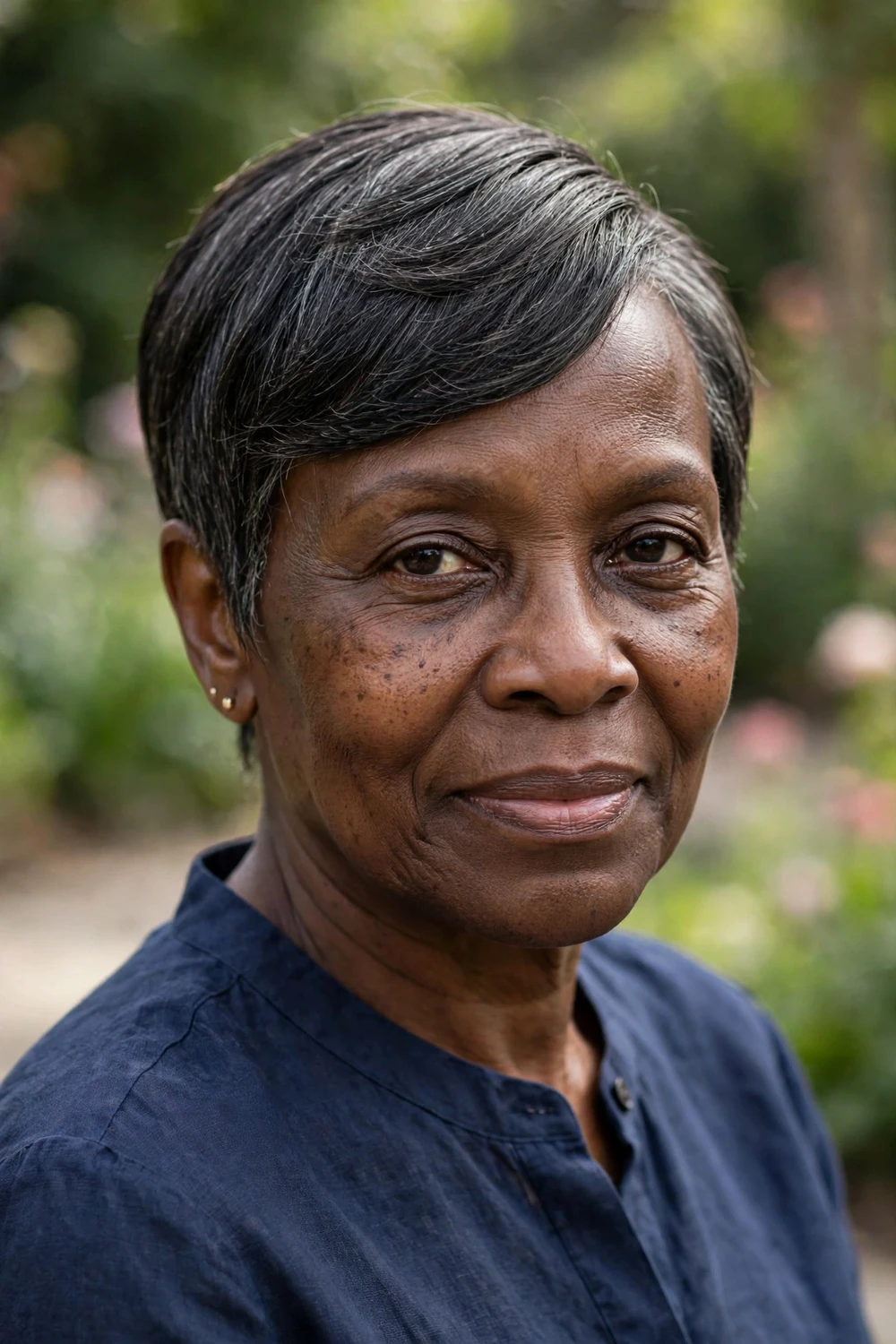
A deep side part is the fastest fix for a scalp line that shows through thin hair. Sweeping the longer top of a pixie across the forehead moves coverage to the sparsest area, usually the crown and part line, while the tapered sides keep the silhouette tidy.
This cut flatters round faces especially well, since the diagonal sweep breaks up fullness at the cheeks. Styling takes minutes: blow-dry the top forward with a small round brush, then flip it to the side.
Try this: switch your part to the opposite side once a month to keep volume from training itself flat.
Difficulty: Easy | Cost: budget-friendly trims every 5 to 6 weeks
If you want even more body from a short cut, see these volumizing haircuts for thin hair.
3. Curly Pixie
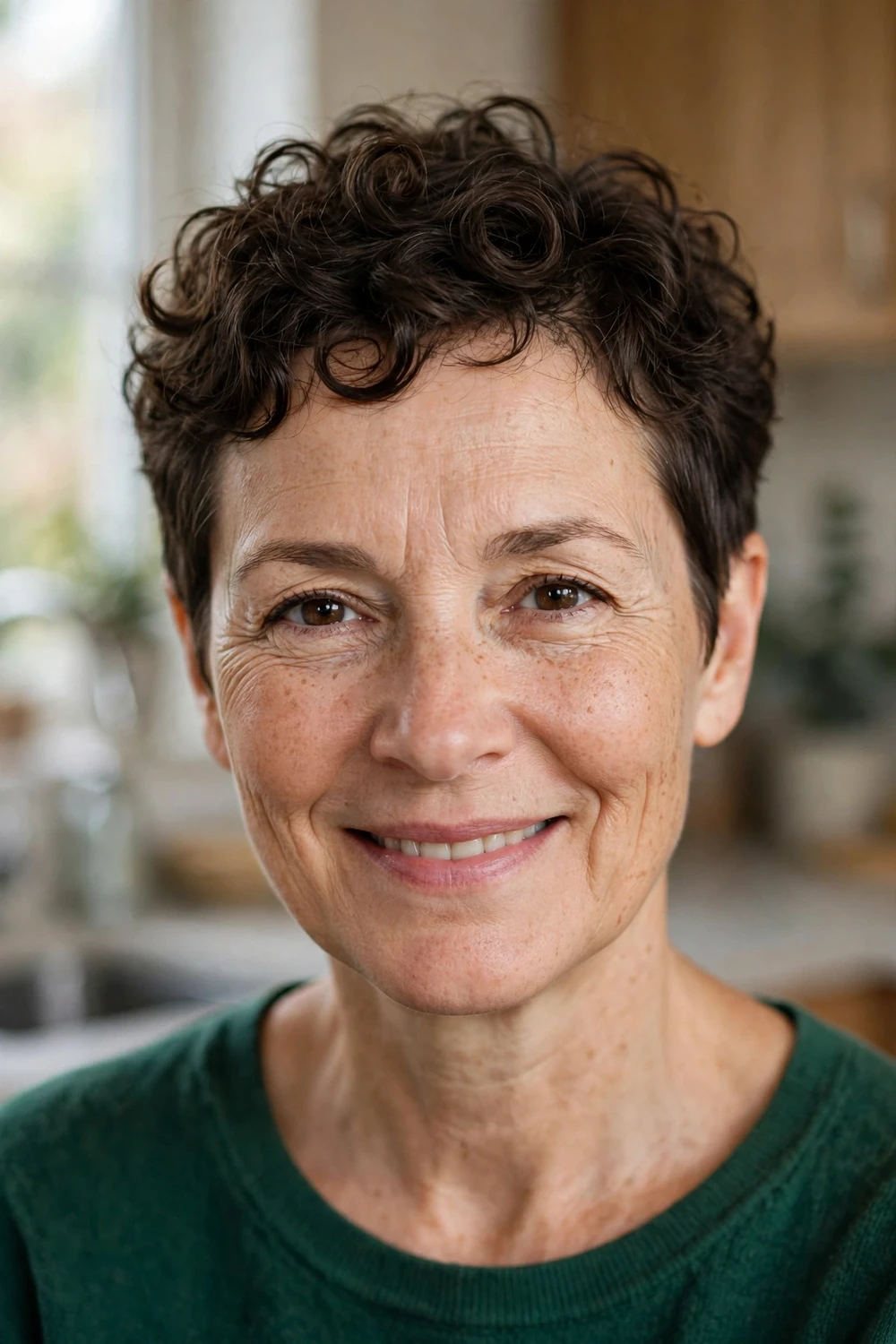
Natural curl is a gift for thin hair, because every bend adds visual width. A curly pixie keeps the sides short and leaves the top long enough for curls to spring up and fill out the crown. The contrast between the cropped sides and the textured top makes hair look denser than it is.
This cut works on loose waves through tight coils. Diffuse on low heat instead of air-drying to set the shape, and skip heavy butters that weigh curls down.
Try this: a soft perm on straight, thin hair can create the same curl structure for several months if you want a low-daily-effort option.
Difficulty: Moderate | Cost: trims every 6 to 8 weeks; perms add salon cost
4. Teased Pixie with Highlights
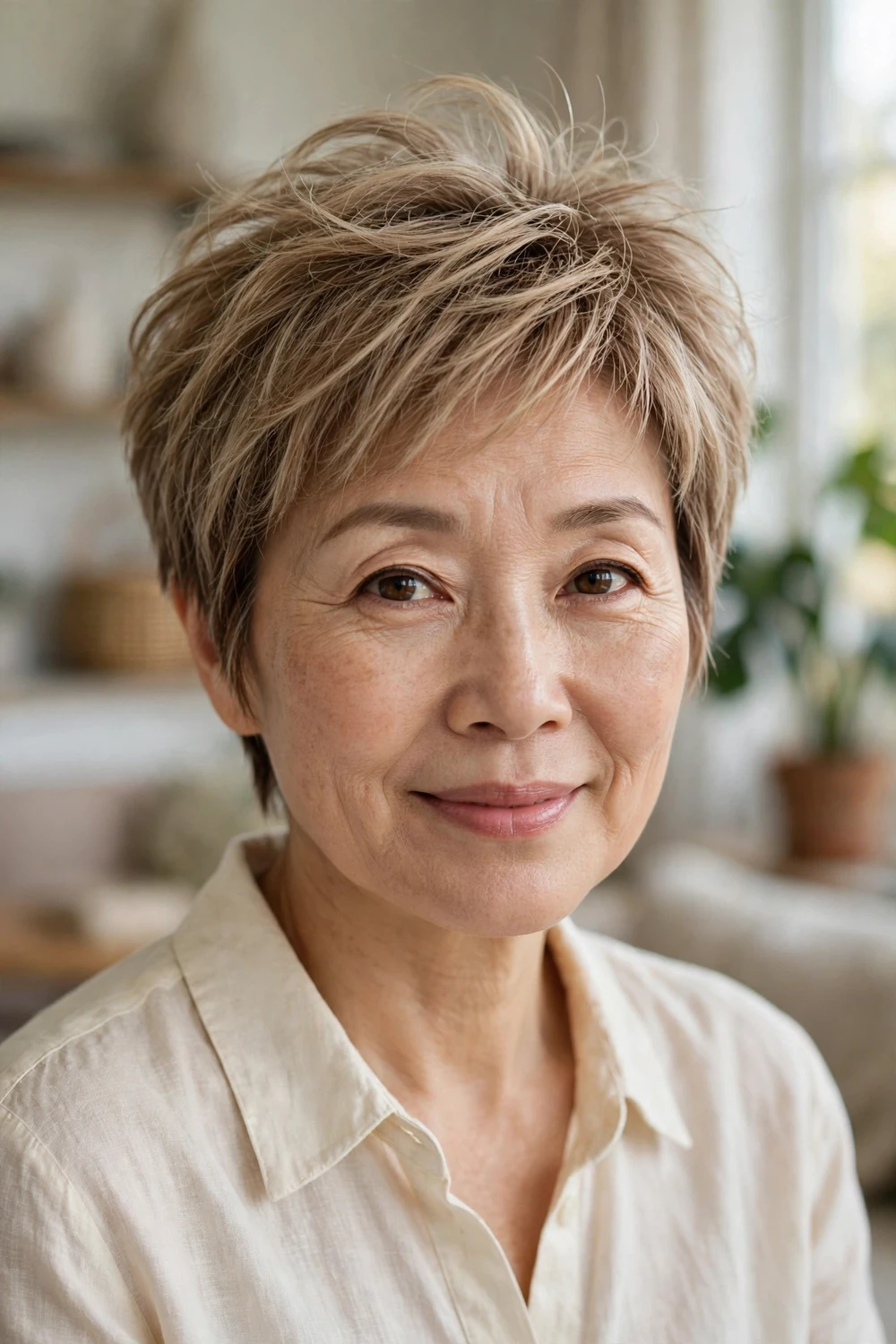
Fine highlights do double duty on thin hair: they add dimension so strands read as many instead of few, and they slightly roughen the hair shaft so it holds a teased lift. Pair them with a pixie that is longer on top, then backcomb the crown lightly for height that stays put.
Keep the highlight shade within two levels of your base color so regrowth blends in. A root-lifting spray at damp roots before blow-drying makes the tease last longer.
Try this: tease only the under-layers at the crown and smooth the top layer over them, so the lift looks natural, not spiky.
Difficulty: Easy | Cost: highlight appointments every 8 to 12 weeks
5. Bixie (Bob-Pixie Hybrid)
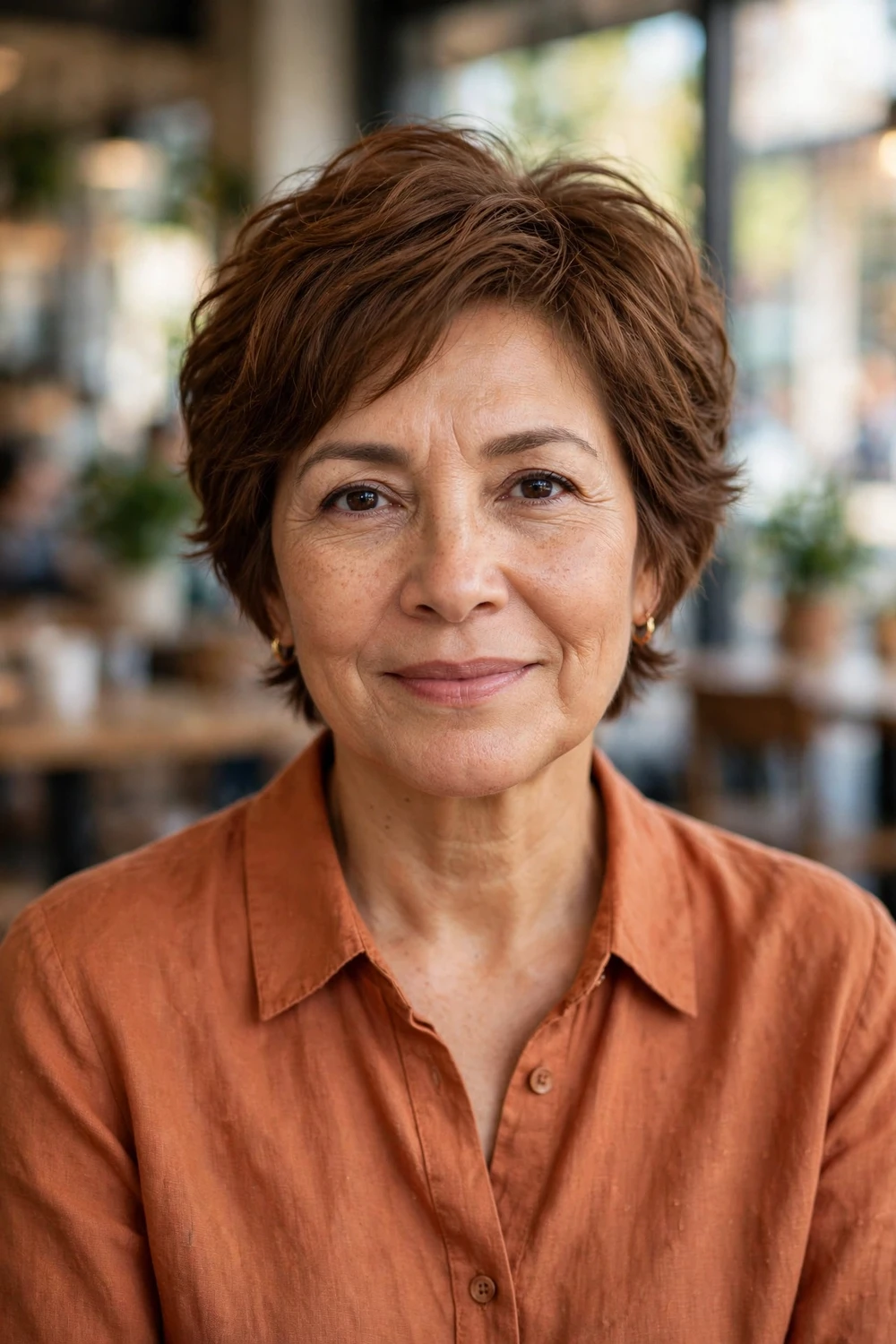
The bixie splits the difference between a pixie and a bob, ending around the nape with choppy, piecey layers. It gives thin hair more coverage than a pixie, since there is extra length to drape, while the short layers keep it from going flat like a one-length bob can.
This cut flatters most face shapes and suits women who want an edge without committing to very short hair. A dab of texturizing spray scrunched into dry hair defines the layers.
Try this: wear it with a slightly messy finish; over-styling a bixie removes the texture that makes it work.
Difficulty: Easy | Cost: trims every 6 to 8 weeks
6. French Crop with Longer Crown
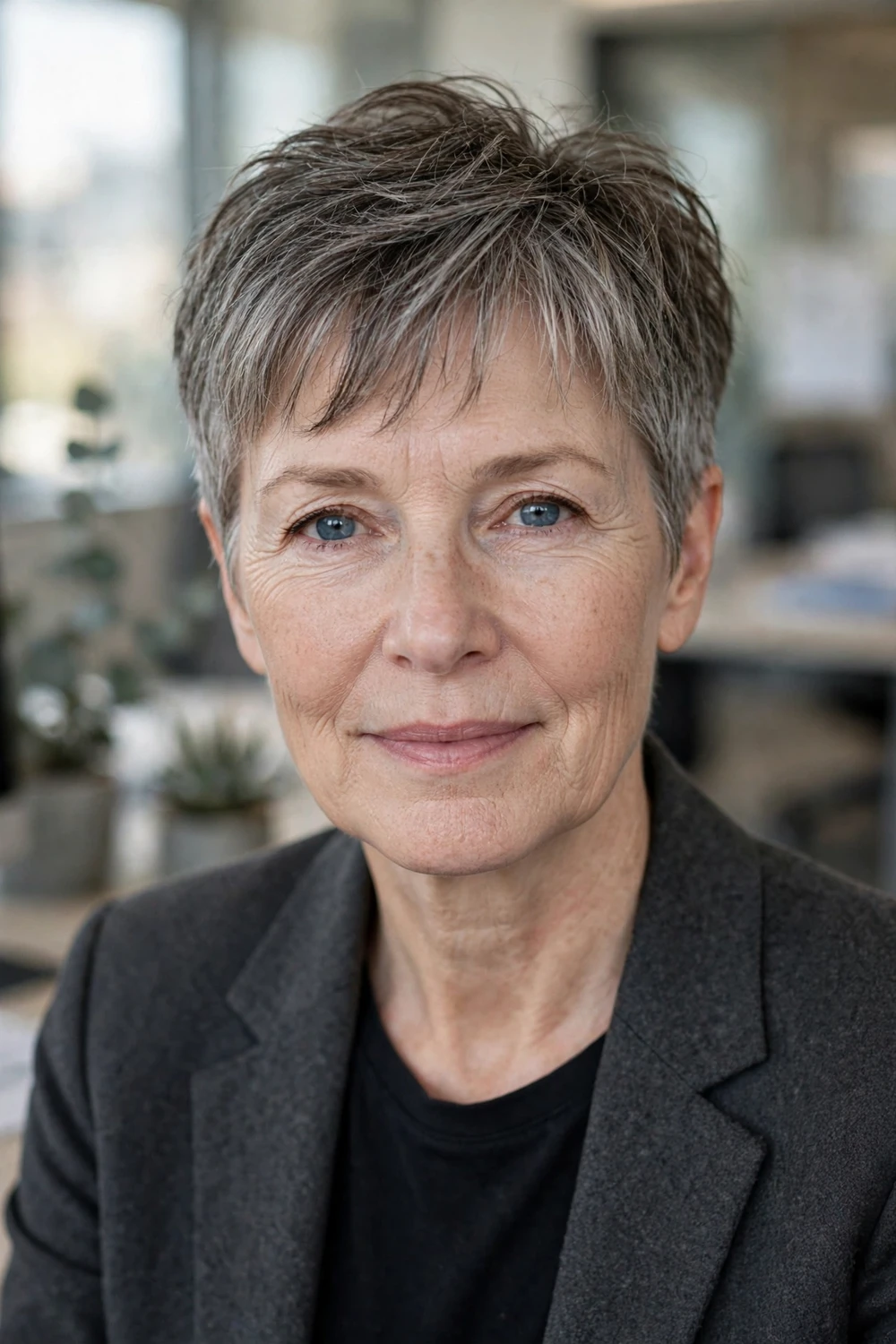
The French crop concentrates all its length on top with neat, short sides, which is ideal when thin hair thins most at the temples and crown edges. The longer top can be worn forward as a soft fringe, covering a high forehead or fine lines, or pushed back for lift.
It is one of the lowest-maintenance hairstyles for thin hair over 50: towel-dry, add a little mousse, and go. A soft gray or salt-and-pepper tone looks especially sharp with this cut.
Try this: ask for a textured fringe rather than a straight one, since blunt fringes can look sparse on fine hair.
Difficulty: Easy | Cost: trims every 5 to 7 weeks
For more short options with a fun finish, browse these cute hairstyles for thin hair.
7. Classic Blunt Bob
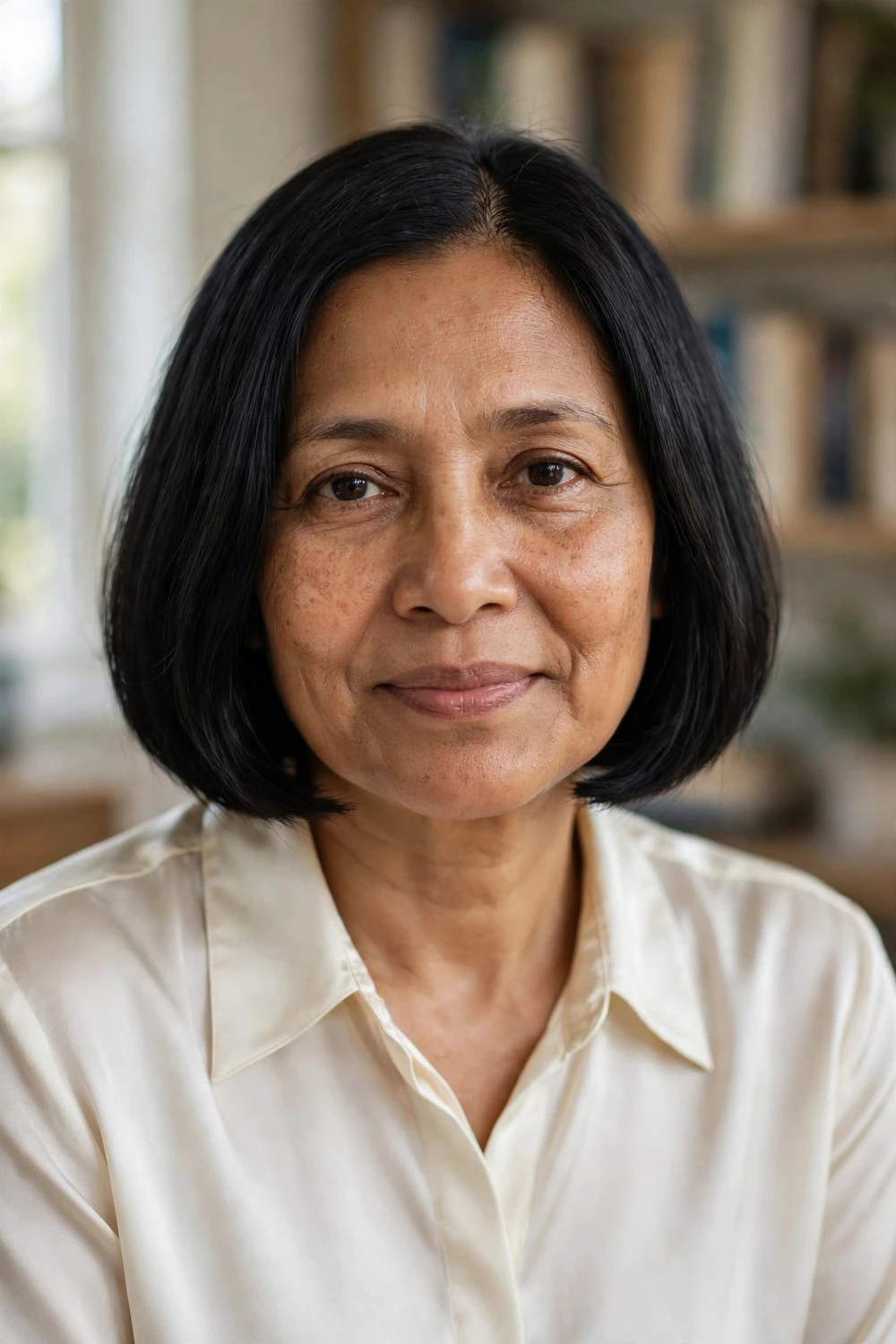
A one-length bob cut straight across at the jaw makes thin ends look as thick as possible, because nothing is thinned out. When every strand ends at the same point, the perimeter reads dense and solid, which is exactly what fine hair needs.
Keep it at chin length or slightly above for the most fullness. Sleek styling with a flat iron emphasizes the clean edge, while a slight bend through the mid-lengths softens the look for evenings.
Try this: skip thinning shears entirely on this cut; they remove the very density the blunt edge creates.
Difficulty: Easy | Cost: trims every 6 to 8 weeks to keep the edge sharp
8. Angled Bob
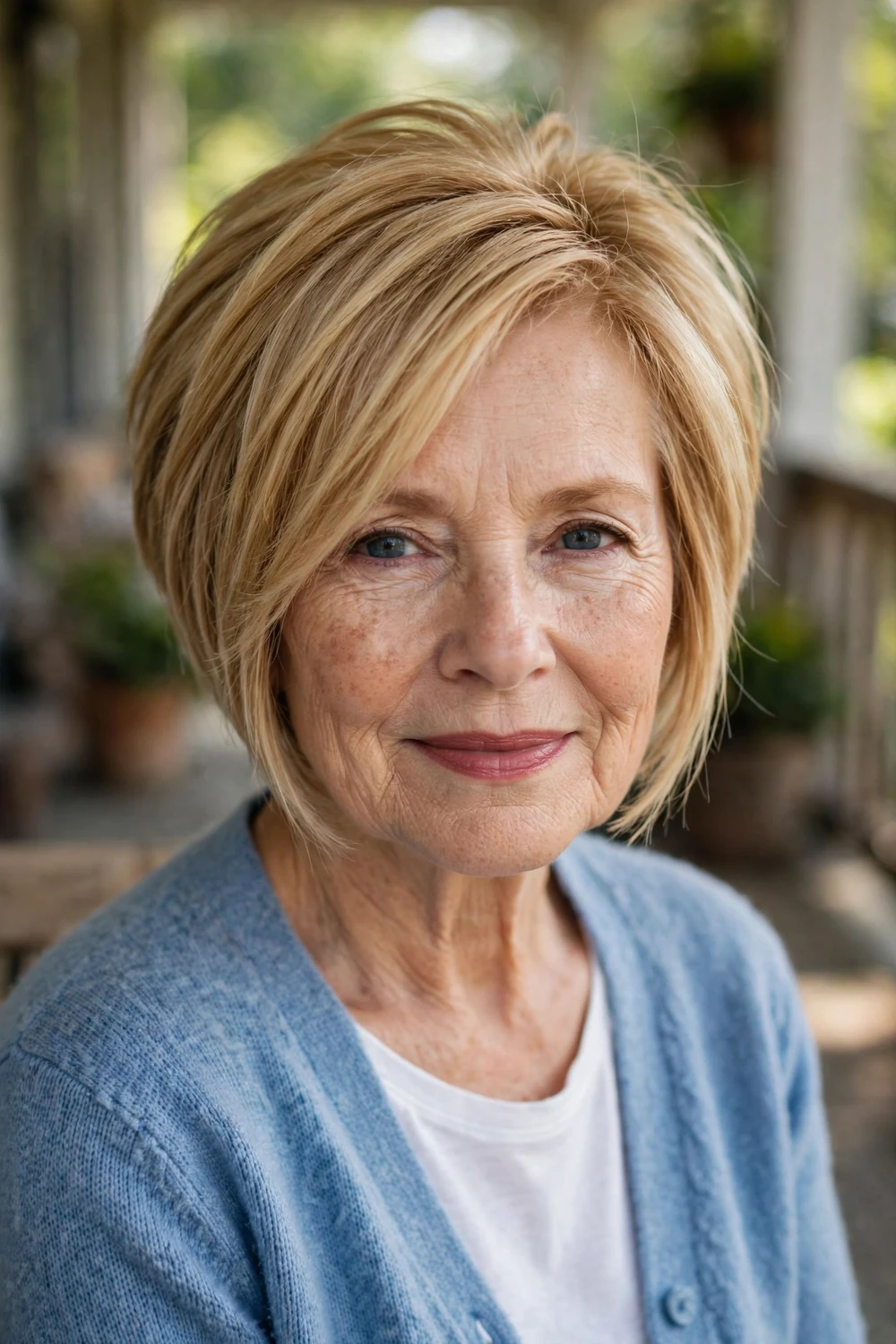
The angled bob runs shorter at the back and longer toward the front, which builds automatic volume where thin hair needs it most. The stacked layers at the nape lift the crown, while the longer front pieces frame the face and draw the eye forward.
This cut flatters round and square faces because the diagonal lines create the impression of length. Blow-dry the back with a round brush, lifting at the roots, and the shape practically styles itself.
Try this: keep the angle gradual, about two inches difference front to back, so the stack stays soft rather than severe.
Difficulty: Moderate | Cost: trims every 6 to 8 weeks
9. Asymmetrical Bob

When one side of a bob is noticeably longer than the other, the eye follows the longer sweep instead of scanning for thin spots. The asymmetry creates movement and the longer side gives fine hair extra drape, which reads as fullness.
This cut suits straight to slightly wavy textures best, since the shape needs to sit cleanly. It also pairs well with glasses, as the longer side balances frames nicely.
Try this: part on the shorter side so the long sweep crosses the forehead and adds diagonal interest.
Difficulty: Moderate | Cost: trims every 6 to 8 weeks
10. Choppy Layered Bob

Choppy layers break up a bob into pieces that move independently, and that movement is what makes thin hair look thicker. Each uneven layer catches light differently, creating shadows that suggest density. At jaw length, the cut stays bouncy without dragging roots down.
This is a forgiving cut for mornings in a hurry: finger-comb with a little texturizing spray and the layers do the work. It suits wavy and straight textures equally.
Try this: ask for internal layers, cut shorter underneath, to build volume without disturbing the outer silhouette.
Difficulty: Easy | Cost: trims every 6 to 8 weeks
If your main goal is a visibly fuller head of hair, these haircuts to make thin hair look thicker go deeper on the technique.
11. Wavy Bob with Curtain Bangs
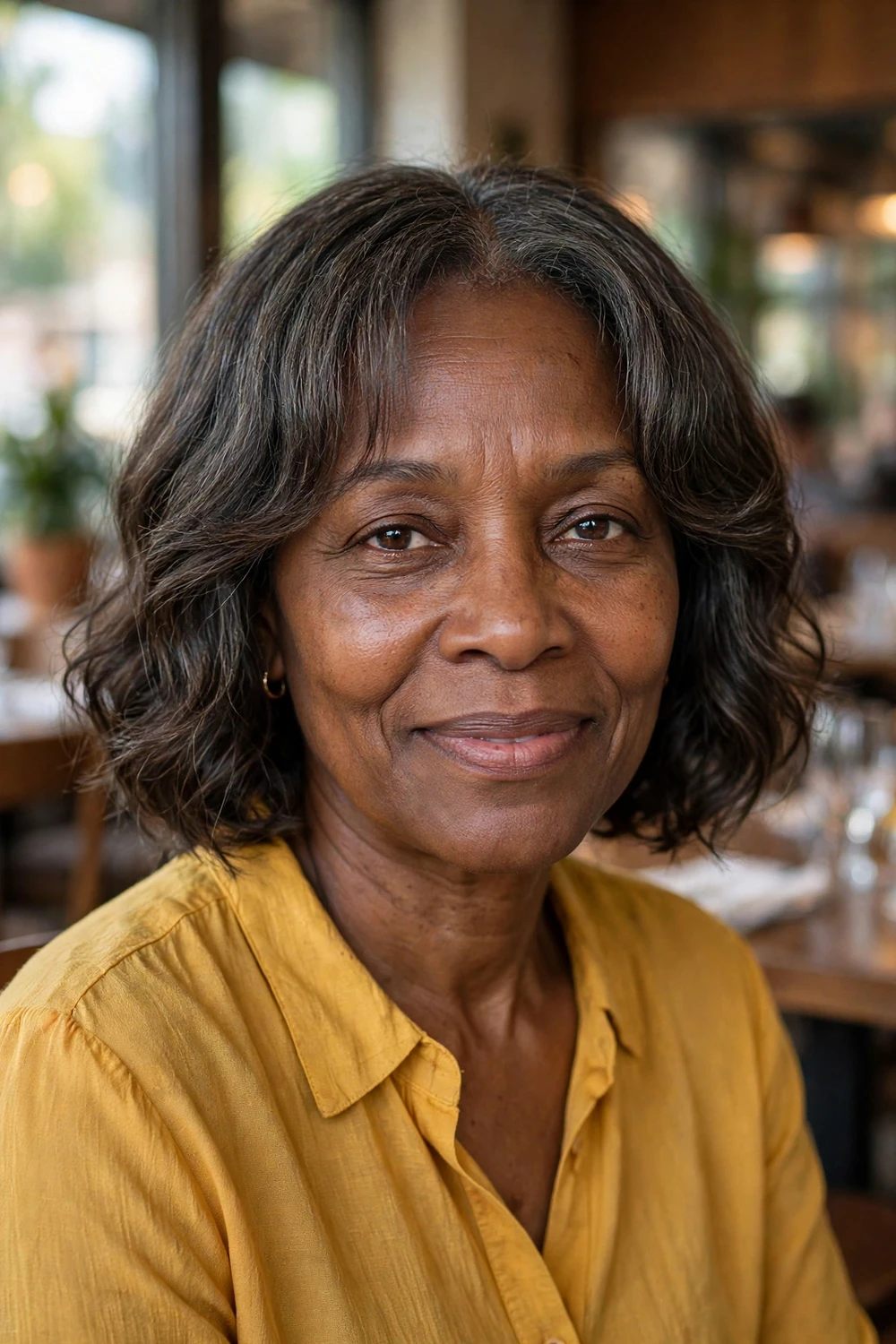
Curtain bangs parted down the middle frame the face while covering the temples, a common thin spot after 50. Paired with loose waves through a chin-length bob, they add softness around the forehead and create the impression of more hair across the front hairline.
Style the bangs with a round brush, rolling them away from the face, and scrunch the rest with mousse for loose waves. The cut grows out gracefully since the bangs blend into the length.
Try this: keep curtain bangs at cheekbone length or longer so they do not shrink into a full fringe, which can look sparse.
Difficulty: Moderate | Cost: bang trims every 4 to 6 weeks, full cut every 8
12. Combed-Back Bob
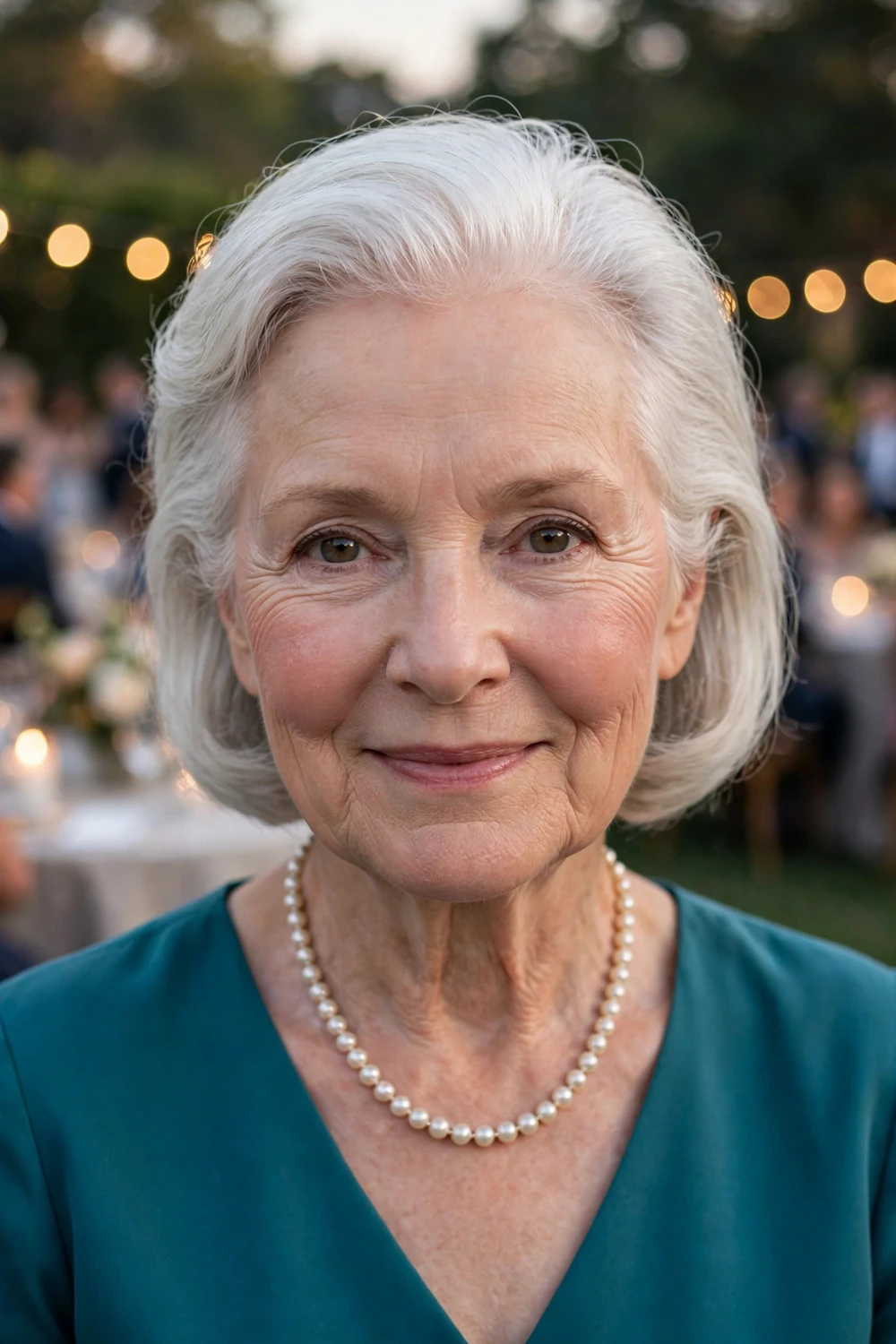
Combing a neck-length bob straight back off the face is a simple evening trick for thin hair. Backcombing the crown first, then smoothing the top layer over it, creates height that photographs well and keeps attention on the face rather than the hairline.
White and silver hair looks especially striking worn this way, since the smooth shape shows off the color. A light-hold hairspray keeps the sweep in place without stiffness.
Try this: backcomb only the under-section at the crown and leave the sides smooth for a polished finish.
Difficulty: Easy | Cost: trims every 6 to 8 weeks
13. Layered Lob

The layered lob, falling just past the shoulders, is the longest cut that still works reliably for thin hair. Long, blended layers keep weight off the roots while preserving enough length to feel feminine and versatile. It is the go-to middle ground for women who are not ready to go short.
Blow-dry with a large round brush for bend through the ends, or wear it air-dried with a little salt spray for texture. The cut suits every face shape.
Try this: keep the layers long, starting no higher than the chin, so the ends stay dense.
Difficulty: Easy | Cost: trims every 8 to 10 weeks
14. Feathered Shoulder-Length Cut

Feathering flips the ends outward and inward in soft wisps, which makes thin hair look airy rather than stringy. On a shoulder-length cut, the feathered layers start around the cheekbones and continue down, giving fine strands a light, floating movement.
This retro-inspired cut is back because it photographs so well: every feathered piece catches light separately. A quick pass with a flat iron, flipping the ends out, is all the daily styling it needs.
Try this: feather only the outer inch of each section; over-feathering thins out the ends you are trying to keep full.
Difficulty: Easy | Cost: trims every 8 weeks
Prefer wash-and-go styles? These easy hairstyles for thin hair keep daily effort low.
15. Shag with Curtain Bangs

The modern shag concentrates short layers at the crown, which is exactly where thin hair needs lift, and lets the rest fall to a medium length. Curtain bangs blend into the face-framing layers, so the cut looks intentional even when it is just air-dried.
This is one of the best hairstyles for thin hair over 50 if you want to keep length without a flat look. Scrunch in mousse and let it dry naturally for a lived-in finish.
Try this: ask for the shortest crown layer to sit no higher than the cheekbones, keeping the cut wearable rather than extreme.
Difficulty: Easy | Cost: trims every 8 to 10 weeks
16. Shoulder-Length Cut with Face-Framing Layers

Face-framing layers that start at the cheekbones and sweep down give thin, shoulder-length hair a lift around the features. They draw attention to the eyes and cheekbones while the rest of the hair stays one length, which keeps the ends looking full.
This cut works with a center or side part and needs almost no styling: the layers fall into place on their own. It is a solid choice if you wear your hair down most days.
Try this: blow-dry the face-framing pieces with a round brush, rolling them away from the face for a soft, open look.
Difficulty: Easy | Cost: trims every 8 to 10 weeks
17. Long Layers with Volume
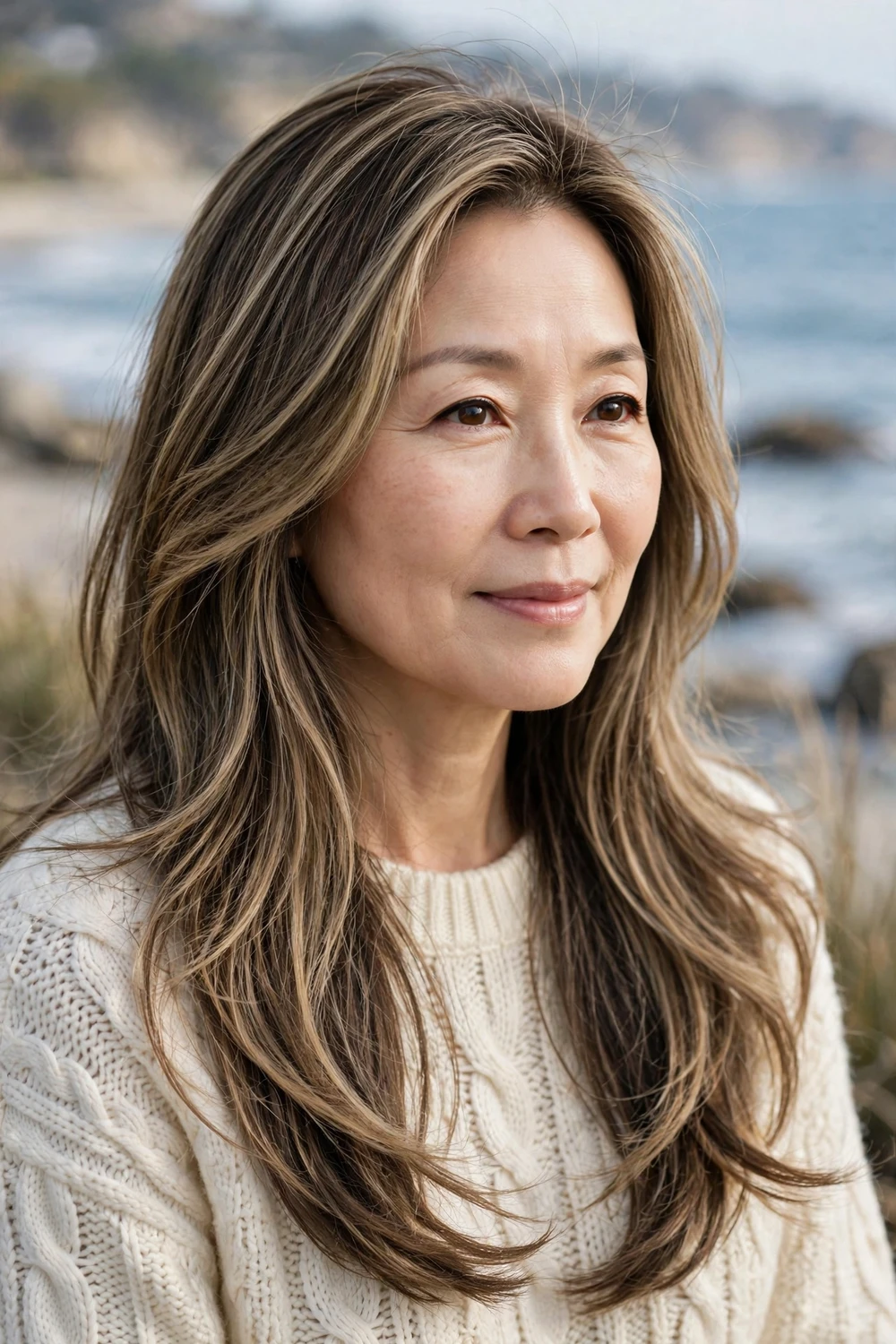
You do not have to give up long hair after 50, but one-length long hair can hang flat when strands are fine. Long, blended layers with a bouncy blowout solve this: the layers remove weight at the roots, and the round-brush volume through the ends creates the look of density.
Keep the longest layer no more than a few inches past the shoulders for the best balance of length and body. A volumizing mousse at the roots before blow-drying makes the lift last.
Try this: blow-dry your hair upside down for the first few minutes to set root lift before shaping the ends.
Difficulty: Moderate | Cost: trims every 10 to 12 weeks; blowouts add time
18. Side-Parted Long Layers with Face Frame
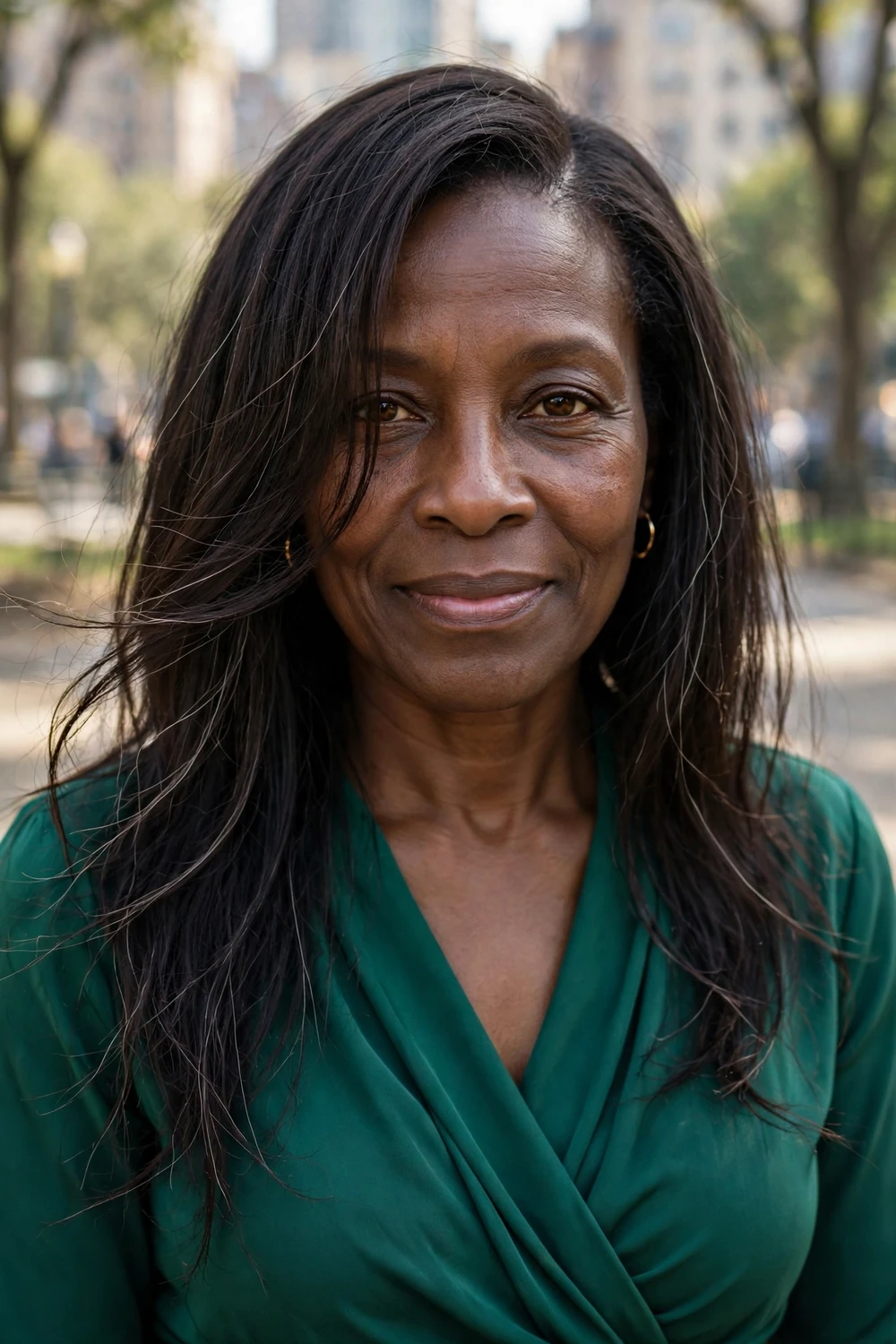
A deep side part on long, layered hair moves coverage over the part line, the first place thinning usually shows. The face-framing layers then sweep across one cheek, adding softness and the impression of more hair around the face.
This style suits straight to wavy textures and looks polished with minimal effort. Sleep on a silk pillowcase to keep the part from shifting overnight and preserve the volume.
Try this: refresh the roots on day two with dry shampoo at the part line; it absorbs oil and adds grip for the sweep.
Difficulty: Easy | Cost: trims every 10 to 12 weeks
Women in their 60s dealing with the same texture can compare notes in these hairstyles for women over 60 with thin hair.
19. Short Wavy Perm
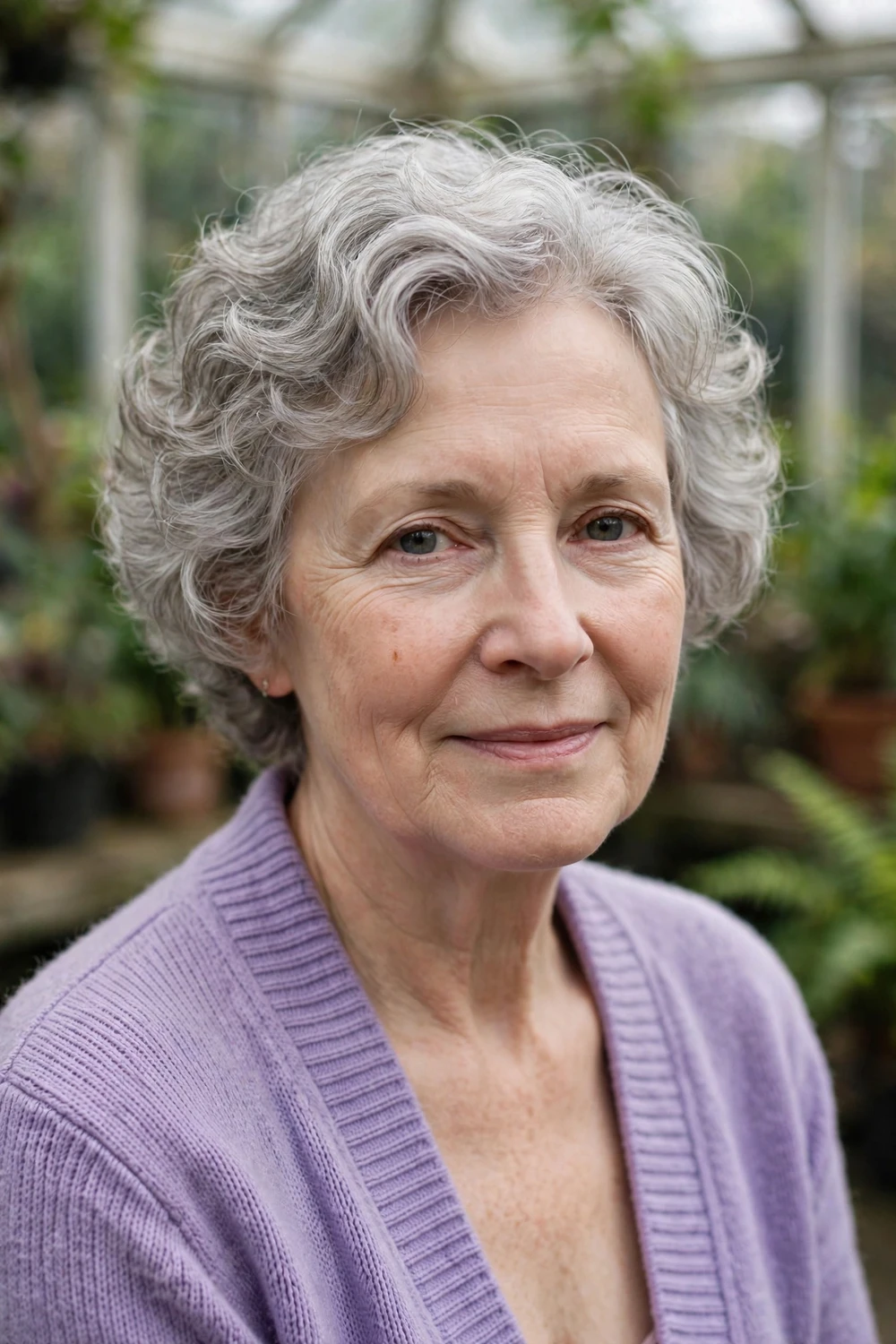
A soft perm adds lasting wave to straight, thin hair, and wave is the closest thing to built-in volume. Kept short, the curls stack through the crown and sides, filling out the silhouette for months with very little daily styling.
Modern perms are gentler than the tight curls of decades past; ask for large rods and a loose wave pattern. A weekly deep-conditioning mask keeps permed hair from drying out.
Try this: get a trim every 6 to 8 weeks to keep the shape neat as the perm grows out, rather than re-perming on a fixed schedule.
Difficulty: Easy day-to-day | Cost: perm every 4 to 6 months plus regular trims
Which Length Fits Your Routine?
If the list feels long, this comparison narrows it down by upkeep and the kind of fullness each length gives.
| Length | Example Styles | Fullness Payoff | Upkeep |
|---|---|---|---|
| Pixie / crop | Choppy pixie, side-parted pixie, French crop | Maximum lift; layers stack at the crown | Trims every 5 to 7 weeks |
| Bob | Blunt bob, angled bob, choppy layered bob | Dense-looking ends; easy to style | Trims every 6 to 8 weeks |
| Medium | Layered lob, shag, feathered cut | Keeps length with movement and body | Trims every 8 to 10 weeks |
| Long | Long layers with blowout volume | Soft fullness; needs styling effort | Trims every 10 to 12 weeks |
How to Choose the Right Cut
Start with your part line. If your scalp shows through at the crown, favor cuts with a deep side part or layered tops that redistribute coverage, like the side-parted pixie or the bixie.
Next, be honest about styling time. Pixies and crops need frequent trims but almost no daily work, while long layers need regular blow-drying to keep their body. Pick the upkeep you will actually do.
Finally, protect the ends. Thin hair over 50 breaks more easily, so avoid heavy bleaching in one session, tight elastic bands worn daily, and brushing wet hair aggressively. A cut that looks full on day one stays full when the ends stay intact.
Frequently Asked Questions
Should women over 50 with thin hair cut it short?
Not necessarily. Short cuts like pixies and bobs create the most visible fullness, but medium and long styles with the right layers can look just as thick. Choose based on your face shape, styling routine, and the length you enjoy wearing.
What haircut makes thin hair look thicker after 50?
Cuts with short, choppy layers at the crown build the most lift, while blunt perimeters make ends look dense. The choppy tousled pixie, angled bob, and layered lob are reliable choices because they combine both ideas.
Are bangs a good idea for thin hair over 50?
Yes, when they are the right type. Curtain bangs and soft side-swept bangs cover sparse temples and add fullness around the face. Avoid heavy, straight-across fringes, which can look thin on fine hair.
How often should thin hair be trimmed after 50?
Every 6 to 8 weeks for short cuts, since their shape depends on crisp layers, and every 8 to 12 weeks for medium and long styles. Regular trims remove split ends that make thin hair look wispy and weak.
Can long hair still look good on thin hair over 50?
Yes. Keep it around shoulder length or just past, add long blended layers, and style with root volume from mousse or a round-brush blowout. Heavy one-length hair past the shoulders tends to hang flat, so layers are the key.
Final Thoughts
The best hairstyle for thin hair over 50 is the one that fits your hair, your face, and your mornings. Whether you go for a choppy pixie or keep your length with smart layers, the fullness comes from the cut doing the work, not from fighting your texture.
Save a few favorites from this list and bring them to your next salon visit. A good stylist can adapt any of these ideas to your exact hair.

