


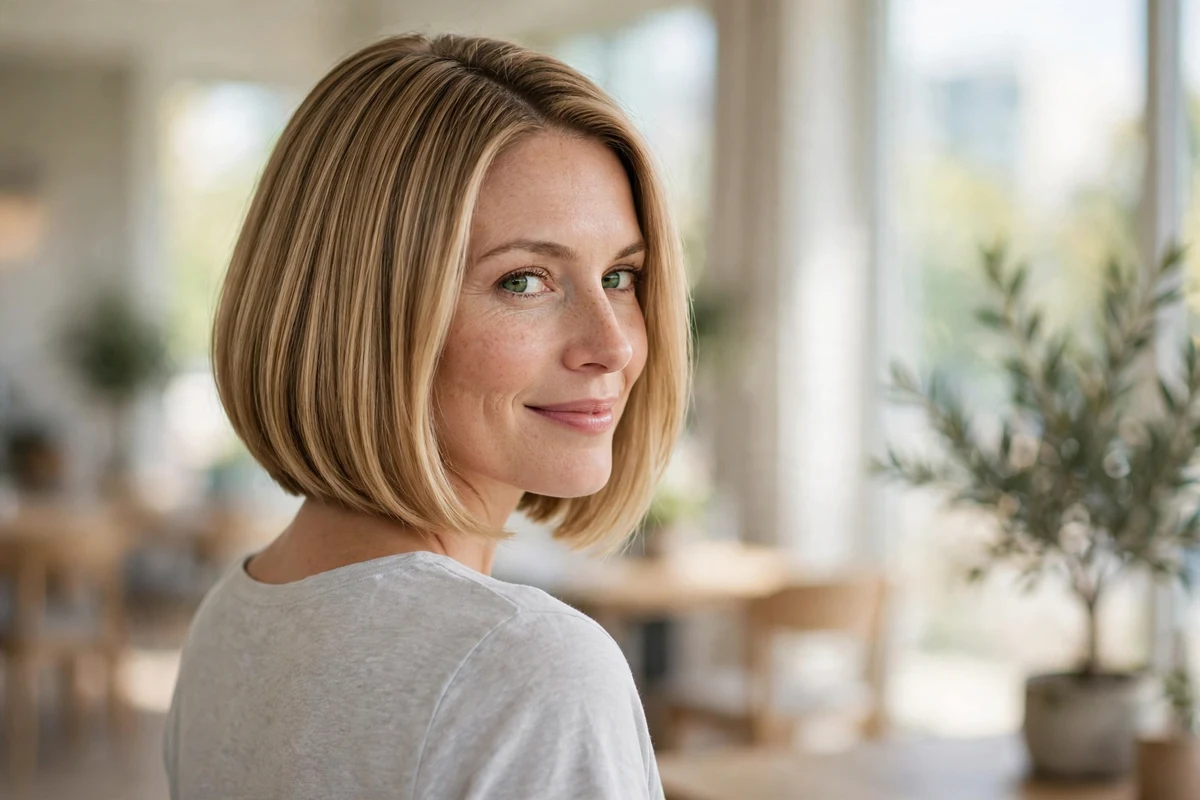
An angled bob keeps one thing constant: the back sits shorter than the front. That forward slope sharpens the jawline, adds movement, and works on straight, wavy, and curly hair alike.
This guide covers 23 angled bob hairstyles, from the classic A-line to steep stacked versions and longer lobs. You’ll find styling tips, color pairings, and honest guidance on choosing the right angle. I’ve spent years studying what makes a cut flatter different faces, and the angle is one of the biggest factors.
Quick answer: This guide covers the best styles, who they suit, and how to get them right.
Quick Takeaways
- An angled bob has a shorter back and longer front pieces, usually falling between jaw-length and the collarbone.
- A gentle slope suits most face shapes; steep angles work best on oval and heart-shaped faces.
- Stacked layers in the back add volume to fine or thin hair.
- Heat protectant is a must whenever you flat iron or curl the front sections.
- The cut needs a trim every 6 to 8 weeks to keep the angle sharp.
What Makes an Angled Bob
An angled bob is defined by graduation: the haircut rises toward the nape and drops toward the front. The back may be cut close with stacked layers, while the front pieces frame the chin, jaw, or shoulders. The angle can be subtle, just a slight forward tilt, or dramatic, with several inches of difference between back and front.
This silhouette flatters because it draws the eye downward and inward. The longer front pieces narrow a round face, while the stacked back lifts fine hair. It also grows out gracefully, since the angle softens into a lob before it loses its shape. If your hair is fine and you are past 50, angled bob hairstyles for thin hair over 50 rounds up versions tuned to mature, thinning hair.
Angled Bob Variations Explained
The A-line bob is the gentlest version: a smooth, even slope from back to front with no stacked layers. The inverted bob uses heavy graduation and stacking at the crown for serious volume. An asymmetrical angled bob makes one side noticeably longer than the other.
An angled lob takes the same idea past the chin to collarbone length. Blunt, choppy, layered, and textured finishes all change the mood of the cut without changing the angle itself. Color placement like balayage or face-framing highlights can make the slope even more visible.
1. Classic Angled A-Line Bob
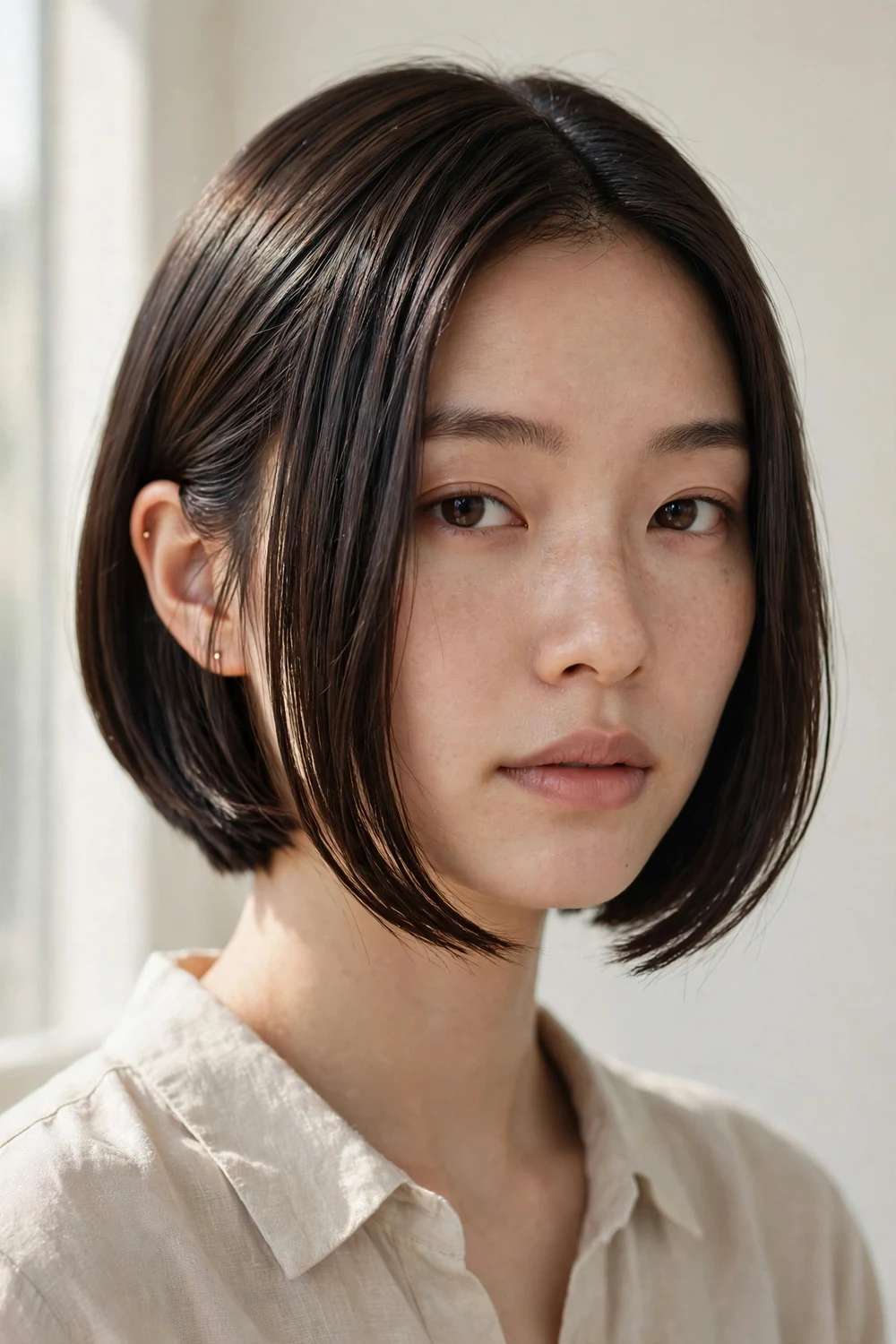
What makes the classic version the most requested? It keeps the slope clean and even, with the back sitting just at the nape and the front pieces grazing the chin. There are no stacked layers here, so the cut falls smooth and reads polished from every direction. It suits straight to slightly wavy hair best, and it works on fine, medium, and thick densities. The shape looks sharp air-dried or finished with a flat iron. Ask your stylist to keep the perimeter strong so the angle stays visible as it grows.
Try this: Flat iron the front sections with a slight inward bend, then mist a light-hold hairspray so the angle holds through the day.
2. Steeply Angled Bob
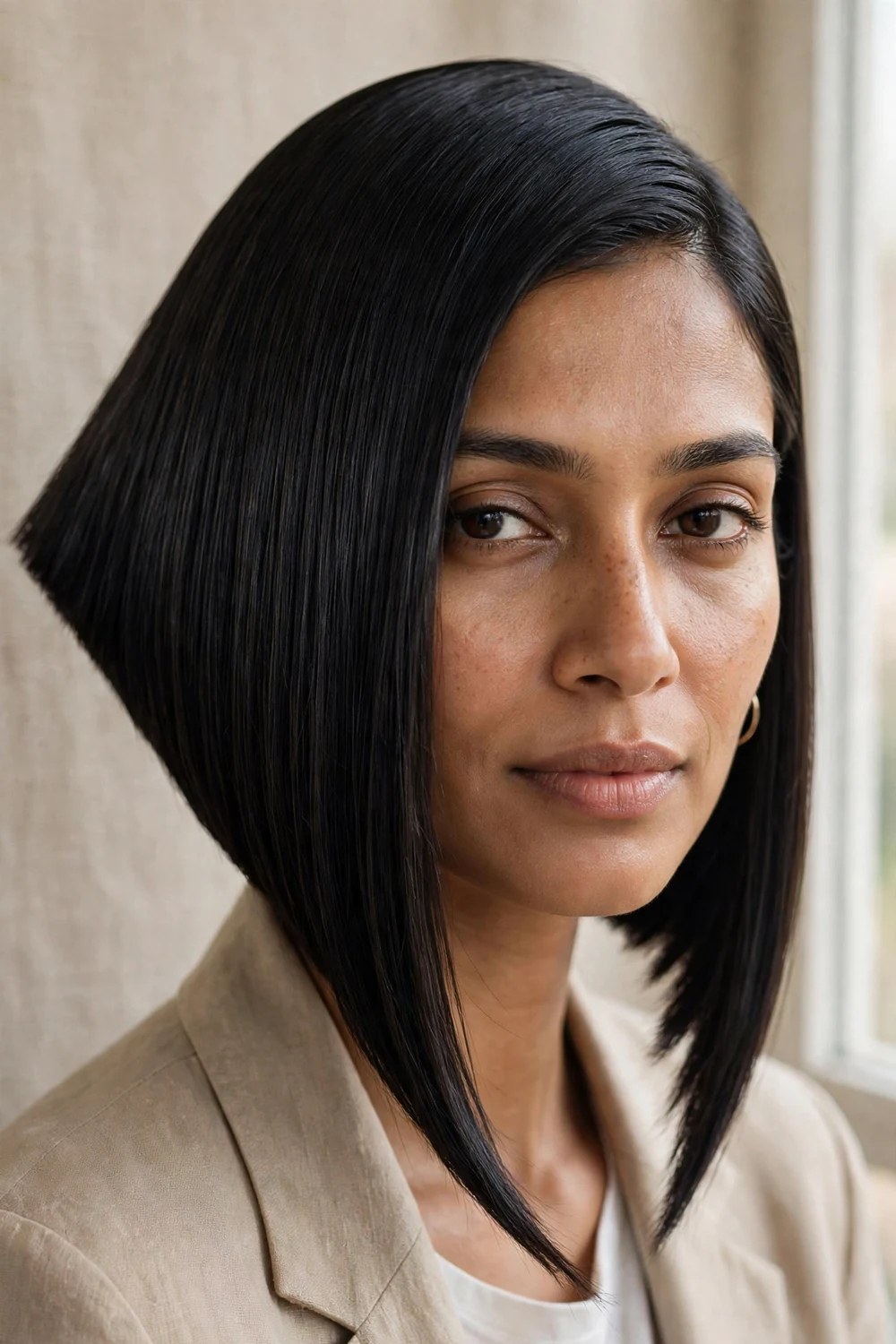
Go bold with an exaggerated slope if your face can carry it. This cut keeps the back cropped high at the nape while the front pieces drop several inches longer, sometimes reaching the collarbone. The drama comes from contrast, so the hair needs to be smooth for the angle to read clearly. It suits oval and heart-shaped faces especially well. Thick hair holds the shape best, since fine hair can look stringy at the front. Keep the ends blunt for maximum impact.
Try this: Apply a smoothing serum before blow-drying, and use a paddle brush pulled forward to emphasize the slope.
3. Rounded Angled Bob
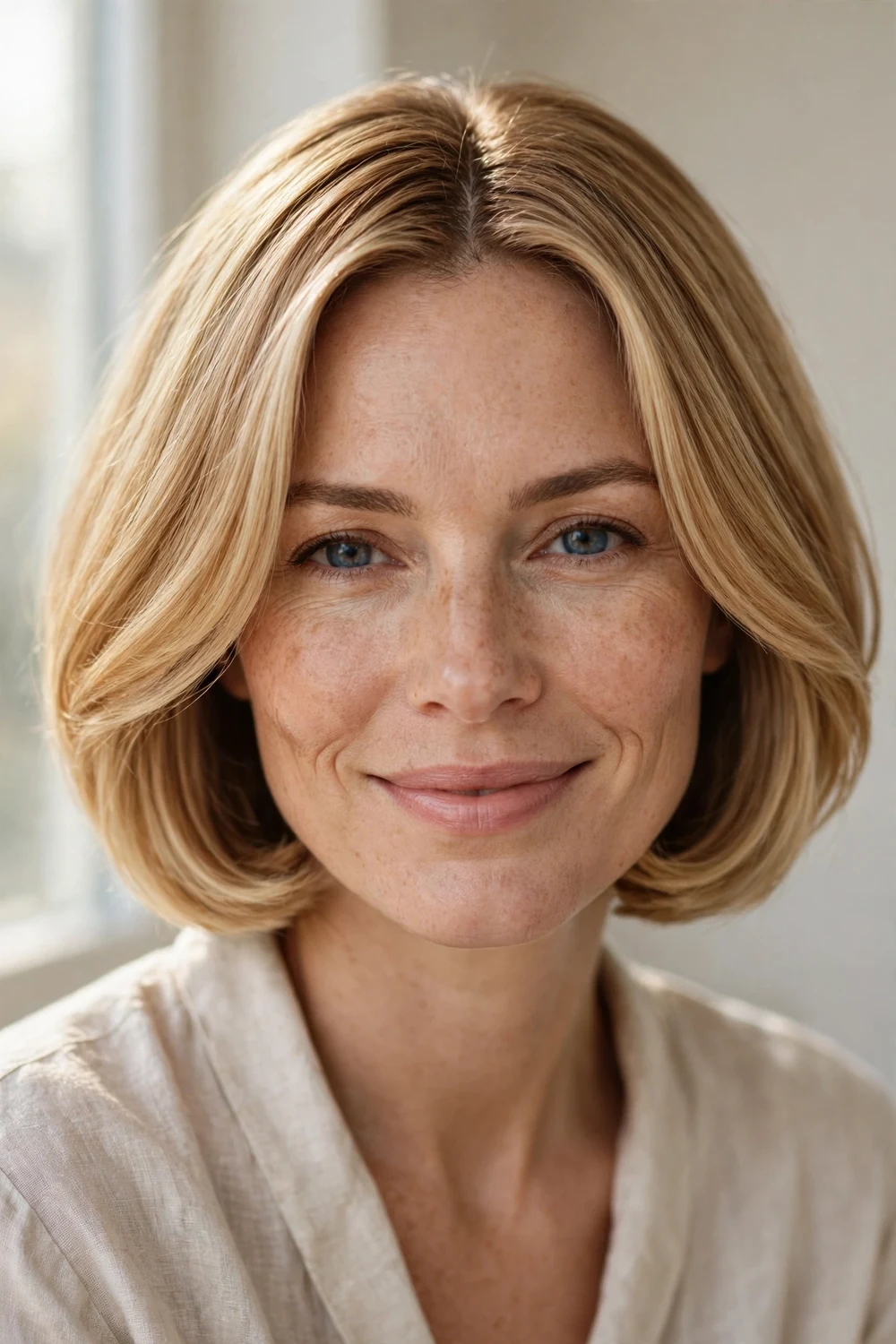
Soft curves and a forward angle can coexist. This version keeps the classic slope but rounds the perimeter instead of cutting it blunt, so the shape feels gentler around the face. It suits square and angular jawlines because the curve balances sharp features. Medium-density hair works well; the rounded edge adds the look of fullness. Blow-dry with a round brush to encourage the inward curve. The result reads feminine without losing the edge that makes an angled bob interesting.
Try this: Use a large round brush on the front sections and roll the ends under for a soft, curved finish.
4. Inverted Bob
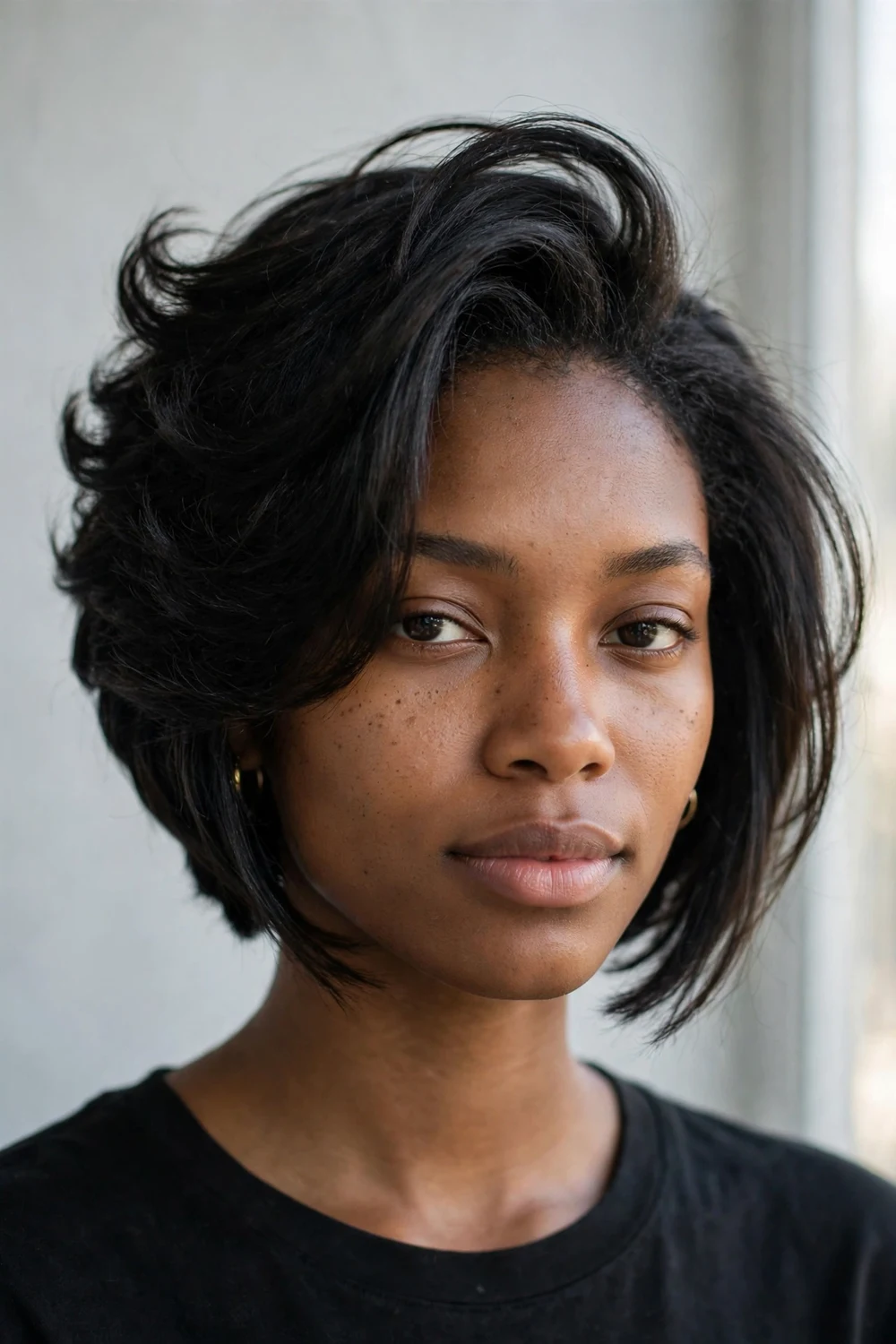
The inverted bob builds the angle with stacked layers at the crown rather than a simple slope. Short, graduated layers at the back create lift and volume, while the front stays long and sleek. This is the go-to version for fine or thin hair that needs body at the back. It also shortens styling time because the shape is built into the cut. Ask for true graduation, not just layering, so the stack sits correctly. The silhouette stays rounded and full from the side.
Try this: Rough-dry the crown with your head flipped forward, then smooth the front pieces with a flat brush for contrast.
5. Asymmetrical Angled Bob
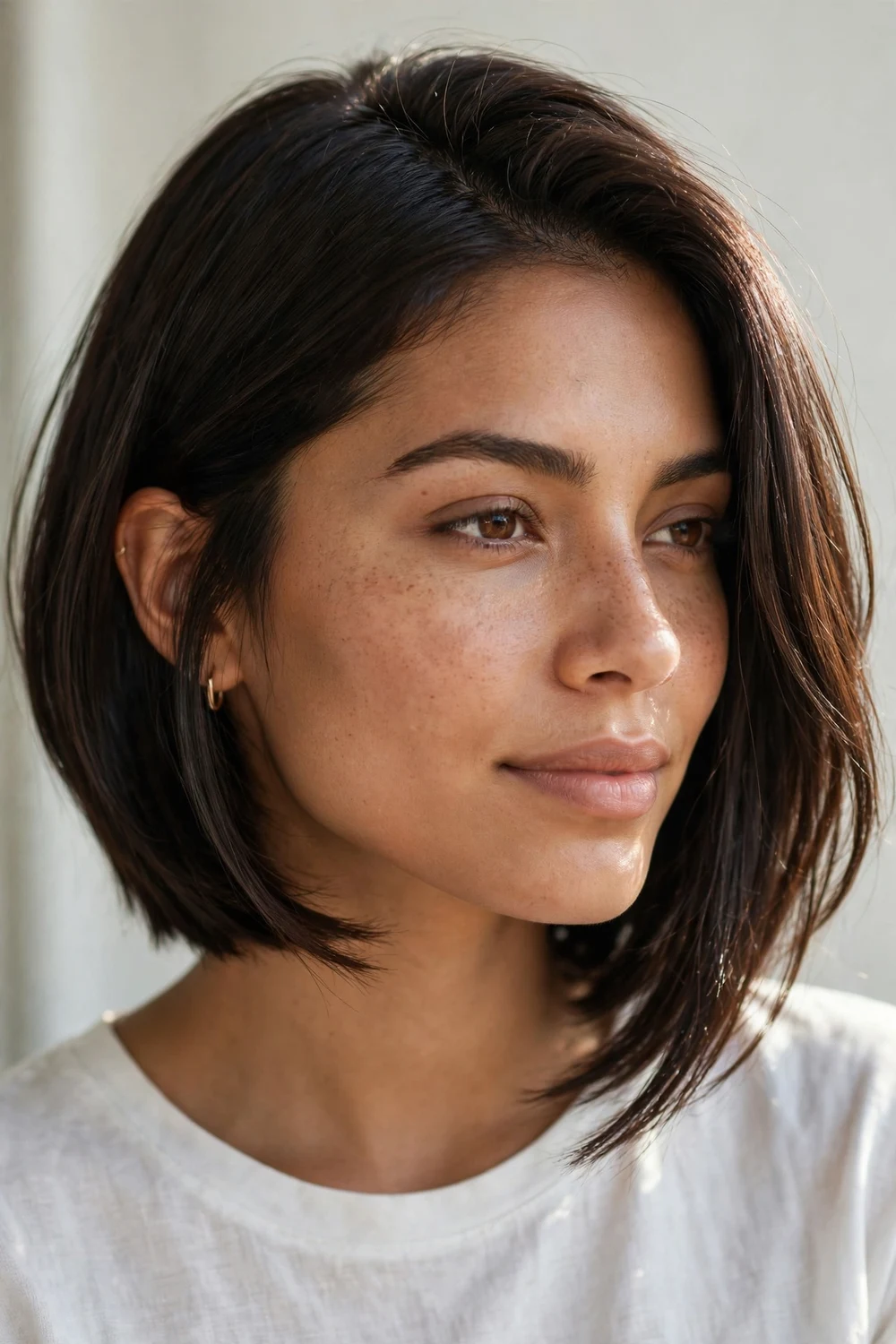
Why keep both sides even when you can add edge? This cut takes the angled shape further by making one side visibly longer than the other, often by two to three inches. The asymmetry draws attention to the cheekbones and gives the cut a fashion-forward feel. It works best on straight hair, since waves can hide the uneven lengths. Wear it with a deep side part to show off the difference. Keep the shorter side tucked behind the ear for an even bolder look.
If you want to explore the full range of uneven cuts beyond the angled version, asymmetrical bob hairstyles covers 30 ideas from subtle one-length versions to extreme cuts.
Try this: Straighten thoroughly with heat protectant, since any frizz will blur the deliberate asymmetry.
6. Angled Bob with Side Bangs
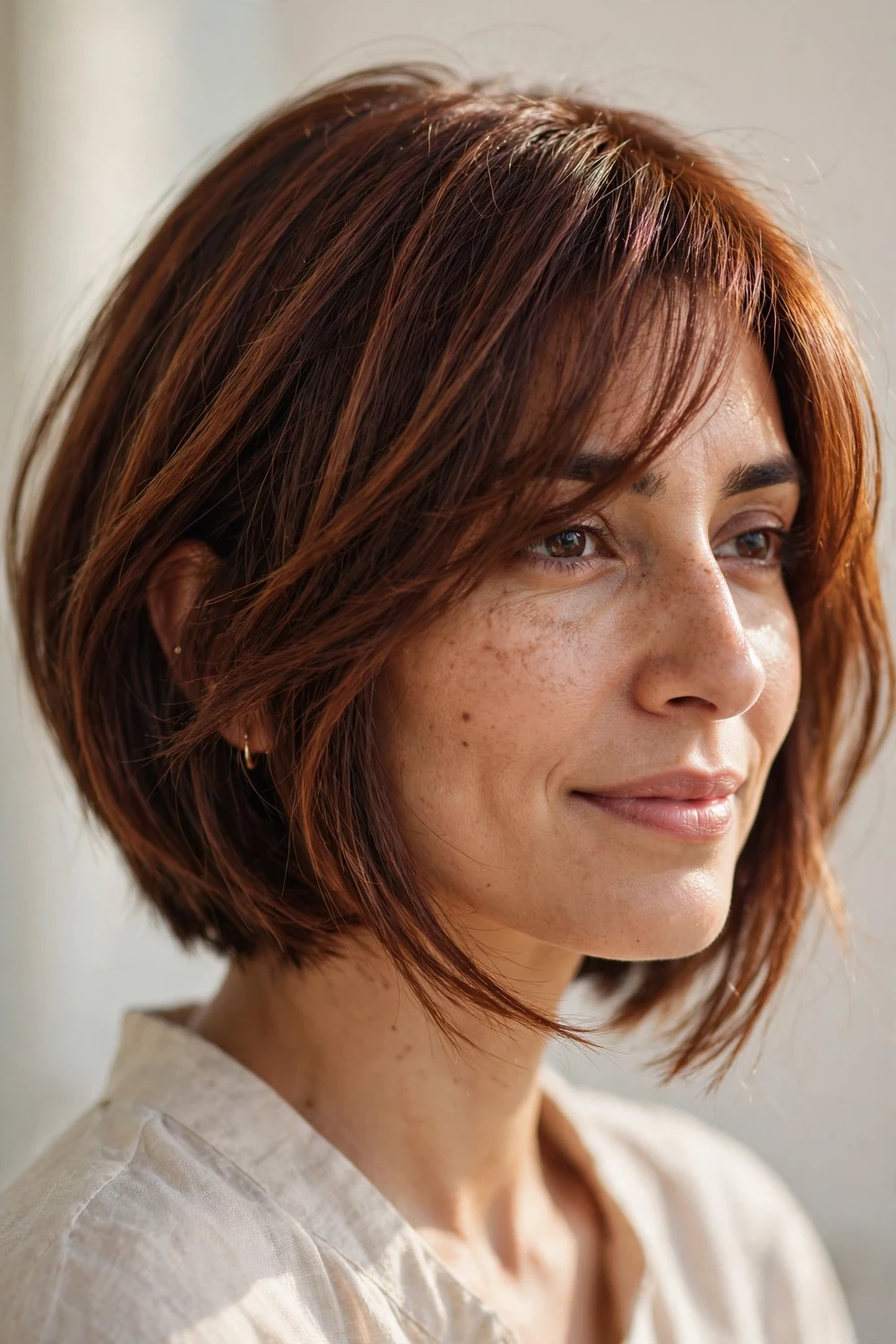
Side bangs and an angled bob are a natural pairing. The sweep of the fringe follows the same forward direction as the cut, so the whole style moves in one line. Long side bangs soften a high forehead and balance a steep angle nicely. They work on most face shapes and can be adjusted as they grow out. Keep the bangs long enough to tuck behind the ear so they stay versatile. This combination looks good with both sleek and slightly tousled finishes.
Try this: Blow-dry the bangs across the forehead with a small round brush, sweeping them in the direction of the angle.
7. Angled Bob with Stacked Back
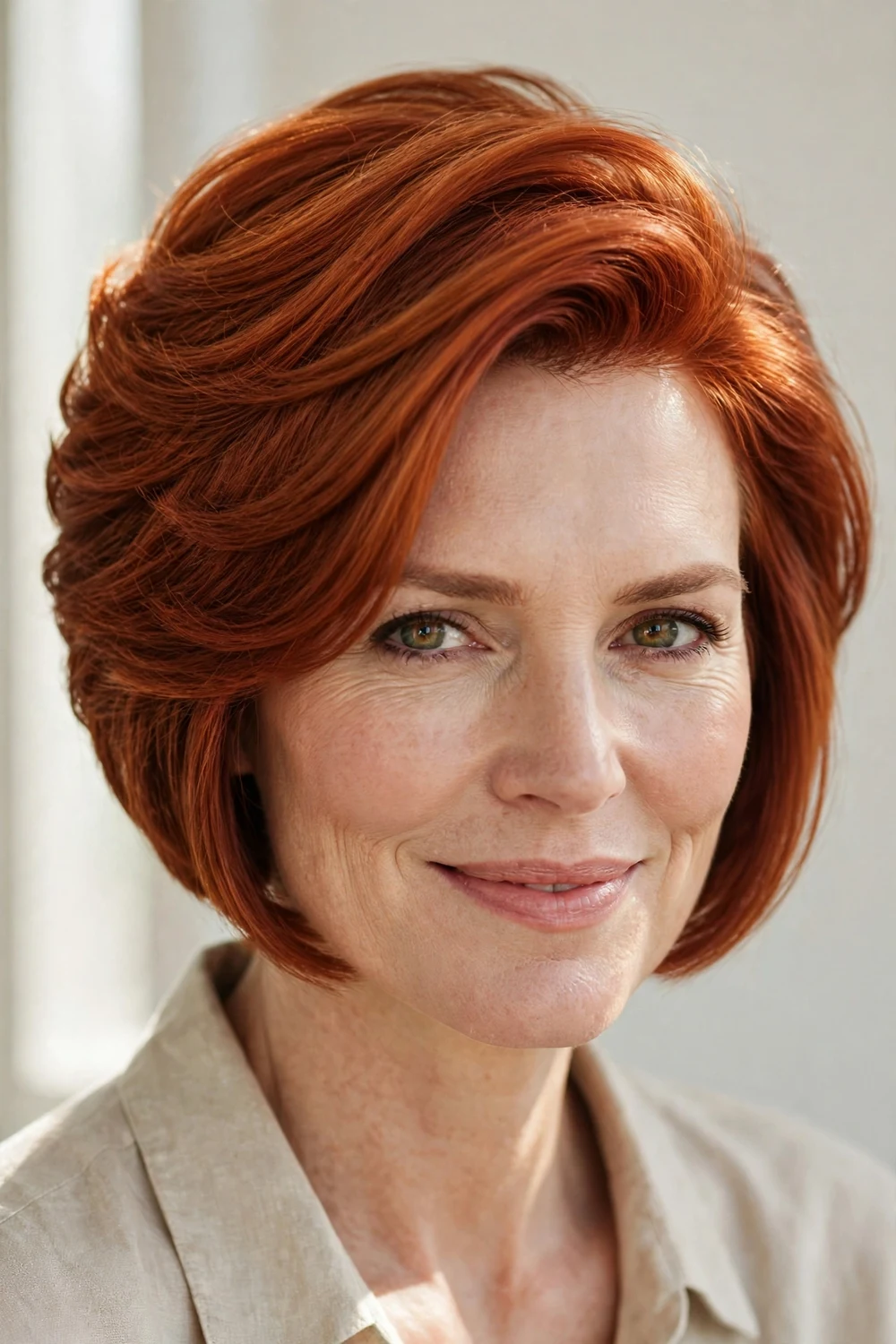
Stacked layers at the nape turn up the volume where hair tends to fall flat. The back is cut in short, graduated layers that pile up for fullness, while the front drops long past the chin. This is the best angled bob for thin or fine hair that needs lift. It also suits petite frames, since the shorter back keeps the cut from overwhelming small features. The shape looks full from behind and sleek from the front, which is a combination most cuts can’t offer.
Try this: Add a volumizing mousse at the roots of the back section before blow-drying for extra lift.
8. Choppy Angled Bob
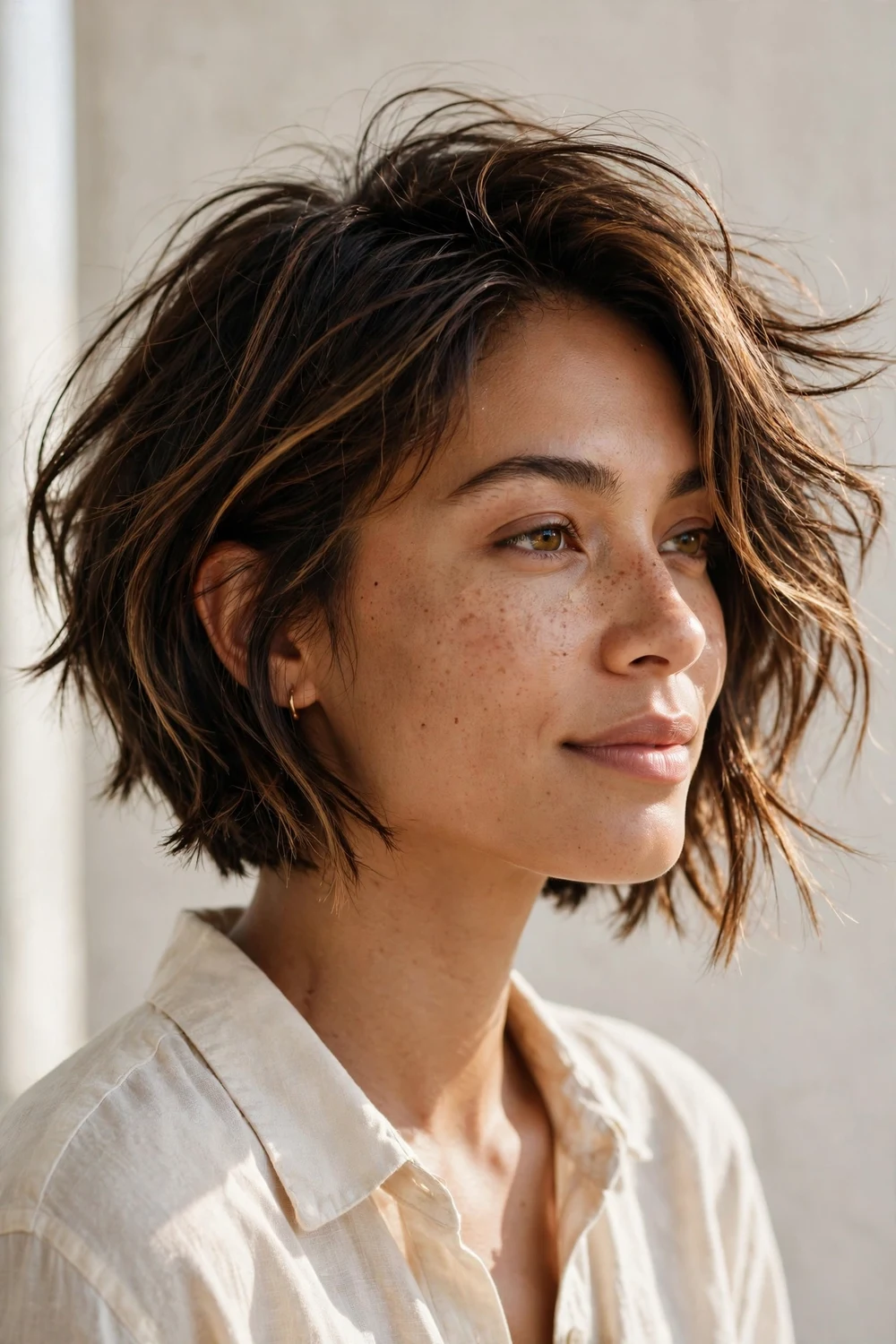
For a lived-in feel, choppy layers break up the clean lines of the angle. The back-to-front slope stays, but the ends are point-cut and textured so the cut moves freely. This version suits thick hair that needs weight removed, and it hides cowlicks better than a blunt cut. It looks best with minimal styling: air-dry with a little texture cream and let the pieces fall. The angle keeps it from reading messy, so you get texture with structure underneath.
Try this: Work a pea-sized amount of texture paste through the ends, twisting a few pieces for definition.
9. Wavy Angled Bob with Balayage
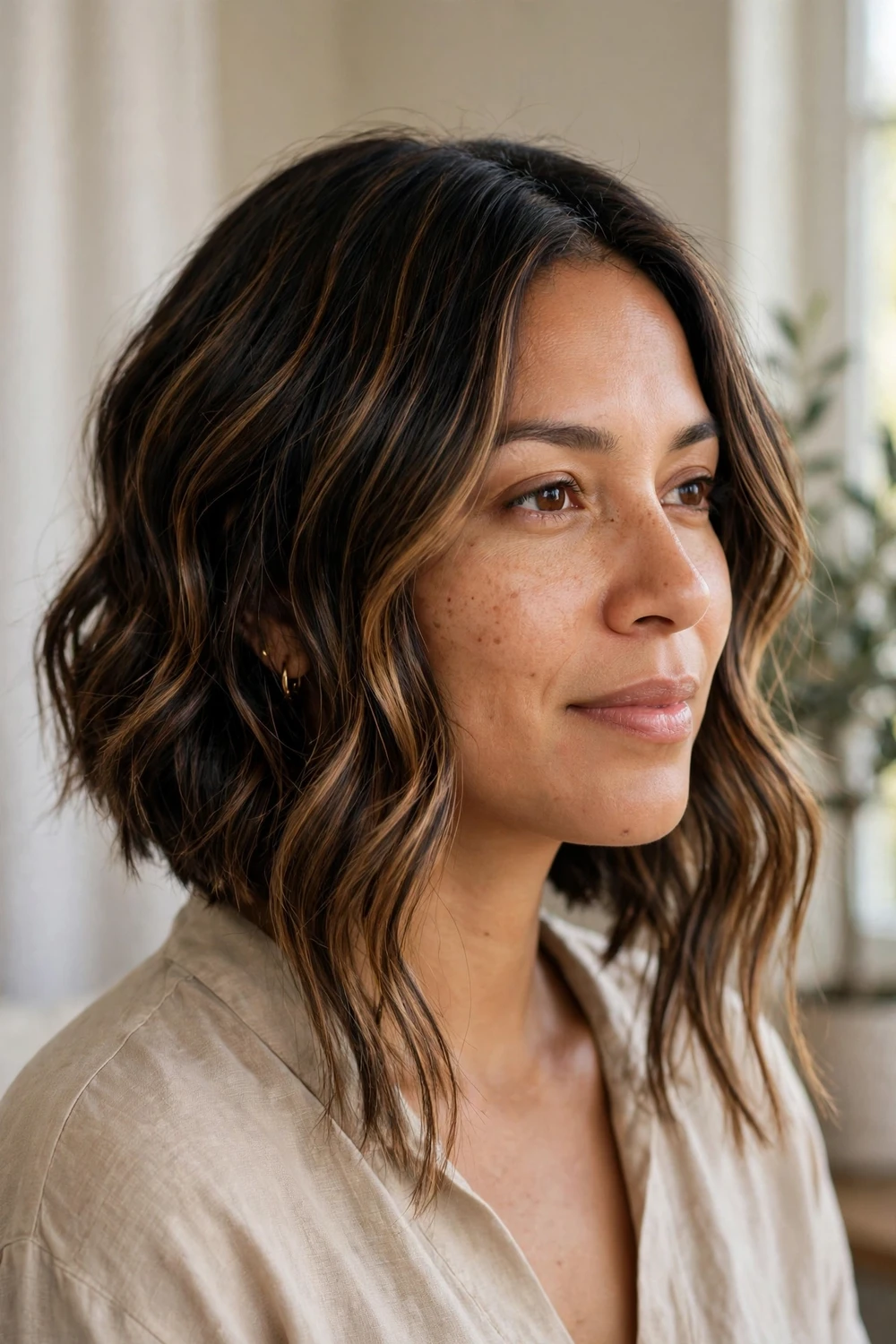
Balayage was made for this cut. Hand-painted lighter pieces through the front make the forward slope impossible to miss, while waves add width and softness. The combination works on medium to thick hair with natural wave or a curling wand finish. Ask your colorist to concentrate the lightness on the front pieces and mid-lengths, keeping the roots deeper for contrast. The grow-out is forgiving, which makes this a lower-maintenance color choice.
Try this: Curl the front sections away from the face with a one-inch wand, then finger-comb to keep the waves loose.
10. Layered and Highlighted Angled Bob
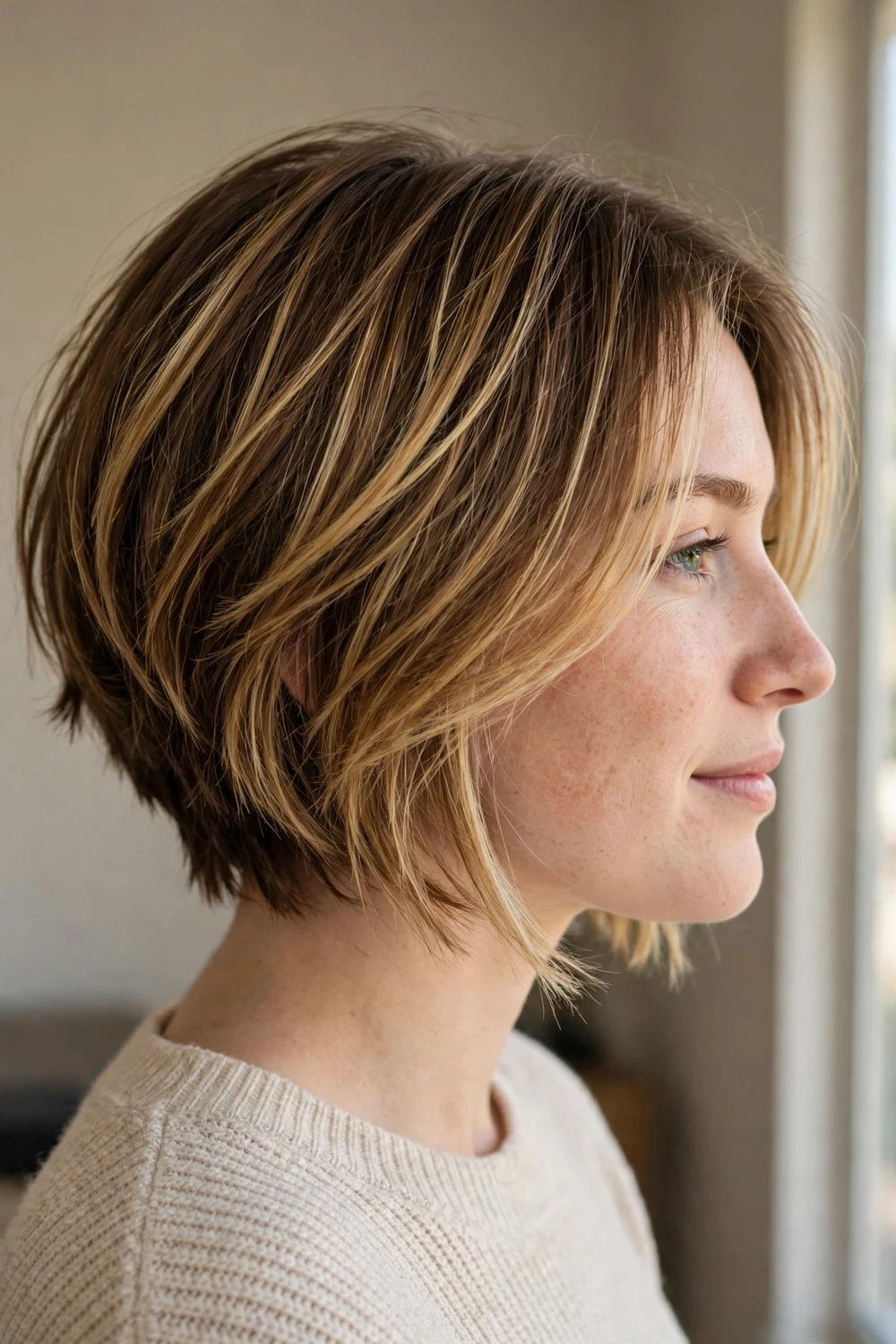
Do highlights and layers change the angle itself? No, but they change how it reads. Layers through the interior lighten the cut and add swing, while highlights placed along the angle make the slope look sharper. This version suits medium-density hair that can handle layers without losing its perimeter. It needs a trim every six weeks to keep the layers from growing ragged. The overall effect is brighter and more mobile than a one-length angled bob.
Try this: Ask for babylights along the part and front pieces to brighten the face without harsh lines.
11. Shaggy Angled Lob
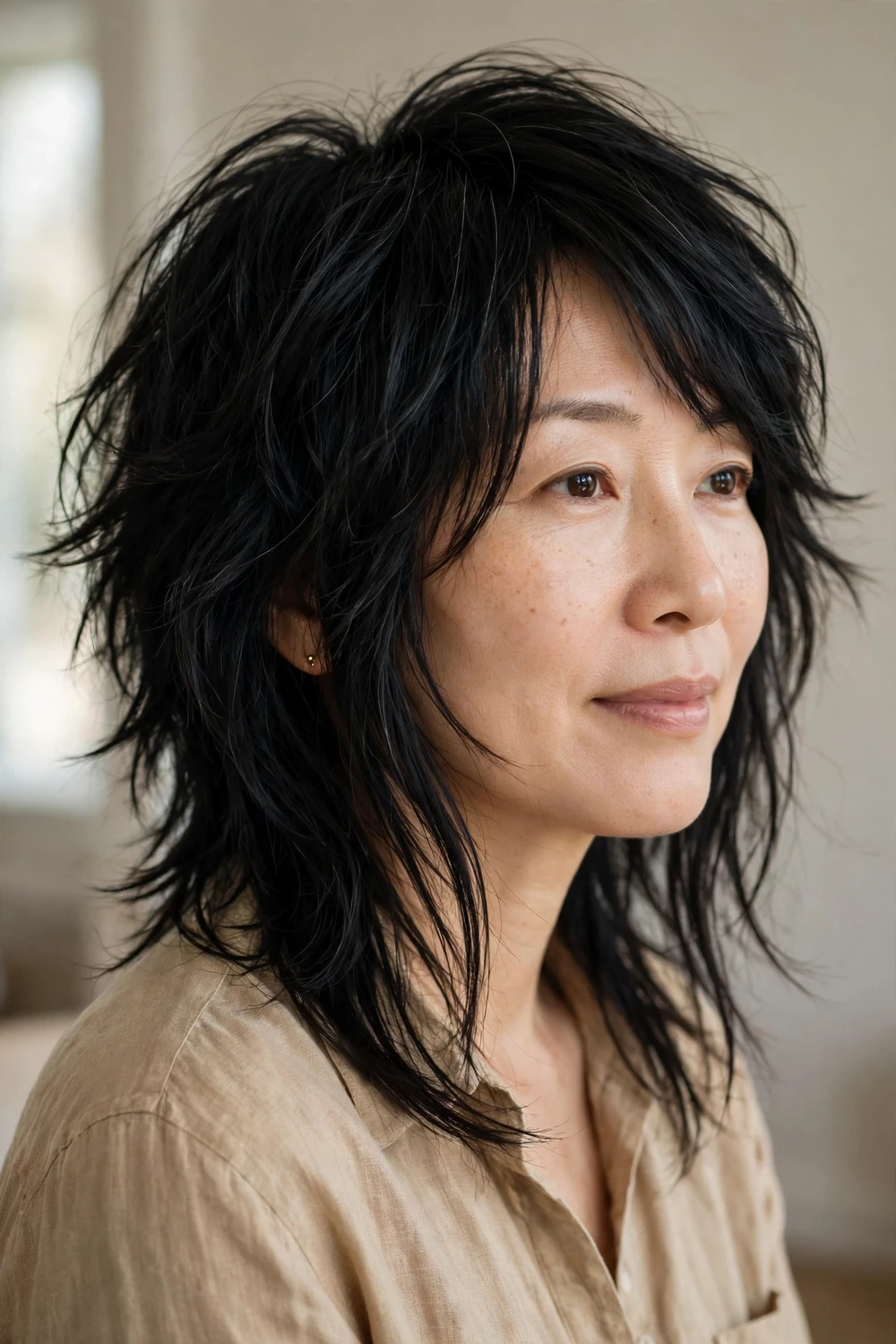
Not ready for chin-length? The shaggy angled lob keeps the forward slope at collarbone length with plenty of texture. Layers through the ends and around the crown give it that undone, airy feel while the angle stops it from looking like a plain long bob. It suits thick, wavy hair that needs movement. This is one of the lowest-commitment versions: it grows out well and needs little more than a rough blow-dry. Curtain bangs pair naturally with the shaggy layers.
Try this: Spritz damp hair with sea salt spray and scrunch as you rough-dry for natural texture.
12. Angled Lob with Face-Framing Curls
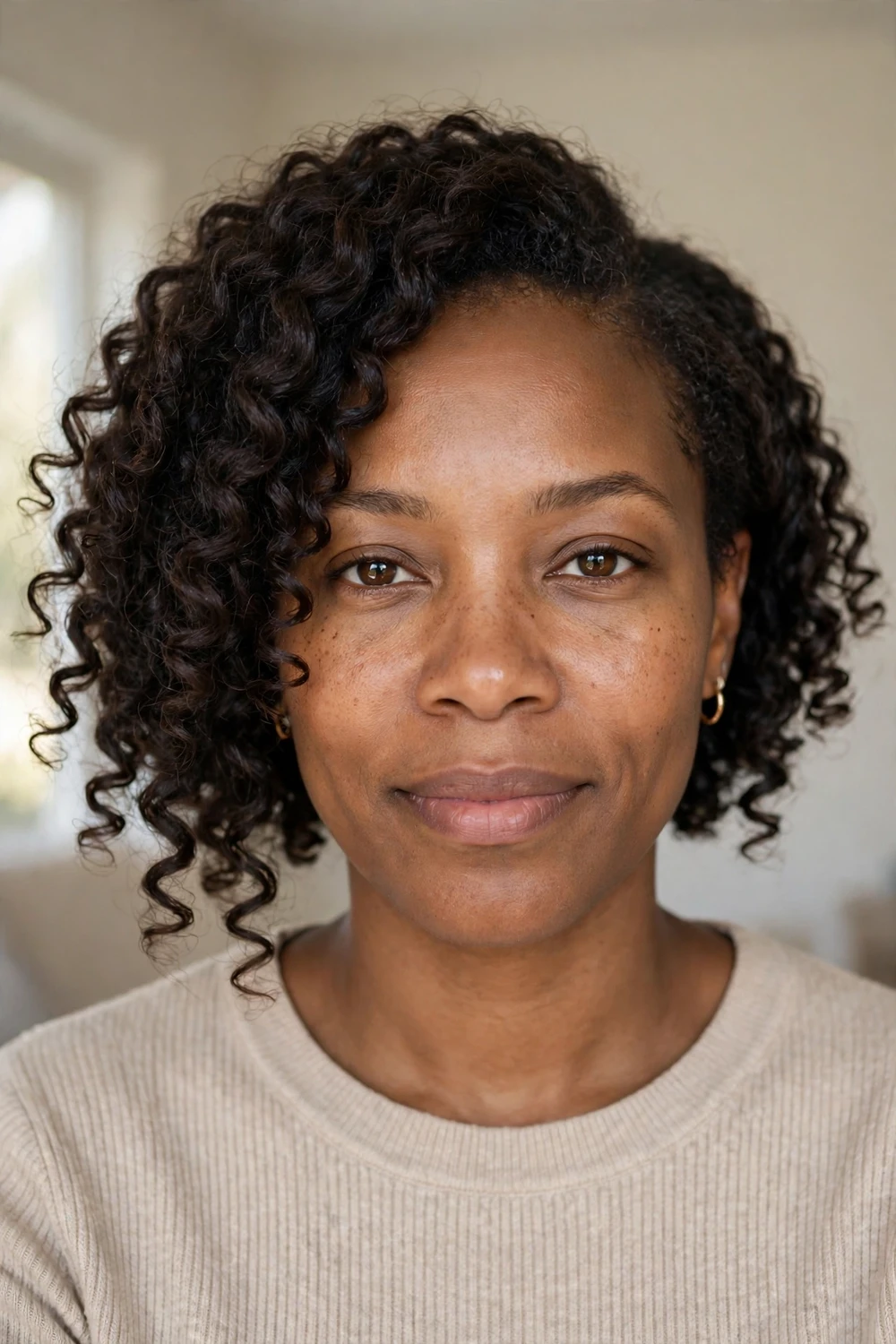
Curls concentrated around the face turn the angled lob romantic. The back stays sleek or lightly waved while the front pieces get defined curls that fall along the cheekbones. This works on naturally curly hair and on straight hair styled with a wand. Keep the curls in the front only; curling the whole head hides the angle. A light curl cream or mousse holds the definition without stiffness. The look suits evenings out and events where you want polish.
Try this: Wrap only the front two-inch sections around a wand, leaving the ends out for a modern curl.
13. Center-Parted Lob with Tapered Ends

A center part changes the whole mood of the angle. Instead of the asymmetry a side part creates, the center part makes the slope look deliberate and symmetrical, framing both sides of the face evenly. Tapered ends keep the longer length from looking heavy. This version suits oval and long faces, since the even framing doesn’t add width. Keep the part clean with a rattail comb. It reads minimal and modern, especially on straight, shiny hair.
Try this: Apply a shine serum to the front sections after straightening for a glass-like finish.
14. Angled Bob with Face-Framing Highlights
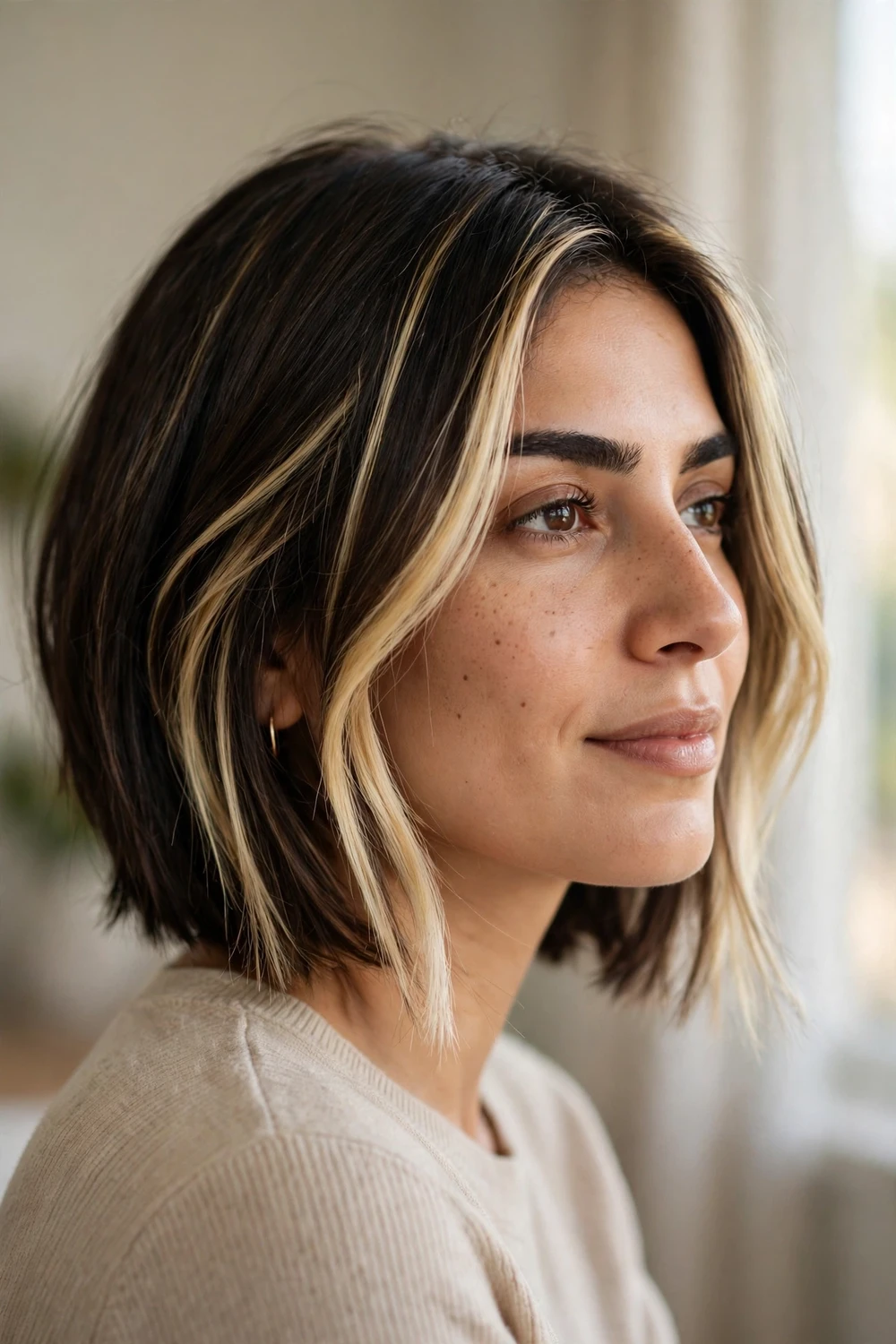
Where should the lightest pieces sit? Right along the angle. Face-framing highlights placed on the longer front sections draw the eye along the slope and brighten the complexion. This works on any base color, from dark brown to blonde. The placement grows out softly, so touch-ups every ten to twelve weeks are enough. Keep the rest of the color close to your natural shade for contrast. It’s a subtle change with a visible payoff.
Try this: Ask for the money piece to start slightly back from the hairline so it blends as it grows.
15. Blunt Angled Bob
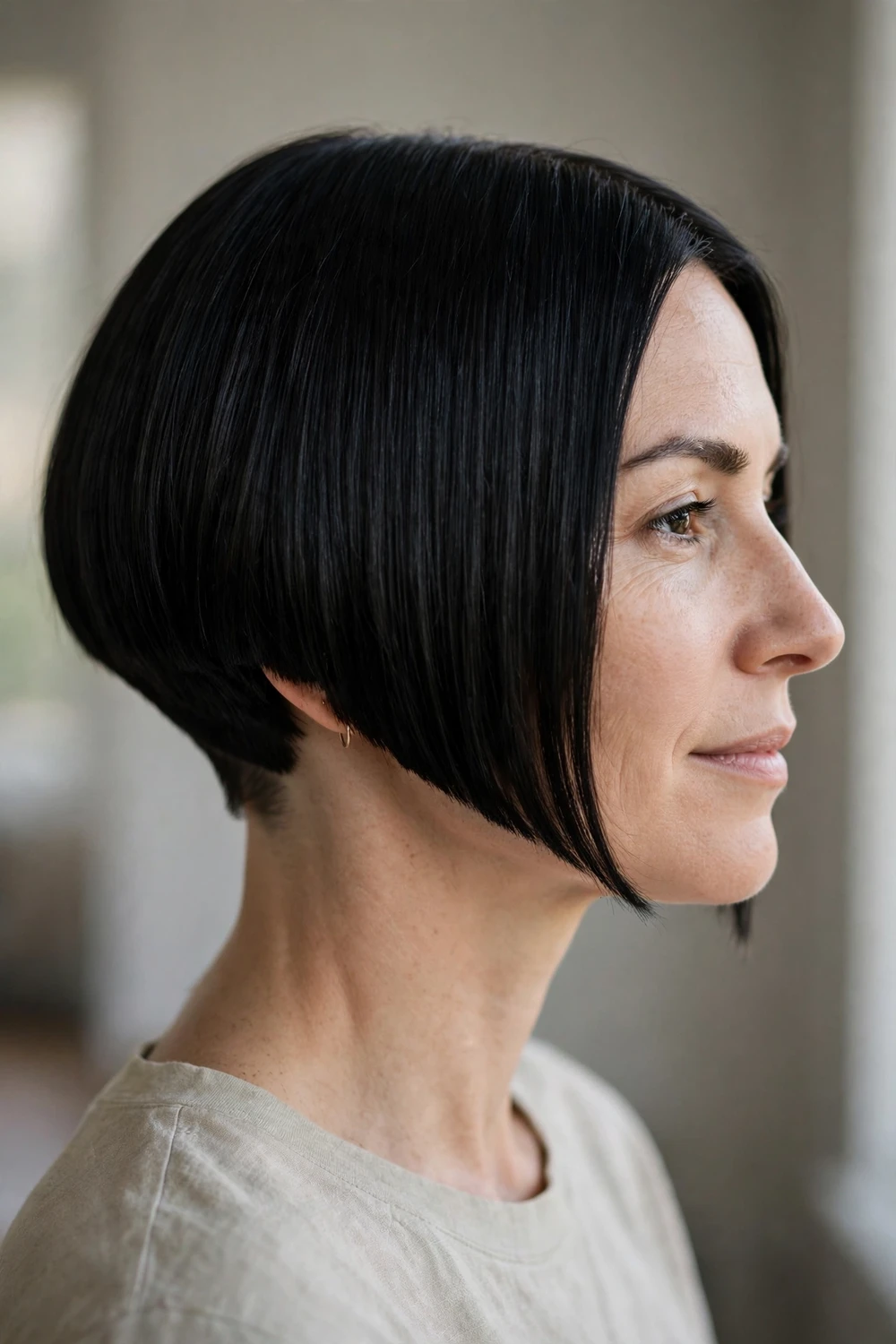
Blunt ends make the angle look razor-sharp. With no layers or texture to soften it, the cut drops from the nape to the front in one clean line. This version demands healthy ends and regular trims, since splits show immediately on a blunt perimeter. It suits straight, medium to thick hair. The look is bold and graphic, so it pairs well with minimal styling. Flat iron for maximum sleekness and let the cut do the talking.
Try this: Use heat protectant every time you straighten, and trim every six weeks to keep the ends crisp.
16. Red Angled Bob
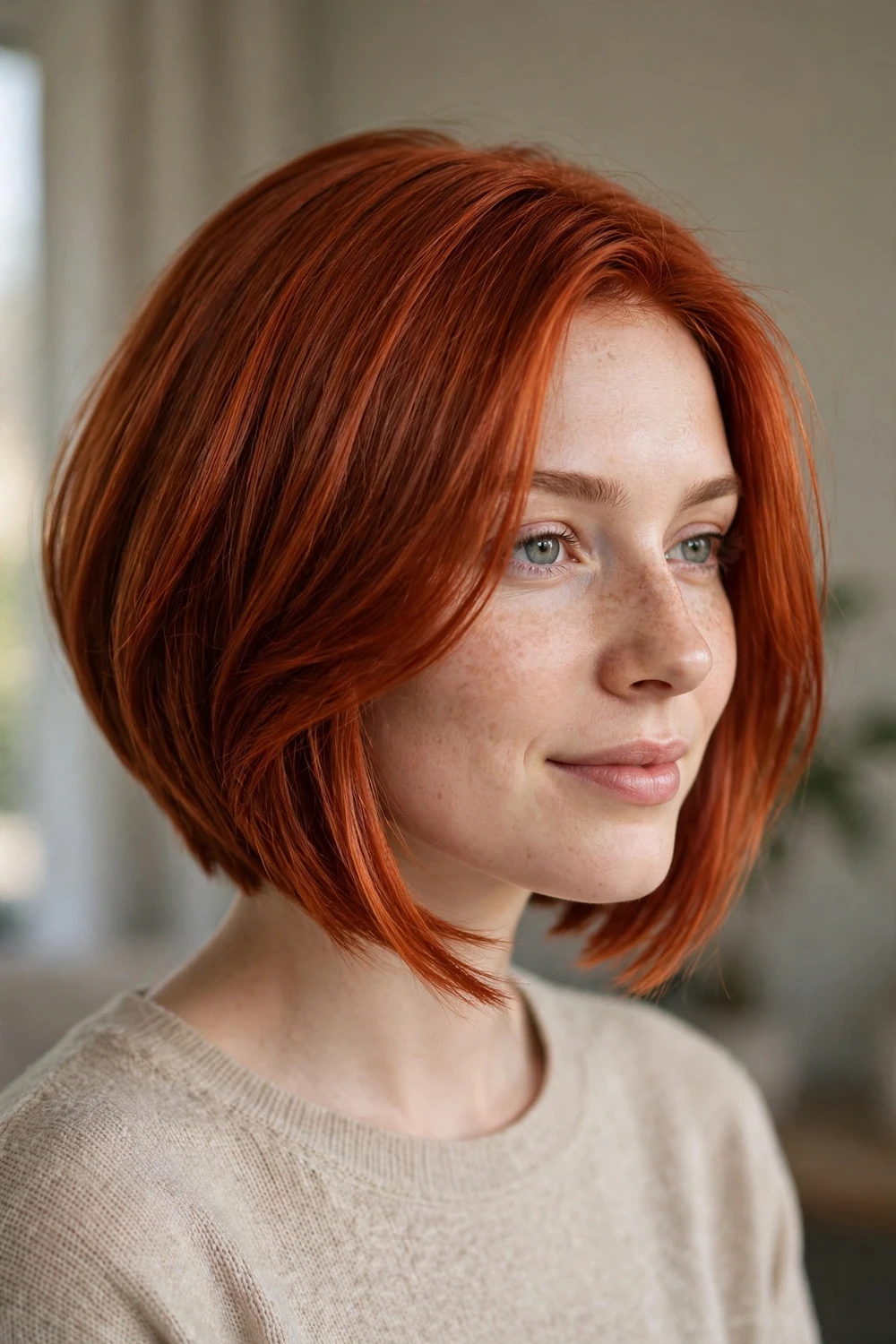
Red turns up the volume on any cut, and the angled bob shows off the color’s dimension. The slope catches light differently along its length, so copper and auburn shades look multi-tonal even in a single process. Red fades faster than other colors, so plan for color-safe shampoo and gloss refreshers between appointments. This shade suits warm and neutral skin tones. The cut itself can be any angle intensity; the color is the star here.
Try this: Wash with cool water and a color-depositing conditioner every other wash to keep the red rich.
17. Angled Bob on Curly Hair
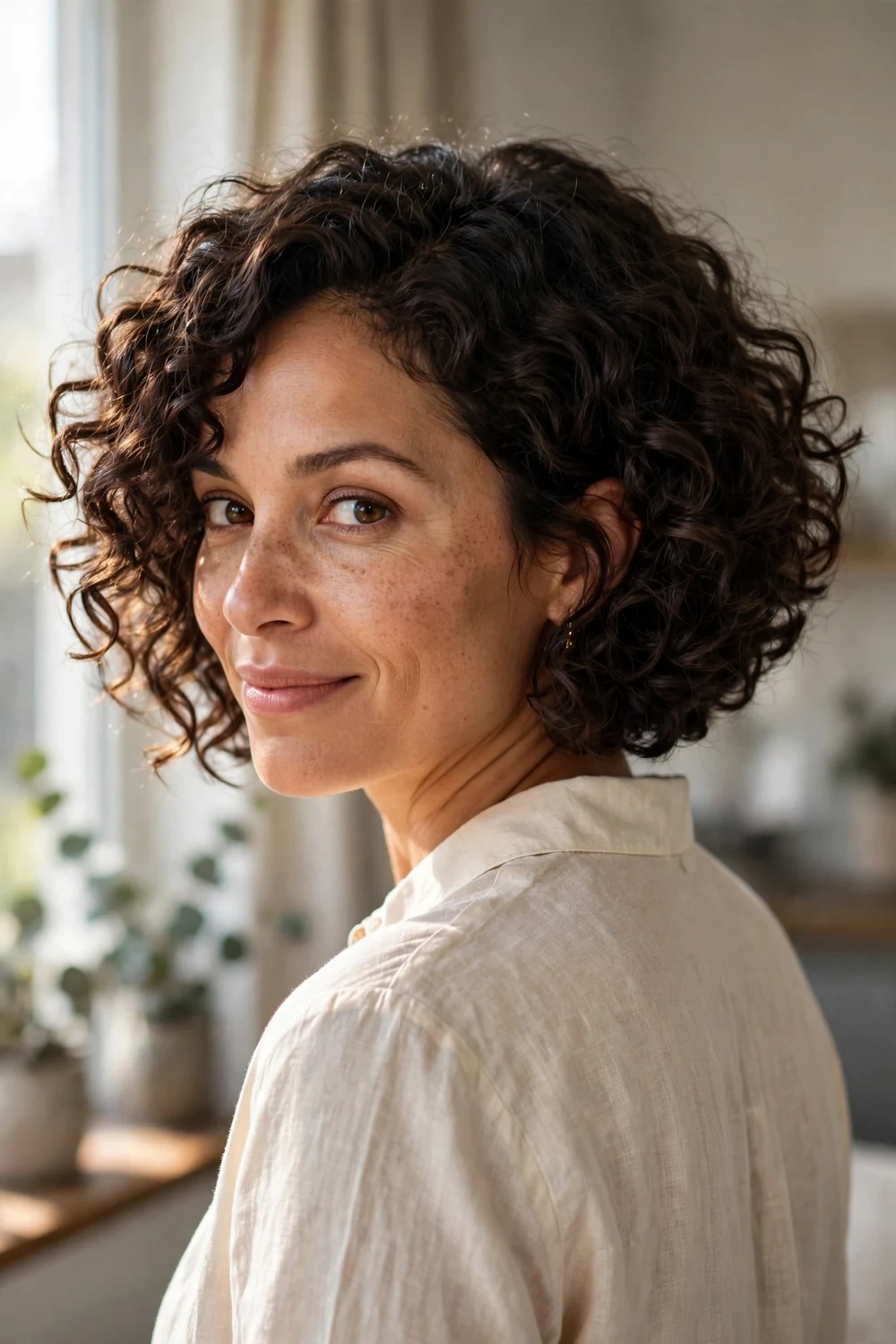
Curly hair and angles need a careful hand. The slope still works, but the cut must be done on dry curls so the length is accurate, since curls spring up when dry. Ask for the angle to be gentler than on straight hair, because shrinkage exaggerates the difference. Layers prevent the triangle shape that curly bobs can develop. This version gives curls structure and a clear silhouette. Diffuse on low heat and scrunch with curl cream for definition.
Try this: Have it cut dry by a curl specialist, and bring reference photos showing the angle on curly textures.
18. Short and Super Stacked Angled Bob
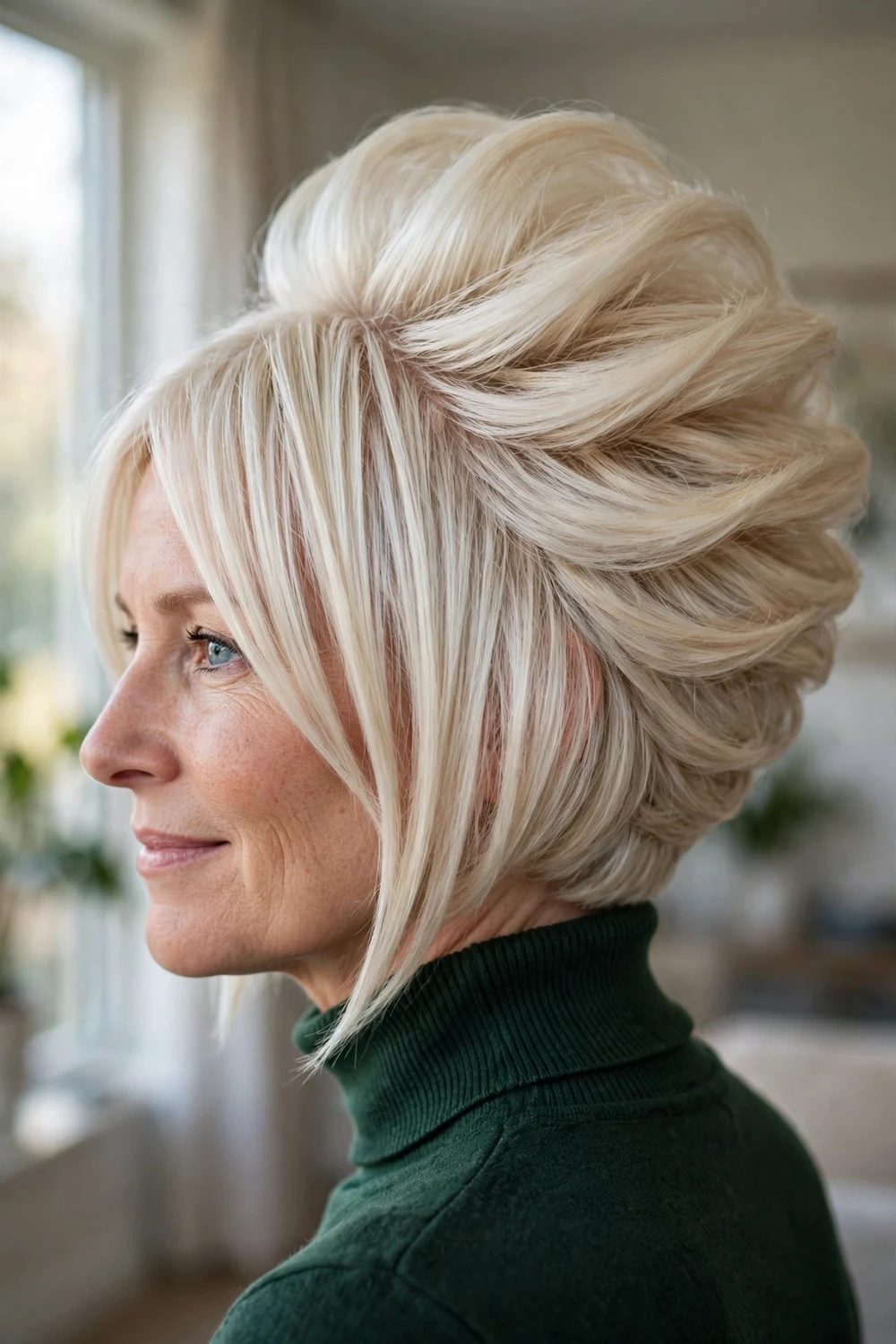
Go short and stacked when you want maximum volume. This version crops the back high with aggressive graduation, building a rounded, full shape at the crown while the front stays long enough to angle past the jaw. It’s the boldest take on the stacked family and suits confident wearers with fine to medium hair. Thick hair may need thinning to keep the stack from looking bulky. The cut practically styles itself at the back; focus your effort on smoothing the front.
Try this: Blow-dry the crown with a round brush for lift, then flat iron just the front pieces sleek.
19. Burgundy Angled Bob
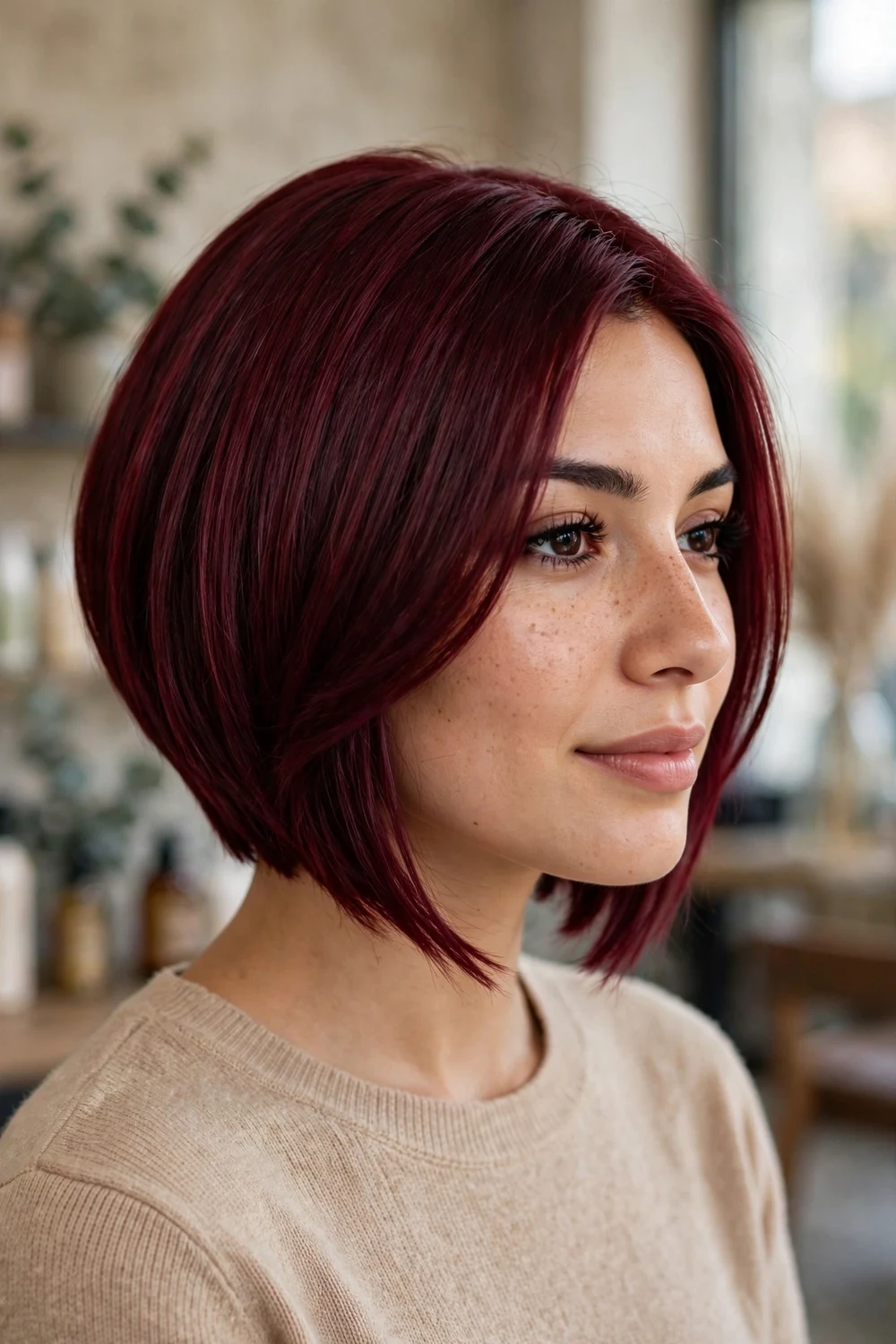
Burgundy adds depth without the upkeep of brighter reds. The deep wine tone looks rich against the clean lines of an angled bob, and it suits cool and neutral skin tones especially well. On dark hair it can be achieved with a single process; lighter hair may need a fill first. The color reads almost black indoors and glows burgundy in sunlight. Pair it with any angle intensity. A gloss treatment every six weeks keeps the tone from going flat.
Try this: Ask your colorist for a demi-permanent formula so the burgundy fades gracefully between appointments.
20. Swooped Graduated Bob
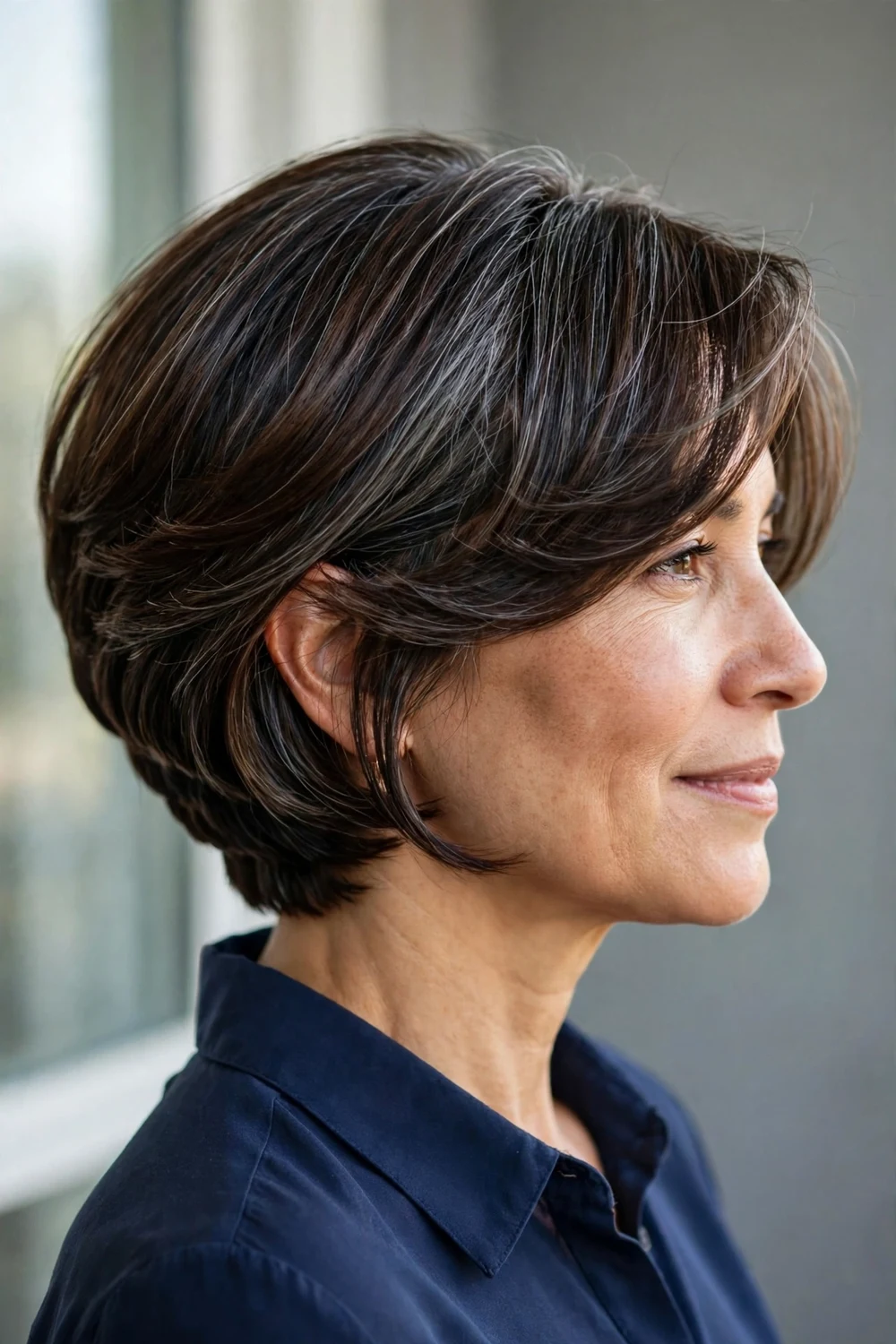
Graduation is the quiet engine of this cut. Short layers stacked at the back curve smoothly into longer front pieces, creating a swooped silhouette with no harsh lines. It suits fine hair that needs the illusion of density, and it works on straight to wavy textures. The swoop reads classic rather than trendy, so it ages well between appointments. Keep the nape tapered and clean for the full effect. This is a great choice if steep angles feel too severe.
Try this: Blow-dry the back sections upward with a round brush to build the swooped curve.
21. Shoulder-Length Angled Bob
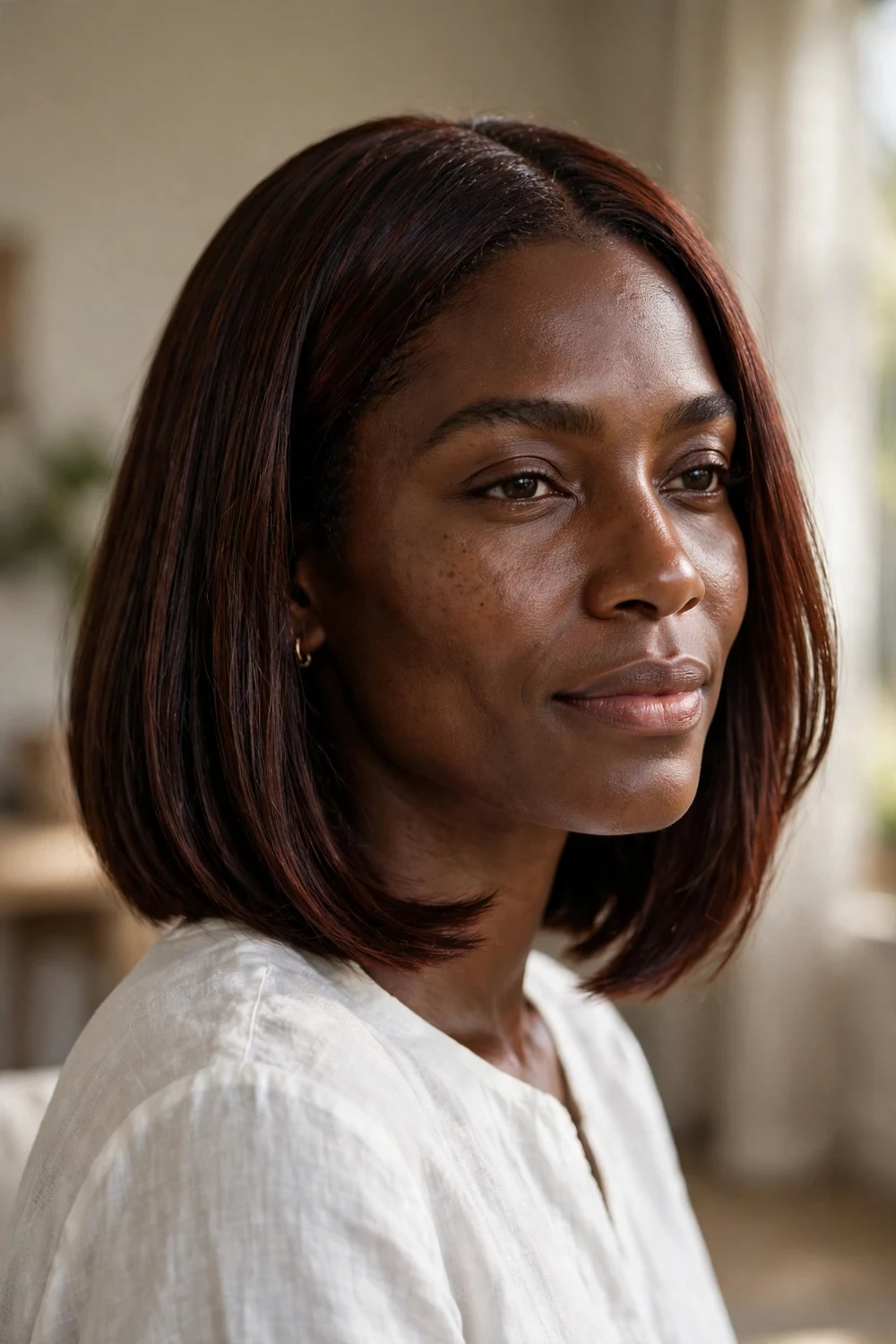
Keeping length doesn’t mean giving up the angle. This version sits at the shoulders in back and angles gently forward, giving you the flattering slope with styling versatility. You can still pull it into a low ponytail, which shorter angled bobs can’t do. It suits thick hair that feels heavy in shorter cuts. The angle can stay subtle here; even an inch of difference reads clearly at this length. It’s the most practical version on this list.
Try this: Loosely wave the lengths with a flat iron, bending the front pieces slightly inward to show the angle.
22. Twisted Layers Angled Bob
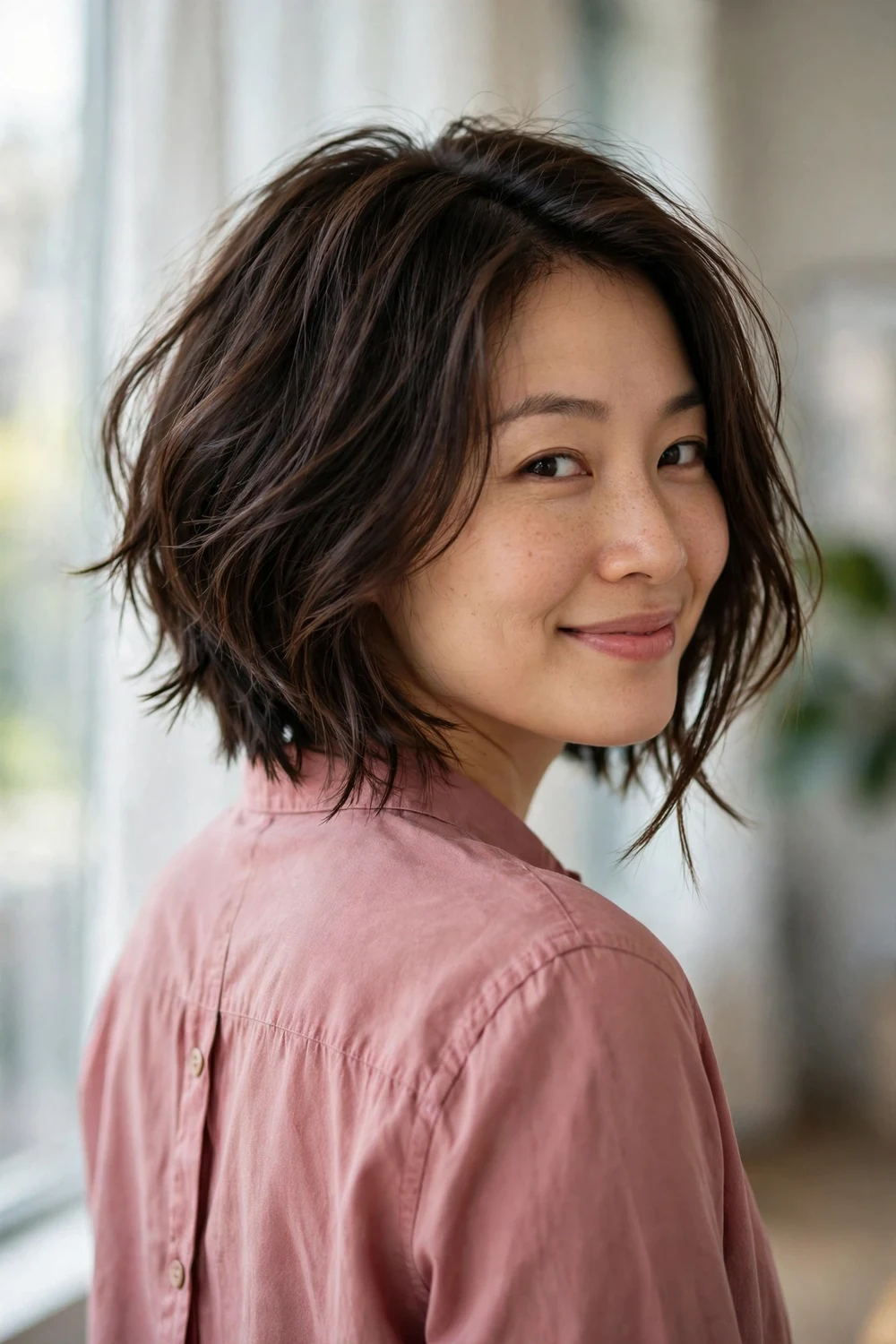
Twisted layers give the angled bob a piecey, separated texture. The stylist twists sections while cutting, which creates varied lengths that fall in soft, defined pieces along the angle. This technique suits medium to thick hair and adds movement without visible layer lines. It looks best slightly undone, so skip the flat iron and let the pieces do their thing. The angle underneath keeps the shape intentional rather than messy.
Try this: Twist damp sections with a light styling cream and let them air-dry for natural piecey texture.
23. Cool-Toned Ashen Angled Bob
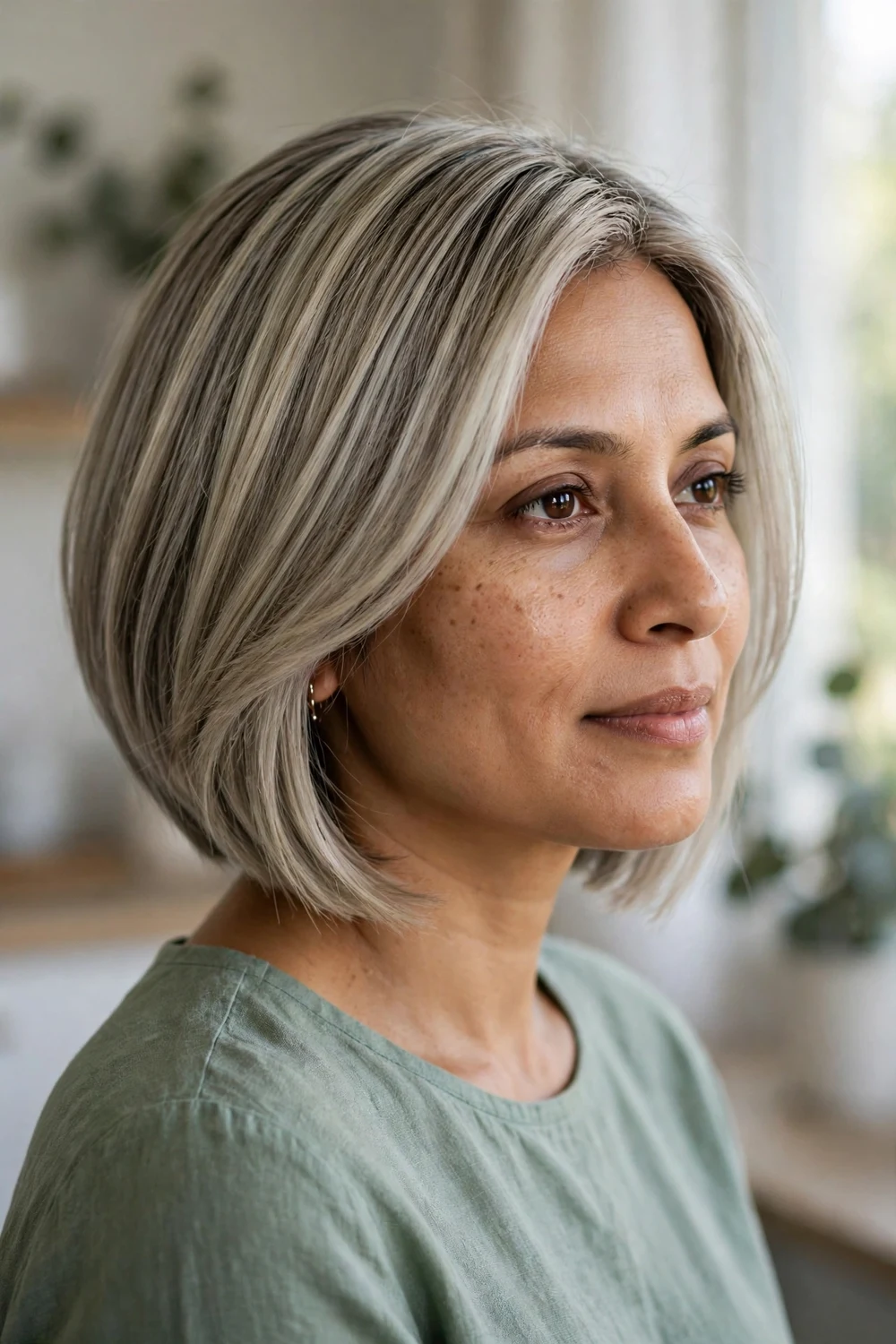
Cool ash tones give the angled bob a modern, smoky finish. Ash blonde, mushroom brown, or silver-gray shades sit well on the clean lines of the cut and suit cool skin tones. These tones need purple shampoo to fight brassiness, especially on previously lightened hair. The ashen color makes the angle look even sharper by removing warmth that softens edges. Pair it with a blunt or classic A-line shape for the full effect. Toner refreshes every eight weeks keep it from going yellow.
Try this: Use a purple shampoo once a week and a deep conditioner after, since ash tones can dry the hair.
Angled Bob Hairstyles Comparison at a Glance
| Style | Angle Intensity | Best Face Shape |
|---|---|---|
| Classic Angled A-Line Bob | Gentle | Oval, round |
| Steeply Angled Bob | Dramatic | Oval, heart |
| Rounded Angled Bob | Gentle | Square, oval |
| Inverted Bob | Moderate | Round, oval |
| Asymmetrical Angled Bob | Dramatic | Oval, heart |
| Angled Bob with Side Bangs | Moderate | Oblong, heart |
| Angled Bob with Stacked Back | Moderate | Round, square |
| Choppy Angled Bob | Moderate | Oval, square |
| Wavy Angled Bob with Balayage | Gentle | Round, heart |
| Layered and Highlighted Angled Bob | Gentle | Oval, oblong |
| Shaggy Angled Lob | Gentle | Oval, heart |
| Angled Lob with Face-Framing Curls | Gentle | Square, oval |
| Center-Parted Lob with Tapered Ends | Gentle | Oval, oblong |
| Angled Bob with Face-Framing Highlights | Moderate | Round, oval |
| Blunt Angled Bob | Moderate | Oval, heart |
| Red Angled Bob | Any | All |
| Angled Bob on Curly Hair | Gentle | Oval, round |
| Short and Super Stacked Angled Bob | Dramatic | Oval, heart |
| Burgundy Angled Bob | Any | All |
| Swooped Graduated Bob | Gentle | Round, square |
| Shoulder-Length Angled Bob | Gentle | Oval, oblong |
| Twisted Layers Angled Bob | Moderate | Oval, square |
| Cool-Toned Ashen Angled Bob | Moderate | Oval, heart |
How to Choose the Right Angled Bob for You
Start with your face shape. Round faces benefit from a steeper angle and longer front pieces that slim the cheeks. Square faces do better with rounded or softened edges. Oval faces can carry almost any version, including the dramatic ones.
Next, consider your hair texture. Fine hair needs stacking or graduation for volume at the back. Thick hair can handle blunt or choppy finishes. Curly hair needs a gentler angle cut dry. Be honest about styling time too: sleek versions need daily heat styling, while wavy and shaggy versions are wash-and-go.
Bring photos to your appointment and point to the exact angle you want. Words like “steep” mean different things to different stylists, so a picture removes the guesswork. Ask how the cut will grow out so you know when to book the next trim.
Styling an Angled Bob
Most angled bobs style fastest with a blow-dryer and a paddle or round brush. Dry the back first for lift, then smooth the front pieces forward to show the slope. A flat iron refines the ends on sleeker versions. Always apply heat protectant before any hot tool touches your hair, since the front pieces take the most heat and show damage first.
For texture, work a small amount of paste or cream through the mid-lengths and ends. For waves, a one-inch curling wand on the front sections is enough; the back can stay straighter to keep the angle visible. Finish with a flexible-hold spray rather than anything stiff, so the cut keeps its movement.
Mistakes to Avoid
The most common mistake is cutting the angle too steep for the hair type. Fine hair with an extreme slope ends up with thin, wispy front pieces. Another frequent error is skipping trims: once the back grows out, the angle disappears and the cut loses its shape.
Don’t fight your natural texture. Forcing pin-straight styling on very curly hair every day leads to damage and frustration. Also avoid heavy products near the roots of the back section; they flatten the volume that stacking is meant to create. Finally, don’t choose the angle from a photo of someone with a different face shape and expect the same result.
For a broader look at the whole family of cuts, bob hairstyles covers lengths and textures beyond the angled shape.
Graduation and stacking are closely related techniques. If you want to understand the volumized side of the family, read up on the most dramatic version of the style.
inverted bob hairstyles breaks down stacked, graduated, and A-line variations in detail.
Volume at the back is the whole point of stacking. For cuts built specifically around that technique, there is a dedicated roundup.
short stacked bob haircuts focuses on shorter stacked shapes that add fullness to fine hair.
Prefer to keep more length while keeping the slope? Longer versions of the cut keep the angle at the collarbone.
medium bob hairstyles covers chin-to-shoulder cuts for every texture.
Frequently Asked Questions
What is the difference between an angled bob and an inverted bob?
An angled bob is the broader term for any bob that is shorter in the back and longer in the front. An inverted bob is a specific type of angled bob that uses stacked, graduated layers at the crown to build volume. All inverted bobs are angled bobs, but not all angled bobs are inverted; an A-line bob, for example, has a smooth slope with no stacking.
What face shape suits an angled bob best?
Oval faces suit nearly every angled bob, including steep and asymmetrical versions. Round faces look slimmer with longer front pieces and a more pronounced angle. Square faces benefit from rounded or softened edges rather than blunt lines. Heart-shaped faces pair well with volume at the back and side-swept styling in front.
How often does an angled bob need trimming?
Every 6 to 8 weeks is the standard. The back grows out first and the angle softens, so waiting longer changes the silhouette. Blunt and steep versions may need attention closer to 6 weeks. If you are growing the cut into a lob, you can stretch to 10 weeks and let the angle relax gradually.
Can an angled bob work on curly hair?
Yes, with adjustments. The cut should be done on dry curls so the stylist sees the true length, since curls shrink when dry. Keep the angle gentler than you would on straight hair, because shrinkage exaggerates the slope. Interior layers prevent a bulky triangle shape. Diffusing on low heat keeps the curl pattern intact.
Does an angled bob work for thin hair?
Yes, especially versions with a stacked or graduated back. Stacked layers at the nape create the look of fullness where thin hair usually falls flat. Keep the front pieces blunt rather than thinned out so the ends look dense. Avoid over-layering the front, which can make thin hair look stringy. Volumizing mousse at the roots adds lift.
Final Thoughts
The angled bob endures because the slope does real work: it sharpens the jawline, lifts the back, and frames the face in one cut. Pick the angle intensity that matches your face shape and the finish that matches your routine. With a trim every couple of months, it stays sharp with very little daily effort.
Shopping for this cut after 50? Our guide to angled bob hairstyles women over 50 rounds up 30 versions chosen for mature hair, from sleek classics to gray-friendly cuts.

