



Curtain bangs were practically made for long hair. The center-parted sweep frames the face, breaks up one-length heaviness, and blends straight into layers, which means you get a visible change without losing a single inch of length. Below are 27 curtain bangs styles for long hair, covering cuts, textures, colors, updos, and styling methods. Each idea includes a styling tip, a difficulty rating, and upkeep notes so you know the full picture before booking.
Quick Takeaways
- Curtain bangs frame the face while you keep full length, which is why they suit long hair better than blunt fringes.
- Dry bangs first while dampest, rolling each side away from the face with a round brush for the outward sweep.
- Trim bangs every 4 to 6 weeks; dry shampoo at the roots keeps the fringe fresh between washes.
- Match the cut to your texture: wispy for fine hair, full for thick hair, longer for curly hair to allow shrinkage.
- Curtain bangs grow out into face-framing layers with no awkward stage.
Before You Choose
Run through three checks before you ask for the cut. First, face shape: oval suits nearly any bang length, round looks longer with bangs at or below the cheekbones, square softens with textured ends at the jaw, heart balances with width through the sides. Second, texture and length: straight hair shows the part crisply but needs heat or rollers to hold the bend, wavy hair falls into the shape with the least work, curly hair should be cut dry and left longer for shrinkage, and very long hair needs the bangs blended deep into the layers. Third, maintenance: a trim every 4 to 6 weeks, and 3 to 10 minutes of daily styling. If your hair sits above the shoulders, our curtain bangs for short hair guide matches those lengths better.
1. Classic Long Layers with Curtain Bangs
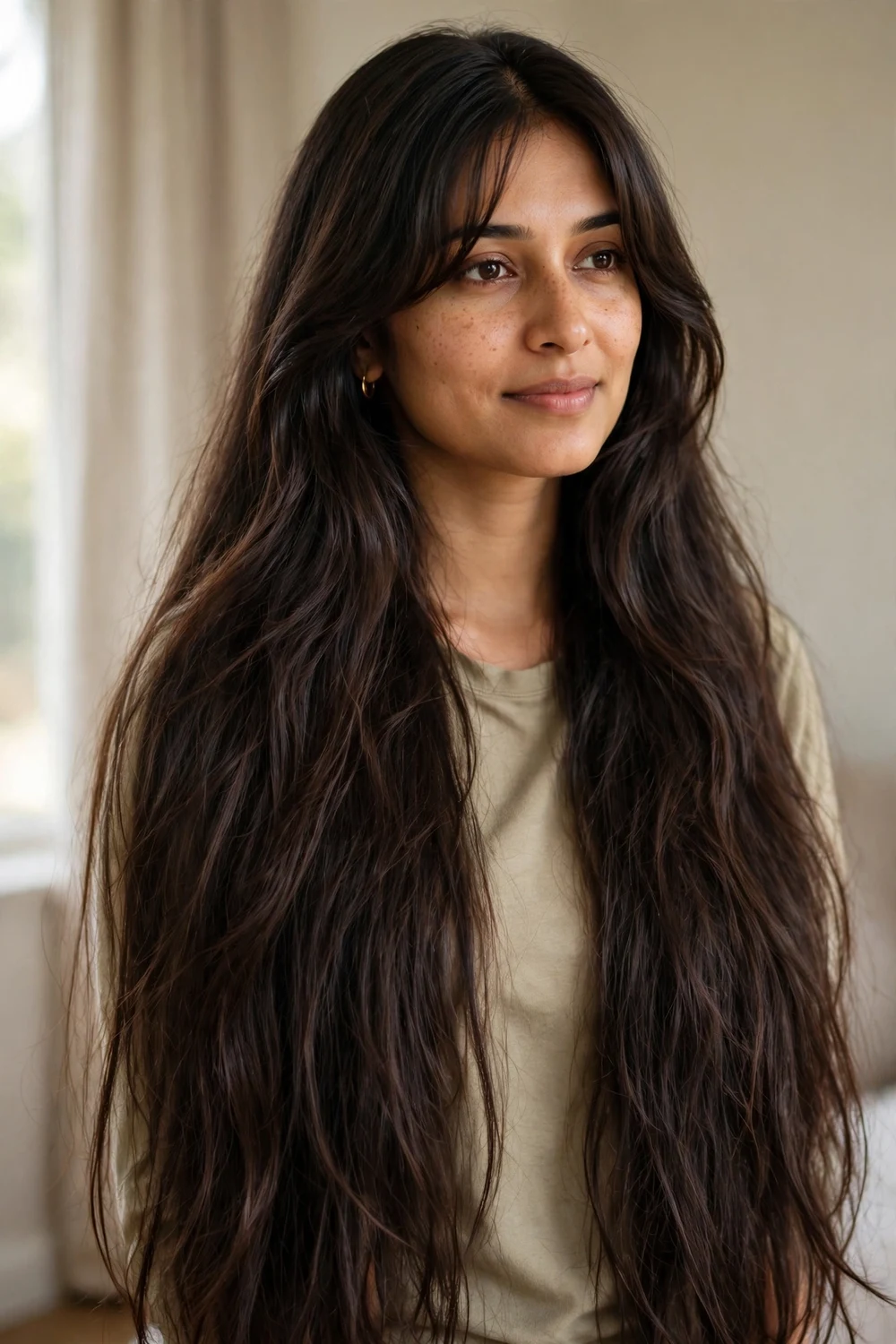
The benchmark pairing: long layers with curtain bangs starting at the cheekbones and melting into the front layers. The layers remove weight so the length moves. Ask for the shortest bang piece at cheekbone level and layers starting no higher than the chin. Apply heat protectant, then blow-dry each side outward with a round brush.
Try this: over-direct the bangs to the opposite side while drying for extra lift at the part.
Best for: medium to thick straight or wavy hair; all face shapes. Difficulty: Easy · Cost: $ · Daily styling: 8–10 min · Upkeep: trim every 5–6 weeks.
2. 70s-Inspired Long Shag with Curtain Bangs
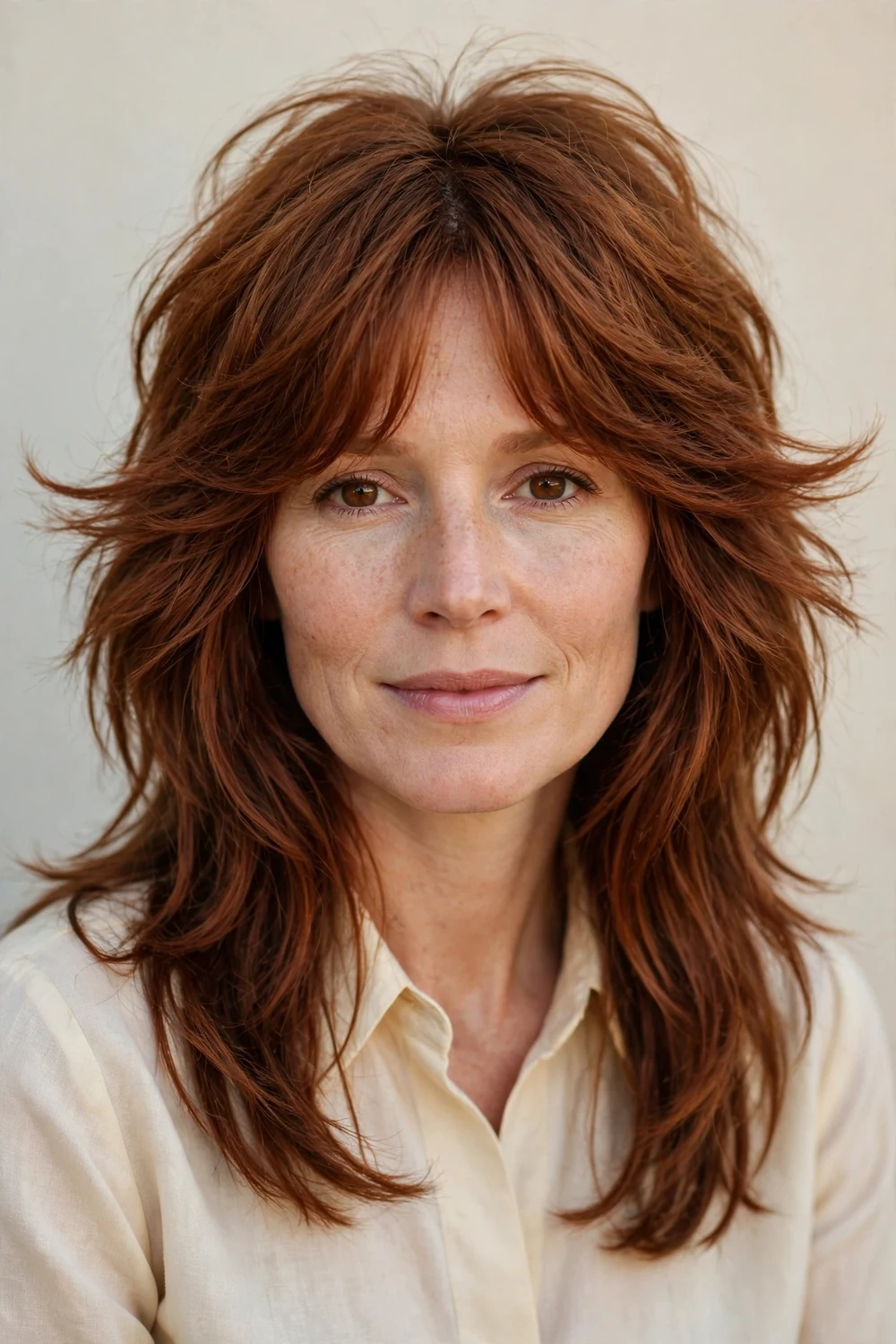
The shag stacks short, choppy layers at the crown and lets them fall long, with curtain bangs feathering outward to match. It is the highest-volume option here, so it suits hair that lies flat. The trade-off is grow-out: shag layers lose shape faster than classic layers. Flip the bang ends outward with a flat iron over heat protectant.
Try this: sleep with the bangs loosely clipped to each side to preserve the flick overnight.
Best for: fine to medium hair needing volume; oval and heart faces. Difficulty: Medium · Cost: $ · Daily styling: 10 min · Upkeep: trim every 6–8 weeks.
3. Long Wavy Hair with Curtain Bangs
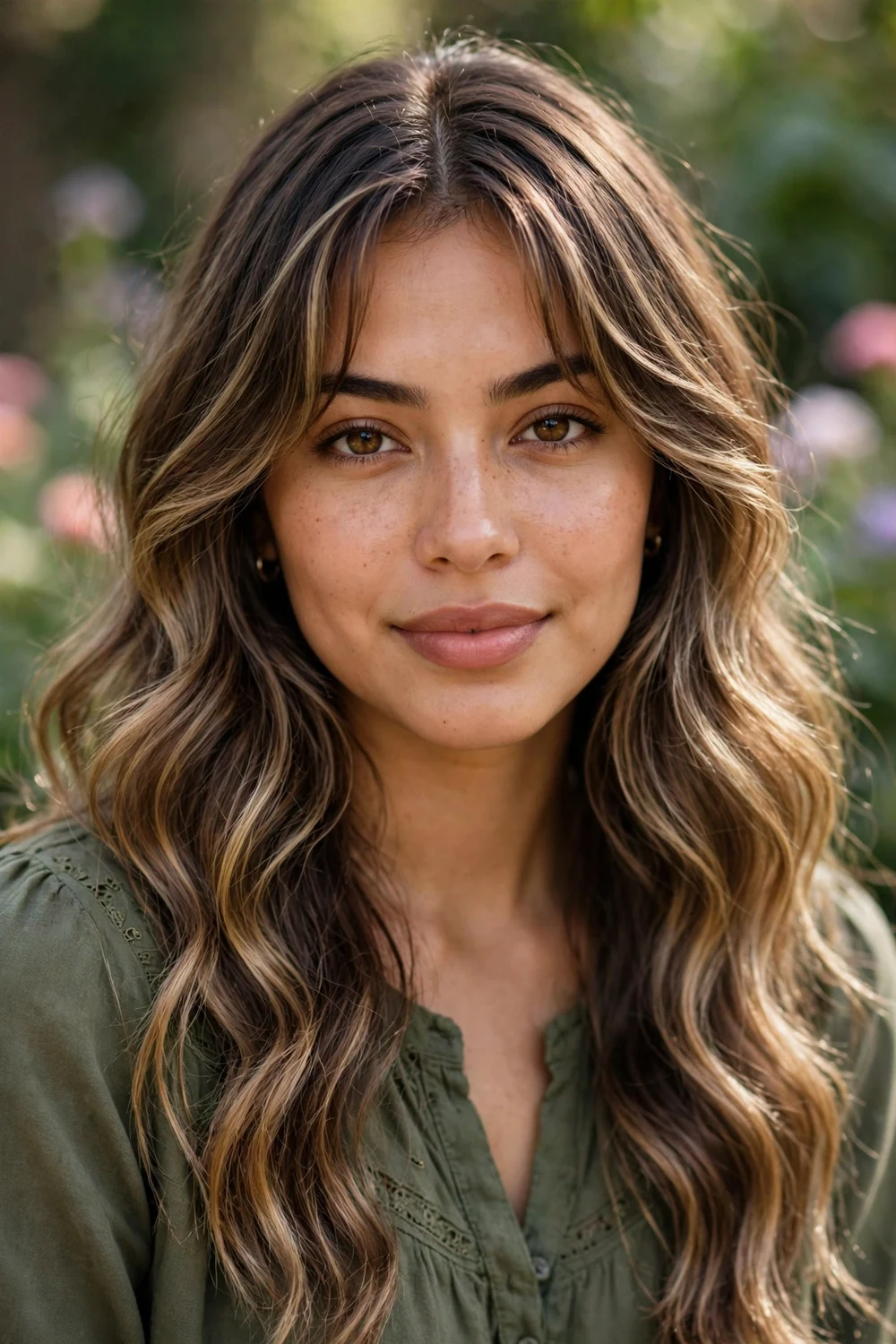
Wavy hair does half the styling itself: the bangs fall open at the center and ride the wave pattern past the cheekbones. Keep them slightly longer than on straight hair, since waves pull length up as they dry. Layers through the mid-lengths stop a triangle forming at the bottom. For more wave-friendly long cuts, browse these hairstyles for thick wavy hair.
Try this: twist each bang section away from the face while damp, then release once dry.
Best for: natural waves; thick hair. Difficulty: Easy · Cost: $ · Daily styling: 5 min · Upkeep: trim every 6–8 weeks.
4. Classic Center-Parted Curtain Bangs
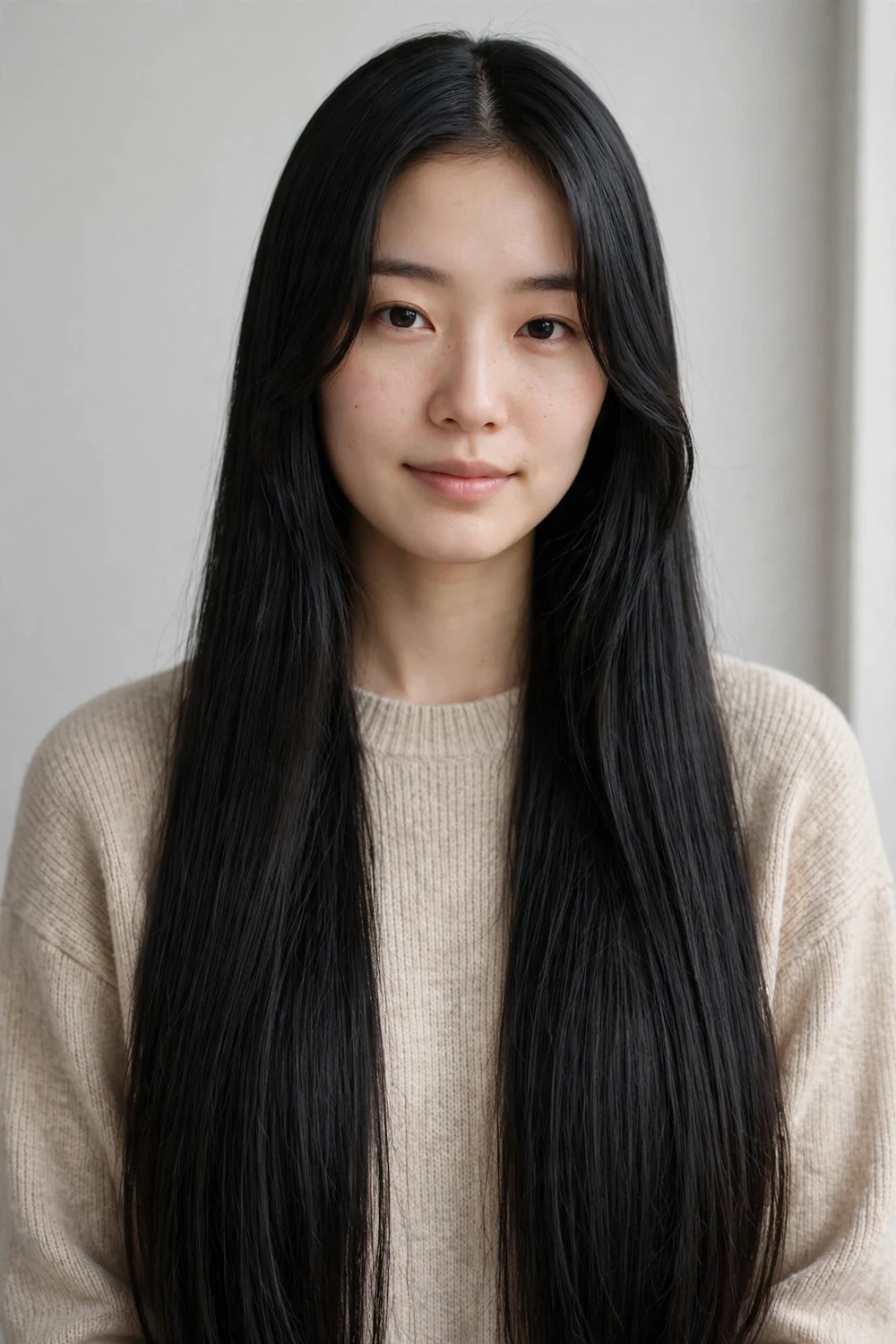
The traditional version: a clean center part, bangs sweeping equally to both sides, the length left simple. The part must be exact and both sides matching. It reads polished on straight hair, soft on wavy hair, and it is the best starting point for first-timers. Set the part wet, then dry each side away from the face.
Try this: set a velcro roller on each side for 10 minutes while you do makeup; the bend sets with less heat.
Best for: straight to wavy hair; oval and long faces. Difficulty: Easy · Cost: $ · Daily styling: 5–8 min · Upkeep: trim every 4–6 weeks.
5. Swoopy Feathered Long Hair with Curtain Bangs
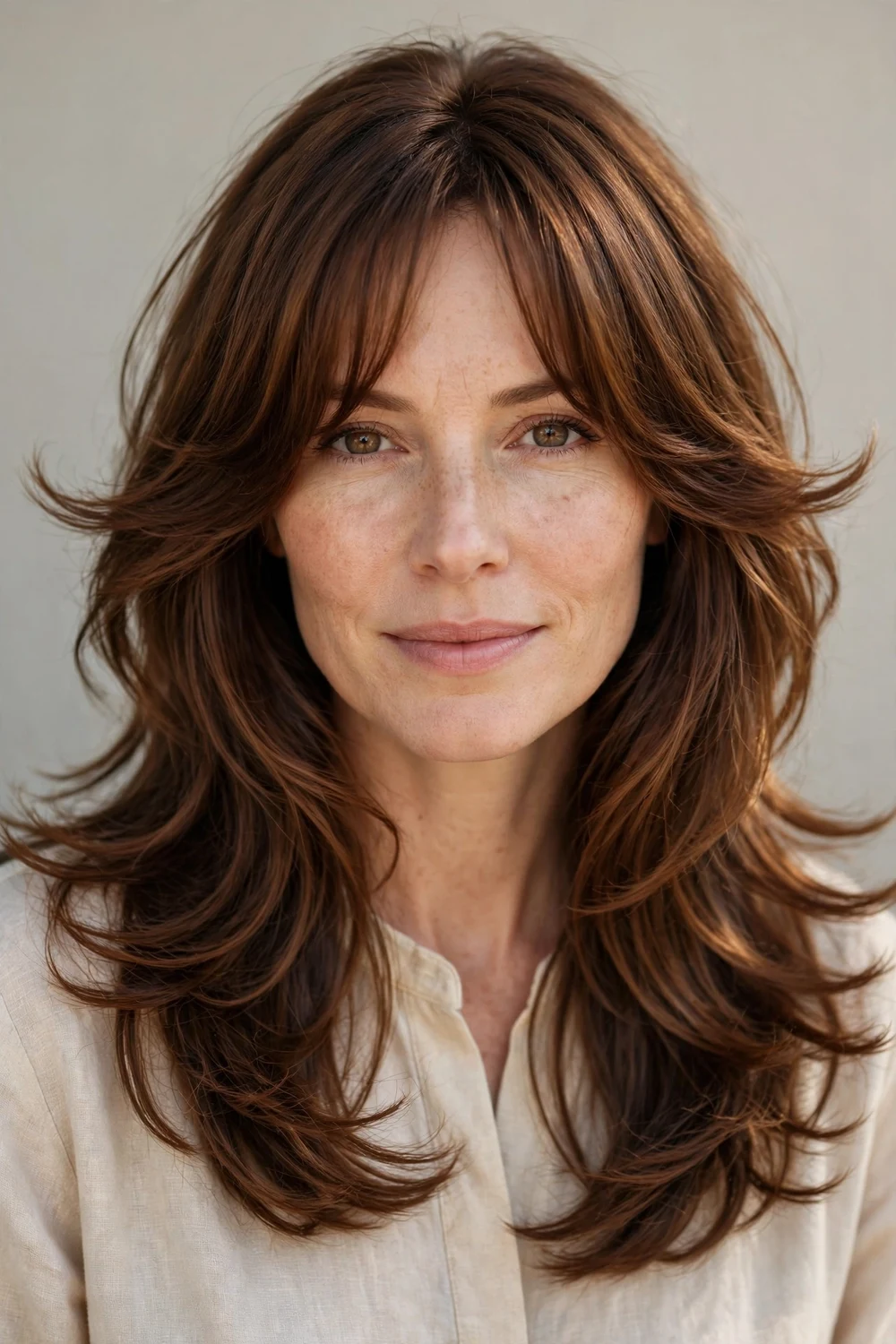
Feathered layers flick outward through the lengths while curtain bangs join the movement. The stylist point-cuts the ends so each layer finishes in a soft flick, not a blunt line. It needs more styling than wash-and-go textures, because the flicks fall flat without heat. Blow-dry with a large round brush, turning outward at the ends, over heat protectant.
Try this: flip your head upside down for the final cool shot to lock in crown volume.
Best for: medium-density straight hair; oval faces. Difficulty: Medium · Cost: $ · Daily styling: 12–15 min · Upkeep: trim every 5–6 weeks.
6. Curtain Bangs with Long Highlighted Hair
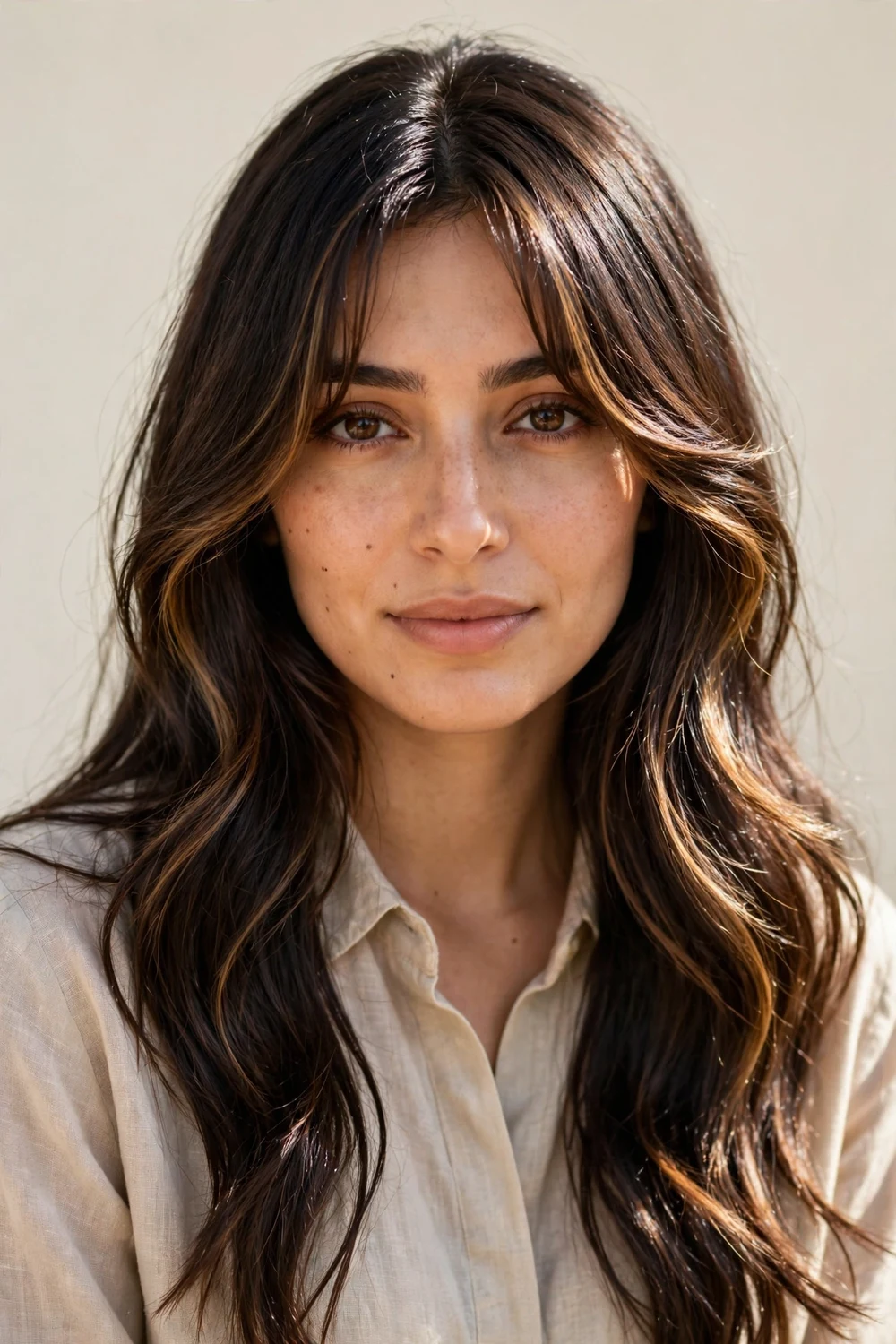
Highlights around the face do double duty: lighter pieces draw the eye to the fringe, and the fringe gives highlights a shape to follow. Highlight just the bangs and front layers for a low-commitment version, or run them through the full length. Keep contrast moderate. A gloss between appointments keeps highlighted pieces shiny. Use heat protectant; lightened hair damages faster.
Try this: ask for babylights through the bang section only; it brightens the face for half the cost.
Best for: all textures; brightness without full color. Difficulty: Easy · Cost: $$ ($60–$120 partial) · Daily styling: 8 min · Upkeep: gloss every 6–8 weeks.
7. Long Blonde Balayage with Curtain Bangs
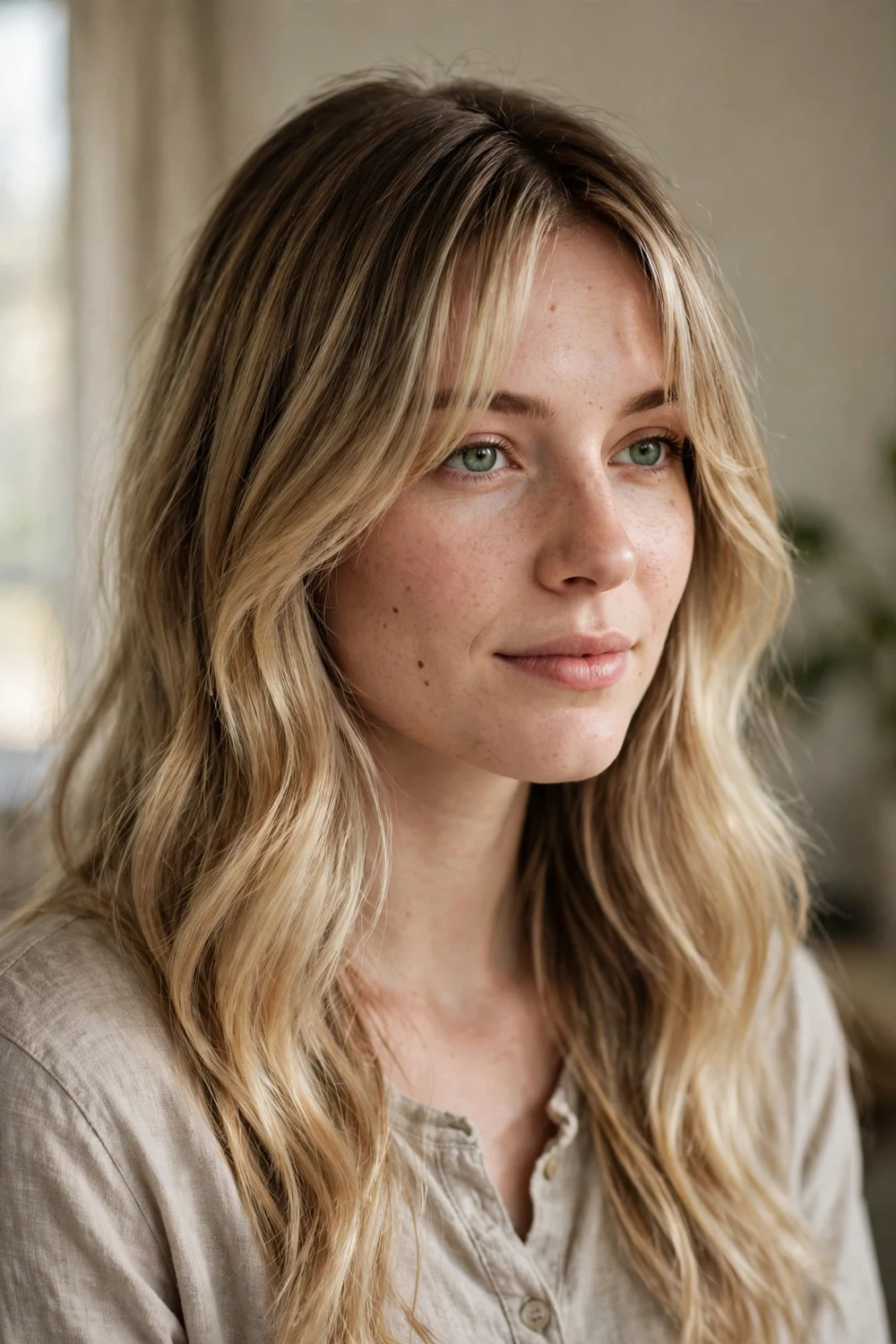
Balayage paints lightness through the mid-lengths and ends, and curtain bangs give that gradient a starting point near the face. The bangs stay close to the natural base with lighter pieces woven through, so grow-out stays soft with no harsh line. For a deeper base version, see this dark caramel balayage. Purple shampoo weekly keeps brass away.
Try this: keep the bang section slightly darker than the ends; it anchors the face and stretches appointments.
Best for: wavy to straight hair; all face shapes. Difficulty: Easy · Cost: $$$ ($150–$300) · Daily styling: 10 min · Upkeep: tone every 8–10 weeks.
8. Deep Side Part with Curtain Bangs
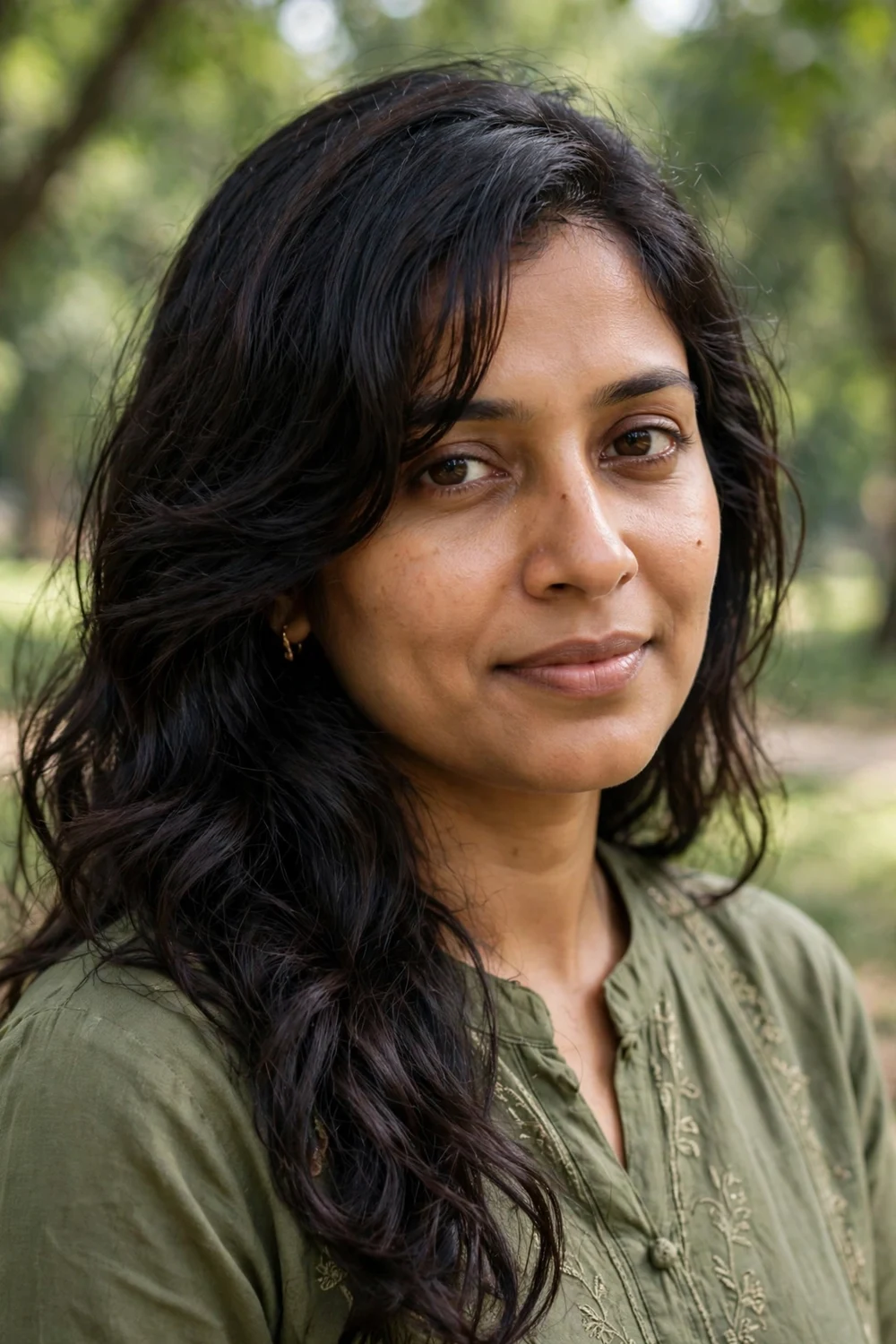
Shifting the part inches off-center changes the geometry: one side falls longer and fuller, the other tucks behind the ear. It flatters strong jawlines and gives fine hair the illusion of density on the heavy side. Set the part while wet or it drifts back by midday. Dry the bangs over-directed to the heavy side, then sweep into place.
Try this: move the part just one inch off-center first; a small shift reads softer.
Best for: fine to medium hair; square and round faces. Difficulty: Easy · Cost: $ · Daily styling: 5 min · Upkeep: trim every 4–6 weeks.
9. Wispy Curtain Bangs on Long Hair
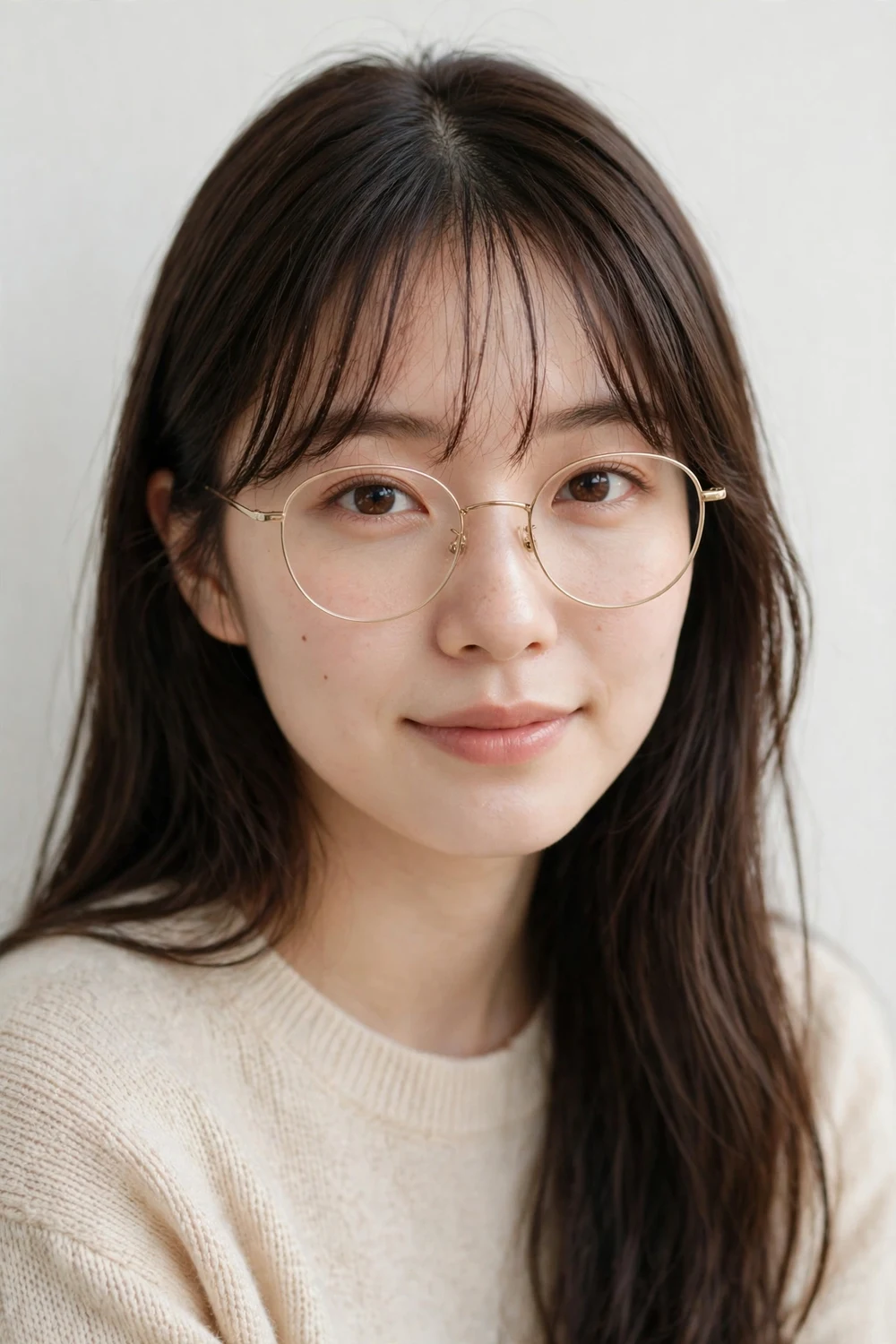
Wispy bangs use fewer strands, so the forehead shows through and the frame stays light. They suit fine hair because the cut demands no density, and first-timers because they read as texture rather than a statement. Ends must be point-cut, never blunt. They need trims on the shorter cycle, since a little growth erases the effect. Skip heavy products.
Try this: trim only the very center pieces between appointments to stretch the shape two weeks.
Best for: fine or thin hair; heart and oval faces. Difficulty: Easy · Cost: $ · Daily styling: 5 min · Upkeep: trim every 4 weeks.
10. Long Straight Hair with Curtain Bangs
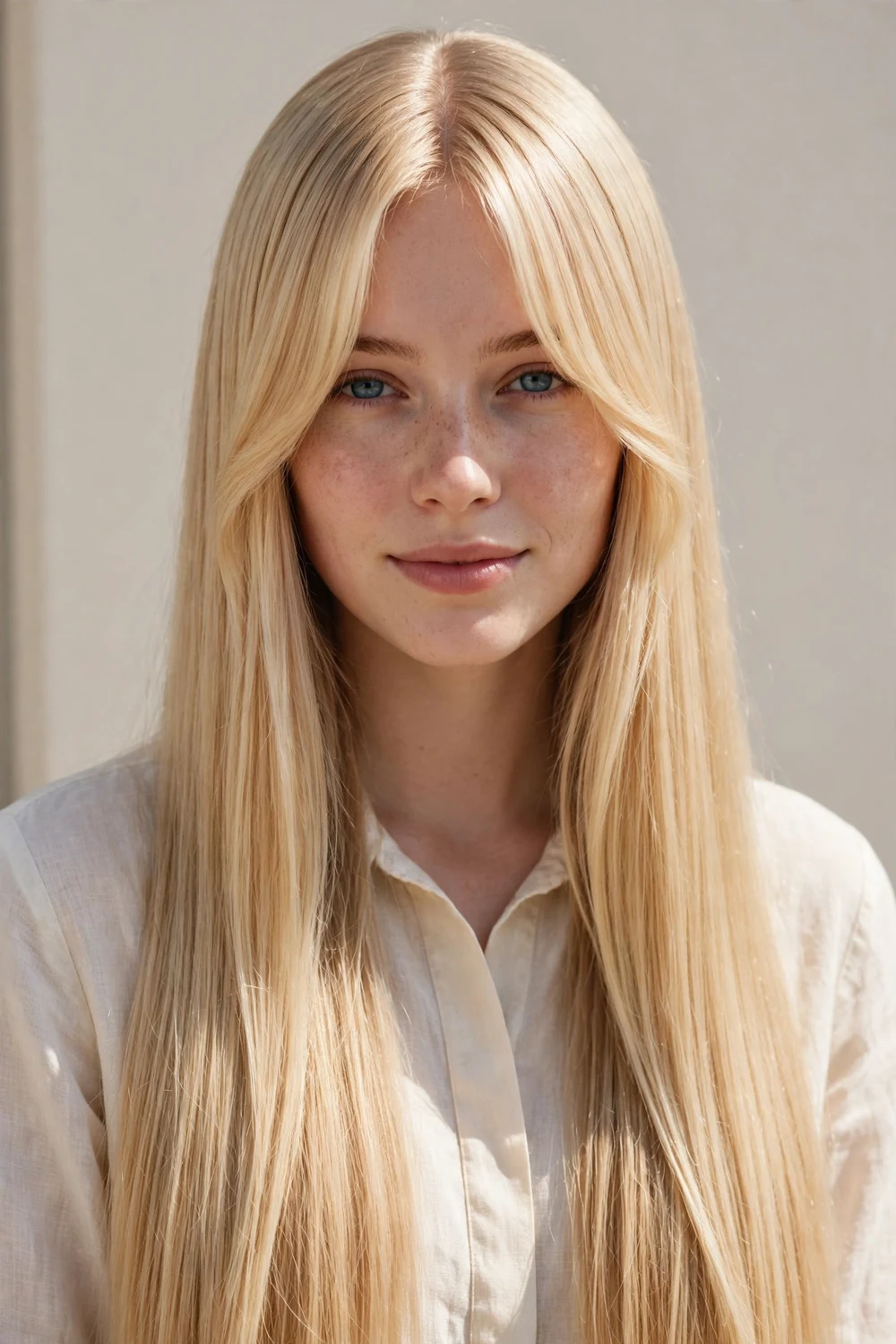
On pin-straight hair the bangs are the only texture, which makes them the focal point. The center part reads crisp and the ends curve gently against flat lengths. Straight hair shows every uneven snip, so this needs the most precise cut here. It also shows oil fastest at the fringe. Flat-iron in thin sections over heat protectant, bending bang ends outward.
Try this: wash just the bang section in the sink on non-wash days; it resets the style in two minutes.
Best for: naturally straight hair; oval and long faces. Difficulty: Medium · Cost: $ · Daily styling: 10–12 min · Upkeep: trim every 4–5 weeks.
11. Long Red Hair with Layers and Curtain Bangs
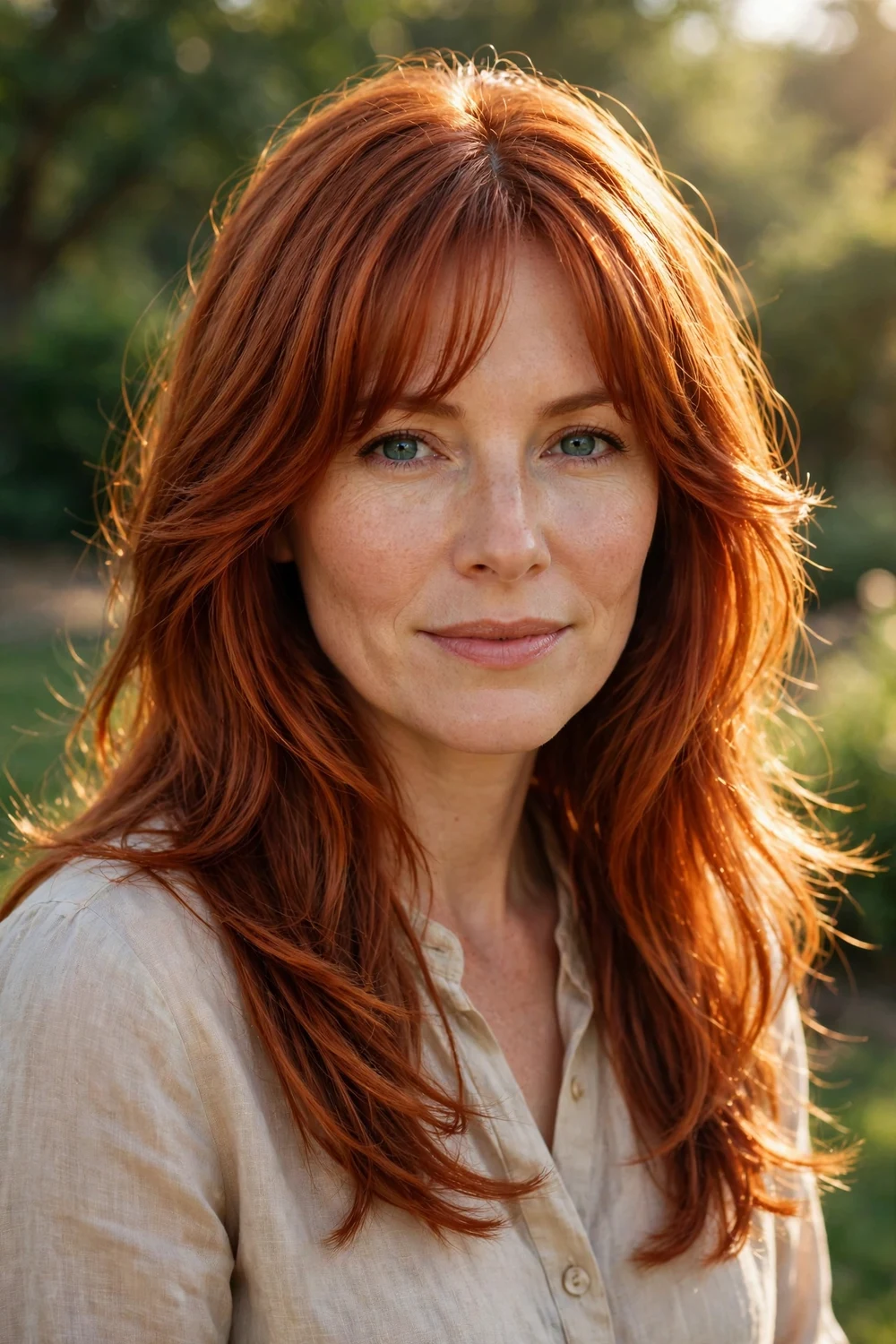
Red shades give curtain bangs extra dimension as the color shifts along the outward curve. Long layers keep the color moving instead of sitting in one block. Red fades fastest, so color-depositing conditioner between appointments is close to mandatory. Blow-dry the bangs with a round brush over heat protectant; red leaves the shaft faster under heat.
Try this: rinse with cool water to slow fading, and keep a copper gloss ready for week four.
Best for: all textures; fair to medium skin tones. Difficulty: Easy · Cost: $$ ($80–$160) · Daily styling: 8 min · Upkeep: gloss every 4–6 weeks.
12. Korean-Style Curtain Bangs on Long Hair
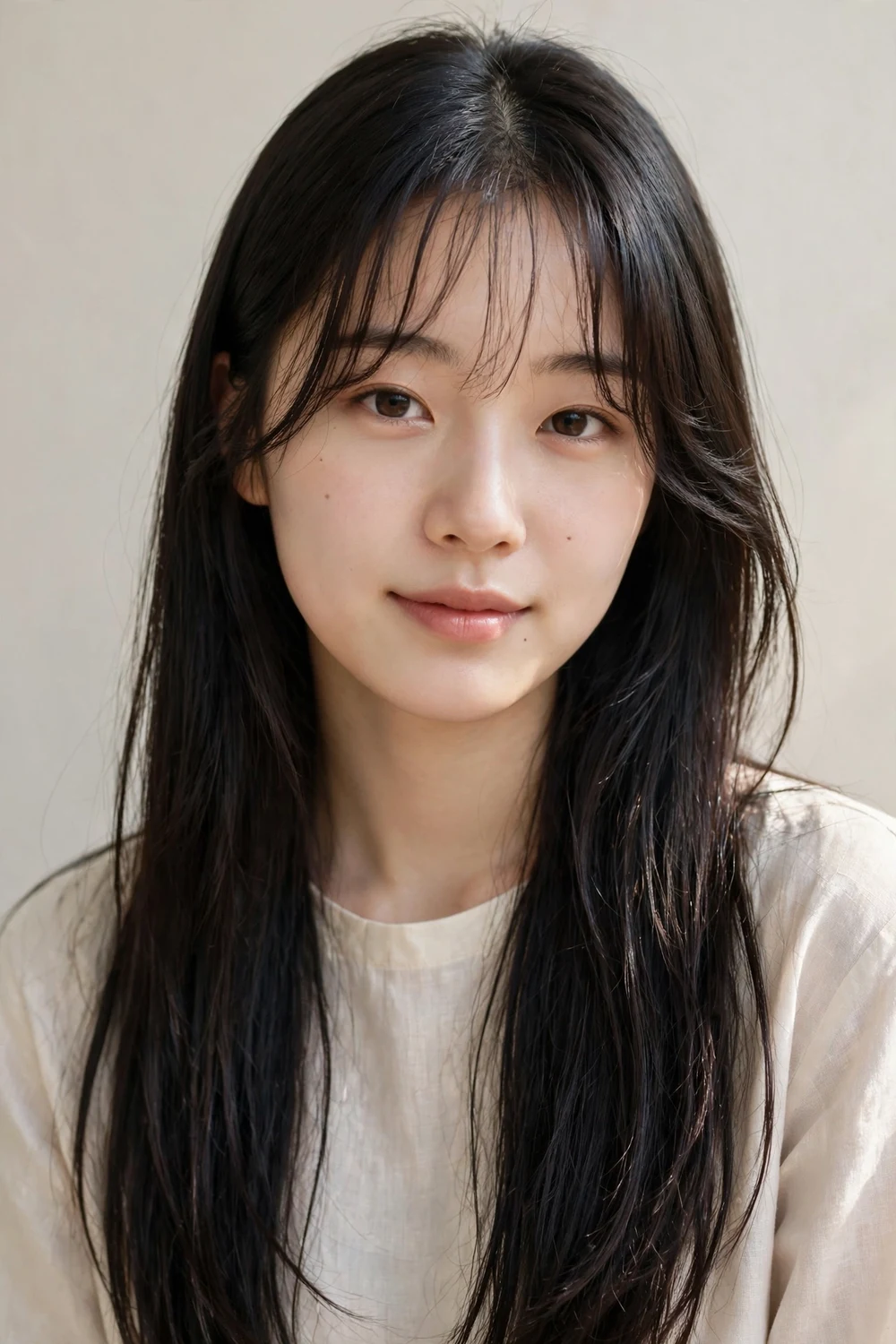
Korean-style bangs are cut airier at the center, almost see-through, growing longer toward the sides. The effect is softer than the denser Western version and pairs with sleek long hair. The center pieces need frequent tiny trims, since the airy effect vanishes once they gain weight. Ask for the bangs cut dry. Use a lightweight essence, not oil, which collapses the texture.
Try this: blow-dry the bangs forward first for root lift, then split and sweep to each side.
Best for: straight to slightly wavy hair; round and heart faces. Difficulty: Medium · Cost: $ · Daily styling: 8 min · Upkeep: micro-trim center every 3–4 weeks.
13. Curtain Bangs with a Long Ponytail
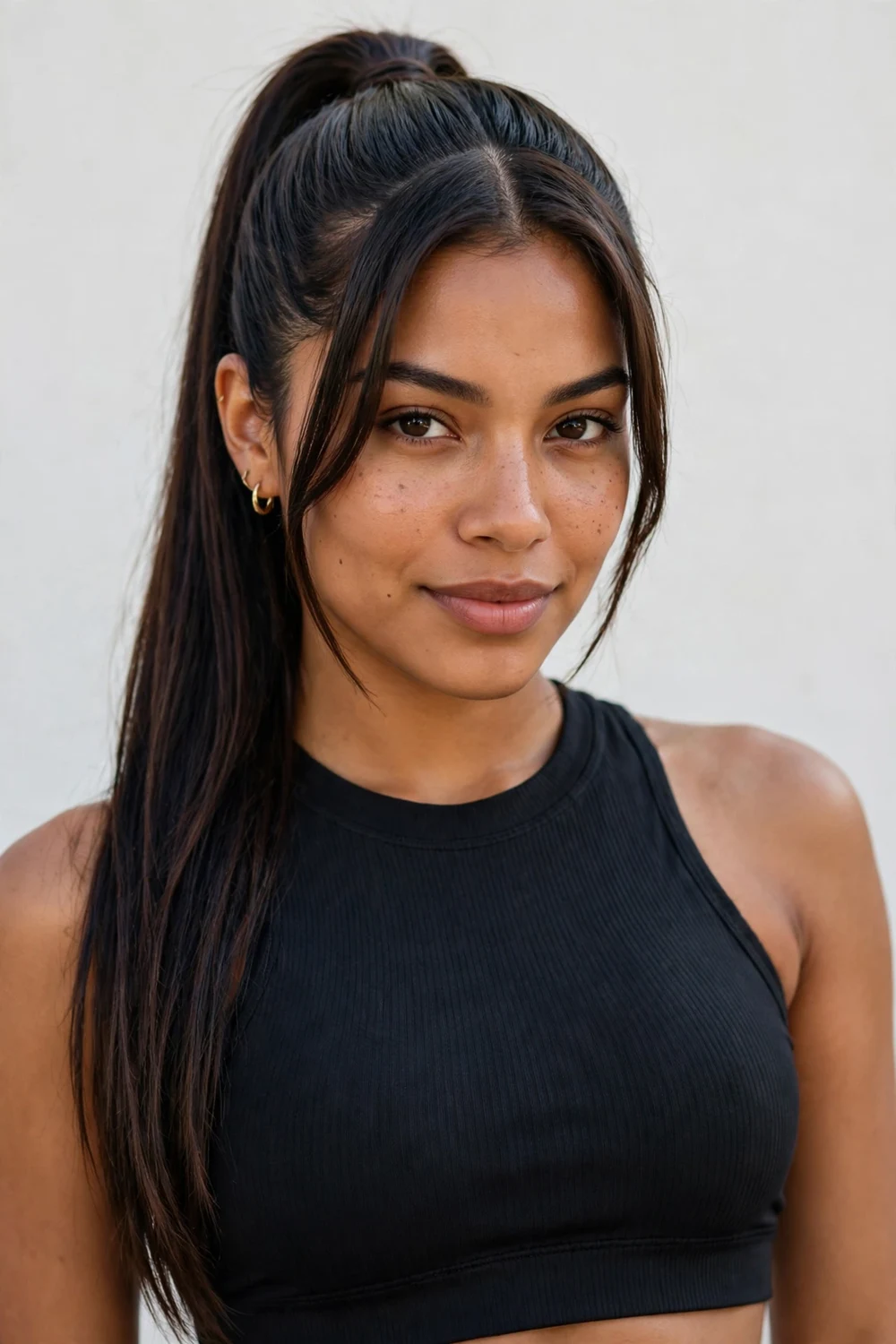
A ponytail pulls everything back except the bangs, which become the whole style. High reads sporty, mid-height reads polished, low with soft bangs reads relaxed. Wrap a strand of hair around the elastic to hide it. The bangs still need their normal styling, so this is not zero-effort. Tease the crown lightly before securing so it does not sit flat.
Try this: smooth crown flyaways with light-hold gel on a clean toothbrush for a polished finish.
Best for: all textures; gym days and busy mornings. Difficulty: Easy · Cost: $ · Daily styling: 8 min · Upkeep: trim every 4–6 weeks.
14. Side-Swept Finish on Curtain Bangs
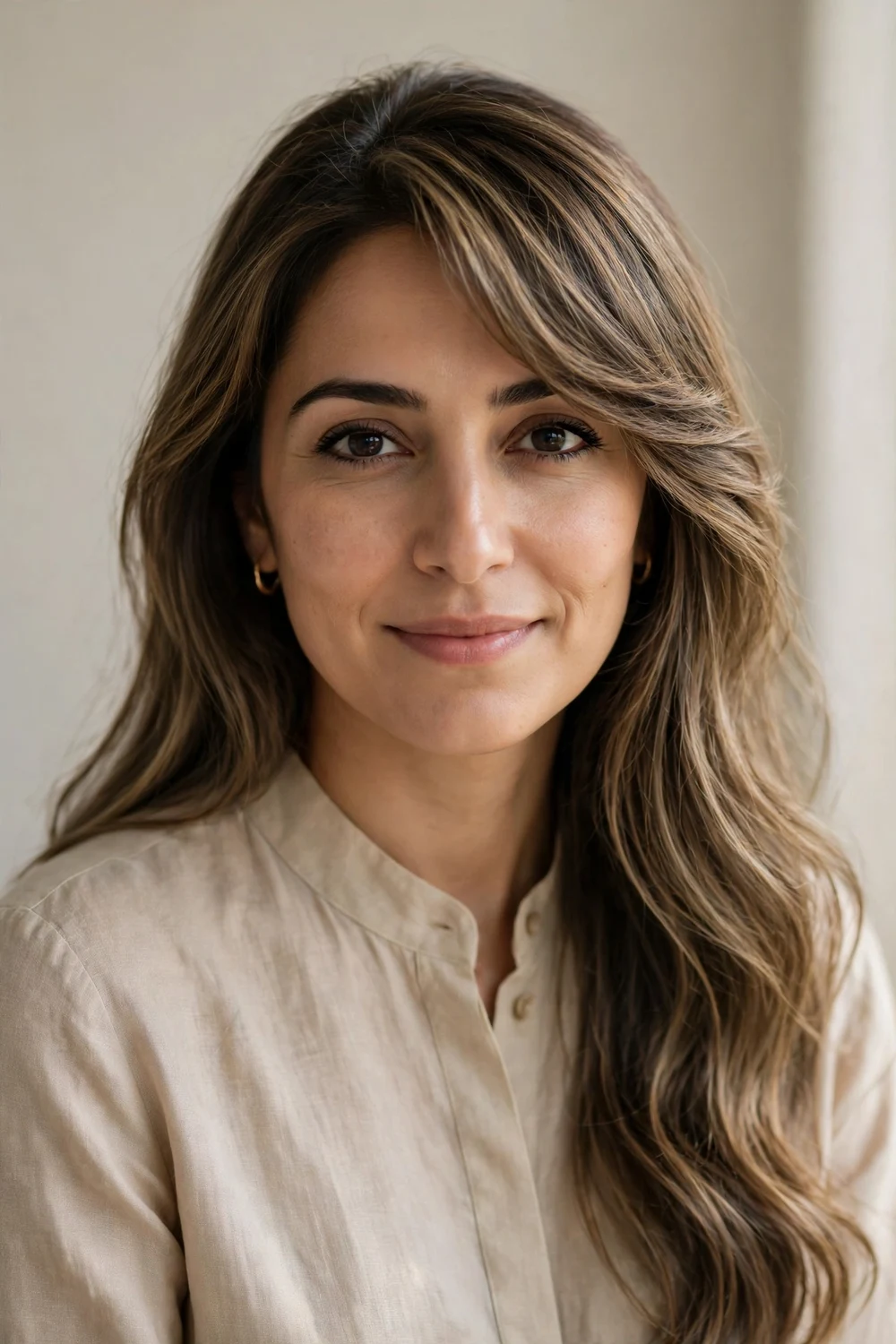
A styling variation, not a separate cut: the bangs stay parted near the center, but each side sweeps diagonally across the forehead. It suits days when the center part looks too severe, or when bangs are between trims and sitting long. It also covers a wider forehead gracefully. The shape holds best on second-day hair, when natural texture gives grip.
Try this: use this finish to stretch a bang trim by two weeks; the sweep hides uneven growth.
Best for: straight to wavy hair; wide foreheads. Difficulty: Easy · Cost: $ · Daily styling: 5 min · Upkeep: none beyond the haircut.
15. Jet Black Long Hair with Curtain Bangs
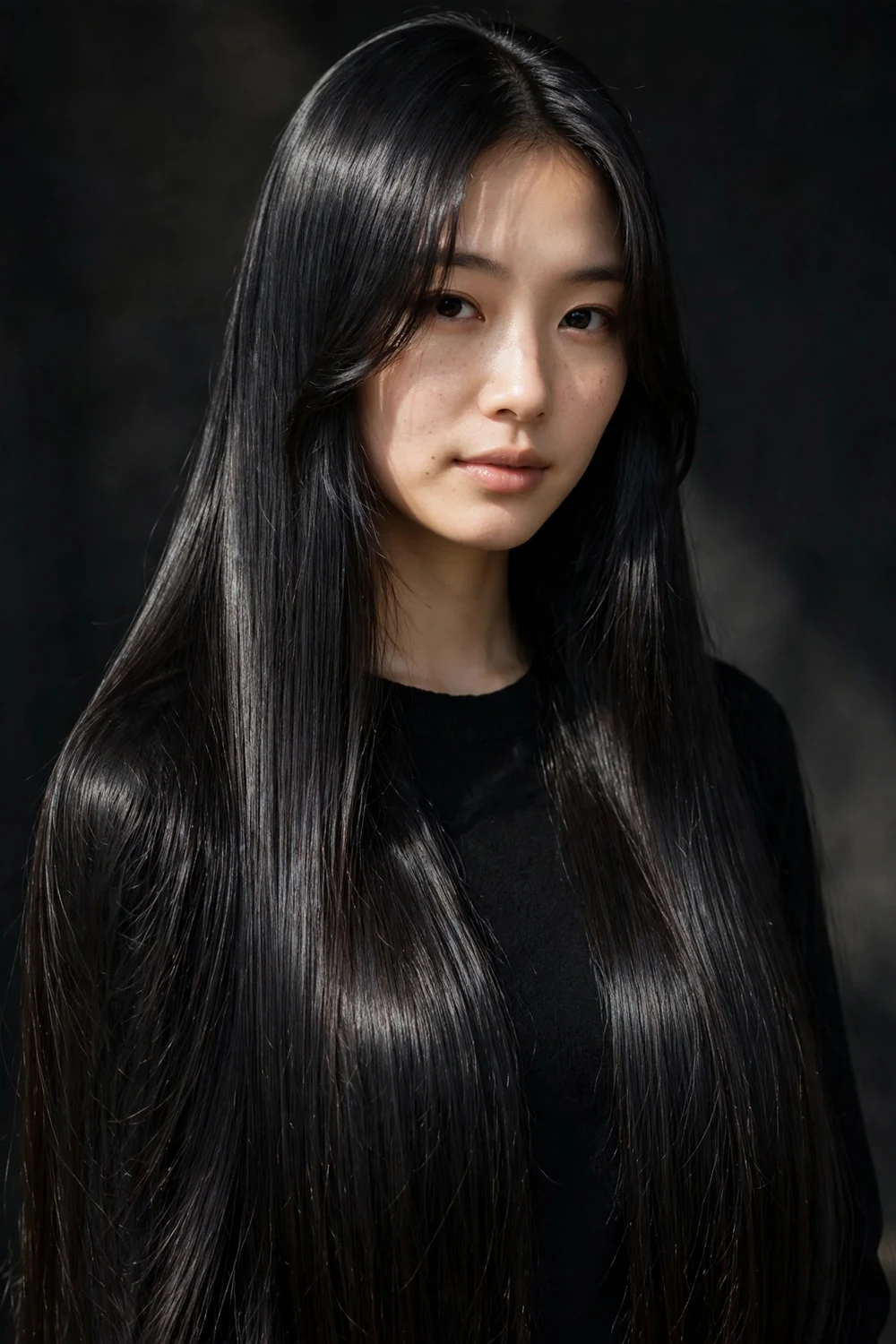
Jet black hair gives curtain bangs maximum contrast against the skin, so the frame reads bold even with a soft cut. The shine does the work: healthy black hair reflects light along the bang curve. Dark dye shows dryness fast, so a weekly mask keeps lengths from looking dull. For dark color pairings, see these black hair with brown highlights.
Try this: a clear gloss treatment every two months boosts the mirror shine black hair is known for.
Best for: naturally dark hair; all face shapes. Difficulty: Easy · Cost: $ · Daily styling: 8–10 min · Upkeep: mask weekly; trim every 5–6 weeks.
16. Blunt-Edged Curtain Bangs on Long Hair
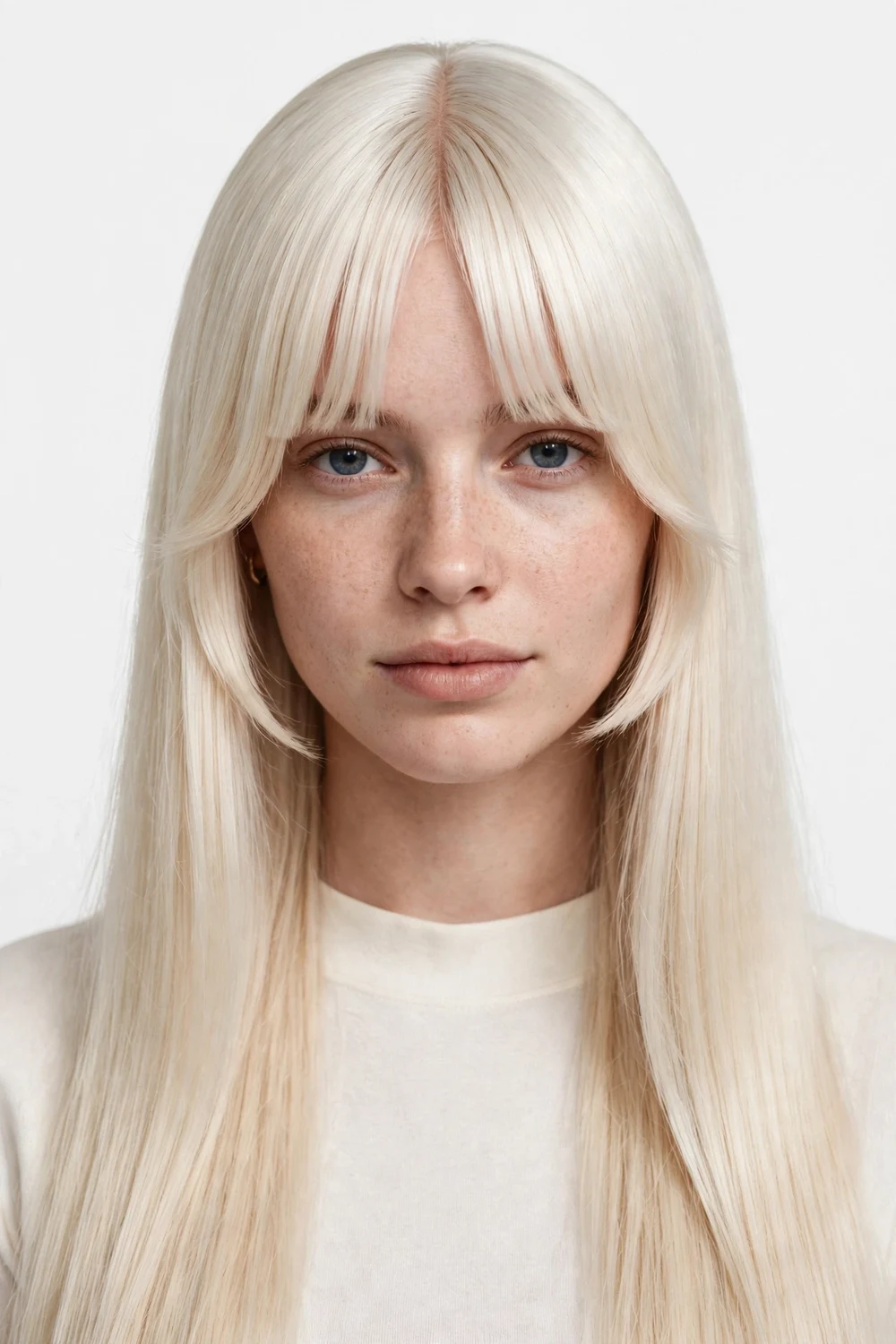
Blunt-edged curtain bangs keep the center part but cut the ends with a defined, fuller line instead of feathering. The result is bolder and more graphic, framing the eyes with real presence. The trade-off is maintenance: the edge shows growth within three weeks. It looks best on smooth, straightened hair. Heat protectant is non-negotiable; blunt ends split visibly when dry.
Try this: book bang-only trims between full appointments; many salons do them quickly and cheaply.
Best for: straight hair; oval and heart faces. Difficulty: Medium · Cost: $ · Daily styling: 10 min · Upkeep: trim every 3–4 weeks.
17. Full Curtain Bangs for Thick Long Hair
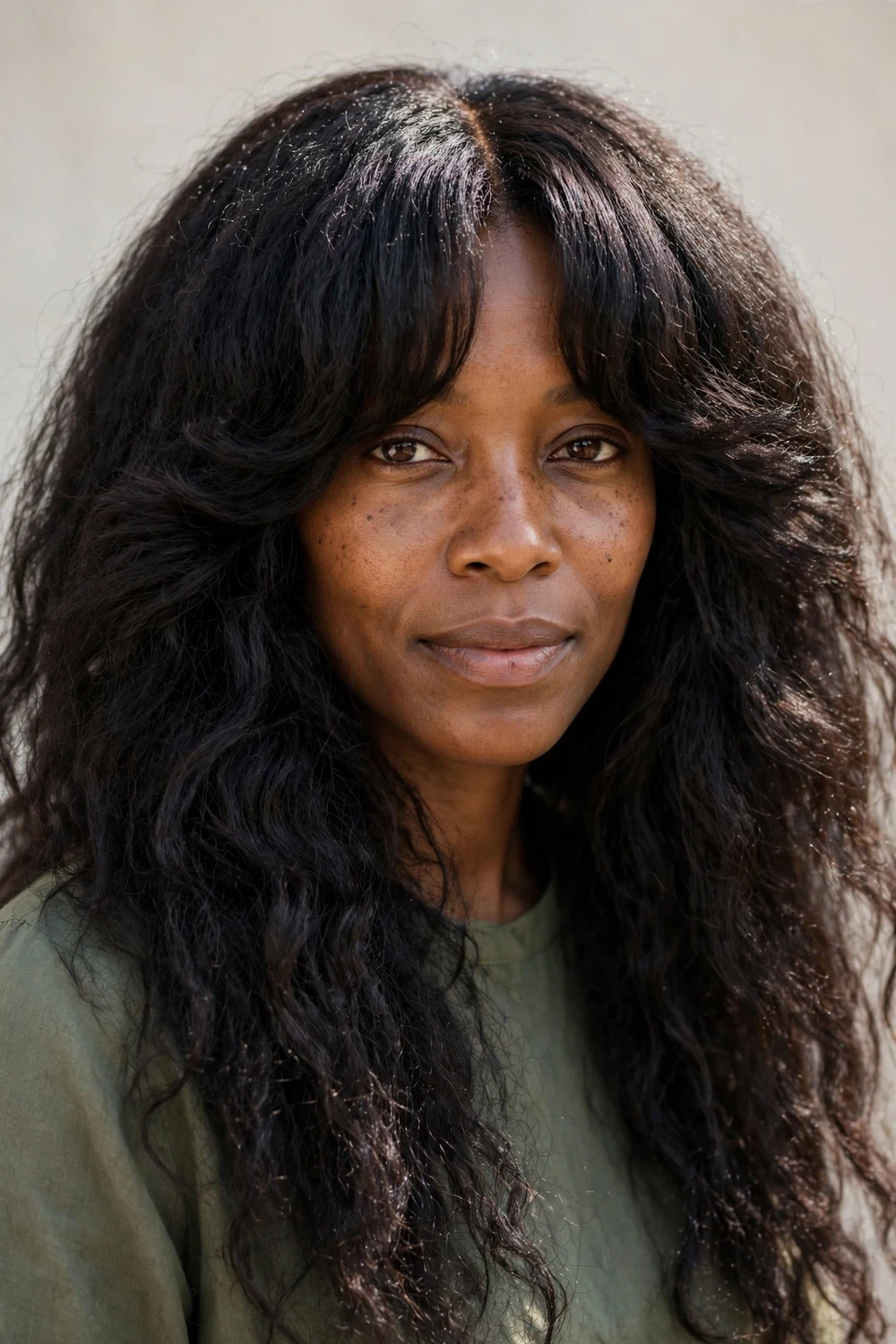
Full curtain bangs take a generous section and keep real density through the sides, covering more forehead while still opening at the center. Thick hair carries this easily; fine hair should skip it, since the bangs separate and look stringy. The weight helps them sit in place, making this lower-styling for thick hair. Interior layering stops the ends forming a shelf.
Try this: ask the stylist to thin only the last inch; it keeps root fullness with soft ends.
Best for: thick, dense hair; all face shapes. Difficulty: Easy · Cost: $ · Daily styling: 6–8 min · Upkeep: trim every 5–6 weeks.
18. Face-Framing Layers That Melt Into the Length
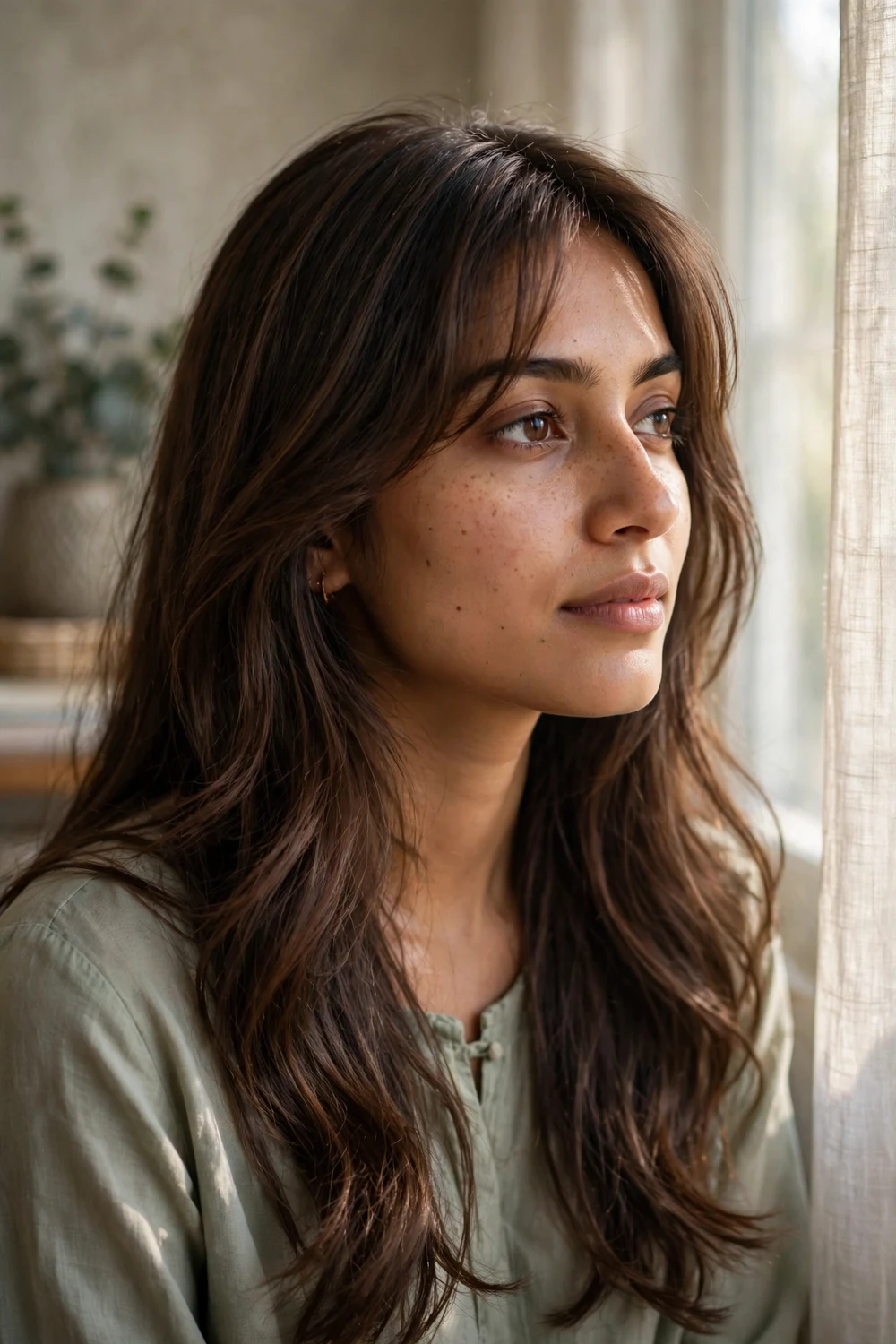
Here the bangs are not a separate feature: front pieces start at the cheekbones and graduate so gradually that no line exists between fringe and layers. It is the most forgiving version, because grow-out simply extends the graduation. Ask for the shortest front piece at cheekbone level, each following layer one to two inches longer. Ideal for cautious first-timers.
Try this: part the front pieces slightly off-center on alternate days; the graduation works from any part.
Best for: all textures; bang beginners. Difficulty: Easy · Cost: $ · Daily styling: 6 min · Upkeep: trim every 6–8 weeks.
19. Second-Day Hair Refresh for Curtain Bangs
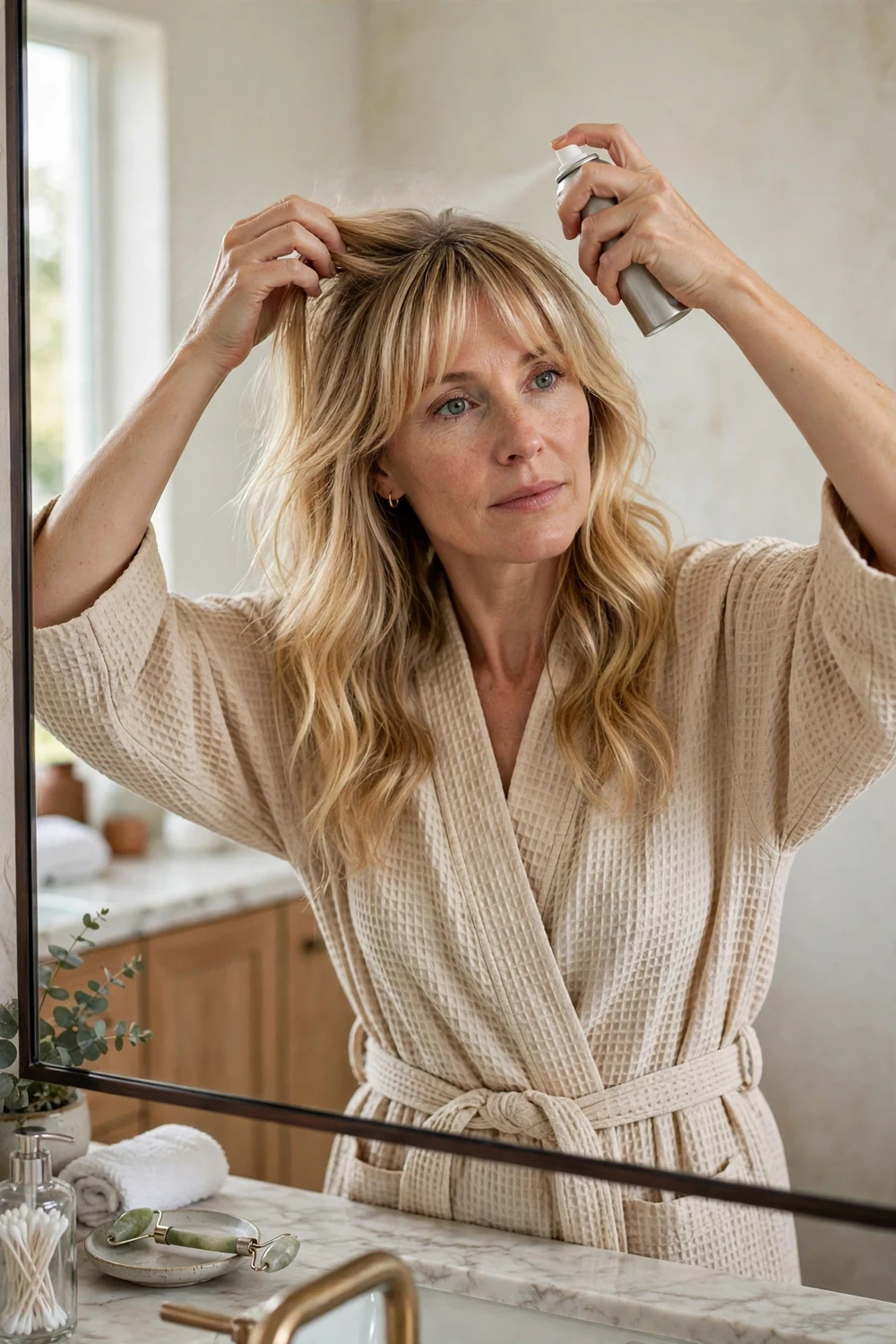
Not a cut but a method, and one of the most useful ideas here. Bangs often behave better on second-day hair: natural oils give grip, and yesterday’s bend mostly survives. Shake dry shampoo into the bang roots, wait a minute, brush through. Hit the bangs with the dryer for 60 seconds, rolling each side outward.
Try this: sleep with the bangs loosely twisted to each side; they hold the shape better than bangs left flat.
Best for: all textures; low-wash routines. Difficulty: Easy · Cost: $ (dry shampoo under $10) · Daily styling: 3 min · Upkeep: none beyond the haircut.
20. Curled Curtain Bangs with a Curling Iron
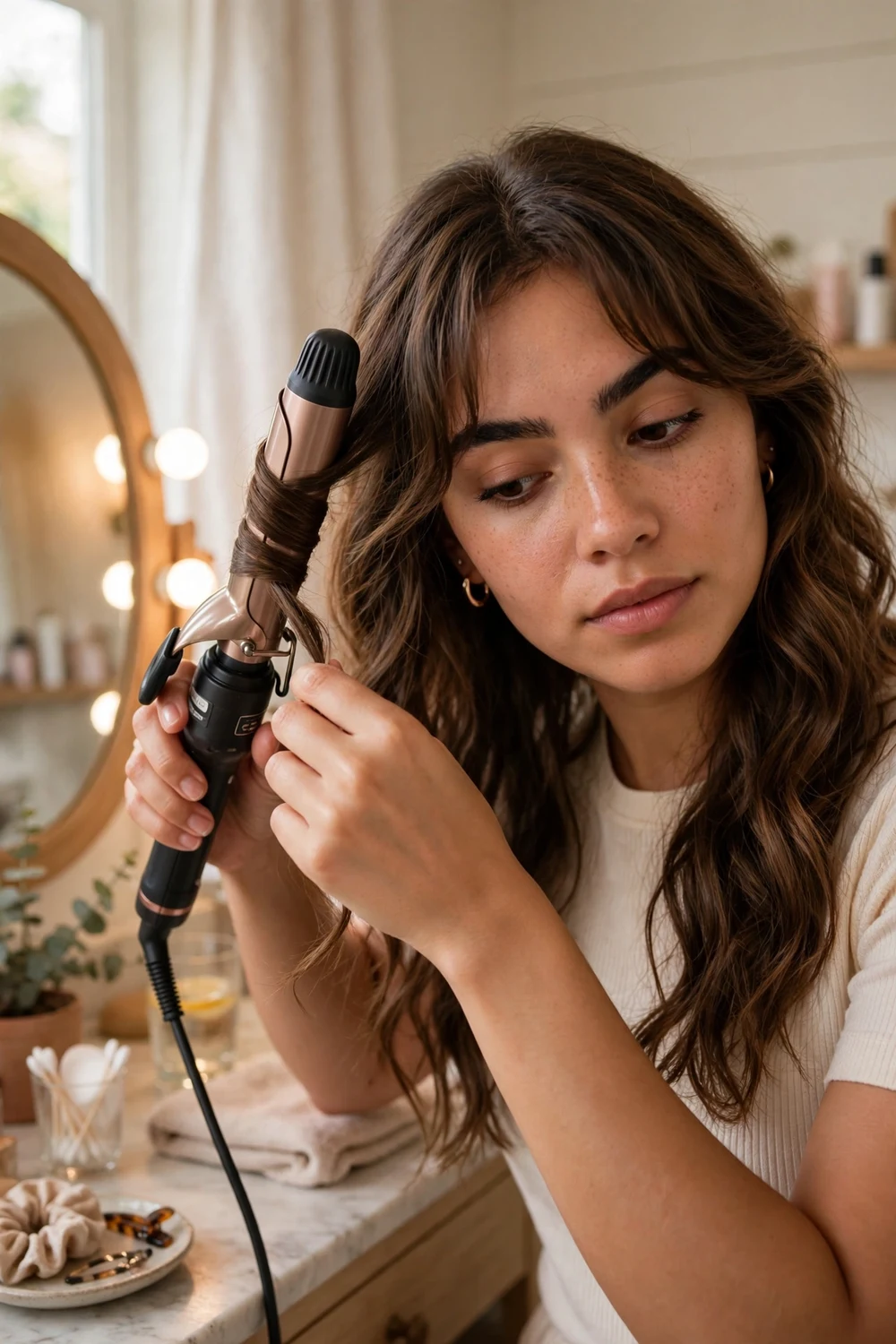
For evenings, curling just the bangs away from the face gives a polished, bouncy frame while the lengths stay simple. Use a 1 to 1.25-inch barrel: wrap each section away from the face, hold 5 to 8 seconds, release. Do not curl roots tight; the goal is a bend through mid-lengths and ends. Let curls cool before touching. Apply heat protectant first and keep the iron moving.
Try this: curl the two front layers with the bangs so the curl flows into the lengths.
Best for: straight to wavy hair; event styling. Difficulty: Medium · Cost: $ · Daily styling: 10 min · Upkeep: none beyond the haircut.
21. Curtain Bangs on Thin, Fine Long Hair
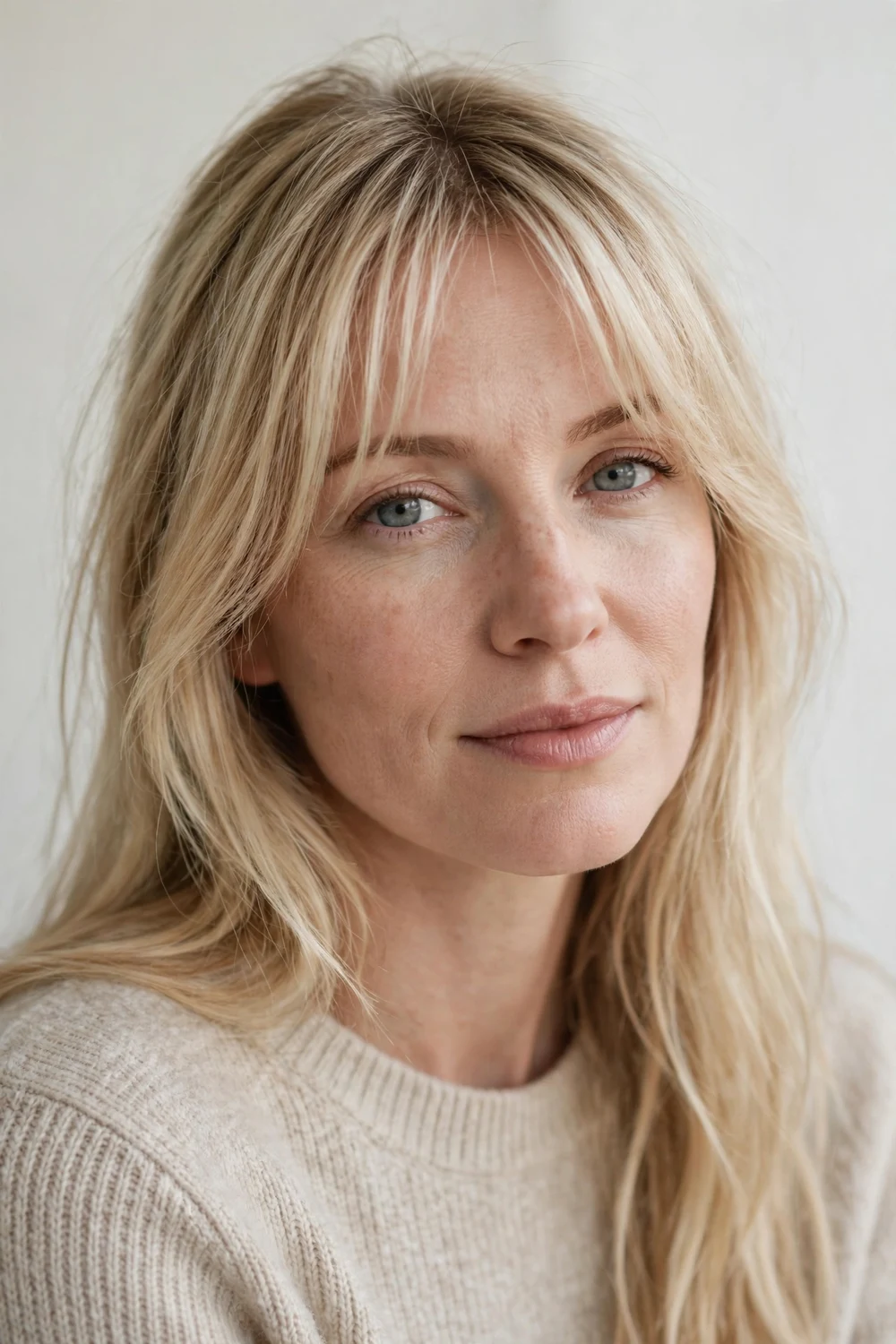
Fine hair wears curtain bangs well if the cut respects the density. Take a smaller triangle section, keep the bangs wispy, and skip heavy layering through the lengths, since over-layering makes fine hair look thinner. The bangs create the illusion of fullness around the face. Root-lifting spray at the bang roots before blow-drying gives lift. Avoid oils near the fringe.
Try this: backcomb the bang roots lightly, then smooth the top layer over for hidden volume.
Best for: fine or thin hair; oval and heart faces. Difficulty: Easy · Cost: $ · Daily styling: 8 min · Upkeep: trim every 4–5 weeks.
22. Grow-Out Plan: Bangs Into Face-Framing Layers
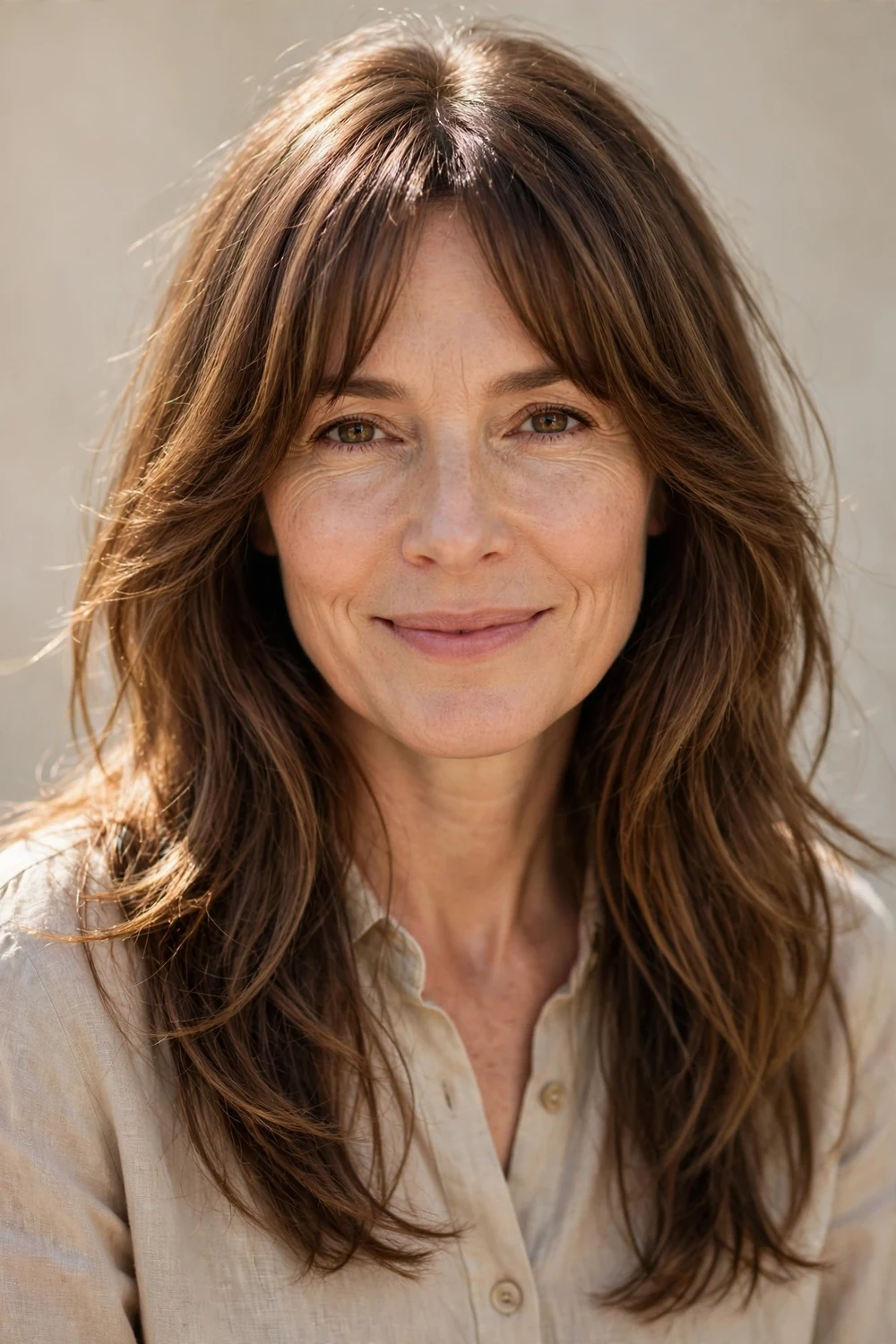
Curtain bangs have the easiest grow-out of any fringe: the target shape is already a longer face-framing layer. Stop trimming the bangs but keep trimming the cut; within 8 to 12 weeks the fringe melts in with no awkward stage. Sweep growing bangs aside and pin them. If the grow-out lands you at medium length, these hairstyles for medium length hair pick up where the bangs leave off.
Try this: photograph the bangs monthly; visible progress makes the grow-out less frustrating.
Best for: anyone between bang decisions; all textures. Difficulty: Easy · Cost: $ · Daily styling: 3 min · Upkeep: cut trims only; skip bang trims.
23. Curly Long Hair with Curtain Bangs
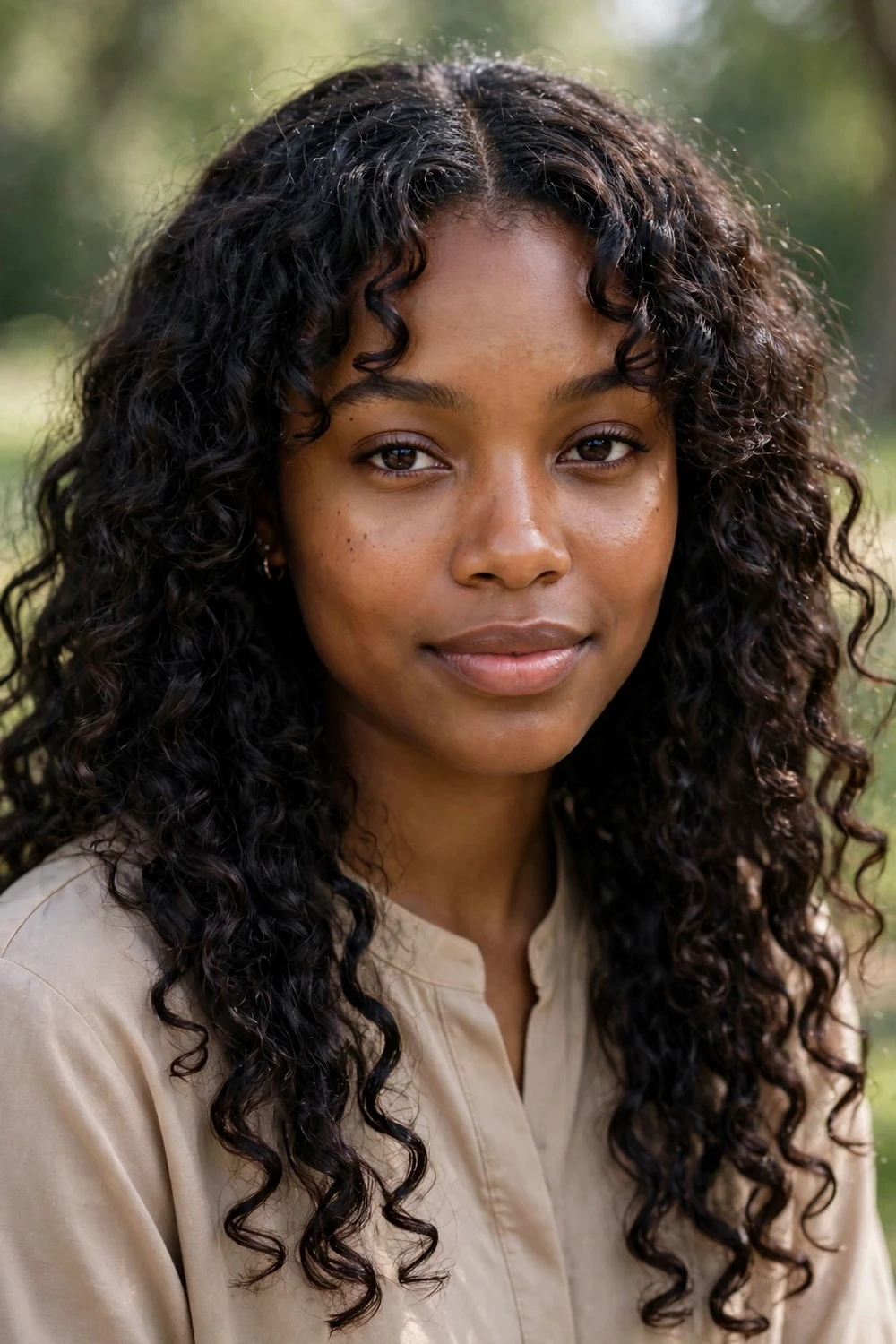
Curly curtain bangs follow the curl pattern, not fight it. They must be cut dry and left noticeably longer than the target, because curls spring up as they dry. Parted in the center, the curls open to each side. Long curls give the bangs length to blend into. Scrunch curl cream into damp bangs. Never brush them dry; refresh with a water mist.
Try this: pin each bang curl to the side it should fall on while damp; curls take the hint.
Best for: wavy to coily hair; oval and heart faces. Difficulty: Medium · Cost: $ · Daily styling: 8 min · Upkeep: trim every 8–10 weeks.
24. Short Wispy Curtain Bangs on Long Hair
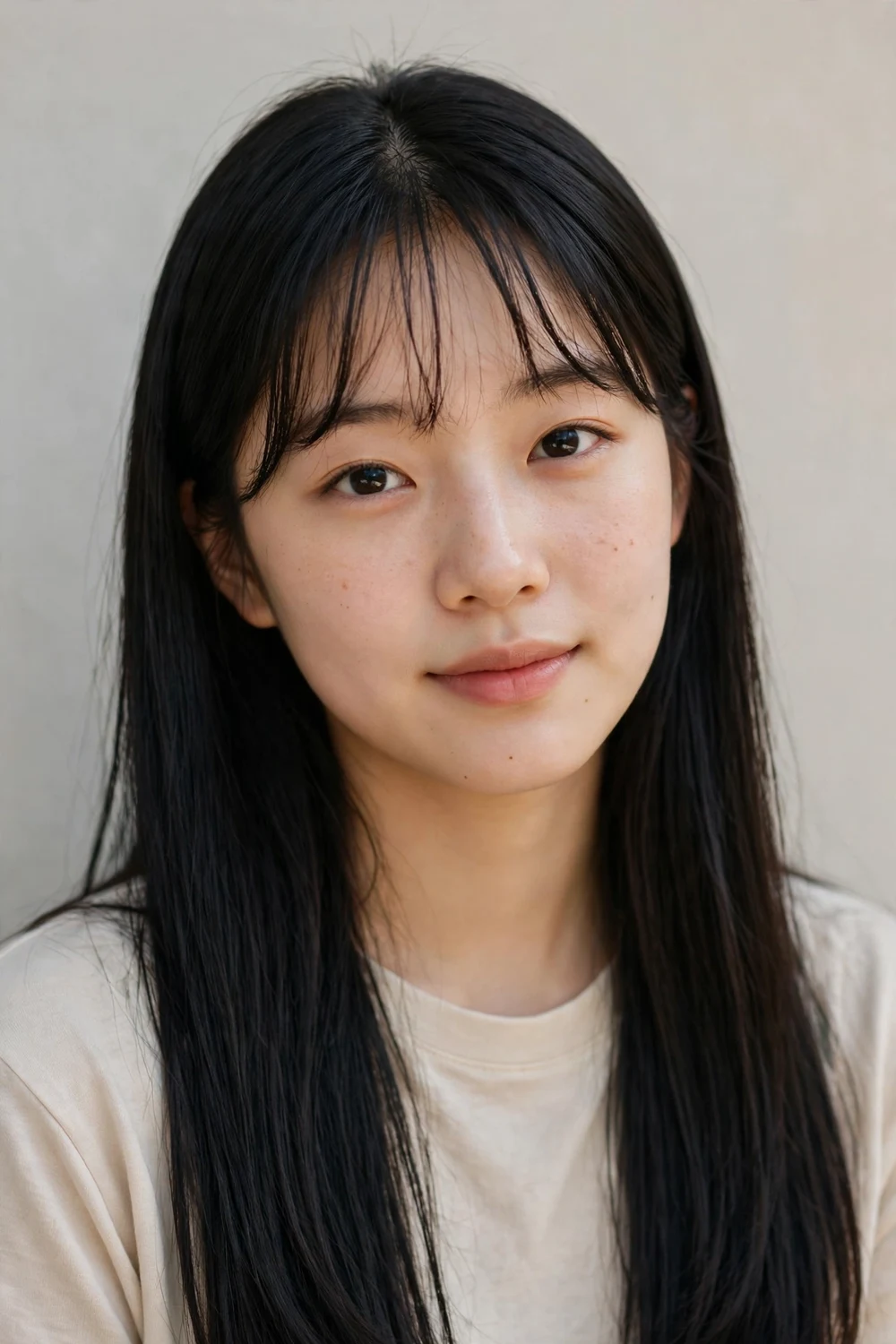
Short curtain bangs graze the brows at the center and open outward, while the long lengths flow untouched below. The contrast is what makes it striking, and it reads younger than longer versions. They need trims every three to four weeks; a week of growth changes the whole proportion. Best on smaller foreheads, since the short bang draws the eye upward. Keep product minimal.
Try this: trim the center pieces yourself between appointments, cutting less than you think you need.
Best for: straight to wavy hair; petite foreheads. Difficulty: Medium · Cost: $ · Daily styling: 5 min · Upkeep: trim every 3–4 weeks.
25. Half-Up, Half-Down with Curtain Bangs
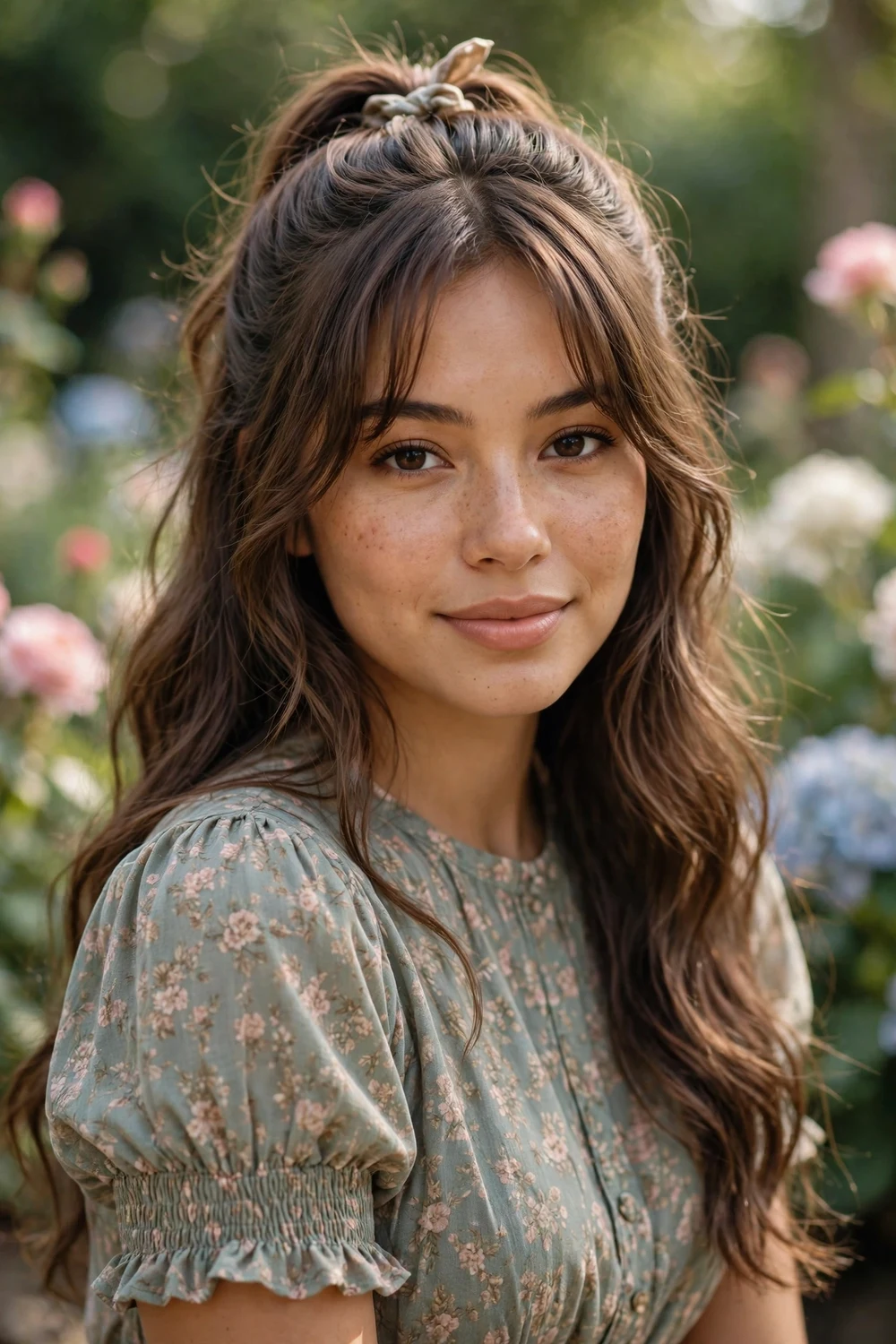
The half-up style shows off length while keeping hair out of the face, and curtain bangs complete the frame the pulled-back top leaves open. Gather the top section temple to temple, secure at the crown, leave bangs and front layers loose. Swap the elastic for a claw clip to dress it up. Tease the crown lightly before securing so the top does not sit flat.
Try this: pull two thin strands loose in front of the ears; they soften the half-up line.
Best for: all textures; weddings and events. Difficulty: Easy · Cost: $ · Daily styling: 10 min · Upkeep: none beyond the haircut.
26. Curtain Bangs with a Long Side Braid

A long side braid keeps every inch of length on display while the bangs keep the face framed, solving the main complaint about braids: a bare face. A loose fishtail or three-strand braid over one shoulder works best; tight braids fight the bangs’ softness. Pancake the braid by tugging edges outward for fullness. Braid on second-day hair for grip, and style the bangs first.
Try this: weave a thin ribbon through the braid for events; it picks up the frame the bangs create.
Best for: medium to thick hair; casual and festival wear. Difficulty: Easy · Cost: $ · Daily styling: 10 min · Upkeep: none beyond the haircut.
27. Low Chignon with Curtain Bangs
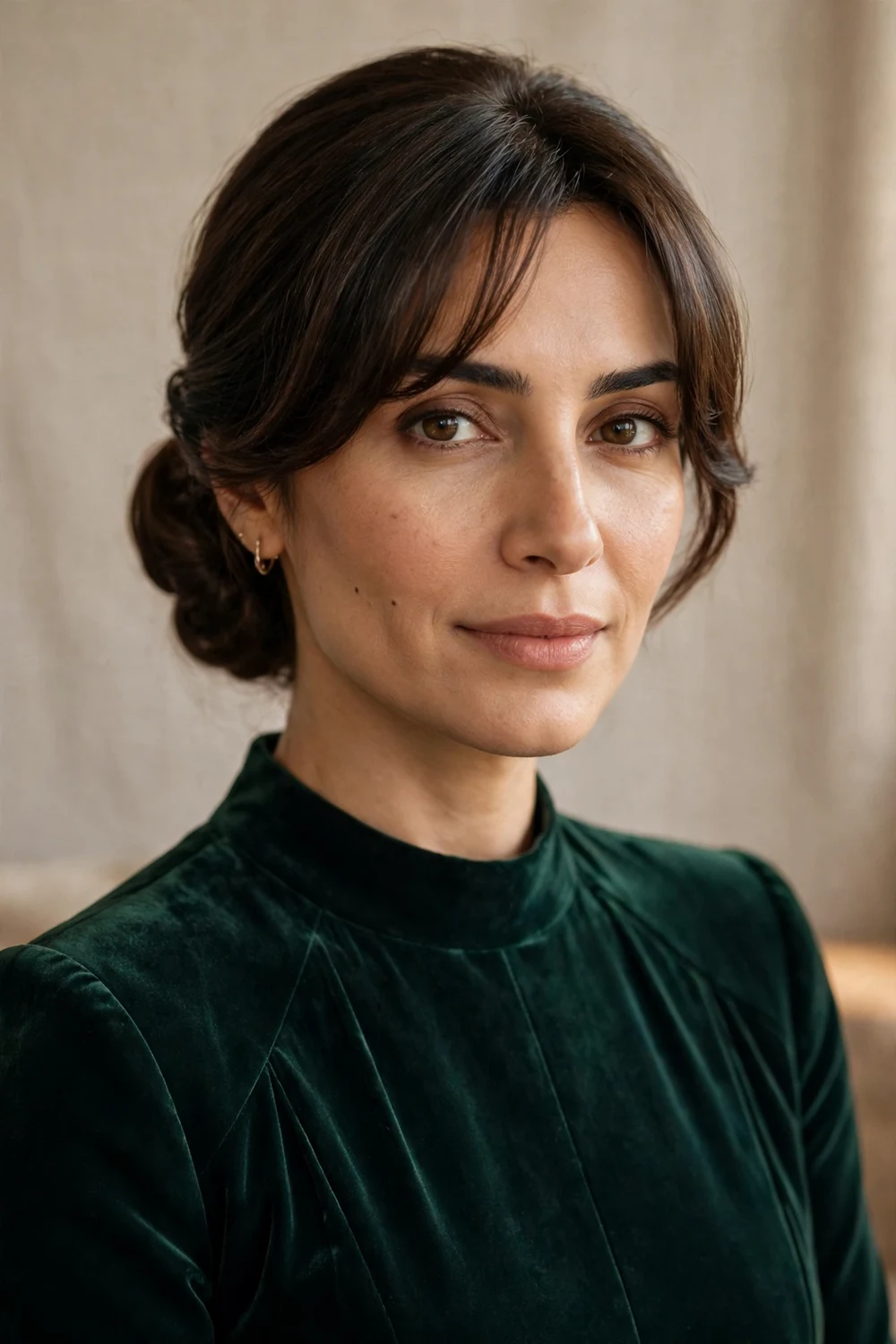
For formal occasions, a low chignon at the nape with curtain bangs gives polish without severity. The bun holds the length neatly while the bangs soften the hairline. Twist the lengths loosely and pin in sections rather than one tight coil; the looser build suits the fringe. Leave the bangs out of the updo and style them last. Use U-pins for a hold that survives the evening.
Try this: do a trial run a week before the event; the pinning takes practice.
Best for: all textures; weddings and formal events. Difficulty: Medium · Cost: $ (salon updo $50–$80) · Daily styling: 15–20 min · Upkeep: none beyond the haircut.
Curtain Bangs for Long Hair Comparison Table
| Style Group | Bang Shape | Daily Styling | Trim Cycle | Best For |
|---|---|---|---|---|
| Classic, Layered & Blended (1, 4, 18) | Cheekbone, center-parted | 6–10 min | 5–8 weeks | All textures; first-timers |
| Shag, Feathered & 70s Texture (2, 5) | Feathered, flicked outward | 10–15 min | 5–8 weeks | Fine to medium hair needing volume |
| Wavy & Curly (3, 23) | Longer (shrinkage allowance) | 5–8 min | 6–10 weeks | Natural waves and curls |
| Sleek, Straight & Blunt (10, 16) | Crisp part; defined ends | 10–12 min | 3–5 weeks | Naturally straight hair |
| Color-Focused (6, 7, 11, 15) | Cheekbone | 8–10 min | 5–6 weeks + color upkeep | Highlights, balayage, red, black |
| Bang Shapes: Wispy, Short, Full, Korean, Side Variations (8, 9, 12, 14, 17, 24) | Varies by shape | 5–8 min | 3–6 weeks | Matched to density and face shape |
| Updos, Braids & Ponytails (13, 25, 26, 27) | Styled as usual | 8–20 min | 4–6 weeks | Events, busy days, formal wear |
| Methods, Fine Hair & Grow-Out (19, 20, 21, 22) | Light, lifted | 3–10 min | 4–10 weeks | Low-maintenance routines |
Final Thoughts
Curtain bangs improve long hair without shortening it. Pick the version that matches your texture and your mornings: wash-and-go waves for low-effort weeks, sleek or blunt finishes for polish, updos and braids when the length needs to be out of the way. Show your stylist reference photos, be honest about trims, and give the bangs two weeks to settle before you judge the cut.
Frequently Asked Questions
Do curtain bangs work on very long hair, or do they get lost in the length?
They work if the bangs are blended deep into the front layers. Ask for the shortest bang piece at cheekbone level and front layers that graduate into the lengths. The contrast between the shorter frame and the long hair is what makes the style striking.
How can I keep curtain bangs from separating or going flat on long hair?
Style the bangs first while dampest: blow-dry forward for root lift, roll each side outward with a round brush, and finish with a cool shot. Dry shampoo at the roots absorbs the oil that causes separation. Keep heavy creams and oils away from the fringe.
How often should I trim curtain bangs on long hair?
Every 4 to 6 weeks for most versions. Blunt and short wispy bangs need it every 3 to 4 weeks, while curly, shaggy, and blended versions stretch to 8 to 10 weeks. Many salons offer quick bang-only trims between appointments.
Can I wear my long hair up with curtain bangs?
Yes. Ponytails, half-up styles, braids, and low chignons leave the bangs loose to frame the face, which keeps pulled-back styles from looking severe. Style the bangs first, then build the updo around them.
Will curtain bangs grow out awkwardly with long hair?
No. They grow directly into face-framing layers with no awkward stage. Stop trimming the fringe but keep trimming the cut, and within 8 to 12 weeks the bangs blend in. Bobby pins and texture spray handle the transition weeks.

