


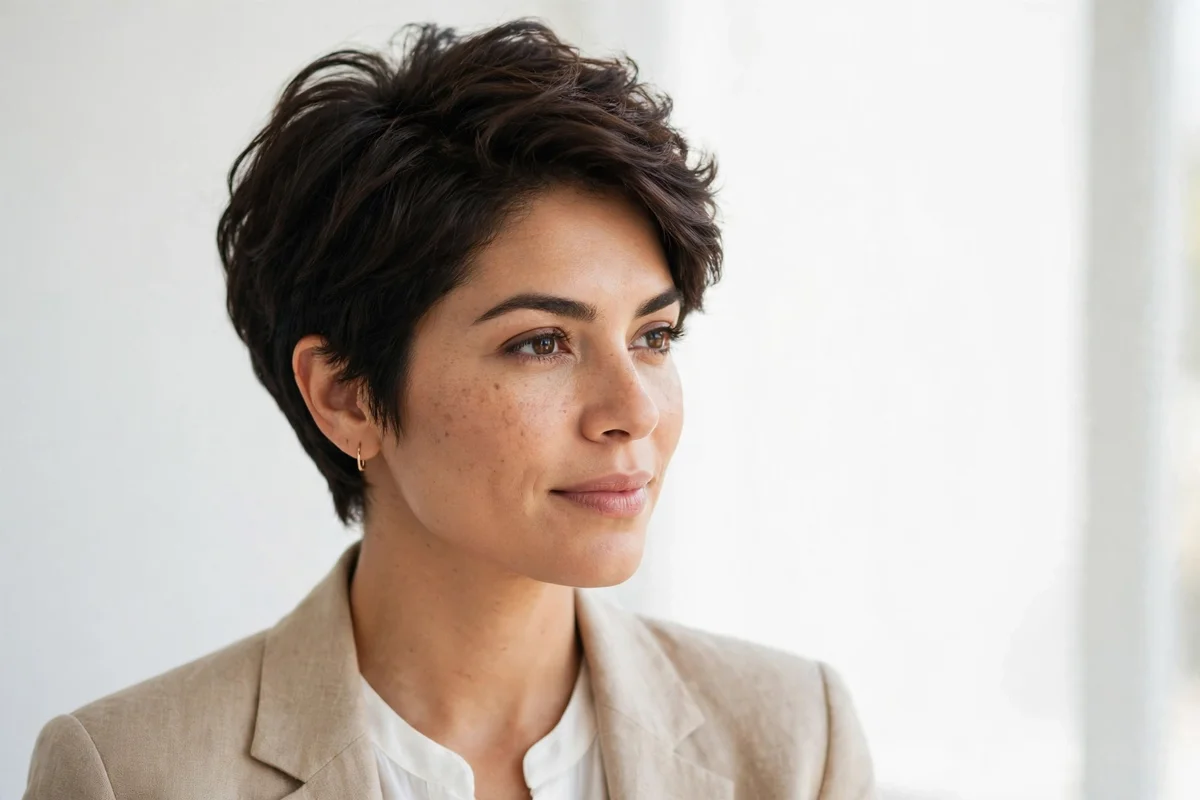
Fine hair can fall flat by midday no matter how much effort goes into the morning routine. A pixie bob changes that math. It sits right between a pixie and a bob, with short structured sides and enough length on top to build real volume.
This guide rounds up 30 pixie bob haircuts for fine hair, each picked to make thin strands look denser. You’ll find textured cuts, stacked backs, tapered napes, and color tricks that fake fullness. I’ve spent years testing short cuts on fine hair, and these are the shapes that actually hold up.
Quick answer: The best pixie bob haircuts for fine hair keep the outline fairly blunt, build lift at the crown, and use light texture instead of heavy thinning. Ask your stylist for a stacked or tapered back with longer pieces on top, then style with root mousse and a round brush for lift that lasts.
Quick Takeaways
- A pixie bob blends pixie structure with bob length, which keeps fine hair from collapsing.
- Stacked backs and tapered napes create volume exactly where fine hair needs it.
- A fairly blunt outline looks denser than heavily thinned ends.
- Lightweight mousse and root lift beat heavy creams for all-day hold.
- Trims every 4 to 6 weeks keep the shape lifted and the nape clean.
Why Pixie Bobs Flatter Fine Hair
Shorter hair weighs less, so it lifts more easily at the root. That’s the whole secret. A pixie bob keeps the nape tight and the crown longer, which builds height right where fine hair tends to go flat.
The cut also respects what fine hair can handle. Thin strands can’t support heavy layering, so the strongest pixie bobs use fewer, smarter layers. Texture goes on top for movement while the outline stays solid, which reads as thickness in photos and in person.
Fine Hair Prep Before Your Cut
Wash with a volumizing shampoo and skip heavy conditioner at the roots on appointment day. Bring two or three reference photos of the exact cut you want, not just the color you like.
Tell your stylist where your hair falls flat. A good consult names the trouble spots: sparse temples, a flat crown, or ends that turn stringy. That detail decides whether you need a side fringe, a stacked back, or a deeper taper.
1. Textured Pixie Bob for Fine Hair
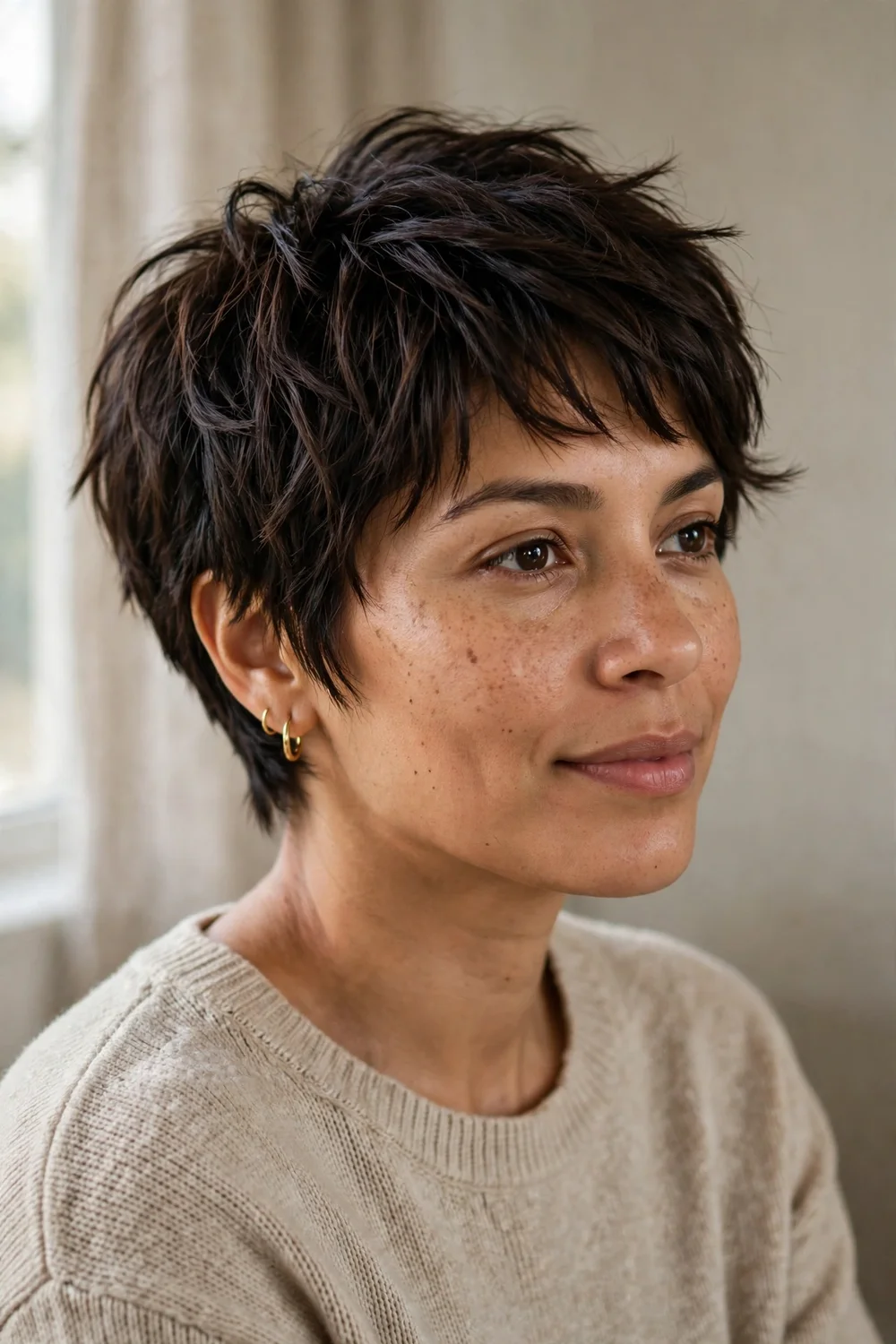
Choppy layers through the top are the fastest way to make fine hair look thicker. This cut keeps the sides neat while the crown gets broken-up texture that catches light from different angles. That movement creates the impression of density, even when the actual strand count is low. It suits straight to slightly wavy hair best, since the texture does the work without daily heat styling. Ask your stylist to point-cut the top layers rather than slide-cutting, which can make fine ends look stringy. The result reads full from the front and the side.
Try this: Rub a pea-sized amount of matte paste between your palms and pinch the crown pieces upward. It takes about two minutes and the lift holds all day.
2. Softly Layered Pixie Bob
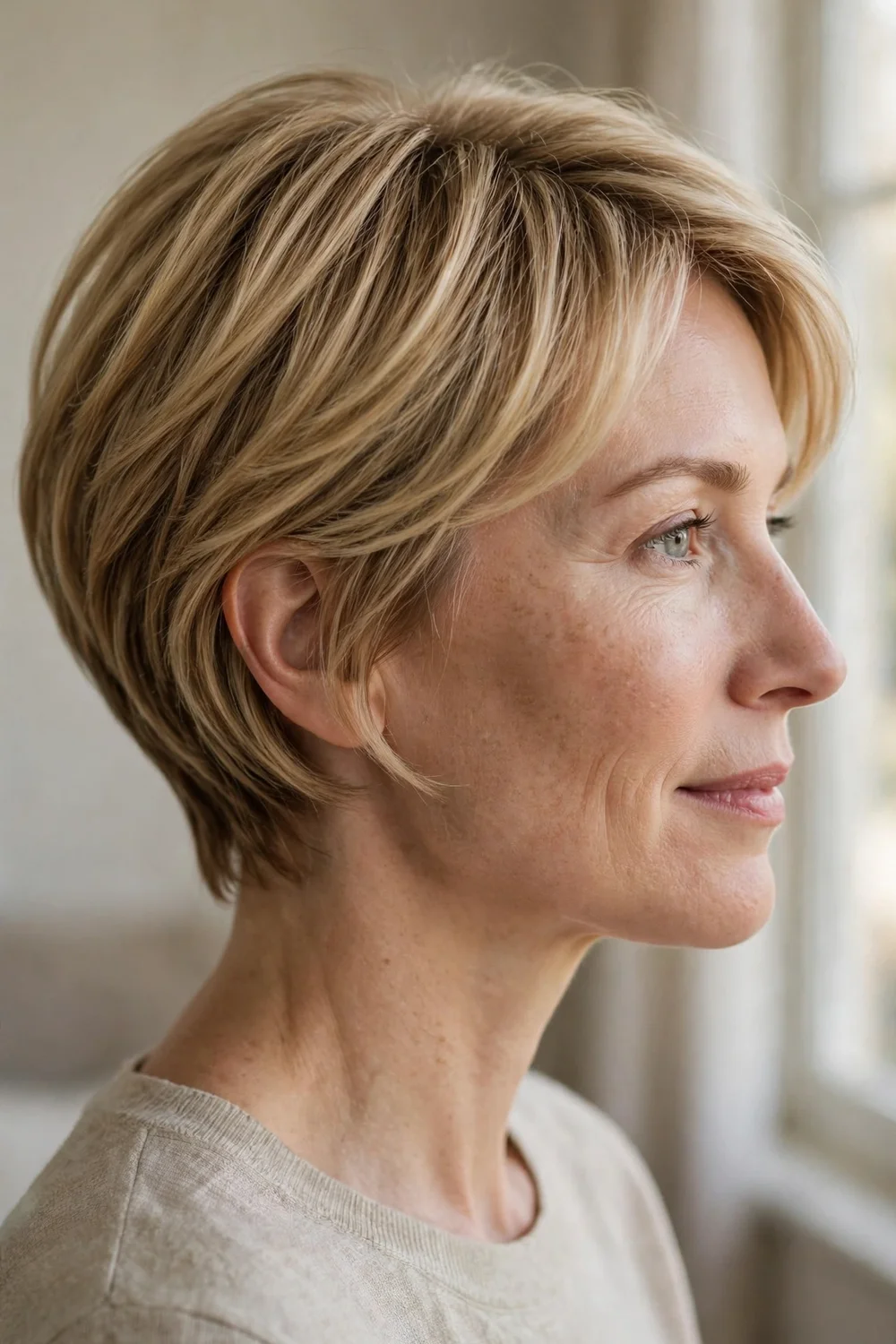
When heavy texture feels like too much, soft layering gives a quieter kind of fullness. The layers here are long and blended, so the hair moves as one piece instead of breaking into chunks. That smooth surface reflects more light, which makes fine hair look shinier and therefore thicker. It flatters oval and heart-shaped faces, and it grows out gracefully since there are no harsh lines to lose their shape. Tell your stylist you want internal layers for movement but a clean outline at the ends. This is the lowest-drama option on the list.
Try this: Blow dry with a round brush, rolling the top sections away from your face. A light mist of flexible-hold hairspray keeps the shape soft, not stiff.
3. Side Swept Fringe Pixie Bob
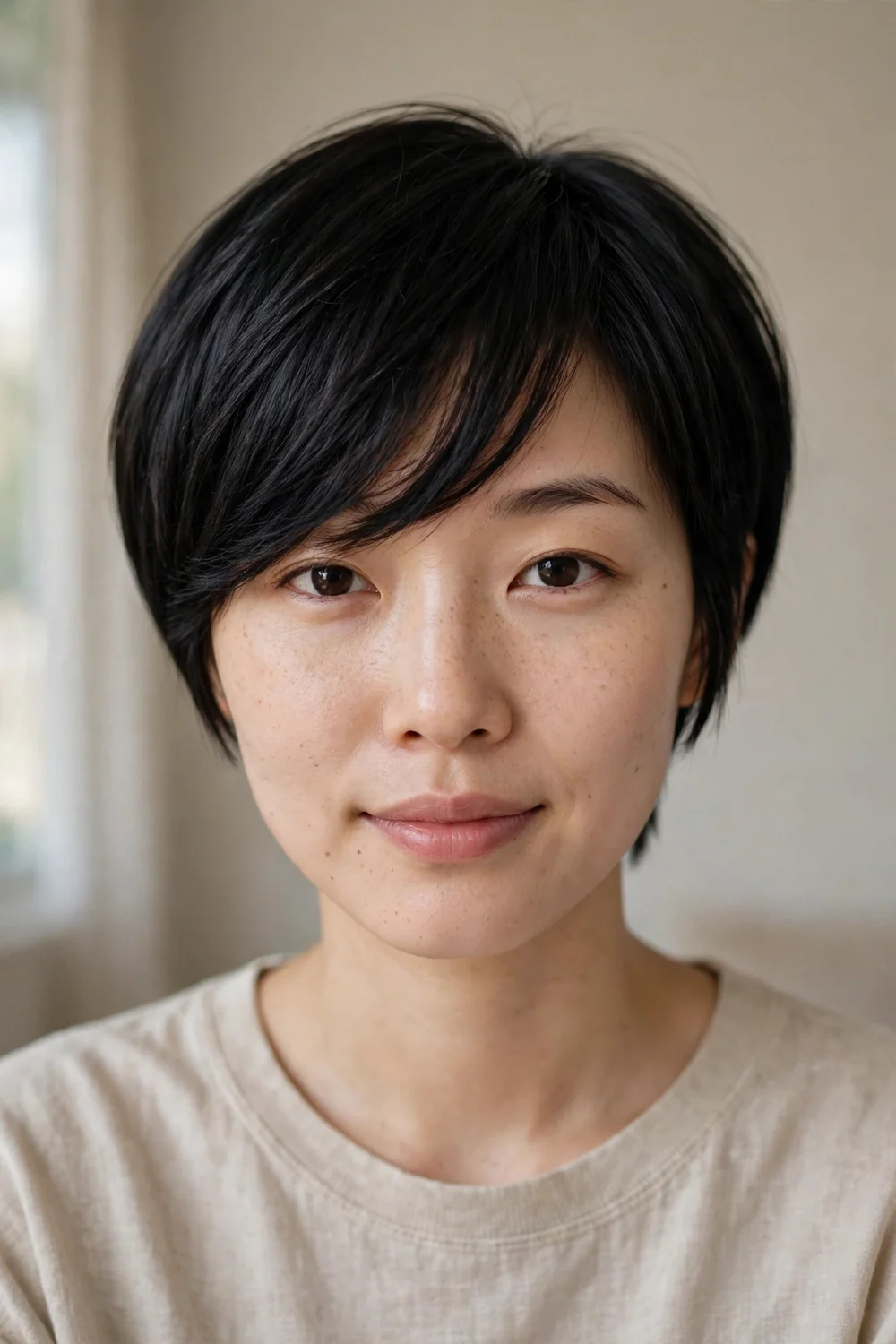
Sparse temples are one of the most common complaints with fine hair, and a side swept fringe covers them instantly. The deep part shifts weight to one side, which concentrates what density you have into a single strong shape instead of spreading it thin. Keep the fringe long enough to tuck behind your ear on busy days. The rest of the cut stays simple: tapered sides, a little length on top, and ends that are textured just enough to move. It works on most face shapes because the diagonal line softens everything it crosses.
Try this: Blow dry the fringe forward first with a flat brush, then sweep it to the side. That two-step move stops it from splitting at the part.
4. Stacked Back Pixie Bob
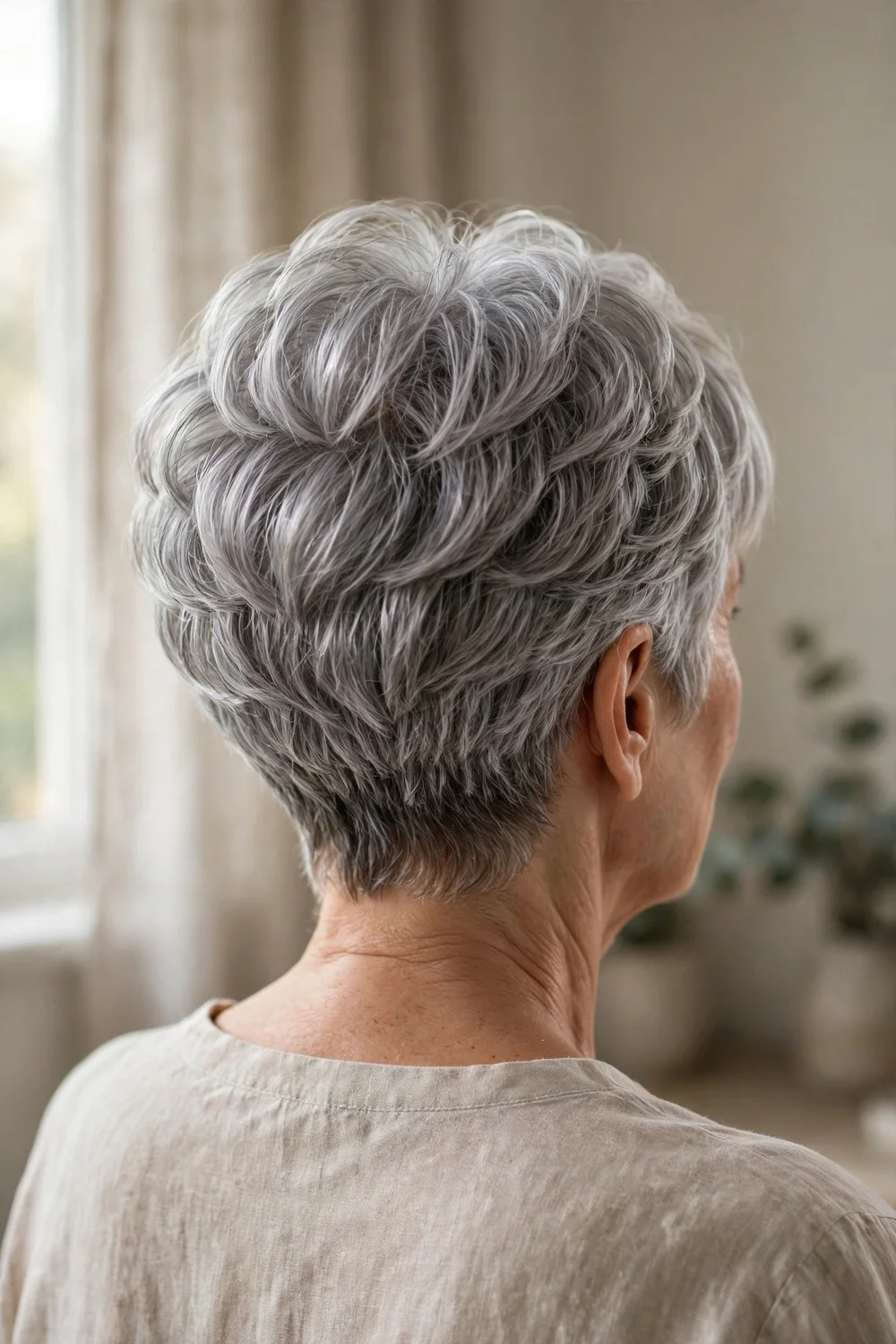
Stacking builds a rounded shelf of volume at the back of the head, right where fine hair usually lies flat. Shorter layers sit under longer ones, pushing the whole shape upward and outward. The effect is automatic fullness that doesn’t depend on teasing or products. Keep the front pieces a touch longer so you can still style them forward or to the side. Ask for blunt ends at the perimeter, since a clean edge always looks denser than a wispy one. This cut is especially kind to straight hair that refuses to hold a curl.
Try this: Apply volumizing mousse at the roots while damp, then blow dry the back sections upward with a vent brush. The stack does the rest.
5. Stacked and Angled Pixie Bob
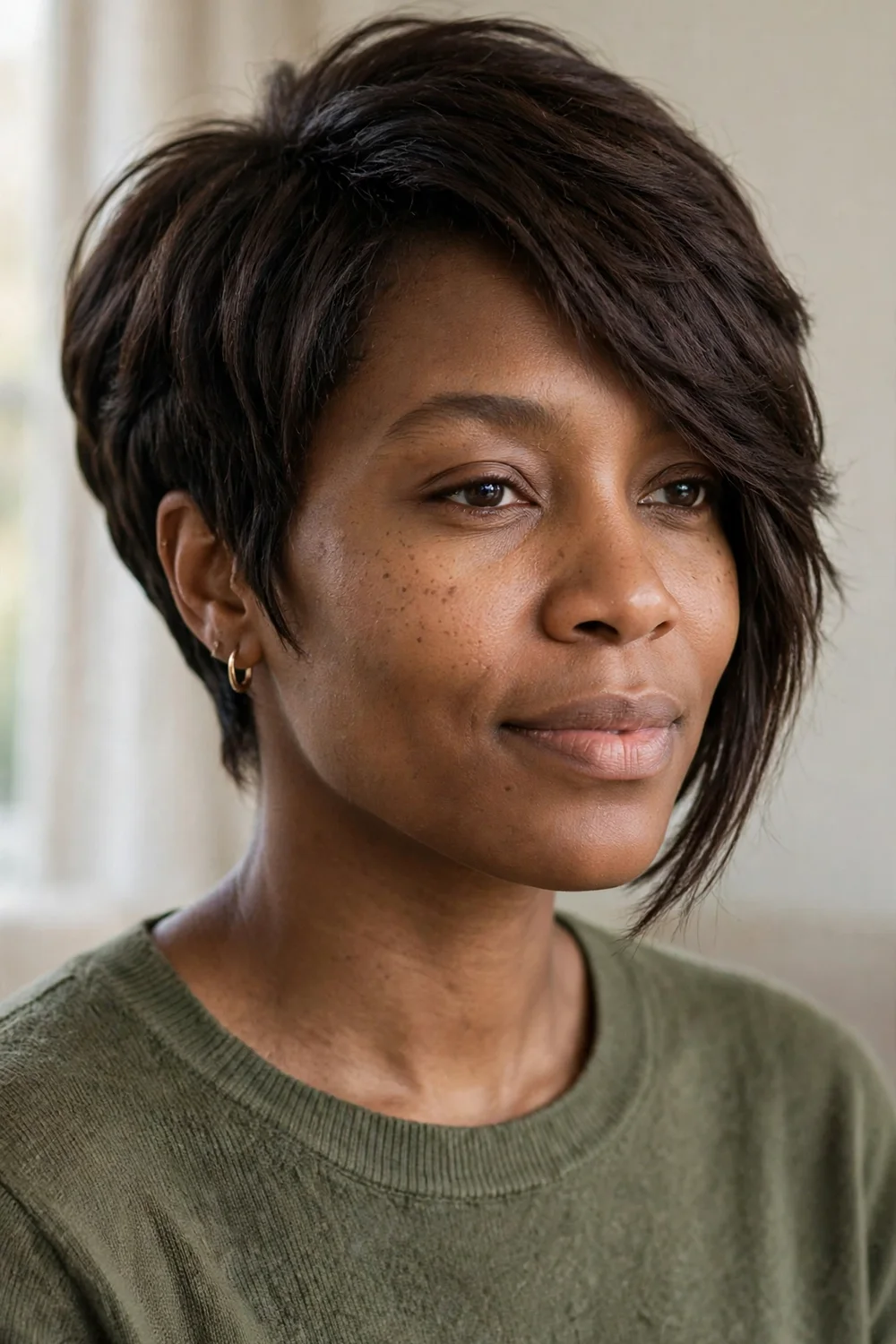
Take the volume of a stacked back and add a forward angle, and you get a cut with built-in drama. The back stays short and lifted while the front drops longer toward the face, which draws the eye forward and frames the cheekbones. That diagonal line also makes the hair look thicker along the jaw, where fine hair often disappears. It suits round and square faces well because the longer front pieces add length visually. Your stylist should cut the angle with the head tilted slightly forward so it sits correctly when you stand up straight.
Try this: Smooth the front pieces with a flat iron, bending them slightly under. One pass is enough; over-ironing flattens fine hair fast.
6. Soft A-Line Pixie Bob
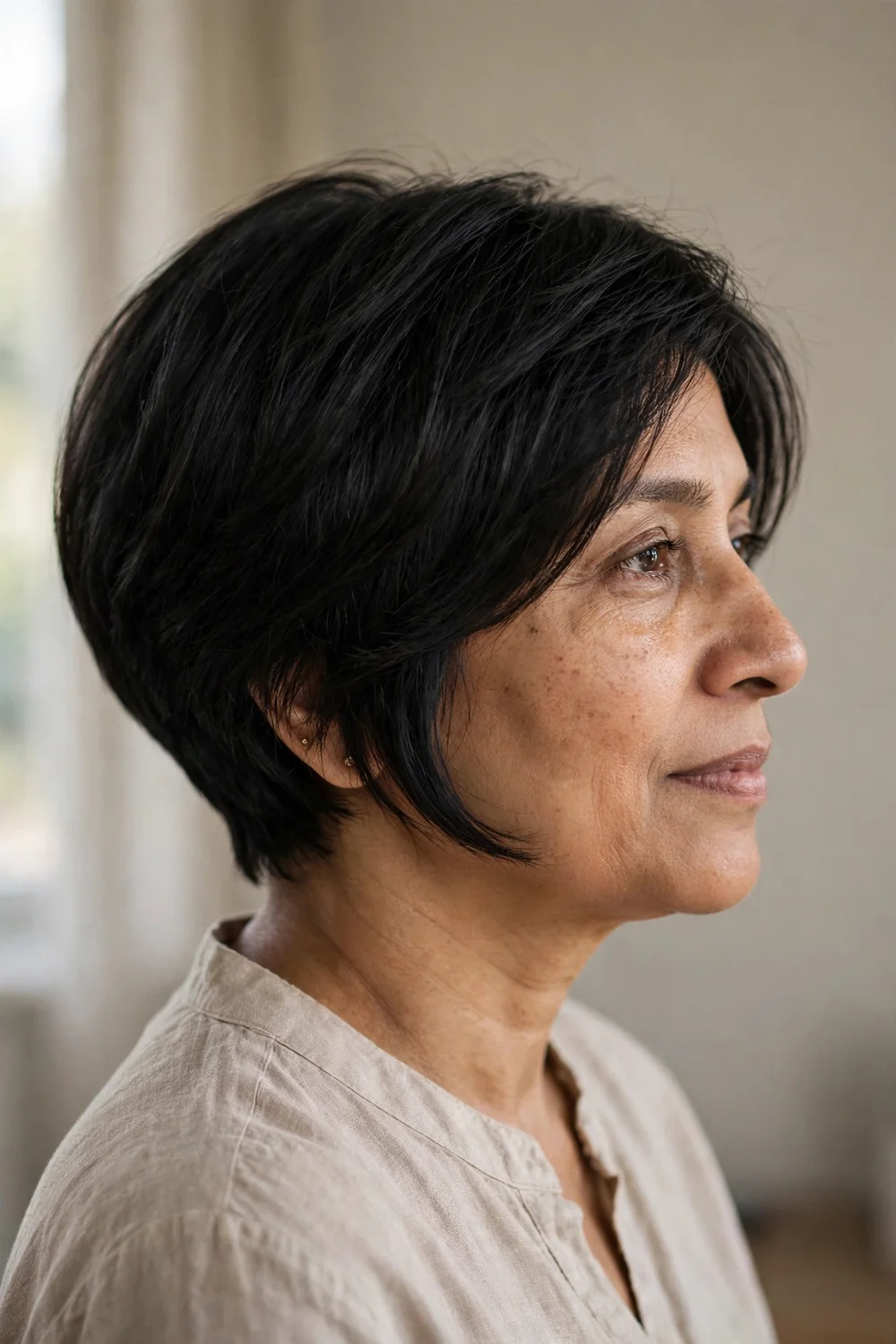
An A-line shape gives you longer front pieces without dragging the whole cut down. The back stays compact and easy while the front does the talking, framing the face and making fine hair look fuller around the cheeks. Keep the layers minimal here. Too much layering in an A-line can turn the ends see-through, which defeats the purpose. A quick bend with a hot brush adds polish and a little flip at the ends. This is a smart pick if you want the pixie bob look but aren’t ready to go very short all over.
Try this: Wrap just the front sections around a hot brush for five seconds each. That small bend keeps the A-line shape crisp between trims.
7. Asymmetrical Pixie Bob
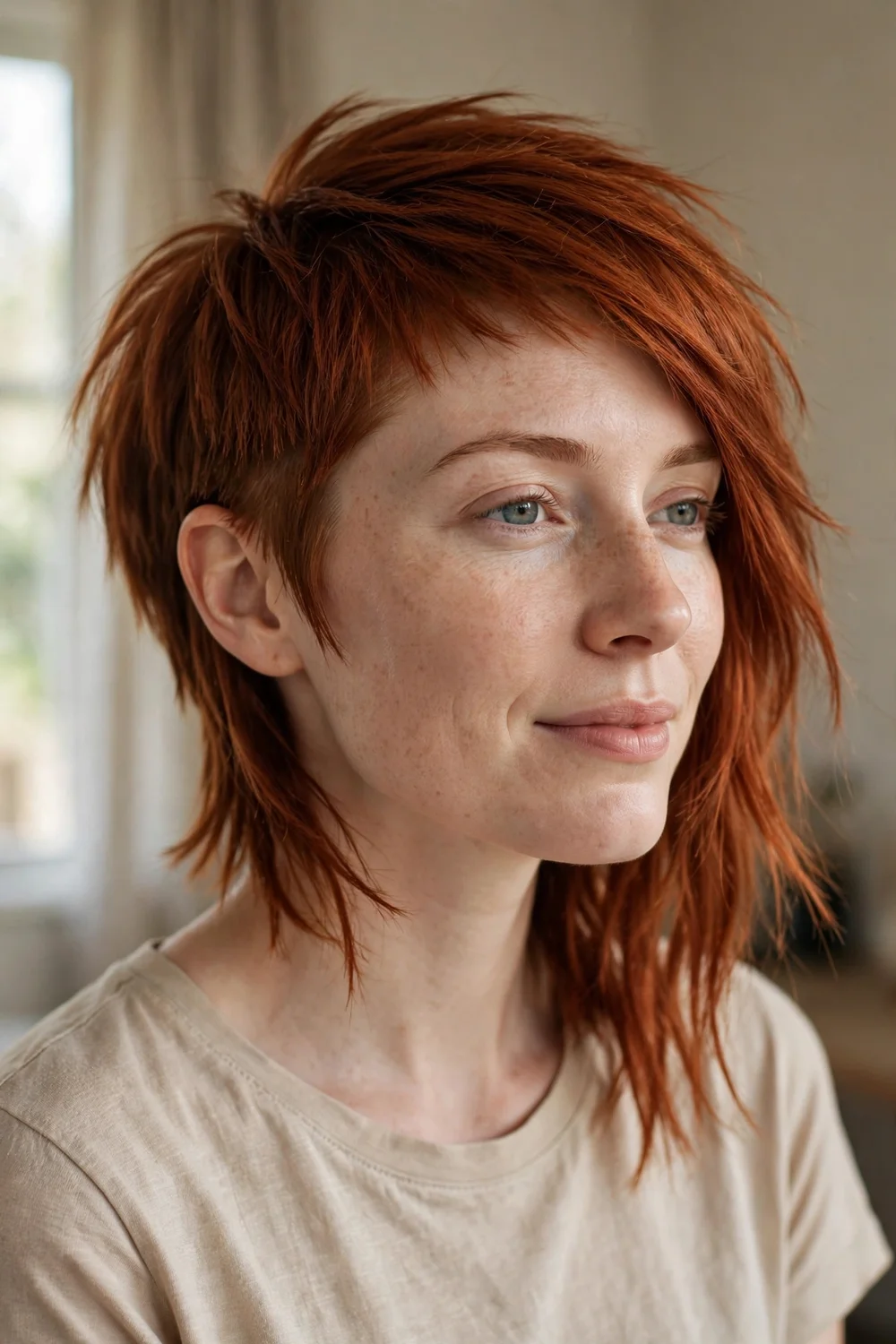
One side longer than the other sounds risky on fine hair, but asymmetry actually helps. The uneven line pulls attention sideways instead of letting the eye settle on thin spots. The longer side can be tucked, waved, or smoothed flat for completely different looks, which makes this one of the most versatile cuts here. Keep the shorter side close to the head so the contrast reads as intentional. Style the longer side with a light mousse for daytime polish, or add soft waves at night with a curling wand and finger-comb them out gently.
Try this: Part deeply on the shorter side. The weight shift alone adds instant fullness to the longer side.
8. Choppy Wispy Fringe Pixie Bob
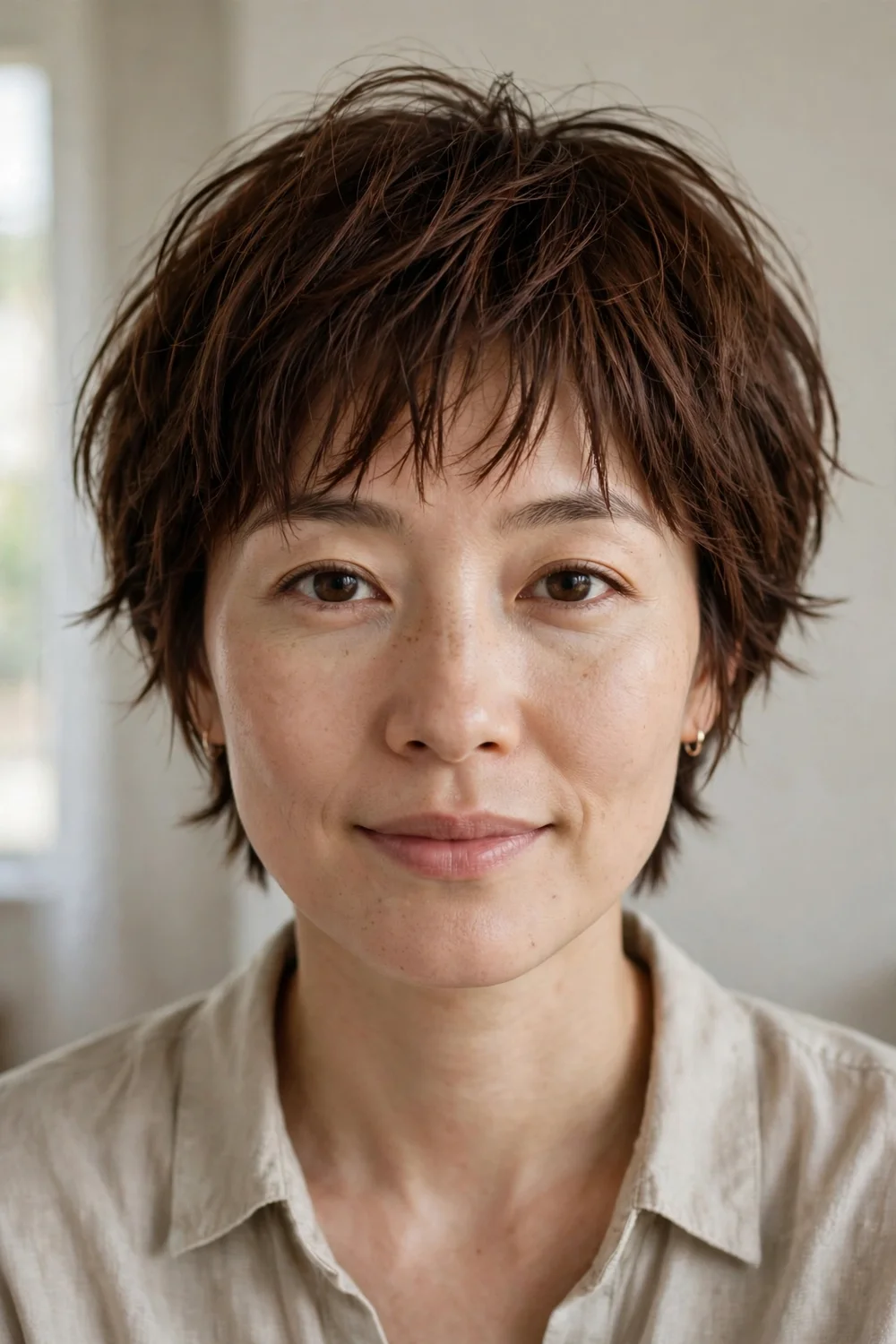
A wispy fringe adds movement without the heaviness of a blunt bang, which fine hair can’t support. The choppy pieces break up flat spots across the forehead and make the whole cut look airier. This works best when the rest of the hair has matching piecey texture, so the fringe doesn’t look disconnected. Keep the top a little longer so you can shift the fringe around and cover thinner areas as needed. Air dry with mousse for a lived-in finish, or blow dry forward for more density across the forehead.
Try this: Work a tiny bit of paste through just the tips and pinch for separation. You’re aiming for piecey, not spiky.
9. Micro Fringe Pixie Bob
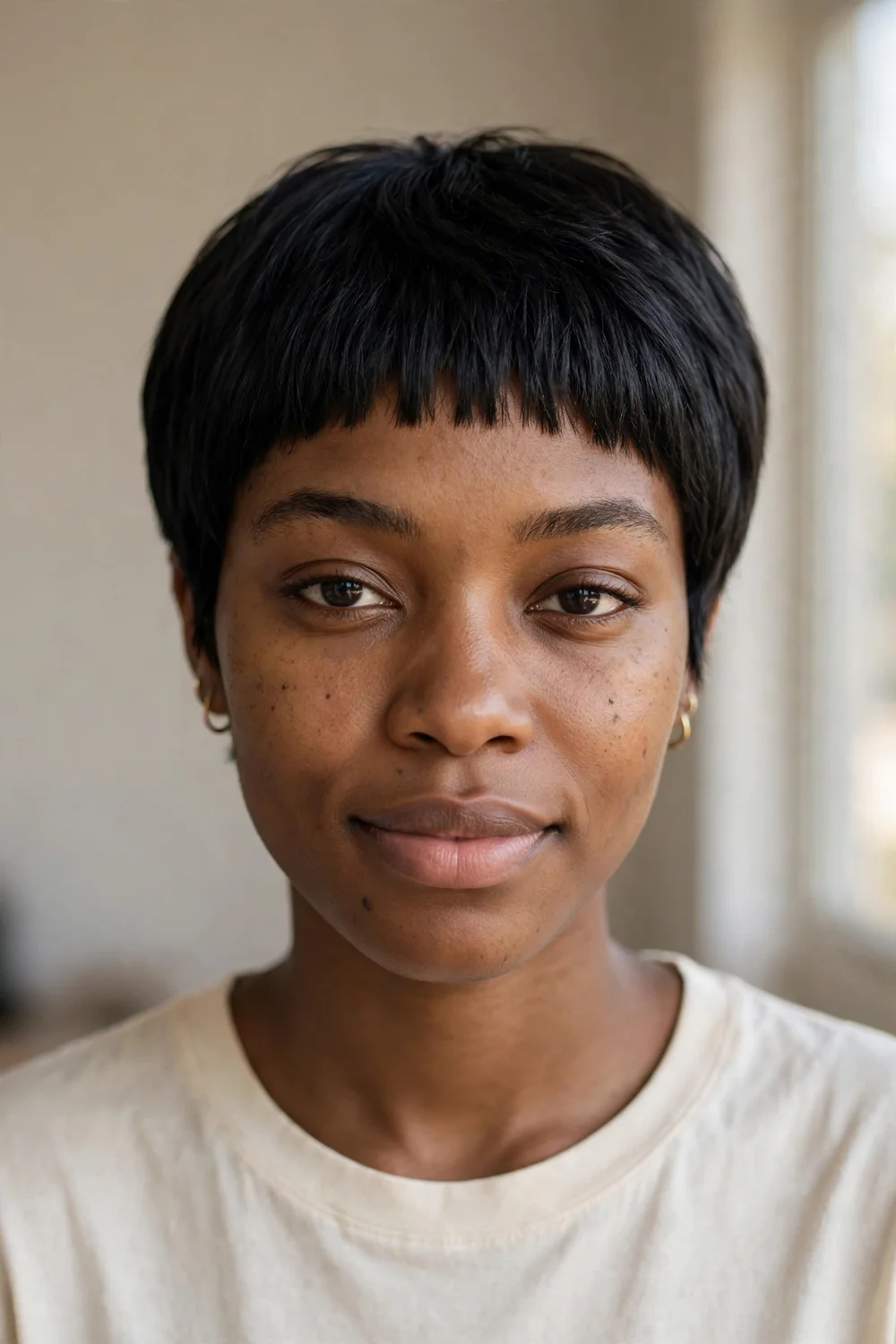
A micro fringe stops well above the brows, which sounds bold but flatters fine hair for a practical reason: there’s simply less hair to maintain in the bang area. The short fringe opens up the face and shifts all the visual weight to the crown and sides, where the cut can build real volume. Keep the top slightly longer than you think you need so thin hair never looks see-through at the hairline. A quick blow dry forward adds instant density. This cut pairs well with strong brows and simple makeup.
Try this: Trim the fringe yourself between appointments with small sharp scissors, cutting dry hair a millimeter at a time. It grows out fast.
10. Feathered Volume Pixie Bob
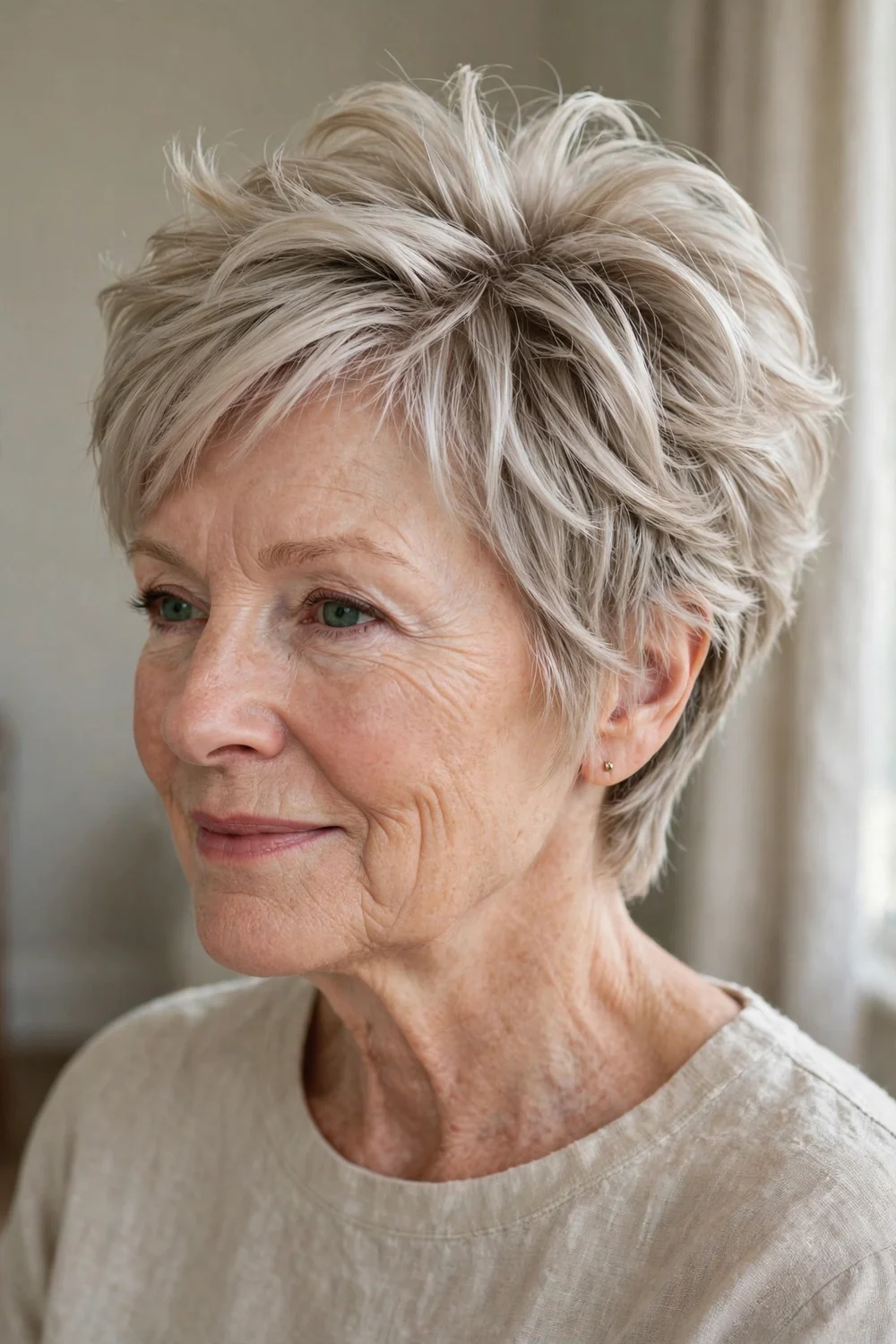
Feathering uses light, flicked layers to lift the crown while the sides stay close to the head. The result is soft and forgiving, and it grows out better than most short cuts since the layers just get longer without losing their shape. Ask for scissor-over-comb shaping, which gives a cleaner feather than a razor on fine hair. The layers should sit high enough to create lift but not so short that the outline thins out. Finish with a round brush flick at the ends to emphasize the feathered movement.
Try this: Flip your part to the opposite side once the hair is dry. That one move doubles the crown volume with zero product.
11. Rounded Crown Lift Pixie Bob
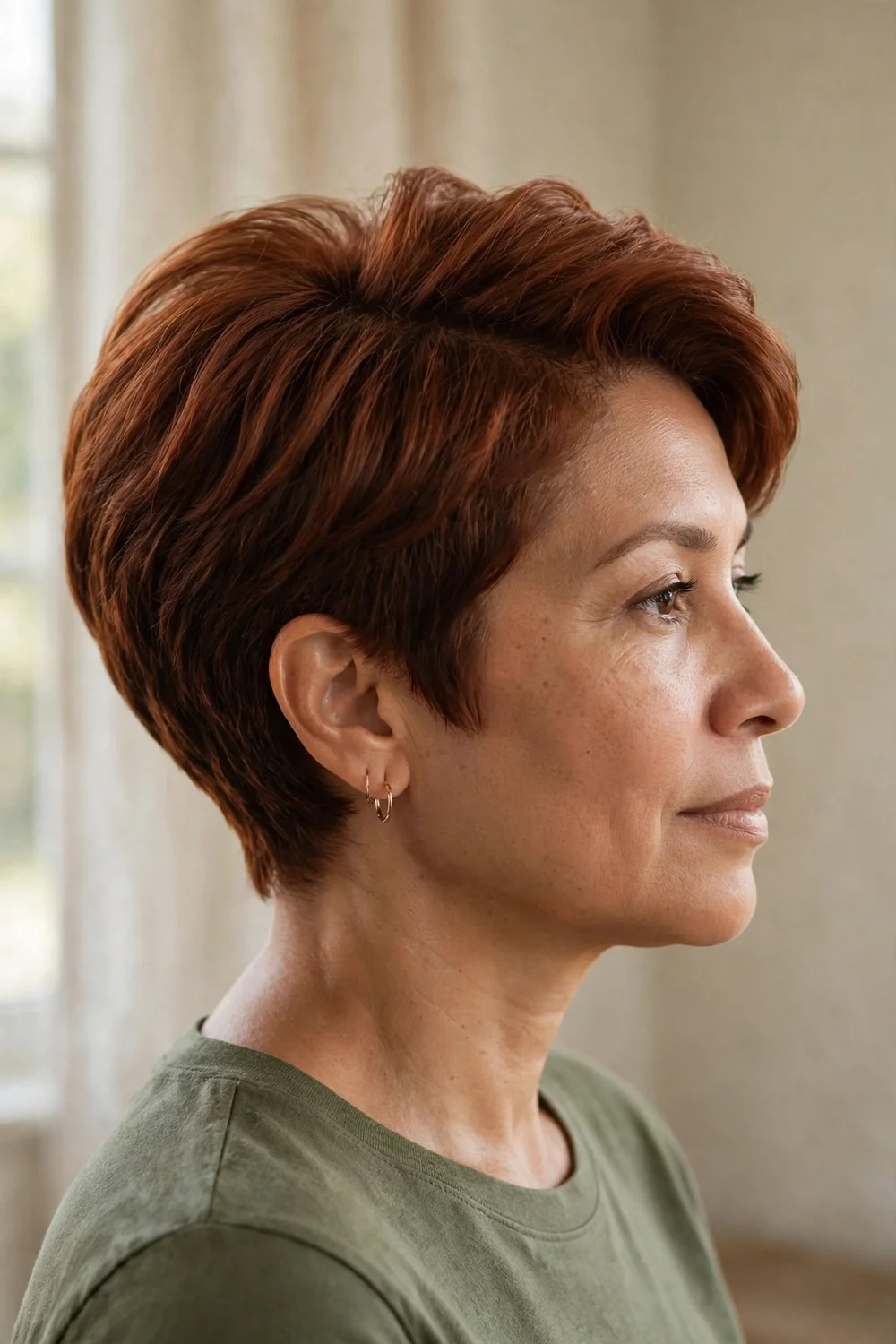
If your crown goes flat no matter what you do, pick a cut that builds the lift into the shape. This rounded silhouette keeps the top longer and the sides smooth, so volume comes from the haircut itself rather than daily teasing. Tell your stylist to keep the perimeter fairly blunt. Blunt ends make the whole outline look thicker, which matters most on fine hair. Blow dry upward at the roots, then smooth the top with a flat brush for a polished finish. It reads classic from every angle.
Try this: Sleep with the crown loosely pinned up in two soft twists. You’ll wake up with lift that takes seconds to refresh.
12. Tucked Behind-the-Ear Pixie Bob
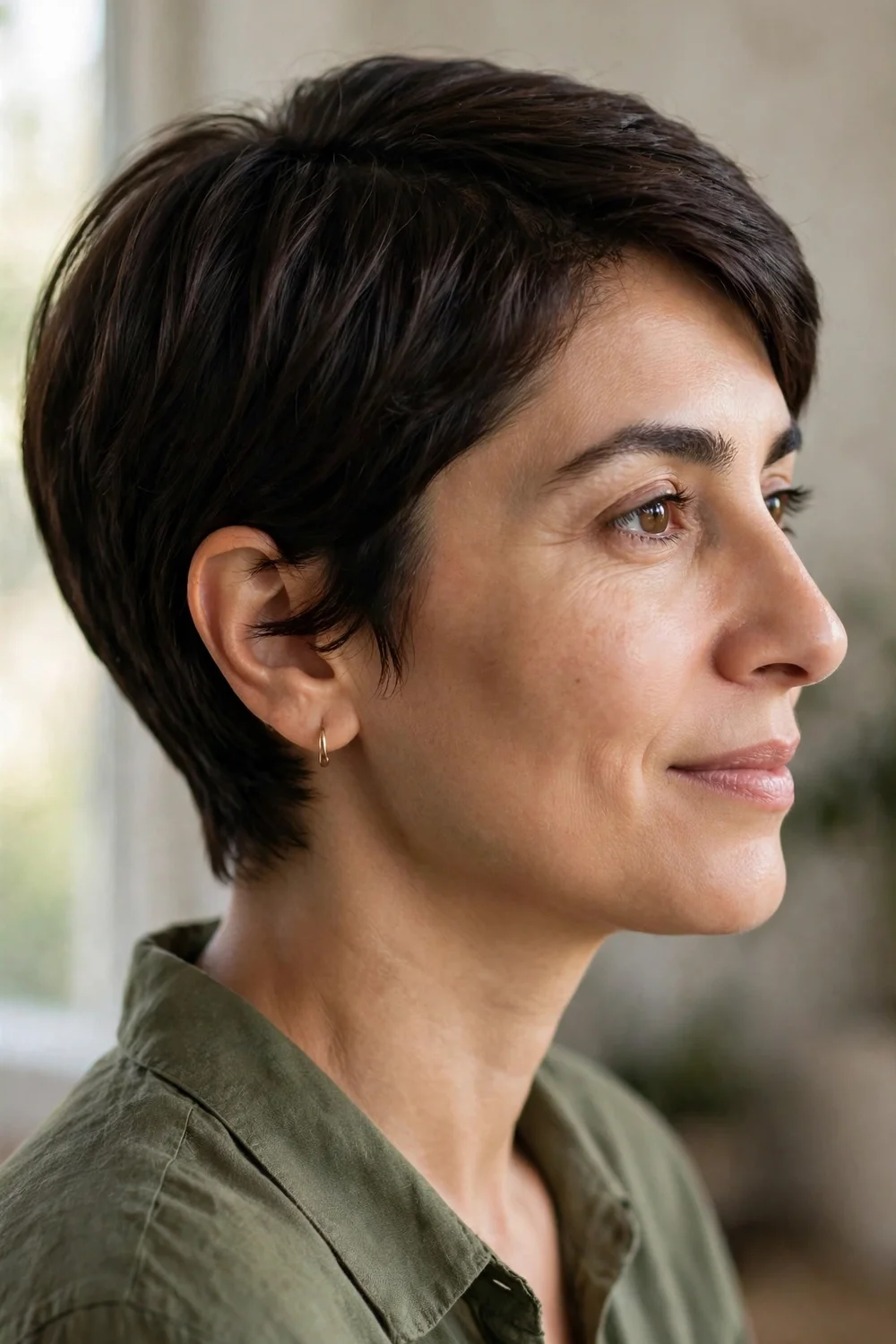
Tucking one side behind the ear turns a simple pixie bob into something polished in about three seconds. The trick is a cut that’s long enough on top to tuck smoothly but short enough at the sides to stay put. This style suits fine hair because the tuck concentrates fullness on the untucked side, where the hair looks deliberately thicker. Keep a little root mousse in the tucked section so it doesn’t slip out by lunch. It works for office days and evenings alike, and it shows off earrings nicely.
Try this: Tuck the side with thinner hair and leave the fuller side loose. The asymmetry of density works in your favor.
13. Tapered Nape Pixie Bob
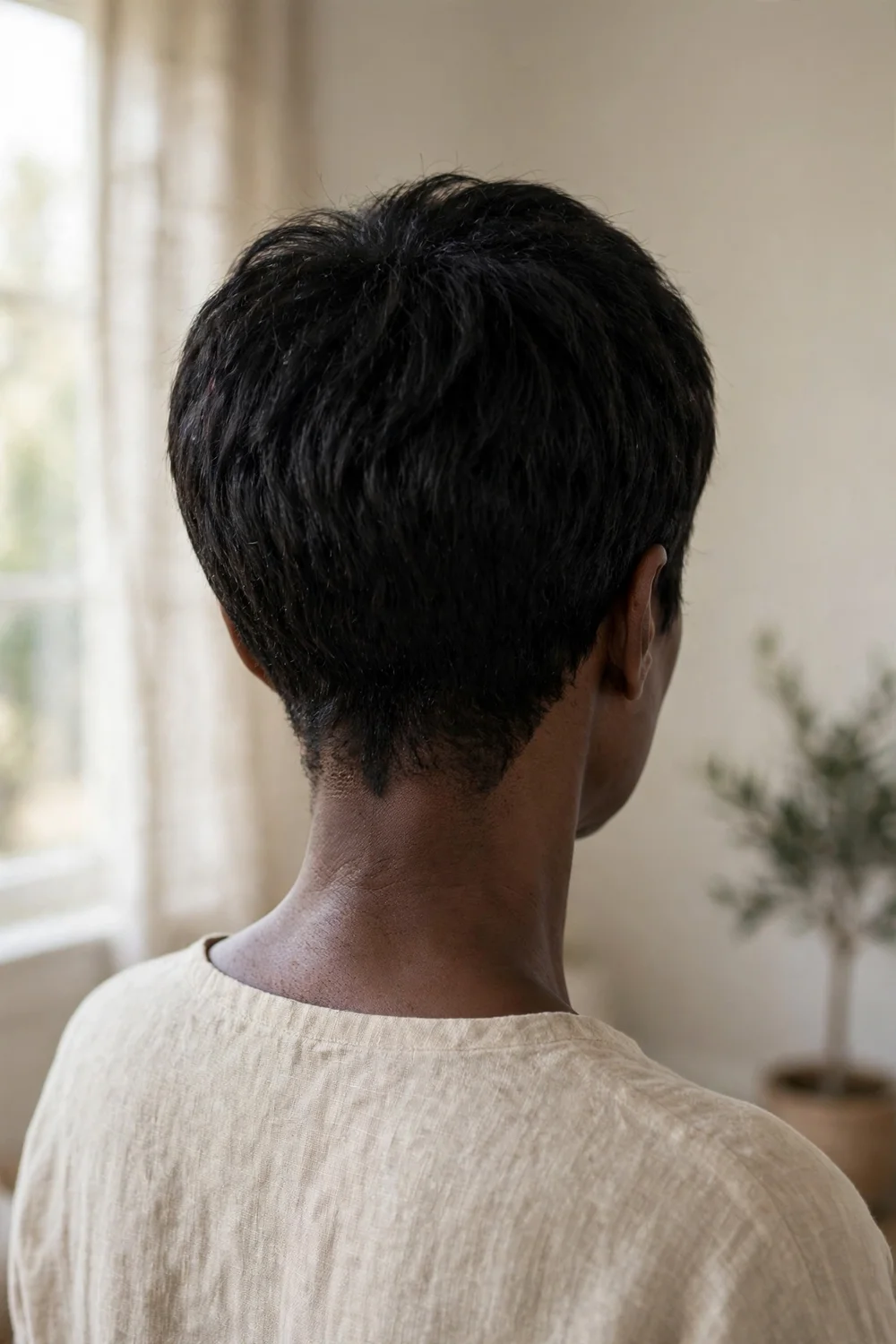
A clean taper at the nape makes the top look denser by contrast. When the back hugs the neck neatly, the eye reads the fuller crown as even fuller. This cut is low maintenance and flattering from every angle, which is why stylists recommend it so often for fine hair. If your hair thins at the temples, add a side fringe for softer coverage. Tell your stylist to keep weight at the crown and blend downward smoothly rather than cutting the nape too tight. A vent brush and an upward blow dry at the back add height that lasts.
Try this: Use a root lift spray at the nape before blow drying. Lifting the shortest hairs keeps the whole back from going flat.
14. Sleek Straight Pixie Bob
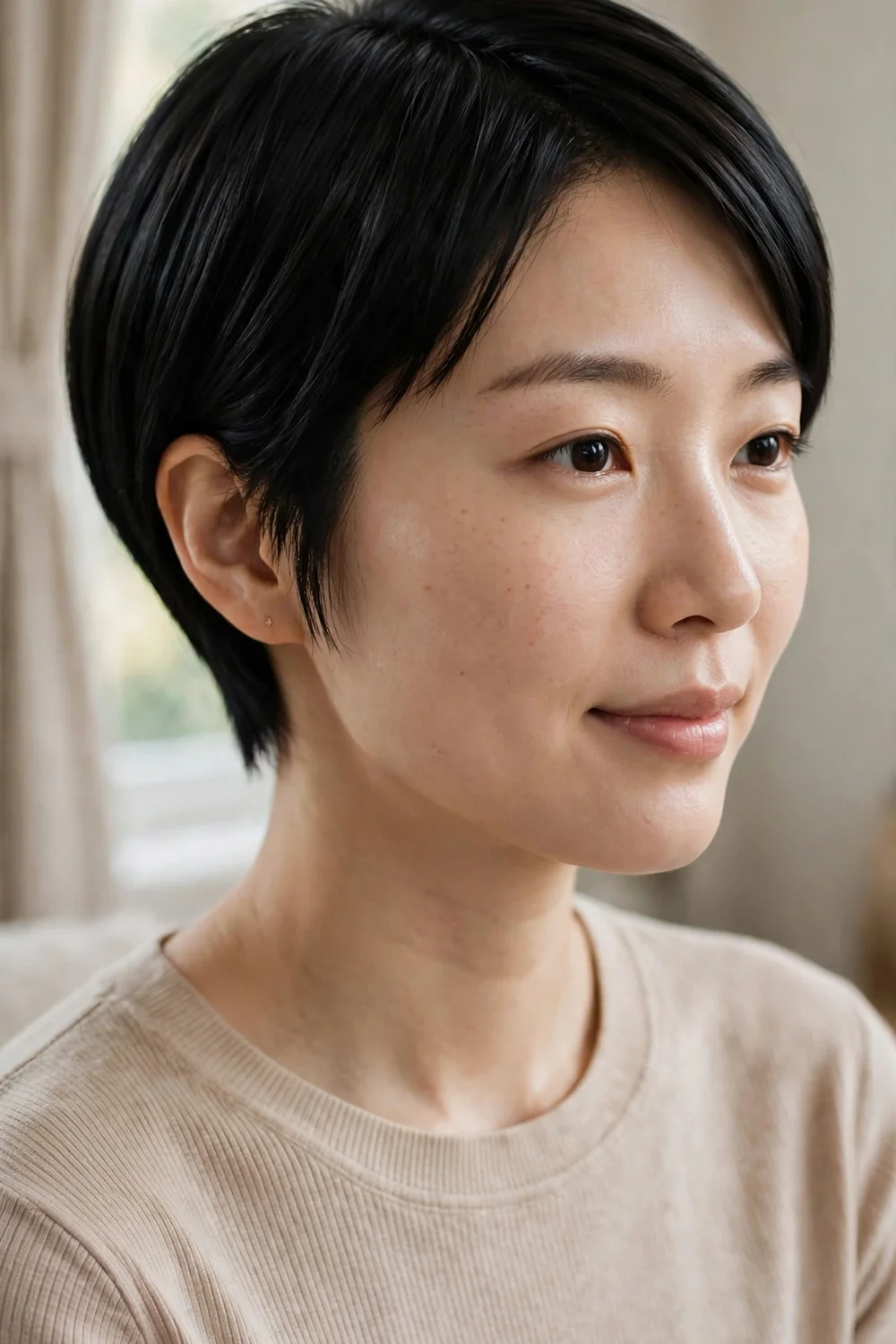
Not every fine-haired head needs texture. A sleek, straight pixie bob with precise layering looks thicker because the smooth surface reflects light evenly, with no wispy ends breaking up the outline. This cut suits naturally straight hair and anyone who prefers a neat, put-together look. A flat iron keeps the layers smooth, and a drop of shine serum adds gloss without weight. The key is keeping the ends blunt: fine hair that’s been thinned too much will separate and look stringy when worn straight.
Try this: Apply heat protectant before every flat iron pass, and finish with a light-hold hairspray instead of serum at the roots. Serum near the scalp flattens fine hair.
15. Smoky Graphite Side-Part Pixie Bob
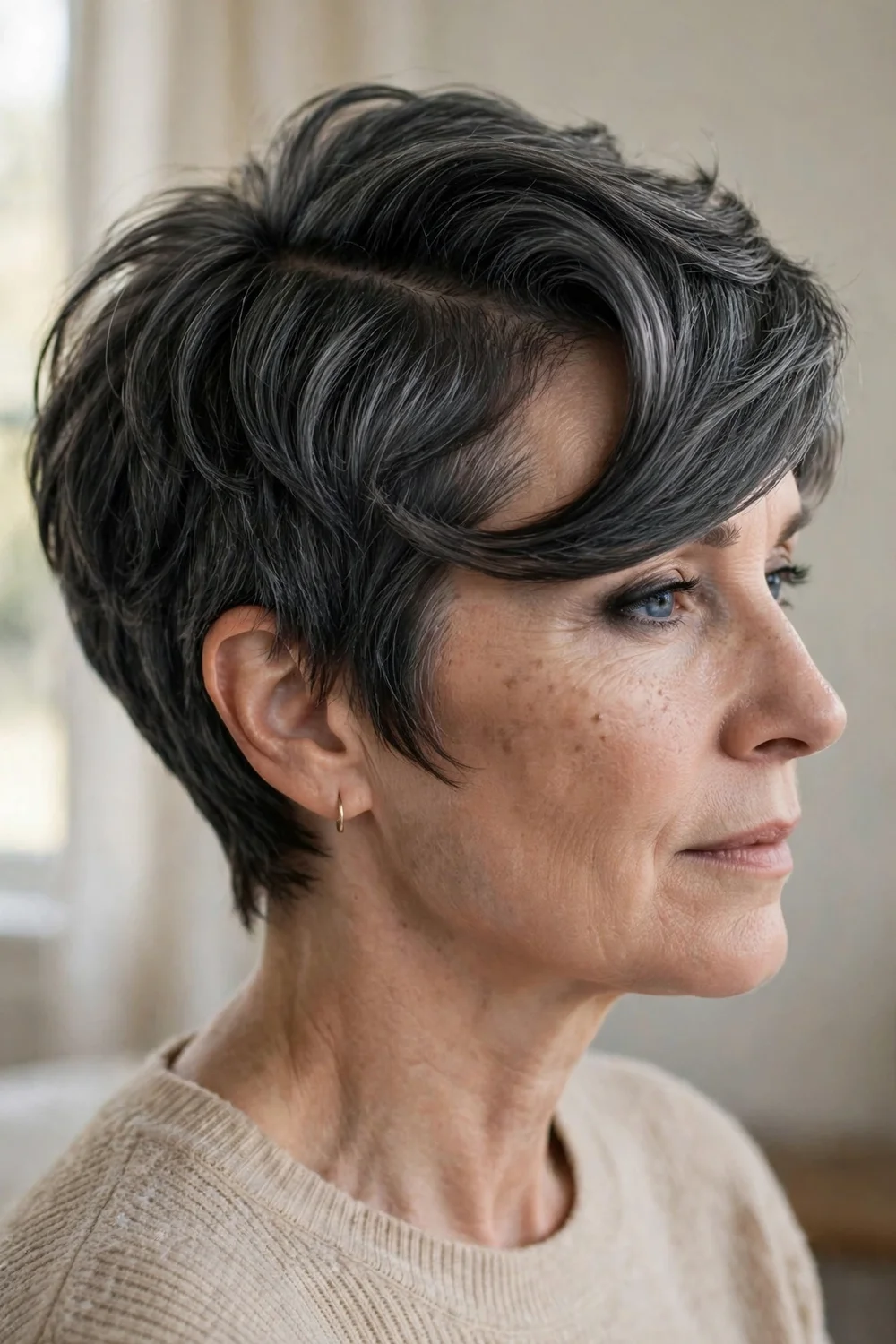
Dark, cool color makes fine strands look individually thicker, and a deep side part piles all that density onto one side. The graphite shade sits between charcoal and silver, which looks modern without the upkeep of going fully silver. The dramatic swoop across the forehead covers sparse areas while the shorter side adds a clean architectural edge. This is a strong choice if your hair is naturally dark and you want color to do some of the volumizing work. A gloss treatment every couple of months keeps the smoky tone from going dull.
Try this: Part your hair while it’s still damp and train it with a clip for ten minutes. The part will hold its place all day.
16. Blunt Cut Pixie Bob
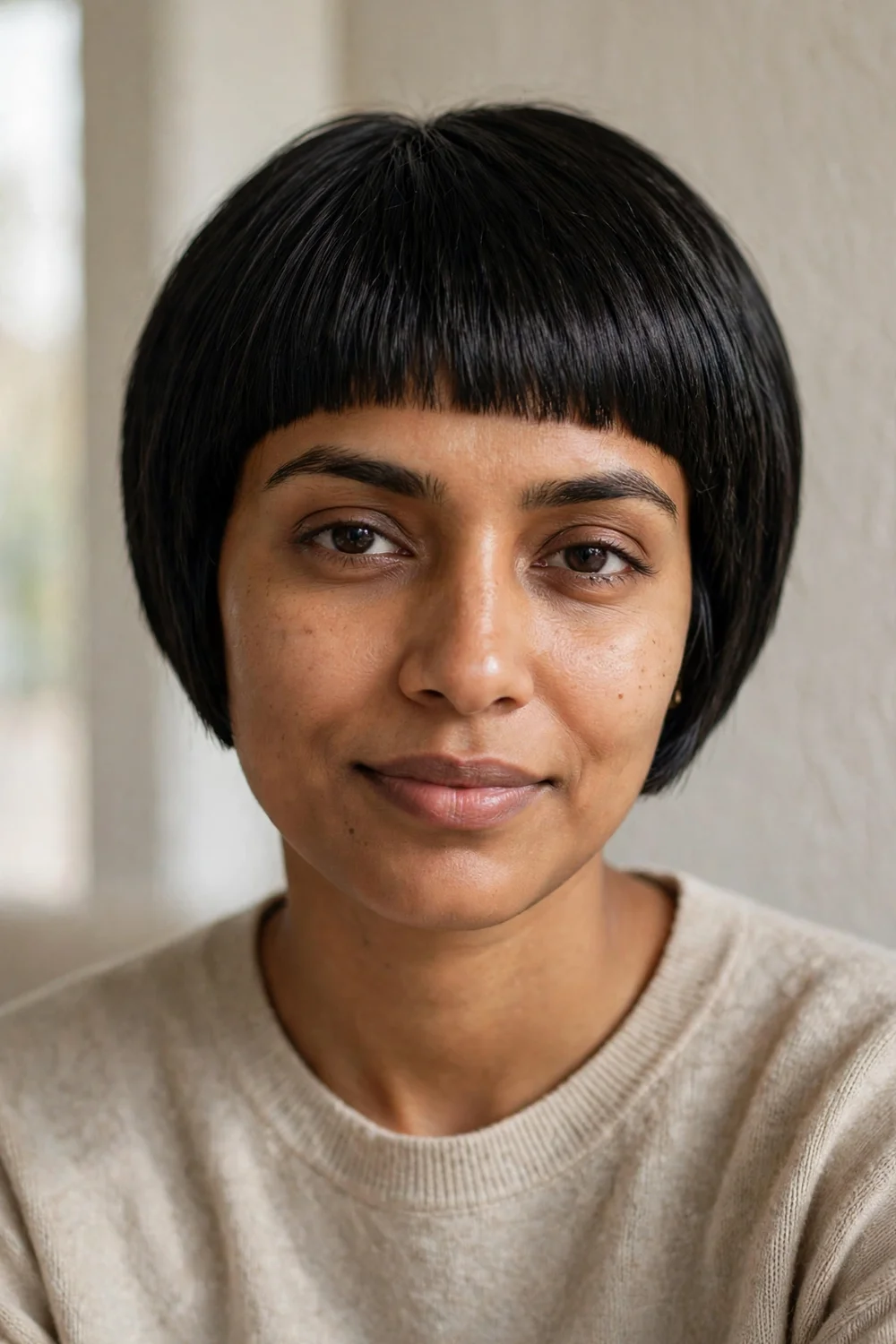
Blunt ends are fine hair’s best friend. When every strand ends at the same point, the outline looks solid and dense instead of fading out. This pixie bob keeps the perimeter sharp all the way around, with just enough internal texture to stop it looking heavy. It’s the simplest concept on this list and one of the most effective. The catch is maintenance: blunt lines show growth fast, so book trims every four to five weeks. Between appointments, a tiny trim of the very ends keeps the edge crisp.
Try this: Blow dry with a paddle brush, directing everything downward. That smooths the cuticle and makes the blunt edge look even sharper.
17. Textured Highlight Pixie Bob
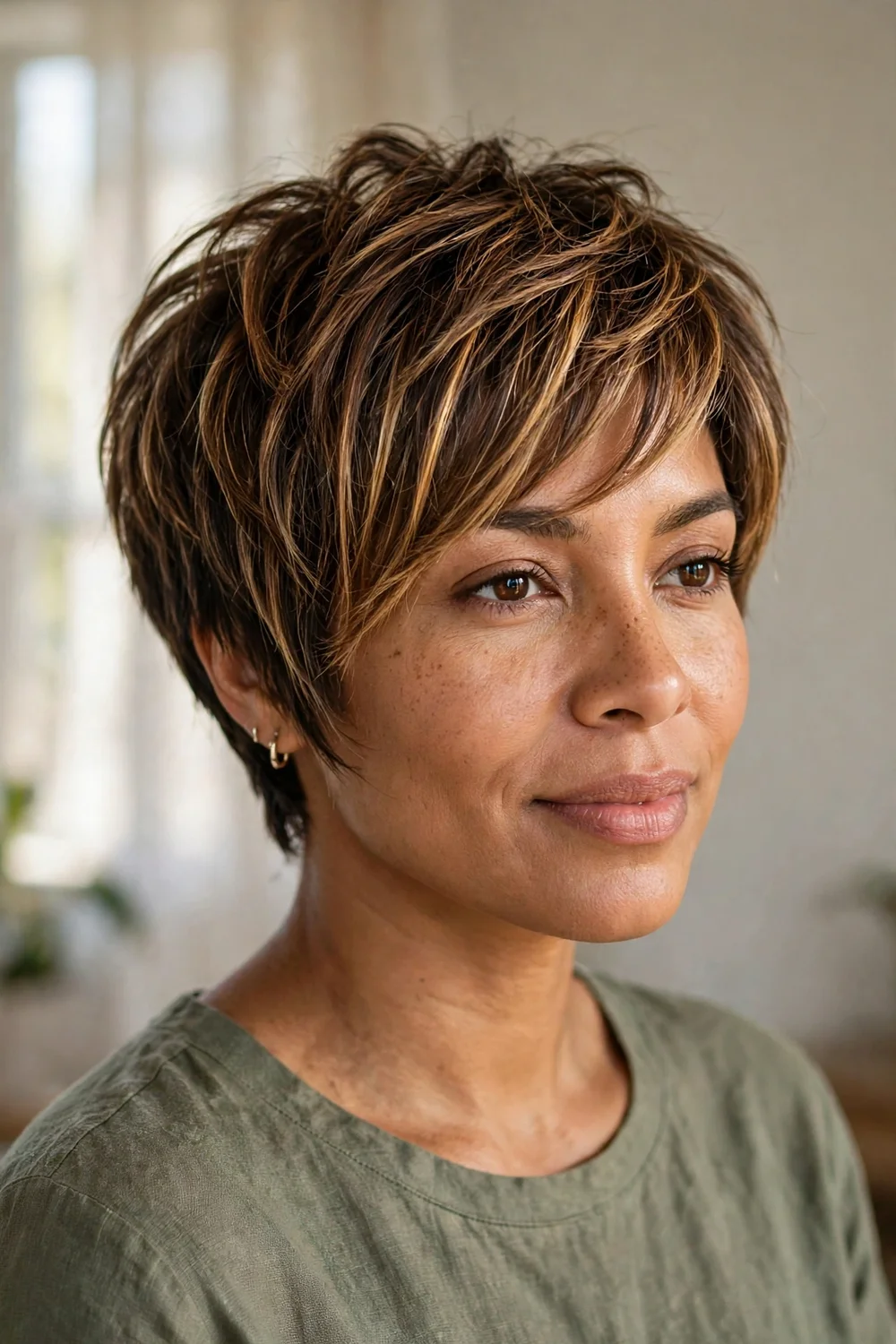
Highlights do real work on fine hair. Placing lighter pieces around the face and through the top breaks up the surface so the eye sees dimension instead of thinness. Caramel and honey tones on a brown base give warmth and depth without a harsh grow-out line. Keep the layers choppy rather than thinned out, and let the color carry the texture story. Style with a small amount of matte paste, rake it through, and stop. Overworking highlighted fine hair makes it look frizzy instead of full.
Try this: Ask your colorist for babylights through the crown only. Targeted lightness where you need volume most costs less than a full head.
18. Icy Blonde Dimensional Pixie Bob
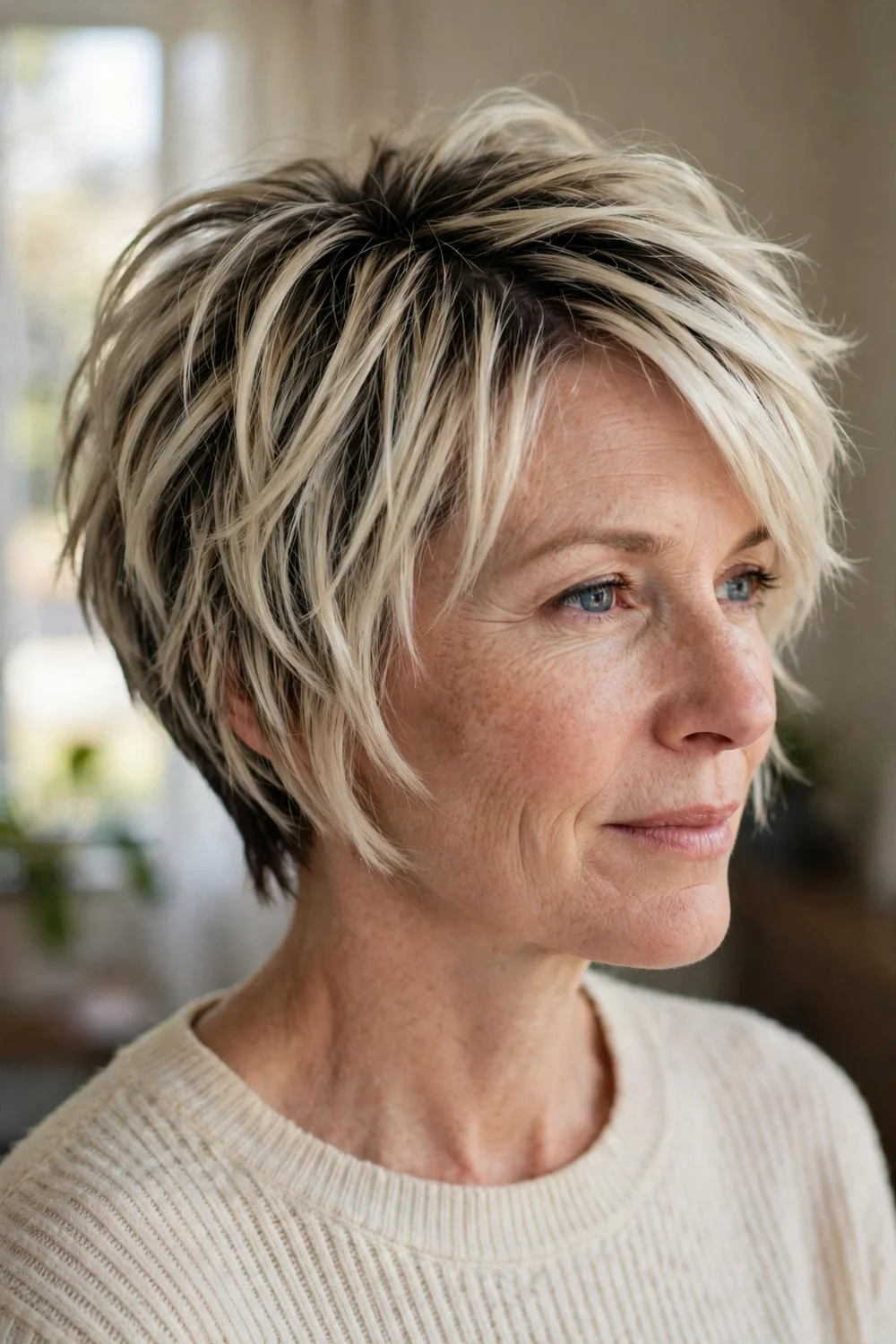
Icy blonde with a shadow root is one of the smartest color moves for fine hair. The darker root gives the illusion of thickness right where hair leaves the scalp, while the pale lengths catch light and look airy. Keep the layers soft and dimensional rather than chunky. A purple shampoo once a week stops the blonde from turning brassy, and a lightweight smoothing cream tames flyaways without flattening the style. This color needs a skilled colorist, so check their blonde portfolio before you book.
Try this: Wash blonde hair in cool water. Hot water opens the cuticle and fades icy tones twice as fast.
19. Platinum Feathered Shag
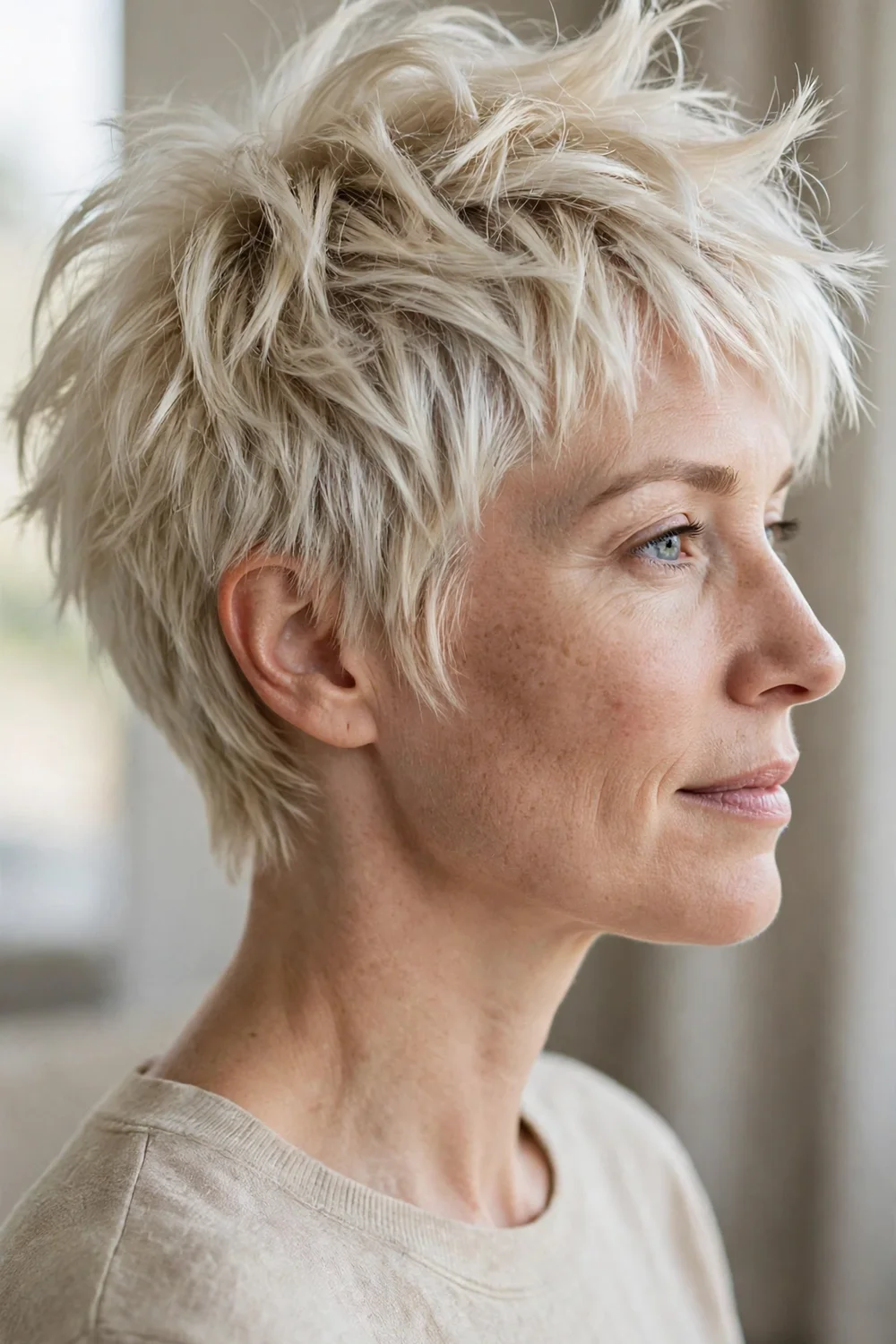
Platinum and feathering are a strong pair on fine hair. The pale color reflects maximum light while the kicked-up layers move in different directions, which stops the eye from counting strands. The shortest pieces sit at the top with a blown-back feel, and the longer bits at the ears flip outward for width. Be honest with your colorist about maintenance: platinum on fine hair needs bond-building treatments and regular toning to stay healthy. When the condition is right, though, few cuts look this full.
Try this: Blow dry the top sections upward and back with your fingers, not a brush. Fingers keep the feathered separation that a brush would smooth away.
20. Cinnamon Auburn Piecey Pixie Bob

Warm red tones make each strand stand out individually, which is exactly what fine hair needs. Instead of reading as one thin mass, the hair breaks into visible pieces with real separation. The longer bits falling toward the face keep the cut soft while shorter layers underneath add structure so nothing collapses. Cinnamon auburn flatters warm and neutral skin tones especially well. A color-depositing conditioner every other week keeps the copper from fading to a dull brown.
Try this: Spray volumizing mousse at the roots and blow dry before styling. Auburn shows every flat spot, so the lift has to come first.
21. Salt and Pepper Swept Pixie Bob

Natural gray pattern does what expensive dimension color tries to do: it creates tonal variation that reads as thickness. This cut keeps good length through the top for a soft sweep across the forehead while the sides stay short and structured. It’s liberating for fine, graying hair because it stops fighting two things at once and makes them the point. A silver-enhancing shampoo keeps the gray bright instead of yellow. This is proof that the right cut matters more than covering the gray.
Try this: Let the gray grow in for at least three inches before your first silver-focused cut. Your stylist needs to see the real pattern to shape around it.
22. Silver Tapered Pixie Bob
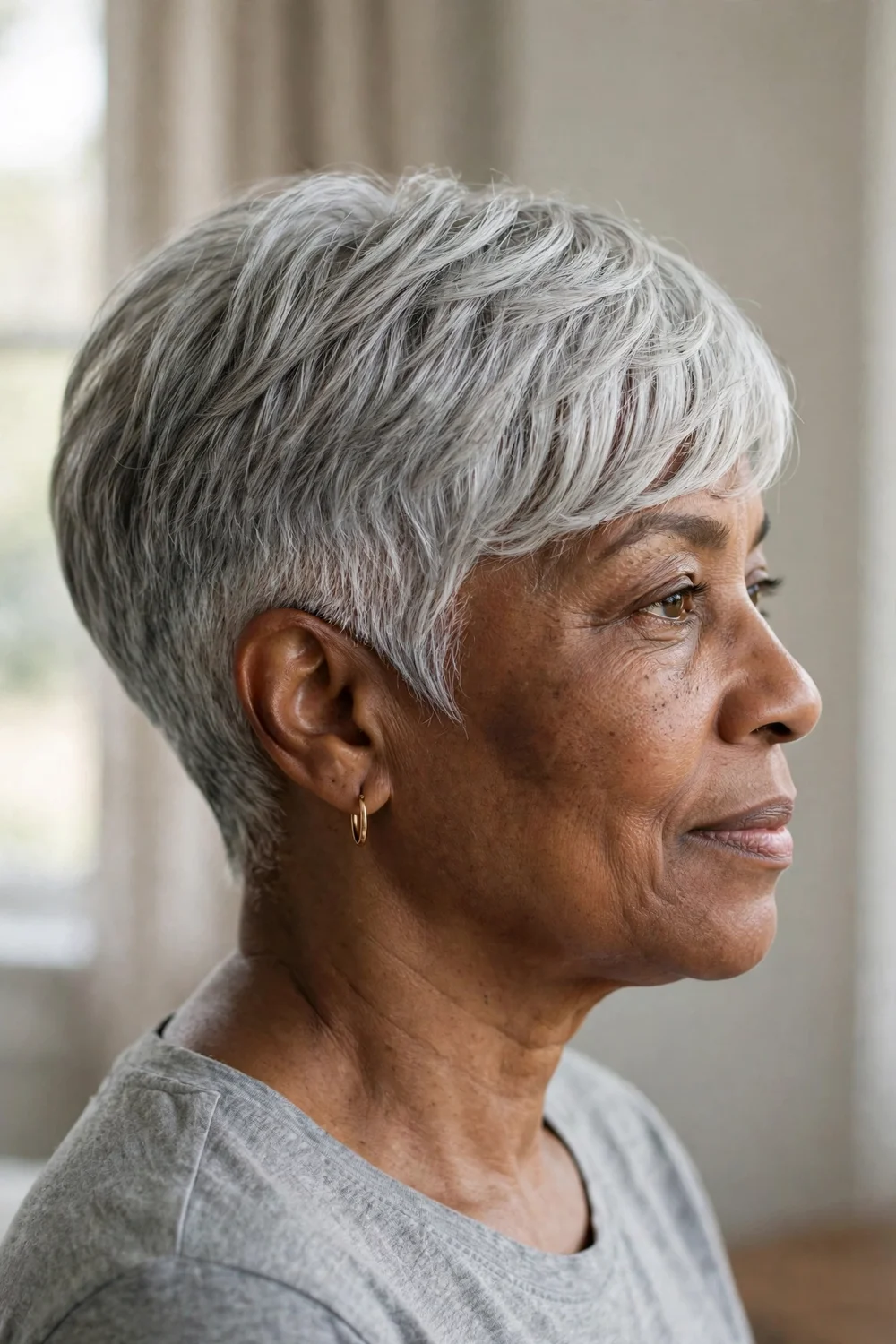
All-over silver with a clean taper is sleek, modern, and surprisingly low effort once the color is done. The taper at the back keeps the shape intentional while the fringe sweeps forward to blur any scalp showing through at the hairline. Silver reflects light well, which gives fine hair a fuller appearance in every lighting. Use a light volumizing spray at the roots, then finish with a soft finger tousle. The contrast between the neat nape and the airy top is what makes this cut work.
Try this: Book a toner refresh every six weeks. Silver fades faster than any other shade, and dull silver makes fine hair look thinner.
23. Shaggy Pixie Bob
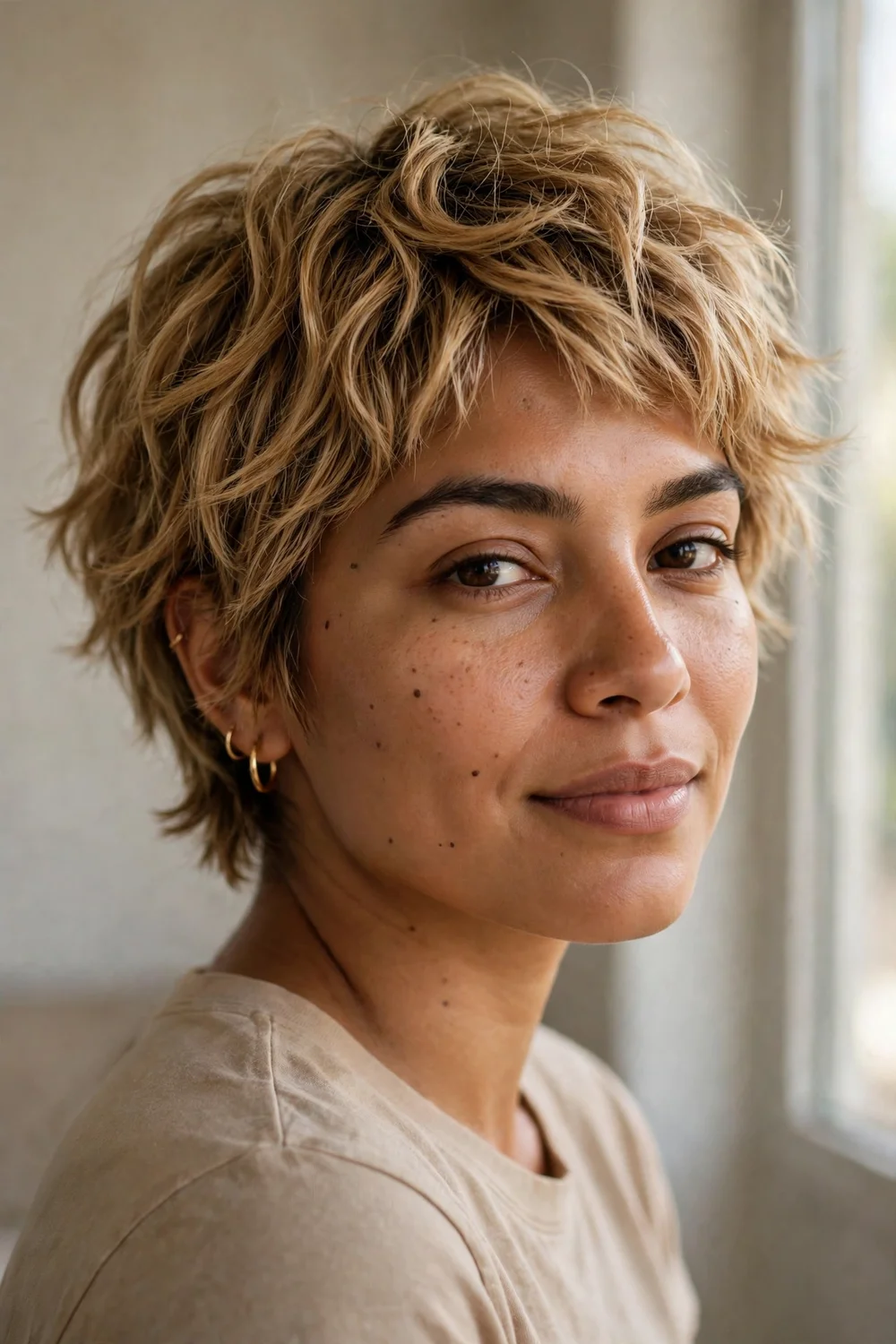
A shaggy pixie bob uses soft broken layers and a lived-in finish to fake density. The choppy pieces create shadows and separation, which the eye reads as more hair. It helps fine hair look less flat, especially around the cheekbones where the layers flip outward. Use a light mousse and scrunch while drying to keep the texture airy. Don’t over-layer the bottom, though. A shag that’s been thinned too aggressively at the ends will look wispy instead of full, so ask your stylist to keep weight at the perimeter.
Try this: Diffuse on low heat for three minutes instead of air drying. The gentle heat sets the shaggy separation without frizz.
24. Pixie Bob with Hidden Undercut
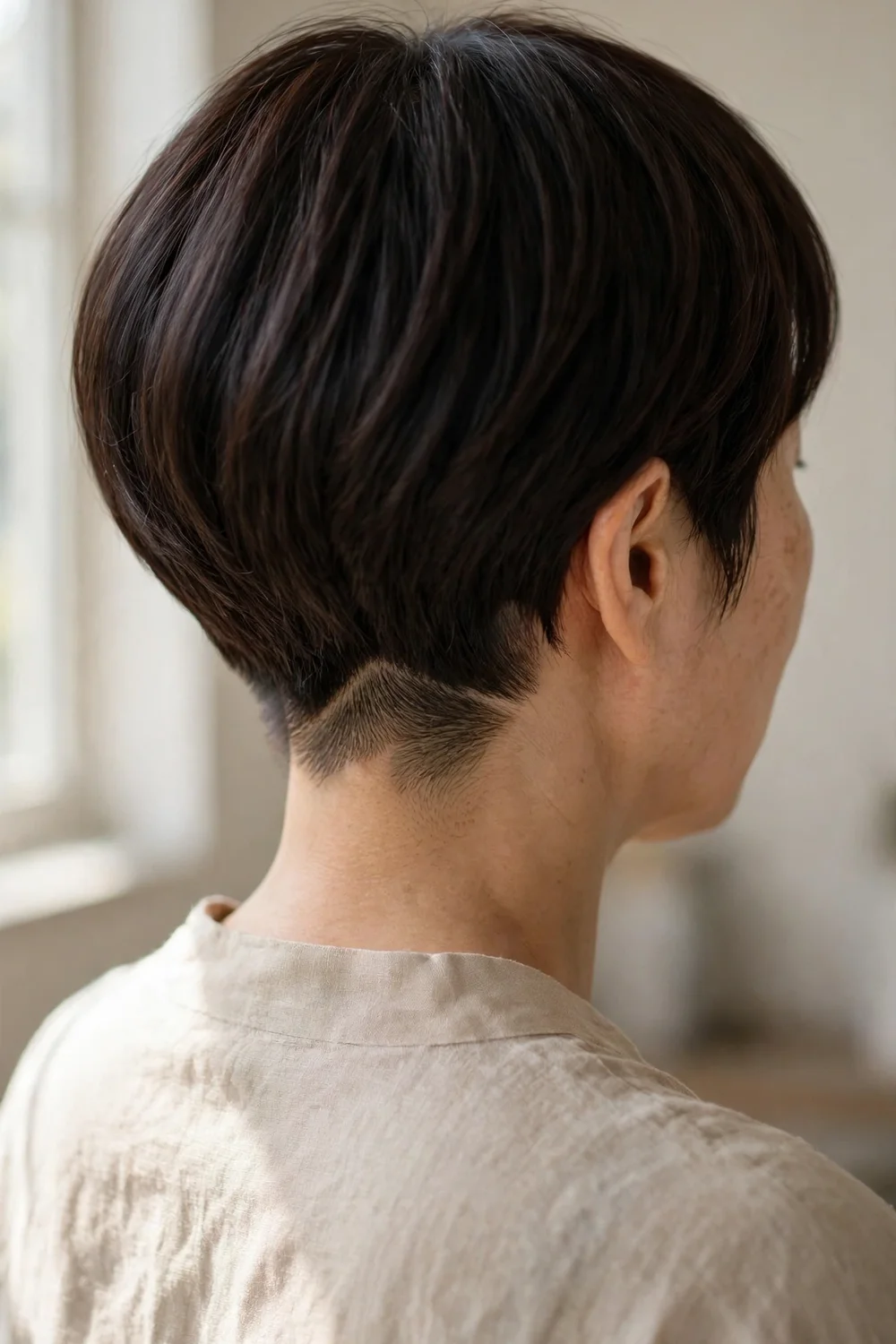
A hidden undercut removes bulk underneath while the top stays sleek and full. Nobody sees the undercut unless you lift the hair, but you’ll feel the difference: the cut lies flatter at the nape and stops puffing up in humidity. That’s genuinely useful for fine hair that goes fluffy on damp days. The top keeps its length and density, so nothing about the visible style looks short or thin. Style with a flat brush and a drop of serum, then tuck one side for shape.
Try this: Ask for the undercut to start no higher than the occipital bone. Any higher and it will peek out when the wind blows.
25. Edgy Undercut Pixie Bob
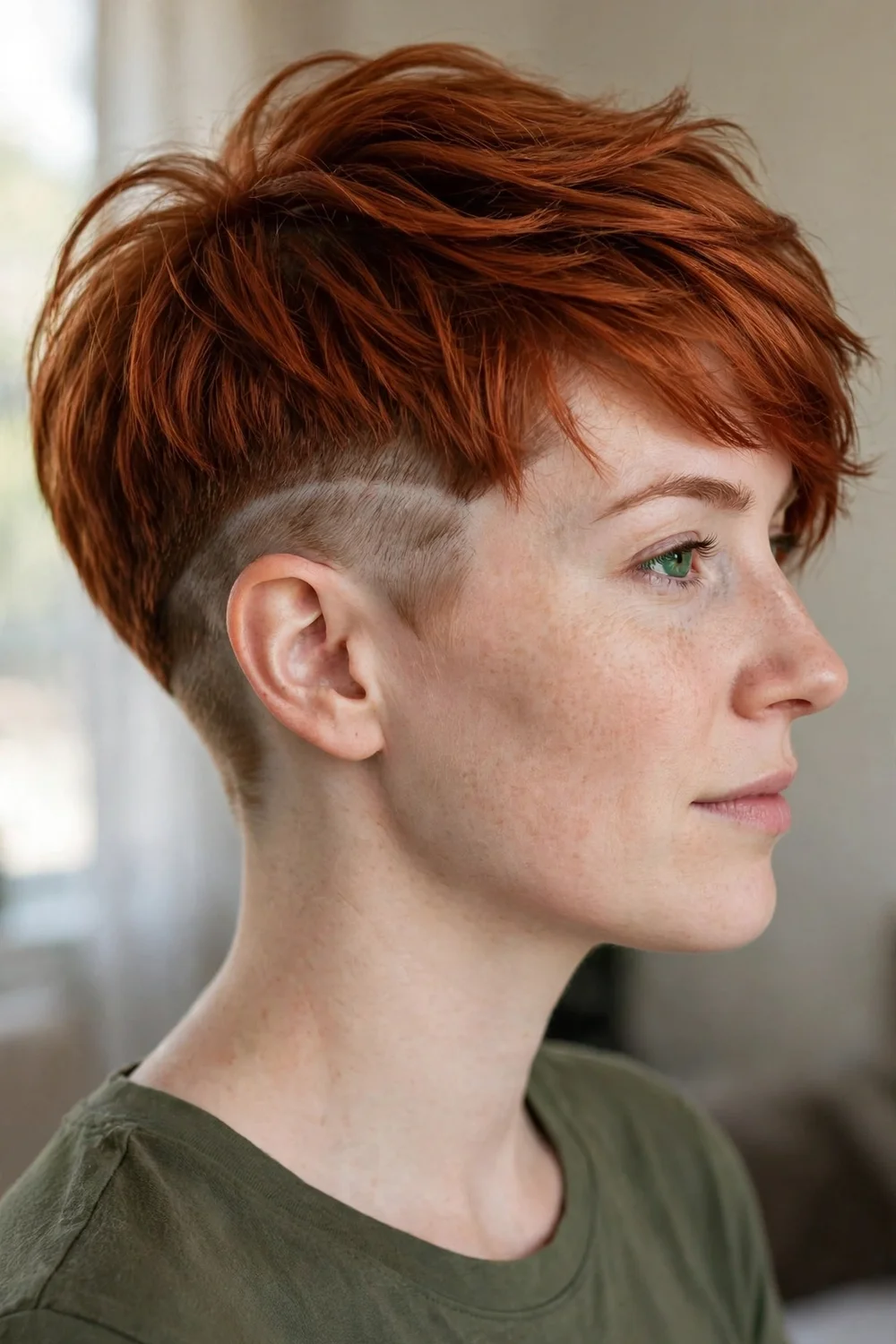
Unlike the hidden version, this undercut is meant to be seen. One side gets a clean fade while the longer top sweeps over for coverage and contrast. For fine hair, removing the sides entirely is a clever strategy: it deletes the thinnest areas and puts all the focus on the fuller top. The result looks bold and deliberate rather than thin. Ask for a soft bevel at the ends of the top section, not a razor shred, so the longer hair keeps its density. A light pomade defines the sweep without stiffness.
Try this: Keep the faded side trimmed every three weeks. An overgrown undercut loses the sharp contrast that makes this cut work.
26. Long Pixie Bob with Longer Front Pieces
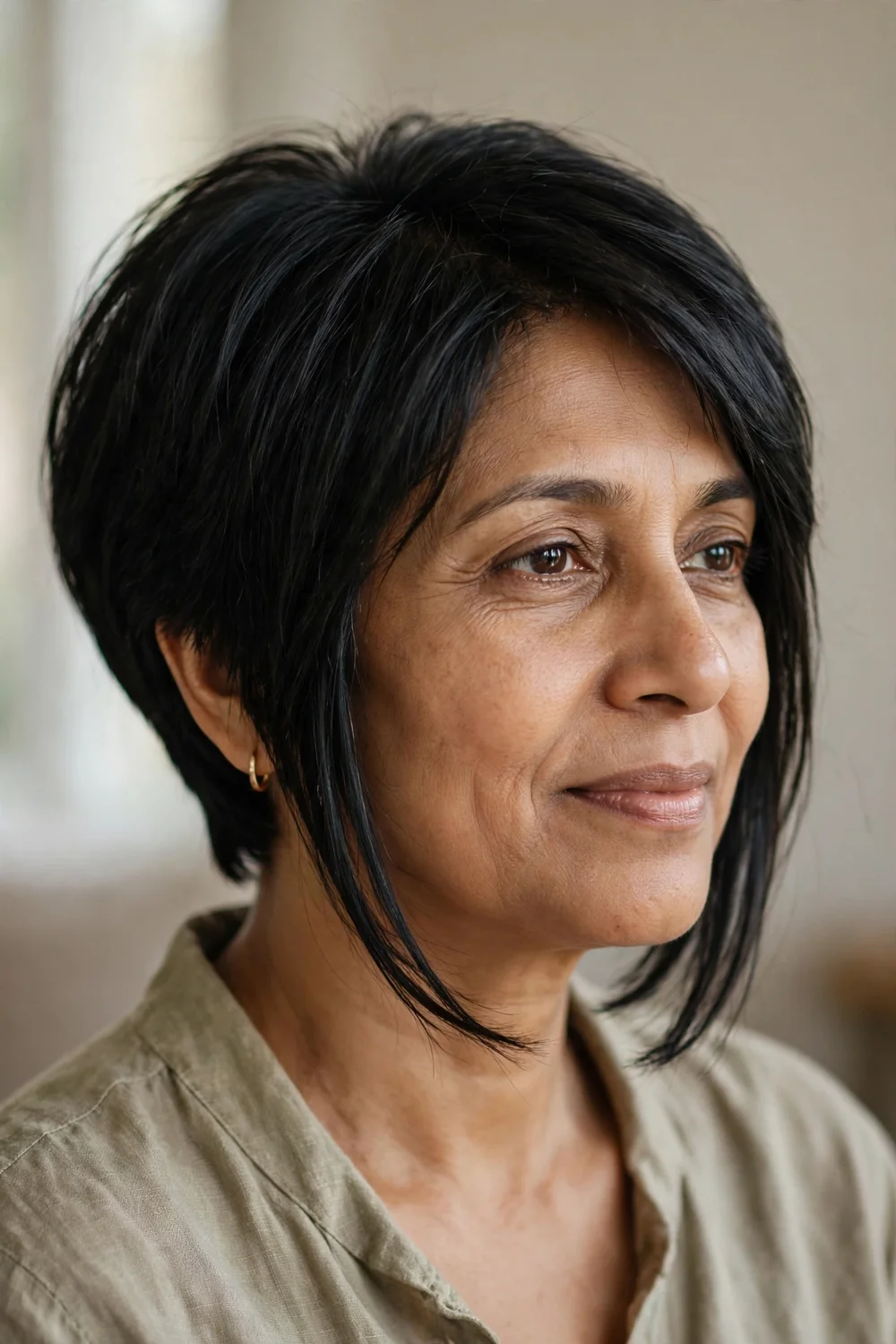
This is the longest take on the pixie bob, with front pieces reaching the chin while the back stays short and rounded. The extra length gives you styling options: tuck it, wave it, or sweep it back. For fine hair, the longer front frames the face and creates the impression of more hair overall. The tousled finish works better than a sleek blowout here, since perfectly smooth fine hair can emphasize what’s missing. Light honey-toned highlights through the front add brightness without a full color commitment.
Try this: Curl just the front pieces away from your face with a one-inch iron, then finger-comb. Two minutes, completely different look.
27. Curly Pixie Bob
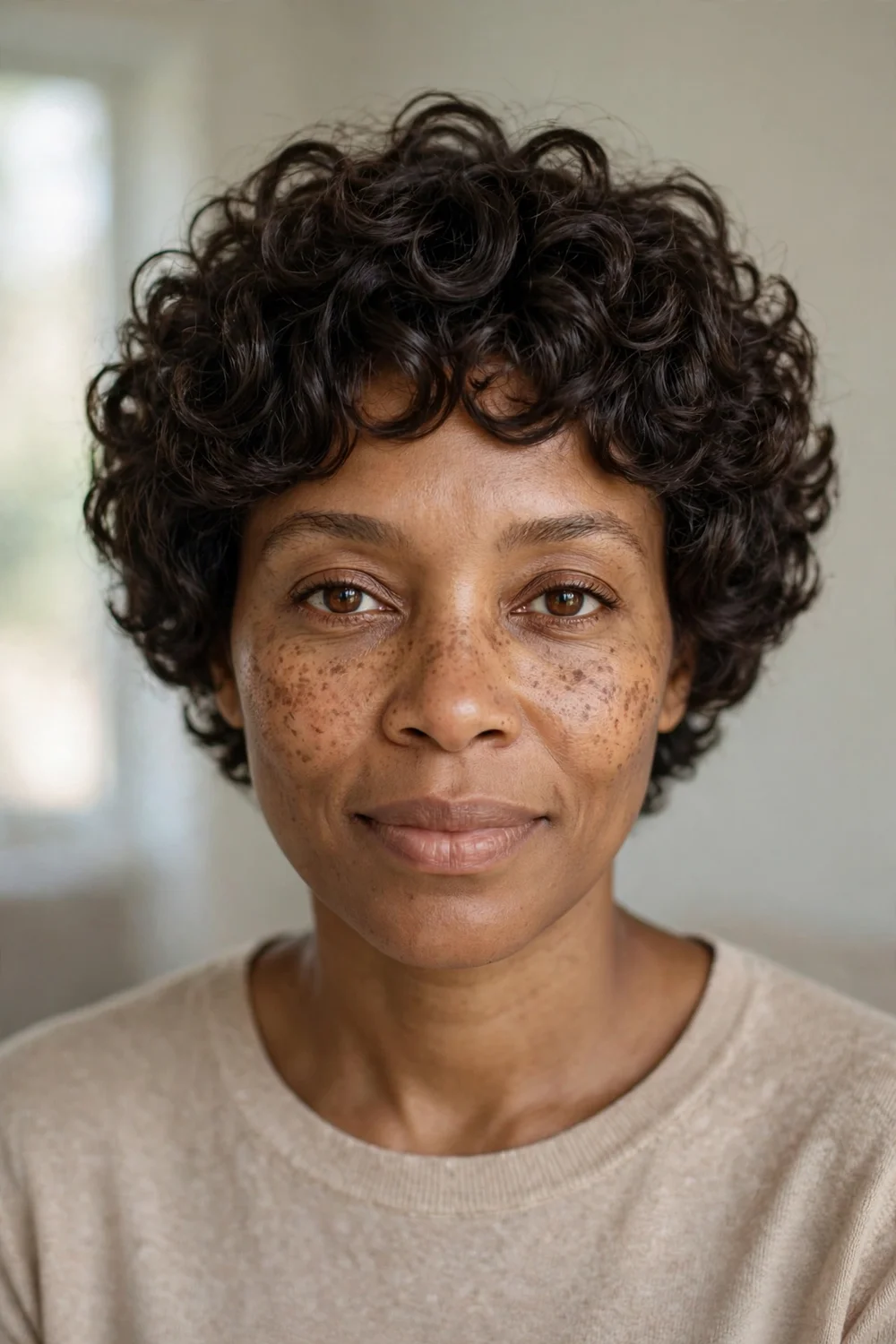
Curls are natural volume, so a curly pixie bob starts with an advantage on fine hair. The key is keeping the shape rounded and the curls defined rather than letting everything go frizzy. A leave-in conditioner or curl cream on damp hair, then gentle scrunching, sets the pattern. Avoid rough towel drying and heavy gels, which drag fine curls down. Sleep on a satin pillowcase to preserve the curl shape overnight. Regular trims keep the silhouette round instead of triangular as it grows.
Try this: Diffuse with your head flipped upside down for the first two minutes. Gravity becomes your volumizer.
28. Messy Pixie Bob
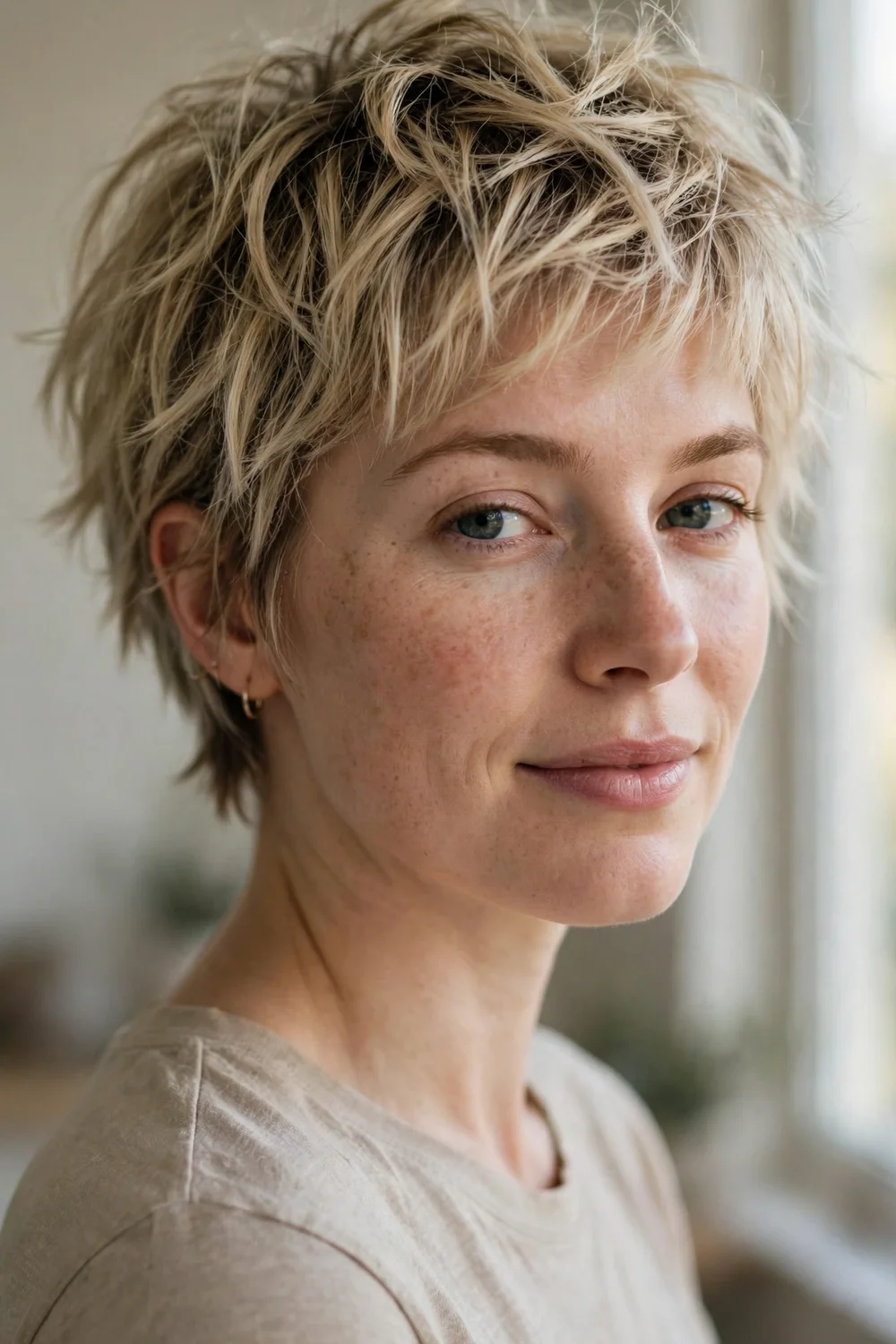
Deliberate messiness hides a multitude of fine-hair sins. When pieces go in different directions, nobody can tell where the thin spots are. This cut uses textured layers and a light styling cream worked through damp hair, then finger styling instead of a brush. Let it air dry or diffuse for a natural finish. The messier it looks, the fuller it reads, which makes this the most forgiving cut on the list for second-day hair. It suits busy schedules and most face shapes.
Try this: Refresh day-two hair with a spritz of texturizing spray at the roots, then scrunch. It revives the separation without a full wash.
29. Soft Waves Pixie Bob

Soft waves add bend and body that straight fine hair can’t fake on its own. The gentle wave pattern creates movement through the top layers while the cut stays short enough to hold the shape. A one-inch curling iron on just the top sections is enough; wave everything and you’ll lose the pixie structure. Finish with a light-hold spray for touchable hold. This style flatters softer features and works for both daytime and evening, which makes it one of the most versatile options here.
Try this: Wave the hair in alternating directions. Uniform waves look dated, while alternating waves look modern and fuller.
30. Wispy Ear-Length Pixie Bob
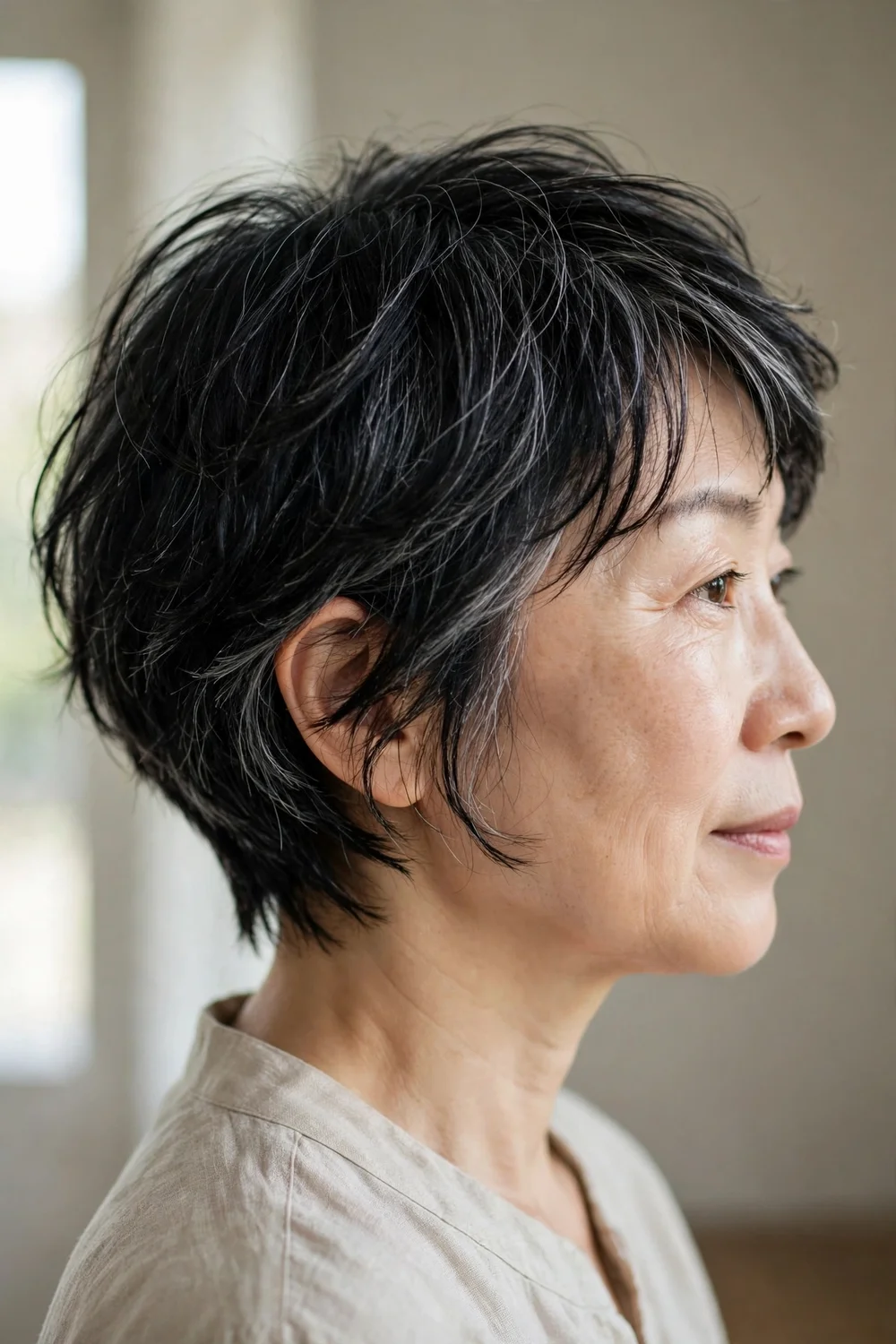
Ear-length with wispy, feathered pieces around the face is the gentlest cut on this list. The delicate ends soften the jawline and cheekbones without adding weight, which fine hair appreciates. The subtle flip at the ends brings just enough volume to keep the perimeter from going stringy. This length also grows out gracefully, so it’s a good choice if you’re testing shorter hair for the first time. Keep the products minimal: too much product on wispy ends makes them clump and look thinner.
Try this: Blow dry the ends with a small round brush, flicking outward. That tiny flip is the whole personality of this cut.
Pixie Bob Comparison at a Glance
| Style | Best For | Difficulty | Upkeep |
|---|---|---|---|
| Textured Pixie Bob | Straight to wavy fine hair | Easy | Trim every 5-6 weeks |
| Softly Layered Pixie Bob | Oval and heart faces | Easy | Trim every 6 weeks |
| Side Swept Fringe Pixie Bob | Sparse temples | Easy | Fringe trim every 4 weeks |
| Stacked Back Pixie Bob | Flat crowns | Medium | Trim every 4-5 weeks |
| Stacked and Angled Pixie Bob | Round and square faces | Medium | Trim every 4-5 weeks |
| Soft A-Line Pixie Bob | First-time short cuts | Easy | Trim every 5 weeks |
| Asymmetrical Pixie Bob | Bold personal style | Medium | Trim every 4 weeks |
| Choppy Wispy Fringe Pixie Bob | High foreheads | Easy | Fringe trim every 4 weeks |
| Micro Fringe Pixie Bob | Strong brows, oval faces | Easy | Fringe trim every 3 weeks |
| Feathered Volume Pixie Bob | Easy grow-out | Easy | Trim every 6-8 weeks |
| Rounded Crown Lift Pixie Bob | Flat crowns | Easy | Trim every 5 weeks |
| Tucked Behind-the-Ear Pixie Bob | Office and evening wear | Easy | Trim every 5-6 weeks |
| Tapered Nape Pixie Bob | Neat, low-effort style | Easy | Nape cleanup every 4 weeks |
| Sleek Straight Pixie Bob | Naturally straight hair | Medium | Trim every 4-5 weeks |
| Smoky Graphite Side-Part Pixie Bob | Dark natural hair | Medium | Gloss every 8 weeks |
| Blunt Cut Pixie Bob | Maximum density look | Easy | Trim every 4-5 weeks |
| Textured Highlight Pixie Bob | Brown hair needing depth | Medium | Color refresh every 10 weeks |
| Icy Blonde Dimensional Pixie Bob | Cool skin tones | Hard | Toner every 6 weeks |
| Platinum Feathered Shag | Statement looks | Hard | Toner every 4-6 weeks |
| Cinnamon Auburn Piecey Pixie Bob | Warm skin tones | Medium | Color gloss every 6 weeks |
| Salt and Pepper Swept Pixie Bob | Natural gray hair | Easy | Trim every 6 weeks |
| Silver Tapered Pixie Bob | Modern gray looks | Medium | Toner every 6 weeks |
| Shaggy Pixie Bob | Casual everyday wear | Easy | Trim every 6 weeks |
| Hidden Undercut Pixie Bob | Humid climates | Easy | Undercut every 5 weeks |
| Edgy Undercut Pixie Bob | Bold personal style | Medium | Fade every 3 weeks |
| Long Pixie Bob | Styling versatility | Easy | Trim every 6 weeks |
| Curly Pixie Bob | Natural curls and waves | Medium | Trim every 6-8 weeks |
| Messy Pixie Bob | Busy schedules | Easy | Trim every 6 weeks |
| Soft Waves Pixie Bob | Day to evening wear | Medium | Trim every 5-6 weeks |
| Wispy Ear-Length Pixie Bob | Softening strong jawlines | Easy | Trim every 6 weeks |
How to Choose the Right Pixie Bob for Fine Hair
Start with your biggest frustration. If your crown falls flat, pick a stacked back or a rounded crown lift. If your temples look sparse, a side swept fringe or a deep side part covers them. If your ends turn stringy, go blunt and skip the razor.
Think about your styling patience honestly. A textured or messy pixie bob needs two minutes and some paste. A sleek straight cut needs a flat iron most mornings. Pick the one you’ll actually maintain, because a grown-out pixie bob loses its shape fast.
Consider your natural texture too. Fine but wavy hair loves shaggy and tousled cuts. Fine and pin-straight hair does better with stacked, tapered, or blunt shapes that build structure. And if you want to see how these cuts compare to their shorter cousins, pixie haircuts for fine hair covers the full pixie family in the same fine-hair detail.
Mistakes to Avoid
The biggest mistake is over-thinning. Some stylists reach for thinning shears on fine hair out of habit, but removing weight from already-fine ends just makes them see-through. Ask for texture through point cutting on top, and keep the perimeter solid.
Heavy products are the second trap. Butters, oils, and thick creams flatten fine hair within hours. Stick to mousses, root sprays, and light pastes, and keep everything away from the scalp except root lift. If you’re drawn to the bolder side of short hair, undercut pixie haircuts for over 50 shows how undercuts add edge without sacrificing the fullness on top.
Skipping trims is the third. A pixie bob past its prime looks shaggy in the wrong way, with a fuzzy nape and collapsed crown. Book the next appointment before you leave the salon so the shape never gets away from you.
Round faces need slightly different proportions in a pixie bob, with more height on top and less width at the cheeks. If that sounds like you, short pixie bob haircuts for round faces breaks down the face-flattering tweaks in full.
Mature hair pairs well with the pixie bob, especially the softer swept and tapered versions on this list. For cuts chosen with older faces in mind, pixie bob haircuts for older women covers twenty more age-flattering options.
Frequently Asked Questions
Will a pixie bob make my fine hair look thinner?
Not if the shape is right. A pixie bob built for fine hair keeps the outline fairly blunt, adds lift at the crown, and avoids heavy thinning at the ends. Those three choices make hair look denser, not thinner. The cuts that cause trouble are over-layered or razor-thinned all over, so ask your stylist to keep weight at the perimeter.
What should I ask my stylist for if I have fine hair?
Ask for structure, not thinning. Say you want a rounded crown for lift, a clean taper or stack at the back, and ends that stay fairly blunt so they look fuller. If your temples are sparse, request a side swept fringe for coverage. Bring reference photos of the exact cut, and point out where your hair falls flat so the cut can compensate.
How do I style a pixie bob so it doesn’t fall flat?
Start with a lightweight mousse or root spray at the crown while the hair is damp. Blow dry lifting the roots upward, even if you only spend two minutes on it. Then use a tiny amount of paste on the ends for separation. Skip heavy oils and creams near the scalp because they flatten fine hair fast, and flip your part once dry for extra lift.
How often should I get a pixie bob trimmed?
Every 4 to 6 weeks for most versions on this list. Blunt cuts and undercuts need the shorter end of that range, while feathered and shaggy cuts can stretch to 8 weeks. A pixie bob loses its shape quickly once the nape grows out, so book your next appointment before you leave the salon.
Can I get a pixie bob if my hair is thinning at the crown?
Yes, and it’s often one of the better choices. A rounded or stacked crown builds volume exactly where thinning shows, and a side swept fringe can cover a widening part. Keep the top a little longer so you can shift hair over thinner areas. Avoid very short crops that expose the scalp, and talk to your stylist honestly about the thinning so they cut around it.
Final Thoughts
Fine hair doesn’t need more hair. It needs a smarter shape. Pick the pixie bob that targets your trouble spot, keep the products light, and don’t skip your trims. After years of testing short cuts on fine hair, I keep coming back to one rule: blunt outline, lifted crown, light texture. Get those three right and the mirror takes care of the rest.

