



A thin, narrow face gives you a naturally refined look, but the wrong haircut can make it appear longer and slimmer than it really is. The right bob does the opposite: it builds volume at the sides, keeps the eye moving horizontally, and gives your face a wider, more balanced frame.
This guide rounds up 24 bob haircuts for thin faces, from chin-length blunts to wavy lobs with bangs. Each style includes notes on how it works for a slim face shape and a quick styling tip. I’ve spent years studying which cuts flatter narrow faces, and the patterns in this list come straight from that research.
Quick answer: The most flattering bob haircuts for thin faces sit at chin length or just below, add volume at the sides, and often include bangs. Side volume keeps the focus horizontal so a narrow face looks wider and more balanced.
Quick Takeaways
- Chin-length bobs are the safest bet for thin faces because they keep the eye moving horizontally across the cheekbones.
- Bangs of any kind shorten the forehead visually, which balances a longer, narrow face.
- Volume belongs at the sides, not on top. Height at the crown with slim sides makes a narrow face look even longer.
- Waves, curls, and textured ends all add side width. Sleek, straight bobs need blunt edges to avoid looking flat.
- Trim every 6 to 8 weeks to keep the shape crisp, since grown-out layers lose the widening effect.
Why Bobs Work So Well for Thin Faces
A bob ends somewhere between the ears and the collarbone, which is exactly where a thin face needs visual weight. When the hair stops at or just below the chin, it creates a horizontal line across the lower face. That line reads as width, and width is what balances length.
The trick is managing where the volume sits. Styles that build fullness at the sides, like wavy bobs and box-layered cuts, widen the face at the cheekbones and jaw. Styles that pile height on top while hugging the sides do the opposite, so they need bangs or a side part to compensate.
Bangs deserve special mention. A fringe takes several inches off the visual length of the face, which is the fastest way to balance a long forehead. Side-swept, curtain, and full block fringes all work, and each pairs differently with bob lengths. The ideas below show every combination that earns its place.
1. Classic Chin-Length Blunt Bob
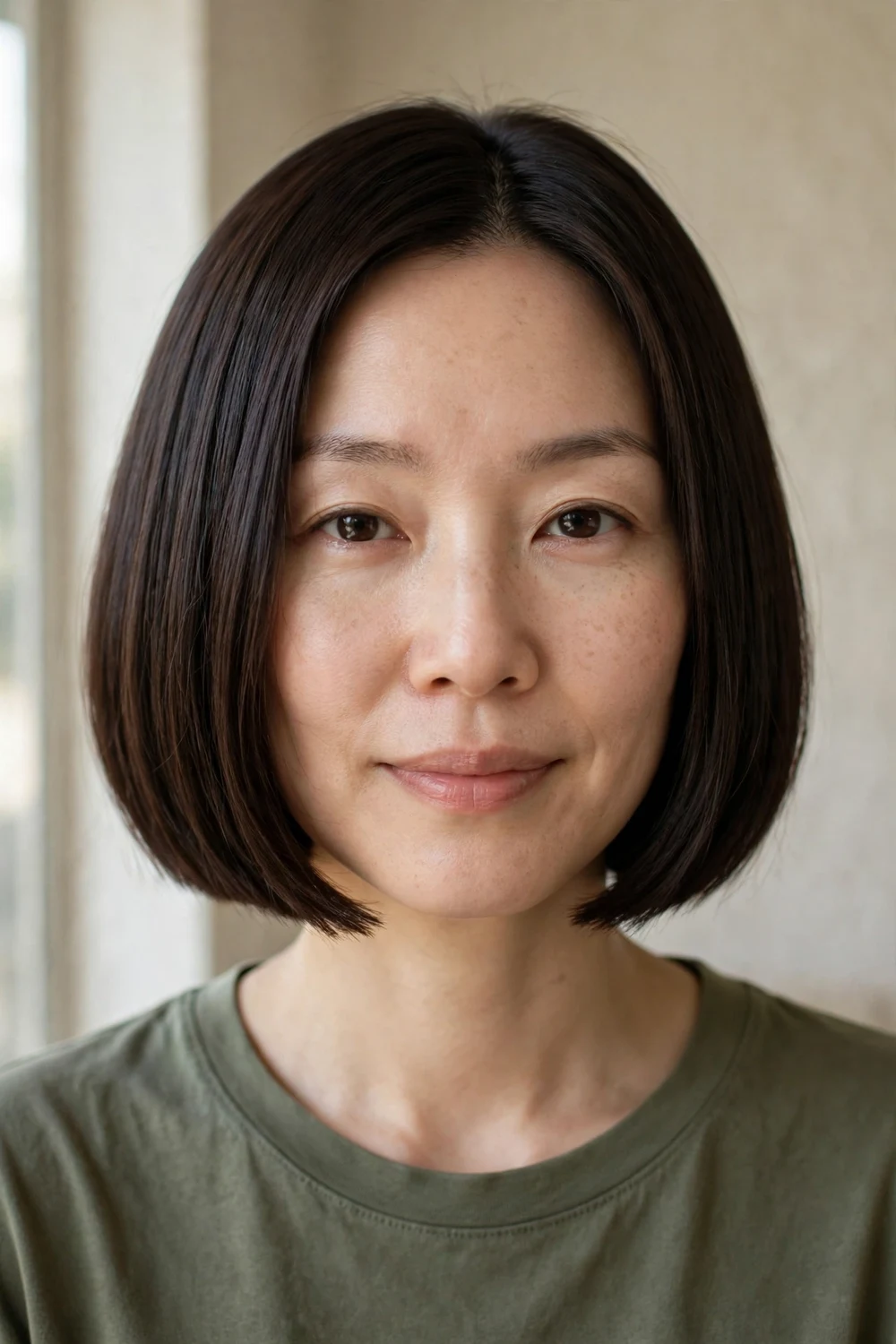
Nothing frames a narrow face quite like a one-length bob that stops right at the chin. The even perimeter draws a clean horizontal line across the lower face, which reads as width where you need it most. Because there are no layers to thin out the ends, the hair looks dense and deliberate, and the straight edges keep the silhouette strong. This cut suits straight to slightly wavy hair best, since the line stays sharp without much styling. It grows out evenly too, so the widening effect lasts between trims.
Try this: Blow-dry with a paddle brush, then bend the last inch under with a flat iron for a tucked edge that hugs the jawline.
2. Textured Blunt Bob with Bangs

Take the blunt bob and add two upgrades for thin faces: soft texturing through the ends and a light fringe. The blunt perimeter still supplies the horizontal line, while the texturing keeps the ends from looking heavy or severe. The bangs shorten the forehead, which matters because a long forehead can make a slim face read even longer. Keep the fringe wispy rather than thick so it softens instead of hiding your features. This combination works well on fine hair, since the solid edge preserves the look of density.
Try this: Ask for point-cutting at the ends, not razoring, so the texture stays controlled on fine hair.
3. Chin-Length Shaggy Bob

Choppy layers are a secret weapon for narrow faces because they push hair outward at the cheekbones. This chin-length shag keeps the overall shape short and bouncy, with piecey layers that flip and flick in different directions. All that movement adds visible width through the sides of the head, which is the fastest way to balance a long face. It suits wavy and straight hair equally, and it looks better slightly messy, so morning styling takes minutes. A light texture spray brings the layers to life.
Try this: Scrunch a pea-sized amount of texturizing cream into dry ends to make the layers separate and widen.
4. Rounded Short Bob
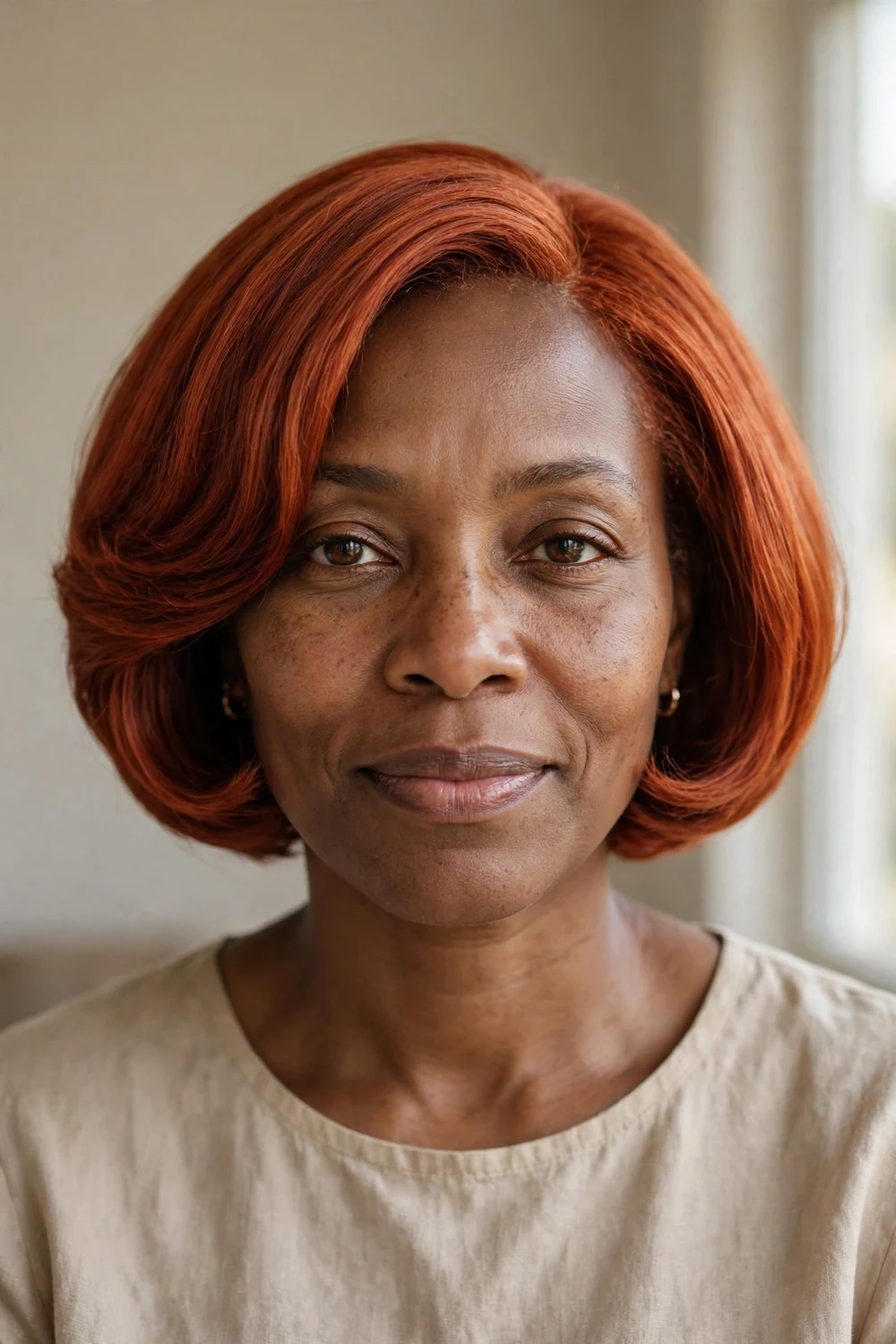
A rounded bob curves inward to cup the face, and that curve adds softness around a narrow jaw. The shape sits just under the chin with the ends rolled slightly under, creating a dome of volume through the sides. That side fullness fills in the space beside the cheekbones, giving the face a wider appearance. Blonde and copper tones brighten the look further, reflecting light around the face. This style works best with a side or center part and smooth blow-drying so the curve stays defined.
Try this: Wrap sections around a large round brush while drying, rolling under at the ends to lock in the curve.
5. French Bob with Bangs

The Parisian French bob ends at the mouth or jaw with a full fringe, and that combination is made for thin faces. The short length keeps every bit of volume near the cheekbones, where width matters most. The straight-across bangs cut the forehead’s visual length dramatically, balancing a longer face in one move. Wear it sleek for a polished look or slightly tousled for something softer. It flatters oval and long face shapes best and needs trims every five to six weeks to hold the precise length.
Try this: Keep the fringe just above the brows and slightly piecey so it softens instead of reading too heavy.
6. Wavy Textured Bob
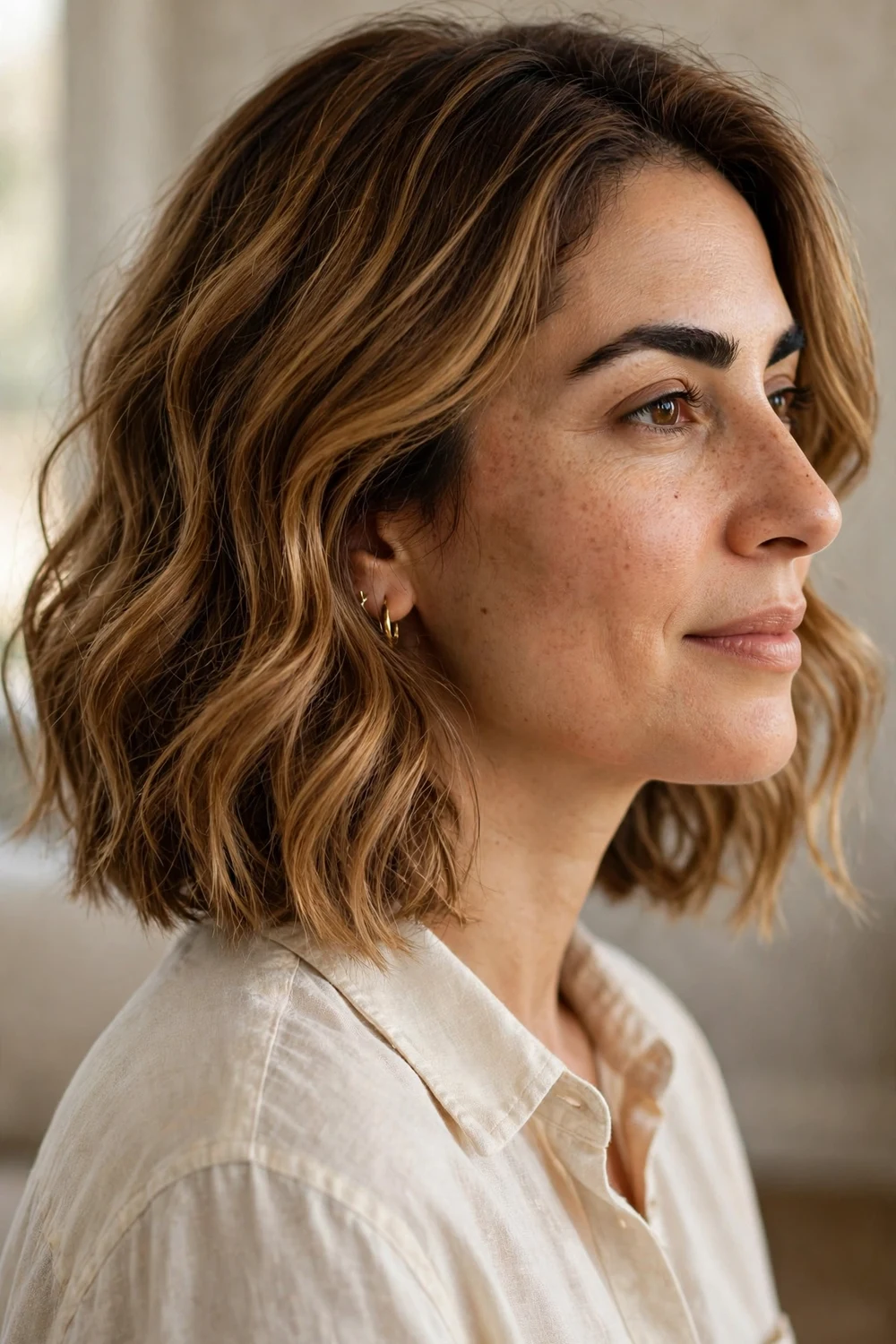
Waves are one of the simplest ways to add width to a narrow face, because every bend pushes hair outward. This shoulder-grazing bob pairs loose waves with lightly textured ends, so the fullness spreads through the sides rather than sitting at the crown. The result looks effortless but does serious balancing work on long or slim faces. It suits every hair type, from fine to thick, since the waves can be dialed up or down. A salt spray or wave foam gives the texture grip without stiffness.
Try this: Curl only the mid-lengths, leaving the last inch straight, so the waves stay soft instead of bouncy.
7. Shoulder-Length Layered Balayage Bob
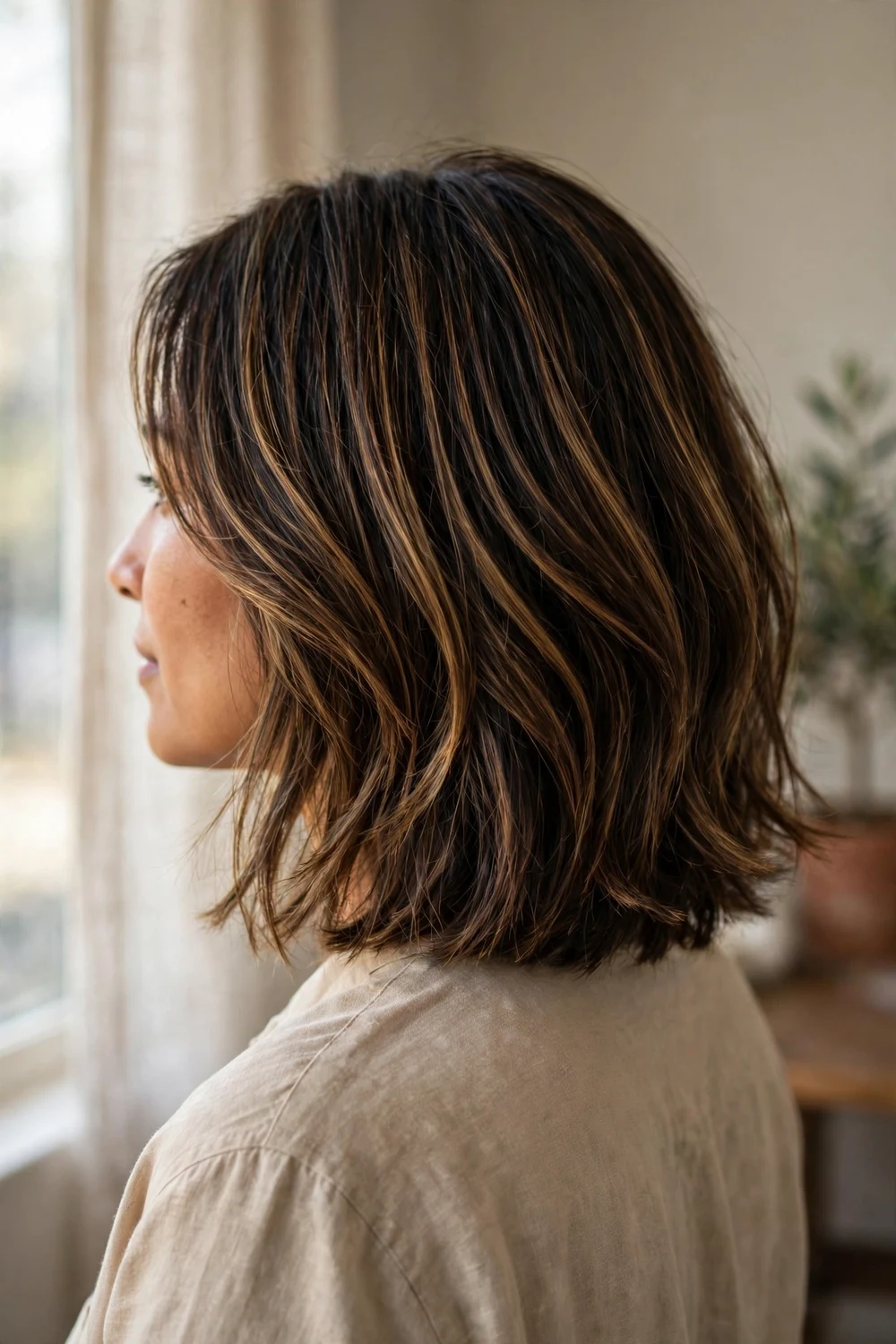
This longer bob brings two widening tools: soft layers that flick outward at the sides and balayage that adds dimension. The layers start at the chin and build through the shoulders, so fullness concentrates right where a thin face needs it. The hand-painted highlights make the layers more visible, which makes the width more visible too. It’s a good pick if you want bob versatility with extra length, and it grows out gracefully between salon visits. Warm and cool balayage tones both work.
Try this: Flip the front layers outward with a flat iron for an instant cheekbone-widening effect.
For more inspiration on layered cuts, see bob hairstyles for fine hair and how similar techniques build fullness where it counts.
8. Graduated Bob
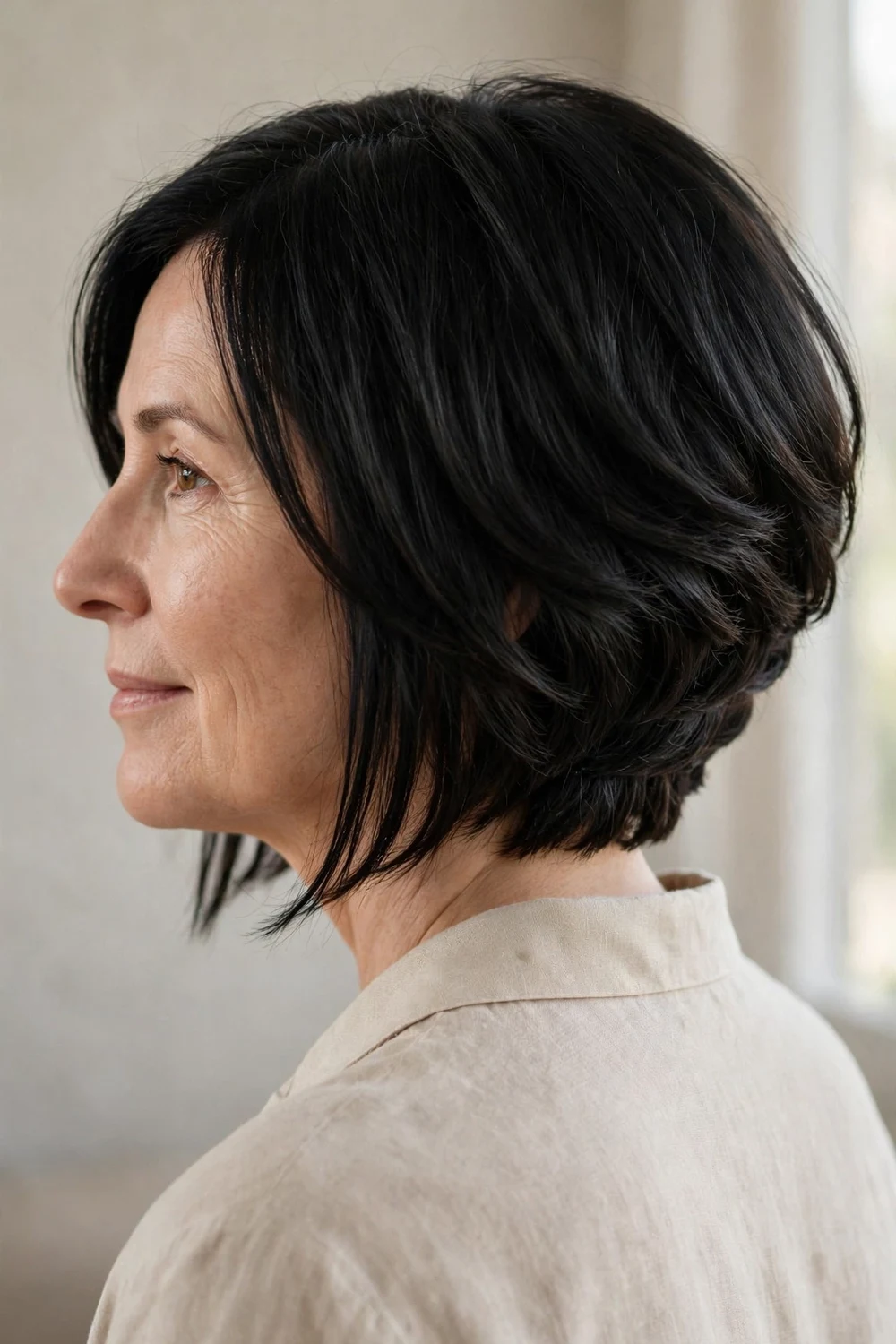
A graduated bob stacks shorter layers at the back and angles longer toward the front, building a rounded silhouette full of side volume. That rounded shape is exactly what balances a narrow face, because it fills out the sides of the head from every angle. The longer front pieces draw the eye down along the cheeks instead of straight down the face. This cut suits straight and slightly wavy hair, and it holds its shape well between appointments. It’s also one of the most low-maintenance bobs once the initial shape is cut in.
Try this: Blow-dry the back with a round brush to keep the stacked shape rounded and full.
9. Graduated Bob with Fringe
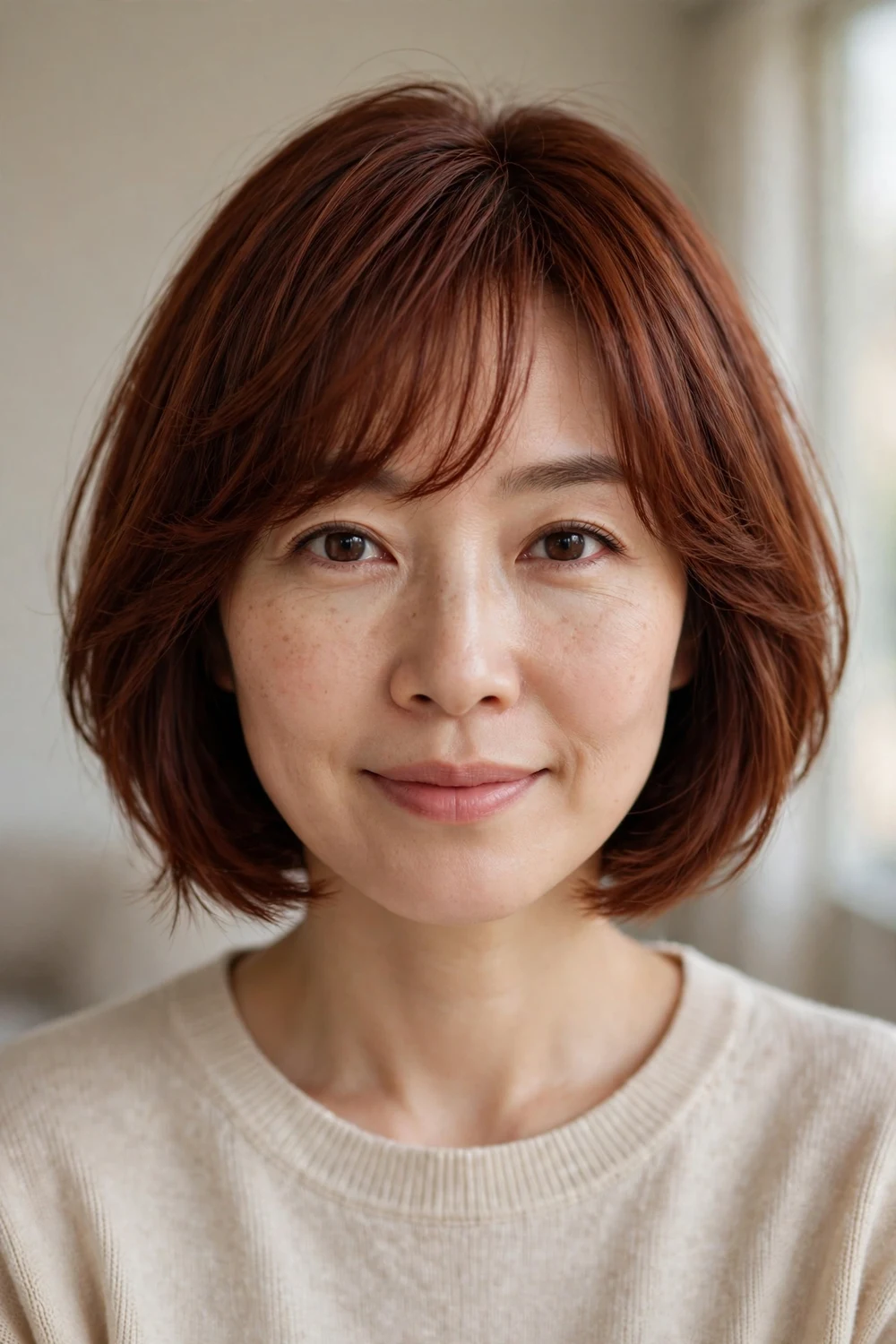
Add a fringe to the graduated shape and you get a two-way balance: the stacked back widens the sides while the fringe shortens the forehead. This pairing suits long, thin faces especially well because it corrects the length from both directions at once. The fringe can be blunt for drama or feathered for softness, and it blends into the graduated front pieces nicely. It’s a slightly bolder choice than a plain bob, but the payoff in balance is worth it. Works best on straight hair that holds a smooth line.
Try this: Ask your stylist to cut the fringe dry so the true length shows on your face shape.
10. Inverted Bob with Highlights

The inverted bob keeps the back short and lets the front pieces run longer, creating angled lines that fall along the cheeks. Those diagonal lines add width to the lower face and stop the eye from traveling straight down a narrow chin. Highlights through the front pieces make the angles stand out even more. This cut flatters most face shapes but earns its place here because of how well it widens a slim jaw. Styling is simple: straighten for polish or add a slight bend for softness.
Try this: Tuck one side behind the ear and leave the other loose for an asymmetric look that breaks up length.
11. Choppy Layered Lob
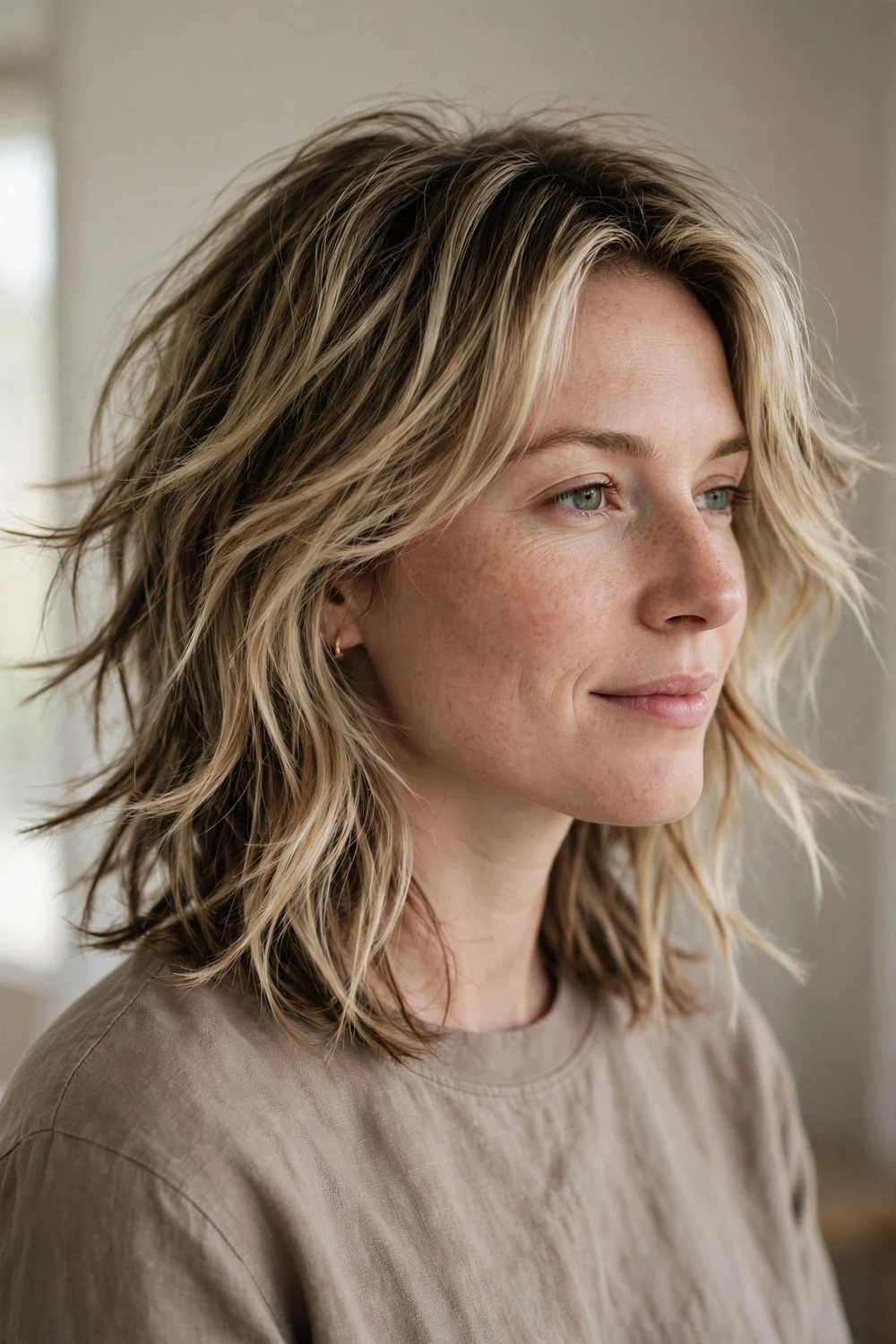
When the face is narrow, choppy layers falling on the sides add the proportion a one-length cut can’t. This long bob sits at the collarbone with layers cut in chunks, so the pieces kick outward instead of lying flat. The result is visible width through the mid-face, right where thin faces look slimmest. It suits straight hair that needs movement and wavy hair that needs shape. Style it with a bend through the mid-lengths, never curling the very ends, to keep the bob line intact.
Try this: Finish with a wax spray on the ends to keep the choppy pieces separated and wide.
12. Side-Parted Long Bob
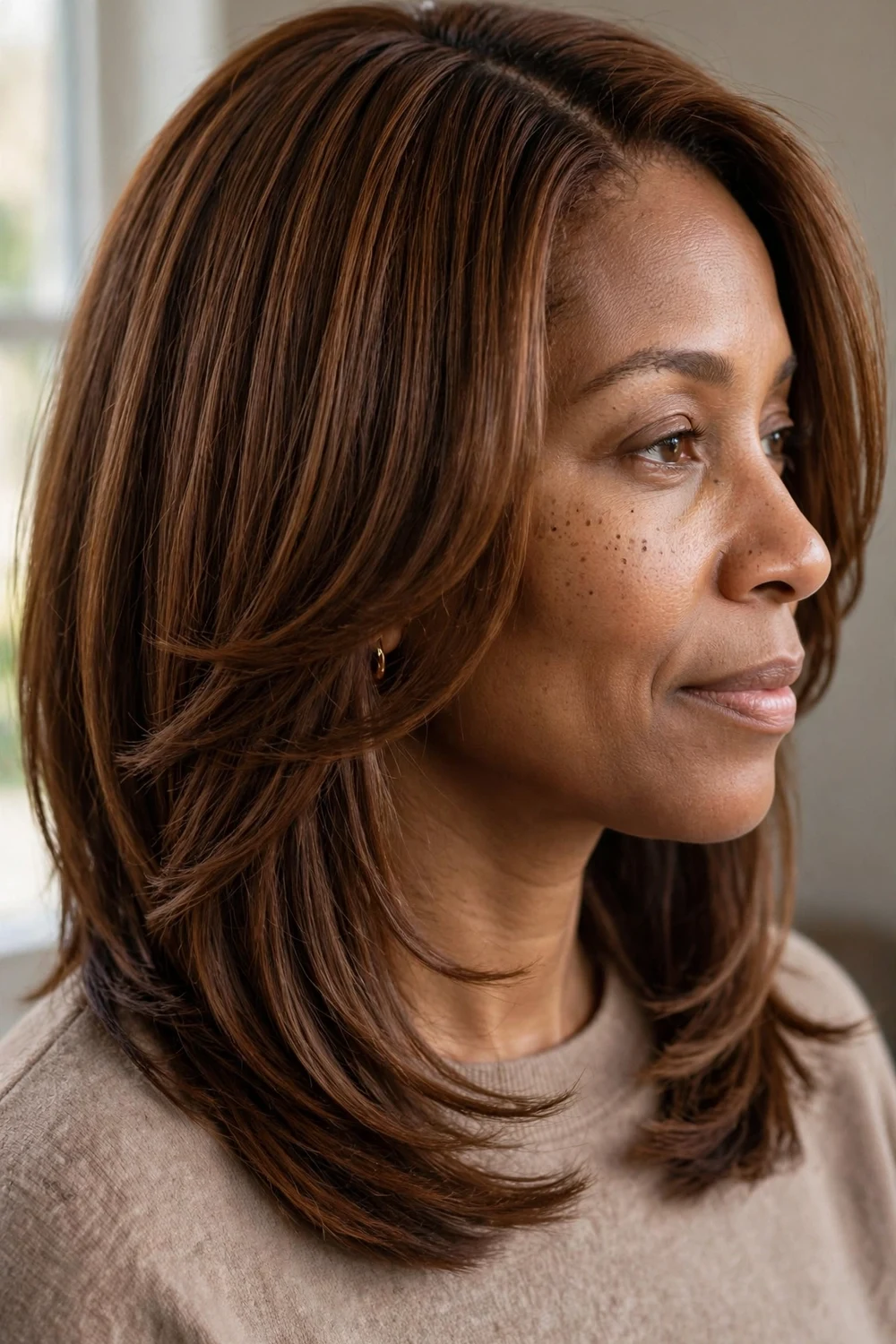
A deep side part changes the whole geometry of a bob on a thin face. Sweeping the hair across the forehead breaks up the face’s vertical line, and the heavier side falls with extra fullness over one cheek. Pair it with very long front layers for the most flattering effect. This is one of the simplest changes you can make, and it works on a lob you’ve already grown out. A dramatic side bang takes it further if you want more forehead coverage.
Try this: Set the part while hair is damp and clip it in place for ten minutes so it holds all day.
13. Voluminous Long Bob
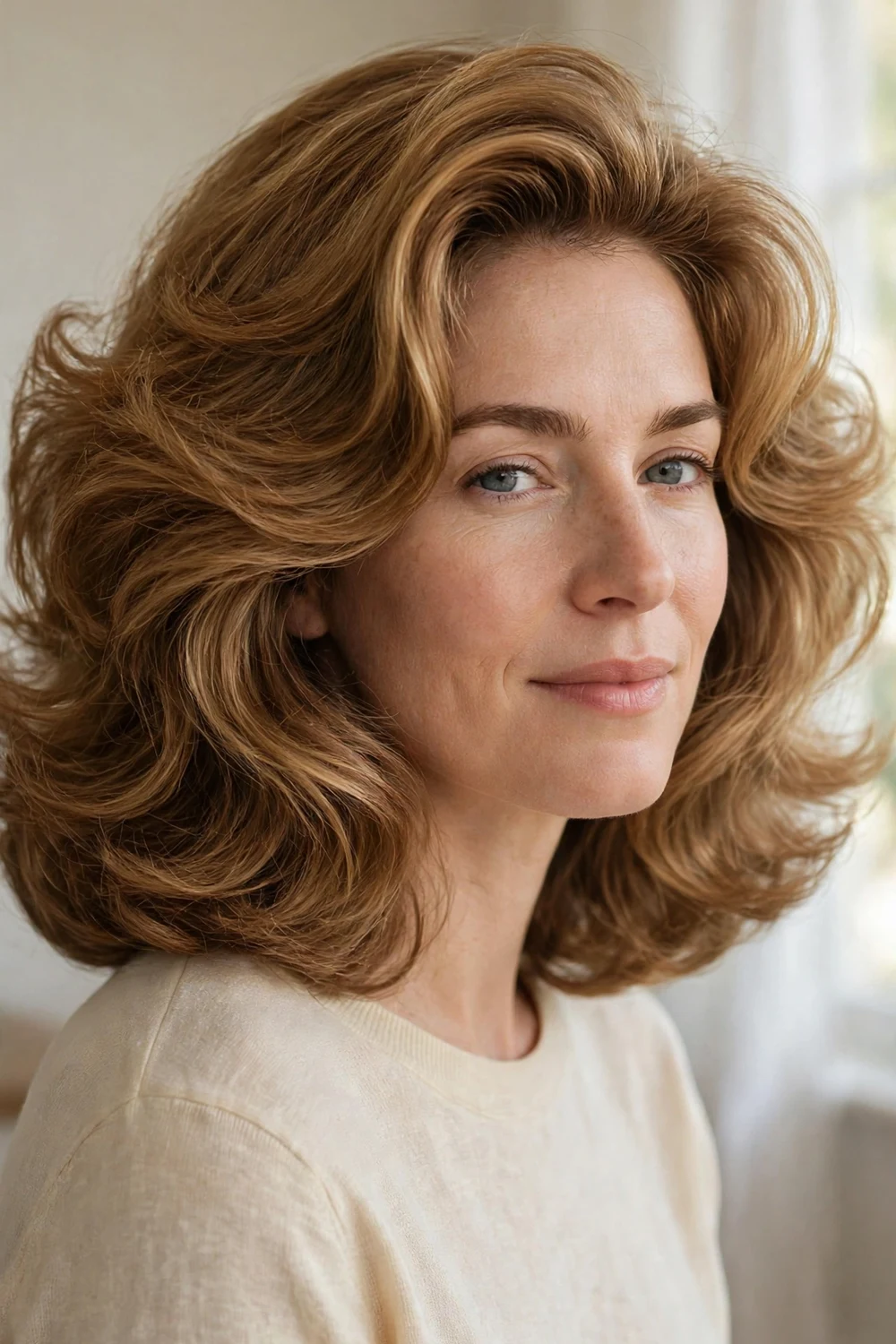
For narrow or petite faces, the rule is simple: build the volume on the sides. This long bob does exactly that, with blow-dried fullness expanding outward through the cheeks and jaw instead of stacking on top. The longer face has, the more side volume it can carry, so don’t hold back. Curly hair can achieve it with curl cream and a diffuser, while straight hair needs a round brush and a volumizing mousse. The look reads glamorous but the technique is basic blow-drying.
Try this: Flip your head upside down for the last minute of blow-drying, then part and arrange the sides wide.
If you like stacked shapes with serious volume, short stacked bob haircuts offer a shorter take on the same fullness trick.
14. Side-Swept Shoulder-Length Bob

A side sweep across the forehead does two jobs: it covers part of a long forehead and it pushes fullness diagonally across the face. This shoulder-length bob pairs that sweep with soft waves, so movement spreads through the sides while the part keeps everything asymmetric. It’s an easy, low-maintenance style that looks polished with almost no effort. The length frames the neck nicely too, which suits women who don’t want a very short cut. Subtle highlights add to the sense of movement.
Try this: Sweep the fringe while hair is damp and dry it in that direction so it stays put without product.
15. Bob with Block Fringe

A block fringe is cut straight across in one heavy line, and it takes inches off the visual length of a thin face. Unlike a wispy bang, it makes a clear horizontal statement across the forehead, which balances a long face decisively. Pair it with a one-length bob that ends at the chin or jaw for a strong, fashion-forward look. This style needs regular fringe trims to stay sharp, and it suits straight hair that holds a clean edge. It’s bold, but the balancing effect is unmatched.
Try this: Blow-dry the fringe flat with a small round brush, rolling it slightly under at the very ends.
16. One-Length Brown Bob
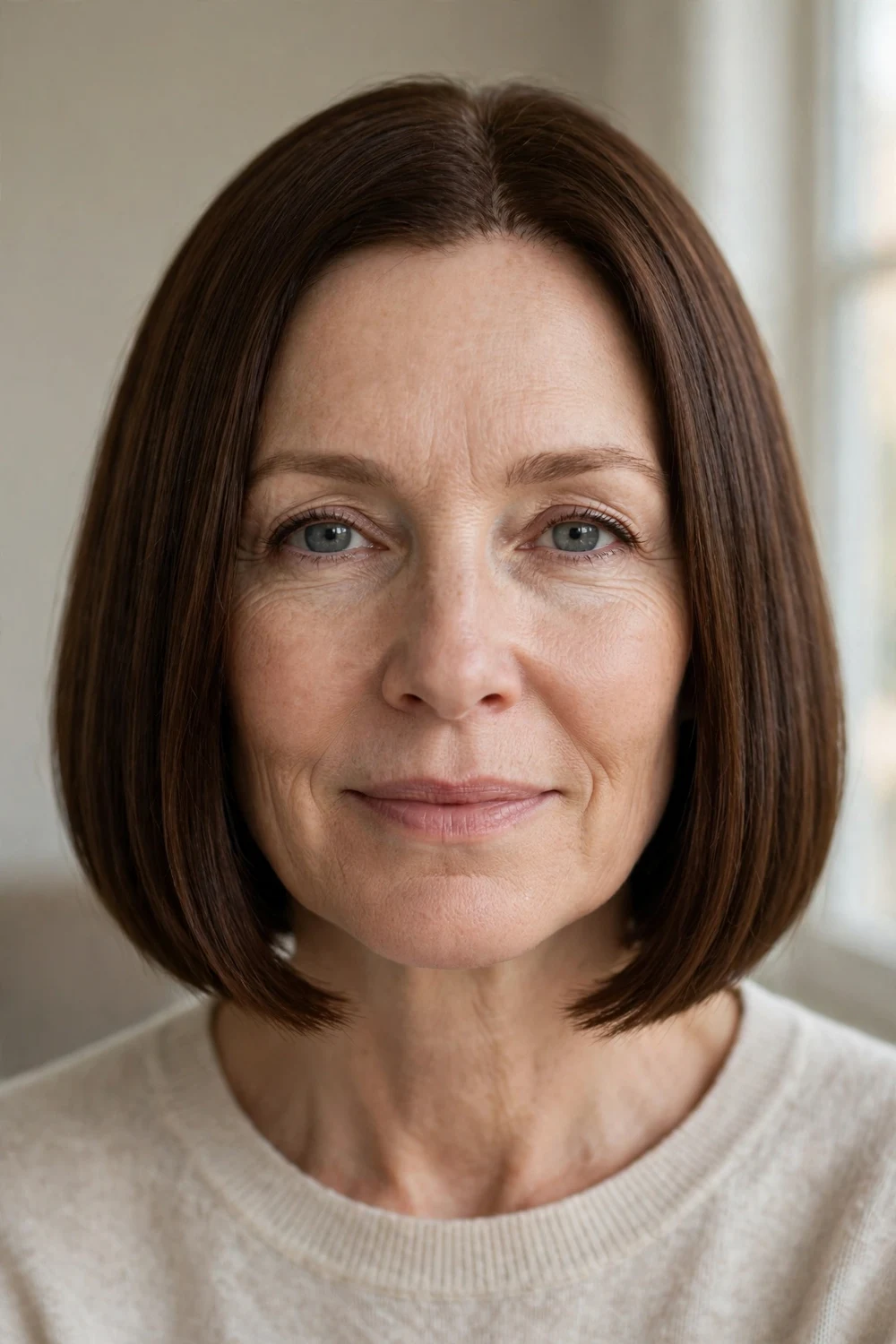
Sometimes the color does as much work as the cut. A one-length bob in a deep, even brown looks denser and weightier than the same cut in a high-contrast shade, and that visual weight widens a narrow face. The solid perimeter keeps the horizontal line crisp, while the rich color adds depth that makes hair look thicker. It’s a quiet, polished choice that suits professional settings. Keep the color rich with a gloss treatment every couple of months.
Try this: Ask for a demi-permanent gloss in a warm brown to add shine without changing your base color.
17. Butterfly Bob
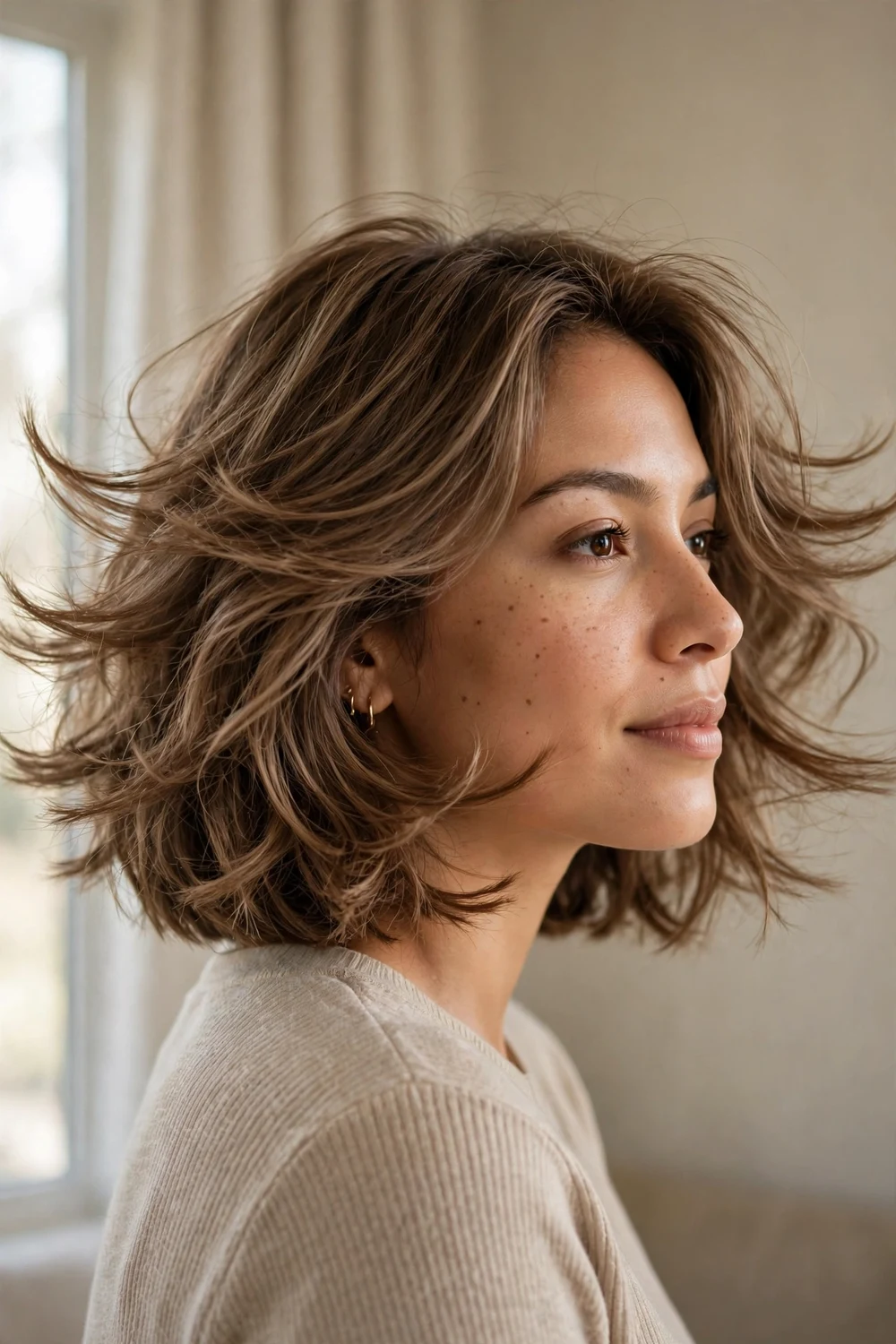
The butterfly bob mixes soft face-framing layers with a lightweight, airy shape, and it’s one of the friendliest cuts for narrow faces. The layers start around the cheekbones and flutter outward, adding movement exactly where thin faces need width. Because the layering is soft rather than choppy, the look stays polished and feminine. It works on fine hair too, since the layers create the illusion of fullness. Your stylist can adjust the layer length to match your exact face proportions.
Try this: Rake through with fingers instead of a brush to keep the layers airy and separated.
18. Curly Bob
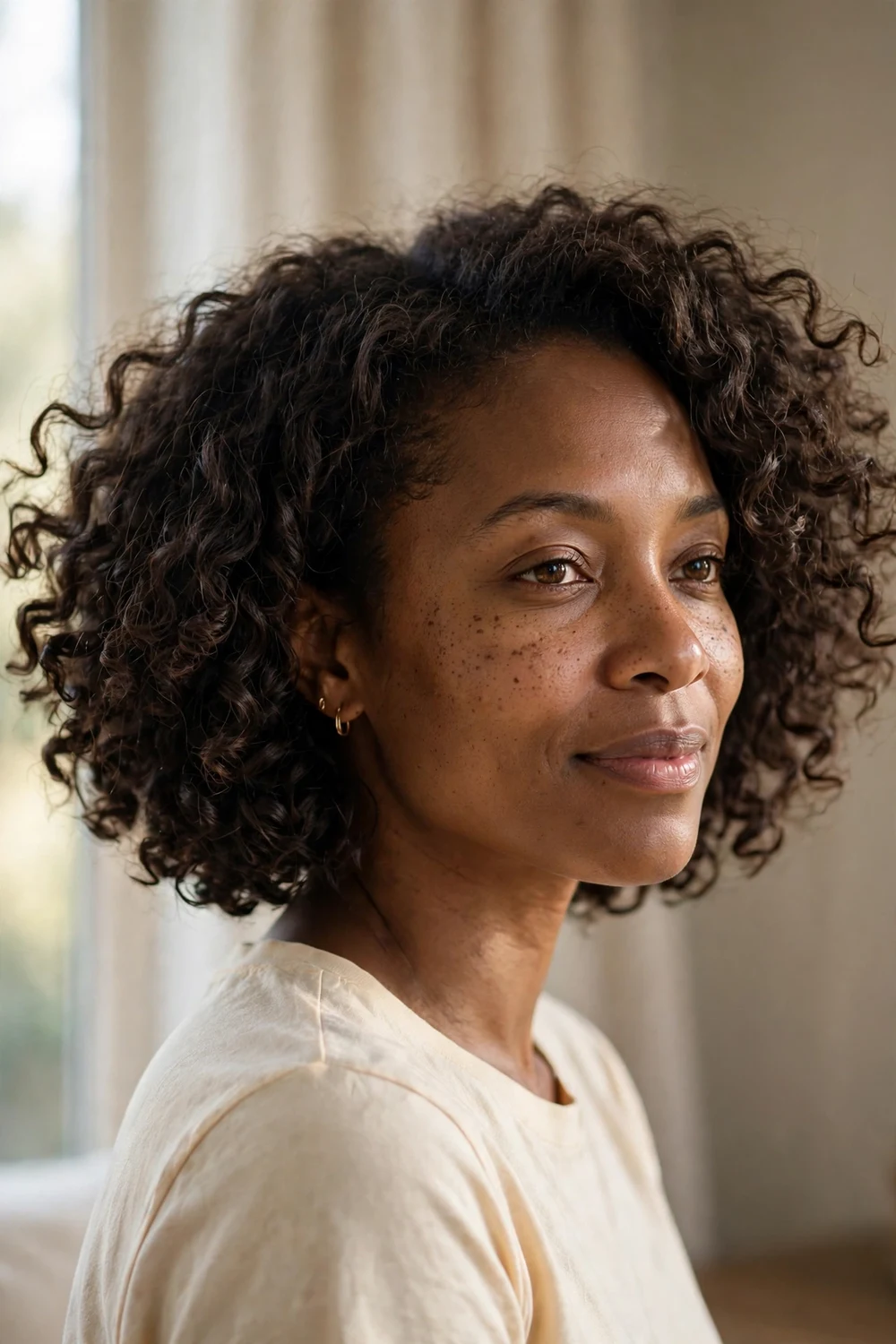
Natural curls are a built-in widening tool, because they expand sideways all on their own. A curly bob that hits at chin length or just below lets the curls bloom around the cheekbones and jaw, filling out a thin face from every angle. The key is keeping enough length for the curls to form fully without springing too short. A curl cream and diffuser bring out the best definition. This is one of the most flattering options for naturally curly hair paired with a narrow face.
Try this: Diffuse with your head tilted to each side so the roots lift outward instead of flattening.
Curious about the wider bob family? Our guide to types of bob haircuts walks through every major variation and who each one suits.
19. Bob with Curtain Bangs

Curtain bangs part in the middle and sweep to each side, framing the forehead while opening up the center of the face. On a thin face, they add softness at the temples and create gentle diagonal lines that break up vertical length. They blend into a bob seamlessly, growing out more gracefully than a straight fringe. This pairing suits oval and long faces well and works with both straight and wavy textures. Style the curtains with a round brush, sweeping each side away from the part.
Try this: Dry each curtain section around a medium round brush, rolling outward away from your face.
20. Asymmetrical Bob
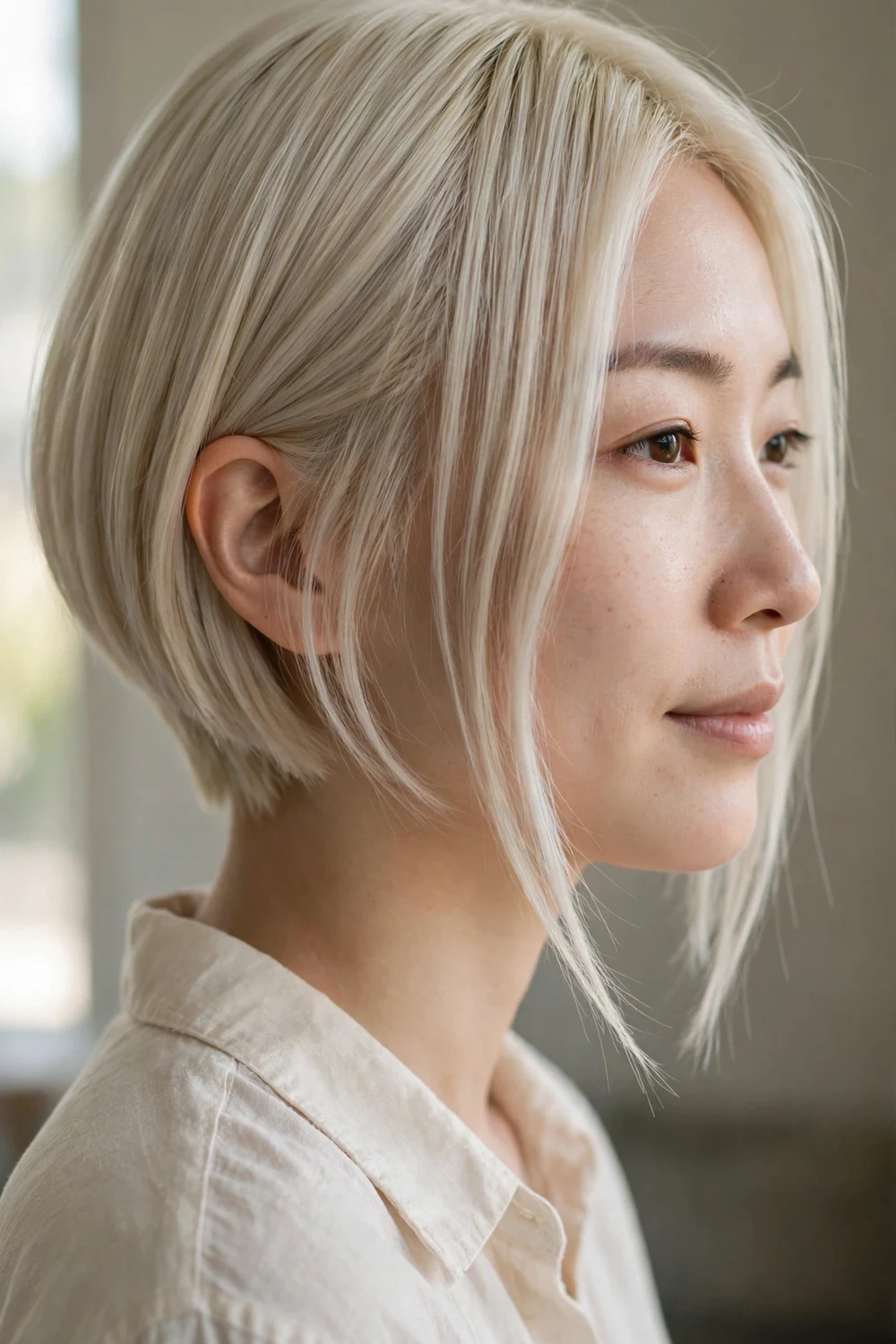
An asymmetrical bob runs longer on one side than the other, and that uneven line stops the eye from measuring the face straight down. The longer side drapes along the cheek and jaw, adding diagonal fullness where a thin face looks narrowest. The shorter side keeps the cut modern and edgy. It suits confident wearers and works best on straight hair that shows off the angle clearly. Because the shape is the statement, keep the color simple and let the cut do the talking.
Try this: Straighten with a flat iron and tuck the short side behind the ear to sharpen the contrast.
21. Chin-Length Bob with Side-Swept Fringe
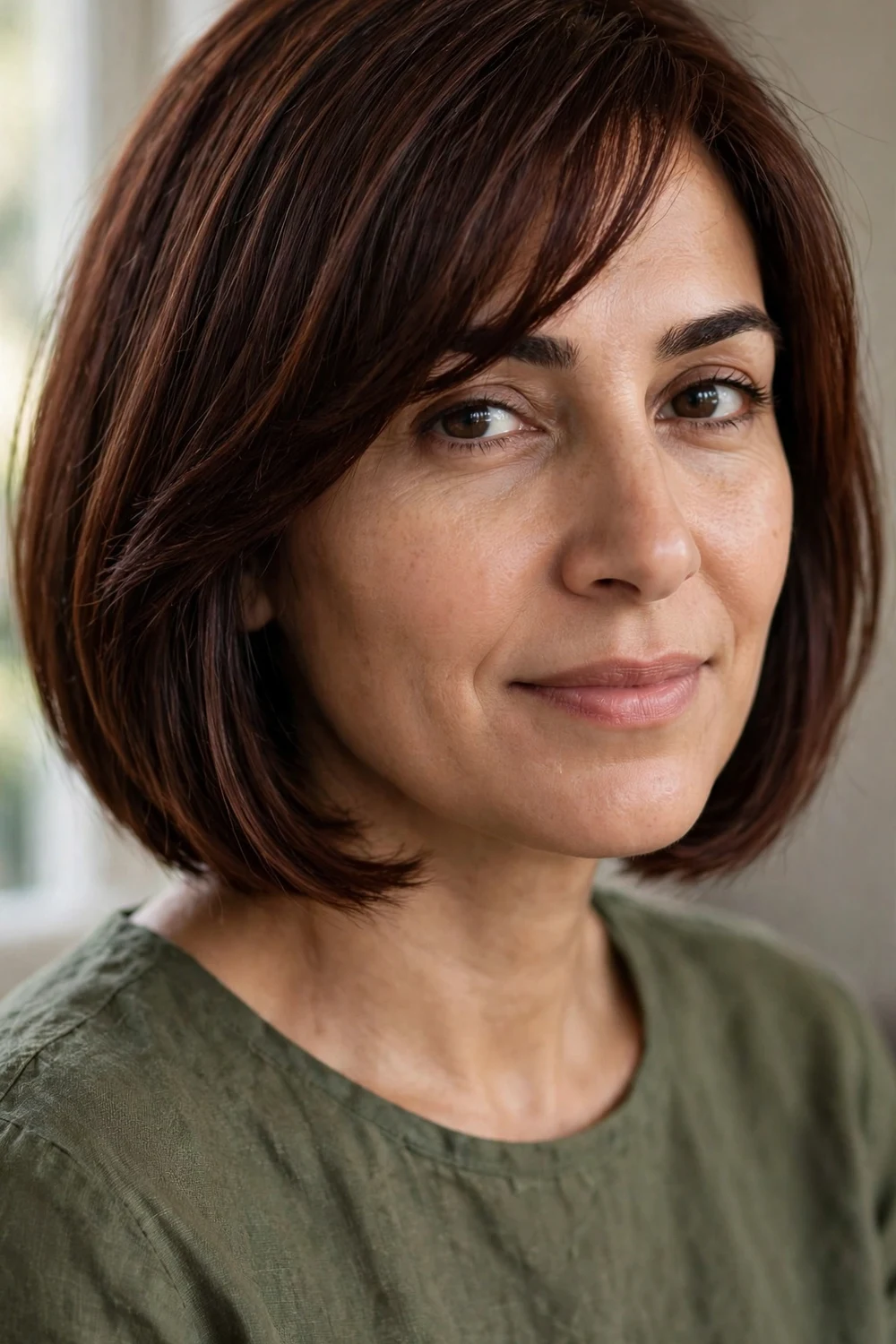
Keep the bob short at the chin and add a fringe that sweeps diagonally across the forehead. The short length concentrates volume beside the cheekbones, while the diagonal fringe cuts the forehead’s length and draws the eye sideways. It’s a compact, balanced combination that flatters petite and narrow faces. The fringe blends into the side of the bob, so grow-out stays soft. This style suits straight to wavy hair and takes very little daily styling.
Try this: Train the fringe to sweep by blow-drying it across the forehead in the opposite direction first.
22. Angled Bob with Layers
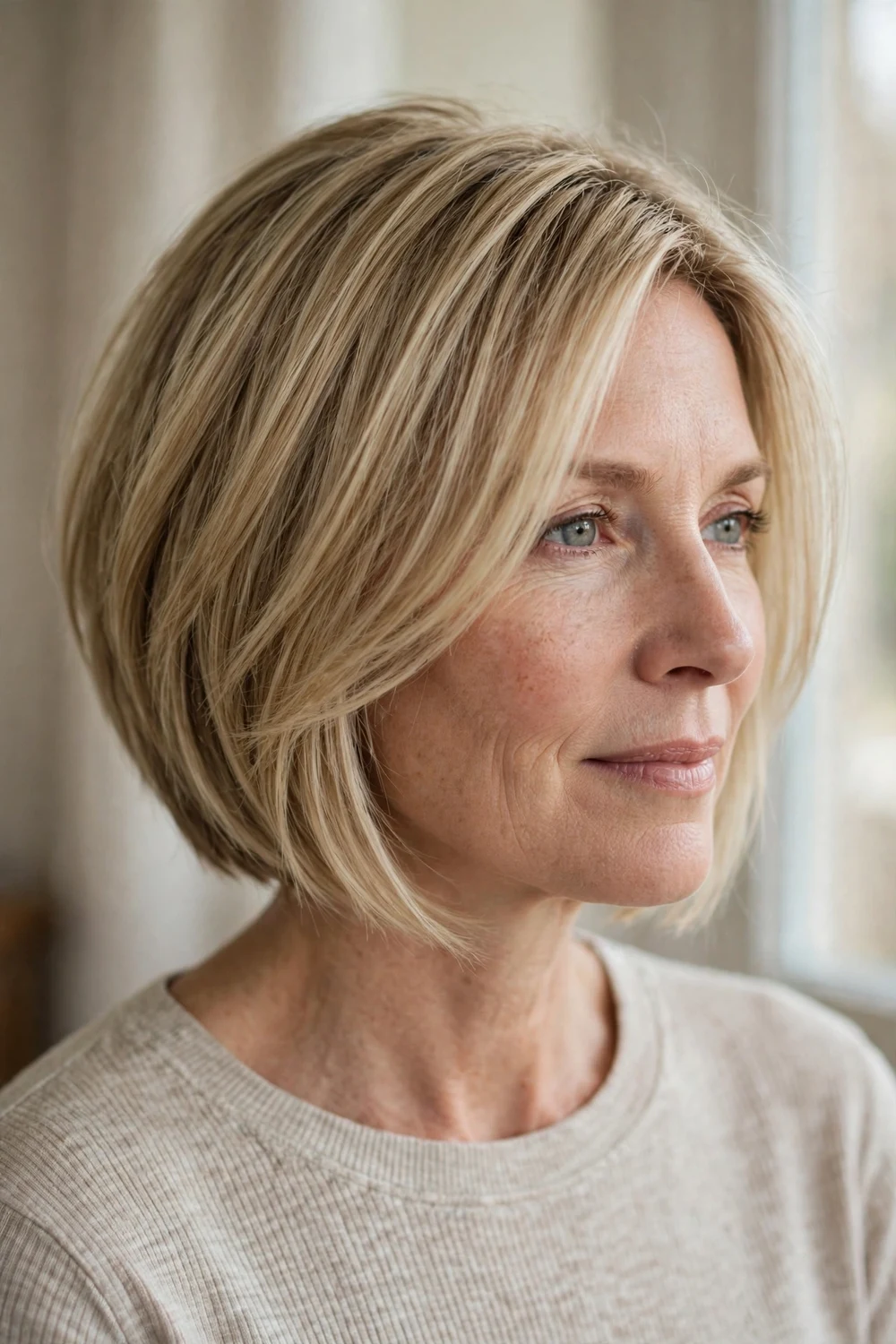
This cut angles from shorter at the back to longer at the front, with soft layers tucked through for movement. The forward angle brings hair down along the cheeks, adding width to the lower face on a slim jaw. The layers keep the shape from looking too severe, which matters on narrow faces that can look sharp with overly graphic cuts. It’s a polished, office-friendly style that still has personality. Blow-dry smooth for a sleek finish or add waves for softness.
Try this: Use a straightener to tuck the front pieces slightly under, emphasizing the forward angle.
For an angled cut aimed at a different face shape, see angled bob haircuts for round faces and compare how the angle shifts.
23. Wavy French Bob

This takes the short French bob and loosens it up with tousled waves. The jaw-skimming length still keeps volume high near the cheekbones, but the waves add side width that the sleek version doesn’t have. The fringe stays, continuing to shorten the forehead. It’s a relaxed, modern take that suits wavy hair naturally and straight hair with a little styling help. The texture keeps the short cut from looking severe on narrow faces. A texturizing spray is the only product you really need.
Try this: Twist random sections around your finger while damp, then let them air-dry for natural waves.
24. Lob with Bangs

If you want bob style with extra length, a lob with bangs is the classic answer for long, thin faces. The bangs create the illusion of width across the forehead while shortening the face’s visual length, and the collarbone-skimming length adds elegance without dragging the face down. Keep some wave or bend through the mid-lengths so the longer cut doesn’t hang flat against the sides. It’s versatile, feminine, and one of the most forgiving combinations for narrow faces. Works on nearly every hair texture.
Try this: Add a loose bend to the mid-lengths with a large curling iron, alternating directions for natural movement.
Bob Haircuts for Thin Faces Comparison at a Glance
| Style | Best Occasion | Difficulty | Styling Time |
|---|---|---|---|
| Classic Chin-Length Blunt Bob | Work, formal events | Easy | 10-15 min |
| Textured Blunt Bob with Bangs | Everyday, office | Easy | 10-15 min |
| Chin-Length Shaggy Bob | Casual, weekends | Easy | 5-10 min |
| Rounded Short Bob | Evenings out, events | Medium | 15-20 min |
| French Bob with Bangs | Dates, city outings | Easy | 5-10 min |
| Wavy Textured Bob | Everyday, vacations | Easy | 10 min |
| Shoulder-Length Layered Balayage Bob | Weddings, parties | Medium | 15-20 min |
| Graduated Bob | Work, interviews | Easy | 10-15 min |
| Graduated Bob with Fringe | Evenings, events | Medium | 15 min |
| Inverted Bob with Highlights | Office, nights out | Easy | 10 min |
| Choppy Layered Lob | Weekends, concerts | Easy | 10 min |
| Side-Parted Long Bob | Everyday, work | Easy | 5 min |
| Voluminous Long Bob | Parties, photos | Medium | 20 min |
| Side-Swept Shoulder-Length Bob | Everyday, office | Easy | 10 min |
| Bob with Block Fringe | Fashion events, shoots | Medium | 15 min |
| One-Length Brown Bob | Work, formal dinners | Easy | 10 min |
| Butterfly Bob | Dates, everyday | Easy | 10 min |
| Curly Bob | Everyday, casual | Easy | 10-15 min |
| Bob with Curtain Bangs | Everyday, weekends | Easy | 10 min |
| Asymmetrical Bob | Nights out, creative work | Medium | 10-15 min |
| Chin-Length Bob with Side-Swept Fringe | Office, everyday | Easy | 10 min |
| Angled Bob with Layers | Work, meetings | Easy | 10-15 min |
| Wavy French Bob | Weekends, travel | Easy | 5-10 min |
| Lob with Bangs | Everyday, events | Easy | 15 min |
How to Choose the Right Bob for Your Thin Face
Start with your forehead. If it’s long, bangs should be part of the plan, since no amount of side volume fixes a forehead that makes the face read long. A full fringe, curtain bangs, or a deep side sweep all shorten it, so pick the one that matches your style and maintenance tolerance.
Next, decide on length. Chin-length bobs are the safest for thin faces because they concentrate fullness at the cheekbones. Lobs work too, but they need waves or layers through the sides to earn their length. Anything that hangs straight and flat past the shoulders will emphasize narrowness, so skip that.
Consider your hair texture honestly. Fine, straight hair shines in blunt and graduated cuts where the solid edge creates density. Wavy and curly hair suits layered and shaggy bobs that let the texture do the widening. Thick hair needs internal layers so the sides don’t balloon into a triangle.
Finally, think about your neck and build. A very short bob with big volume on a long neck can create a top-heavy look, so keep the proportions balanced. Bring reference photos to your stylist and point to exactly where you want the fullness to sit.
Mistakes to Avoid
The biggest mistake is adding height on top while keeping the sides flat. That combination stretches a thin face even longer. If you love crown volume, balance it with waves or flipped ends at the sides.
Skipping bangs on a long forehead is another common miss. Without a fringe or side sweep, a long face stays long no matter how good the bob is. Even a soft curtain bang changes the proportions noticeably.
Over-layering fine hair thins out the ends and removes the solid edge that creates width. Ask for blunt or lightly textured perimeters instead of heavy layers when your hair is fine.
Letting the cut grow out too long between trims also hurts. Once layers lose their shape, the side volume collapses and the widening effect disappears. Book trims every six to eight weeks and the cut keeps working for you.
Frequently Asked Questions
What bob length is best for a thin face?
Chin length to just below the chin is the sweet spot. This length creates a horizontal line across the lower face, which reads as width and balances narrowness. Lobs that reach the collarbone can work too, but they need waves or layers through the sides so they don’t hang flat and emphasize length.
Should I get bangs if I have a thin face?
Yes, bangs are one of the most effective tools for thin faces. They shorten the forehead’s visual length, which balances a longer face immediately. Full fringes make the strongest statement, curtain bangs soften the temples, and side-swept fringes add a diagonal line that breaks up vertical length. Choose based on your styling routine and how much forehead you want covered.
What should I ask my stylist for?
Ask for a chin-length or slightly longer bob with volume built at the sides, not on top. Request soft box layering or textured ends that flick outward at the cheekbones. If your forehead is long, add bangs. Tell your stylist your goal is width, not length, and point to where you want the fullness to sit in your reference photos.
Are layers good for thin faces?
Soft layers that push hair outward are excellent for thin faces because they add side width. Choppy layers, box layering, and face-framing pieces all work. Avoid long, heavy layers that drag the hair down, and avoid over-layering fine hair, which thins the ends and removes the solid edge that creates the widening effect.
How often does a bob for a thin face need trimming?
Every six to eight weeks. The widening effect depends on the shape staying crisp, and once layers grow out and the perimeter softens, the side volume collapses. Bangs need more frequent attention, usually every three to four weeks, to keep the forehead coverage at the right length.
Final Thoughts
A thin face doesn’t limit your bob options, it just points you toward the ones that build width where it matters. Chin-length cuts, side volume, and bangs are the three levers, and every style on this list pulls at least one of them. Pick the combination that fits your hair texture and your routine, and you’ll have a bob that balances your face instead of lengthening it.

