


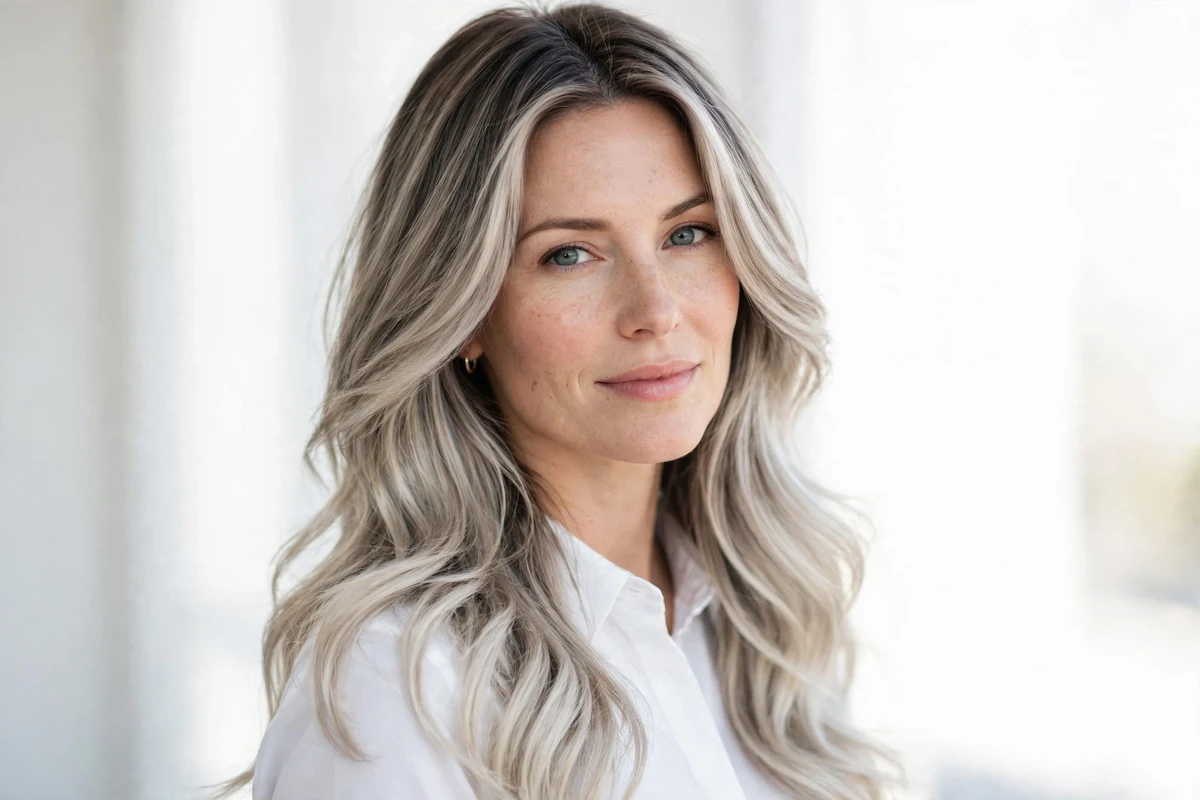
Ash blonde balayage is the color people save when they want blonde that looks calm, cool, and easy to wear. It blends the soft, hand-painted technique of balayage with a smoky, cool-toned blonde finish that keeps warmth at bay.
In this guide you’ll see what the color actually is, 13 distinct versions to ask for, the exact salon terms that get you the right result, and how to keep the ash tone from fading brassy. I’ve spent years comparing hair color guides side by side, and this is the version of the color that gets asked for the most.
Quick answer: Ash blonde balayage is a hand-painted highlighting technique finished with a cool, smoky blonde toner. The lightest pieces sit around the face and through the ends, the root stays deeper for a soft grow-out, and most people need a toner refresh every 8 to 12 weeks to stop it turning warm.
Quick Takeaways
- Ash blonde balayage means hand-painted placement plus a cool, smoky blonde toner. No stripes, no harsh lines.
- The “ash” tone comes from the toner or gloss applied after lightening, not from the lightening itself.
- Ask for a shadow root, face-frame brightness, and a cool-neutral toner to get the look without guesswork.
- It suits many skin tones, but the depth of the root and the brightness of the face frame should be adjusted to your coloring.
- Purple shampoo used sparingly, heat protectant, and toner refreshes keep it cool instead of brassy.
What Ash Blonde Balayage Actually Is
Balayage is a French word that means “to sweep,” and that’s how the color goes on: a stylist paints lightener onto the hair freehand instead of wrapping it in foils. That hand-painted placement creates a soft gradient, darker near the root and brighter through the mids and ends.
The “ash blonde” part is the tone. Ash tones are cool, smoky, and slightly muted: think beige-ash, pearl-ash, or a silvery neutral that doesn’t pull yellow. The coolness is set by a toner or gloss after the hair is lightened, and that step is what separates an ash blonde balayage from a warm honey one.
If you’re comparing cool and warm versions of the technique, honey blonde balayage shows how the same hand-painted placement reads completely different with golden warmth.
1. Classic Soft Ash Balayage
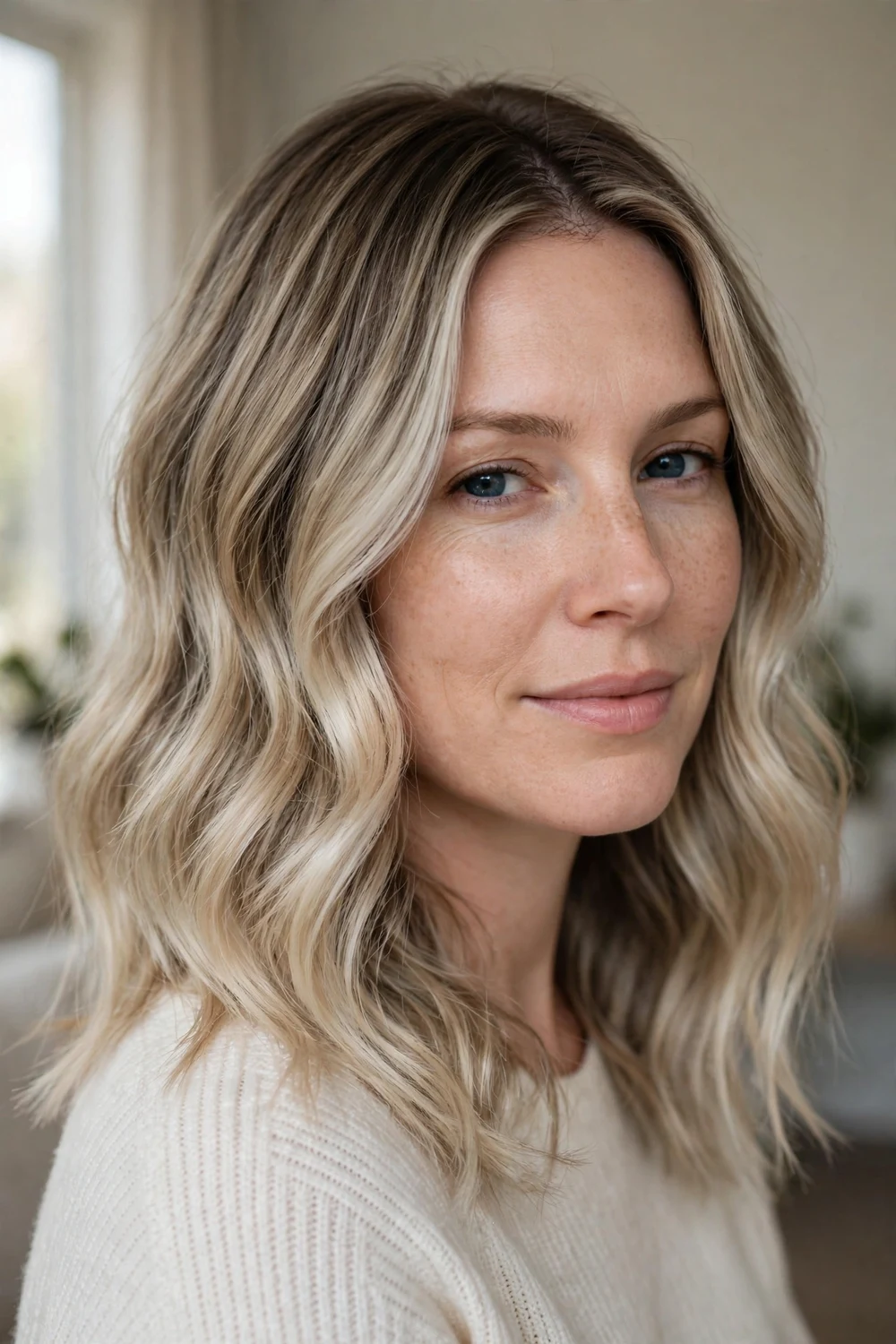
This is the entry-level version and the most requested one: a neutral-cool blonde painted through the mids and ends with the natural root left alone. The tone stays soft rather than gray, so it reads as “healthy blonde” instead of “fashion color.” It grows out cleanly because the contrast between root and ends is moderate, not dramatic. Most stylists finish it with a demi-permanent gloss at level 9 or 10 so the tone stays neutral-cool rather than drifting warm, and the appointment usually runs two to three hours from a medium base.
Try this: Ask for level 9-10 brightness through the ends with a cool-neutral toner, and book a gloss refresh around week 10 to stop warmth creeping in.
2. Smoky Ash Balayage with a Shadow Root
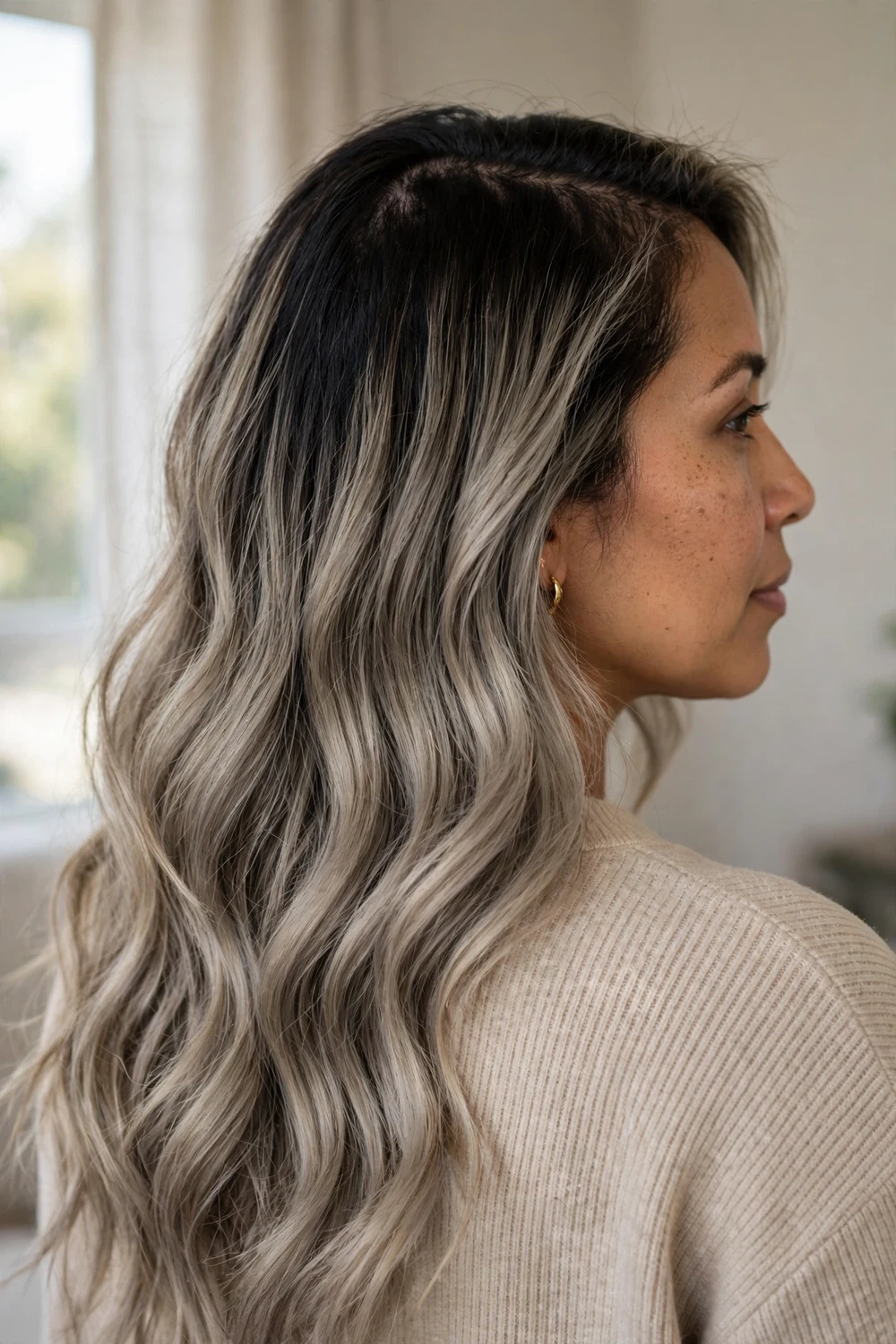
A shadow root is a deliberately darker root (usually a level 5-7) that the stylist melts down into the blonde. Pair it with a smokier ash toner and you get the moodier, deeper version of the look. It’s a strong pick for fall or for anyone who finds bright blonde washing them out, since the dark root keeps the face framed by depth. Because the root is already dark, this version disguises regrowth better than any other ash option here, and the smoky toner tends to fade more evenly than brighter icy formulas do.
Try this: Ask for a 2-3 inch shadow root in a cool brown and a smoky ash gloss over the lengths. It hides regrowth for weeks longer than a bright-root version.
3. Icy Ash Balayage
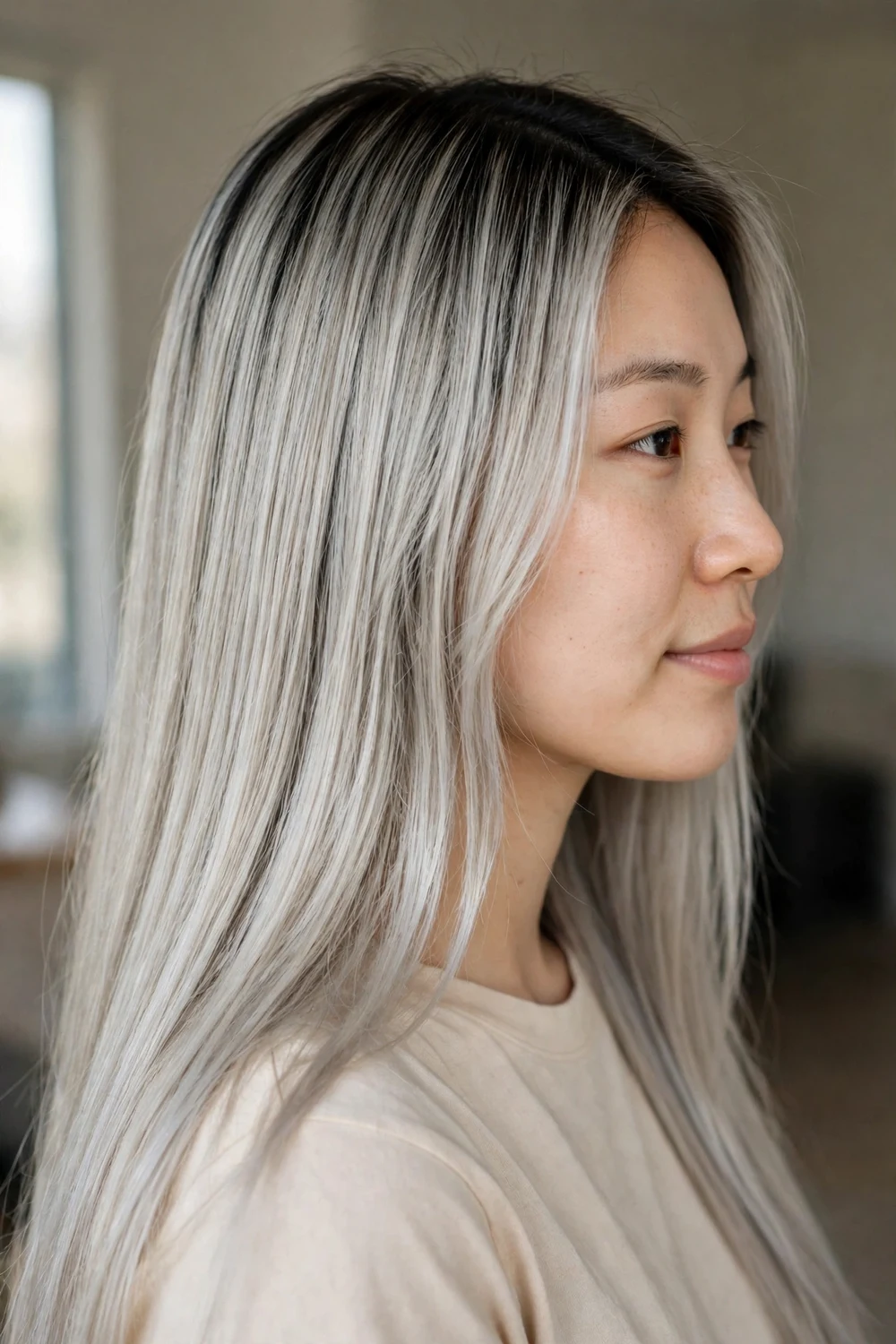
Icy ash is the brightest, coolest version: high-contrast, almost silver-cool lengths with visible dimension still left at the roots. Getting here usually takes more lifting sessions, especially from a dark base, and the toner fades faster because the hair is more porous. Plan on more maintenance in exchange for the most dramatic version of the color. Expect two sessions minimum from a medium-brown base, plus a bond builder during lightening and a deep conditioning mask at home every week to keep the pale ends from snapping.
If your base is darker than medium brown, placement and toning need extra care. Our full guide to blonde balayage on dark hair walks through 30 ideas tuned for deep bases, from honey melts to icy platinum.
Try this: Only ask for icy if your hair lifts to pale yellow in one to two sessions. Use purple shampoo once a week max, or the tone goes muddy instead of bright.
4. Ash Foilayage Blend
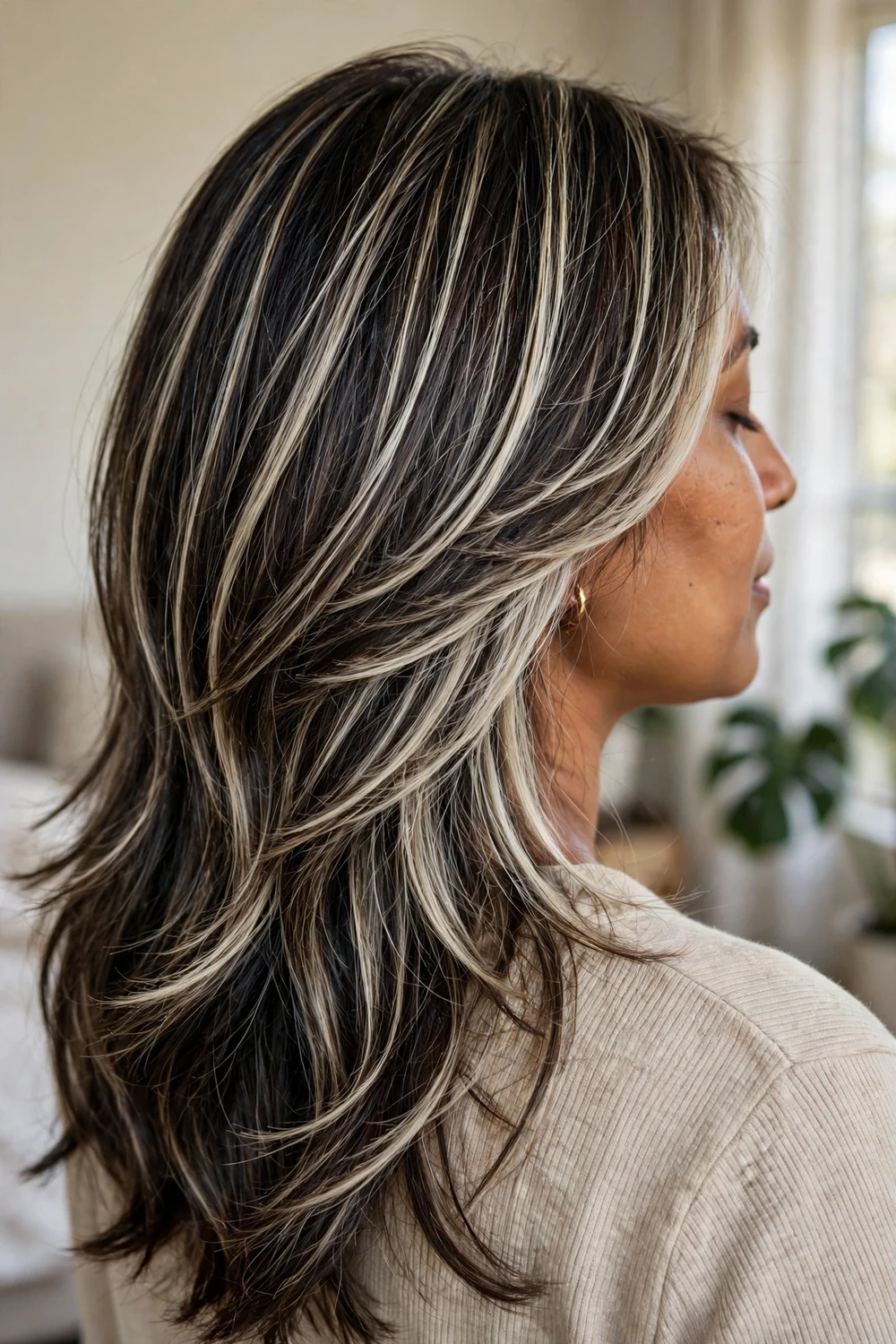
Foilayage combines balayage painting with foils. The foils give extra lift and evenness, which matters if you’re starting from dark brown and want a bright ash blonde result. The pieces are still painted softly at the root so the grow-out keeps the balayage look, but the ends lift lighter and brighter than freehand painting alone can reach. A full appointment runs three to four hours, so book a morning slot and expect a higher price than a standard balayage; the payoff is brightness a dark base cannot reach by painting alone.
Try this: This is the method to name if your stylist says your base is too dark for regular balayage. Ask for foilayage with a cool toner rather than all-over foils.
5. Teasylight Ash Balayage
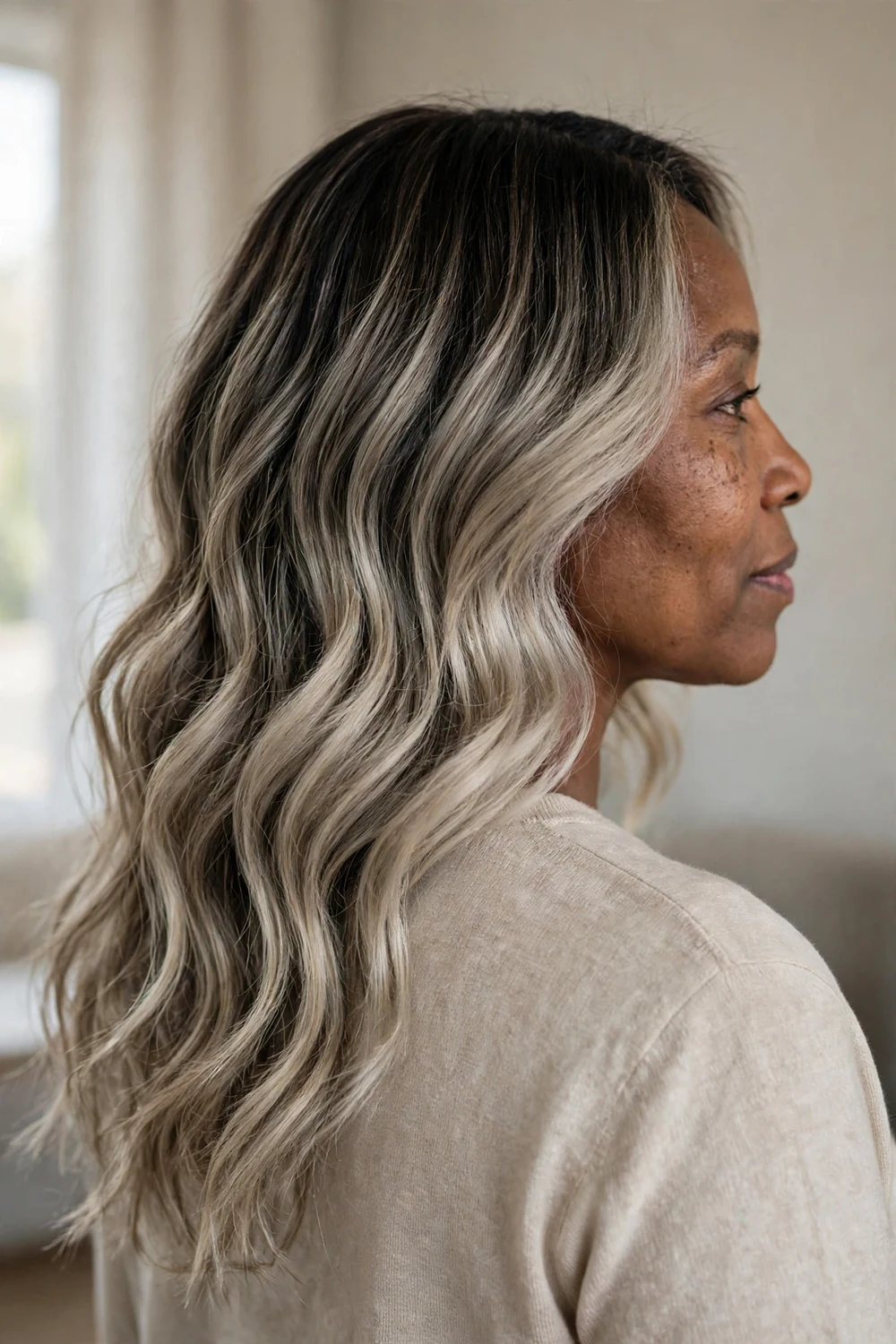
Teasylights are fine highlights painted with a teased section at the root. The teasing creates a diffused blend so each highlight fades out instead of starting with a hard line. It’s the best option if your main fear is visible regrowth, because the soft start makes the whole color melt from week one. The technique takes longer in the chair than open-air painting because each section is teased and painted carefully, but the regrowth line stays invisible for months, stretching appointments to twice a year.
Try this: Ask for teasylights through the crown and around the face, with the ash toner kept slightly deeper at the root so the blend looks seamless.
Not sure whether painted or foiled placement suits your hair better? Painted color grows out softer, while foiled placement lifts brighter and more evenly.
6. Mushroom-Tone Ash Balayage on a Dark Base
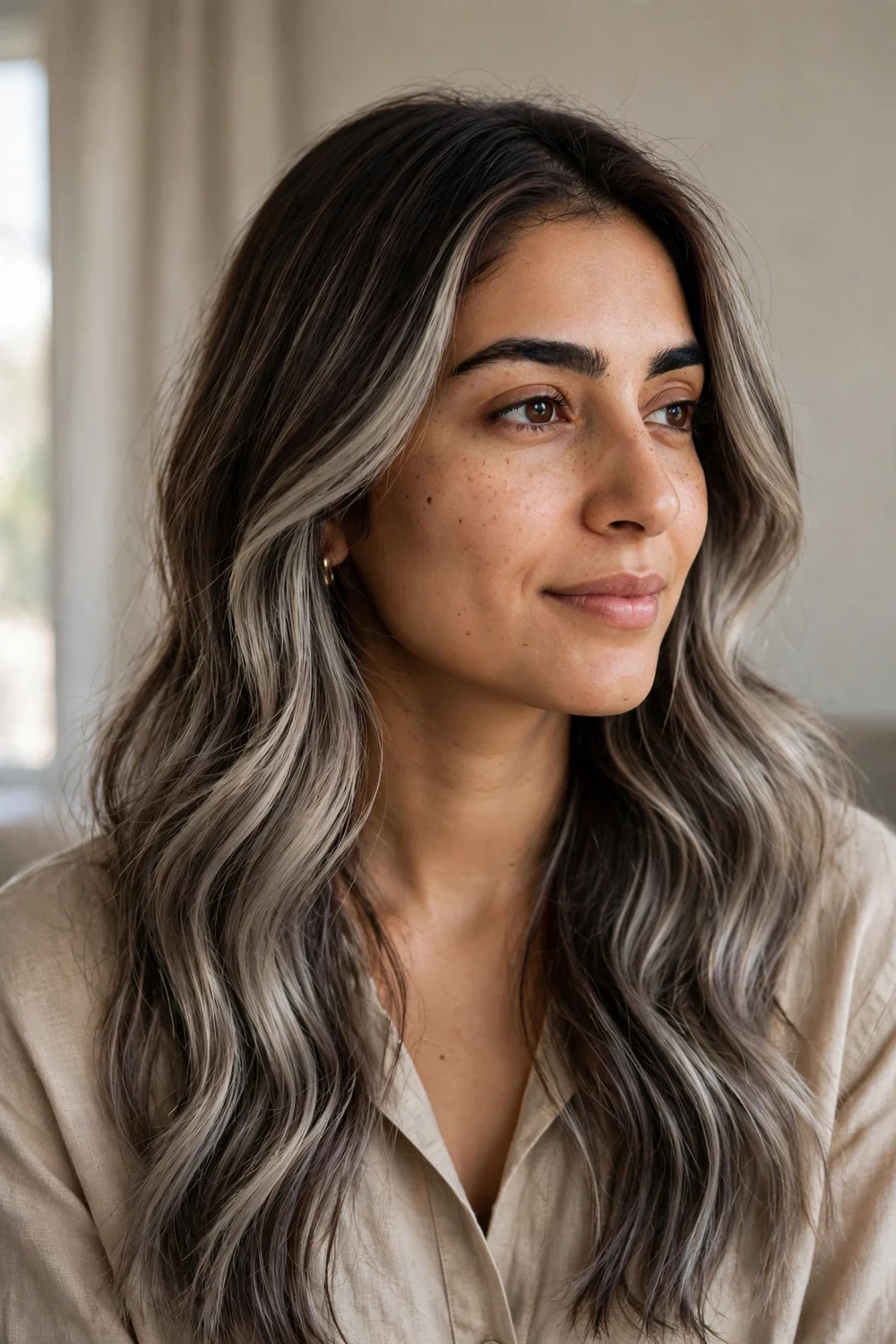
Mushroom tones are cool, gray-beige blondes painted over a dark brunette base. Because most of the hair stays dark, the lifting is minimal, which keeps the hair healthier than a full blonde conversion. The result reads as dimensional and modern rather than “blonde,” and it works for anyone who wants the ash look without giving up their depth. The mushroom tone sits around a level 6 or 7, so the lifting is gentle and the toner lasts longer than on very pale hair, making this one of the most low-damage entries on the list.
Try this: Ask for mushroom-gray pieces concentrated from the mids down, with the root untouched. It suits level 3-5 bases that can’t safely lift to pale blonde.
7. Pearl-Ash Balayage
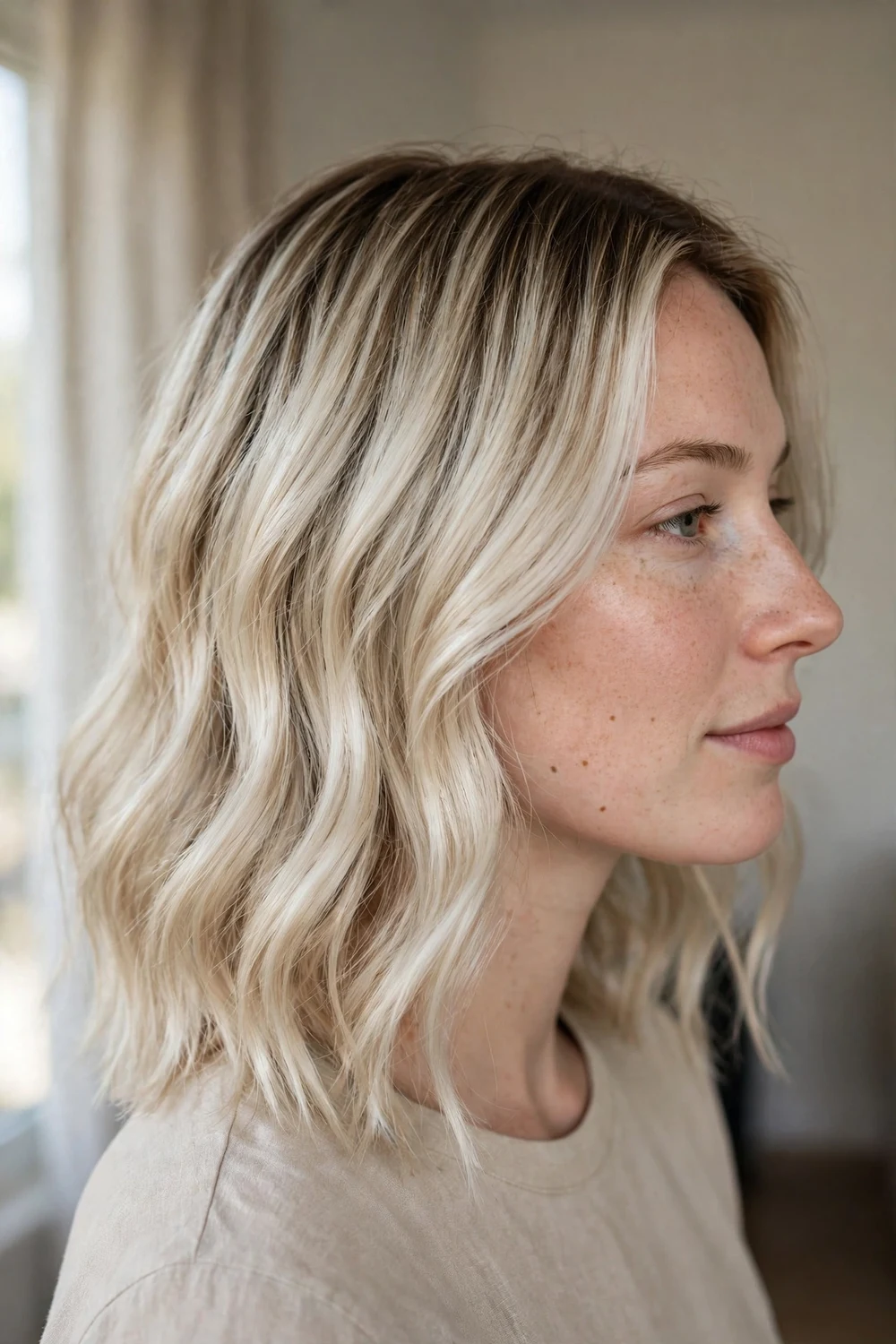
Pearl-ash is the luminous one: a creamy, slightly iridescent cool blonde that catches light instead of looking matte or flat. Some formulas mix a pearl tone with a little neutral so it stays wearable and doesn’t turn silver-gray. It’s a good middle ground between soft ash and icy ash, with more shine than either. Shine is the whole point here, so a weekly gloss treatment or a clear topcoat at the salon keeps the pearly reflect at its best, and hard water buildup shows faster on this version than on matte ash tones.
Try this: Ask for a pearl toner with a hint of neutral added, and keep heat styling minimal since shine is what sells this version.
If you prefer warmth over cool tones, creamy blonde balayage keeps the cream but swaps the ash for vanilla and soft champagne.
8. Ash Babylights
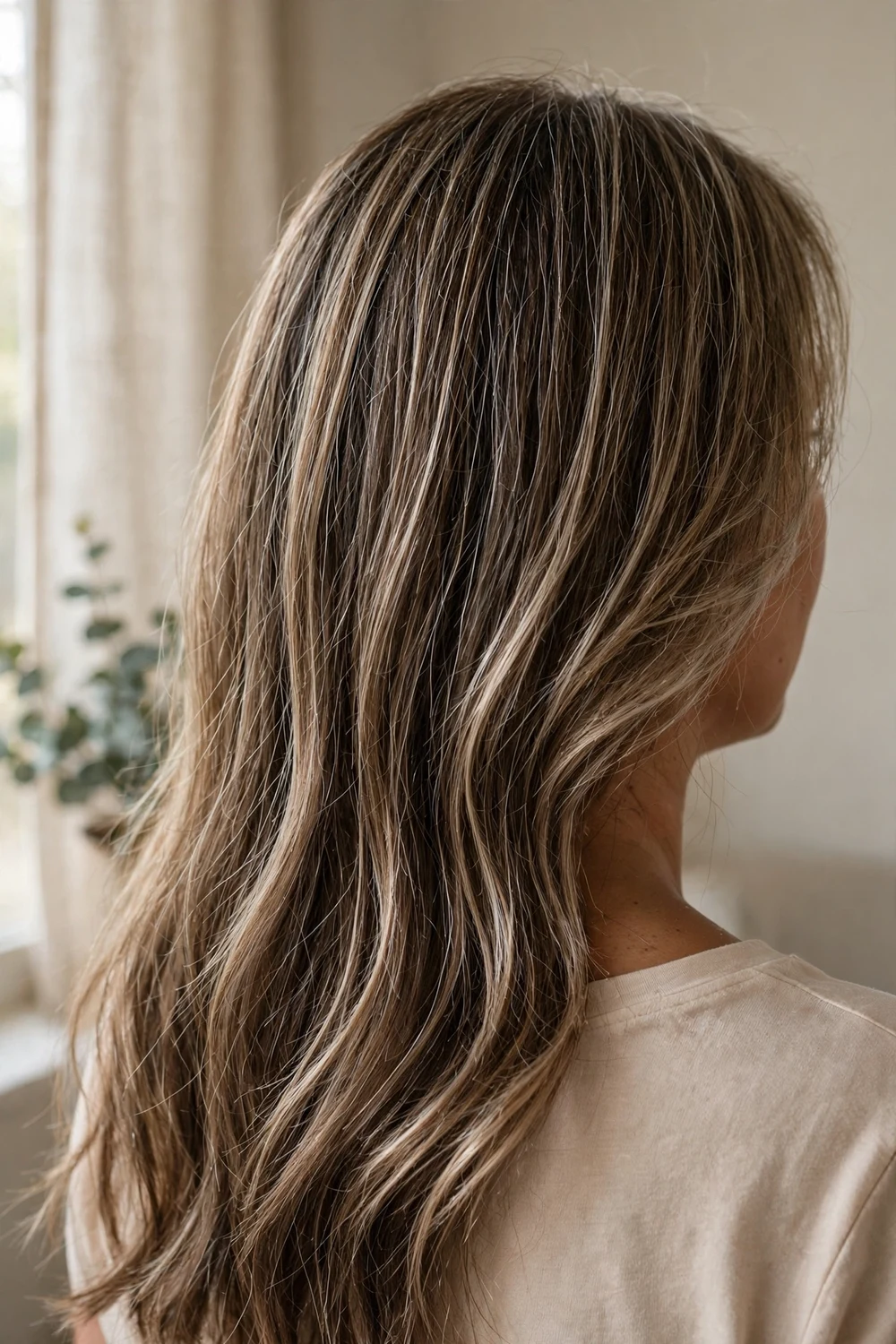
Babylights are ultra-fine highlights, thin enough to look like the natural lightness kids get from the sun. In an ash version, they’re woven through a light-brown or dark-blonde base for dimension without an obvious color change. Colleagues notice your hair looks better; they can’t quite say what’s different. The appointment is long for the payoff, often three hours of fine weaving, but the regrowth is nearly invisible, so most people only need a refresh once or twice a year with toner in between.
Try this: Ask for ash babylights in a fine weave from temple to temple and through the part line, where light naturally hits.
9. Face-Framing Ash Balayage
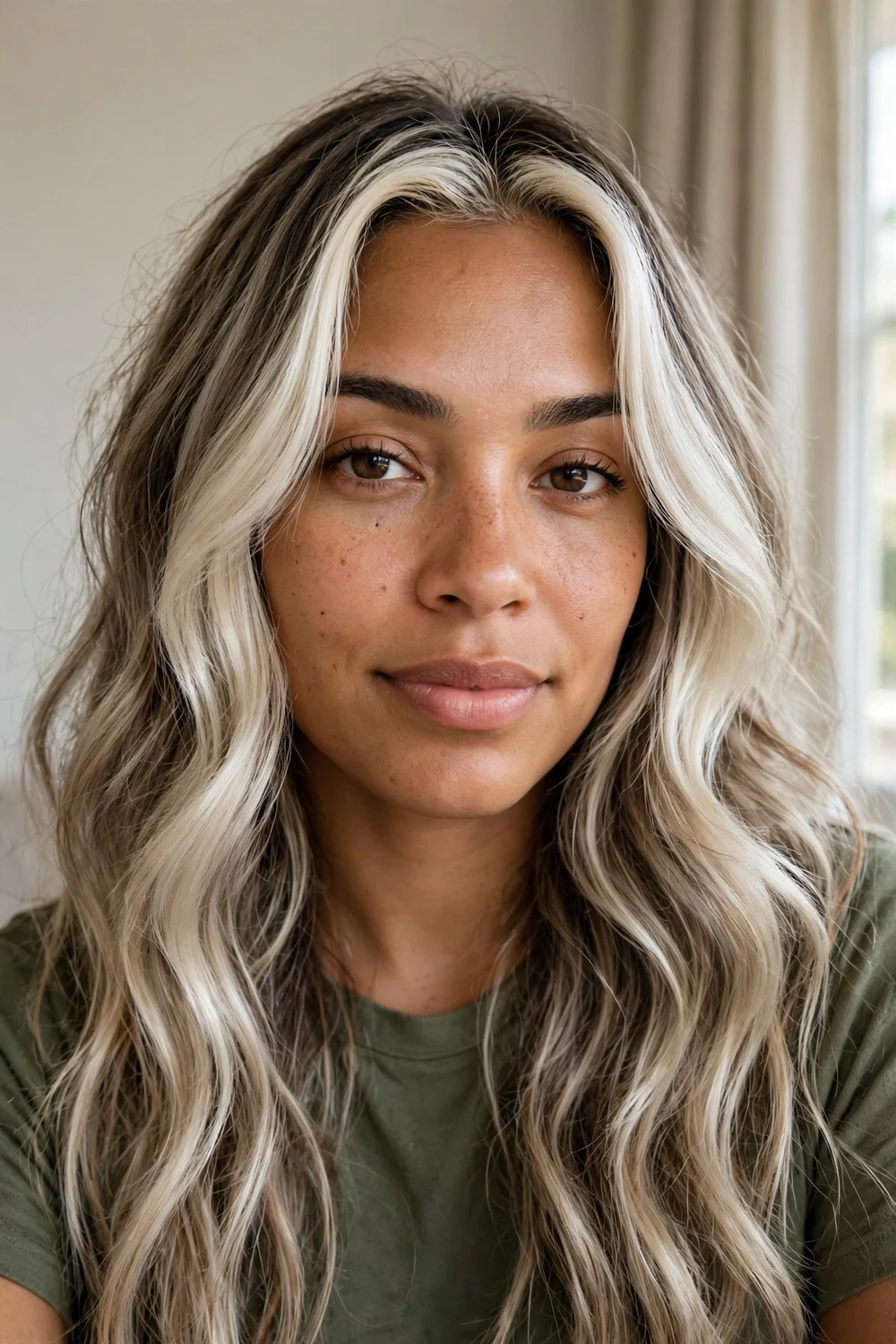
Face-framing pieces are the brightest section of any balayage because they sit where light hits your face. You can keep them soft (thin ribbons that blend in) or go bold with a money piece, a chunky bright section right at the front hairline. The money piece is the higher-maintenance choice since it grows out fastest and shows brassiness first. Because these pieces sit closest to the eyes, they fade and turn brassy faster than the rest of the color, so plan a quick face-frame toner between full appointments if you go the bold route.
Try this: For a low-effort version, ask for soft face-frame ribbons one level brighter than the rest. For the bold version, ask for a money piece two levels brighter with its own toner refresh schedule.
If you’d rather stay closer to brunette while trying the ash family, ash brown hair color ideas covers cool-toned looks that keep more of your natural depth.
10. Beachy Ash Balayage Waves
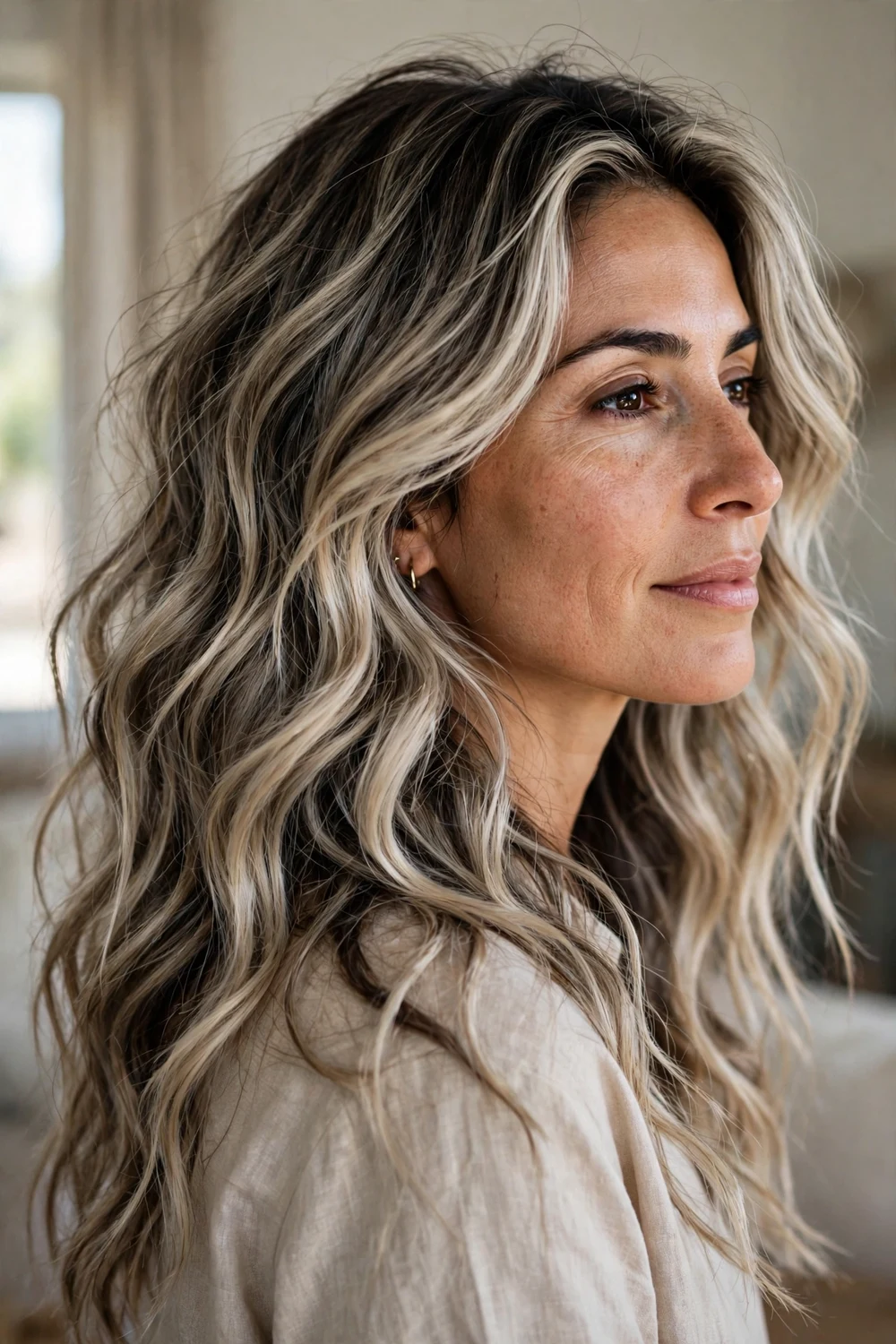
This one is more styling than color: take any ash balayage and wear it in loose, tousled waves. The texture breaks up the color so the light and dark pieces separate visually, which makes the dimension look stronger than the same color worn straight. A salt spray or light texture spray gives the finish; a curling iron on the mids works for a more polished version. A sea-salt spray or light texture mist creates the finish without heavy product, and the style photographs especially well outdoors where daylight shows off the cool dimension.
Try this: Curl 1.5-inch sections away from the face, leave the ends out of the iron, and shake through for the lived-in wave pattern.
11. Ash Balayage on a Bob
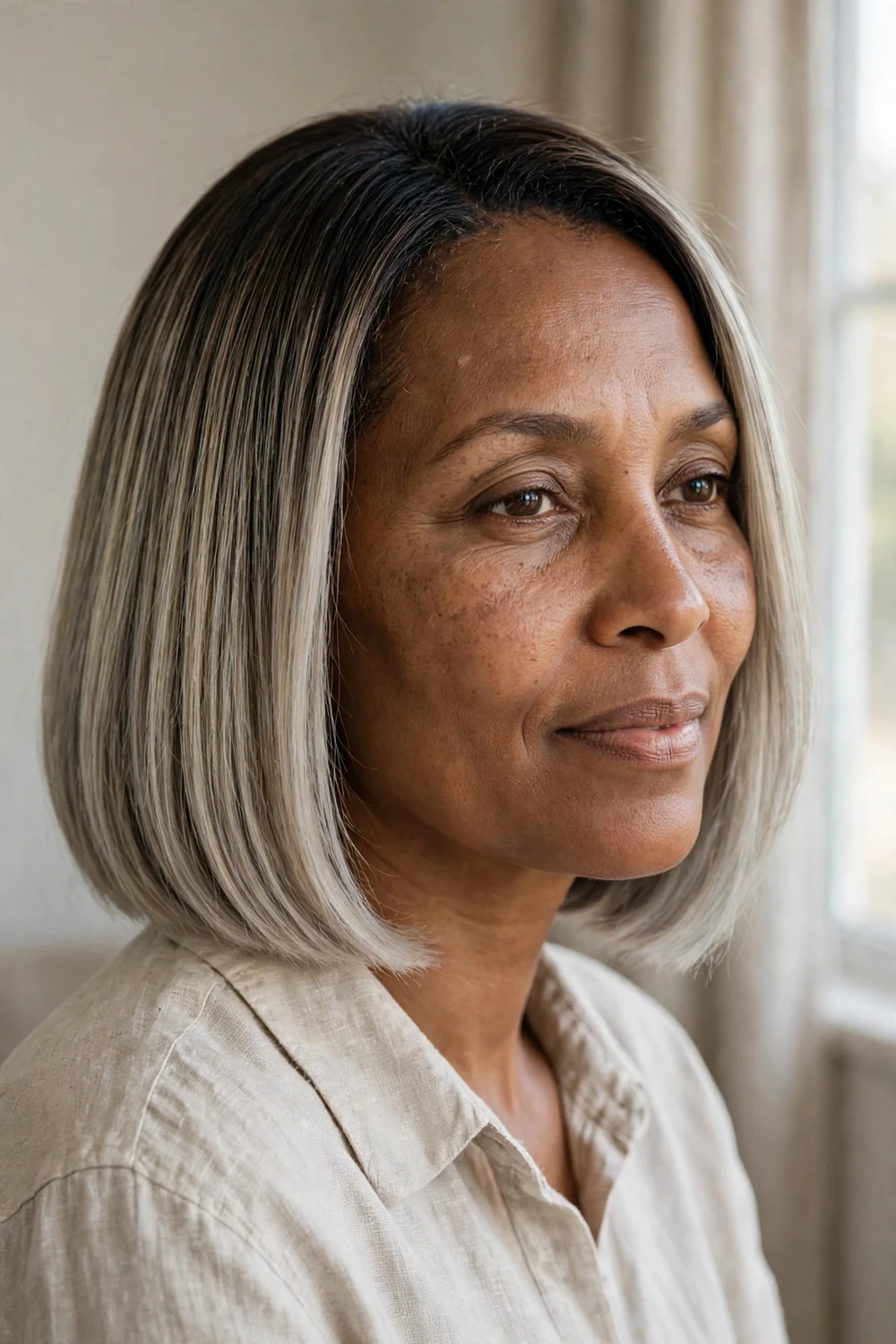
Balayage isn’t only for long hair. On a blunt or slightly layered bob, the painted pieces concentrate through the ends and around the face, which makes a short cut look thicker and more dimensional. Placement needs to start a little higher on short hair or the color reads as just “light ends. Balayage on short hair also needs a toner refresh on the same 8 to 10 week schedule, since the short lengths show faded tone sooner than long hair does.
Try this: Ask for the lightest pieces starting at cheekbone level rather than chin level, so the color shows in the length you actually have.
12. Ash Balayage for Olive Skin Tones
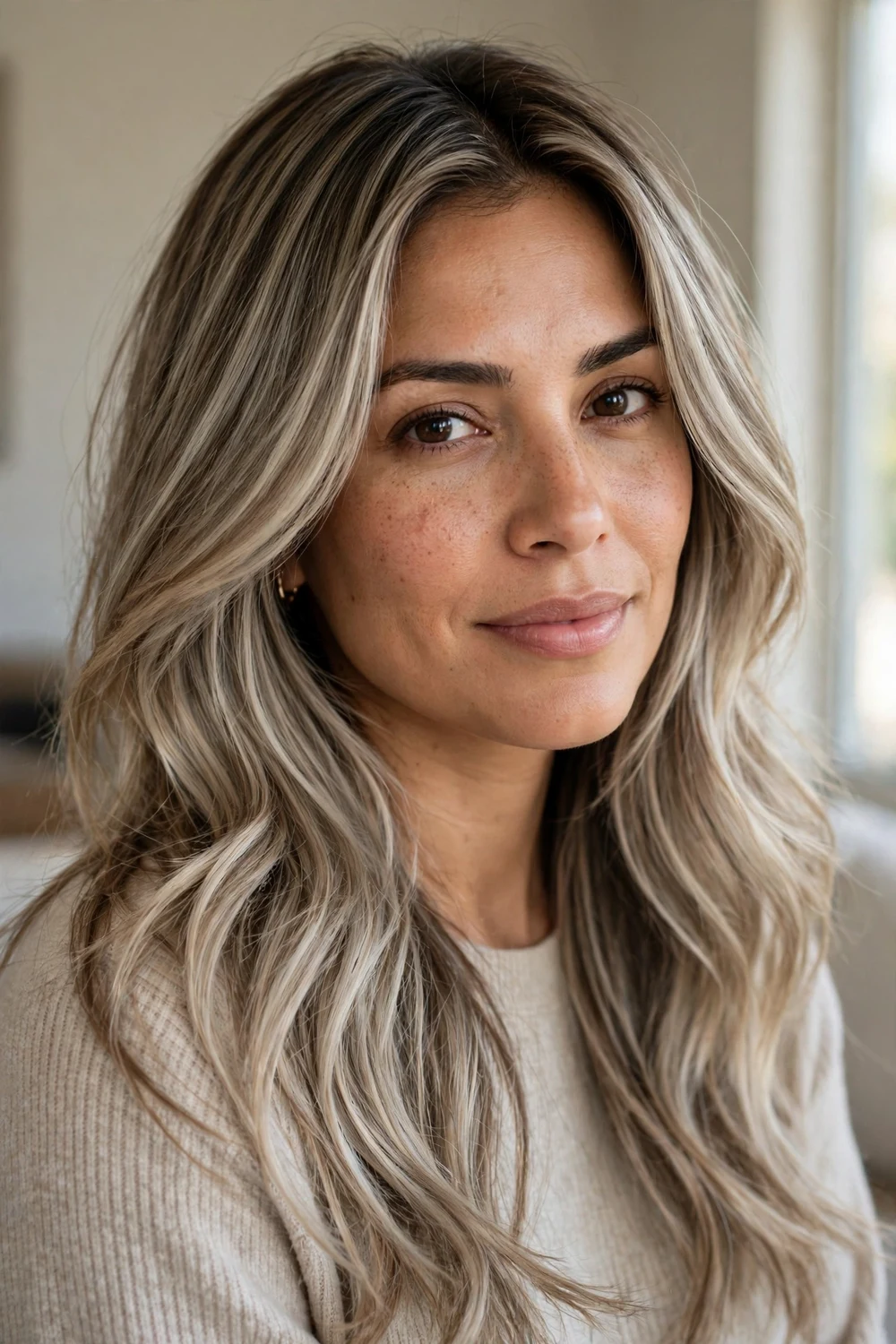
Ash blonde has a reputation for washing people out, but the fix is usually in the root, not the blonde itself. Keeping the root slightly warmer-neutral (not golden, just not icy) gives the face enough warmth while the ends stay cool. Olive and deeper complexions handle this version well because the contrast between the warm root and cool ends reads as intentional, not muddy. This adjustment is why the consultation matters: a stylist who sees your skin tone in person can mix the root melt half a level warmer without losing the cool finish on the ends.
Try this: Ask your stylist to keep the root melt in a neutral-cool brown and push the icy pieces away from the immediate hairline.
13. Low-Maintenance Lived-In Ash Balayage
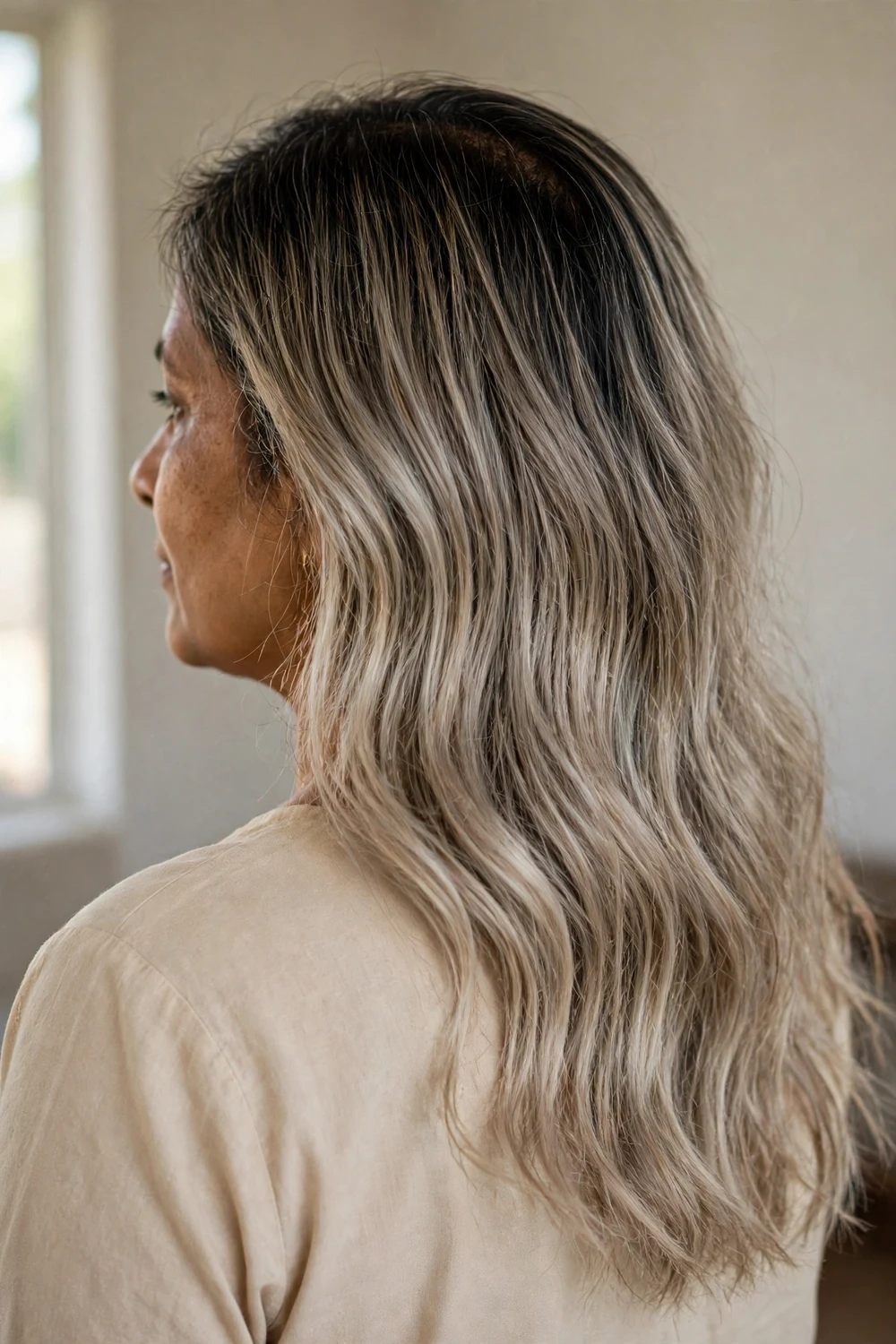
The lived-in version keeps your natural root almost completely untouched and places brightness only from the mids to the ends. It’s the longest-lasting of all the versions here: most people go four to six months between lightening appointments, needing only a toner or gloss in between. The trade-off is less overall brightness, since the top third of the hair stays close to your natural color. You will still visit for a toner every two to three months to keep the ends cool, but those visits are short gloss appointments rather than full coloring sessions.
Try this: Ask for “no higher than the mids” placement and a root color that matches your natural shade exactly. This is the version to pick if you hate salon upkeep.
For a warmer balayage in the same family, caramel balayage hair color 2026 shows the golden-toned side of hand-painted color.
Ash Blonde Balayage Looks at a Glance
| Look | Best For | Maintenance | Lift Needed |
|---|---|---|---|
| Classic Soft Ash | First-timers, natural look | Toner every 8-12 weeks | Moderate |
| Smoky Shadow Root | Fall, hiding regrowth | Toner every 10-12 weeks | Moderate |
| Icy Ash | Maximum brightness, fair skin | Toner every 6-8 weeks | High |
| Foilayage Blend | Dark bases wanting brightness | Toner every 8-10 weeks | High |
| Teasylight Balayage | Softest grow-out | Toner every 10-12 weeks | Moderate |
| Mushroom on Dark Base | Brunettes, minimal damage | Toner every 8-12 weeks | Low |
| Pearl-Ash | Luminous, shiny finish | Toner every 8-10 weeks | Moderate |
| Ash Babylights | Subtle dimension | Toner every 10-12 weeks | Low |
| Face-Framing | Brightening the face | Face frame toner every 6-8 weeks | Moderate |
| Beachy Waves | Texture lovers | Same as base color | Moderate |
| Ash Bob | Short hair | Toner every 8-10 weeks | Moderate |
| For Olive Skin Tones | Olive/deeper complexions | Toner every 8-12 weeks | Moderate |
| Lived-In Low-Maintenance | Longest grow-out | Lightening every 4-6 months | Low |
How to Choose the Right Ash Blonde Balayage for You
Start with your base color. If you’re a level 7 or lighter, almost any version is reachable in one session. If you’re a level 5 or darker, be honest about how much lifting your hair can take, and lean toward foilayage, teasylights, or the mushroom-tone version rather than icy ash.
Next, look at your maintenance tolerance. If you visit the salon twice a year, the lived-in version is your lane. If you don’t mind a gloss every two to three months, the brighter versions open up.
Finally, bring photos to the consultation. Save three: the tone you like (cool-neutral vs silver vs beige-ash), the placement you like (how bright the ends are), and the root depth you like (shadow root vs soft melt). Tell your stylist which one is non-negotiable and which one you’re flexible on.
Cool-toned brunette looks pair naturally with this color too, and brown hair with silver highlights is a good reference if your base stays dark.
Mistakes to Avoid
The biggest one is going too cool. Ash doesn’t have to mean gray, and an over-toned result can look flat and muddy, especially indoors under warm lighting. If your stylist suggests the palest toner, ask what it looks like mixed with a drop of neutral first.
Skipping the trim is another. Ash tones read best on hair that reflects light, and damaged ends reflect nothing. A clean trim before the color appointment makes the same toner look noticeably richer.
Don’t overuse purple shampoo. It keeps brassiness away, but used at every wash it builds up and dulls the color to a muddy gray. Once a week, or only when you see warmth creeping back, is enough for most people.
Cool tones not quite right for you? Browse 30 blonde balayage highlights ideas spanning icy platinum to warm honey to find your shade.
Frequently Asked Questions
What skin tone does ash blonde balayage suit?
Ash blonde balayage suits more skin tones than its reputation suggests, because the depth of the root and the brightness of the face frame can be adjusted. Fair, cool-toned skin handles the iciest versions well, while olive and deeper complexions look best with a slightly warmer-neutral root melt and the cool pieces kept off the immediate hairline. Your stylist should tune the coolness to your coloring during the consultation.
How long does ash blonde balayage last?
The placement lasts a long time because balayage grows out without a harsh line, typically 3 to 6 months before you need more lightening. The ash tone fades faster, usually within 6 to 12 weeks, as the toner washes out and warmth creeps back. Most people keep it looking right with a toner or gloss refresh every 8 to 12 weeks instead of a full color appointment.
Will ash blonde balayage turn brassy?
It can, but brassiness is normal fading rather than a sign the color was done badly. Ash toners fade with washing, heat styling, sun exposure, and mineral buildup from hard water. Using purple shampoo sparingly, washing in cooler water, applying heat protectant, and booking regular toner refreshes all slow the warm shift. If your blonde always shifts strangely, hard water buildup may be the cause rather than the toner.
Can you get ash blonde balayage on dark hair?
Yes, with the right technique. Brunettes get the best results from foilayage, which lifts more evenly than freehand painting, or from mushroom-tone balayage, which keeps the dark base and adds cool gray-beige pieces through the mids and ends. Reaching a very bright icy ash from dark hair may take multiple sessions, so a color correction step to neutralize red and orange undertones is often part of the plan.
What is the difference between ash blonde and ash brown balayage?
Ash blonde balayage lifts the hair to a light, cool blonde (around level 8 to 10) with the brightest pieces through the ends. Ash brown balayage keeps the overall color darker, in the level 5 to 7 range, with cool-toned dimension instead of real brightness. Choose ash blonde if you want visible lightness and contrast; choose ash brown if you want the cool, smoky feel with less lifting and less maintenance.
Final Thoughts
Ash blonde balayage works because it pairs a forgiving technique with a deliberate tone: soft placement, deeper root, cool finish. Pick the version that matches your base color and your maintenance habits, bring clear photos to the appointment, and keep the toner schedule. Do that, and the color stays cool and dimensional for months.
For full cuts and styles that carry this shade on mature hair, ash blonde hairstyles for women over 50 shows how the tone looks on bobs, pixies, and lobs.
Want the full shade range beyond balayage? Our ash blonde hair color ideas roundup covers 30 cool-toned looks, from platinum to smoky.
If your base is dark and you want the cool end of the spectrum, cool ash blonde balayage on dark hair breaks down 30 smoky, dimensional looks with toner and maintenance notes for every base.
To see ash tones on shoulder-length cuts specifically, balayage hairstyles for medium length hair includes an ash beachy wave and a cool ash brown melt.

