


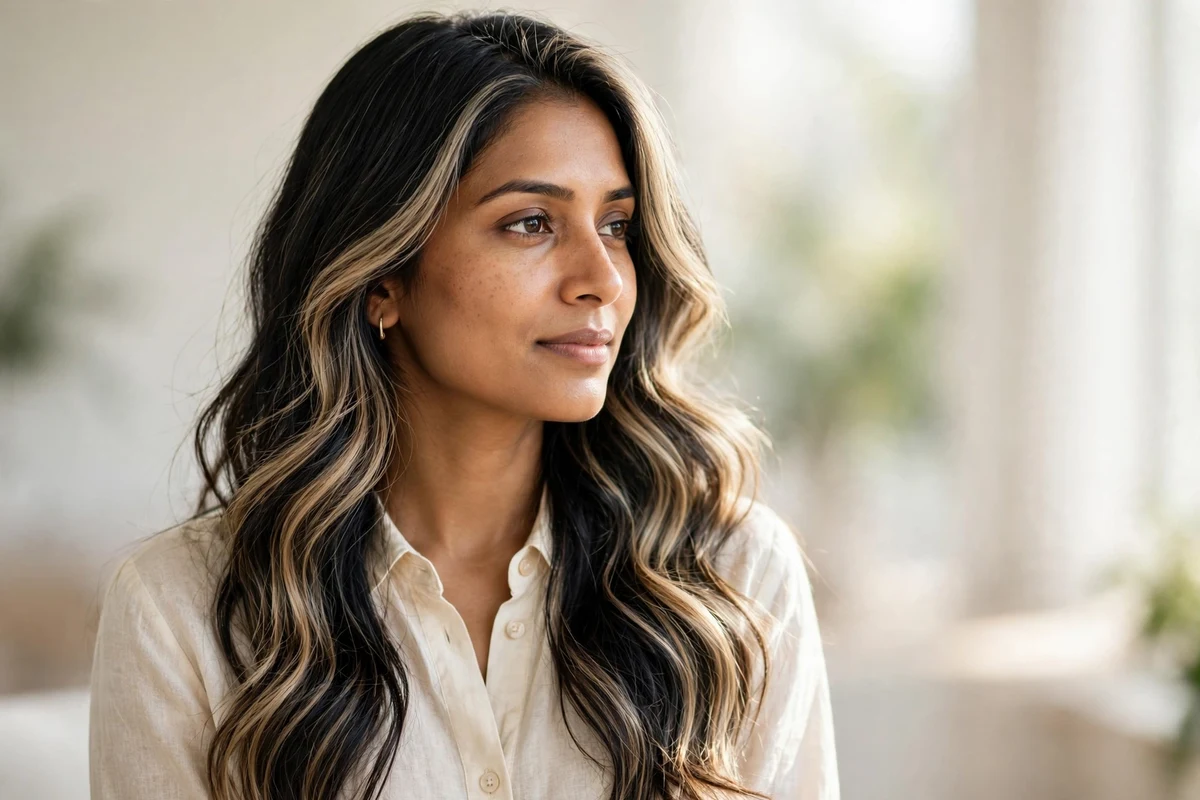
Blonde balayage on dark hair is one of the most requested color services in salons, and for good reason. The contrast between a deep base and hand-painted blonde creates dimension that flat color can’t match, and the grow-out is softer than traditional highlights.
Dark bases do need a smarter plan than lighter hair. The colorist has to lift through more levels, fight warmth, and choose tones that won’t go brassy by week three. This guide covers 30 ideas across honey, caramel, ash, and platinum tones, plus what to ask for and how to keep the color fresh. I’ve seen this service booked hundreds of times in salon menus, and the same rules apply every time.
Quick answer: Blonde balayage on dark hair works best with a deep root, strategic light placement, and the right toner for your base. Warm honey and caramel tones are easiest to maintain on dark hair; ash and platinum need more upkeep. Expect 8 to 16 weeks between appointments with a gloss refresh in between.
Quick Takeaways
- Dark hair needs more lift than lighter bases, so your colorist may plan two sessions for brighter blondes.
- Warm tones (honey, caramel, golden) are the most forgiving on dark bases and grow out with the least maintenance.
- Cool ash tones stay clean only with a proper toner and a weekly purple or blue shampoo.
- Placement matters more than shade: face-framing pieces and a deep root make any blonde look intentional.
- A gloss every 6 to 8 weeks keeps the blend soft and stops the ends from looking dull.
Why Blonde Balayage Works on Dark Hair
Balayage is a hand-painted technique, which means the colorist controls exactly where the light goes. On dark hair, that control matters. Foil highlights can look stripey on a deep base, but painted balayage melts the blonde into the dark without hard lines.
The deep root does most of the work. It keeps the regrowth invisible for months, hides new growth, and makes even high-contrast blondes look deliberate instead of overgrown. Ask your colorist for a root shadow or root stretch if you want the longest stretch between appointments.
Your base shade sets the ceiling. Black and very dark brown hair lifts slower and pulls warmer, so the first session often lands on caramel or honey. Platinum and icy ash are possible on dark hair, but they usually take more than one visit. A good colorist will tell you this before you book.
What to Ask Your Colorist
Bring two or three saved photos that share the same tone family, not five photos in five different tones. Tell your colorist your natural base shade, whether your hair is previously colored, and how often you want to come back. That information changes the formula and the placement.
Ask for a root shadow if your hair pulls warm, and ask which toner will be used. For ash tones, confirm that the toner plan accounts for how dark your base is. Also ask about bond builders or protective treatments, since lifting dark hair is more demanding than lifting lighter hair.
1. Soft Honey Blonde Waves on a Dark Base
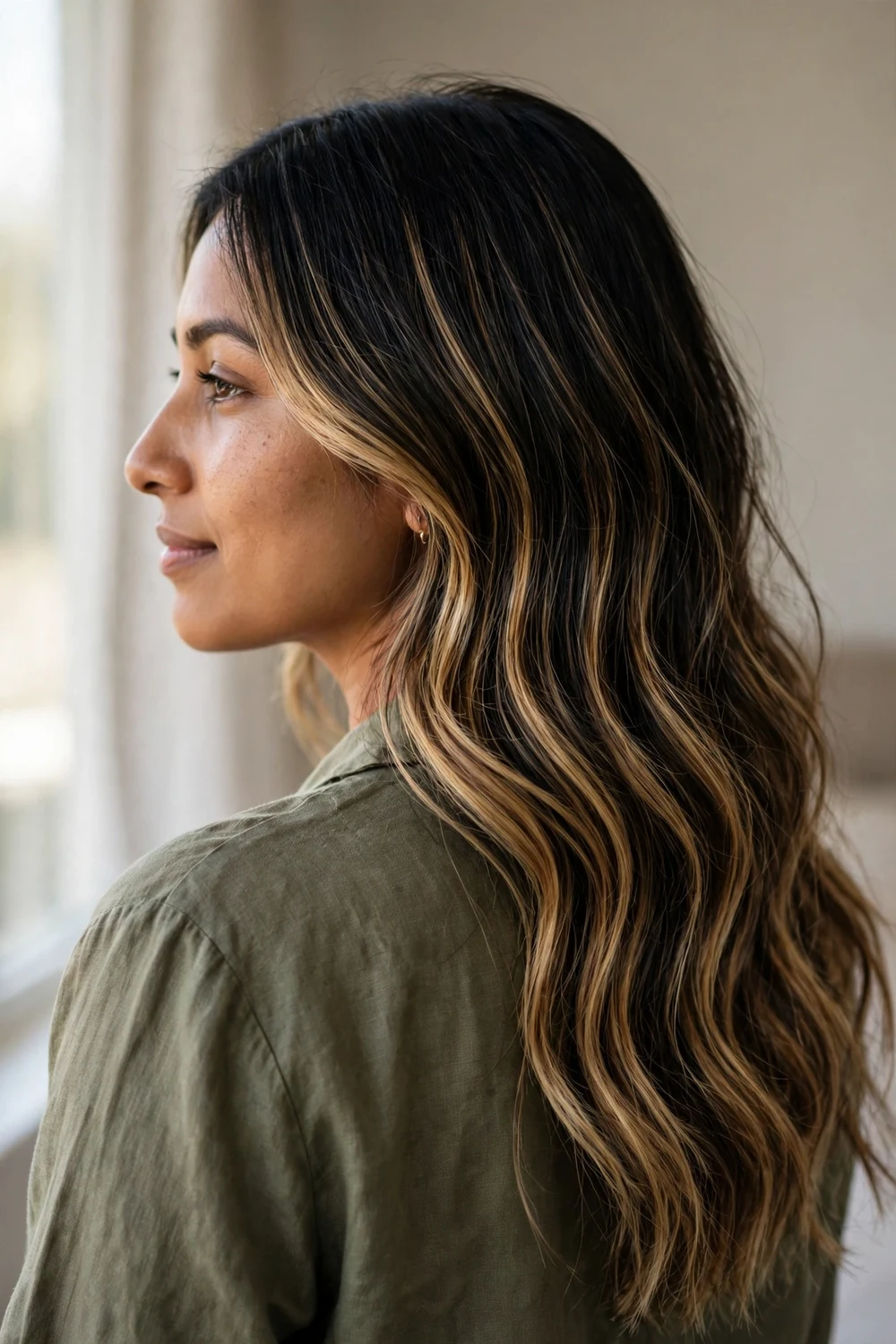
Start with the classic. Honey blonde sweeps through long dark waves in a soft gradient, brighter toward the ends and darker near the roots. The blend looks like hair that spent a summer outdoors, not time in a salon chair. This is the lowest-risk entry into blonde for very dark bases because honey lifts in one session for most hair types and fades gracefully.
Try this: Ask for the brightest pieces to start around chin level, and use a sulfate-free shampoo plus a weekly hydrating mask to keep the honey tone warm instead of dull.
2. Golden Honey Ombre with Dark Roots
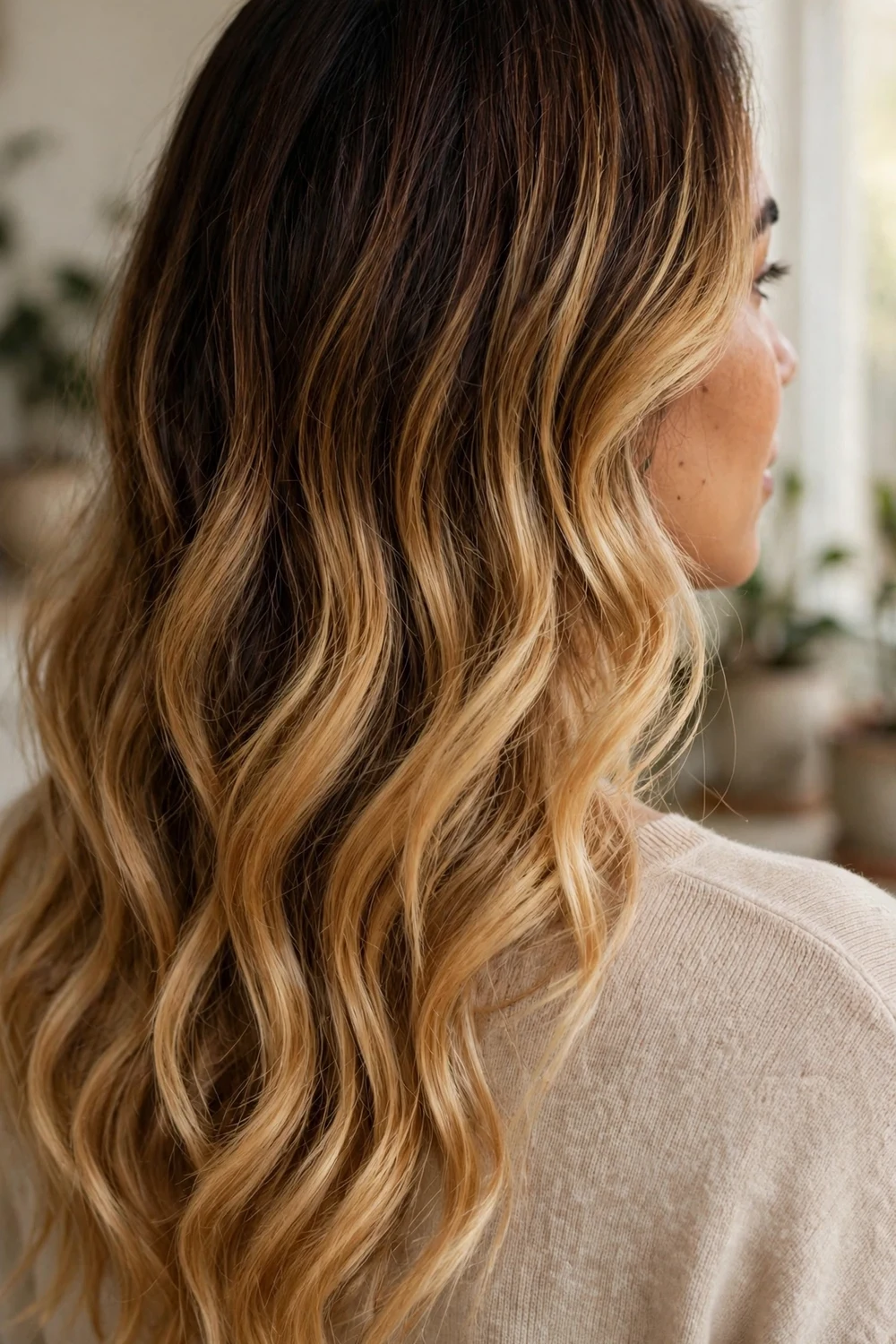
A bolder take on the classic gradient. The roots stay deep and untouched while the lengths shift into golden honey with more contrast than a soft melt. If your natural base is close to black, this version reads dramatic rather than subtle, which suits anyone who wants the color change to be obvious. The untouched roots keep it low maintenance.
Try this: Request the transition point at or below the shoulders for long hair, and book a gloss at week six to keep the honey ends from oxidizing into flat orange.
3. Face-Framing Honey Blonde Highlights
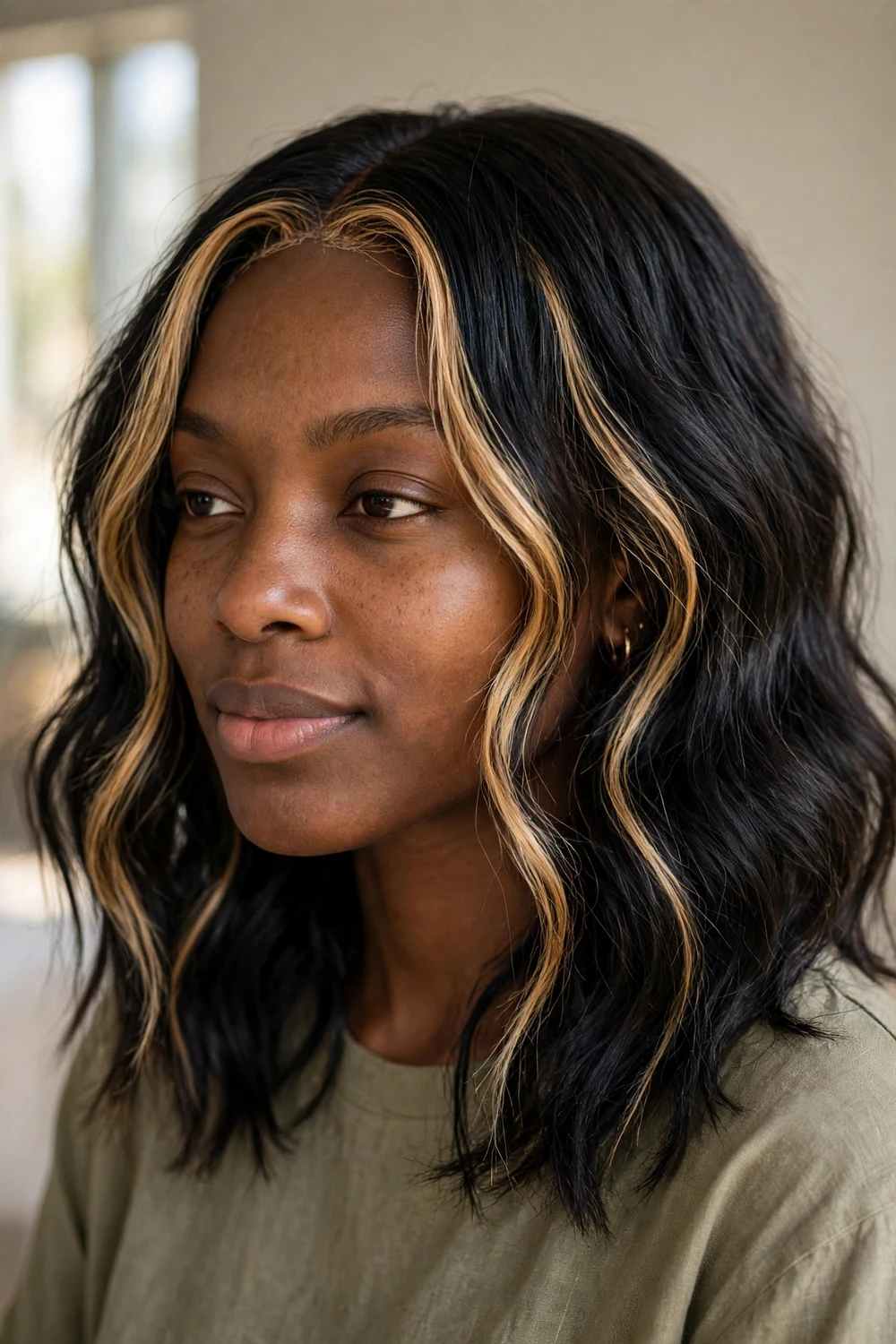
Not ready for all-over lightness? Keep the change small and strategic. Delicate honey pieces run along the hairline and cheekbones while the rest of the hair stays dark. The effect brightens the face without touching most of the hair, which means less damage and a faster appointment.
Try this: Have your colorist paint the lightest strands where light naturally hits the temples and jawline. This works as a first step before a fuller balayage later.
4. Honey Blonde Money Piece

Take face-framing one step further. The money piece concentrates maximum lightness in the front sections while the back stays soft and blended. On dark hair the contrast is striking, so ask for honey rather than ash if you want it warm and wearable. Cool-toned money pieces work too, but they need stricter toning to avoid looking brassy against dark hair.
Try this: Ask for the money piece to be woven with baby-fine sections rather than one solid chunk, which keeps it from reading like a grown-out dye job.
Dark bases give the highest contrast with this technique. See blonde balayage with money piece for 30 variations, including platinum and silver versions built for dark hair.
5. Caramel to Honey Melt
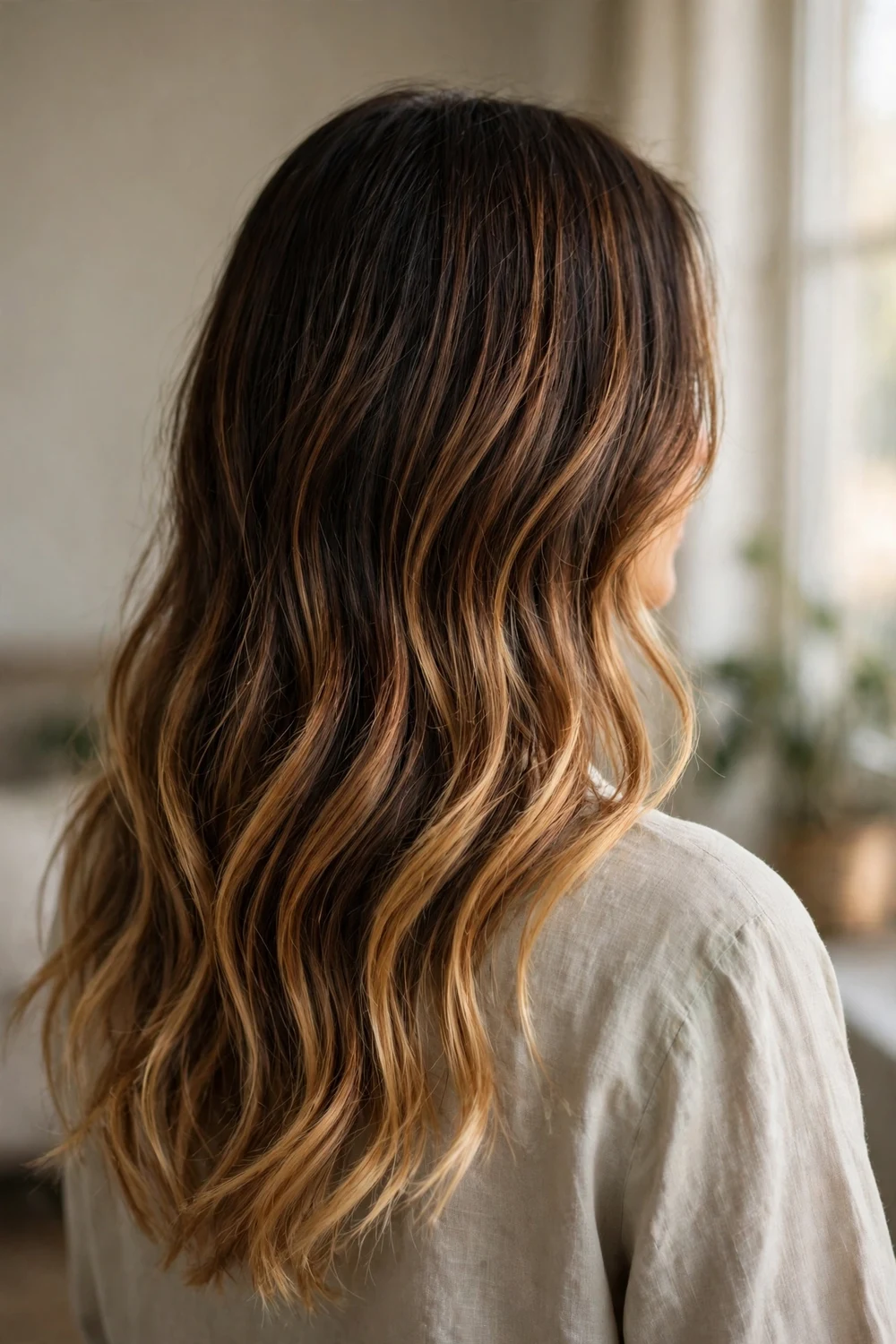
Here’s where the melt technique earns its name. Rich caramel midtones bridge the gap between a dark base and honey blonde ends, creating three seamless color stages with zero visible lines. The caramel stage also absorbs warmth that would otherwise show as brassiness. On near-black hair this is one of the most forgiving blondes because the midtones do the heavy lifting.
Try this: If you want even more depth, ask for a butterscotch or amber midtone instead of straight caramel. Both melt into honey ends without a hard edge.
6. Ribbons of Light
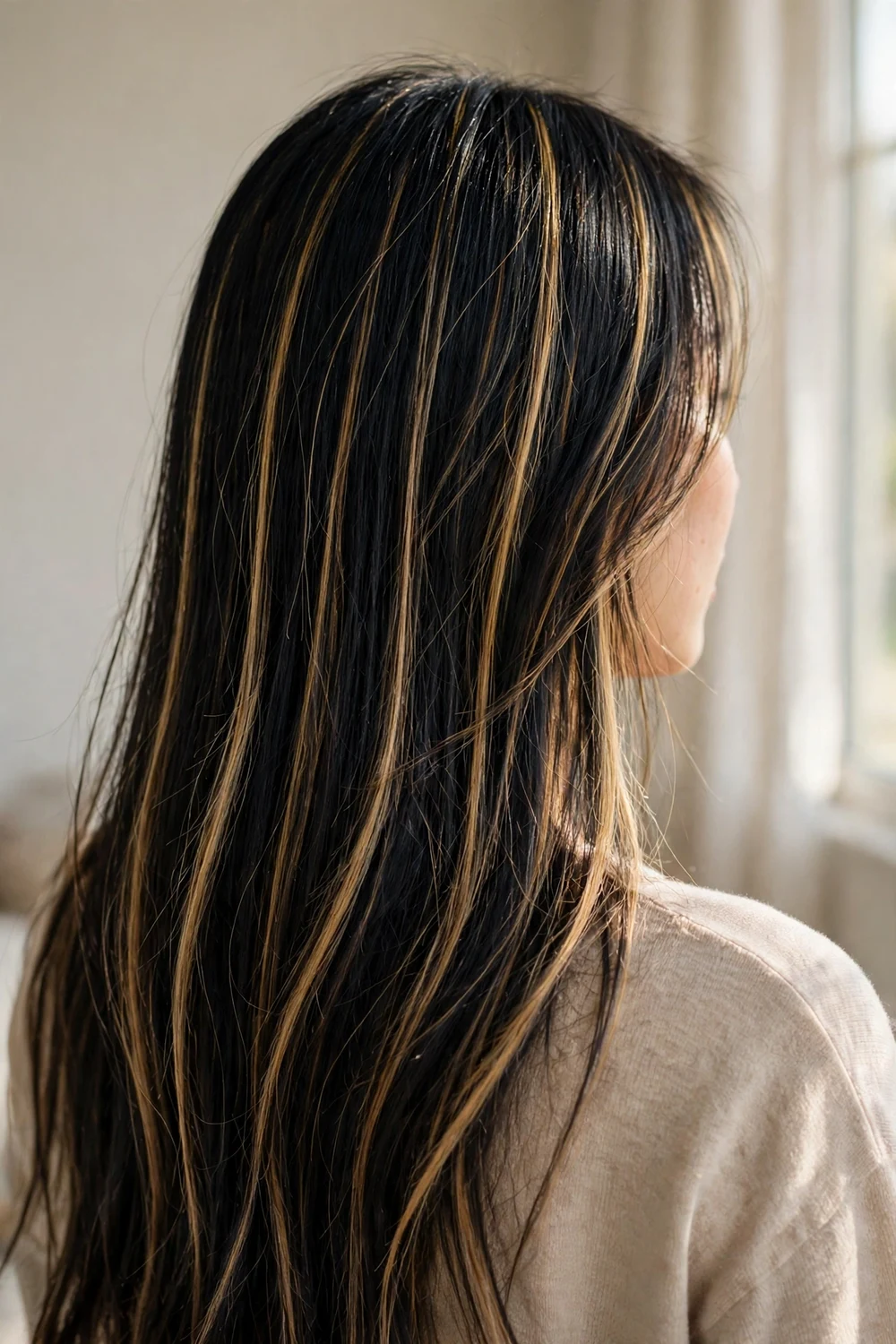
Instead of broad lightening, this technique weaves thin ribbons of honey blonde through dark hair in mixed widths. Some ribbons are pencil-thin, others slightly wider, which copies how hair lightens unevenly in real life. Straight hair shows this best because every ribbon stays visible, and the movement adds texture even when you don’t style it.
Try this: Ask for ribbons placed vertically through the hair rather than horizontally. Vertical placement catches light as you move and avoids horizontal stripe lines.
7. Lived-In Shadow Root Stretch
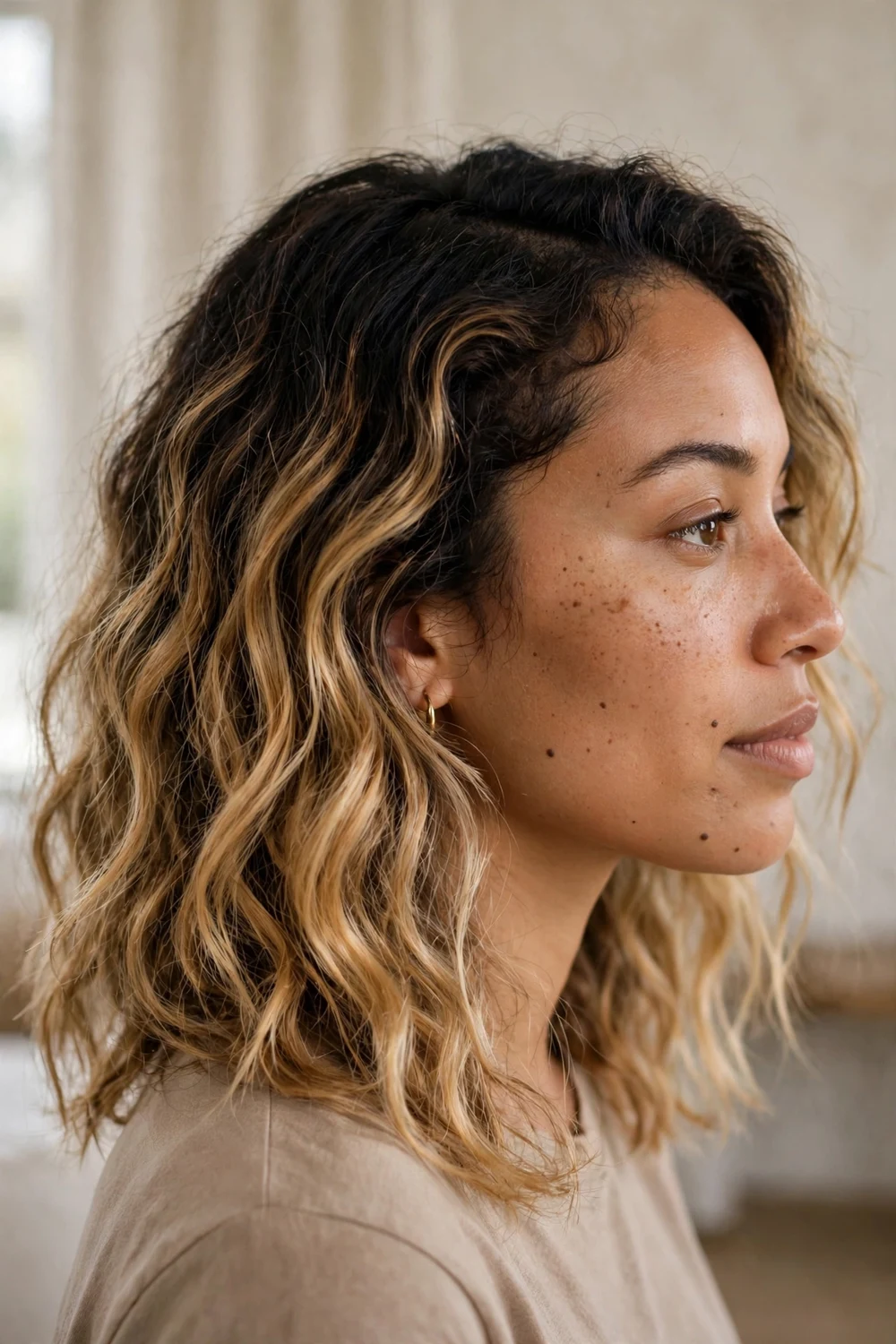
Dark roots that look intentional. The colorist stretches your natural shade or a close match down several inches, then melts it into honey blonde through the mids and ends. The grow-out is invisible because the root is already “grown out” on day one. Most people can go 12 to 16 weeks between appointments with this placement.
Try this: Request a teased root stretch for the softest blend. The teasing diffuses the line between dark and light so there’s no visible starting point.
8. Sun-Kissed Balayage for Curls

Curls hide color if it’s placed wrong, so this version paints the blonde on the outer curves of each curl where light actually lands. Honey tones warm up the curl pattern well, while cooler ash ribbons give a calmer, more muted effect on tight curls. Either way, the dark base keeps the look grounded.
Try this: Ask your colorist to paint vertically along the curl, brightest at the midpoint and ends. Hydrating curl creams keep the lightened curls defined instead of frizzy.
9. Golden Hour Glow Placement

This one is all about placement. Warm honey pieces concentrate where sunlight would hit: around the face, over the part, and through the outer layers. The inner hair stays dark, which gives the glowing pieces something to contrast against. The result reads like permanent golden-hour lighting and flatters warm and neutral skin tones especially well.
Try this: A round-brush blowout or soft waves will amplify the glow. Ask your stylist to keep the brightest pieces in the top third so they catch light all day.
10. Teasylights Technique
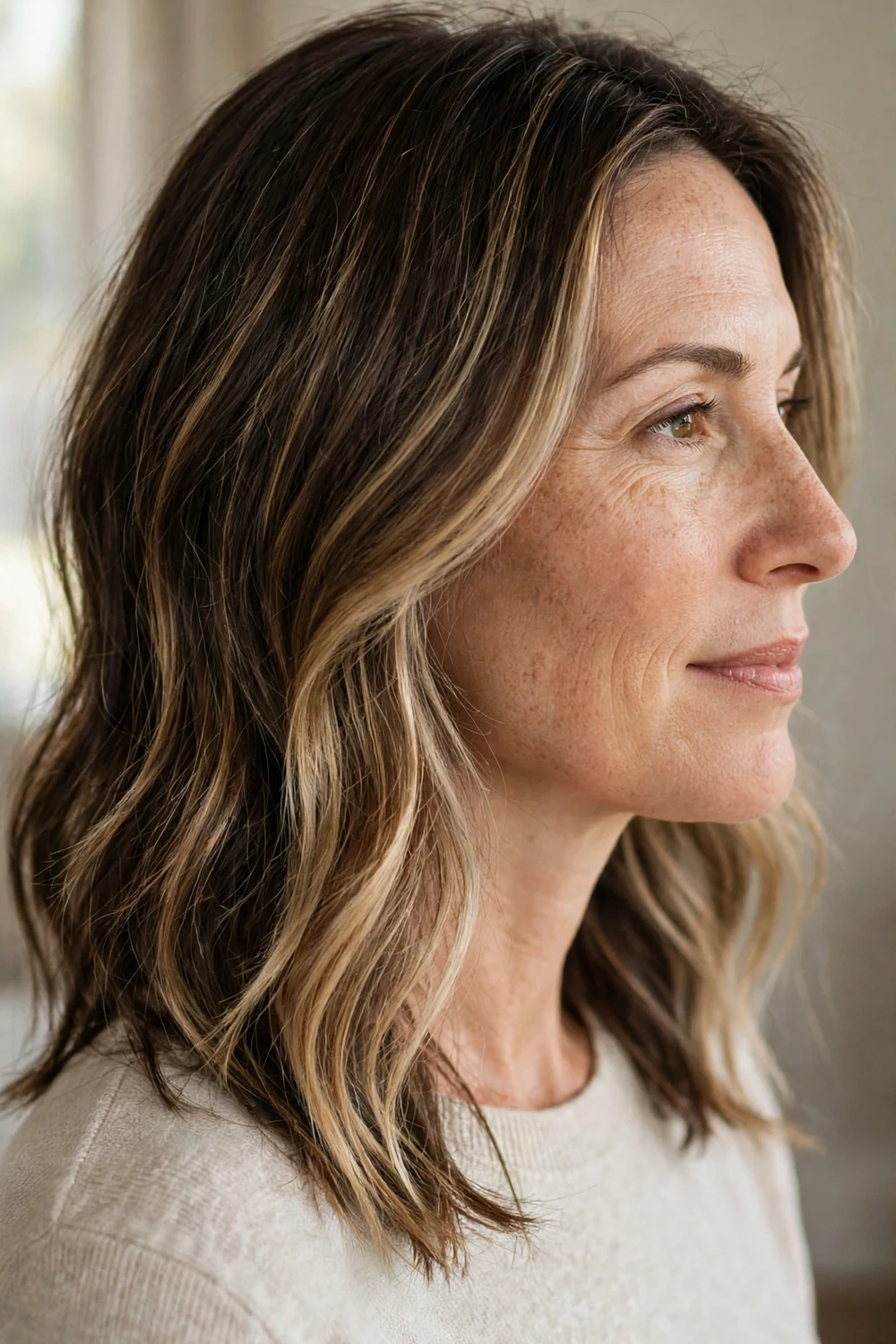
Teasylights combine teasing with foiling to create the softest possible blend. The colorist backcombs each section before applying lightener, which leaves tiny uncolored hairs near the root that diffuse the transition. On dark hair this prevents the harsh highlight line that foils alone can leave. It costs more than open-air balayage but grows out cleaner than almost anything else.
Try this: Book this when you want noticeable brightness without committing to frequent root touch-ups. Most teasylight clients return every 3 to 4 months.
11. Honey-Dipped Ends

Keep it simple. The hair stays dark through almost the entire length, and only the bottom few inches shift into honey blonde. This is the cheapest, fastest balayage on the list and the least damaging, since the lightener never touches the mid-lengths. If you don’t love it, a trim removes it completely.
Try this: Ask for a concentrated application on the ends rather than a blended melt. The “dipped” look is deliberate here, not a fading blend.
12. Tiger Eye Dimensional Balayage

Named for the gemstone, this mixes bronze, caramel, and honey tones through a dark base for layered, stone-like dimension. The varied amber-family shades catch light differently as the hair moves, which makes even straight hair look textured. It flatters olive and golden skin tones particularly well. A tortoiseshell version swaps in dark chocolate and deeper amber for a moodier take.
Try this: Request at least three tones for authentic dimension. Two tones can read flat; three or more create the multi-faceted effect.
13. Backswept Brightness
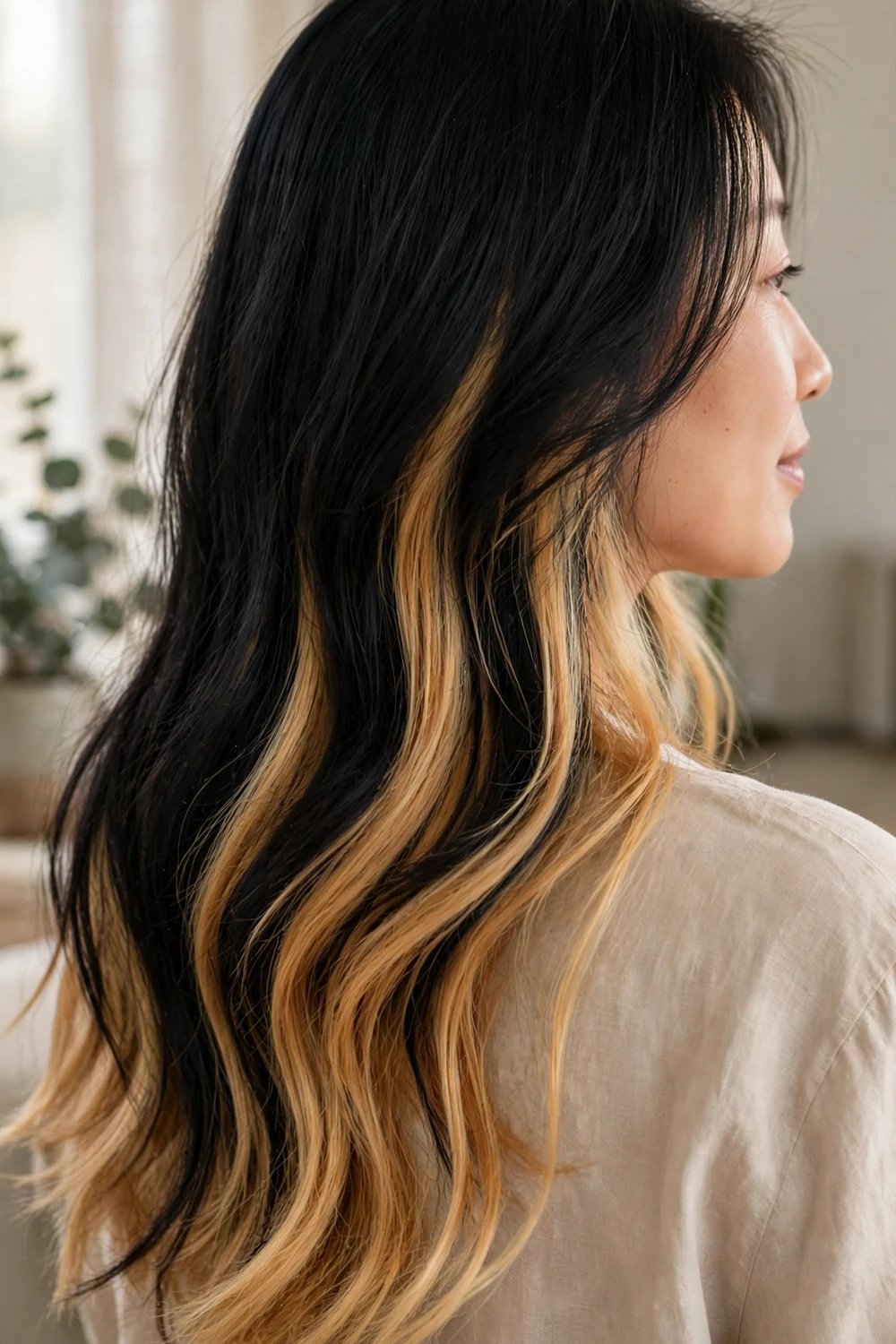
Here’s an unusual placement idea. The brightest honey pieces sit in the back and underside sections while the front stays quiet and dark. Nobody sees the color head-on, then you turn or the wind moves your hair and the brightness appears. It’s ideal if your workplace or lifestyle calls for a restrained front view with hidden dimension.
Try this: Wear your hair in a half-up style to show off the contrast. Down and straight, it stays subtle; pulled back, the underlights do the talking.
14. Foilyage Fusion

Foilyage is the hybrid: hand-painted like balayage, wrapped in foil like highlights. The foil traps heat, which pushes the lightener further, so dark hair lifts brighter and more evenly than with open-air painting. Ask for this when you want real brightness that balayage alone can’t deliver in one session. The painted application keeps it from looking like traditional foils.
Try this: Specify foilyage by name when booking. It takes longer than standard balayage, so the salon needs the right appointment length.
15. Blonde Panels
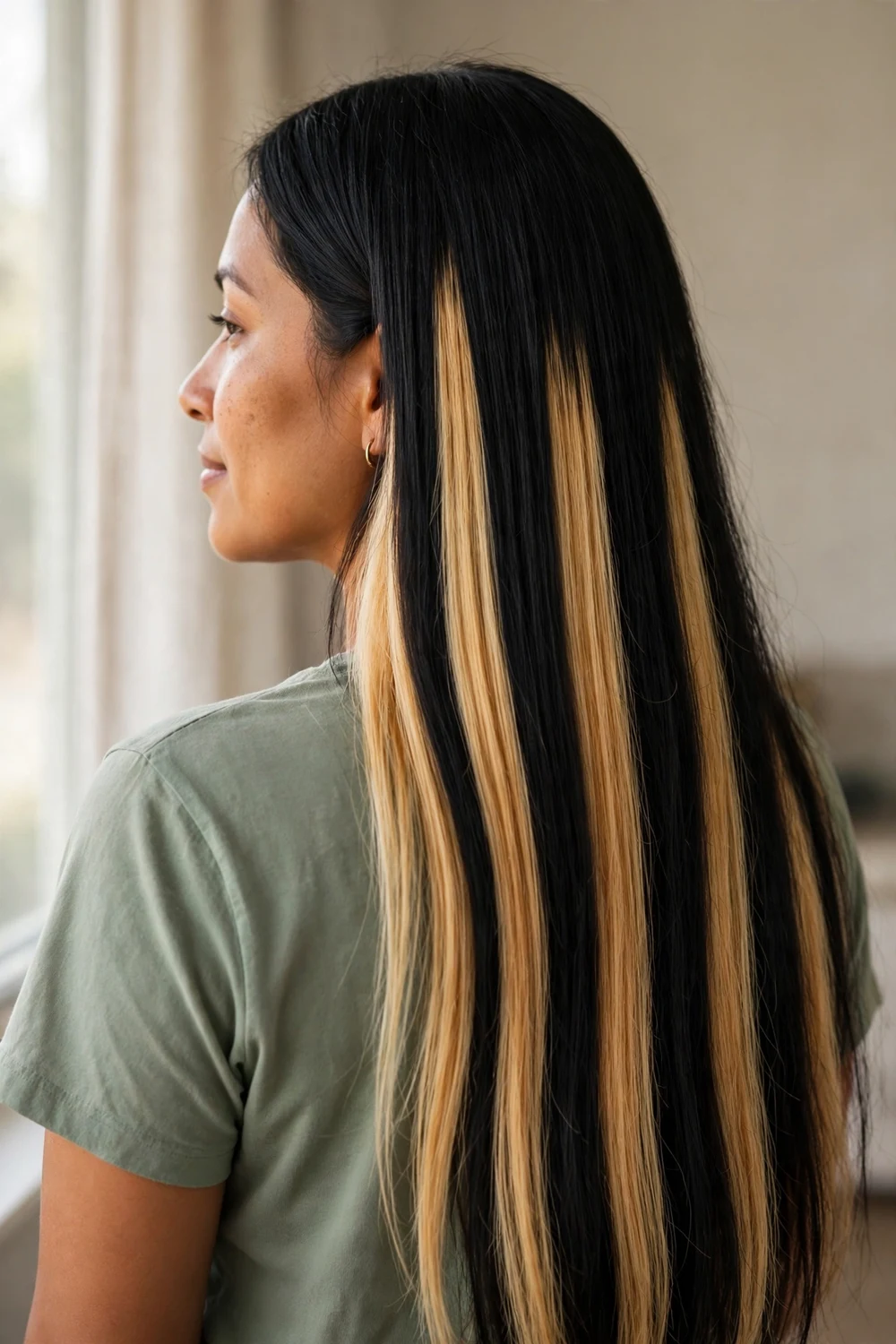
Swap fine highlights for wide vertical panels of honey blonde, about one to two inches each, painted from mid-shaft to the ends. The panels make a bolder statement than ribbons while keeping a natural root. On straight or slightly wavy black hair, the panels read as modern and graphic without crossing into fashion color.
Try this: Ask your colorist to vary panel widths slightly. Uniform widths can look patterned; slight variation keeps it organic.
16. Babylights Blend

Babylights are the finest highlights possible, hairline-thin strands that copy how children’s hair lightens in the sun. Scattered through dark hair, they create delicate, believable dimension with no visible chunks of color. This is the most conservative blonde on the list and a safe choice for very dark, virgin hair that has never been lightened.
Try this: Combine babylights near the crown with slightly bolder balayage through the ends. The mix keeps the top looking full while the ends glow.
17. Contour Balayage

Borrow the logic of makeup contouring. The colorist places honey blonde to flatter your specific face shape: brightness at the temples can widen a narrow face, while lightness lower down can lengthen a round one. Tell your colorist your face shape and let the placement do the sculpting. The technique works on any length.
Try this: Bring photos of yourself from the front, not just inspiration shots. Placement depends on your actual bone structure.
18. Painted Desert Warm Blend

Copper, sand, and honey sweep through dark hair like desert light. This warm multi-tone blend sits between caramel balayage and copper color, which makes it a good middle ground if you like warmth but don’t want full red tones. The sand shade is the secret: it bridges copper and honey so the whole thing melts instead of clashing.
Try this: This blend fades warmer than it starts, so plan a toner refresh around week eight to keep the sand tone from sliding fully copper.
19. Reverse Balayage Smoky Ash Waves
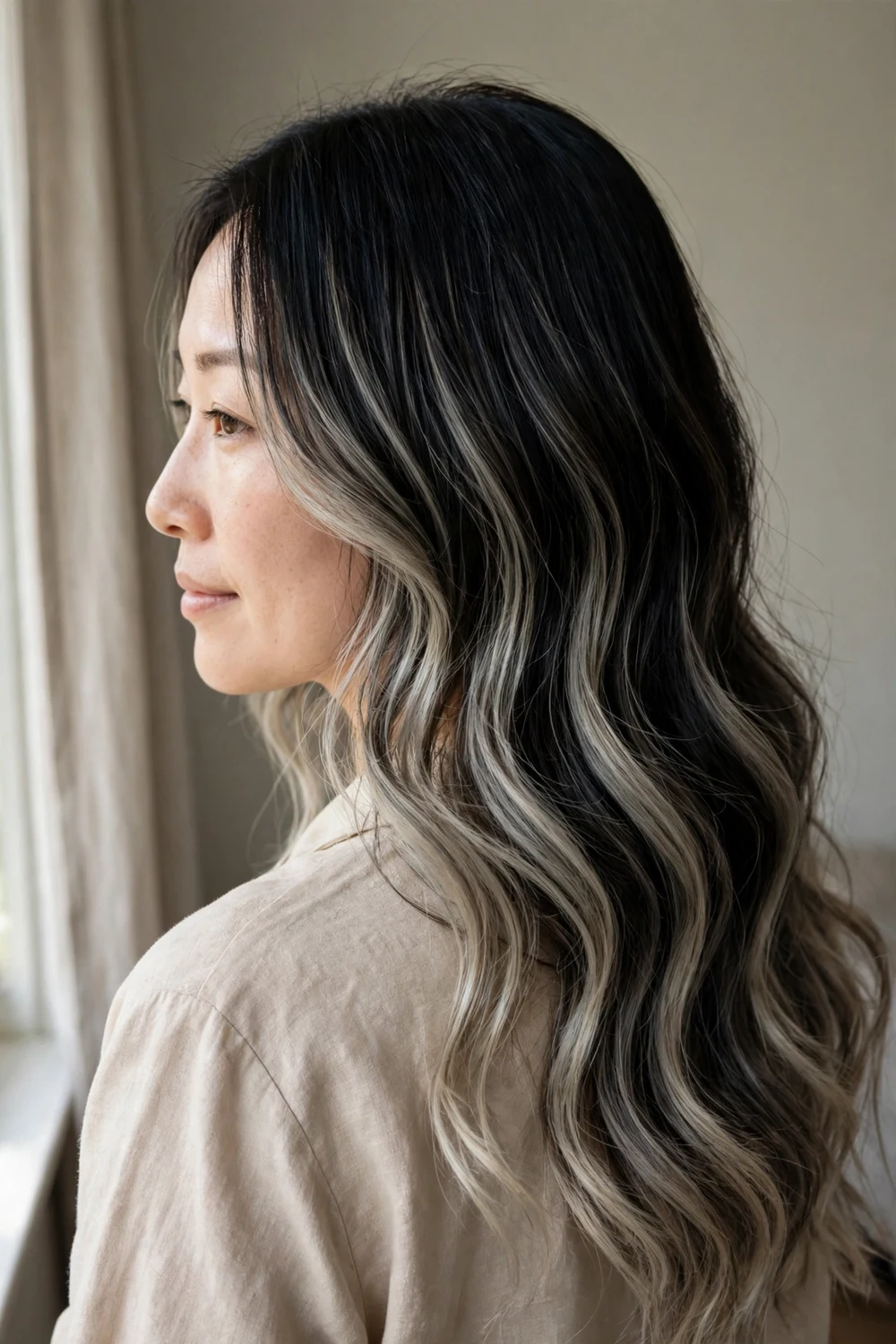
Reverse balayage flips the usual script: the roots stay deep and glossy while smoky ash ribbons brighten only the mids and ends. The contrast is high but the placement is controlled, which makes it one of the most forgiving ash options for dark hair. Loose waves give the smoky ribbons room to show without looking stripey.
Try this: Ask for the ash to stay smoky rather than icy. Smoky ash tolerates fading; icy ash shows every bit of regrowth warmth.
20. Dimensional Cool Ash Balayage on Dark Base
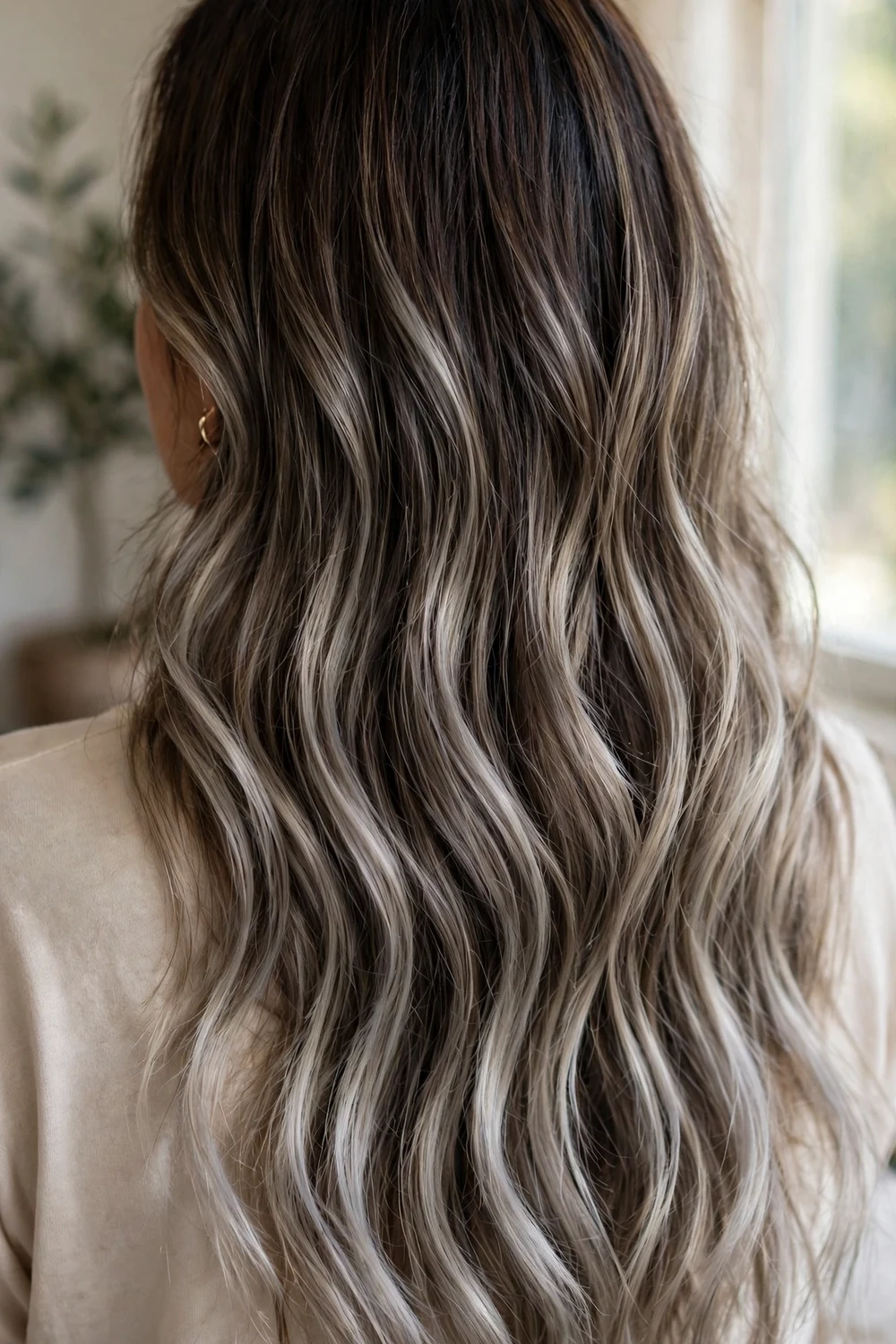
The flagship cool blonde for dark hair. Smoky, soft, dimensional ash runs heavier from mid-length down with lighter tips and a deep root shadow holding everything together. This is the “cool girl” blonde that works on dark bases, but it demands the right toner and a maintenance plan. If your hair pulls warm naturally, tell your colorist upfront so the formula compensates.
Try this: Use a blue shampoo rather than purple for ash tones on dark hair. Blue neutralizes orange undertones; purple targets yellow.
21. Smoky Ash Melt on Long Hair
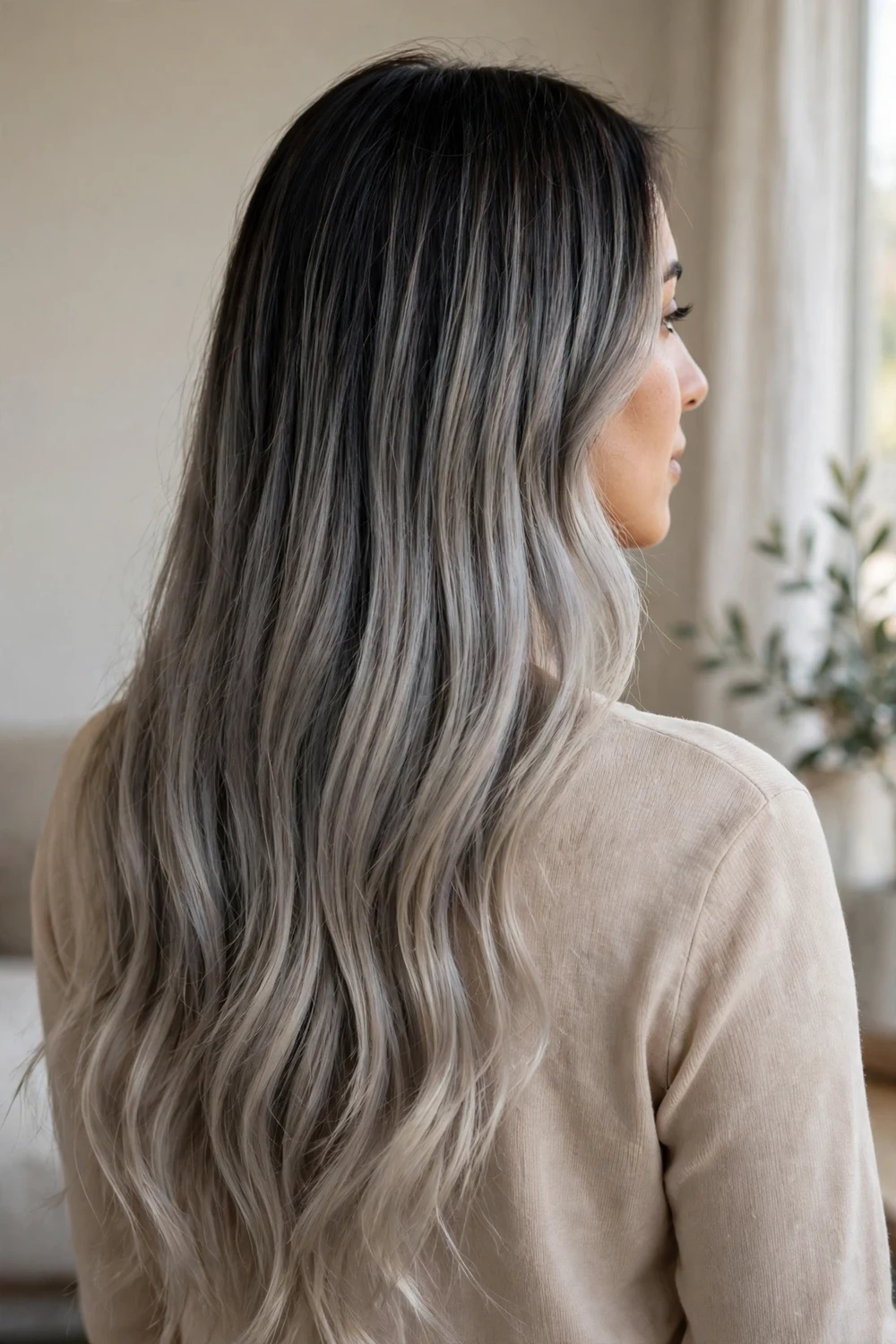
Long hair gives this melt room to breathe. The transition starts around mid-length, so the roots stay dark and low maintenance while the ends fade into cool ash. On very long hair, ask the colorist to keep the lightest pieces in the lower third. That placement grows out softly and keeps the top looking rich instead of over-processed.
Try this: A gloss between appointments is non-negotiable for this one. Ash on long, lightened ends loses its cool tone faster than on short hair.
22. Feathered Layers with Blonde Ribbons

Feathered layers and balayage were made for each other. The layers flip outward, and the blonde ribbons follow the flip, so every turn of the head shows dimension. Ask for cool ash ribbons through the mid-lengths with a few brighter pieces near the front to keep the face lit. The cut does half the styling work here.
Try this: A round brush and a light blowout is all this needs. Heavy styling products weigh down feathered layers and hide the color.
23. Mushroom Beige Balayage
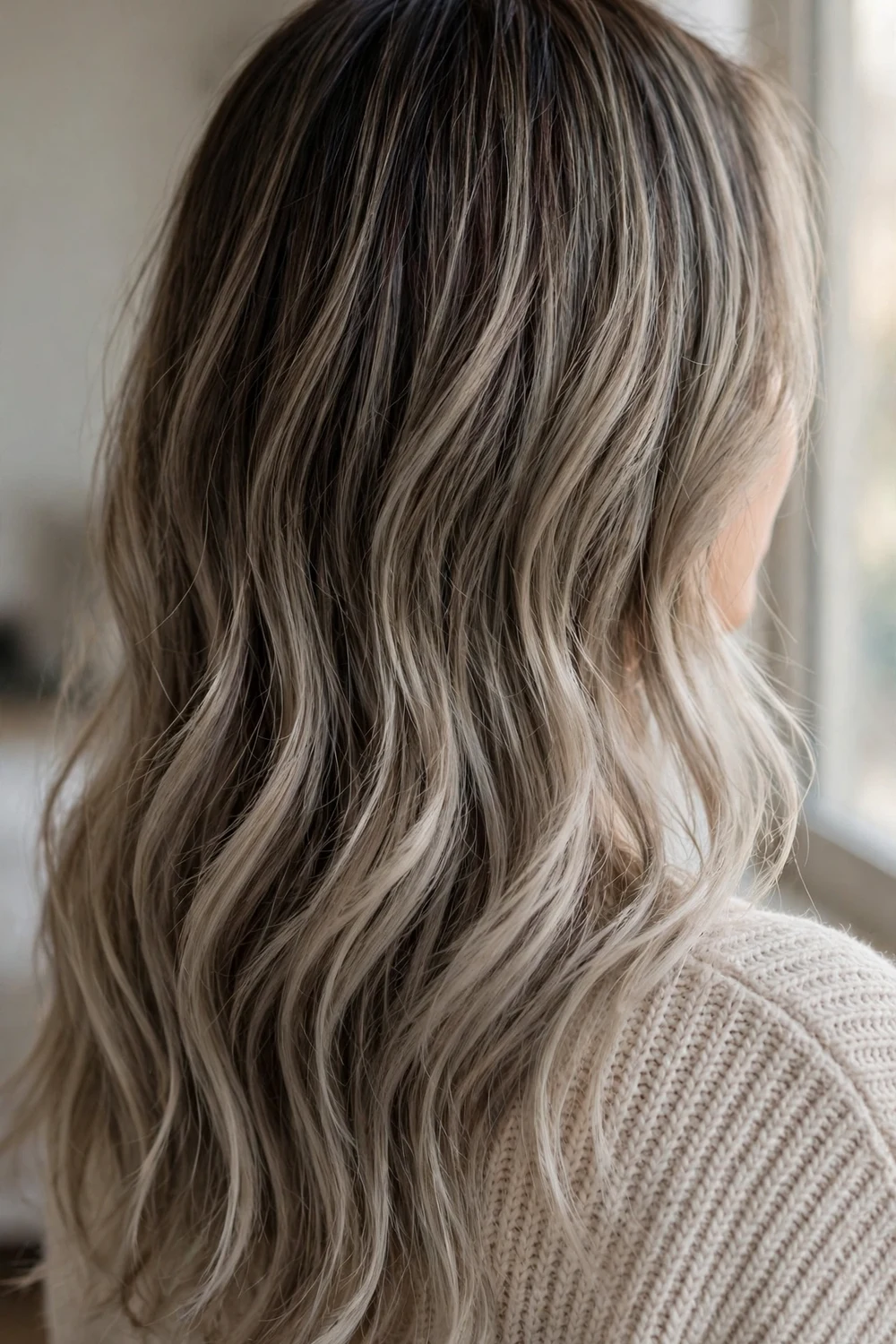
Between ash and warm sits mushroom: a cool-neutral beige that isn’t icy and isn’t golden. Fine mushroom highlights with a smoky gloss give dark hair a muted, modern blonde that reads expensive in daylight. This suits anyone who finds pure ash too stark and honey too warm. The muted tone also fades more gracefully than icy shades.
Try this: Ask for a smoky gloss at the same appointment as the color. The gloss seals the mushroom tone in and adds the shine that muted colors need.
24. Espresso Base with Ash Blonde Lift
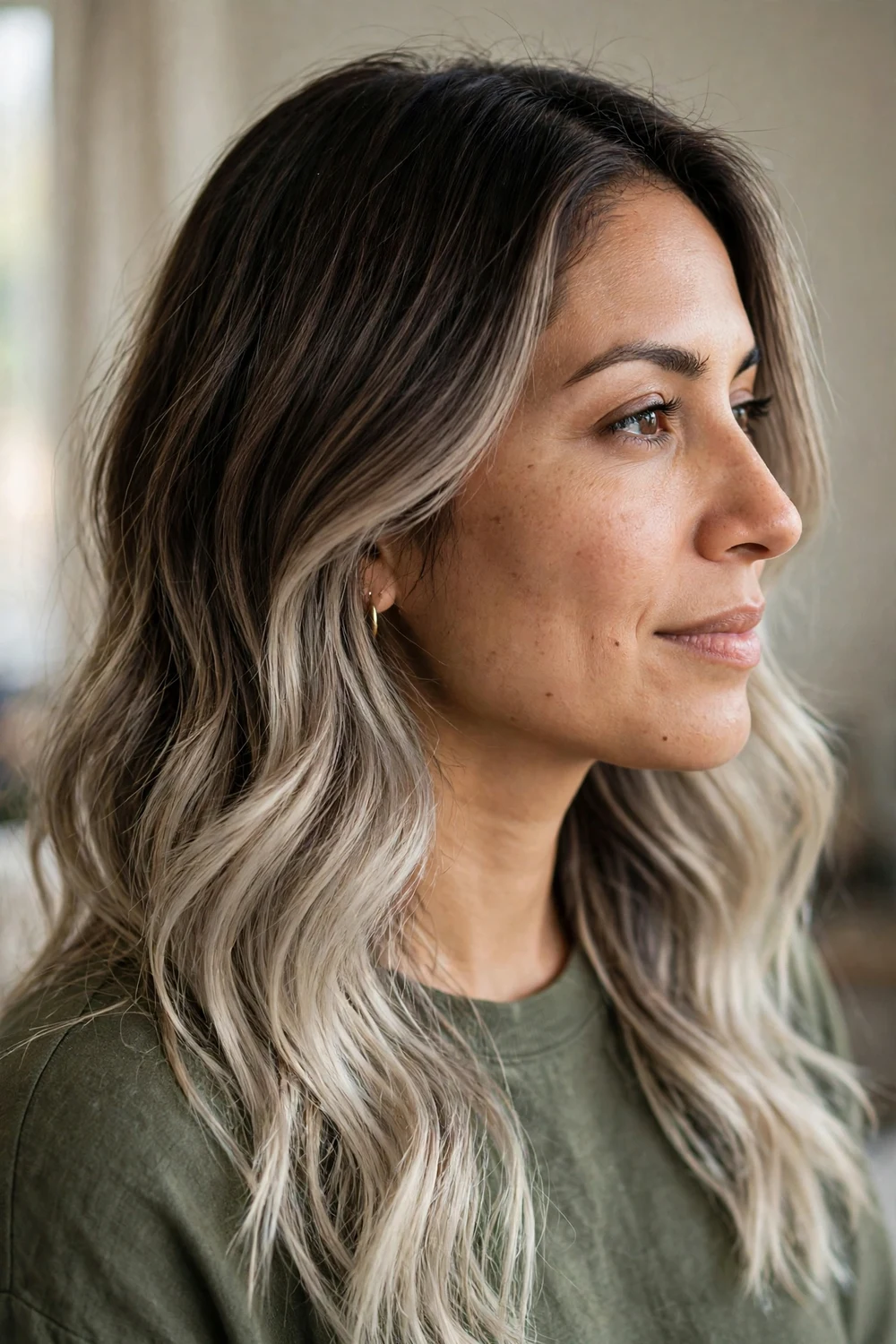
Keep the rich espresso base and lift only the mids and ends into soft ash. The dark chocolate undertone makes the ash look deliberate and glossy rather than washed out. This is a strong pick for hair that was previously dyed dark, since the colorist works with the existing depth instead of fighting it. The blend stays smooth, so regrowth never looks stripy.
Try this: Confirm with your colorist whether your existing dark color is permanent. Permanent dark dye changes the lift plan and may need an extra session.
25. Near-Black Sleek Balayage Strands
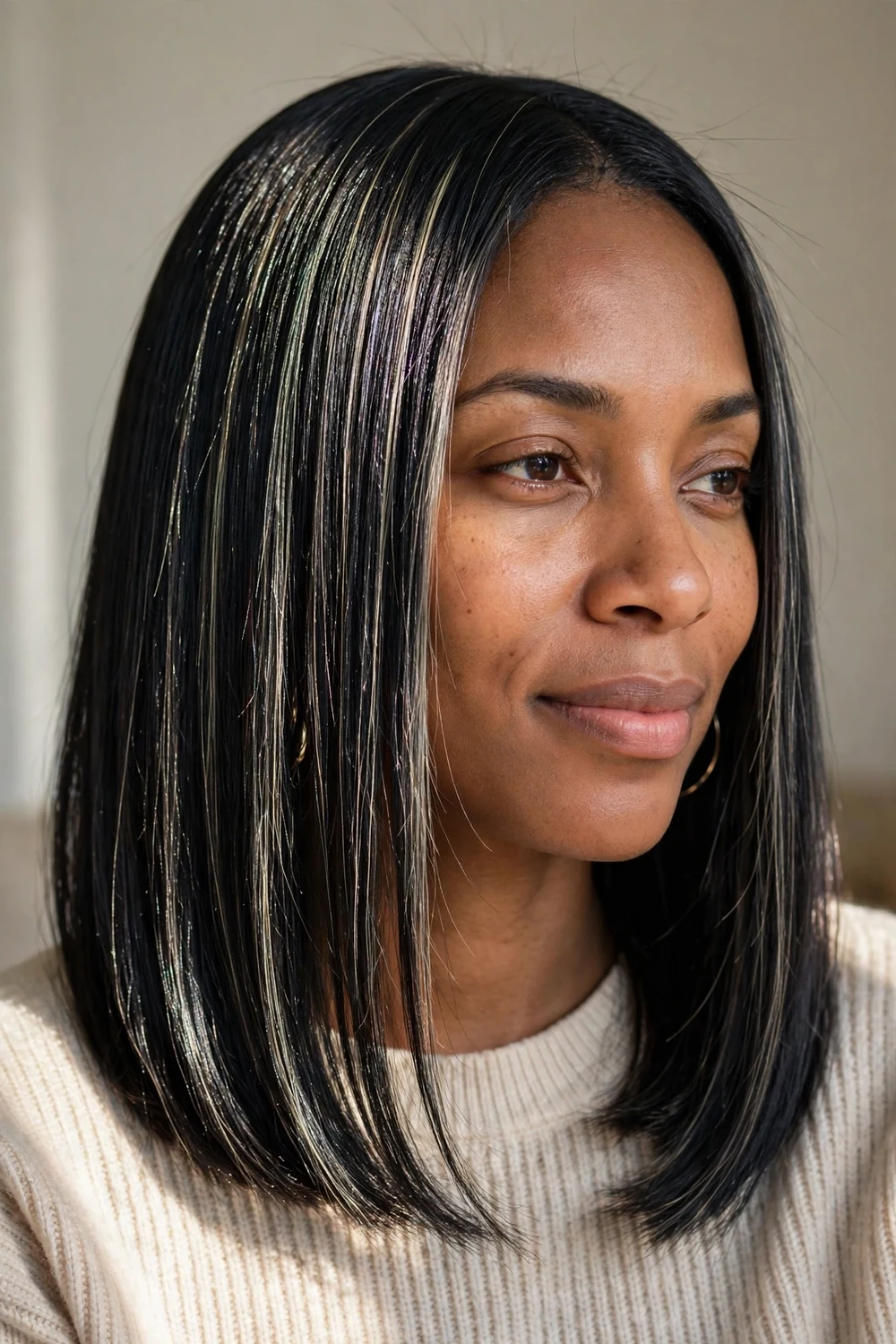
Sleek, straight, near-black hair with fine ash-blonde strands spaced far apart. The base stays inky, and the light pieces only appear when the hair catches light. Because the strands are sparse, this needs the least maintenance of any ash option here. It suits straight hair best; waves and curls would blur the precision.
Try this: Keep the strands fine and spaced. Packed-in highlights on a near-black base turn into a different look entirely.
26. Peekaboo Cool Ash Underlights
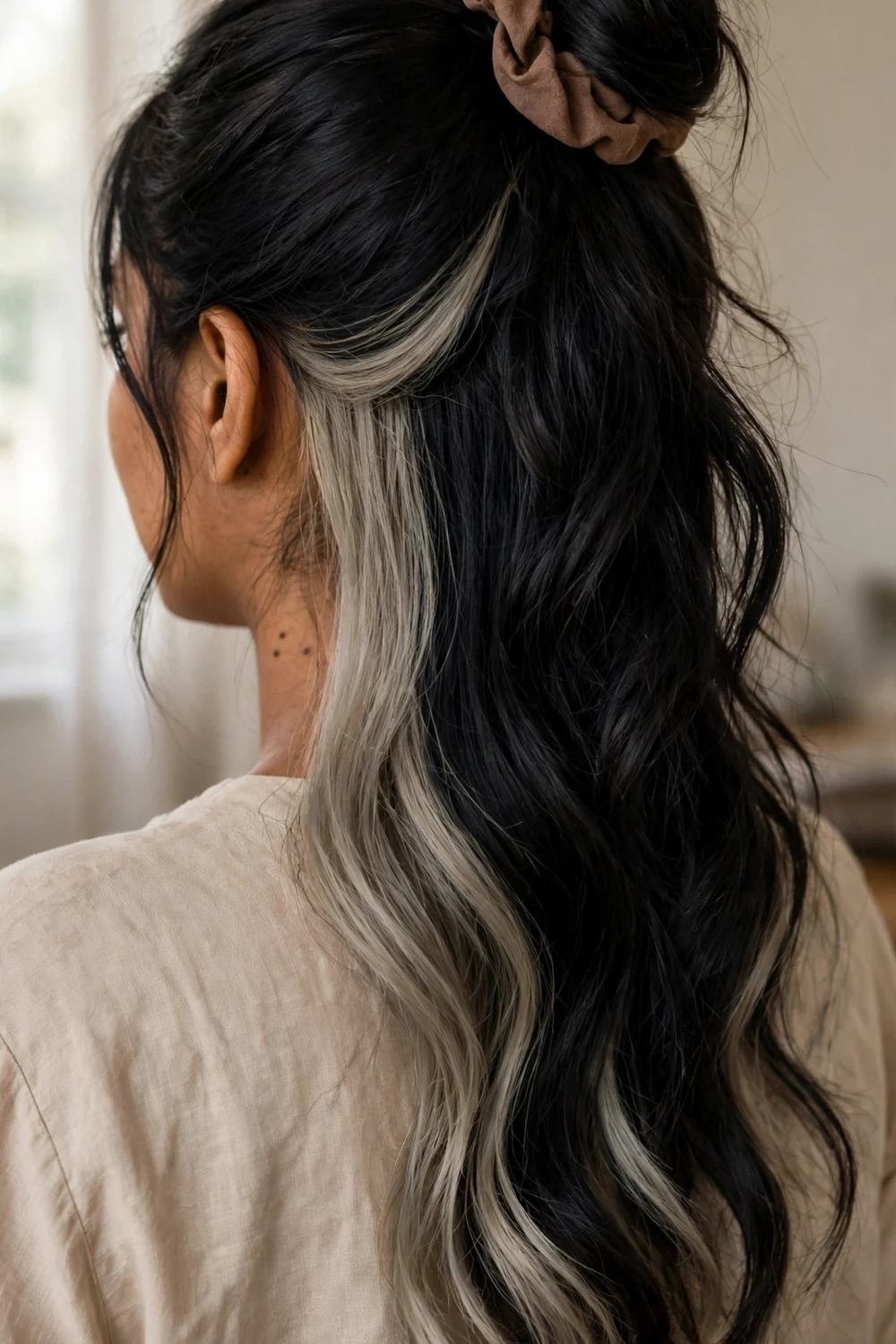
Hide the blonde. Cool ash underlights sit beneath a darker top layer, invisible when the hair hangs down and bright when you pull it into a half-up style or ponytail. It’s two looks in one: office-subtle by default, statement when you want it. The top layer also protects the lightened hair from sun fading.
Try this: Ask for the underlights to start just below the crown. Too high and they peek through constantly; too low and they never show.
27. Dirty Blonde Balayage
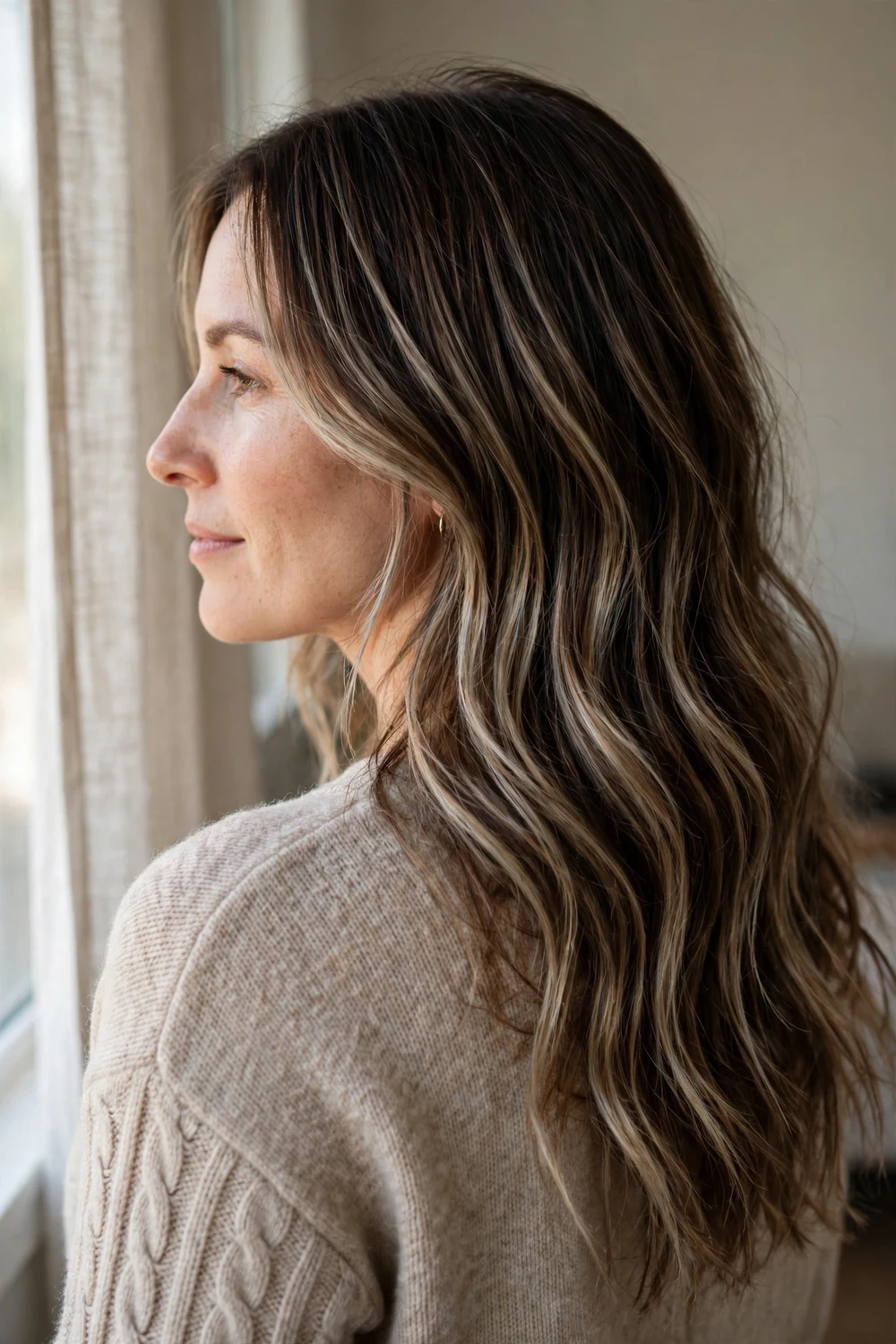
Dirty blonde is the underrated middle child: muted, beige, neither warm nor icy. Strategically placed through dark hair, it adds dimension without demanding the maintenance of brighter blondes. The muted tone is also the most forgiving as it fades, since it starts close to where faded blonde ends up anyway.
Try this: This tone pairs well with a root shadow. The shadow deepens the top while the dirty blonde handles the mids and ends.
28. Rose Gold Melt

For something different, try rose gold. Peach and pink undertones melt from dark roots into soft rose gold ends, giving dark hair a warm, fashion-forward glow without going full red. The pink fades fastest of any tone here, so treat this as a color that needs refreshing every 6 to 8 weeks rather than a one-and-done service.
Try this: A color-depositing pink conditioner at home extends the rose tone between salon visits. Without it, the color shifts beige by week four.
29. Tousled Honey Balayage Bob
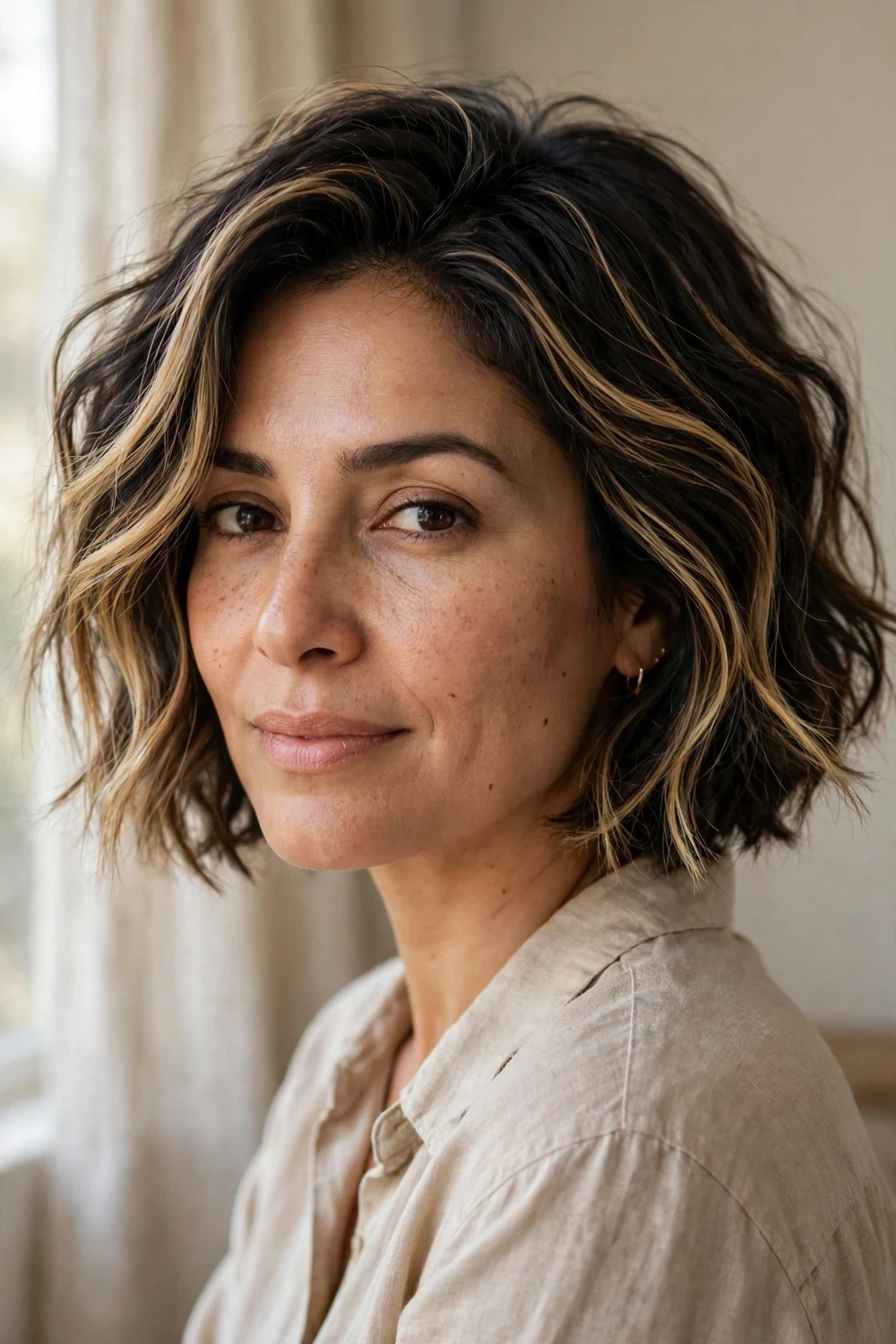
Short hair gets the balayage treatment too. A tousled bob with honey blonde painted through the layers gains texture and movement that a single-process color can’t deliver. The waves make the contrast between dark base and honey highlights more striking, and the short length means less lightener, less time, and less cost than long-hair balayage.
Try this: A texturizing spray keeps the tousled look alive between washes. Flat-ironed straight, the same color reads sleeker and more polished.
30. Icy Platinum Balayage

The boldest option on this list. High-contrast icy platinum pieces hand-painted from mid-length to ends against a dark base create the most dramatic transformation balayage can offer. Dark hair rarely reaches icy platinum in one session, so plan for two visits and protect the hair with bond treatments. The maintenance is real, but nothing else delivers this level of contrast.
Try this: Book the second session 4 to 6 weeks after the first. Rushing the lift in one day is how dark hair gets damaged.
Blonde Balayage Shade Comparison at a Glance
| Idea | Tone Family | Maintenance | Best For |
|---|---|---|---|
| Soft Honey Blonde Waves | Warm honey | Low | First-time blonde on dark bases |
| Golden Honey Ombre | Warm honey | Low | Bold change with easy grow-out |
| Face-Framing Highlights | Warm honey | Very low | Testing blonde without commitment |
| Honey Blonde Money Piece | Warm honey | Medium | Brightening the complexion fast |
| Caramel to Honey Melt | Warm caramel | Low | Near-black hair, forgiving fade |
| Ribbons of Light | Warm honey | Low | Straight hair, natural texture |
| Lived-In Shadow Root Stretch | Warm honey | Very low | Longest time between appointments |
| Sun-Kissed Balayage for Curls | Warm honey | Low | Curly and coily textures |
| Golden Hour Glow Placement | Warm golden | Low | Warm and neutral skin tones |
| Teasylights Technique | Warm honey | Very low | Soft blend with no root line |
| Honey-Dipped Ends | Warm honey | Very low | Minimal commitment, easy removal |
| Tiger Eye Dimensional | Warm amber | Low | Olive and golden skin tones |
| Backswept Brightness | Warm honey | Low | Subtle front, hidden dimension |
| Foilyage Fusion | Warm honey | Medium | Maximum brightness in one visit |
| Blonde Panels | Warm honey | Low | Bold, modern statement |
| Babylights Blend | Warm honey | Very low | Virgin dark hair, subtle change |
| Contour Balayage | Warm honey | Low | Flattering specific face shapes |
| Painted Desert Warm Blend | Warm copper | Medium | Lovers of warm, rich color |
| Reverse Smoky Ash Waves | Cool ash | Medium | Controlled cool contrast |
| Dimensional Cool Ash | Cool ash | Medium-high | Modern cool blonde on dark bases |
| Smoky Ash Melt (Long Hair) | Cool ash | Medium | Long hair, soft grow-out |
| Feathered Layers Ribbons | Ash-honey mix | Low | Layered cuts, easy styling |
| Mushroom Beige | Cool neutral | Medium | Muted, modern blonde lovers |
| Espresso with Ash Lift | Cool ash | Medium | Previously dyed dark hair |
| Near-Black Sleek Strands | Cool ash | Very low | Straight hair, minimal upkeep |
| Peekaboo Ash Underlights | Cool ash | Low | Two looks in one |
| Dirty Blonde | Neutral beige | Low | Graceful fading, easy upkeep |
| Rose Gold Melt | Warm pink | High | Fashion-forward warm glow |
| Tousled Honey Bob | Warm honey | Low | Short hair, lower cost |
| Icy Platinum | Cool platinum | High | Maximum drama, two sessions |
How to Choose the Right Blonde Shade for Your Dark Base
Match the tone to your base, not just your mood. Black and espresso bases handle warm honey and caramel best on the first visit. Ash and platinum are achievable, but they need more lift and stricter toning, which means a longer appointment and a higher bill.
Consider your skin’s undertone. Warm honey, caramel, and golden shades flatter warm and olive skin. Cool ash, mushroom, and platinum suit cool and neutral skin. If you’re unsure, your colorist can drape fabric swatches or hold color charts near your face to check.
Be honest about maintenance. If you see your colorist twice a year, choose shadow roots, melts, and warm tones. If you go monthly and don’t mind toning shampoos, the cooler and brighter options open up.
Mistakes to Avoid
Don’t expect platinum in one session on virgin black hair. Forcing the lift in a single day is the fastest route to breakage, and a good colorist will refuse or stage it. Plan two sessions for anything icy.
Don’t skip the toner. Lifted dark hair turns orange without one, and the toner is what separates a salon blonde from a box-dye blonde. Ask which toner your colorist uses and when you’ll need a refresh.
Don’t wash with hot water and harsh shampoo. Heat opens the cuticle and fades toner faster. Lukewarm water, sulfate-free shampoo, and a weekly toning shampoo keep the color closer to day one.
If cool tones are your goal, start by reading about ash blonde balayage to understand the toner plan ash shades need.
For warm-tone lovers, our guide to honey blonde balayage covers placement and melt techniques in more detail.
Wondering how balayage behaves on deep brunette specifically? See balayage hairstyles for dark brown hair for ideas tuned to that base.
And if your base is close to black, black hair with brown highlights shows how lighter pieces behave on the darkest bases.
Frequently Asked Questions
Will blonde balayage work on really dark, almost black hair?
Yes, but expect a realistic first result. Very dark hair lifts slower and pulls warm, so the first session usually lands on caramel or honey rather than ash or platinum. Brighter blondes are possible with a second session 4 to 6 weeks later. Techniques like foilyage lift further in one visit than open-air balayage.
How do I stop blonde balayage on dark hair from turning brassy?
Three habits matter most. Use a purple shampoo for warm blondes or a blue shampoo for ash tones once a week, wash with lukewarm water, and book a toner or gloss refresh every 6 to 8 weeks. Hard water can also dull cool tones, so a clarifying wash now and then helps if your water is mineral-heavy.
How often will I need touch-ups?
Most blonde balayage on dark hair lasts 8 to 16 weeks between full appointments. Lived-in placements like shadow roots and melts stretch longest; high-contrast money pieces and platinum need the most frequent attention. A gloss refresh between visits keeps the blend looking new without a full color service.
Is balayage or foilyage better for dark hair?
It depends on how bright you want to go. Open-air balayage gives the softest, most natural blend and is gentler on the hair. Foilyage lifts brighter and more evenly in one session because the foil traps heat, which suits dark hair that resists lifting. Many colorists combine both: foilyage for brightness, open-air painting for the blend.
Can I get blonde balayage if my dark hair is already dyed?
Yes, but tell your colorist exactly what’s on your hair. Permanent dark dye lifts differently than virgin hair and can reveal banding or uneven warmth. Your colorist may need a color-removal step or an extra session. Box dye is the hardest to lift through, so mention it before you book, not in the chair.
Final Thoughts
Blonde balayage on dark hair rewards planning. Pick a tone your base can reach, choose placement that fits your maintenance level, and keep up with toner and gloss. Do that, and the contrast that makes this look so striking stays intentional for months. Start with honey if you’re unsure; you can always go cooler or brighter at the next appointment.
For the coolest take on this look, cool ash blonde balayage on dark hair covers 30 smoky ash options, from subtle babylights to platinum and pastel twists.

