


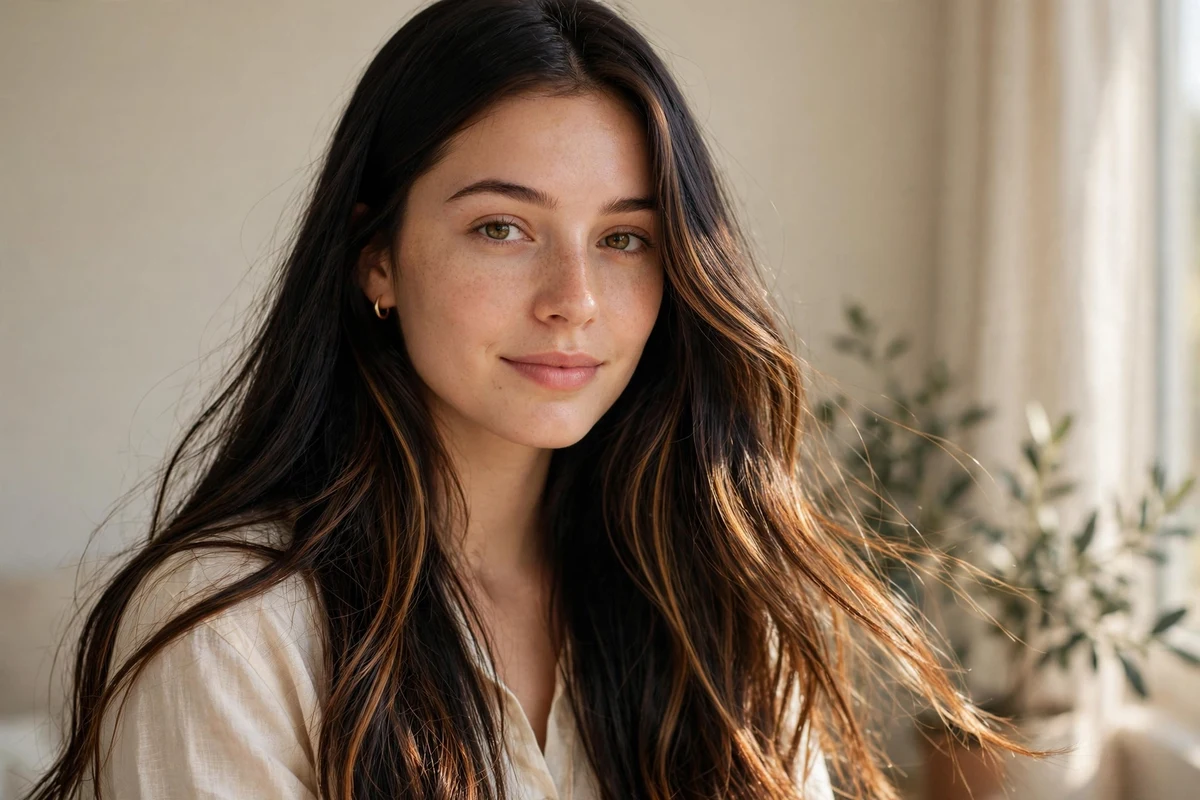
Black hair with brown highlights works because brown sits only a few levels above natural black. The color adds warmth, shine, and depth without the harsh grow-out line that blonde brings. The most requested versions are caramel foils, chocolate balayage, honey money pieces, and chestnut blends.
This list covers 20 specific shade and placement combos, each with a styling tip, a difficulty rating, and honest maintenance notes.
Quick Takeaways
- Brown highlights lift black hair a few levels, so they grow out softer than blonde highlights.
- Warm shades like caramel, honey, and cinnamon flatter warm undertones. Ash, mocha, and espresso suit cooler ones.
- Expect $120 to $300 for a full salon highlight service, with refresh appointments every 10 to 14 weeks.
- Use a sulfate-free, color-safe shampoo to keep brown tones from fading or turning brassy.
- Apply heat protectant before any hot tool. Lightened hair dries out faster than your natural base.
1. Caramel Foil Highlights on Black Hair
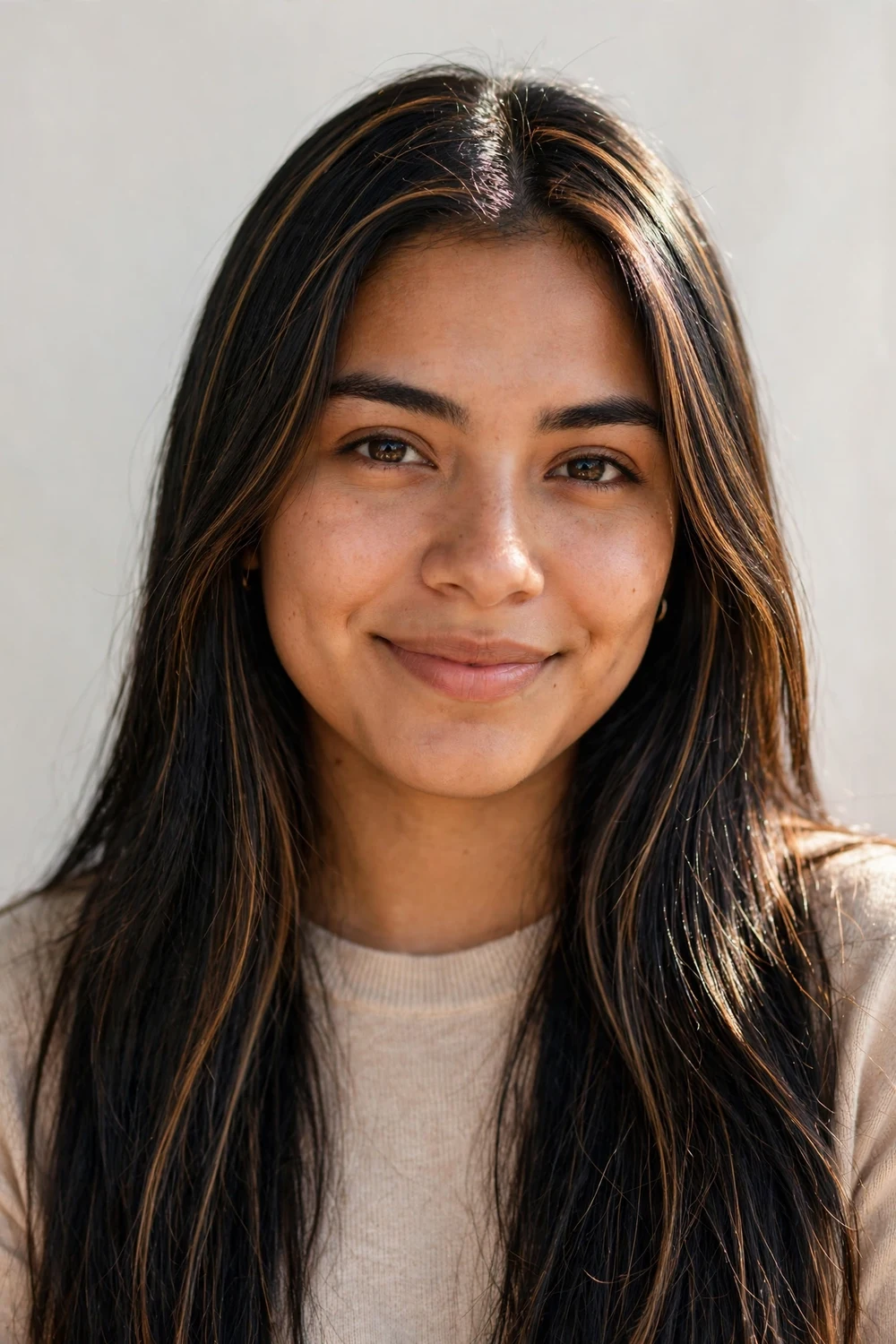
Caramel foils are the classic way to add brown to black hair. Thin, evenly spaced strands run from roots to ends, which keeps the color bright at the part line. The tone reads warm and golden in daylight but stays rich indoors. This version suits straight and slightly wavy hair, since smooth strands show the contrast cleanly.
Ask your colorist for foils woven in half-inch sections so the result looks blended rather than striped. Maintenance sits at a medium level. You will need a root refresh every 10 to 12 weeks because foils start close to the scalp. A purple-toning gloss once a month keeps the caramel from going brassy.
Try this: bring a photo of caramel in both indoor and outdoor light, since the shade shifts between the two.
Difficulty: Moderate · Cost: $150–$280 (salon foils)
Curious how these golden tones read on a lighter base? Our highlights on dirty blonde hair roundup shows the same warm shades on a softer foundation.
2. Chocolate Brown Balayage

Chocolate balayage is hand-painted onto the mid-lengths and ends, leaving your natural black roots untouched. The dark-to-warm-brown melt has no harsh lines, which is why it grows out better than almost any other highlight method. It suits long layers and loose waves, where the painted color can blend naturally as the hair moves.
This is one of the lowest-maintenance options on the list. Most people go 14 to 16 weeks between appointments, sometimes longer. Ask for the color to be feathered upward in thin strokes rather than painted in blocks. That feathering is what keeps the blend soft as new growth comes in.
Try this: ask your colorist to keep the brightest pieces two to three inches below your part line for the most natural finish.
Difficulty: Easy · Cost: $140–$260 (salon balayage)
If hand-painted warmth is your main interest, our dark caramel balayage guide explores more golden-toned painted options.
3. Honey Brown Money Piece Highlights
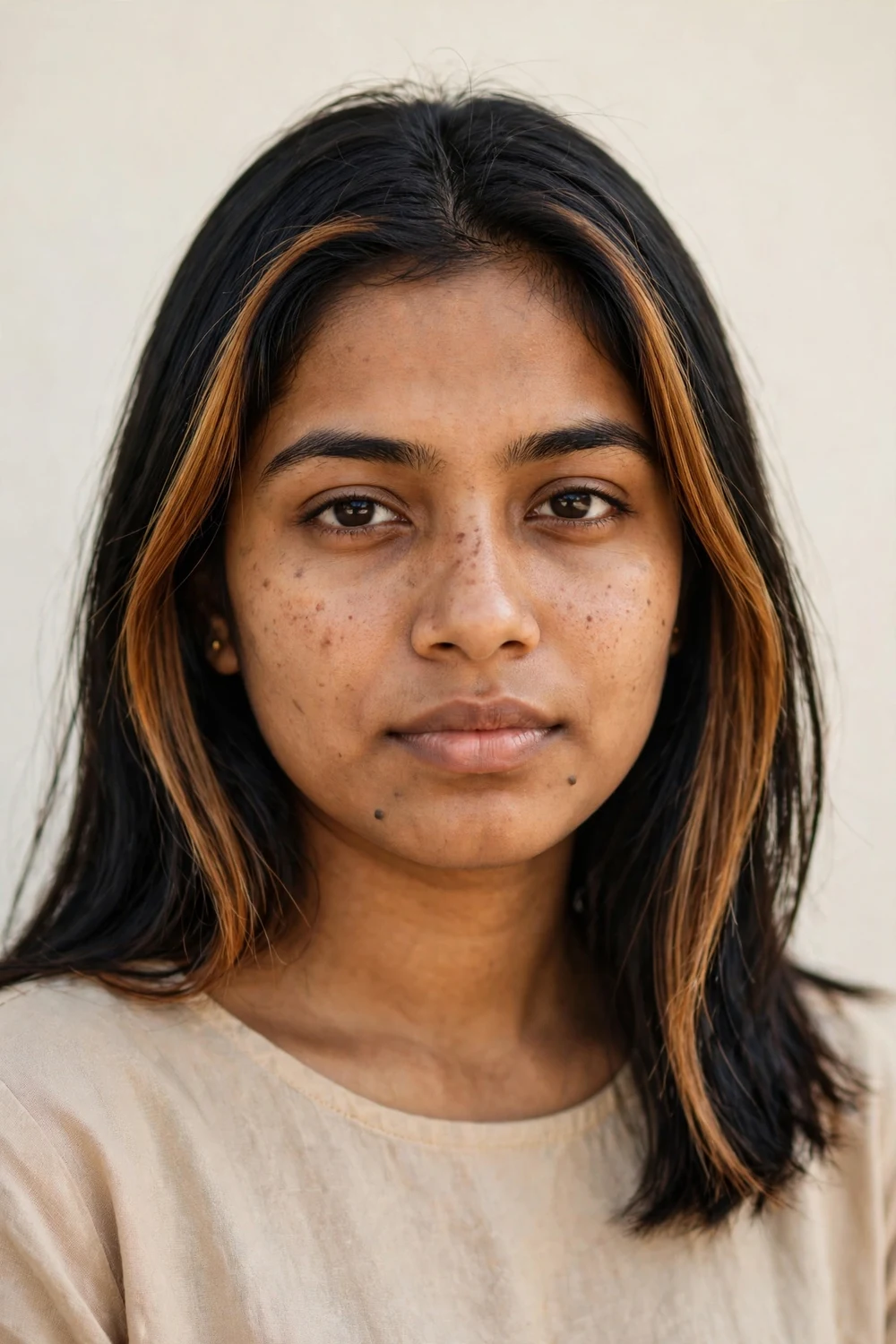
A honey money piece lightens only the two front sections of hair around your face. The bright frame draws attention to your eyes and brightens your complexion without coloring the rest of your head. It is the fastest way to test brown highlights, and the appointment usually takes under two hours.
The money piece needs more upkeep than full-head color because those front strands show regrowth quickly. Plan a refresh every 8 to 10 weeks. At home, a weekly gloss keeps the honey tone bright. The rest of your hair stays untouched, which means less damage overall.
Try this: style the front pieces with a slight bend using a flat iron to show off the color. Use heat protectant first.
Difficulty: Easy · Cost: $80–$150 (partial service)
4. Chestnut Brown Highlights on Long Hair
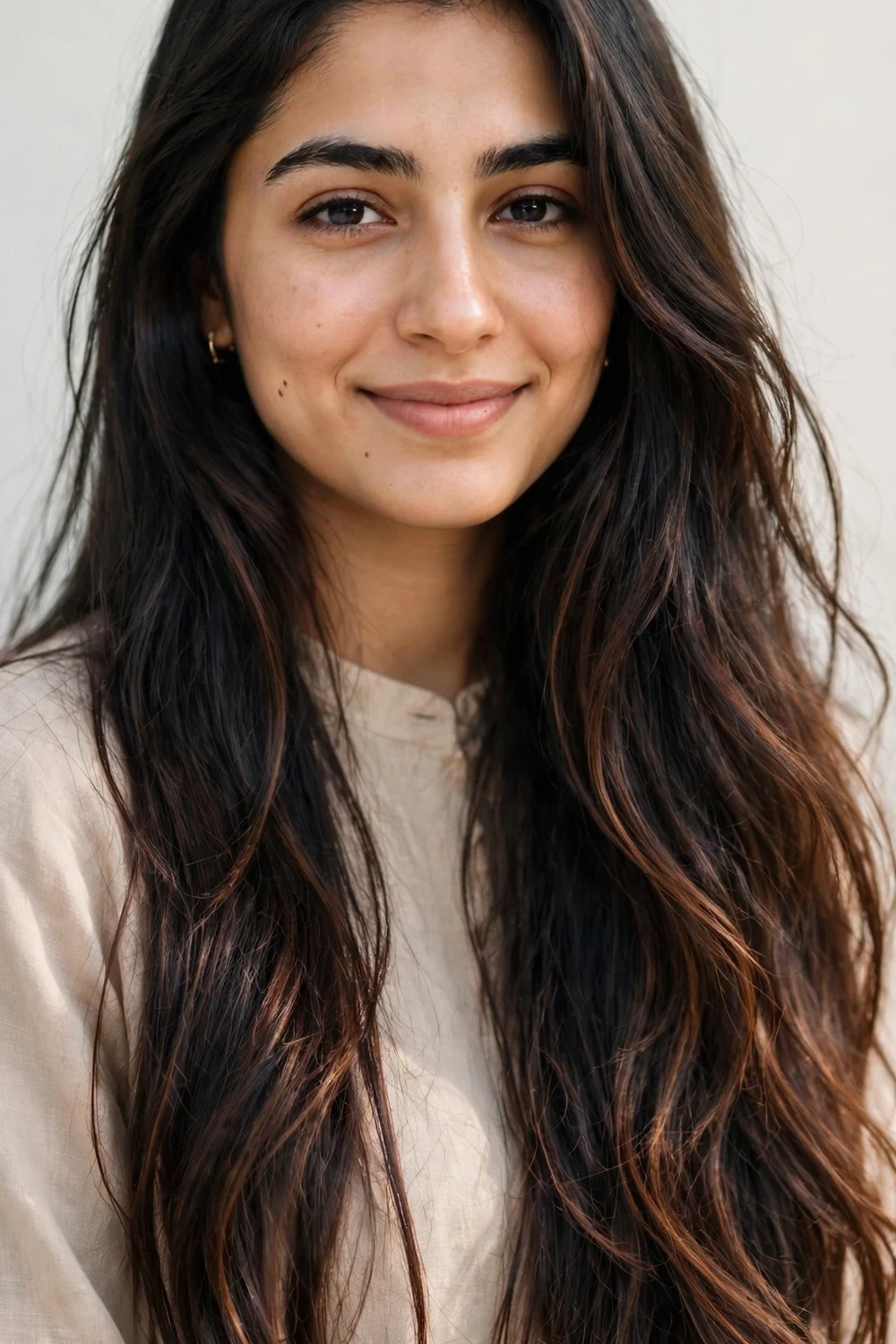
Chestnut sits in the middle of the brown family, neither too golden nor too dark. On long black hair, it adds rich warmth that moves with every layer. The shade flatters a wide range of skin tones. Long hair shows the dimension best because each layer catches the light differently.
This placement works with both foils and balayage, so your maintenance depends on the method you pick. Foil chestnut needs root touch-ups every 10 to 12 weeks. Balayage chestnut stretches to 14 weeks or more. Either way, a deep conditioning mask once a week keeps long, highlighted hair from going dry at the ends.
Try this: ask for the chestnut pieces to be concentrated through the lower layers so the top stays dark and sleek.
Difficulty: Easy · Cost: $140–$270 (salon color)
5. Mocha Brown Highlights
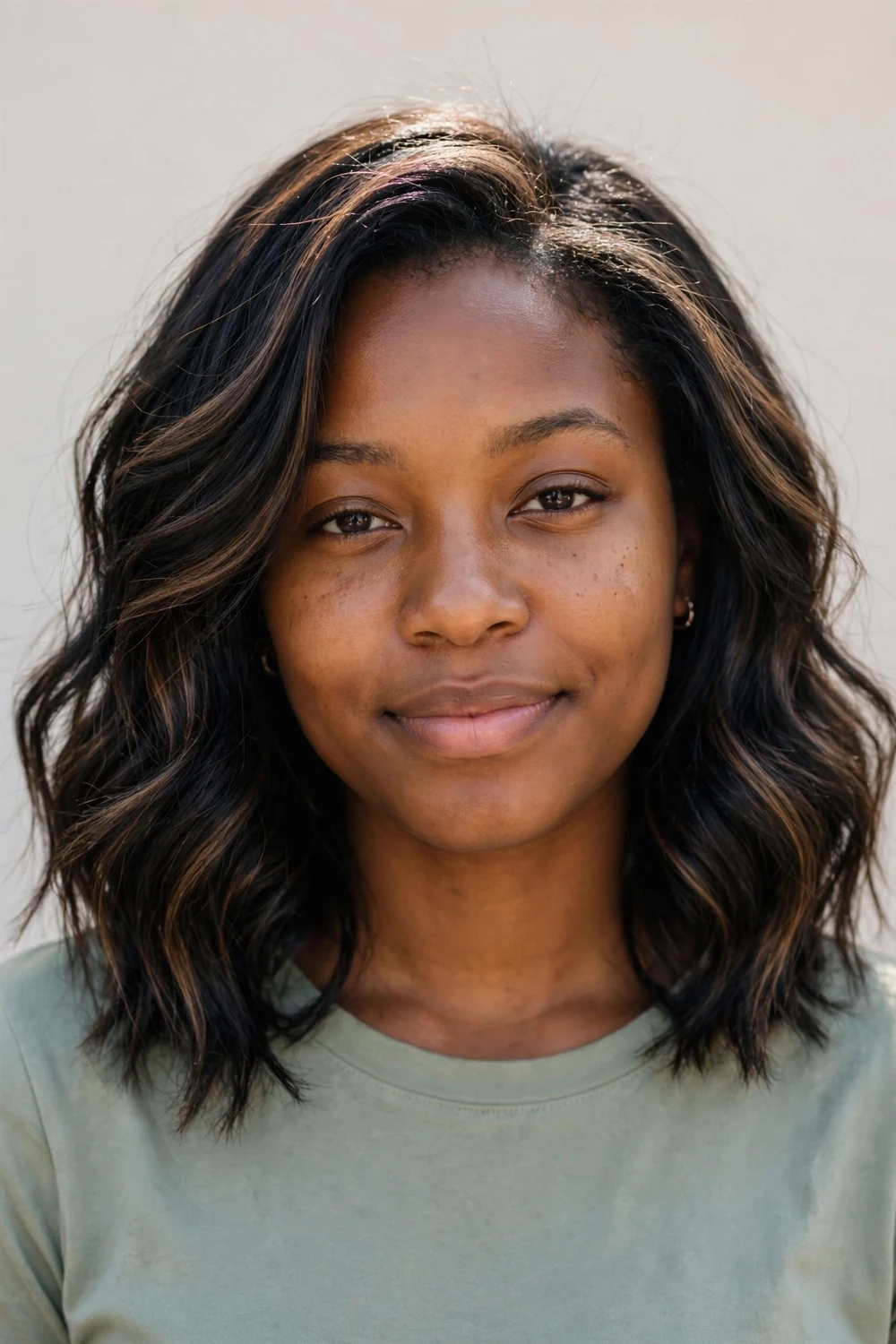
Mocha is a cool-leaning brown with a coffee tone that blends almost seamlessly into black hair. The contrast is gentle, so this is a strong pick if you want dimension without anyone guessing you colored your hair. It works across straight, wavy, and coily textures because the subtle shift reads well on every hair type.
Maintenance is low here. The shade stays close to your base, so regrowth barely shows. Most people refresh every 12 to 16 weeks, mainly to revive the tone rather than fix roots. A color-depositing conditioner in a mocha shade between appointments keeps the color looking fresh.
Try this: wear your hair in its natural texture for a week after coloring so you can see the true blend before styling it.
Difficulty: Easy · Cost: $120–$240 (salon color)
6. Cinnamon Brown Highlights
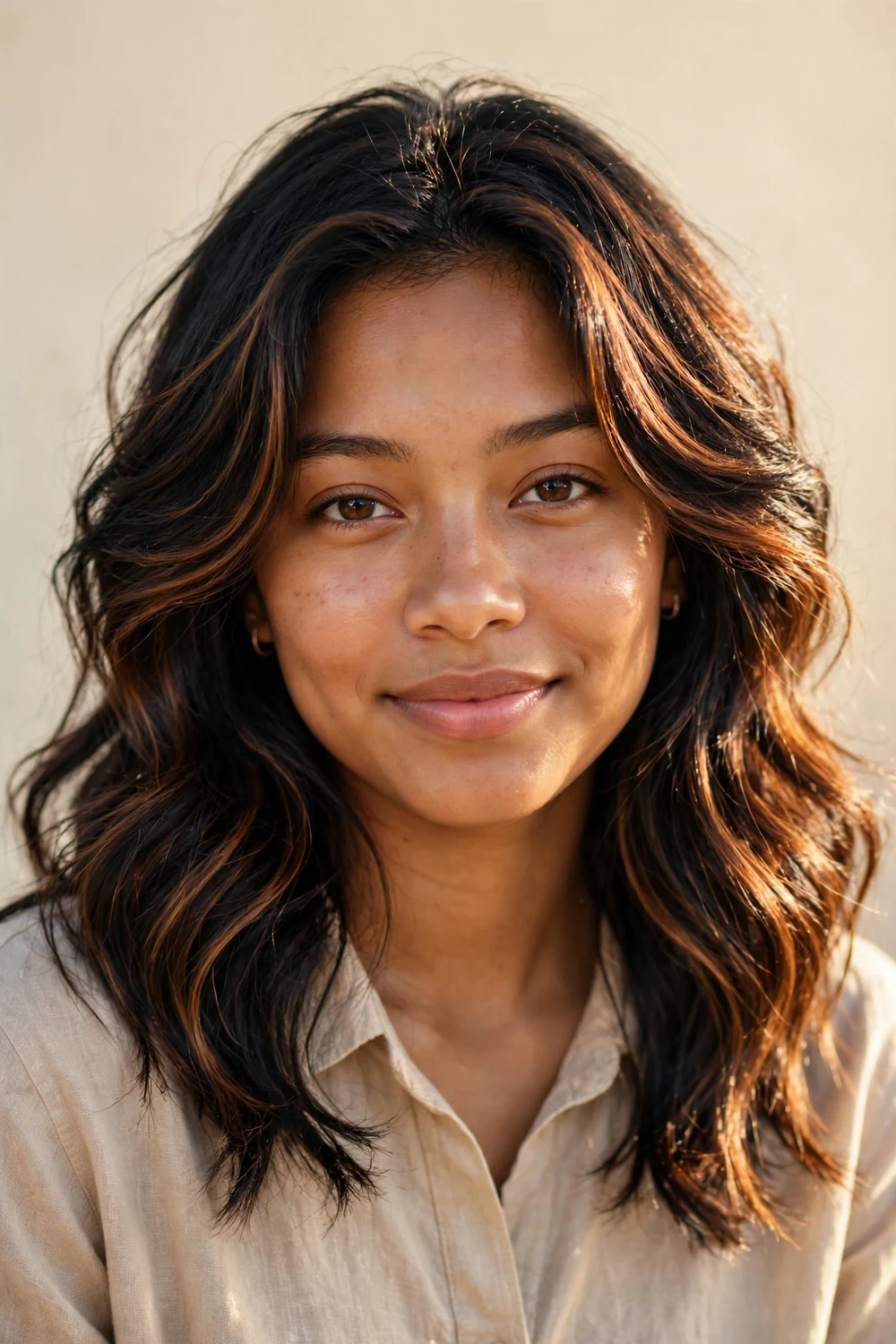
Cinnamon lands between brown and copper, which gives black hair a warm, spicy glow. The shade has a reddish cast that shows up most in sunlight, while indoors it reads as a rich warm brown. Layered medium to long cuts wear it well, because the layers let the coppery pieces peek through.
Warm shades like cinnamon fade a little faster than neutral browns, so expect a tone refresh every 8 to 10 weeks. A color-safe shampoo and cool-water rinses slow the fading. If your hair pulls very red, ask your colorist to lean the formula slightly more brown than copper at the first appointment.
Try this: loose waves show cinnamon off better than straight styles, so keep a curling wand handy. Apply heat protectant first.
Difficulty: Easy · Cost: $130–$250 (salon color)
7. Walnut Brown Highlights on Thick Hair
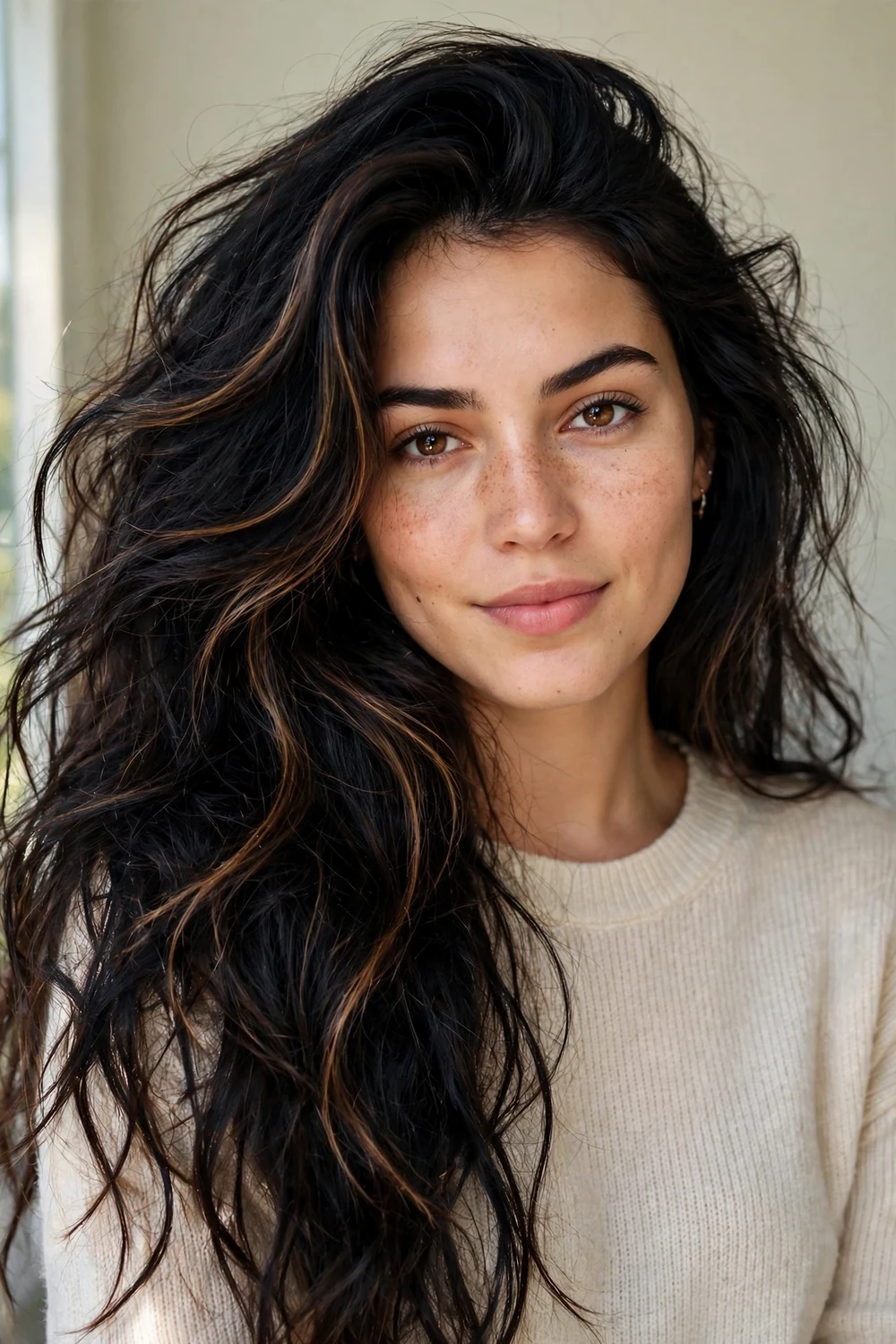
Thick black hair can look like one heavy curtain of color. Walnut highlights break it up with deep, natural-looking brown pieces that add depth from roots to tips. The shade is dark enough to blend with the base but different enough to show movement. It works in every season and never looks overdone.
Because walnut stays close to black, grow-out is gentle and touch-ups stretch to 12 to 16 weeks. On thick hair, ask for the highlights to be woven through the interior layers too, not just the surface. Surface-only color disappears once thick hair settles. A weekly deep conditioning mask keeps thick, colored hair manageable.
Try this: ask for slightly chunkier weaves on very thick hair. Fine weaves can get lost in dense hair.
Difficulty: Easy · Cost: $150–$280 (salon foils)
8. Golden Brown Highlights on Shoulder-Length Hair

Golden brown adds warmth and shine to shoulder-length black hair without taking it light. The soft golden tones make the cut look fuller, which helps if your ends are on the thinner side. It works with straight styles, loose waves, and layered cuts, and it keeps your natural dark base as the star.
This is a medium-maintenance choice. The golden tone can warm up further with sun exposure, so a gloss appointment every 10 weeks keeps it in the right range. If you straighten your hair often, always use heat protectant. Repeated heat on highlighted hair speeds up fading and dryness.
Try this: part your hair slightly off-center to let the golden pieces fall across one side of your face.
Difficulty: Easy · Cost: $130–$250 (salon color)
9. Brown Ombre Melt
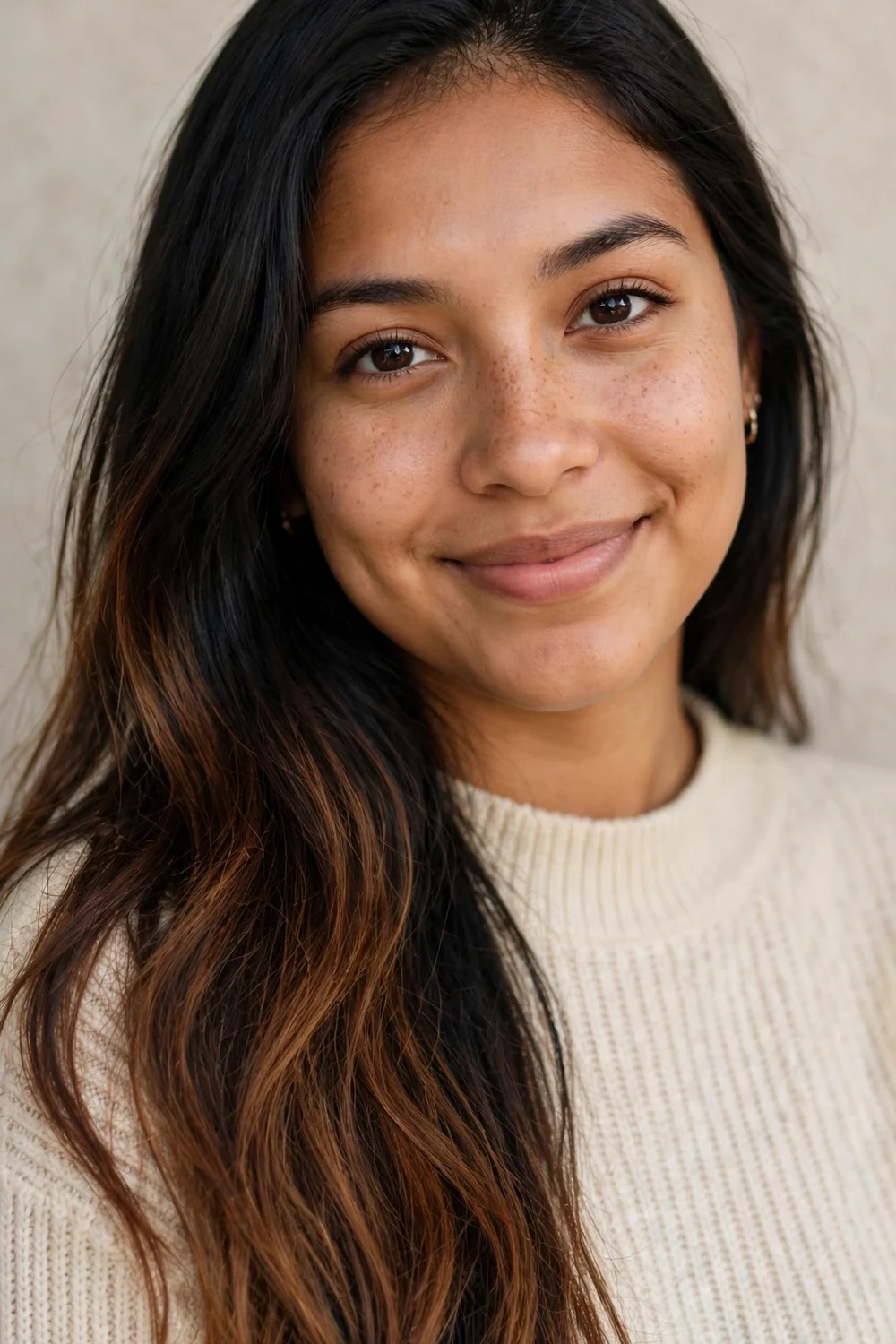
An ombre melt keeps the roots black and transitions gradually into medium brown through the lower half of the hair. Unlike balayage, which weaves color through the mid-lengths, the ombre concentrates the lightness at the ends. The result is a smooth gradient with a softly blurred transition.
Ombre is one of the easiest colors to maintain because there are no highlights near the roots to grow out. Most people go four to six months between appointments. The brown ends can turn brassy, so a toning gloss every 10 to 12 weeks keeps them rich. Trim the ends regularly, since the lightest hair is the oldest.
Try this: ask for a shadow root at the transition point to make the blend even softer.
Difficulty: Easy · Cost: $140–$260 (salon ombre)
10. Bronze Brown Highlights on Wavy Hair
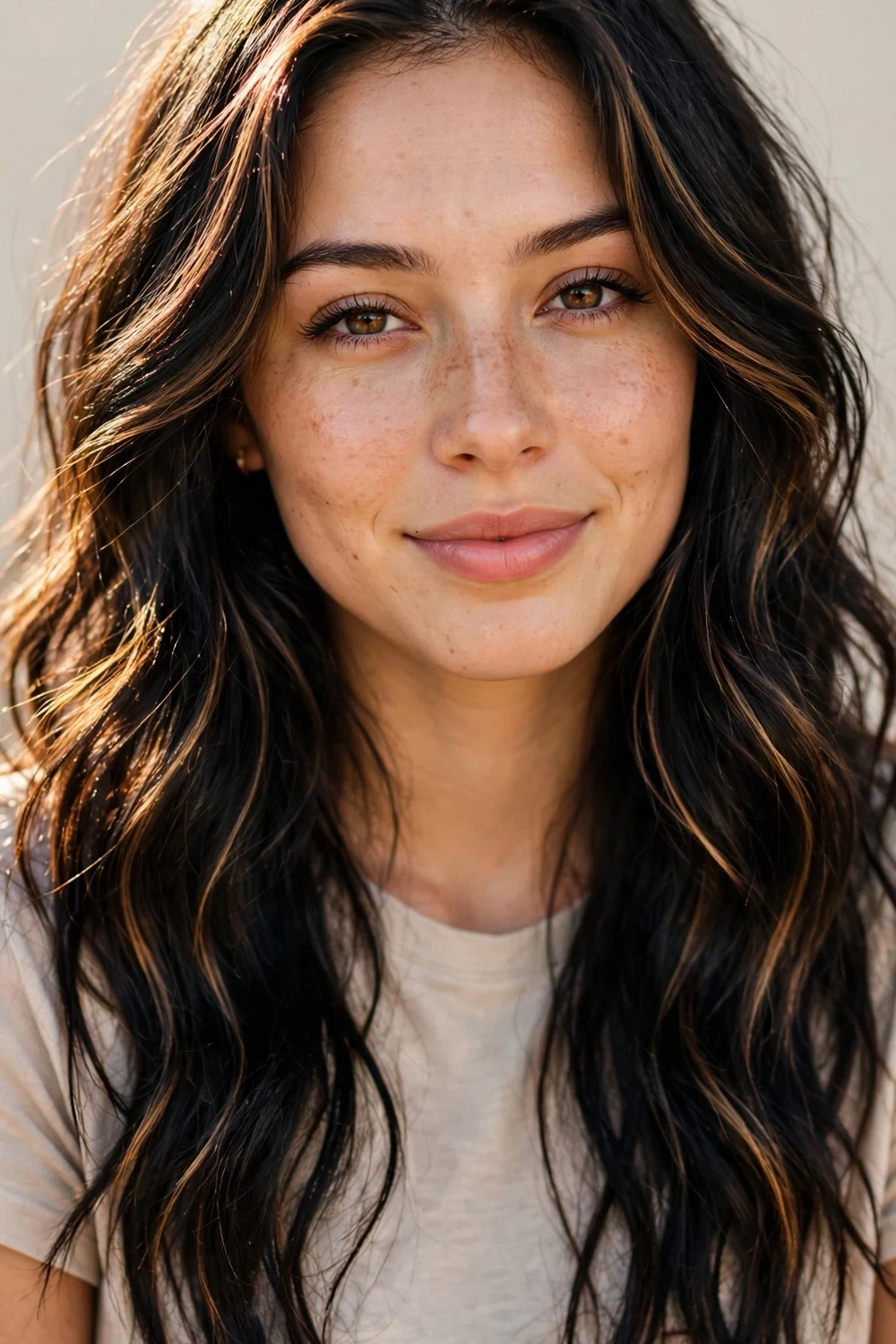
Bronze has a warm, metallic glow that shines in natural light. On black wavy hair, each wave catches the bronze differently, which creates constant movement and texture. The tone is richer than caramel but softer than copper, so it suits people who want warmth without going red.
Wavy hair shows highlight placement well, so thin to medium weaves look best here. Maintenance runs medium: the metallic tone needs a gloss refresh every 10 to 12 weeks to keep its shine. Scrunching in a lightweight curl cream after washing defines the waves and makes the bronze pieces pop.
Try this: let your waves air-dry after coloring to judge the true color before reaching for hot tools.
Difficulty: Easy · Cost: $140–$260 (salon color)
11. Deep Chocolate Brown Ribbons
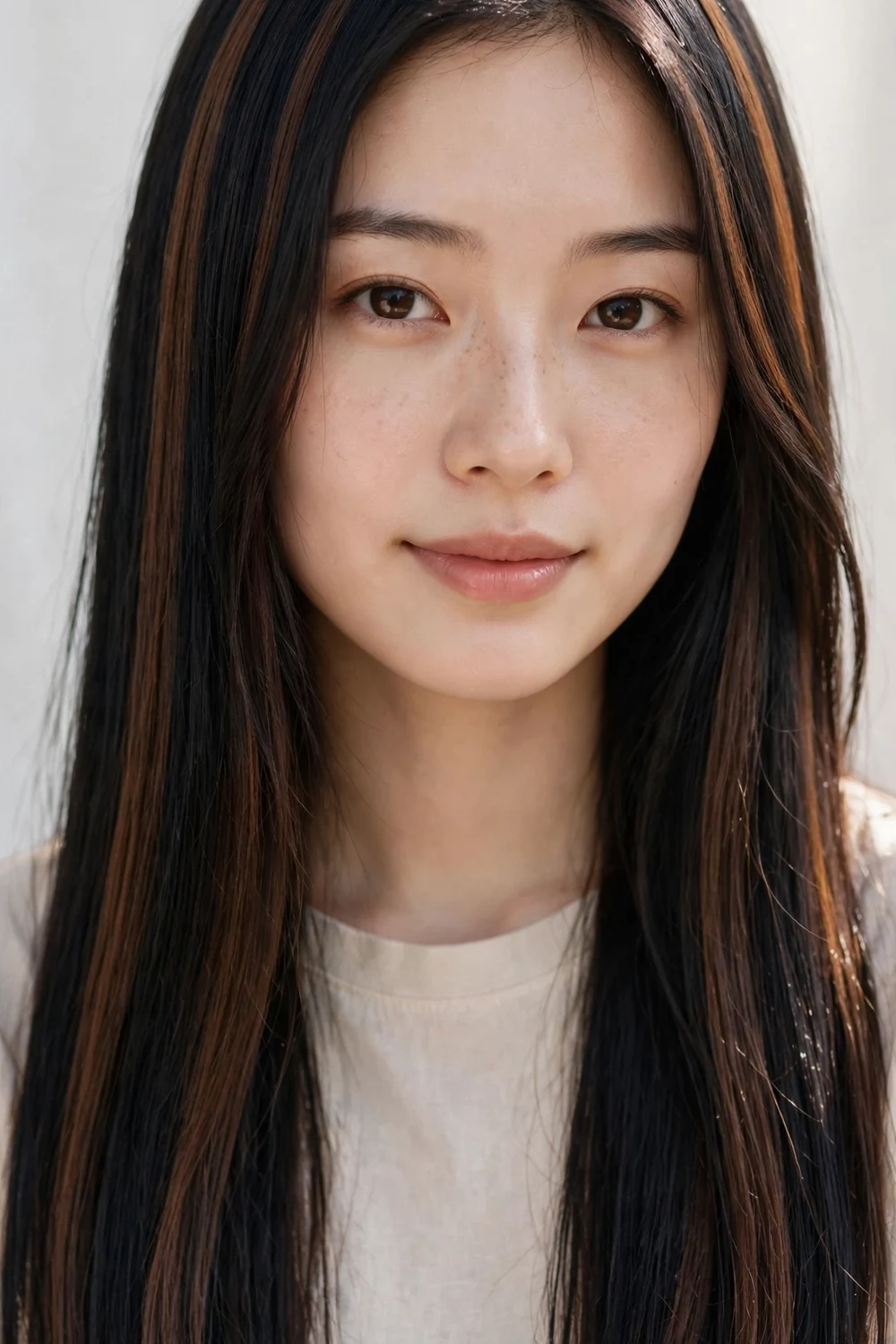
Chocolate ribbons are wider, bolder streaks of dark brown woven through black hair. They create more visible contrast than fine foils while still staying in the brown family. The ribbon placement suits sleek, straight hair best, where the clean lines of each streak show clearly against the dark base.
This look works when you want noticeable color without going light. The deep chocolate shade keeps the overall hair dark, so it passes in conservative workplaces. Touch-ups come every 10 to 12 weeks. Because the ribbons are defined, regrowth shows sooner than with blended balayage, so keep the appointment cycle steady.
Try this: straighten in thin sections with a flat iron to make each ribbon crisp. Use heat protectant first.
Difficulty: Moderate · Cost: $150–$270 (salon foils)
12. Ash Brown Highlights on Black Hair
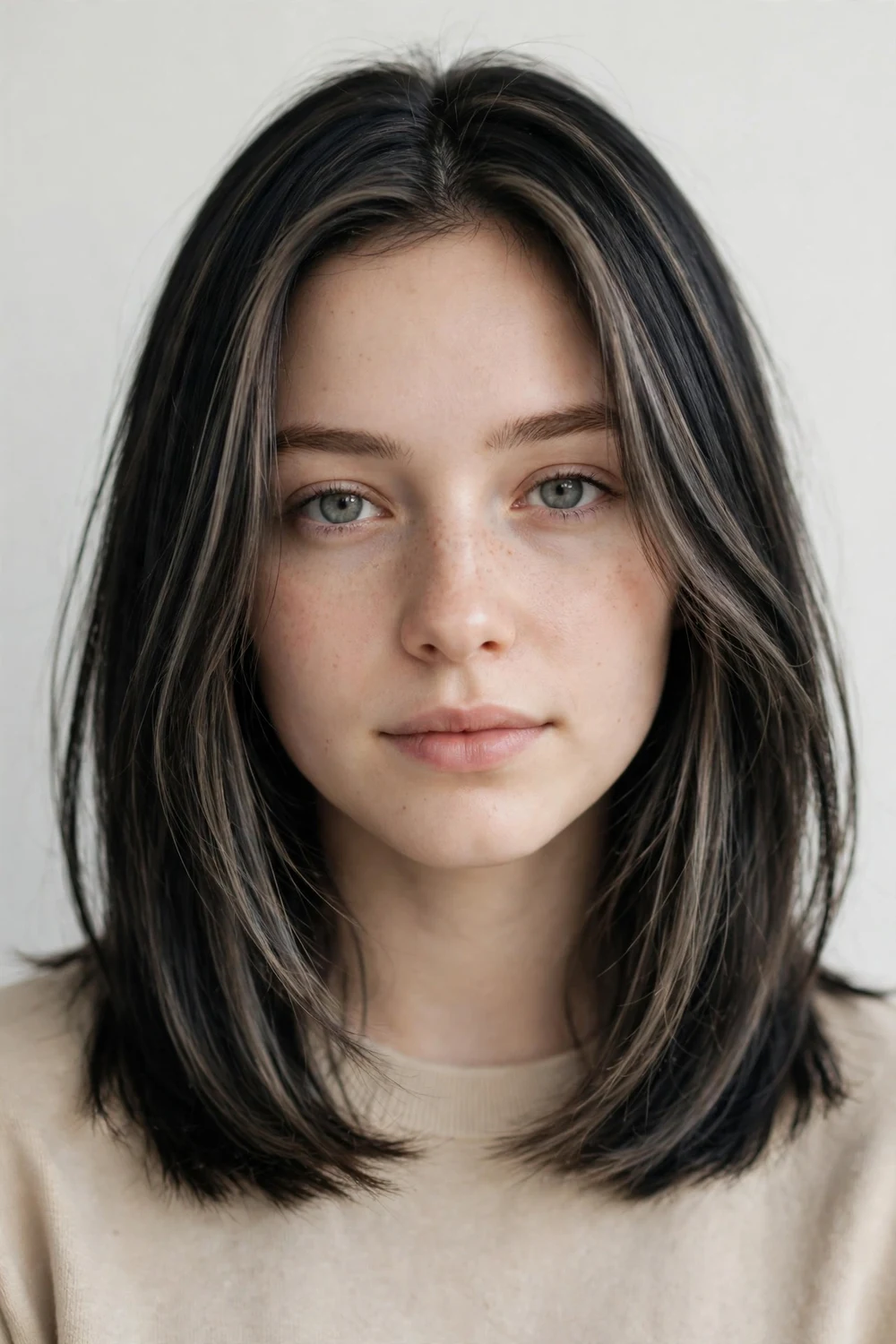
Ash brown brings a cool, smoky tone to black hair instead of the usual warmth. The matte finish looks modern and pairs well with cool or neutral skin undertones. On straight hair, the ashy pieces read sleek and glossy. On waves, they add a soft, muted dimension.
Ash tones fade faster than warm browns and can turn brassy as they wash out, so this one needs a toning gloss every 8 to 10 weeks. A blue or purple shampoo used once a week helps keep the cool tone in place. If your hair pulls warm naturally, your colorist may need to lift it slightly more to hold the ash.
Try this: check the color in daylight before leaving the salon. Ash can look darker indoors than it really is.
Difficulty: Moderate · Cost: $140–$260 (salon color)
Prefer your contrast even cooler? Our brown hair with silver highlights guide pushes the cool spectrum further.
13. Maple Brown Highlights

Maple is a golden amber brown that glows in sunlight and stays natural indoors. It is lighter and warmer than chestnut but not as bright as honey, which makes it a balanced middle option. Layered cuts show maple off well, since the color shifts across the layers as the hair moves.
This shade flatters warm and neutral skin tones most. Maintenance is medium: a gloss every 10 to 12 weeks keeps the amber tone from dulling. Maple fades gracefully, softening toward a neutral brown rather than going brassy, so the weeks between appointments still look good.
Try this: ask for the maple pieces to be painted slightly thicker at the ends for a sunlit effect.
Difficulty: Easy · Cost: $130–$250 (salon color)
14. Toffee Brown Highlights
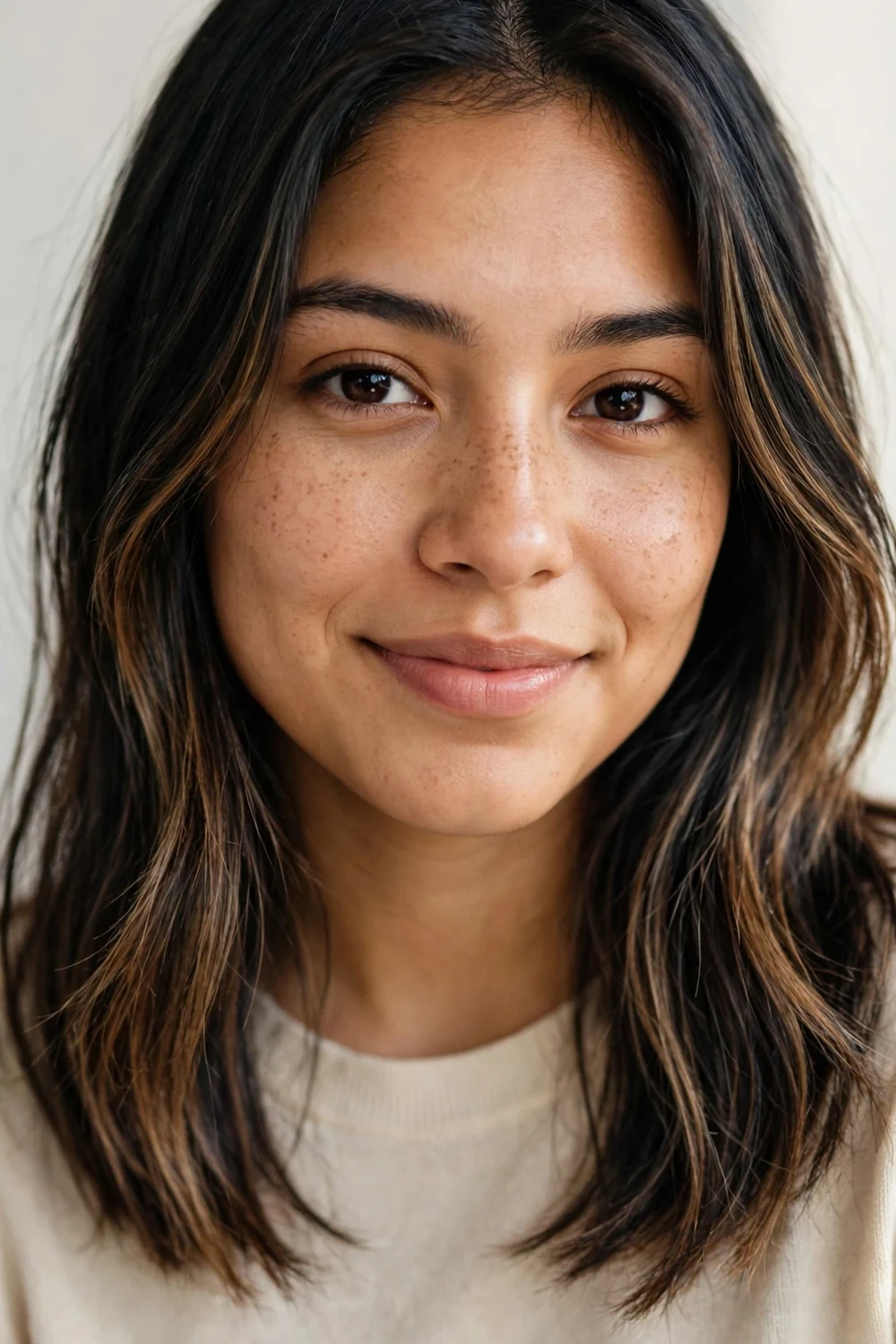
Toffee is a creamy, warm brown that softens black hair with gentle contrast. The tone is lighter than mocha but deeper than caramel, so it brightens the hair without changing the overall dark impression. It suits straight, wavy, and curly hair and flatters a wide range of skin tones.
Toffee blends smoothly as it grows out, which keeps maintenance on the easier side. Expect touch-ups every 10 to 14 weeks, mostly to revive the creamy tone. A weekly hair mask keeps the lightened pieces soft, since toffee sits a few levels above the base and needs a little extra moisture.
Try this: pair toffee highlights with curtain bangs. The warm pieces around the face soften the fringe.
Difficulty: Easy · Cost: $130–$250 (salon color)
15. Honey Brown Highlights on Curly Hair
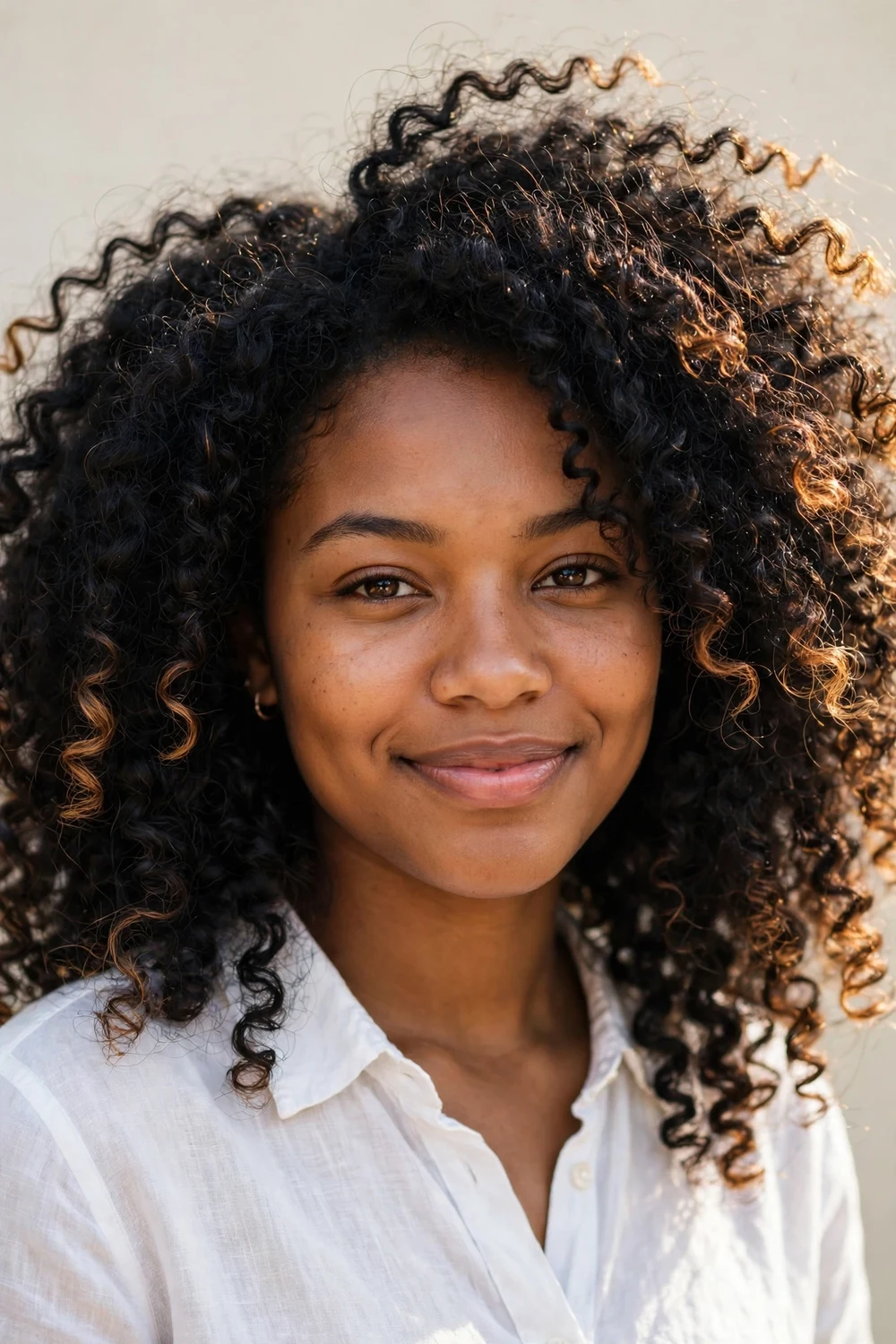
Honey highlights on black curls make every curl stand out. The lighter pieces trace the curl pattern, which adds definition and makes the hair look fuller. This version suits loose curls, tight coils, and everything between. The contrast is striking but still natural, since honey is a true brown.
Colorists often paint honey onto curls dry, following the natural curl pattern so the color lands where it shows best. Curly highlighted hair needs extra moisture, so deep condition weekly and avoid sulfates. Touch-ups every 12 to 14 weeks keep the honey bright without over-processing the curls.
Try this: refresh curls with water and a leave-in conditioner instead of re-washing, which strips color faster.
Difficulty: Easy · Cost: $150–$280 (curly specialist)
16. Espresso Brown Highlights
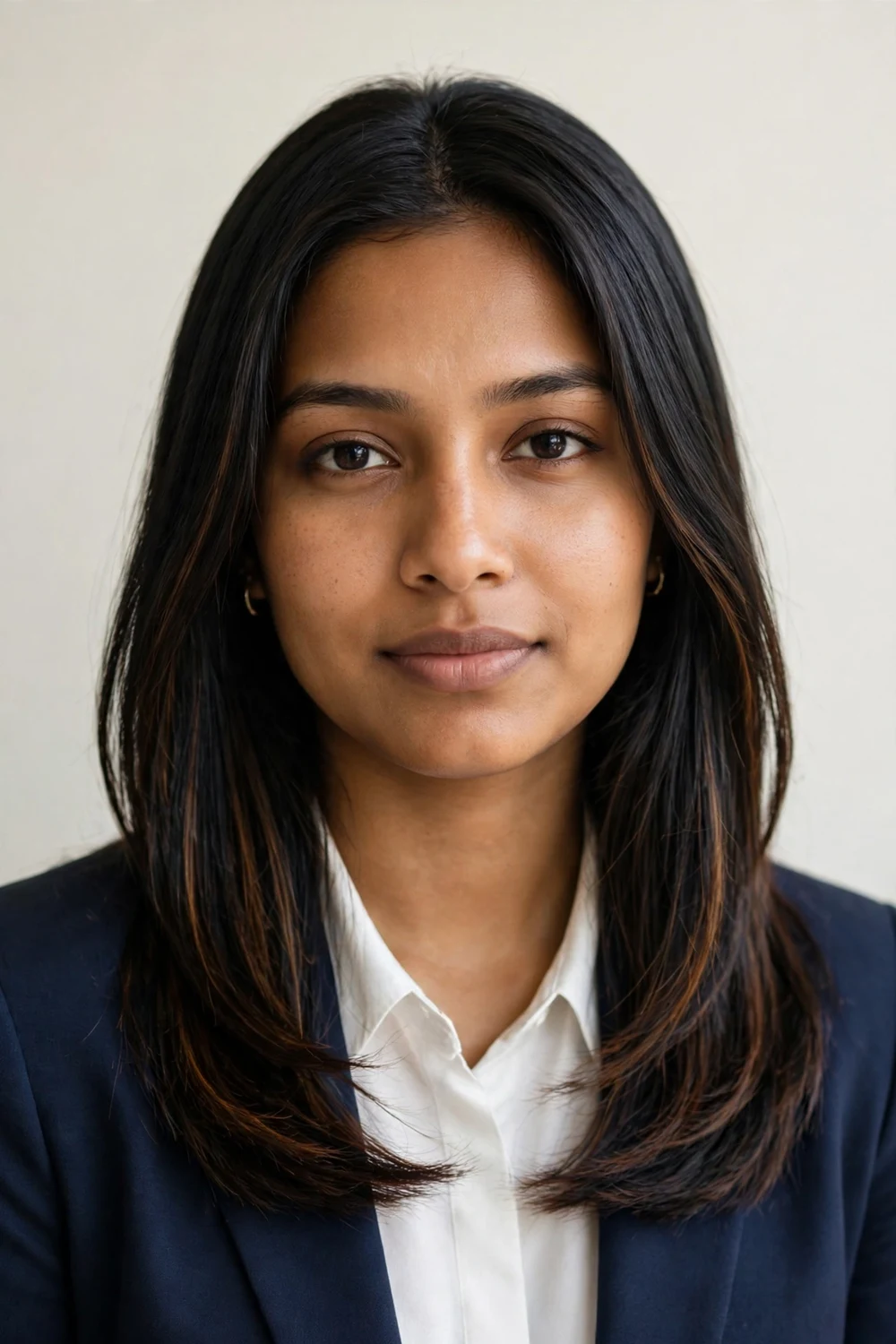
Espresso is the darkest brown on this list, barely a step above black. It adds gentle dimension for people who want their hair to stay dark but not flat. The shade looks polished and professional, which makes it a favorite for workplaces with strict dress codes. It pairs well with sleek straight hair and soft waves.
This is the easiest highlight to maintain. The contrast is so subtle that regrowth is nearly invisible, and most people refresh every 14 to 16 weeks just to revive the shine. Because the lift is minimal, damage stays low too. A shine serum through the ends is usually all the extra care it needs.
Try this: view the color in bright daylight before approving it. Espresso can look black indoors.
Difficulty: Easy · Cost: $110–$220 (salon color)
17. Brown Highlights on a Layered Bob
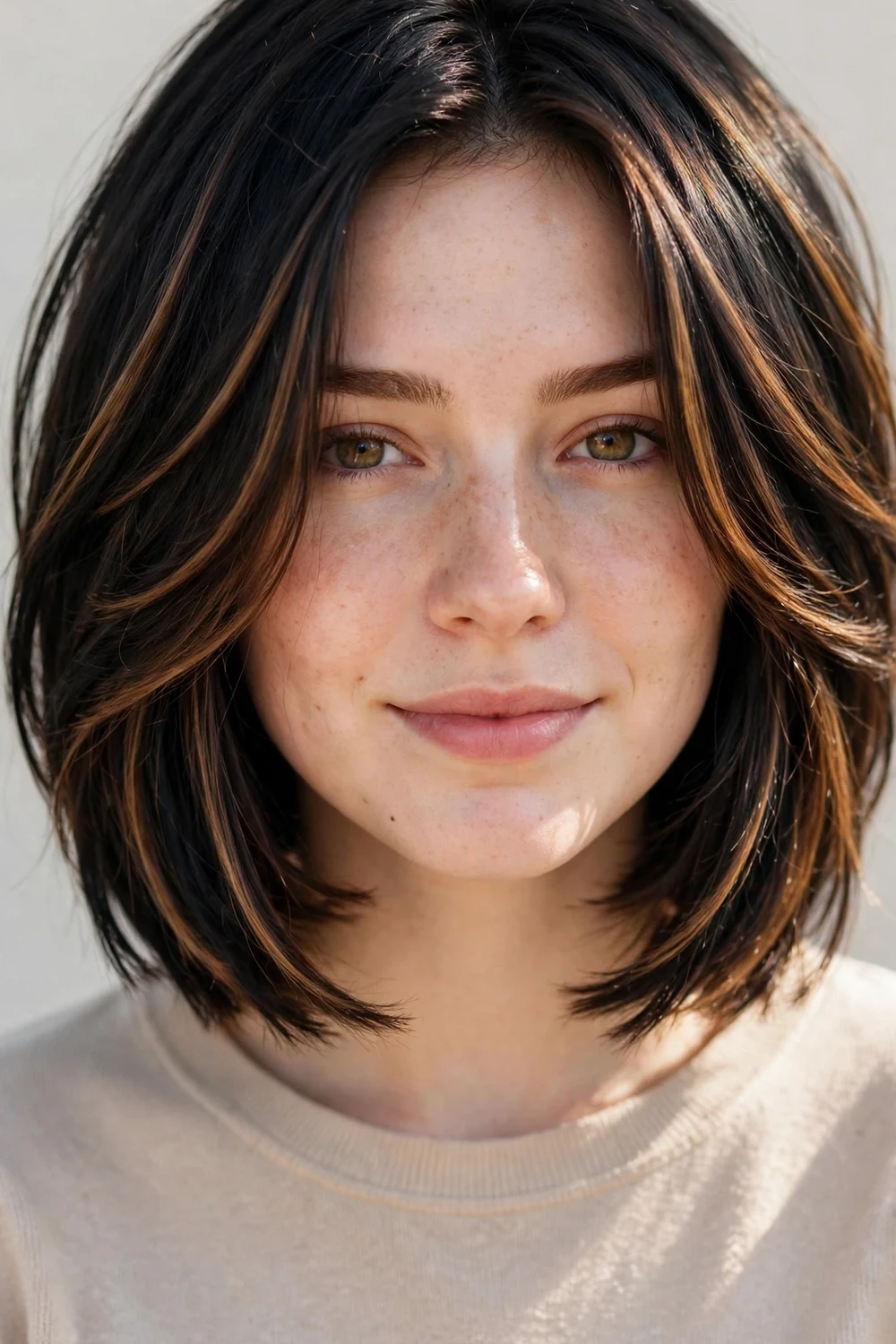
A layered bob gets extra texture when warm brown highlights trace each layer. The different tones help the layers stand apart, which gives the cut movement from every angle. This combination suits busy routines because the cut is easy to style and the color needs little attention between appointments.
Keep the highlights one to two levels above your base on a bob. Short hair shows contrast more strongly, so subtle wins. Style it smooth with a flat iron or slightly wavy with a curling wand, and always use heat protectant. A trim every 8 to 10 weeks keeps the layers sharp and the color fresh.
Try this: tuck one side behind your ear to show off how the highlights shift across the layers.
Difficulty: Easy · Cost: $120–$230 (salon color)
Love color on shorter cuts? Our short colored hair ideas collection has more dye looks built for bobs and crops.
18. Dark Brown Babylights

Babylights are ultra-fine highlights woven in tiny sections, just a shade or two lighter than the base. On black hair, dark brown babylights create a soft, sun-kissed effect that looks almost like your natural color in better light. It is the most subtle option on this list and a good first step into color.
The fine weave means the appointment takes longer, usually three hours or more, but the grow-out is the gentlest of any highlight method. Most people go 12 to 16 weeks between visits. Because each piece is so small, the overall damage stays minimal even on fine hair.
Try this: ask your colorist to concentrate the babylights around your part and hairline, where the sun would naturally hit.
Difficulty: Easy · Cost: $160–$300 (salon babylights)
19. Peekaboo Brown Highlights
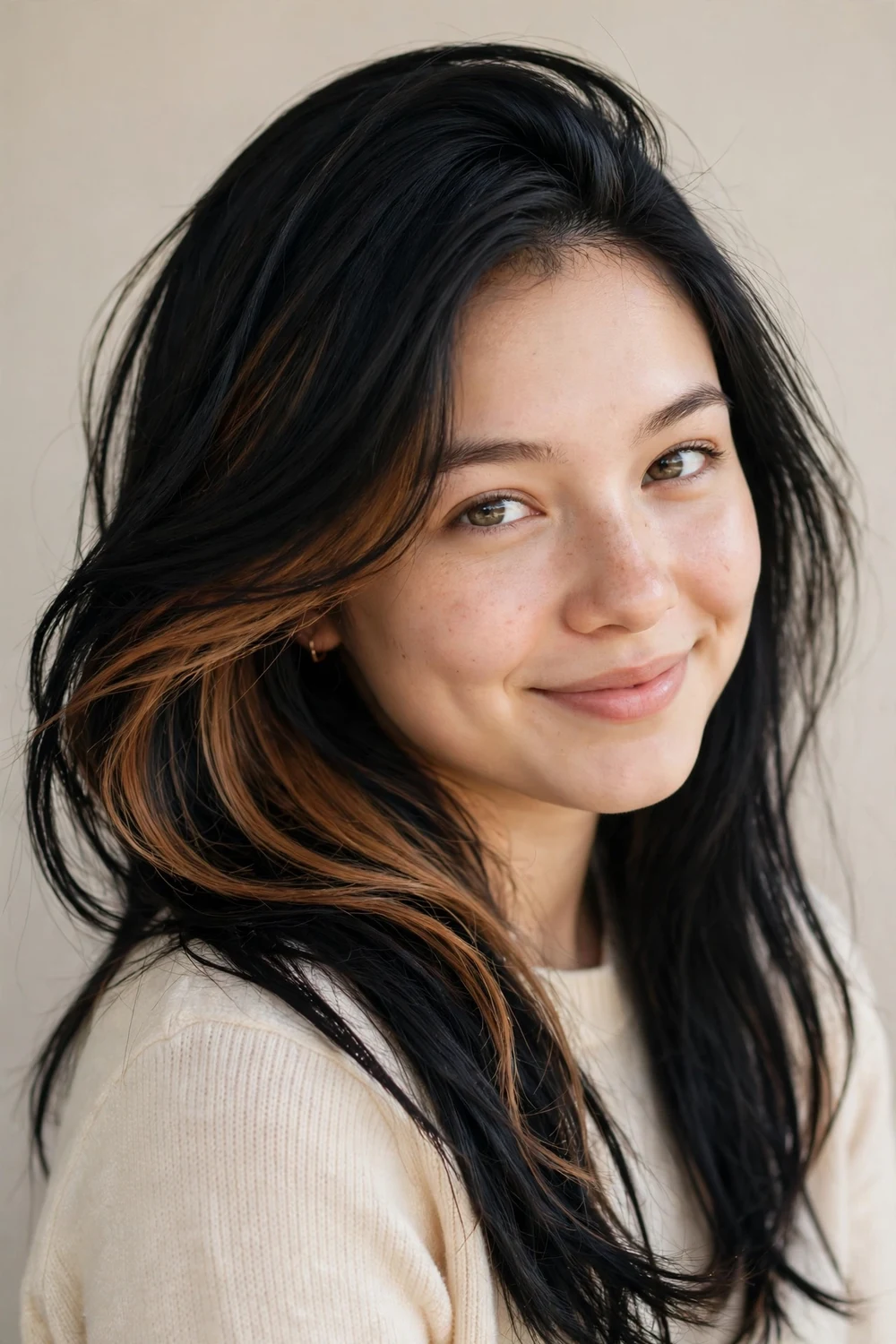
Peekaboo highlights hide the brown underneath the top layer of black hair. From the front, your hair looks untouched. When you move it, tie it up, or let the wind catch it, the brown flashes through. It is a fun option for strict workplaces or anyone who wants color they can conceal.
The hidden placement means regrowth barely shows, so touch-ups stretch to 14 to 16 weeks. The underneath layer also takes less sun and heat damage, which keeps the color truer for longer. Choose any brown shade for the hidden layer: caramel for contrast, mocha for subtlety.
Try this: wear a high ponytail to show off the hidden color on days you want it visible.
Difficulty: Easy · Cost: $120–$240 (salon color)
20. Mixed Brown Highlights
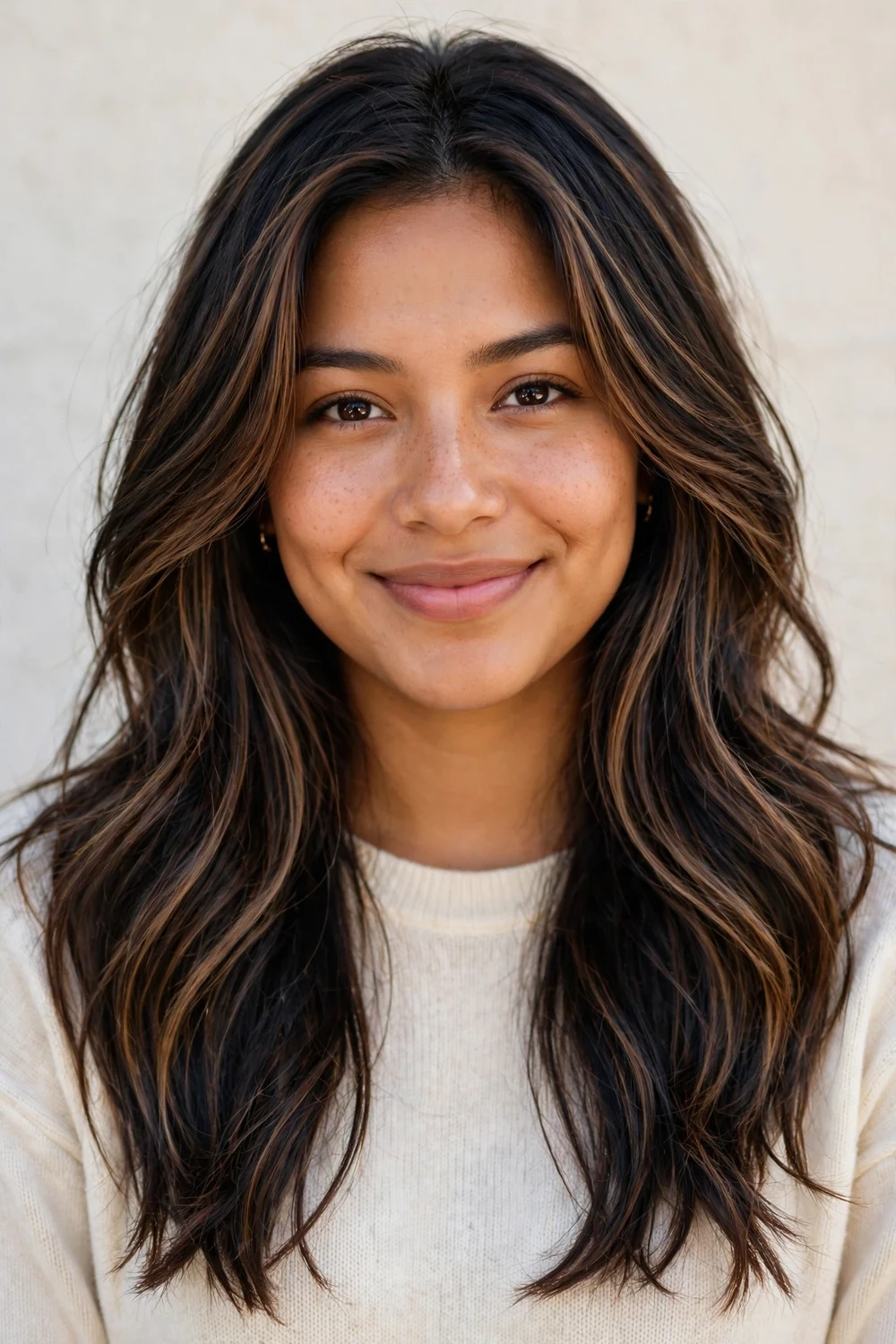
Mixing several brown shades in one head of hair creates the richest finish on this list. Caramel, chocolate, chestnut, and mocha woven together give black hair multi-dimensional depth that a single shade cannot match. Each tone catches the light differently, so the color looks different from every angle.
This is a colorist-driven service, so bring inspiration photos and let them pick the blend for your skin tone. It costs more than a single-shade service because it takes more time and product. The payoff is grow-out: mixed tones blur regrowth so well that most people go 14 weeks or longer between appointments.
Try this: ask for a written formula from your colorist so any stylist can recreate the blend later.
Difficulty: Moderate · Cost: $180–$320 (salon color)
Quick Comparison
| Highlight | Best for | Touch-up cycle | Cost range |
|---|---|---|---|
| Caramel Foil Highlights | Bright, even color from roots to ends | 10–12 weeks | $150–$280 |
| Chocolate Brown Balayage | Low-maintenance, natural grow-out | 14–16 weeks | $140–$260 |
| Honey Brown Money Piece | Fast refresh, face-brightening | 8–10 weeks | $80–$150 |
| Mocha Brown Highlights | Subtle dimension, cool undertones | 12–16 weeks | $120–$240 |
| Ash Brown Highlights | Cool, modern matte finish | 8–10 weeks | $140–$260 |
| Espresso Brown Highlights | Darkest, most professional option | 14–16 weeks | $110–$220 |
| Peekaboo Brown Highlights | Concealable color for strict workplaces | 14–16 weeks | $120–$240 |
| Mixed Brown Highlights | Richest multi-dimensional result | 14+ weeks | $180–$320 |
How to Choose the Right Brown Shade
Start with your skin undertone. Warm undertones pair with caramel, honey, cinnamon, bronze, maple, and toffee. Cool undertones pair with ash, mocha, and espresso. Neutral undertones can wear chocolate, chestnut, and walnut easily. If you are unsure, check the veins on your wrist in daylight: greenish leans warm, bluish leans cool.
Then match the shade to your maintenance tolerance. If you want the longest stretch between appointments, pick balayage, ombre, espresso, or mixed browns. If you do not mind salon visits every two to three months, foils, money pieces, and ash tones give you brighter, more visible color.
Tell your stylist three things at the consultation: how light you want the brown to go, whether you prefer foils or hand-painted color, and how often you will return for touch-ups. Bring inspiration photos in both indoor and outdoor light. That short conversation is what separates a color you tolerate from one you love.
Frequently Asked Questions
Can I get brown highlights on black hair without bleach?
If your hair is naturally very dark, some lightening is usually needed to make brown highlights visible. Your stylist can use bleach with a gentle developer or a high-lift color, depending on your hair type, color history, and how light you want the brown.
How long do brown highlights on black hair last?
The color itself lasts until it grows out or fades. Most people book a refresh every 10 to 14 weeks, though low-maintenance options like balayage, ombre, and espresso can stretch to 16 weeks. Tone glosses between appointments keep the brown rich.
Which brown highlight is easiest to maintain?
Chocolate balayage, brown ombre, mocha, espresso, and peekaboo highlights are the easiest. Their placement or shade keeps regrowth from showing, so you can go three to four months between appointments with just a tone refresh in between.
Will brown highlights damage my black hair?
Any lightening causes some dryness, but brown highlights lift only a few levels, so the damage is far less than going blonde. Deep condition weekly, use sulfate-free shampoo, and apply heat protectant before hot tools to keep highlighted hair healthy.
Do brown highlights suit all hair types?
Yes. Brown highlights work on straight, wavy, curly, and coily hair. The shade and placement get adjusted to your texture: fine weaves for straight hair, painted color that follows the curl pattern for curls, and slightly chunkier pieces for very thick hair.
Final Thoughts
Black hair with brown highlights gives you warmth and dimension without giving up your dark base. Pick your shade by skin undertone, pick your method by maintenance tolerance, and bring photos to your consultation. The right brown makes black hair look richer, not lighter.
For more hair color ideas across every shade family, browse the full collection at PrimeHairPicks.

