


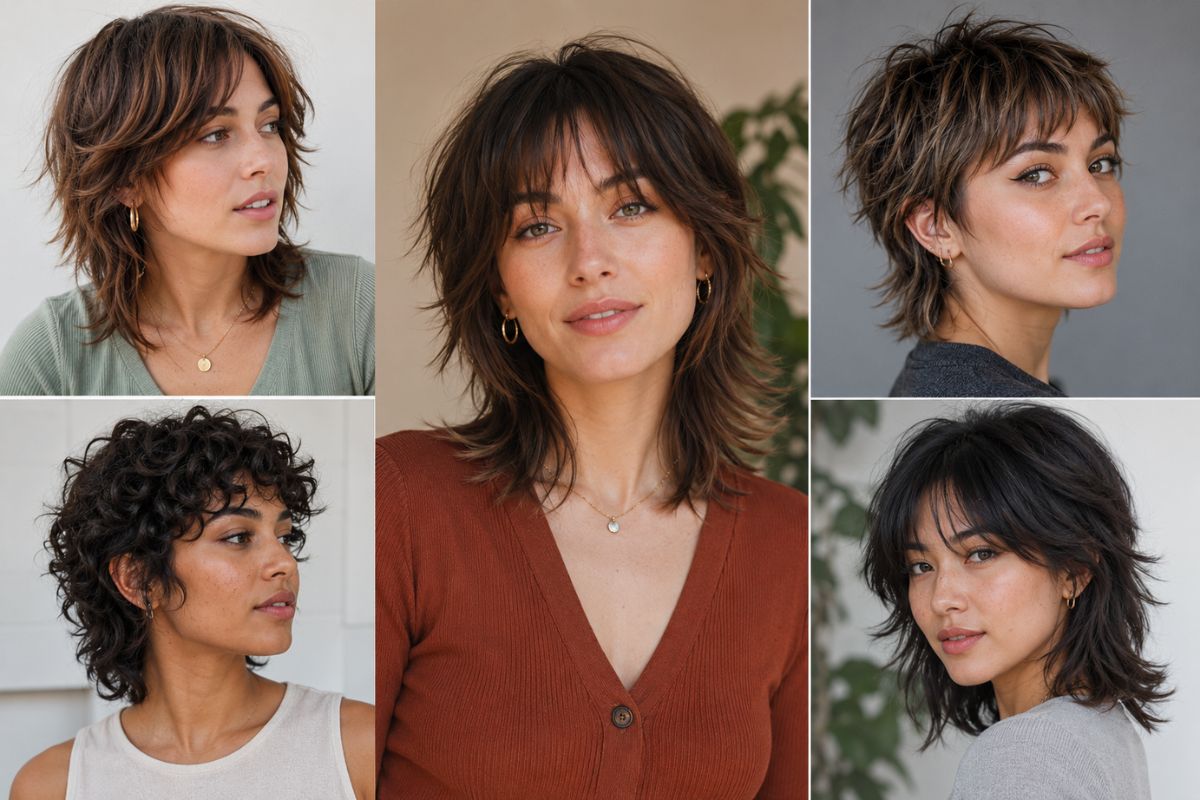
The short wolf cut is that rare haircut that manages to be both low-effort and high-impact. Born from the 70s shag and the 80s mullet, it piles volume and choppy texture at the crown, then tapers into flicky, piecey ends. Deliberately undone in the best way.
What makes the short version especially wearable is how adaptable it is: soft and romantic with curtain bangs, edgy with an undercut, or polished with sleek straight layers. Reference photos and an honest talk with your stylist make the difference between a trendy haircut and your haircut. Below are 24 genuinely different takes on the short wolf cut, covering every hair type, texture, and color, so you can walk into the salon knowing exactly which version is yours.
Quick Takeaways
- A short wolf cut means shaggy layers, heavy crown volume, and tapered, textured ends.
- It flatters most face shapes. Adjust bang style and crown height to your features.
- Thick, curly, and wavy hair get built-in volume; fine and straight hair need shorter crown layers and a little styling help.
- Most versions need a trim every 6 to 8 weeks to keep the shape from growing into a mullet.
- Bring reference photos to your stylist. “Wolf cut” means different things to different people.
24 Short Wolf Cut Ideas
1. Classic Textured Short Wolf Cut

The blueprint every other version builds on: stacked crown volume, heavily textured mid-lengths, and ends that kick outward. Ask for point-cutting rather than blunt ends. That broken edge keeps it from reading as a regular layered bob. It suits nearly every hair type, which is why it became the default.
This version grows out better than most because the shape is balanced from the start. Ask your stylist to keep the shortest crown layers around two inches longer than the nape so the taper stays visible. A pea-sized amount of texturizing paste, scrunched into dry ends, is all the daily styling most people need.
Try this: rough-dry upside down for two minutes, then let the crown fall back into place for instant volume.
Difficulty: Easy · Cost: standard haircut ($50–$90)
2. Soft Short Wolf Cut with Curtain Bangs

Curtain bangs melt into the wolf cut’s layers, parting softly down the middle. The effect is romantic rather than rock-inspired, softening a strong jawline or balancing a wider forehead. Since the bangs grow out into layers, this is one of the most forgiving versions to maintain between appointments.
The part should sit exactly where your hair naturally wants to split, or the bangs will fight you every morning. Round-brush the bangs away from your face while they are still damp so they fall into that open curtain shape. Trims every 7 to 9 weeks keep the balance between the fringe and the crown layers.
Try this: tuck the sides behind your ears to show off the curtain opening around your face.
Difficulty: Easy · Cost: standard haircut ($50–$90)
For the full spectrum of this trend at longer lengths, browse our wolf cut hairstyles for medium and long variations.
3. Choppy Short Wolf Cut

Texture dialed all the way up: aggressive razor work and deliberately uneven ends for maximum piecey separation. It is the boldest take here, and it photographs extremely well. Fair warning, it grows out into a shag, so book maintenance trims before you actually need them.
Razor cutting removes weight fast, which is why it suits medium to thick hair better than fine hair. Ask your stylist to check the shape both wet and dry, since razored layers spring up shorter than they look. Matte clay worked through the ends keeps the pieces separated without looking greasy.
Try this: twist small sections while the hair is damp, then let them air-dry for defined pieces.
Difficulty: Medium · Cost: textured haircut ($60–$110)
4. Curly Short Wolf Cut

The wolf cut might have been invented for curls: strategic layers remove side weight so curls spring up instead of widening into a triangle. Ask for a dry cut from a curl specialist. Cutting curls wet is how length surprises happen, and nobody wants a shorter crown than planned.
The shortest layers should sit at the crown so the curls stack upward and the sides stay narrow. Diffuse on low heat or air-dry with curl cream scrunched in. A trim every 8 to 10 weeks keeps the layers lifting instead of dragging down as they grow.
Try this: pin a few crown curls up with tiny clips while drying for extra root lift.
Difficulty: Medium · Cost: curly cut ($70–$120)
5. Pixie Wolf Cut

Pixie length at the back and sides with all the wolf cut’s shaggy attitude on top. It is the shortest version here and one of the easiest to live with: wash, rough-dry, a little wax, done. It grows out gracefully too, passing through a classic wolf cut on the way to longer lengths.
The key is contrast between the cropped back and the textured top. Ask for the sides tapered close and the crown left long enough to move. This cut needs the most frequent trims on this list, so budget a tidy-up every 4 to 5 weeks to keep the shape sharp.
Try this: push the crown layers forward while styling for a messier, fuller finish.
Difficulty: Easy · Cost: pixie cut ($45–$80)
Thinking of going even shorter? These short pixie cuts prove how much personality a few inches can hold.
6. Korean Short Wolf Cut

The K-beauty take trades rock-edge for airiness: feathered layers, a soft see-through fringe, polished but still moving. Less concert, more Seoul street style. It suits finer hair especially well because wispy layering creates fullness without bulk.
The see-through fringe is the signature detail, so ask for the bangs thinned enough to show forehead through them. Keep the layers long around the face to preserve that soft, rounded silhouette. Light volumizing mousse at the roots gives the airy fullness this version needs.
Try this: part the fringe slightly off-center for a softer line across the forehead.
Difficulty: Easy · Cost: standard haircut ($50–$90)
7. Short Wolf Cut with Wispy Bangs

Feather-light bangs skim the forehead and keep the wolf cut feeling airy. Unlike a heavy fringe, wispy bangs do not fight the cut’s texture. They join it. Choose this if blunt bangs feel too severe or your forehead runs short.
The bangs should be texturized at the ends so they blend into the face-framing layers instead of sitting on top of them. They need tidying every 3 to 4 weeks, faster than the cut itself, so ask your stylist about free bang trims between appointments. Most salons offer them.
Try this: sweep the wisps to one side on busy days for an instant side-fringe.
Difficulty: Easy · Cost: standard haircut ($50–$90)
8. Shaggy Short Wolf Cut

The closest to the cut’s 70s shag DNA: layers at every length, flicked ends, lived-in looseness. It is the lower-maintenance cousin of the choppy version. Softer layers that air-dry beautifully and forgive skipped styling days.
Ask for the layers connected rather than disconnected so the shape stays cohesive as it grows. This is one of the best versions for second- and third-day hair, since the loose layers look better slightly undone. Salt spray on damp hair brings out the flick at the ends.
Try this: braid the hair loosely before bed for relaxed morning waves.
Difficulty: Easy · Cost: standard haircut ($50–$90)
If choppy texture is your favorite part, you will also love these choppy bob hairstyles. Same energy, different silhouette.
9. Short Wolf Cut with Micro Bangs

A short, straight fringe worn high above the brows gives the wolf cut an editorial edge. Micro bangs pull every eye to your eyes and cheekbones, so pair them with messier, textured variations that balance the graphic precision. Not for the faint of heart. Unforgettable when it works.
The fringe needs to sit about an inch above the brows to get the full effect. Keep it slightly textured at the ends so it does not look like a ruler-straight stamp. This bang needs tidying every 2 to 3 weeks, so factor regular fringe trims into your budget before committing.
Try this: keep the rest of the styling deliberately rough to contrast the precise fringe.
Difficulty: Medium · Cost: textured haircut ($60–$110)
10. Short Wolf Cut with Undercut

Sides and nape clipped short beneath the longer textured crown. You get edge when the wind, or a ponytail, reveals the undercut, and a perfectly normal wolf cut the rest of the time. Bonus: it dramatically cuts drying time on thick hair.
Ask for the undercut to start about two inches above the hairline so the longer layers cover it fully when worn down. Keep the boundary between the undercut and the top layers slightly soft rather than a hard line. Touch-ups every 3 to 4 weeks keep it crisp.
Try this: half-up styling shows off the undercut while keeping the layers loose.
Difficulty: Medium · Cost: textured haircut + undercut ($70–$120)
11. Short Wolf Cut for Thick Hair

Thick hair gives you the signature volume for free. The real work is removing weight so the cut does not balloon. Interior thinning keeps the sides narrow while the crown stays big. Done right, thick hair produces the most dramatic version of this cut.
Insist on thinning from the interior, not just the ends, or the layers will widen instead of stacking. The crown layers should be shorter than the nape so the volume sits on top rather than spreading sideways. A trim every 6 to 8 weeks keeps the weight from creeping back in.
Try this: blow-dry the crown upward with a round brush to stack the volume high.
Difficulty: Medium · Cost: textured haircut ($60–$110)
12. Short Wolf Cut for Fine Hair

Fine hair can absolutely wear a wolf cut. The formula just flips. Your stylist stacks shorter crown layers to manufacture fullness and keeps ends piecey rather than wispy. Root-lifting mousse plus a rough blow-dry does the rest. Avoid over-thinning at all costs.
Fewer, blunter layers work better on fine hair than heavy razoring, which can eat the ends away. The crown should be cut slightly shorter than you think, since fine hair falls flatter than it looks in the chair. A trim every 6 to 7 weeks keeps the stacked shape from collapsing.
Try this: dry shampoo at the roots on day two brings back the crown lift.
Difficulty: Easy · Cost: standard haircut ($50–$90)
13. Short Wolf Cut for Straight Hair

On straight hair the cut’s architecture shows cleanly. Every layer reads, which looks incredibly chic. The trade-off: straight hair will not create the signature movement alone, so plan a few minutes with a round brush or flat-iron flicks. The most polished version here.
Ask for the layers cut slightly longer than usual so they have room to move when styled. Flick the ends outward with a flat iron, turning the tool at the last inch, and always apply a heat protectant first. Thin, layered ends show heat damage before anything else.
Try this: finish with a shine spray so the layer lines catch the light.
Difficulty: Easy cut, daily styling · Cost: standard haircut ($50–$90)
14. Short Wolf Cut for Wavy Hair

Waves and wolf layers are a natural match. Styling can be as simple as scrunching in salt spray and walking out. Layers keep waves from going pyramidal while shorter crown pieces let your natural bend show. The true wash-and-go wolf cut.
Ask your stylist to cut the layers with your natural wave pattern in mind, slightly longer than a straight-hair version. Diffuse or air-dry with a wave-enhancing mousse scrunched into damp hair. Trims every 7 to 9 weeks keep the layers from blending into one length.
Try this: pineapple the hair overnight to protect the waves for morning.
Difficulty: Easy · Cost: standard haircut ($50–$90)
15. Blonde Short Wolf Cut

Blonde makes every layer pop. Light catches each piece separately, so texture reads from across the room. Face-framing highlights trace the cut’s shape around your features. Bleached hair needs moisture though: a weekly mask keeps textured ends from going straw-like.
Ask for the brightest pieces around the face and through the crown, where the layers are shortest and light hits first. Toner every 6 to 8 weeks keeps honey or platinum tones from going brassy. Purple shampoo once a week between appointments maintains the tone.
Try this: loose curls with a wand, alternating directions, make the highlights glow.
Difficulty: Medium · Cost: haircut + color ($120–$250)
16. Brunette Short Wolf Cut

Deep brunette gives the wolf cut a sleek, expensive finish. Layers look intentional, the shape sculptural rather than scrappy. Shine is everything: a gloss treatment keeps dark layers rich instead of flat. The most office-friendly version of an edgy cut.
Ask for a demi-permanent gloss in a neutral brown to boost shine without changing the color. Dark hair shows every split end, so keep up with trims every 6 to 8 weeks. A shine serum on dry ends makes the layered shape read crisp and deliberate.
Try this: sleek the sides down and let only the crown stay wild for a polished hybrid.
Difficulty: Easy · Cost: standard haircut ($50–$90)
Prefer the same movement with a softer edge? These layered bob hairstyles keep the layers but dial back the rock attitude.
17. Red Short Wolf Cut

Copper and auburn turn the wolf cut into a full statement. Warm reds catch light on every flicked end. Reds fade fast, so this commits you to color upkeep, but the payoff is a haircut nobody walks past. Especially flattering on warm and neutral skin tones.
Ask for the copper concentrated through the mid-lengths and ends, where the texture lives, with a slightly deeper root for easy grow-out. Gloss every 4 to 6 weeks keeps the warmth from washing out. Color-safe shampoo and cool-water rinses slow the fade between appointments.
Try this: style the ends flipped outward to show off the copper dimension.
Difficulty: Medium · Cost: haircut + color ($120–$250)
18. Short Wolf Cut with Face-Framing Layers

Longer pieces starting at the cheekbones curve softly around the jawline, sculpting the face in any wolf variation. They soften strong features, slim wider faces, and give every version a finished feel. If you ask your stylist for one thing, make it this.
The pieces should start no higher than the cheekbones, or they read as bangs instead of framing. Curve them under slightly with a round brush while styling. These shorter front pieces grow out fastest, so mention them at every trim so the stylist keeps them at the right length.
Try this: pull the framing pieces forward over your shoulders for photos.
Difficulty: Easy · Cost: standard haircut ($50–$90)
19. Tousled Short Wolf Cut

The wolf cut worn the way it wants: deliberately undone, wind-blown texture, separated pieces, zero interest in looking done. Salt spray on damp hair, a rough blow-dry or full air-dry, fingers instead of a comb. The styling behind most saved wolf-cut photos.
This works best on hair with some natural wave or bend. Pin-straight hair needs a few curling-wand twists first, with heat protectant applied before. Scrunch in texture spray while the hair is almost dry, then shake the roots with your fingers for that airy lift.
Try this: sleep with hair loosely twisted on top for built-in morning texture.
Difficulty: Easy · Cost: standard haircut ($50–$90)
20. Short Wolf Cut with Side-Swept Bangs

A long fringe swept across the forehead softens the cut’s edge. The diagonal line flatters round and square faces. It is the most grow-out-friendly bang option too: when long, it simply becomes another face-framing layer. Blow-dry to the side with a paddle brush.
Ask for the fringe cut long enough to reach the cheekbone so it has somewhere to go as it grows. Train it by blow-drying it to the side while damp for the first week. Bang trims every 4 to 5 weeks keep it from falling into your eyes.
Try this: clip it back with a small barrette on no-wash days.
Difficulty: Easy · Cost: standard haircut ($50–$90)
21. Bedhead Short Wolf Cut

The art of looking artfully unstyled: airy, separated pieces with a matte finish, like you woke up with great hair. Dry shampoo at the roots plus texturizing powder creates the lived-in grit. Ironically, this effortless look takes about five intentional minutes.
Matte products are the secret. Shiny creams kill the bedhead effect, so stick to powder and dry shampoo. Work the product into dry roots first, then shake everything out. This version hides second-day hair better than any other on this list.
Try this: skip washing and style day-two hair instead. It holds better.
Difficulty: Easy · Cost: standard haircut ($50–$90)
22. Short Wolf Cut with Tapered Nape

The back graduates into a shorter nape while the crown stays long and wild. Polished from behind, party on top. The taper keeps the silhouette clean and elongates the neck: the most refined version here, with none of the mullet-adjacent back view.
Ask for the nape tapered rather than stacked so the transition stays smooth as it grows. This is the version to choose if you want the wolf attitude without side-eye at work. Nape clean-ups every 4 to 5 weeks keep the back looking intentional.
Try this: tuck one side behind your ear to show off the taper line.
Difficulty: Medium · Cost: textured haircut ($60–$110)
23. Platinum Short Wolf Cut

Icy platinum makes the texture look almost sculptural. Every layer stands out in high definition. A high-maintenance color paired with a low-maintenance cut balances out nicely. Keep purple shampoo in the shower and bond repair in your routine, and the ice stays bright.
Platinum needs lifting to a pale yellow before toning, so budget extra salon time and expect root appointments every 4 to 6 weeks. Bleached ends and choppy layers dry out faster than uncolored hair, so a weekly deep-conditioning mask is non-negotiable with this one.
Try this: tone toward silver rather than white for softer grow-out.
Difficulty: Hard · Cost: haircut + double-process color ($200–$400)
24. Two-Tone Short Wolf Cut

Dark roots melting into bold blonde ends, or any high-contrast pairing, makes the layers impossible to miss. The color does half the styling work, tracing each layer’s movement. Playful and versatile: swap blonde for copper, pink, or silver as your mood changes.
The contrast should follow the layering, with darker color at the crown and lighter pieces through the mid-lengths and ends. This keeps the shape readable instead of patchy. Color refresh every 6 to 8 weeks maintains the contrast line. A dark root makes grow-out easy.
Try this: try a temporary color on the ends first to test a bold pairing.
Difficulty: Medium · Cost: haircut + color ($150–$300)
For a similar high-contrast layered shape with more length, see our octopus haircut guide.
Quick Comparison Table
| Style | Best For | Difficulty | Trim Schedule |
|---|---|---|---|
| Classic Textured | Every hair type | Easy | 6–8 weeks |
| Curtain Bangs | Softening strong features | Easy | 7–9 weeks |
| Choppy | Maximum texture, medium+ hair | Medium | 5–6 weeks |
| Curly | Curly textures | Medium | 8–10 weeks |
| Pixie Wolf | Shortest, easiest routine | Easy | 4–5 weeks |
| Korean | Fine hair, soft finish | Easy | 6–8 weeks |
| Wispy Bangs | Airy, low-drama fringe | Easy | 6–8 weeks |
| Shaggy | Air-dry lovers | Easy | 7–8 weeks |
| Micro Bangs | Editorial edge | Medium | 6–8 weeks |
| Undercut | Thick hair, hidden edge | Medium | 6–8 weeks |
| Thick Hair | Dense hair types | Medium | 6–8 weeks |
| Fine Hair | Fine, flat hair | Easy | 6–7 weeks |
| Straight Hair | Pin-straight hair | Easy cut, daily styling | 6–8 weeks |
| Wavy Hair | Natural waves | Easy | 7–9 weeks |
| Blonde | Layer definition | Medium | 6–8 weeks |
| Brunette | Polished, office-friendly | Easy | 6–8 weeks |
| Red | Warm statement color | Medium | 6–8 weeks |
| Face-Framing Layers | Flattering any face | Easy | 6–8 weeks |
| Tousled | Undone, wind-blown look | Easy | 6–8 weeks |
| Side-Swept Bangs | Round and square faces | Easy | 6–8 weeks |
| Bedhead | Matte, lived-in texture | Easy | 6–8 weeks |
| Tapered Nape | Refined silhouette | Medium | 4–5 weeks |
| Platinum | High-contrast drama | Hard | 4–6 weeks |
| Two-Tone | Playful color contrast | Medium | 6–8 weeks |
How to Choose the Right Short Wolf Cut
A few choices make the difference between a cut you love and one you fight every morning. Start with face shape, then texture, then real life.
- Round faces: keep height at the crown and length around the face. Curtain bangs or side-swept bangs add flattering diagonal lines.
- Oval faces: you can wear nearly any version. Micro bangs or a choppy finish show off balanced proportions.
- Square faces: soft, wispy bangs and face-framing layers take the edge off a strong jawline.
- Heart faces: volume through the mid-lengths balances a narrower chin. Avoid piling everything at the crown.
- Thick hair: insist on interior thinning or an undercut so the shape stays narrow at the sides.
- Fine hair: shorter stacked crown layers create fullness. Skip heavy razoring that thins the ends away.
- Curly or wavy hair: book a dry cut with a curl specialist and let the layers do the styling for you.
- Straight hair: budget a few minutes of daily styling. The cut shows its architecture best with flicked ends.
- Low-maintenance lifestyle: the shaggy, tousled, and wavy versions air-dry beautifully and forgive skipped wash days.
- Professional settings: the brunette, tapered-nape, or sleek straight versions read polished without losing the cut’s character.
What to Avoid
Do not let the back grow unchecked. Without regular trims the wolf cut slides into mullet territory. And skip the cut if you hate any styling at all and have pin-straight fine hair; this one needs at least a little help from you. If your hair is very fine, avoid heavy razor cutting, which can leave the ends wispy instead of piecey.
Frequently Asked Questions
What exactly is a short wolf cut?
A short wolf cut is a shaggy, heavily layered haircut combining the volume of a shag with the tapered shape of a mullet, kept short. It features texture and lift at the crown, shorter layers on top, and piecey ends that flick outward around the nape and ears.
Will a short wolf cut suit a round face?
Yes, with the right adjustments: keep volume at the crown for height, and choose curtain bangs, side-swept bangs, or face-framing layers for slimming diagonal lines. Avoid width at cheek level, which can make the face look wider.
How do I style a short wolf cut at home?
Most versions style in minutes: work texturizing spray, mousse, or paste through damp hair, then rough-dry with fingers or air-dry. For extra flick, turn a flat iron outward on a few ends after applying heat protectant. Straight-hair versions need the most effort; wavy and curly the least.
How often does a short wolf cut need a trim?
Every 6 to 8 weeks for most versions. Pixie wolf cuts need tidying every 4 to 5 weeks; softer shaggy versions can stretch to 9 or 10. Regular trims keep layers defined and stop the back turning mullet.
Can fine or thin hair pull off a short wolf cut?
Absolutely. Stack shorter layers at the crown to build the illusion of density, and do not over-thin the ends. Root-lifting mousse and a rough blow-dry give fine hair the volume this cut is known for.
Final Thoughts
The short wolf cut earns its popularity honestly: it is one of the few statement haircuts that adapts to your hair instead of fighting it. Whether you go choppy, curly, sleek, or platinum, the formula is the same: volume where you want it, texture everywhere else, and a shape that looks better slightly undone. Save the versions you love, bring them to a stylist you trust, and ask for the cut to be tailored to your face and texture. That small conversation is what turns a trendy haircut into your haircut.
And if you want to see where the cut is heading next, trending wolf cut hairstyles rounds up 30 of the newest variations, from Korean tousled layers to bold neon colors.
For more short hair inspiration across every style family, browse the full collection at PrimeHairPicks.

