



After 70, hair changes in ways that matter for styling: it gets finer, drier, and thinner at the crown, and it grows more slowly. The best hairstyles for over 70 year old women work with those changes instead of fighting them. Soft pixies, one-length bobs, and gentle layered cuts keep fullness where hair is thinning and need almost no daily styling.
Every style below is comfortable to wear, simple to maintain, and kind to fragile hair, with clear notes on what to ask for at the salon.
Quick Takeaways
- Wash-and-wear cuts (pixie, French bob, soft crop) need no blow-dryer and suit thinning hair.
- One-length cuts look fuller on fine hair than heavily layered cuts.
- Soft, face-framing layers flatter more than blunt, severe lines after 70.
- Shorter styles need trims every 4 to 6 weeks to hold their shape.
- Comfort comes first: the right cut should feel good from morning to night.
1. Soft Wash-and-Wear Pixie
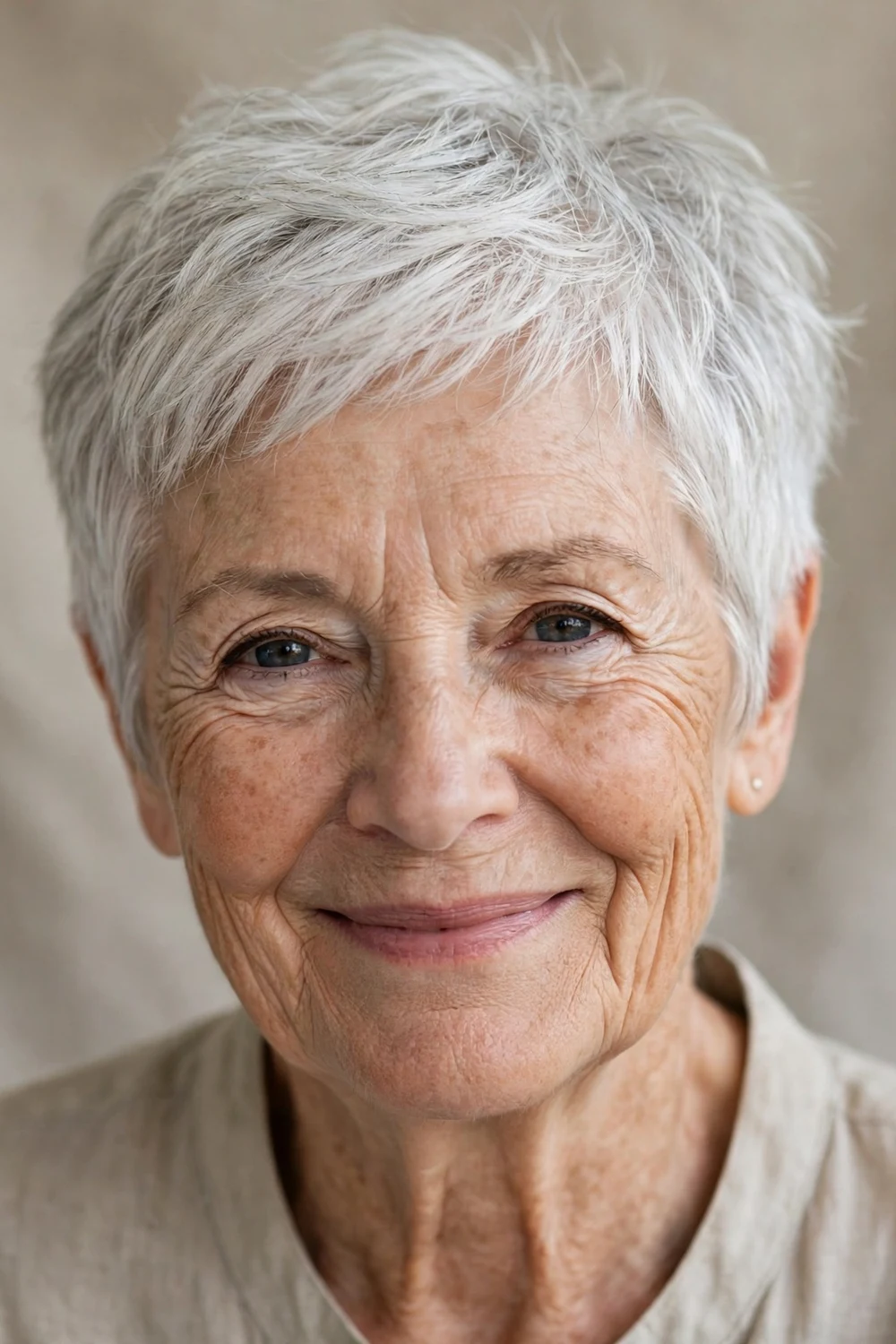
Wash it, towel-dry it, rub in a pea-sized amount of styling cream, and walk out the door. The soft wash-and-wear pixie is cut with gentle texture on top and a neat nape, so it falls into shape on its own. No round brush, no dryer, no fuss.
This is the lowest-maintenance cut on this list. Ask your stylist for soft layers rather than blunt ones, since blunt ends can look harsh on thinning hair.
Try this: switch to a volumizing mousse instead of cream on days you want more lift at the crown. Scrunch it in while the hair is damp.
Difficulty: Very easy · Cost: $40–$65 per cut, trim every 4–6 weeks
If wash-and-go styling is your priority, our wash and wear haircuts for women over 60 guide covers more air-dry options that work just as well past 70.
2. Classic One-Length Chin Bob
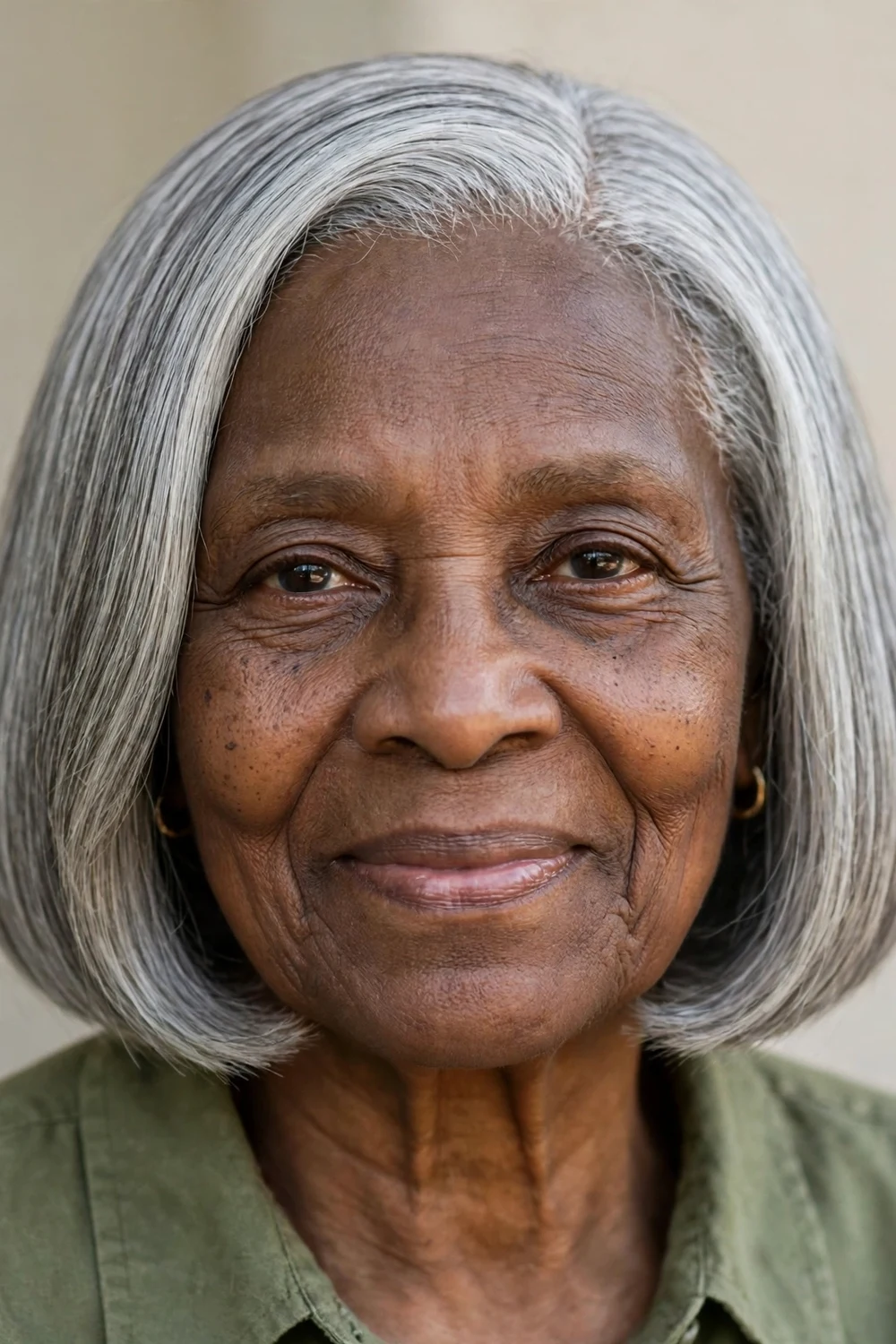
A chin-length bob cut all one length gives fine hair the appearance of thickness. With no layers removing weight, the ends look dense and the outline stays clean. Part it in the middle or on the side, tuck one side behind your ear, and you are done.
Keep the length right at the chin or a touch below. Longer one-length cuts can drag the face down, while chin length lifts it.
Try this: blow-dry with a round brush once a week for a smooth finish, and let it air-dry the other days. Use a heat protectant on blow-dry days.
Difficulty: Easy · Cost: $40–$70 per cut, trim every 6–8 weeks
3. Gentle Tapered Crop
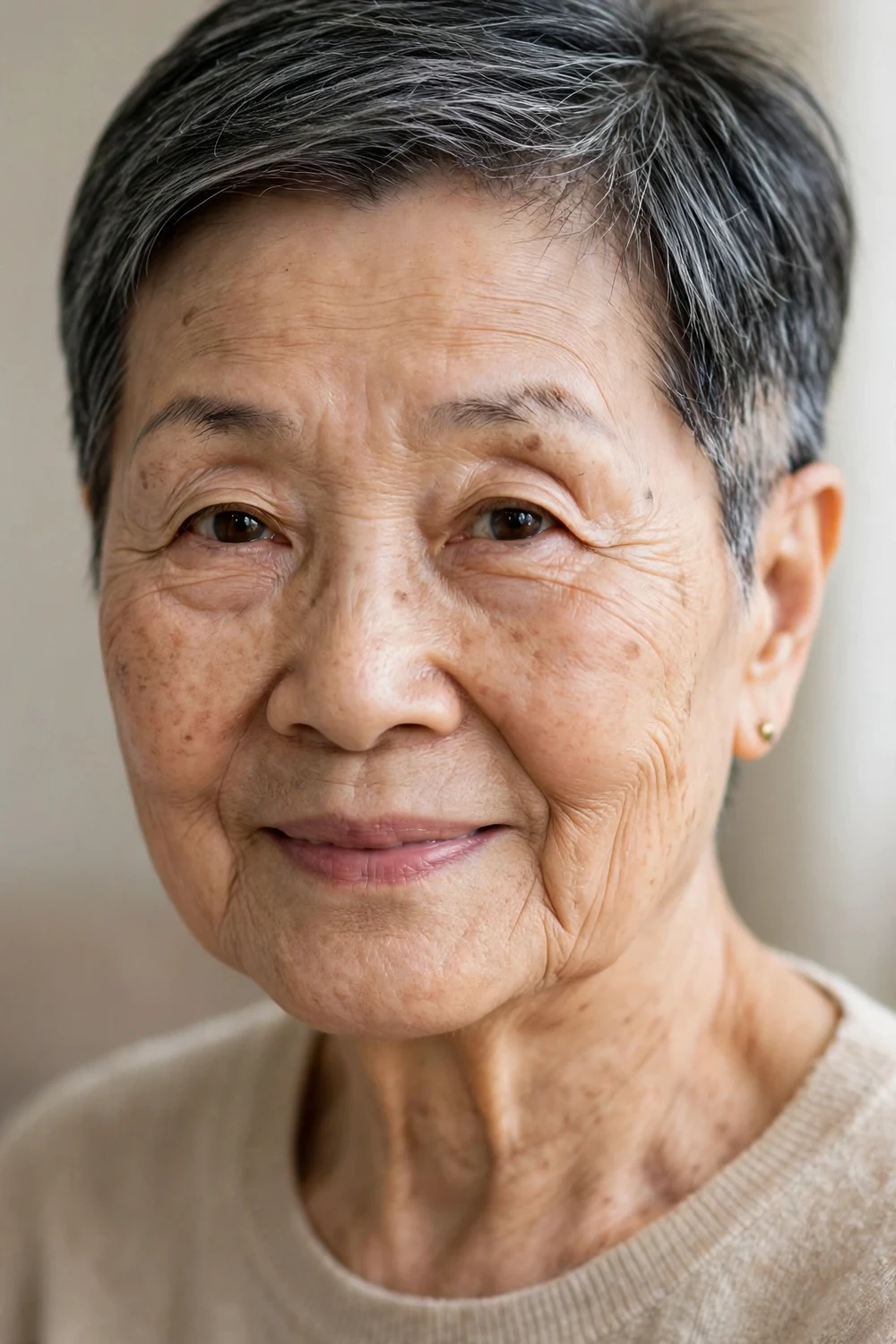
The tapered crop is short at the nape and sides with soft length left on top. It stays neat between appointments, keeps hair off the neck, and works well with glasses. A little pomade on the top section is the entire styling routine.
Ask for the taper to be soft, not skin-tight. A gentle graduation looks natural and grows out gracefully.
Try this: have the nape cleaned up between full cuts. Many salons do a quick nape trim for a small fee, which extends the cut by weeks.
Difficulty: Very easy · Cost: $35–$60 per cut, trim every 4–6 weeks
4. Silver Pixie with Side-Swept Bangs
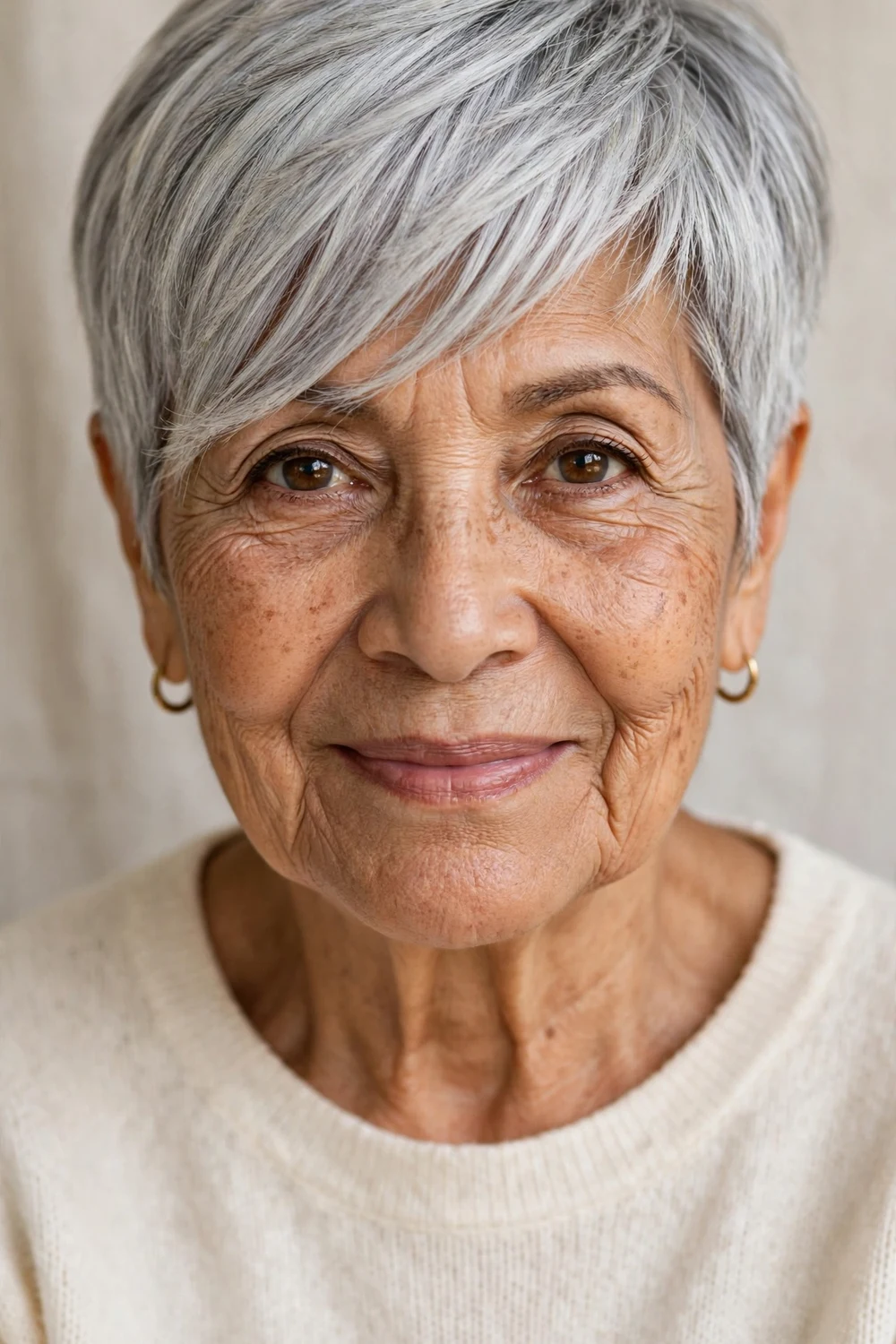
Long side-swept bangs soften the forehead and draw attention to the eyes. Paired with a short pixie, they add a gentle, feminine line that flatters most face shapes. The bangs also cover a widening part line, a common concern after 70.
Keep the bangs long enough to tuck behind your ear. Bangs cut too short need daily styling to sit right.
Try this: ask your stylist to point-cut the bang ends. The soft edge blends better as it grows out.
Difficulty: Easy · Cost: $40–$65 per cut, trim every 4–6 weeks
For more short pixie variations, see our short pixie haircuts for older women collection, which covers softer and edgier takes on the cut.
5. Rounded Pageboy Bob
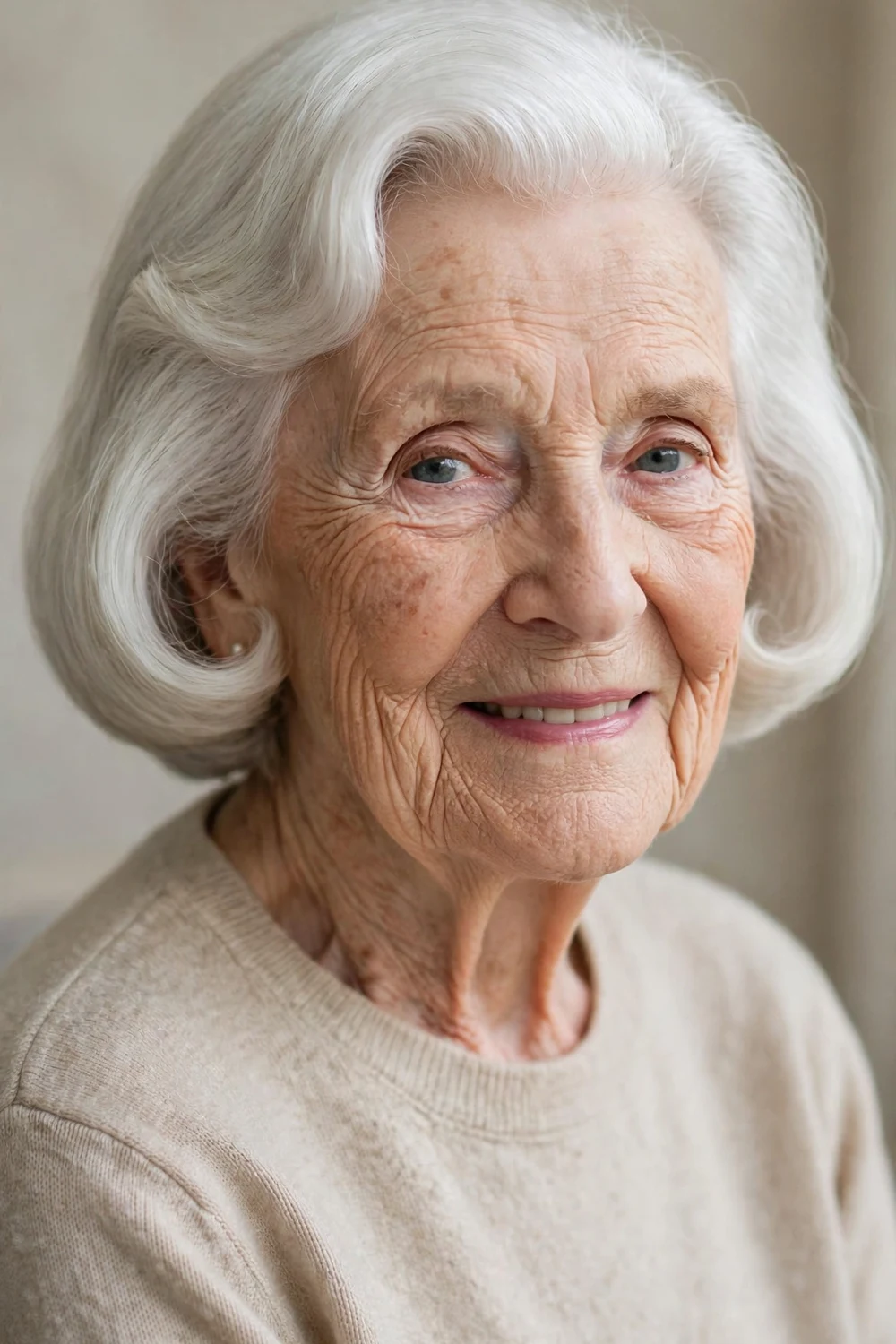
The pageboy curves under at the ends in one smooth, rounded shape. It is a classic for a reason: the rounded outline adds width where hair has thinned and frames the face softly. It suits straight to slightly wavy hair best.
A round brush and five minutes give the signature curve. On other days, tucking the ends under while air-drying gets you close.
Try this: use a large round brush, not a small one. The bigger barrel creates the soft under-curve without tight curls. Use a heat protectant first.
Difficulty: Easy · Cost: $40–$70 per cut, trim every 6–8 weeks
6. Easy Air-Dry Shag
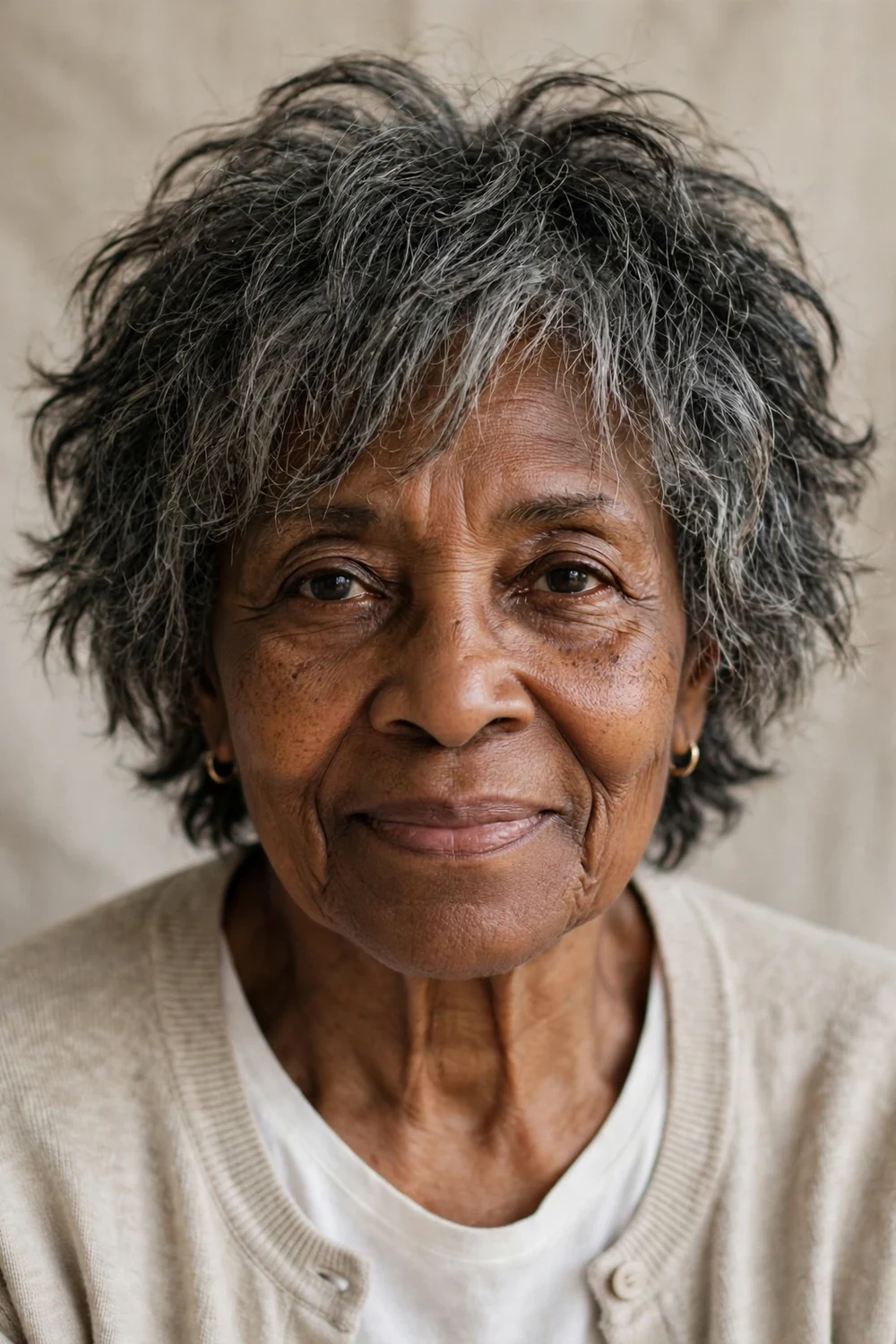
A short shag with light, airy layers dries into shape on its own. Scrunch in a little curl cream or mousse while damp, let it air-dry, and the layers create movement without any heat. It is one of the best cuts for adding the look of volume to fine hair.
Keep the layers light. Heavy, choppy layers remove too much weight and can make thin hair look thinner.
Try this: sleep on a satin pillowcase. It keeps the shaggy texture smooth overnight so mornings need only a quick finger-fluff.
Difficulty: Very easy · Cost: $45–$70 per cut, trim every 6–8 weeks
7. Feathered Short Layers
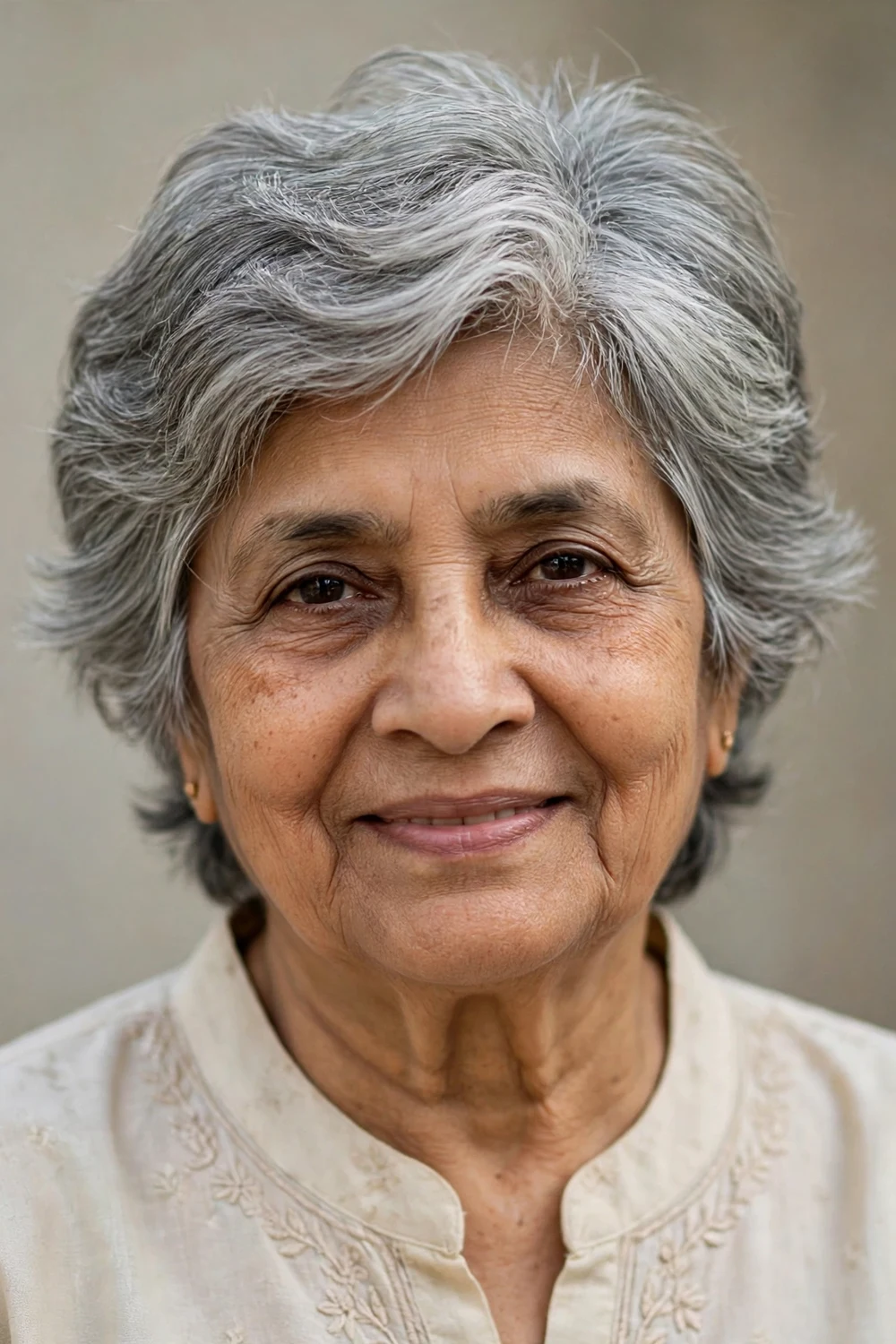
Feathered layers are cut so the ends taper softly instead of ending in a blunt line. The result is a light, airy cut that moves naturally and never looks stiff. It is comfortable, quick to style, and kind to thinning ends.
This cut suits straight and wavy hair. Very curly hair can go its own way with feathering, so ask your stylist if your texture suits it.
Try this: a pea-sized amount of light styling cream smoothed over the ends tames flyaways without weighing the feathering down.
Difficulty: Easy · Cost: $40–$65 per cut, trim every 6–8 weeks
8. Chin Bob with Curtain Bangs
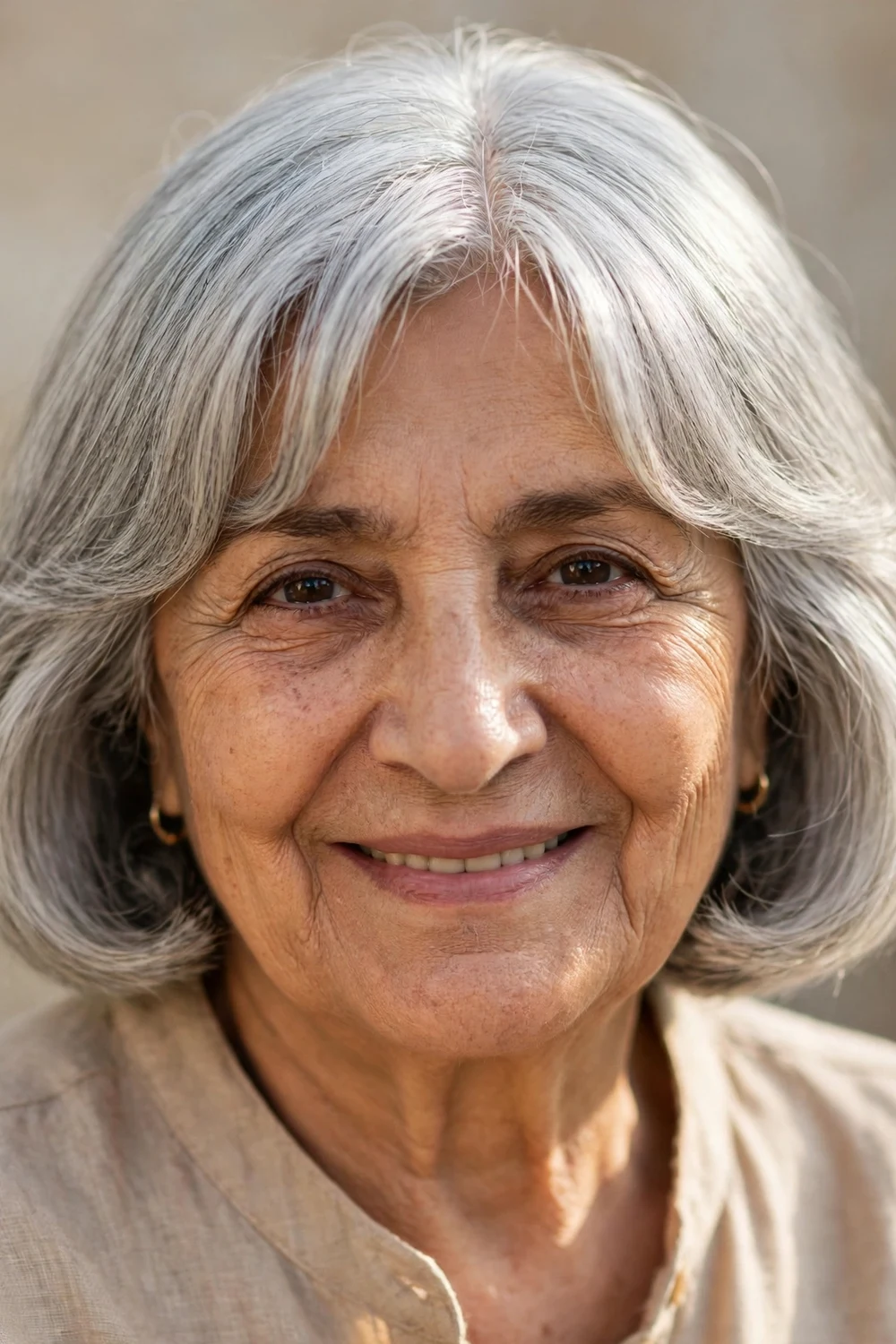
Curtain bangs part in the middle and sweep to each side, framing the face like curtains. On a chin-length bob, they soften the forehead and cheek area without the upkeep of full straight-across bangs. They grow out gracefully, which means fewer bang trims.
Style them by parting damp bangs down the middle and letting them air-dry. They fall into place on their own.
Try this: if the bangs split oddly, twist each side away from your face while damp. They will dry in a smooth sweep.
Difficulty: Easy · Cost: $40–$70 per cut, trim every 6–8 weeks
9. Relaxed Pixie-Bob
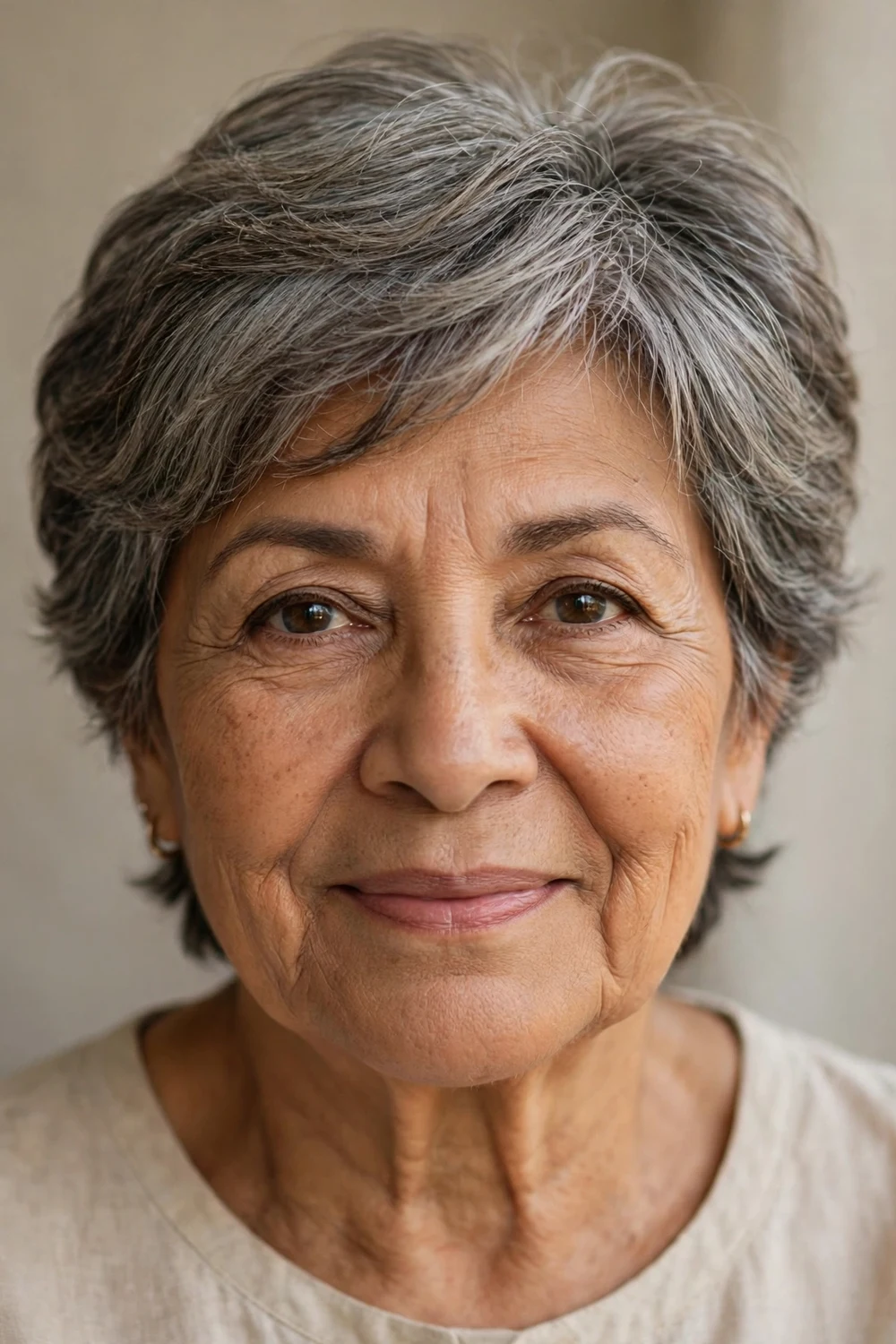
The pixie-bob sits between a pixie and a bob: longer than a crop, shorter than a bob, with soft layers throughout. It gives more coverage than a pixie, which many women prefer, while staying short enough to style in minutes.
It grows out well, so you can stretch appointments a little longer than with a tight pixie. A trim every six weeks keeps the shape.
Try this: change your part every few days. Switching the part adds instant lift at the roots with zero product.
Difficulty: Easy · Cost: $40–$65 per cut, trim every 6 weeks
10. Sleek Straight Silver Bob
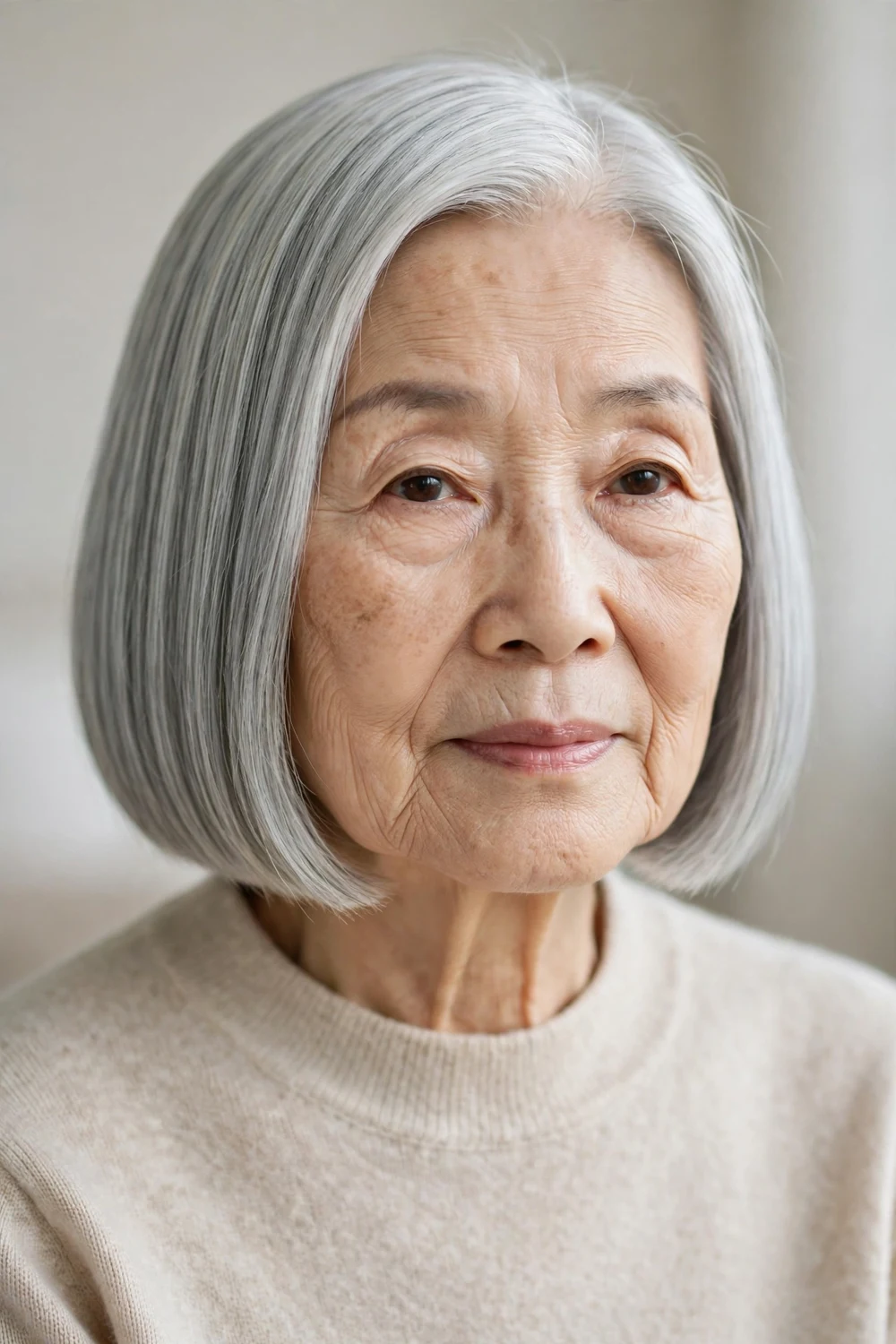
A straight silver bob with clean ends looks polished with little effort. Silver and white hair has a natural shine that this cut shows off. Keep it at chin length or just below for the most flattering line.
Use a purple shampoo once a week to keep silver tones bright instead of yellow. Follow with conditioner, since gray hair tends to run dry.
Try this: a flat iron pass on the ends once a week keeps the line sharp. Always use a heat protectant first, and keep the temperature moderate.
Difficulty: Easy · Cost: $40–$70 per cut, trim every 6–8 weeks
11. Short Natural Curls Crop
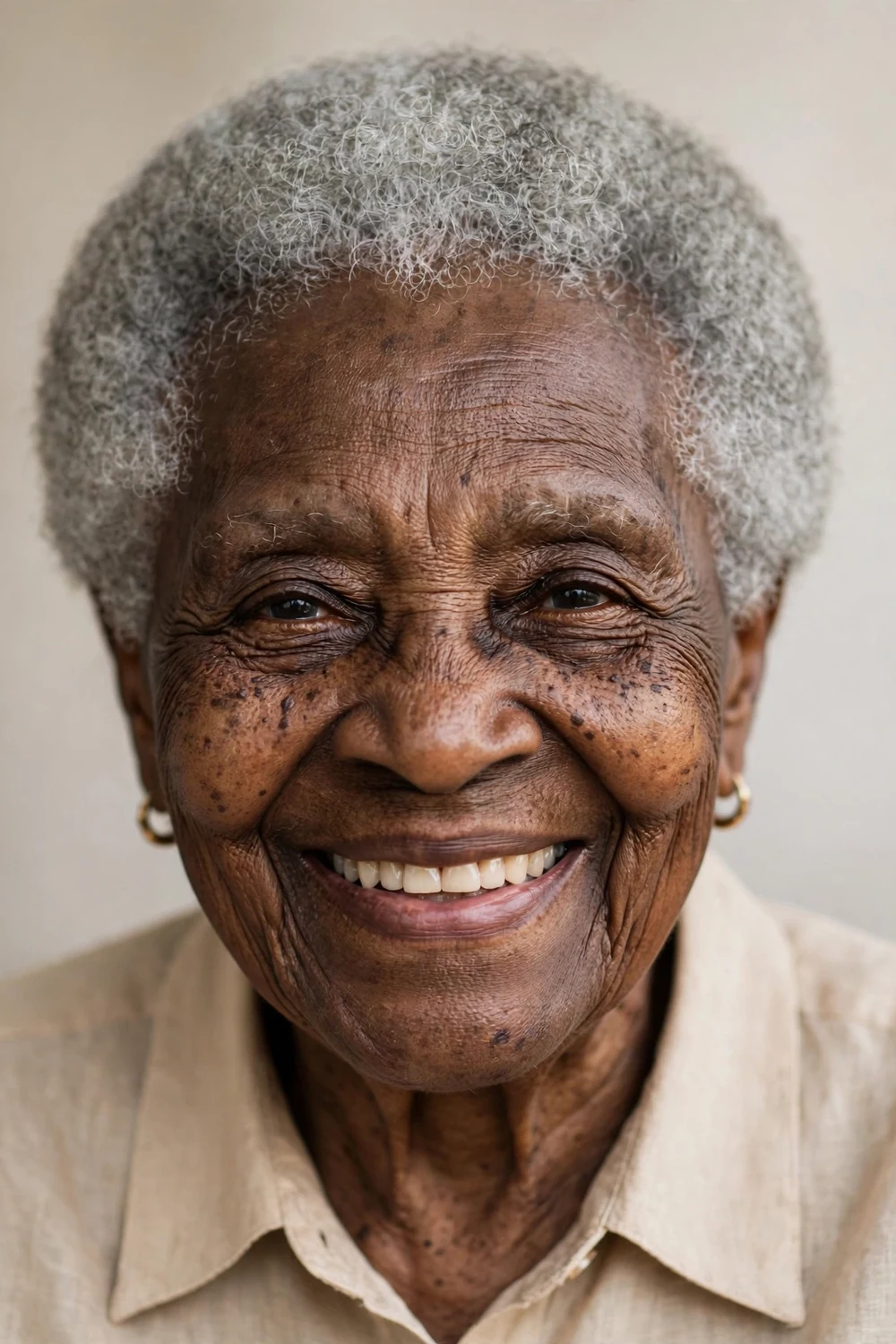
Natural curls kept in a short, rounded crop need almost no styling. Moisturize with a leave-in conditioner, define the curls with your fingers while damp, and let them air-dry. The rounded shape gives height and keeps the sides neat.
Moisture is the whole routine. Gray curls dry out faster than pigmented hair, so a rich leave-in makes the difference between defined curls and frizz.
Try this: refresh second-day curls with a light mist of water mixed with leave-in. Scrunch gently and let dry.
Difficulty: Very easy · Cost: $35–$60 per cut, trim every 6–8 weeks
12. Soft Roller-Set Curls
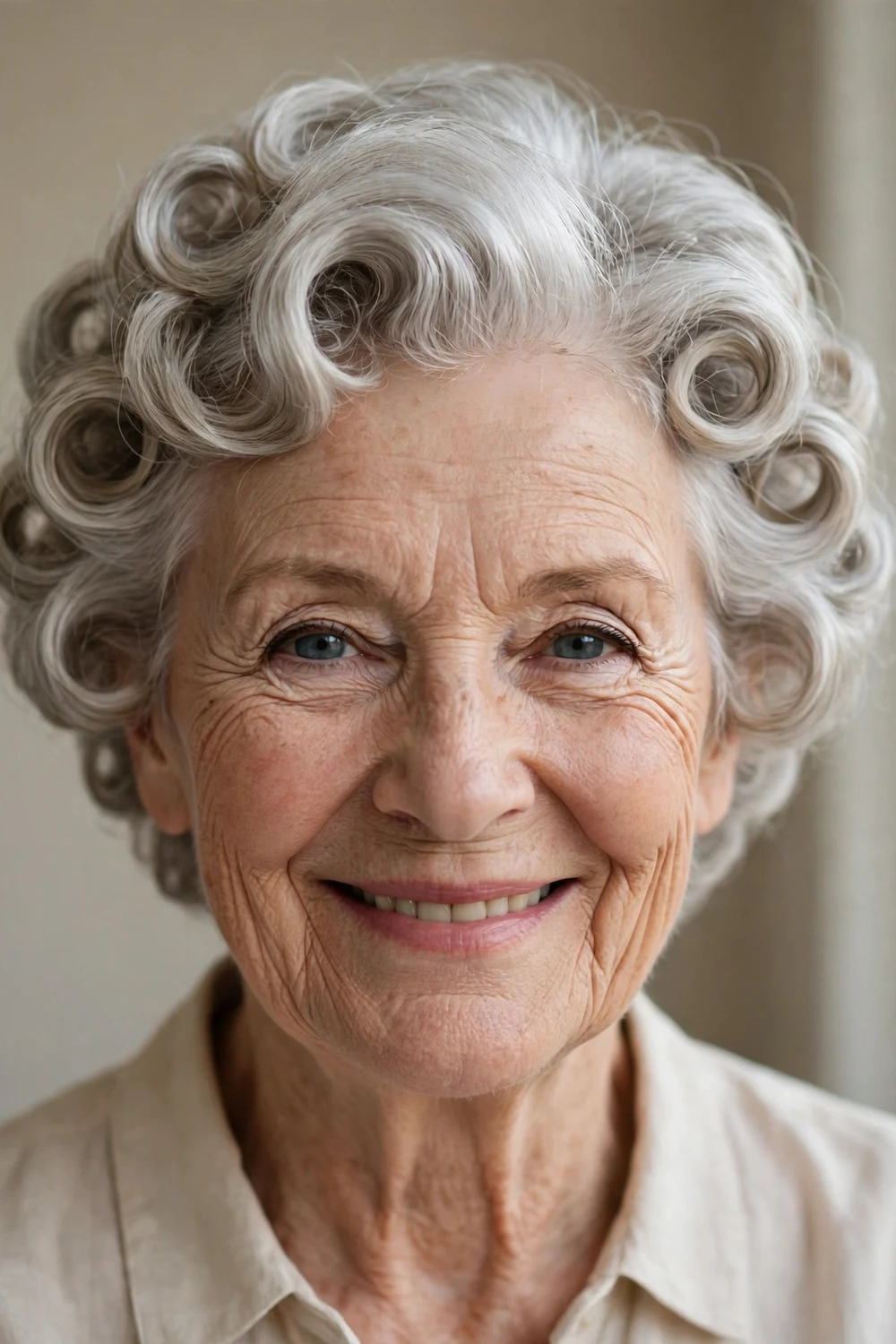
The classic roller set never went away for good reason: it gives soft, bouncy curls with volume at the roots and no harsh heat. Set damp hair on medium rollers, sit under a dryer or let them air-dry, then brush through for soft waves.
Foam rollers are gentler than heated ones and comfortable enough to wear around the house. They also cost almost nothing.
Try this: apply a light setting lotion before rolling. It helps the curls hold for days without stiffness.
Difficulty: Easy · Cost: $40–$65 per cut, foam rollers $5–$10
13. Low Pinned Chignon
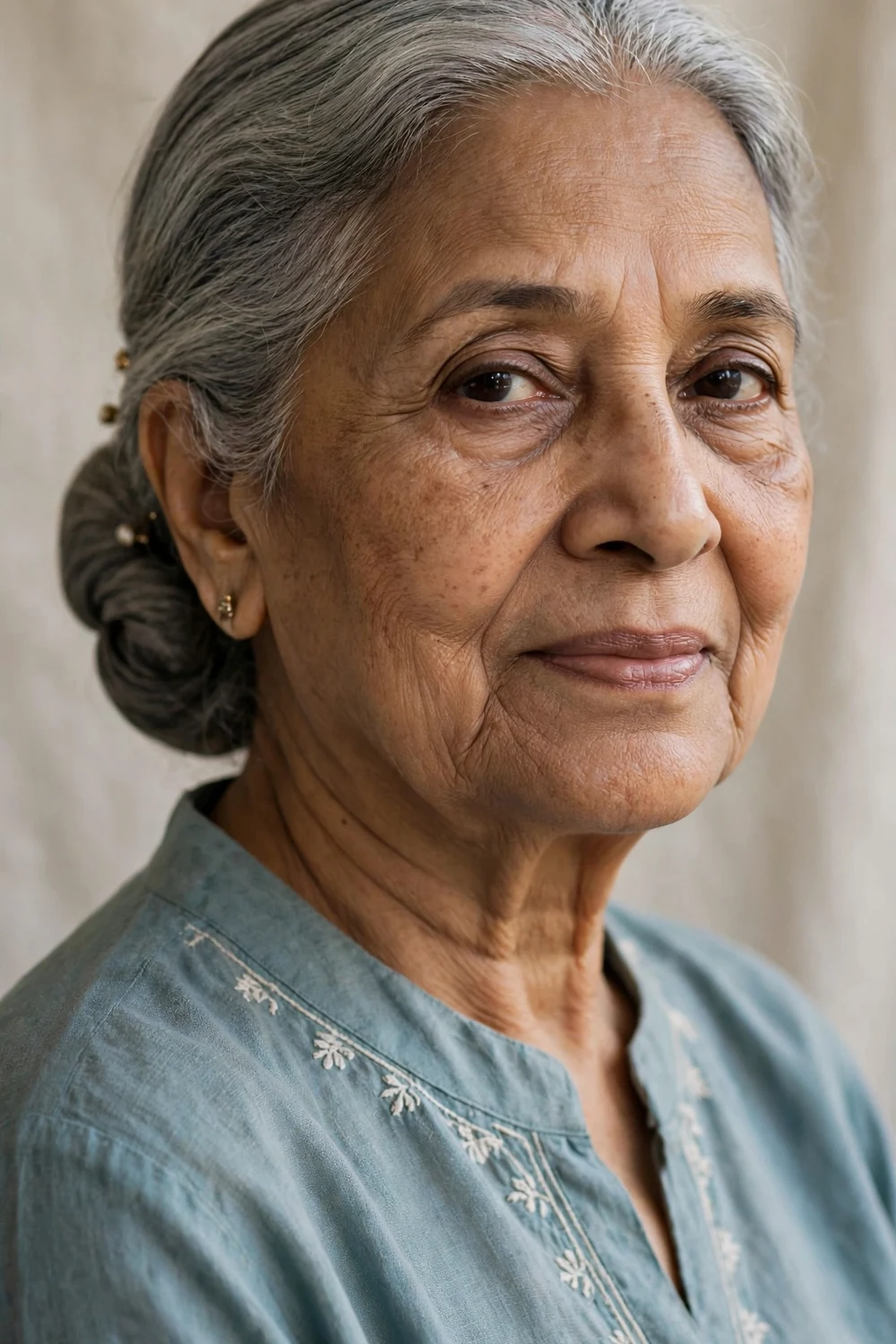
For chin-length and longer hair, a low chignon is the simplest occasion style. Gather hair loosely at the nape, twist it into a soft bun, and secure with four to six bobby pins. It looks neat for hours and feels comfortable, with no pulling at the hairline.
Keep it loose. A tight bun stresses fragile hair and causes headaches; a soft twist holds just as well with crossed pins.
Try this: cross bobby pins in X shapes over the bun’s base. The X formation grips far better than parallel pins.
Difficulty: Easy · Cost: $0–$5 (bobby pins you already own)
14. Soft French Twist
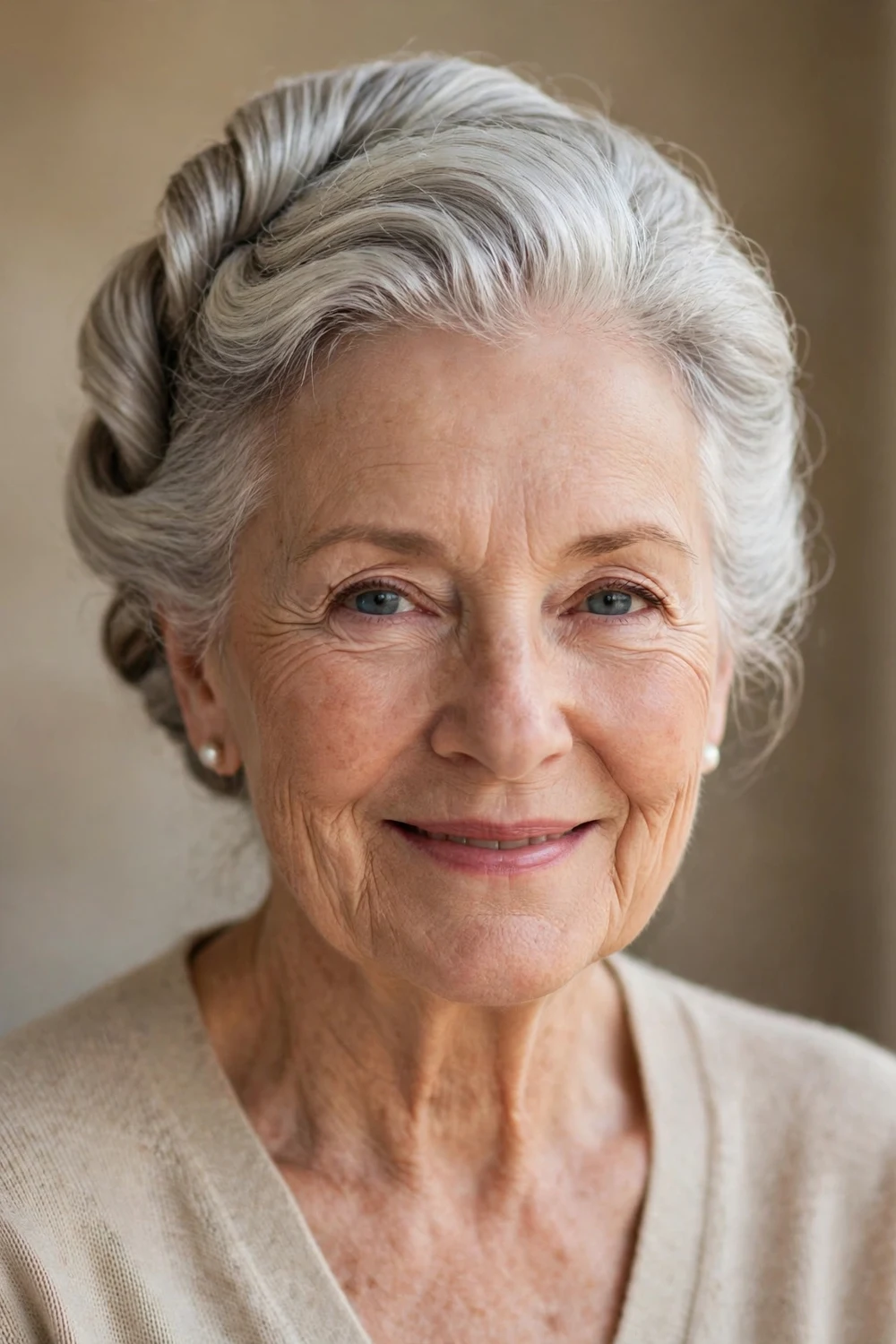
A soft French twist gathers shoulder-length hair into a vertical roll at the back of the head. Done loosely, it is comfortable all day and looks polished for church, weddings, and dinners. You need only bobby pins and a little patience the first time.
Practice once on a quiet evening. The motion feels awkward the first time and natural by the third try.
Try this: leave the front pieces soft instead of slicked back. A few loose strands around the face keep the twist from looking severe.
Difficulty: Medium · Cost: $0–$5 (bobby pins)
15. Half-Up Pinned Back
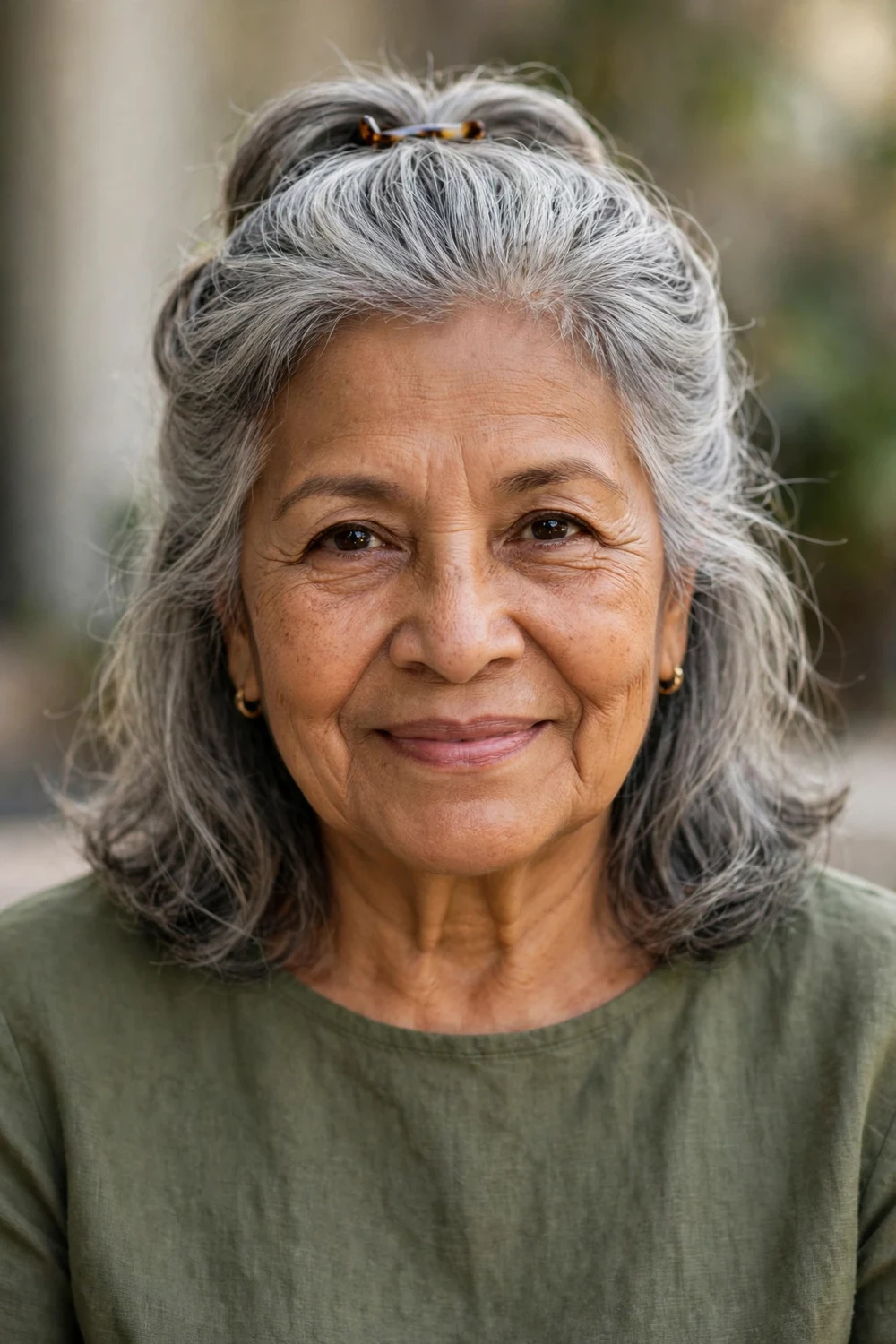
If you keep your hair at shoulder length, pinning the top half back keeps it out of your face while leaving length showing. Gather the top section from temple to temple, twist it once, and pin it at the crown. Two minutes, two pins.
This works on fine hair because the pinned section adds a little height at the crown, which flatters.
Try this: tease the crown section lightly with a comb before pinning. Two or three gentle strokes add lift that lasts all day.
Difficulty: Very easy · Cost: $0–$3 (bobby pins)
16. Side-Part Tuck with One Pin
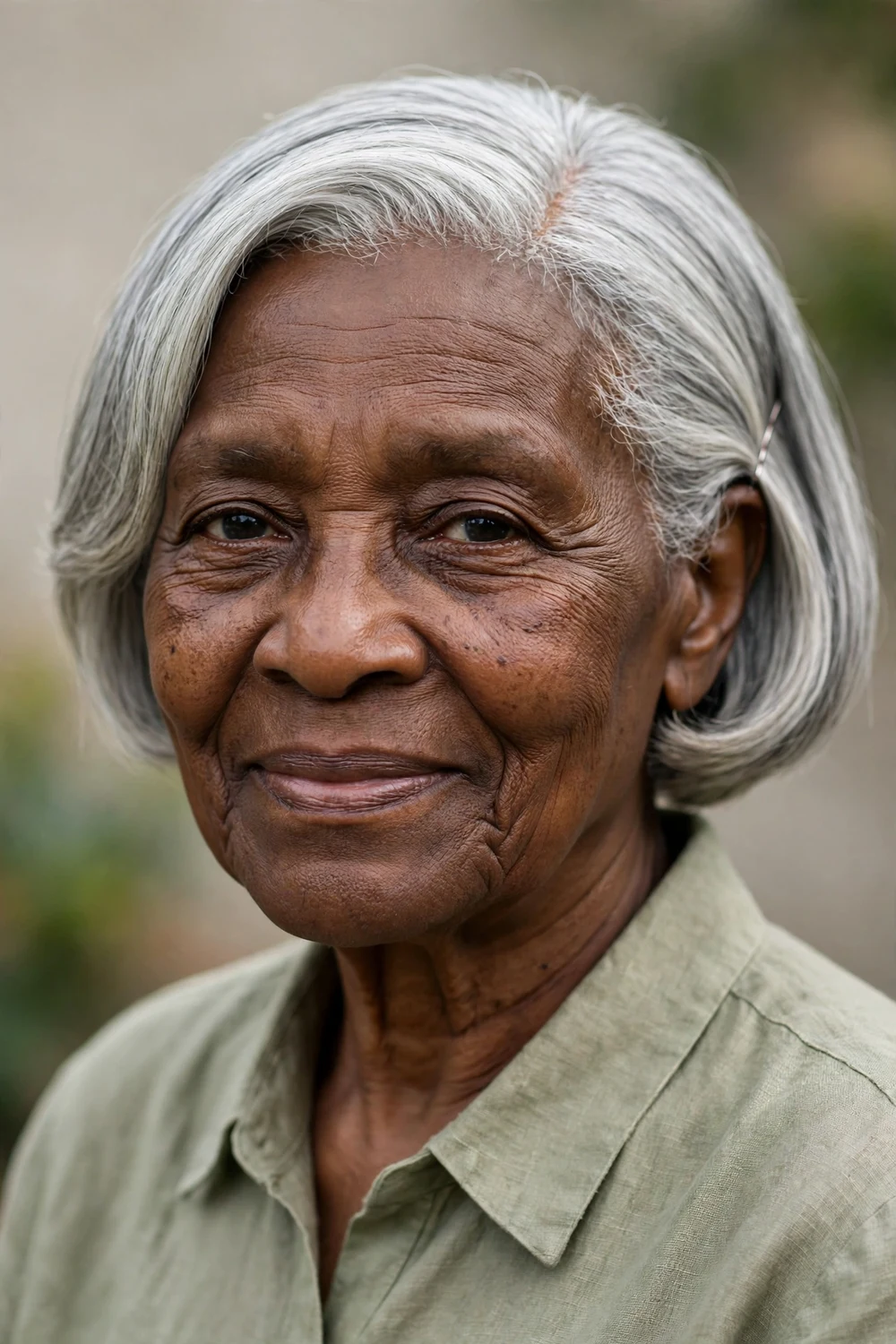
Comb a deep side part, sweep the smaller side back, and tuck it behind your ear with one flat bobby pin. The deep part adds instant volume at the crown because the hair has farther to fall. Three minutes, one pin, and the whole face looks lifted.
Use a pin that matches your hair color. A visible pin breaks the clean line this simple style depends on.
Try this: place the pin vertically, not horizontally. A vertical pin disappears into the hair and holds better.
Difficulty: Very easy · Cost: $0–$3 (bobby pins)
17. Glasses-Friendly Framed Cut
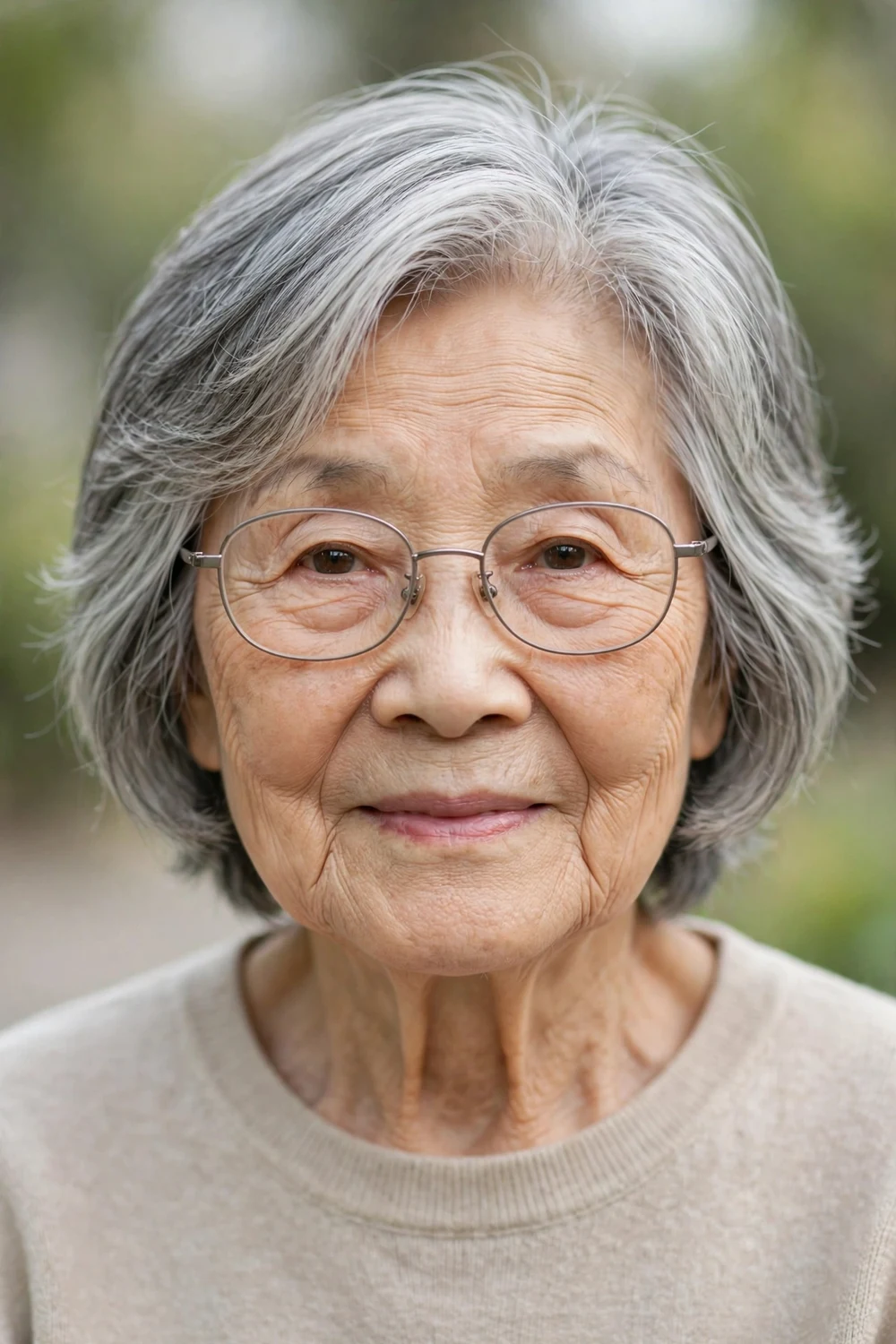
If you wear glasses every day, your cut should work with the frames, not against them. Soft face-framing layers that end above or below the frames (never right at them) keep the area around your glasses clean. Short sides prevent hair from catching in the arms of the frames.
Bring your glasses to the haircut appointment. A good stylist will check the cut with your frames on.
Try this: ask for the layers around your face to be cut slightly longer than you think. They shrink up as they dry and settle.
Difficulty: Easy · Cost: $40–$65 per cut, trim every 6 weeks
18. Wispy Bangs Bob
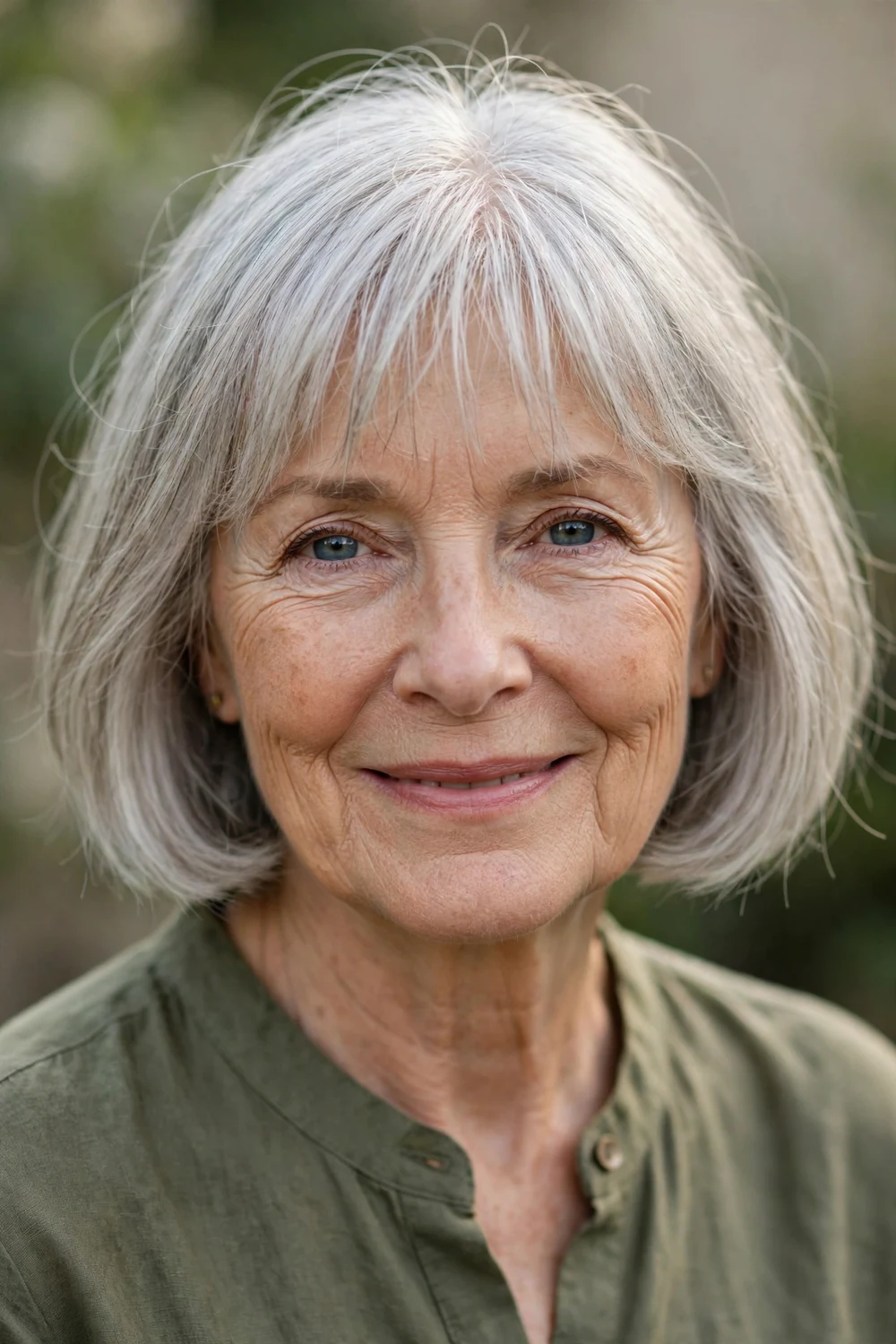
Wispy bangs are cut thin and light so the forehead shows through softly. They take years off a bob without the commitment of thick, blunt bangs. They also need less frequent trimming, since the light texture grows out unnoticeably.
Style them with your fingers while damp. A brush can make wispy bangs look too piecey or too flat.
Try this: if the bangs misbehave, a tiny drop of styling cream pressed through with your fingertips tames them in seconds.
Difficulty: Easy · Cost: $40–$65 per cut, trim every 6 weeks
19. Layered Lob for Thicker Hair
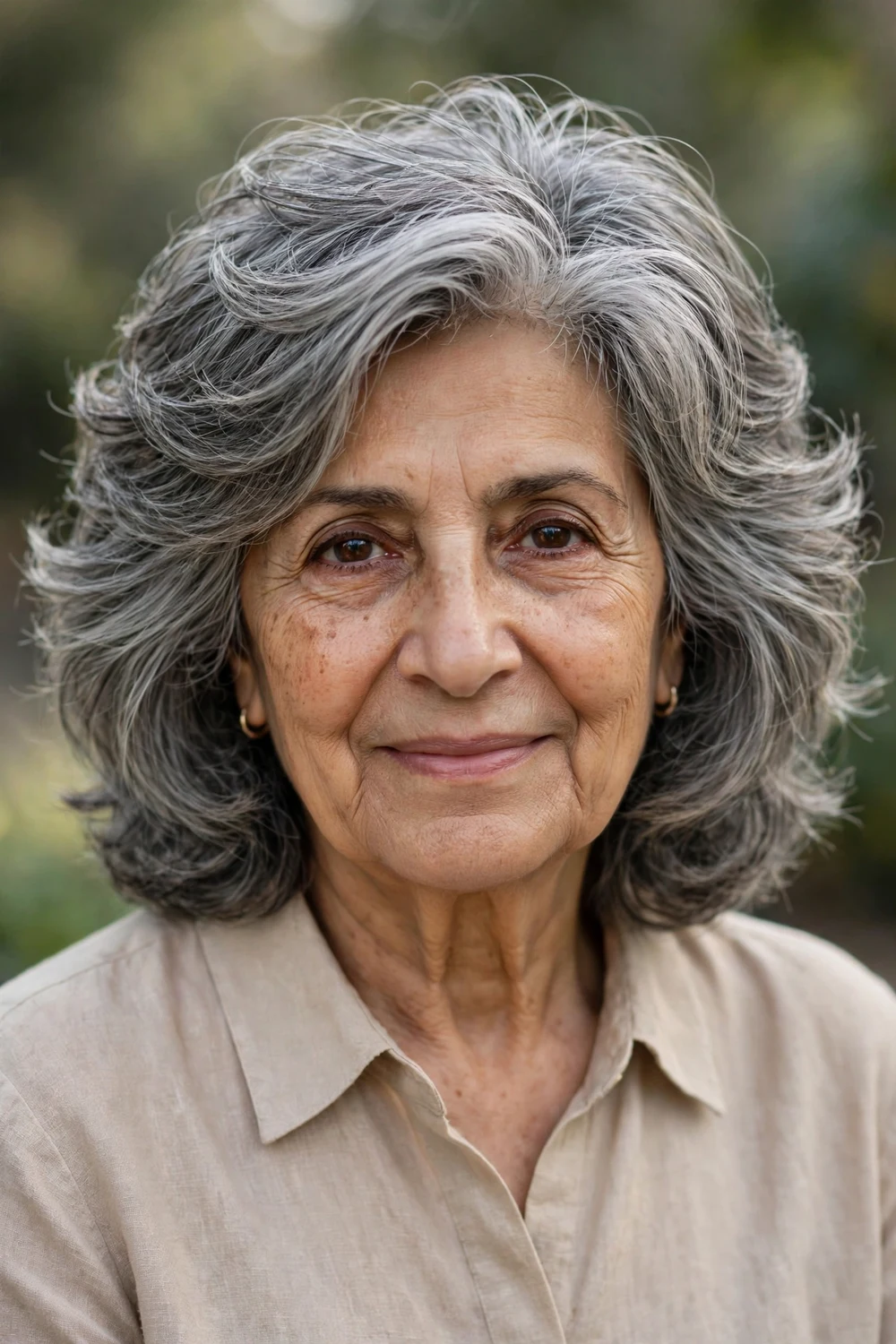
Women who kept thick hair into their 70s can wear a layered lob, a long bob that sits at the collarbone. Long layers remove bulk without removing length, so the cut moves instead of sitting heavy. It is the best longer option for active women who still want easy styling.
Ask for long layers only. Short layers in thick hair create a triangle shape that is hard to manage.
Try this: air-dry with a little leave-in cream scrunched through the ends. The layers fall into soft waves on their own.
Difficulty: Easy · Cost: $45–$70 per cut, trim every 8 weeks
If you prefer more length than a bob, our medium hairstyles for women over 60 article covers shoulder-length cuts that stay manageable past 70 too.
20. Loose Low Bun
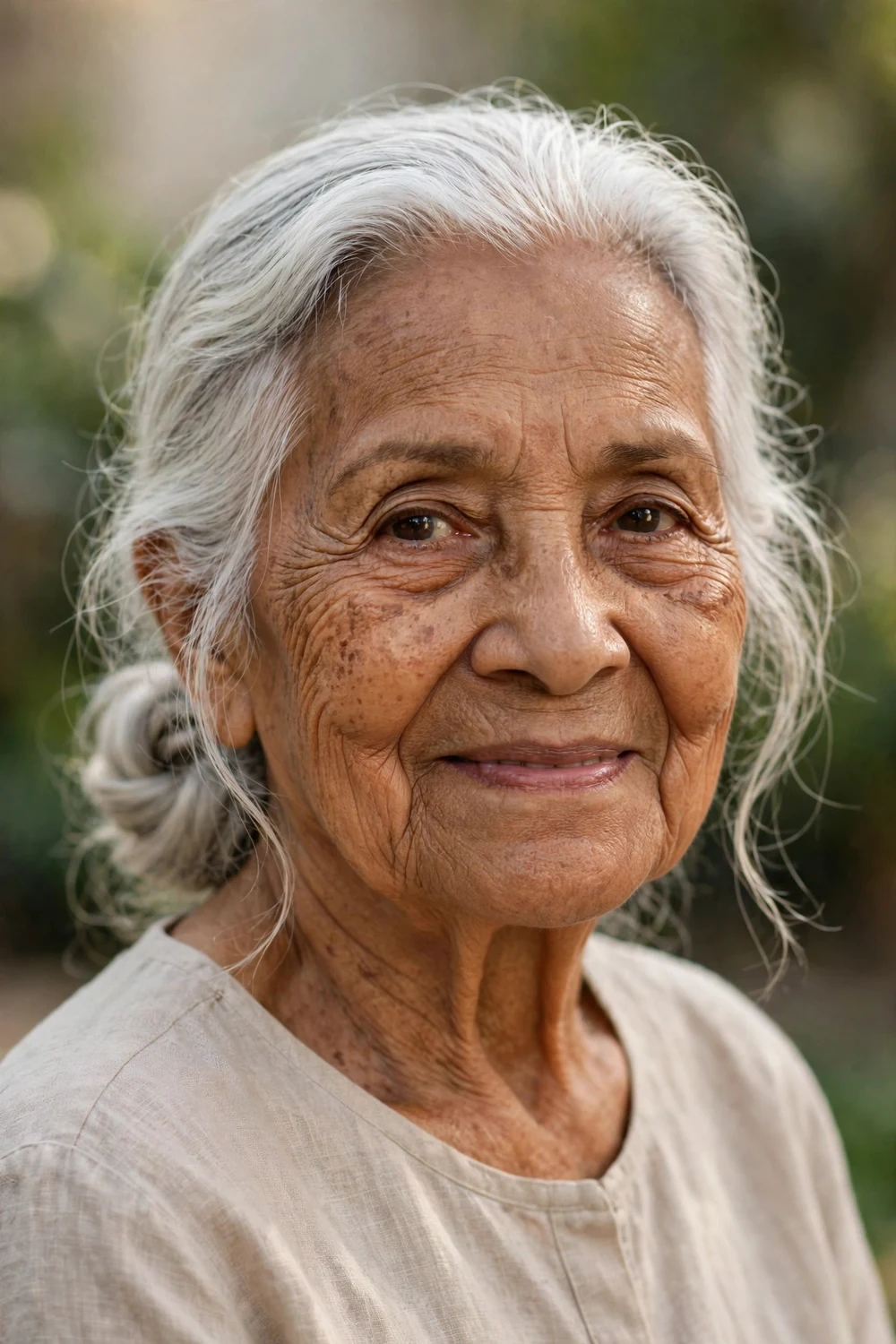
Gather hair loosely at the nape, twist it once, and pin it into a soft bun. Leave the front relaxed with a few face-framing pieces. The loose low bun is comfortable for all-day wear, gentle on thinning hair, and neat enough for any occasion.
Never pull it tight. Tension at the hairline thins fragile edges over time, and a loose bun holds fine with the right pins.
Try this: use spin pins instead of bobby pins for buns. Two spin pins hold more securely than a handful of bobby pins and feel lighter.
Difficulty: Very easy · Cost: $0–$6 (pins)
How to Choose the Right Cut After 70
Start with your hair’s reality, not the photo. Fine, thinning hair does best with one-length cuts and soft texture that keeps density. Thicker hair can handle layers that remove bulk. Curly hair needs a stylist who cuts curls dry or understands shrinkage.
Then think about your hands and your mornings. Arthritis makes round brushes and fiddly pins hard, so wash-and-wear cuts win for comfort. If you wear glasses, bring them to the appointment. If you color your hair, shorter cuts grow out faster and need less dye.
A few things to avoid: harsh blunt cuts with no softness around the face, heavy layers that remove the little volume you have, high-maintenance blowouts that take 30 minutes, and tight pulled-back styles worn daily, since constant tension stresses thinning edges.
For shorter options specifically, browse our short hairstyles for women over 70 collection, which focuses entirely on crops, pixies, and short bobs.
Quick Comparison
| Style | Best for | Upkeep | What you need |
|---|---|---|---|
| Soft Wash-and-Wear Pixie | Fine, thinning hair | Trim every 4–6 weeks | Styling cream or mousse |
| Classic One-Length Chin Bob | Fine hair needing fullness | Trim every 6–8 weeks | Round brush (optional) |
| Gentle Tapered Crop | Glasses wearers, active days | Trim every 4–6 weeks | Pomade |
| Easy Air-Dry Shag | Fine hair wanting volume | Trim every 6–8 weeks | Mousse or curl cream |
| Chin Bob with Curtain Bangs | Softening the forehead | Trim every 6–8 weeks | Nothing special |
| Short Natural Curls Crop | Natural curly texture | Trim every 6–8 weeks | Leave-in conditioner |
| Low Pinned Chignon | Occasions, longer hair | No trim needed | Bobby pins |
| Loose Low Bun | Everyday comfort | No trim needed | Spin pins or bobby pins |
Frequently Asked Questions
What is the easiest hairstyle for a woman over 70?
The soft wash-and-wear pixie. You wash it, towel-dry it, add a pea-sized amount of cream, and leave. It needs no heat tools, holds its shape between trims, and suits thinning hair. The gentle tapered crop is a close second for the same reasons.
Should women over 70 keep their hair short?
Not necessarily, but shorter cuts solve the most common problems after 70: thinning, dryness, and styling effort. Chin-length and shorter styles look fuller and need less work. If you love longer hair, keep it at shoulder length or above with soft layers, and pin it up loosely rather than pulling it tight.
How do I add volume to thinning hair after 70?
Choose cuts that keep density: one-length bobs, soft pixies, and light shags. Switch your part to the opposite side for instant root lift. Use volumizing mousse on damp roots, and avoid heavy oils and conditioners at the roots, which flatten fine hair. A round brush blow-dry once a week adds body that lasts days.
How often should I trim my hair after 70?
Short cuts like pixies and crops need a trim every 4 to 6 weeks to hold their shape. Bobs and lobs can go 6 to 8 weeks. Hair grows more slowly with age, but the shape still softens, so regular trims matter more than length does.
Is gray hair harder to style after 70?
Gray hair is drier and coarser than pigmented hair, which makes it frizz more easily. Weekly deep conditioning, purple shampoo to prevent yellowing, and lightweight styling creams keep it smooth. The upside is that silver hair has natural shine that makes simple cuts look polished.
Final Thoughts
Comfort is the real luxury after 70. The right cut should feel good all day, take minutes to style, and flatter the hair you have now. Pick two or three styles from this list that match your texture and routine, bring photos to your stylist, and ask what will work with your hair’s density.
For more age-specific ideas, our primehairpicks.com homepage links to every collection on the site, including cuts for women in their 50s and 60s.

