



A low cut takes your morning routine down to about five minutes. These low cut hair style black women ideas cover every version of short: tapered cuts, fades, buzz cuts, finger waves, and 360 waves. Short hair shows off your face, your earrings, and your bone structure, and it grows out in a way you can plan for.
Pick your cut by how much maintenance you want, not just by the photo. A buzz cut needs a barber every two to three weeks to stay sharp. A tapered cut gives you three to four weeks between trims. Know the upkeep before you sit in the chair.
Quick Takeaways
- Low cuts flatter every face shape when the sides and top are balanced to your bone structure.
- A taper grows out softer than a fade; a fade looks sharper but needs trims every 2 to 3 weeks.
- Moisture matters even at half an inch long. Use a light oil or leave-in on short hair daily.
- Sleep in a satin bonnet or on a satin pillowcase to protect the cut’s shape and your edges.
- Bring a reference photo to your barber and say the guard number you want on top and sides.
1. Classic TWA
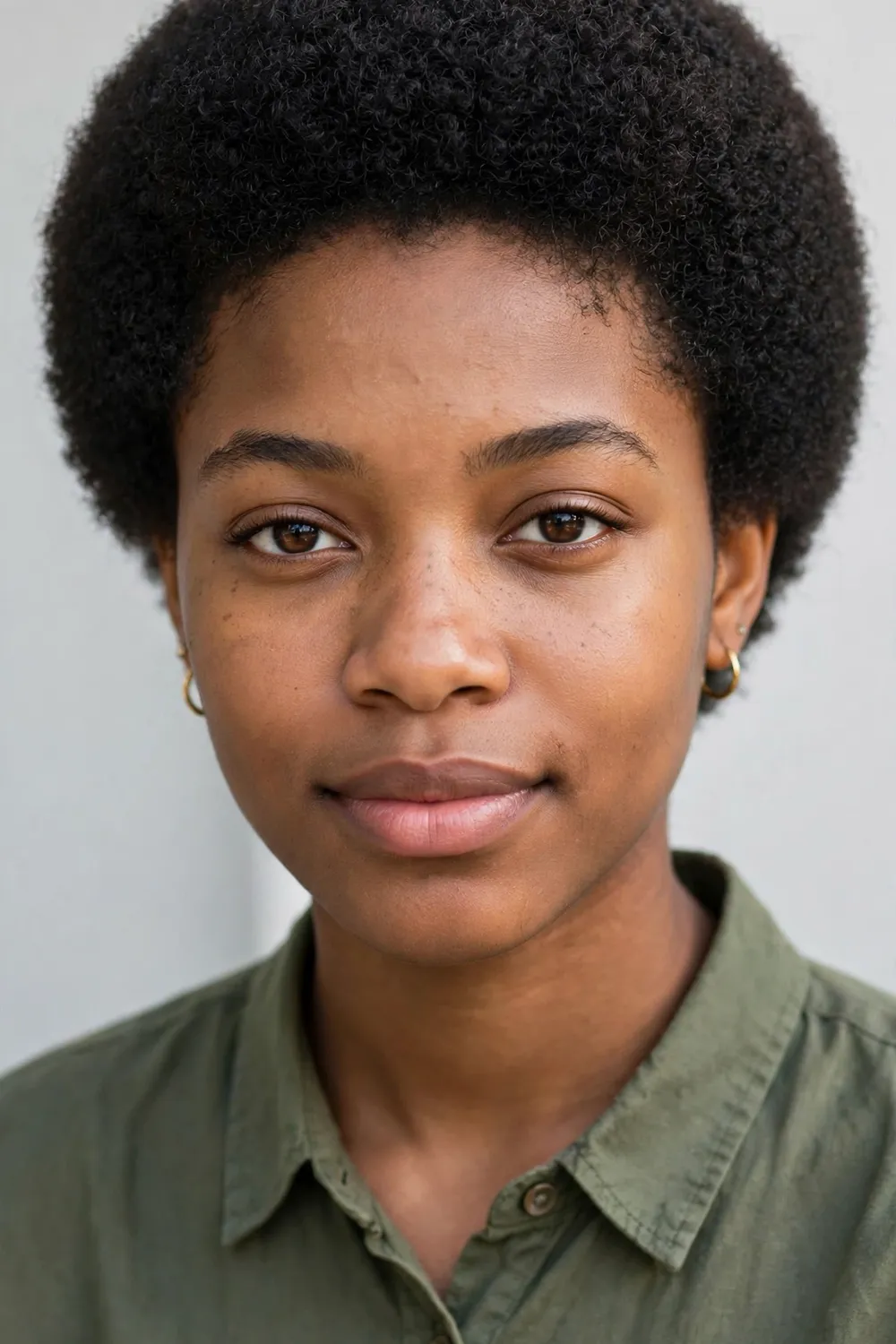
The TWA (teeny weeny afro) is the starting point of low cuts: hair cut to roughly half an inch to one inch all over, shaped to follow the head. It works on every curl pattern from 3C to 4C and needs almost no daily styling. Rub a small amount of curl cream through damp hair and let it air dry.
Don’t skip the shape-up. The difference between a TWA that looks intentional and one that looks grown out is a clean neckline and defined edges. Ask your barber to keep the outline crisp at every visit.
Try this: use a curl sponge for 3 to 5 minutes on wash day. It defines the coils and gives the TWA a finished look with zero heat.
Difficulty: Very easy · Cost: $25–$50 per barber visit
2. Low Taper Fade
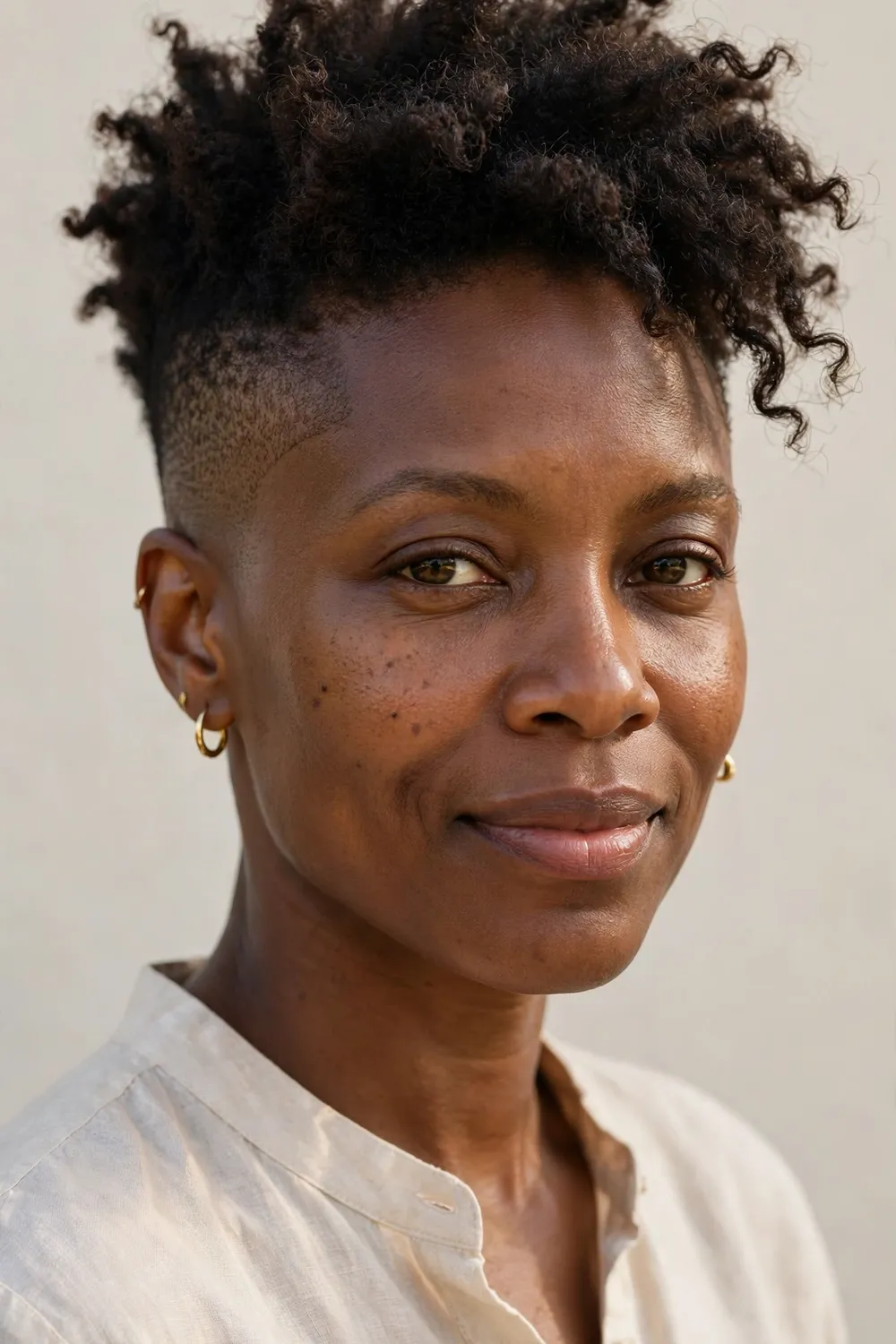
The low taper fade starts the fade line low, just above the ears and neckline, so the transition from the longer top to the short sides is gradual and subtle. It keeps the top at one to two inches while the sides taper down to skin. This is the least dramatic fade and the easiest one to grow out.
The taper grows out softer than a skin fade, so you can stretch barber visits to three or four weeks. Ask for a “low taper, no hard line” so the blend stays natural as it grows.
Try this: define the top with a light styling gel on damp hair. The contrast between the textured top and the clean taper is what makes this cut stand out.
Difficulty: Easy · Cost: $30–$55 per barber visit
3. Mid Fade with Curly Top
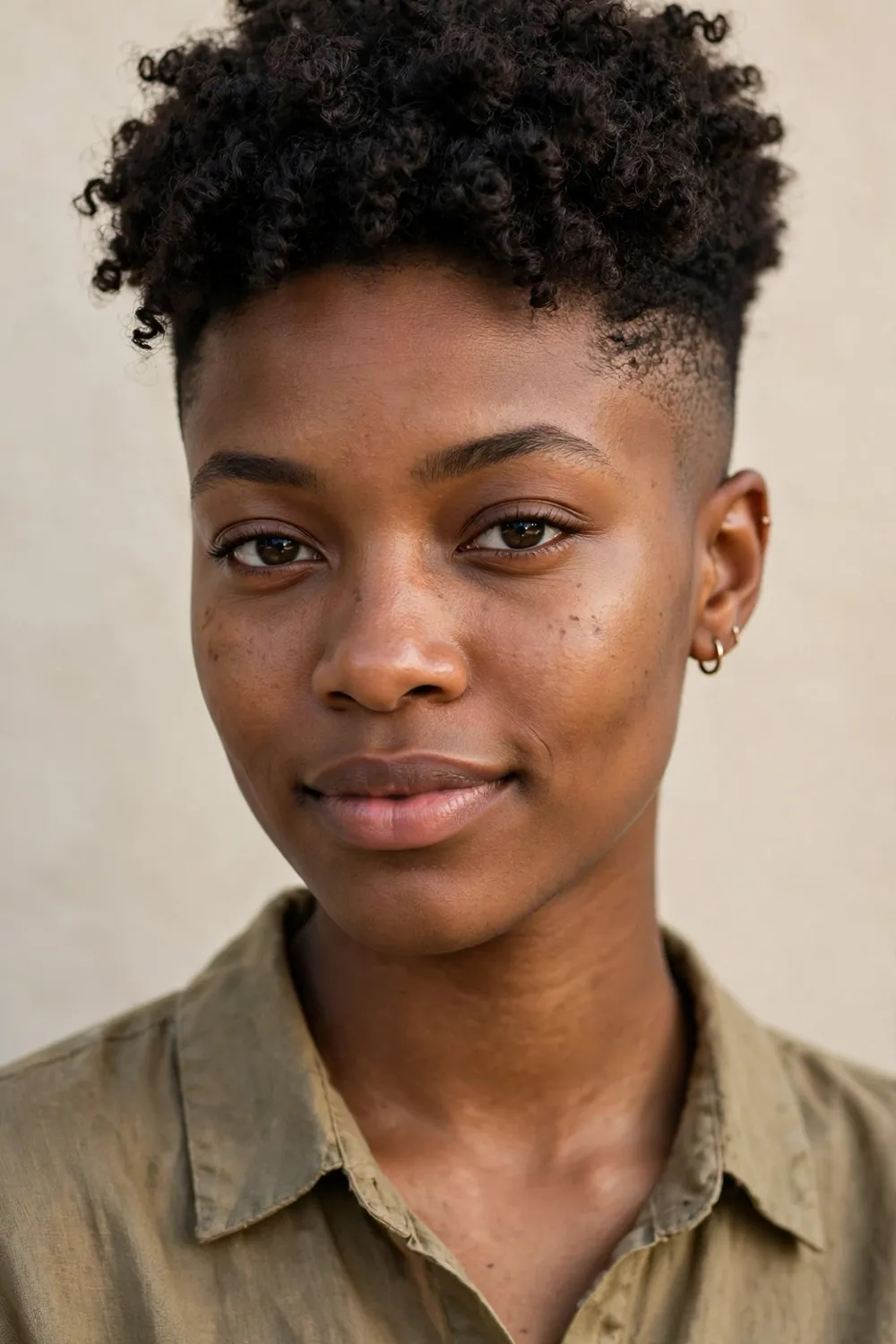
The fade line sits midway up the sides, about an inch above the ears, leaving a full section of curls on top. The top usually runs two to three inches so the coils have room to form. This cut gives you styling range: wear the top defined and forward, or brush it up for height.
Keep the top long enough to show texture. If the top goes below two inches, it reads as a different cut entirely. Bring photos of the exact top length you want.
Try this: apply leave-in conditioner to the top while damp, then finger-coil the front section. It frames the face and shows off the fade line.
Difficulty: Easy · Cost: $30–$60 per barber visit
4. High Bald Fade
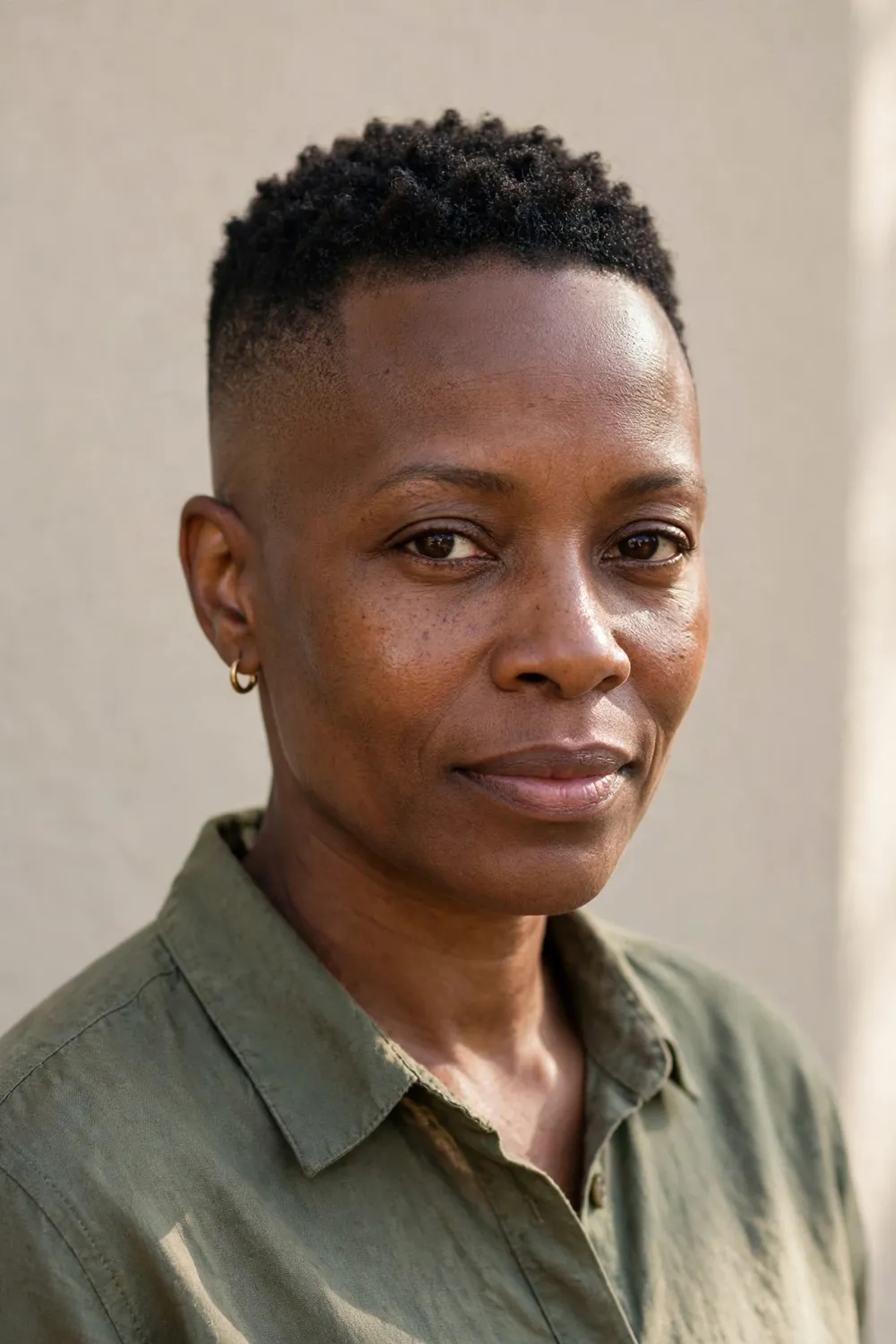
The fade line rides high, near the temples, with the sides taken down to skin. The top stays short, usually under an inch, with the texture visible. This is a bold, clean cut that puts all the attention on your face and the sharpness of the blend.
A bald fade shows regrowth fast. Plan barber visits every two weeks to keep the skin fade crisp. Between visits, a foil shaver keeps the sides clean for a few extra days.
Try this: keep the hairline natural rather than pushed back. A natural hairline grows out better and avoids the thin look that comes from over-shaping.
Difficulty: Easy (barber does the work) · Cost: $30–$60 per visit, every 2 weeks
5. Buzz Cut, One Length All Over
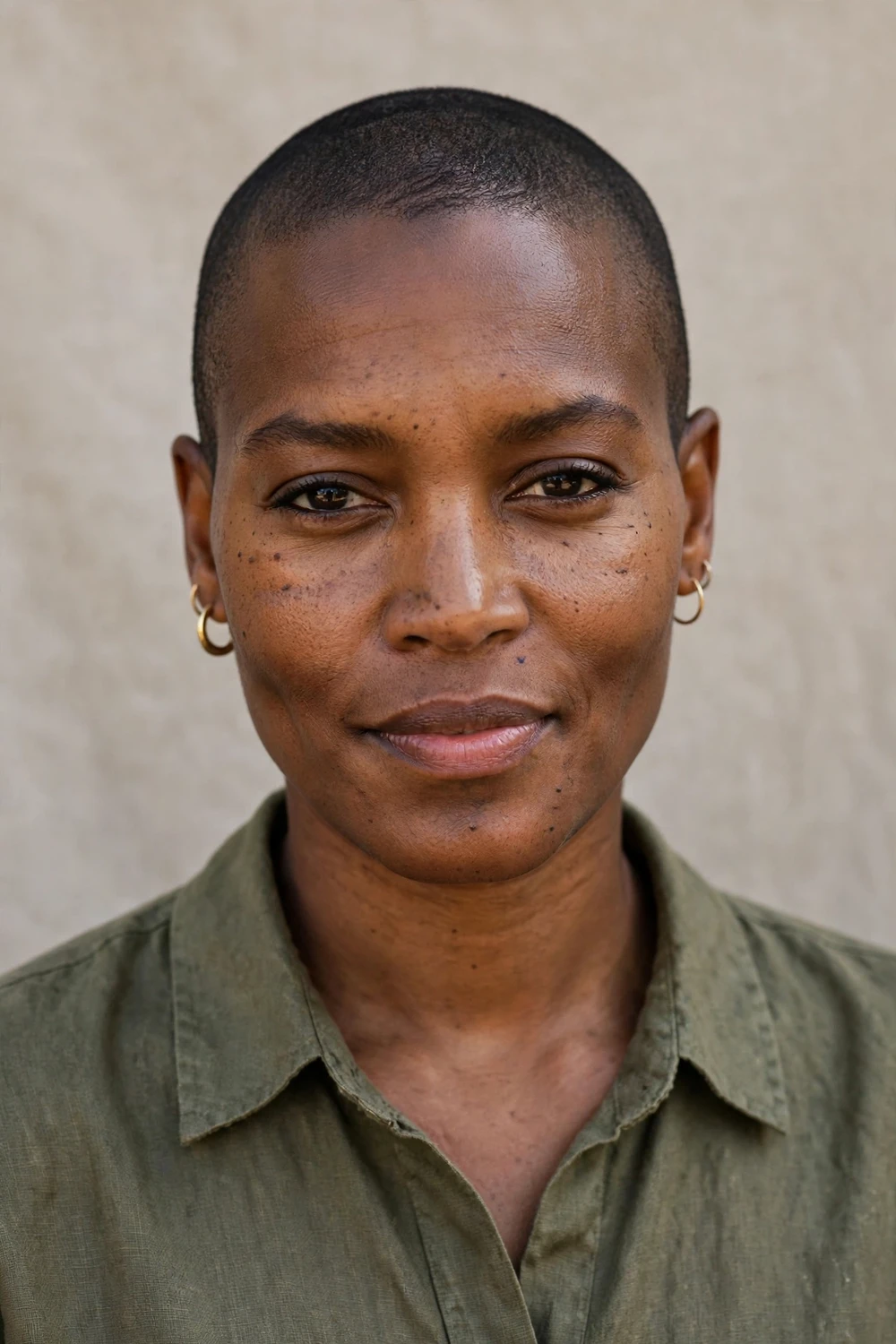
One guard length over the whole head, usually a #1 or #2 (1/8 to 1/4 inch). No fade, no taper, just a clean uniform cut that takes ten minutes in the chair. It is the lowest-maintenance option on this list and it suits strong features.
The grow-out phase is the real test. At four to six weeks the cut loses its shape. Either re-cut on schedule or commit to growing it into a TWA and shape the sides as it grows.
Try this: add bold earrings or a strong lip color. With hair this short, accessories carry the whole look.
Difficulty: Very easy · Cost: $20–$40 per barber visit
If you want styling ideas for this length beyond the cut itself, our TWA hairstyles guide covers ways to style short natural hair day to day.
6. Tapered Frohawk
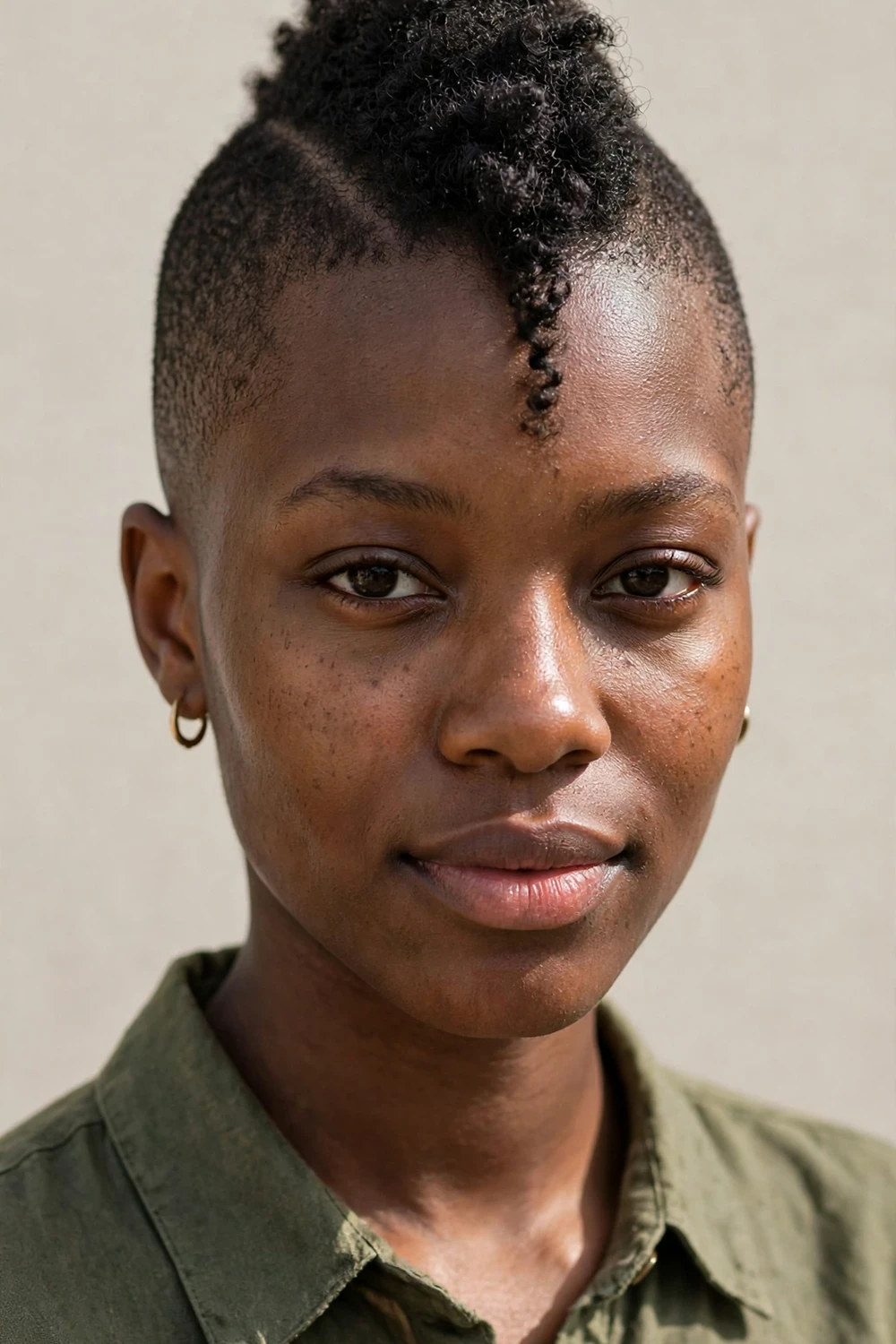
The frohawk keeps a strip of longer curls running from forehead to nape while the sides are tapered or faded short. The top strip usually runs two to four inches wide. It gives you the drama of a mohawk shape with the softness of natural texture.
The strip width decides the look. A narrow strip reads edgy; a wider one reads like a tapered cut with volume. Tell your barber the width in inches so you get the version you want.
Try this: twist the top strip into two or three flat twists for a night, then unravel in the morning. The stretched coils sit higher and last longer.
Difficulty: Easy · Cost: $30–$55 per barber visit
7. Finger Waves on a Low Cut
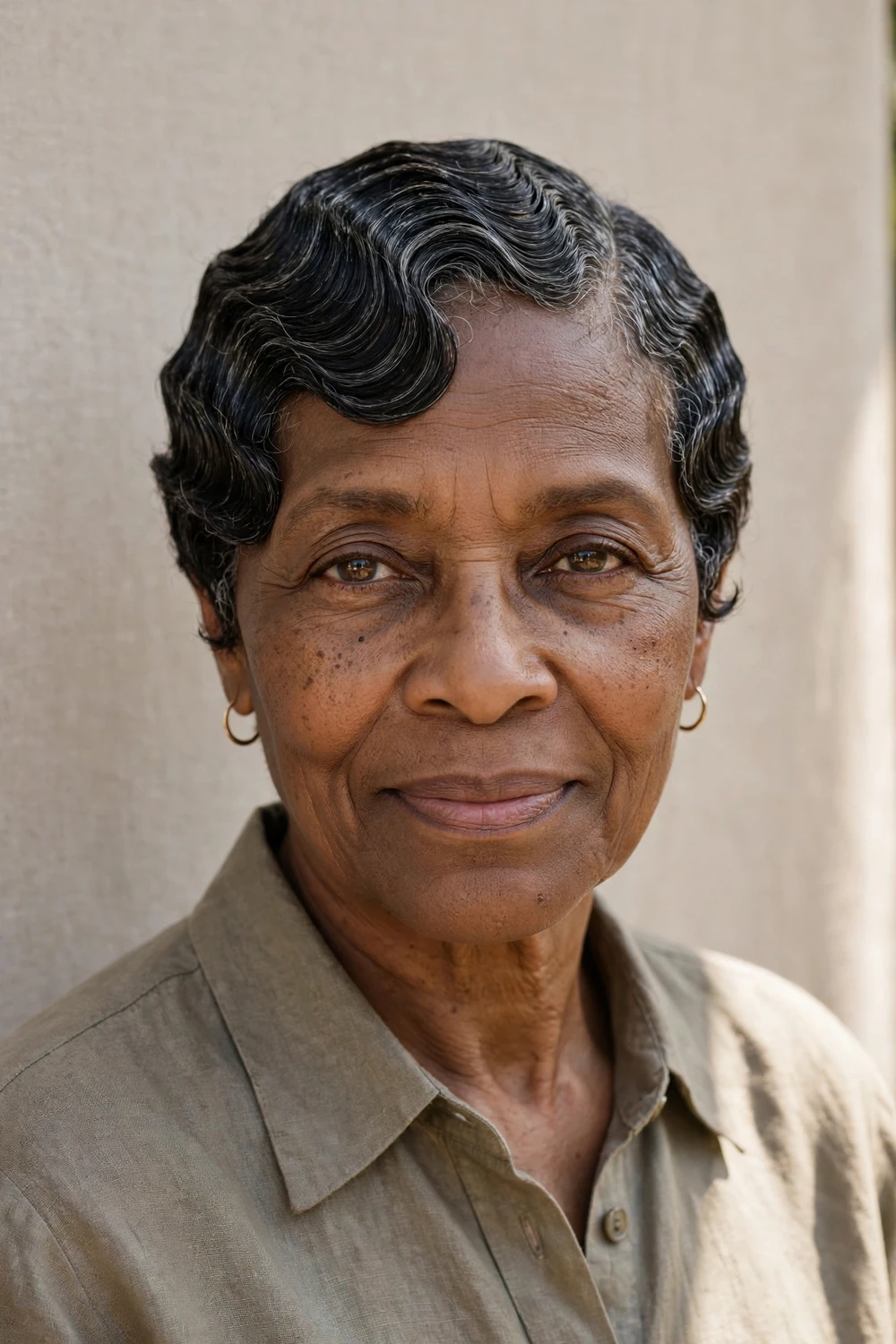
Finger waves lay the hair flat against the head in smooth S-shaped ridges, set with styling gel and a fine-tooth comb. On a low cut of about one inch, the waves read crisp and sculpted. This style suits formal events and anyone who wants a polished finish.
Set the waves on damp hair and let them dry completely before touching them. Sitting under a hooded dryer for 20 minutes locks the ridges in place. Wrap the style in a silk scarf at night to keep it for several days.
Try this: use a water-based gel with strong hold and keep a spray bottle handy. The hair must stay damp while you sculpt each wave.
Difficulty: Medium · Cost: $5–$12 (gel and comb; $40–$70 at a stylist)
8. Caesar Cut
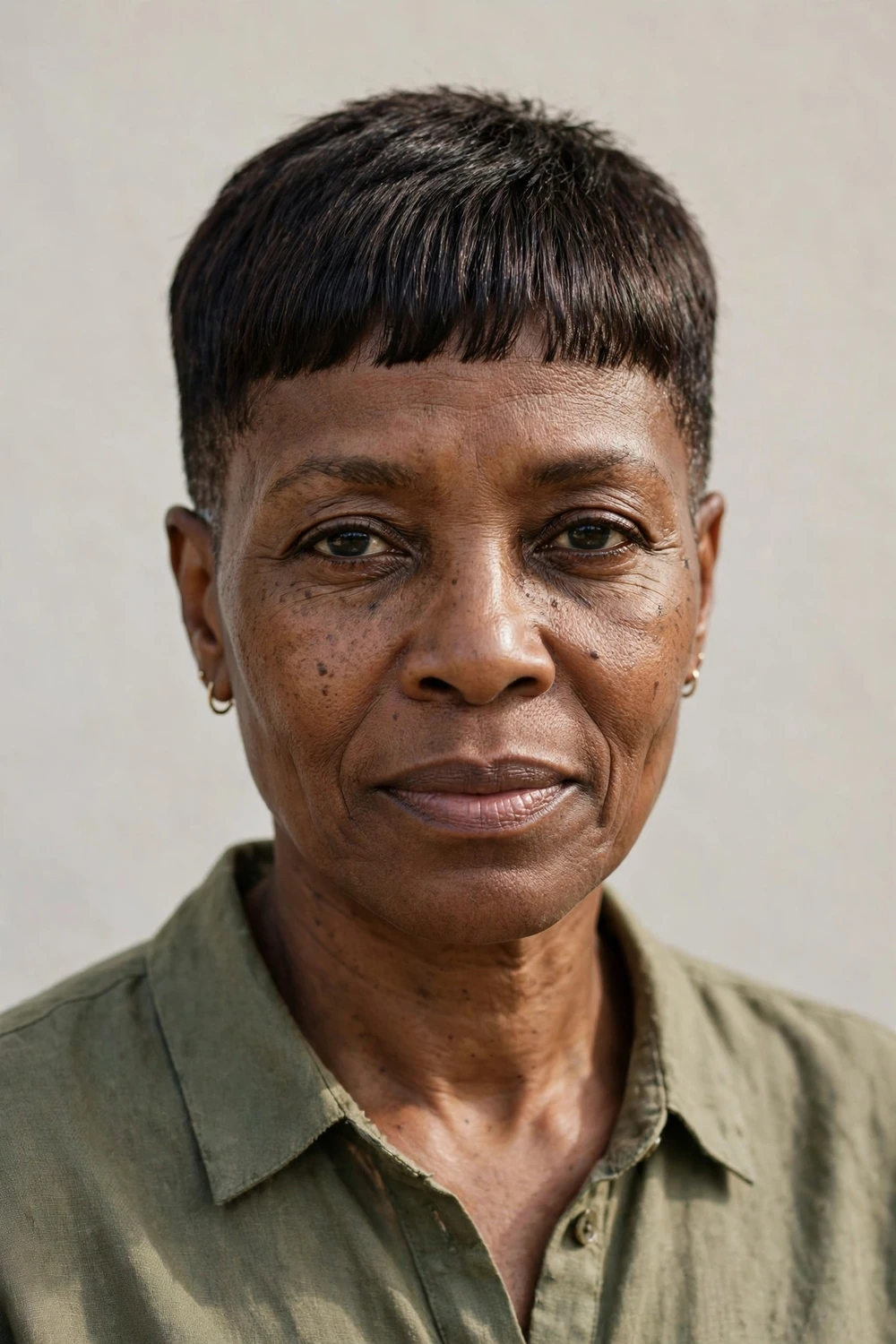
The Caesar keeps the top at about one inch with a short, straight fringe brushed forward across the forehead. The sides are tapered or faded. It is one of the oldest short cuts and still one of the cleanest, because the forward fringe balances a high forehead.
The fringe length is the whole decision. Too long and it covers the eyes; too short and it loses the Caesar shape. Ask for the fringe to sit just above the brows.
Try this: brush the top forward with a soft boar brush after applying a dime-sized amount of pomade. The forward direction trains the hair over a week.
Difficulty: Very easy · Cost: $25–$50 per barber visit
9. Tapered Afro with Defined Curls

This cut keeps three to four inches of curl on top while the sides and back taper down close. The shape is rounded, wider at the top, narrower at the ears. Defining the curls with cream or gel gives the top its structure.
Shrinkage changes the shape. Cut it slightly longer than your target, because the curls will draw up by as much as half once dry. A good barber cuts textured hair with this in mind.
Try this: do a wash-and-go on the top once a week and refresh with water and leave-in between washes. The tapered sides need no daily work.
Difficulty: Easy · Cost: $30–$60 per barber visit
10. 360 Waves
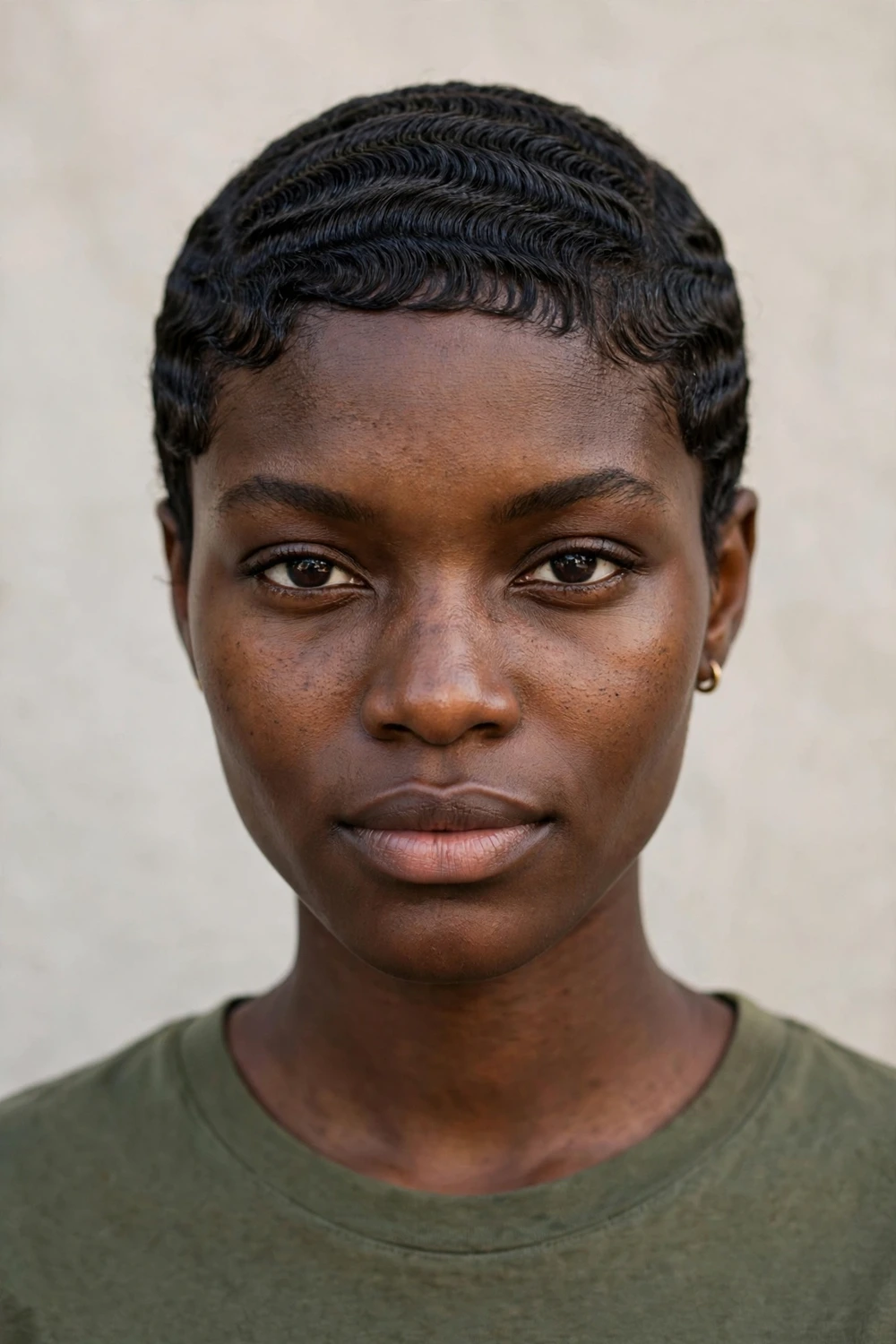
360 waves are the ripple pattern brushed into short hair all the way around the head. The hair is cut to about a #1 or #2 guard, then trained with daily brushing, wave pomade, and a durag. It takes four to six weeks of consistent brushing to set the pattern.
Consistency is the entire method. Brush for 15 to 20 minutes a day, wear the durag overnight, and keep the hair moisturized. Skipping days breaks the pattern and sets you back.
Try this: start with a fresh low cut from a barber who understands wave patterns. The cut direction sets the foundation the brushing builds on.
Difficulty: Medium (daily commitment) · Cost: $20–$40 per cut + $10–$20 (durag, brush, pomade)
Waves are one of several short natural options. Our short natural hair styles article covers more cuts at this length.
11. Color-Pop Buzz Cut
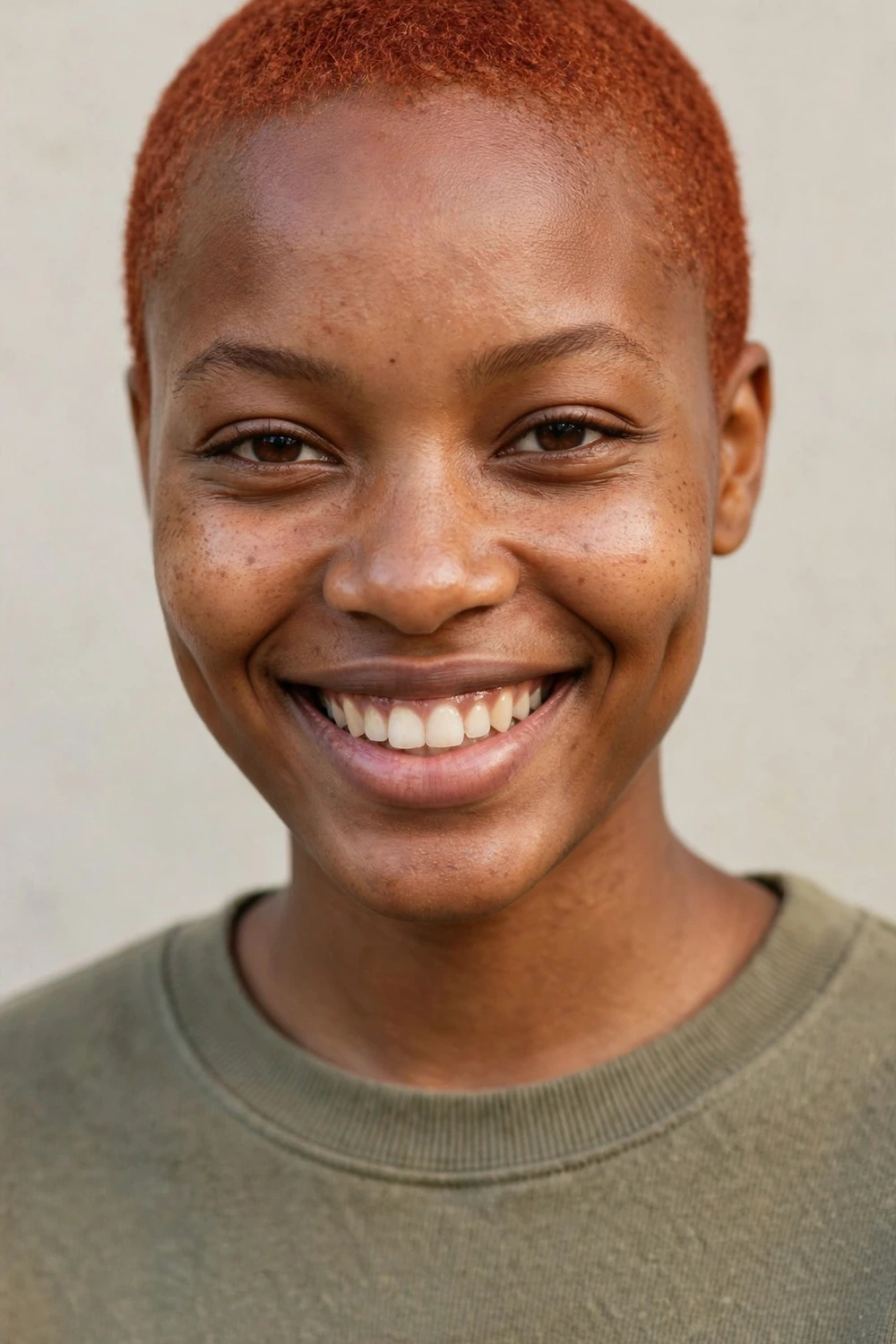
The same uniform buzz cut, but lifted with color: copper, honey blonde, platinum, or a bold red. Short hair takes color fast because there is so little of it, and the grow-out is simple since you just re-cut. Color on a buzz cut reads stronger than the same shade on long hair.
Bleach on short hair still needs care. The scalp is close to the color, so use a stylist for the first application rather than a box kit. Deep condition after every color session even at this length.
Try this: start with a semi-permanent color if you are unsure about the shade. It fades in a few weeks, which lines up with your next cut anyway.
Difficulty: Easy · Cost: $20–$40 per cut + $40–$90 for color
12. Low Cut with Shaved Design
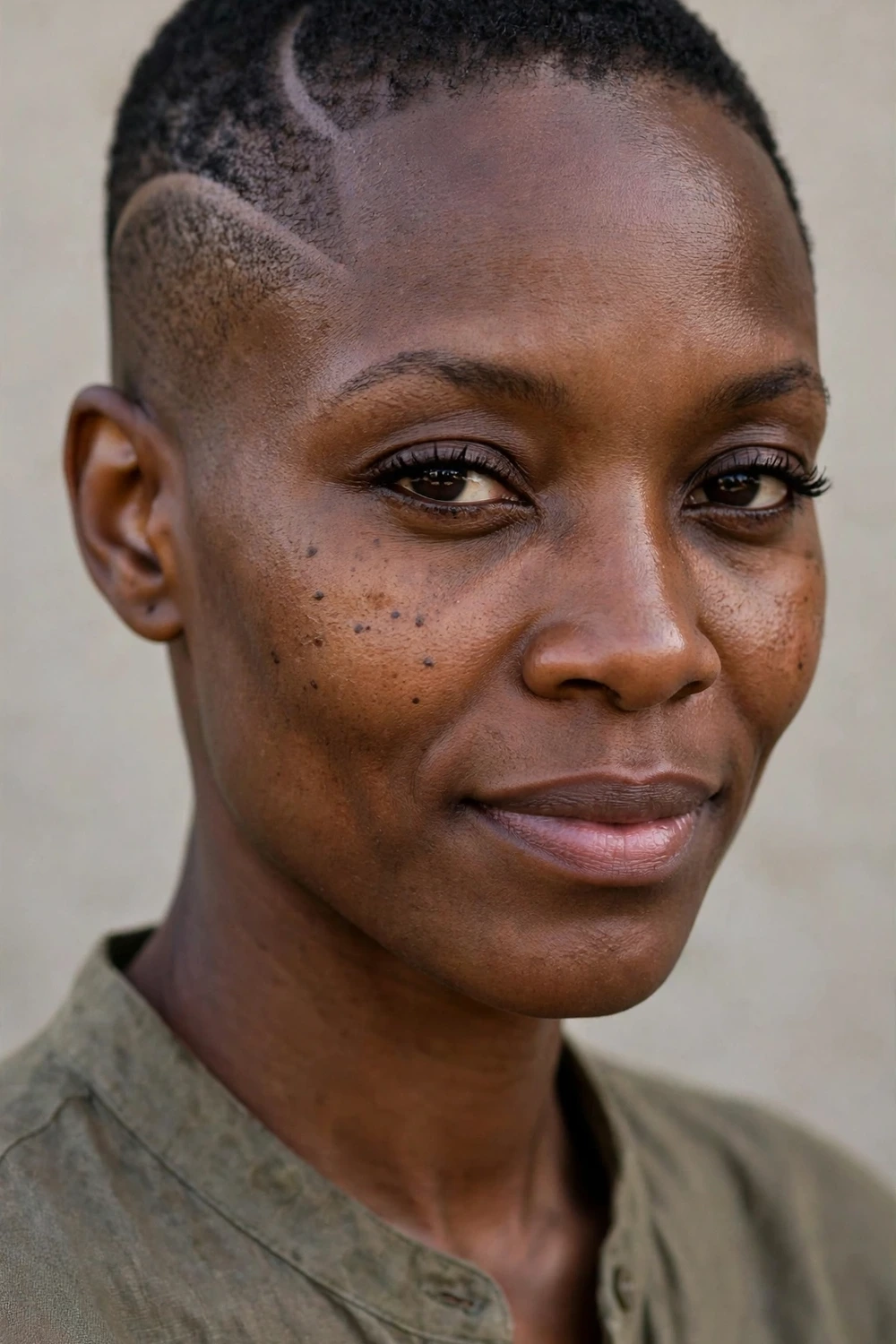
A curved line, zigzag, or geometric pattern shaved into the faded side of the cut. The design sits in the short faded area where it shows up clearly. Simple lines last two to three weeks before the regrowth blurs them; more detailed patterns need a touch-up every 10 days.
Placement matters. A design behind the ear stays subtle; one on the temple is a statement. Tell your barber where you want the attention before they start the clippers.
Try this: start with one curved line. It is the easiest design to maintain and it grows out cleanly if you decide against a second round.
Difficulty: Easy (barber does the work) · Cost: $35–$65 per visit
13. Temp Fade with Sharp Line-Up
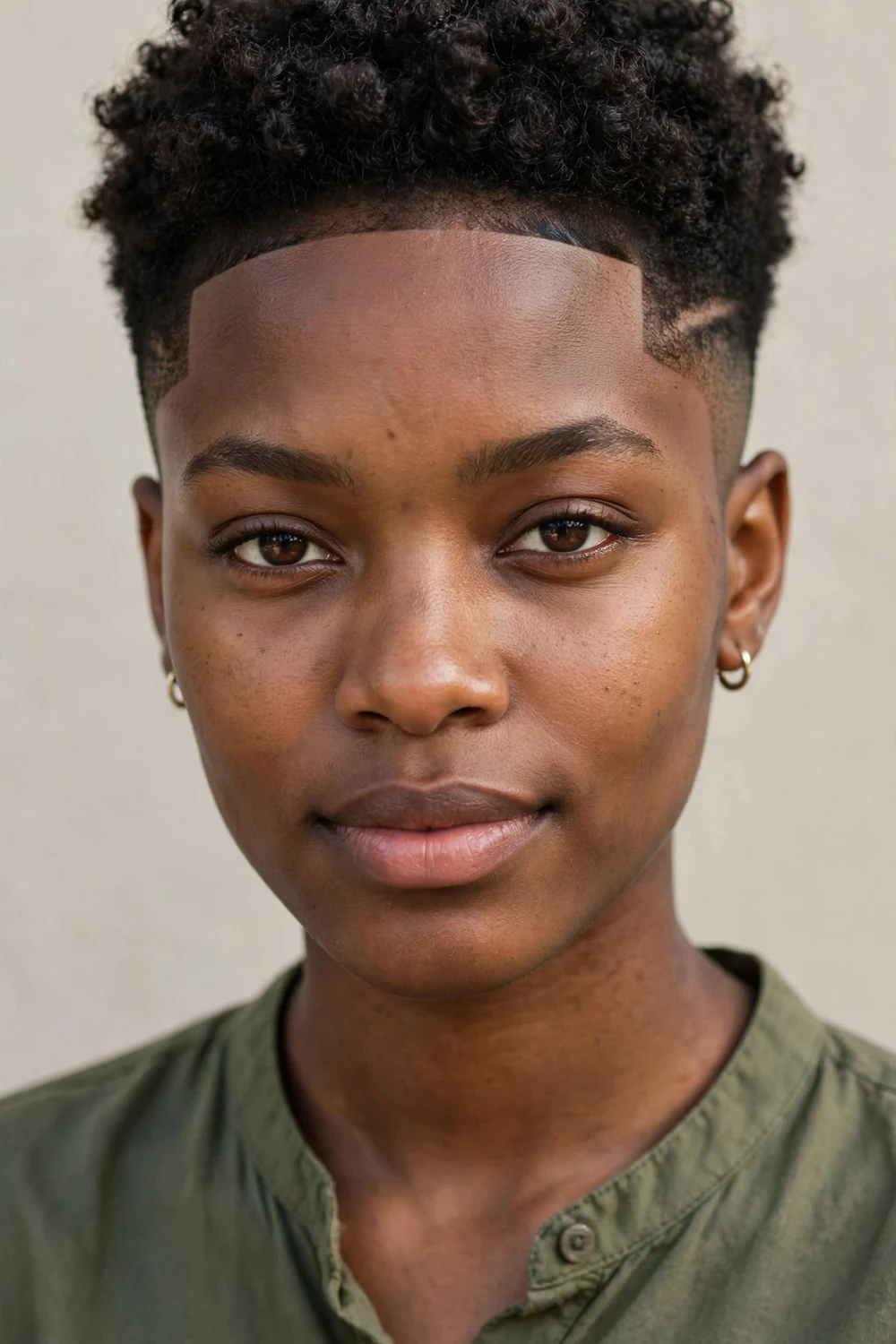
The temp fade (temple fade) blends the hair down to skin around the temples and sideburns while leaving the rest of the cut longer. Paired with a sharp line-up along the forehead, it gives a clean, defined frame to the face. The top can be a TWA, curls, or a short afro.
The line-up is the part that shows regrowth first. If you like the crisp look, book a line-up-only visit between full cuts. Many barbershops offer quick line-ups at a lower price than a full cut.
Try this: ask for the line-up to follow your natural hairline rather than pushing it back. It looks better as it grows out.
Difficulty: Easy · Cost: $30–$60 per full cut; $10–$20 for line-up touch-ups
14. Platinum or Silver Low Cut
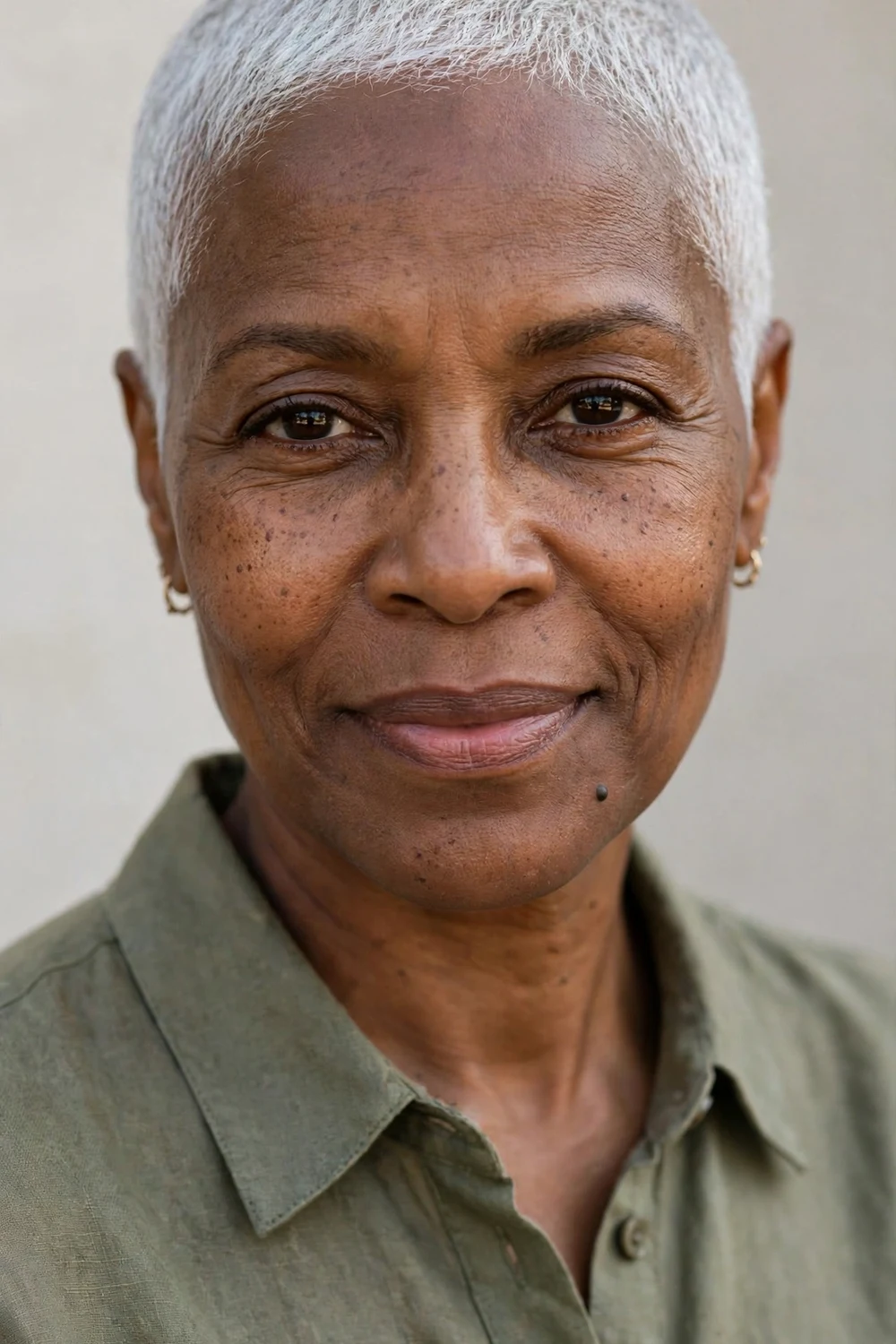
Platinum, silver, or gray on a low cut is striking because the color covers the whole head evenly. It works on natural gray hair blended with color and on anyone ready for a full change. Short hair means the bleach process is fast and the damage is cut away at the next trim.
Purple shampoo keeps the tone from going yellow. Use it once a week and keep the hair moisturized, because lightened hair dries out faster even at a quarter inch.
Try this: if your hair is already graying, ask for a silver blend instead of full platinum. It uses your natural gray as the base and needs fewer touch-ups.
Difficulty: Easy · Cost: $20–$40 per cut + $60–$120 for color
15. Tapered Cut with Nape Design
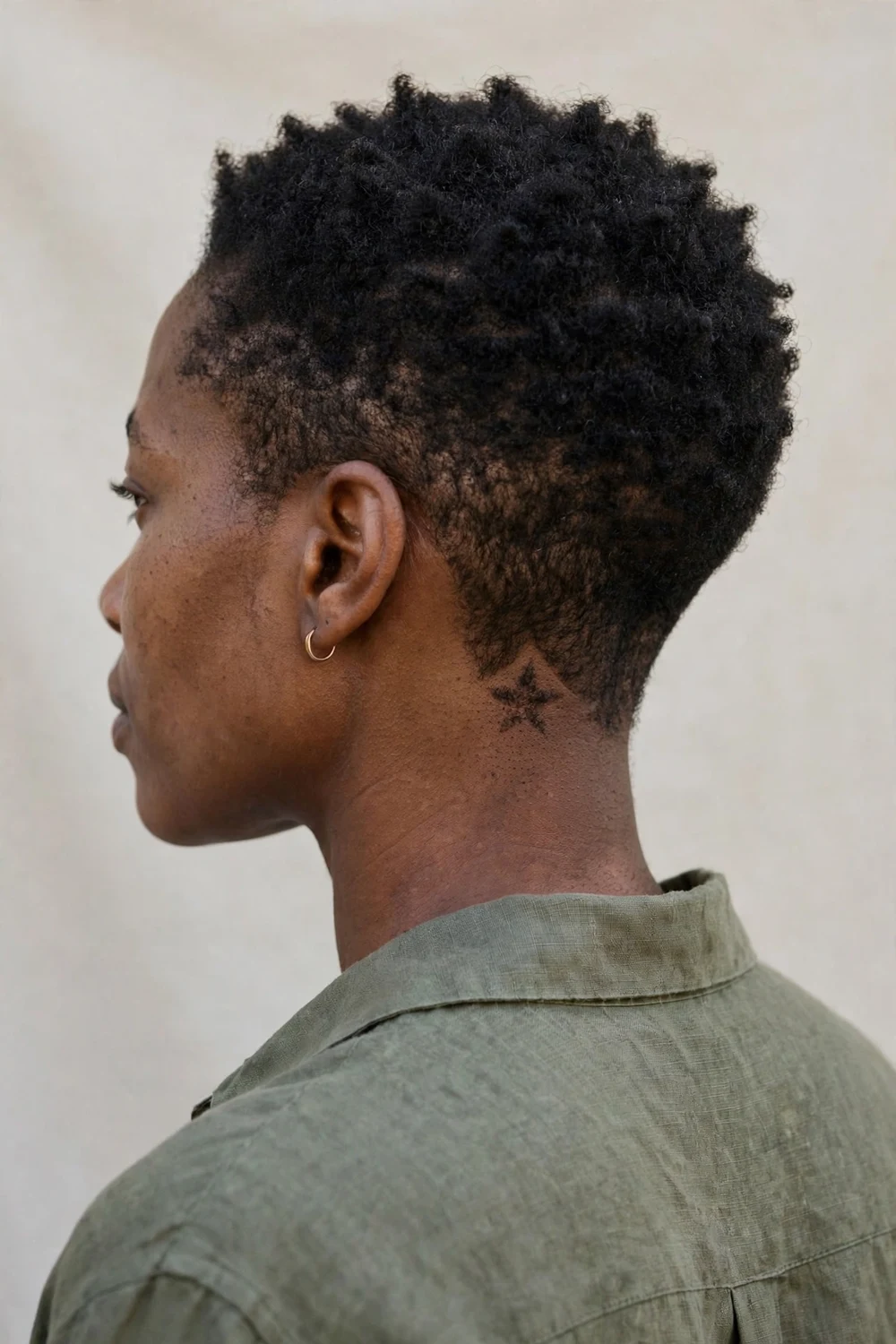
The design sits at the nape of the neck, hidden when the hair is down and visible when the top is pulled up or the head tilts. Small stars, lines, or curved patterns work best at this size. It is the low-key version of a shaved design.
Nape hair grows fast, so the design blurs in about two weeks. It is a good test spot if you are thinking about a bigger side design later.
Try this: pair it with a tapered cut rather than a full fade. The softer taper keeps the nape area neat enough for the design to read clearly.
Difficulty: Easy (barber does the work) · Cost: $30–$55 per visit
For more short-cut inspiration at this length, our short hairstyles for Black women guide covers cuts from pixies to tapered crops.
16. Sponge-Twist Low Cut
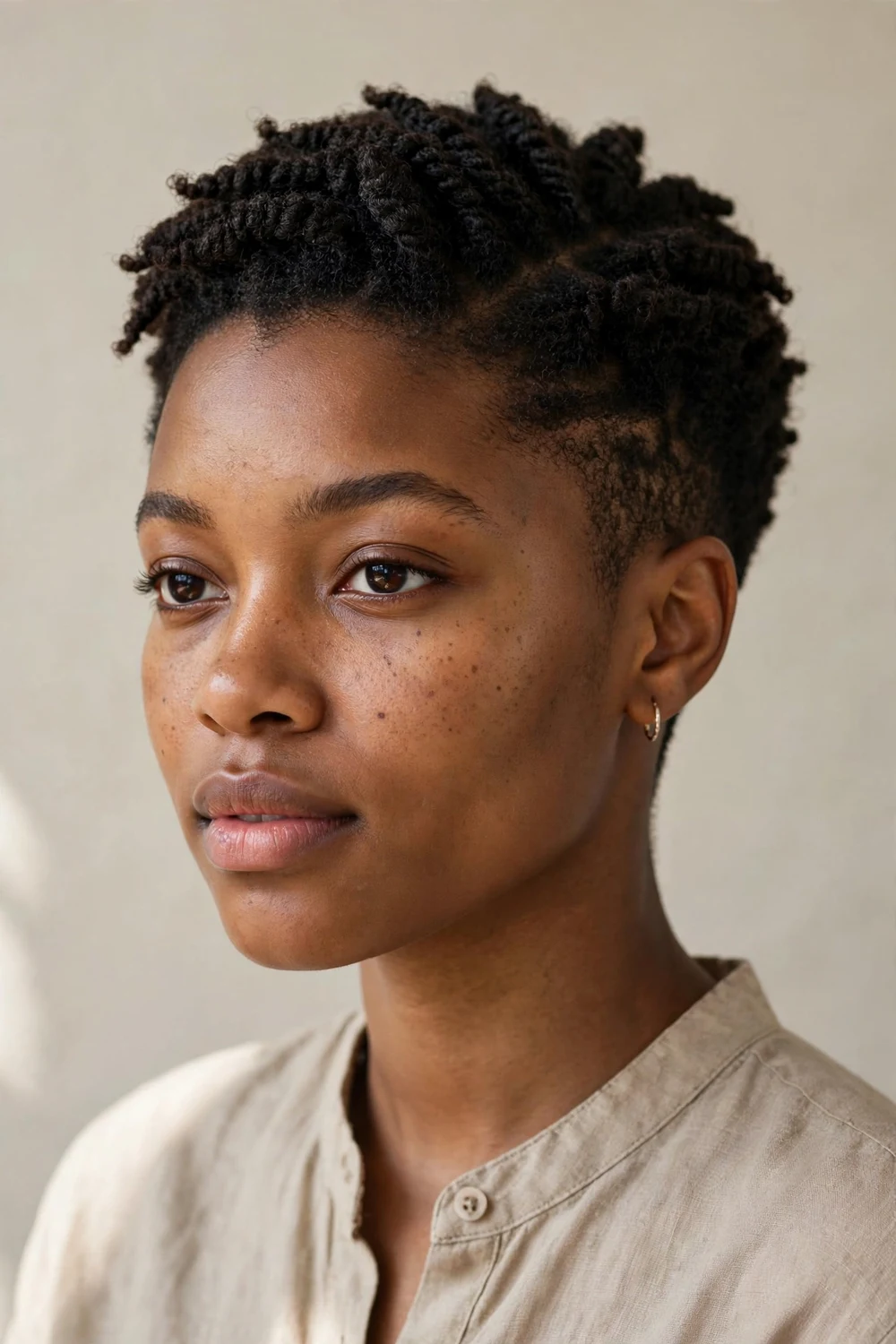
A curl sponge worked over damp, product-coated hair twists the coils into defined little twists across the whole head. It works best on hair between half an inch and one and a half inches. The result looks like mini two-strand twists with no actual twisting by hand.
The hair must be damp and coated with a twisting cream or gel before you start. Dry hair will not twist, and too much product leaves the coils crunchy. Work the sponge in small circles for 3 to 5 minutes.
Try this: do it at night and sleep in a satin bonnet. The twists set overnight and you wake up to a finished style.
Difficulty: Easy · Cost: $5–$10 (sponge and cream)
17. Low Cut with Laid Edges
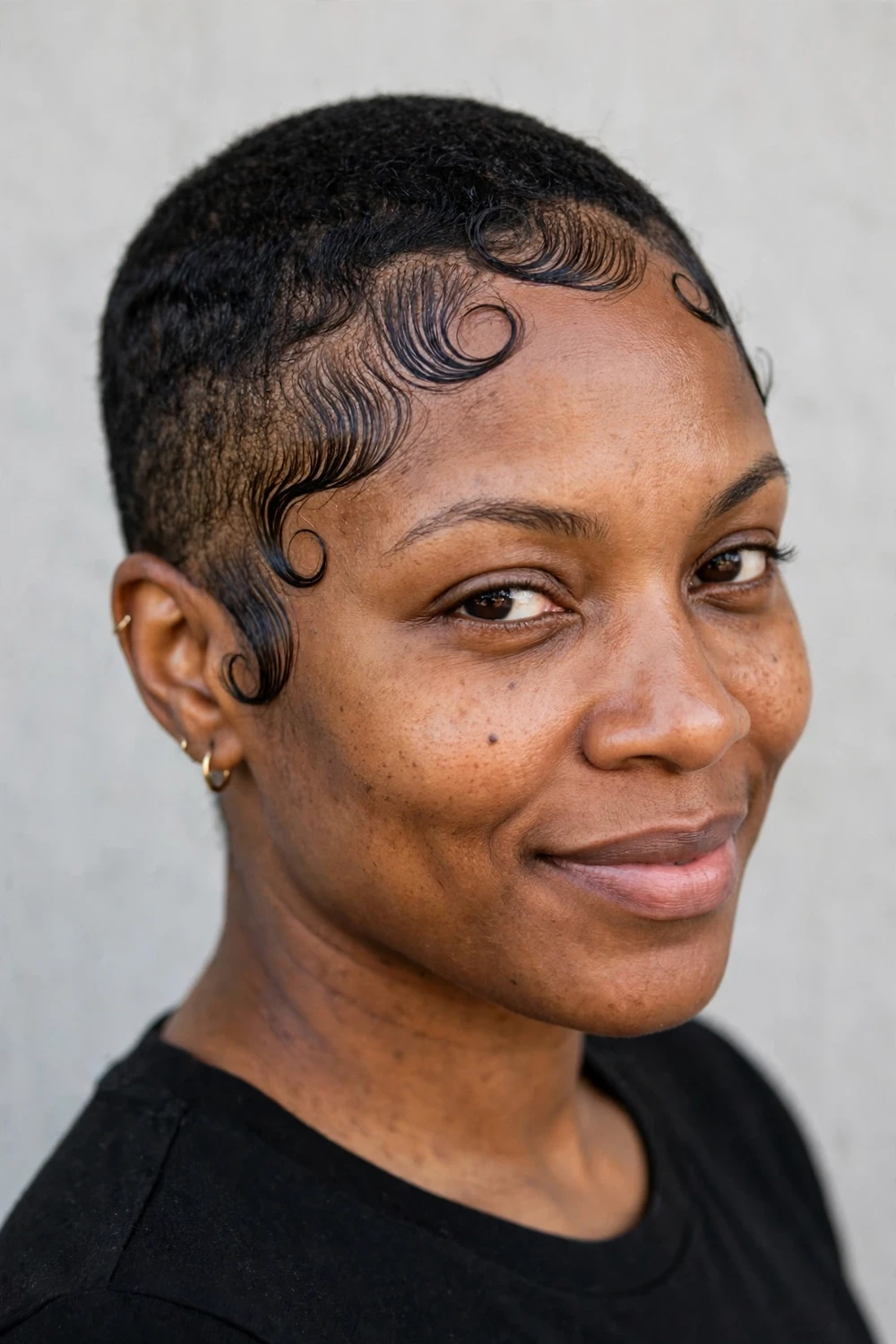
Laid edges are the swooped baby hairs along the hairline, set with edge control and a small brush. On a low cut they add a finished, styled detail that lifts the whole look. The technique works on any short cut and takes about three minutes.
Use a light hand with the edge control. A heavy layer flakes by midday and pulls the baby hairs into clumps. A pea-sized amount per section is enough.
Try this: tie a silk scarf over the edges for 10 minutes after styling. The pressure sets the swoops so they last all day.
Difficulty: Very easy · Cost: $4–$8 (edge control)
18. Drop Fade with Short Curls
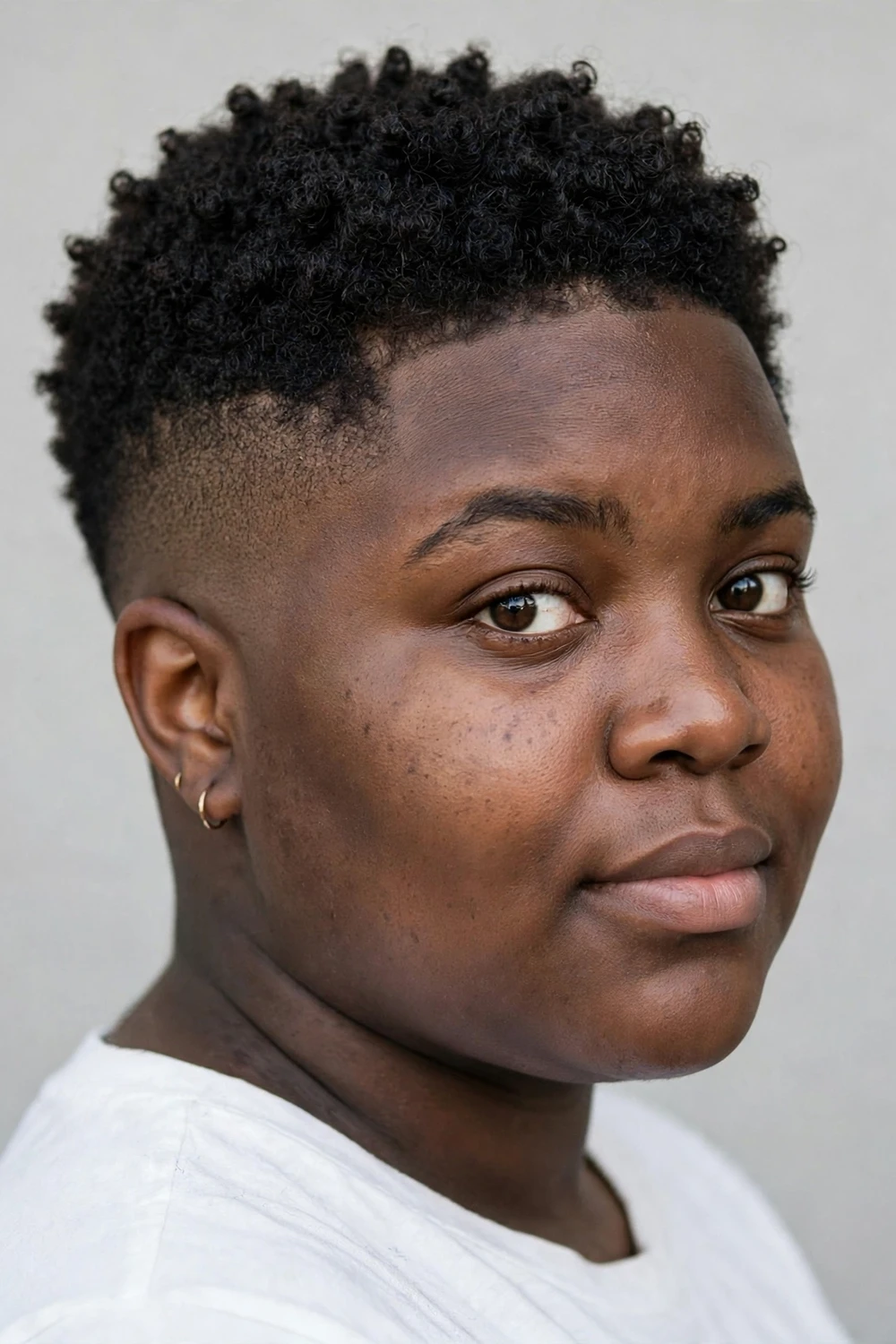
The drop fade follows the natural curve of the head, dipping lower behind the ears instead of cutting straight across. The top holds short defined curls at one to two inches. The curved fade line flatters round and oval faces because it follows the head’s shape.
The drop is subtle, so say the words “drop fade” clearly at the chair. A standard fade cuts the line straight across, which gives a different silhouette. Show a photo to be sure.
Try this: define the top curls with a curl-defining cream on wash day and refresh with a water spray. The fade needs no daily styling.
Difficulty: Easy · Cost: $30–$60 per barber visit
19. Low Mohawk Fade
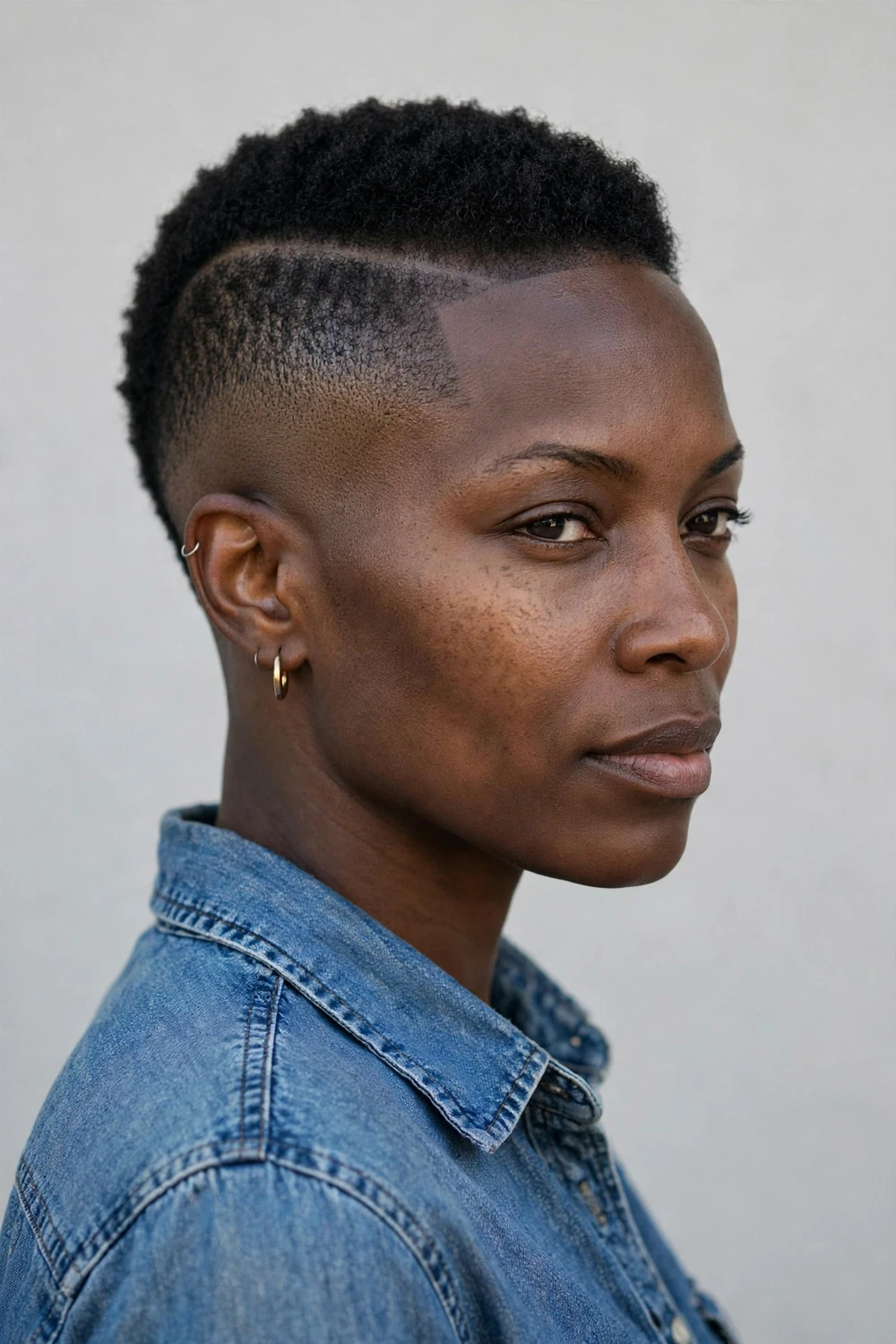
A narrower strip than the frohawk, with the sides faded down to skin and the top strip kept at one to two inches. The strip can be worn forward, brushed up, or twisted. It is the most defined version of the mohawk family and it suits oval and heart-shaped faces.
The strip needs enough length to show texture, so don’t let the top go below one inch. The sides need a touch-up every two weeks to keep the contrast sharp.
Try this: brush the strip upward with a little styling gel for height on special occasions, and wear it forward for everyday.
Love the faded sides on the mohawk? Our roundup of shaved hairstyles older black women low maintenance covers 30 buzz cuts, fades, and tapered crops with real upkeep plans for natural texture.
Difficulty: Easy · Cost: $30–$60 per barber visit
20. Big Chop Starter Cut
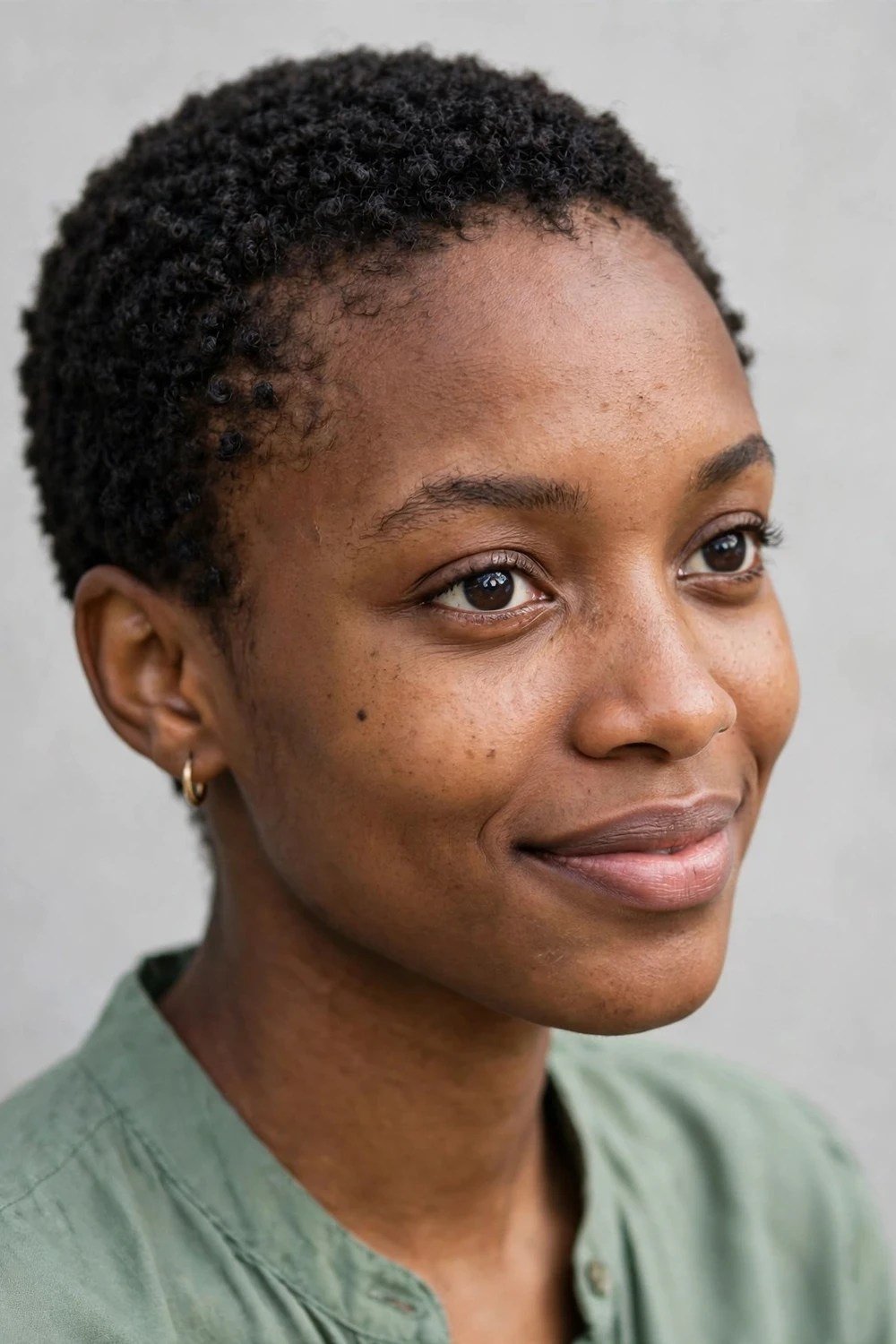
The big chop cuts off all relaxed or damaged ends at once, leaving only the natural texture. The resulting cut is usually a TWA-length crop. It is a fresh start for the hair: no more two textures to manage, no more breakage at the line where relaxed meets natural.
Plan the cut, don’t rush it. Decide whether you want it done at a salon or by a trusted barber, and have your after-care ready: a sulfate-free shampoo, a deep conditioner, and a leave-in. The first month is about learning your natural texture.
Try this: take a photo on chop day and again each month. The growth progress keeps you motivated through the awkward stages.
Difficulty: Very easy (one cut) · Cost: $30–$70 for the cut
The big chop is the start of a natural hair journey. Our natural hairstyles for Black women guide picks up where this cut leaves off, with styles for every growth stage.
How to Choose the Right Low Cut
Start with your face shape. Round faces do well with height on top: a mid fade with curly top or a frohawk adds length to the face. Oval faces can wear almost anything, including the buzz cut and the high bald fade. Square faces suit softer transitions, like the low taper fade, which rounds the silhouette.
Then be honest about maintenance. If you want the barber doing most of the work, pick a fade and accept the two-to-three-week schedule. If you want to stretch visits to a month or more, pick a taper or a TWA. The cut only looks as good as its last trim, so choose the schedule you will actually keep.
A few things to avoid: pushing the hairline back with every line-up, since repeated shaping thins the front over time. Going straight to a skin fade on your first short cut, since the grow-out is harder to manage. And skipping moisture because the hair is short. Short hair still needs oil or leave-in every day.
Quick Comparison
| Cut | Top length | Barber schedule | Best for |
|---|---|---|---|
| Buzz Cut | 1/8–1/4 inch | Every 3–4 weeks | Lowest maintenance |
| Classic TWA | 1/2–1 inch | Every 3–4 weeks | Natural texture |
| Low Taper Fade | 1–2 inches | Every 3–4 weeks | Soft grow-out |
| Mid Fade, Curly Top | 2–3 inches | Every 2–3 weeks | Styling range |
| High Bald Fade | Under 1 inch | Every 2 weeks | Sharpest look |
| Caesar Cut | About 1 inch | Every 3 weeks | High foreheads |
| 360 Waves | 1/8–1/4 inch | Every 2–3 weeks | Daily brushers |
| Big Chop Starter | 1/2–1 inch | As it grows | Fresh natural start |
Frequently Asked Questions
What is the best low cut for Black women with 4C hair?
The classic TWA and the tapered afro with defined curls show off 4C texture best, because the cut is built around the coil pattern. A low taper fade also works well since the short sides need no texture management. Avoid cuts that need the top to lie flat, like finger waves, unless you plan to use heat or gel daily.
How often should I get my low cut trimmed?
Fades and skin fades need a trim every 2 to 3 weeks to stay sharp. Tapers, TWAs, and buzz cuts can go 3 to 4 weeks. Line-up-only touch-ups between full cuts keep the hairline clean for $10 to $20. Book your next visit before you leave the chair so the schedule holds.
Can I get a low cut if I am growing out relaxed hair?
Yes, and many women do it as the big chop: cutting off all the relaxed ends at once. If you are not ready for that, grow the natural hair to at least two inches first, then cut the relaxed ends gradually. A barber experienced with natural hair can shape the transition.
How do I keep my scalp healthy with a low cut?
Wash every 7 to 10 days with a gentle shampoo, since product builds up on the scalp even at short lengths. Massage a light oil into the scalp after washing. If you wear a durag or bonnet nightly, wash it weekly so it does not transfer buildup back to your scalp.
Will a low cut suit my face shape?
Yes, with the right version. Round faces gain balance from height on top, like a mid fade with curly top. Oval faces suit nearly every low cut. Square faces look best with softer blends like the low taper. Heart-shaped faces do well with a frohawk or mohawk strip that adds width at the crown. Bring photos to your barber and ask what suits your bone structure.
Final Thoughts
A low cut is a decision you make once and enjoy every morning after. Pick the version that fits your maintenance budget and your face shape, find a barber who cuts natural hair well, and keep the moisture routine simple. Short hair done right turns heads without trying.
For more short natural options beyond barber cuts, our short afro hairstyles for Black women collection covers fuller shapes at slightly longer lengths.

