


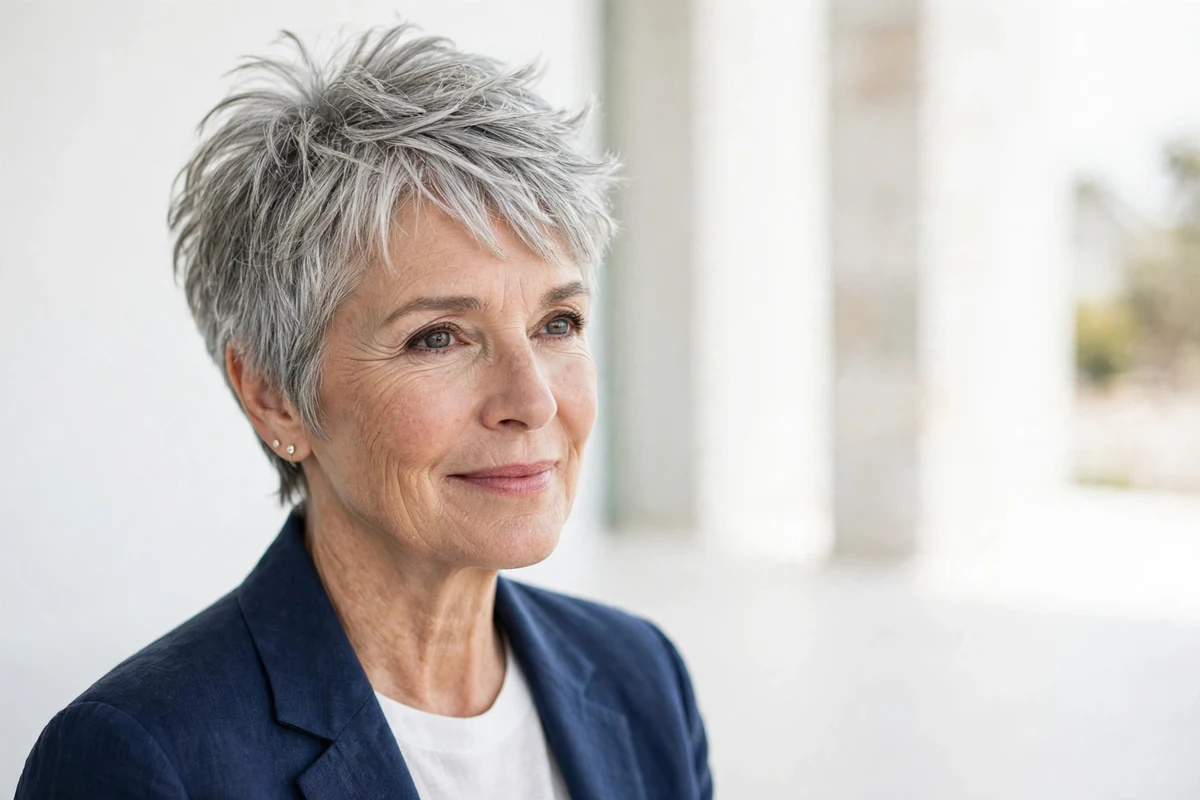
If your hair is fine and you’re past 50, the choppy pixie might be the smartest cut you ever get. Short layers cut with texture do what products alone can’t: they create lift, movement, and the illusion of density. No more flat roots by lunchtime.
This guide rounds up 29 choppy pixie cuts for fine hair over 50, pulled from what stylists actually recommend for thinning strands. You’ll get volume-boosting shapes, gray-friendly colors, and honest styling notes for each one. I keep coming back to this cut for fine-haired readers because the right choppy pixie holds its shape all day with almost no effort.
Quick answer: Choppy pixie cuts add volume to fine hair over 50 through textured, point-cut layers that create lift at the crown. The best versions pair short tapered sides with longer, piece-y tops, need only a pea-size amount of texturizing product, and look good on straight, wavy, and silver hair alike.
Quick Takeaways
- Choppy, point-cut layers create the illusion of thicker hair by adding movement and catching light at the crown.
- Fine hair over 50 needs short sides, longer textured tops, and lightweight products only; heavy creams flatten everything.
- Plan a trim every 4 to 6 weeks; pixies lose their shape fast as they grow.
- Gray and silver hair shows choppy texture at its best, and a root fade or lowlights can hide thinning at the scalp.
- Work in stages if you’re nervous: start with a longer pixie and go shorter over two or three visits.
Why Choppy Pixies Work So Well for Fine Hair After 50
Fine hair goes flat because each strand has less weight and structure. A blunt cut makes that worse: every strand lies in one plane and the scalp shows through. Choppy layers break that plane. Different lengths stack, catch light at different angles, and the crown looks fuller even when density hasn’t changed.
The second advantage is maintenance. After 50, hair often gets finer at the temples and crown while growing slower overall. A pixie keeps the weakest, most breakage-prone ends off your head entirely. You’re always working with fresh growth, which looks healthier by default.
One honest caveat: a pixie needs styling. Wash-and-go alone will leave the choppy texture looking shapeless. The trade is fair, though: two minutes with product each morning replaces long blow-dry sessions.
How to Ask Your Stylist for the Right Choppy Pixie
Bring photos, but also use the right words. Ask for point-cutting or razor texturing through the top: not blunt ends. Blunt edges on fine hair look stringy within days. Request a tapered (not clippered-to-the-skin) nape and sides, which keeps the cut feminine and soft.
Mention your cowlicks and growth patterns before the first snip. Crown cowlicks give free lift; temple cowlicks can wreck a fringe. A stylist who knows short hair will adjust the layer direction around them. And book your next trim before you leave the salon: six weeks out is the safe window.
1. Classic Tousled Choppy Pixie
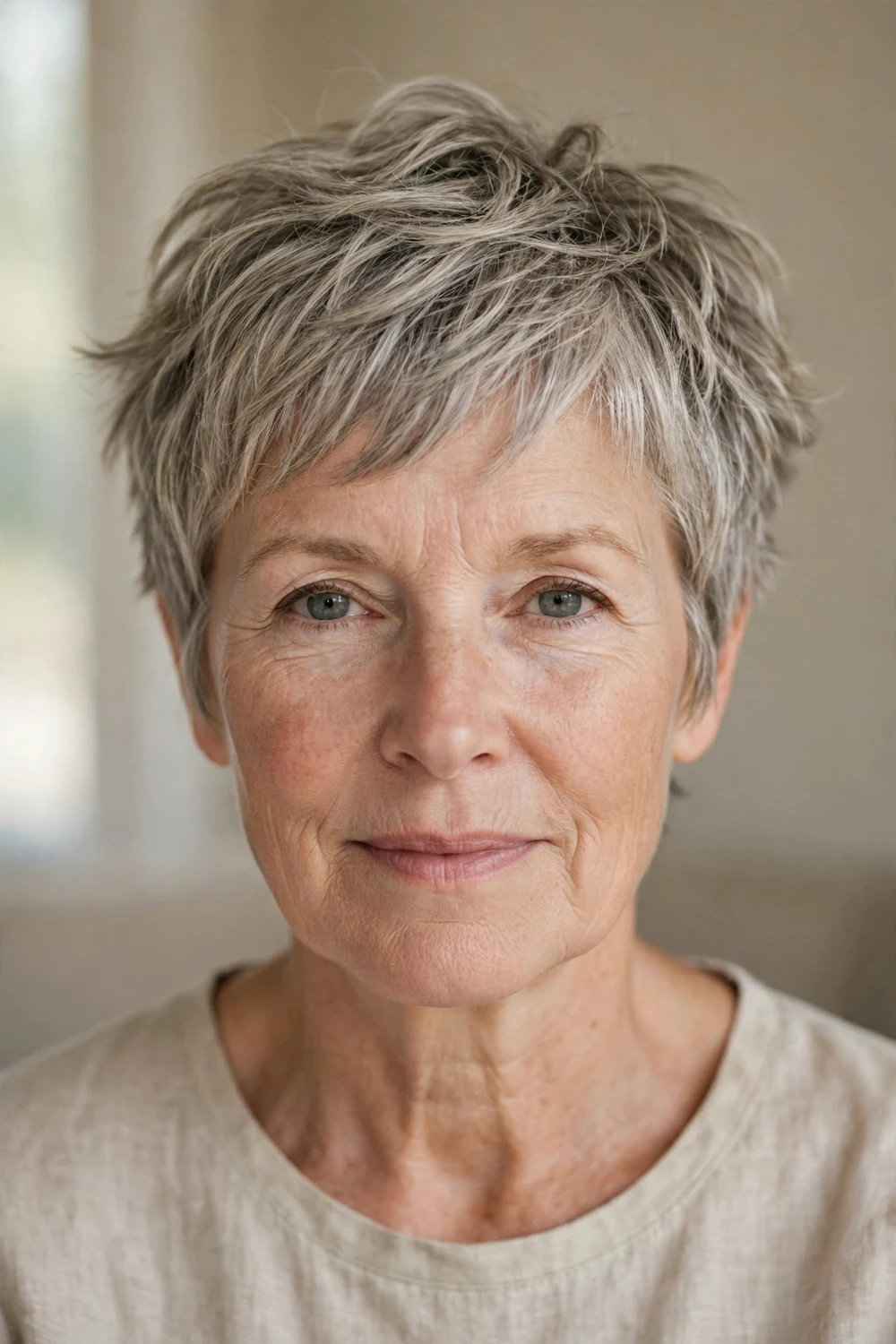
This is the choppy pixie in its purest form: short, uneven layers all over, pushed in different directions with the fingers and left undone. Nothing needs to line up or lie flat, which makes it one of the most forgiving cuts after 50: a cowlick or a flat spot just becomes part of the texture.
Ask for point-cut layers rather than blunt ends, and keep the sides soft instead of clipped tight. For fine hair, the broken-up ends stop the cut from reading thin; each layer edge catches light separately and the whole crown looks denser. In the morning, work a pea-size amount of texturizing putty through dry hair, pinch the ends, and you’re done in under two minutes.
Try this: Skip the blow dryer twice a week. Let it air-dry with a mist of sea-salt spray, , then pinch pieces into place once dry, and the texture holds better with less heat.
2. Choppy Pixie with Point-Cut Layers
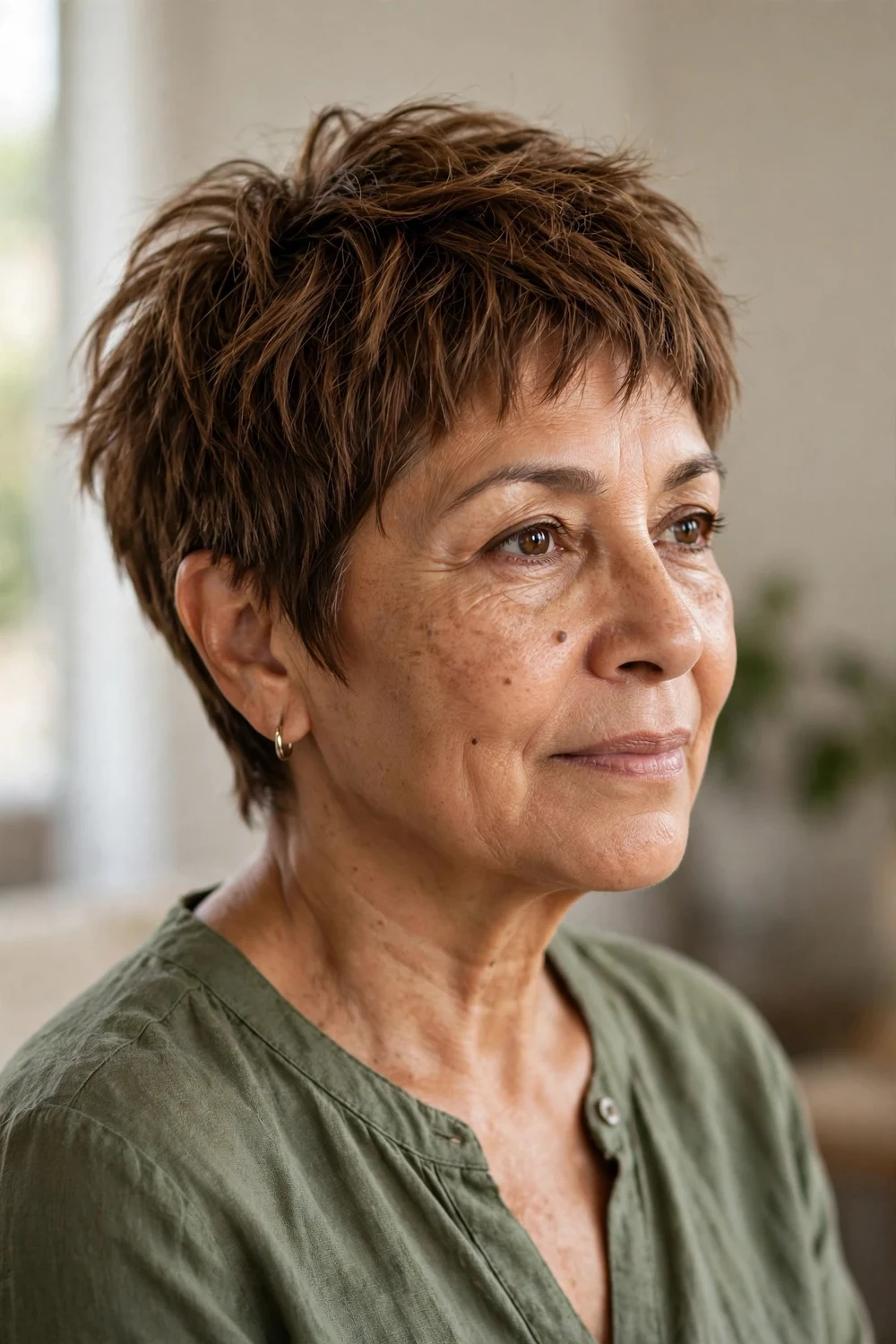
Point-cutting is the technique behind most great choppy pixies. Instead of cutting straight across, the stylist snips into the ends at an angle, removing bulk without shortening the layer. On fine hair this matters because you keep the density you have while gaining the texture you need.
The result reads as effortless rather than choppy-for-the-sake-of-it: soft, feathery ends that separate naturally. This version suits oval, heart, and square faces because the broken fringe softens a strong jaw. It’s also the cut to ask for if your hair is fine but you have a lot of it; the interior point-cutting prevents the dreaded mushroom silhouette.
Try this: At your appointment, say “point-cut the ends, keep the density.” If your stylist reaches for thinning shears instead, ask them to stick with point-cutting; shears can make fine ends look wispy over time.
3. Piece-y Silver Choppy Pixie
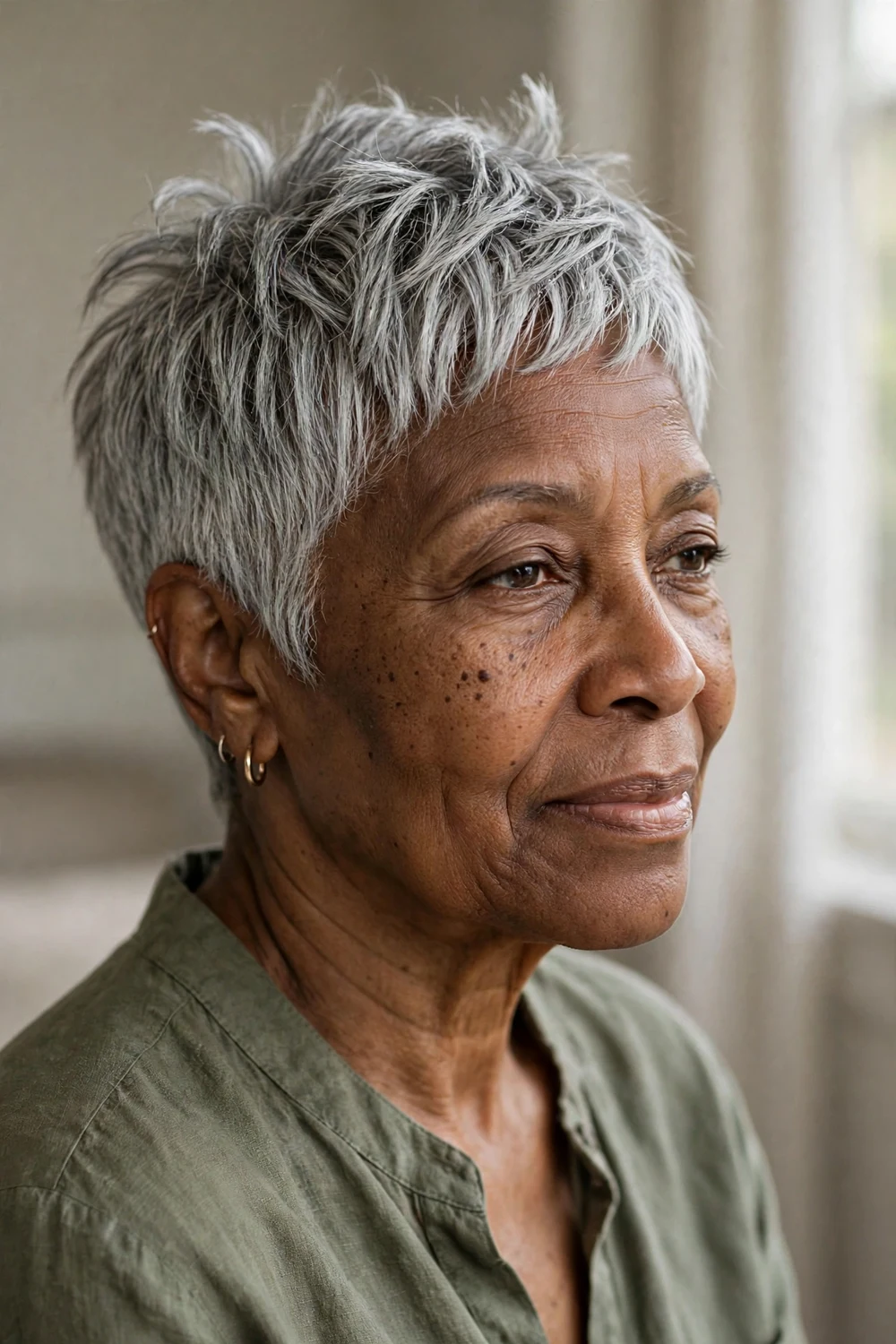
If you’re wearing your silver proudly, separation is your best friend. Breaking the hair into defined pieces stops gray hair, which can look wiry and flyaway when it’s all one mass, from reading as frizzy, and turns it into deliberate, modern texture instead.
Keep the pieces chunky rather than wispy, and pinch them into place with putty instead of brushing them out. Brushing destroys the separation that makes this cut work. A purple shampoo once a week keeps the silver bright and free of yellow tones between salon visits.
Try this: Rub a pea-size dab of matte paste between your palms until it goes almost invisible, then press it into the ends. Too much product on silver hair shows as dull buildup; less is genuinely more.
4. Long Choppy Pixie
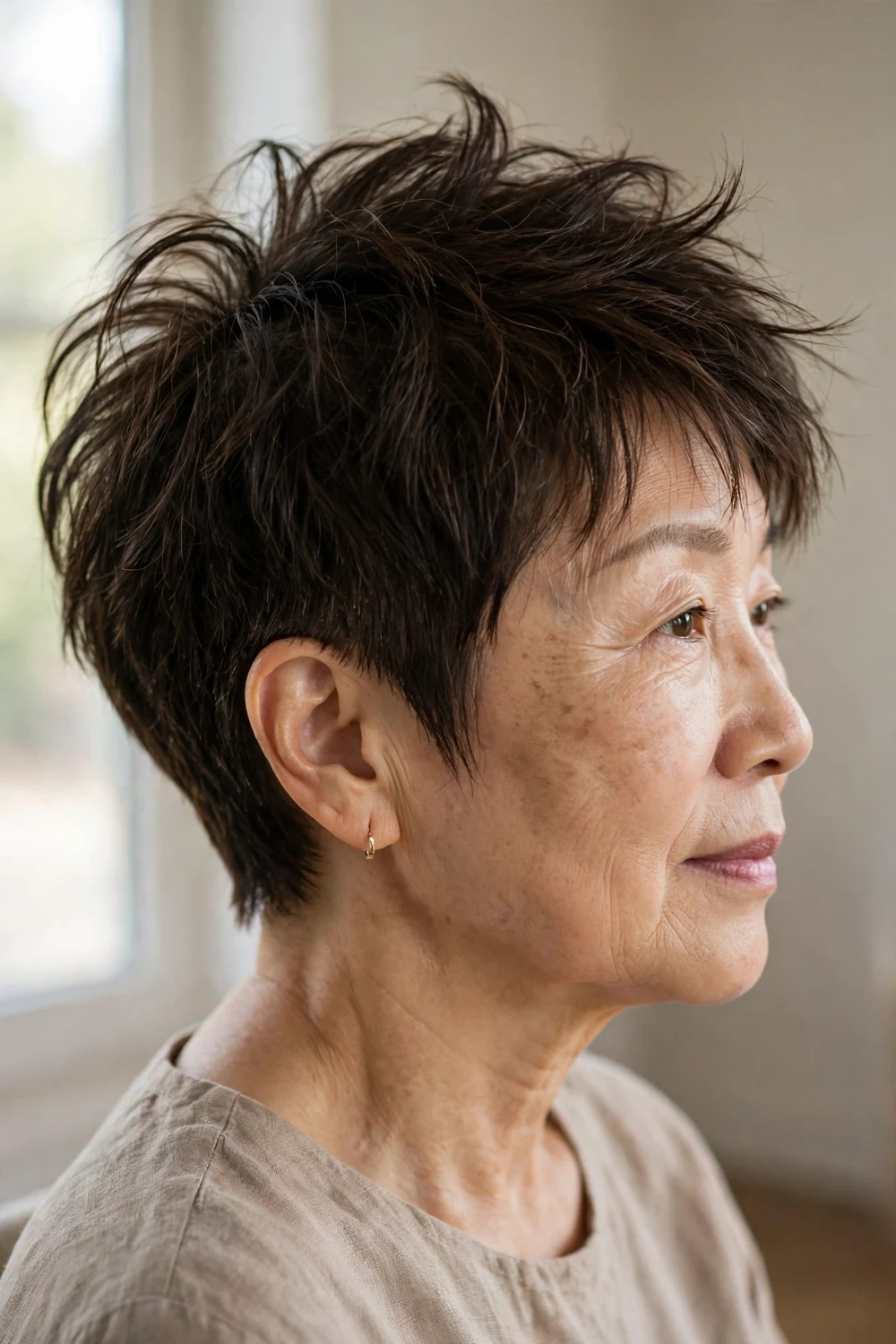
Not ready to go very short? The long choppy pixie keeps length on top while the sides are cut closer for balance. For fine hair, that extra bite at the crown makes the whole head feel fuller, and the longer top still shapes the face and softens sharp angles.
This is the ideal first pixie for long-hair converts: it shifts from day to night with simple tweaks, tucks behind the ear on one side, and can be swept forward or back. A little texturizing spray is all it needs for a casual, lifted look. If your hair is fine, apply a root-lift product at the crown before drying to stop the longer top going flat by afternoon.
Try this: Rough-dry the top upside down for 30 seconds before styling. Flipping your head over is the cheapest volumizer ever made, and it works best on longer pixie tops.
5. Edgy Choppy Pixie with Jagged Ends
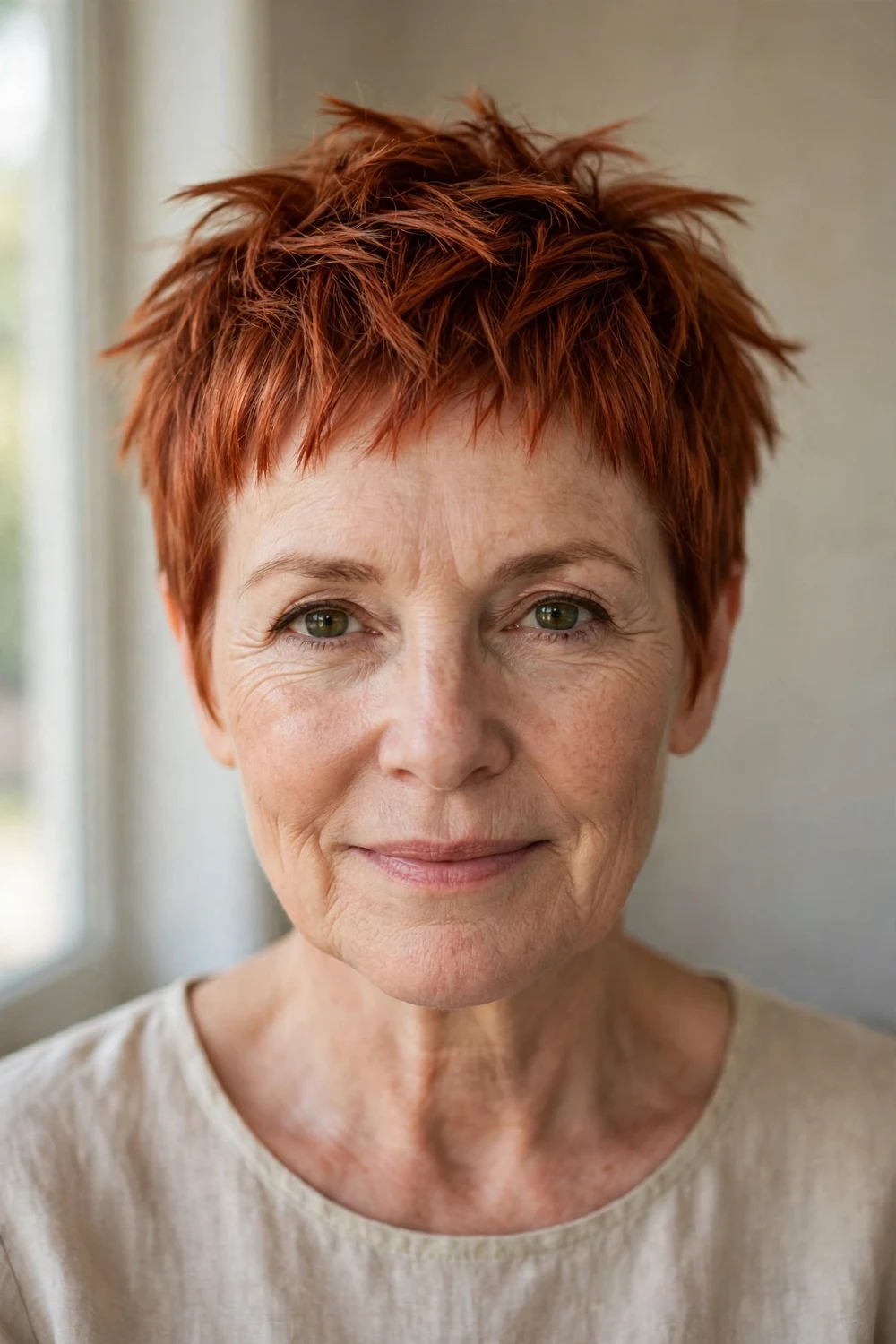
Uneven lengths and rough texture give this cut its energy. The jagged ends lift the crown and add angles that flatter round faces, and on fine hair the deliberate unevenness reads as deliberate style rather than thinness.
This one shines on women who want a confident, modern look without a long routine; you shape it in minutes with your fingers. Pair it with a warm color like copper or warm blonde to turn the texture up a notch. Trim every 4 to 6 weeks to keep the edges sharp; once the jagged ends grow out, the cut loses its point.
Try this: Work pomade through towel-dried hair, then dry with your fingers pointing in different directions. Finish with a light matte spray so the jagged pieces stay separated all day.
6. Softly Layered Pixie with Subtle Highlights
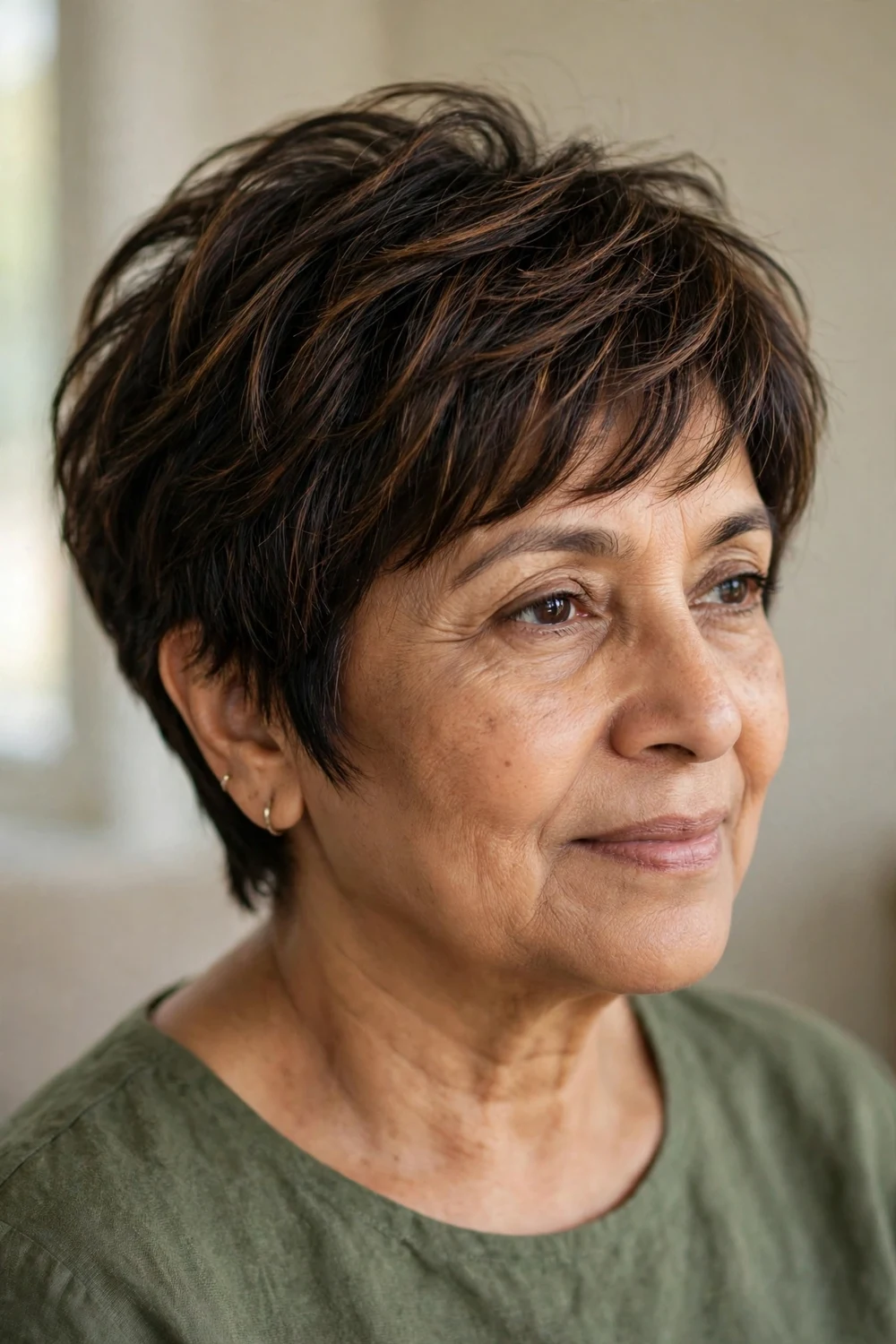
Gentle layers around the crown and sides make this the softest entry on the list. It works well on fine hair because the layering adds lift without bulk, and subtle highlights catch light at the layer edges so each one reads separately.
The highlights do real work here: fine hair with one flat color shows the scalp more, while dimension from lowlights and highlights disguises thinning. Keep the contrast soft; chunky streaks on a pixie look dated. This style is versatile, grows out gracefully, and stays easy to manage with a quick mousse and a round brush at the crown.
Try this: Ask your colorist for babylights through the crown only. They’re the subtlest highlight and they fade out without a hard line, so grow-out is painless.
7. Textured Pixie with Bangs
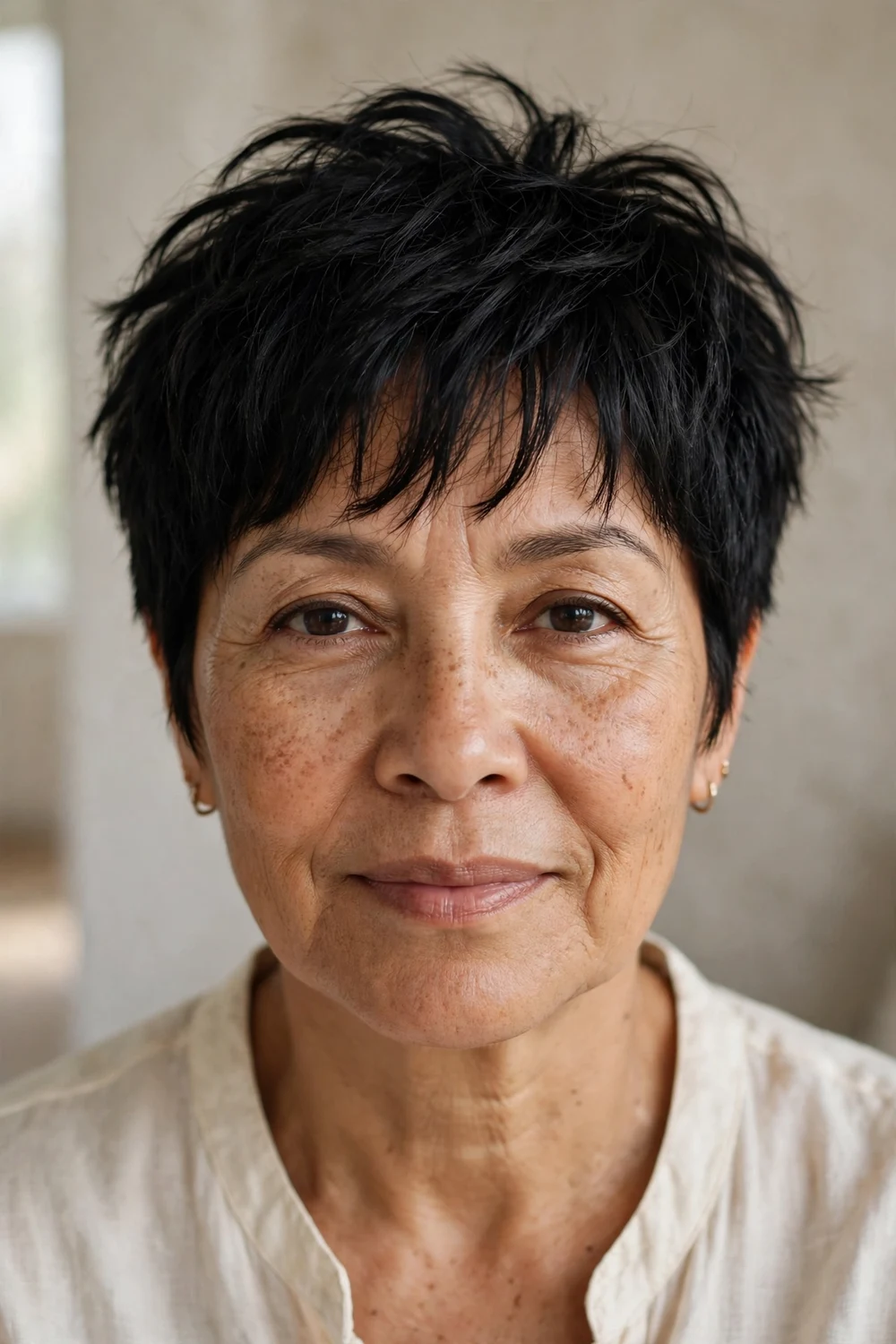
Short sides and back with a longer textured top create movement you can see and feel. Adding bangs (blunt or wispy, your call) gives the cut a frame that flatters forehead lines without looking heavy.
Blunt bangs give a bold frame and work with straight or lightly wavy hair; wispy bangs soften the face and add air around the eyes. Either way, the bangs add visual weight at the front where fine hair tends to go sparse. Keep them at brow or lash length; too short and they shrink with styling, too long and they fall flat.
Try this: Style the bangs first while they’re damp, before they dry in a cowlick direction. A pea-size amount of lightweight cream, finger-combed into place, sets them in under a minute.
8. Asymmetrical Choppy Pixie
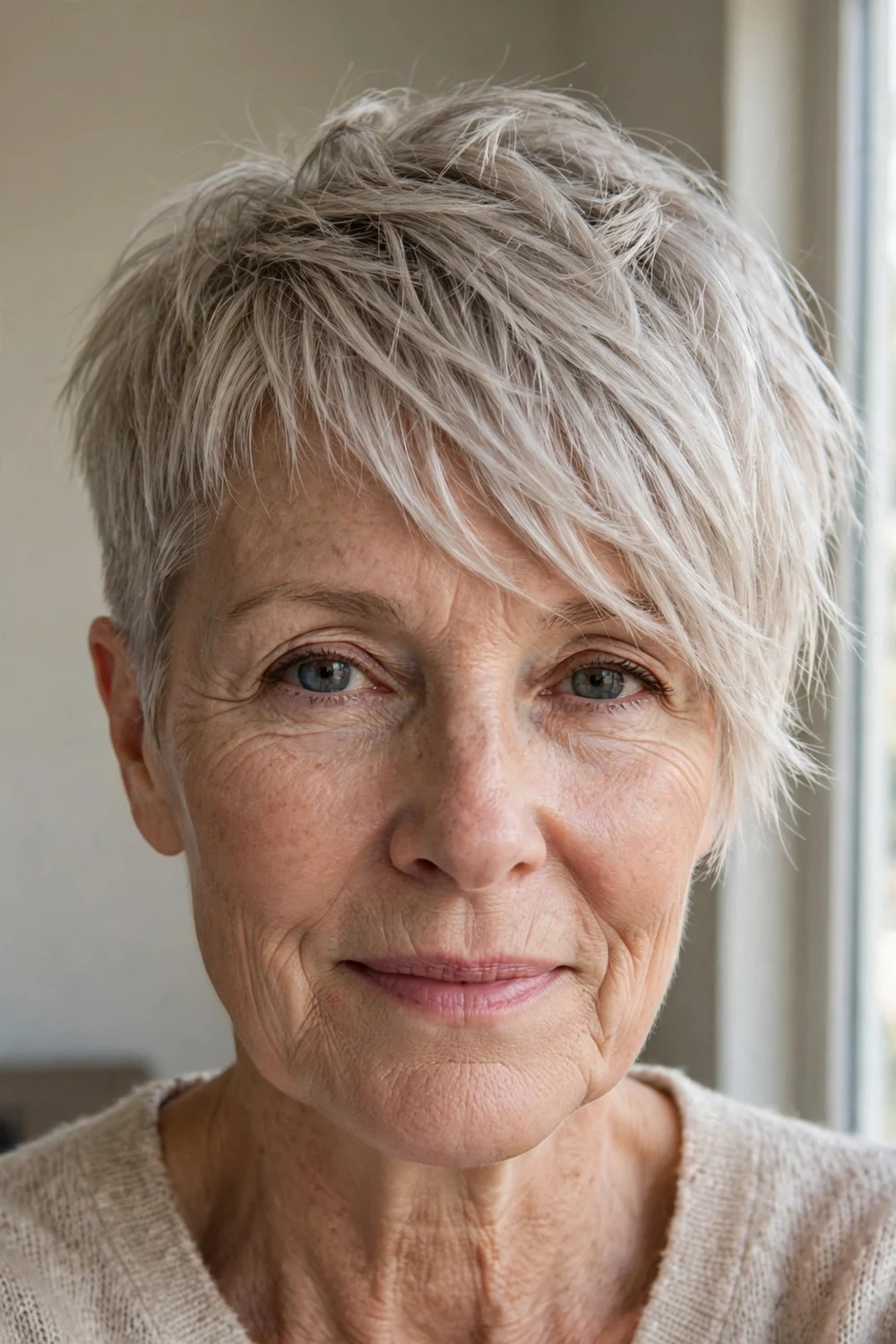
One side stays noticeably shorter than the other, stitching a sharp line that frames your features. On fine hair, the uneven length creates the illusion of more body and texture; the eye reads the longer sweep as density.
The longer side can sweep softly across the forehead as a gentle fringe that flatters smiles and aging lines without heaviness. This cut has a modern edge but stays easy to wear day to day, and it pairs nicely with statement earrings since one ear stays exposed. Tell your stylist exactly how dramatic you want the difference; a half-inch reads subtle, two inches reads bold.
Try this: Part on the longer side and tuck the short side behind your ear. The contrast does the styling for you: one sweep of texture spray and you’re out the door.
9. Choppy Pixie with Light Layers
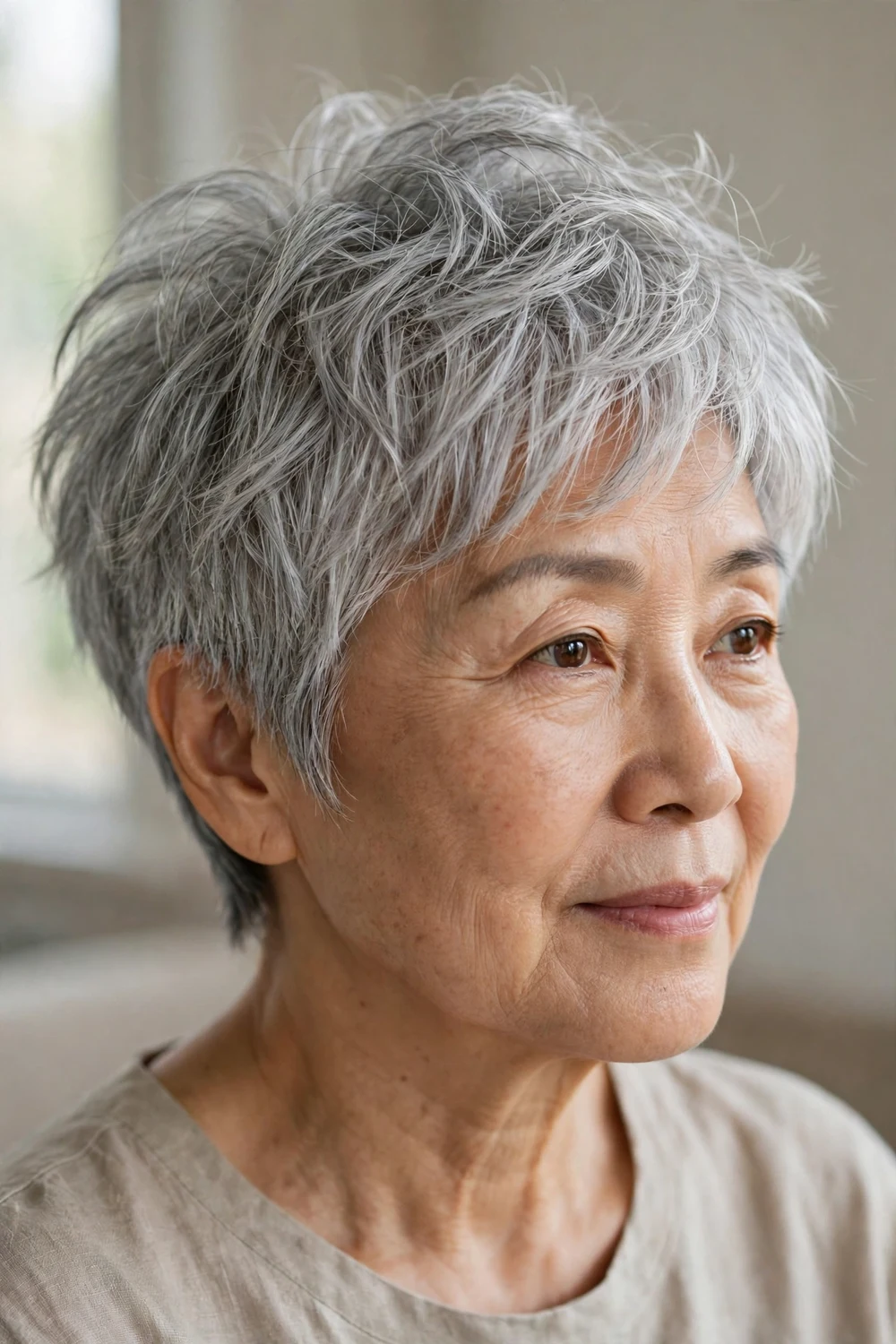
Where idea 2 is about the cutting technique, this one is about the weight: feather-light layers that refuse to flatten fine strands. The tousled crown gives effortless fullness, and nothing in the cut sits heavy enough to collapse by midday.
A soft blonde or silver tone helps camouflage thinning at the part. With a bit of root lift and separation, it’s flattering on women over 50 who want texture without any heaviness, and it works best on straight to slightly wavy hair that needs lift. The layers also make second-day hair look intentional: dry shampoo at the roots and the texture comes right back.
Try this: Spray dry shampoo at the roots before bed, not in the morning. It absorbs oil overnight and you wake up with grip already built in.
10. Piecey Pixie with Side Fringe
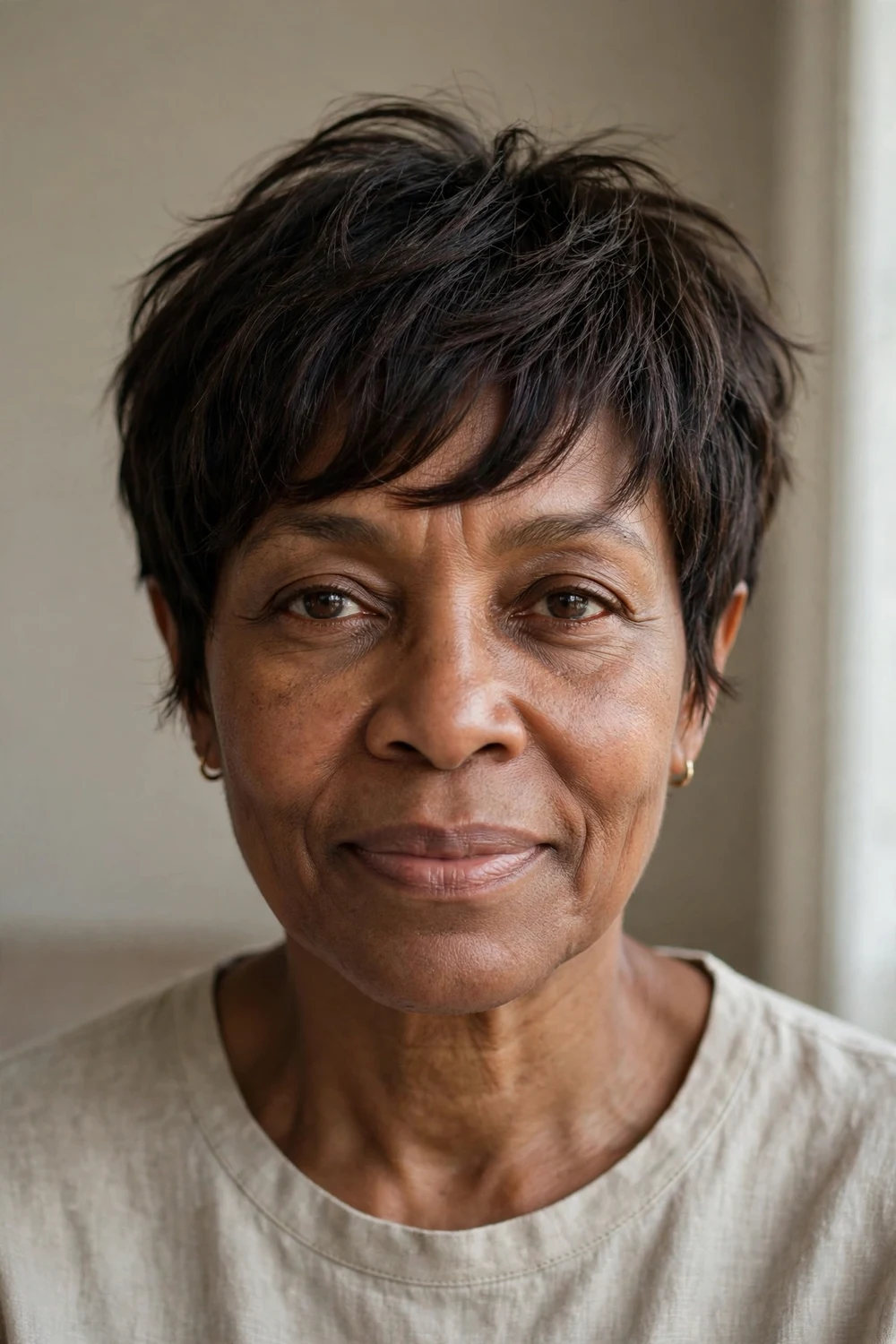
Piecey layers plus a side fringe give this pixie a soft, flattering edge that’s ideal for fine, low-density hair. The tousled finish creates the illusion of volume without much styling, and the side fringe opens the face while balancing a high forehead or angular features.
Cropped clean around the ears, it keeps the face open while fullness at the sides gives balance, especially good for square or heart-shaped faces. It’s one of the most youthful-feeling cuts on this list, and it needs almost nothing: finger-styling and a dab of cream is the whole routine.
Try this: Twist small sections of the fringe between your fingers after applying product. The twist sets into a defined piece that frames the cheekbone.
11. Tapered Pixie with Crown Volume
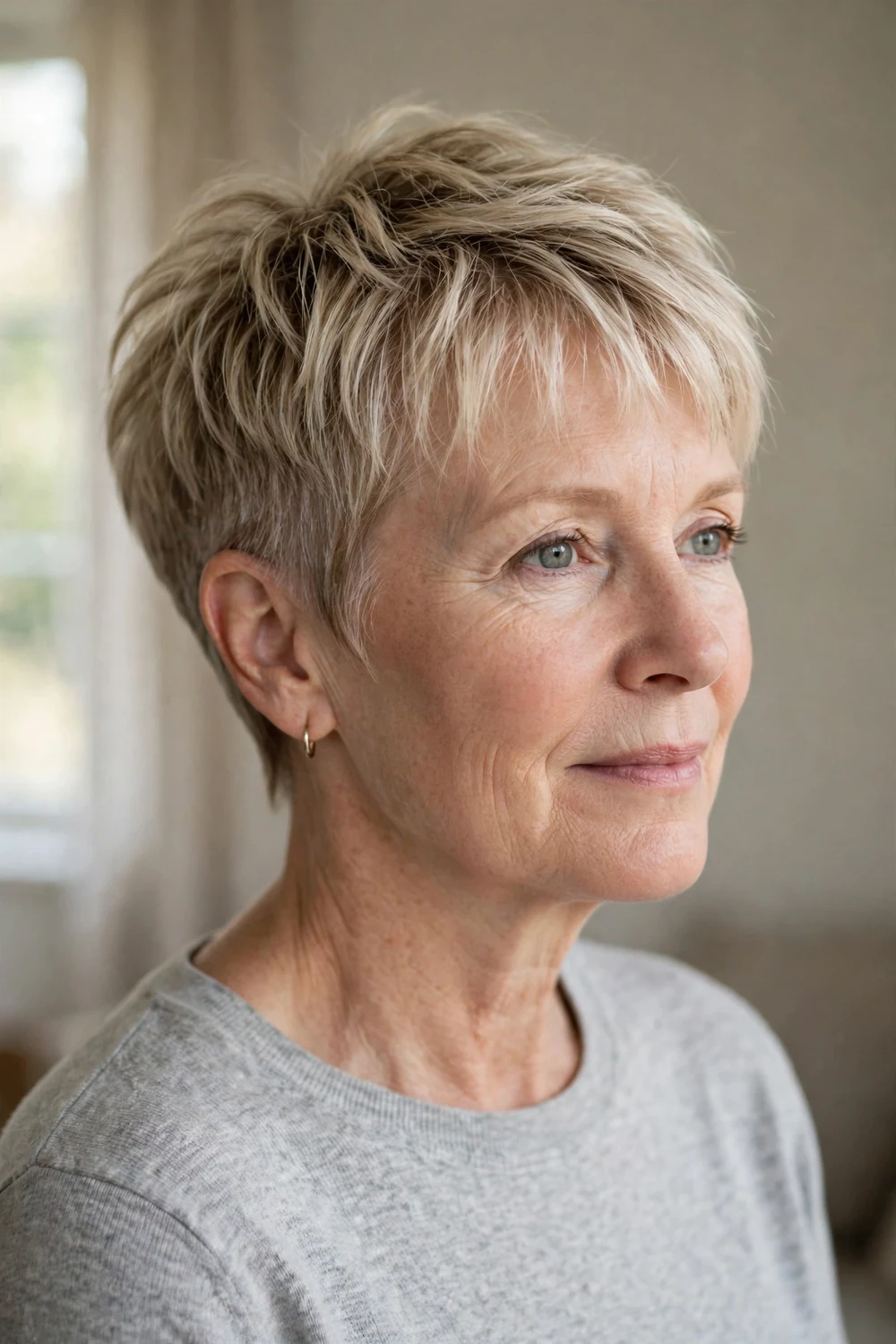
Tapered neatly at the neck and sides, this pixie puts all its volume at the crown. The soft fringe adds framing without weighing down the face, and a slightly darker base color underneath provides depth that makes fine hair read thicker.
It’s ideal for thinning hair because it elongates rounder faces and adds shape exactly where density is missing. Best for straight or slightly coarse textures that need structure up top. Blow-dry the crown with a small round brush, lifting up and back; the taper at the sides needs no work at all.
Try this: Blast the crown with the dryer on medium heat while lifting with your fingers, then hit it with the cool shot. Heat sets the lift; cool locks it in.
12. Choppy Pixie with Root Fade
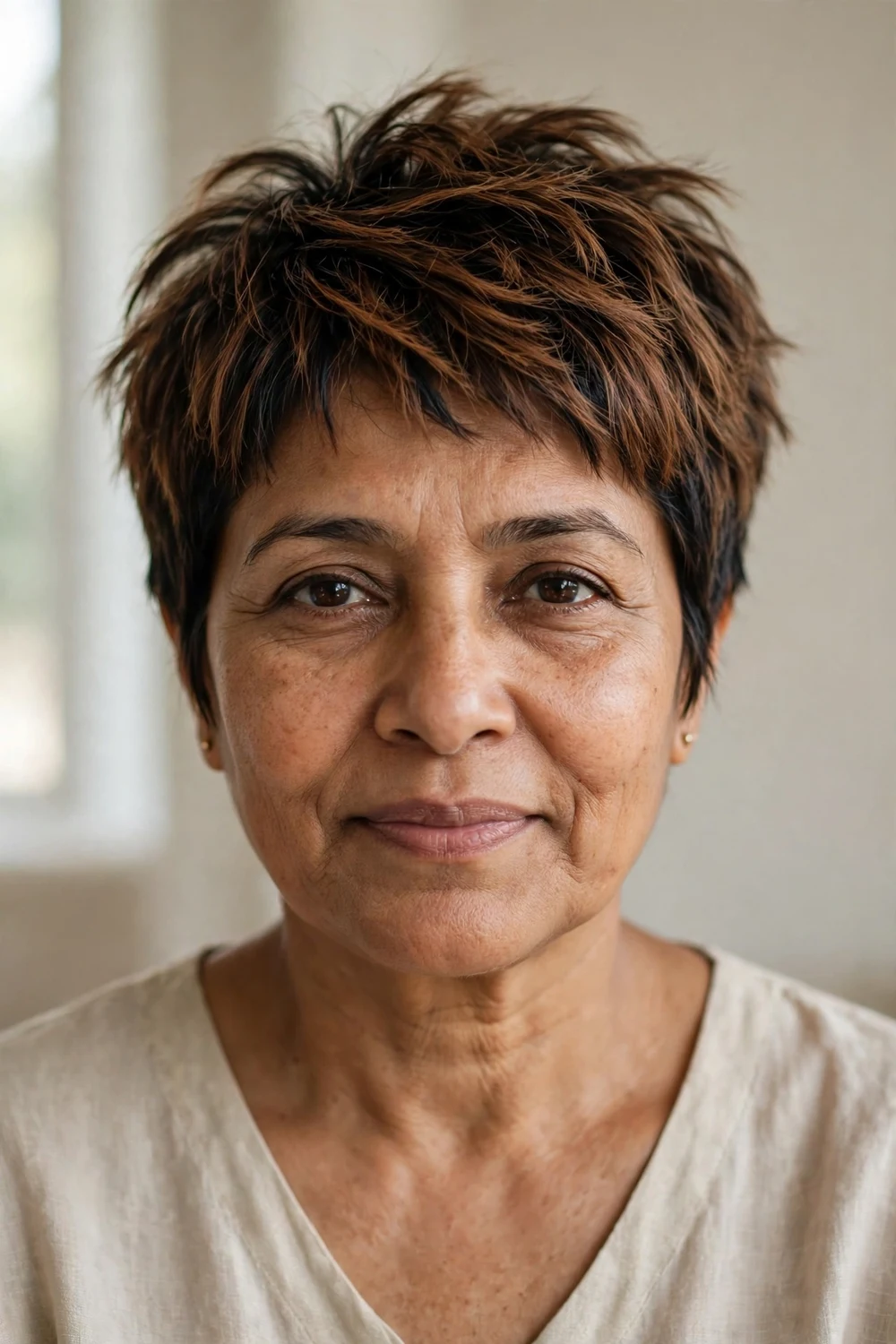
Edgy yet wearable, this choppy pixie pairs tousled top layers with a soft dark root fade. The darker roots create an illusion of thickness right at the scalp, exactly where fine hair shows its thinness, while the lighter ends keep the cut feeling airy.
It’s especially flattering on petite or angular face shapes and works best on straight to wavy hair. The disconnected choppiness brings a modern twist, though it does take some product and finger-styling to maintain day to day. The root fade also stretches your color appointments, since regrowth blends into the darker base.
Try this: Ask for the root fade to sit about an inch deep. Shallower fades look like regrowth; deeper ones darken the whole cut.
13. Wispy Layered Pixie with Side Fringe
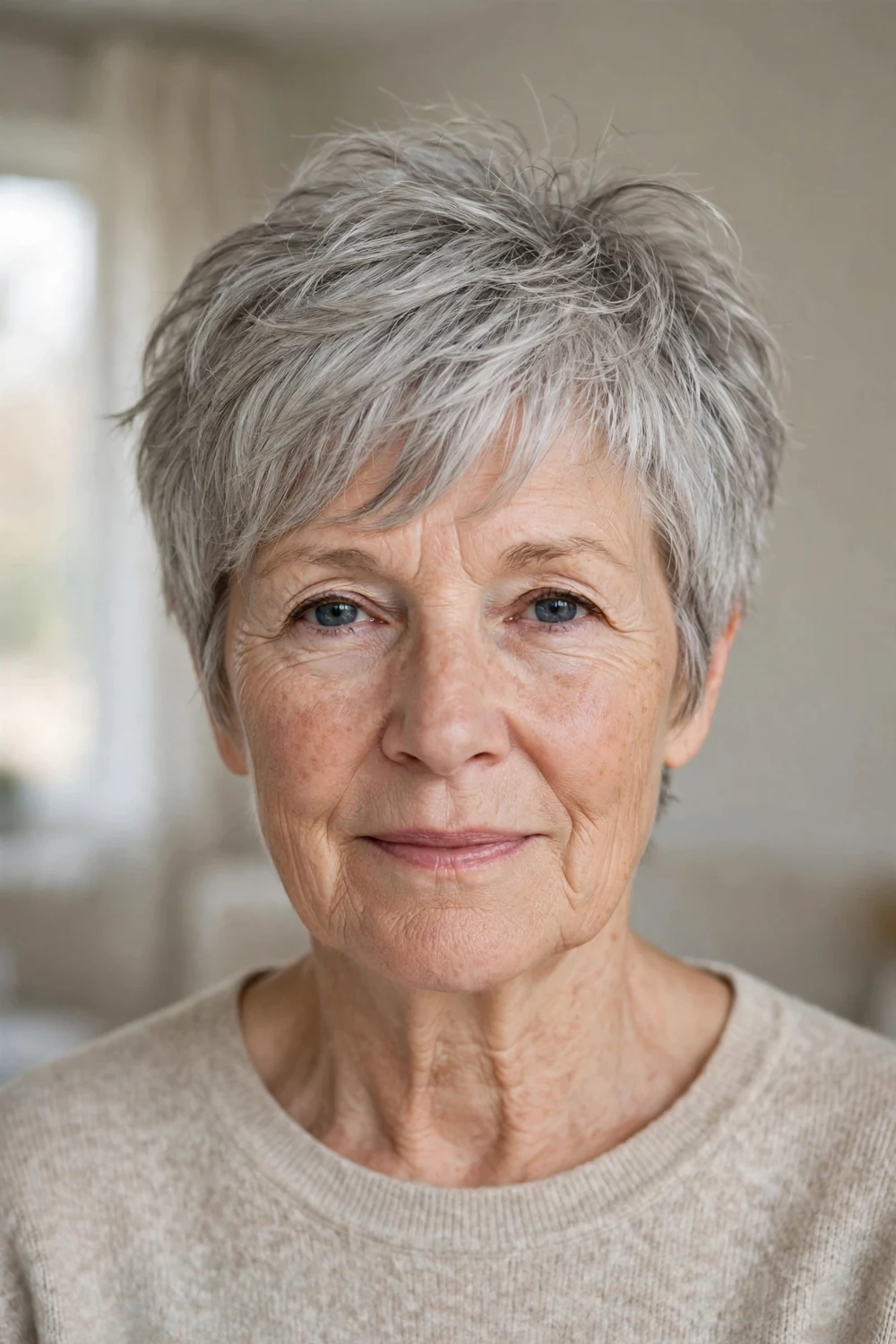
Soft, wispy layers give this pixie a light, airy quality that flatters finer hair. The side-swept fringe opens the face while balancing high foreheads or angular features, and the cut adds lift at the crown plus movement through the ends.
It’s great for women over 50 who want a youthful shape without hard lines: nothing here is blunt or severe. Best on oval and long face shapes with straight to slightly wavy texture. One honest note: the front fringe can lose its shape by evening, so keep a travel-size styling spray in your bag for a midday refresh.
Try this: Round-brush just the fringe for 20 seconds in the morning. The rest of the cut air-dries fine, but the fringe sets the whole look.
14. Feathered Tapered Pixie
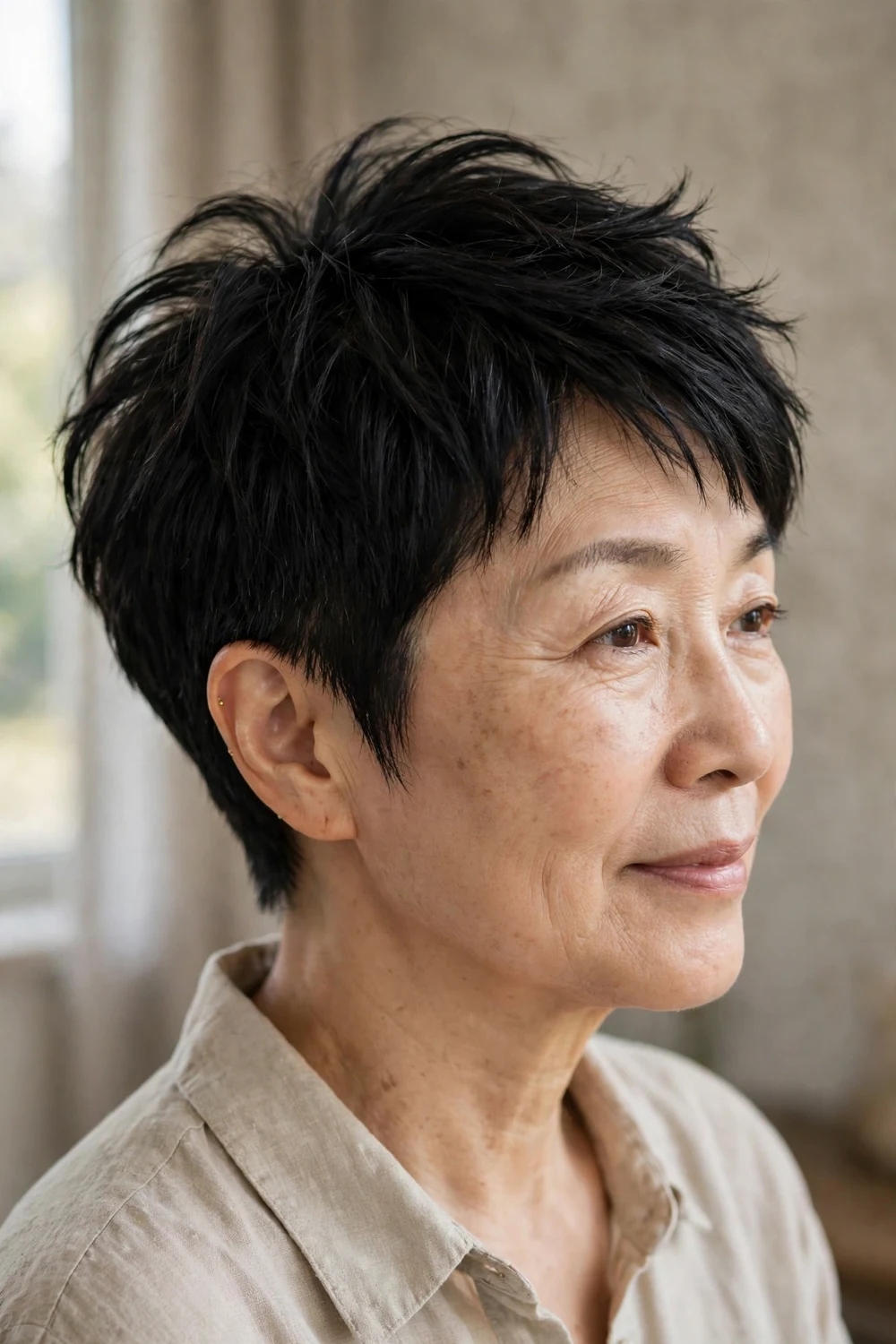
The sides stay tight and neatly contoured while the feathered top brings movement and airiness, a combination that adds instant fullness and softness around the crown. The subtle taper at the back keeps everything clean and manageable.
It works best for women in their 50s and 60s who want low-maintenance volume without giving up femininity, and it’s especially flattering on oval or heart-shaped faces. You’ll need texturizing products to keep the feathering defined; without them, fine hair settles into one flat layer by afternoon.
Try this: Flip your part to the opposite side once a week. Hair trains itself to lie one way, and switching sides forces volume at the roots.
15. Naturally Silver Balayage Pixie
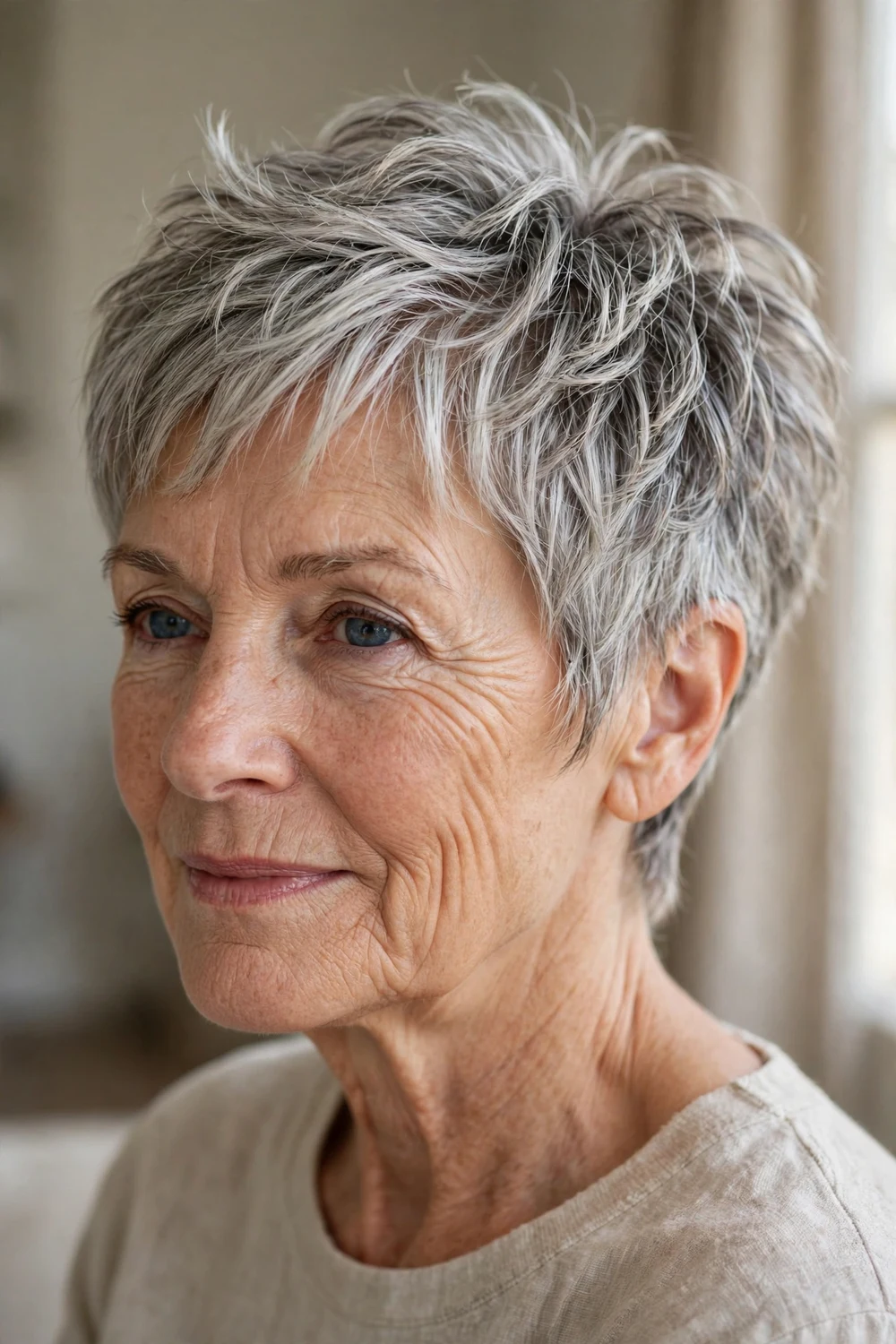
Growing out silver hair is easier in a short cut, and a silver balayage makes the transition look intentional. The hand-painted dimension stops the grow-out line from reading as neglect and gives fine hair the tonal variation that reads as thickness.
For more volume, blow-dry and apply texture spray or powder to the top. To keep the shape, visit your stylist every 4 to 6 weeks; this prevents the style from looking overgrown and heavy. A purple gloss between appointments keeps the silver from going yellow.
Try this: Use a purple shampoo once a week and a regular sulfate-free shampoo the rest of the time. Daily purple shampoo over-tones fine hair and leaves it looking dull.
16. Champagne Ribbon Pixie with Baby Bangs
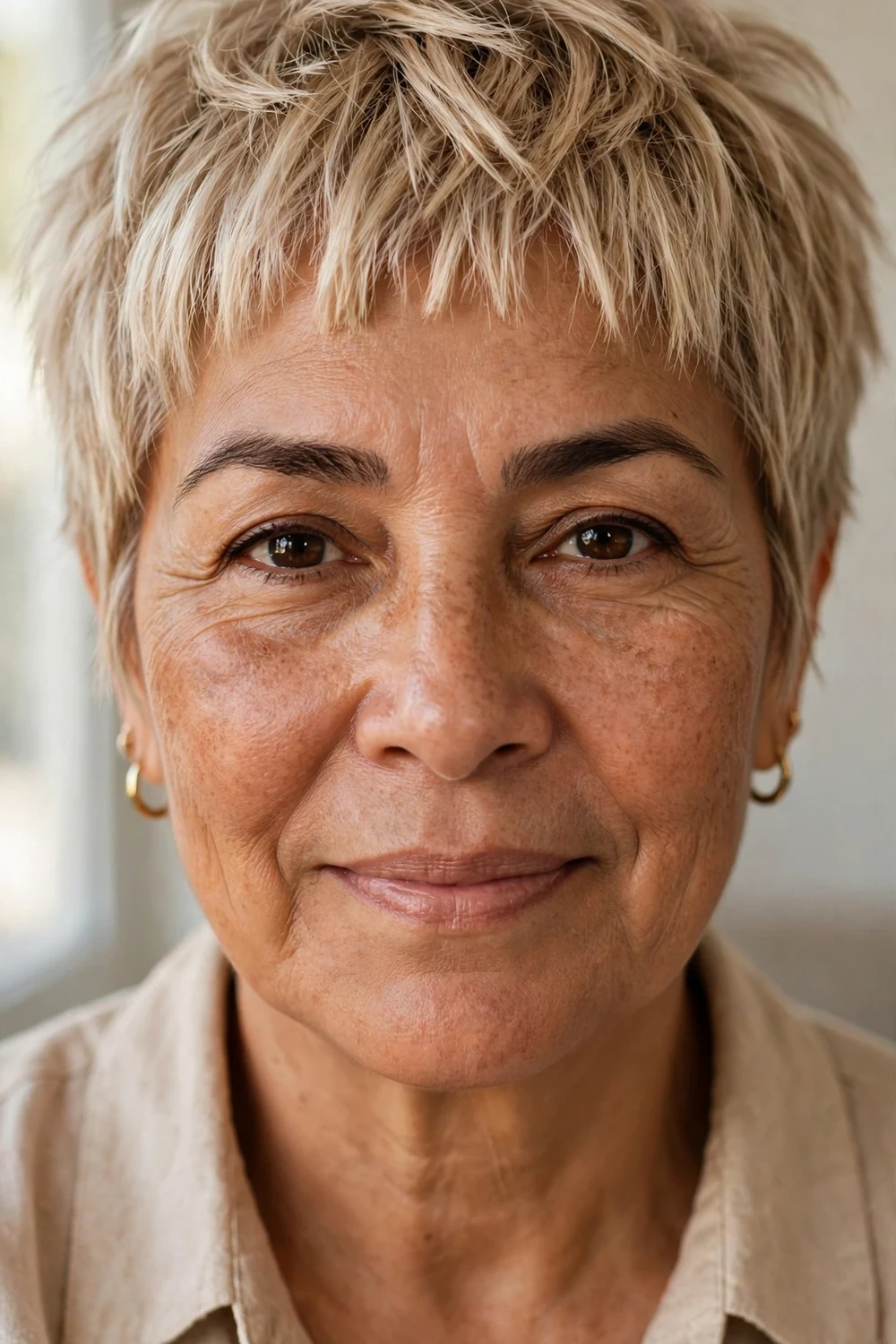
Short, textured layers plus playful baby bangs frame the face in a way that suits heart and oval faces. The champagne tone, a soft golden blonde with ribbons of lighter pieces, adds warmth that flatters mature skin.
For fine to medium hair, the baby bangs add density right at the forehead where hair often thins first. A lightweight mousse or texturizing spray enhances the layers and keeps the cut low-maintenance. Keep the bangs at mid-forehead; baby bangs that creep too short look accidental rather than styled.
Try this: Blow-dry the baby bangs straight down with a small brush, no parting. The moment you part them, they split and the density illusion breaks.
17. Messy Long Pixie with Swept Bangs
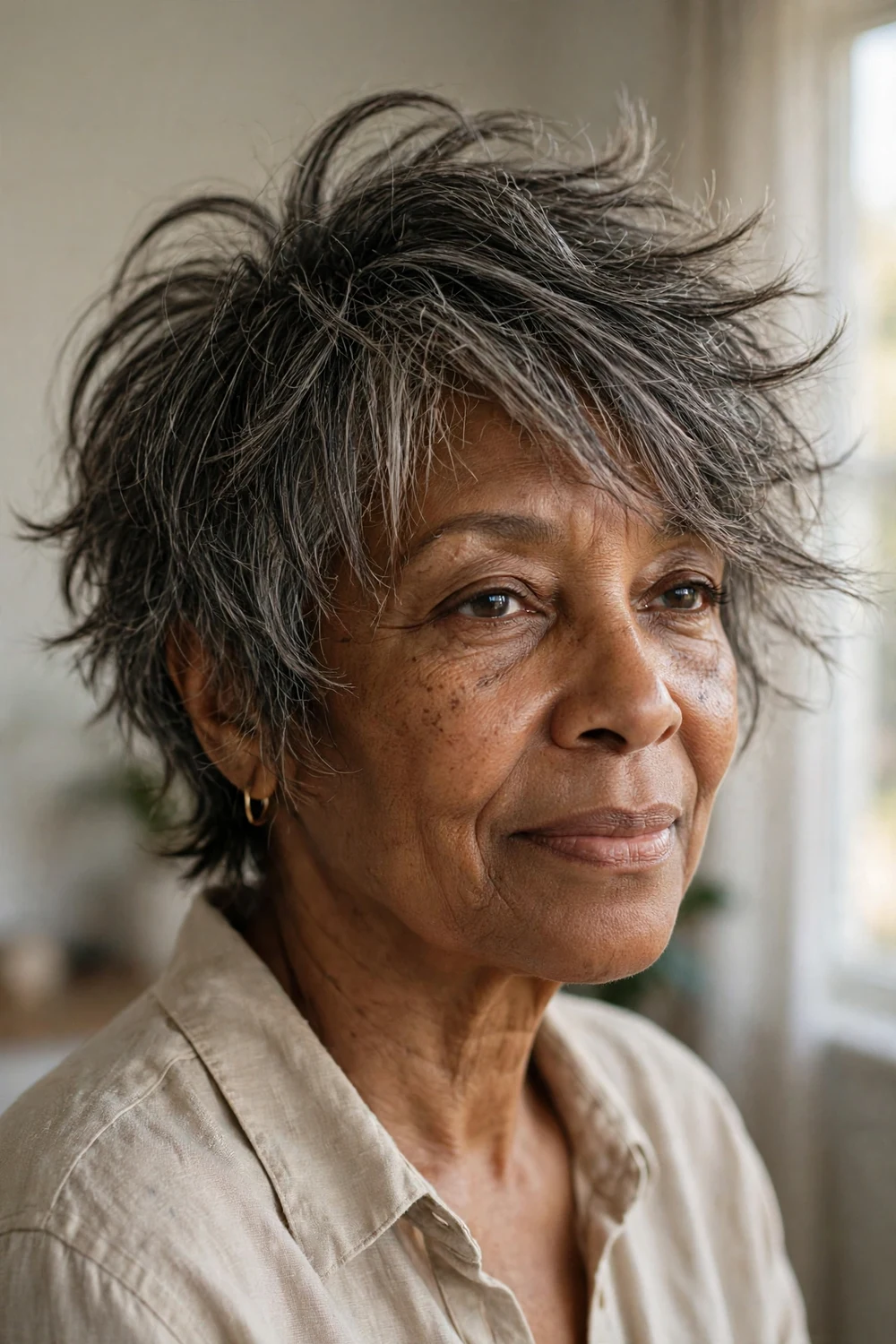
A long messy pixie with swept bangs suits aging hair because it boosts volume in thin hair while adding body and movement around the face. The messiness is the point: it disguises uneven density better than any polished style could.
The swept bangs keep the forehead covered softly, which helps if your hairline has receded a little. This cut is very flattering in salt-and-pepper because the two tones break up the surface and every tousled piece reads separately. Style with a dab of texture paste and a messy finger-rub through the crown; nothing here should look combed.
Try this: Sleep with your hair loosely pinned up and let it down in the morning. The overnight bend gives you second-day texture from the start.
18. Sleek Side-Parted Pixie
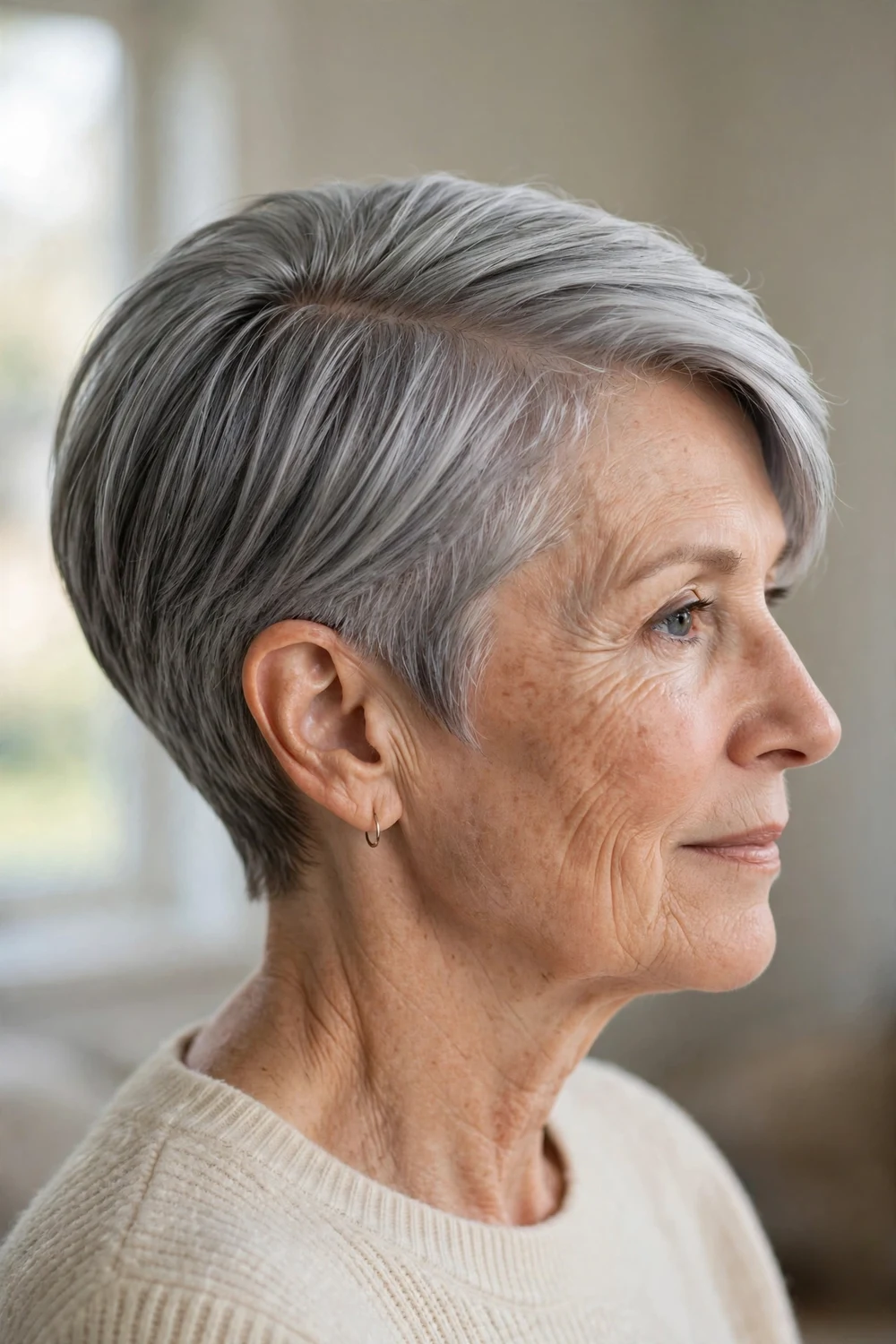
This asymmetrical pixie is all about polish. A deep side part and long top section contrast with the tapered back, giving fullness to the front, a trick that works wonders for fine hair because the eye reads the smooth sweep as one thick panel.
The smooth texture and cool gray hue highlight sleekness over volume. Best for straight hair and oval or long face shapes. It does require daily smoothing, so it’s the highest-maintenance cut on this list; but for evenings and events, nothing on this list looks more pulled-together.
Try this: Flat-iron only the top sweep, never the crown. Ironing the crown flat kills the one bit of lift this cut relies on.
19. Curved Top Pixie with Defined Texture
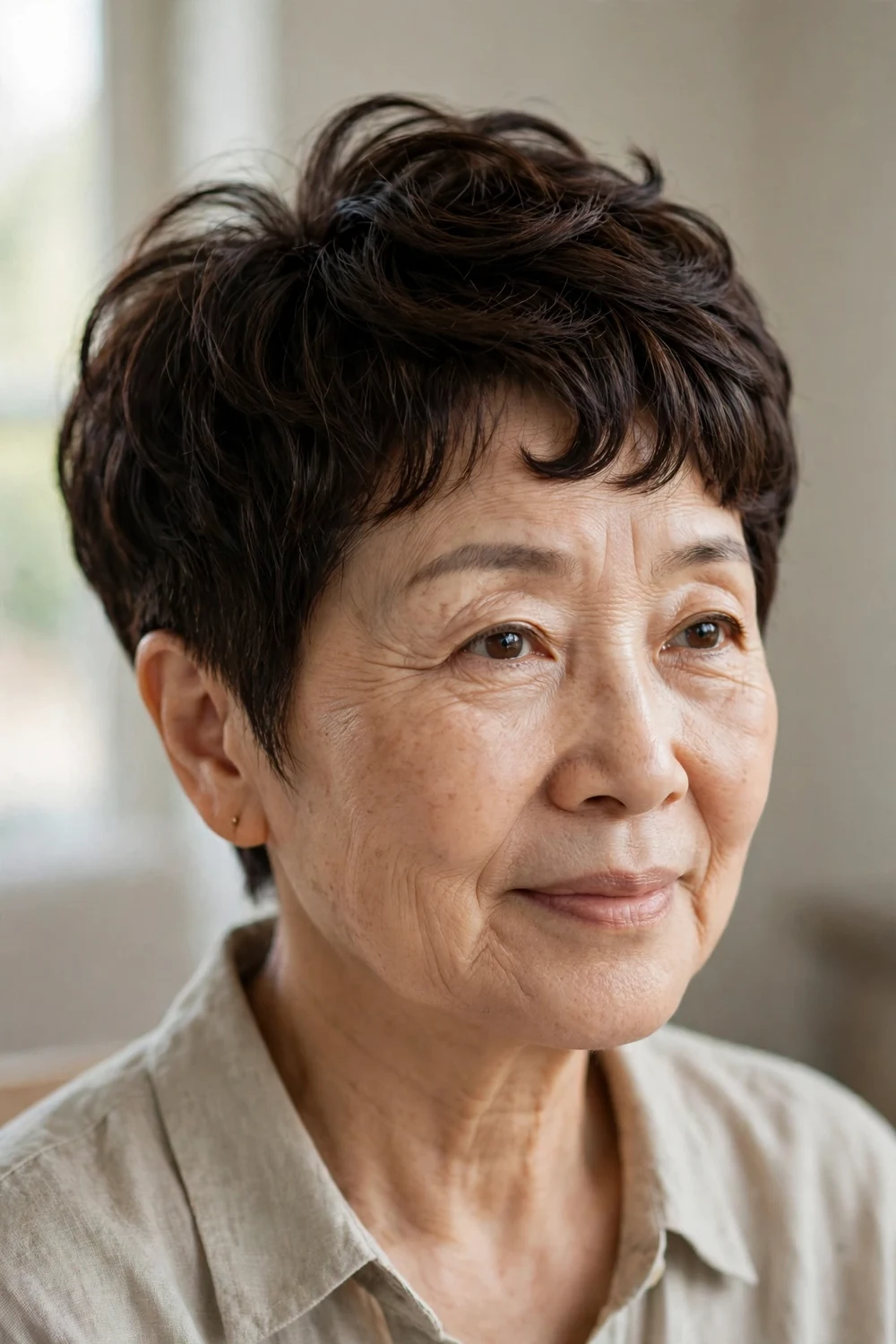
Built for fullness at the top, this pixie uses sculpted texture and subtle lift to boost fine, thinning hair. The rounded crown and darker base color create visual depth, while close-cropped sides keep the silhouette clean.
It’s especially good for women with denser roots and thinner ends: the curved shape redistributes visual weight upward. Works on oval or pear-shaped faces, but it does need some styling to hold the curve: mousse at the roots, then shape with your fingers while blow-drying.
Try this: Cup the crown with your palm while blow-drying to set the curve. Your hand is a better shaping tool than a brush for this rounded silhouette.
20. Light Copper Sweeping Pixie
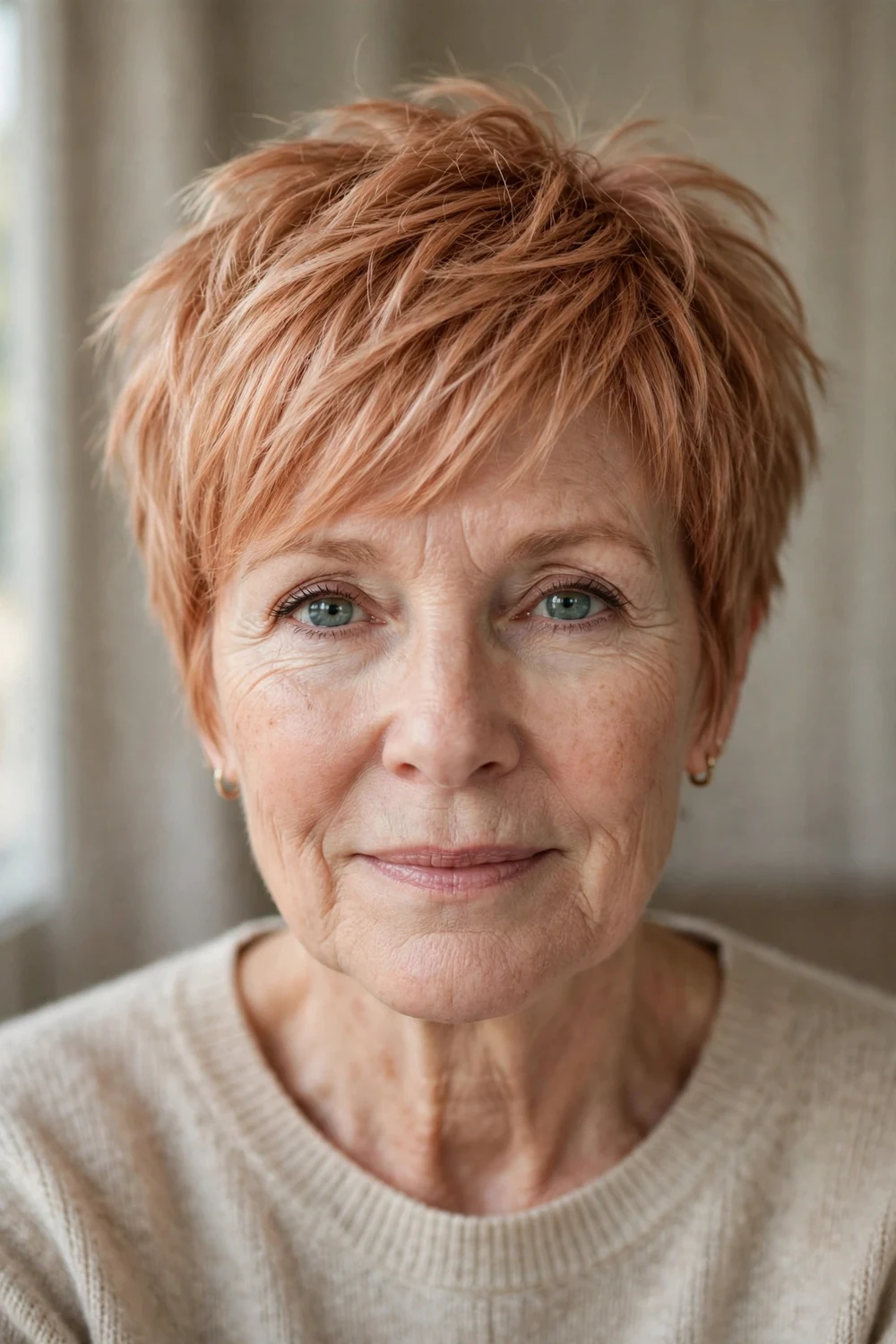
A light copper sweeping pixie revamps thin hair without sacrificing the length you keep on top. The sweeping fringe adds movement, and the copper color brightens the face in a way that ash tones sometimes don’t on mature skin.
The cut has a soft texture that adds volume to thin hair, and styling takes minutes: a lightweight cream for separation, then a finger-tousle for a relaxed finish. Copper fades faster than other shades, so wash in cool water and stretch washes with dry shampoo to keep the color true.
Try this: Add a color-depositing gloss every three weeks at home. It takes ten minutes and keeps copper from sliding into a dull brassy orange.
21. Ash-Silver Choppy Pixie with Feathered Side Fringe
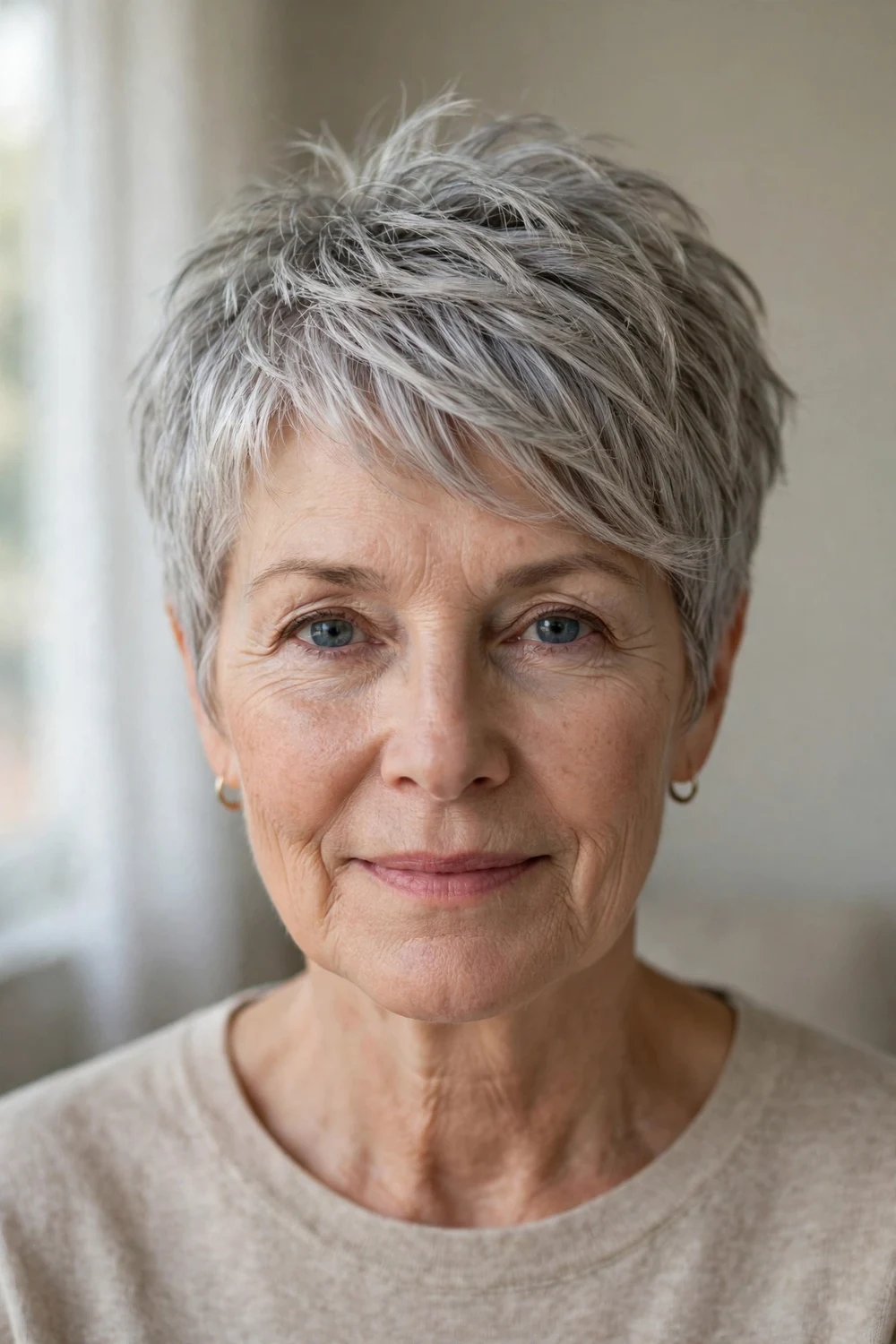
Point-cut layering at the crown creates lift and airy texture in this jaw-grazing pixie, while a feathered side fringe softens the brow. The ash-silver tone, built with subtle lowlights rather than one flat color, gives the cut natural depth.
It flatters oval faces and the straight, fine-to-medium hair common in women in their 50s. One thing to watch: finer ends can look wispy as this cut grows out, so keep trims on a strict five-week cycle. A quick root-lift while drying keeps the separation that makes the choppy texture work.
Try this: Dry the fringe to the opposite side first, then sweep it into place. The direction switch builds volume right at the hairline where silver hair lies flattest.
22. Razor-Textured Pixie with Side-Swept Fringe
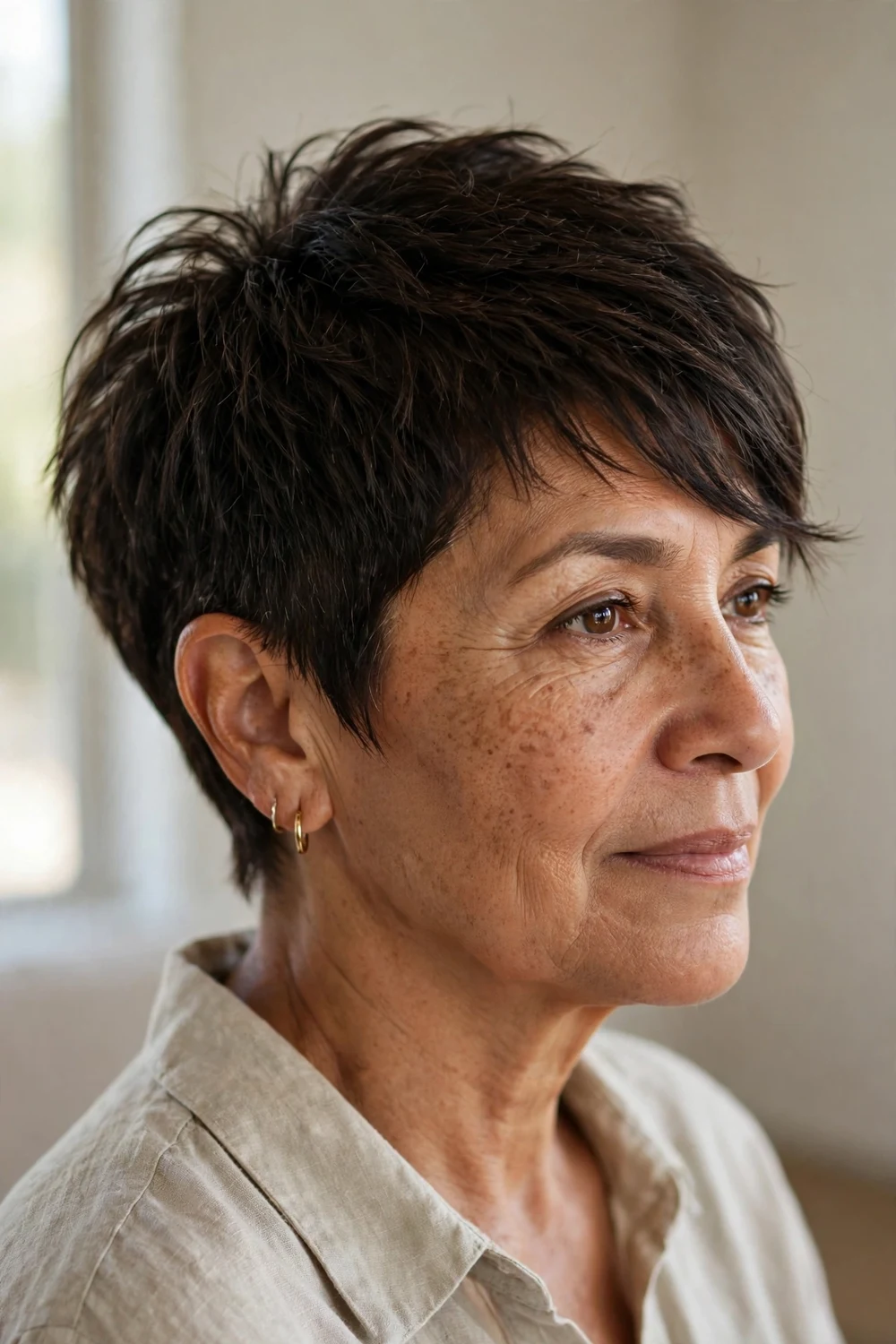
A razor gives this very short pixie its signature: wispy, separated ends that no scissor cut quite replicates. Cropped at the nape with 1 to 2 inch top layers and a longer side-swept fringe, it’s featherweight on fine hair.
The lightweight lift at the crown and cheekbone framing suit straight, fine hair especially well. Daily molding with a matte paste and a quick blow-dry keeps it in shape. Ask for the razor work only through the top and fringe; razored sides on fine hair can frizz instead of feather.
Try this: Apply matte paste to completely dry hair only. Paste on damp hair slides off fine strands and the texture never sets.
23. Short Textured Pixie with Lifted Crown
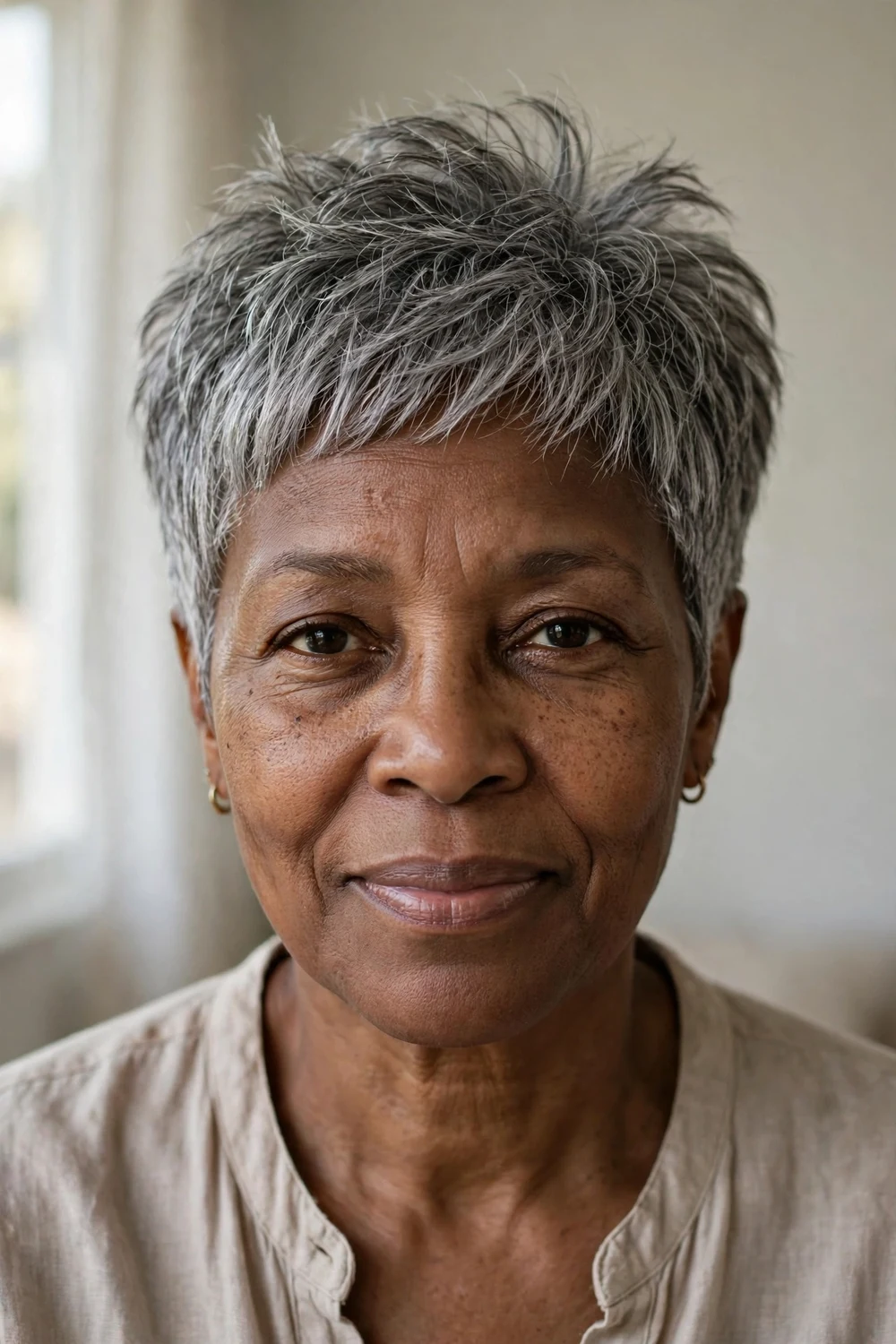
Very short, ear-grazing sides, a lifted piecey crown, and a clipped taper at the temples and nape: this is the wash-and-go end of the pixie spectrum. It shows off earrings and the neck, and the short silhouette slims the face.
The trade: it exposes neck lines and needs daily texturizing clay or salt spray to keep separation and stop it lying flat. But nothing on this list is faster. For women with a natural crown cowlick, this cut turns the cowlick into free, permanent lift; mention it to your stylist so they cut with it, not against it.
Try this: Keep a travel-size salt spray in your bag. One midday mist and a finger-scrunch revives the crown lift in seconds.
24. Salt-and-Pepper Textured Pixie Crop
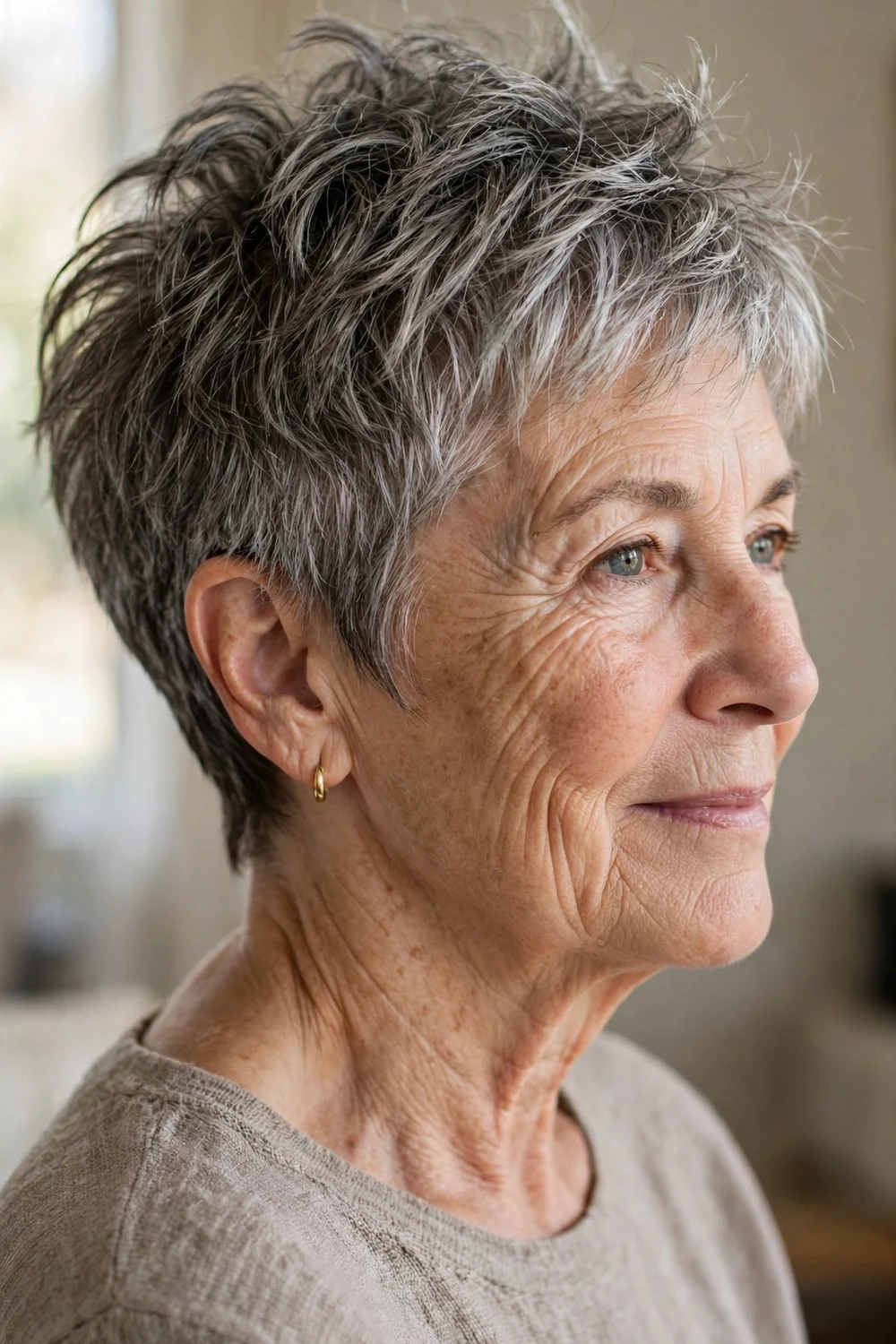
Letting the natural salt-and-pepper grow in a textured crop is one of the lowest-maintenance moves on this list. No color appointments, no root lines; and the two tones give fine hair automatic dimension that a single color can’t.
The tapered nape keeps it neat while the airy, piecey top does the volumizing work. Keep the top pieces chunky; salt-and-pepper cut too wispy can read as simply thin. A lightweight texture cream is the whole product routine, and trims every five to six weeks keep the shape crisp.
Try this: Skip daily washing. Salt-and-pepper hair holds its texture better on day two, and less washing means less dryness on silver strands.
25. Deep-Brown Micro Pixie with Feathered Crown

The shortest cut on this list: a micro pixie with 1 to 2 inch top layers, a feathered crown, tapered nape, and micro-fringe. On fine hair, going this short removes every weak, thin end at once; what’s left is all fresh growth that stands up on its own.
It suits oval and heart faces and frames the eyes dramatically. The deep-brown color adds perceived density; dark tones always read thicker than pale ones on fine hair. Quick styling and a flattering frame are the payoff; the price is product every day and zero tolerance for skipped trims.
Try this: Style it the night before an early morning. A micro pixie sets overnight with a dab of paste and needs only a finger-fluff at dawn.
26. Brushed-Back Choppy Pixie
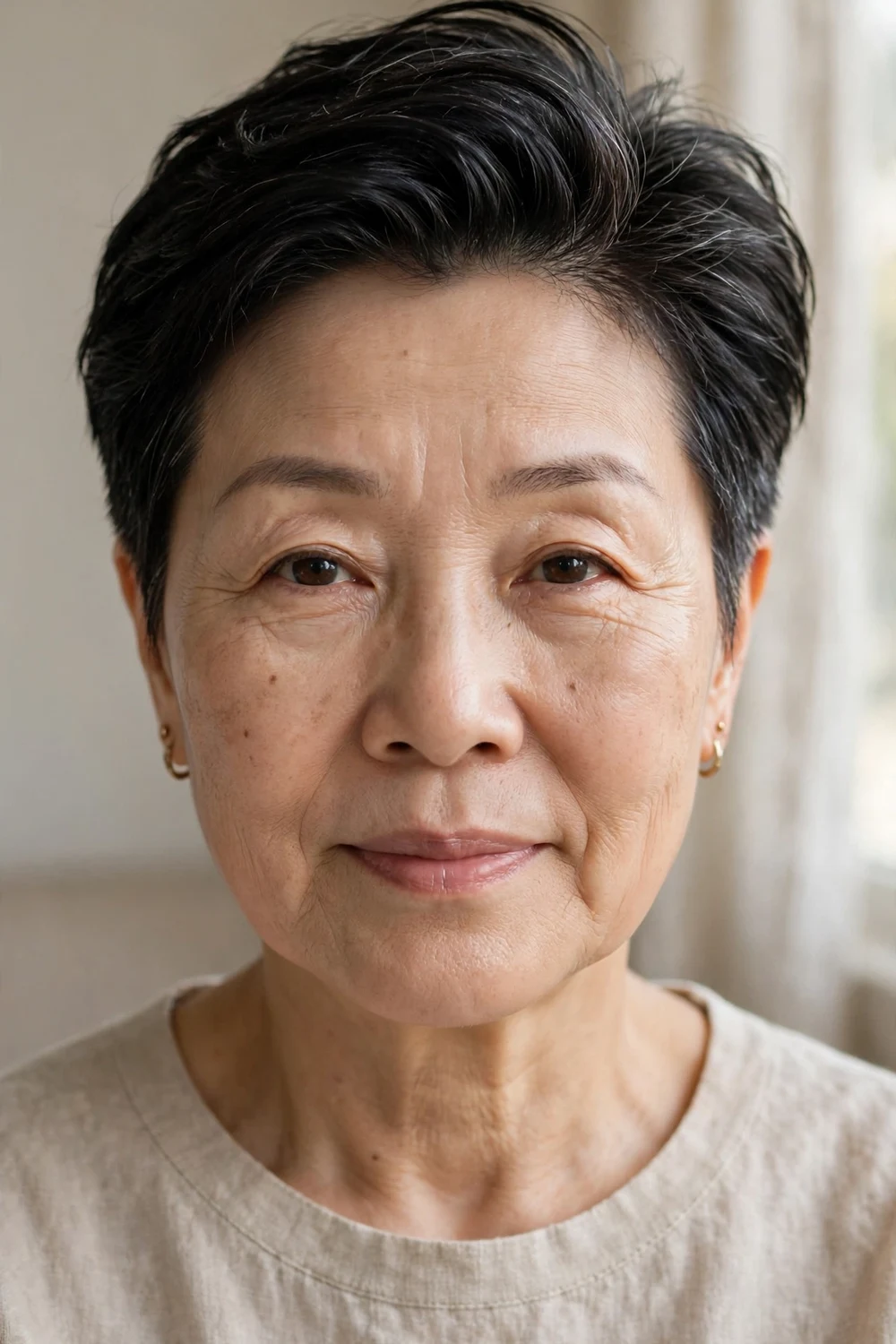
Brushing the textured top back off the forehead gives this pixie a sleek, confident line while the choppy layers underneath keep it from looking severe. It’s a strong choice for showing off bone structure: cheekbones and eyes get full attention with nothing falling forward.
For fine to medium hair, the brushed-back direction builds natural lift at the front hairline. A small clockwise crown cowlick actually helps here, giving free height. It needs a bit of product for piecey separation, and it exposes the ears and nape, so keep those edges trimmed clean.
Try this: Blow-dry the top straight back with a vent brush, then break it up with your fingers and a dab of paste. The brush gives direction; the fingers give texture.
27. Spiky Choppy Pixie
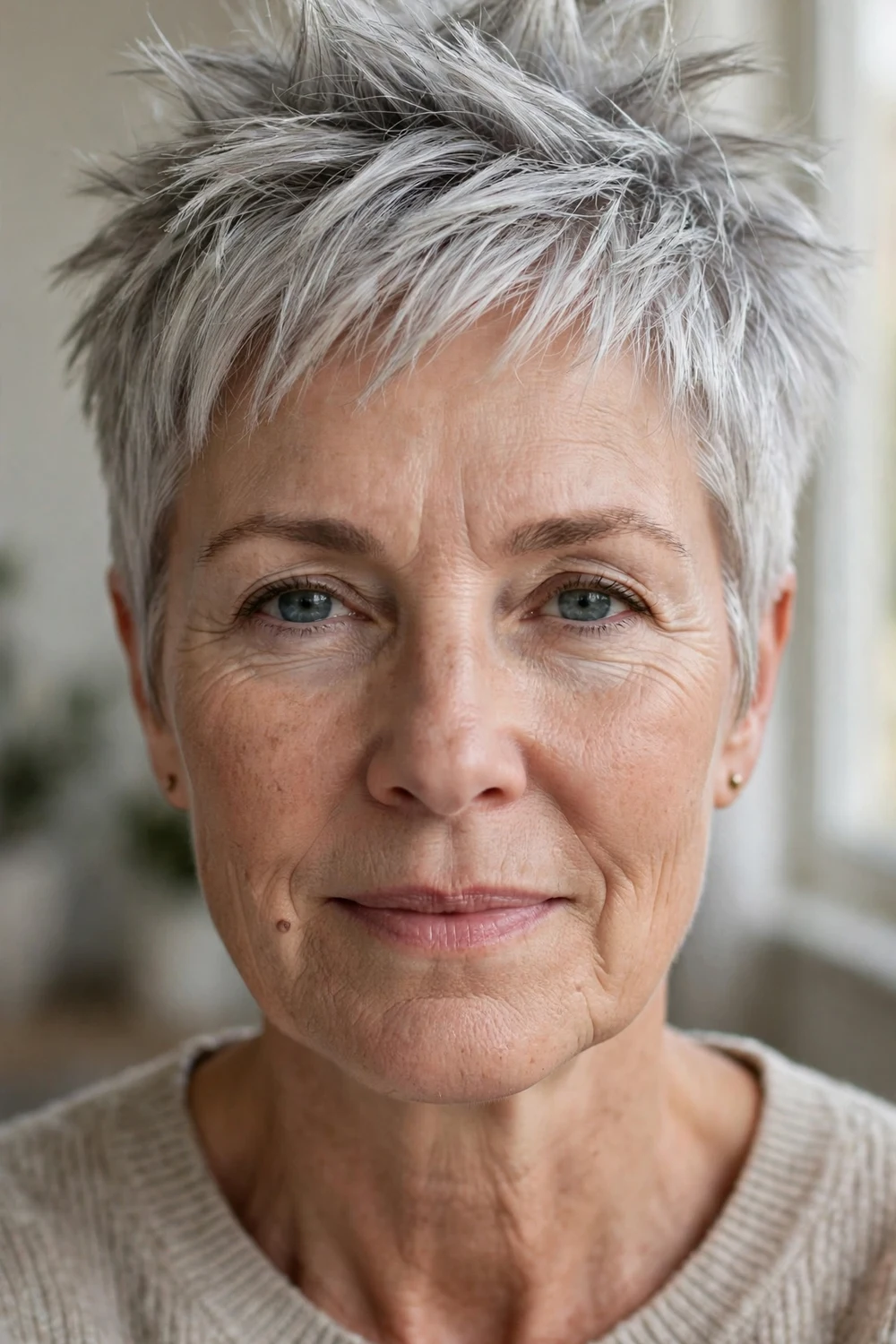
Short, directional layers styled upward and outward make this the boldest cut on the list: high impact, low effort. The spikes add instant volume at the crown and draw the eye up, which lifts the whole face.
It suits petite or angular faces and highlights the cheekbones. On fine hair, spikes work better than you’d expect: short pieces stand up instead of falling flat, so the cut keeps its shape all day. A strong-hold matte clay is the one product you need; work it through dry hair and pinch the spikes into place.
Try this: Spike it the night before and sleep on it. Morning spikes have a softer, lived-in edge that looks more modern than freshly done ones.
28. Pixie Shag with Choppy Ends
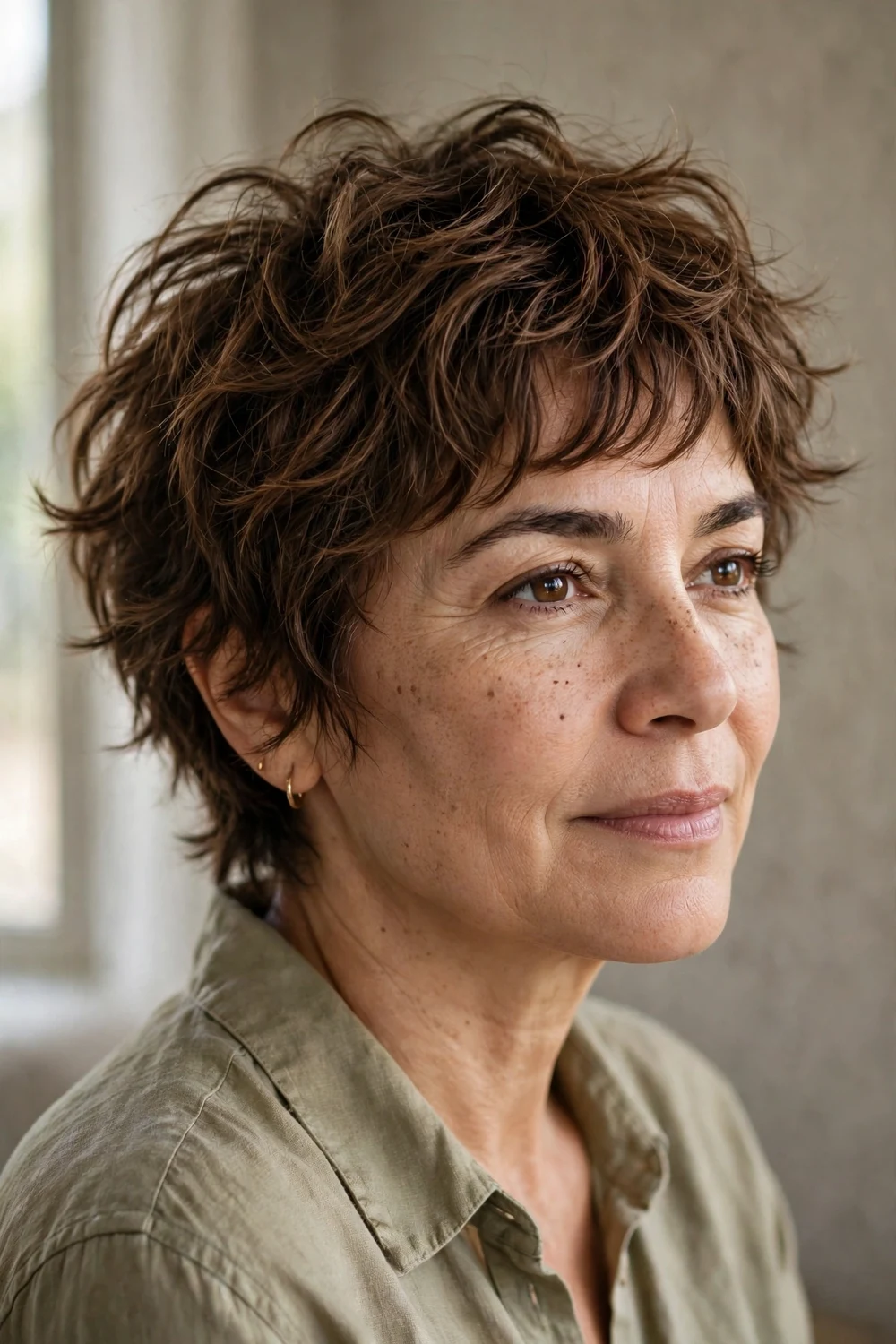
A relaxed, tousled pixie with choppy ends and lots of movement: the shag’s answer to the pixie. If your hair has natural wave, this cut embraces the texture instead of fighting it, which means less effort and more personality.
The choppy ends keep the shag from looking heavy, and the layers create the kind of airy fullness fine hair needs. It’s ideal for women who want the pixie’s ease with a softer, more casual outline. Sea-salt spray on damp hair, scrunched as it air-dries, is genuinely all the styling it needs.
Try this: Diffuse the crown for 60 seconds if you’re short on time. The waves set with volume at the roots while the ends stay soft.
29. Grow-Out Friendly Choppy Pixie

The practical pick: a choppy pixie cut with enough length and layer variation that it still looks intentional at week eight. The layers are staggered so no single section outgrows the rest awkwardly, and the texture disguises the in-between stage.
This is the cut for women who stretch salon visits: it buys you two extra weeks between trims without looking neglected. Keep a little extra length at the nape and temples; those are the spots that betray grow-out first. A quick shape-up trim of just the edges at week four costs little and extends the cut further.
Try this: When the top gets long, sweep it to one side and pin the temple with a flat clip for evening. The grown-out pixie doubles as a chic side-swept style.
Choppy Pixie Cuts Comparison at a Glance
| Style | Best For | Upkeep | Styling Time |
|---|---|---|---|
| Classic Tousled Choppy Pixie | Most face shapes, beginners | Trim every 5 weeks | 2 minutes |
| Choppy Pixie with Point-Cut Layers | Fine but dense hair | Trim every 5 weeks | 3 minutes |
| Piece-y Silver Choppy Pixie | Natural gray hair | Trim every 5 weeks | 2 minutes |
| Long Choppy Pixie | First-time pixie wearers | Trim every 6 weeks | 5 minutes |
| Edgy Choppy Pixie with Jagged Ends | Round faces, bold style | Trim every 4 weeks | 3 minutes |
| Softly Layered Pixie with Highlights | Visible scalp, thinning crown | Trim + gloss every 6 weeks | 5 minutes |
| Textured Pixie with Bangs | High foreheads, fine hair | Trim every 4 weeks | 4 minutes |
| Asymmetrical Choppy Pixie | Square faces, modern look | Trim every 4 weeks | 3 minutes |
| Choppy Pixie with Light Layers | Very fine, limp hair | Trim every 5 weeks | 2 minutes |
| Piecey Pixie with Side Fringe | Square/heart faces | Trim every 5 weeks | 3 minutes |
| Tapered Pixie with Crown Volume | Round faces, thinning crown | Trim every 4 weeks | 5 minutes |
| Choppy Pixie with Root Fade | Petite/angular faces | Trim every 5 weeks | 4 minutes |
| Wispy Layered Pixie with Side Fringe | Oval/long faces | Trim every 5 weeks | 3 minutes |
| Feathered Tapered Pixie | Women in 50s-60s, low maintenance | Trim every 5 weeks | 3 minutes |
| Naturally Silver Balayage Pixie | Growing out gray | Trim every 5 weeks | 4 minutes |
| Champagne Ribbon Pixie with Baby Bangs | Heart/oval faces | Trim every 4 weeks | 4 minutes |
| Messy Long Pixie with Swept Bangs | Receding hairlines | Trim every 6 weeks | 3 minutes |
| Sleek Side-Parted Pixie | Straight hair, events | Trim every 4 weeks | 8 minutes |
| Curved Top Pixie with Defined Texture | Dense roots, thin ends | Trim every 5 weeks | 5 minutes |
| Light Copper Sweeping Pixie | Warm skin tones | Trim + gloss every 5 weeks | 3 minutes |
| Ash-Silver Pixie with Feathered Fringe | Oval faces, silver hair | Trim every 5 weeks | 4 minutes |
| Razor-Textured Pixie with Fringe | Straight fine hair | Trim every 4 weeks | 4 minutes |
| Short Textured Pixie with Lifted Crown | Cowlicks, fast routine | Trim every 4 weeks | 2 minutes |
| Salt-and-Pepper Textured Crop | No-color routine | Trim every 6 weeks | 2 minutes |
| Deep-Brown Micro Pixie | Oval/heart faces, bold cut | Trim every 4 weeks | 3 minutes |
| Brushed-Back Choppy Pixie | Strong bone structure | Trim every 4 weeks | 4 minutes |
| Spiky Choppy Pixie | Petite/angular faces | Trim every 4 weeks | 3 minutes |
| Pixie Shag with Choppy Ends | Natural wave | Trim every 6 weeks | 3 minutes |
| Grow-Out Friendly Choppy Pixie | Stretched salon visits | Trim every 8 weeks | 3 minutes |
How to Choose the Right Choppy Pixie for You
Start with your hair’s behavior, not the photo. If your hair is fine but you have a lot of it, point-cut and razor-textured versions remove bulk without losing coverage. If your hair is fine and sparse, lighter layers with a root fade or lowlights will do more for you than any cut alone; color creates the density the cut can’t.
Match the cut to your routine honestly. A sleek side-parted pixie looks sharp but needs daily smoothing; a tousled or shaggy version forgives skipped styling. If you know you’ll style for two minutes max, pick from the tousled, piece-y, or grow-out friendly options and skip the polished ones.
Finally, factor in your face. Round faces gain from height at the crown and asymmetry; long faces do better with bangs or fringe that shortens the forehead; strong jaws soften under side-swept, broken-up fringes. Bring two or three photos to your stylist and talk through which features you want to highlight; a good short-hair specialist will adapt the cut to your bone structure, not just copy the picture.
Mistakes to Avoid
The biggest mistake is asking for blunt ends. Blunt edges on fine hair separate into stringy pieces within days and expose the scalp between them. Always ask for textured, point-cut, or razor-finished ends.
Second: heavy products. Wax, oil, and silicone serums flatten fine pixies fast. Stick to lightweight mousses, salt sprays, and matte pastes, and use less than you think; a pea-size amount is the standard measure for a reason.
Third: skipping trims. A pixie at week seven is a different haircut than the one you left the salon with, and on fine hair the grow-out shows faster because there’s less hair to hold the shape. Book the next appointment before you leave the salon.
Fourth: over-washing. Fine hair gets oily fast, but daily shampooing strips the texture products need to grip. Wash every other day and use dry shampoo at the roots on off days; second-day hair styles better than freshly washed hair.
If you’re weighing a pixie against a slightly longer cut, pixie haircuts for thin hair over 50 covers easy-to-style options with a bit more length to work with.
For more short textured ideas in this family, short shaggy pixie haircuts shows how shag layering adds movement to pixie lengths.
And if bangs are your favorite part of the cut, choppy pixie cut with bangs goes deeper on fringe shapes that flatter mature faces.
Curious how the pixie compares to its longer cousin? short pixie bob haircuts for round faces breaks down the pixie-bob hybrid for fuller cheeks.
Frequently Asked Questions
Do choppy pixie cuts work for very fine, thin hair over 50?
Yes. They’re one of the best cuts for it. The choppy, point-cut layers create texture and lift that make fine hair look denser, and keeping the cut short removes the weak, thin ends that drag hair down. The key is textured ends (never blunt) and lightweight products only.
How often should I trim a choppy pixie after 50?
Every 4 to 6 weeks. Pixies lose their shape faster than longer cuts, and on fine hair the grow-out shows sooner because there’s less hair holding the silhouette. Book your next trim before leaving the salon so the shape never gets away from you.
Will a choppy pixie make my face look older?
Not when it’s cut with softness in mind. Choppy texture around the face, feathered fringes, side-swept bangs, soft temple pieces, actually softens features. What ages a pixie is a severe, helmet-like shape with no movement, which is exactly what the choppy layers prevent.
What products do I need for a choppy pixie on fine hair?
Three at most: a volumizing mousse or root-lift spray for damp hair, a sea-salt or texturizing spray for definition, and a pea-size amount of matte paste or putty for piece-y separation. Skip heavy waxes, oils, and silicone serums; they flatten fine hair within hours.
Can I grow out a choppy pixie gracefully?
Yes, especially if your stylist built in staggered layers. Let the top grow while keeping the nape and temples trimmed every 4 weeks; those edges betray grow-out first. Around month three you can transition into a long pixie or a short bob without an awkward stage.
Final Thoughts
A choppy pixie is one of the few cuts that genuinely works harder for fine hair after 50 instead of against it. Pick the version that matches your routine, keep the trims on schedule, and let the texture do the talking. If this is the nudge you needed, book the consultation: short hair grows back, but the confidence tends to stick around.

