



One side longer than the other: that single cut decision turns a classic bob into a look with real point of view. The diagonal line adds movement, slims the face, and makes even a simple daily style look deliberate.
On Black women, this cut is remarkably versatile. It goes pressed and glossy for maximum graphic impact, keeps its edge on natural coils and curls, and translates well into protective options like sew-ins and braids. Below are 26 ways to wear it, plus how to pick your angle and keep the line sharp between salon visits. Years of seeing this cut on every hair texture confirm it rarely disappoints when the angle is cut with your texture in mind.
Quick answer: An asymmetrical bob is a bob cut longer on one side than the other, usually on a diagonal. On Black women it suits pressed hair, natural coils, protective weaves, and braids. Keep trims every 4 to 6 weeks so the angle stays crisp, and choose the amount of asymmetry (about 1 inch for subtle, 4 or more inches for drama) based on your lifestyle.
Quick Takeaways
- Asymmetry works on pressed, natural, woven, and braided hair, not just straight styles.
- Subtle angles (about 1 inch) suit offices; dramatic angles (4+ inches) suit statement styling.
- Ask for the final angle check on dry hair so it lands right on your real texture.
- Trims every 4 to 6 weeks keep the diagonal line looking intentional.
- Laid edges, deep side parts, and shine finishes all sharpen the asymmetrical effect.
Before You Sit in the Chair
Decide on your boldness level before the appointment. Bring two or three photos and say exactly how much longer you want the front side. Tell the stylist whether you plan to wear the cut pressed, natural, or under a weave, since the angle is cut differently for each. Dry, straightened hair gives the most precise line for pressed styles; coily hair should be cut with shrinkage in mind.
Think about upkeep too. A subtle one-inch difference grows out gracefully. A dramatic four-inch angle shows regrowth quickly and needs trimming every four to six weeks. Shaved sections and undercut designs need refreshing every two to three weeks. Factor in color maintenance if you go blonde, red, or fashion colors, since toning and deep conditioning become part of the routine.
1. Sleek Sharp-Angle Asymmetrical Bob
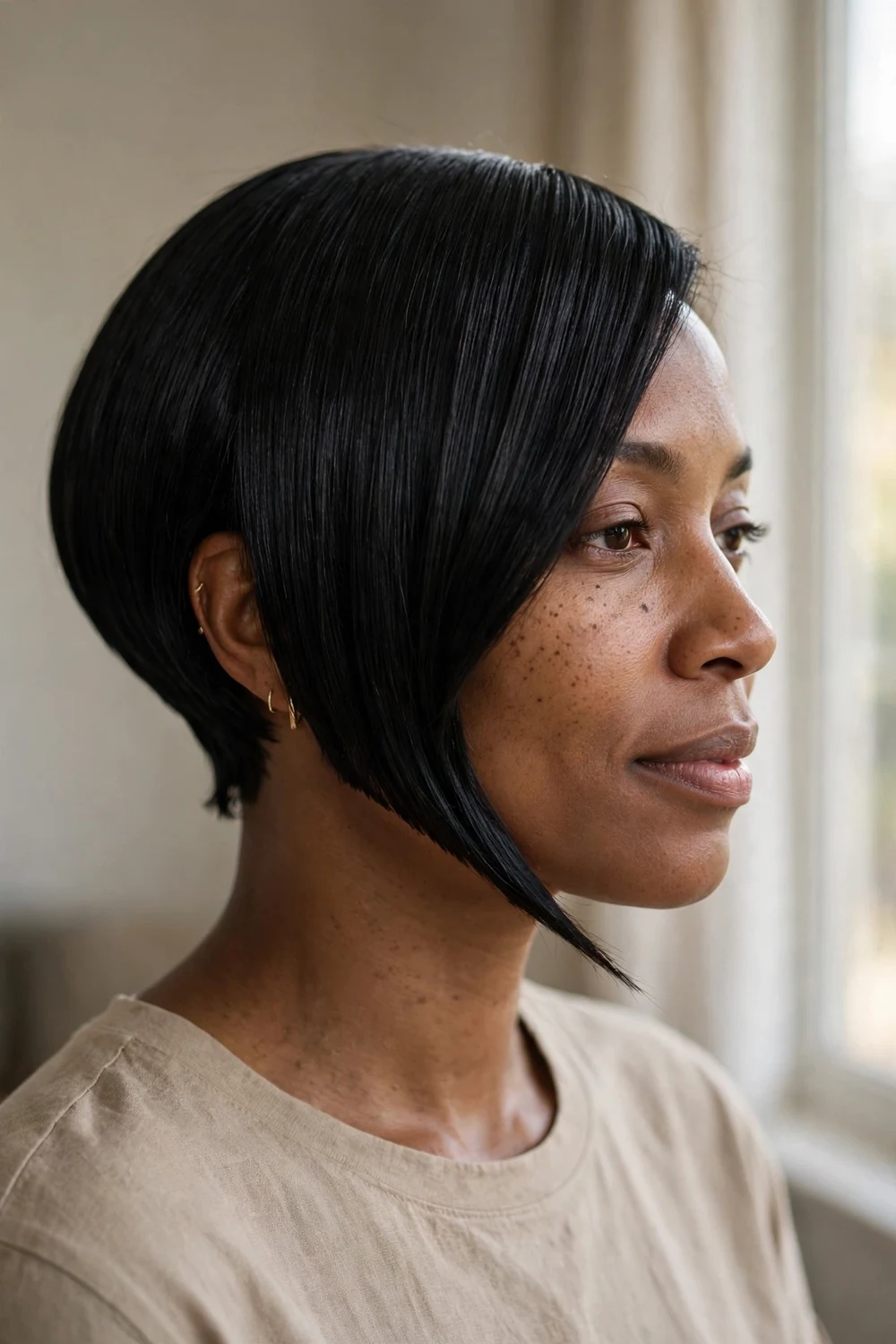
The original and still the reference point: one side grazing the jawline while the other sits close to the nape, cut on a clean diagonal. Flat-ironed to a glossy finish, the angle carries the whole look, so color and accessories stay optional. This suits relaxed or pressed hair best, since silkiness shows the line most clearly. Ask for the cut on dry, straightened hair so the diagonal lands exactly where you want it. The shorter side can tuck behind the ear for a two-looks-in-one effect.
Try this: Press with a heat protectant first, then smooth a pea-sized amount of shine serum over the mid-lengths. Wrap at night to keep the finish for several days.
Effort: Medium
2. Natural Coily Asymmetrical Bob
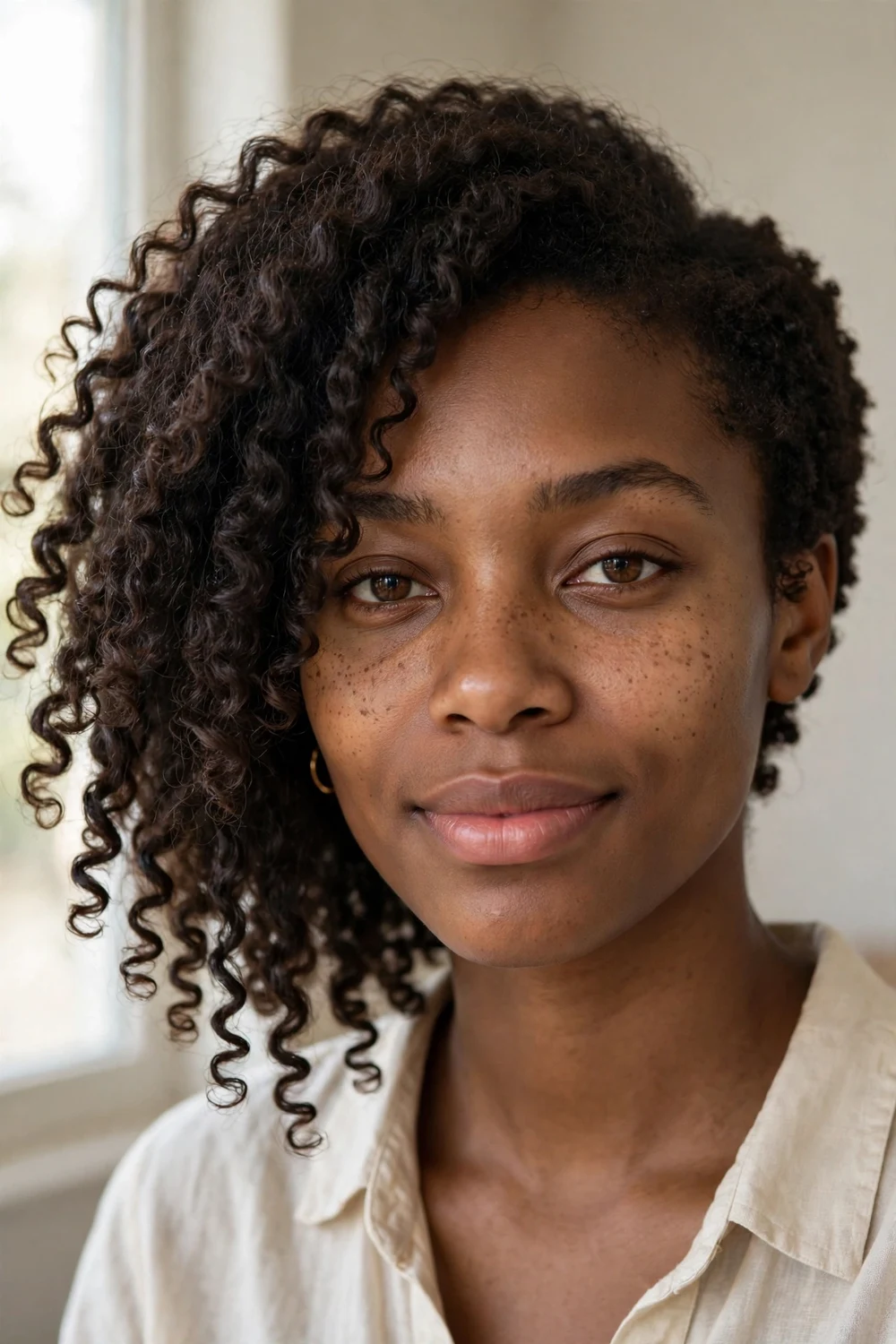
Texture makes asymmetry feel organic instead of severe. Cut into coily hair, the uneven line looks editorial, with the longer side falling in springy coils near the chin while the shorter side opens up the neckline. Ask your stylist to cut with your curl pattern and shrinkage in mind, and to check the shape both wet and dry. Define on damp hair with curl cream and let it dry untouched so the shape holds. A pick at the roots adds lift without disturbing the diagonal.
Try this: Refresh coils on day two with a water and leave-in spray, then scrunch gently. Avoid raking fingers through the longer side, which blurs the angle.
Effort: Low
3. Asymmetrical Bob With Side-Swept Bangs
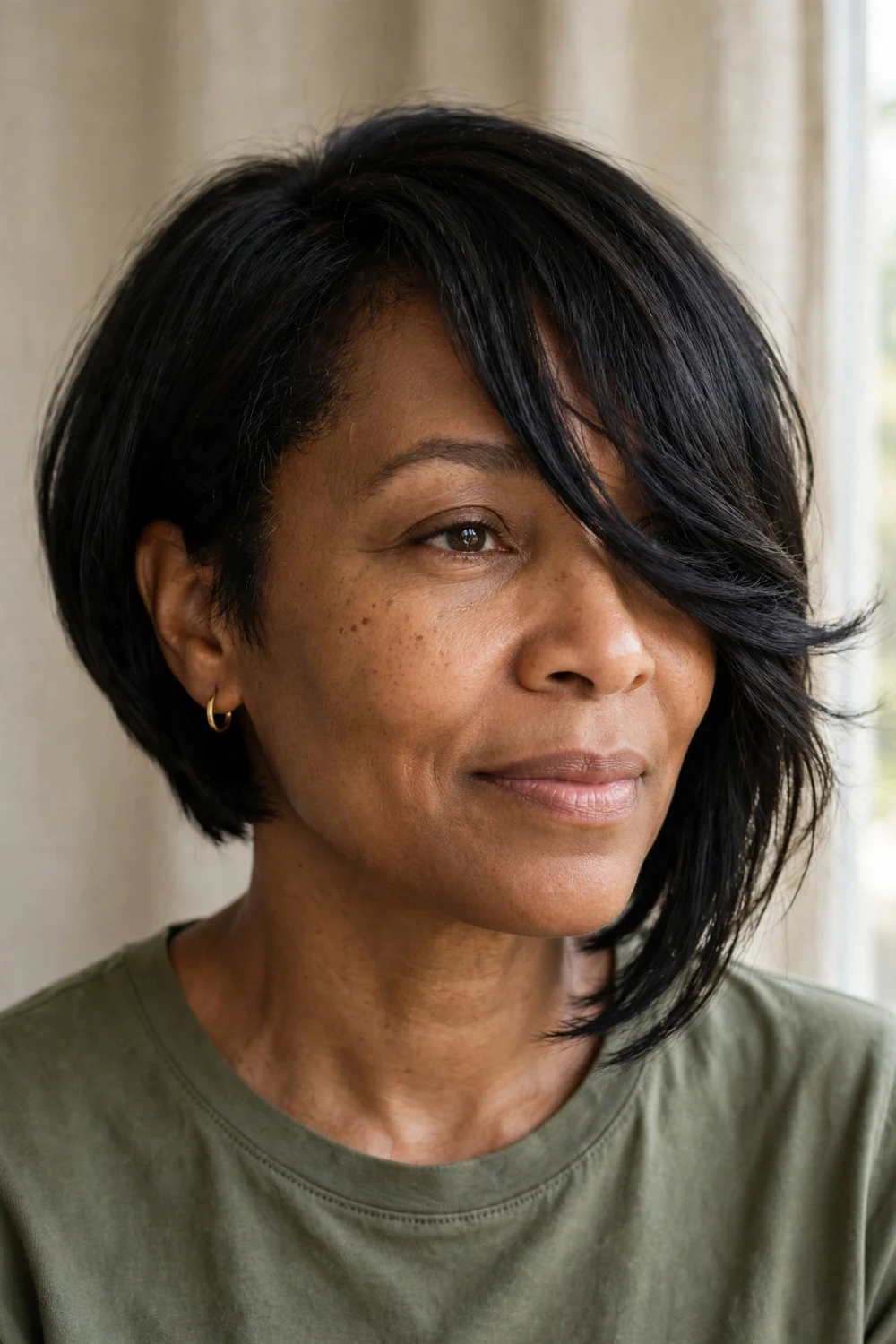
A deep side-swept fringe melts straight into the longer side of the bob, creating one continuous sweeping line across the face. The result reads glamorous without being fussy, and the fringe softens the sharp angle so the cut stays feminine. Blow-dry the bangs with a round brush, directing them toward the longer side so they merge seamlessly. This pairing flatters wider foreheads and rounder faces, since the diagonal sweep narrows the look of the face.
Try this: Set the fringe with a light-hold hairspray after drying, and tuck the shorter side behind the ear to emphasize the sweep.
Effort: Medium
4. Tapered Asymmetrical Bob With Laid Edges
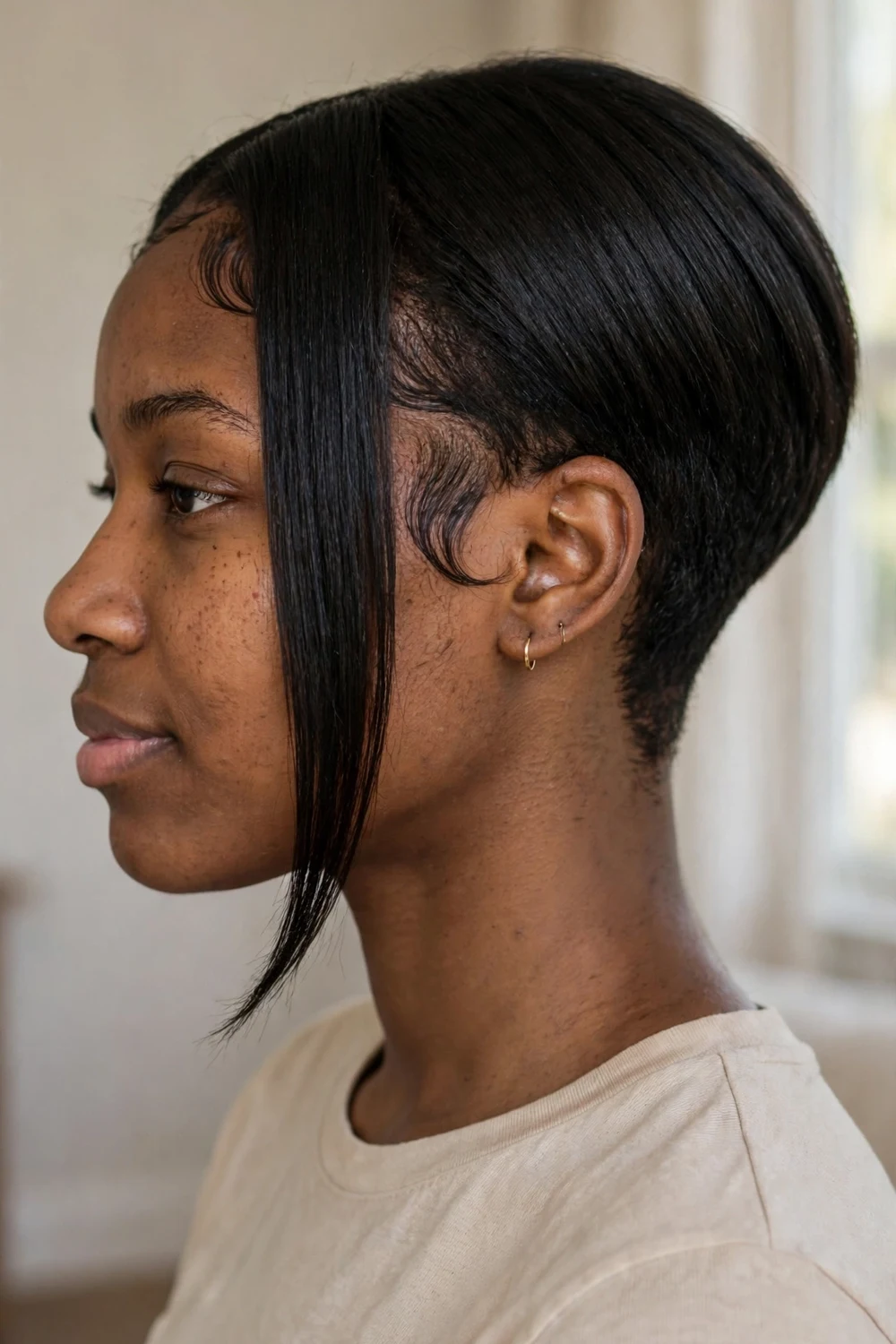
Short and tapered through the back and sides, with one elongated front panel falling near the cheek, finished with swooped, laid edges along the hairline. The tapered back keeps the silhouette close and clean while the long front panel delivers the asymmetry. Edges are the jewelry of this cut: use a small amount of edge control and set with a silk scarf for 15 minutes. This one is rooted in Black hair culture and wears well for both everyday and dressed-up settings.
Try this: Apply edge control to dry edges only, never wet, to avoid flaking. Carry a small brush for quick touch-ups during the day.
Effort: Low
5. Asymmetrical Bob With a Shaved Side
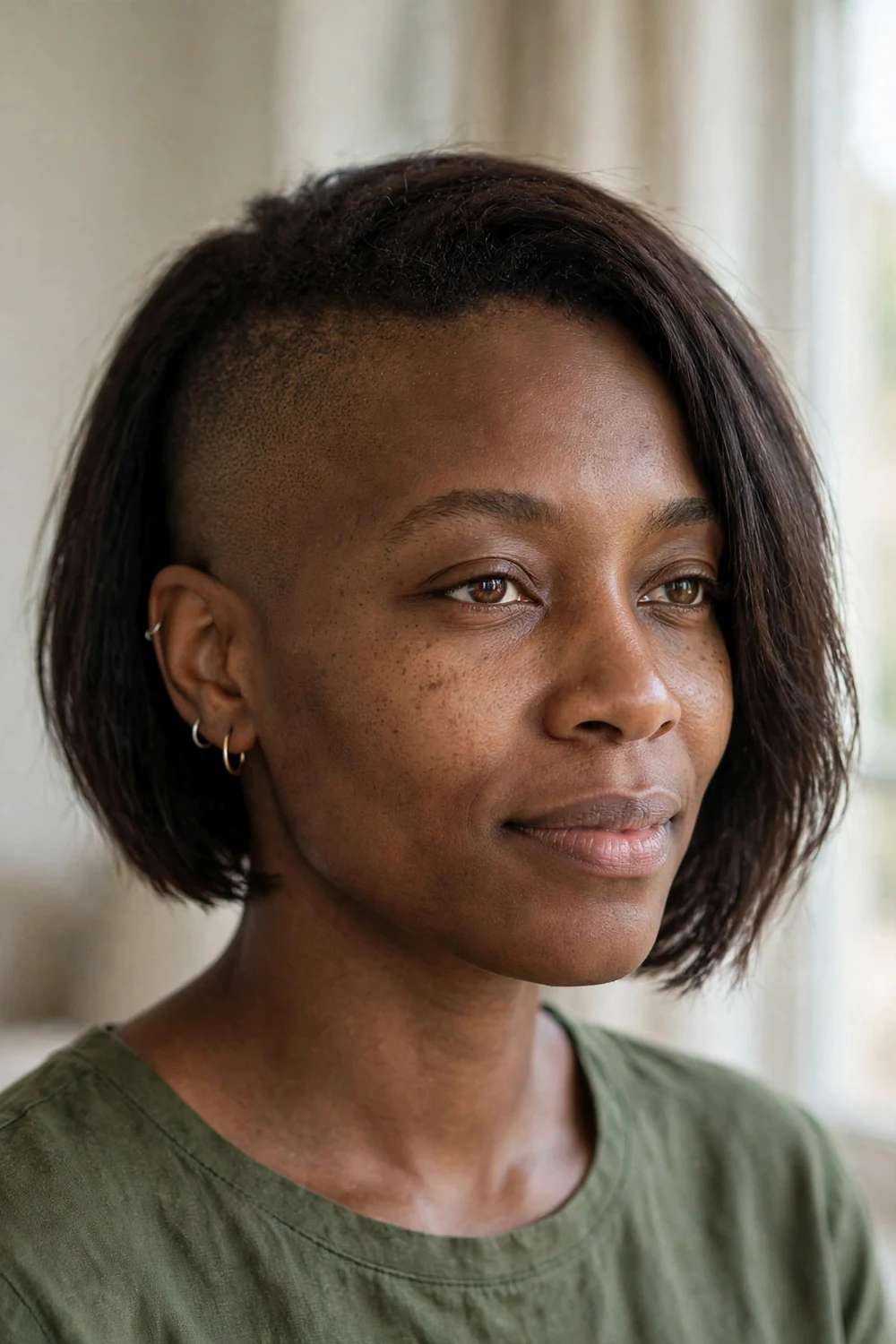
Keep fullness and length on one side and go clean and close on the other. The contrast between soft texture and a sharp shaved section is pure editorial, yet the longer side keeps it completely wearable day to day. Style the long side smooth or wavy depending on your mood; the shaved side needs no daily styling at all. Refresh the shaved section every two to three weeks to keep the line crisp. Pair with earrings that show on the short side for extra impact.
Try this: Ask the barber to fade the shaved side into the tapered back for a smoother grow-out.
Effort: Medium
6. Honey Blonde Asymmetrical Bob
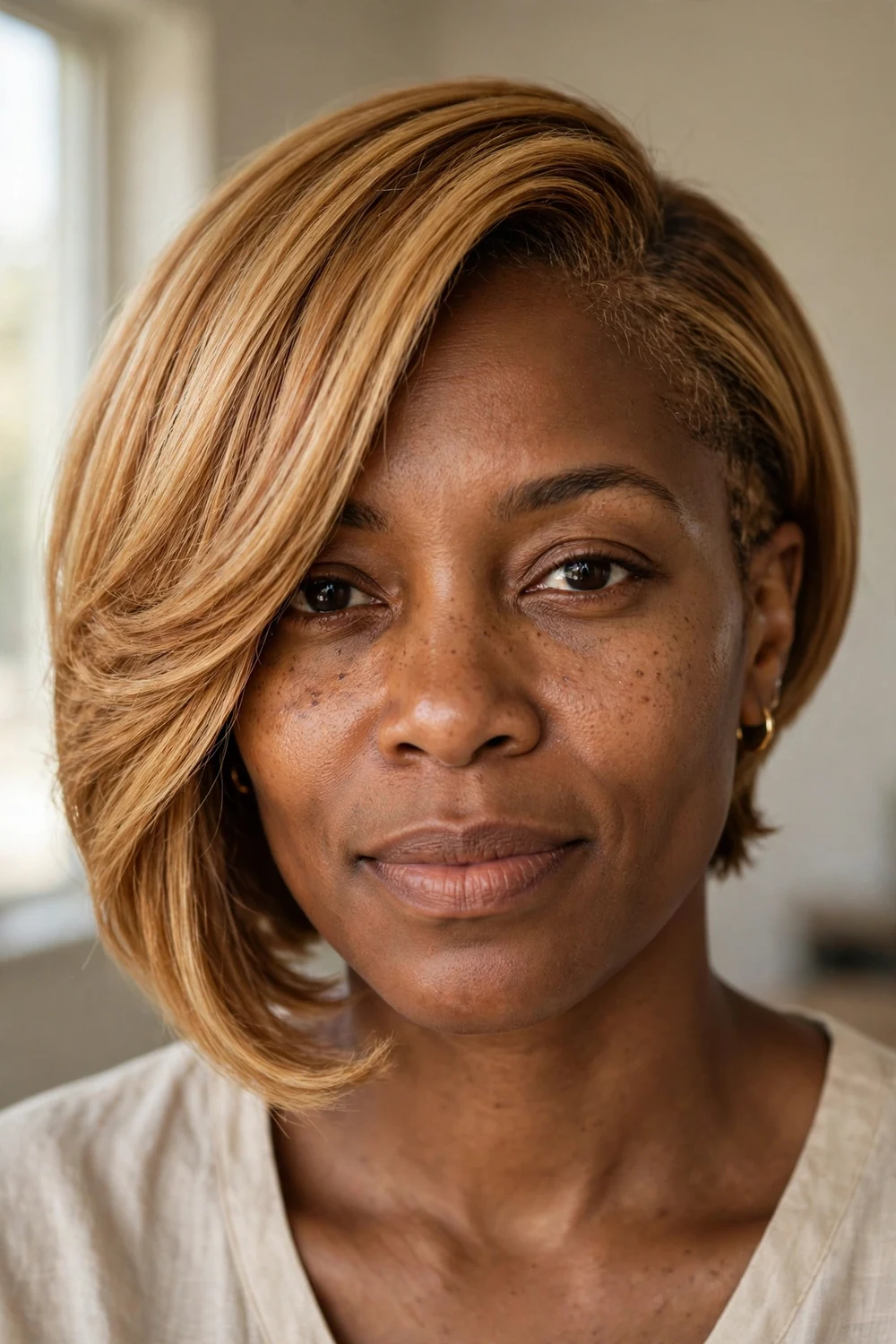
Warm honey blonde with golden dimension turns the asymmetrical silhouette into something sunlit. The color catches the angle, making the longer side glow against deeper skin tones. Lifting dark hair to honey needs bleach, so plan for a bond-building treatment at the salon and a sulfate-free routine at home to keep it bright instead of brassy. A gloss between color appointments keeps the tone even. The cut itself stays sleek and straight, since the shine shows off both color and shape.
Try this: Use a purple-toning mask once a week and deep condition every wash day to protect bleached ends.
Effort: High
7. Blunt Asymmetrical Lob With a Middle Part
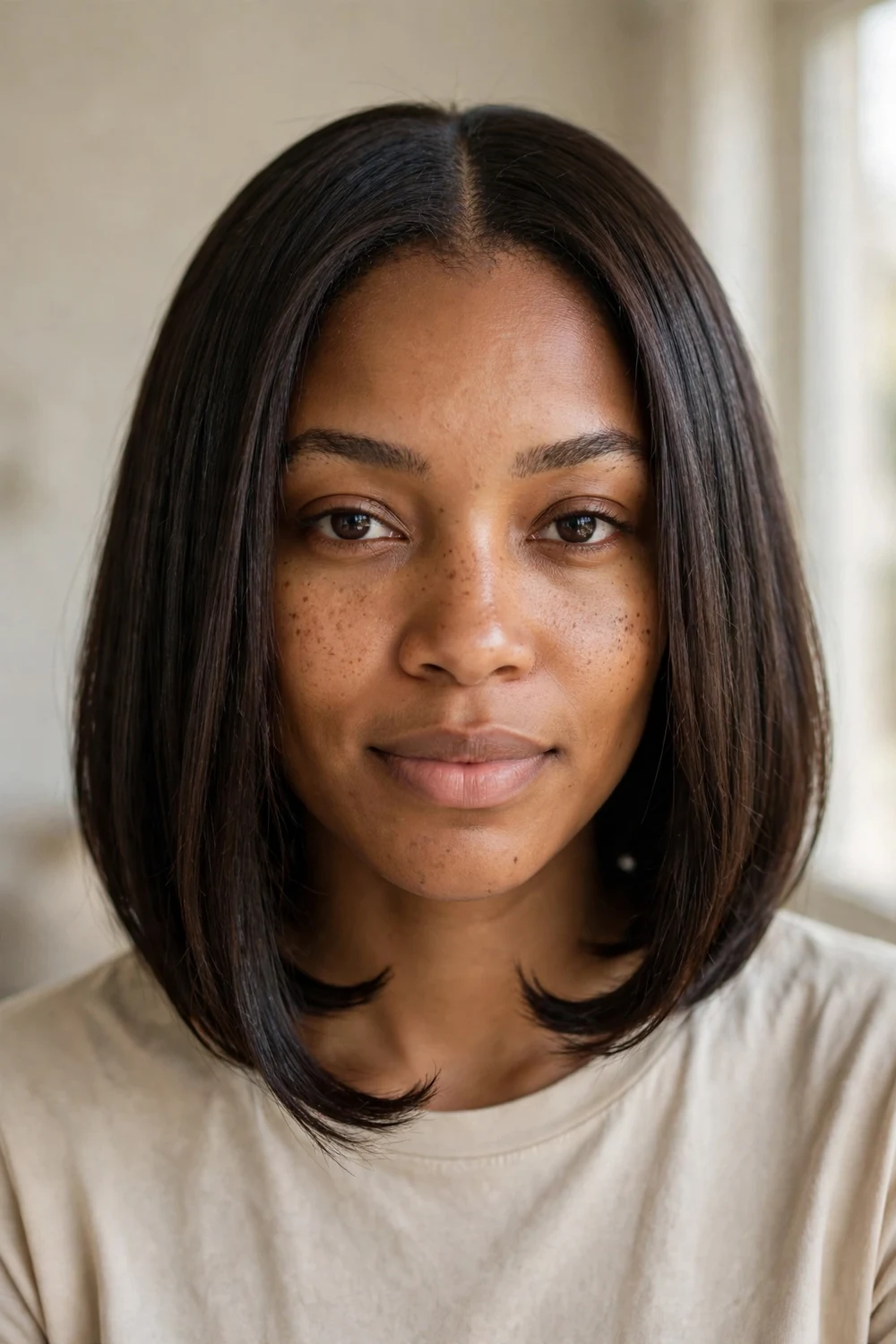
The longer take on the trend: a lob cut bluntly with just a whisper of asymmetry and a clean center part. It reads cool and editorial, like the fashion-week version of the bob, and the blunt ends give fine hair the illusion of thickness. Bend the ends slightly inward with a flat iron for a tucked, intentional finish. Because the angle is subtle, this is the safest first step into asymmetry for conservative workplaces. It also grows out more gracefully than dramatic versions.
Try this: Part dead center on damp hair, then flat iron in sections to lock in the blunt line.
Effort: Low
8. Burgundy Finger-Wave Asymmetrical Bob
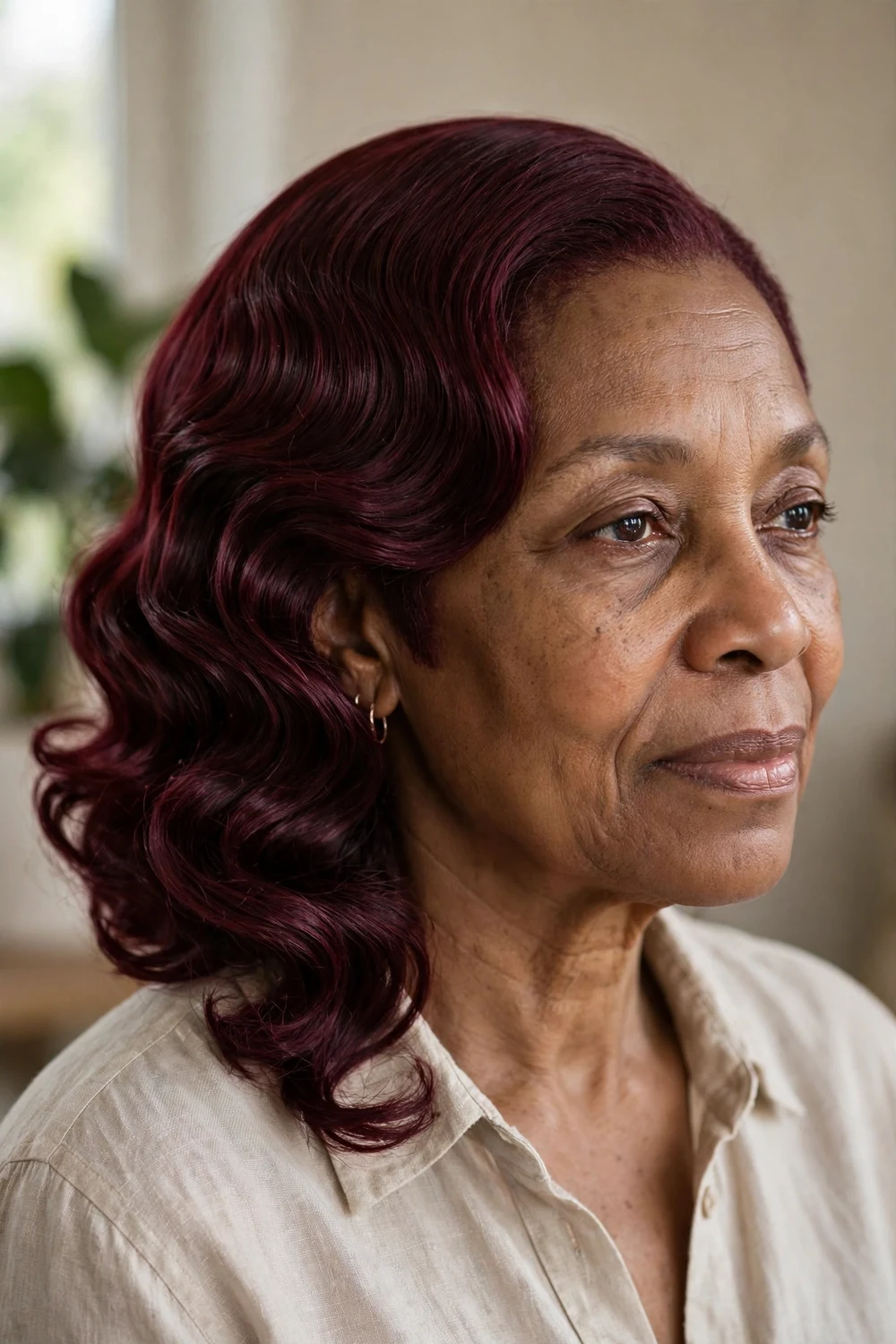
Deep burgundy plus sculpted finger waves on the longer side is old-Hollywood glamour with a modern edge. The waves sit on the long panel and melt into a smooth, shorter side, which keeps the vintage texture from feeling costume-like. Set the waves on damp hair with clips and a hooded dryer for the longest-lasting sculpt. The burgundy shade flatters deep skin and hides regrowth better than blonde. Save this one for formal events, weddings, and evenings when you want the cut to feel special.
Try this: Wrap the set waves in a silk scarf overnight and mist lightly in the morning to revive the pattern.
Effort: High
9. Protective Sew-In Weave Asymmetrical Bob
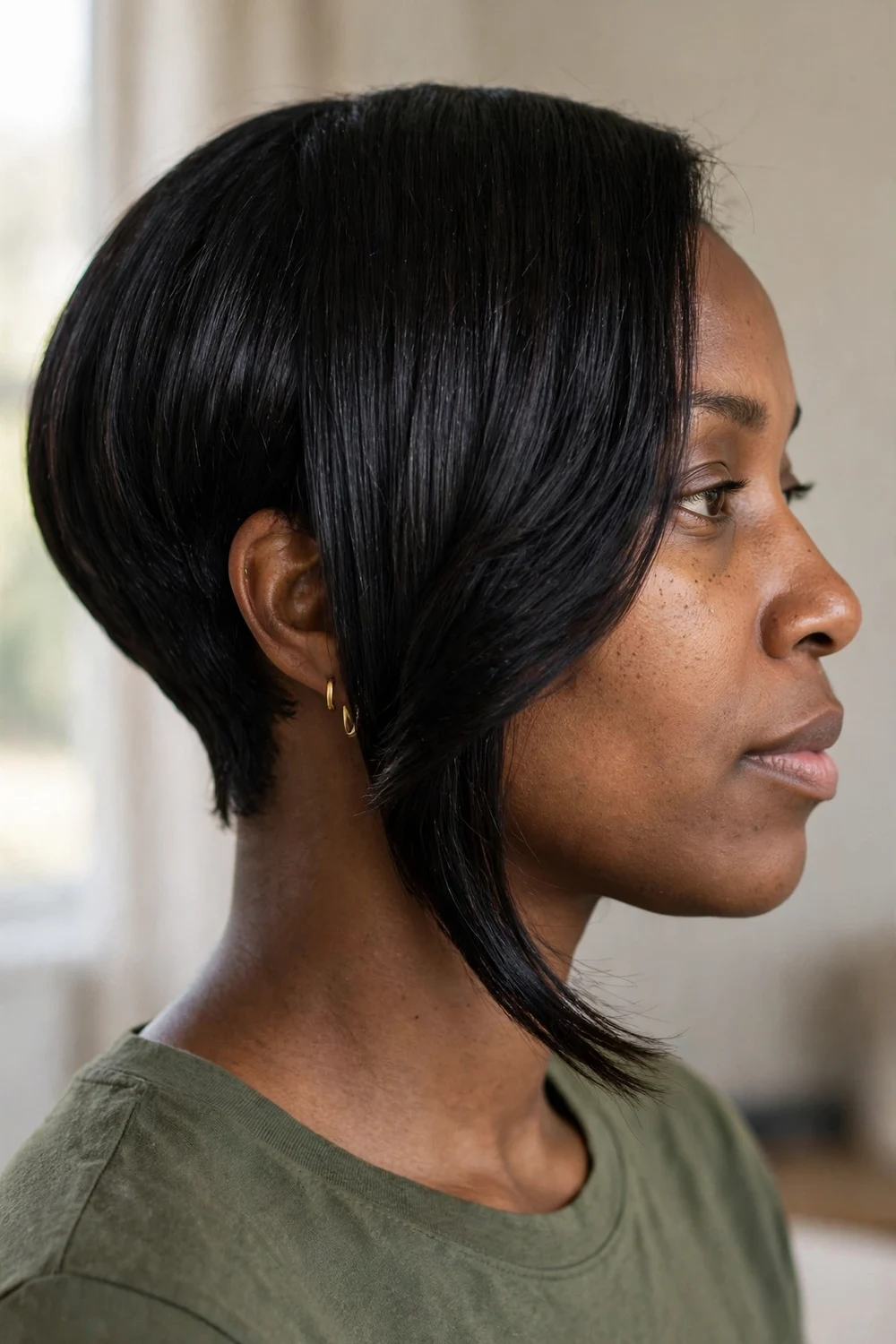
A sew-in cut into an angled bob gives you the silhouette while your natural hair rests safely underneath. It is one of the most popular ways to try asymmetry without touching your own length. Ask your stylist to cut the angle after the install is dry for the most precise line, since weave hair settles differently once it is flat-ironed. Keep the leave-out minimal or go with a closure for lower daily maintenance. Moisturize your natural hair at the braids’ access points while the install is in.
Try this: Bring reference photos that show the angle from both sides, not just the long side, so the cut is even in intent.
Effort: Low
10. Jet Black Asymmetrical Bob With High Shine
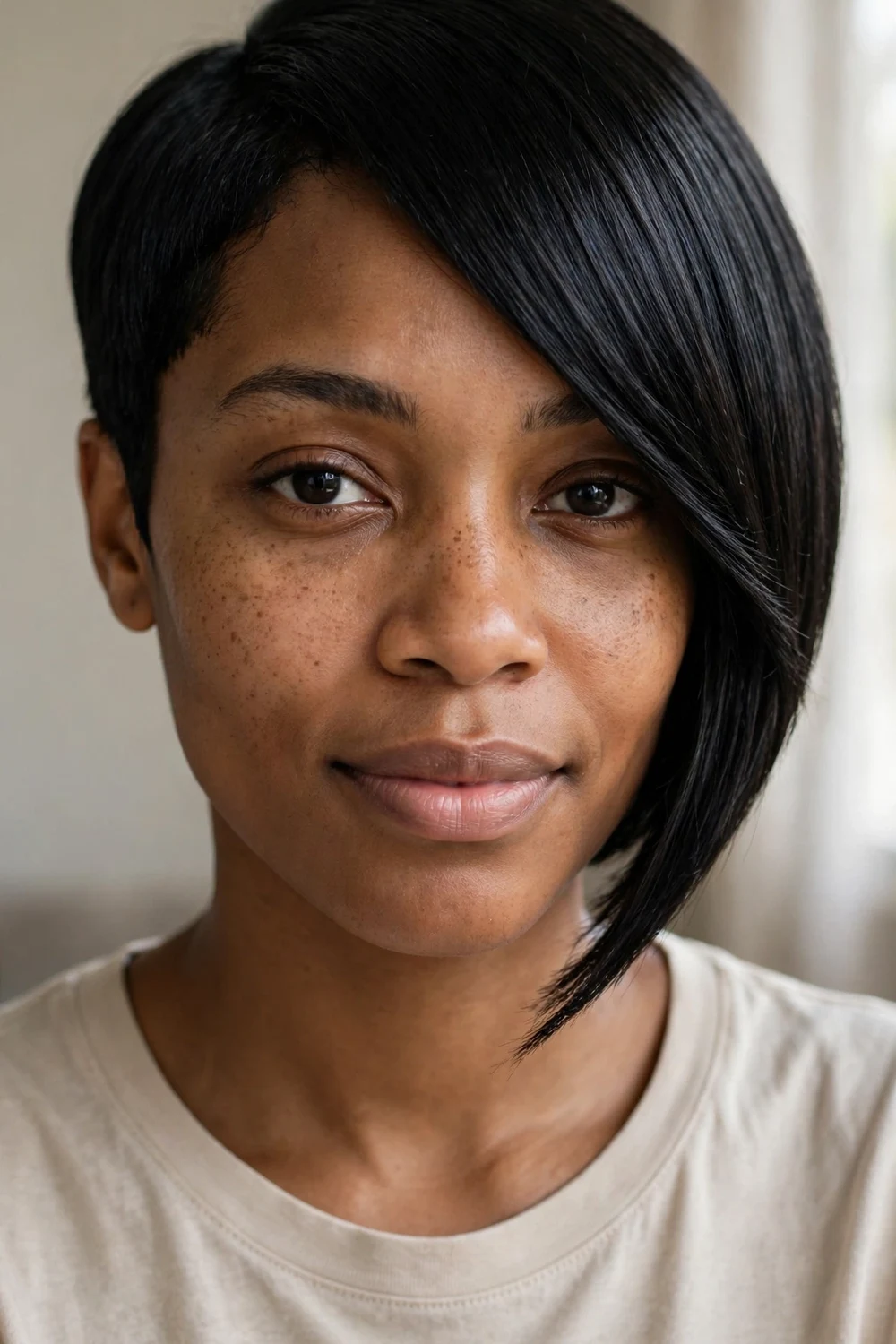
Inky black makes the geometry of this cut razor-visible. Add a mirror-gloss finish and the whole look becomes sleek, graphic, and powerful, especially paired with a bold lip. A glossing treatment or shine oil on the mid-lengths and ends maximizes the reflective finish. This is the lowest-color-maintenance route to drama: no roots to touch up, no toning schedule. Keep ends trimmed so the shine reads healthy rather than stringy, and sleep on silk to preserve the smoothness.
Try this: Finish every style with a cool-air blast from the dryer to seal the cuticle and boost reflectiveness.
Effort: Low
11. Asymmetrical Bob With a Hidden Undercut Design
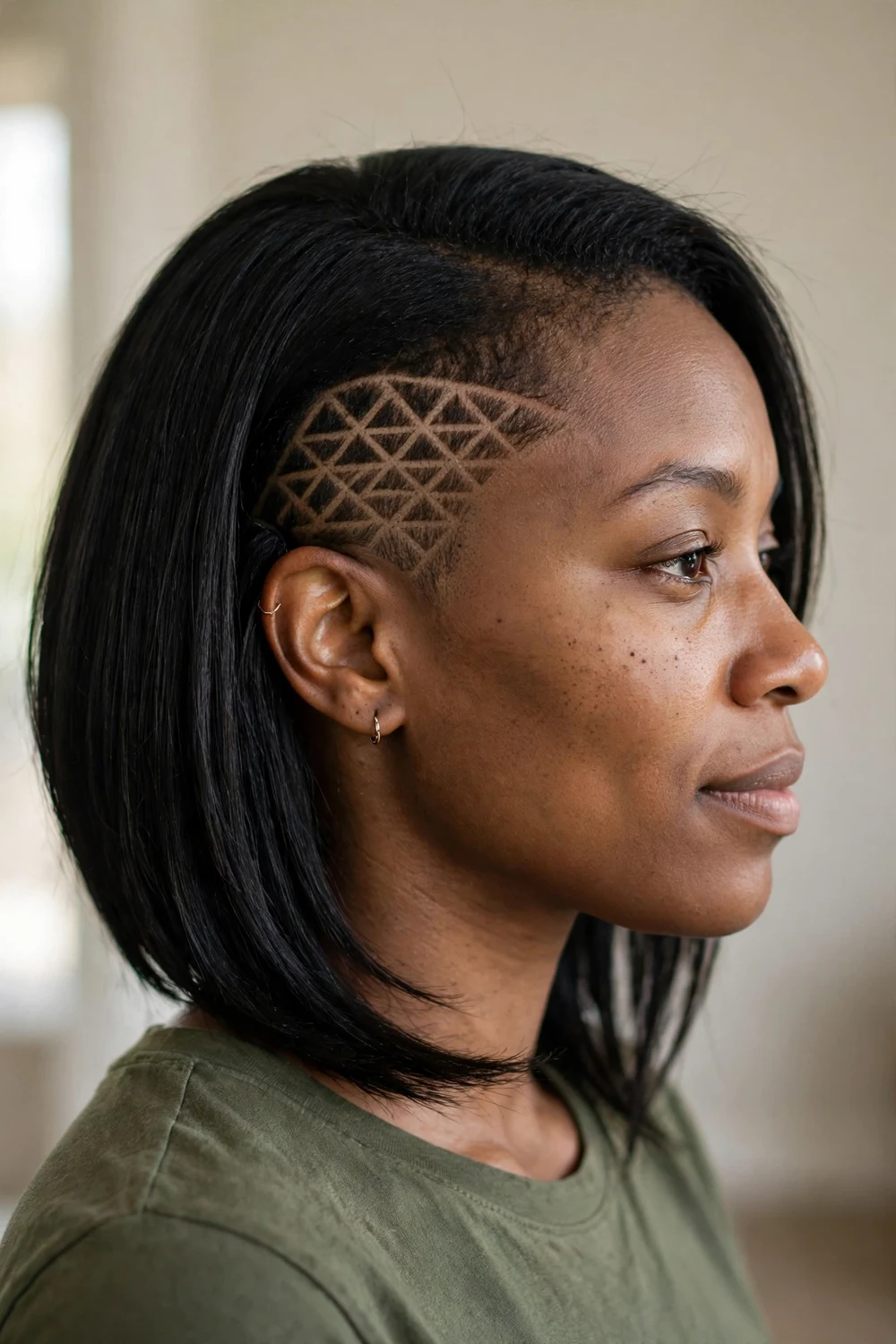
Hide a shaved design, geometric or floral, in the shorter undercut section, and reveal it only when you tuck the longer hair behind the ear. It is wearable art with a secret, which makes it office-safe by default and expressive when you choose. See a stylist experienced in hair art, and refresh the design every three to four weeks before it blurs. Keep the top layer long enough to fully cover the design on days you want it hidden. Moisturize the shaved area lightly to avoid dryness.
Try this: Start with a simple geometric line design before committing to intricate artwork.
Effort: Medium
12. Copper Red Asymmetrical Bob on Natural Texture
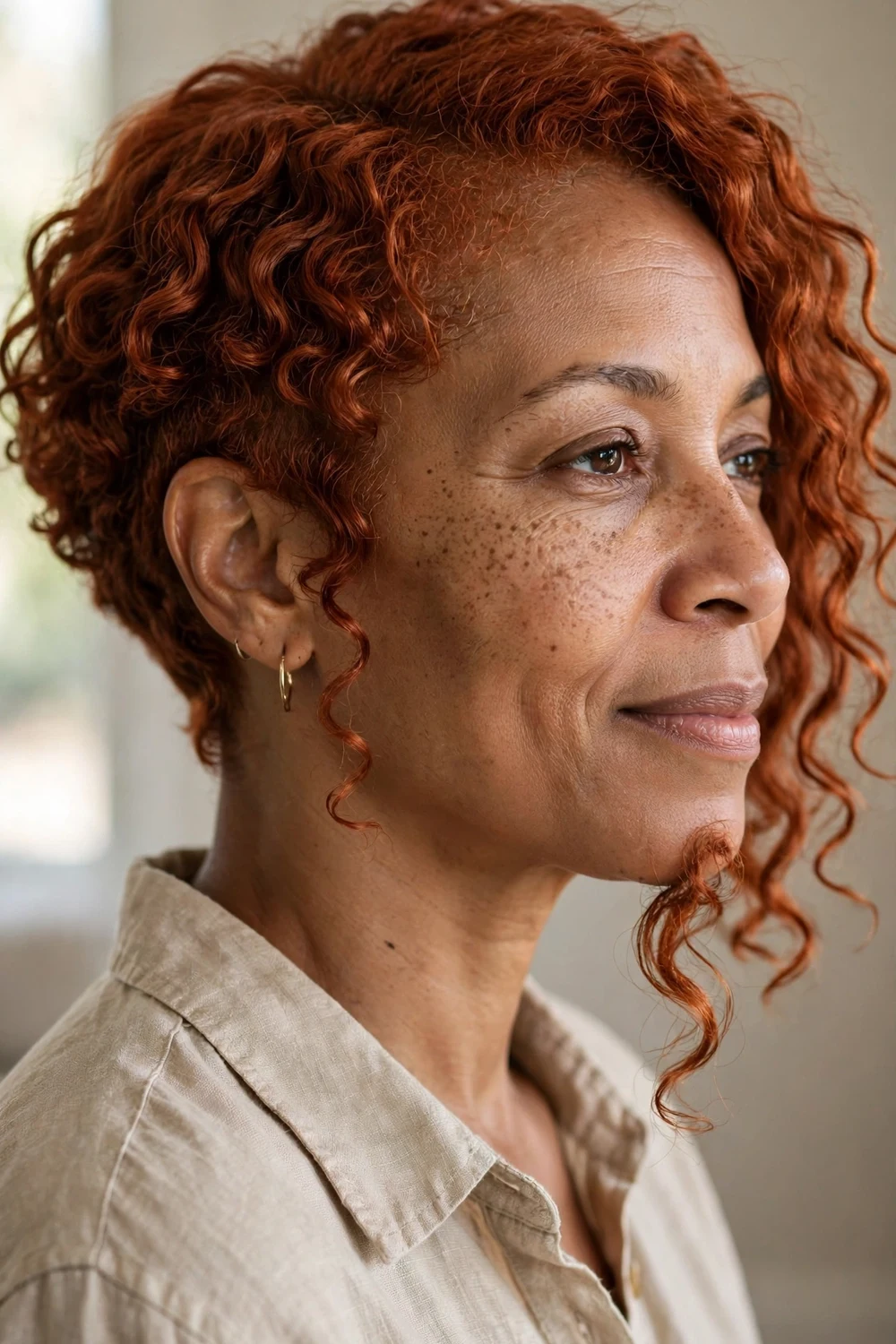
Copper and burnt-orange tones on natural curls are electric: the warm color glows against deep skin, and the coils give the color built-in dimension. The asymmetrical cut keeps the bold color from feeling one-note by adding shape and movement. Deep condition weekly and use color-safe products to protect both the color and the curls. Red fades faster than most shades, so a color-depositing conditioner extends the life of the tone between salon visits. Define curls with cream on wash day.
Try this: Rinse with cool water to slow fading, and refresh the tone with a copper gloss every four weeks.
Effort: High
13. Tucked-Side Bob With Flipped Ends
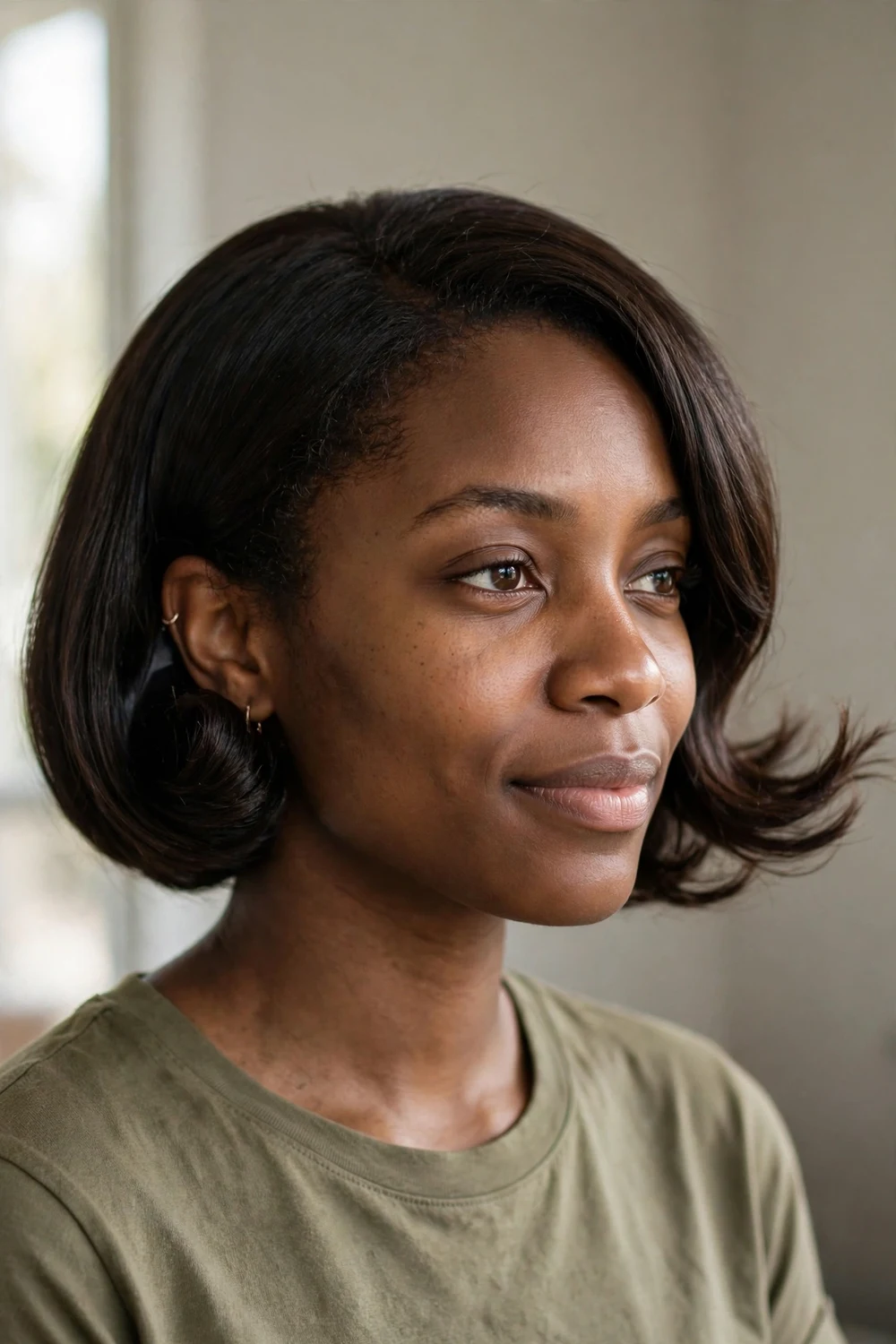
Tuck one side neatly behind the ear and flip the ends of the longer side outward for a playful retro kick. Structured on one side, flirty on the other, it works for the office and the weekend alike. A dab of pomade keeps the tucked side smooth while a curling iron creates the flip. The style adapts well to second-day hair, since the tuck hides any flatness on the short side. This is a good choice if you like changing your look without recutting.
Try this: Flip ends outward with a one-inch curling iron, then break the flip up with your fingers for a softer bend.
Effort: Low
14. Caramel Ombré Asymmetrical Bob
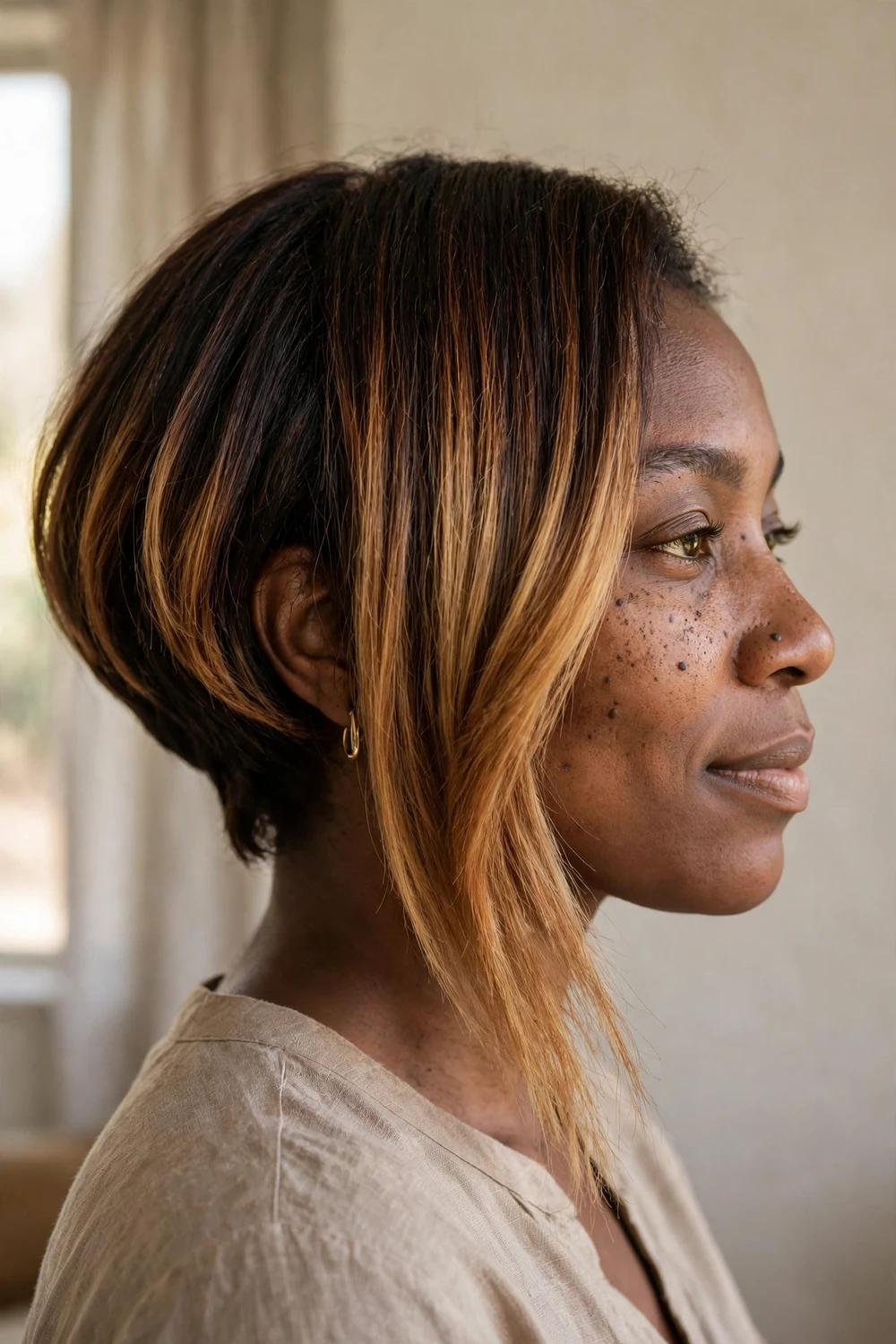
A dark-brown-to-caramel gradient softens the graphic line of the cut, adding a sun-kissed luxury without harsh regrowth lines. The color melts from mid-shaft to the ends, so grow-out is graceful and low-stress. Ask for a hand-painted balayage blend for the most seamless transition. The lighter ends draw the eye along the diagonal, which emphasizes the asymmetry from every angle. Use sulfate-free shampoo to keep the caramel from dulling, and gloss every couple of months.
Try this: Keep the darkest depth at the roots and start the caramel at the cheekbone for the most flattering placement.
Effort: Medium
15. Pressed Natural Bob With Root Volume
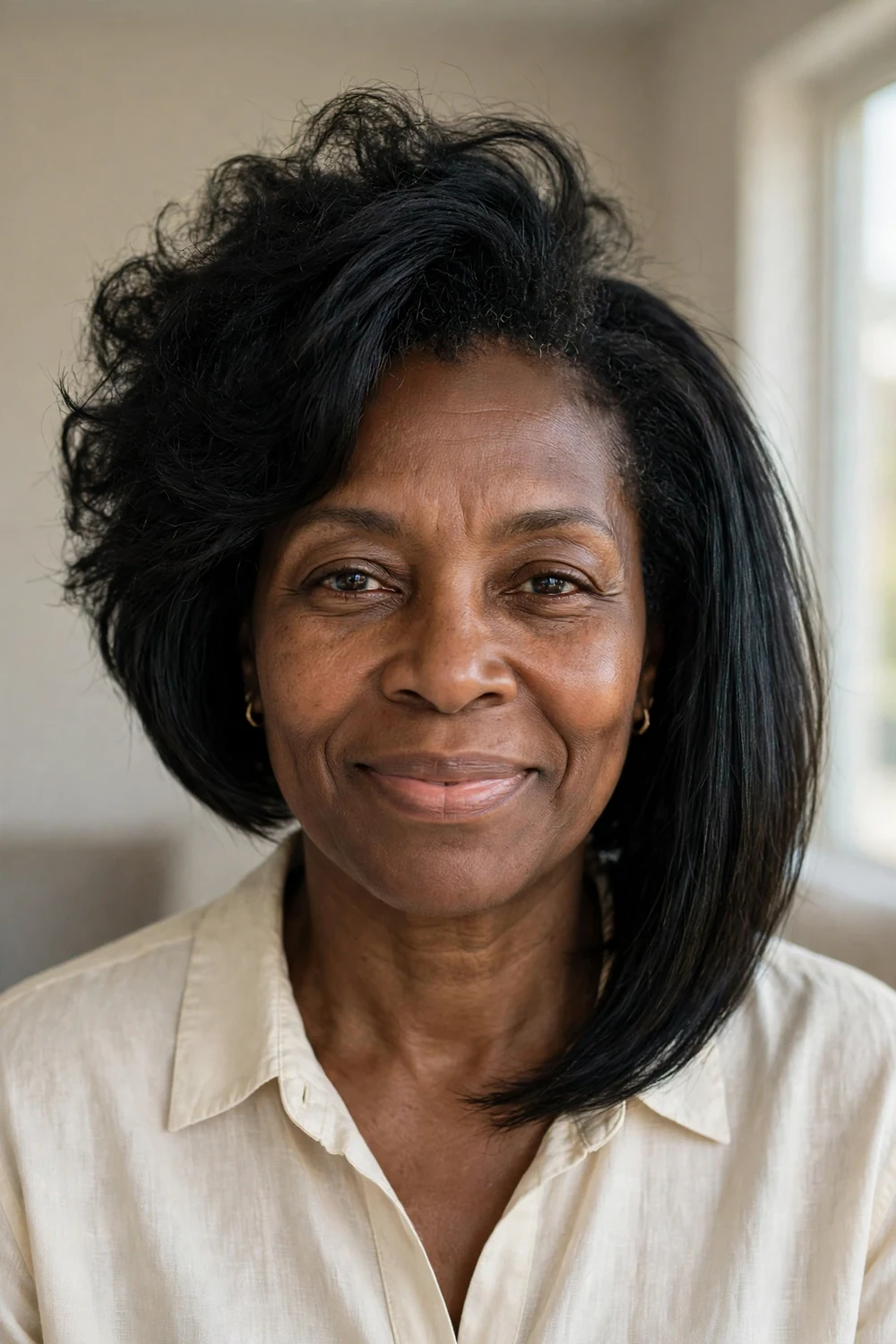
This bridges two worlds: volume and texture at the roots, smooth and sleek through the angled ends. You keep the fullness of natural hair with the precision of a straight cut. Always use heat protectant before pressing, and wrap at night to preserve the style for up to two weeks. Blow-dry roots with a paddle brush for lift, then flat iron only the mid-lengths and ends. The contrast between root volume and sleek ends is what makes this version distinctive.
Try this: Pin curl the longer side at night instead of wrapping to protect the angle while you sleep.
Effort: Medium
16. Chin-Grazing Subtle Asymmetrical Bob
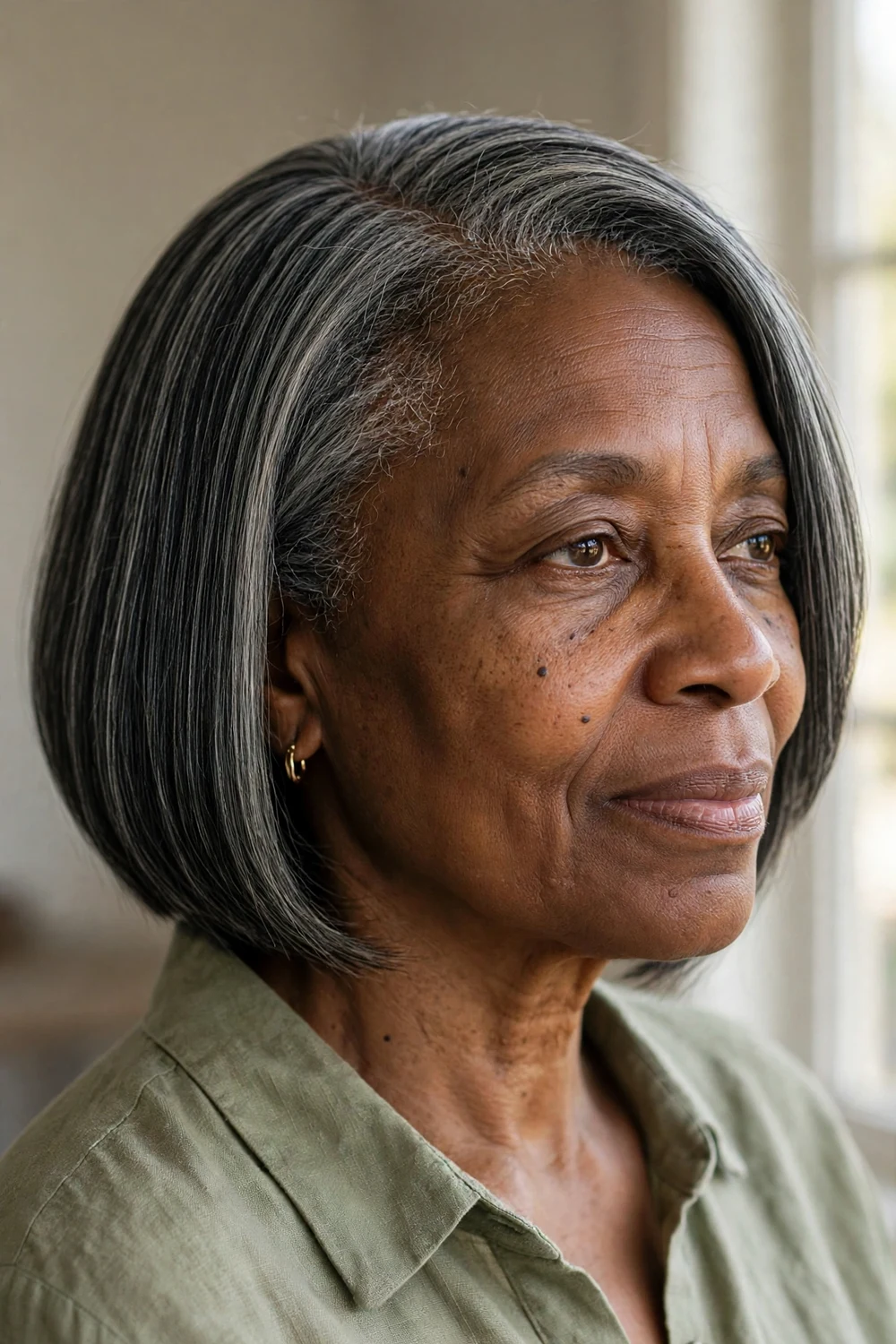
Not ready for drama? This version keeps the difference between the sides to about an inch, just enough to feel modern and interesting. It is the entry point if you are asymmetry-curious, and it reads polished in every setting including conservative offices. Because the angle is subtle, trims every eight weeks keep it looking intentional. Style it straight and simple; the cut does not need color or accessories to register. It also makes the easiest grow-out of all the versions here.
Try this: Ask for the longer side on the side you naturally part toward, so the angle works with your habits.
Effort: Low
17. Asymmetrical Bob With a Stacked Back
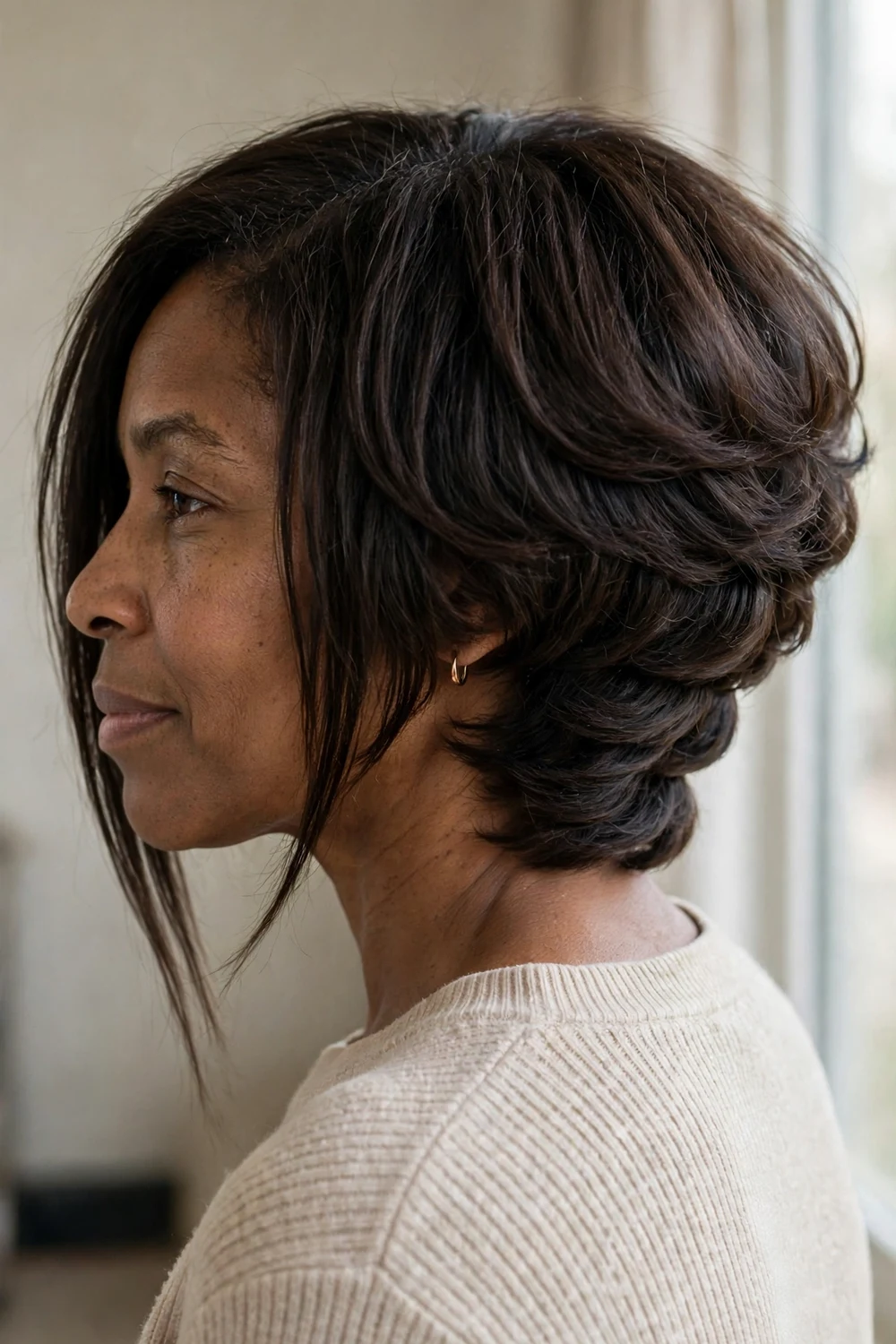
Stacked layers at the nape build automatic volume while the front stays long and angled. You get the lift of a stacked bob and the edge of asymmetry in a single cut, which makes this a strong pick for fine hair that needs body plus attitude. Root mousse before blow-drying keeps the stacked back full all day. The graduated back also removes bulk, so thick hair feels lighter. Have the layers cut to collapse neatly so the back rounds instead of winging out.
Try this: Blow-dry the back with a round brush, rolling under, to set the stacked shape before flat-ironing the front.
Effort: Medium
18. Dramatic Long-Front Asymmetrical Bob
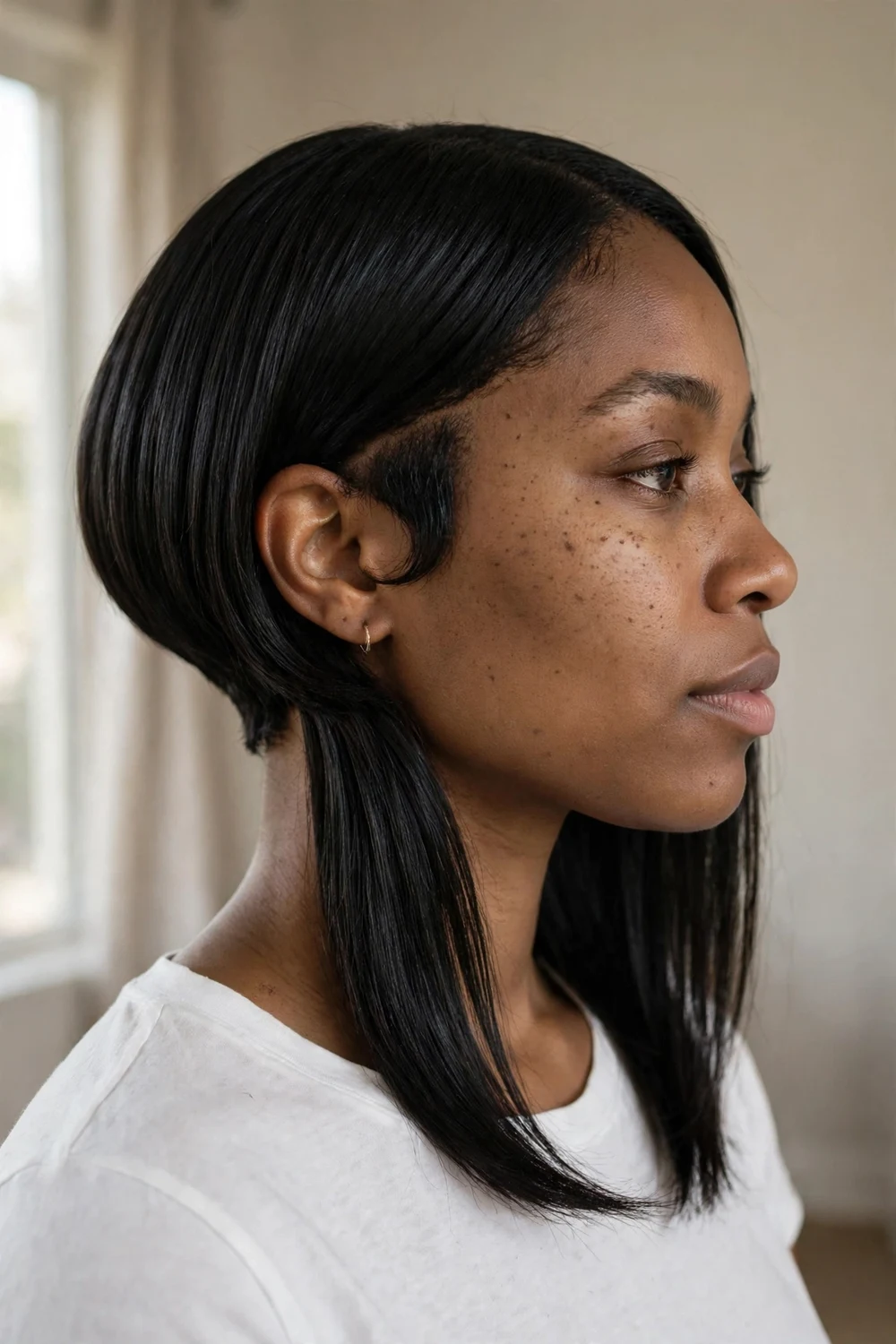
One side cropped close, the other falling well past the chin: this is asymmetry at full volume. The long panel frames the face like a curtain and moves with real flow when you walk. It demands commitment, since the difference can reach four or more inches, and it needs trims every four to six weeks to stay sharp. Keep the long side healthy with regular trims; split ends show fast on a statement piece. Wear it straight and sleek for maximum graphic effect.
Try this: Tuck the short side tight behind the ear and let the long side fall forward over the shoulder for the strongest contrast.
Effort: Medium
19. Textured Wavy Asymmetrical Bob
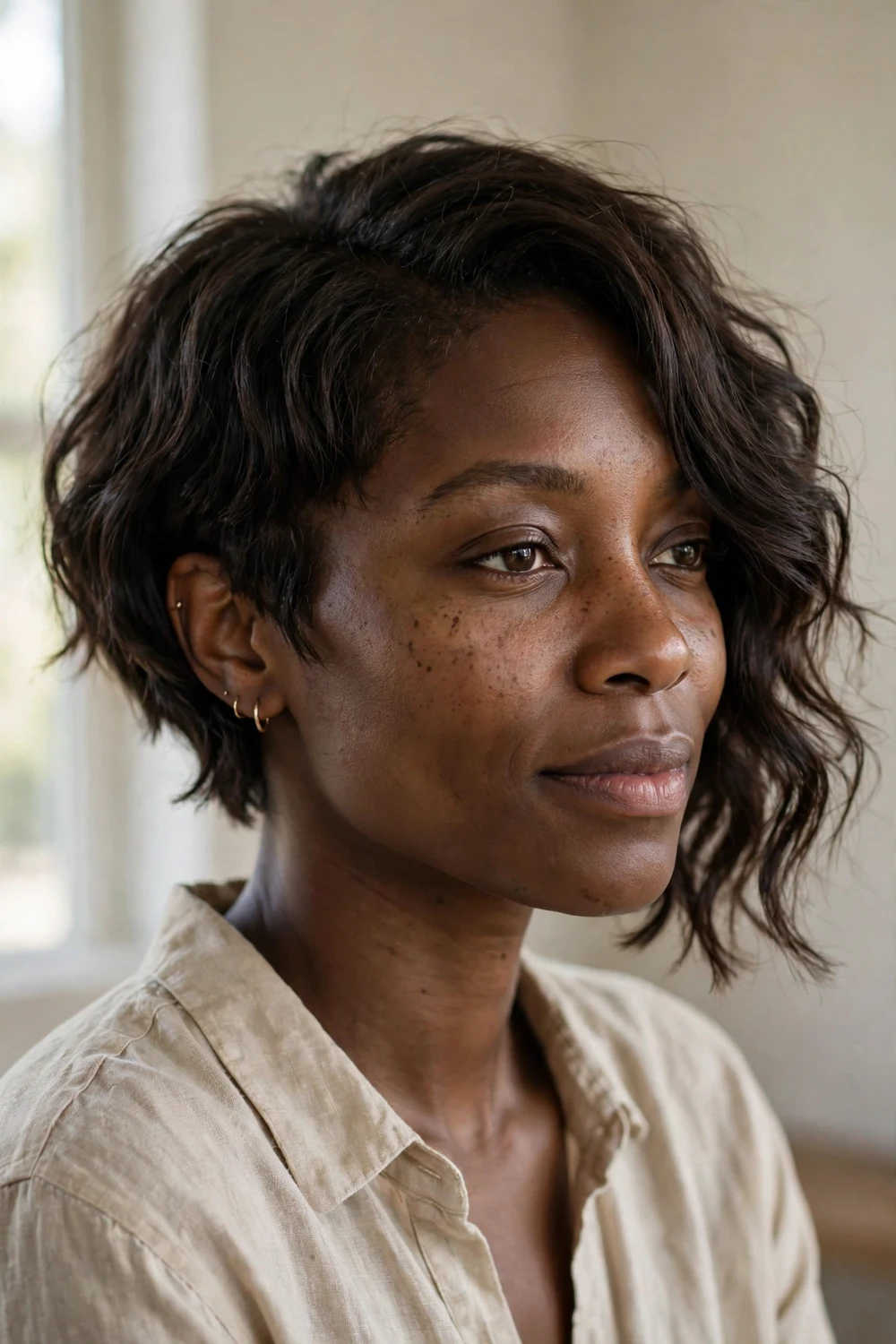
Soft bends through an angled cut give you asymmetry without the flat iron. The waves add width and movement, so the uneven line feels relaxed rather than severe. This is the lowest-effort way to wear the trend. Scrunch sea-salt spray or mousse into damp hair and let it air-dry for natural-looking waves. A deep side part strengthens the asymmetry even when the texture is loose. It suits wavy and loose-curly hair best, and it hides regrowth between trims gracefully.
Try this: Braid damp hair in two loose plaits overnight for heat-free waves with more definition.
Effort: Low
20. Asymmetrical Bob With Face-Framing Highlights
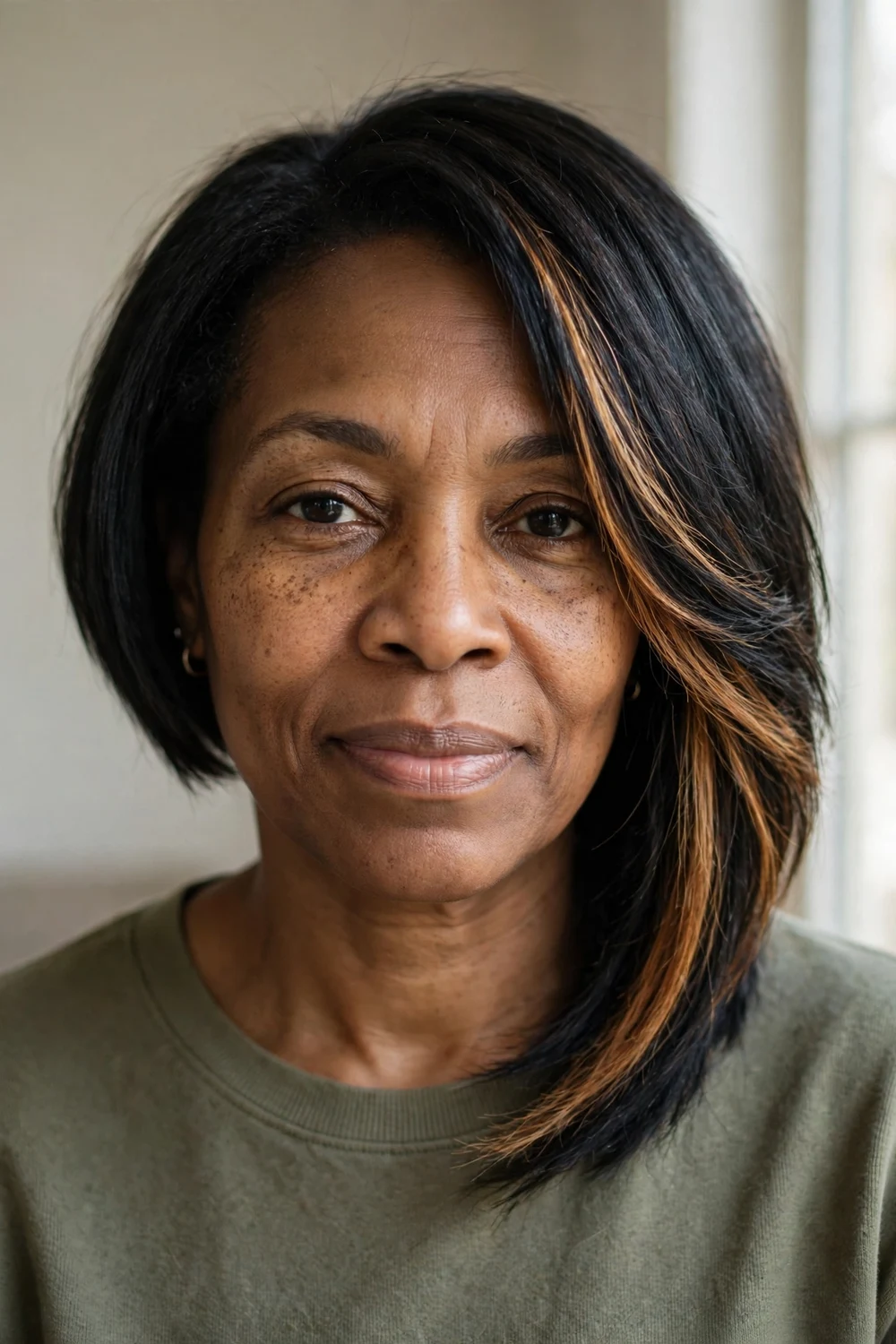
Strategic lighter pieces along the longer side draw the eye exactly where the cut wants it: down the dramatic angle. The color placement makes the asymmetry pop even from across the room. Keep the highlights concentrated on the long panel for maximum contrast with the shorter side. This works on dark bases without a full-head color commitment, which keeps both cost and damage lower. A gloss refresh every six to eight weeks keeps the pieces bright.
Try this: Ask for the lightest pieces right at the front hairline of the long side, where they frame the face most.
Effort: Medium
21. Asymmetrical Braided Bob
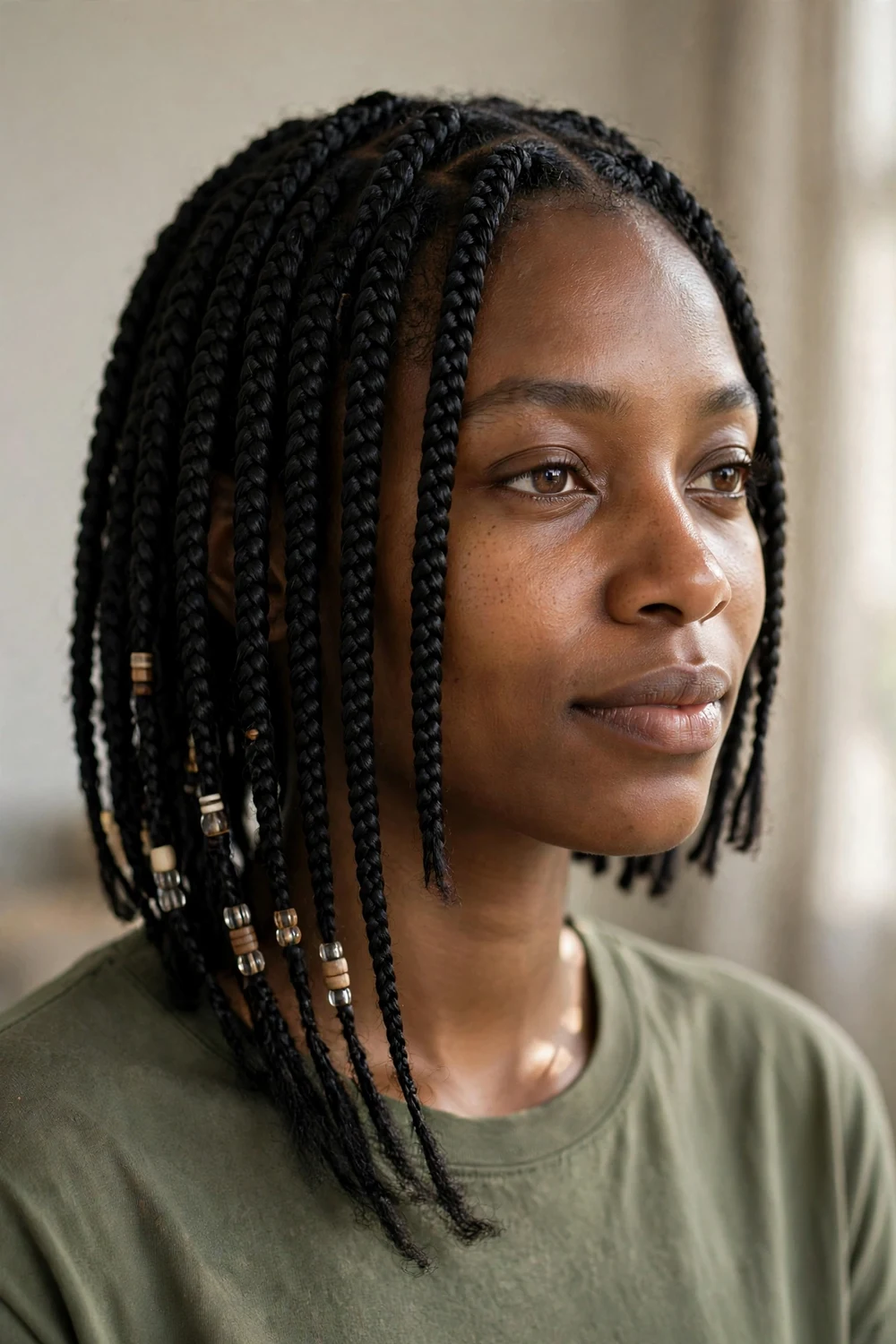
One side longer than the other with neat, stylish braids: this protective version puts a bold spin on the silhouette. Knotless or feed-in braids keep the hairline gentle while the uneven lengths create the drama. It flatters round and oval faces, adding structure and definition. Wrap braids in a silk scarf at night and oil the scalp regularly to keep the style fresh for weeks. Ask your braider to plan the parting so the length difference is deliberate, not accidental.
Try this: Add a few accent beads or cuffs to the longer side to emphasize the asymmetry.
Effort: Low
22. Asymmetrical Bob With a Money Piece
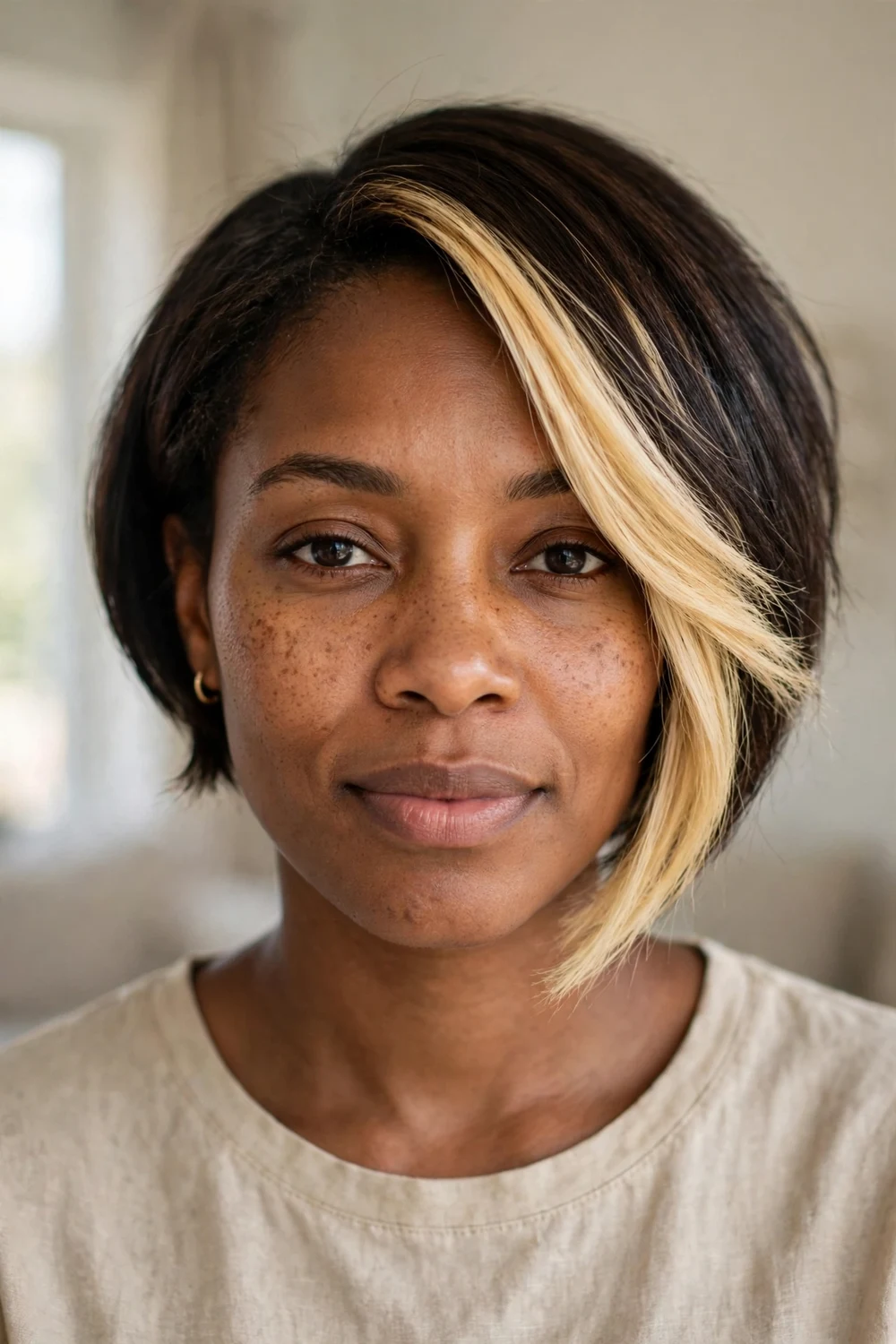
A bright money piece, those lighter front sections framing the face, spotlights the longer side of the cut and adds glow against deep skin. Keep the rest of the hair dark so the contrast does the talking. The technique needs less bleach than a full highlight, so it is kinder to the hair and the budget. Wear the cut tousled and piece-y so the money piece reads modern rather than striped. Toner keeps the brightness clean between appointments.
Try this: Place the money piece slightly off-center toward the long side for a look that follows the angle.
Effort: Medium
23. Vivid Two-Tone Asymmetrical Bob
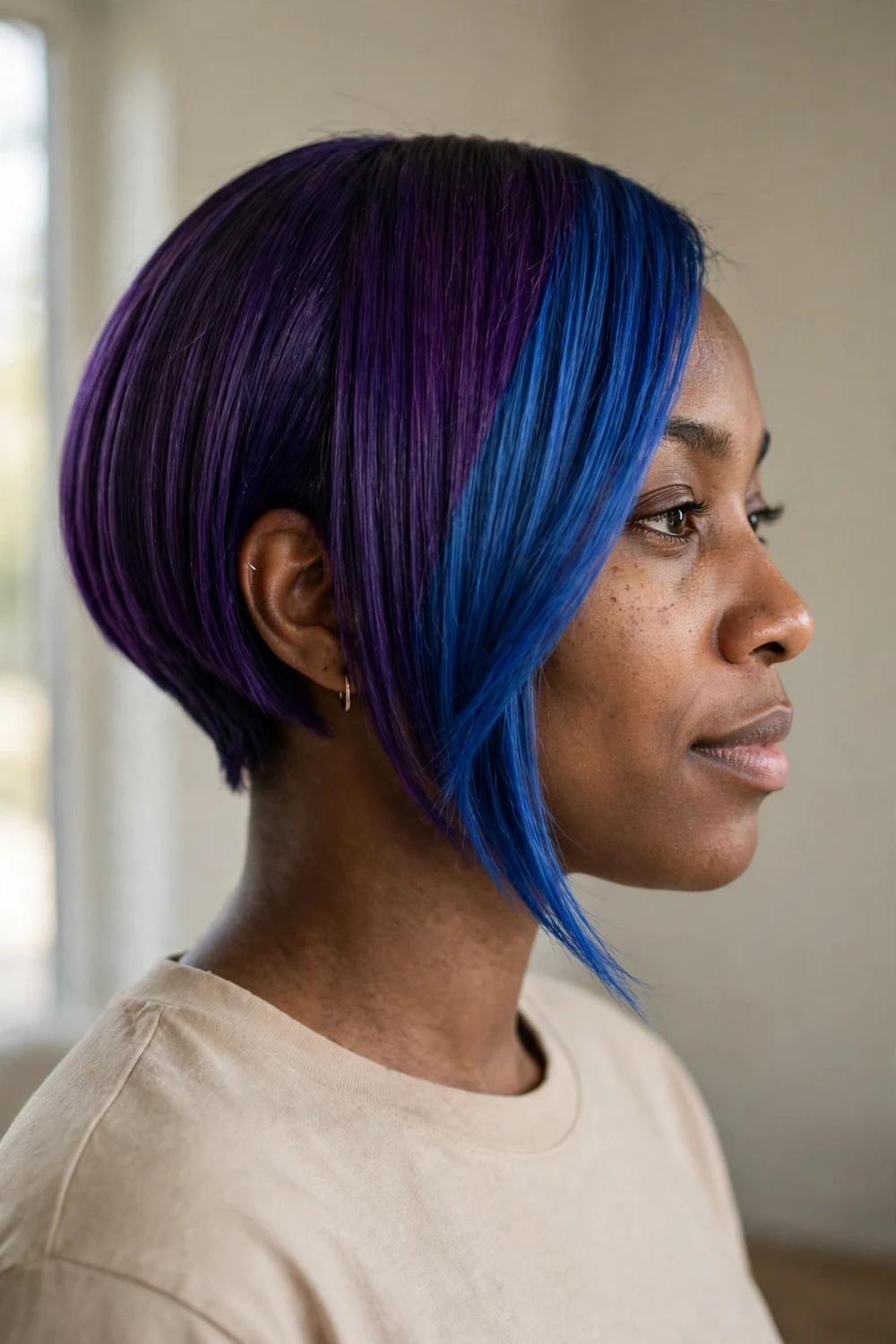
Two contrasting fashion colors, split across the asymmetry, turn the cut into a statement piece. Think deep violet against electric blue, or fiery red against jet black. The color blocking follows the diagonal, so the cut and the color amplify each other. Bright hues need proper maintenance: sulfate-free shampoo, cool rinses, and a color-depositing conditioner for each shade. Consult your colorist about upkeep before committing, since vivid tones fade fastest on pre-lightened hair.
Try this: Keep one tone dark and grounded so the vivid shade has something to play against.
Effort: High
24. Tri-Tone Asymmetrical Bob (Black, Silver, Blue)
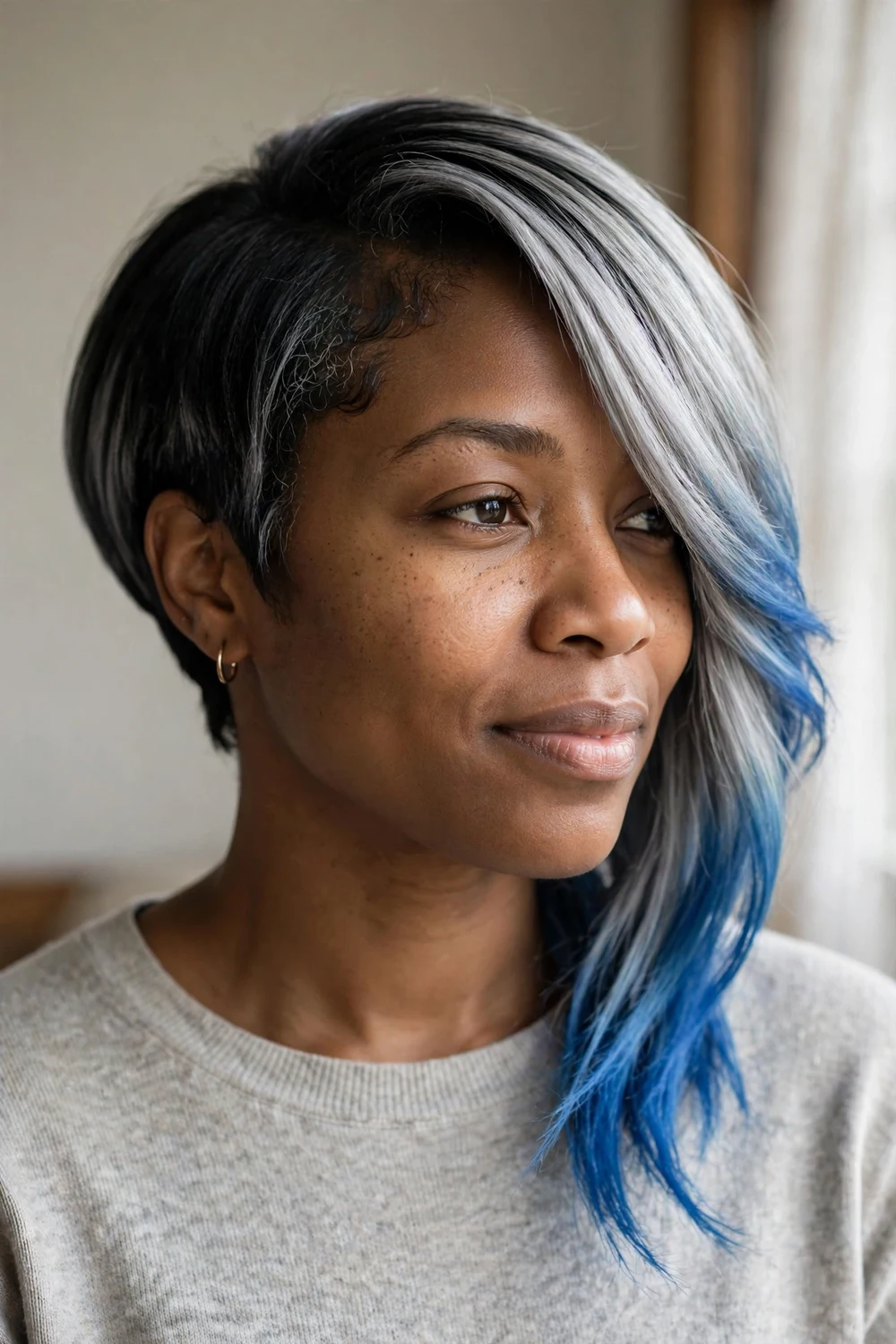
Black melting into silver and then into blue gives this asymmetrical bob a stormy, high-impact finish. The three tones follow the length of the cut, so the diagonal reads like a gradient. This is a salon-only color job: lifting dark hair to silver takes skill, and the blue needs a clean base to stay true. Silver and blue both fade, so plan for toning appointments and color-safe care at home. Keep the cut itself sleek and straight so the color story stays crisp.
Try this: Ask for the blue concentrated at the longest ends, where the color has the most hair to show off.
Effort: High
25. Dual-Texture Asymmetrical Bob
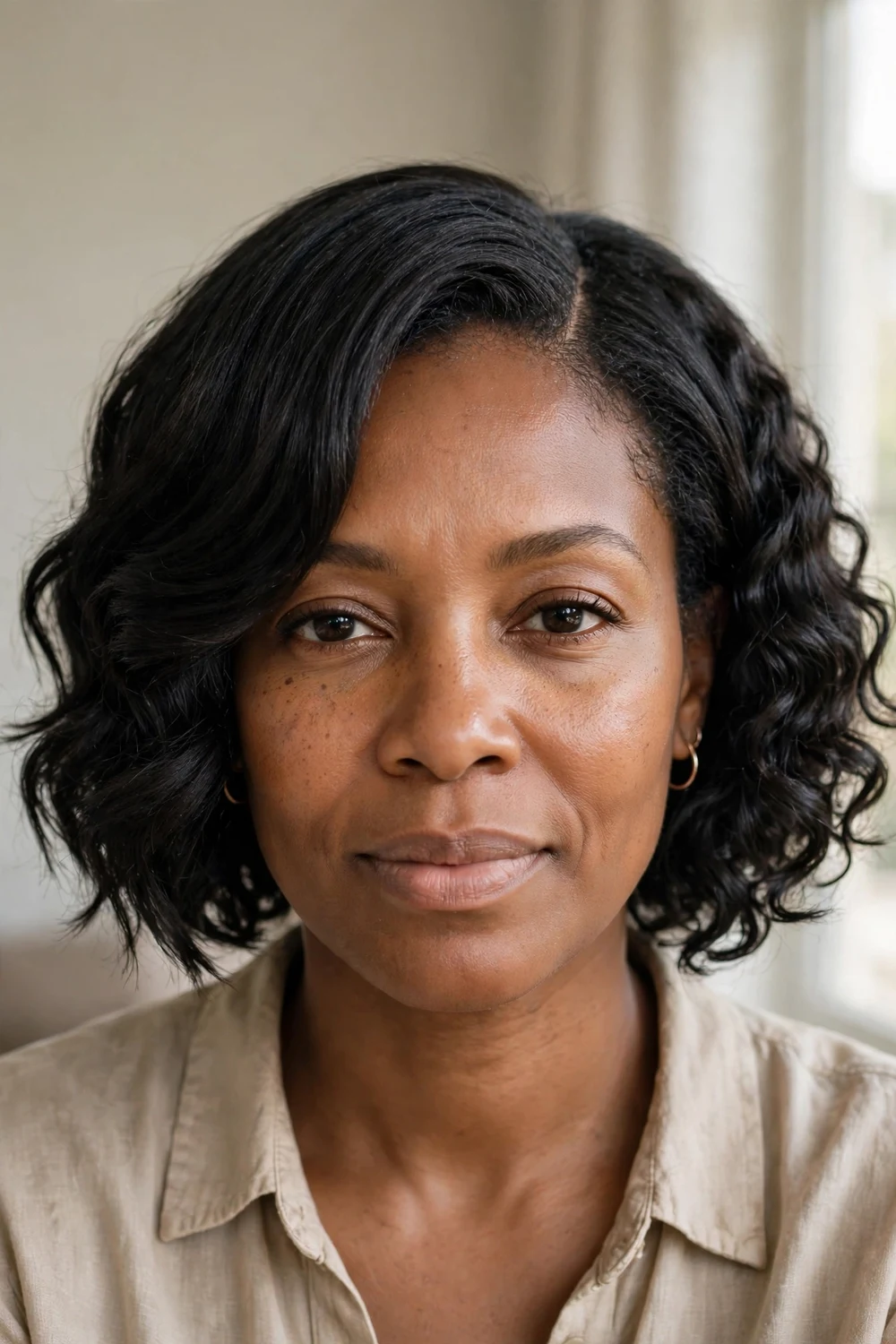
Different textures on each side is a styling choice, not just a cut: soft waves on the shorter side, defined curls on the longer side. It is the best of both worlds and turns heads when people see the style from all around. Set the wavy side with a flat iron bend and the curly side with a small curling iron, then keep the two zones separate with a deep part. The contrast makes the asymmetry feel intentional even on days you skip the salon finish.
Try this: Style the longer, curly side first, then clip it away while you wave the shorter side.
Effort: Medium
26. Asymmetrical Comb Over Lob
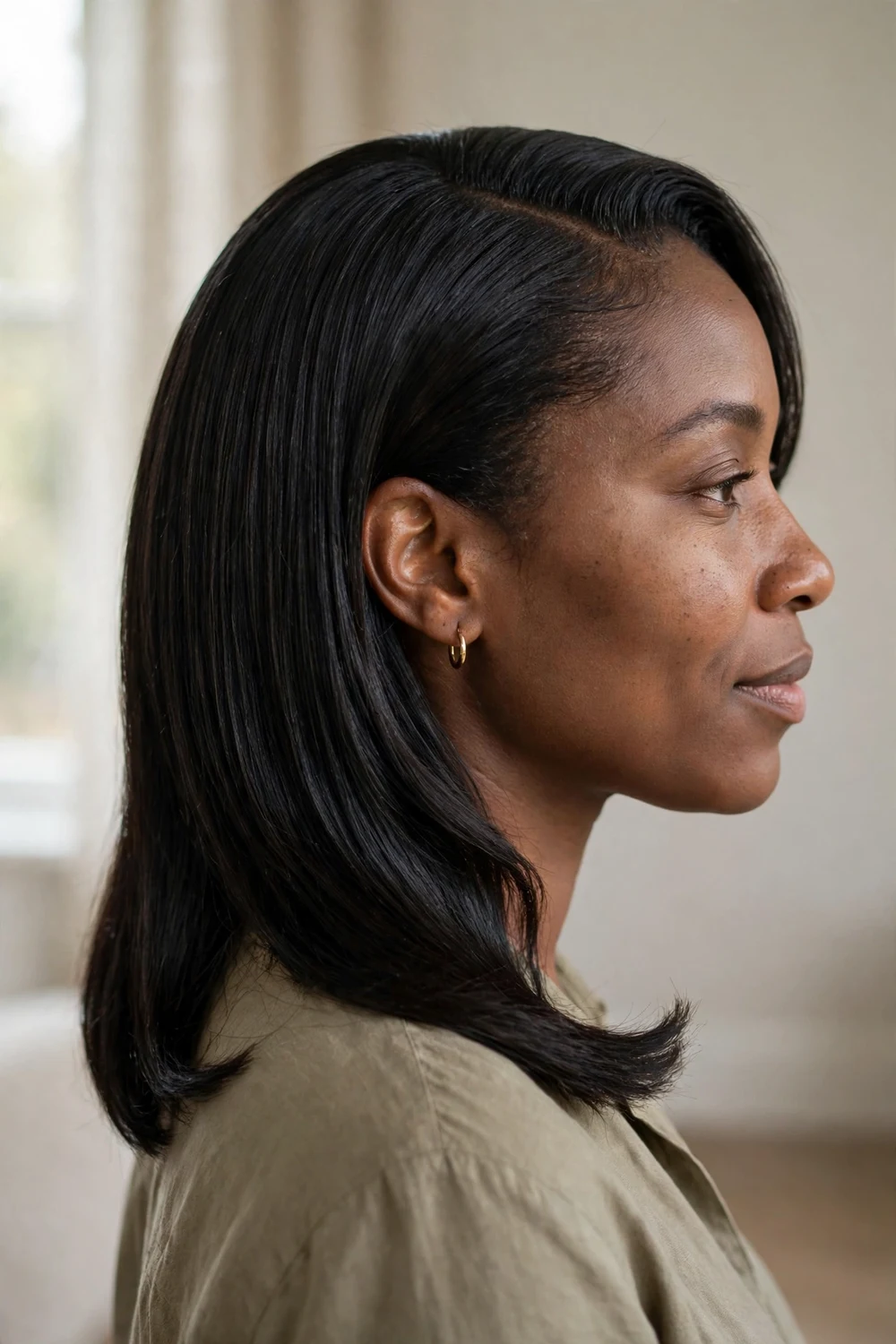
A shoulder-length asymmetrical cut with a deep side part and extra-long, jagged ends in the front. The comb-over styling sweeps everything to one side, which exaggerates the length difference and gives the cut an edgy, urban feel. Jet-black hair makes it look especially lustrous. Sweep damp hair to the side, blow-dry smooth, and lock the part with a light pomade. The lob length keeps it versatile: it still pulls back for workouts and updos when needed.
Try this: Backcomb the roots lightly at the part for lift before smoothing the top layer over.
Effort: Low
Asymmetrical Bob Hairstyles for Black Women: Comparison at a Glance
| Style | Best Occasion | Effort | Upkeep |
|---|---|---|---|
| Sleek Sharp-Angle | Work, evenings out | Medium | Trims every 4-6 weeks |
| Natural Coily | Everyday, creative settings | Low | Trims every 8-10 weeks |
| Side-Swept Bangs | Date nights, events | Medium | Bang trims monthly |
| Tapered With Laid Edges | Everyday, going out | Low | Edge touch-ups daily |
| Shaved Side | Concerts, bold outings | Medium | Shave refresh 2-3 weeks |
| Honey Blonde | Summer, vacations | High | Toning every 4-6 weeks |
| Blunt Lob, Middle Part | Office, interviews | Low | Trims every 8 weeks |
| Burgundy Finger-Wave | Weddings, formal events | High | Color gloss monthly |
| Protective Sew-In | Low-manipulation periods | Low | Install lasts 6-8 weeks |
| Jet Black High Shine | Work, evenings out | Low | Trims every 6-8 weeks |
| Hidden Undercut Design | Creative workplaces | Medium | Design refresh 3-4 weeks |
| Copper Red, Natural Texture | Festivals, bold outings | High | Color refresh monthly |
| Tucked-Side, Flipped Ends | Office to weekend | Low | Trims every 6-8 weeks |
| Caramel Ombré | Everyday, vacations | Medium | Gloss every 2-3 months |
| Pressed Natural, Root Volume | Work, special events | Medium | Press lasts 1-2 weeks |
| Chin-Grazing Subtle | Conservative offices | Low | Trims every 8 weeks |
| Stacked Back | Everyday, work | Medium | Trims every 6 weeks |
| Dramatic Long-Front | Evenings, photoshoots | Medium | Trims every 4-6 weeks |
| Textured Wavy | Casual, weekends | Low | Trims every 8 weeks |
| Face-Framing Highlights | Everyday, events | Medium | Gloss every 6-8 weeks |
| Braided Bob | Protective styling periods | Low | Style lasts 4-6 weeks |
| Money Piece | Everyday, going out | Medium | Toner every 6 weeks |
| Vivid Two-Tone | Concerts, creative scenes | High | Color upkeep monthly |
| Tri-Tone (Black, Silver, Blue) | Statement occasions | High | Toning every 3-4 weeks |
| Dual-Texture | Parties, date nights | Medium | Trims every 6-8 weeks |
| Comb Over Lob | Everyday, work | Low | Trims every 8 weeks |
How to Choose the Right Asymmetrical Bob for You
Start with your texture and your tolerance for upkeep. Pressed styles show the sharpest line but need heat styling and silk-wrapped nights. Natural coils and waves keep the edge with less daily work. Protective options, sew-ins, braids, and wigs, let you test the silhouette before committing your own hair.
Match the angle to your life. A one-inch difference reads polished in any office. Two to three inches reads clearly intentional but stays versatile. Four or more inches is a statement that needs trims every four to six weeks. When in doubt, start subtle: your stylist can always take more off, but cannot put it back.
Consider your face shape. The longer front panel slims round faces. The diagonal line adds interest to square jawlines. Volume at the crown or a stacked back balances longer faces. Bring photos of the exact angle you want, from both sides, and say the words “asymmetrical” out loud at the consultation.
Mistakes to Avoid
Do not cut the angle on wet hair and call it done. Hair, especially coily and curly textures, shrinks as it dries, and the line lands differently. Always ask for a dry check of the angle before you leave the chair. Skipping heat protectant on pressed versions is another common error: the sleek styles live or die by healthy ends.
Avoid over-lightening in one session. Going from dark brown to honey blonde, silver, or copper in a single appointment stresses the hair and the color fades fast. Plan for gradual lifting with bond support. Finally, do not let shaved sections and undercut designs grow out unchecked; a blurry grow-out ruins the precision the cut depends on.
If you want the broader picture first, these bob hairstyles for black women cover every bob family in one place, so you can compare the asymmetrical cut against its cousins before you commit.
For the closest cousin of this cut, see these inverted bob hairstyles, where the angle runs from back to front instead of side to side.
If the sharp diagonal is what you love, these angled bob hairstyles for thin hair over 50 show how the angled shape adds the illusion of fullness.
And for the full family tree, start with these bob hairstyles to see where the asymmetrical version sits among all the classic cuts.
Frequently Asked Questions
What exactly is an asymmetrical bob?
It is a bob cut longer on one side than the other, usually on a diagonal line. The difference can be subtle at about an inch or dramatic at four or more inches. The longer side typically falls near the jaw or chin while the shorter side hugs the nape. On Black women it works pressed, natural, woven, or braided.
Does an asymmetrical bob work on natural or coily hair?
Yes, and it looks striking. The uneven line looks organic and editorial on curls and coils, and the longer side shows off your texture near the face. Ask for the shape to be cut with your curl pattern and shrinkage in mind, and have the stylist check the line on dry hair. Define with curl cream and avoid heavy raking that blurs the angle.
How do I keep the angle looking sharp?
Book trims every four to six weeks, since asymmetry shows growth faster than even cuts. Ask your stylist to check the line on dry hair at every visit. Use heat protectant every time you press or flat iron, sleep on silk or satin, and refresh shaved or undercut sections every two to three weeks if your style has them.
Which face shapes suit an asymmetrical bob?
Almost all of them. The longer front panel slims and elongates round faces, the diagonal line adds interest to square jawlines, and crown volume or a stacked back balances longer faces. Bring photos and let your stylist tune the angle to your features. A deep side part strengthens the slimming effect on round faces.
Can I get an asymmetrical bob as a protective style?
Absolutely. A sew-in weave cut into an angled shape is one of the most popular ways to wear this look, since your natural hair stays protected underneath. It also works as braids cut to uneven lengths or a wig styled into the diagonal shape. These options let you try the silhouette with zero commitment to your own hair.
Final Thoughts
The asymmetrical bob earns its popularity by doing more with less: one diagonal line, endless variations. Pick your boldness level, match it to your texture and your calendar, and keep the trims regular. This cut has rescued many grown-out bobs and flat lengths; it rarely needs more than a confident angle to work.

