


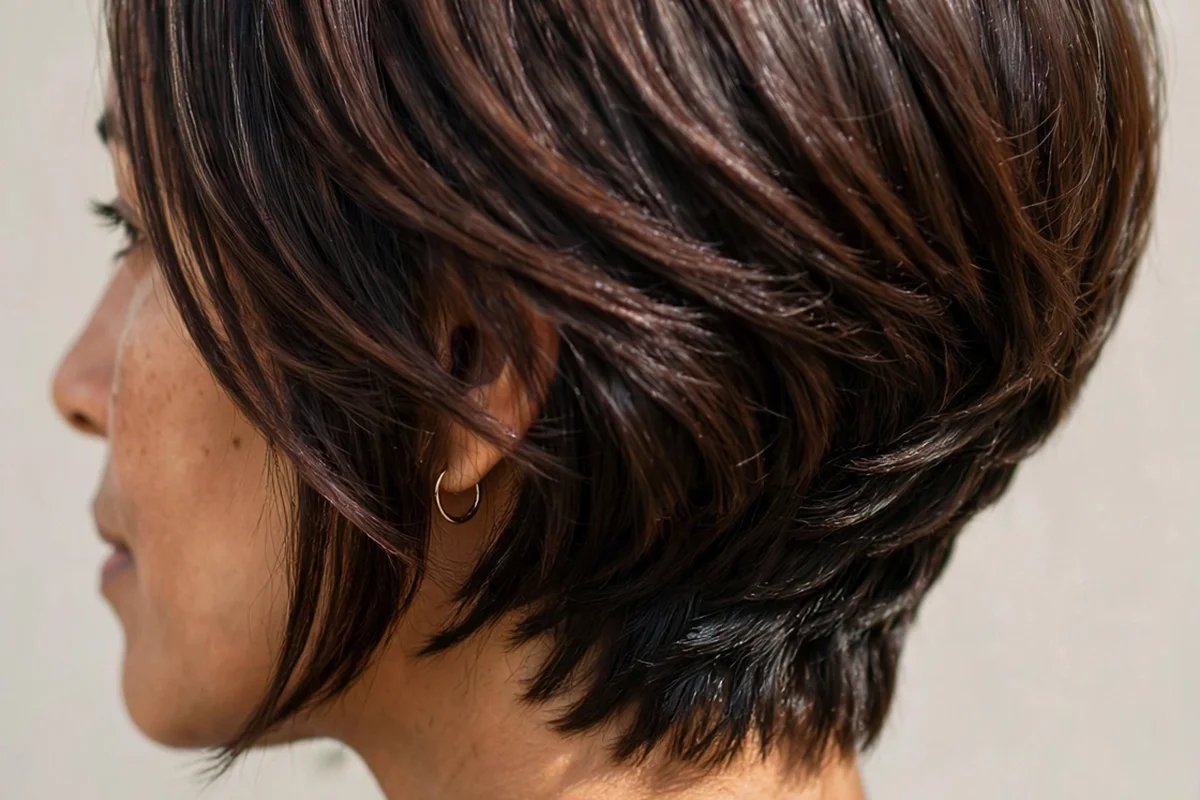
An inverted bob is cut shorter at the nape and angles down to longer pieces in front, with stacked or graduated layers built into the back for lift. That shorter-back, longer-front geometry is the one feature every version shares, whether the angle runs subtle or steep.
It works across straight, wavy and curly textures, with or without bangs, and it suits a wide range of face shapes because the front length can be adjusted. These 53 inverted bob hairstyles cover the full family: stacked, graduated, A-line, lobs, undercuts, colors and cuts for different densities and ages.
Love the steep angle? These asymmetrical bob hairstyles for black women run the diagonal from side to side, with 26 versions including natural texture and protective styles.
Quick Takeaways
- Every inverted bob keeps the back shorter and the front longer; the difference between versions is the angle, the stacking and the texture.
- Stacked and graduated backs add crown volume, which helps fine or flat hair look fuller without extensions.
- Steep angles make a stronger statement and need trims every 6 to 8 weeks to keep the line sharp.
- Blunt perimeters look thicker at the ends, while point-cut or sliced ends move more freely.
- Round-brush blow-drying shapes the stack best; a flat iron smooths the front pieces. Use heat protectant before either.
1. Blonde Blend Inverted Bob
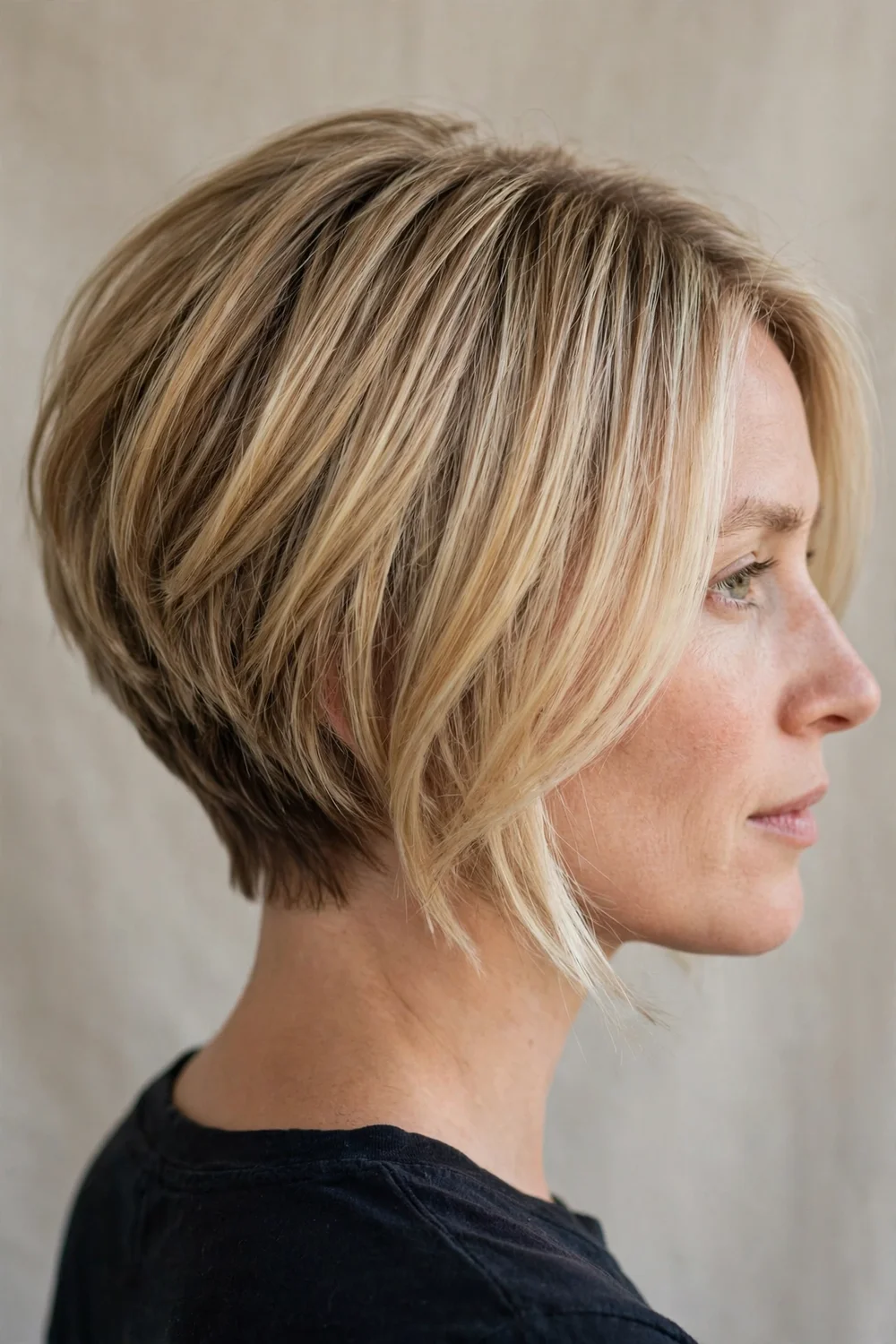
Several blonde tones blend through this cut so the stacked back and long front read as one smooth shape. Honey, wheat and platinum ribbons run through a warm base, which keeps the angle visible without harsh lines. The back sits just above the nape while the front pieces reach the jawline. Layers catch light at different levels, so the cut photographs well. Root smudging in a slightly darker tone makes regrowth less obvious between appointments.
Try this: blow-dry the back under with a small round brush to show off the stack.
Difficulty: Easy | Cost: $90-$160
2. Short Layered Inverted Bob
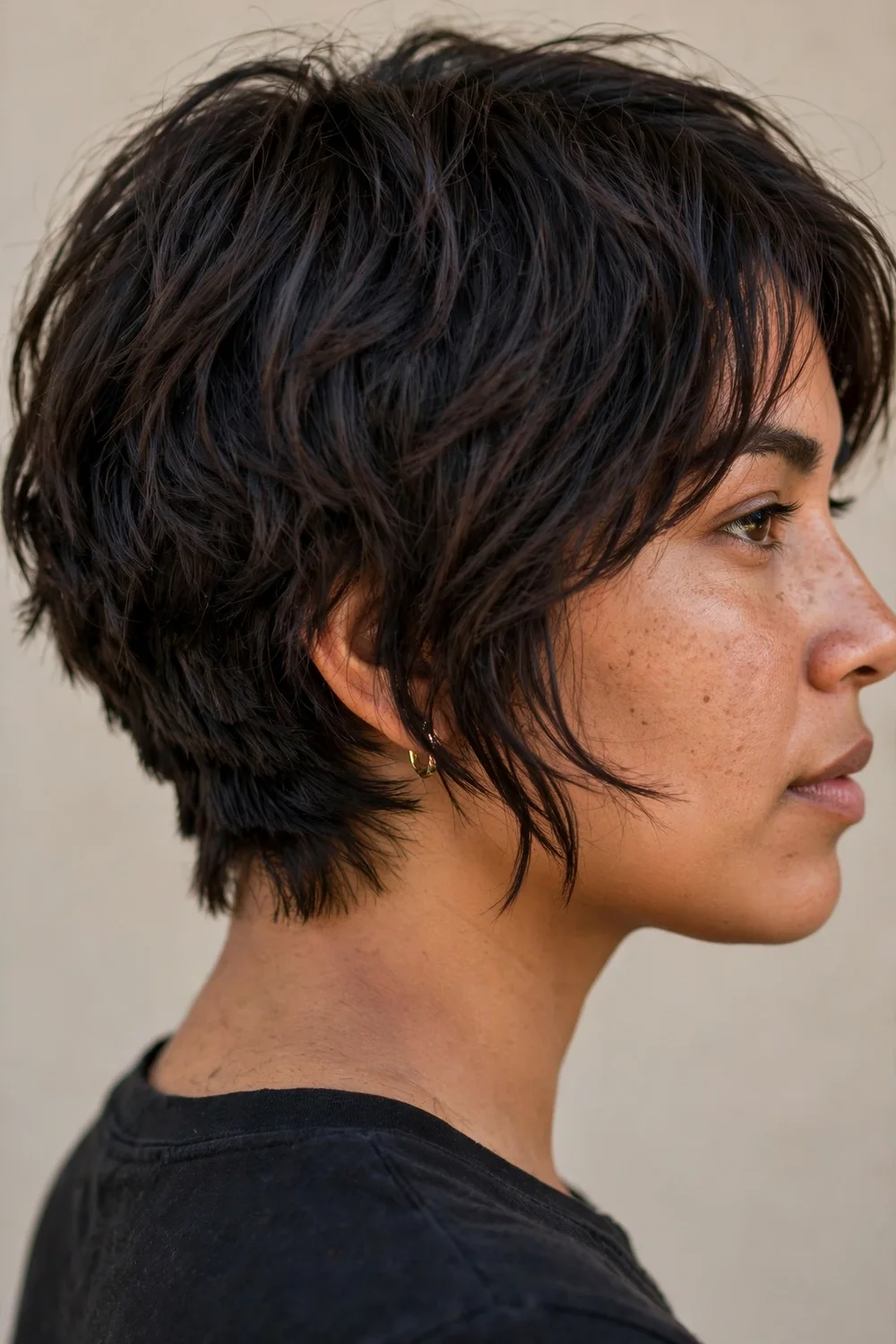
Short layers throughout give this version movement that one-length cuts can’t match. The nape is cut close, the crown carries stacked layers for height, and the front angles down to the jaw. Layers also remove weight, which keeps thick hair from puffing out at the sides. Ask your stylist for point-cut ends if you want the texture to look piecey instead of blunt. A pea-sized amount of texturizing cream scrunched into dry hair finishes it in under five minutes.
Try this: scrunch texturizing cream into dry ends for a piecey finish.
Difficulty: Easy | Cost: $45-$85
3. Loose Curls Inverted Bob
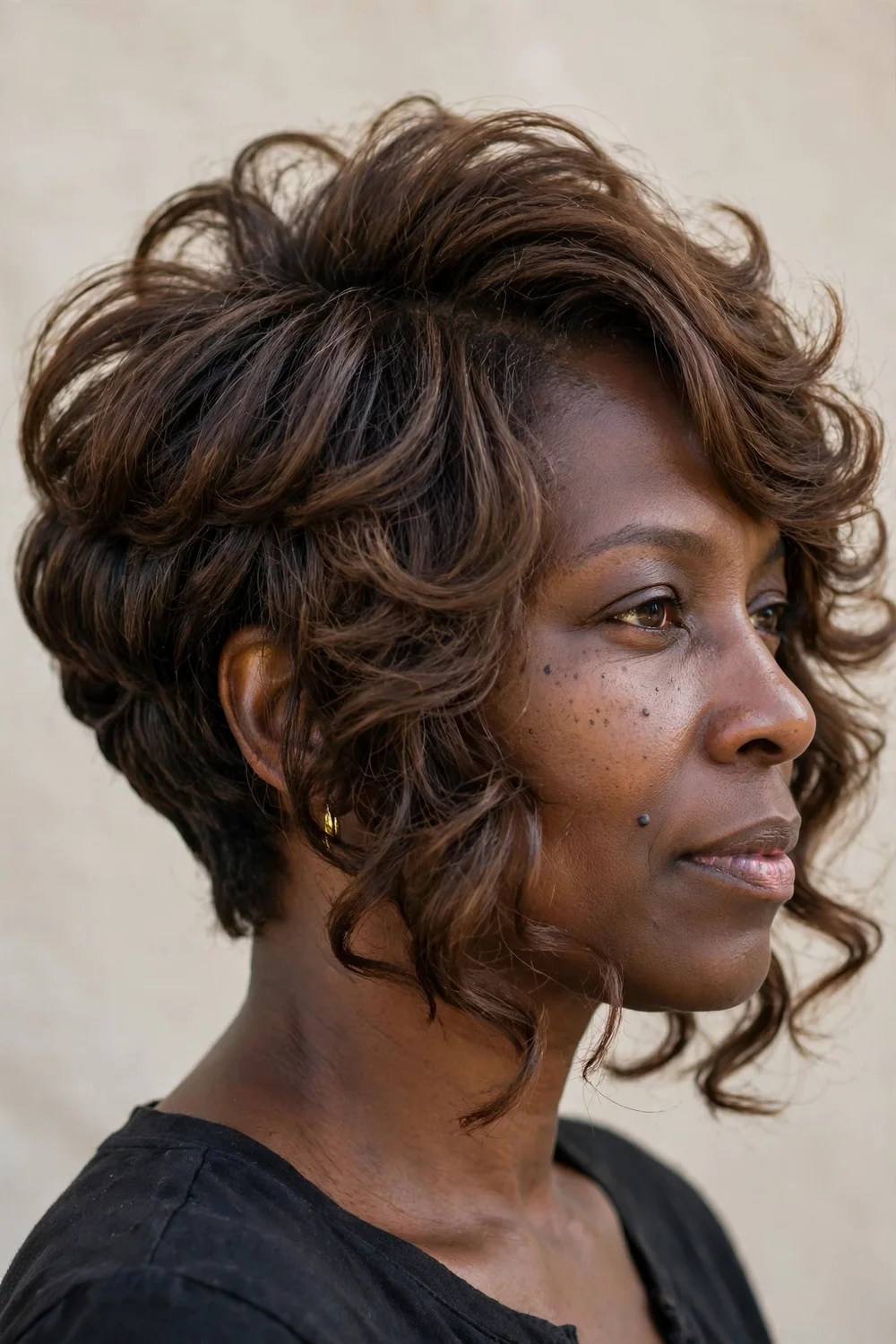
Loose curls soften the geometry of the inverted shape without hiding it. The stacked back still lifts the crown, while the longer front pieces fall in relaxed bends that end around the chin. Curl with a 1.25-inch wand, wrapping sections away from the face, and break the curls apart with fingers once cool. Use heat protectant before curling. Longer front pieces keep the style from looking too round, which matters if your face is on the fuller side.
Try this: wrap sections away from the face with a 1.25-inch wand.
Difficulty: Medium | Cost: $50-$90
4. Nape Undercut Inverted Bob
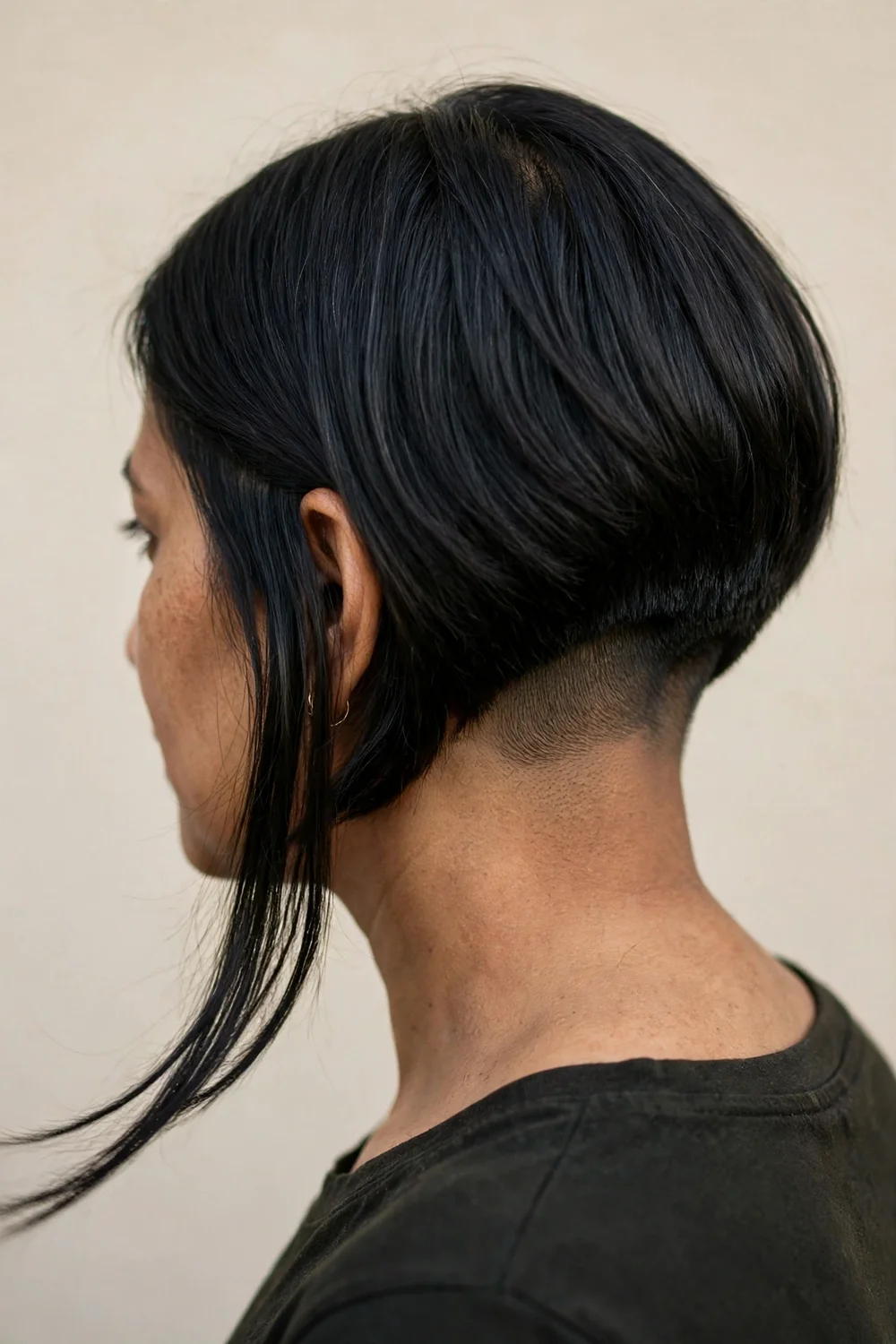
An undercut at the nape removes bulk where thick hair tends to stack up and overheat in summer. The top layers stay long enough to cover the shaved section when the hair is down, so the undercut only shows when you lift or tie the hair. The visible shape keeps the classic shorter-back, longer-front line. It needs a cleanup every 3 to 4 weeks to stay neat. Ask for a tapered fade into the undercut rather than a hard line for easier grow-out.
Try this: lift the top layers to reveal the undercut on hot days.
Difficulty: Medium | Cost: $55-$100
5. Steeply Angled Bob
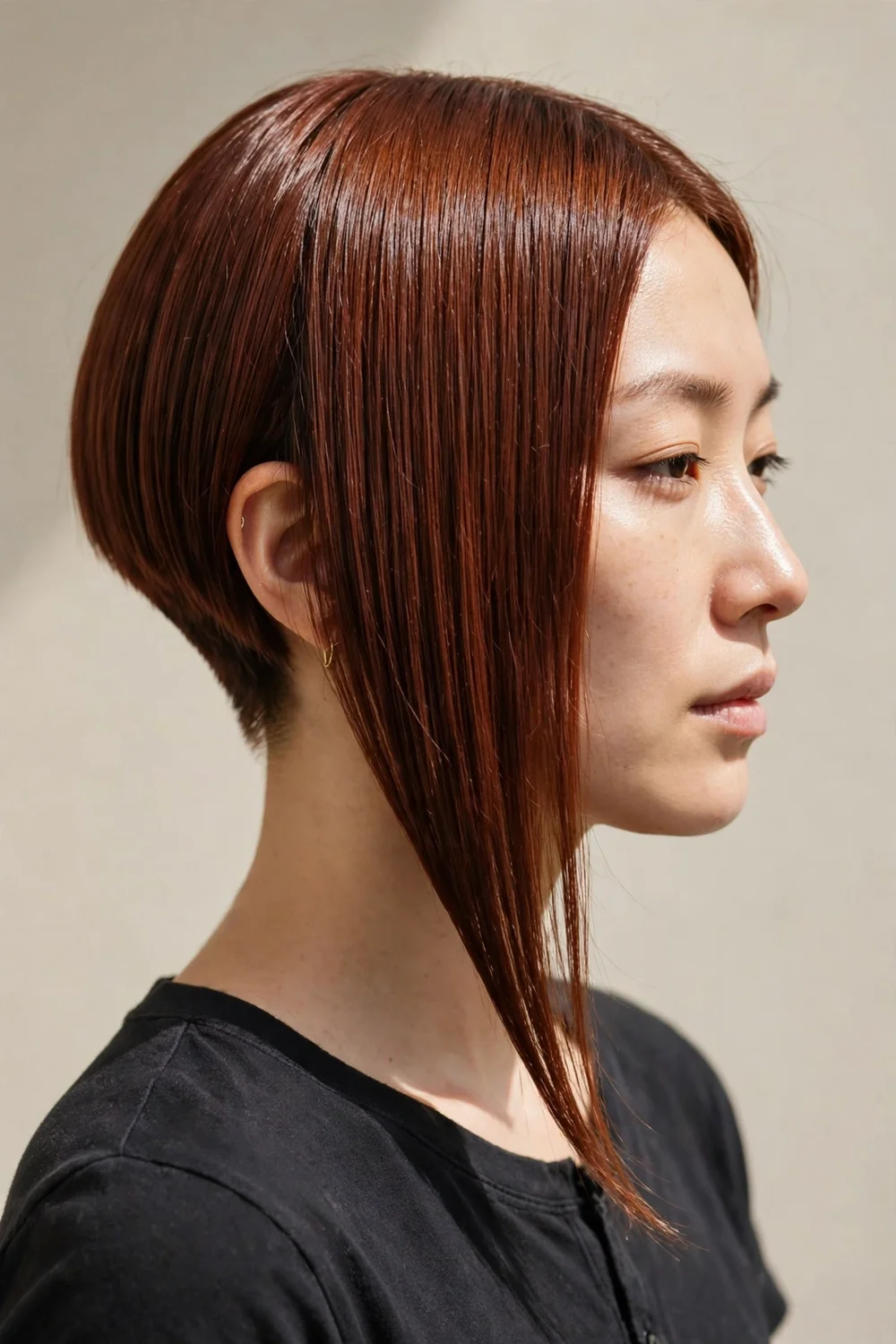
The angle here is the whole point: the nape is cropped short and the front dives down toward the collarbone in one decisive line. Stacking through the back keeps the crown rounded instead of flat, which balances the sharp forward slope. This version suits straight or straightened hair best, since the line shows cleanest on smooth texture. Flat-iron the front pieces with heat protectant applied first. Precision trims every 6 weeks keep the angle from going soft.
Try this: flat-iron only the front pieces to sharpen the slope.
Difficulty: Medium | Cost: $50-$95
6. Very Short Crop Inverted Bob
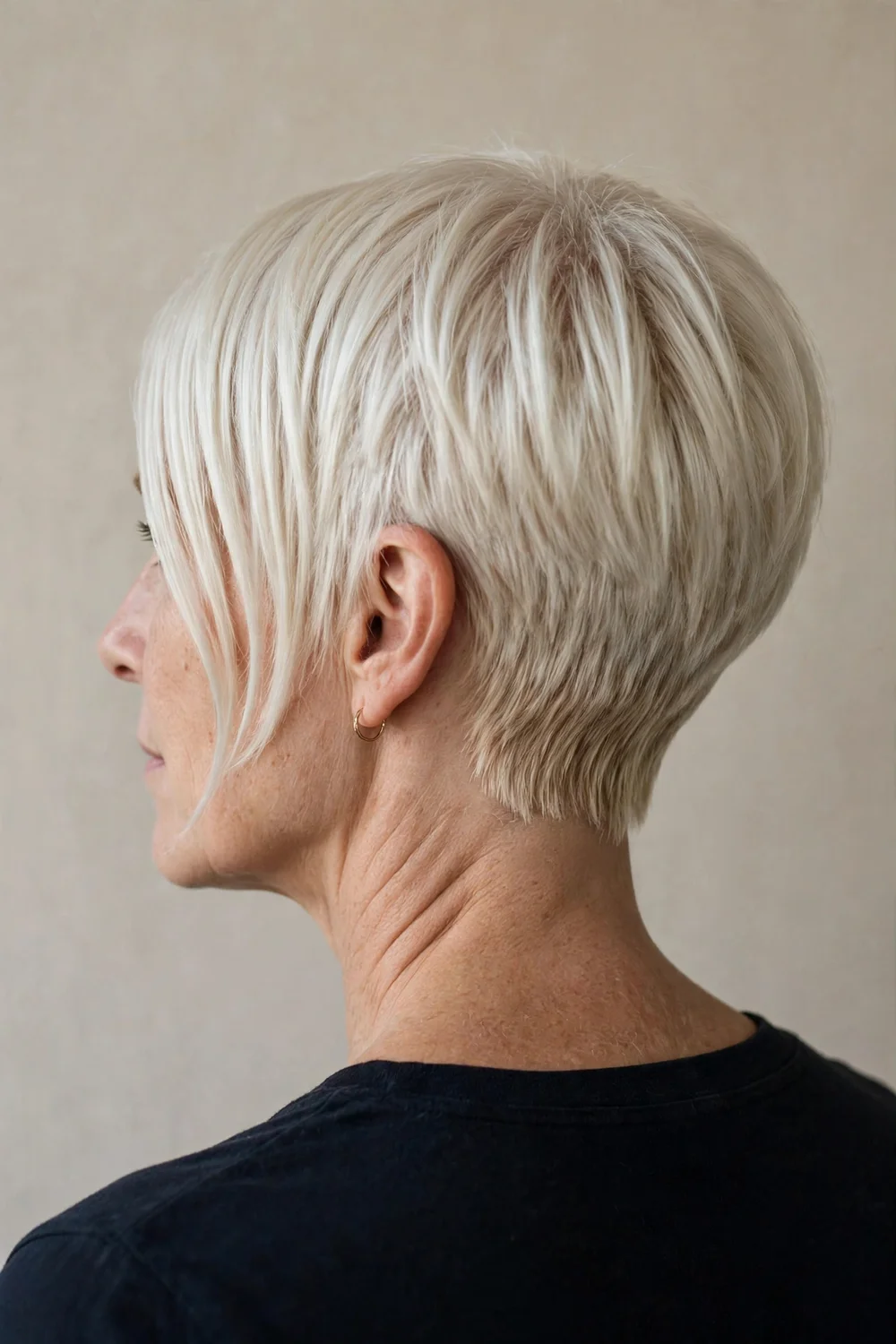
Cut close to the head at the back and sides, this is the boldest take on the inverted shape. The nape is nearly buzzed into a tight stack, and the front still pushes forward to frame the cheekbones. It reads confident and low-effort at once. Daily styling takes about three minutes with a bit of molding paste. Grow-out is the trade-off: the back needs reshaping every 4 weeks or the silhouette loses its edge.
Try this: work molding paste through the crown for definition.
Difficulty: Easy | Cost: $40-$75
7. Inverted Lob with Bangs
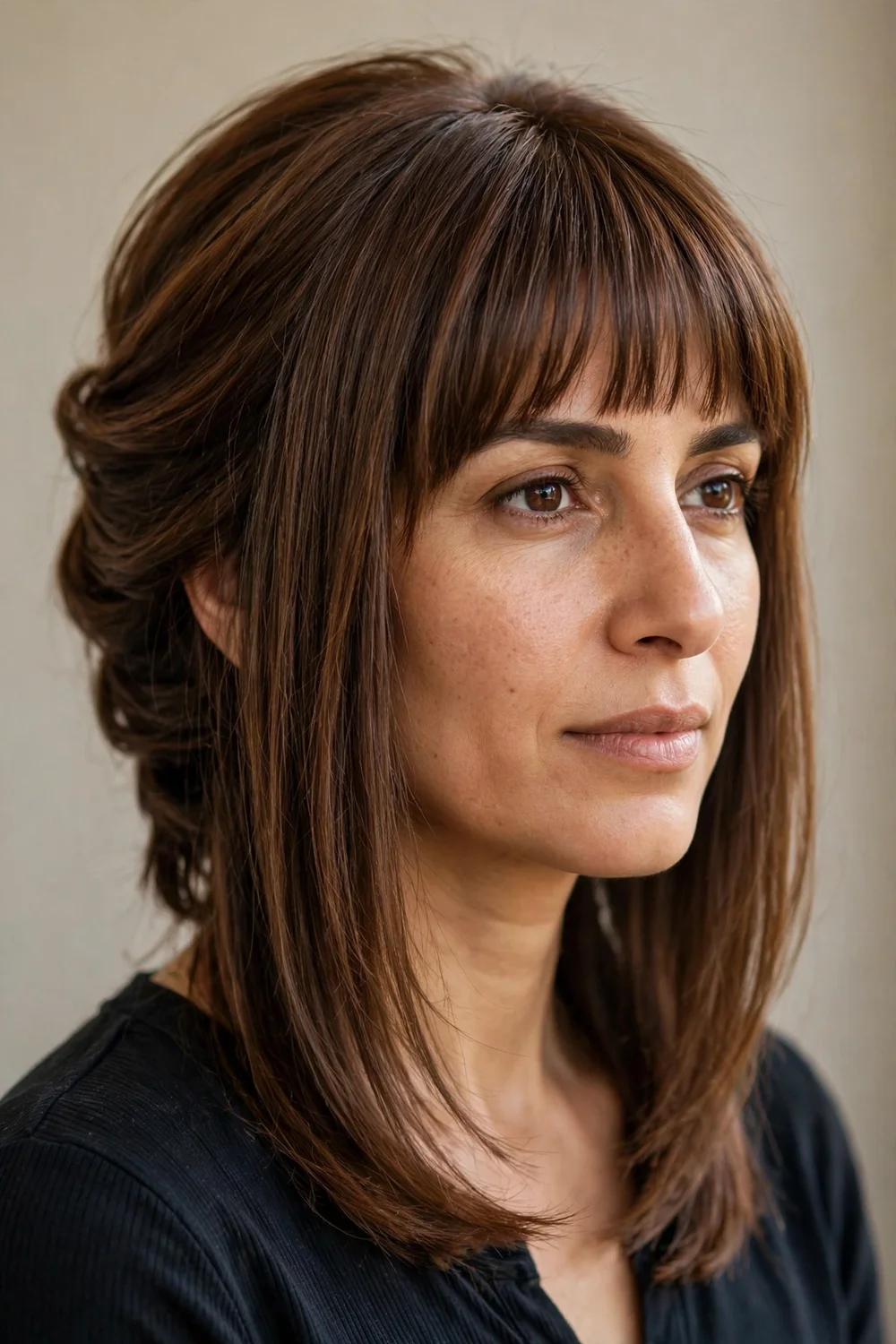
The lob length keeps the inverted angle but gives you enough hair to tie back, which shorter versions can’t do. The back sits at the nape, the front reaches past the chin toward the shoulders, and straight-across bangs balance the long front line. It grows out gracefully because the length difference stays flattering as it extends. Blow-dry bangs first with a flat brush so they don’t puff. Trim the fringe every 3 to 4 weeks between full cuts.
Try this: blow-dry bangs first so they lie flat.
Difficulty: Easy | Cost: $50-$90
8. Softly Angled Inverted Bob
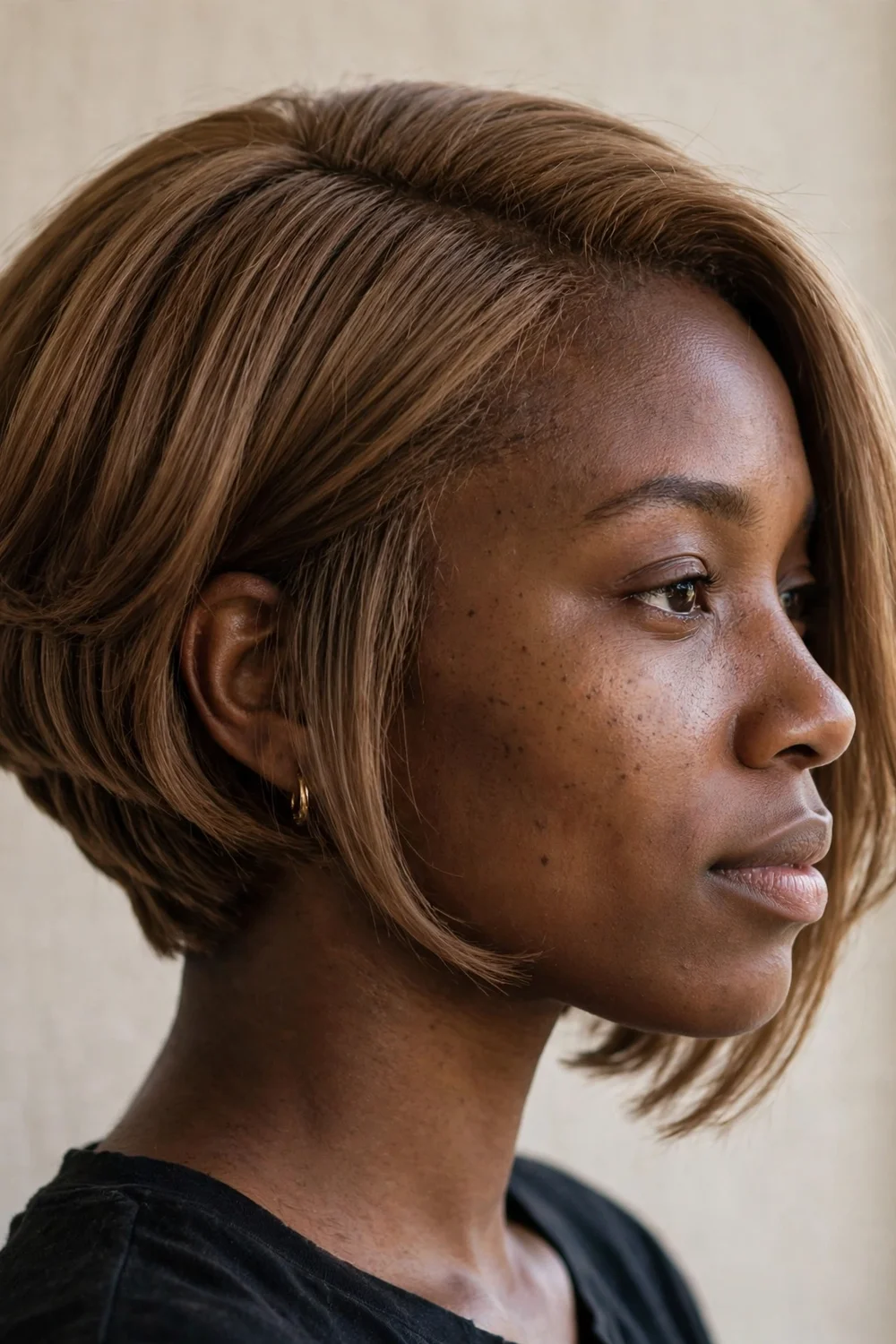
A gentle slope replaces the sharp diagonal here, so the difference between back and front is only an inch or two. That subtlety makes it a safe first step if you’re nervous about the inverted shape. The back still carries light stacking for a rounded crown. It suits conservative workplaces and grows out with almost no awkward stage. Style it with a round brush for a smooth bevel under at the ends.
Try this: bevel the ends under with a round brush for a smooth line.
Difficulty: Easy | Cost: $45-$80
9. Blunt Cut Inverted Bob
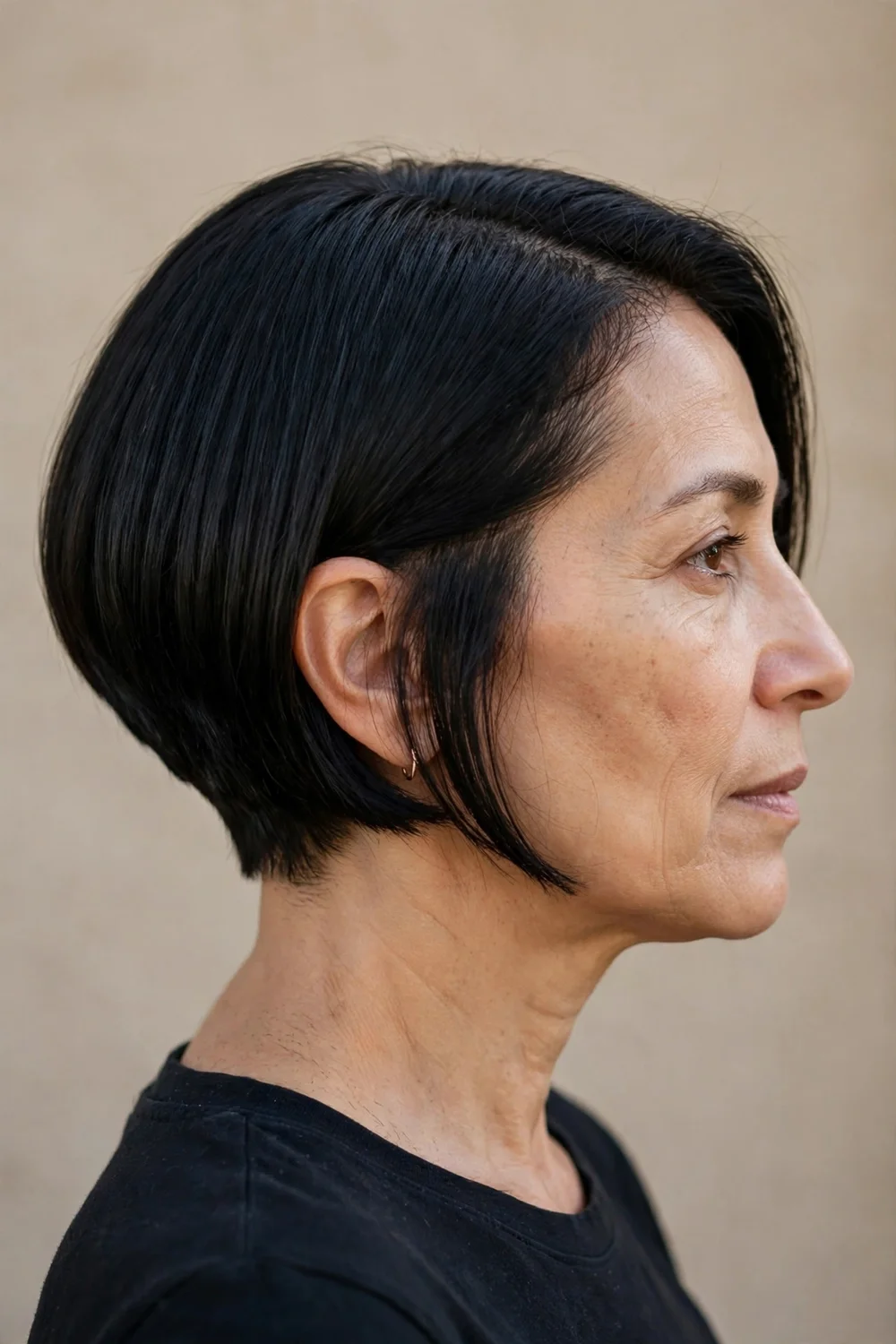
Blunt ends give the inverted shape a crisp, graphic finish. Instead of textured tips, the perimeter is cut straight across at an angle, which makes the hair look thicker and the line more deliberate. The stack at the back is kept minimal so the blunt edge stays the star. This cut demands smooth texture to look its best, so plan on regular trims every 6 weeks. A shine serum on the ends keeps the blunt line looking polished.
Try this: smooth a drop of shine serum over the ends.
Difficulty: Easy | Cost: $45-$85
10. Inverted Bob with Bangs
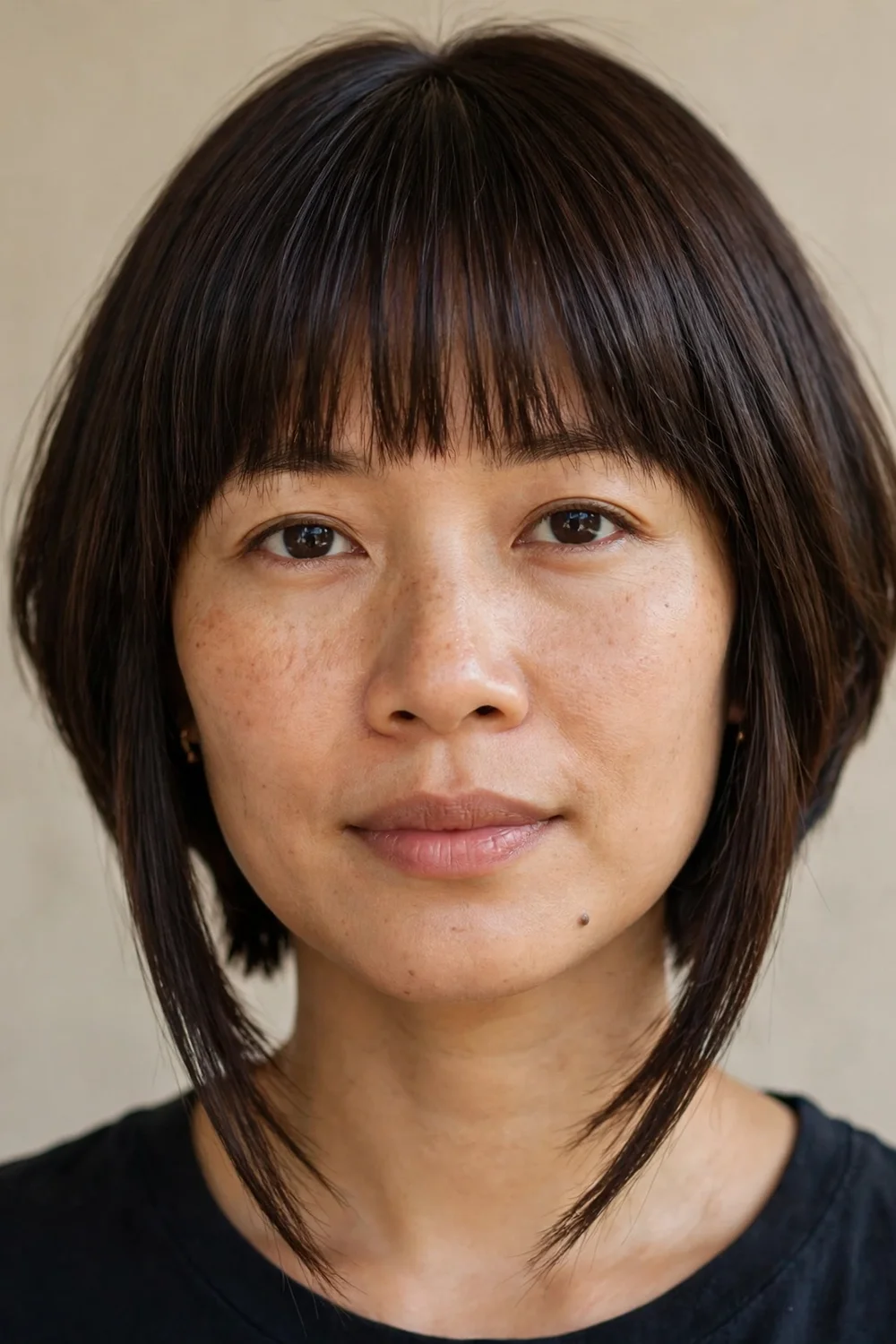
Bangs add a horizontal line that plays against the diagonal of the inverted cut. Full fringe cut just above the brows pairs with the longer front pieces for a balanced frame around the face. The stacked back keeps volume where the bangs sit flat. This combination suits longer face shapes especially well because the fringe shortens the forehead visually. Keep bangs trimmed between appointments and style them with a small flat brush.
If fringe styles appeal to you, the layered bob with bangs roundup for women over 50 shows how bangs pair with other bob shapes too.
layered bob with bangs for women over 50
Try this: dry bangs with a small flat brush right after washing.
Difficulty: Medium | Cost: $50-$90
11. Long Inverted Bob
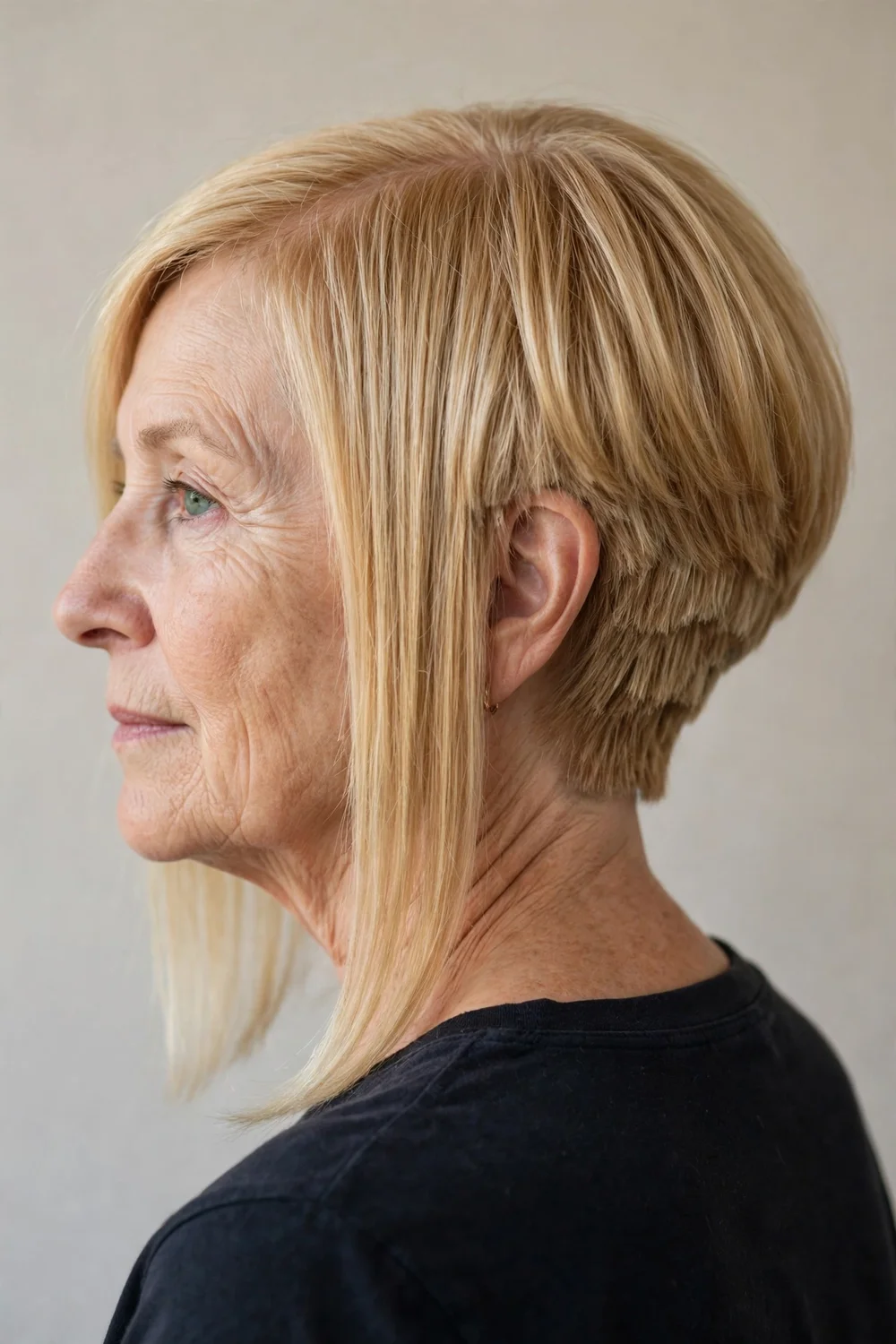
Extra length in front stretches the inverted shape into something closer to a lob, with the front pieces brushing the shoulders. The back keeps its short stacked base, so the contrast between nape and front is dramatic. It suits anyone who wants the inverted look without giving up styling options like low ponytails. Avoid overlayering the front, since too many layers can weaken the strong silhouette. A hot air brush shapes the bend under nicely; use heat protectant first.
Try this: shape the ends with a hot air brush for a soft under-bend.
Difficulty: Easy | Cost: $50-$95
12. Short Inverted Haircut
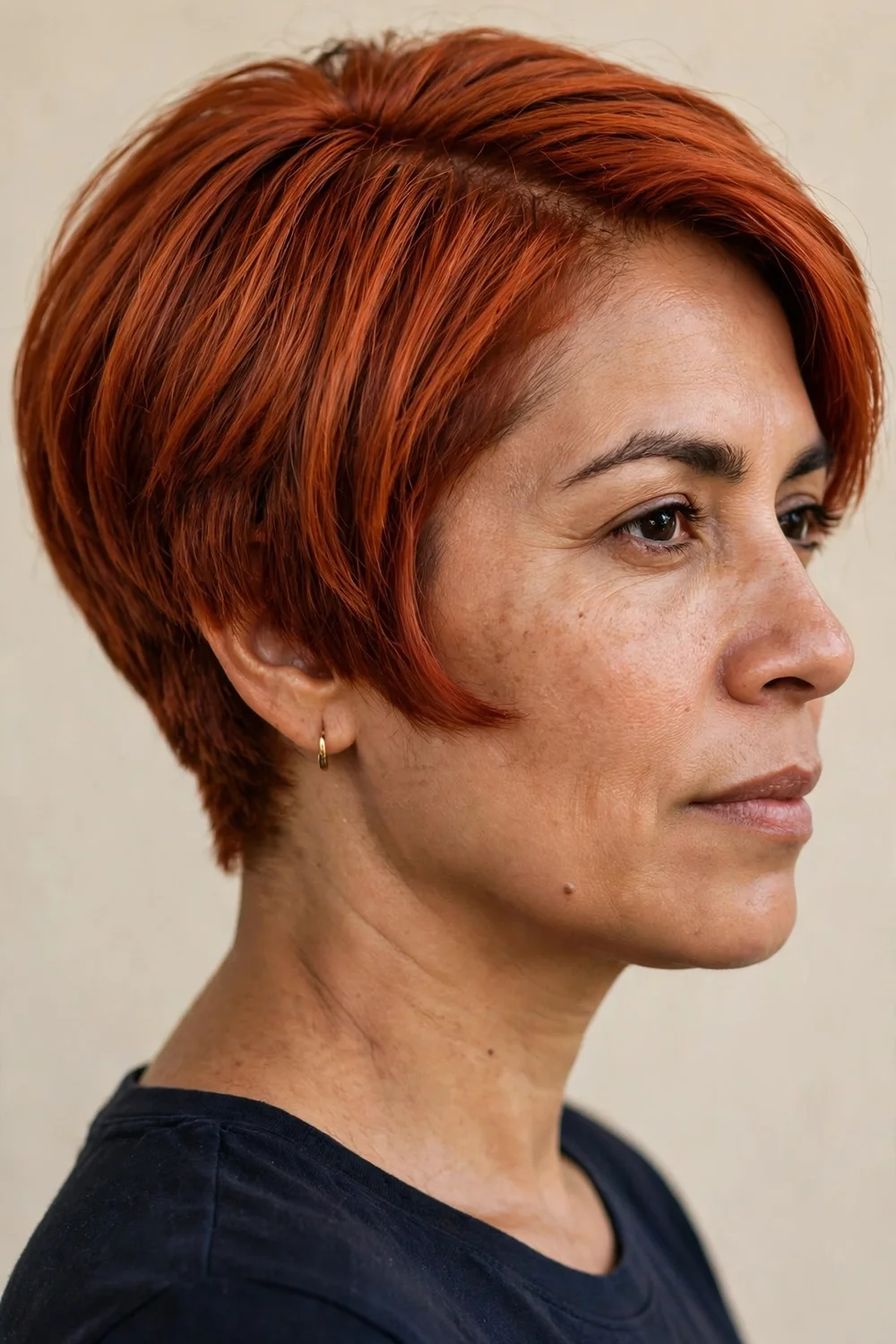
Everything sits above the jawline in this compact version, which makes it one of the quickest cuts to style each morning. The nape is stacked tight, the crown is rounded, and the front pieces tuck just under the cheekbones. It opens up the neck and shows off earrings. Fine hair benefits most because the short length keeps the stacking supportive. Ask your stylist to keep the perimeter strong rather than thinning it out, since thinning can make short cuts look sparse.
Try this: tuck the front pieces behind the ears to show earrings.
Difficulty: Easy | Cost: $40-$75
13. Layered Inverted Bob
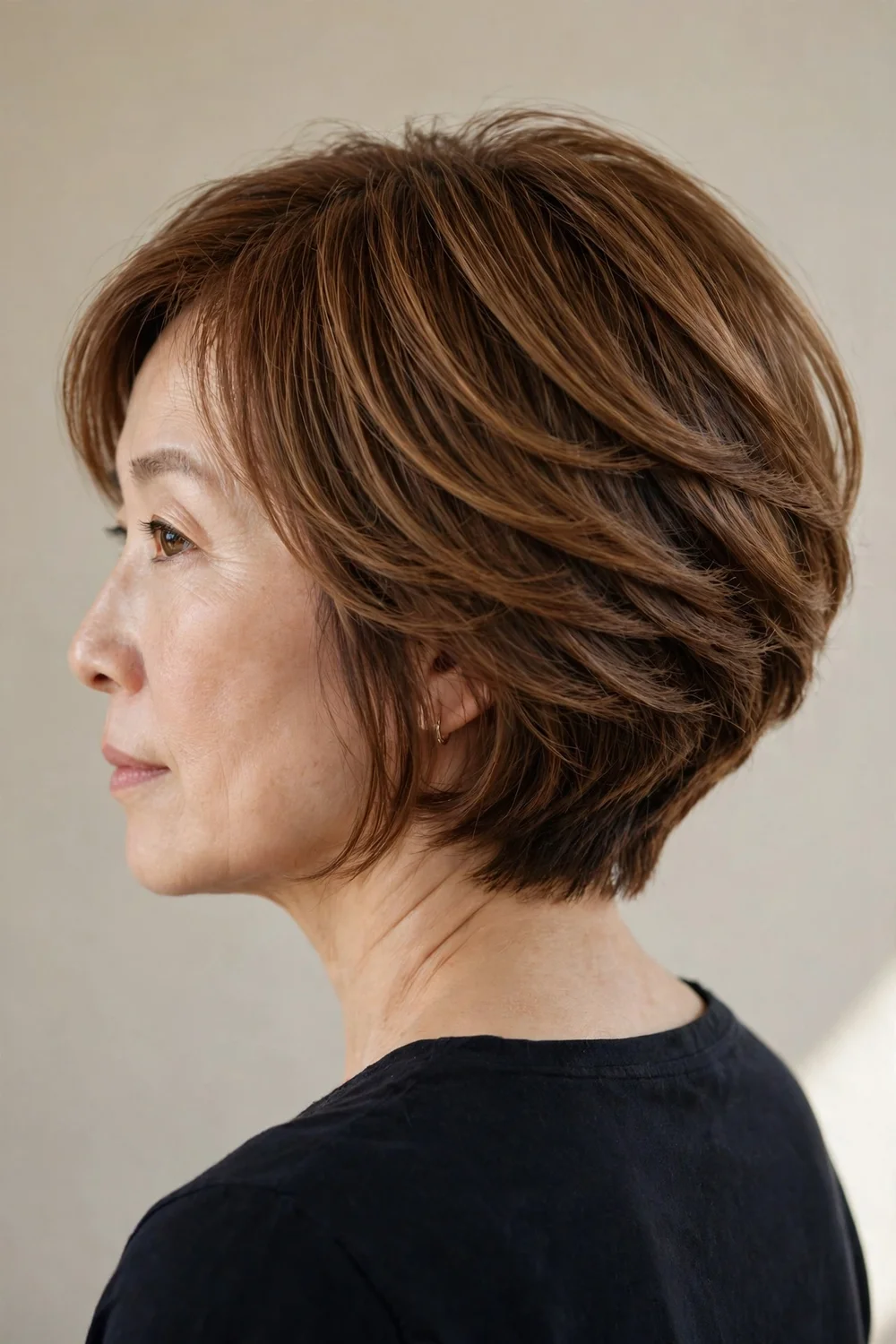
Interior layers run through the whole cut, not just the back stack, which gives this version constant movement. The layers are cut to follow the angle, getting longer toward the front, so the shape never looks choppy. It suits medium to thick hair because the layers remove weight evenly. Ask for the layers to be blended rather than disconnected so the surface stays smooth. Scrunch in a light mousse and let it air-dry for an easy textured finish.
Try this: scrunch light mousse into damp hair and air-dry.
Difficulty: Easy | Cost: $50-$90
14. Inverted Cut with Full Fringe
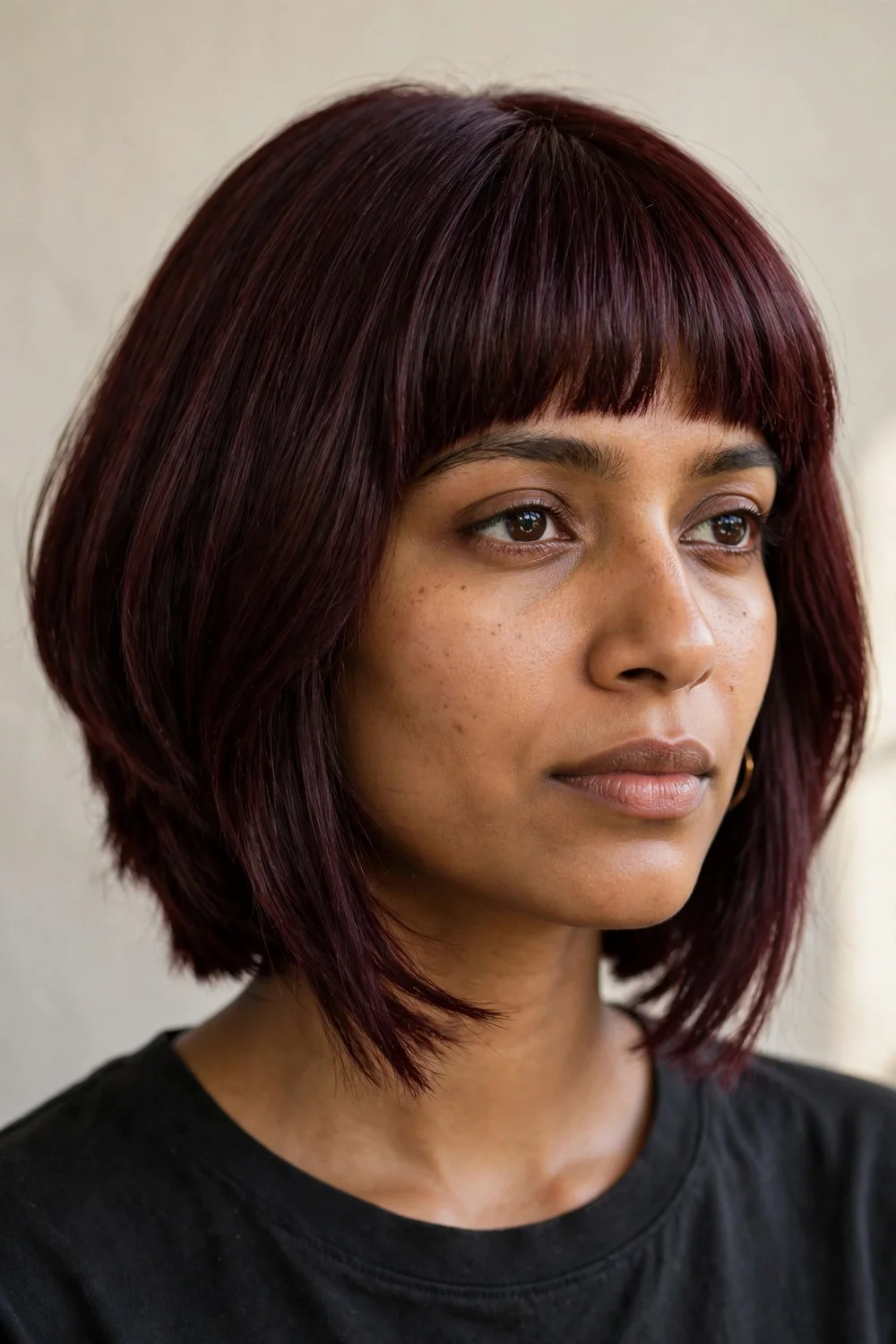
A thick, full fringe gives this inverted cut a bold, fashion-forward edge. The fringe is cut straight across at brow level with enough density to look intentional, while the sides angle down past the chin. The contrast between the horizontal fringe and the diagonal sides is what makes it striking. It needs the fringe trimmed every 3 to 4 weeks. Skip this if your hairline has strong cowlicks, since dense fringe fights them daily.
Try this: flat-brush the fringe straight down while blow-drying.
Difficulty: Medium | Cost: $50-$90
15. Curly Inverted Bob
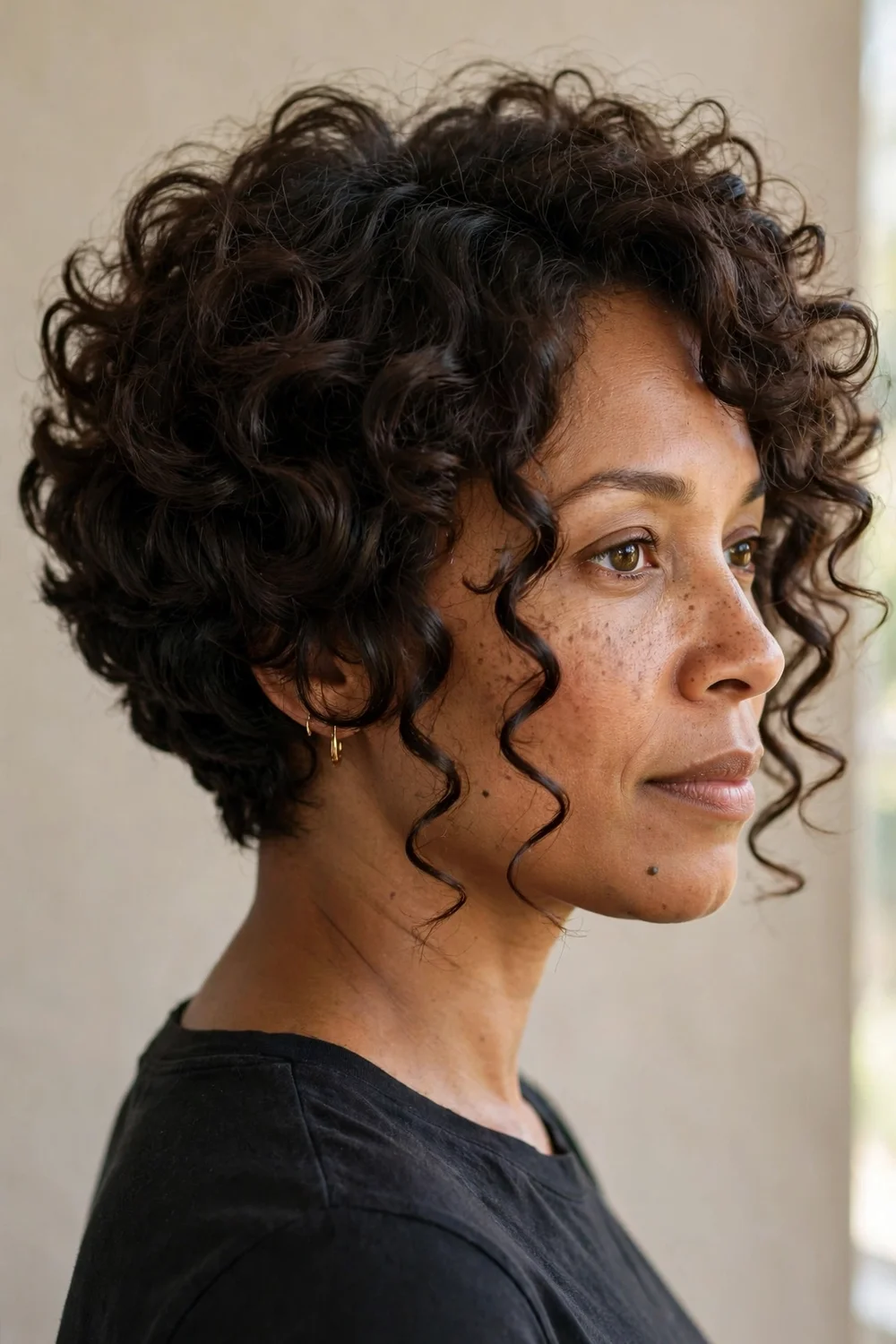
Natural curls bring the inverted shape to life with volume the cut can’t create on its own. The back is stacked to support a rounded curl silhouette at the crown, and the front curls are left longer to frame the cheeks. Ask for a dry cut if your curls shrink a lot when wet, since shrinkage changes where the angle lands. Diffuse on low heat with a curl cream scrunched in. The front should be cut longer than it looks right, because curls spring up.
Try this: diffuse on low heat with curl cream scrunched in.
Difficulty: Medium | Cost: $55-$100
16. Wispy Sliced Bob
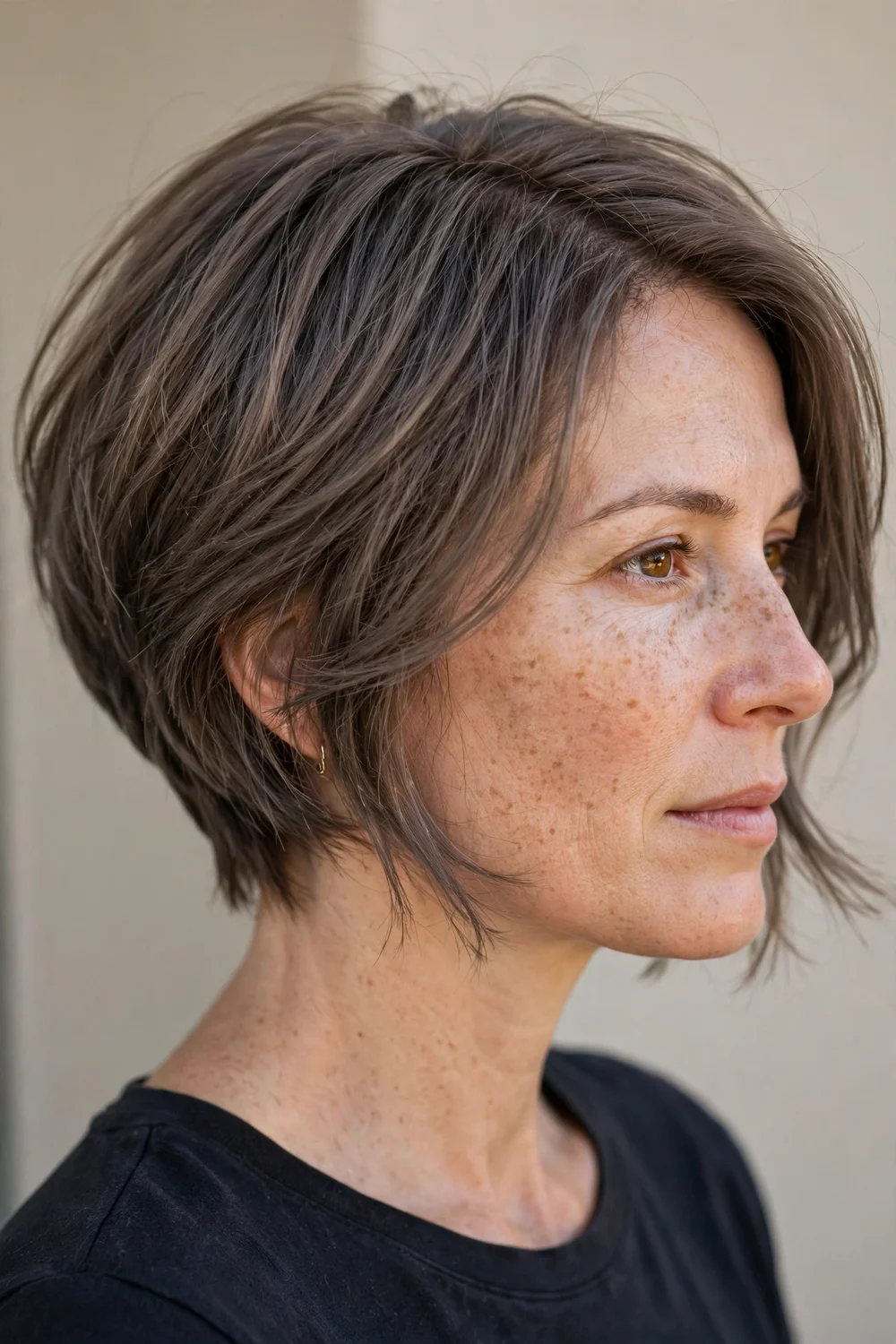
Razor-sliced ends replace the usual blunt or point-cut finish with something featherlight. The inverted angle stays, but the perimeter looks soft and airy instead of heavy. Slicing works best on straight to slightly wavy hair; very curly hair can frizz with razor work. It grows out with a lived-in edge, so you can stretch appointments to 8 or 10 weeks. A light smoothing cream on the ends keeps the wispy tips from looking dry.
Try this: smooth a light cream over the sliced ends.
Difficulty: Easy | Cost: $45-$85
17. Hidden Nape Undercut Bob
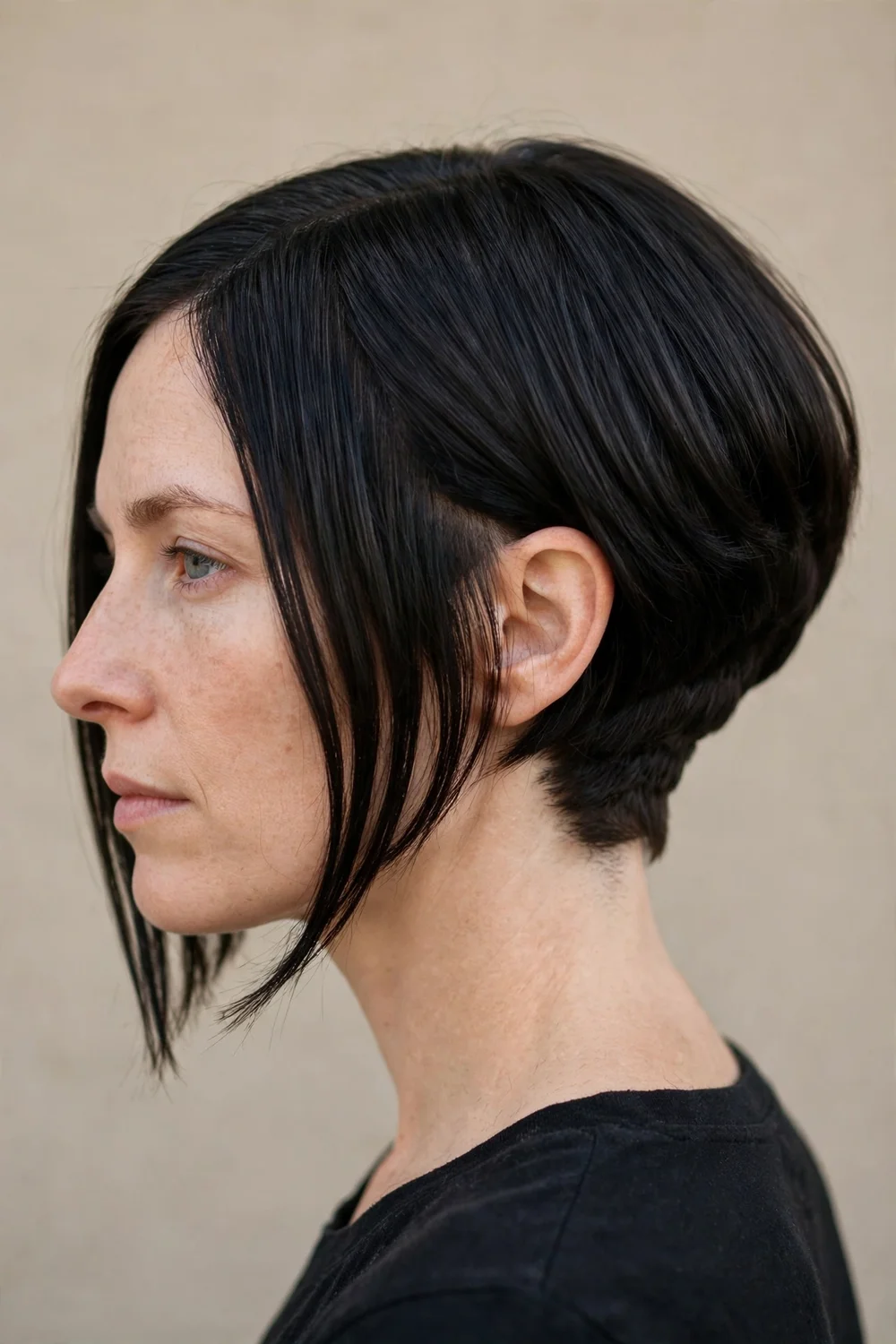
The undercut here is completely concealed under the stacked back, so the cut looks like a classic inverted bob from every angle. Only when you lift the top layers or put the hair up does the shaved nape appear. It removes serious bulk for thick hair and cools the neckline in warm weather. The hidden section needs a trim every 4 weeks to stay tidy. Ask for the undercut to follow the curve of the nape so it stays invisible when down.
Try this: clip the top layer up on warm days to show the undercut.
Difficulty: Medium | Cost: $55-$95
18. Lived-In Inverted with Crisp Edges
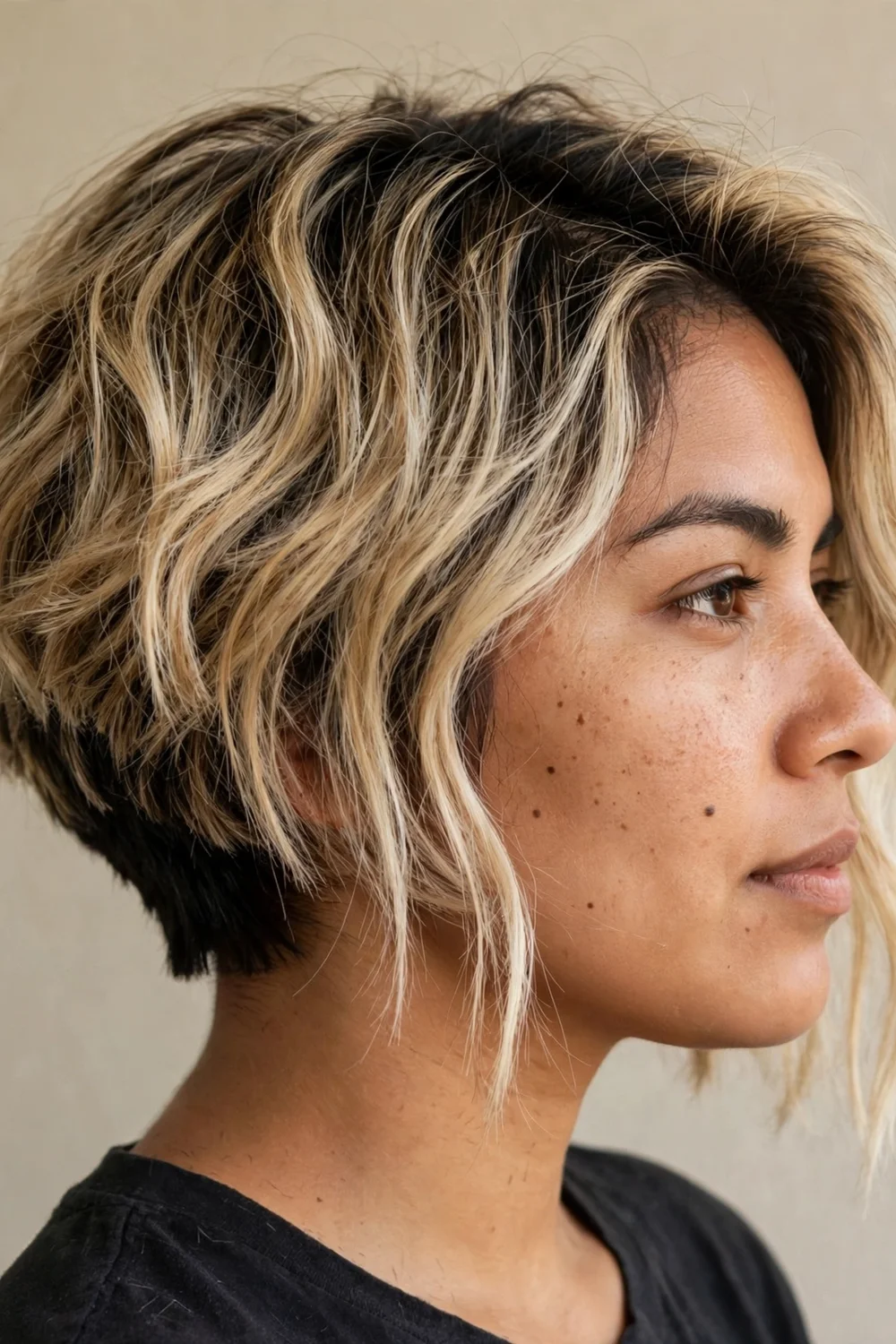
This version pairs relaxed, tousled texture through the interior with a sharply cut perimeter. The contrast is the appeal: the surface looks effortless while the outline stays precise. The back keeps its stack for shape, and the front pieces fall just past the chin. Style it by rough-drying with fingers, then polishing the ends with a flat iron on low heat with heat protectant. It holds up well between washes because the texture hides oil at the roots.
Try this: rough-dry with fingers, then polish ends on low heat.
Difficulty: Medium | Cost: $50-$90
19. Stacked Collarbone-Length Cut
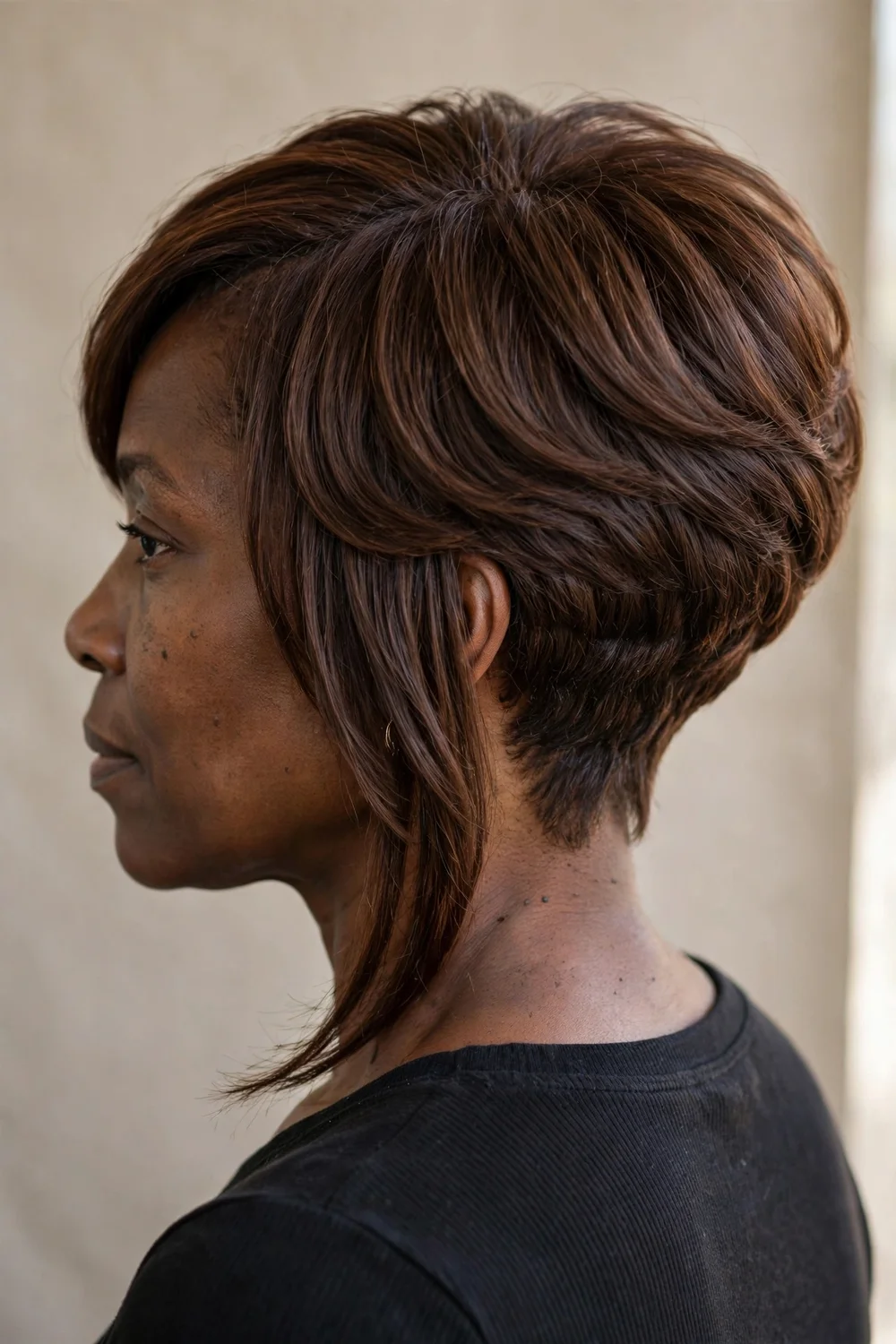
The stacked back meets a front that reaches the collarbone, giving this cut the volume of a short inverted bob with the versatility of longer hair. The nape is graduated close, the crown rounds out, and the front pieces skim the shoulders. It suits thick hair because the stack distributes weight instead of letting it drag the cut down. Round-brush the back for lift and let the front fall naturally.
If you like this length on mature hair, medium-length hairstyles for women over 50 has more options at and below the shoulders.
medium-length hairstyles for women over 50
Try this: round-brush the back for lift and leave the front natural.
Difficulty: Easy | Cost: $50-$95
20. Angled Bixie with Taper Fade
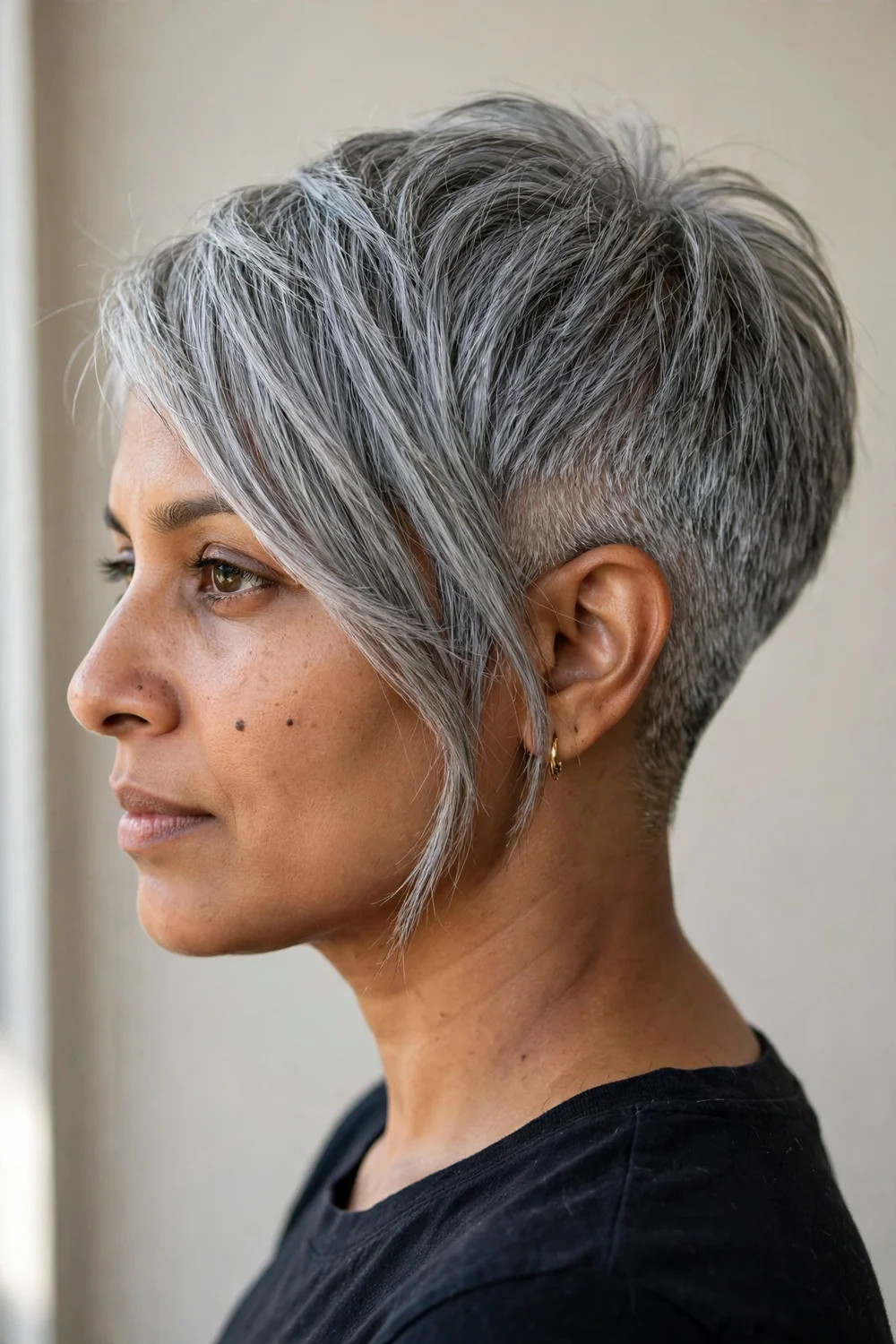
The bixie borrows the pixie’s short back and the bob’s longer front, and the taper fade at the nape keeps it neat as it grows. The front pieces angle down past the ears for that inverted line. It suits oval and heart face shapes because the short sides open up the cheekbones. Styling takes minutes with a dab of wax on the ends. The fade needs a cleanup every 3 to 4 weeks, or it loses its sharpness fast.
Try this: pinch wax into the ends for separation.
Difficulty: Medium | Cost: $45-$85
21. Disconnected Wavy Chop
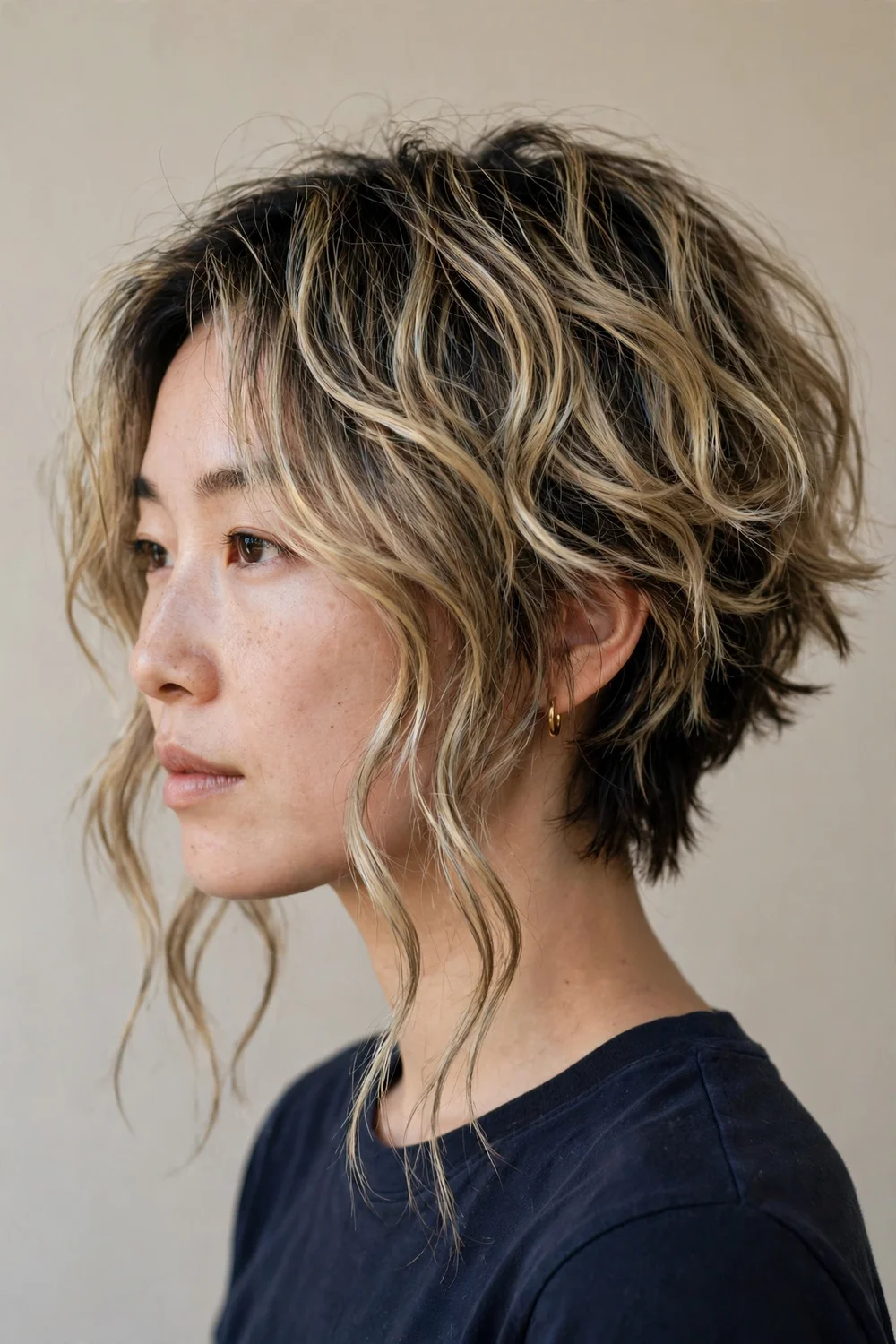
Disconnected layers give this wavy version an intentionally undone finish. The back stack is cut shorter than the top layers, creating separation that shows when the hair moves. Waves are worked in with a 1-inch wand or by braiding damp hair overnight. Use heat protectant before the wand. The inverted angle keeps it from looking like a random shag: the front still lands longer than the back. It suits medium-density hair best.
Try this: braid damp hair overnight for heat-free waves.
Difficulty: Medium | Cost: $50-$90
22. Steeply Angled Toasted Coconut Bob
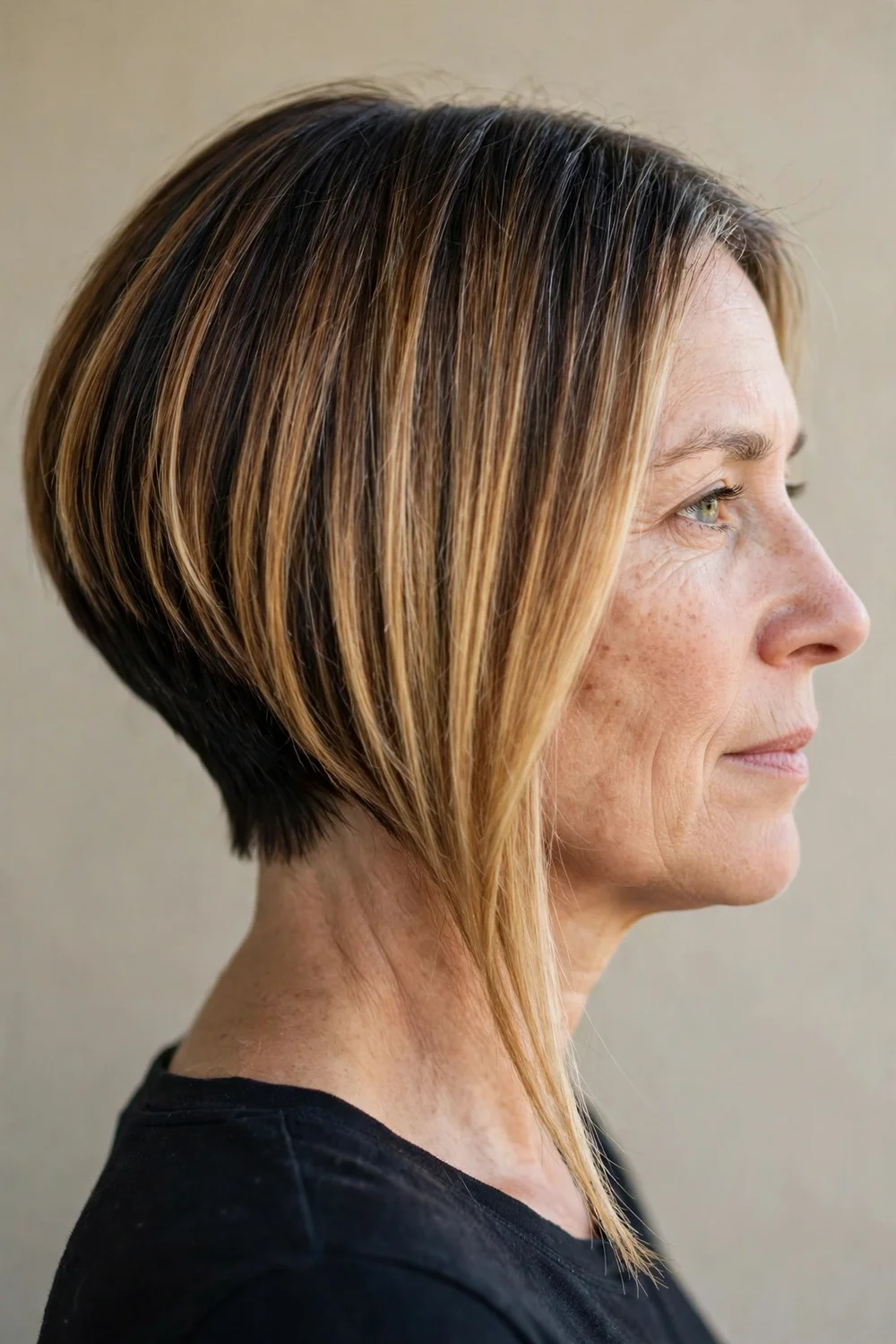
Toasted coconut color pairs dark roots with toasted blonde ends, and the steep inverted angle shows off that gradient in one long line. The nape is cut short and dark, the front dives to blonde tips near the collarbone. The darker root means regrowth blends in, so color appointments stretch to 10 or 12 weeks. The cut itself still needs a trim every 6 to 8 weeks to keep the slope sharp. Smooth the front with a flat iron and heat protectant.
Try this: smooth the front pieces with a flat iron to show the gradient.
Difficulty: Medium | Cost: $120-$200
23. Inverted Cut for Brunettes
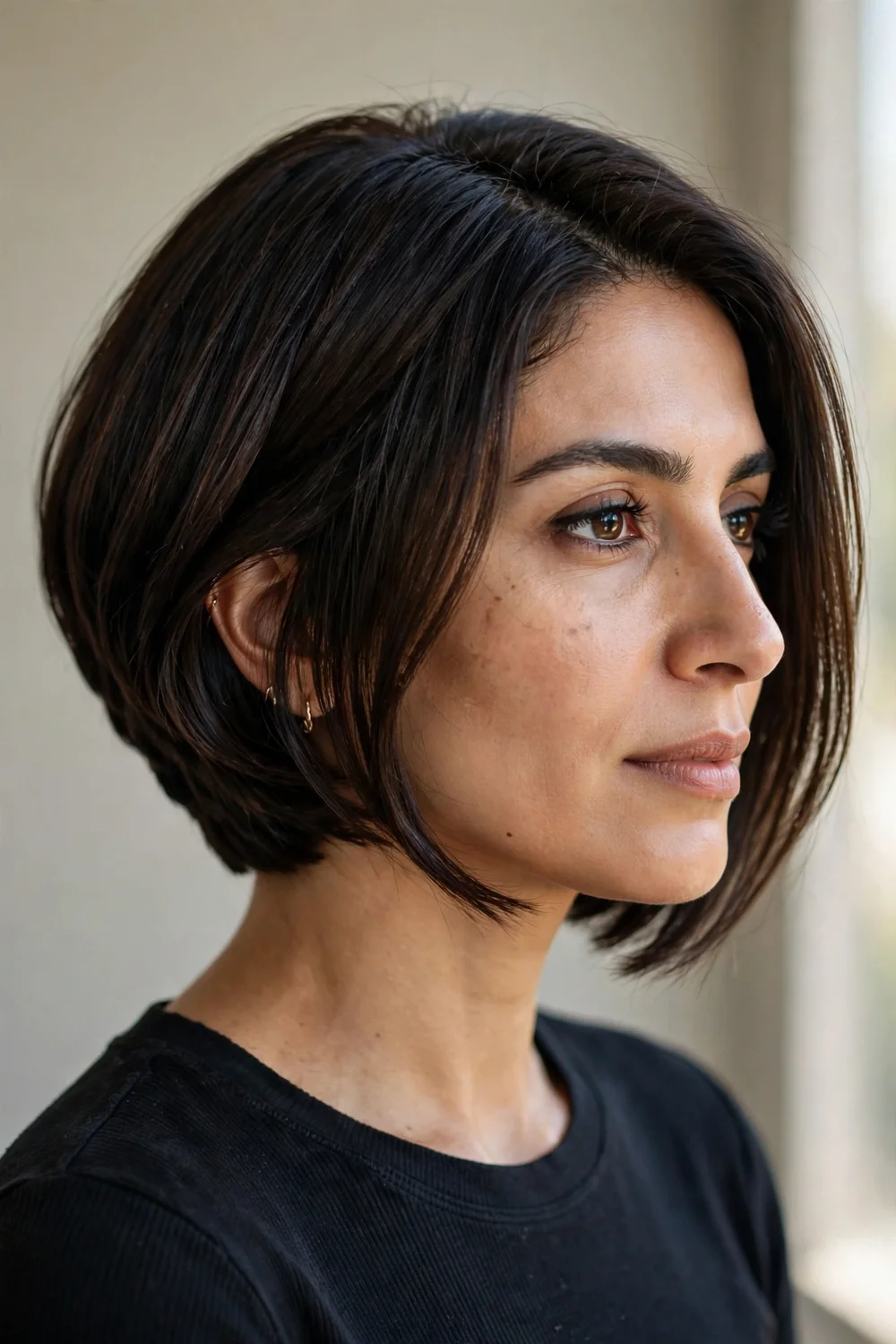
Deep brunette shades make the inverted silhouette read even sharper because the color has no highlights to break up the line. A rich espresso or dark chocolate base with a gloss treatment gives the cut a sleek, uniform surface. The back stacks close to the nape and the front angles to the jawline. Gloss treatments every 6 to 8 weeks keep dark color from looking flat. Ask your stylist for a demi-permanent gloss rather than permanent color if you want low commitment.
Try this: book a gloss treatment to keep dark color reflective.
Difficulty: Easy | Cost: $60-$110
24. Thick Symmetrical Inverted Cut
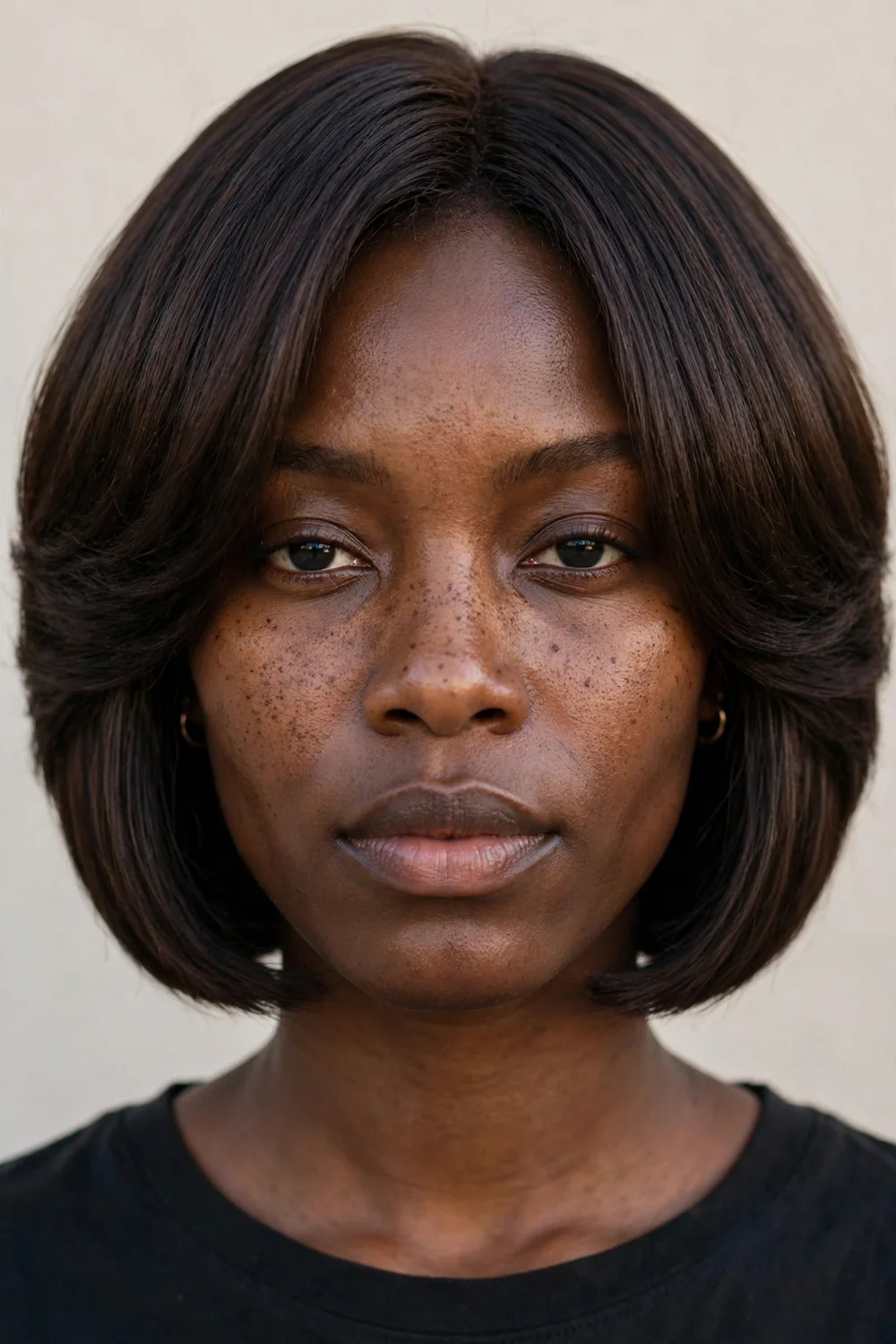
Both sides mirror each other exactly in this symmetrical take, with the front pieces landing at the same length on each side. Thick hair fills out the shape so the stack at the back looks full rather than spiky. Interior thinning shears can remove weight without touching the perimeter. The symmetry suits round and square faces because the even front lines balance the features. Blow-dry with a paddle brush for a smooth, even finish.
Try this: blow-dry with a paddle brush for an even finish.
Difficulty: Easy | Cost: $50-$90
25. Frizzy Blonde Inverted Bob
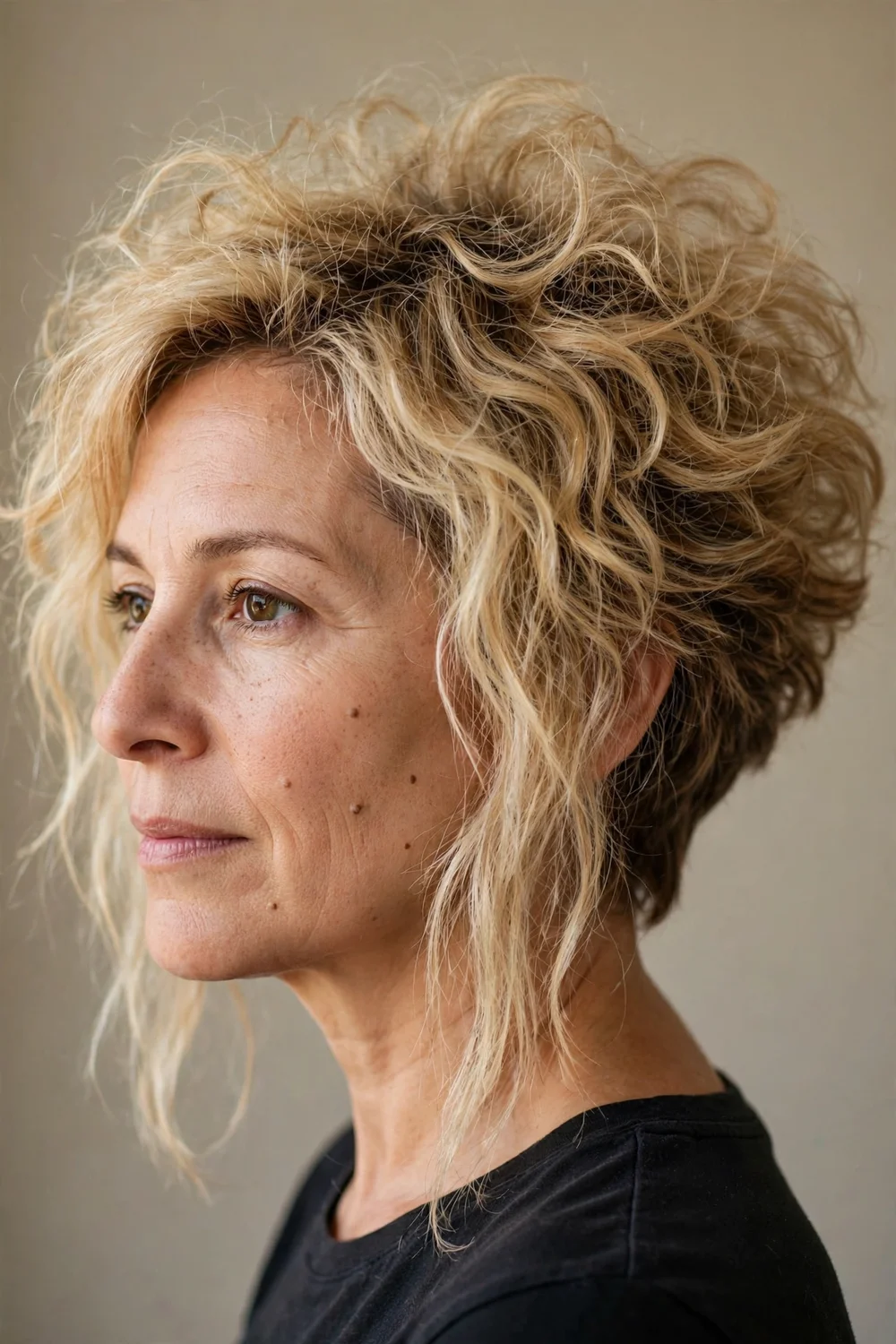
This version works with frizz instead of fighting it. The inverted angle gives frizzy texture a deliberate shape, with the stacked back controlling volume at the crown and the longer front keeping the sides from puffing wide. A leave-in conditioner plus a curl-defining cream tames the halo without flattening it. Diffuse or air-dry; brushing dry hair makes it bigger. Ask for long layers rather than short ones, since short layers can spring up and widen the silhouette.
Try this: apply leave-in conditioner and never brush it dry.
Difficulty: Easy | Cost: $45-$85
26. Dark Brown Inverted Bob
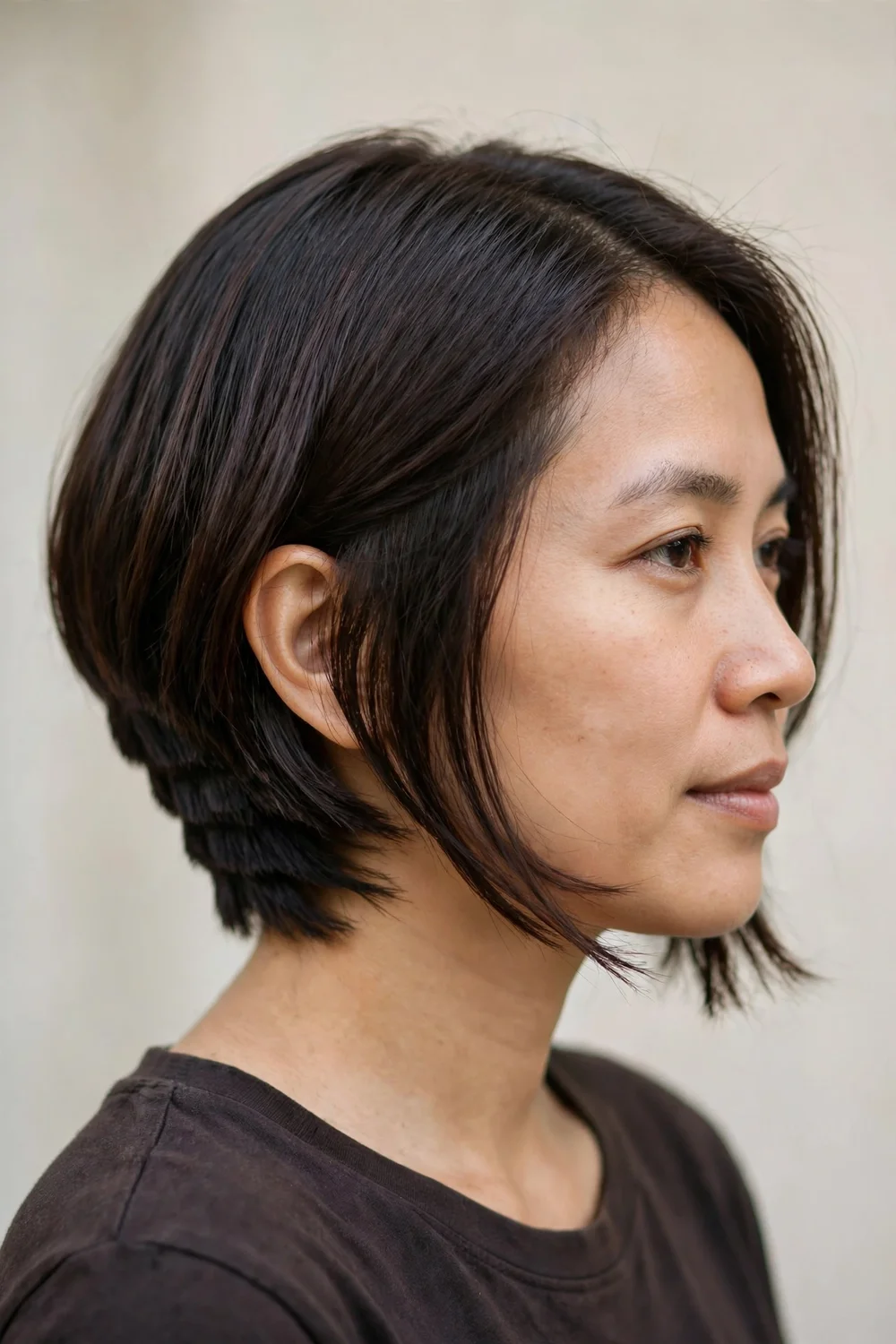
A single-process dark brown keeps the focus on the cut itself. Without color dimension to distract, the stacked back and angled front read clearly. It suits medium skin tones well and grows out without a visible line. The back sits at the nape, the front reaches the chin, and the ends are point-cut for softness. A weekly deep-conditioning mask keeps dark hair shiny. Trim every 7 to 8 weeks to hold the angle.
Try this: use a weekly deep-conditioning mask for shine.
Difficulty: Easy | Cost: $55-$100
27. Maroon Inverted Bob
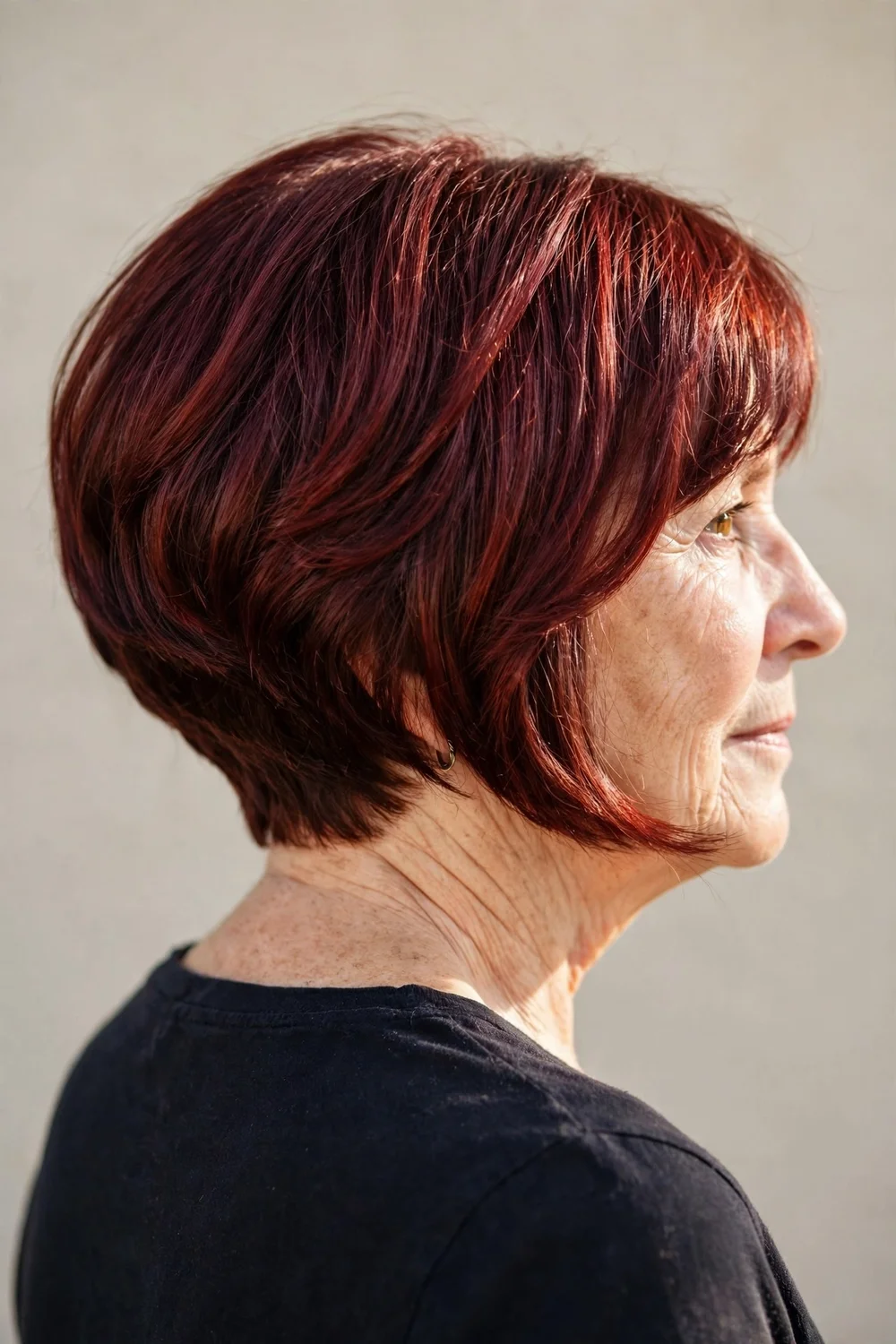
Maroon brings a rich red-brown tone that flatters warm and neutral skin tones. The color sits between brown and red, so it reads polished rather than loud. On the inverted shape, the stacked back catches the red tones in the light while the longer front shows the depth. Red pigments fade fastest, so use color-safe shampoo and cool water. A gloss refresh every 6 weeks keeps the maroon from going muddy.
Try this: wash with color-safe shampoo in cool water.
Difficulty: Easy | Cost: $70-$130
28. Smooth-Flowing Inverted Bob
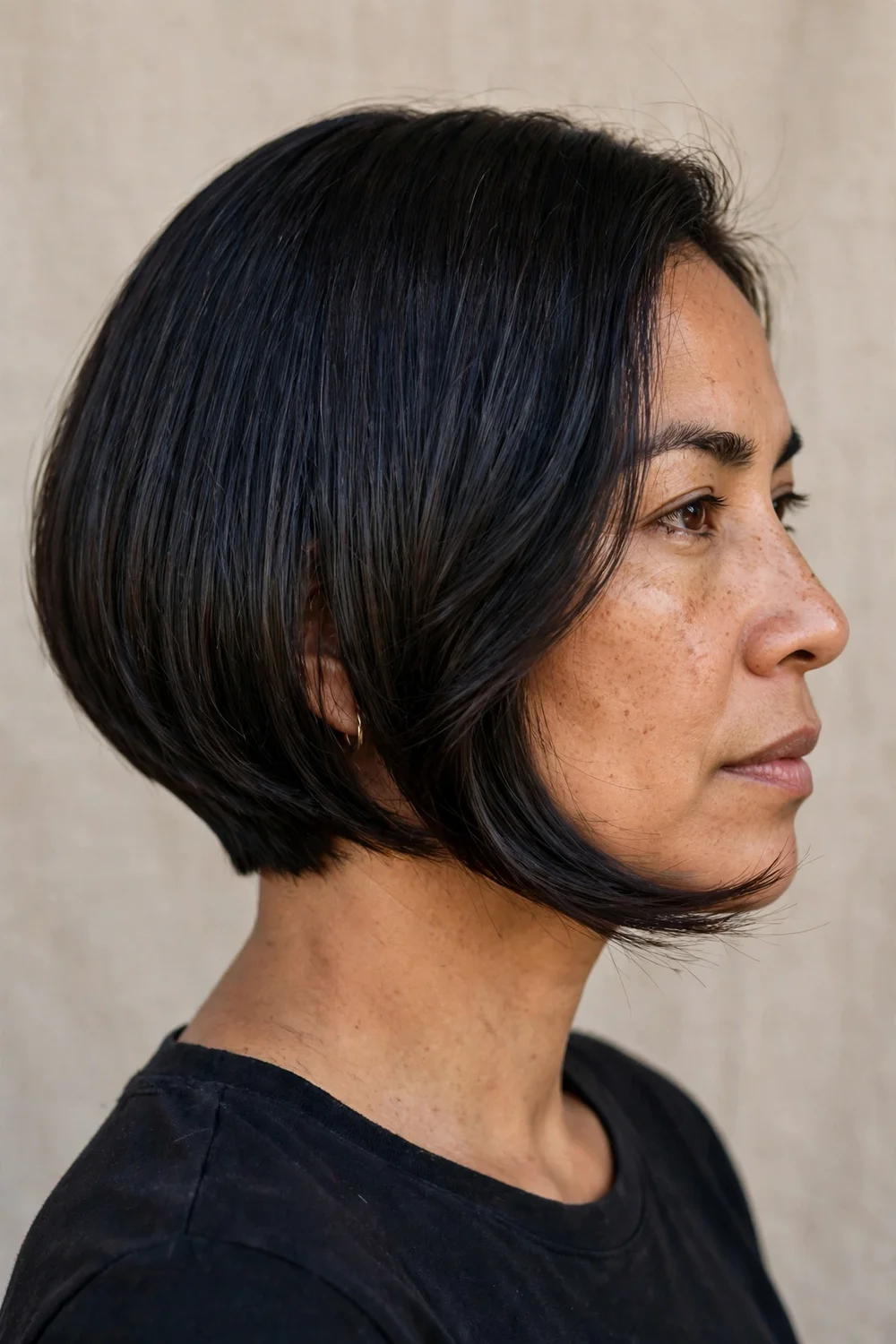
Sleek, straight texture lets the inverted line flow in one continuous sweep from nape to front. The layers are blended so smoothly that the eye follows the angle without interruption. A keratin treatment can help if your hair fights smoothness, though it isn’t required. Blow-dry with a paddle brush pulling sections straight down, then pass a flat iron over the front pieces with heat protectant. The cut looks best with trims every 6 weeks.
Try this: pull sections straight down with a paddle brush while drying.
Difficulty: Easy | Cost: $50-$95
29. Graduated Inverted Bob
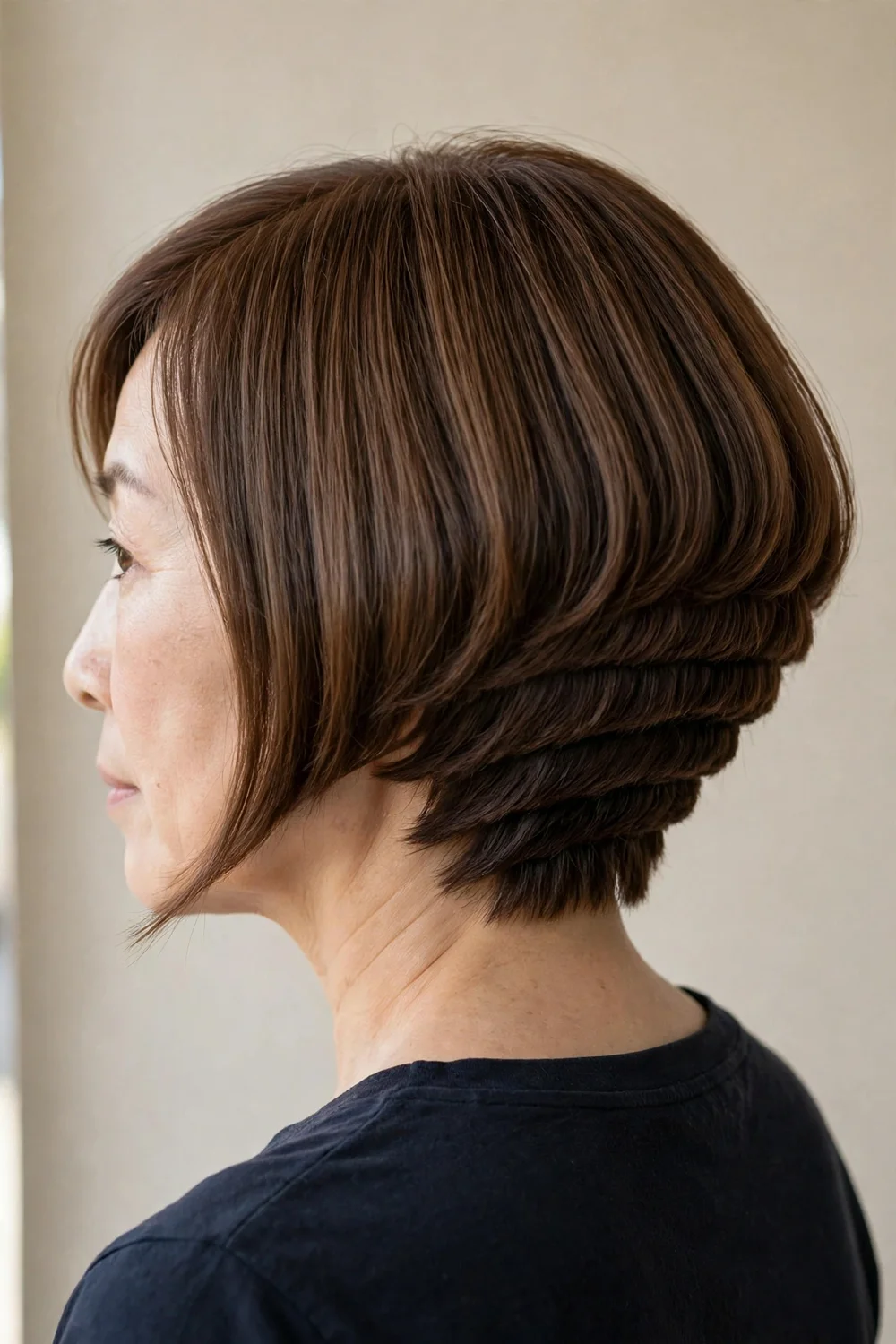
Graduation is the technique behind the inverted bob: each layer at the back is cut slightly shorter than the one above it, building a curved stack. This classic graduated version shows that curve clearly, with the nape hugging close and the layers rolling outward toward the crown. The front angles down to the jaw in a clean line. It suits straight hair best, since the graduation shows in the silhouette. Round-brush the back under to display the curve.
Try this: round-brush the back under to show the graduated curve.
Difficulty: Medium | Cost: $50-$90
30. Stacked Inverted Bob
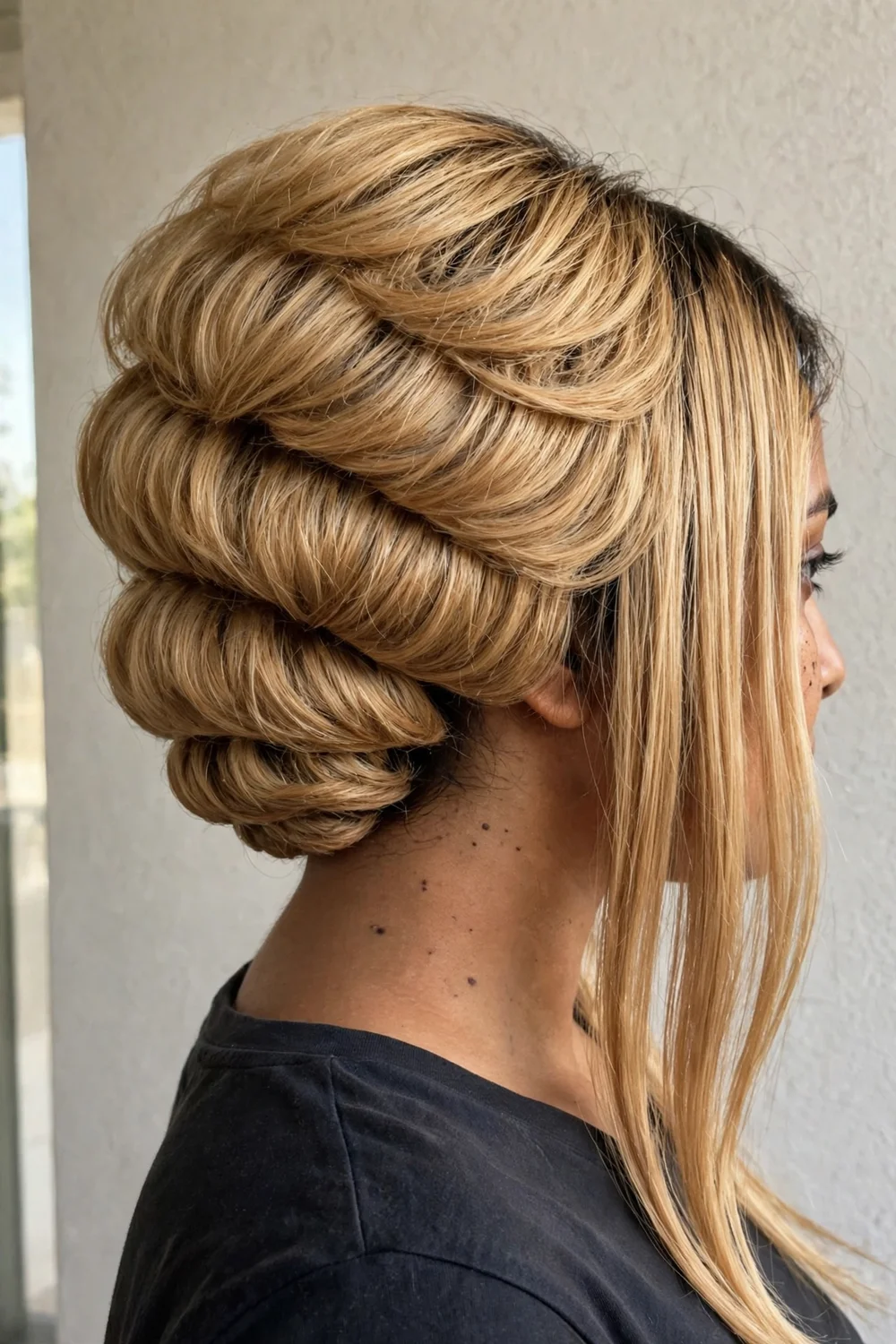
Maximum stacking gives this version its famous rounded back and serious crown volume. Layers pile up at the nape in tight tiers, which is the best trick in the book for fine hair that falls flat. The front stays long and smooth to contrast with the full back. It needs a skilled cut: poorly stacked layers can look choppy instead of rounded. Tease the crown lightly for extra height on special occasions, and trim every 6 to 8 weeks.
Try this: tease the crown lightly for extra height.
Difficulty: Medium | Cost: $50-$95
31. A-Line Inverted Bob
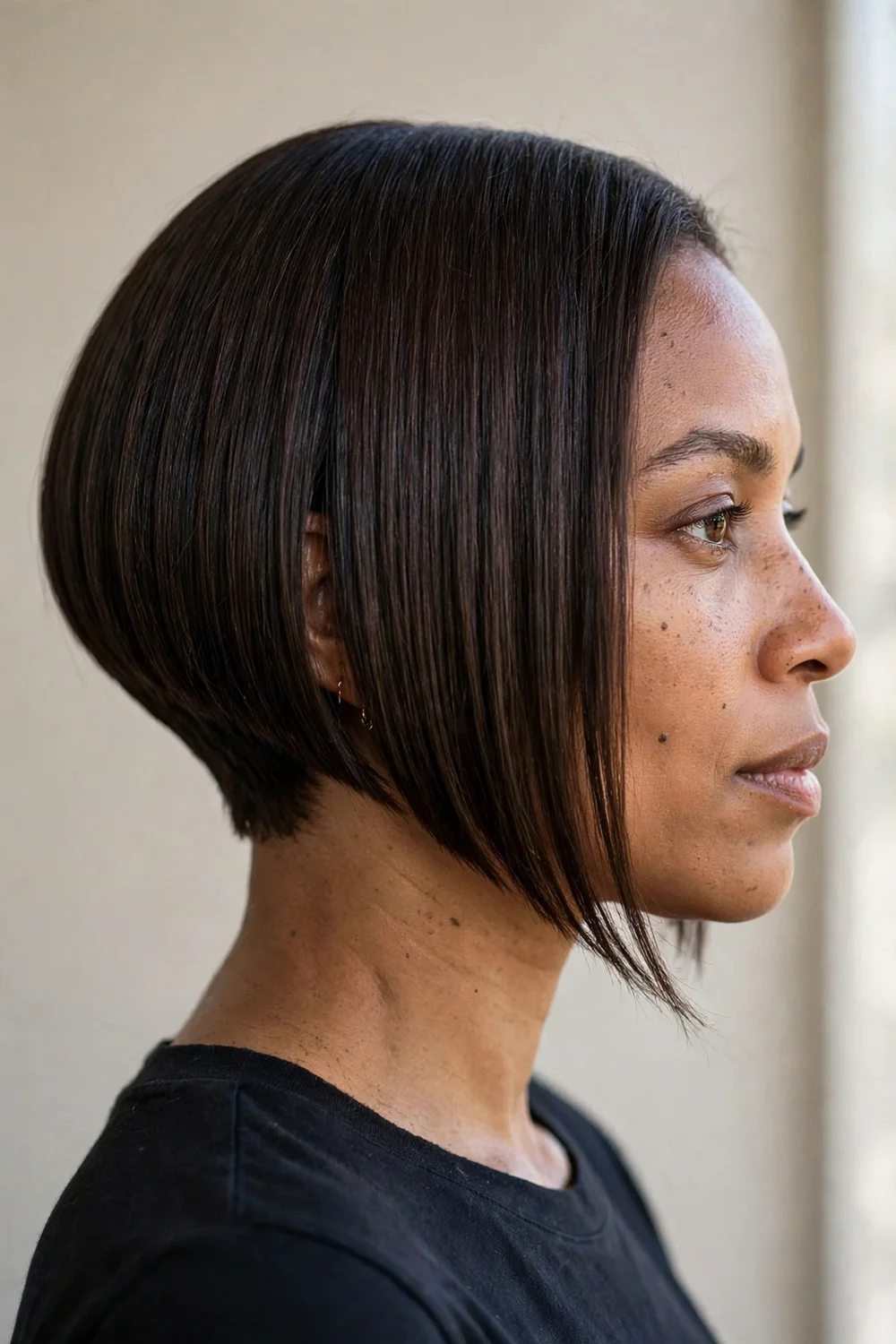
The A-line version keeps the diagonal from back to front but skips heavy stacking, so the back lies flatter and sleeker. It suits anyone who wants the inverted angle without the rounded volume of a stacked cut. The line should run clean from the nape to the front tips. This is the lowest-maintenance member of the inverted family: it air-dries well and grows out evenly. Ask for minimal layering and a strong perimeter to keep the A shape crisp.
Try this: let it air-dry for a naturally smooth finish.
If you like this cleaner version of the angle, the full guide to a line bob haircuts covers 30 versions of the cut, from blunt and stacked to curly and colorful.
Difficulty: Easy | Cost: $45-$80
32. Inverted Bob with Side Part

A deep side part shifts the whole cut into something more dramatic. Most of the hair sweeps across the forehead and falls long on one side, while the shorter side tucks behind the ear to show the angle. The side part also adds root lift on the heavy side. Set the part while the hair is damp so it dries in place. Flip the part to the other side every few days to keep volume from going flat on one side.
Try this: set the part while hair is damp so it holds.
Difficulty: Easy | Cost: $45-$80
33. Inverted Bob with Middle Part
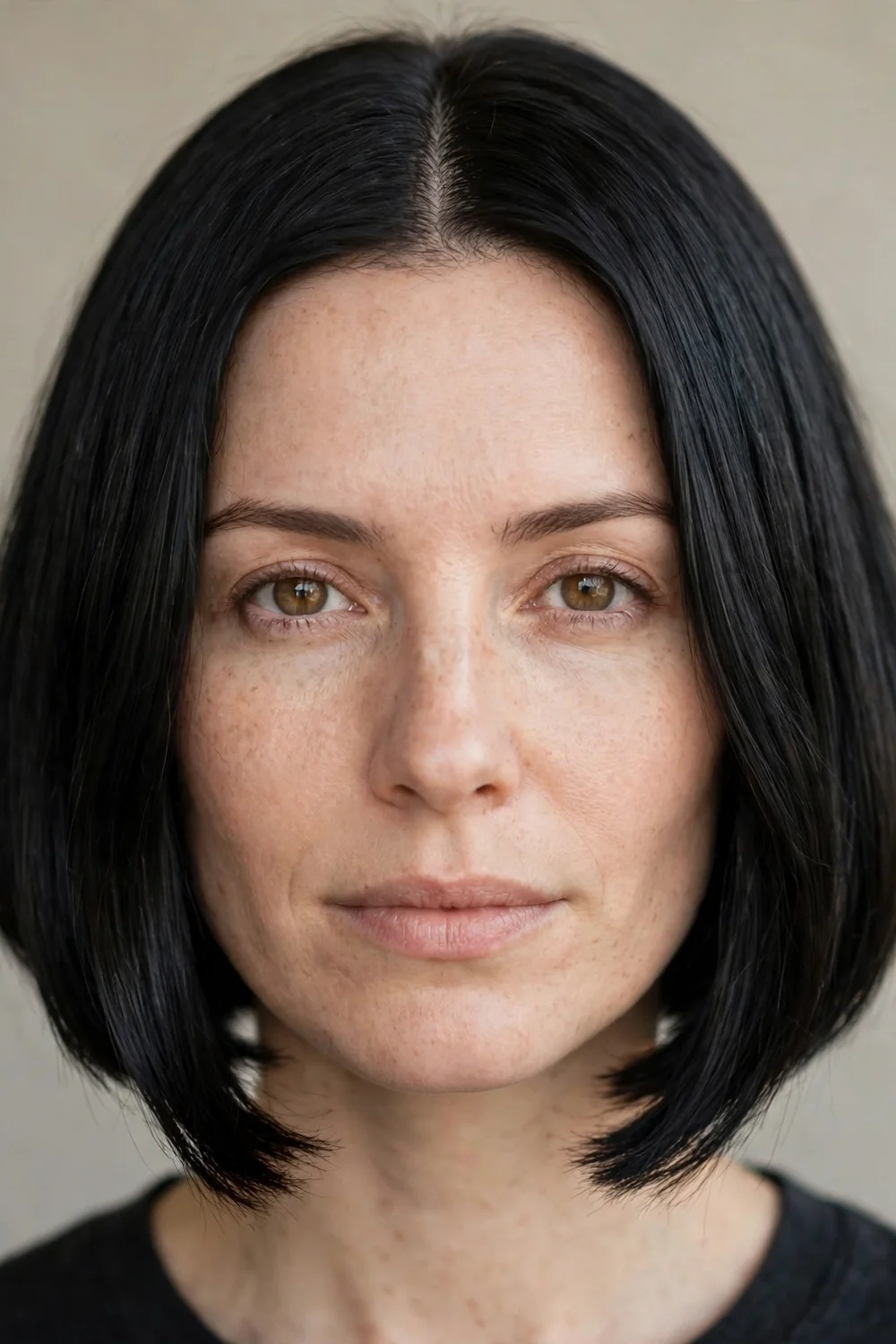
The middle part turns the inverted bob into a symmetrical frame, with matching front pieces falling on both sides of the face. It suits oval and heart face shapes best, since the center part highlights symmetry. The stacked back keeps the crown from looking flat behind the neat part. Flat-iron the front pieces straight down with heat protectant for a sleek finish. It needs the part to stay precise, so it suits hair that parts easily in the center.
Try this: flat-iron front pieces straight down for a sleek finish.
Difficulty: Easy | Cost: $45-$80
34. Textured Inverted Bob
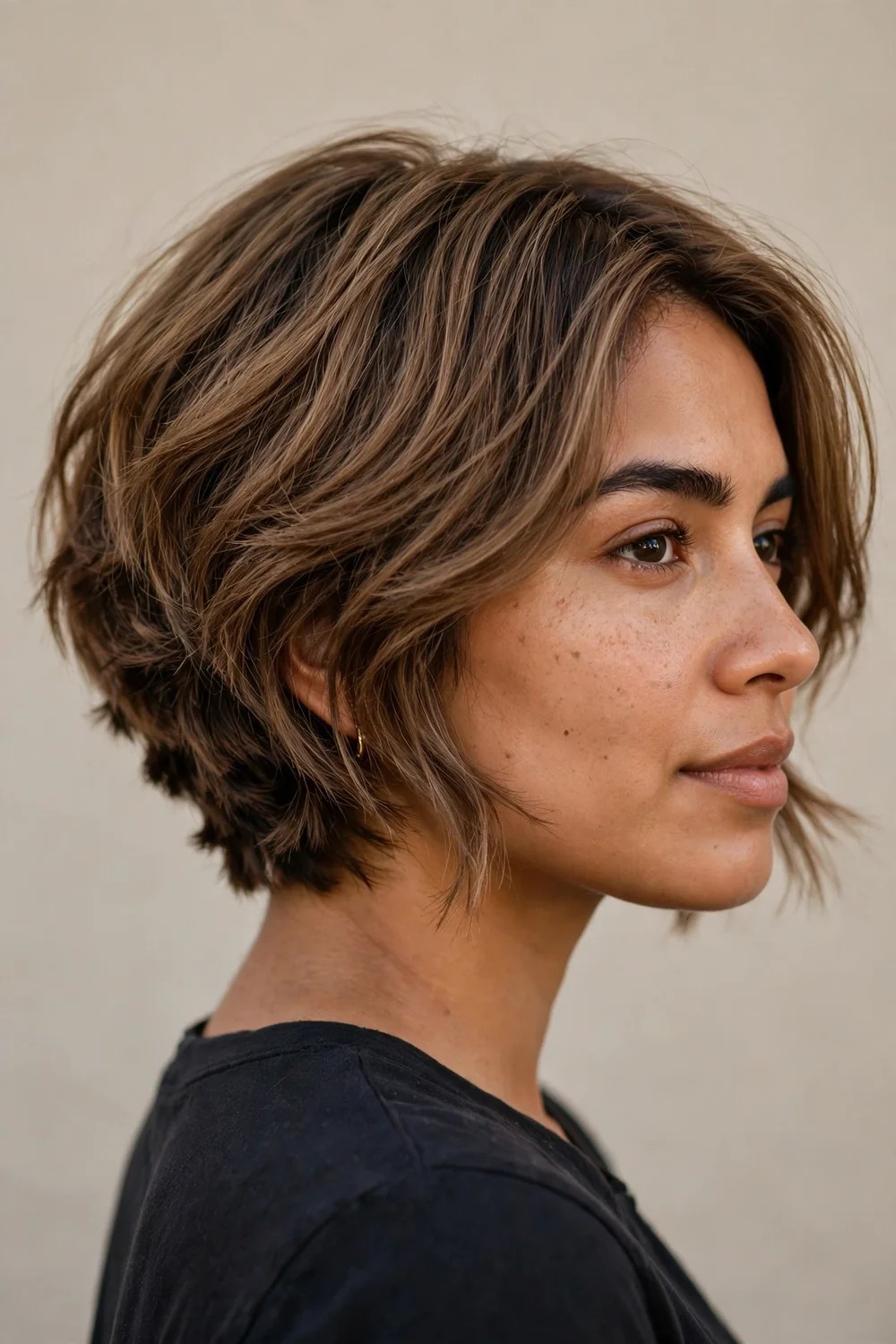
Texturizing shears or a razor break up the ends so the cut moves instead of sitting solid. The inverted angle stays visible, but the perimeter looks piecey and modern rather than blunt. It suits medium to thick hair because the texture removes weight the blunt line would trap. Ask for texture through the mid-lengths and ends, not at the roots, to keep the crown smooth. A salt spray scrunched in adds grit and separation.
Try this: scrunch salt spray into the ends for grit.
Difficulty: Easy | Cost: $50-$90
35. Wavy Inverted Bob
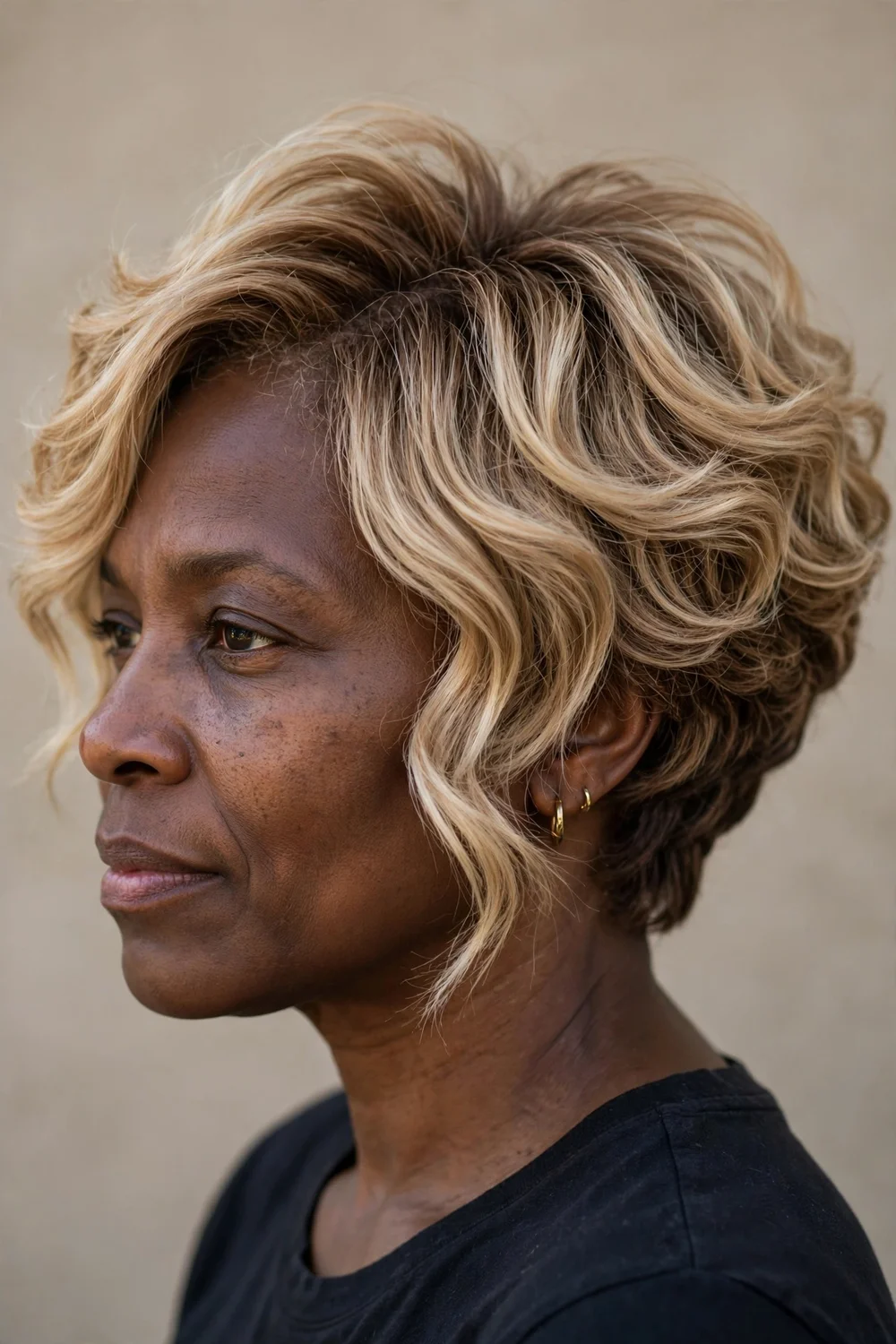
Natural or styled waves loosen the inverted shape into something relaxed. The stacked back still gives the crown its lift, while the waves keep the front from looking severe. Longer layers work better here because short layers can make waves puff outward. Enhance your natural wave with a curl cream, or wrap sections around a 1-inch wand with heat protectant applied. The cut hides grown-out roots well because the texture breaks up the line.
Try this: enhance natural wave with curl cream and air-dry.
Difficulty: Easy | Cost: $50-$90
36. Straight Sleek Inverted Bob
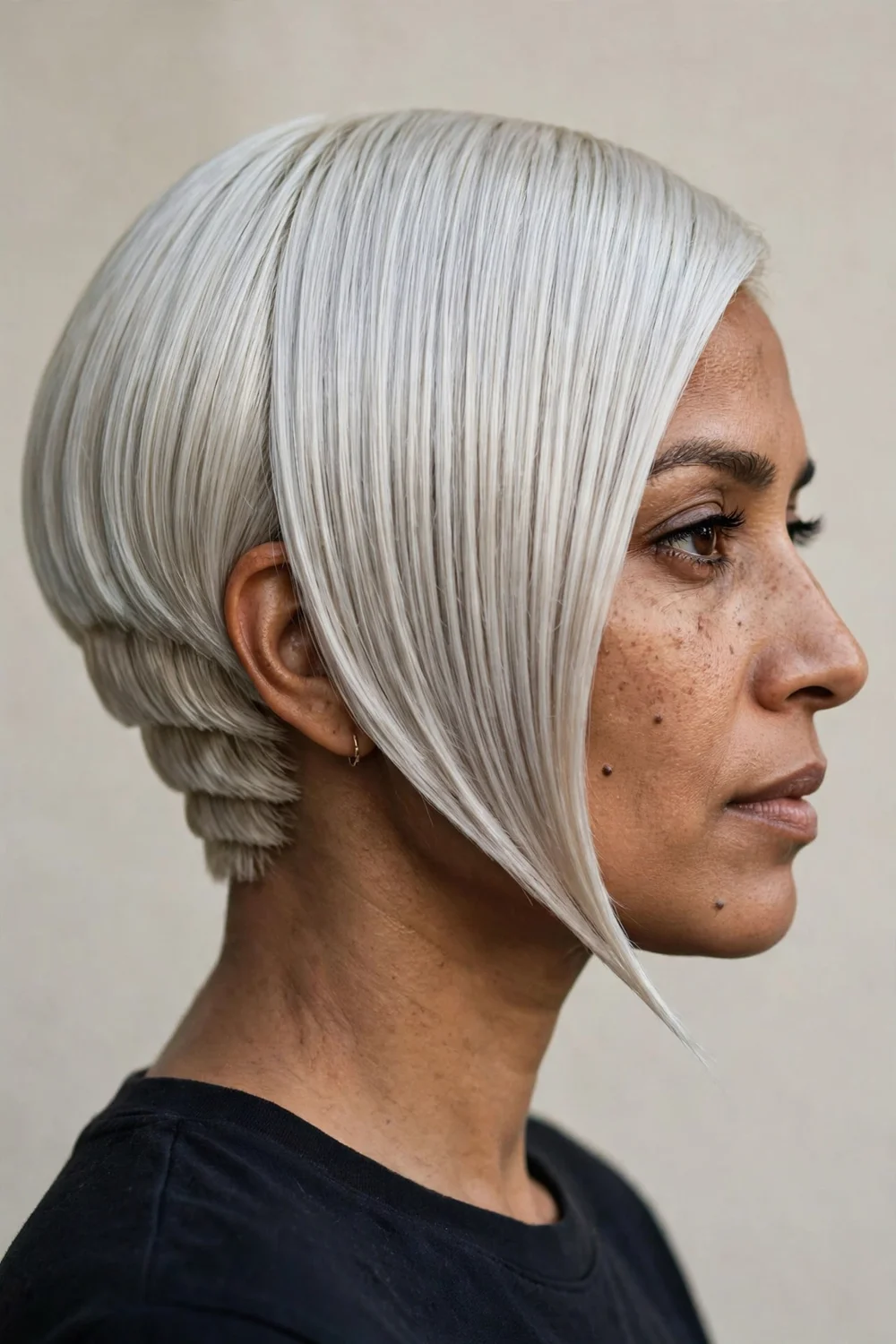
Pin-straight and glossy, this is the most polished way to wear the inverted angle. Every line of the cut shows, from the stacked nape to the angled front, so the precision of the cut matters more here than in any textured version. Blow-dry smooth with a paddle brush, then flat-iron in small sections with heat protectant. A drop of shine serum finishes it. Humidity is the enemy, so keep an anti-frizz serum on hand in damp weather.
Try this: flat-iron in small sections for a glassy finish.
Difficulty: Medium | Cost: $50-$90
37. Inverted Bob with Curtain Bangs
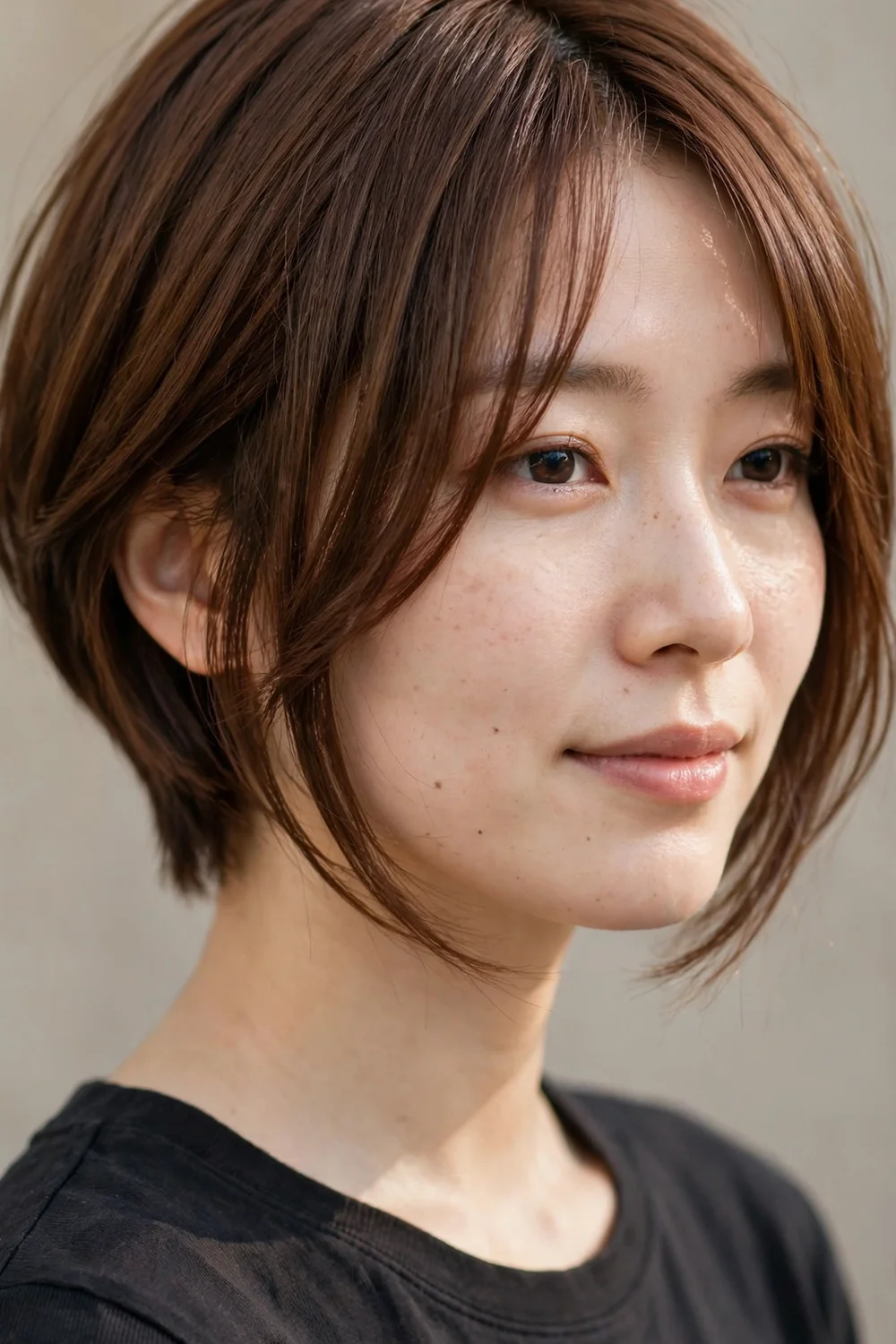
Curtain bangs part in the middle and sweep to each side, blending into the longer front pieces of the inverted cut. The transition from bangs to front length looks seamless because both follow the same diagonal. It suits wider foreheads and softens strong jawlines. Style the bangs with a round brush, rolling them away from the face, with heat protectant if you use heat. Trim the bangs every 4 weeks to keep them from merging into the front.
Try this: roll bangs away from the face with a round brush.
Difficulty: Medium | Cost: $50-$90
38. Inverted Bob with Wispy Fringe
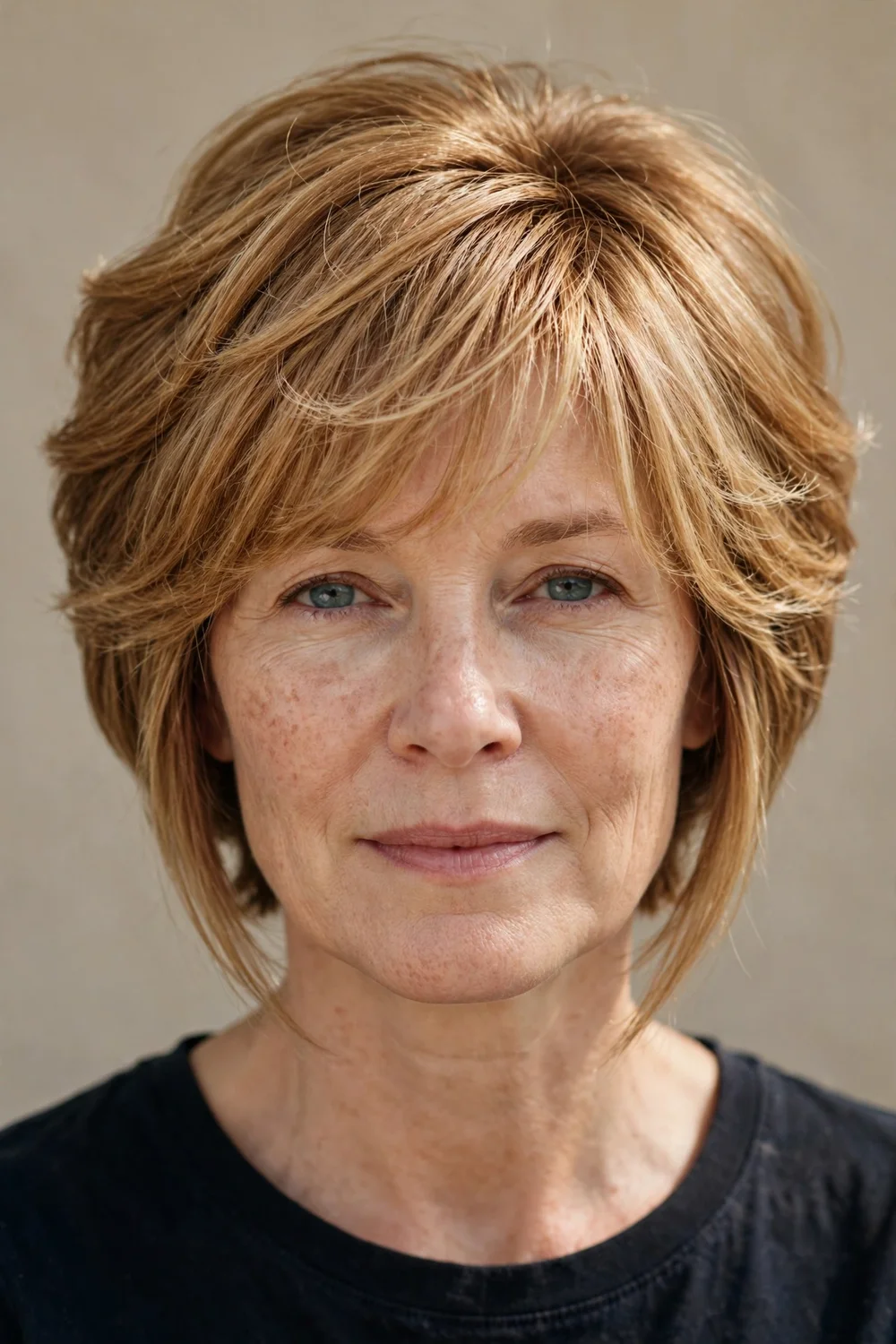
A wispy fringe keeps the forehead covered without the weight of a full bang. The light, feathered pieces sit above the brows and blend into the angled sides. It suits fine hair because the fringe doesn’t demand density. The rest of the cut keeps its stacked back and longer front. Style the fringe with fingers and a touch of paste rather than a brush, so it stays airy. It grows out easily into curtain bangs if you change your mind.
Try this: style the fringe with fingers and a touch of paste.
Difficulty: Easy | Cost: $45-$85
39. Chin-Length Inverted Bob
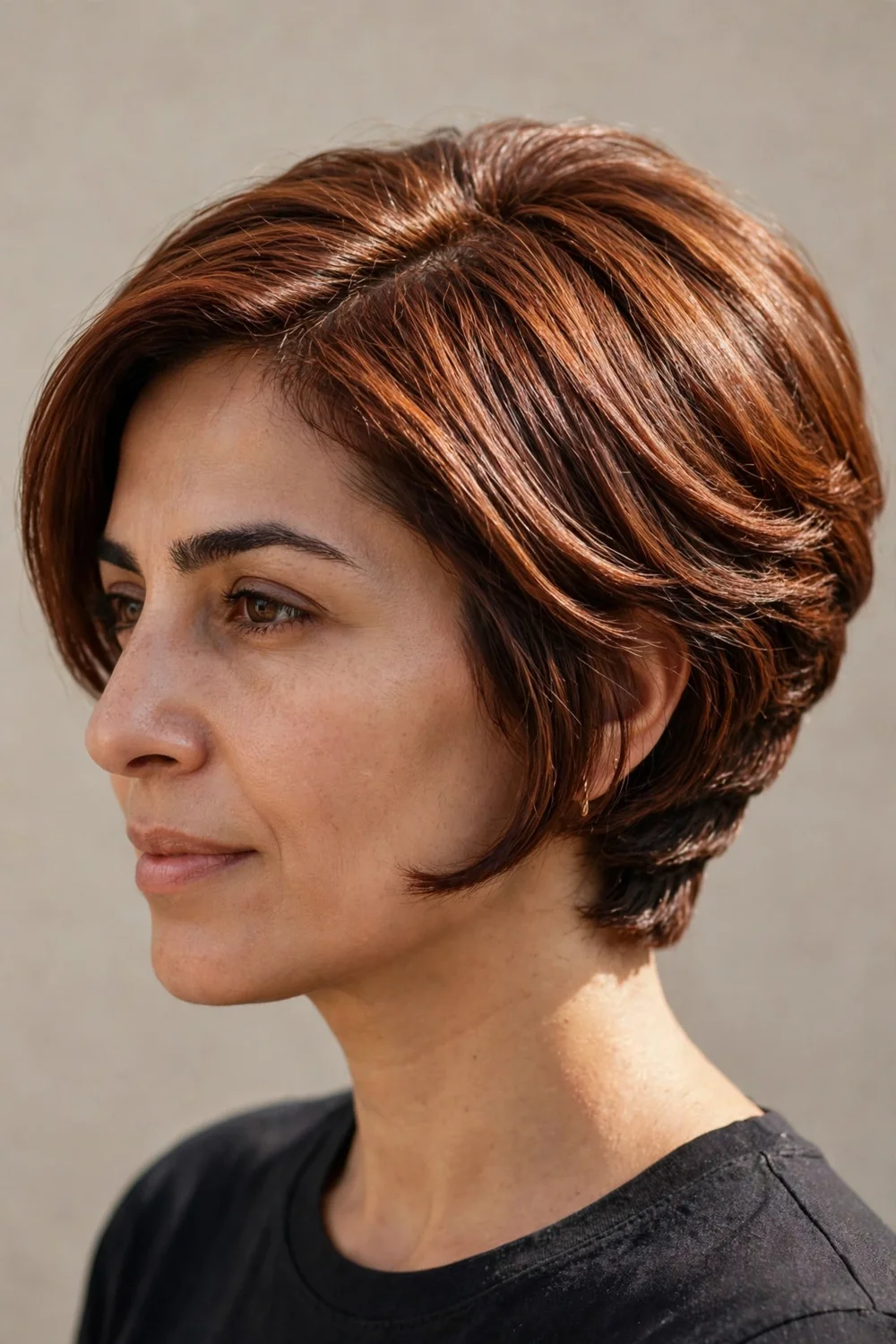
The front pieces end right at the chin in this neat, compact version. It’s a classic length that suits most face shapes because the chin is a natural stopping point for the eye. The back stacks just above the nape for a rounded crown. It tucks behind the ears easily and stays out of the way. Blow-dry the front pieces under slightly with a round brush for a clean bevel. Trim every 6 to 7 weeks.
Try this: bevel the front pieces under with a round brush.
Difficulty: Easy | Cost: $45-$80
40. Jaw-Length Inverted Bob
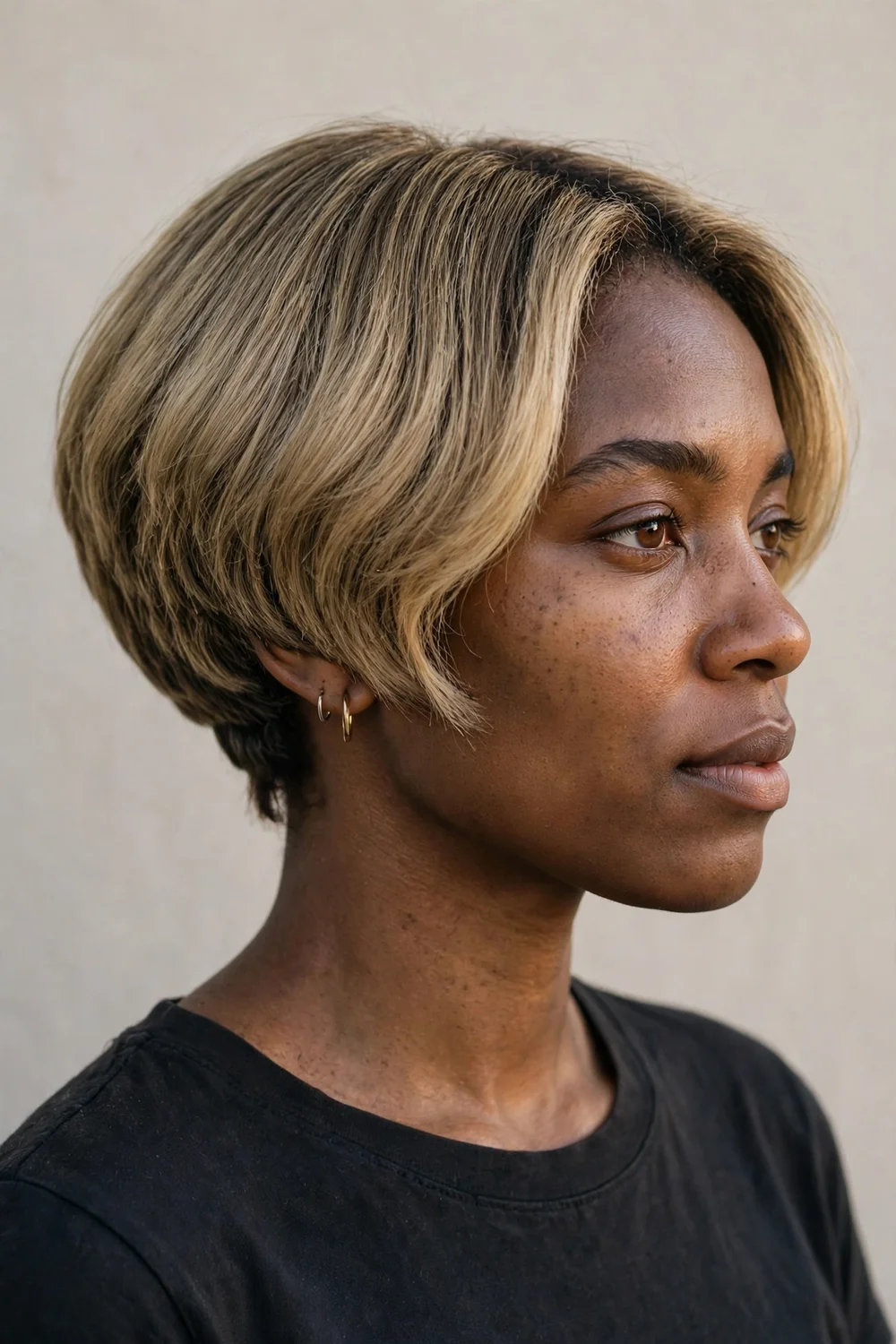
Ending at the jawline, this is the shortest front length in the inverted family that still reads as a bob. The short front sharpens the jawline and shows off the neck. It suits petite features and oval faces well. The back is stacked tight to balance the short front. Because the length is minimal, the cut needs reshaping every 5 to 6 weeks. Style it smooth with a flat iron and heat protectant, or tousle it with paste for edge.
Try this: tousle with paste for an edgier finish.
Difficulty: Easy | Cost: $40-$75
41. Inverted Bob with Shadow Root
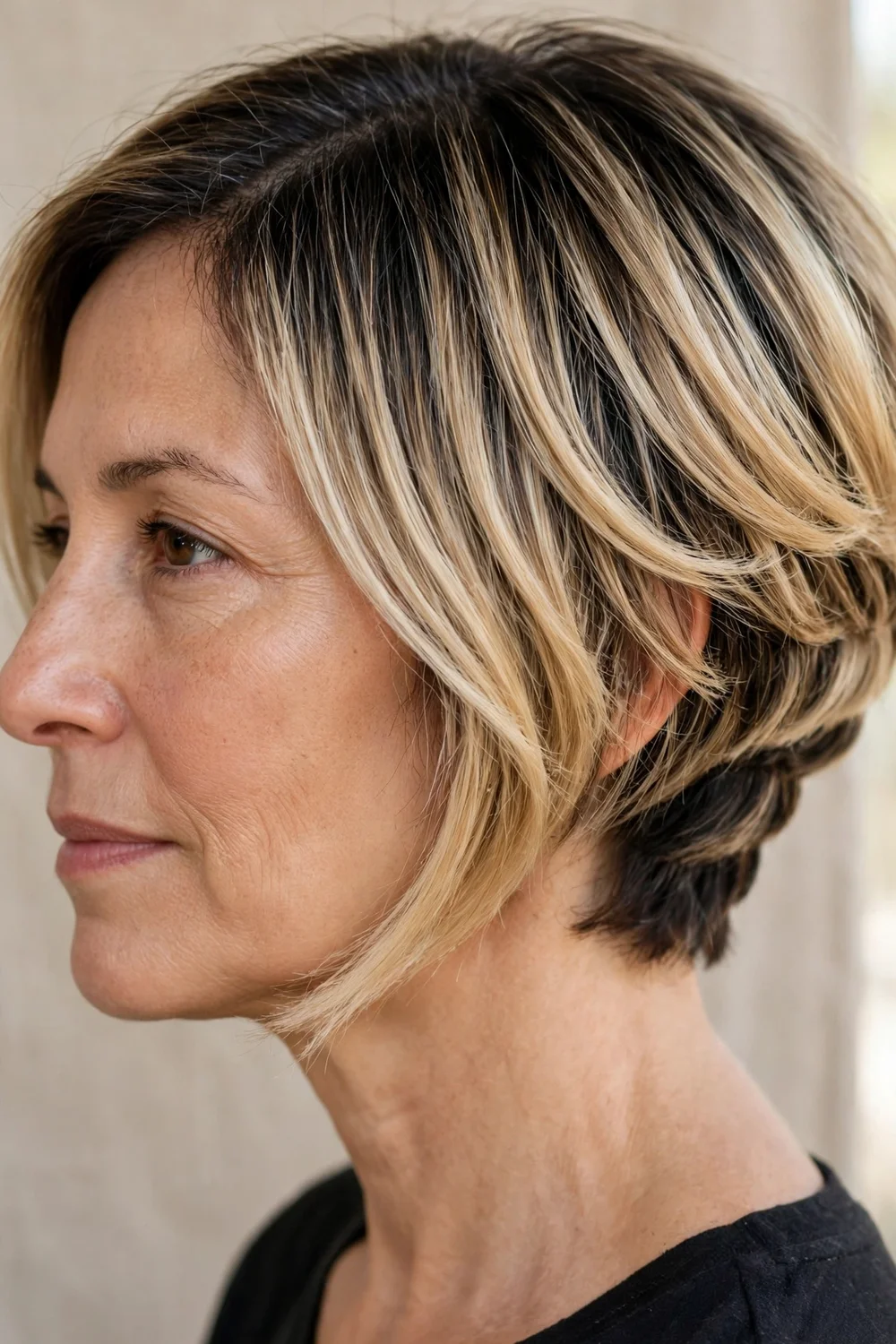
A shadow root keeps the natural base color at the roots and melts it into lighter lengths, which makes the inverted cut incredibly low-maintenance on the color side. Regrowth blends into the shadow instead of showing a line. The technique works with blonde, brunette or red ends. The stacked back and angled front keep the shape. Ask your colorist to smudge the root 1 to 2 inches down. Color appointments stretch to 12 weeks or more.
Try this: ask for the root smudged 1 to 2 inches down.
Difficulty: Easy | Cost: $90-$150
42. Inverted Bob with Balayage
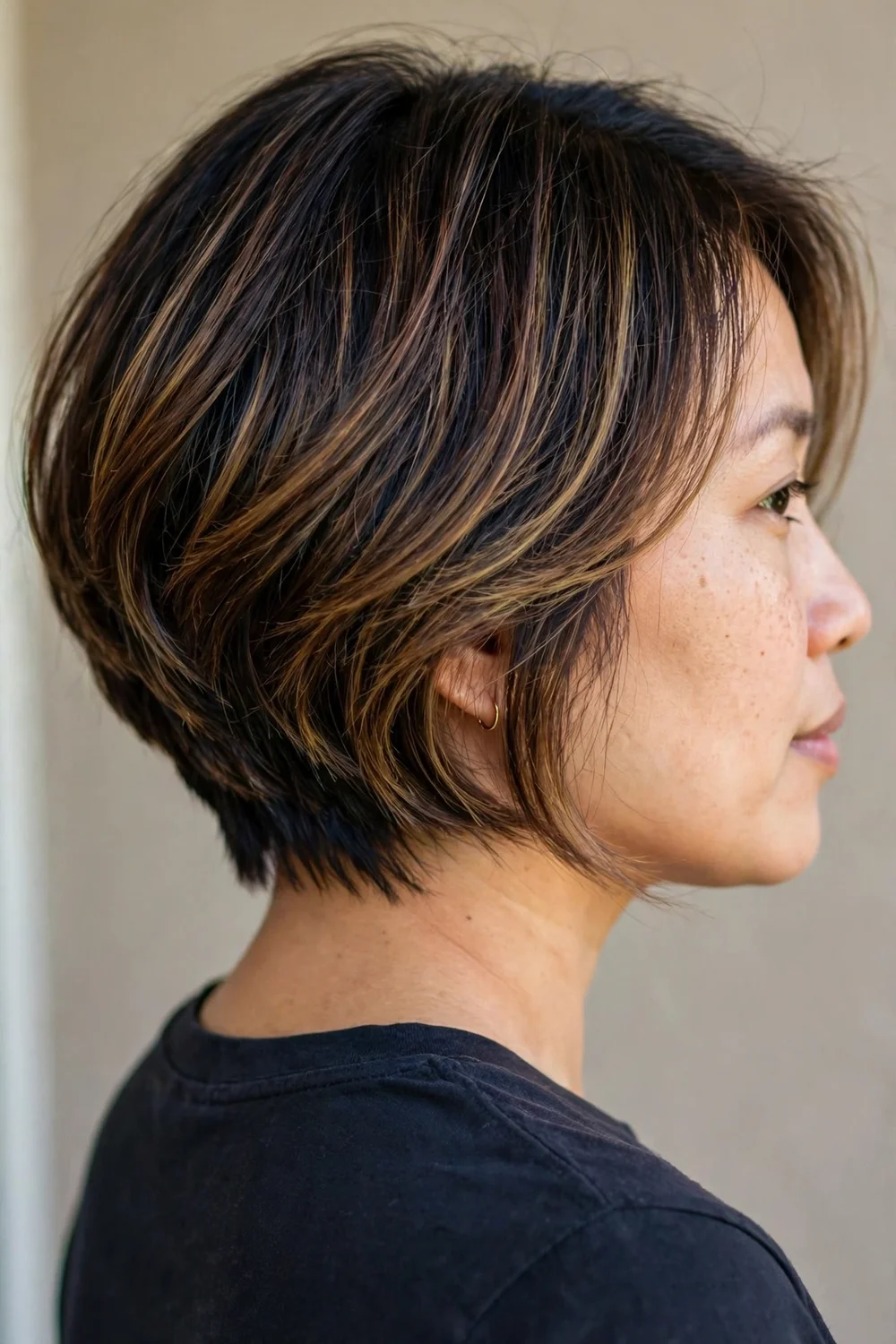
Balayage is painted on by hand, so the highlights follow the inverted angle instead of fighting it. Lighter pieces concentrate toward the front and ends, which draws the eye along the diagonal. The stacked back gets softer, diffused lightness that shows off the layers. It grows out without harsh lines, so touch-ups come every 10 to 12 weeks. Use a purple shampoo once a week if the balayage is blonde, to keep brass away.
Try this: use purple shampoo weekly to keep blonde balayage cool.
Difficulty: Easy | Cost: $100-$180
43. Ash-Blonde Inverted Bob
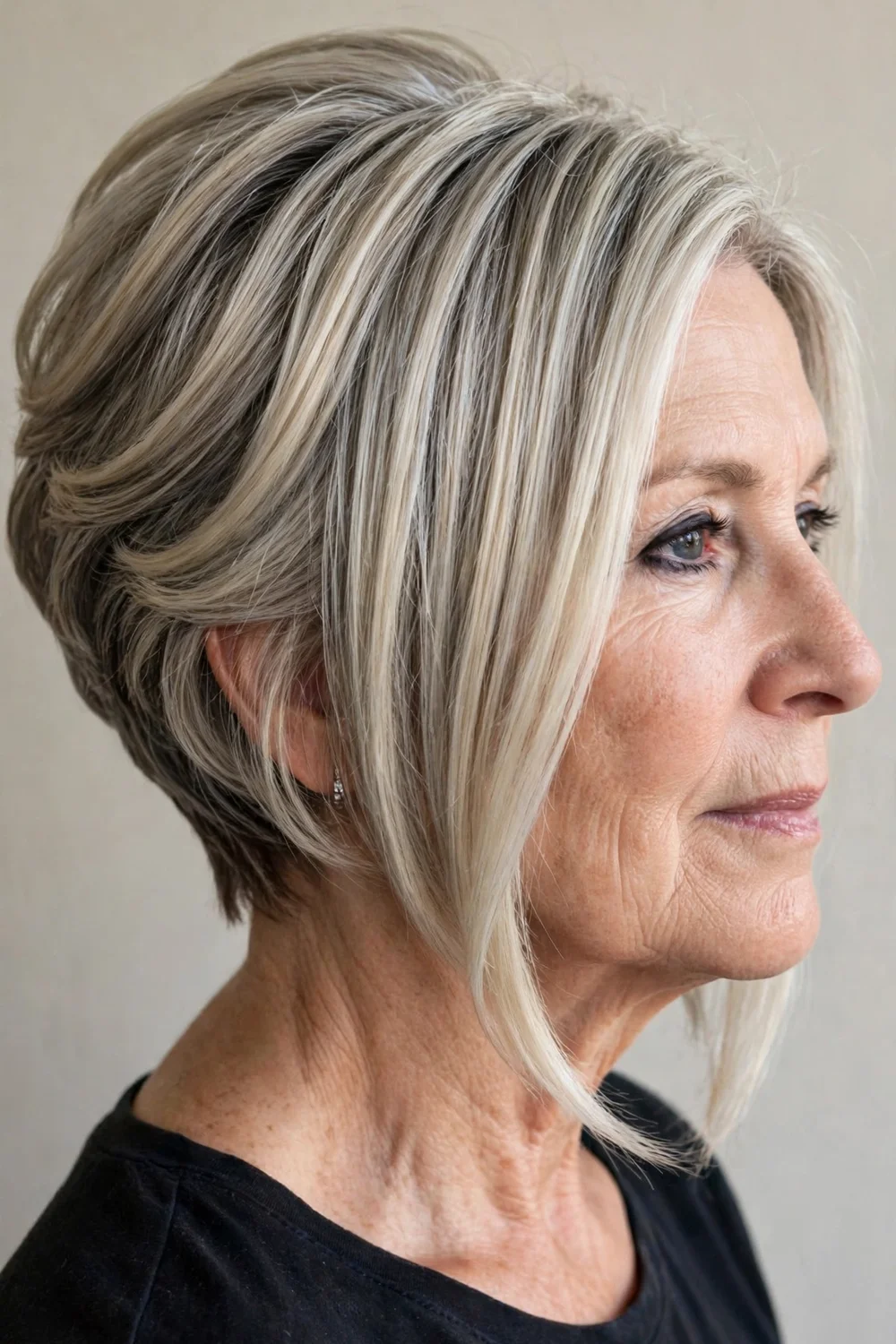
Cool, smoky ash blonde gives the inverted shape a modern edge. The ashy tone works best on fair to medium skin with cool undertones. On the cut, the stacked back shows the dimension of the ash tones while the longer front stays sleek. Ash shades fade faster than warm ones, so purple shampoo and cool-water rinses help hold the tone. A toner refresh every 6 to 8 weeks keeps it from going yellow.
Try this: rinse with cool water to protect the ash tone.
Difficulty: Medium | Cost: $90-$160
44. Copper Inverted Bob
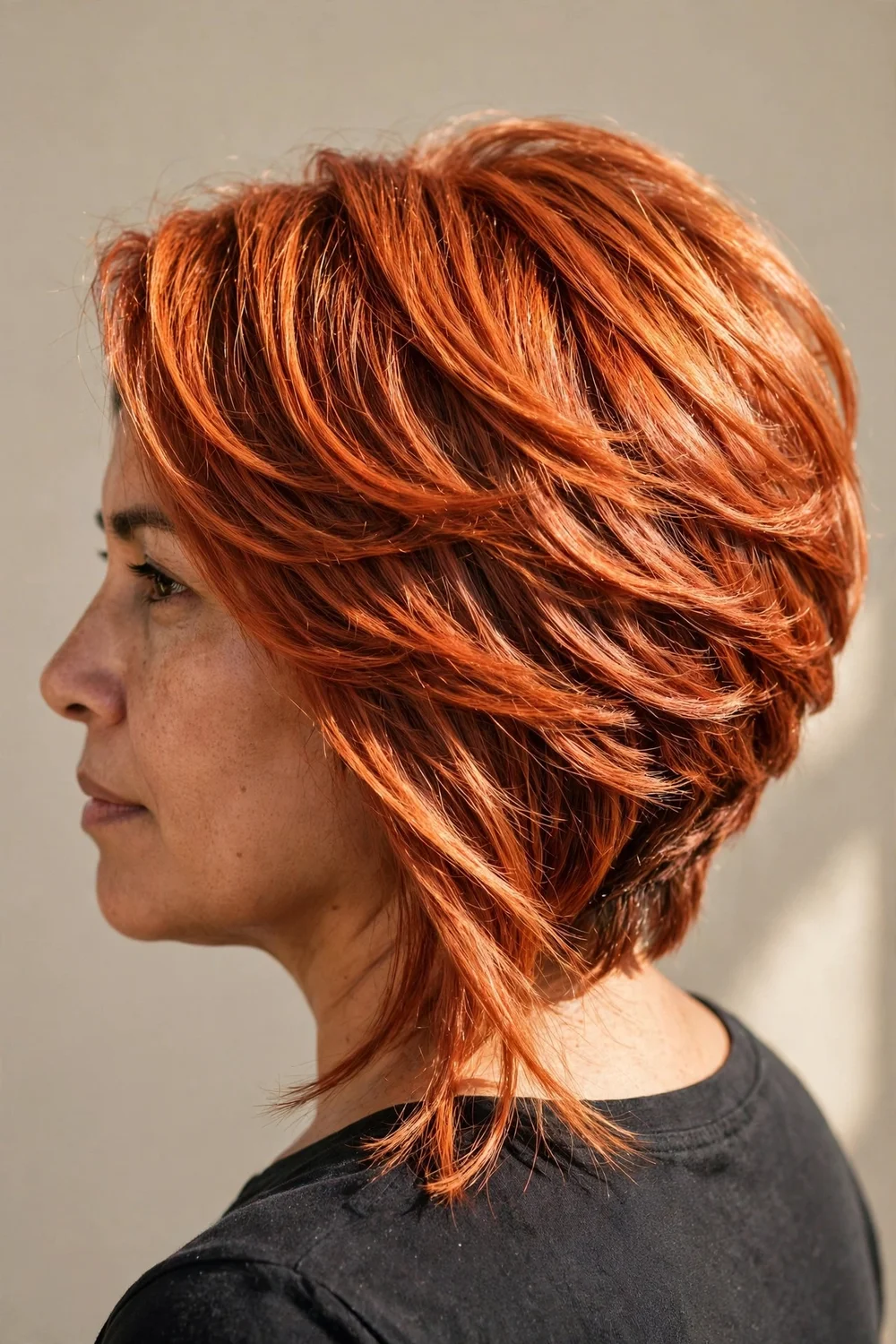
Copper ranges from soft penny to deep auburn, and it makes the inverted angle glow in natural light. The warm tone flatters fair skin with warm undertones especially well. The stacked back catches the copper in layers of depth, while the front pieces show the richness. Copper fades quickly, so color-safe shampoo is a must and a gloss refresh every 5 to 6 weeks keeps it bright. The cut itself needs trims every 7 weeks.
Try this: book a gloss refresh every 5 to 6 weeks.
Difficulty: Medium | Cost: $80-$140
45. Black Inverted Bob
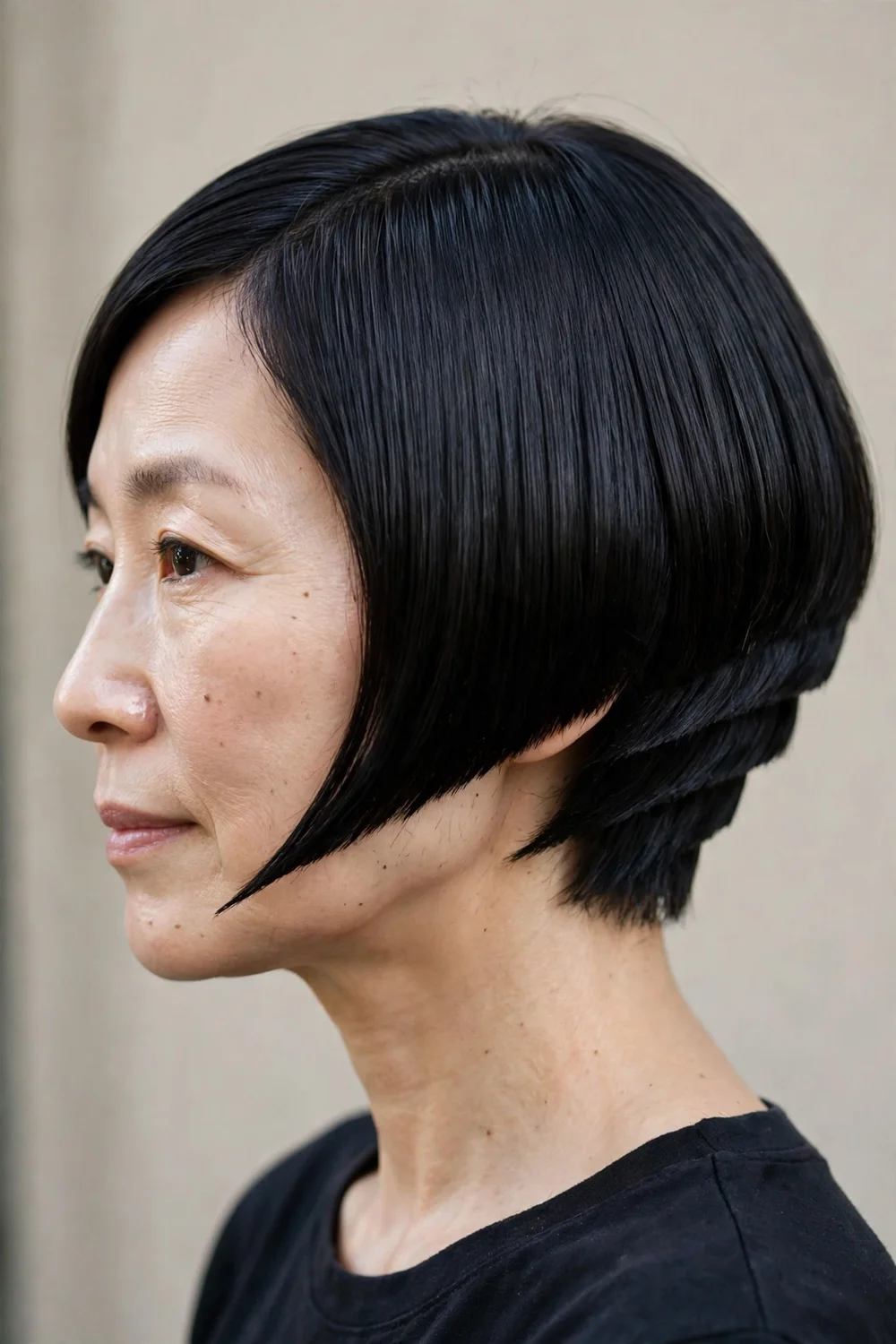
Jet black makes the inverted silhouette look its sharpest, since the dark color outlines every line of the cut. It suits deep skin tones and high-contrast coloring. The stacked back and angled front read almost graphic in black. A shine spray or serum is the key product because black hair shows dullness fast. If your natural color is lighter, root touch-ups come every 4 to 6 weeks. Keep the ends trimmed to avoid the color looking heavy.
Try this: mist shine spray over the finished style.
Difficulty: Easy | Cost: $55-$100
46. Silver Gray Inverted Bob
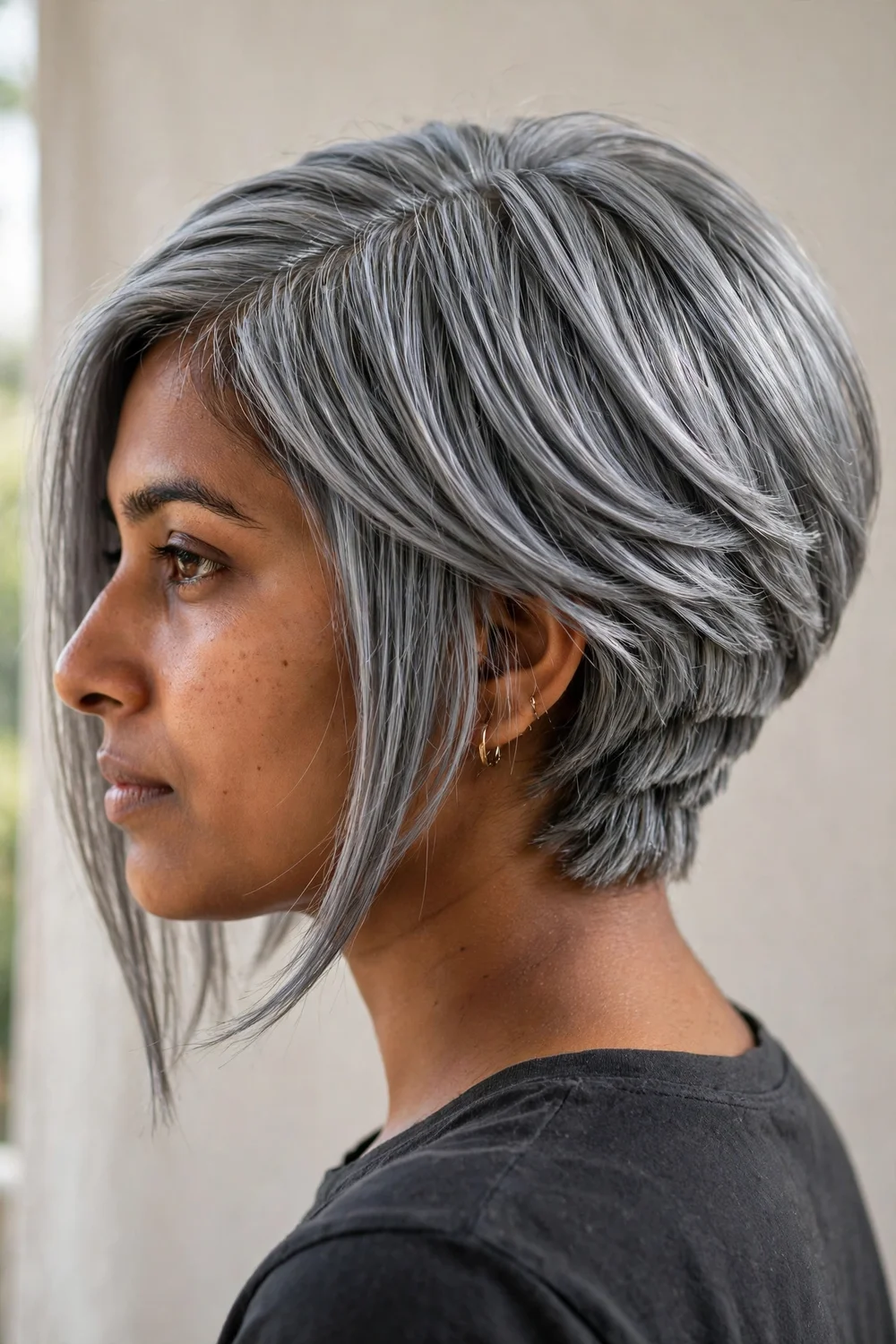
Silver gray turns the inverted bob into a statement, whether the gray is natural or colored. The metallic tone shows off the stacked layers because each tier catches light differently. Natural gray hair often needs the cut’s structure to avoid looking shapeless, and the inverted angle provides it. Purple shampoo keeps the silver from yellowing. If you’re coloring to silver, expect a lightening session first; the upkeep runs higher than single-process color.
Try this: use purple shampoo to keep silver bright.
Difficulty: Medium | Cost: $90-$170
47. Inverted Bob for Round Face
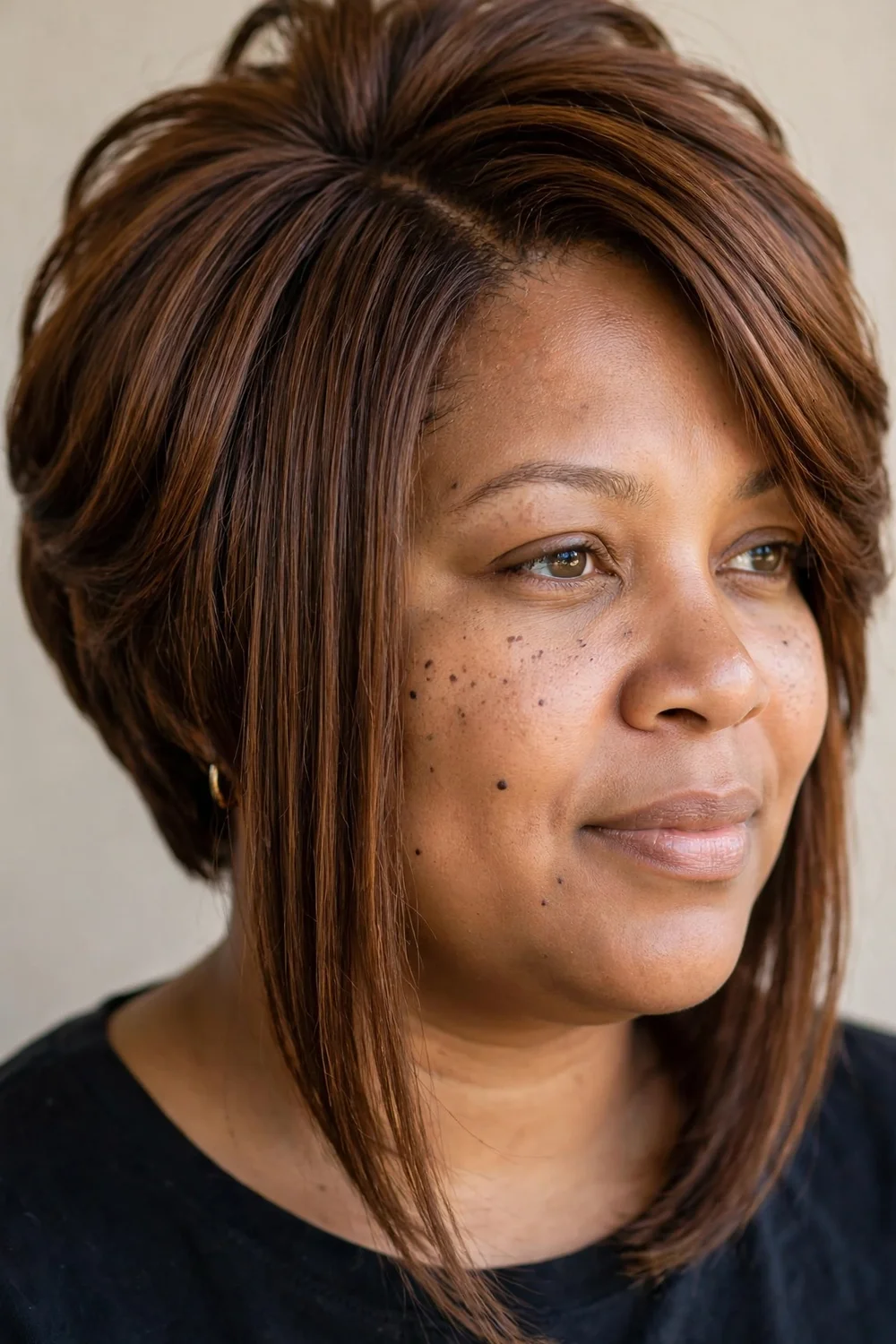
Longer front pieces are the key here: they draw the eye downward and make a round face look longer. Keep the front at least to the chin, and add a side part to break up the symmetry. The stacked back adds height at the crown, which also lengthens the face visually. Avoid chin-length blunt versions that end at the widest part of the cheeks. Ask for the angle to be noticeable rather than subtle.
For 30 angled variations designed specifically for this face shape, browse angled bob haircuts for round faces, from classic graduated cuts to textured and undercut versions.
For more round-face-friendly short cuts, see the short pixie bob haircuts for round faces roundup.
short pixie bob haircuts for round faces
Try this: wear a side part to break up facial symmetry.
Difficulty: Easy | Cost: $45-$85
48. Inverted Bob for Thick Hair
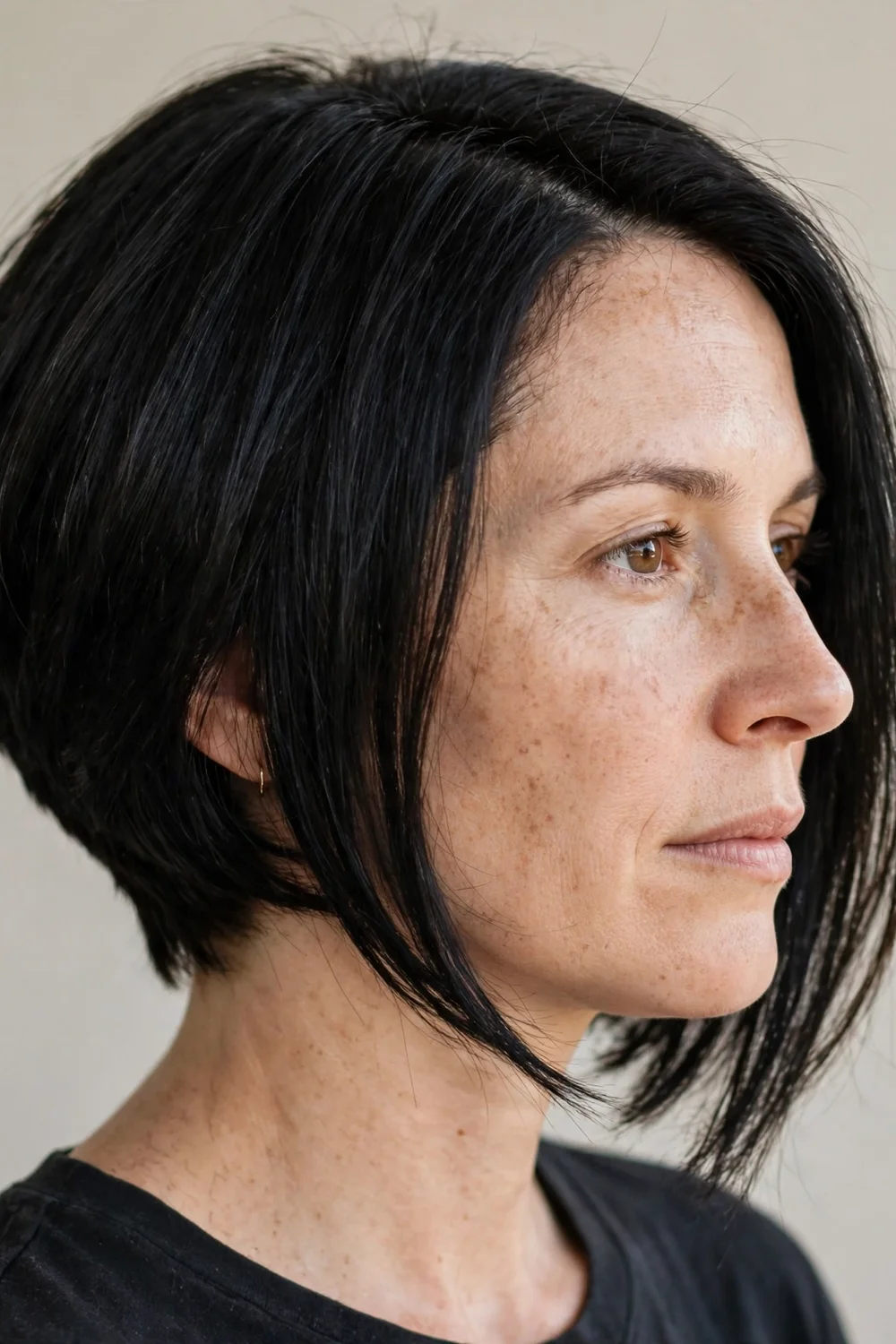
Thick hair needs the weight taken out so the inverted shape doesn’t turn into a triangle. Interior layers and careful texturizing remove bulk while the perimeter stays strong. A nape undercut is worth considering if your hair is very dense. The stacked back should be blended rather than spiky. Ask your stylist to thin with shears, not a razor, if your hair frizzes easily. Drying takes longer, so section the hair and dry the underlayers first.
Try this: dry the underlayers first in sections.
Difficulty: Medium | Cost: $55-$95
49. Inverted Bob for Fine Hair
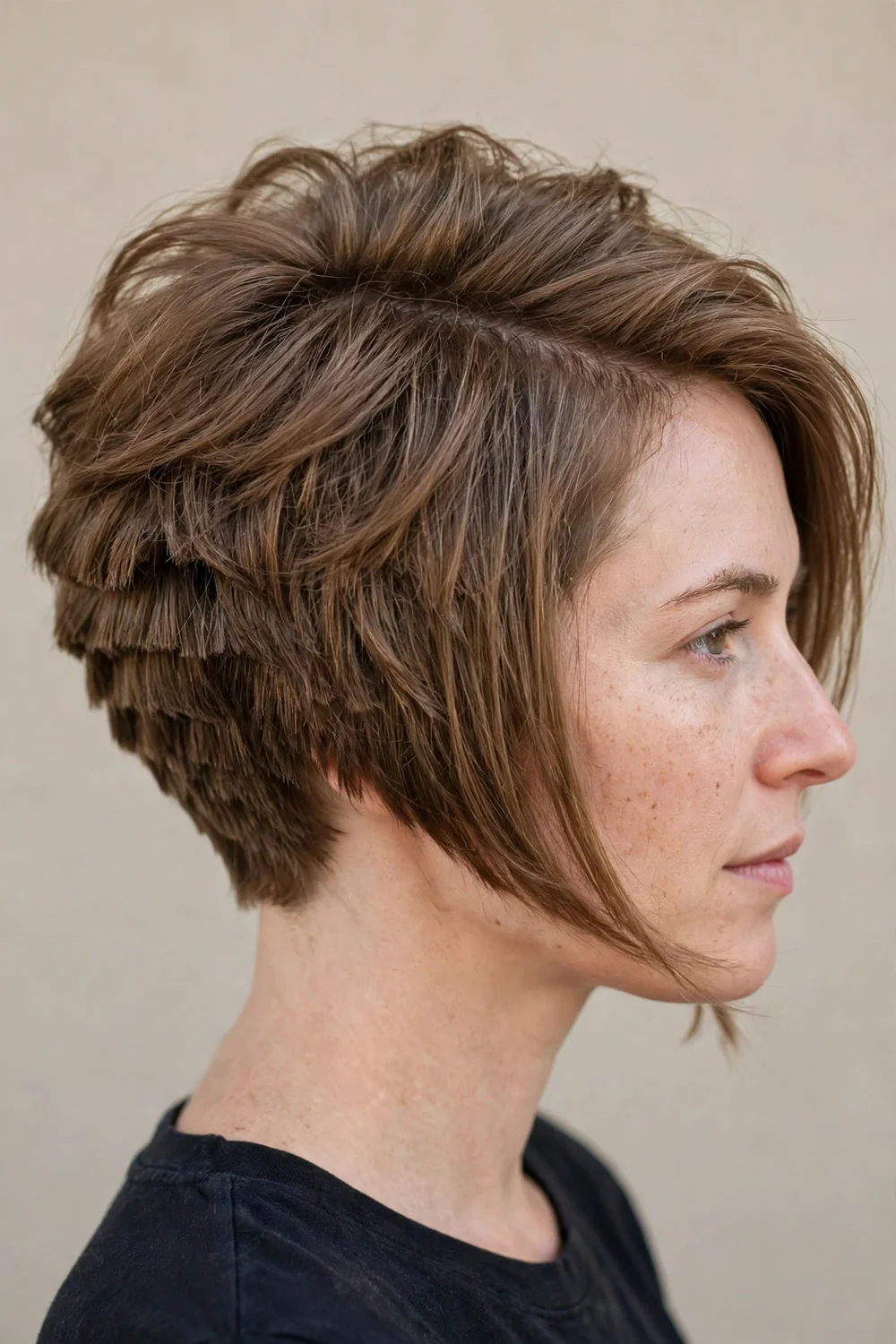
The inverted bob is one of the best cuts for fine hair because the stacking builds volume the hair can’t make on its own. Keep the layers stacked tight at the back and the perimeter blunt so the ends look as thick as possible. Avoid heavy thinning, which removes the little density you have. A volumizing mousse at the roots before blow-drying makes a real difference. Shorter lengths generally look fuller, so don’t be afraid to go chin-length.
Try this: apply volumizing mousse at the roots before drying.
Difficulty: Easy | Cost: $45-$85
50. Inverted Bob for Older Women
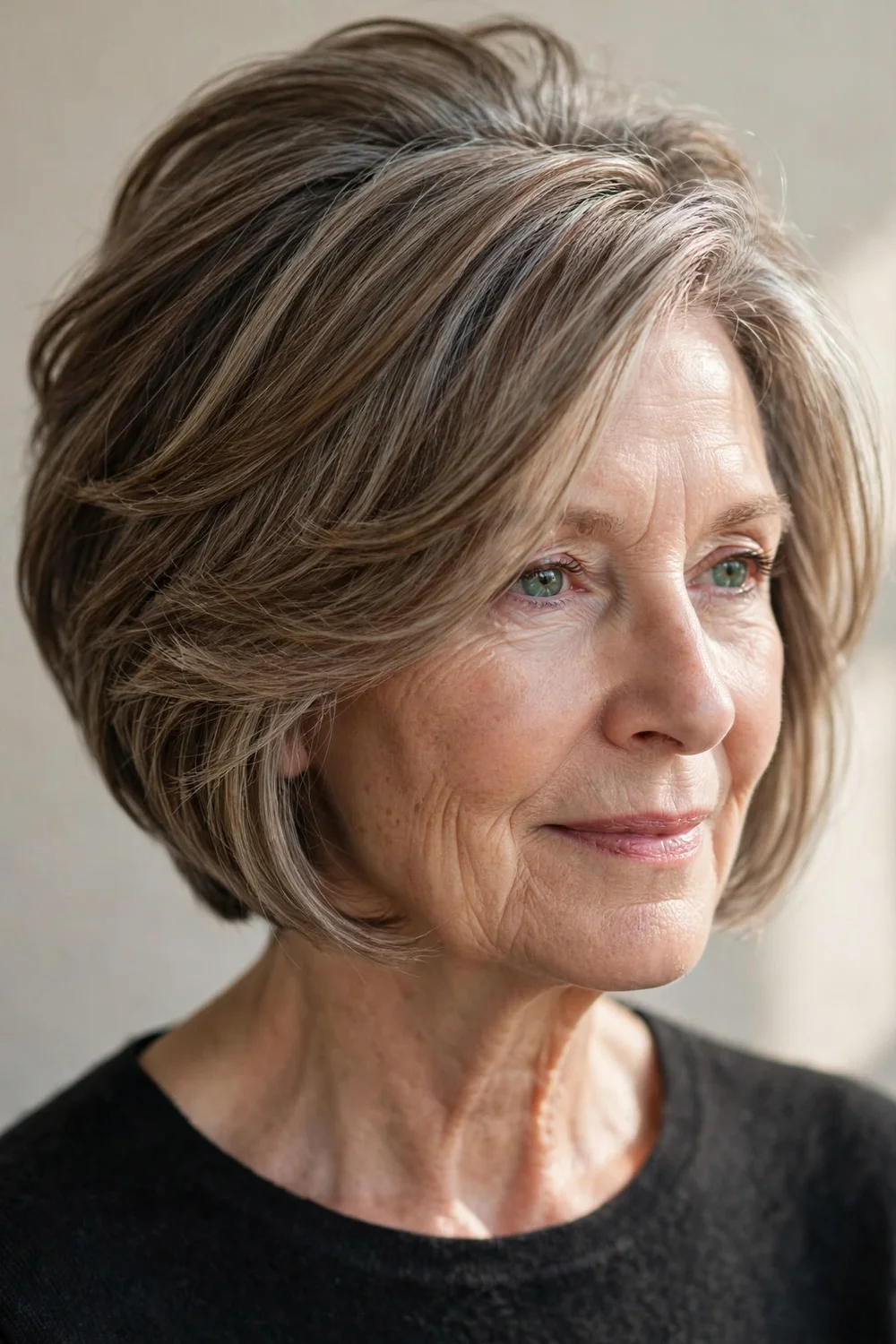
The stacked back lifts thinning crowns, and the longer front softens the jawline, which is why this cut works so well past 60. Keep the angle moderate rather than extreme for a polished look, and ask for soft layers around the face. A side-swept front piece flatters most. Color that blends gray, like babylights or a shadow root, keeps maintenance easy. Trim every 6 to 8 weeks to hold the shape.
For more mature-hair bob ideas, browse layered bob hairstyles for women over 60.
layered bob hairstyles for women over 60
Try this: sweep the front piece to the side for softness.
Difficulty: Easy | Cost: $45-$85
51. Grow-Out Friendly Inverted Bob
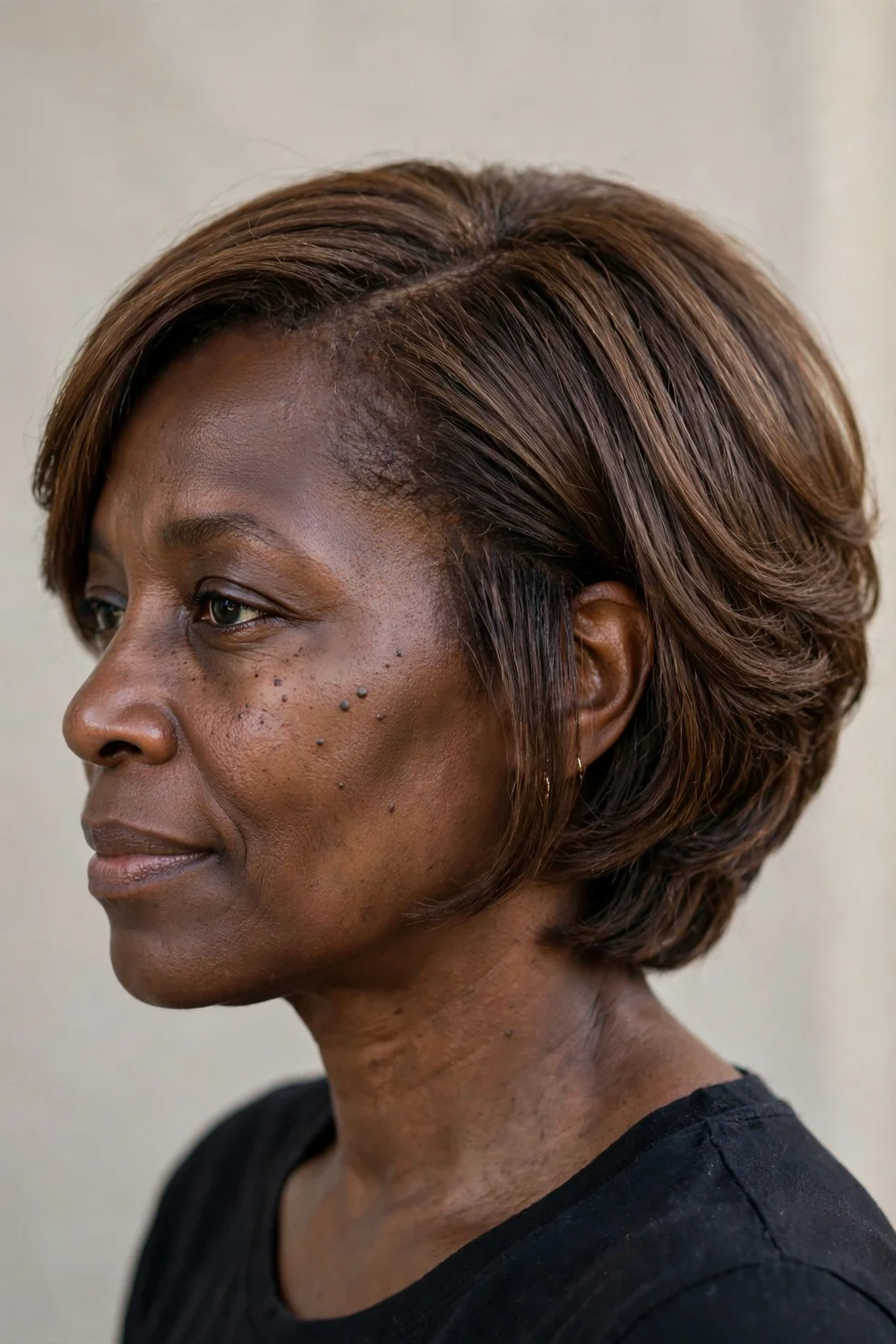
Soft, blended layers and a gentle angle mean this version looks good for months, not weeks. The back is stacked lightly instead of tightly, so it doesn’t collapse as it grows. The front stays long enough to tuck behind the ears at every stage. You can stretch trims to 10 or 12 weeks without the shape falling apart. Ask your stylist to blend the stack into the front with no hard lines. It suits anyone who can’t get to the salon often.
Try this: stretch trims to 10 to 12 weeks; the shape holds.
Difficulty: Easy | Cost: $45-$80
52. Inverted Bob with Money-Piece Highlights
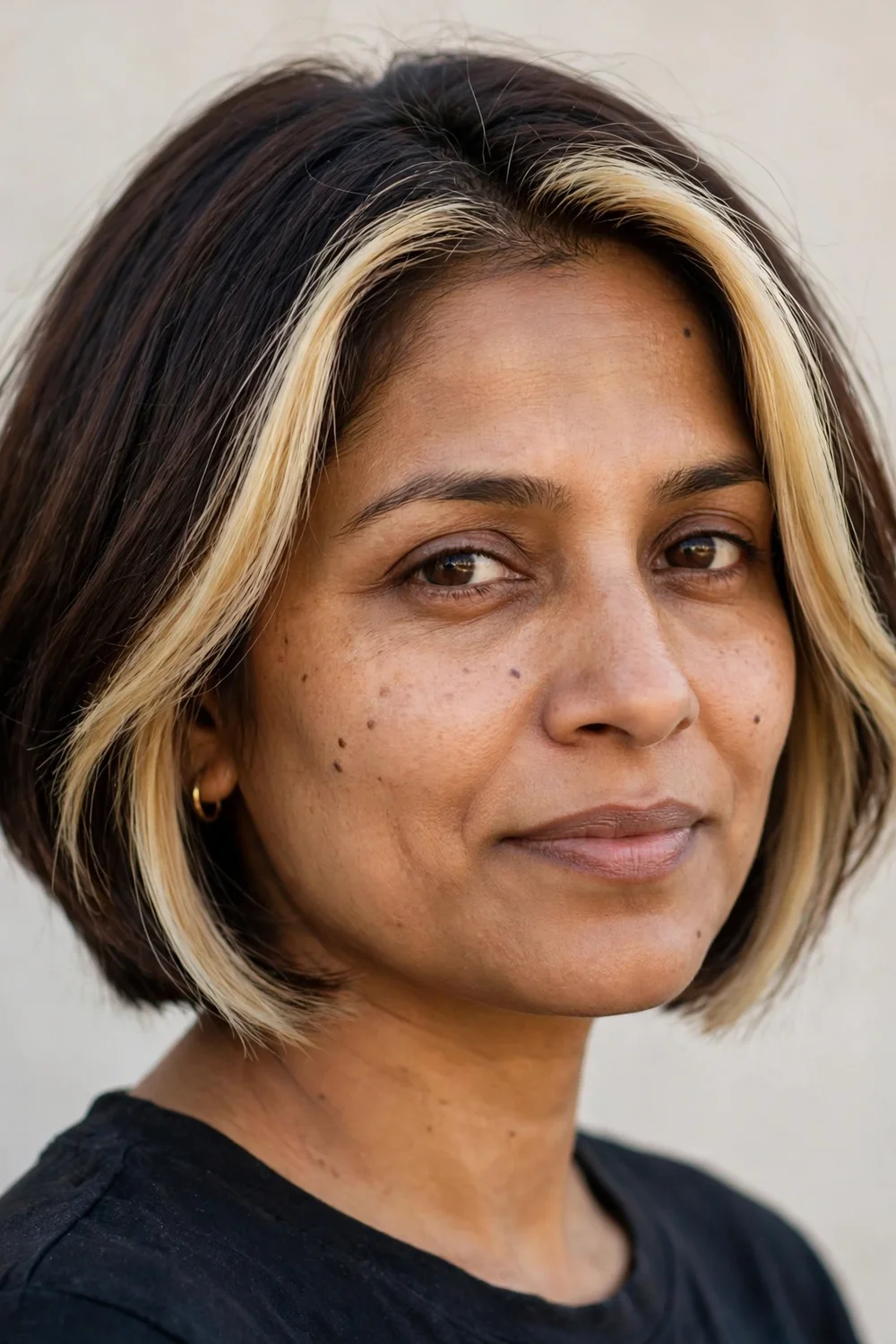
Money-piece highlights place the brightest color right around the face, which draws attention to the long front pieces of the inverted cut. The two front sections are lightened a level or two brighter than the rest. It brightens the complexion without a full head of highlights. The rest of the hair can stay your natural shade, which keeps the appointment shorter and cheaper. Touch up the front pieces every 8 to 10 weeks.
Try this: lighten just the two front sections for maximum effect.
Difficulty: Easy | Cost: $70-$120
53. Low-Maintenance Air-Dry Inverted Bob
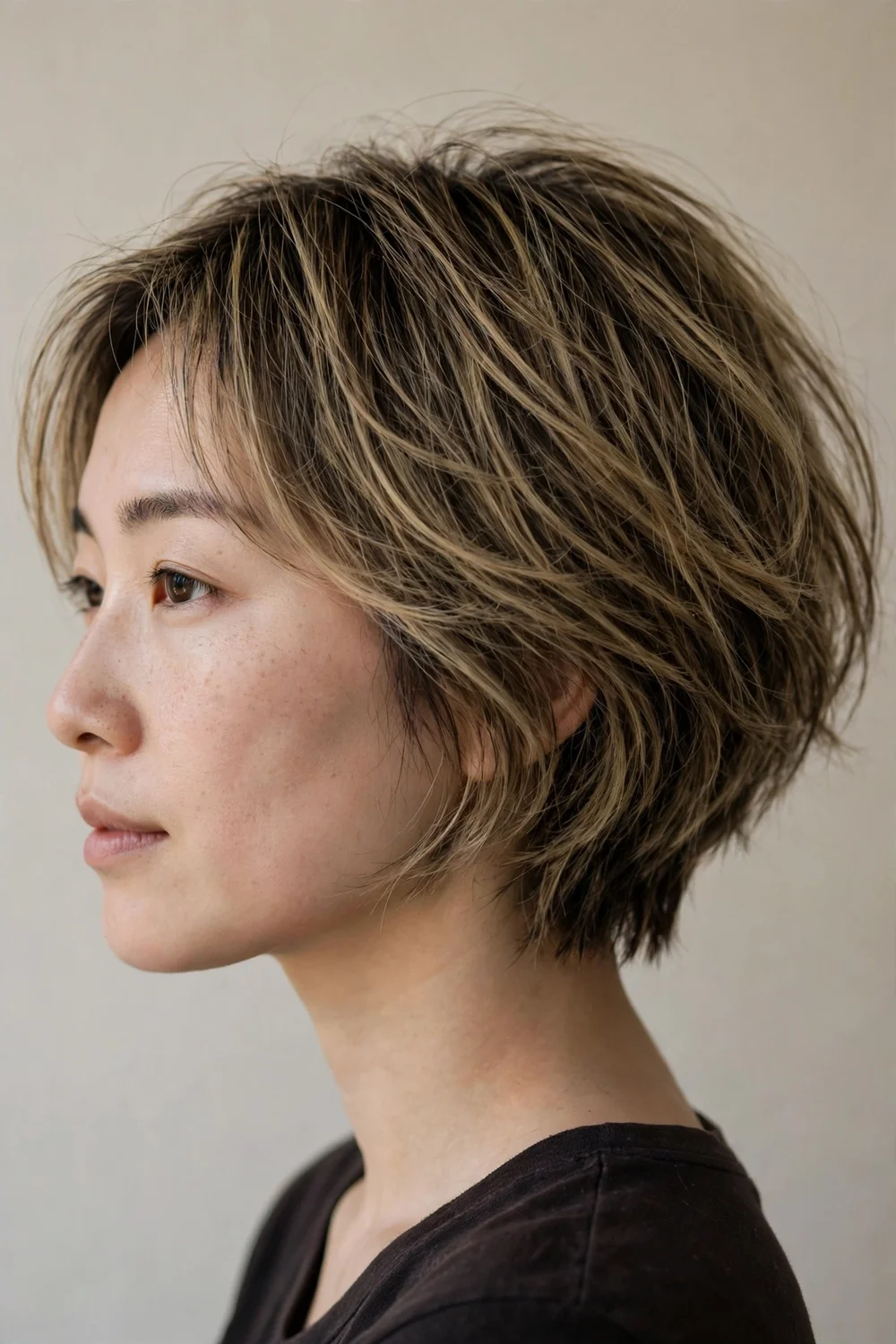
Cut to work with your natural texture, this version needs no hot tools at all. The layers are placed so the hair falls into the inverted shape on its own as it dries. A leave-in product suited to your texture is the whole routine: curl cream for waves, smoothing cream for straight hair. The angle should be moderate, since extreme angles need heat to look sharp. Wash, apply product, and go. Trims every 8 to 10 weeks keep it tidy.
More wash-and-go short styles live in the low-maintenance short haircuts for round faces guide, which works for other face shapes too.
low-maintenance short haircuts for round faces
Try this: apply one leave-in product and let it dry untouched.
Difficulty: Easy | Cost: $40-$75
Inverted Bob Styles Compared
| Cut Family | Back Shape | Front Length | Best Hair Type | Styling Time |
|---|---|---|---|---|
| Classic Stacked | Tight rounded stack | Chin | Fine to medium | 10-15 min |
| Softly Angled | Light graduation | Jaw to chin | All types | 5-10 min |
| Steeply Angled | Short nape, sharp slope | Collarbone | Straight | 15-20 min |
| A-Line (Sleek) | Flat, minimal stack | Chin to shoulder | Straight to wavy | 5-10 min |
| Graduated | Curved layered stack | Jaw | Straight | 10-15 min |
| Inverted Lob | Stacked nape | Shoulder | All types | 10-15 min |
How to Choose Your Inverted Bob
Match the angle to your face shape. Round faces benefit from longer front pieces and a noticeable angle, which draw the eye down. Longer faces do better with bangs or a softer slope that doesn’t add more length.
Match the stacking to your density. Fine hair needs tight stacking at the back for volume. Thick hair needs the weight thinned out or the cut can widen into a triangle.
Be honest about maintenance. Steep angles and blunt lines need trims every 6 weeks. Soft angles, A-line shapes and grow-out friendly versions stretch to 10 weeks.
Pick color for your schedule, not just your taste. Shadow roots and balayage stretch color appointments to 10 or 12 weeks. Single-process dark shades and fashion colors like copper need touch-ups every 5 to 8 weeks.
Bring photos to the salon. “Inverted,” “stacked,” “graduated” and “A-line” mean slightly different things to different stylists. Photos remove the guesswork.
Frequently Asked Questions
What is an inverted bob haircut?
An inverted bob is cut shorter at the nape and angles down to longer pieces in front. The back uses stacked or graduated layers to build volume at the crown, while the front pieces frame the face. It is also called a graduated bob or stacked bob.
What is the difference between an inverted bob, a stacked bob and an A-line bob?
An inverted bob has stacked layers at the back for volume plus a clear angle from back to front. A stacked bob refers mainly to the layered back and may have a milder angle. An A-line bob keeps the back-to-front angle but skips the heavy stacking, so the back lies flatter and sleeker.
Is an inverted bob good for fine hair?
Yes. The stacked back creates volume at the crown that fine hair can’t make on its own. Ask for tight stacking, a blunt perimeter and minimal thinning so the ends look as thick as possible. A volumizing mousse at the roots before blow-drying adds more lift.
How often does an inverted bob need a trim?
Most inverted bobs need a trim every 6 to 8 weeks to keep the angle sharp. Steep angles and blunt lines need the 6-week end of that range. Soft angles, A-line shapes and grow-out friendly versions can stretch to 10 weeks. Undercuts need a cleanup every 3 to 4 weeks.
How do you style an inverted bob at home?
Blow-dry the back with a small round brush, rolling the sections under to show the stack, then smooth the front pieces with a paddle brush or flat iron. Use heat protectant before any hot tool. For a textured finish, rough-dry with fingers and scrunch in a texturizing product instead.
Final Thoughts
The inverted bob earns its staying power because one shape adapts to so many needs: volume for fine hair, weight control for thick hair, softness for mature hair and edge for anyone who wants it. Pick the angle, stacking and finish that fit your texture and your schedule, bring a photo to your stylist, and keep up with trims. The cut does most of the work from there.
Love the angled shape? See more variations in our short layered bob hairstyles collection.
For the angled cut tuned specifically to this age group, browse angled bob hairstyles women over 50 for 30 ideas with styling guidance.
