



The angled bob is one of the smartest cuts a woman over 50 can ask for. Shorter through the back and longer toward the front, it builds lift at the crown while framing the face in a way that reads polished with very little daily effort.
After covering hundreds of haircuts for this site, the angled bob is the style I recommend most often for this age group, because it adapts to fine, thick, straight, wavy, and curly hair alike. Below are 30 angled bob hairstyles for women over 50, each with a concrete styling tip so you can bring a clear picture to your next salon visit.
Quick answer: An angled bob works for women over 50 because the graduated back adds crown volume while longer front pieces slim and frame the face. Choose your length, texture, and fringe based on hair type and how much styling time you want to spend. Trims every 6 to 8 weeks keep the angle sharp.
Quick Takeaways
- An angled bob is shorter at the nape and longer toward the chin, which lifts the crown and defines the jawline.
- Stacked and graduated versions add the most volume for fine or thinning hair.
- Chin-length and lob lengths suit different face shapes; ask your stylist which angle flatters yours.
- Gray and salt-and-pepper color pair naturally with the cut’s clean lines.
- Most versions style in under 15 minutes with a round brush, a flat iron, or air-drying.
Why Angled Bobs Work So Well After 50
Hair often changes after 50. It can turn finer, lose density at the crown, or grow in gray with a coarser texture. The angled bob addresses all three at once. The short graduated back creates fullness where thinning shows first, while the longer front draws the eye down and gives the face a defined frame.
The cut also grows out gracefully. Because the shape is built into the structure, not the styling, it still looks intentional on day three. A quick root refresh with dry shampoo and a pass of the flat iron is usually enough.
Before your appointment, decide on three things: how short you will go in the back, whether you want bangs, and how much daily styling you will actually do. Bring photos of the exact versions you like. A stylist can adjust the angle and layering, but only if they see what caught your eye.
For the blonde side of this cut, blonde bob hairstyles for women over 50 covers 30 shades and shapes chosen for mature hair.
1. Classic Sleek Angled Bob
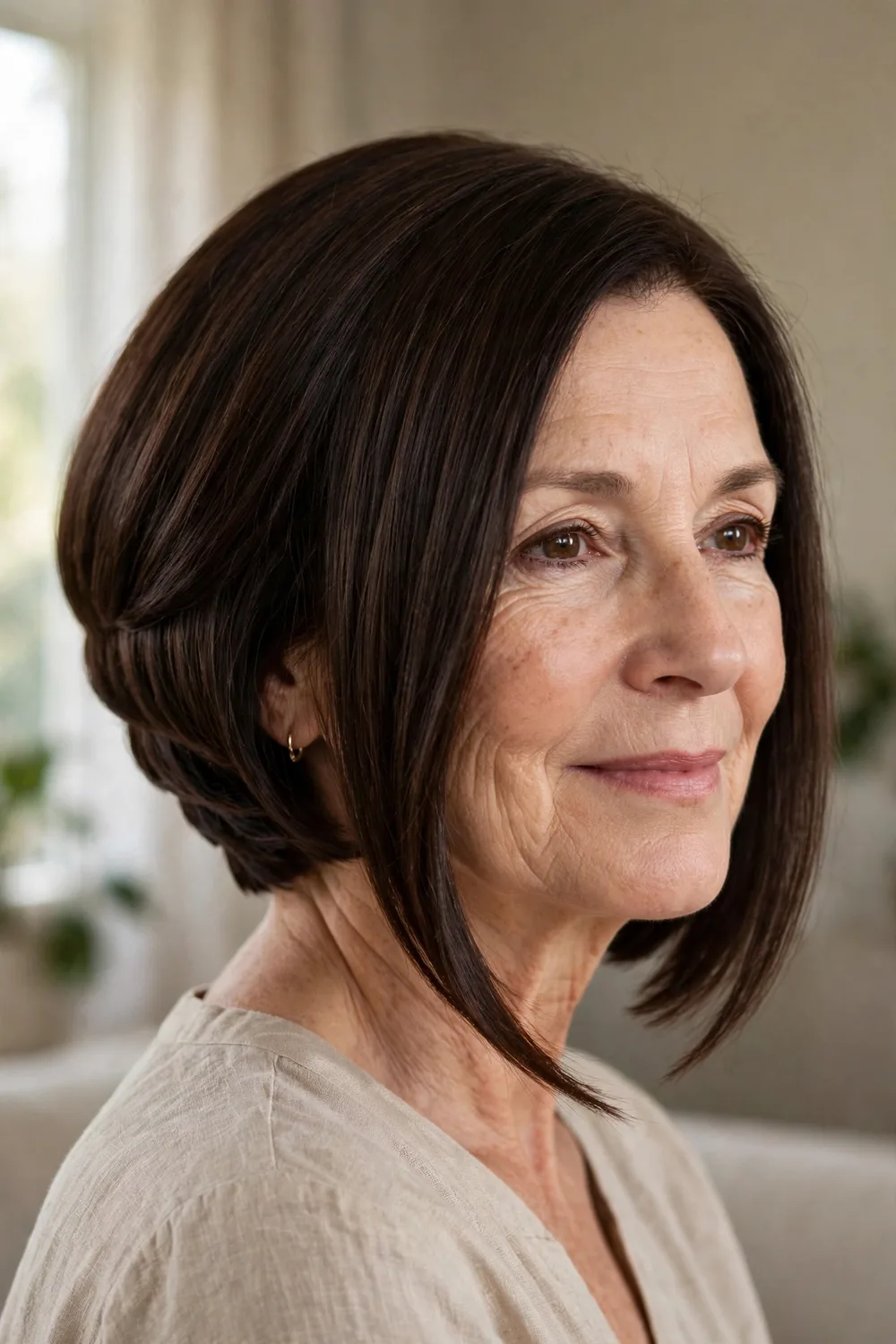
Smooth, glossy, and precise, the classic sleek angled bob lets the cut do all the talking. The back sits close to the nape with clean graduation, and the front pieces drop a touch longer than the chin for a sharp, defined line. Dark chocolate brown or near-black shades show off the angle best because the solid color keeps the silhouette crisp. This version suits straight or straightened hair and oval or heart-shaped faces. It reads polished at the office and neat on weekends without any texture work.
Try this: Blow-dry with a paddle brush, then run a flat iron over the front pieces only. Finish with a pea-sized drop of smoothing serum on the ends to keep flyaways flat for the day.
2. Layered Angled Bob for Fine Hair
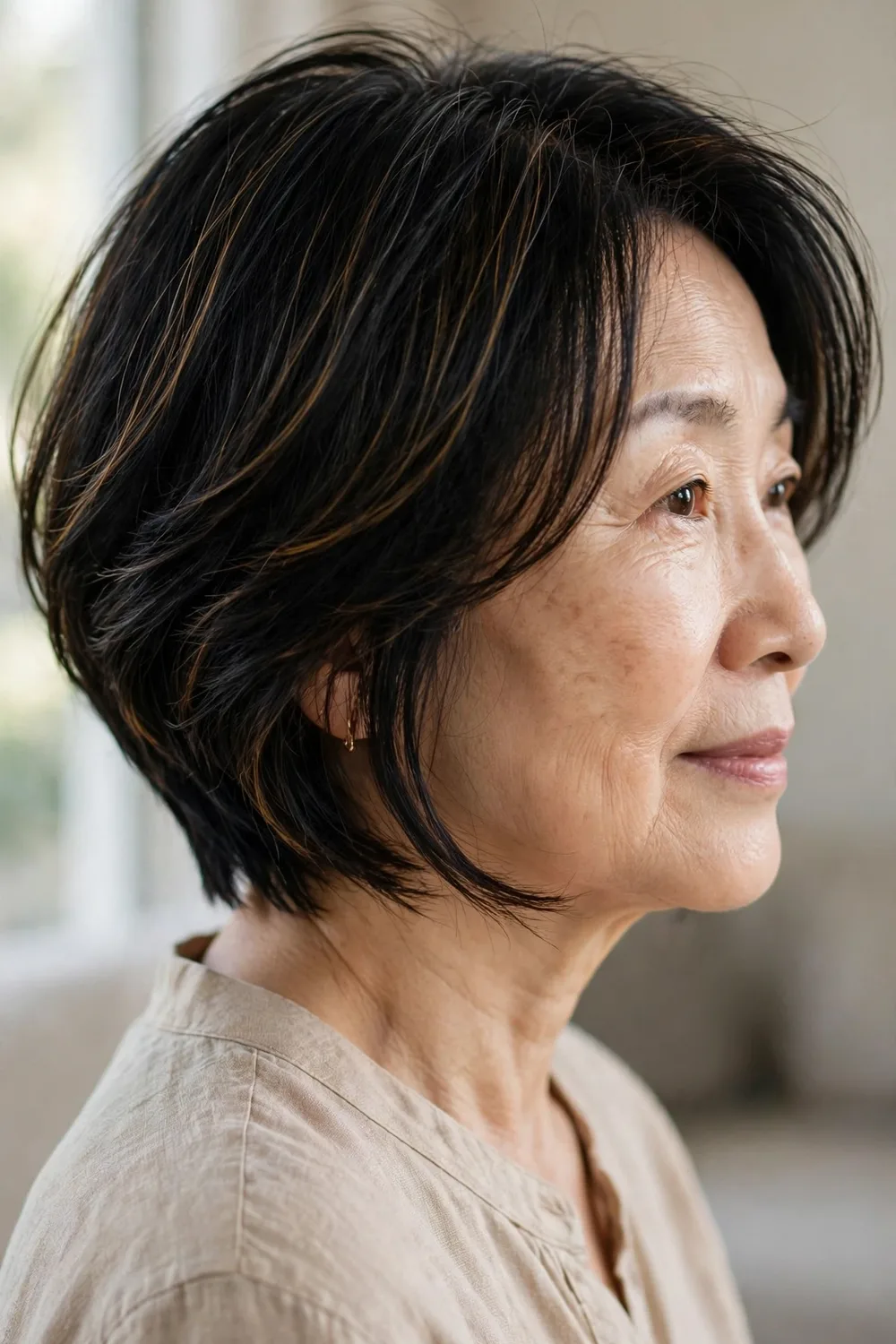
Fine hair can fall flat by midday, and this is the angled bob built to fix that. Light interior layers remove just enough weight to let the crown lift, while the angled front keeps the shape from looking thin. Ask for point-cut ends rather than a blunt edge so the perimeter stays soft. This version works on straight to slightly wavy hair and needs only a little root lift to hold its shape. It is one of the lowest-effort ways to make fine hair look like it has twice the density.
Try this: Spritz a volumizing spray at the roots while damp, then blow-dry the crown upward with a small round brush. Flip your part to the opposite side on day two for instant lift.
3. Short Stacked Angled Bob
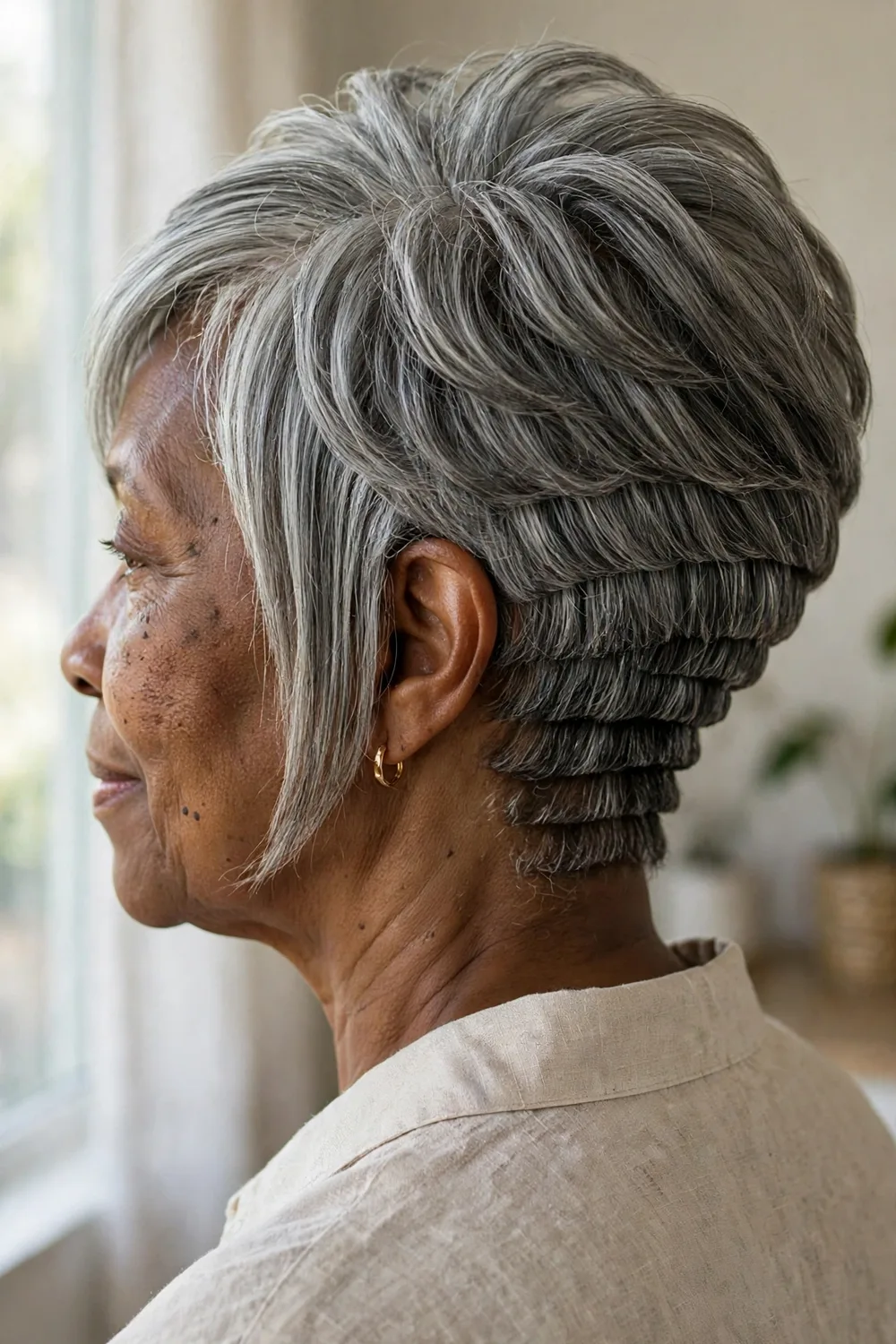
When the back is the problem area, stacking is the answer. Closely graduated layers at the nape pile volume exactly where thinning hair needs it, and the longer front keeps the look current rather than dated. The short back also shows off the neck, which many women prefer. This cut suits fine to medium hair and holds its shape well between appointments. Salt-and-pepper or silver color makes the stacked layers even more visible, since the light catches each layer differently.
Try this: Use a small round brush at the crown during blow-drying and direct the back sections upward. A light mist of flexible-hold hairspray locks the lift without stiffness.
4. Wavy Angled Bob
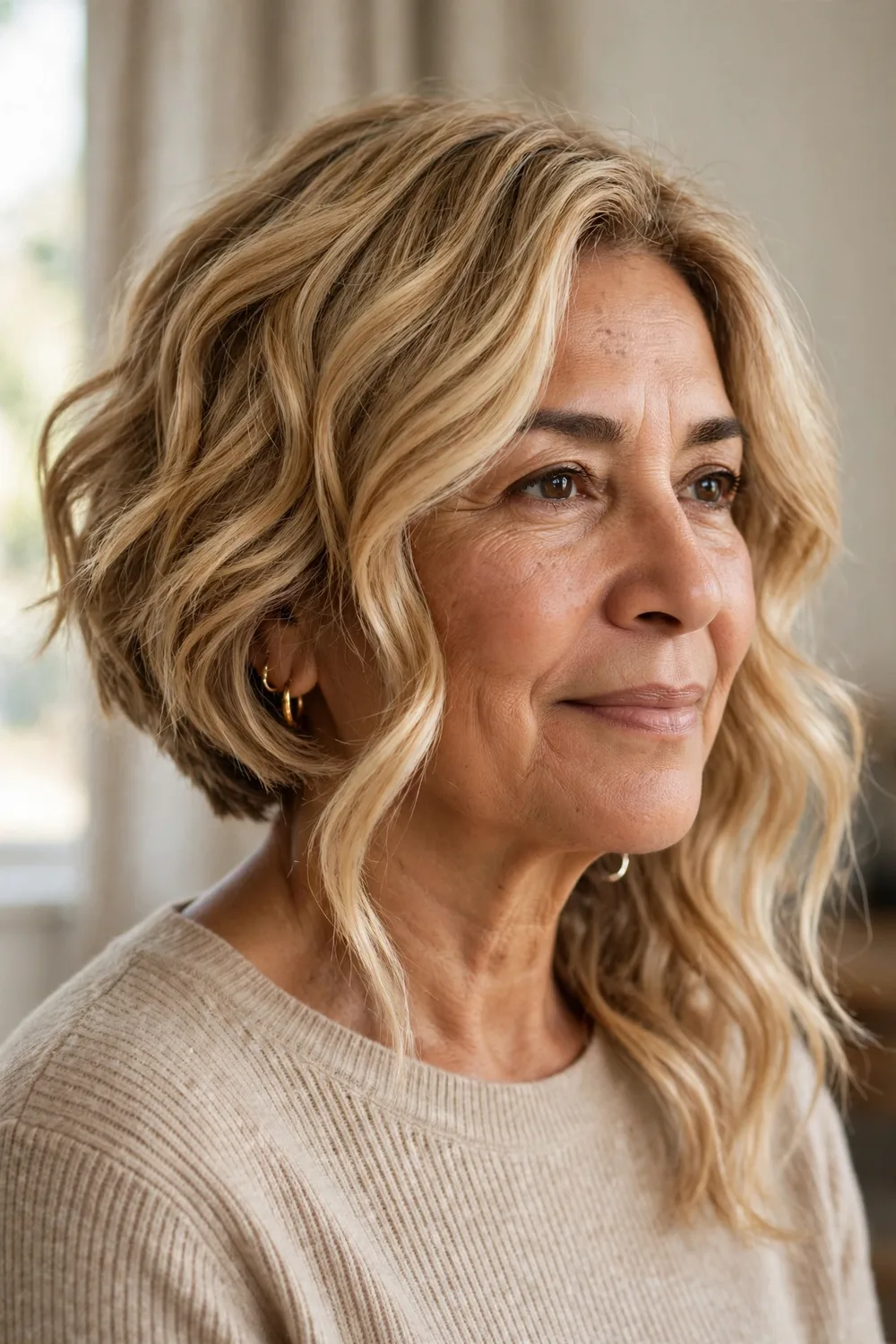
Natural wave and an angled bob are a strong match. The waves add width through the mid-lengths, which balances the shorter back and keeps the silhouette from looking severe. Ask your stylist to cut the angle slightly softer than the sleek version so the waves sit evenly. This style suits naturally wavy or permed hair and most face shapes. It air-dries better than almost any other version here, which makes it a solid pick if you dislike heat styling.
Try this: Scrunch a lightweight mousse into damp hair and let it air-dry, or diffuse on low heat. Alternate the direction of a few waves with a curling wand for a more finished look.
5. Feathered Angled Bob
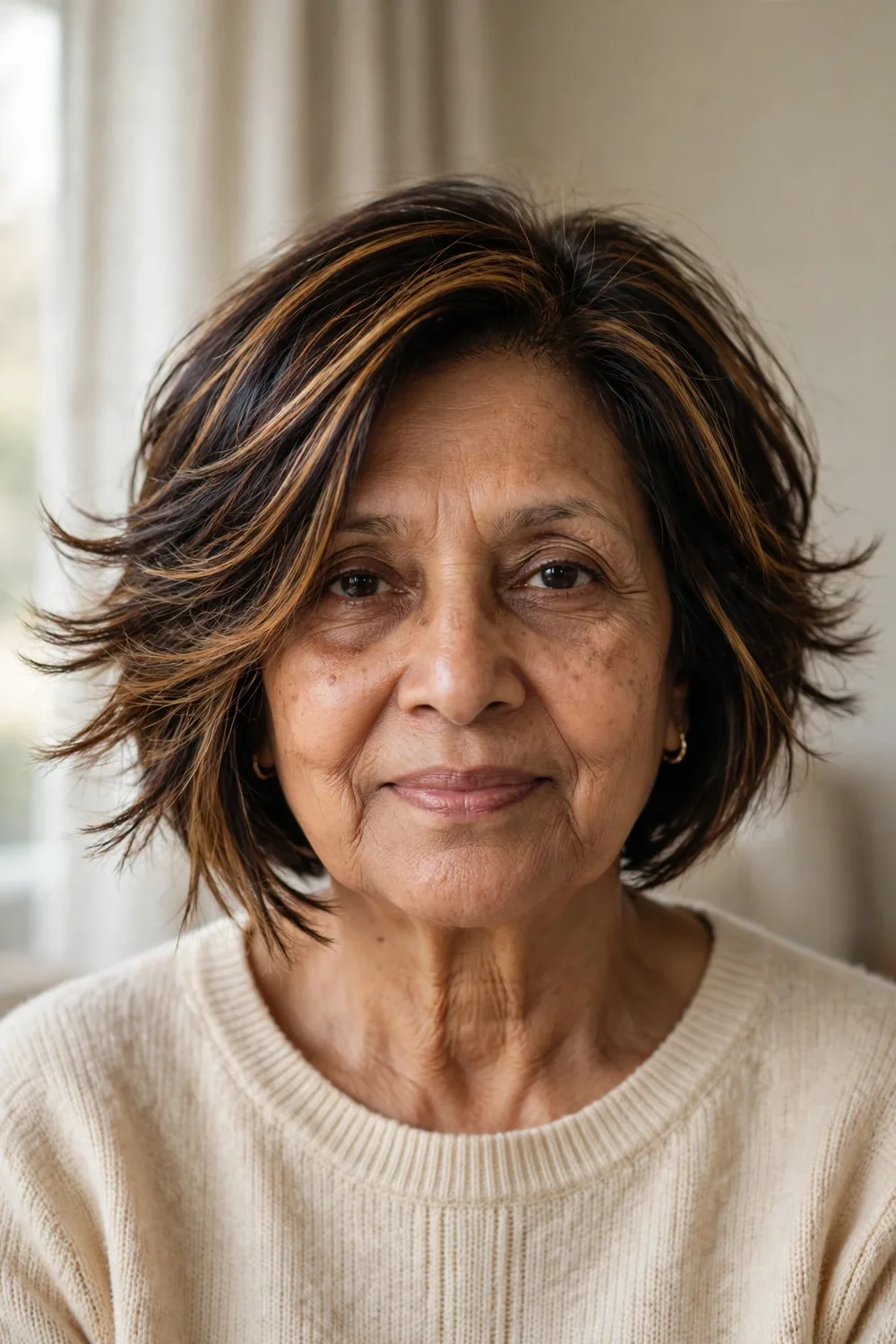
Feathering takes the hard edge off the angled bob. The ends are thinned and flicked so the perimeter feels airy instead of heavy, which flatters mature skin and softer jawlines. This version works well on medium to thick hair that would otherwise look bulky in a blunt cut. The feathered layers also blend grow-out gracefully, so the shape holds between trims. It pairs nicely with warm highlights that catch the movement of the layers.
Try this: Blow-dry with a round brush, rolling sections away from the face. Work a tiny amount of styling cream through the ends to separate the feathered pieces.
6. Chin-Length Angled Bob
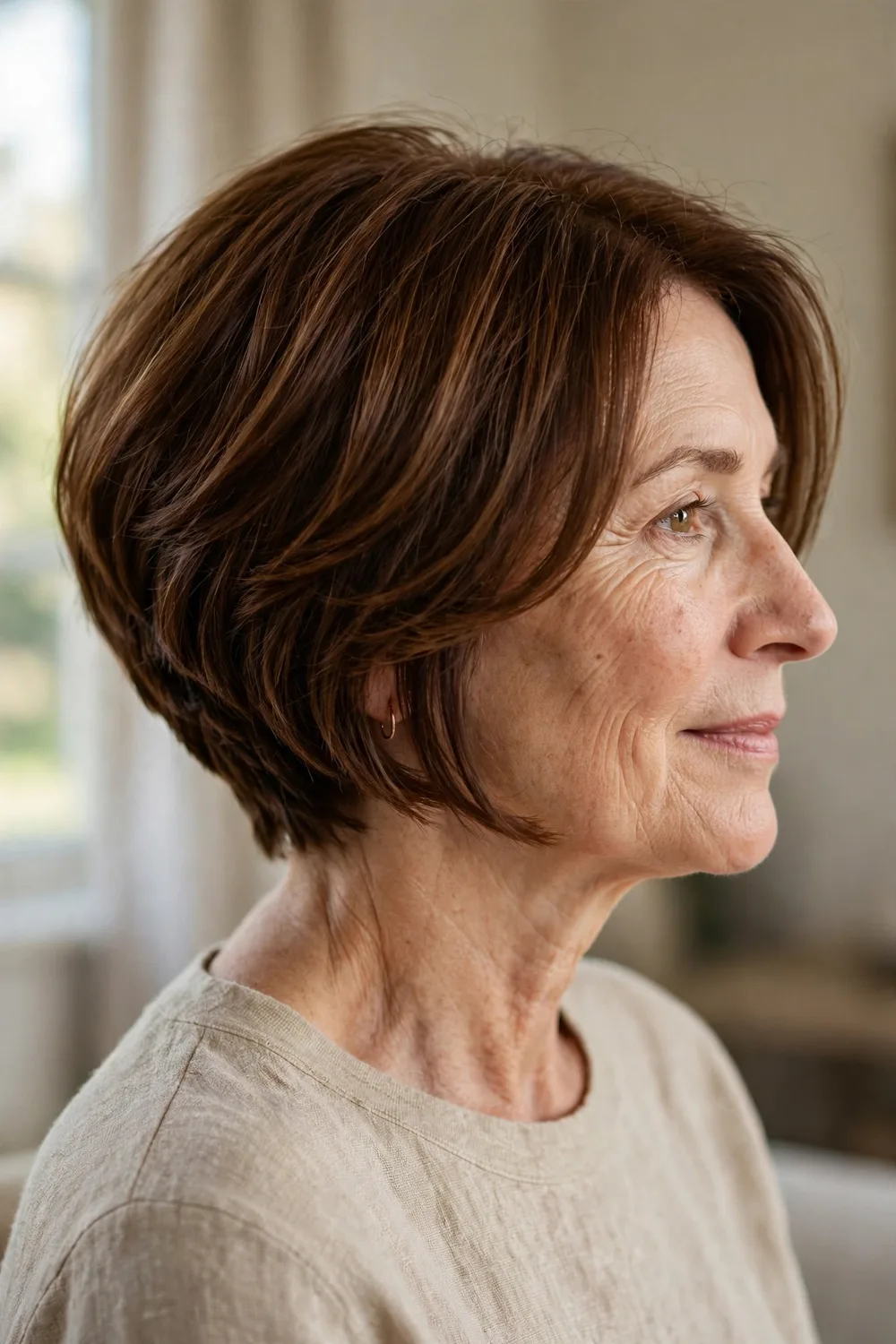
Ending right at the chin, this is the most face-framing length in the angled bob family. The shorter back lifts the profile while the front pieces skim the jawline and highlight the cheekbones. It suits oval, heart, and long face shapes especially well. Because the length is compact, styling takes minutes: the hair practically falls into place. Women who wear glasses often like this length because the front pieces sit neatly alongside frames instead of competing with them.
Try this: Add a slight inward bend at the ends with a round brush or flat iron. This small curve keeps the chin-length shape smooth and prevents the ends from flipping outward during the day.
7. Textured Choppy Angled Bob
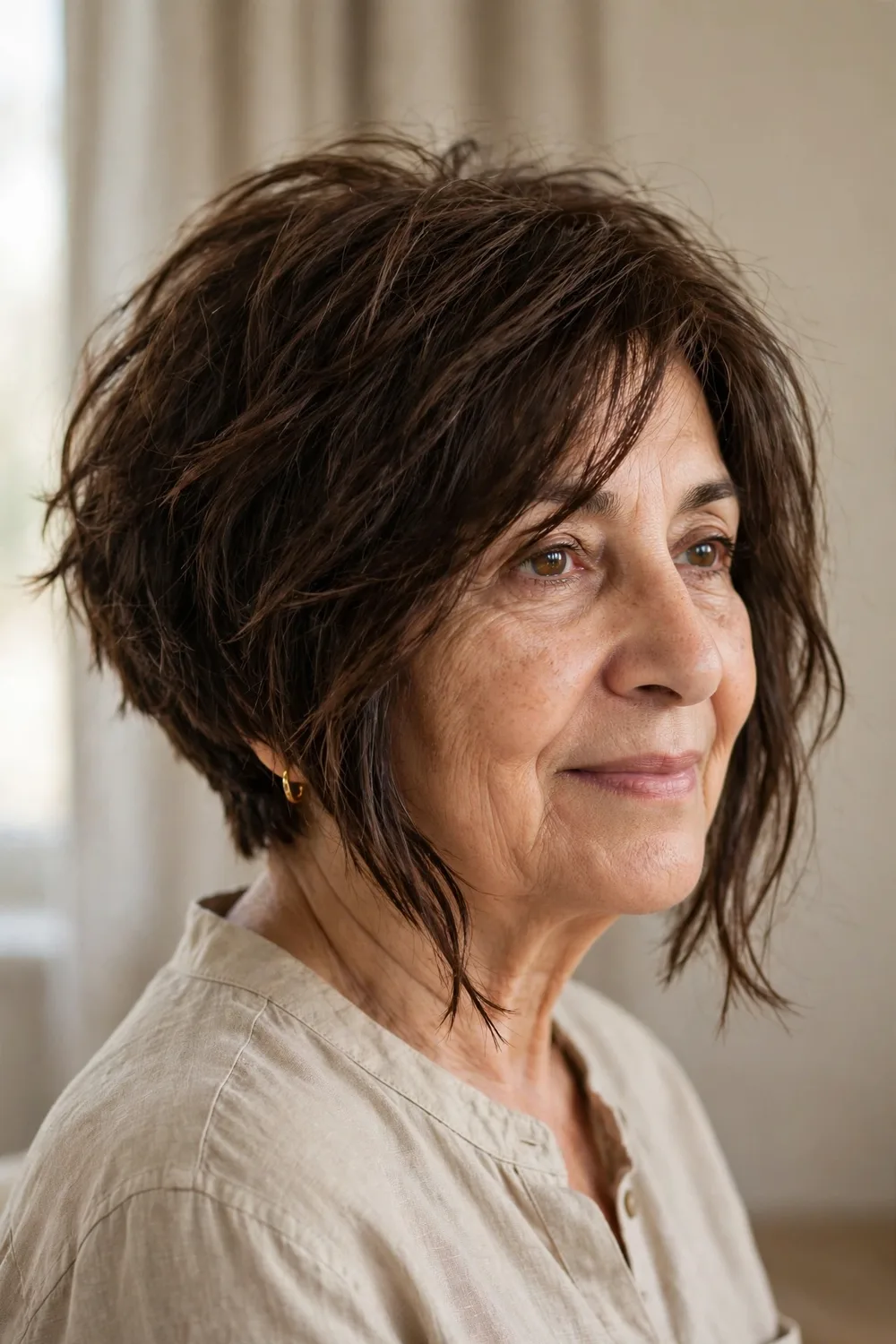
Choppy texture gives the angled bob a modern, relaxed edge. Uneven, piecey ends break up the solid shape so it looks current rather than corporate. This version suits medium to thick hair with some natural wave, and it hides cowlicks better than sleek styles do. The texture also means the cut is forgiving: slight grow-out just looks like more texture. Keep the pieces around the face a touch longer to preserve the flattering angle.
Try this: Work a dab of texturizing paste or spray through dry ends and twist a few pieces with your fingers. Skip the brush on day two and finger-style instead.
8. Voluminous Angled Bob Blowout
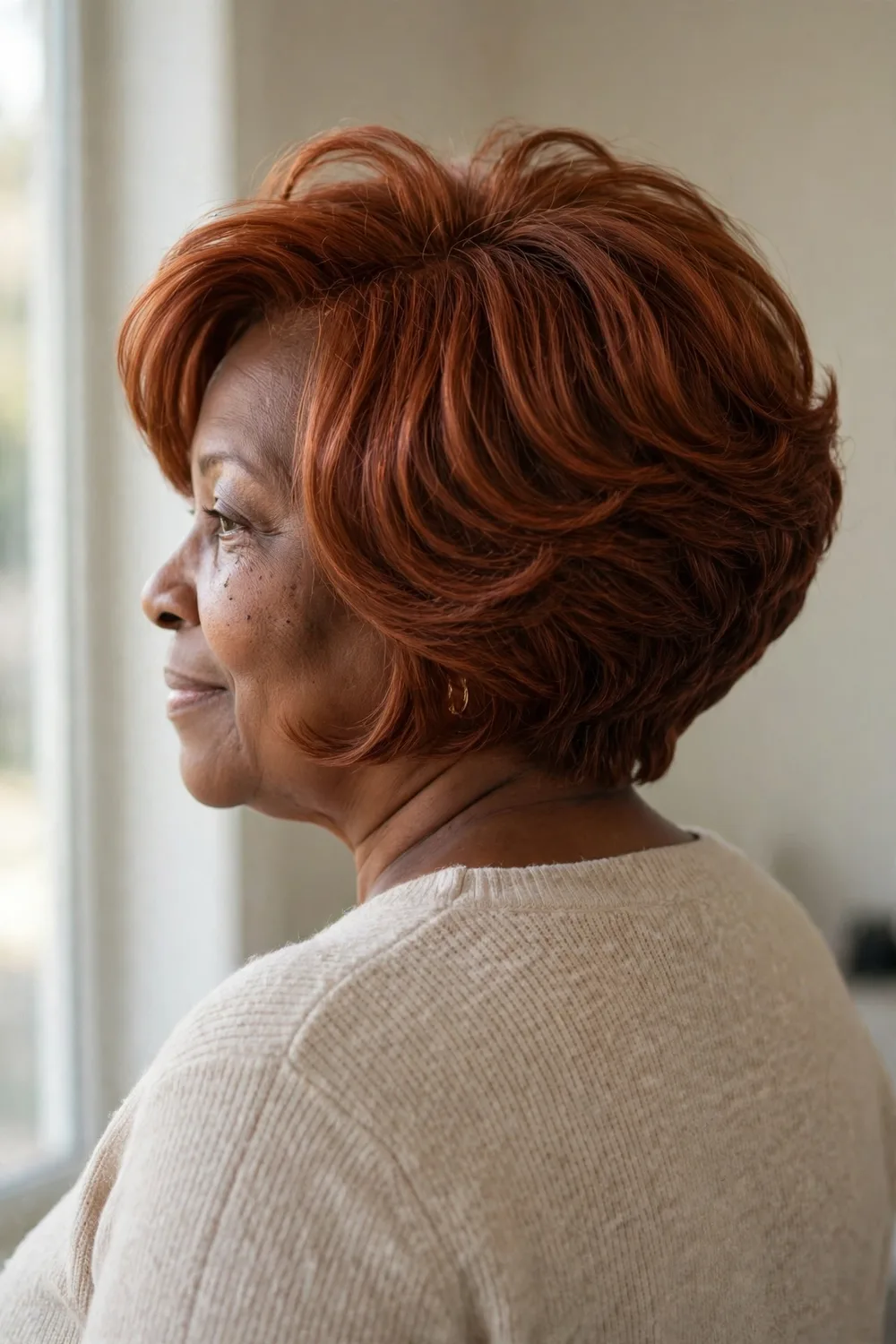
Some occasions call for full glamour, and the voluminous blowout delivers it within the angled shape. The roots are lifted high, the mid-lengths curve with body, and the front pieces stay long enough to frame the face. This is a styling choice as much as a cut, so any angled bob can become this version with the right blow-dry. It suits medium to thick hair best, since fine hair may drop the volume by evening. Reserve it for events, photos, or days when you want the extra polish.
Try this: Apply volumizing mousse to damp roots and blow-dry in sections with a large round brush, over-directing each section upward. Set the shape with a cool shot from the dryer and a light hairspray mist.
9. Deep Side-Parted Angled Bob
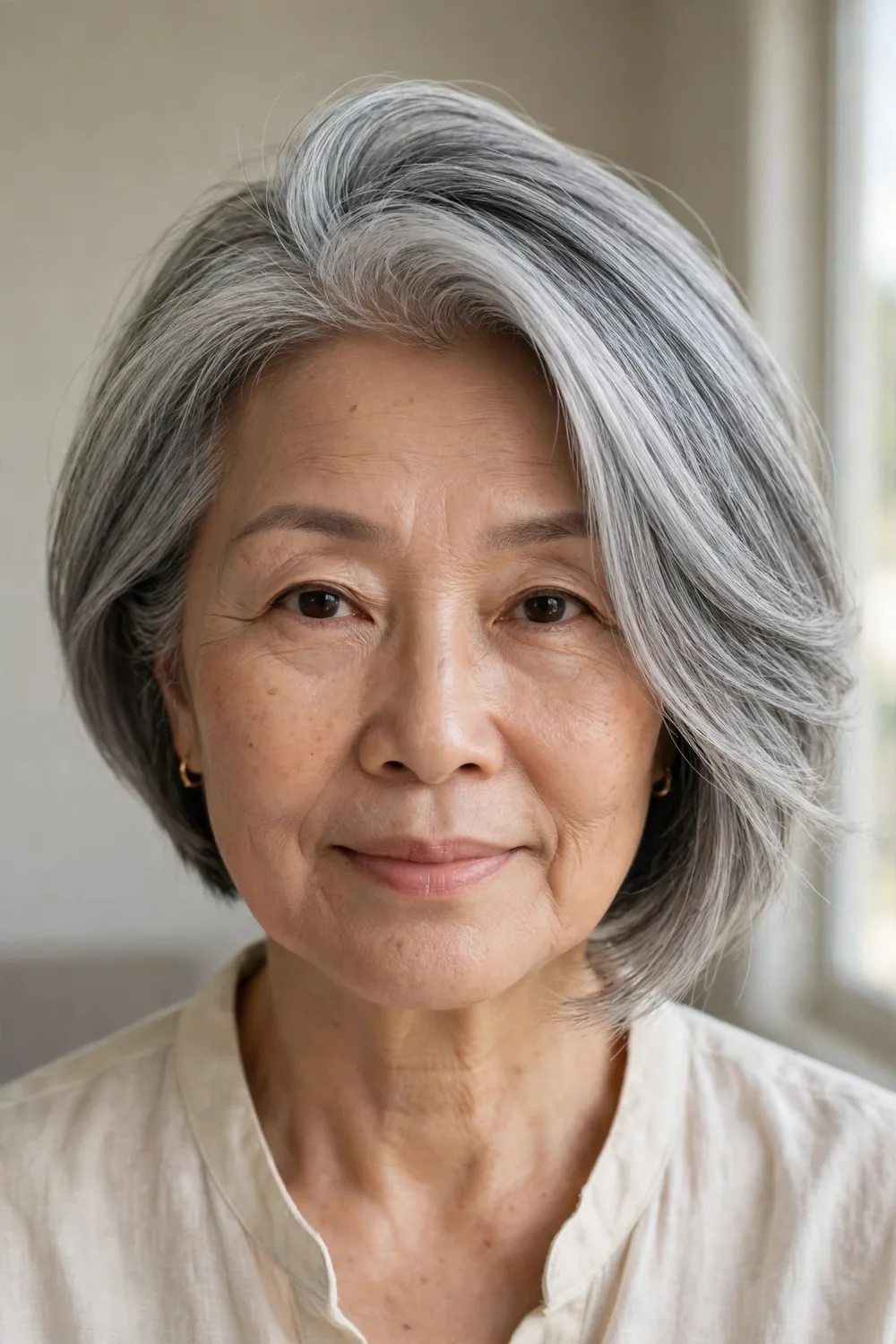
Changing the part is the fastest way to change an angled bob. A deep side part sweeps the crown hair across the head, creating instant volume on top and an elegant diagonal line across the forehead. It suits nearly every face shape and works on straight, wavy, or relaxed hair. Women with thinning at the part line often find a deep side part covers sparse areas better than a center part. The asymmetry also draws attention to the eyes and cheekbones.
Try this: While hair is damp, create the deep part and blow-dry the heavier side across the forehead for lift. Tuck the shorter side behind one ear to show off earrings.
10. Angled Bob with Curtain Bangs
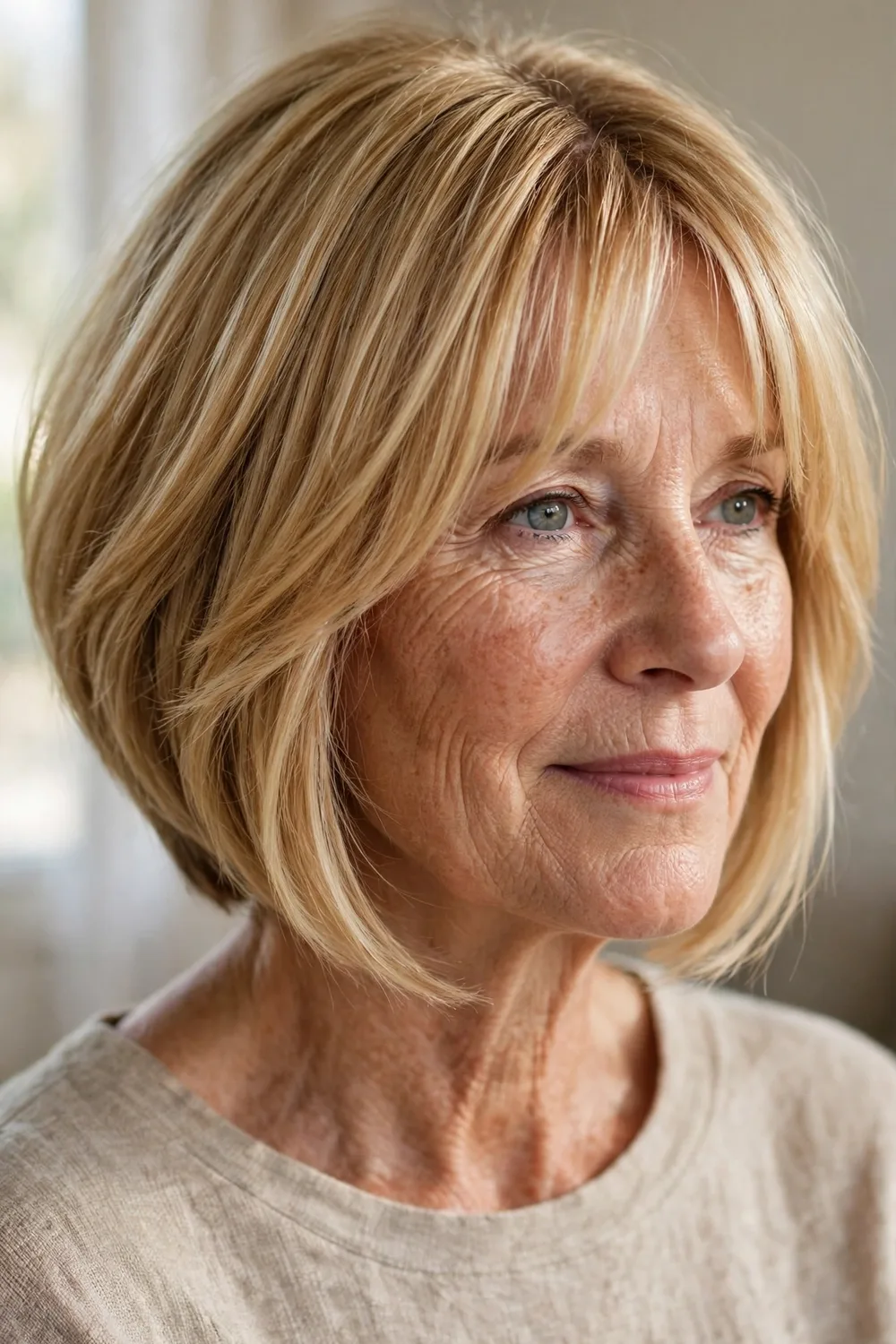
Curtain bangs and the angled bob share the same job: framing the face. The bangs part in the middle and sweep to each side, softening the forehead and blending into the longer front pieces. This version suits women who want bangs without committing to a full fringe. It works on most hair types, though very curly hair needs the bangs cut longer so they do not spring up. Curtain bangs also grow out more gracefully than blunt bangs.
Try this: Blow-dry the bangs forward with a round brush, then split them in the middle while still warm. A spritz of dry shampoo at the roots keeps them from separating into limp strands.
11. Angled Bob with Side-Swept Bangs
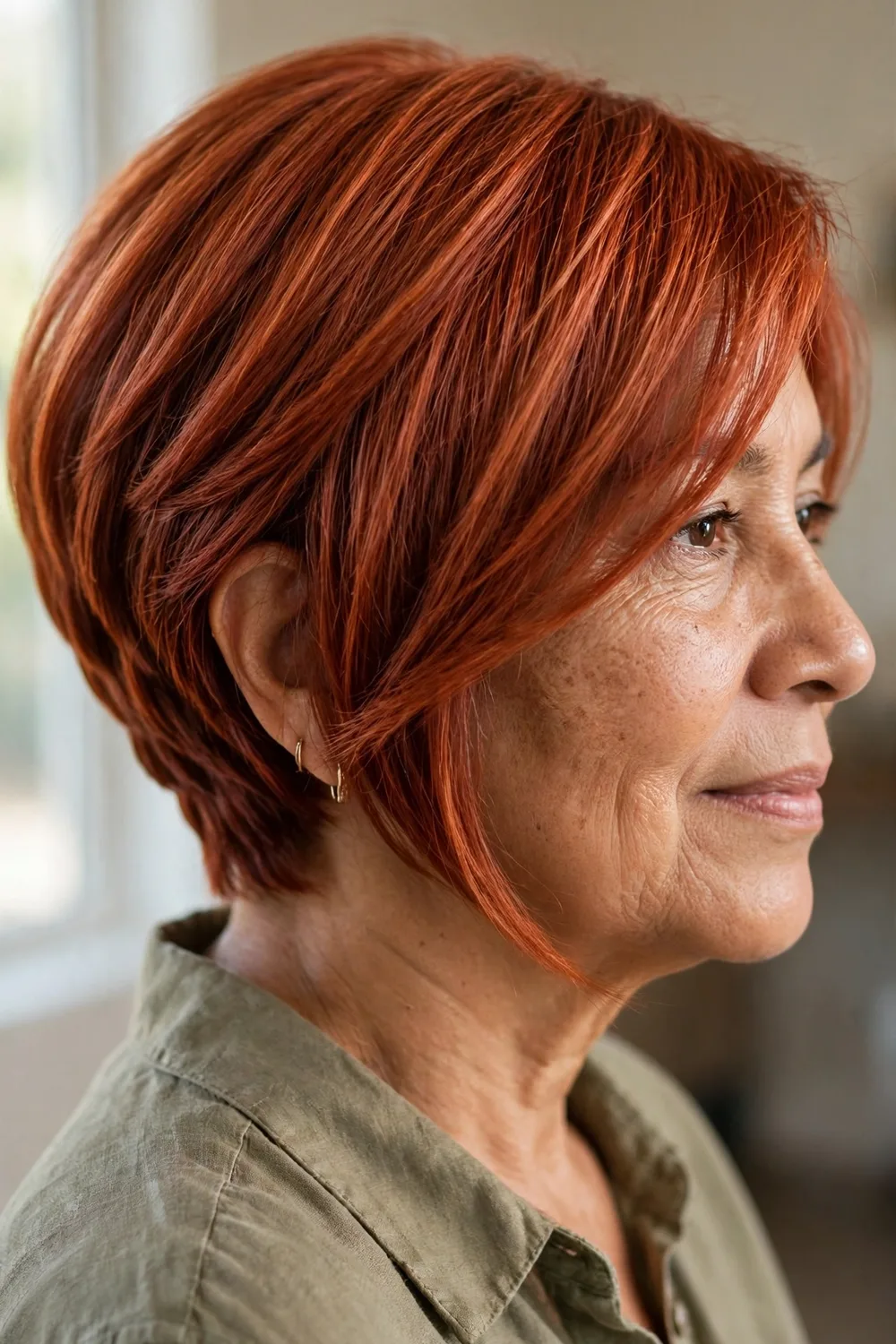
A long diagonal fringe sweeping across the forehead adds softness to the angled bob’s strong lines. The bangs blend directly into the longer front sections, so the whole cut reads as one continuous face frame. This version flatters round and square faces because the diagonal line breaks up width. It suits straight to wavy hair and stays put better than curtain bangs in humidity. Ask for the bangs to start around the brow and lengthen toward the cheekbone.
Try this: Blow-dry the fringe diagonally across the forehead with a medium round brush. Pin it to the side for five minutes while it cools to train the sweep.
12. Long Angled Lob
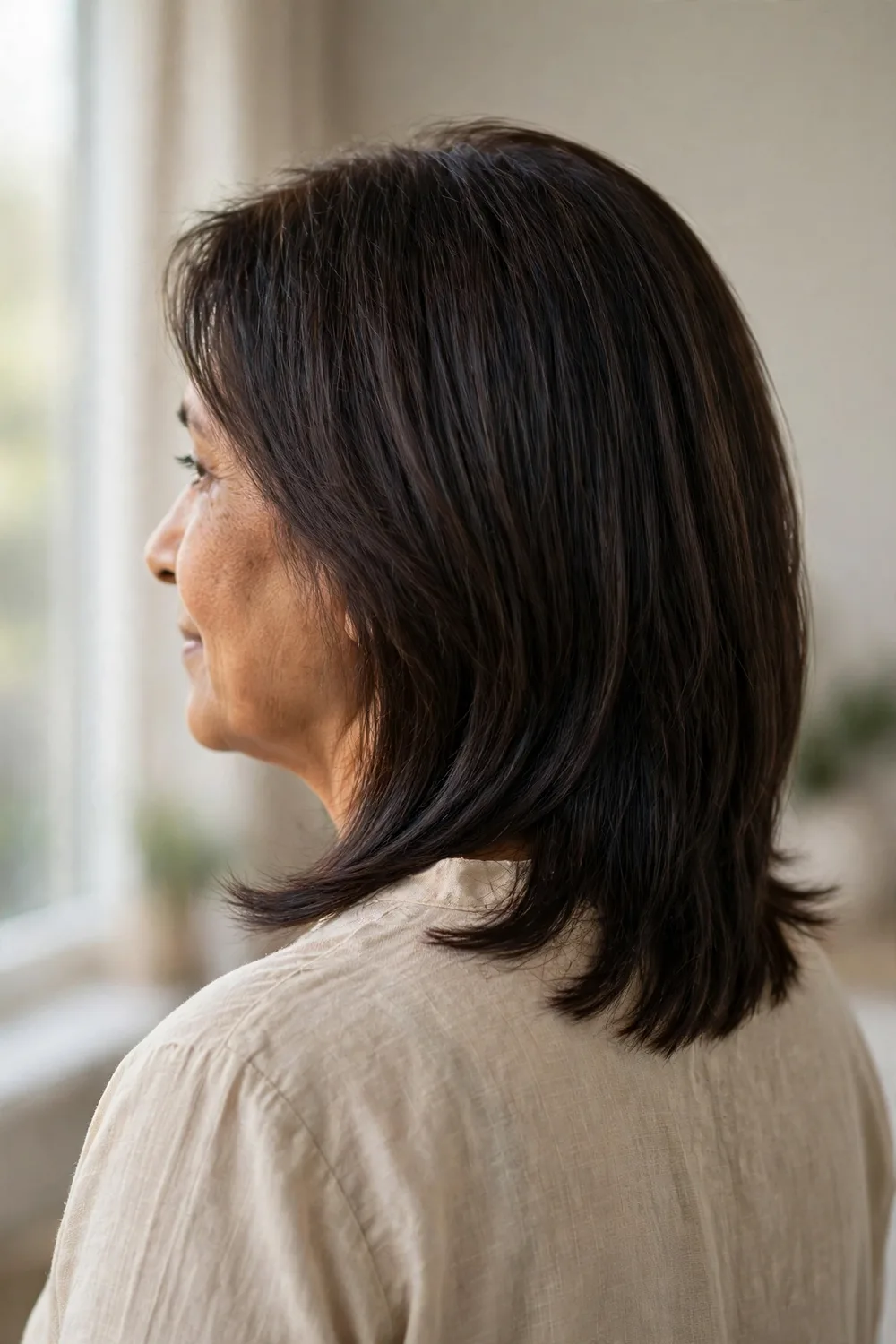
Not ready to go short? The long angled lob keeps the signature shape at collarbone length. The back stays slightly shorter and stacked while the front grazes the collarbone, so you get the slimming angle with styling options like low ponytails and tucks. This length suits thick hair especially well because the extra weight keeps the angle smooth. It also gives nervous first-timers a safe entry point: if you love it, go shorter next time.
Try this: Add loose bends through the mid-lengths with a flat iron, alternating directions for movement. A smoothing cream on the ends keeps the longer front pieces from looking dry.
13. Graduated Angled Bob with Tapered Nape
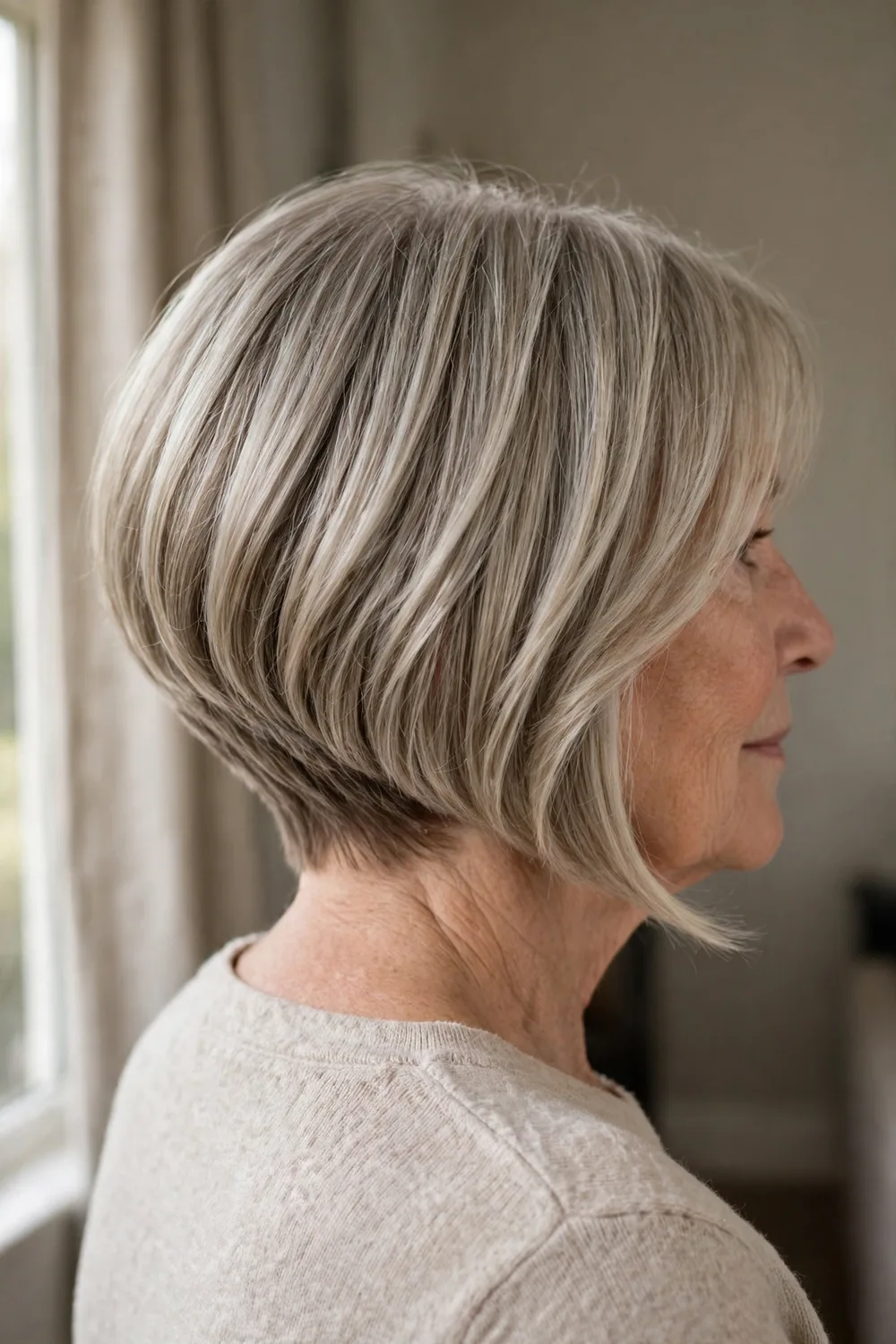
Graduation is the technical backbone of the angled bob, and this version shows it off. The back is cut in precise stacked layers that taper to a neat neckline, creating a sculpted, architectural shape. It suits straight hair best, since the clean lines show most clearly on smooth strands. Women with thick hair at the nape appreciate how the taper removes bulk without thinning shears. This is the version to request if you want the sharpest, most defined angled bob.
Try this: Keep the nape smooth with a flat iron pass underneath, then polish the front. Book trims every 6 weeks, since the tapered neckline shows grow-out faster than softer versions.
14. Rounded Angled Bob
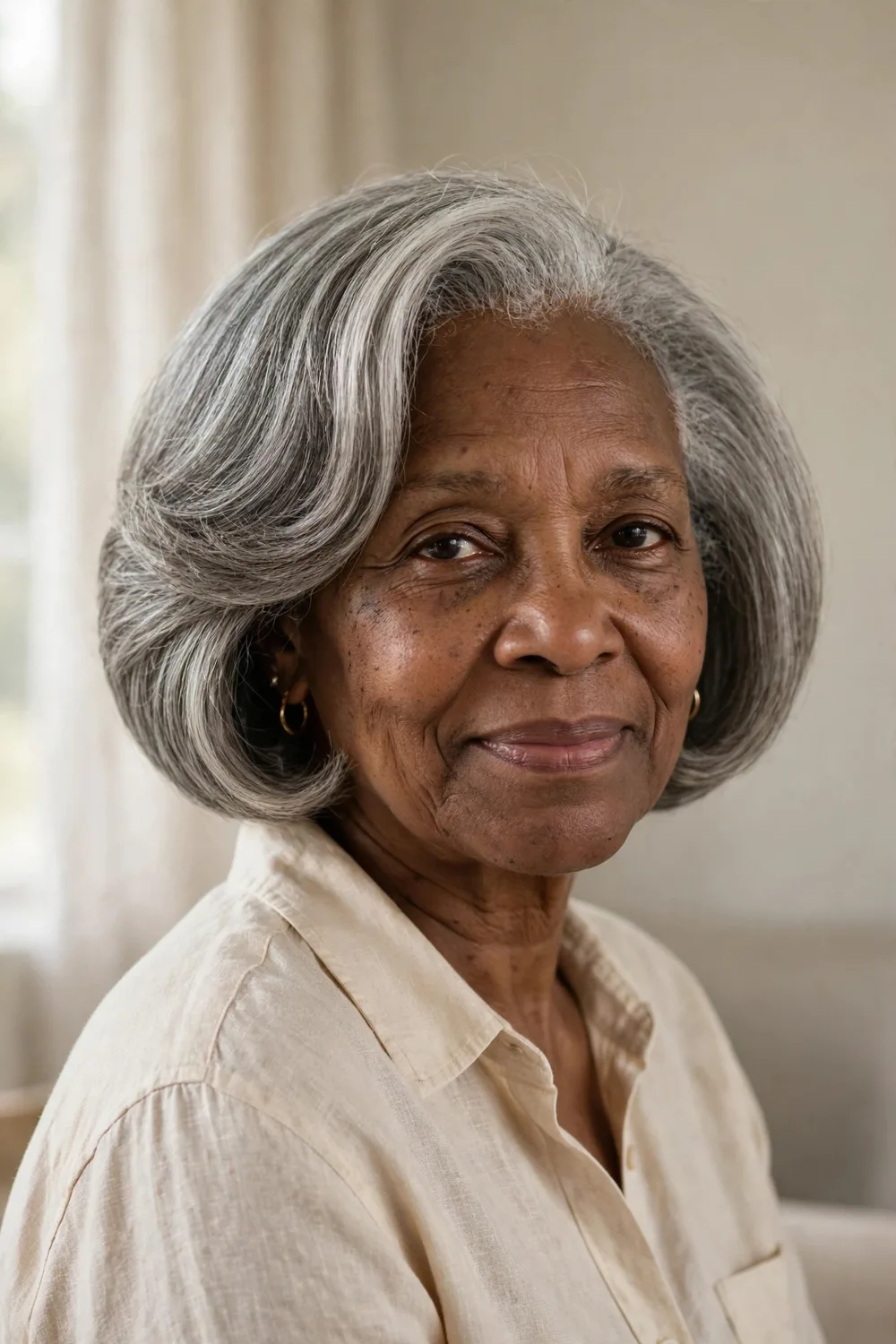
The rounded angled bob softens the geometry into a curved, sculpted shape. The back still sits shorter than the front, but the perimeter curves gently instead of dropping in a straight diagonal. This version flatters angular or square face shapes because the curve offsets strong jawlines. It suits medium-density straight to wavy hair and looks especially refined in solid colors. The rounded shape also reads slightly more classic, which some women prefer for professional settings.
Try this: Blow-dry with a large round brush, rolling the ends under all the way around. Finish with a shine spray rather than hairspray to keep the curve soft and touchable.
15. Straight Angled Bob in Natural Gray
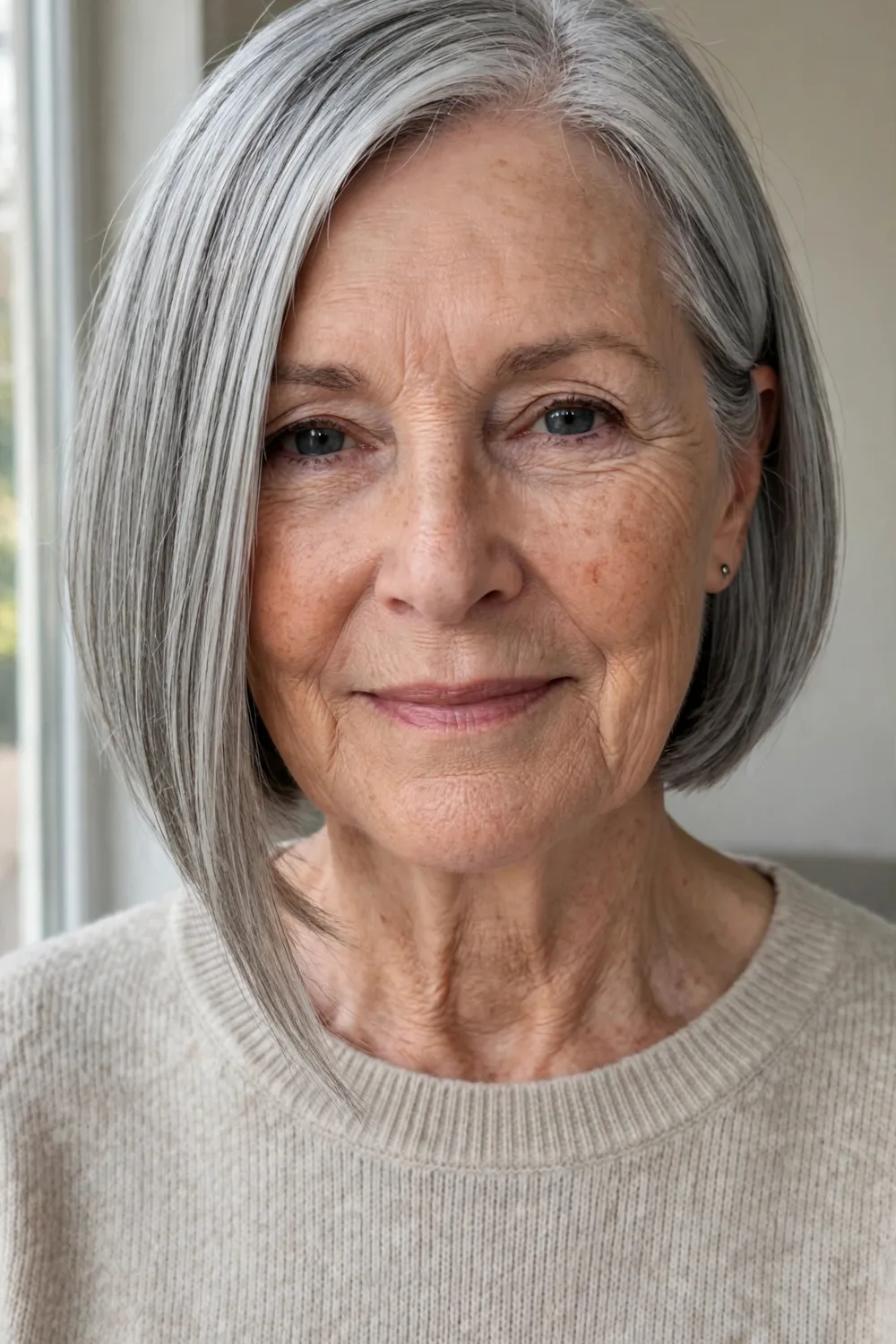
Natural gray and the angled bob are a striking combination. The cut’s clean lines show off silver’s tonal variation, and the sleek finish makes gray look deliberate rather than neglected. This version suits women who have fully transitioned or are growing out color. Keep the hair healthy with purple shampoo once a week to prevent yellowing, since sleek styles show discoloration more. The straight finish also proves the cut needs no color at all to look complete.
Try this: Use a smoothing serum before blow-drying to add shine, which is what makes gray look luminous. A flat iron pass on the front pieces keeps the angle crisp.
16. Angled Bob with Face-Framing Layers
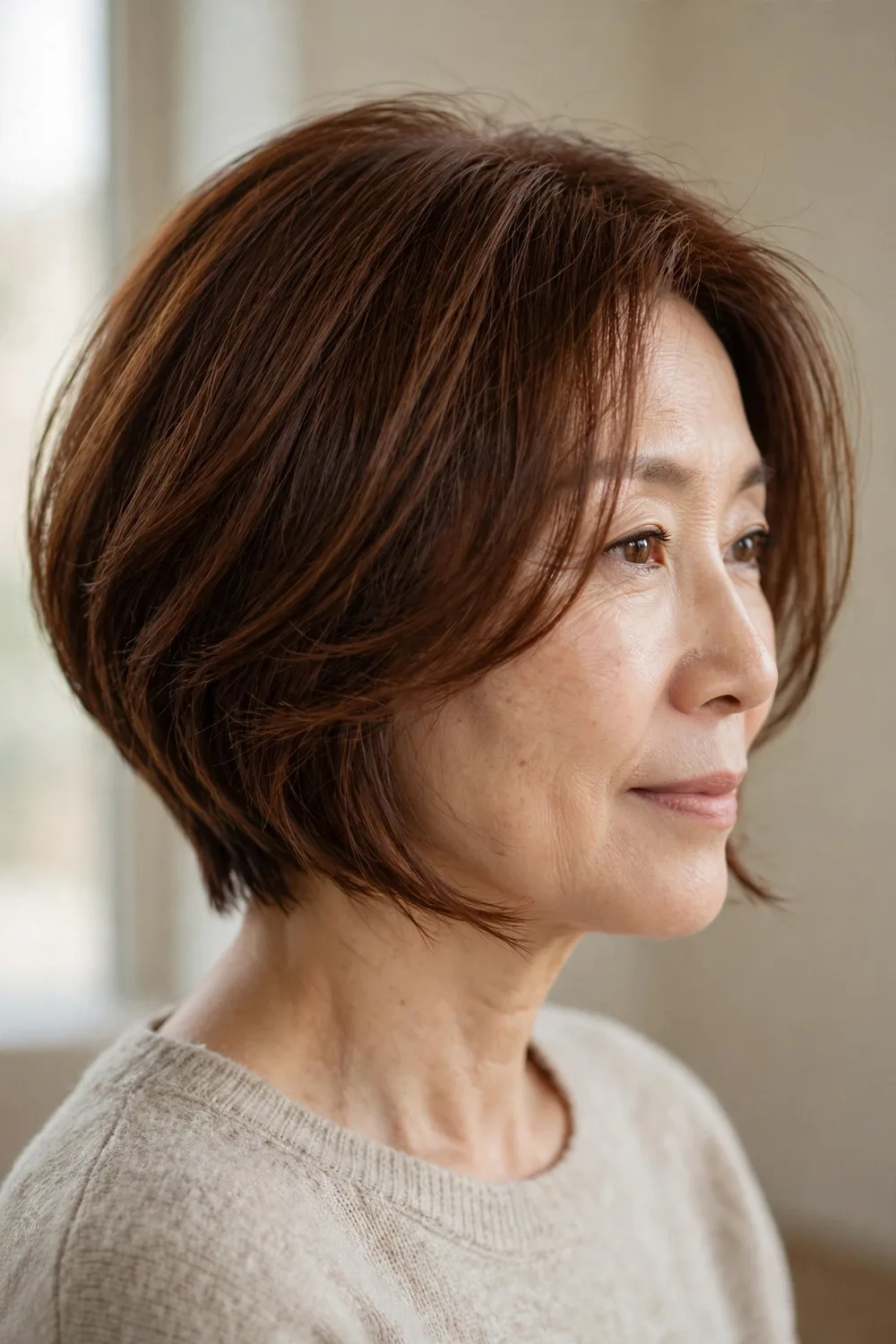
Longer layers cut around the front soften the angled bob’s outline right where it meets the face. These pieces skim the cheekbones and jawline, adding movement without disturbing the back’s structure. This version suits women who find the classic angled bob too severe. It works on straight, wavy, and relaxed hair and pairs well with highlights placed along the framing pieces. The layers also make the style more forgiving if your hair has uneven density around the hairline.
Try this: Bend the front pieces slightly away from the face with a round brush or curling wand. This opens up the face and shows off the layering.
17. Tousled Angled Bob
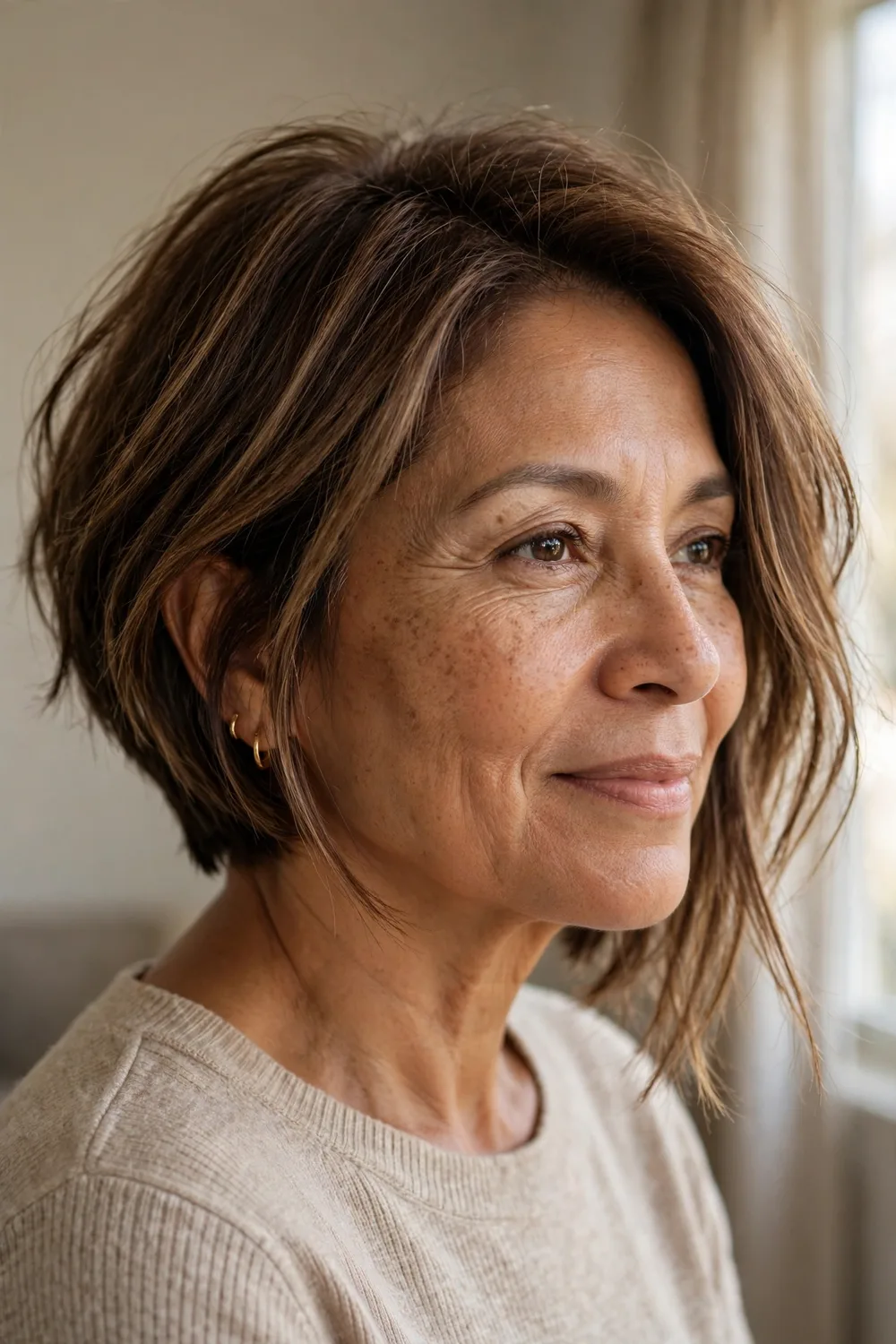
The tousled version trades polish for ease. The angle stays intact underneath, but the surface is left loose and slightly undone, which keeps the cut from looking stiff. This version suits wavy hair and anyone who prefers a relaxed finish. It is also the most forgiving angled bob for second-day hair, since the texture hides oil at the roots. Keep the front pieces long enough that the tousle does not read as messy.
Try this: Scrunch texturizing spray into dry hair and twist random sections. Sleep on it and refresh the crown with dry shampoo in the morning.
18. Wispy Angled Bob with Delicate Ends
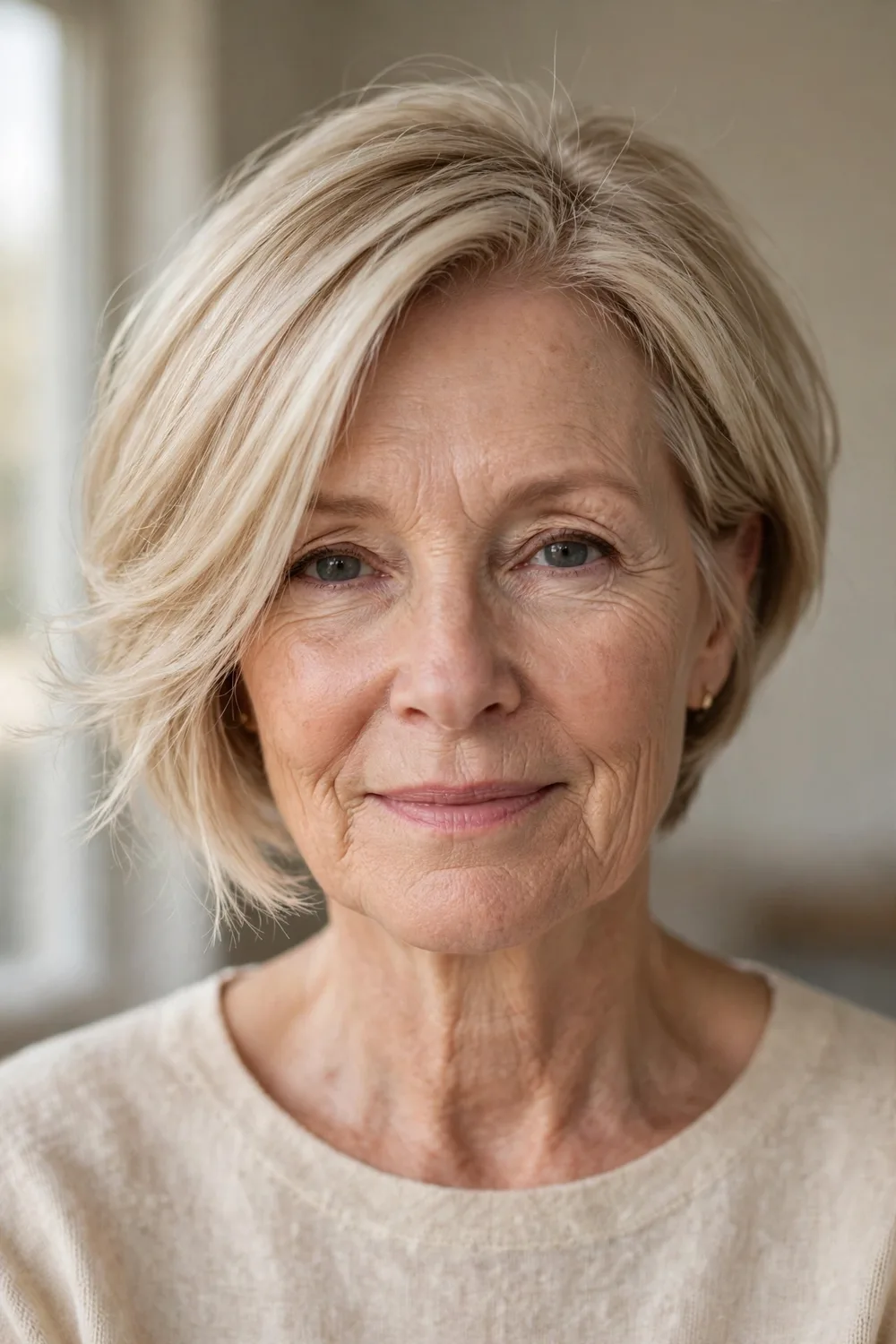
Wispy ends lighten the whole cut. The perimeter is point-cut into fine, airy strands so the angled bob feels weightless instead of solid. This version suits fine hair that gets weighed down by blunt edges, and it flatters mature skin because nothing sits heavily against the face. It needs a light hand with product: too much cream will clump the wispy ends. The delicacy of the ends also makes the angle look softer and more approachable.
Try this: Use a pea-sized amount of lightweight mousse on damp ends only. Blow-dry with a vent brush, lifting at the roots but letting the ends fall naturally.
19. Blunt-Ended Angled Bob
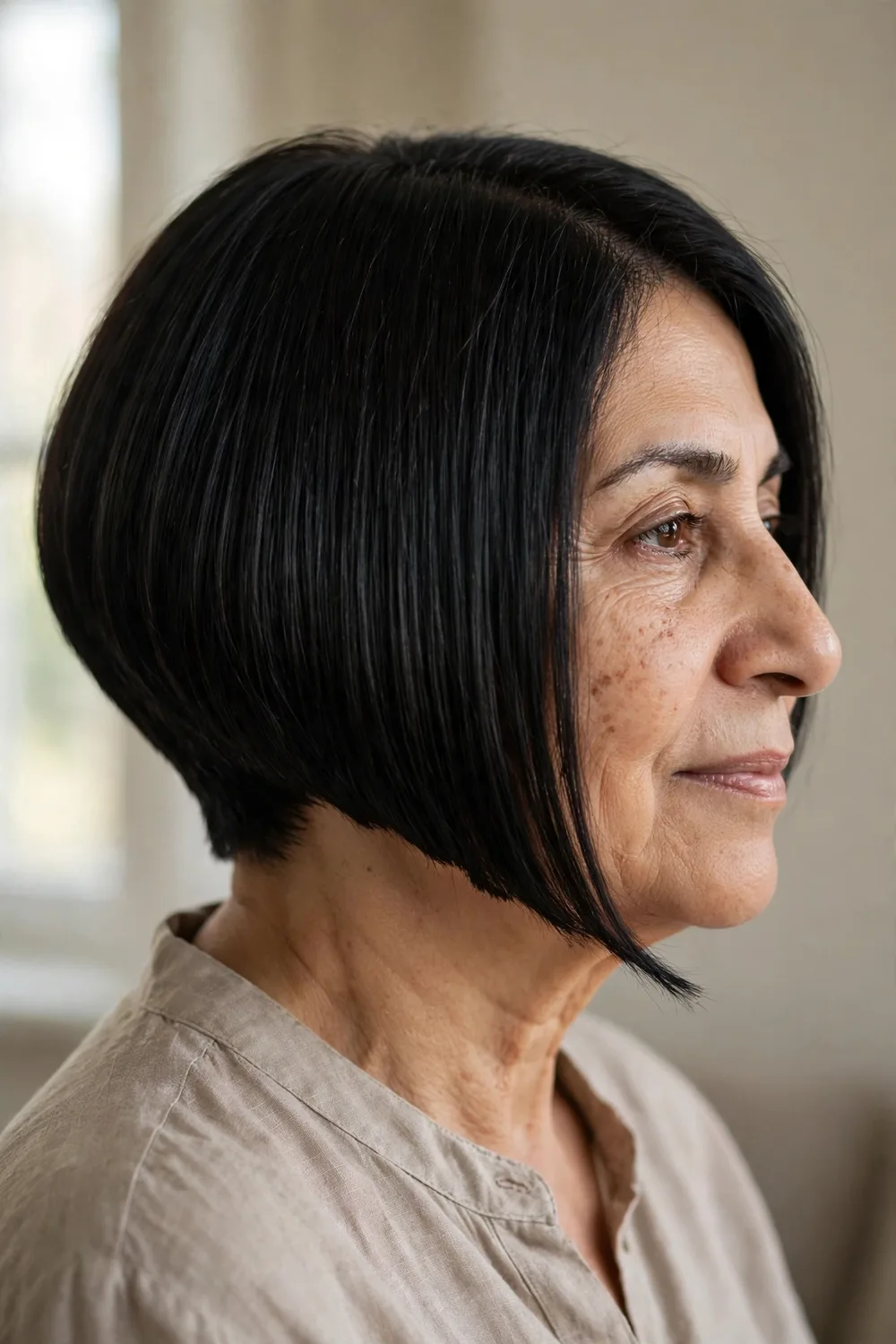
Here the angle comes from the shape, not the texture: the bottom edge is cut blunt and crisp, which makes fine hair look instantly thicker. The contrast between the sharp perimeter and the forward slope is what makes this version striking. It suits straight hair and oval or long faces. The blunt edge needs regular trims to stay crisp, so commit to the 6-week schedule. This is the boldest, most graphic angled bob on the list.
Try this: Flat-iron the perimeter in small sections for a razor-sharp edge. Avoid layering products on the ends; a single smoothing serum is enough.
20. A-Line Angled Bob
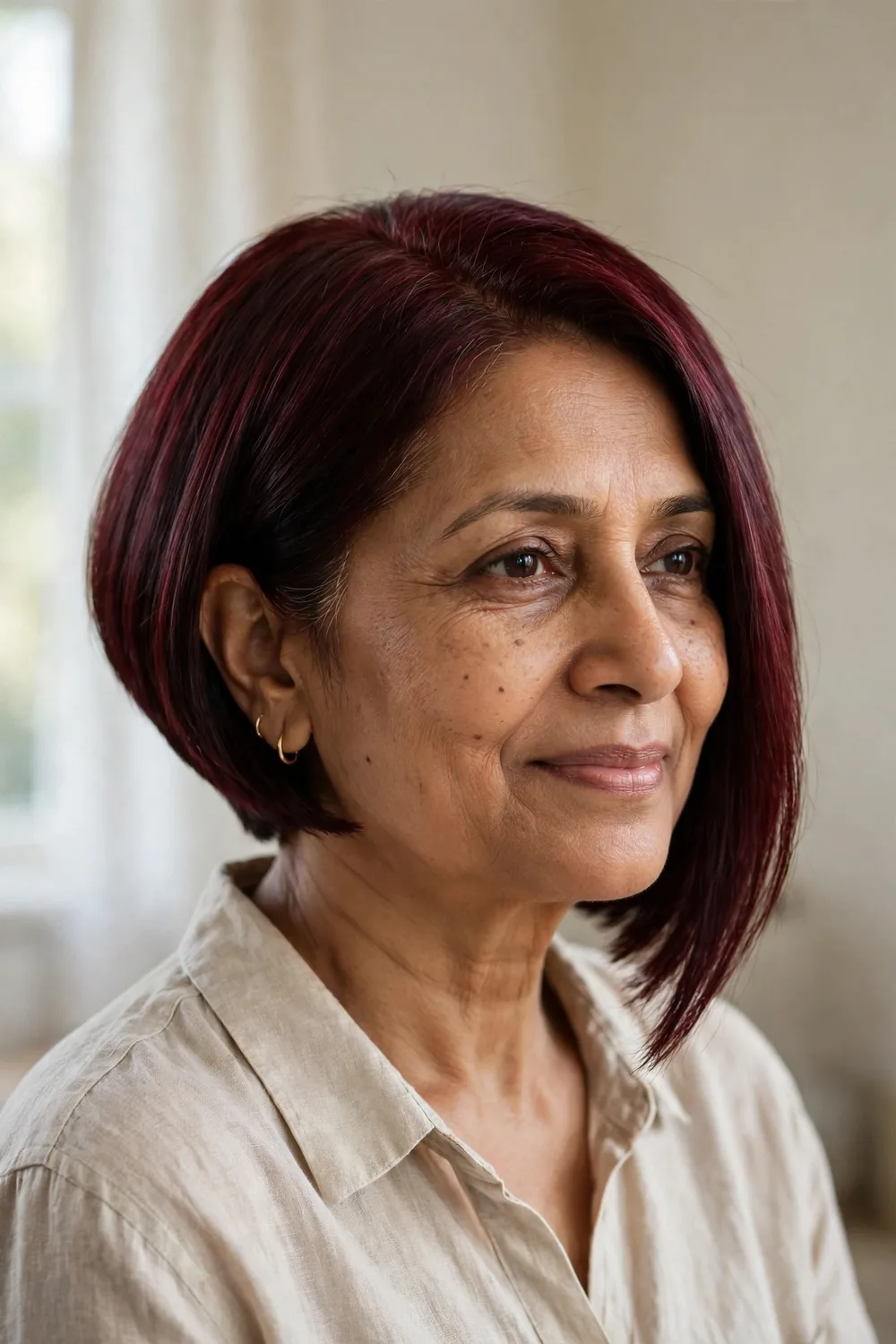
The A-line is the angled bob at its most dramatic. The back is cut short and the front drops in a straight diagonal to pointed ends, forming a clear letter-A silhouette. This version suits confident dressers and straight hair that holds a precise line. It flatters round faces because the long front pieces elongate the jaw. The sharpness of the A-line means every trim matters, so find a stylist who cuts with precision and stick with them.
Try this: Keep the front points sleek with a flat iron and a light shine serum. Tuck one side behind the ear to show the contrast between the short back and long front.
21. Razor-Cut Angled Bob
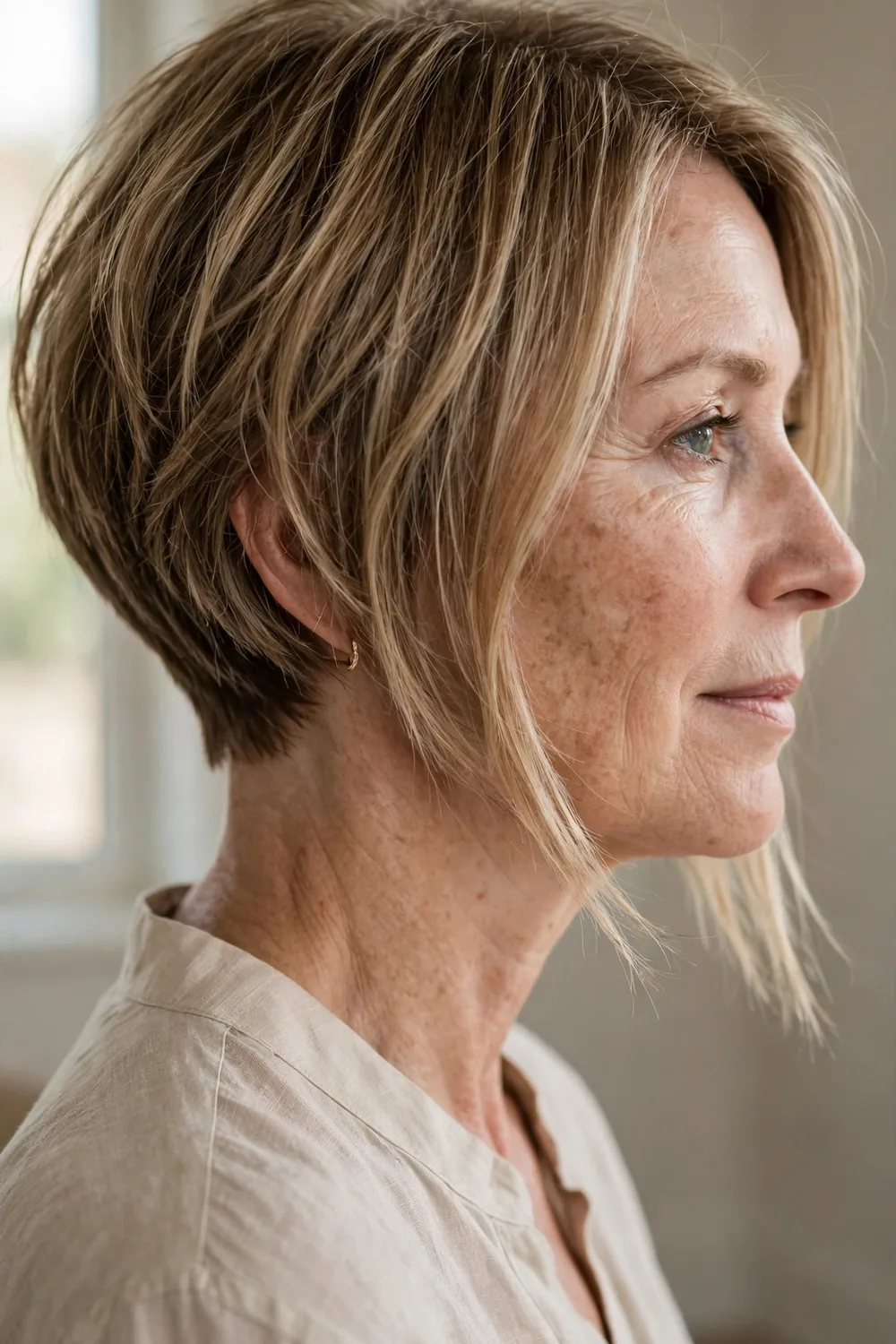
A razor replaces the scissors for the layering, which creates wispy, separated texture that scissors cannot quite match. The result is an angled bob with soft, feathered movement throughout. This version suits medium to thick hair because the razor removes bulk while adding texture. It is less ideal for very fine hair, which can look thinner with razor work. The texture also means this version styles well with minimal heat.
Try this: Apply a light texturizing cream to damp hair and rough-dry with your fingers. The razor texture does most of the work, so keep styling simple.
22. Angled Bob with No Bangs
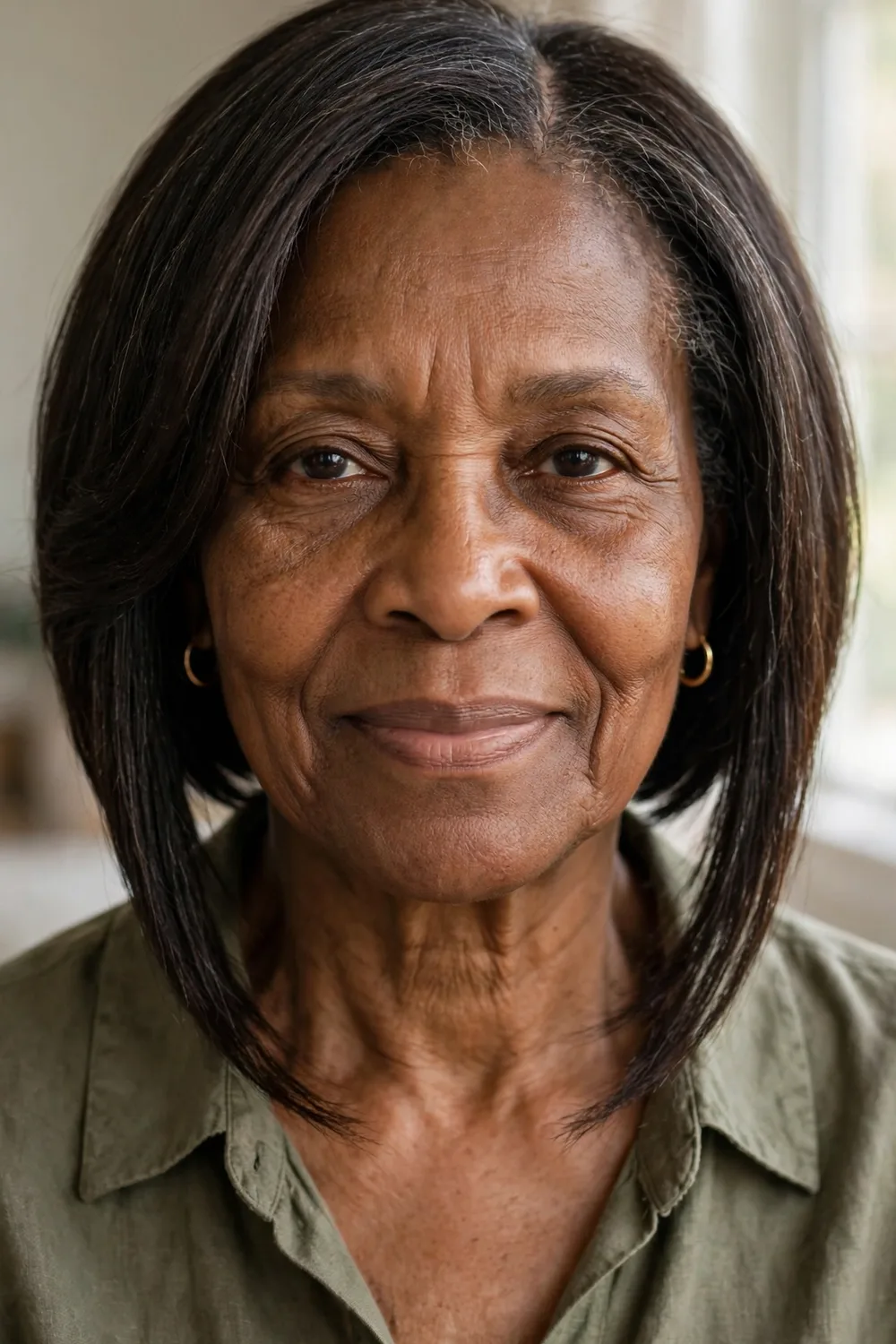
Skipping bangs keeps the focus on the cut’s clean lines and opens up the whole face. The hair is parted in the middle or slightly off-center and falls in two long front panels. This version suits women with balanced foreheads and strong brow lines, since nothing covers them. It is also the easiest angled bob to grow out, because there is no fringe to manage. The simplicity of the shape makes it a strong choice for anyone who wants a low-fuss, modern look.
Try this: Blow-dry with a paddle brush for a sleek finish, or add soft waves for a relaxed feel. A center part shows off the symmetry of the angle best.
23. Angled Bob with Face-Framing Babylights
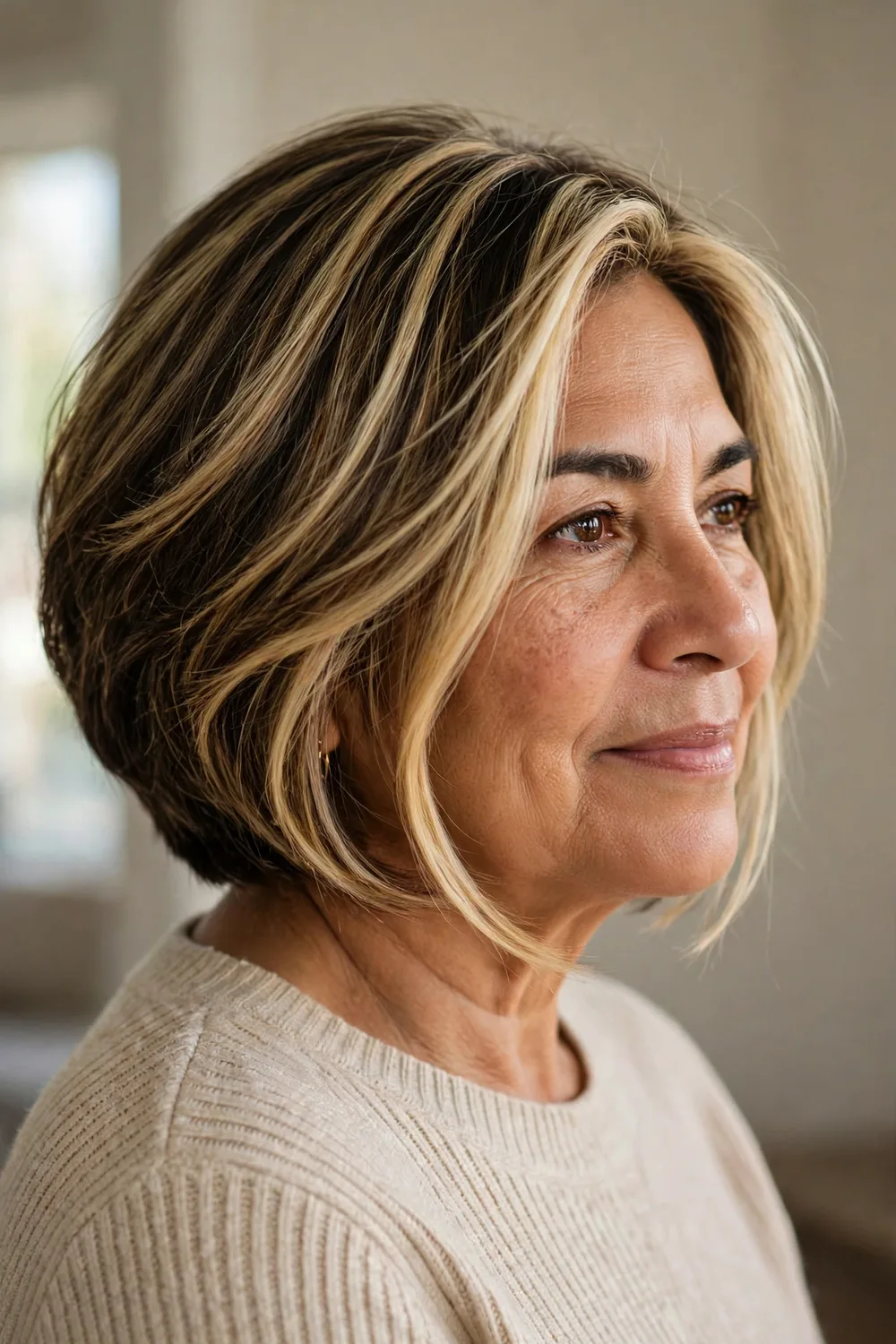
Babylights are fine, delicate highlights placed around the face, and they make the angled bob’s front pieces glow. The subtle brightness draws attention to the eyes and cheekbones while the rest of the hair stays a natural base shade. This version suits women who want dimension without obvious color. The fine highlights also grow out softly, so maintenance is easier than with chunky highlights. Ask for the babylights to concentrate along the longer front sections where the light hits.
Try this: Protect the highlights with a color-safe shampoo and a weekly glossing treatment. Style the front pieces smooth so the babylights catch the light.
24. Salt-and-Pepper Angled Bob
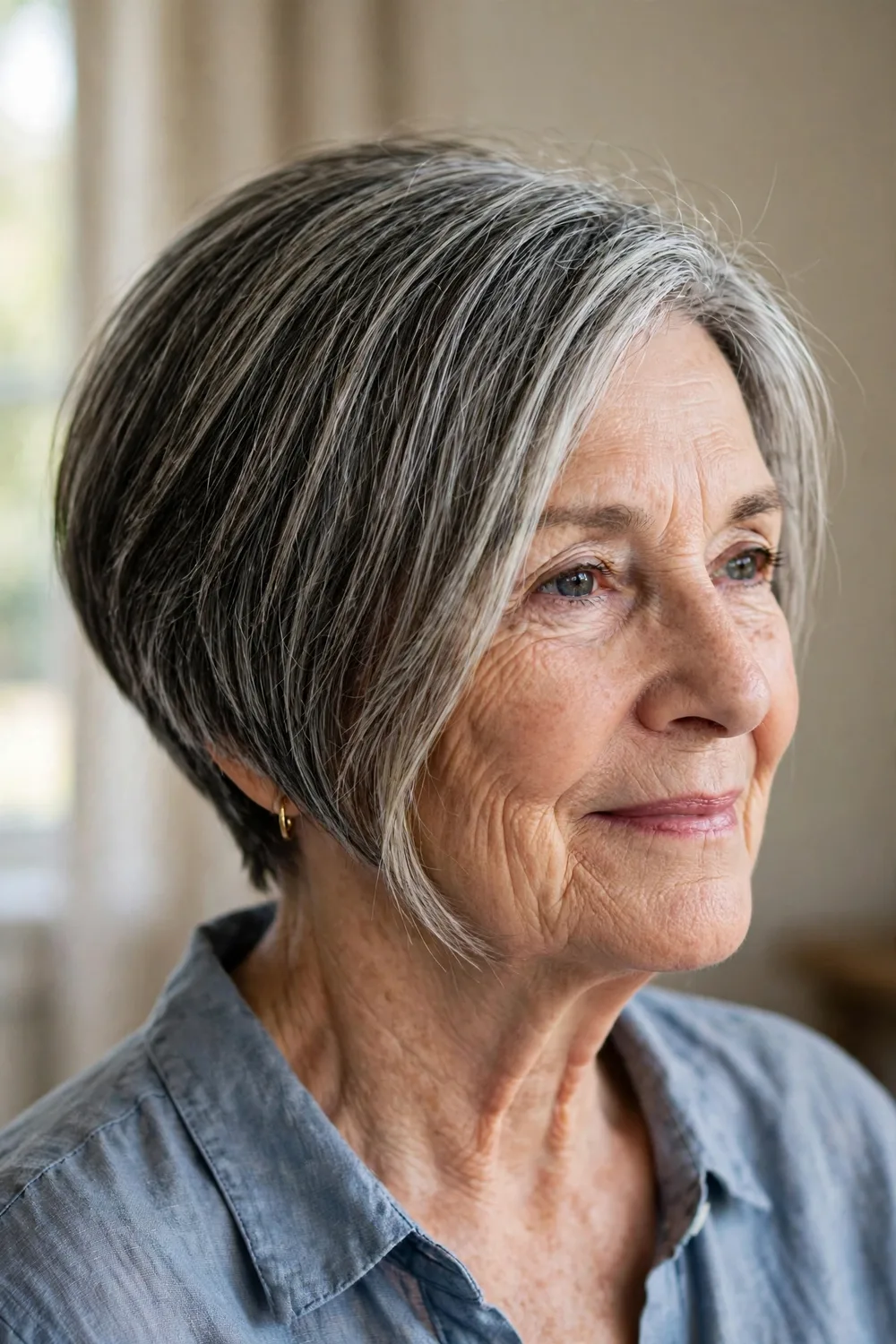
The natural mix of dark and silver strands becomes a feature in this version. The graduated layers show off both tones, and the color variation adds dimension that single-process color cannot copy. This version suits women embracing their natural gray blend. Keep the cut precise, since the two-tone color looks best against clean lines. A blue or purple shampoo used occasionally keeps the silver strands bright and clean instead of dull.
Try this: Ask your colorist for a clear gloss every couple of months to add shine without changing the natural blend. Blow-dry smooth to let the color variation show.
25. Shaggy Angled Bob
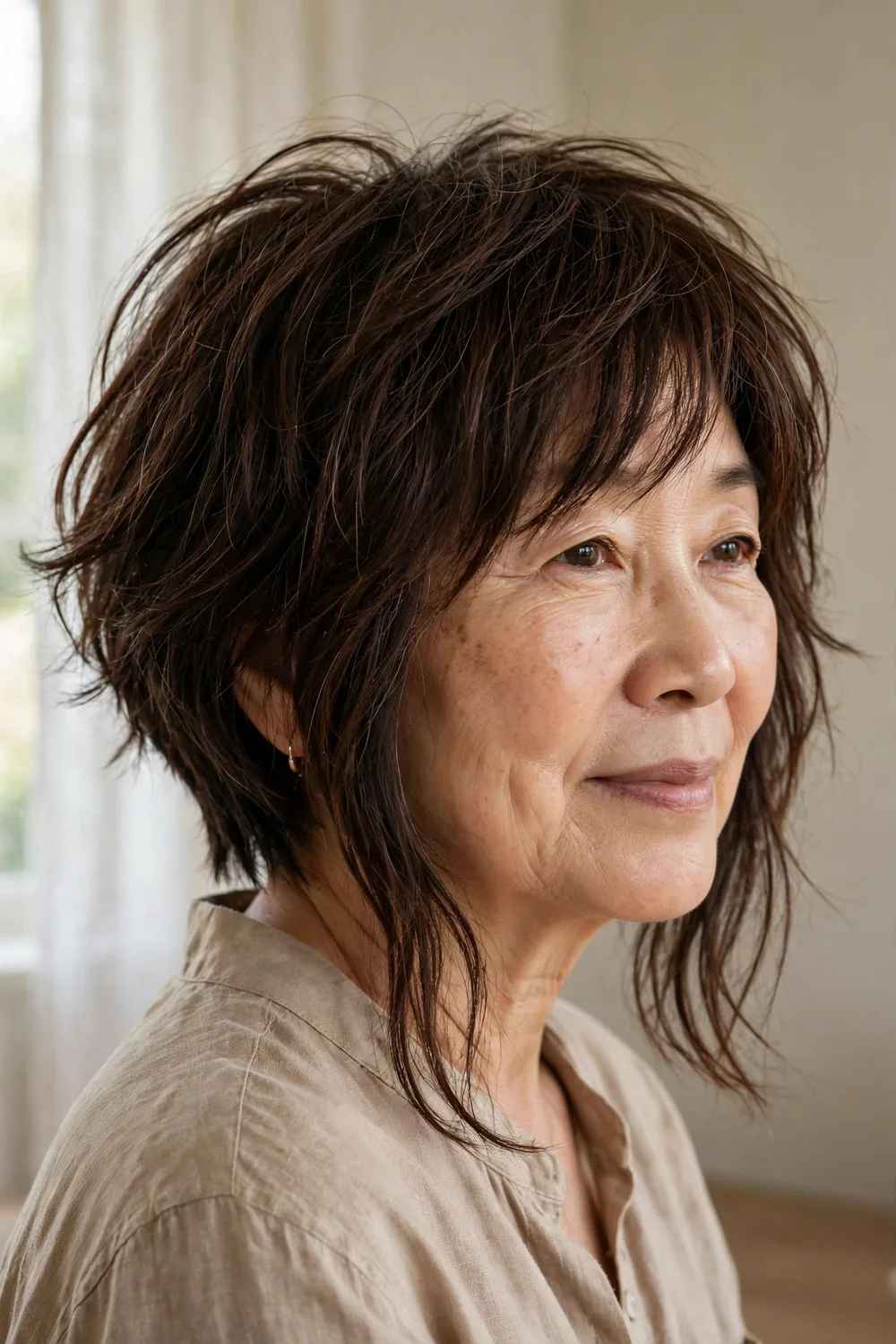
The shag meets the angled bob in this modern hybrid. Broken, lived-in layers run through the cut while the overall shape still angles forward. This version suits thick or wavy hair that needs the weight broken up, and it gives the angled bob a younger, more casual feel. The shaggy texture also disguises thinning better than sleek styles. Keep the front pieces long enough to preserve the angle, or the shag takes over completely.
Try this: Work styling paste into dry ends and piece them out with your fingers. A diffuser on wavy hair brings out the shaggy texture without frizz.
26. Copper-Auburn Angled Bob
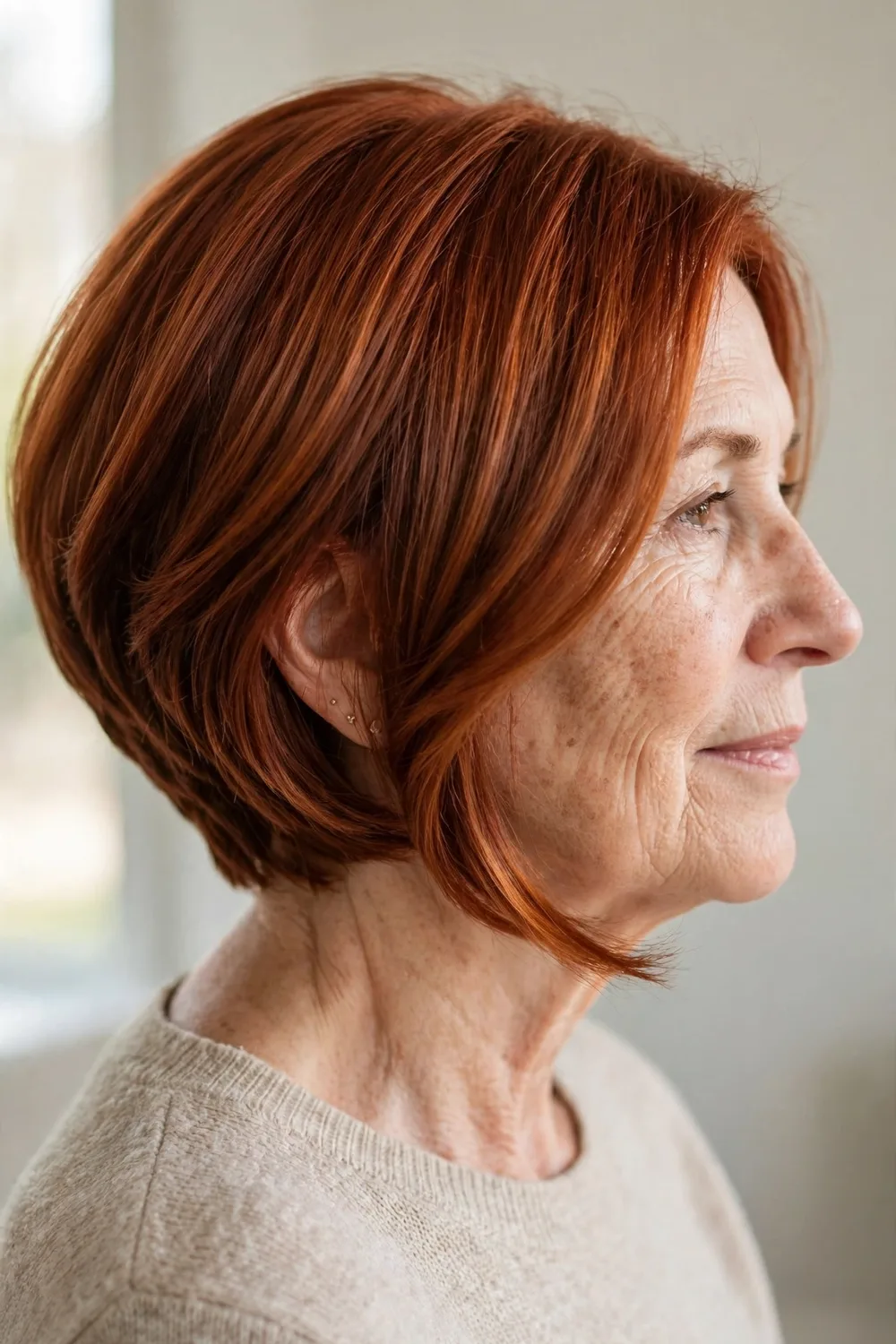
Warm copper and auburn tones bring the angled bob to life. The rich color adds visible depth to the graduated layers and suits warm skin tones well. This version suits women ready to make a color statement alongside the cut. Red tones fade faster than others, so plan for glossing appointments between full color sessions. The warmth of the color also softens the cut’s sharp lines, which many women over 50 prefer.
Try this: Wash with cool water and color-safe shampoo to slow fading. A copper gloss at home between salon visits keeps the tone rich.
27. Curly Angled Bob
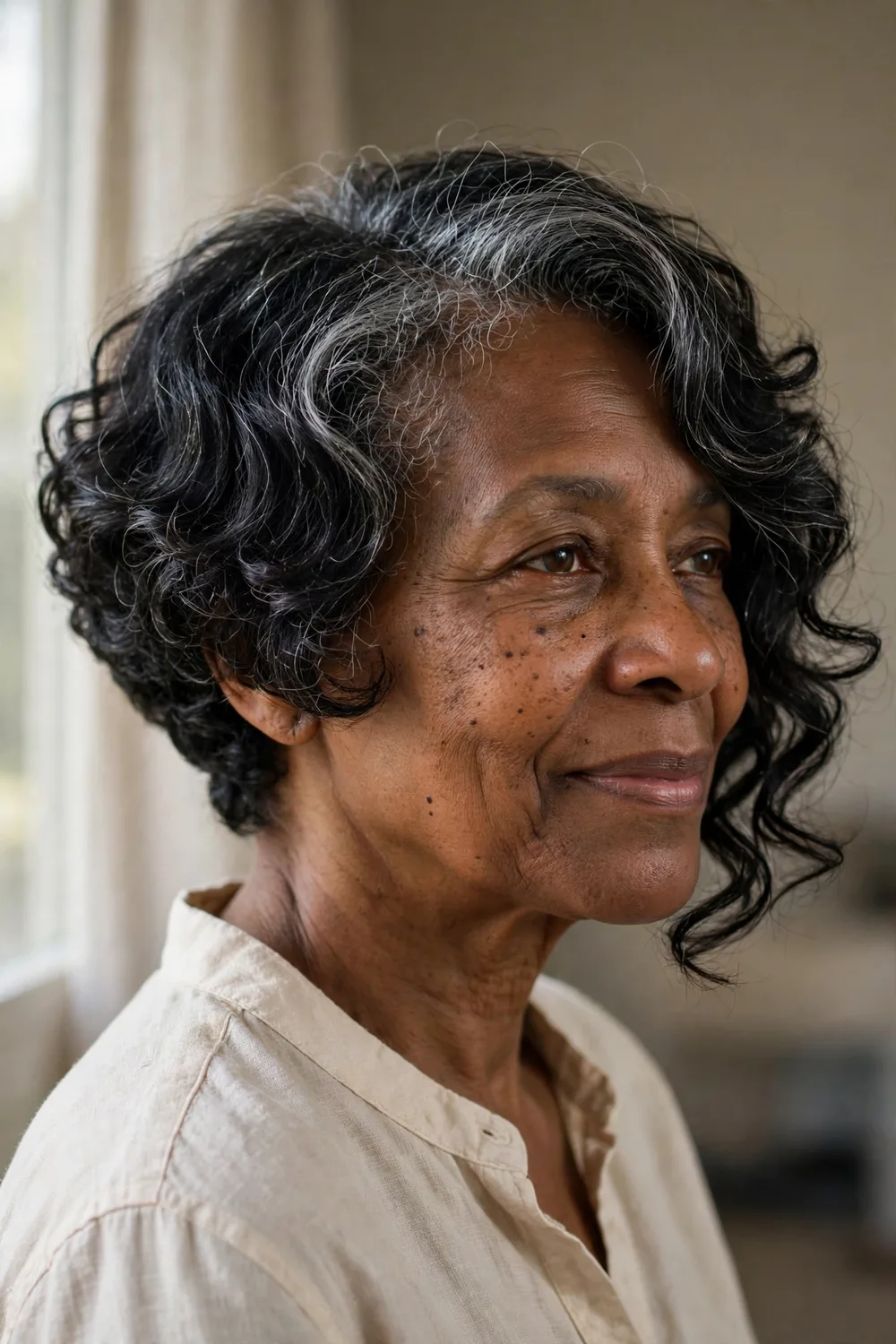
Natural curls sit well inside the angled shape. The back is kept shorter so the curls spring up with volume, while the front curls fall longer toward the chin. This version suits type 3 curls and needs a stylist experienced with curly cutting, ideally on dry hair. The angle gives curly bobs a deliberate shape that round curly cuts sometimes lack. Keep the layers long enough that the curls do not shrink the cut above the jaw.
Try this: Apply curl cream to soaking-wet hair and scrunch upward, then diffuse or air-dry. Pineapple the curls at night to protect the shape.
28. Asymmetric Angled Bob
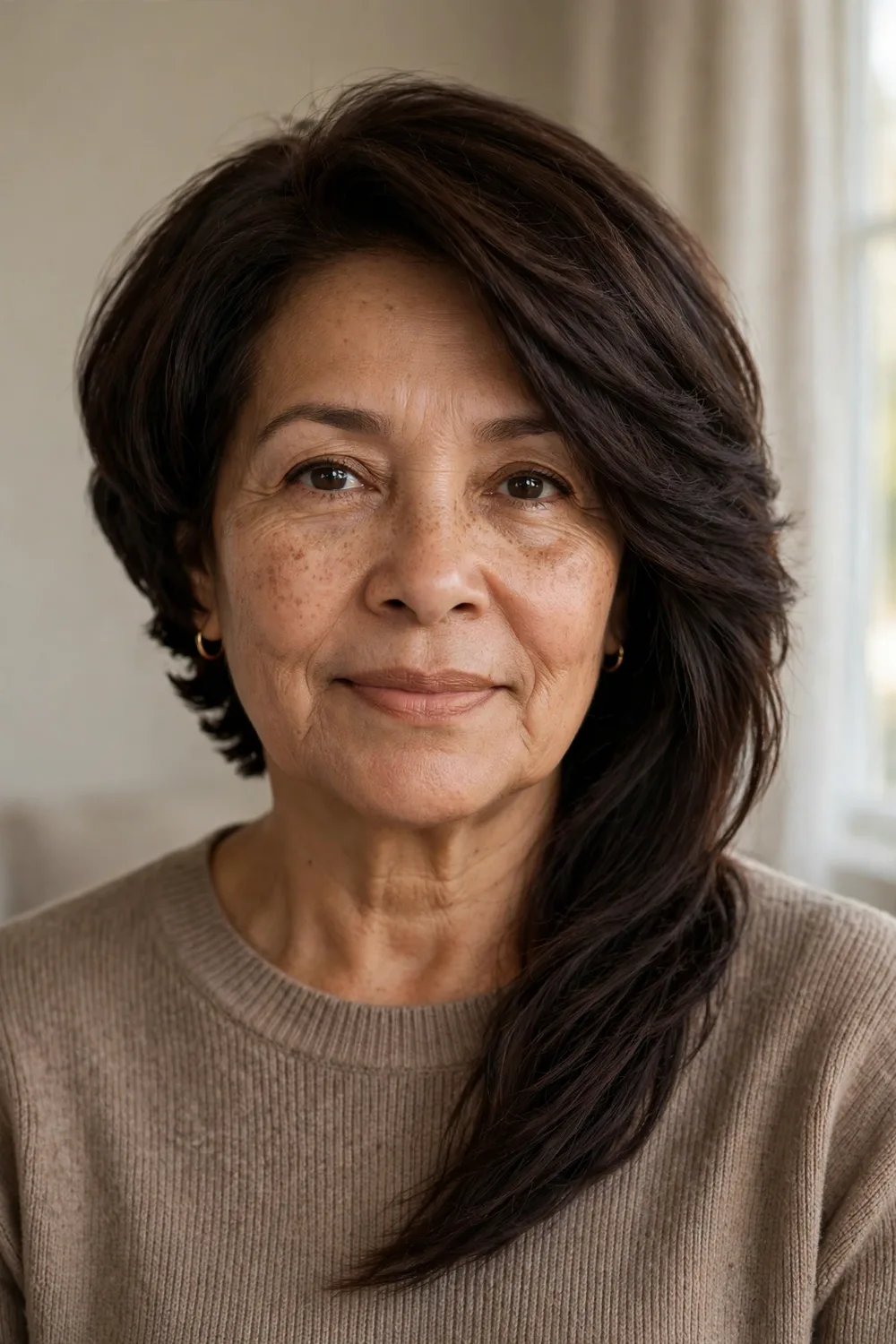
One side cut noticeably longer than the other turns the angled bob into a statement. The asymmetry draws the eye along the longer side, which slims the face and shows confidence. This version suits straight hair that holds the uneven line cleanly. It works best when the difference is deliberate: at least an inch or two, not a cutting mistake. Women who love fashion-forward hair but still want a classic base find this version hits the mark.
Try this: Style the longer side sleek and tucked behind the ear on the short side to emphasize the contrast. A shine serum keeps both lengths glossy.
29. Angled Bob with Undercut Nape
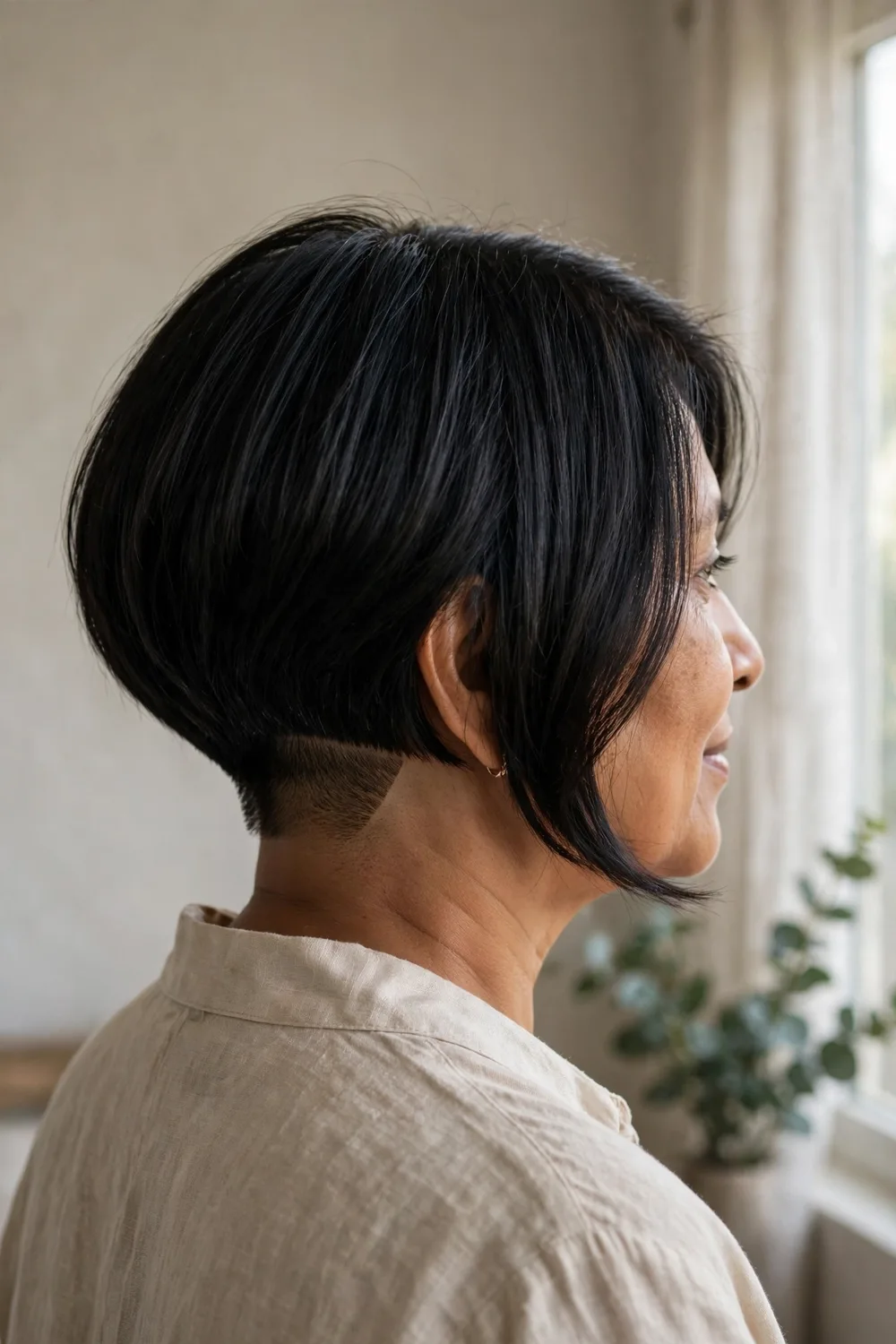
A hidden undercut at the nape removes bulk where thick hair piles up, and nobody sees it unless you lift the back. The top layers fall over the clipped section, so the angled bob looks completely classic from every normal angle. This version suits very thick or coarse hair that fights against stacked cuts. It also keeps the neck cooler in warm weather. Grow-out is simple: the undercut just gets trimmed or grown out with the rest.
Try this: Ask for the undercut to start about two inches above the neckline. Keep the top layers long enough to cover it fully when hair is down.
30. Wash-and-Go Air-Dried Angled Bob
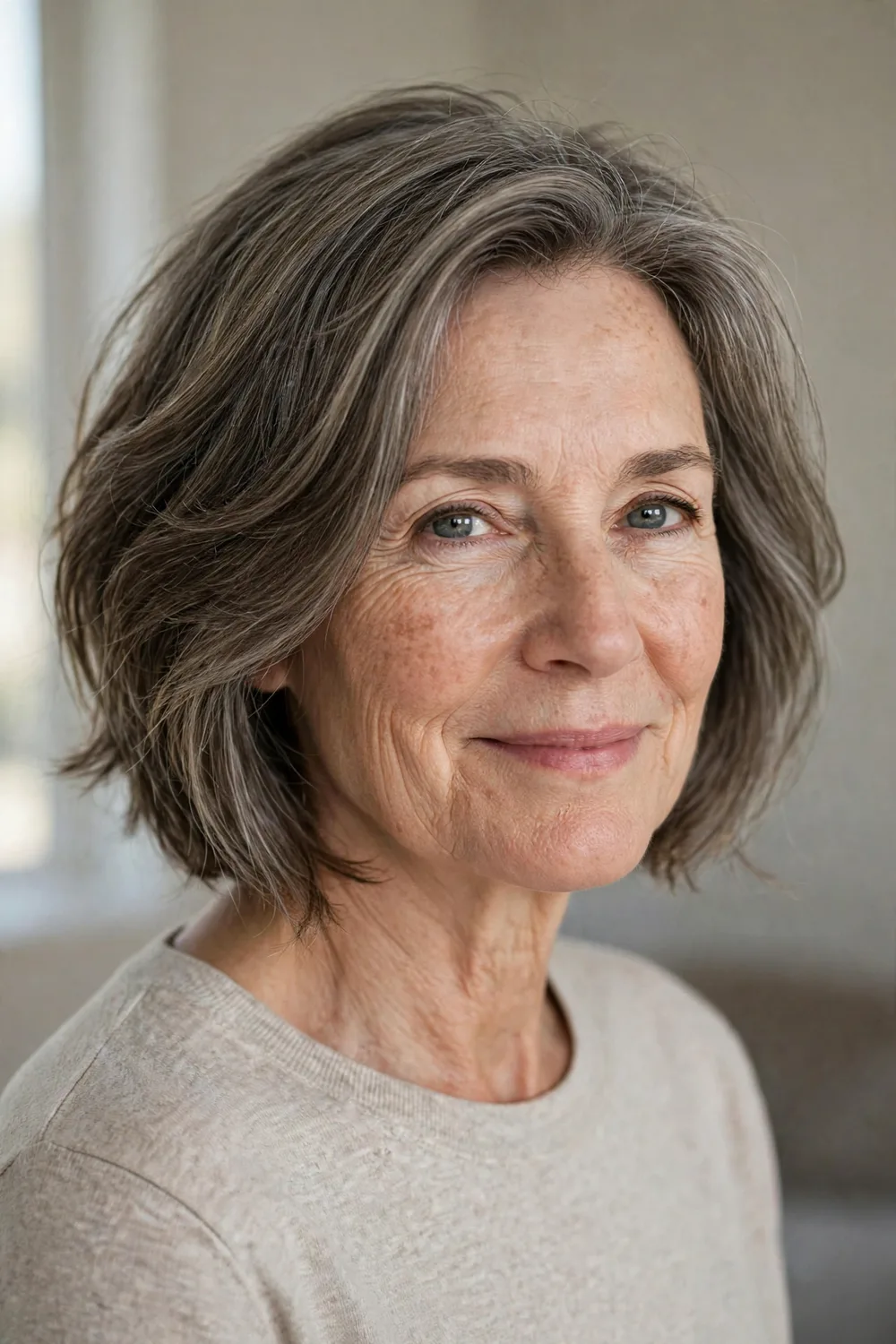
This version is cut to look good with zero heat. The layers are placed so the hair falls into its angled shape as it dries, and the texture is left natural. It suits wavy to curly hair best, since straight hair may need a little help. This is the angled bob for women who want the shape without the routine. A good cut matters more here than anywhere else on the list, so choose your stylist carefully.
Try this: Apply a leave-in conditioner and a light styling cream to damp hair, then leave it alone while it dries. Resist touching it until fully dry to avoid frizz.
Angled Bob Hairstyles Comparison at a Glance
| Style | Best Occasion | Difficulty | Hold Time |
|---|---|---|---|
| Classic Sleek Angled Bob | Work, formal events | Easy | All day |
| Layered Angled Bob for Fine Hair | Everyday wear | Easy | All day |
| Short Stacked Angled Bob | Everyday wear | Easy | All day |
| Wavy Angled Bob | Weekends, casual outings | Easy | 8 to 10 hours |
| Feathered Angled Bob | Everyday wear | Medium | All day |
| Chin-Length Angled Bob | Everyday wear | Easy | All day |
| Textured Choppy Angled Bob | Casual outings | Easy | 6 to 8 hours |
| Voluminous Angled Bob Blowout | Events, photos | Hard | 6 to 8 hours |
| Deep Side-Parted Angled Bob | Evenings out | Easy | All day |
| Angled Bob with Curtain Bangs | Everyday wear | Medium | 6 to 8 hours |
| Angled Bob with Side-Swept Bangs | Work, evenings | Medium | All day |
| Long Angled Lob | Everyday wear | Easy | All day |
| Graduated Angled Bob with Tapered Nape | Formal events | Medium | All day |
| Rounded Angled Bob | Work, formal events | Medium | All day |
| Straight Angled Bob in Natural Gray | Everyday wear | Easy | All day |
| Angled Bob with Face-Framing Layers | Everyday wear | Easy | All day |
| Tousled Angled Bob | Weekends | Easy | 6 to 8 hours |
| Wispy Angled Bob with Delicate Ends | Everyday wear | Easy | All day |
| Blunt-Ended Angled Bob | Evenings out | Medium | All day |
| A-Line Angled Bob | Events, evenings | Medium | All day |
| Razor-Cut Angled Bob | Casual outings | Easy | 6 to 8 hours |
| Angled Bob with No Bangs | Everyday wear | Easy | All day |
| Angled Bob with Face-Framing Babylights | Everyday wear | Easy | All day |
| Salt-and-Pepper Angled Bob | Everyday wear | Easy | All day |
| Shaggy Angled Bob | Weekends, casual outings | Easy | 6 to 8 hours |
| Copper-Auburn Angled Bob | Evenings out | Easy | All day |
| Curly Angled Bob | Everyday wear | Medium | All day |
| Asymmetric Angled Bob | Events, evenings | Medium | All day |
| Angled Bob with Undercut Nape | Everyday wear | Easy | All day |
| Wash-and-Go Air-Dried Angled Bob | Everyday wear | Easy | All day |
How to Choose the Right Angled Bob for You
Start with your hair type. Fine or thinning hair does best with stacked, graduated, or blunt-ended versions that build density. Thick hair benefits from feathered, razor-cut, or undercut versions that remove bulk. Wavy and curly hair suits the wavy, tousled, curly, or wash-and-go versions that work with texture instead of fighting it.
Next, think about your face shape. Longer front pieces flatter round faces by adding length. Side-swept or curtain bangs soften square jawlines. Chin-length versions highlight cheekbones on oval and heart-shaped faces. If you are unsure, ask your stylist to show you where the front pieces will land before cutting.
Finally, be honest about maintenance. Sleek, blunt, and A-line versions need heat styling and regular trims to look sharp. Wavy, tousled, shaggy, and air-dried versions forgive skipped wash days. Pick the version that matches the routine you will actually keep, not the one you wish you had.
Mistakes to Avoid
The most common mistake is asking for too dramatic an angle on fine hair. A very steep slope can leave the back too short to hold volume, which defeats the purpose. A moderate angle with stacking gives more fullness.
Another mistake is skipping the consultation about bangs. Bangs change how the whole cut frames the face, and growing out the wrong fringe takes months. Decide on bangs before the scissors come out, not during.
Finally, do not stretch trims past 8 weeks. The angled bob’s shape lives in its graduation, and once the back grows out, the lift disappears. Regular trims are the real maintenance cost of this cut, so budget for them.
If you want to compare this cut against the broader bob family first, take a look at bob haircuts for women over 50 to see every flattering option in one place.
The angled bob belongs to the same family as its close cousin, so reading about inverted bob hairstyles will help you tell the two shapes apart before your appointment.
For extra crown lift built specifically into the back of the cut, short stacked bob hairstyles for women over 50 shows how stacking creates volume where thinning hair needs it most.
And if you prefer softer movement through the mid-lengths, layered bob haircuts for women over 50 covers the layered alternatives worth discussing with your stylist.
Frequently Asked Questions
Is an angled bob good for women over 50?
Yes. The shorter graduated back adds crown volume where hair often thins after 50, while the longer front pieces frame and slim the face. The cut works on fine, thick, straight, wavy, and curly hair, and most versions style in under 15 minutes. It is one of the most adaptable short cuts for this age group.
Does an angled bob work on fine or thinning hair?
It works especially well. Stacked and graduated versions pile volume at the crown, and blunt-ended versions make fine hair look thicker. Ask for interior layers and point-cut ends rather than heavy thinning, which can make fine hair look sparser. A volumizing spray at the roots during blow-drying holds the lift through the day.
How often does an angled bob need trimming?
Every 6 to 8 weeks. The shape depends on the graduated back and the clean angle, both of which soften as hair grows. Sharp versions like the A-line or tapered nape need the 6-week end of that range, while softer versions like the tousled or shaggy bob can stretch toward 8 weeks.
Should I get bangs with an angled bob after 50?
It depends on your forehead and styling patience. Curtain bangs and side-swept bangs soften the forehead and blend naturally into the angled front, and both grow out gracefully. Blunt full bangs need more frequent trims and daily styling. If you are unsure, start without bangs since the long front pieces already frame the face.
Can I wear an angled bob with gray hair?
Absolutely. Natural gray, silver, and salt-and-pepper color pair well with the cut’s clean lines, and the graduated layers show off tonal variation. Use a purple shampoo once a week to keep silver bright and prevent yellowing. A smoothing serum adds the shine that makes gray look luminous rather than dull.
Final Thoughts
Few cuts earn their reputation the way the angled bob has. It lifts, frames, and polishes with less daily work than almost any other short style, and the 30 versions above cover every hair type and comfort level. Pick the two or three that match your hair and your routine, save their photos, and bring them to your stylist. After years of covering haircuts, I can say this one rarely disappoints when the angle is cut for your face.
