

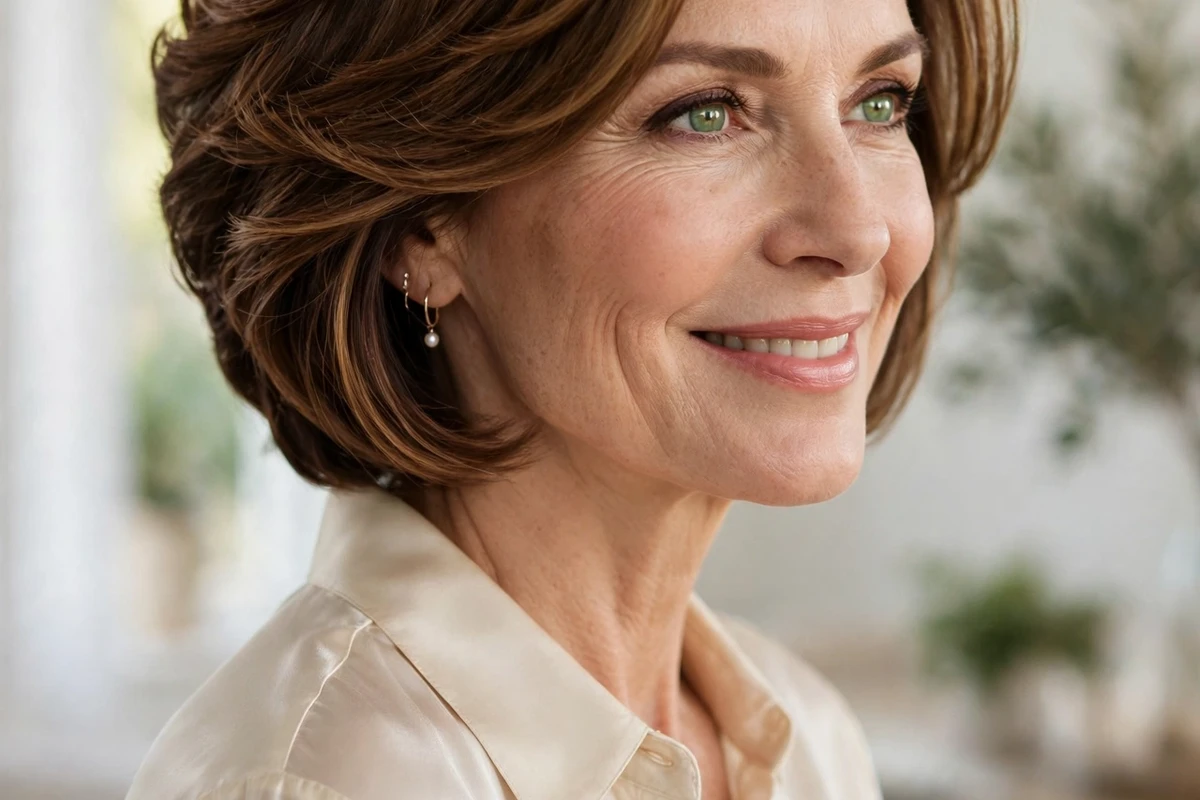
A stacked bob earns its name from the short, graduated layers piled at the back of the head. Those stacked layers lift the crown, shorten styling time, and give fine or thinning hair a fuller look. The cut has stayed in demand with women over 50 for one simple reason: it looks put-together with very little daily effort.
This guide rounds up 21 short stacked bob hairstyles for women over 50, from the classic graduated cut to wavy, curly, silver, and asymmetrical versions. Each idea includes who it suits and a “Try this” styling tip so you can walk into your salon appointment prepared. I’ve spent years covering haircuts that work well after 50, and the stacked bob is one stylists keep reaching for.
Quick answer: This guide covers the best styles, who they suit, and how to get them right.
Quick Takeaways
- Stacked layers at the nape build crown volume, which flatters hair that has thinned with age.
- Trims every 6–8 weeks keep the graduated shape crisp and prevent the back from growing bulky.
- A round-brush blow-dry with volumizing mousse gives the best at-home finish.
- The cut pairs well with natural gray, silver, and salt-and-pepper color.
- Ask your stylist to match the graduation level to your hair’s thickness before the first cut.
Why Stacked Bobs Flatter Women Over 50
Hair often grows finer and loses volume at the crown after 50. Stacked layers counteract that directly: the shorter pieces at the back prop up the longer top layers, creating fullness exactly where it’s needed. The shorter nape also cuts down on daily styling, since there’s less hair to manage at the back.
The longer front pieces do their own work by drawing attention forward and framing the jaw and cheekbones. Side parts, soft bangs, and face-framing pieces all sit naturally within the shape. And because the cut’s structure does most of the work, it looks intentional whether you blow-dry it smooth or let it air-dry.
What to Ask Your Stylist
- How much graduation suits my hair density? Fine hair needs lighter stacking than thick hair.
- How short can the nape go without looking severe? Ask to see where the stack will start.
- Should the layers be point-cut for texture or kept blunt for weight? Your hair texture decides this.
- How often should I come back for trims? Most stacked bobs need attention every 6–8 weeks.
- What should my at-home routine look like? Get a specific product and drying recommendation for your hair type.
1. Classic Graduated Stacked Bob

The classic graduated stacked bob is the cut most stylists picture when you say the word “stacked.” The back is cut in short, graduated layers that pile up at the crown, while the front stays longer and frames the chin. That contrast is what gives the silhouette its rounded, full shape. It works best on straight to slightly wavy hair with medium to thick density, since the weight helps the layers sit smoothly. Daily styling is simple: a round brush blow-dry creates root lift in about ten minutes.
Try this: Ask for soft graduation at the nape rather than a sharp undercut. Apply heat protectant, then blow-dry with a round brush, lifting each section at the root for maximum crown volume.
2. Textured Stacked Bob

Point-cut ends are what turn a basic stacked bob into a textured one. Your stylist snips into the ends at an angle, breaking up the solid line so the layers look airy and separated instead of heavy. This version suits medium to thick hair best, since texture thins out bulk without removing the stacked structure. It’s also forgiving between trims: piecey ends hide regrowth better than a blunt line. Fine hair can work too, but keep the texturizing light so you don’t lose density.
Try this: After blow-drying, rub a pea-sized amount of texturizing spray into dry hair and scrunch the ends upward. Skip heavy serums, which can collapse the separation.
3. Angled Stacked Bob
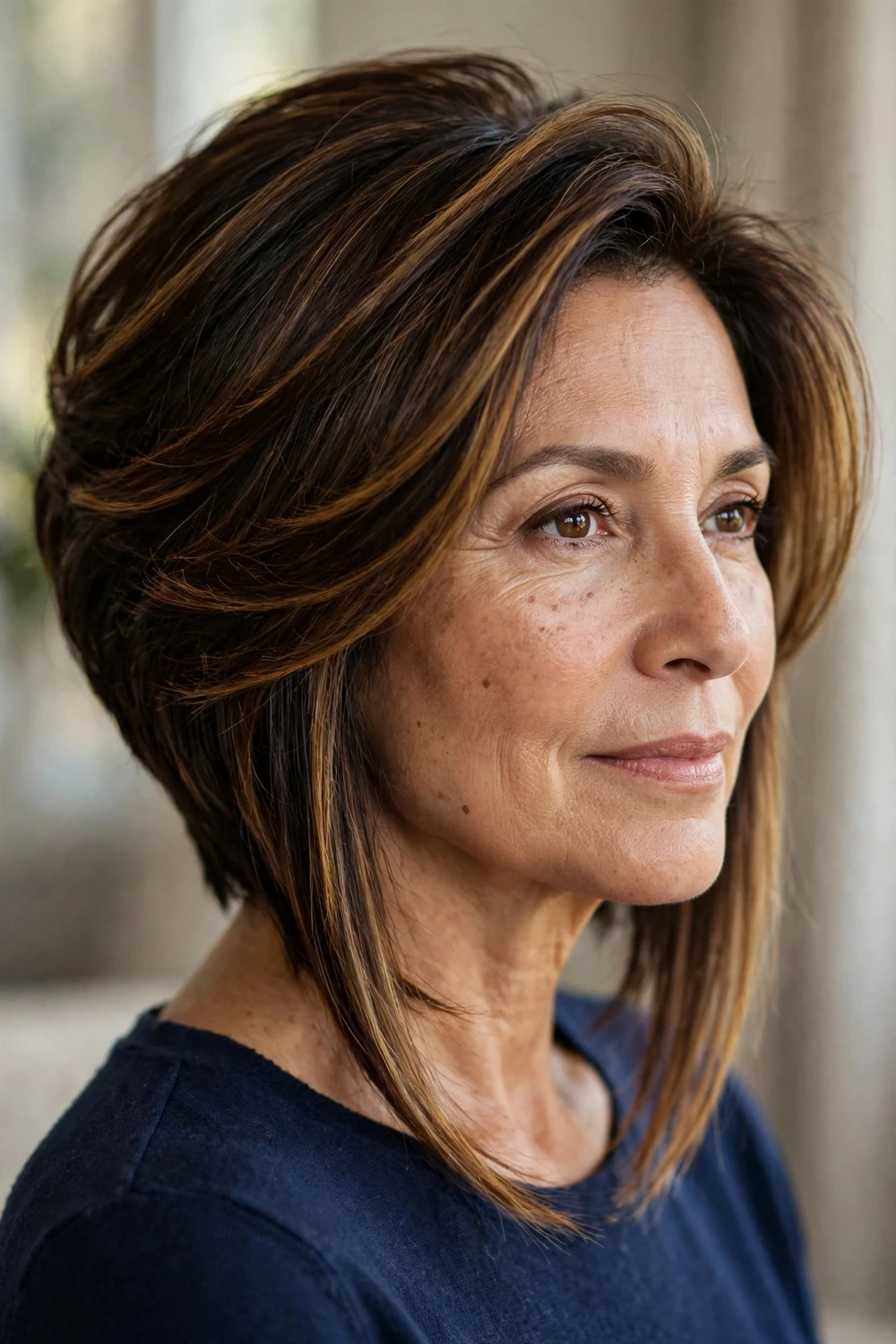
If you want a little drama at the front, the angled stacked bob delivers it. The perimeter slopes diagonally from shorter at the back to longer near the chin, creating a sharp, deliberate line along the jaw. The back still carries the stacked volume, so the cut reads bold without feeling heavy. This shape flatters fine to medium hair and draws the eye downward, which can elongate a round face. Keep the angle clean with regular trims, since regrowth softens the line first.
Try this: Apply heat protectant and run a flat iron over just the two front panels. That single pass keeps the angled line razor-sharp without ironing out the volume behind it.
4. Layered Stacked Bob with Side Part
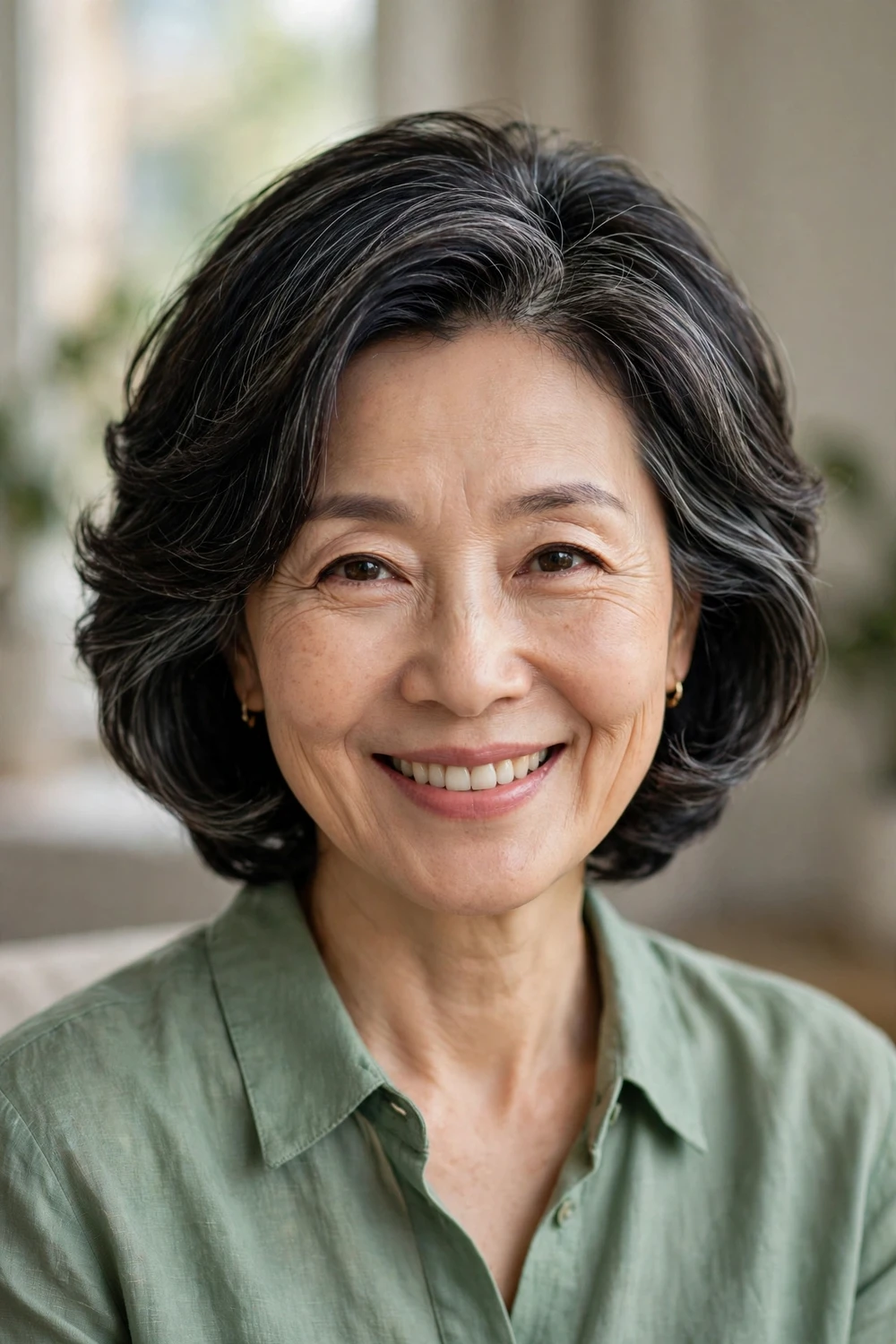
A deep side part changes a stacked bob more than any product can. Flipping the part adds instant lift at the root on the fuller side, and the asymmetry keeps the rounded silhouette from looking too uniform. Longer layers through the top blend the stack into the front, so the cut moves well instead of sitting like a cap. This version suits round faces especially, since the diagonal part breaks up facial symmetry. It also gives fine hair a volume boost without extra layers.
Try this: Work volumizing mousse into damp roots, then blow-dry with the part flipped to the opposite side. Once dry, flip it back for noticeably more lift along the part line.
5. Soft Wavy Stacked Bob
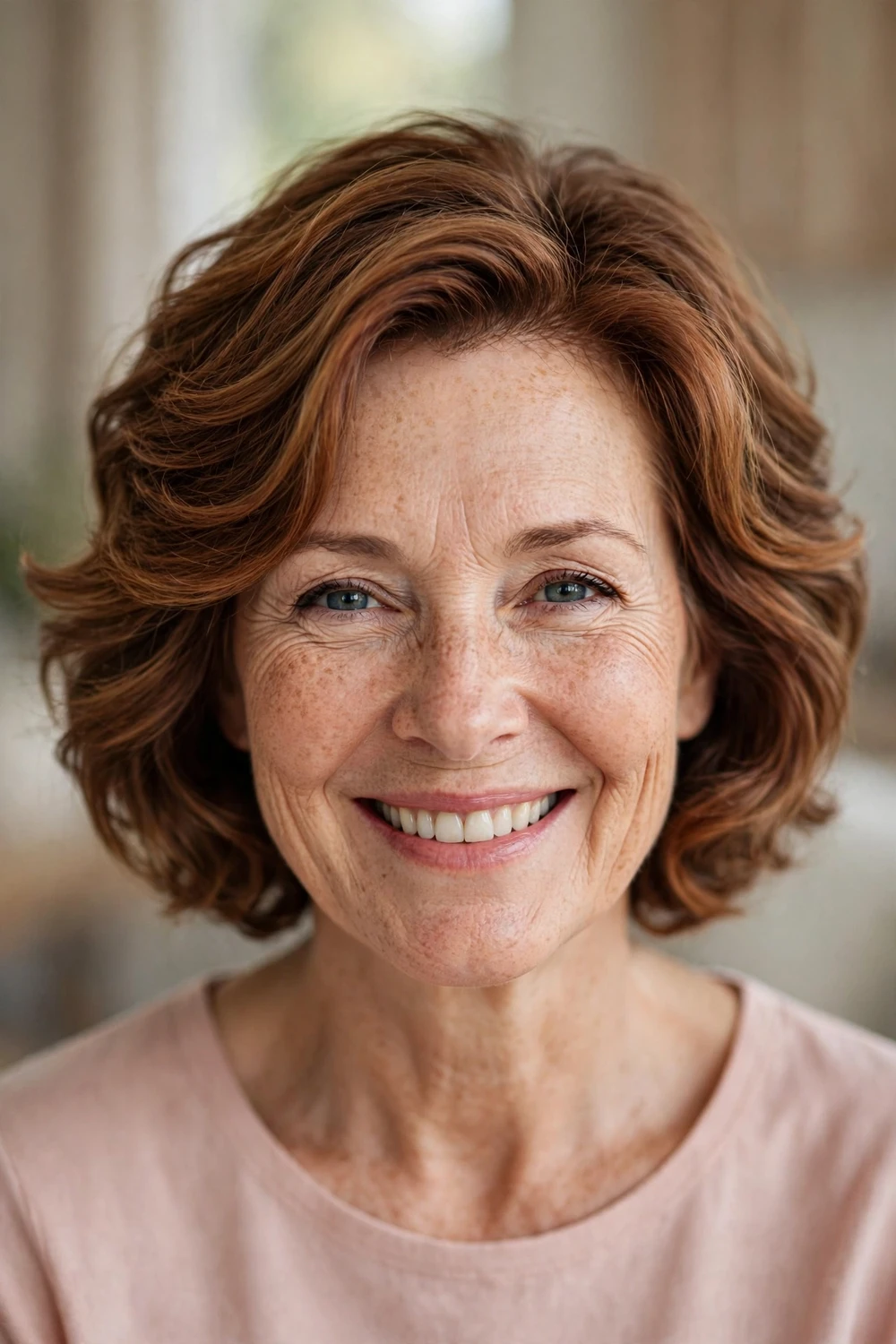
Want the polish of a stacked bob without daily styling? Soft waves are the answer. The stacked back gives the cut its body, while loose waves through the lengths add movement and keep it from looking stiff. This works best if your hair has natural wave or bend; fighting pin-straight hair into waves every morning gets old fast. A curling wand with a wide barrel keeps the waves loose and modern. Let the waves start below the crown so the stacked volume at the back stays smooth and defined.
Try this: After curling, run your fingers through the waves once they’re cool. Finish with a light mist of texturizing spray instead of stiff hairspray for touchable hold.
6. Curly Stacked Bob

For curls that need a defined shape, stacking is one of the best cutting techniques available. The short layers at the back remove weight where curls tend to collapse, while the longer top layers spring up for natural crown volume. Ask your stylist to cut curl by curl or on dry hair, since curly hair shrinks and a wet cut can end up much shorter than planned. This version works for loose waves through tight curls, though tighter patterns need more length to show the stack.
Try this: Scrunch curl cream into soaking-wet hair, then diffuse upside down. The inverted drying pushes the stacked layers up and locks in the volume before the curls fully set.
7. Curly A-Line Stacked Bob
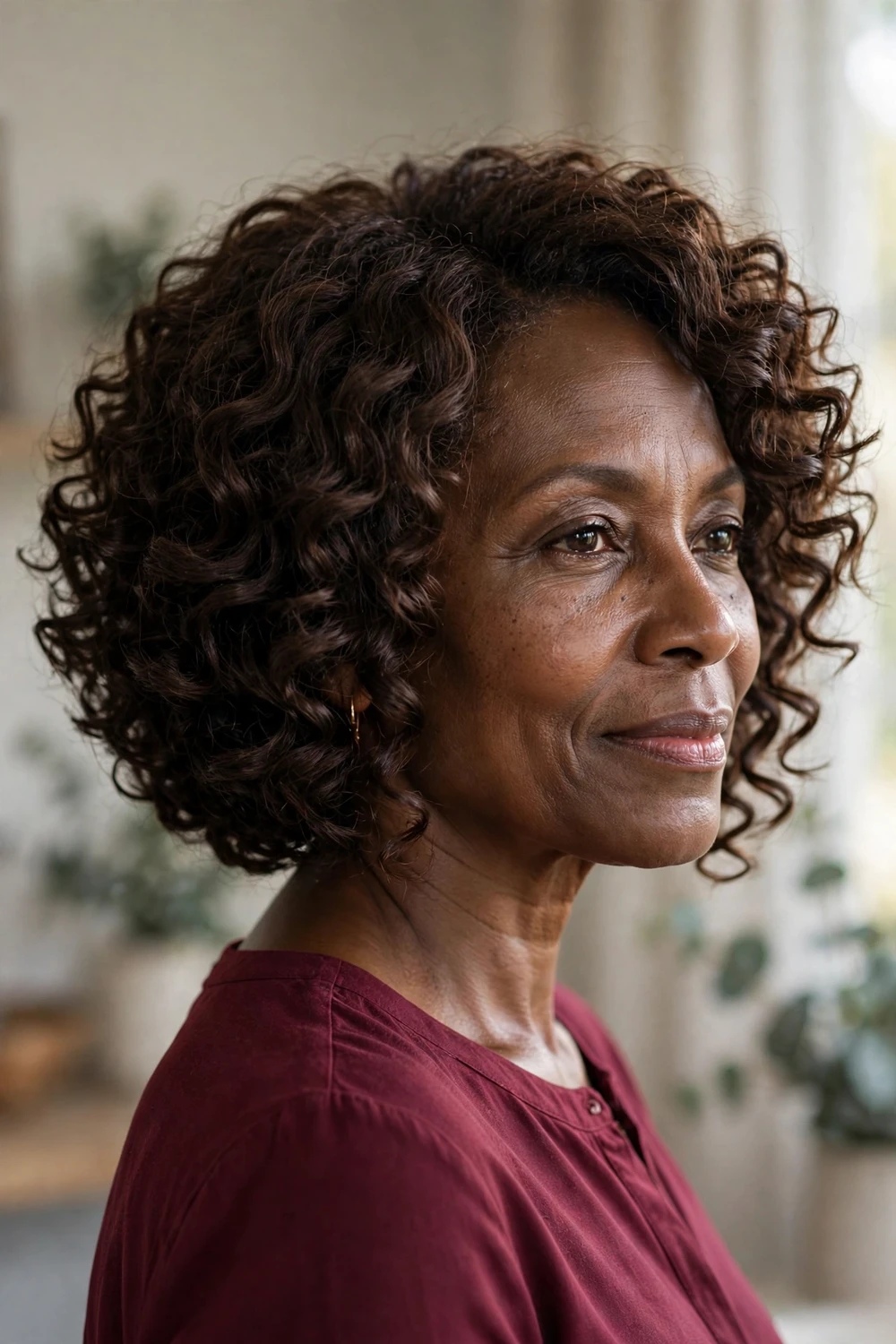
The curly A-line stacked bob shares DNA with the regular curly stacked bob, but the front length is the star here. The perimeter angles forward so the front curls fall noticeably longer than the stacked back, giving you a clear A-line silhouette with curly texture. This suits women who want the volume of stacking but feel a uniform short bob is too severe. The longer front pieces also give you styling options: tuck one side behind the ear or let both frame the face.
Try this: Smooth a drop of lightweight oil over just the front curls after diffusing. It tames frizz on the longest, most visible pieces without weighing down the crown.
8. Pink Stacked Bob
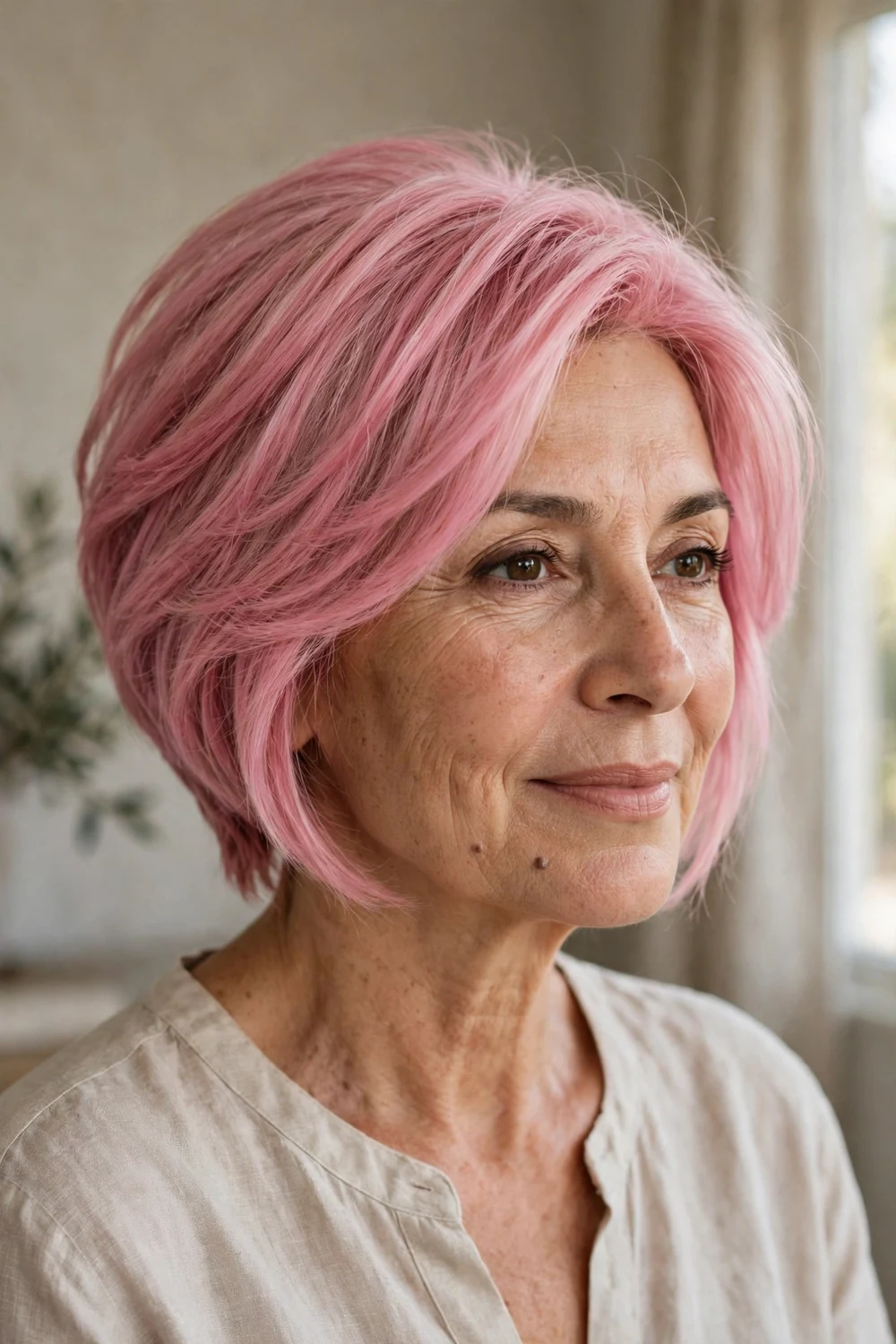
Soft pink turns a classic cut into a personal statement. Pastel pink, dusty rose, or a muted blush all sit well on the stacked silhouette because the color reads differently on each layer: lighter on the lifted crown, deeper in the shadowed nape. This works best on pre-lightened hair, and silver or gray hair actually takes pastel pink well since the base is already light. Expect a salon refresh every 4–6 weeks, since pastels fade faster than deeper shades.
Try this: Use a color-depositing conditioner in pink once a week. It refreshes the tone between appointments and extends the life of the color without an extra salon visit.
9. Glossy Dark Stacked Bob
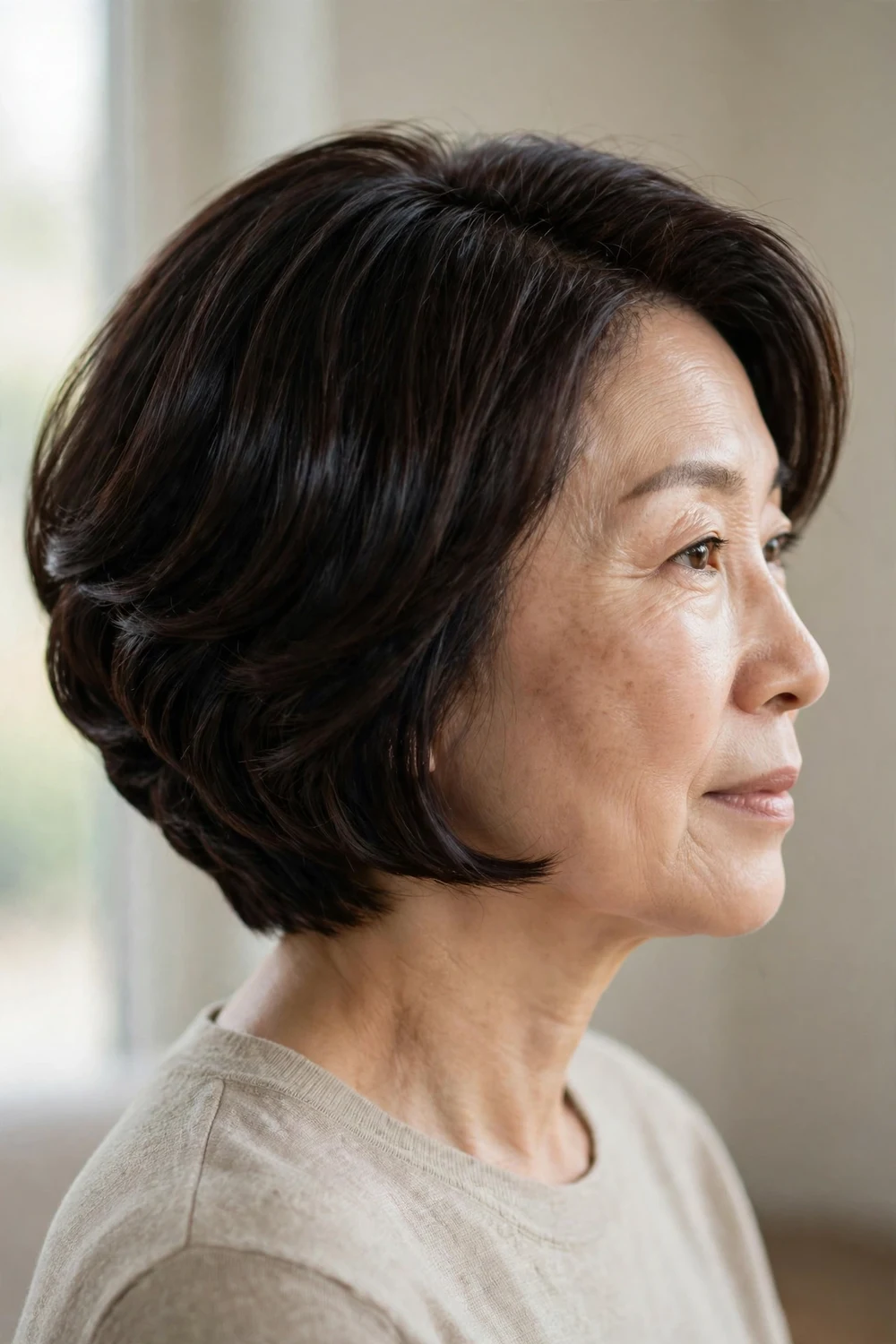
Deep brunette or espresso makes a stacked silhouette look rich and deliberate. The shine plays off the layered structure, catching light differently on each graduated piece, which emphasizes the cut’s shape. This is a strong choice for naturally dark hair, including coarse or gray-resistant hair, since darker dye covers stubborn grays well. A glossing treatment at the salon adds the reflective finish that makes this version work; box color alone tends to look flat on layered cuts.
Try this: Book a clear or espresso gloss every 4–6 weeks. At home, a drop of shine serum on dry ends keeps the reflective finish alive between appointments.
10. Blonde Stacked Bob with Hidden Undercut
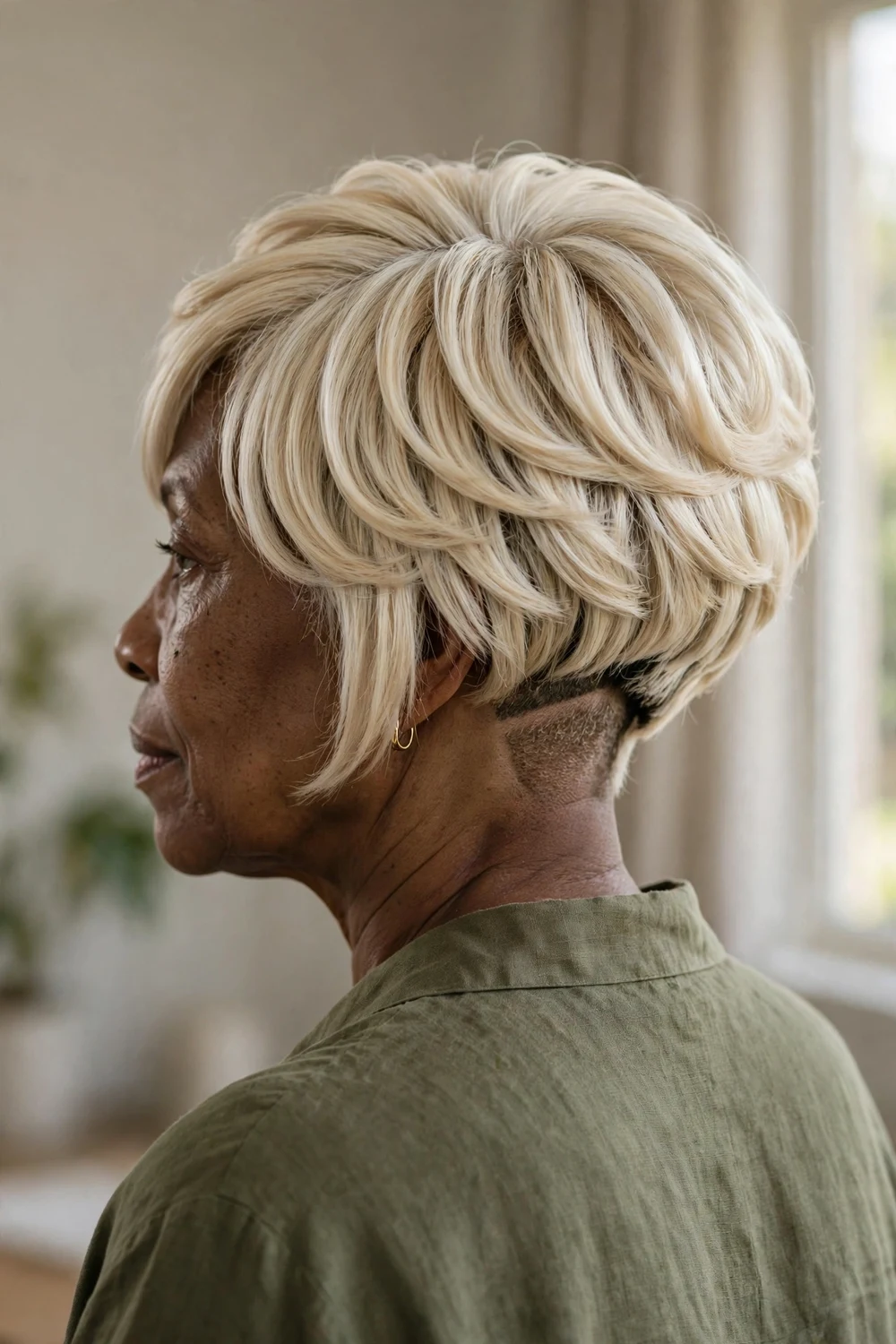
Like the idea of an undercut but not the commitment? A hidden undercut sits underneath the top layers at the nape, removing bulk where thick hair gets heaviest while staying invisible from the front and sides. On blonde hair, it also reduces the drying time that thick, lightened hair is known for. The top layers fall over it completely, so you get the lightness of an undercut with none of the shaved-head look. This is ideal for thick, dense hair that poufs at the back.
Try this: Ask your stylist to keep the undercut fully underneath the top layer with at least two inches of coverage hair. Grow it out anytime by simply letting the nape hair catch up; nothing needs to be shaved to blend.
11. Sleek Black Stacked Bob
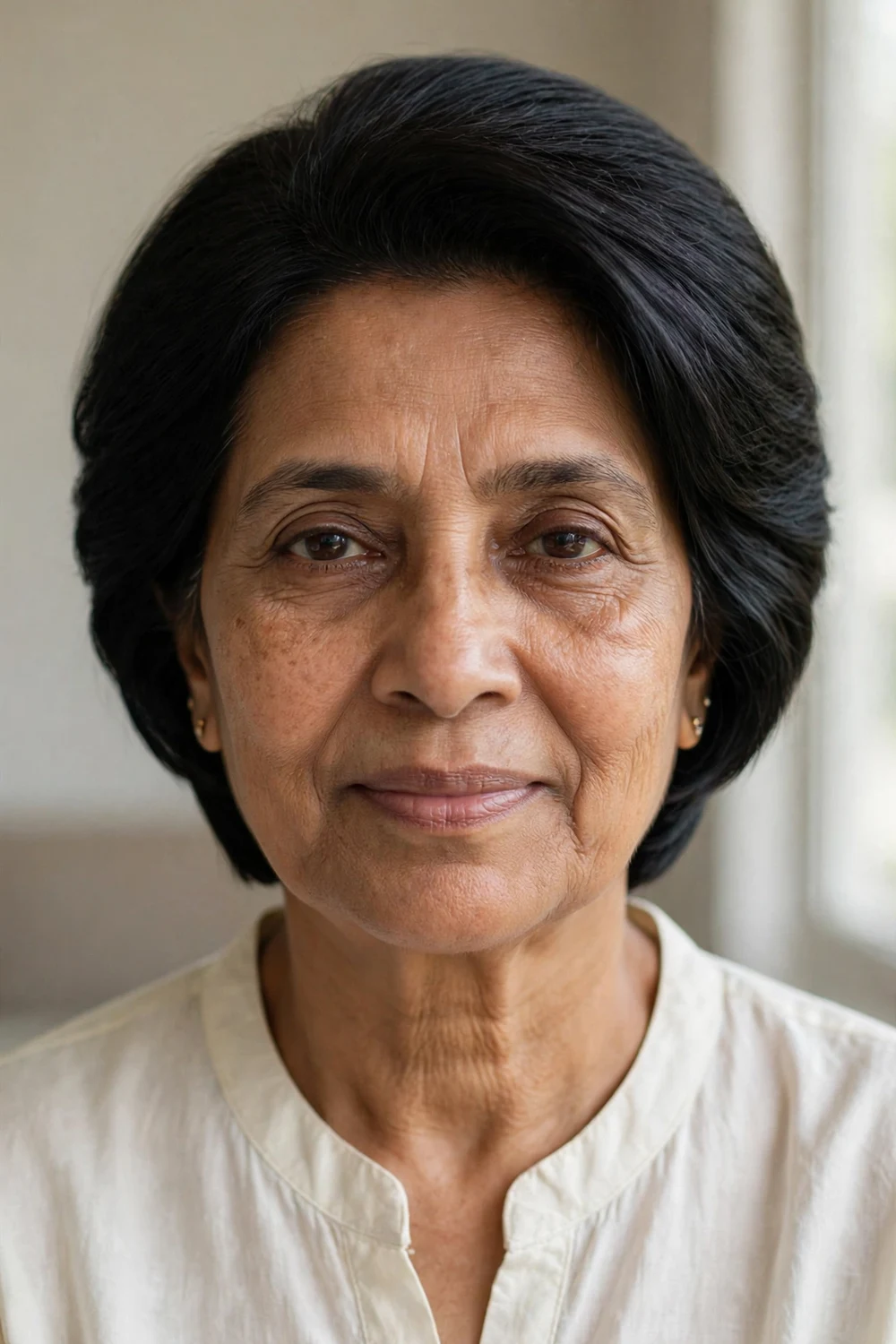
Go for glass-like smoothness and the stacked bob becomes a precision cut. Jet black, blue-black, or the darkest natural brown all emphasize the clean lines of the graduation, and the rounded back catches light as one continuous surface. This version demands the most upkeep of any on this list: roots show fast on dark dye, and any frizz breaks the sleek effect. It’s best for straight or easily straightened hair; very curly hair will need daily heat styling to hold the look.
Try this: Apply heat protectant, then flat iron in small, one-inch sections. Finish with a pea-sized drop of smoothing serum pressed over the top layer only, so the under-layers keep their volume.
12. Silver Stacked Bob with Swept Volume
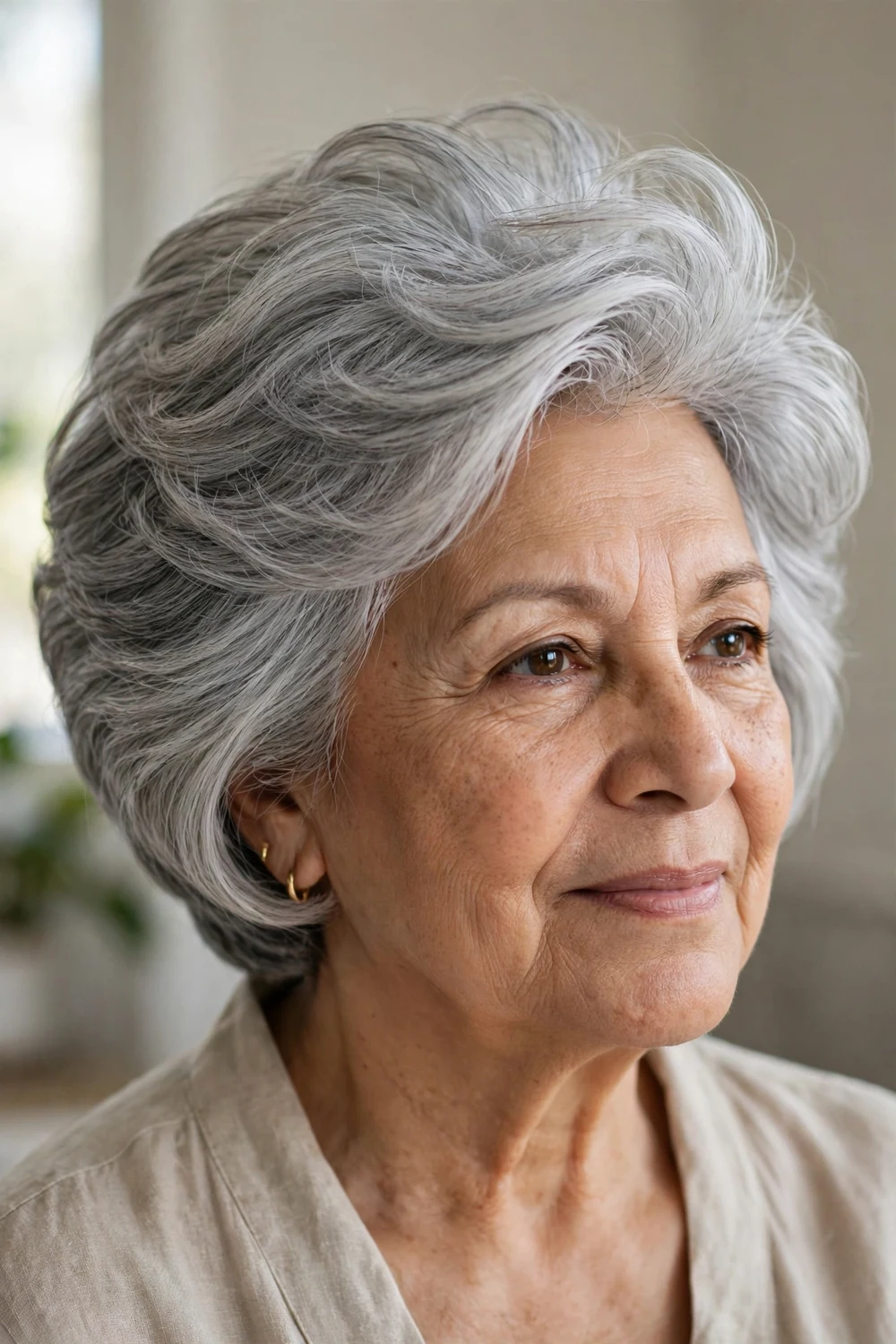
Growing out gray can look intentional with the right cut, and this is it. The stacked shape gives silver hair structure and body, while a deep sweep across the crown shows off the color’s dimension instead of letting it sit flat. Silver strands tend to be coarser and drier, so the cut’s built-in volume works in your favor. This suits anyone transitioning to or already wearing natural gray, white, or silver-dyed hair.
Try this: Wash with purple shampoo once a week to keep silver bright and prevent yellowing. Blow-dry with a round brush, sweeping the top layer to one side for that lifted, side-swept finish.
13. Stacked Pixie Bob
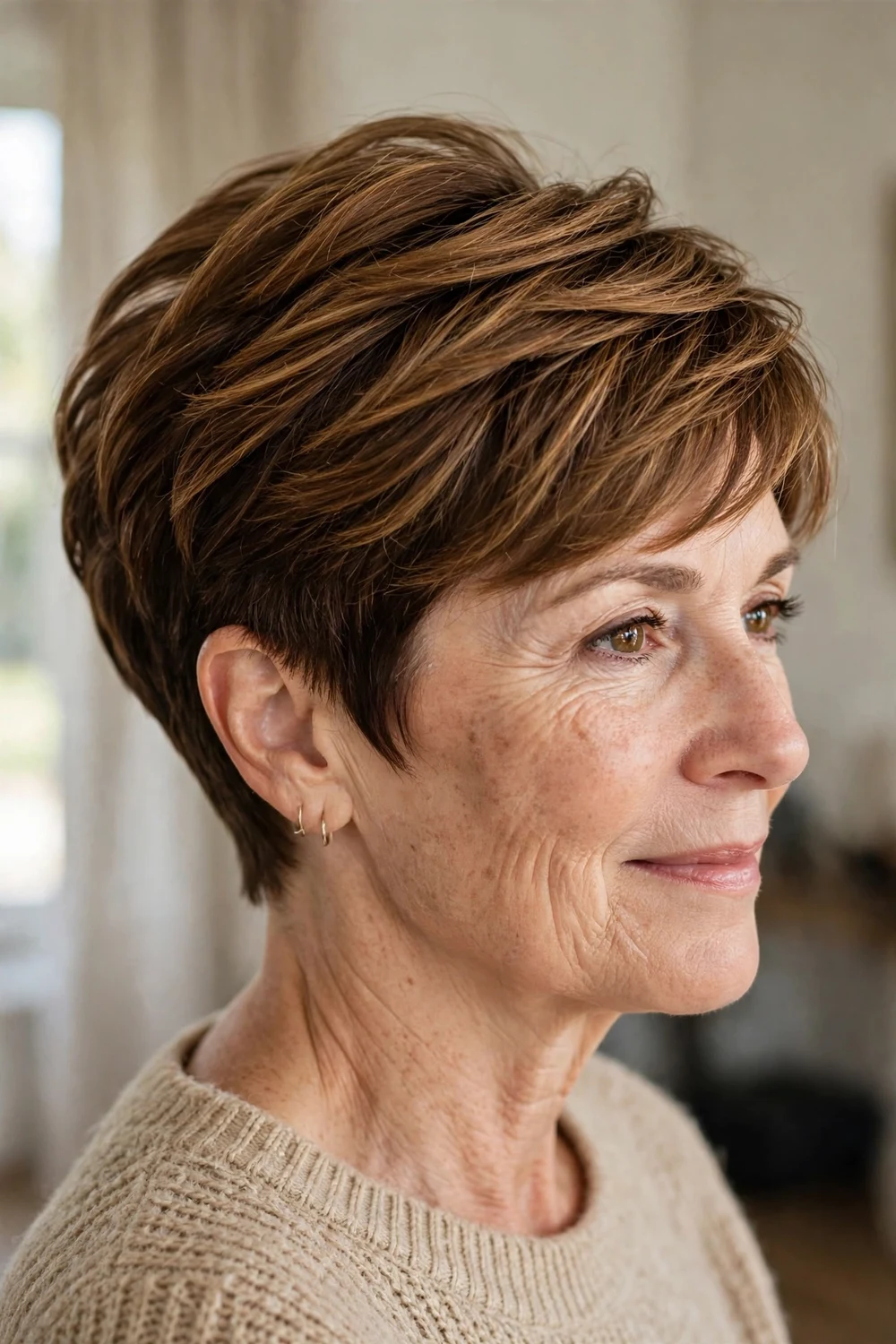
If you’re torn between a pixie and a bob, the stacked pixie bob splits the difference. The back and sides are cut pixie-short, while the top keeps bob length with stacked layering for crown fullness. You get the easy maintenance of a pixie at the nape with more styling options up top. This is a great pick for fine hair, since the short back removes weight and the stacked top creates the illusion of thickness. It also grows out gracefully into a longer stacked bob.
Try this: Rub a small amount of texturizing paste between your palms and pinch it into the dry top layers. The separation highlights the stacked shape without any blow-drying.
14. Stacked Bob with Bangs
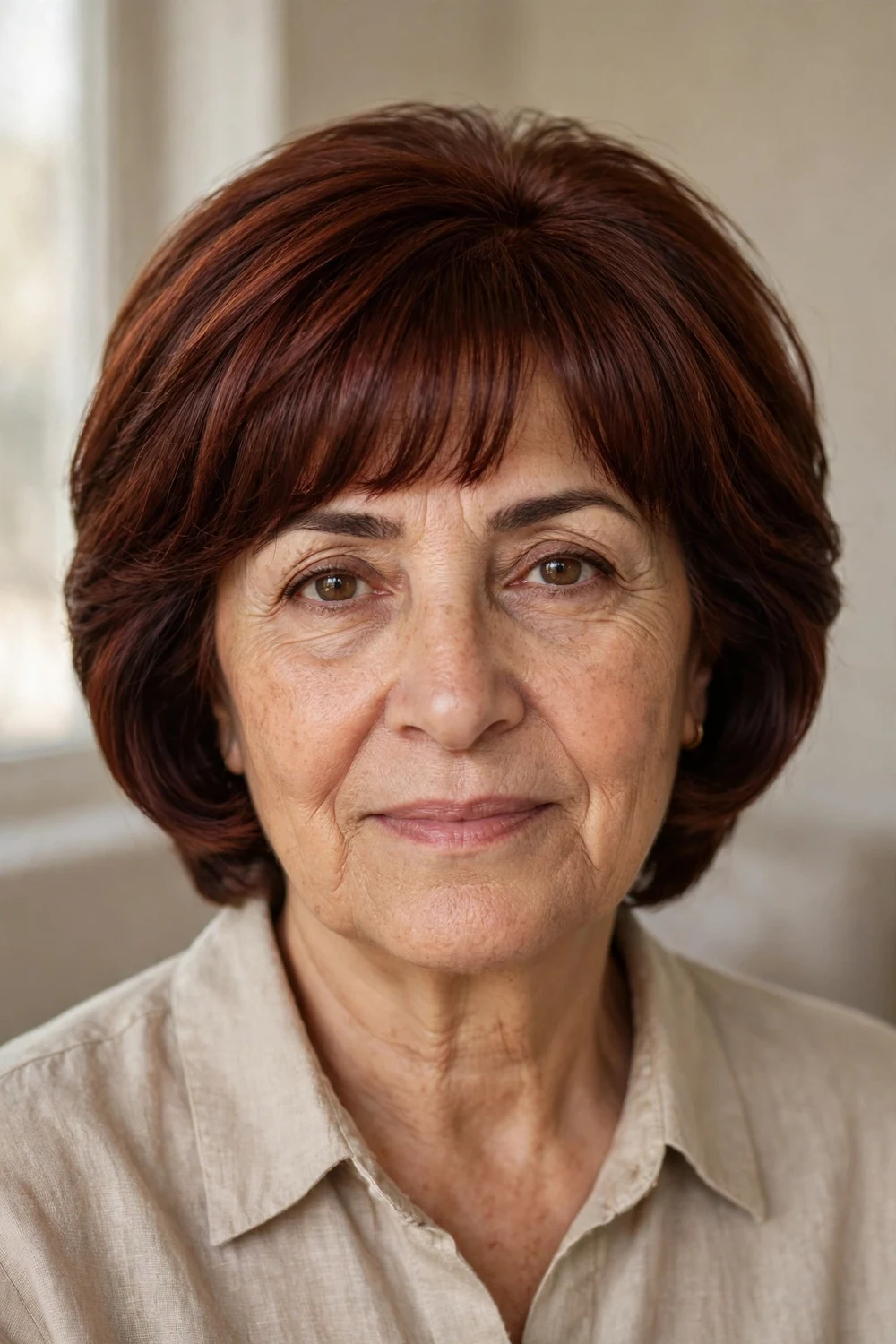
Bangs on a stacked bob: a good idea when they’re the right kind. Wispy, side-swept, or curtain bangs soften the forehead and blend into the face-framing front pieces, while blunt, heavy bangs can close off the face and fight the cut’s rounded shape. The stacked back keeps the overall silhouette balanced, so the bangs read as a detail rather than the whole story. This version suits longer foreheads and anyone who wants a softer hairline.
Try this: Ask for bangs cut to blend, not to sit as a separate panel. Side-swept bangs need a trim every 3–4 weeks, so book fringe touch-ups between full haircuts.
15. Inverted Stacked Bob
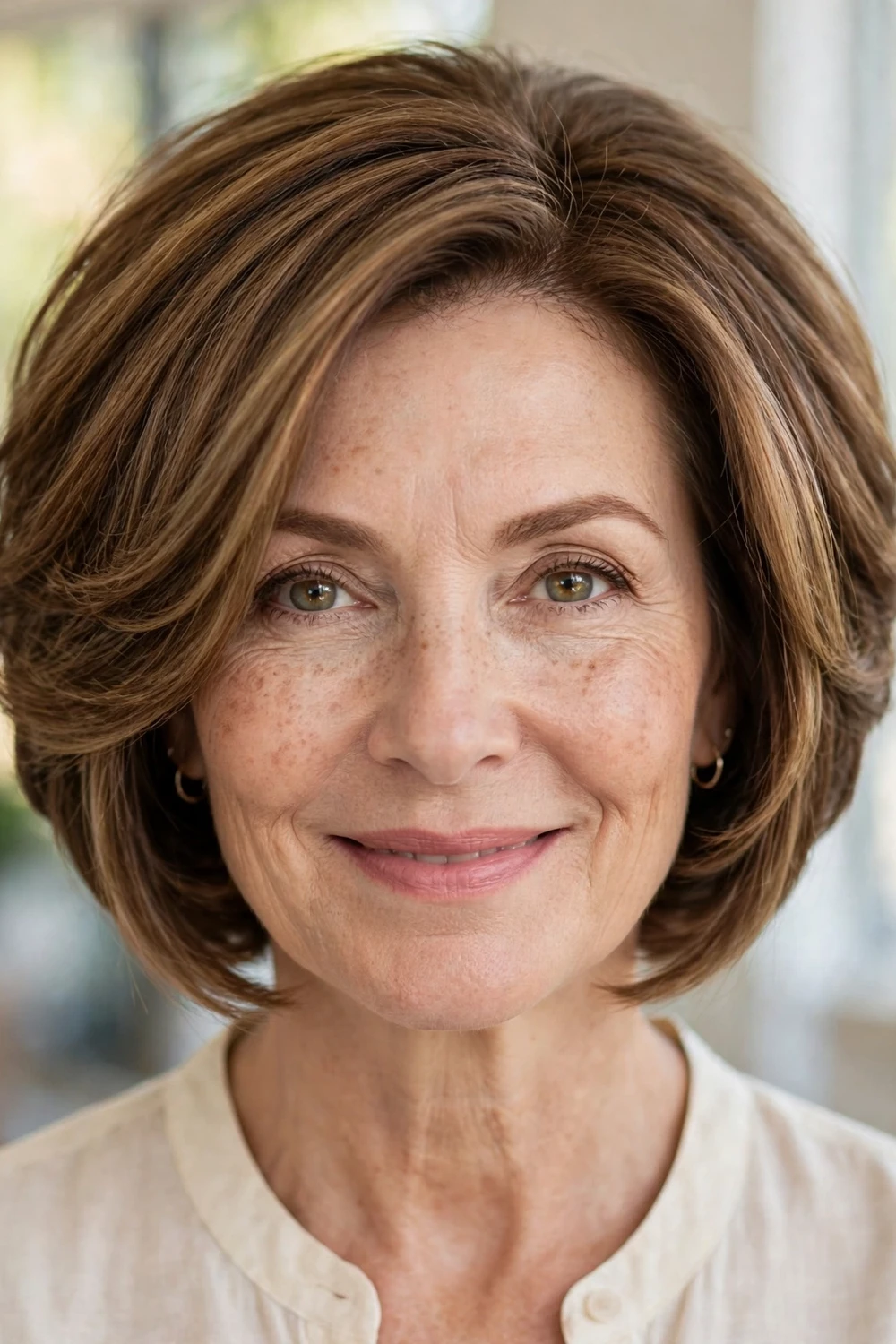
The inverted version flips the classic silhouette into something more sculptural. The back is stacked high and rounded, curving under at the nape, while the front sweeps down and under in a continuous curve rather than a sharp angle. Where the angled bob reads edgy, the inverted bob reads polished and architectural. This suits medium to thick hair best, since the curved-under shape needs weight to hold. Round-brush blow-drying is non-negotiable here: the curve has to be set while the hair is hot.
Try this: Apply heat protectant and volumizing mousse, then blow-dry with a large round brush, rolling each back section under as you go. A cool shot from the dryer locks the curve in place.
16. Choppy Stacked Bob
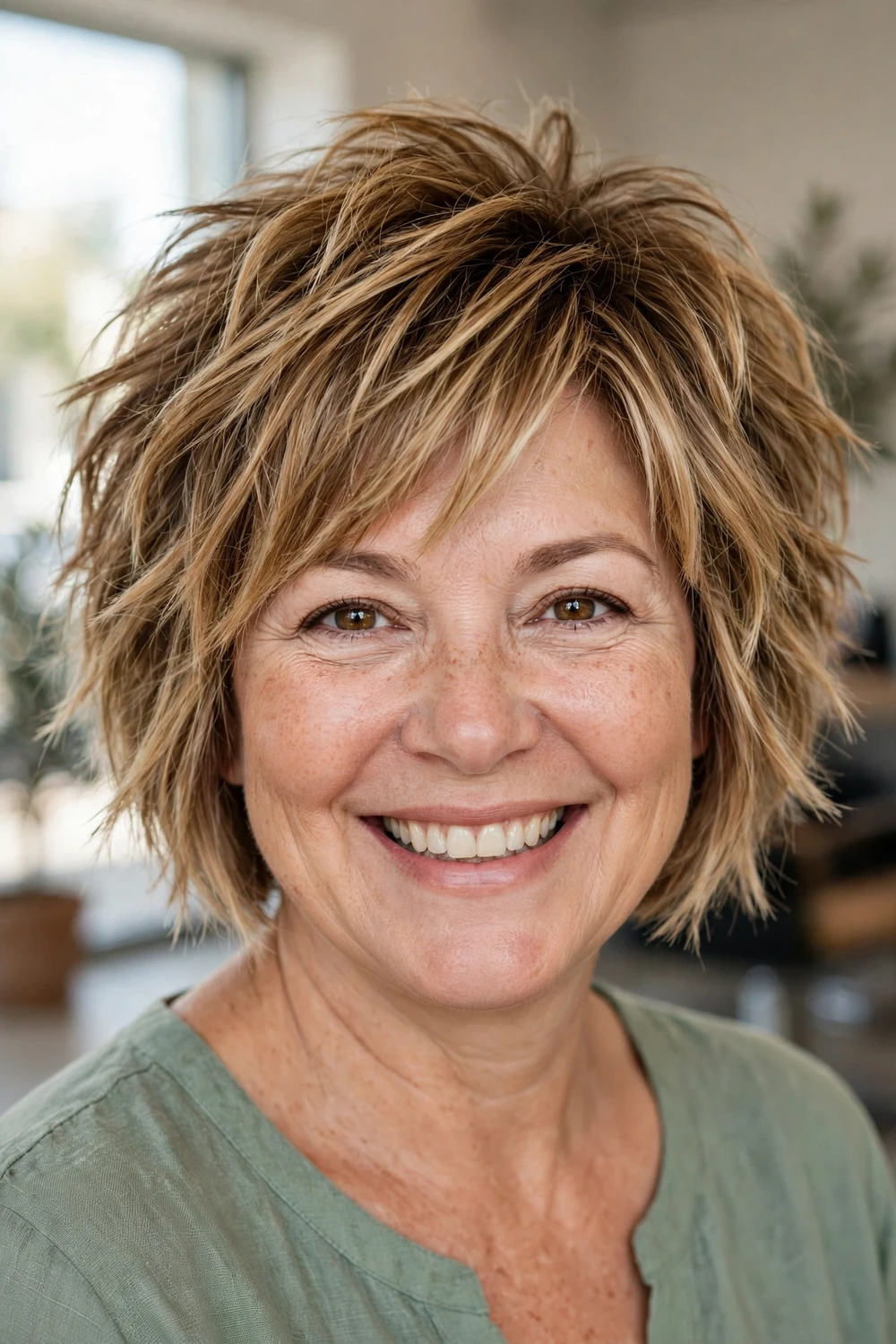
Choppy ends make a stacked bob read younger and looser. Razor-cut or deeply point-cut layers break the outline into uneven pieces, so the cut looks lived-in rather than salon-fresh. This works best on medium to thick hair, where there’s enough density to chop without going wispy. The choppy texture also hides regrowth well, so you can stretch trims a week or two past the usual schedule. Fine hair should approach this one cautiously: too much choppiness can make thin hair look thinner.
Try this: Work a matte texturizing product into dry hair and piece out the ends with your fingers. Shiny products fight the choppy effect, so keep the finish matte.
17. Feathered Stacked Bob

Feathered layers bring back a soft, airy finish that suits the stacked shape surprisingly well. The ends are thinned and angled so they flick outward or flip softly, lightening the heavy look that stacking can sometimes create. This version flatters fine to medium hair, since feathering removes just enough weight to add movement without sacrificing fullness. It’s also a comfortable choice if you find blunt stacked bobs too severe around the face.
Try this: Blow-dry with a medium round brush, flipping the ends outward as you release each section. A light mist of flexible-hold hairspray keeps the feathering in place without stiffness.
18. Stacked Bob for Fine Hair

Stacking is one of the few cuts that makes fine hair look genuinely thicker. The short graduated layers at the nape act as a foundation, propping up the longer top layers so the crown reads full. The key is restraint: the graduation should be precise and the ends kept fairly blunt, since over-thinning or over-layering removes the very density you’re trying to build. This is a technical cut, so bring photos and choose a stylist experienced with fine hair.
Try this: Apply volumizing mousse to damp roots and a root-lift spray at the crown, then blow-dry upside down for the first two minutes. Flip upright and finish with a round brush for a smooth, full result.
19. Salt and Pepper Stacked Bob

Why fight the gray when you can work with it? A salt-and-pepper blend, where natural gray weaves through your darker base, looks modern and low-maintenance on a stacked cut. The layered structure actually helps the blend: light catches differently on each layer, so the mix reads as dimension rather than regrowth. Keep the cut itself sharp with regular trims, since a crisp shape is what makes natural gray look like a choice rather than neglect.
Try this: Use a sulfate-free shampoo to keep both the gray and dark strands from dulling. If your gray tends yellow, alternate in a purple shampoo every third wash.
20. Round Stacked Bob

A rounded silhouette softens angular faces and gives the stacked bob a classic, finished feel. The layers curve under evenly all the way around, from the stacked nape through the jaw-length front, creating one continuous arc. This differs from the inverted bob in that the curve is uniform rather than dramatic: no high back, no sweeping front, just a smooth bowl of shape. Medium-density straight to wavy hair holds the roundness best; very fine hair may need the graduation stacked a touch higher.
Try this: Blow-dry with a large round brush, rolling every section under from roots to ends. Set each section with a cool shot before moving on so the rounded shape holds all day.
21. Asymmetrical Stacked Bob
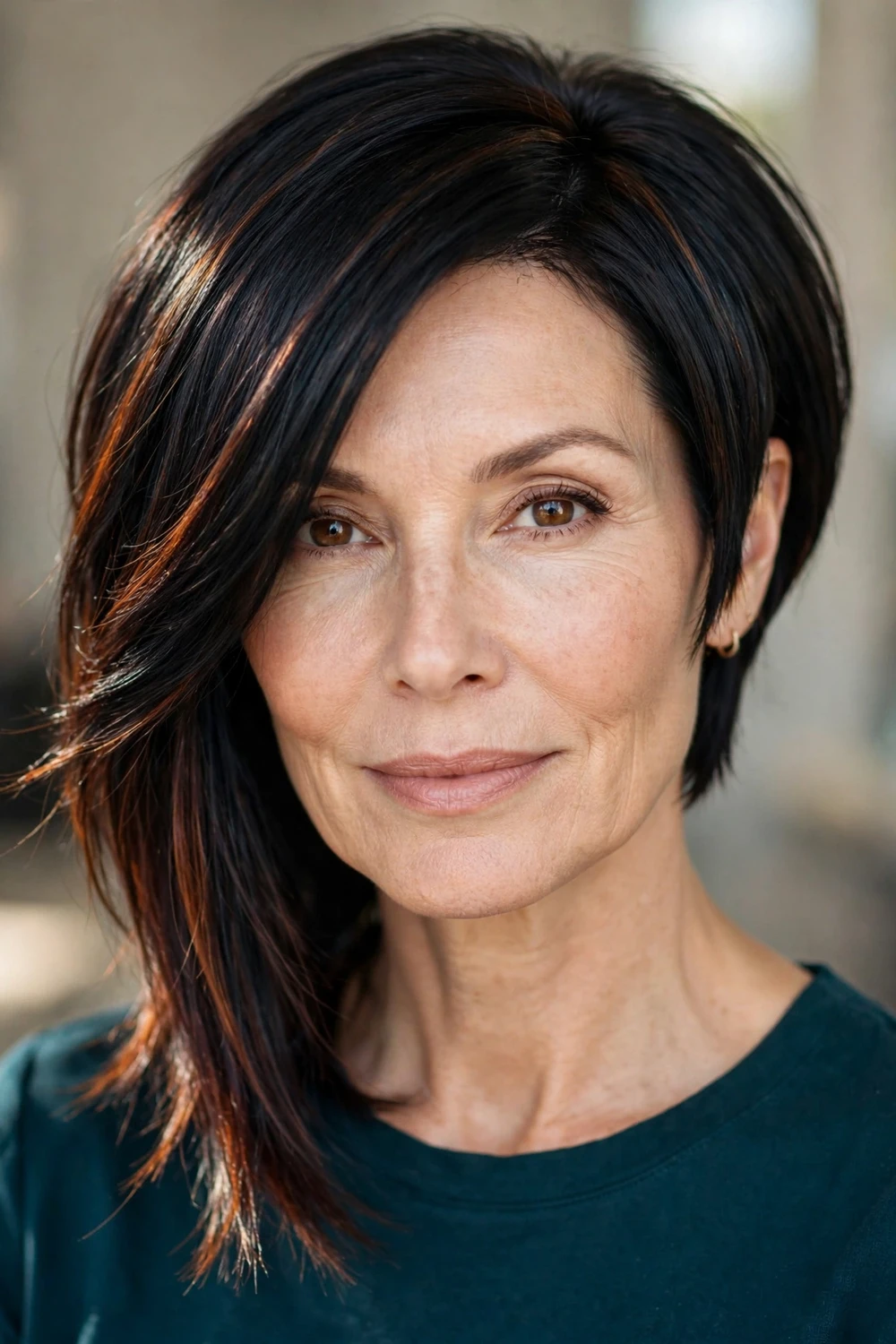
One side longer changes everything about this cut. The asymmetrical stacked bob keeps the stacked volume at the back but cuts one front panel noticeably longer than the other, creating a bold diagonal line across the face. The difference can be subtle (an inch) or dramatic (several inches) depending on your comfort level. This suits confident dressers and works best on straight to slightly wavy hair, since the asymmetry needs to read clearly. A deep side part on the longer side shows the shape off best.
Try this: Flat iron only the longer front panel with heat protectant for a crisp contrast against the textured, voluminous back. The straight-long versus full-back contrast is what makes this cut work.
Short Stacked Bob Hairstyles Comparison at a Glance
| Style | Best Hair Type | Maintenance |
|---|---|---|
| Classic Graduated Stacked Bob | Straight to slightly wavy, medium to thick | Medium: trims every 6–8 weeks |
| Textured Stacked Bob | Medium to thick | Low: piecey ends hide regrowth |
| Angled Stacked Bob | Fine to medium | Medium: keep the angled line sharp |
| Layered Stacked Bob with Side Part | Fine to medium, round faces | Low: part does the styling work |
| Soft Wavy Stacked Bob | Naturally wavy | Medium: regular curling or wand work |
| Curly Stacked Bob | Wavy to tight curls | Low: curl cream and diffusing |
| Curly A-Line Stacked Bob | Wavy to curly | Low to medium: maintain the A-line shape |
| Pink Stacked Bob | Pre-lightened or gray hair | High: color refresh every 4–6 weeks |
| Glossy Dark Stacked Bob | Dark, coarse, or gray-resistant hair | High: roots and gloss upkeep |
| Blonde Stacked Bob with Hidden Undercut | Thick, dense blonde hair | Medium: undercut needs periodic re-cutting |
| Sleek Black Stacked Bob | Straight or easily straightened | High: roots show fast, daily smoothing |
| Silver Stacked Bob with Swept Volume | Gray, white, or silver hair | Medium: purple shampoo routine |
| Stacked Pixie Bob | Fine hair | Low: minimal styling needed |
| Stacked Bob with Bangs | Most hair types | Medium: fringe trims every 3–4 weeks |
| Inverted Stacked Bob | Medium to thick | Medium: round-brush blow-dry |
| Choppy Stacked Bob | Medium to thick | Low: texture hides regrowth |
| Feathered Stacked Bob | Fine to medium | Low to medium: occasional blow-dry |
| Stacked Bob for Fine Hair | Fine, thin hair | Medium: precise trims keep density |
| Salt and Pepper Stacked Bob | Natural gray-blend hair | Low: no color upkeep needed |
| Round Stacked Bob | Straight to wavy, medium density | Medium: round-brush styling |
| Asymmetrical Stacked Bob | Straight to slightly wavy | Medium: keep the asymmetry even |
How to Choose the Right Stacked Bob for You
Start with your hair texture, not the photo. Thick hair can handle any version here, but it needs the nape stacked short enough to remove real bulk. Fine hair does best with precise, lighter stacking and blunt ends that protect density. Curly hair needs a stylist who cuts curls dry, while very straight hair shows every line, so the cut has to be exact.
Next, think about your daily routine. If you won’t blow-dry, lean toward the textured, choppy, or curly versions that look good air-dried. If you enjoy styling, the sleek, inverted, and round versions reward the effort. Your face shape matters too: round faces benefit from side parts and angled fronts, while longer faces suit fuller sides and bangs.
Finally, consider color plans. If you’re growing out gray or going silver, pick a shape that looks deliberate with natural color, like the silver swept or salt-and-pepper versions. For a gentler, Parisian-leaning take on short hair, browse these short french bobs to compare the softer, less structured alternative.
Growing Out a Stacked Bob
Growing out a stacked bob takes patience, but the awkward phase is manageable with a plan. The back grows faster visually than the front, so the main job is letting the nape catch up while the front gains length. Book shaping trims every 8–10 weeks where your stylist takes length off the back only, gradually evening out the graduation instead of cutting everything.
Around the three-to-four-month mark, most stacked bobs transition naturally into a stacked lob, which is a legitimate style in its own right. If the back starts to look bulky or shelf-like, ask for internal layers to remove weight without losing length. Headbands, side parts, and tucked-back styling get you through the in-between weeks.
For a broader look at bob options as your hair gains length, see these bob haircuts for women over 50 for shapes that work at every stage of the grow-out.
Mistakes to Avoid
The most common mistake is over-thinning. Stacked layers already remove weight at the back, so aggressive thinning on top leaves the cut wispy and flat. If your stylist reaches for thinning shears on fine hair, ask what they’re trying to achieve first. Another frequent error is cutting the nape too short without discussing it: once it’s shaved or clippered, you’re committed for months.
Skipping trims is the slow killer of this cut. After about eight weeks, the stacked back loses its shape and starts to look bulky instead of rounded. Book your next appointment before you leave the salon. Heavy styling products cause a similar problem: too much wax or oil collapses the crown volume that the whole cut depends on.
If your hair is on the finer side and you’re worried about losing fullness, compare notes with these stacked bob hairstyles for fine hair for density-friendly variations of the cut.
Bang choice matters more than most people expect. Blunt, heavy bangs can close off the face and fight the rounded silhouette, while the wrong angle on an angled or inverted shape throws off the whole line. When in doubt, start with longer, side-swept bangs that can be shortened later.
The curved-under front of an inverted shape changes the same stacked foundation more than you’d expect from such a small adjustment. To see that curve in action, look at inverted bob hairstyles for examples built on the same stacked base.
Frequently Asked Questions
Are stacked bobs good for women over 50?
Yes. The stacked layers at the back create crown volume that counteracts the thinning many women notice after 50, and the shorter nape keeps daily styling quick. The longer front pieces frame the jaw and cheekbones, which suits most face shapes. It’s one of the most requested cuts in this age group because it looks polished with minimal effort.
How often should I trim a stacked bob?
Every 6–8 weeks. The graduated shape at the back is what makes a stacked bob work, and it loses definition as it grows. Waiting longer usually leads to a bulky, shelf-like back instead of a smooth rounded shape. If you have bangs, book fringe trims every 3–4 weeks between full appointments.
Will a stacked bob work on fine, thin hair?
Yes, and it’s one of the better cuts for fine hair. The short layers at the nape prop up the top layers, creating the appearance of fullness at the crown. The key is keeping the graduation precise and the ends fairly blunt, since over-thinning removes the density you’re trying to build. Choose a stylist experienced with fine hair for this cut.
What face shapes suit a stacked bob?
Most face shapes can wear one with the right adjustments. Round faces do well with side parts and angled or asymmetrical fronts that add diagonal lines. Longer faces suit fuller sides and soft bangs that add width. Square jawlines are softened by the rounded back and curved-under front pieces of the inverted or round versions.
How do I style a stacked bob at home?
Apply heat protectant and volumizing mousse to damp hair, then blow-dry with a round brush, lifting each section at the root for crown volume. Roll the back sections under to set the stacked curve, and finish with a cool shot from the dryer. On non-wash days, a little texturizing spray at the roots refreshes the lift without a full restyle.
Final Thoughts
Twenty-one versions, one shared foundation: short graduated layers at the back, fullness at the crown, and a front that frames the face. Pick the version that matches your hair texture and the amount of daily styling you’ll actually do, bring photos to your appointment, and keep up with trims. The stacked bob has stayed popular with women over 50 because it keeps working long after the appointment ends.

