


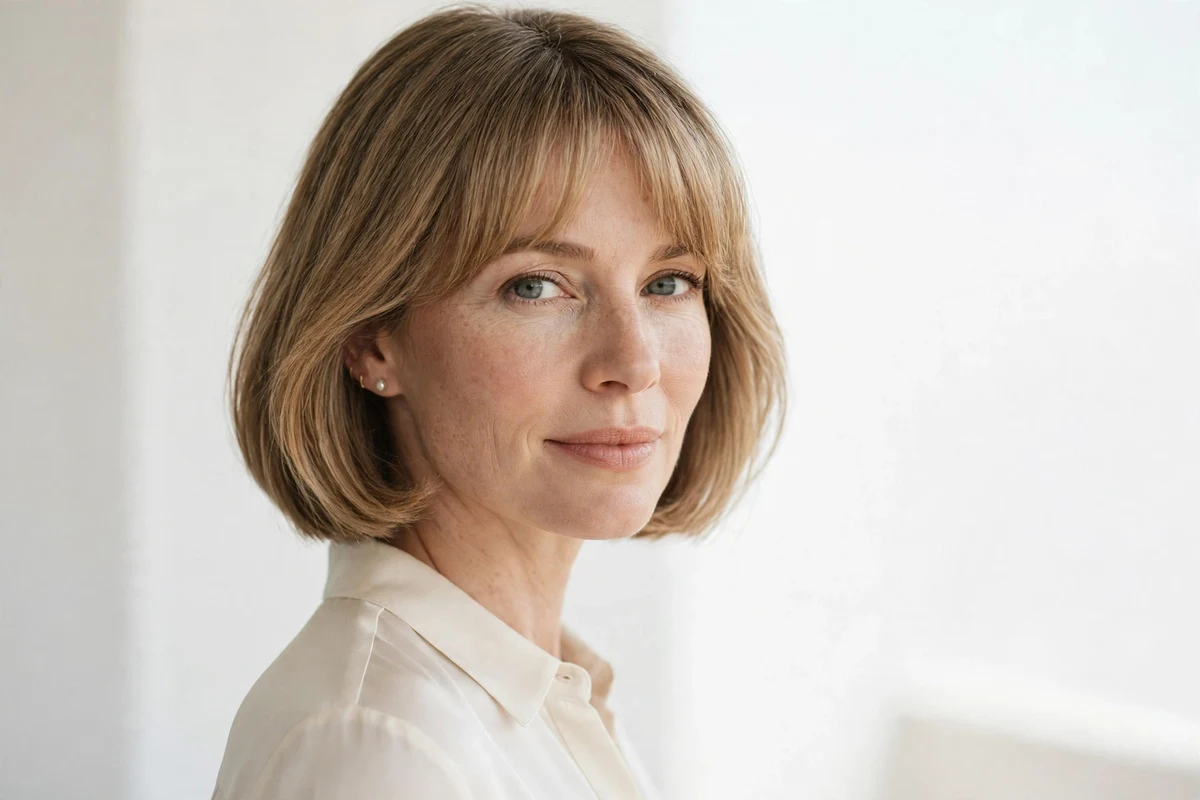
Bangs change everything about a bob on thin hair. A solid fringe across the forehead adds hair exactly where fine strands look sparsest, and the right bob length keeps ends thick instead of stringy.
Below, I cover 23 bob haircuts for thin hair with bangs, from sharp French cuts to soft curtain styles. Each idea includes styling notes so you can keep the volume past day one. After years of looking at what works on fine hair, I have learned that the cut matters more than any product.
Quick answer: The best bob haircuts for thin hair with bangs pair a chin-length or shorter bob with a full, blunt, or curtain fringe. Shorter lengths build volume by removing weight, while a solid fringe adds density across the forehead and crown. Skip razor-thinned bangs, which expose a sparse hairline.
Quick Takeaways
- Keep the bob chin length or shorter. Longer lengths pull thin hair flat.
- Full or blunt bangs add density where fine hair looks thinnest.
- Curtain and side-swept bangs are low risk and grow out gracefully.
- Avoid heavy razor thinning inside the bang section. Keep it thick.
- Blow-drying with root lift makes the biggest daily difference.
Why Bangs Work So Well on Thin Hair
Fine hair shows its thinness most at the hairline and crown. Bangs pull hair forward from higher on the head, which puts more strands across the forehead and builds fullness in that spot. The effect is immediate, and it works even on days you skip styling.
For more cuts that combine thin-hair volume with a face-flattering shape, see these bob haircuts for thin hair round face styles.
The cut around the bangs matters just as much. A bob that ends at the chin or above removes the limp tail that drags fine hair down. Solid, even ends read as one dense block of hair. When the fringe matches that weight, the whole cut looks fuller than the sum of its parts.
What ruins it is over-thinning. Razored, wispy pieces can look airy on thick hair, but on thin hair they expose the scalp. Tell your stylist to keep the bang section generous and to thin with restraint, if at all.
1. Classic Blunt Bob With Straight-Across Bangs
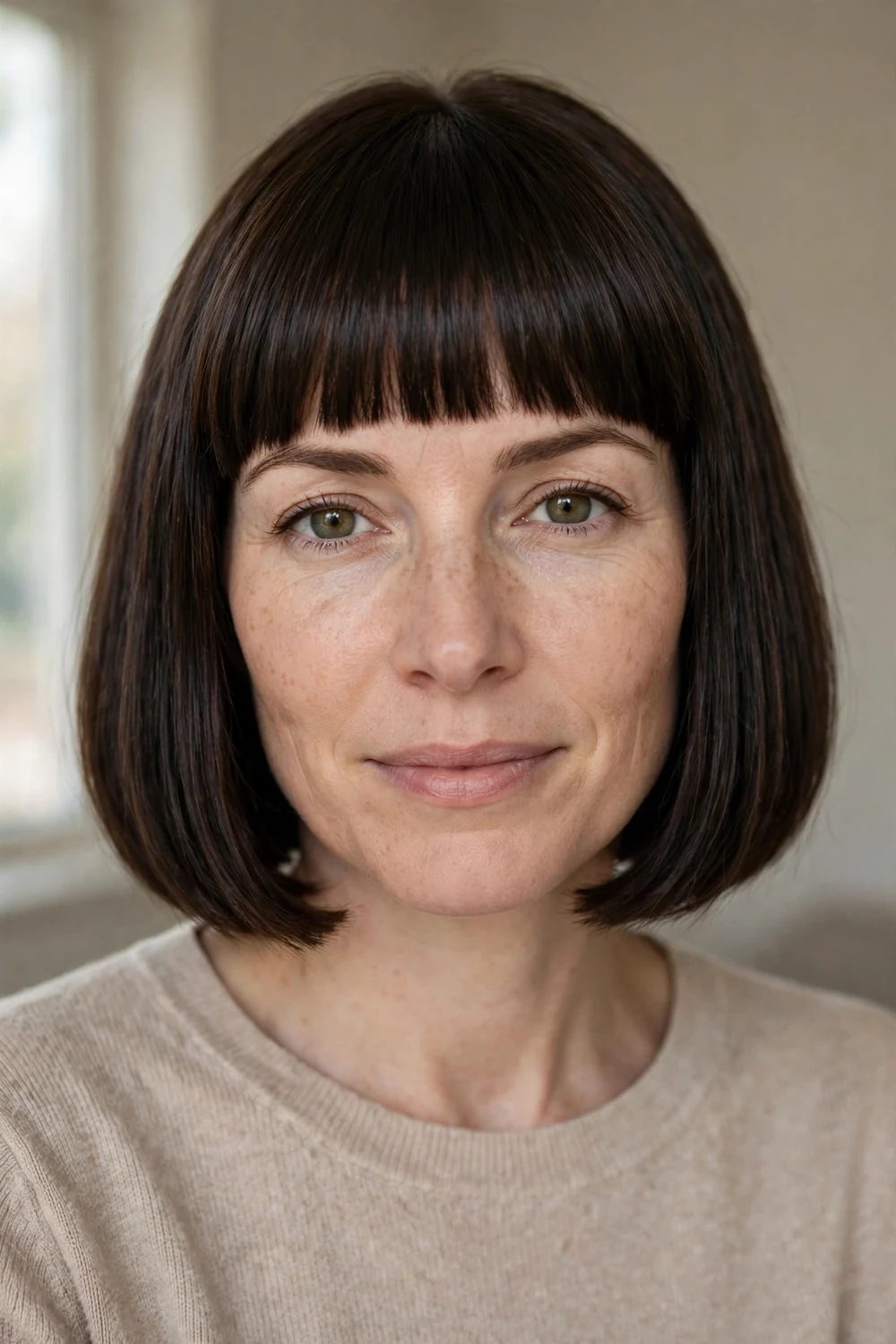
Start with the most reliable option. A one-length blunt bob cut at chin level gives fine hair a single dense bottom edge, and straight-across bangs put real weight across the forehead. This combination suits straight to slightly wavy textures, and it photographs as a much thicker head of hair than it is. Trim the bang line every three to four weeks to keep the edge crisp, since even small growth makes bangs sit unevenly on fine hair.
Try this: Ask your stylist to cut the bangs dry at brow level. Wet bangs shrink up as they dry and can end up a half inch shorter than planned.
2. Chin-Length Bob With Full Bangs
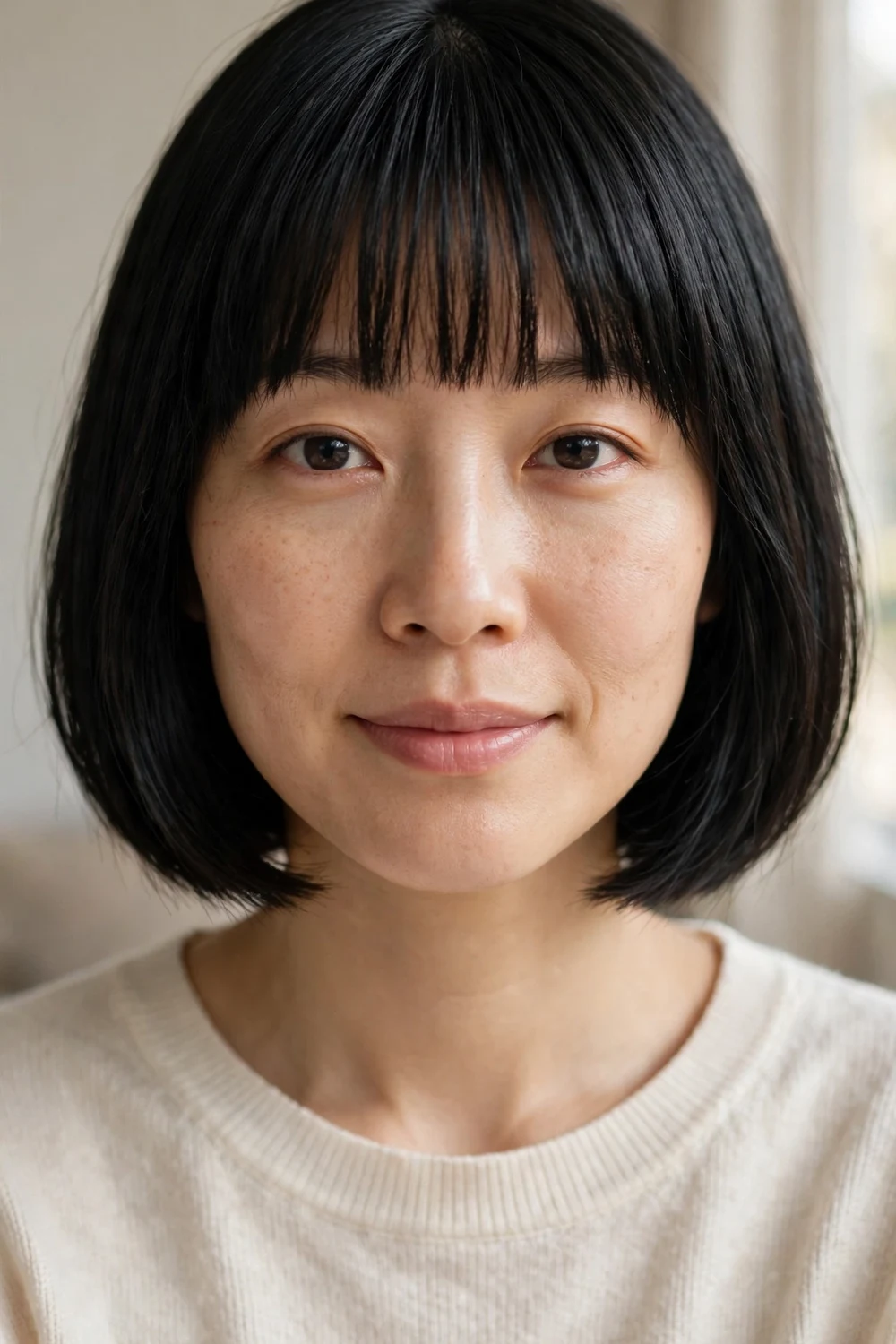
A chin-grazing length keeps weight off your ends, which is the main reason fine hair looks limp in longer cuts. Full bangs cut with minimal layering add a curtain of hair across the forehead and pull the eye to your eyes and cheekbones. The result reads as one continuous frame of hair instead of a thin top layer. This version works on round and oval faces, and it needs only a quick blow-dry to sit correctly each morning.
Try this: Blow-dry the bangs forward with a small round brush first, before they air-dry in an awkward split.
3. French Bob With Micro Bangs
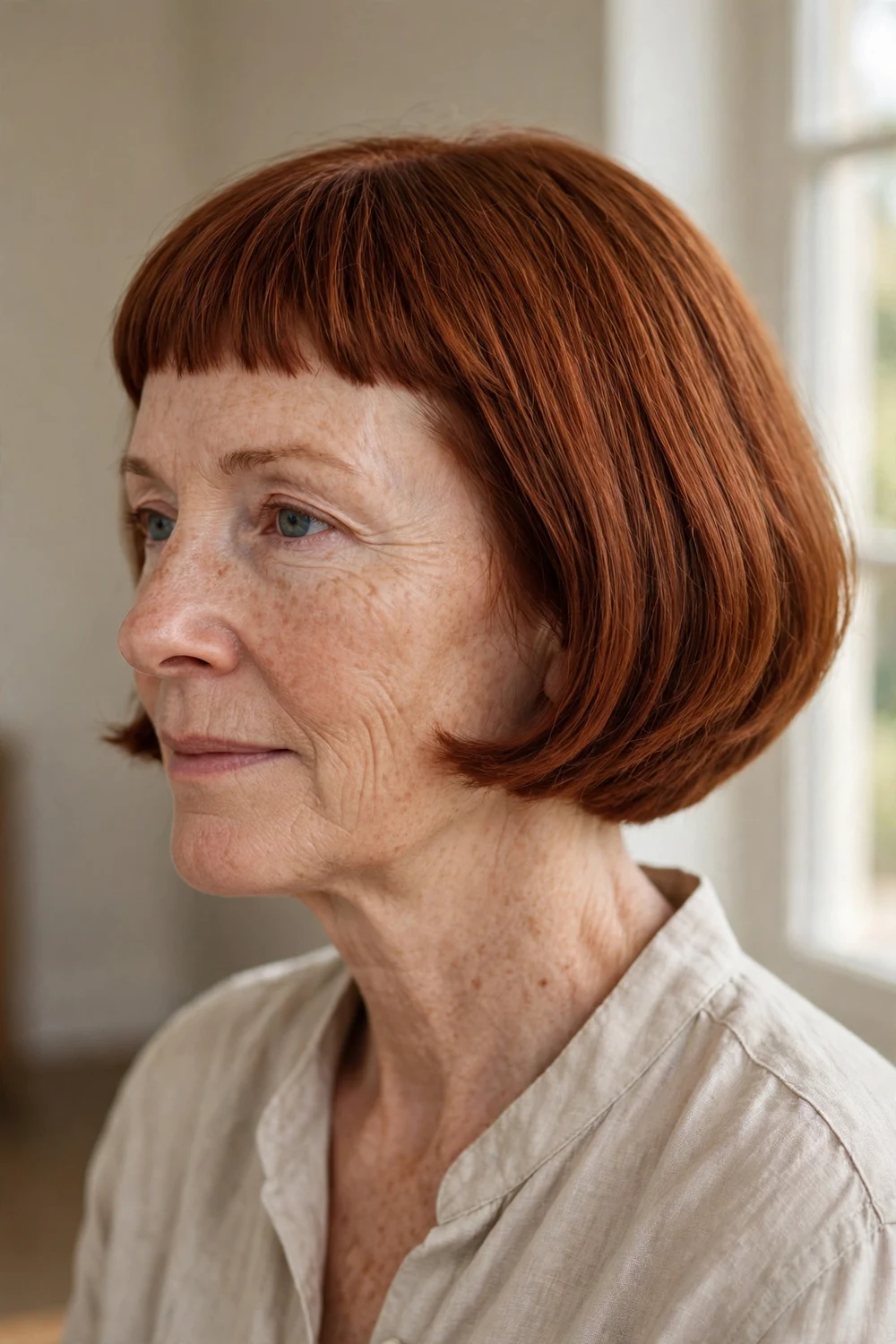
Want something with more edge? The French bob sits at jaw length with a short micro fringe that ends well above the brows. Because the whole cut is short, even very thin hair looks dense, and the micro bangs draw attention upward instead of letting the eye drift down to sparse ends. This style suits confident dressers and needs almost no product. Just be sure your stylist keeps the micro fringe thick, since a skimpy version can look sparse rather than chic.
Try this: Pair it with a deep side part worn once a week for extra lift at the crown when you want a change.
4. Blunt Bob With Curtain Bangs

Blunt ends give thin hair its thickest look, and curtain bangs soften the severity of the cut. The bangs part in the middle and sweep to each side, adding width across the face without removing much hair from the rest of the bob. This is the combo I suggest most for first-time bang wearers, because it grows out better than any other fringe. If you hate it, you can push the pieces back within two months.
Try this: Use a flat iron to flick the curtain pieces outward at the ends for a face-framing lift that holds all day.
5. Bob With Side-Swept Bangs
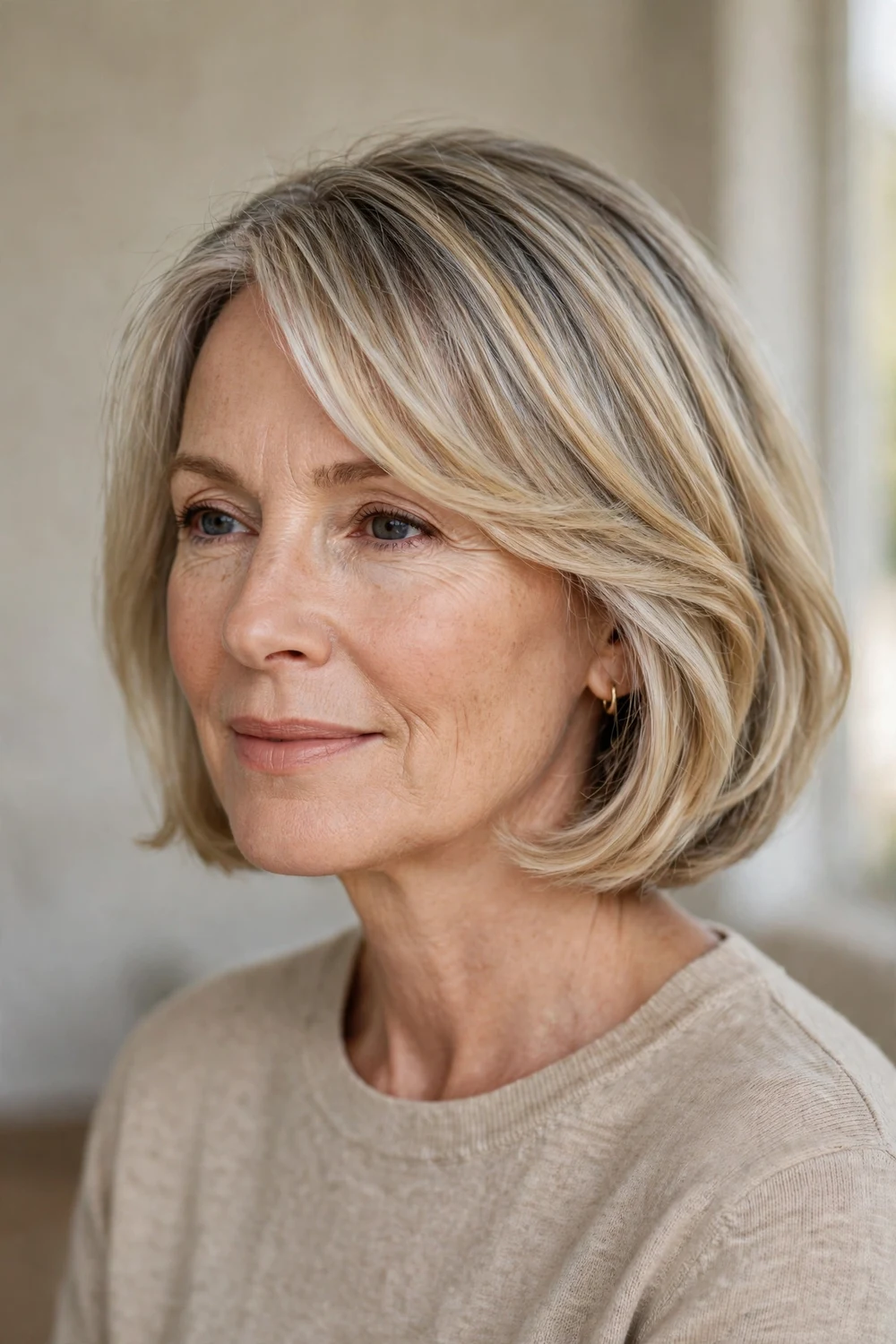
For anyone nervous about committing to bangs, side-swept is the gentle entry point. A long bang swept across the forehead adds diagonal fullness and blends straight into the bob, so there is no harsh line to maintain. It works on fine hair of any age and suits glasses wearers especially well, since the sweep clears the frame. Keep the bang section long enough to tuck behind one ear on low-effort days.
Try this: Set the sweep with a side part created while hair is damp, then pin it flat for five minutes to lock the direction in.
6. Long Bob With Wispy Bangs
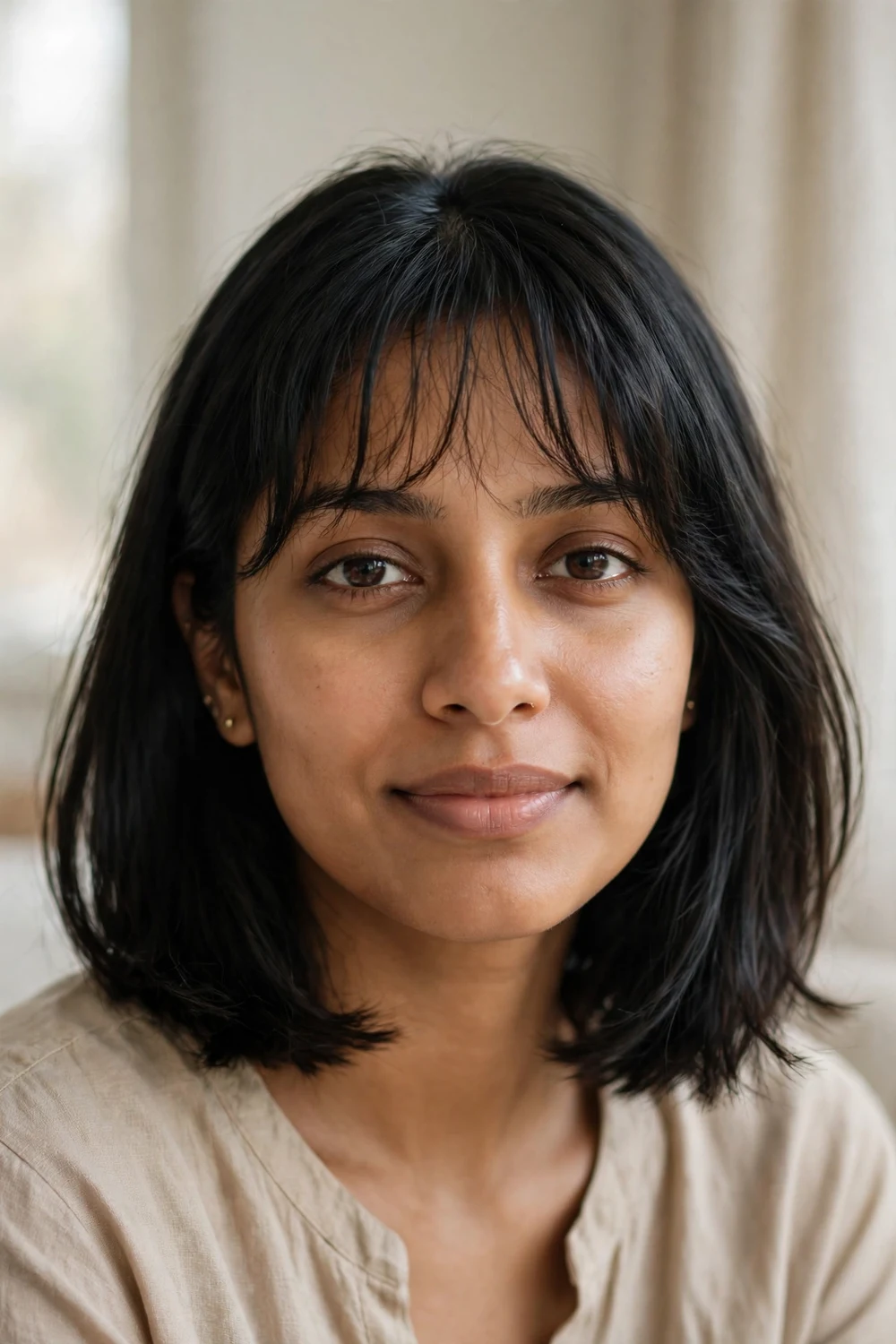
Prefer to keep some length? A shoulder-grazing lob with wispy bangs gives you the option. Wispy bangs need little commitment, since they are cut lighter and blend into the front layers. The key on thin hair is keeping the rest of the lob fairly blunt at the ends, so the lightness of the bangs reads as texture rather than thinness. Scrunch a pea-sized amount of mousse into damp bangs for airy separation.
Try this: Ask for the wispy fringe to be cut with point-cutting instead of a razor, which keeps the ends from fraying too thin.
7. Layered Bob With Eye-Grazing Fringe
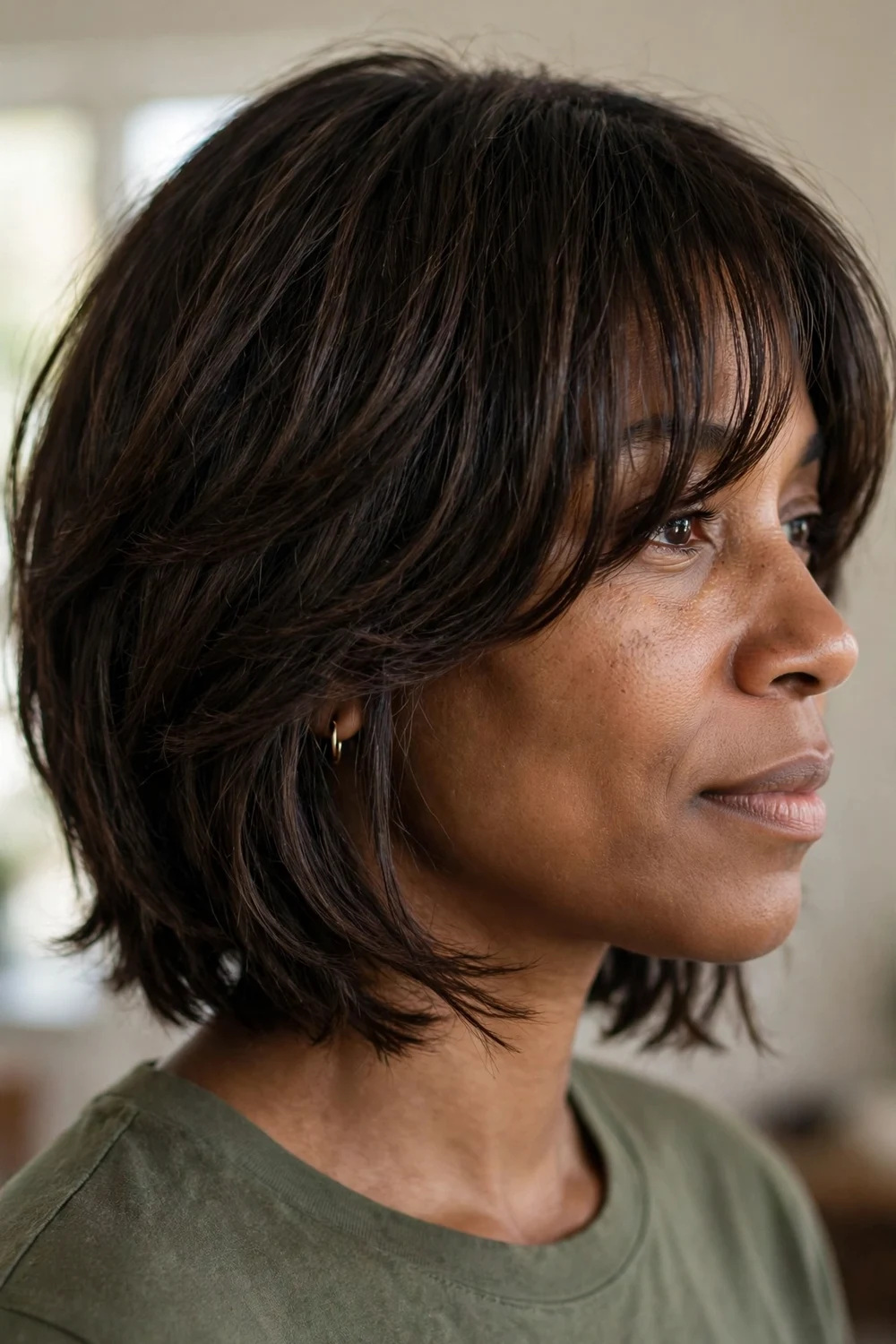
Short layers inside a bob create lift at the roots, and an eye-grazing fringe adds a longer bang option that works with the movement. This cut suits wavy or slightly textured hair, where the layers encourage bends that fake extra volume. Keep the layering shallow, only in the top third of the cut, so the bottom edge stays thick. The fringe should just touch your eyelashes when dry for the right effect.
Try this: Dry the layers by lifting them straight up from the scalp with your fingers before smoothing them down.
8. Shaggy Bob With Feathered Bangs
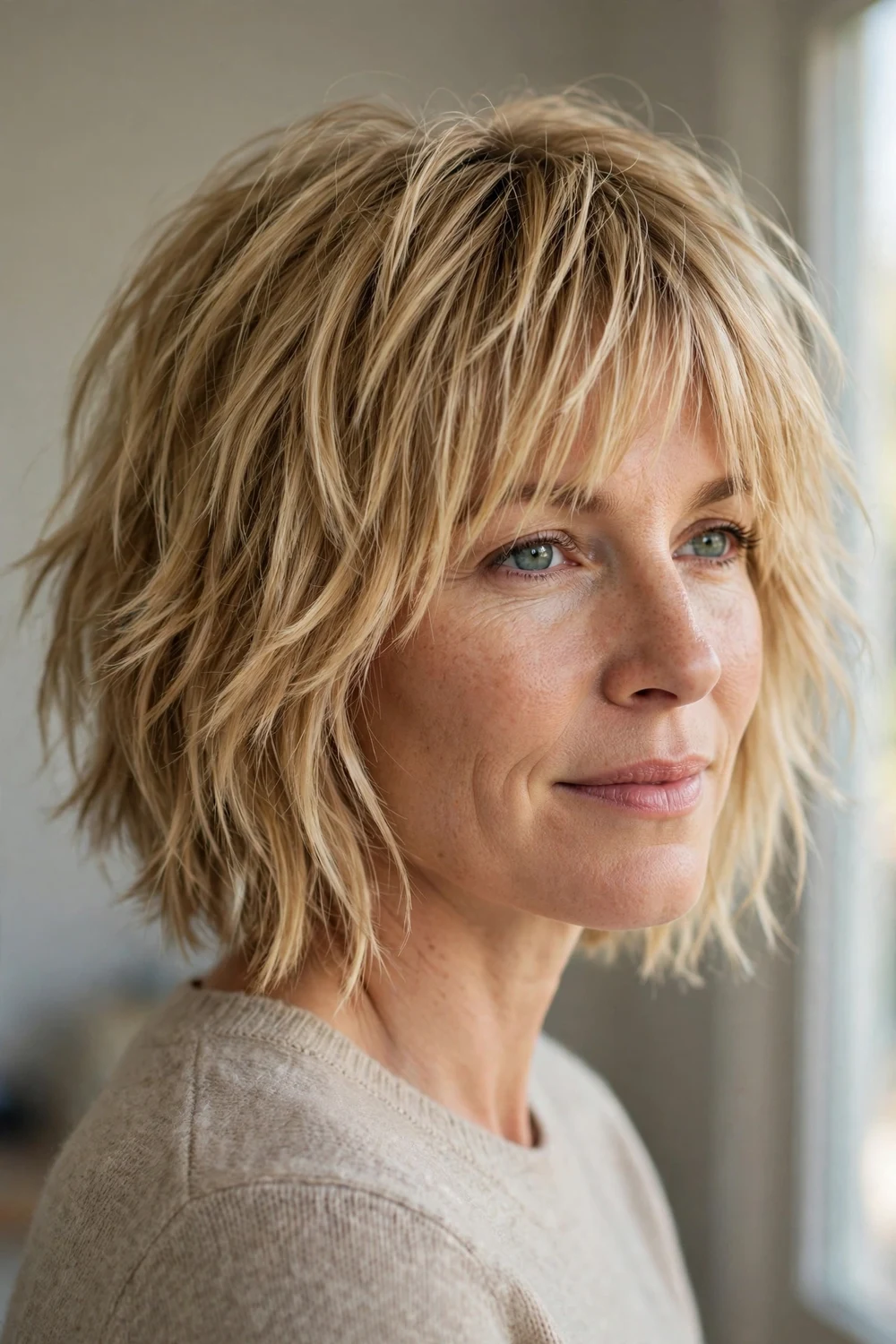
A shaggy bob breaks up thin hair into piecey texture that hides low density better than a sleek cut can. Feathered bangs blend into the shag layers so there is no obvious fringe line, which makes the cut look fuller all over. This is a strong pick for fine hair with some natural wave, since the texture does most of the styling work. Use a salt spray on damp hair and scrunch to set the separation.
Try this: Skip the brush entirely on second-day hair and refresh with a light mist of water instead of piling on dry shampoo.
9. Textured Bob With Wispy Fringe
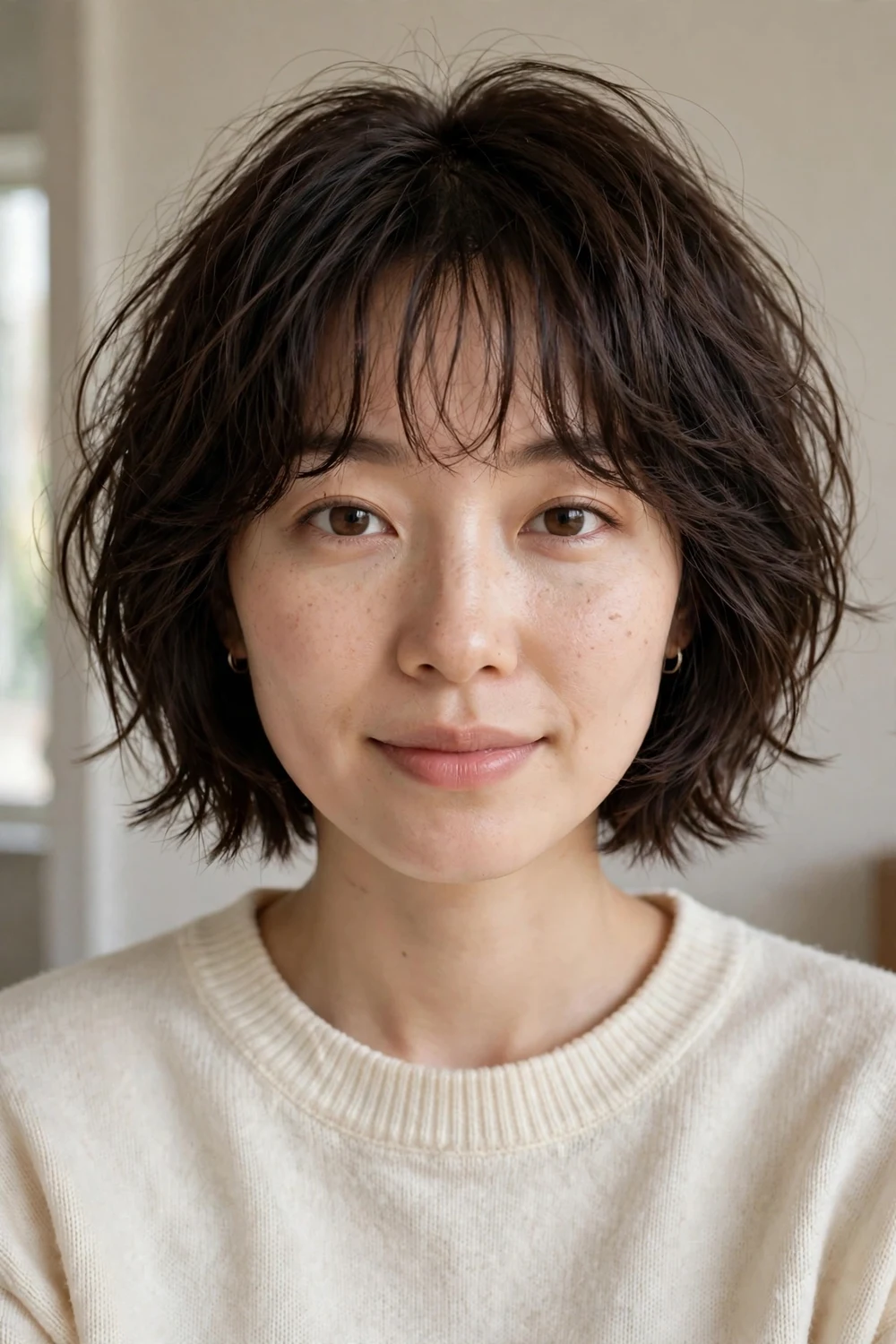
Texture is the oldest trick for making fine hair look like more of it. This bob adds uneven, point-cut ends throughout a chin-length cut, and a light wispy fringe keeps the forehead covered without heaviness. The irregular edges catch light at different angles, which creates depth the eye reads as volume. It suits casual styles and holds up well between salon visits, since grown-out texture still looks intentional and needs no daily fuss.
Try this: Rub a tiny amount of texturizing paste between your palms and pinch the ends for definition that lasts into evening.
10. Stacked Bob With Full Bangs
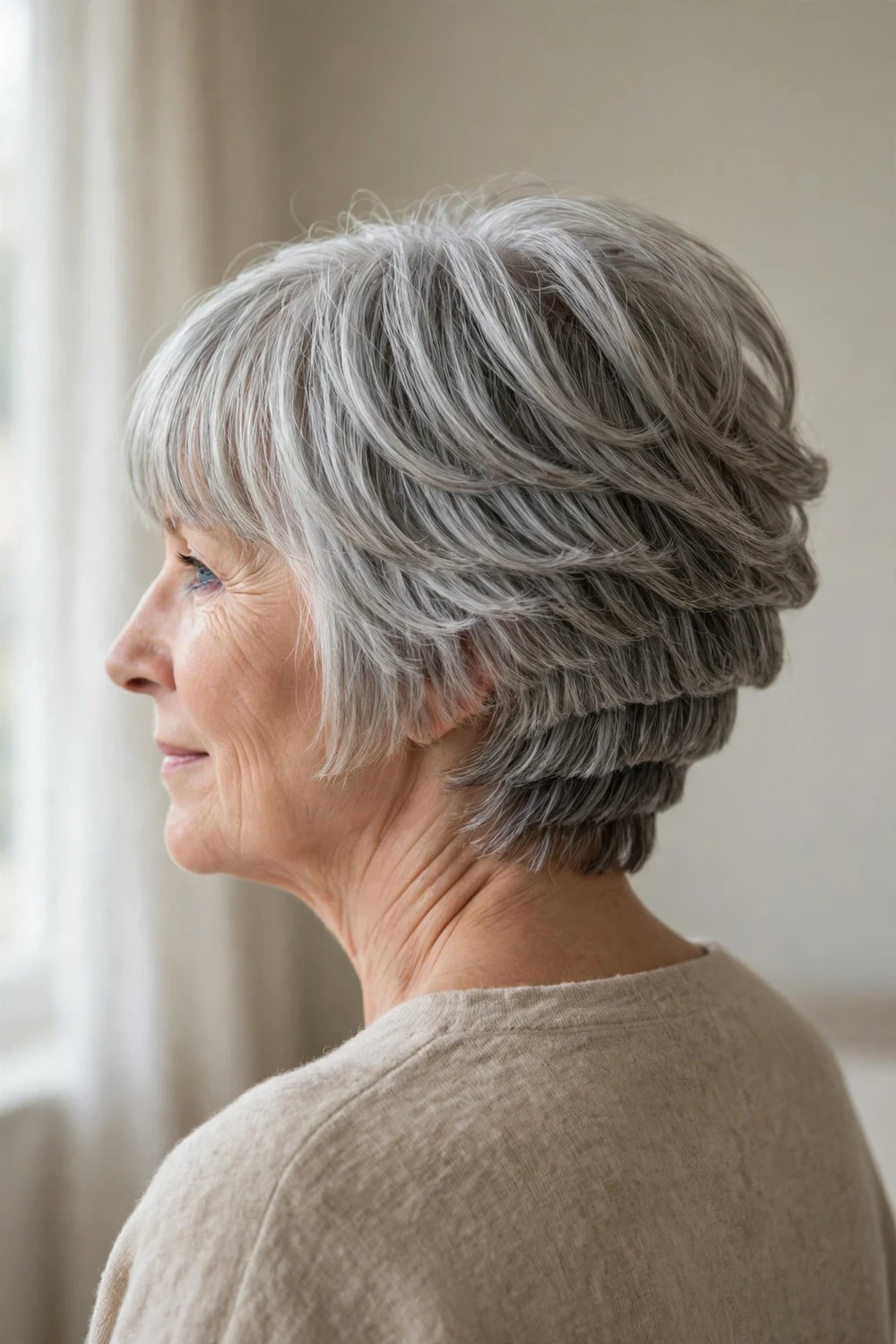
If your thin hair lies flat at the crown, stacking fixes it. Short graduated layers at the back build automatic height, while full bangs balance the front so the cut does not look back-heavy. This is one of the best bobs for women with fine hair that refuses to hold a curl, because the volume comes from the cut itself rather than from styling. Schedule trims every five to six weeks to keep the stacked shape crisp.
Try this: Blow-dry the back section with a round brush aimed upward to lock in the stacked lift before you style the front.
11. Inverted Bob With Side Bangs
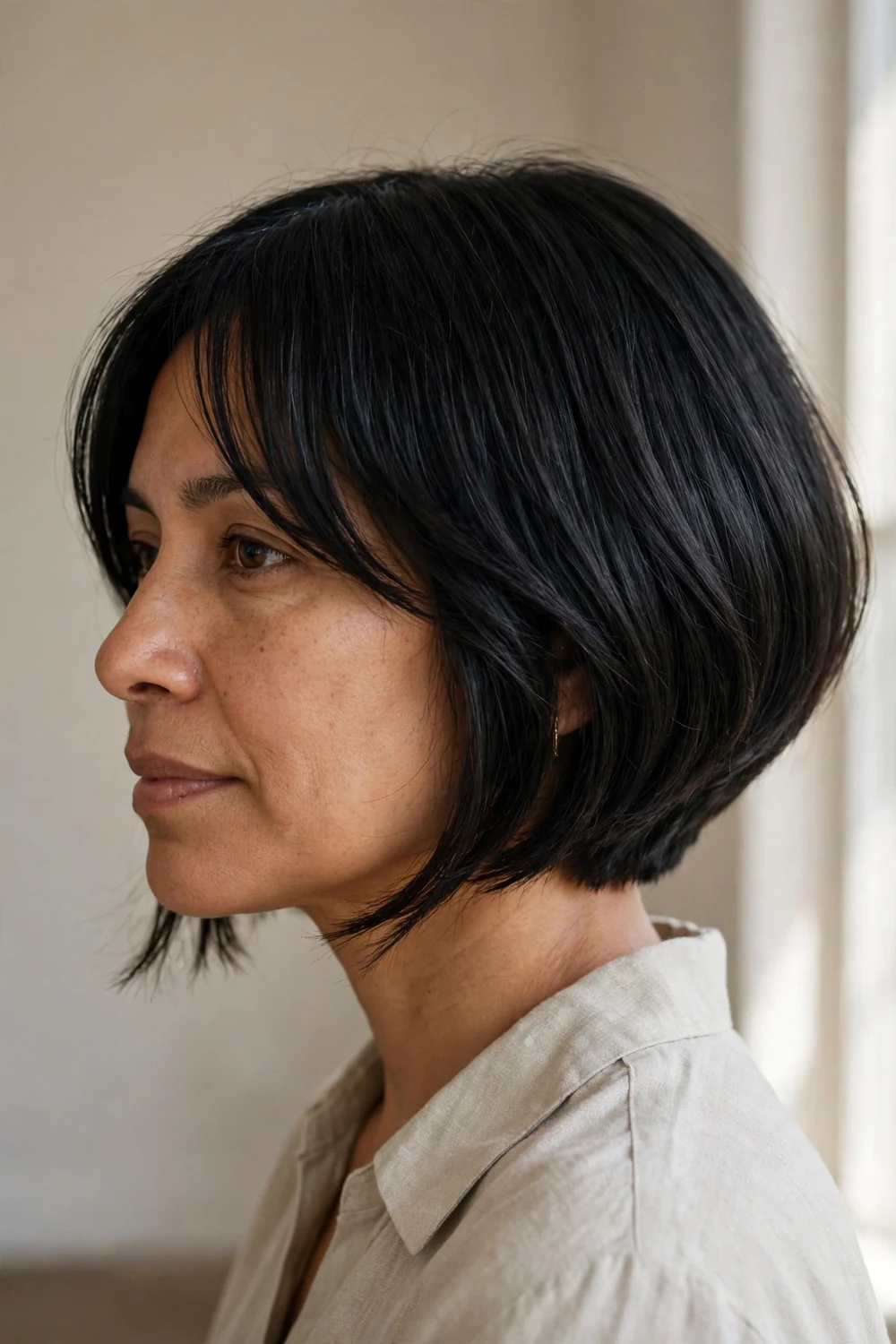
An inverted bob runs shorter in the back and angles longer toward the front, which gives fine hair a longer line to fall from and less bulk to weigh it down. Adding side bangs brings the eye to the face and keeps the front from looking empty. The angled silhouette suits oval and heart-shaped faces, and the longer front pieces can be tucked behind the ear when you want a slimmer profile.
Try this: Straighten only the front sections with a flat iron and leave the back slightly airy for contrast that shows off the angle.
12. A-Line Bob With Long Bangs
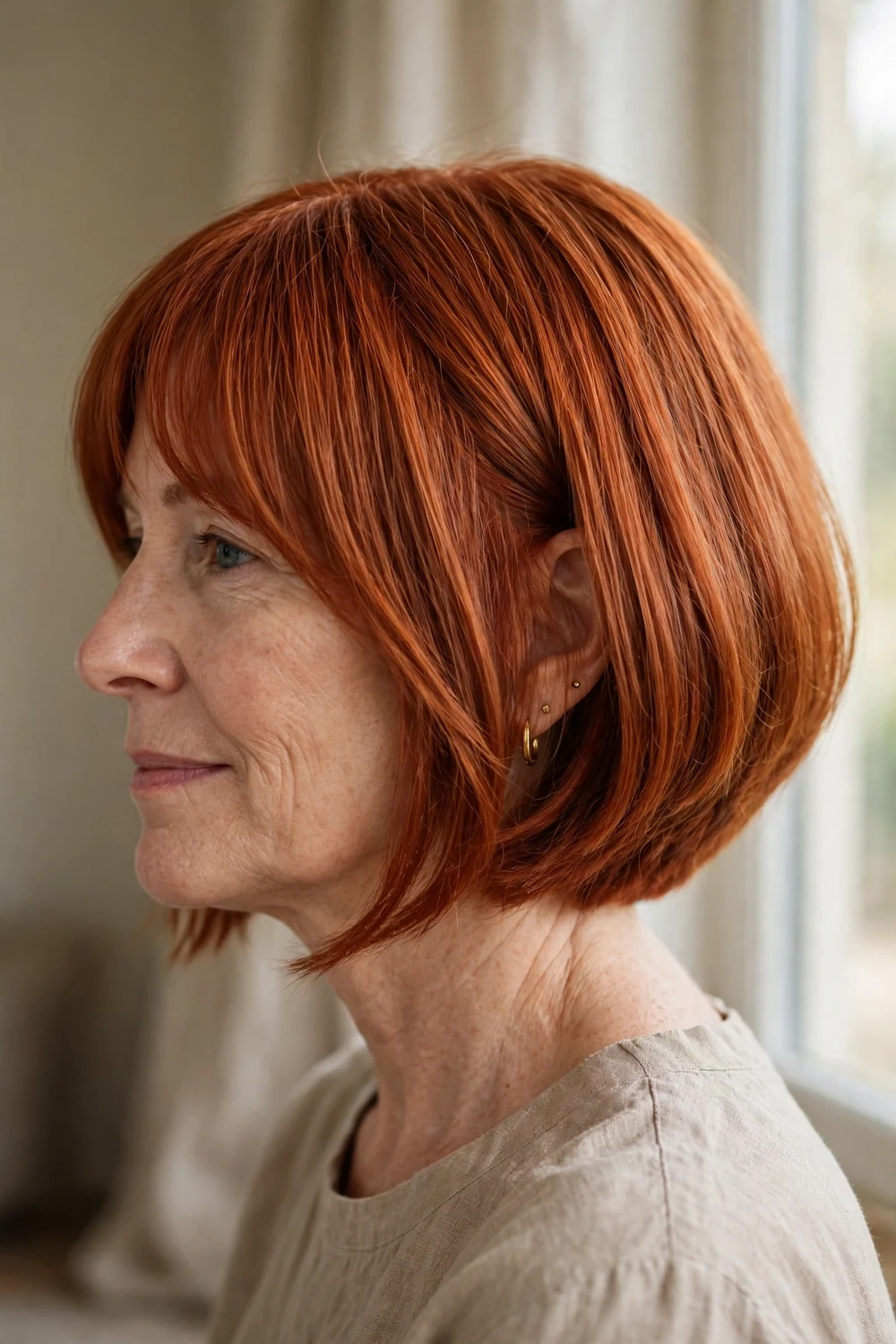
The A-line shape graduates from a shorter back to longer front pieces, and long bangs continue that diagonal line right across the forehead. On thin hair, the continuous slope makes strands appear to fall from higher up, which suggests more hair than a one-length cut does. This version looks polished when blown straight and still holds together air-dried, which makes it a practical choice for busy weeks. It flatters longer faces by breaking up vertical lines.
Try this: Have your stylist angle the front pieces to land just below the chin so the line stays visible on fine hair.
13. Curly Bob With Curly Bangs
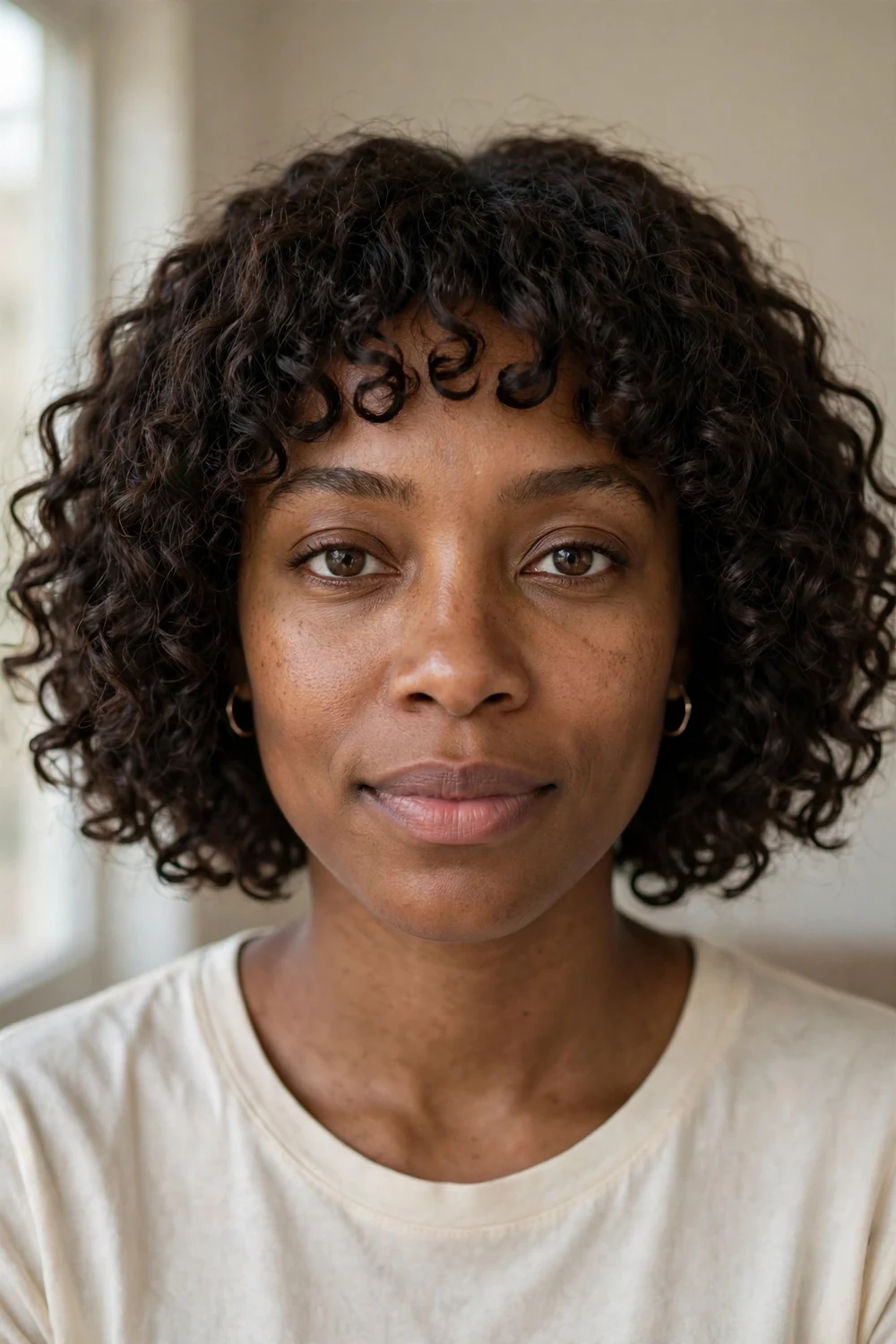
Natural curl is a gift for thin hair, and a curly bob with curly bangs uses all of it. Curls stack on top of each other, which builds volume that straight fine hair can never fake. Keep the bob above chin length so the curls spring instead of drooping, and let the curly fringe sit at brow level when dry. Cut this style on dry curls so the stylist sees the real shape.
Try this: Scrunch a curl cream into soaking-wet hair and diffuse on low heat for lift at the roots without frizz.
14. Wavy Bob With Long Bangs

Loose waves double the visual width of fine hair, and long bangs ride those waves right into the face frame. This is the most forgiving option in the list, since imperfect waves still look intentional and the bangs need little precision. Use a one-inch curling iron on alternate sections and rake through with your fingers instead of brushing, which keeps the waves soft. The result holds best on hair washed the day before.
Try this: Sleep on a loose braid to set the waves overnight, then shake out the bangs in the morning with damp hands.
15. Choppy Bob With Choppy Bangs
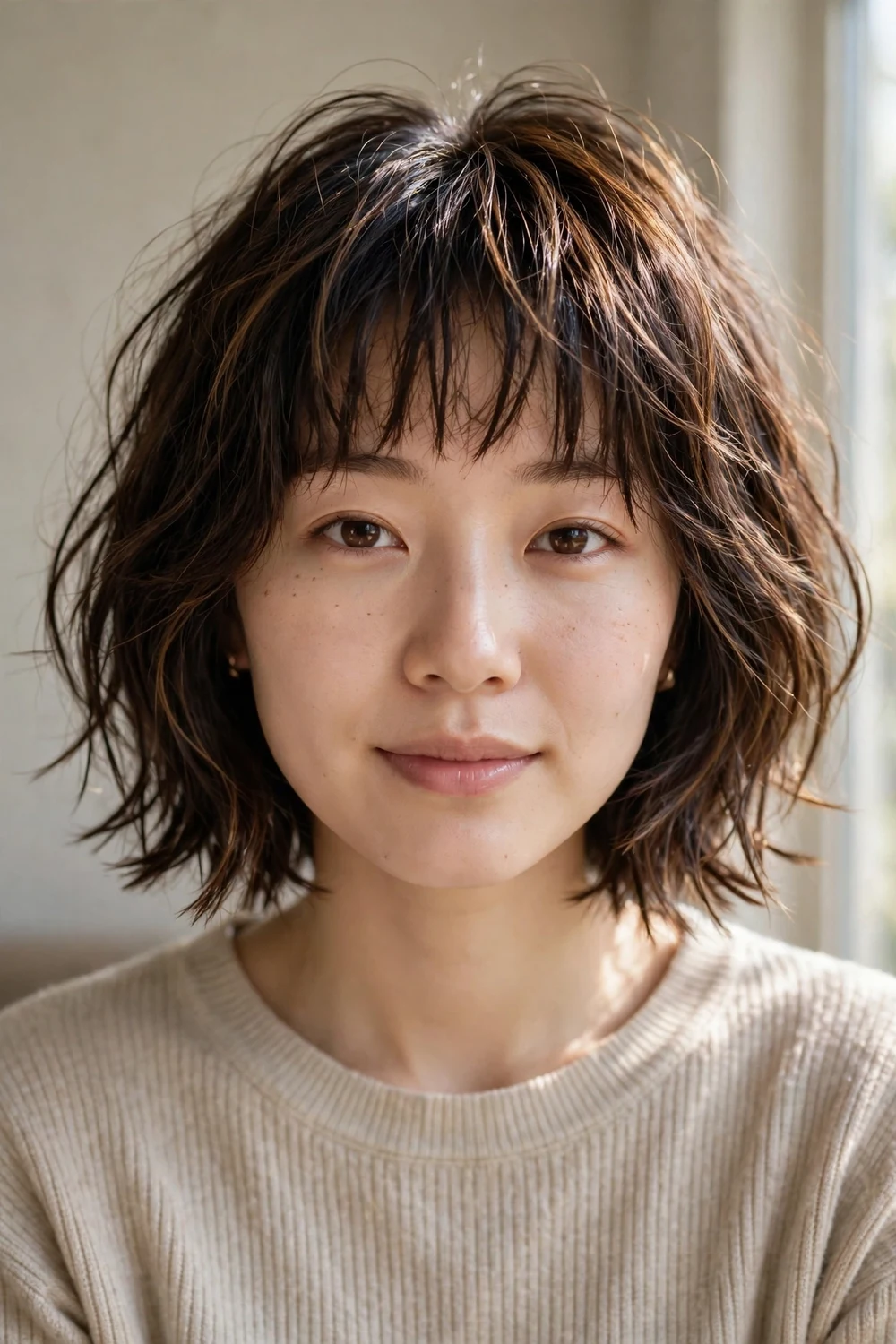
Choppy ends create edges and separation that make thin hair look deliberately textured rather than just fine. The bangs get the same treatment, cut uneven on purpose so they move and piece apart instead of sitting as one flat curtain. This edgy combo works best on younger faces and casual wardrobes, and it hides regrowth well between appointments. Keep the choppiness concentrated at the ends, not through the mid-lengths, to protect fullness.
Try this: Apply styling cream only to the ends and fringe tips, never to the roots, or fine hair will collapse by noon.
16. Sleek Straight Lob With Blunt Fringe
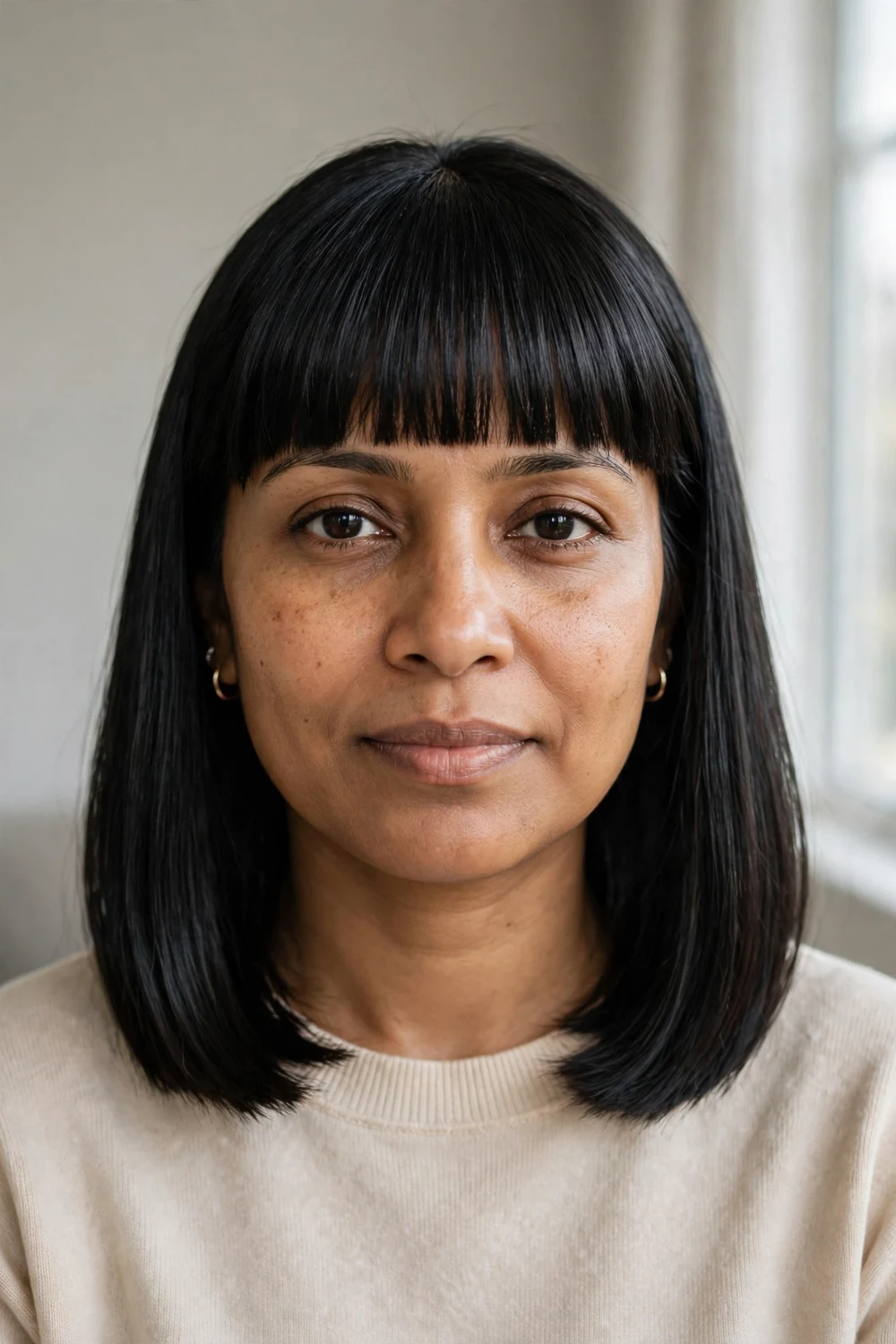
A shoulder-length lob worn sleek and straight with a blunt fringe reads as polished and dense when the ends are cut truly even. Fine hair actually straightens well, and the blunt fringe adds a graphic line that holds the whole look together. Use a heat protectant before flat ironing and finish with one pass only, since repeated passes thin the ends over time. This is the strongest option for fine hair that is also very straight by nature.
Try this: Run a single drop of smoothing oil over the fringe after ironing to keep flyaways down without weighing it flat.
17. Layered Lob With Fringe
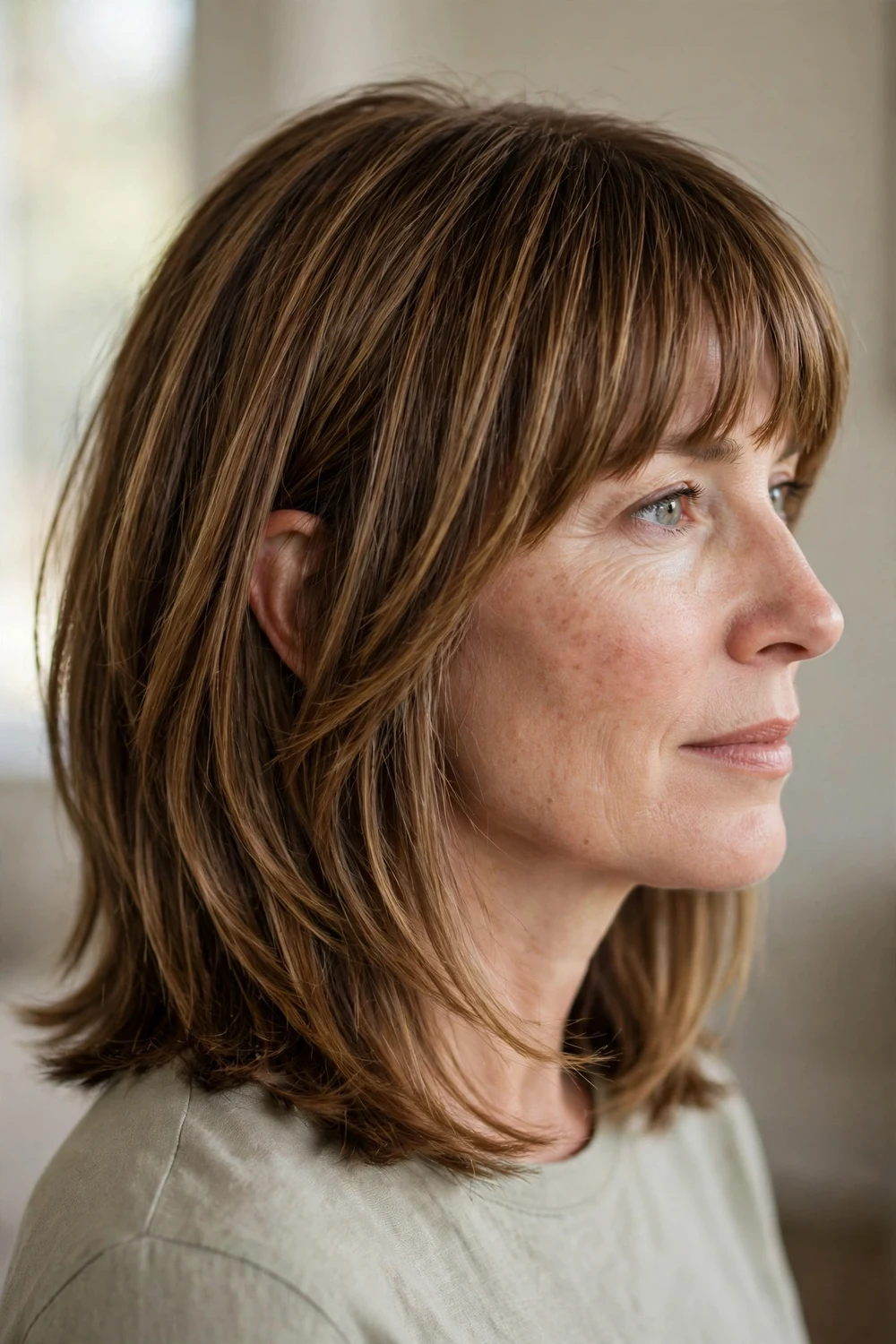
Longer layers inside a lob add swing and movement that one-length long hair cannot manage on fine strands. The fringe keeps the forehead covered while the layers open up around the cheeks, which gives the cut shape from every angle. This works well for women growing out a shorter bob who still want bangs, since the length difference between fringe and layers looks intentional. Blow-dry with a paddle brush and flip the ends under lightly.
Try this: Ask for internal layers rather than surface layers, so the bottom edge stays thick while the inside moves.
18. French Lob With Bangs
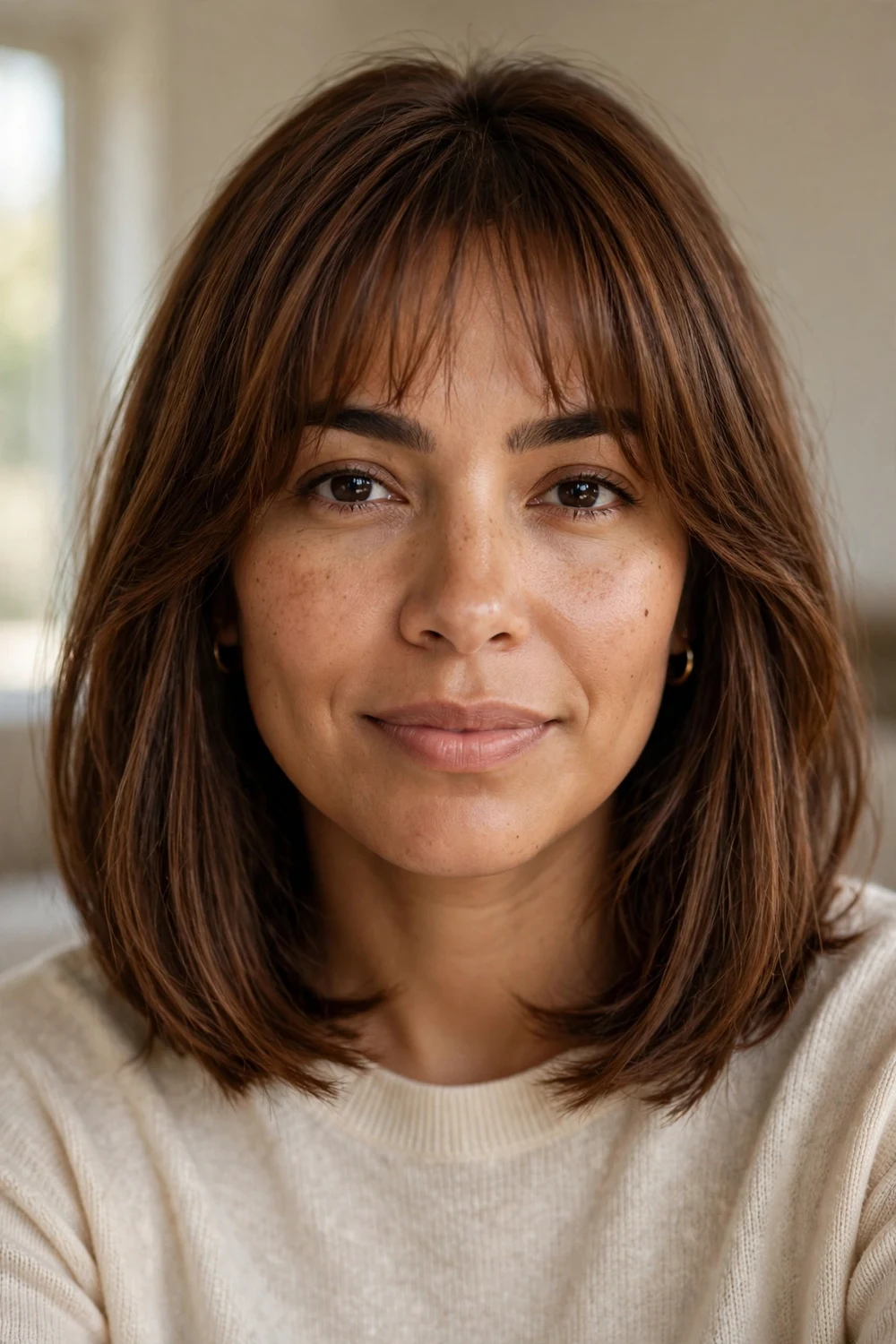
The French lob takes the classic French bob and extends it to the collarbone, which suits women who want the Parisian look without going short. Soft bangs keep the charm, and the longer length still works on thin hair because the perimeter stays fairly blunt. Part the bangs in the middle and let them blend into the sides for that undone feel. Air-dry with a light mousse and let the natural texture show.
Try this: Tuck one side behind the ear to create asymmetry, which adds interest without extra cutting.
19. Lob With Long Curtain Bangs
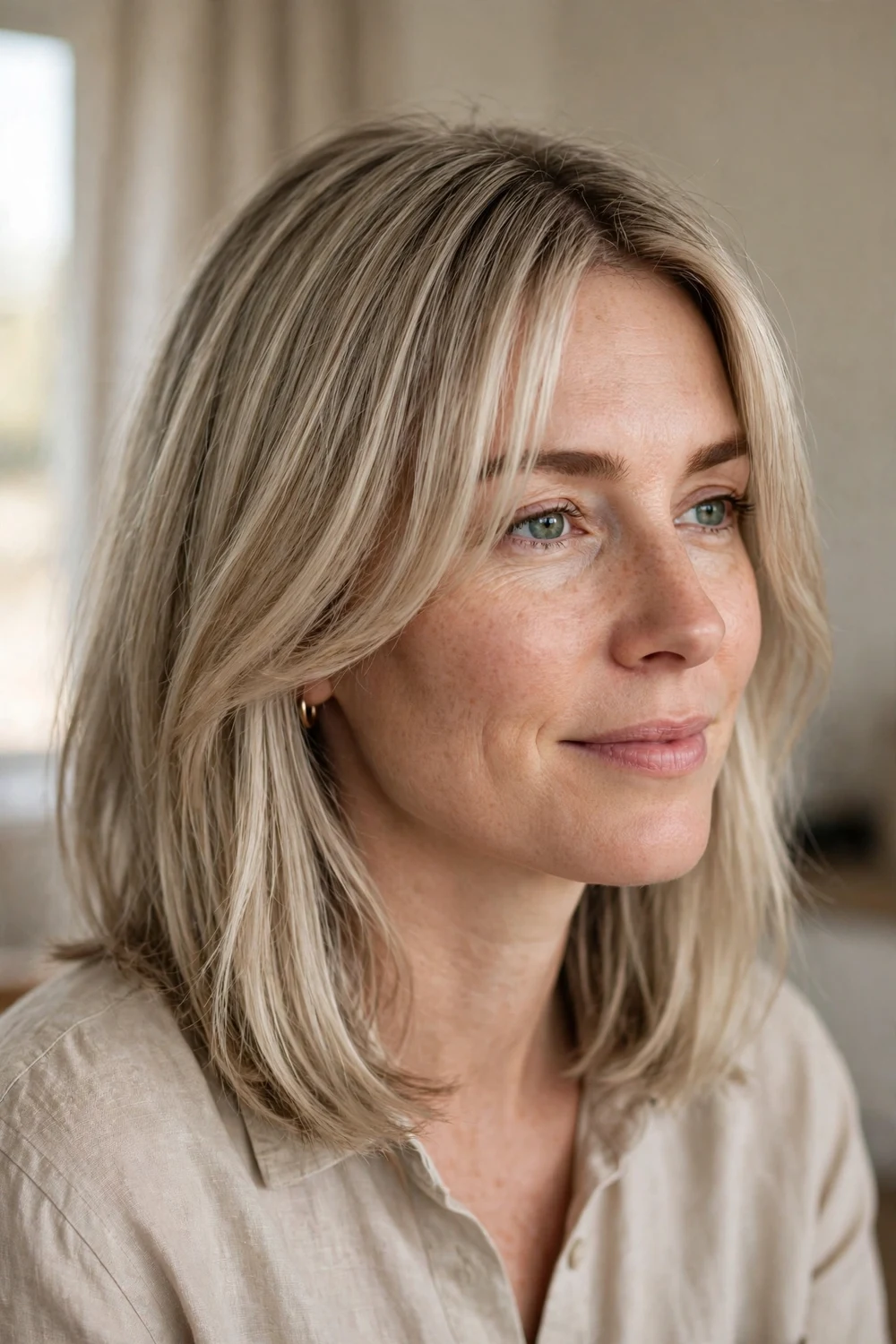
Curtain bangs on a lob are the longest, safest version of this whole concept. The bangs start around cheek level and melt into the lob, so there is barely any maintenance between cuts. On thin hair, the longer fringe adds width to the face without removing fullness from the body of the cut. This is ideal if you heat-style often, because the long pieces handle a curling iron better than short bangs do.
Try this: Wrap the curtain pieces around a large round brush away from the face while blow-drying for a soft outward flick.
20. Asymmetrical Bob With Deep Side Bangs
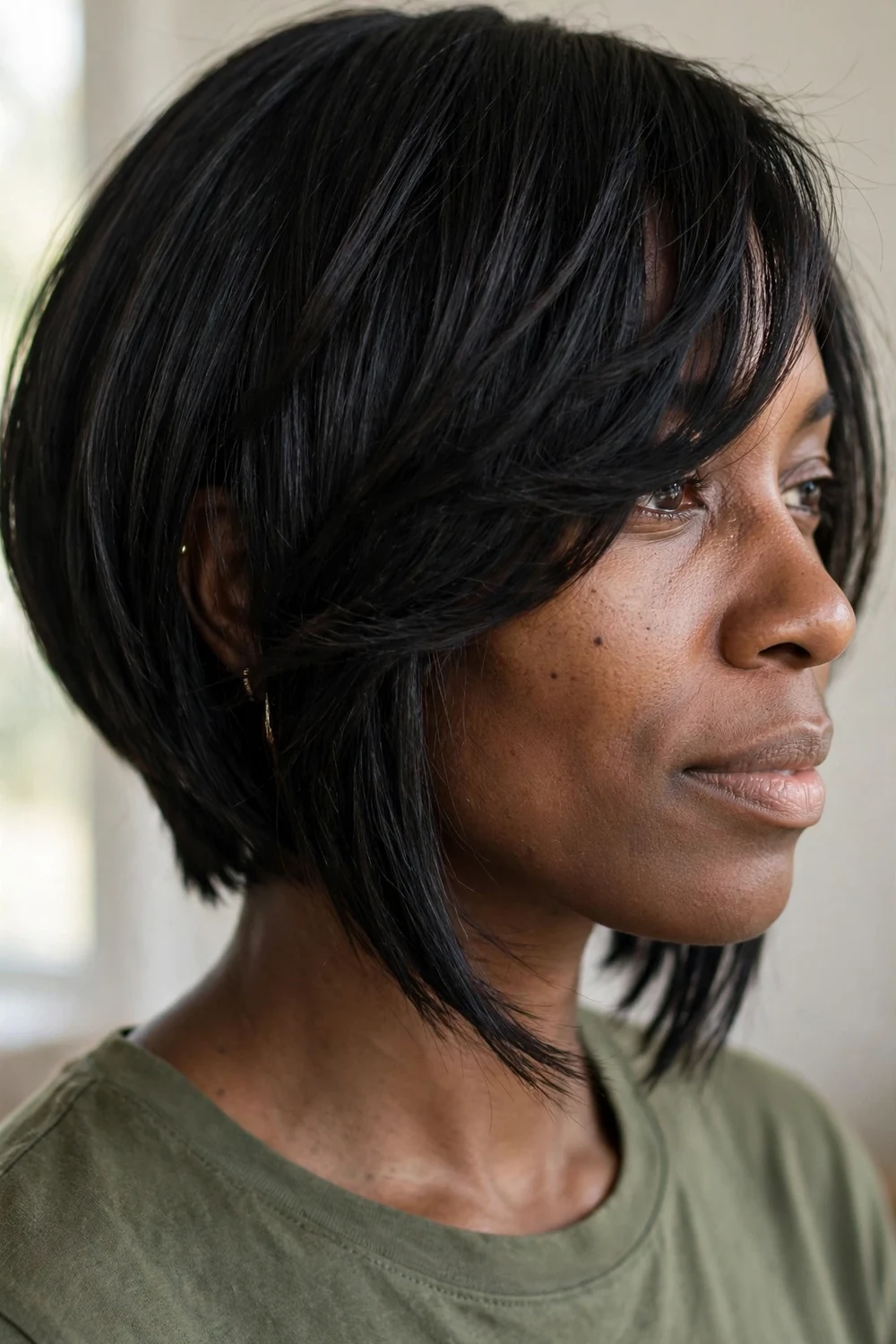
One side longer than the other shifts the eye away from thinness and toward the cut itself. Deep side bangs follow that diagonal, adding drama across the forehead and blending into the longer side. The uneven weight distribution tricks the eye into seeing more hair on the long side, which helps fine hair look fuller. This bold cut suits oval faces best and needs regular shaping to keep the asymmetry visible rather than accidental.
Try this: Part from the ear, not the middle of the head, to get the deep sweep right on the first try.
21. Razor-Cut Bob With Textured Bangs

A razor cut gives fine hair soft, feathered ends that move, and textured bangs keep the fringe light instead of heavy. The trick is restraint: only the last inch should be razored, so the body of the cut stays solid. Done right, this reads as modern and airy rather than thin. It suits fine hair that holds a little natural bend, since the razor work enhances whatever movement is already there.
Try this: Make sure your stylist uses the razor only on dry ends, never on the interior of the bang section.
22. Micro Bob With Bangs
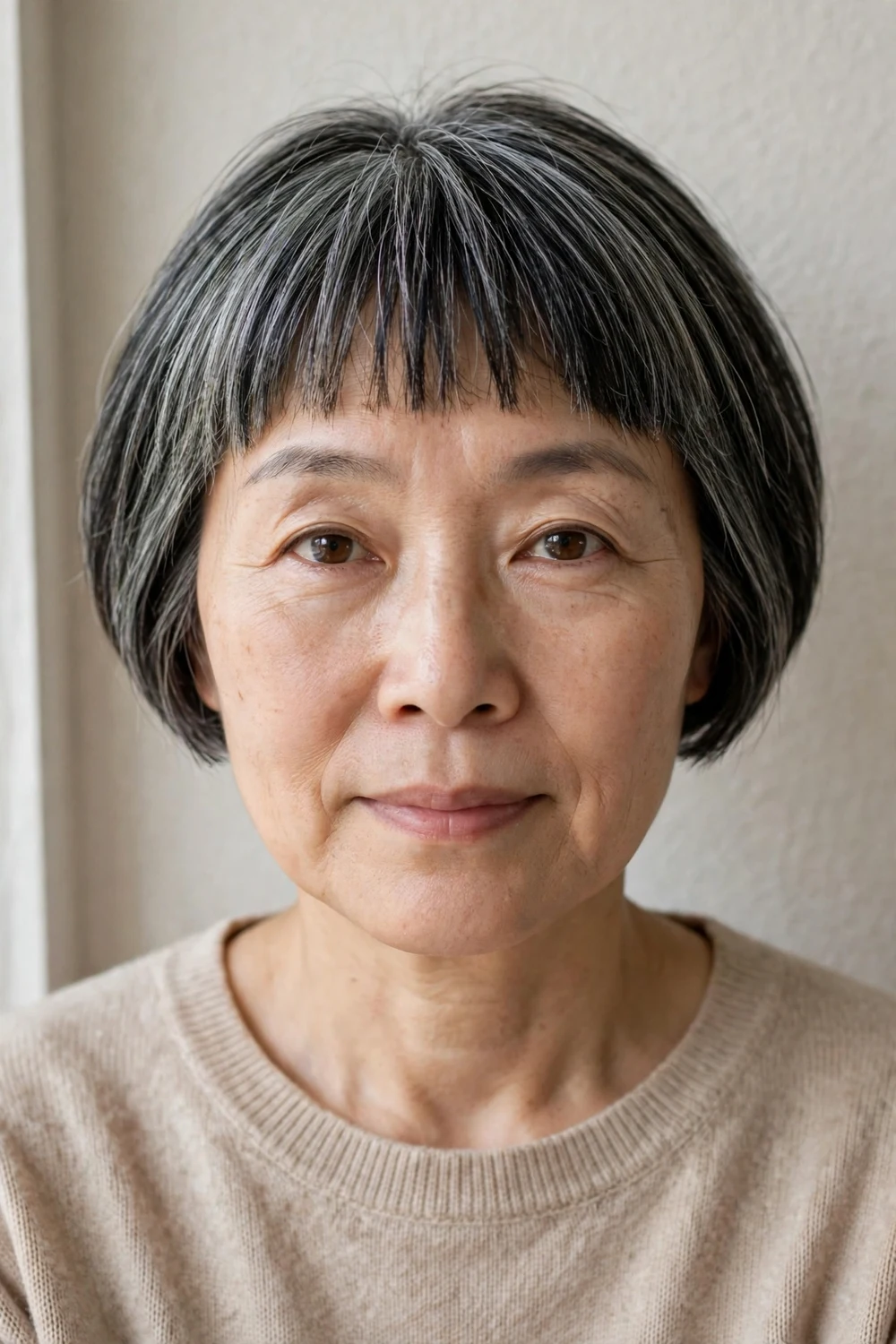
The micro bob ends near the earlobe, which is the shortest way to make fine hair look dense. At this length, even sparse strands pack tightly together, and a short bang finishes the compact shape neatly. This cut flatters strong jawlines and small features, and it washes and dries in just minutes. The only trade-off is frequent trims, since a micro bob loses its shape faster than longer cuts do.
Try this: Book trims every four to five weeks. Even a small amount of growth changes the silhouette of a cut this short.
23. Balayage Bob With Curtain Bangs
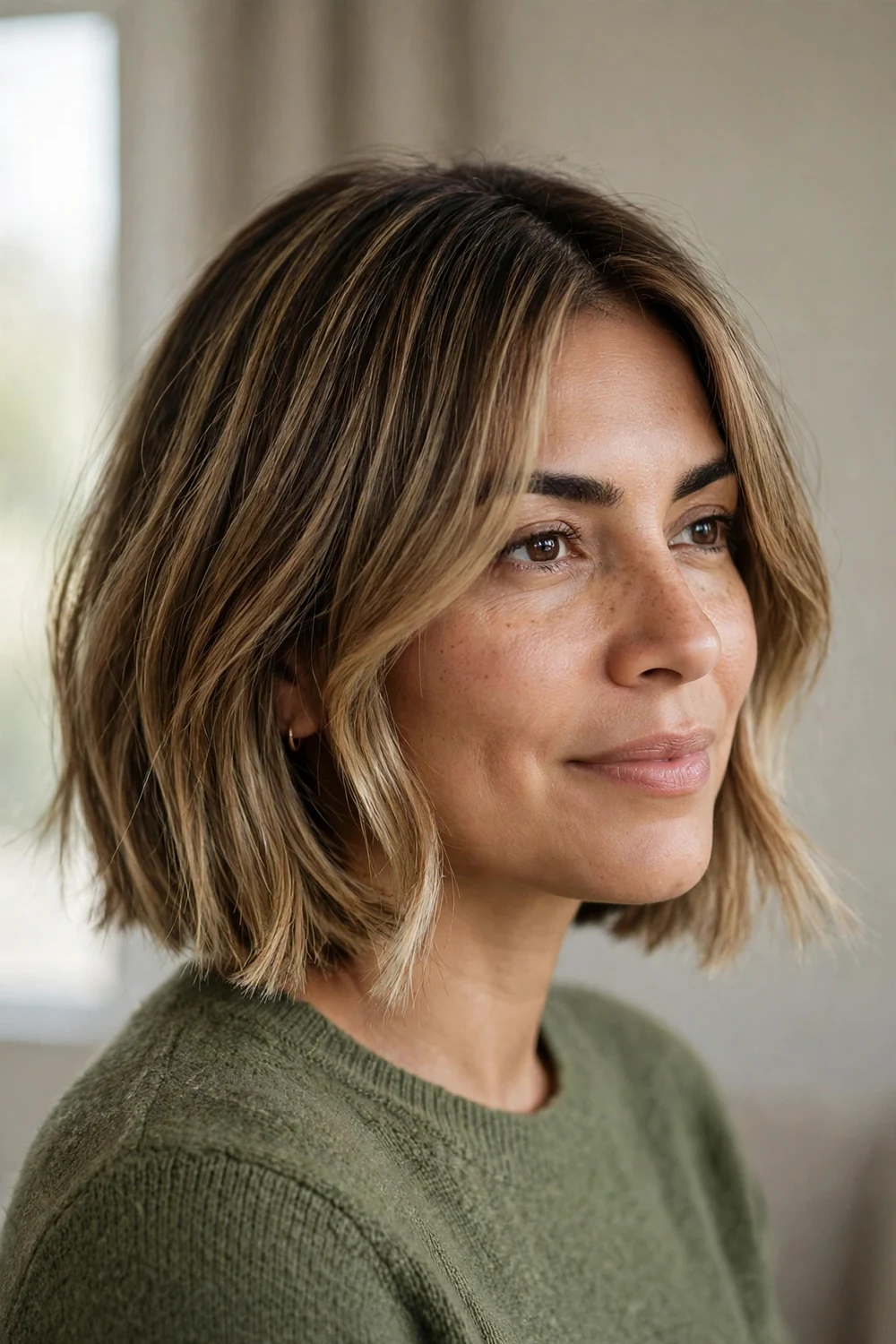
Color adds a dimension that the eye reads as thickness. A balayage bob paints lighter pieces through the mid-lengths, and curtain bangs frame the face with the brightest section. The contrast between dark roots and lighter ends fakes depth that thin hair lacks on its own. Keep the balayage soft and blended, since harsh stripes show through fine hair. This is the priciest option on the list, but the grow-out is graceful.
Try this: Ask your colorist for babylights around the face instead of chunky highlights, which can look sparse on fine strands.
Bob Haircuts for Thin Hair With Bangs Comparison at a Glance
| Style | Best Occasion | Difficulty | Hold Time |
|---|---|---|---|
| Classic Blunt Bob With Straight-Across Bangs | Office, formal events | Easy | 2-3 days |
| Chin-Length Bob With Full Bangs | Everyday wear | Easy | 2 days |
| French Bob With Micro Bangs | Evenings out | Easy | 1-2 days |
| Blunt Bob With Curtain Bangs | Work, dinners | Moderate | 2 days |
| Bob With Side-Swept Bangs | Everyday wear | Easy | 2-3 days |
| Long Bob With Wispy Bangs | Weekends, casual | Easy | 1-2 days |
| Layered Bob With Eye-Grazing Fringe | Social events | Moderate | 1-2 days |
| Shaggy Bob With Feathered Bangs | Weekends, casual | Easy | 1 day |
| Textured Bob With Wispy Fringe | Everyday wear | Easy | 2 days |
| Stacked Bob With Full Bangs | Office, interviews | Moderate | 2-3 days |
| Inverted Bob With Side Bangs | Dinners, parties | Moderate | 2 days |
| A-Line Bob With Long Bangs | Work, formal events | Moderate | 2-3 days |
| Curly Bob With Curly Bangs | Everyday wear | Moderate | 3 days |
| Wavy Bob With Long Bangs | Weekends, dates | Moderate | 1-2 days |
| Choppy Bob With Choppy Bangs | Nights out, concerts | Easy | 1-2 days |
| Sleek Straight Lob With Blunt Fringe | Office, formal events | Easy | 2 days |
| Layered Lob With Fringe | Work, social events | Moderate | 2 days |
| French Lob With Bangs | Dinners, travel | Easy | 2 days |
| Lob With Long Curtain Bangs | Everyday wear | Easy | 2-3 days |
| Asymmetrical Bob With Deep Side Bangs | Evenings out | Moderate | 1-2 days |
| Razor-Cut Bob With Textured Bangs | Weekends, creative settings | Moderate | 1-2 days |
| Micro Bob With Bangs | Everyday wear | Easy | 1 day |
| Balayage Bob With Curtain Bangs | Weddings, parties | Moderate | 2-3 days |
How to Choose the Right Bob and Bangs Combo for You
Match the bang type to your hairline first. If your hairline is sparse, choose a full or blunt fringe cut from high on the head so the section has real weight. If your hairline is fairly dense, curtain or wispy styles give you flexibility without commitment.
Then think about your daily effort. Blunt bobs with straight bangs need a few minutes of blow-drying to sit right, while shaggy and textured versions work air-dried. Be honest about what you will actually do each morning, and pick the cut that fits that routine instead of an idealized one.
Finally, bring reference photos to your stylist and point at the bang section specifically. Two cuts can share a name but differ completely in how much hair goes into the fringe, and that detail decides whether the style works on thin hair.
Mistakes to Avoid
Over-thinning is the biggest one. Thinning shears and razors take weight out of the exact spot where thin hair needs it most. If your stylist reaches for thinning shears inside the bang section, ask them to stop and check the thickness with you first.
Skipping bang trims is next. Bangs grow fast, and a fringe that falls past the brows separates into strings on fine hair. A quick trim every three to four weeks costs little and keeps the cut looking deliberate.
Last, do not pair heavy layers with heavy bangs. One feature should carry the texture. A layered bob works best with a lighter fringe, while a blunt bob can handle a full, solid bang. Stacking both removes too much weight and leaves thin hair looking wispy all over.
If you want to compare more volume-building shapes before you decide, our roundup of bob hairstyles for fine hair covers cuts with and without bangs side by side.
For the fullest stacked shape in this family, see the cuts in stacked bob hairstyles for fine hair, where graduated layers do most of the lifting.
If curtain bangs are your favorite fringe here, the longer versions in long bob with curtain bangs show how they work on shoulder-length cuts.
And for a bolder textured take on the same concept, browse choppy bob hairstyles with bangs for edgier fringe ideas.
Frequently Asked Questions
Will bangs make thin hair look thinner?
Not when they are cut with enough weight. Wispy, micro, or badly thinned bangs can expose a sparse hairline, but a full, blunt, or curtain bang adds hair across the forehead and crown where fine hair looks thinnest. Ask your stylist to keep the bang section generous and avoid razor-thinning it out.
What is the best bob length for thin hair with bangs?
Chin length to just above the shoulders works best. Shorter bobs build volume because less weight pulls the hair flat, and a chin-length perimeter reads denser than long ends. Go longer only if you style with waves or layers, since straight long bobs can collapse on fine hair.
For thirty cuts built around this exact length, see chin length bob hairstyles for thin hair.
Are curtain bangs good for thin hair?
Yes, curtain bangs are one of the safest choices for thin hair. They add width across the face without removing much length from the sides, and they grow out gracefully if you skip a trim. Blow-dry them forward with a round brush, then split them in the middle for that face-framing lift.
How often should I trim bangs with a bob?
Plan on a bang trim every 3 to 4 weeks. Bangs lose their shape fast on fine hair, and even half an inch of growth can make them hang limp or separate. Many salons offer quick bang trims between full appointments, often free or low cost for existing clients.
Can I get bangs if my hair is fine and straight?
Absolutely. Straight, fine hair holds bangs well because the fringe lies flat without fighting curl or wave patterns. Choose a blunt or soft layered bang, and use a small round brush while blow-drying to build lift at the roots. A light dry shampoo keeps them from going flat by midday.
Final Thoughts
The right bob with bangs does more for thin hair than any volumizing product on the shelf. Pick one cut from this list, keep the fringe trimmed, and let the shape do the heavy lifting. If you are unsure where to start, the blunt bob with curtain bangs is the safest first step, and it grows out well if you want to try something bolder next time.

