


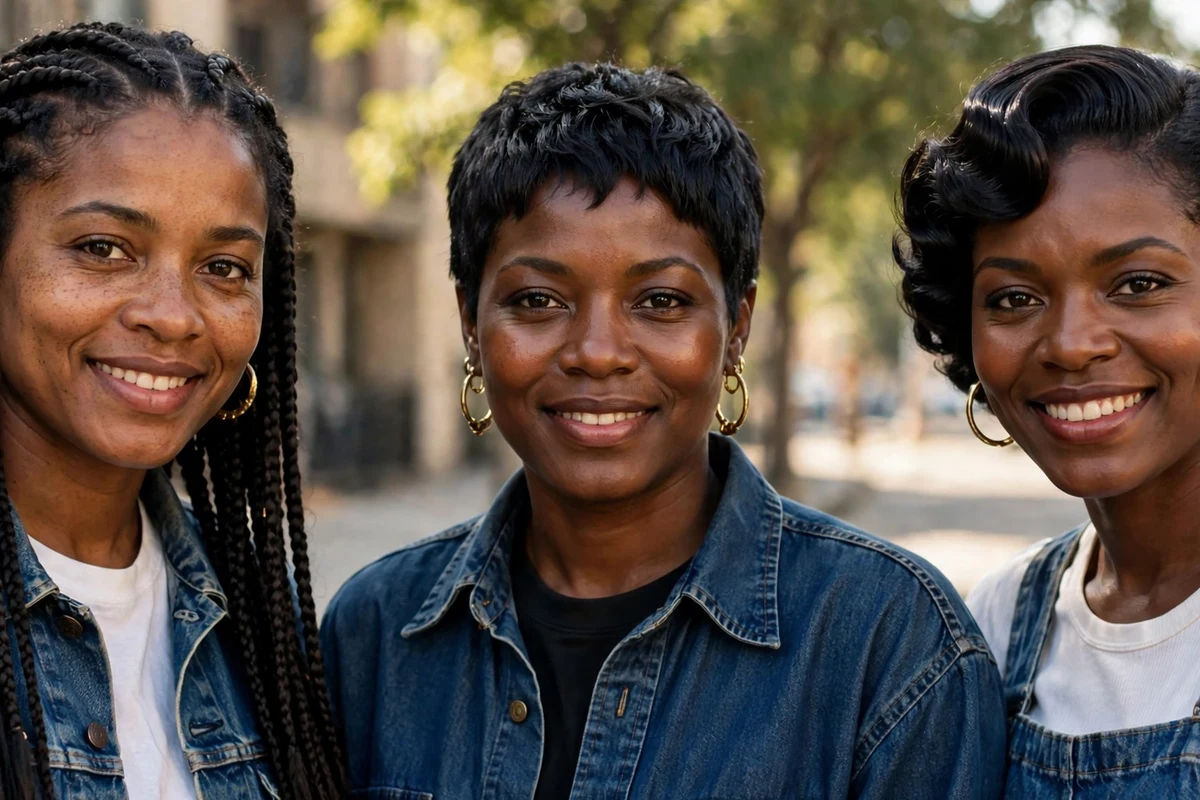
The 90s gave Black women some of the most copied hairstyles in history. Box braids went mainstream after Poetic Justice, the Toni Braxton pixie launched a thousand salon appointments, and finger waves turned short hair into evening wear. These looks worked because they were built for texture, not against it.
This roundup covers 42 of those era-defining styles, drawn from the decade’s biggest music, film, and street moments. Every idea below comes with a wear-it-today note so you get the nostalgia without looking like a costume. Pick one that fits your hair type, your calendar, and how much upkeep you actually want.
Quick Takeaways
- Most 90s braided styles are protective. Box braids, cornrows, twists, and bantu knots keep ends tucked away for weeks.
- Short 90s cuts need trims every 3 to 6 weeks. Pixies and fades lose their shape fast, so budget for regular shape-ups.
- Modernize any retro look with one update: softer edges, lived-in texture, or a current color placement.
- Hot tools show up a lot in 90s styling. Apply heat protectant before every pass with a flat iron, curling iron, or blow dryer.
- Braids and twists should never hurt. If an install pulls at your hairline, ask the braider to loosen it before you leave.
1. Poetic Justice Box Braids
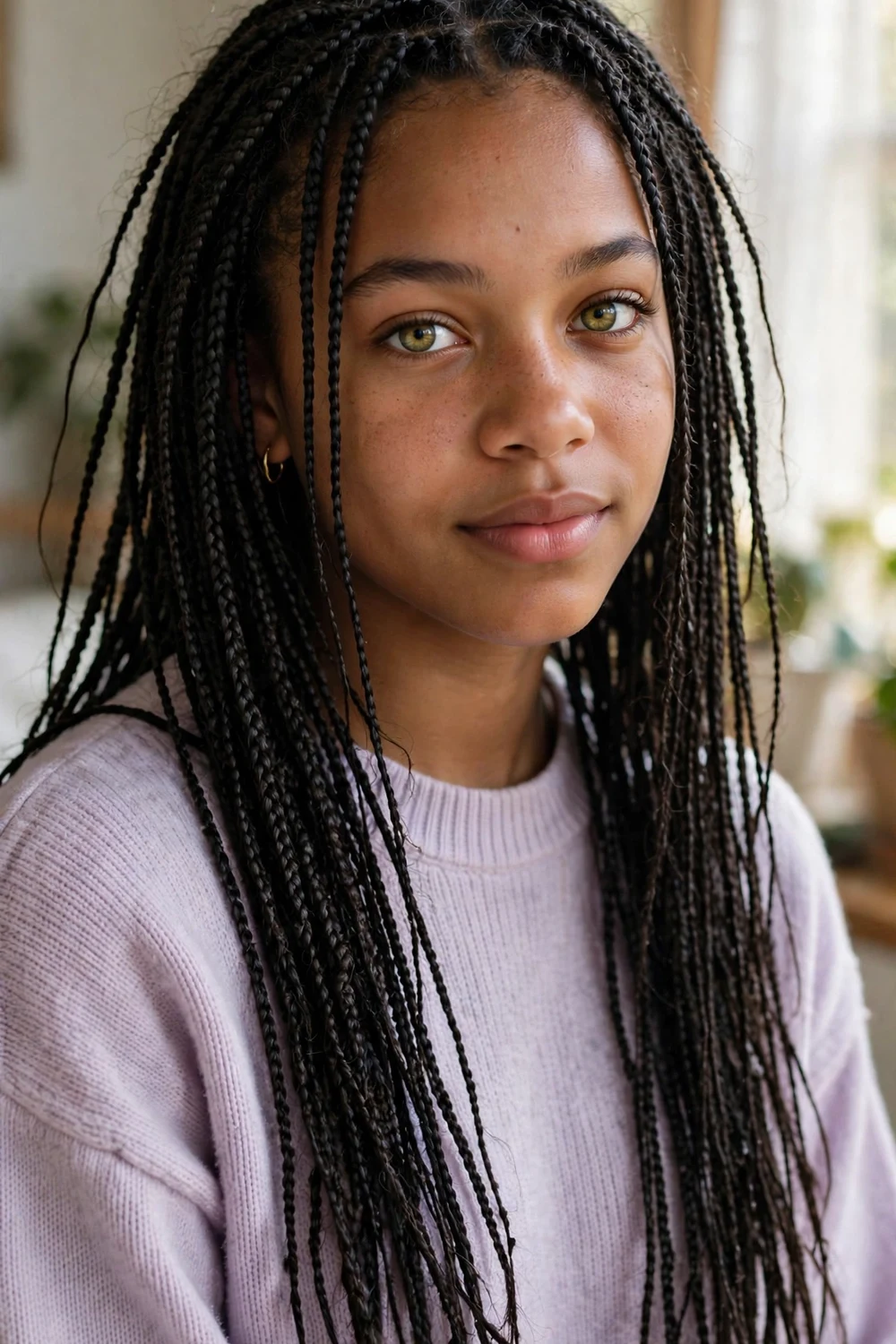
Janet Jackson’s 1993 film role turned long, clean-parted box braids into the defining hairstyle of the decade. The classic version uses medium sections, a center part, and lengths that hit the waist or lower back. It is as protective as it is recognizable, keeping natural hair tucked away for four to six weeks.
Vary the parting slightly so the style reads current rather than copied. Knotless installs sit flatter at the root and put less tension on the hairline. This suits every face shape and all hair types, since the extensions carry the length.
If you want more braid inspiration in this category, these braided hairstyles for Black women cover modern takes on the classics.
Try this: pull the front two braids back into a small half-up twist for a softer, current finish.
Difficulty: Moderate (long install) · Cost: $150–$300 (braider install)
2. Micro Braids
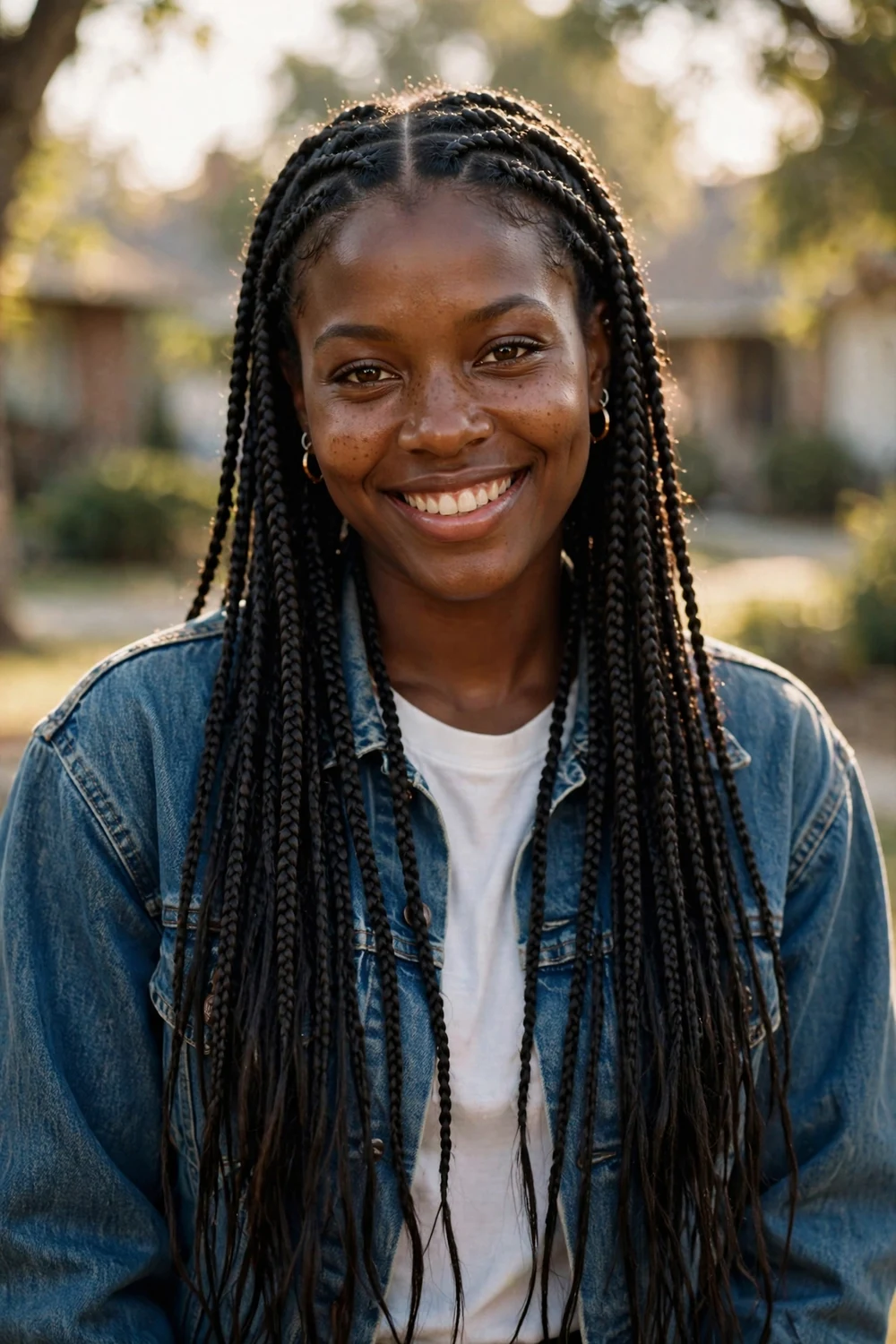
Micro braids were the 90s status symbol for patience. Hundreds of pencil-thin plaits, often worn by teen stars like Brandy, took an entire day in the chair but lasted for months. The fine sections move almost like loose hair, so you can wear ponytails, buns, and half-up styles with ease.
The modern rule is simple: keep them lightweight. Heavy micro braids stress the hairline, so ask for a comfortable density and take them down at the first sign of thinning edges. This style suits anyone who wants maximum styling freedom from a protective install.
Try this: gather micro braids into a high curly ponytail for a fresh take on the classic teen-star look.
Difficulty: Moderate (long install, easy wear) · Cost: $200–$400 (braider install)
3. Cornrows
Cornrows were everywhere in the 90s, from straight-back rows to curved, geometric patterns. Braided flat against the scalp, they are one of the lowest-maintenance protective styles around, lasting two to four weeks with nightly scarf protection. They also make an excellent base for sew-ins and wigs.
To wear them today, play with the pattern. A curved or zigzag part instantly updates the look, and a few cuffs or rings add polish without extra effort. This works on all hair lengths and textures, including short natural hair.
Try this: ask for two curved feed-in rows along each temple for a face-framing update on straight backs.
Difficulty: Easy to moderate · Cost: $60–$150 (braider install)
4. Two-Strand Twists
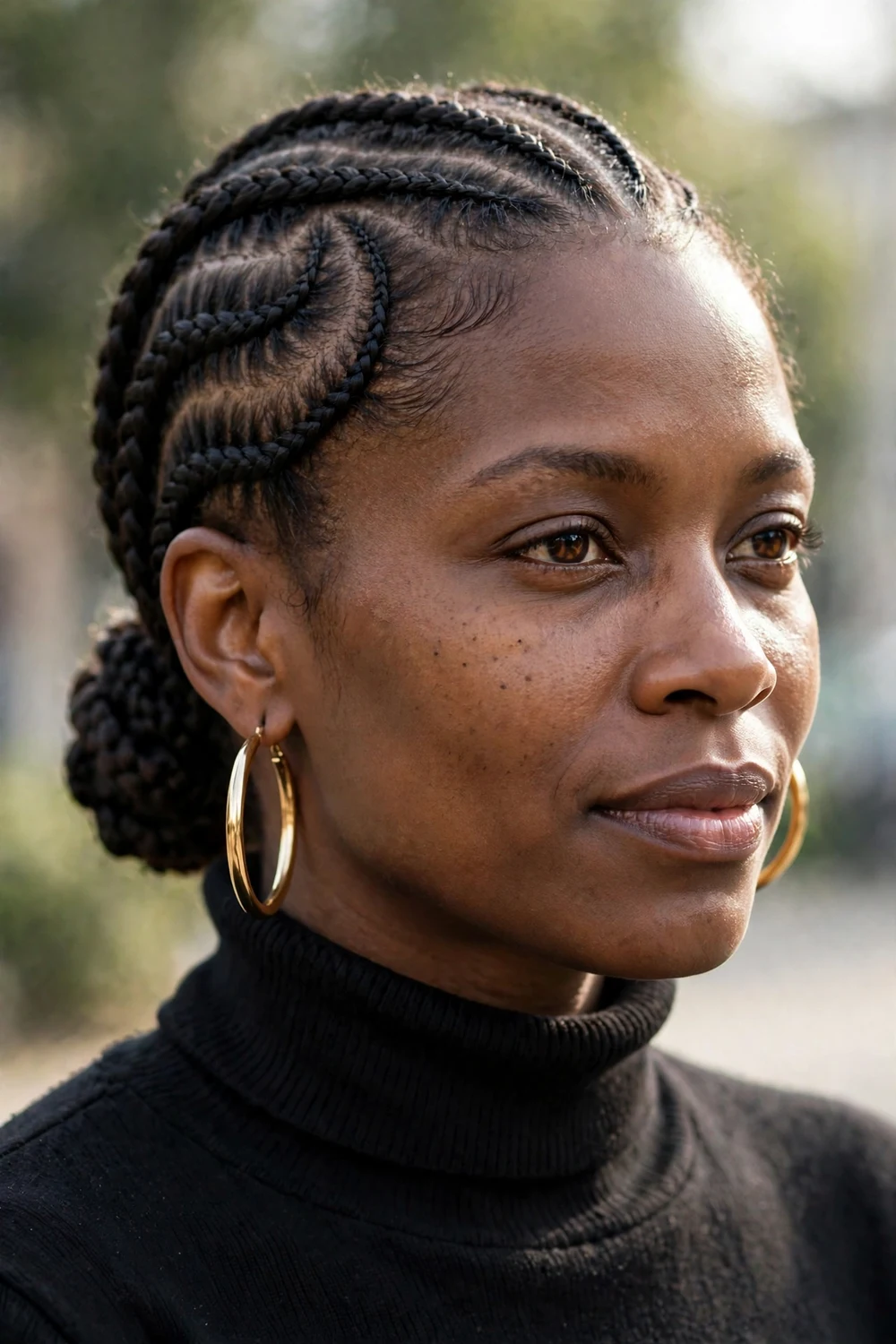
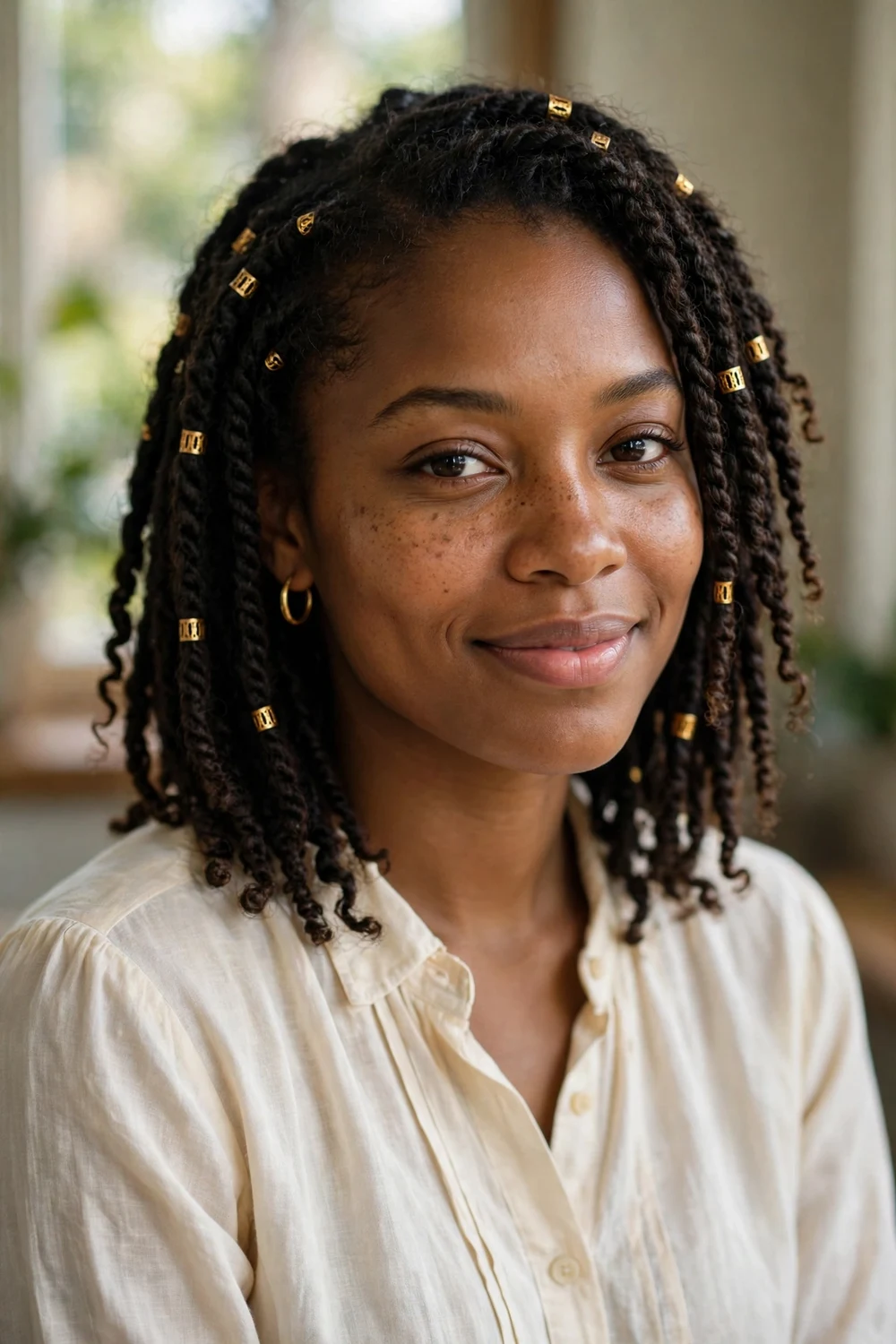
Two-strand twists were the 90s answer to wash-and-go styling. Two sections of hair wrapped around each other create a rope-like texture that doubles as a protective style and a curl-set method. Wear them twisted for three to four weeks, then unravel for a defined twist-out.
They suit natural hair of every length, and the install is gentler on edges than most braids. A light leave-in under a holding cream keeps them neat without buildup. Gold cuffs, first popularized in this era, still look right at home on them.
Try this: twist on damp, conditioned hair and pin the front twists back for a clean hairline.
Difficulty: Easy (DIY-friendly) · Cost: $20–$60 (products) or $80–$150 (salon)
5. Bantu Knots
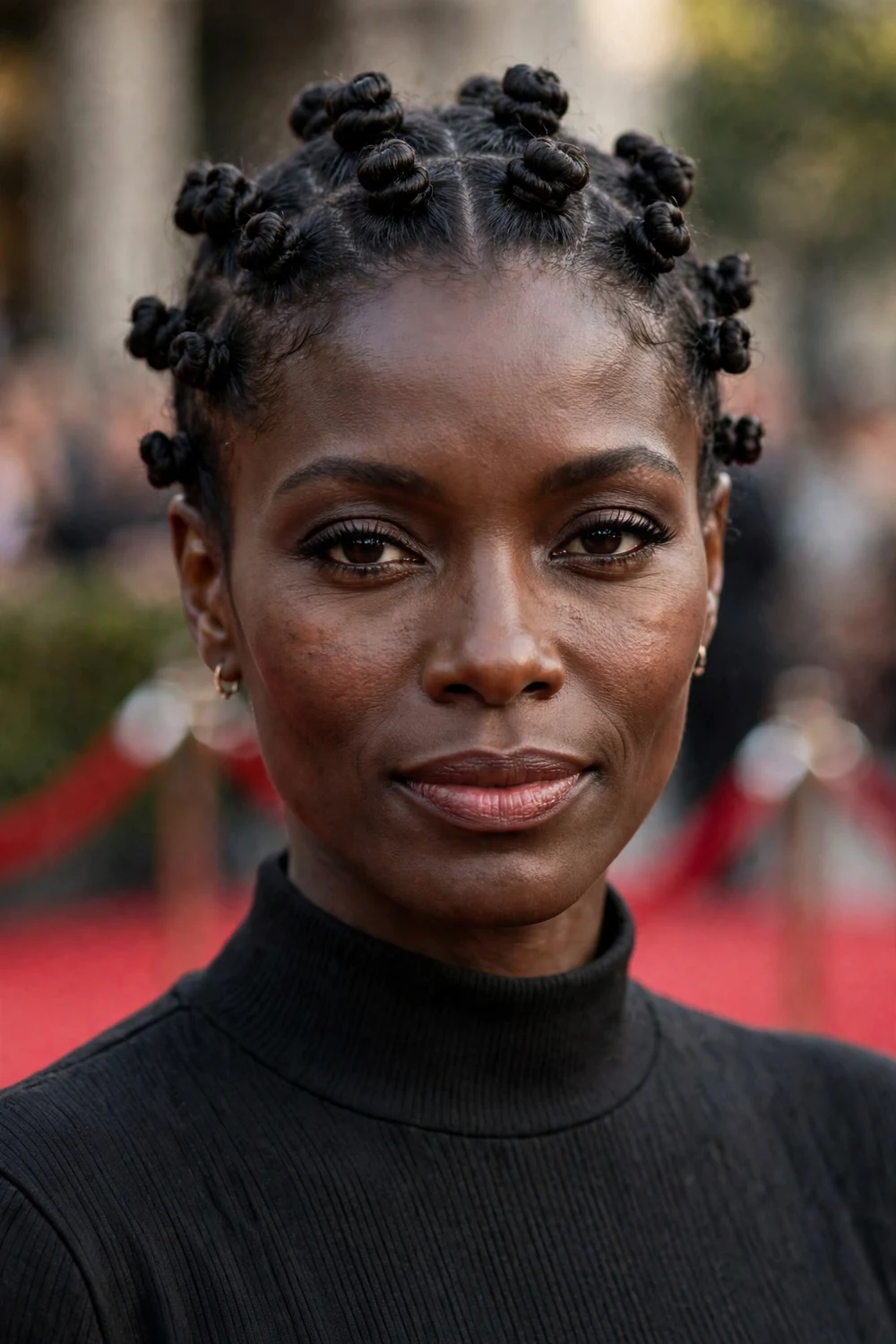
Bantu knots turned heads on 90s red carpets and in music videos. Small sections of hair are twisted and coiled into knots across the whole head, creating a bold geometric pattern. They protect the ends completely and double as a heat-free curl method when you take them down.
For a current feel, vary the knot size: larger knots on top and smaller ones at the nape. Keep the parts clean and the knots snug but not painful. This works on short to medium natural hair and lasts about one to two weeks.
Try this: unravel the knots after two days for springy, defined curls with zero heat.
Difficulty: Easy (DIY-friendly) · Cost: $15–$40 (products)
6. Fulani Braids
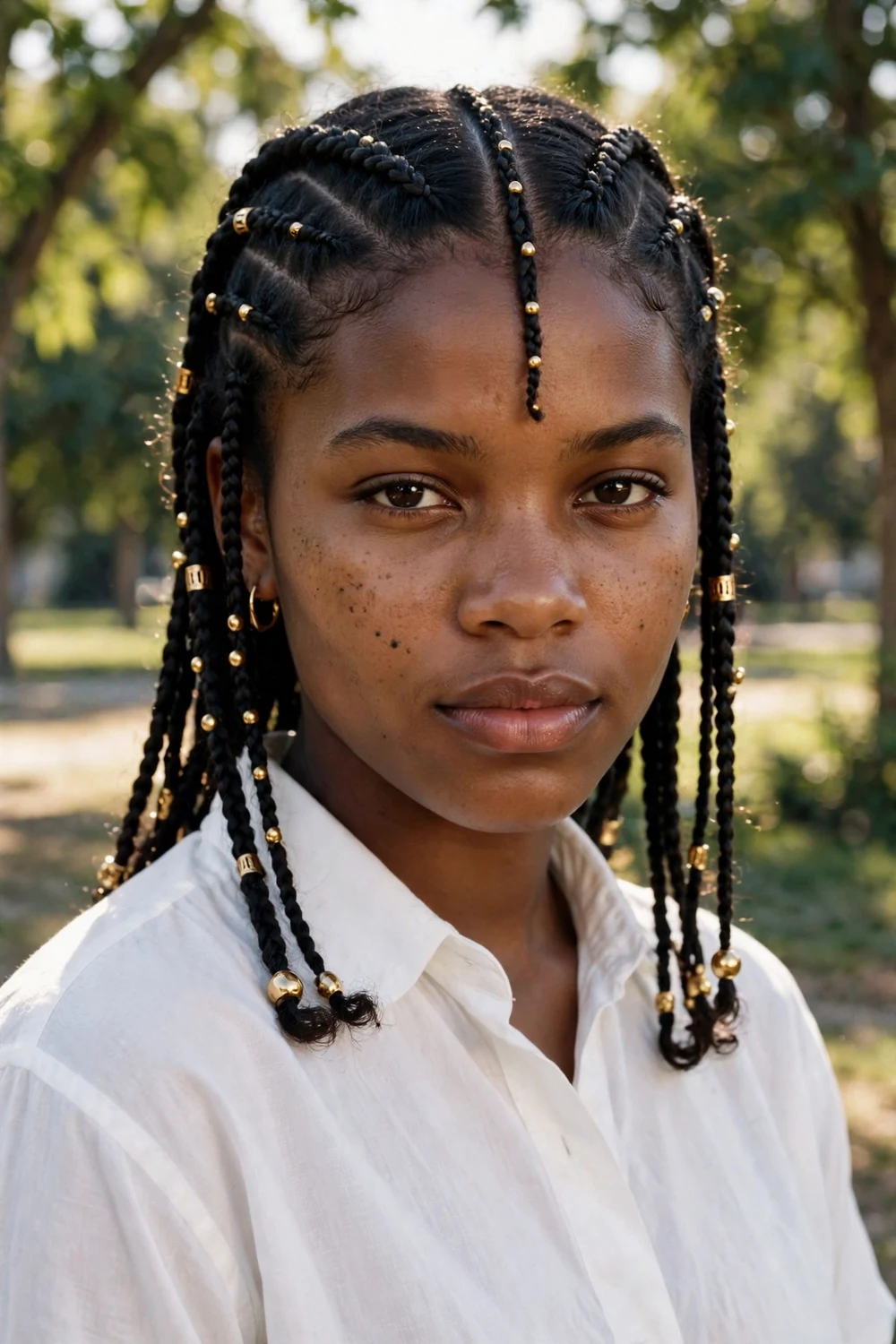
Fulani braids, with their signature center part and one braid down the middle of the forehead, were a 90s staple thanks to artists like Brandy. The style mixes cornrows in front with loose or box-braided hair in back, and beads are practically required.
The beaded detail is what keeps this look current. Wooden, gold, or cowrie-shell beads at the ends honor the style’s roots while reading fresh. It suits medium to long hair and lasts three to five weeks with care.
Try this: add beads only to the two front braids for a subtle nod instead of a full beaded set.
Difficulty: Moderate · Cost: $120–$250 (braider install)
7. Goddess Braids
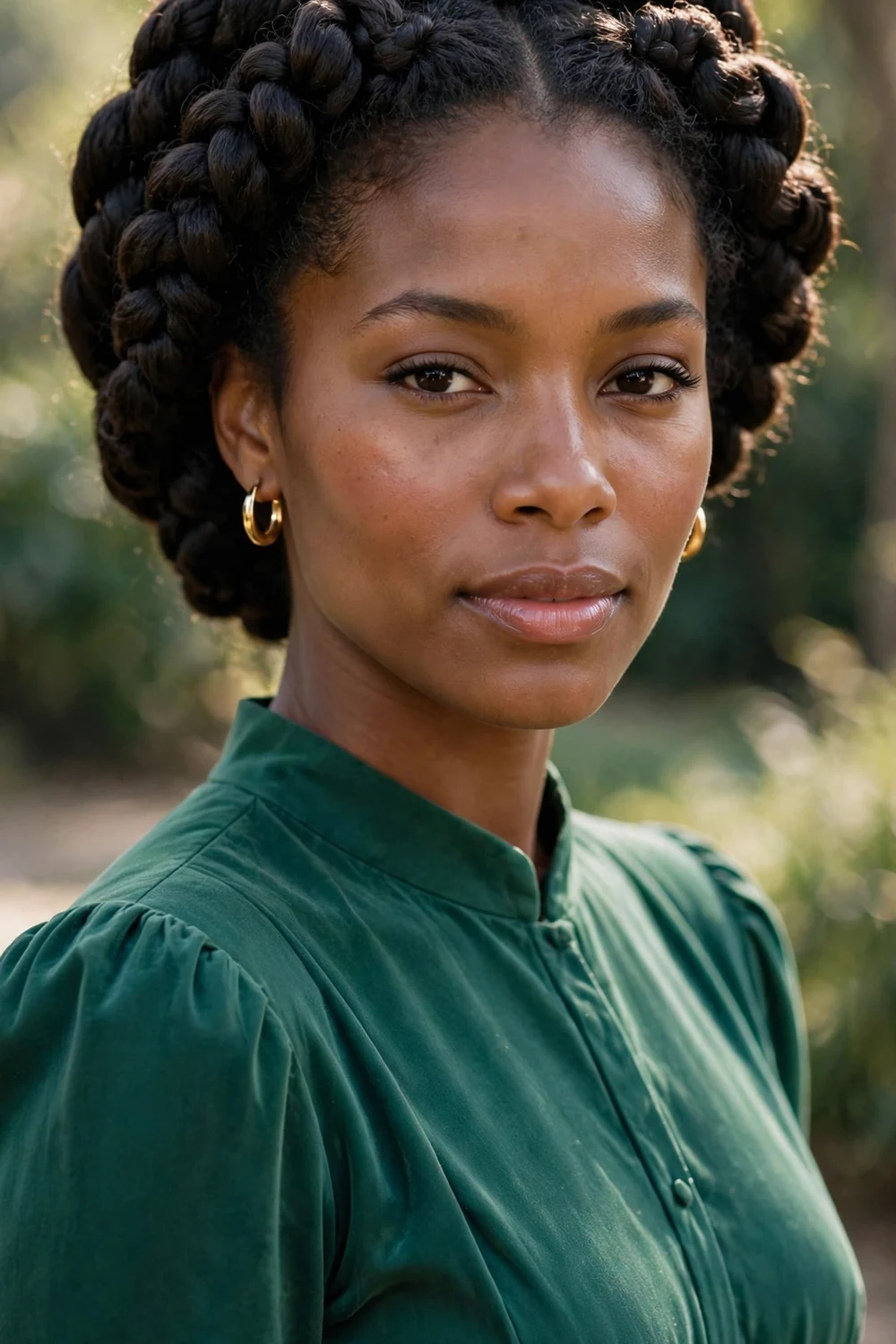
Goddess braids are the oversized, regal cousins of cornrows. Thick, raised braids sweep around the head in crowns or sweeping curves, showing off clean parts and real braiding skill. In the 90s they were a go-to for events because they photograph so well.
Two or three large braids are all you need for the modern version, which keeps the install time reasonable. This style suits medium to long hair and works for formal occasions or everyday wear. Expect two to four weeks of wear.
Try this: sweep two goddess braids into a low bun at the nape for an event-ready finish.
Difficulty: Moderate · Cost: $90–$180 (braider install)
8. Long Rope Braids
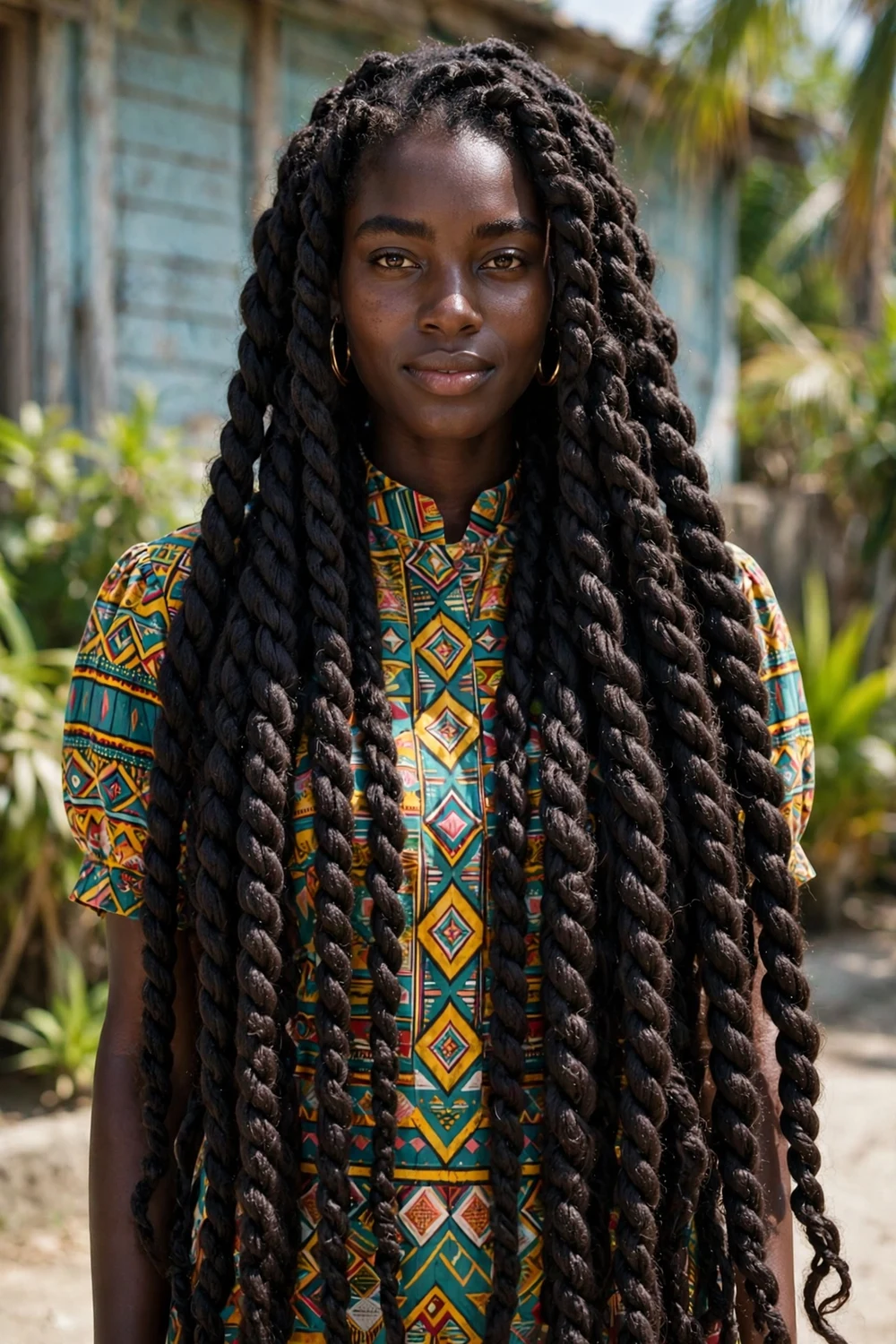
Dancehall star Patra made mile-long ropy braids a mid-90s statement. These thick, rope-twisted braids fall far past the waist and move with real drama. They are lighter than they look, since rope twists use less added hair than box braids of the same thickness.
Keep the length to the lower back for everyday wear, and save the extreme lengths for events. A strong holding gel at the roots keeps the style neat for weeks. This suits anyone who wants maximum impact from a protective style.
Try this: coil the braids into a high wrapped bun when the length gets in the way.
Difficulty: Moderate · Cost: $130–$260 (braider install)
9. Toni Braxton Pixie
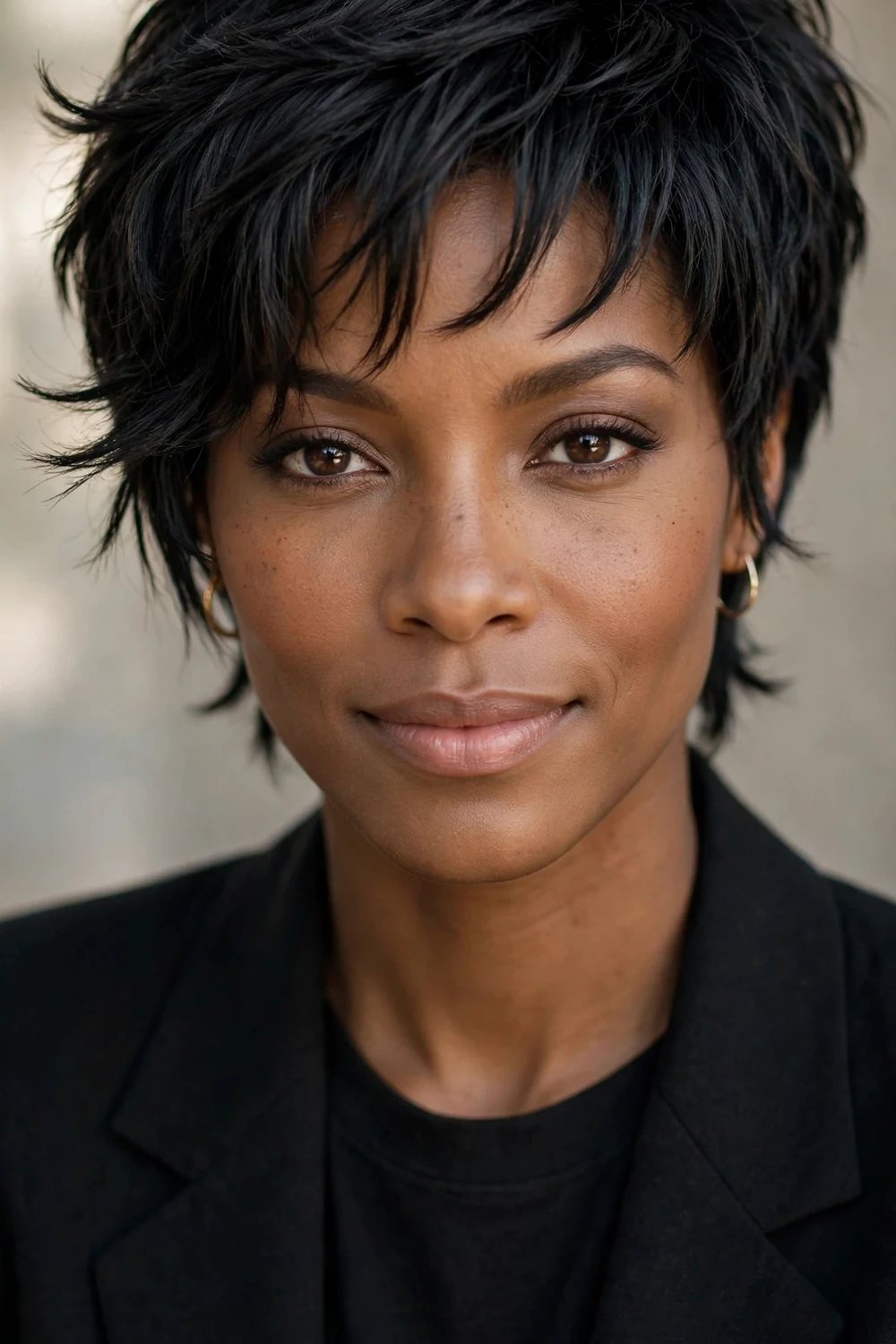
Toni Braxton’s early-90s pixie was the haircut that launched a thousand salon visits. Cropped close at the sides with a soft, feathered top that framed the face, it was polished without being stiff. The shape puts cheekbones and eyes front and center.
A skilled cut is everything here. Ask your stylist for texture through the top and a tapered, not blunt, neckline so it grows out gracefully. Trims every four to six weeks keep the silhouette sharp. If you love short cuts, these short pixie cuts show how the shape adapts to different textures.
Try this: work a pea-sized amount of pomade through the top for piecey definition that lasts all day.
Difficulty: Easy (cut-dependent) · Cost: $45–$90 (cut, plus regular trims)
10. Curly Pixie
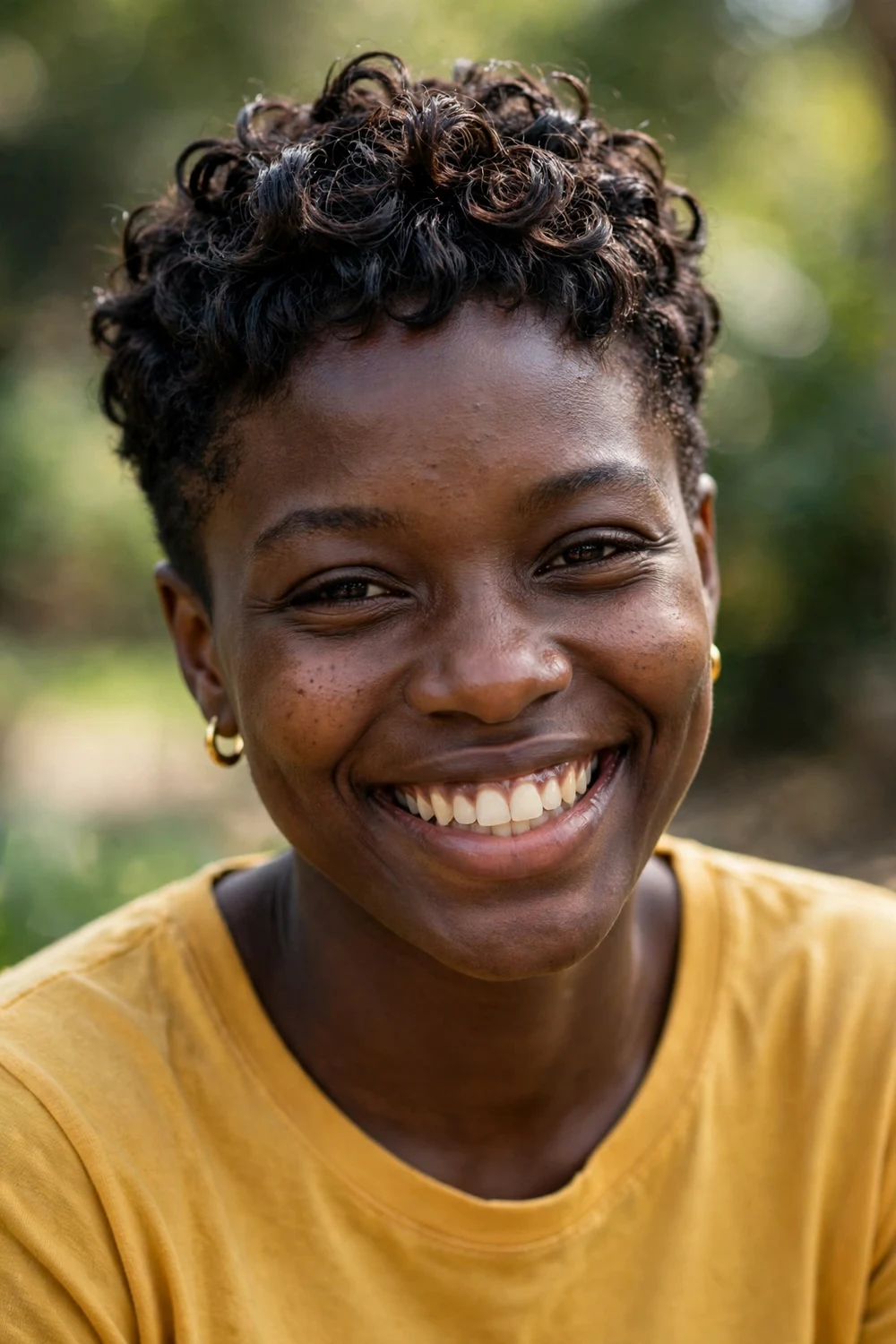
The curly pixie let 90s women show off natural texture in a cropped silhouette. Curls stay longer on top while the sides taper close, so the shape has height where it counts. It is one of the easiest short styles to maintain once the cut is right.
Ask for a curl-aware cut, since shrinkage changes everything at this length. A curl cream on damp hair plus a diffuser on low heat defines the pattern. Apply heat protectant before diffusing. Deep-condition weekly to keep the curls springy.
Try this: refresh day-two curls with a water and leave-in spritz instead of rewetting the whole head.
Difficulty: Easy · Cost: $45–$85 (curl-aware cut)
11. Edgy Crop
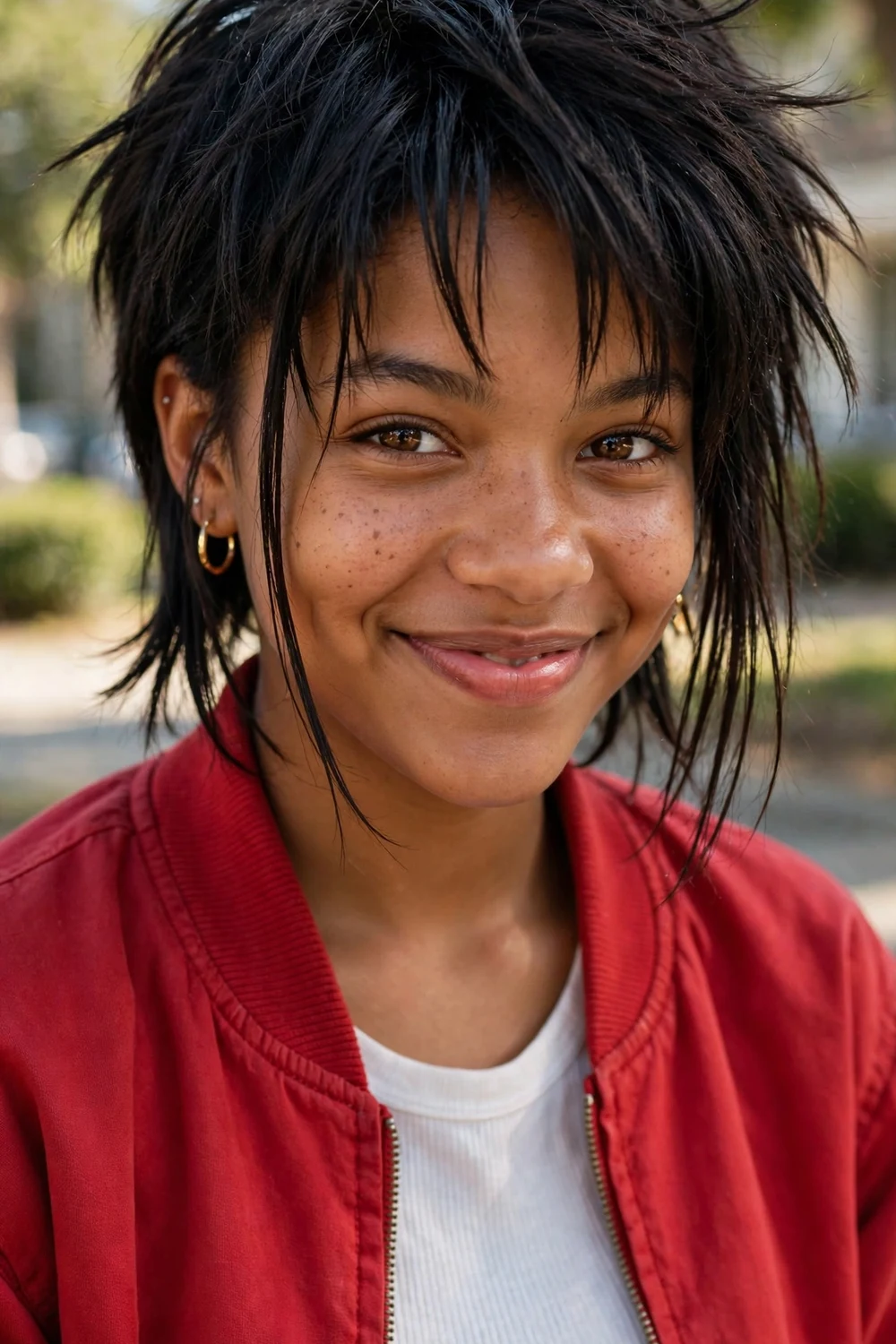
Teen R&B singers of the mid-90s, Monica chief among them, made the edgy crop a signature. Shorter than a pixie at the back but with choppy, piecey length around the face, it read both cute and confident. The uneven texture was the whole point.
This cut flatters round and heart-shaped faces because the front pieces draw the eye down. It grows out well since the choppiness hides uneven lengths. A matte clay or wax separates the pieces without stiffness.
Try this: ask for point-cut ends so the texture looks intentional, not grown out.
Difficulty: Easy · Cost: $45–$85 (cut)
12. Buzz Cut
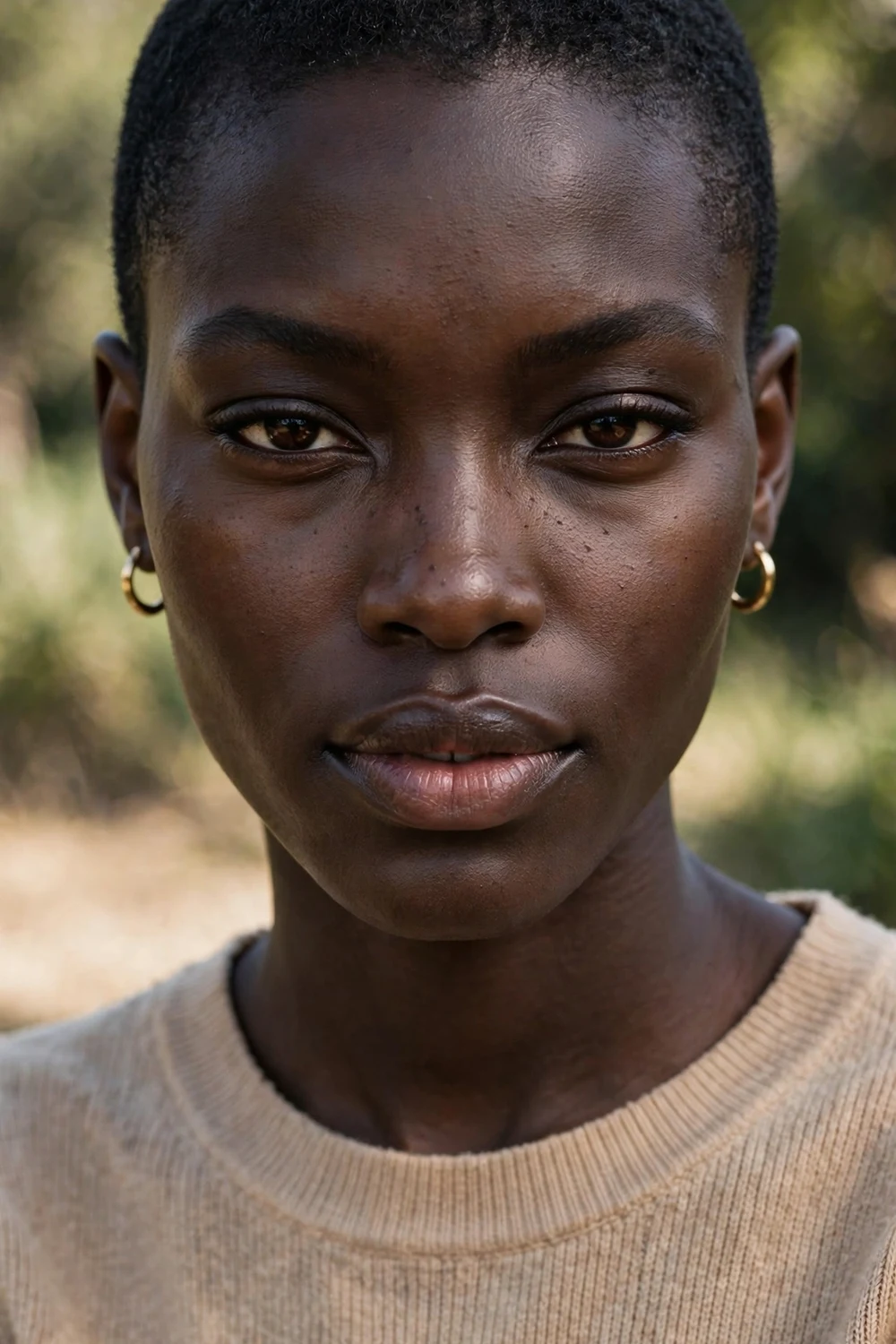
The 90s buzz cut was a statement of confidence. One even length all over, usually a number one or two guard, stripped everything back to bone structure. It also became a canvas for color, with many women pairing the cut with blonde or red dye.
Upkeep is simple: a clipper touch-up every two to three weeks keeps it even. Sunscreen on the scalp matters more than people expect. This suits anyone ready for the lowest-maintenance style on this list.
Try this: try a temporary color rinse first if you are curious about a colored buzz.
Difficulty: Easy · Cost: $20–$40 (clipper cut)
13. Asymmetric Edgy Cut
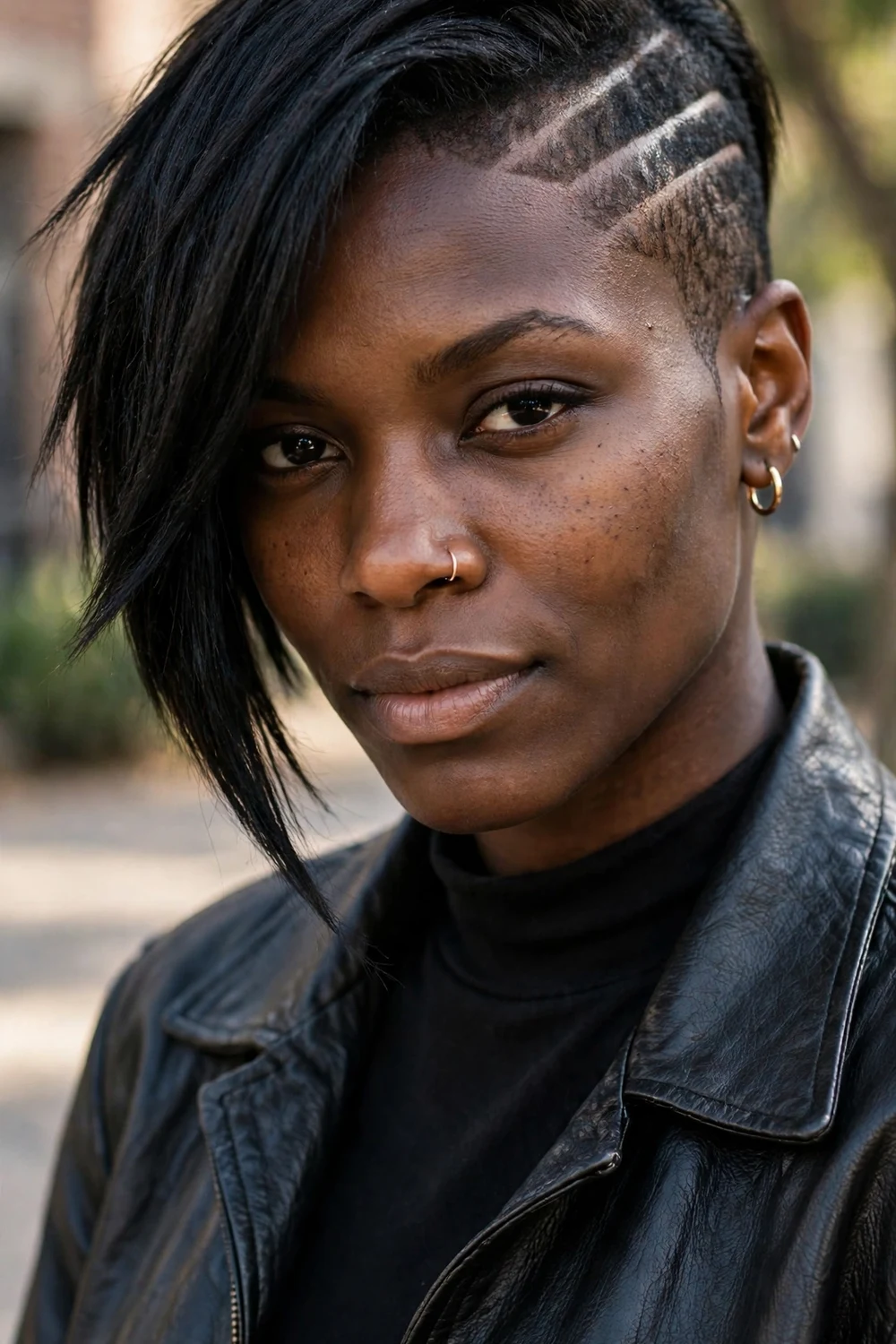
Girl groups like SWV and TLC pushed short hair into edgy territory with asymmetric cuts. One side angles longer while the other crops close, sometimes with a shaved line or design carved in. The imbalance is deliberate and reads bold from across the room.
The shaved side needs a lineup every two to three weeks to stay crisp. This cut suits oval and square faces best, and it pairs well with statement earrings since one ear stays fully visible. Keep the longer side conditioned so the angle stays smooth.
Try this: sweep the longer side across the forehead for a softer take on the hard angle.
Difficulty: Moderate (frequent lineups) · Cost: $40–$80 (cut, more often)
14. Mushroom Cut
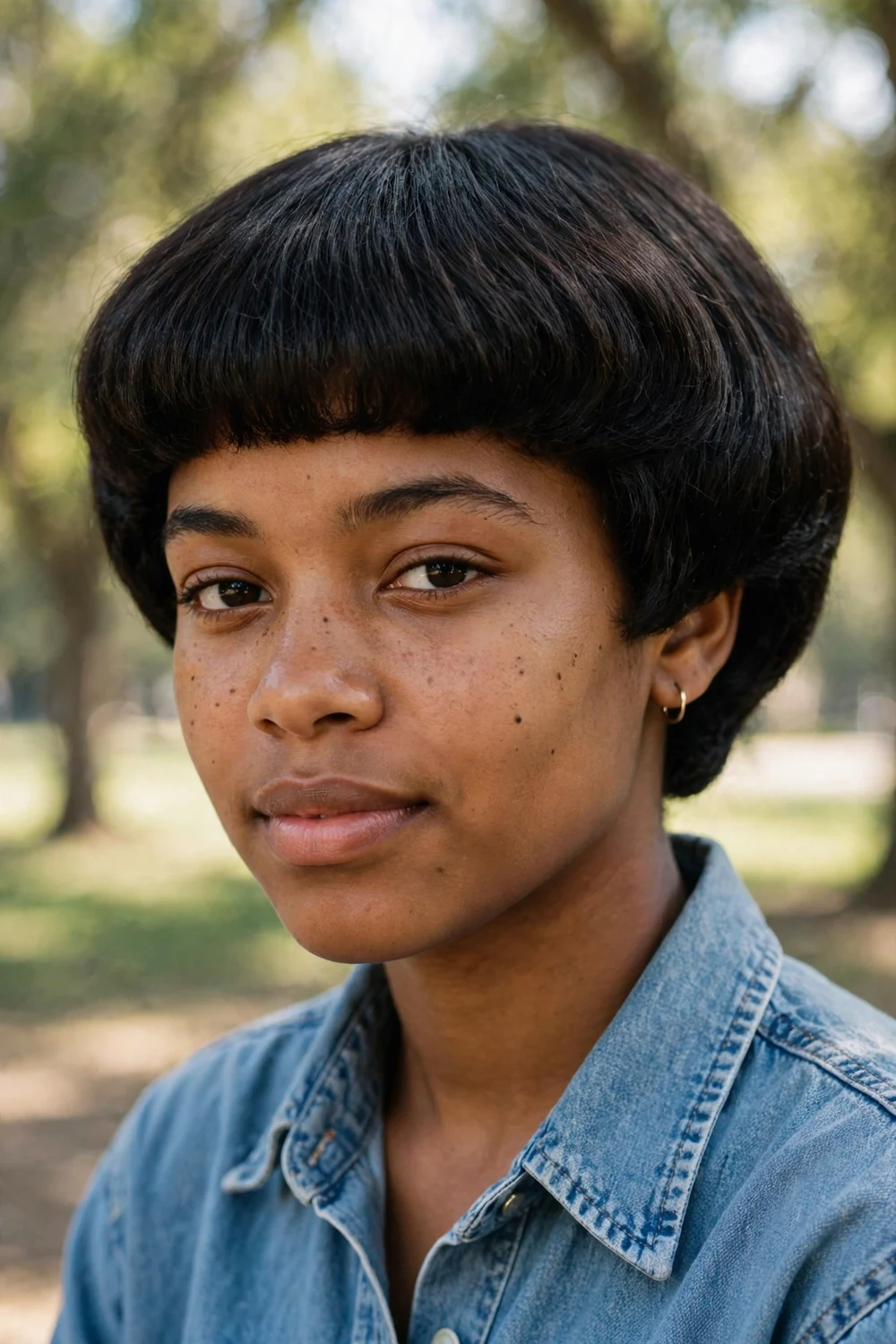
The mushroom cut’s smooth, rounded silhouette was a quirky 90s favorite. Hair is cut in an even bowl shape with a straight fringe, creating a cap of hair that frames the whole face. It is a love-it-or-hate-it look, which is exactly why it stood out.
The modern version works best with a softer, slightly textured edge instead of a hard bowl line. It suits straight and relaxed textures most, and oval faces wear the symmetry well. Trims every five to six weeks keep the round shape.
Try this: ask for soft, feathered ends so the silhouette reads current rather than retro.
Difficulty: Easy · Cost: $40–$75 (cut)
15. Finger Waves
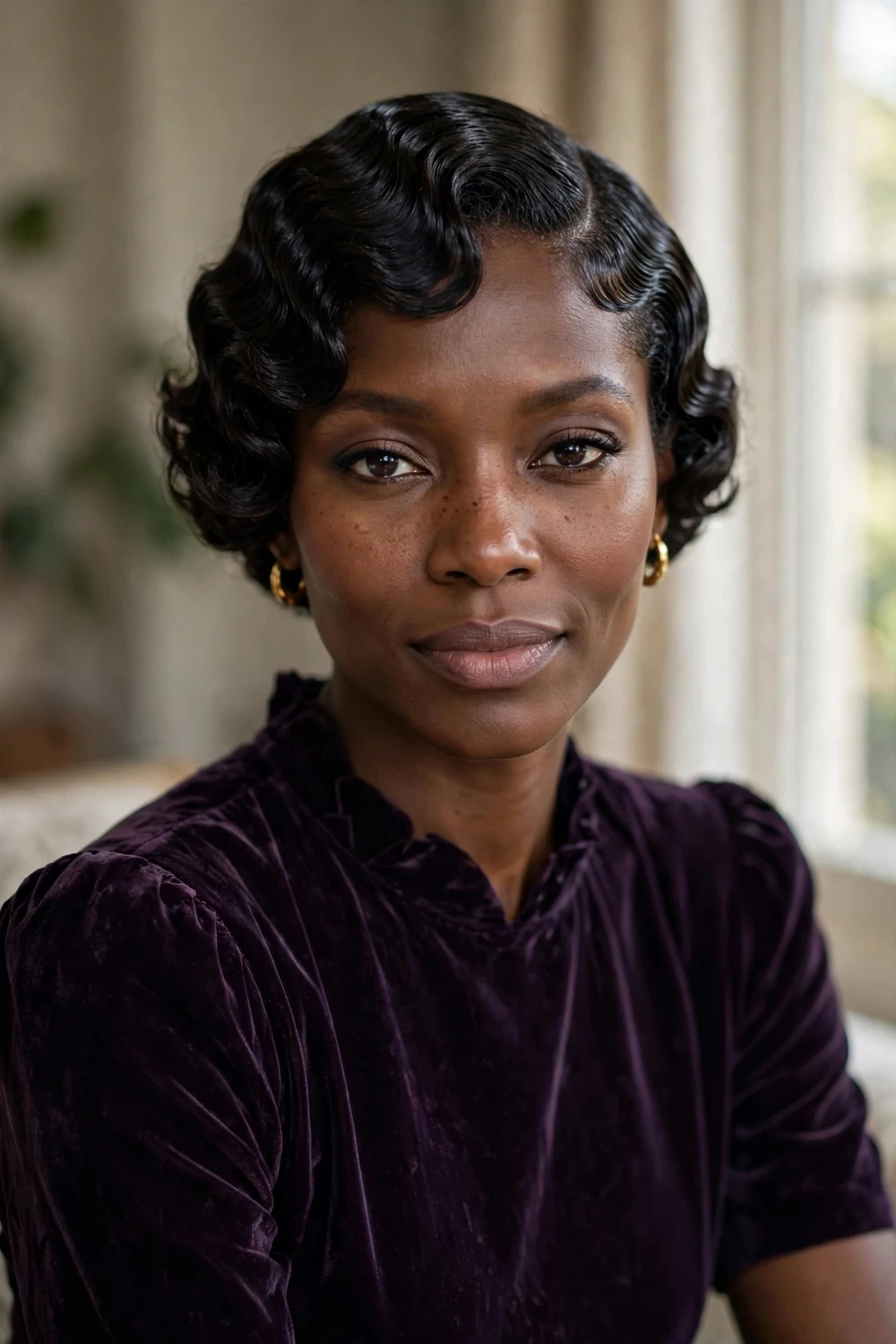
Finger waves were the 90s evening hairstyle for short hair. Gel, a fine-tooth comb, and skilled fingers sculpt deep S-shaped ridges that lie flat against the scalp. The glossy, molded finish turned heads at every formal event of the decade.
Today’s stylists often pair finger waves with longer lengths: waved fronts with flowing backs, or waved pixies. A strong-hold gel and a hooded dryer set the pattern. This suits short to medium hair and lasts several days under a silk scarf at night.
Try this: wave only the front section and leave the back in soft curls for a wearable hybrid.
Difficulty: Moderate (technique-heavy) · Cost: $50–$100 (salon styling)
16. Spiral Curls
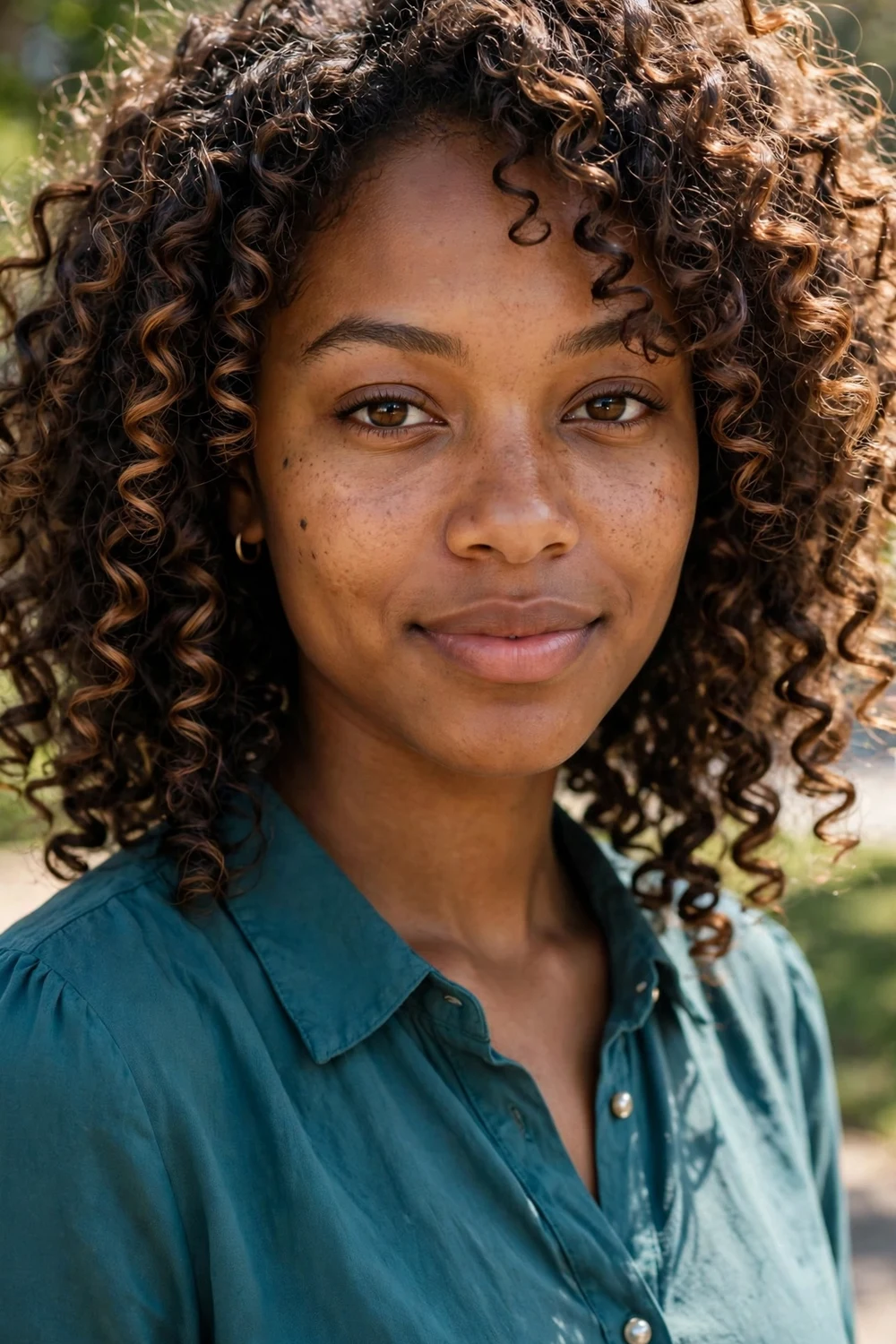
Spiral curls gave 90s short natural hair its bounce. Tight, springy curls with real definition, often achieved with small rods or a curling iron, created volume that moved. The look ranged from romantic ringlets to tighter corkscrew patterns.
To recreate them now, flexi rods on damp, conditioned hair give the most consistent spirals without heat damage. If you use a curling iron, apply heat protectant first and keep the sections small. A light oil seals the ends and adds shine.
Try this: sleep in a pineapple ponytail under a satin bonnet to keep the spirals intact for days.
Difficulty: Easy to moderate · Cost: $10–$30 (rods and products)
17. Big Natural Curls
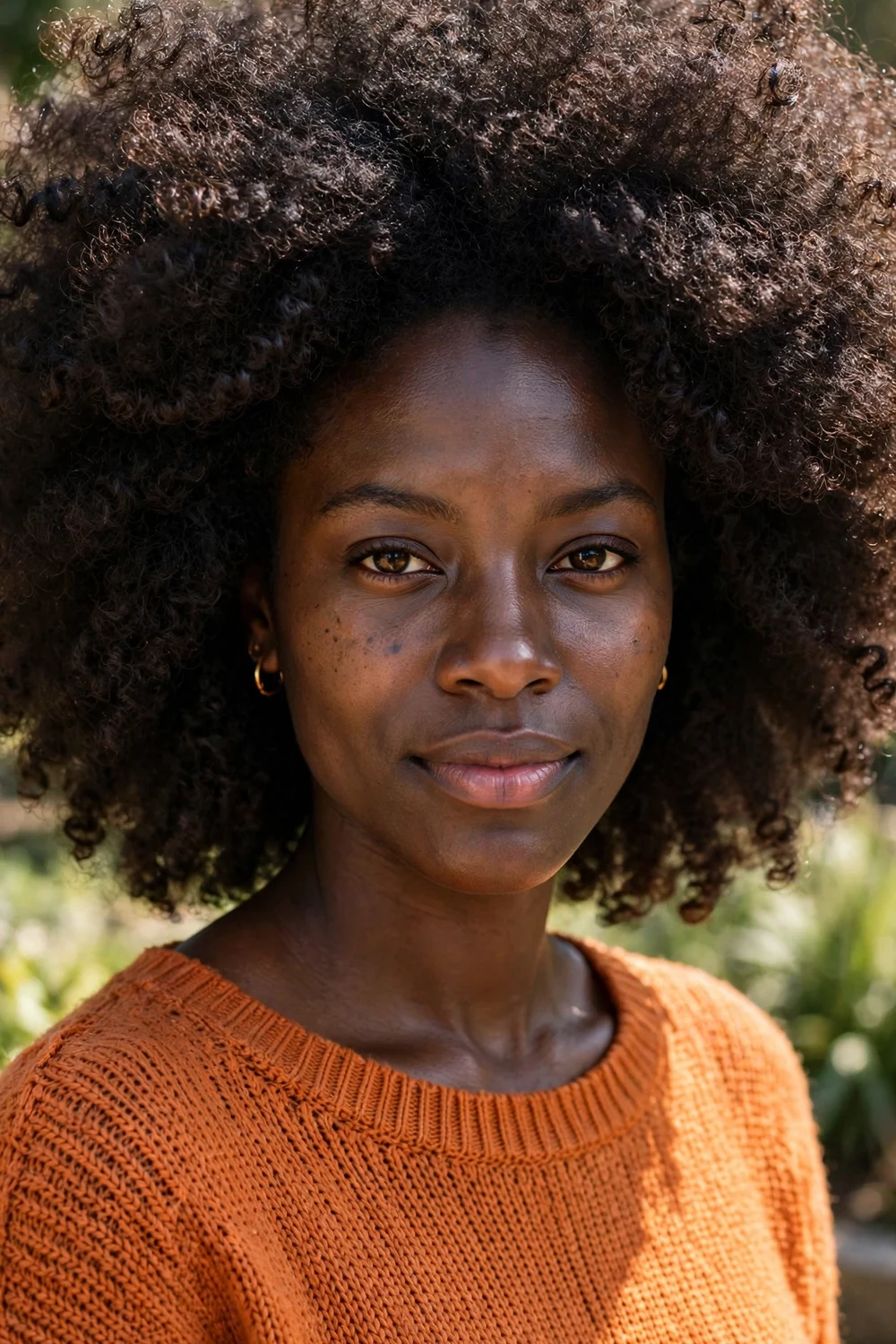
The 90s saw a proud return to big, picked-out natural hair. A large, rounded halo of curls and coils celebrated texture at full volume, worn as a statement of identity as much as style. Picking the roots, not the ends, builds the shape without frizz.
Moisture is the foundation: a leave-in under a cream keeps the halo defined rather than dry. For more texture-focused inspiration, these natural hairstyles for Black women cover wash-and-go routines that feed right into this look.
Try this: pick the roots with an afro pick after your hair is fully dry for maximum lift.
Difficulty: Easy · Cost: $15–$40 (moisture products)
18. Long Voluminous Curls
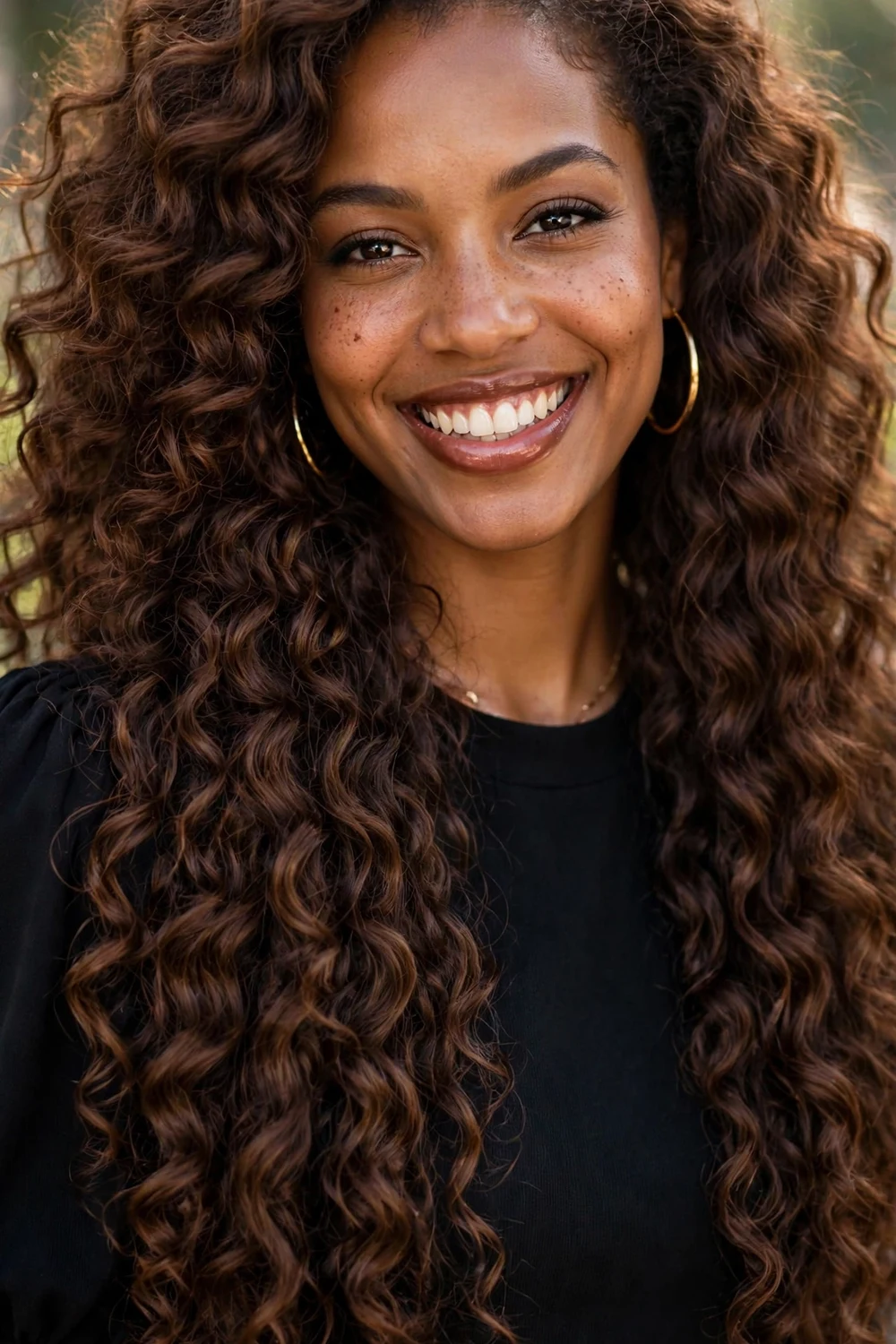
Long, thick, tumbling curls were peak 90s R&B glamour. Think chestnut-toned volume that moved on stage and in videos. The key was layers: long layers through the length kept the curls from forming a triangle and let each curl hang separately.
On natural hair, a roller set or large flexi rods build this volume without direct heat. On relaxed or straightened hair, large hot rollers do the job; apply heat protectant first. A center or side part both work, so choose based on your face shape.
Try this: flip your part to the opposite side on day two for instant root lift.
Difficulty: Moderate · Cost: $60–$120 (salon roller set)
19. Honey-Streaked Curls
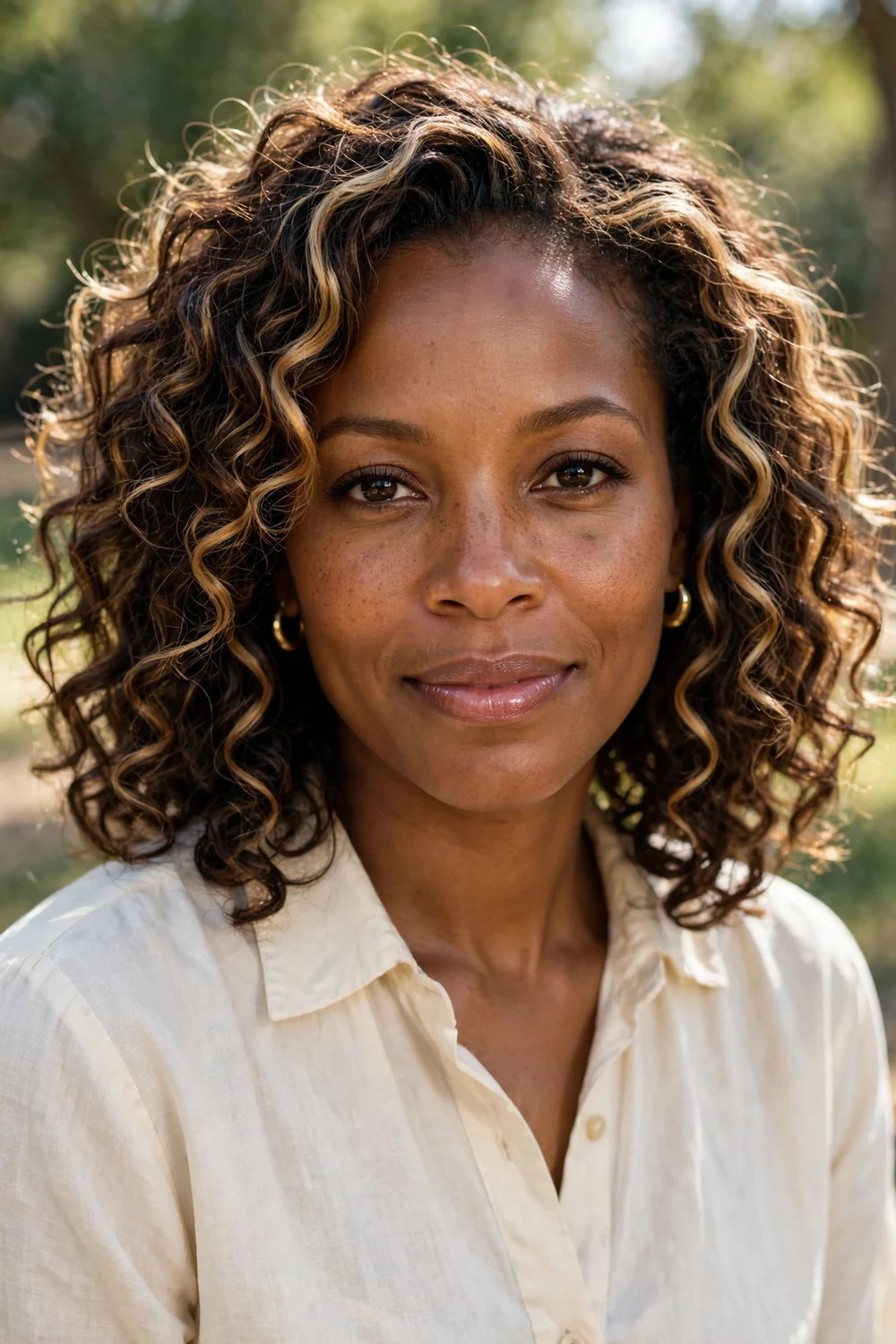
Honey streaks through dark curls were a fresh-faced 90s favorite, worn by singers like Deborah Cox. The warm highlights catch the light as the curls move, adding dimension without a full color commitment. Face-framing pieces brighten the whole look.
Balayage or foil highlights both work; keep the contrast soft rather than chunky for a current feel. Color-treated curls need extra moisture, so add a weekly deep-conditioning session. A curl-defining cream keeps the pattern crisp around the lighter pieces.
Try this: concentrate the lightest pieces around the face and keep the back richer for natural-looking dimension.
Difficulty: Moderate (color upkeep) · Cost: $120–$220 (cut + highlights)
20. Sleek Straight Swoop
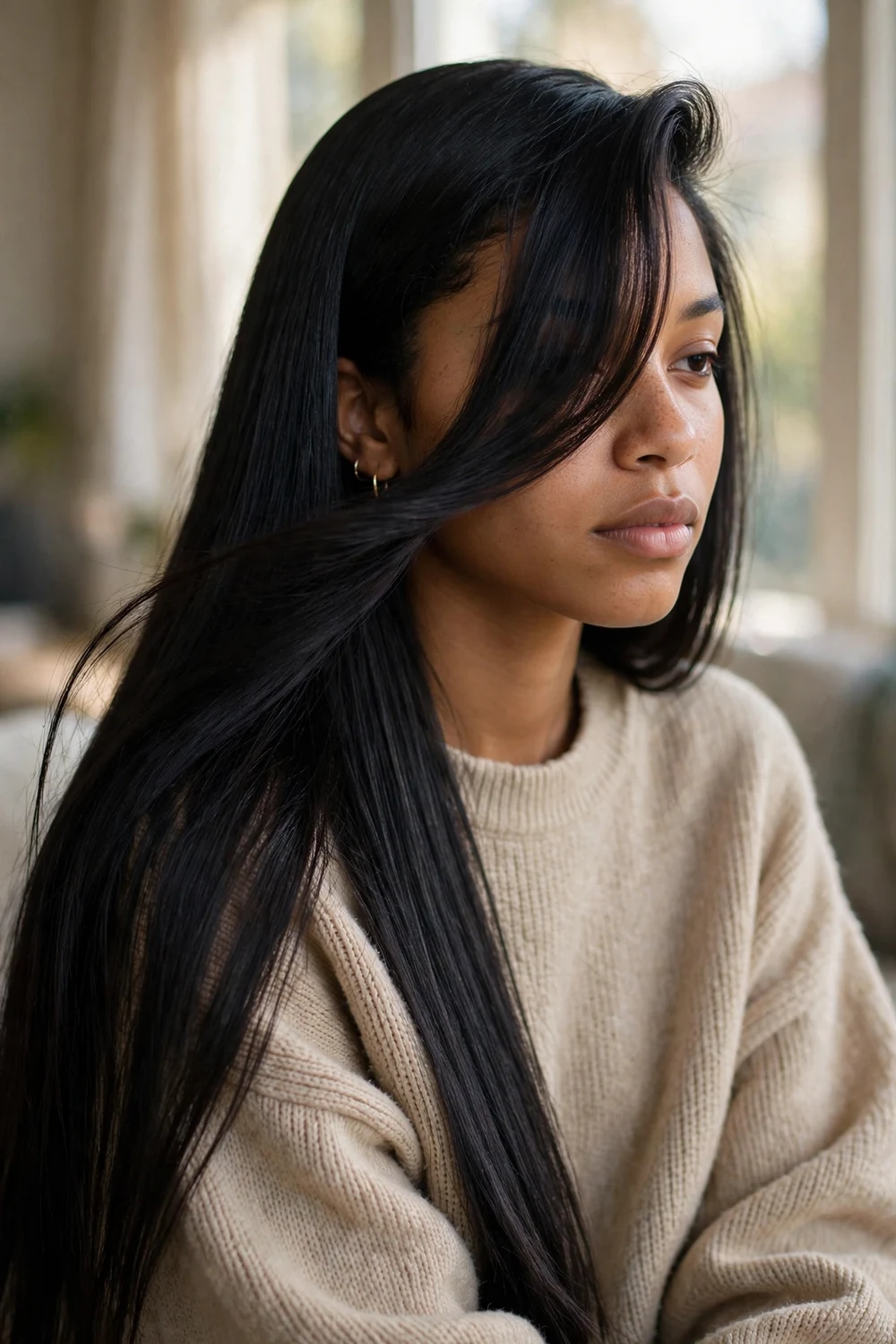
Aaliyah’s signature swoop, long straight hair swept over one eye from a deep side part, defined late-90s cool. The asymmetry gave an otherwise simple straight style real attitude. It worked because the hair itself was impossibly sleek.
A silk press or quality straightening treatment builds the base; apply heat protectant before every heat pass. The swoop needs length to drape properly, so this suits medium to long hair. Tuck the shorter side behind the ear to keep it out of your face.
Try this: set the swoop with a light-hold spray so it stays in place without looking stiff.
Difficulty: Easy to moderate · Cost: $60–$130 (silk press or straightening)
21. Silk Press
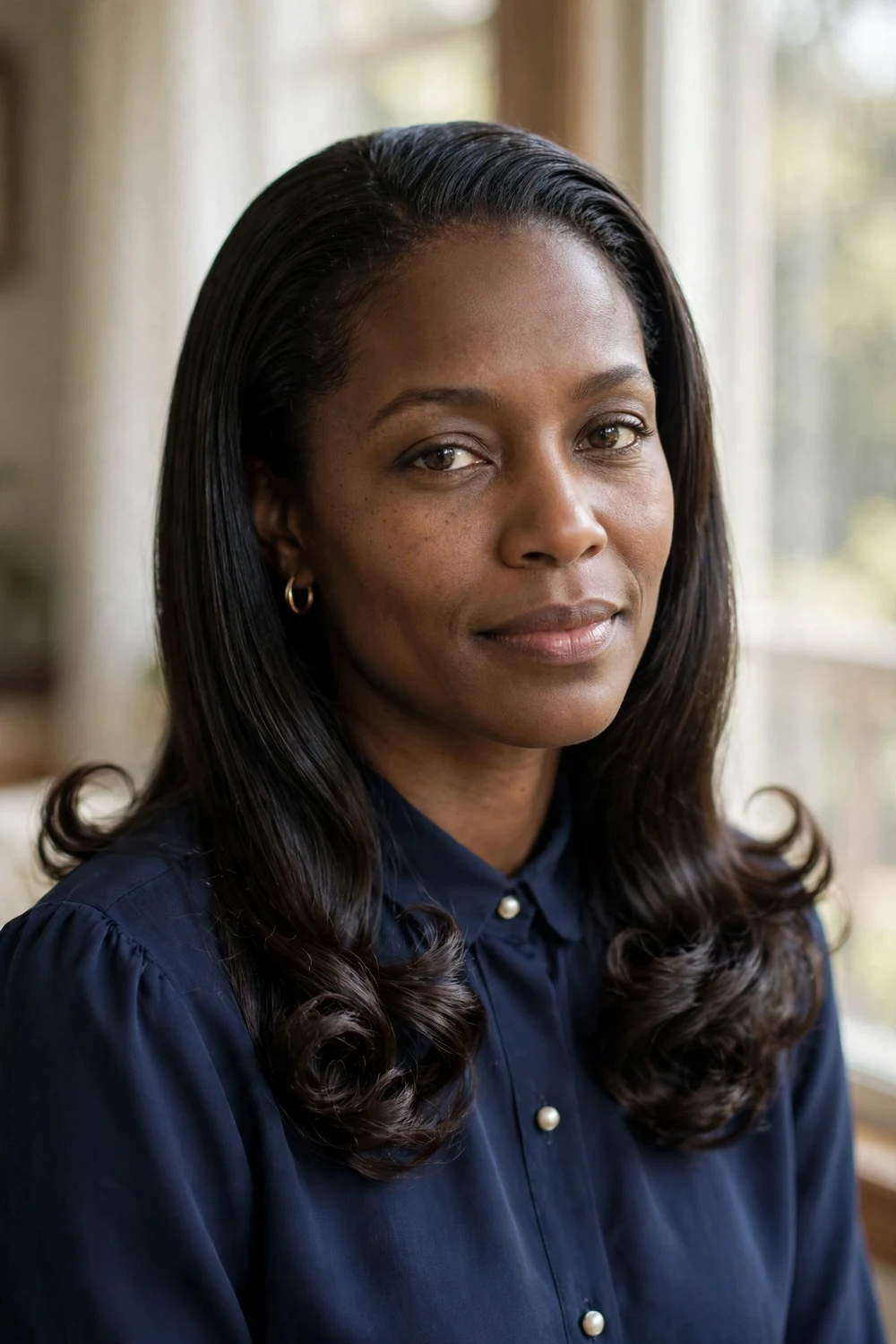
The 90s press and curl, now called the silk press, delivered glossy, swinging straight hair with bouncy ends. Hot combs and marcel irons did the work back then; today’s stylists use blow dryers and flat irons for the same glassy finish. The result moves like relaxed hair but washes out.
Always apply heat protectant before the blow dry and again before the flat iron. A silk press lasts until your next wash, so wrap it nightly and avoid steam. This suits natural hair of all textures and lengths.
Try this: book the press a day before an event so the hair settles into its most natural movement.
Difficulty: Moderate · Cost: $70–$150 (salon press)
22. Silky Auburn Locks
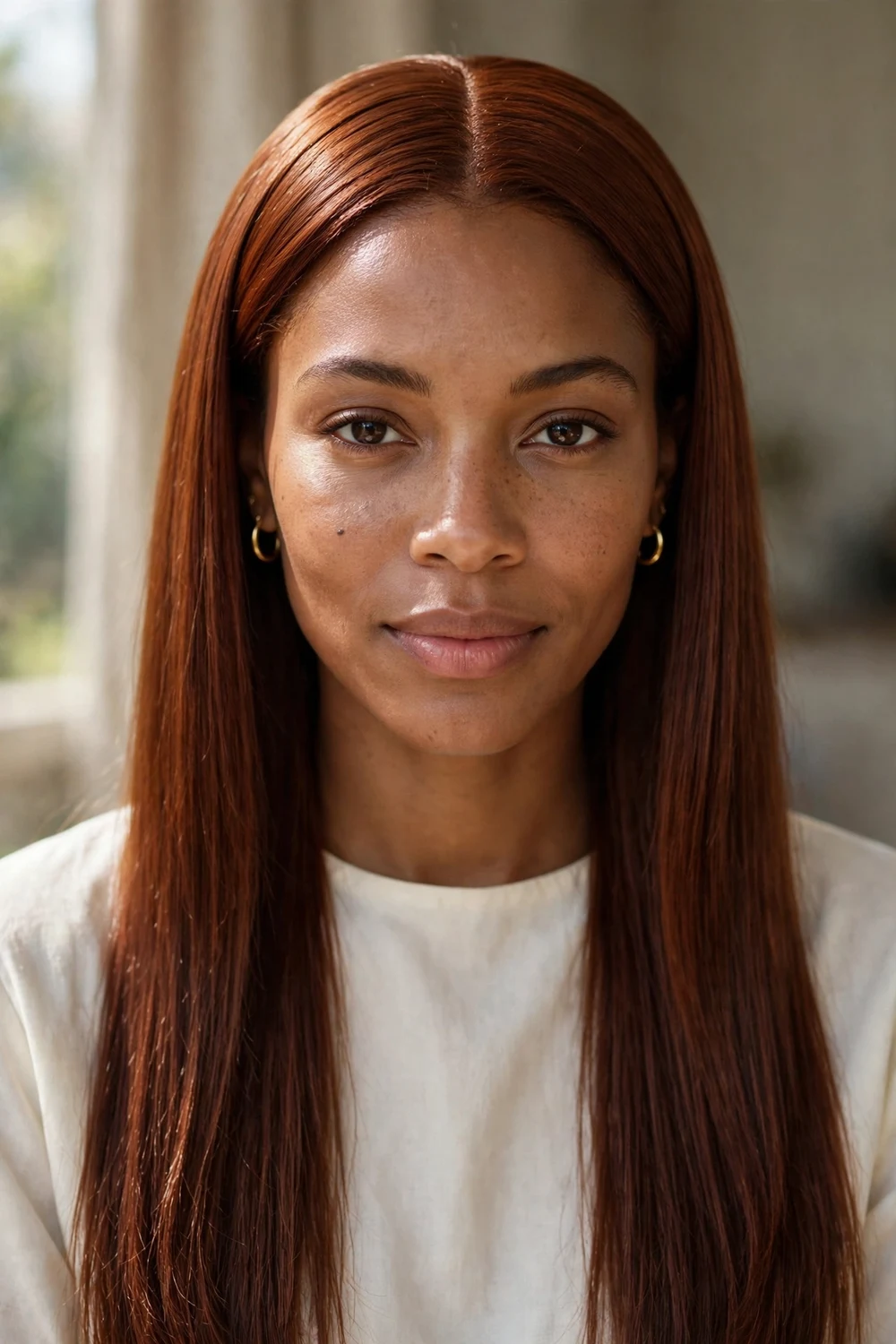
Silky auburn locks were the quiet luxury of 90s R&B style. Long, straight, middle-parted hair in a rich reddish-brown shade looked expensive without trying. The color warmed up deep skin tones and made simple styles feel finished.
Auburn fades faster than darker shades, so use color-safe shampoo and cool water. The straight finish needs the same heat care as any press: heat protectant on every pass. This suits medium to long hair and all skin tones, with the exact auburn depth adjusted to yours.
Try this: ask your colorist for a copper-brown gloss between full color appointments to keep the tone rich.
Difficulty: Moderate (color + heat upkeep) · Cost: $130–$250 (color + press)
23. Voluminous Blowout
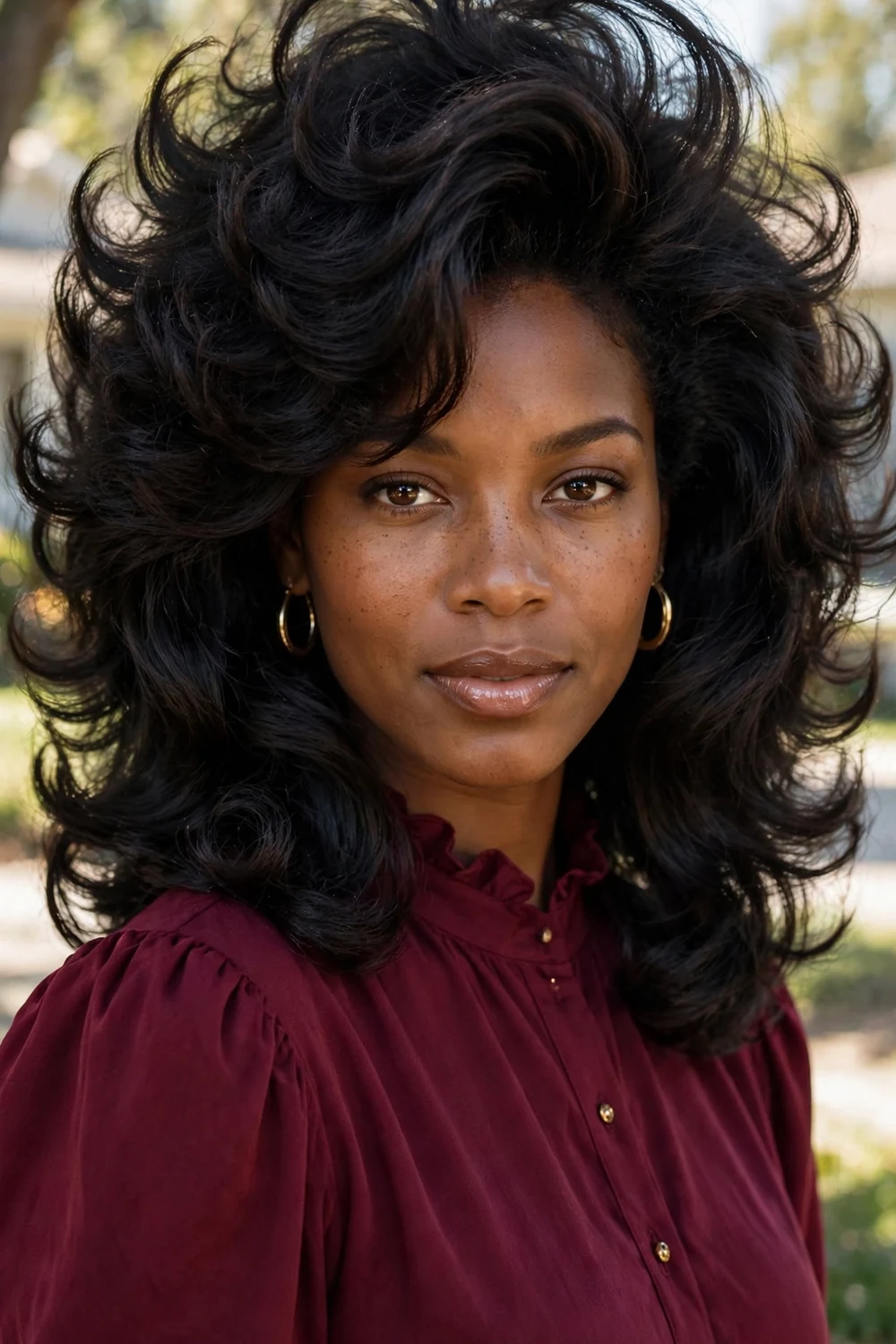
Girl groups like En Vogue kept their blowouts big, bouncy, and seemingly effortless. Feathered layers and a round brush created volume that framed the face and moved on stage. It was glamour that looked easy, even though it took real technique.
Apply heat protectant before blow-drying, and use a large round brush to build the feathered shape. Velcro rollers set while you do your makeup lock in the bounce. This suits medium to long hair; shorter hair gets a similar effect with a layered cut.
Try this: blow-dry with your head flipped upside down for the first few minutes to build root volume.
Difficulty: Moderate · Cost: $50–$110 (salon blowout)
24. Crimped Hair
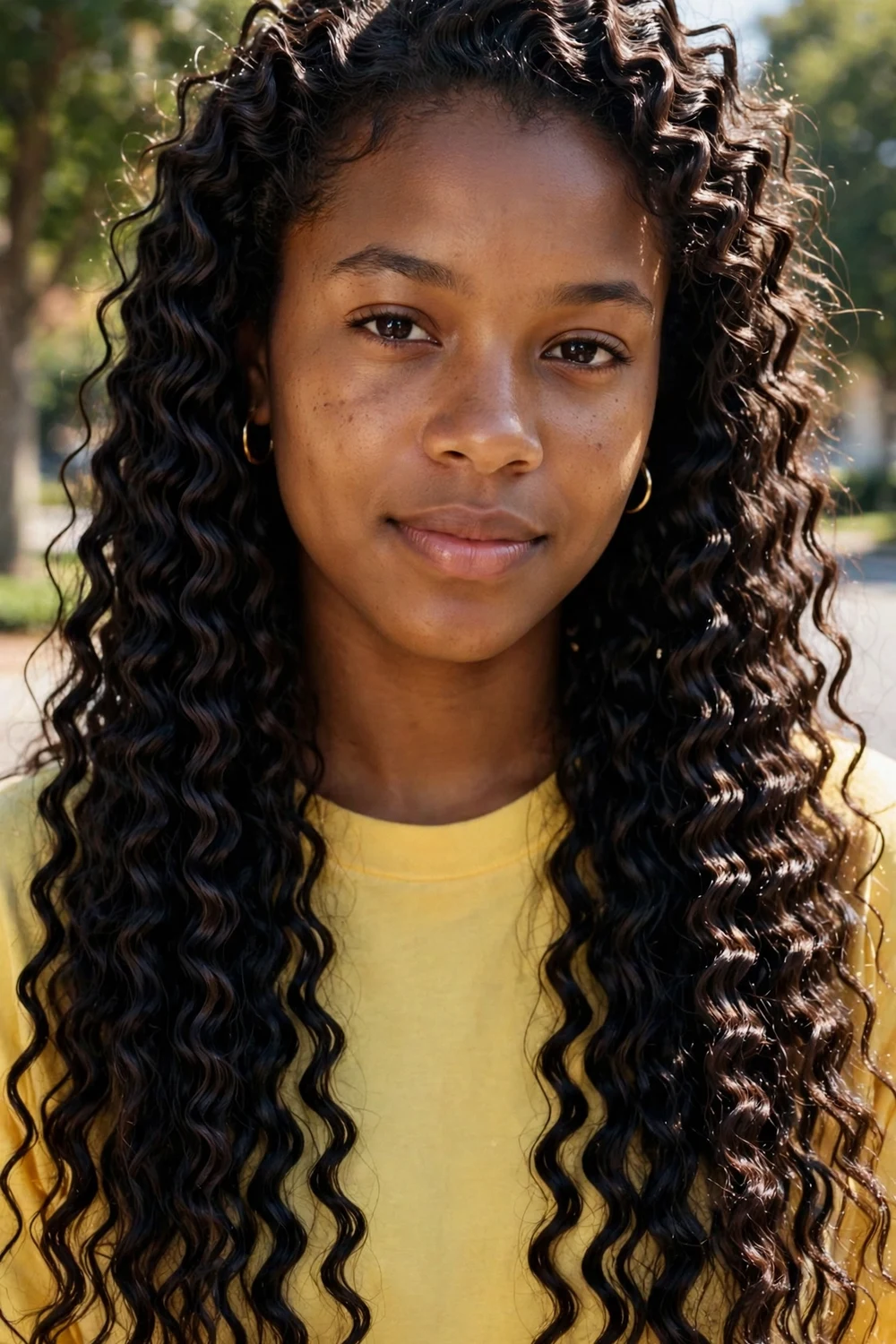
Crimped hair brought zigzag texture to 90s styling, and stars like Whitney Houston wore it with full drama. A crimping iron presses small ridges into the hair, creating volume and a distinctive pattern that reads unmistakably 90s.
The current way to wear it: crimp select sections rather than the whole head. A few crimped pieces under smooth top layers give texture without the full retro effect. Apply heat protectant before crimping, and keep the iron moving to avoid crease marks.
Try this: crimp the underneath layers only, leaving the top smooth for a hidden-texture effect.
Difficulty: Easy · Cost: $25–$60 (crimping iron)
25. Flipped Ends
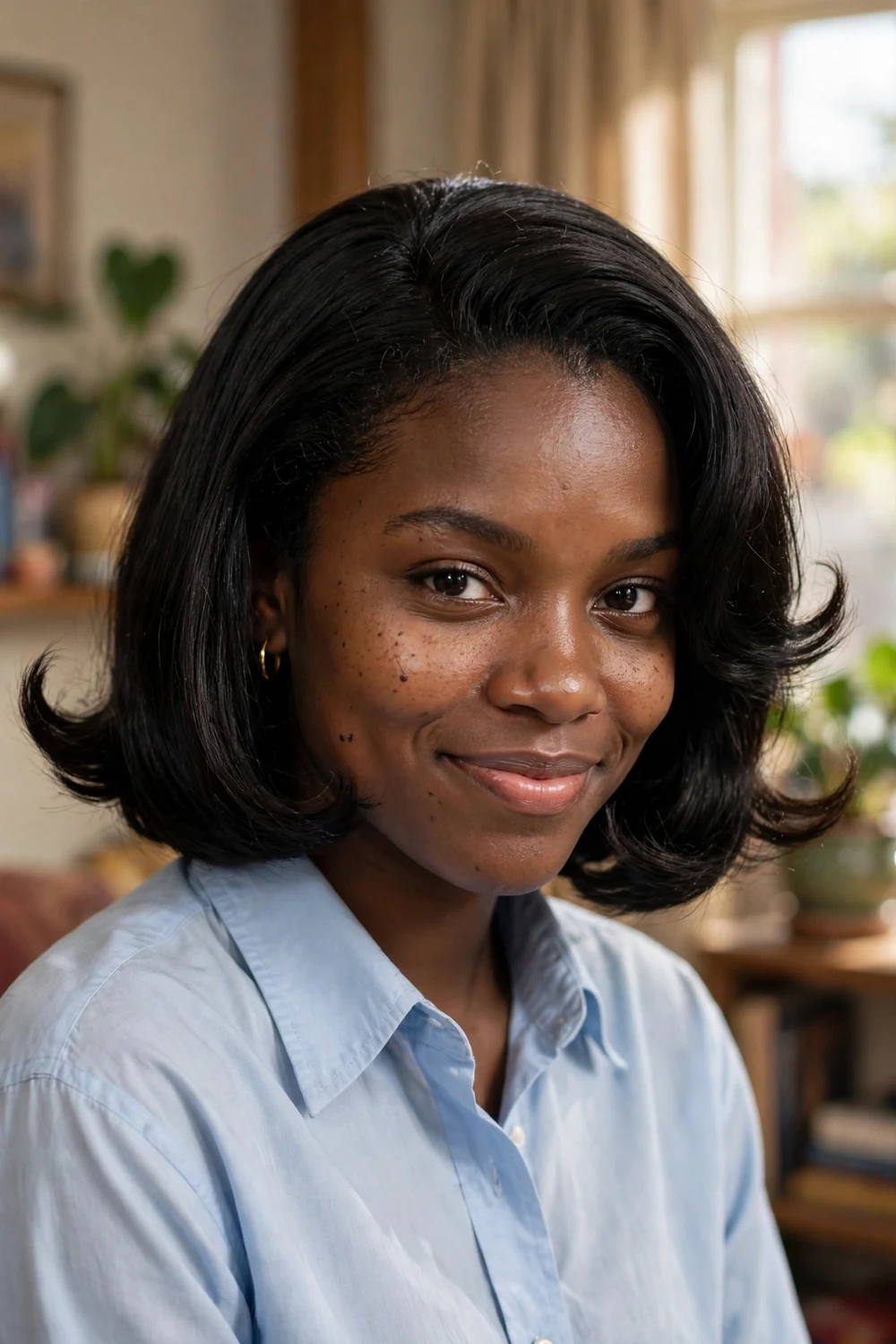
Flipped ends gave 90s bobs their sassy kick. Sleek through the length, then curling outward at the bottom, the flip added movement to an otherwise simple cut. It was a sitcom-era staple that worked on bobs and longer layers alike.
A flat iron or round brush creates the flip; apply heat protectant first. The style holds best on freshly washed hair with a light mousse at the roots. This suits straight and relaxed textures, and shoulder length shows the flip best.
Try this: flip the ends outward with a round brush while blow-drying for a softer, longer-lasting curl.
Difficulty: Easy · Cost: $40–$80 (cut + styling)
26. Asymmetrical Bob
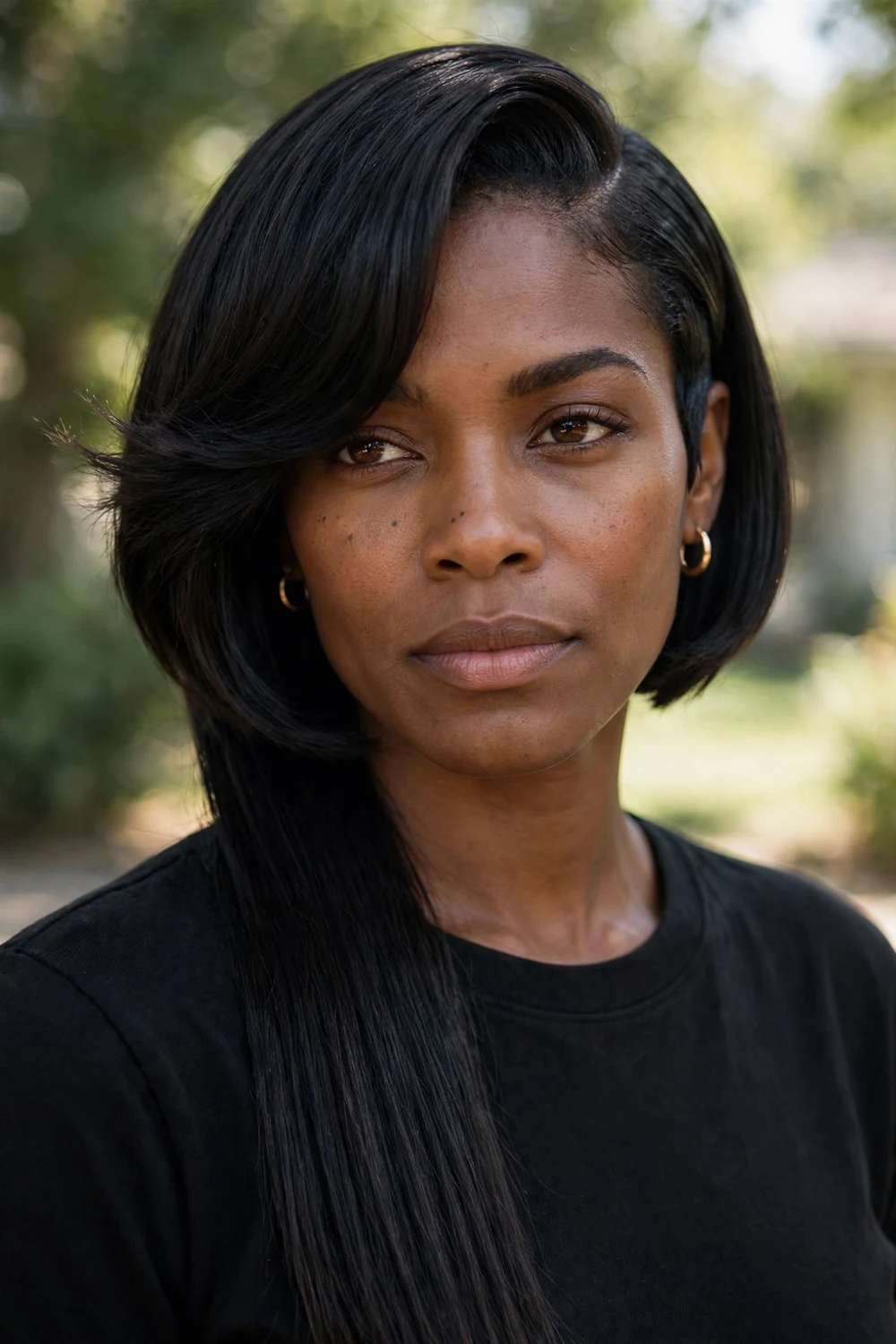
The asymmetrical bob was the precision cut of 90s R&B videos. Dramatically longer on one side with a deep side part, its sharp angle framed the face and showed off real cutting skill. The slant did all the talking.
Keep the angle bold: a subtle difference reads as a mistake, not a style. Trims every five to six weeks maintain the line. For more angled inspiration, these bob hairstyles for Black women show how the shape works across textures.
Try this: wear it sleek and straight to make the asymmetry the star of the cut.
Difficulty: Easy (cut-dependent) · Cost: $50–$100 (precision cut)
27. High-Top Fade
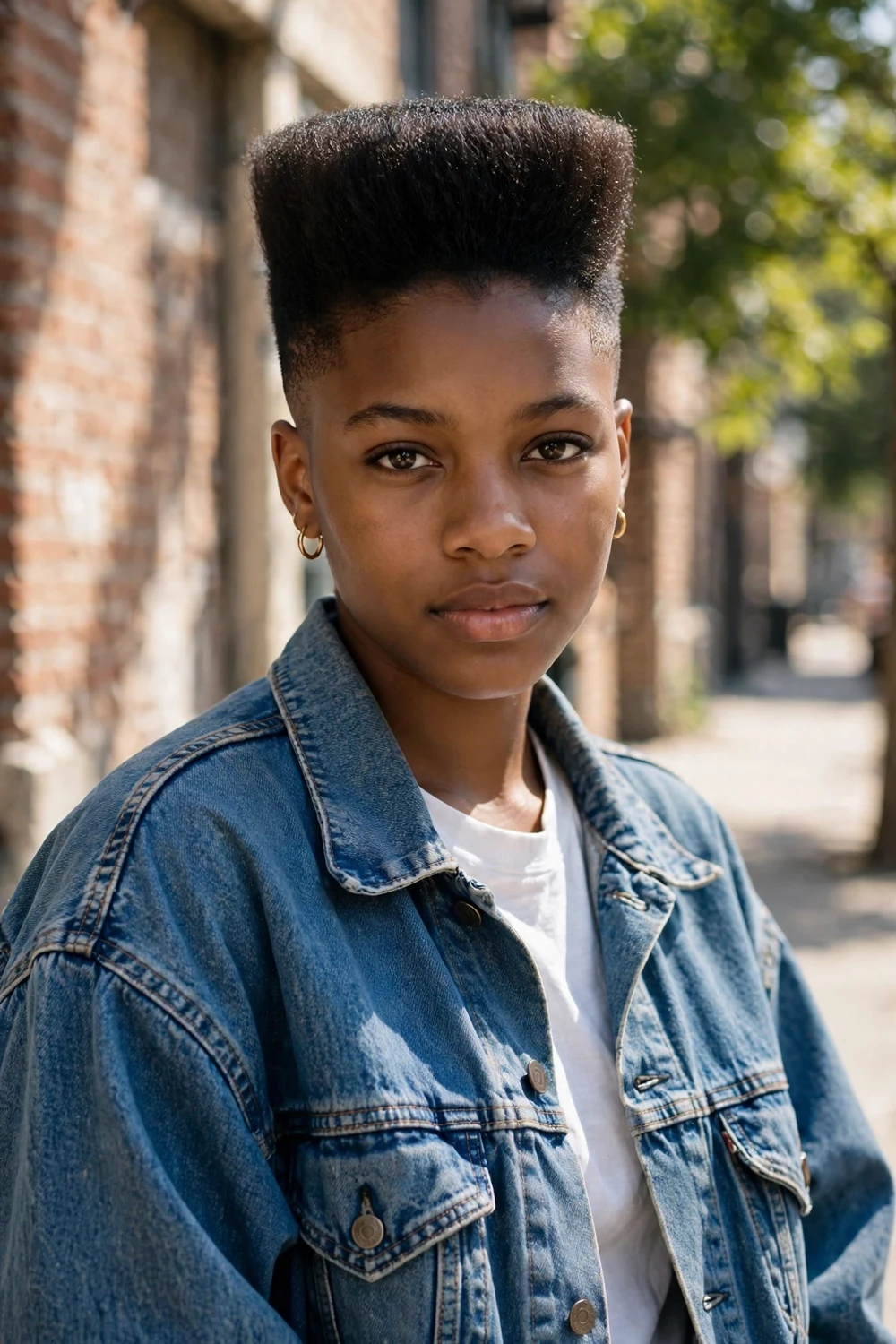
The high-top fade was the boldest silhouette of the early 90s, and women wore it with as much confidence as the guys. A tall, flat top with faded sides created a sharp geometric shape that demanded a skilled barber. It was street style at its most architectural.
Shape-ups every two to three weeks keep the lines crisp. A sponge or twist sponge adds texture to the top for a modern feel. This suits coily and curly textures best, since they hold the flat-top shape naturally.
Try this: ask your barber for a lineup with a slight design etched into one side.
Difficulty: Moderate (frequent upkeep) · Cost: $30–$60 (barber, more often)
28. Locs
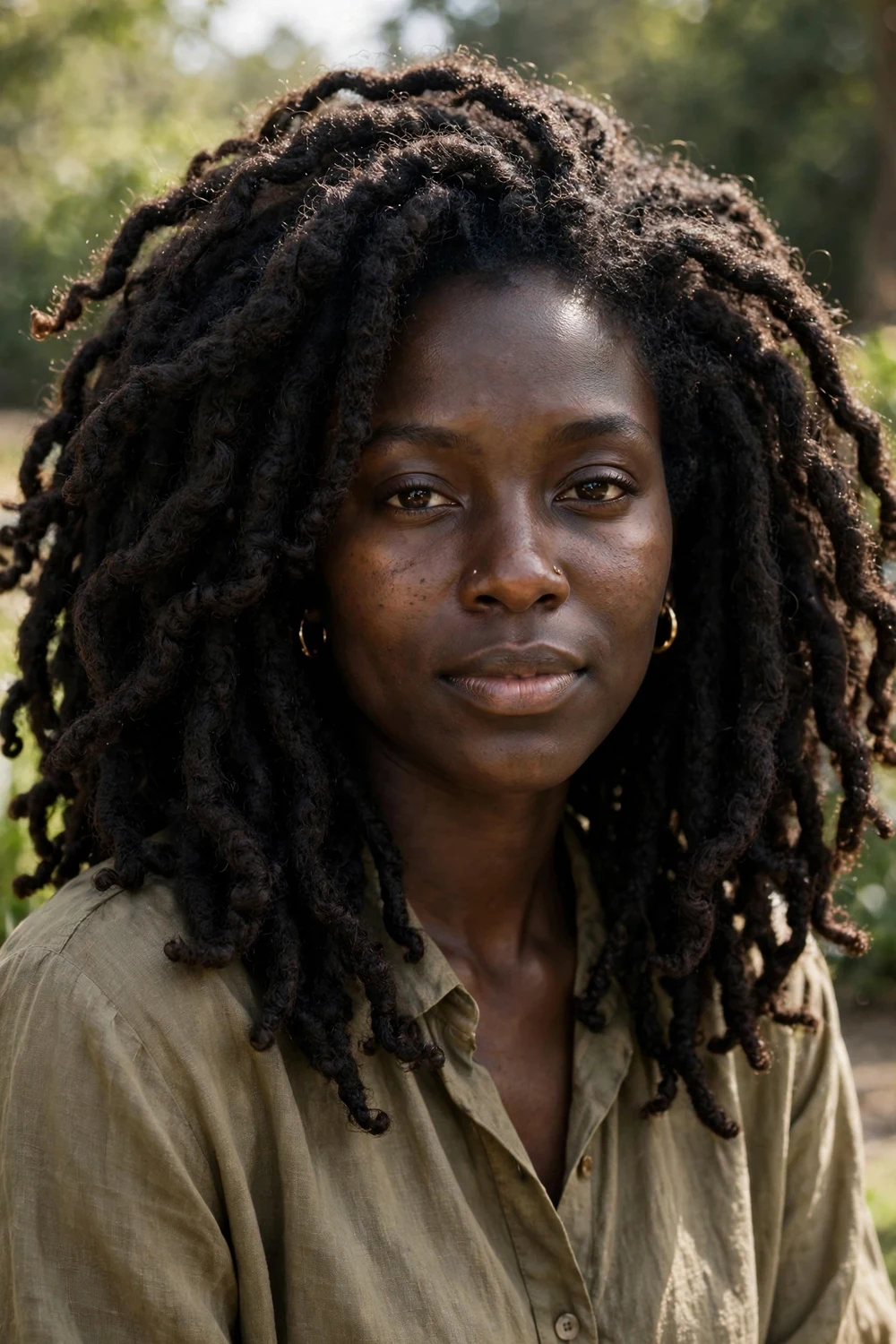
Lauryn Hill’s voluminous locs made them a 90s cultural statement. Thick, freeform-leaning locs worn full and proud turned a long-term commitment into high style. They proved that patience with your hair pays off in presence.
Starter locs need regular retwisting for the first year; mature locs need less. Keep them moisturized with light oils and clarify the scalp occasionally to prevent buildup. This suits anyone ready for a multi-year hair journey.
Try this: style mature locs in a high bun or half-up style for formal occasions.
Difficulty: Easy (after maturity) · Cost: $80–$200 (starter install)
29. Platinum Flippy Shag
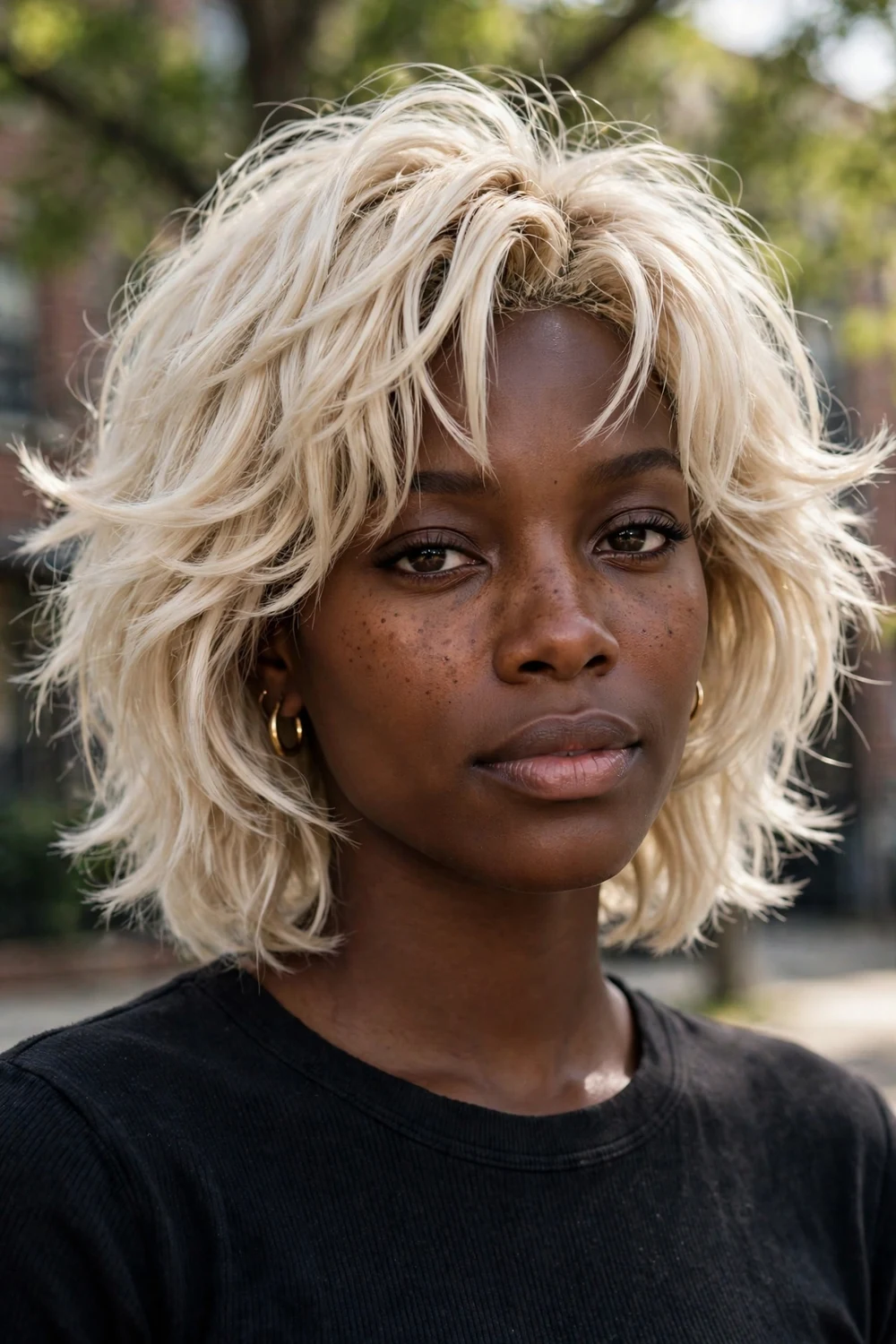
Mary J. Blige went platinum in 1991 and never looked back. Her flippy, shaggy layered cut in icy blonde was one of the boldest beauty moves of the decade. The choppy layers flipped and moved, giving the light color even more energy.
Platinum on dark hair needs professional bleaching and regular toning to stay icy. A purple shampoo once a week fights brassiness, and deep conditioning is non-negotiable. This suits anyone ready for high-maintenance color with high-impact payoff.
Try this: keep the layers piecey and flipped outward to get the full 90s movement.
Difficulty: Hard (bleach upkeep) · Cost: $180–$350 (bleach + cut + toners)
30. Soft Blonde Locks
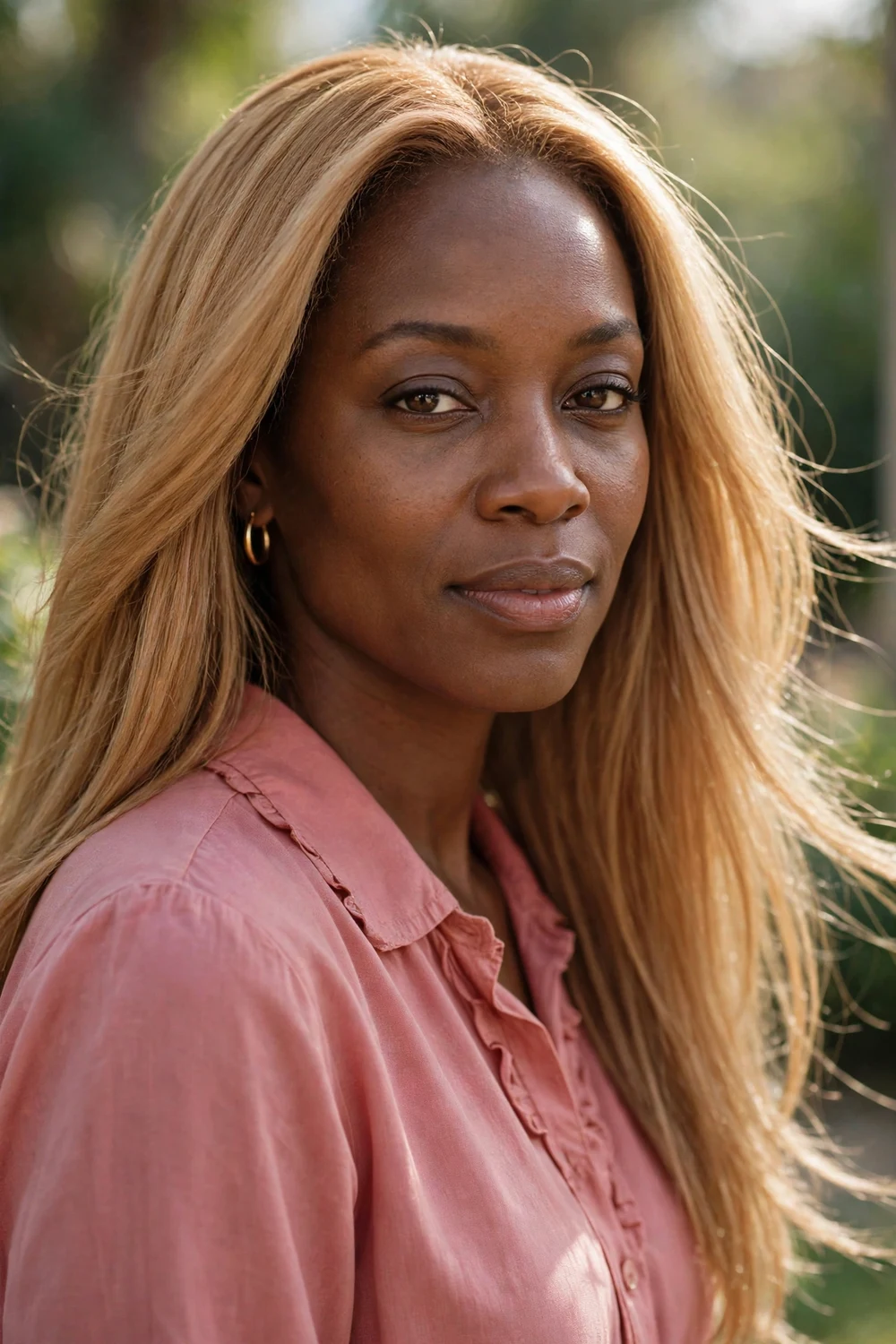
Faith Evans showed the softer side of 90s blonde: long, touchable locks worn curly or straight. Less icy than the platinum trend, this honeyed blonde felt warm and wearable. The versatility was the appeal; one color, two completely different moods.
Going blonde from dark hair usually takes more than one session, so plan the lift in stages to protect your hair. Glosses between appointments keep the tone soft. This suits medium to long hair and works with both pressed and natural textures.
Try this: wear it straight for events and curly for weekends to double the value of the color.
Difficulty: Moderate to hard (color upkeep) · Cost: $150–$300 (color)
31. Headwraps
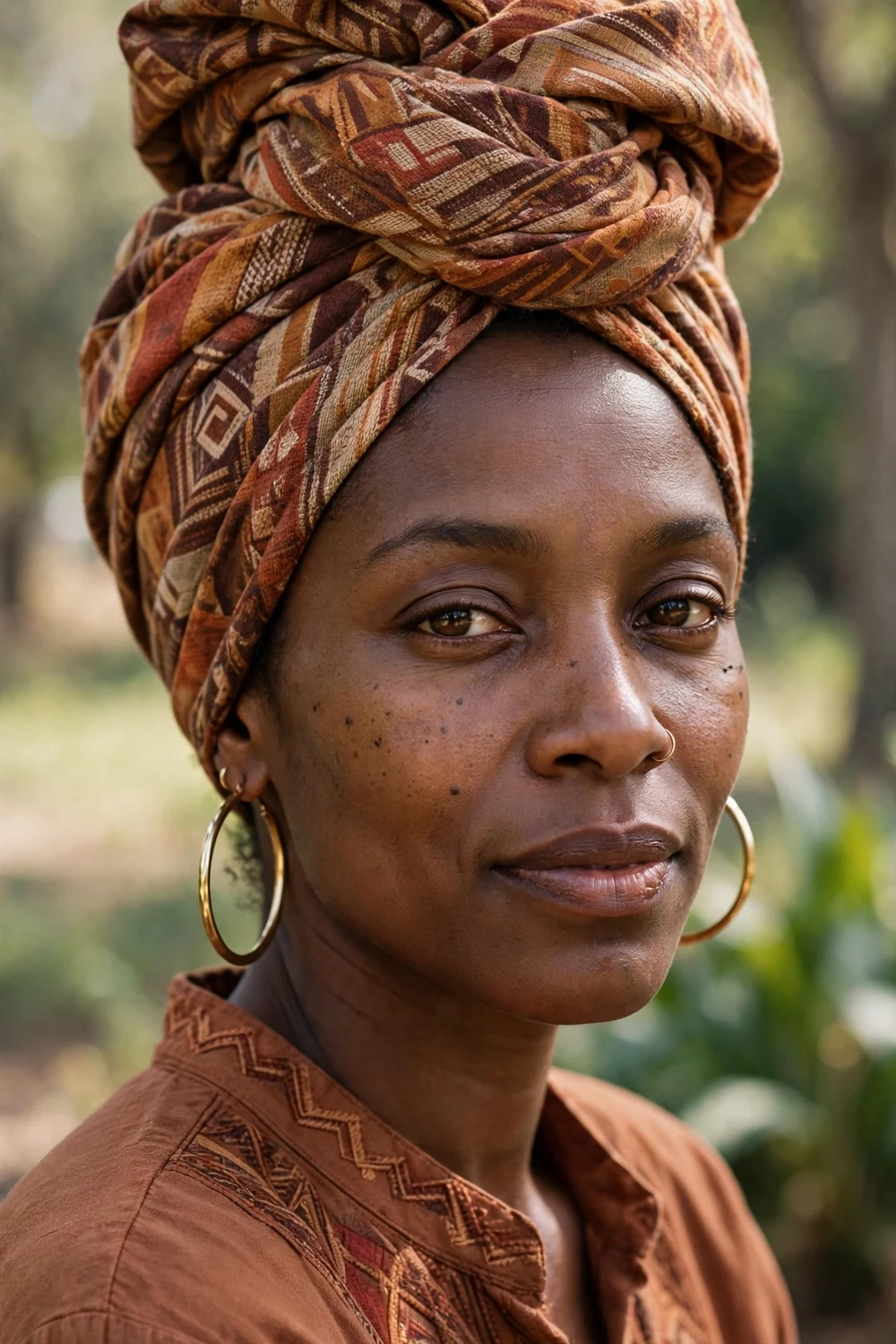
Erykah Badu’s towering headwraps ushered in the neo-soul look of the mid-90s. Large, artfully folded fabric in rich patterns turned a practical hair covering into a fashion statement. The height and drama were entirely the point.
A rectangular scarf about two yards long gives the best volume. Wrap over a low bun or tucked hair, and twist the ends into a top knot for height. This works on any hair length, protects your hair underneath, and takes five minutes.
Try this: match the wrap’s colors to your outfit for a pulled-together look with zero heat.
Difficulty: Easy · Cost: $10–$30 (scarves)
32. Polished Red-Carpet Styles
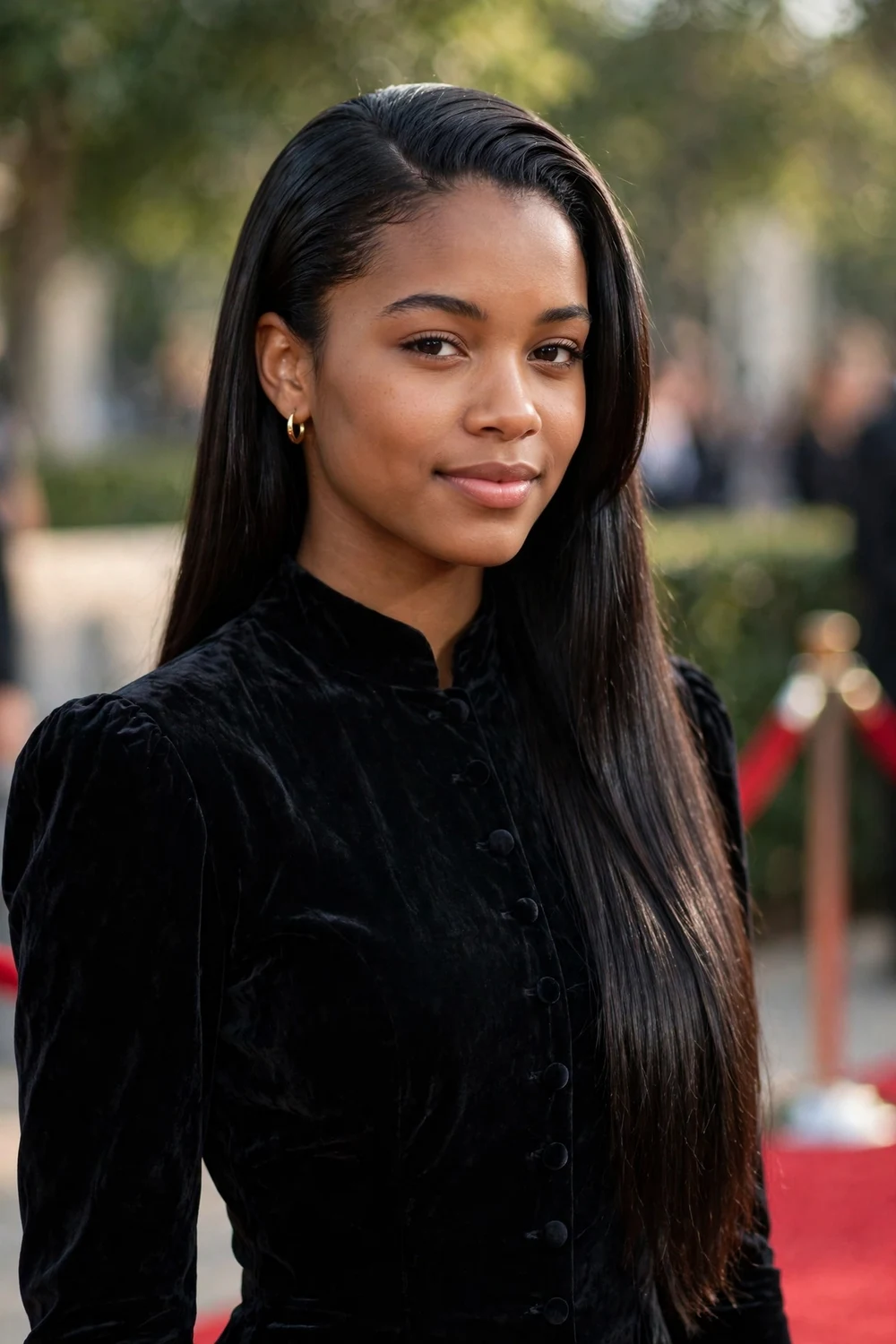
Late-90s girl groups arrived on red carpets with impossibly polished hair: sleek, glossy, not a strand out of place. The look was less about a specific cut and more about the finish. Shine sprays and precise parts did the heavy lifting.
Recreate it with a fresh silk press or a sleek wig, then lock the finish with a shine serum on the ends only. A clean side or middle part keeps it sharp. This is an event look more than an everyday one, and it suits all hair lengths.
Try this: add a deep side part and tuck one side behind the ear for instant red-carpet polish.
Difficulty: Easy · Cost: $60–$130 (press or styling)
33. Sleek Formal Updo
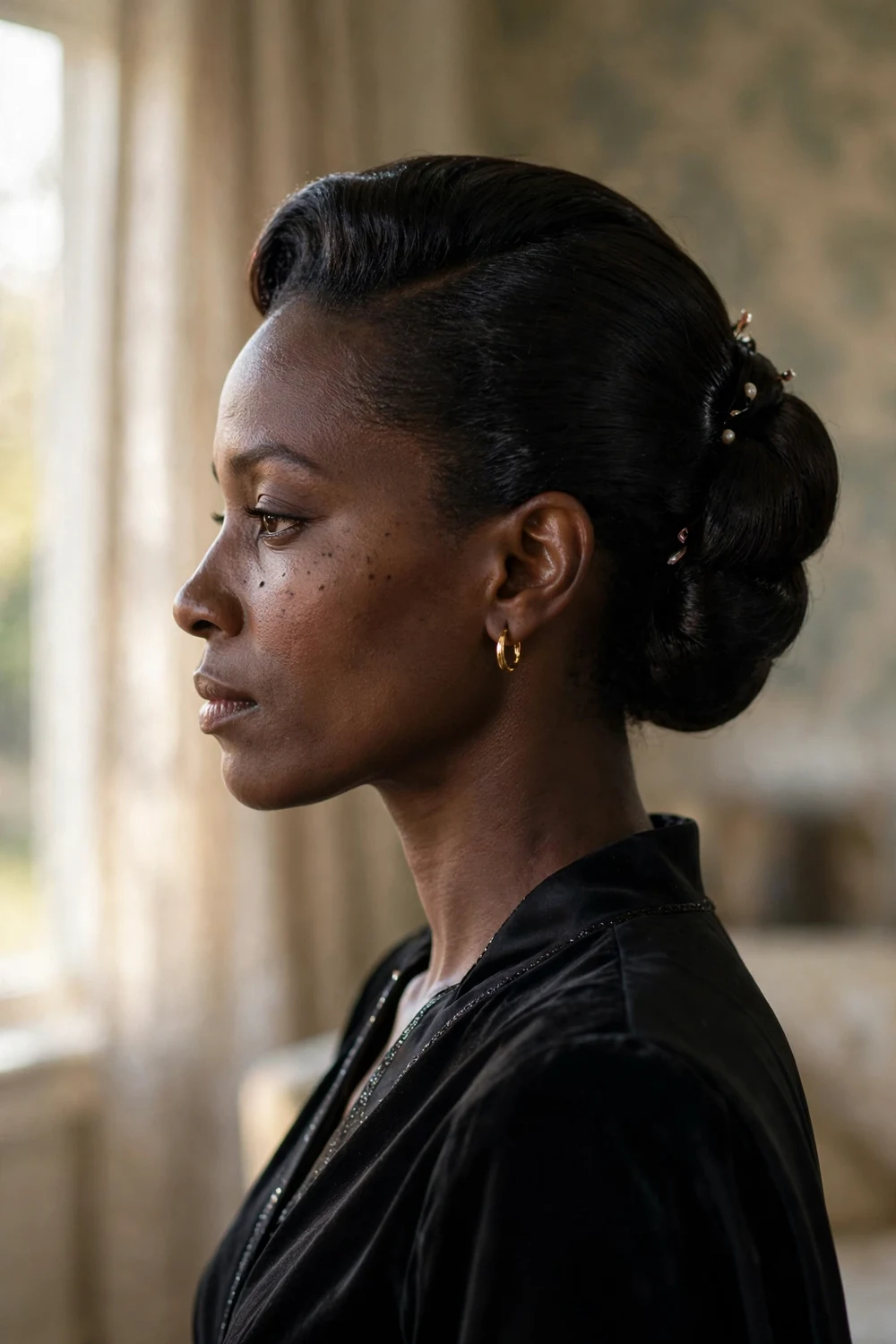
The 90s formal updo was all about control: hair swept up, smoothed down, and pinned into a clean shape. No flyaways, no messiness. It was the prom, wedding, and awards-show standard for a decade.
A good smoothing brush and strong-hold gel build the base; pins do the rest. Start with stretched or pressed hair for the smoothest result. This suits medium to long hair and keeps you cool at summer events.
Try this: leave two thin tendrils out at the front for a softer take on the severe 90s version.
Difficulty: Moderate · Cost: $60–$120 (salon updo)
34. Barrel-Curl Updo
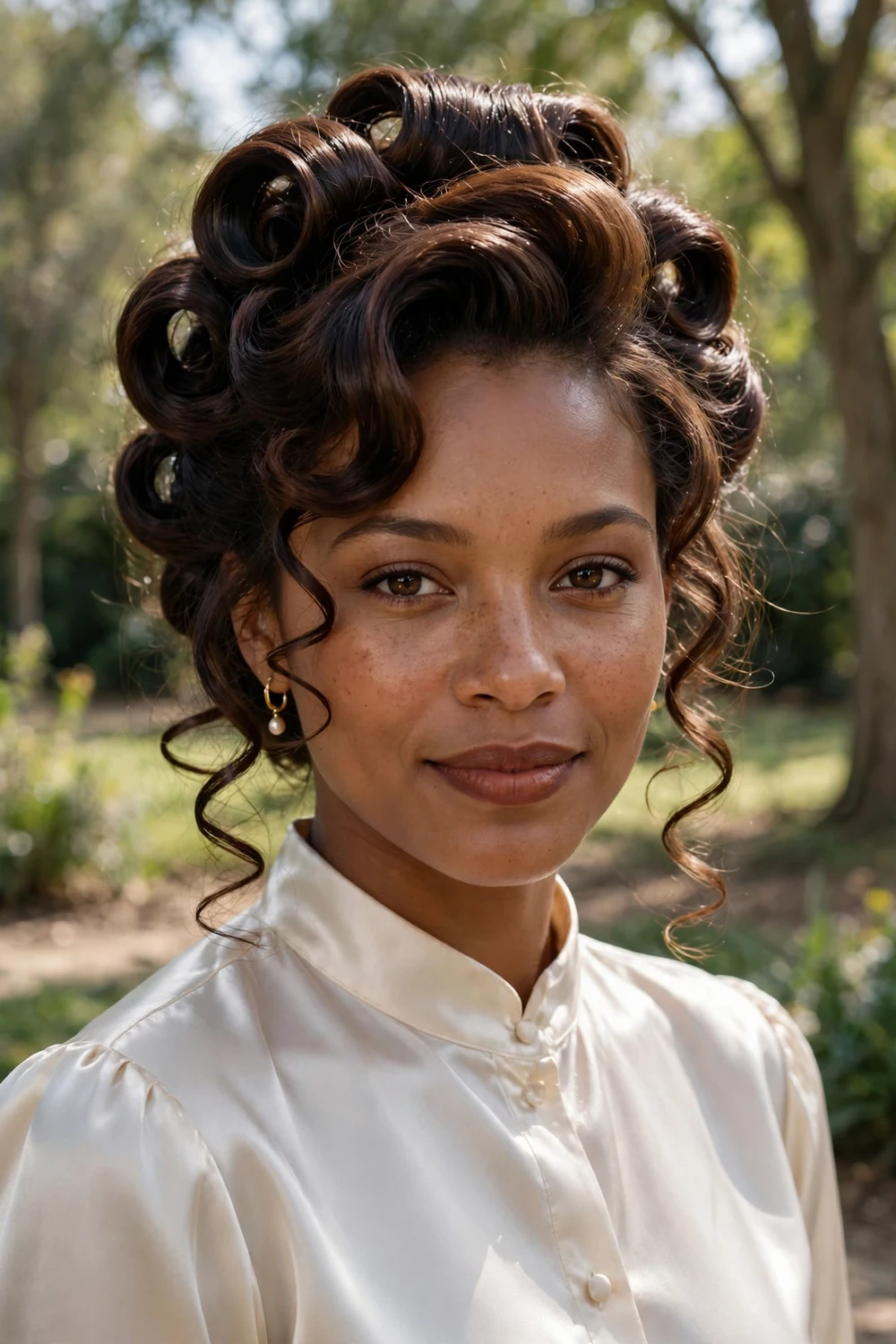
Barrel curls pinned into an updo were the softer cousin of the severe formal style. Large, glossy curls arranged on top of the head with tendrils left out around the face made this a prom favorite. The curls did the decorating.
Set the hair on large rollers or a big-barrel iron first; apply heat protectant before any hot tool. Pin the curls loosely so the shape stays soft. This suits medium to long hair and holds well through a long event.
Try this: mist the finished updo with a flexible-hold spray so the curls move naturally.
Difficulty: Moderate · Cost: $60–$120 (salon updo)
35. High Ponytail
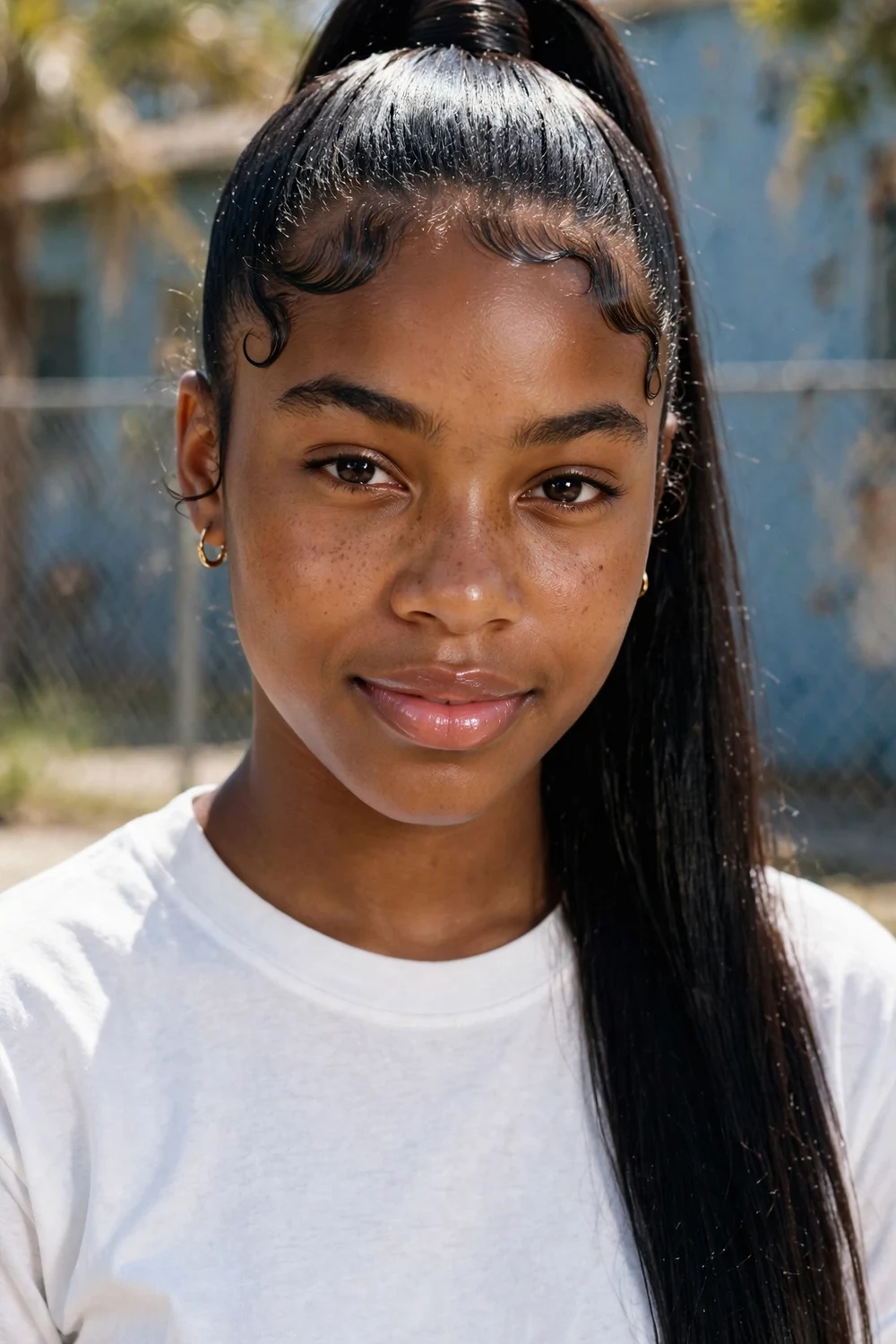
The 90s high ponytail sat at the crown, sleek at the roots and swinging at the ends. Dance videos made it iconic: the higher the pony, the bigger the energy. Swooped baby hairs along the hairline finished the look.
Smooth the base with a bristle brush and gel, then secure with two elastics for hold. Add extensions for the dramatic length the era loved. This suits all hair types and takes ten minutes once you have the technique.
Try this: wrap a small section of hair around the elastic to hide it, 90s-polish style.
Difficulty: Easy · Cost: $10–$40 (products, more with extensions)
36. Wrapped Ponytail
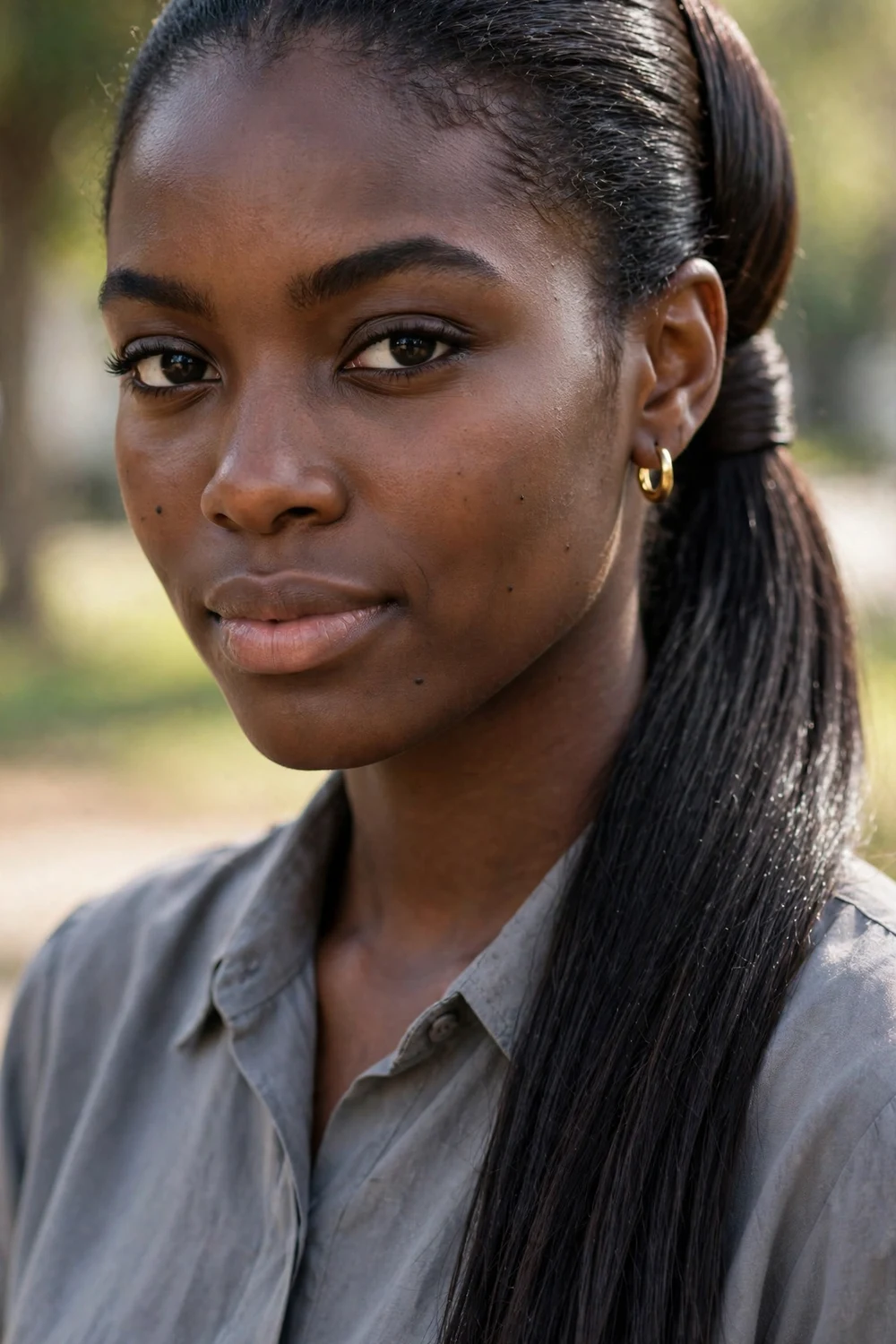
The wrapped ponytail took the everyday pony one step up. After securing the ponytail, a section of hair wraps around the base to hide the elastic, creating a seamless, put-together finish. It was office-to-evening hair before that phrase existed.
Pin the wrapped section underneath with two bobby pins crossed for grip. A light serum smooths the wrap without weighing it down. This works on medium to long hair, natural or with extensions.
Try this: braid the wrapping section first for a textured detail at the base.
Difficulty: Easy · Cost: $10–$30 (products)
37. Bubble Ponytails
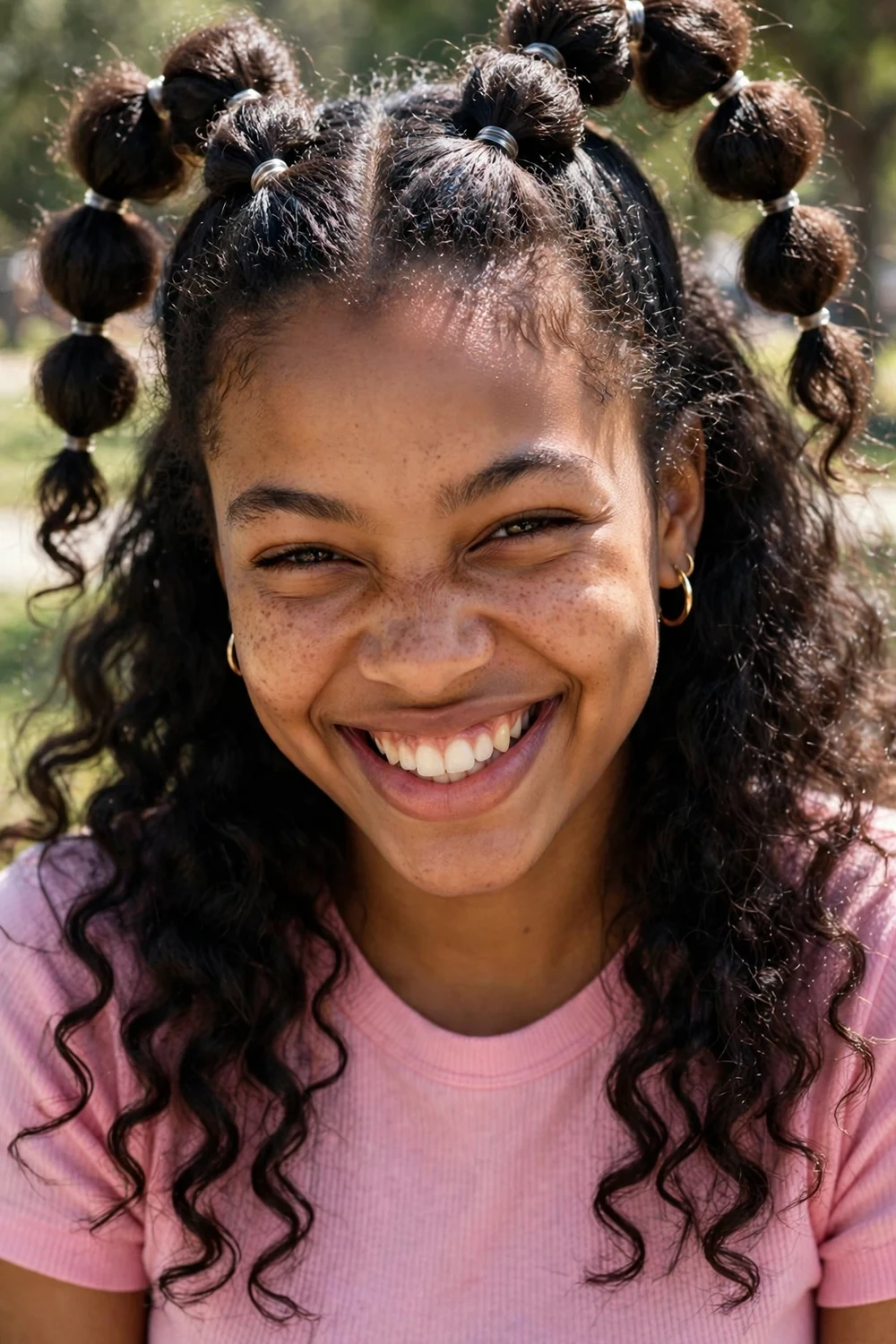
Bubble ponytails brought sculptural fun to 90s hair. Elastics spaced evenly down a ponytail create puffy bubble sections, turning a simple style into a statement. The half-up version kept the look wearable for school and weekends.
Space the elastics evenly and gently tug each section wider for full, round bubbles that hold their shape. Colorful elastics add to the retro feel. This suits medium to long hair and works on natural texture or extensions.
Try this: do a half-up bubble pony and leave the bottom half in loose curls for balance.
Difficulty: Easy · Cost: $5–$15 (elastics)
38. Space Buns
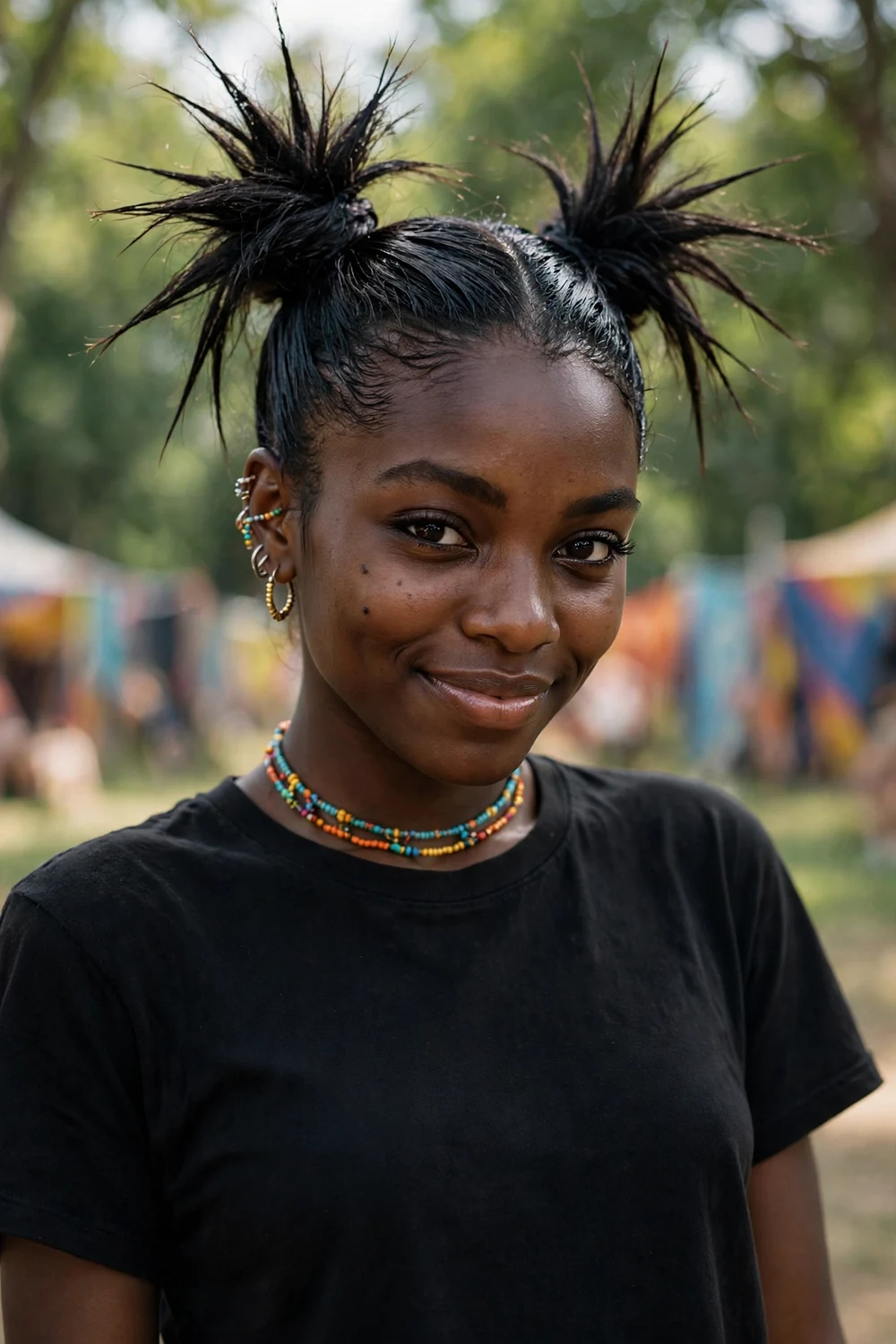
Two high buns, one on each side, made space buns the playful 90s festival look. The spiky, slightly undone version kept them from reading too cute. They worked on every texture and took minutes to install.
Part down the middle, slick each side up, and twist into buns. Leave the ends spiky for the authentic 90s edge, or tuck them for a neater finish. This suits medium to long hair and holds all day with a few pins.
Try this: add glitter roots or colored elastics when you want the full throwback effect.
Difficulty: Easy · Cost: $5–$15 (pins and elastics)
39. Jumbo Twist Pigtails
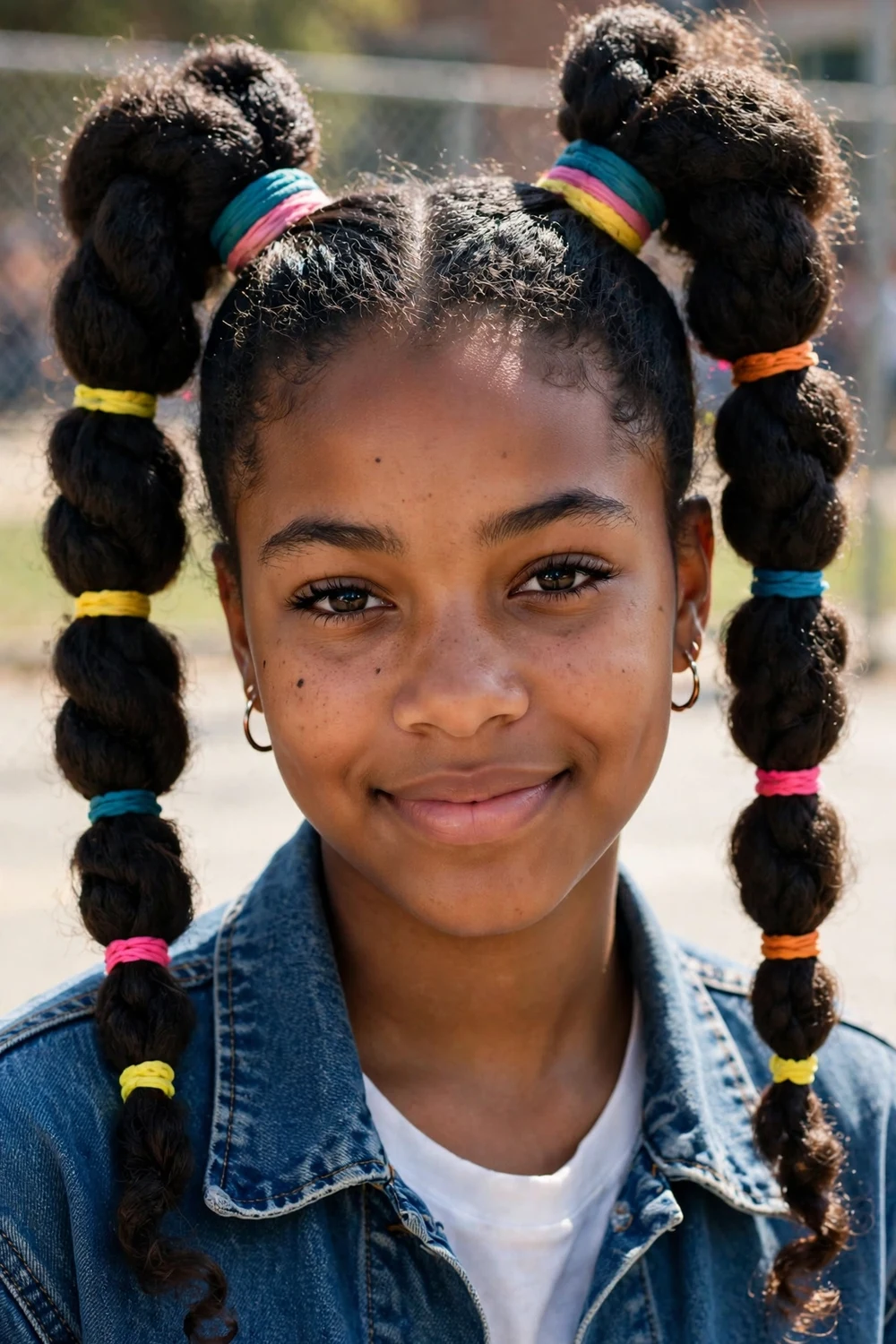
Jumbo twists pulled into two high pigtails were pure 90s youth culture. Thick, chunky twists gathered on each side of the head read playful and took very little time. Colorful bands or beads at the base completed the schoolyard-cool effect.
Keep the twists chunky: eight to twelve per side is plenty. This style suits medium to long natural hair and lasts one to two weeks. It is also a great protective style for kids and teens.
Try this: add a bandana or scarf tied around the base of each pigtail for extra 90s flair.
Difficulty: Easy · Cost: $15–$50 (products or salon)
40. Butterfly Clips
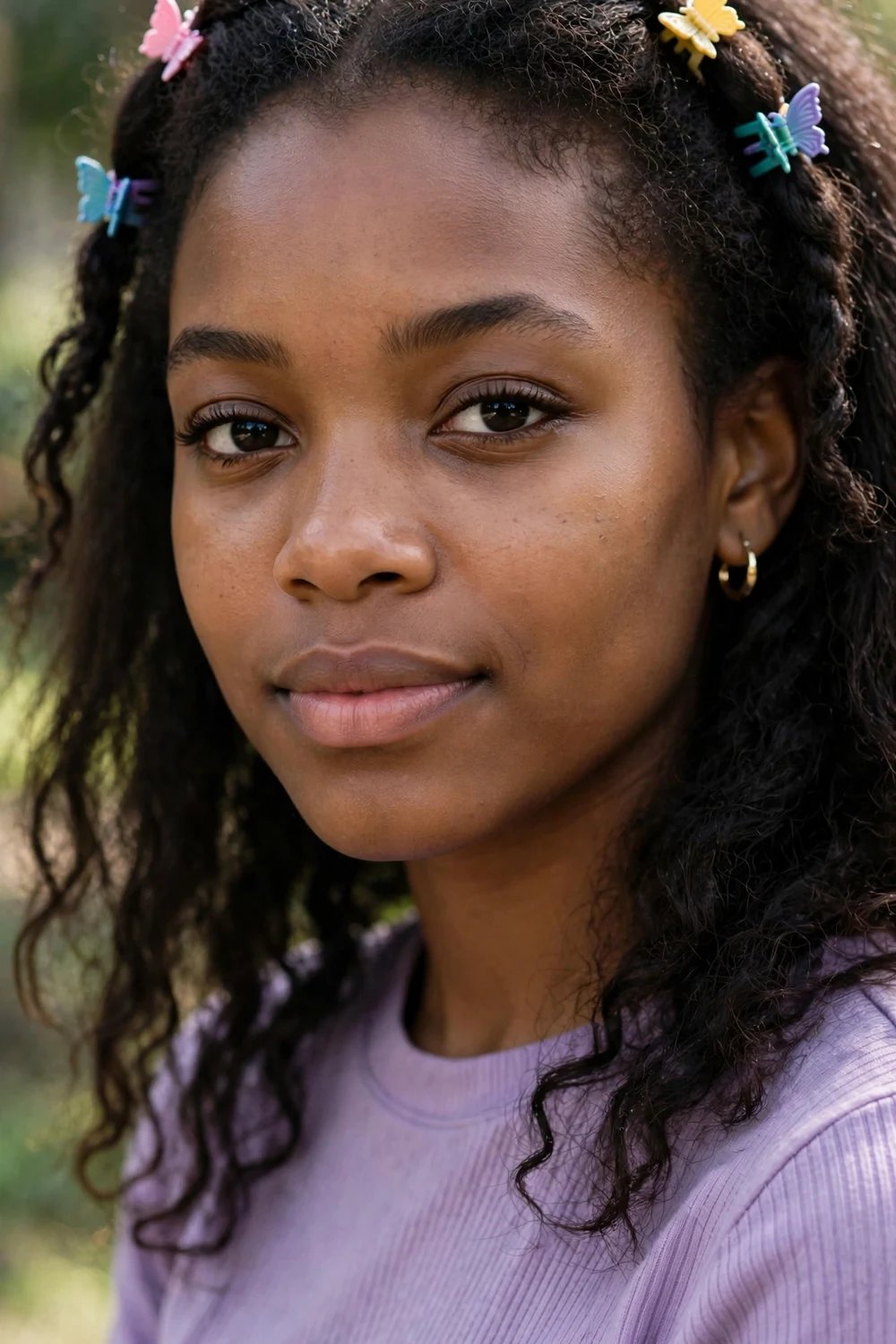
Butterfly clips were the defining hair accessory of the late 90s. Tiny colorful clips scattered through the hair, holding back twisted front sections or decorating loose styles, added instant playfulness. They cost almost nothing and changed a whole look.
Use them the modern way: sparingly. Three to five clips pulling back the front sections reads chic; twenty reads costume. They work on every hair type and length, and they are the easiest 90s nod on this list.
Try this: twist two front sections back and secure each with a single butterfly clip.
Difficulty: Easy · Cost: $3–$10 (clip set)
41. Laid Baby Hairs
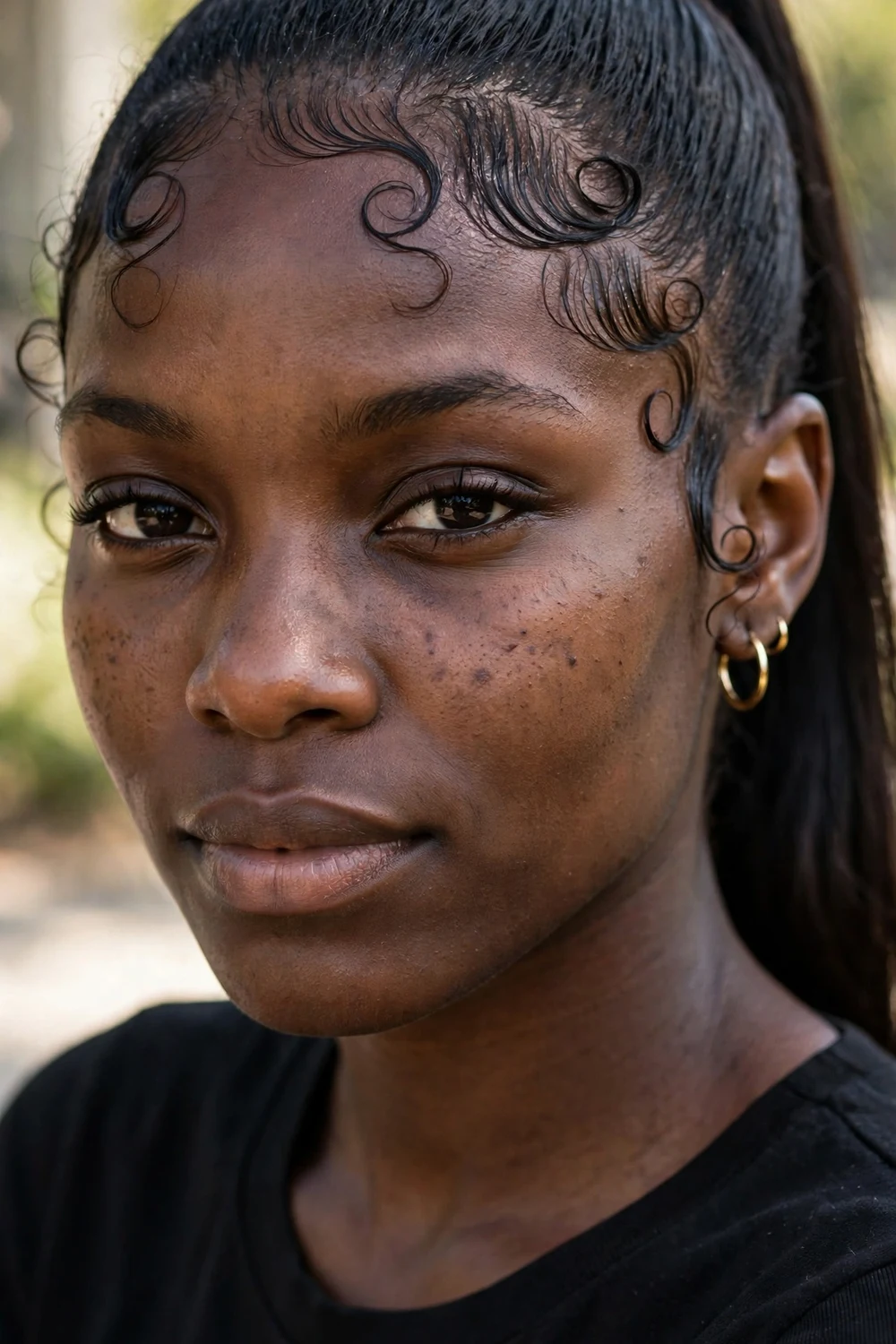
Laid edges were the signature finishing touch of 90s styling. Fine hairs along the hairline, swooped into swirls with gel and a toothbrush, framed sleek ponytails and updos. The artistry was in the detail.
Use a light edge control, not a heavy wax, and lay the hairs in the direction they naturally grow. Over-manipulating edges causes breakage, so keep the styling gentle and give your hairline rest days. This small detail finishes any pulled-back style.
Try this: swoop the edges into simple C-curves; intricate designs take practice to look clean.
Difficulty: Easy · Cost: $5–$15 (edge control)
For the modern take on laid edges and swoops, styled the way they are worn today, see baddie hairstyle ideas.
42. Scrunchie Styling
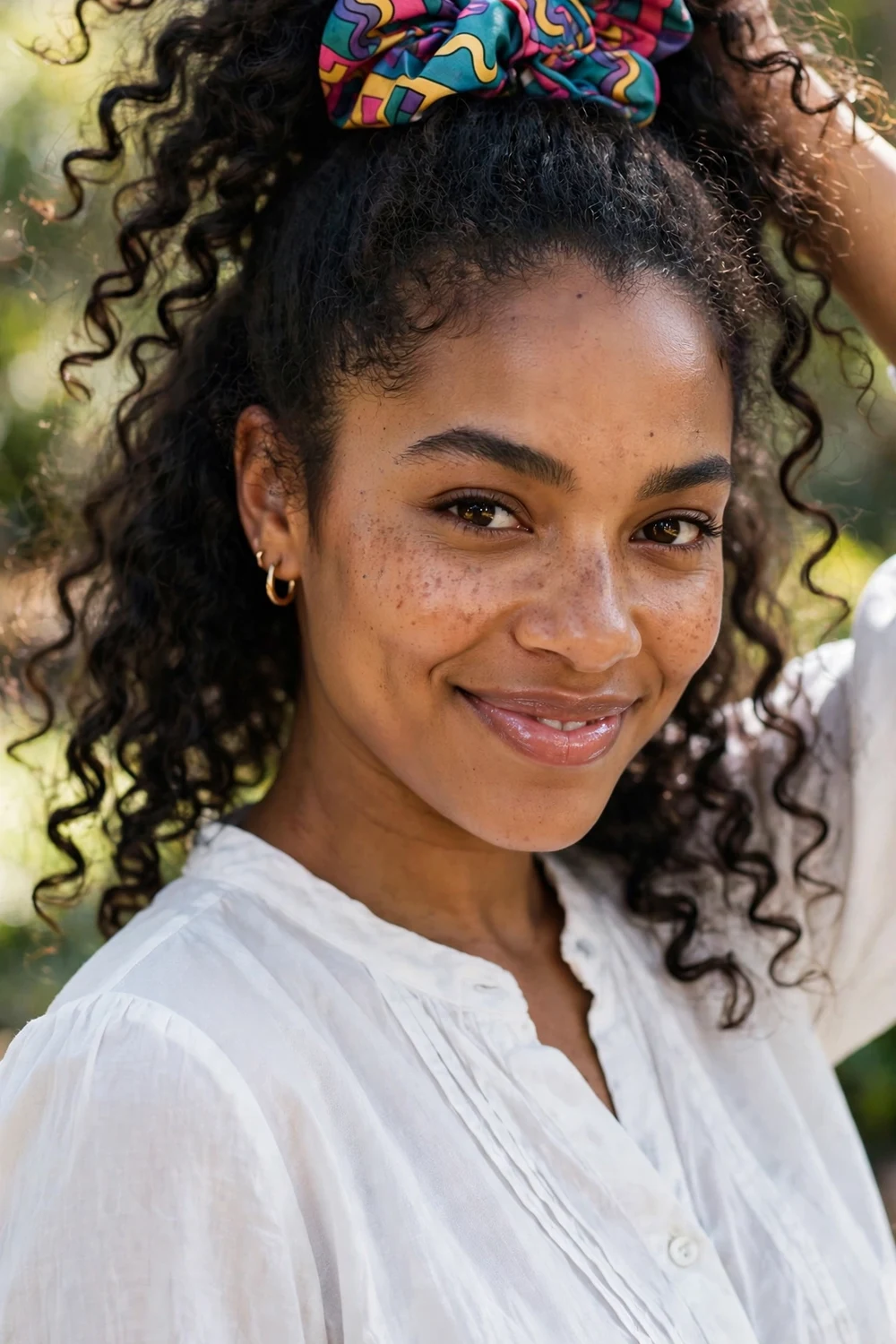
The scrunchie was the 90s ponytail holder of choice, and the bigger and more colorful, the better. Beyond holding hair, it was the accessory itself. A curly high pony with a bold scrunchie is the fastest 90s look you can make.
Satin scrunchies are the modern upgrade: they grip without snagging and reduce breakage compared to the original elastic versions. Match the scrunchie to your outfit or go bold with a print. This works on every hair type.
Try this: stack two scrunchies in different sizes for a layered retro effect.
Difficulty: Easy · Cost: $5–$15 (scrunchie set)
How to Modernize Any 90s Hairstyle
The difference between a tribute and a throwback costume is usually one detail. Keep the iconic shape but update the finish: softer edges instead of severe gel, lived-in texture instead of stiff hold, or a current color placement like face-framing highlights. A 90s cut with a modern texture reads fresh; the same cut with crunchy 90s product reads dated.
Fit the style to your real routine, not the fantasy version. Braided styles ask for a long install day but almost nothing after. Short cuts ask for little daily effort but regular trims. If you wear your natural texture out, these short afro hairstyles for Black women show how picked-out shapes keep their 90s roots with current polish. And if a style needs heat, protectant goes on first, every time.
90s Hairstyles at a Glance
| Style | Best For | Upkeep | Typical Cost |
|---|---|---|---|
| Poetic Justice Box Braids | Long protective wear, all hair types | Low daily, lasts 4 to 6 weeks | $150–$300 |
| Toni Braxton Pixie | Oval and heart faces, low daily effort | Trims every 4 to 6 weeks | $45–$90 |
| Finger Waves | Short hair, formal events | Lasts days with nightly scarf | $50–$100 |
| Silk Press | Natural hair wanting a straight finish | Lasts until next wash | $70–$150 |
| Bantu Knots | Short to medium natural hair, DIY | Lasts 1 to 2 weeks | $15–$40 |
| High-Top Fade | Coily textures, bold statements | Shape-ups every 2 to 3 weeks | $30–$60 |
FAQs
Which 90s hairstyles for Black women are protective styles?
Box braids, micro braids, cornrows, two-strand twists, bantu knots, Fulani braids, goddess braids, and locs all count as protective styles because they tuck your ends away. They typically last two to eight weeks depending on the style. Keep installs tension-free and moisturize your scalp regularly while wearing them.
How can I wear a 90s hairstyle without looking dated?
Keep the iconic shape but update one detail: softer edges instead of heavy gel, lived-in texture instead of stiff hold, or a modern color placement. A 90s cut styled with current products and a relaxed finish reads as a tribute, not a costume. One retro element per look is usually enough.
Did Black women wear the high-top fade in the 90s?
Yes. While it is often associated with male artists and actors of the era, Black women wore the high-top fade too, with the same tall flat top and faded sides. It needs a skilled barber and shape-ups every two to three weeks to keep the lines crisp. Coily textures hold the shape best.
How long do 90s braided styles last?
Box braids last four to six weeks, micro braids can last up to eight weeks with good care, cornrows last two to four weeks, and twists last three to four weeks. Take any style down early if you notice thinning edges, itching that does not ease, or pain at the hairline. Nightly scarf or bonnet protection extends every style.
Are 90s hairstyles good for natural hair?
Many 90s styles were designed around natural texture, including bantu knots, twists, finger waves, big natural curls, and locs. They work with your hair instead of against it. For heat-based looks like the silk press or blowout, always apply heat protectant first and avoid daily heat to prevent damage.
Final Thoughts
The 90s earned its reputation one iconic head of hair at a time. These 42 styles cover the full range, from protective braids to precision cuts to the accessories that defined the decade. Start with the upkeep level you can honestly maintain, then pick the look that makes you feel like the main character. The decade’s best lesson still holds: the right hairstyle is the one worn with confidence.
