



On average, hair grows about half an inch per month. That works out to roughly 6 inches per year. The number is surprisingly consistent across most people, though your age, genetics, and health can nudge it up or down.
If your hair never seems to get longer, the growth rate is rarely the problem. This guide explains the real numbers, the growth cycle behind them, and what actually helps you keep the length you grow.
Quick Takeaways
- Average growth: about 0.35 mm per day, half an inch per month, 6 inches per year.
- Hair grows in three phases: anagen (growing), catagen (transition), telogen (resting and shedding).
- Your maximum length is set by how long your anagen phase lasts, usually 2 to 7 years.
- You cannot change your growth rate much, but you can stop breakage from stealing your length.
- Sudden heavy shedding or bald patches deserve a dermatologist visit, not a new shampoo.
How Fast Does Hair Grow? The Numbers

Dermatology references cite an average rate of about 0.35 millimeters per day. Here is what that looks like over time:
| Time Period | Average Growth |
|---|---|
| Per day | About 0.35 mm |
| Per week | About 2.5 mm |
| Per month | About half an inch (1.25 cm) |
| Per year | About 6 inches (15 cm) |
These are averages, not promises. Some people grow closer to a full inch per month, others closer to a quarter inch. Both can be completely normal.
The Hair Growth Cycle: Anagen, Catagen, Telogen

Every hair on your head is on its own schedule. The cycle has three phases.
Anagen is the growing phase. It lasts 2 to 7 years on the scalp, and 85 to 90 percent of your scalp hairs are in this phase at any moment. This phase sets your maximum possible length: longer anagen means longer hair.
Catagen is a short transition of about two weeks. Growth stops and the follicle shrinks slightly.
Telogen is the resting phase, lasting around three months. At the end of it, the old hair sheds and a new one starts growing. Losing 50 to 100 hairs a day is part of this normal cycle.
Why Your Hair Seems to Stop Growing
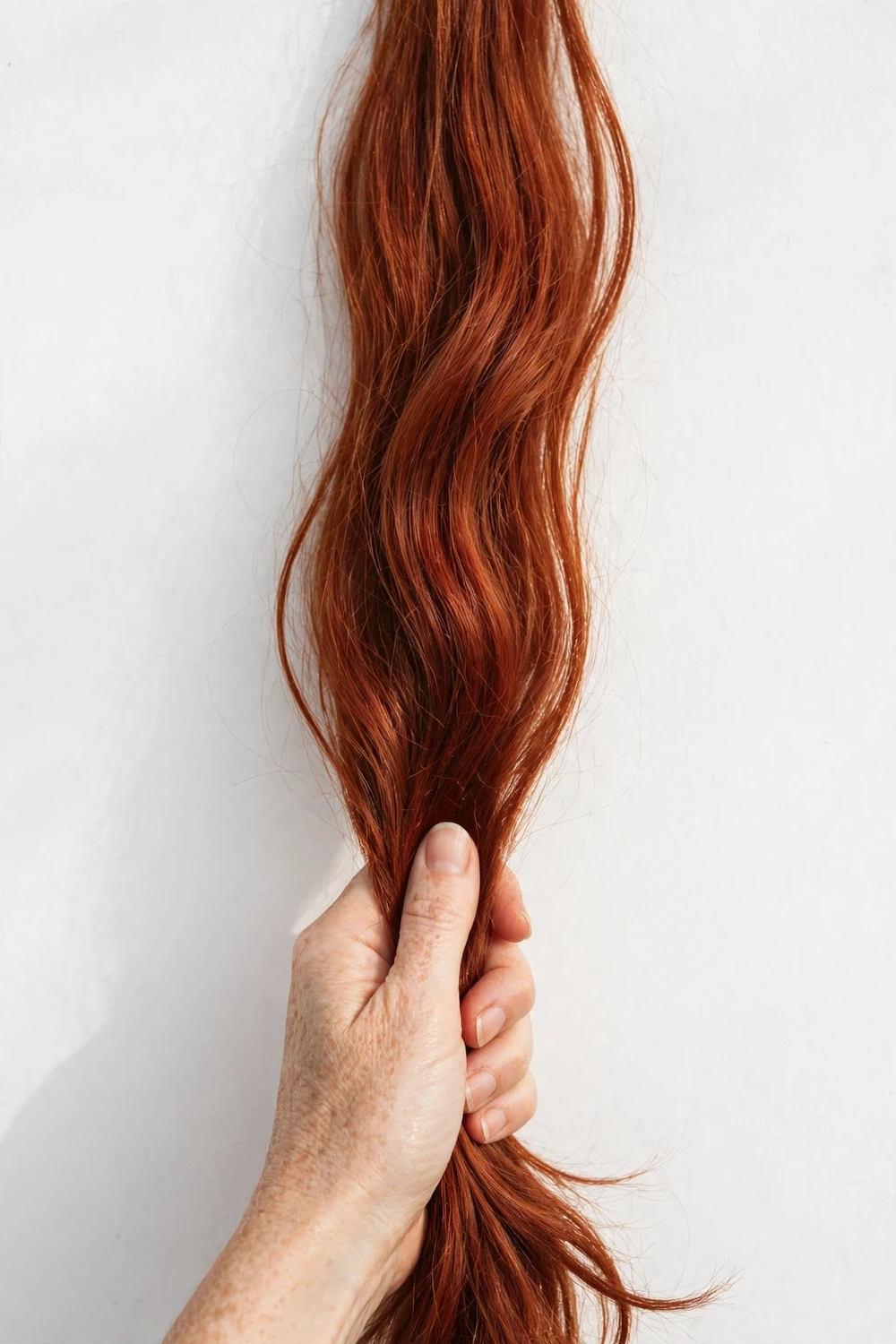
Almost everyone hits a length where hair seems to stall. Two things cause it.
First, terminal length. When your anagen phase ends, that hair stops growing no matter what you do. If your anagen lasts three years, your hair maxes out around 18 inches. Genetics sets this, and no product extends it.
Second, breakage. Your hair may be growing half an inch a month while snapping off half an inch at the ends. The net result looks like zero growth. Dryness, heat damage, harsh brushing, and chemical processing all eat length from the bottom. Harsh formulas speed up the damage, so check the ingredients to avoid in hair products if your ends keep splitting.
What Affects How Fast Hair Grows

Genetics matters most. Your genes set your growth rate, your anagen length, and your hair density. If your family grows hair fast, you probably will too.
Age slows things down. Growth tends to peak in younger adulthood and ease off with age as follicles spend less time in anagen.
Ethnicity plays a role. Research has found measurable differences in average growth rates between population groups, driven by genetic factors rather than care routines.
Season may give a small boost. Some studies note slightly faster growth in summer months, possibly linked to daylight and vitamin D, though the effect is modest.
Health and stress show up in your hair. Major illness, crash dieting, and severe stress can push more hairs into the shedding phase a few months later. A balanced diet with enough protein and iron supports normal growth, since hair is built from protein.
Scalp Hair vs. the Rest of Your Body
Scalp hair grows the longest because its anagen phase lasts years. Beard hair grows at a similar daily pace but has a shorter anagen phase, so it stays shorter. Eyebrows and eyelashes have anagen phases of only weeks to months, which is why they stay short no matter what.
The daily growth rate itself does not differ dramatically between these areas. The phase length does almost all the work.
Can You Make Your Hair Grow Faster?

Honest answer: not by much. No shampoo, oil, or supplement has been shown to meaningfully speed up the growth rate of healthy hair. What you CAN do is protect the length you grow so more of it survives.
Keep the scalp clean and calm. Buildup, itching, and inflammation create a poor environment for growth. Wash when your scalp needs it; for schedules by hair type, see how often to wash hair.

Eat enough protein and iron. Hair is mostly keratin, a protein, and deficiencies can slow growth and increase shedding. You do not need exotic supplements; regular meals with eggs, fish, legumes, and leafy greens cover the basics for most people.
Cut breakage ruthlessly. Trim split ends before they travel up the shaft, detangle gently from the ends, and keep heat tools at moderate temperatures with a protectant. Washing technique matters too: shampoo the scalp and let the rinse clean the lengths, as explained in shampoo vs conditioner.


Consider protective styling if your ends are fragile. Styles that tuck the ends away reduce daily friction and snapping. To understand the trade-offs, read do braids help your hair grow.
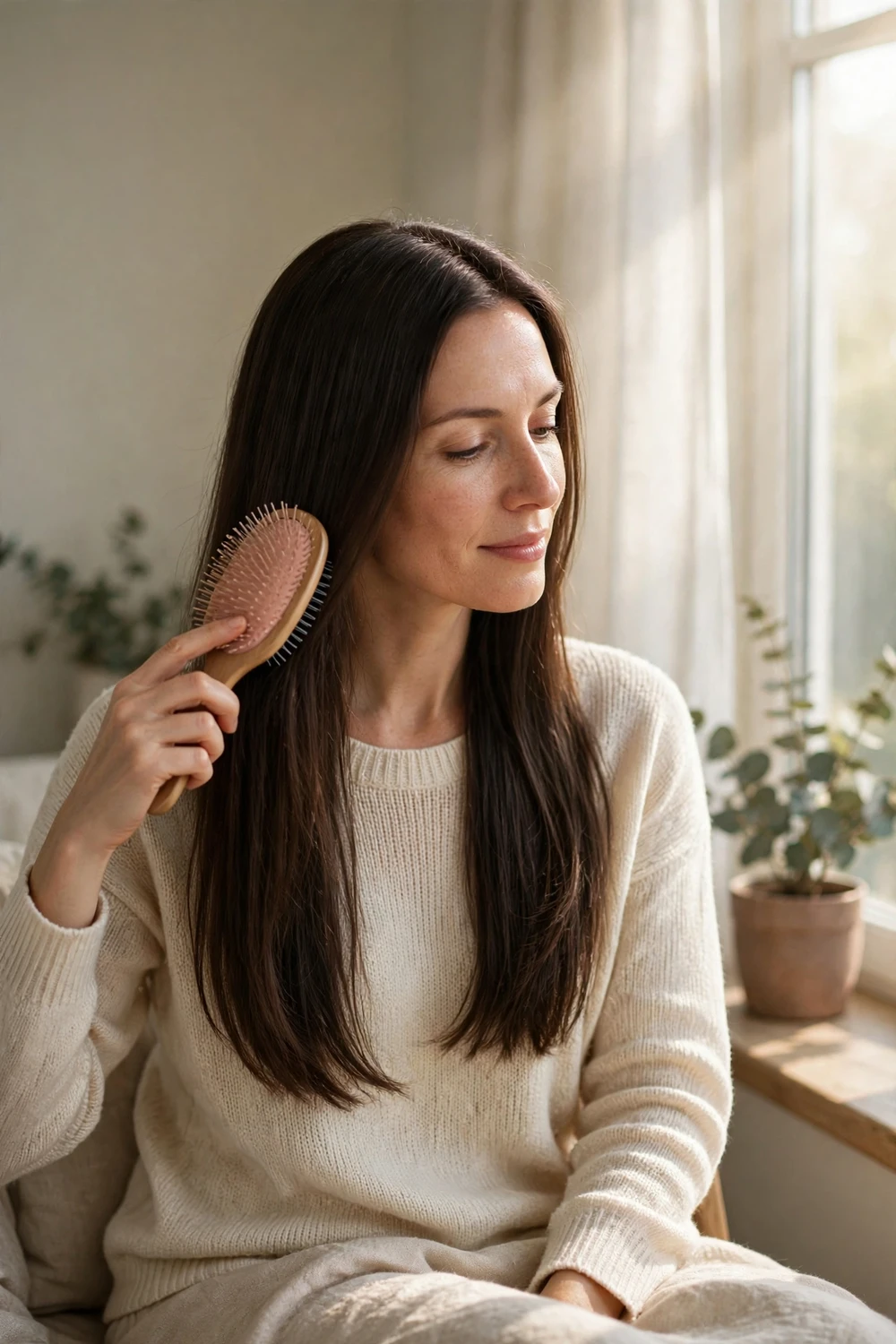

Protect hair at night. A satin bonnet or silk pillowcase cuts the friction that roughs up ends while you sleep.

See a dermatologist if shedding suddenly increases, your part visibly widens, or you develop bald patches. Those patterns point to medical causes that routines cannot fix, and early treatment works best.
How to Track Your Own Growth

Growth is too slow to see day to day, which is why people assume nothing is happening. Take a photo of your hair from the back once a month, in the same spot and lighting, with hair hanging naturally. After three months, compare the first and last photos. Most people are surprised by how much changed.
A tape measure works too. Pick a fixed landmark, like the bottom of your shoulder blade, and measure from your part to that point monthly. Write it down; memory is unreliable at this scale.
Hair Growth Myths Worth Dropping
Trimming makes hair grow faster. No. Trims remove split ends so length survives, but cutting does not change the follicle or the growth rate.
Shaving makes hair grow back thicker. No. Shaving cuts hair at its thickest point, so regrowth feels stubbly. The follicle and growth rate stay the same.
Brushing 100 strokes a day stimulates growth. No. Excessive brushing causes breakage, which costs you length. Brush only to detangle and style.
Special shampoos double your growth rate. No. Shampoo cleans the scalp; it does not reprogram follicles. A healthy scalp supports normal growth, which is the real benefit.
What Helps vs. What Hurts Your Length
| Helps You Keep Length | Costs You Length |
|---|---|
| Regular trims to remove split ends | Letting splits travel up the shaft |
| Gentle detangling from the ends | Ripping through wet tangles |
| Heat protectant before hot tools | Daily high-heat styling |
| Enough protein and iron in your diet | Crash dieting and deficiencies |
| Satin bonnet or silk pillowcase | Cotton pillowcases and tight nightly styles |
| Early dermatologist visit for heavy shedding | Ignoring sudden hair loss for months |
Frequently Asked Questions
How fast does hair grow per month?
About half an inch (1.25 cm) per month on average. Individual rates vary from roughly a quarter inch to nearly an inch per month, and both ends of that range can be normal.
Does hair grow faster in summer?
Possibly, slightly. Some research notes a modest summer increase, but the effect is small. Your genetics and the length of your growth phase matter far more than the season.
Why does my hair grow so slowly?
True slow growth is usually genetic. But most people who think their hair grows slowly are actually losing length to breakage. Check your ends: if they are thin, split, or snapping, breakage is the likelier culprit.
Does cutting hair make it grow faster?
No. Cutting cannot change the growth rate at the follicle. Trims help you keep length by stopping split ends from traveling upward, which is why trimmed hair often ends up longer over time.
At what age does hair stop growing?
Hair does not stop growing at a fixed age, but growth typically slows with age as follicles spend less time in the growing phase. Some follicles may stop producing hair entirely, leading to thinner density over time.
Final Thoughts
Half an inch a month is the honest number. You cannot change it much, but you can decide how much of it you keep. Protect your ends, feed your body well, and treat sudden shedding as a medical question. Length follows from there.

