



Short curly hairstyles for women work best when the cut follows the curl pattern instead of fighting it. The strongest options are the classic curly bob, the soft curly pixie, the short shag, and tapered cuts. Each one gives short curls shape, volume, and definition without demanding a long styling routine.
Curls shrink as they dry, so most curl specialists cut short curly hair dry to see the true finished length. This list covers 18 cuts built around that reality, from chin-length bobs to tight tapered crops. Every idea includes a styling tip, a difficulty rating, and honest notes on cost and upkeep.
Quick Takeaways
- Curls tighten as they dry, so most short curly cuts are trimmed dry to keep the finished length accurate.
- Layers remove weight and add movement; blunt edges add width. Choose based on how much volume you want.
- Work curl cream through damp hair, layer a light gel over it, and scrunch upward to set the pattern.
- Plan a trim every 6 to 10 weeks. Tapered sides and fades need touch-ups every 3 to 5 weeks.
- Apply heat protectant before any diffuser or hot tool, and wash color-treated curls with sulfate-free shampoo.
1. Soft Curly Pixie Cut

A soft curly pixie keeps the sides and back tapered close while the top stays long enough for curls to coil freely. The close sides give the cut its outline, and the fuller crown keeps the curls sitting up instead of falling flat. It suits loose to medium curl patterns best, since tighter coils need a little more length on top.
Upkeep is light. The tapered sides need a trim every 4 to 6 weeks to stay sharp, while the top can grow out a bit between visits. Smooth a coin-sized amount of curl cream through damp curls and air-dry. The short sides dry in minutes.
Try this: ask your stylist to keep the top at least 3 inches long so the curls can form complete spirals.
Difficulty: Easy · Cost: $60–$110 (salon cut)
Want the pixie family in more detail? Our curly pixie haircuts guide breaks down even more short, curl-first pixie options.
2. Classic Curly Bob

The classic curly bob sits at chin length with a rounded outline that lets curls spring. Because the length is even all around, the curls stack into a full shape that frames the face on every side. It works across most curl types, though very tight coils may need extra length to land at the chin once dry.
Styling takes 10 to 15 minutes. Apply curl cream to soaking-wet hair, scrunch, and either air-dry or diffuse on low heat with heat protectant applied first. A trim every 8 to 10 weeks keeps the rounded shape from going triangular. A satin bonnet at night stretches the curls between wash days.
Try this: part it slightly off-center to add lift at the roots without any backcombing.
Difficulty: Easy · Cost: $65–$120 (salon cut)
3. Layered Curly Bob
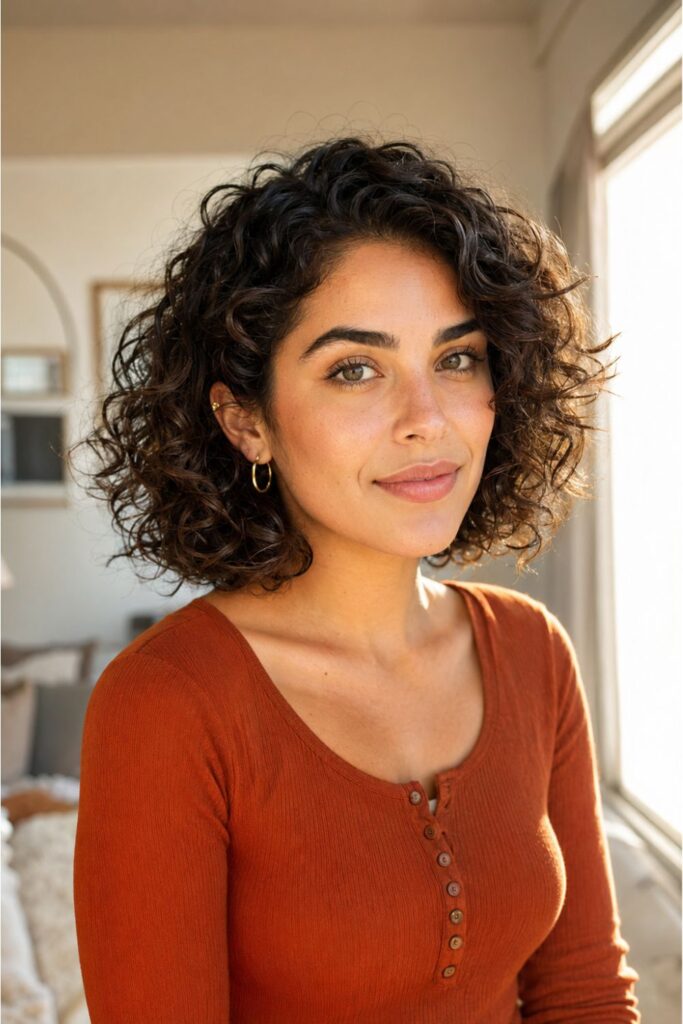
A layered curly bob takes the classic bob and cuts weight out of the interior so thick curls can move. The layers keep the bottom from going wide and heavy, which is the usual problem with dense curly bobs. Each layer lets the curls sit in their own space instead of stacking into one block.
Ask for this cut if your curls feel heavy or take forever to dry. Long layers, cut 2 to 3 inches apart, keep the shape without thinning the ends. Reshape every 8 to 10 weeks. Use a leave-in under your curl cream, since layered cuts expose more of each strand.
Try this: ask for the layers to be cut dry so the stylist can see exactly where each curl falls.
Difficulty: Easy · Cost: $65–$120 (salon cut)
4. Curly French Bob

The curly French bob is cut shorter than the classic version, usually ending at the cheek or just below the ear, with soft curly bangs. The shorter length keeps the silhouette compact, and the bangs pull the whole cut together. It suits fine to medium curls especially well, since the shorter length keeps the roots from going flat.
French bobs look best when the curls are defined rather than brushed out. Set the bangs with a tiny amount of gel on damp hair and let them shrink into place. Trims come every 6 to 8 weeks, since short bobs lose their line quickly. This cut air-dries well.
Try this: wear the bangs slightly longer than you think you want. Curls always spring up shorter than expected.
Difficulty: Easy · Cost: $60–$110 (salon cut)
5. Tapered Curly Cut
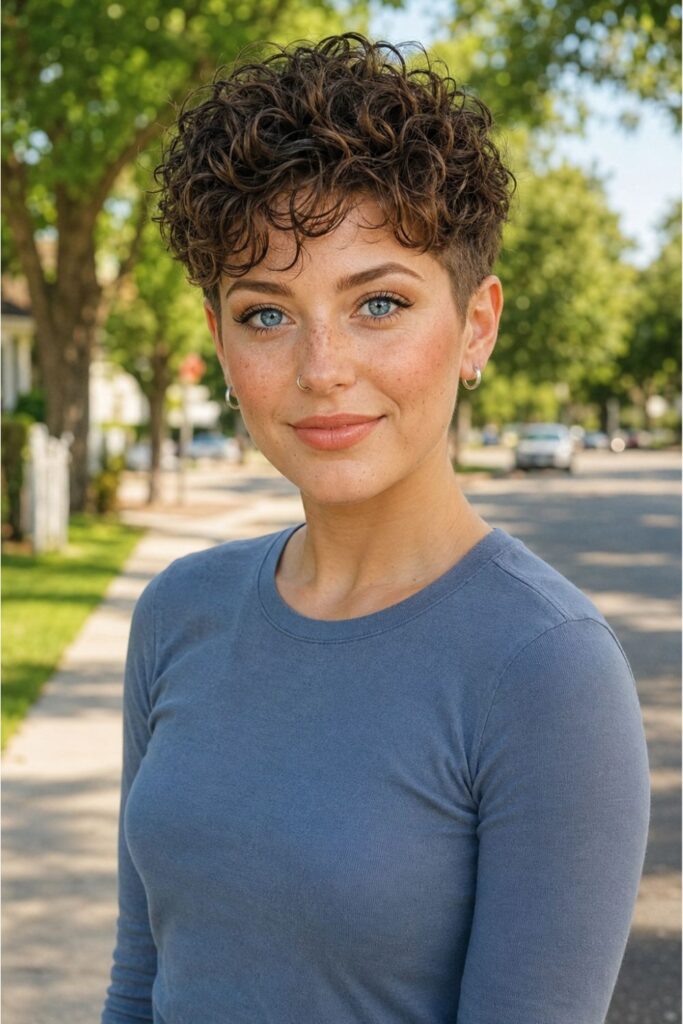
A tapered curly cut keeps the top full and gradually shortens the sides and back down to the neckline. The gradient shape gives the cut a clean outline while leaving enough length on top for curls to show their pattern. It works across loose curls and tight coils, and it suits people who like a neat, structured silhouette.
Book a shape-up every 3 to 5 weeks to keep the gradient crisp. Between visits, refresh the top with water and a little leave-in, then scrunch. Coils may need a pick at the roots for height.
Try this: bring a photo of the taper length you want at the neckline, since “tapered” means different things to different barbers.
Difficulty: Easy · Cost: $50–$100 (salon cut)
6. Curly Bixie Hairstyle
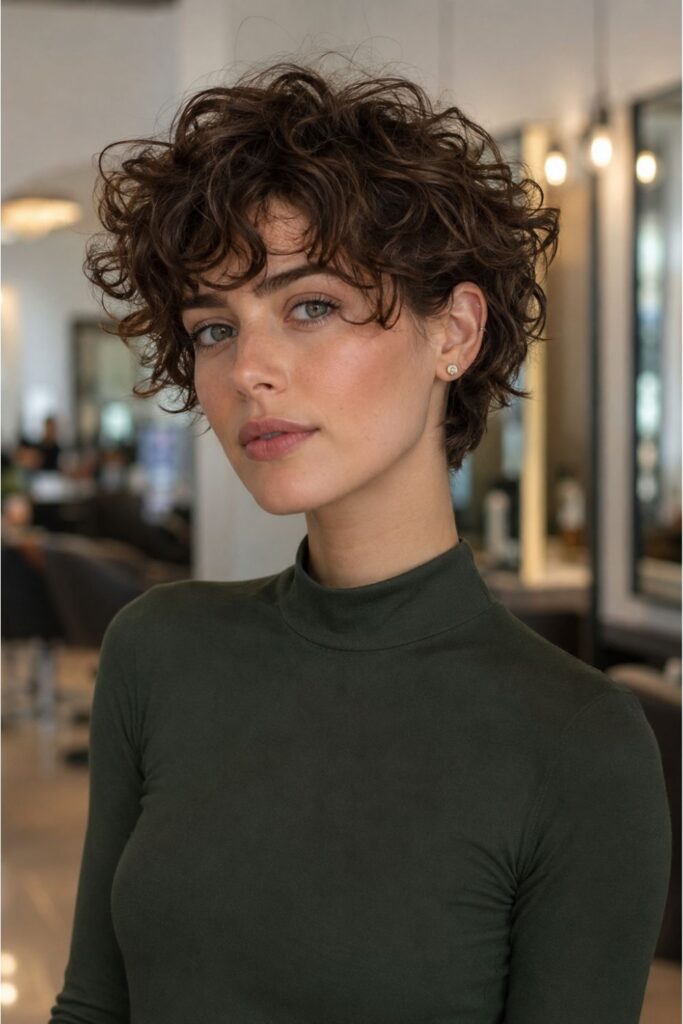
The curly bixie lands between a pixie and a bob, with more length than a pixie through the back and crown but shorter layers around the face. That in-between length gives curls room to move without the weight that drags a bob down. It suits people growing out a pixie or anyone who wants short hair with styling options.
Wear it tucked behind one ear for a sleek side, or forward for more coverage. Reshape every 6 to 8 weeks to keep the in-between length from turning shapeless. Style with curl cream and a light mousse for hold.
Try this: ask your stylist which side your curls naturally fall toward, and build the shape around that.
Difficulty: Easy · Cost: $60–$110 (salon cut)
7. Short Curly Shag

The short curly shag uses choppy layers cut throughout to build tousled volume. The layers are cut at different lengths on purpose, which stops the curls from clumping into one solid shape. It suits wavy to curly hair best, and it is one of the few short cuts that looks better slightly undone.
For extra volume, flip your head over and diffuse on low heat with heat protectant applied first. A pea-sized amount of texturizing paste on dry ends adds separation. Trims every 8 to 12 weeks keep the choppy layers fresh without losing the lived-in feel. This is a wash-and-go friendly cut for people who skip daily styling.
Try this: skip the brush entirely. Finger-comb damp curls, then scrunch, to keep the layers defined.
Difficulty: Easy · Cost: $65–$120 (salon cut)
If the layered texture is what draws you, our short shaggy haircuts collection has more choppy, layered cuts for every hair type.
8. Curly Bob with Curtain Bangs

Curtain bangs on a curly bob are parted in the center and curve away from the face, blending into the bob’s length on both sides. The center part breaks up the roundness of the bob and draws attention to the eyes. It works on most curl types, though the bangs need enough length to survive shrinkage and reach the cheekbones.
Set the bangs separately. Apply curl cream to the damp bangs, twist each side away from the center, and let them dry. Trim the bangs every 4 to 6 weeks, since curly bangs grow out fast.
Try this: dry the bangs first, before the rest of the hair, so they set in the right direction.
Difficulty: Easy · Cost: $65–$120 (salon cut)
9. Rounded Curly Afro
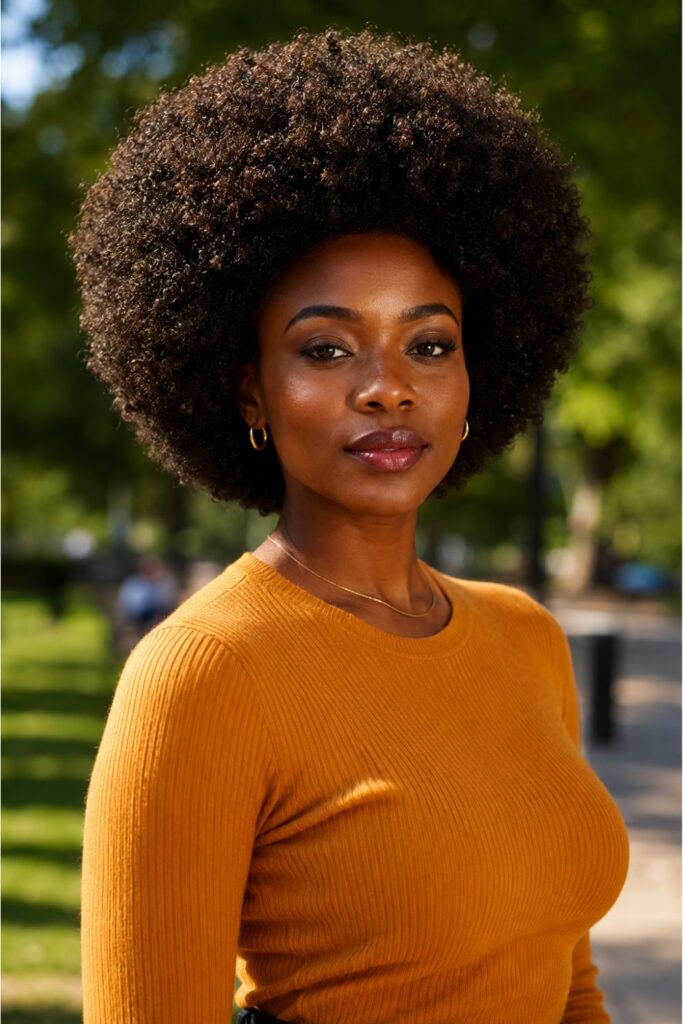
The rounded afro is shaped into a balanced, symmetrical silhouette that follows the head’s natural curve. The shape is built by trimming the outline evenly while keeping the interior full, which gives tight curls and coils a clean, intentional outline. It suits dense curl patterns that hold their shape well.
Moisture is the main job here. Deep condition weekly and use a leave-in plus a butter or oil to seal it in. Pick the roots with an afro pick for height, and shape the outline every 6 to 8 weeks. A satin bonnet at night keeps the silhouette from flattening while you sleep.
Try this: trim the outline dry and in small sections so the symmetry stays exact.
Difficulty: Easy · Cost: $50–$100 (salon cut)
For more styles built around natural texture, our short curly hairstyles for Black women roundup focuses on cuts for coils and tight curls.
10. Side-Part Curly Bob

A deep side part changes a curly bob by shifting the volume to one side. The heavier side gets natural lift at the roots, while the lighter side sits closer to the head. It suits round and square faces well, because the diagonal line of the part breaks up facial symmetry.
Flip the part while the hair is wet to train the roots in the new direction. The part needs refreshing each wash day, since curls tend to fall back to their old part. Maintenance matches the classic bob: a trim every 8 to 10 weeks. Add a root-lifting mousse on the heavy side if you want extra height.
Try this: find your part by lining it up with the arch of your eyebrow, then adjust from there.
Difficulty: Easy · Cost: $65–$120 (salon cut)
11. Curly Pixie with Long Fringe
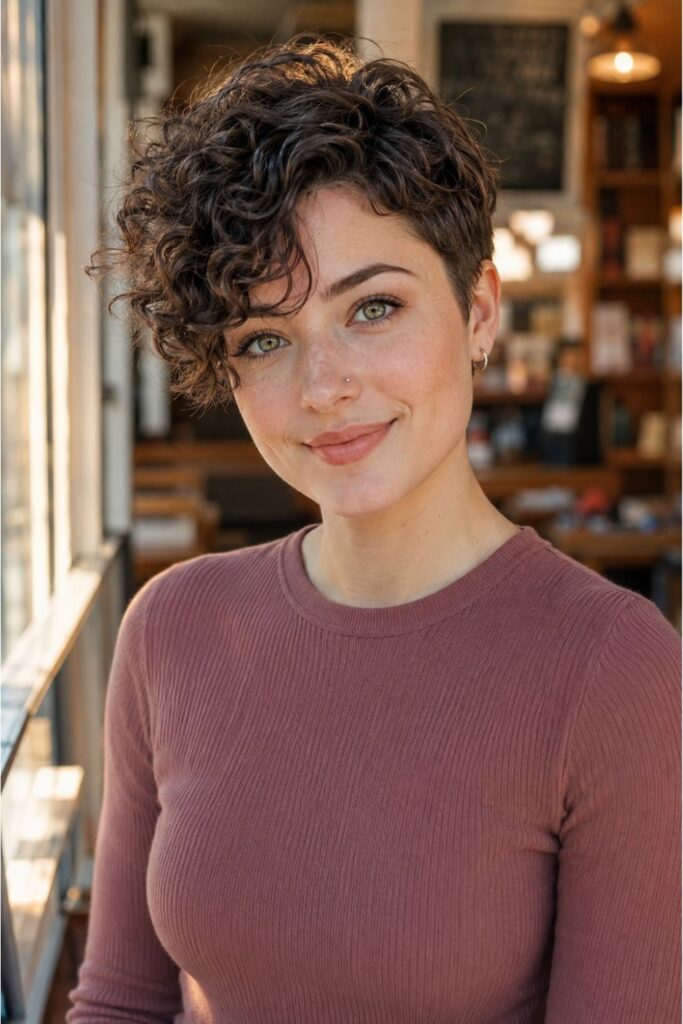
This pixie keeps the sides and back short while the fringe stays long enough to fall forward across the forehead. The long fringe softens the pixie and gives you something to style, which very short pixies sometimes lack. It suits oval and heart-shaped faces, where the forward fringe balances a narrower chin.
Style the fringe forward with a little curl cream, then let it set as it dries. The fringe needs trimming every 4 to 6 weeks to stay out of your eyes. Keep the sides neat on the same schedule. This is a good pick if you want a pixie but feel unsure about showing your full forehead.
Try this: sweep the fringe slightly to one side on days you want a different look without a haircut.
Difficulty: Easy · Cost: $60–$110 (salon cut)
12. Blonde Curly Bob

A blonde curly bob pairs the classic chin-length shape with warm honey-golden color. The lighter tone makes each curl’s definition easier to see, which is why blonde reads so well on curly texture. It suits people ready for color upkeep, since the cut and the color both need regular attention.
Blonde curls dry out faster, so wash with sulfate-free shampoo and deep condition weekly. Apply heat protectant before any diffuser or hot tool session. Plan a color refresh every 8 to 10 weeks and a trim on the same schedule to keep the ends from thinning. A purple shampoo once a week keeps the honey tone from turning brassy.
Try this: ask your colorist to paint the blonde following your curl pattern so the color lands where it shows.
Difficulty: Moderate · Cost: $150–$280 (cut + color)
13. Curly Mullet
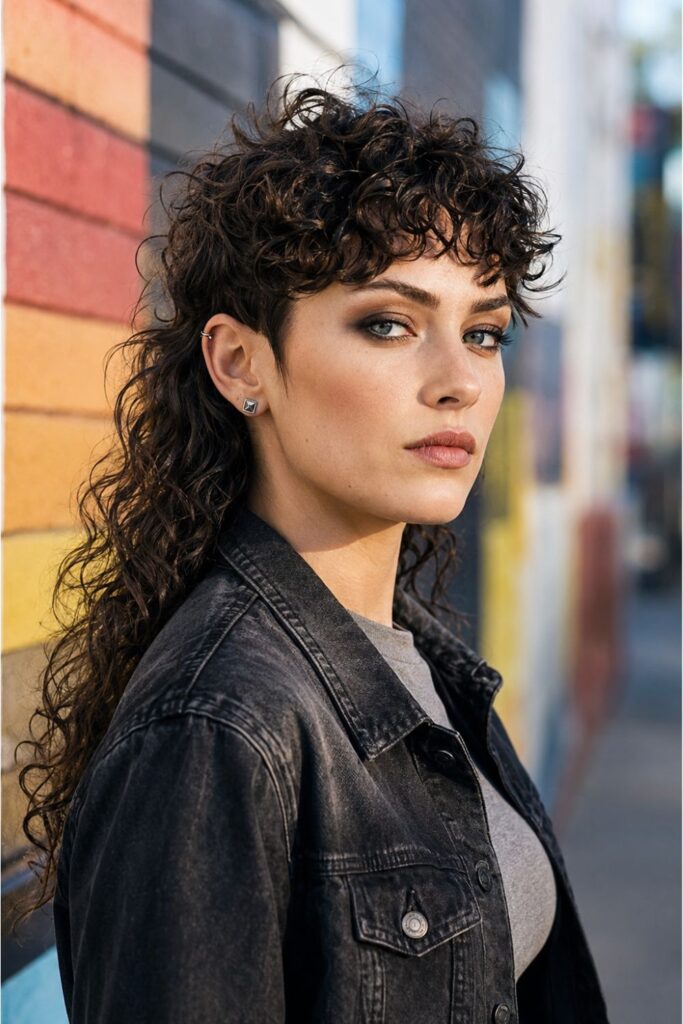
The curly mullet keeps the top and sides shorter while the back grows noticeably longer. The contrast gives the cut its character: neat through the front, with length and movement at the back. It suits medium to tight curls that hold their shape in the longer back section.
The back needs regular dusting to keep the curls from tangling, while the top gets trimmed every 6 to 8 weeks. Style the top forward or to the side, and let the back fall naturally. This cut gets mixed reactions, so go in sure. It is one of the easiest short-ish cuts to grow out if you change your mind.
Try this: define the back curls with extra gel, since the longer length there tangles first.
Difficulty: Easy · Cost: $60–$115 (salon cut)
14. Taper Fade with Natural Curls
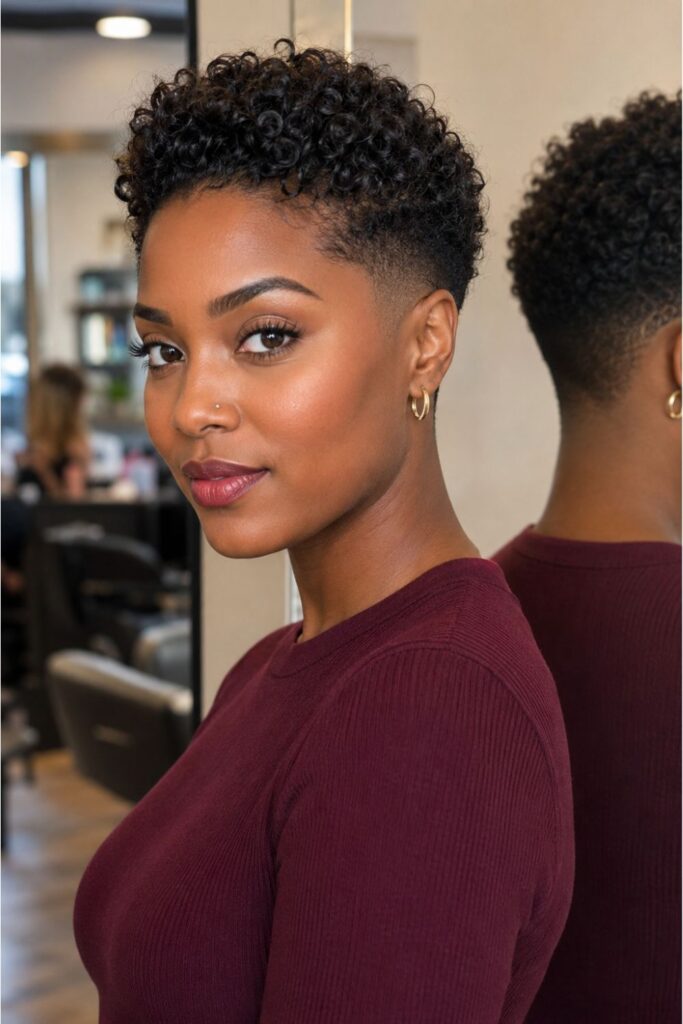
The taper fade blends the sides from skin or near-skin at the neckline up into fuller curls on top. The fade gradient gives the cut a crisp, barbered edge while the top keeps its natural curl pattern. It suits tight curls and coils best, since the texture on top holds height without product.
Fades grow out fast, so plan a touch-up every 2 to 4 weeks to keep the gradient sharp. The top needs only water and leave-in to refresh between washes. Line-ups along the hairline are optional but common with this cut. Find a barber experienced with curly texture, since fades on curls need a light hand.
Try this: ask for the fade to start low if you want a subtle blend, or high for a bolder contrast.
Difficulty: Easy · Cost: $45–$90 (barber cut)
15. Wet Look Curly Bob
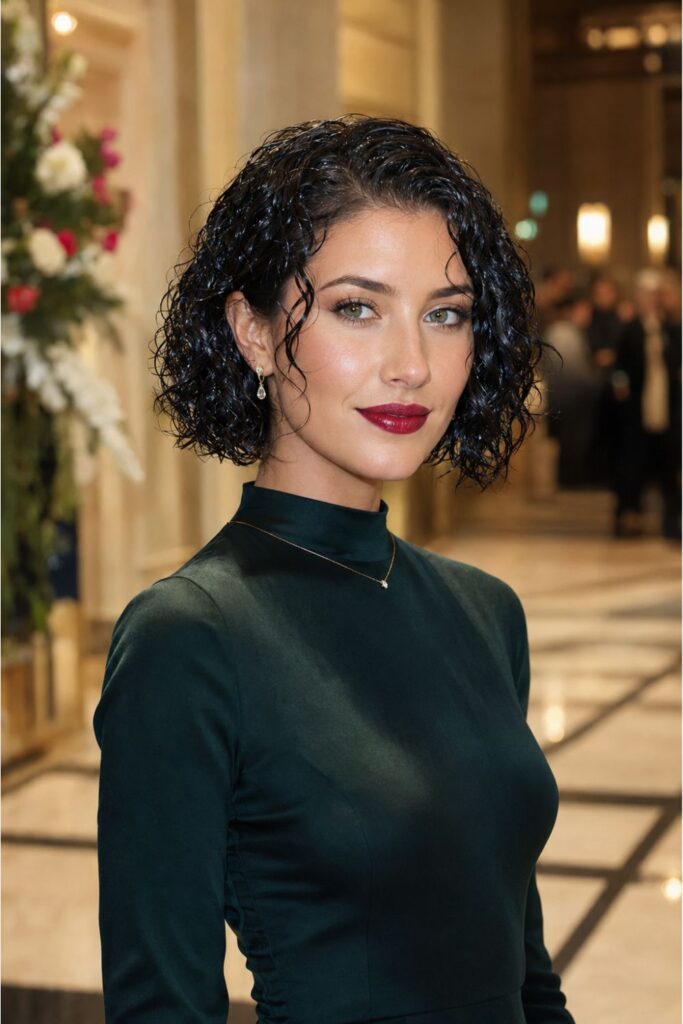
The wet look sets a curly bob with gel so the curls stay glossy and defined from morning to night. A strong-hold gel applied to damp hair locks each curl in place as it dries. It suits nights out and events, since the result reads deliberate and dressed up.
Work the gel through in sections, then scrunch out the crunch once fully dry. The look lasts a day, so reapply gel to damp hair each time you want it. Use a clarifying shampoo once a week if you wear it often, since gel builds up. Keep the bob trimmed every 8 to 10 weeks.
Try this: layer a shine serum under the gel for extra gloss that survives the drying process.
Difficulty: Easy · Cost: $65–$120 (cut; styling products around $20)
16. Curly Bob with Face-Framing Layers

Face-framing layers are cut shorter around the front of a curly bob, starting near the cheekbones and blending back into the length. The shorter front pieces draw attention to the eyes and cheekbones while the back keeps its full bob shape. It suits most face shapes, since the layers can be placed to highlight whatever you like.
Style the front pieces forward so they fall where they were cut to frame. A little extra curl cream on the front layers keeps them defined. Trim every 8 to 10 weeks, with the front layers checked each time. This is a subtle change that makes a standard bob look custom.
Try this: ask for the shortest front layer to start no higher than the cheekbone to avoid a shelf effect.
Difficulty: Easy · Cost: $65–$120 (salon cut)
17. Messy Curly Pixie

The messy curly pixie lets the curls fall where they want instead of arranging them into a neat shape. The cut is still a proper pixie underneath, with tapered sides and texture on top, but the styling stays loose. It suits people who like low-effort hair that still looks intentional.
Work a small amount of curl cream or light pomade through dry curls and twist a few pieces in different directions. The whole routine takes under five minutes. Trim every 4 to 6 weeks to keep the shape from growing out. This is the most forgiving pixie on the list, since uneven growth just adds to the effect.
Try this: refresh second-day curls with a water spritz instead of a full wash.
Difficulty: Easy · Cost: $60–$110 (salon cut)
18. Salt and Pepper Curly Crop
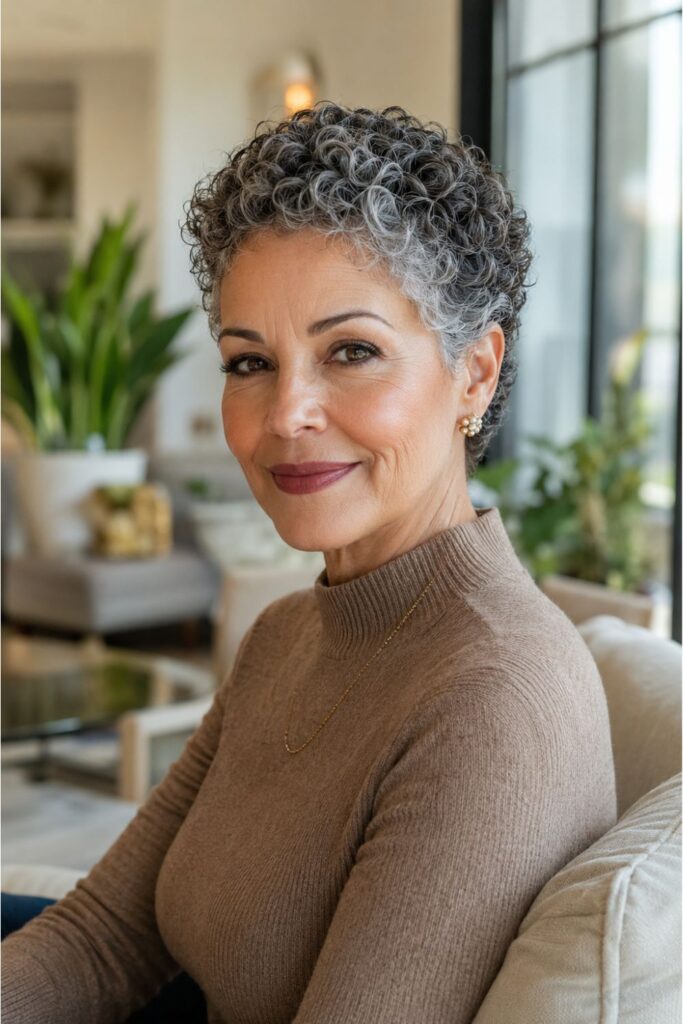
The salt and pepper curly crop grows out the natural mix of grey and dark hair in a short, defined cut. The two tones trace each curl, which gives the hair visible dimension without any dye. It suits women embracing grey who still want a shaped, modern cut rather than simply growing it out.
Grey curls can feel coarser, so deep condition weekly and use a purple shampoo once a week to keep the silver tones bright instead of yellow. Keep the crop trimmed every 6 to 8 weeks so the shape stays crisp. This is one of the lowest-maintenance options here, since there is no color to refresh.
Try this: ask your stylist to cut the grey sections dry, since grey curls often have a different texture than pigmented ones.
Difficulty: Easy · Cost: $60–$110 (salon cut)
Going grey on purpose? Our salt and pepper hairstyles guide has more two-toned looks for women over 50.
Quick Comparison
| Style | Best curl type | Styling time | Maintenance |
|---|---|---|---|
| Soft Curly Pixie Cut | Loose to medium curls | 5–10 min | Taper trim every 4–6 weeks |
| Classic Curly Bob | Most curl types | 10–15 min | Trim every 8–10 weeks |
| Layered Curly Bob | Thick, heavy curls | 10–15 min | Reshape every 8–10 weeks |
| Curly French Bob | Fine to medium curls | 5–10 min | Trim every 6–8 weeks |
| Tapered Curly Cut | Loose curls to tight coils | 5–10 min | Shape-up every 3–5 weeks |
| Short Curly Shag | Wavy to curly | 10–20 min | Trim every 8–12 weeks |
| Rounded Curly Afro | Tight coils | 15–25 min | Outline trim every 6–8 weeks |
| Blonde Curly Bob | Any (color-treated) | 10–15 min | Color + trim every 8–10 weeks |
| Wet Look Curly Bob | Defined curls | 5 min | Reapply gel each wear |
| Salt and Pepper Curly Crop | Grey or greying curls | 5–10 min | Trim every 6–8 weeks |
How to Choose the Right Short Curly Cut
Start with your curl type. Loose curls and waves (2B to 3A) hold bobs, shags, and French bobs well because the pattern falls into shape on their own. Medium curls (3B to 3C) suit pixies, bixies, and layered bobs that keep volume under control. Tight coils (4A to 4C) look best in tapered cuts, rounded afros, and fades that build height on top.
Then match the cut to your face shape. Round faces gain balance from side parts, long fringes, and height at the crown. Oval faces carry most short curly cuts easily. Square faces soften with face-framing layers and curtain bangs. Heart-shaped faces sit well under chin-length bobs that add width near the jaw.
Ask your stylist to cut your curls dry whenever possible. Dry cutting shows the true finished length, and on short hair a half-inch of shrinkage changes everything. Bring two or three photos of the exact cut, not just the general vibe, so you both mean the same thing.
Frequently Asked Questions
How do you style short curly hair?
Start with soaking-wet hair. Work curl cream through in sections, layer a light gel over it, and scrunch upward to encourage the pattern. Then air-dry or diffuse on low heat, applying heat protectant first. Avoid brushing dry curls, since that breaks the pattern and creates frizz.
What is the best short haircut for curly hair?
A layered bob or a curly pixie suits most curl types. Thick curls do best with layers that remove weight, while fine curls keep more width with a blunt edge. Tight coils suit tapered cuts and rounded afros that build height on top.
How often should short curly hair be trimmed?
Every 6 to 10 weeks for most cuts. Tapered sides and fades need touch-ups every 3 to 5 weeks to stay sharp, while shags and layered bobs can stretch to 12 weeks between reshapes.
Does short curly hair need layers?
Thick or heavy curls usually do. Layers remove bulk and let each curl move. Fine or low-density curls often look fuller with a blunt edge, since layers can thin out the ends. Your stylist can tell which camp your hair falls into.
Can you get bangs with short curly hair?
Yes. Curly bangs, curtain bangs, and long fringes all work on short cuts. Ask your stylist to cut them dry and leave them longer than you think you need, since curls spring up shorter than they look when wet.
Final Thoughts
Short curly hair rewards cuts that respect the curl pattern. Pick your cut by curl type first, then face shape, and find a stylist who cuts curls dry. With the right shape, short curls take less time than long hair, not more.
For more hair ideas across every length and texture, browse the full collection at PrimeHairPicks.

