


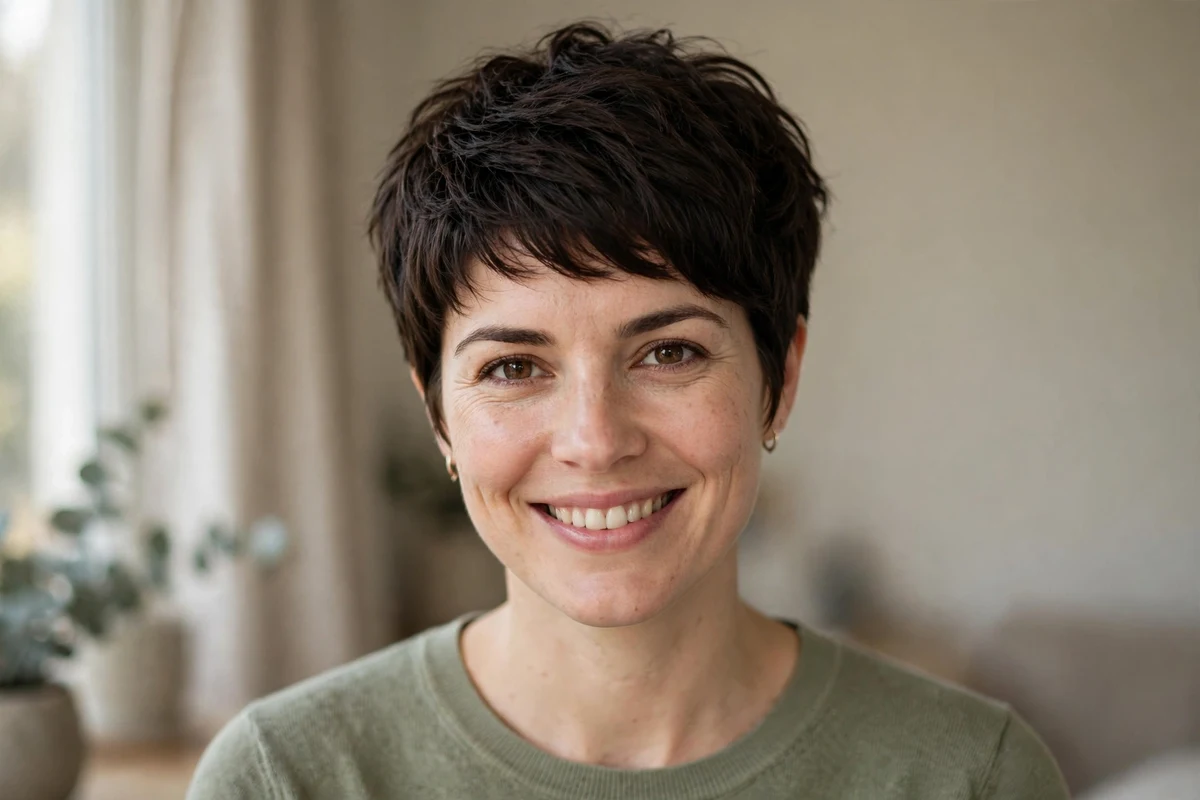
Yes, a pixie can work on thick hair. The cut just has to be built for density: layers that remove weight instead of adding it, a tapered or undercut nape, and ends that are point-cut or razored rather than left blunt.
Thick hair is actually an advantage in a pixie. It holds texture, keeps its shape through the day, and gives spikes, feathered crowns, and piecey layers something to stand on. The problems start only when the cut ignores the bulk. A one-length pixie on dense hair can puff out into a triangle, sit too wide at the sides, or feel heavy at the neck.
This list covers 49 pixie cuts chosen for thick hair, each one naming the exact technique that keeps the density under control: undercuts, thinning shears, razor work, tapering, and graduated layers. You will also find upkeep timelines, price ranges, and honest notes on which textures each cut suits.
Quick Takeaways
- Thick hair needs weight removal, not more texture: ask for point cutting, razor work, or thinning shears in every pixie.
- An undercut at the nape (or buzzed sides) removes the most bulk and keeps the neckline cool and clean.
- Plan trims every 4 to 6 weeks. Buzzed or faded sections need touch-ups every 2 to 4 weeks.
- Longer pixies and pixie bobs are the easiest grow-out path if you are nervous about going very short.
- Curly and coarse thick hair does best with longer layers and a cut that works with the curl pattern, not against it.
1. Layered Pixie with Nape Undercut
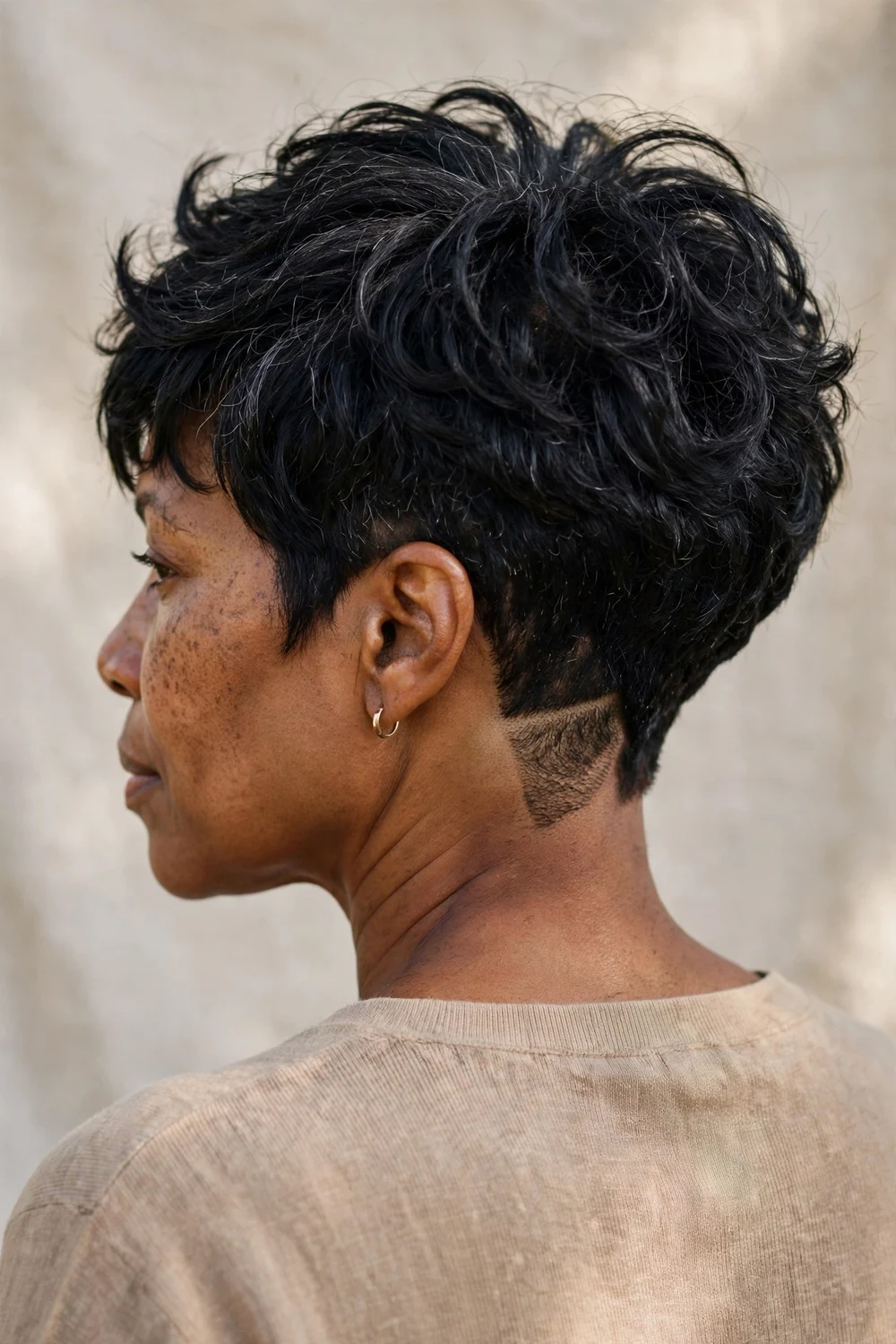
The top stays long and layered while the hair at the nape is clippered short underneath. That hidden undercut removes a surprising amount of weight from the thickest zone, so the cut sits flat at the neck instead of kicking outward. From the front it reads as a classic pixie, which makes it office-friendly.
Ask your stylist to keep the undercut short but not skin-tight, and to blend the top layers over it. A V-cut nape looks sharp as it grows. This is the single best debulking move for very dense hair.
Try this: run a pea-sized amount of matte paste through the top layers only, and leave the undercut product-free so it stays flat.
Difficulty: Easy | Salon cost: $45-$75 | Upkeep: trim every 4-6 weeks
2. Choppy Textured Pixie
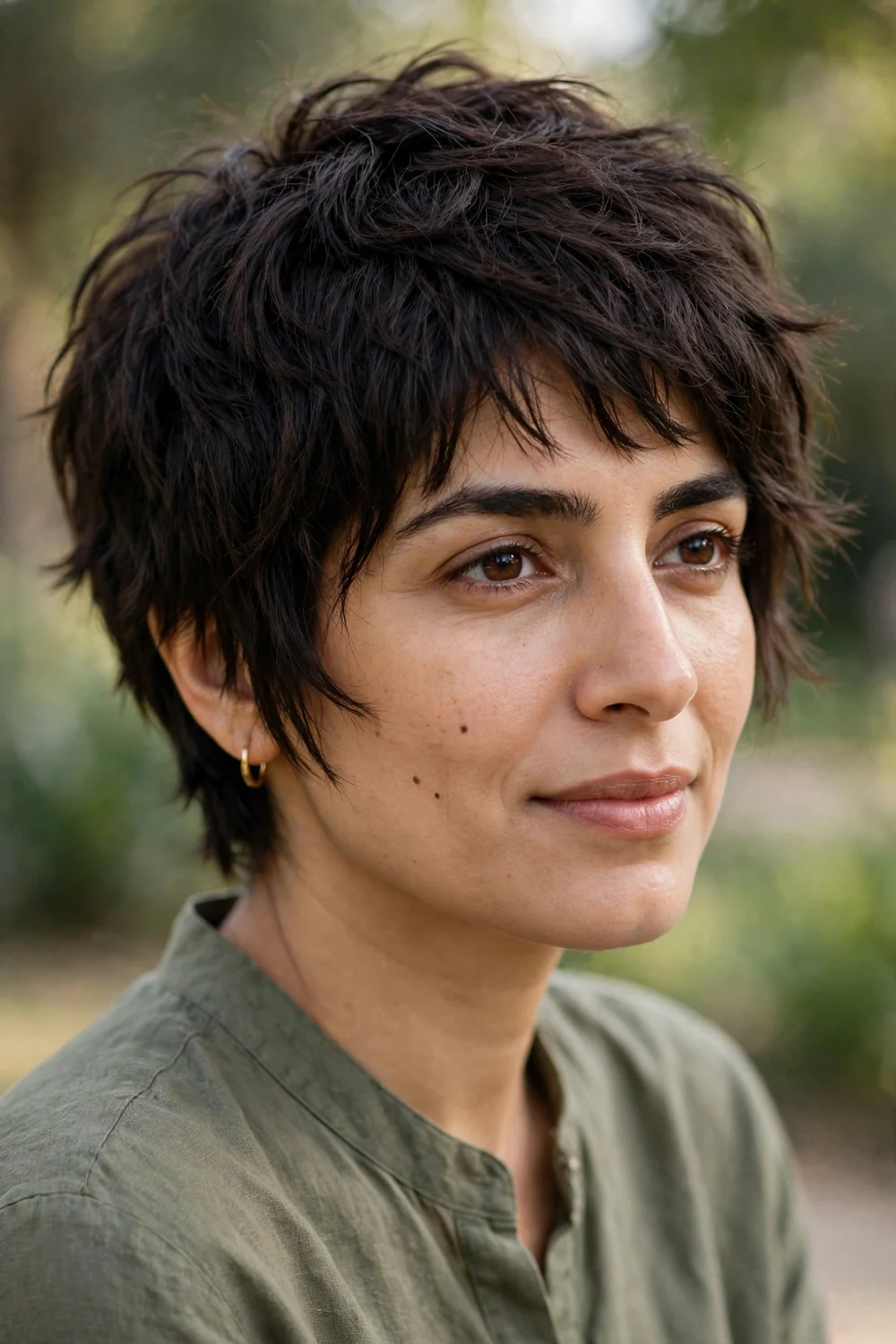
Jagged, point-cut layers break up the solid mass of thick hair into movable pieces. The stylist cuts the ends at angles instead of straight across, which thins the perimeter without obvious thinning-shear lines. Length usually runs 1 to 3 inches all over, with slightly longer bits on top.
This cut air-dries well and looks intentional even when you do nothing to it. It suits straight to wavy thick hair best. Very curly hair can frizz with this much texture, so curls need a longer version.
Try this: scrunch a dime-sized amount of texturizing cream into damp hair and let it air-dry for separated, piecey ends.
Difficulty: Easy | Salon cost: $40-$70 | Upkeep: trim every 5-6 weeks
3. Long Choppy Pixie with Longer Front
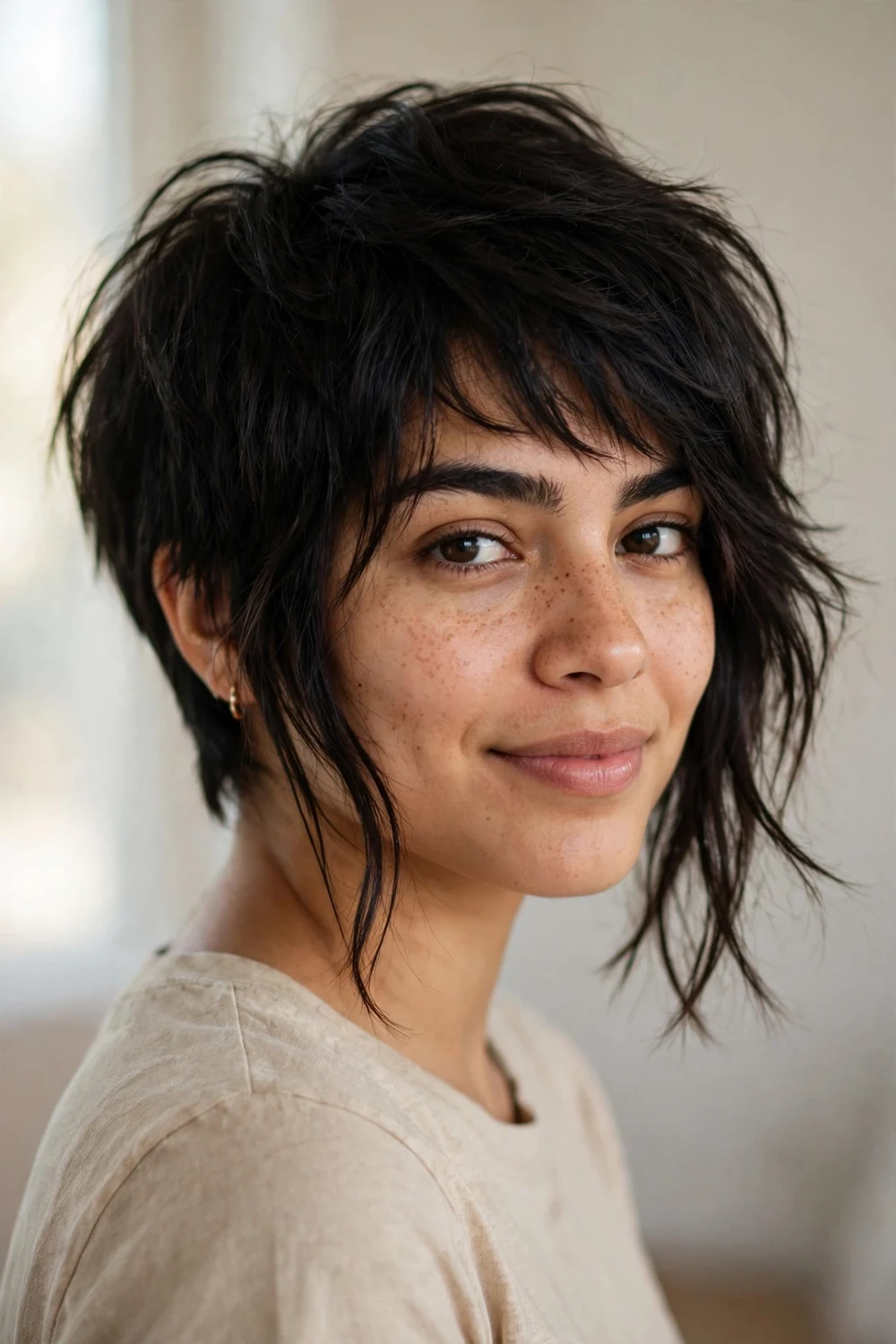
The longest length sits at the front, framing the face, while the back graduates shorter into a tapered nape. That forward-weighted shape stops thick hair from building width at the sides, which is the usual trouble spot. It also makes an easy first step if you are coming from long hair.
The face-framing length gives it a soft, almost bob-like feel from the front. Ask for the back to be thinned with shears so the grow-out stays balanced between front and back.
Try this: tuck one side behind your ear to show off earrings and create instant asymmetry.
Difficulty: Easy | Salon cost: $45-$75 | Upkeep: trim every 5-6 weeks
4. Messy Pixie with Bangs

A deliberately undone finish lets thick hair do what it wants to do anyway. The layers are cut with texture, the bangs are left soft across the forehead, and the styling is fingers-only. Because the cut expects messiness, bedhead and second-day hair look like part of the plan.
This is one of the lowest-effort pixies for dense hair. The bangs should be thinned at the ends so they lie flat instead of puffing. Keep the sides tapered to avoid a wide silhouette.
Try this: flip your head upside down, shake the roots with your fingers, and go. No brush needed.
Difficulty: Easy | Salon cost: $40-$65 | Upkeep: trim every 5-6 weeks
5. Layered Pixie Lob
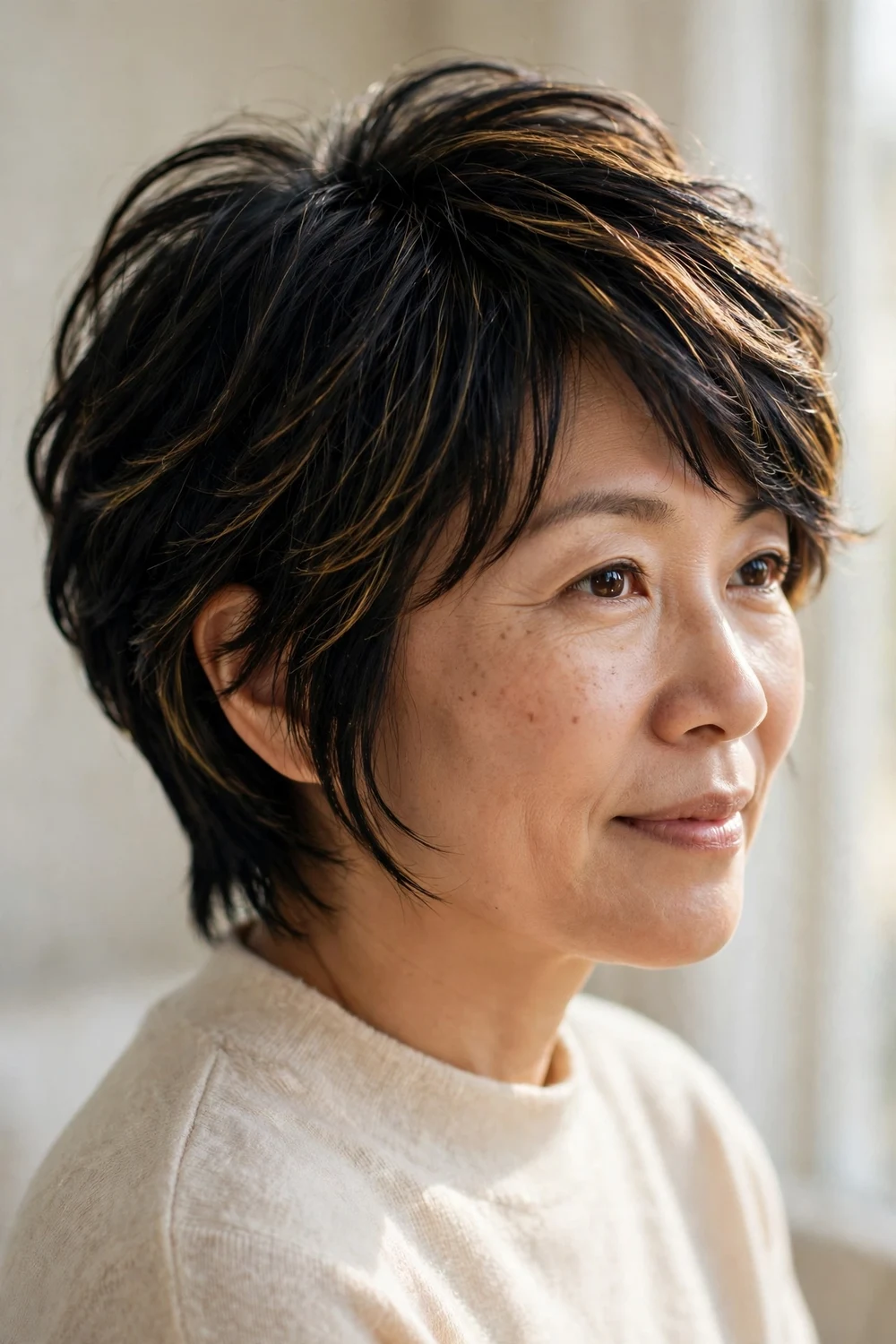
The pixie lob keeps pixie proportions at the back with noticeably more length through the front and crown. Soft stacked layers remove weight while keeping enough hair to tuck, pin, or sweep. A few golden highlights through the top layer add dimension and make the layering more visible.
This length is the friendliest grow-out option on the list. You can let it drift toward a bob or crop it back into a shorter pixie at your next appointment. Thick hair gives the longer front pieces enough body to hold their shape.
Try this: sweep the front to one side with a light styling cream for a polished evening look.
Difficulty: Easy | Salon cost: $50-$80 | Upkeep: trim every 6-8 weeks
6. Long Pixie with Tapered Nape
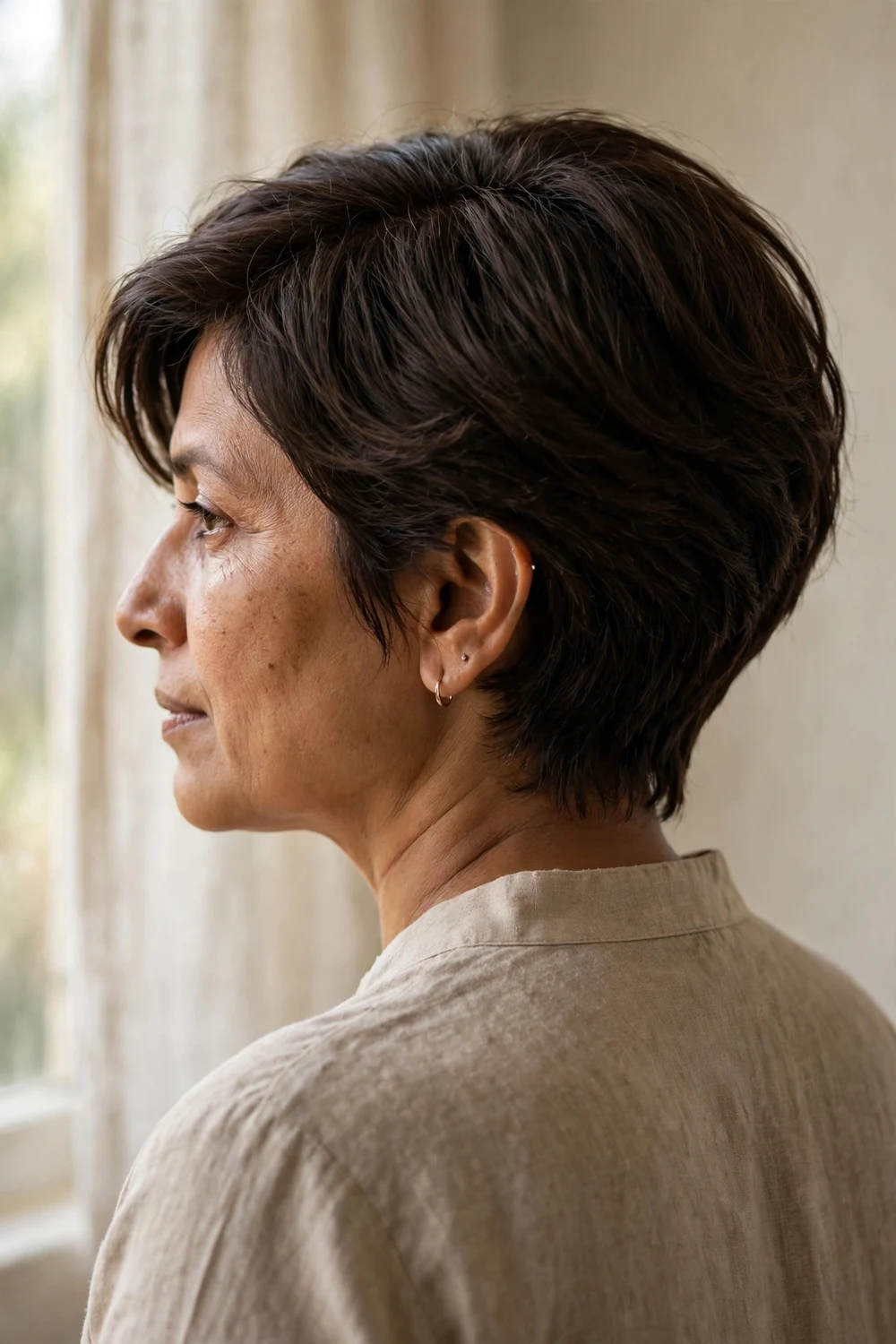
More length on top with a softly tapered hairline at the neck gives you styling options without the weight. The taper removes bulk exactly where thick hair tends to bunch up, so the back lies smooth. A side part makes the longer top fall naturally and flatters stubborn strands.
This cut needs almost no daily styling. Wash, add a little product, and the taper does the shaping work. It is a good pick if you want short hair that still feels feminine and soft.
Try this: blow-dry the top forward with your fingers for lift, then set the part while it is still warm.
Difficulty: Easy | Salon cost: $45-$70 | Upkeep: trim every 5-6 weeks
7. Feathered Undercut Pixie
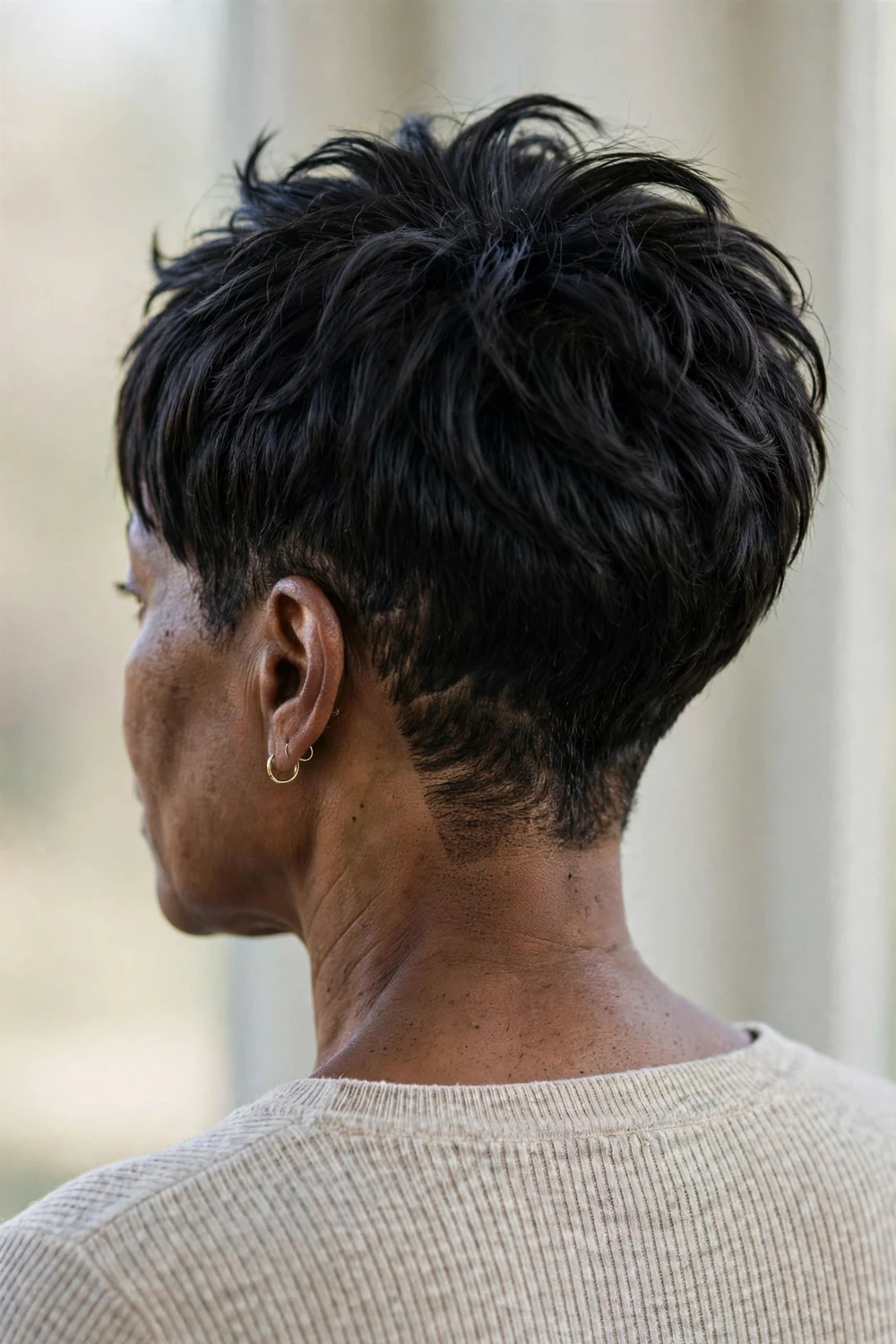
Uneven feathered layers float over a closely clippered nape undercut. The contrast is the whole point: airy, separated texture on top with all the hidden weight removed underneath. Feathering works like built-in thinning, so dense hair gets movement instead of mass.
The undercut stays hidden when the top layers fall over it, which keeps the look soft from most angles. Ask for the feathering to be cut with a razor or point cutting for the lightest ends.
Try this: lift sections at the crown with a vent brush while blow-drying to make the feathering pop.
Difficulty: Moderate | Salon cost: $50-$80 | Upkeep: trim every 4-5 weeks
8. Elongated Pixie with Long Layers
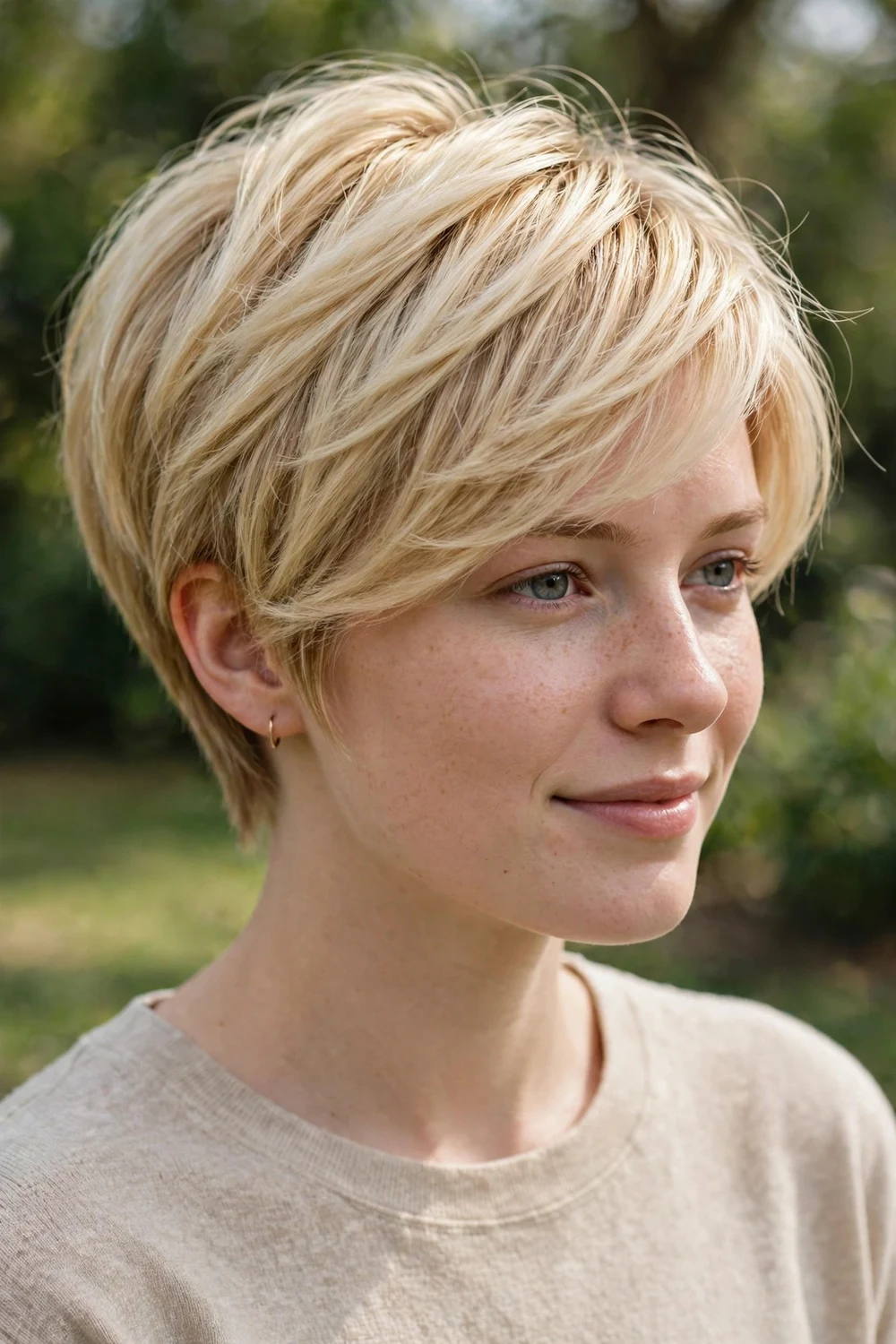
Extra length through the crown and front makes this the least shocking pixie for thick hair. Long layers restore body and movement while keeping the cut manageable, and subtle highlights around the crown add dimension that shows off the layering. It reads polished without looking severe.
Because the layers are long, this cut grows out gracefully and needs fewer salon visits. It suits women who want short hair with styling flexibility, since the length can be smoothed, waved, or pinned.
Try this: use a round brush on just the front sections for a soft bend that frames the face.
Difficulty: Easy | Salon cost: $50-$85 | Upkeep: trim every 6-8 weeks
9. Spiky Pixie
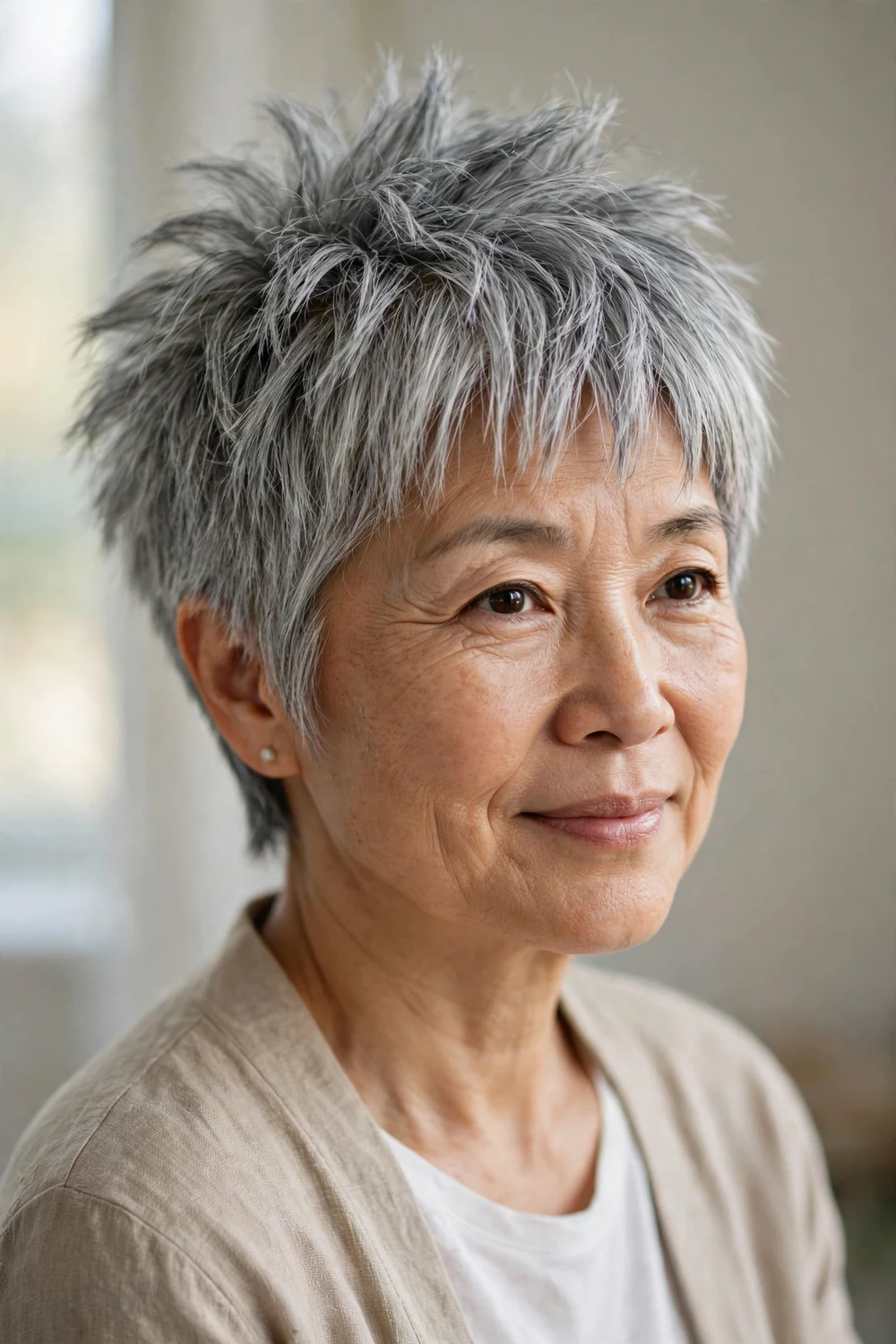
Short layers cut to stand up give thick hair a job to do instead of a problem to hide. The density that makes other cuts puff out is exactly what keeps spikes upright all day. A frosty silver or gray shade adds edge, and choppy bangs keep the front from looking severe.
Ask for the layers to be cut short enough to piece apart, about 1 to 2 inches on top. Strong-hold wax or clay, not gel, gives definition without crunch. This cut suits confident dressers and active routines since nothing falls in your face.
Try this: warm a pea-sized amount of clay between your palms, then pinch random sections upward for lived-in spikes.
Difficulty: Moderate | Salon cost: $45-$75 | Upkeep: trim every 4-5 weeks
10. Highlighted Layered Pixie
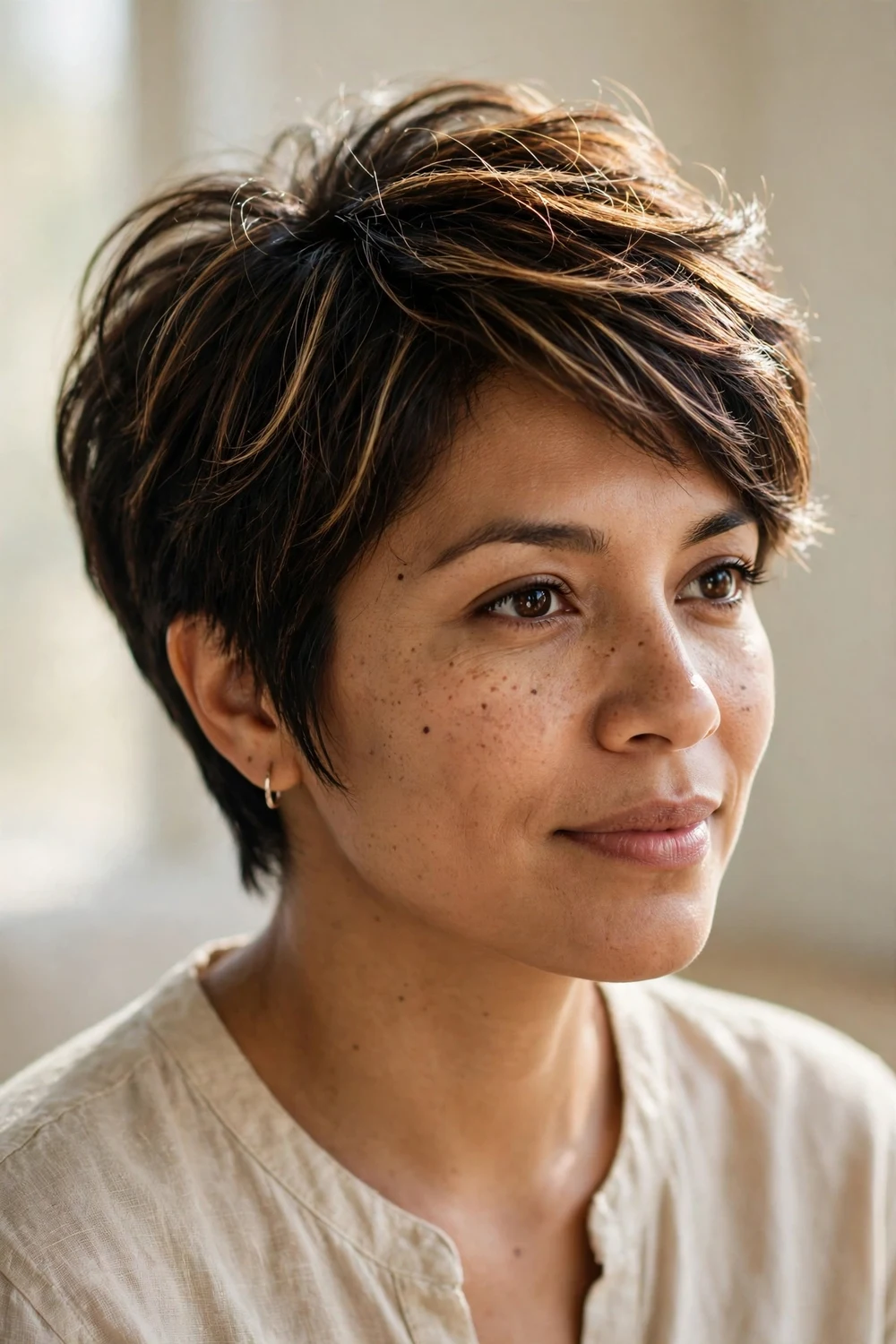
Wispy layers in a lighter shade, like warm ash blonde over dark brown, make thick hair look lighter than it is. The highlights trace each layer, so the debulking work of the cut becomes visible instead of hidden. That visual separation is what keeps dense hair from reading as one solid block.
This works on straight or wavy thick hair. Fine highlights cost more upkeep than a solid color, but short hair grows them out fast. Ask for babylights rather than chunky streaks for a modern result.
Try this: use a purple shampoo once a week if your highlights are blonde, to stop brassiness.
Difficulty: Moderate | Salon cost: $80-$140 with color | Upkeep: trim every 5-6 weeks, gloss every 8-10
11. Undercut Pixie for Curly Hair
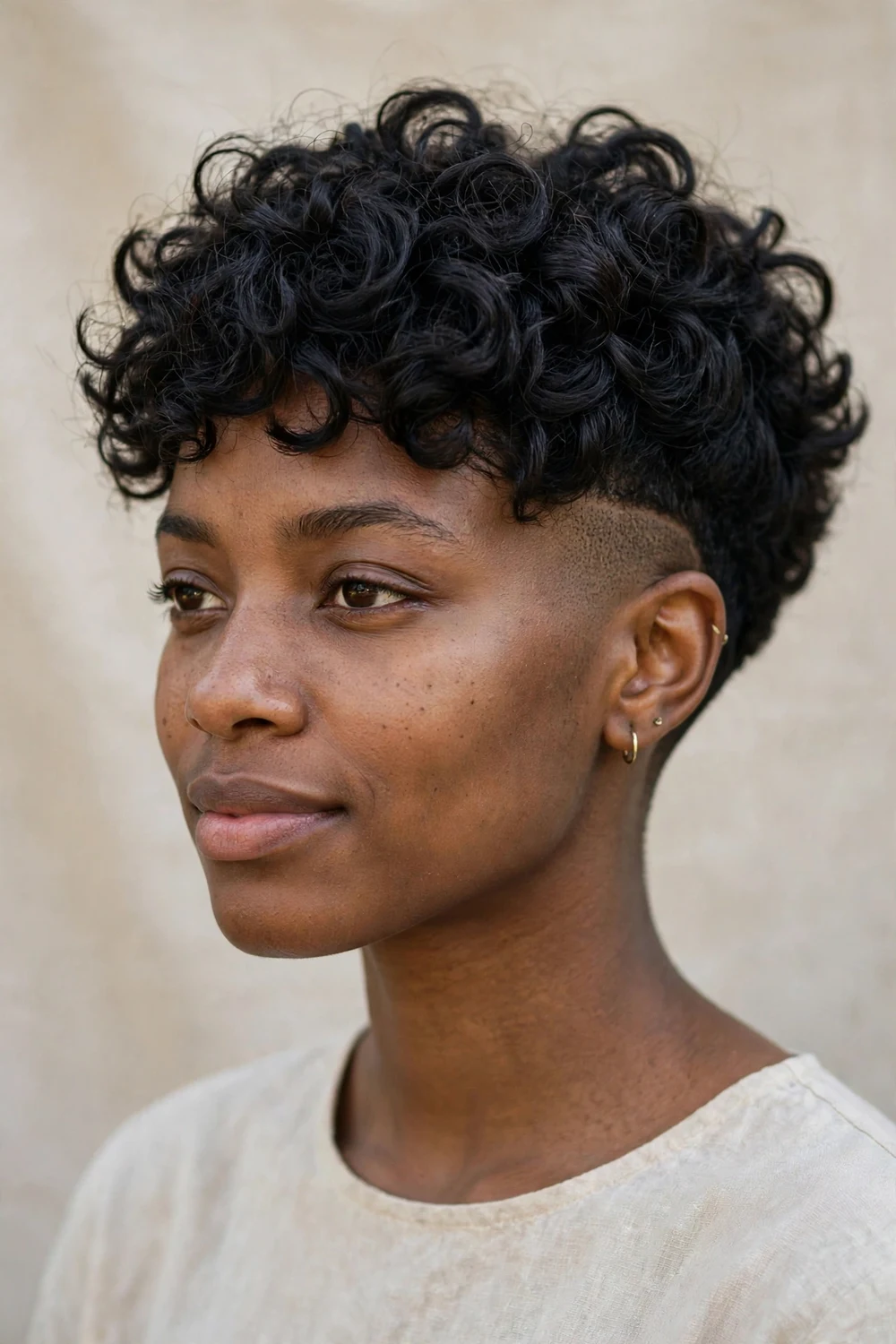
Thick curls get all the volume on top while an undercut handles the bulk at the sides and nape. The result is soft and feminine, not severe, because the curls keep their bounce and shape. Layers should follow your curl pattern so each curl forms a clean spiral instead of frizzing.
Cut curls dry or stretched so the length is honest. A curl cream on damp hair, then air-drying or diffusing, is the whole routine. For more curl-focused crops, see our curly pixie haircuts guide.
Try this: pineapple your curls with a loose scrunchie at night to protect the shape.
Difficulty: Moderate | Salon cost: $55-$85 | Upkeep: trim every 6-8 weeks
12. Disheveled Pixie with Balayage
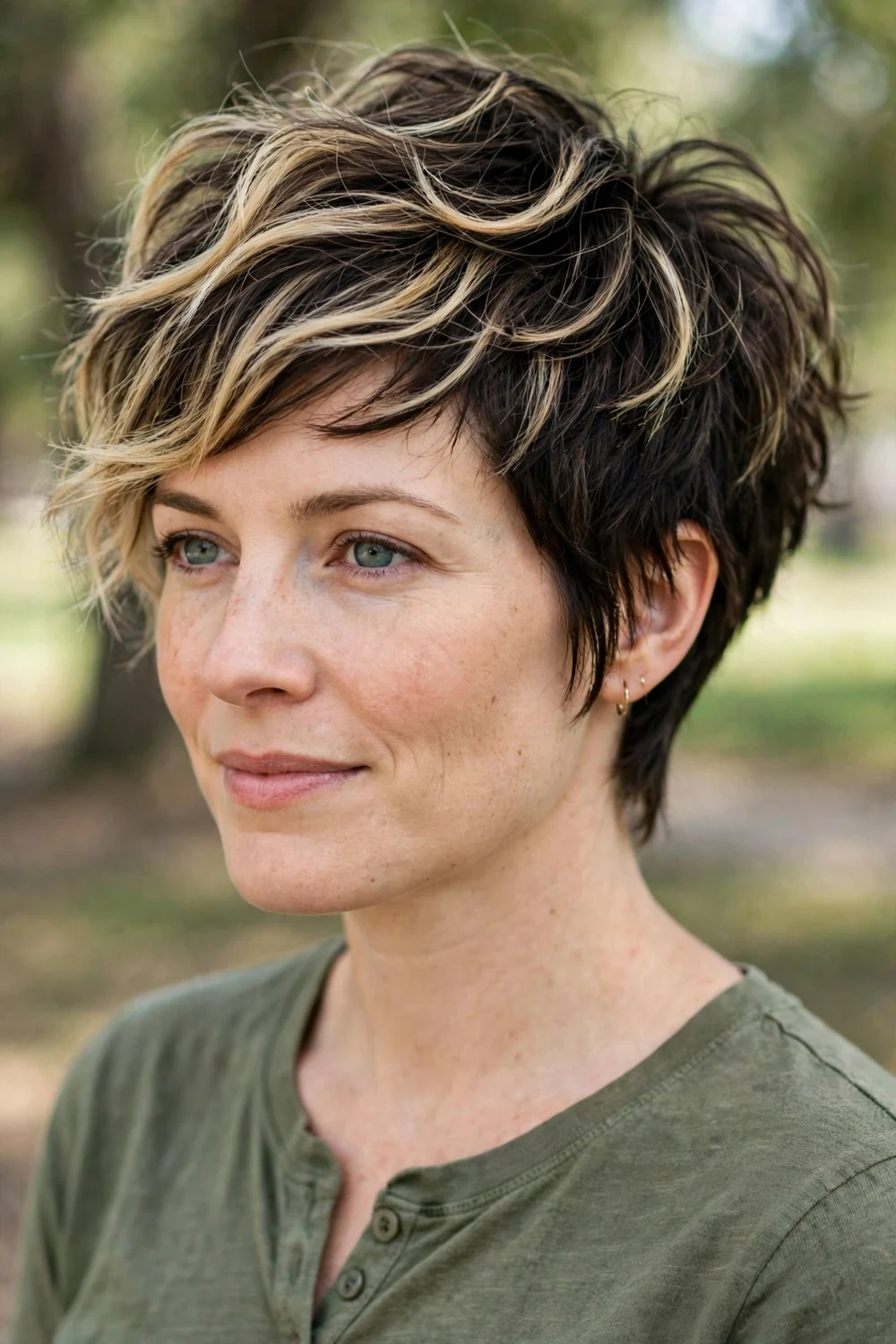
Hand-painted balayage over a dark base gives a long pixie its dimension. The piecey waves on top stay soft while bright blonde pieces catch the light and break up the density. As the pixie grows out, the painted color grows with it gracefully, which buys you time between appointments.
An ashy blonde with dark roots gives this cut a rocker edge. Balayage on short hair needs a colorist who paints precisely, since there is less hair to blend. Use a heat protectant before any hot styling to protect the lightened pieces.
Try this: twist small sections with a flat iron for bends, not full curls, to keep the disheveled feel.
Difficulty: Moderate | Salon cost: $120-$200 with color | Upkeep: trim every 5-6 weeks
13. Tapered Pixie with Side Bangs
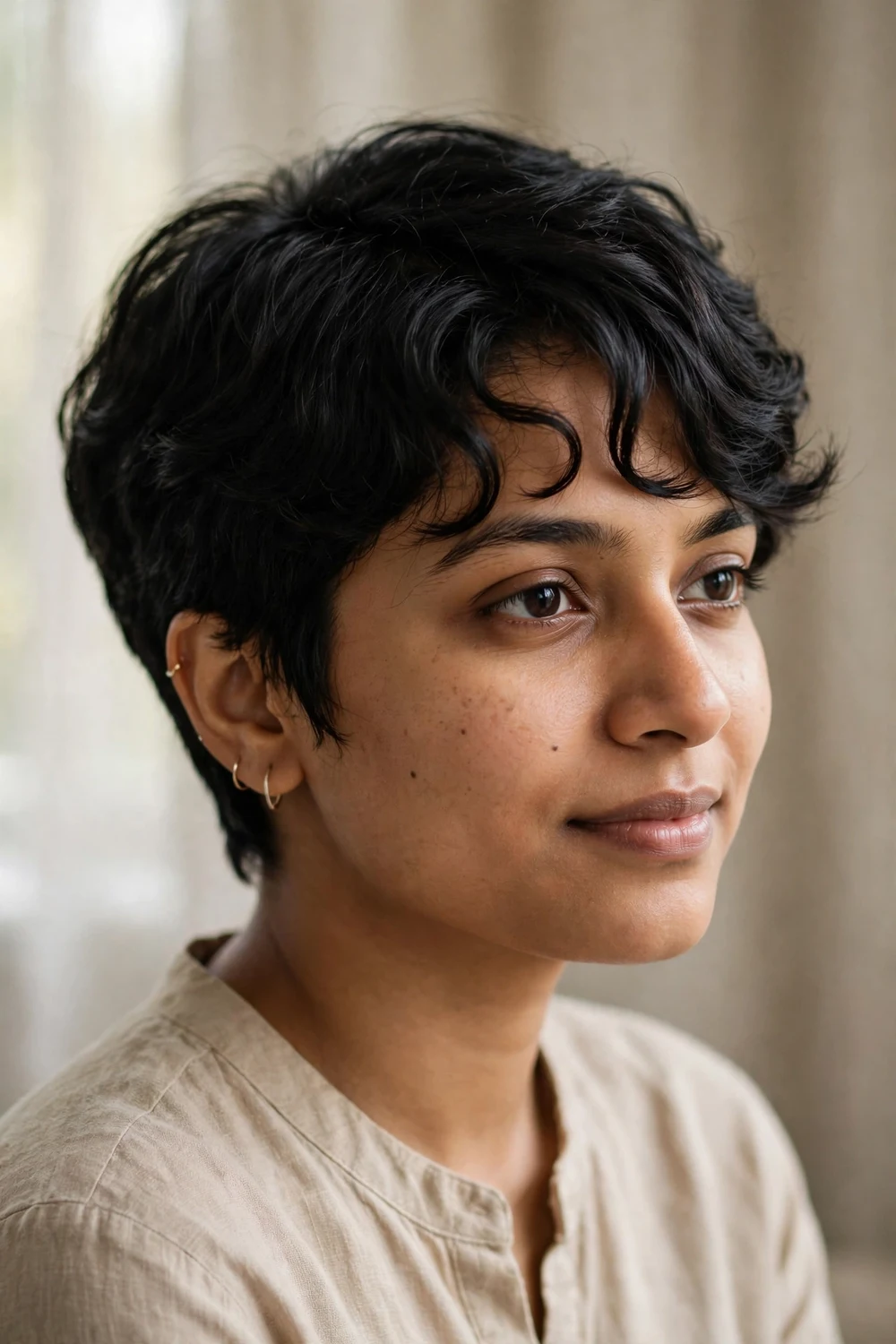
A little natural curl plus side-swept bangs gives this tapered pixie its texture. The taper keeps the sides and back close while the bangs add softness across the forehead. Thick hair holds the side-swept shape without collapsing by midday, which is the usual failure point of this style on finer hair.
Small curls can be encouraged with a curling iron on the top sections only. Keep the bangs long enough to tuck behind one ear for a second look. Use a heat protectant on any section you curl.
Try this: direct the bangs to the opposite side of your natural part for extra lift at the roots.
Difficulty: Easy | Salon cost: $45-$70 | Upkeep: trim every 5-6 weeks
14. Geometric Pixie with Angled Sides
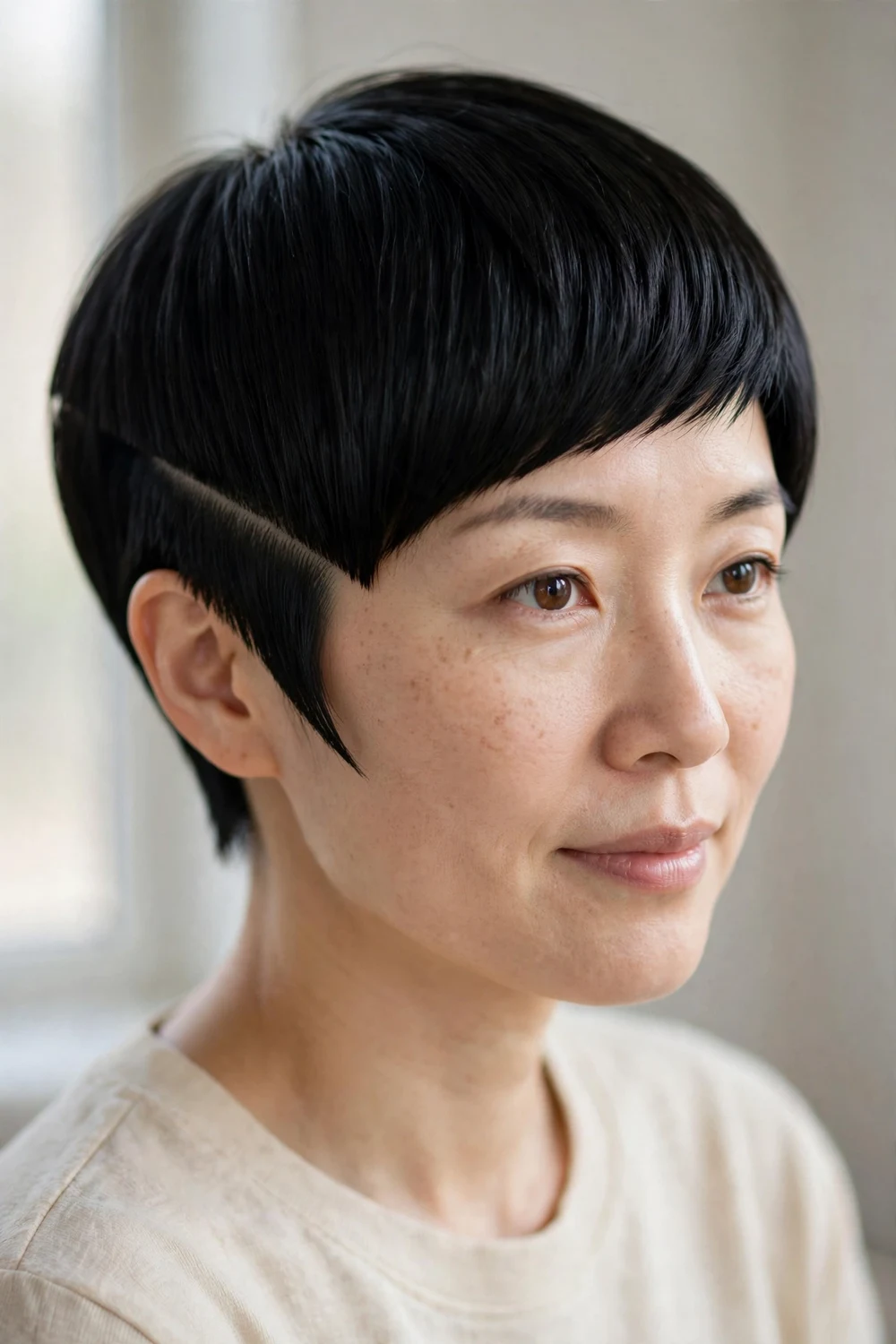
Sharp angles replace soft layering in this architectural cut. The sides are cut on a diagonal that lifts the face, and the edges stay blunt for a clean geometric line. Thick hair is ideal here because the density keeps the angles crisp instead of wispy.
This is a precision cut, so find a stylist comfortable with geometric work. The angles grow out visibly, so book trims on time. Point-cut ends soften the severity slightly if full blunt feels too harsh.
Try this: smooth a drop of serum over the surface for a glassy finish that shows off the lines.
Difficulty: High | Salon cost: $60-$95 | Upkeep: trim every 4 weeks
15. Choppy Pixie for Coarse Hair
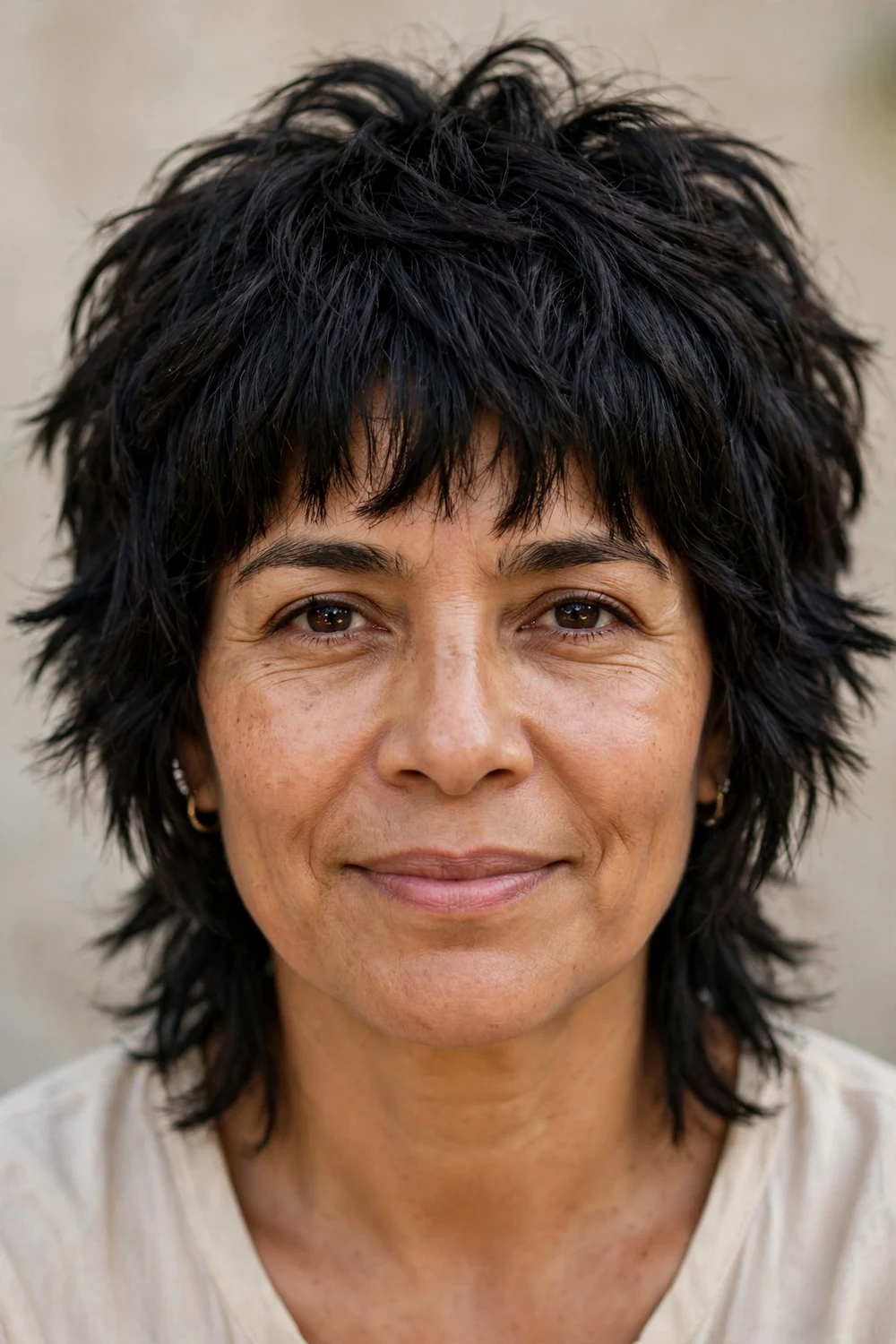
Coarse thick hair needs a cut that tames without fighting the texture. Choppy layers remove the bulk while keeping enough weight for the hair to sit down instead of springing up. Bangs that graze the eyebrows and sideburns that cover the ears frame the face and balance the strong texture.
A razor is the right tool for coarse hair here. It thins as it cuts, which stops the layers from looking heavy. Skip heavy waxes that can make coarse hair look dull, and use a lightweight cream instead.
Try this: let the sideburns grow a touch longer than usual; they slim the face on this cut.
Difficulty: Moderate | Salon cost: $50-$80 | Upkeep: trim every 5-6 weeks
16. Rounded Pixie with Long Bangs
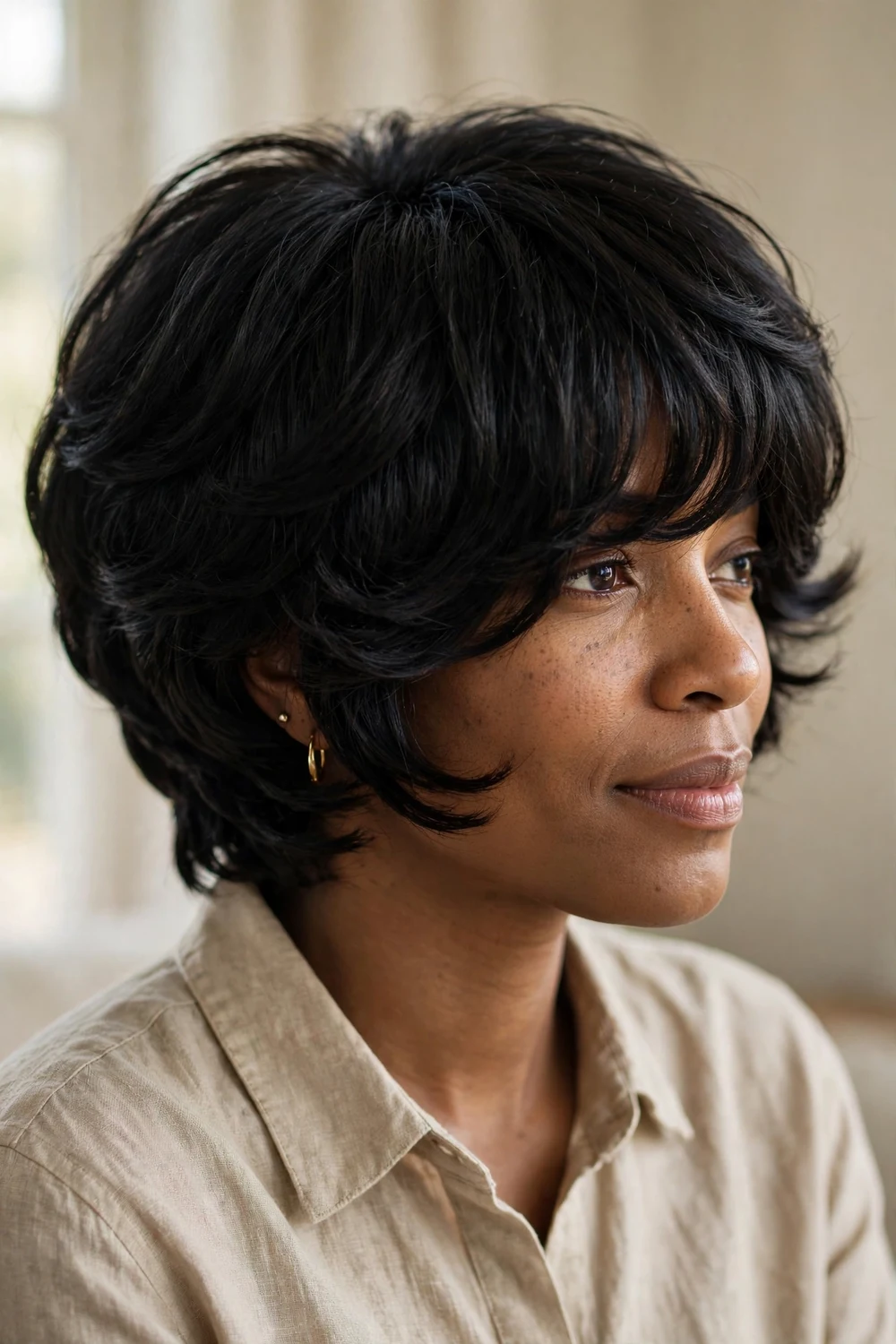
A rounded silhouette follows the curve of the head for a soft, feminine shape. Long bangs add glamour without sacrificing practicality, and stacked layers underneath remove the weight that would otherwise make a rounded cut look helmet-like. This is one of the most wearable pixies for thick hair.
The rounded shape suits most face shapes and reads polished in professional settings. Blow-dry with a round brush to maintain the curve, and keep the bangs thinned at the ends.
Try this: curve the bangs slightly to one side while blow-drying for a soft, face-opening finish.
Difficulty: Easy | Salon cost: $45-$75 | Upkeep: trim every 5-6 weeks
17. Boyish Tapered Pixie with Pompadour
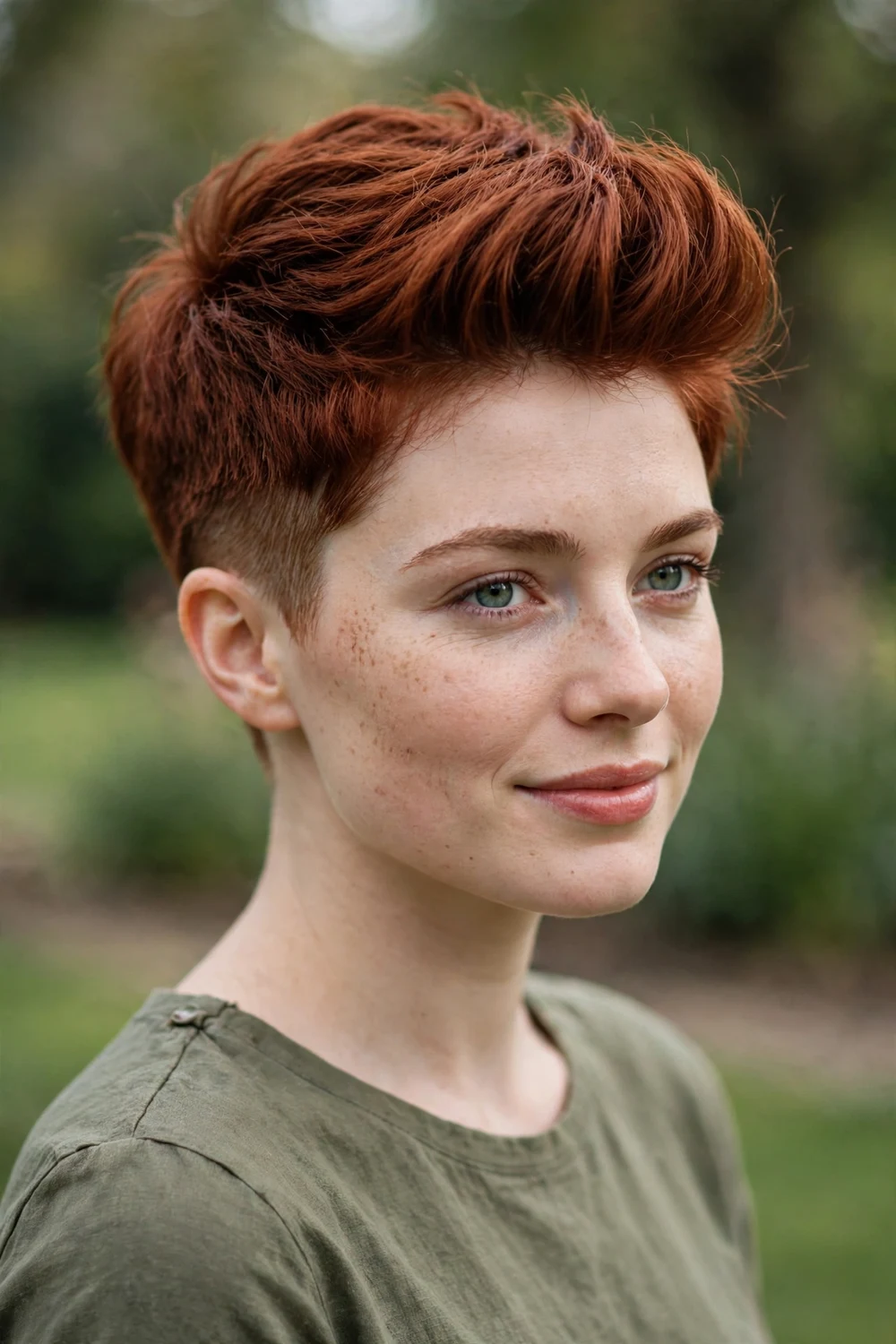
Very short sides and back keep this cut ultra low-maintenance, while pompadour bangs add height and personality up front. Thick hair is what makes the pompadour possible: it has the body to hold lift without collapsing. Crown pieces swept forward add texture around the lift.
This is the shortest cut on the list, so be sure before you commit. It grows out into a shaggy pixie, which is a forgiving in-between stage. A strong-hold pomade shapes the pompadour in under two minutes.
Try this: blow-dry the front upward with a small round brush, then lock it with pomade for all-day height.
Difficulty: Moderate | Salon cost: $40-$65 | Upkeep: trim every 4 weeks
18. Long Razored Pixie
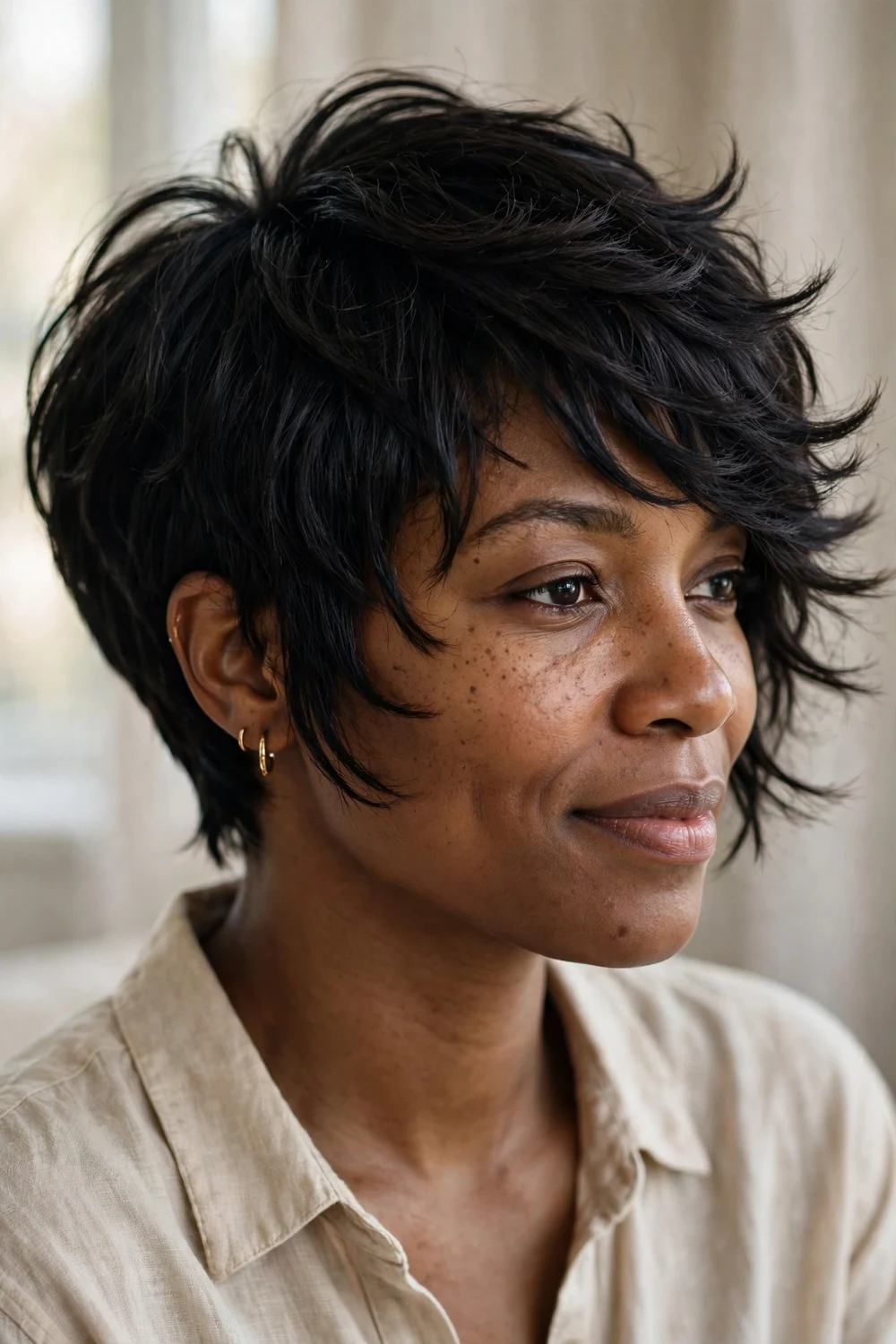
A razor cuts each strand at an angle, which thins and textures in a single motion. On thick hair that means wispy, separated ends with no blunt weight anywhere. The longer length keeps it feminine while the razor work keeps it from ever looking heavy.
Razored cuts grow out softer than scissor cuts, so the in-between stages look fine. This technique suits straight to wavy thick hair. Very curly hair can frizz with a razor, so ask your stylist before choosing it for tight curls.
Try this: flip your head over while blow-drying for root lift, then smooth the ends with your fingers.
Difficulty: Moderate | Salon cost: $50-$80 | Upkeep: trim every 5-7 weeks
19. Pixie with Back-Swept Layers
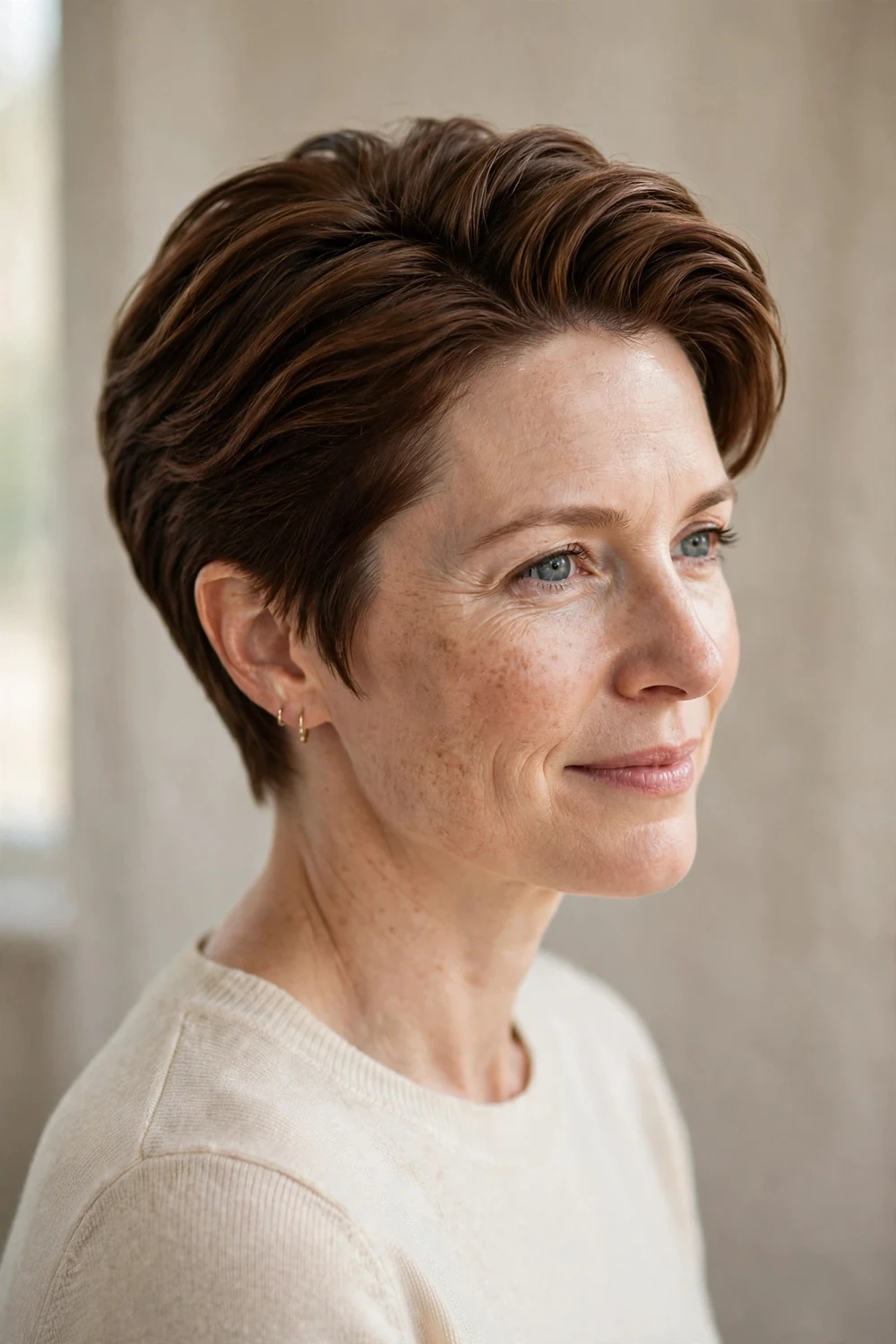
Layers long enough to sweep back from the face give this pixie a refined, grown-up feel. The back stays clean and tapered at the nape, and an undercut underneath can add lift to the top. A V-cut nape and neat sideburns finish the shape instead of the usual blunt edge.
This is arguably the most polished pixie for thick hair, and it suits professional settings well. Thick hair holds the swept-back position through the day without falling forward. A medium-hold pomade keeps it in place.
Try this: sweep everything back while damp, then let it air-dry for a softer take on the same shape.
Difficulty: Easy | Salon cost: $50-$80 | Upkeep: trim every 4-6 weeks
20. Neat Pixie with Angled Bangs
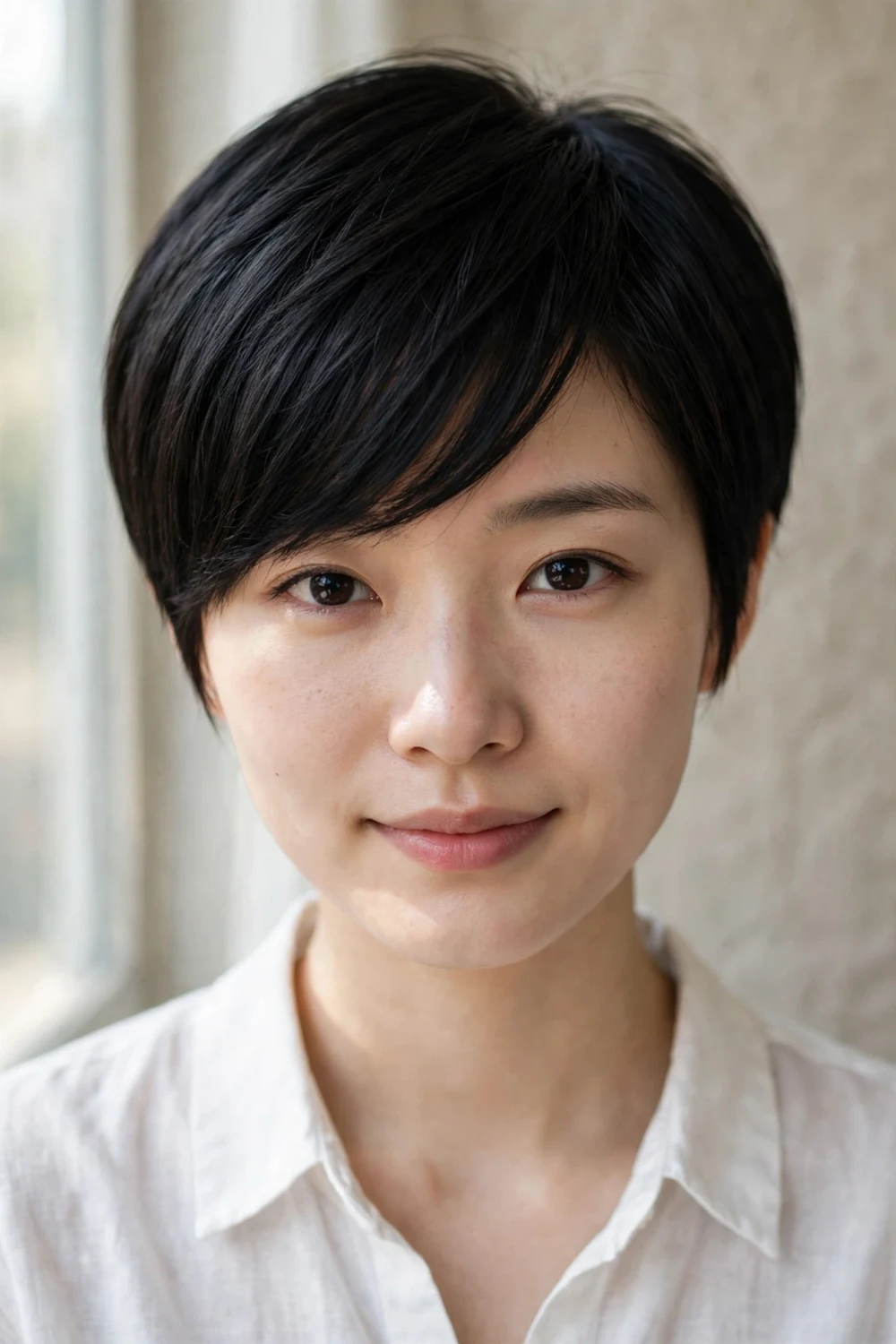
Long angled bangs swept to the side bring instant polish to straight thick hair. The rest of the cut stays neat and boyish, which makes the bangs the focal point. Pin them back for a date-night variation that shows off earrings or a statement necklace.
The bangs need thinning at the ends so they lie flat against the forehead. This cut photographs well and suits women who like a tidy, put-together look with an edge.
Try this: flat-iron just the bangs for a sleek finish, and use a heat protectant first.
Difficulty: Easy | Salon cost: $40-$70 | Upkeep: trim every 4-5 weeks
21. Soft Layered Bixie
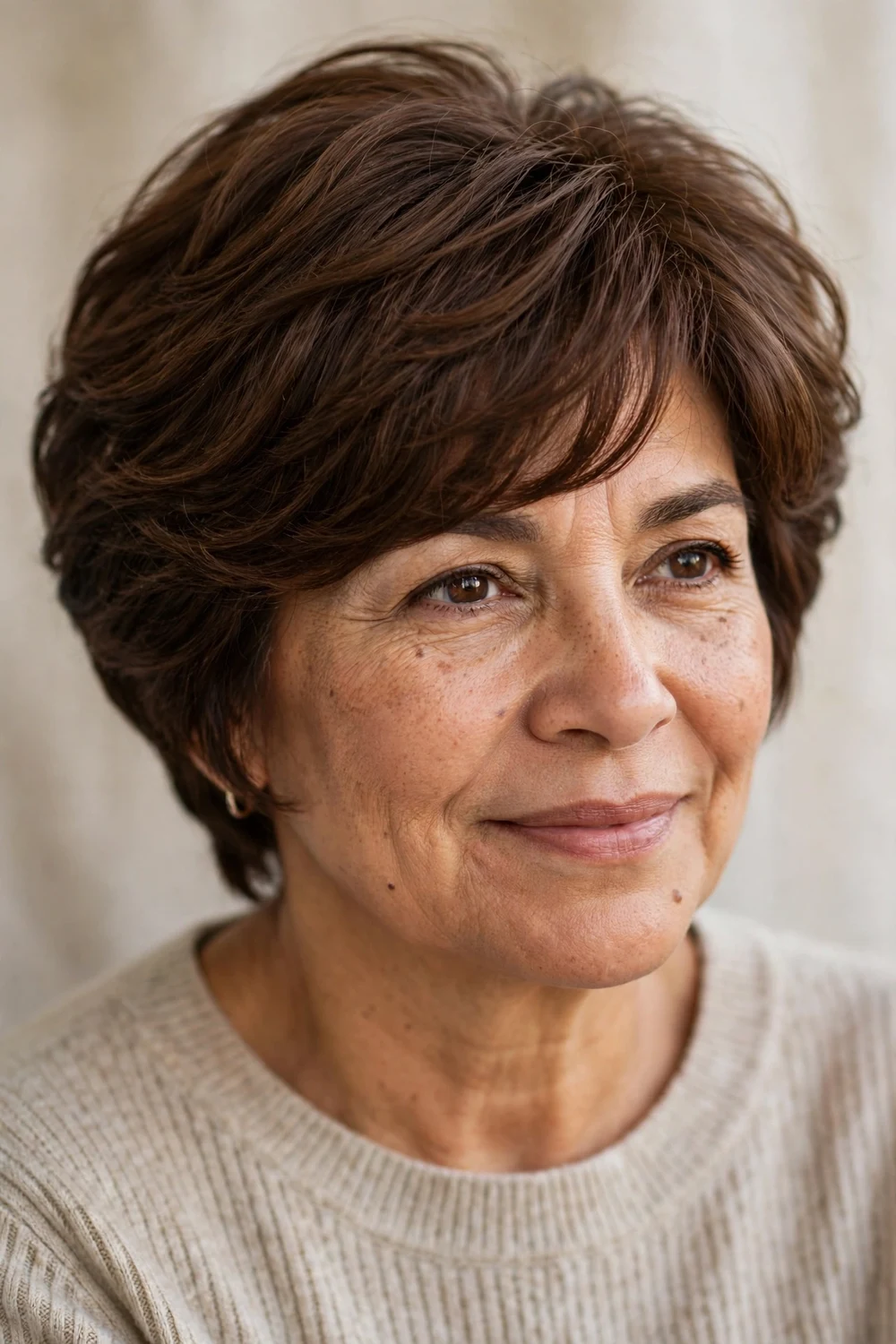
The bixie sits between a bob and a pixie: forehead-covering length, soft layering, and flattering volume around the face. Thick strands look textured and lightweight in this cut instead of heavy. It is easy to maintain and forgiving as it grows.
This shape suits longer face shapes especially well, since the volume around the face adds width. Style it with fingers and a light cream. No round brush required, which keeps the morning routine short.
Try this: part it slightly off-center to keep the volume from sitting too symmetrically.
Difficulty: Easy | Salon cost: $45-$75 | Upkeep: trim every 6-8 weeks
22. Tapered Pixie with Feathered Crown
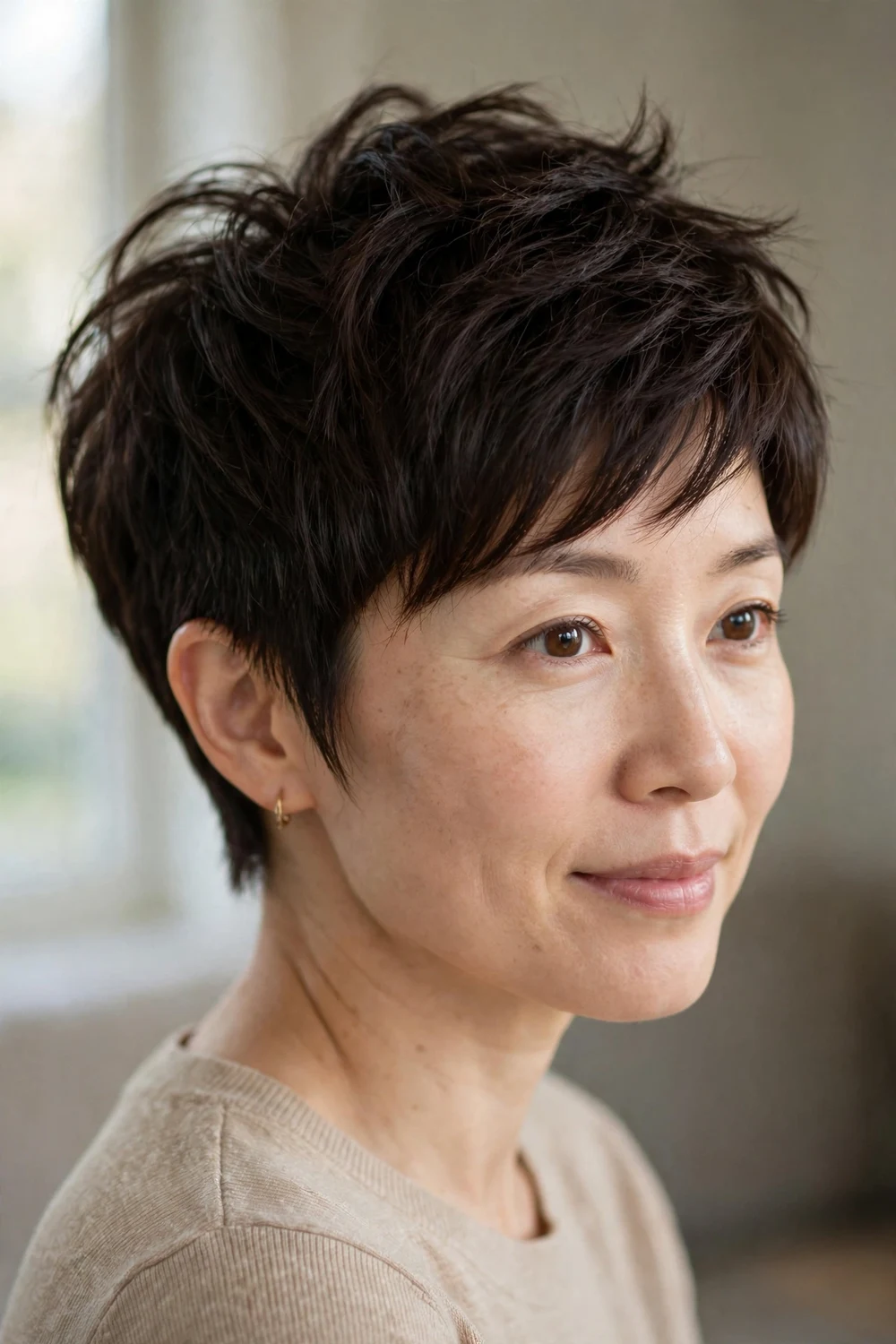
Want short hair without losing your volume? This tapered pixie keeps the crown full and feathered while the sides and nape taper close. The height on top elongates the face, which flatters round face shapes in particular. Feathering removes weight from the crown without flattening it.
Refresh it during the day by running your fingers through the crown. The taper does the shaping, so styling takes minutes. This is the best volume-keeping pixie for thick hair.
Try this: apply volumizing mousse at the roots before blow-drying for extra crown lift.
Difficulty: Easy | Salon cost: $45-$75 | Upkeep: trim every 4-6 weeks
23. Sleek Side-Parted Pixie
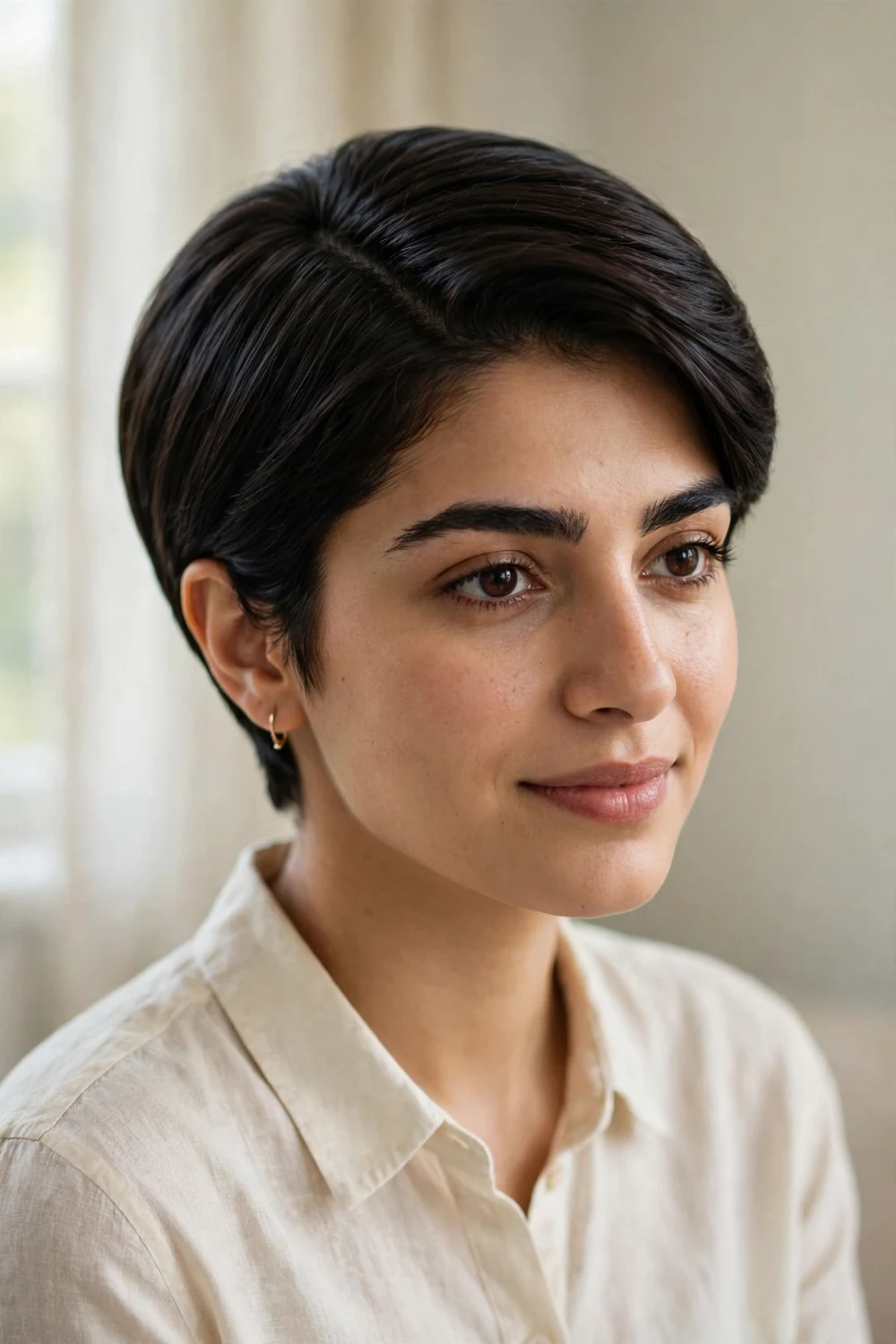
A deep side part with everything smoothed flat gives thick hair a sophisticated, almost architectural finish. The cut itself follows classic pixie proportions, but the styling is all about control: blow-dried smooth, then set with a light serum. Thick hair holds the sleek surface without flyaways taking over.
This is the corporate-friendly pixie. It works for weddings, interviews, and any setting where messy texture would feel wrong. Use a heat protectant before blow-drying and flat-ironing the top section.
Try this: finish with a light-hold hairspray to keep the part sharp all day.
Difficulty: Moderate | Salon cost: $45-$75 | Upkeep: trim every 4-5 weeks
24. Tapered Pixie with Angled Sideburns
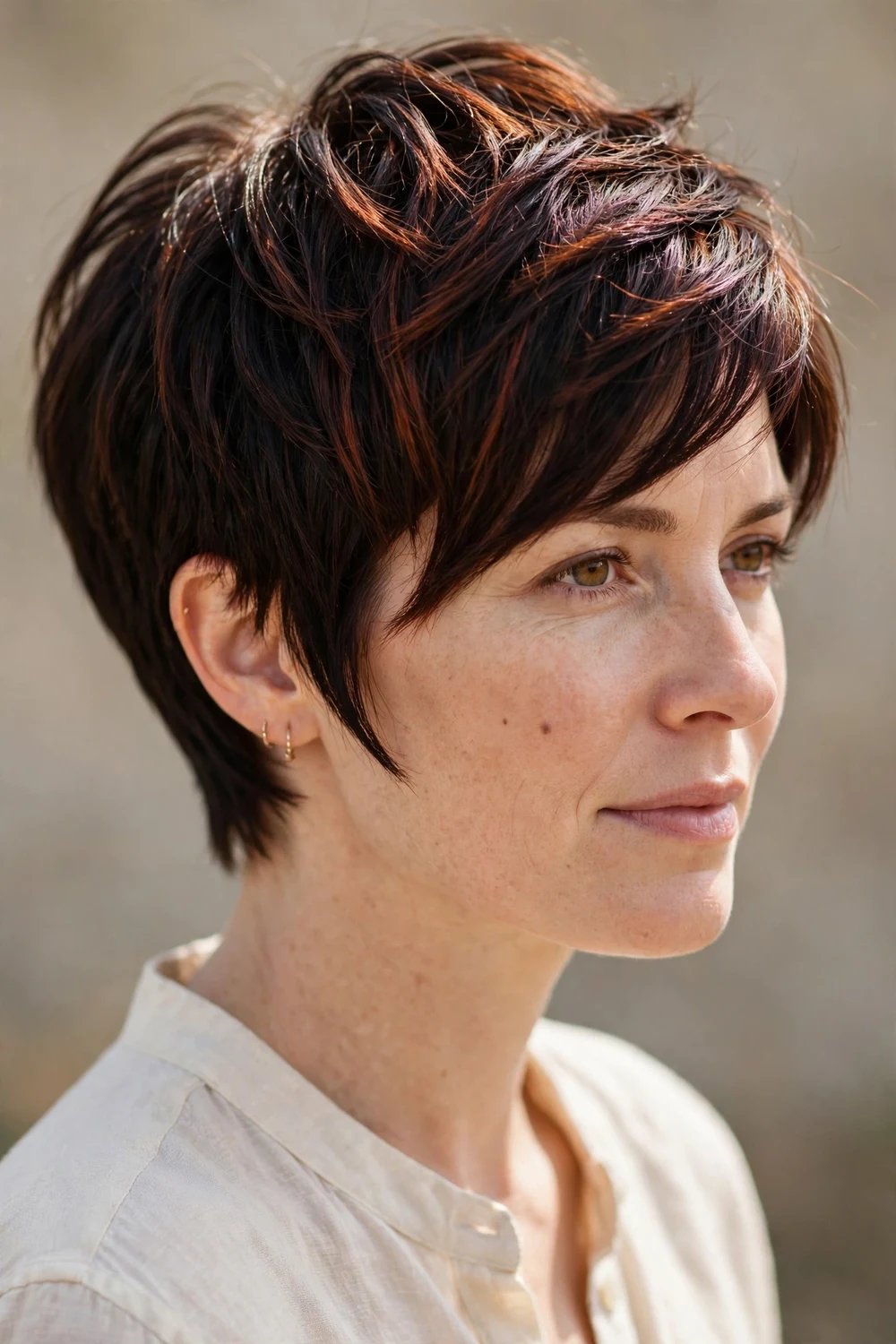
Angled sideburns add a sharp graphic detail to an otherwise soft tapered pixie. The layered locks through the top keep movement while the sideburns draw the eye along the cheekbones. Auburn babylights over a dark base add subtle dimension; golden highlights make a bolder statement.
The sideburns need shaping at every trim to keep the angle crisp. This cut suits women who want a classic pixie with one distinctive detail that sets it apart.
Try this: ask your stylist to cut the sideburns last, when the rest of the shape is set, for the cleanest angle.
Difficulty: Moderate | Salon cost: $50-$80 | Upkeep: trim every 4-5 weeks
25. Messy Pixie for Wavy Hair
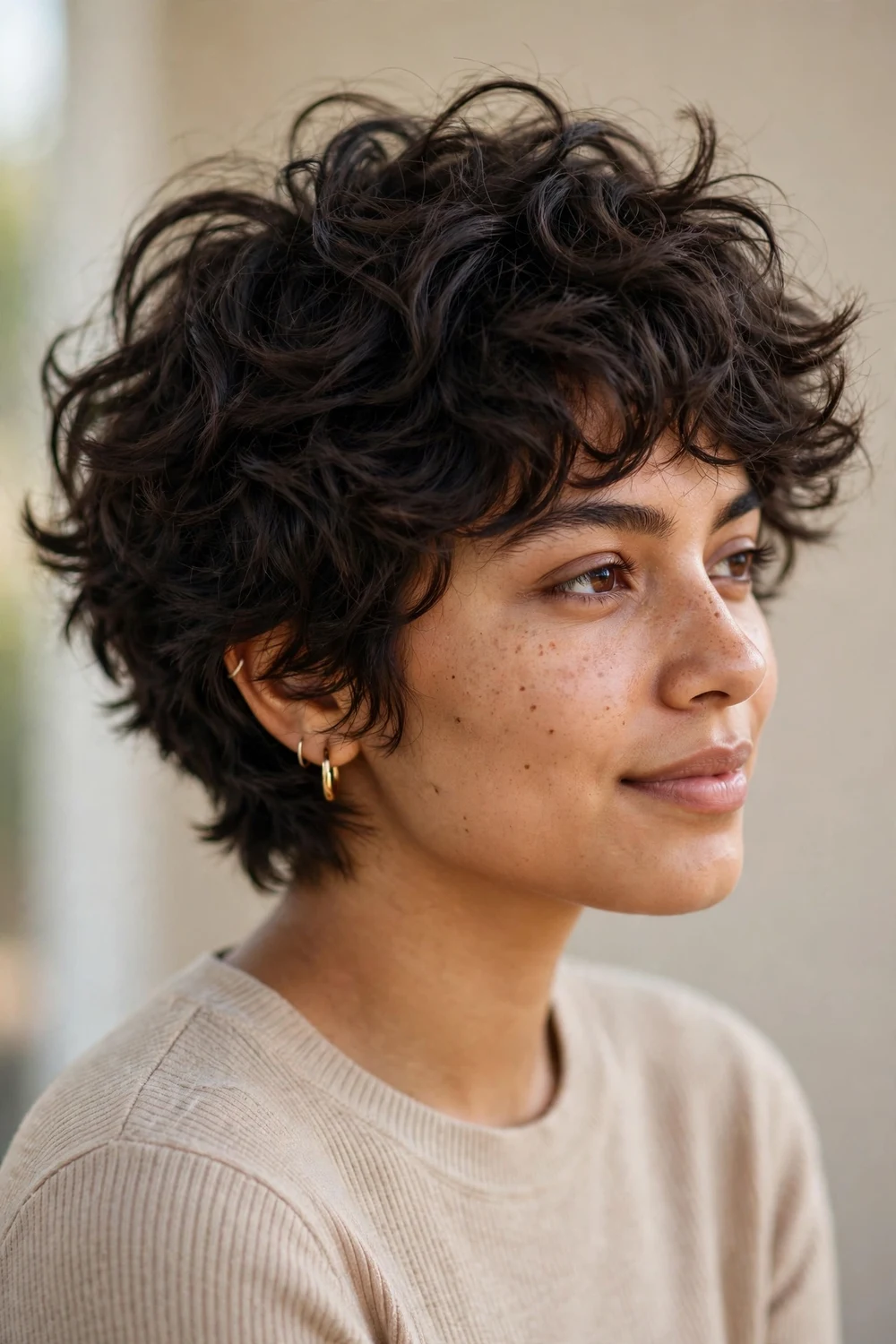
Thick wavy hair was made for a messy pixie. The natural wave supplies the texture, so styling is just mousse scrunched into damp hair and air-drying. Layers keep the waves from stacking into bulk, and the cut stays piecey instead of puffy.
This is the lowest-maintenance wavy pixie on the list. If your waves are longer than pixie length right now, our hairstyles for thick wavy hair roundup covers longer options too.
Try this: sleep on a silk pillowcase to keep the waves defined for second-day hair.
Difficulty: Easy | Salon cost: $40-$65 | Upkeep: trim every 6 weeks
26. Two-Tone Pixie
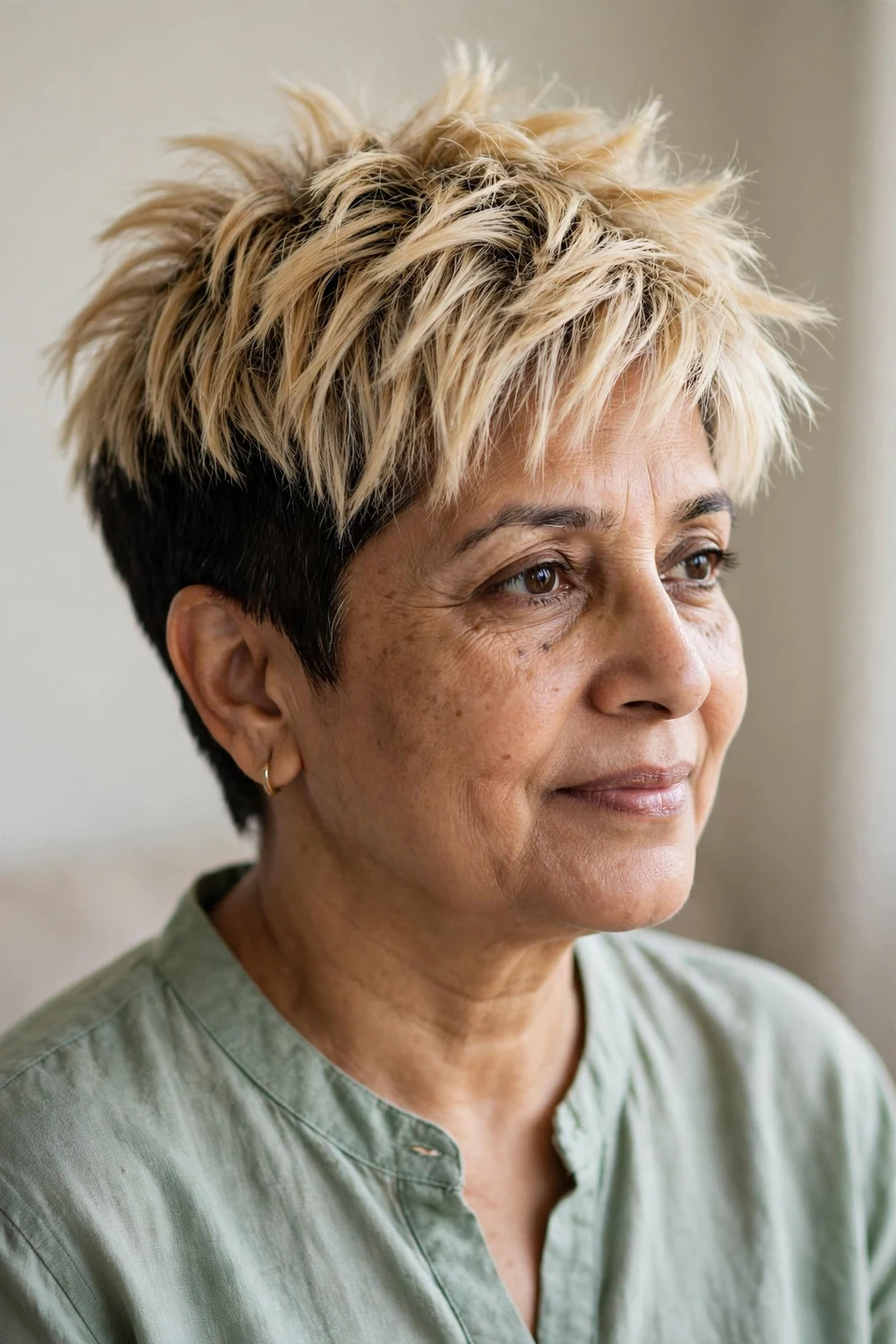
Two contrasting colors map the cut’s structure: a lighter jagged top over darker tapered sides and back. The color contrast emphasizes the texture difference between the debulked sides and the full top, which makes thick hair look styled rather than simply short.
Blonde over black is the classic combo, but any high-contrast pairing works. The top needs toning every few weeks to stay fresh. This is a statement cut, so pair it with confident styling.
Try this: ask for the darker shade at the sides to be at least three levels deeper than the top for real contrast.
Difficulty: High | Salon cost: $130-$220 with color | Upkeep: tone every 4-6 weeks
27. Bronde Pixie Bob
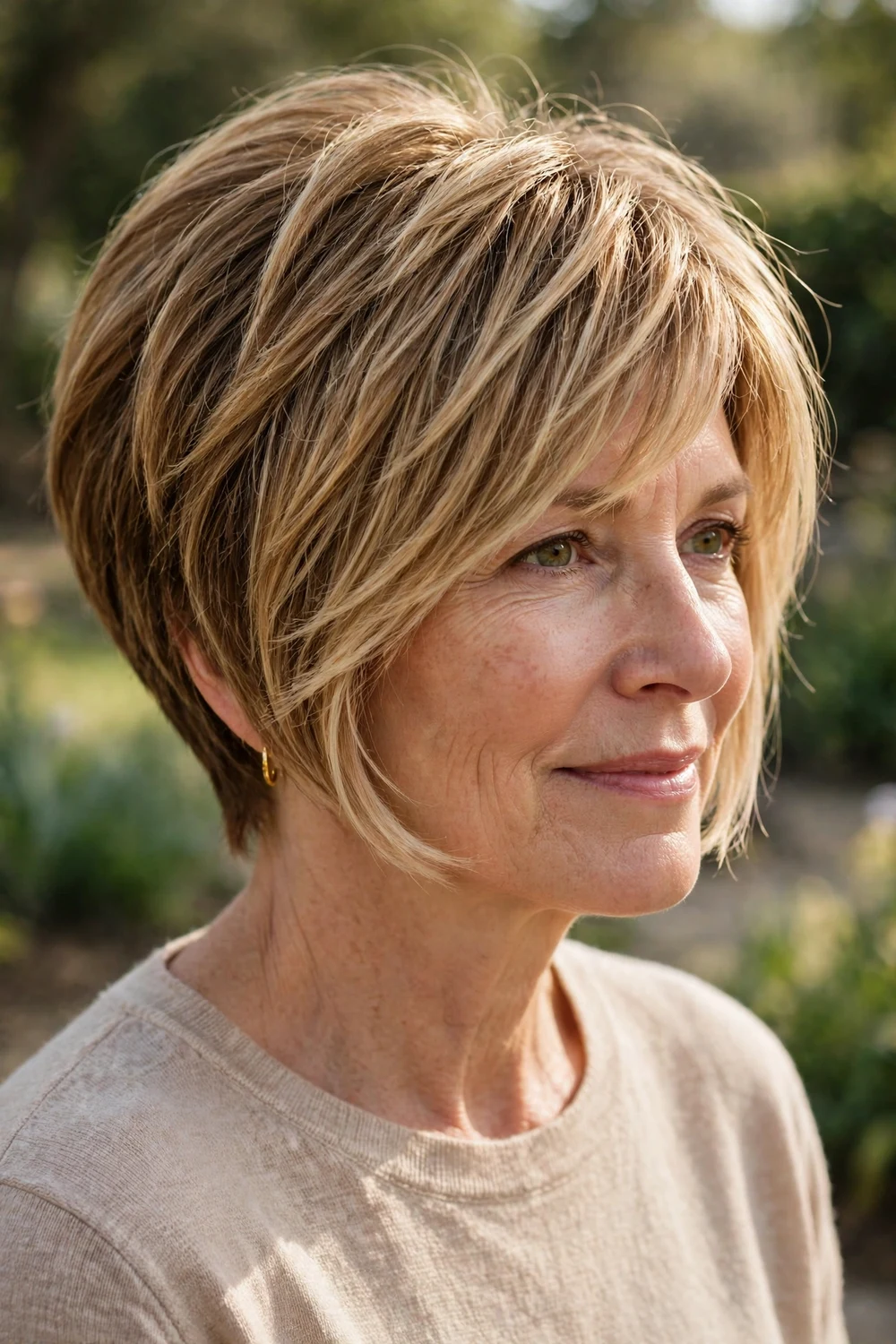
Bronde, the midpoint between brown and blonde, gives this pixie bob a sunlit finish that flatters most skin tones. The cut keeps pixie shortness at the back with bob-like length in front, so you get versatility without the weight. It grows out evenly, which stretches the time between appointments.
Bronde is lower-maintenance than full blonde because the darker base hides regrowth. This is a good first-color option if you have never lightened your hair.
Try this: a clear gloss treatment every 8 weeks keeps bronde shiny without changing the shade.
Difficulty: Easy | Salon cost: $110-$180 with color | Upkeep: trim every 6-8 weeks
28. Short Blonde Pixie with Dark Roots
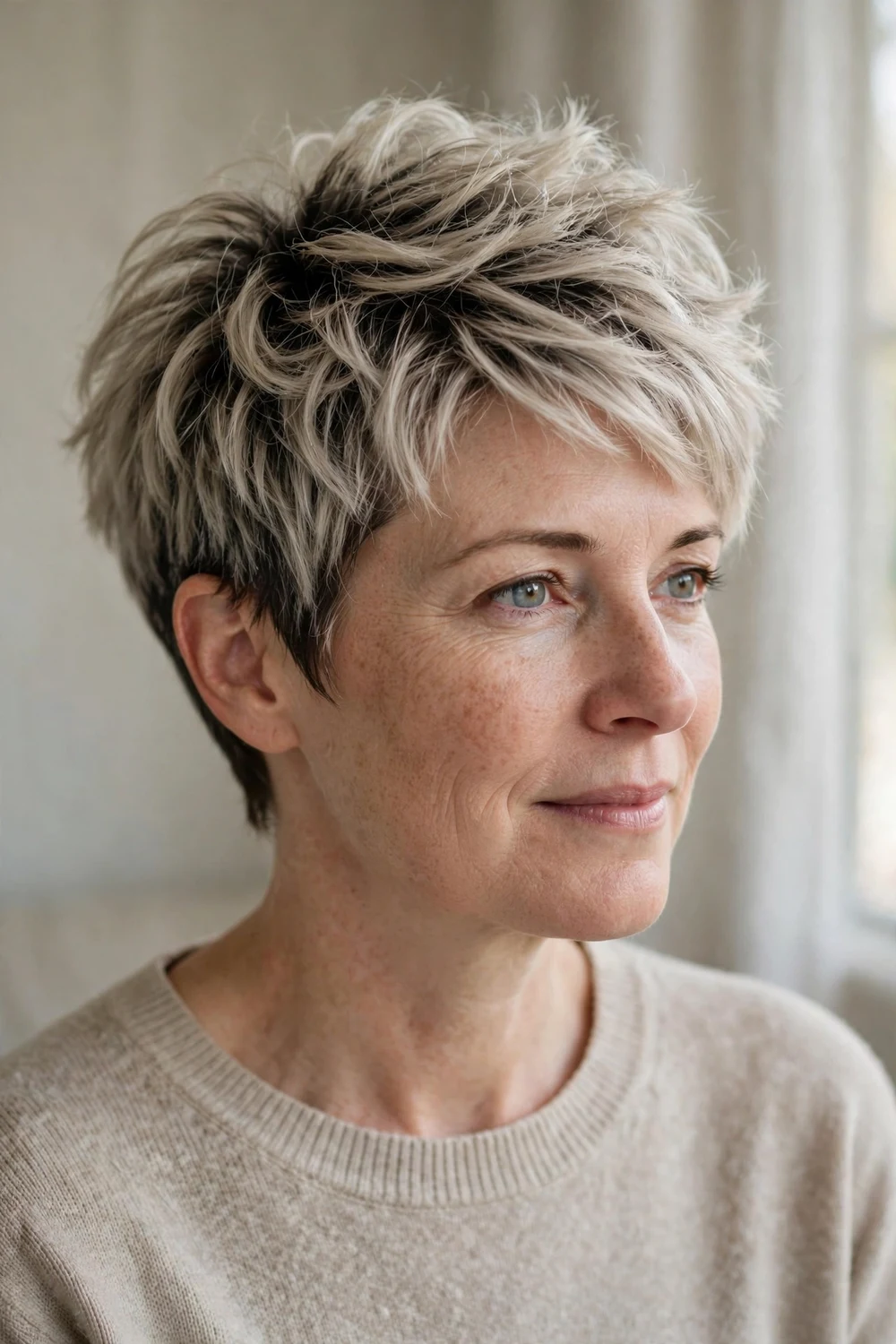
Light hair looks wispier than it is, which is a useful illusion on thick hair. An ash blonde pixie with darker roots keeps the regrowth looking intentional, and the short length means damaged ends get cut off quickly. The androgynous shape has a retro edge that suits bold dressers.
Going blonde on thick hair takes longer in the chair because there is more hair to lift. Budget extra time and use a heat protectant whenever you flat-iron or curl the top.
Try this: deep-condition weekly for the first month after bleaching to keep thick blonde hair soft.
Difficulty: Moderate | Salon cost: $120-$200 with color | Upkeep: root touch-up every 6-8 weeks
29. Short Feathered Tapered Cut
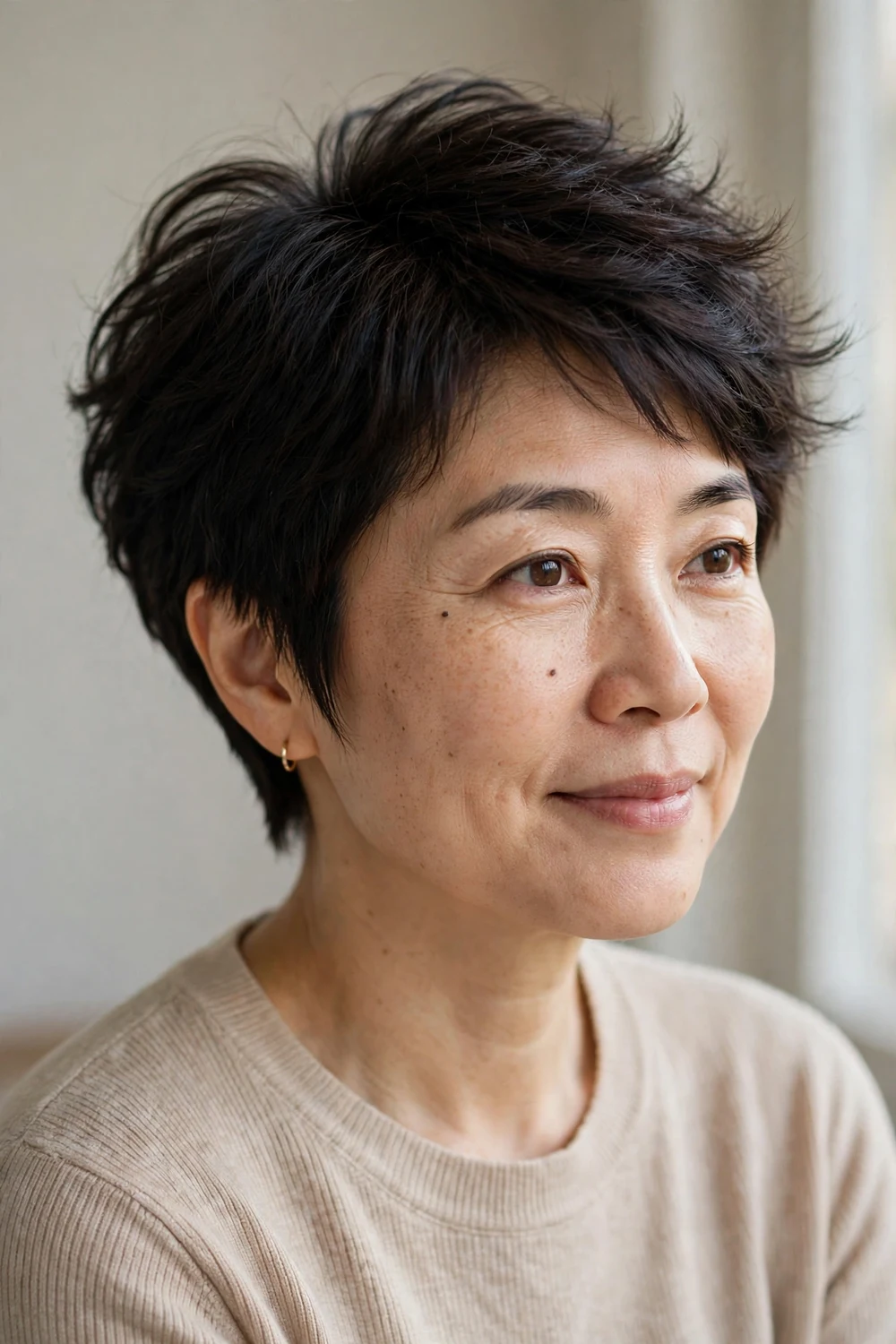
Feathered layers de-bulk thick hair from the inside out. Each layer is cut to flick outward slightly, which creates separation and a lighter feel through the whole cut. The taper at the sides and nape keeps the outline neat while the top stays touchable.
This is the pixie to run your fingers through. It suits women who want short hair that still moves. A light styling cream defines the feathering without stiffness.
Try this: blow-dry with a vent brush, pulling sections outward to encourage the feathered flip.
Difficulty: Easy | Salon cost: $45-$70 | Upkeep: trim every 5-6 weeks
30. Curly Pixie
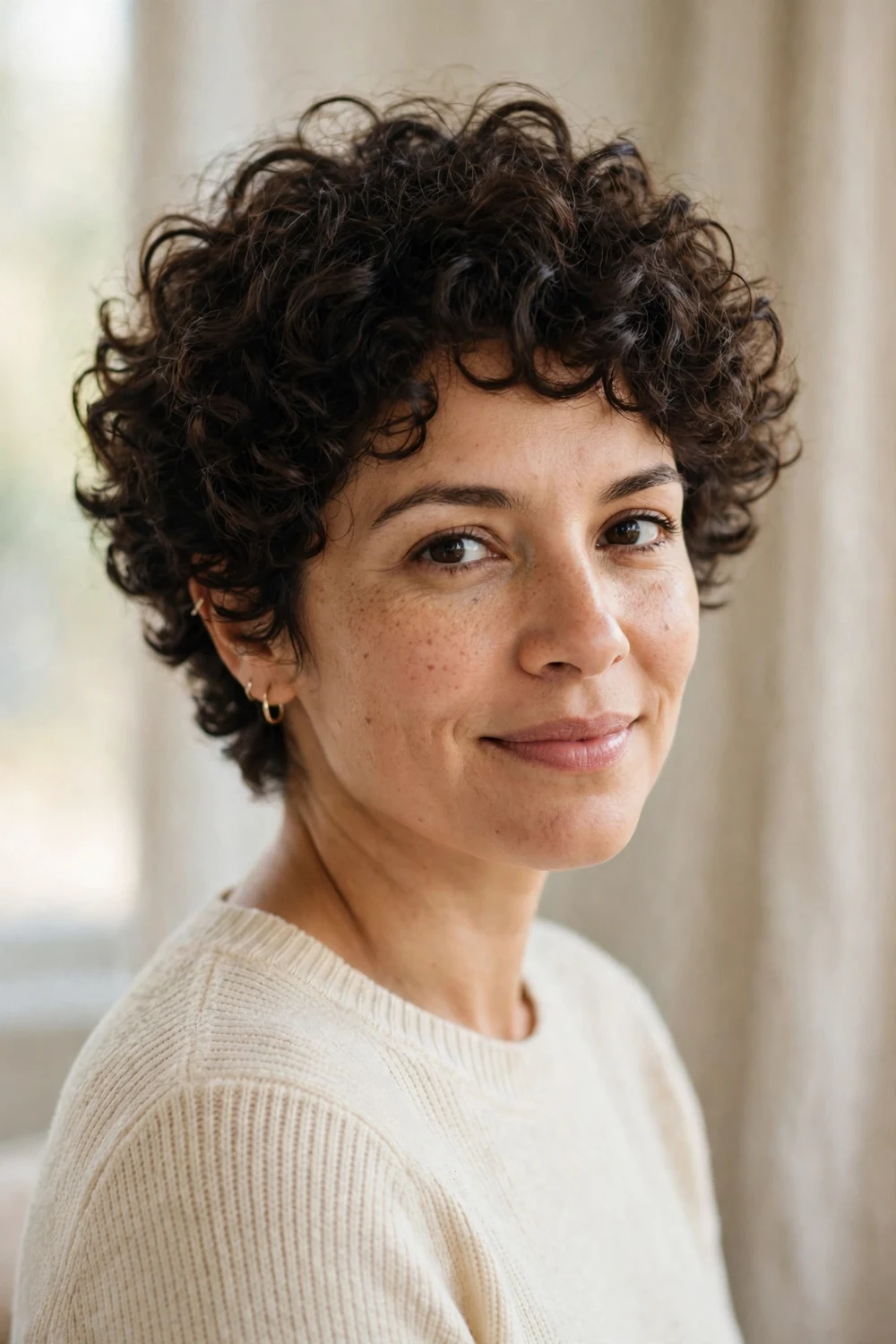
Short curls plus thick density equals natural volume that straight hair cannot copy. The right length lets each curl form its own shape, and the thickness keeps the cut full instead of sparse. Layers are placed to remove bulk without breaking the curl pattern.
Cut curly hair dry whenever possible so the stylist sees the true spring. A curl-defining cream on wet hair is the core product. Diffusing on low heat adds volume; air-drying gives tighter definition.
Try this: refresh second-day curls with a water and leave-in spray instead of washing daily.
Difficulty: Moderate | Salon cost: $55-$85 | Upkeep: trim every 6-8 weeks
31. Classic Cropped Layered Pixie
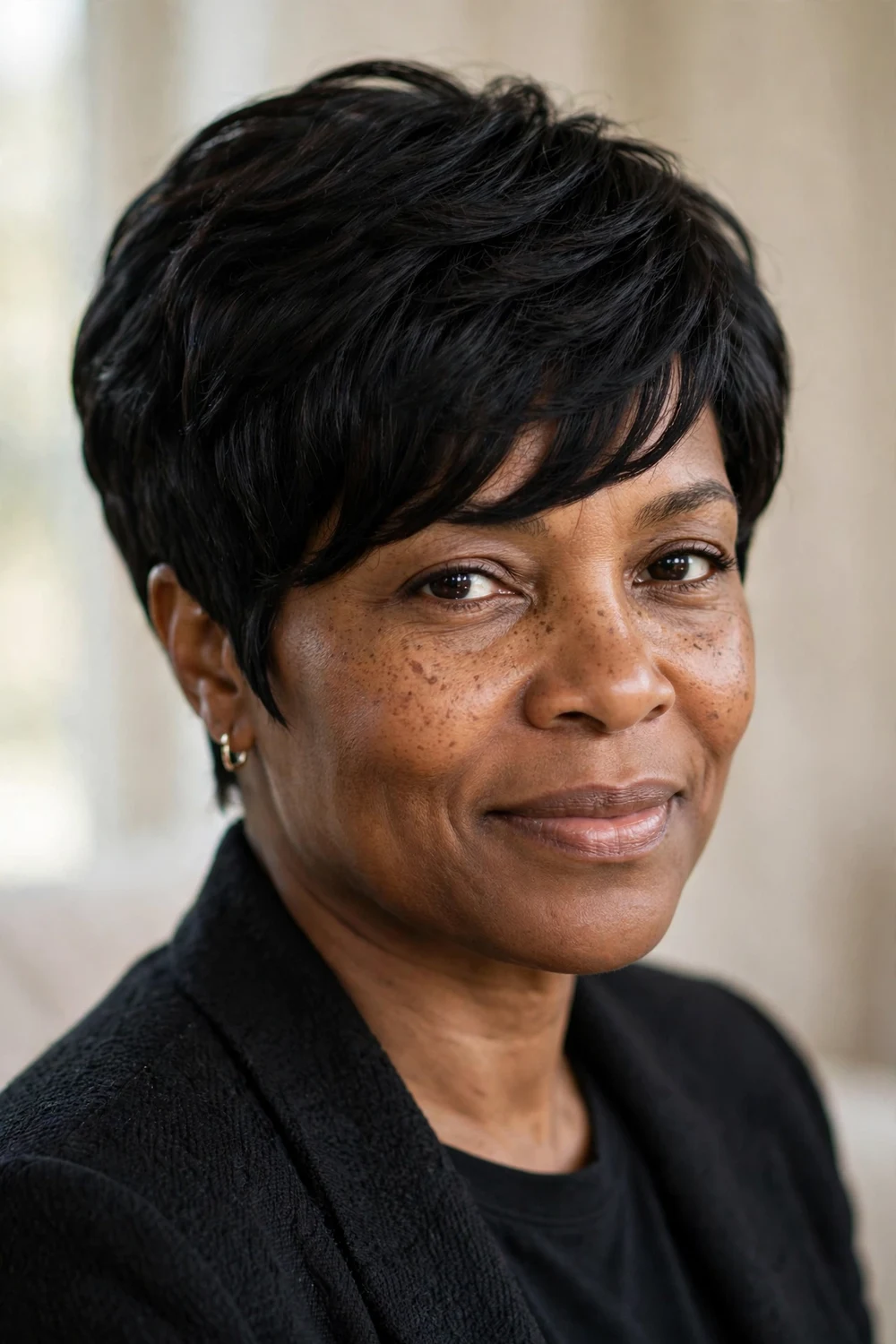
The timeless cropped pixie: neat sides, a clean clipped nape, and face-framing strands that double as side-swept bangs. On thick hair it looks polished rather than severe because the density fills the shape completely. Nothing trendy, nothing to grow out of.
This is the professional’s pixie. It works in every setting and suits every age. For the timeless versions of this shape, see our short pixie cuts roundup.
Try this: keep a small pair of trimming scissors for tidying the nape between appointments.
Difficulty: Easy | Salon cost: $40-$65 | Upkeep: trim every 4-5 weeks
32. Pixie with Long Fringe
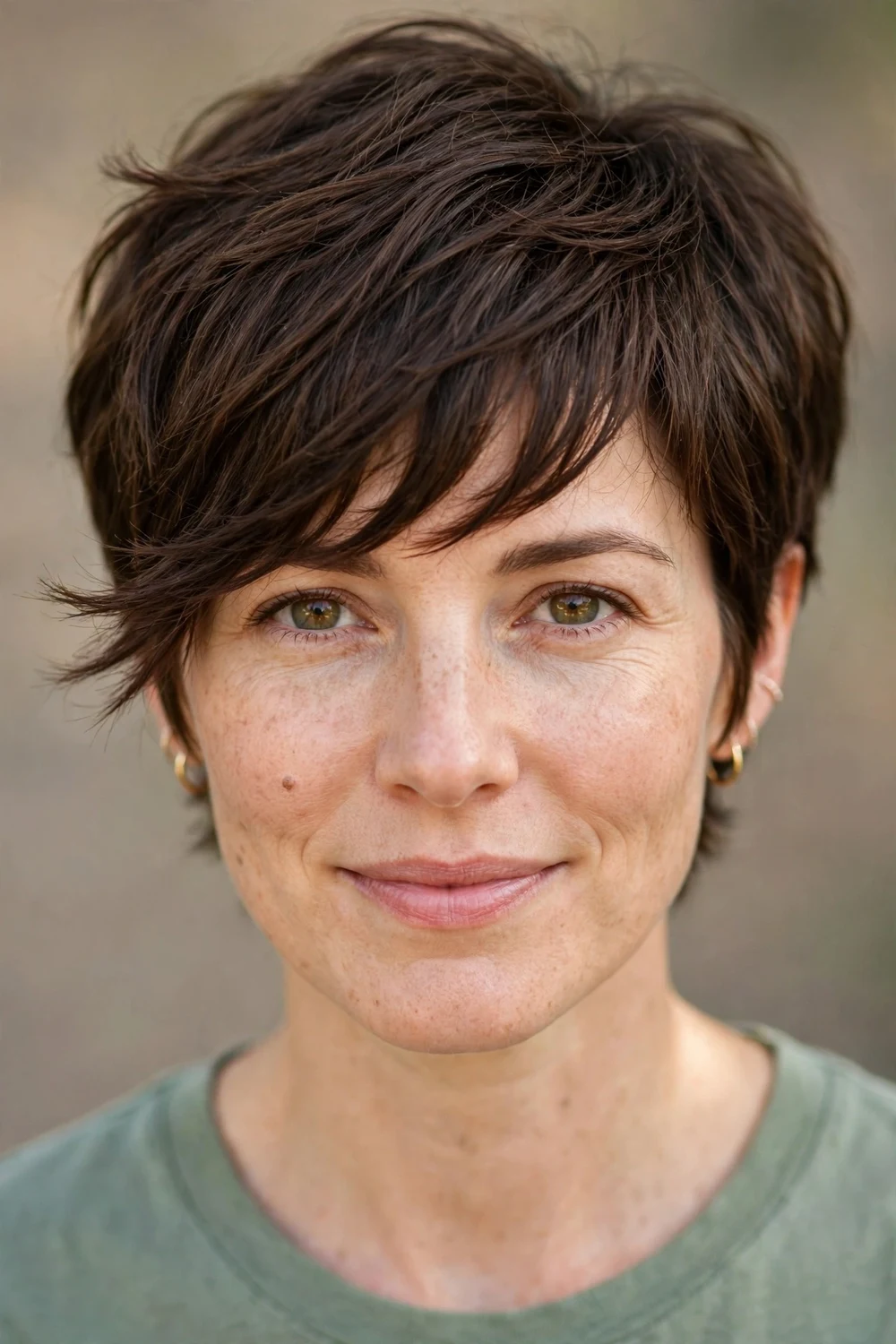
A long textured fringe makes thick hair feel lighter and more carefree. The fringe becomes the focal point while the rest of the cut stays short and tapered, so you get face-framing softness without extra bulk. It also grows out into side bangs gracefully.
Style the fringe swept to the side, straight across, or pushed up for variety. Thick hair gives the fringe enough body to hold each position. Point-cut the ends so the fringe separates instead of sitting as a solid curtain.
Try this: change your fringe direction every few days to stop it training flat in one position.
Difficulty: Easy | Salon cost: $45-$70 | Upkeep: trim every 5-6 weeks
33. Short Fluffy Platinum Pixie
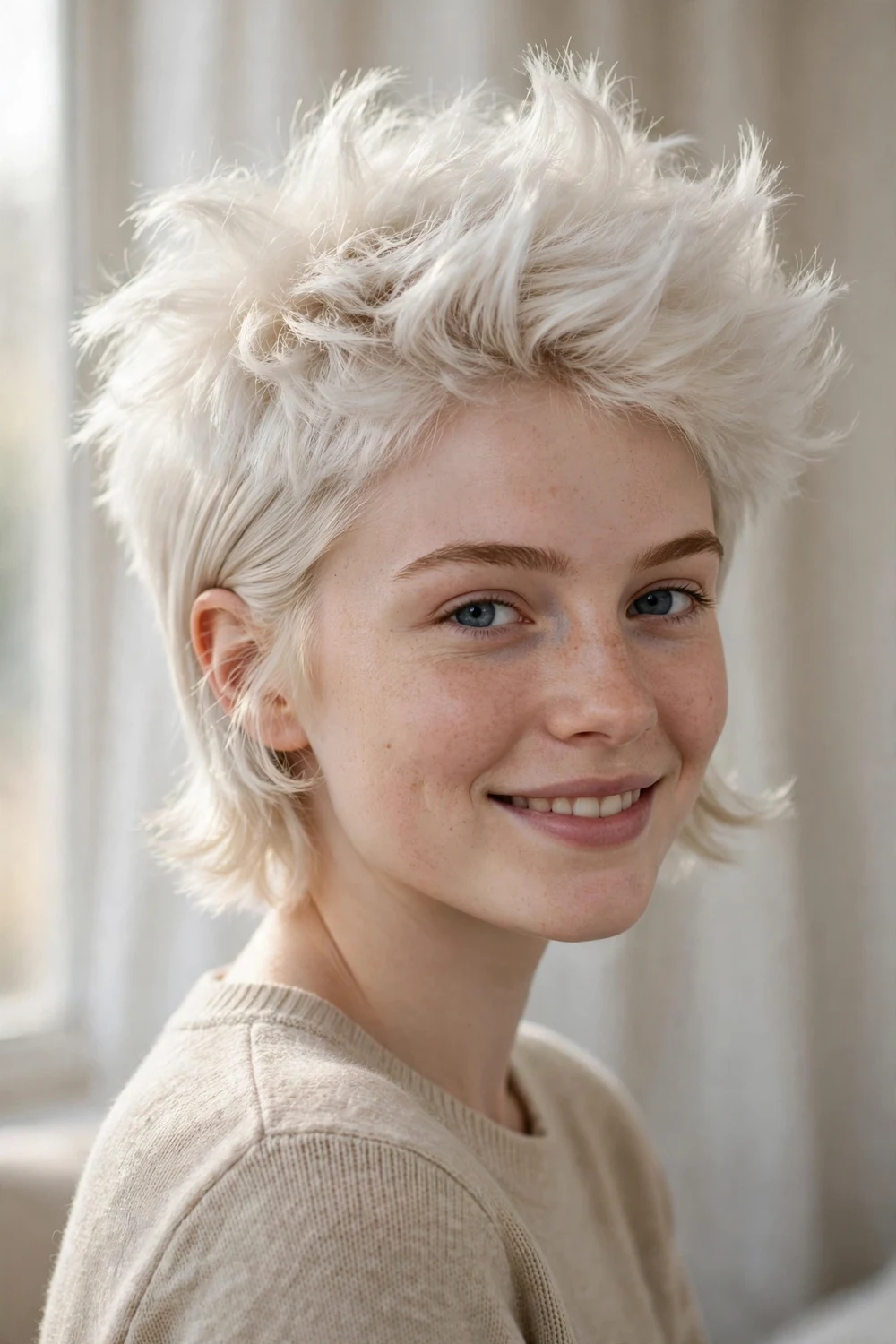
A little length in front of the ears plus a fluffy feathered crown makes this pixie playful rather than severe. Platinum color amps up the texture and makes thick hair look airy. The sides stay slicked down so the volume sits exactly where you want it: on top.
Platinum on thick hair needs careful bleaching to avoid breakage, so choose an experienced colorist. Matte texturizing paste keeps the fluffy top lifted all day.
Try this: spike the crown up with paste while slicking the sides down with a comb for maximum contrast.
Difficulty: High | Salon cost: $140-$230 with color | Upkeep: tone every 4-6 weeks
34. Textured Balayage Pixie
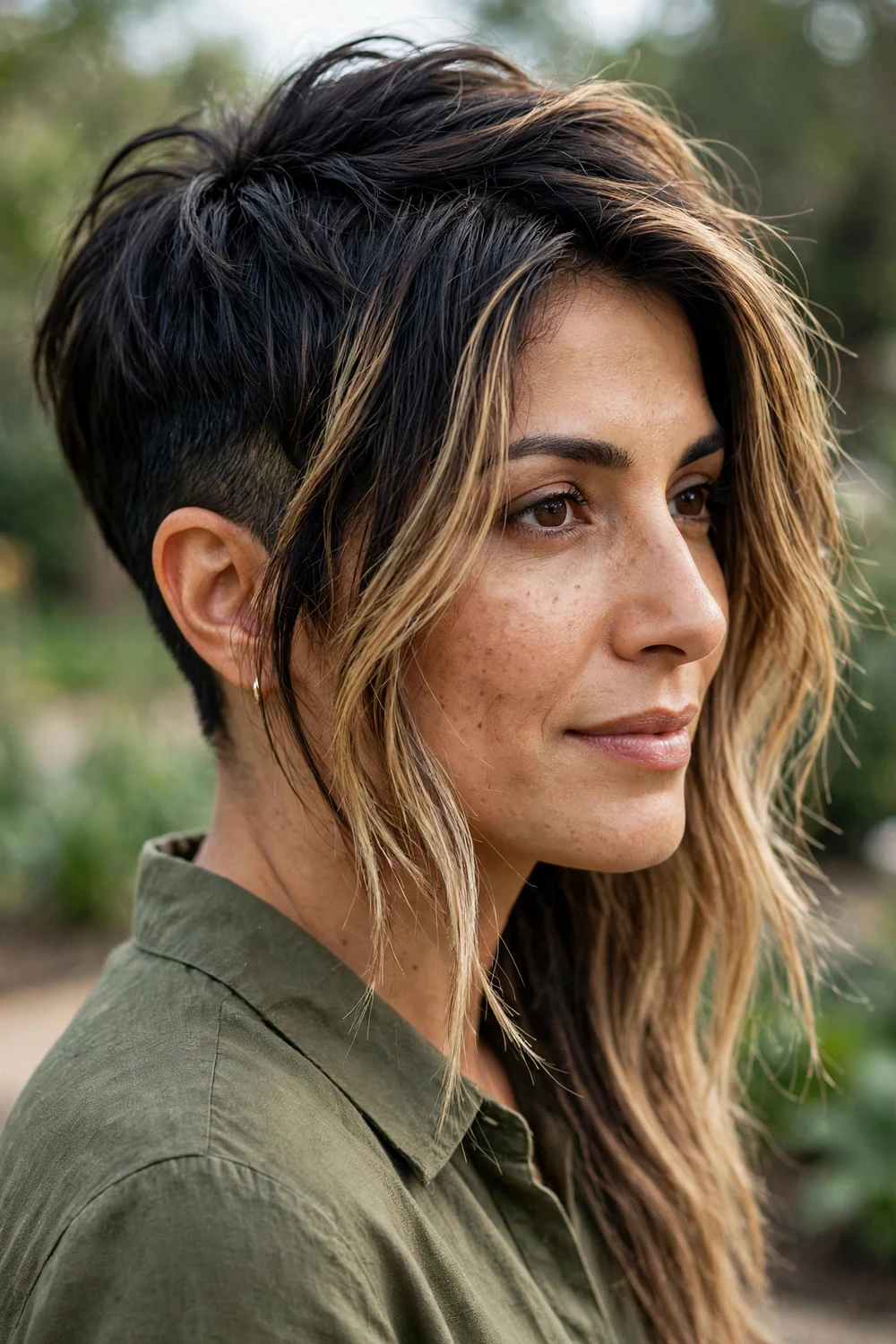
A super-short back against very long front layers creates striking contrast, and bronde balayage highlights the length difference. The color sits heavier toward the front, which draws the eye forward and away from any bulk at the back. Naturally darker roots make this color easy to maintain.
This cut suits women who want drama without an undercut. The long front pieces can be tucked, pinned, or left to frame the face. Use a heat protectant if you smooth the front with a flat iron.
Try this: wear the long front pieces straight one day and tousled the next for two different looks.
Difficulty: Moderate | Salon cost: $120-$200 with color | Upkeep: trim every 5-6 weeks
35. Pixie Bob with Side Bangs
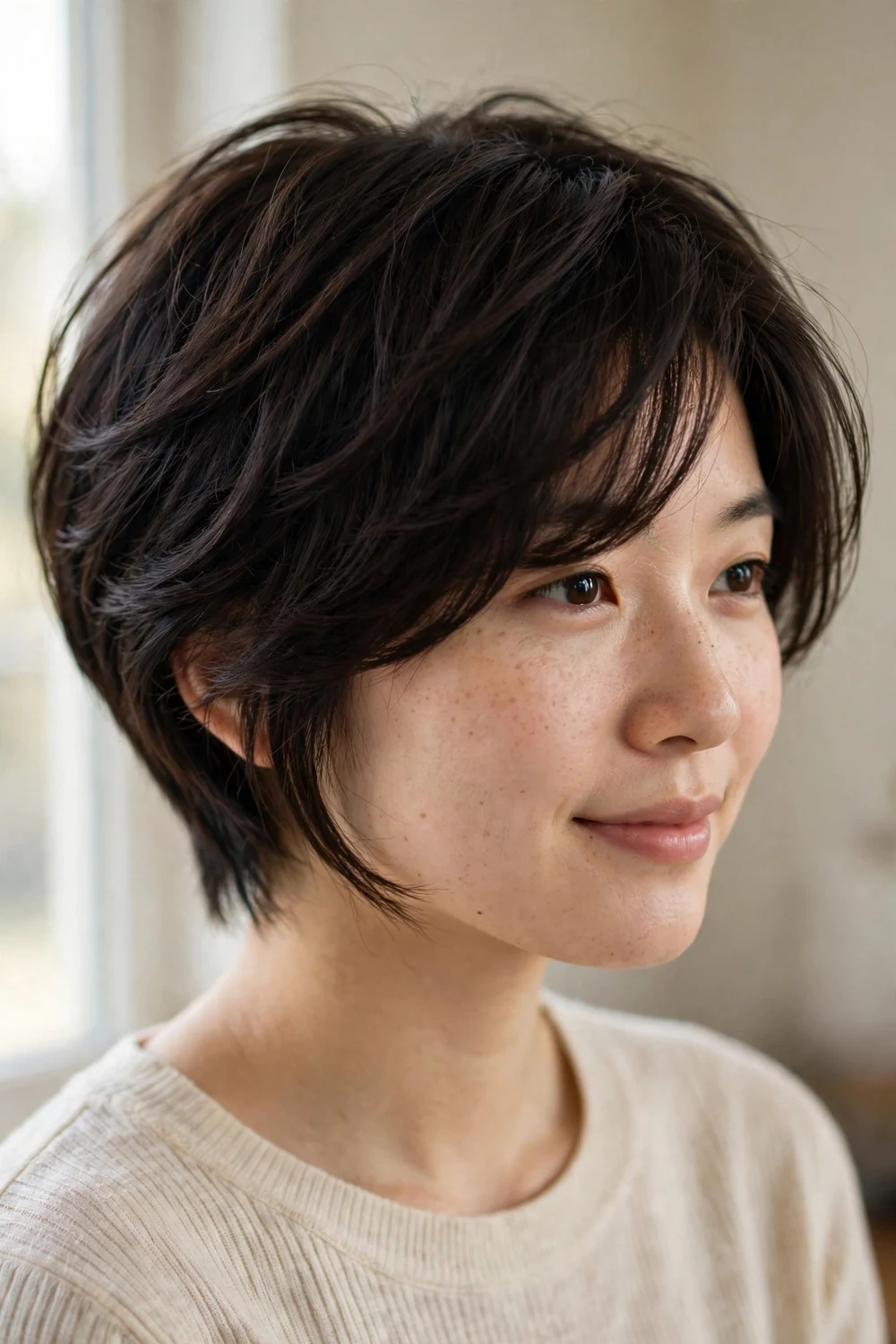
Airy yet full, this pixie bob pairs soft weightless layers with sassy side-swept bangs. Styling the hair to one side shows off the movement that thick hair does naturally. Ask for soft layers if you want your dense hair to feel lighter without losing its body.
The side-swept bangs make this cut feel current rather than classic. It is a graceful option that works across ages and needs little more than a blow-dry to one side.
Try this: blow-dry the bangs to the side with a paddle brush for a smooth, polished sweep.
Difficulty: Easy | Salon cost: $45-$75 | Upkeep: trim every 6 weeks
36. Finely Chopped Caramel Pixie
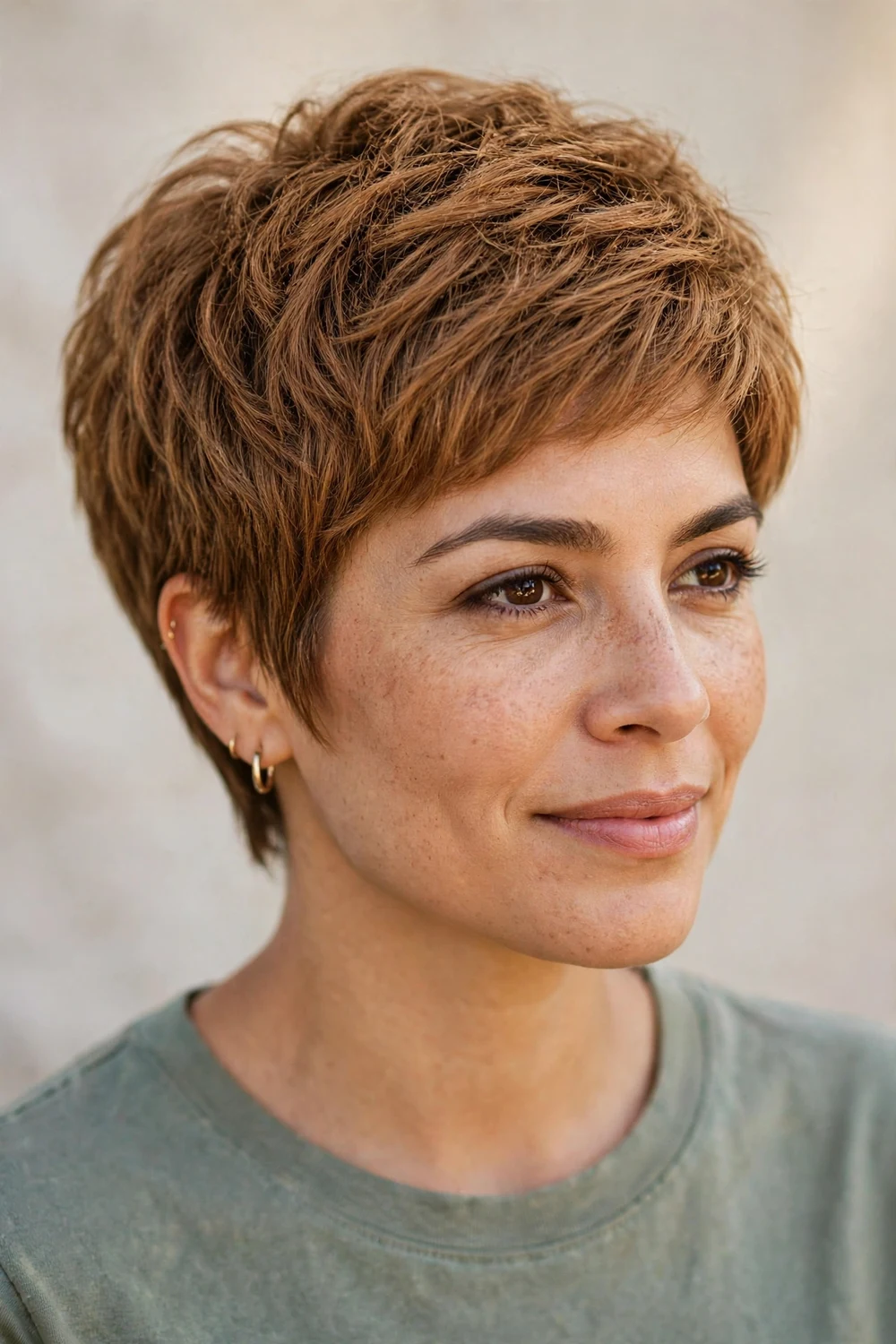
Finely chopped layers in warm caramel give thick hair shape without severity. A tapered silhouette keeps the outline neat while the choppy ends add movement. This cut also styles well straightened with a root lift, which shows how versatile short thick hair can be.
Caramel flatters warm skin tones especially well. The choppy texture means this cut looks good slightly grown out, so you can stretch appointments a little.
Try this: add root lift spray before blow-drying for extra height that lasts all day.
Difficulty: Easy | Salon cost: $90-$150 with color | Upkeep: trim every 5-6 weeks
37. Black Layered Pixie with Long Bangs

Jet-black thick hair has natural drama, and long side-swept bangs give it direction. The layers keep the density moving instead of sitting flat, and the dark color makes every layer edge visible. This is a striking combination that needs little styling to look intentional.
Black hair shows dryness faster than lighter shades, so a weekly conditioning mask keeps it glossy. The bangs should be trimmed more often than the rest to keep them out of your eyes.
Try this: a shine serum on the bangs makes black hair look expensive with almost no effort.
Difficulty: Easy | Salon cost: $45-$70 | Upkeep: trim every 5 weeks
38. Pixie with Highlighted Bangs
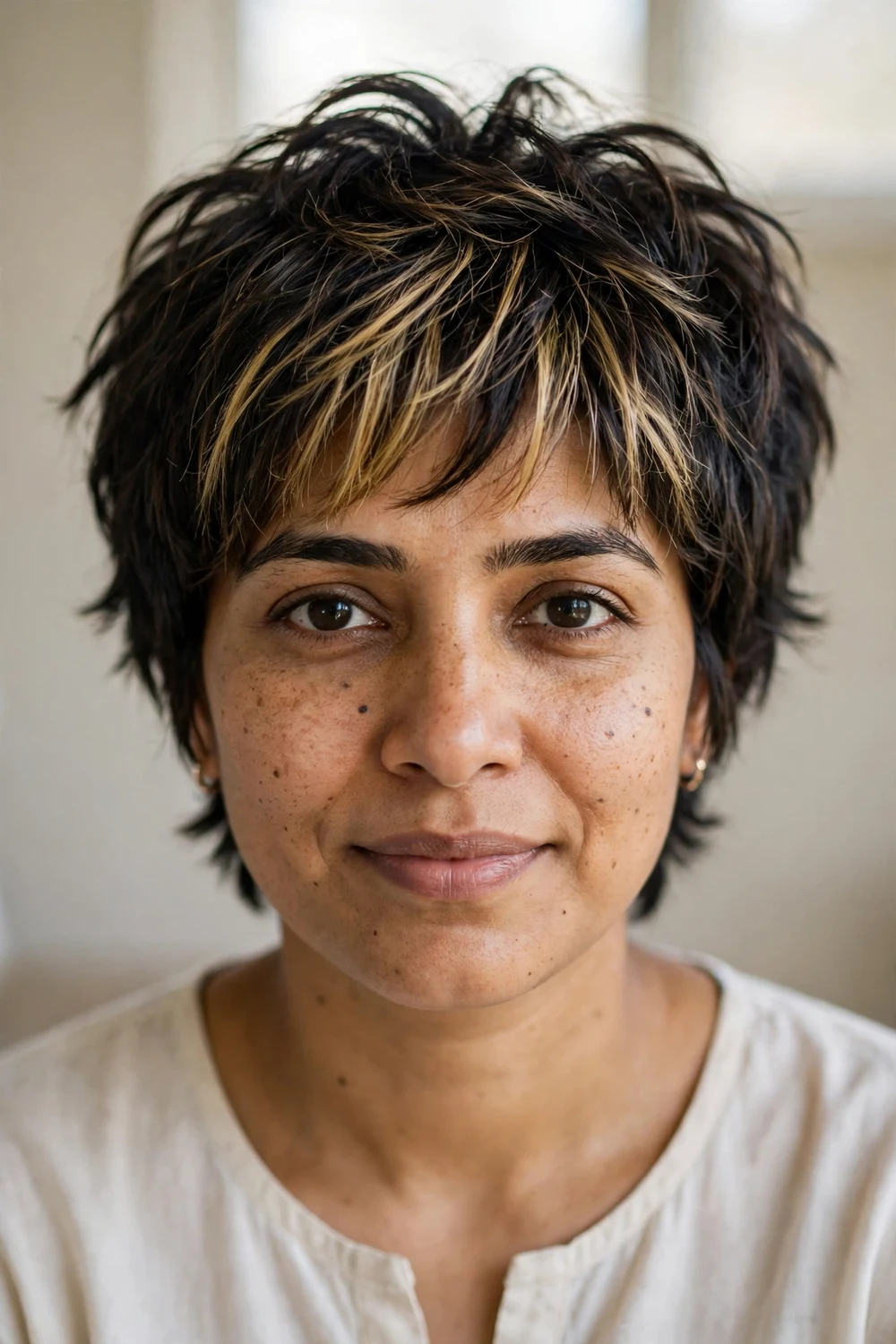
Putting the highlights in the bangs instead of all over gives you the dimension of color with half the maintenance. The lightened fringe draws attention to the eyes while the rest of the pixie stays your natural shade. Layers through the cut keep the thick hair textured and light.
This is a smart first step into color for dark-haired women. The bangs grow out fast on a pixie, so you are never stuck with a shade you dislike.
Try this: ask for the highlights to start slightly back from the hairline for a softer grow-out.
Difficulty: Moderate | Salon cost: $80-$130 with color | Upkeep: refresh bangs every 6-8 weeks
39. Asymmetrical Pixie
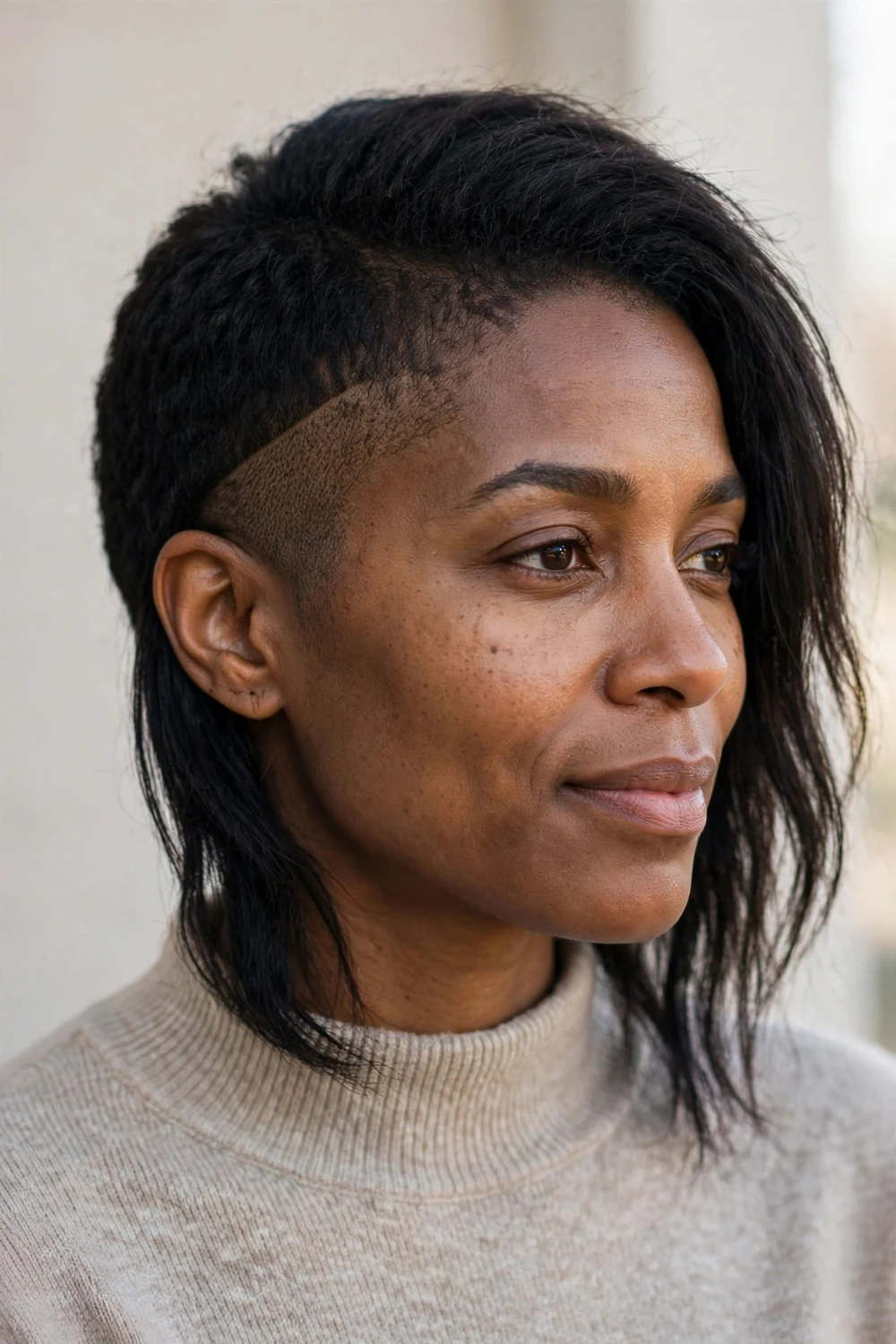
One side stays significantly longer than the other, which turns thick hair’s volume into a design feature. The longer side can reach the ear or chin while the shorter side hugs close, often with a tight taper or mini undercut. Thick hair gives the longer side enough body to hold its shape.
The degree of asymmetry should match your face shape, so discuss it with your stylist rather than picking from a photo alone. Style the longer side forward over the eye or tucked behind the ear for different moods.
Try this: sleep with the longer side in a loose braid to wake up with a soft wave.
Difficulty: High | Salon cost: $55-$90 | Upkeep: trim every 4-5 weeks
40. Micro-Bang Pixie
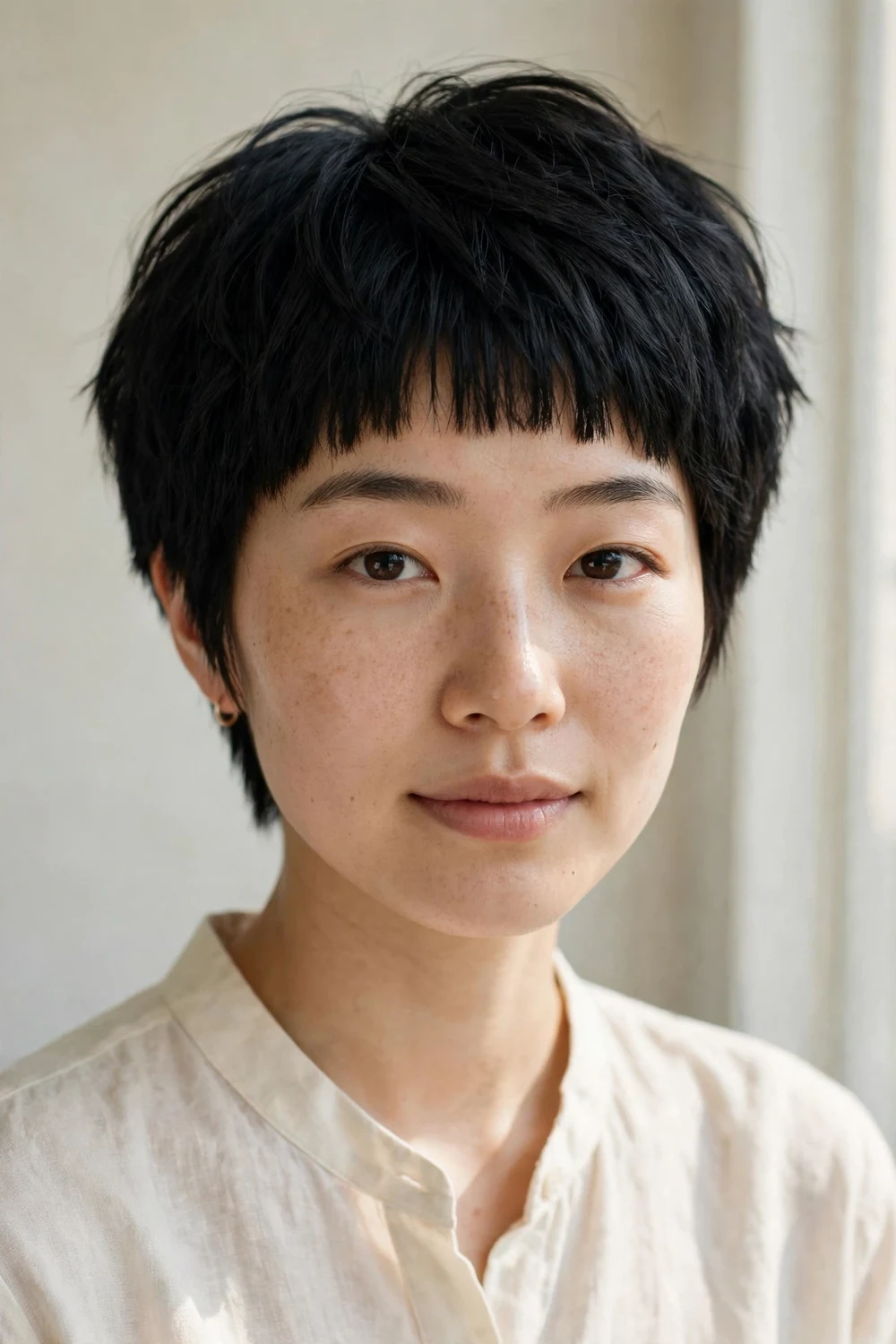
Micro bangs sit well above the eyebrows for a bold, editorial focal point. Thick hair is actually required here: the density keeps short blunt bangs looking intentional instead of sparse. The rest of the pixie can be textured, slicked, or tousled around them.
This is a commitment cut. Growing out micro bangs takes patience, so be sure about the look. It suits oval and heart-shaped faces best, where it emphasizes the eyes and cheekbones.
Try this: keep the micro bangs pin-straight with a mini flat iron and heat protectant for the full graphic effect.
Difficulty: Moderate | Salon cost: $45-$70 | Upkeep: bang trim every 3-4 weeks
41. Pixie with Buzzed Sides
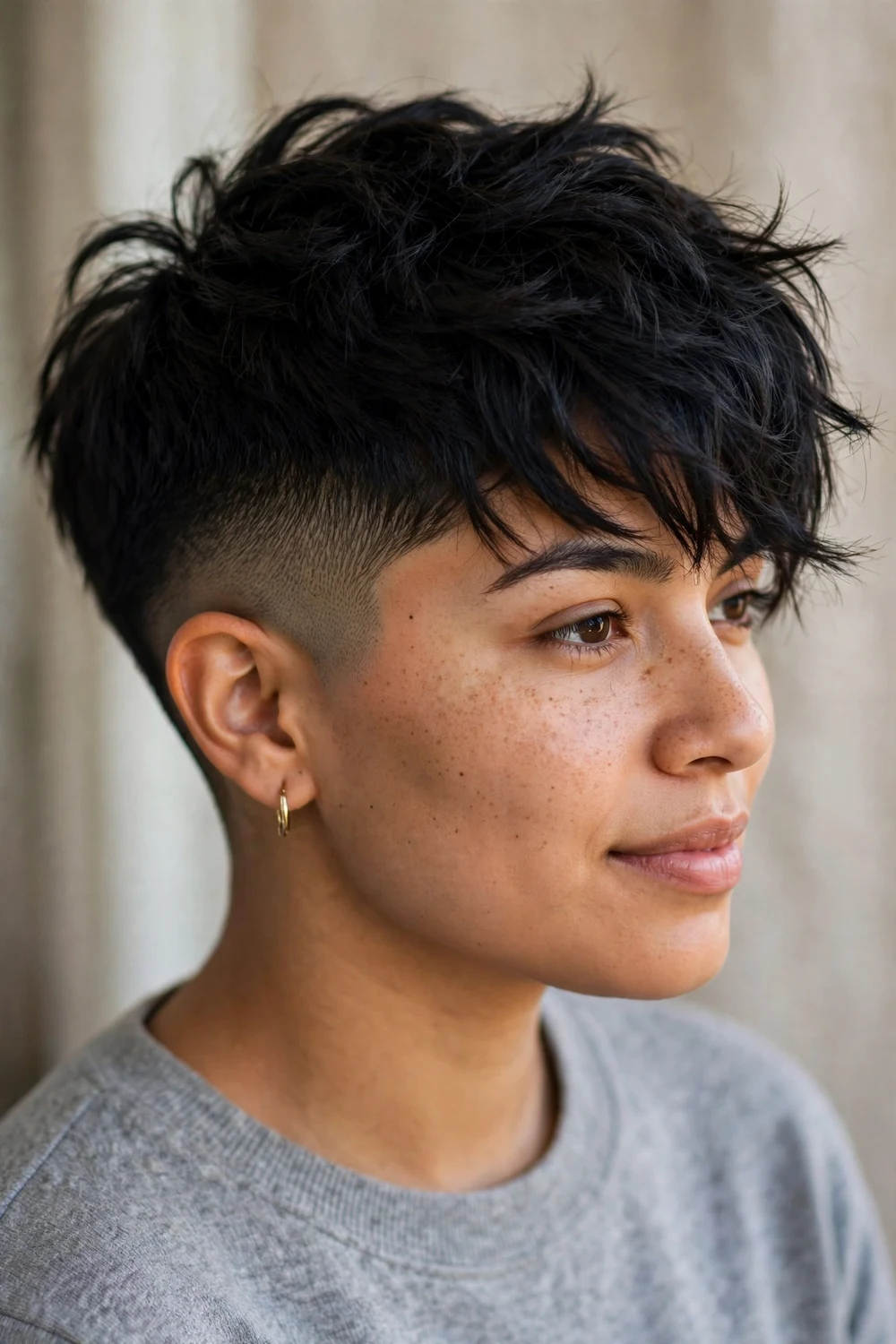
Clippers take the sides down to a #1 to #4 guard while the top stays 3 to 6 inches long. That contrast eliminates bulk exactly where thick hair creates unwanted width, and it keeps you cooler in warm weather. The long top can be slicked back, pushed forward, swept aside, or left messy.
The buzzed sections need trimming every 2 to 4 weeks to look intentional. For clipper lengths and grow-out timelines, see our pixie cut shaved sides breakdown.
Try this: ask for a soft fade between the buzzed sides and the top so the grow-out line stays clean.
Difficulty: Moderate | Salon cost: $40-$70 | Upkeep: buzzed sides every 2-4 weeks
42. Mohawk-Inspired Pixie
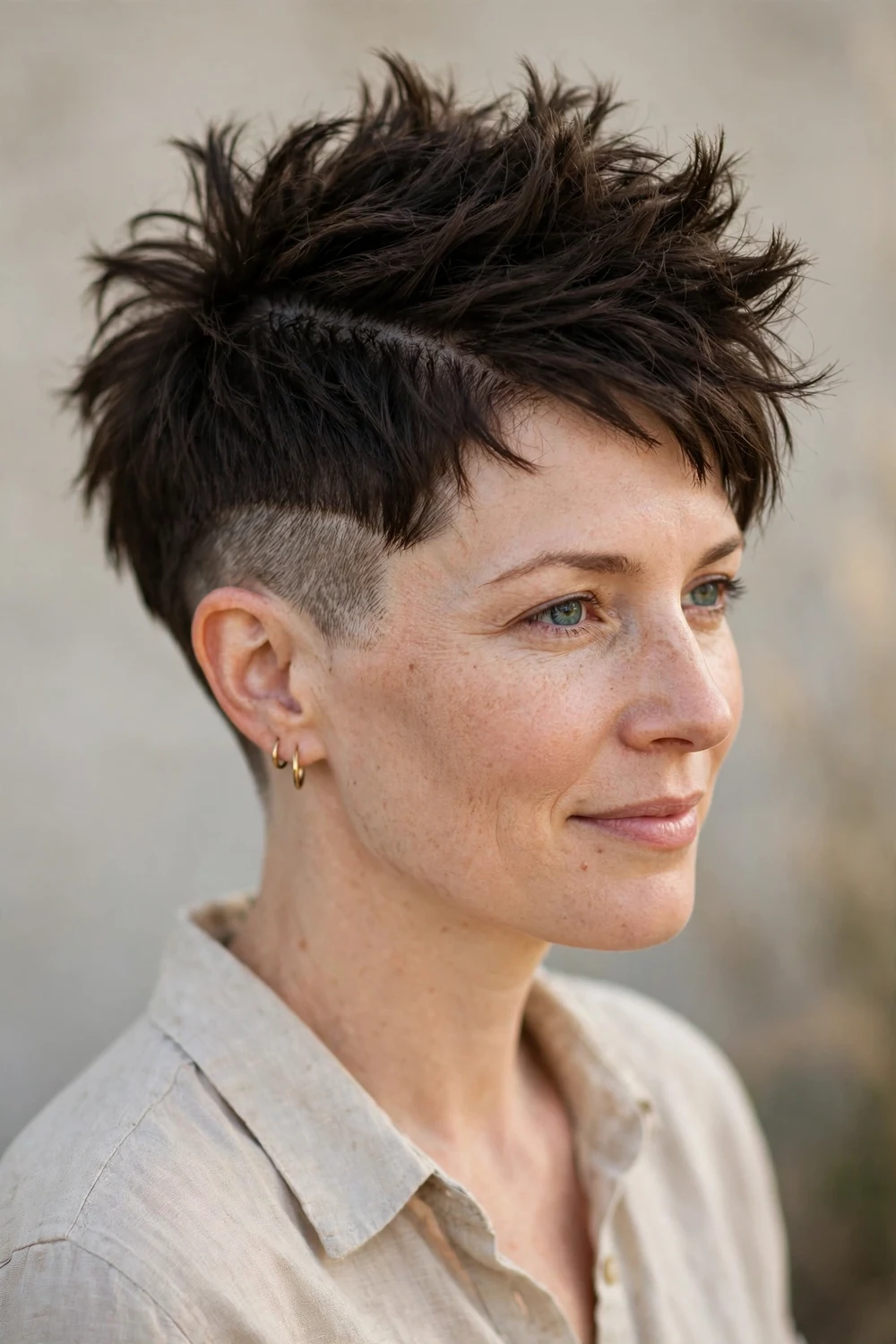
A longer strip of hair runs down the center, 3 to 5 inches, while the sides stay very short or buzzed. Thick hair gives the center section the body to stand up, smooth to the side, or wear textured. A wider strip reads wearable; a narrow one reads punk.
This is the boldest cut on the list, best for creative environments. You can tone it down for conservative settings by styling the center flat instead of up. Side trims every 3 to 4 weeks keep the contrast sharp.
Try this: use a strong-hold gel only at the roots of the center strip so the ends stay touchable.
Difficulty: High | Salon cost: $50-$85 | Upkeep: sides every 3-4 weeks
43. Graduated-Layer Pixie
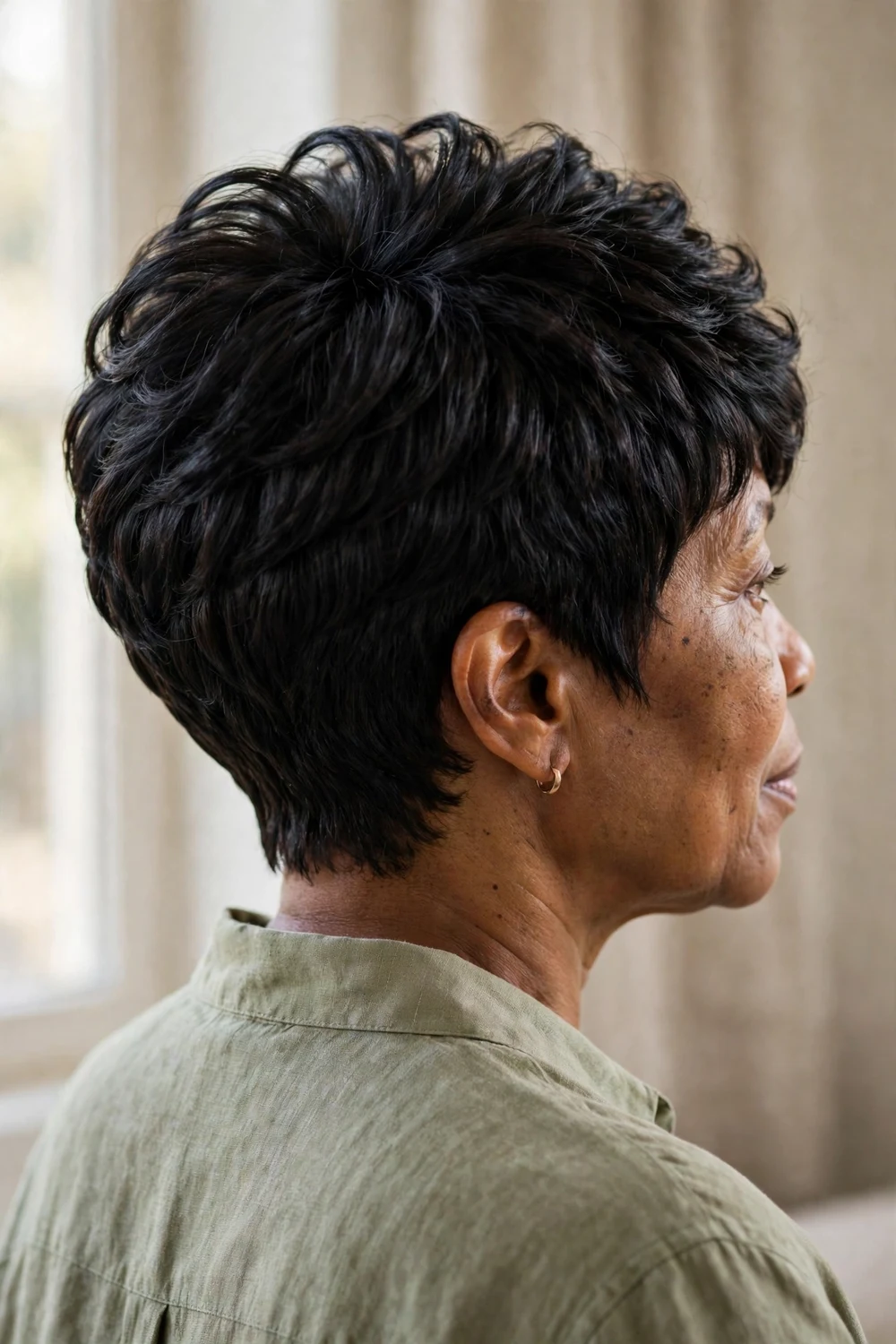
Layers stack from short at the back to longer at the crown, which removes bulk while building height. That graduated structure stops the mushroom effect that plagues thick-haired pixie wearers: instead of widening at the sides, the hair rises at the crown. The result looks polished from every angle.
This technical cut needs a skilled stylist, so ask to see similar work before booking. Very thick straight hair benefits most, since it needs the strongest weight removal.
Try this: blow-dry the crown sections upward with a round brush to emphasize the graduation.
Difficulty: High | Salon cost: $55-$90 | Upkeep: trim every 4-5 weeks
44. Wispy Pixie with Soft Edges
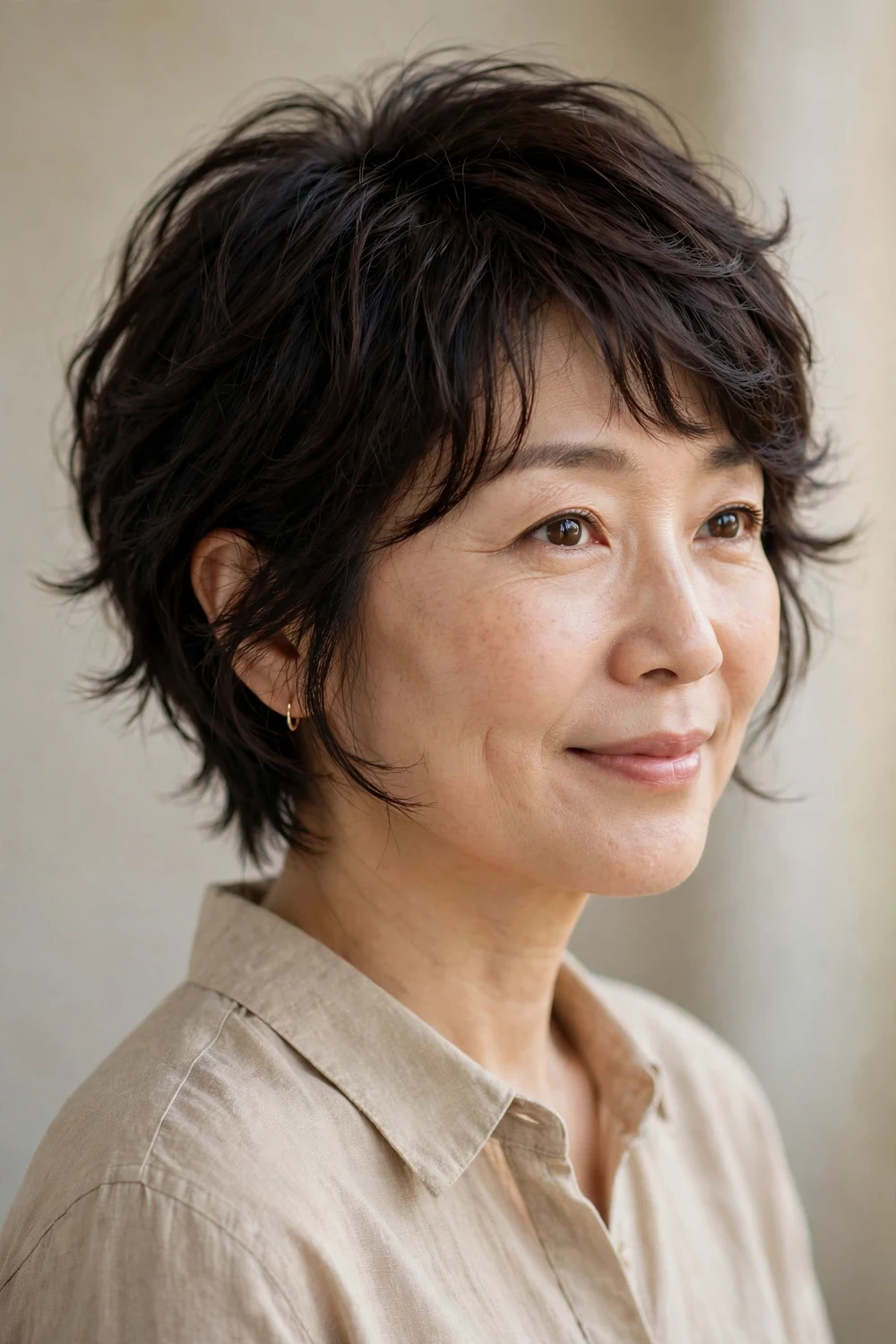
Point cutting and light thinning turn the ends wispy instead of blunt, which keeps thick hair from looking heavy or severe. The edges around the face, nape, and sideburns stay soft and delicate. Density is what makes this work: the same technique on fine hair would look thin, but on thick hair it reads as intentional softness.
This is the gentlest pixie here, flattering across ages and face shapes. Light products preserve the wispy quality; heavy waxes will clump the fine ends together.
Try this: use a pea-sized amount of lightweight lotion rather than wax to define the wisps.
Difficulty: Easy | Salon cost: $45-$70 | Upkeep: trim every 5-6 weeks
45. Blunt-Cut Pixie
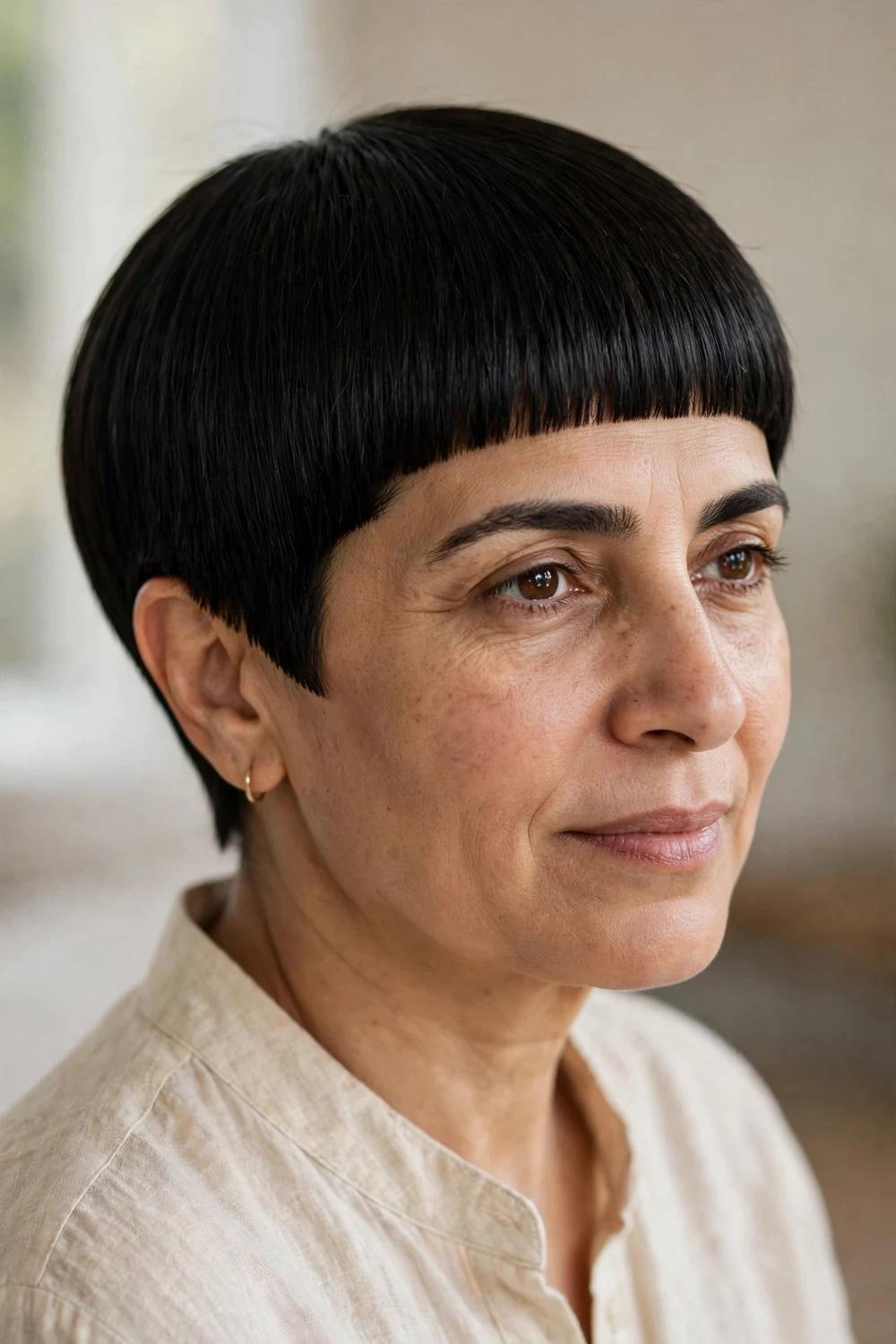
Straight-across edges with no graduation give this pixie a graphic, architectural quality. Thick hair is what makes it work: the density keeps the blunt perimeter looking bold instead of sparse. The strong lines suit straight or slightly wavy hair, since curls would hide the precision.
Styling is about maintaining the smooth edge, which means blow-drying straight and possibly flat-ironing. Use a heat protectant before any hot tool. This cut makes a fashion statement, so wear it with confidence.
Try this: get the perimeter re-cut, not just trimmed, each visit to keep the line razor-sharp.
Difficulty: High | Salon cost: $55-$90 | Upkeep: trim every 4 weeks
46. Two-Block Pixie
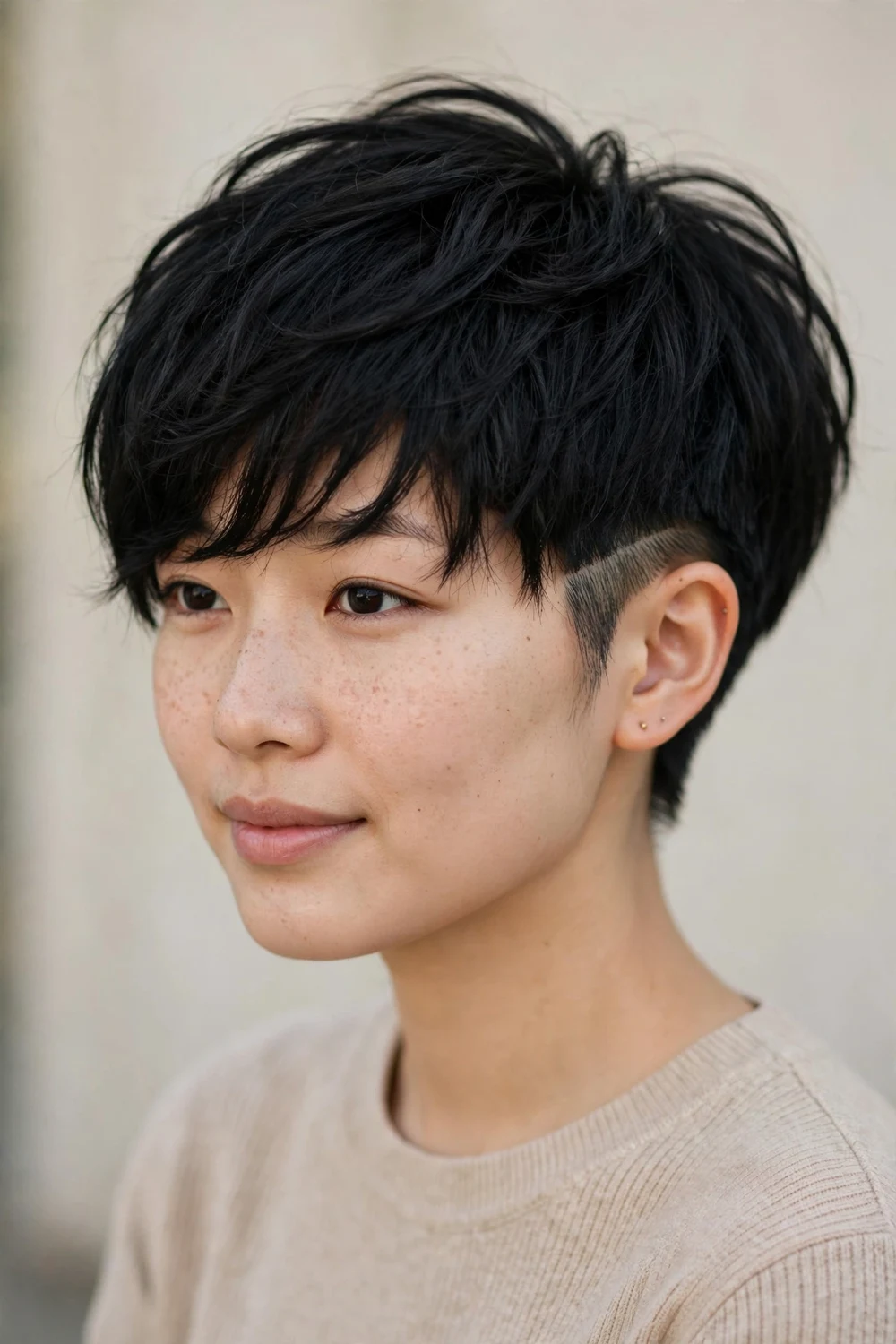
Borrowed from Korean barbering, the two-block cut disconnects a longer top from closely tapered sides and back. The disconnection removes serious bulk at the sides while the top keeps its full weight, which is ideal for very dense hair. The top can fall forward, sweep to the side, or lift with texture.
The grow-out needs managing: the disconnected line blurs after about a month, so book regular cleanups. This cut suits straight to wavy thick hair best and gives a modern, youthful edge.
Try this: keep the sides tight with trims every 3 weeks while letting the top grow for contrast.
Difficulty: Moderate | Salon cost: $45-$75 | Upkeep: sides every 3-4 weeks
47. Pixie with Curtain Bangs
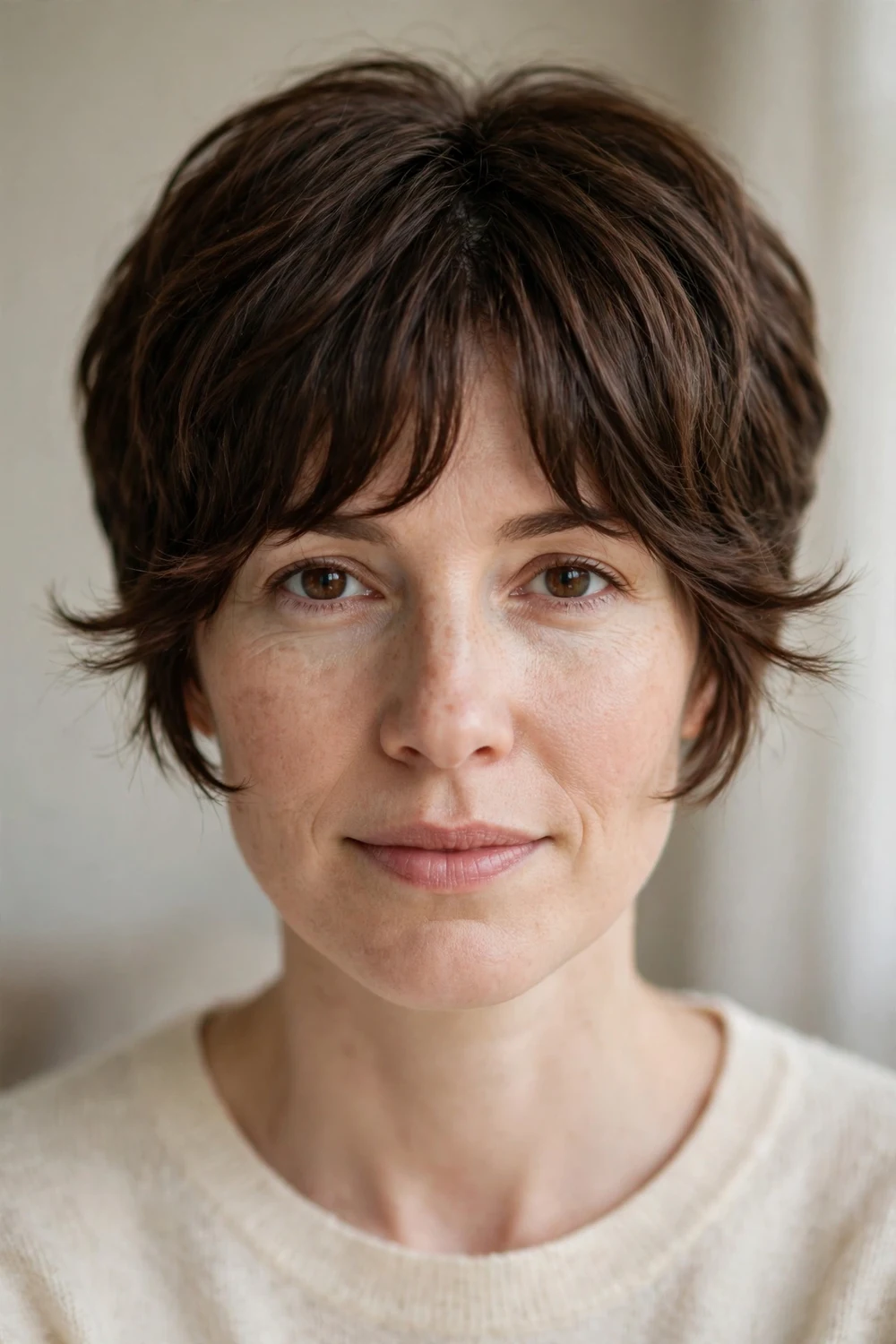
Curtain bangs parted down the middle frame both sides of the face on a short pixie. The center part breaks up the forehead and adds symmetry to the cut, while thinned ends keep the bangs from adding bulk. Thick hair gives the curtain enough body to hold its signature swoop on each side.
This fringe style grows out better than most bangs because it blends into face-framing layers. It suits oval and oblong faces particularly well.
Try this: blow-dry each side of the curtain away from the part with a round brush for the classic bend.
Difficulty: Easy | Salon cost: $45-$70 | Upkeep: trim every 5-6 weeks
48. Pixie-Mullet Hybrid
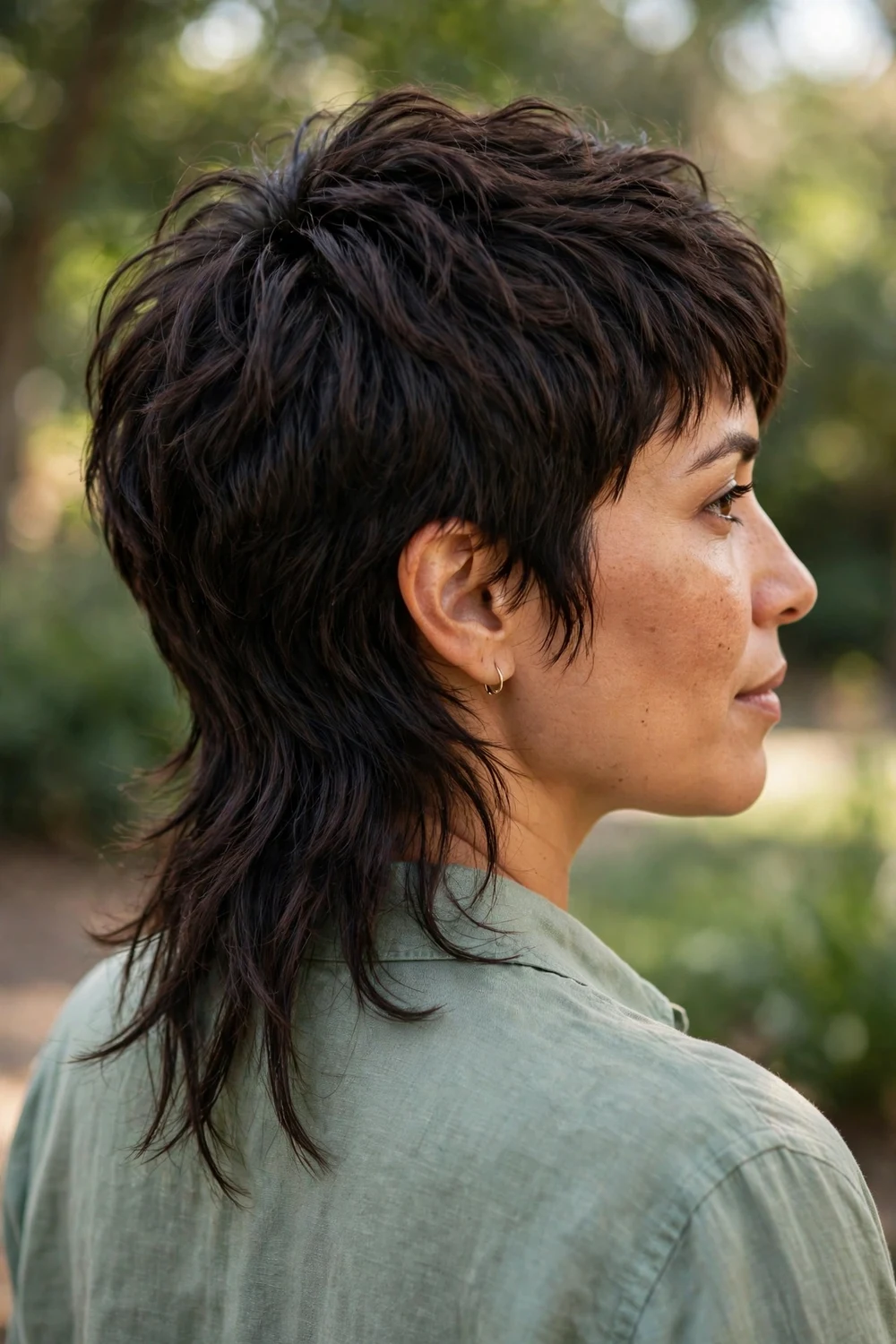
Short and textured on top with a softer, longer nape, this hybrid keeps pixie convenience while the extended back adds edge. The longer nape pieces are thinned so they lie flat instead of adding weight. It is the one pixie here where the back keeps length on purpose.
This cut suits adventurous dressers and grows out into a shag naturally. Keep the top piecey with matte paste and let the nape stay soft and piecey rather than blunt.
Try this: define the nape pieces with a little wax twisted through the ends for separation.
Difficulty: Moderate | Salon cost: $50-$80 | Upkeep: trim every 5-6 weeks
49. Copper Pixie
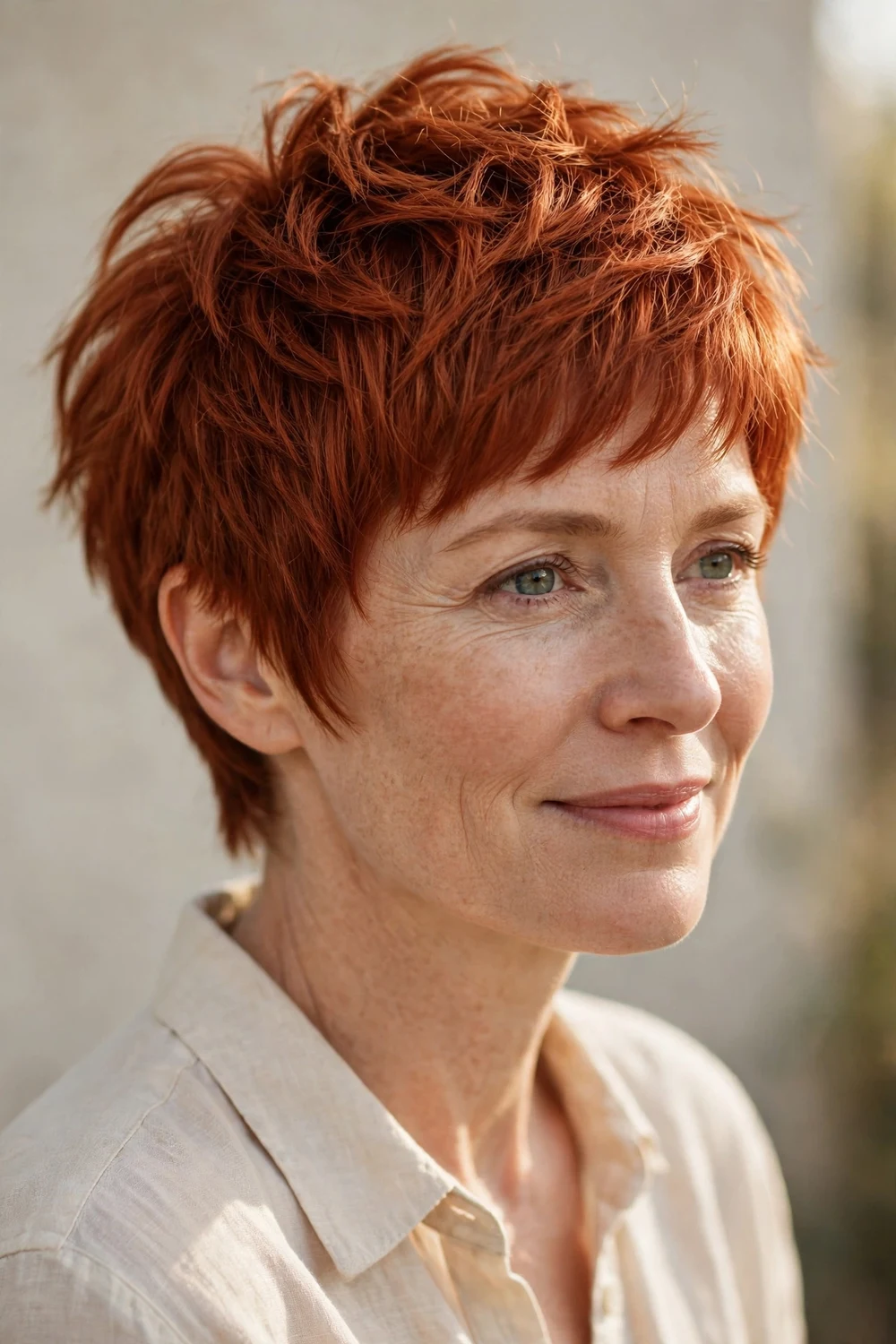
Rich copper turns a textured pixie into a head-turner. The warm red shade makes every layer and piece visible, which shows off the debulking work of the cut. On thick hair, copper has depth that flat single-process colors cannot match, especially in sunlight.
Copper fades faster than most shades, so a color-depositing conditioner between appointments keeps it rich. This pairs well with any textured cut on the list, from choppy to feathered.
Try this: wash with cool water and sulfate-free shampoo to slow fading.
Difficulty: Moderate | Salon cost: $100-$170 with color | Upkeep: gloss every 6-8 weeks
Debulking Techniques Compared
Every pixie on this list controls thick hair with at least one of these cutting techniques. Here is how they compare, so you can ask for the right one by name.
| Technique | How It Removes Bulk | Grow-Out | Upkeep | Best For |
|---|---|---|---|---|
| Nape undercut | Clippers remove the densest hair at the neckline | Stays hidden under top layers for weeks | Re-cut every 4-6 weeks | Very dense, straight to wavy hair |
| Buzzed sides | Sides clippered to #1-#4 guard, removing side width | Visible regrowth in 2-3 weeks | Touch up every 2-4 weeks | Thick hair that widens at the sides |
| Razor cutting | Angled slices thin and texture in one motion | Grows out softer than scissor cuts | Trim every 5-7 weeks | Straight to wavy thick hair |
| Point cutting | Snipping into ends breaks up solid perimeters | Blends well, low-maintenance regrowth | Trim every 5-6 weeks | All thick hair types |
| Thinning shears | Notched blades remove interior weight invisibly | Can leave uneven regrowth if overused | Use sparingly, trim every 5-6 weeks | Extremely dense hair needing major debulking |
| Graduated layers | Stacked lengths shift volume upward, away from sides | Keeps shape well between cuts | Trim every 4-6 weeks | Thick straight hair prone to mushrooming |
How to Choose the Right Pixie for Your Thick Hair
Start with your texture. Straight thick hair handles the most variety: undercuts, razored layers, blunt edges, and geometric angles all work. Wavy thick hair does best with longer layers and messy finishes that cooperate with the wave. Curly thick hair needs longer layers cut to the curl pattern, plus an undercut or taper to manage the sides.
Next, decide how much maintenance you want. A classic tapered pixie or messy crop needs a trim every 5 to 6 weeks and two minutes of styling. Buzzed sides, fades, and geometric cuts need touch-ups every 2 to 4 weeks. Color ideas like balayage and two-tone add salon time and cost, so factor that in.
Think about grow-out too. Longer pixies, pixie bobs, and bixies transition smoothly if you change your mind. Very short or buzzed cuts go through an awkward shaggy phase, which is fine if you plan for it. Not sure about going this short at all? Our short hairstyles for thick hair list covers crops with more length to fall back on.
What to Avoid with Thick Hair Pixies
Skip one-length cuts with no layering. On dense hair they puff into a triangle and sit wide at the sides. If your stylist reaches for the clippers on top without discussing texture first, ask questions.
Do not over-thin. Thinning shears used aggressively can create frizz and uneven regrowth that takes months to fix. A skilled stylist removes weight with layering and point cutting first, and uses thinning shears sparingly.
Avoid razor cutting on very curly or coily hair unless your stylist specializes in it. Razors can shatter curl ends and cause frizz. For tight curls, dry cutting with scissors gives a cleaner result.
Finally, do not skip the consultation. Bring photos, point to the exact debulking detail you want, and ask how the cut grows out. A five-minute conversation prevents most pixie regrets.
Frequently Asked Questions
Will a pixie cut make my thick hair puff out?
Only if the cut ignores your density. A pixie with proper debulking, like an undercut, tapered nape, or razored layers, removes the weight that causes puffing. Tell your stylist your main worry is volume at the sides, and ask specifically for weight removal rather than just layering.
What cutting technique removes the most bulk from thick hair?
An undercut or buzzed sides removes the most bulk because the hair is clippered short instead of just layered. For the top sections, razor cutting and thinning shears remove the most interior weight. Point cutting softens the perimeter. Most good thick-hair pixies combine two of these.
How often do I need trims to keep a thick-hair pixie in shape?
Every 4 to 6 weeks for most pixies. Buzzed sides, fades, and undercuts need touch-ups every 2 to 4 weeks because regrowth shows fast. Longer pixies and pixie bobs can stretch to 6 to 8 weeks. Thick hair grows out a pixie faster in appearance since the volume returns quickly.
Can I get a pixie if my thick hair is curly?
Yes, and curls often look great short. Choose longer layers cut to your curl pattern, and consider an undercut to manage the sides. Have curls cut dry so the length is honest, and plan on curl cream rather than heat styling for your daily routine.
How do I grow out a pixie with thick hair without an awkward stage?
Grow it through a pixie bob: keep trimming the back and sides while letting the top and front grow. Regular shaping trims every 6 to 8 weeks keep the grow-out looking intentional. Longer pixie styles on this list, like the layered pixie lob and soft bixie, are designed as grow-out bridges.
Final Thoughts
Thick hair and pixie cuts are a strong match when the cut respects the density. Pick the debulking technique that fits your texture and maintenance appetite, bring a photo to your stylist, and name the detail you want out loud. Do that, and your pixie will feel lighter, not just shorter.

