



Most braids don’t fail because the style is weak; they fail because of friction, dryness, and slippage at the roots. The fastest way to make your braids last longer is a simple routine: a clean, moisturized install, gentle scalp washing every week or two, regular moisture, satin or silk protection every night, and quick tidy-ups between appointments. Most braid styles last 4 to 8 weeks with good care, and box braids can reach 8 weeks before the roots need attention.
Quick takeaways
- Longevity starts at installation: clean, deep-conditioned hair and comfortable, even tension.
- Wash your scalp every 1 to 2 weeks with diluted shampoo; dry the braids fully to prevent mildew.
- Moisturize roots with a water-based spray and seal with a light oil 2 to 3 times a week.
- Cover braids with a satin or silk bonnet or scarf every night; this is the single highest-impact habit.
- Don’t wear braids longer than 8 to 10 weeks; refresh the edges instead of reinstalling the whole head.
Start with the right foundation

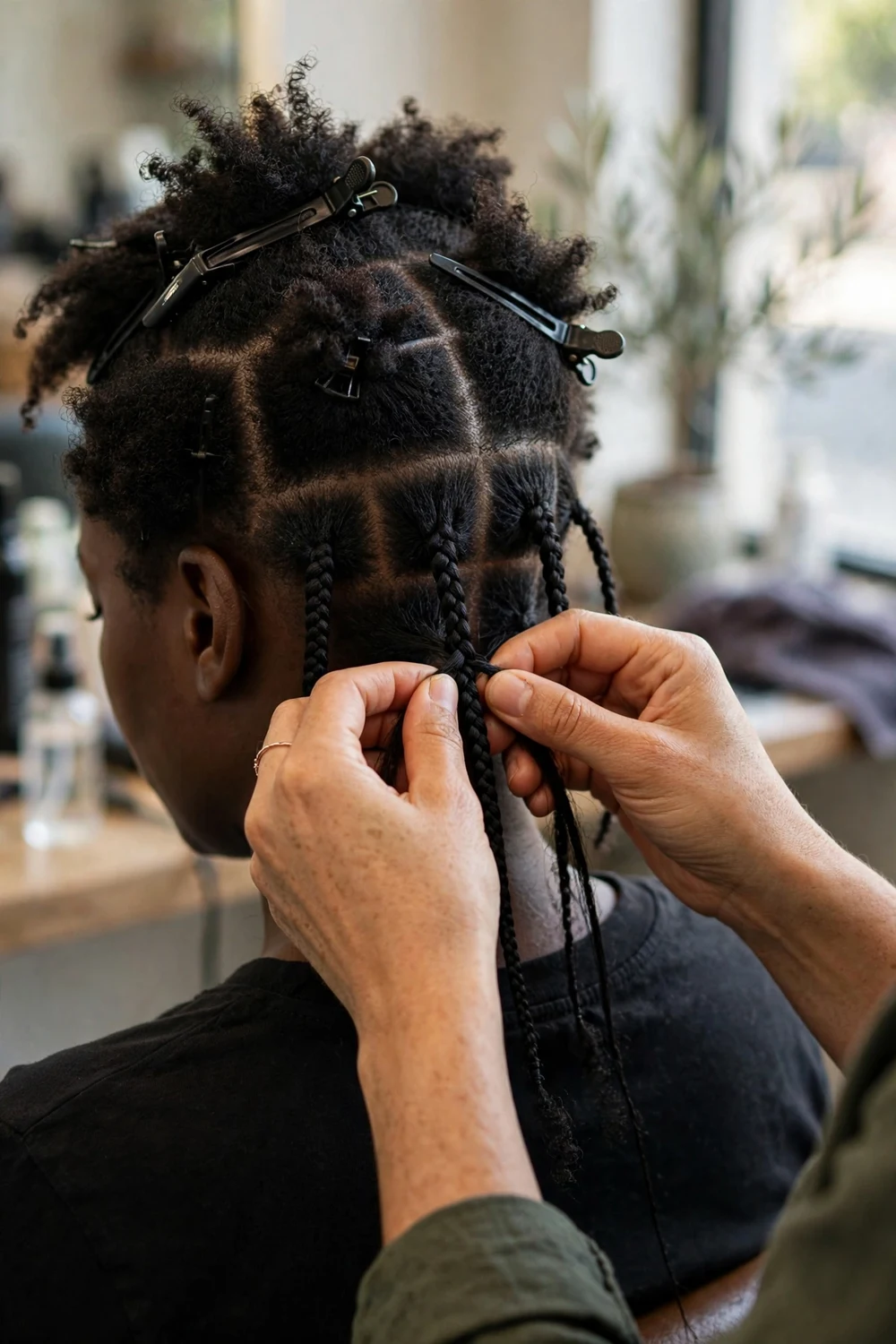
Braids installed on dirty, tangled, or dry hair loosen and frizz faster from day one. Wash and deep-condition before your appointment, then detangle fully. Some people follow the LOC method, liquid, oil, cream, to make sure the hair is hydrated from the inside out before braiding begins.
Tension matters as much as cleanliness. Braids that are too loose unravel within days; braids that are too tight cause headaches, bumps, and breakage at the hairline. The sweet spot is firm but comfortable, with no pain when you move your head. If you’re deciding on a style, browse short box braids hairstyles for lighter, quicker options that put less weight on your roots.
Wash your scalp, not your braids
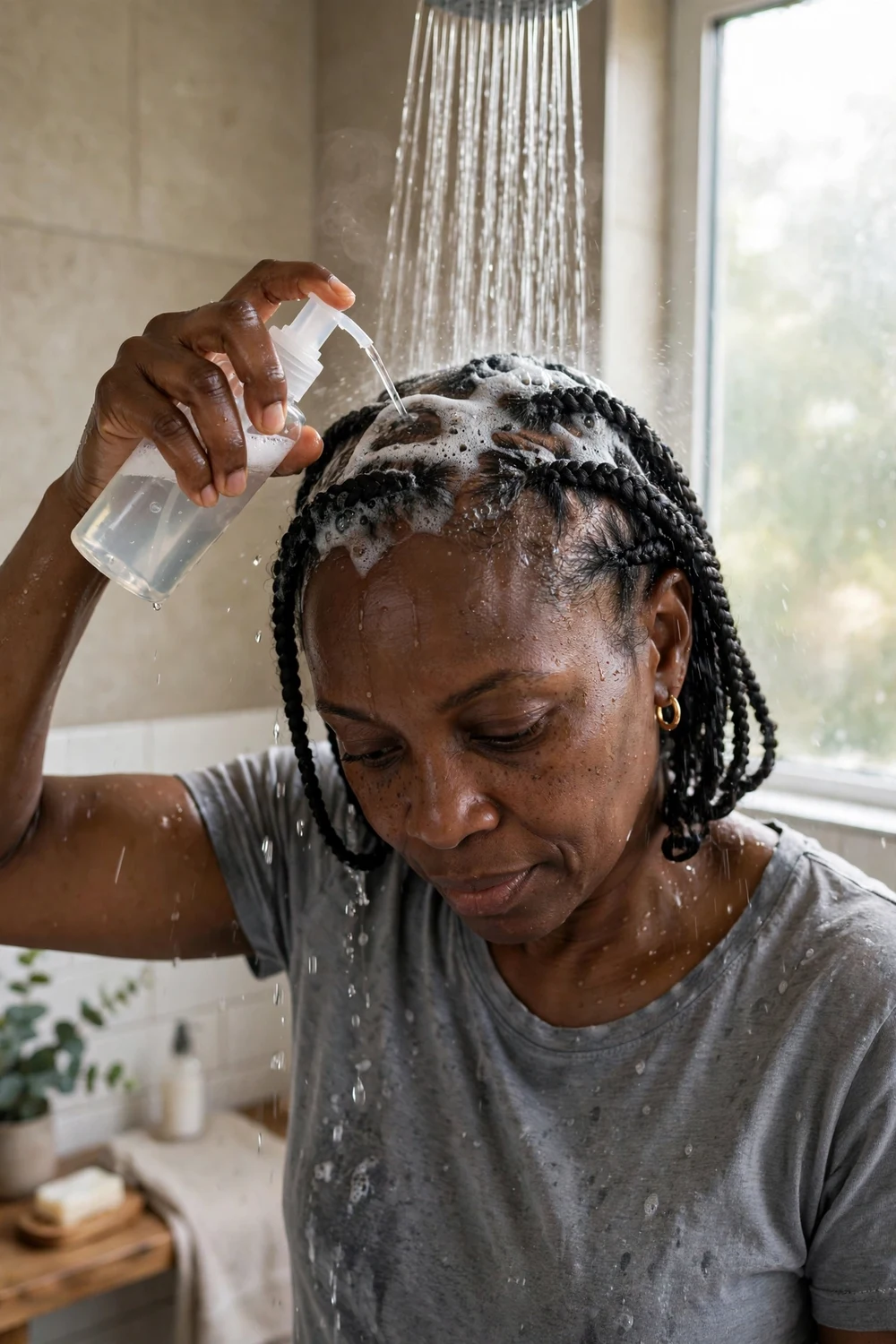
A common mistake is skipping washes to protect the style. Buildup, sweat, and itching actually shorten a style’s life, because a irritated scalp gets scratched, and scratching loosens the roots. Wash every one to two weeks using shampoo diluted with water in an applicator bottle, applied directly to the scalp. Massage gently with your fingertips rather than scrubbing the braids themselves.
Rinse thoroughly, since residue trapped in the braids causes its own buildup. A sulfate-free, pH-balanced shampoo with tea tree or peppermint keeps the scalp calm without stripping. For a style with visible parts that are easy to clean, see Fulani braids hairstyles for accessible scalp sections.
Dry them completely

Wet braids are heavy, and braids that stay damp develop mildew with a sour smell that no product can mask. After washing, squeeze out excess water with a towel, then let the braids hang loose to air dry. Follow up with a blow-dryer on a low, cool setting aimed at the roots and the thickest sections until everything is fully dry to the touch.
This step takes patience, especially with long or thick styles, but skipping it is the fastest way to ruin an otherwise healthy install. Plan washes for a day when you have drying time, not right before bed.
Keep moisture in the routine
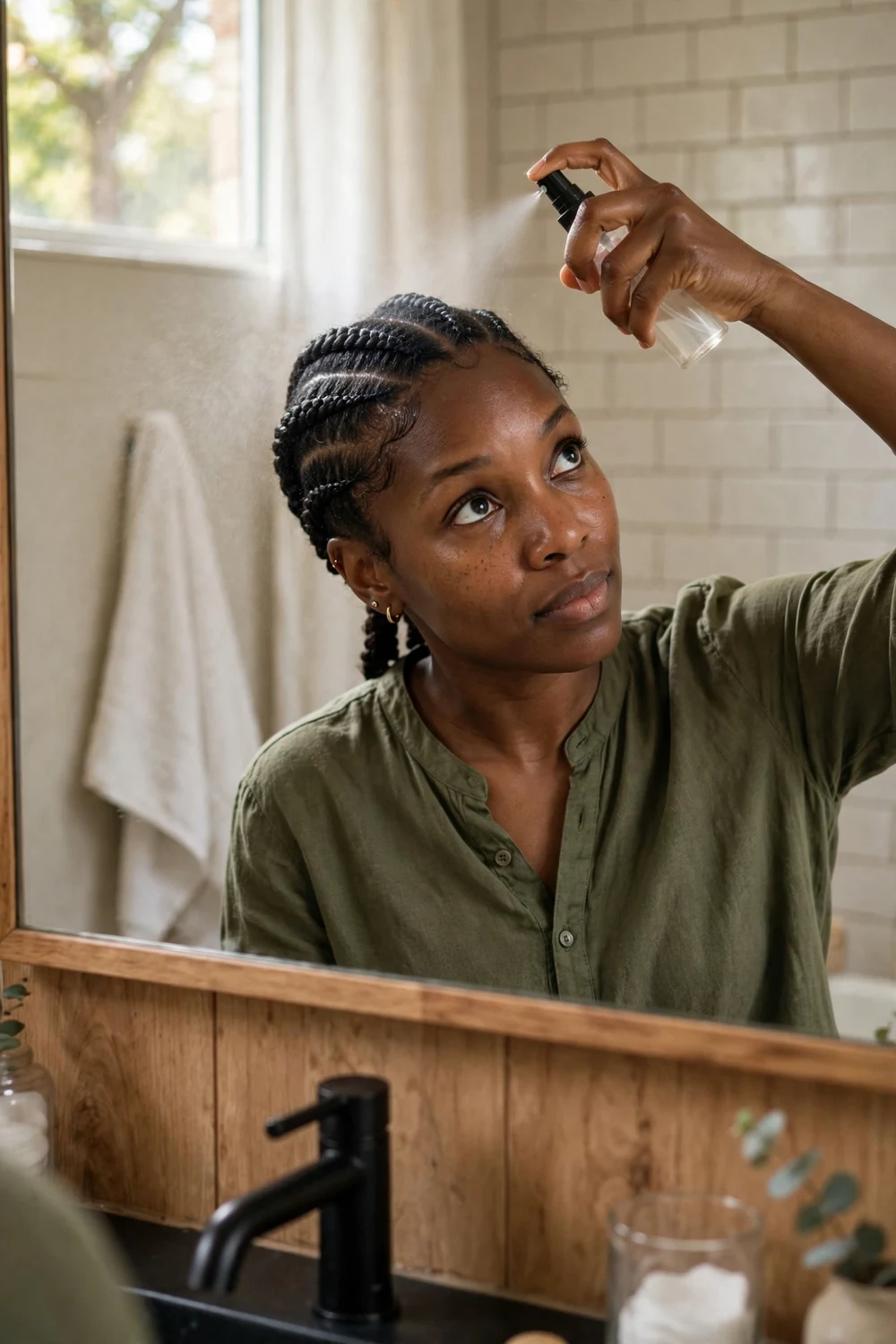
Braided hair can’t get moisture from your daily routine the way loose hair does, so you have to add it deliberately. Mist the roots and lengths with a water-based leave-in spray two to three times a week, then seal with a light oil like jojoba or argan. Massage the scalp first to encourage your natural oils, then work the products in with your fingertips.
Skip heavy butters and mineral-oil products, which sit on top of the hair and attract buildup. Light layers absorb better and keep the braids looking fresh instead of greasy. If you have human-hair braids, condition the lengths to the ends; with synthetic braids, focus moisture where the extensions meet your natural hair.
Protect them every single night

Nighttime friction is the number one killer of neat braids. Cotton pillowcases pull moisture from the hair and rough up the braid surface every time you turn over. Wrapping the braids in a satin or silk scarf or bonnet before bed prevents that friction and keeps the style smooth for weeks longer.

If bonnets slip off while you sleep, a satin pillowcase is a solid backup; the smooth surface does the same friction-reducing job. Gather long braids loosely before wrapping so they don’t tangle underneath you overnight.
Tidy flyaways and frizzy roots
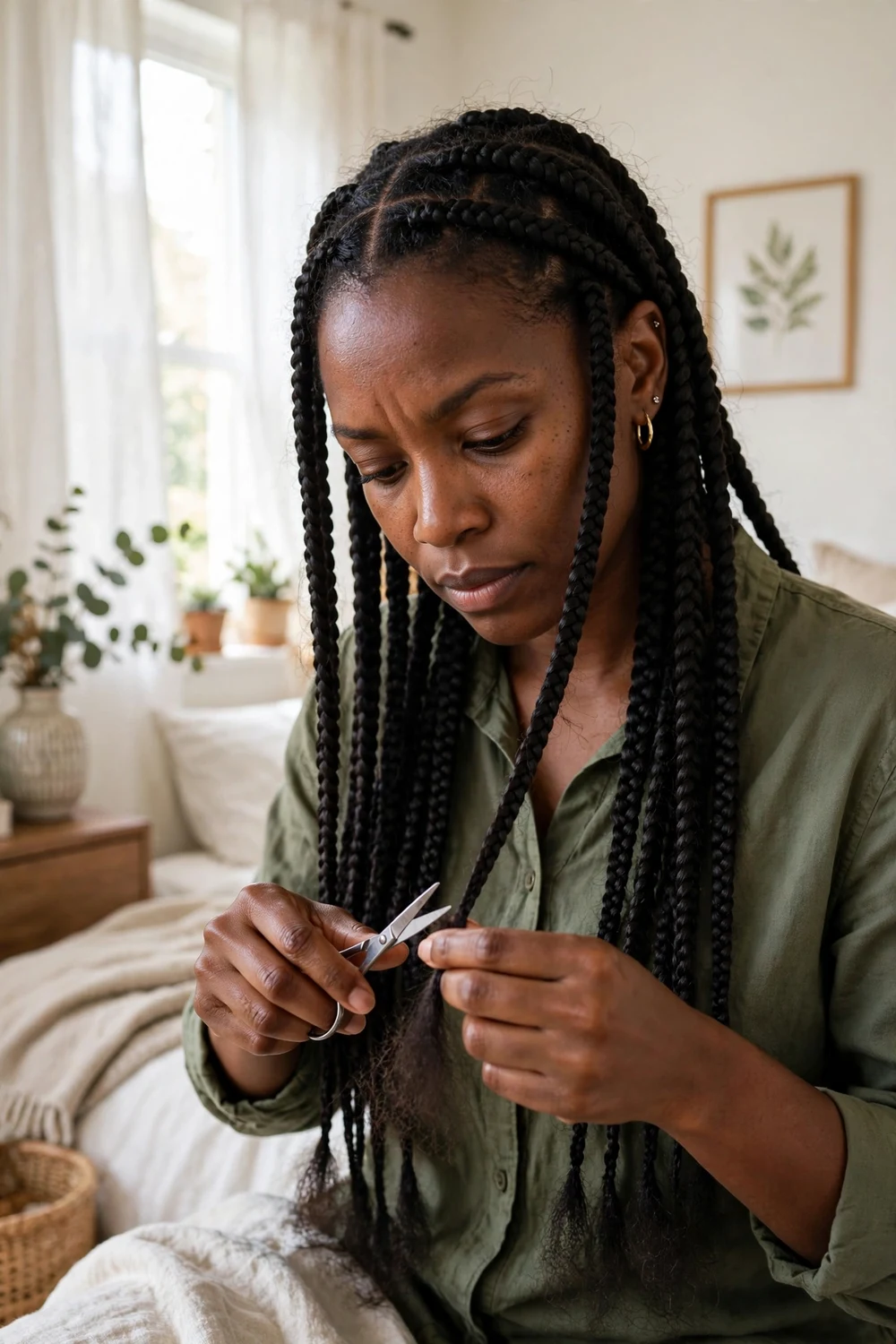
Around week two or three, fuzz starts appearing along the braids. Trim the loose strands carefully with small scissors, always checking where your real hair ends inside the braid so you don’t accidentally cut it. A light mousse or braiding gel smoothed over the surface tames the remaining frizz without stiffening the style.

For the hairline, a small amount of edge control and a soft brush keep baby hairs laid and the perimeter looking fresh. Shorter styles like bob braids are easier to keep tidy this way, since there is less length to fuzz up.
Refresh the edges instead of redoing everything
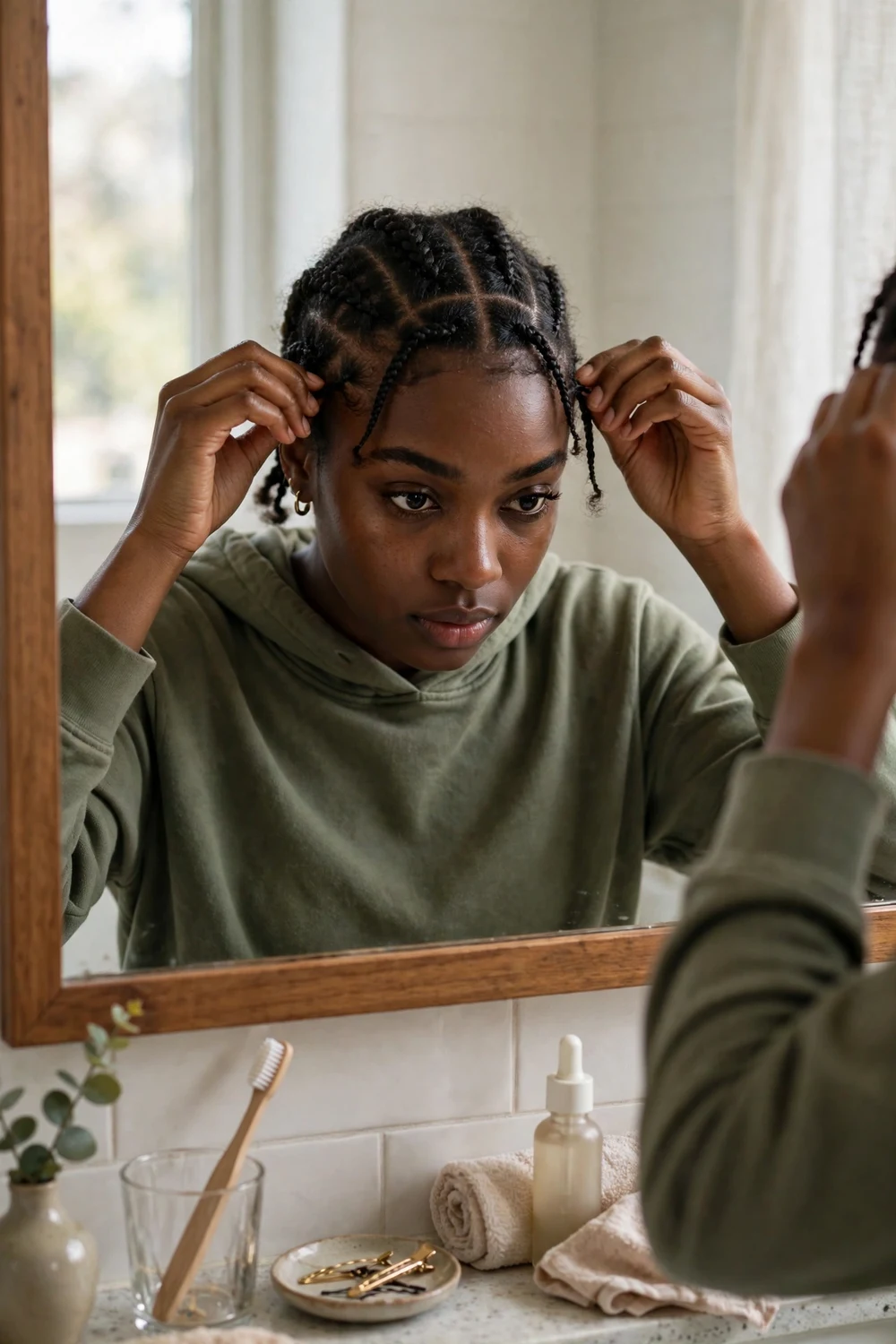
When new growth makes the front look tired, most stylists recommend a partial refresh: take down and reinstall just the hairline and the most visible sections. This touch-up takes a fraction of the time and cost of a full reinstall and makes the whole style look brand new.
Before reinstalling the edges, detangle and deep-condition the freed sections. They’ve been tucked away for weeks, and they deserve the same prep as the original install. For low-manipulation style ideas to rotate through, see short braided hairstyles for black women.
Hands off: stop over-styling
Constant restyling pulls on the roots and loosens the style from the top down. Limit tight high ponytails and heavy updos to once or twice a week instead of daily, and favor fingers over combs and brushes when arranging the braids. Use fabric-covered ties rather than rubber bands, which snag and stress the hair.
Heat tools have no place on braided hair. Flat irons and curling irons dry out both your natural hair and the extensions, and the damage shows as frizz you can’t smooth back down. If a section needs shaping, warm water and a light mousse do the job without the risk.
How long different braid types last

| Braid type | Typical lifespan | Touch-up timing |
|---|---|---|
| Box braids / knotless | 6 to 8 weeks | Edges at 3 to 4 weeks |
| Cornrows | 2 to 6 weeks | Hairline at 2 weeks |
| Twists | 4 to 6 weeks | Front sections at 2 to 3 weeks |
| Goddess / boho braids | 4 to 6 weeks | Curly ends need frequent detangling |
| Micro braids | 8 to 10 weeks | Monitor tension closely throughout |

Knotless braids tend to last well because the feed-in start puts less tension on the roots. Whatever the style, treat these numbers as maximums with good care, not guarantees; your hair texture, the install quality, and your routine decide where you land.
Know when to take them out
Wearing braids too long causes the exact damage the style was supposed to prevent. Past 8 to 10 weeks, new growth starts tangling with the braided hair, and removal turns into a breakage session. Take them out sooner if you notice matting at the roots, itching that washing doesn’t calm, visible thinning at the edges, or frizz that no tidy-up can fix.
After removal, detangle gently with your fingers before shampooing, then deep-condition. Your hair has been resting for weeks; the takedown routine decides whether you keep the length you protected.
Frequently asked questions
How long do box braids last?
Box braids typically last 6 to 8 weeks with good care, and some people stretch them to 10. Thinner hair usually needs them out closer to 6 weeks, while thicker, coarser hair can hold them longer. Refreshing the edges at 3 to 4 weeks extends the neat look.
How often should I wash my braids?
Every 1 to 2 weeks. Use shampoo diluted with water in an applicator bottle, massage it into the scalp with your fingertips, and rinse thoroughly. Always dry the braids completely afterward; damp braids can develop mildew.
Should I oil my scalp every day?
No. Light oil 2 to 3 times a week is enough. Daily oiling leads to buildup that traps dirt and shortens the style’s life. Mist with a water-based spray first, then seal with the oil.
Can I sleep without covering my braids?
You can, but the style won’t last as long. Cotton pillowcases create friction that frizzes the braids and pulls out moisture overnight. A satin or silk bonnet or scarf is the simplest way to add weeks to your install.
What are the signs it’s time to take braids out?
Heavy new growth, matting where the new hair meets the braid, persistent itching, thinning edges, or frizz that trimming and gel can’t tame. Past 8 to 10 weeks, removal itself starts causing breakage, so don’t push past that.
Final thoughts
Making your braids last longer is mostly about protecting what you paid for: keep the scalp clean, keep the moisture balanced, keep the friction away at night, and tidy the edges before the whole style looks tired. Do those four things and most installs will carry you comfortably to the 6-to-8-week mark. And when the signs say the style is done, take it out; a fresh install on healthy hair always beats an extra two weeks on struggling roots.

