


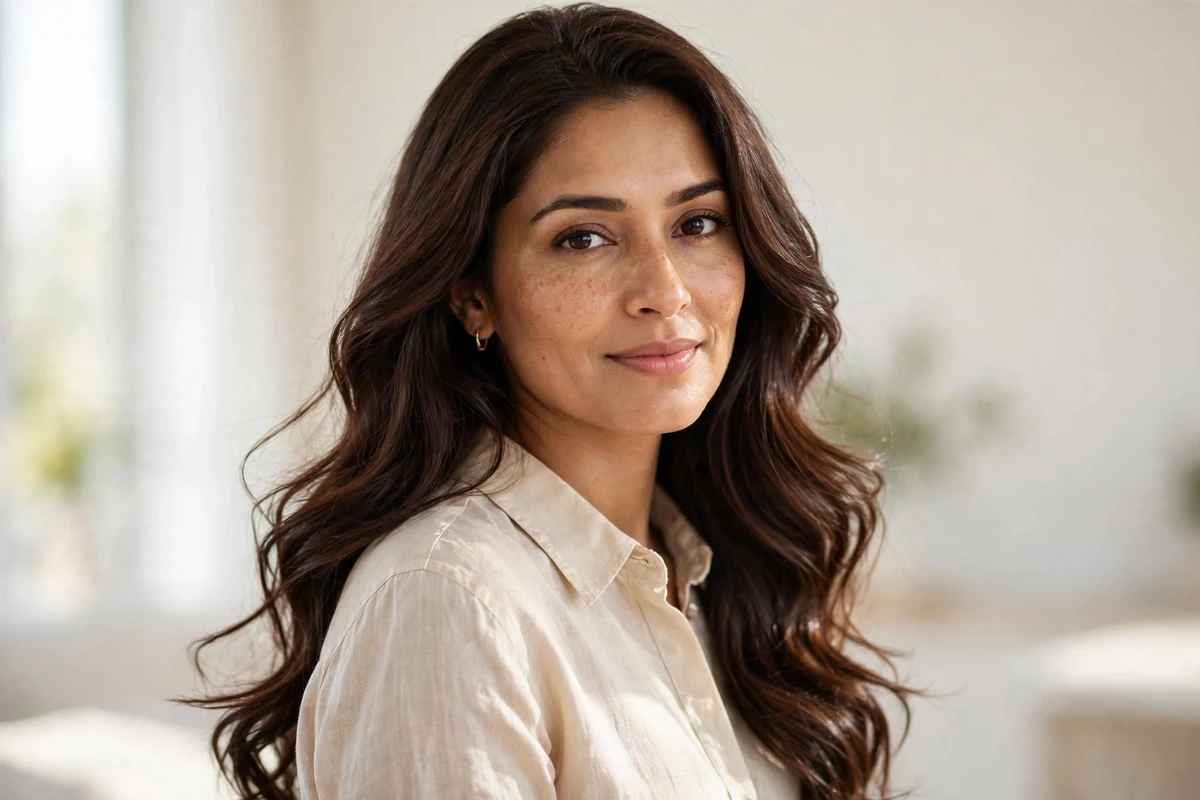
Chocolate brown is the brunette shade that does the heavy lifting. It has depth, it reflects light well, and it suits almost every skin tone without washing anyone out. From a deep espresso all over color to cocoa butter balayage, the range inside this one color family is wide enough to fill a whole salon menu.
Below you will find 30 chocolate brown hairstyles, each pairing a specific shade with the cut or styling that shows it best. Some are low maintenance, some need salon visits every few weeks, and a few only work on certain hair textures. Each idea tells you exactly what to ask for, who it suits, and how to style it. I have sorted through the most requested versions of this shade so you can pick yours with confidence.
Quick answer: Chocolate brown sits around a level 4 to 5 on the salon color scale, a mid-dark brunette with warm or neutral undertones. The most wearable version is a rich all over chocolate with a gloss finish. Balayage and melt techniques add dimension and grow out softly, while cool ash versions work better for neutral or cool skin tones.
Quick Takeaways
- Chocolate brown is a level 4 to 5 brunette that flatters most skin tones.
- All over shades need root touch-ups every 4 to 6 weeks; balayage and melts grow out softly with less maintenance.
- Warm undertones (caramel, toffee, golden) suit warm skin; cool undertones (espresso, ash) suit cool skin.
- Sulfate-free shampoo, weekly deep conditioning, and heat protectant keep the color rich and glossy.
- Ask your colorist for a gloss treatment every 6 to 8 weeks to keep chocolate tones from fading flat.
Before You Pick Your Shade
Chocolate brown is not one color. It runs from deep espresso that looks near black indoors to a light milk chocolate that reads warm and soft. Your skin undertone decides which end of that range suits you. Cool undertones look best with espresso, mocha, or ash brown versions. Warm undertones take golden chocolate, caramel, and toffee blends. Neutral undertones can wear almost any version.
Hair texture changes how the color reads too. Straight hair shows chocolate brown as sleek and reflective. Wavy hair breaks the color up and shows off dimensional techniques like balayage. Curly hair gives the shade extra depth because light hits each curl differently. If your hair is damaged or very dry, talk to your colorist before going all over dark, because deep shades fade faster on porous hair.
Maintenance is the last thing to weigh. All over chocolate needs root coverage every 4 to 6 weeks as your natural roots grow in. Balayage, ombre, and melt techniques blur the root line, so you can stretch salon visits to 8 to 12 weeks. Gloss treatments in between keep any version looking fresh.
1. Milk Chocolate Curls
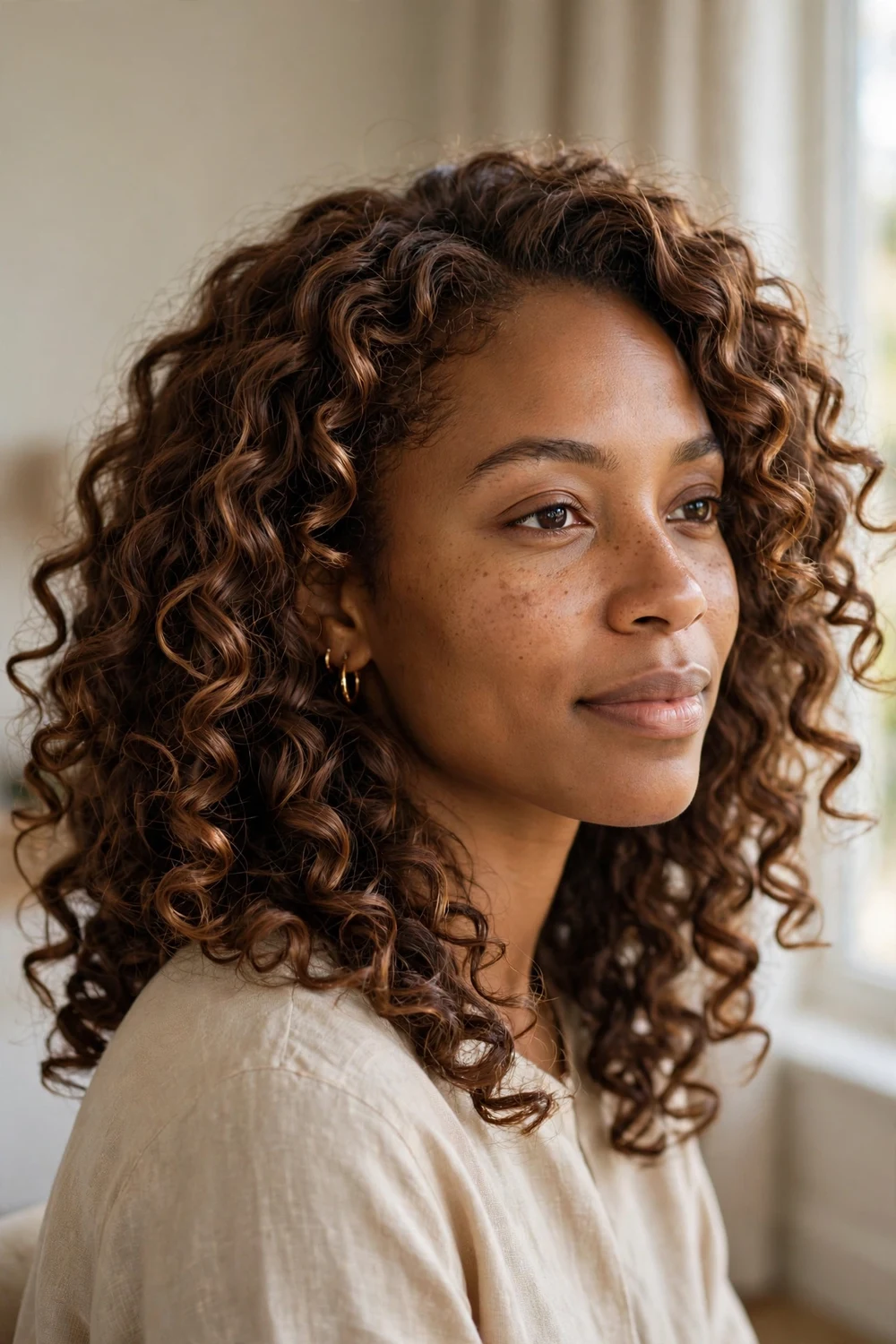
Milk chocolate is the lighter, creamier end of the chocolate family, and it gives natural curls a soft, warm glow instead of a flat dark finish. The color catches light on the outer curls while staying deeper underneath, which makes every coil look defined. It suits medium to thick curly or wavy hair, and it is a good pick if black or espresso feels too heavy on you. Ask for an all over level 5 chocolate with a warm tone, then keep the curls hydrated so the lighter shade stays glossy instead of going dull.
Try this: Scrunch a curl-defining cream into damp hair and diffuse on medium heat to build bounce without frizz.
2. Rich Espresso All Over
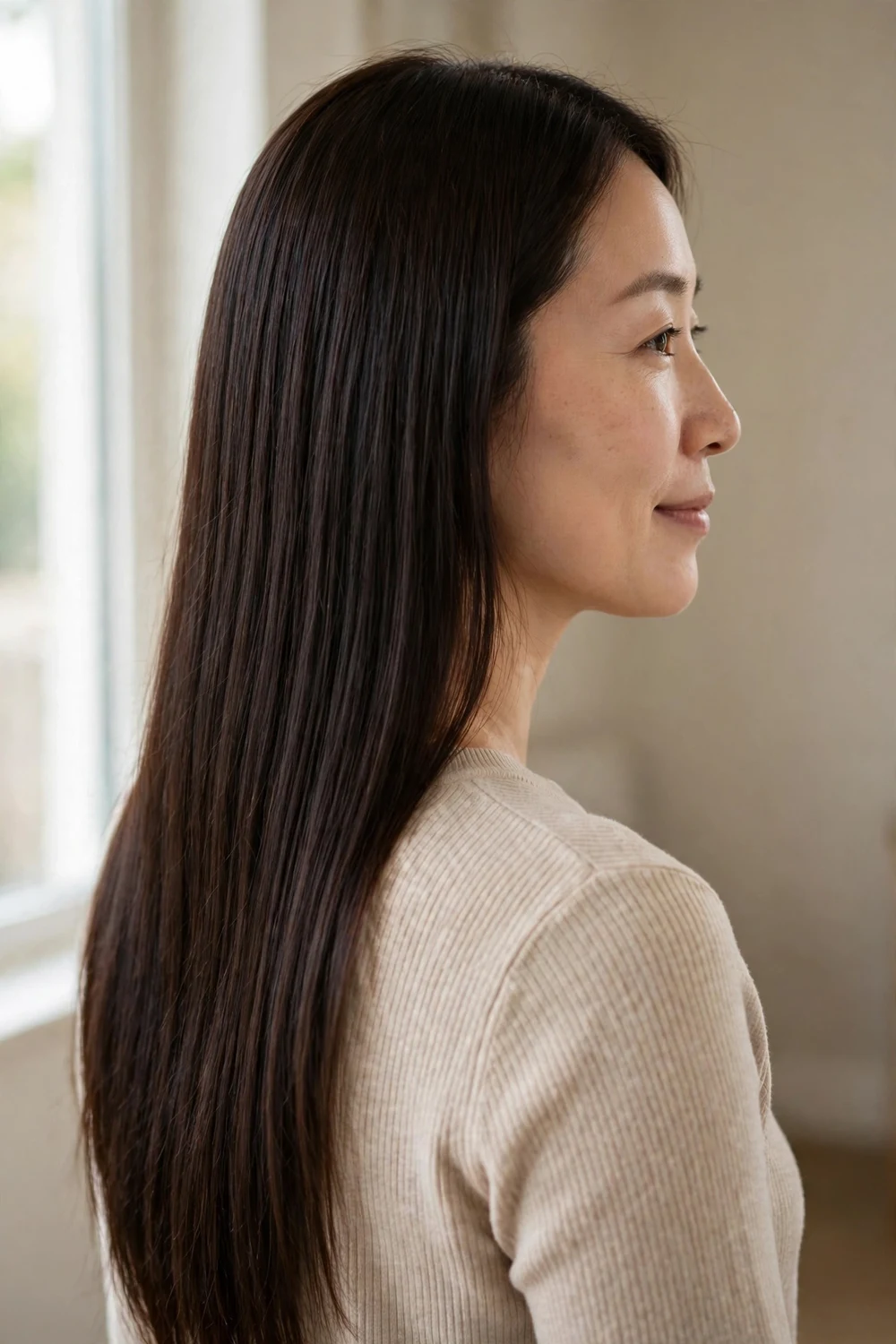
Rich espresso is a deep, sultry brown around level 3 to 4 that reads almost black in low light but shows warm brown tones in sunlight. It adds instant depth and shine to straight or wavy hair, and the single deep shade makes hair look thicker and healthier. This one suits cool and neutral skin tones best, and it works on medium to thick textures. The trade-off is maintenance: roots need a touch-up every 4 to 6 weeks, and the color fades faster on hair that has been previously lightened.
Try this: Smooth a high-shine serum through the mid-lengths and ends after styling to keep the dark shade reflective.
3. Chocolate Brown with Golden Highlights
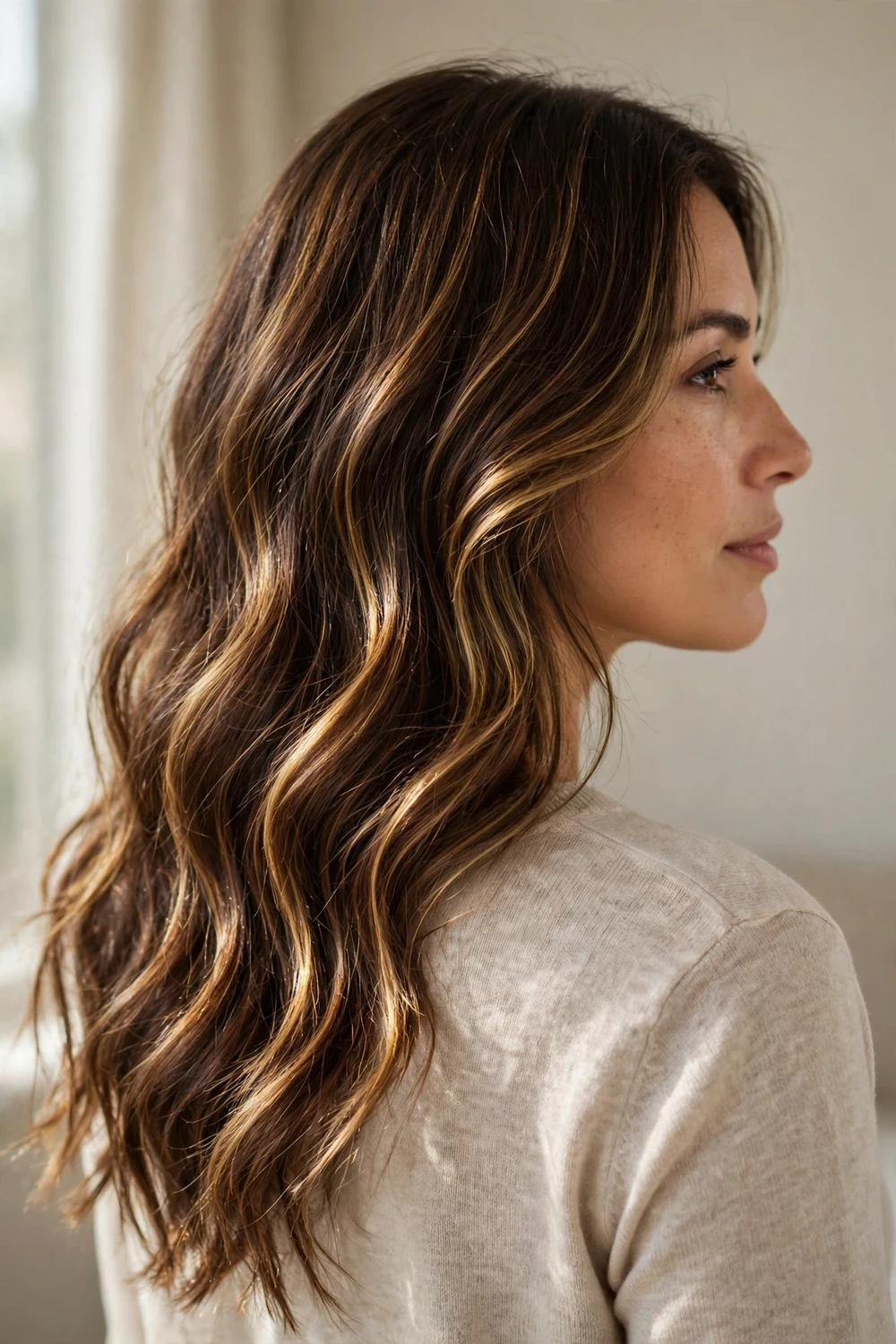
Soft golden pieces woven through a chocolate base give the hair a sunlit effect without going blonde. The highlights are usually two to three levels lighter than the base, placed around the face and through the top layers so the color moves when the hair moves. This version flatters warm skin tones and looks best on wavy or layered hair, where the light tones can catch the bends. If your hair is fine, ask for fewer, finer pieces so the contrast does not overwhelm the base color.
Try this: Style with loose waves from a large curling iron to make the golden pieces stand out against the darker base.
4. Deep Brown Waves
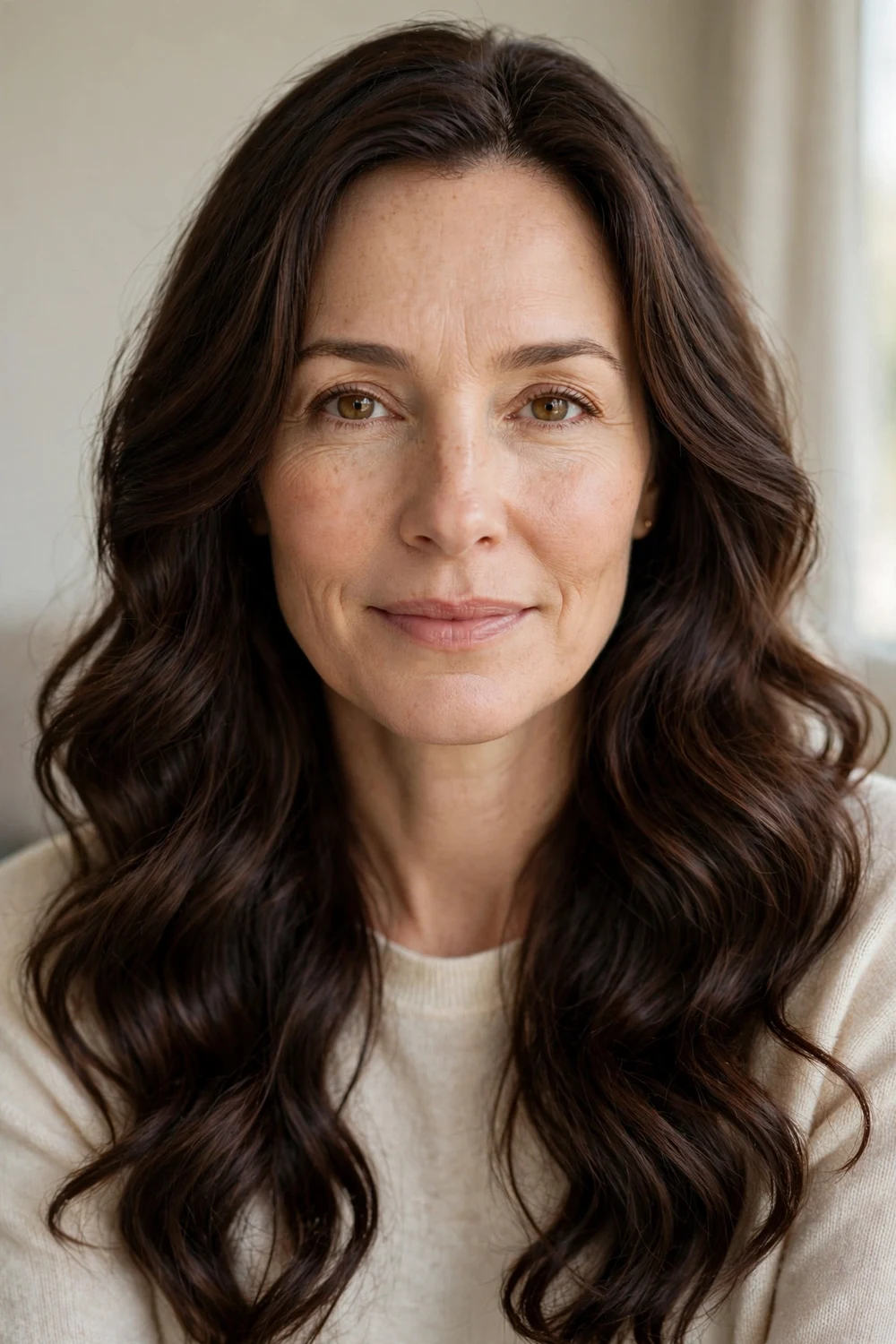
Some hairstyles are about the color alone, and this one is. Deep chocolate brown worn in soft, long waves is a low-effort look that still reads polished. The waves give the single shade movement so it never looks flat, and the dark color makes the waves look denser. It suits medium to long hair with a natural wave or a wave you add with heat. The styling is simple: curl the hair away from the face, brush the curls out once they cool, and let them fall.
Try this: Use a 32mm curling tong and brush each section out after cooling for soft, flowing waves instead of tight curls.
5. Rich Chocolate Brown with Light Brown Highlights
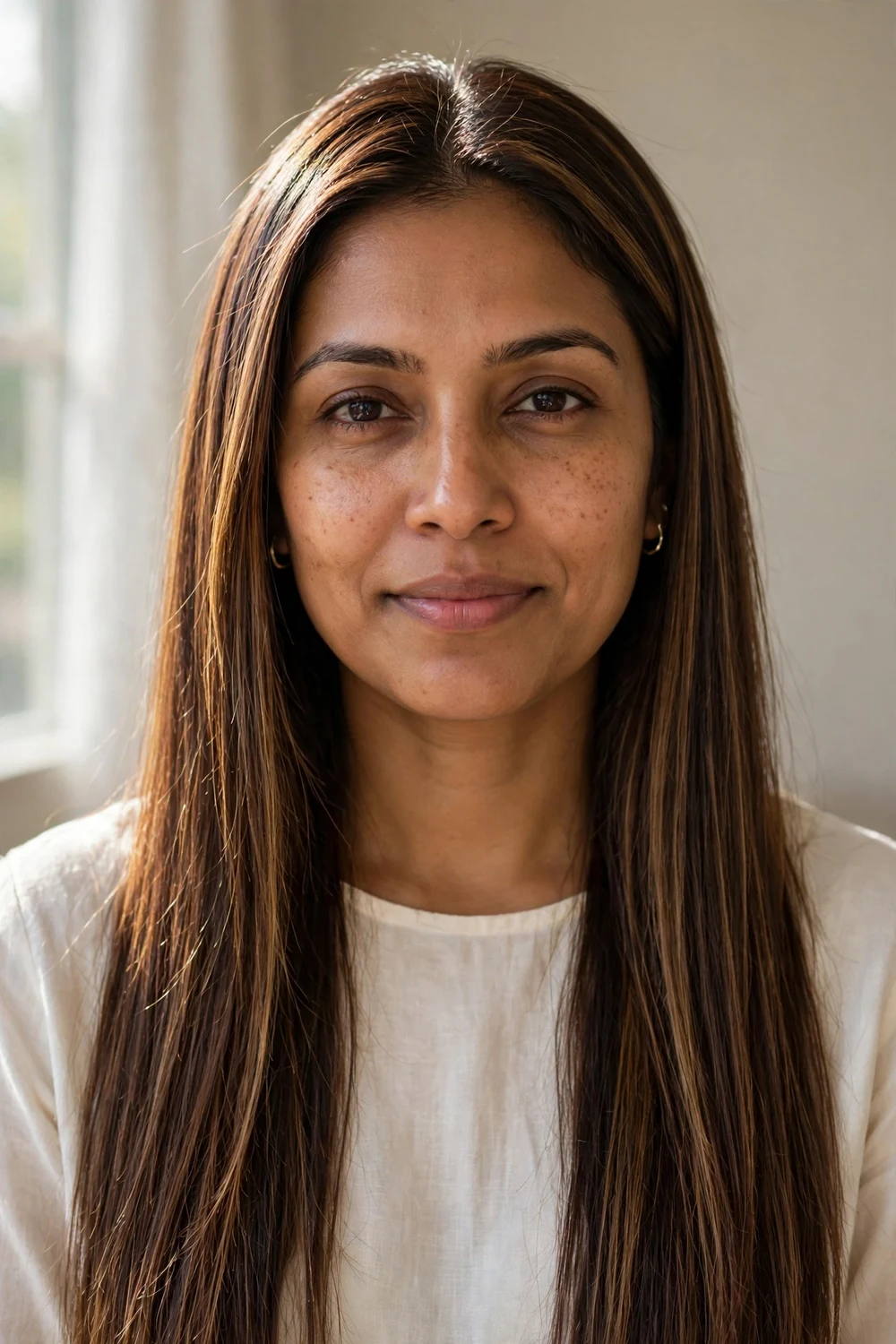
This is the classic pairing: a rich chocolate base with delicate light brown highlights blended through for a naturally sun-kissed finish. Unlike bolder caramel work, the highlights here sit close to the base color, so the result is soft dimension rather than contrast. It suits all ages and works on medium to thick straight or wavy hair. Ask for highlights about two levels lighter than your base, blended well at the root so there is no harsh line as the hair grows out.
Try this: Work a lightweight hair oil through the ends to keep the lighter pieces from looking dry or brassy.
6. Mocha-Toned Chocolate Brown
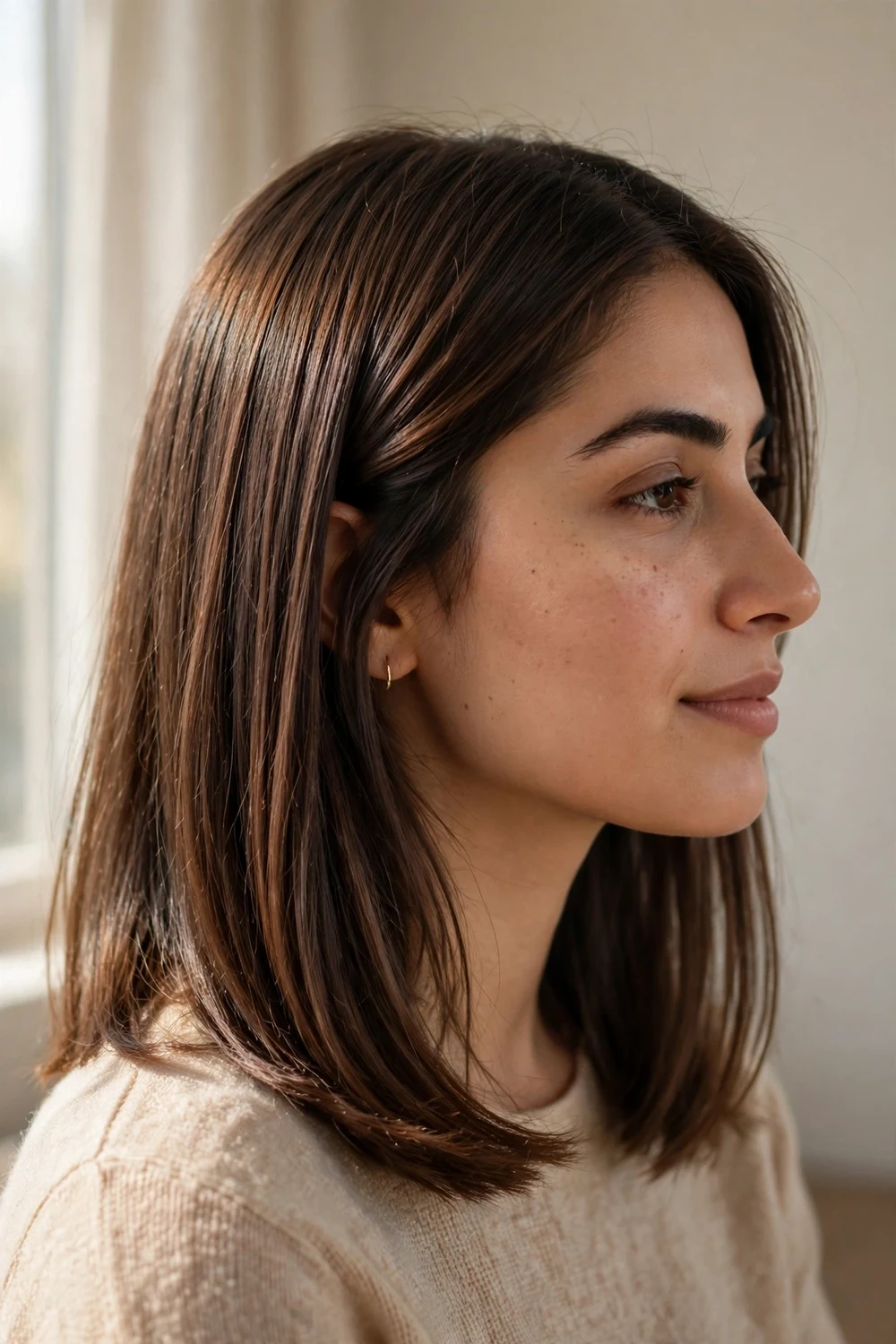
Mocha chocolate balances cool and warm tones in one shade, giving a neutral finish that does not pull too red or too ashy. It is one of the most forgiving versions of chocolate brown because it suits almost every skin undertone and every hair texture. The color looks refined rather than trendy, which makes it a safe first move if you are going brunette from another shade. A clear gloss on top keeps the neutral tone from fading warm over time.
Try this: Book a gloss treatment every 6 to 8 weeks to lock in the balanced mocha tone.
7. Espresso Base with Hazelnut Ribbons
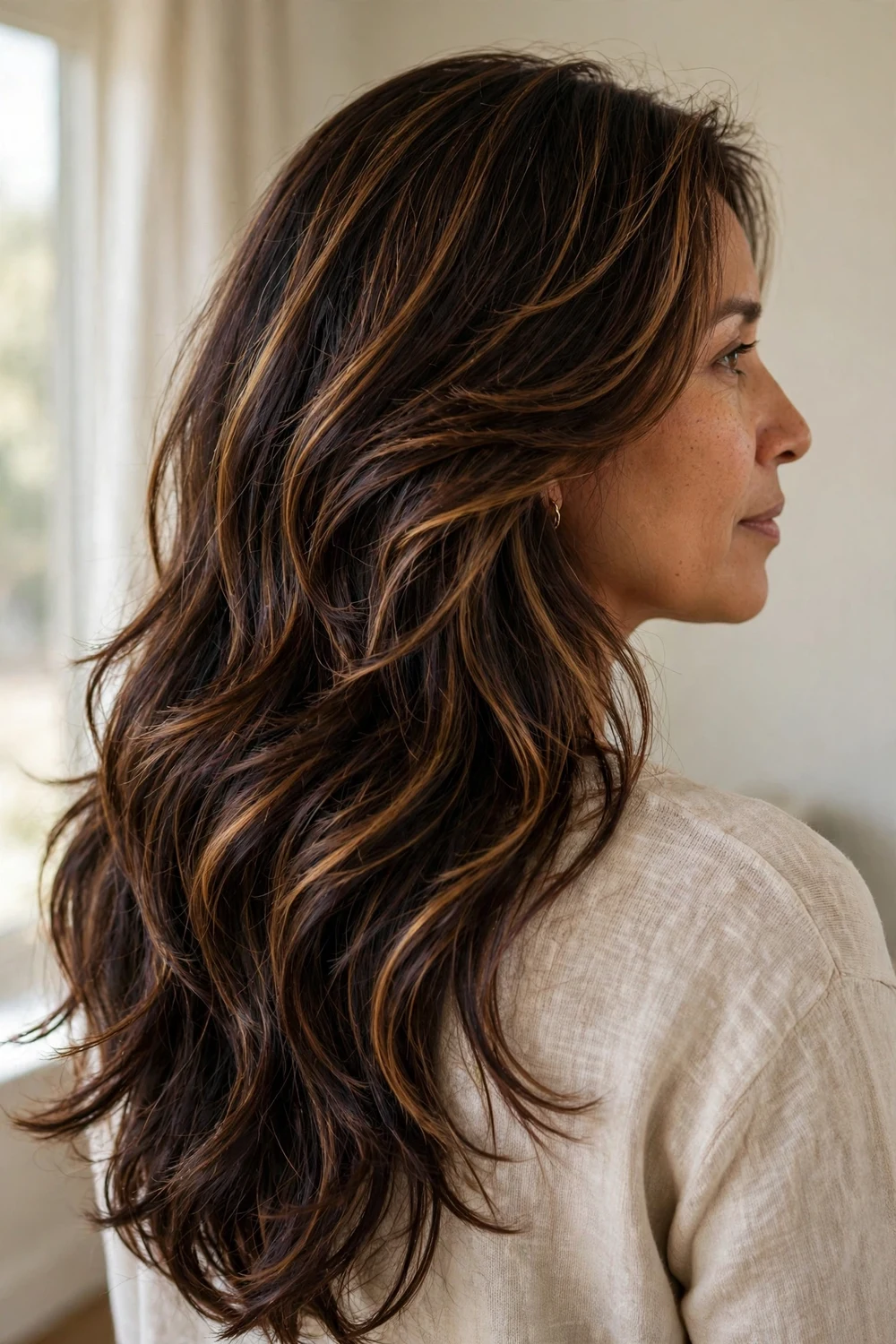
A deep espresso base gets its dimension from warm hazelnut strands painted through the mid-lengths, like ribbons running down the hair. The contrast is noticeable but still natural, and the warm ribbons stop the dark base from looking flat or severe. This suits thick, layered hair with movement, because the layers separate and show each ribbon. Cool skin tones can wear it as long as the ribbons stay in the hazelnut family rather than going full caramel.
Try this: Tousle with a texturizing spray to separate the layers and make the hazelnut ribbons more visible.
8. Cocoa Butter Balayage
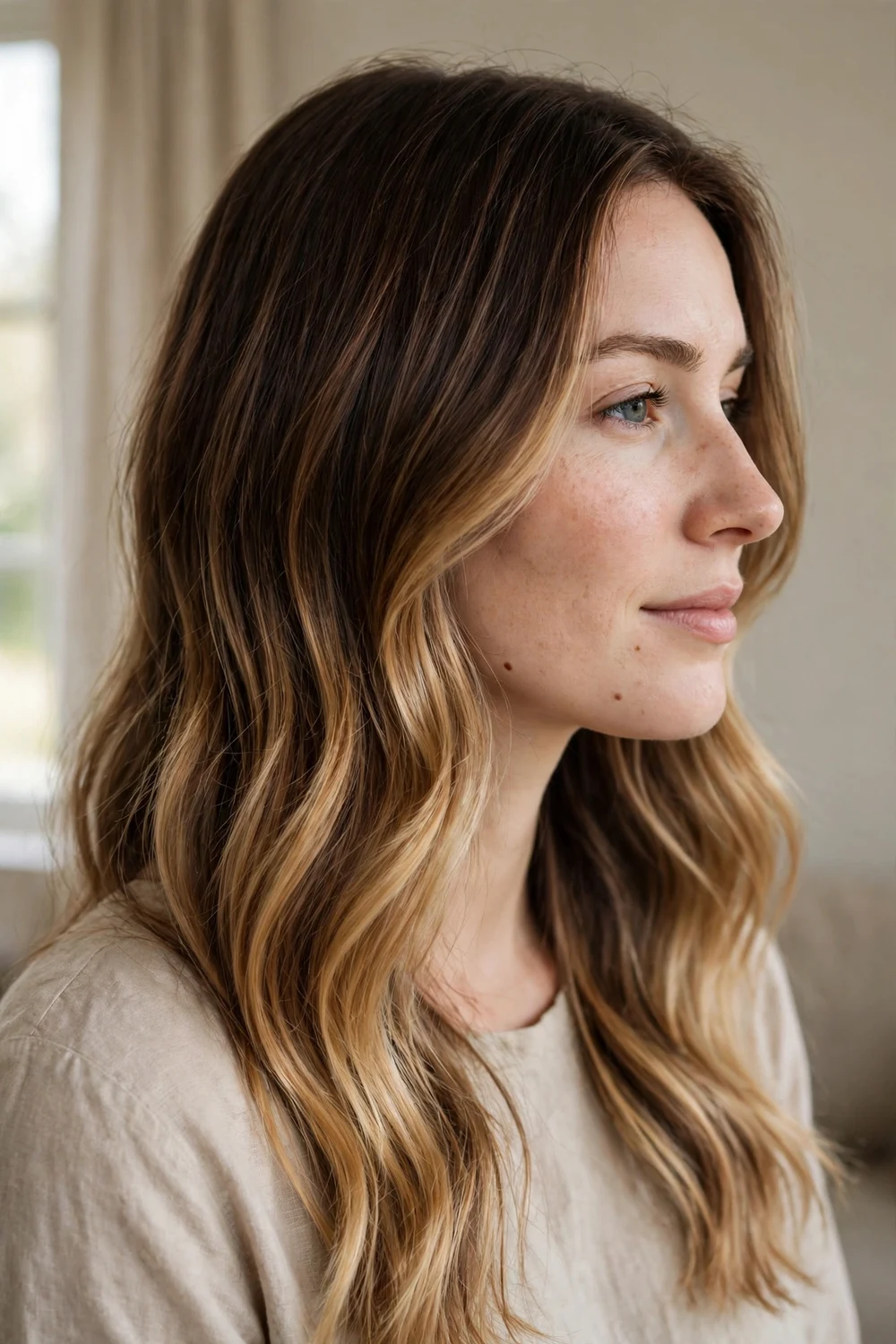
Cocoa butter balayage blends chocolate and golden cocoa tones in a hand-painted technique that melts the lighter color in from the mid-lengths down. There is no harsh root line, so it grows out softly and needs fewer salon visits than foiled highlights. It works best on long hair with soft layers, where the painter has enough length to build a smooth gradient. Keep a deep conditioning mask in your routine, because lightened ends dry out faster than the base.
Try this: Use a sulfate-free shampoo to stop the golden cocoa tones from washing out between appointments.
9. Chocolate Brown with Caramel Melt
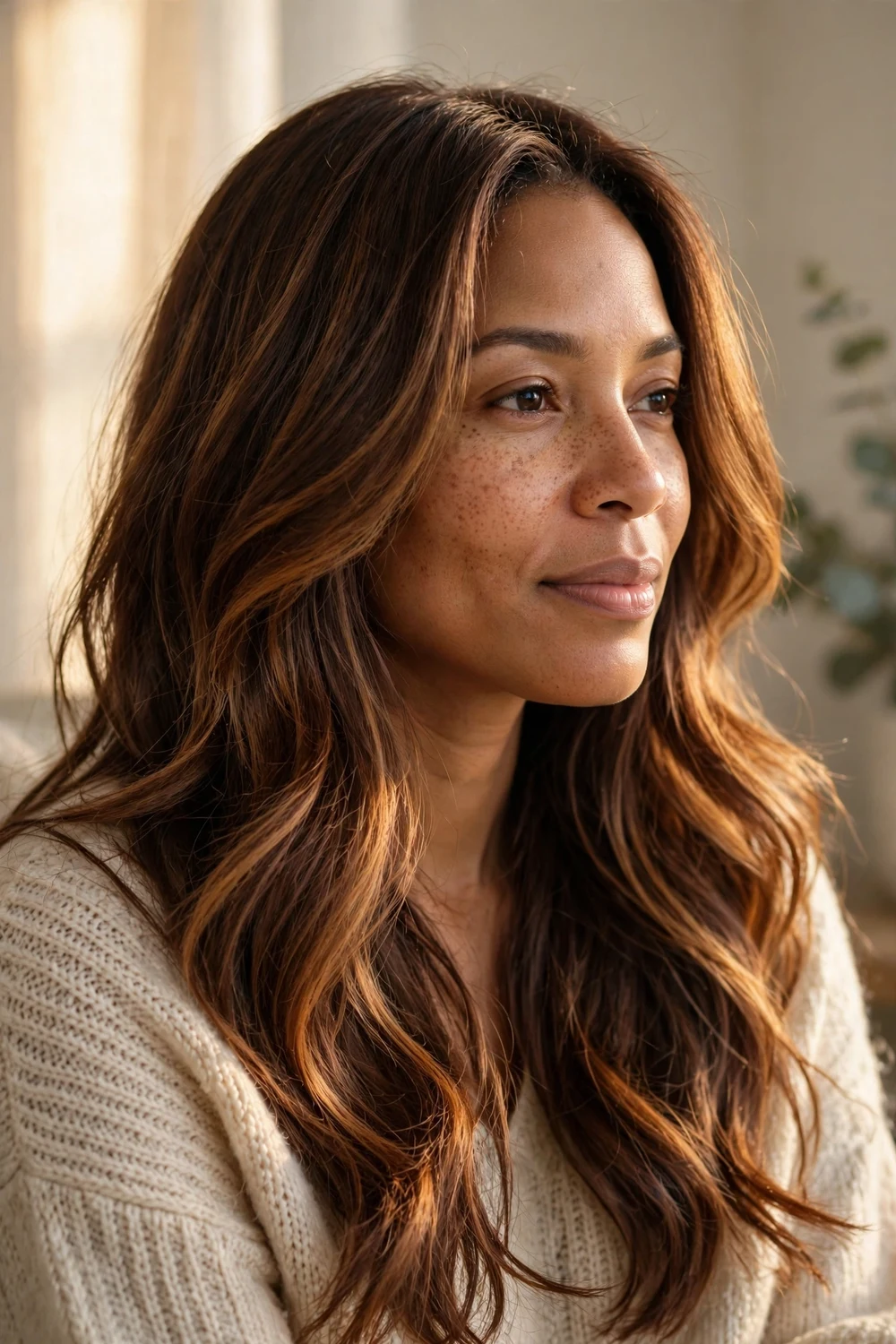
A caramel melt diffuses caramel hues into the chocolate base so smoothly that you cannot tell where one color ends and the other begins. It is softer than chunky highlights and more blended than balayage, giving the whole head a warm, lit-from-within glow. This suits long, layered hair, where the colorist has room to melt the tones down the lengths. The diffused finish also means regrowth is invisible, so this is one of the lowest maintenance warm options.
Try this: Smooth a pea-sized amount of smoothing balm over the mid-lengths to keep the melted blend looking seamless.
10. Dark Brown Hair with Caramel Ribbons
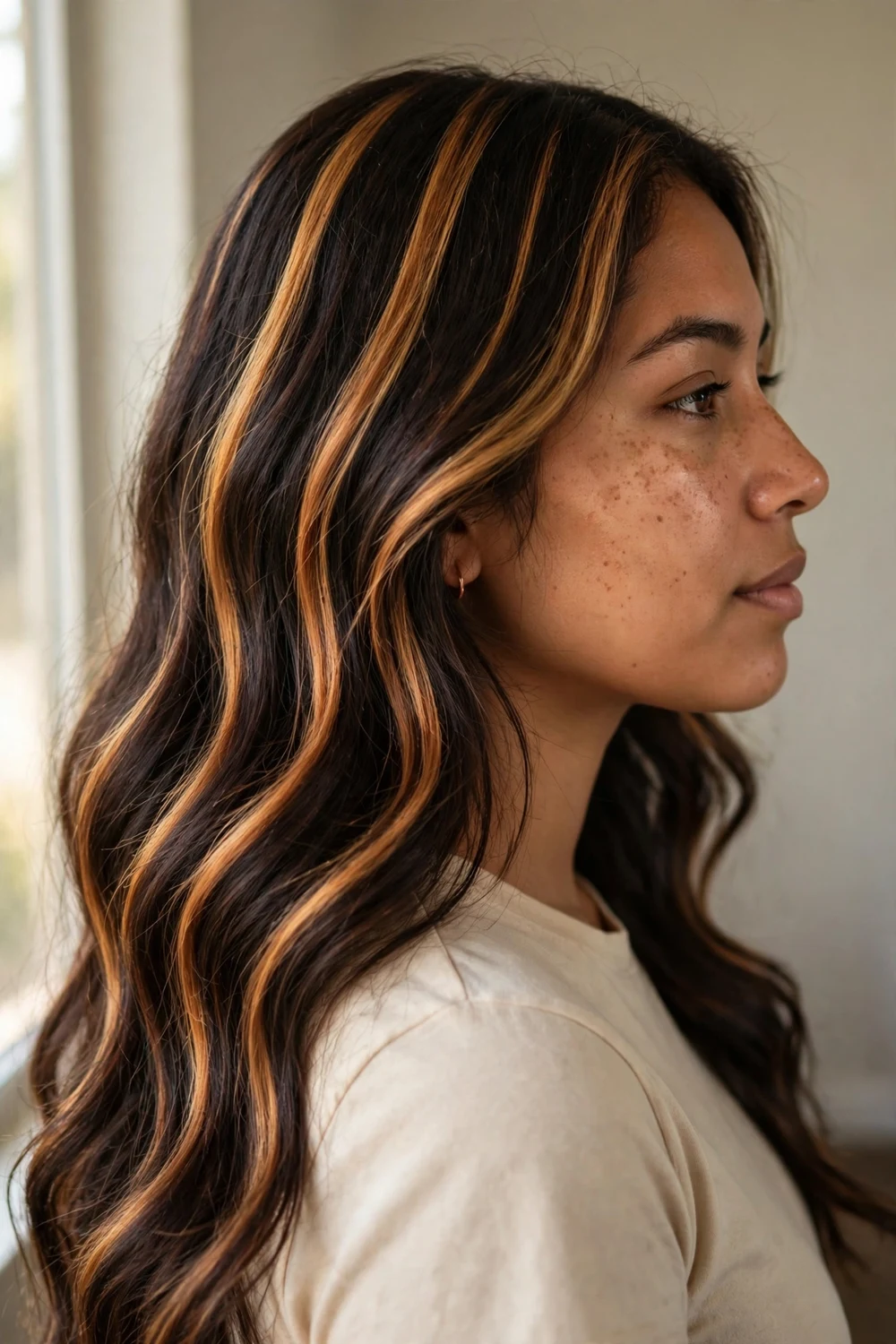
If the melt above feels too soft, ribbons are the bolder answer. Thicker caramel pieces run through dark chocolate brown in a higher contrast placement that makes a clear statement. This works best on dark bases where the caramel can really stand out, and it suits every skin undertone because you can adjust the caramel from cool toffee to warm honey. Fine hair can carry it too, but keep the ribbons fewer and slightly thinner so they do not overwhelm the base.
Try this: Ask for face-framing ribbons first if you want the impact without coloring the whole head.
11. Chocolate Caramel on a Short Cut
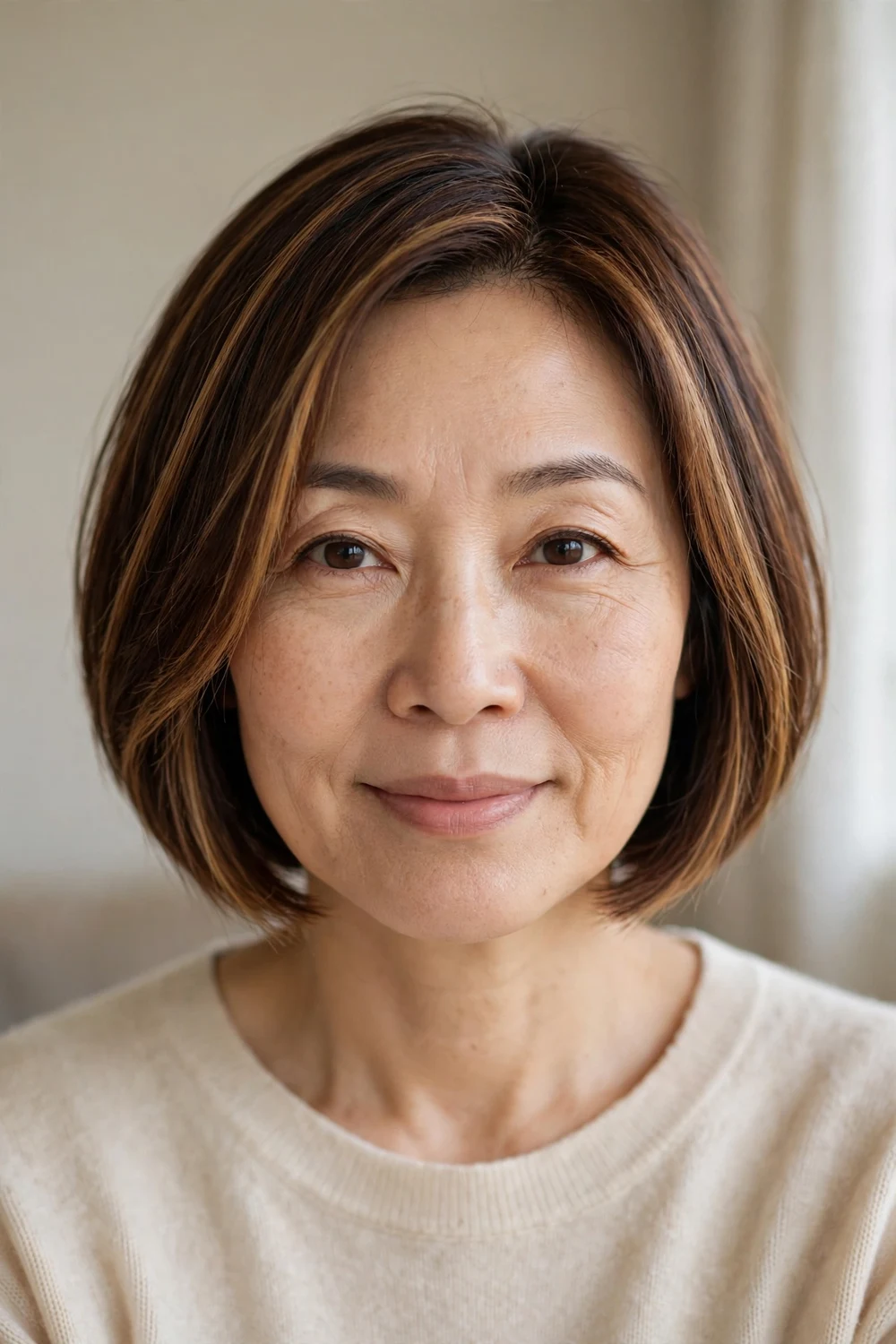
Chocolate brown does not need long hair to make an impression. On a short bob or crop, caramel pieces are placed close to the part and around the face, where they brighten the complexion and make the cut look sharper. The shorter length means less hair to color, so this is quicker and cheaper at the salon than the same technique on long hair. It also grows out gracefully, since short hair gets trimmed often and the color refreshes with each cut.
Try this: Keep the caramel concentrated around the face and crown, where short hair catches the most light.
12. Cherry Chocolate Balayage
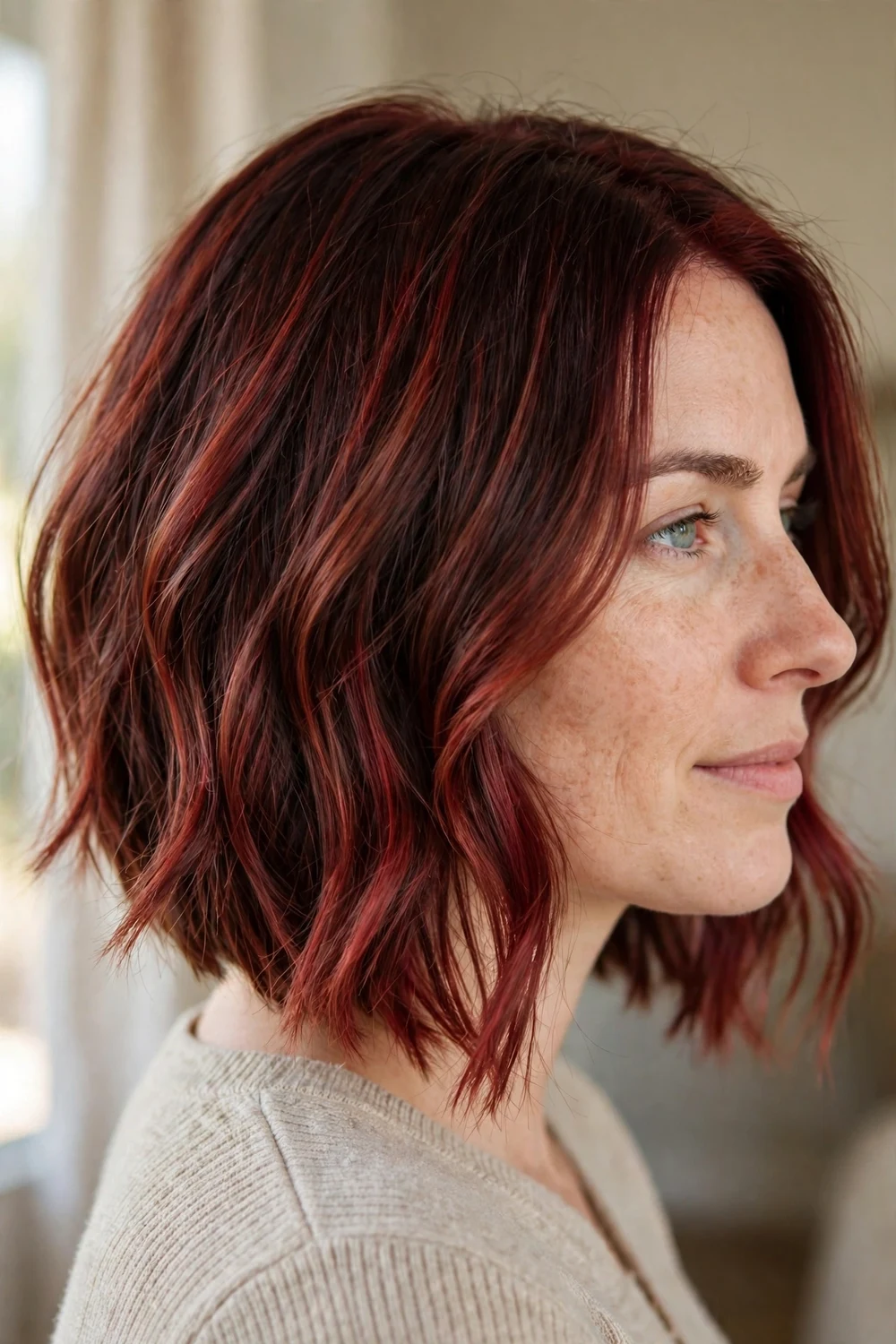
Cherry chocolate adds a red-brown edge to the chocolate family: dark reddish brown at the roots melting into a brighter cherry tone through the ends. It is the boldest idea in this list and suits anyone who wants chocolate brown with more attitude. The balayage placement keeps it wearable because the red tones intensify gradually instead of starting at the scalp. Red tones fade fastest of all, so this one needs color-safe products and cooler wash water from day one.
Try this: Wash with lukewarm water and a color-depositing conditioner every second wash to hold the cherry tone.
13. Ash Brown with Chocolate Lowlights
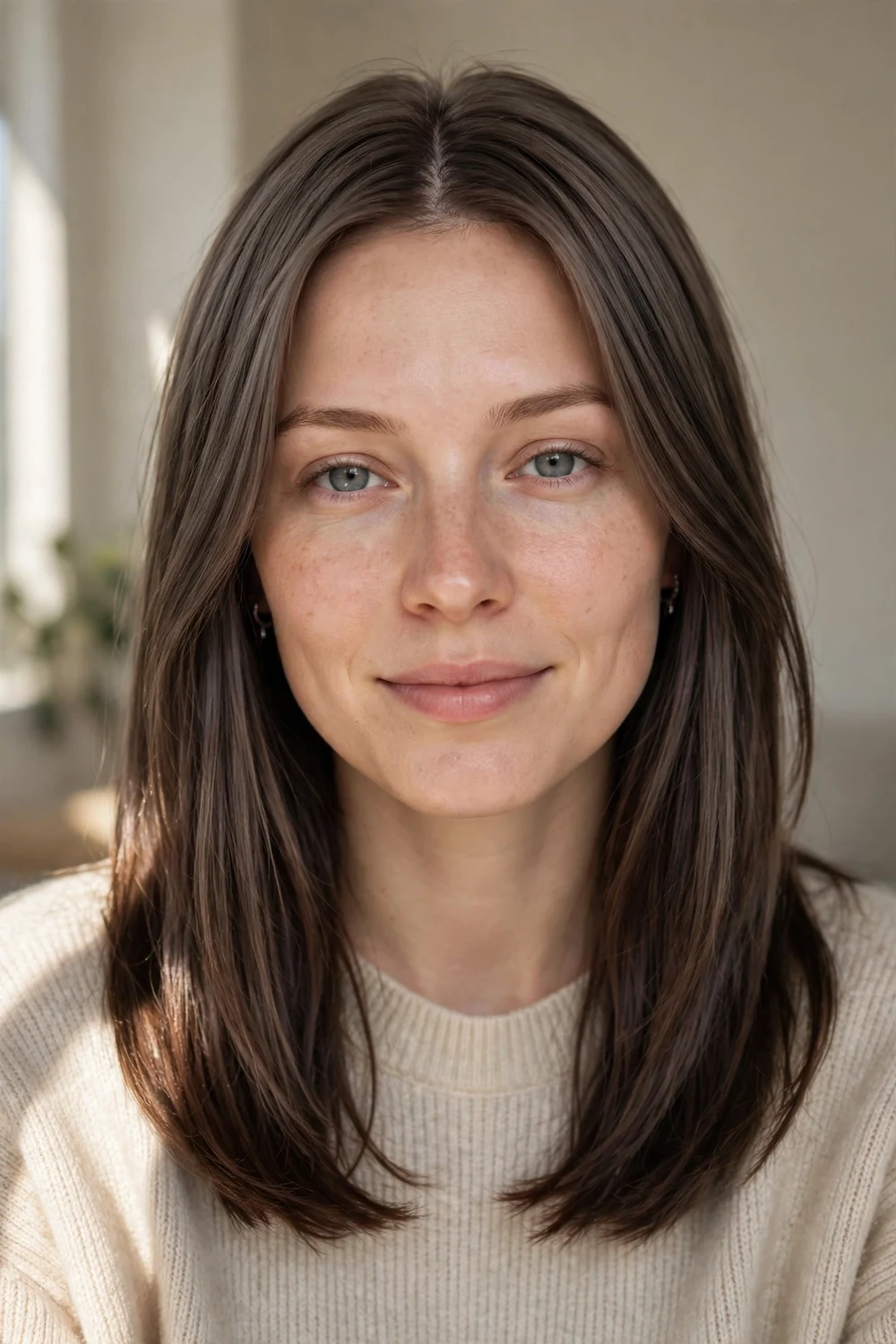
Cool-toned girls get their chocolate brown here. An ash brown base is deepened with chocolate lowlights for a smoky, modern brunette that never pulls red or orange. It suits fine to medium hair that is straight or softly wavy, and it is especially flattering on cool and neutral skin tones. The maintenance rule is simple: purple shampoo once a week keeps the ash tones from warming up, and skip it the week before a gloss so the colorist sees the true base.
Try this: Use a purple shampoo once a week to neutralize any warmth that creeps into the ash tones.
14. Chocolate Brown Ombre
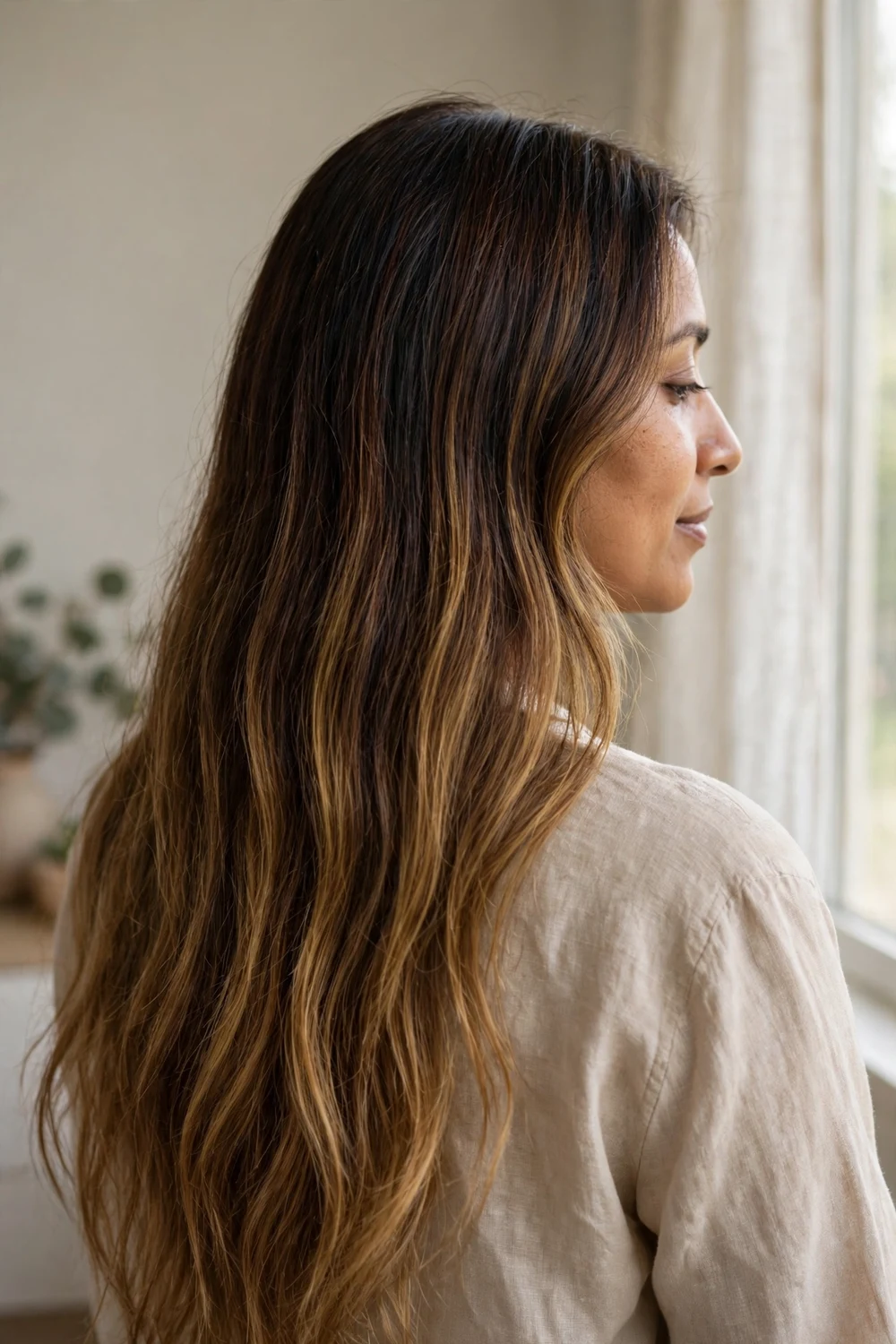
Ombre gives chocolate brown a clean gradient: deep roots melting into lighter golden brown or caramel ends with a visible but soft transition. Unlike balayage, which is painted in pieces, ombre shifts the whole head from dark to light. It suits medium to long hair, because you need enough length for the gradient to develop. The roots stay your natural depth, so grow-out is the whole point and touch-ups are rare. Curling just the ends makes the gradient more obvious.
Try this: Curl only the bottom third of the hair to emphasize the dark to light transition.
15. Warm Chocolate Brown Balayage
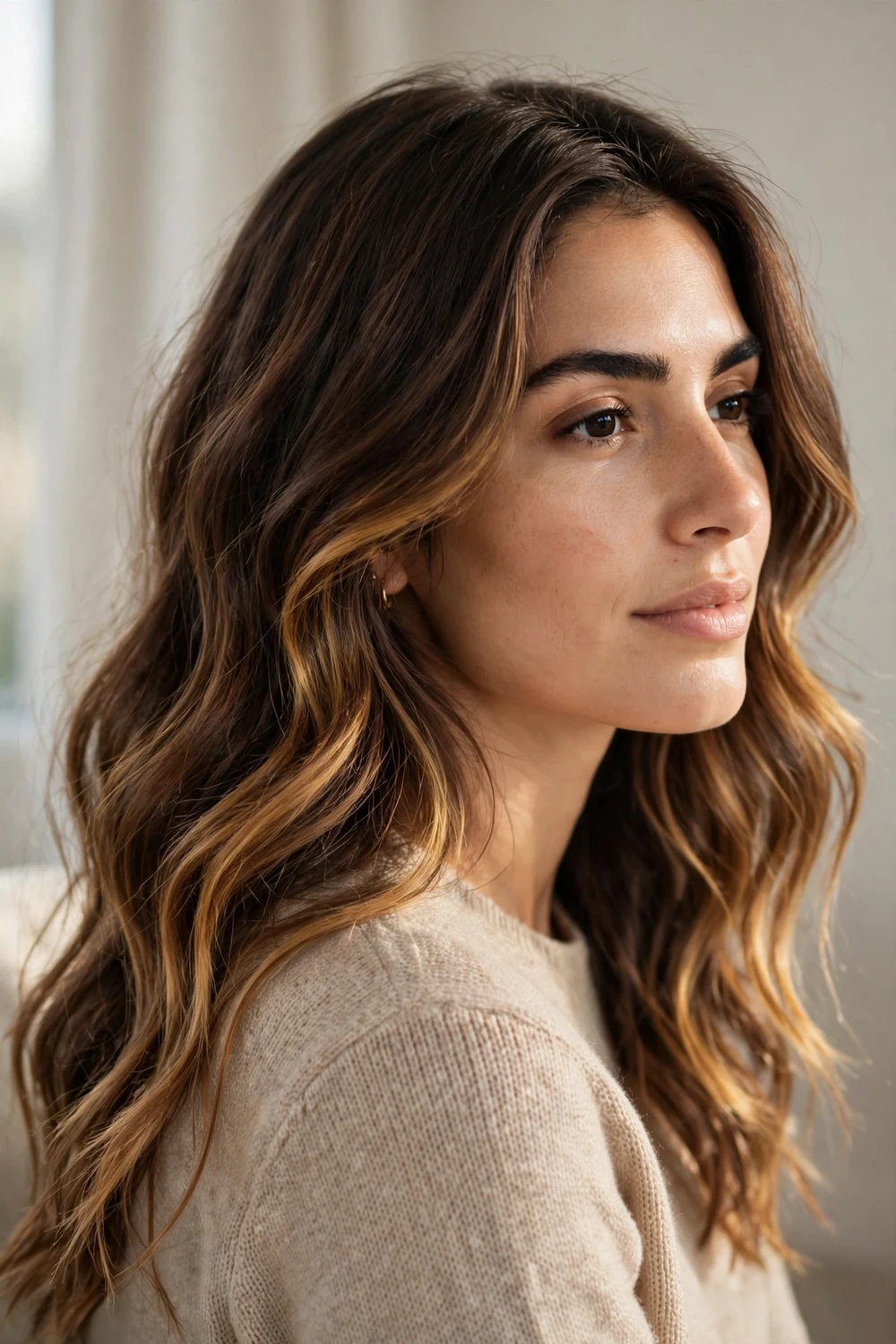
Warm balayage on a chocolate base uses honey and toffee pieces hand-painted through the mid-lengths and ends for a sweet, glowing finish. It reads warmer than the cocoa butter version above, with more obvious golden pieces catching the light. This is a strong pick for warm and olive skin tones, and the painted placement means the roots stay dark and natural. Because the lightest pieces sit at the ends, ask your colorist to keep them healthy with a bond-building treatment during the service.
Try this: Style with soft bends instead of tight curls so the warm pieces blend rather than stripe.
16. Light Chocolate Brown
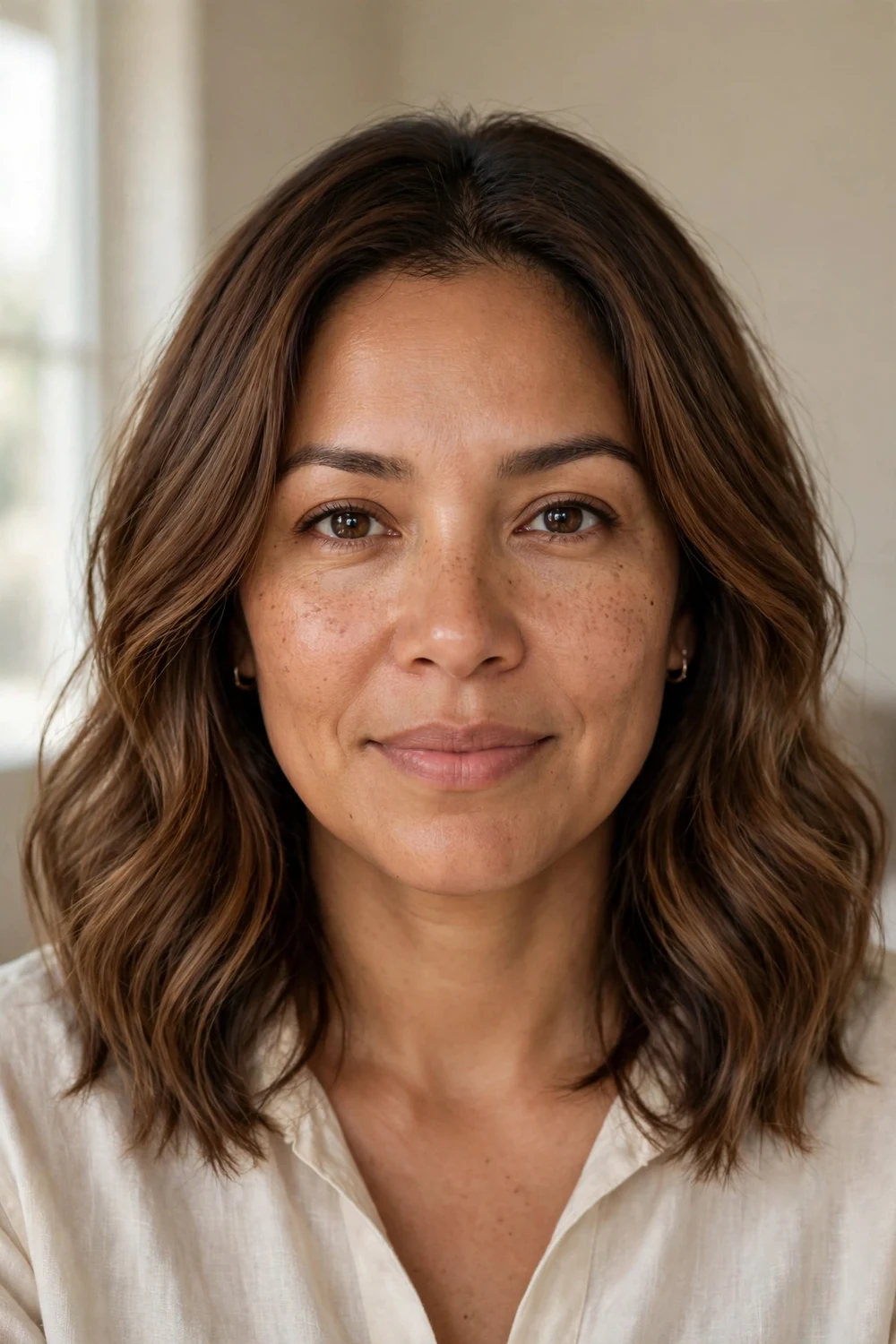
Light chocolate brown sits a level or two above the classic version, a medium brown with warm cocoa undertones that never goes brassy. It is a good middle ground if dark chocolate feels too heavy but you do not want to go blonde. The shade flatters medium and deep skin tones especially well, and it shows shine better than darker browns because more light penetrates the hair. Shadow roots, where the natural root is left slightly darker, make this shade almost maintenance free.
Try this: Ask for a shadow root about one level darker than the ends to get a smooth grow-out.
17. Auburn Chocolate Color
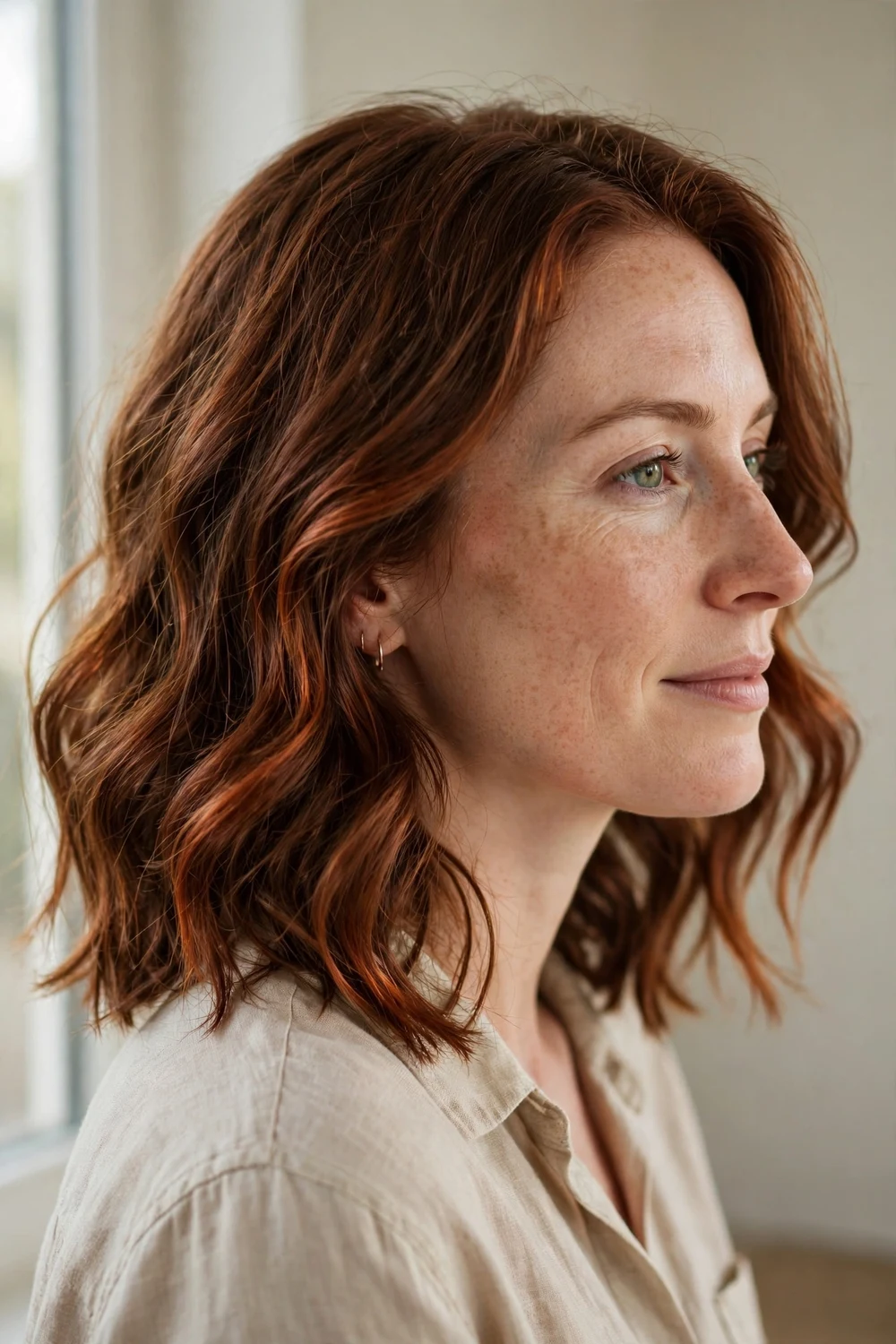
Auburn chocolate mixes copper and red tones into the brown base for the warmest version of this shade. It suits warm skin tones and green or hazel eyes, where the red tones pull out warmth in the complexion. On curly or wavy hair the red dimension shows in every bend, which makes this one of the most dimensional all over shades in the list. Plan on gloss refreshes every 6 weeks, because warm red-brown tones lose their intensity faster than neutral browns.
Try this: Define curls or waves with a lightweight curl cream to show off the red dimension in the color.
18. Sleek Chocolate Brown Bob
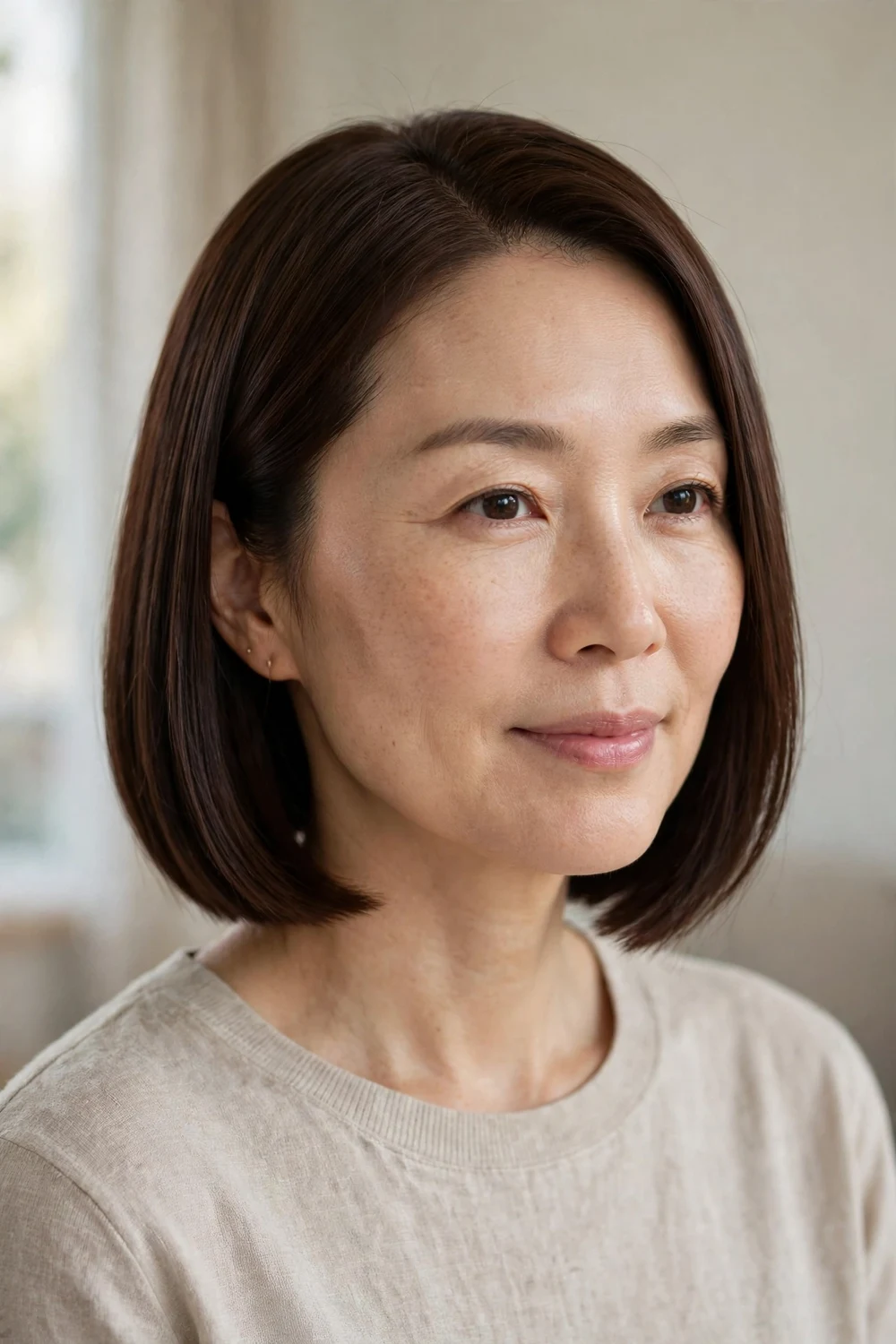
The bob is the cut that lets chocolate brown speak for itself. A chin to jaw length bob with clean lines shows the color as one glossy sheet, and the dark shade makes the sharp edges look even more precise. It suits straight or straightened hair best, since the sleek finish is the whole point. This is also a practical pick: the short length means less product, faster styling, and cheaper color services than long hair in the same shade.
Try this: Flat iron in small sections and finish with a shine spray for a mirror-like finish.
19. Chocolate Brown Textured Pixie
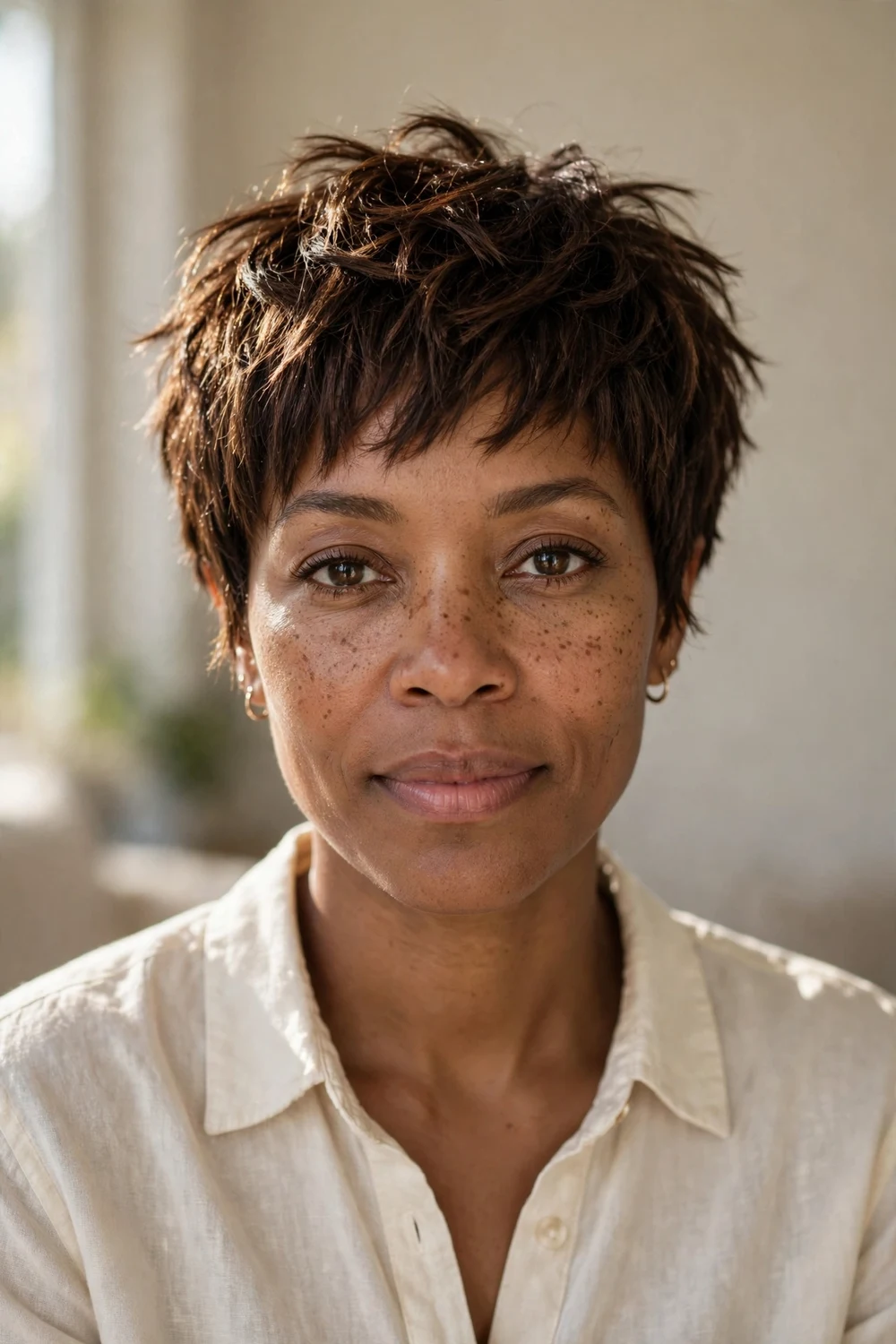
A textured pixie in chocolate brown is low effort with high impact. The choppy layers catch light at different angles, which keeps the dark color from looking flat on very short hair. It suits oval, heart, and long face shapes, and it works on straight to wavy textures that can hold piecey separation. Styling takes minutes: a little paste through the top layers is usually enough. The cut needs a trim every 4 to 5 weeks to keep the shape.
Try this: Rub a pea-sized amount of matte paste between your fingers and pinch through the top layers for separation.
20. Chocolate Brown Shag with Wispy Bangs
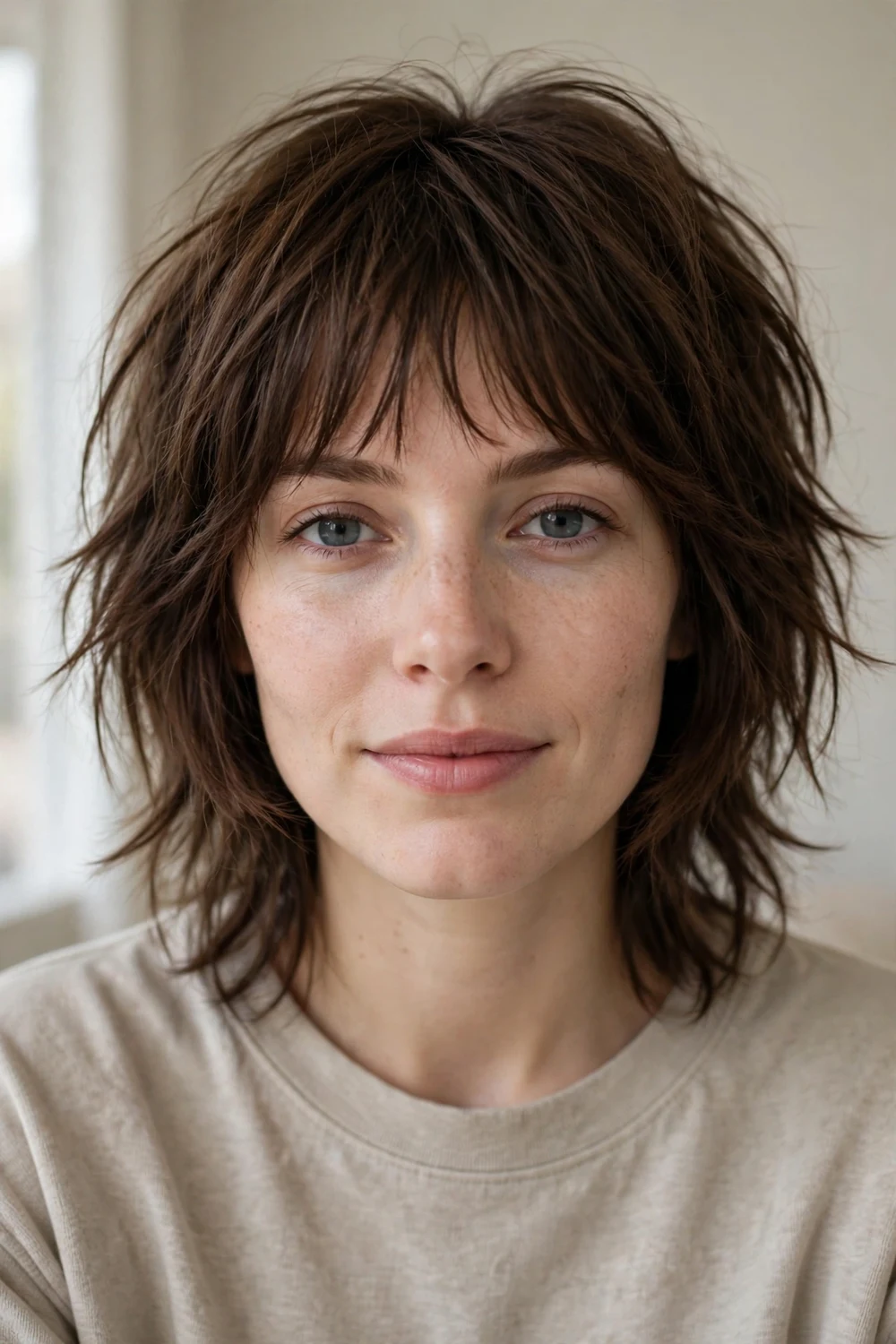
The shag brings lived-in texture to chocolate brown, with choppy layers and wispy bangs that break up the dark shade and add movement. It suits almost every face shape because the layers can be adjusted around the cheekbones and jaw. This cut is forgiving as it grows out, since the shaggy texture hides uneven lengths. Ask for long layers through the crown and piecey ends rather than a blunt perimeter, and keep the bangs wispy so they do not sit heavy on the forehead.
Try this: Scrunch a salt spray into dry hair to build the piecey, undone texture the shag needs.
21. Long Layered Chocolate Brown Waves
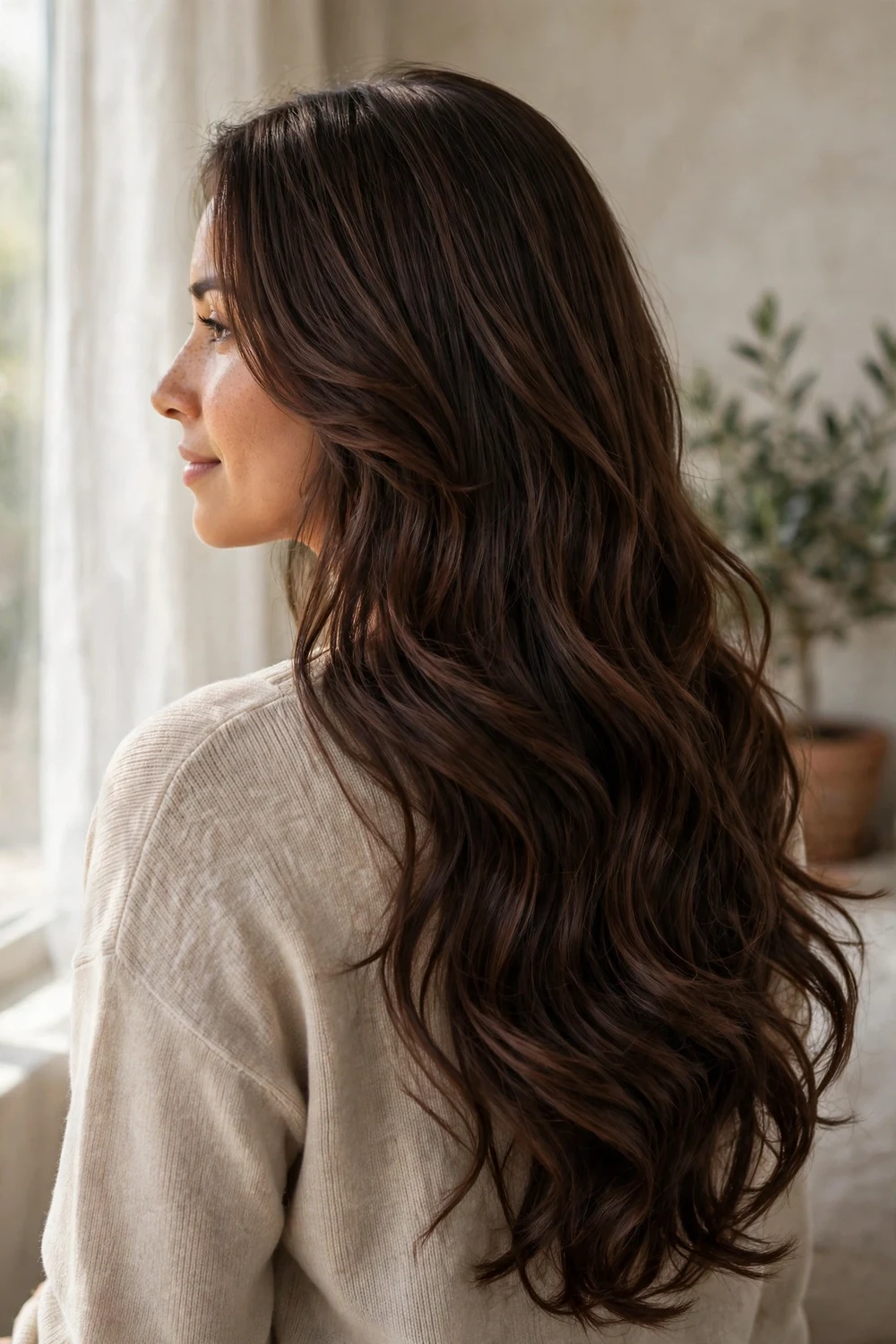
Long layers and chocolate brown are a natural match. The layers create volume and movement while the rich brown gives the whole length a glossy, expensive look. This suits medium to thick hair best, since fine hair can look thin at the ends with too many layers. It is versatile: wear it straight for a sleek finish or add waves for body. Long hair in all over chocolate needs the most product and the longest salon appointments, so budget for both before you commit.
Try this: Blow dry with a round brush, flipping the ends under slightly, for full-bodied movement.
22. Chocolate Brown Vintage Curls
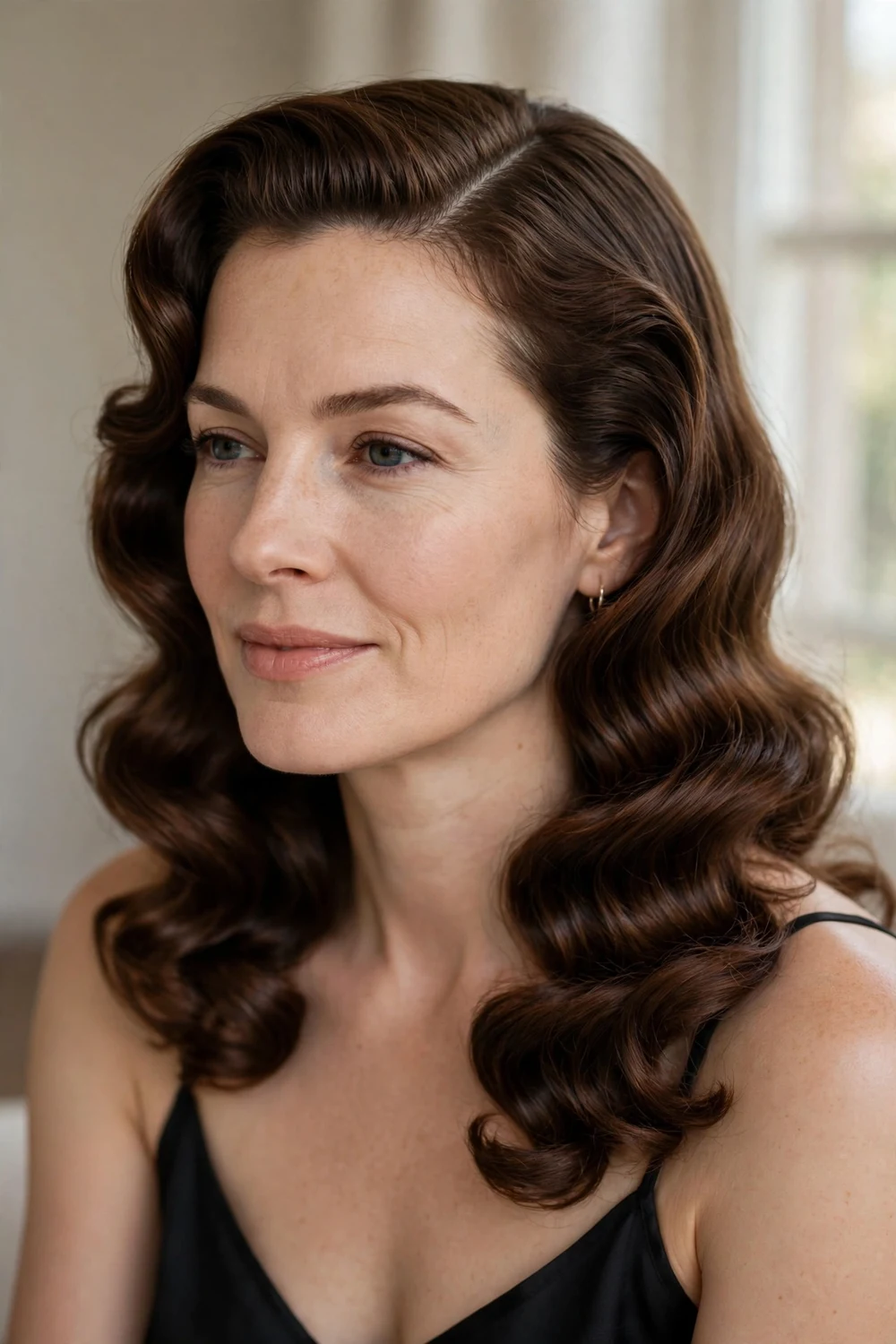
Vintage curls give chocolate brown an old Hollywood finish: sculpted, glossy waves with a deep side part that catch light like polished wood. The structured shape shows off the color’s depth better than loose beachy waves, because every curve reflects light in the same direction. It suits medium to long hair and works for events where you want a formal, finished look. Pin curls set overnight give the most authentic result, but a curling iron and a good brush-out get you close.
Try this: Set curls with pin curls or a 25mm iron, let them cool fully, then brush out gently into sculpted waves.
23. Chocolate Brown Voluminous Blowout
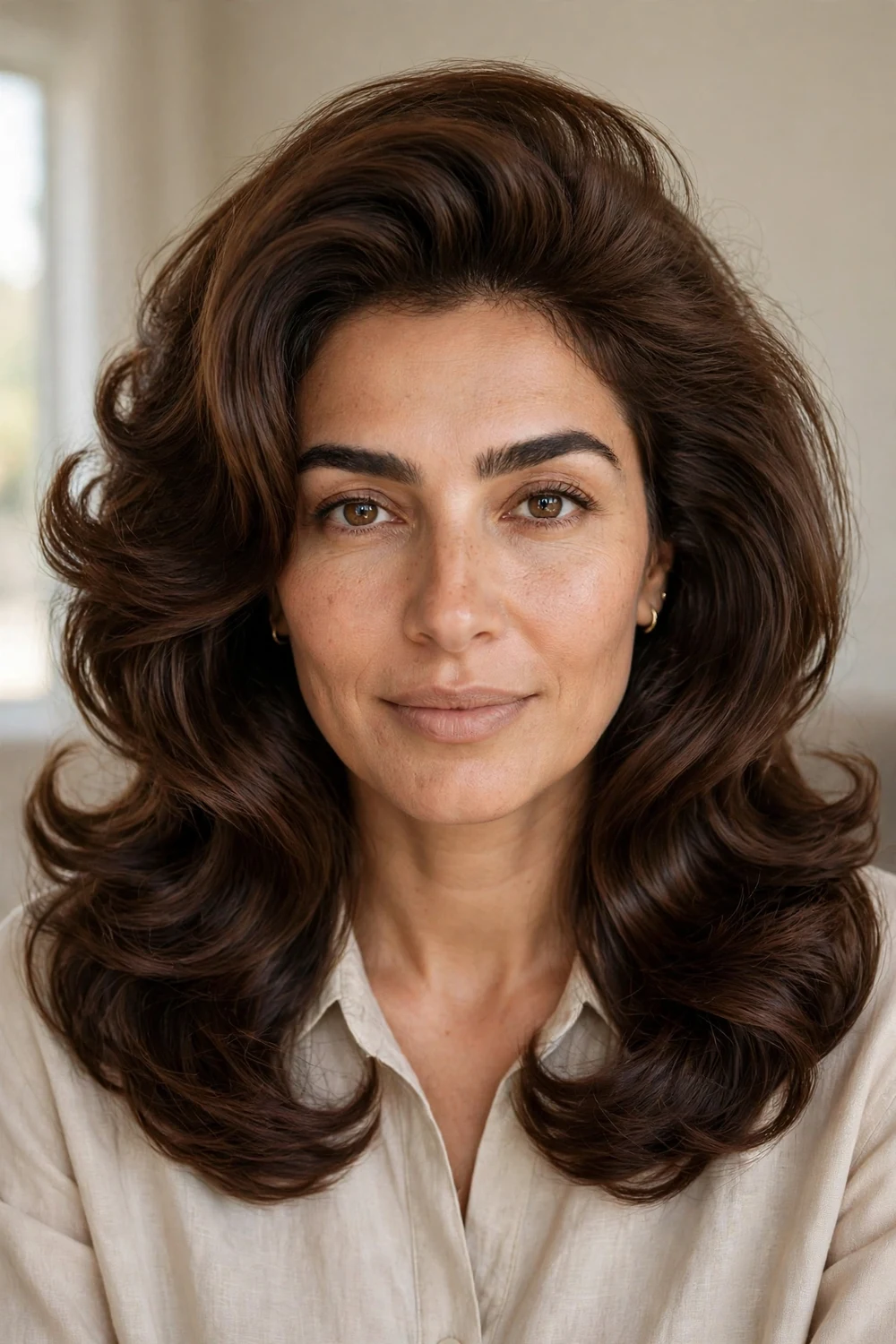
A voluminous blowout is the salon-fresh look that makes chocolate brown look its richest: full roots, smooth lengths, and ends that curve with body. The round-brush technique builds shine into the hair, which deepens the color visually. It works on medium to long hair with enough density to hold volume; very fine hair may fall flat within hours. To make it last, blow dry on fully dry hair and set each section with a cool shot before moving on.
Try this: Use a large round brush and direct the airflow down the hair shaft for maximum smoothness and shine.
24. Chocolate Brown French Twist
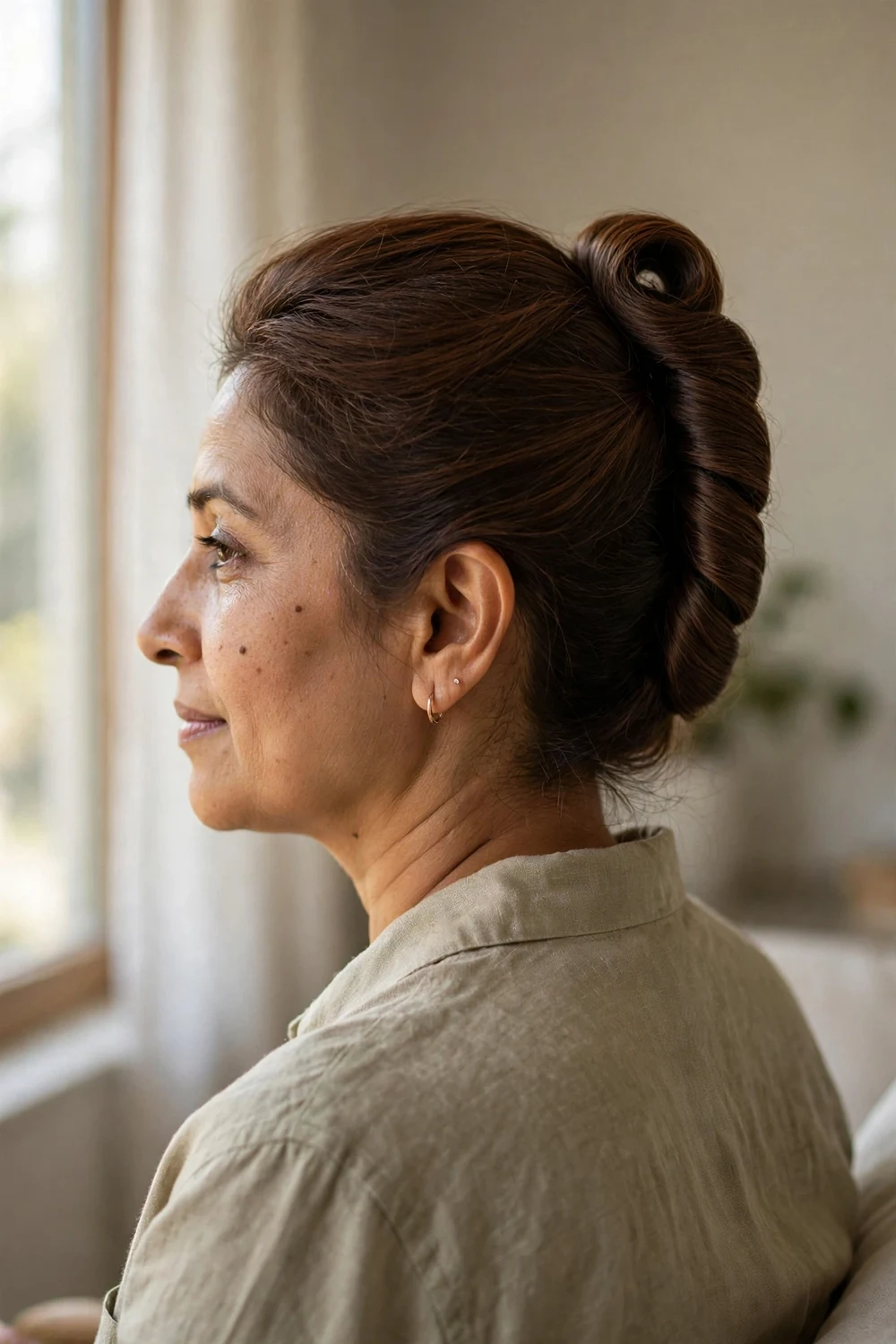
The French twist is the formal updo that shows chocolate brown at its most elegant. The hair is swept up and tucked into a vertical roll, and the smooth surface reflects light across the whole shape. It suits medium to long hair with enough length to fold, and it works straight or with a slight wave for a softer finish. Secure with pins placed in a crisscross pattern so the twist holds through an event. A few face-framing pieces pulled loose keep it from looking severe.
Try this: Tease the crown lightly before twisting to build height that makes the updo look fuller.
25. Chocolate Brown Fishtail Braid
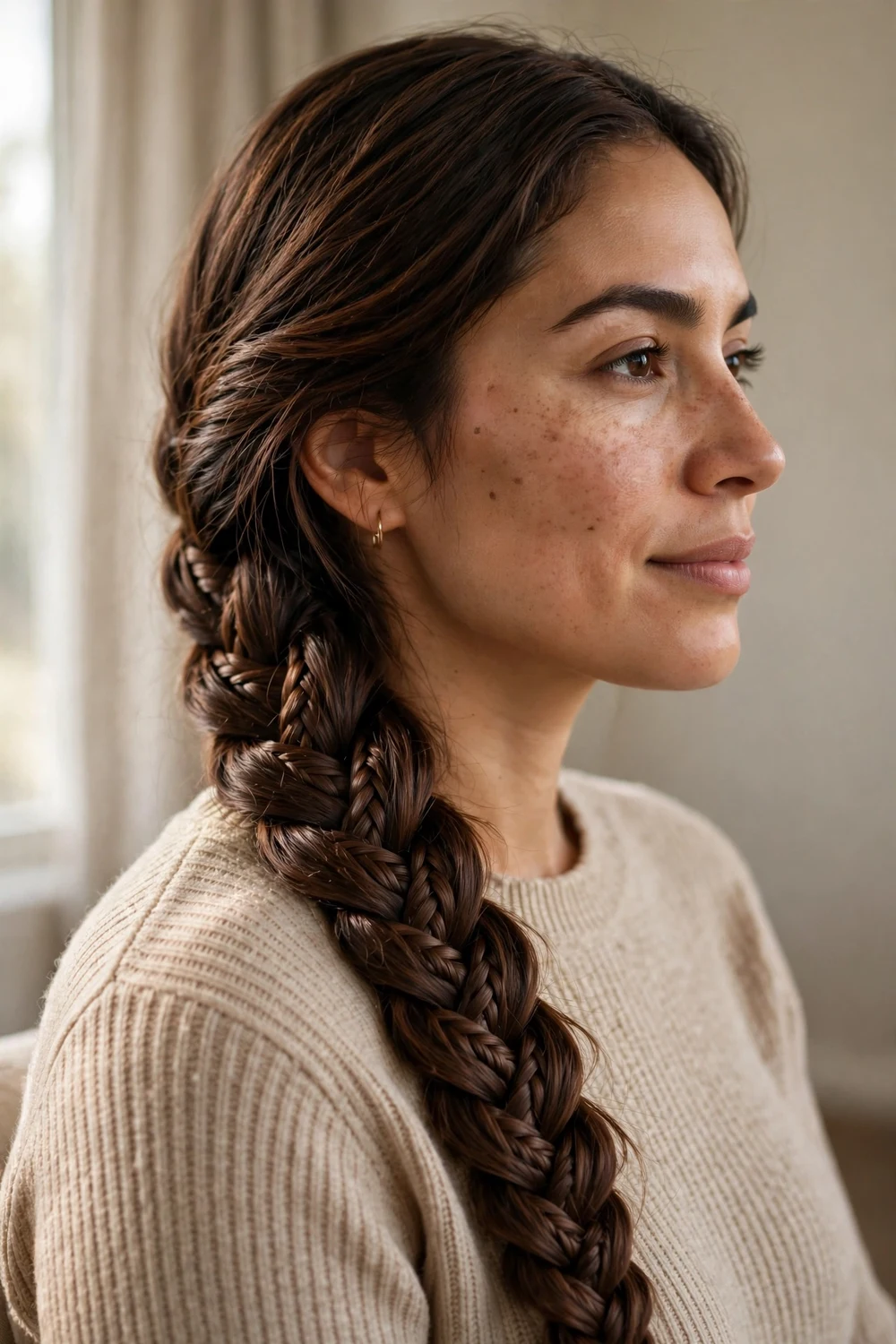
A fishtail braid turns chocolate brown into a texture story. The woven pattern breaks the dark color into small segments that catch light differently, which adds visible dimension even to a single all over shade. It suits medium to long hair and works as an everyday style or a dressed-up one depending on how neat you keep it. Pancaking the braid, gently pulling the edges wider, makes it look thicker and shows more of the color variation. This is also a practical style for second-day hair.
Try this: Braid on slightly dirty hair or with dry shampoo at the roots so the strands grip instead of slipping.
26. Chocolate Brown Twisted Half Updo
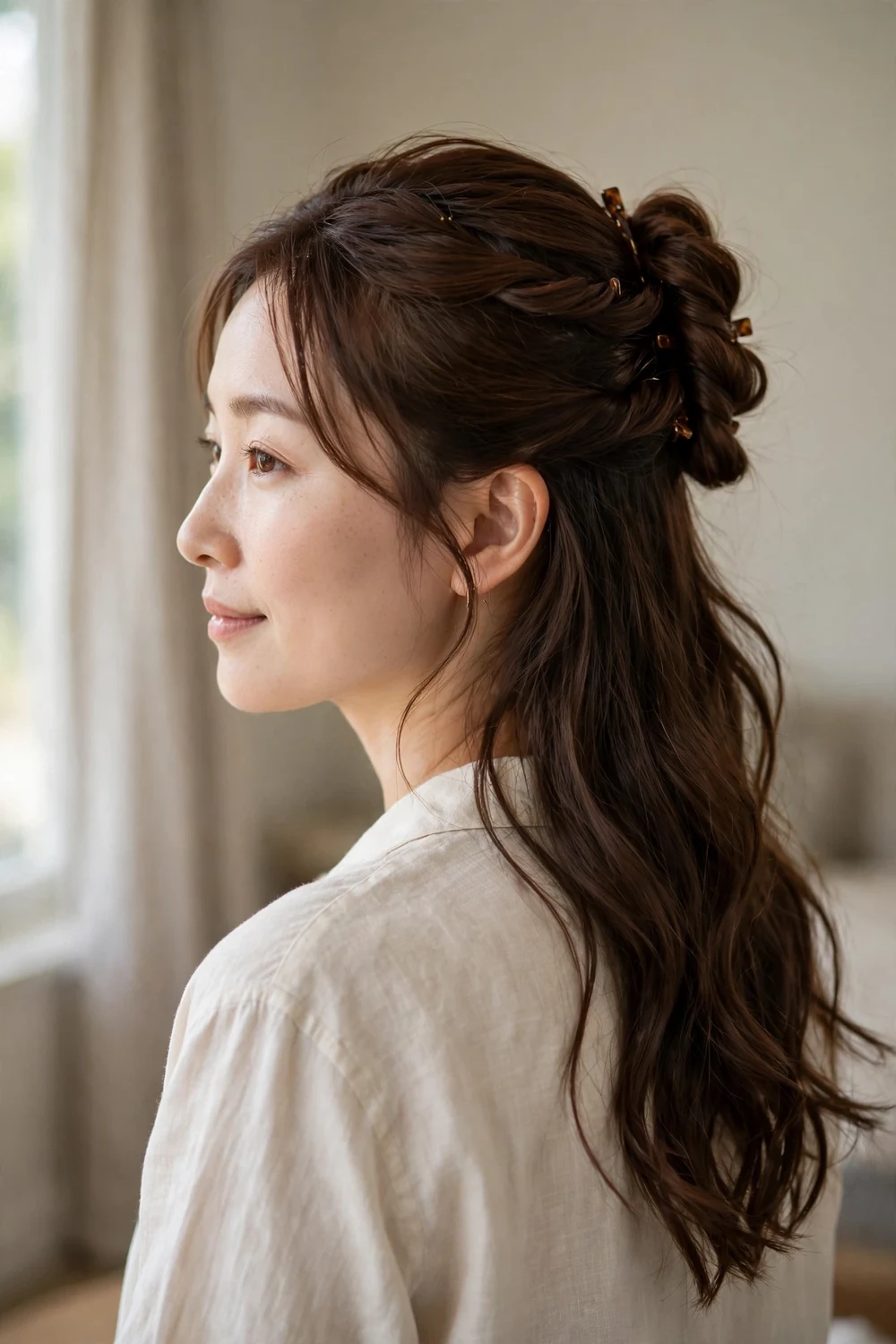
The twisted half updo takes the top half of the hair, twists it back, and pins it, leaving the rest down. It keeps hair out of the face while showing off the chocolate color in the lengths. It suits medium to long hair and works on straight, wavy, or curly textures. For a softer finish, curl the hair first so the pinned section and the loose hair both have texture. This is a reliable pick for weddings and events where you want an updo feel without committing to a full one.
Try this: Twist two sections from each temple toward the back and pin where they meet for a symmetrical finish.
27. Slicked-Back Chocolate Brown
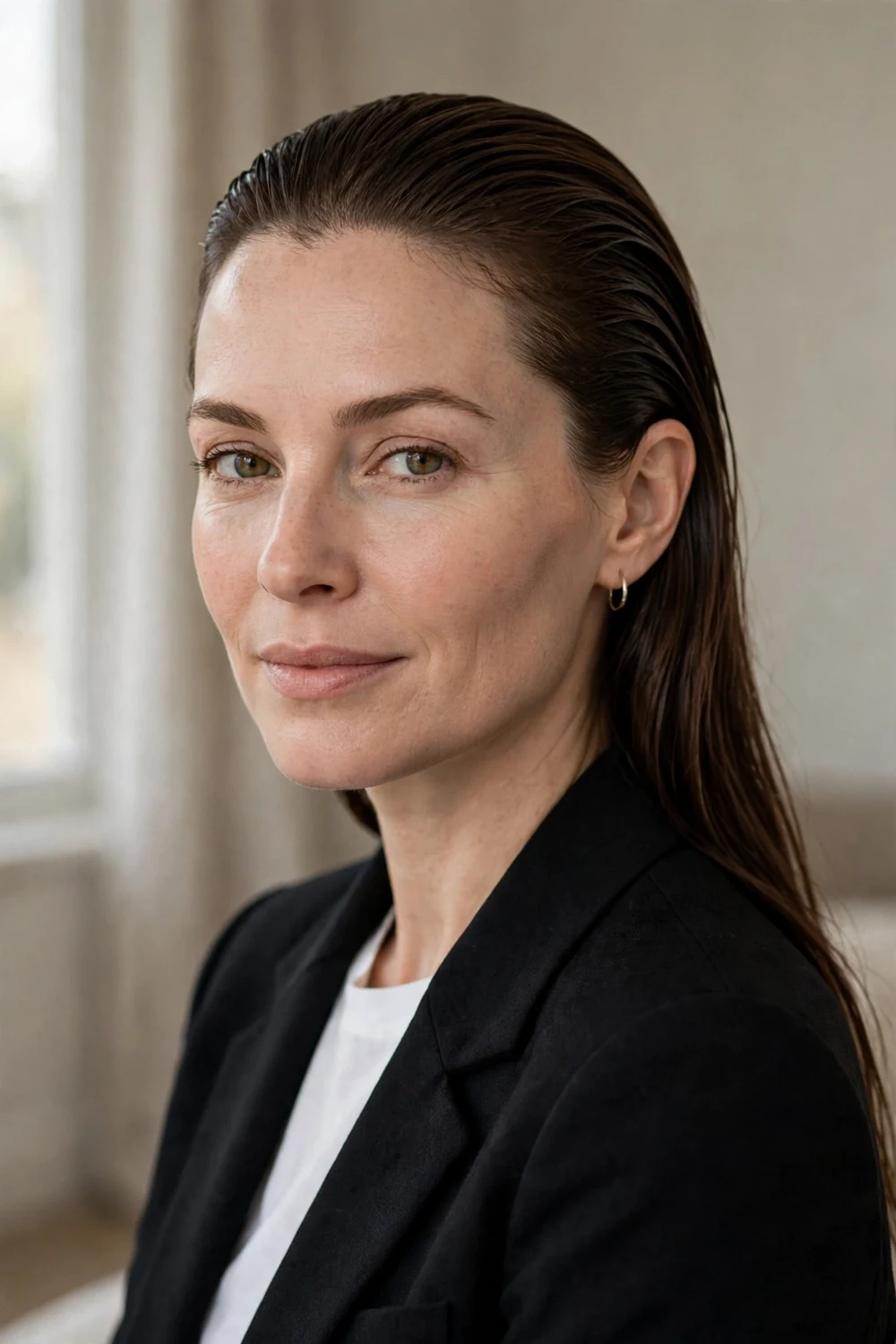
Slicked-back styling gives chocolate brown a sharp, fashion-forward edge. The hair is combed back with gel or cream for a smooth, wet-look finish that makes the dark color look deep and glossy. It suits straight hair best and works on medium to long lengths. The look is simple to do but unforgiving: every bump shows, so work the product through evenly from roots to mid-lengths. It is a strong option for evenings and events rather than everyday wear.
Try this: Apply a strong-hold gel to damp hair and comb straight back, then let it air dry for the sleekest result.
28. Chocolate Brown Angled Bob
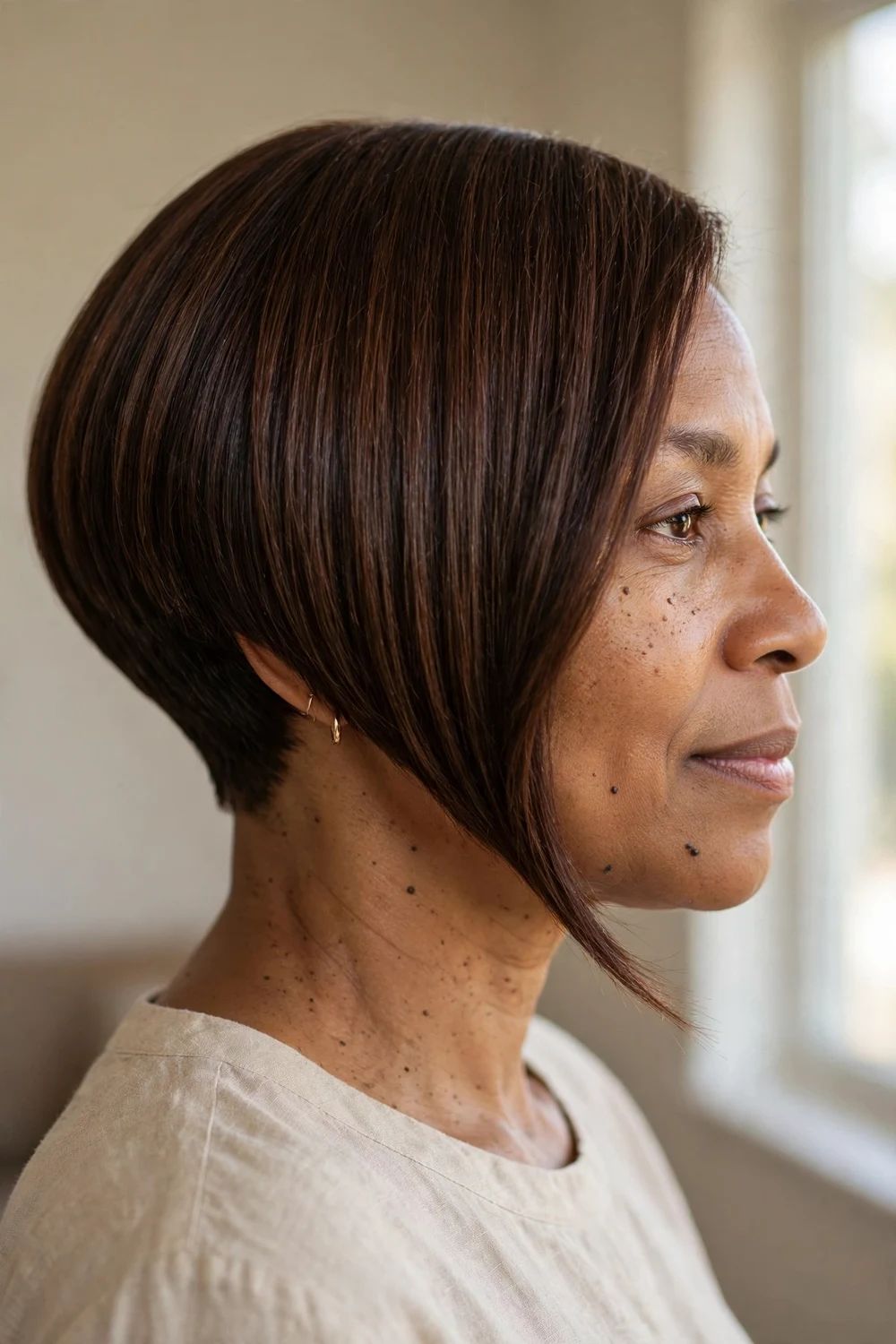
An angled bob cuts the hair shorter at the back and longer toward the front, and chocolate brown makes the diagonal line look even more dramatic. The glossy dark shade emphasizes the shape, while the longer front pieces frame the face and slim rounder face shapes. It suits straight to wavy hair with medium density. The cut needs trims every 6 weeks to keep the angle sharp, but daily styling is minimal: blow dry smooth and tuck one side behind the ear.
Try this: Blow dry the front pieces forward and under to emphasize the angled silhouette.
29. Chocolate Brown Beach Waves
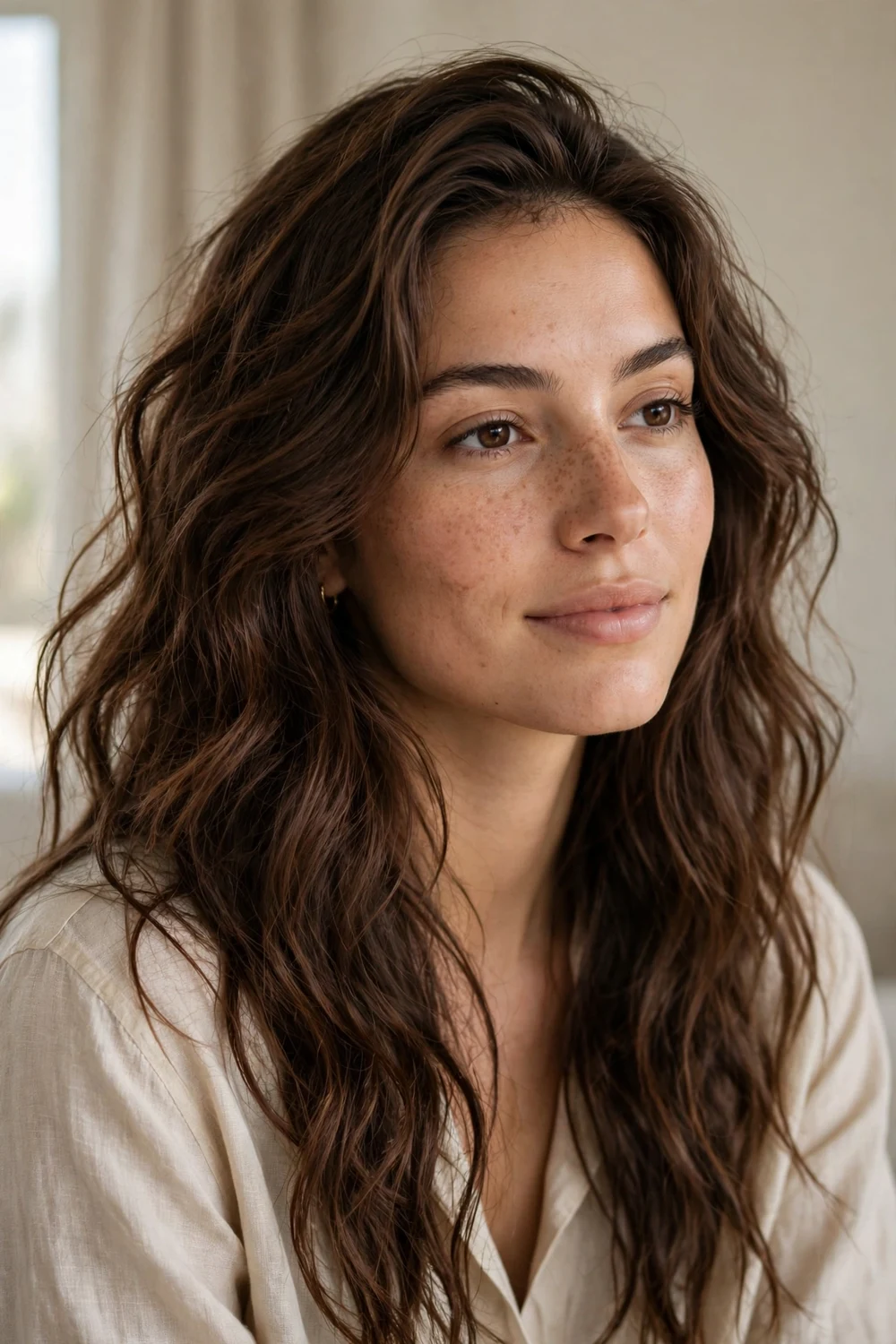
Beach waves give chocolate brown a relaxed, sun-warmed feel. The tousled texture breaks up the dark shade so it reads lighter and more casual than a sleek finish. It suits medium to long hair and works on natural waves or waves added with a flat iron. The key is imperfection: alternate the direction of each wave and leave the ends straight for that undone look. A salt spray adds grit and separation that make the waves last longer.
Try this: Twist 2-inch sections around a flat iron, leave the last inch straight, and shake out with your fingers.
30. Edgy Chocolate Brown Undercut
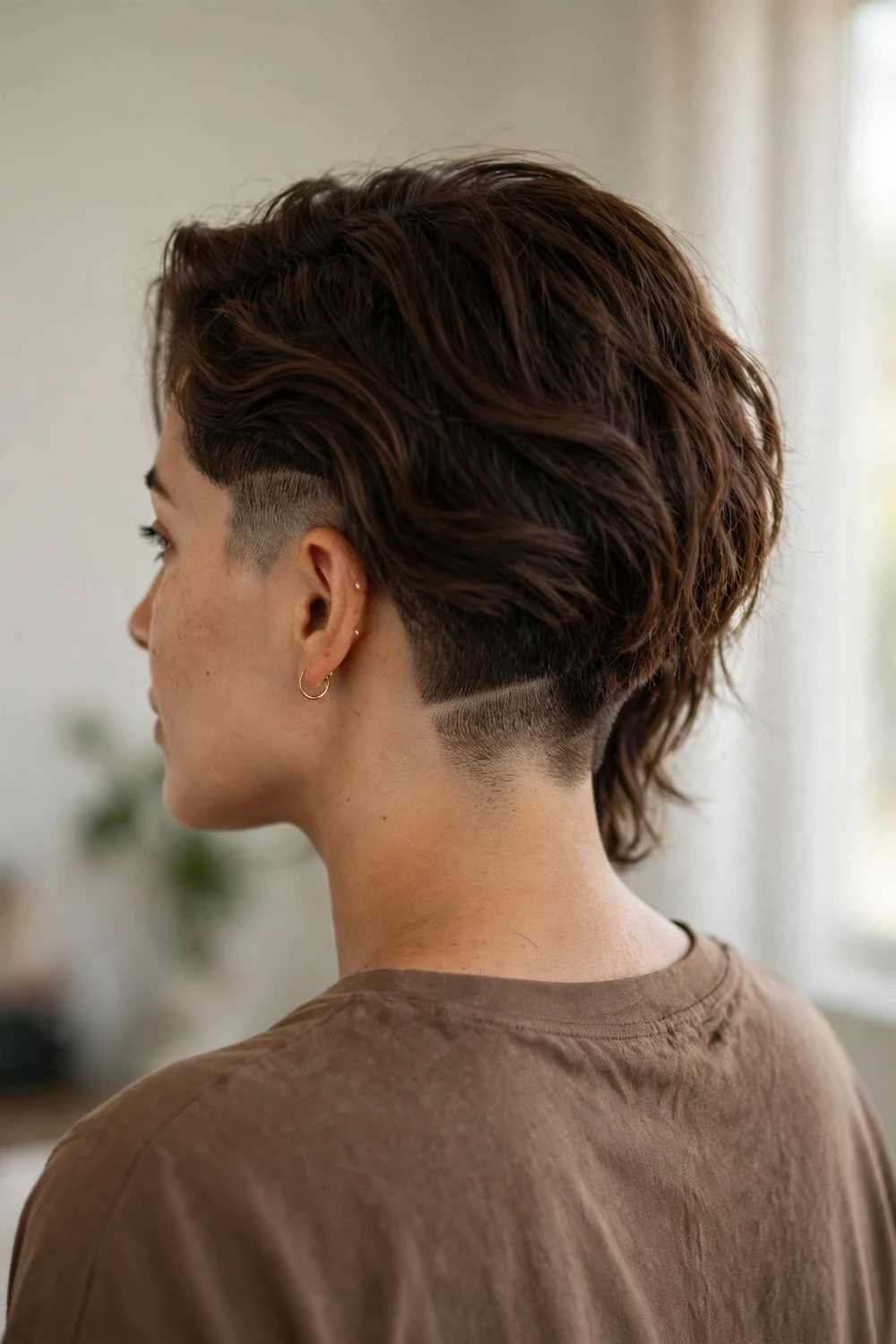
The undercut pairs earthy chocolate brown with a shaved or closely cropped section, usually at the nape or one side. The contrast between the soft, rich color on top and the sharp undercut makes the top hair look thicker and gives the whole style an edge. It suits thick hair best, because removing weight underneath makes the top layers easier to manage. Keep the undercut trimmed every 3 to 4 weeks so the line stays clean as it grows.
Try this: Ask for a disconnected undercut at the nape so you can hide it under the top layers for work and show it off after hours.
Chocolate Brown Hairstyles Comparison at a Glance
| Style | Best For | Maintenance | Salon Visit |
|---|---|---|---|
| Milk Chocolate Curls | Curly or wavy hair, warm skin | Medium | Every 6 weeks |
| Rich Espresso All Over | Straight or wavy hair, cool skin | High | Every 4 to 6 weeks |
| Chocolate with Golden Highlights | Wavy or layered hair | Medium | Every 8 weeks |
| Deep Brown Waves | Medium to long hair | Low | Every 6 weeks |
| Light Brown Highlights | Medium to thick hair, all ages | Medium | Every 8 weeks |
| Mocha-Toned Chocolate | All textures and skin tones | Medium | Every 6 to 8 weeks |
| Espresso with Hazelnut Ribbons | Thick layered hair | Medium | Every 8 weeks |
| Cocoa Butter Balayage | Long layered hair | Low | Every 10 to 12 weeks |
| Chocolate with Caramel Melt | Long layered hair | Low | Every 10 to 12 weeks |
| Caramel Ribbons | Dark bases, bold contrast | Medium | Every 8 weeks |
| Chocolate Caramel, Short Cut | Short hair, quick service | Low | Every 6 weeks |
| Cherry Chocolate Balayage | Bold looks, warm skin | High | Every 6 weeks |
| Ash Brown, Chocolate Lowlights | Fine to medium hair, cool skin | Medium | Every 6 to 8 weeks |
| Chocolate Brown Ombre | Medium to long hair | Low | Every 12 weeks |
| Warm Chocolate Balayage | Warm and olive skin | Low | Every 10 to 12 weeks |
| Light Chocolate Brown | Medium and deep skin tones | Low | Every 8 weeks |
| Auburn Chocolate | Warm skin, wavy hair | High | Every 6 weeks |
| Sleek Chocolate Bob | Straight hair, sharp lines | Low | Every 6 weeks |
| Textured Chocolate Pixie | Oval and heart faces | Low | Every 4 to 5 weeks |
| Chocolate Shag, Wispy Bangs | Most face shapes | Low | Every 8 weeks |
| Long Layered Waves | Medium to thick hair | Medium | Every 8 weeks |
| Vintage Chocolate Curls | Events, formal looks | Low | Event styling |
| Voluminous Blowout | Medium to long dense hair | Low | Weekly or event |
| Chocolate French Twist | Formal events | Low | Event styling |
| Chocolate Fishtail Braid | Medium to long hair | Low | At home |
| Twisted Half Updo | Weddings and events | Low | At home |
| Slicked-Back Chocolate | Evenings, straight hair | Low | At home |
| Chocolate Angled Bob | Round faces, straight hair | Low | Every 6 weeks |
| Chocolate Beach Waves | Medium to long hair | Low | At home |
| Edgy Chocolate Undercut | Thick hair | Medium | Every 3 to 4 weeks |
How to Choose the Right Chocolate Brown for You
Start with your skin undertone. Look at the veins on your wrist in natural light: blue or purple veins usually mean cool undertones, green veins mean warm, and a mix means neutral. Cool undertones should lean toward espresso, mocha, and ash chocolate. Warm undertones suit golden, caramel, and auburn chocolate. Neutral undertones have the widest choice.
Next, be honest about maintenance. If you visit the salon every month already, an all over rich chocolate is easy to keep up. If you go twice a year, pick balayage, a melt, or ombre, which are designed to grow out. There is no shame in picking the lower maintenance option; a grown-out balayage always looks better than grown-out roots.
Finally, bring reference photos to your appointment. Chocolate brown means different things to different colorists, so photos remove the guesswork. Bring two or three pictures of the exact shade and placement you want, and one picture of what you do not want. Ask what level they plan to formulate and how they will keep it from pulling too red or too flat.
Mistakes to Avoid
The most common mistake is going too dark. Chocolate brown on already dark hair can disappear into near-black indoors, so if your natural hair is a level 3 or darker, ask for a level 4 or 5 chocolate with visible warm tones rather than the deepest shade on the chart.
Skipping the gloss is the second mistake. Chocolate tones oxidize and fade, and without a gloss refresh every couple of months the color turns flat and muddy. A 20-minute gloss service costs far less than a full color and keeps the shade rich.
The third mistake is washing too hot and too often. Hot water opens the hair cuticle and lets color molecules escape, and daily washing strips the oils that keep chocolate brown shiny. Wash 2 to 3 times a week with lukewarm water and a sulfate-free shampoo made for colored hair.
If you like the neutral side of chocolate, mocha brown hair colors cover the coffee-toned shades that sit between warm and cool.
For readers deciding how deep to go, dark brown hair color ideas show the near-black end of the brunette range, including espresso.
If warm red-brown tones appeal to you more than pure chocolate, chestnut brown hair color ideas explore the reddish side of the brown family.
For a spicier take on brown with extra warmth, brown cinnamon hairstyle ideas add cinnamon tones to a brown base.
And if you want to push chocolate toward copper, copper brown hair color ideas blend metallic copper into warm brunette shades.
Frequently Asked Questions
What skin tone suits chocolate brown hair?
Almost every skin tone can wear chocolate brown, but the undertone matters. Cool skin tones look best with espresso, mocha, or ash chocolate shades that avoid redness. Warm skin tones suit golden chocolate, caramel, and toffee blends that echo the warmth in the skin. Neutral undertones can wear nearly any version. If you are unsure, a neutral mocha chocolate is the safest starting point.
How long does chocolate brown hair color last?
An all over chocolate brown usually looks fresh for 4 to 6 weeks before roots show and the tone starts to fade. Balayage, melt, and ombre techniques last 8 to 12 weeks because they are designed to grow out softly. A gloss treatment every 6 to 8 weeks extends the life of any version. Sulfate-free shampoo and lukewarm water slow fading between visits.
Does chocolate brown hair need bleaching first?
Not usually. If your hair is already brown, most chocolate shades can be applied directly without bleach. Bleach is only needed when you want caramel, golden, or blonde pieces lifted several levels above a dark base, as in balayage or ribbon highlights. Going from black to chocolate may need one gentle lifting session. Your colorist can tell you after checking your hair history.
Will chocolate brown make thin hair look thicker?
Dark all over shades like espresso can make hair look denser because the single deep color hides scalp show-through. But dimension matters more than darkness: caramel ribbons, balayage, and melts create light and shadow that give the illusion of fullness. Avoid very flat, one-tone dark color on fine hair, and ask for subtle dimension through the lengths.
How do I stop chocolate brown from fading?
Wash 2 to 3 times a week with lukewarm water and a sulfate-free shampoo made for colored hair. Use a weekly deep conditioning mask and always apply heat protectant before styling tools. Book a gloss treatment every 6 to 8 weeks to refresh the tone. Limit sun exposure or wear a hat, since UV light fades brown tones noticeably.
Final Thoughts
Chocolate brown earns its popularity: it is flattering, it photographs well, and it gives you dozens of ways to wear it without leaving the brunette family. Pick the shade that matches your undertone, choose the maintenance level you will actually keep up, and bring photos to your appointment. The right chocolate brown looks effortless, even though a little planning went into it.

