


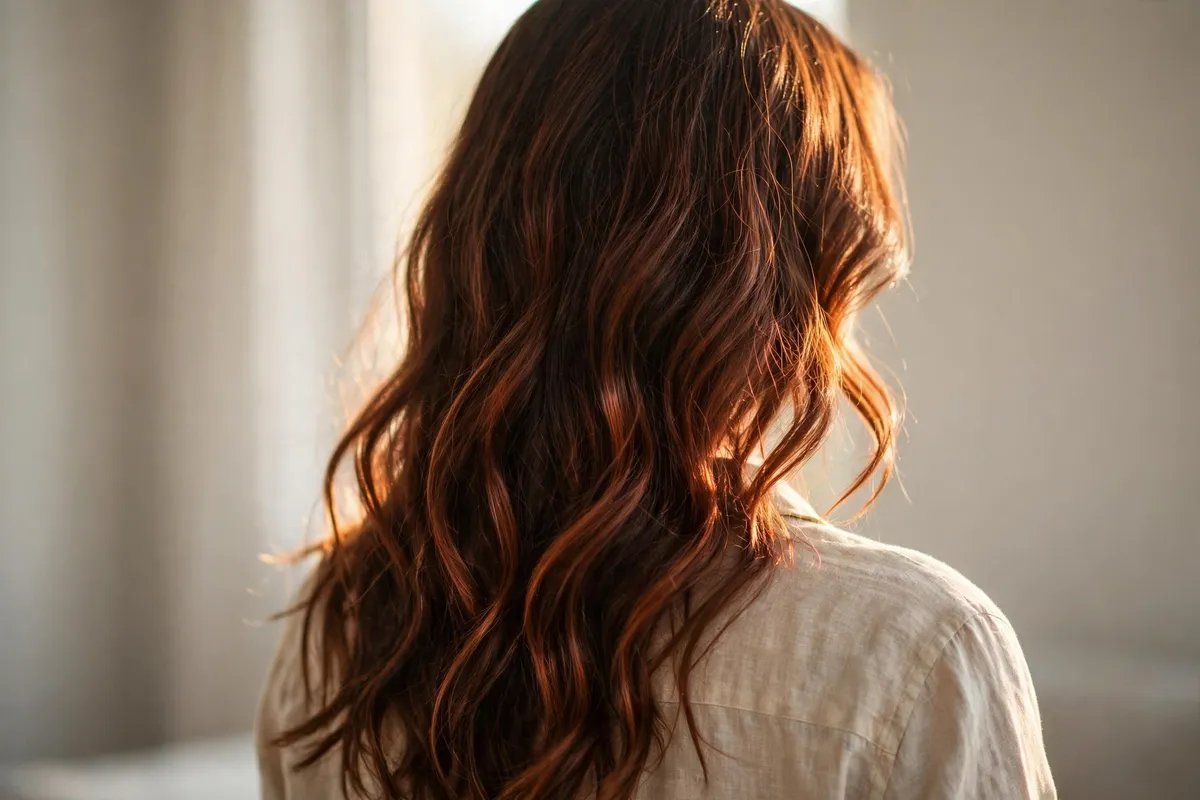
Chestnut brown is a warm, reddish-brown shade that glows in natural light: deeper than auburn, richer than plain brown, with red and gold undertones that keep it from ever looking flat. It suits nearly every skin tone because the warmth can be adjusted from subtle to fiery.
These 42 chestnut brown hair color ideas cover the full range, from deep one-process shades to balayage, ombré, and creative mixes. Each idea includes shade detail, upkeep, and typical cost.
Quick Takeaways
- Chestnut = warm reddish-brown. It’s a brunette shade first, with red and gold undertones that show in sunlight.
- It’s naturally low maintenance. The warmth fades gracefully, and most versions grow out without harsh lines.
- Depth varies widely. Dark chestnut is near-black; golden chestnut borders on dark blonde.
- Red tones need protection. Sulfate-free shampoo and cooler water keep the red from washing out.
- Budget $60–$320. One-process chestnut costs little; balayage and multi-tone work cost more.
1. Dark Chestnut Brown
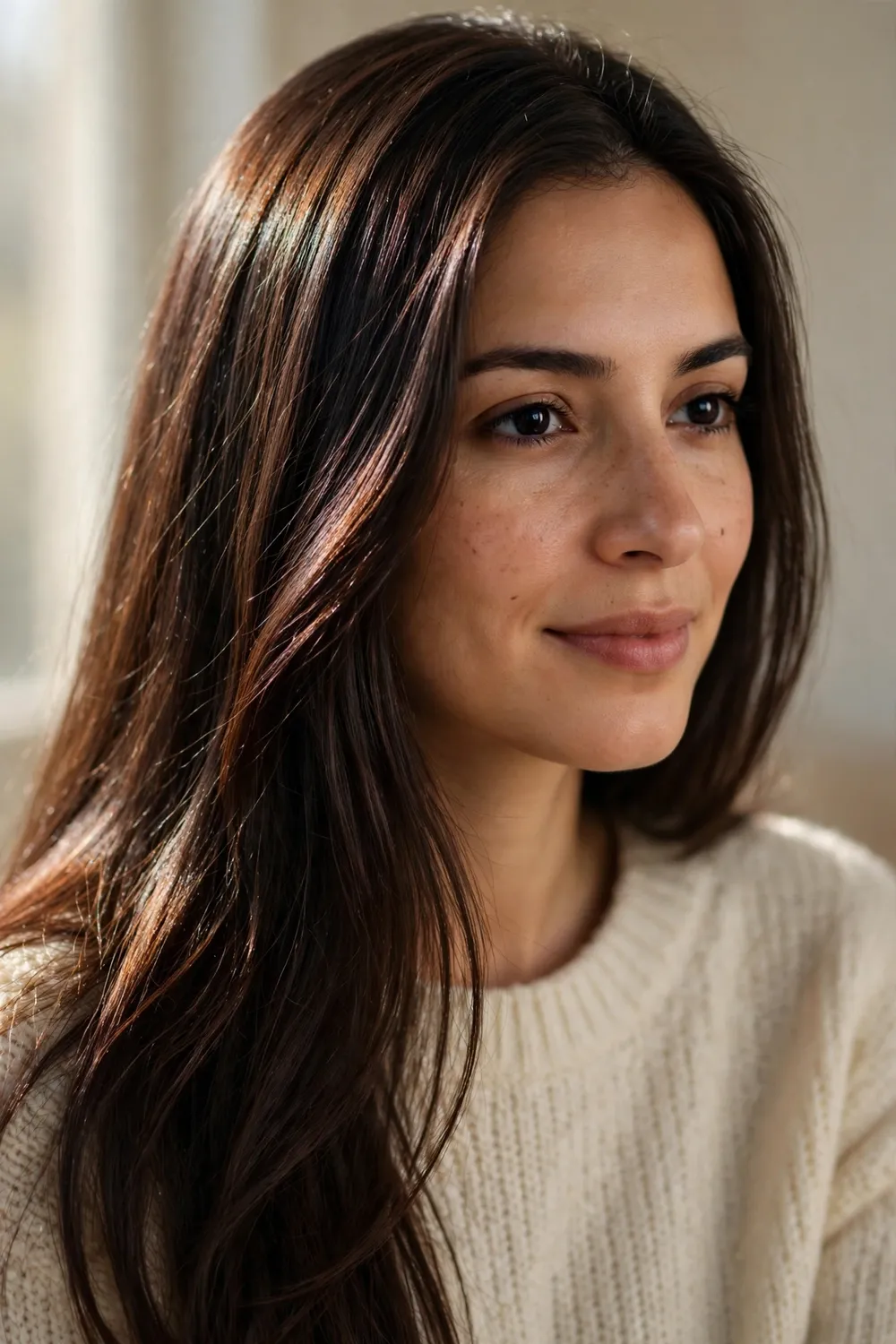
Dark chestnut is the deepest wearable version: near-black in shadow, glowing warm brown in light. It’s elegant and low maintenance because regrowth blends invisibly. Thick, straight hair shows it best since the shine reads clearly on smooth strands. One process usually does it, even on dark natural hair.
If you like deep brunette shades generally, our dark brown hair color ideas explore more options in this depth range. One process usually covers in under an hour, and the depth hides regrowth for 8 to 10 weeks.
Try this: Ask for a level 3–4 warm brown formula. Cooler than that and you lose the chestnut warmth that defines the shade.
Difficulty: At-home friendly or salon | Cost: $60–$140
2. Reddish Chestnut Brown
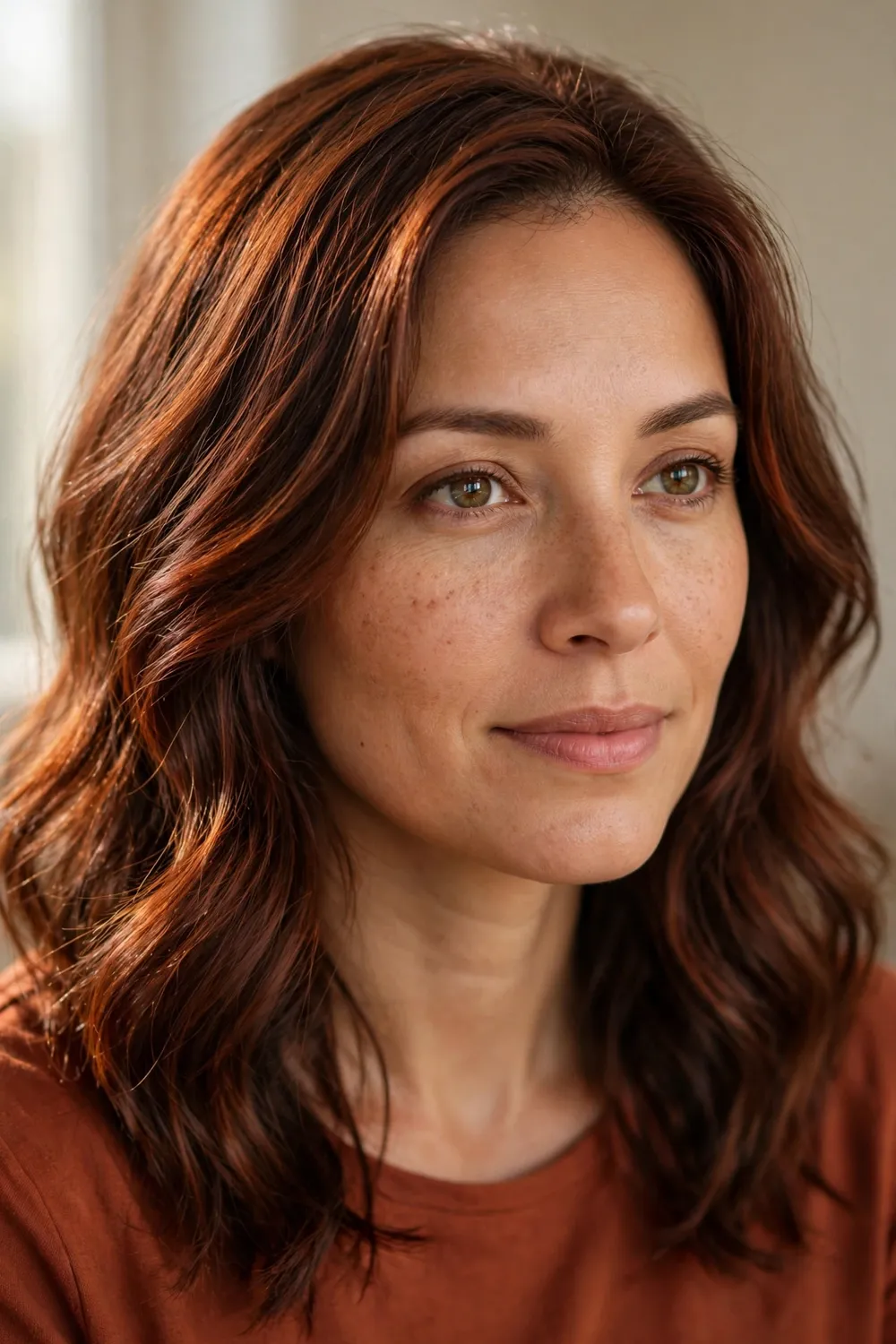
The classic chestnut most people picture: medium brown with a clear reddish cast. It flatters warm skin tones and makes green and hazel eyes stand out. Brunettes reach it easily since their hair already holds warm pigment. The red softens over 6–8 weeks, settling into a warm brown that still looks intentional. The red softens noticeably by week 6, settling into a warm brown that still looks deliberate. It flatters warm skin especially well.
Try this: A demi-permanent formula is enough for this shade on most hair. It fades gracefully and causes less damage than permanent color.
Difficulty: At-home friendly | Cost: $60–$130
3. Coppery Chestnut
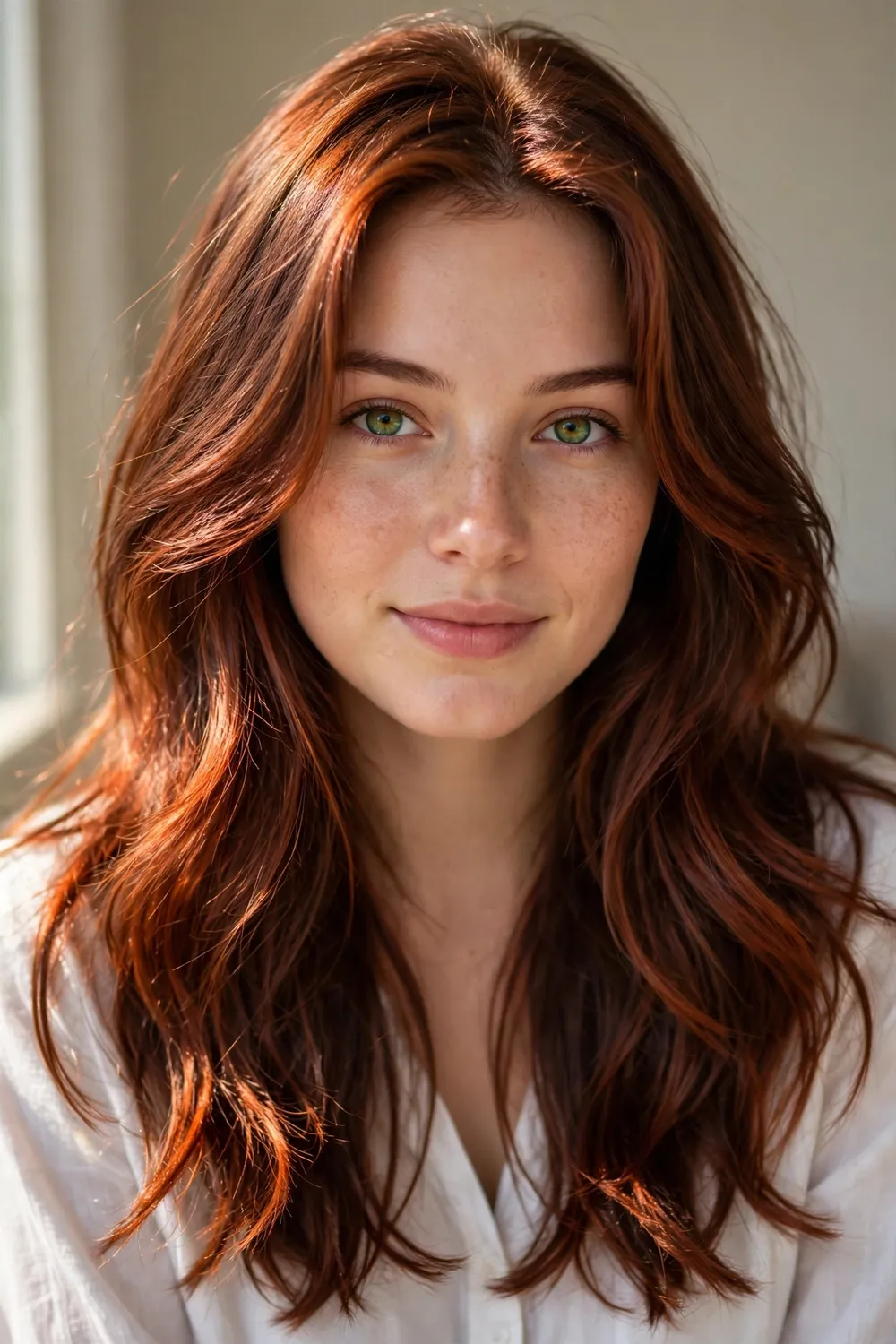
Coppery chestnut pushes the red toward bright copper, giving the brown a penny-like glow. It’s the right choice if you want chestnut with visible fire. Fair skin with warm undertones wears it best. The copper fades fastest of all chestnut variants, so color-safe products and a gloss refresh every couple of months keep it lively.
For more copper-forward shades, see our copper hair color ideas. Copper fades fastest in the first two weeks, so wash as little as possible right after coloring.
Try this: Test with a copper gloss first. It washes out in weeks, letting you preview the brightness before committing to permanent color.
Difficulty: Salon or careful DIY | Cost: $80–$180
4. Golden Chestnut
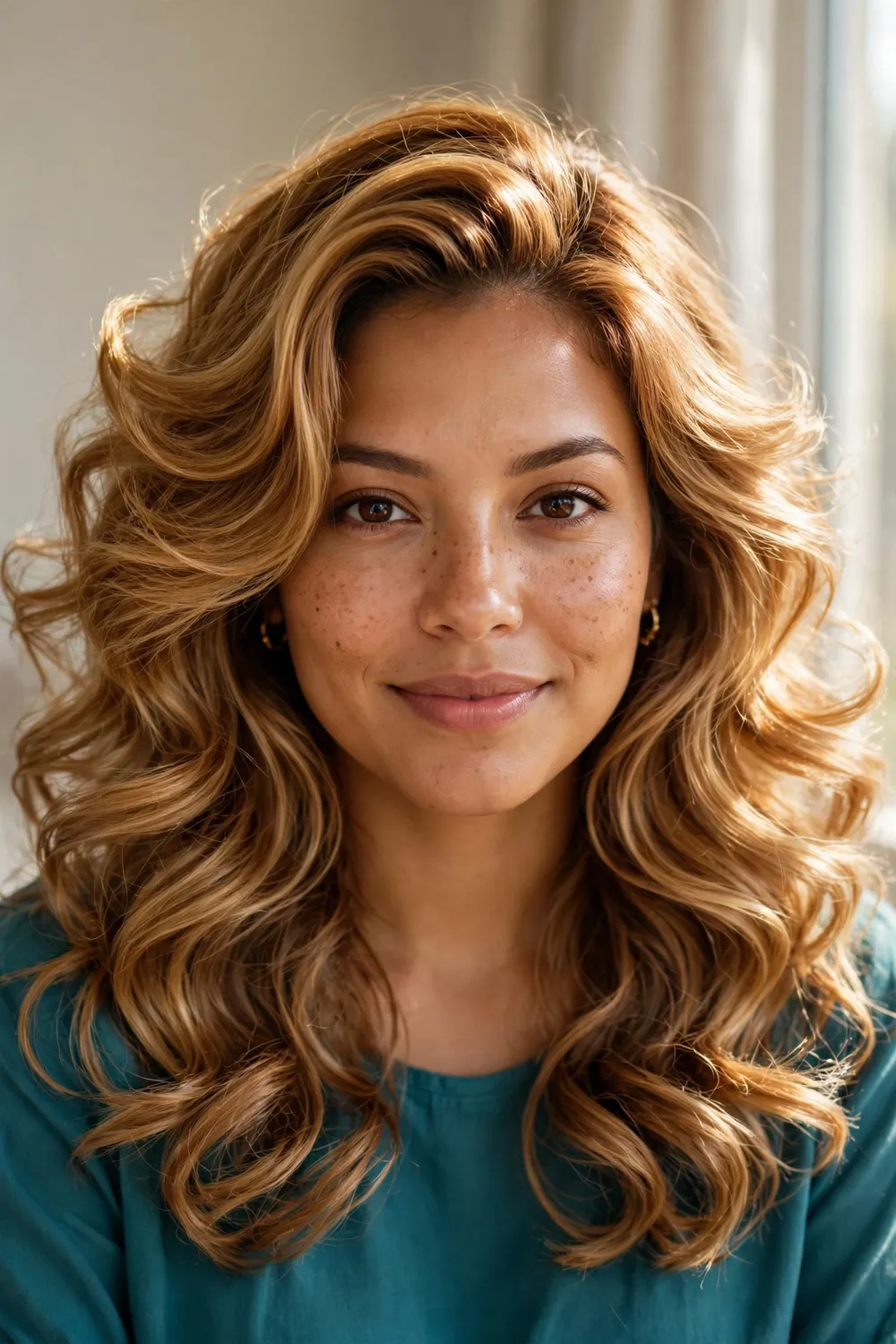
Golden chestnut trades red for gold: the warmth reads sunny rather than fiery. It’s lighter and brighter than reddish chestnut, bordering on dark blonde in strong light. Warm and olive skin tones glow against it. It suits blowouts and waves because the golden tones catch light with movement. Golden chestnut can tip brassy on hair that lifts warm, so a neutral-balanced formula matters. Blowouts and loose waves show off the golden tones best.
Try this: If your hair pulls brassy, this shade can tip orange. Ask your colorist to balance the gold with a touch of neutral in the formula.
Difficulty: Salon pro | Cost: $100–$200
5. Caramel Chestnut Melt
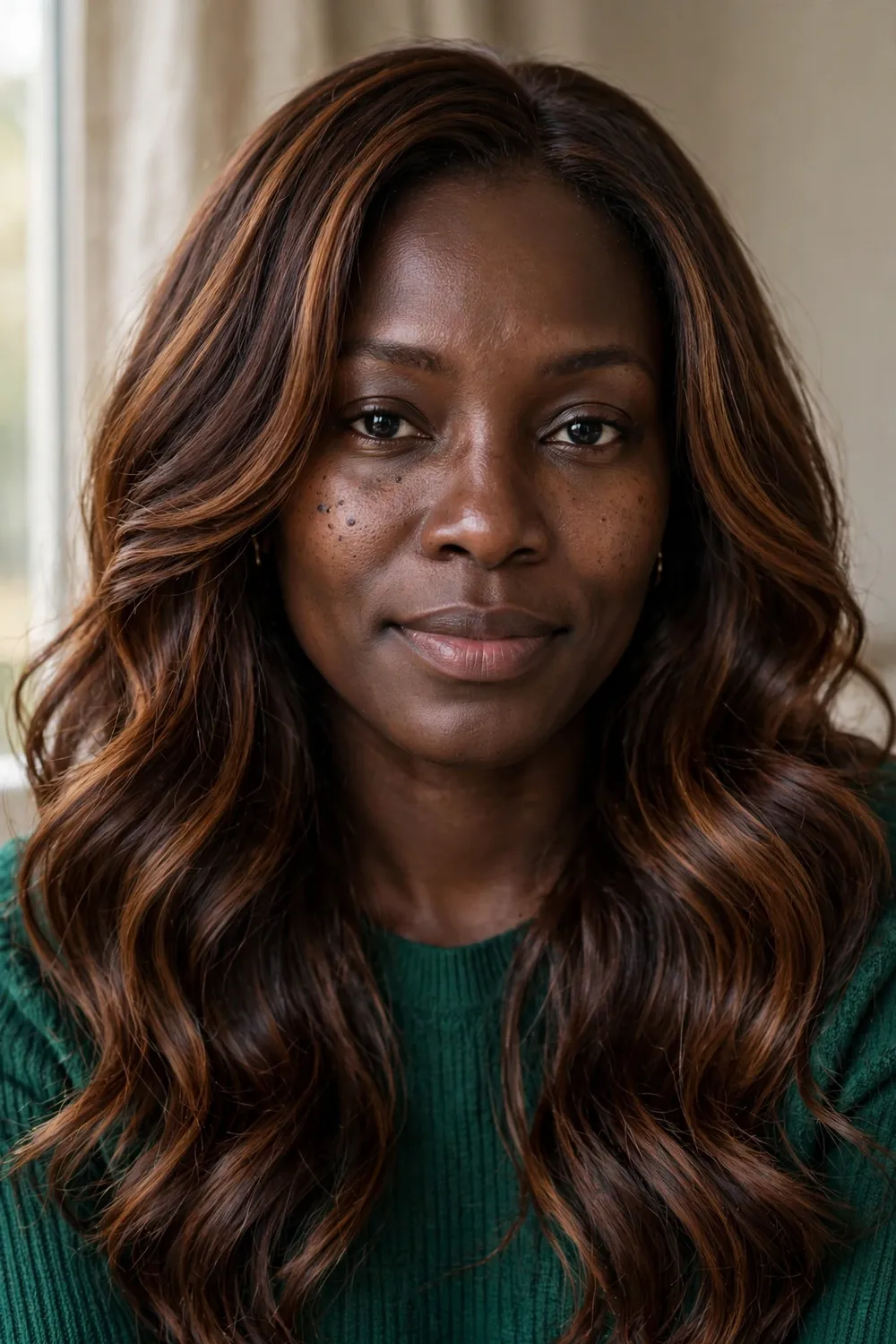
Warm caramel ribbons melted through a chestnut base create a high-gloss, dimensional finish. The caramel stays soft and ribbon-like rather than stripey, so the overall read stays brunette. It’s one of the most wearable dimensional chestnuts because nothing about it screams “highlighted.” Long hair shows the melt best. Painted application keeps the caramel ribbons soft; foils would make them too stripey for this look. Long hair shows the melted ribbons to full effect.
Try this: Ask for the caramel pieces to be painted, not foiled. Painted application keeps the ribbons soft; foils make them too defined for this look.
Difficulty: Salon pro | Cost: $150–$280
6. Mocha Milk-Chocolate Chestnut
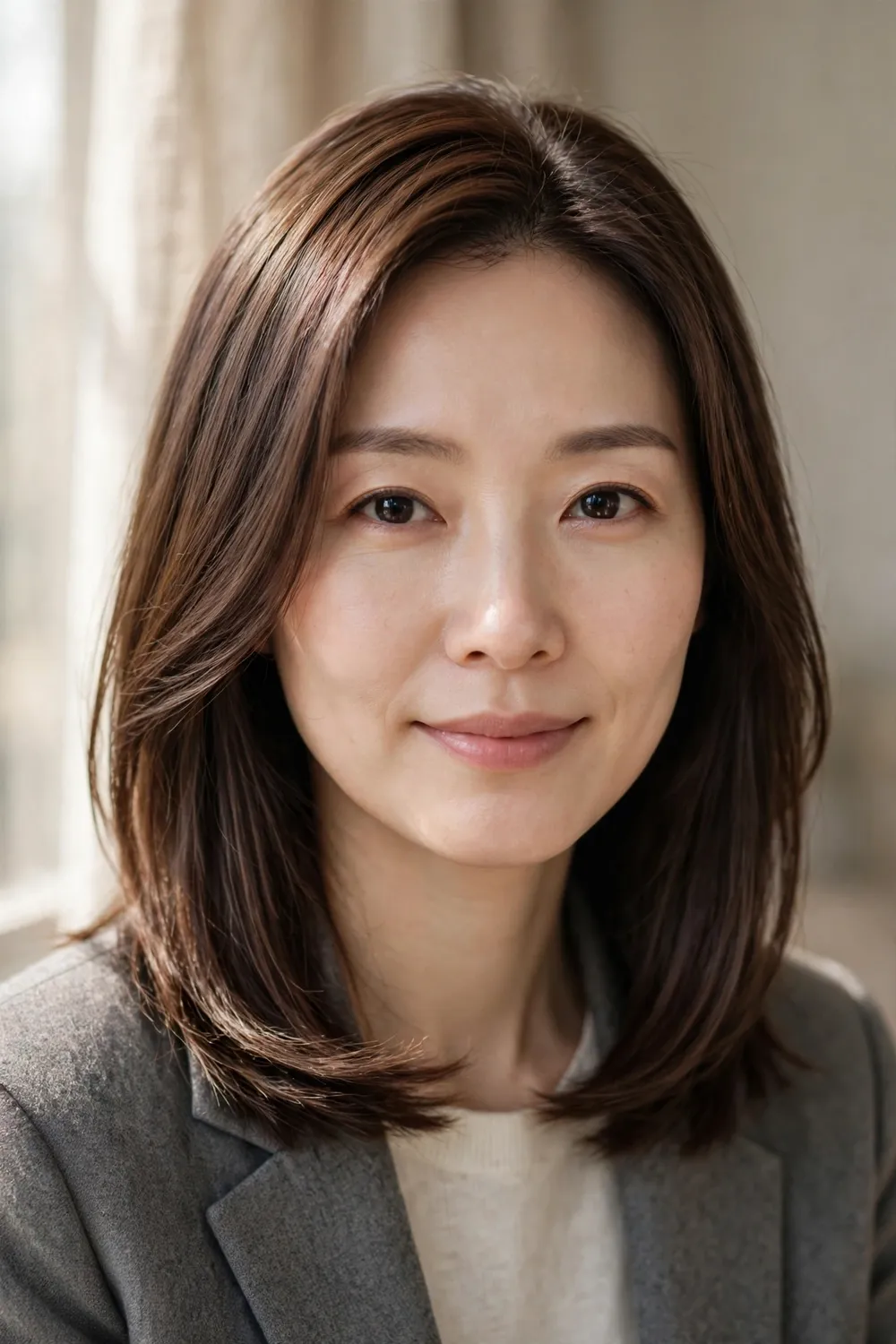
This cools chestnut down with mocha and milk-chocolate tones, muting the red for a balanced, professional-looking brown. It suits anyone who wants chestnut’s richness without obvious warmth. Cool and neutral skin tones wear it well. The muted finish looks polished in office lighting where redder chestnuts can look loud.
For more cool-leaning browns, browse our mocha brown hair colors. The muted finish is office-friendly, reading polished under fluorescent light where redder chestnuts look loud.
Try this: This is the best chestnut for covering grays if you dislike red tones. The mocha covers evenly and the finish stays neutral.
Difficulty: At-home friendly or salon | Cost: $60–$150
7. Soft Chestnut Ombré
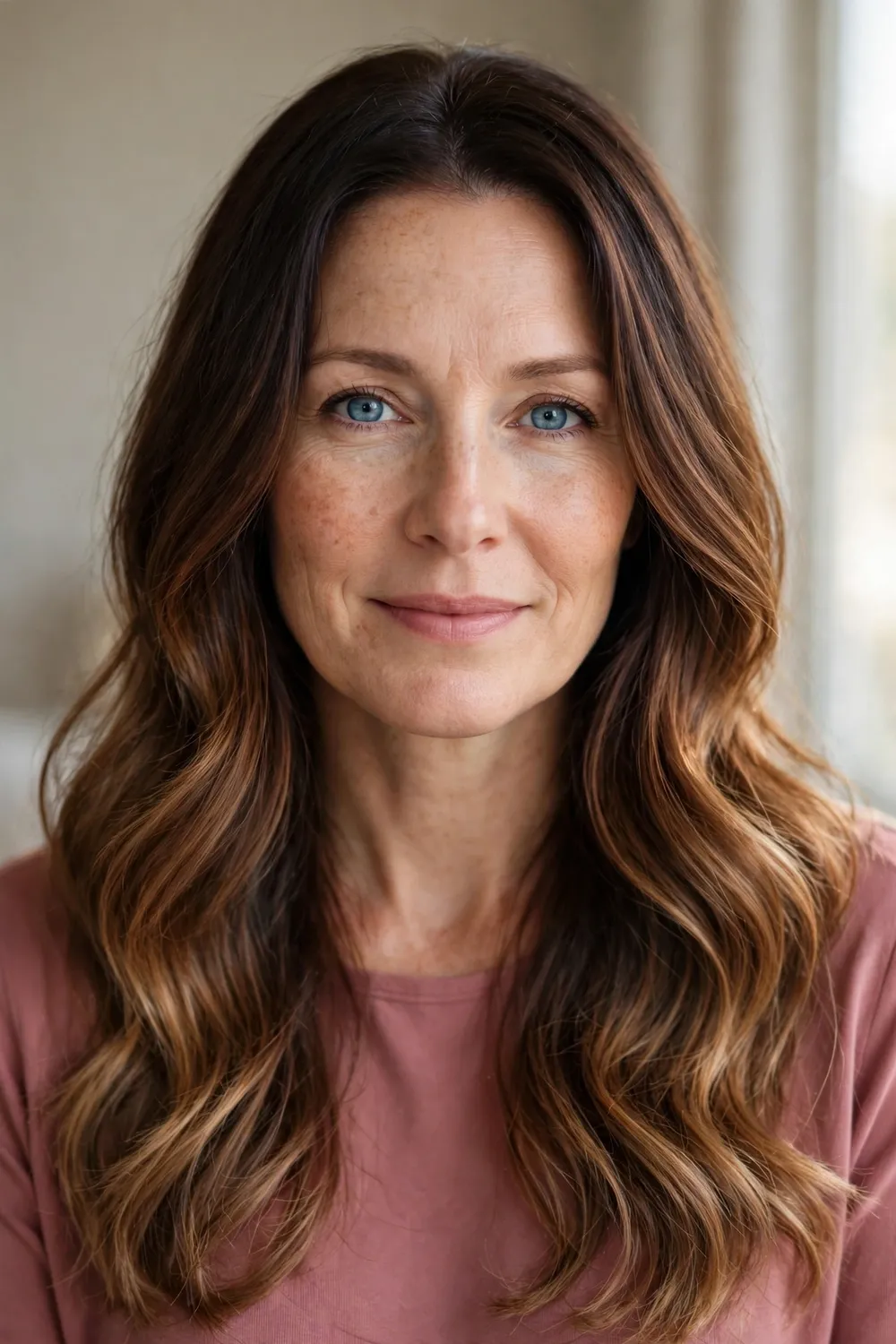
A gentle fade from deep chocolate roots to lighter chestnut ends, with a long transition zone that keeps it natural. It adds depth and movement without a dramatic color change. Naturally dark hair needs only slight lightening at the ends. The grow-out is graceful because the dark root is part of the design. Naturally dark hair needs only slight lightening at the ends, keeping damage minimal. The dark root keeps the grow-out graceful for months.
If you prefer the chocolate end of the brown spectrum over the red, chocolate brown hairstyles collect 30 shade and styling ideas in the chocolate family.
Try this: Keep the lightest ends within two levels of the roots. Subtle ombré looks expensive; high-contrast ombré on chestnut can look harsh.
Difficulty: Salon pro | Cost: $140–$260
8. Dark-to-Chestnut Ombré
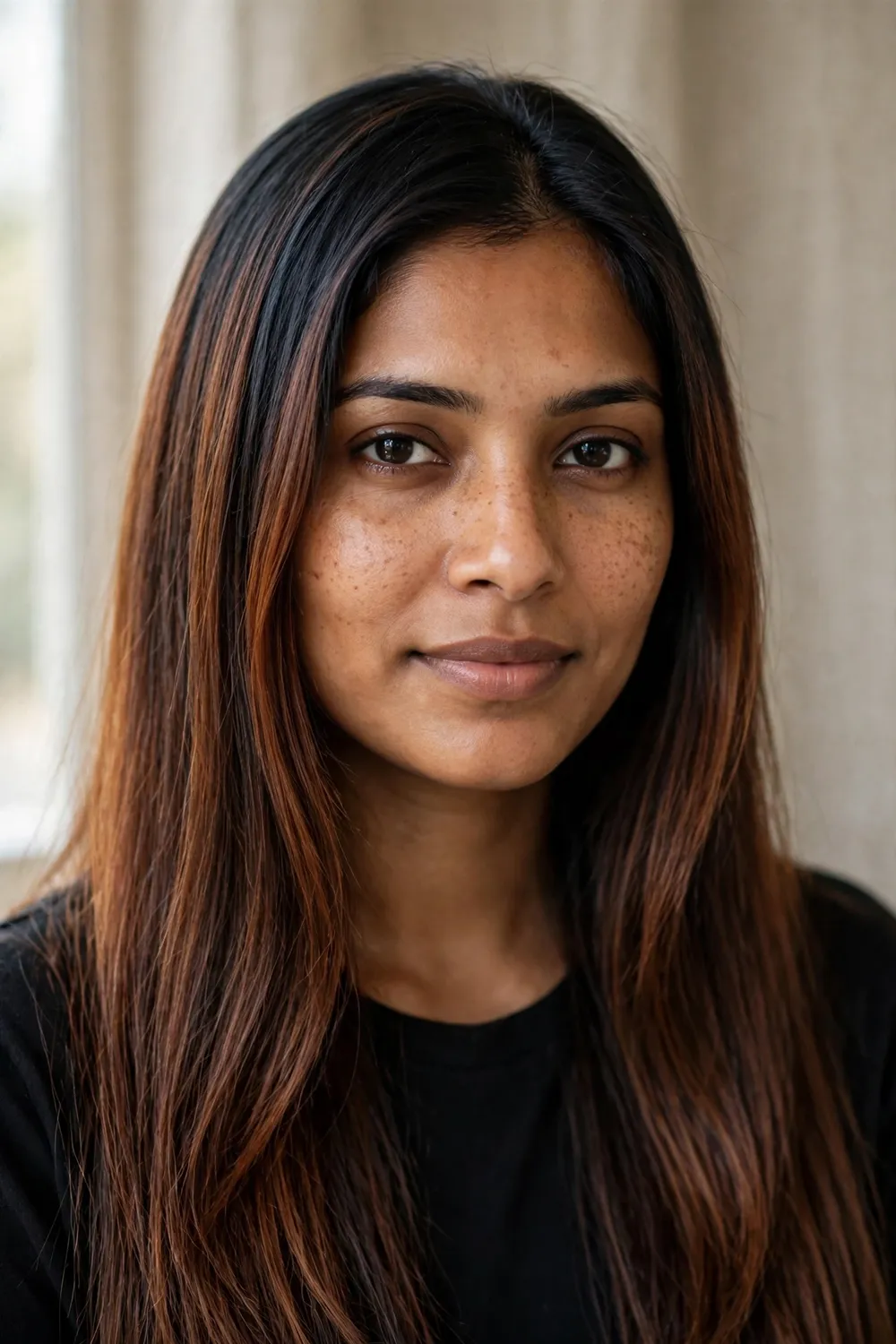
Starting from black or very dark brown roots, this fades into rich chestnut through the lengths. It’s the easiest chestnut entry for naturally dark hair because most of the head stays untouched. The contrast is striking but the blend keeps it wearable. Foxy red-toned versions of this fade add extra warmth at the ends. Most of the head stays untouched, which makes this the easiest chestnut for naturally dark hair.
Try this: Start the fade at temple level or lower. Starting higher makes the dark root section too short to balance the chestnut ends.
Difficulty: Salon pro | Cost: $150–$280
9. Chocolate Chestnut Balayage
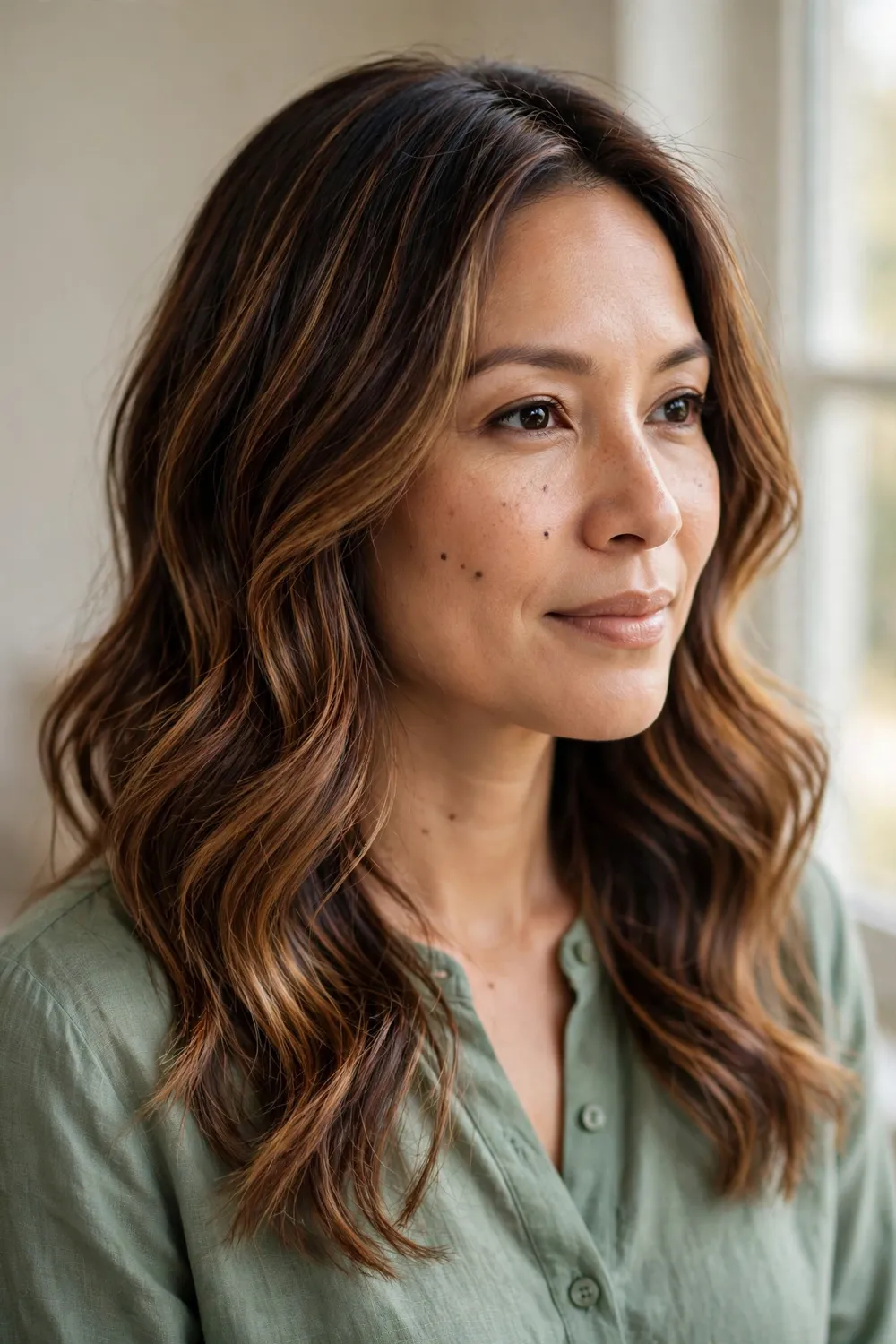
Hand-painted chestnut pieces swept through a deep chocolate base, fading from dark roots to warm chestnut waves. The chocolate base keeps it grounded while the chestnut adds glow. It’s lower maintenance than blonde balayage because the lift is minimal. Wavy styling shows off the blend best. The lift is minimal compared to blonde balayage, so the grow-out stays soft for months. Wavy styling shows off the hand-painted blend at its best.
Try this: Ask your colorist to keep the brightest chestnut pieces in the mid-lengths, not at the very ends. Ends-only placement can look like grown-out ombré instead of balayage.
Difficulty: Salon pro | Cost: $160–$290
10. Toffee Chestnut Balayage
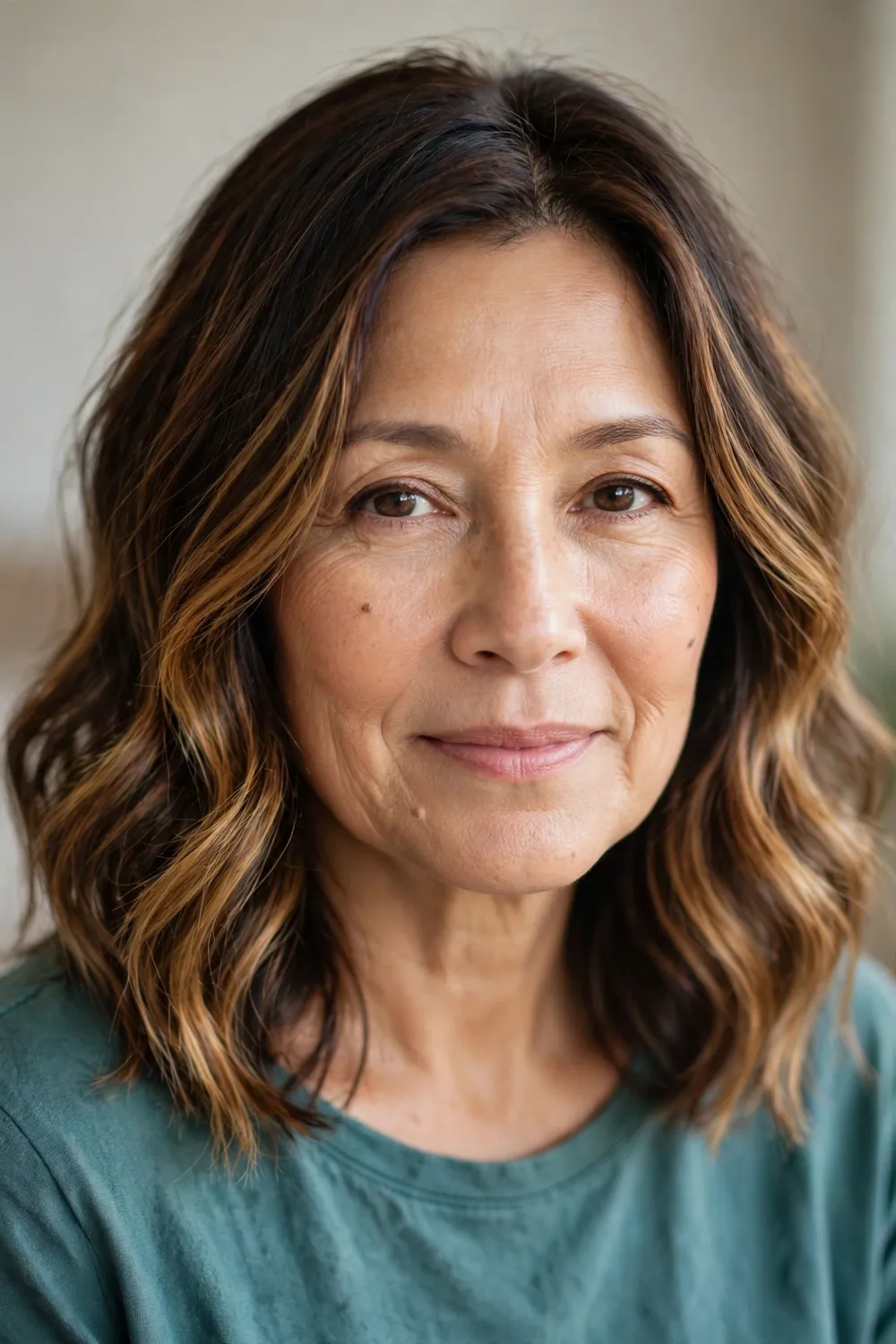
Toffee brings a golden-brown sweetness to chestnut balayage: lighter and more golden than chocolate, warmer than caramel. Painted through dark hair, it creates dimension that reads natural in any light. It pairs well with very dark, almost black bases because the golden contrast shows clearly. The grow-out stays soft for months. Toffee pieces show best from the ears down; higher placement creates too much contrast at the crown. The golden contrast reads clearly even in indoor light.
Try this: Toffee pieces look best concentrated from the ears down. Higher placement on dark hair can create too much contrast at the crown.
Difficulty: Salon pro | Cost: $160–$290
11. Chestnut Bronde
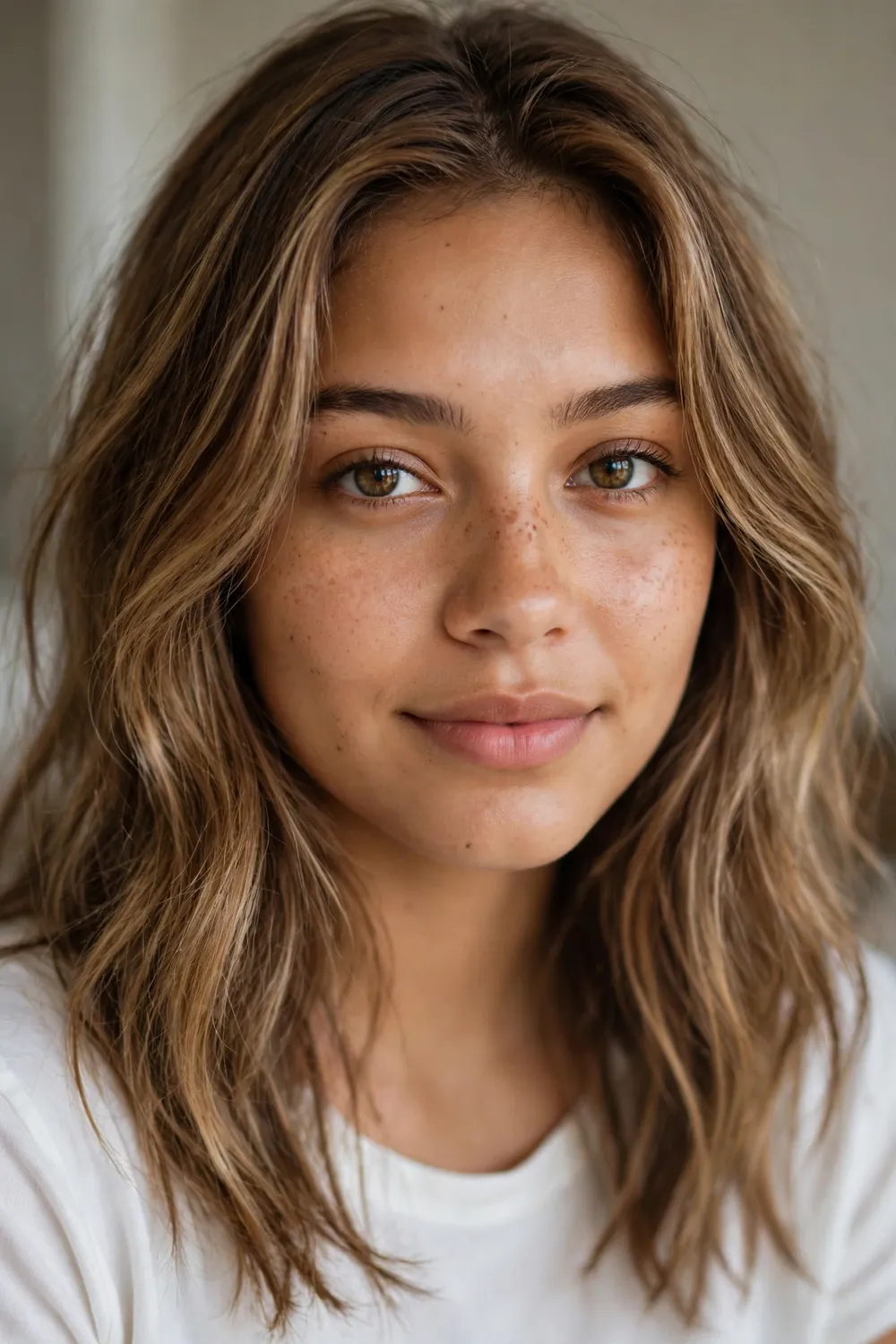
Chestnut bronde mixes the brunette shade with lighter bronde pieces for a brown-blonde hybrid. It has chestnut’s warmth with blonde’s lightness, landing in the middle. It’s a good stepping stone for brunettes going lighter gradually. The blend grows out well because neither the brown nor the blonde dominates. This is a good first lightening step, noticeable but not drastic, with easy grow-out. Neither the brown nor the blonde dominates the final result.
Try this: This suits a first lightening appointment. The change is noticeable but not drastic, and you can go lighter next time if you want.
Difficulty: Salon pro | Cost: $150–$280
12. Mahogany Chestnut
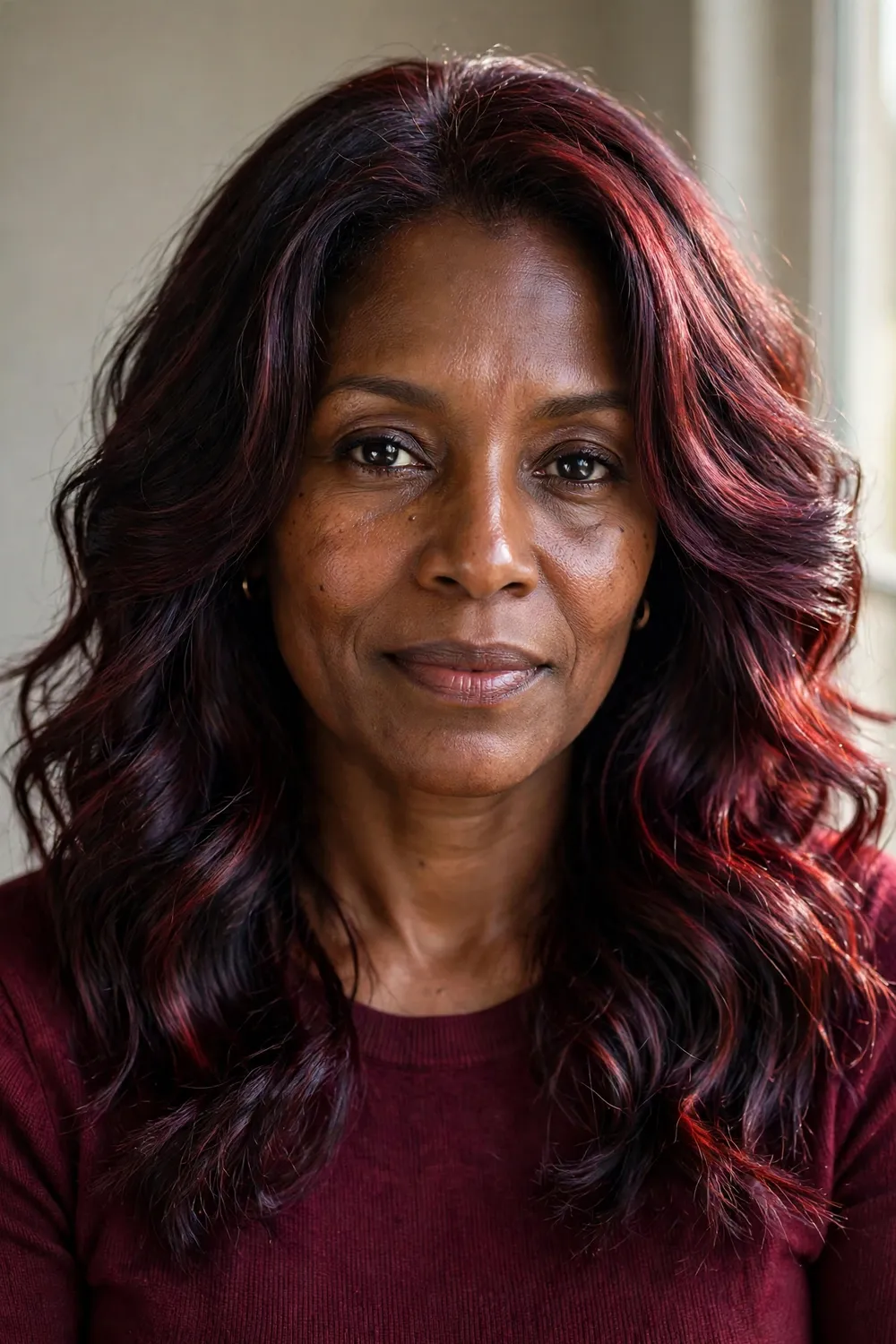
Mahogany chestnut sits at the red-purple edge of the chestnut range: deep, rich, and dramatic. It’s the darkest red-leaning chestnut, flattering deep skin tones and dark eyes. The red-violet tones fade faster than plain brown, so sulfate-free care matters. In indoor light it reads almost black; in sun the red ignites. Indoors it reads almost black; in sunlight the red ignites, giving you two colors in one. A gloss after coloring deepens the mahogany and prevents flatness.
Try this: This shade looks best with shine. A gloss treatment after coloring deepens the mahogany and keeps it from looking flat.
Difficulty: Salon pro | Cost: $100–$200
13. Honey Chestnut
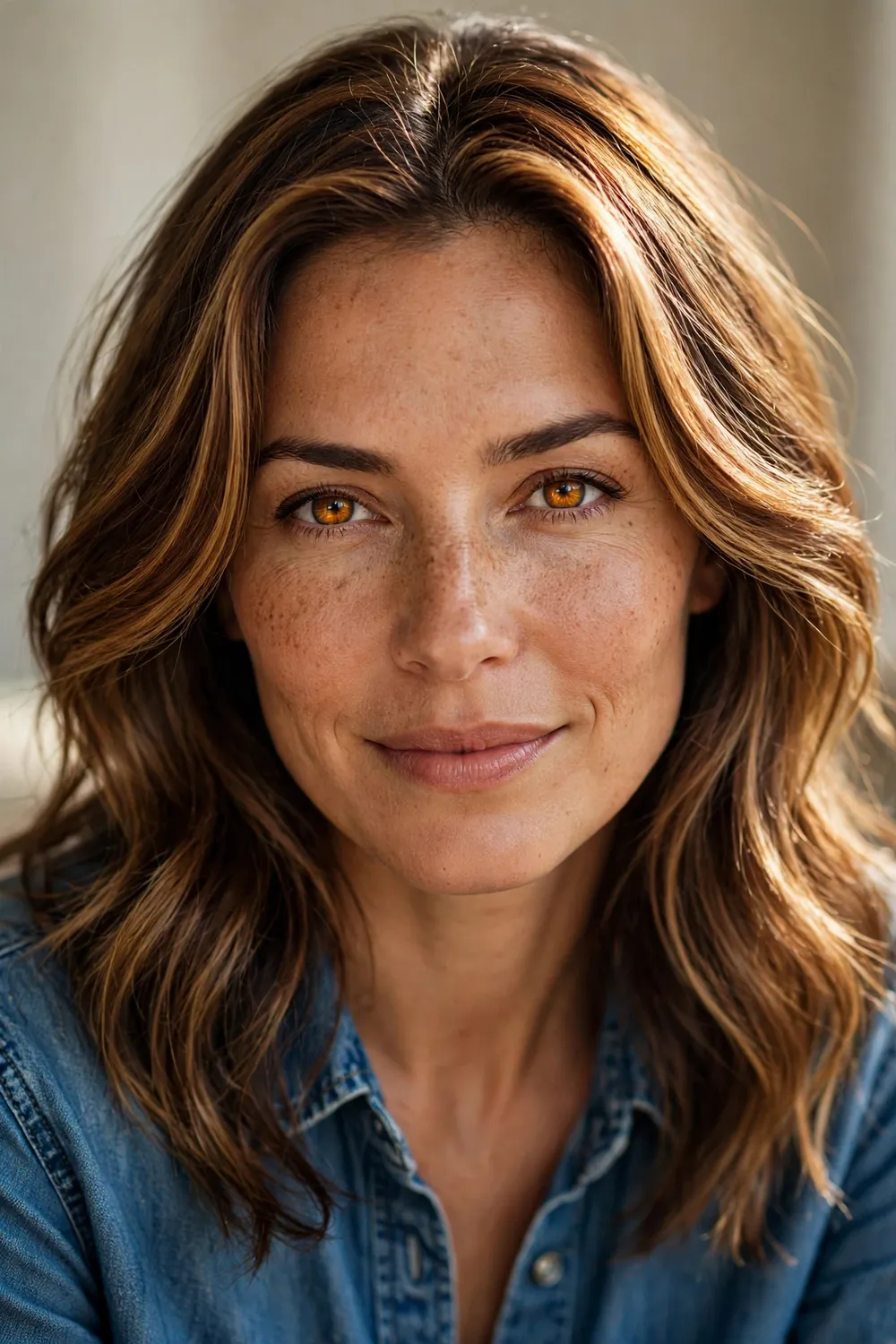
Honey chestnut is the brightest, warmest take on the shade: golden honey highlights paired with chestnut lowlights for a plush, dimensional finish. It still reads brown, but with a sunny glow that makes hair look bouncy. The contrast between the honey and chestnut is what creates the depth, so both tones need to be present. Both tones must be present for this to work; all-honey reads blonde and all-chestnut reads plain brown.
Try this: Keep the honey highlights in the top layer and the chestnut lowlights underneath. That stacking order gives the most natural-looking dimension.
Difficulty: Salon pro | Cost: $150–$280
14. Chocolate Chestnut
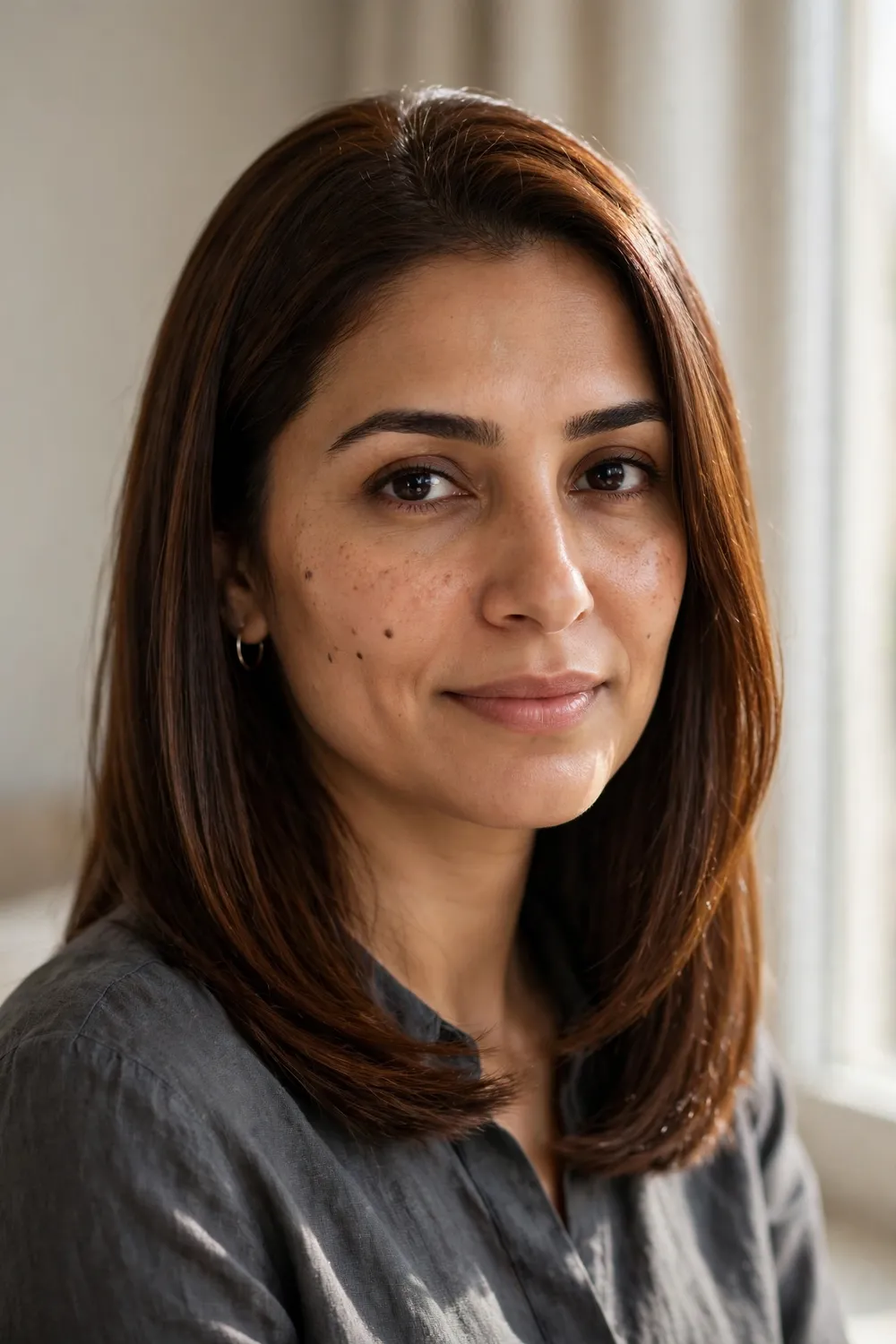
Chocolate chestnut deepens the shade toward cocoa: rich, even, and understated. It’s the quiet luxury version, with warmth you notice up close rather than across the room. One-process color achieves it on most hair. The even finish suits sleek styles and professional settings where brighter reds feel too much. A clear gloss over this shade adds the reflectiveness that makes chocolate look expensive. It suits sleek styles and professional settings particularly well.
Try this: A clear gloss over this shade adds the reflectiveness that makes chocolate tones look expensive rather than flat.
Difficulty: At-home friendly | Cost: $60–$130
15. Chocolate-Cherry Chestnut
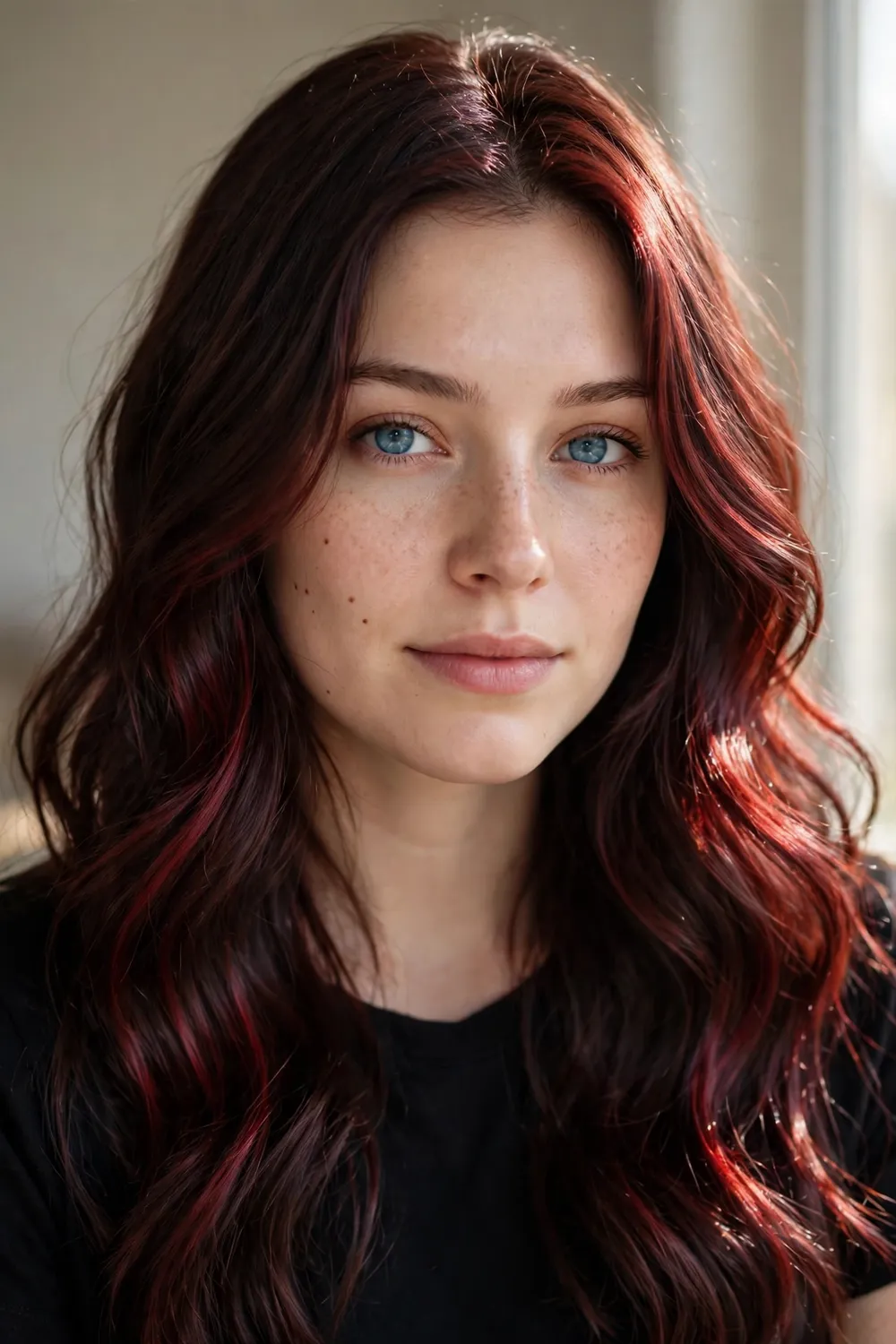
This adds a dark cherry red to the chocolate-chestnut base for a decadent, dimensional result. The cherry shows most in sunlight and stays subtle indoors. It’s bolder than plain chestnut but more wearable than true red. The cherry tones need color-safe shampoo to survive past the first month. The cherry shows most in sunlight and stays subtle indoors, which keeps it wearable daily. Color-safe shampoo keeps the cherry alive past the first month.
Try this: Ask for the cherry as a gloss over a chocolate-chestnut base rather than mixed into permanent color. The gloss fades gracefully instead of leaving a line.
Difficulty: Salon pro | Cost: $120–$220
16. Sun-Kissed Chestnut
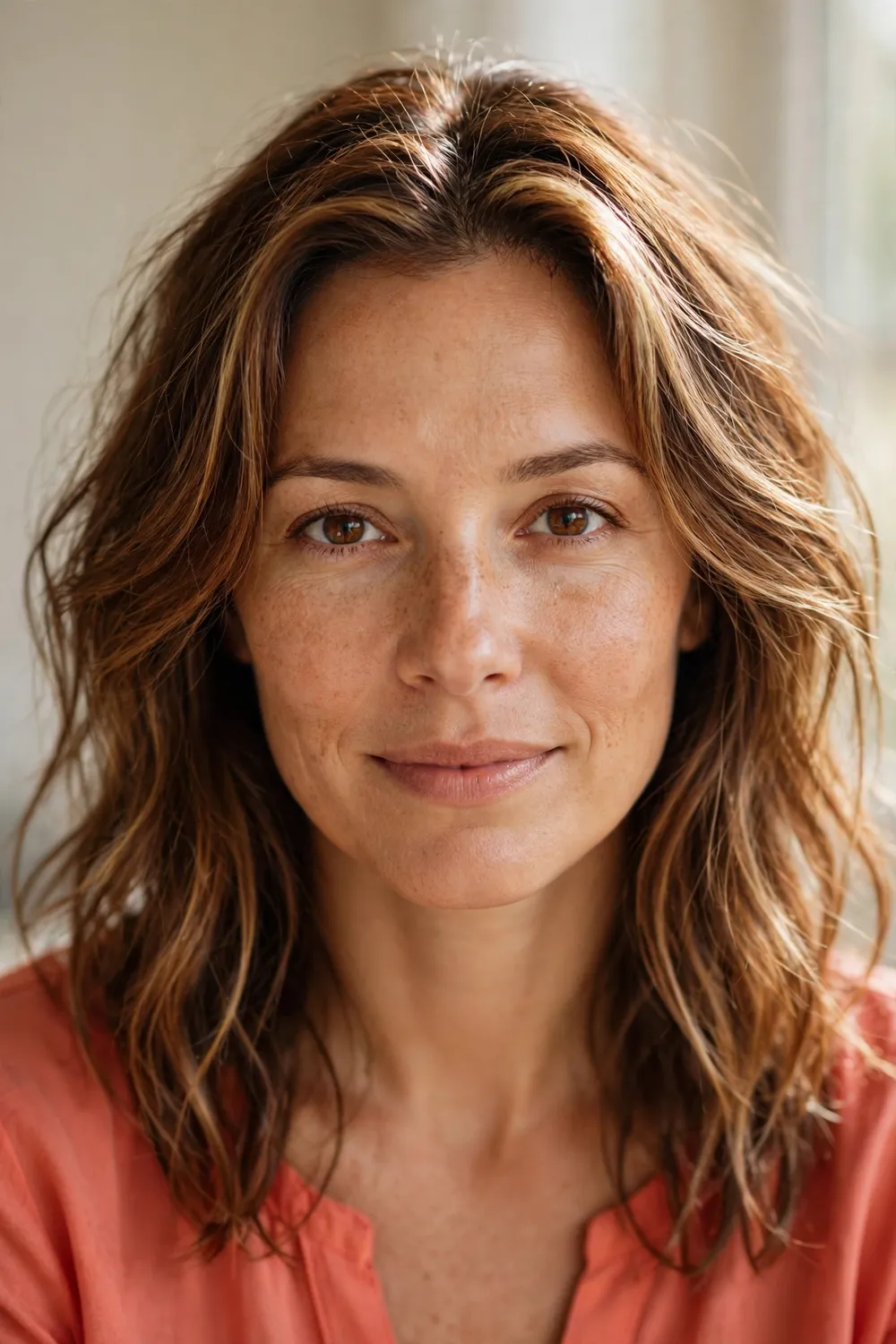
Subtle lighter pieces placed where the sun would naturally hit: the crown, the part, and the ends. The base stays chestnut while the sun-kissed pieces add lightness without a dye-job look. It’s the most natural-looking dimensional chestnut because the placement copies real sun lightening. Regrowth is a non-issue. Pieces more than two shades lighter than the base stop looking sun-kissed and start looking highlighted. Regrowth is a non-issue since the placement copies natural lightening.
Try this: The lightened pieces should be no more than two shades lighter than the base. More contrast than that stops looking sun-kissed and starts looking highlighted.
Difficulty: Salon pro | Cost: $130–$240
17. Auburn Chestnut Blend
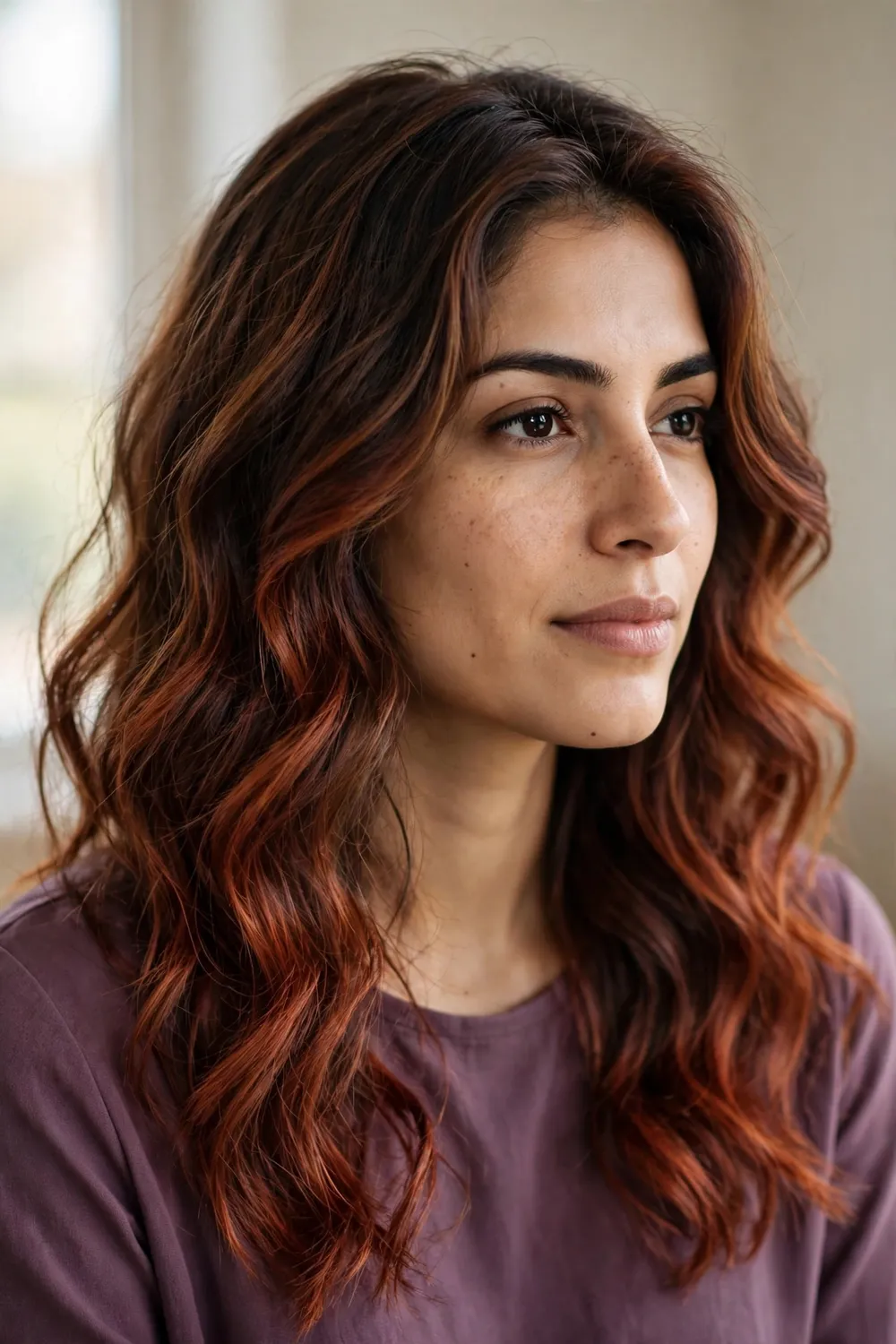
A dimensional mix of chestnut brown and auburn, with the two shades woven together so neither dominates. The auburn adds red depth while the chestnut keeps it grounded in brown. Waves and curls show off the blend best because the texture separates the tones. It’s richer than either shade alone. Waves and curls separate the two tones best; on pin-straight hair the blend can look muddy. The result is richer than either shade worn alone.
Try this: Ask for the auburn concentrated at the ends and the chestnut at the roots. That gradient reads more natural than an even mix throughout.
Difficulty: Salon pro | Cost: $140–$260
18. Bold Auburn Chestnut
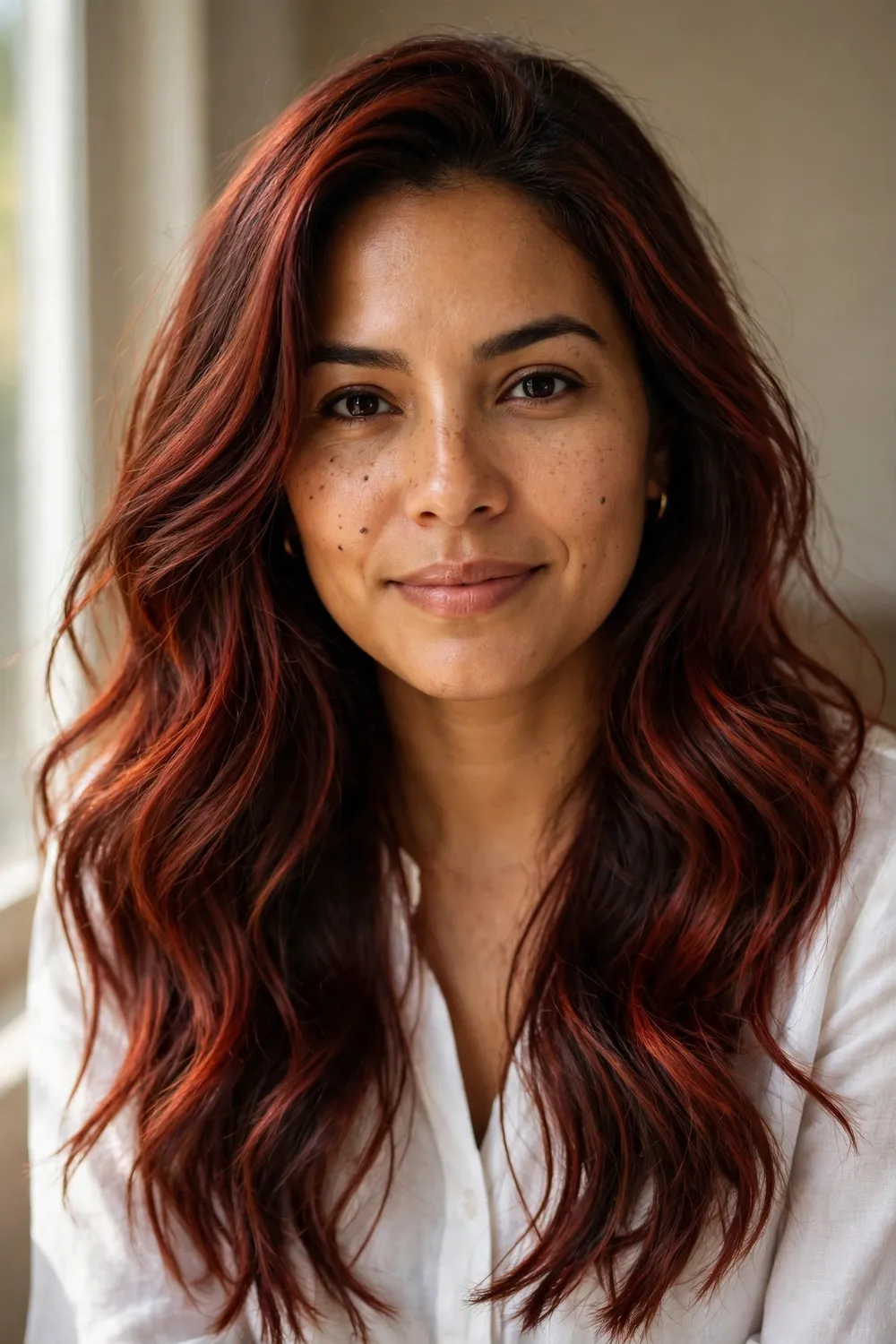
The boldest red-leaning chestnut: a vivid mix that pushes toward true auburn while keeping brunette depth. It makes a statement and flatters warm skin tones dramatically. The vibrancy needs maintenance, with hydrating masks and gloss treatments keeping it rich. Faded, it settles into a pretty copper-brown rather than an ugly grow-out. Even faded, this settles into a pretty copper-brown rather than an ugly grow-out. Hydrating masks keep the saturation rich between appointments.
Try this: Wash as infrequently as your scalp allows. Every wash strips red molecules, and this shade’s beauty is its saturation.
Difficulty: Salon pro | Cost: $130–$250
19. Deep Red Chestnut
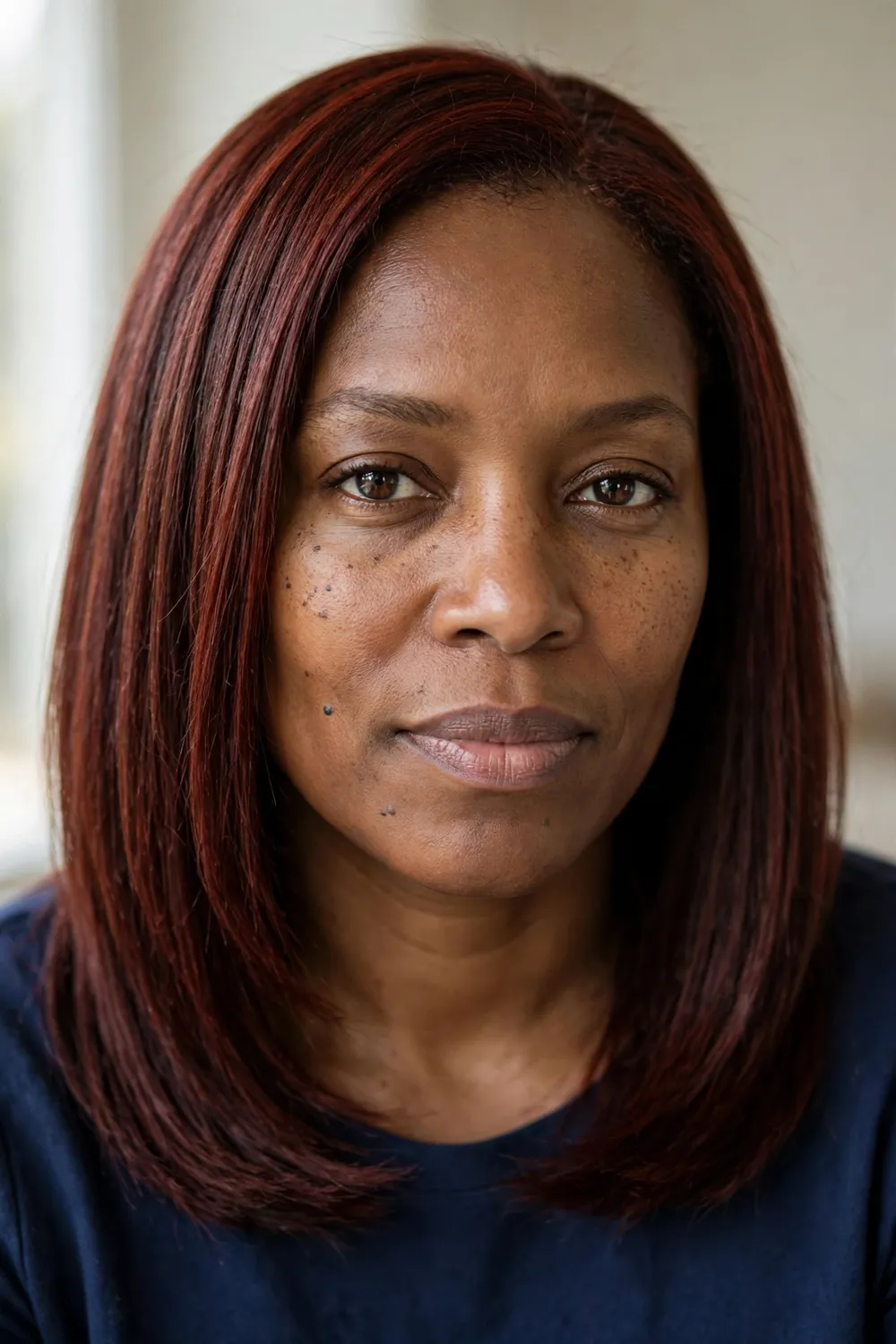
Deep red chestnut is the brunette-friendly way to try red: all the richness with none of the maintenance terror of true red. It suits brunettes refreshing their color without anything drastic. On natural textured hair it looks especially regal. The depth means regrowth blends well and the color lasts. The brown base does the heavy lifting here, so the color still looks good as the red fades. On natural textured hair it looks especially regal and rich.
Try this: This is the easiest red to maintain because the brown base does the heavy lifting. Even as the red fades, the brown underneath still looks good.
Difficulty: At-home friendly or salon | Cost: $60–$150
20. Reddish-Brown Waves

A vivid red-brown worn in soft waves, the warmth amplified by the movement. The wave pattern breaks up the color so the red reads dimensional rather than solid. It’s a classic for a reason: the shade is warm, flattering, and familiar. Long layers help the waves form and show the color’s range. A heat protectant matters here since red tones break down fastest under hot tools. Long layers help the waves form and display the color’s range.
Try this: Style with a large-barrel iron for loose waves, and use a heat protectant since the red tones are vulnerable to heat fading.
Difficulty: Salon pro | Cost: $120–$220
21. Cinnamon-Spiked Chestnut
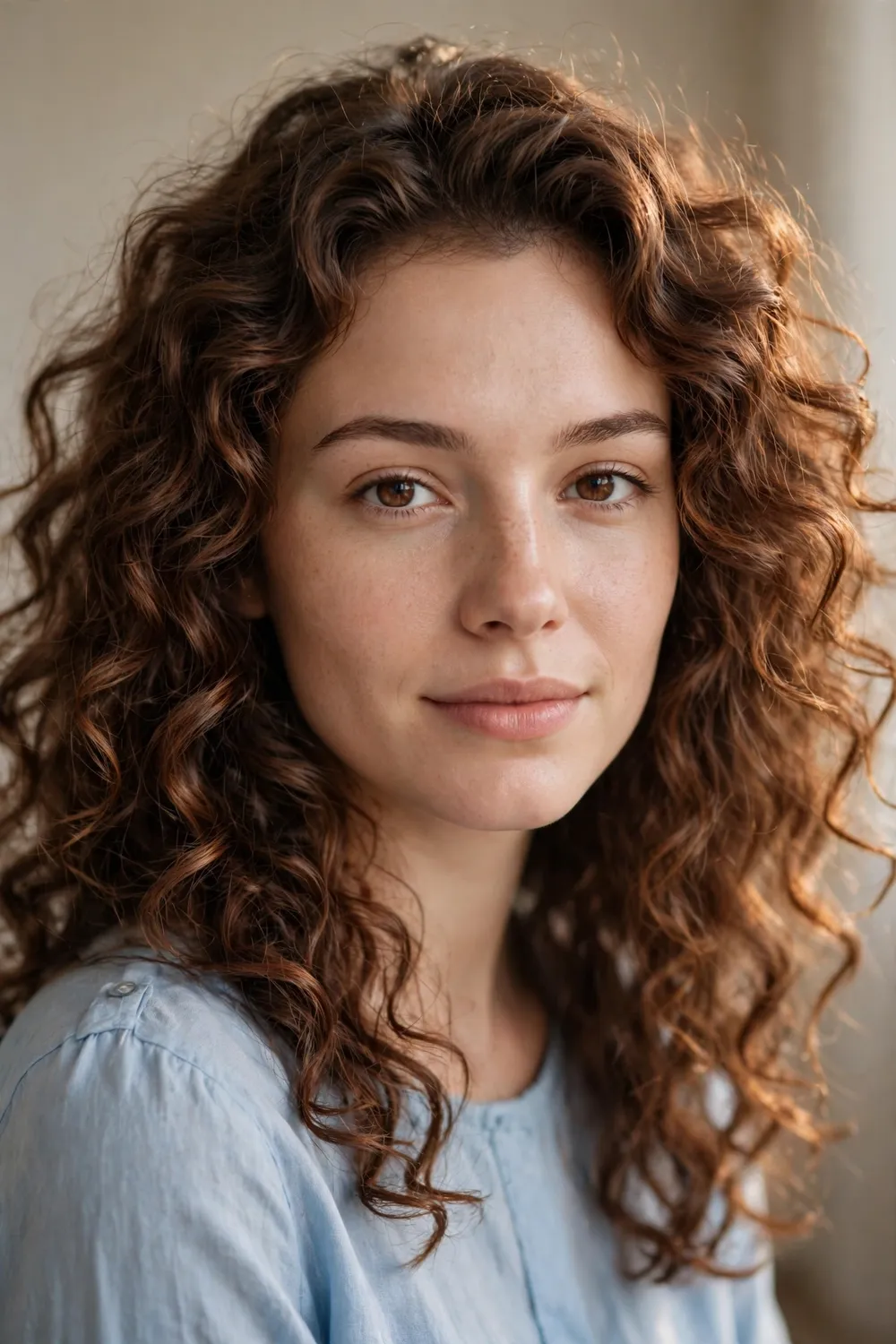
Cinnamon spiking tones the chestnut toward a cooler, spiced brown rather than a warm red. It’s chestnut for people who find the usual versions too warm or brassy. The cooler tone flatters neutral and cool skin. On curls, the cinnamon reads as sophisticated warmth rather than heat. Formulating the cinnamon as a toner over neutral brown gives more control than single-process dye. On curls the cinnamon reads as sophistication rather than heat.
Try this: Ask your colorist to formulate the cinnamon as a toner over a neutral brown base. Toning gives more control than a single-process cinnamon dye.
Difficulty: Salon pro | Cost: $110–$210
22. Glazed Liquid Chestnut
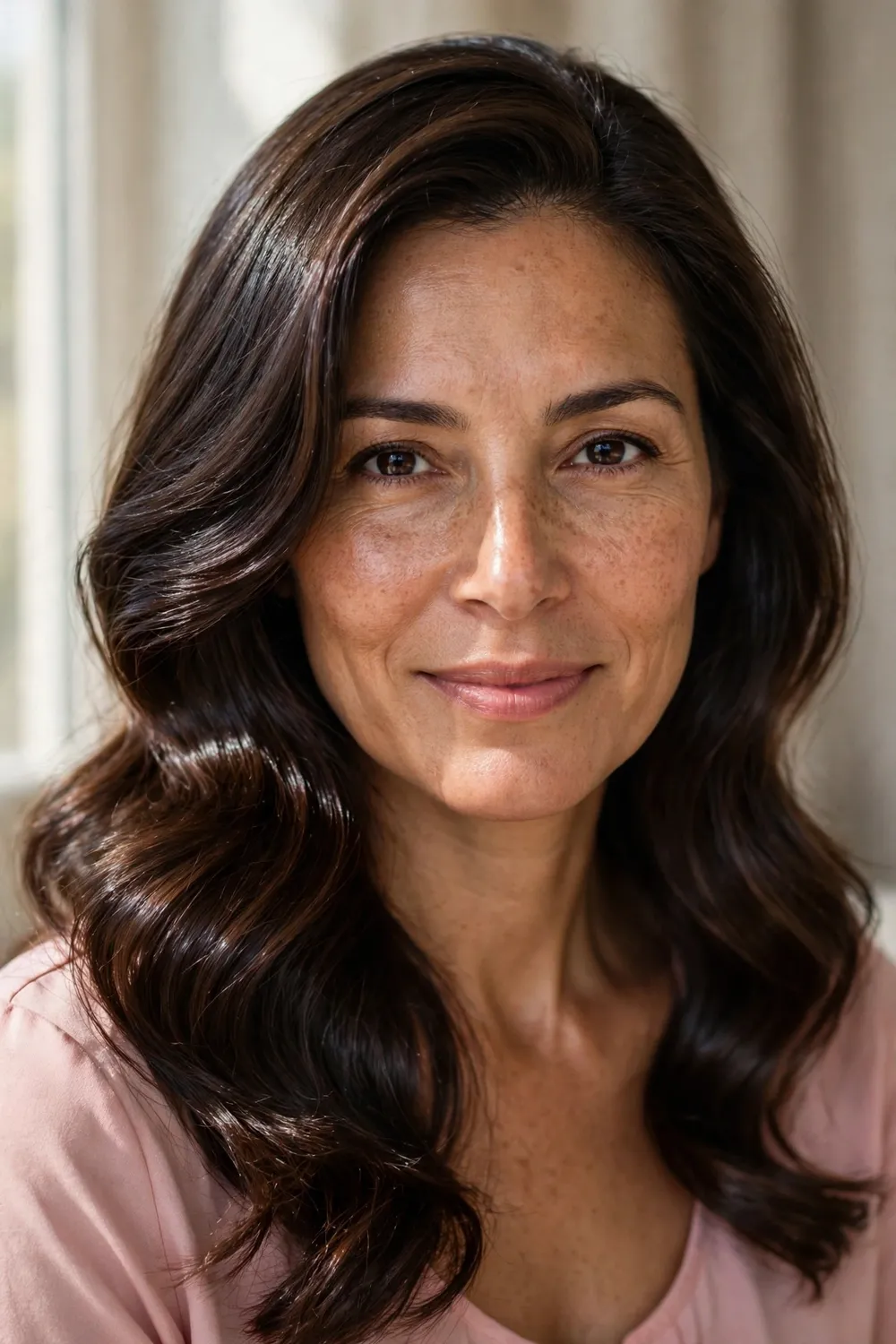
This is about finish more than shade: chestnut brown glazed to a liquid, mirror-like shine. A clear or warm gloss over the color creates reflectiveness that makes the brown look illuminated from within. Dark chestnut bases take this best because the depth amplifies the shine. The gloss needs reapplying every 4–6 weeks to maintain the effect. The gloss needs reapplying every 4 to 6 weeks; without it the liquid effect dulls.
Try this: Book the glaze as a standalone service between color appointments. It’s quick, affordable, and transforms dull chestnut instantly.
Difficulty: Salon pro | Cost: $90–$180
23. Babydoll Chestnut
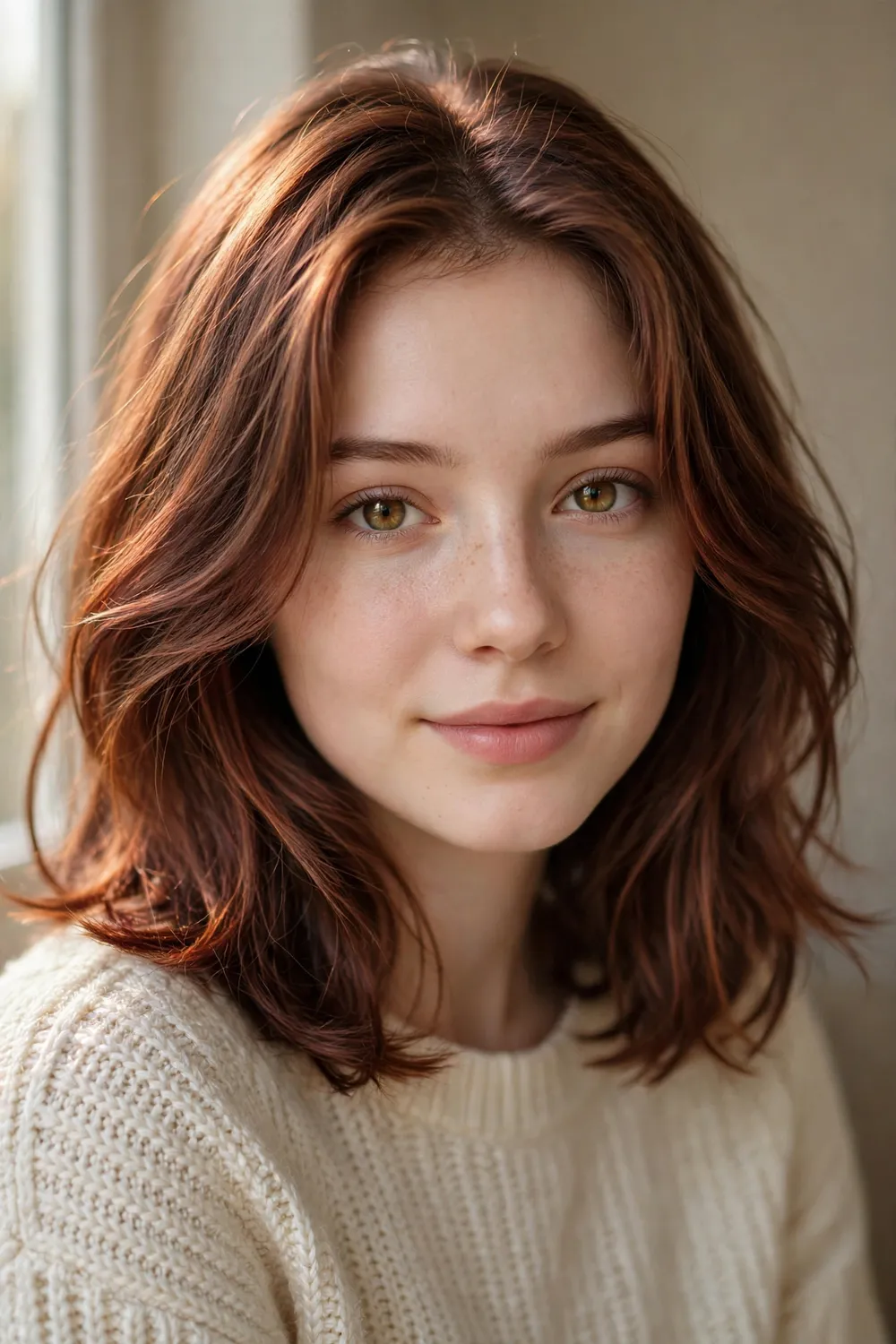
Babydoll chestnut uses fine auburn highlights and lowlights woven through a chestnut base for soft, doll-like dimension. The pieces are delicate enough that the overall read stays natural. It suits fine to medium hair because the fine work doesn’t overwhelm. The warmth shows even in low light, which gives it a constant glow. Fine to medium hair suits this best; the delicate work gets lost in very thick hair. The warmth shows even in low light, giving constant glow.
Try this: The highlight-lowlight balance should favor lowlights slightly. Too many light pieces and it stops reading as chestnut.
Difficulty: Salon pro | Cost: $150–$280
24. Chestnut on Curls
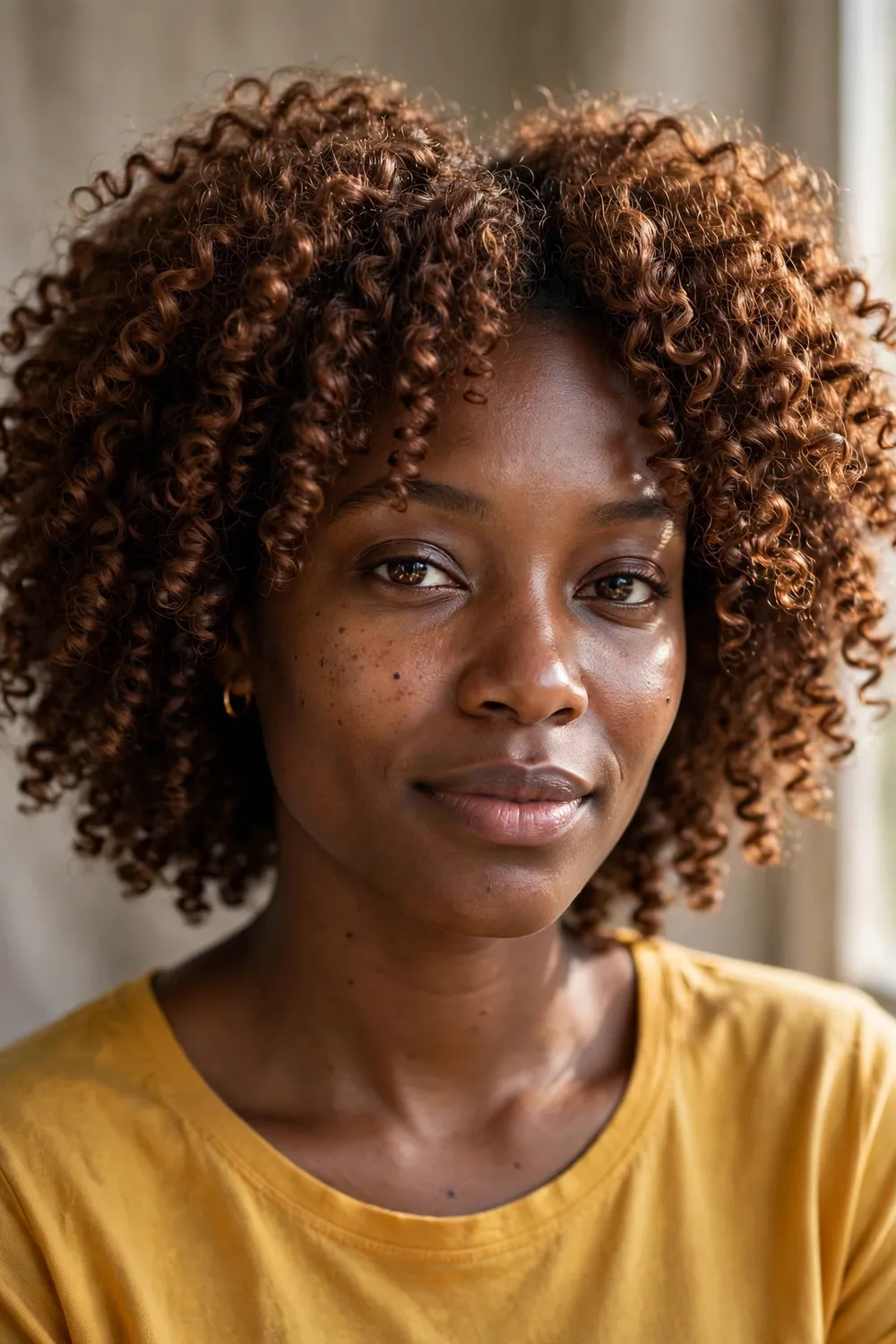
All-over chestnut on natural curls needs no highlights: the curl texture creates its own dimension as light hits each coil differently. The result is uniform richness with built-in movement. Very thin, subtle highlights sprinkled through can add a sunlit finish, but they’re optional. Deep conditioning keeps lifted curls healthy. Coloring curls dry avoids placement shifts, since wet curls shrink and bounce up as they dry. Optional babylights add a sunlit finish but are not required.
Try this: Color curls in their natural dry state when possible. Wet curls shrink as they dry and the color can end up placed differently than planned.
Difficulty: Curl specialist | Cost: $100–$220
25. Red-Tinged Afro
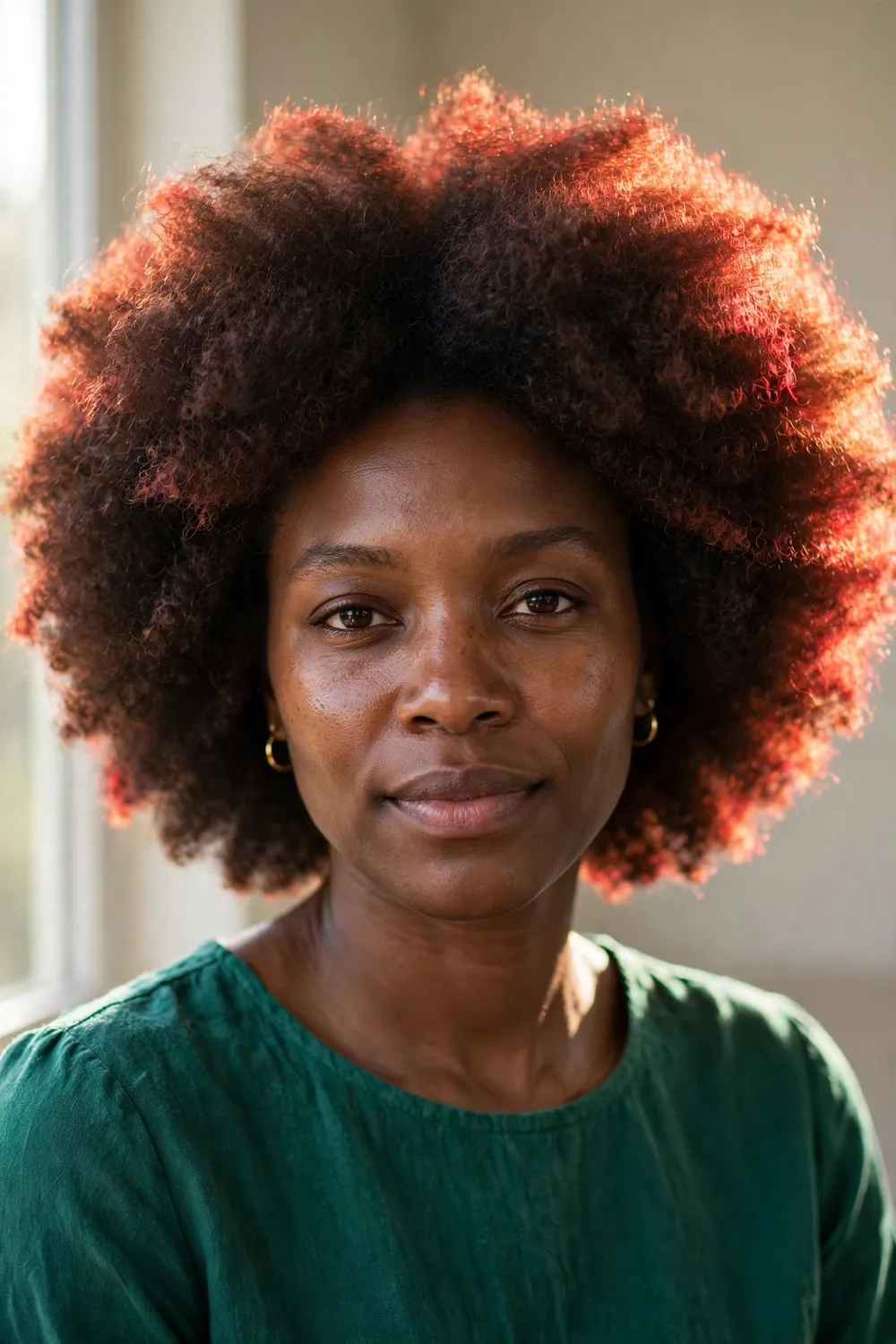
A red-tinged chestnut on a natural afro gives the shape a warm, dimensional glow. The color follows the hair’s natural texture, with the red showing most at the halo where light hits. It complements a wide range of skin tones, from deep mahogany to warm beige. Keep the red subtle; the shape is already bold enough. A demi-permanent red-brown is gentler on natural hair and fades without a harsh line.
Try this: A demi-permanent red-brown is gentler on natural hair than permanent color and fades without a harsh line.
Difficulty: Salon pro | Cost: $100–$200
26. Face-Framing Chestnut Highlights
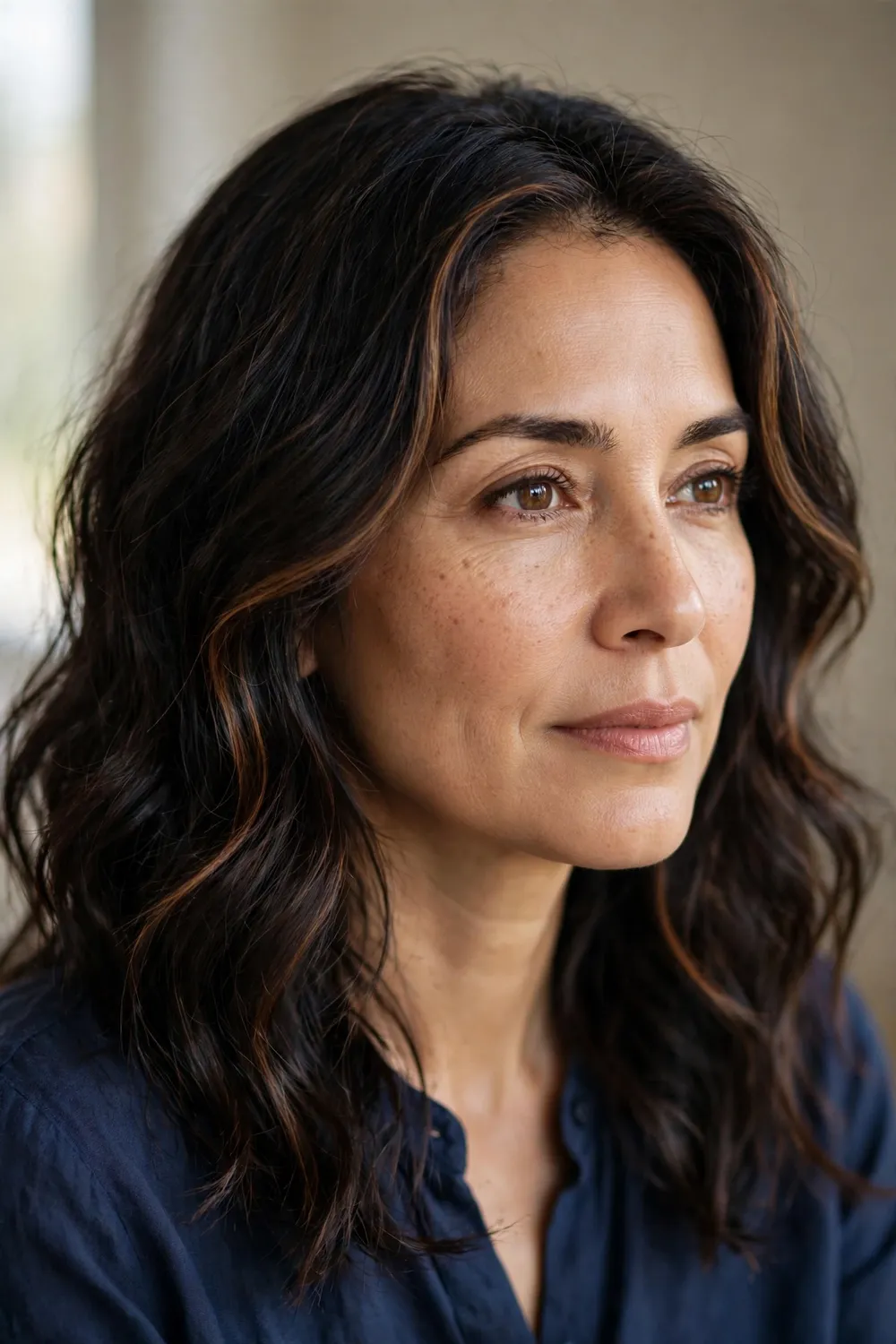
Two subtle chestnut streaks around the face brighten the complexion without a full color change. On dark hair, the warm streaks read as a gentle money piece. It’s the smallest-commitment dimensional chestnut: quick, affordable, and easy to grow out. The placement flatters nearly everyone because face-framing light is universally brightening. Thin streaks close to the hairline read as an accent; wide sections can look like a mistake. Face-framing light is universally brightening on nearly everyone.
Try this: Keep the streaks thin and close to the hairline. Wide face-framing sections on dark hair can look like a dye mistake rather than an accent.
Difficulty: Salon pro | Cost: $70–$150
27. Strawberry Chestnut
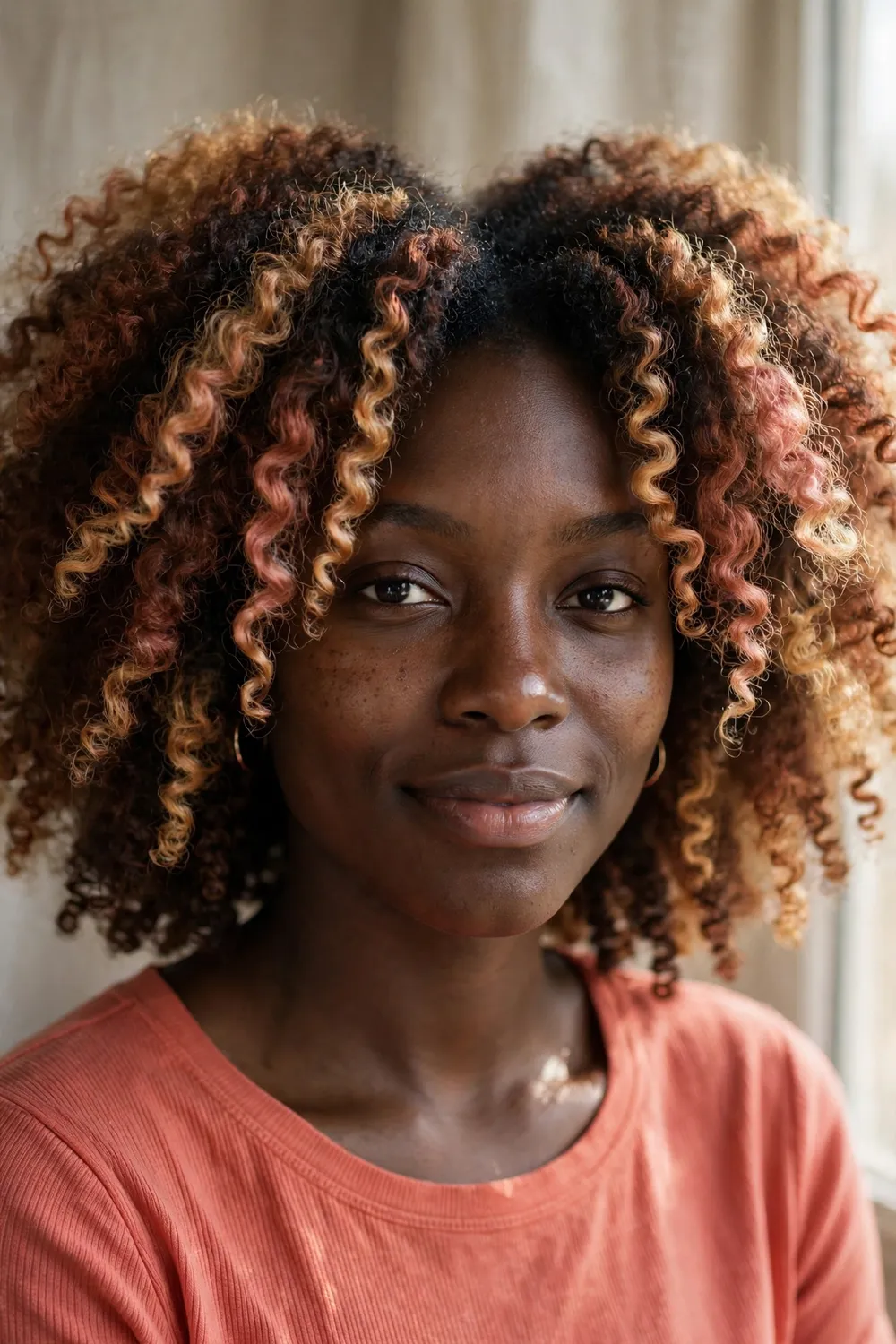
Strawberry blonde and chestnut highlights blended together, often framing the face over darker roots. The strawberry adds a pinkish-gold lightness that keeps chestnut from feeling heavy. On coily hair, the blend looks rich and multi-tonal. The darker roots add intensity and make the grow-out painless. A strawberry-tinted conditioner extends the blend between appointments. The strawberry-gold mix keeps the chestnut from feeling heavy. On coily hair the multi-tonal blend looks especially rich.
Try this: The strawberry pieces fade fastest, so a tinted conditioner in a strawberry shade extends the blend between appointments.
Difficulty: Salon pro | Cost: $140–$260
28. Blended Brunette
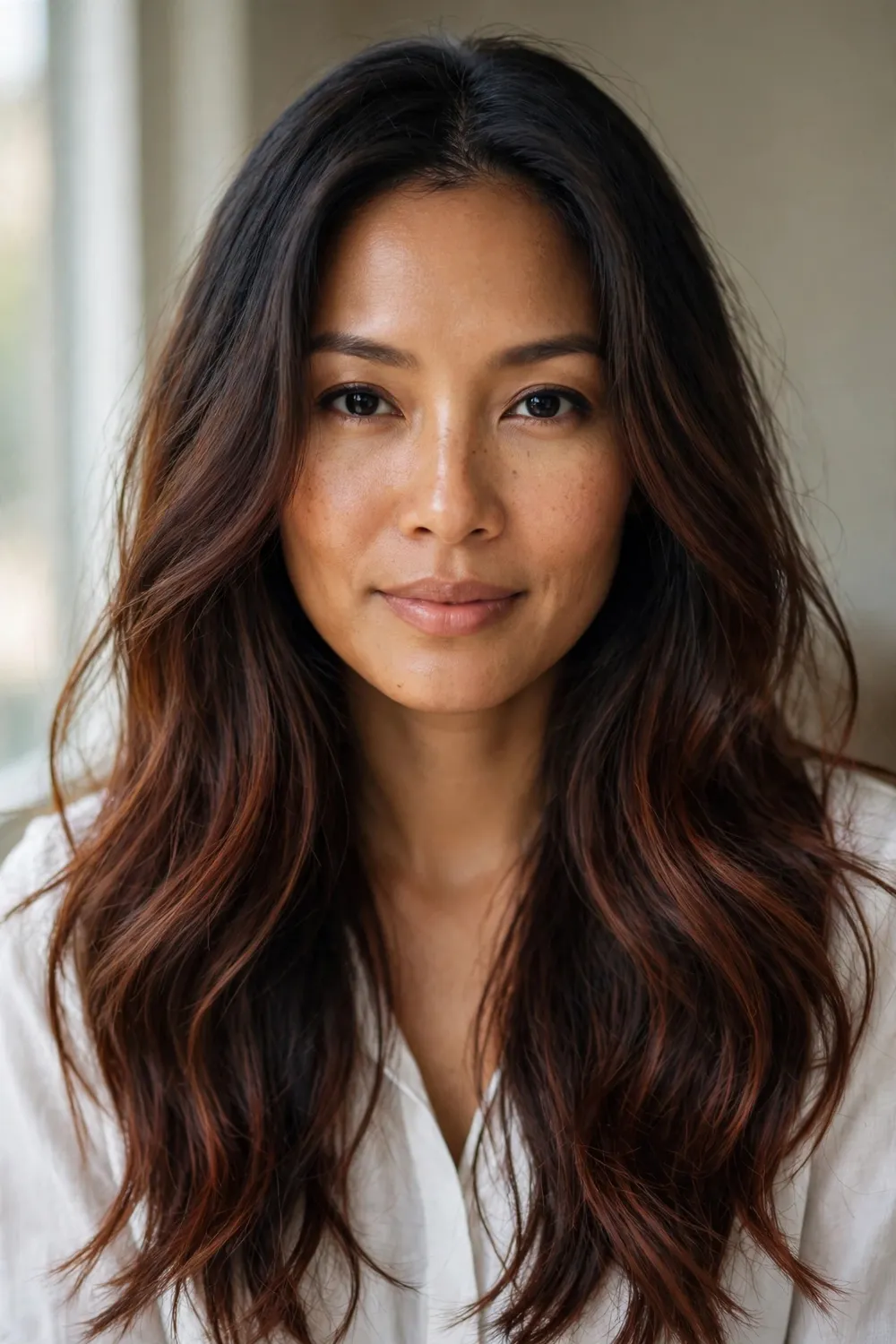
A seamless melt from raven black through chestnut to mahogany at the ends. Three brunette tones in one head of hair, blended so smoothly you can’t tell where one starts. It suits long hair where the full gradient has room to develop. Golden-olive skin glows against the warm progression. Three-tone melts go wrong easily, so check your colorist’s previous multi-tone work first. Golden-olive skin glows against the warm three-tone progression.
Try this: This needs an experienced colorist. Three-tone melts go wrong easily; ask to see photos of their previous multi-tone work.
Difficulty: Experienced colorist | Cost: $180–$320
29. Classic Chestnut Blowout
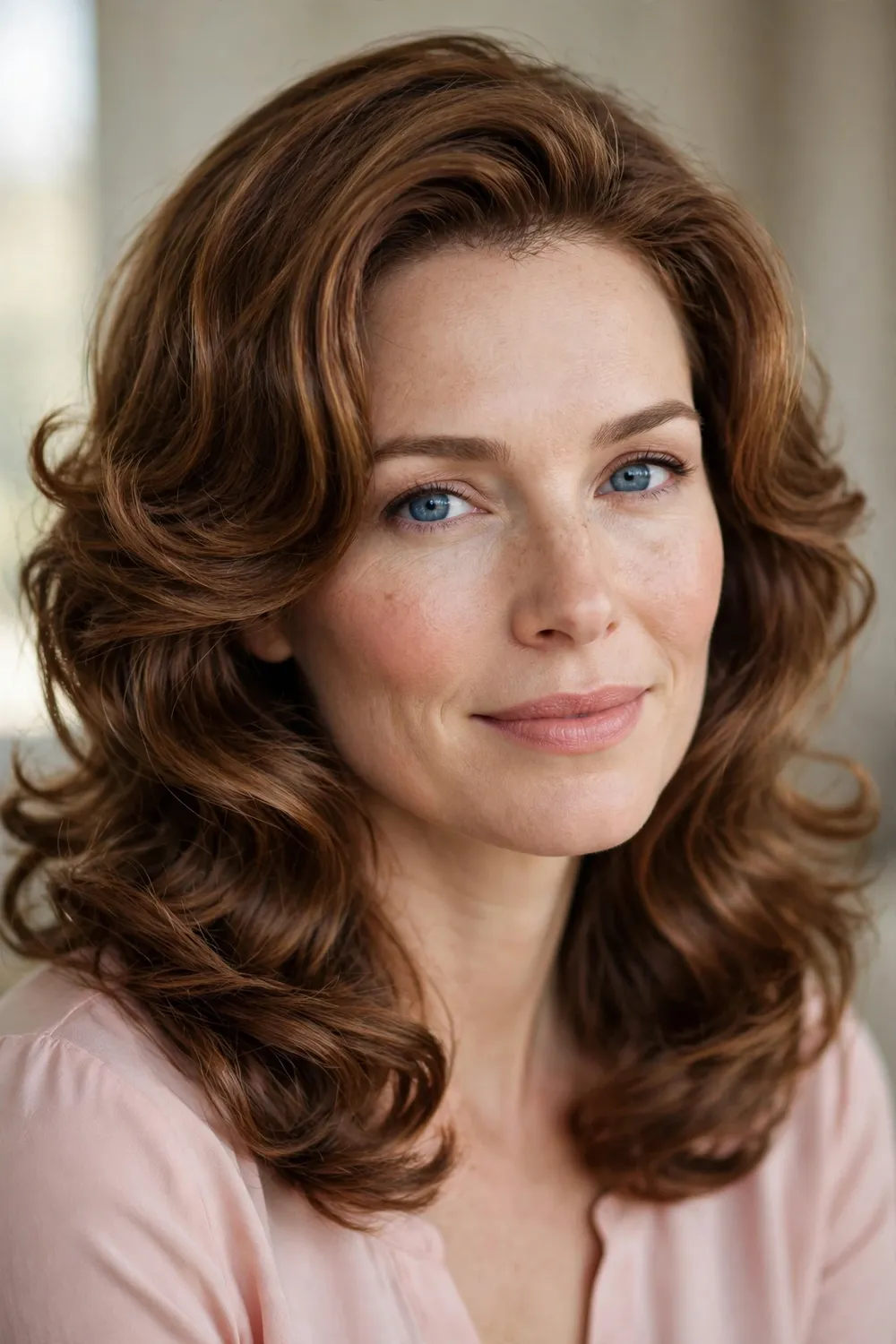
Warm chestnut with hints of light auburn, worn in a bouncy layered blowout. The styling is half the look: the round-brush volume shows off the color’s warmth and movement. It’s the polished, put-together version of chestnut. A blowout like this lasts 3–4 days with dry shampoo at the roots. A salon blowout lasts 3 to 4 days with dry shampoo at the roots. Round-brush volume shows off the color’s warmth and movement.
Try this: Apply a heat protectant before blow-drying. Chestnut’s red tones fade with heat exposure, and protection keeps the color rich longer.
Difficulty: Salon blowout or at-home styling | Cost: $50–$120
30. Chestnut-to-Blonde Gradient
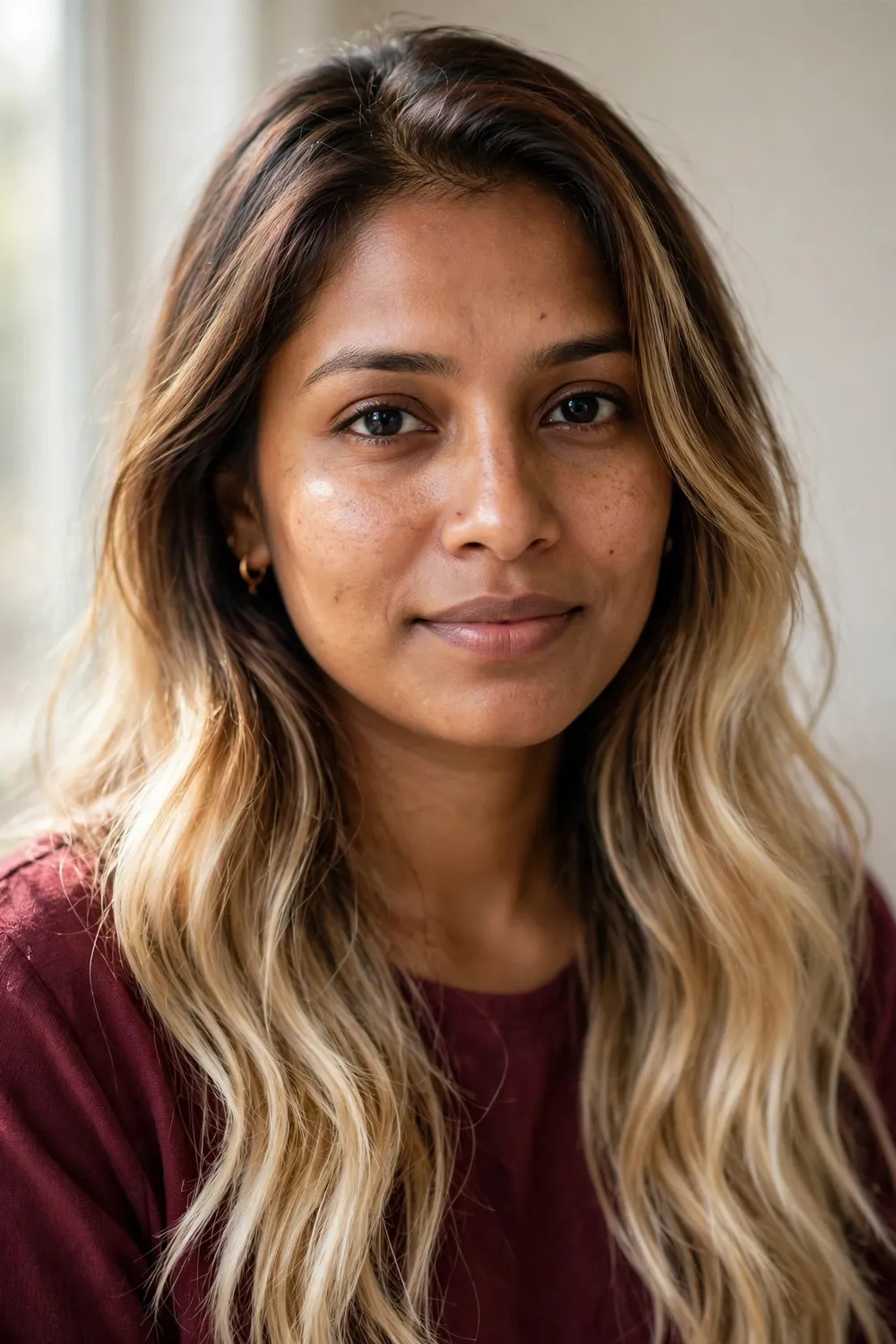
A lived-in gradient from chestnut brown at the roots to blonde at the ends. It’s the brightest chestnut option, for brunettes who want to end up blonde eventually. The chestnut root keeps it grounded while the blonde ends do the talking. The transition needs to be well-blended or it reads as grown-out dye. The chestnut root disguises regrowth, making this a smart transitional color for growing out blonde. The transition must be well-blended or it reads as grown-out dye.
Try this: This is a good transitional color if you’re growing out blonde. The chestnut root disguises regrowth while the blonde ends stay light.
Difficulty: Salon pro | Cost: $170–$300
31. Softly Highlighted Chestnut
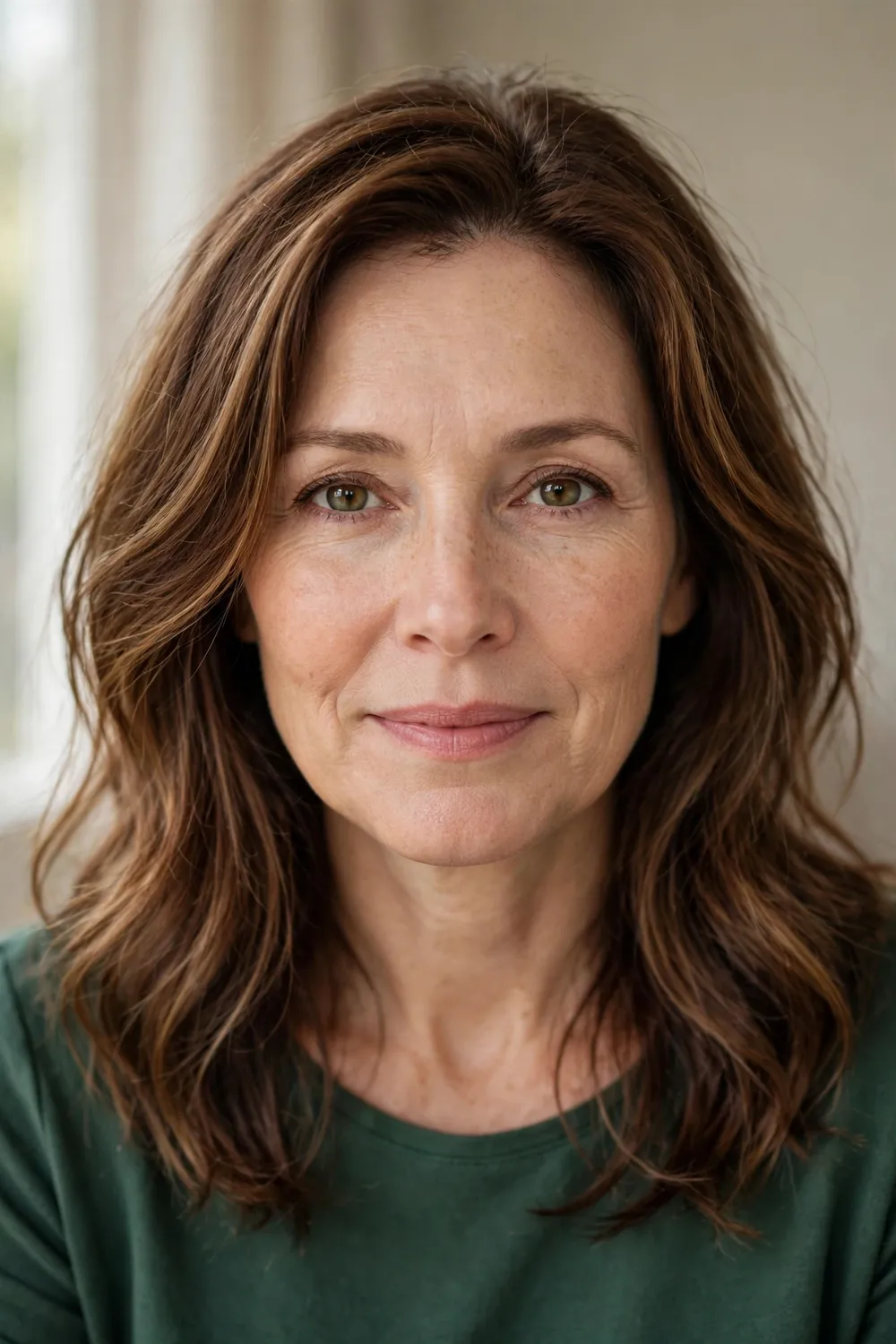
Soft, fine highlights in warm caramel tones scattered through chestnut brown, then glazed with a color close to the root shade. The glaze evens everything out so the highlights read as movement rather than stripes. It’s the most natural-looking highlighted chestnut because the contrast stays low. Maintenance is easy since nothing is more than a shade or two from the base. Keeping the glaze within one level of your natural root is what makes the grow-out invisible.
Try this: Ask for the glaze to be no more than one level off from your natural root color. That closeness is what makes the grow-out invisible.
Difficulty: Salon pro | Cost: $130–$250
32. Autumn Red and Gold Highlights
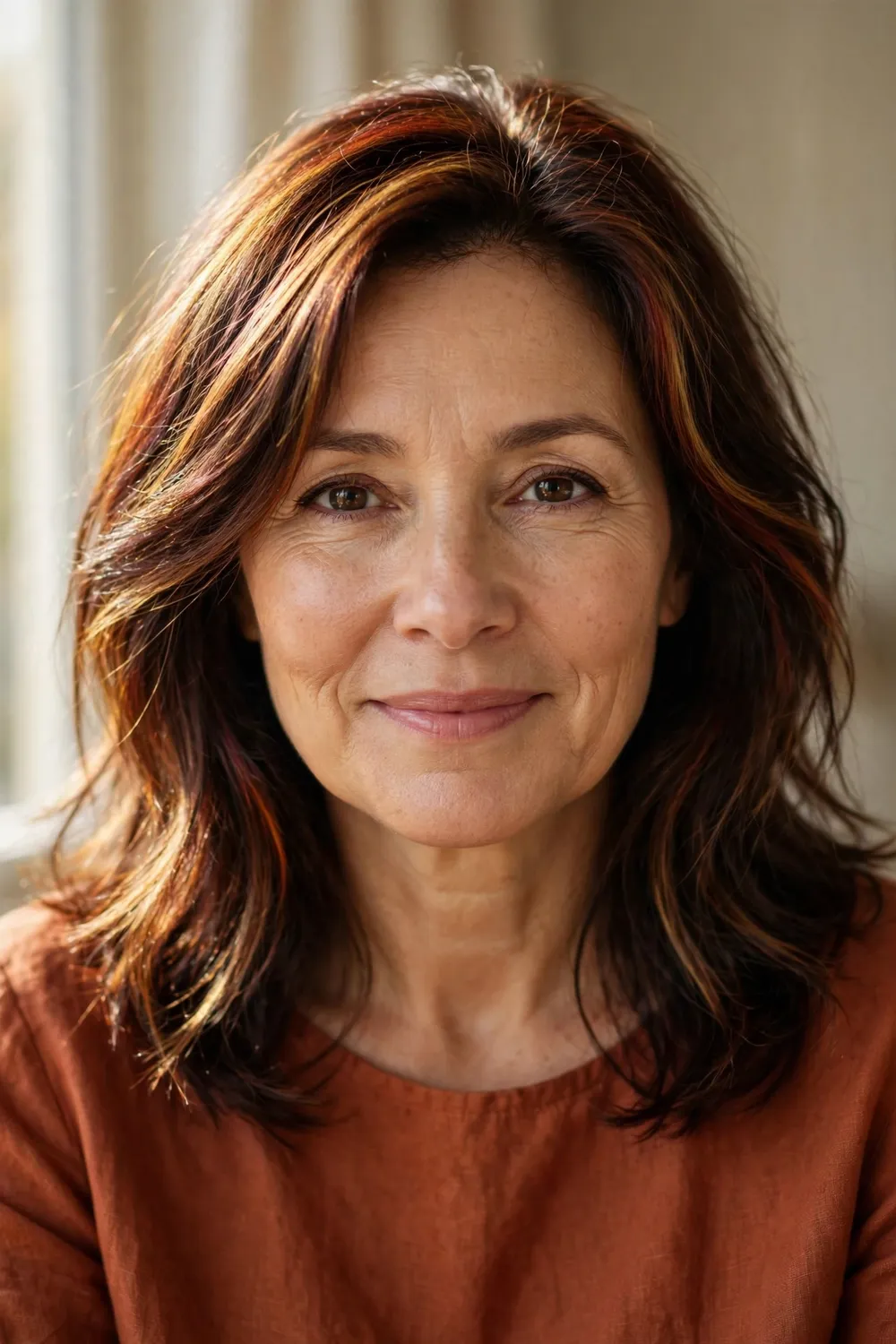
Subtle red and gold highlights through dark chestnut, like autumn leaves. The combination is seasonal and cozy, adding warmth without a full red commitment. The highlights are deliberately understated, just enough to catch light. It’s a good fall refresh for existing chestnut that feels a little flat. A partial highlight service keeps the cost down while placing color where it shows most. It is a good seasonal refresh for chestnut that feels flat.
Try this: This works as a partial highlight service, not full-head. Focusing on the top and front keeps the cost down and the effect visible.
Difficulty: Salon pro | Cost: $110–$210
33. Rooted Chestnut
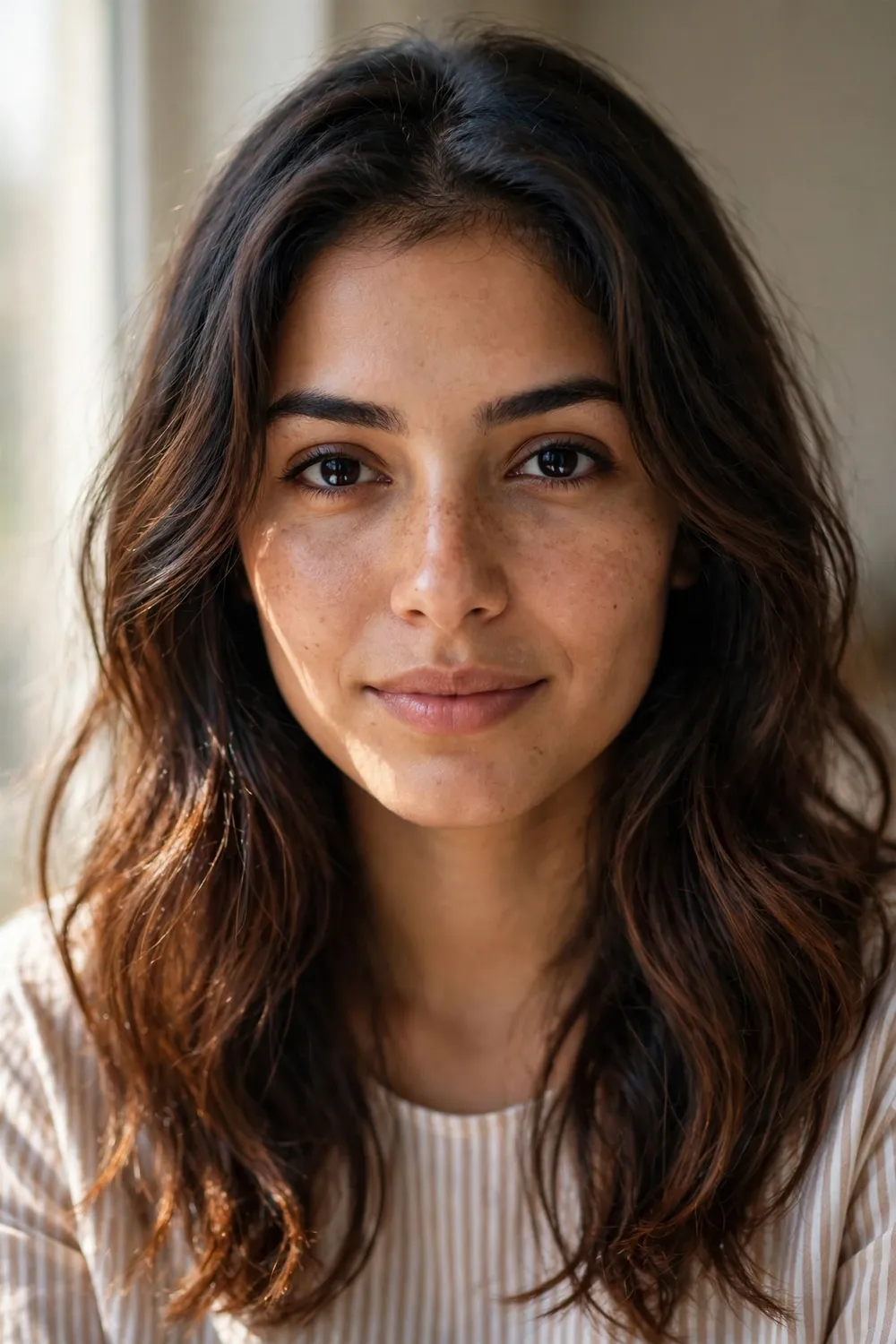
Chestnut through the lengths with deliberately darker roots, blended with a root-smudge technique. It’s the easy first step into chestnut for anyone nervous about the commitment. The darker root adds depth that makes the chestnut look richer by comparison. Touch-ups stretch to 3–4 months because the root is part of the design. Touch-ups stretch to 3 to 4 months because the dark root is part of the design. The darker root adds depth that makes the chestnut look richer.
Try this: The root shade should be your natural color or one level deeper. Artificially dark roots on chestnut can look like a shadow root trend rather than a natural grow-out.
Difficulty: Salon pro | Cost: $120–$220
34. Cool Chestnut

Cool chestnut keeps the brown depth but mutes the red, landing as a neutral-warm shade rather than a fiery one. It suits cool skin tones that want chestnut’s richness without its heat. The formula balances warm and cool tones carefully; too much cool and it stops being chestnut. A gloss keeps it from going flat. Hair that pulls red naturally needs extra neutral in the formula to hold the cool balance.
Try this: If your hair pulls red naturally, mention it. The colorist needs to add extra neutral to the formula to hold the cool balance.
Difficulty: Salon pro | Cost: $100–$200
35. Eggplant Brown
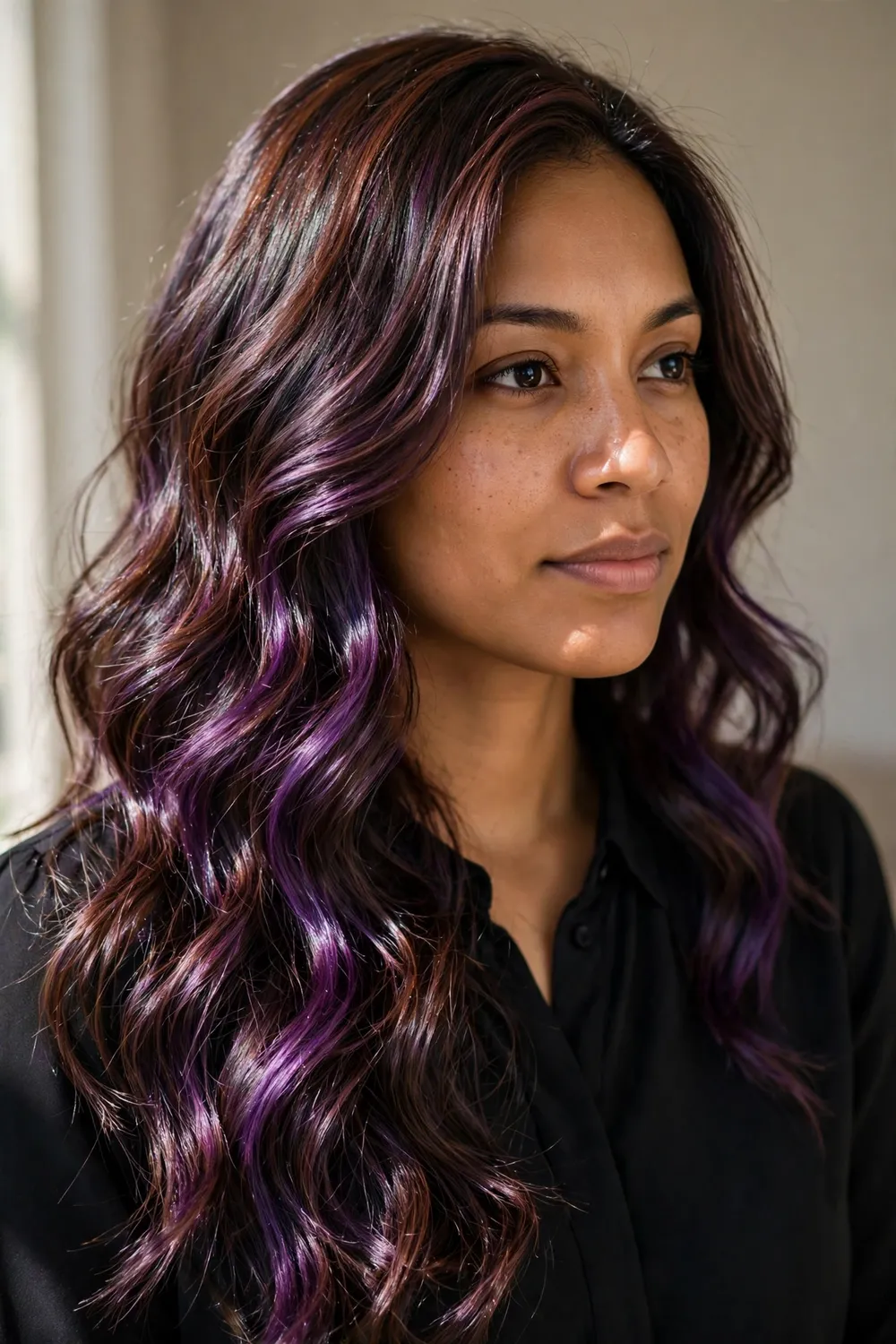
Eggplant brown layers deep purple over a chestnut base for a bold, multifaceted dark shade. Indoors it reads as rich dark brown; in light the purple reveals itself. It’s chestnut for people who want edge. The purple fades faster than the brown, so the color evolves over weeks, which is part of the appeal. The purple fades faster than the brown, so the color evolves over weeks, which is part of the appeal.
Try this: Avoid over-conditioning with heavy masks in the first two weeks. They can pull the purple out faster than the brown.
Difficulty: Salon pro | Cost: $120–$220
36. Deep Purple Chestnut Pixie

Deep purple-brown chestnut on a short pixie cut. The short length takes the shock out of a bold color change, and the purple-brown reads sophisticated rather than punky on a clean crop. Pixies need trims every 4–6 weeks, but the color itself is low maintenance because short hair grows out fast enough to refresh constantly. Short hair grows out fast enough that the color refreshes constantly with regular trims. The color itself is low maintenance between regular trims.
Try this: On a pixie, the color shows fully with no hidden layers, so the formula needs to be exact. Strand-test the purple-brown mix before committing.
Difficulty: Salon pro | Cost: $90–$180
37. Dark Gold Chestnut Layers
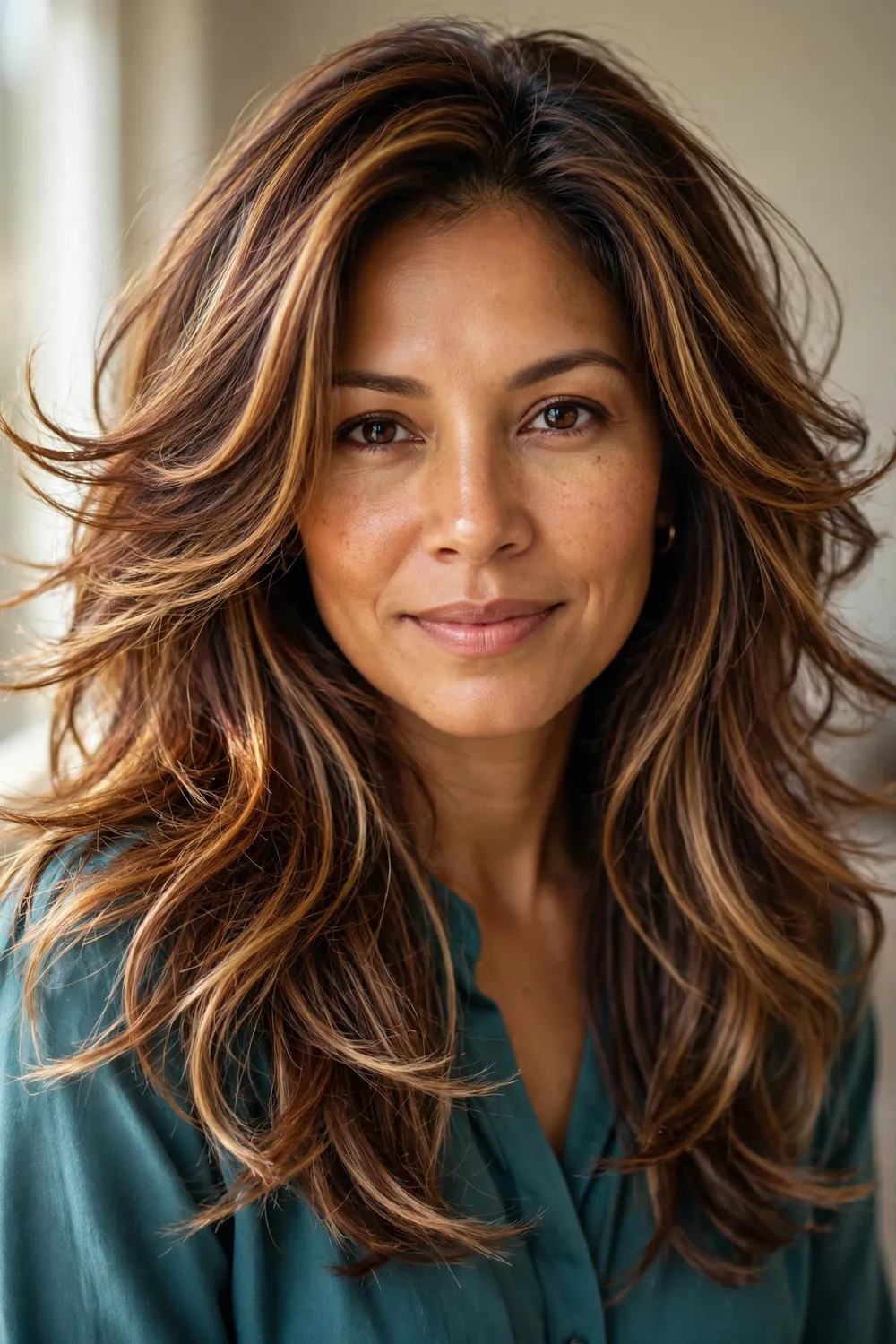
Long layers with highlights in caramel, auburn, dark gold, and light chestnut all at once. The layered cut gives each shade its own stage, and the combination creates tons of volume and movement. It’s a maximalist chestnut for people who want every warm tone at once. The layers do the heavy lifting; without them the colors blend into mud. Without the layers, four warm tones would blend into mud; the cut gives each shade its own stage.
Try this: Get the layers cut first, then colored. The colorist needs to see where each layer falls to place the four tones correctly.
Difficulty: Experienced colorist | Cost: $180–$320
38. Rose Gold Chestnut
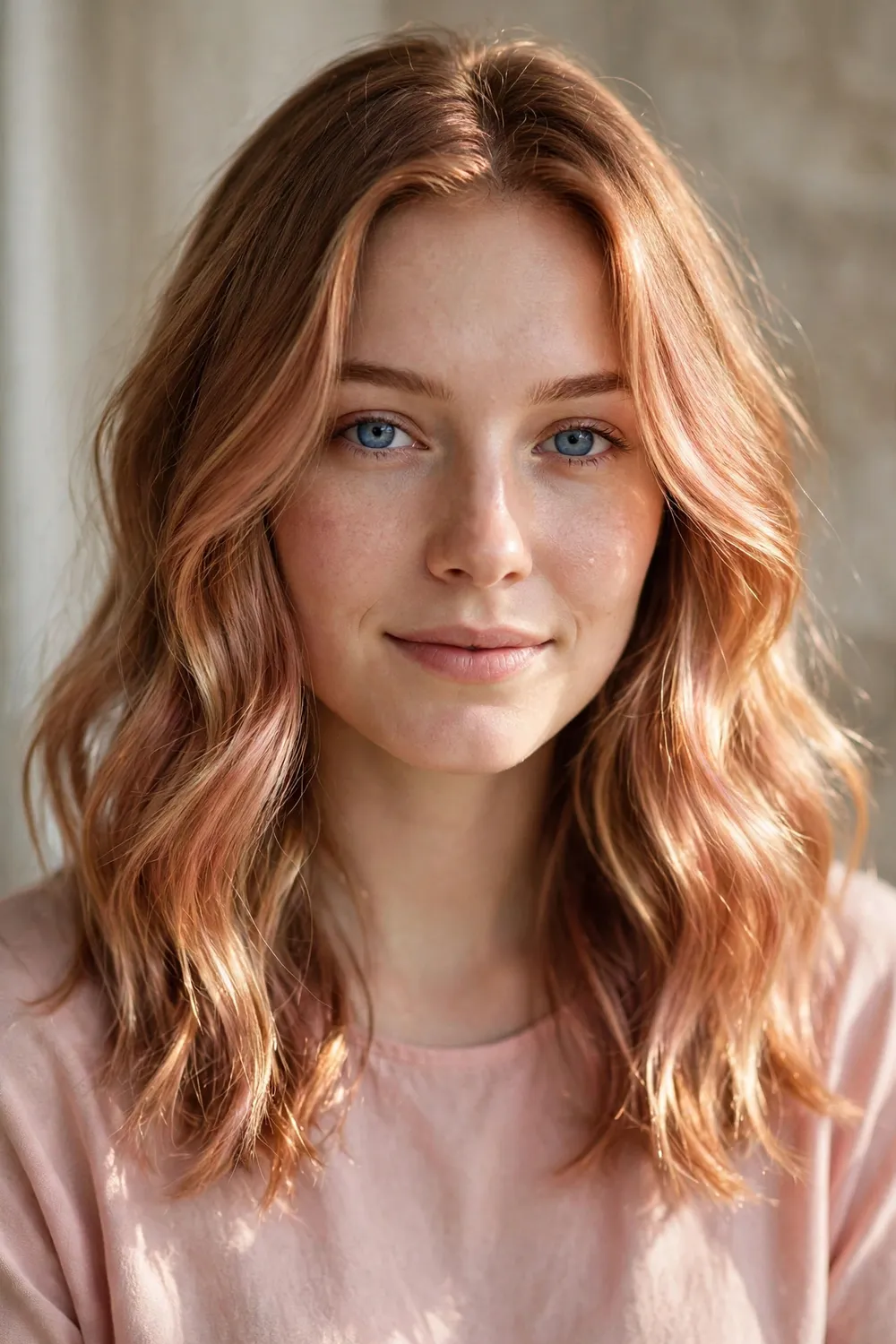
A golden chestnut base with just enough red, gold, and blonde highlights to create a molten rose gold effect. It’s not quite red, not quite blonde, and definitely not plain brown. The blended tones catch the light well. Fair to medium skin tones wear it best. The rose fades fastest, so tinted conditioners help between appointments.
For more pink-gold shades, explore our rose gold hair color ideas. Rose concentrated at the roots can make regrowth look pink, so keep it mid-lengths and down.
Try this: This looks best with the rose concentrated through the mid-lengths and ends. Rose at the roots can make regrowth look pink.
Difficulty: Salon pro | Cost: $150–$280
39. Chestnut Praline
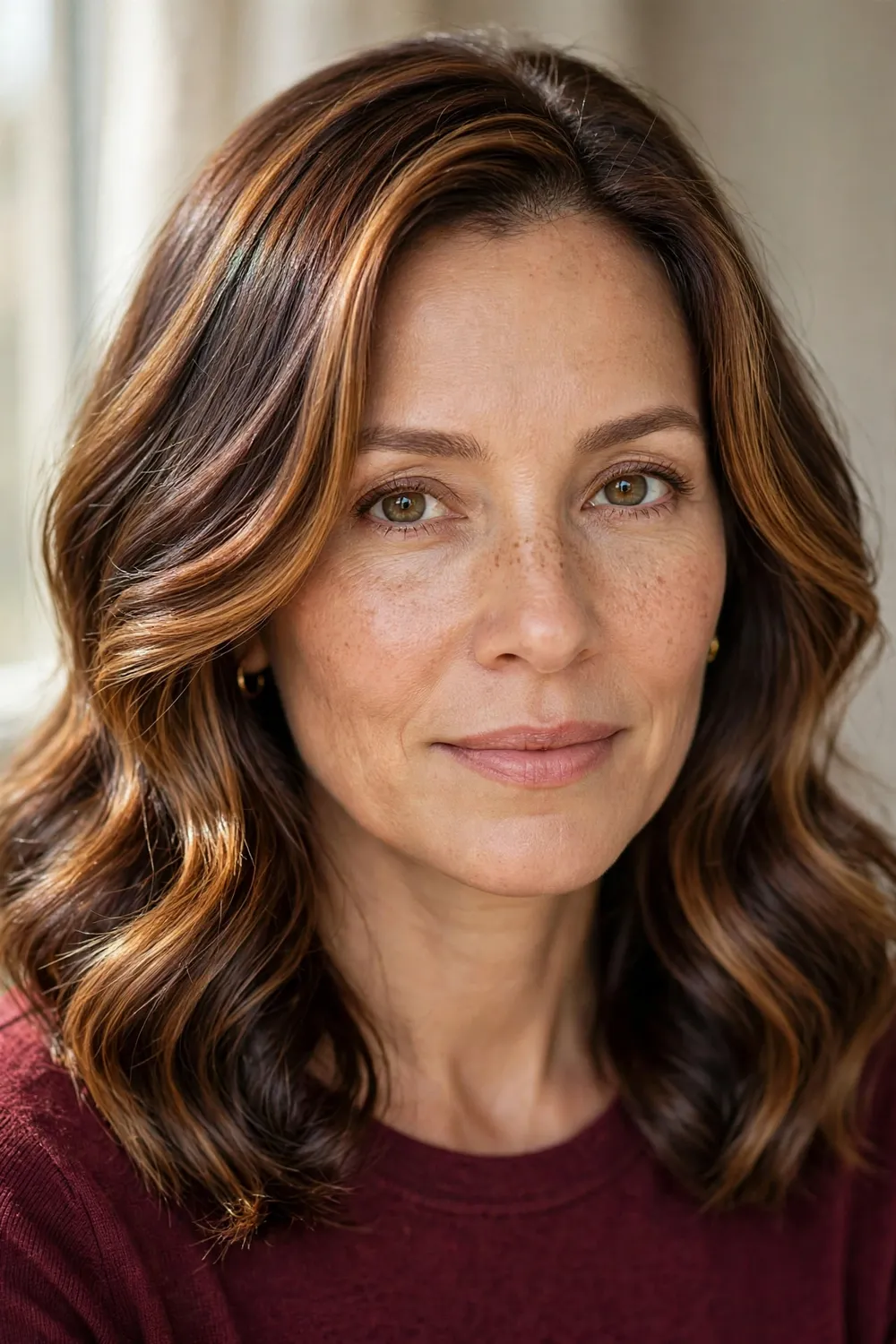
A blended mix of chestnut and chocolate brown tones, with painted panels of light for dimension, all sealed with a gloss. The praline name fits: sweet, nutty browns melted together. It’s rich without being red-heavy, which suits people who want warmth without fire. The gloss finish is what makes the look work. Painted panels only around the face and ends keep the praline richness concentrated where it shows. It is rich without being red-heavy, suiting those who want warmth without fire.
Try this: Ask for the light panels to be painted around the face and through the ends only. All-over panels dilute the praline richness.
Difficulty: Salon pro | Cost: $160–$290
40. Molten Bronze
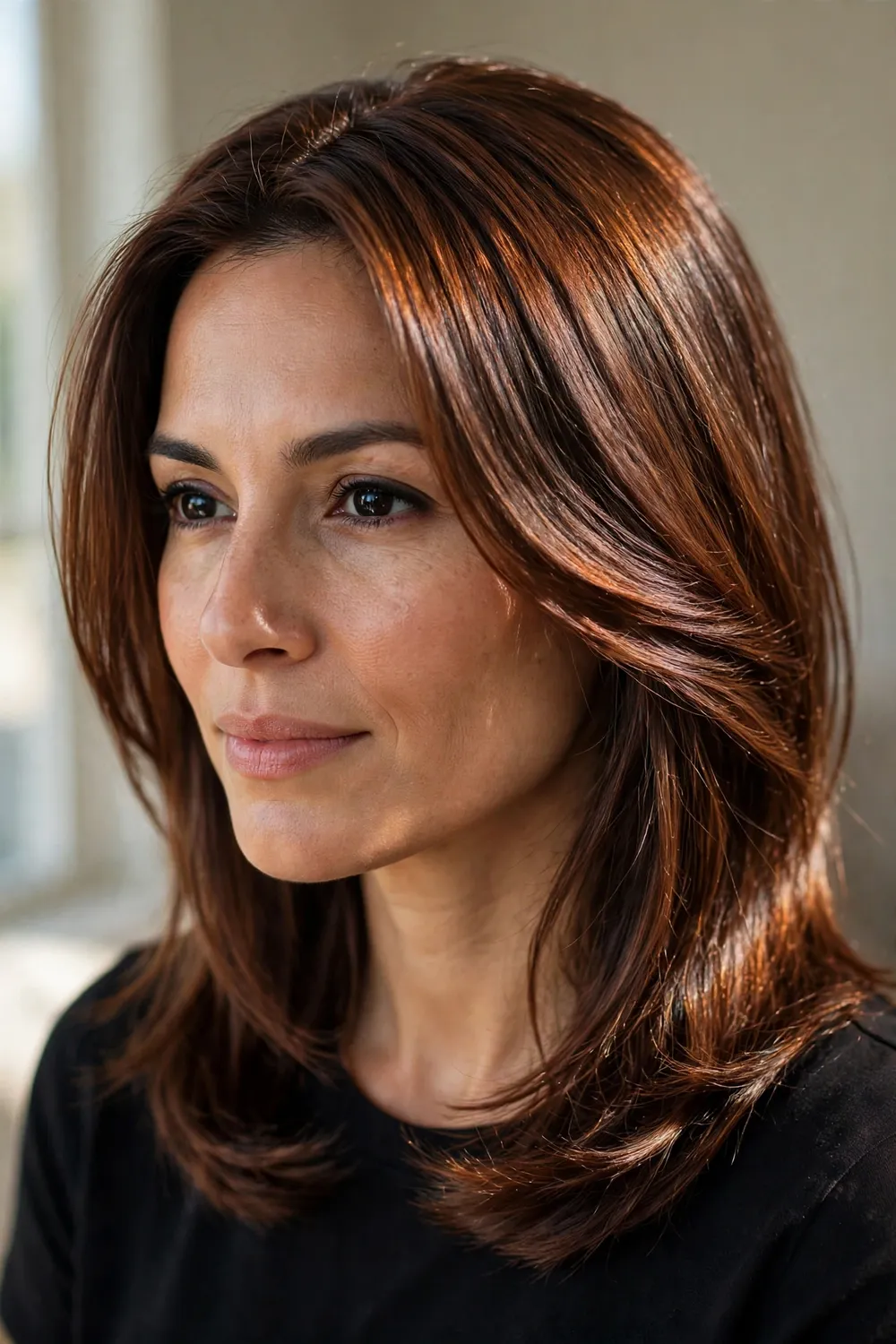
Molten bronze deepens chestnut with bronze undertones that catch light like a soft metallic sheen. It’s dramatic but still reflective rather than flat. The bronze dimension shows up as shine, not stripes, so hair looks polished even with minimal styling. It photographs well because the metallic tones read clearly on camera. Matte products kill the metallic reflectiveness, so a shine spray is part of the look. The bronze dimension shows as shine, not stripes.
Try this: A shine spray or lightweight oil enhances the molten effect. Matte products kill the metallic reflectiveness that defines this shade.
Difficulty: Salon pro | Cost: $140–$260
41. Teddy Bear Brown
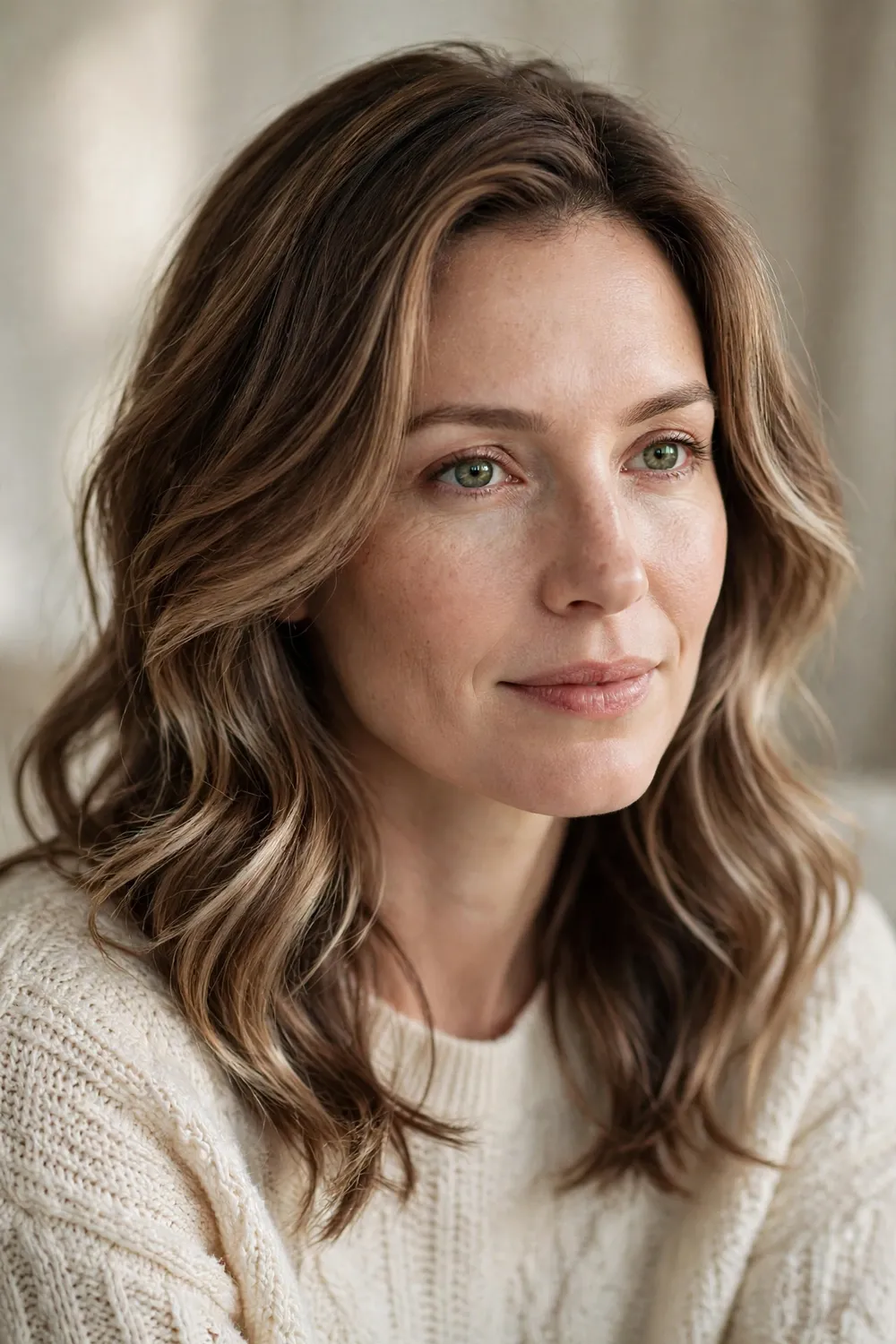
The coziest chestnut: soft mocha tones, creamy beige accents, and a gentle shadow at the root, all seamlessly blended. It’s the “expensive brunette” effect in chestnut form: polished, natural, and wearable. Not loud, not icy, just perfectly blended. It suits anyone who wants to look put-together with minimal effort. The root shadow gives this blend its dimension; without it the mocha and beige can look flat. It suits anyone wanting a polished look with minimal effort.
Try this: The root shadow is key. Without it, the mocha and beige blend can look flat; the shadow gives it dimension.
Difficulty: Salon pro | Cost: $150–$280
42. Espresso-Lowlight Chestnut
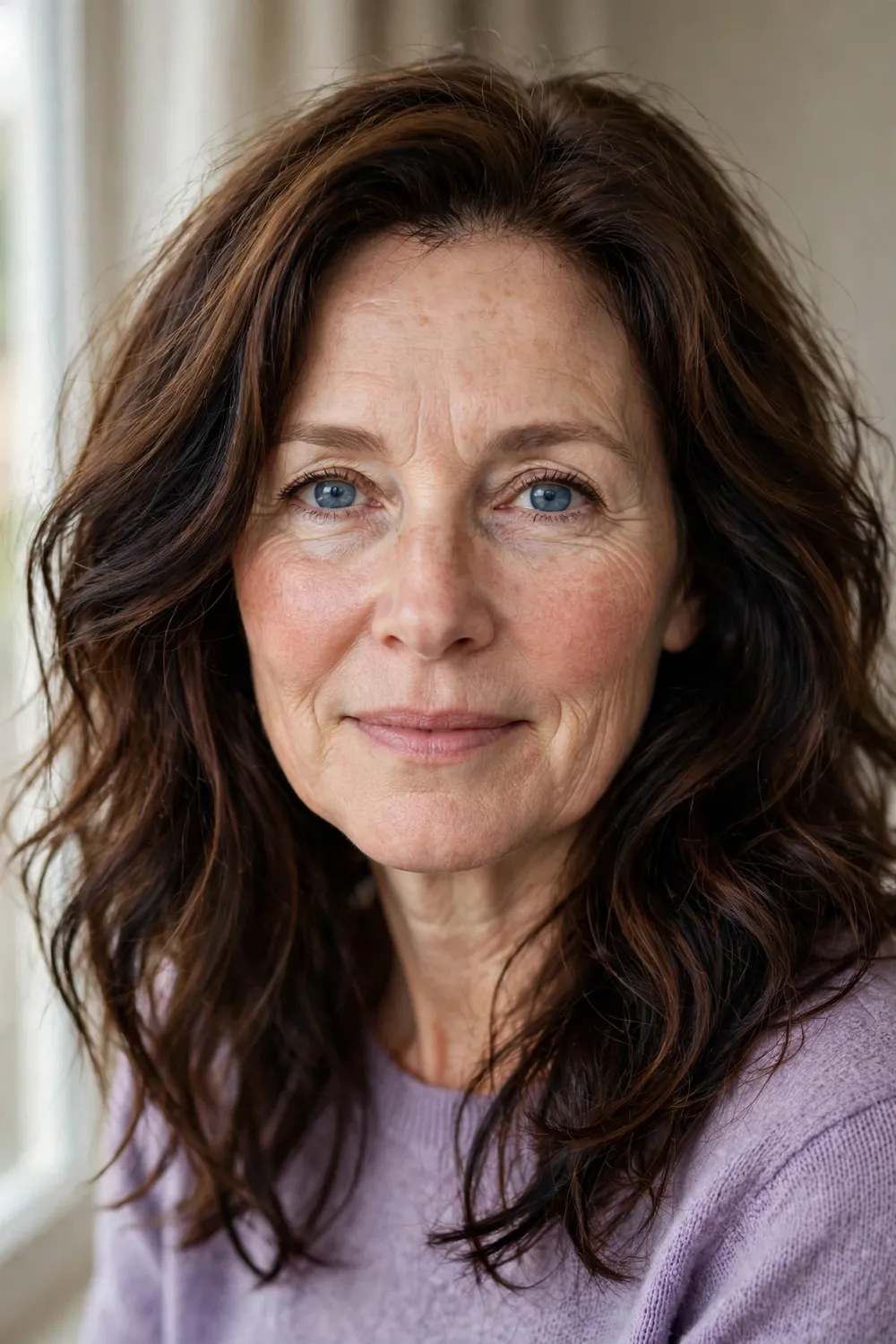
Deep espresso lowlights woven through medium chestnut add the shadow that fine or thin hair usually lacks. The dark pieces create an illusion of thickness and make the chestnut look richer by contrast. Because lowlights are darker than the base, they grow out without a line. It’s the best chestnut option for fine hair that falls flat in single-process color. Fine, well-distributed espresso pieces add depth; thick ones look heavy on fine hair.
Try this: Keep the espresso pieces fine and well-distributed. Thick dark lowlights on fine hair can look heavy instead of dimensional.
Difficulty: Salon pro | Cost: $120–$220
Chestnut Brown Shades Compared
| Shade | Tone | Upkeep | Typical Cost |
|---|---|---|---|
| Dark chestnut | Deep warm brown | Low; regrowth blends in | $60–$140 |
| Reddish chestnut | Classic red-brown | Medium; red softens over weeks | $60–$130 |
| Golden chestnut | Sunny gold-brown | Medium; watch for brassiness | $100–$200 |
| Coppery chestnut | Bright copper warmth | Higher; copper fades fast | $80–$180 |
| Mocha chestnut | Cool, muted brown | Low; neutral tones last | $60–$150 |
| Chestnut balayage / ombré | Dimensional, multi-tone | Low; grows out softly | $140–$290 |
How to Choose Your Chestnut Shade
Start with how much red you want. Subtle warmth points to dark chestnut, chocolate chestnut, or mocha versions. Clear redness means reddish or coppery chestnut. Maximum impact is the auburn and deep red end of the list. There’s no wrong answer, but picking the wrong red level is the most common chestnut regret.
Match the depth to your skin tone. Fair skin usually suits medium chestnut better than very dark versions, which can overwhelm. Medium and olive skin handles the full range. Deep skin glows against dark chestnut, mahogany, and molten bronze.
Consider your hair’s history. Virgin hair takes chestnut well in one process. Previously colored or highlighted hair may need color correction first, especially if you’re going darker. Red tones on porous, previously lightened hair fade fast, so a filler or gloss helps them stick.
What to avoid: Don’t go coppery chestnut if you hate maintenance; the copper fades within weeks without care. Don’t apply permanent red-brown over heavily highlighted hair without a filler, or the color grabs unevenly. Skip clarifying shampoos on fresh chestnut, which strip the red tones first. And if you heat-style, use a heat protectant, since red molecules are the first to break down under heat.
Frequently Asked Questions
What skin tones suit chestnut brown hair?
Chestnut suits nearly every skin tone because the warmth is adjustable. Warm and olive skin takes the golden, coppery, and reddish versions. Neutral skin wears most versions. Cool skin does better with mocha, cool, or cinnamon-spiked chestnut, which mute the red.
Does chestnut brown hair fade quickly?
The brown base lasts well, but the red and gold tones soften over 6–8 weeks. Coppery and bold auburn versions fade fastest. Sulfate-free shampoo, lukewarm water, and washing less often slow the fade. A gloss refresh every couple of months restores the warmth fully.
Can I dye my hair chestnut brown at home?
Yes for one-process shades like dark, reddish, chocolate, or deep red chestnut, especially on virgin or previously brown hair. Strand-test first, and use a filler if you’re covering old highlights. Balayage, ombré, and multi-tone versions belong in a salon.
Is chestnut brown high maintenance?
No, it’s one of the lower-maintenance warm shades. Regrowth blends because the color is close to most natural browns, and the warmth fades gracefully rather than turning brassy. Dimensional versions like balayage and ombré need even less frequent touch-ups.
What’s the difference between chestnut and auburn?
Chestnut is primarily a brunette shade with warm or red undertones. Auburn is redder and richer overall, ranging from coppery brown to bright red. Chestnut looks brown in most light with red showing in sun; auburn reads red in most light. Many shades sit between the two.
Final Thoughts
Chestnut brown works because it’s warm without being loud and rich without being high maintenance. Pick your red level honestly, match the depth to your skin tone, and protect the warmth with the right products. Whether you go dark and glossy or bright and coppery, chestnut rewards you with color that looks good from day one to week eight.

