



Thin hair needs a lighter touch than thick hair. Heavy products flatten it, rough handling snaps it, and overwashing strips the little natural oil it has. The fix is not complicated: wash gently, use lightweight products, keep the scalp clean, and style for lift instead of weight.
This guide covers the full routine for caring for thin hair, from the shower to the pillow. Every tip is chosen for fine strands that lose volume fast and break easily.
Quick Takeaways
- Use lightweight, volumizing shampoo and conditioner. Keep conditioner on the mid-lengths and ends only.
- Wash the scalp well and rinse fully. Product buildup flattens thin hair faster than anything else.
- Dry with lift at the roots: flip your head forward or use a round brush, then set with cool air.
- Detangle gently from the ends up with a wide-tooth comb. Wet hair breaks more easily, so go slow.
- Trim every 6 to 8 weeks. Clean ends make thin hair look noticeably fuller.
Fine Hair vs. Thinning Hair: Know the Difference
Fine hair means each strand has a small diameter. You can be born with it, and it can look full with the right routine. Thinning hair means you are losing density, and it can happen to any hair type.
The distinction matters because the care is different. This guide is written for naturally fine or thin hair. If you notice sudden shedding, a widening part, or bald patches, that is a different issue and worth discussing with a dermatologist.
How to Wash Thin Hair

Start with lukewarm water. Hot water roughs up the outer layer of the hair and leaves fine strands frizzy and tangled.
Apply a small amount of shampoo to the scalp only. Massage with your fingertips, not your nails, for about 30 seconds. The lengths get clean enough from the rinse running through them. If your hair was very oily or full of product, shampoo twice: the first wash lifts oil, the second actually cleans.
Rinse longer than you think you need to. Leftover shampoo residue is one of the main reasons thin hair falls flat by midday. For schedules by hair type, read our guide on how often to wash hair.
Pick Lightweight Products
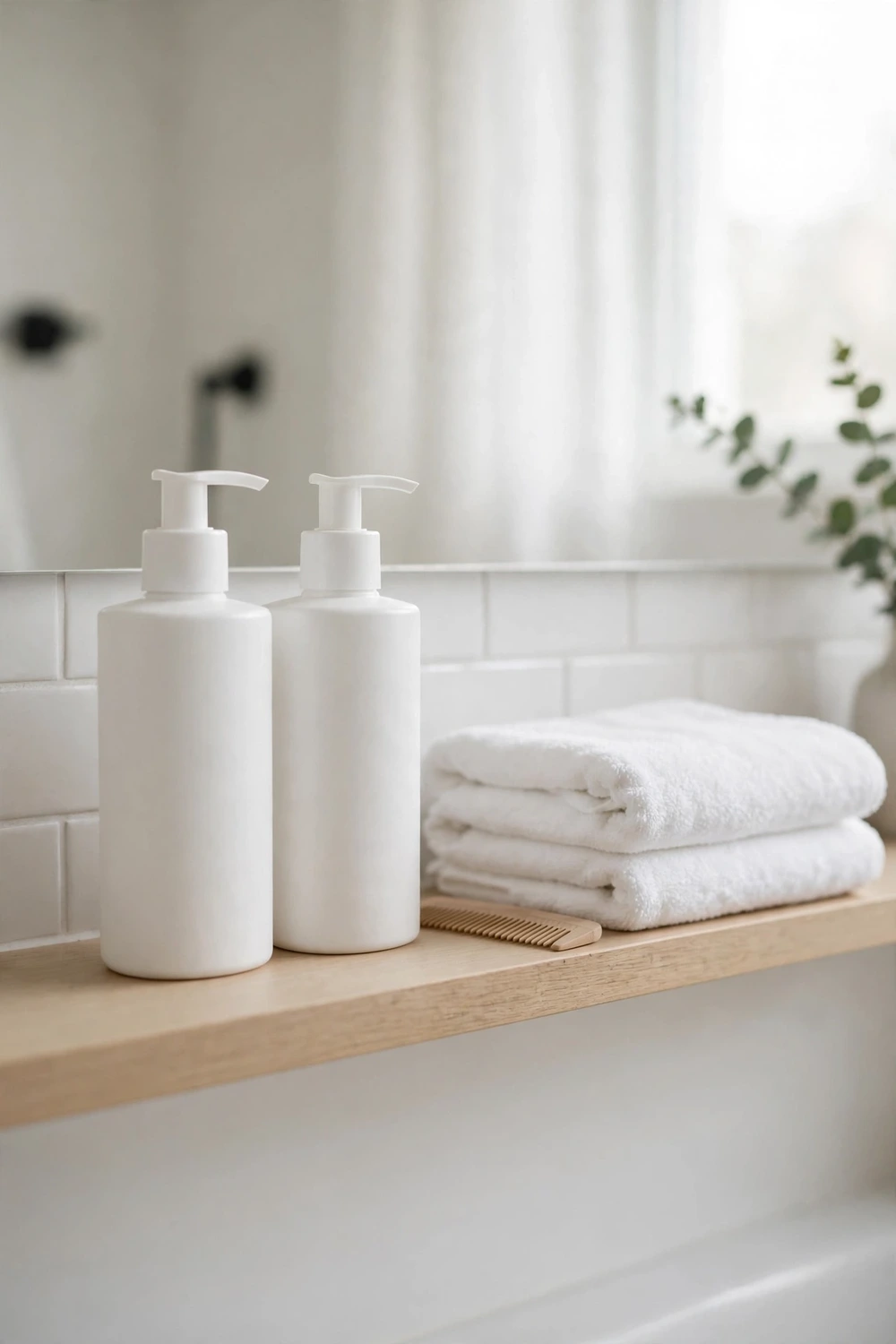
Look for shampoos labeled volumizing, fine hair, or lightweight. Avoid formulas packed with heavy butters and oils, which coat fine strands and pull them down.
Check ingredient lists for silicones high up in the list. A little silicone can smooth frizz, but heavy silicone buildup makes thin hair look stringy within a day. If your hair feels coated even right after washing, a clarifying shampoo once every week or two resets the baseline. Some formulas do more harm than good on fine strands, so it helps to know the ingredients to avoid in hair products.
Condition the Ends, Not the Roots

Thin hair still needs conditioner. Without it, fine strands tangle and snap. The trick is placement: apply from the mid-lengths to the ends, and keep it off the scalp and roots entirely.
Use a lightweight or volumizing conditioner rather than a deep repair mask for daily use. Leave it for one to two minutes, then rinse with lukewarm water. If your ends are very dry, a pea-sized amount of leave-in on the ends after washing gives moisture without the weight of a second rinse-out product. The two products do different jobs, which is why shampoo vs conditioner matters for getting the order and placement right.
Keep Your Scalp Clean and Calm

Volume starts at the scalp. Oil, sweat, and product buildup at the roots glue fine hair flat against the head, so a clean scalp is the foundation of everything else in this guide.
Massage your scalp with your fingertips for a minute during each wash. This loosens buildup and helps you notice flakes, tenderness, or itching early. If you get dandruff or an itchy scalp, treat that first: an irritated scalp does not grow its best hair.
Dry for Volume
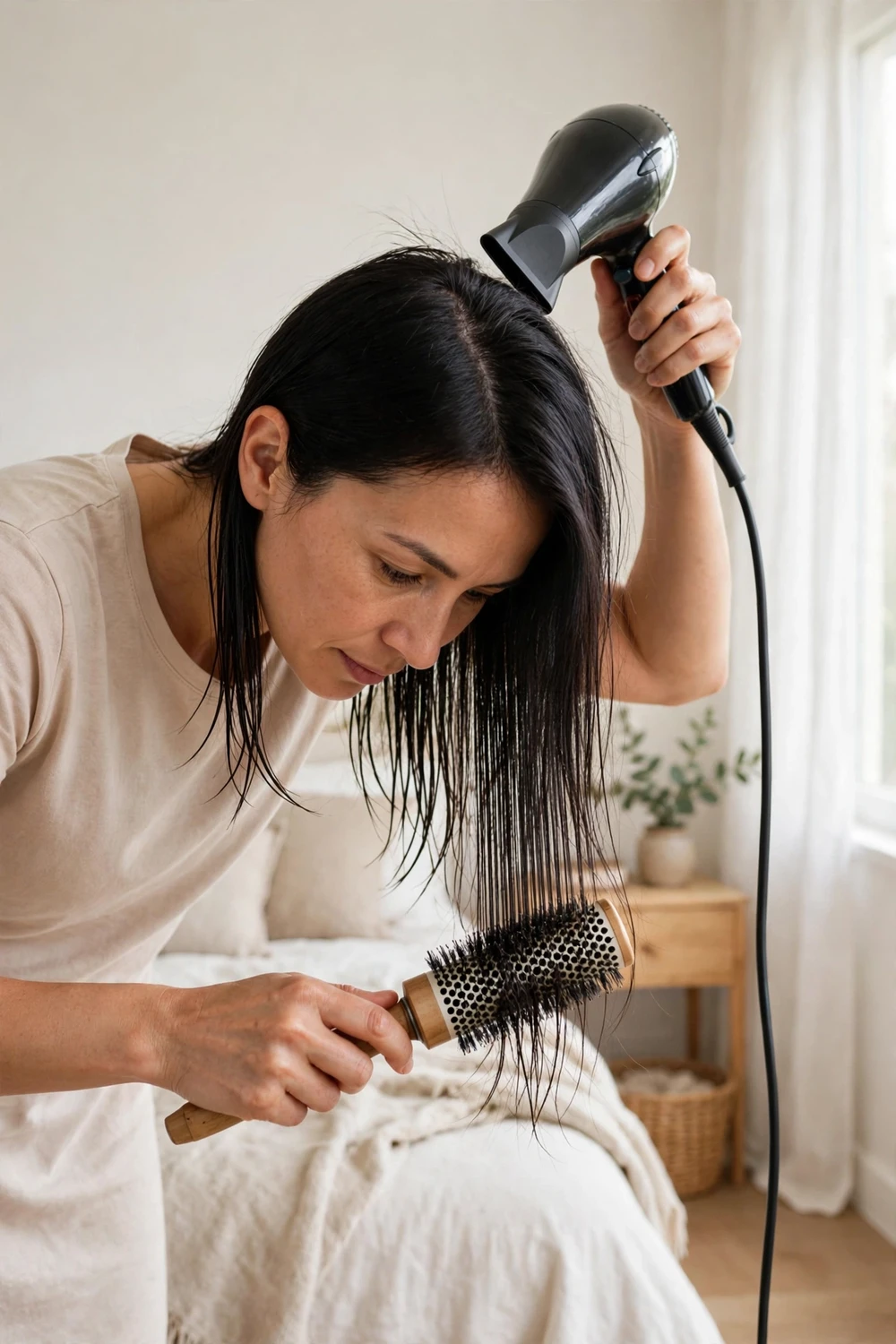
How you dry matters as much as what you apply. Flip your head forward and rough-dry on medium heat until hair is about 80 percent dry. This lifts the roots away from the scalp while the shape sets.
Flip back up and finish with a round brush, pulling sections up and away from the head. End with a 10-second blast of cool air. The cool shot locks the lift in place so it survives the morning. If you air-dry instead, clip the crown sections up with small clips while damp to hold the roots off the scalp as they dry.
Style Without Weighing Hair Down
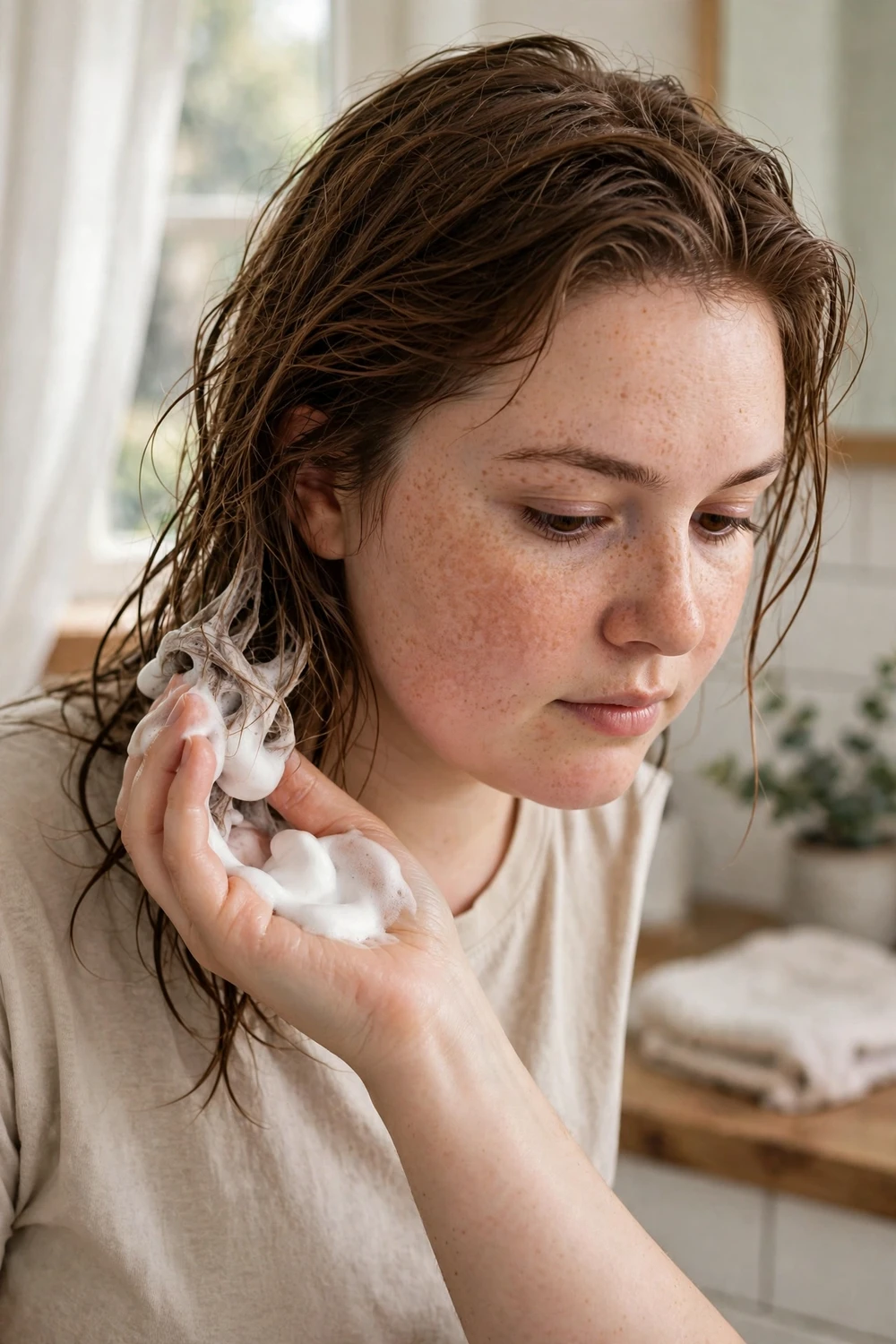
Mousse is the most useful styling product for thin hair. Work a golf-ball-sized amount through damp hair from roots to ends, then dry as usual. It adds grip and body without the heaviness of creams or oils.
Root-lifting sprays applied to damp roots before drying give extra height at the crown. On second-day hair, dry shampoo at the roots absorbs oil and adds texture at the same time. Lift small sections, spray 6 inches from the scalp, wait a minute, then massage in with your fingertips. If oil is your main struggle, a shampoo made for it changes the equation, so compare options in our roundup of the best shampoo for oily hair.

Skip heavy waxes, pomades, and thick oils on the roots. A single drop of light serum on the very ends is fine for smoothing, but anything more pulls fine hair down.
Brush Gently and Detangle With Care
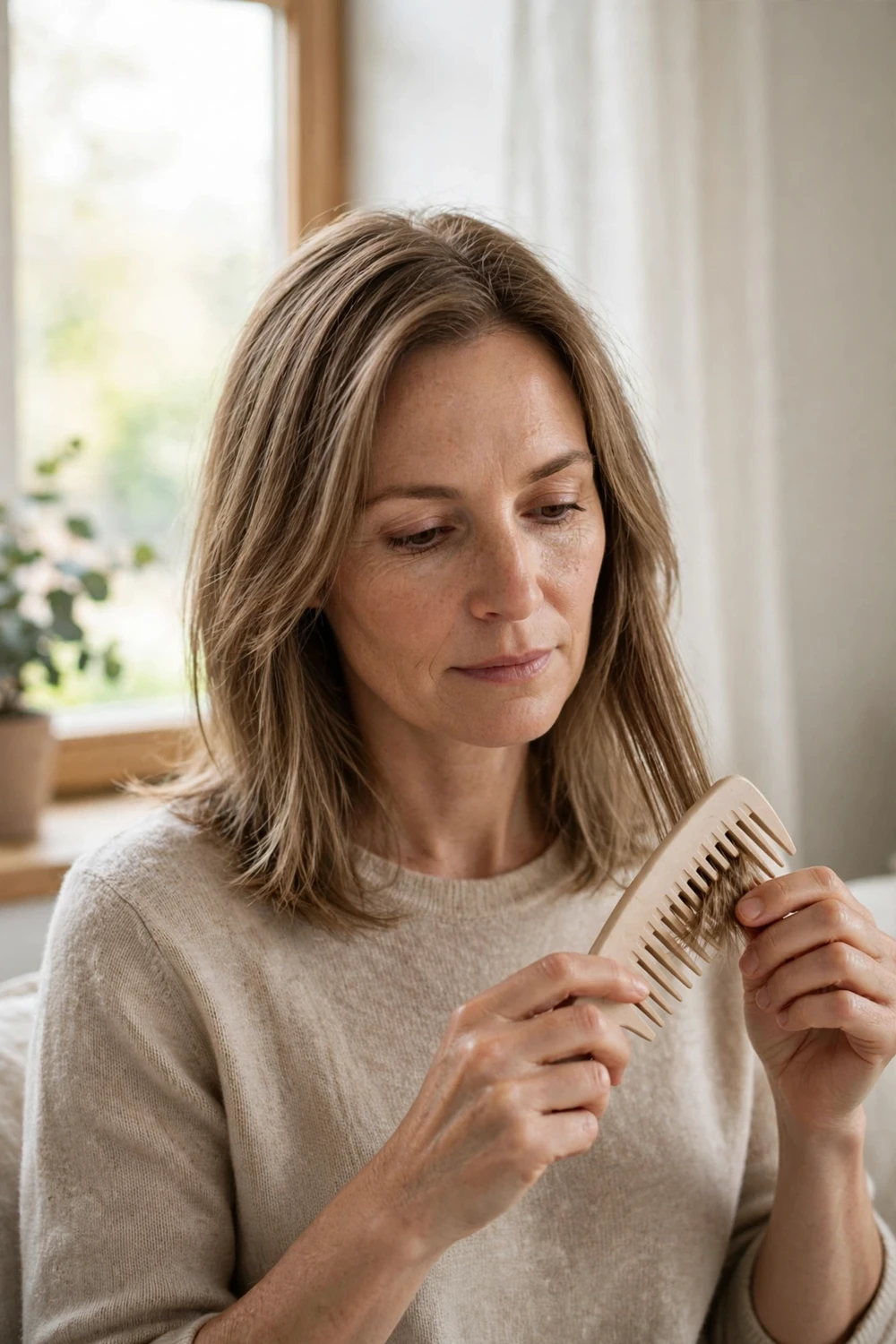
Fine hair snaps under rough brushing. Always start at the ends and work upward in small sections, holding each section above where you are combing so the roots do not take the pull.
Use a wide-tooth comb on wet hair and a soft bristle brush on dry hair. Detangle before washing as well as after: going into the shower with knots guarantees more breakage. Never brush thin hair aggressively when it is dripping wet. Blot with a microfiber towel or an old cotton T-shirt first, then detangle.
Limit Heat and Always Use a Protectant

Fine strands heat through faster than thick ones, so they damage faster too. Keep hot tools at or below 350°F and never press the same section twice.
Apply a heat protectant to damp hair before any blow-drying, and again lightly on dry hair before irons. Give hair rest days from heat entirely. Air-dried waves with a little mousse often look fuller on thin hair than a sleek blowout anyway.
Get Regular Trims
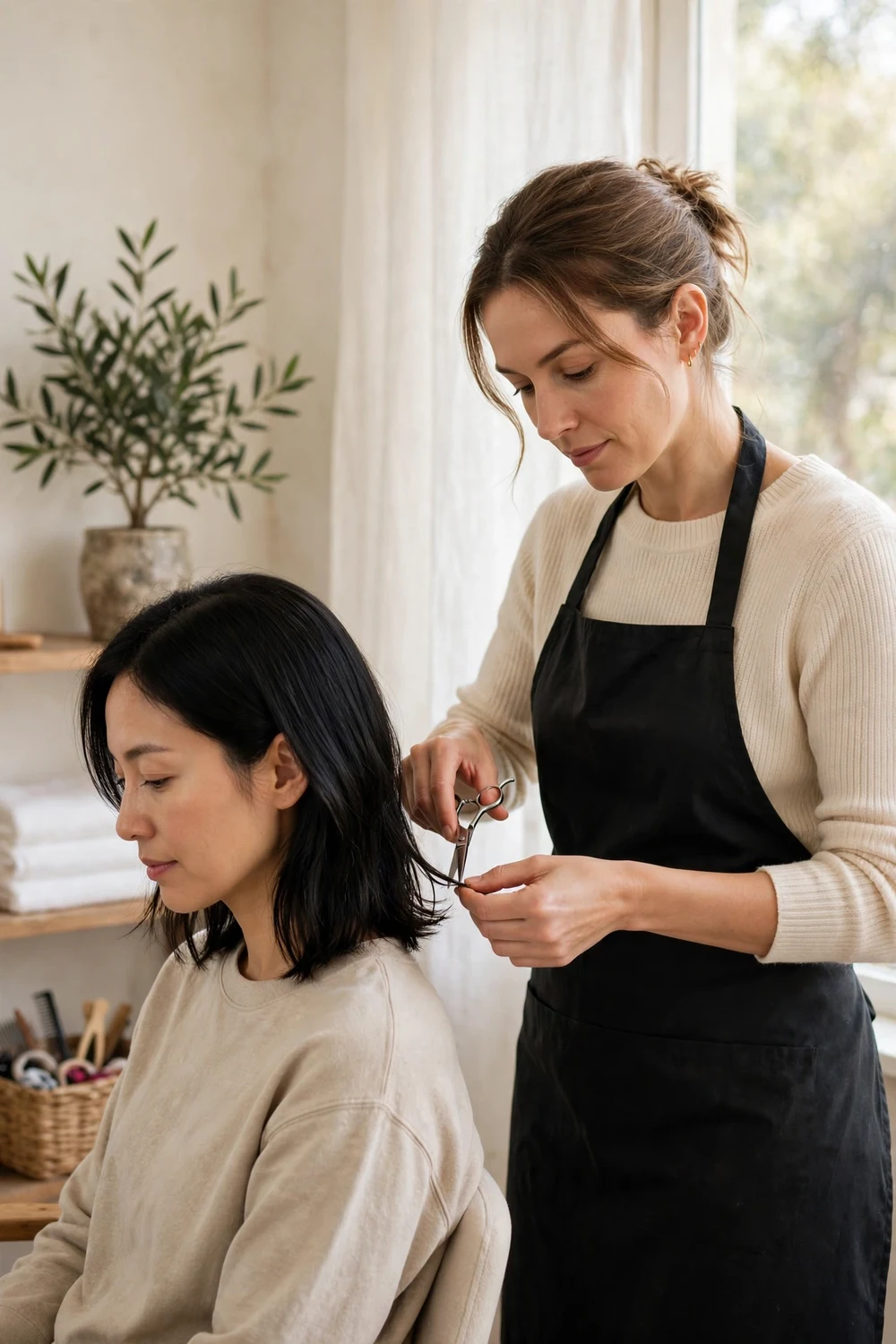
Split ends travel upward and make the bottom of thin hair look wispy. A trim every 6 to 8 weeks removes the fragile ends before they split further.
You do not need to lose length. Ask for a dusting: a quarter inch off the very ends. The bottom line looks thicker the moment the see-through tips are gone.
Protect Your Hair While You Sleep

Cotton pillowcases grip fine hair and create tangles and breakage overnight. A silk or satin pillowcase lets hair slide, so you wake up with fewer knots.
Put hair in a loose high bun or a loose braid before bed. Tight ponytails crease fine hair and stress the same spot every night. In the morning, shake the roots gently with your fingertips instead of brushing hard.
Choose Cuts That Make Thin Hair Look Fuller

Care and cuts work together. Blunt ends always look thicker than wispy layered ends, so a clean one-length cut or a blunt bob gives thin hair an instant density boost.
Very long lengths pull fine hair flat with their own weight. Shoulder length or above usually shows more volume. Light face-framing pieces add movement without thinning out the ends.
Thin Hair Care: Do This, Not That
| Do This | Skip This |
|---|---|
| Shampoo the scalp twice when oily | Scrubbing the lengths with shampoo |
| Conditioner on mid-lengths and ends only | Conditioner on the roots and scalp |
| Mousse and root-lifting spray for styling | Heavy waxes, pomades, and thick oils |
| Wide-tooth comb, ends first | Ripping a brush through wet tangles |
| Heat protectant before every hot tool | Daily flat-ironing above 350°F |
| Trims every 6 to 8 weeks | Waiting until split ends travel upward |
Frequently Asked Questions
How often should you wash thin hair?
Most people with thin hair do best washing every 1 to 2 days. Fine strands show oil fast because sebum travels quickly down a smooth, thin shaft. Wash when the roots look oily or feel flat, and use dry shampoo between washes if you want to stretch a day.
Should you use conditioner on thin hair?
Yes. Skipping conditioner leads to tangles and breakage, which makes thin hair look worse. Use a lightweight conditioner on the mid-lengths and ends only, and rinse it out fully. Keep it away from the roots.
Can thin hair become thicker?
You cannot change the diameter your hair grows in, but you can make it look and feel thicker. Regular trims, scalp care, lightweight products, and root-lifting styling all add visible density. Avoiding breakage matters most: every snapped strand is lost fullness.
Is it better to keep thin hair short?
Shorter lengths usually show more volume because there is less weight pulling the roots flat. Shoulder length and above tends to work best. That said, healthy long thin hair with blunt ends can still look good with the right routine.
Does brushing thin hair 100 strokes a day help?
No. Excessive brushing causes breakage on fine strands. Brush only enough to detangle and style, starting from the ends with a gentle tool. More brushing does not distribute oil usefully on thin hair; it mostly creates snapped ends.
Final Thoughts
Caring for thin hair comes down to a simple principle: handle it gently and keep it light. Wash the scalp well, condition only the ends, dry with lift, and trim on schedule. Small consistent habits beat expensive products every time.

