


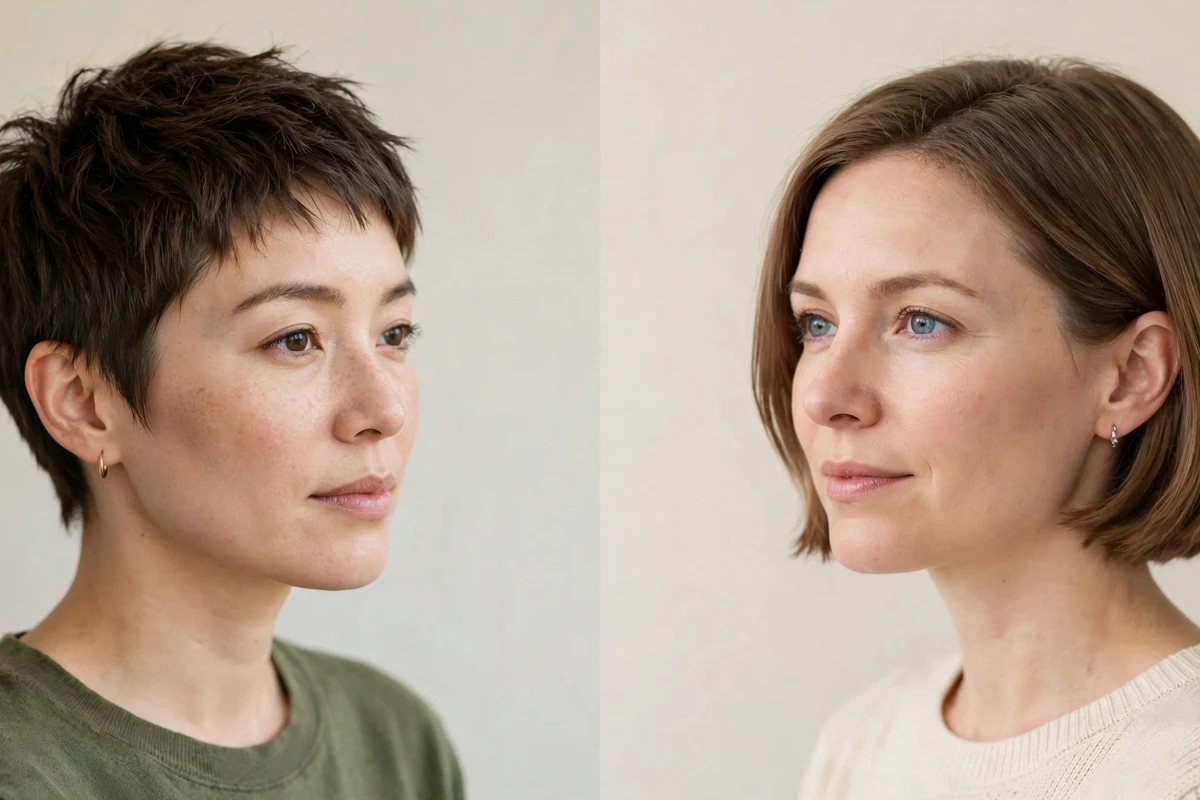
The pixie cut vs bob decision is the biggest fork in short hair. A pixie cut crops the hair to one to three inches, sitting above the ears with texture doing the styling work. A bob keeps two to eight inches of length, ending between the jaw and the collarbone, with the shape doing the work. One is a commitment to short; the other is short with a safety net.
Both cuts flatter a wide range of faces, but they ask for different things: the pixie demands frequent trims and confidence, while the bob demands a bit more daily styling. This guide compares them honestly across shape, technique, suitability, cost, and grow-out, with 12 example styles and a verdict that does not hedge.
Quick takeaways:
- A pixie cut is 1–3 inches long and texture-led; a bob is 2–8 inches long and shape-led.
- Pixies need trims every 4–6 weeks; bobs stretch to 6–8 weeks.
- Pixies suit oval, heart, and petite faces best; bobs flatter nearly every face shape.
- Daily styling is faster for pixies (under 5 minutes) but bobs offer more versatility.
- Both cost $60–$130 for the cut; growing out a pixie takes 6–12 months of awkward stages.
Shape and silhouette: how short is short
A pixie cut hugs the head. The sides are cropped close (sometimes faded), the top carries one to three inches of textured length, and the ears and nape are exposed. The silhouette is small and graphic; your bone structure becomes the frame.
A bob frames the face. The hair falls to the jaw, chin, or collarbone in a defined shape, covering the ears and nape. The silhouette is larger and softer; the cut does the framing work that a pixie leaves to your features.
The psychological gap is bigger than the inch gap. Going from a bob to a pixie removes the hair you hide behind: no more tucking, no more ponytail option. That is why the decision deserves real thought rather than a spontaneous salon impulse.
Cutting technique: texture versus geometry
A pixie is built with texture. The stylist uses point cutting, slicing, and sometimes a razor to create piecey separation through the top, with clipper or scissor work fading the sides and nape. The cut lives or dies on texture; a pixie cut blunt reads as a completely different (and usually less flattering) haircut.
A bob is built with geometry. The stylist establishes a perimeter line first, then builds interior shape with stacked, graduated, or one-length techniques. Precision matters: a crooked bob line is visible from across the room, while a slightly uneven pixie just looks more textured.
If the pixie side intrigues you, our short pixie cuts roundup shows the full range of what cropped hair can do.
Who suits each: face shapes and hair textures
Pixies flatter oval, heart, and long faces most, because the exposed forehead and cheekbones balance those shapes. They also suit petite features, since a small cut keeps the head in proportion. Round and square faces can wear pixies, but the cut needs height on top and texture at the sides to avoid emphasizing width.
Bobs are the more universal cut. The jaw-to-collarbone length flatters oval, round, square, heart, and long faces with the right variation: stacked for round, angled for square, blunt for long. Almost no face shape is excluded.
Texture matters too. Pixies work on straight, wavy, and curly hair, but very thick hair needs serious texturizing to avoid a bulky cap. Bobs handle all textures, with curly bobs needing dry cutting. Fine hair often looks fuller in a pixie (less weight dragging it down) and can look thin in a one-length bob. For curly cropped options, see our curly pixie haircuts guide.
Maintenance, salon cost, and grow-out
Daily styling favors the pixie. A dab of styling wax or paste on dry hair, a quick tousle, and you are done in under five minutes. A bob needs more: a blow-dry or heat styling (heat protectant first) to keep its shape smooth, usually ten minutes.
Salon visits flip the advantage. Pixies need trims every 4 to 6 weeks; at six weeks a pixie is already shaggy. Bobs go 6 to 8 weeks. Over a year, the pixie means roughly twice as many appointments.
First-cut pricing is similar: $60–$130 for either, with pixies sometimes cheaper since there is less hair to work with. Grow-out is the bob’s overwhelming advantage. A bob grows into a lob gracefully. A pixie grows through the mullet stage, the awkward flippy stage, and the headband stage over 6 to 12 months. If you are not sure you will love short hair, the bob is the lower-risk experiment.
Pixie cut styles to try
Six ways to wear the pixie, from classic to bold.
Classic cropped pixie
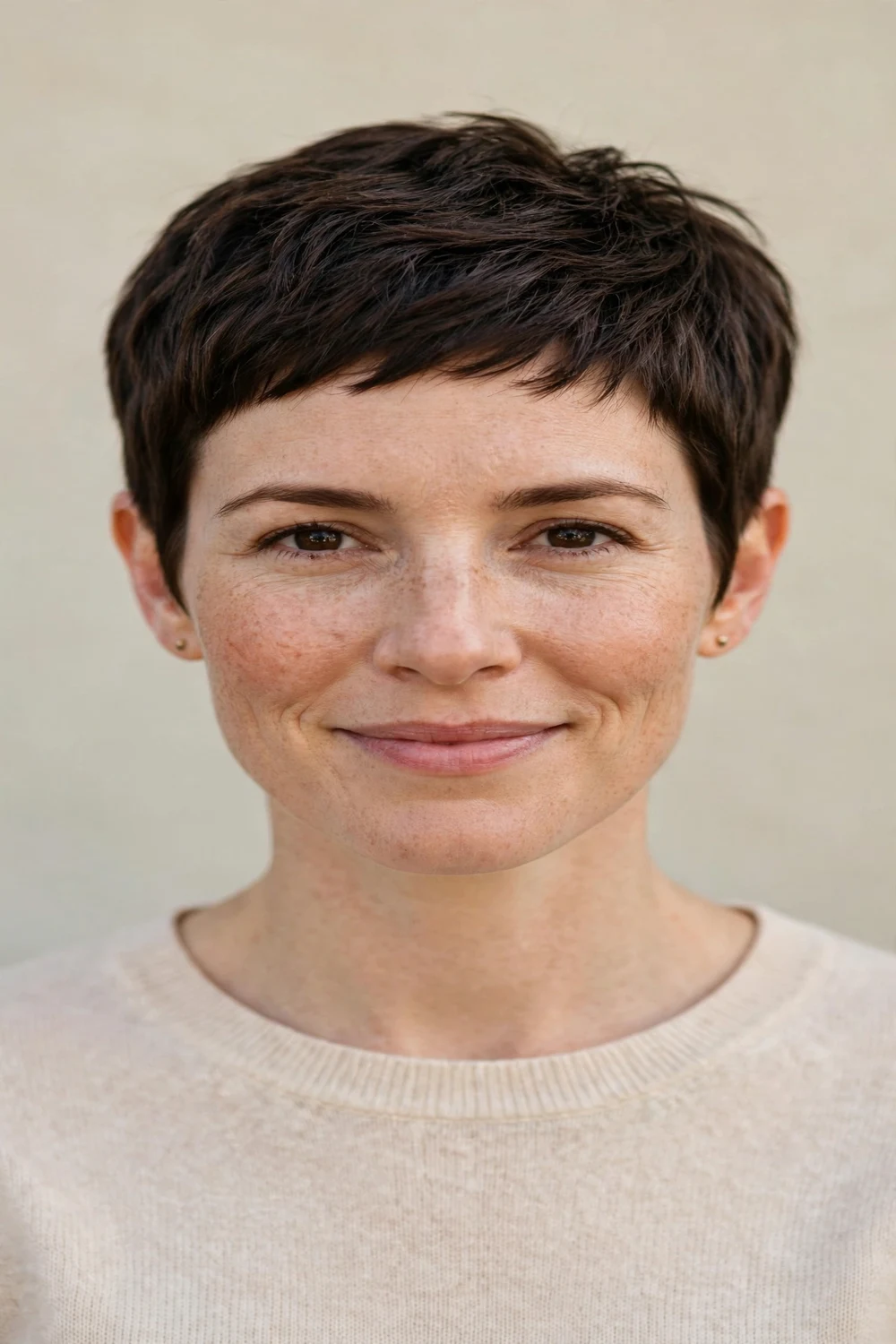
The classic pixie keeps one to two inches on top with neatly tapered sides and nape. It is the most wearable pixie: professional, timeless, and flattering on oval and heart faces. Styling takes three minutes with a small amount of styling cream worked through dry hair. It suits straight to wavy hair best. Trims every four to five weeks keep the taper clean. This is the pixie to choose for a first crop, since it is the easiest to grow out if you change your mind.
Try this: Apply styling cream to dry hair and push the top forward and to one side for a soft, piecey finish.
Difficulty: Easy | Salon cost: $60–$100
Pixie with long fringe
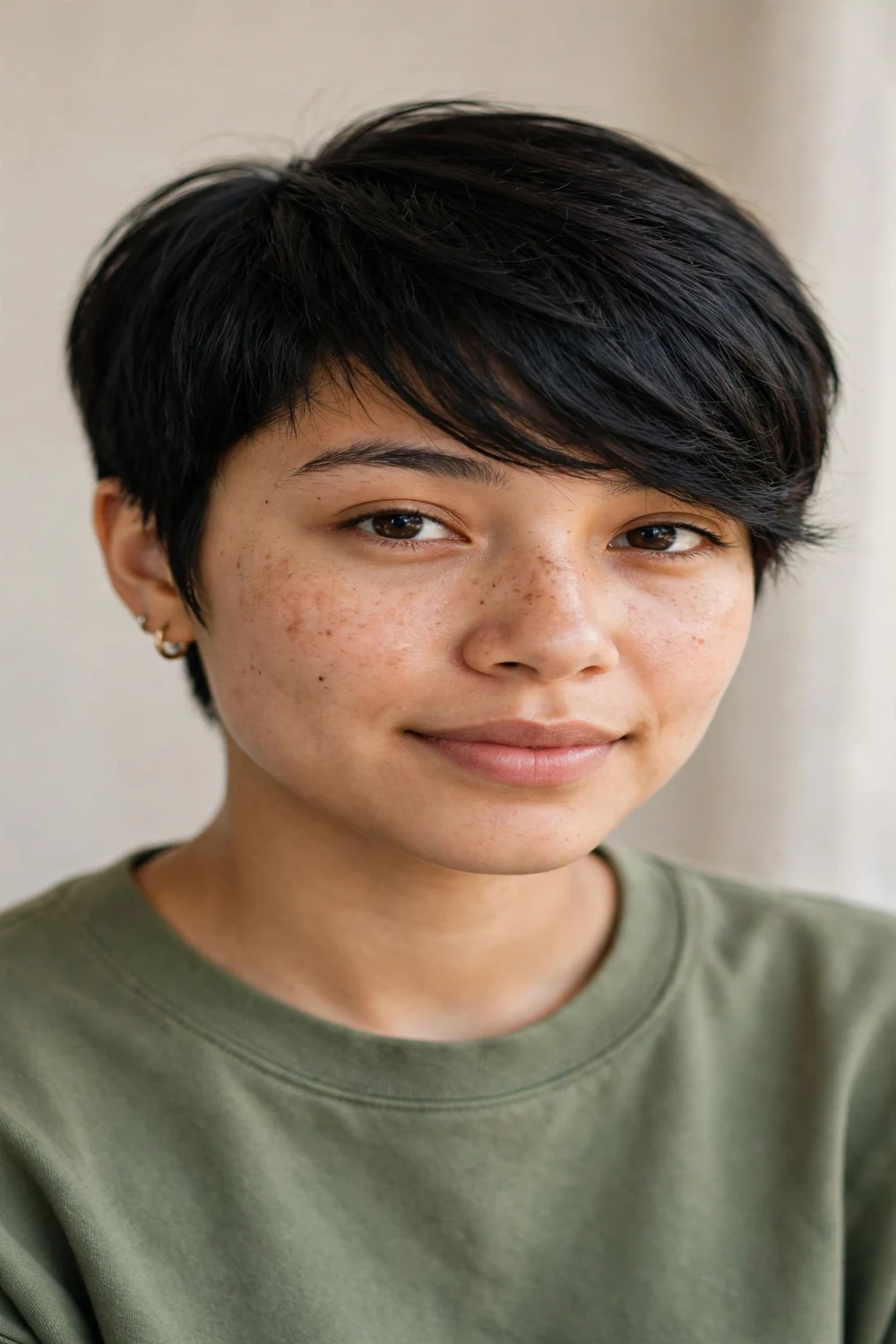
Keeping the fringe long (three to four inches) while the back stays cropped gives the pixie versatility: the fringe can sweep across the forehead, tuck behind an ear, or spike up. It suits long faces, since the fringe shortens the forehead, and flatters square faces by softening the brow line. The long fringe needs trimming every three to four weeks to stay out of the eyes. This is the most feminine-leaning pixie and a good bridge for anyone nervous about going very short.
Try this: Blow-dry the fringe to one side with a small round brush for a smooth sweep that stays in place.
Difficulty: Easy | Salon cost: $60–$110
Textured choppy pixie
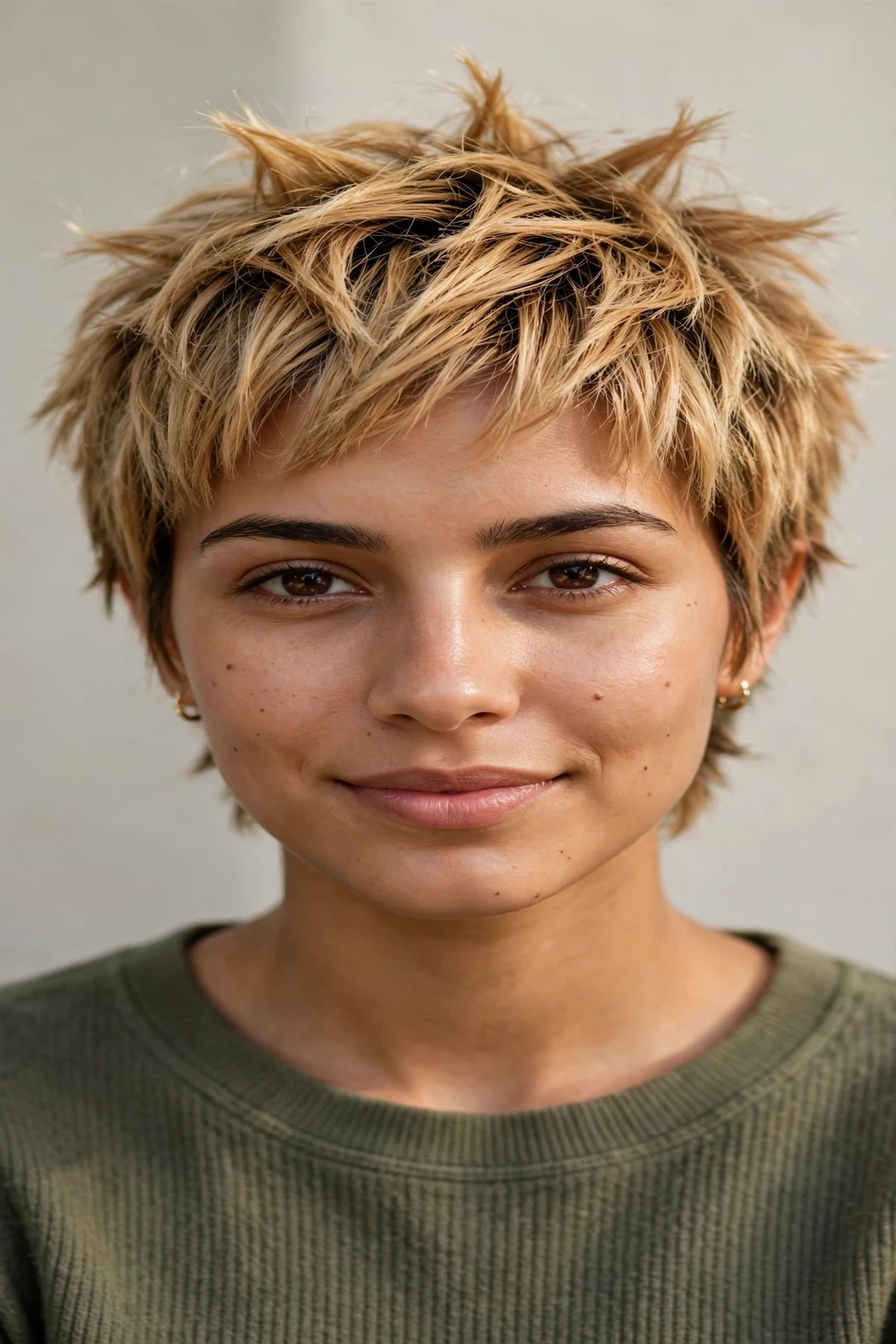
The choppy pixie leans into separation: point-cut pieces through the top, textured sides, and a deliberately undone finish. It suits thick hair that needs weight removed and flatters most face shapes because the irregular texture keeps the cut from reading severe. A matte paste on dry hair defines the pieces. This is the lowest-maintenance pixie for daily styling, since the messier it looks, the better it works. For shorter textured inspiration in general, our short pixie haircuts for curly hair guide shows how texture transforms cropped cuts.
Try this: Rub matte paste between your palms and pinch random pieces upward for spiky separation.
Difficulty: Easy | Salon cost: $60–$110
Curly pixie cut
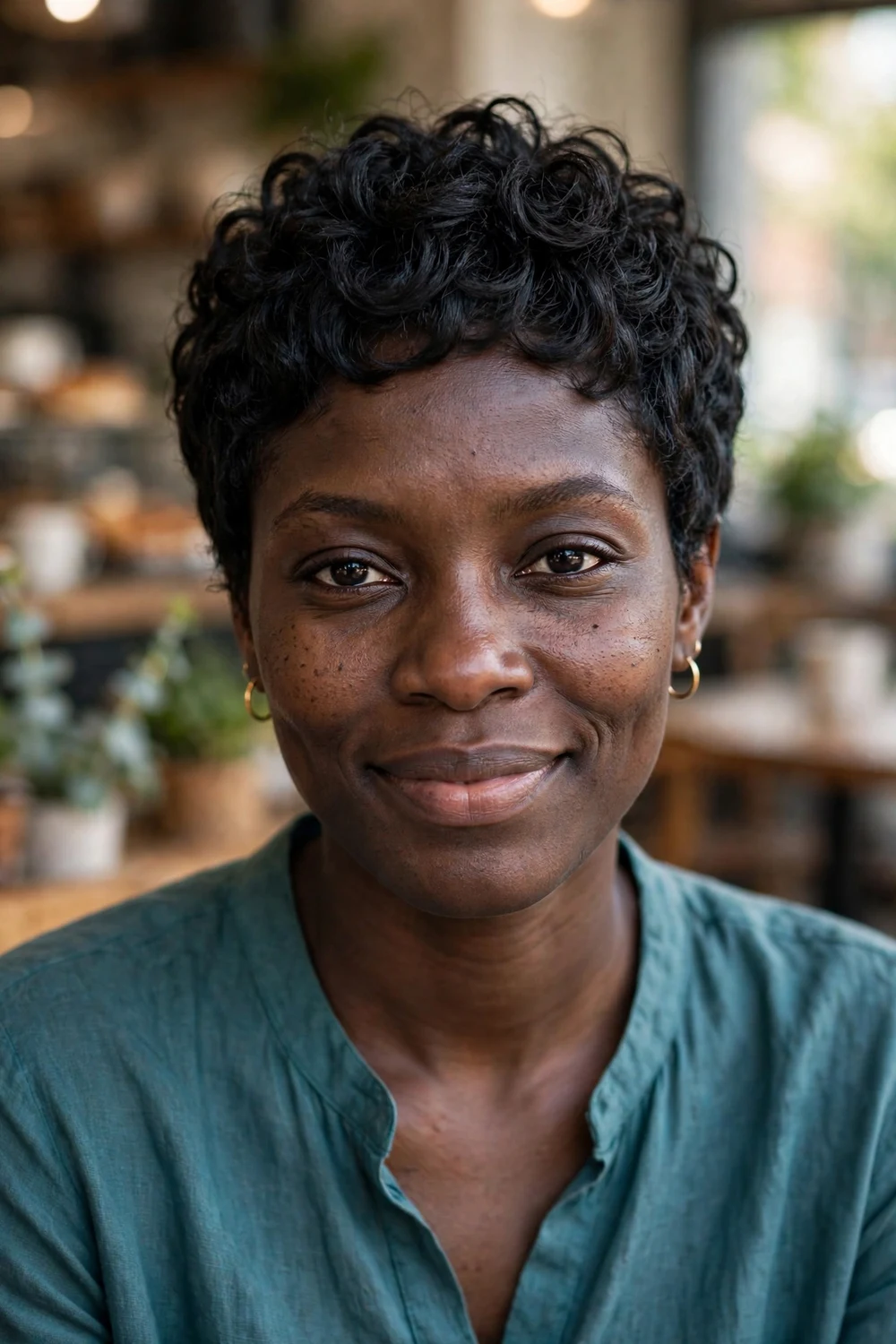
Curls give the pixie natural volume and shape that straight hair needs product to achieve. Cut to work with the curl pattern (usually dry-cut), the top carries defined curls while the sides stay close. It suits 2C to 3C textures and flatters oval and heart faces. A curl-defining cream scrunched into damp hair is the routine; diffusing adds volume. The cut needs a curl-experienced stylist, since wet-cutting curls short leads to unpredictable shrinkage.
Try this: Refresh second-day curls by misting with water and scrunching a pea-sized amount of curl cream through the top.
Difficulty: Medium | Salon cost: $80–$130
Pixie with shaved sides
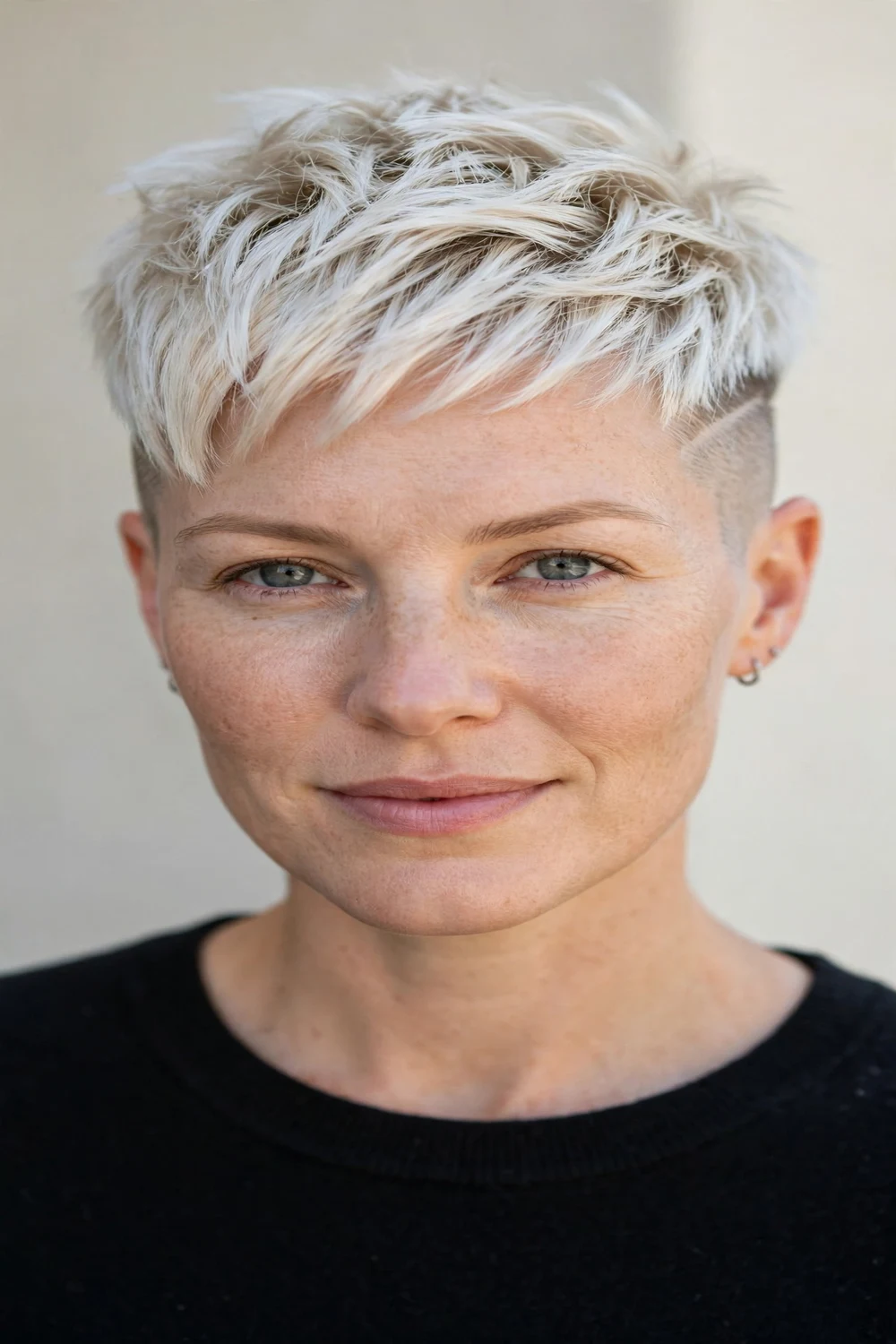
Shaved or faded sides with a longer textured top give the pixie its boldest form. The contrast is the feature: close sides make the top look fuller and the whole cut more graphic. It suits oval and heart faces and works on straight to wavy hair. The shaved sections need a touch-up every two to three weeks to stay crisp, which makes this the highest-maintenance pixie. It is a statement cut; wear it because you want the edge, not because it is practical.
Try this: Ask for a soft fade rather than a hard line so the grow-out between touch-ups stays tidy.
Difficulty: Hard | Salon cost: $70–$120
Soft feminine pixie
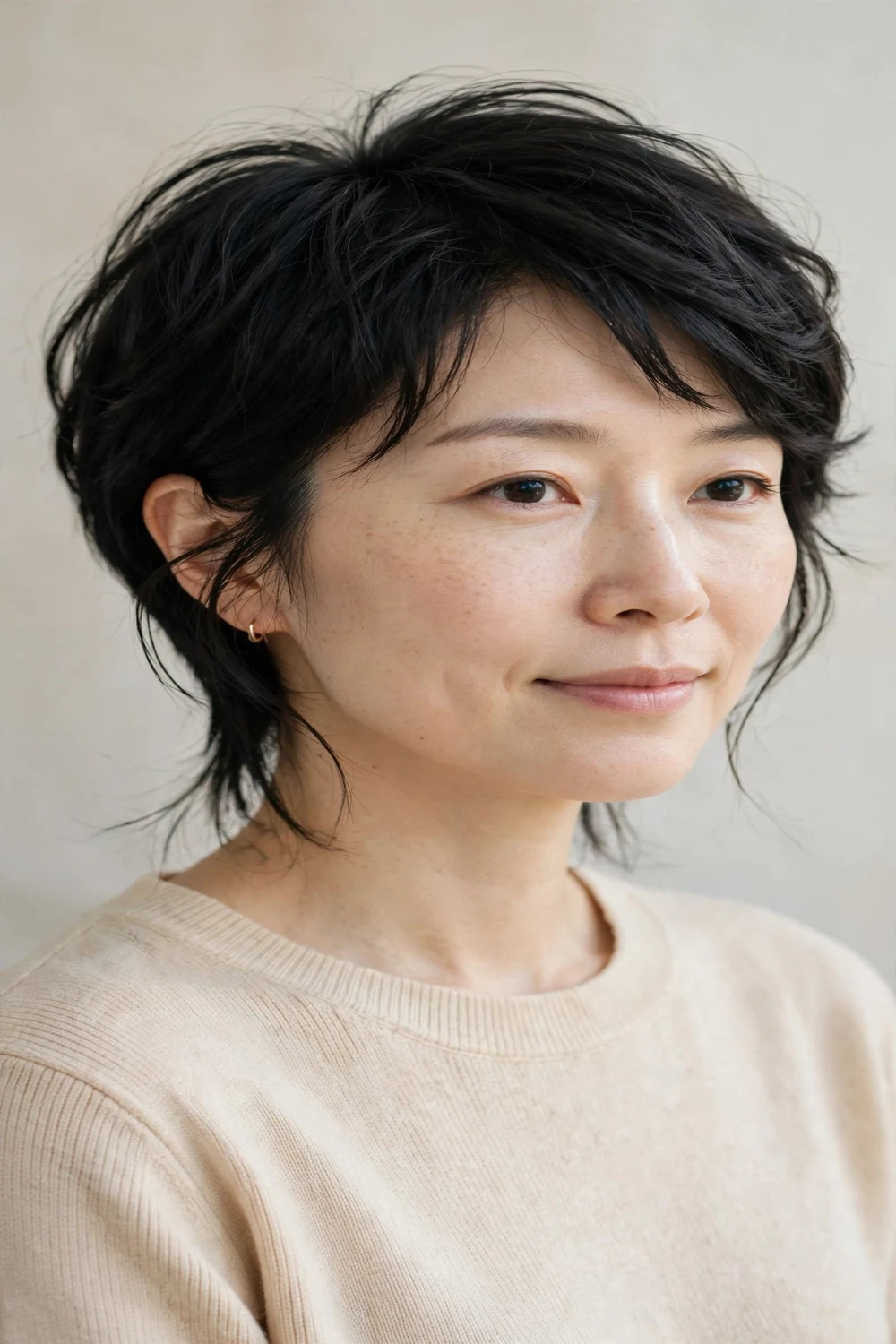
The soft pixie keeps the edges gentle: longer, wispy pieces around the ears and nape instead of a hard taper, and a feathered top. It suits anyone who wants short hair without severity and flatters round faces by keeping softness around the jaw. Styling is a light styling cream smoothed through; the cut is designed to look good with minimal product. It grows out more gracefully than a tight pixie, since the softer edges blend into the in-between stages.
Try this: Smooth a lightweight styling cream through damp hair and let it air-dry for the softest finish.
Difficulty: Easy | Salon cost: $60–$110
Bob styles to try
Six ways to wear the bob, from timeless to modern.
Classic chin bob

The classic chin bob is one length, clean-lined, ending right at the jaw. It is the most timeless bob and the baseline every other version modifies. It suits straight hair and flatters oval and long faces. Styling is a smooth blow-dry with a paddle brush; a flat iron (heat protectant first) gives the sharpest finish. Trims every six weeks keep the line exact. If you want the bob universe in one place, our bob hairstyles roundup covers the full range.
Try this: Tuck both sides behind the ears to show off the clean line on days you want a sharper look.
Difficulty: Easy | Salon cost: $70–$120
Blunt bob
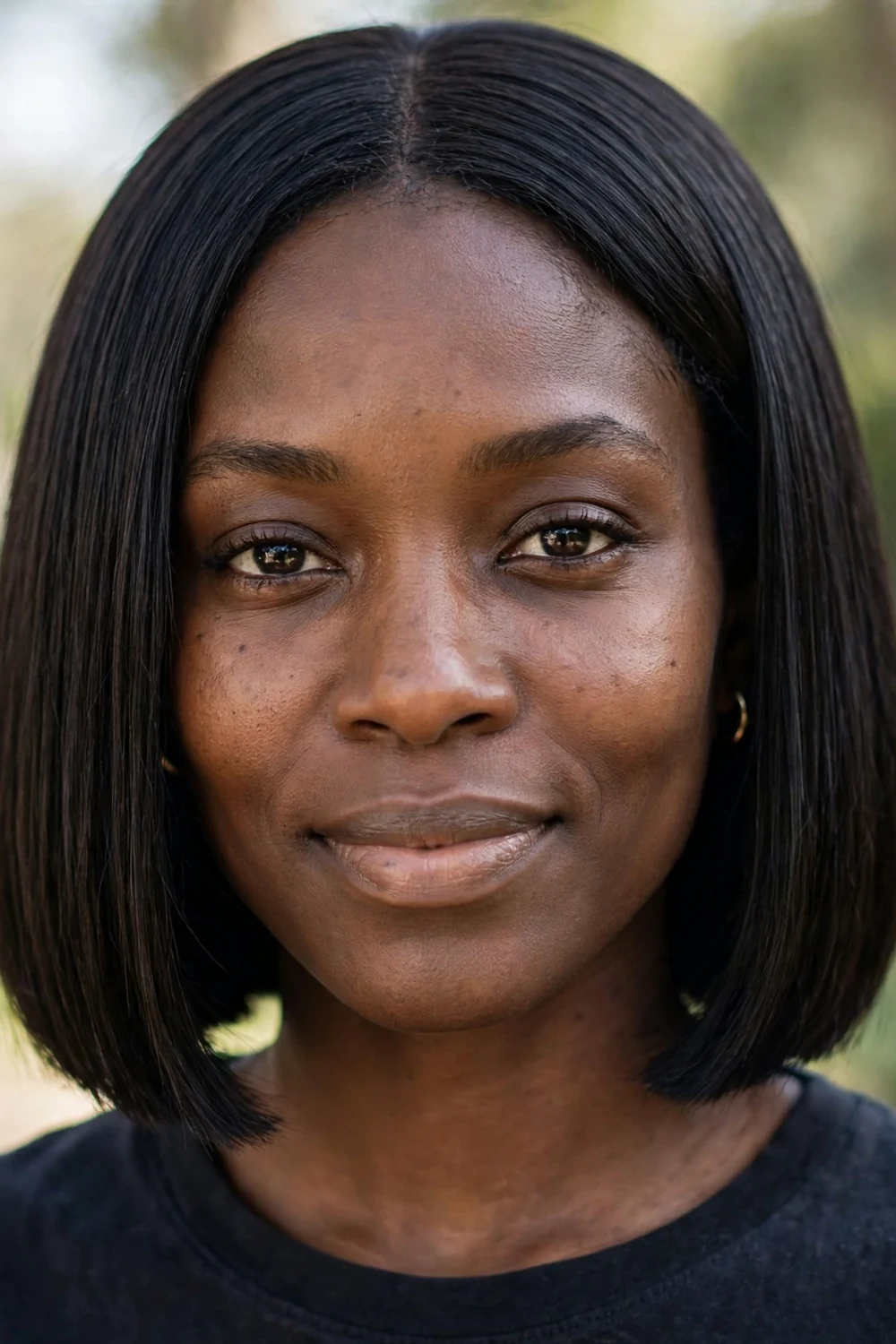
The blunt bob takes the classic chin bob and sharpens it: a razor-straight perimeter with no layers, cut to look thick and heavy. It suits thick, straight hair best and makes fine hair look denser than it is. It flatters oval and heart faces. The severity is the point, so it needs smooth styling to read correctly; air-drying usually softens the edge too much. This is the bob with the most visual impact and the least forgiveness for skipped trims.
Try this: Flat-iron the lengths in one pass per section (heat protectant first) for the sharpest blunt edge.
Difficulty: Medium | Salon cost: $70–$130
A-line bob
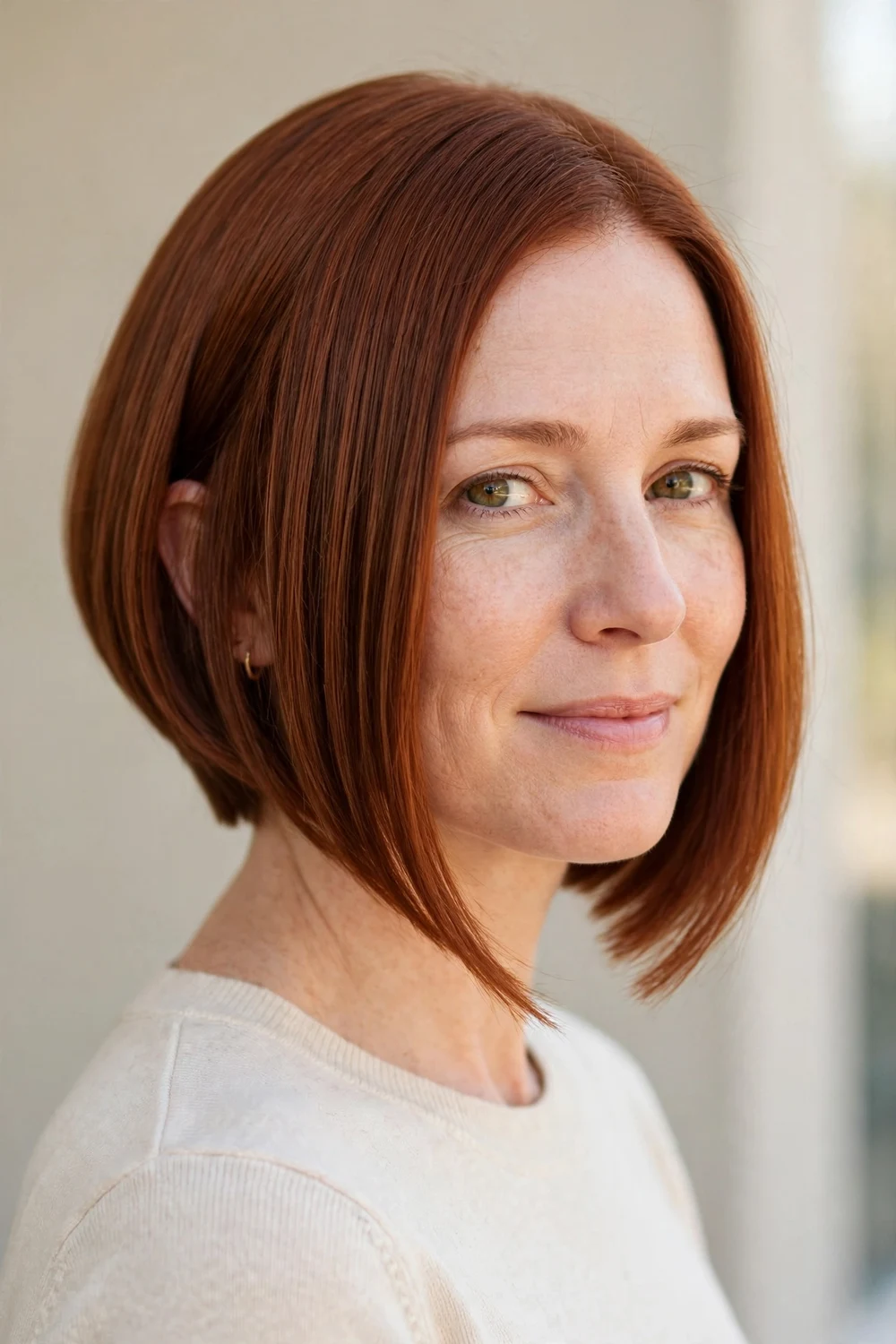
The A-line bob angles from shorter at the nape to longer at the front, creating a diagonal that draws the eye downward. It flatters round faces by adding length at the front and suits fine to medium hair. The angle needs to stay crisp, so trims every six weeks matter. Styling is a smooth blow-dry; the shape does most of the work. It is one of the most requested salon bobs because the geometry is flattering on almost everyone.
Try this: Blow-dry the front pieces forward and under to emphasize the A-line angle.
Difficulty: Medium | Salon cost: $70–$130
Wavy bob

The wavy bob pairs a chin-to-shoulder cut with loose, natural-looking waves. It suits wavy and loosely curly hair best and flatters every face shape, since the waves soften all angles. Air-drying with a wave-enhancing cream is enough on most days; a curling wand (heat protectant first) adds polish for events. It grows out into a wavy lob without drama, making it one of the lowest-commitment bobs. For shorter wavy options, our short bob hairstyles collection has more.
Try this: Twist damp sections loosely and let them air-dry for heat-free waves with natural variation.
Difficulty: Easy | Salon cost: $70–$120
Bob with bangs

Adding bangs to a bob changes its character completely: full bangs make it retro, curtain bangs make it current, wispy bangs make it soft. The bob length stays chin to jaw while the fringe frames the eyes. It suits long and oval faces best, since bangs visually shorten the forehead. The fringe needs trimming every four weeks. This is the bob to choose if you want a noticeable change without changing the length much.
Try this: Blow-dry bangs with a round brush, rolling them under slightly for a soft curved finish.
Difficulty: Medium | Salon cost: $70–$130
Long bob (lob)
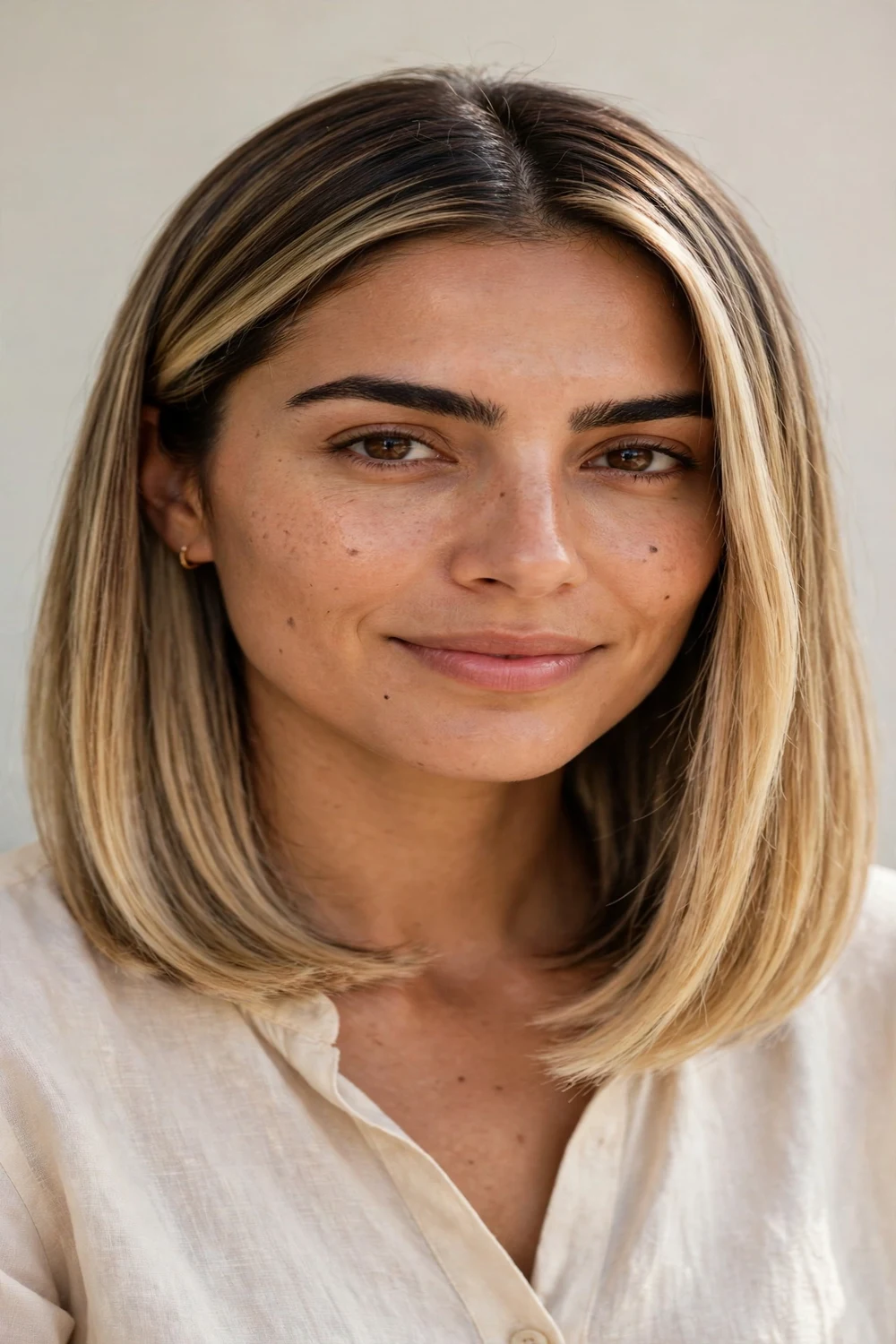
The lob stretches the bob to collarbone length, which makes it the most versatile cut on this list: it can be worn straight, wavy, curled, or pulled back. It suits all face shapes and most hair types, and it is the standard recommendation for anyone going short for the first time. Styling options are endless, and grow-out is a non-issue since it just becomes long hair. If you are torn between a bob and keeping length, the lob is the answer.
Try this: Wear it straight three days and wavy two days; the lob handles both without looking like a different cut.
Difficulty: Easy | Salon cost: $70–$130
The verdict: which one should you get
Get the pixie cut if you want the fastest mornings in short hair, have oval or heart-shaped features you are happy to show off, and can commit to salon visits every four to six weeks. It is liberating, striking, and genuinely easier day-to-day than its reputation suggests.
Get the bob if you want versatility, are trying short hair for the first time, or cannot commit to monthly trims. It flatters more faces, offers more styling options, and grows out without the awkward stages that make pixie grow-out infamous.
The tiebreaker is commitment. A pixie is a lifestyle: frequent trims, no bad-hair-day ponytail, and months of grow-out if you change your mind. A bob is a haircut: flexible, forgiving, and easy to adjust. Unless you are certain about the pixie, start with the bob. You can always go shorter; growing out takes a year.
Pixie cut vs bob: side-by-side comparison
| Feature | Pixie cut | Bob |
|---|---|---|
| Length | 1–3 inches, above the ears | 2–8 inches, jaw to collarbone |
| Cutting focus | Texture and separation | Shape and perimeter line |
| Best face shapes | Oval, heart, long, petite | Oval, round, square, heart, long |
| Best hair texture | Straight, wavy, curly (texturized if thick) | All textures |
| Daily styling time | Under 5 minutes | 10 minutes |
| Trim schedule | Every 4–6 weeks | Every 6–8 weeks |
| Salon cost | $60–$130 | $60–$130 |
| Styling versatility | Low: texture variations only | High: straight, wavy, curled, pinned |
| Grow-out | 6–12 months of awkward stages | Grows into a lob gracefully |
| Commitment level | High: frequent trims, no fallback | Medium: flexible and forgiving |
FAQs
Is a pixie cut harder to maintain than a bob?
Day-to-day, no: a pixie takes under five minutes to style. Salon-wise, yes: pixies need trims every four to six weeks, roughly twice as often as bobs. The maintenance is different in kind, not just amount.
Can I go from a bob to a pixie in one appointment?
Yes. Any bob has more than enough length to become a pixie; the stylist simply crops it down. The reverse is not possible: growing a pixie into a bob takes six to twelve months.
Which is better for thin hair, pixie or bob?
Usually the pixie. Removing length removes weight, so fine hair looks fuller in a pixie. A one-length bob can make thin ends look sparse, though a textured or stacked bob works well too. Ask your stylist to assess your density before deciding.
Will a pixie suit my round face?
It can, with the right version. Choose a pixie with height on top and texture at the crown, and avoid cuts that add width at the cheeks. A long fringe swept to the side also helps. That said, a bob is the safer choice for round faces if you are unsure.
How do I know if I will regret a pixie?
Try the bob first. If you love the bob and keep wishing it were shorter, you are ready. If you rely on ponytails for workouts, bad hair days, or hot weather, the pixie will frustrate you. The grow-out is long, so certainty matters more here than with any other cut.
Final thoughts
Pixie cut vs bob is a question of how much certainty you have. The pixie rewards the certain: fast mornings, bold features, and a cut that never looks boring. The bob rewards everyone else: flexibility, forgiveness, and an easy path back to long hair. When in doubt, choose the bob, wear it for three months, and let your own hair tell you whether shorter is calling.

