


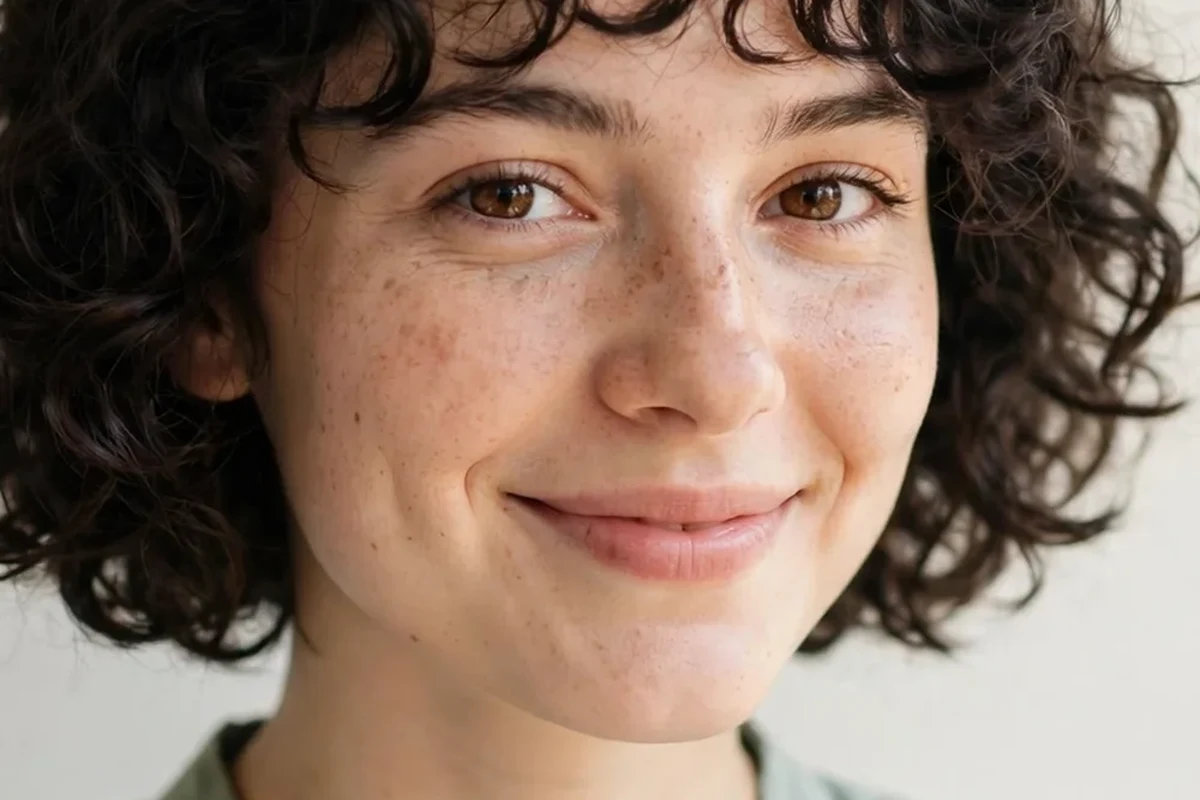
Yes, short curly hair with bangs works. The combination needs three things to succeed: a bang style matched to your curl type, a cut done on dry hair so shrinkage is accounted for, and a light styling routine that keeps the fringe defined without frizz. Skip any one of those and the bangs become the part of your haircut you fight every morning.
This guide walks through choosing bangs for your curl pattern and face shape, what to tell your stylist, a step-by-step styling routine, the products worth using, and the mistakes that cause most curly-bang regrets. Everything here assumes short to chin-length hair, since that is where shrinkage and shaping matter most.
Quick Takeaways
- Short curly hair with bangs works for every curl type (2, 3, and 4), as long as the bang style matches how tight your curl pattern is.
- Curly bangs should always be cut dry, and cut at least half an inch longer than the length you want, because curls shrink once they dry.
- Wispy and side-swept bangs are the lowest-maintenance options; full straight-across fringes need daily styling and trims every four to six weeks.
- Use lightweight curl cream or mousse on bangs, since heavy products drag the fringe down and it picks up oils from the forehead.
- Refresh second-day bangs with water and a small amount of product instead of re-washing your whole head.
Does Short Curly Hair Work With Bangs?

It works when the bangs are cut for curls, not against them. Straight-across blunt bangs trimmed like straight hair will spring up unevenly, since each curl tightens at a different rate. Bangs that are layered, textured, or thinned at the ends let each curl settle where it wants.
Length matters more than most people expect. On short hair, curls show their full pattern with nothing to weigh them down, which is good for volume but means the fringe area has the strongest shrinkage on the head. That is why stylists cut curly bangs noticeably longer than the target length.
The other factor is your willingness to style the fringe separately. The rest of your hair can air dry untouched, but bangs sit on warm skin all day and need their own quick routine. If you are ready for a two-minute bang refresh most mornings, the pairing is worth it.
Choose Bangs by Curl Type
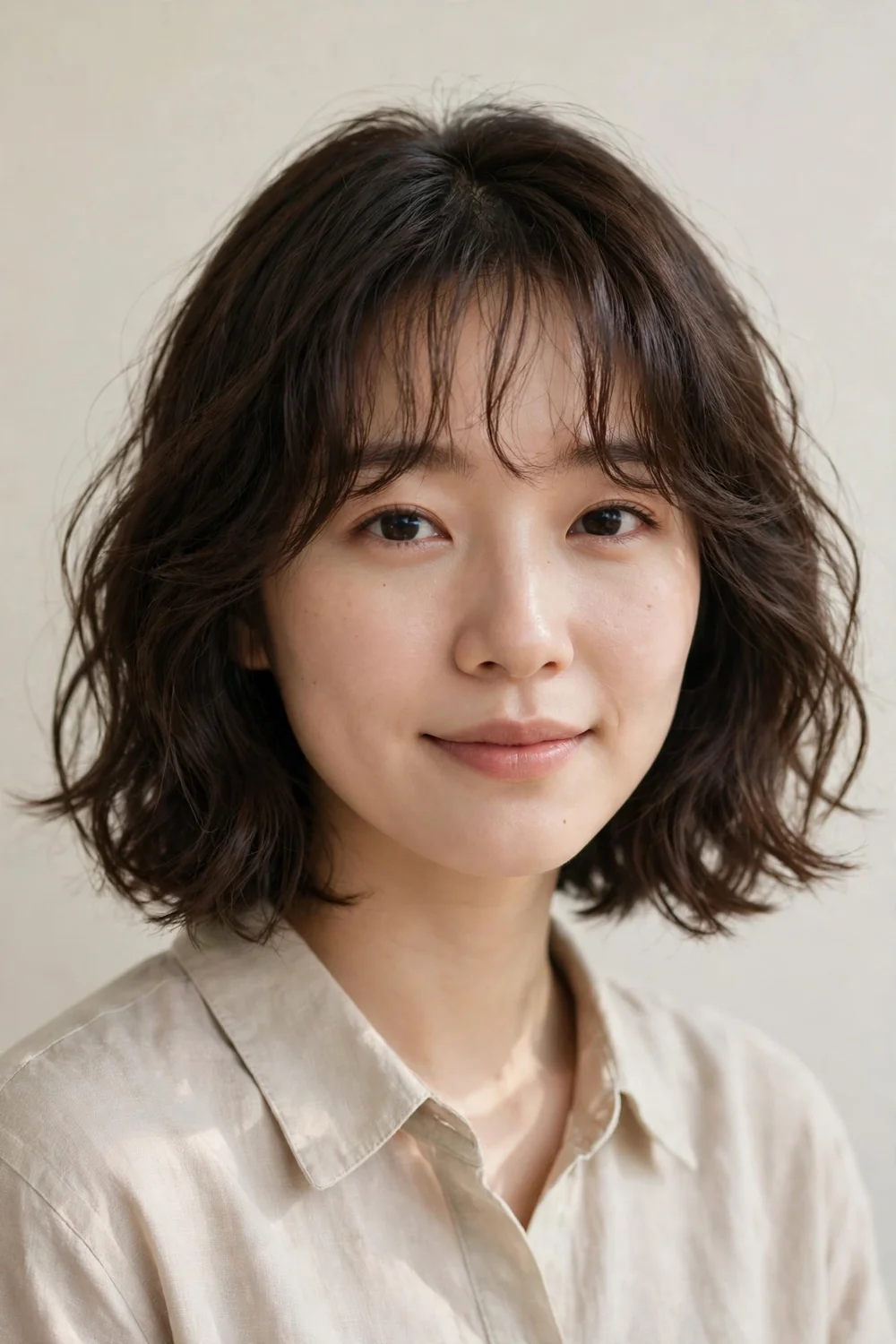
Your curl type decides which bang shapes behave and which ones fight you. Start with an honest read of your pattern, then pick from there.
Type 2 (Wavy)
Wavy hair pairs best with longer bangs that blend into the rest of the cut. Side-swept bangs and soft curtain bangs work well because waves have the least shrinkage, usually an inch or less, so the length you see is close to the length you get. Ask for the bangs cut to graze the cheekbones so they can tuck behind the ears on lazy days.
Waves go flat faster than tighter curls, so skip heavy creams on the fringe. A light mousse scrunched into damp bangs gives enough hold to keep the wave pattern from falling out by midday.
Type 3 (Curly)
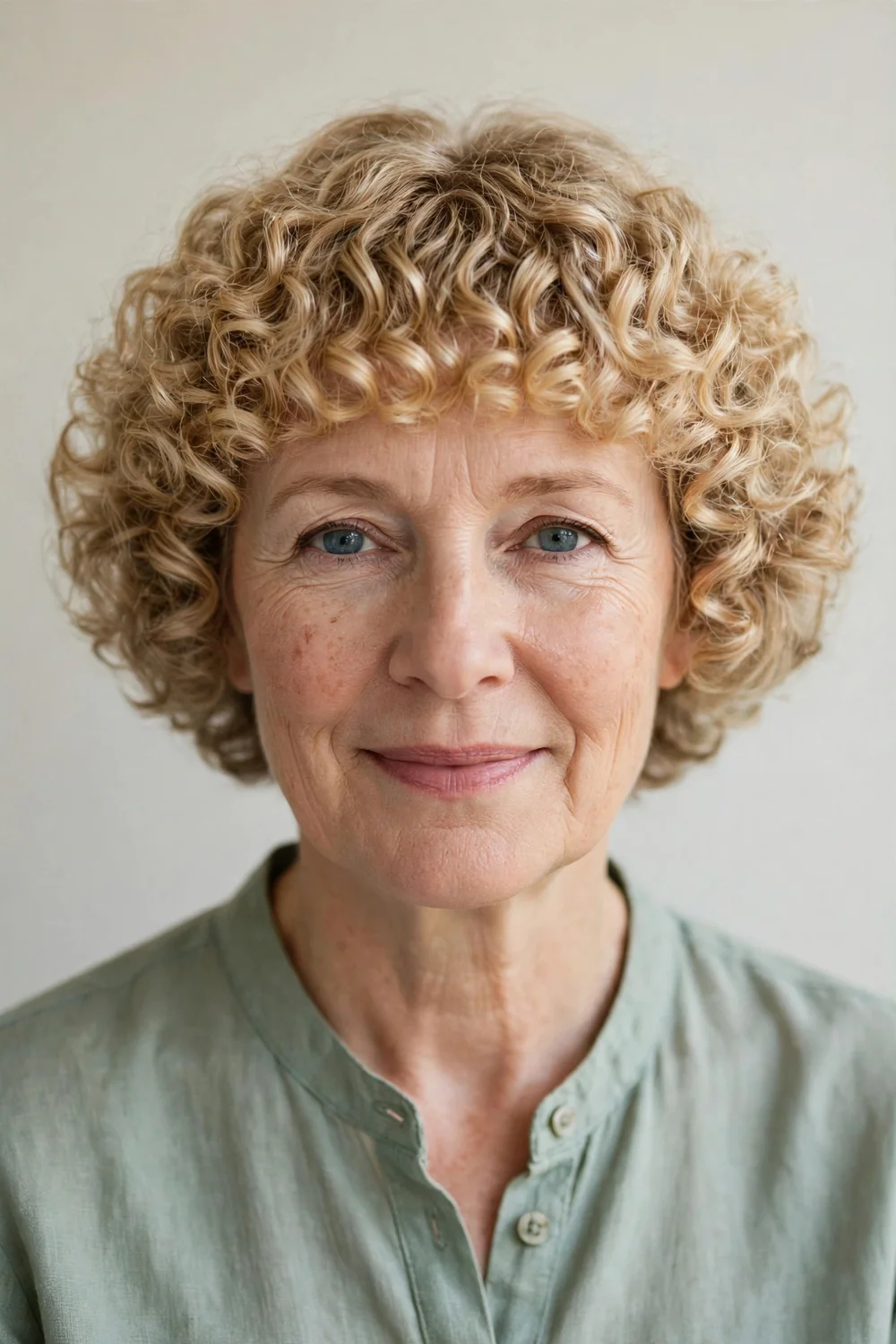
Classic ringlets take wispy bangs, layered bangs, and even full fringes. The key is internal layering: the top layer of the fringe is cut slightly shorter so curls stack instead of collapsing into one shelf. Finger coiling two or three pieces at the front while damp gives the definition that makes this curl type look deliberate.
Shrinkage runs two to three inches on Type 3 hair, so your stylist should cut the fringe while it is dry and styled the way you will wear it. If your bangs were cut wet and sprang up, growing them out for six to eight weeks is usually enough to reach a workable length again.
Type 4 (Coily)
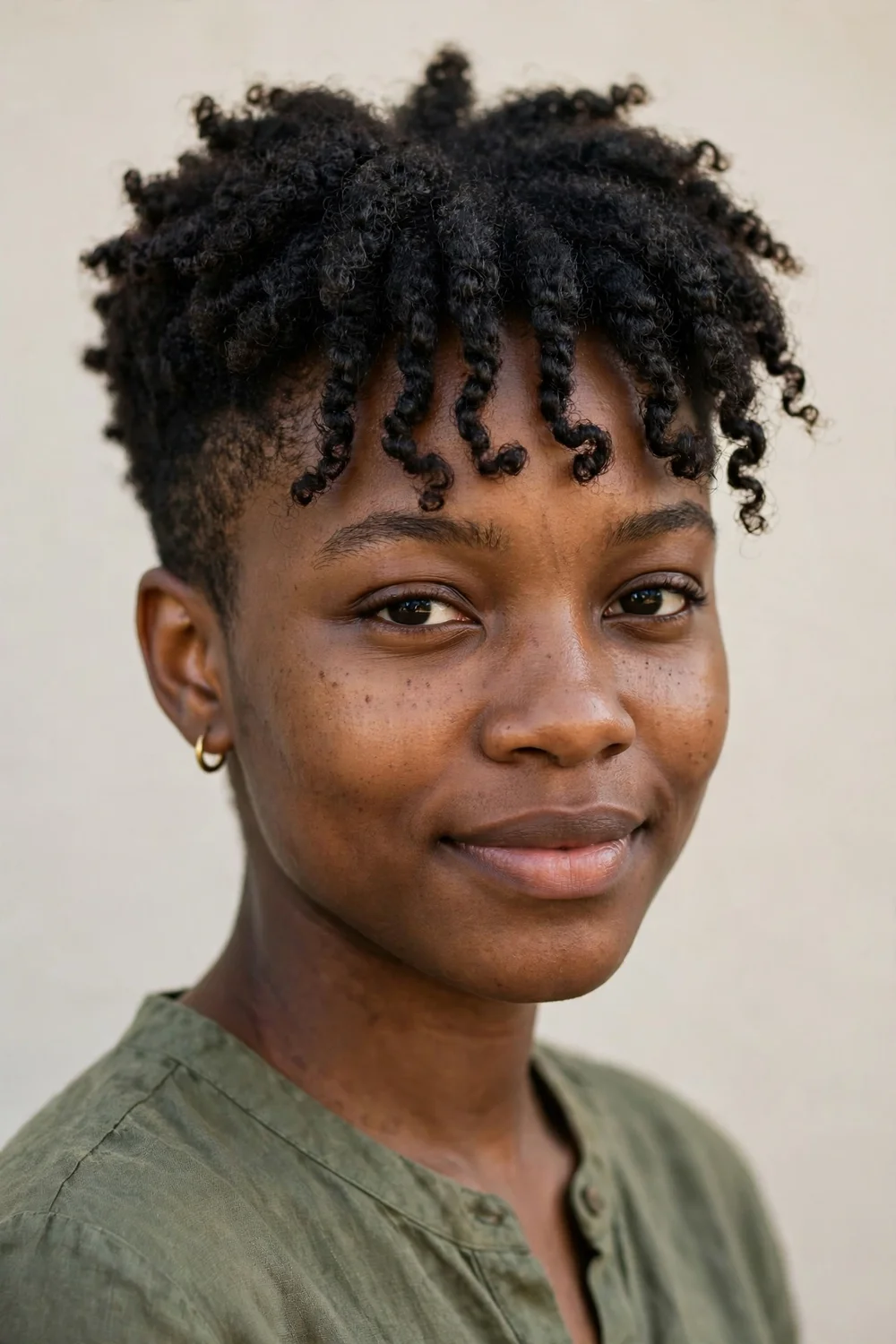
Coily hair looks best with longer, shaped fringe styles that can be stretched and defined. Tapered cuts with longer coils on top give you bangs that can be finger-coiled, twisted, or picked out depending on the day. Shrinkage is the most dramatic here, often half the stretched length, so bangs cut wet can disappear entirely.
A leave-in conditioner under a light curl-defining cream keeps coils hydrated without the buildup that makes short fringe look dull. Twist-outs on just the bang section the night before give a stretched, even fringe by morning.
Choose Bangs by Face Shape
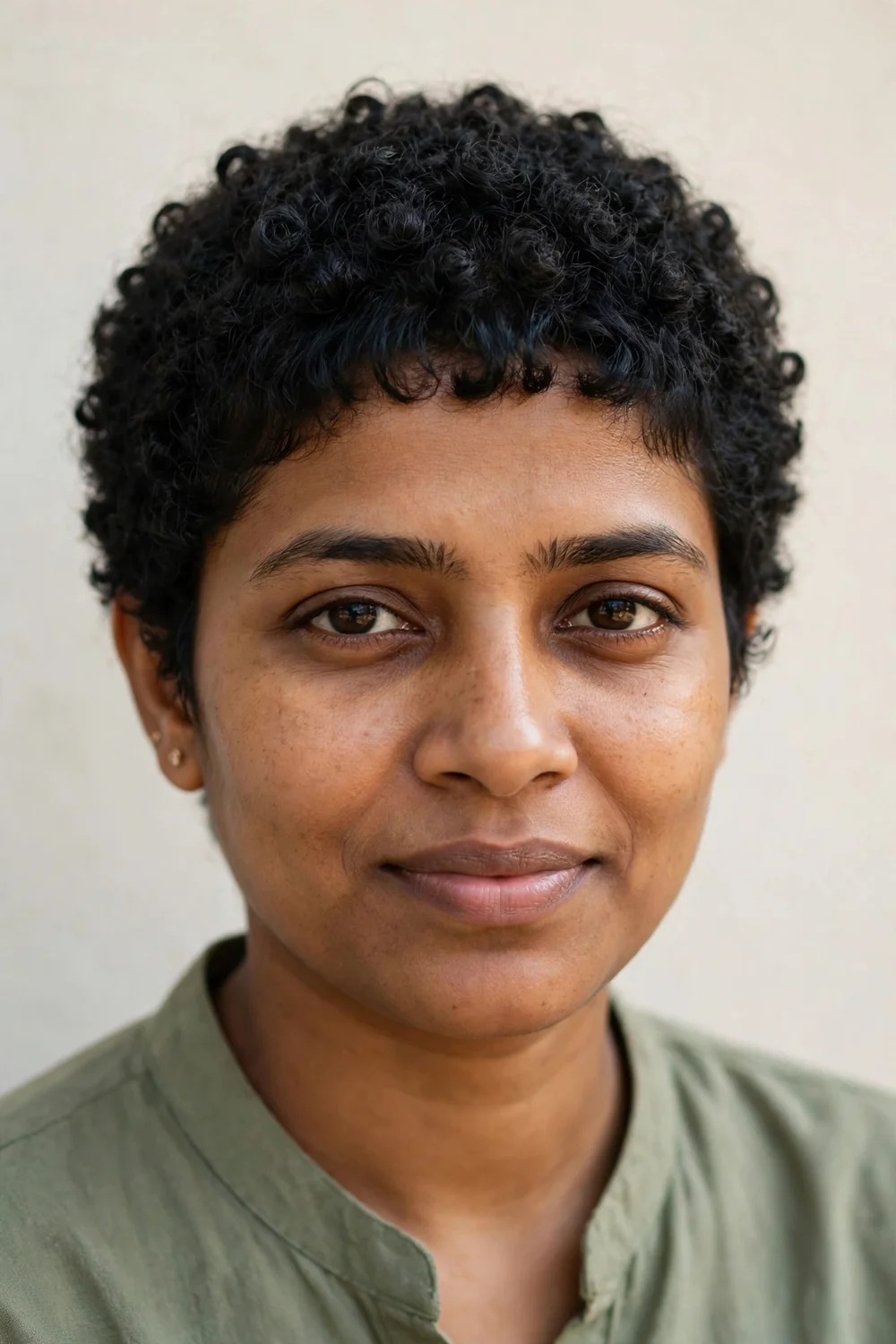
Face shape is the second filter. The same curl type can wear different bang styles depending on which features you want to balance.
Round Faces
Longer, angled bangs add vertical lines that make a round face look less wide. Side-swept bangs that start at the temple and end past the cheekbone are the safest choice. Avoid short straight-across fringes, which repeat the roundness of the face and add width.
Square Faces
Soft, wispy bangs take attention away from a strong jawline. The ends should feather rather than end in a hard line, so ask your stylist to point-cut the fringe. Side-swept styles also work, since the diagonal line breaks up the angular shape.
Heart Faces
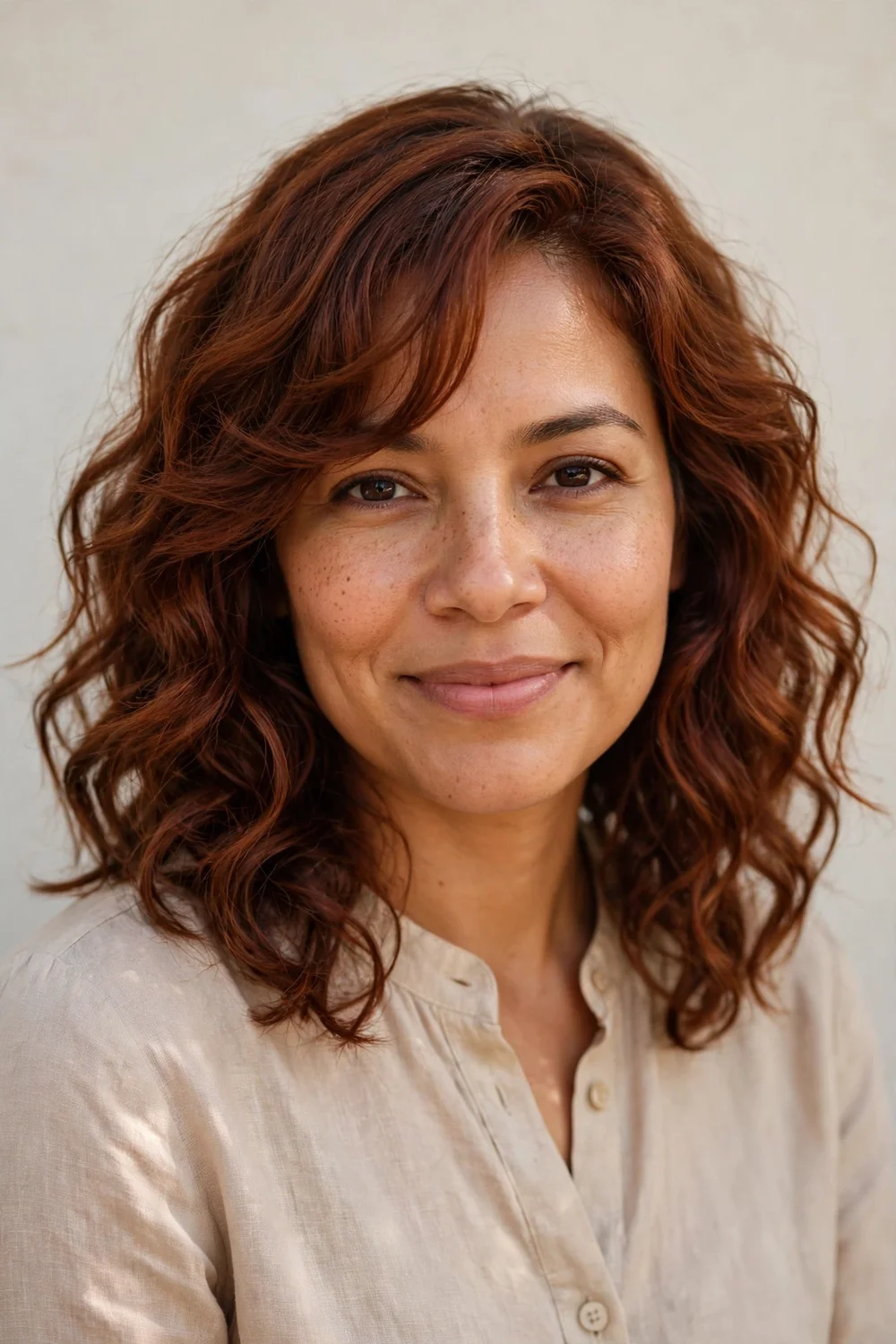
A wider forehead and narrower chin balance out with fuller bangs. Straight-across curly fringes and curtain bangs both fill in the forehead area so the chin looks less pointed by comparison. Keep the sides of the fringe long enough to blend into the face-framing layers.
Oval Faces
Oval faces can wear almost any bang style, from micro bangs to full fringes. The decision comes down to curl type and how much daily styling you want. If you are still deciding, try clipping the bangs back for a week to test whether you miss the coverage before committing to a shorter style.
What to Tell Your Stylist
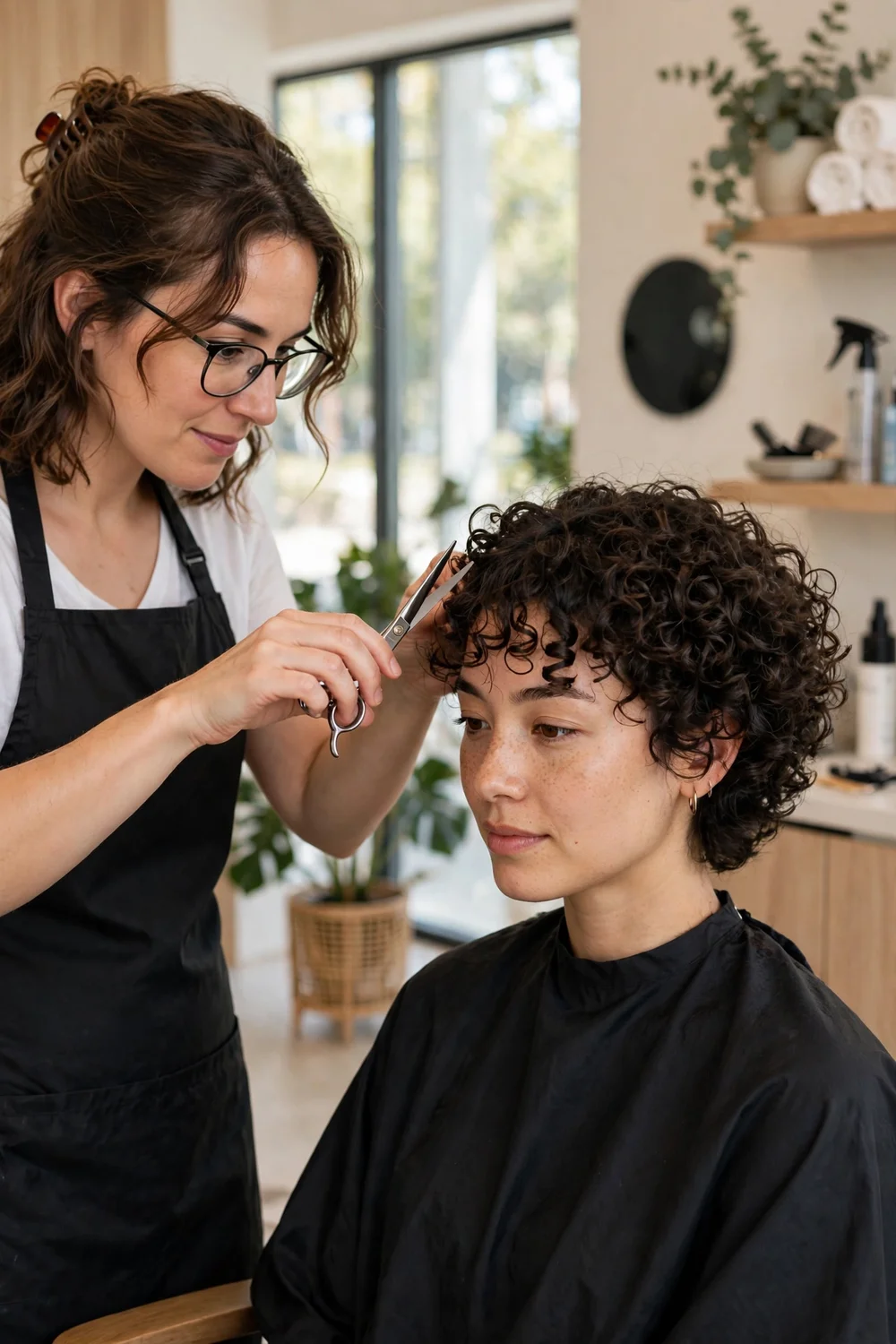
Book with someone who cuts curly hair regularly and ask specifically for a dry cut. On dry hair, the stylist can see exactly where each curl lands and cut the fringe curl by curl instead of guessing at wet length. This single choice prevents most curly-bang disasters.
Bring photos of curly bangs on hair that looks like yours, not straight-hair references. Tell the stylist how you style at home: diffuser, air dry, or wash-and-go. The cut should match your real routine, not the salon’s blowout.
Ask for the fringe cut longer than you think you want, with texture cut into the ends. You can always go shorter at a follow-up trim, but you cannot glue length back on. Two to three weeks after the cut is a good time to assess whether the length settled where you expected.
If you already wear bangs with short hair and are changing curl pattern or length, this rundown of short hair with bangs covers how the fringe interacts with different short cuts.
Hairstyles for Short Hair With Bangs
How to Style Curly Bangs, Step by Step
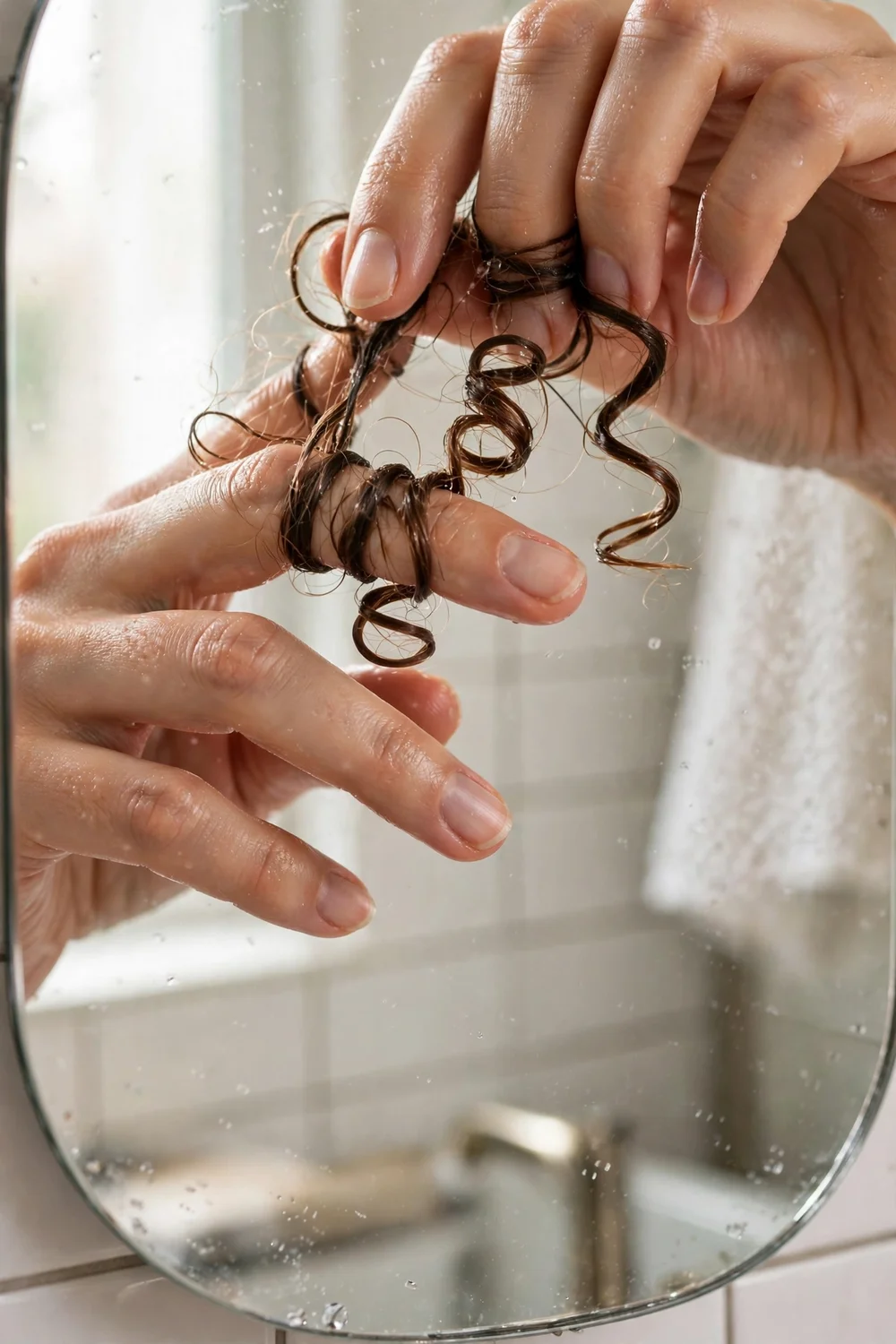
Style the bangs first, while they are at their wettest, then do the rest of your hair. Bangs dry fastest because they are thin and exposed to air, so they set before you are ready if you leave them for last.
Step 1: After washing, leave the fringe section dripping wet. Apply a pea-sized amount of curl cream just to the bangs, working it through with your fingers.
Step 2: Finger coil the two or three largest curls at the front, twisting each around your finger in the direction it naturally curls. This takes under a minute and stops the fringe from drying into one clump.
Step 3: Diffuse the bangs on low heat for 60 to 90 seconds, holding the diffuser still rather than moving it around. Moving air creates frizz on short fringe. Apply heat protectant before diffusing if you use heat regularly, since bangs take more heat exposure than the rest of your hair.

Step 4: Let the rest of your hair air dry or diffuse as usual, then separate the bang curls gently with dry fingers. Do not rake through them with a brush.
Step 5: On second-day hair, mist the bangs with water until damp, add a tiny amount of product, finger coil again, and air dry. This refresh takes two minutes and usually looks better than wash day because the curls have settled.
If your cut is growing out and the fringe is getting awkward, these medium-length curly styles show how bangs transition as the back grows longer.
Curly Hairstyles for Medium Length Hair
Products That Actually Work
Bangs need less product than you think. Because the fringe sits against your forehead, it collects skin oils within hours, and heavy products speed up the greasy look. A dime-sized amount of curl cream or a golf-ball of light mousse is the ceiling for most hair.
For fine curls, mousse gives hold without weight and keeps bangs from going limp by afternoon. For medium to thick curls, a light curl cream plus a pea of gel on just the ends defines without crunch. Refresh sprays made for curly hair work well for second-day bangs.
Skip oils and butters directly on the fringe unless your hair is very dry. They weigh short bangs down and transfer to your forehead. If the ends feel dry, apply oil to the back of your hair and let your hands carry the trace amount forward.
Fine curly hair needs the lightest formulas of all, so this guide to curly hairstyles for thin fine hair includes product notes that apply directly to delicate bangs.
Curly Hairstyles for Thin Fine Hair
Mistakes to Avoid
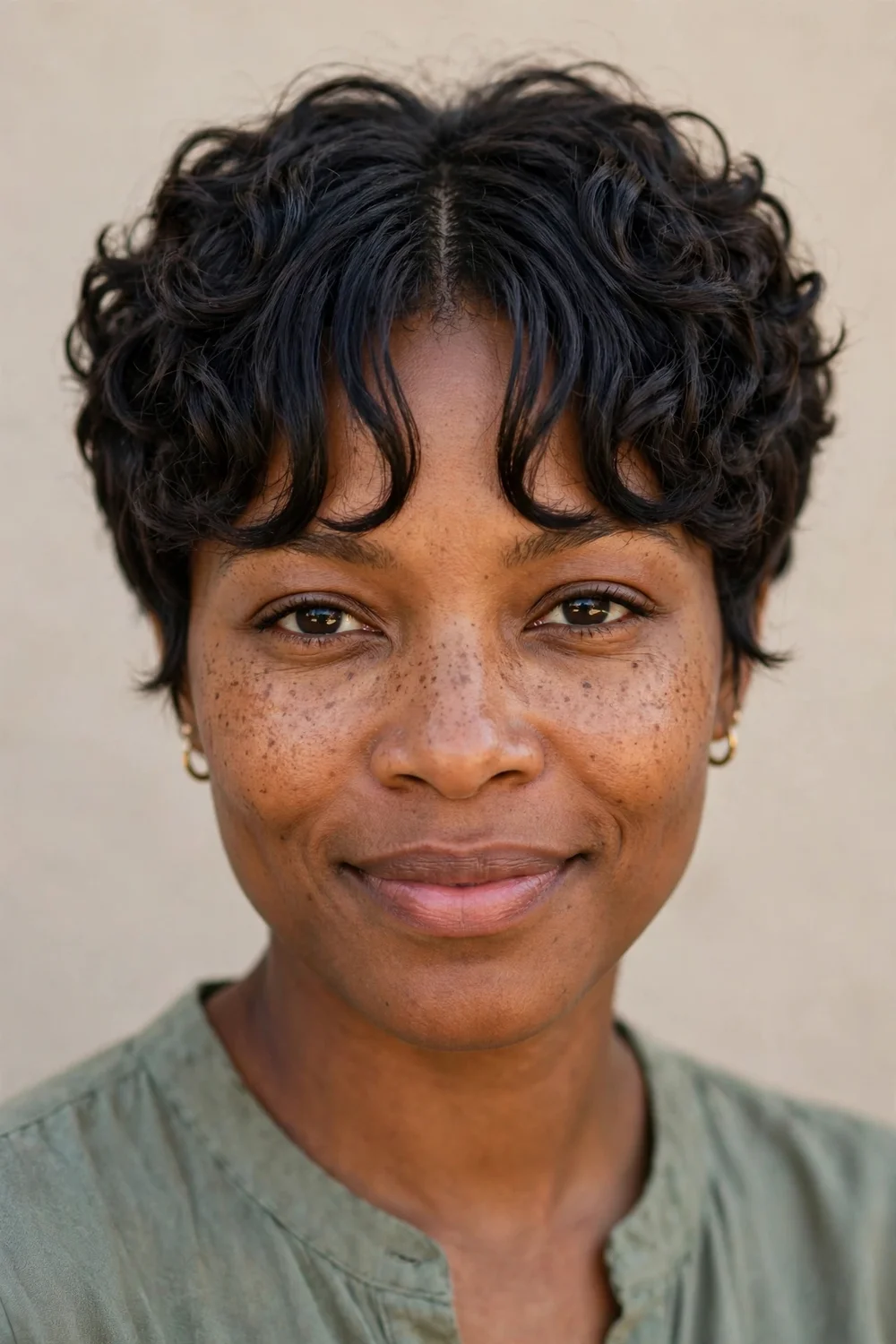
Cutting bangs wet. This is the number one reason curly bangs end up too short. Wet curls stretch; dry curls spring. Always insist on a dry trim for the fringe, even if the rest of the cut is done wet.
Going too short on the first cut. Micro bangs look striking on curls, but they give you no room for error if the shrinkage is stronger than expected. Start longer and shorten over two trims.
Brushing dry bangs. A brush turns defined curl fringe into a fuzzy halo. Detangle only when wet with conditioner in, using fingers or a wide-tooth comb.
Flat-ironing the bangs daily. Straightened fringe next to curly hair draws a hard line between textures, and daily heat thins the most fragile hair on your head. If you want straight bangs with curly hair, commit to the contrast look and protect the hair with heat protectant every time.
Using the same heavy routine as the back. The fringe needs lighter product and more frequent refreshing than the rest of your hair. Treating it as a separate zone is the mindset shift that makes curly bangs manageable.
The shortest cuts leave the least margin for bang mistakes, so if you are considering a pixie, read through these short pixie haircuts for curly hair first to see how fringe length works at very short lengths.
Short Pixie Haircuts Curly Hair
Maintenance and Second-Day Hair

Curly bangs need trims every four to six weeks to keep their shape. The fringe grows at the same rate as the rest of your hair, but the change shows faster on short front pieces. Many salons offer fringe trims between full appointments at a lower price, so ask about that.
At night, protect the bangs with a silk or satin bonnet, or smooth them back loosely with a satin scarf. Cotton pillowcases pull moisture out of the fringe and flatten the curl pattern by morning. If the bonnet flattens your bangs too much, loosely pinning just the fringe up with two bobby pins preserves the curl.
Wash frequency is personal, but most curly hair does well with one to two washes per week. Between washes, the water-mist refresh described above keeps the bangs defined. Dry shampoo at the roots of the fringe can extend a style by a day if your forehead runs oily.
When the cut starts growing out and the bangs blend into layers, a shaggy shape buys you time between appointments. These short shag haircuts for curly hair show how textured layers absorb growth without looking overgrown.
Short Shag Haircuts Curly Hair
Bang Styles at a Glance
| Bang Style | Best Curl Type | Daily Effort | Trim Cycle |
|---|---|---|---|
| Wispy bangs | Type 2 and 3 | Low | 6 to 8 weeks |
| Side-swept bangs | Type 2 and 3 | Low | 6 to 8 weeks |
| Curtain bangs | Type 2 and 3 | Medium | 6 to 8 weeks |
| Full curly fringe | Type 3 | Medium to high | 4 to 6 weeks |
| Micro bangs | Type 3 and 4 | Medium | 4 weeks |
| Shaped coil fringe | Type 4 | Medium | 6 to 8 weeks |
FAQs
Can you get bangs with short curly hair?
Yes. Short curly hair with bangs works for every curl type when the bang style matches the pattern: longer blended bangs for waves, wispy or layered bangs for ringlets, and longer shaped fringes for coils. The cut should be done on dry hair so shrinkage is visible during the appointment.
Should curly bangs be cut wet or dry?
Dry. Wet curls stretch longer than they will ever be when worn, so cutting wet almost always produces bangs that spring up shorter than planned. A dry cut lets the stylist see the true length and shape of each curl before cutting.
Why do my curly bangs get frizzy on my forehead?
Bangs sit against warm skin, collect facial oils, and get touched more than the rest of your hair, which breaks up the curl pattern and causes frizz. Use lightweight products on the fringe, avoid touching it during the day, and refresh with water and a small amount of product instead of adding more product on top.
How often should curly bangs be trimmed?
Every four to six weeks for most styles. Short fringe shows growth faster than the rest of the cut, and a quick trim restores the shape without a full haircut appointment. Many salons offer low-cost fringe trims between full cuts.
What if my curly bangs spring up too short?
Pin them back with bobby pins or blend them into side pieces while they grow, which usually takes six to eight weeks to reach a workable length. Avoid cutting them again until they settle, and next time ask for a dry cut with at least half an inch of extra length.
Final Thoughts
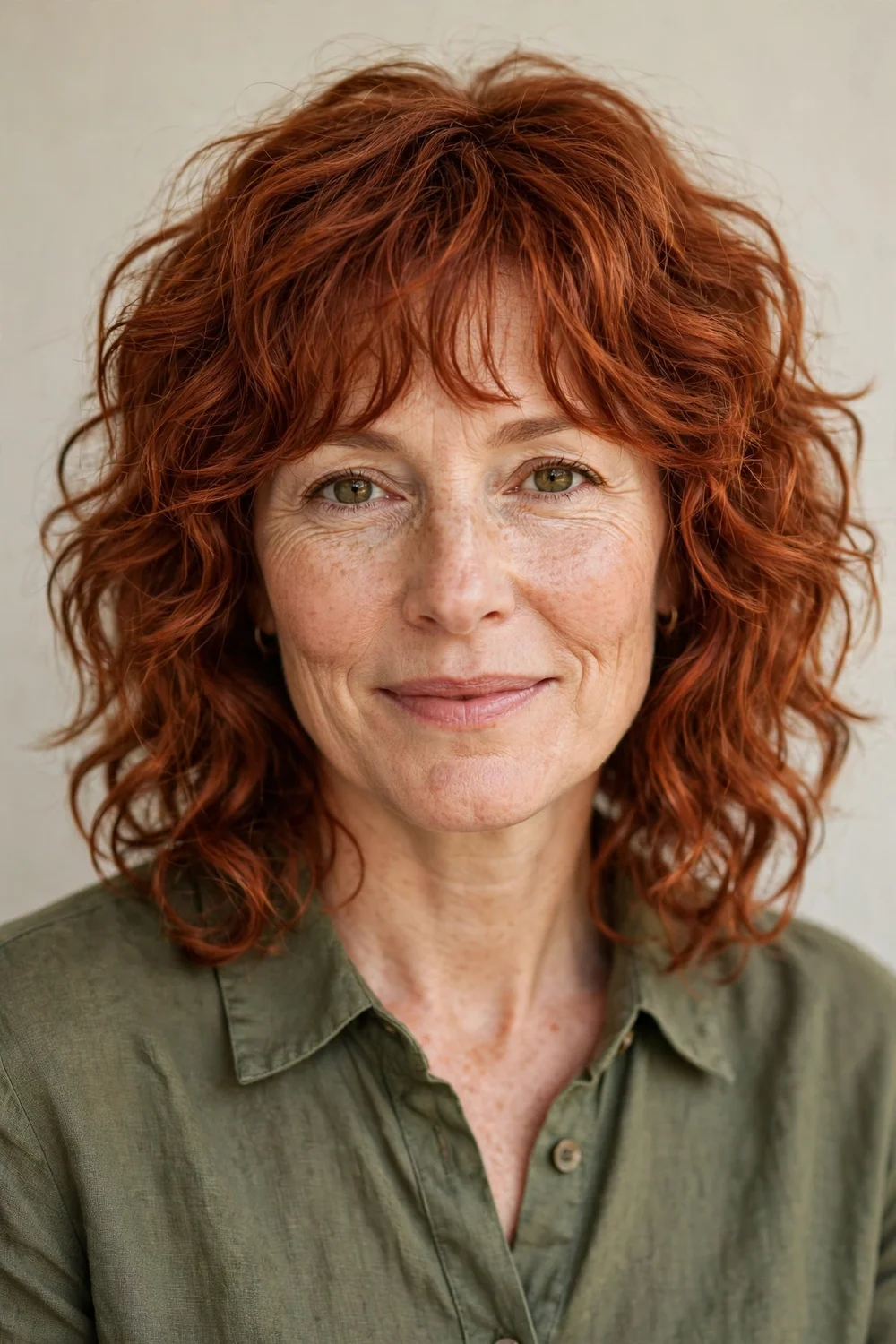
Short curly hair with bangs is a cut that rewards a little planning and a light hand. Match the fringe to your curl type, cut it dry and a touch long, style the bangs first while they are wettest, and keep products light. Do that and the bangs become the easiest part of your routine instead of the hardest.

