


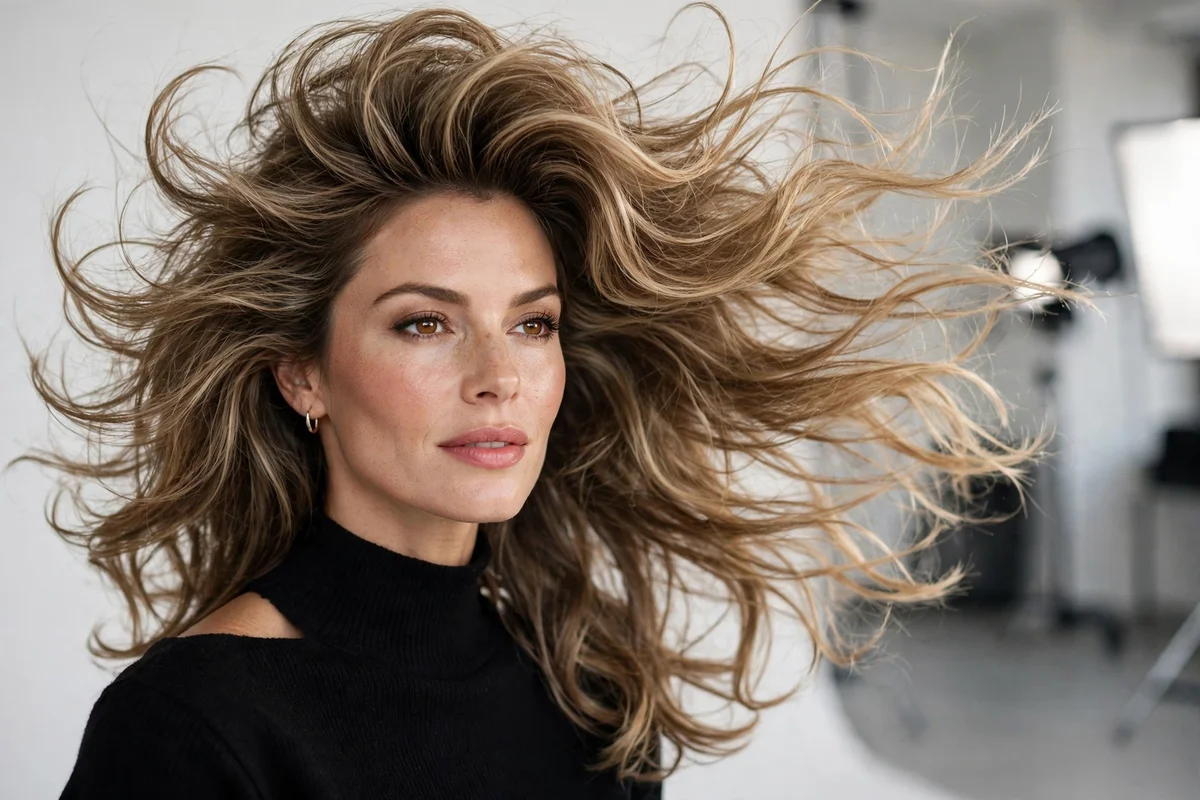
Volume starts at the salon chair, not the bathroom shelf. These volumizing haircuts for thin hair are engineered to lift: the cutting techniques below remove weight where it drags hair down and build shape where lift matters. The result is hair that holds volume with less daily effort.
This list focuses on the mechanics of lift: layering that removes bulk at the right points, perimeters that support the shape, and lengths matched to density. Every cut notes the technique that makes it volumizing so you can discuss it with your stylist.
Quick Takeaways
- Volume comes from shape: layers remove weight, blunt edges support it.
- Chin-length cuts give the most reliable lift per inch on thin hair.
- Internal and ghost layers add volume without visible thinning.
- Prep matters: dry shampoo at roots before styling doubles hold time.
- Most volumizing cuts need trims every 6 to 8 weeks to keep the shape.
1. Chin-Length Layered Bob

A soft layered bob cut at chin length gives the most reliable volume of any haircut on fine hair. The layers remove weight while keeping length, and an inward curve at the ends creates the illusion of density. Ask for cheekbone-level face-framing layers to maximize lift at the top.
Blow-dry with a round brush, curving the ends under. The inward curve is what makes this cut look full rather than flat.
Try this: ask for the layers to be cut dry if your hair is wavy. Dry cutting shows where the volume will actually sit.
Difficulty: Easy · Cost: $50–$90 (salon cut, trim every 6–8 weeks)
2. Blunt Pixie

A sharp, graphic pixie with clean lines: the blunt ends create the illusion of thickness, especially around the hairline, and the short length means nothing pulls the roots flat. Style with a light pomade for definition. No fluff, just structure.
This is a power move for thin hair because the geometry is doing all the work. Keep the edges clean with trims every 4 to 5 weeks.
Try this: work the pomade through dry hair, not damp. Damp application flattens the texture you want.
Difficulty: Easy · Cost: $40–$75 (salon cut, trim every 4–5 weeks)
3. Layered Pixie

A softer take on the pixie: layered throughout for texture without sacrificing shape. It works well on straight or slightly wavy hair, adding dimension at the crown. The layers let air between the strands, which is what volume actually is on thin hair.
Rough-dry with your fingers and a volumizing mousse for the fullest finish. This cut is low-effort but high-style on second-day hair.
Try this: keep some length at the crown even if the sides go short. Crown length is where the volume lives.
Difficulty: Easy · Cost: $40–$75 (salon cut, trim every 4–6 weeks)
4. French Bob with Fringe

Cropped at the jawline with a subtle inward bend and a soft fringe, the French bob’s boxy silhouette is deceptively voluminous. The blunt ends stack the hair into a solid shape, and the fringe adds density around the face. It is polished without trying hard.
Style with a round brush for the inward bend. The bend is the volumizing mechanism: it curves the hair into a rounded, full shape.
Try this: a deep side part on a French bob adds asymmetric volume that center parts can’t match.
Difficulty: Easy · Cost: $50–$85 (salon cut, trim every 6 weeks)
5. Inverted Bob
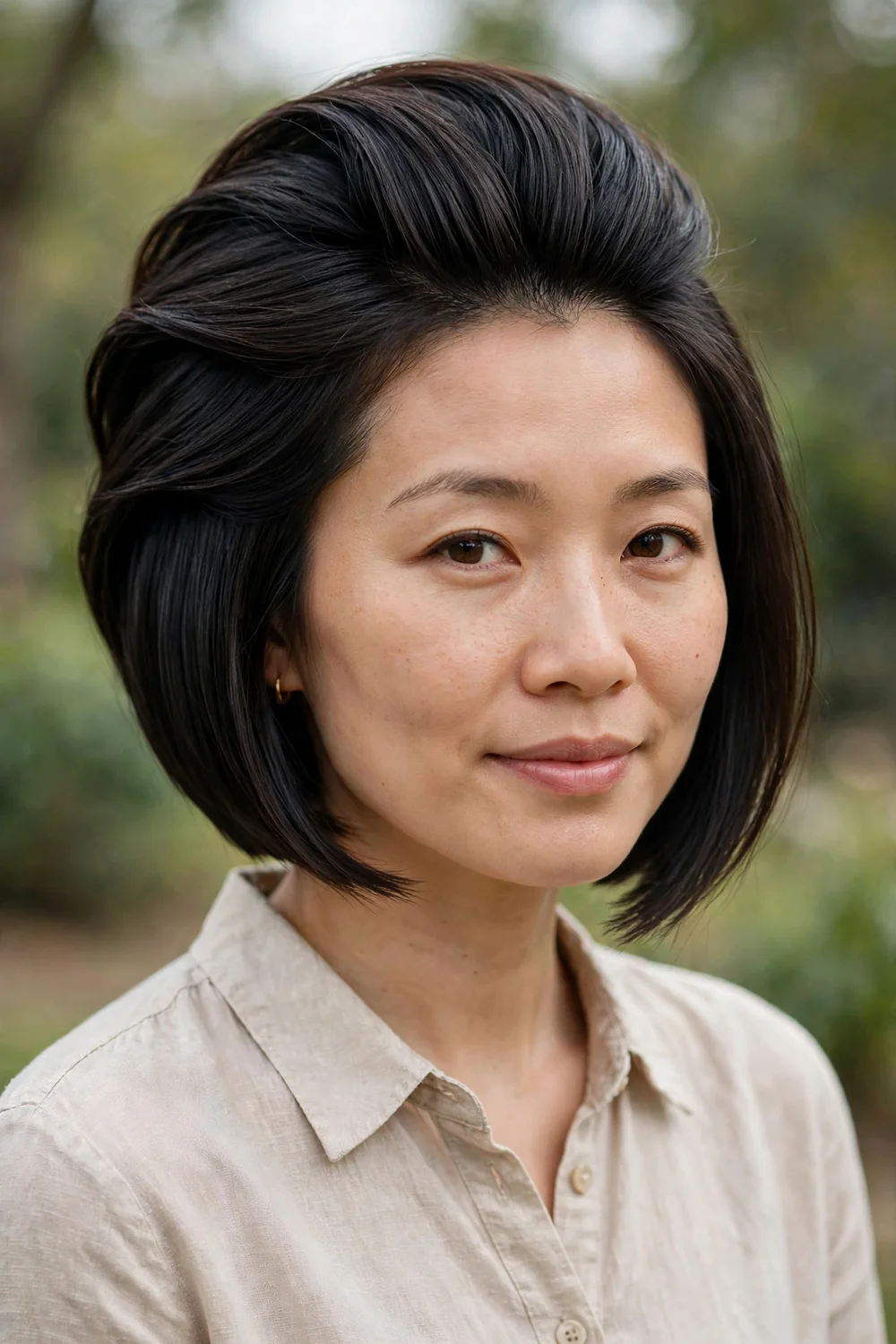
Longer in front, shorter in back: the stacked back gives thin hair architectural volume at the crown that flat cuts can’t build. Use a round brush when blow-drying to enhance the lift and the angles. The shape holds volume for days, not hours.
Ask for graduation through the back, not just an angle. Graduation is what builds the stacked volume.
Try this: flip your head upside down for the final 30 seconds of blow-drying. The roots set with maximum lift.
Difficulty: Easy · Cost: $55–$95 (salon cut, trim every 6–8 weeks)
6. Shaggy Crop

A short shag with soft choppy layers and a curtain-style micro fringe: the layers create piece-y texture that stands away from the head, and the fringe adds interest at the front. A little mousse goes a long way. This is the cool-girl volumizing cut.
Keep the layers soft, not severe. Severe chopping on thin hair exposes the scalp; soft texture builds it up.
Try this: scrunch mousse into damp hair and let it air-dry. The shag’s texture does the rest.
Difficulty: Easy · Cost: $55–$90 (salon cut, trim every 6–8 weeks)
7. Blunt Cut Bob

One length, no layers: the blunt bob makes thin hair appear thicker at the ends because every strand ends together. The bob length lifts the hair off the shoulders for instant bounce. Add texture with a dry texturizer for movement without losing the edge.
Best on straight and wavy hair. Very curly hair can go triangular with a blunt bob, so curls need a different approach.
Try this: tuck one side behind the ear. The asymmetry shows off the blunt edge and adds shape.
Difficulty: Easy · Cost: $50–$85 (salon cut, trim every 6–8 weeks)
8. Layered Long Bob (Lob)

The lob keeps some length while layers add fullness and texture through the mid-lengths and ends. It is the middle ground between short and long: enough hair to style, short enough to hold volume. Layers lift the hair around the crown so it doesn’t lie flat.
Blow-dry upside down with mousse for maximum root lift, then flip and smooth the top layer. The upside-down drying is the key step.
Try this: ask for the layers to start at the chin. Higher layers on a lob can look disconnected.
Difficulty: Easy · Cost: $55–$95 (salon cut, trim every 8 weeks)
9. Pixie Cut with Textured Layers

Short length lightens the load on the roots, and textured layers add depth that makes the hair look thicker than it is. This is an excellent low-maintenance volumizing cut: wash, add a little product, and go. Texturizing powder at the roots enhances the layers.
Keep the texture piecey, not spiky. Piecey texture reads as full; spiky texture reads as thin.
Try this: apply texturizing powder to dry roots and massage it in. Instant lift that lasts all day.
Difficulty: Easy · Cost: $40–$75 (salon cut, trim every 4–6 weeks)
10. Modern Shag Haircut

Long blended layers with face-framing pieces: the modern shag builds volume through layering while keeping the ends soft. It suits thin hair because the layers are blended, not choppy, so density is preserved. A texturizing spray scrunched in finishes it.
Ask for minimal razoring. Razors remove weight that thin hair can’t spare; scissors keep the density.
Try this: curtain bangs blended into the shag layers add face-framing volume that completes the cut.
Difficulty: Easy · Cost: $60–$100 (salon cut, trim every 8 weeks)
11. Soft Pixie with Crown Volume

A soft textured pixie with extra length left at the crown: the crown length is teased or lifted with mousse for height while the sides stay neat. Keeping density at the sides and crown avoids the scalped look that ruins thin pixies.
Tell your stylist you want to keep density at the crown. That one sentence prevents over-thinning where you need volume most.
Try this: rough-dry with your fingers instead of a brush. Fingers build texture; brushes flatten it.
Difficulty: Easy · Cost: $40–$75 (salon cut, trim every 4–6 weeks)
12. Wavy Lob

A lob past the shoulders with natural waves: the waves do the volumizing while the cut keeps the shape. Enhance waves with mousse on damp hair, or wrap sections around a large-barrel wand for more defined body. The length keeps it versatile.
Refresh day-two waves with a light mist of water and a scrunch. Re-ironing fine hair daily causes damage that thins it further.
Try this: a middle part on a wavy lob shows the volume symmetrically. Side parts concentrate it on one side.
Difficulty: Easy · Cost: $55–$90 (salon cut)
13. Inverted Lob
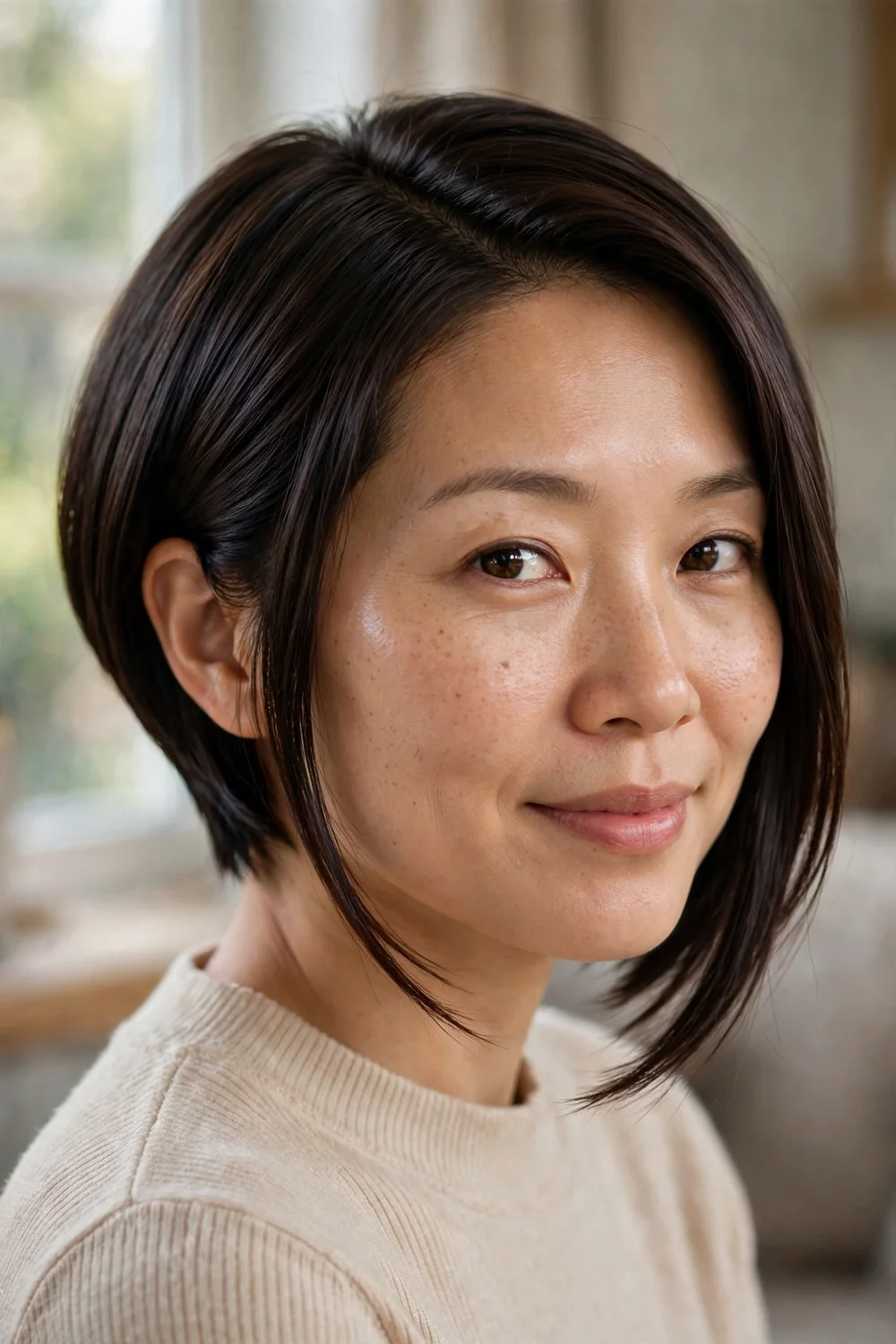
A soft angle from back to front with minimal layering: the angle creates shape while the minimal layering keeps bulk in the ends. It fakes density the honest way, through geometry rather than product. Round-brush the crown for body.
This is ideal for thin hair that wants to look longer in front. The front length reads as length; the back angle reads as volume.
Try this: keep the angle subtle. A steep angle on thin hair looks severe instead of full.
Difficulty: Easy · Cost: $55–$95 (salon cut, trim every 8 weeks)
14. Lightly Layered Bob

A bob at or just below the chin with blended layers for movement: not too much thinning at the ends, just enough layering to keep it lively. Blow-dry with a round brush and finish with texture spray for fullness that moves.
The key phrase is “blended layers.” Blended layers move together and look full; disconnected layers separate and look thin.
Try this: flip the ends under with the round brush, not outward. Under-flips curve the hair into a fuller shape.
Difficulty: Easy · Cost: $50–$85 (salon cut, trim every 6–8 weeks)
15. Classic One-Length Bob

Timeless and volumizing: one length means maximum weight at the ends, which is what makes thin hair look full. Boost it with thickening lotion or volumizing mousse while blow-drying, and finish with texturizing spray for lift that doesn’t weigh down.
This cut is the baseline every other volumizing cut is measured against. If nothing else appeals, start here.
Try this: apply mousse to damp roots before blow-drying. Root product matters more than end product for volume.
Difficulty: Easy · Cost: $50–$85 (salon cut, trim every 6–8 weeks)
16. Blunt Cut

All one length, ends cut straight across: the blunt cut keeps the bulk of the weight at the ends for a thicker, fuller, healthier appearance. It works at bob, lob, or shoulder length. The longer the blunt cut, the more the weight helps.
Keep the ends trimmed on schedule. A blunt cut with ragged ends loses its entire volumizing effect.
Try this: a root-lifting spray at the crown before blow-drying gives the blunt shape the lift it needs.
Difficulty: Easy · Cost: $50–$90 (salon cut, trim every 6–8 weeks)
17. Invisible (Ghost) Layers

Seamless layers cut underneath the top section: they push volume up from inside while the surface stays smooth. Unlike traditional layering, which can make fine hair look thinner, ghost layers add lift you can’t see. The hair moves like it has more of it.
Ask for them by name: “invisible layers” or “ghost layers.” Most stylists know the technique; the name just makes the request precise.
Try this: combine ghost layers with a blunt perimeter. Hidden lift plus a solid edge is the best of both worlds.
Difficulty: Easy · Cost: $55–$95 (salon cut)
18. Deep Side Part with Long Layers
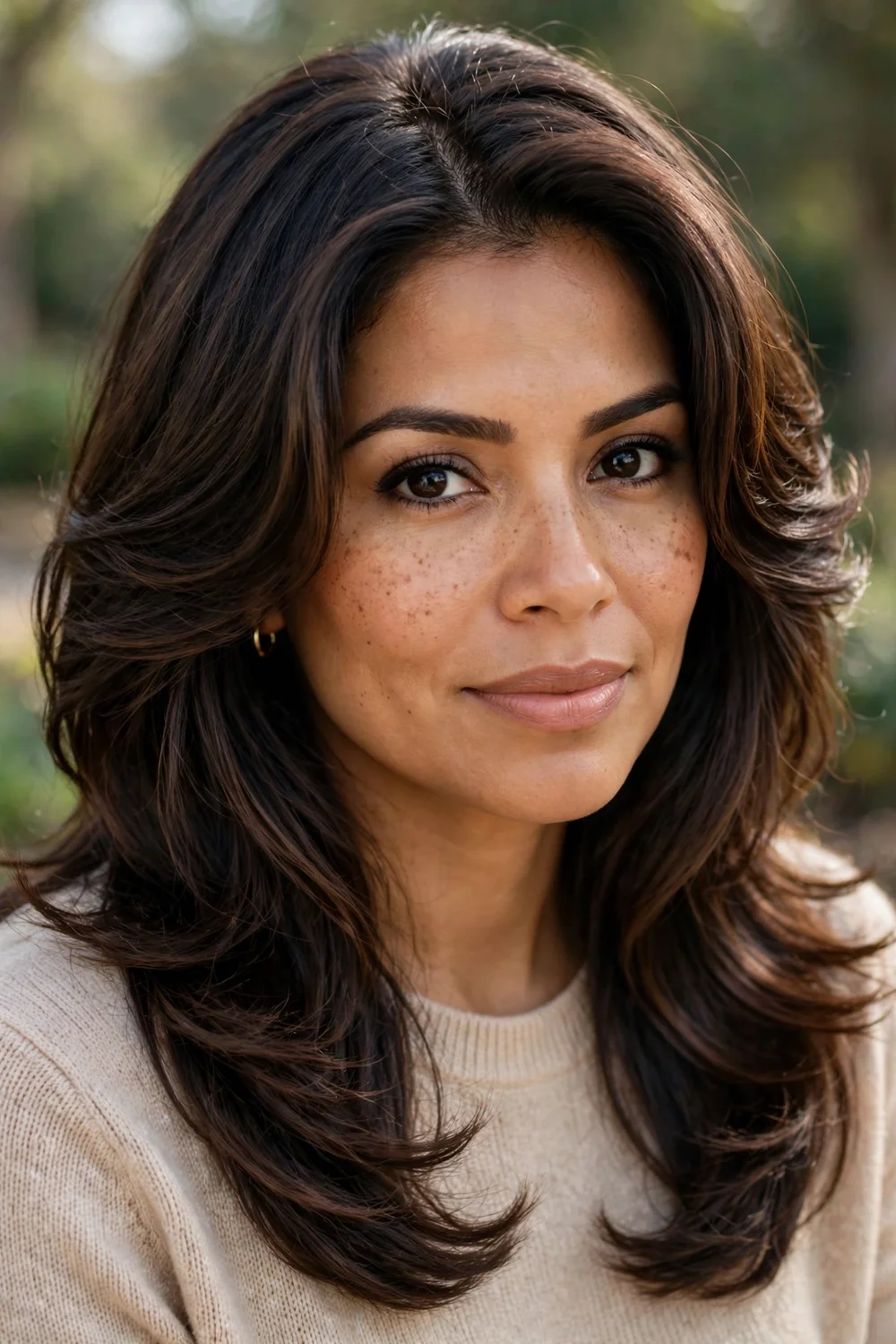
A deep side part gathers more hair on one side for instant volume, and long layers starting at the cheekbone keep the shape moving. The part does half the work: asymmetry always reads as more hair than a center part on thin textures.
Train a new part by wearing it damp. Hair sets its part memory as it dries, so a week of damp styling locks it in.
Try this: backcomb the roots along the part line lightly. The part then holds its lift all day.
Difficulty: Easy · Cost: $55–$90 (salon cut)
19. Thick Bangs with Light Layers

Heavy, well-cut bangs add density around the face while light internal layering creates movement without compromising fullness. If your hair feels flat in front, bangs make the most dramatic difference of any single change. Works on medium to long lengths.
Ask the stylist to avoid feathering the bangs’ ends. Blunt bang edges look thicker; feathered ones go wispy.
Try this: style bangs with a dry texturizer instead of wet product. Dry product adds grit and lift without weight.
Difficulty: Easy · Cost: $55–$95 (salon cut, bang trims monthly)
20. Layered Asymmetrical Bob

Longer on one side, with a slightly stacked back: the asymmetry creates visual interest that reads as volume, and the stack boosts the crown. Subtle layering keeps it dynamic but still full. Blow-dry upside down for maximum lift.
The asymmetry is the volumizing trick here: the eye follows the diagonal and perceives more hair than a symmetric cut shows.
Try this: keep the length difference under two inches. Subtle asymmetry looks styled; extreme looks accidental.
Difficulty: Easy · Cost: $55–$95 (salon cut, trim every 6–8 weeks)
21. Curtain Bang Bob

A bob with curtain bangs that part in the middle and blend into the sides: the bangs add softness and face-framing volume while the bob keeps its solid shape. The middle part shows the volume symmetrically, which suits rounder faces.
Blow-dry the bangs forward first, then sweep them to each side. Drying them forward first builds the volume into the roots.
Try this: curtain bangs need trims every 4 weeks. Overgrown curtain bangs lose their shape and the volume with it.
Difficulty: Easy · Cost: $50–$90 (salon cut)
22. Textured Crop

A short crop with texture cut into every section: short hair is naturally stronger-looking, and the all-over texture multiplies the surface the eye sees. Longer pieces around the hairline keep it soft and feminine. Work a dry wax through for definition.
This is one of the best short volumizing cuts because it minimizes weight everywhere. What is left can only stand up.
Try this: a strong dry wax, not a wet one. Dry wax defines without the shine that flattens texture.
Difficulty: Easy · Cost: $40–$75 (salon cut, trim every 4–6 weeks)
For styling routines that keep the volume going between cuts, these short hairstyles for thin fine hair focus on daily techniques for fine textures.
Quick Comparison
| Cut | Volume trick | Trim cycle | Best for |
|---|---|---|---|
| Chin-Length Layered Bob | Cheekbone layers + inward curve | 6–8 weeks | Most reliable lift |
| Blunt Pixie | Clean geometry | 4–5 weeks | Bold minimalists |
| Layered Pixie | Crown dimension | 4–6 weeks | Soft texture lovers |
| French Bob + Fringe | Boxy silhouette | 6 weeks | Polished looks |
| Inverted Bob | Stacked back | 6–8 weeks | Crown volume |
| Shaggy Crop | Piece-y separation | 6–8 weeks | Cool-girl texture |
| Blunt Cut Bob | One-length weight | 6–8 weeks | Straight/wavy hair |
| Layered Lob | Mid-length lift | 8 weeks | Keeping some length |
| Textured Pixie | Root powder lift | 4–6 weeks | Low maintenance |
| Modern Shag | Blended layers | 8 weeks | Effortless volume |
| Soft Pixie + Crown | Extra crown length | 4–6 weeks | Crown height |
| Wavy Lob | Wave multiplication | 8–10 weeks | Natural wavies |
| Inverted Lob | Subtle angle | 8 weeks | Front length |
| Lightly Layered Bob | Blended movement | 6–8 weeks | Classic with movement |
| One-Length Bob | Maximum end weight | 6–8 weeks | Baseline choice |
| Blunt Cut | Weight at ends | 6–8 weeks | Shoulder length |
| Ghost Layers | Hidden lift | 8–10 weeks | Invisible volume |
| Deep Side Part + Layers | Asymmetric mass | 8–10 weeks | Instant fullness |
| Thick Bangs + Layers | Frontal density | Monthly bang trims | Flat front hair |
| Asymmetrical Bob | Diagonal interest | 6–8 weeks | Modern edge |
| Curtain Bang Bob | Symmetric framing | 6–8 weeks | Rounder faces |
| Textured Crop | All-over texture | 4–6 weeks | Shortest volume |
How to Choose the Right Volumizing Cut
Match the cut to your styling effort. If you want wash-and-go volume, pick pixies, crops, and shags: the cut does the work. If you enjoy blow-drying, bobs and lobs reward the effort with bigger volume. Be honest about your routine; the best volumizing cut is the one you will actually maintain.
Talk technique with your stylist, not just names. “I want invisible layers for lift” gets a better result than “give me layers.” And protect the investment: volumizing cuts lose their shape fast when overgrown, so book the trim cycle before you leave the salon.
For cuts that focus on the illusion of thickness rather than lift, see these curly hairstyles for thin fine hair for texture-based density tricks.
If you are over 60, these volume techniques work even better in cuts shaped for your age group. These hairstyles for women over 60 with thin hair combine lift-building shapes like textured pixies and stacked bobs with flattering, low-effort styling.
Frequently Asked Questions
What is the best volumizing haircut for thin hair?
A chin-length layered bob with cheekbone-level layers is the most consistently volumizing cut: it removes weight, keeps length, and the inward curve builds density. Pixies volumize more dramatically but require going short.
Do layers really add volume to thin hair?
The right layers do. Ghost layers and long blended layers add lift without visible thinning. Short choppy layers can backfire by exposing sparseness. The layer type matters more than the fact of layering.
How do I make a volumizing haircut hold all day?
Prep is everything: dry shampoo at the roots before styling, mousse on damp hair, blow-dry with a round brush in sections, and set each section with the cool shot. Finish with dry texturizing spray at the crown. Skip the cool shot and volume collapses within a couple of hours.
Will a volumizing cut work if my hair is very long?
Partially. Long hair fights volume because of weight, but ghost layers, a deep side part, and long layers help. For maximum volume, shoulder length or shorter works better. Long hair needs more styling effort to hold the same lift.
How often should I trim a volumizing haircut?
Every 6 to 8 weeks for most cuts on this list; pixies and crops need 4 to 6. Volumizing shapes depend on precise layering, and overgrown layers collapse instead of lifting. Book the next trim at the appointment.
Final Thoughts
Volume is a haircut decision first and a styling decision second. Get the shape right and your daily routine gets shorter, not longer. Pick the cut that matches your length and your effort level, find a stylist who understands thin hair, and let the scissors do the heavy lifting.

