



Medium-length hair and bangs belong together because the cut gives you enough length to play with while the fringe sets the tone. Blunt bobs ask for blunt bangs, shaggy lobs sit best with curtain or textured bangs, and a straight mid-length cut turns heads with see-through or micro bangs.
Every idea below is built as a pairing: one medium-length base cut matched with the bangs type that flatters it most. You will find the face shapes it suits, how often the bangs need a trim, and a styling tip that keeps the whole look working on real mornings.
For pairings picked around fine texture rather than the bang shape, shoulder length hairstyles for fine hair with bangs covers the same length with volume-first cuts.
Quick Takeaways
- Curtain bangs are the lowest-maintenance fringe for medium hair, blending into layers as they grow.
- Blunt and micro bangs need a trim every 2 to 3 weeks to keep their edge; wispy and curtain bangs stretch to 6 weeks or more.
- Thick hair pairs best with thinned or textured bangs, while fine hair gets more body from full, blunt fringe.
- Round faces benefit from side-swept or curtain bangs; longer faces can wear straight-across bangs with confidence.
- Always use a heat protectant before flat-ironing or curling bangs, since fringe hair is fine and heats fast.
1. Blunt Bob with Classic Blunt Bangs

A chin-to-jaw blunt bob cut straight across at the bottom pairs naturally with a straight, full fringe cut right at the brows. The two blunt edges mirror each other, which gives the whole cut a deliberate, polished outline. This pairing suits oval and long faces especially well, since the horizontal fringe visually shortens the forehead.
Blow-dry the bangs forward with a paddle brush and skim a flat iron over them if your hair waves up as it dries. Expect a salon visit every 2 to 3 weeks for the fringe; the bob itself can go 6 to 8 weeks. Apply a heat protectant before ironing to keep the ends from going wispy too soon.
Try this: Ask for the bangs to be cut dry so your stylist can see your real fall line.
Difficulty: Salon cut · Cost: $65–$140
2. Shoulder-Length Layers with a Long Curtain Fringe

Long layers cut to the collarbone paired with a curtain fringe that parts down the middle is one of the easiest medium-hair combinations to live with. The fringe starts at the cheekbones and tapers out, so it sweeps away from the face instead of covering the forehead. Oval faces carry it especially well, and it softens square jawlines too.
Style with a round brush, rolling the fringe away from the face for that swept-open shape. Curtain bangs are forgiving growers, so you can push trims to every 6 to 8 weeks. If you blow-dry, a light mist of heat protectant through the face-framing pieces keeps them smooth.
Try this: Twist each curtain piece away from the face while it cools to lock in the sweep.
Difficulty: Easy · Cost: $0–$25 at home
3. Wavy Mid-Length Hair with See-Through Bangs

Loose waves through a mid-length cut plus a see-through fringe, where the forehead still shows between wispy strands, reads light and airy instead of heavy. This is the fringe to pick when you want coverage without commitment, and it suits heart-shaped and round faces that need forehead interest without width. Thick hair works well here because the sheerness thins the front visually.
Touch up waves with a 1.25-inch curling wand, leaving the ends out, and mist the bangs with a flexible hold spray. Trim the see-through fringe every 5 to 7 weeks. Use heat protectant before the wand, since fringe pieces sit right against hot tools longer than you think.
Try this: Keep the fringe thin enough to read text through; ask for interior thinning, not a blunt bottom.
Difficulty: Moderate · Cost: $20–$60
4. Short Shag with Soft Bangs

A shag cut to the chin with heavy top layers and a soft, feathery fringe is a strong pairing for square faces, since the broken outline blurs hard jawlines. The fringe should be piece-y rather than solid, ending just above the lashes, so it does not add a straight line across the widest part of the face.
Scrunch in a pea-sized amount of texturizing cream and let it air-dry, or rough-dry with your head flipped over for volume. Reshape the fringe every 4 to 5 weeks. This cut grows out into a shaggy lob gracefully, so you can skip a full recut for up to 10 weeks.
Try this: Point-cut the fringe yourself between appointments only if you have proper thinning shears.
Difficulty: Easy · Cost: $10–$30 styling products
5. Shaggy Lob with Curtain Bangs
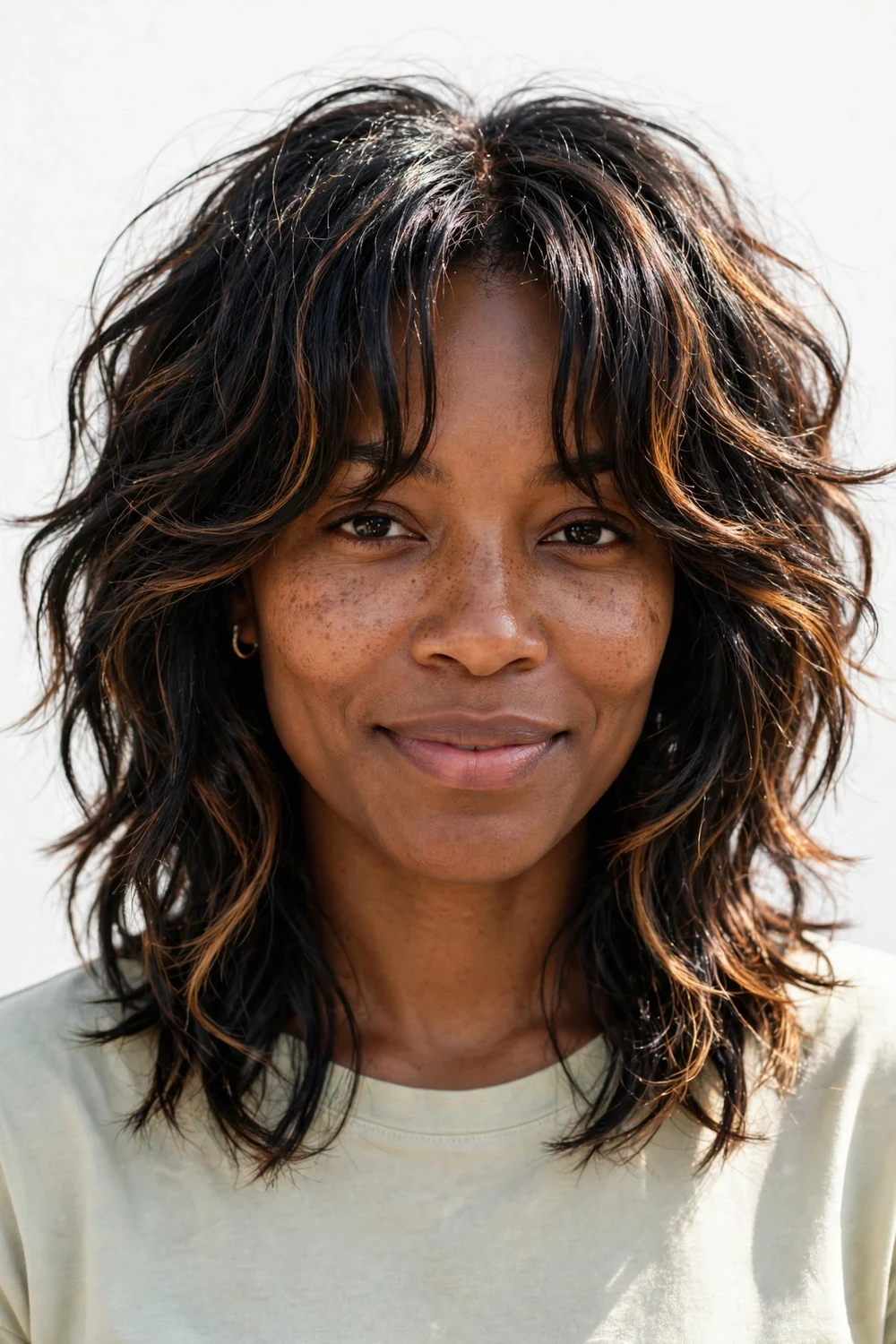
A collarbone lob with choppy internal layers and curtain bangs gives you the lived-in look that needs almost no daily styling. The fringe splits at the center and melts into the face-framing layers, so there is no hard line anywhere. Round faces gain length from the vertical sweep, and wavy or thick hair gets natural movement from the texture.
A few bends with a flat iron through the mid-lengths is all this needs; skip the ends for a rougher finish. Curtain bangs here need a trim only every 6 to 8 weeks. Spritz heat protectant before the iron, even for a five-minute touch-up.
Try this: Sleep with the fringe twisted into a loose topknot for a morning-ready sweep.
Difficulty: Easy · Cost: $0–$25 at home
6. Feathered Shoulder-Length Cut with Feathered Bangs

Feathered layers that flick outward through a shoulder-length cut want feathered bangs to match, with the fringe sliced and tapered so the ends fan slightly. The whole haircut moves in one direction, which reads as fullness on medium and fine hair. Heart-shaped faces do well here because the flicking ends fill in a narrow chin visually.
Blow-dry with a medium round brush, flicking both layers and bangs outward, then set with a light-hold spray. Feathered fringe needs reshaping every 5 to 6 weeks. A heat protectant is non-negotiable with this much brush-and-dryer work near the hairline.
Try this: Ask your stylist to razor the fringe ends instead of cutting them blunt for the feather effect.
Difficulty: Moderate · Cost: $55–$120 salon
7. Lob with Bottleneck Bangs

Bottleneck bangs, narrow and short at the center and widening as they sweep past the cheekbones, pair well with a collarbone-length lob. The curved shape follows the cheekbones and draws attention to the eyes. Long and oval faces carry this best, and it works on straight to slightly wavy hair.
Style the bangs with a small round brush, curving the outer pieces back, and give the lob one pass with a flat iron for a sleek finish. The fringe needs a cleanup every 5 to 7 weeks. Use heat protectant on the bangs before styling; they are cut thin and fry quickly. For more lob inspiration, browse our guide to long bob hairstyles to compare lengths before your appointment.
Try this: Keep the center pieces at brow length and let the sides taper to the cheekbones.
Difficulty: Moderate · Cost: $20–$50
8. Flipped-End Layers with Side-Swept Bangs

Mid-length layers that flip outward at the ends team up with long side-swept bangs for a retro-fresh look with real swing. The fringe should start at the temple on one side and sweep across to the opposite cheekbone, balancing the outward flip with a strong diagonal line. Round and heart-shaped faces get welcome asymmetry from this pairing.
Flick the ends out with a round brush and direct the bangs to one side while damp, then let them set. Side-swept bangs need trimming every 6 to 8 weeks, and they tuck behind an ear while growing out. Spray heat protectant through the lengths before brush-styling the flips.
Try this: Switch the sweep to the other side on second-day hair for instant volume at the roots.
Difficulty: Easy · Cost: $0–$25 at home
9. Shaggy Lob with Textured Bangs

A shaggy lob cut to the collarbone with a choppy, textured fringe is the low-effort pairing for thick hair that tends to puff out at one length. The interior layers remove weight while the jagged fringe keeps the forehead from looking flat. Square and oval faces both wear this well, and the texture hides cowlicks better than a blunt cut.
Rough-dry with your fingers and pinch the fringe into pieces with a dab of matte paste. Reshape the textured bangs every 4 to 6 weeks. Since this cut avoids heat most days, save the heat protectant for the occasional flat-iron refresh of the fringe only.
Try this: Ask for the fringe to be point-cut deep, not thinned with shears, to keep the ends chunky.
Difficulty: Easy · Cost: $10–$30 styling products
10. Mid-Length Blonde with Thick Full Bangs

Buttery blonde hair worn mid-length with a thick, full fringe cut straight across the brow makes a clear statement: the bangs are the haircut. The density of the fringe shows best on medium to thick hair, and it adds width at the forehead, which balances longer face shapes. Warm blonde tones keep the heavy fringe from reading severe.
Flat-iron the bangs straight down after blow-drying, and let the lengths fall naturally or wave them loosely. Thick fringe needs a trim every 2 to 3 weeks to stay even. Always use heat protectant first, and keep blonding gloss or toner appointments on schedule so the fringe does not show banding.
Try this: If your fringe gets oily by afternoon, blot it with blotting paper instead of washing daily.
Difficulty: Moderate · Cost: $60–$140 with color
11. Face-Framing Layers with Curtain Bangs

Mid-length hair cut with distinct face-framing layers that start at the cheekbones and a curtain fringe that splits open at the middle creates a seamless frame around the whole face. The fringe and the front layers share the same curve, so they read as one feature. Every face shape can wear this, which is why it stays the most-requested bangs pairing.
Blow-dry the fringe and front layers together with a round brush, curving both away from the cheeks. Trims stretch to 7 to 8 weeks since everything grows into more length gracefully. If you want more fringe ideas for mid-length cuts, our roundup of medium-length hairstyles with bangs covers the fuller spectrum in one place.
Try this: On no-wash days, refresh only the fringe with dry shampoo at the roots.
Difficulty: Easy · Cost: $0–$25 at home
12. Layered Mid-Length Cut with Wispy Bangs

A medium layered haircut with long, airy wispy bangs is the pairing for anyone nervous about a first fringe. The wisps feather over the forehead instead of covering it, so you get softness without hiding your face. Thin and fine hair does well here, since the lightness of the fringe matches the texture of the layers.
Let the cut air-dry or rough-dry, then finger-comb the bangs into place with a drop of serum. Wispy fringe grows out softly, so trims every 6 to 8 weeks are enough. Heat-styling is optional; when you do smooth the fringe with a flat iron, use heat protectant on the delicate ends.
Try this: Ask for the wispy fringe to be cut slightly longer at the outer corners for an easier grow-out.
Difficulty: Easy · Cost: $0–$20 at home
13. Piece-y Layers with Elongated Bangs

Piece-y, separated layers through a mid-length cut plus bangs elongated to cheekbone length give you a fringe that doubles as face-framing. The long fringe can be worn swept to the side or split in the middle, which makes it one of the most versatile pairings on this list. Round faces benefit from the vertical lines it creates.
Twist damp pieces with a little styling cream to encourage separation, then air-dry. Elongated bangs need shaping every 8 to 10 weeks, though you can trim the very ends yourself once you learn the angle. A quick blast of heat protectant and a round brush revive the pieces on flat mornings.
Try this: Clip the elongated bangs back with a barrette on rushed days; the length makes them easy to pin.
Difficulty: Easy · Cost: $10–$30 styling products
14. Octopus Cut with Bottleneck Bangs

The octopus cut, with short crown layers and long, thin ends, pairs with bottleneck bangs to keep the fringe as dramatic as the silhouette. The narrow-at-top, wide-at-cheeks fringe mirrors the cut’s volume on top and taper below. Add a few lowlights through the ends to sharpen the separated, wispy ends the cut is known for.
Rough-dry with a diffuser for airy volume and let the bangs fall naturally, curving the sides back with your fingers. Reshape the bottleneck fringe every 5 to 7 weeks. If you are weighing this against the full trend, our octopus haircut guide walks through every variation with styling notes.
Try this: Skip heavy products; the cut reads best when the ends stay wispy and mobile.
Difficulty: Moderate · Cost: $70–$160 with color
15. Blunt Lob with Side-Swept Bangs

A shoulder-grazing blunt lob gains softness when paired with long side-swept bangs that cross the forehead diagonally. The diagonal fringe breaks up the strong horizontal baseline, which flatters full cheeks and round faces by drawing the eye across instead of around. Thick hair carries the weight of both the lob and the fringe without collapsing.
Blow-dry the bangs to the side with a paddle brush and straighten the lob’s ends with one flat-iron pass. Trim the side-swept fringe every 6 to 8 weeks. Use heat protectant before the iron, especially on previously colored ends.
Try this: Set the sweep direction while hair is damp; a side part that fights your natural part never sits right.
Difficulty: Moderate · Cost: $55–$120 salon
16. Classic Mid-Length Shag with Wispy Bangs

A classic shag with collar-length layers and a wispy fringe that matches the cut’s choppy rhythm is the easiest entry point into shag cuts. The feathered fringe blurs into the crown layers, so there is no visible boundary where bangs end and layers begin. Oval and heart-shaped faces wear this pairing with almost no daily work.
Scrunch in mousse and diffuse, or simply air-dry for a softer take. The wispy fringe needs a cleanup every 6 to 7 weeks. For a full tour of shag lengths and styling tricks, see our medium-length shag haircuts article before booking.
Try this: Flip the part from center to deep side for two different looks from one cut.
Difficulty: Easy · Cost: $10–$30 styling products
17. Curly Shag with a Curly Fringe
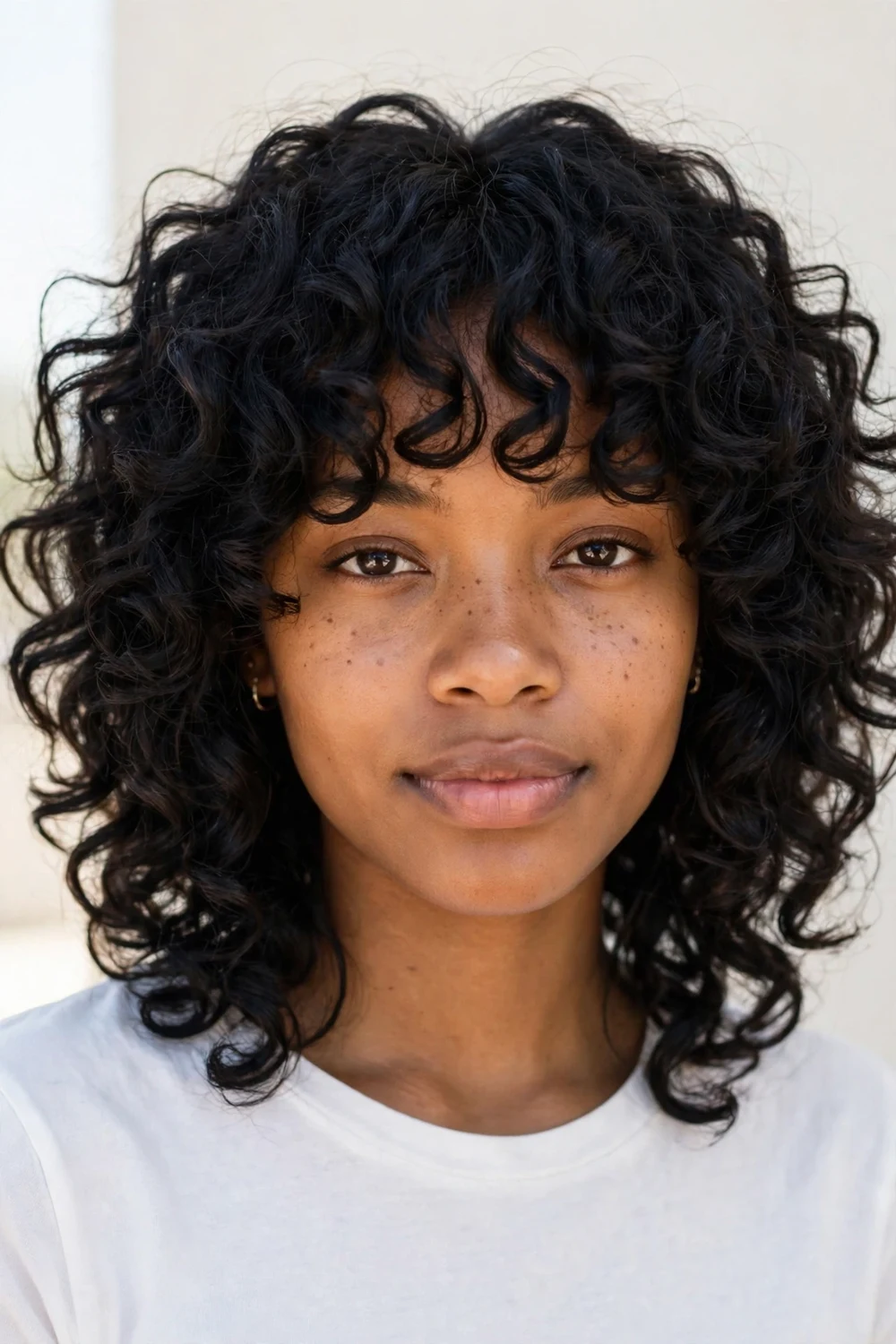
A mid-length shag cut for natural curls plus a curly fringe cut to bounce at brow length gives curls a frame instead of a curtain. The fringe should be cut longer than you think, since curls spring up as they dry, and cut dry so the real length shows. This pairing adds height on top, which flatters round faces.
Apply curl cream to soaking-wet hair and scrunch, then diffuse on low heat or air-dry. Curly fringe needs reshaping every 8 to 10 weeks. A heat protectant matters if you diffuse often; low heat plus a protectant keeps the curl pattern intact.
Try this: Never brush a curly fringe dry; re-wet and scrunch to refresh it.
Difficulty: Moderate · Cost: $15–$40 styling products
18. Faceline Cut with Full Wispy Bangs

A faceline cut, where cheek-to-jaw pieces are cut to trace the face in the style of the subtle hime trend, pairs with a full, airy wispy fringe for a soft, editorial finish. The fringe covers the forehead in a sheer sheet while the faceline pieces trace the cheeks. Shoulder length keeps the whole look wearable instead of costume-like.
Smooth the fringe with a round brush and let the faceline pieces fall straight past the cheeks. The wispy fringe needs a trim every 4 to 6 weeks to stay even. If you flat-iron the faceline pieces, coat them with heat protectant first.
Try this: Tuck the faceline pieces behind the ears to switch between two looks in one cut.
Difficulty: Moderate · Cost: $55–$120 salon
19. Layered Cut with Blunt Full Bangs

Layered mid-length hair with a blunt, full fringe balances softness and structure: the layers keep the ends light while the straight fringe anchors the face. This is the pairing to choose when your layers feel too wispy on their own. Angular and oval faces get a pleasing contrast between the sharp fringe and the feathered lengths.
Blow the fringe straight forward and run the layers through with a round brush for gentle lift. The blunt fringe needs a trim every 2 to 3 weeks. Use heat protectant before any iron work, and ask your stylist to keep the fringe thick enough to hold its line as it grows.
Try this: Dry the fringe first, before the rest of the hair, so it does not set with a cowlick.
Difficulty: Moderate · Cost: $55–$120 salon
20. Mid-Length Mullet with Micro Bangs

A mid-length mullet with short micro bangs cut high above the brows is the boldest pairing on this list. The cropped fringe opens up the whole face, which balances the mullet’s length at the back, and the contrast gives the cut its edge. Small foreheads and strong brows carry micro bangs best.
Wash-and-go works here: towel-dry, add a little texture cream, and let the fringe sit where it falls. Micro bangs need a trim every 2 to 3 weeks since even a little growth shows. Consult your stylist on the exact fringe length before cutting; going too short is not reversible for months.
Try this: Grow the fringe a quarter-inch past your comfort zone at first; stylists can always cut more.
Difficulty: Salon cut · Cost: $65–$140
21. Long-Layered Curls with a Face-Framing Fringe
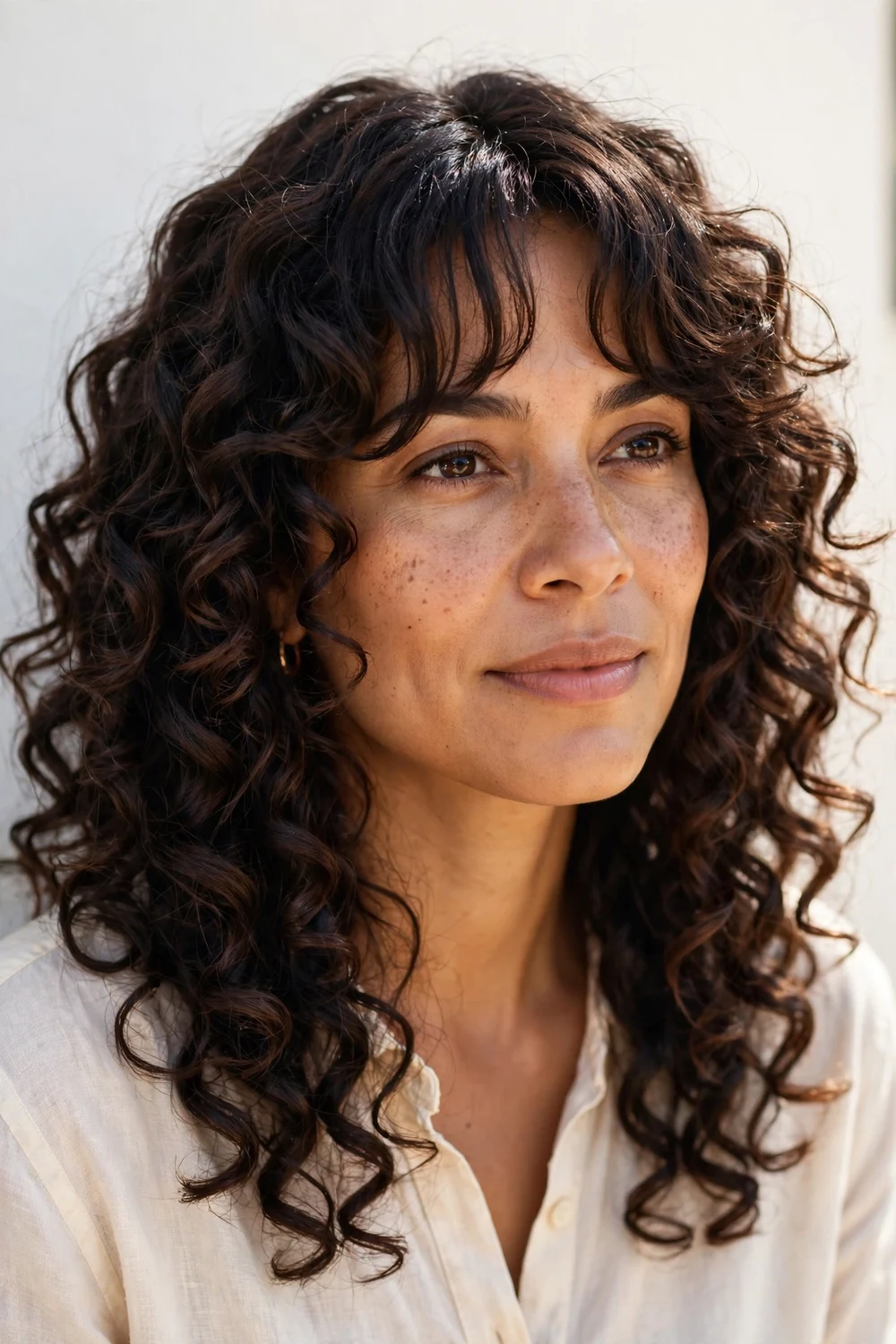
Chest-grazing layers cut into curly hair plus a soft face-framing fringe give curls definition around the face without a heavy curtain of hair. The fringe is cut to fall at the temples and cheeks, blending into the shortest layer. This pairing removes weight from thick curls while keeping the shape romantic and full.
Diffuse on medium heat with curl-defining cream, lifting at the roots for volume. The fringe pieces need a trim every 8 to 10 weeks. Use heat protectant before diffusing, and sleep in a loose pineapple to keep the fringe from flattening overnight.
Try this: Cut the fringe on dry, styled curls only; wet cutting guesses the spring wrong.
Difficulty: Moderate · Cost: $15–$40 styling products
22. Sleek Straight Lob with Blunt Micro Bangs

A pin-straight lob worn sleek to the collarbone with blunt micro bangs cut well above the brows is a graphic, fashion-forward pairing. The short fringe exposes the forehead fully, which makes eyes and brows the focus of the whole look. Straight, fine-to-medium hair holds this best, since waves would soften the geometry.
Flat-iron in small sections with heat protectant on every pass, and keep the fringe pressed straight down. Micro bangs need a trim every 2 to 3 weeks to hold the line. A drop of shine serum on the ends keeps the sleek finish from looking flat and dry.
Try this: Wear the part razor-center for the sharpest version of this look.
Difficulty: Moderate · Cost: $55–$120 salon
23. Bouncy Blowout Layers with Bottleneck Bangs
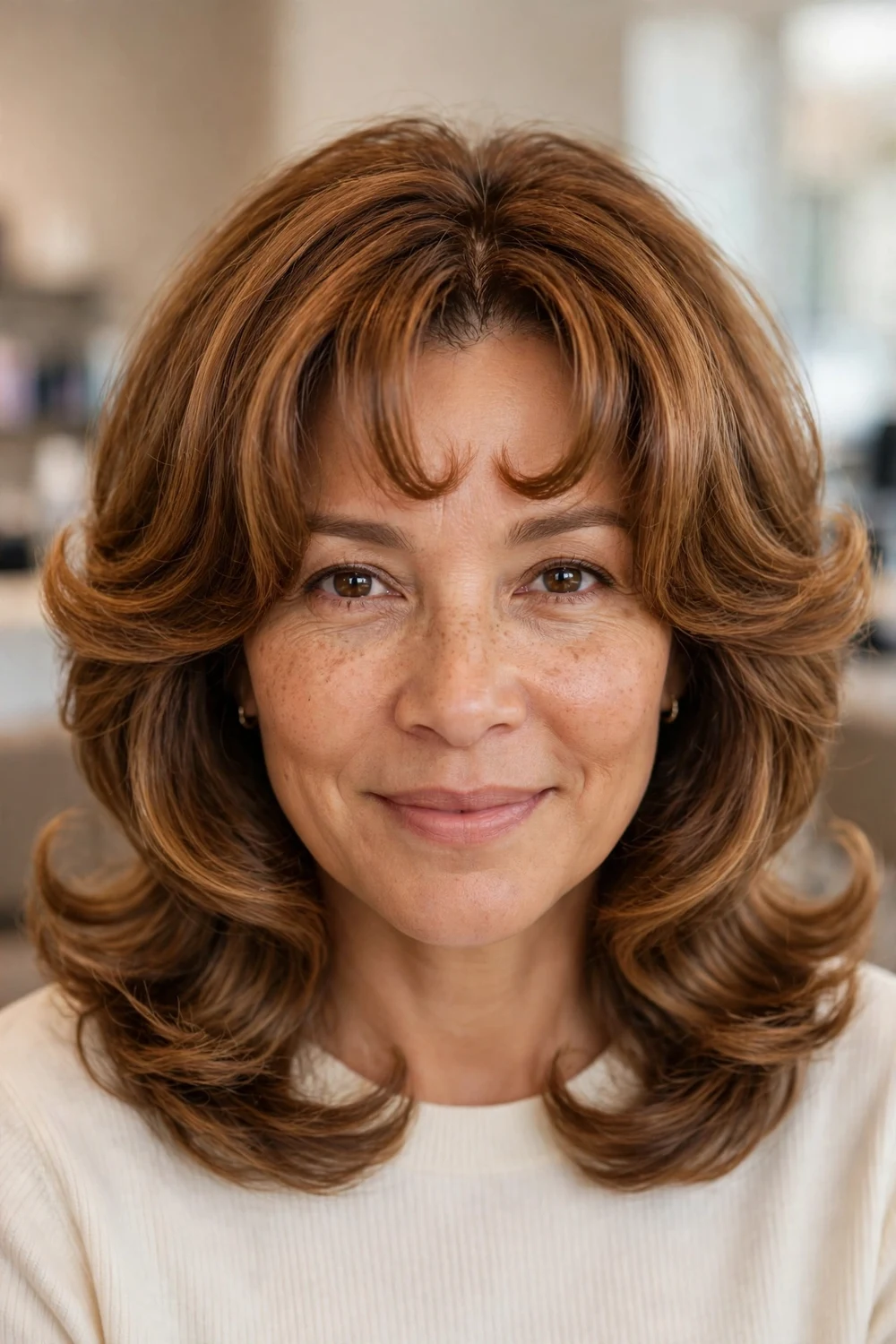
Bouncy blowout layers with big rounded ends pair with bottleneck bangs for a polished, salon-fresh pairing that survives past day one. The curved fringe continues the rounded lines of the blowout, so the whole cut moves as one. Medium to thick hair holds the bounce longest, and oval faces get a lift from the curving lines.
Blow-dry with a large round brush, rolling everything under, then finish the bangs with a small brush curving back at the sides. The bottleneck fringe needs a cleanup every 5 to 7 weeks. Coat the hair with heat protectant before the dryer; a full blowout is the heaviest heat this hair will take.
Try this: Set the fringe in one large Velcro roller while you do makeup, then release for lasting curve.
Difficulty: Moderate · Cost: $45–$110 blowout
24. Beachy Waves with Wispy Curtain Bangs
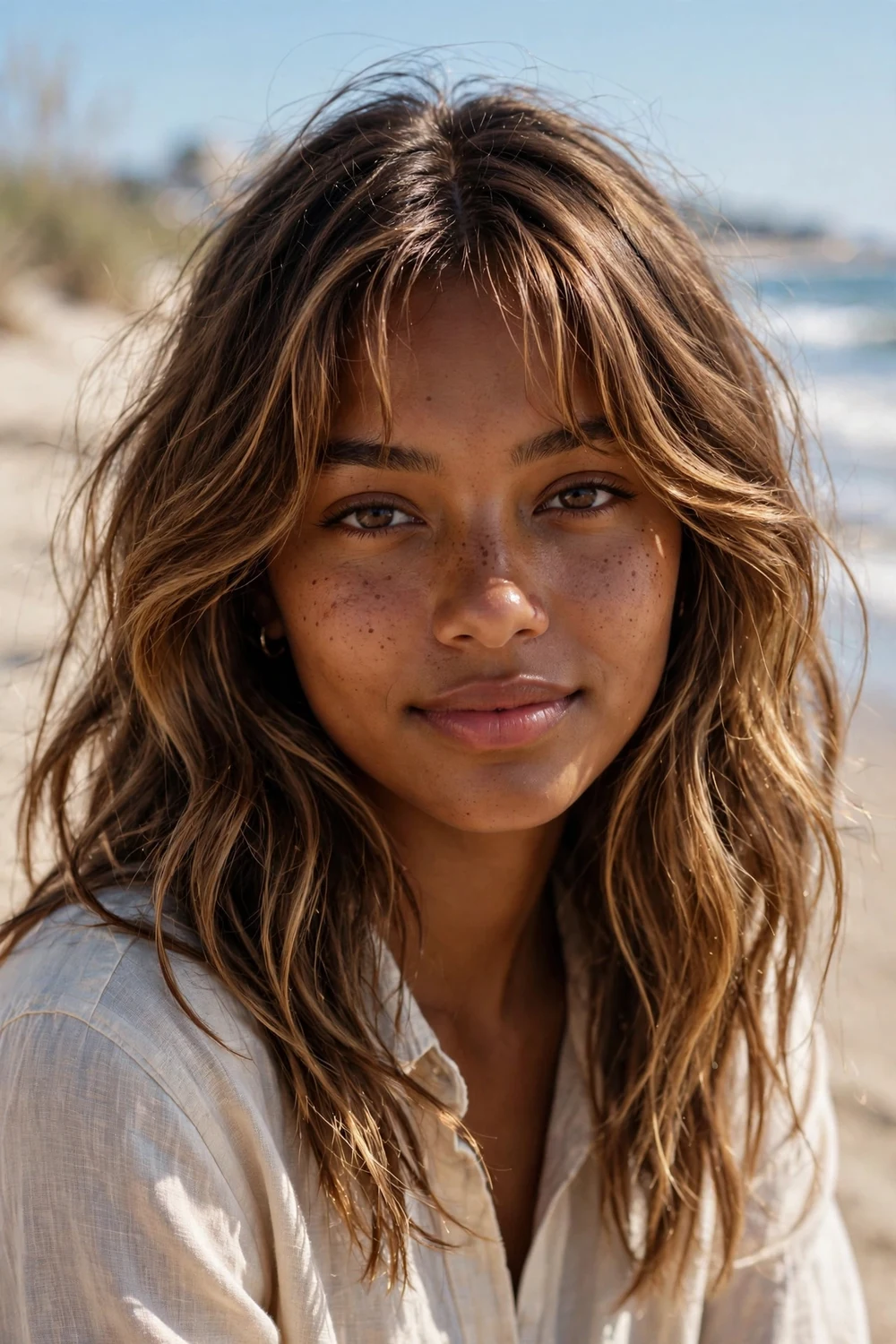
Beachy waves through a mid-length cut plus wispy curtain bangs that part softly at the center is the relaxed pairing for naturally wavy hair. The feather-light fringe disappears into the waves instead of sitting apart from them. Heart-shaped and oval faces suit this best, and it is forgiving on second-day texture.
Mist damp hair with sea-salt spray and scrunch, letting the fringe dry with the rest. Wispy curtain bangs need a trim only every 7 to 8 weeks. Heat is optional here; if you touch up with a wand, apply heat protectant to the fringe pieces first.
Try this: Braid damp hair overnight for waves that need zero morning heat.
Difficulty: Easy · Cost: $10–$30 styling products
25. Straight ’90s Mid-Length Cut with Blunt Full Bangs

A one-length straight cut worn to mid-back-shoulder with a blunt full fringe channels the ’90s supermodel pairing: clean lines, zero layers, maximum shine. The solid fringe and solid baseline give the haircut weight and presence, which suits medium to thick straight hair. Longer faces should ask for the fringe slightly longer to avoid over-shortening the look.
Flat-iron from roots to ends after blow-drying smooth, pressing the fringe straight down. Blunt fringe needs a trim every 2 to 3 weeks. Heat protectant on every section is a must here, since the shine this look depends on is the first thing heat damage dulls.
Try this: Finish with a cool shot from the dryer to seal the cuticle and boost shine.
Difficulty: Moderate · Cost: $55–$120 salon
26. Curly Mid-Length Cut with Side-Swept Curly Bangs
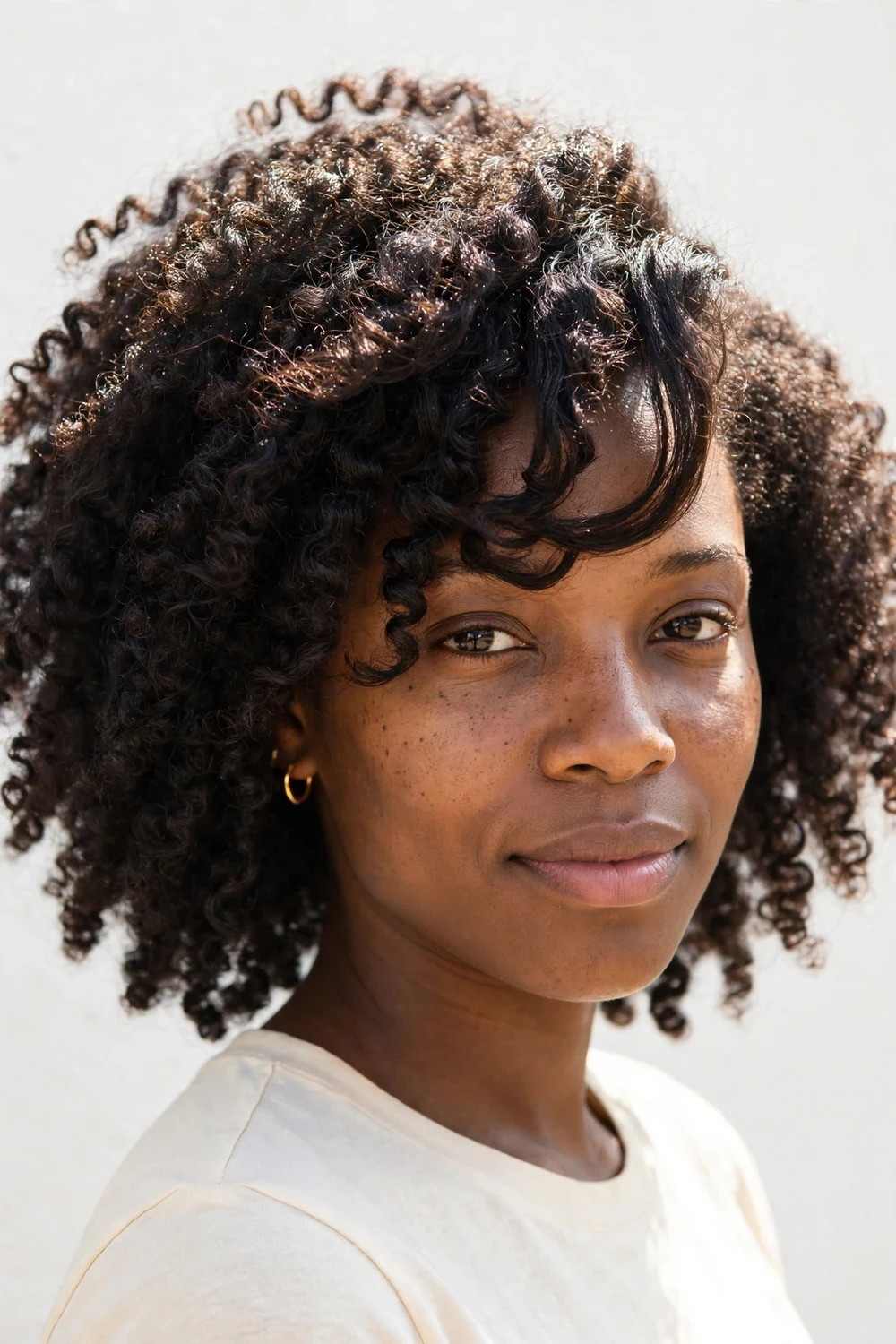
A curly cut worn mid-length with the front curls swept to one side as side-swept bangs is the natural-curl pairing for anyone who finds a straight-across curly fringe too much. The side sweep opens the face while still giving the forehead curl interest. All curl types from 2C to 4A can wear this, cut dry to respect each curl’s spring.
Set the side sweep on wet hair with curl cream and a side part, then diffuse. The swept curls need reshaping every 8 to 10 weeks. Use heat protectant if you diffuse regularly, and refresh the sweep with water and cream rather than re-wetting the whole head.
Try this: Pin the sweep with one bobby pin hidden under a curl on humid days.
Difficulty: Moderate · Cost: $15–$40 styling products
27. Angled Lob with Deep Side-Swept Bangs

An angled lob, shorter at the back and longer at the front, with deep side-swept bangs starting from a far side part is the pairing for anyone who wants drama without short hair. The deep part and the angled cut point in the same direction, doubling the asymmetry. Round faces gain the most here, since the diagonal lines slim the cheeks.
Blow-dry with the deep part set in place, sweeping the fringe across the brow, and straighten the front points of the lob. The deep side-swept fringe needs a trim every 6 to 8 weeks. Apply heat protectant before straightening the longer front pieces.
Try this: Ask for the back graduation to be subtle so the grow-out stays wearable.
Difficulty: Moderate · Cost: $55–$120 salon
28. ’70s-Inspired Shag with Feathered Bangs
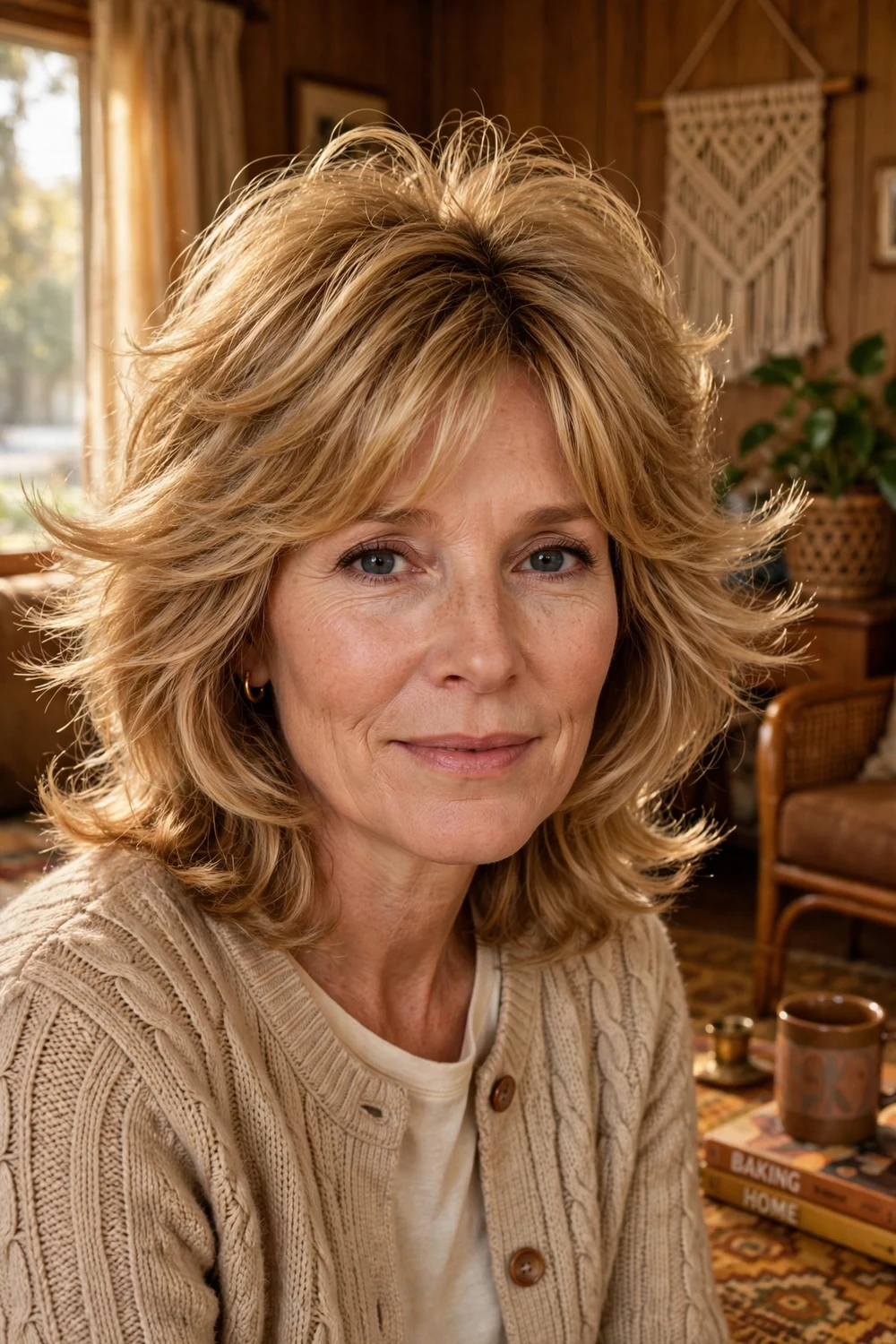
A ’70s-style shag with heavy crown layers that flick back pairs with feathered bangs that sweep outward at the ends. The retro pairing works because both the cut and the fringe move away from the face, creating width at the cheekbones. Thick, straight-to-wavy hair shows the flicking best, and heart-shaped faces get balance at the chin.
Blow-dry the crown layers back with a round brush and flick the feathered bangs outward. The fringe needs reshaping every 5 to 6 weeks. A full round-brush blowout means heat protectant through the crown and fringe before you start.
Try this: Let the top layers air-dry halfway before brush-styling to cut your blow-dry time.
Difficulty: Moderate · Cost: $60–$130 salon
29. Half-Up Mid-Length Style with Curtain Bangs

A half-up style on mid-length hair with curtain bangs left loose at the front is the pairing for second-day hair and busy mornings. The pulled-back top keeps hair out of the way while the parted fringe frames the face, so the style looks intentional instead of rushed. All face shapes wear this, and it flatters fine hair by adding height at the crown.
Gather the top half into a small clip or elastic, leaving the curtain bangs and a few face pieces out. The fringe underneath needs trims every 6 to 8 weeks. If you curl the loose ends, mist heat protectant through them first.
Try this: Tease the crown lightly before clipping for a fuller half-up shape.
Difficulty: Easy · Cost: $0 at home
30. Textured Lob with Choppy Baby Bangs

A textured lob with undone ends and choppy baby bangs cut mid-forehead is the pairing for anyone who likes their haircut with an edge. The short, jagged fringe opens the face while the messy lengths keep it wearable, not severe. Small features and oval faces carry baby bangs best; very round faces should ask for them a touch longer.
Rough-dry and work a pea-sized amount of wax through the fringe for separation. Baby bangs grow visibly fast, so plan a trim every 3 to 4 weeks. Heat styling is rarely needed, but use heat protectant if you press the fringe with a mini iron.
Try this: Keep the fringe uneven on purpose; symmetry kills the choppy effect.
Difficulty: Moderate · Cost: $55–$110 salon
31. Side-Parted Layers with Curtain Bangs

Side-parted layers with curtain bangs swept mostly to one side is the pairing for anyone whose natural part refuses to sit in the middle. The asymmetric sweep gives instant root lift on the heavy side, which flat, fine hair needs. The longer sweep also narrows wide foreheads more than a center part does.
Set the side part while damp and sweep the longer curtain piece across with a round brush. The fringe needs a trim every 6 to 8 weeks. Use heat protectant on the sweep before brush-drying, since that piece takes the most heat of the whole cut.
Try this: Train a stubborn part by clipping it in place while hair dries.
Difficulty: Easy · Cost: $0–$20 at home
32. Wavy Mid-Length Cut with Thick Side-Swept Bangs
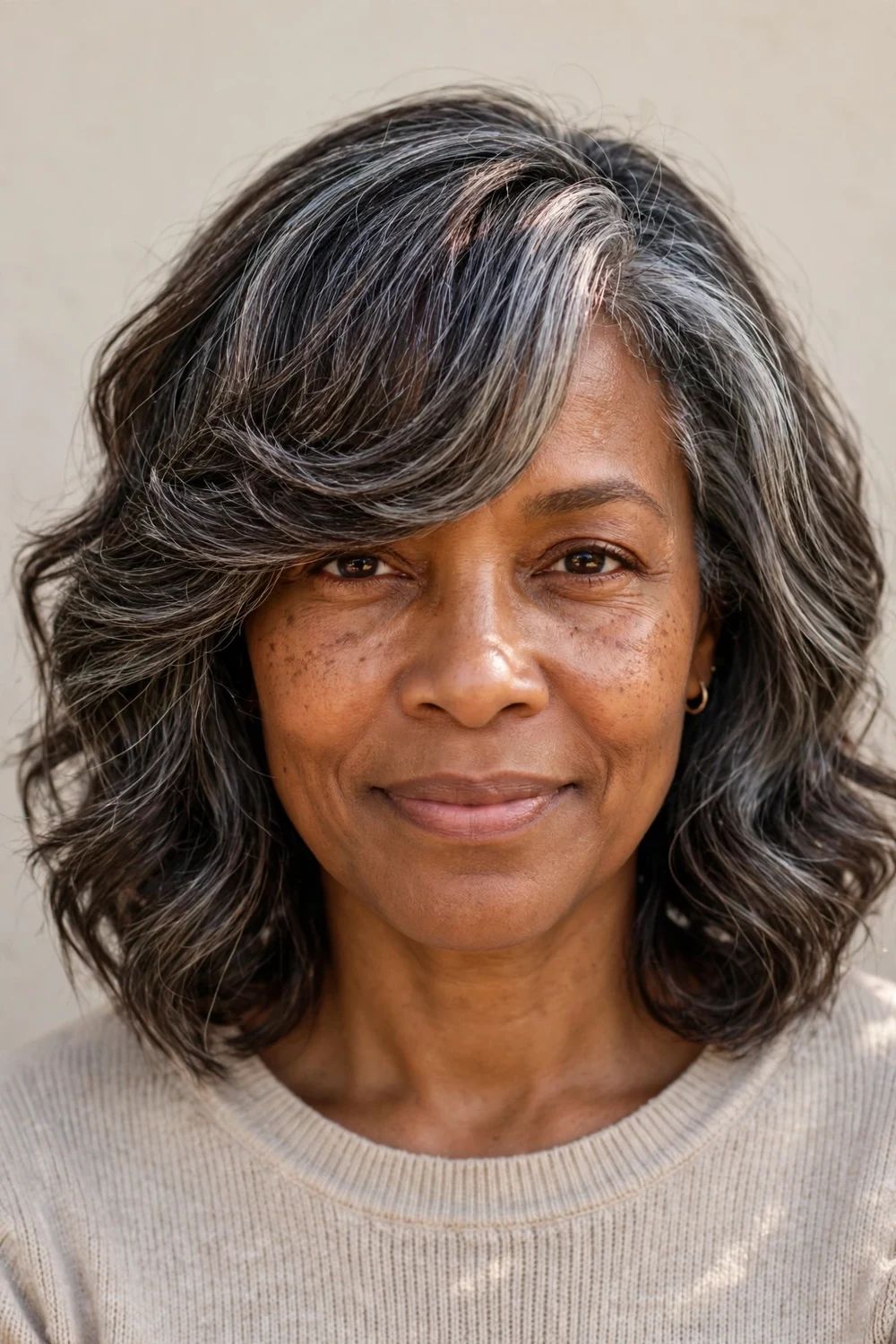
Soft waves through a mid-length cut with a thick side-swept fringe is the pairing for thick hair that needs the front broken up. The dense sweep keeps volume at the forehead, which stops waves from collapsing flat against the face. Round and square faces both get softening from the diagonal mass of hair.
Scrunch waves with mousse and direct the thick fringe to the side with a vent brush while damp. The fringe needs a trim every 5 to 7 weeks to keep its weight even. If you smooth the sweep with an iron, heat protectant goes on the fringe first.
Try this: Ask for interior layers in the fringe so it sweeps instead of hanging as one solid sheet.
Difficulty: Moderate · Cost: $55–$115 salon
33. Sleek Mid-Length Cut with Airy See-Through Bangs

A sleek, straight mid-length cut with airy see-through bangs is the polished take on the sheer fringe: glassy lengths below, feather-light strands above. The contrast keeps the look modern instead of heavy, and the sheer fringe suits anyone whose forehead breaks out under a full bang. Straight fine hair shows this pairing cleanest.
Flat-iron the lengths in thin sections with heat protectant throughout, and barely touch the fringe, just smoothing it flat. The airy fringe needs a light trim every 5 to 6 weeks. A silicone-free shine mist keeps the sleek lengths from looking product-heavy.
Try this: Cut the sheer fringe on clean, dry hair so the sheerness reads accurately.
Difficulty: Moderate · Cost: $55–$120 salon
34. Wolf Cut with Micro Bangs

A wolf cut’s shaggy crown and thinned ends with micro bangs is the pairing for maximum texture with minimum styling. The short fringe keeps the wild top layers from overwhelming the face, and the whole cut air-dries into shape. Thick, wavy hair is the ideal canvas; very fine hair can look stringy in the thinned ends.
Scrunch with texturizing spray and go, touching up only the fringe with a mini straightener if it flips. Micro bangs need a trim every 2 to 3 weeks. Heat protectant on the fringe before that quick press keeps the ends blunt instead of feathered.
Try this: Ask your stylist to keep the micro fringe straight across, not curved, for the wolf cut’s edge.
Difficulty: Easy · Cost: $60–$130 salon
35. Collarbone Cut with Feathered Side Bangs
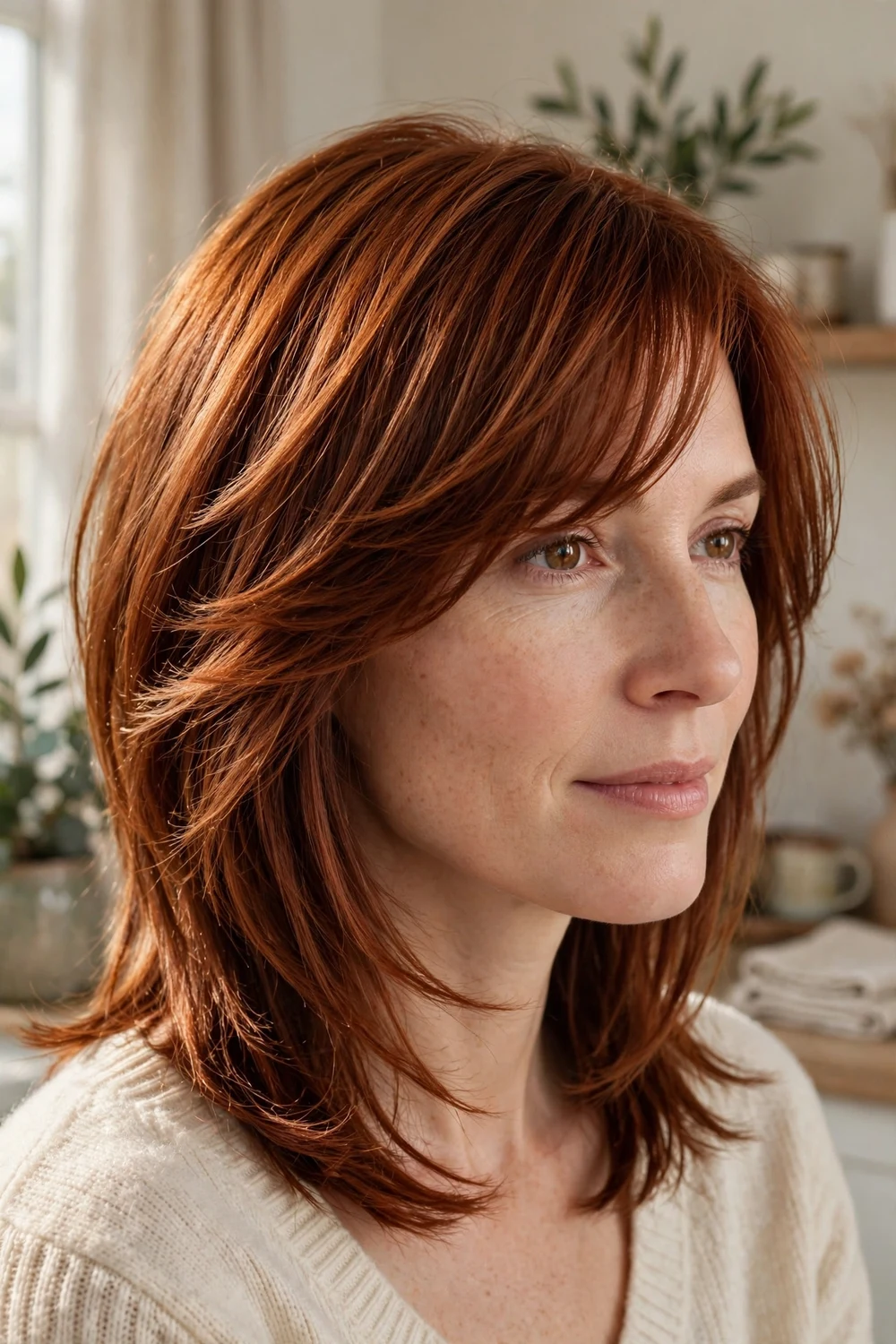
A clean collarbone-length cut with feathered side bangs is the understated pairing for professional settings where you still want personality. The sliced, tapered fringe sweeps softly without covering the face, so it reads polished rather than edgy. Straight to slightly wavy medium hair holds the feathered line best.
Blow-dry the fringe to the side with a small round brush, flicking the ends out lightly. Feathered side bangs need reshaping every 5 to 6 weeks. A light pass of heat protectant before brush-drying keeps the feathered ends from frizzing.
Try this: Keep the side bangs at cheekbone length or longer so they blend into the cut as they grow.
Difficulty: Easy · Cost: $50–$110 salon
36. Low Ponytail with Curtain Bangs

A low ponytail on mid-length hair with curtain bangs left out at the front turns a basic ponytail into a styled look. The parted fringe frames the face while the tail stays neat at the nape, which is why this pairing works for everything from errands to evenings out. It suits all face shapes and takes about two minutes.
Secure the tail low with a covered elastic and smooth the curtain bangs with your fingers or a quick brush. The fringe underneath needs trims every 6 to 8 weeks. If you wrap a strand around the elastic for polish, mist heat protectant before smoothing it with an iron.
Try this: Pull two thin pieces loose at the temples for a softer finish.
Difficulty: Easy · Cost: $0 at home
Quick Comparison
| Bangs Type | Base Cut to Pair It With | Grow-Out Ease | Bangs Trim Frequency |
|---|---|---|---|
| Curtain bangs | Layered lob or face-framing layers | Easy, blends into layers | 6–8 weeks |
| Blunt full bangs | Straight mid-length cut or bob | Harder, needs reshaping | 2–3 weeks |
| Wispy bangs | Shag or layered cut | Easy, softens as it grows | 6–8 weeks |
| Bottleneck bangs | Blowout layers or octopus cut | Moderate | 5–7 weeks |
| Side-swept bangs | Blunt or angled lob | Easy, tucks behind the ear | 6–8 weeks |
| Micro bangs | Mullet, wolf cut, or sleek lob | Harder, shows growth fast | 2–3 weeks |
| Feathered bangs | Feathered shag or collarbone cut | Moderate | 5–6 weeks |
| See-through bangs | Wavy or sleek lob | Easy, stays sheer | 5–7 weeks |
Frequently Asked Questions
What bangs suit medium-length hair best?
Curtain bangs suit almost every medium-length cut because they blend into layers and grow out gracefully. Blunt bangs pair best with straight cuts, wispy bangs with shags and layers, and side-swept bangs with lobs. The right choice depends on your face shape, hair texture, and how often you want trims.
Are curtain bangs good for medium hair?
Yes. Curtain bangs are the most forgiving fringe for medium-length hair: they part in the middle, sweep into face-framing layers, and need a trim only every 6 to 8 weeks. They work on straight, wavy, and curly textures and suit round, oval, square, and heart-shaped faces.
How often do bangs need trimming?
Blunt and micro bangs need a trim every 2 to 3 weeks to keep their line. Bottleneck, feathered, and see-through bangs stretch to 5 to 7 weeks, while curtain, wispy, and side-swept bangs can go 6 to 8 weeks. Long elongated bangs last up to 10 weeks between shapings.
Do bangs work with curly medium-length hair?
They do, as long as the fringe is cut dry so the real length shows after the curls spring up. Curly shags and curly lobs pair well with curly or side-swept curly bangs. Ask for the fringe to be cut slightly longer than you want it, since shrinkage takes off visible length.
How do I grow out bangs without an awkward phase?
Sweep them to the side and let them merge into face-framing layers, which is easiest with curtain, wispy, or side-swept bangs. Pin them back with clips or braid them into the hairline while they pass through the in-between length. Blunt bangs take longest to grow out, so plan on regular shaping trims during the process.
Final Thoughts
The right bangs make a medium-length cut feel finished, so start with your fringe when you plan the haircut, not after. Bring reference photos of the exact pairing you want to your appointment, and ask your stylist how the bangs will grow out before the scissors come out. Browse the full collection of hair ideas on the PrimeHairPicks homepage for more styles to pair with your next cut.

