


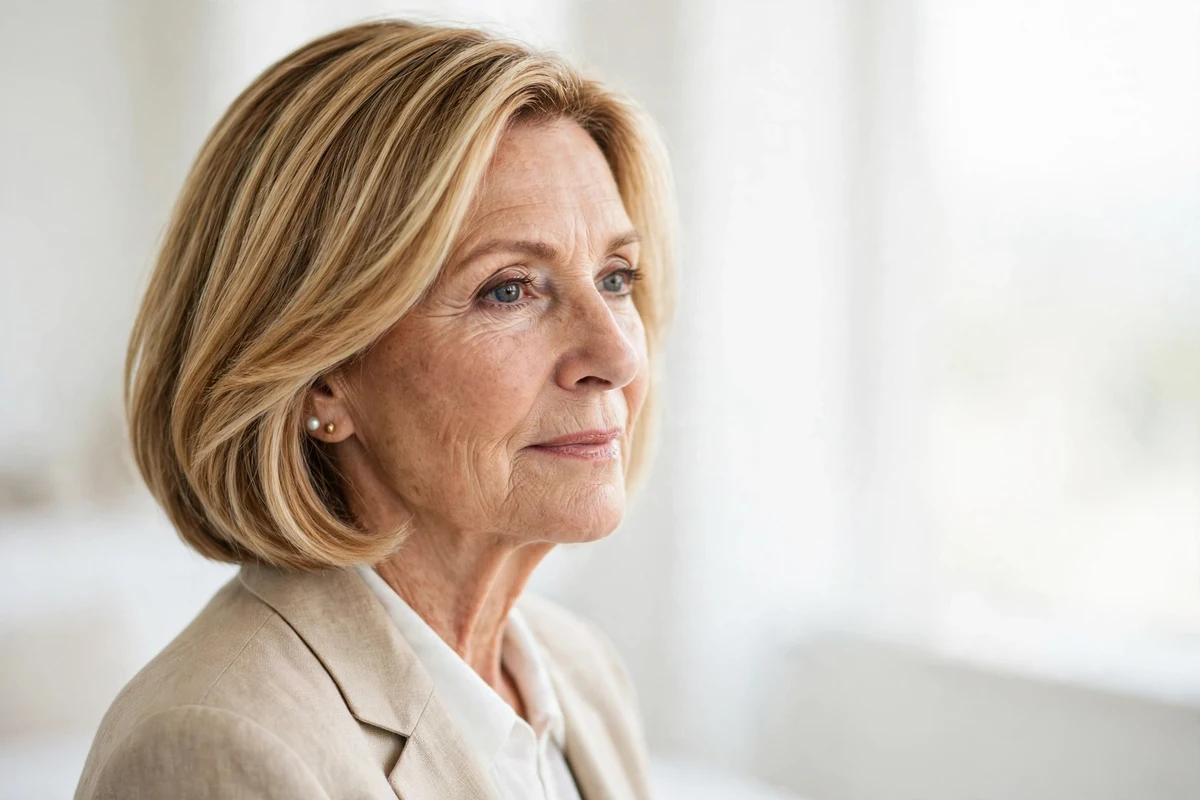
A bob already does a lot of the work for women over 50: it lifts the face, keeps styling time short, and holds its shape for weeks. Add balayage, and the cut gains dimension, softness around the face, and regrowth that never shows a hard line. Balayage remains the color technique I recommend most for bobs in your 50s, because it blends gray, adds depth to fine hair, and asks for fewer salon visits than traditional highlights.
This list covers 24 balayage bobs, from classic blonde to copper, silver, and burgundy. Every idea below names the exact shade direction, the bob shape it suits best, and what upkeep to expect, so you can walk into your appointment knowing what to ask for.
Quick answer: Balayage bobs work well for women over 50 because the hand-painted color adds dimension without harsh regrowth lines. The most wearable choices are blonde, caramel, and gray-blending shades on chin- to jaw-length bobs, with touch-ups needed only every 3 to 4 months.
Quick Takeaways
- Balayage grows out softly, which means fewer salon visits than foil highlights (usually every 3 to 4 months).
- Hand-painted lighter pieces add visual thickness, which helps fine or thinning hair look fuller.
- Blonde, caramel, and silver balayage all blend gray naturally, so regrowth never shows a harsh line.
- Chin-length and jaw-length bobs show off balayage best, since the color shifts catch the light as the hair moves.
- Ask your colorist for a root shadow if you want the lowest possible maintenance between appointments.
Why Balayage Suits Bobs After 50
Balayage is a freehand painting technique where the colorist sweeps lightener onto select strands, leaving the roots darker and the ends brighter. The result looks like hair that lightened naturally in the sun. On a bob, that gradual shift matters: the shorter length puts the color right next to your face, so a soft transition keeps the whole look flattering instead of stripey.
Gray coverage is the other reason women over 50 keep choosing it. When silver strands grow in, painted blonde or caramel pieces sit next to them and the contrast disappears. You can also skip full coverage and let the balayage do the blending, which stretches the time between appointments. That matters because hair in your 50s tends to be drier, and less frequent coloring keeps it healthier.
Before booking, bring two or three photos from this list and point out the shade family and the cut shape separately. Tell your colorist how often you want to return: every 8 weeks, every 12, or twice a year. A good colorist will place the balayage lighter or more subtle depending on your answer.
1. Classic Blonde Balayage Bob
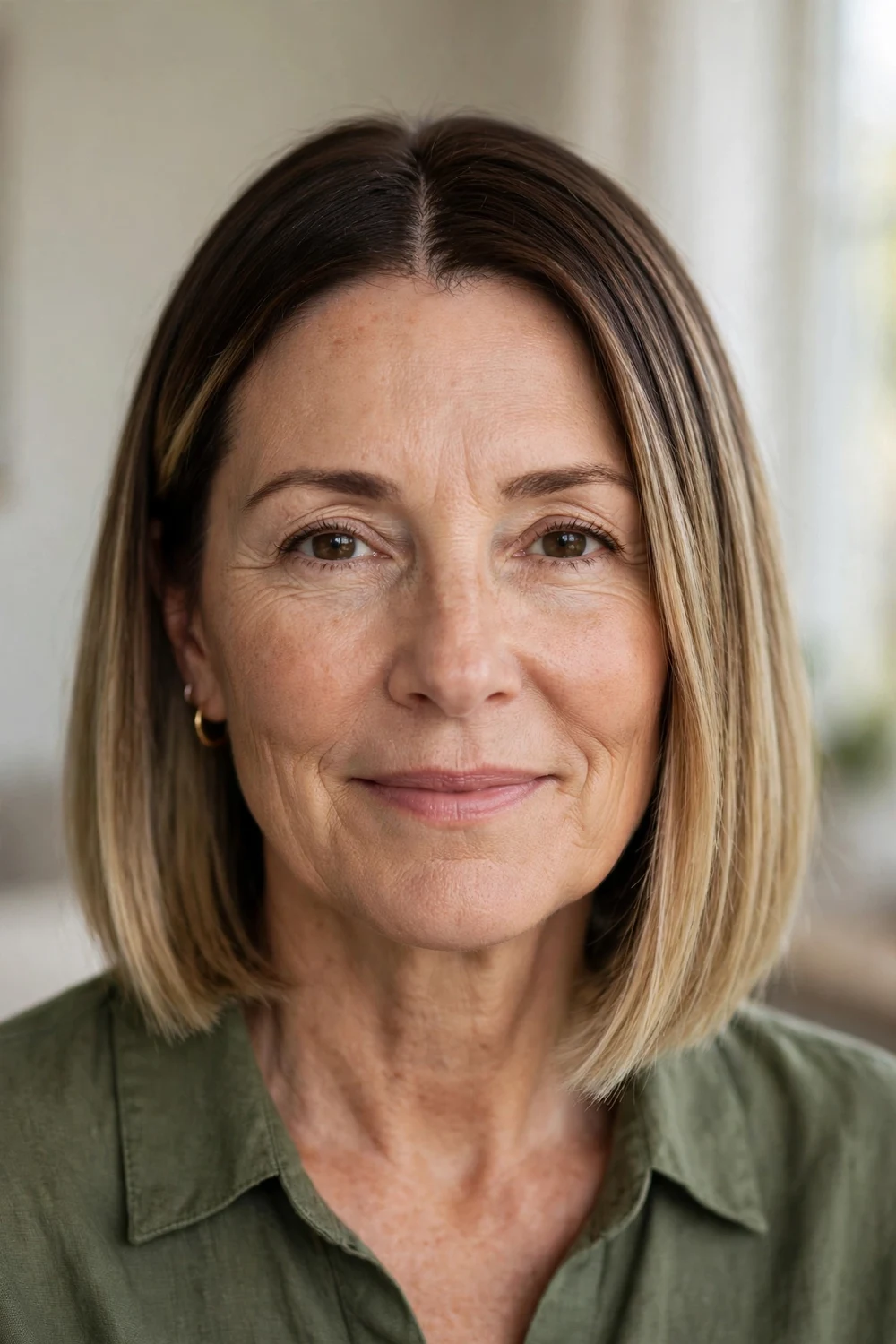
Start with the most-requested version. A classic blonde balayage bob keeps your natural darker base at the roots and sweeps medium-blonde pieces through the mid-lengths and ends. A center part shows the balance best, since both sides get equal light. The contrast stays soft because the colorist feathers the lightener upward instead of placing solid pieces. This version suits straight to slightly wavy hair best, and the clean chin-length line keeps it polished for work or evenings out. Upkeep stays low: a gloss every 10 to 12 weeks keeps the blonde bright.
Try this: Ask for the lightest pieces to sit one to two inches below the roots, so gray regrowth blends instead of showing a line.
2. Sun-Kissed Golden Balayage Bob
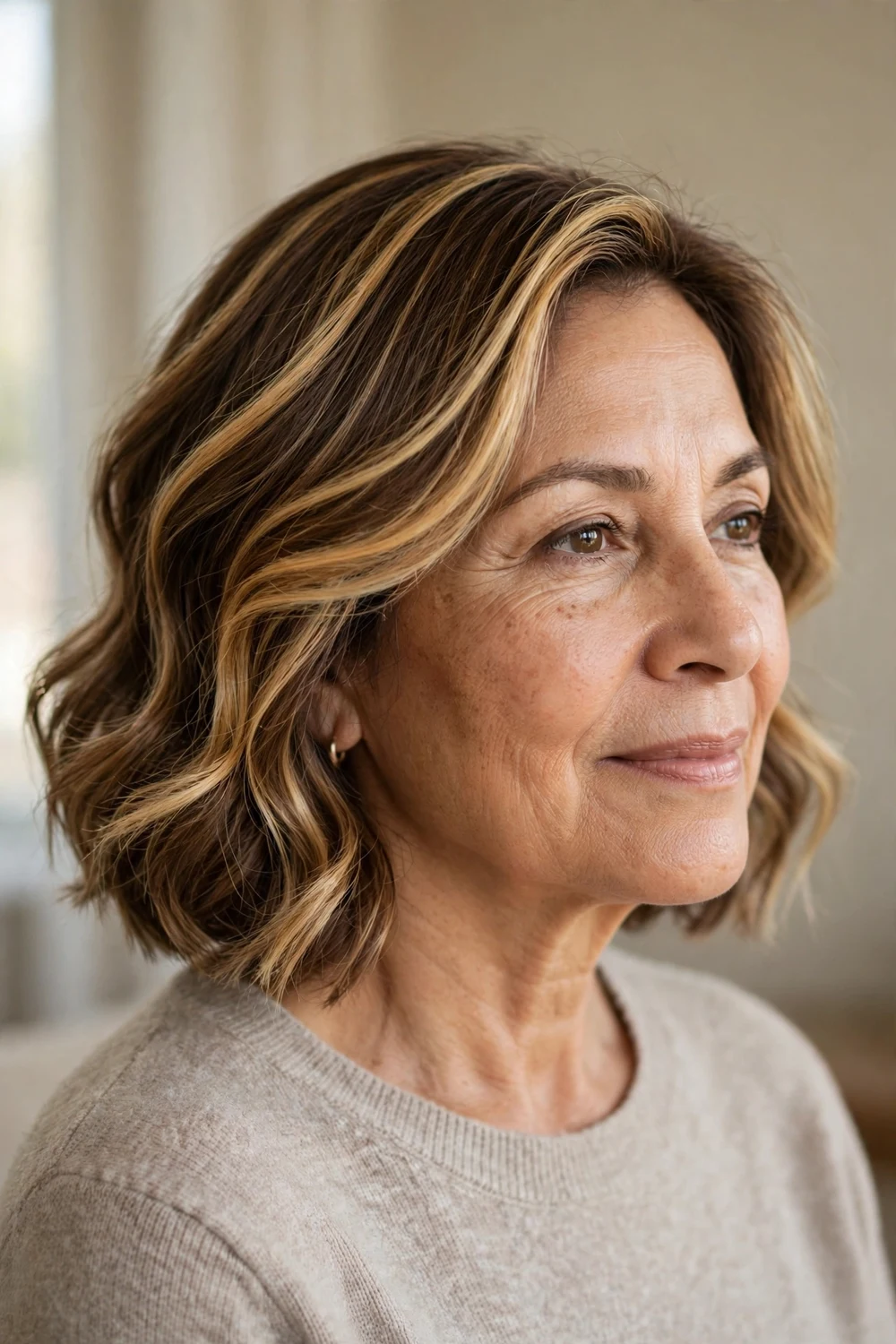
If your skin warms up in summer, golden balayage will flatter you year-round. This version paints warm golden-blonde ribbons over a medium-brown base, concentrating the brightest pieces around the face and through the ends. The warmth adds a healthy glow to the complexion, which helps when skin tone starts looking dull or uneven. It works on straight and wavy bobs equally, and a side part adds lift at the crown. Golden tones can turn brassy over time, so this one needs a weekly purple-free toning conditioner made for warm blondes. Plan a salon refresh every 3 months.
Try this: Use a sulfate-free shampoo and a cool-water rinse to keep the golden tones from fading unevenly.
3. Caramel Balayage Bob
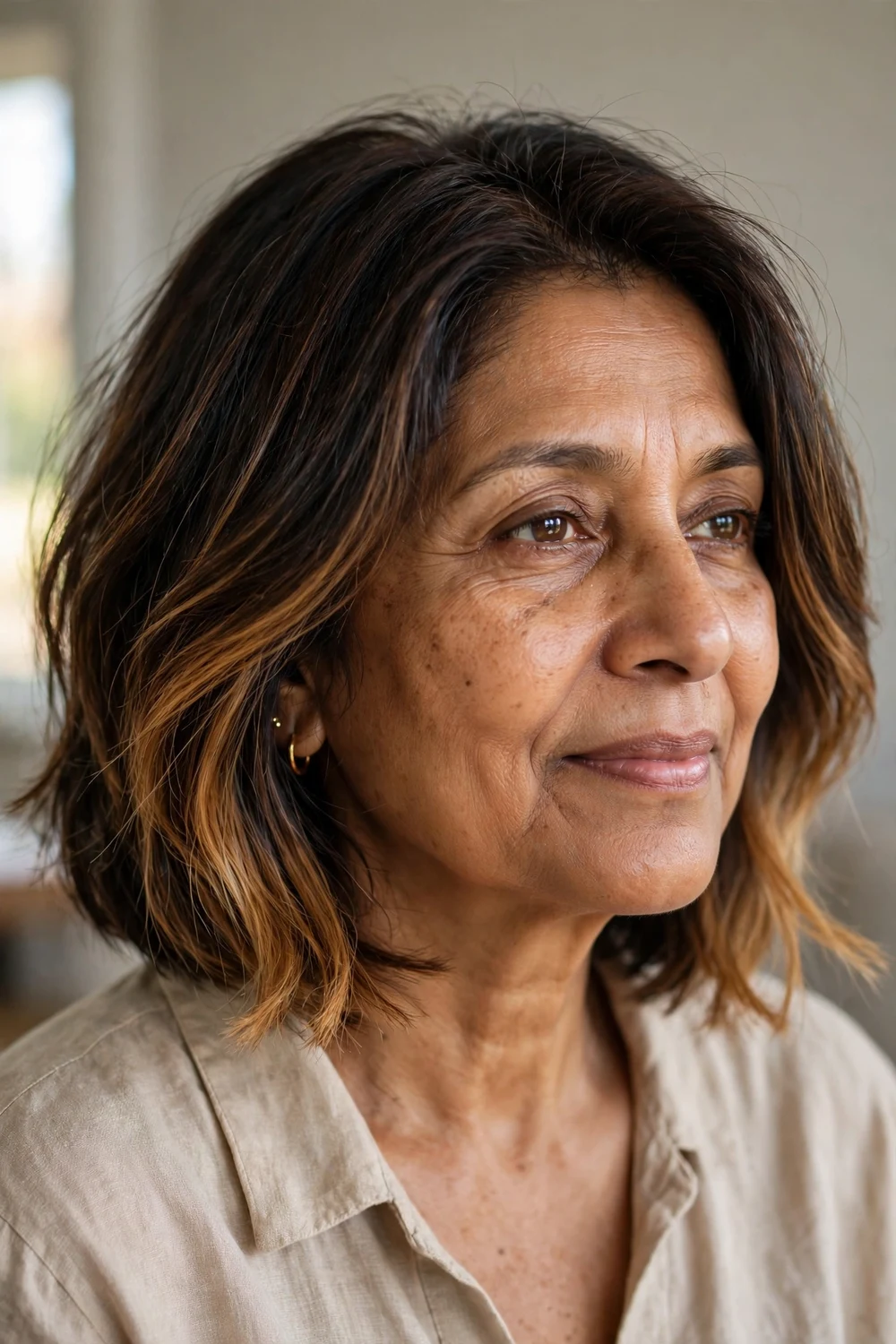
Caramel sits between blonde and brown, which makes it the safest warm option for women who are not ready for full blonde. The colorist paints caramel pieces through the lower half of the bob while keeping the top in a rich brown. That darker crown gives the illusion of thickness at the roots, and the caramel ends keep the whole style from looking flat. It suits medium to thick hair best, where the color shifts show up in waves or curls. Upkeep is moderate: caramel fades a little faster than ash tones, so expect a gloss at week 8 to 10.
Try this: Ask for the caramel to start at cheekbone level so the brightness frames the face instead of pooling only at the tips.
4. Honey Blonde Balayage Bob
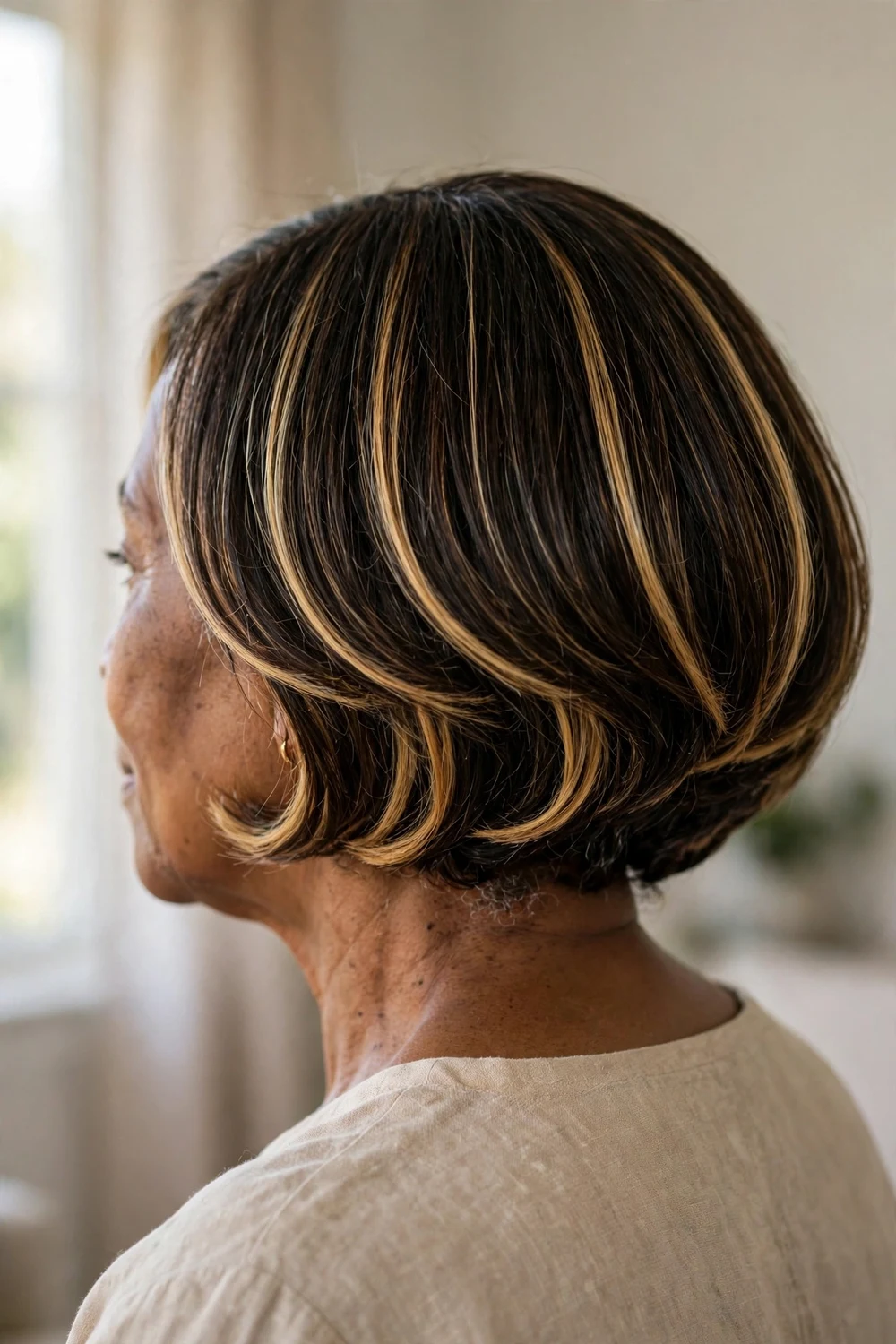
Honey tones glow on olive, golden, and warm-neutral complexions, and they look especially natural on hair that was blonde in childhood. This bob keeps a brunette base and threads honey-blonde pieces through it, slightly finer than classic balayage so the blend reads seamless. The finer placement also means the grow-out stays invisible longer, making this one of the easiest options to maintain. It flatters straight bobs with a tucked-under finish and wavy bobs with piecey texture alike. Refresh the honey with a demi-gloss every 10 weeks to keep it from dulling.
Try this: Style with a slight bend through the mid-lengths so the honey pieces catch the light when you turn your head.
5. Ash Blonde Balayage Bob
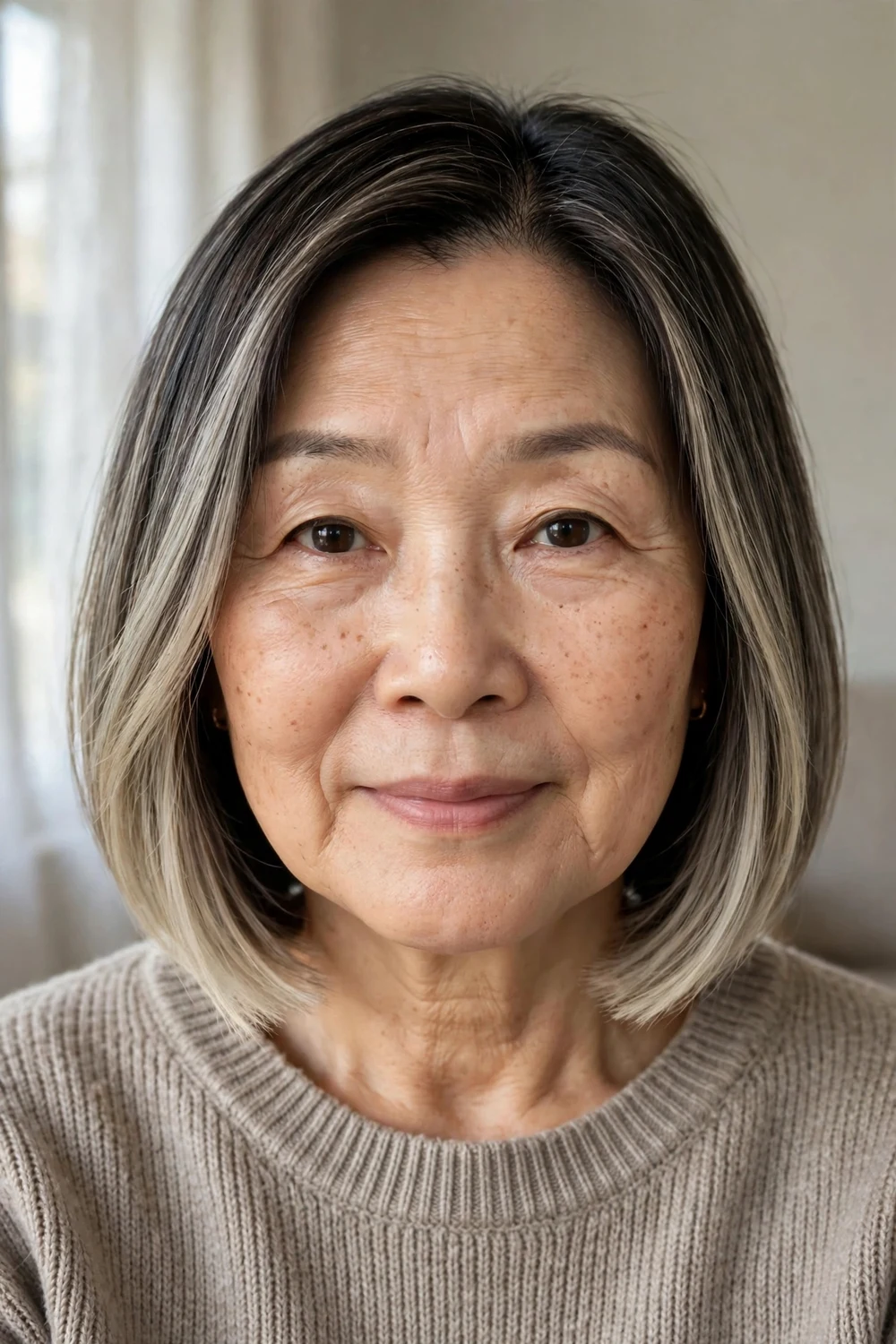
Cool undertones pair well with ash, and this version delivers a modern, smoky finish instead of warmth. The colorist paints cool ash-blonde pieces over a dark ash-brown or gray base, keeping the overall look muted rather than golden. Ash balayage flatters blue, green, and gray eyes particularly well, since the cool palette echoes them. It also neutralizes any yellow in naturally graying hair, which keeps the blend looking intentional. Ash tones fade slower than warm ones, so upkeep is low: a toning gloss every 3 to 4 months is enough.
Try this: Use a purple shampoo once a week to stop the ash from shifting yellow between appointments.
6. Silver Balayage Feathered Bob
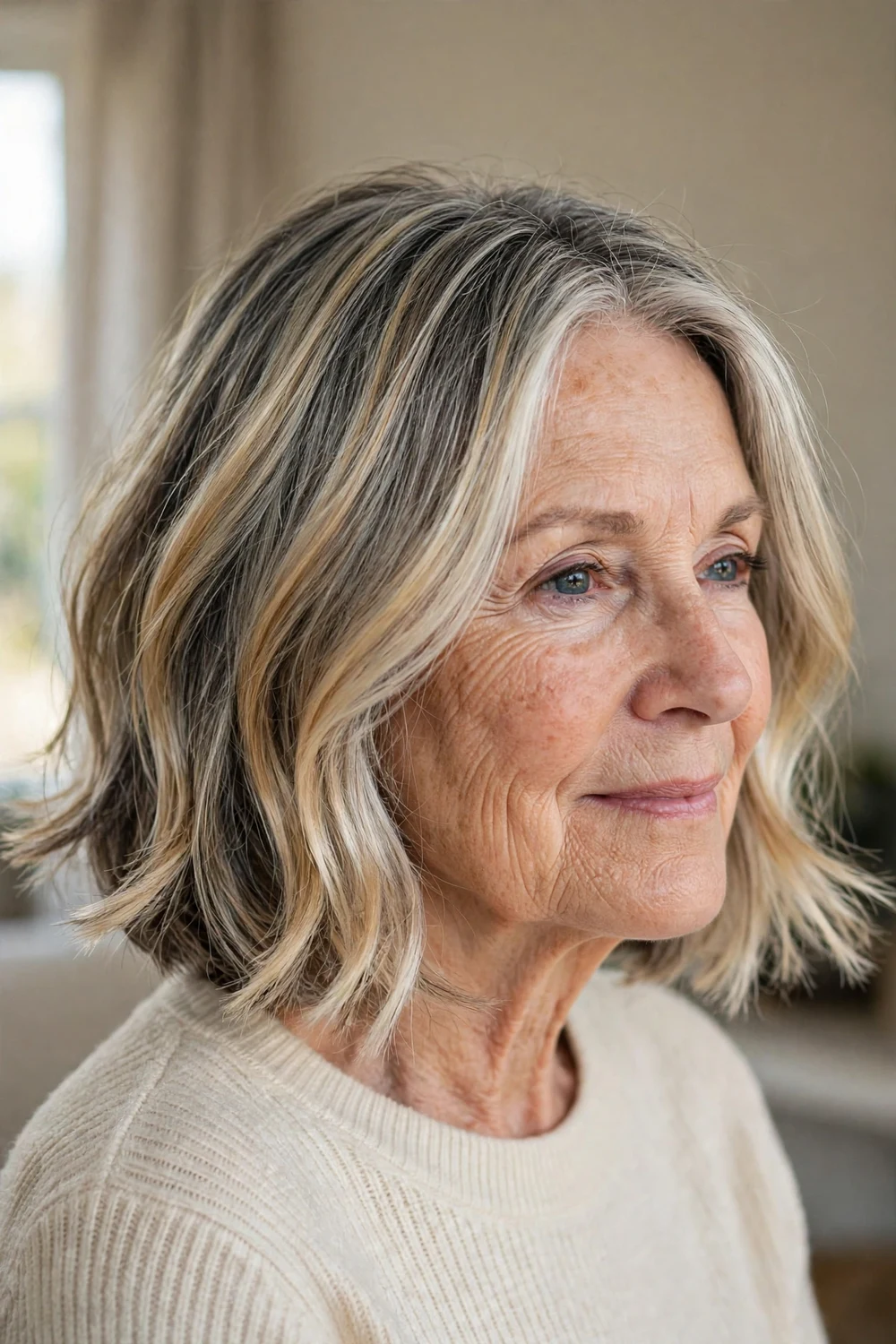
Feathered layers lift silver from flat to dimensional, and this combination is made for women embracing their gray with style. The cut uses light, flipped-out layering around the face, and the colorist paints silver-blonde balayage over a salt-and-pepper base. The silver pieces catch the light and make the feathered texture look fuller, which helps if hair density has dropped with age. This is a statement choice, so commit to the right products: silver turns dull fast without a gloss and a good purple mask. Schedule toning every 6 to 8 weeks.
Try this: Ask for the silver to be painted mostly through the outer layers so the feathered shape gets maximum shine.
7. Gray-Blending Root Shadow Balayage Bob
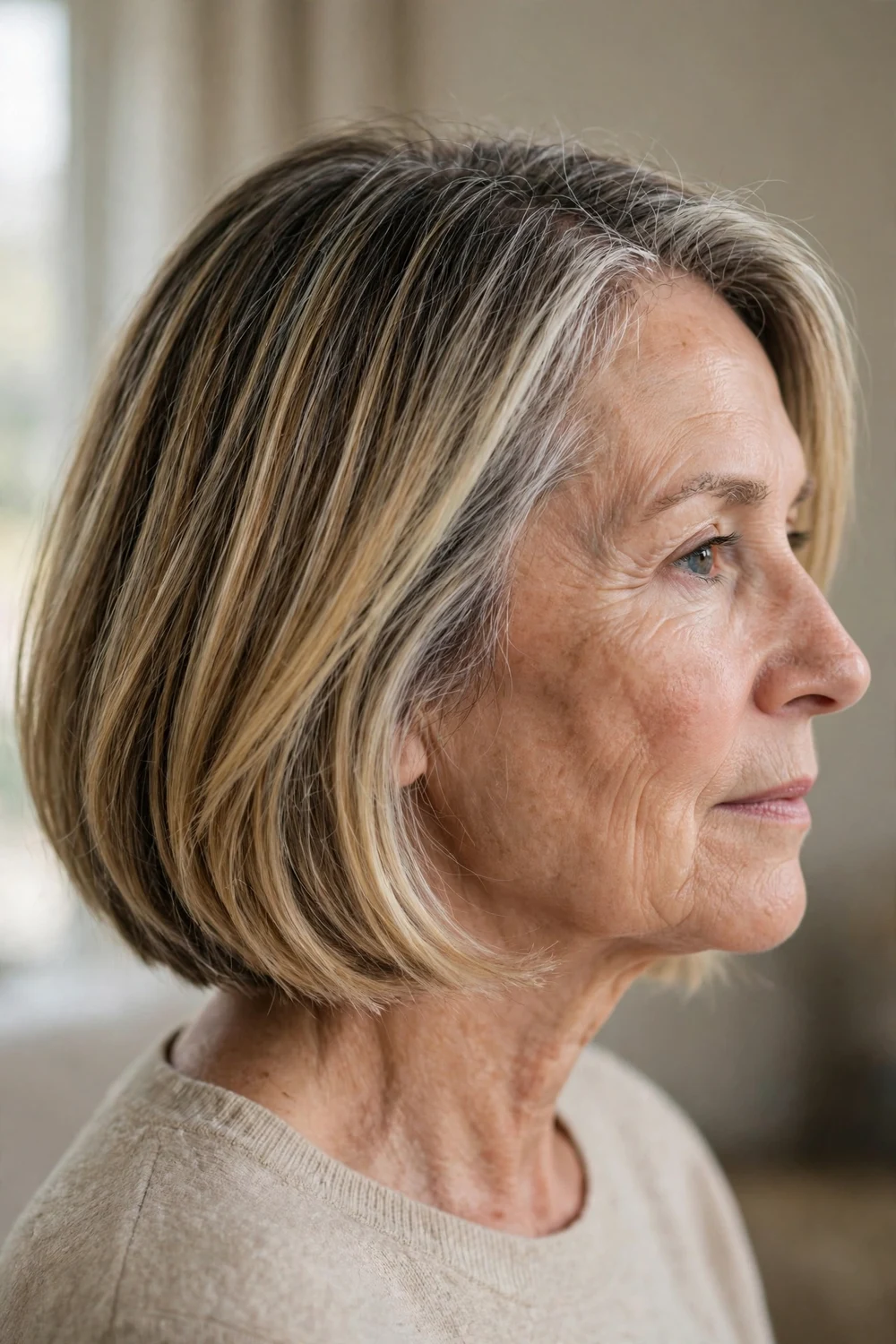
Regrowth stops being a problem when the roots are part of the design. A root shadow (also called a shadow root) melts your natural base color into the balayage, so incoming gray sits against a shade close to your own instead of against bright blonde. On a chin-length bob, this means you can push appointments to every 4 or 5 months without a visible line. The colorist typically pairs the shadow root with soft blonde or light-brown balayage through the lengths. This is the lowest-commitment option on this list, ideal if you want color but hate frequent touch-ups.
Try this: Show your colorist a photo of your natural regrowth so the shadow root can be matched to it, not to an old dye formula.
8. Dark Chocolate Balayage Bob
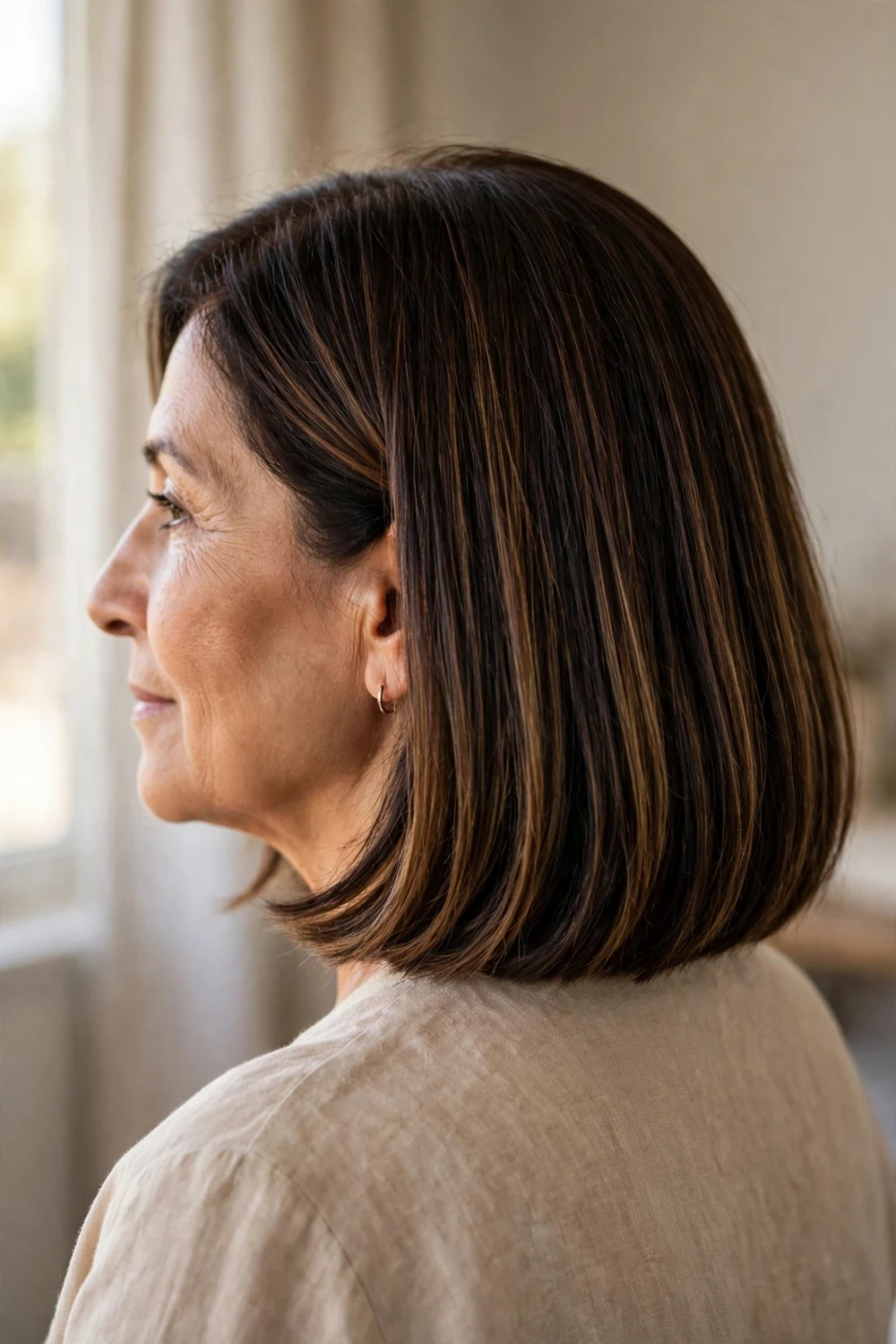
Not everyone over 50 wants to go lighter, and dark chocolate balayage proves you do not have to. This version keeps a deep espresso or dark-chocolate base and paints in soft caramel or toffee pieces, just two shades lighter, through the mid-lengths. The effect is rich and glossy rather than bright, and the subtle shifts add movement that makes the bob look thicker. It suits straight, sleek bobs best, where shine does the talking. Upkeep is the easiest on this list: the contrast is so soft that regrowth barely shows, and a gloss every 4 months keeps the shine.
Try this: Finish styling with a shine serum, since dark balayage looks its best when the hair reflects light cleanly.
9. Copper Balayage Bob
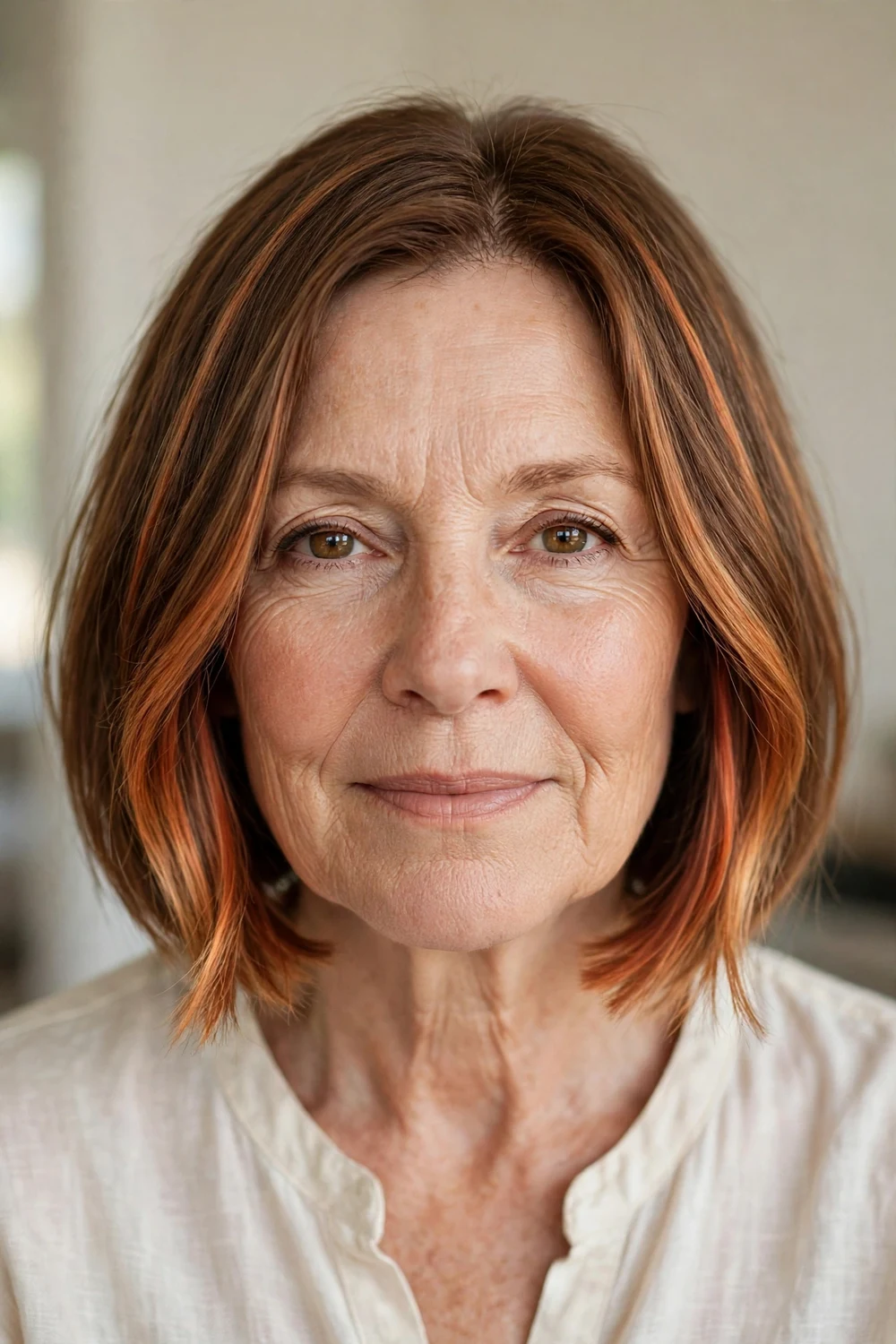
Copper pieces add warmth that flatters pale, freckled, and rosy complexions more than any blonde can. On a bob, the colorist paints copper ribbons over a medium-brown base, keeping the brightness concentrated from the ears down so the color looks deliberate, not accidental. Copper fades faster than most shades because red molecules are small and wash out quickly, so this one asks for commitment: color-safe shampoo is required, and a copper gloss every 6 weeks keeps it vivid. The payoff is a head-turning shade that looks especially striking in natural light.
Try this: Ask your colorist for a take-home copper conditioner to deposit color between appointments and slow the fade.
10. Auburn Balayage Bob
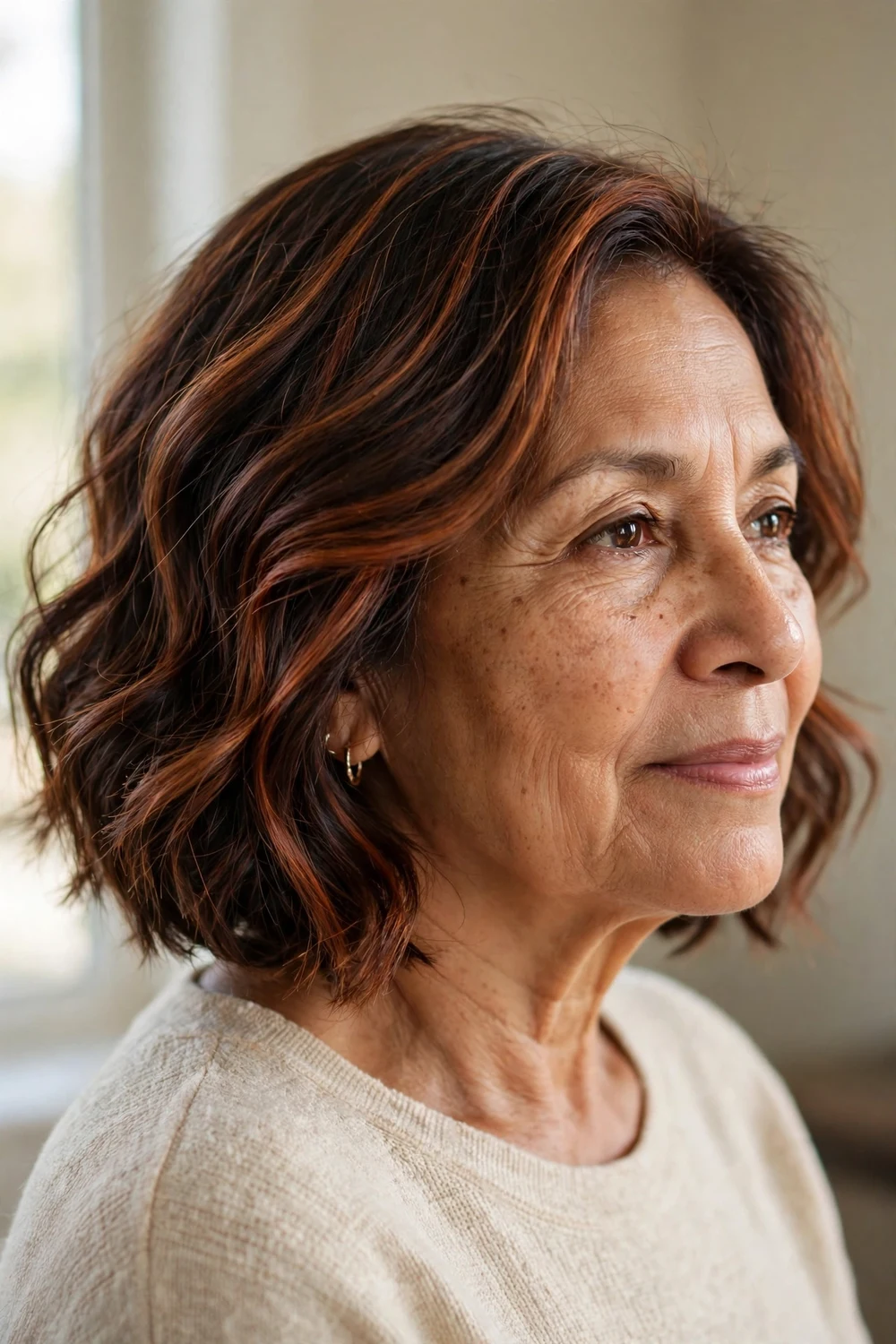
Auburn reads softer than copper but still brings warmth, which makes it the better pick if bright red feels like too much. The colorist blends auburn ribbons through a dark-brown base on a chin- or jaw-length bob, letting the red-brown tones peak through in the waves or bends. This shade suits medium skin tones well and adds life to hair that has started looking dull or flat. Auburn holds its tone a little longer than true copper, so upkeep is moderate: a gloss every 8 to 10 weeks keeps the red from sliding brown. Style it with loose waves to show the color shifts.
Try this: Avoid clarifying shampoos, which strip red tones faster than any other color family.
11. French Bob with Soft Balayage
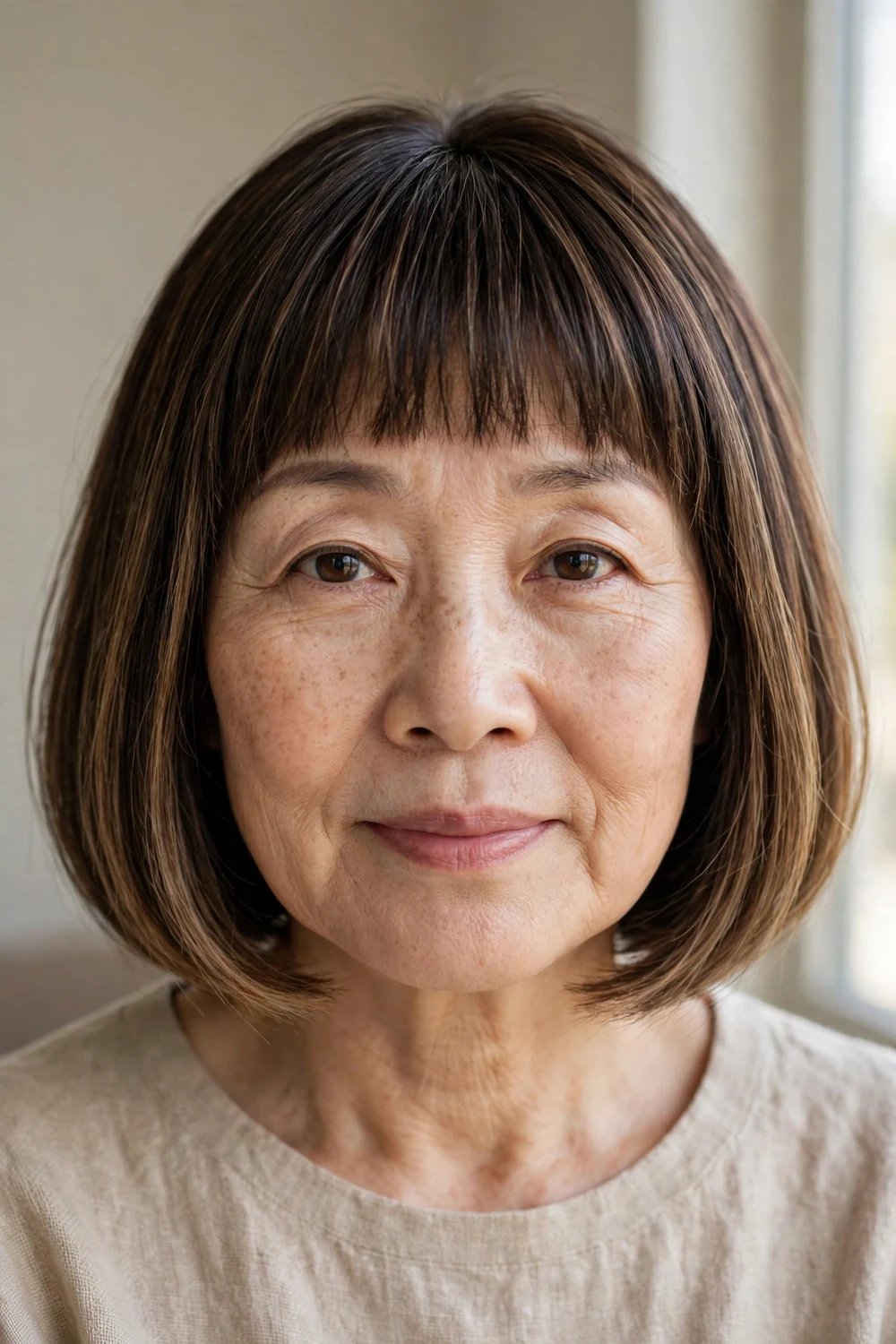
The French bob sits at the jawline with blunt edges and often a short fringe, and a soft balayage keeps it from looking severe. The colorist paints very subtle, tone-on-tone pieces, usually just one shade lighter than the base, through the whole bob. Because the French bob is so structured, the gentle color variation adds the movement the cut needs. This suits straight hair best, since the clean lines show off the delicate shading. Maintenance is light: the contrast is so close to the base that appointments every 4 to 5 months are plenty.
Try this: Keep the balayage within one shade of your base so the French bob stays chic instead of reading as highlighted.
12. Wavy Blonde Balayage Bob

Waves and balayage are natural partners: every bend in the hair catches a different piece of color, which doubles the sense of dimension. This bob is cut at chin to neck length with soft layering, and the colorist paints blonde pieces through a medium base so the waves have bright and dark strands to alternate. It flatters nearly every face shape, since the waves soften angles. Styling is quick: scrunch with a wave cream and diffuse or air-dry. The balayage itself needs a refresh only every 3 to 4 months, making this one of the easiest pretty options here.
Try this: Sleep on a satin pillowcase so the waves keep their shape and you can skip heat styling most days.
13. Curly Bob with Balayage
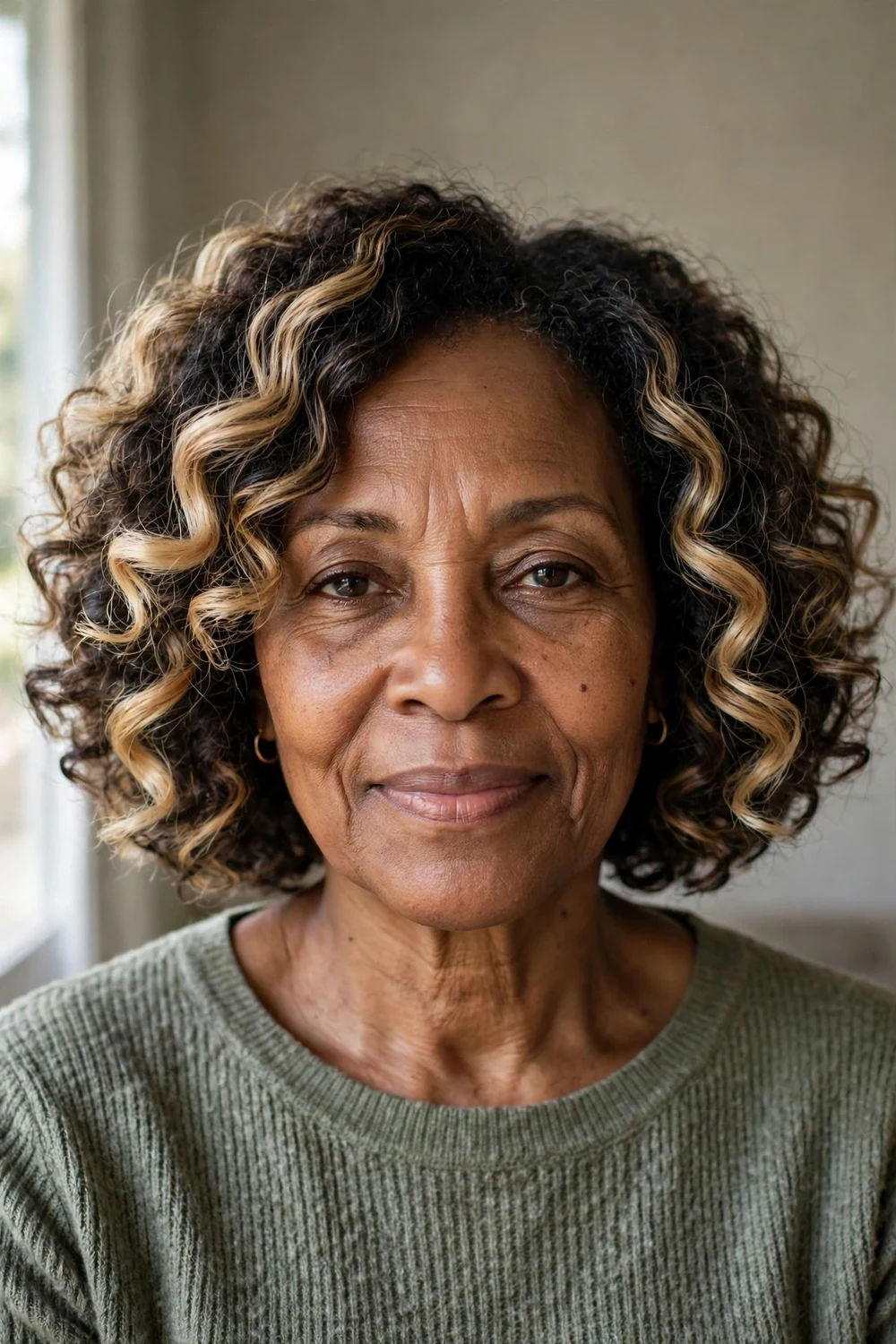
Painted pieces define curls better than all-over color, because the light and dark strands separate each curl instead of blending them into one mass. On a curly bob, the colorist paints balayage on the outer curls only, keeping the interior slightly darker so the shape holds depth. This works for loose waves through tight coils and suits a chin-length cut that lets curls spring up. Curly hair dries out faster than straight hair, so use a curl cream and a deep-conditioning mask weekly; color-treated curls need both. Touch up the balayage every 3 to 4 months.
Try this: Ask for the balayage to be painted on dry, stretched curls so the placement matches how the curls actually fall.
14. Stacked Bob with Dimensional Balayage
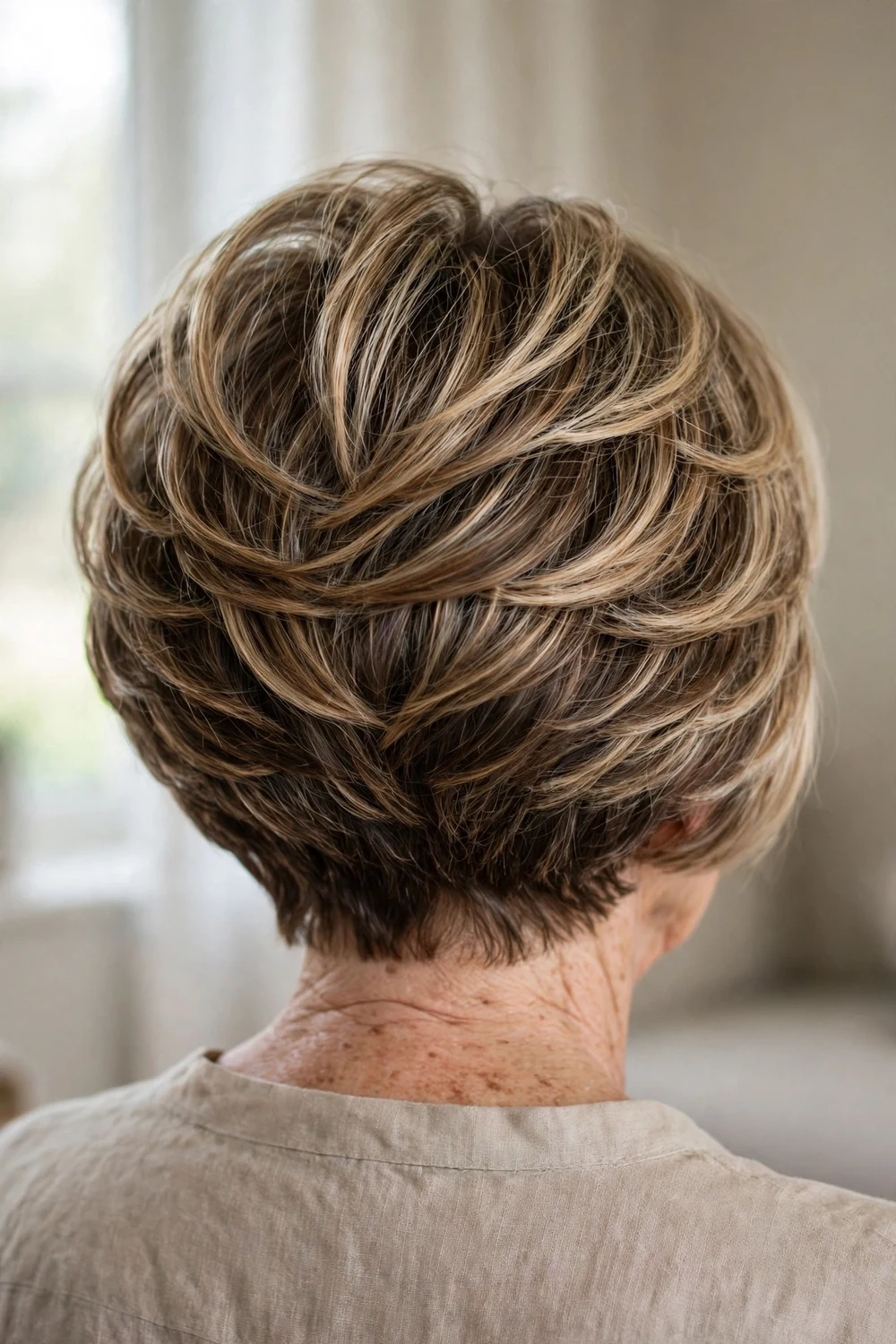
A stacked back creates a curved silhouette with built-in volume at the crown, and dimensional balayage shows off every layer in that curve. The colorist paints alternating light and dark pieces through the graduated layers, so the stacked shape reads as textured rather than solid. This cut suits straight to slightly wavy hair and flatters round and full faces, since the volume sits high and the front pieces slim the sides. The stacked shape needs a trim every 6 weeks to hold its curve, but the balayage itself lasts 3 to 4 months.
Try this: Round-brush the crown section upward when blow-drying to keep the stacked lift the cut was designed for.
15. A-Line Bob with Balayage
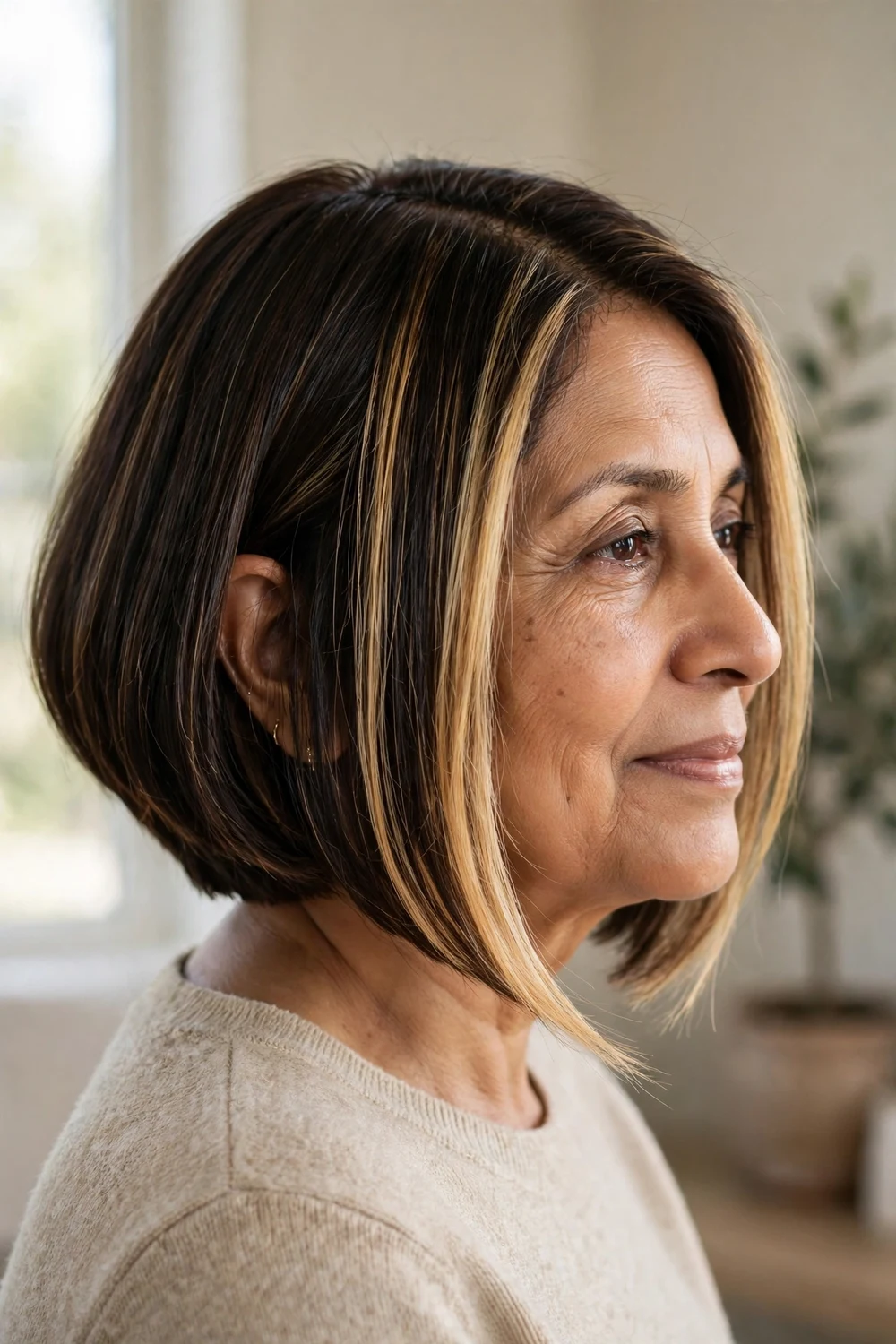
Longer fronts and a shorter back give the A-line bob its signature angle, and balayage follows that angle well. The colorist places the brightest pieces along the long front sections, which draws the eye forward and slims the face. The shorter back stays closer to the natural base, so the color has a built-in gradient that looks intentional as it grows out. This suits straight hair best, where the sharp angle stays visible. Upkeep is moderate: the front pieces frame the face, so they show fading first, and a gloss every 10 weeks keeps them fresh.
Try this: Part the A-line slightly off-center so the angled front piece sweeps across the cheekbone for extra softness.
16. Dimensional Balayage Lob
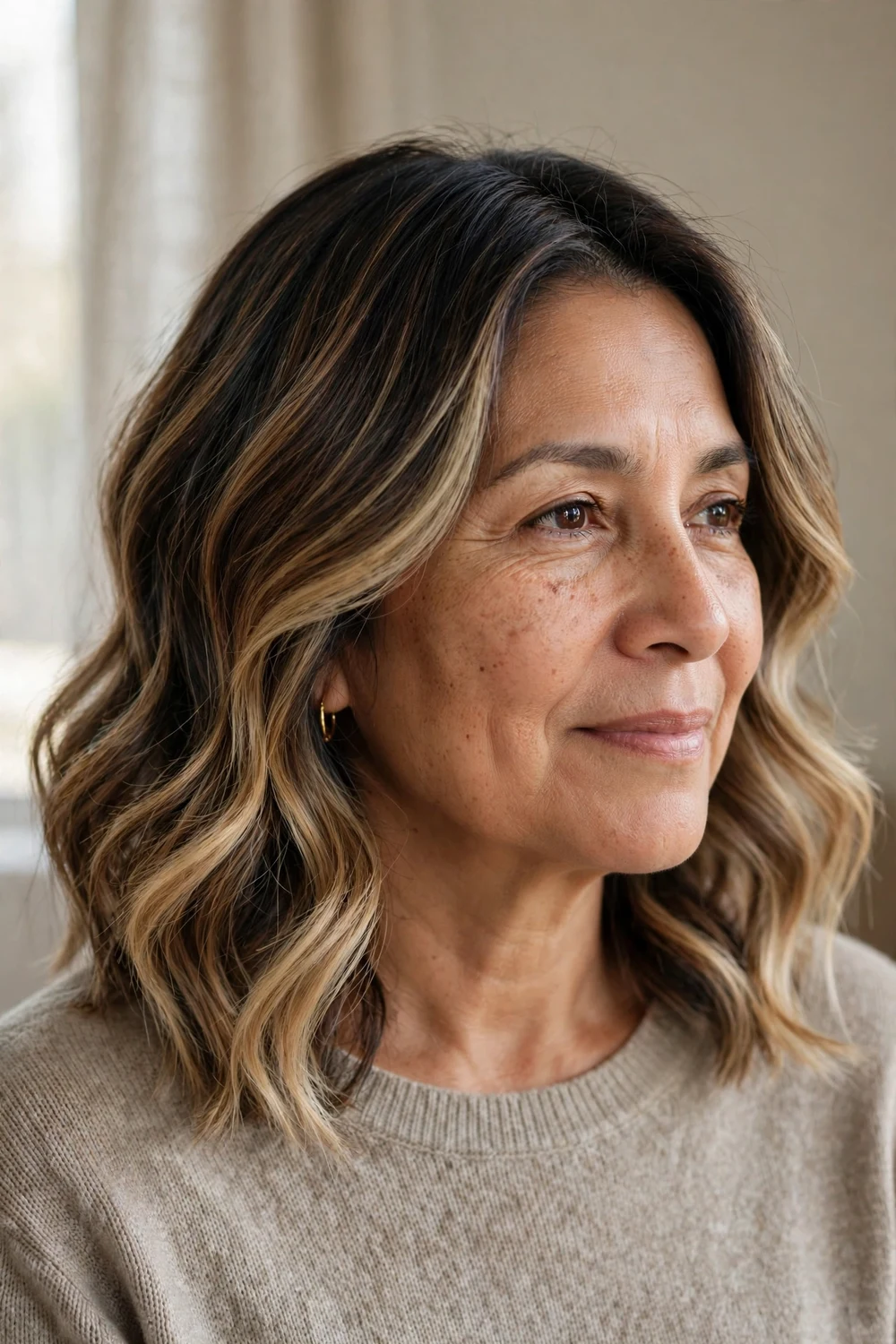
If you like a bit more length, the lob (long bob) gives balayage more room to show off. Falling between the chin and the collarbone, the lob lets the colorist paint a longer transition from dark roots to light ends, which looks especially natural. Dimensional balayage here means three or more tones woven through, not just one highlight shade, so the hair never looks flat in any light. The lob suits all hair textures and is the easiest bob length to pull into a low ponytail. Expect the same low upkeep as other balayage: a refresh every 3 to 4 months.
Try this: Ask for the lightest pieces to land around the collarbone so the ends look sun-lit rather than dipped in color.
17. Balayage Lob with Bangs
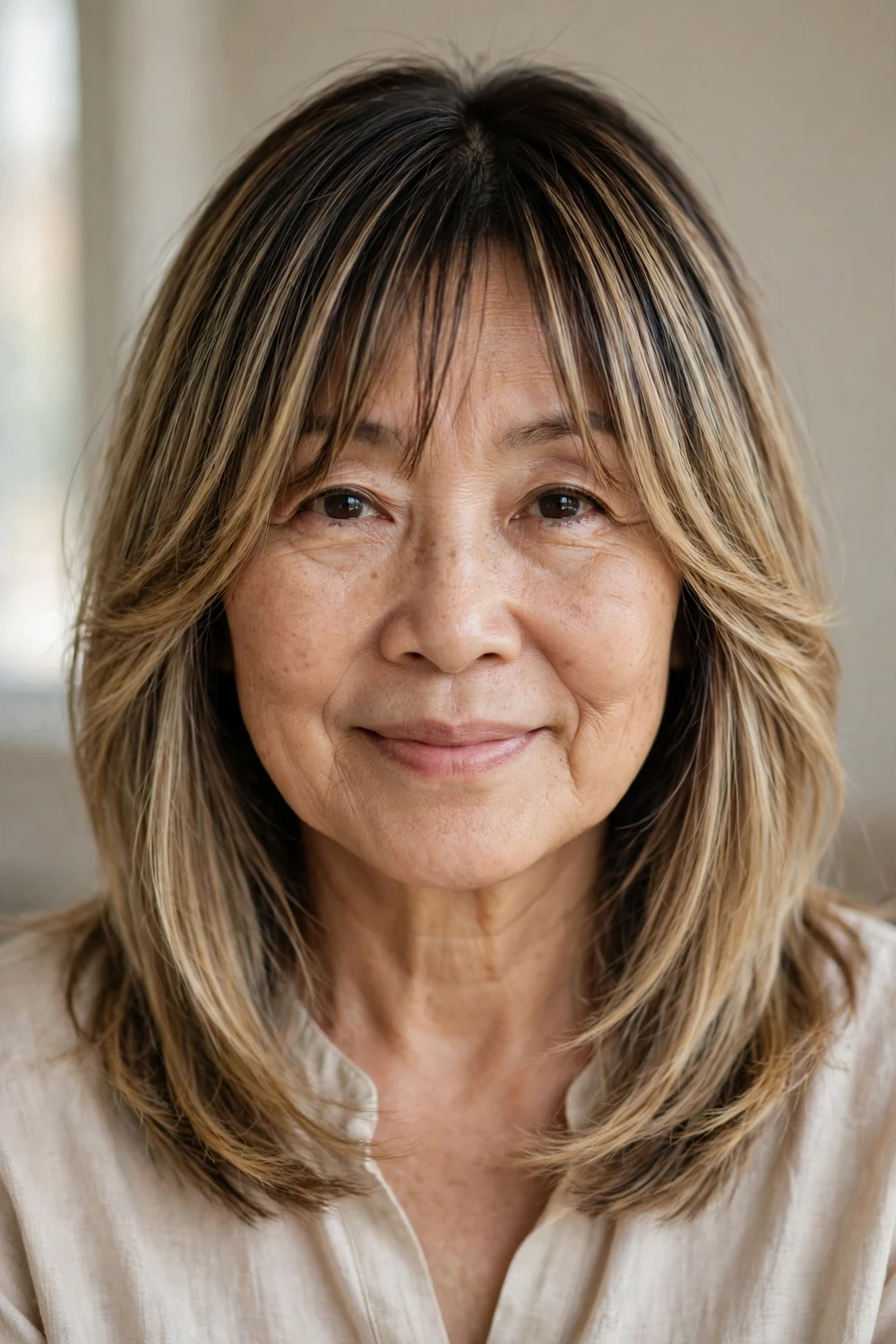
Bangs soften the forehead and bring attention to the eyes, and pairing them with a balayage lob keeps the whole look current instead of dated. The fringe can be long and curtain-style or brow-skimming, depending on your face shape, while the colorist paints a mix of blonde tones through the collarbone-length cut. Keep the bangs close to your natural base color so they do not demand their own touch-ups; the balayage lives in the lengths. Trim the fringe every 4 to 6 weeks, and refresh the balayage every 3 to 4 months.
Try this: Blow-dry bangs forward with a small round brush first, then style the rest, so the fringe sets before it can separate.
18. Angled Bob with Burgundy Balayage
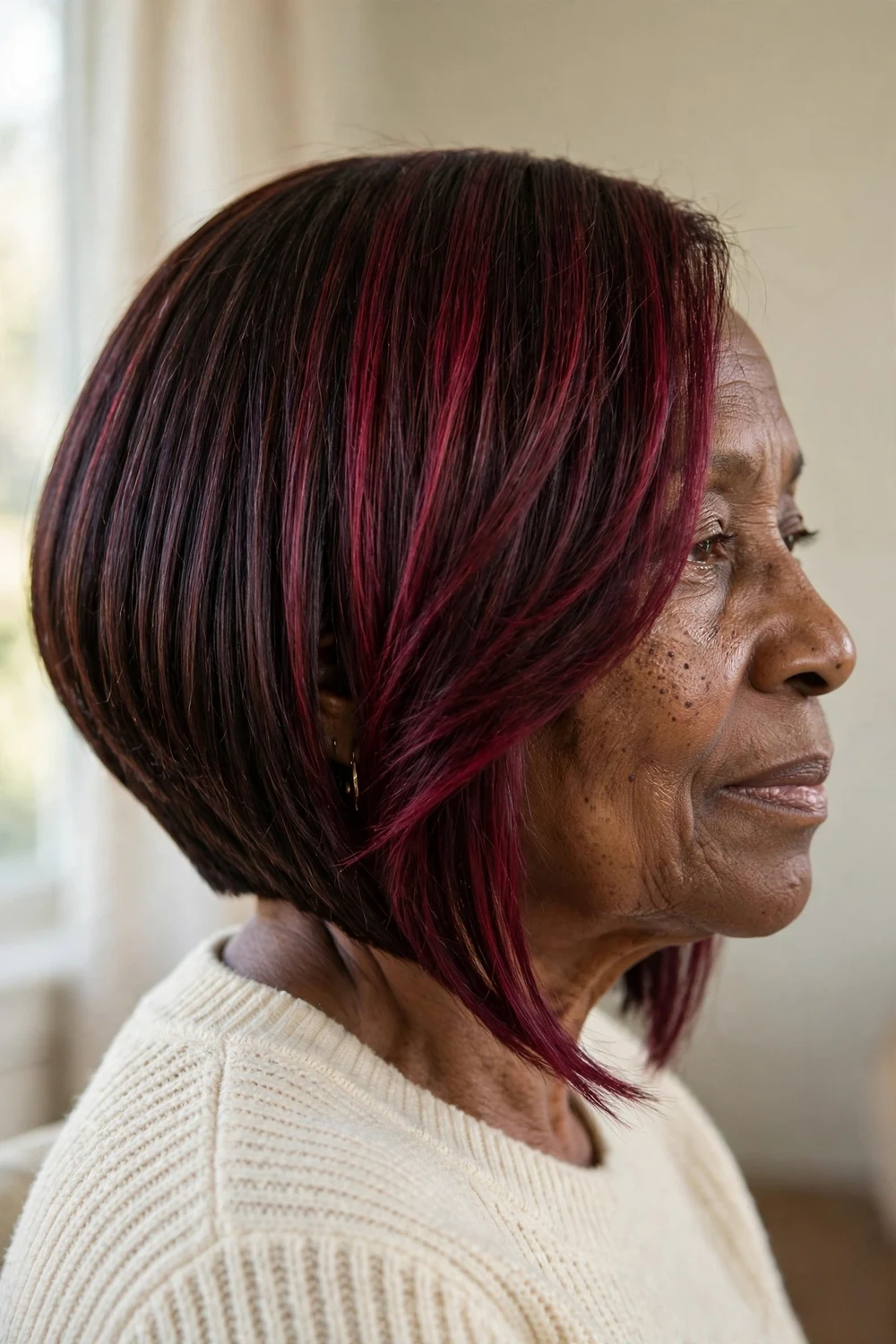
Burgundy balayage adds depth that feels rich for evenings yet wearable in daylight, especially on deeper skin tones or anyone who suits jewel tones. On an angled bob, the colorist paints deep burgundy pieces over a dark-brown or black base, concentrating the red through the longer front sections. The dark base keeps the look grounded, so it never reads as costume. Like copper, burgundy fades with washing, so use color-safe products and expect a gloss every 8 weeks. Style the angled cut sleek to let the red shine through cleanly.
Try this: Wash in the coolest water you can stand, since heat opens the cuticle and releases red tones fastest.
19. Salt-and-Pepper Blend Balayage Bob
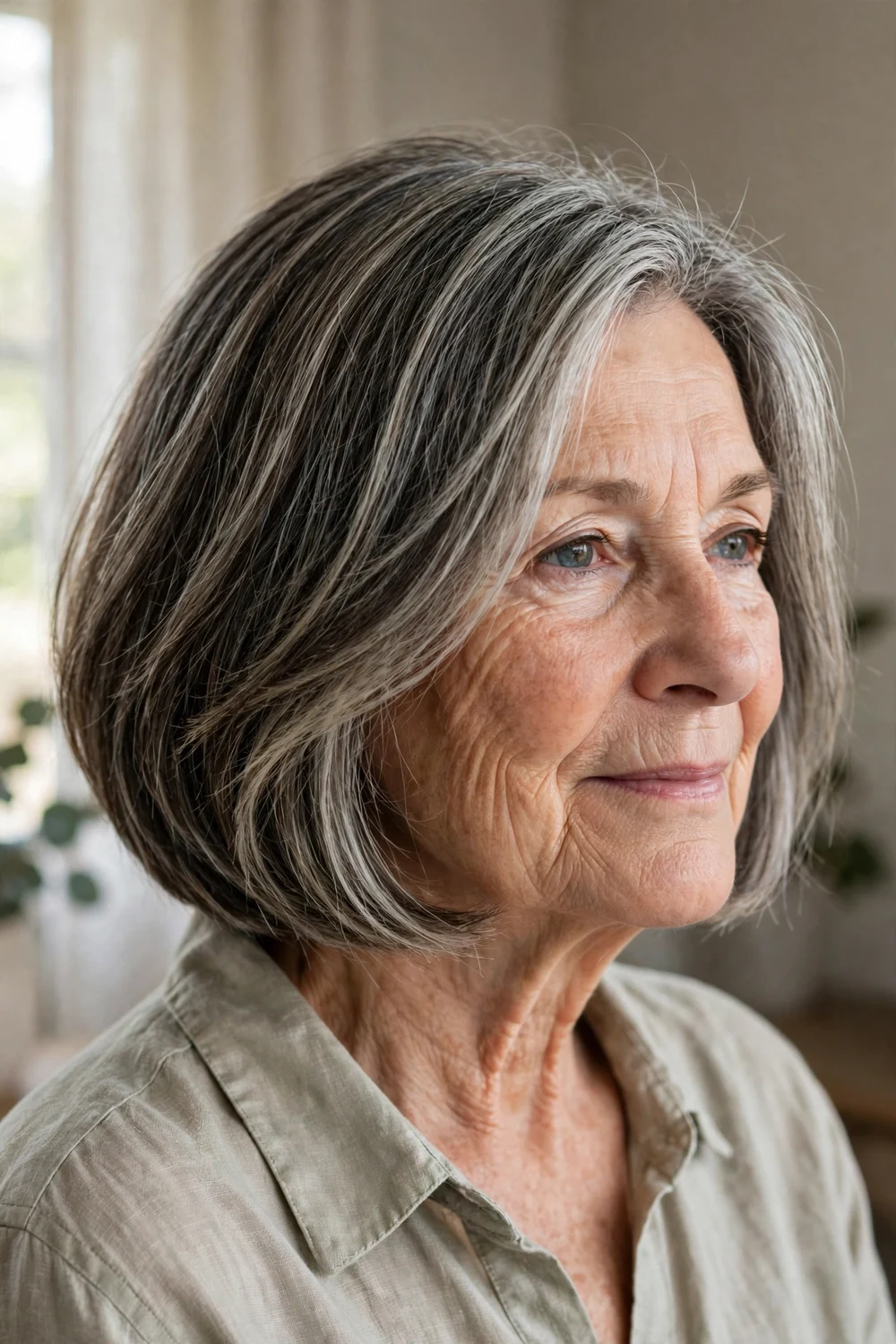
Some women stop covering gray entirely and let the natural mix take over; balayage makes that transition look deliberate instead of unfinished. The colorist paints soft lowlights and highlights that connect your dark strands to the incoming silver, so the two tones blend instead of clashing. On a chin-length bob, this creates a salt-and-pepper finish that looks styled, not grown out. It suits every texture and is genuinely low maintenance: once the blend is set, you only need a gloss every 4 to 5 months to keep the tones harmonious.
Try this: Bring a photo of your own regrowth pattern so the colorist can match the blend to how your gray actually comes in.
20. Smoky Gray Balayage Bob
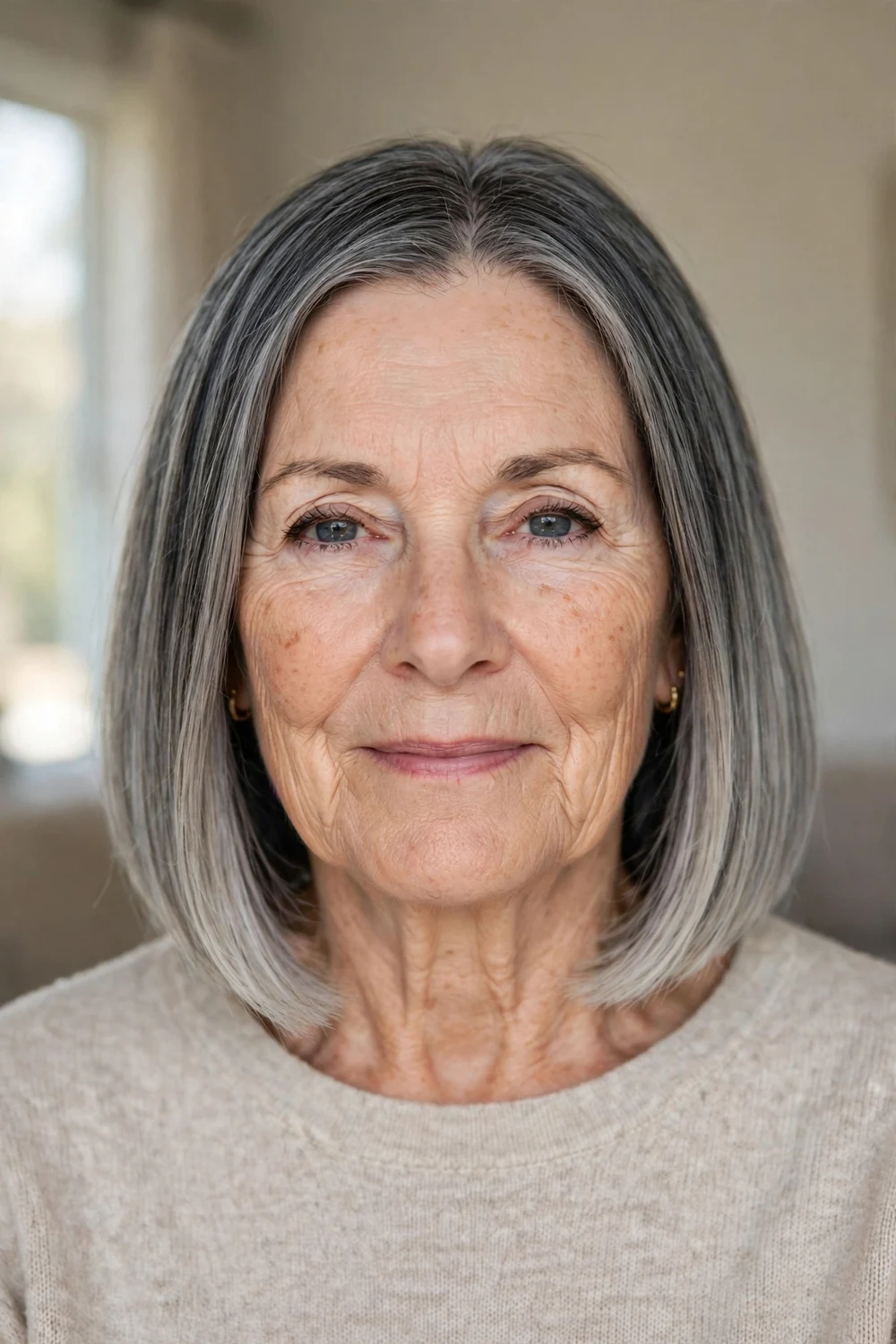
Smoky gray is a full-color commitment rather than a blending trick: the colorist paints cool gray tones over the whole bob, from a darker slate at the roots to a lighter silver at the ends. The result looks modern and deliberate, and it suits women who have already gone mostly gray and want it to look styled rather than accidental. Cool skin tones wear it best. Smoky gray needs the most toning on this list, since gray fades to yellow quickly; plan a purple mask weekly and a salon gloss every 6 to 8 weeks. A sleek, straight finish shows the smoke best.
Try this: Keep heat styling below medium, because high heat pushes gray tones yellow faster than anything else.
21. Face-Framing Money Piece Balayage Bob
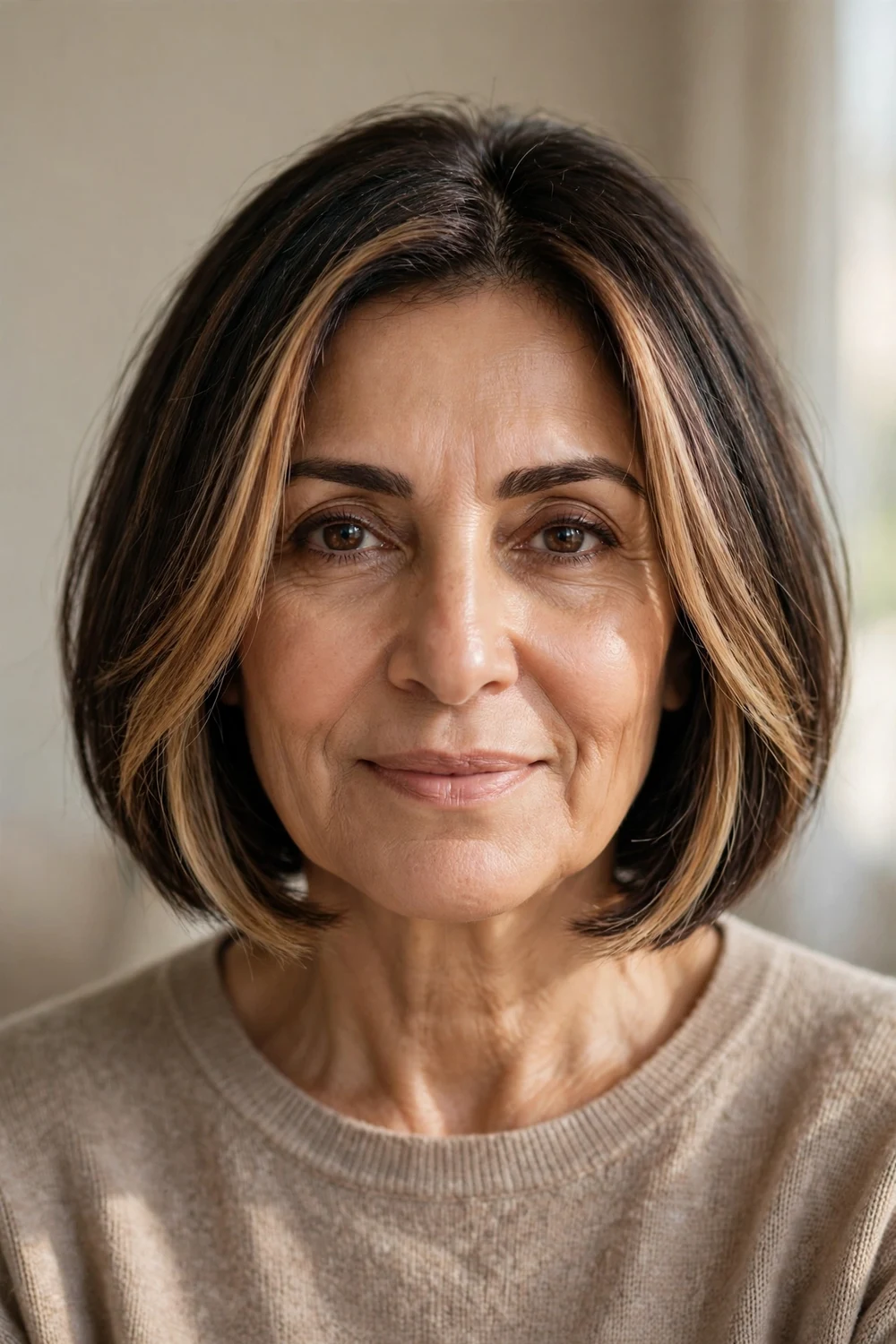
The brightest pieces sit right around the face in this look, which means maximum impact with minimum coloring. A money piece is a bold, lightened section framing the face, and on a bob it sits exactly where it brightens the eyes and softens lines. The rest of the bob can stay close to your natural color, so the appointment is shorter and the upkeep stays low: only the front pieces need refreshing, usually every 8 to 10 weeks. This works on any bob shape and suits women who want visible change without coloring the whole head.
Try this: Ask for the money piece two shades lighter than the rest of the balayage so it stands out instead of blending in.
22. Tortoiseshell Espresso Balayage Bob
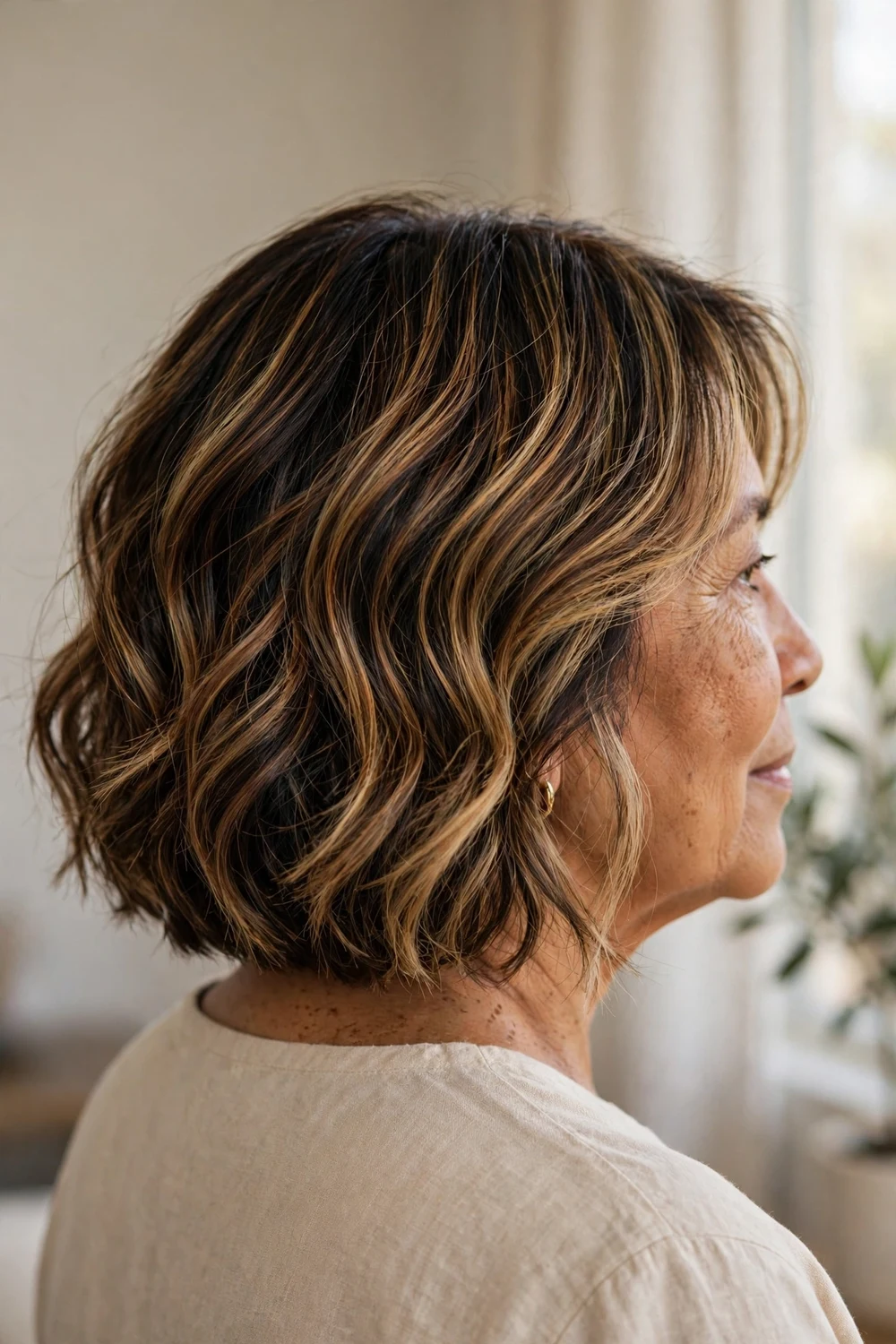
Tortoiseshell mixes espresso, caramel, and honey in one head of hair, which gives dark bases a multi-tonal finish that never looks flat. On a bob, the colorist paints the three tones in fine sections, keeping espresso at the roots and letting caramel and honey appear through the mid-lengths. The blend flatters warm and neutral skin tones and adds the kind of depth that makes fine hair look noticeably thicker. Because all three tones sit close to the natural base, grow-out stays soft for months. Refresh with a gloss every 3 to 4 months to keep the three tones distinct.
Try this: Style with loose bends rather than tight curls, since wide waves show the tortoiseshell mix better than ringlets.
23. Icy Platinum Balayage Bob

Cool and bright, platinum balayage lightens the ends to near-white while keeping the roots in a natural darker shade. On a bob, that contrast looks sharp and modern, and the bright ends draw attention away from any thinning at the crown. This is the highest-maintenance light option here: platinum needs a purple shampoo weekly, a gloss every 6 weeks, and careful conditioning, since lightening to this level dries hair. It suits cool skin tones best and looks cleanest on a straight, blunt bob where the pale ends form a crisp line.
Try this: Deep-condition the ends twice a week, because platinum ends break first if they dry out.
24. Low-Maintenance Shadow Root Balayage Bob

A shadow root melts your natural base color down into the balayage so there is no line where color starts. The colorist applies a root shade close to your own, then paints balayage through the lengths in whatever tone you choose: blonde, caramel, or copper all work over a shadow root. On a bob, the melted root keeps the whole style looking soft as it grows, which is why this technique stretches appointments to twice a year for some women. It suits every hair texture and every shade direction on this list. If you pick one technique to ask for, make it this one.
Try this: Take a photo of your hair at week 10 after your last appointment so the colorist can see exactly how your base grows in.
Balayage Bobs Comparison at a Glance
| Style | Best Bob Cut | Grow-Out | Upkeep |
|---|---|---|---|
| Classic Blonde Balayage Bob | Chin-length, center part | Soft | Gloss every 10 to 12 weeks |
| Sun-Kissed Golden Balayage Bob | Side-parted bob | Soft | Refresh every 3 months |
| Caramel Balayage Bob | Layered bob | Soft | Gloss every 8 to 10 weeks |
| Honey Blonde Balayage Bob | Tucked-under bob | Very soft | Demi-gloss every 10 weeks |
| Ash Blonde Balayage Bob | Straight bob | Soft | Gloss every 3 to 4 months |
| Silver Balayage Feathered Bob | Feathered bob | Soft | Toning every 6 to 8 weeks |
| Gray-Blending Root Shadow Balayage Bob | Chin-length bob | Very soft | Every 4 to 5 months |
| Dark Chocolate Balayage Bob | Sleek straight bob | Very soft | Gloss every 4 months |
| Copper Balayage Bob | Chin-length bob | Visible | Copper gloss every 6 weeks |
| Auburn Balayage Bob | Jaw-length bob | Moderate | Gloss every 8 to 10 weeks |
| French Bob with Soft Balayage | French bob | Very soft | Every 4 to 5 months |
| Wavy Blonde Balayage Bob | Wavy bob | Soft | Every 3 to 4 months |
| Curly Bob with Balayage | Curly chin-length bob | Soft | Every 3 to 4 months |
| Stacked Bob with Dimensional Balayage | Stacked bob | Soft | Balayage every 3 to 4 months |
| A-Line Bob with Balayage | A-line bob | Soft | Gloss every 10 weeks |
| Dimensional Balayage Lob | Collarbone lob | Soft | Every 3 to 4 months |
| Balayage Lob with Bangs | Lob with fringe | Soft | Every 3 to 4 months |
| Angled Bob with Burgundy Balayage | Angled bob | Visible | Gloss every 8 weeks |
| Salt-and-Pepper Blend Balayage Bob | Chin-length bob | Very soft | Gloss every 4 to 5 months |
| Smoky Gray Balayage Bob | Straight bob | Visible | Gloss every 6 to 8 weeks |
| Face-Framing Money Piece Balayage Bob | Any bob shape | Visible at front | Front refresh every 8 to 10 weeks |
| Tortoiseshell Espresso Balayage Bob | Layered bob | Very soft | Gloss every 3 to 4 months |
| Icy Platinum Balayage Bob | Blunt bob | Visible | Gloss every 6 weeks |
| Low-Maintenance Shadow Root Balayage Bob | Any bob shape | Very soft | Twice a year |
How to Choose the Right Balayage Bob for You
Match the shade to your skin first, the cut second. Warm complexions glow with golden, caramel, honey, and copper; cool complexions suit ash, silver, and platinum. If you are unsure, hold fabric swatches in warm and cool tones next to your face in daylight and see which one makes your skin look rested. That simple test beats any color chart.
Then be honest about maintenance. If you dislike salon visits, choose gray-blending root shadow, shadow root, or dark chocolate: all three grow out without lines. If you enjoy the salon ritual and want brightness, platinum, smoky gray, and copper reward the extra appointments with real impact. Your colorist can also blend techniques, like a shadow root under a caramel balayage, to split the difference.
For a deeper look at warm brown-based options before you decide, this collection of dark caramel balayage ideas pairs well with several of the bob shapes on this list.
Finally, consider your hair texture. Straight bobs show off sleek, high-contrast balayage; wavy and curly bobs show off multi-tonal, dimensional work. Bring photos of both the color AND the cut you want, and tell the colorist which matters more to you. A colorist who knows your priority will place the paint accordingly.
Mistakes to Avoid
Going too light too fast is the most common error. Hair over 50 is often finer and drier, so jumping from dark brown to platinum in one session risks breakage. If platinum is your goal, plan two sessions spaced 6 to 8 weeks apart instead of one aggressive one.
Skipping the root shadow is another. Without it, even balayage shows a line as gray grows in, usually by week 6. A shadow root costs little extra at the appointment and doubles the time before the color looks grown out. If the difference between painted highlights and balayage still confuses you, this guide to balayage vs highlights explains how each technique grows out.
Third, do not pick a shade from a photo without checking the lighting. Salon photos use bright, warm light that makes every blonde look golden. Ask your colorist to show the shade on a swatch in natural daylight before committing, especially with ash, silver, or copper, which all shift more than expected between light sources.
If golden tones are calling your name, the warm shades in this honey blonde balayage collection show how honey plays across different base colors.
Frequently Asked Questions
Is balayage better than highlights for women over 50?
Balayage usually wins for women over 50 because it grows out without a hard line, which means fewer appointments and less chemical processing on hair that may already be dry or thinning. Foil highlights give more uniform brightness from root to tip, which some women prefer, but they show regrowth by week 4 to 6. If your priority is low maintenance and natural-looking dimension, balayage is the better technique.
How often does balayage need touching up on a bob?
Most balayage on a bob needs a refresh every 3 to 4 months, with a toning gloss in between if the shade fades. Low-maintenance versions with a shadow root can stretch to 5 or 6 months, while high-contrast shades like platinum or copper need attention every 6 to 8 weeks. Your exact schedule depends on the shade, your natural regrowth rate, and how much gray you have.
Will balayage damage thin or fine hair?
Balayage is gentler than full bleach or all-over color because the lightener touches fewer strands and skips the roots entirely. That said, any lightening removes moisture, and fine hair shows damage faster than coarse hair. Ask your colorist for a bond-building treatment during the appointment, keep the lift modest (two to three shades), and deep-condition weekly at home to keep fine hair healthy.
Can balayage cover gray hair on a bob?
Balayage does not fully cover gray the way permanent dye does; instead, it blends gray by painting lighter pieces around it so the silver reads as part of the color. This works best when gray is under 50 percent. If your hair is mostly gray and you want full coverage, ask for a base color first with balayage painted over it. Many women over 50 prefer the blending approach because it grows out gracefully.
What should I ask my colorist for at the appointment?
Bring two or three photos showing both the shade family and the bob shape you want, and tell your colorist how often you want to return for touch-ups. Ask specifically for a root shadow if you want low maintenance, and ask which toning products to use at home for your shade. Also mention your gray percentage honestly, since it changes how the colorist places the balayage.
If you are weighing blonde directions against each other, the current shades in caramel balayage hair color 2026 show how caramel tones are being worn right now on different lengths.
Final Thoughts
A balayage bob is one of the kindest color choices you can make after 50: it flatters the face, hides the grow-out, and lets you visit the salon on your schedule instead of the color’s. Pick the shade that suits your skin, be honest about the upkeep you want, and bring clear photos to your appointment. For cooler blonde directions that pair well with bobs, browse the ideas in winter blonde balayage before you book. The right balayage bob should make you feel polished with less effort, not more.

